A set of resources focused on mastering numbers 50-100 through hands-on flashcard activities and games designed for kindergarten learners.
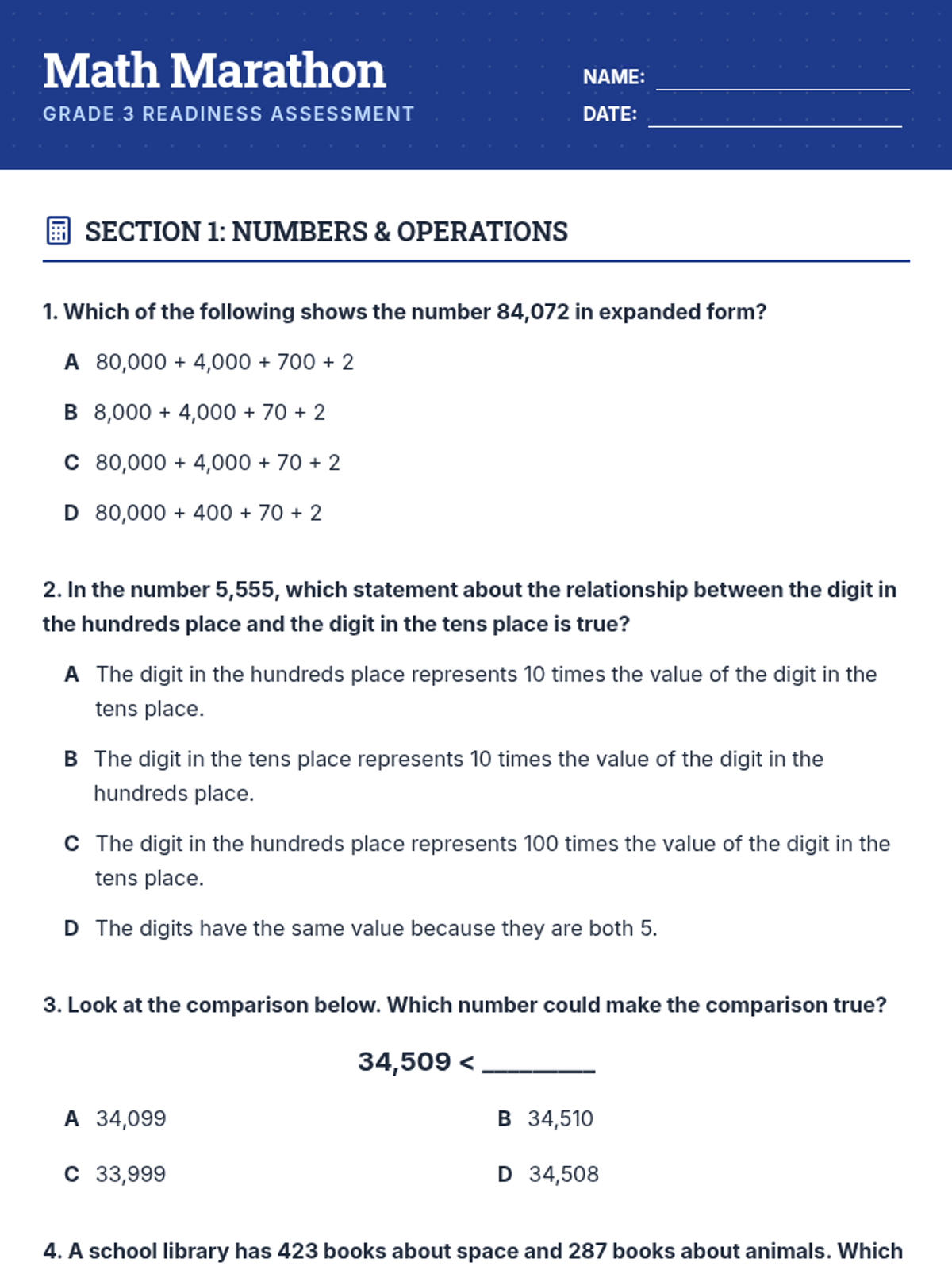
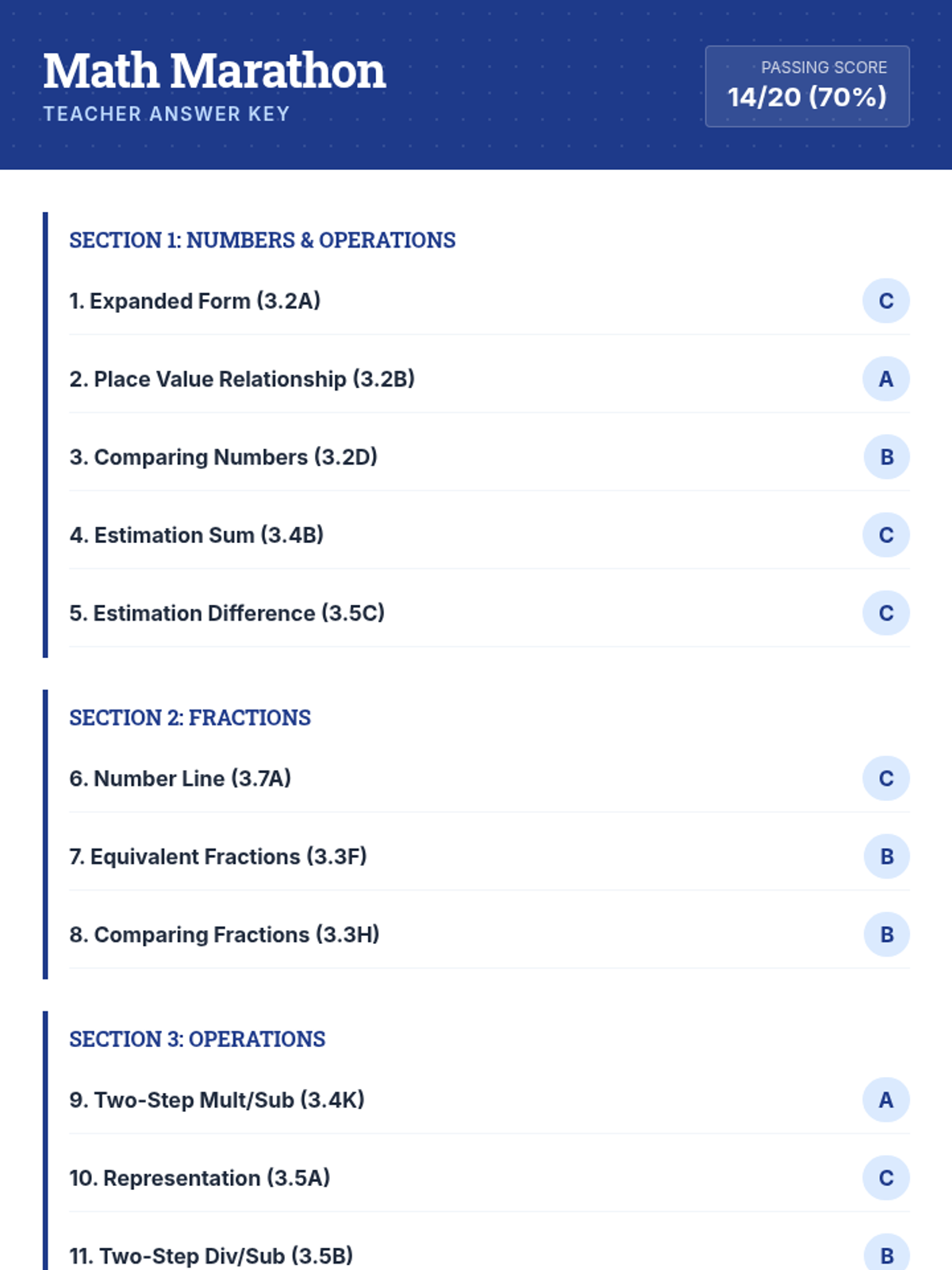
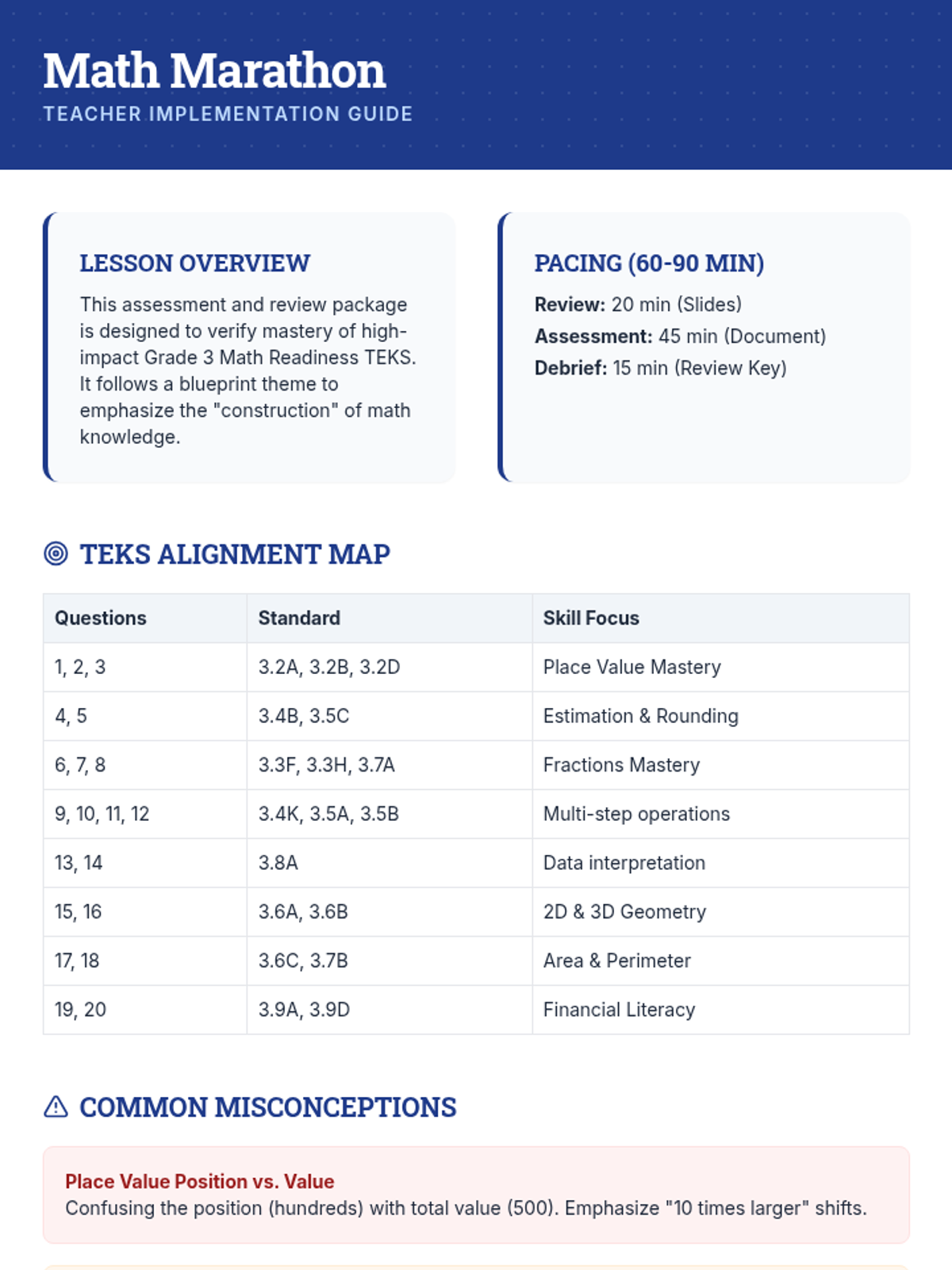
A comprehensive 20-question multiple-choice assessment covering key Grade 3 Math Readiness TEKS including place value, fractions, operations, and measurement.
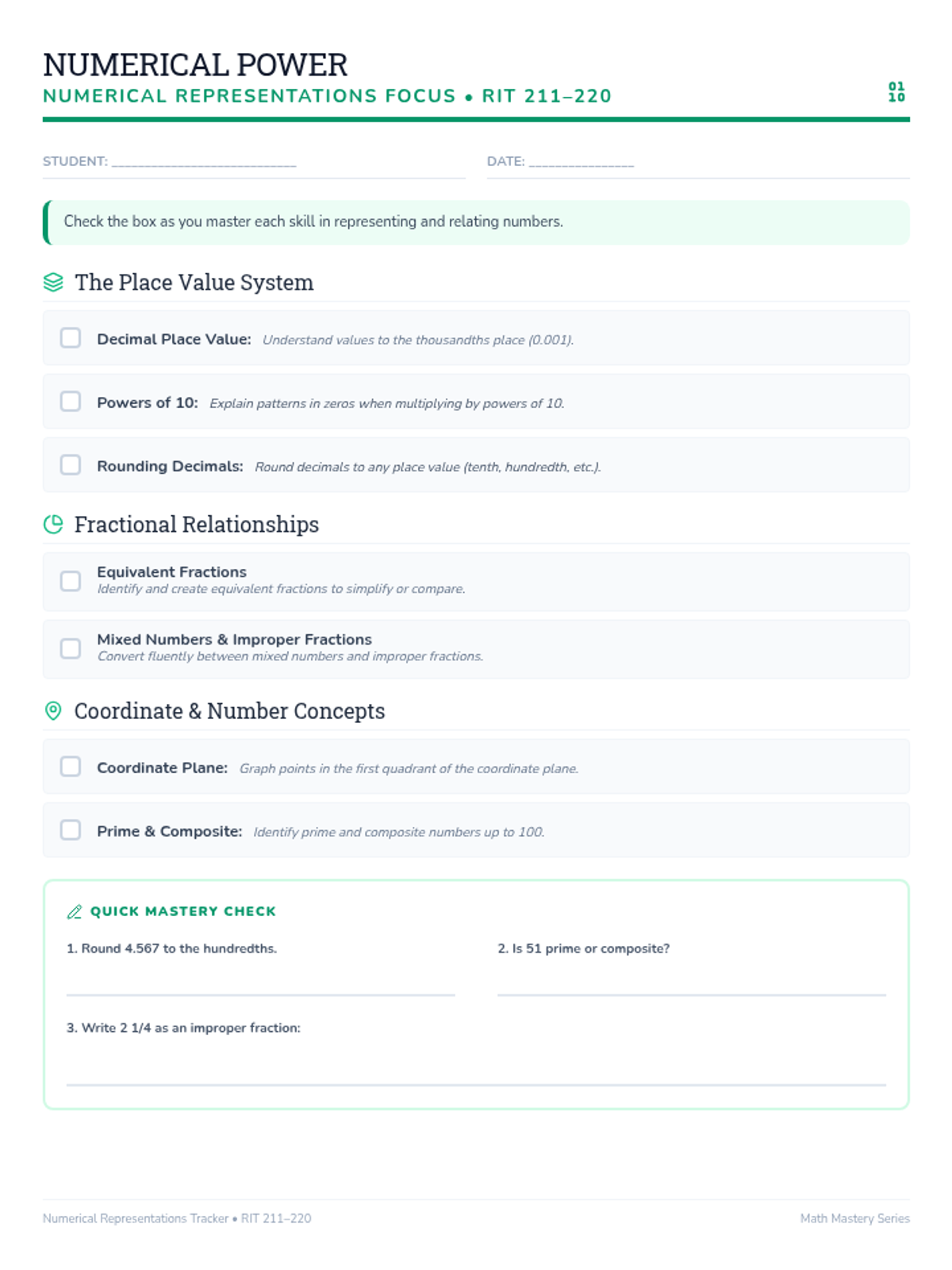
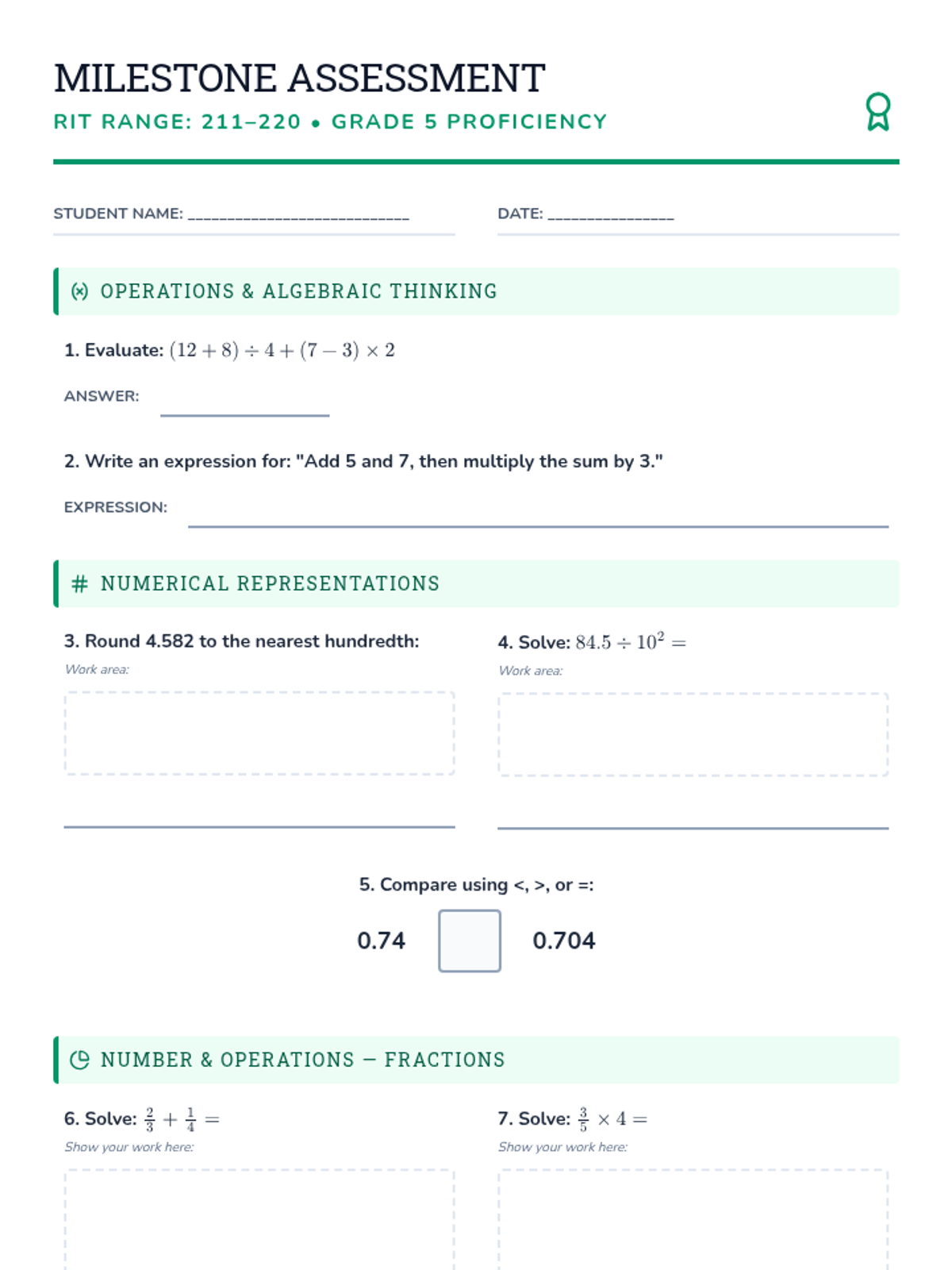
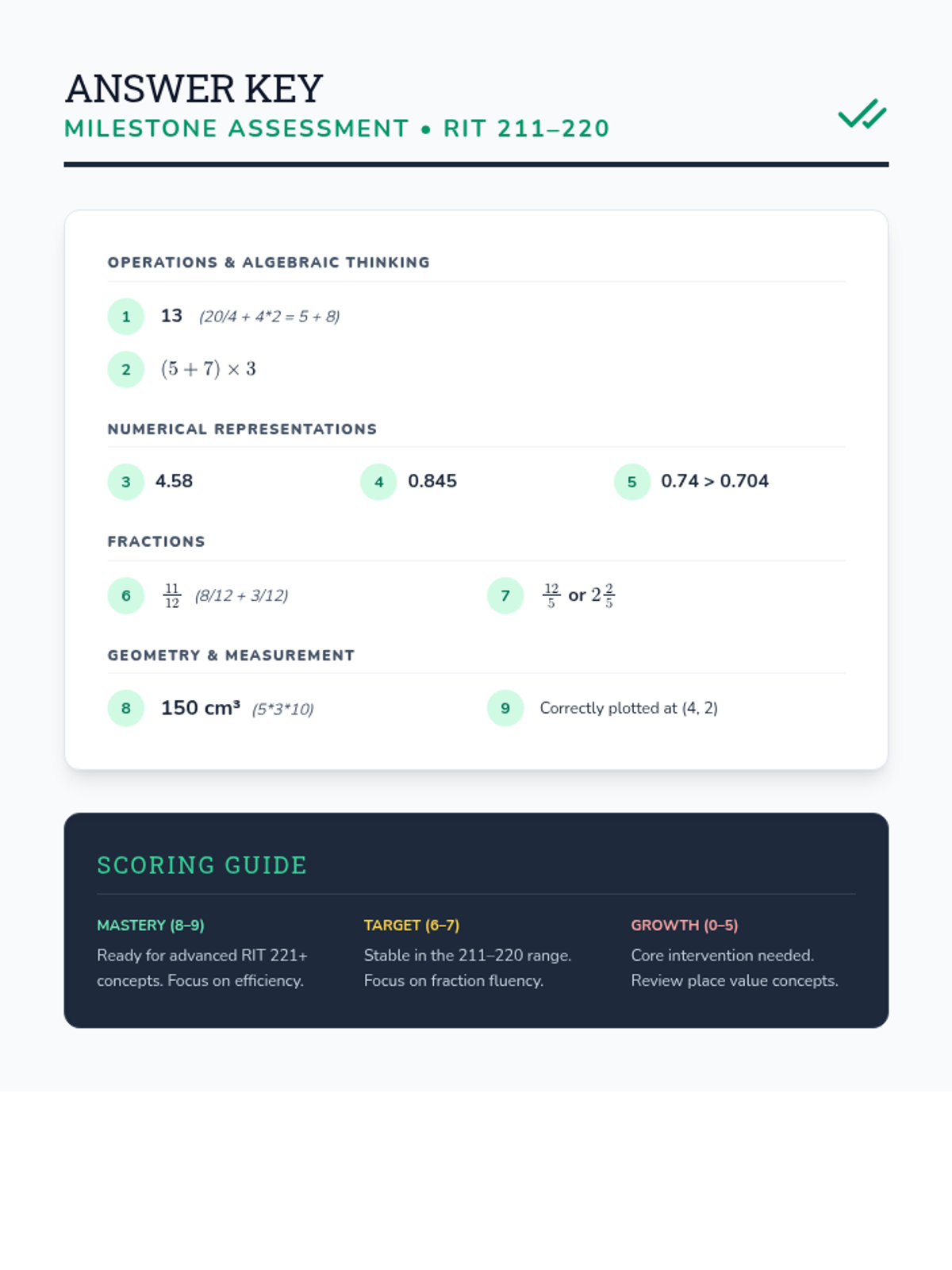
A specialized toolkit for navigating mathematical skills in the 211-220 RIT range, with a focus on foundational decimals, fractions, and place value relationships.
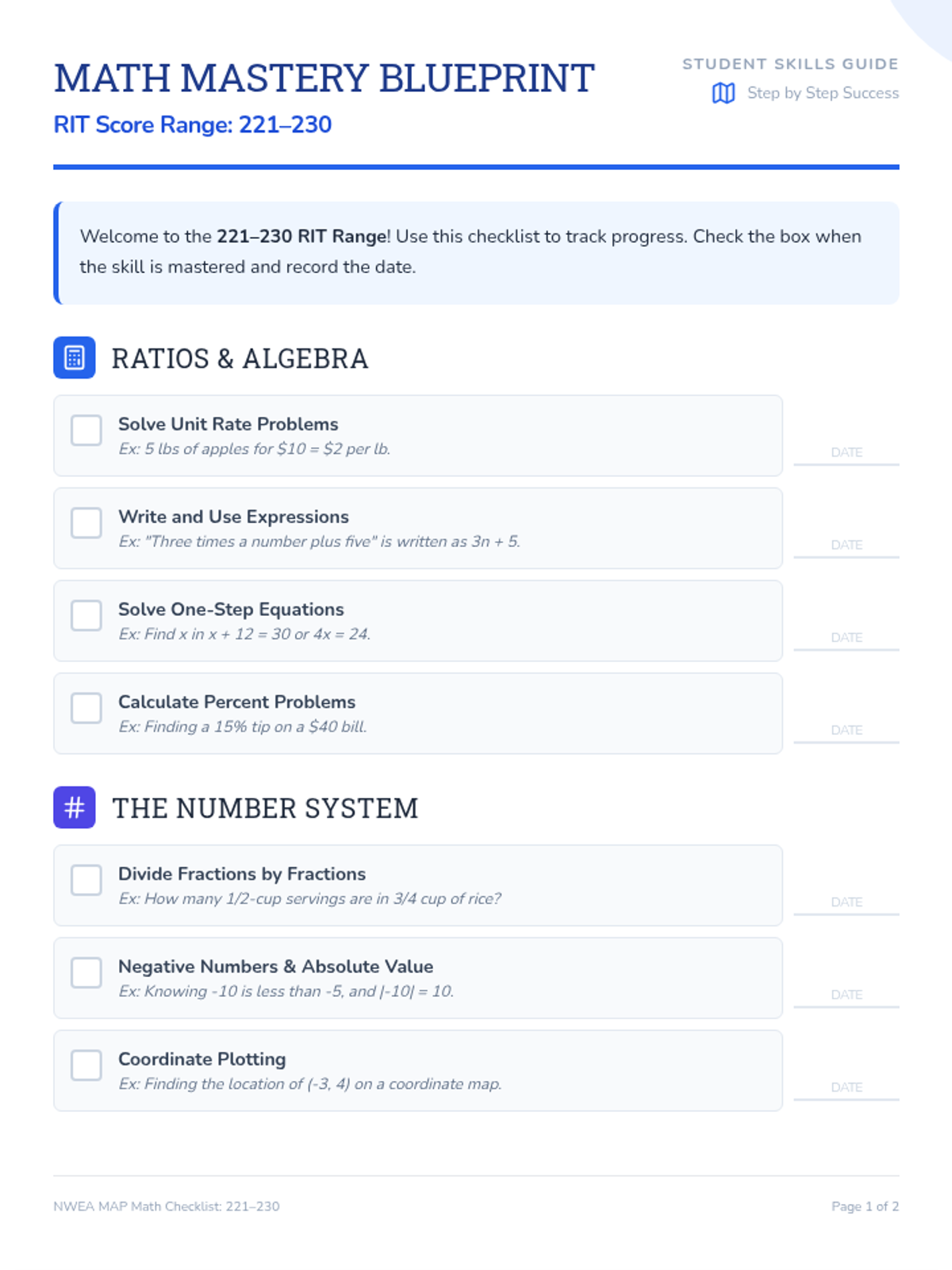
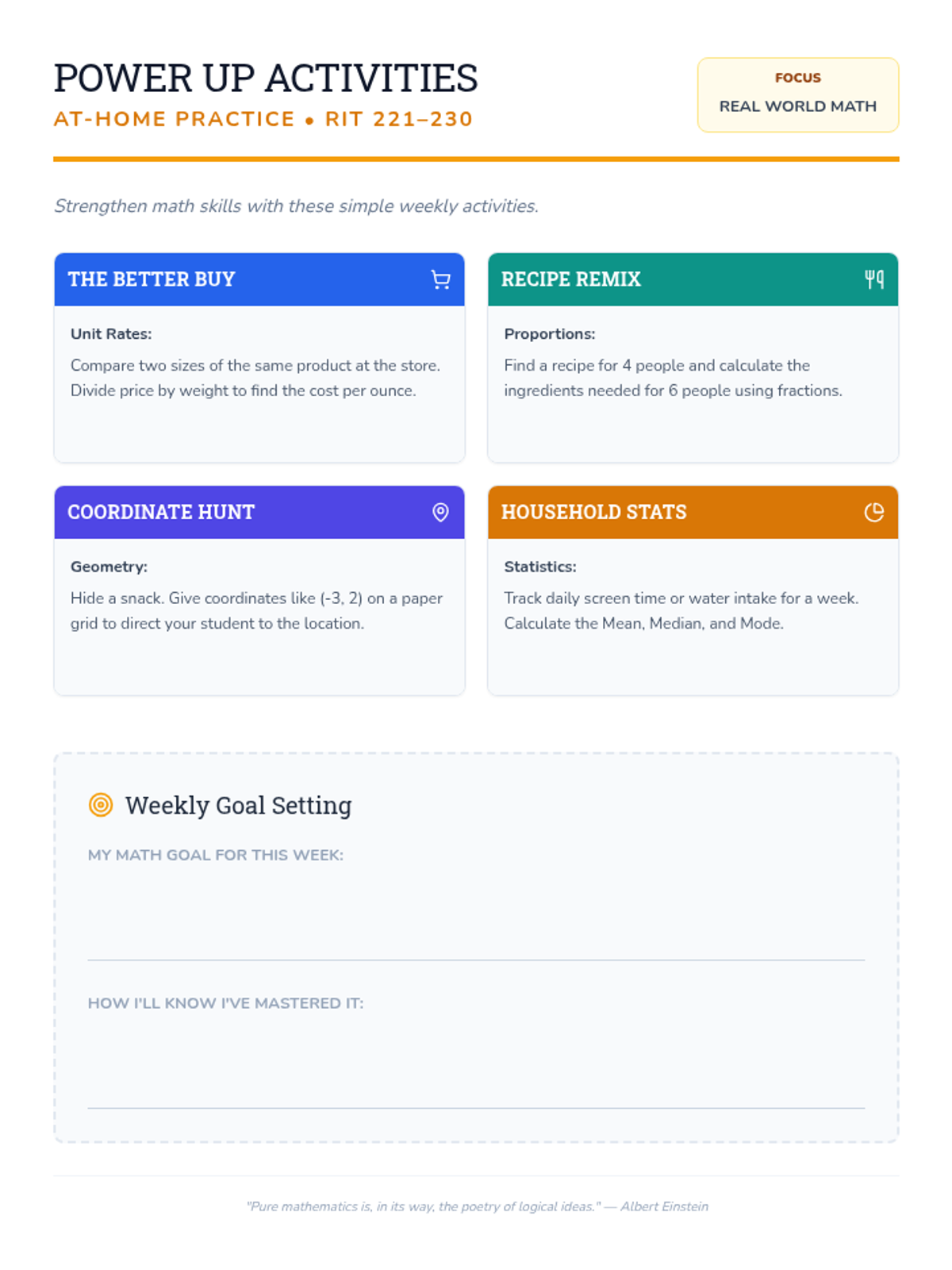
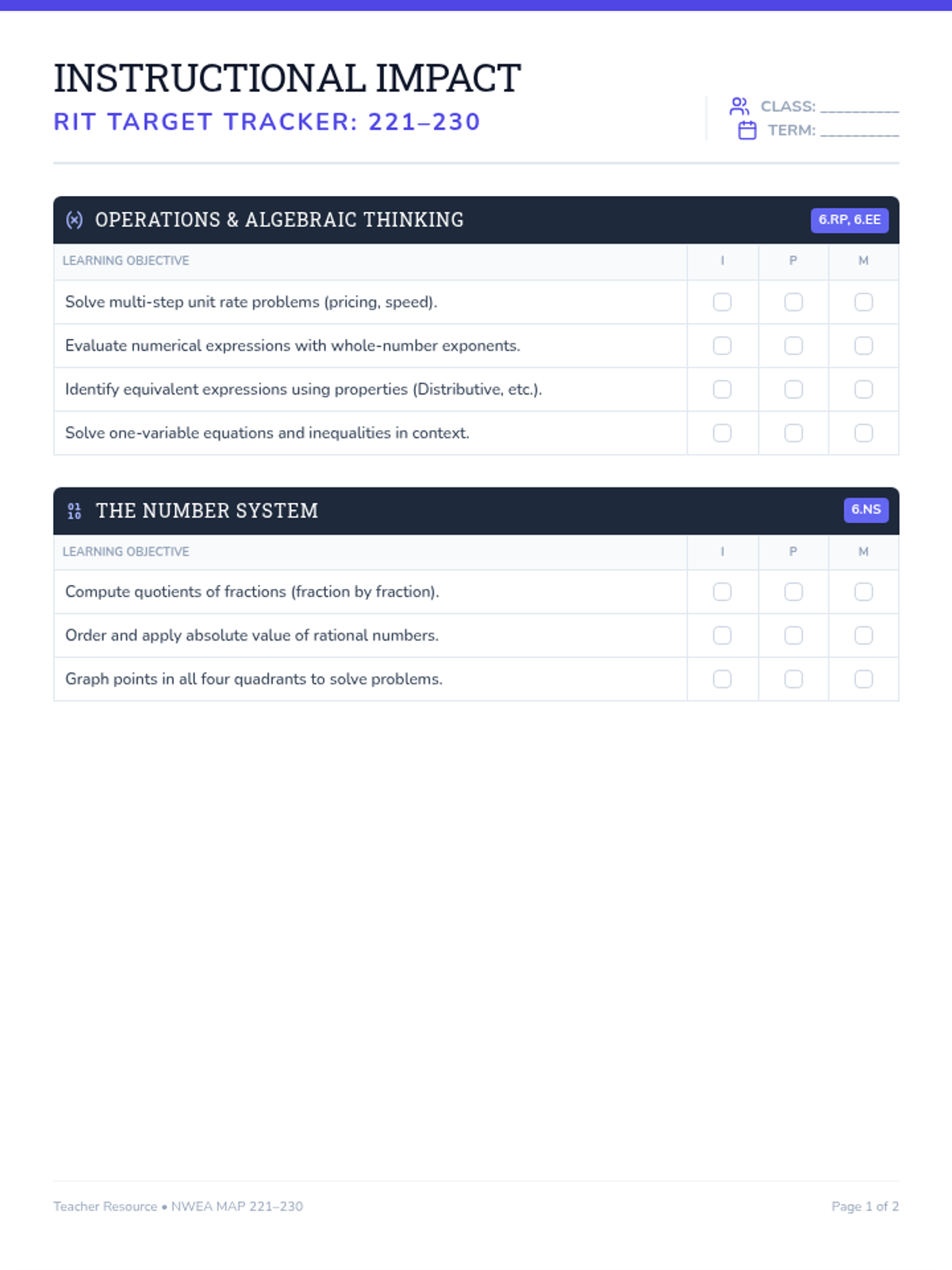
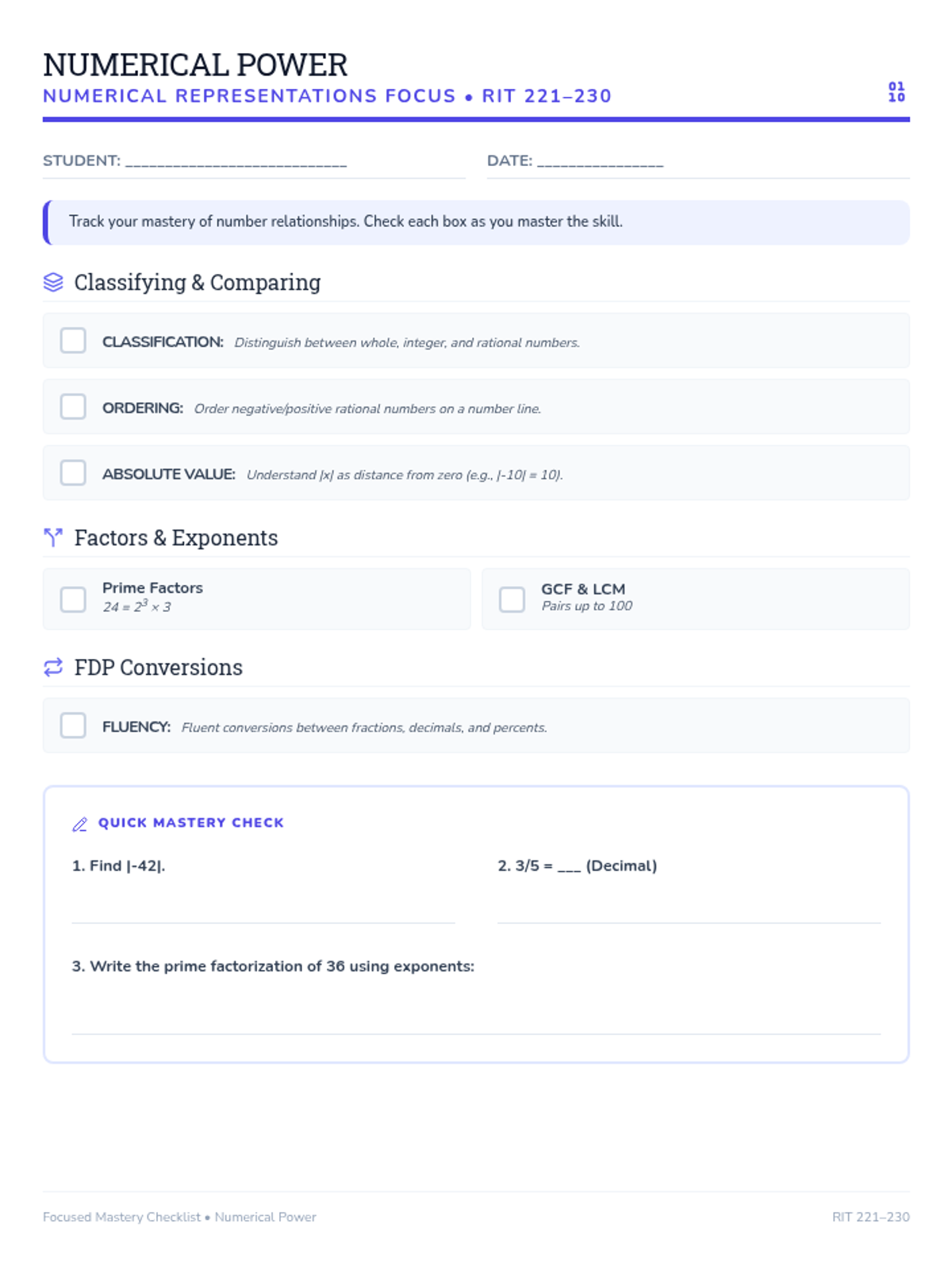
A comprehensive guide for parents and students to navigate the mathematical skills expected in the 221-230 NWEA MAP RIT range, featuring actionable checklists and home-based practice ideas.
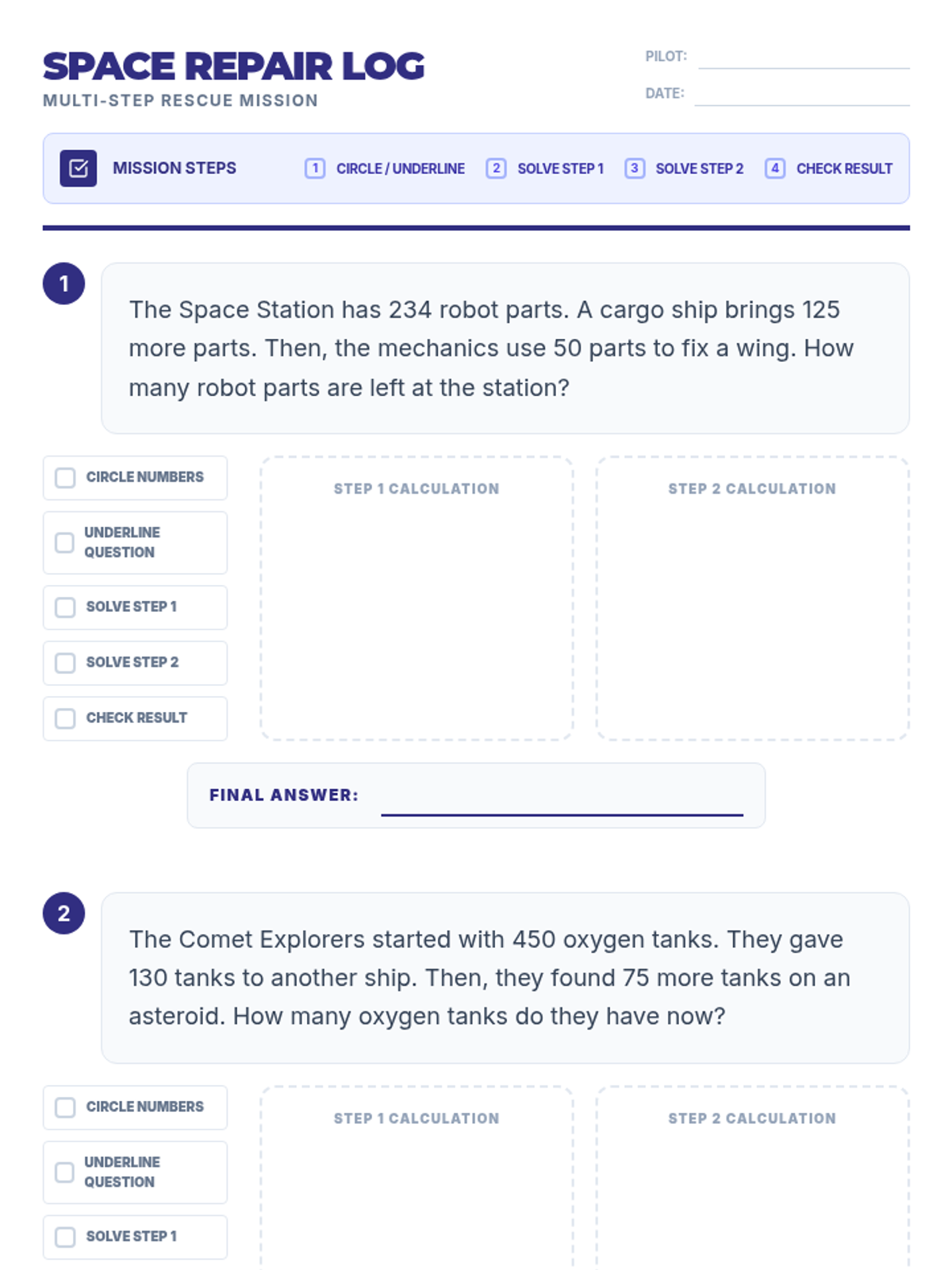
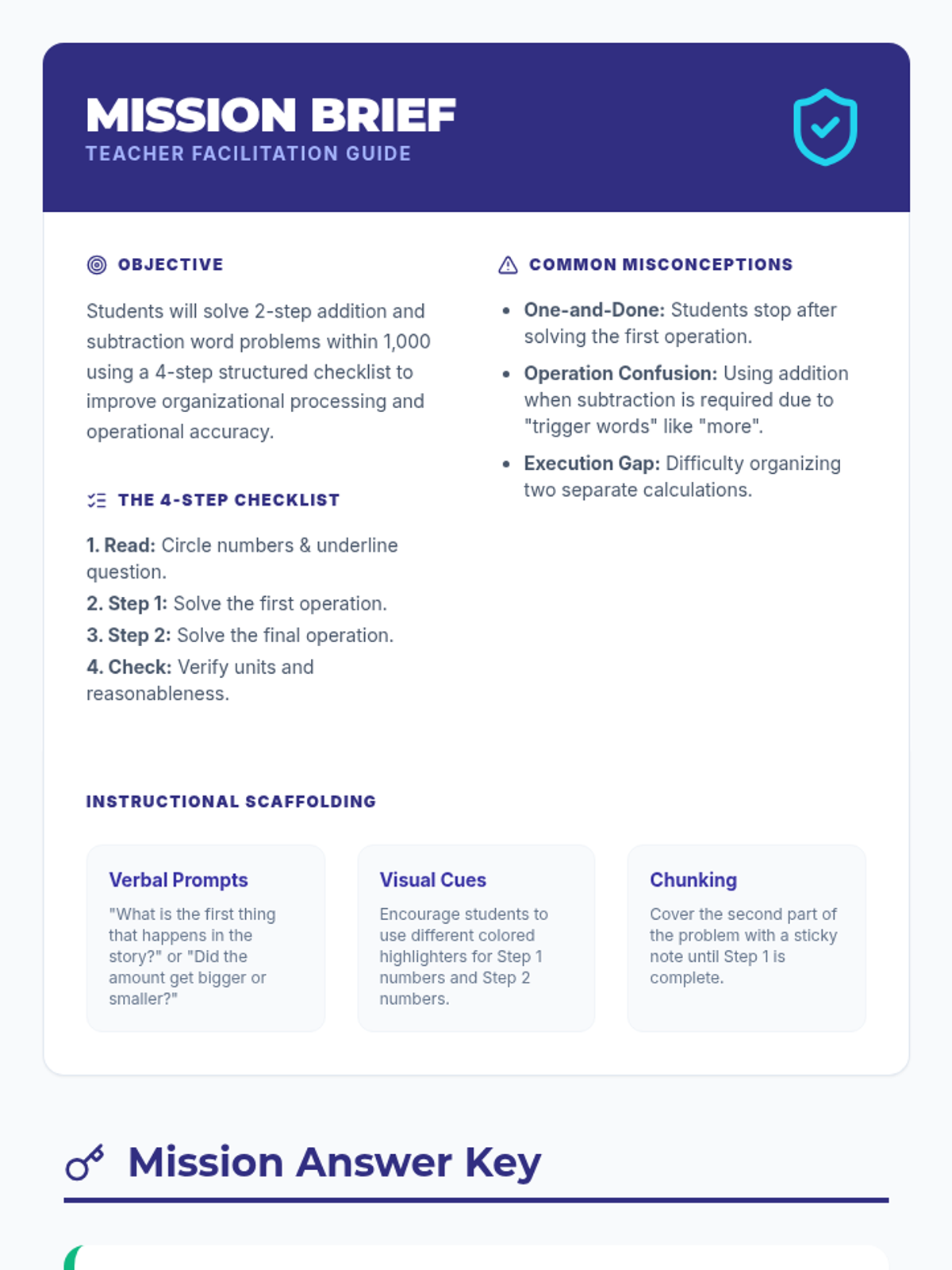
A lesson focused on solving multi-step addition and subtraction word problems using a structured checklist approach, specifically designed for students with IEPs.
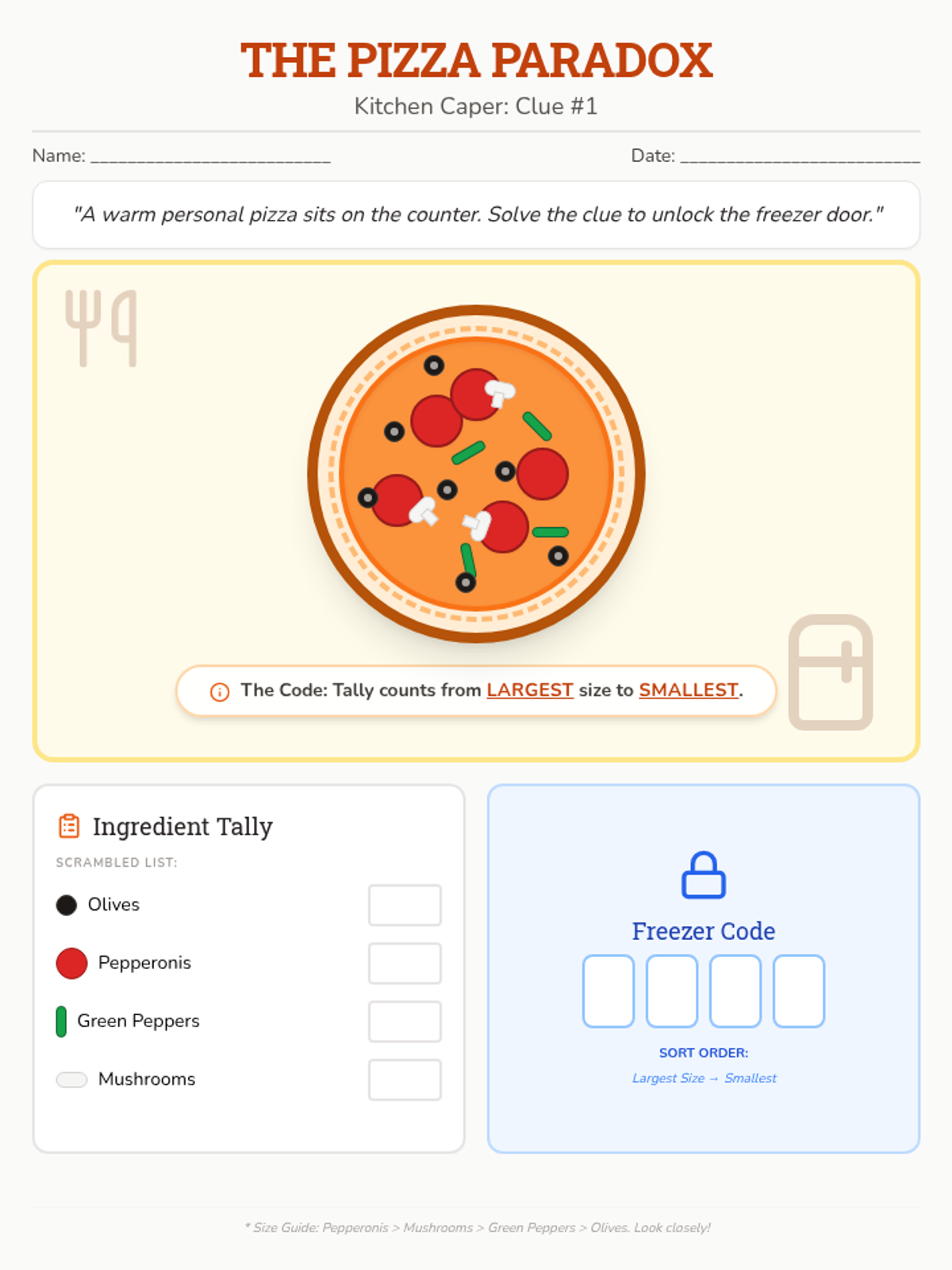
A mini-mystery centered around a kitchen scene where students use observation and logic to solve a visual puzzle.
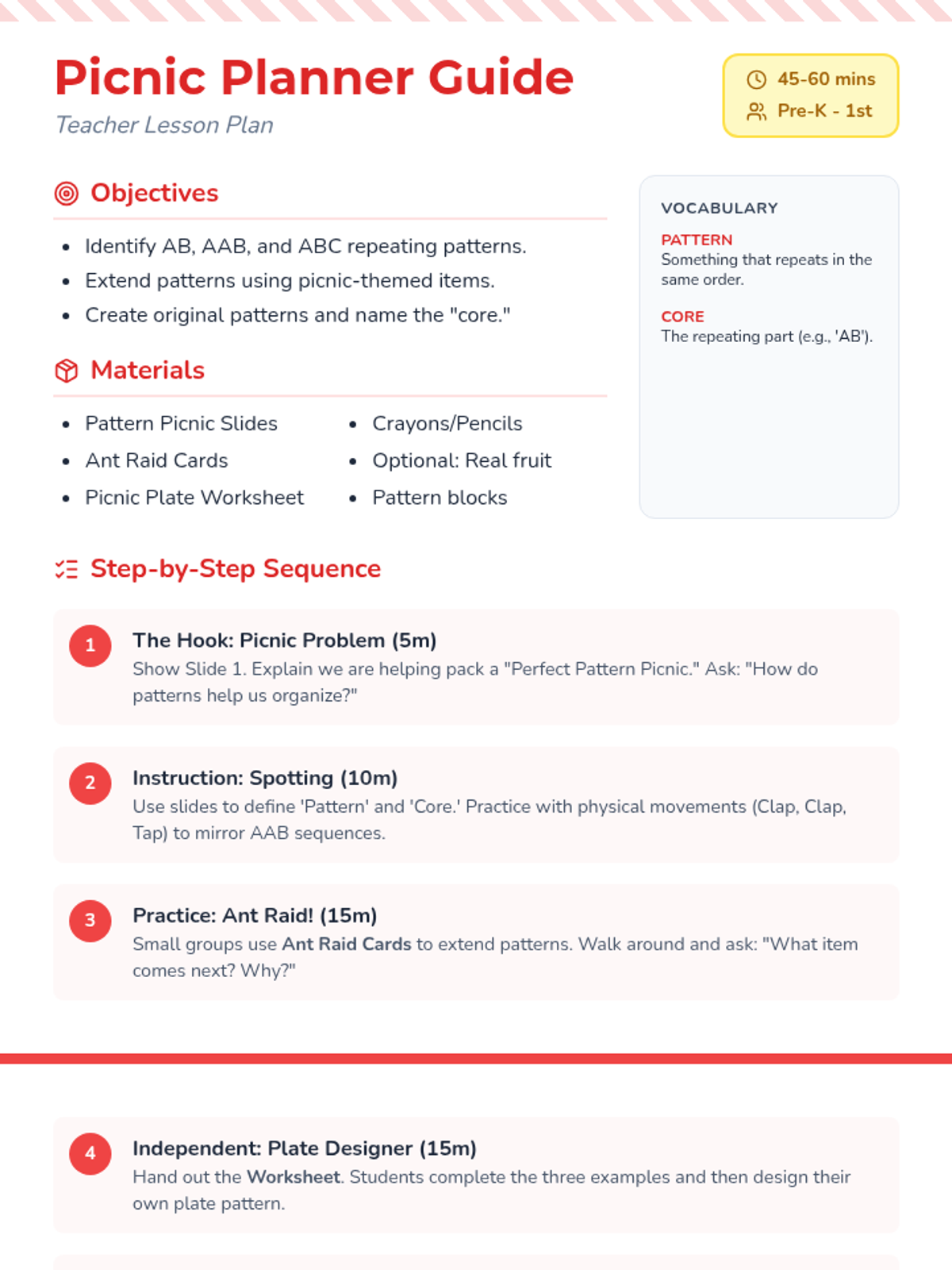
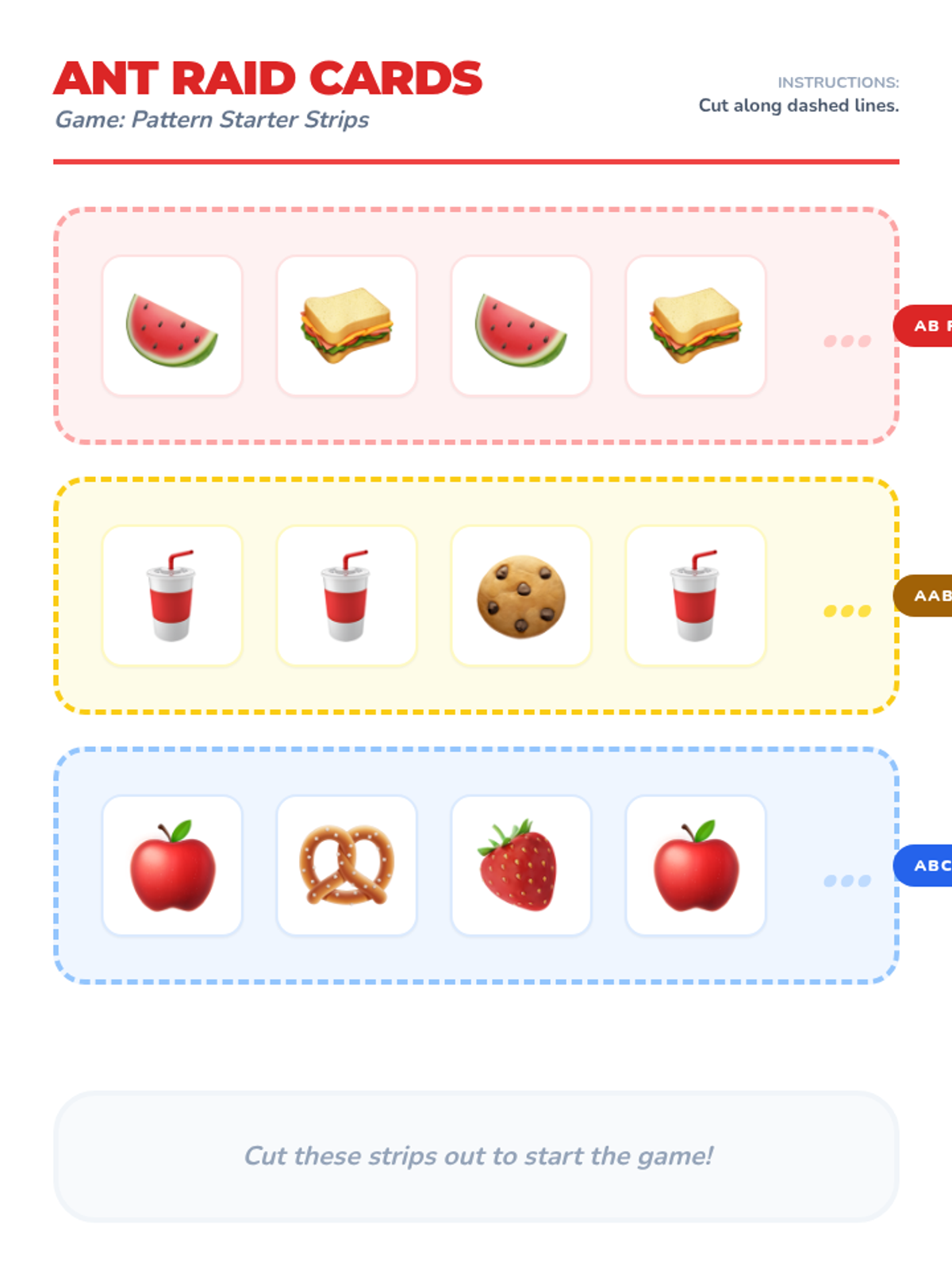
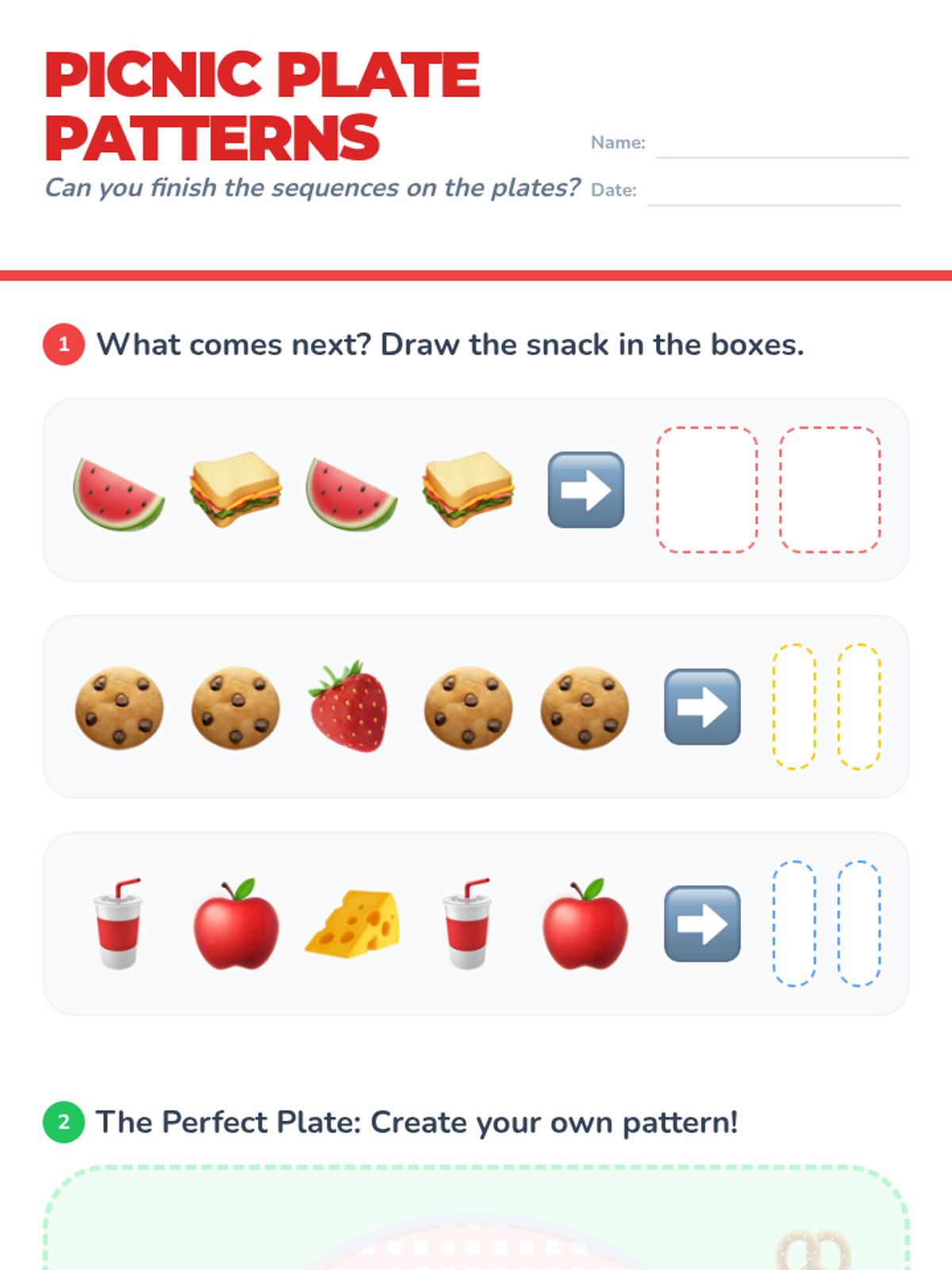
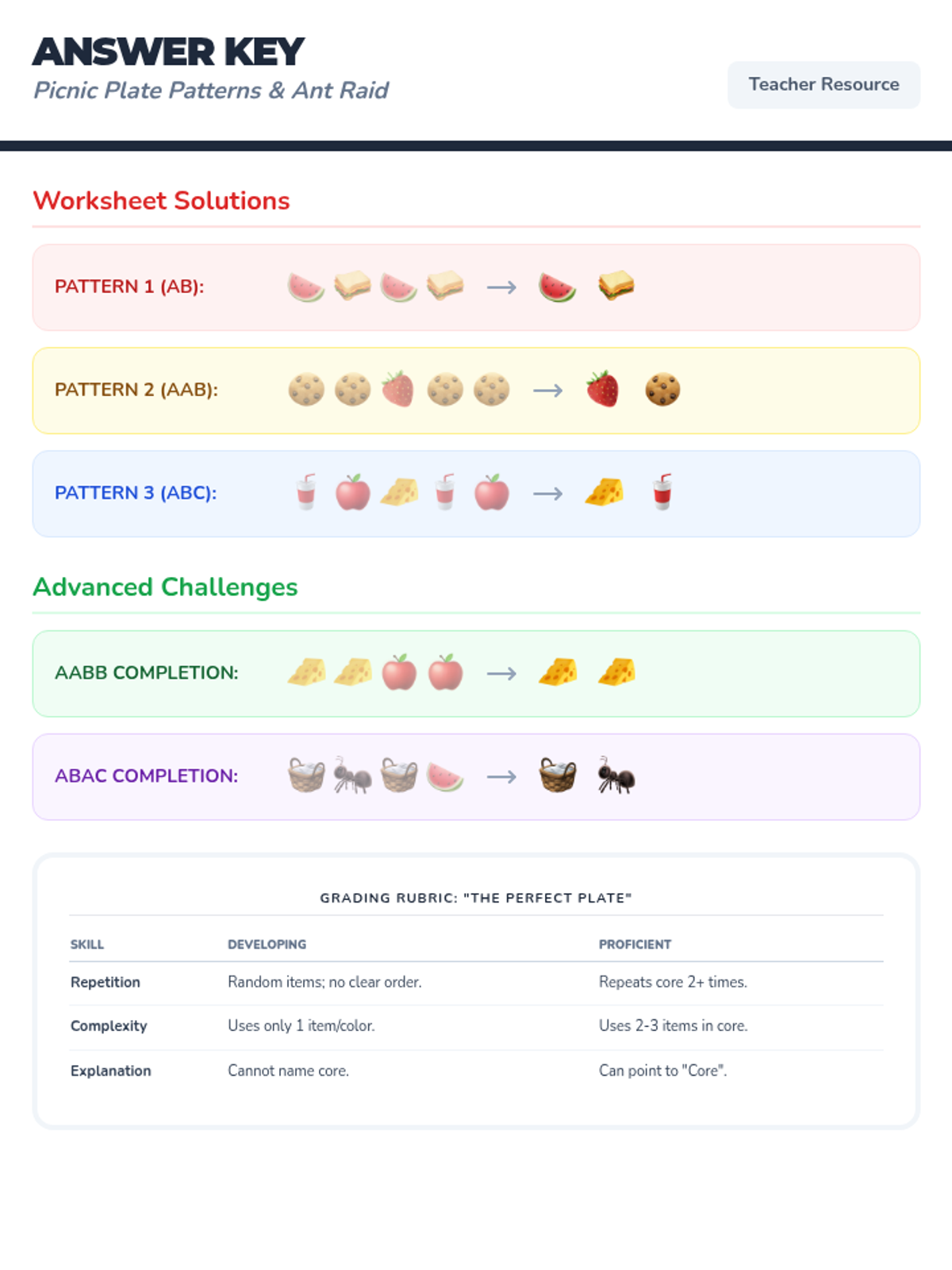
A hands-on lesson where students explore visual patterns using picnic-themed items to build early algebraic thinking skills. Students identify, extend, and create their own sequences using fruits, snacks, and picnic gear.
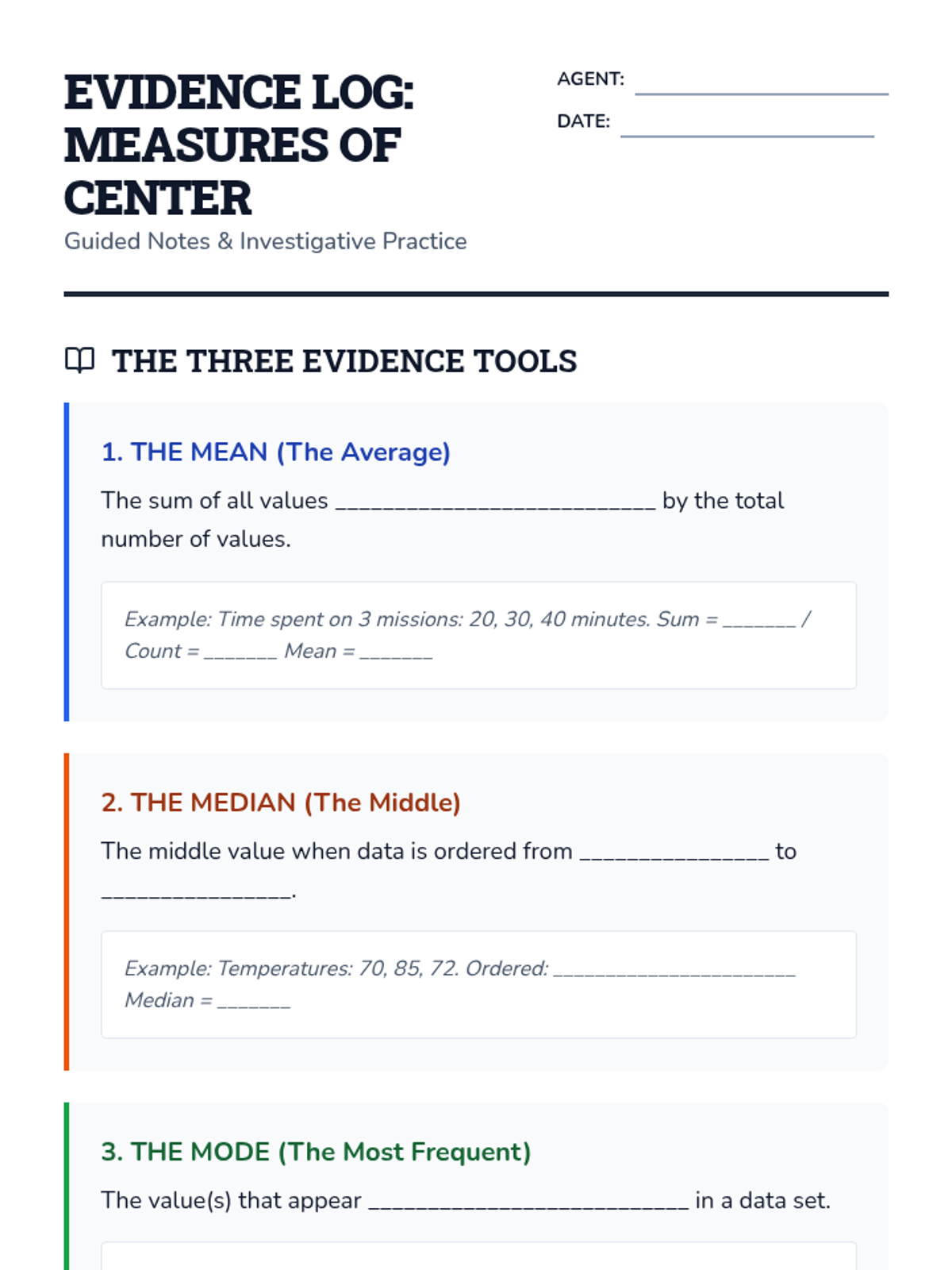
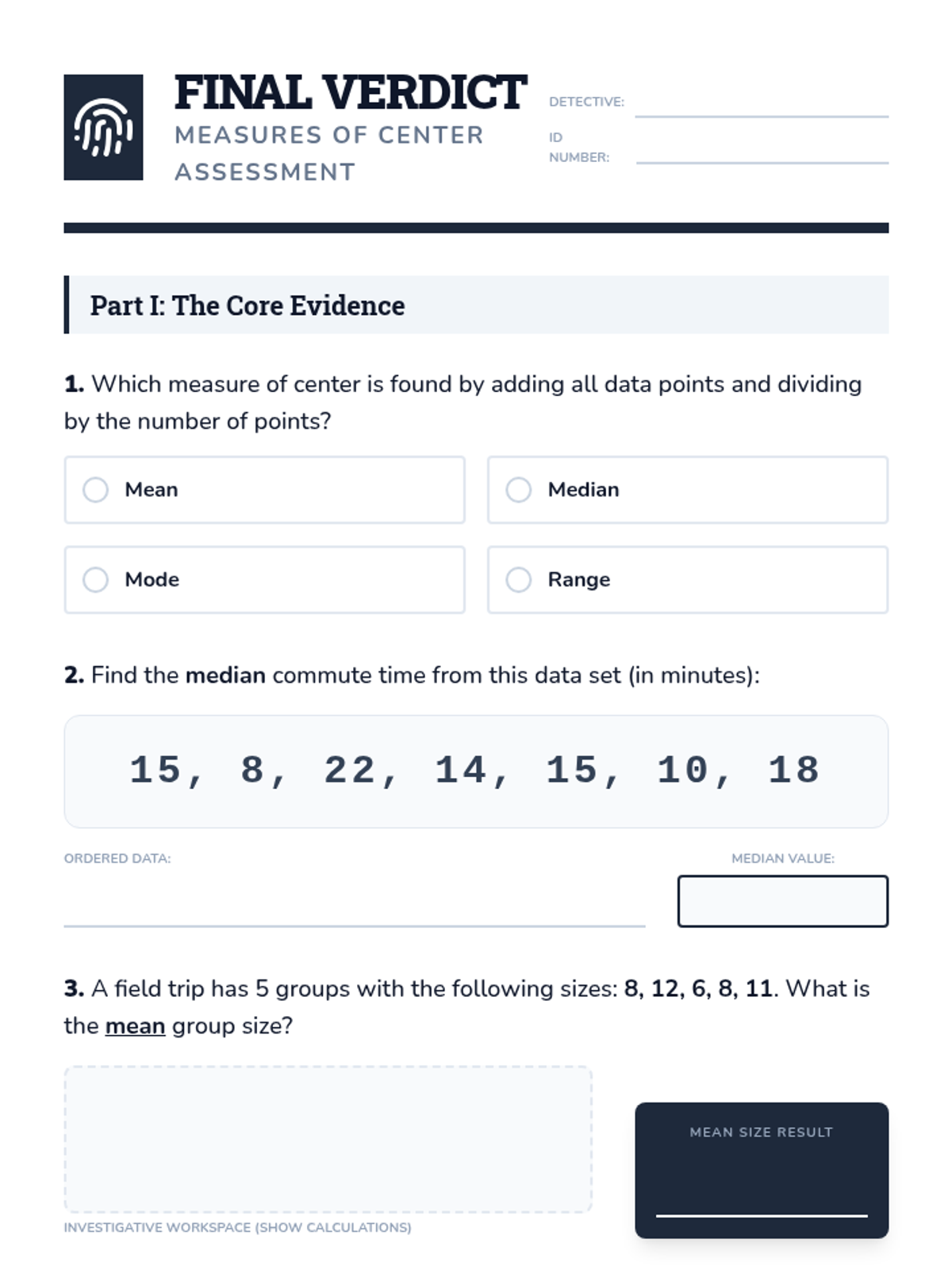
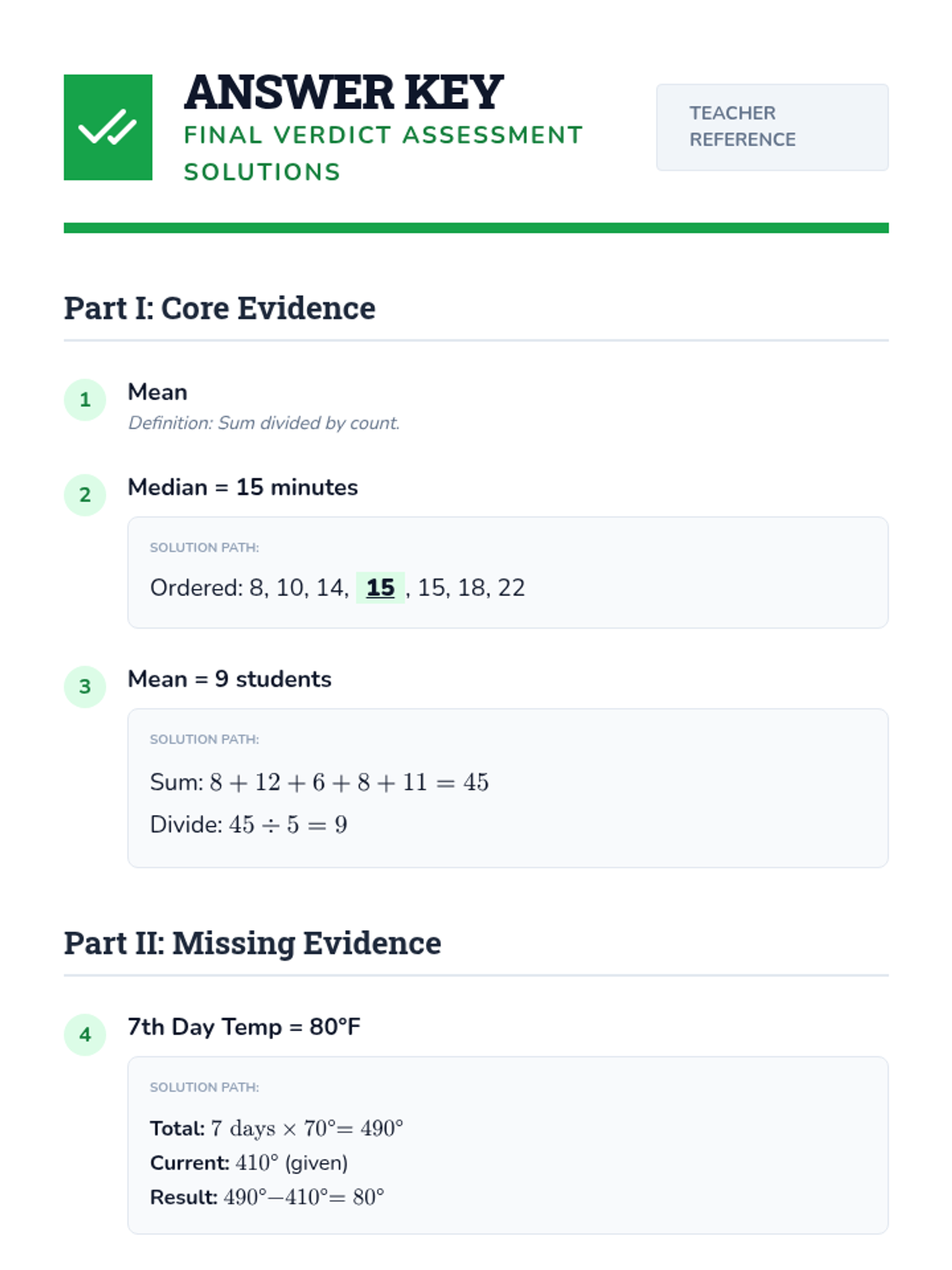
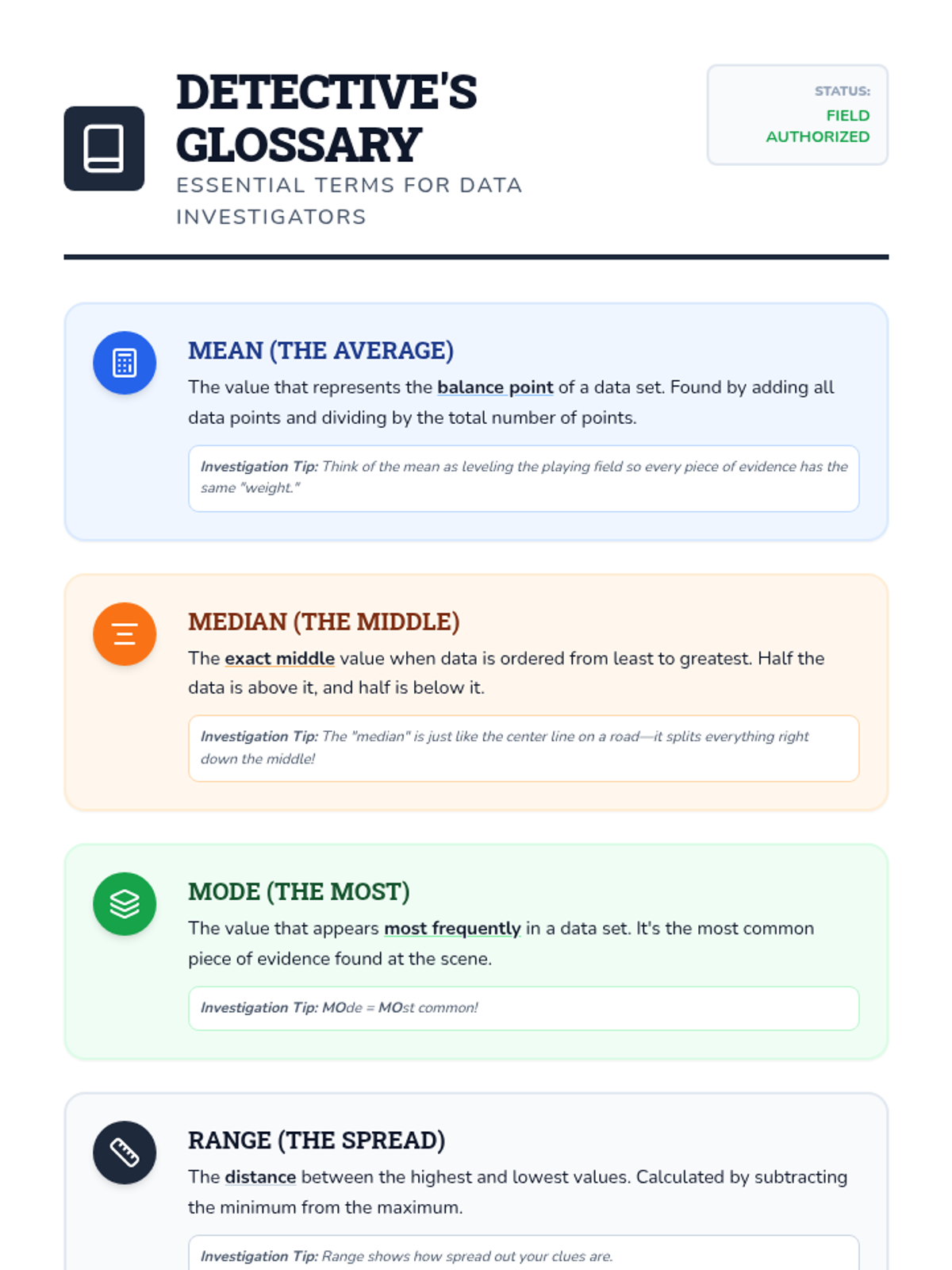
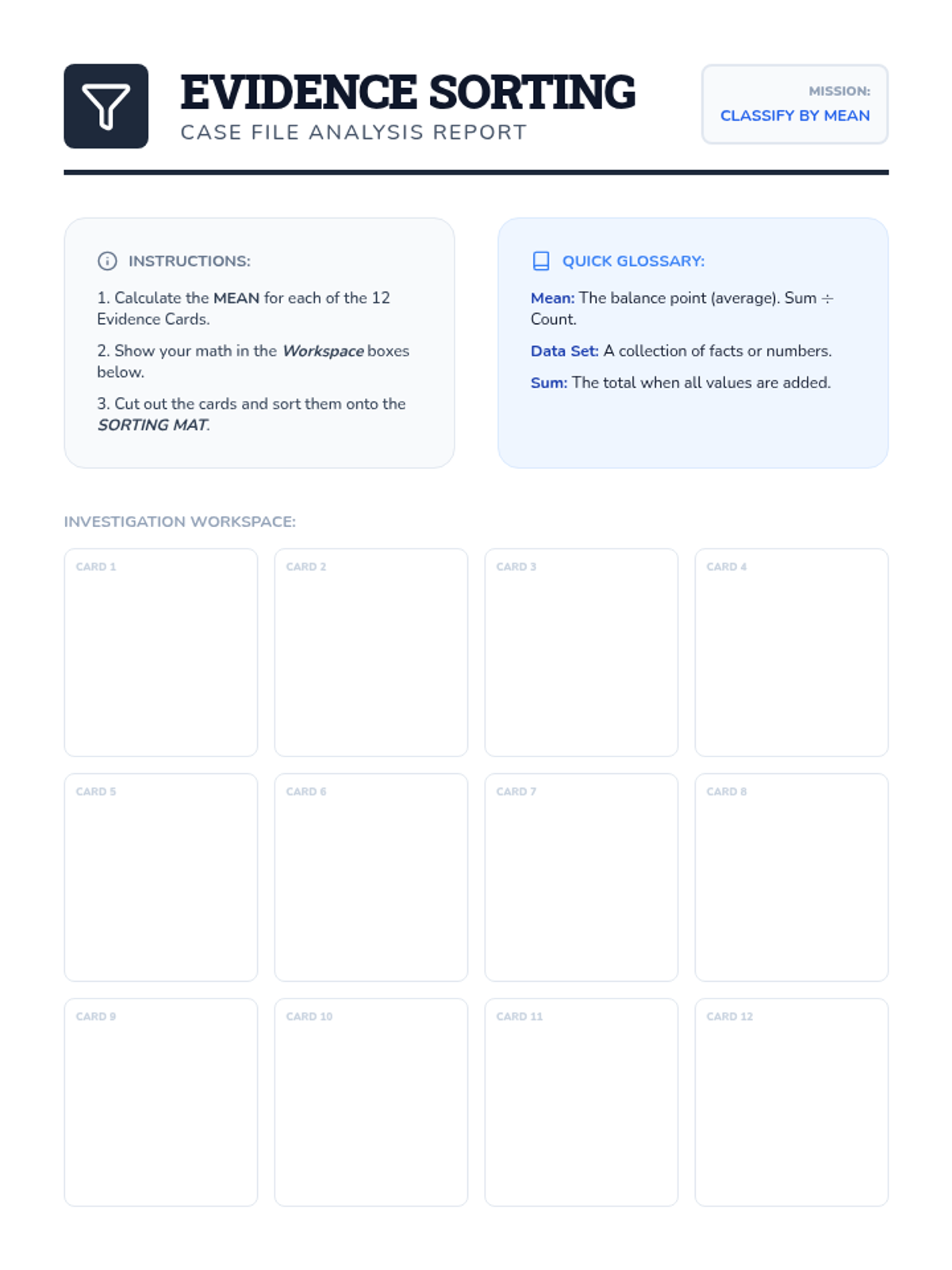
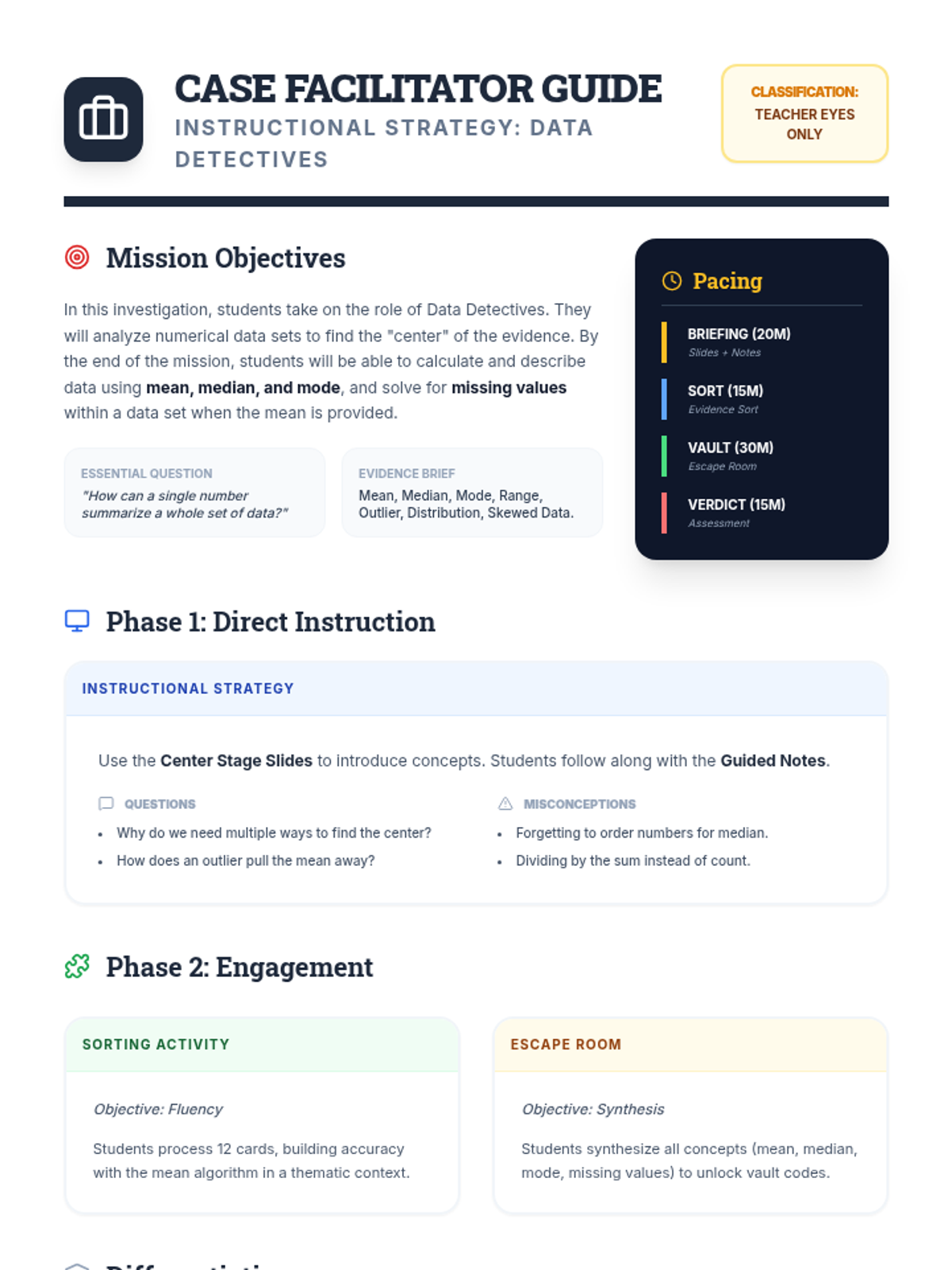
A comprehensive lesson on measures of center (mean, median, mode) where students learn to summarize numerical data and find missing values using time, temperature, and group size data.
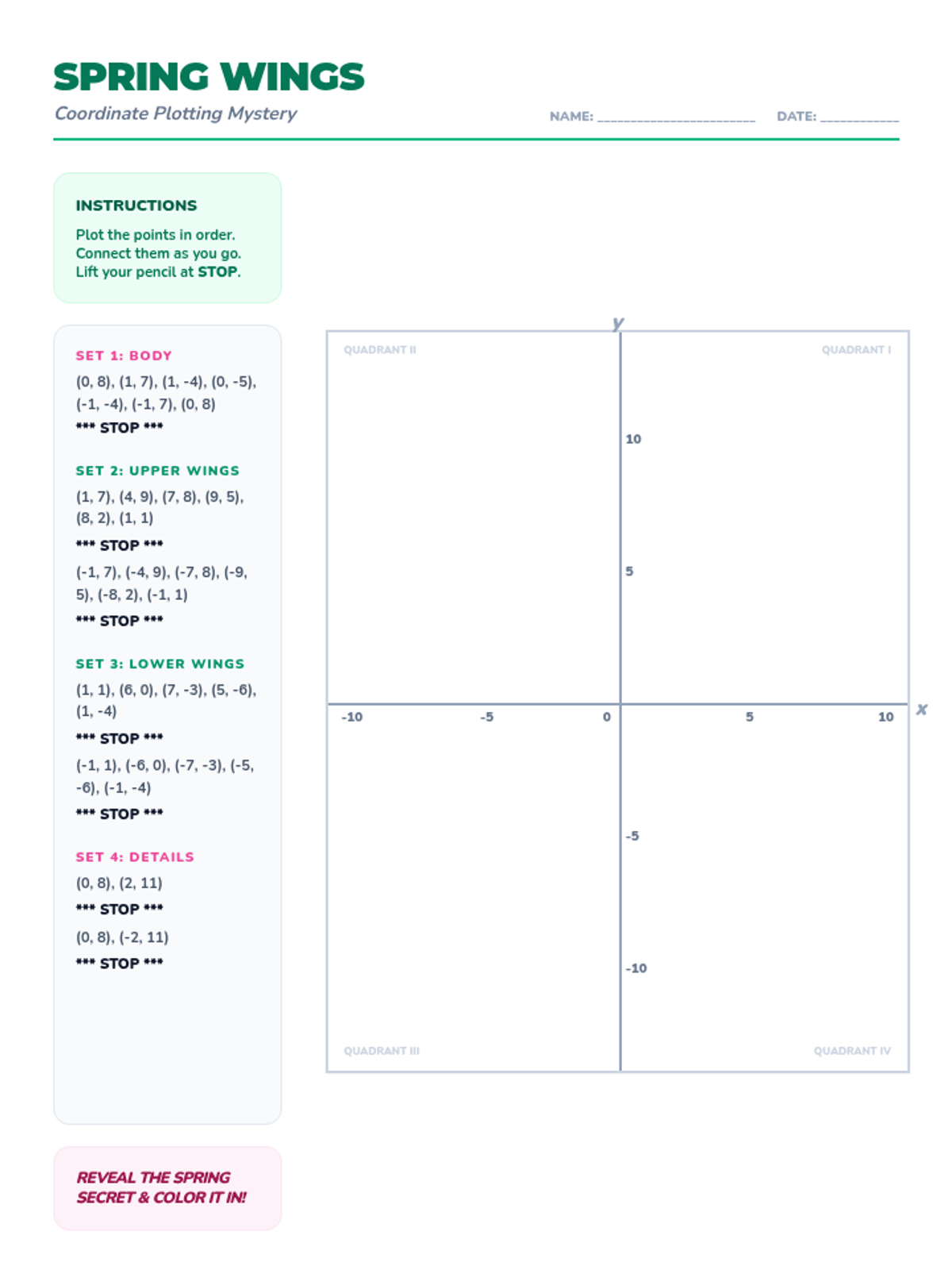
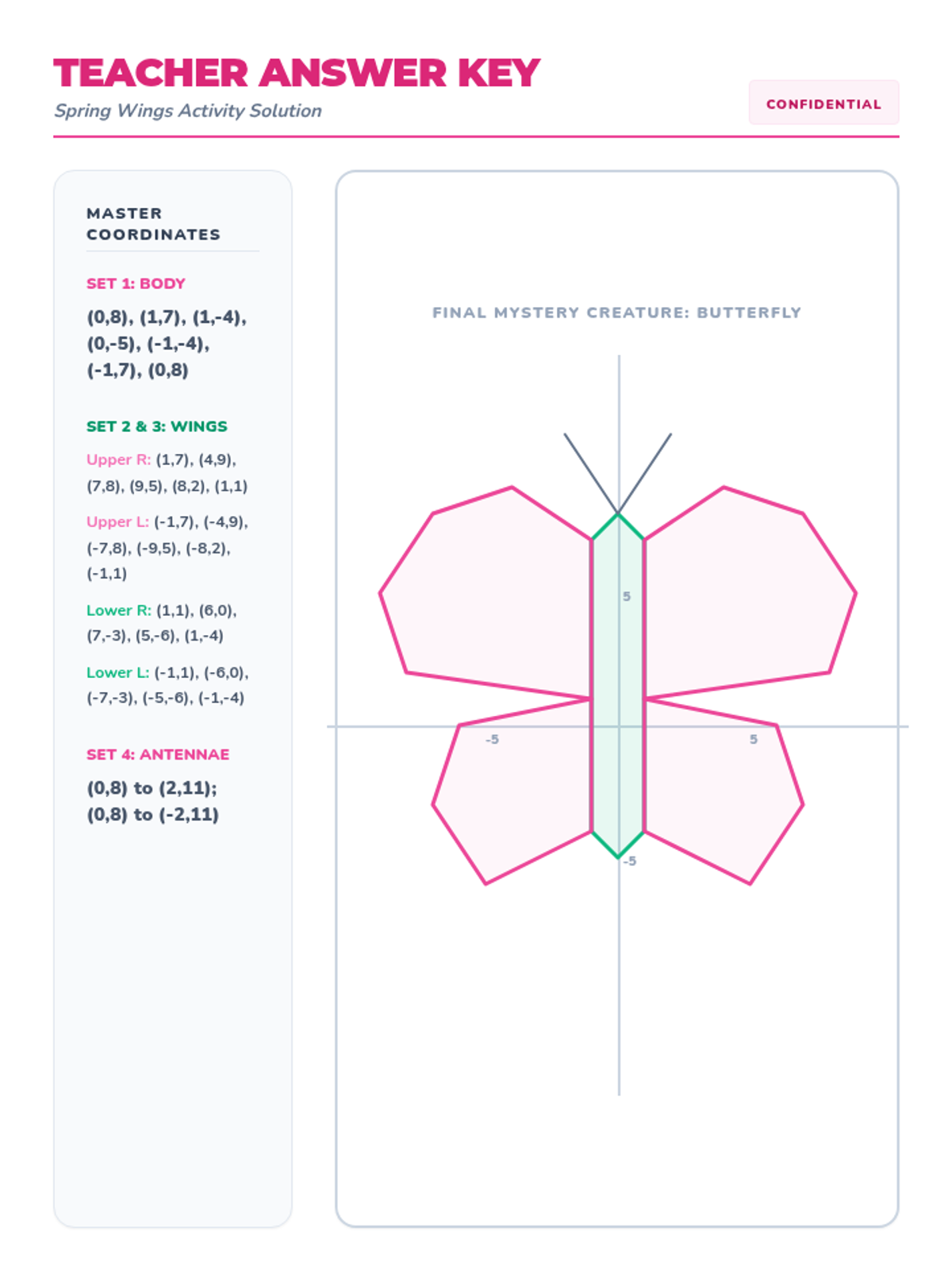
A coordinate plane lesson where students plot integer coordinates in four quadrants to reveal a butterfly. The activity combines math precision with creative coloring for a spring-themed classroom experience.
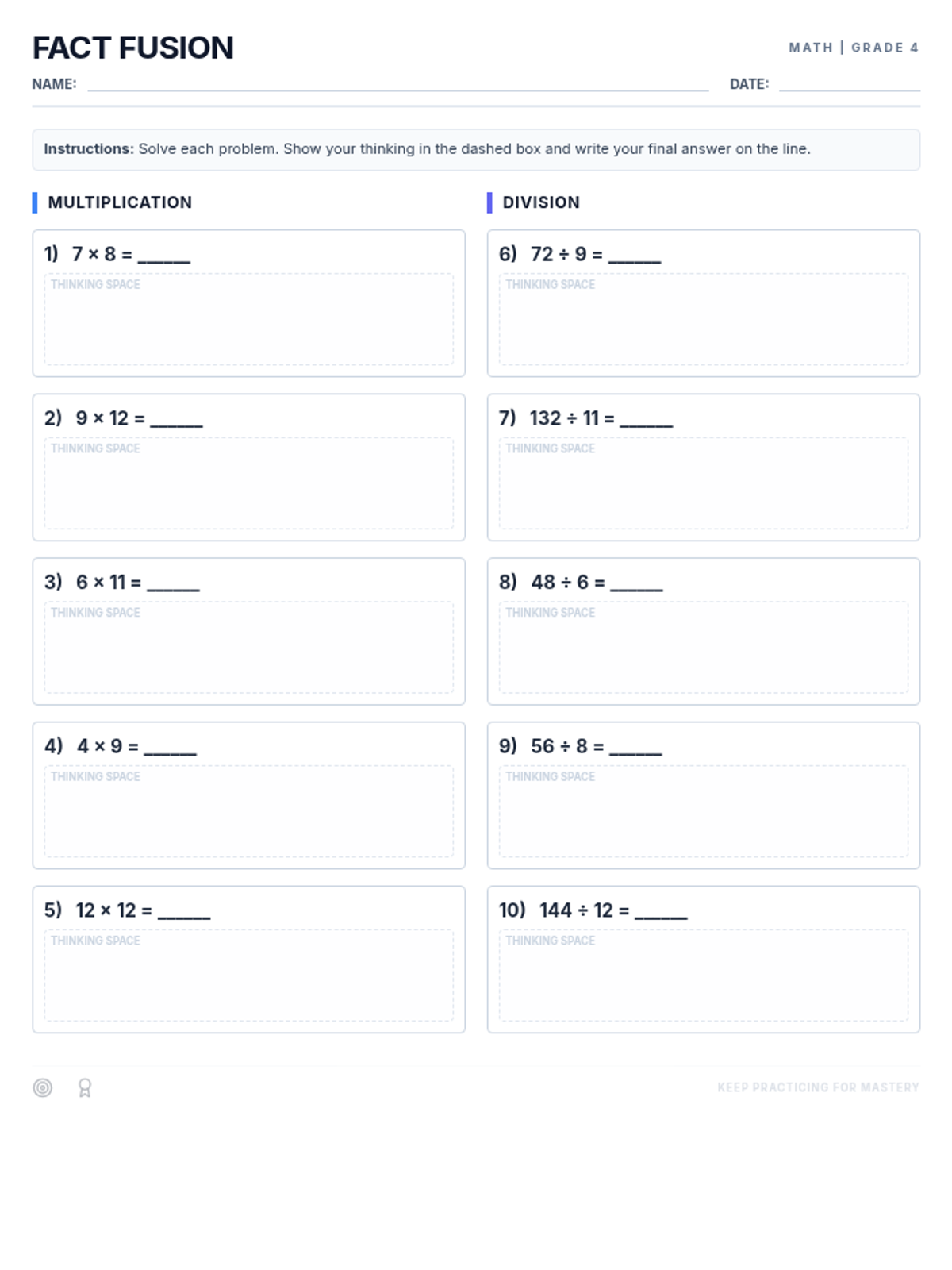
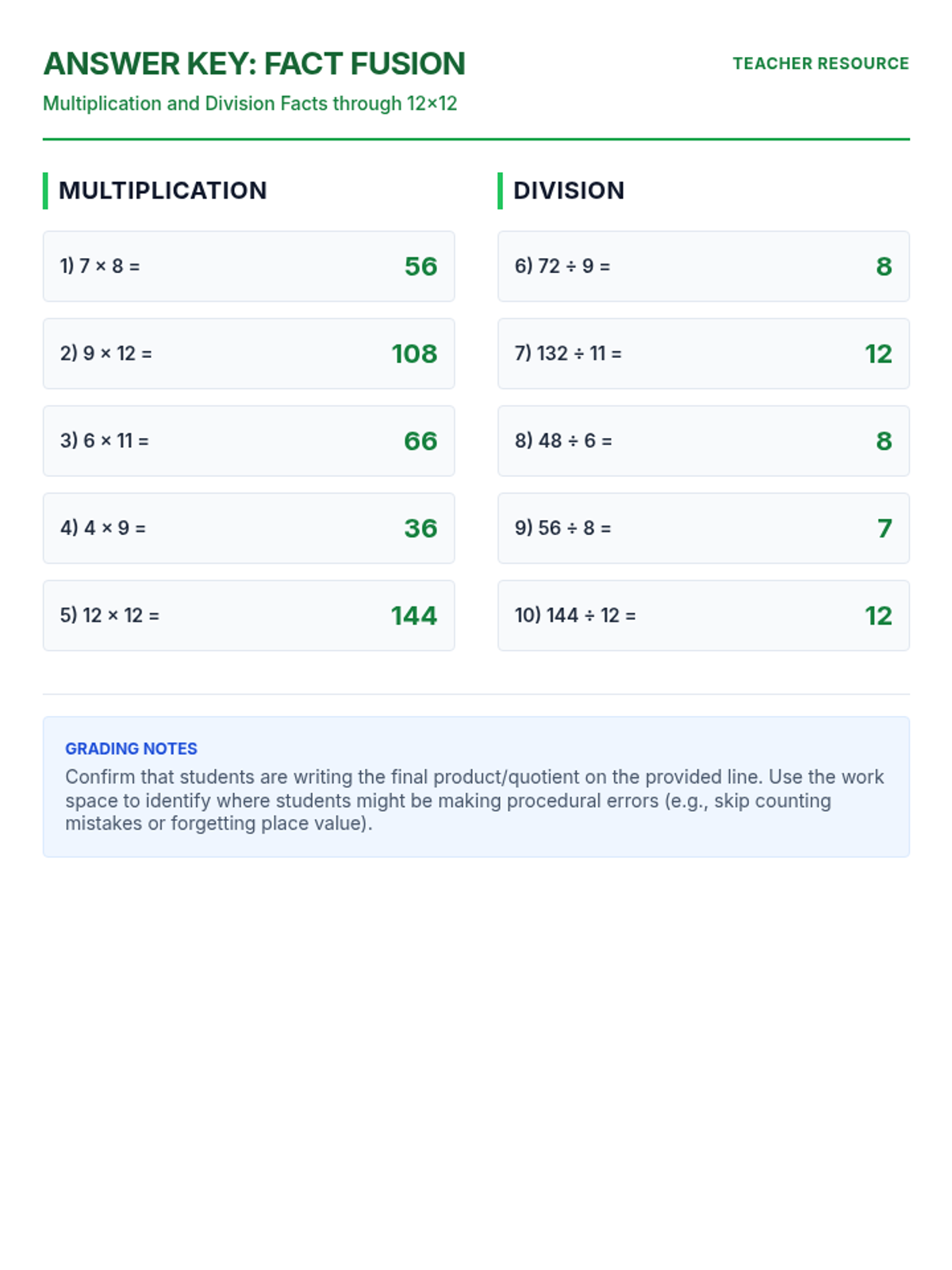
A focused practice session on basic multiplication and division facts up to 12x12. Students will solve five multiplication and five division equations to build fluency.
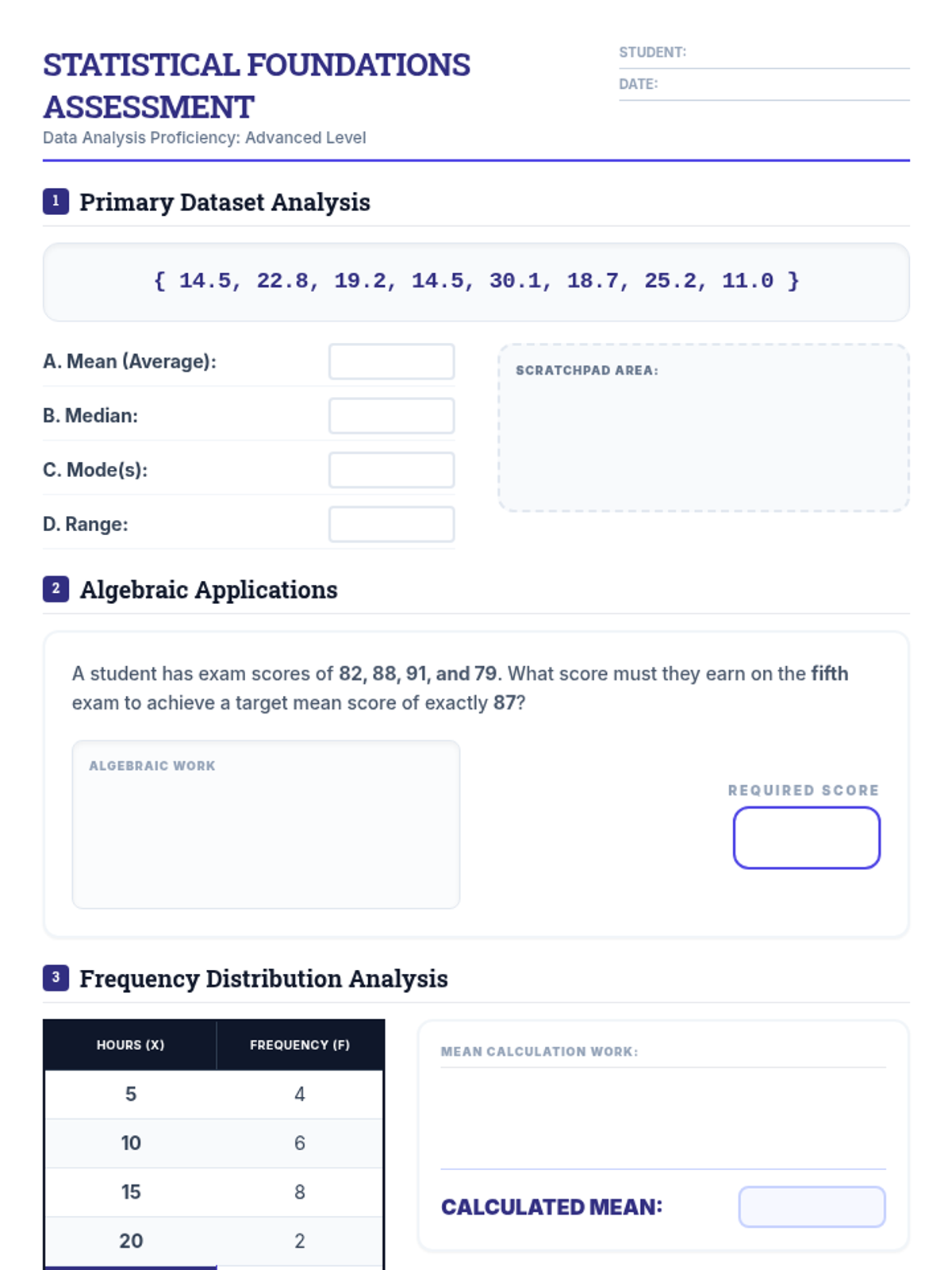
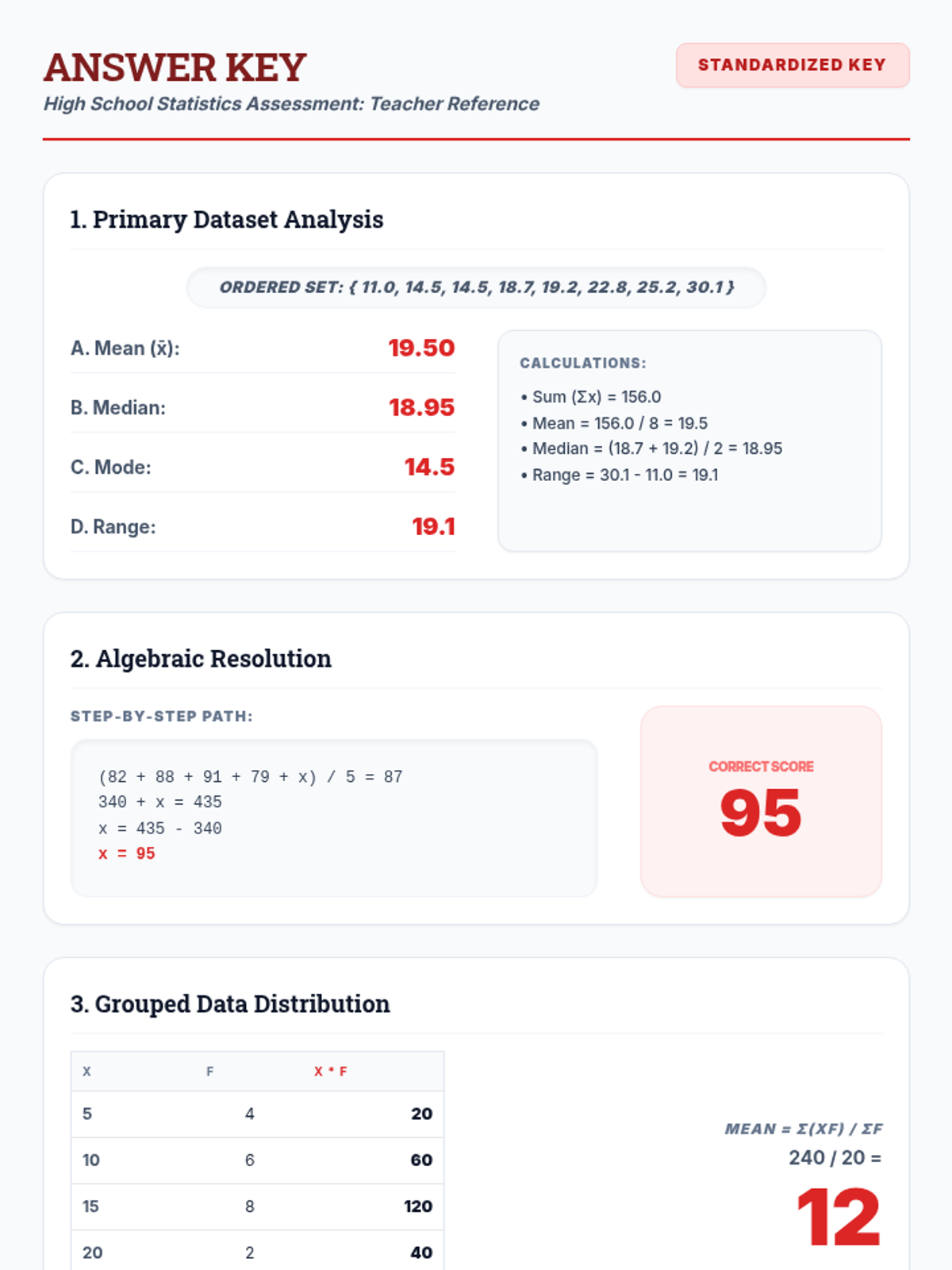
Advanced applications of central tendency and spread, including algebraic problem-solving, weighted means, and the mathematical impact of outliers for high school students.
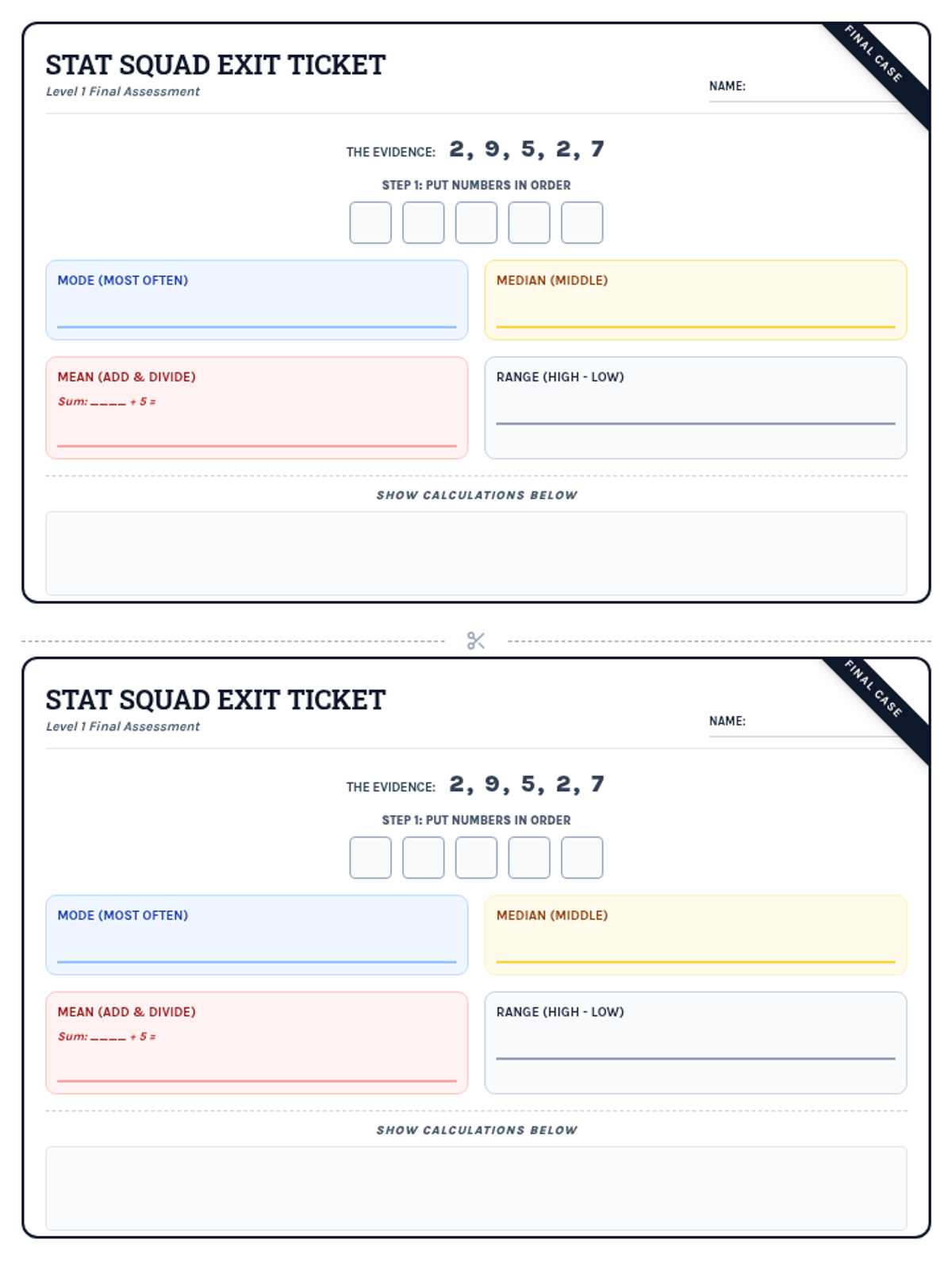
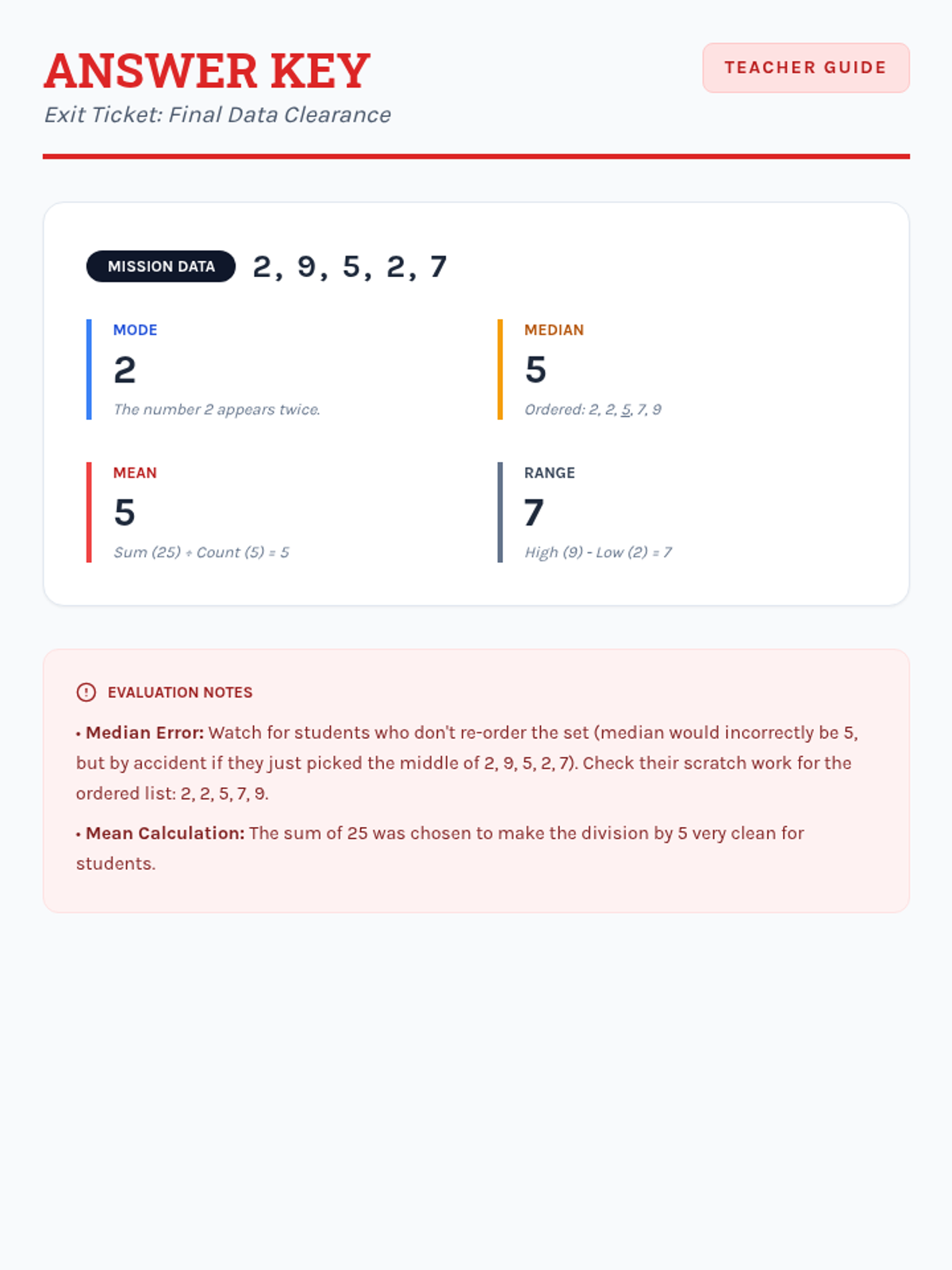
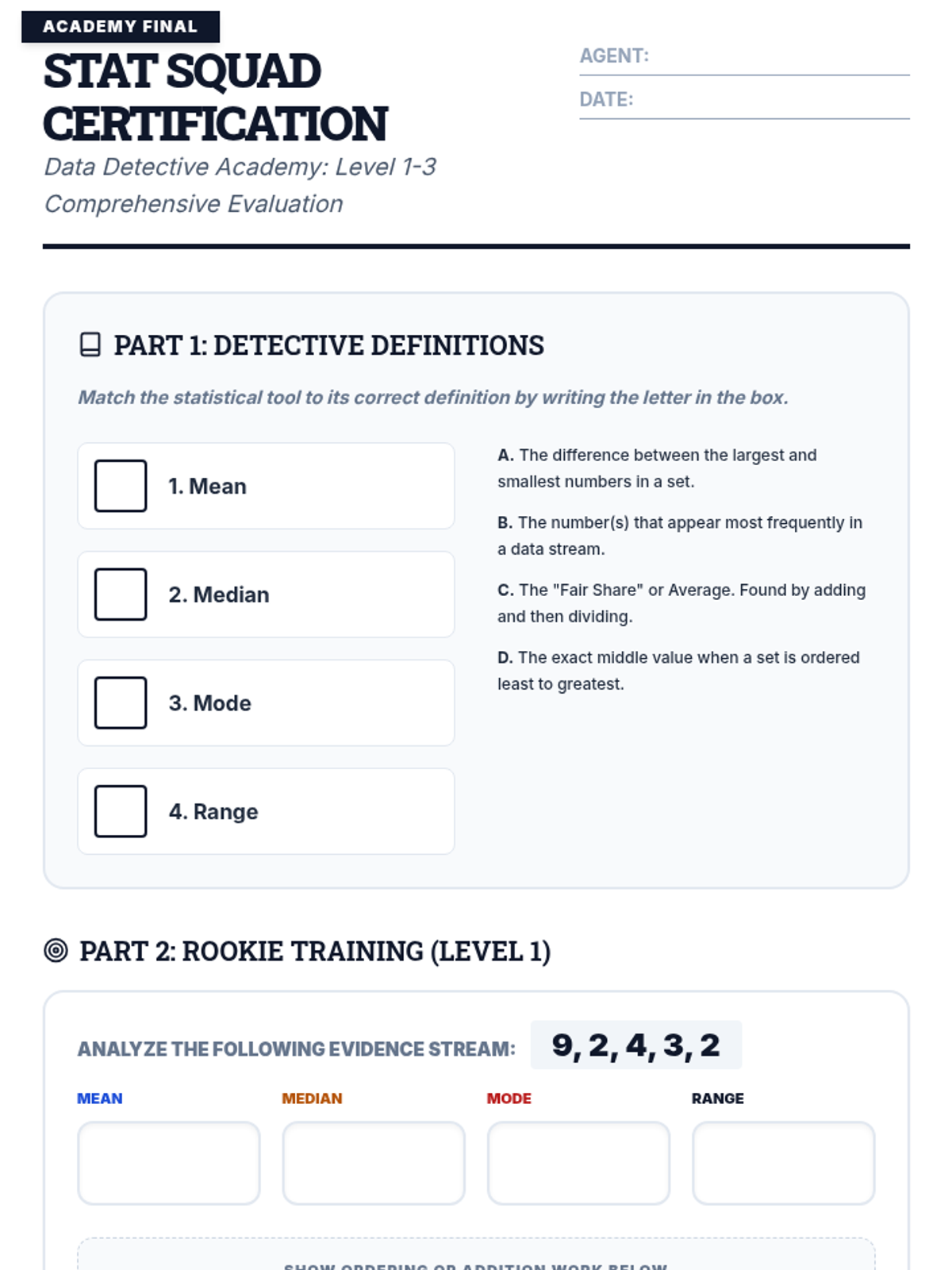
A comprehensive assessment covering Level 1, Level 2, and Level 3 data analysis, designed to evaluate mastery of mean, median, mode, and range in both numerical and narrative contexts.
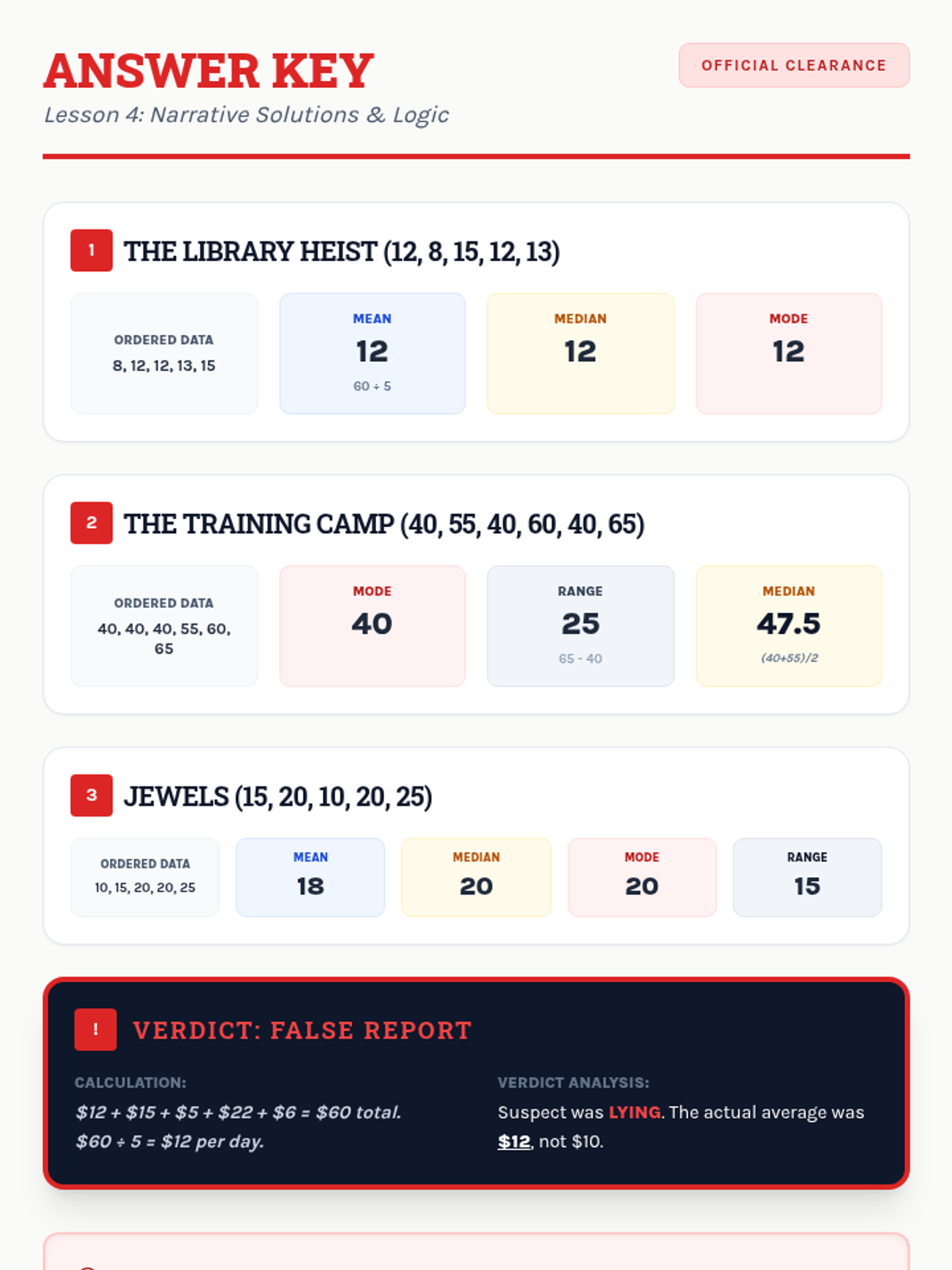
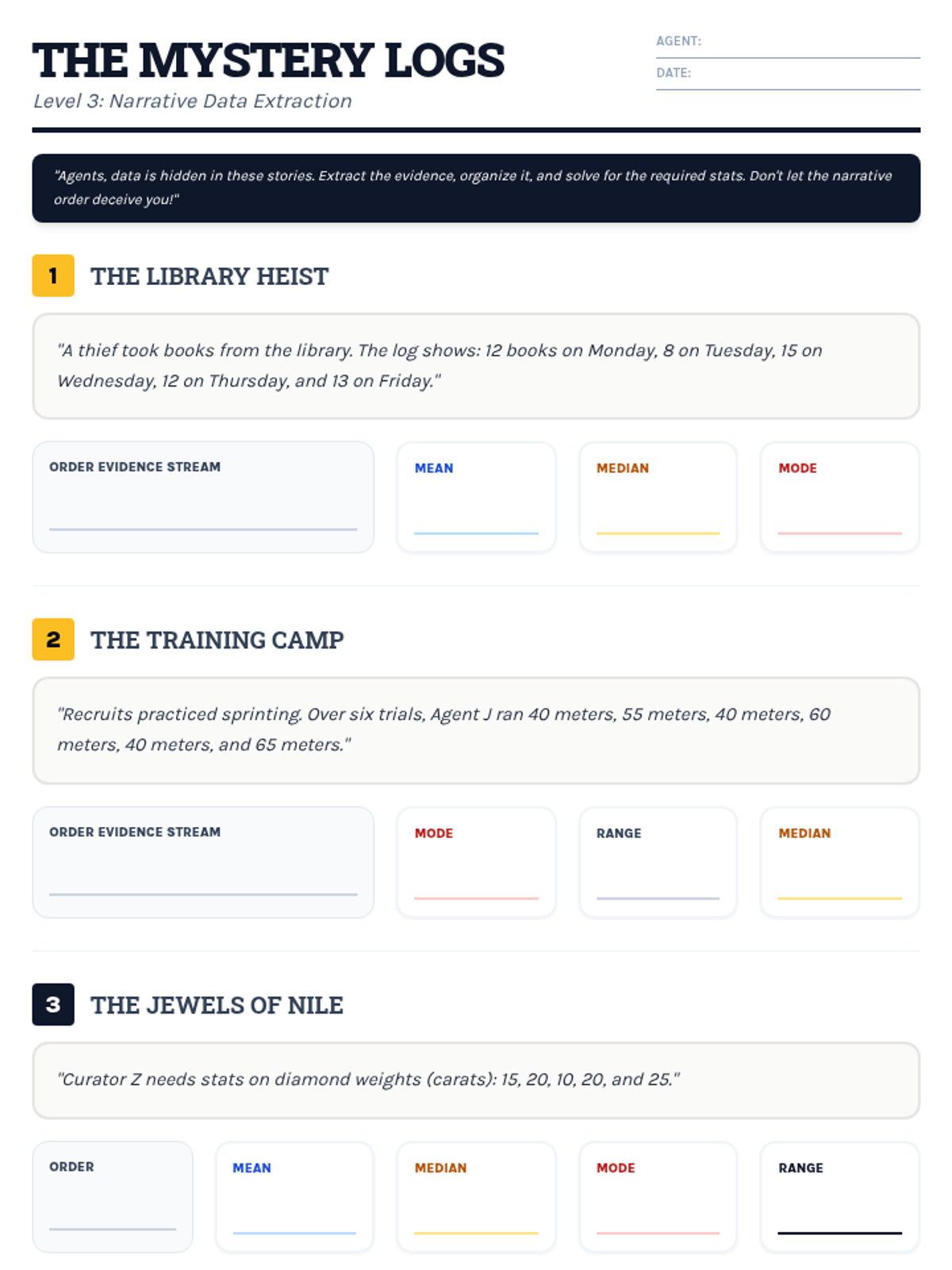
Students interpret and solve word problems involving mean, median, mode, and range, focusing on extracting data from narrative contexts and real-world scenarios.
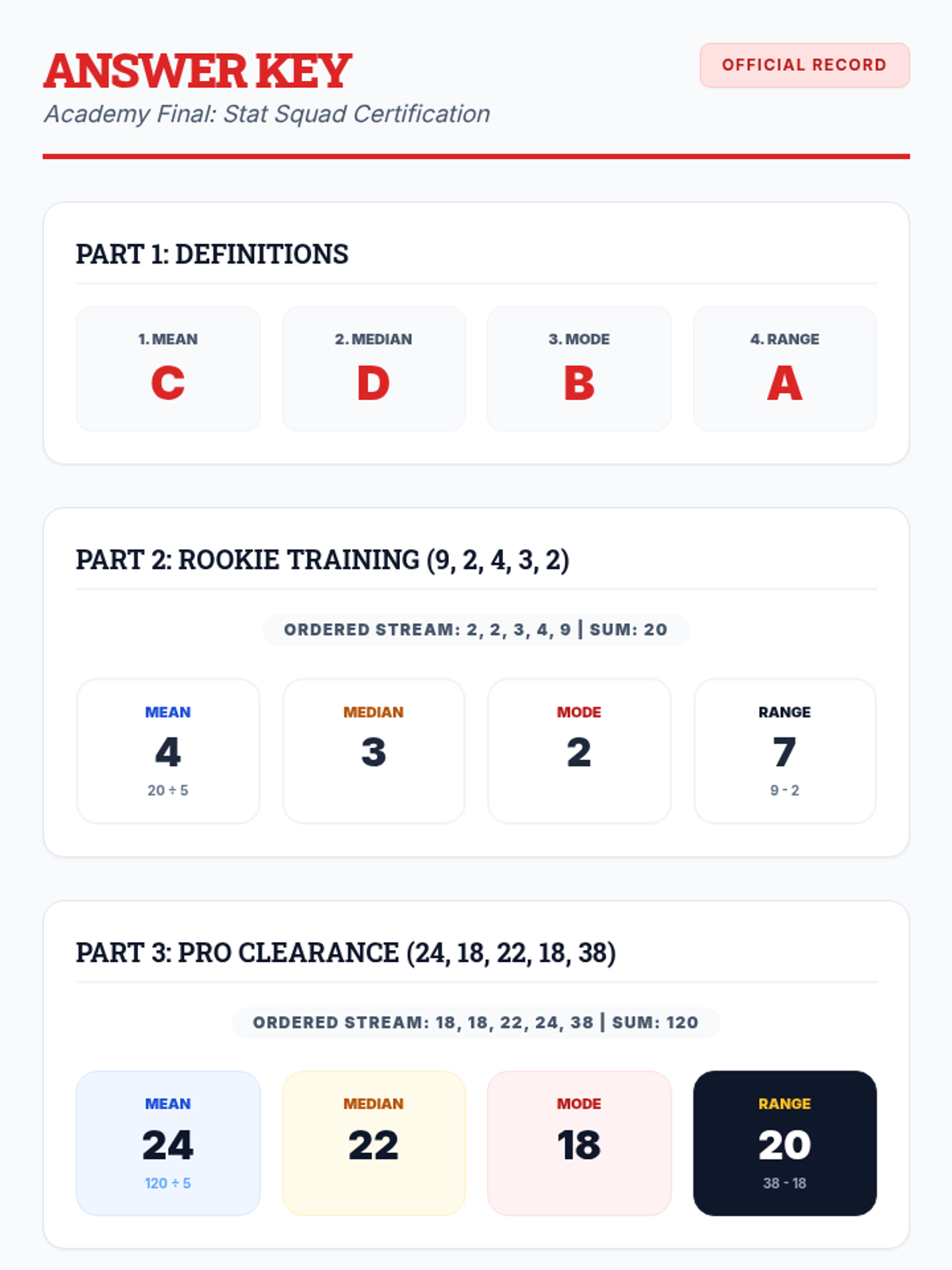
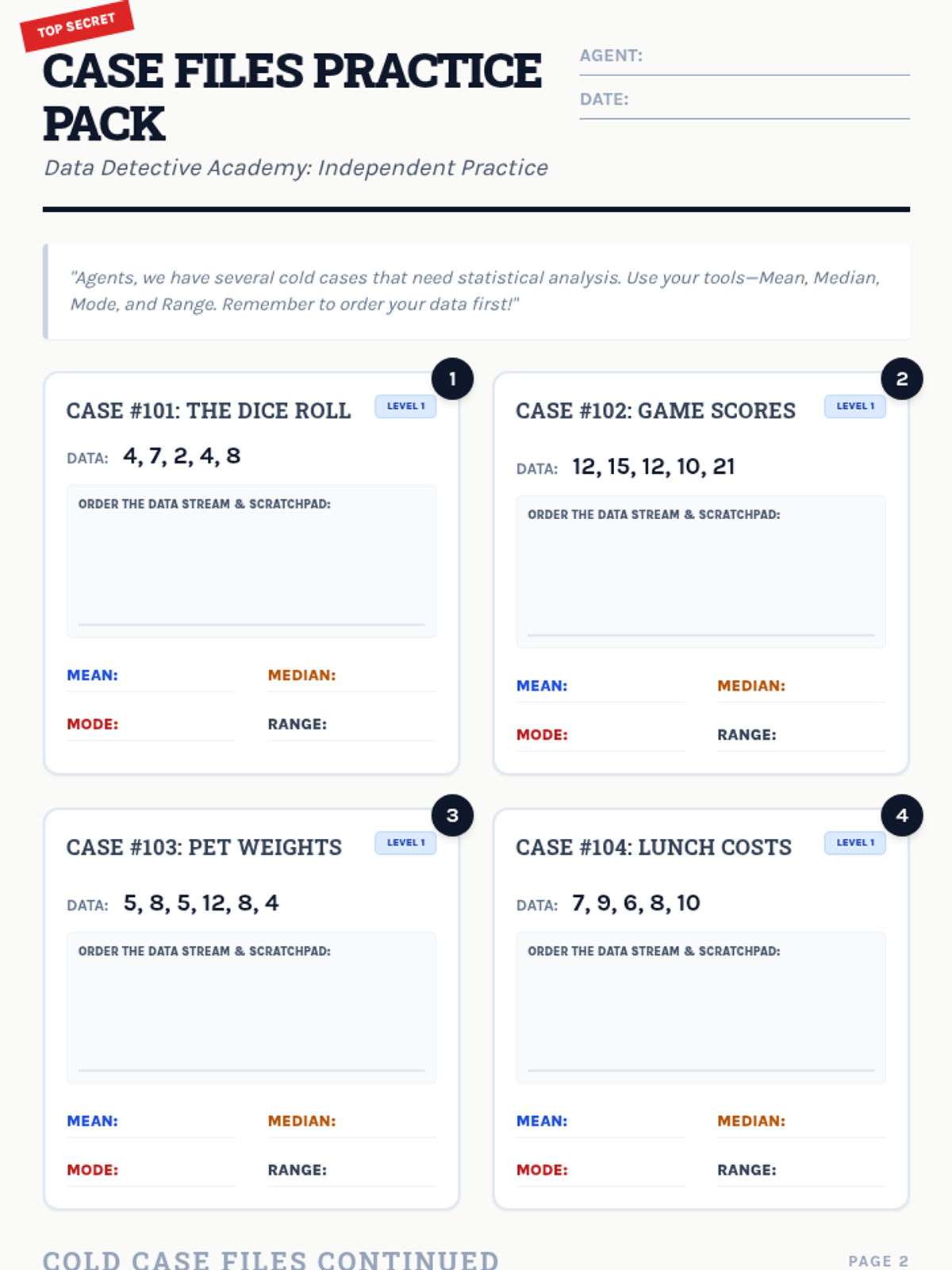
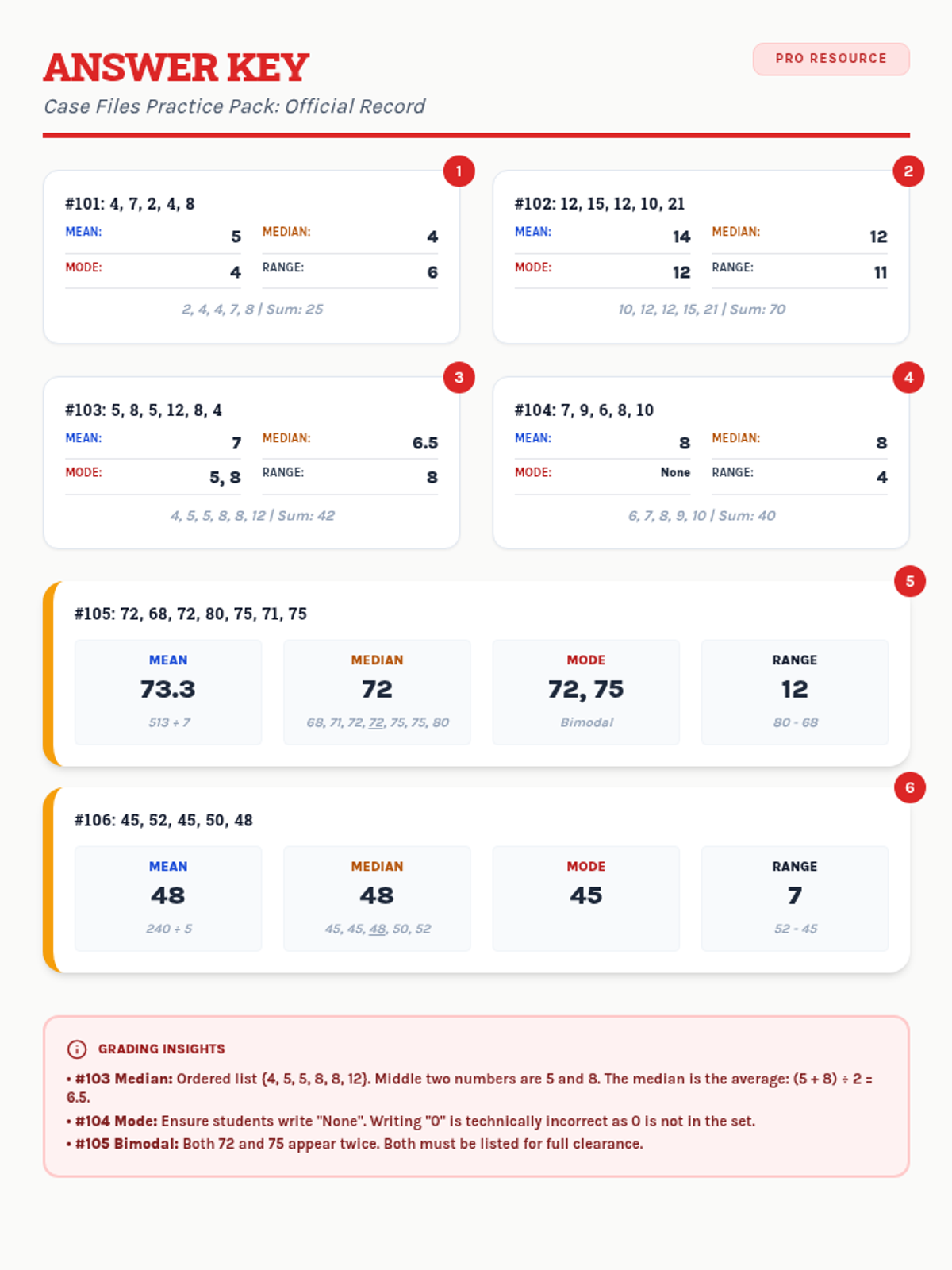
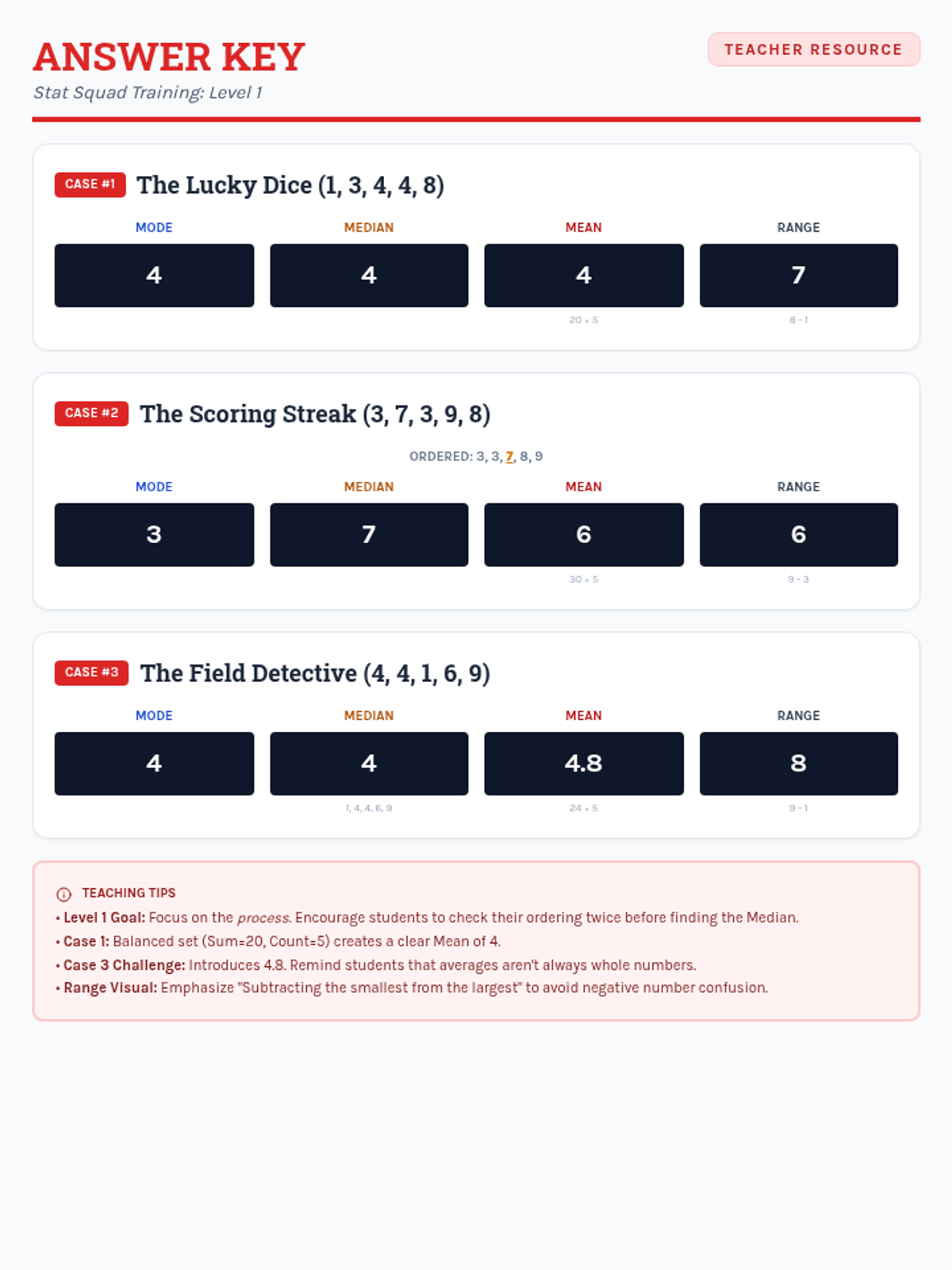
A collection of extra practice cases for mean, median, mode, and range, ranging from single-digit warmups to double-digit challenges, themed as unsolved detective files.
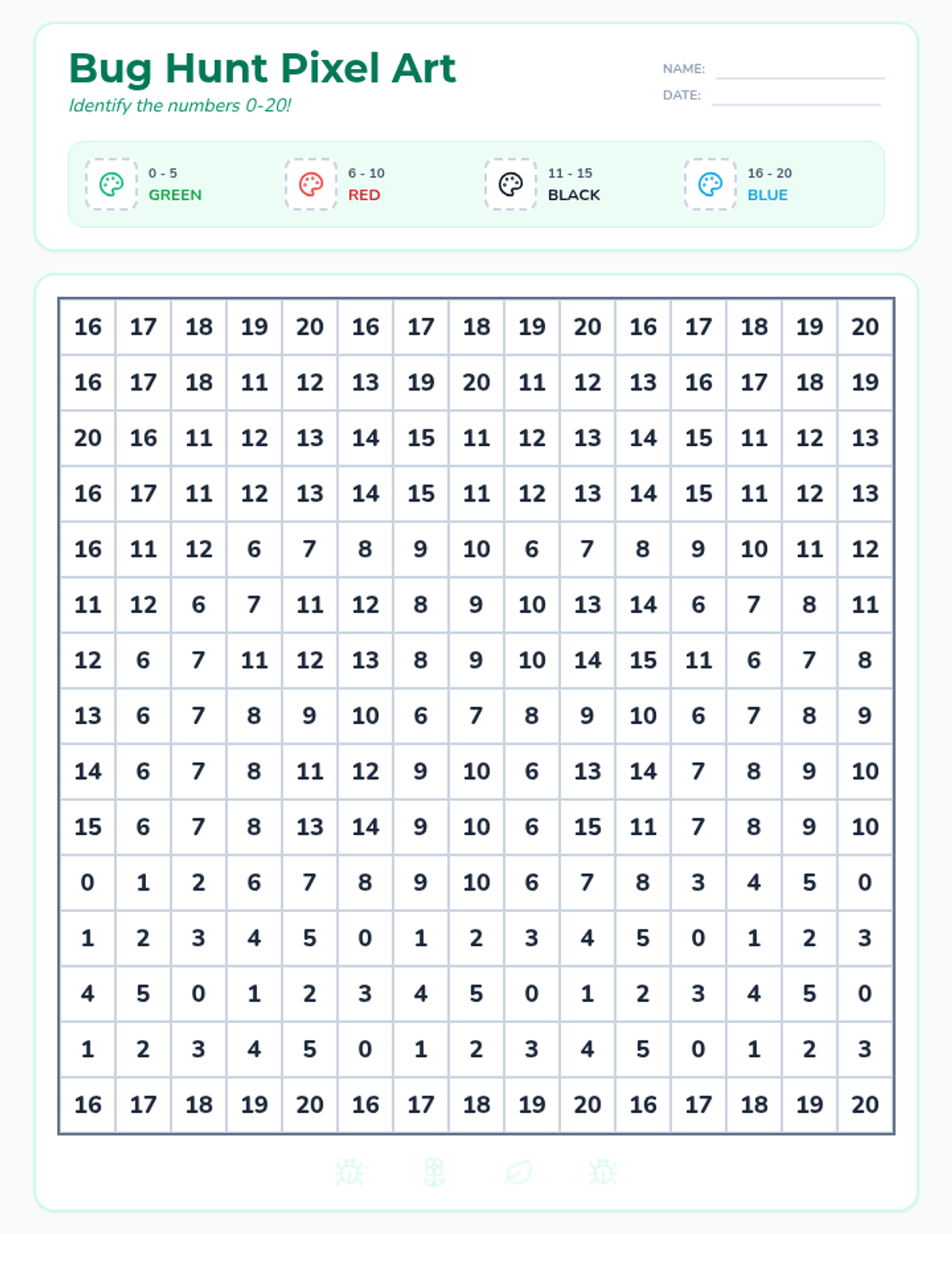
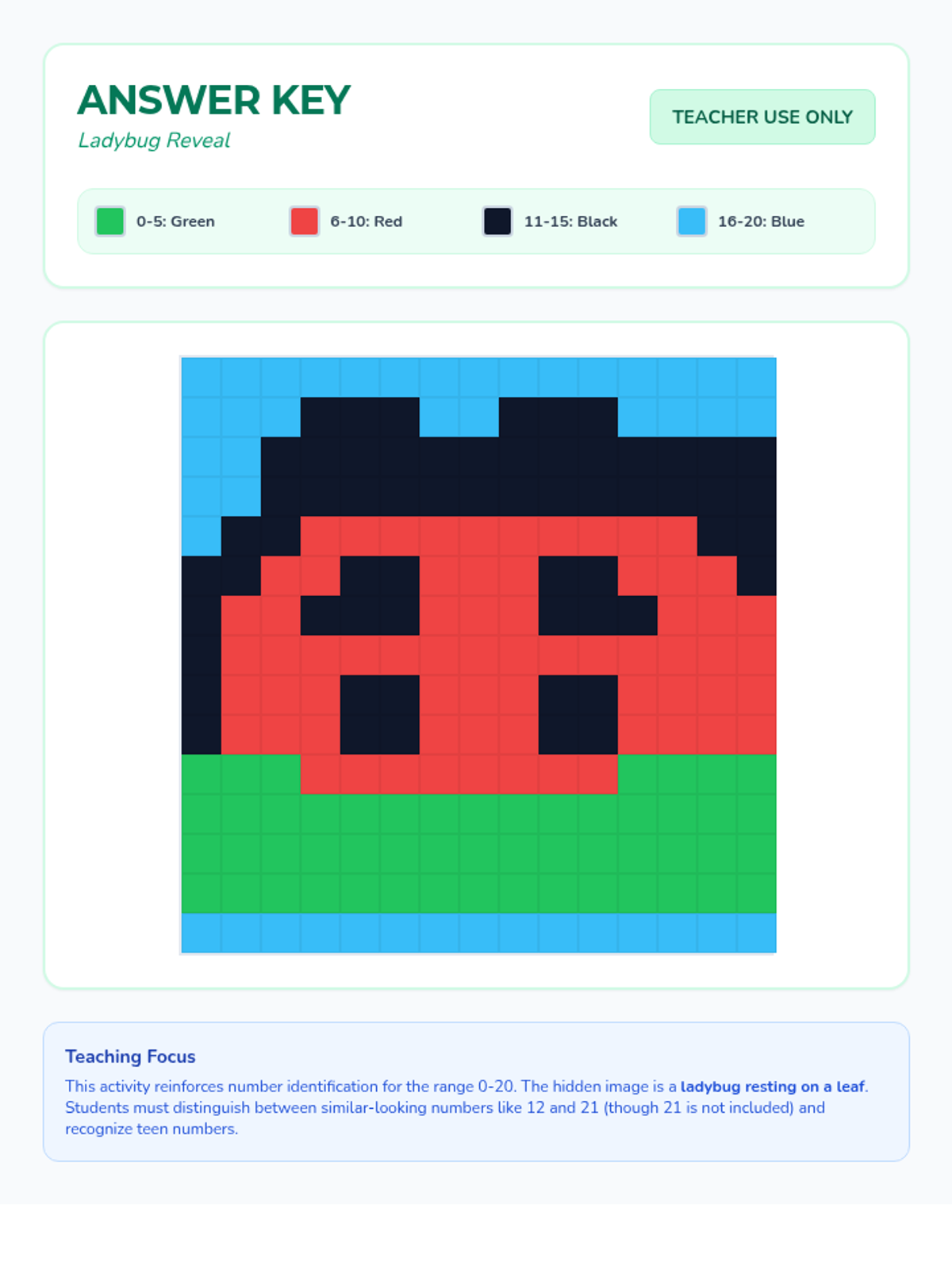
A fun, hands-on activity where students identify numbers 0-20 to reveal a hidden garden critter. Perfect for practicing number recognition and fine motor skills.
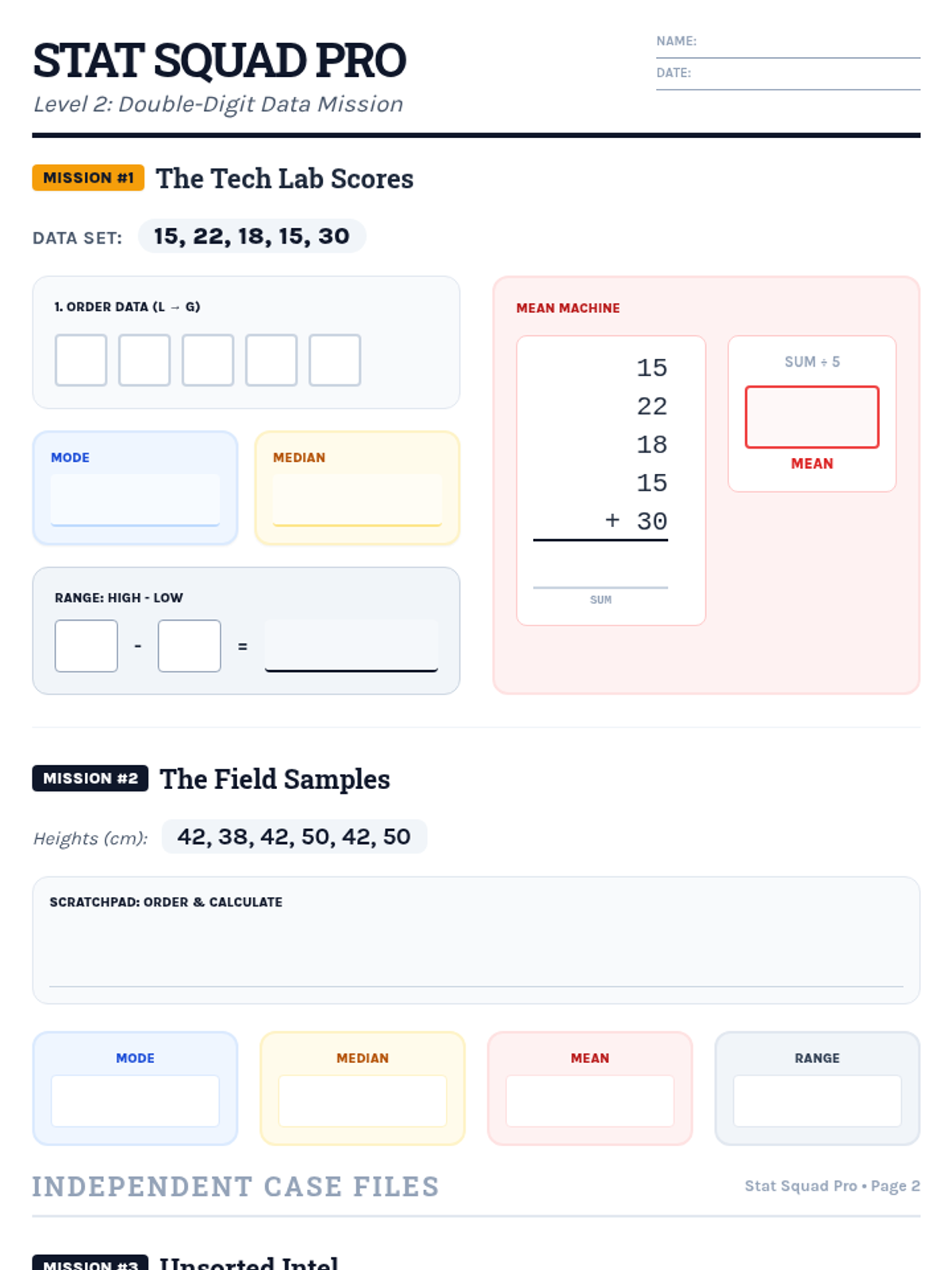
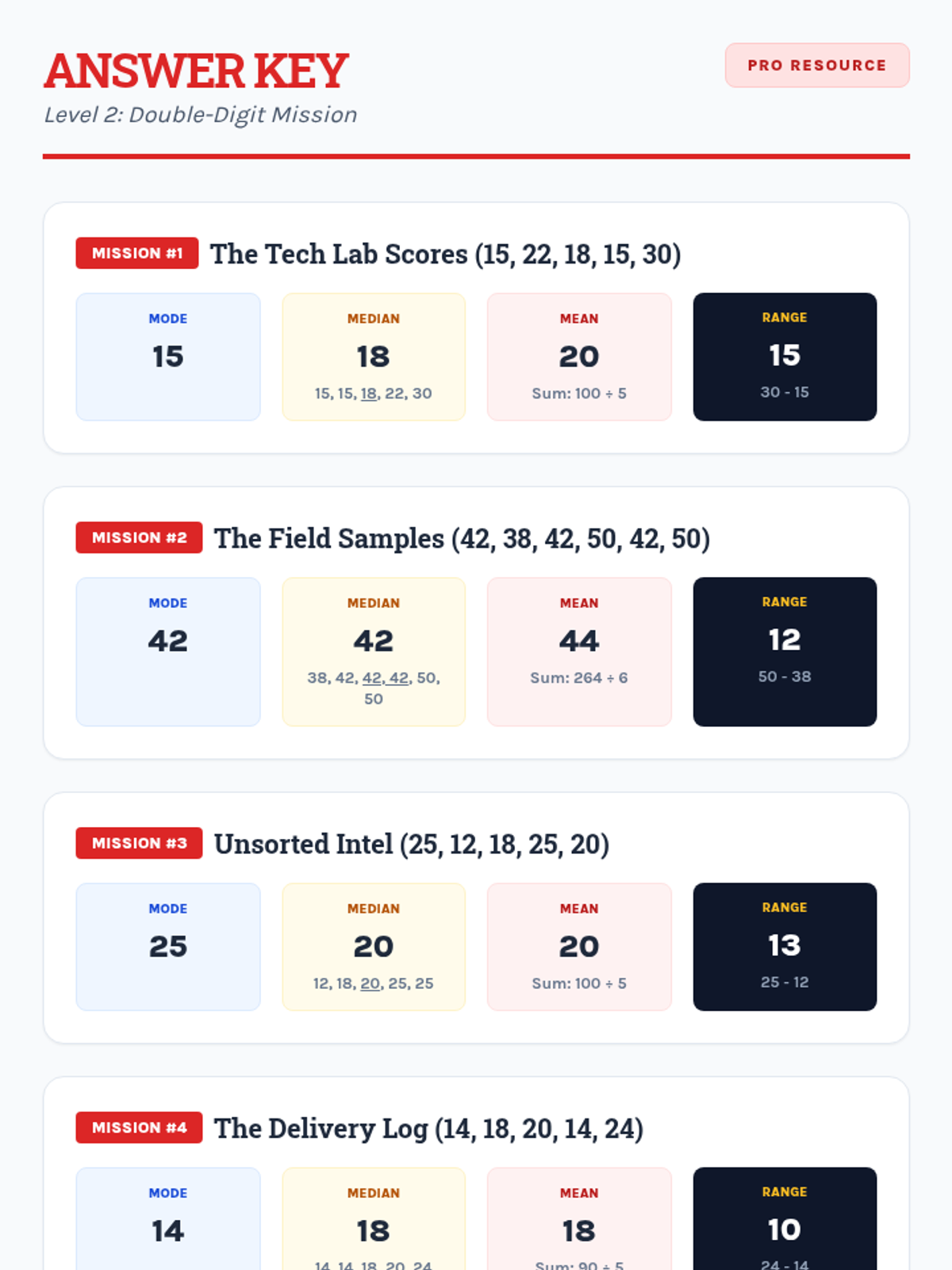
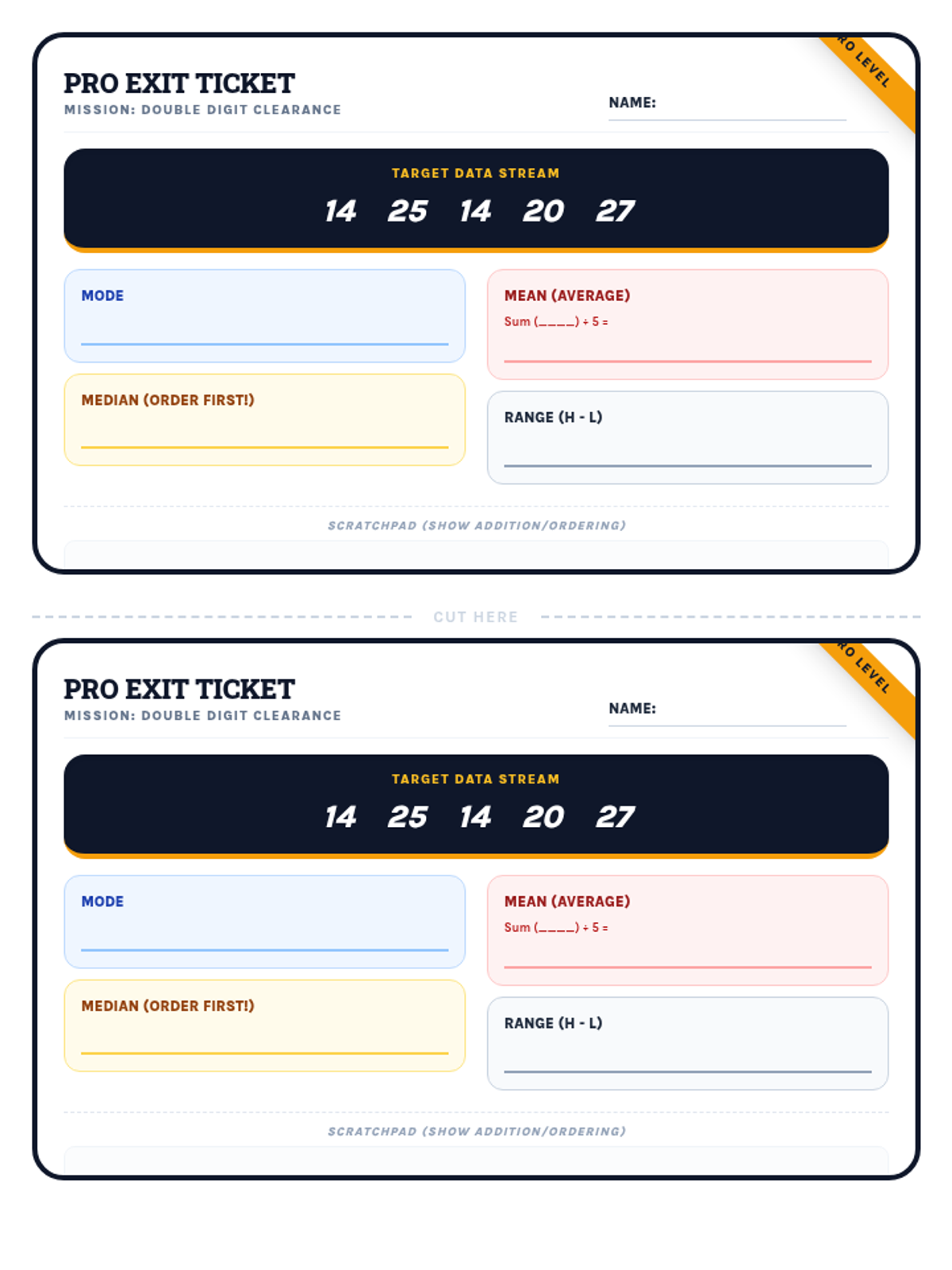
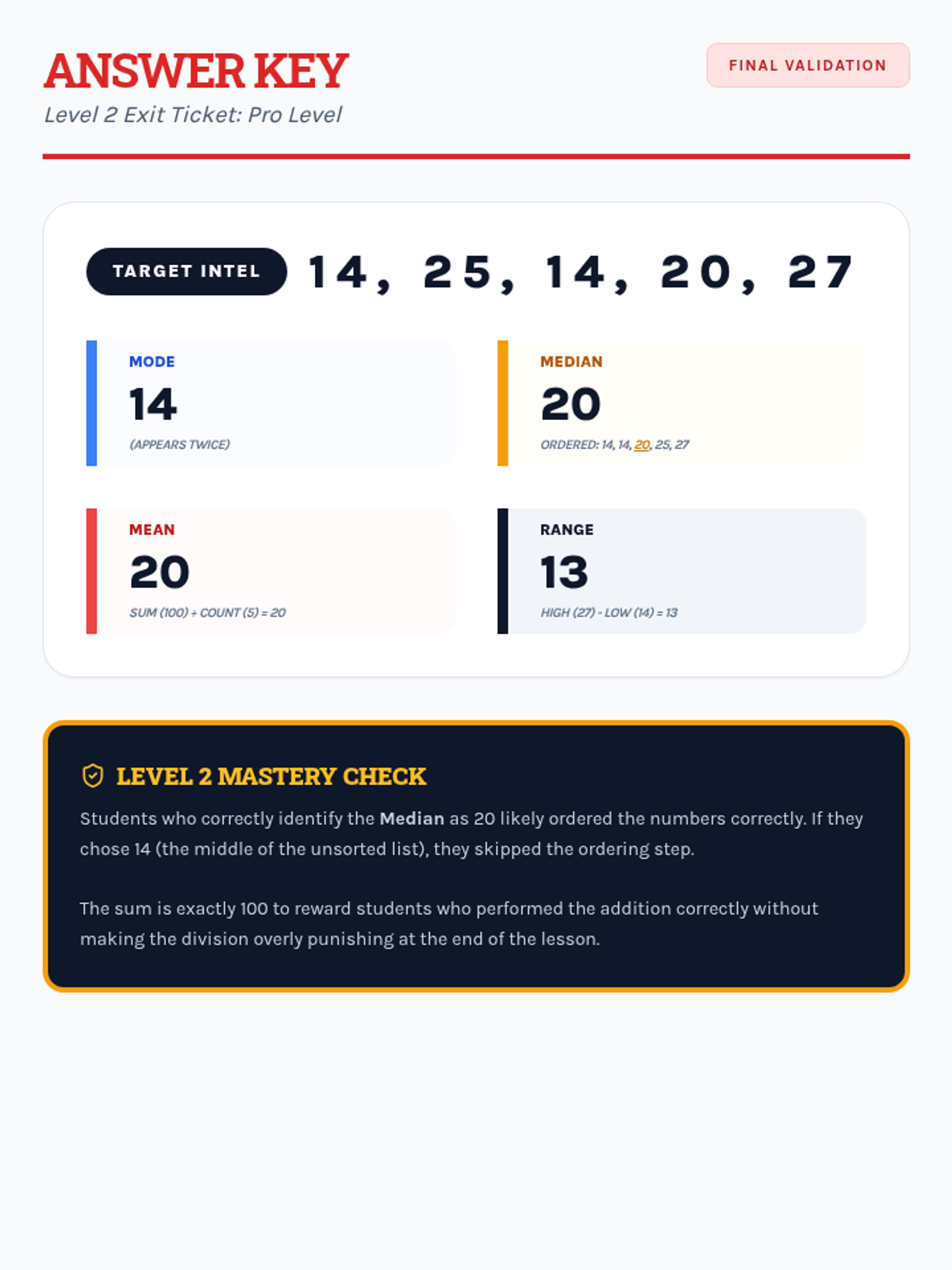
Students apply their knowledge of mean, median, mode, and range to data sets featuring two-digit numbers, focusing on multi-digit addition and division.
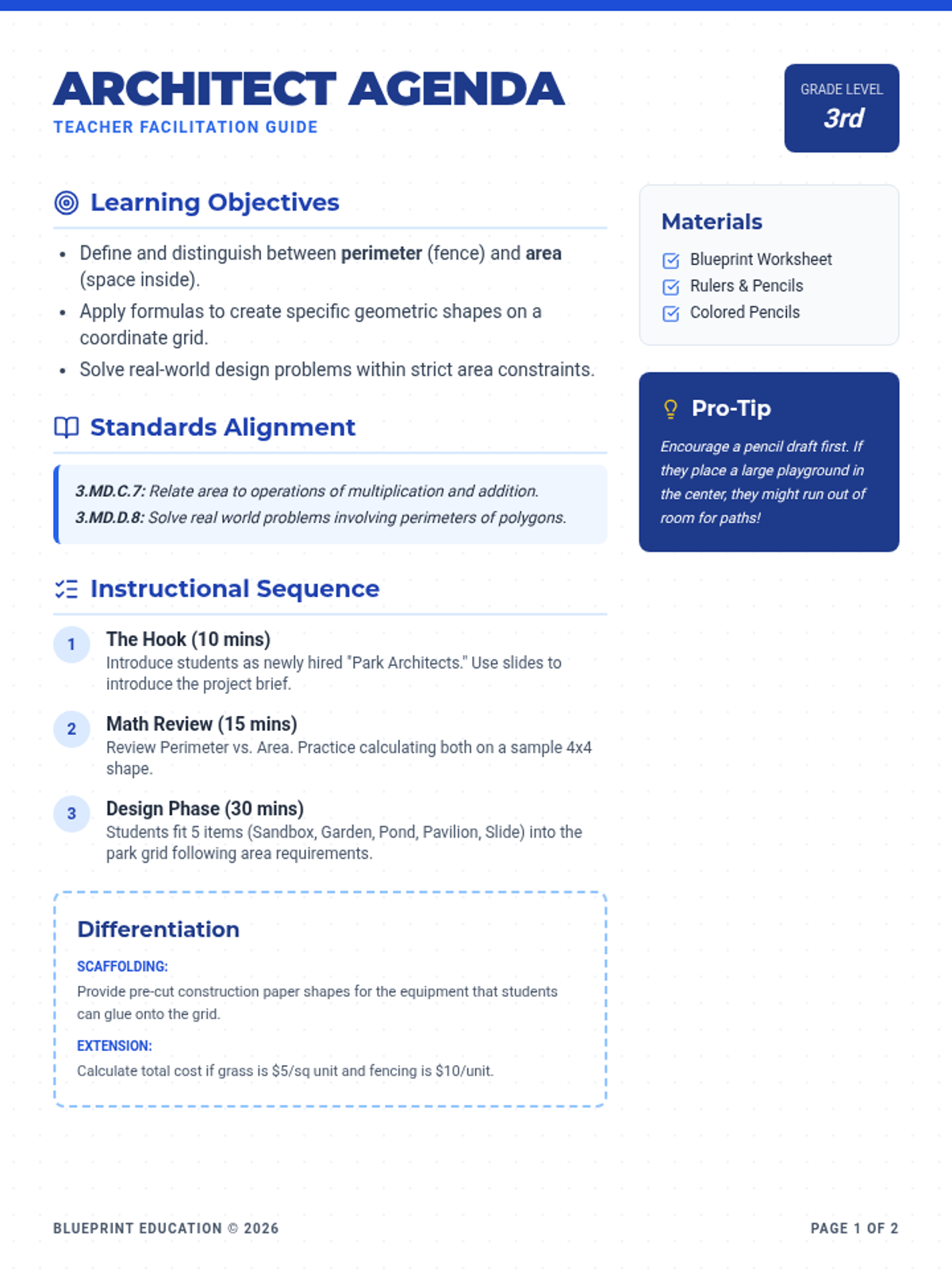
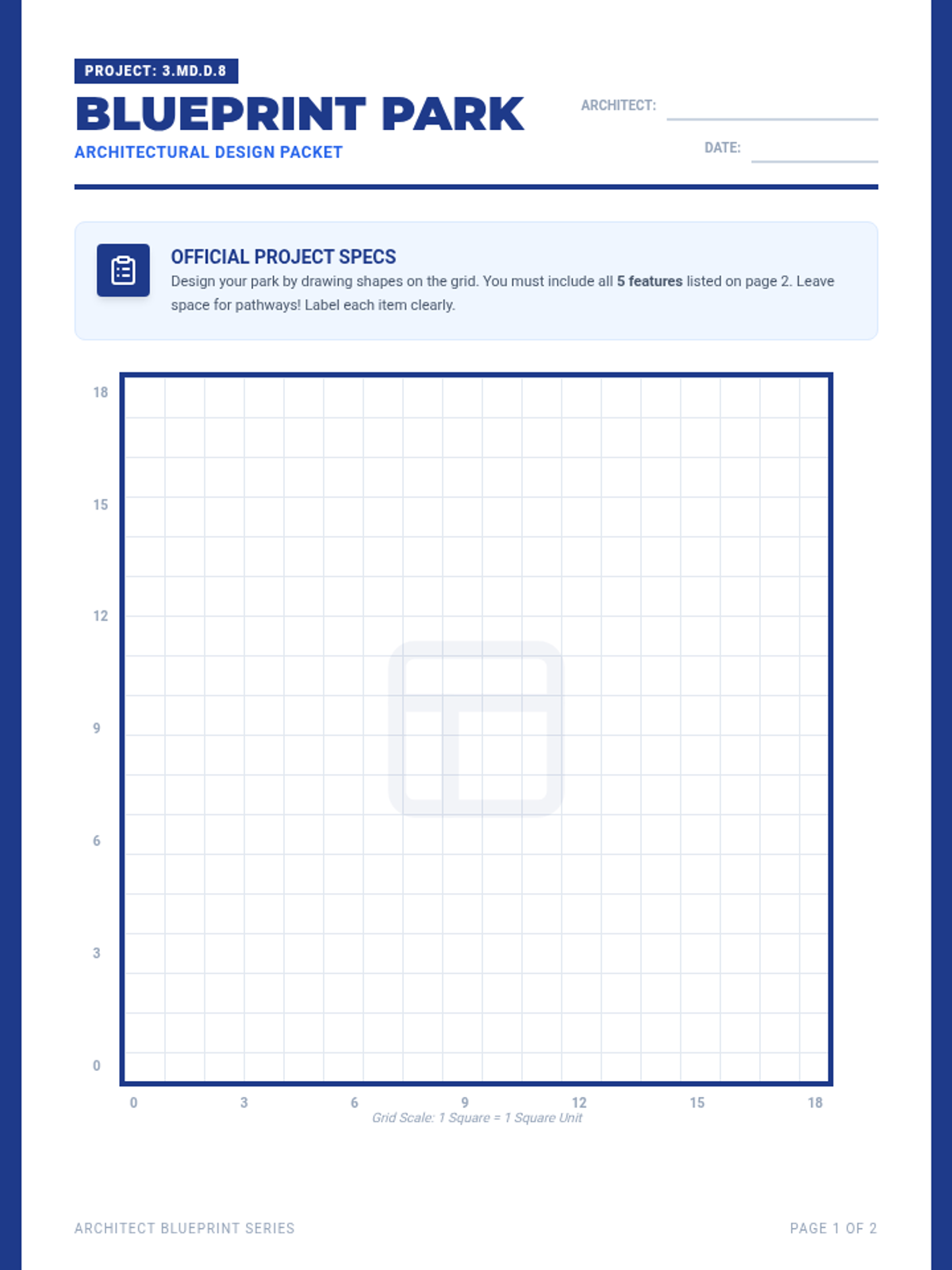
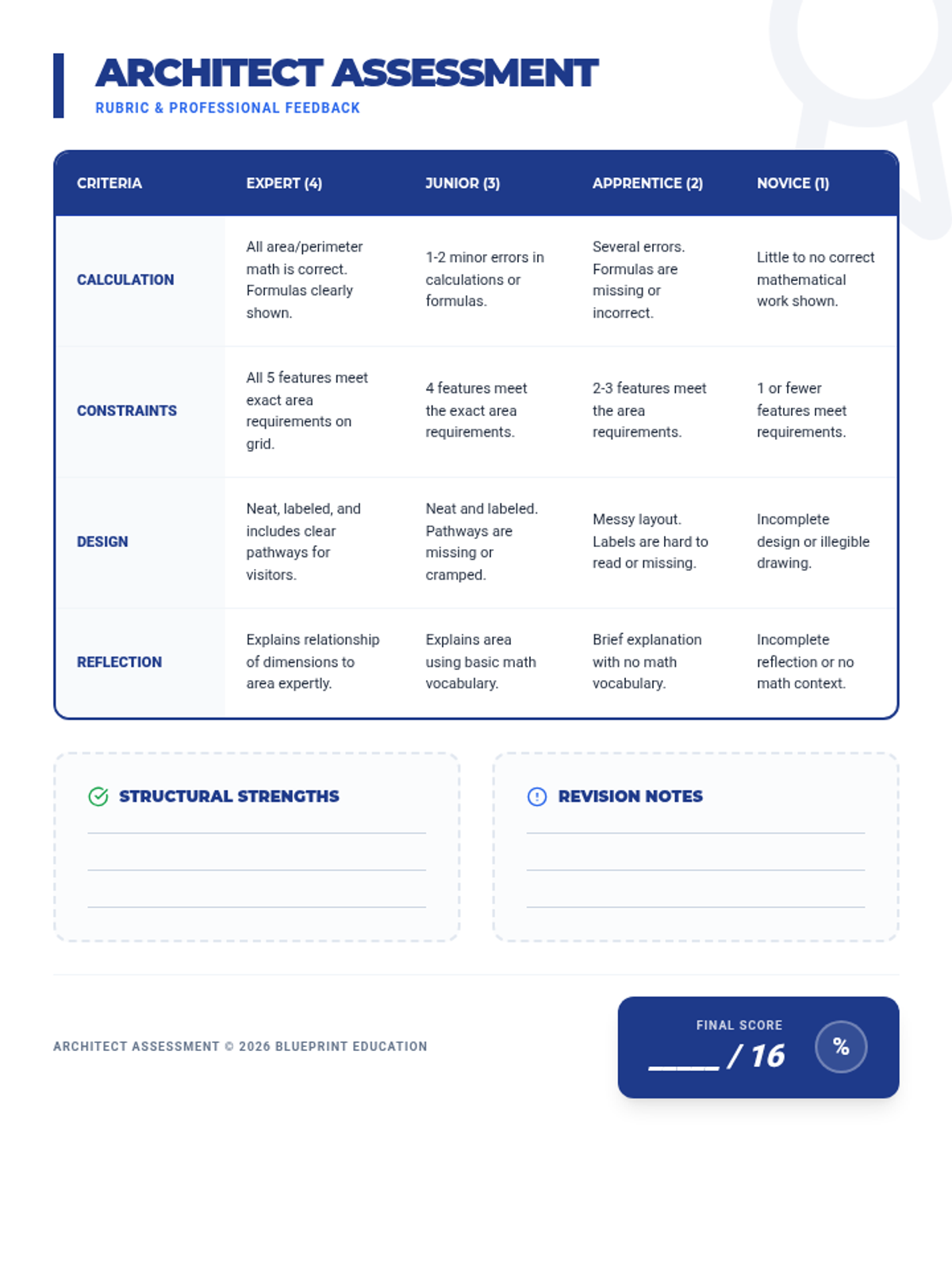
A hands-on geometry lesson where students act as urban planners to design a community park using area and perimeter calculations.
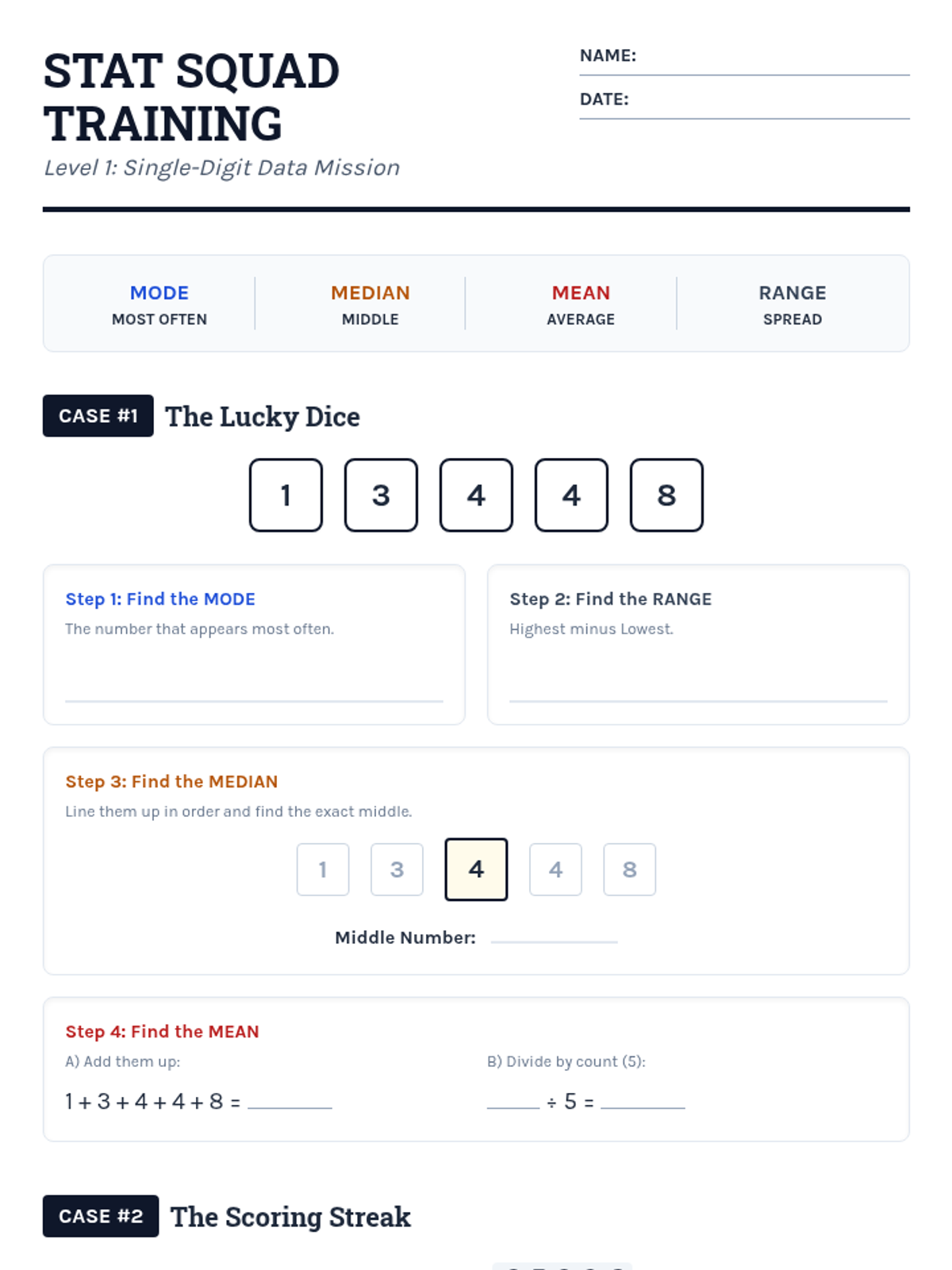
Students learn to calculate mean, median, mode, and range using single-digit data sets through structured, step-by-step guided practice and visual aids.
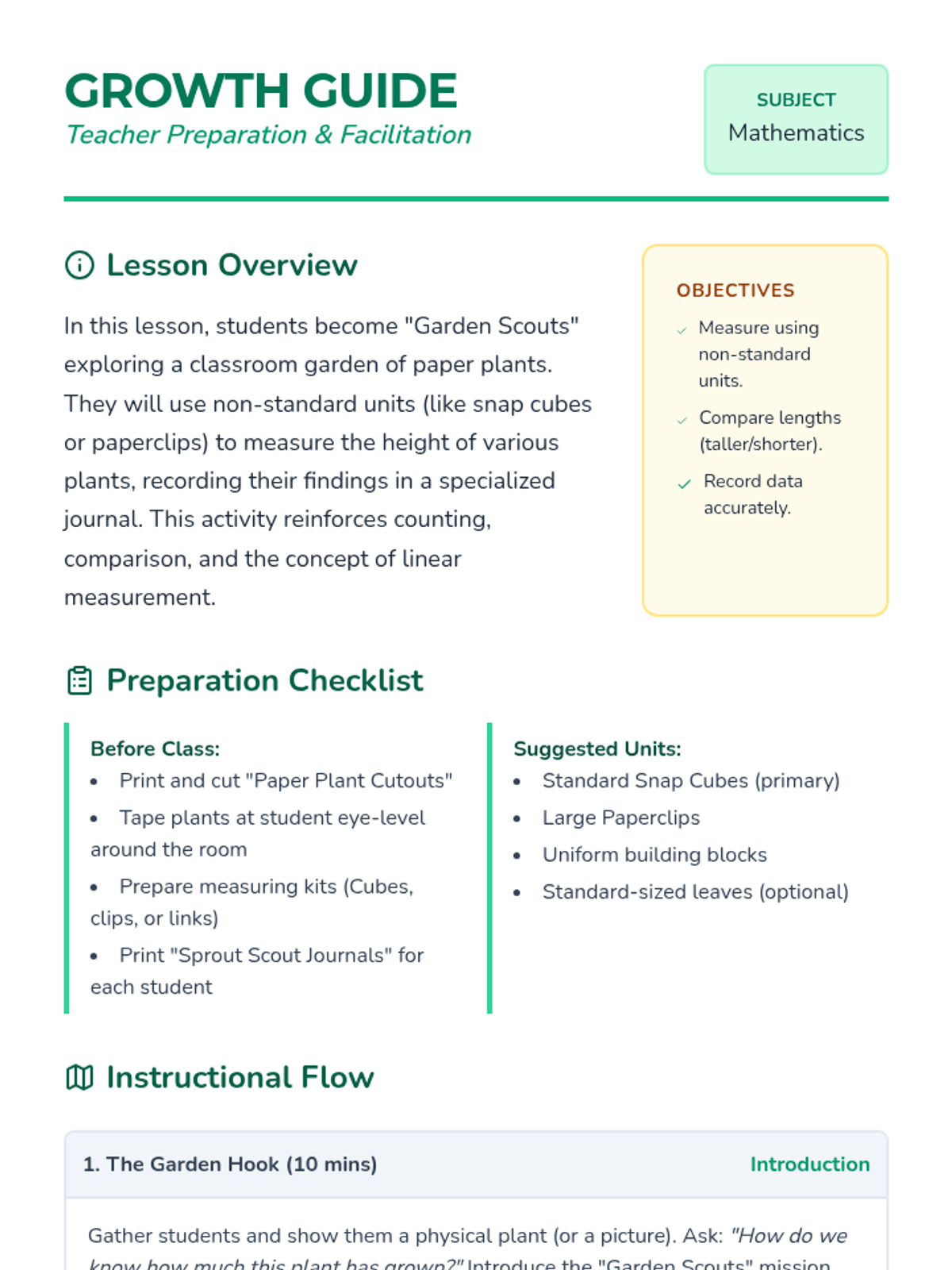
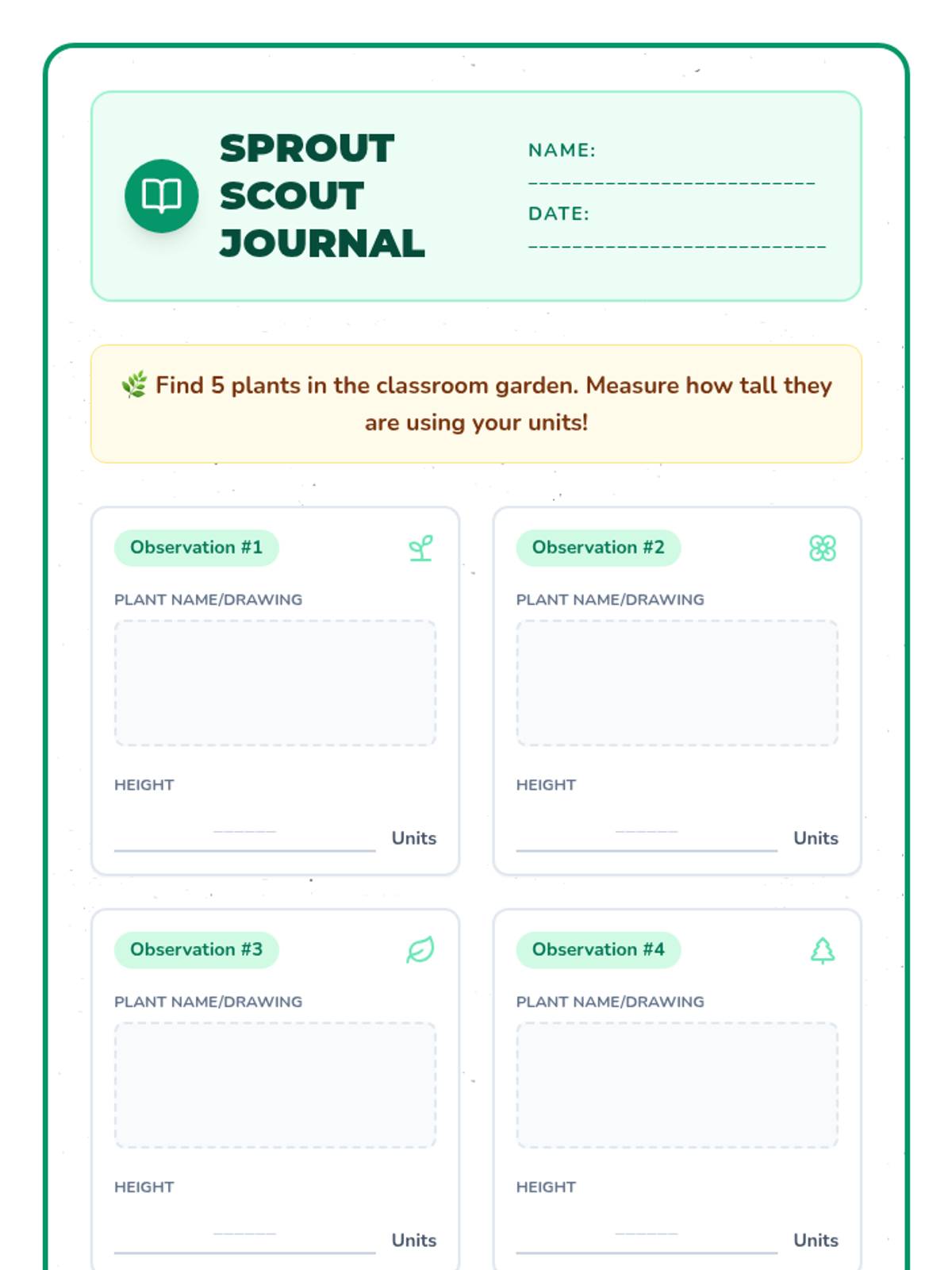
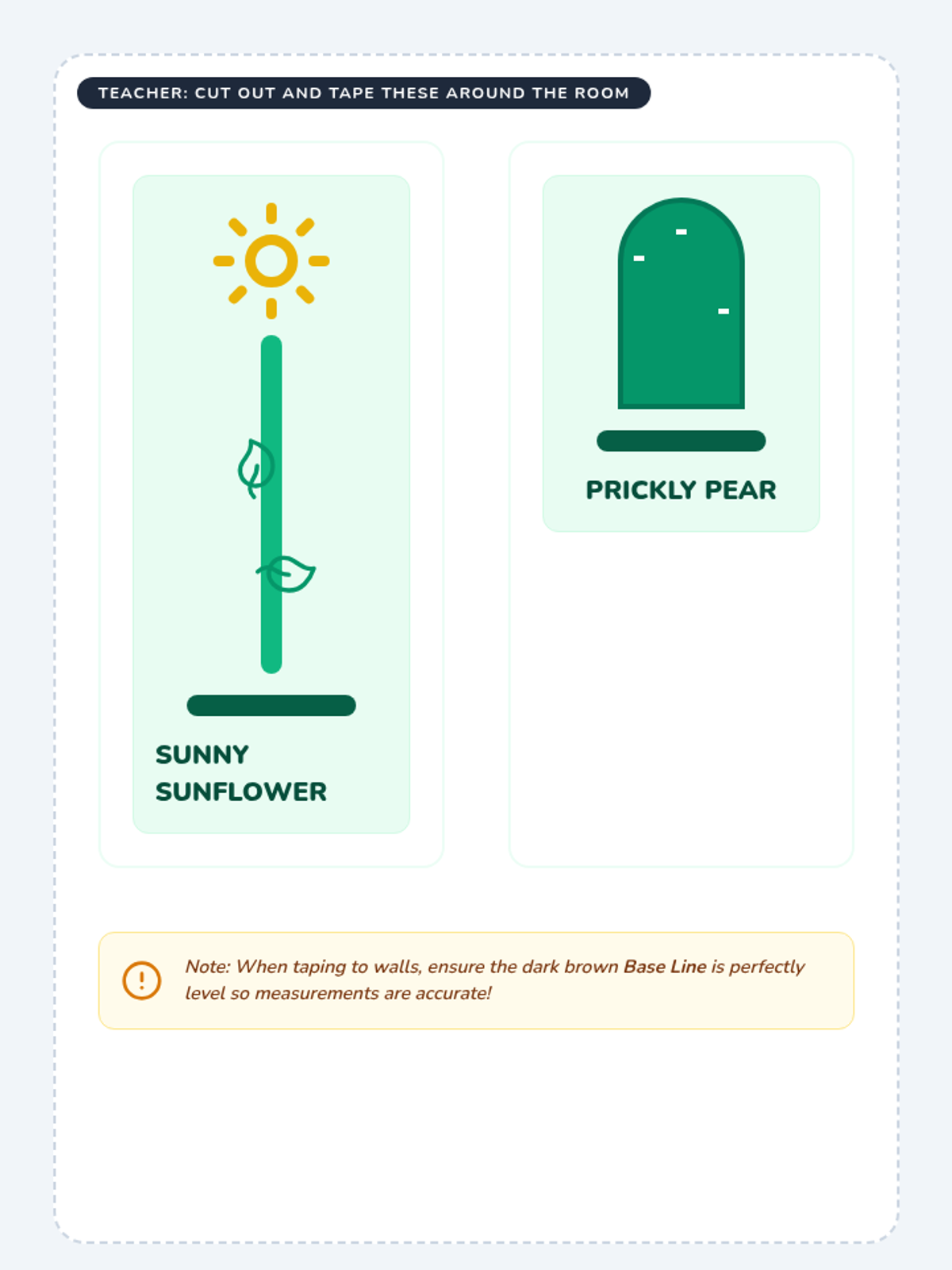
A hands-on measurement lesson where students use non-standard units to measure paper plants, fostering number sense and comparison skills through movement-based learning.
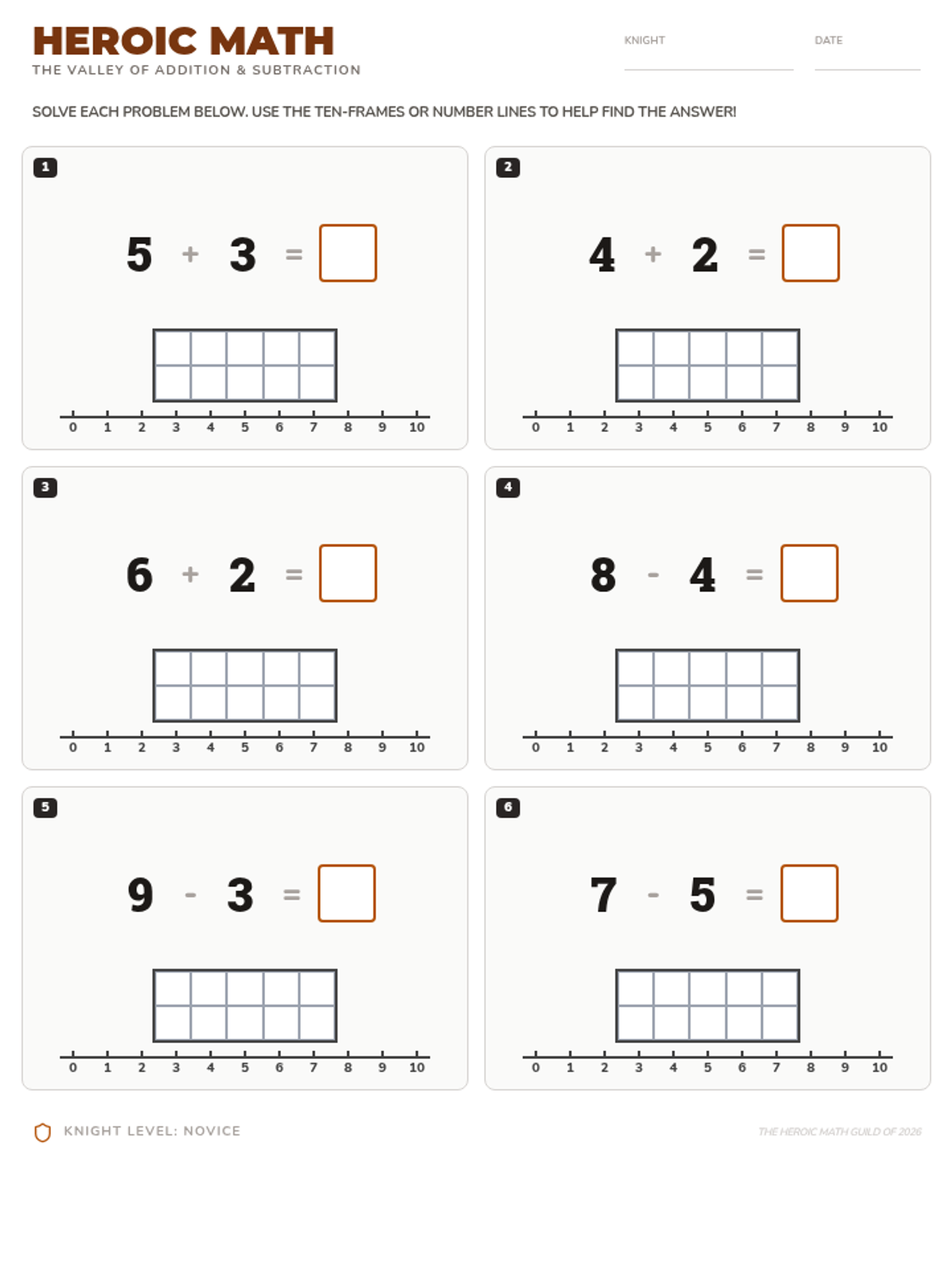
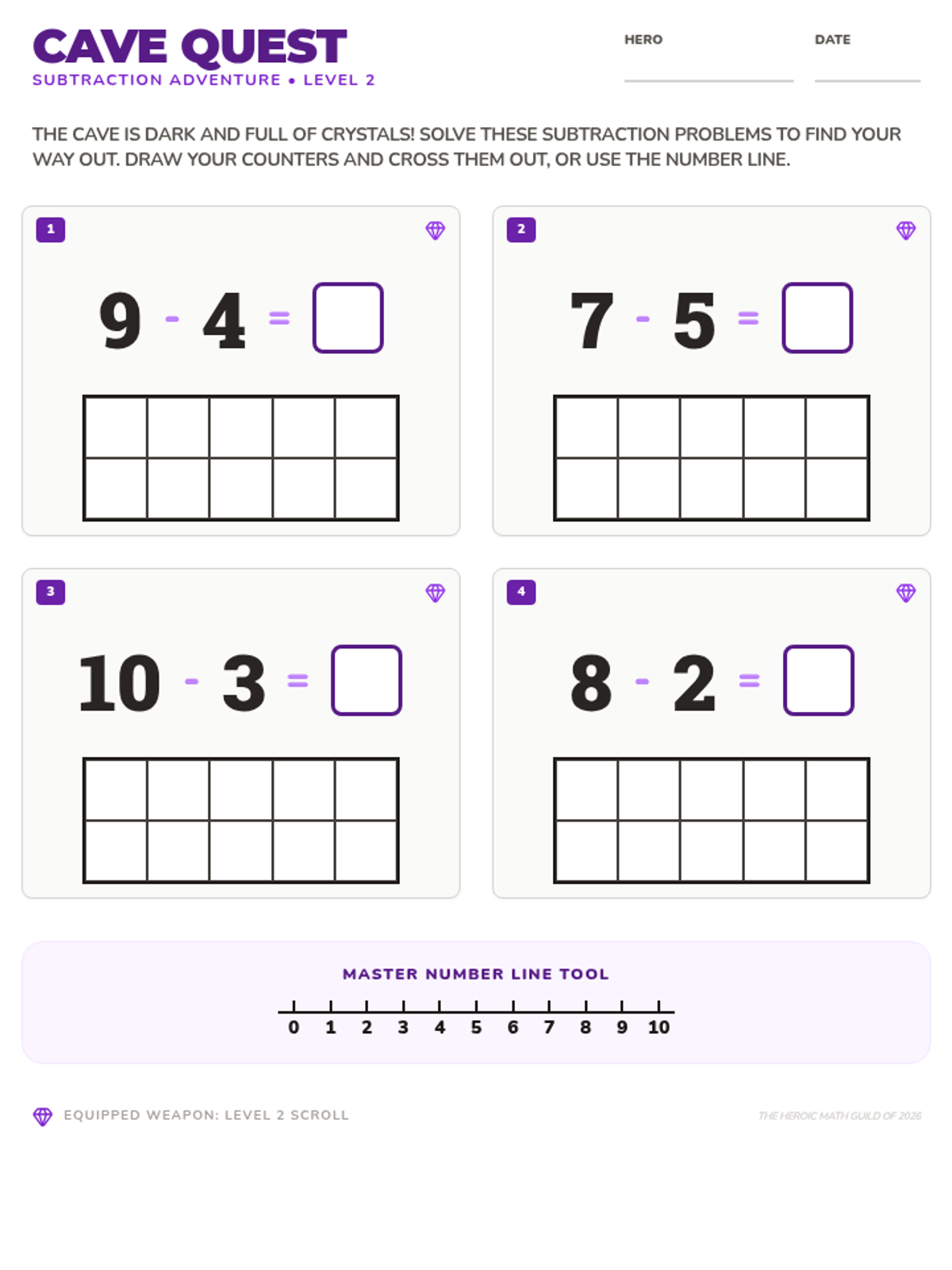
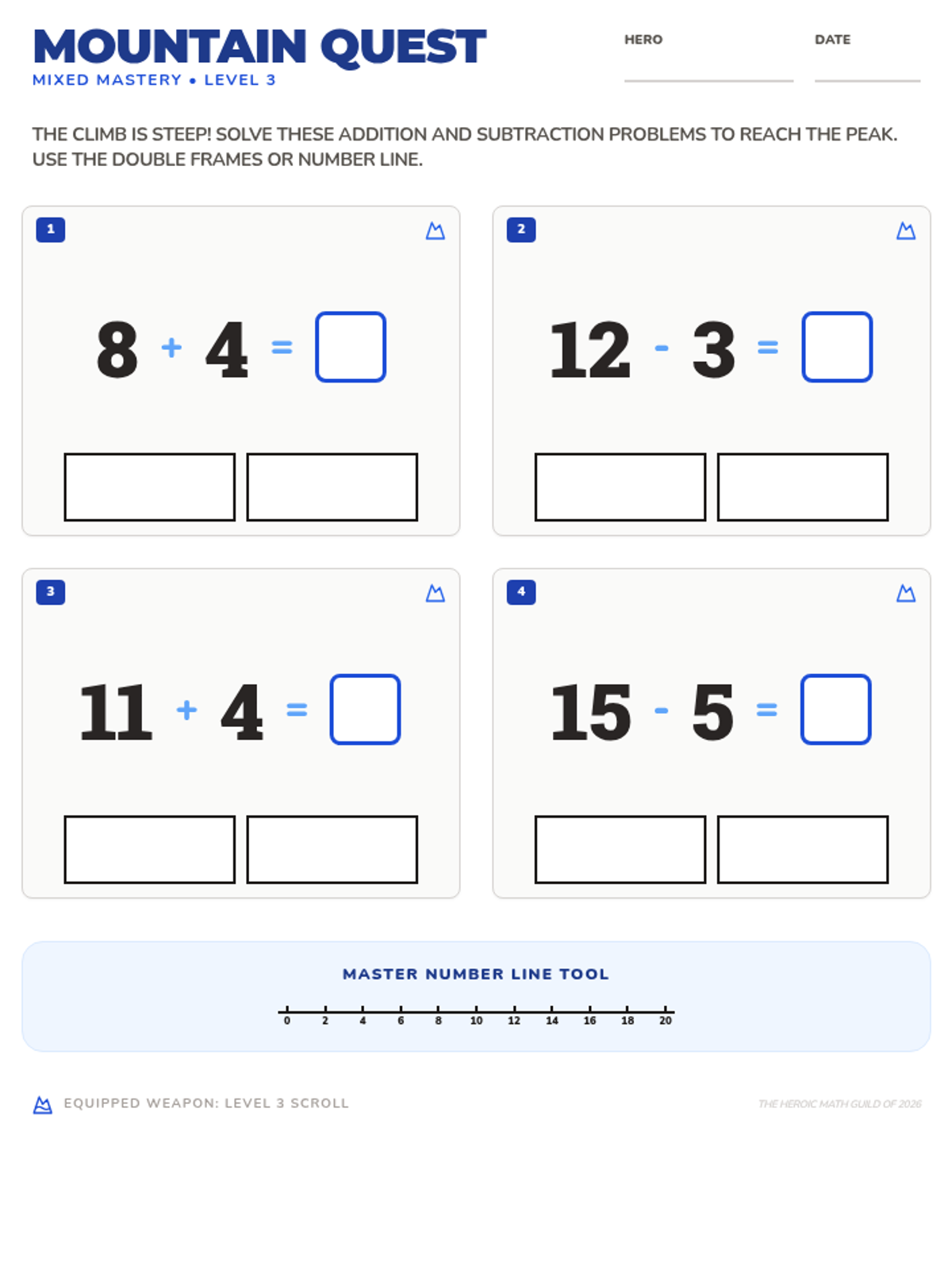
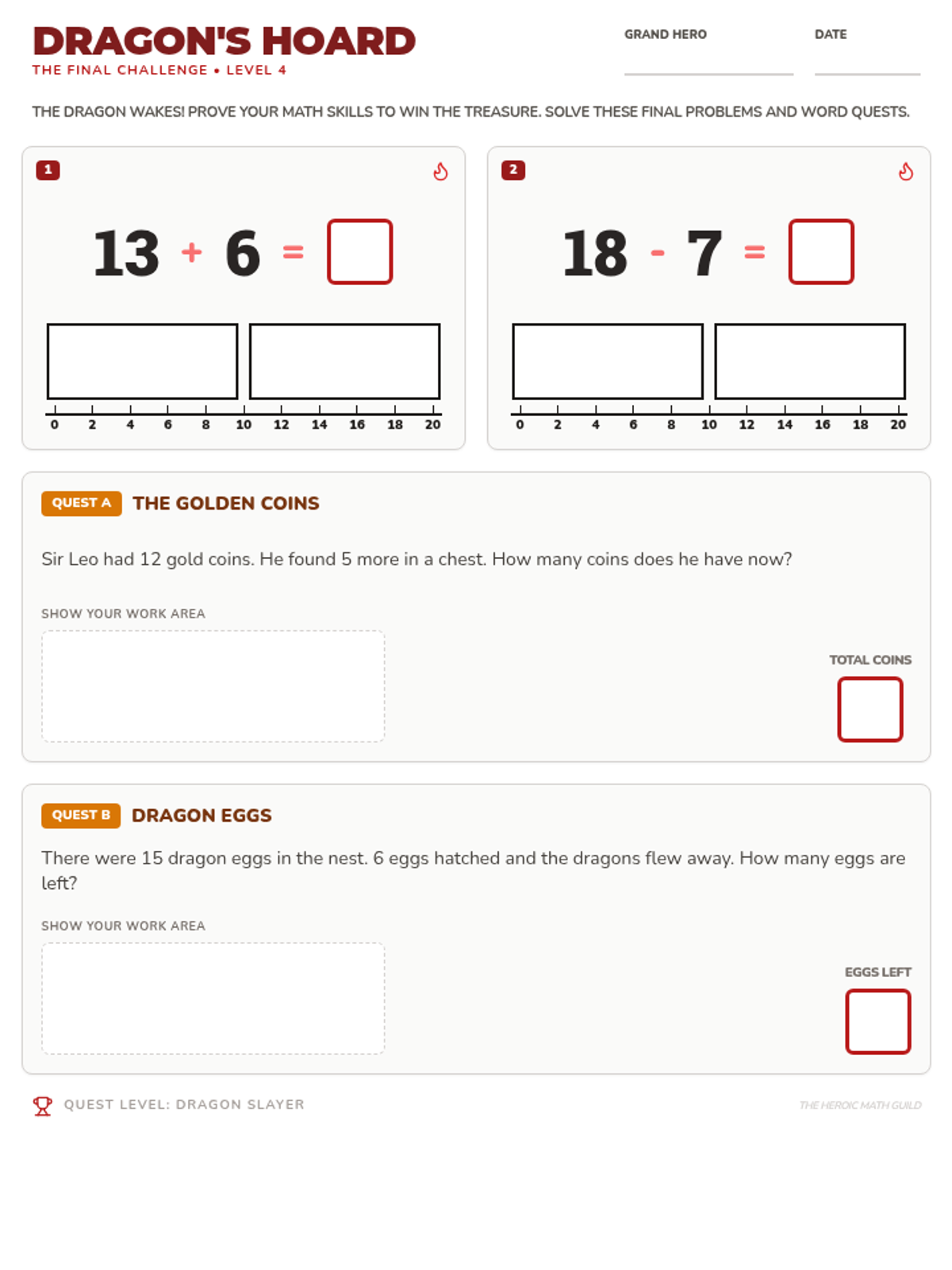
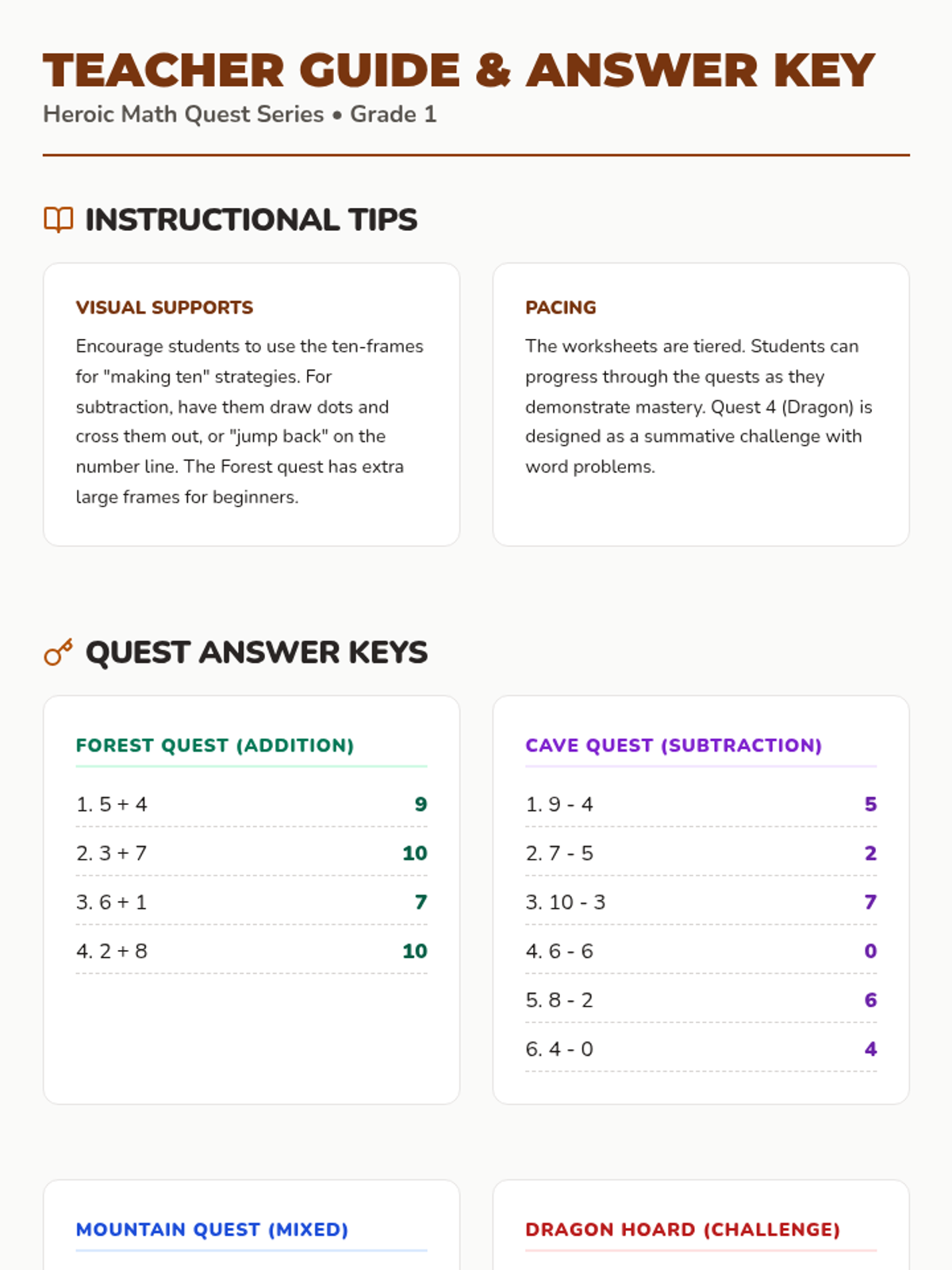
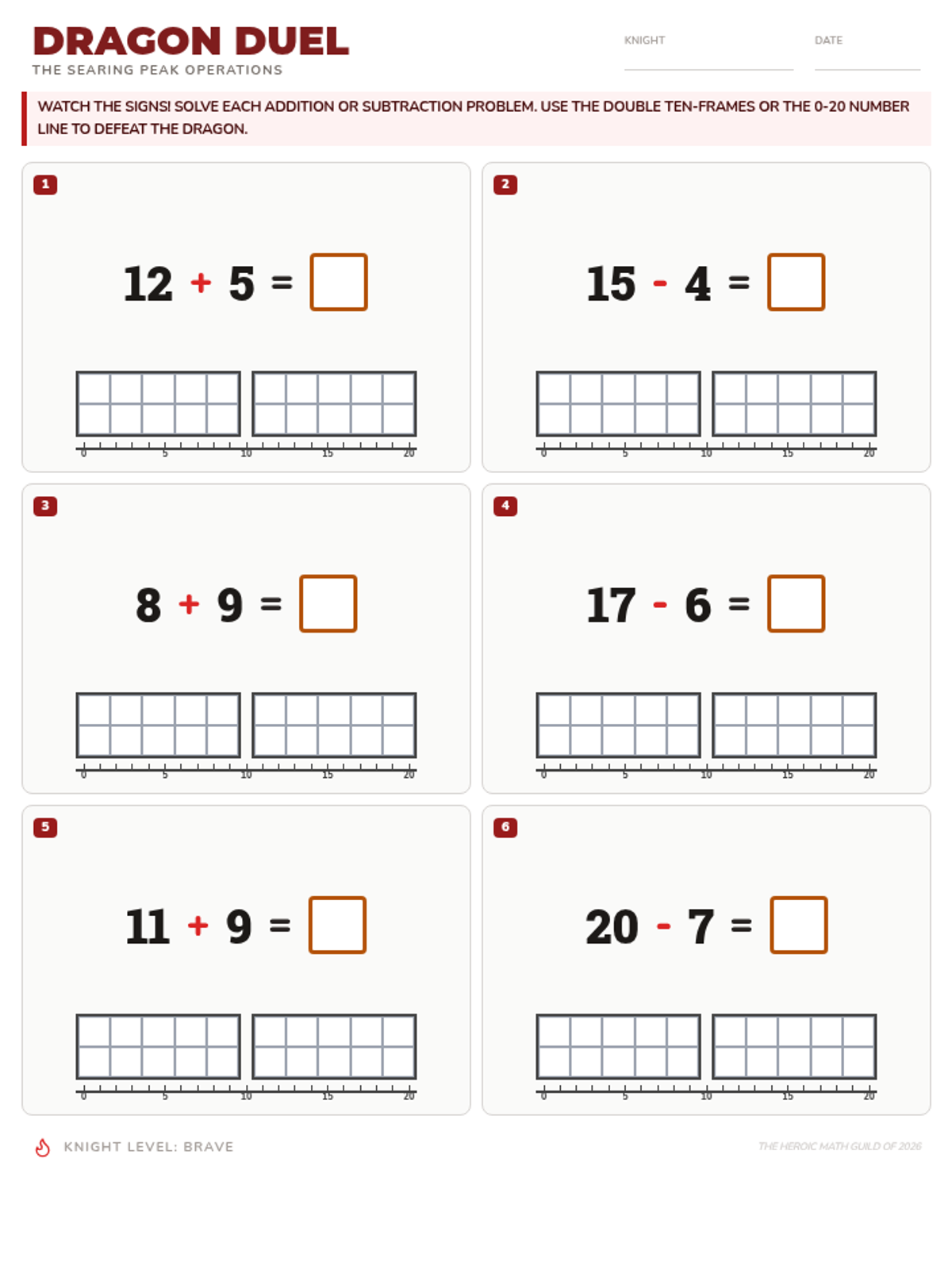
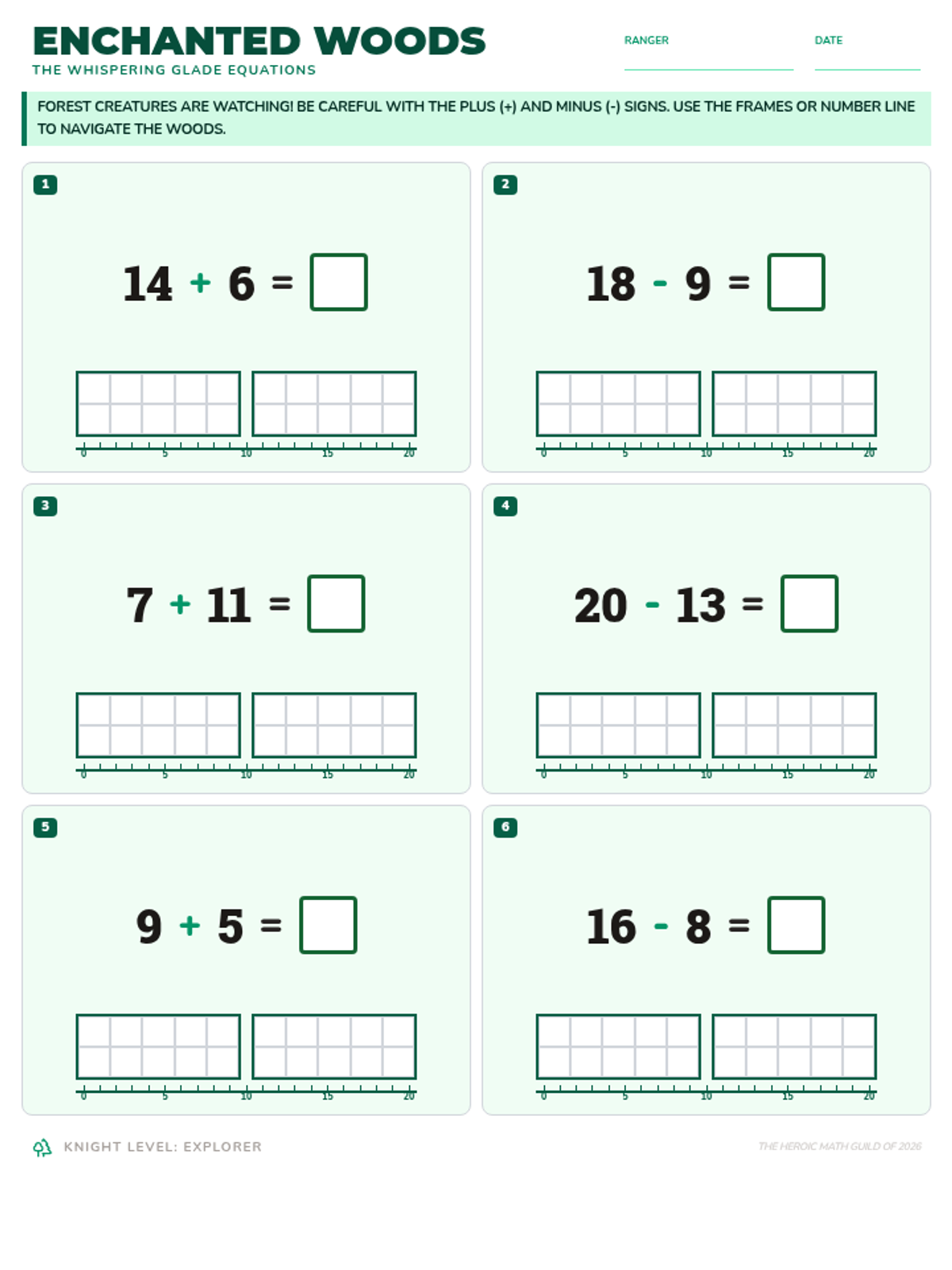
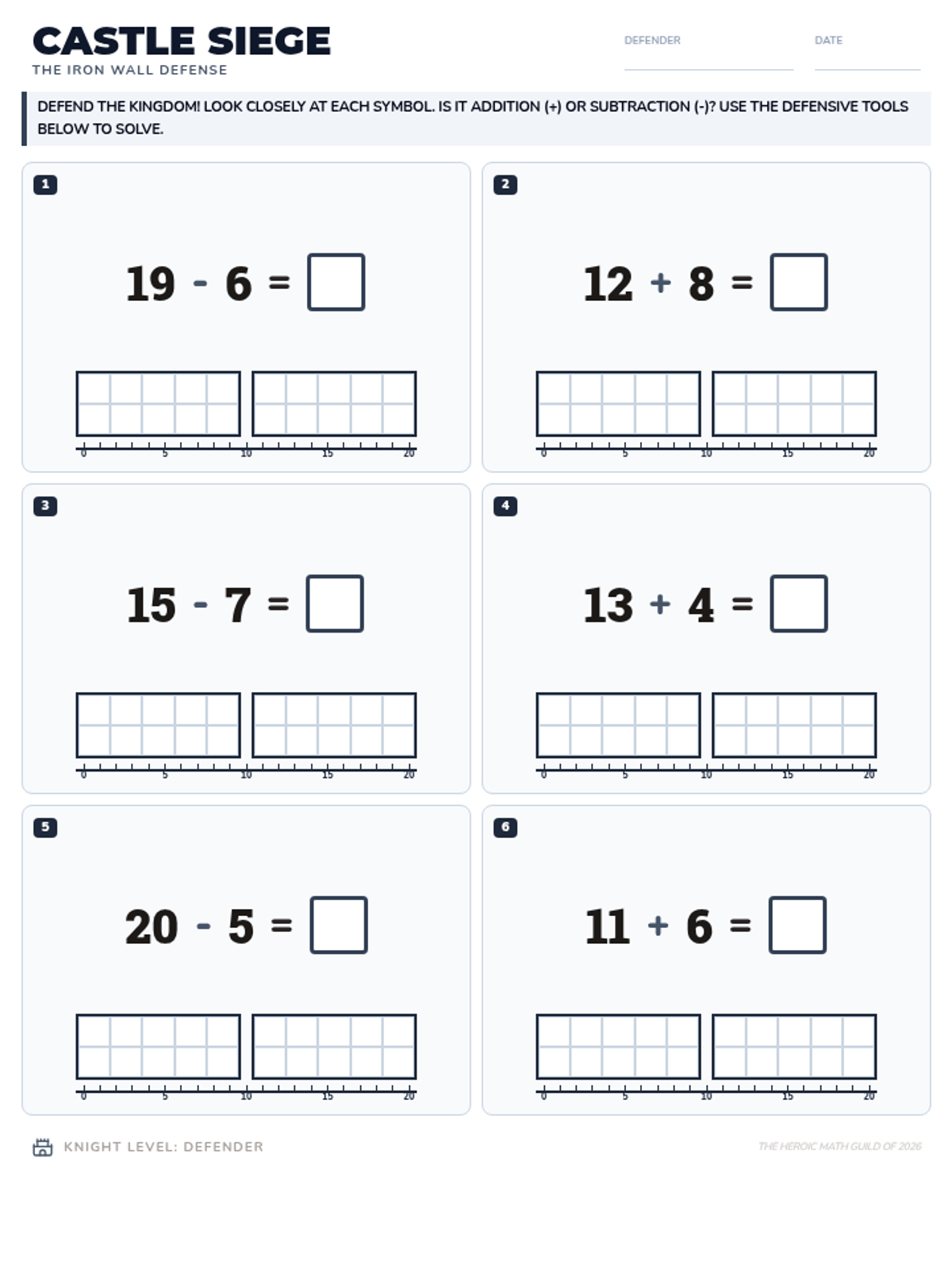
A series of math quests where students practice addition and subtraction within 20. Through medieval-themed challenges, students build fluency using ten-frames and number lines.
A series of medieval-themed math challenges focusing on addition and subtraction fluency within 20. Students use visual models like ten-frames and number lines to solve operational problems.
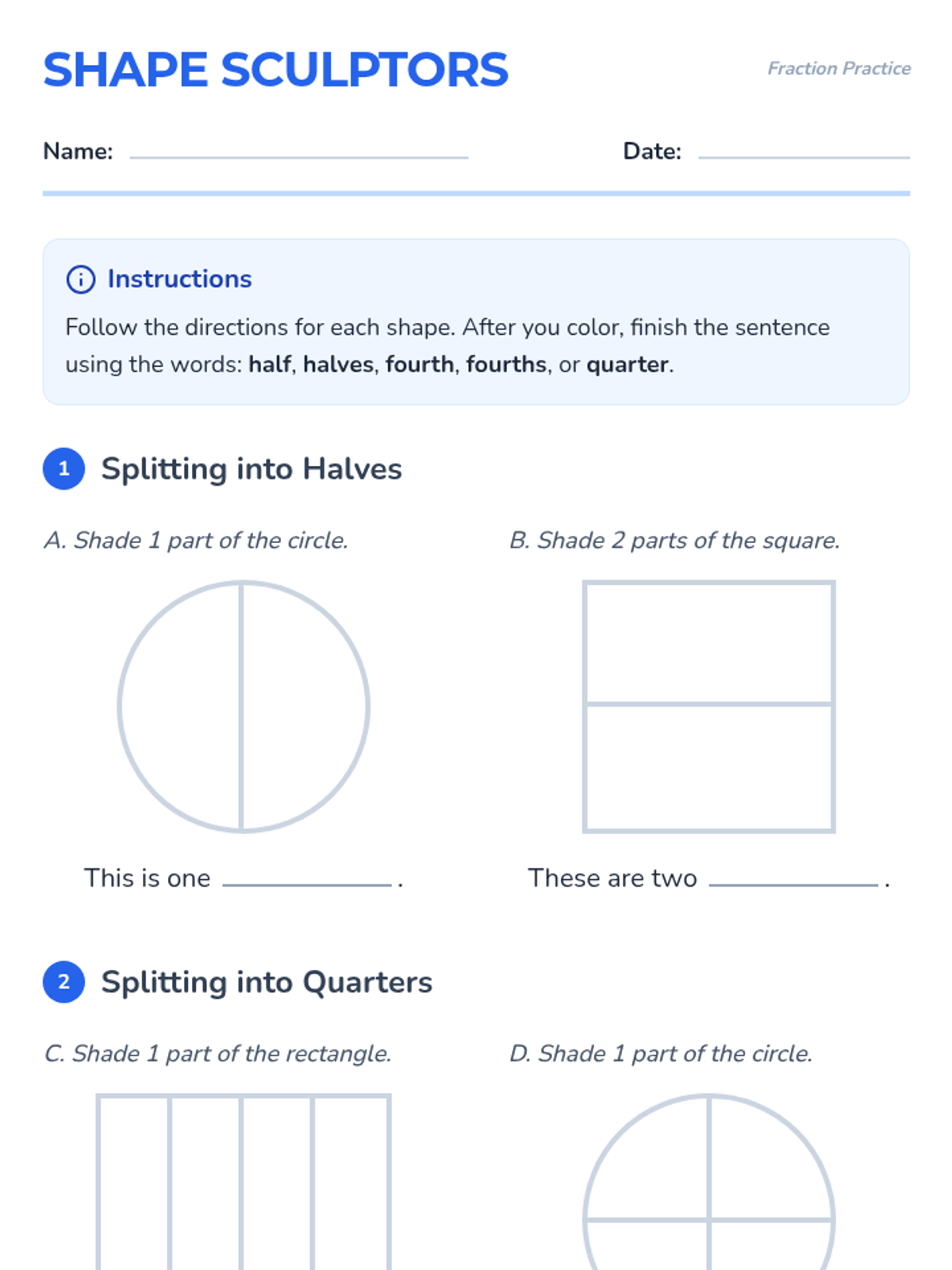
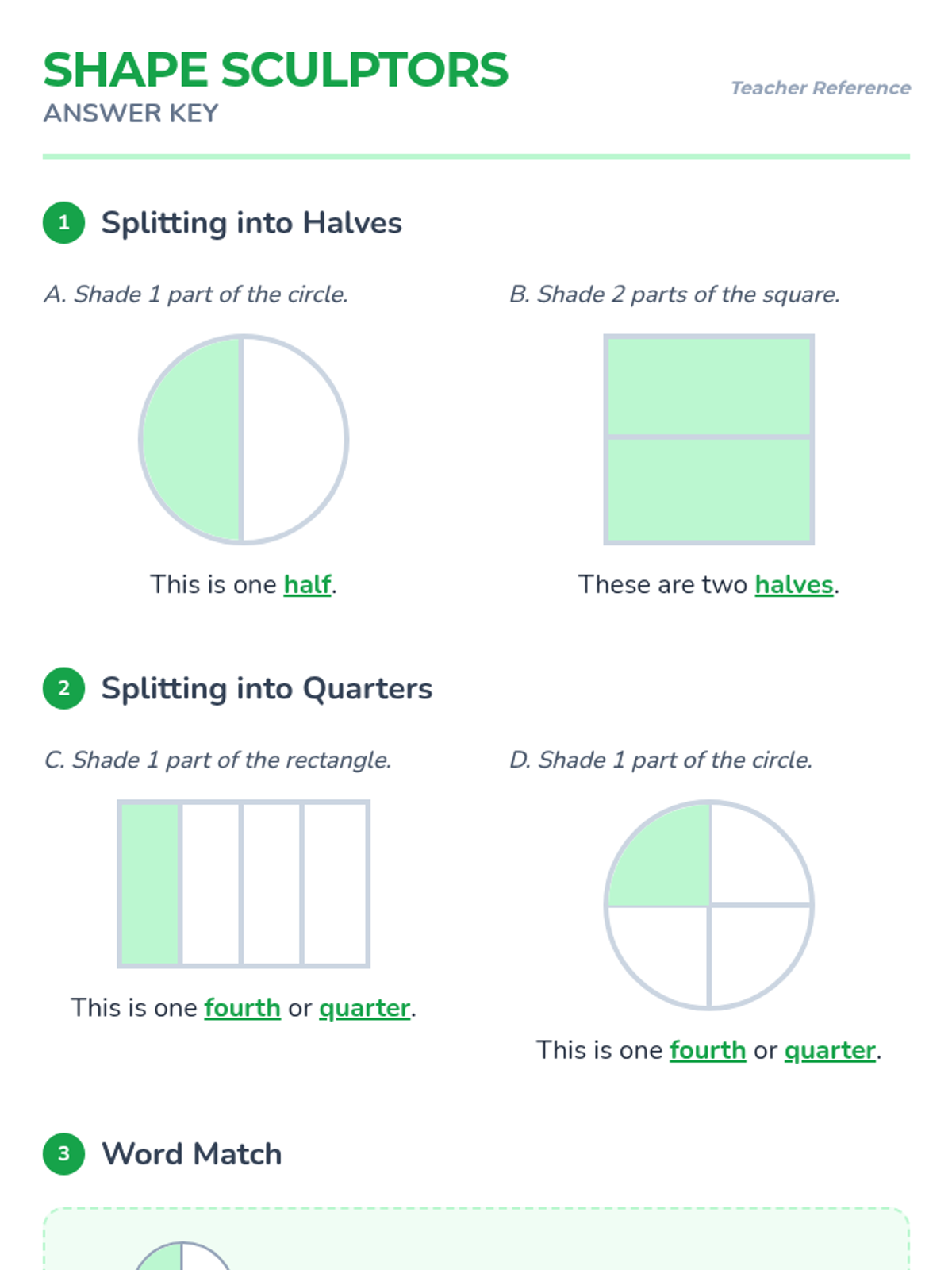
A first-grade lesson focused on partitioning shapes and identifying equal parts as halves and fourths (quarters). Students will practice shading partitioned shapes and completing descriptive sentences using fraction vocabulary.
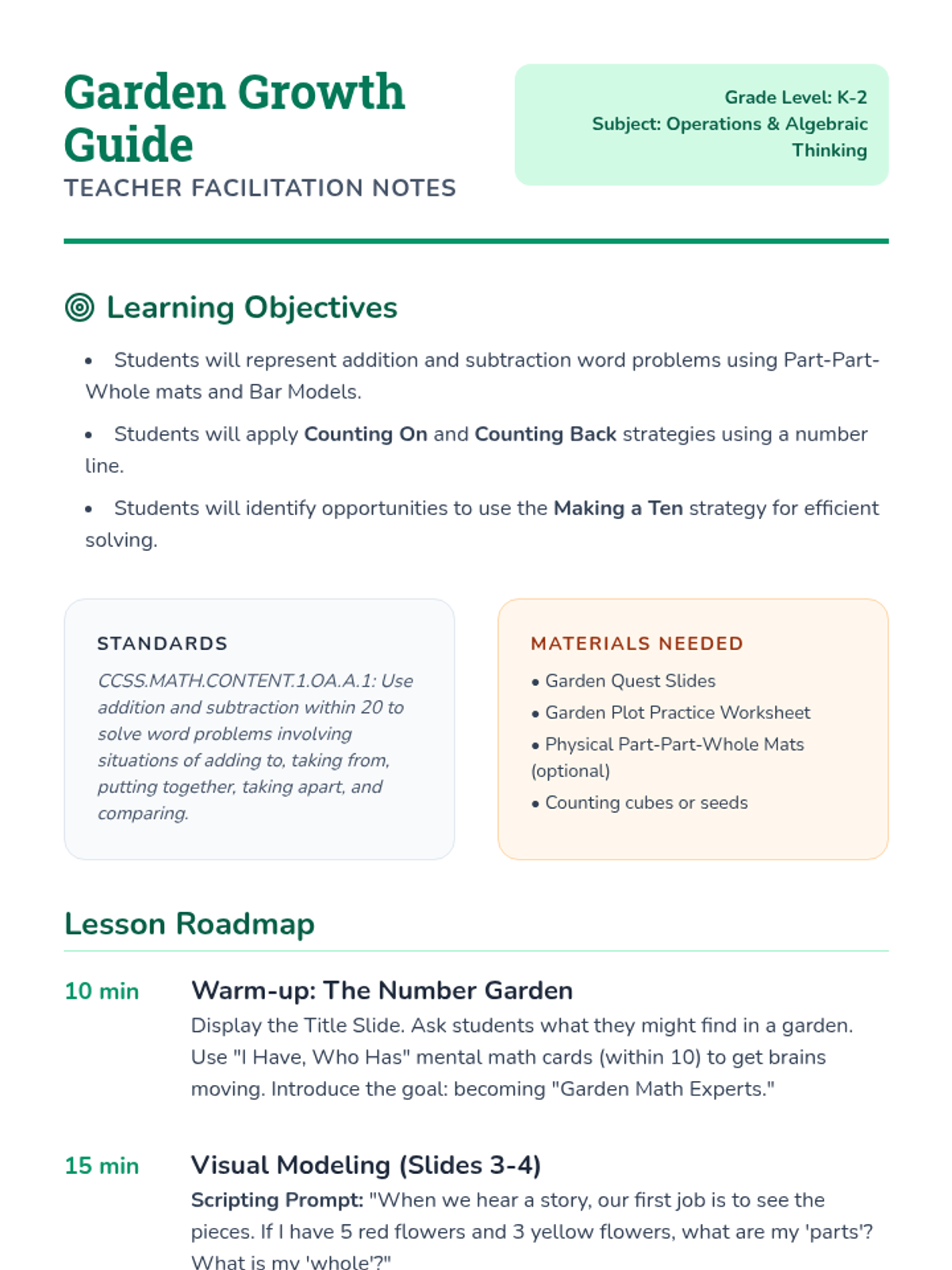
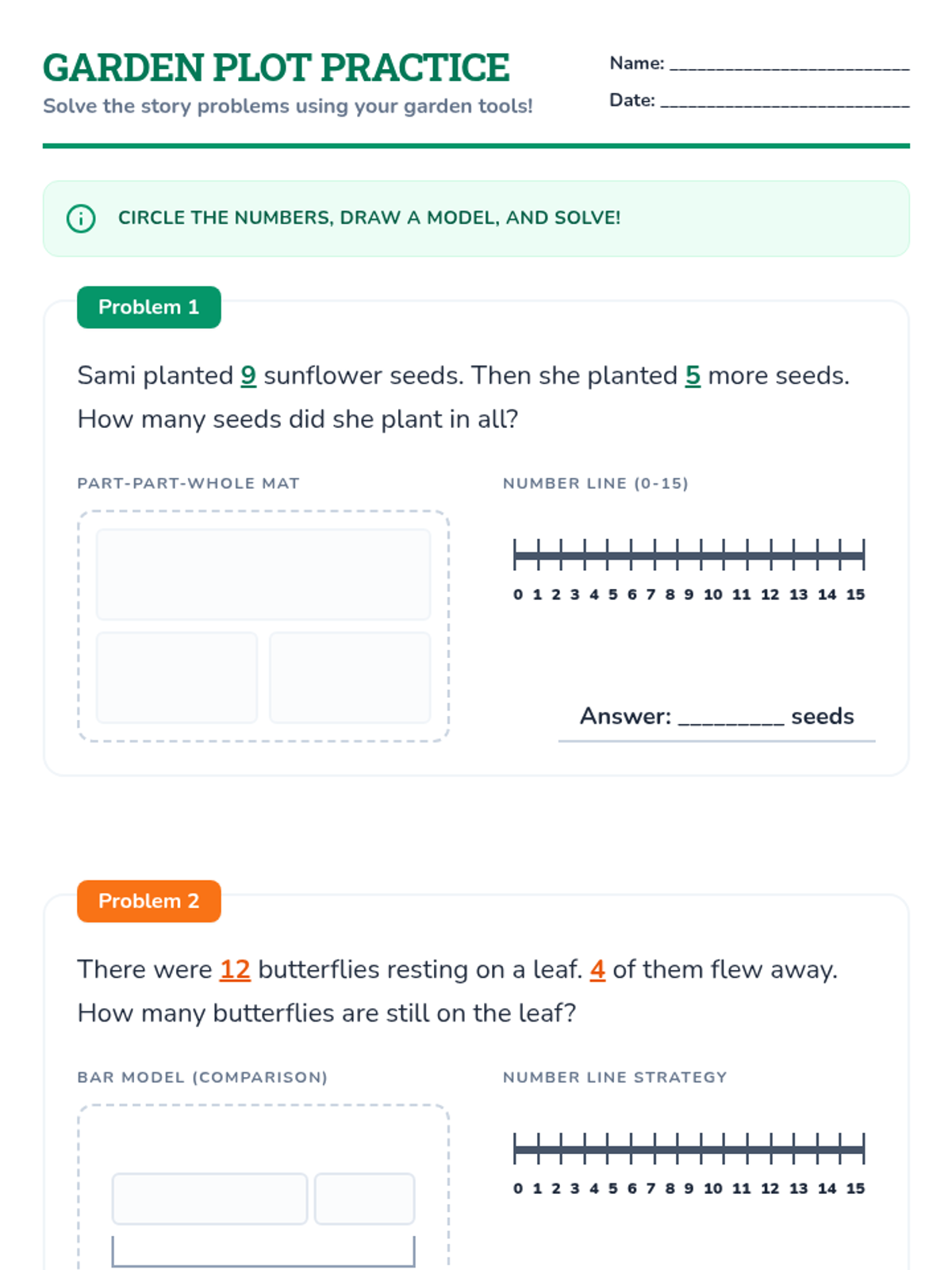
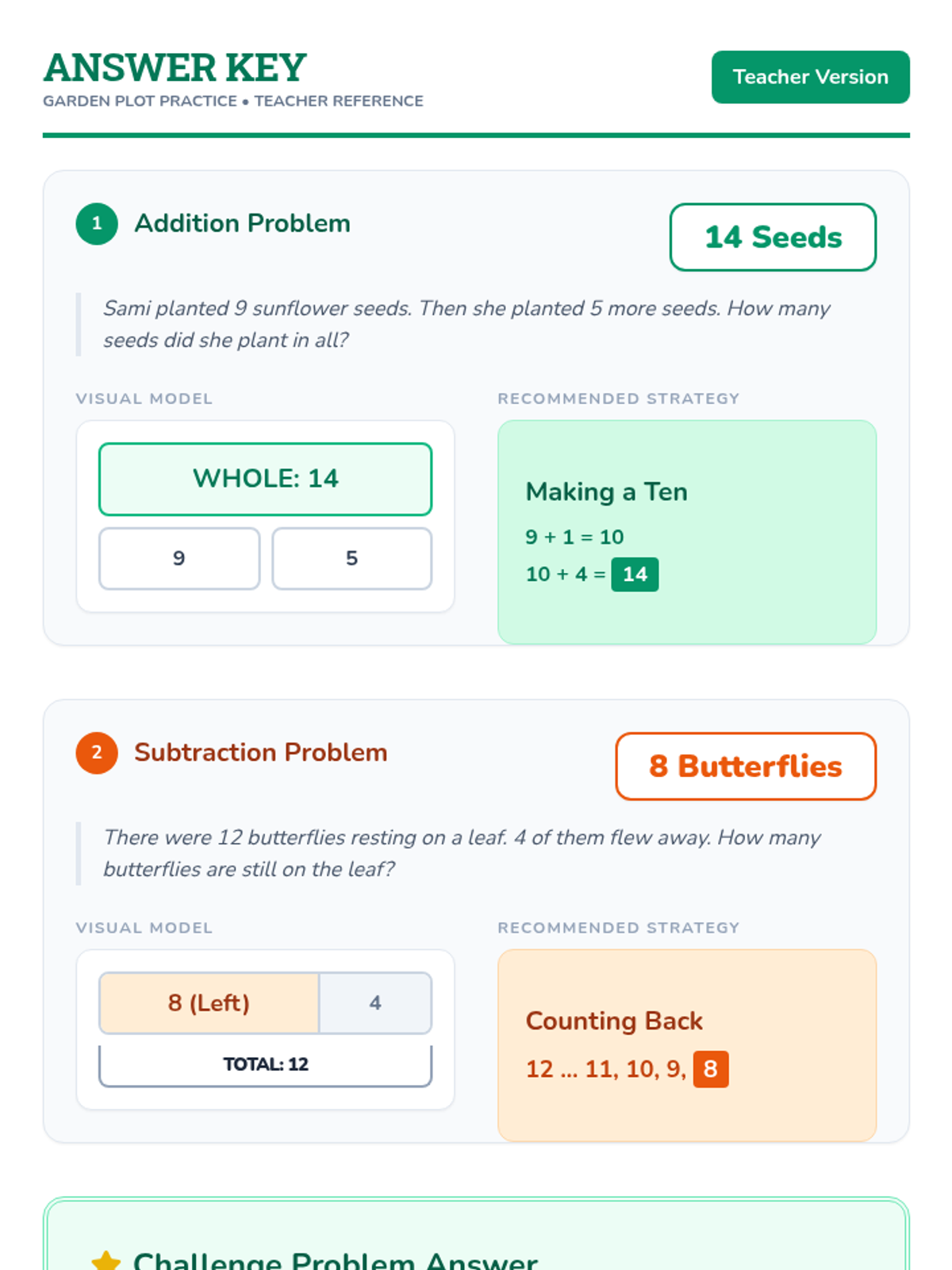
A K-2 math lesson focusing on solving addition and subtraction word problems using part-part-whole mats, bar models, and number lines, while applying counting on/back and making-a-ten strategies.
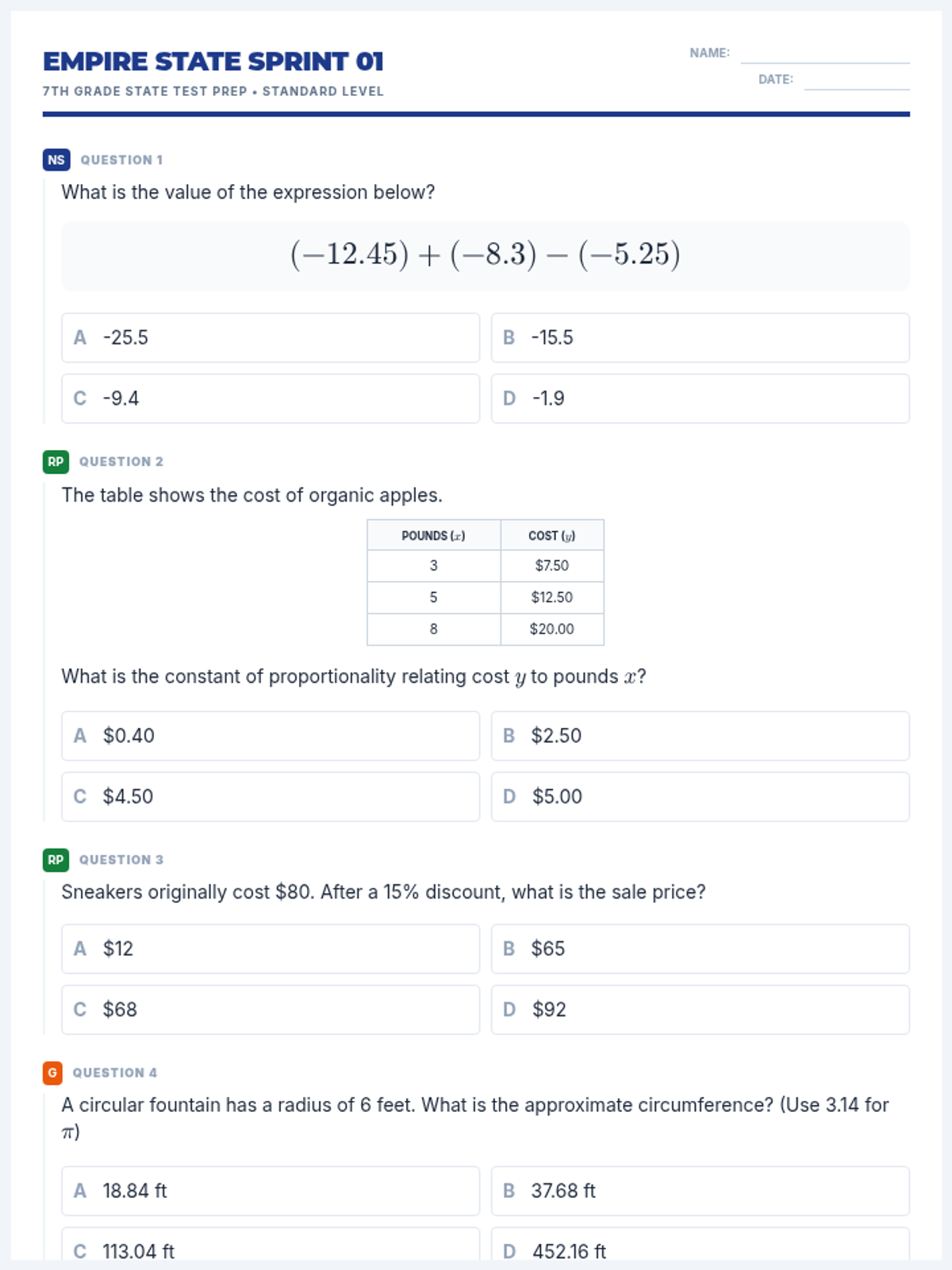
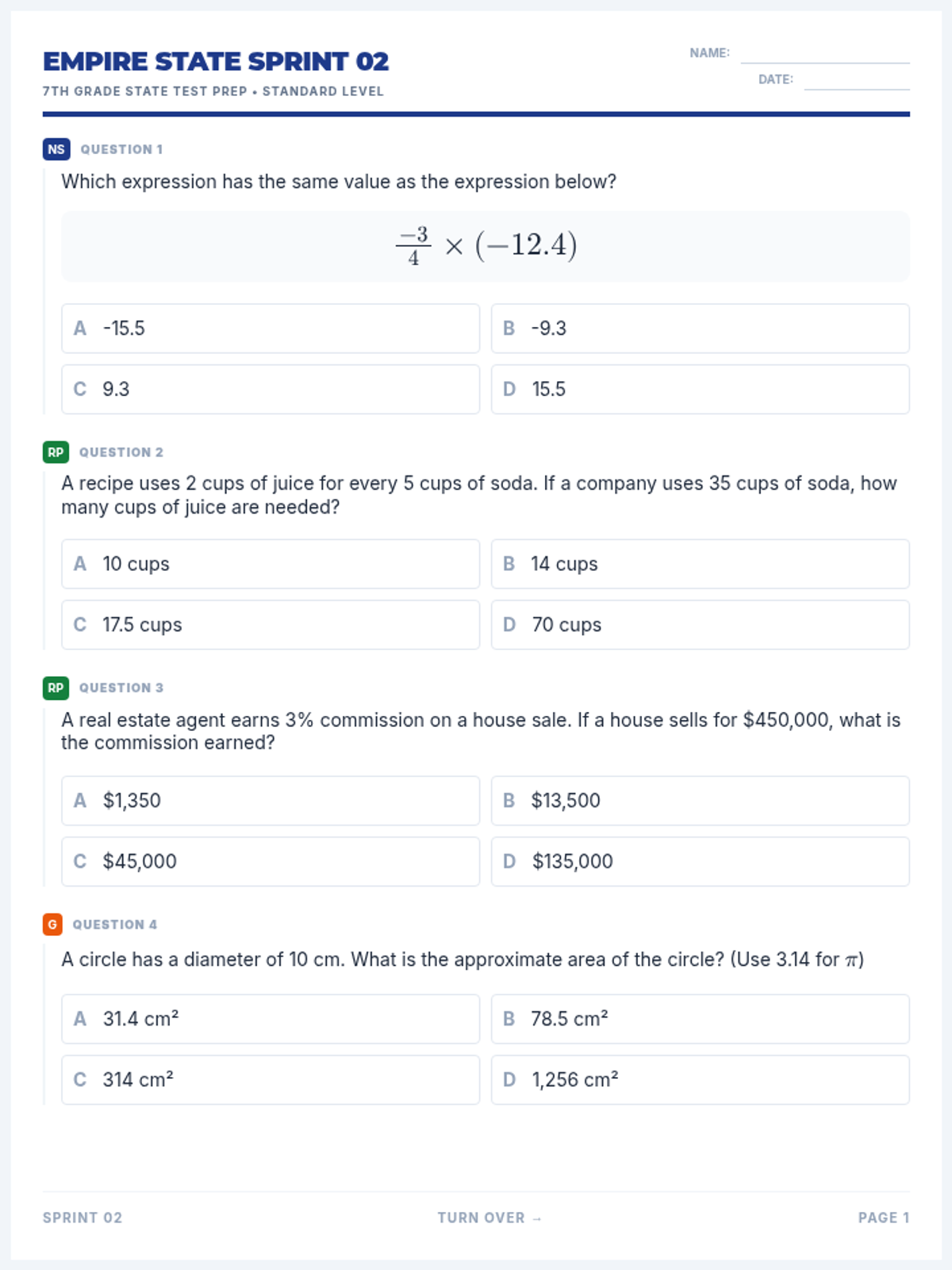
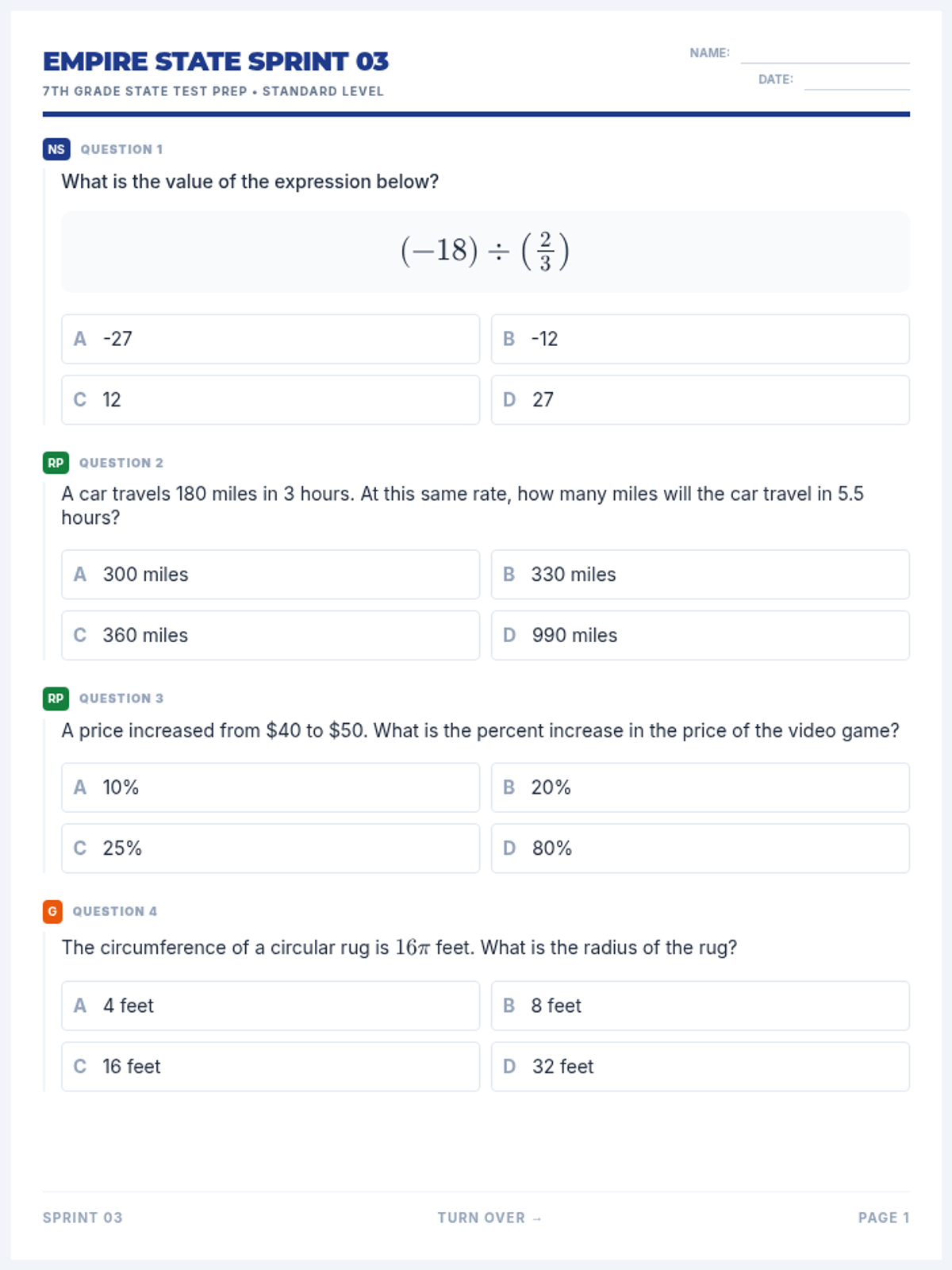
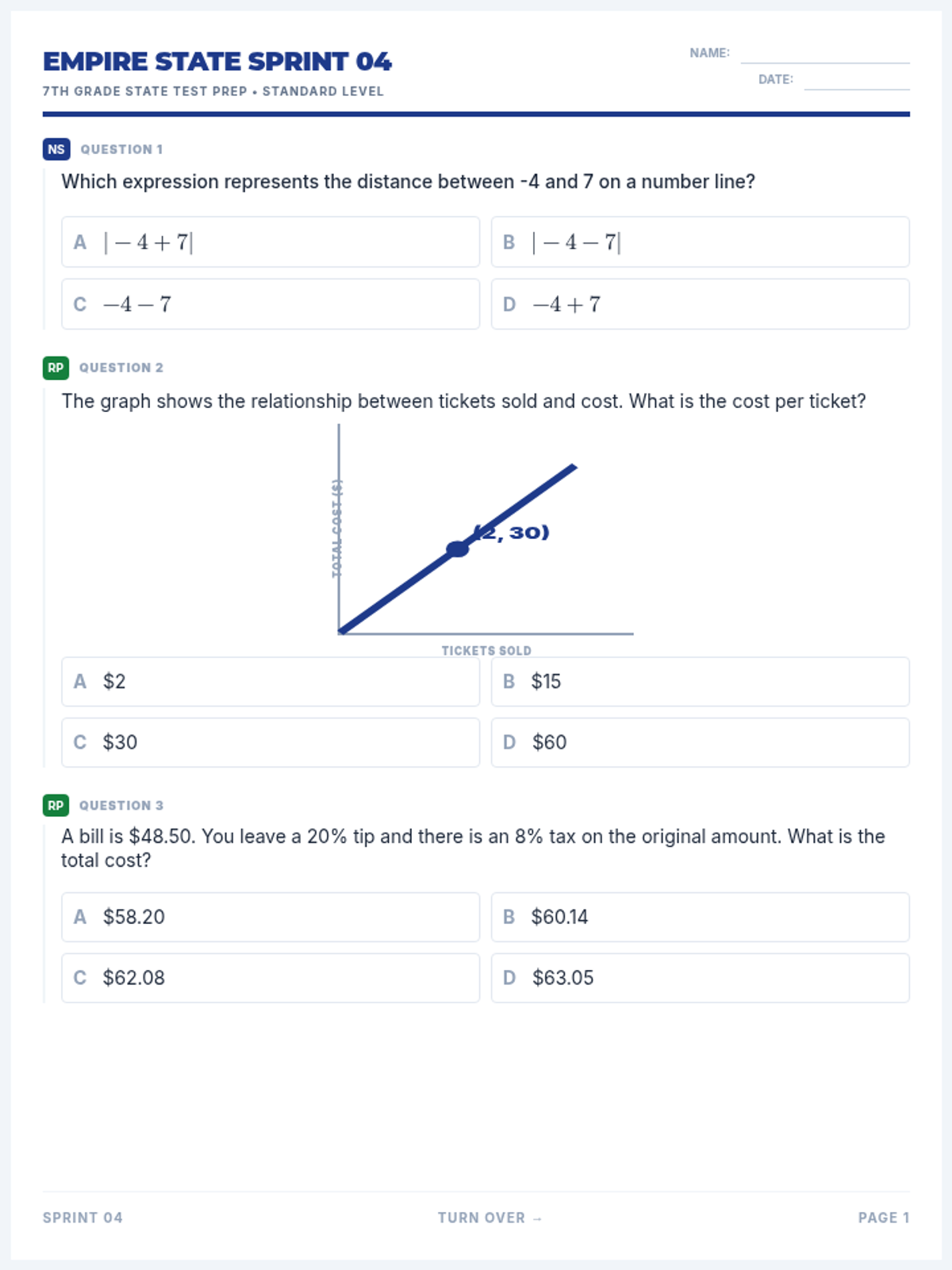
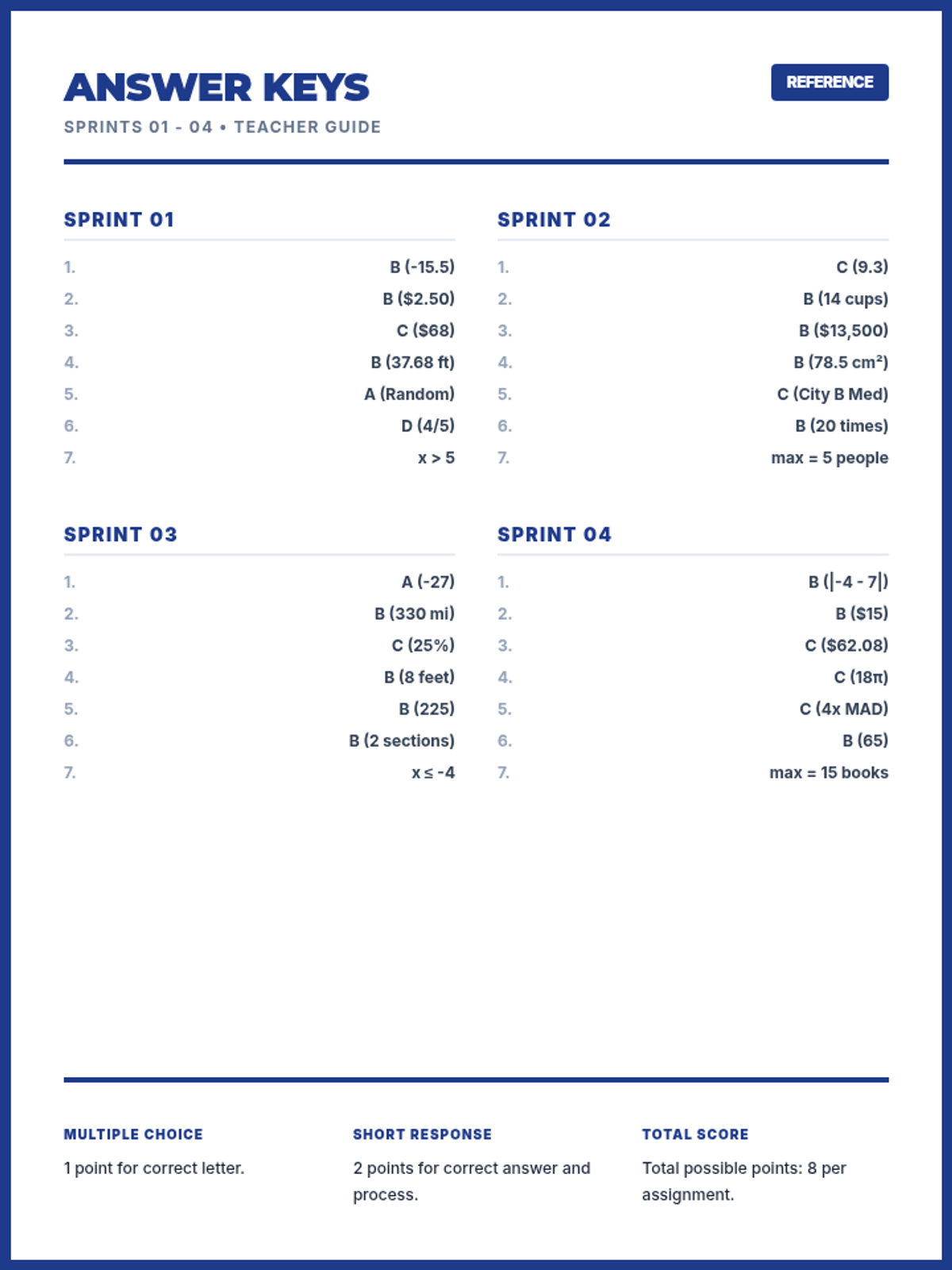
A collection of four double-sided homework assignments focusing on foundational 7th-grade math skills. Each "Sprint" contains seven standardized questions covering all major test categories to build stamina and accuracy.
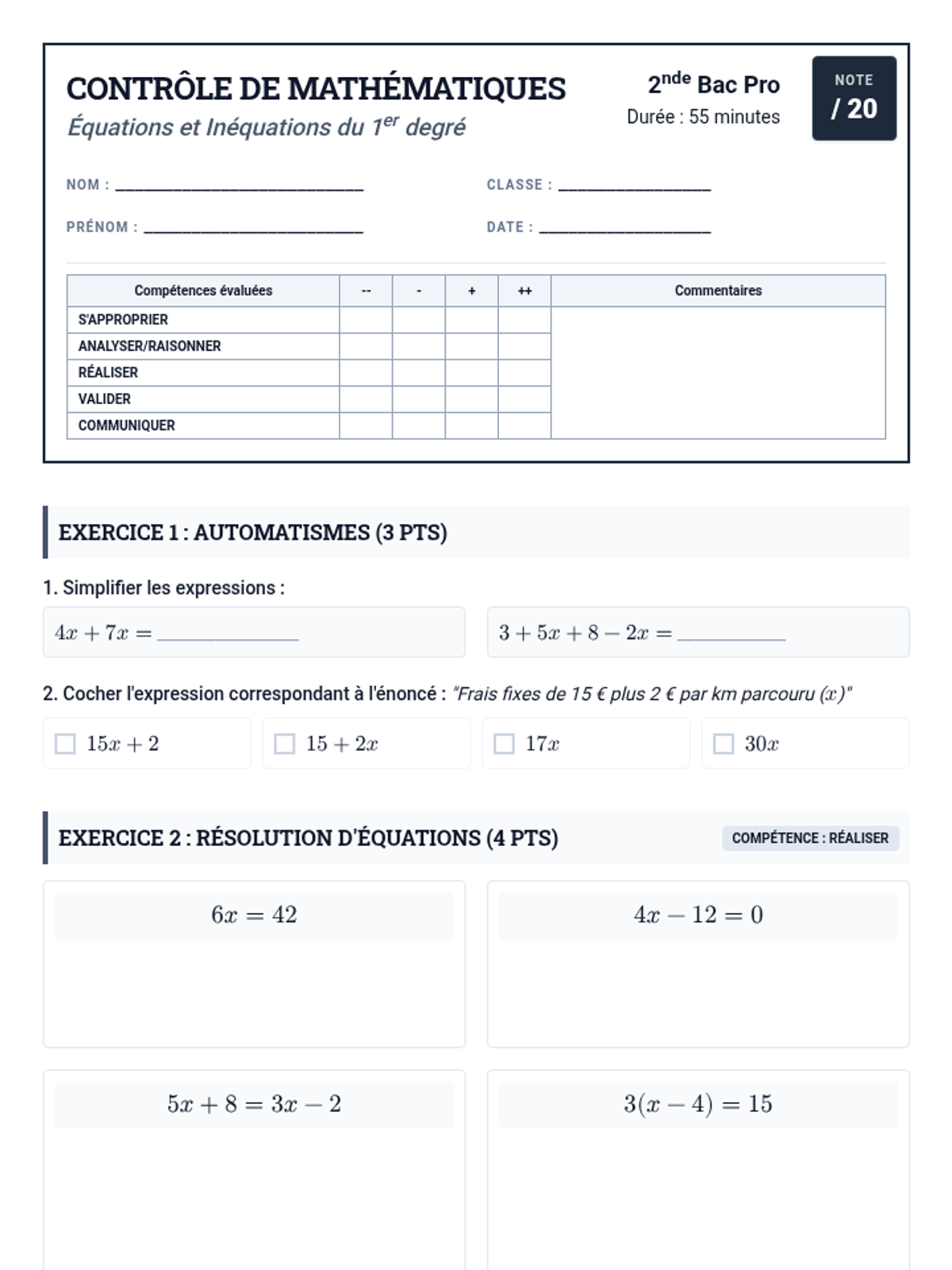
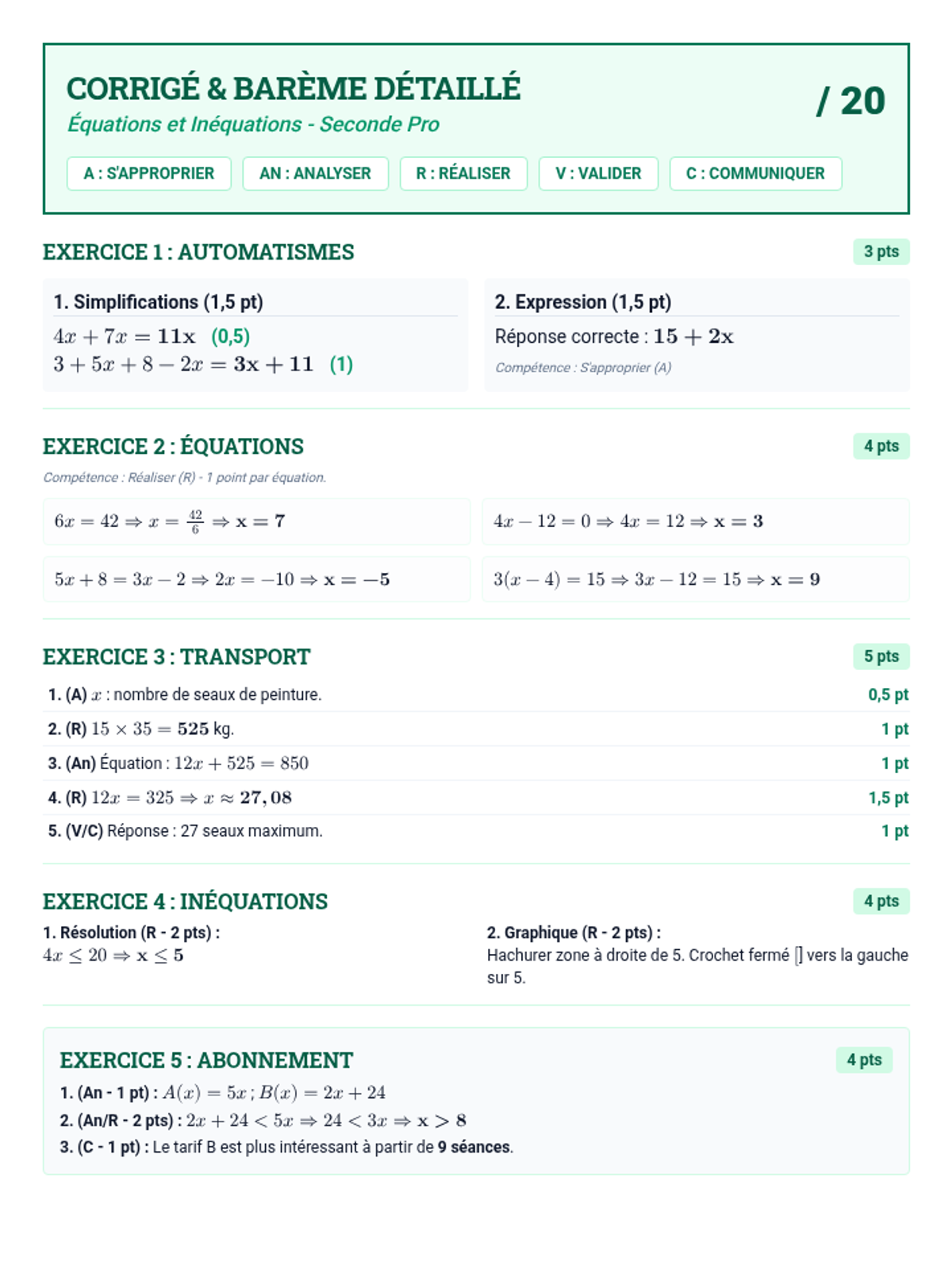
Une évaluation complète sur les équations et inéquations du premier degré pour les élèves de seconde professionnelle, incluant les exercices de base et des problèmes contextualisés.
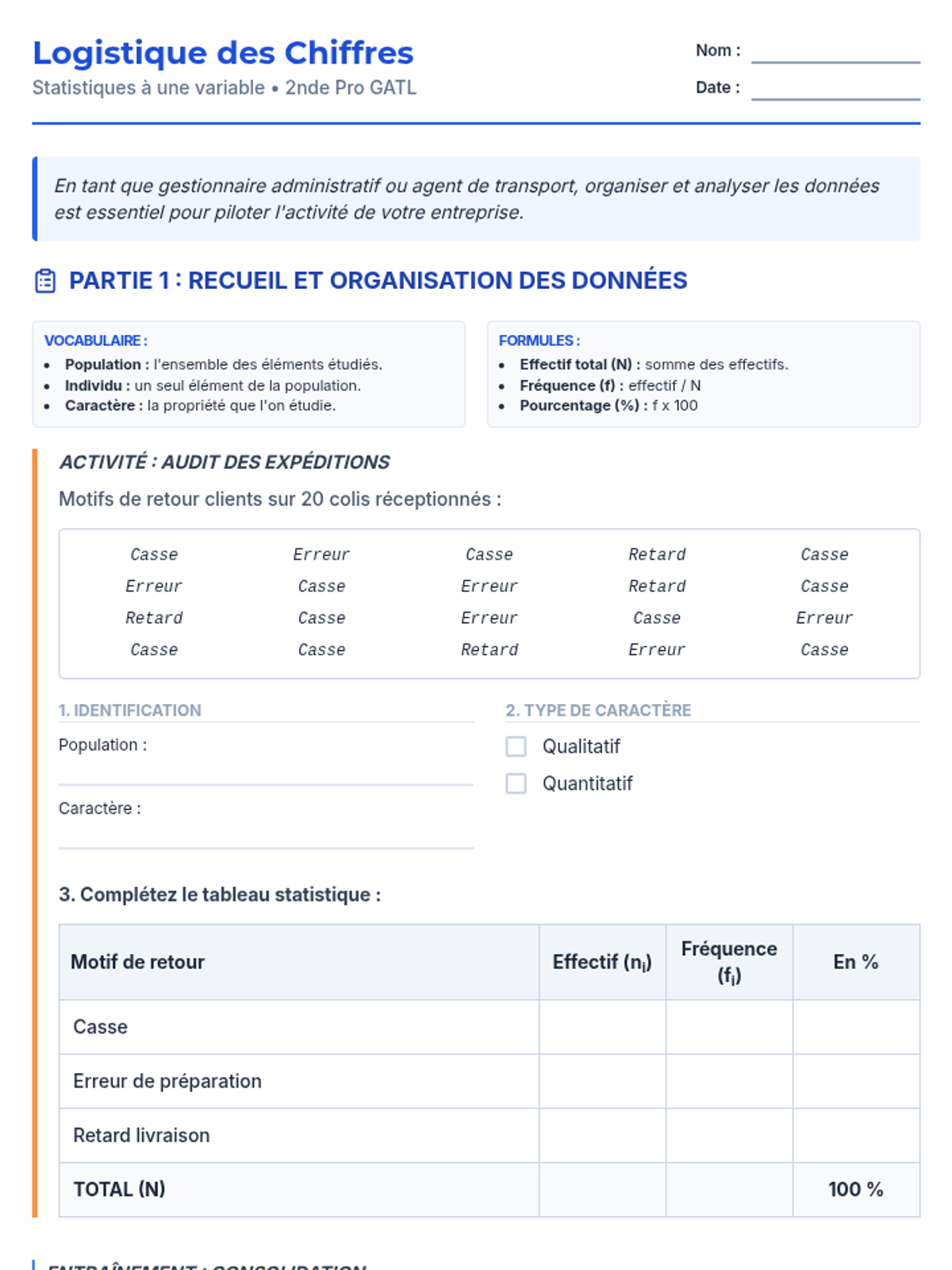
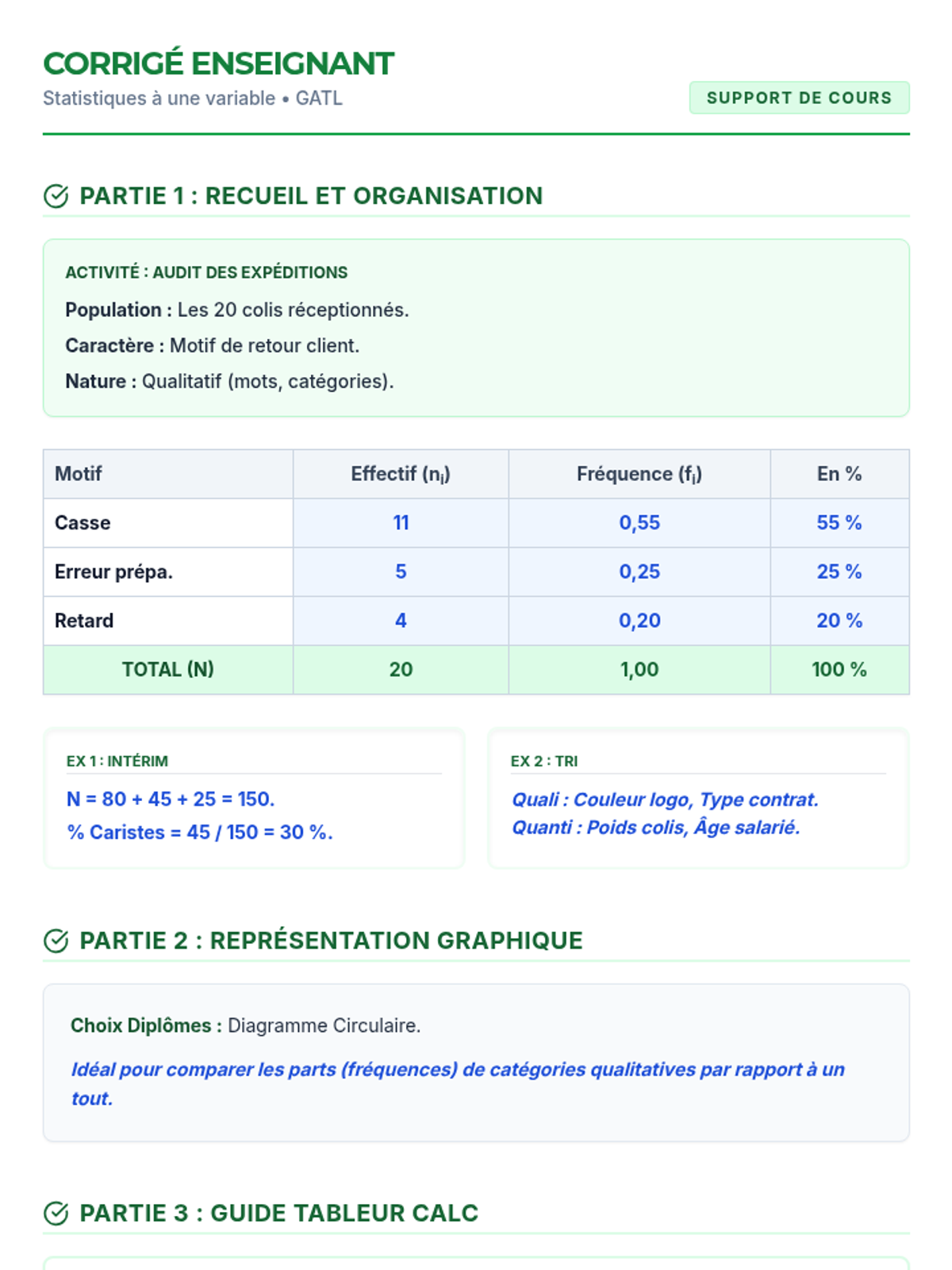
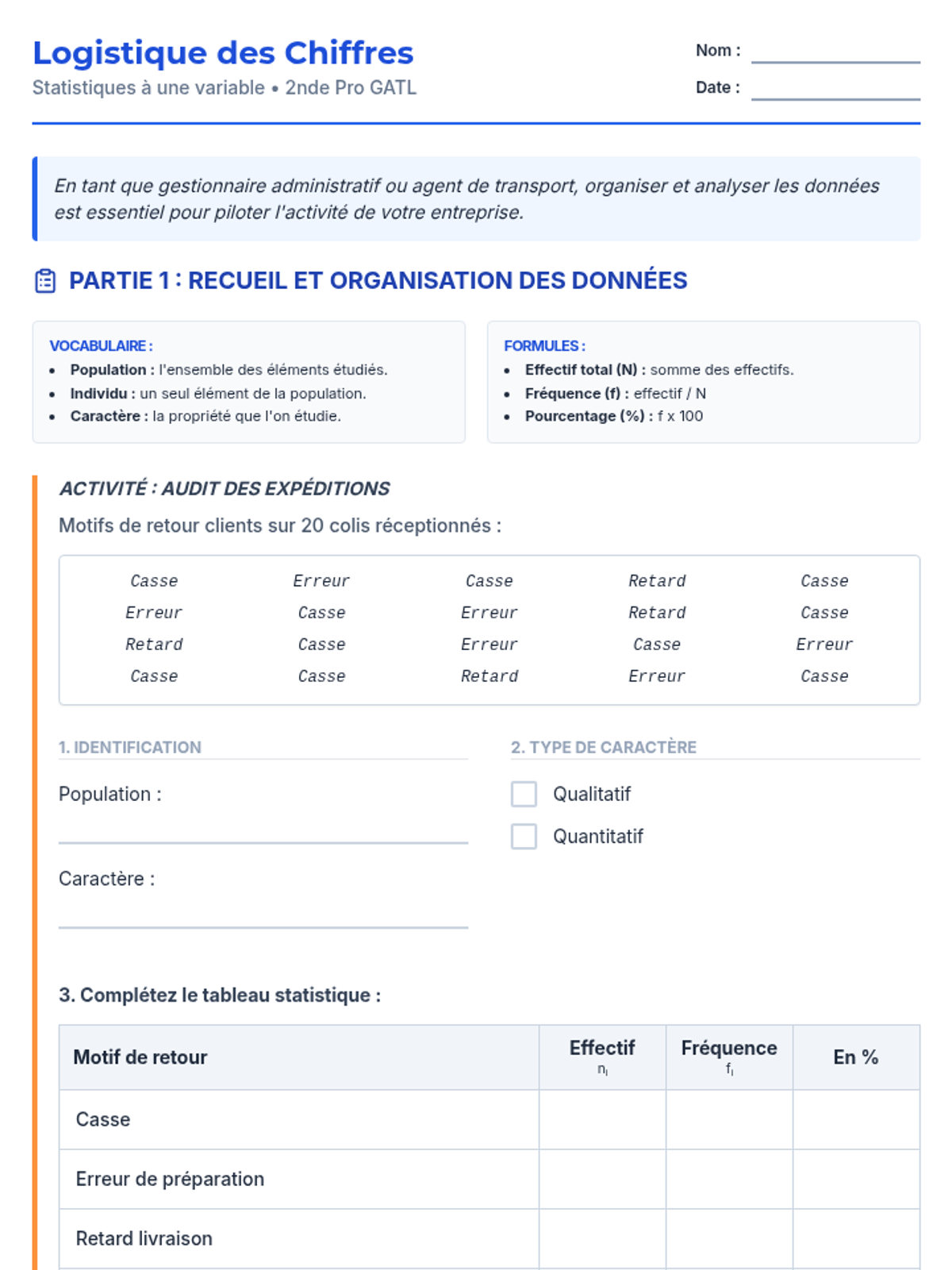
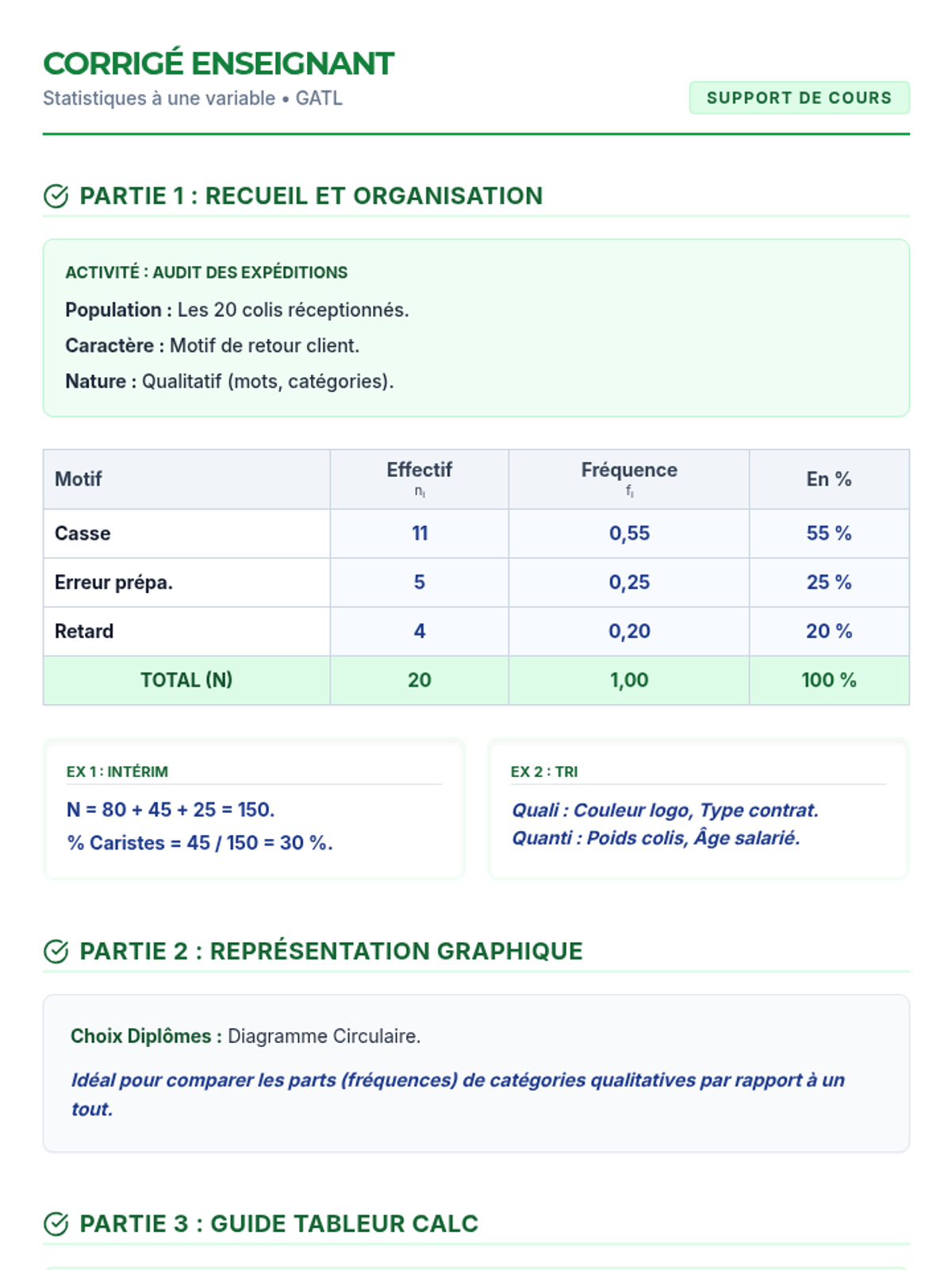
Leçon focalisée sur les bases des statistiques à une variable : du recueil de données brutes à leur analyse graphique, avec un focus sur l'utilisation de LibreOffice Calc.
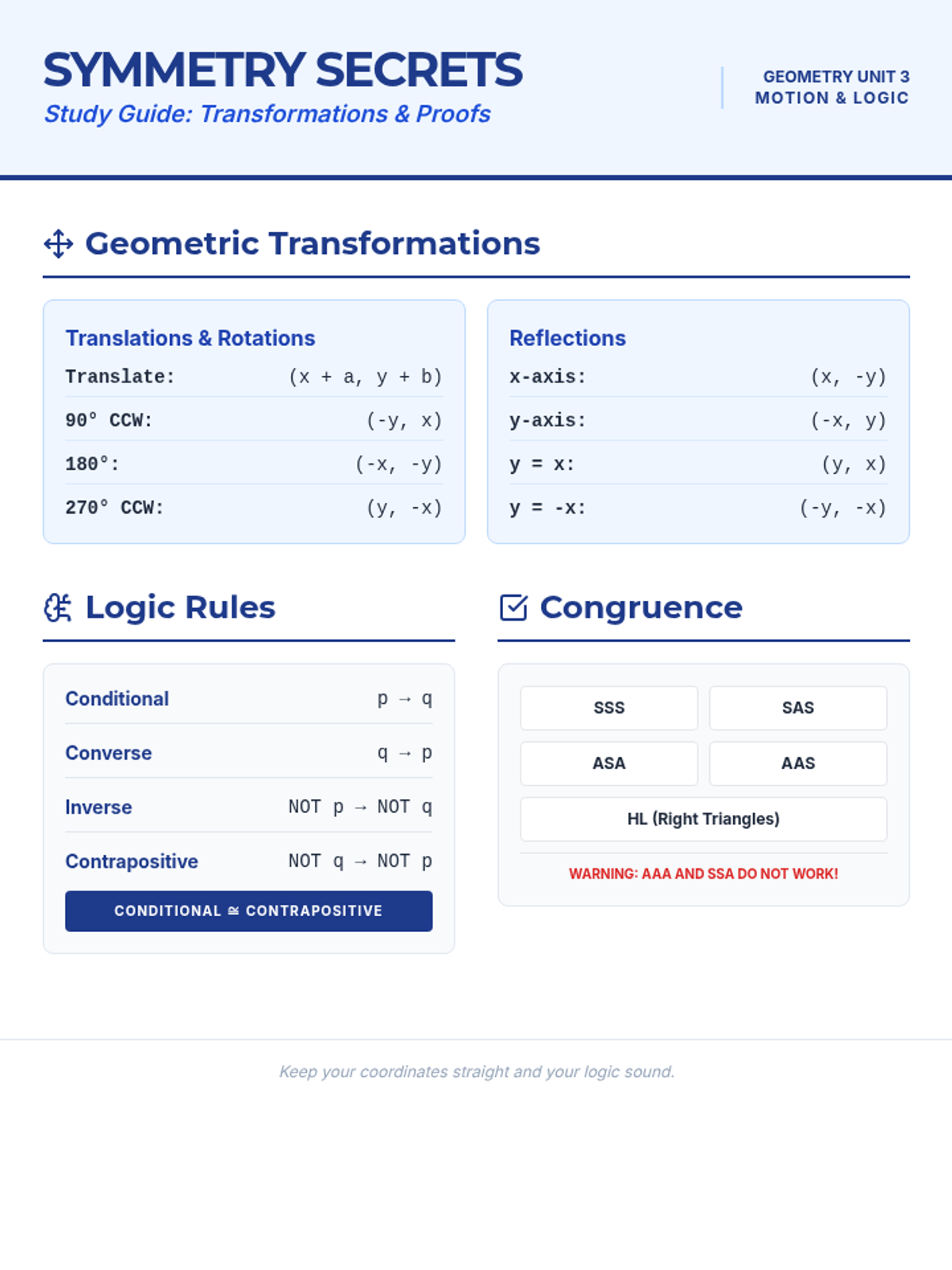
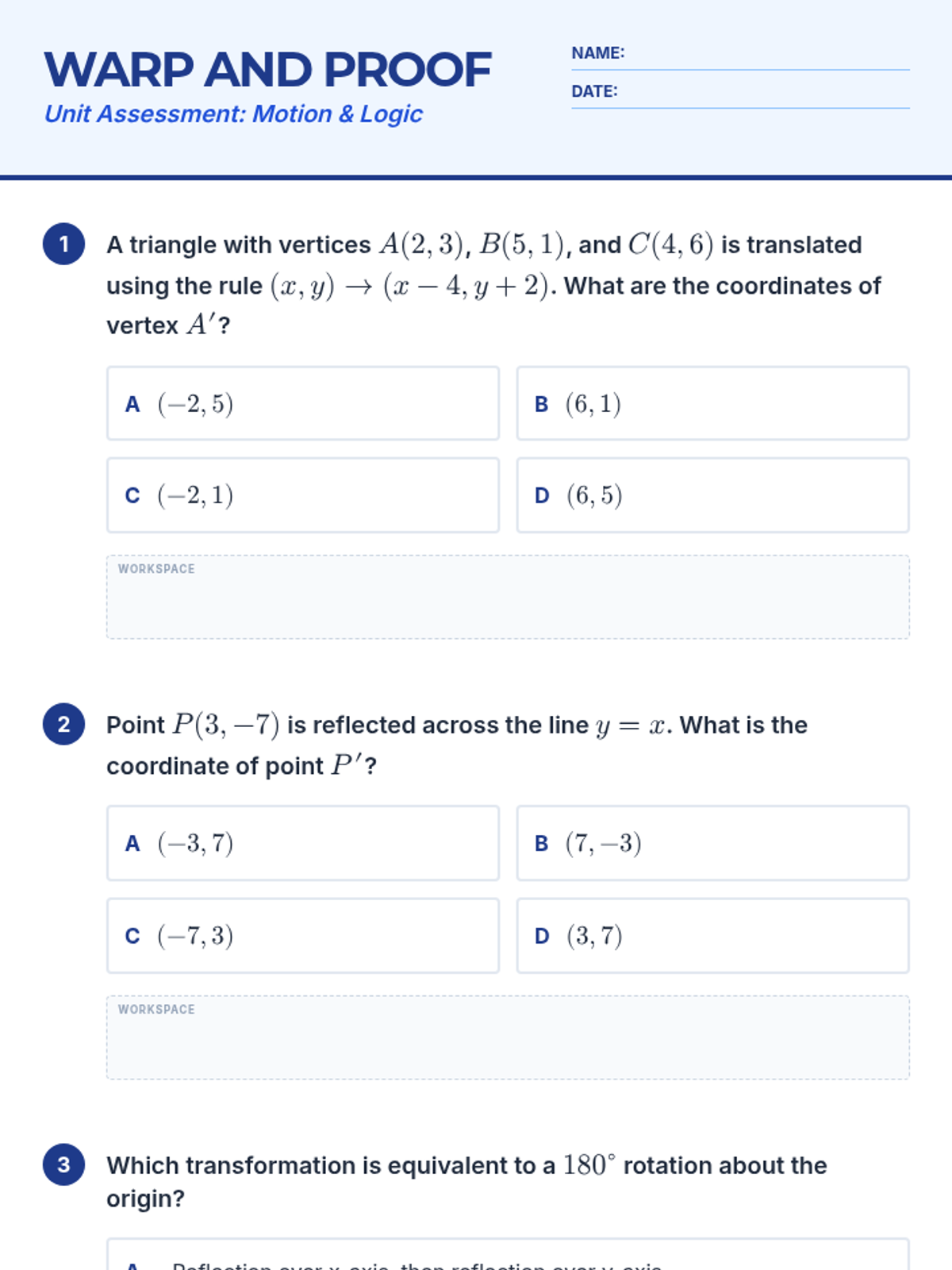
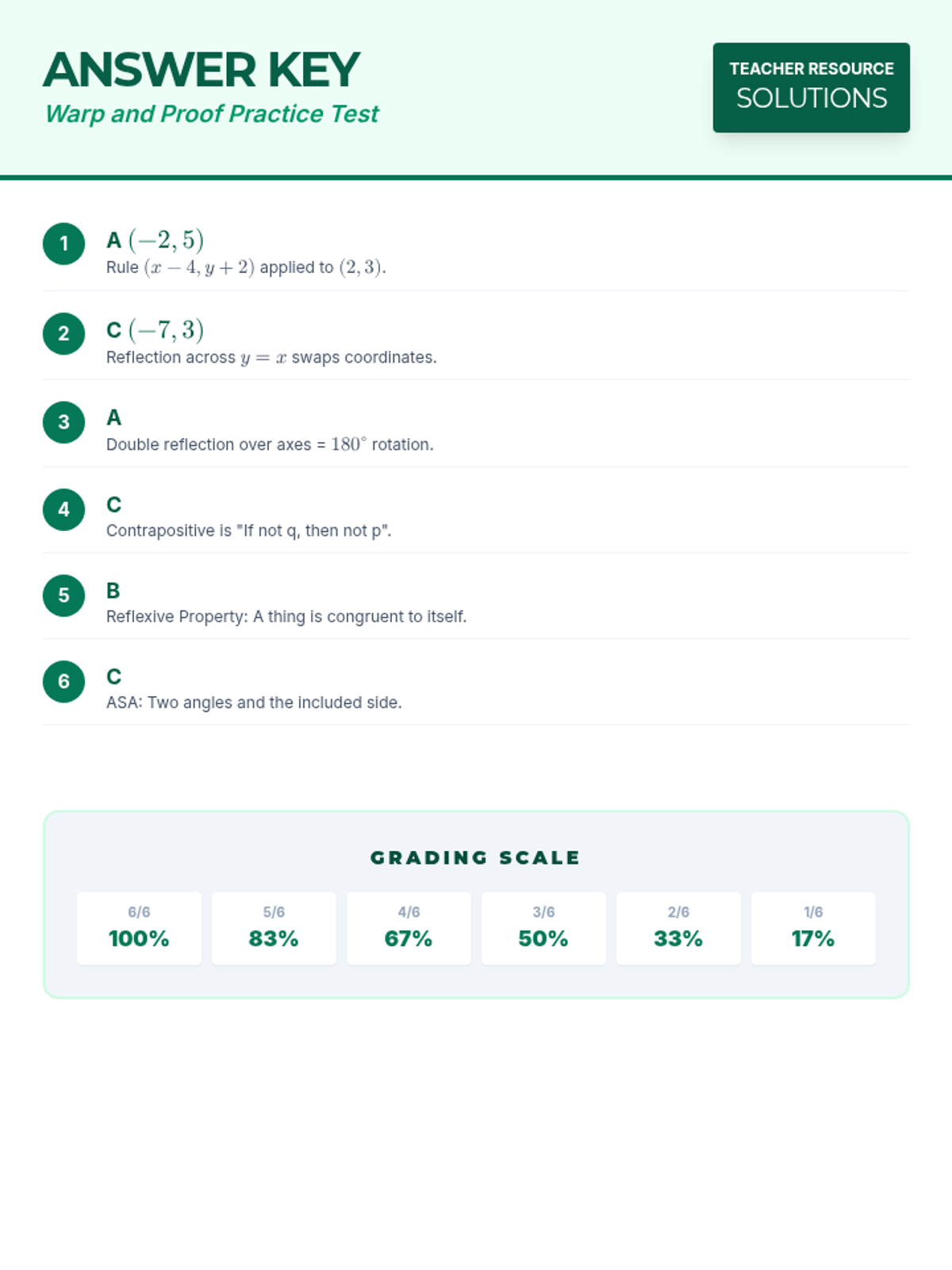
A comprehensive lesson covering geometric transformations (translations, reflections, rotations, and dilations) and the fundamentals of geometric proofs, including logical reasoning and triangle congruence.
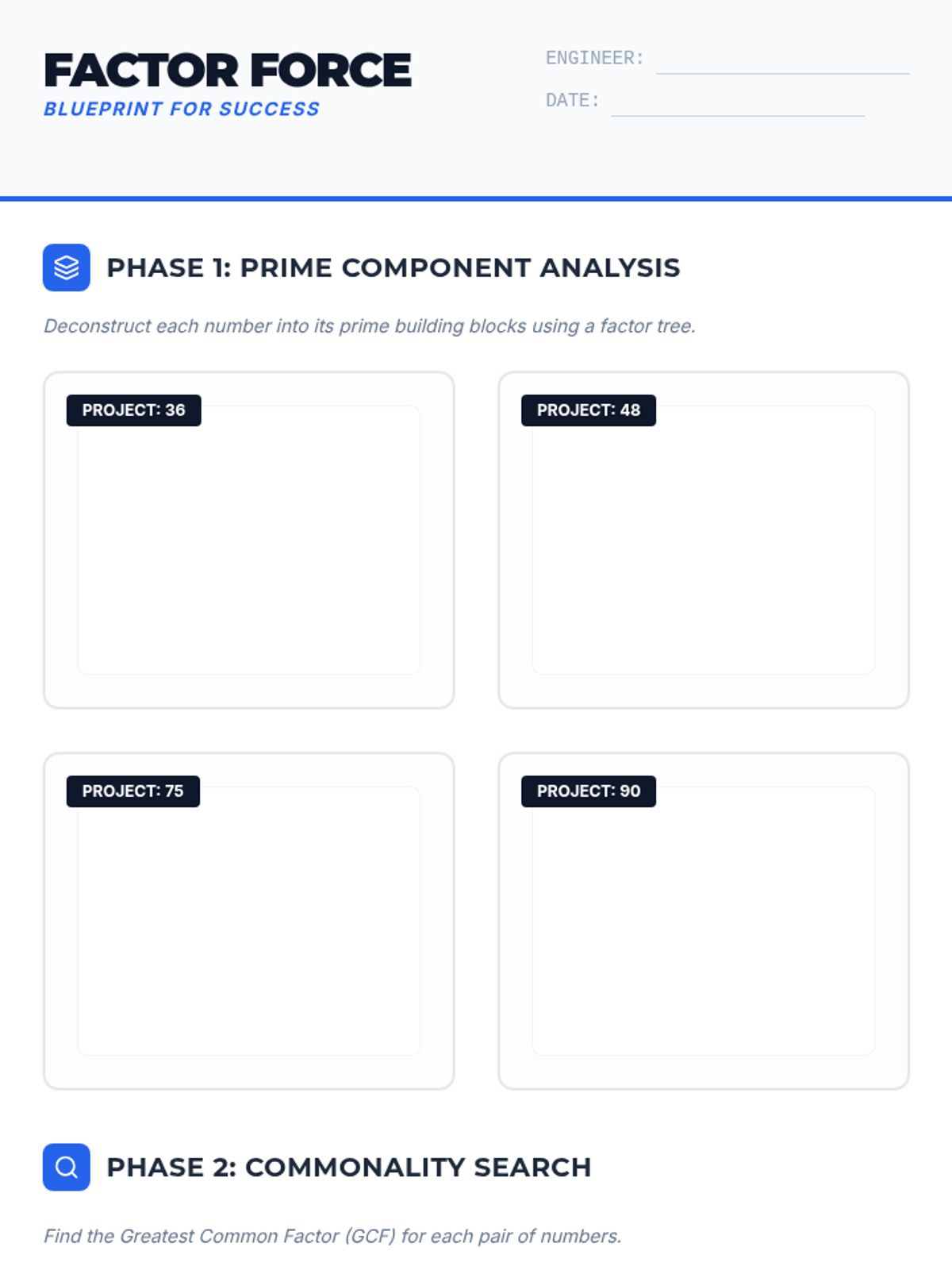
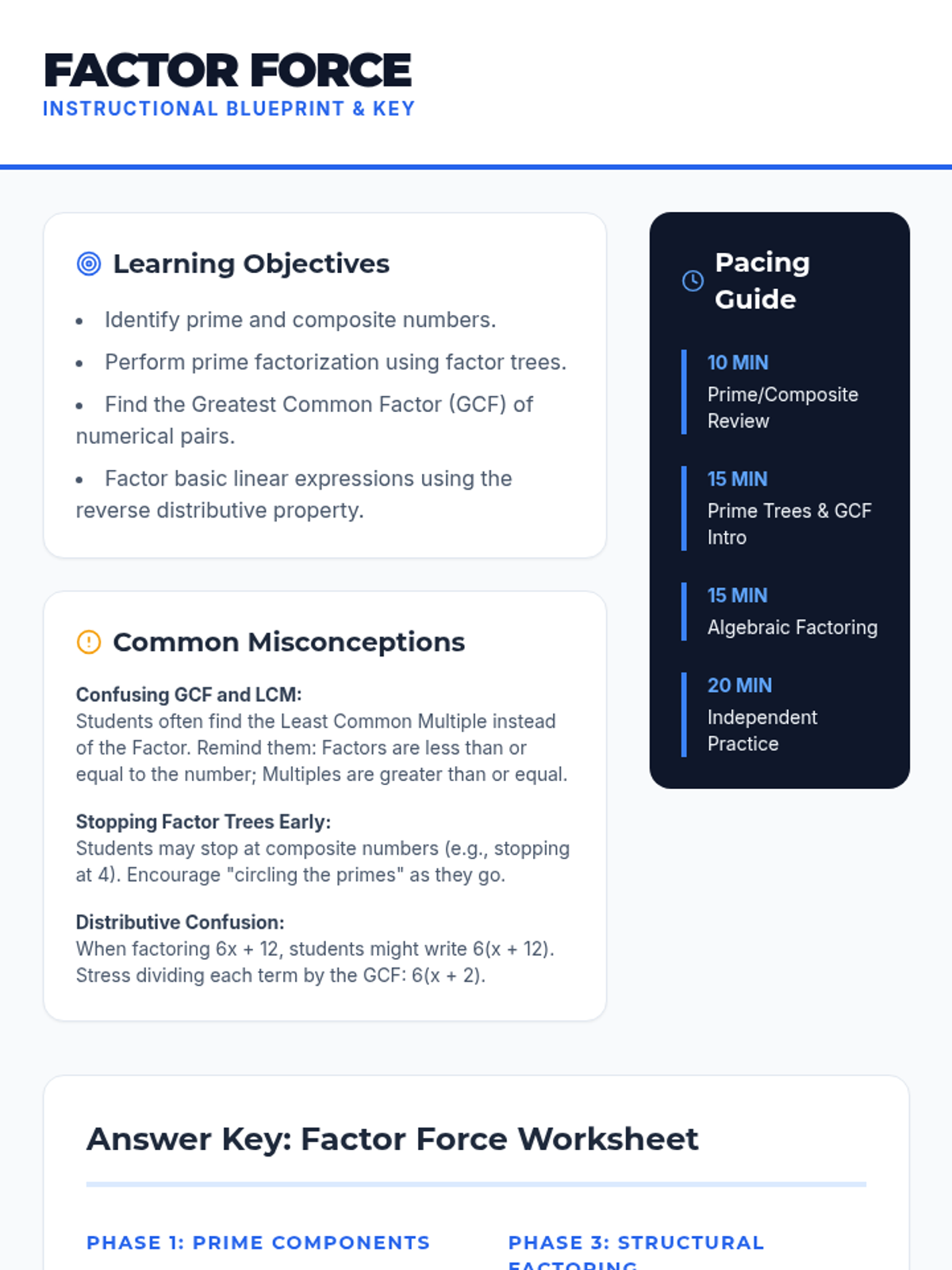
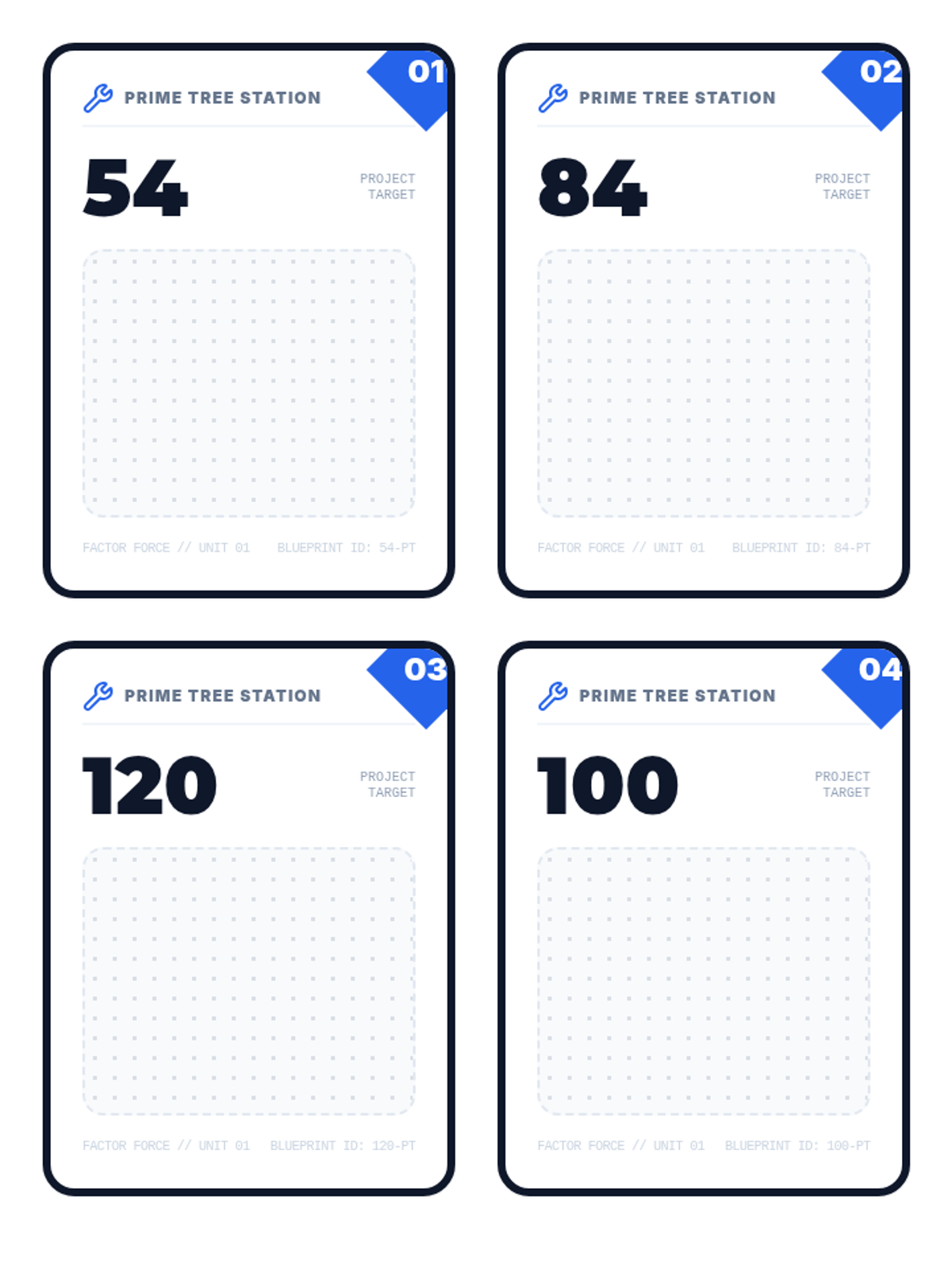
Students will learn to decompose numbers into prime factors, identify the greatest common factor between numbers, and apply these skills to factor simple algebraic expressions.
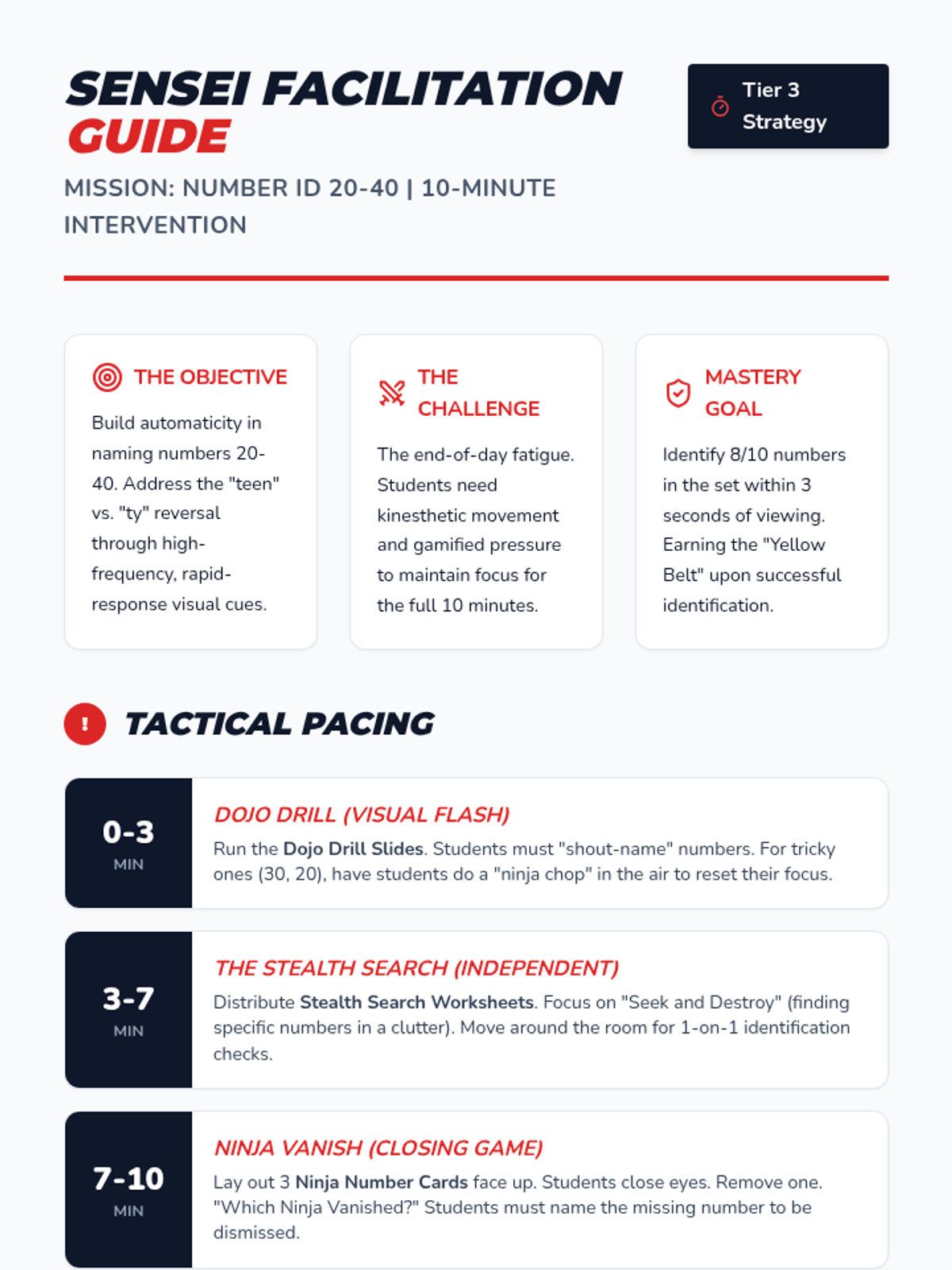
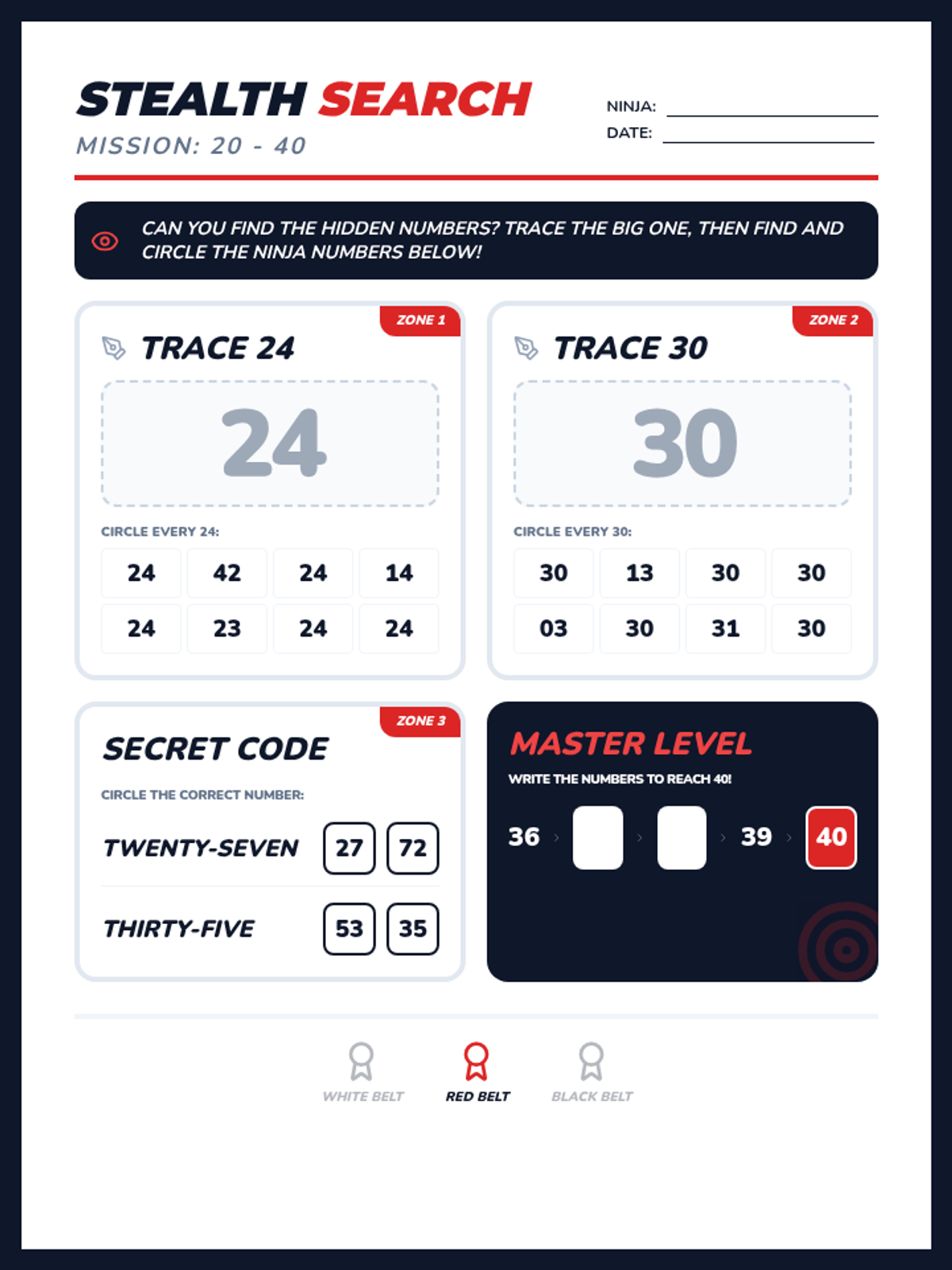
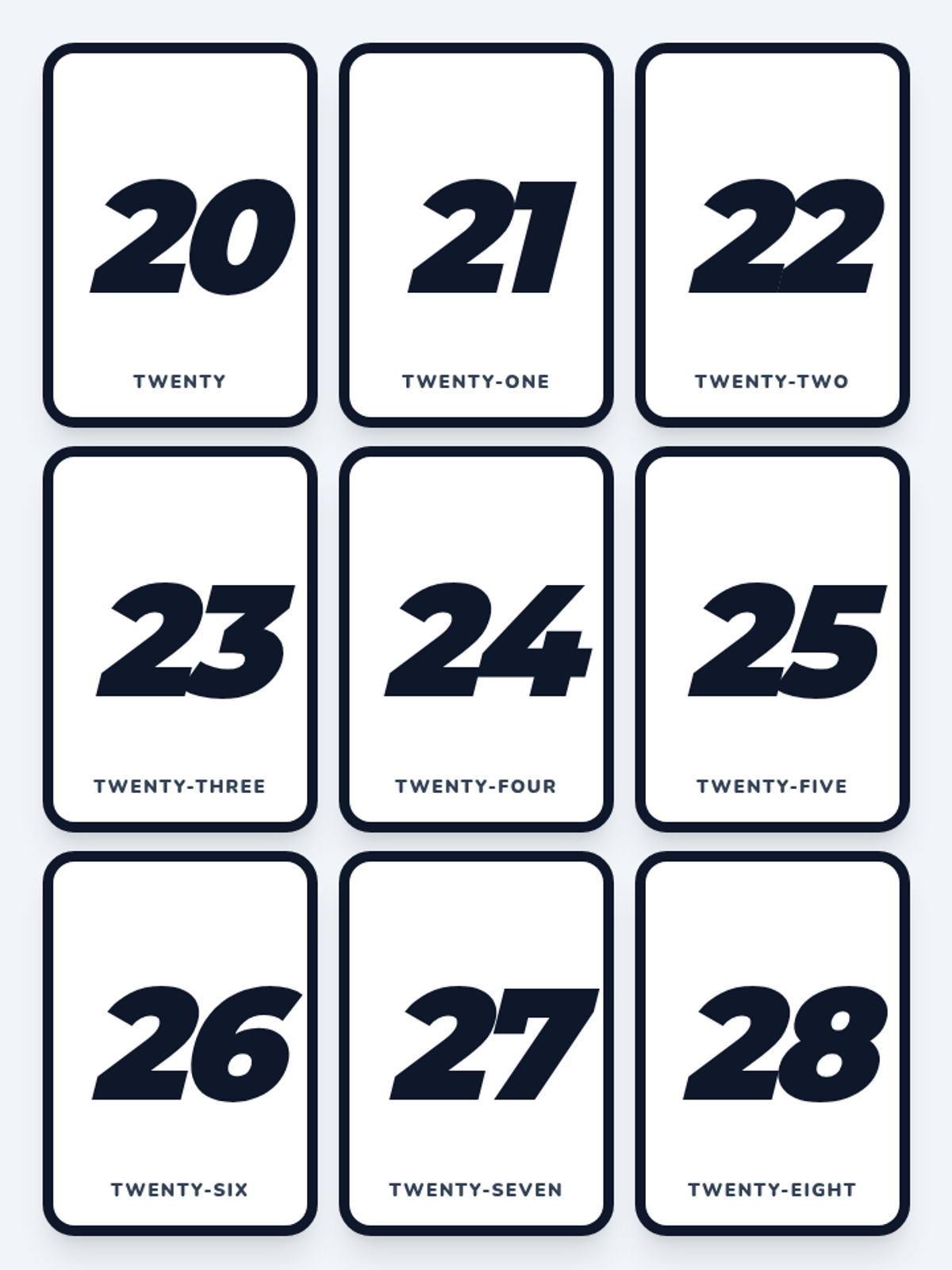
Targeted practice for identifying numbers 20-40 through rapid-fire visual drills and kinesthetic activities. Focuses on overcoming the 'teen' vs 'ty' confusion and building reliable recall.
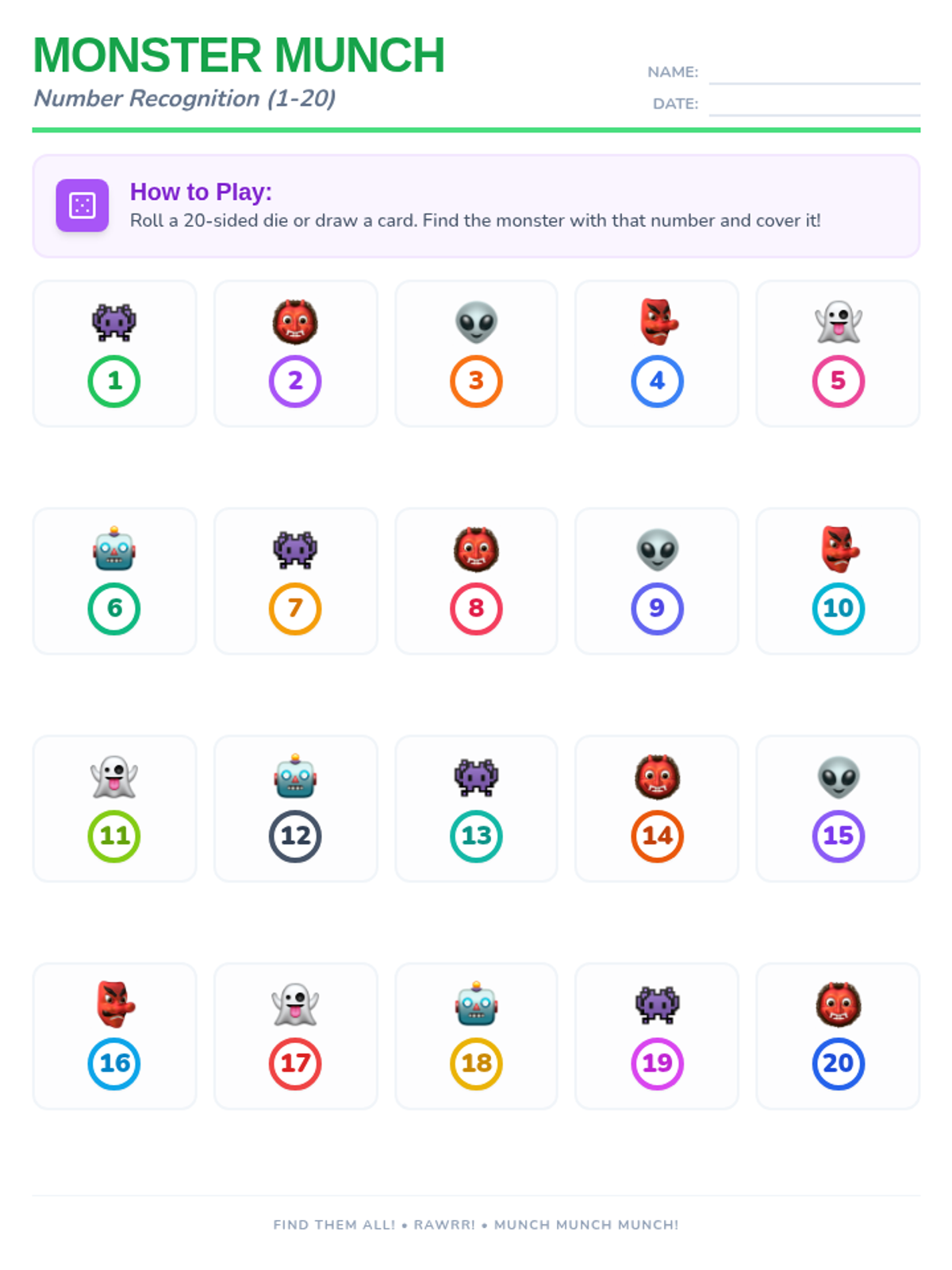
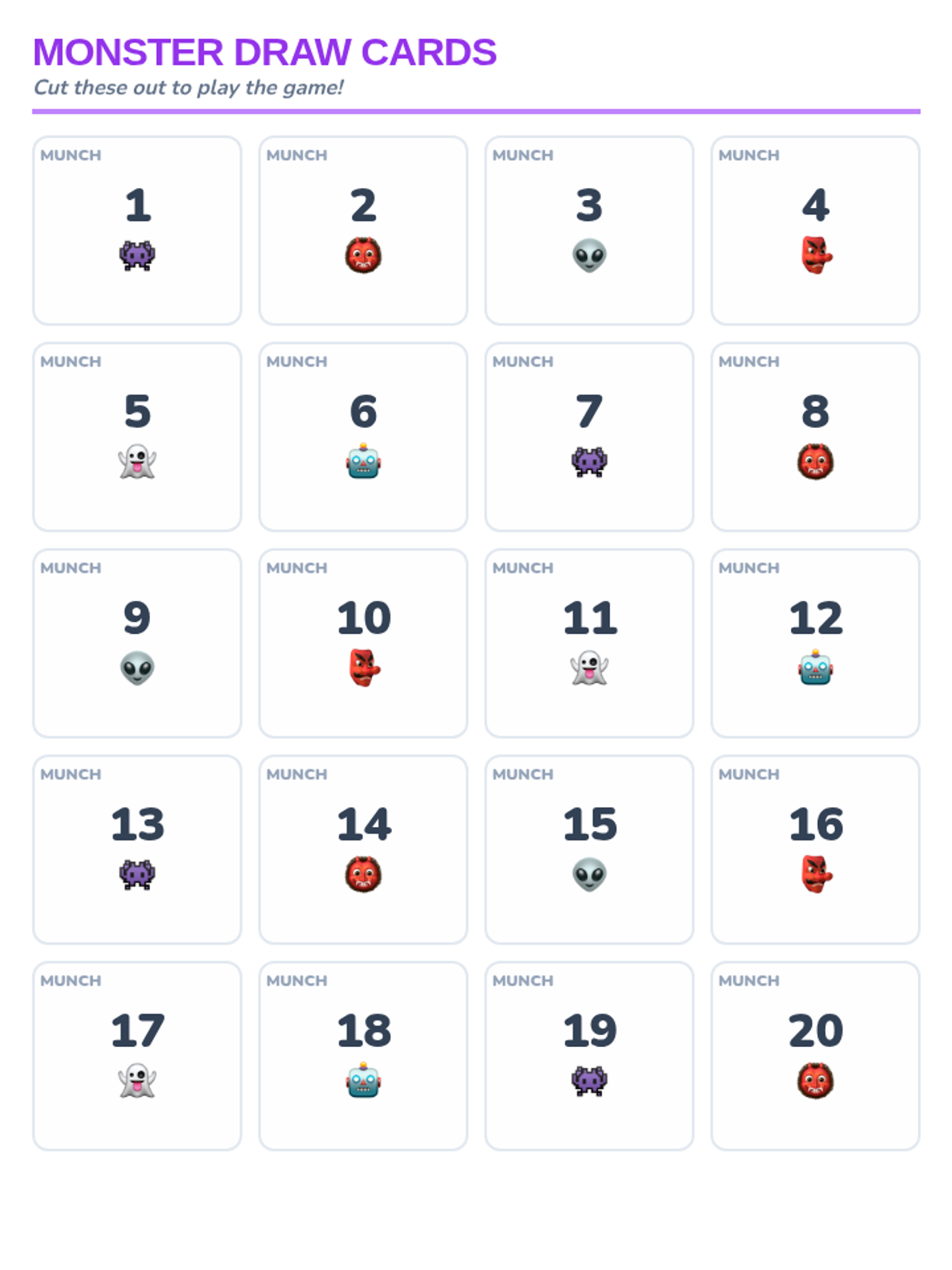
A fun, monster-themed lesson focused on identifying and naming numbers 1-20 through a hands-on 'Roll and Cover' game. Students practice subitizing and number recognition in a playful, low-stakes environment.
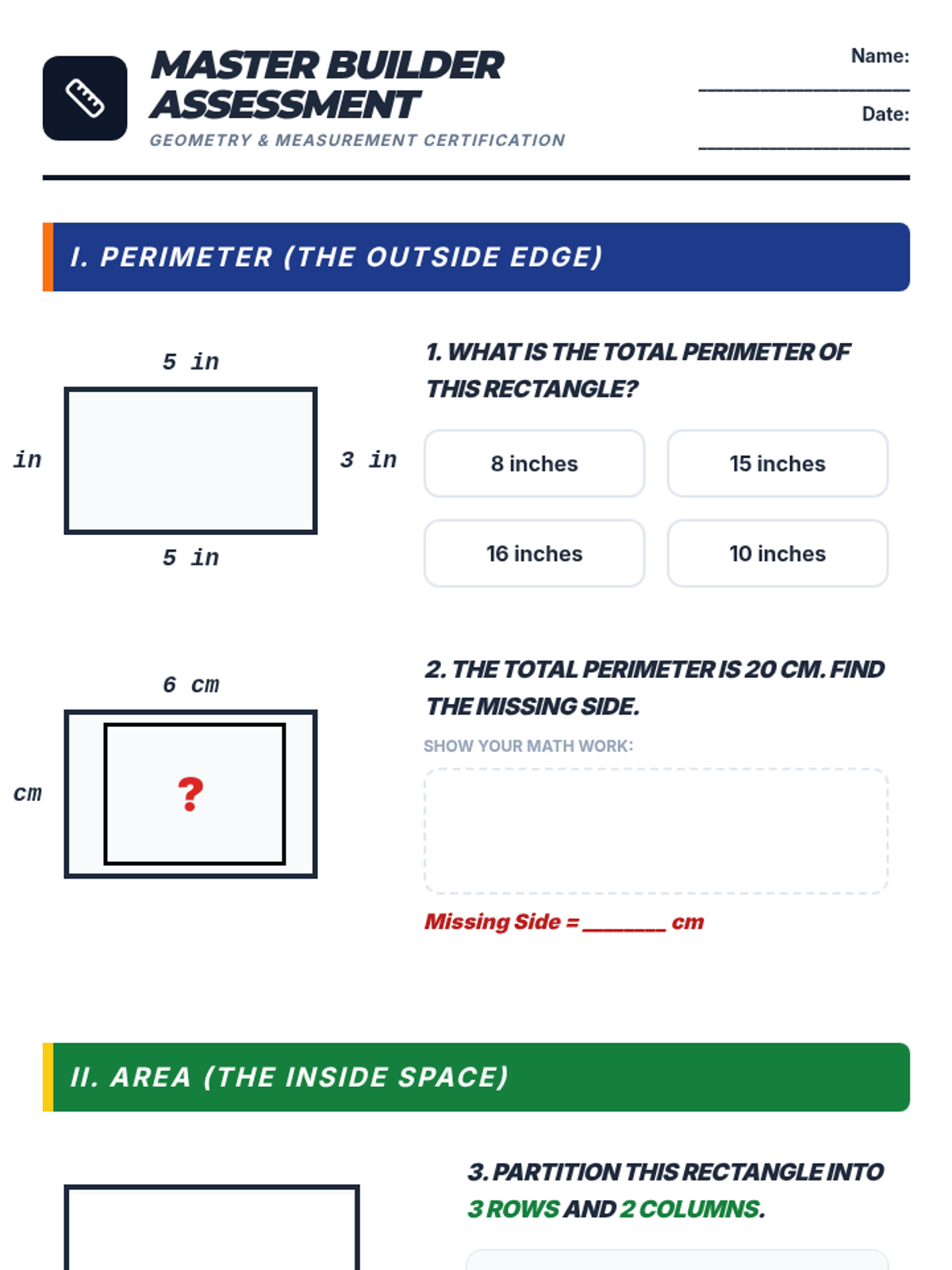
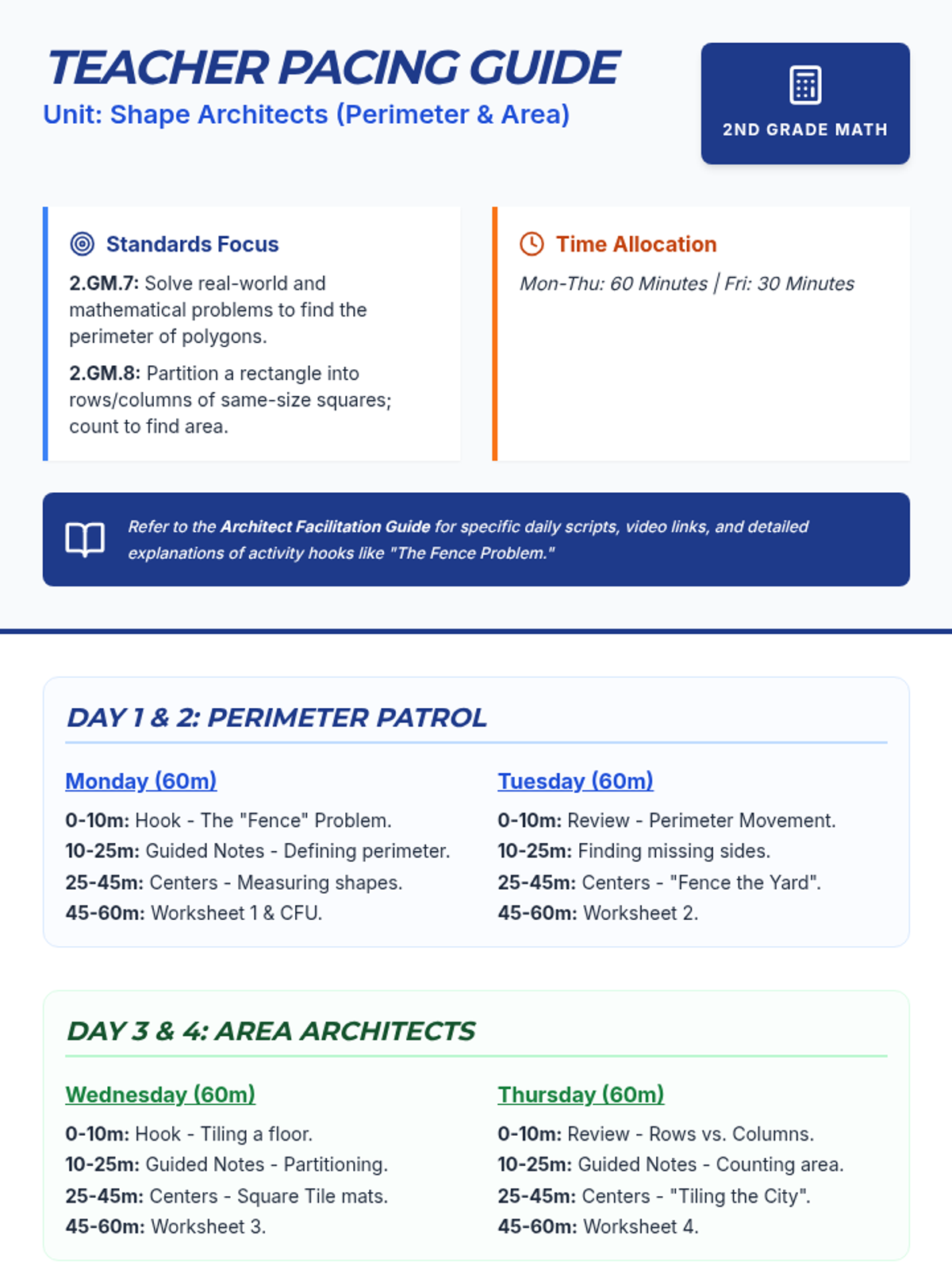
A cumulative review and formal assessment of perimeter and area concepts in a shortened Friday block.
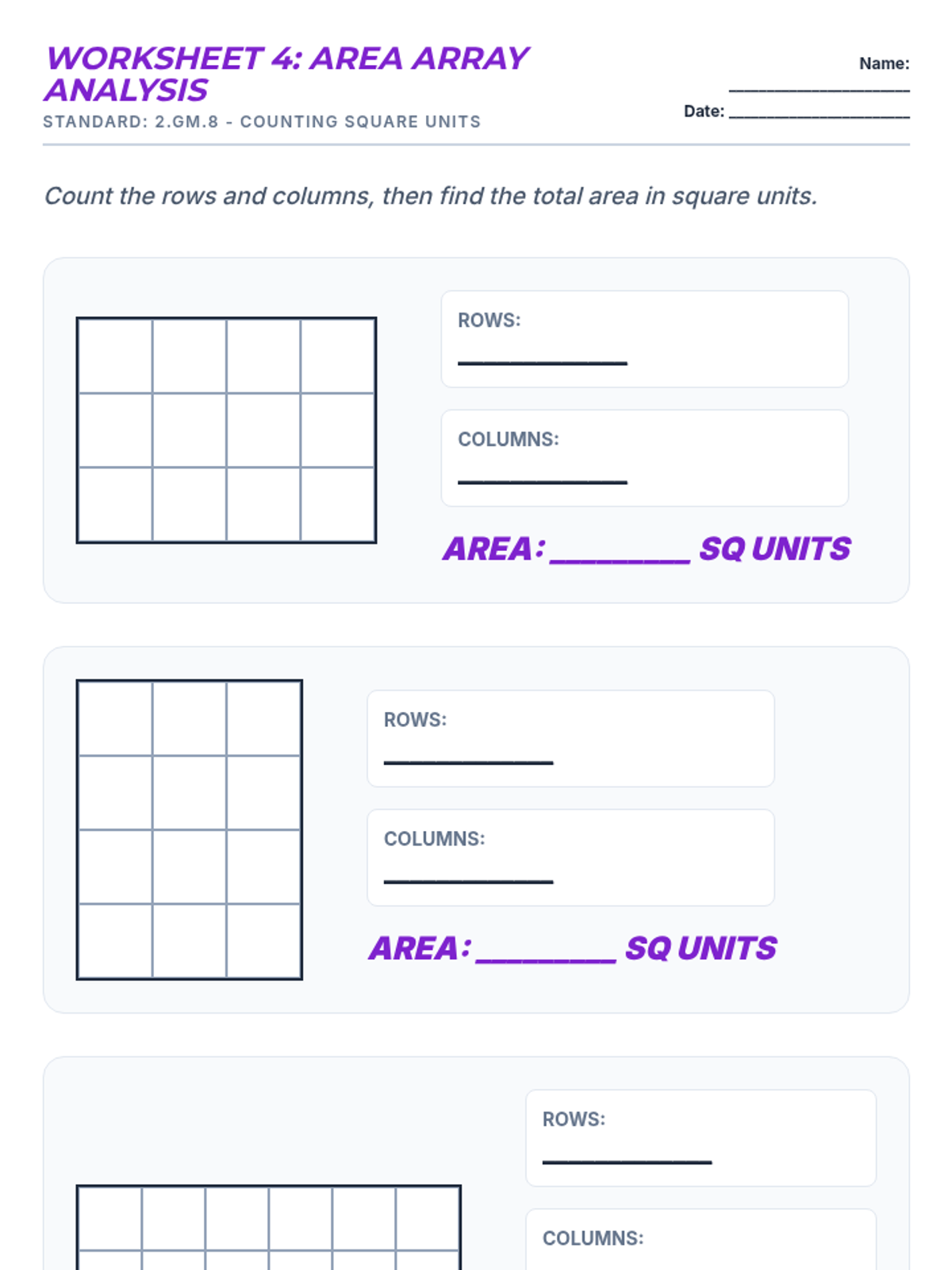
Reinforcing the concept of area through counting squares in arrays and understanding the relationship between rows, columns, and total area.
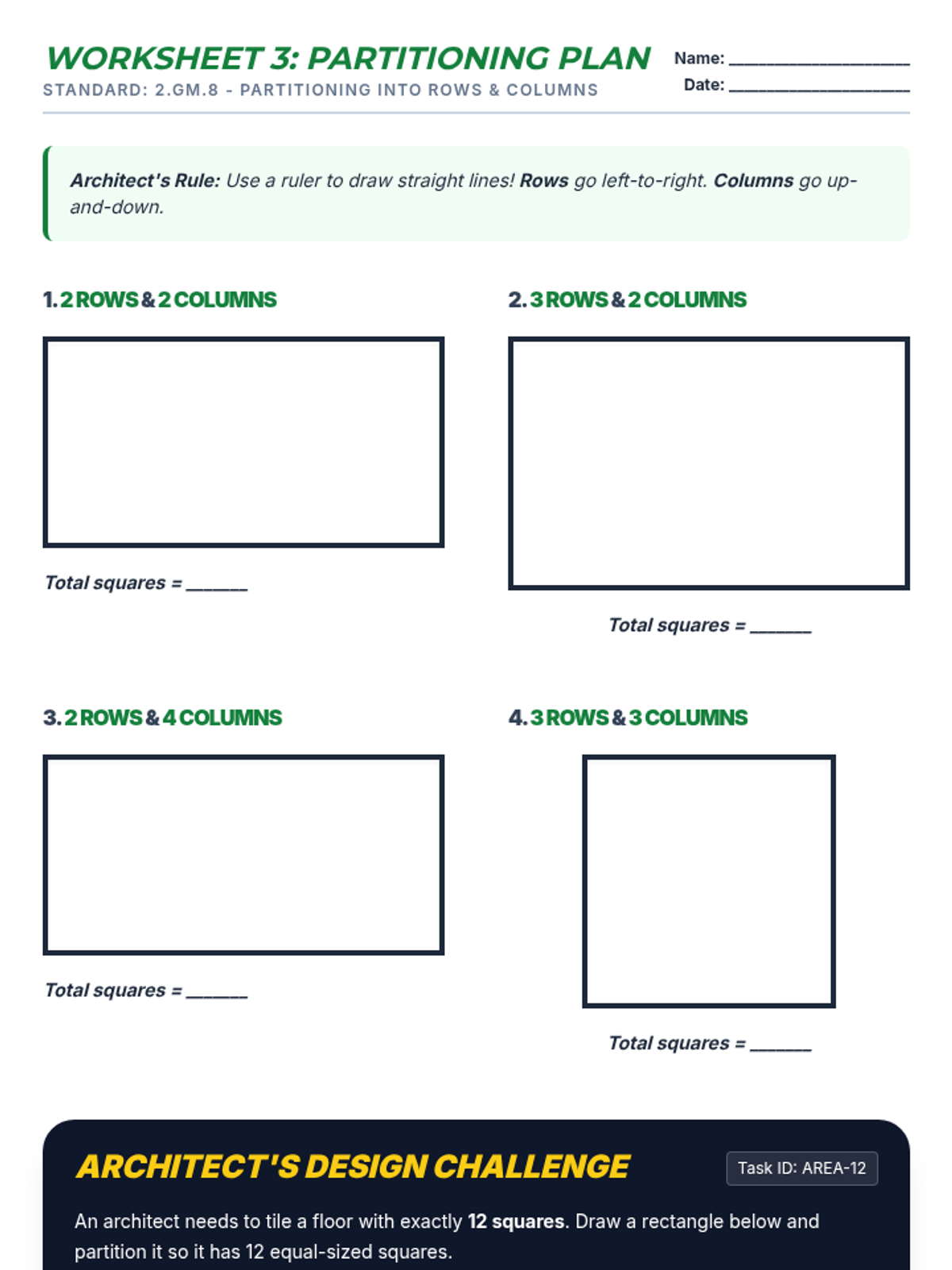
Introduction to area by partitioning rectangles into equal-sized rows and columns. Students will visualize area as the total number of squares inside a boundary.
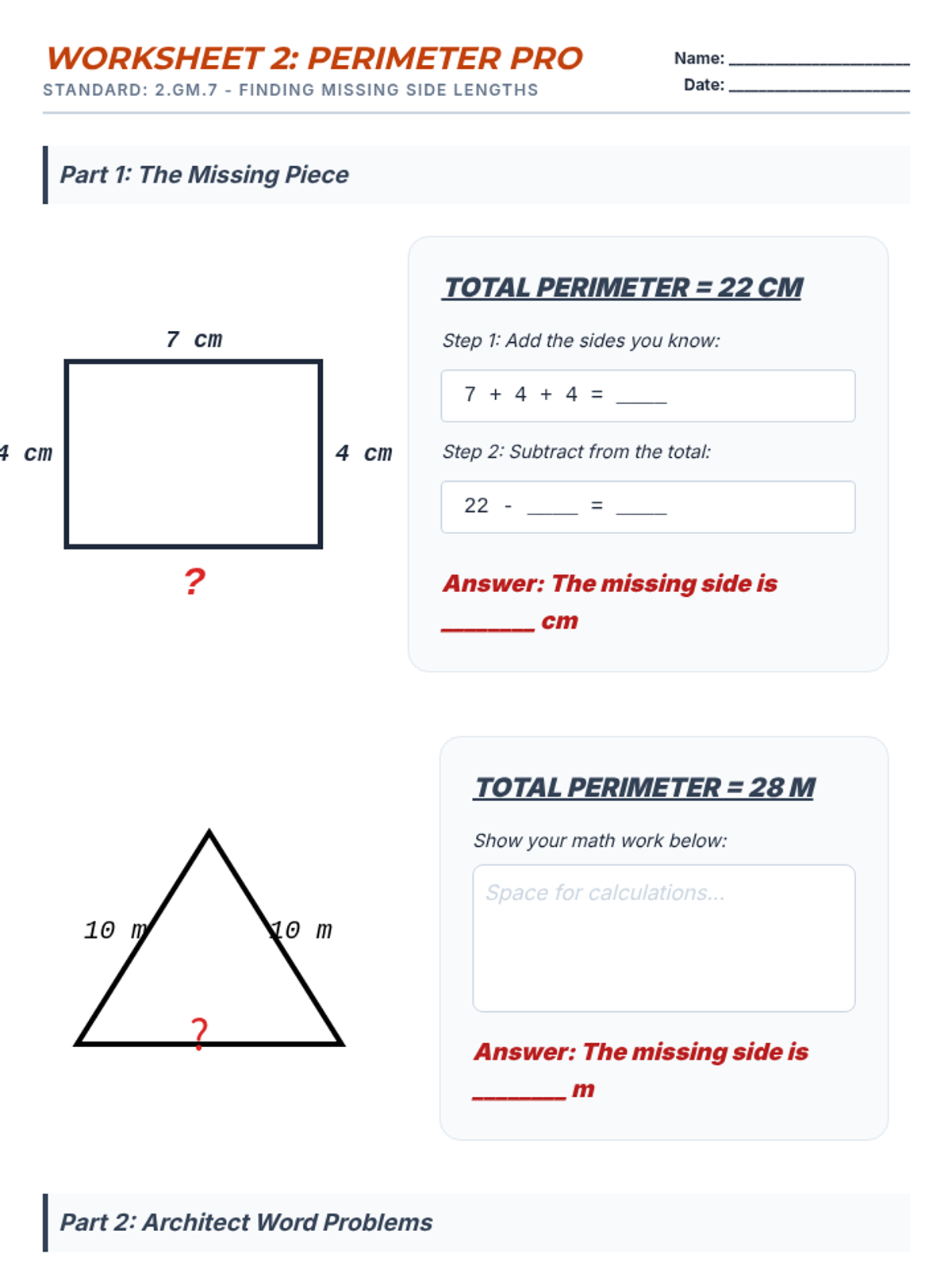
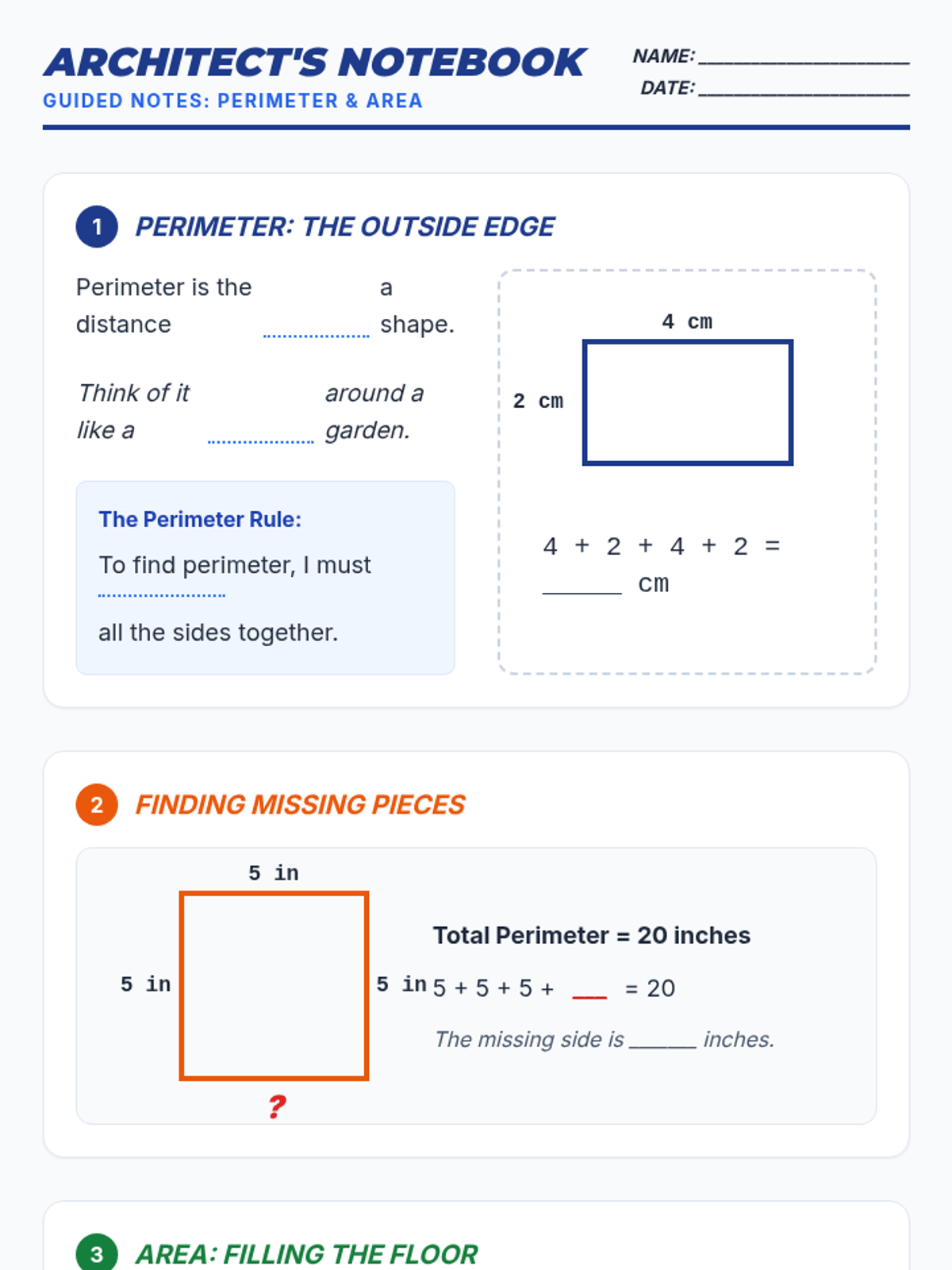
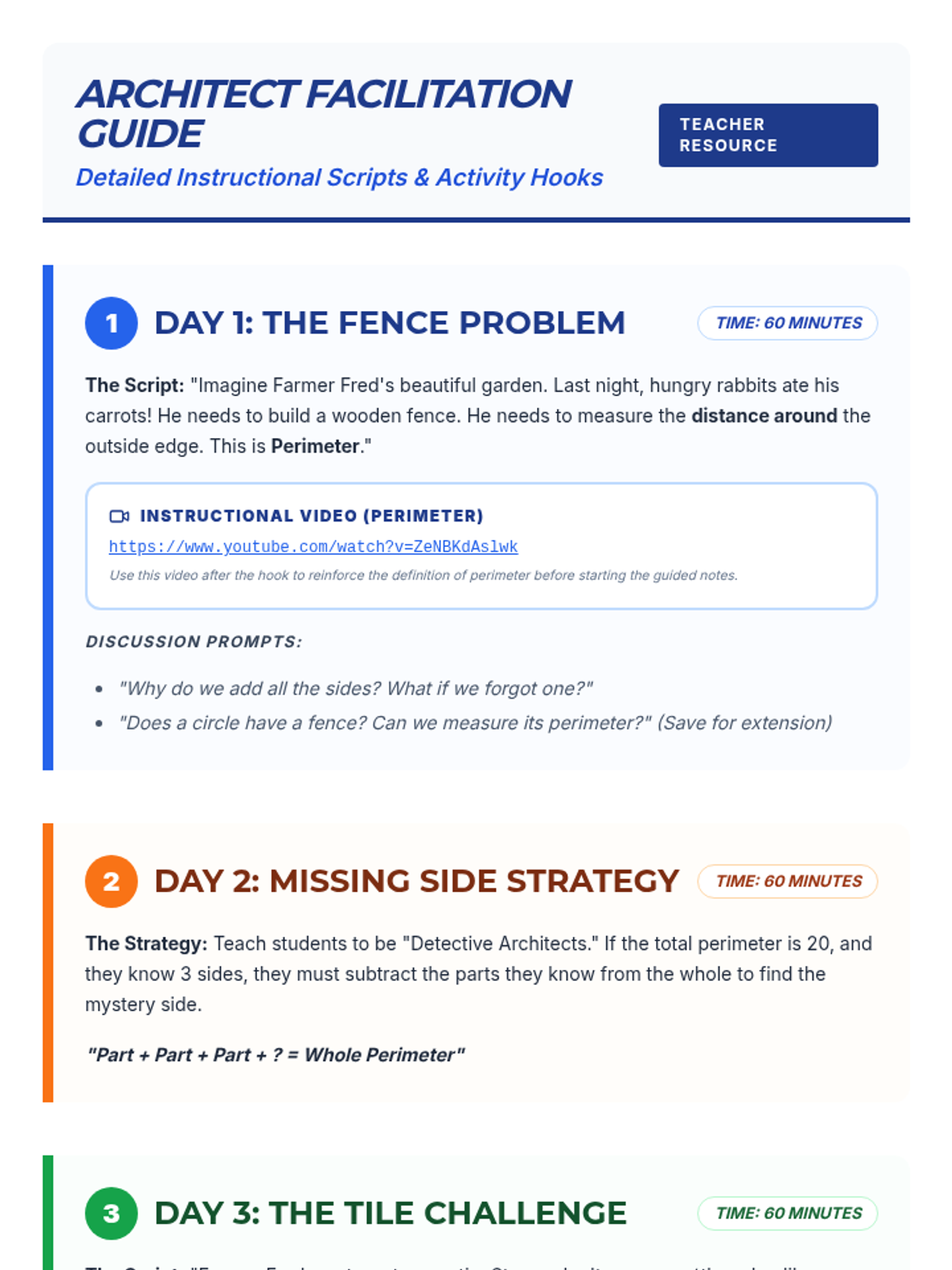
Advanced perimeter practice including finding missing side lengths and solving real-world word problems involving fences and borders.
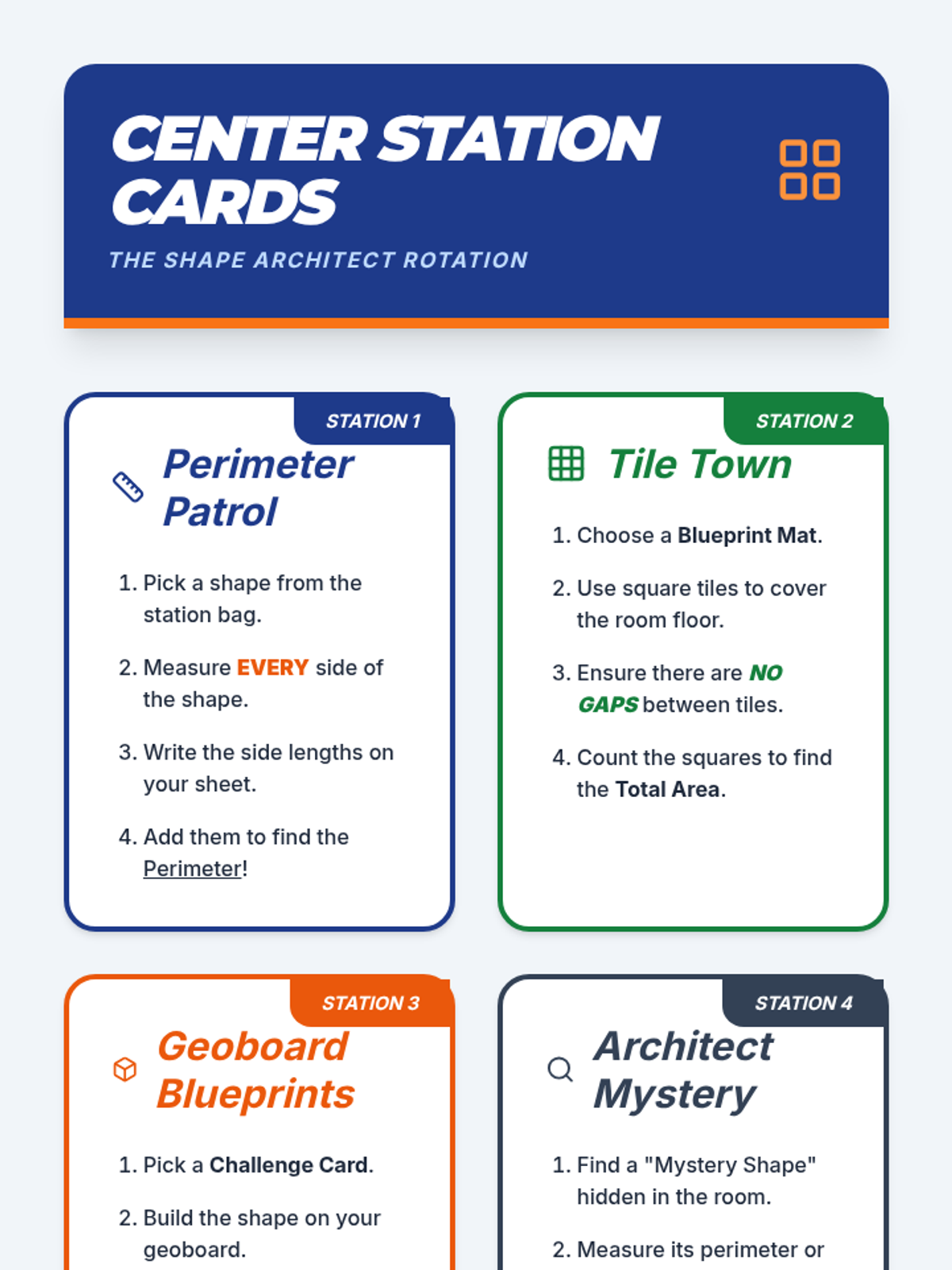
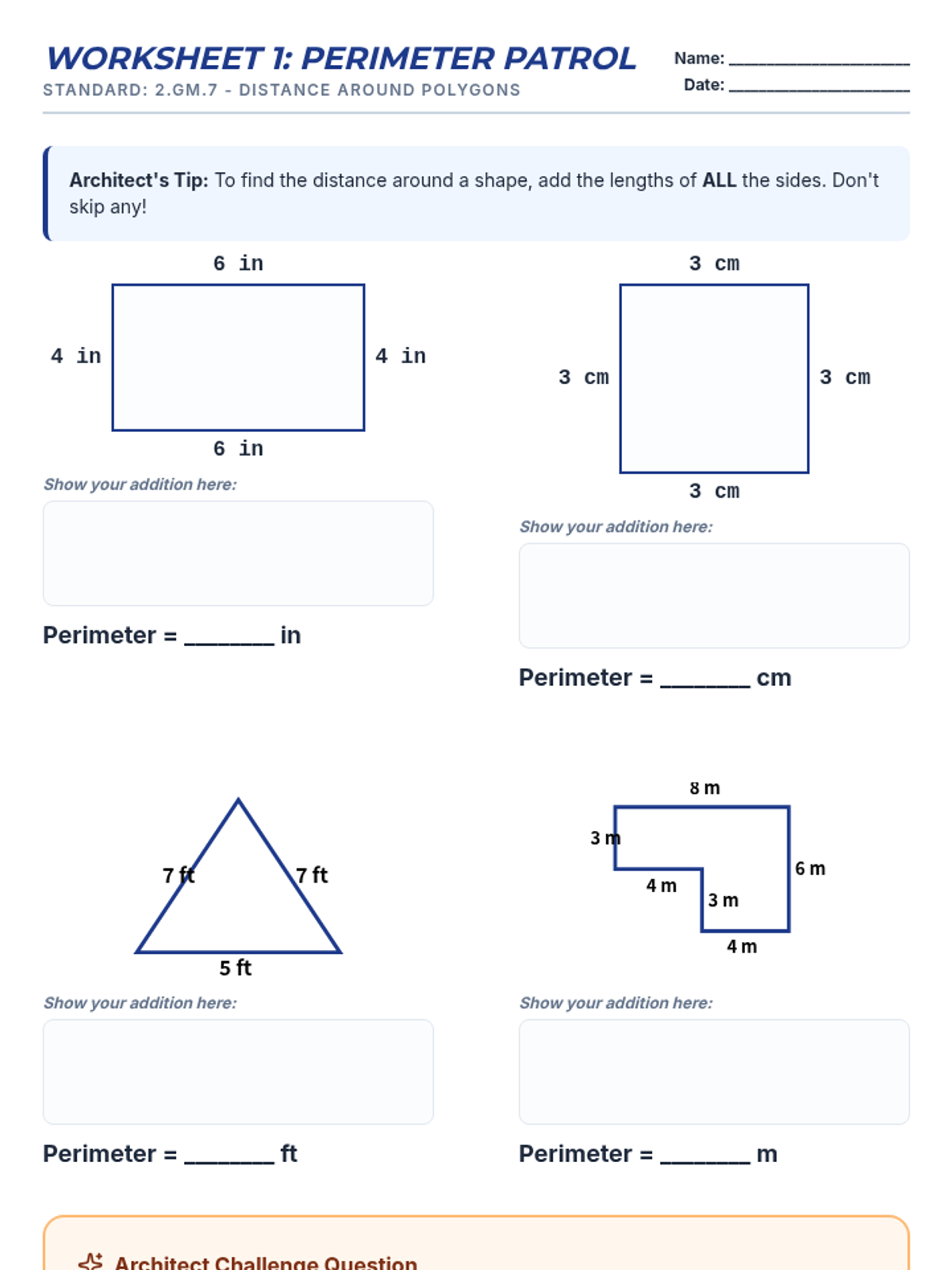
Introduction to perimeter as the distance around a shape. Students will learn to measure sides and add them together to find the total perimeter.
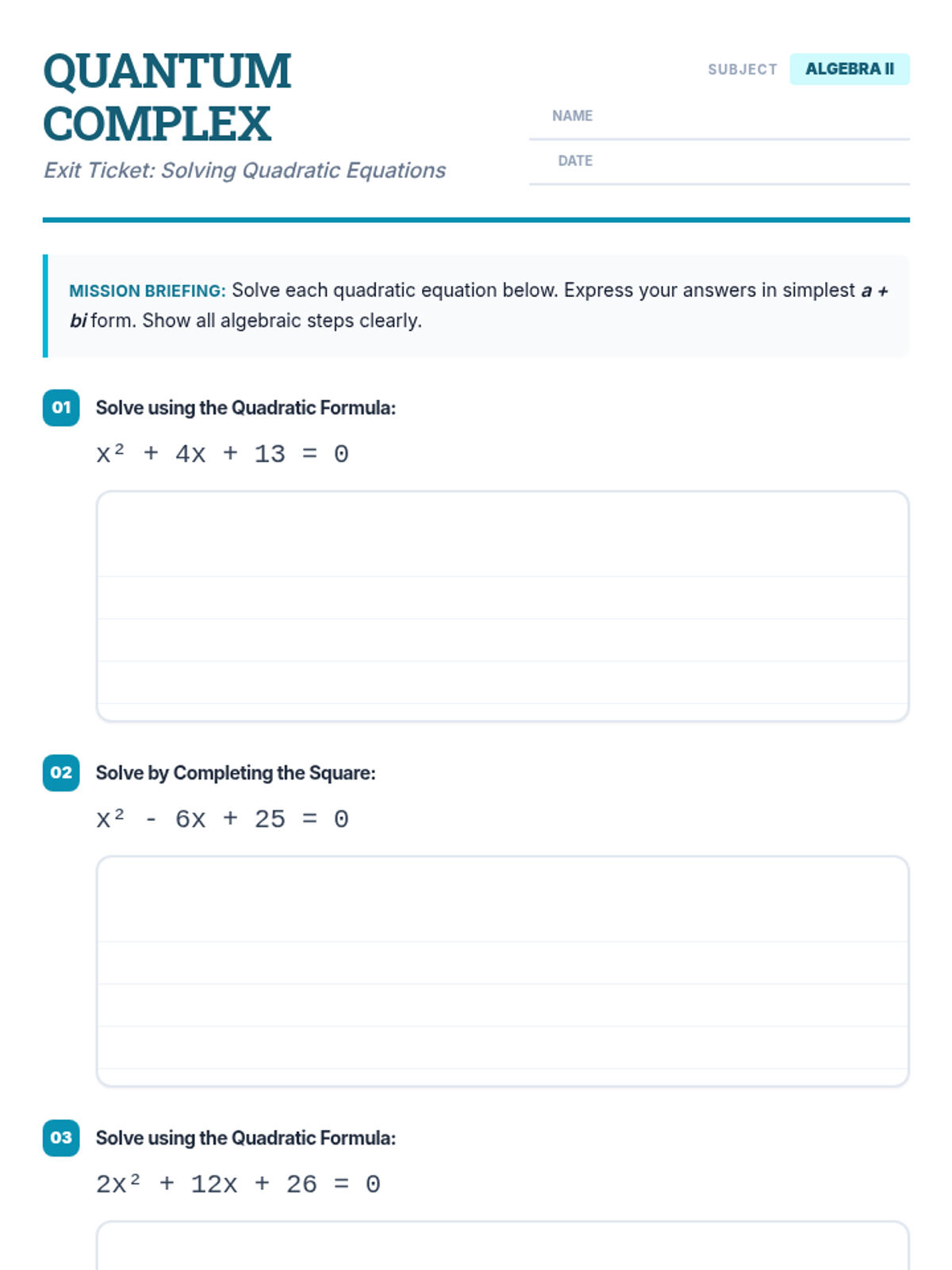
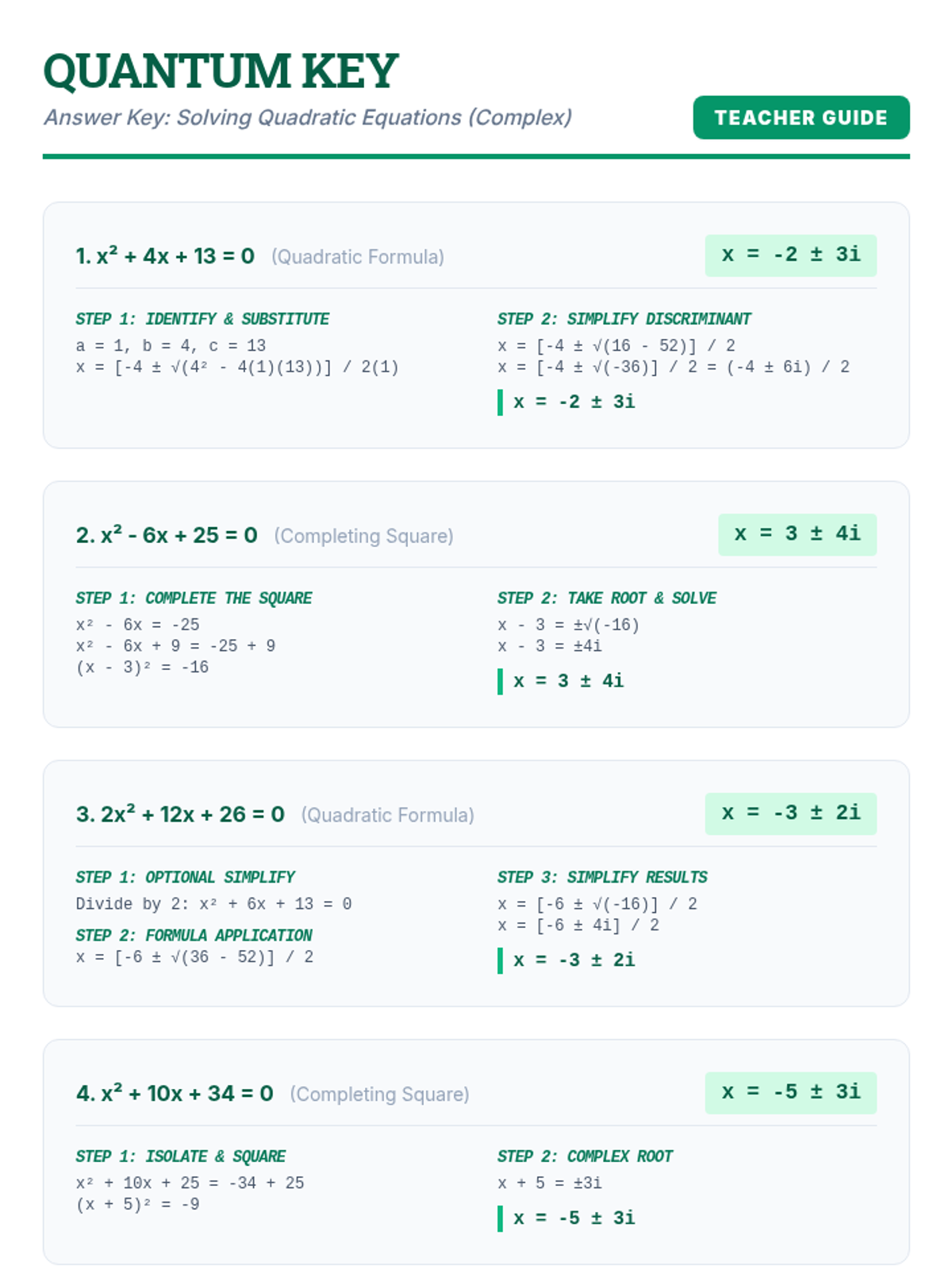
A quick assessment focusing on solving quadratic equations that result in complex solutions using the Quadratic Formula and Completing the Square.
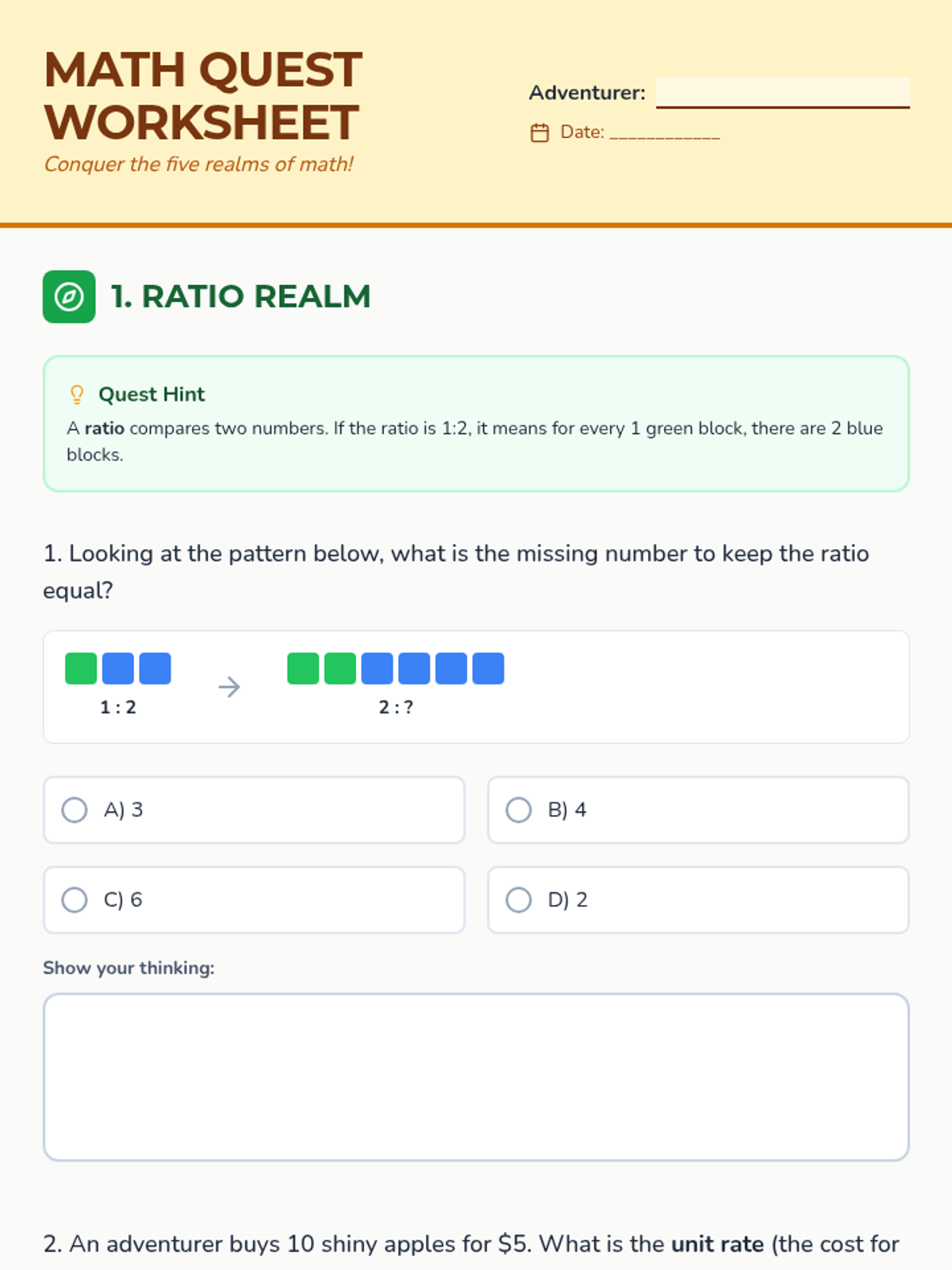
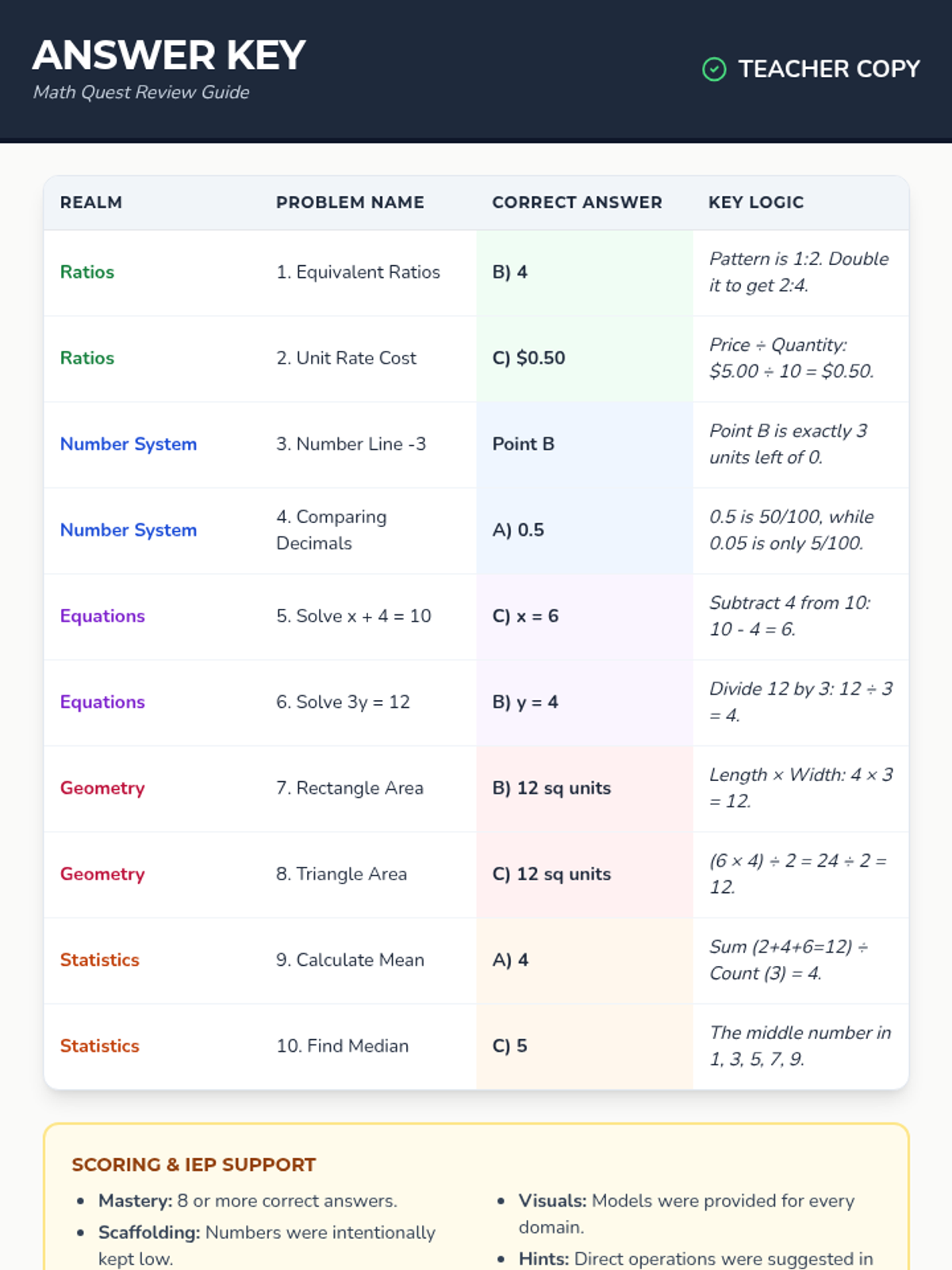
A 6th-grade math review lesson designed specifically for students with IEPs, focusing on foundational concepts in ratios, the number system, expressions, geometry, and statistics with visual scaffolds and simplified language.
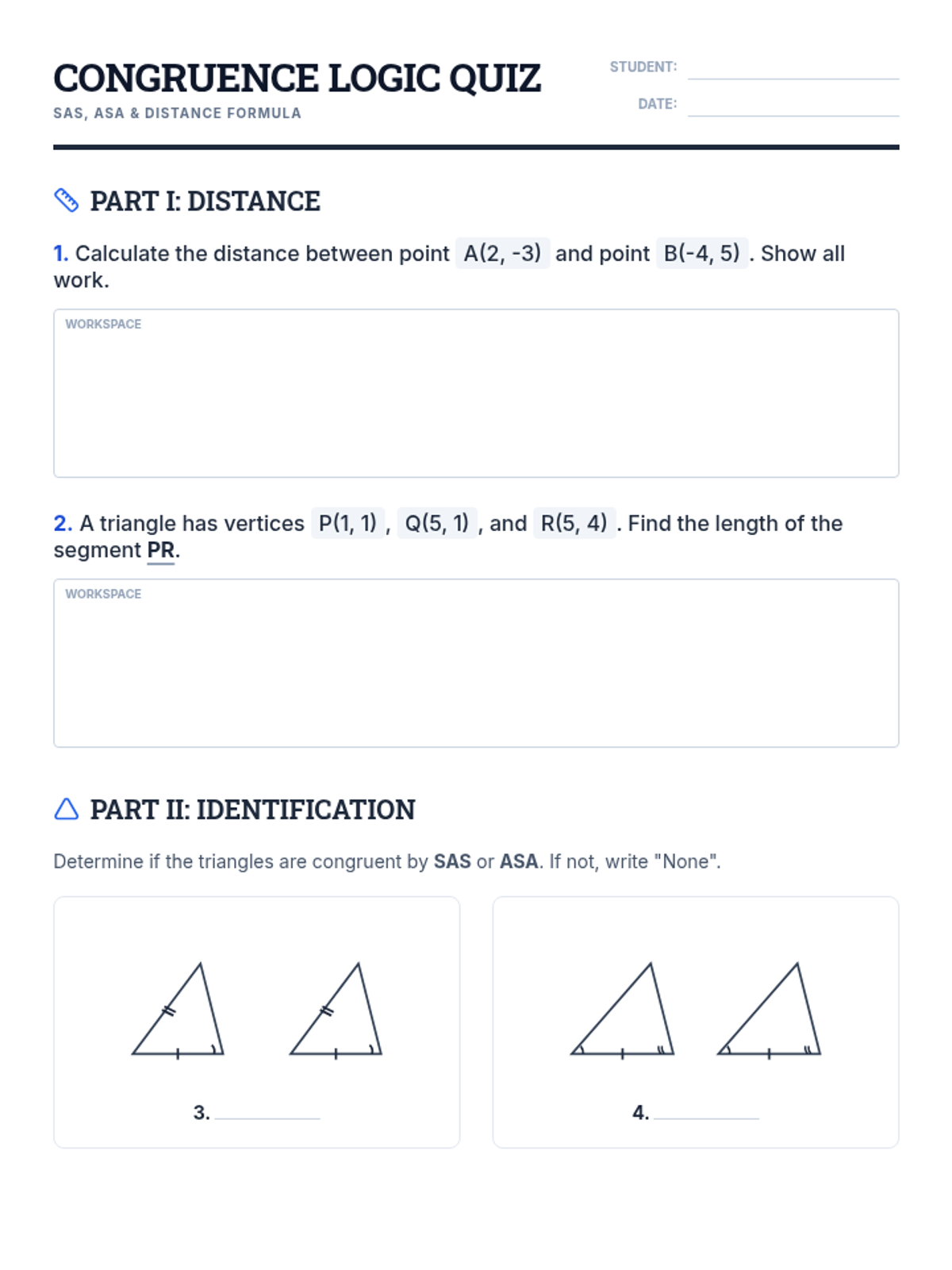
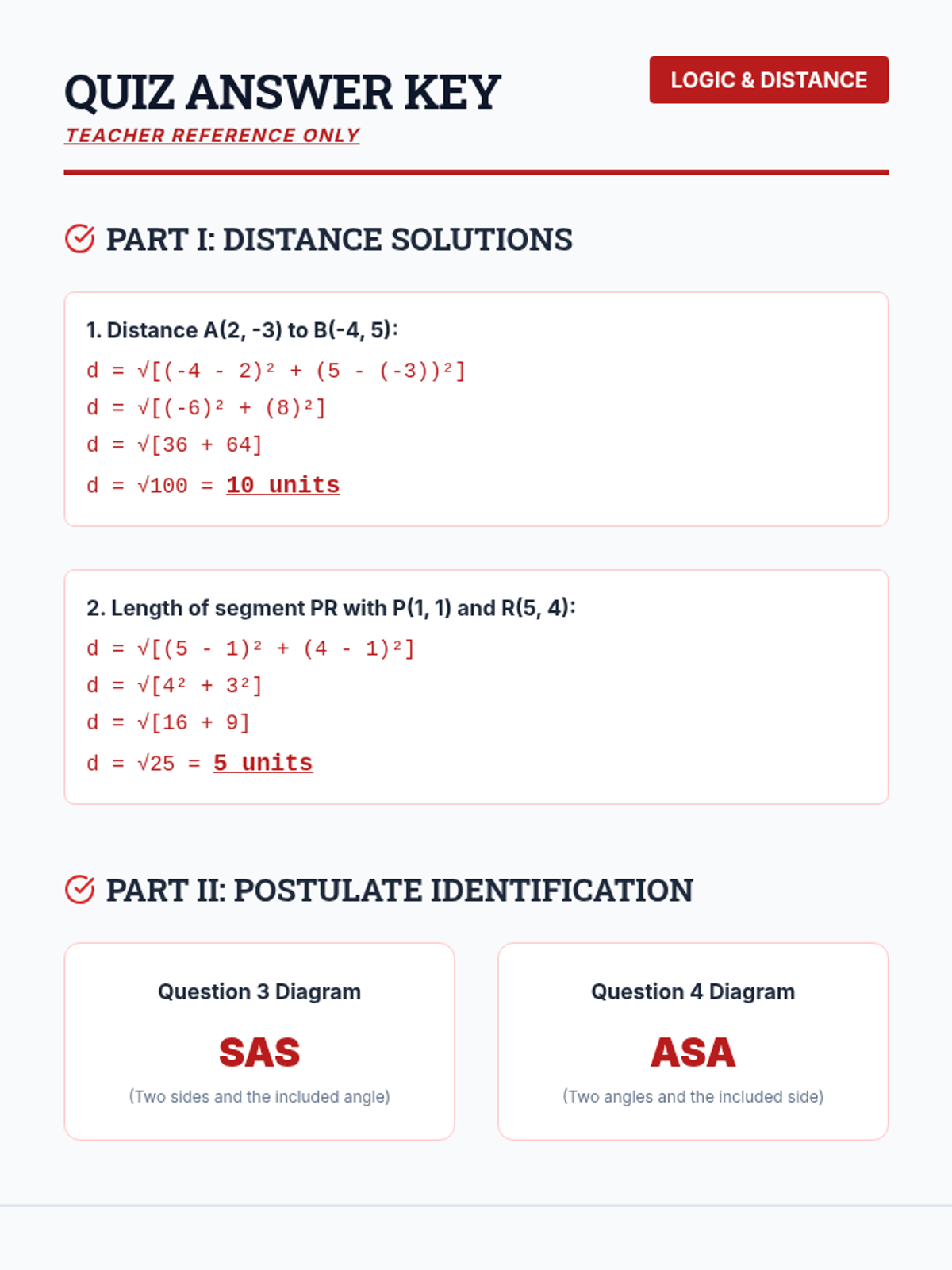
A lesson focusing on the practical application of the Distance Formula and the logical structure of SAS and ASA congruence proofs.

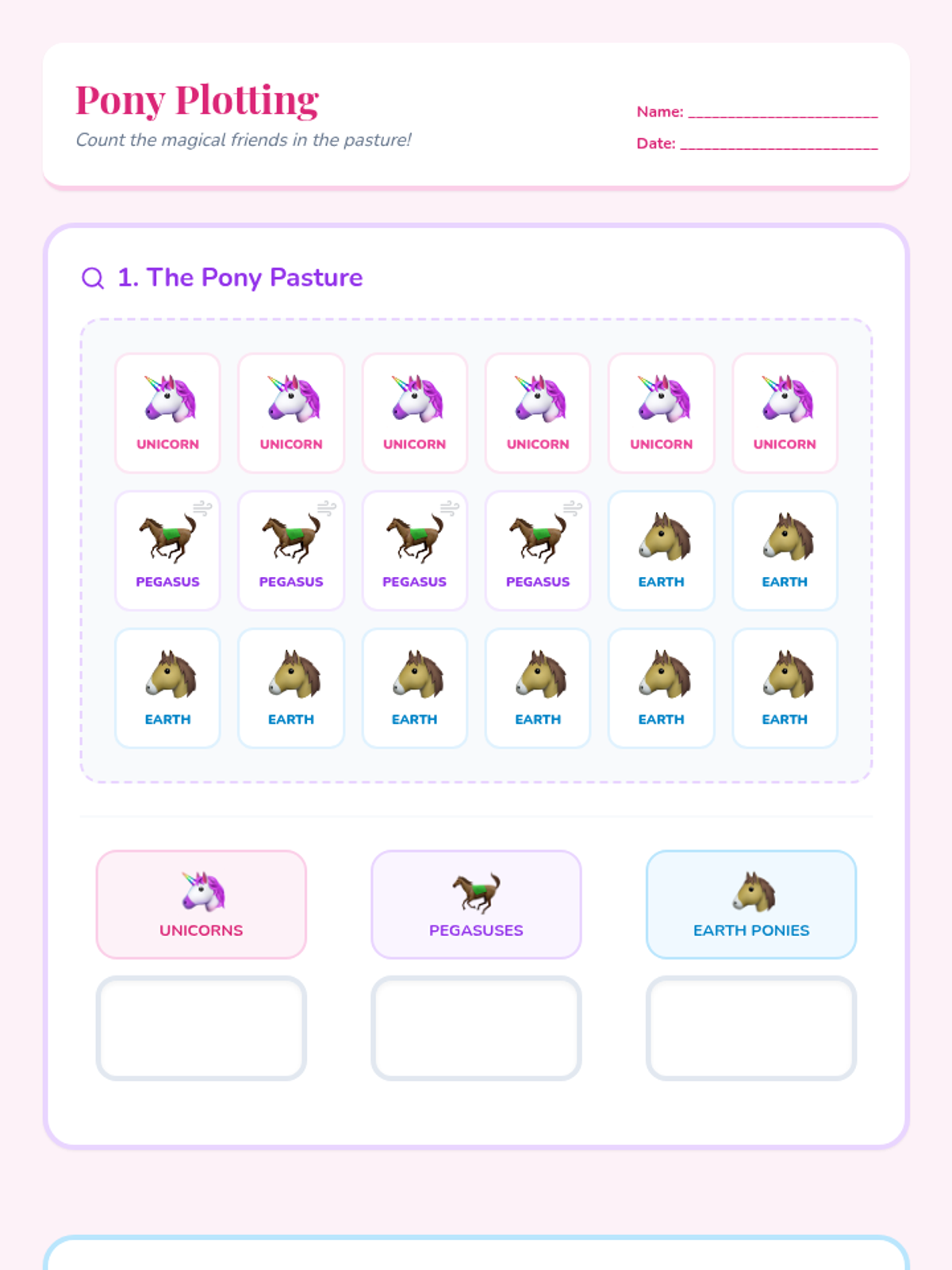
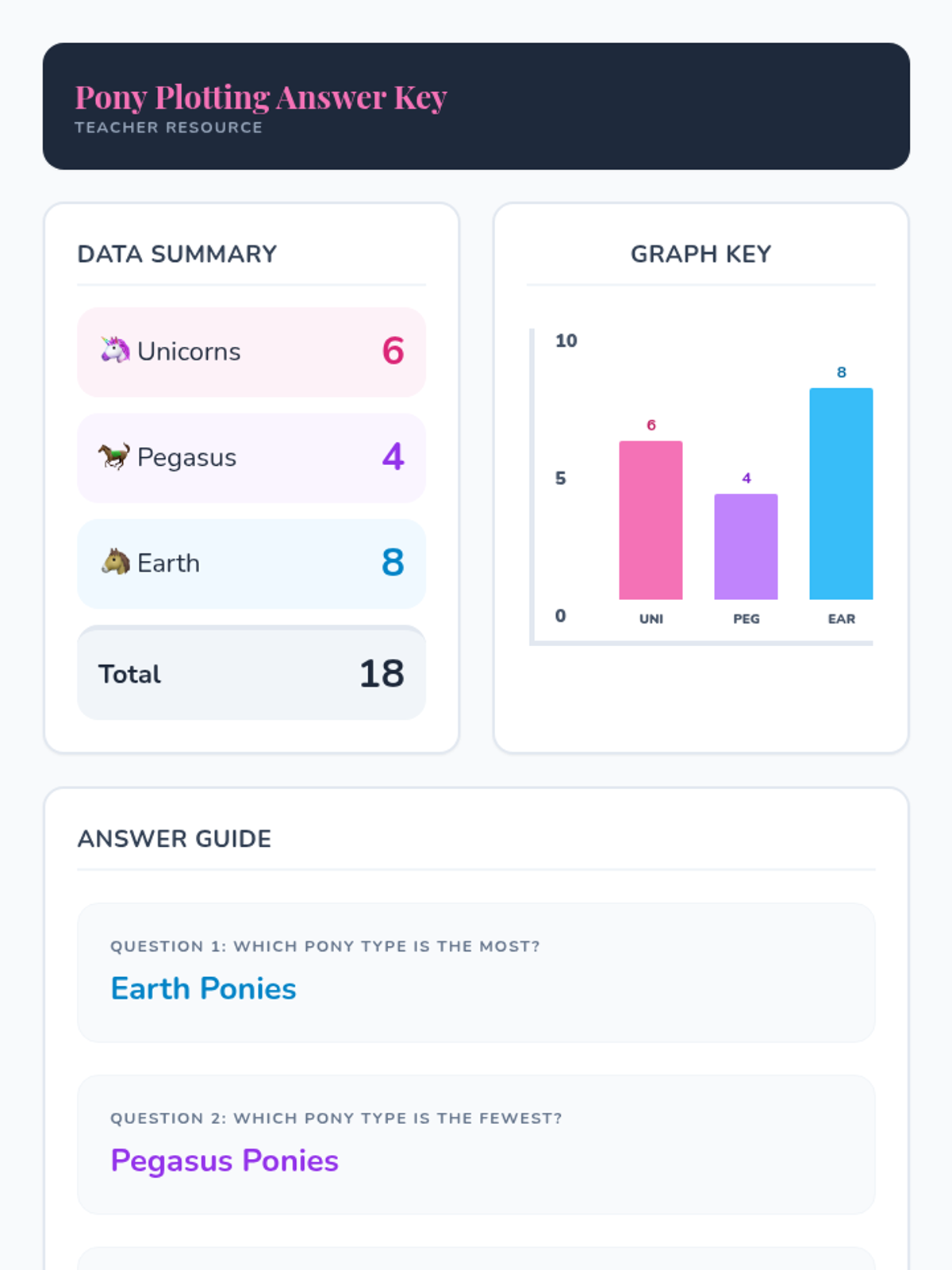
A magical math lesson where students count, sort, and graph different types of ponies to practice data representation and comparison skills.
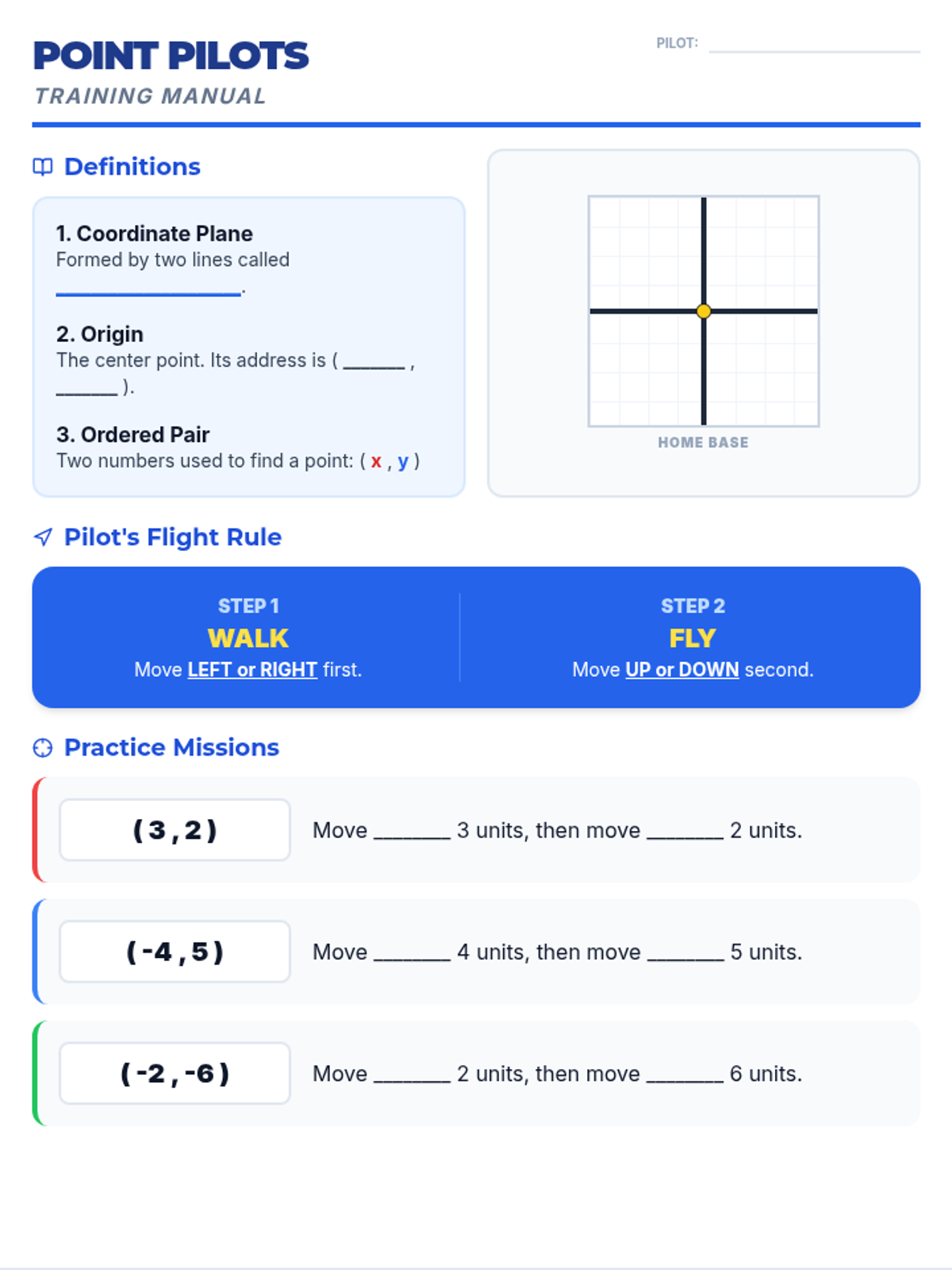
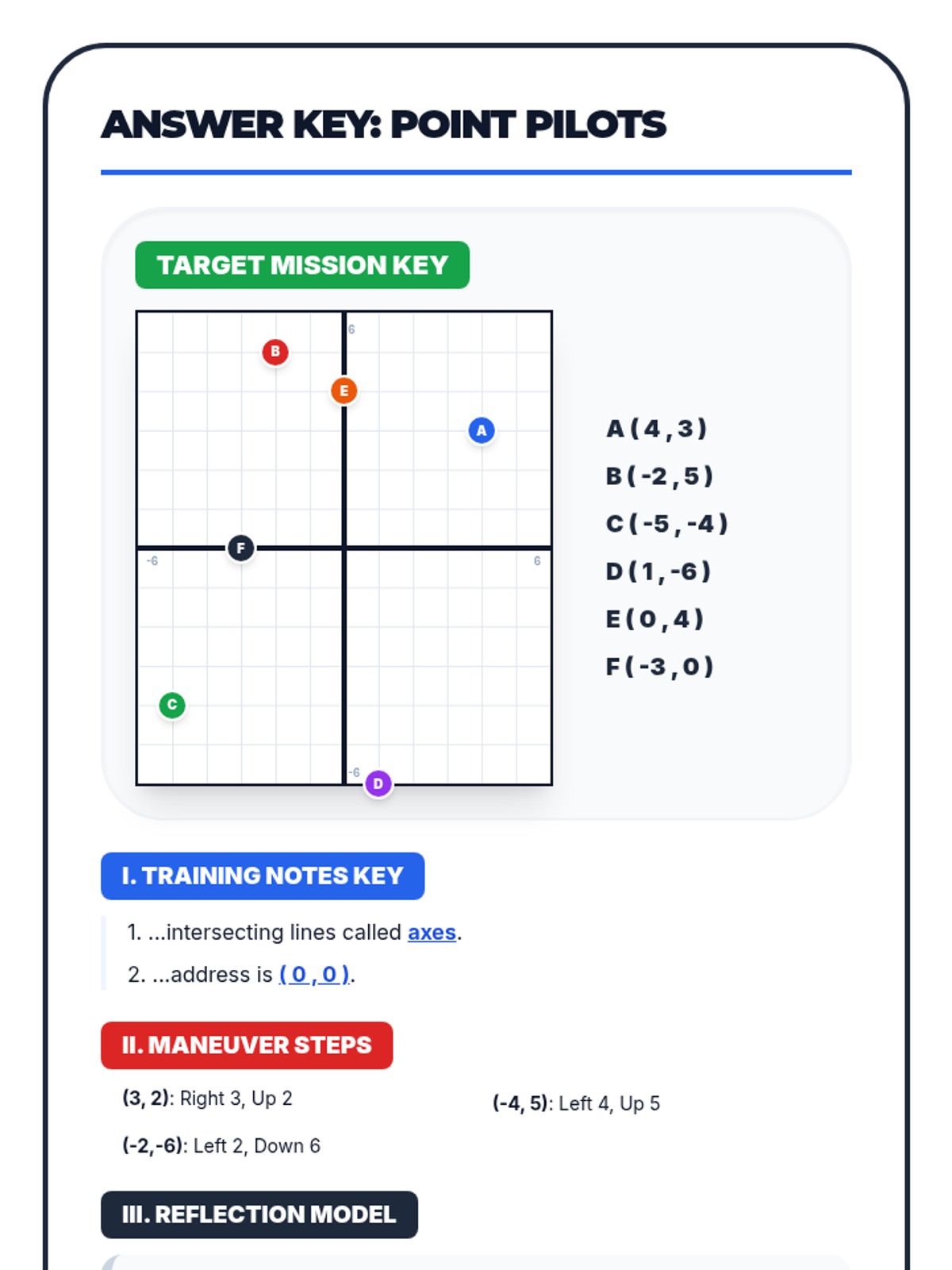
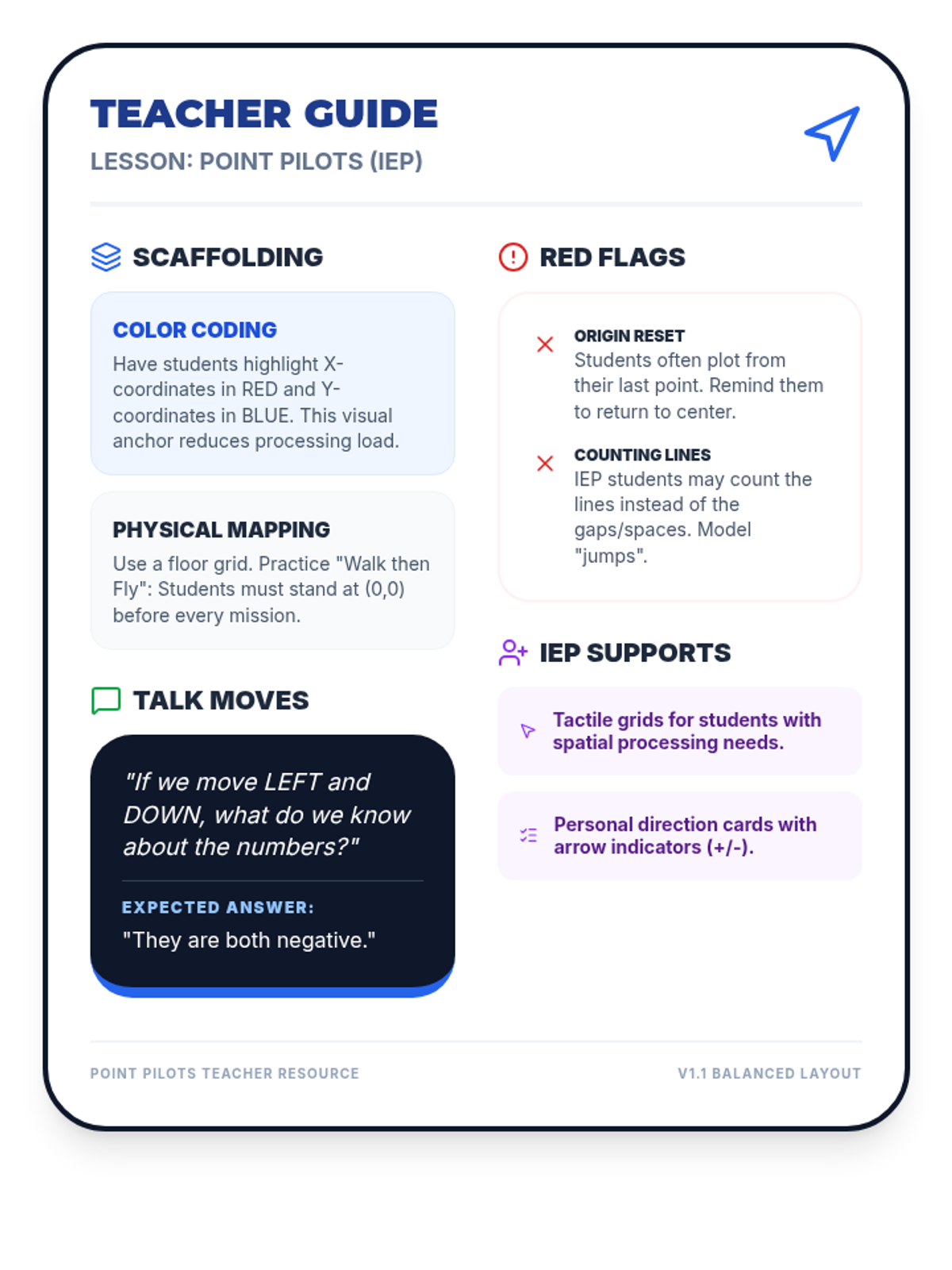
A scaffolded introduction to the four-quadrant coordinate plane, using a navigation theme to help students master plotting points with visual aids and step-by-step guides.
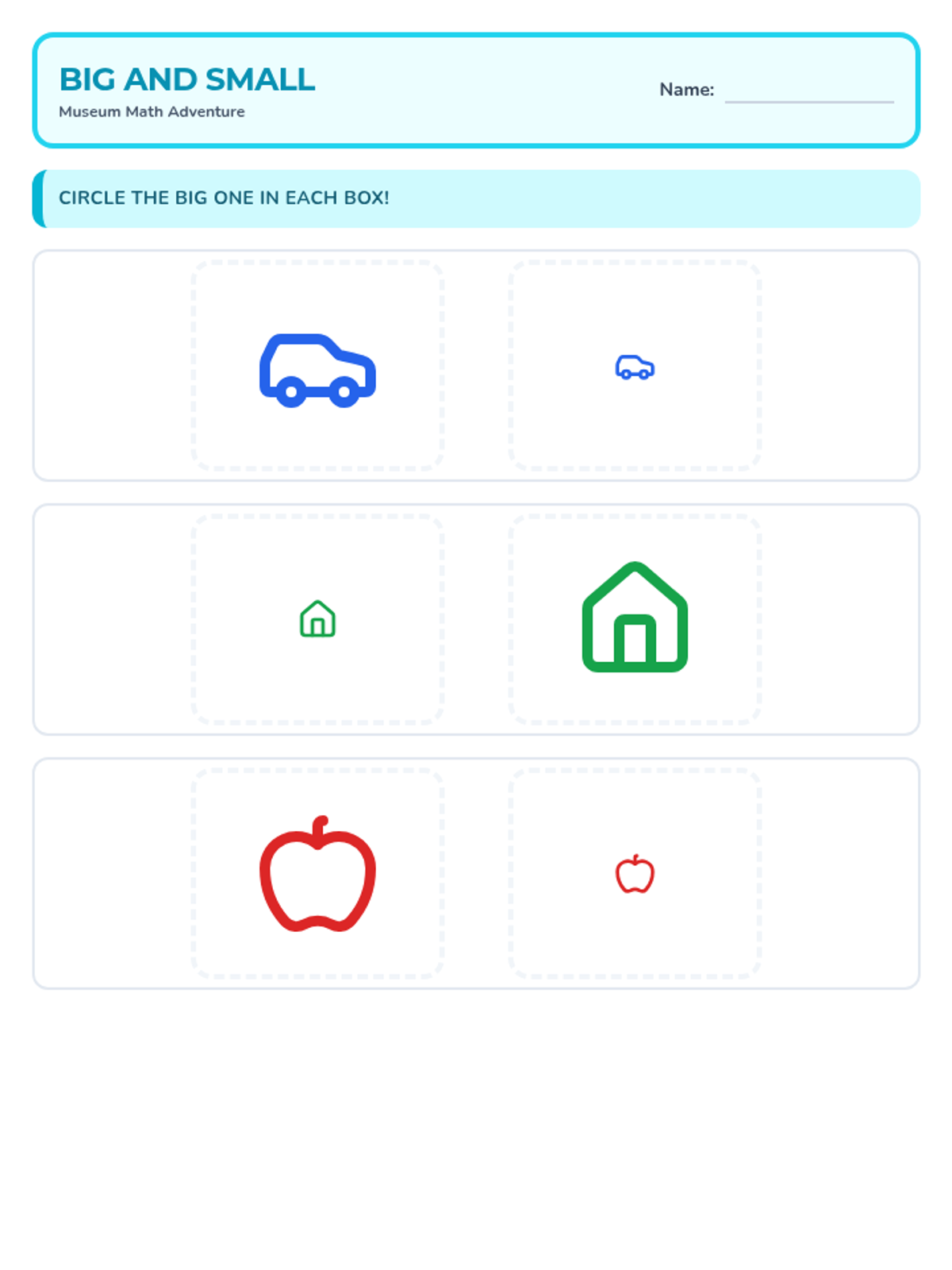
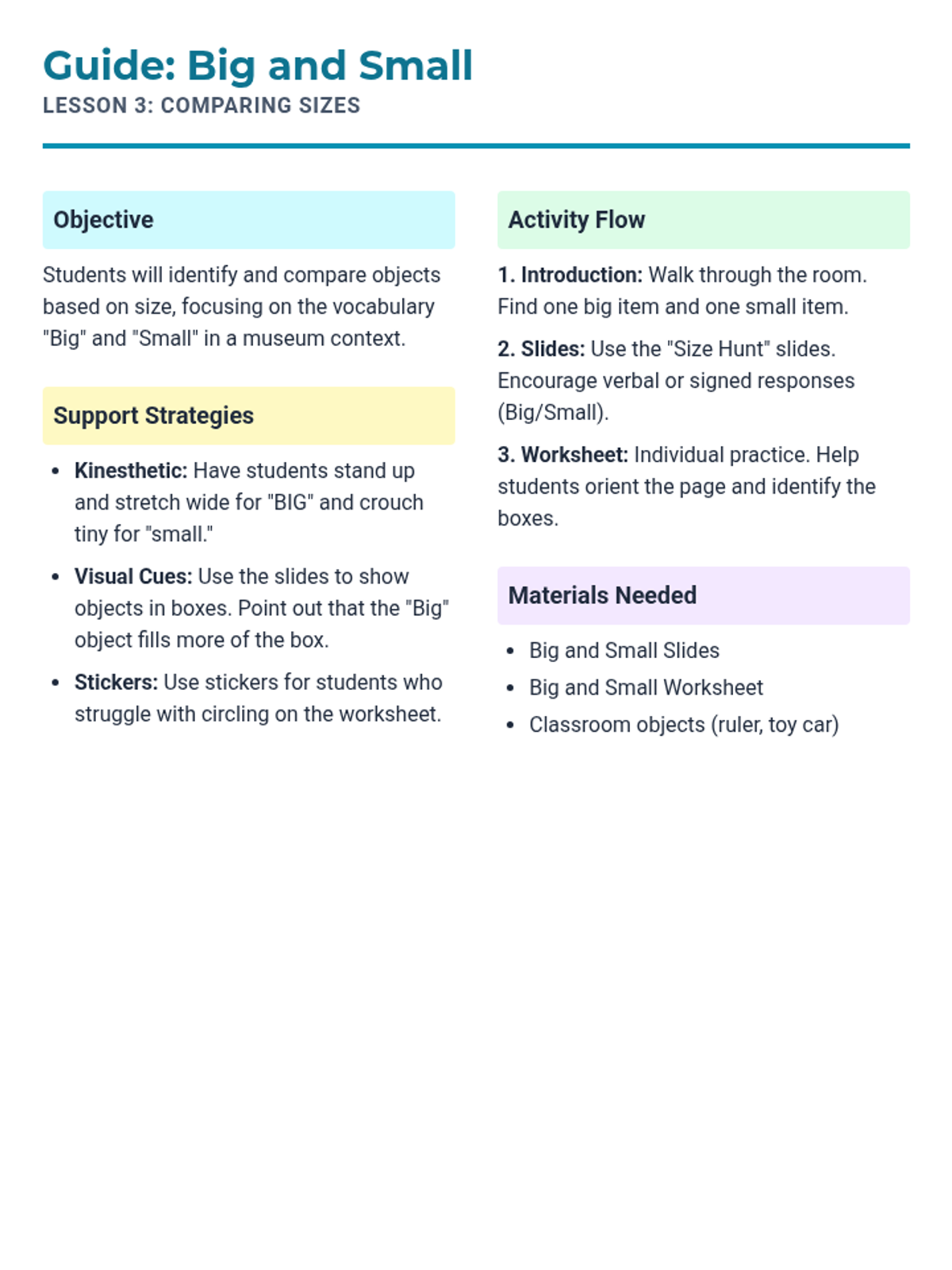
Students will explore the concepts of big, medium, and small by comparing various objects in the museum exhibits, promoting vocabulary development and visual discrimination.
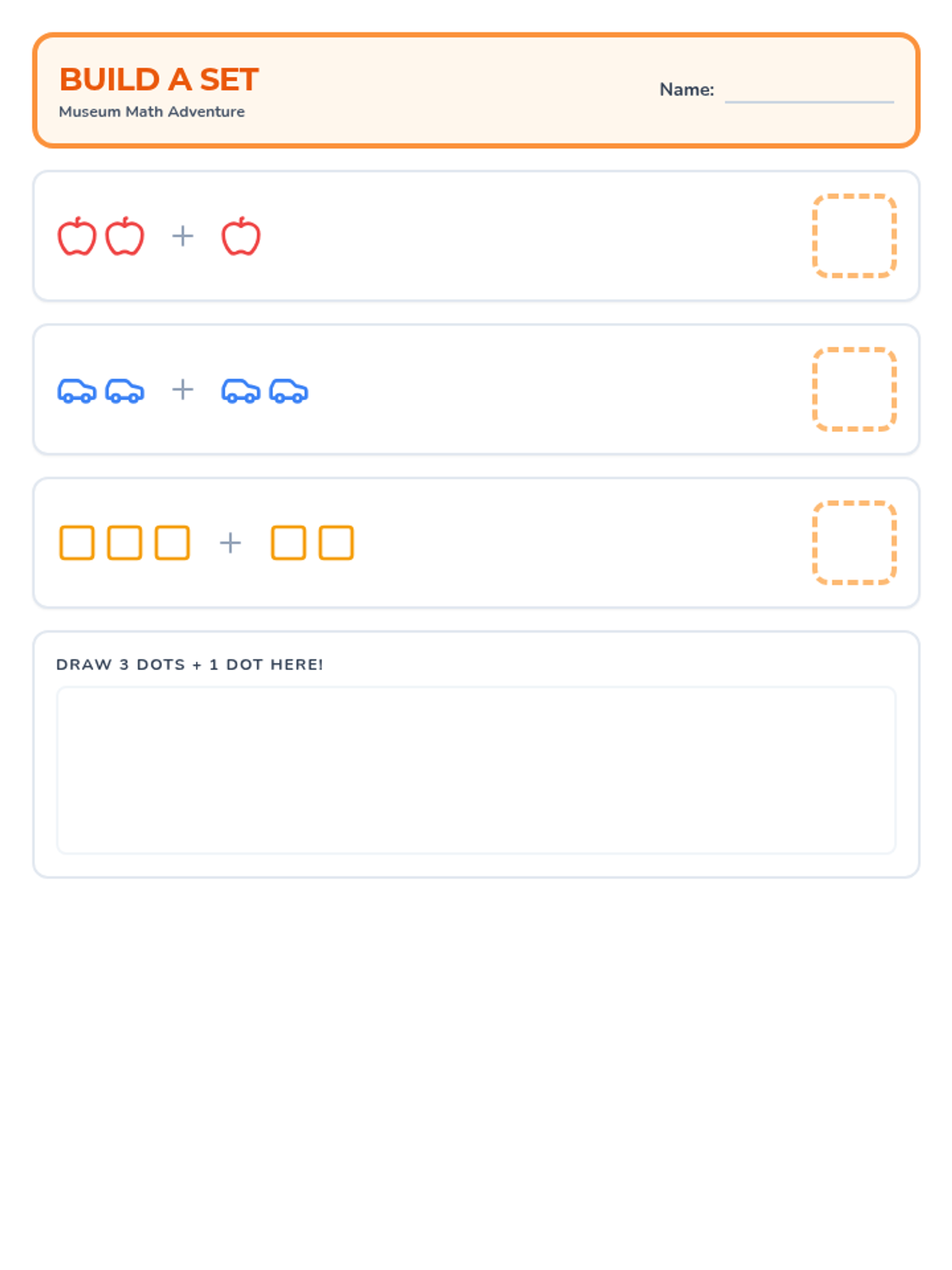
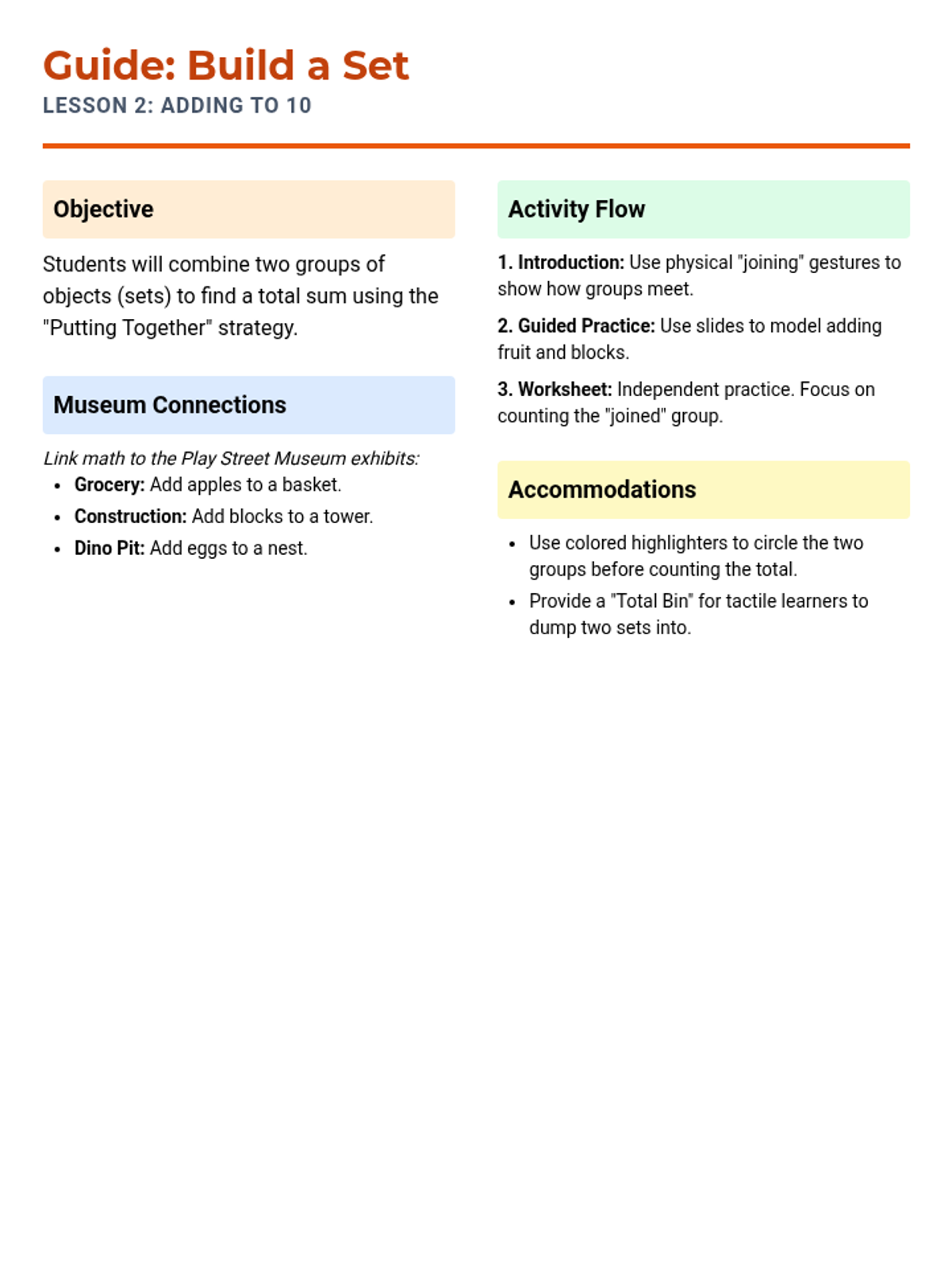
An introduction to simple addition by combining groups of museum objects, focusing on the concept of 'putting together' using visual aids and tactile play scenarios.