A 30-minute introductory lesson on exponents for 5th graders, focusing on superscript notation and PEMDAS integration with an engaging 'Power Up' theme.
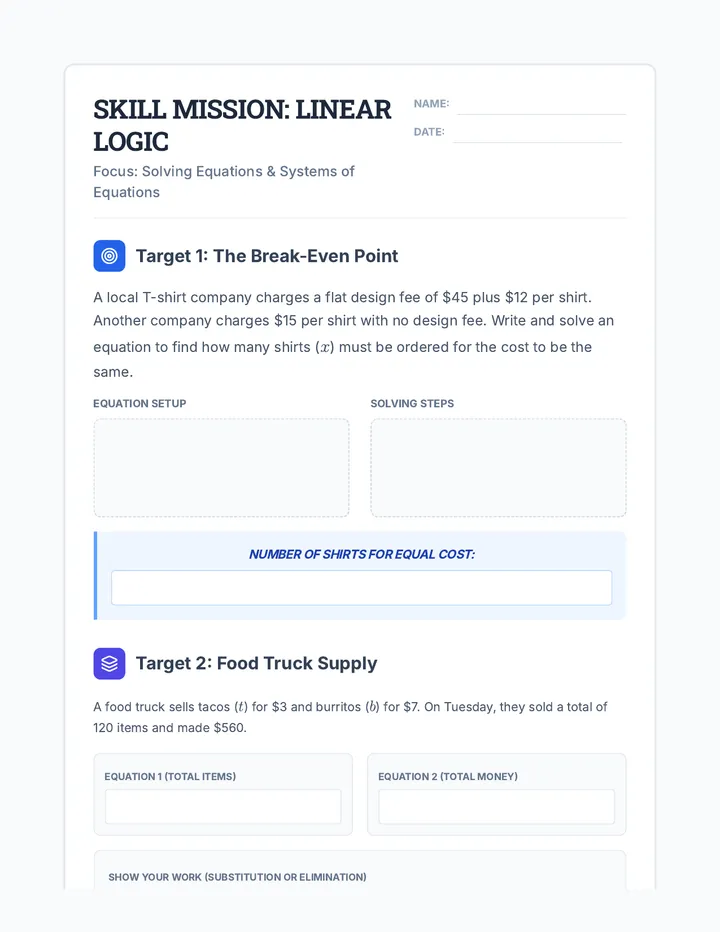
Students will learn to decompose numbers into prime factors, identify the greatest common factor between numbers, and apply these skills to factor simple algebraic expressions.
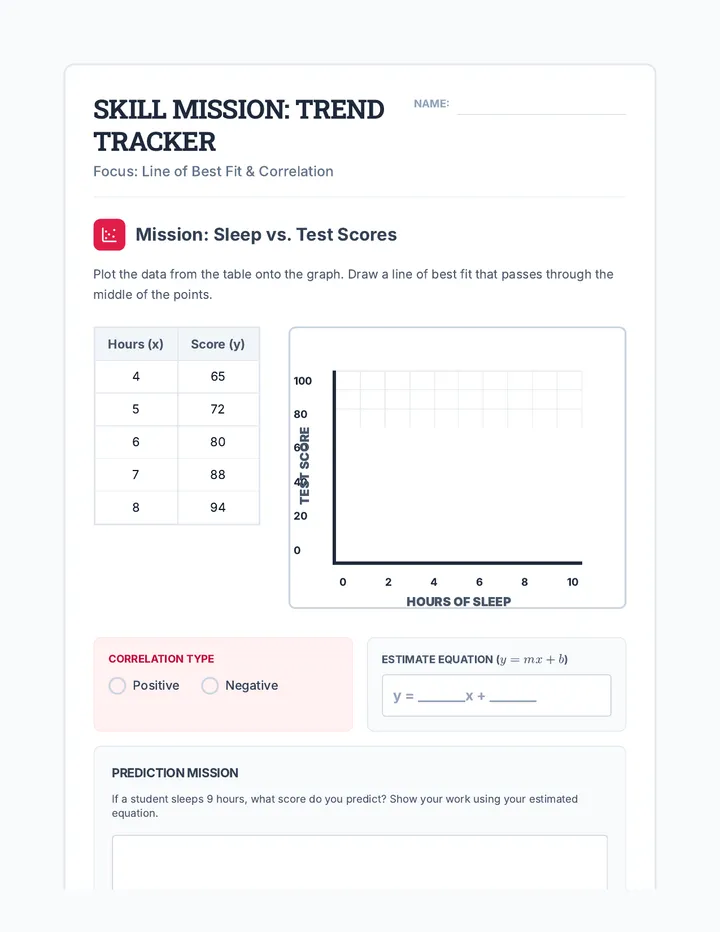
A comprehensive 90-minute math lesson focused on organizing data into intervals and creating/interpreting histograms using test score data. Students act as 'Data Detectives' to uncover trends in numerical information.
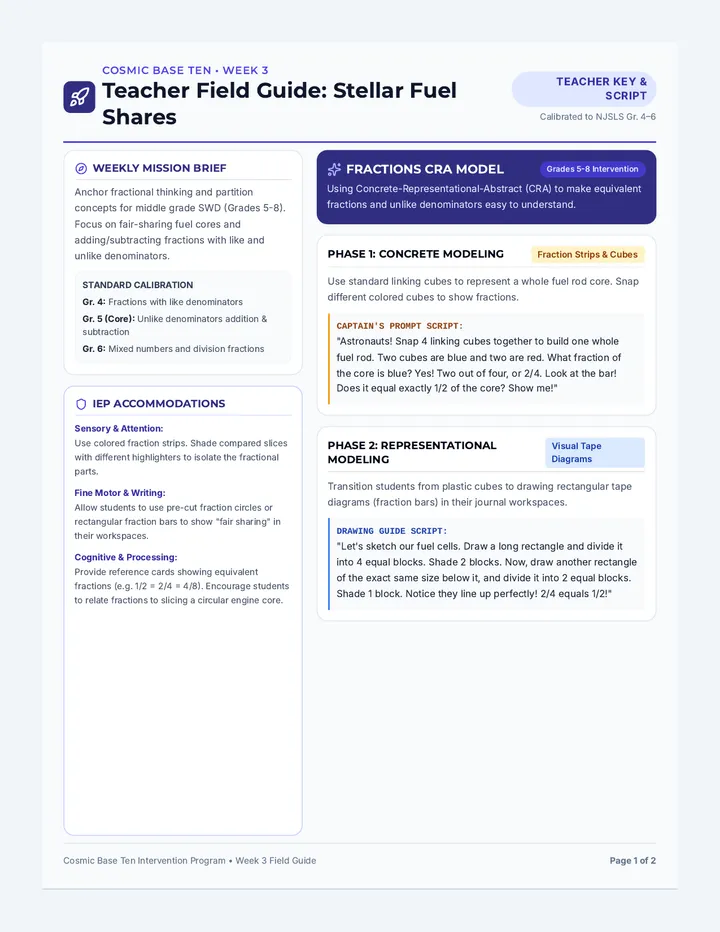
A focused practice session on identifying and creating equivalent fractions using visual area models, designed to mimic standardized testing formats.
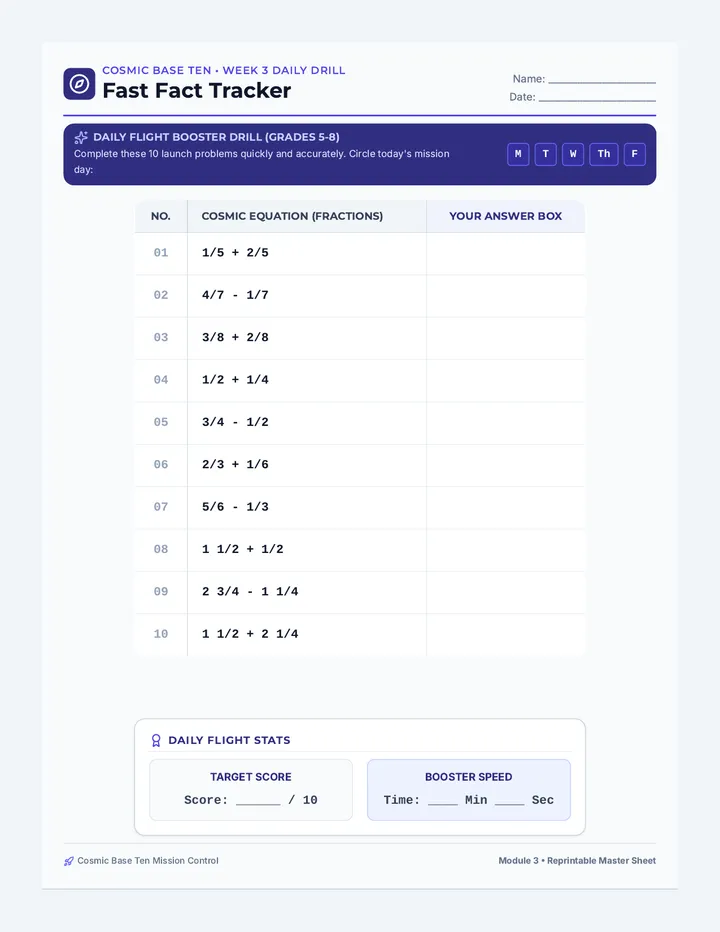
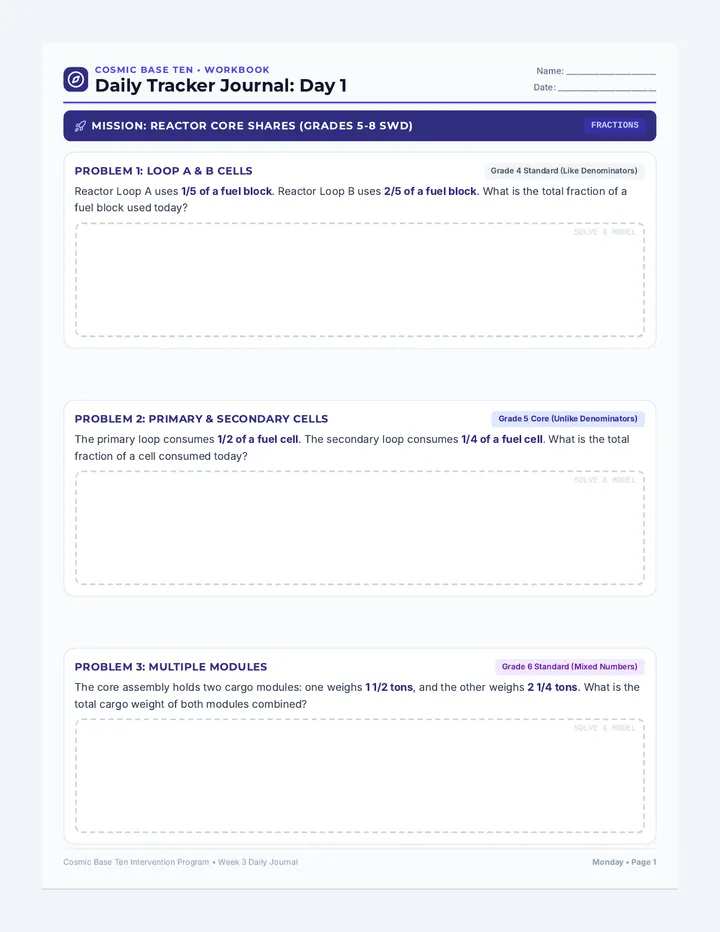
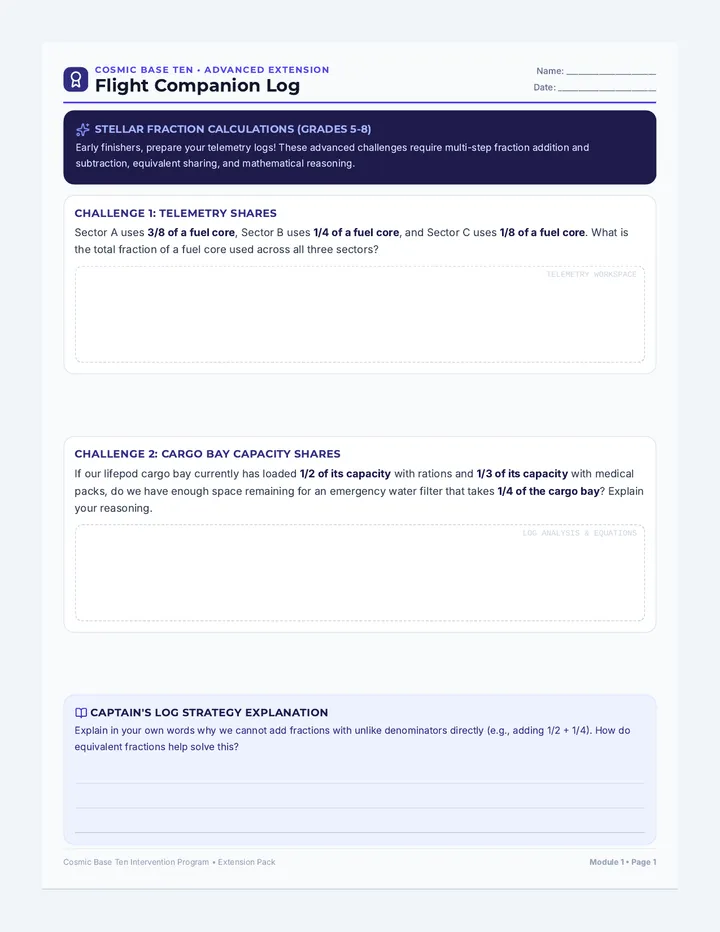
This lesson covers the fundamentals of comparing fractions with like and unlike denominators and the basics of simplifying fractions using common factors.
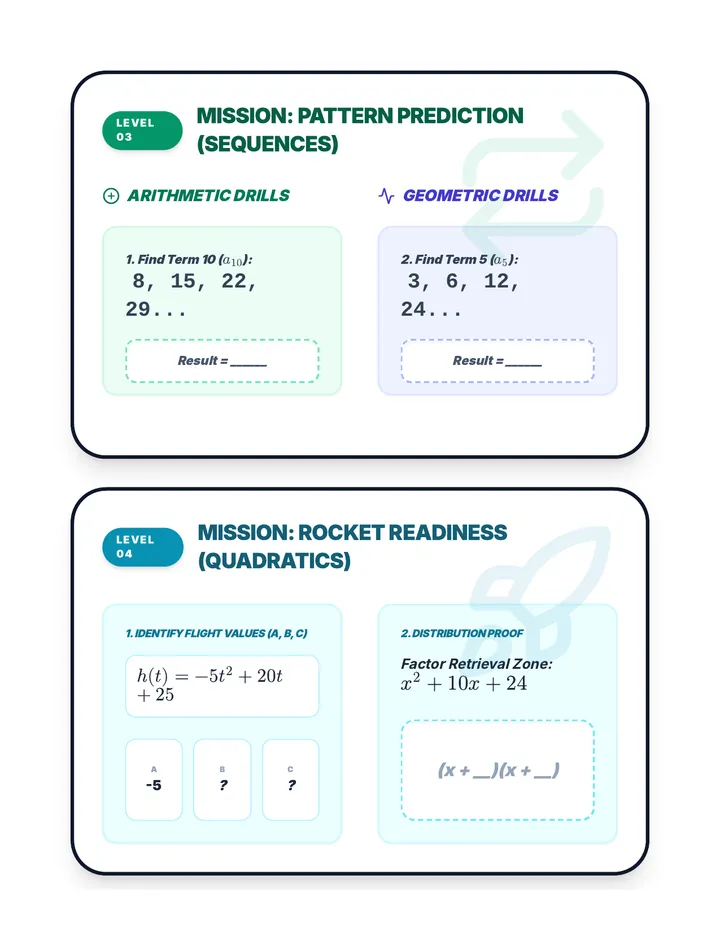
A quick assessment focusing on solving quadratic equations that result in complex solutions using the Quadratic Formula and Completing the Square.
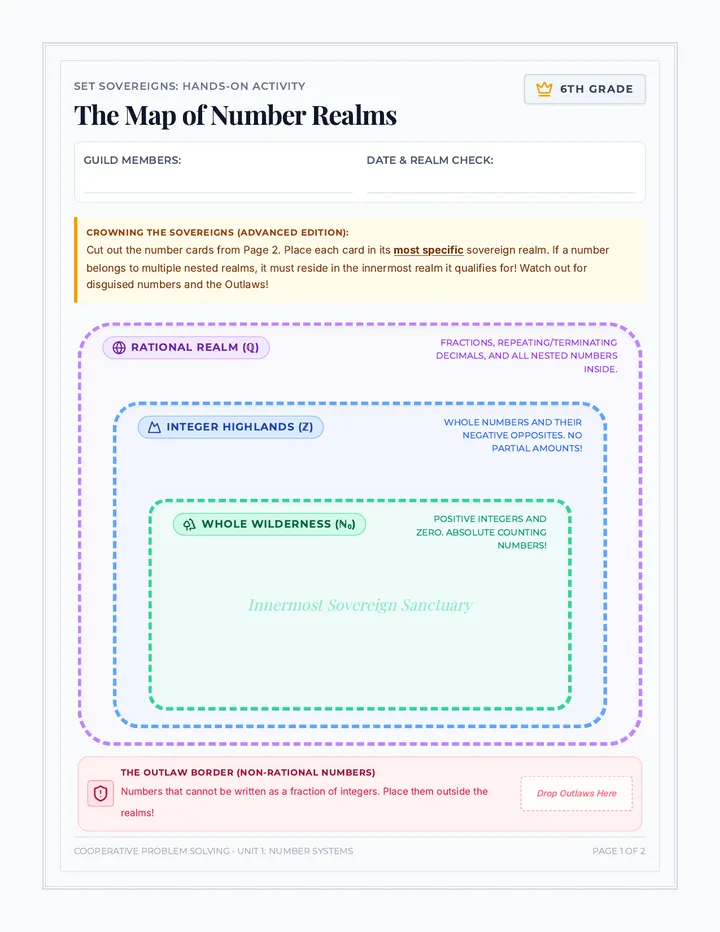
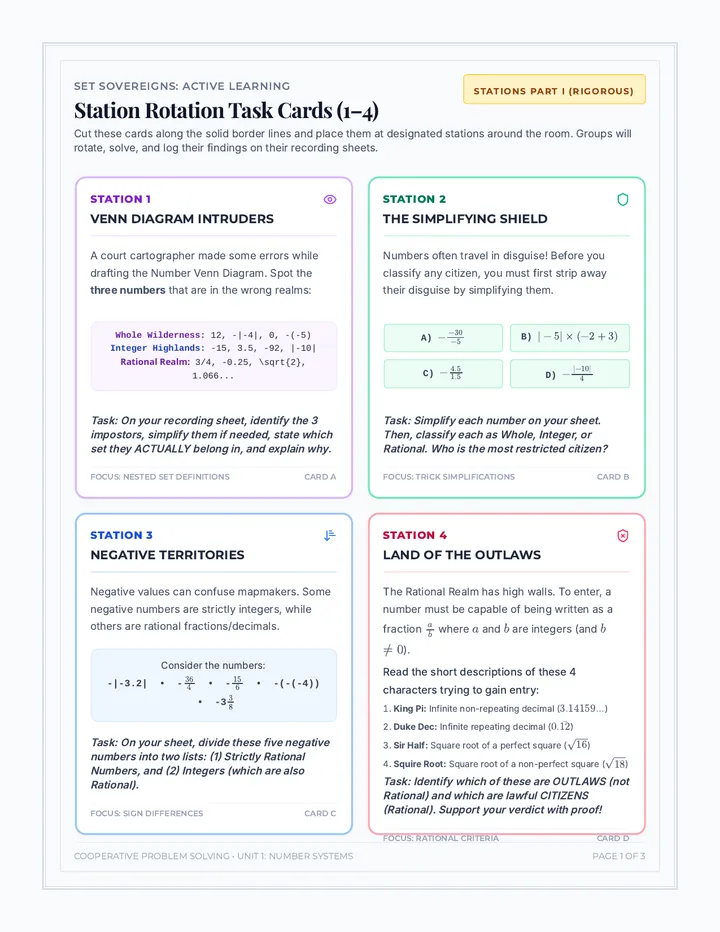
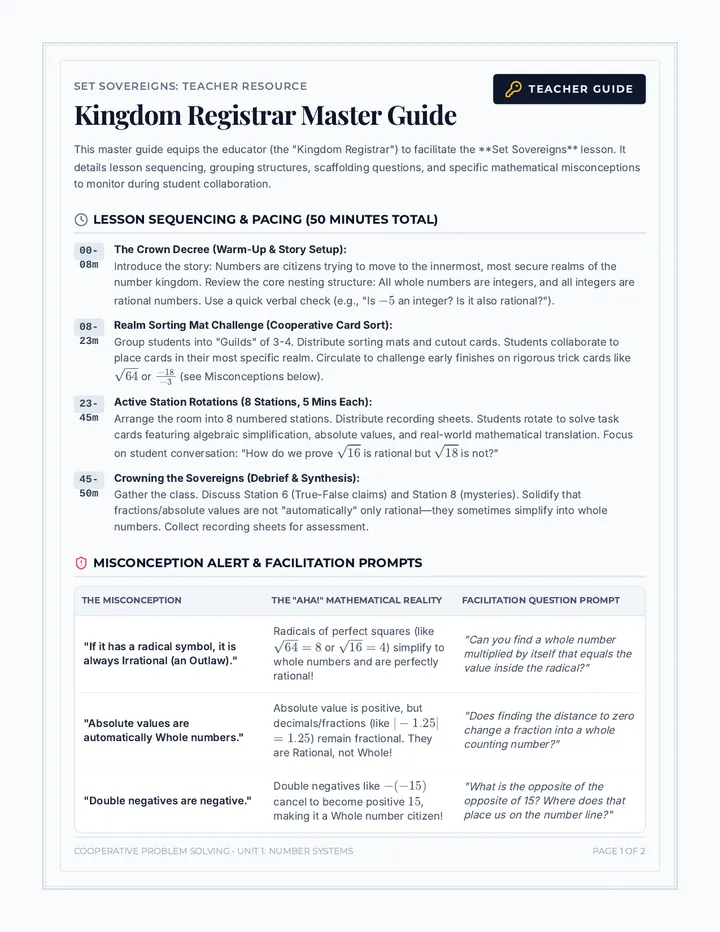
A 6th-grade math review lesson designed specifically for students with IEPs, focusing on foundational concepts in ratios, the number system, expressions, geometry, and statistics with visual scaffolds and simplified language.
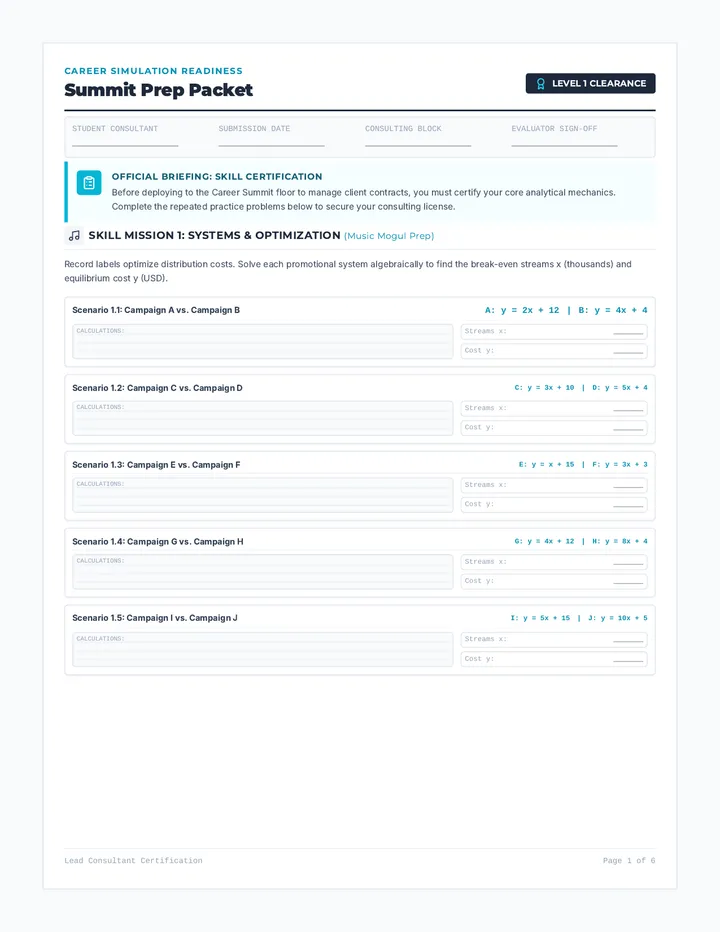
A lesson focusing on the practical application of the Distance Formula and the logical structure of SAS and ASA congruence proofs.
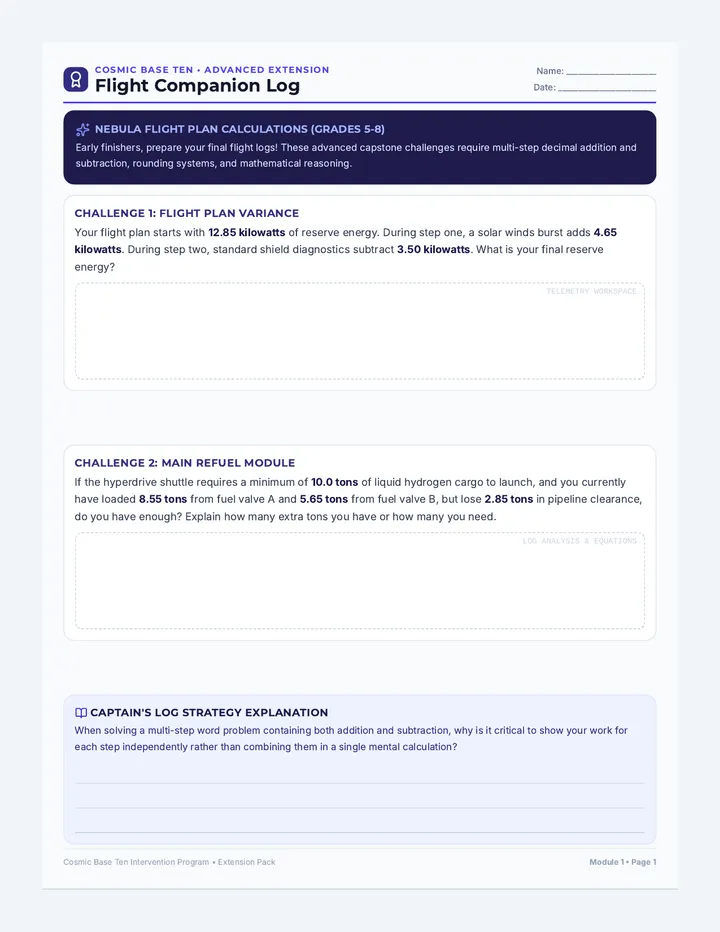
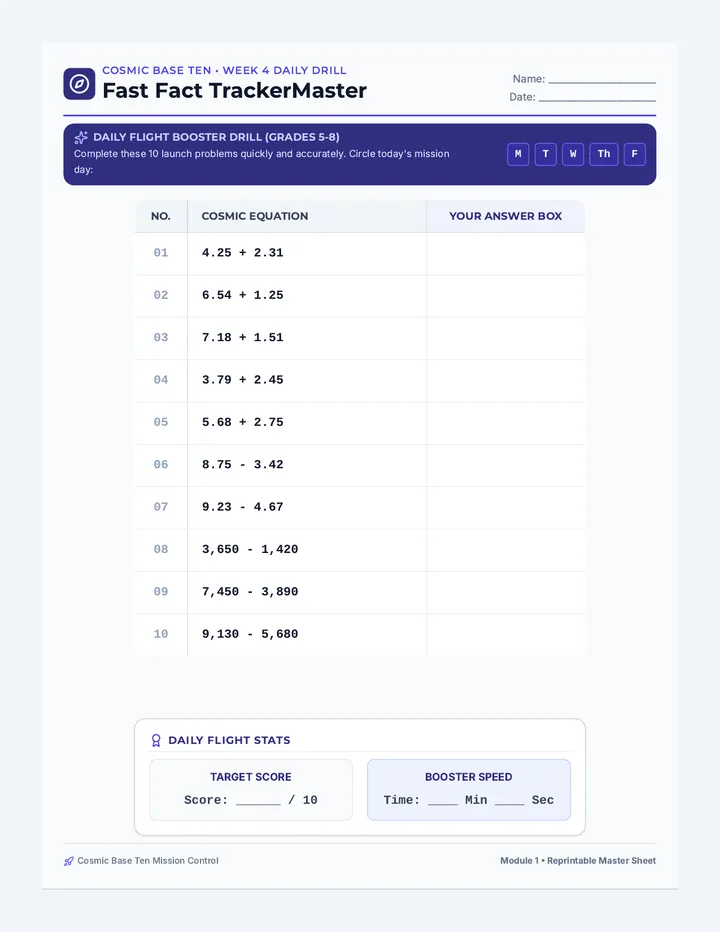
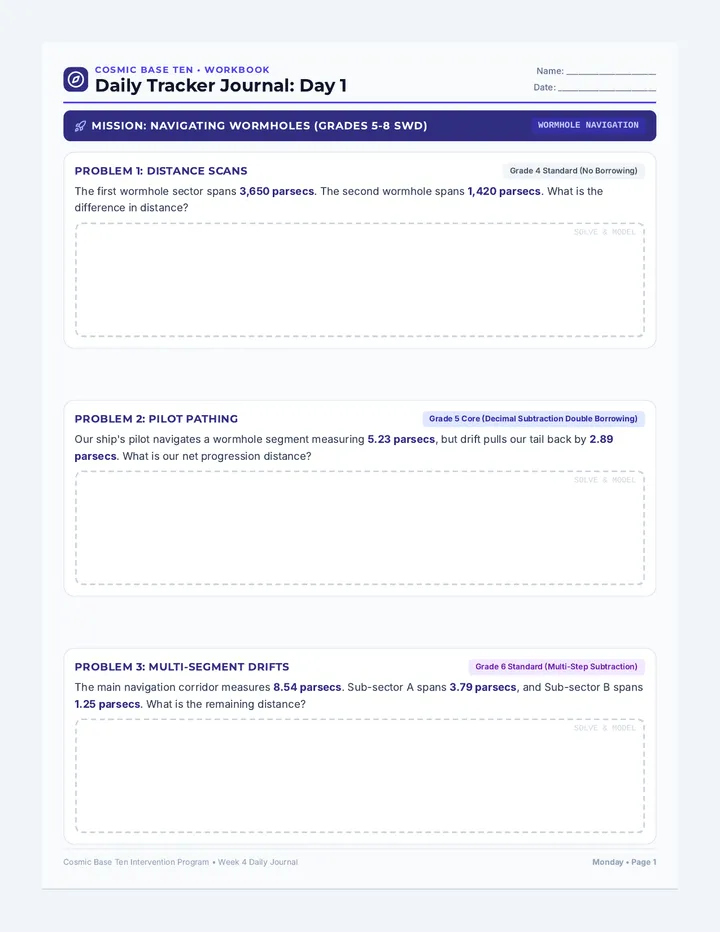
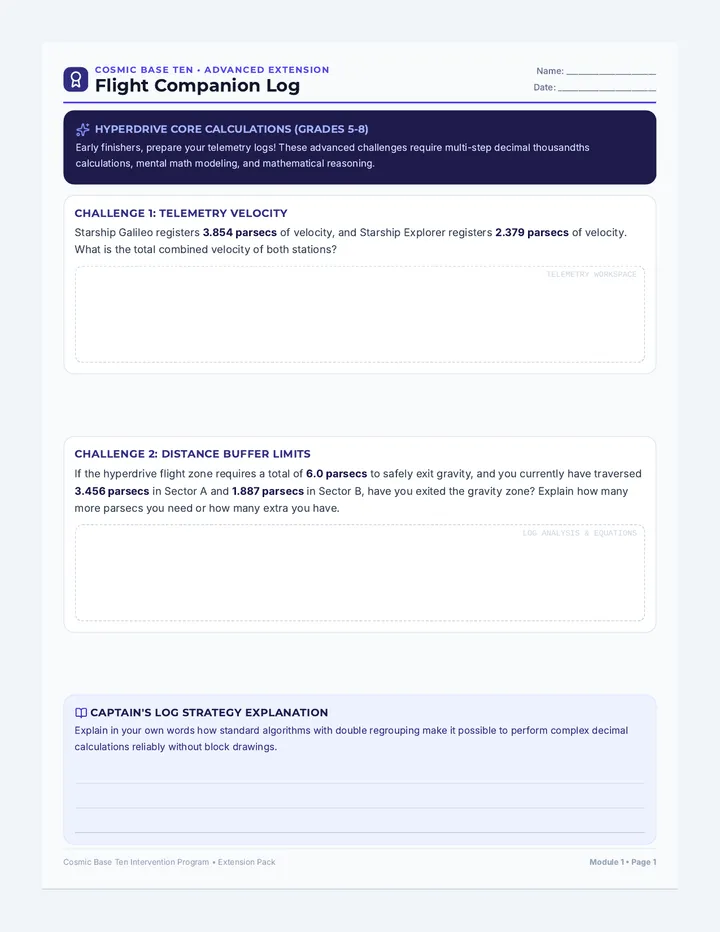
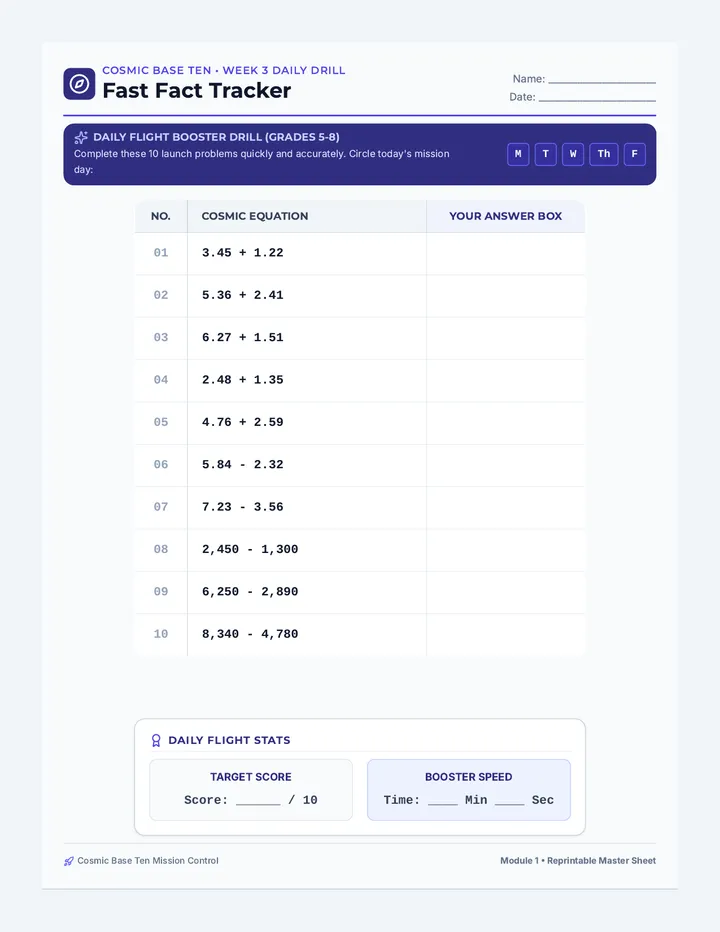
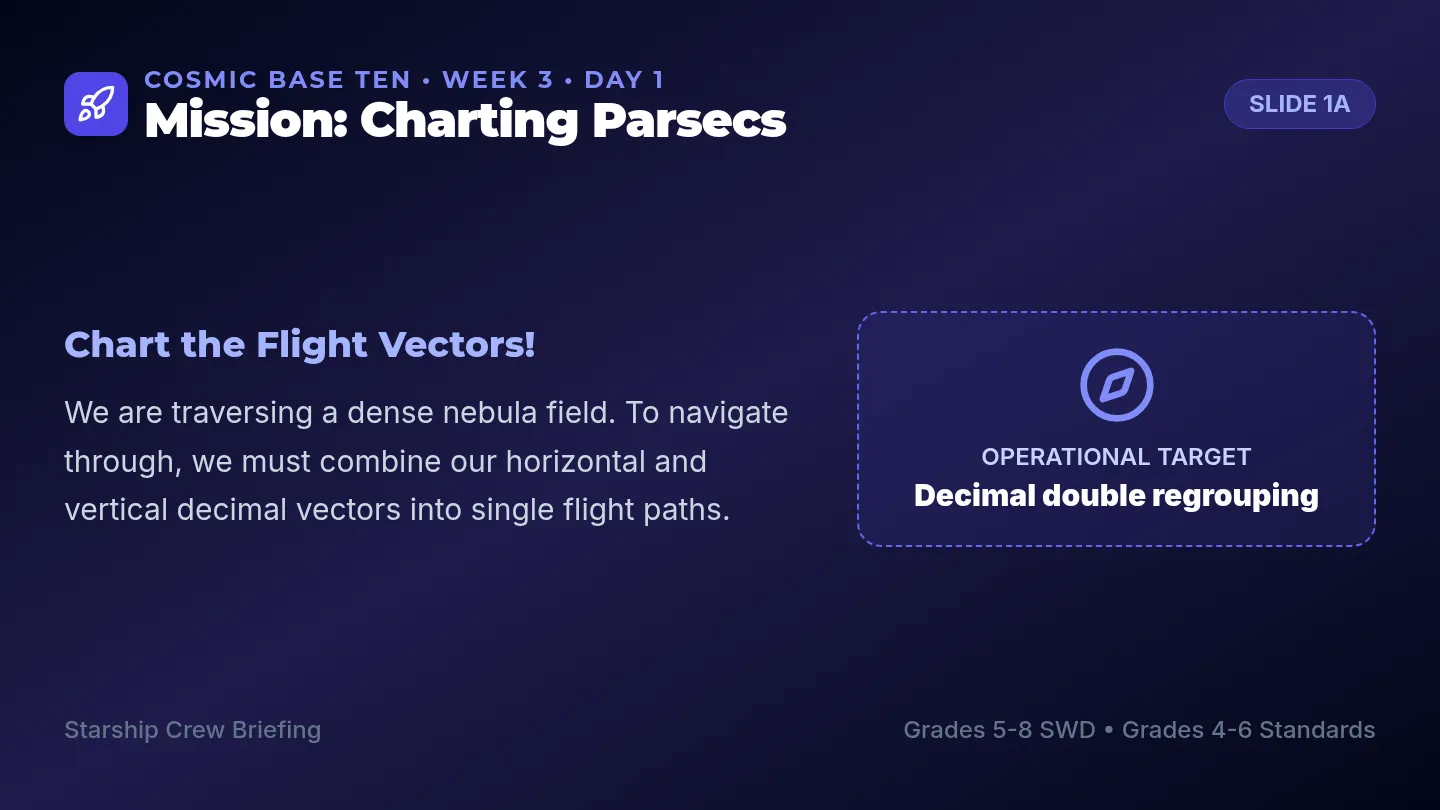
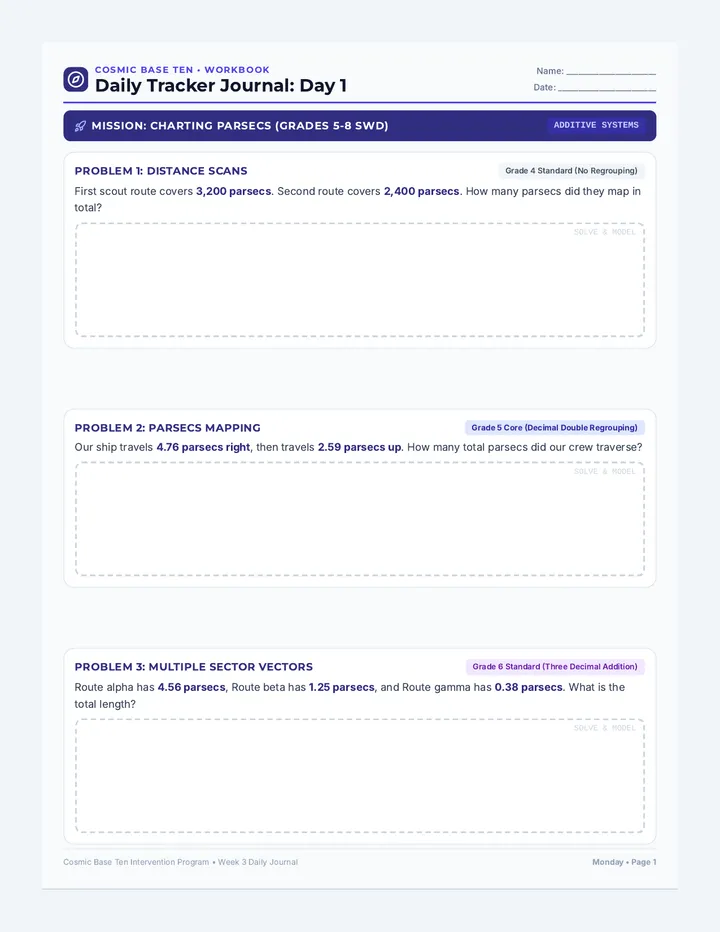
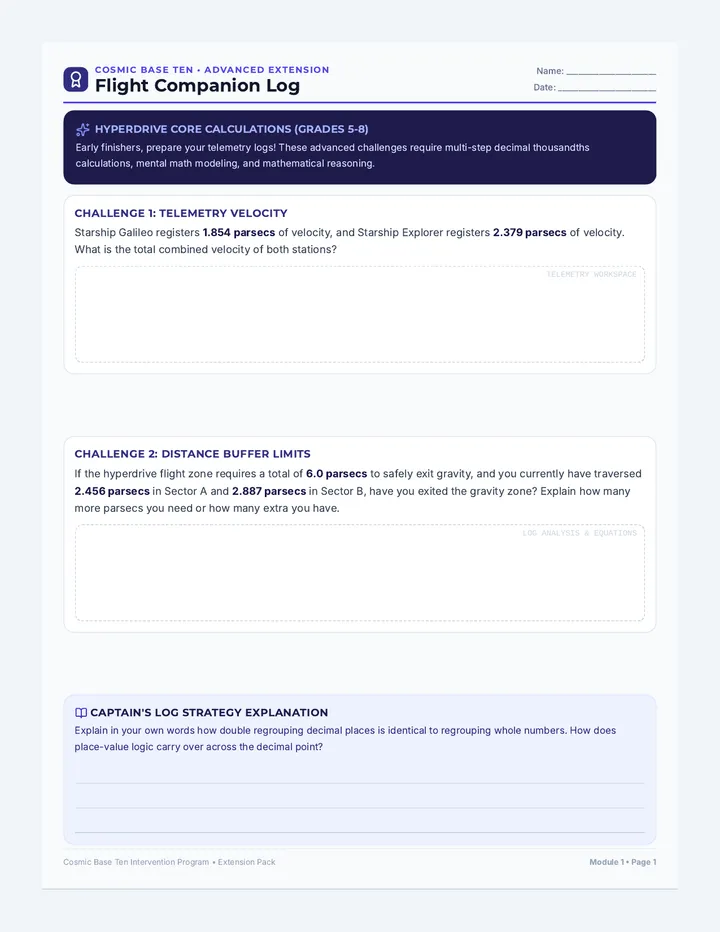
A collection of four diverse decimal practice activities covering addition, subtraction, comparison, rounding, and word problems for 7th-grade math students.
A comprehensive introduction to the classic board game 'Life', focusing on financial literacy and multi-digit decimal operations. Students learn the game mechanics and prepare for a project where they simulate their own financial journey.
A practice-focused lesson on identifying and creating equivalent fractions using multiplication and division strategies without visual aids.
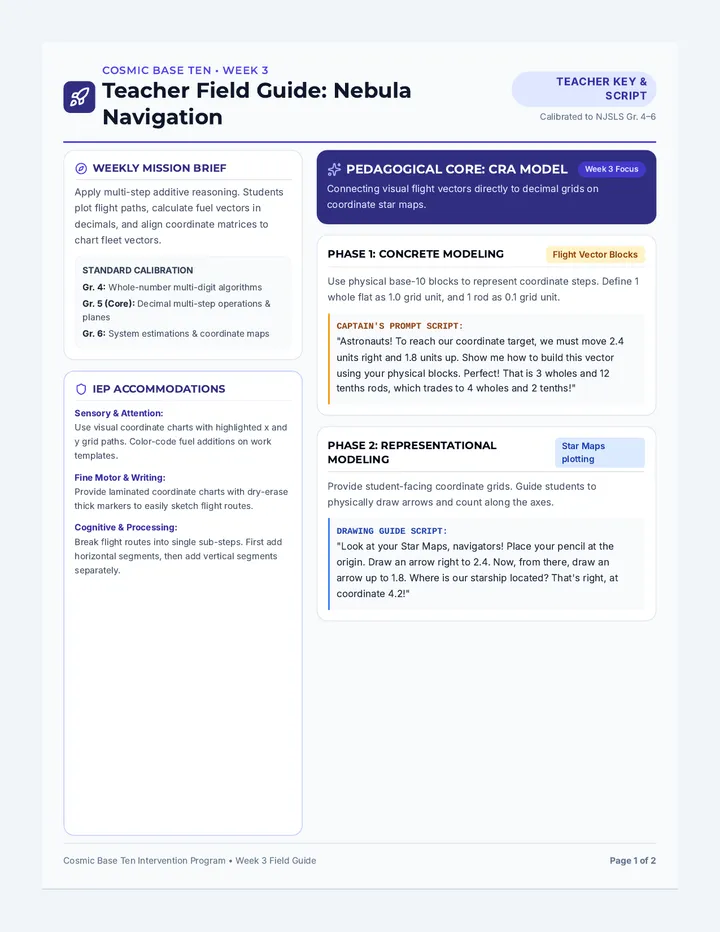
A scaffolded introduction to the four-quadrant coordinate plane, using a navigation theme to help students master plotting points with visual aids and step-by-step guides.
Students will explore the concepts of big, medium, and small by comparing various objects in the museum exhibits, promoting vocabulary development and visual discrimination.
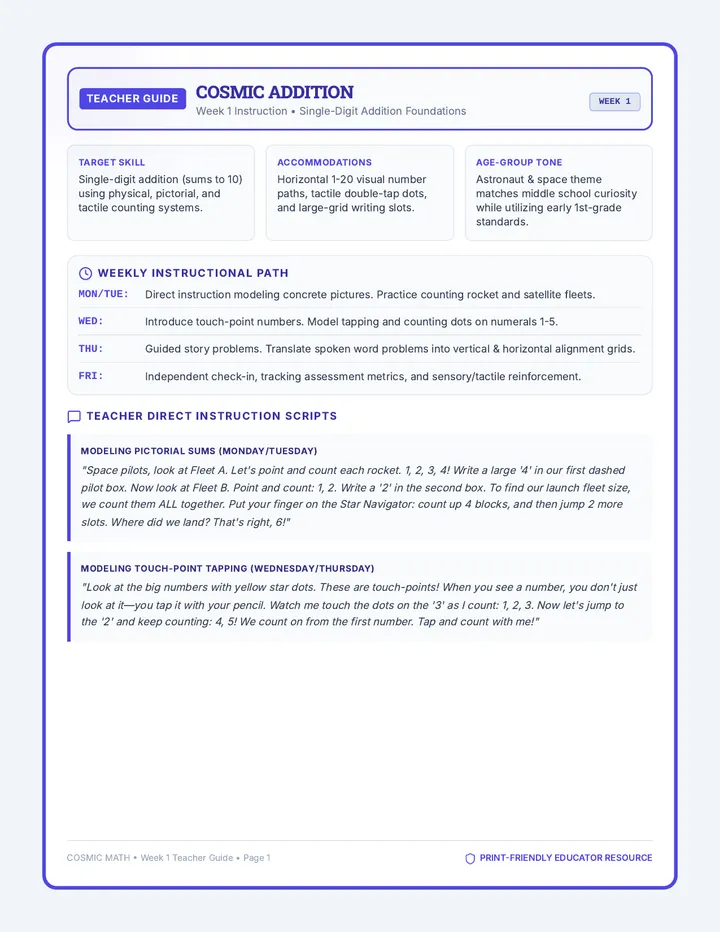
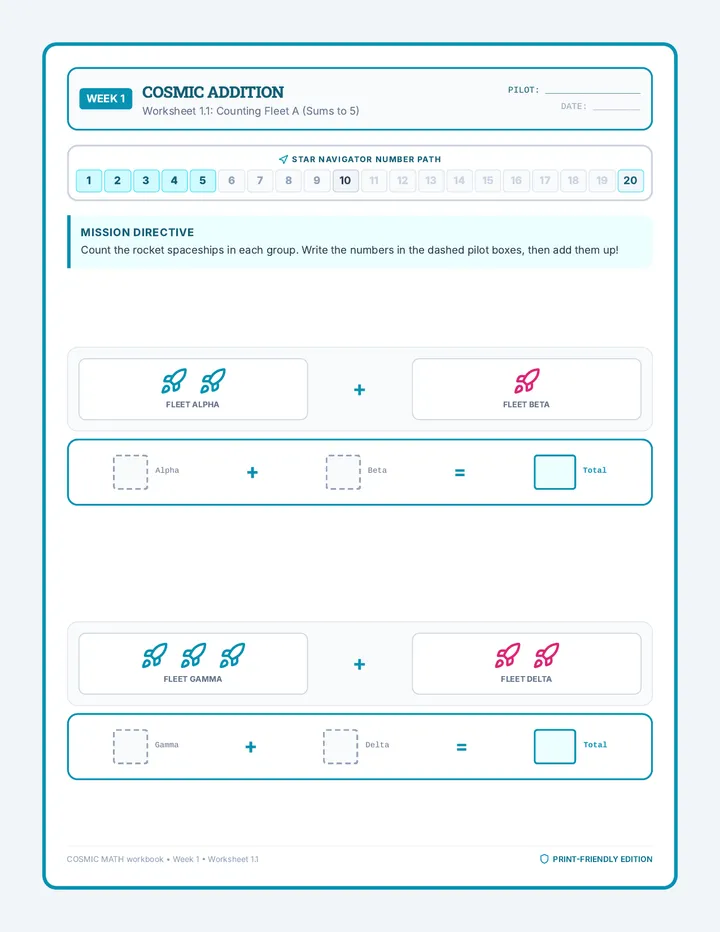
An introduction to simple addition by combining groups of museum objects, focusing on the concept of 'putting together' using visual aids and tactile play scenarios.
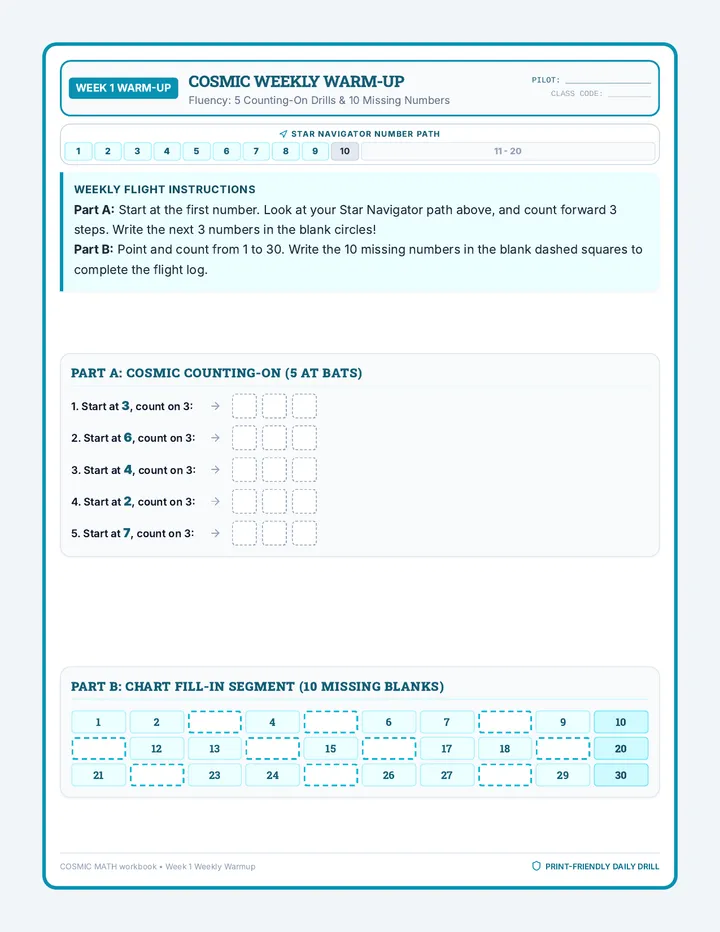
Students will practice identifying and counting numbers 1-10 using common items found in a play museum setting, such as grocery items, toy cars, and house windows.
A comprehensive guide to understanding place value from single digits to ten-thousands and decimals, featuring visual scaffolding for rounding.
A collection of multi-step word problems involving addition, subtraction, multiplication, and division to challenge student logic and calculation skills.
A comprehensive lesson on plotting points across all four quadrants of the coordinate plane, progressing from basic identification to complex shape creation.
Students count sets of pennies and nickels and analyze data from bar graphs to solve comparison problems. Subtraction skills are reinforced through data-based word problems.
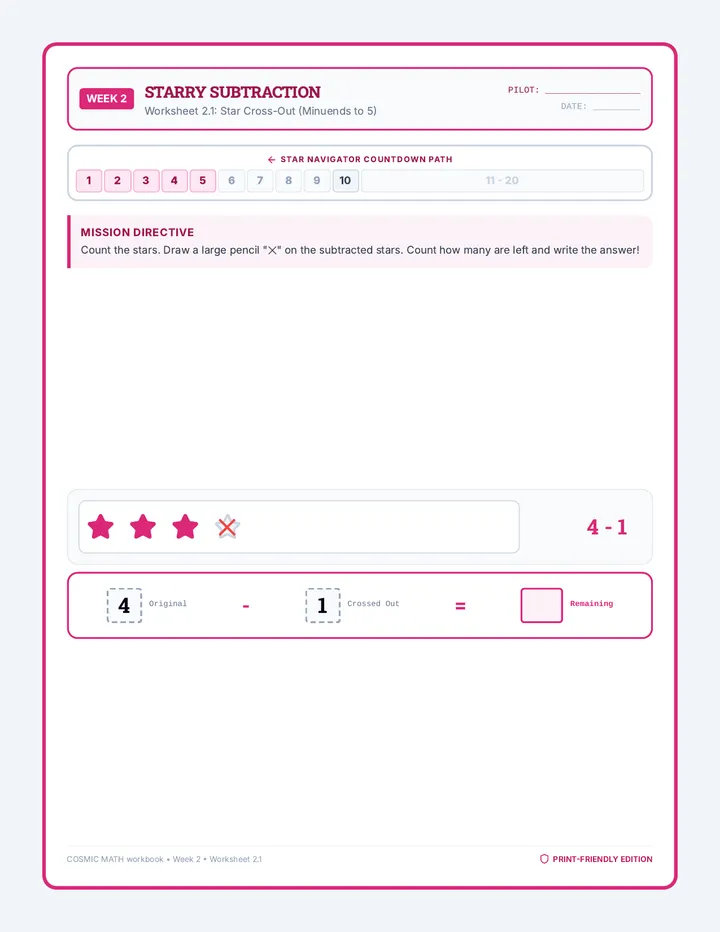
Students identify pennies, nickels, and dimes, sort objects into categories, and record data using tally charts. The lesson also introduces subtraction by counting back on a number line.
A fourth-grade math lesson focused on translating real-world adventure scenarios into numerical expressions using addition, subtraction, multiplication, and division. Students practice identifying key operations and solving multi-digit problems.
A comprehensive review of 3rd Grade North Carolina Standard Course of Study (NCSCOS) fraction standards, featuring EOG-style questions covering partitioning, number lines, and equivalence.
A quick assessment focusing on simplifying fractions with numerators and denominators up to 100 into their simplest form.
A scaffolded introduction to the four-quadrant coordinate plane, designed for students needing extra support. It covers identifying the axes and origin, understanding quadrants, and step-by-step plotting of points.
A focused lesson on identifying and generating equivalent fractions using visual models and multiplication strategies, themed around a bustling neighborhood bakery.
Students explore fraction multiplication through area models, understanding how to find a fraction of a fraction in real-world contexts.