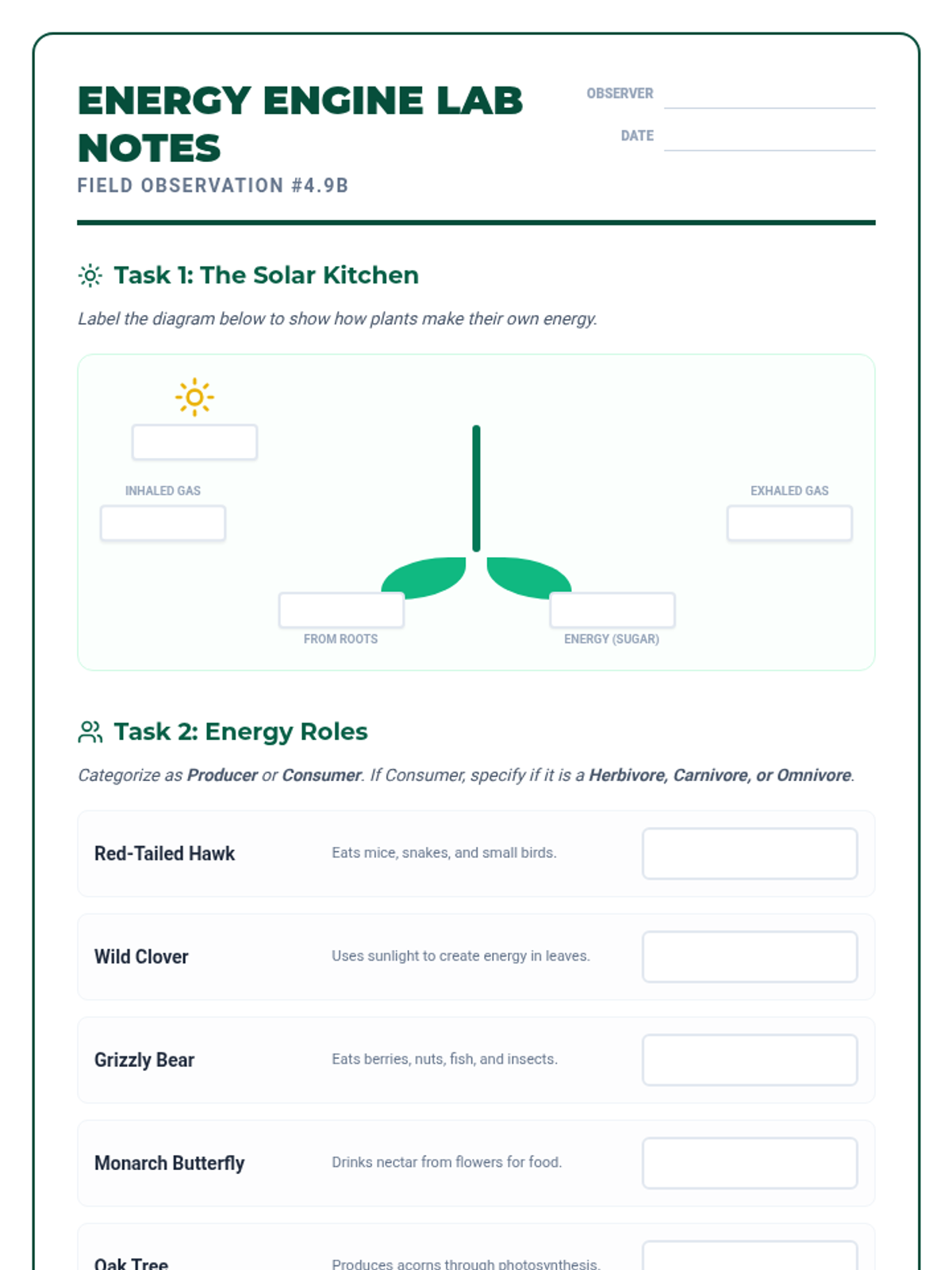
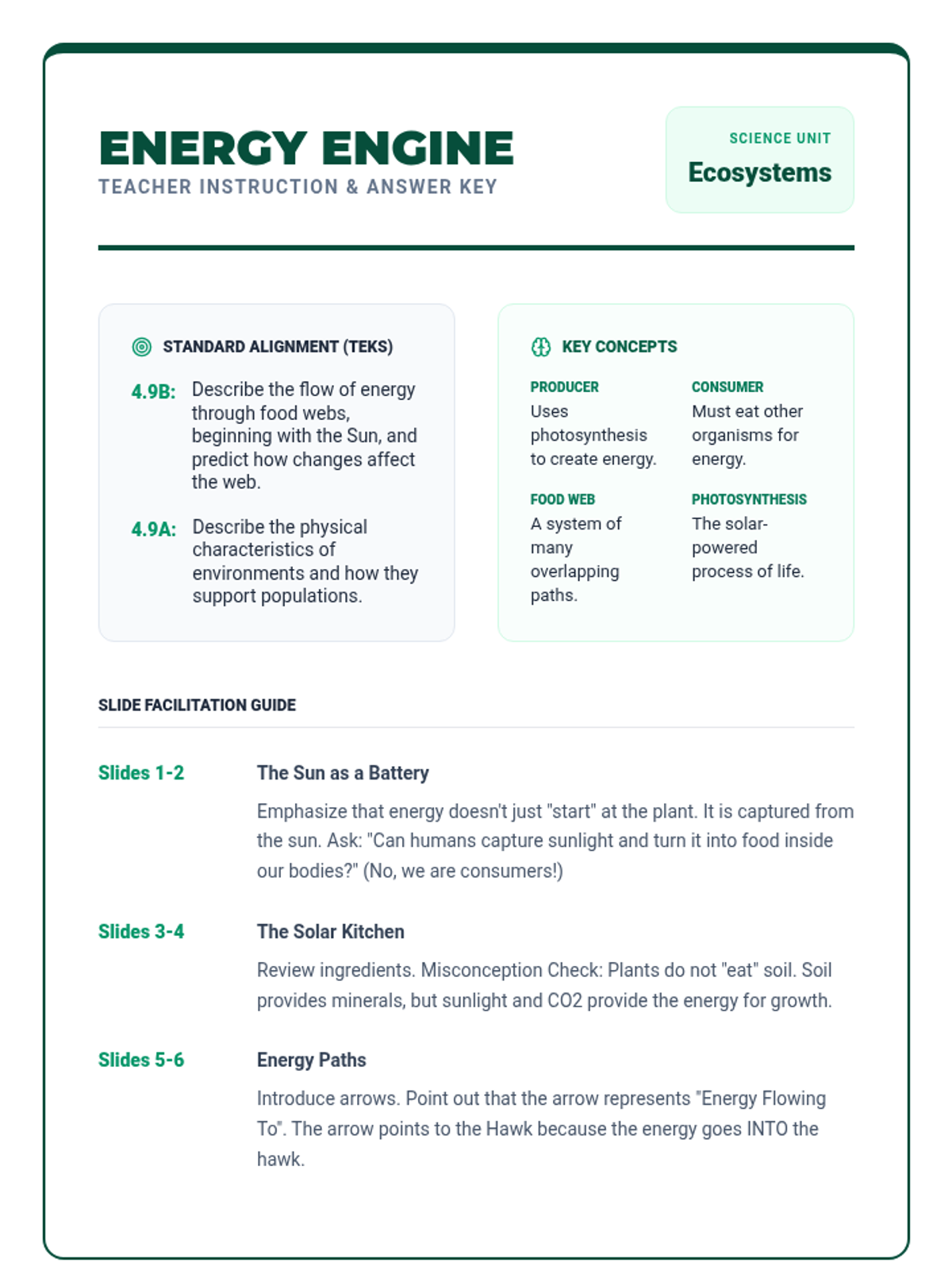
Explore how energy moves from producers to different types of consumers and how these connections form complex food webs.
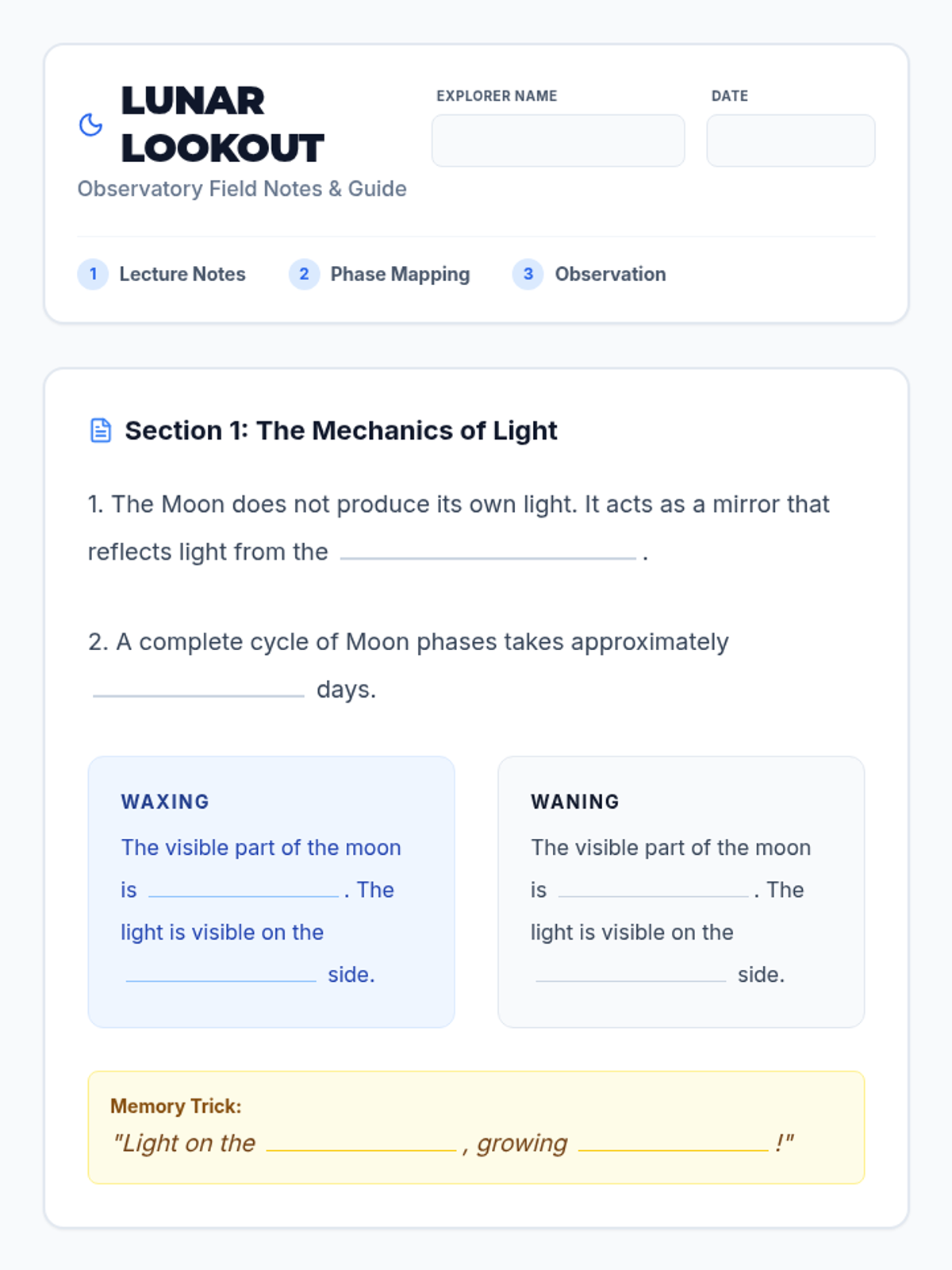
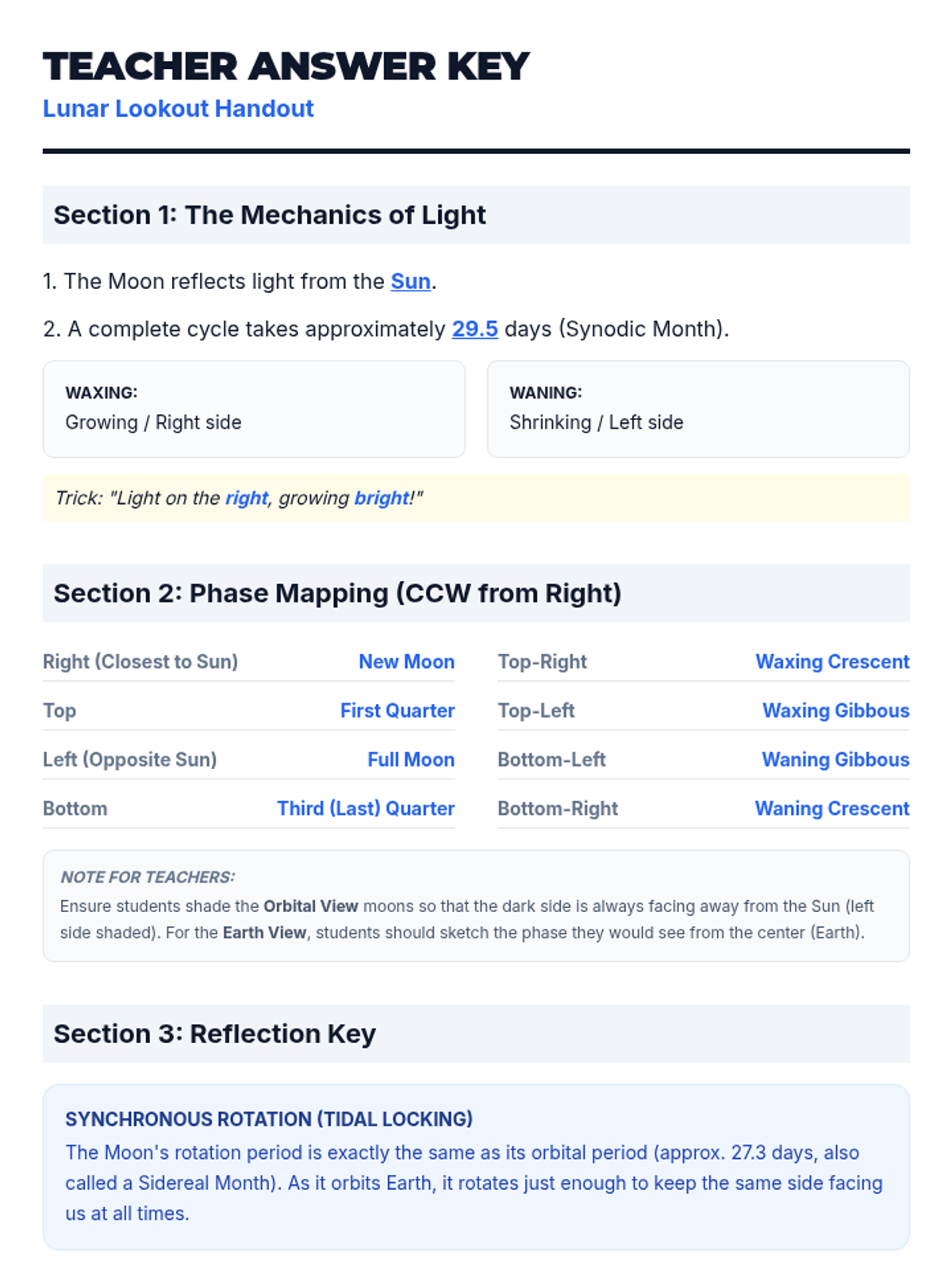
A complete introductory lesson on the lunar cycle, covering the eight phases of the moon, the concepts of waxing and waning, and the orbital relationship between the Earth, Moon, and Sun.
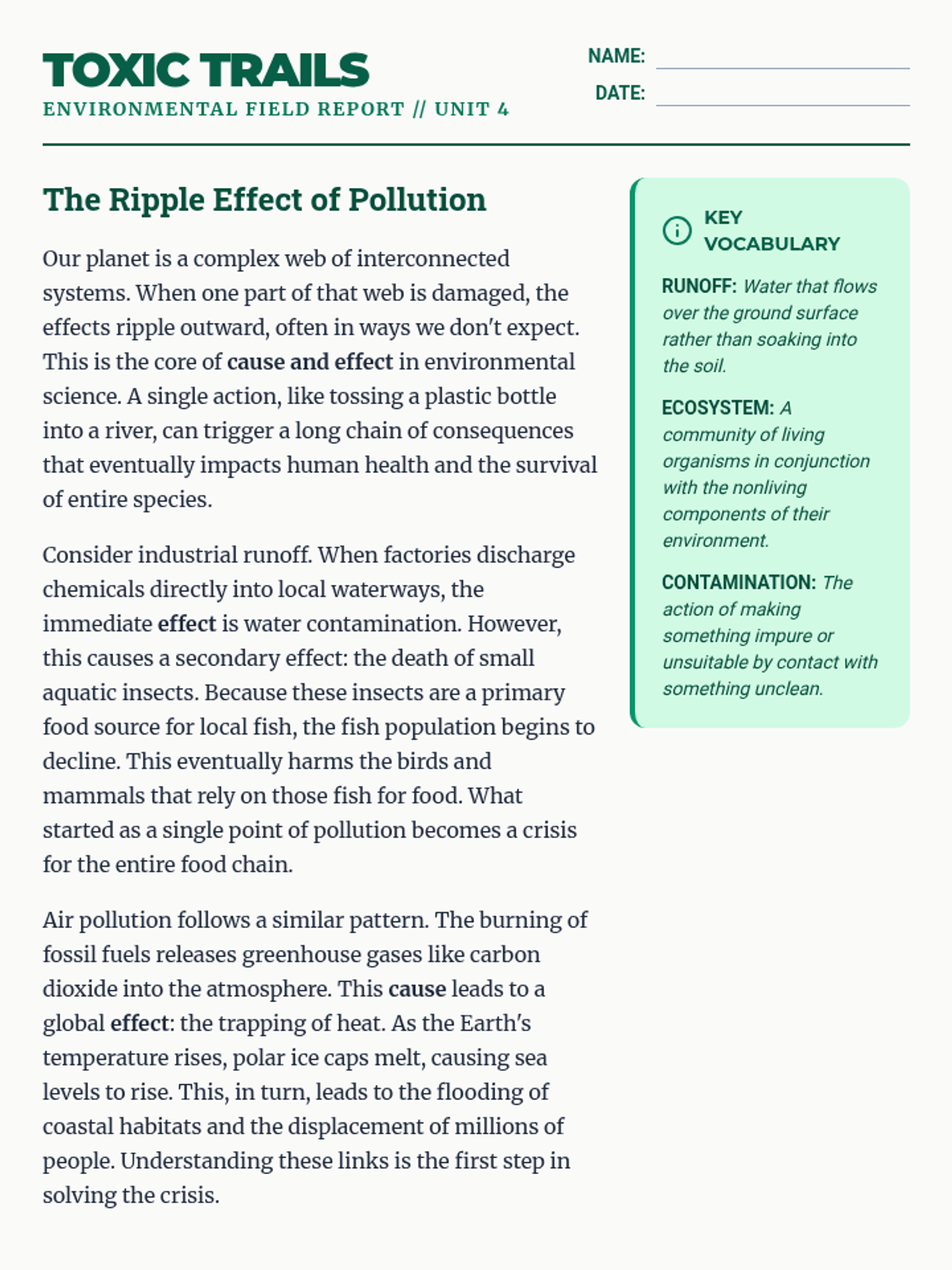
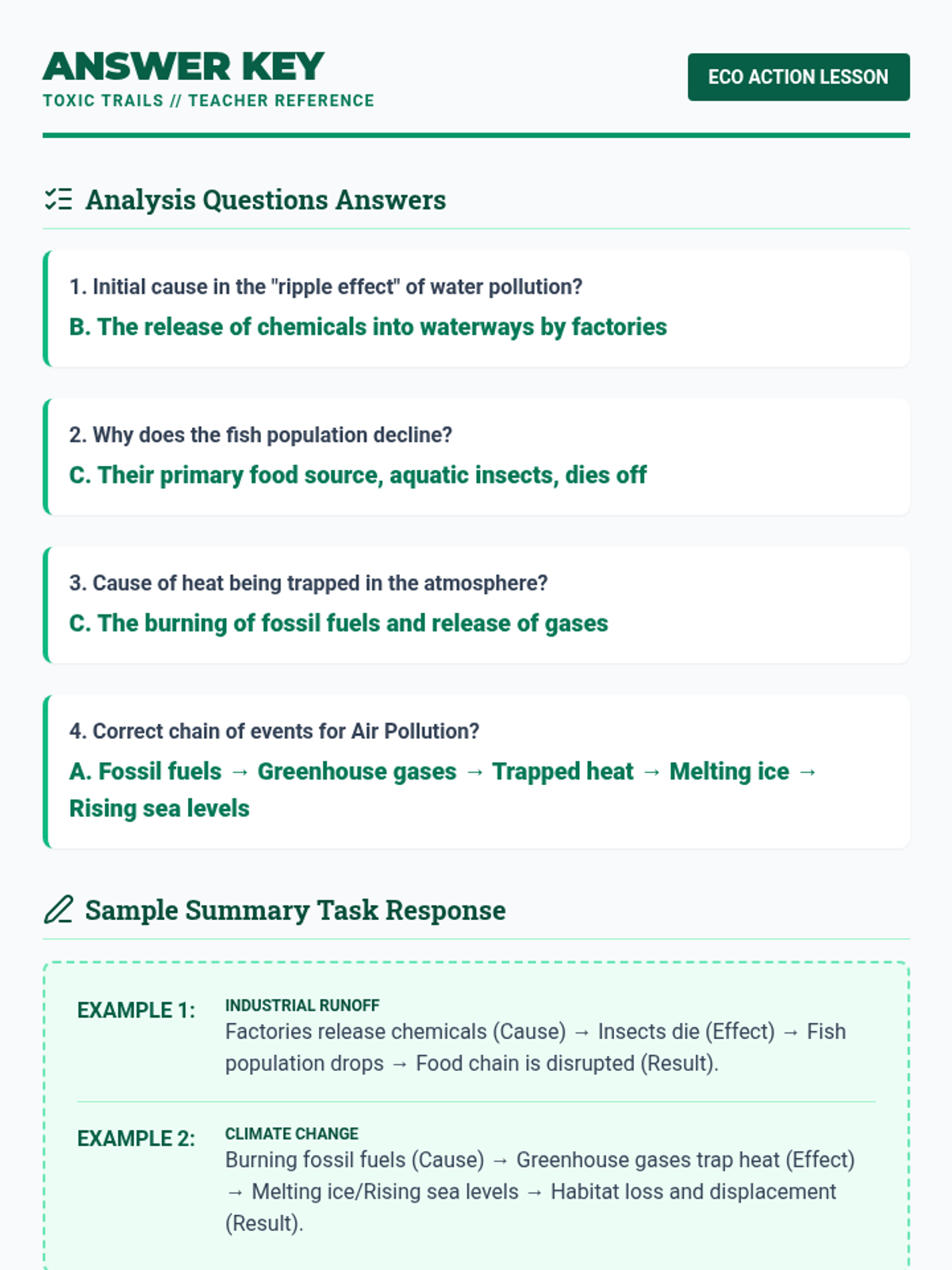
An investigative look into the cause-and-effect relationships of environmental pollution, focusing on how human activities impact Earth's ecosystems.
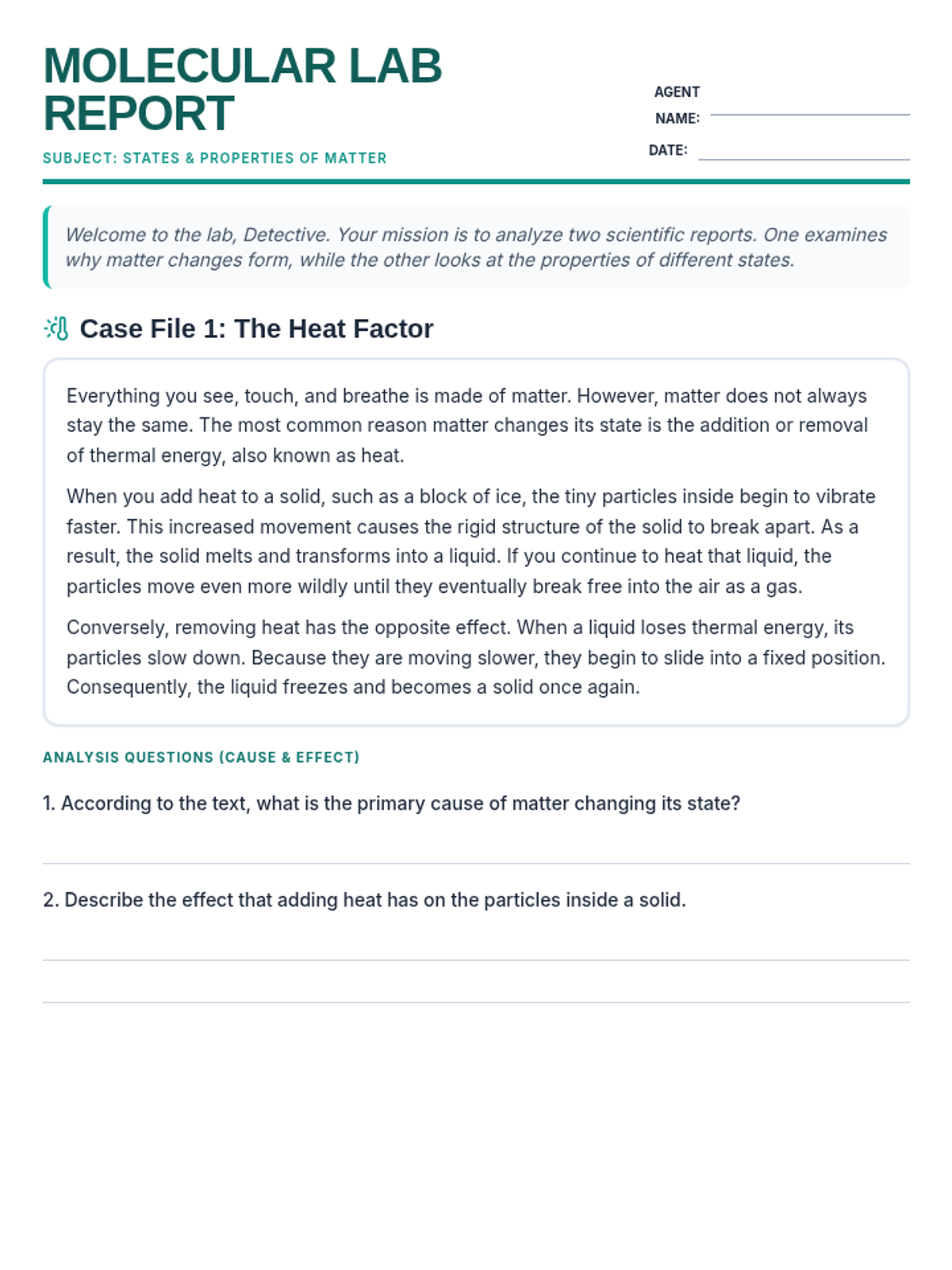
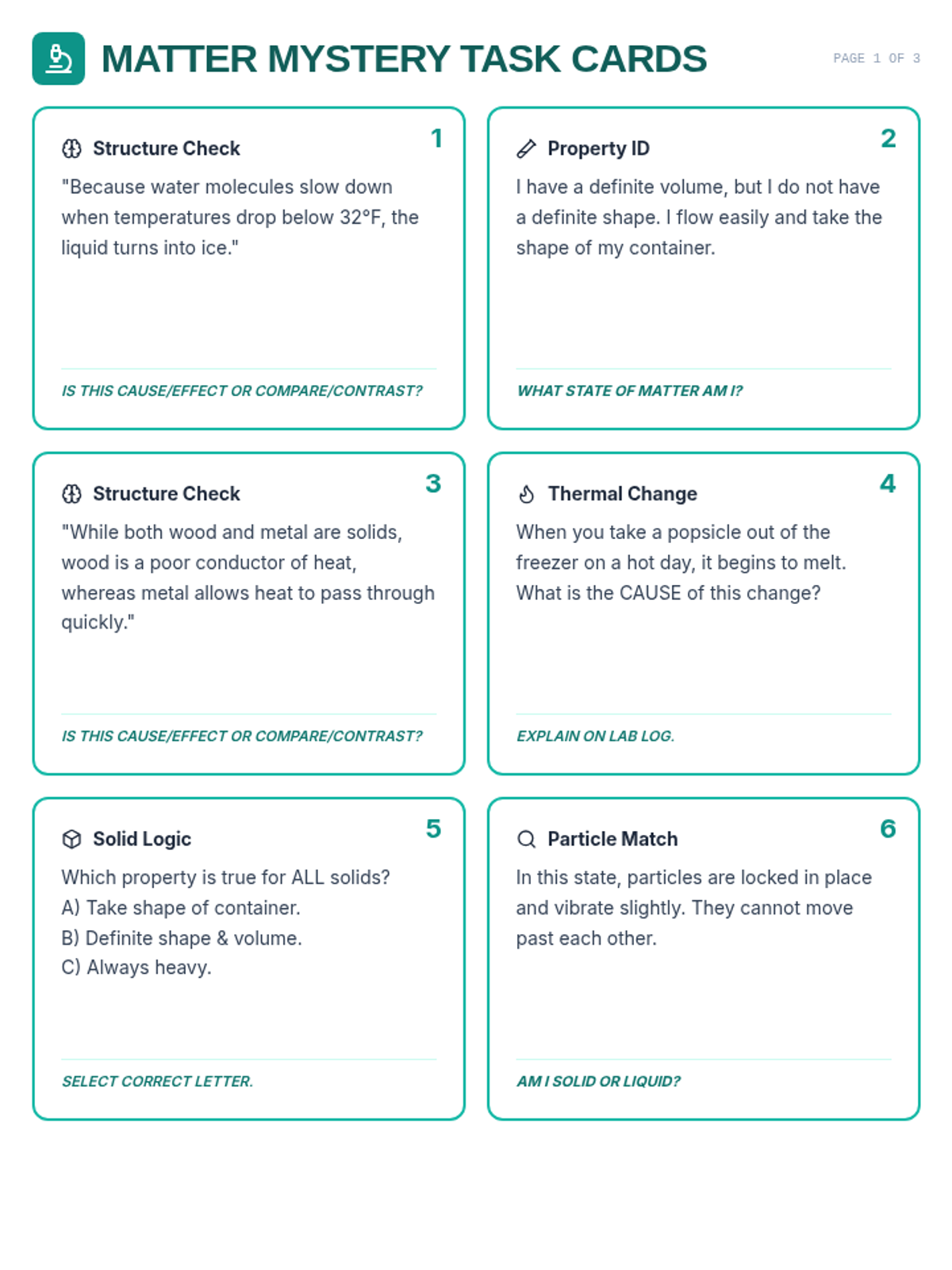
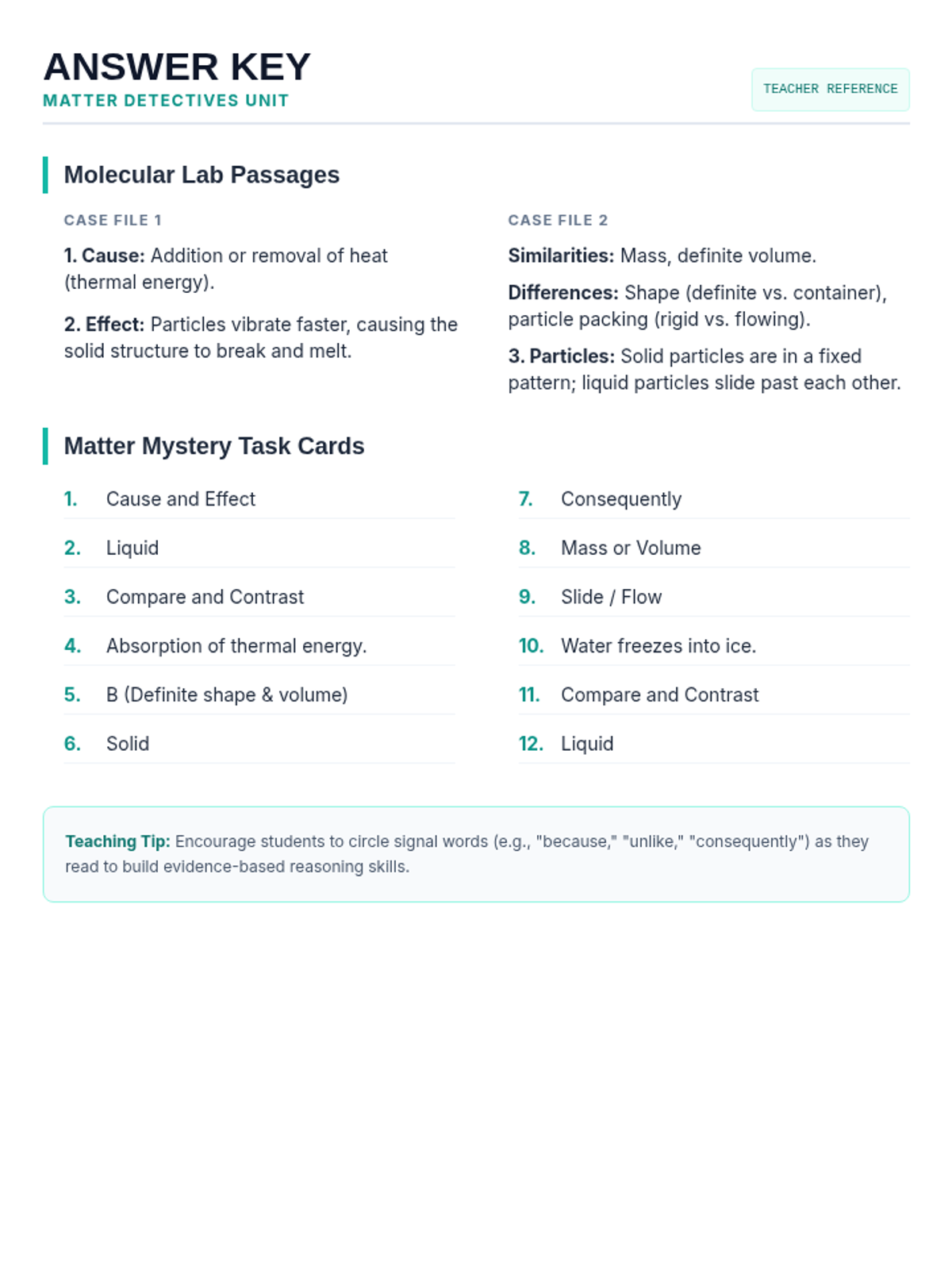
A focused lesson on matter's properties and states, using cause-and-effect and compare-and-contrast text structures to build literacy skills.
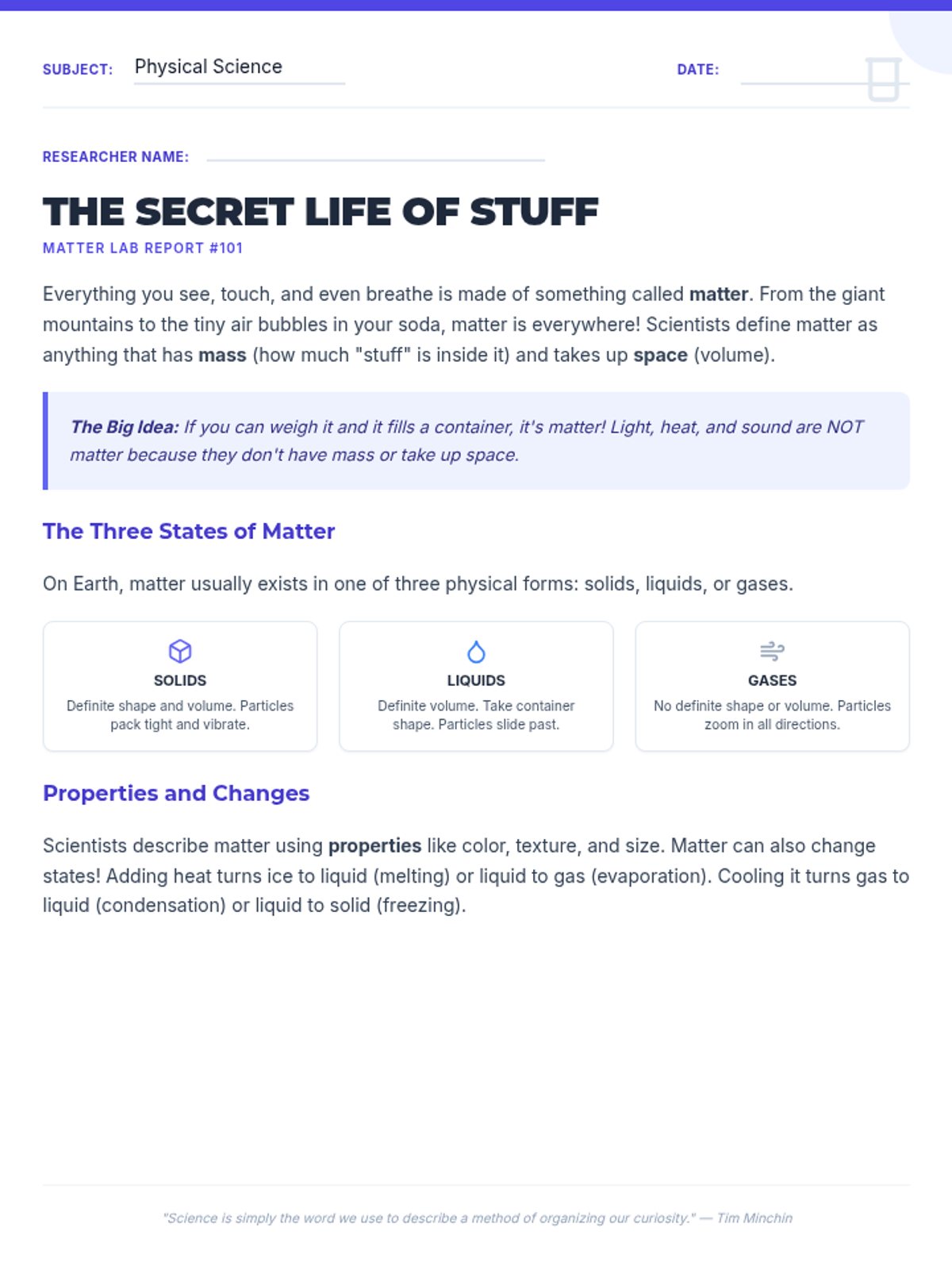
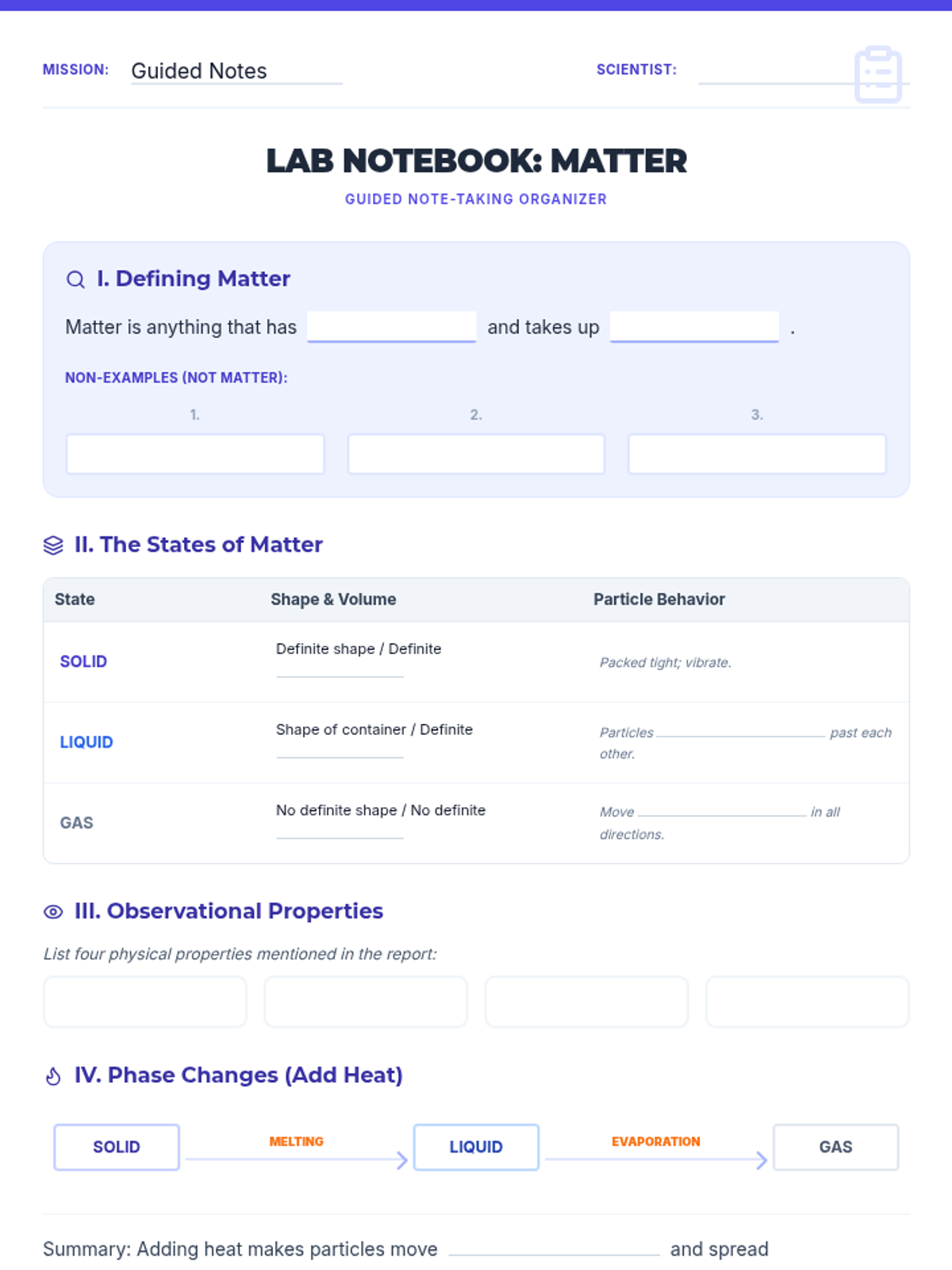
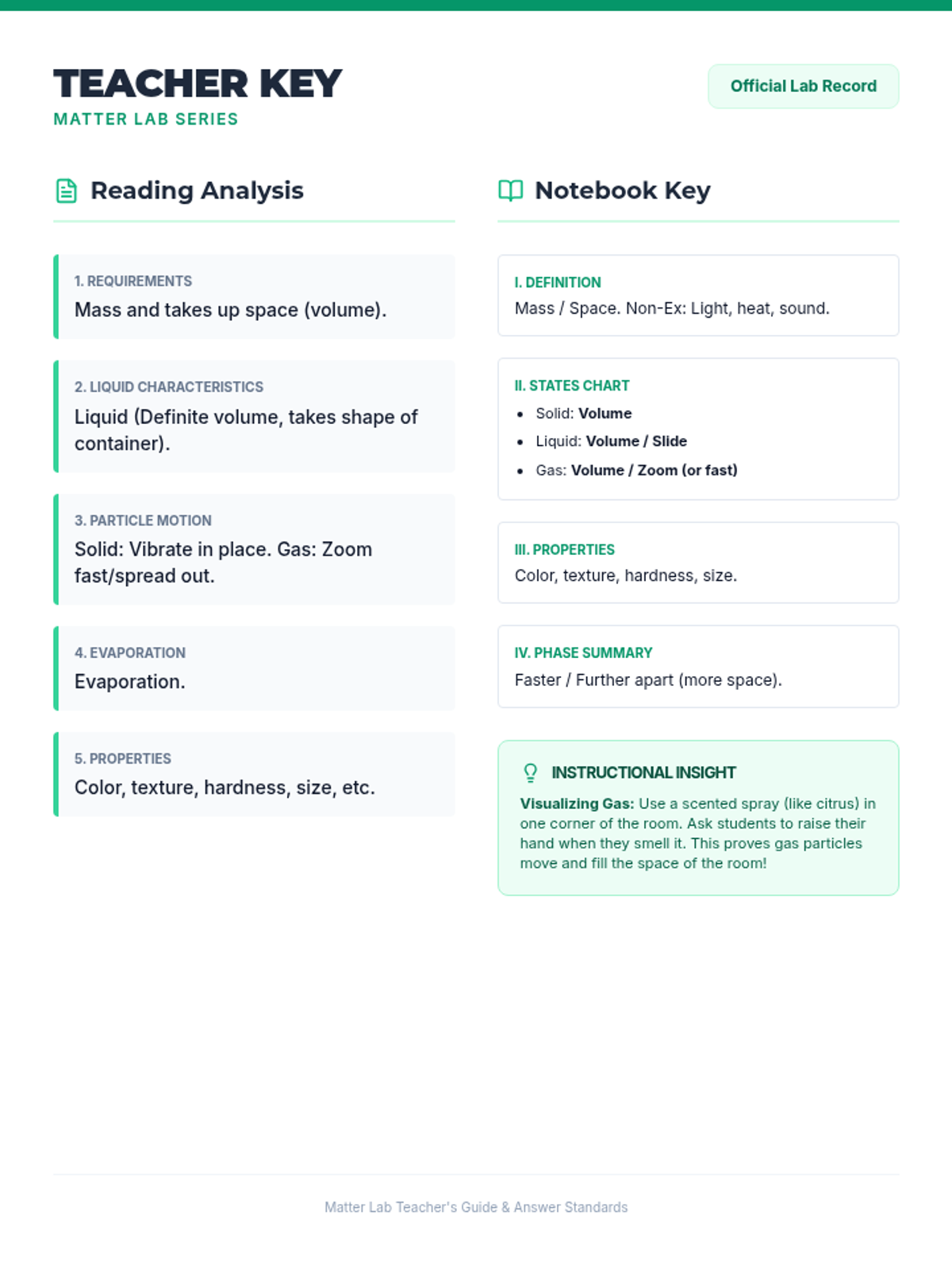
A foundational lesson for 4th grade students exploring the properties of matter and the three states: solid, liquid, and gas. Students will engage with a detailed informational text and use guided notes to solidify their understanding.
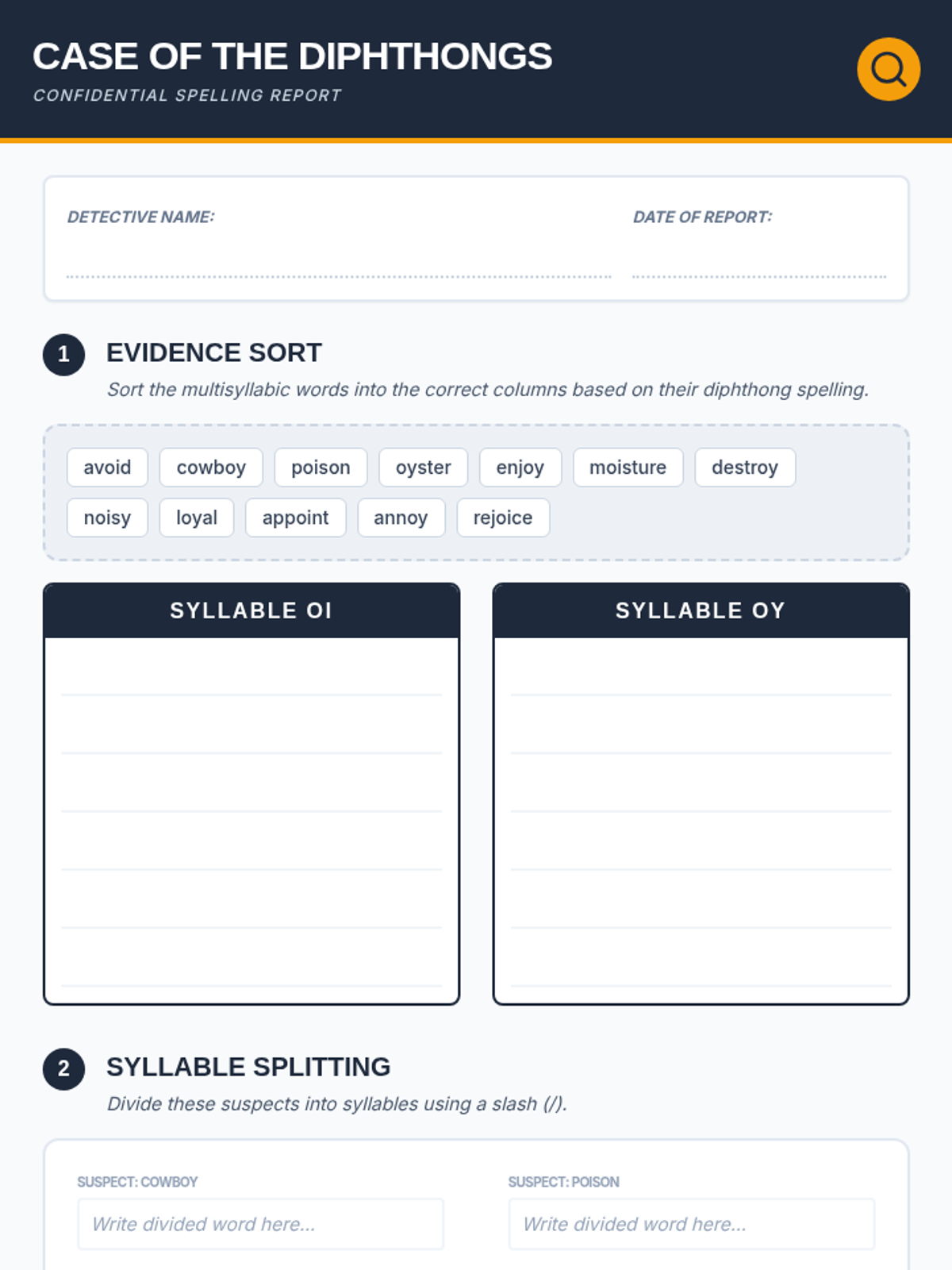
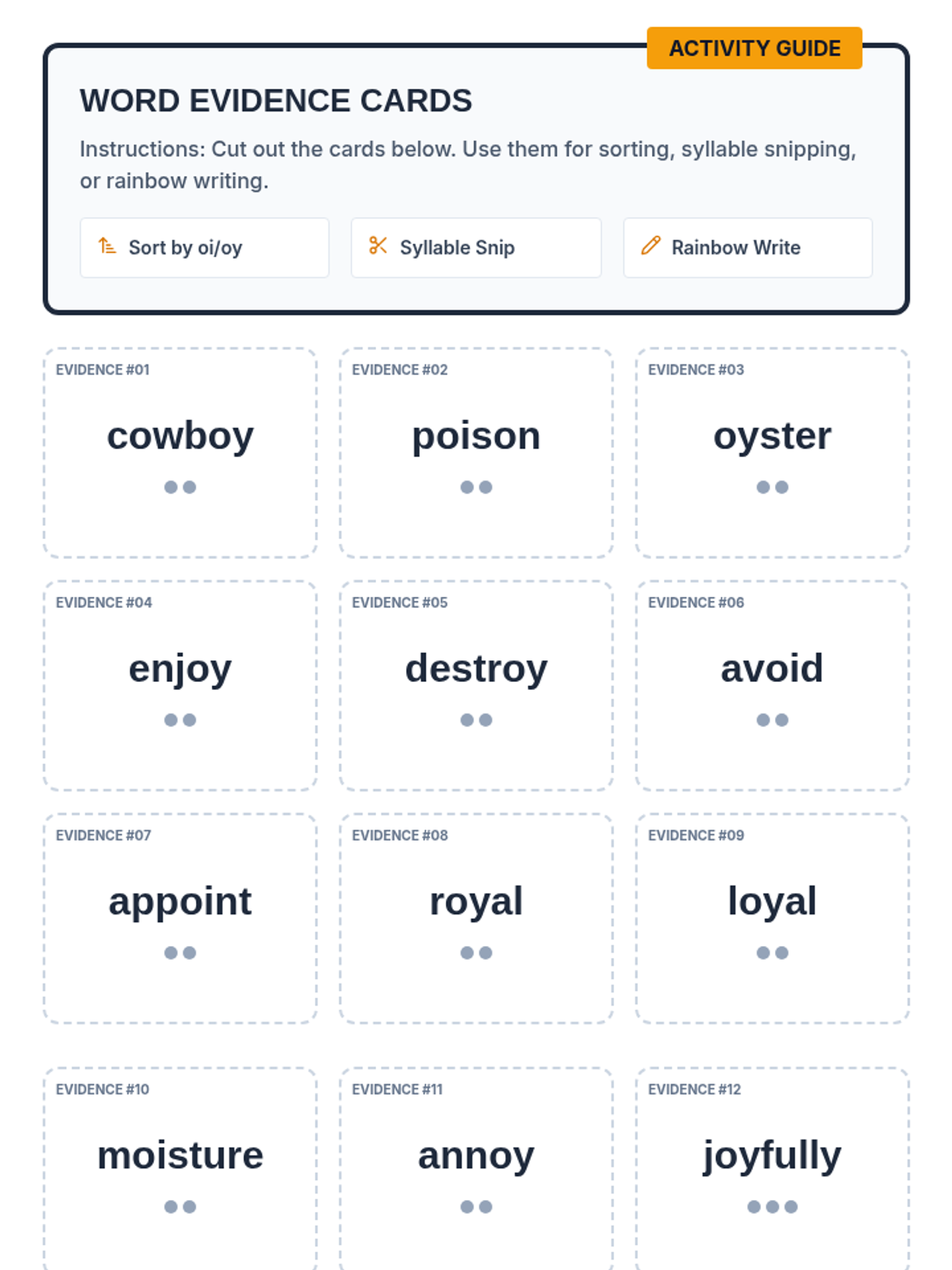
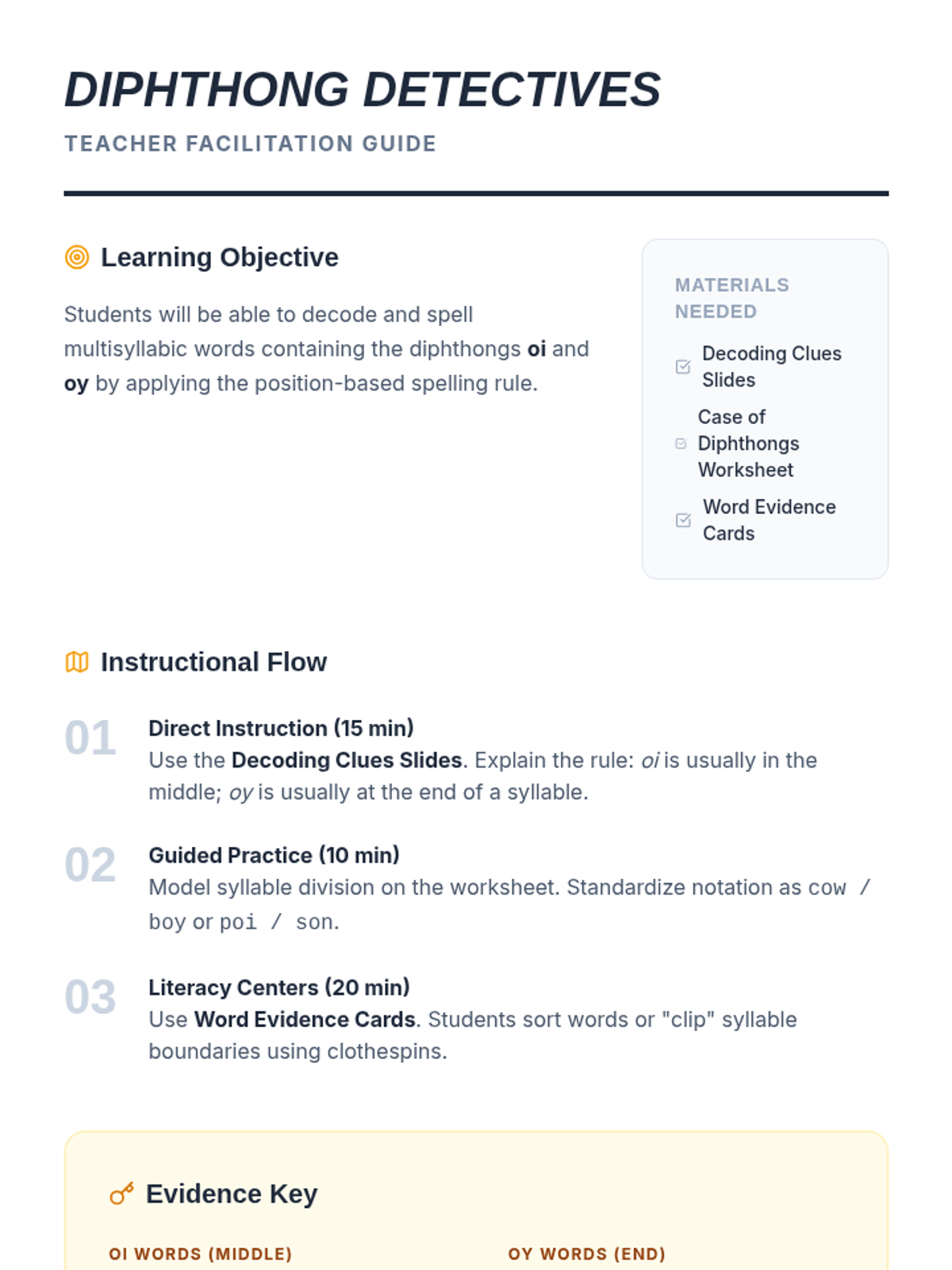
A detective-themed lesson focusing on decoding and spelling multisyllabic words with the 'oi' and 'oy' diphthongs. Students learn the placement rules for these spellings and apply them through sorting and syllable division activities.
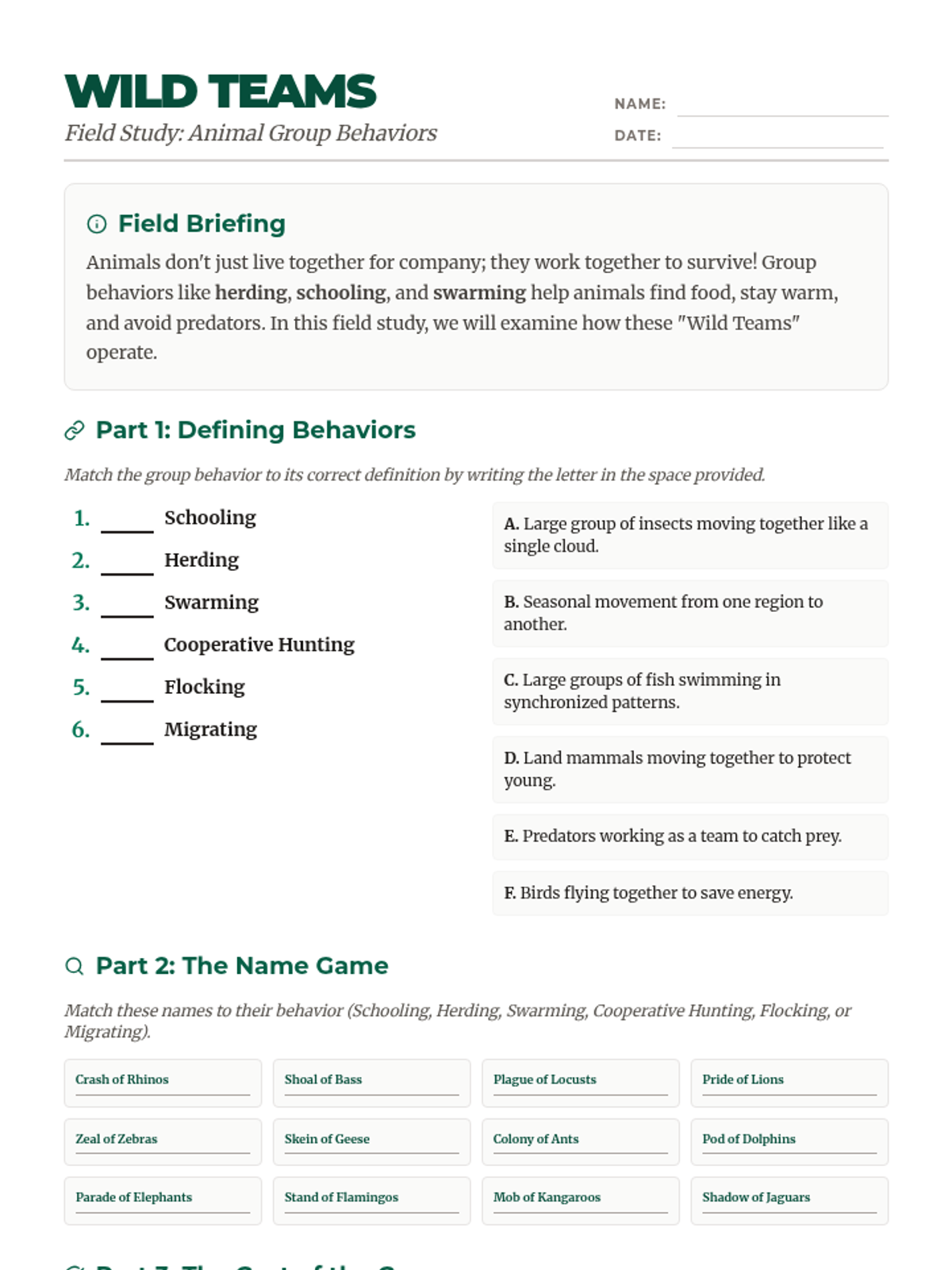
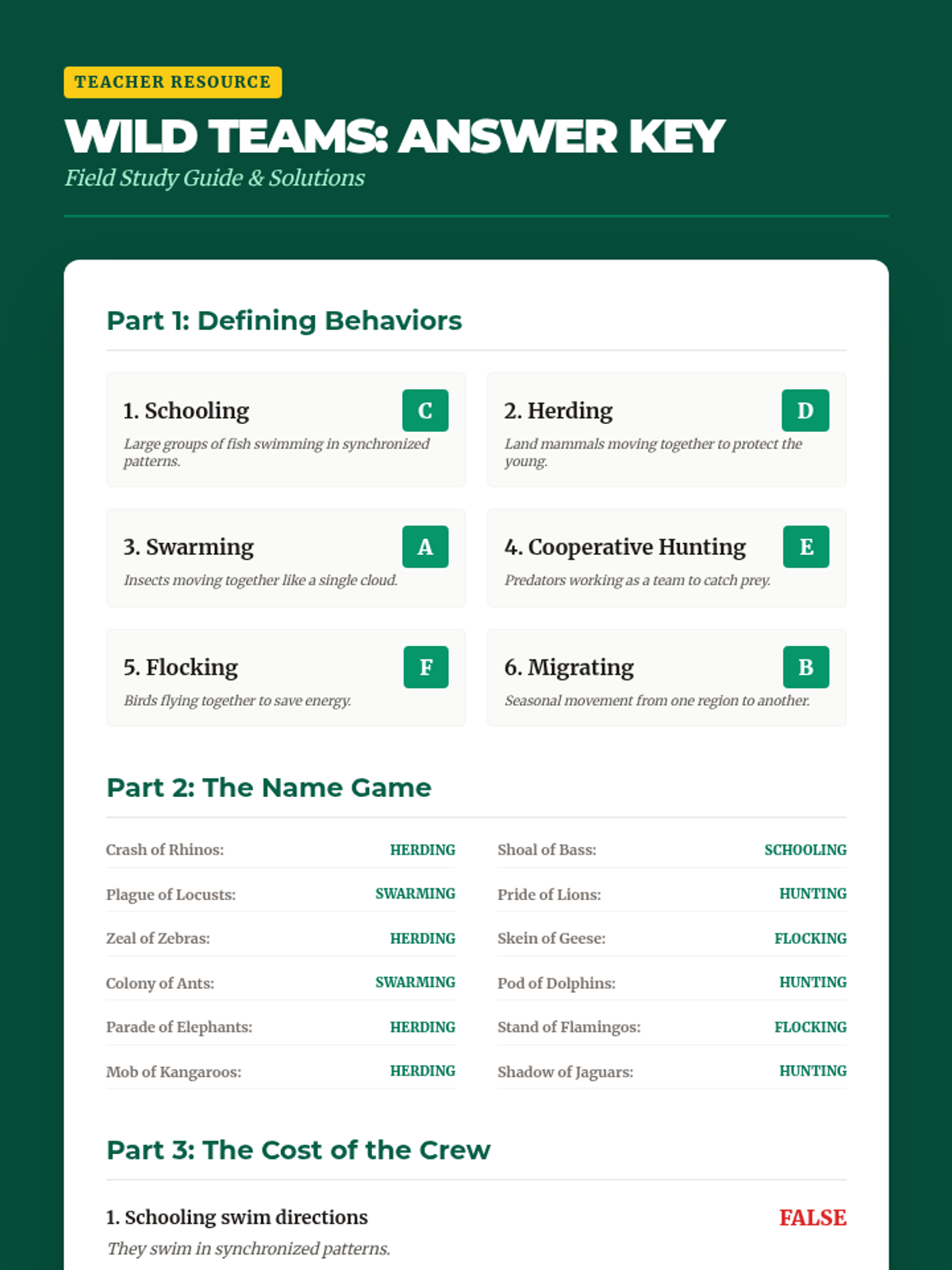
This lesson explores the various ways animals interact and survive in groups, focusing on specific behaviors like schooling, herding, and cooperative hunting, while introducing students to the creative collective nouns used to describe these groups.
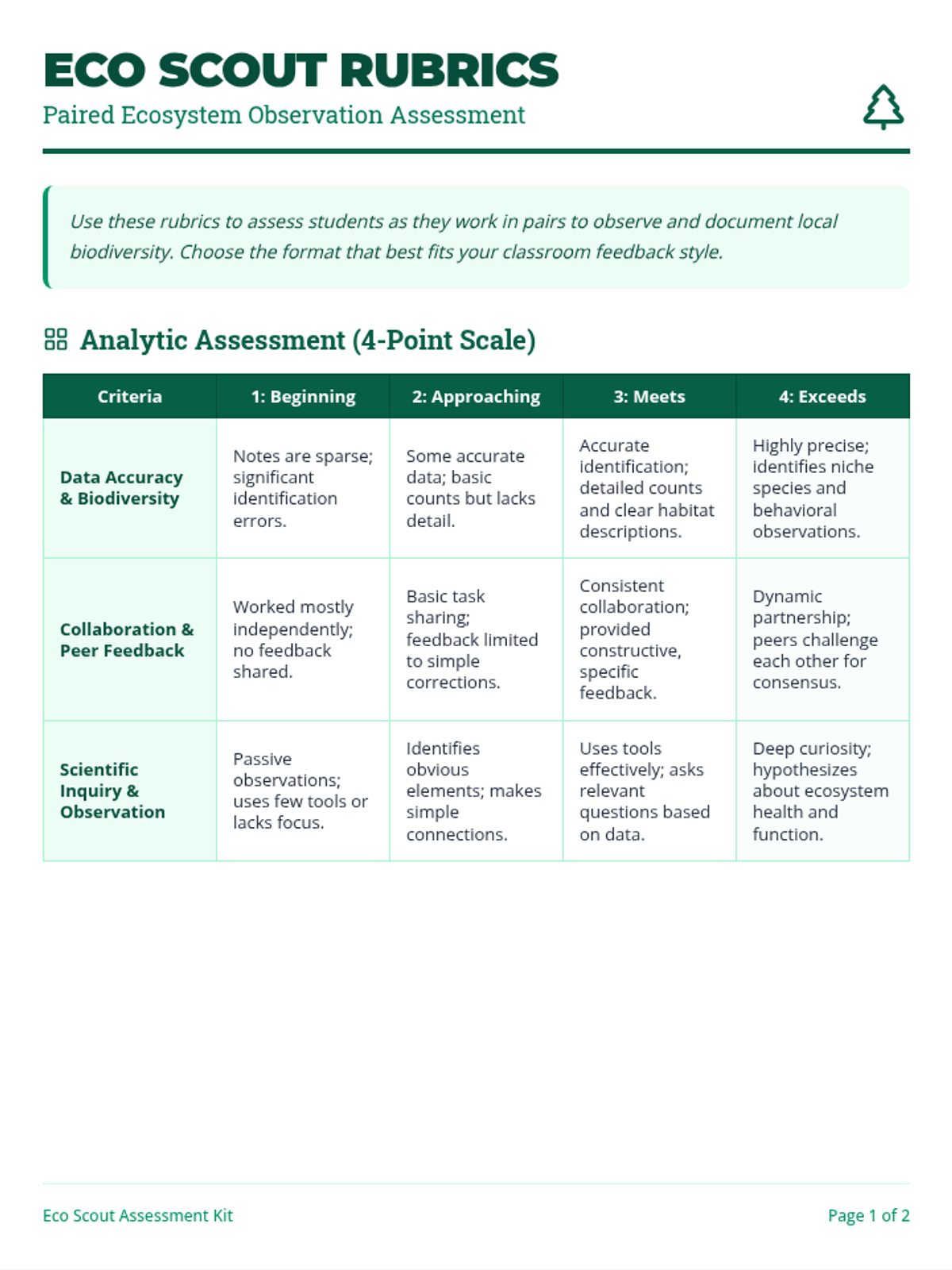
A comprehensive set of rubrics designed for evaluating paired ecosystem observation activities, focusing on scientific accuracy, inquiry, and collaboration.
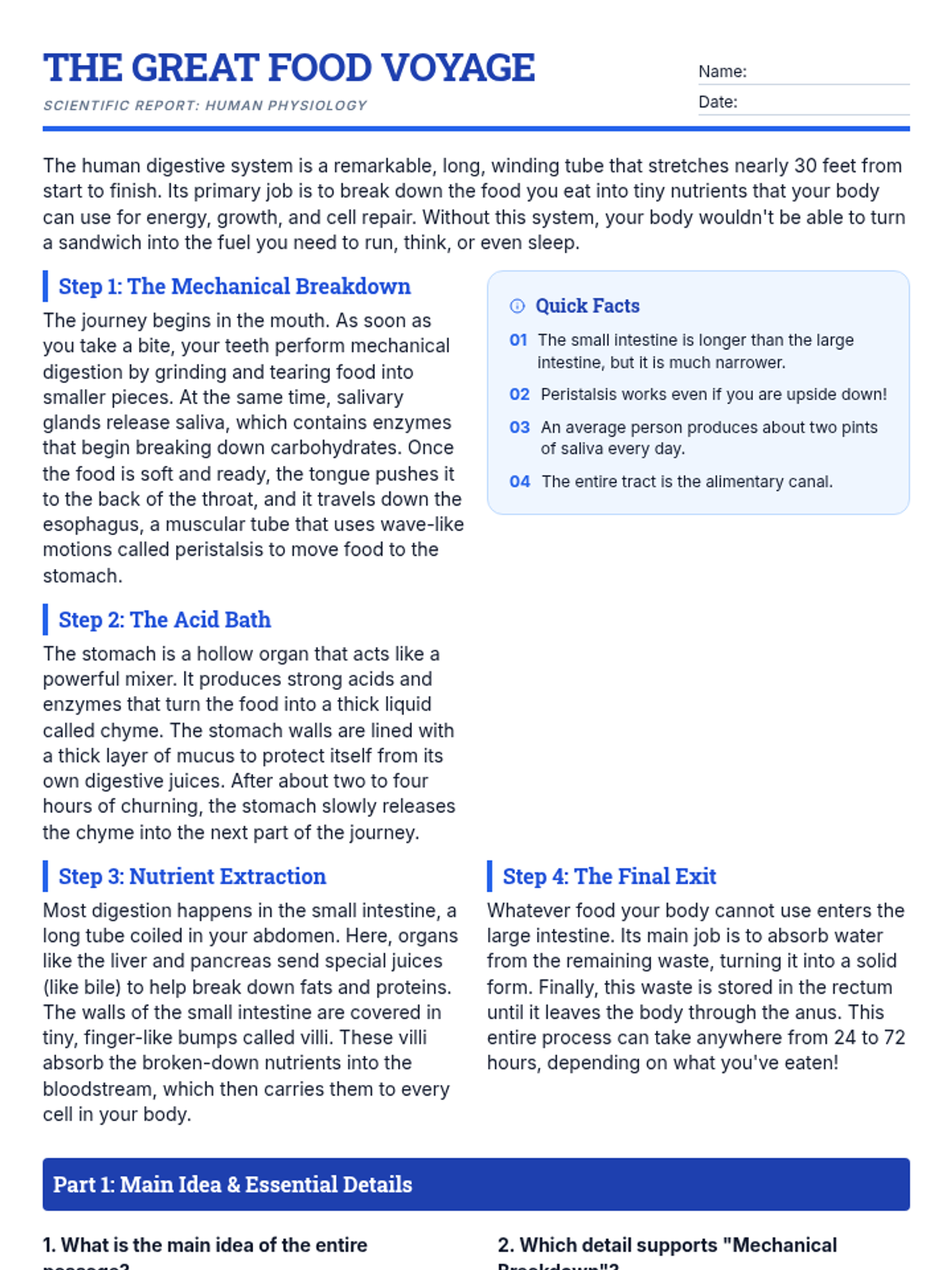
A comprehensive exploration of the human digestive system, focusing on the journey of food and the specific functions of each organ while building ELA skills in identifying main ideas and supporting details.
Discover how the Sun powers life on Earth through producers and the amazing process of photosynthesis.
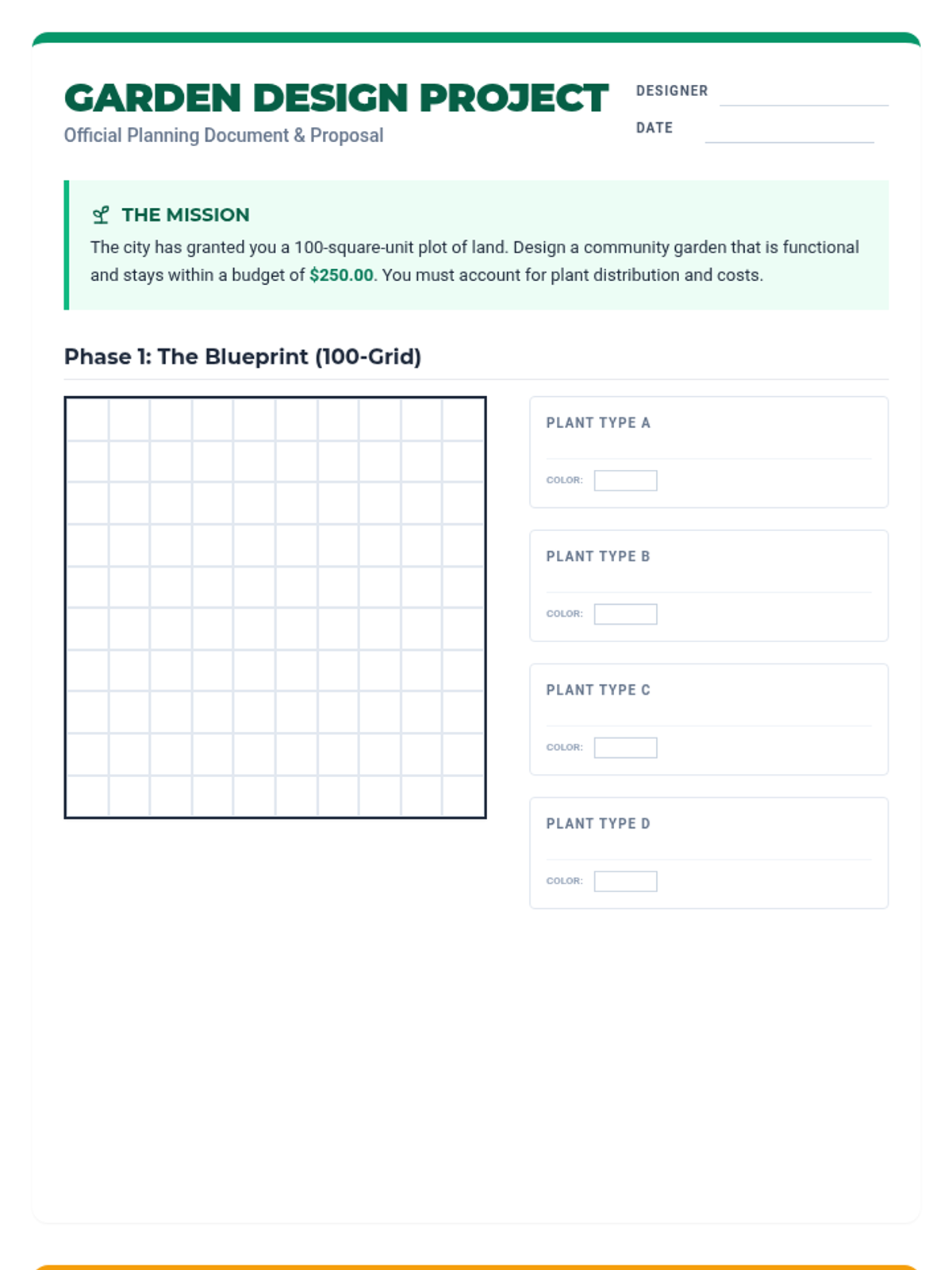
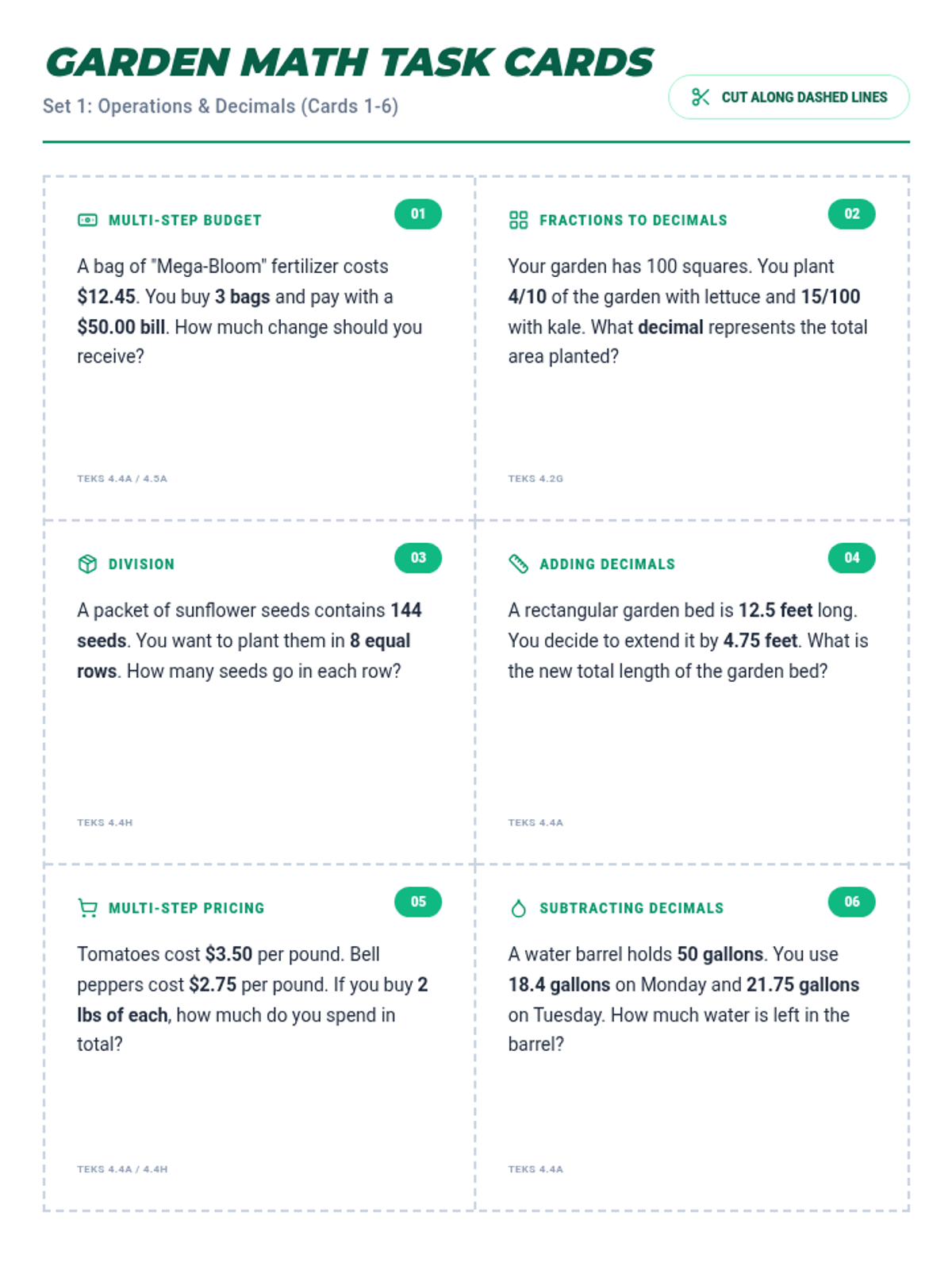
A math-focused project where students step into the role of garden designers to plan a community space while mastering multi-step word problems, decimal operations, and the relationship between fractions and decimals.
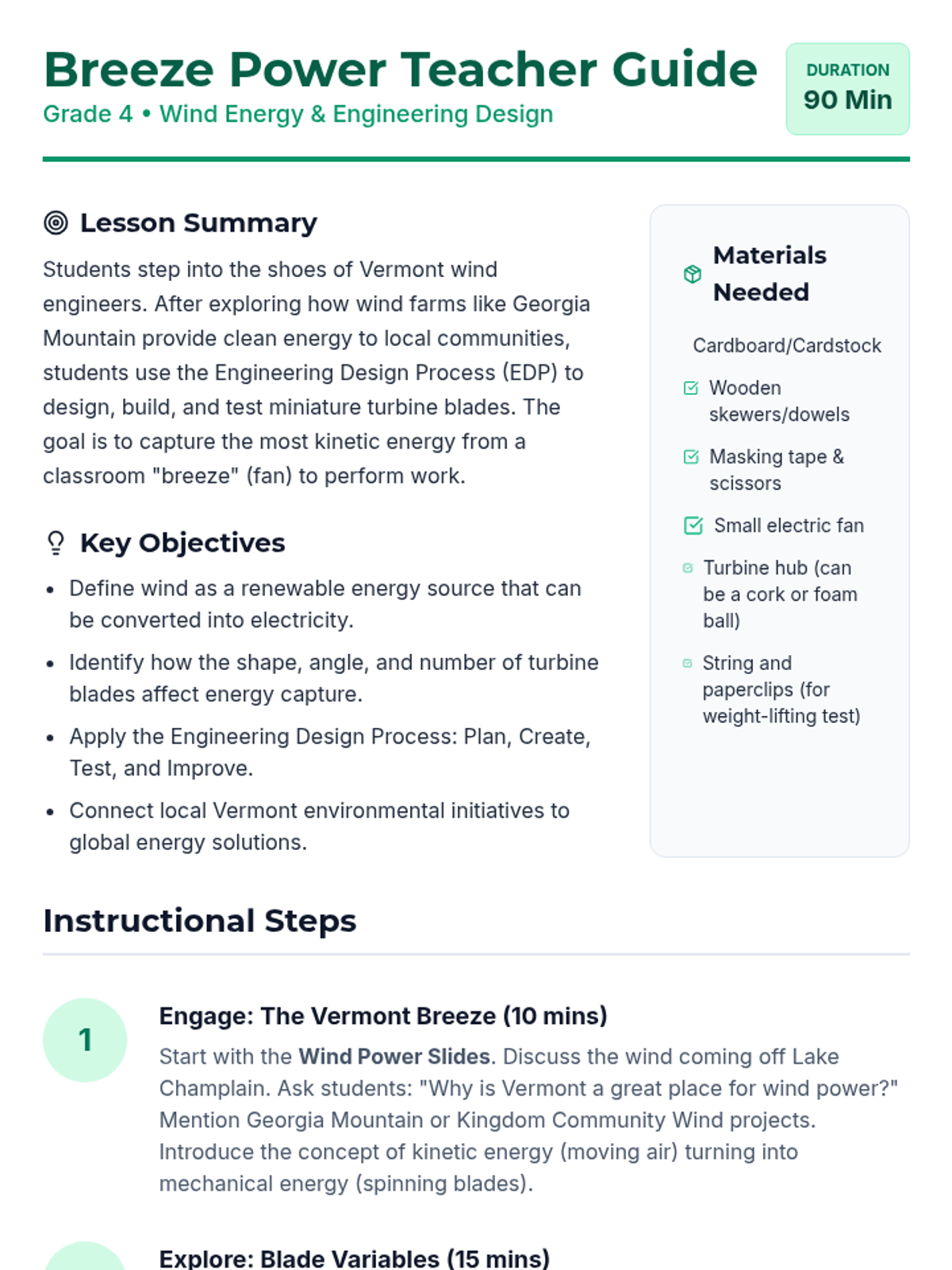
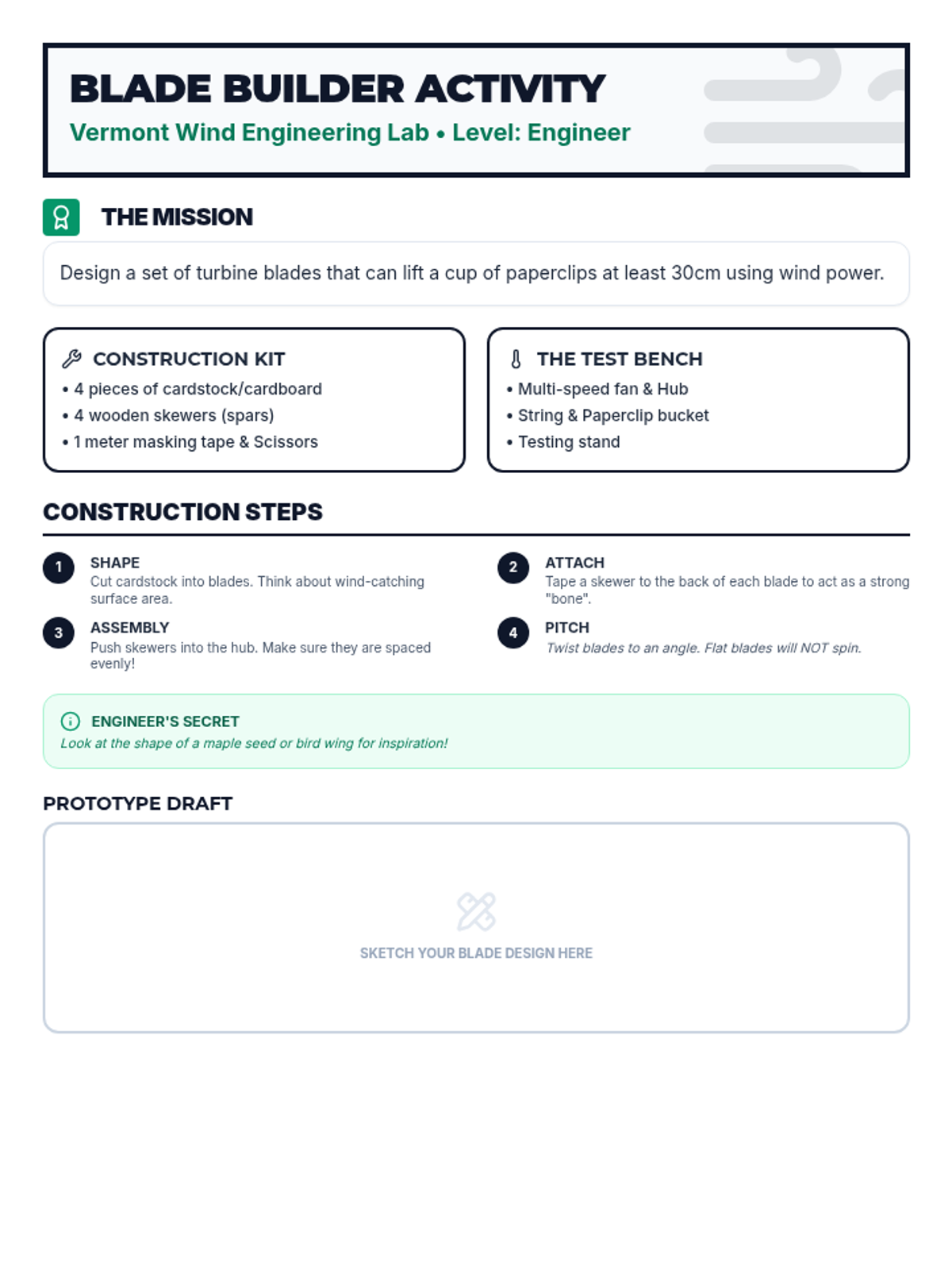
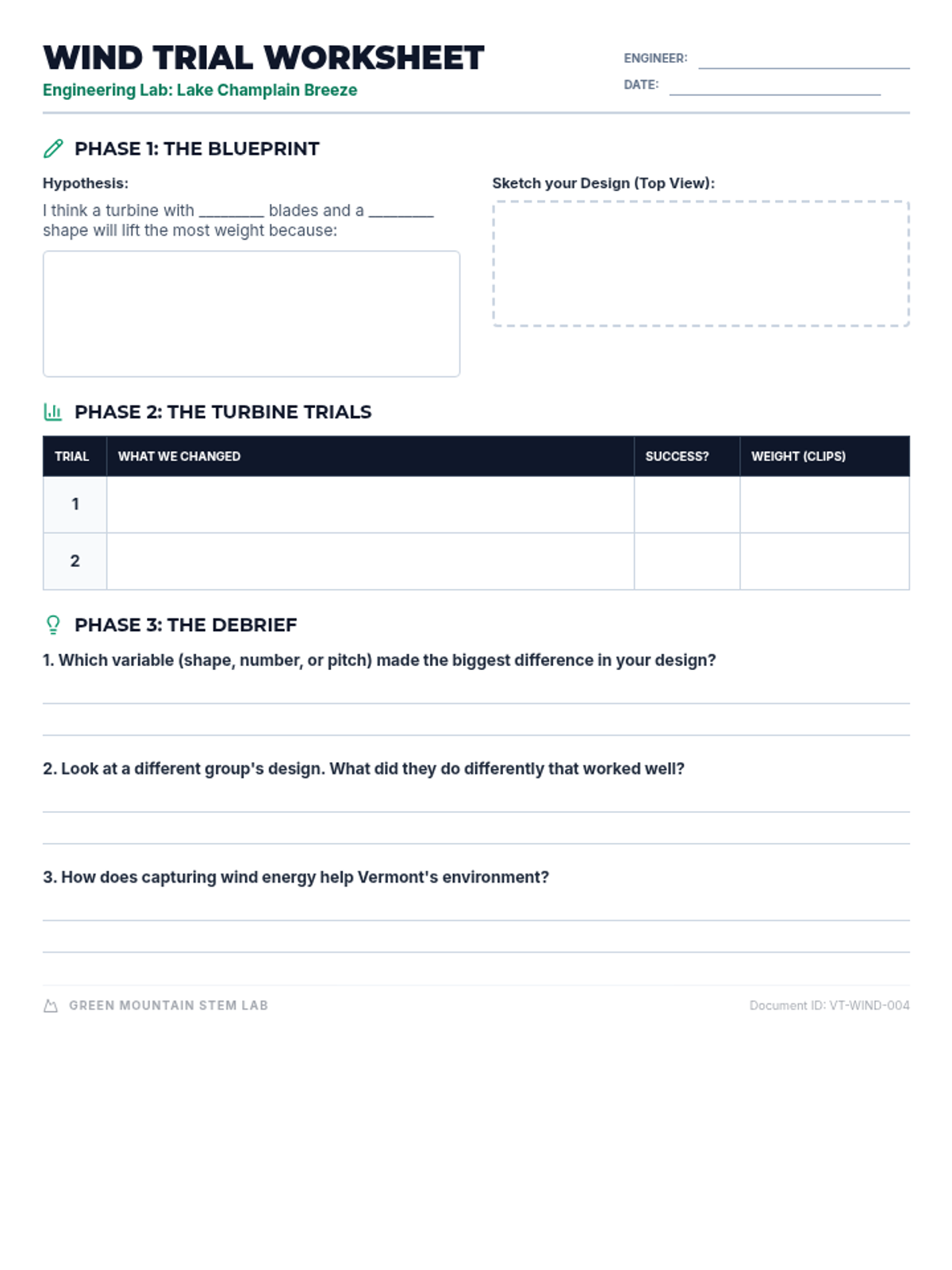
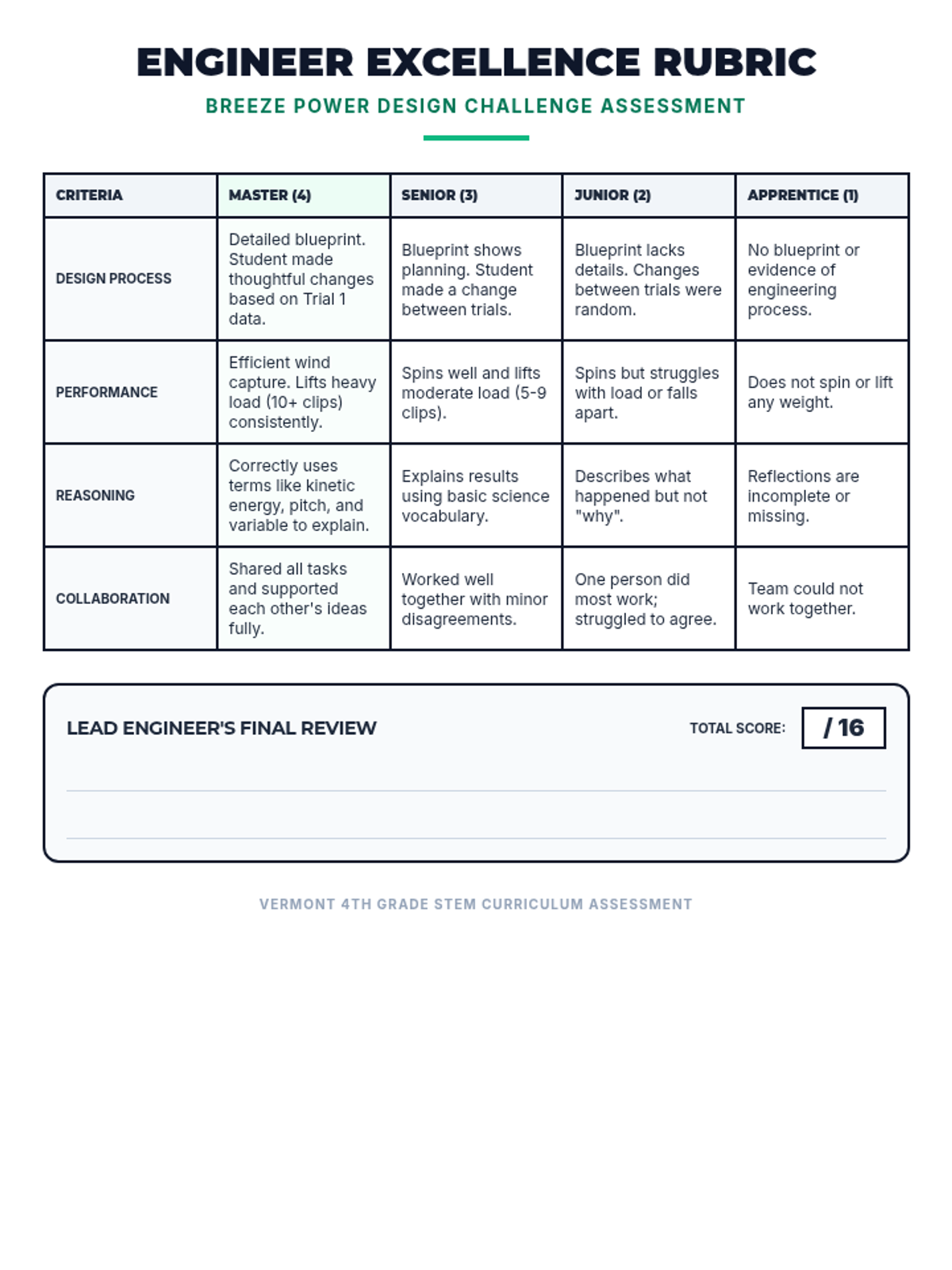
In this STEM-focused lesson, 4th-grade scientists investigate wind energy by designing and testing miniature turbine blades. They explore Vermont's renewable energy landscape and apply the engineering design process to optimize power output.
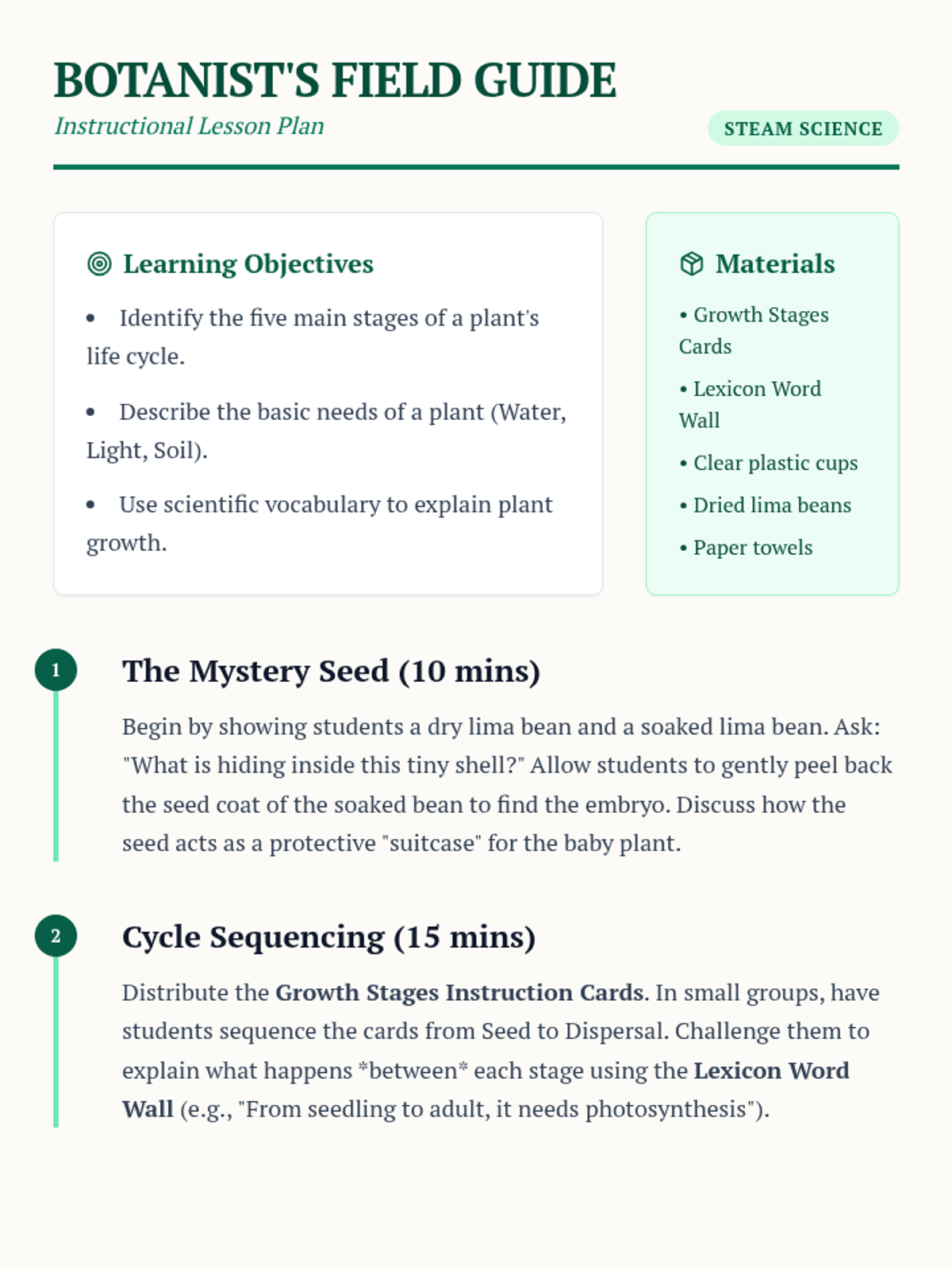
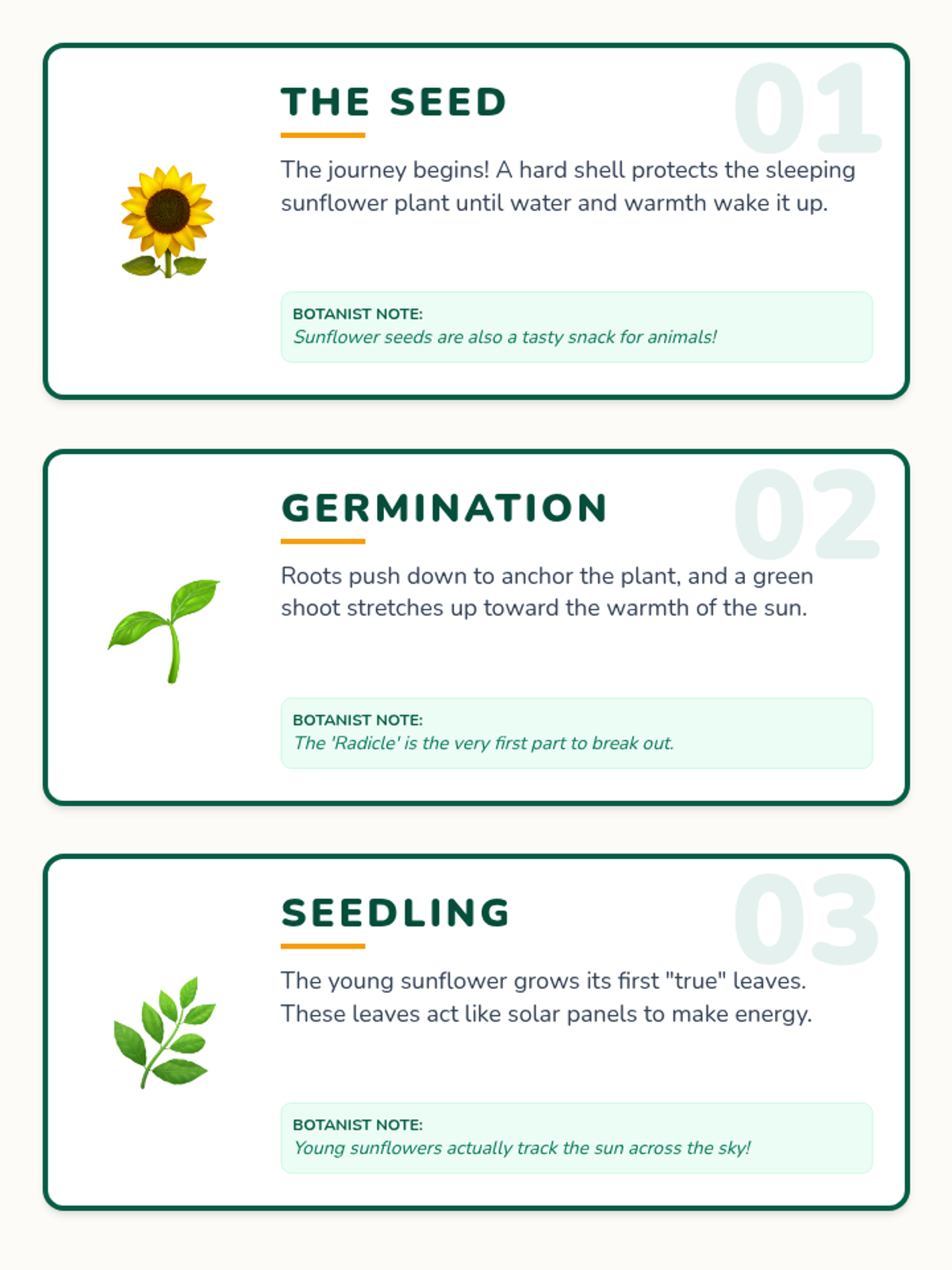
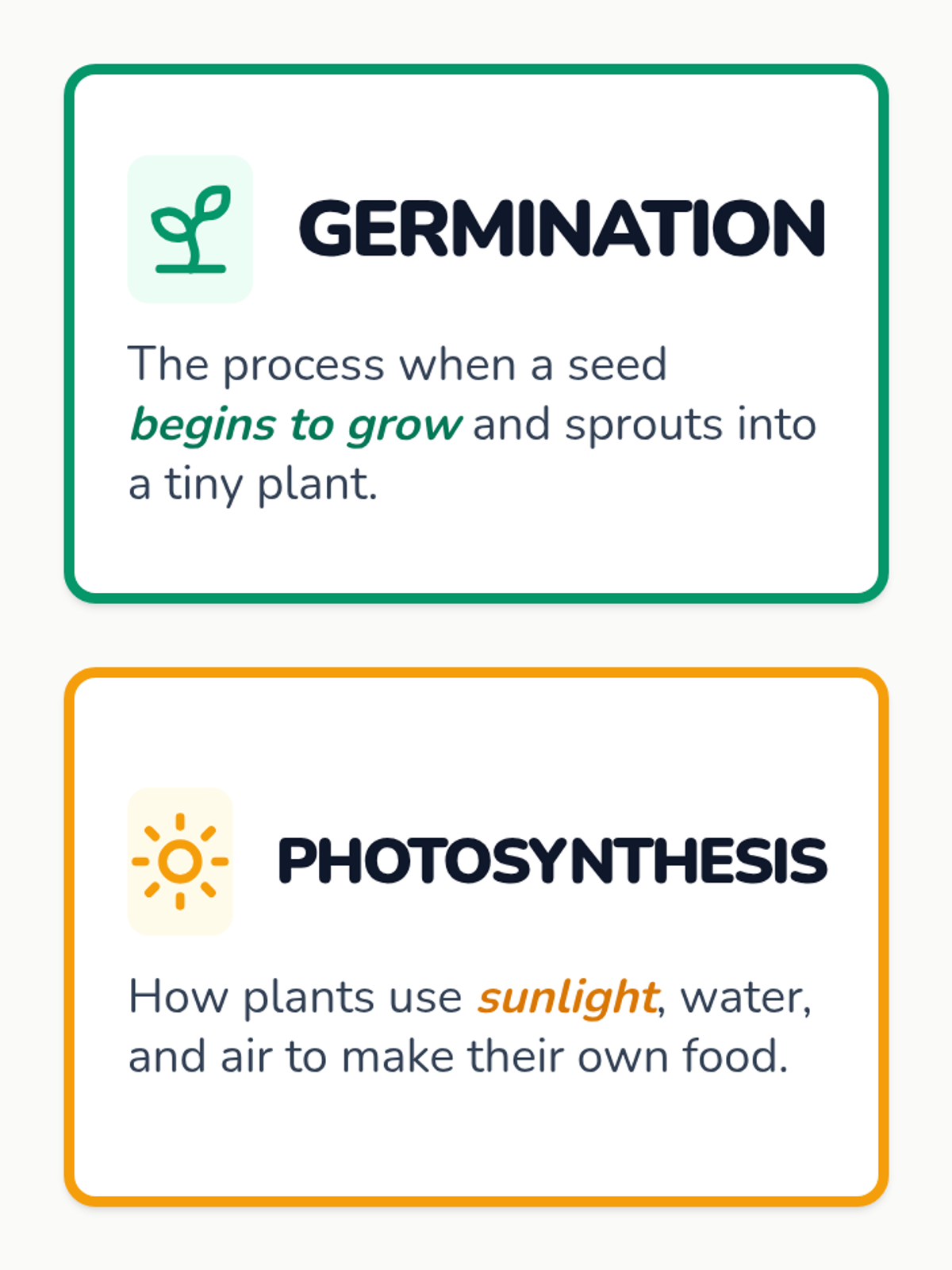
A hands-on STEAM lesson where students explore the stages of a plant's life cycle through visual aids, vocabulary building, and a planting activity.
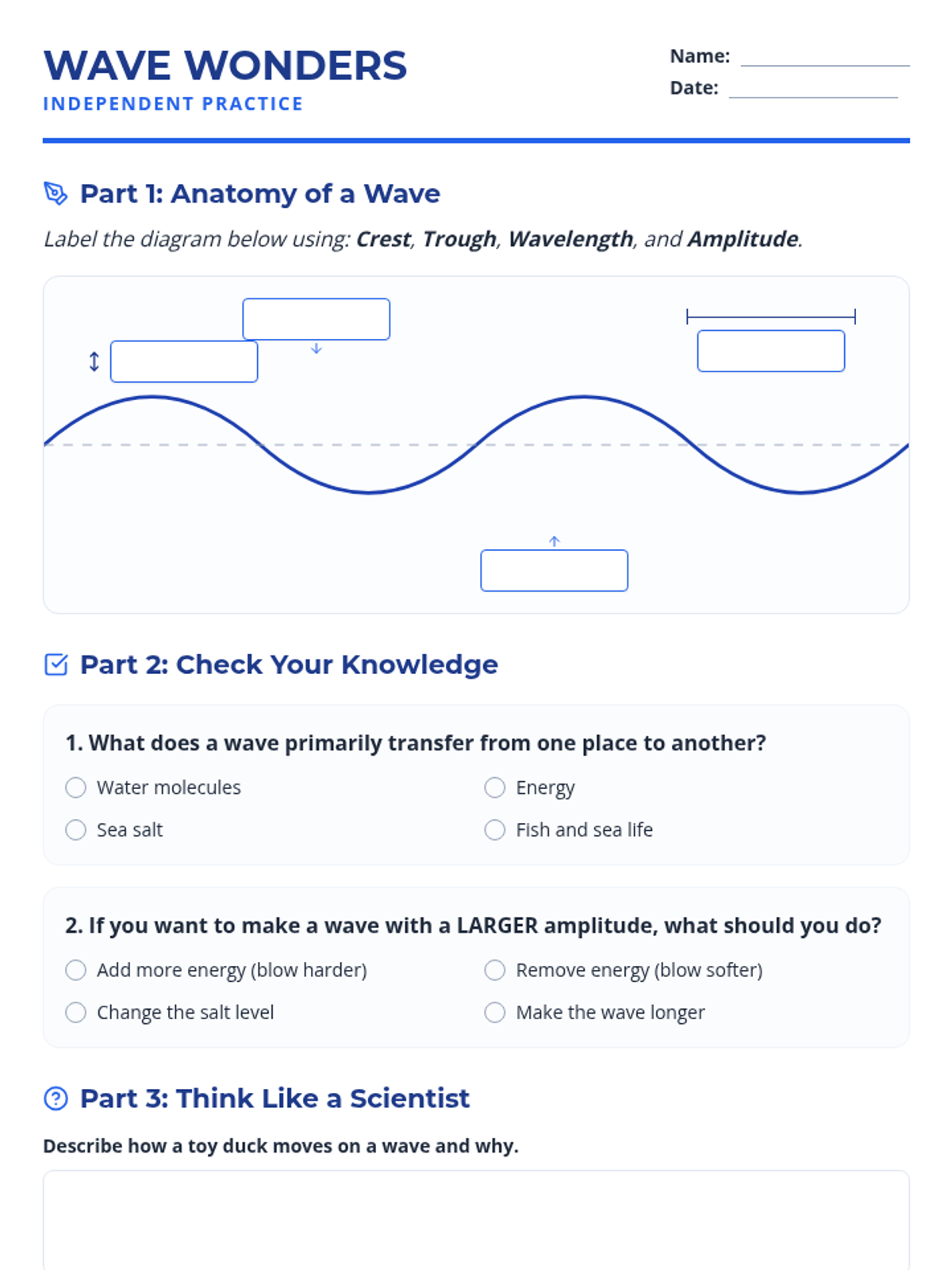
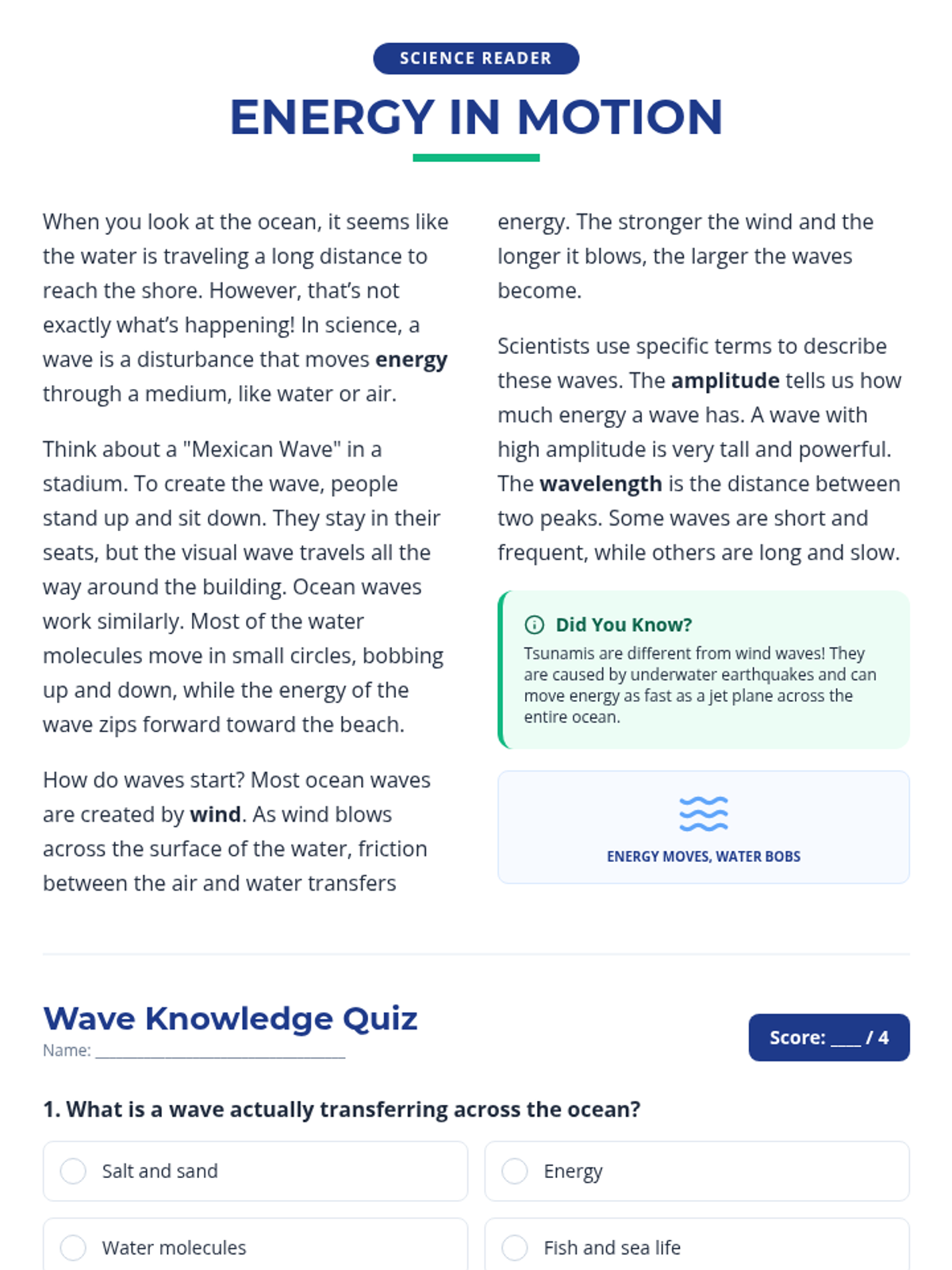
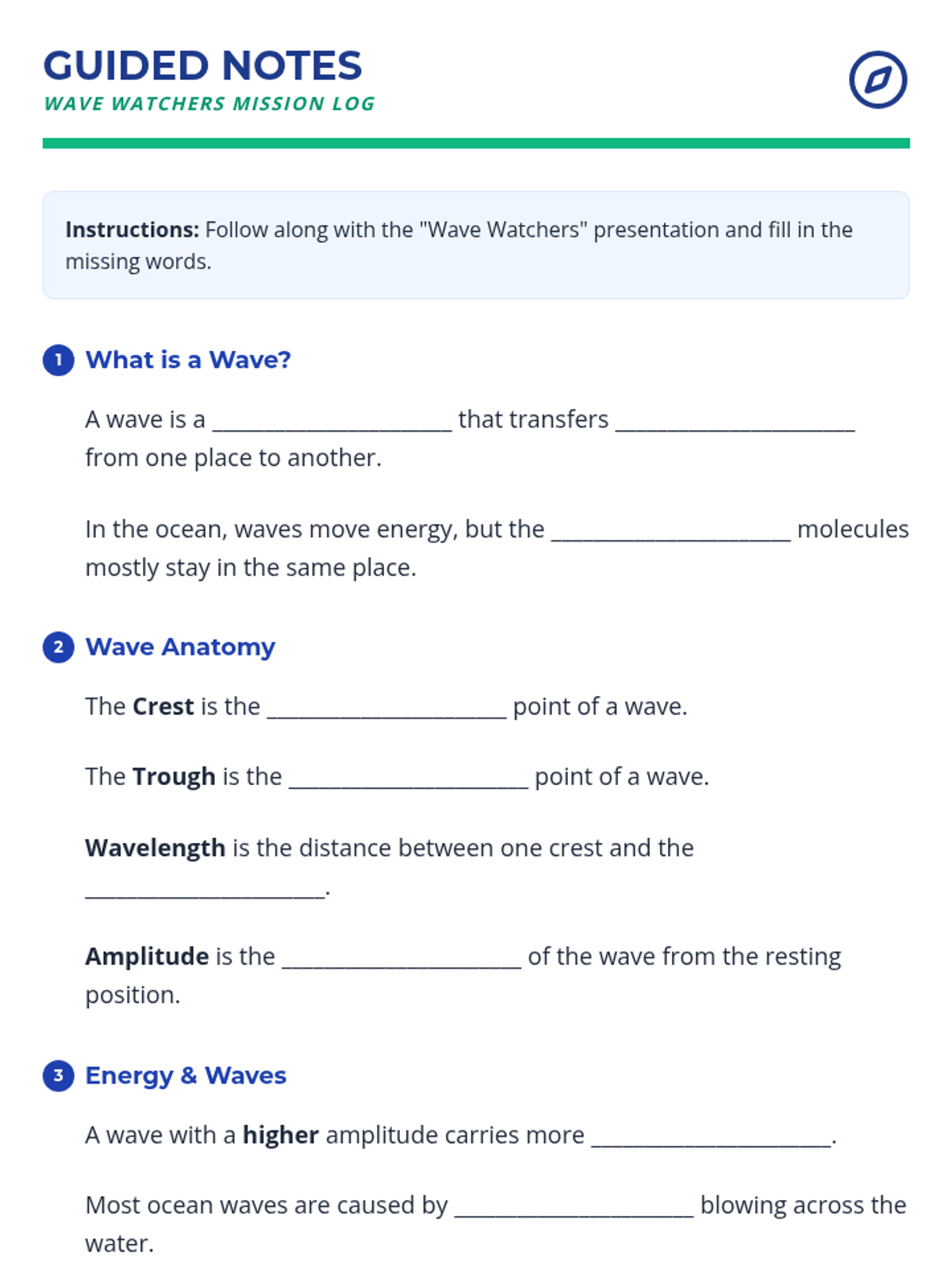
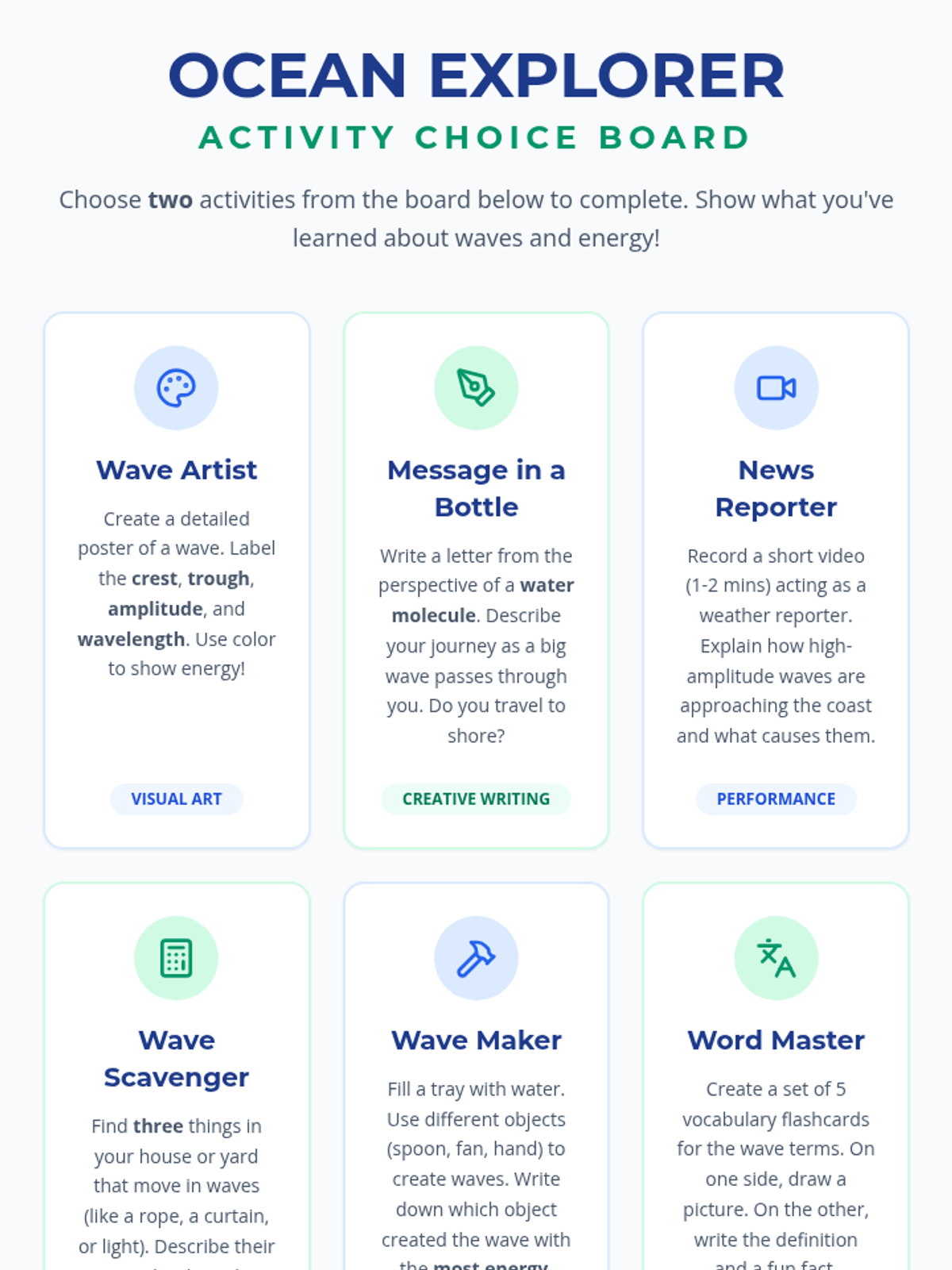
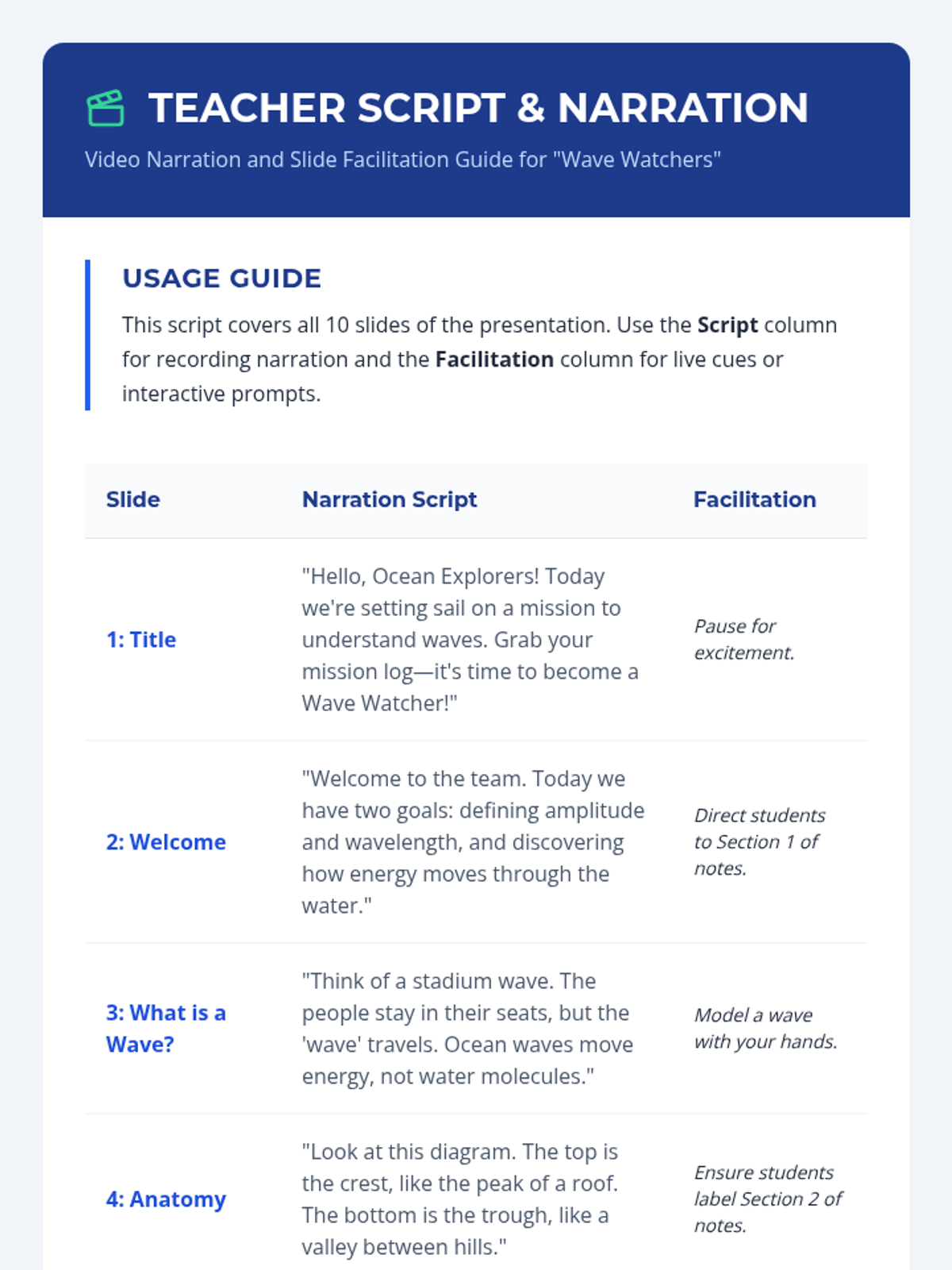
An asynchronous lesson for fourth graders exploring the properties of ocean waves, specifically amplitude and wavelength, and how they transfer energy across the sea.
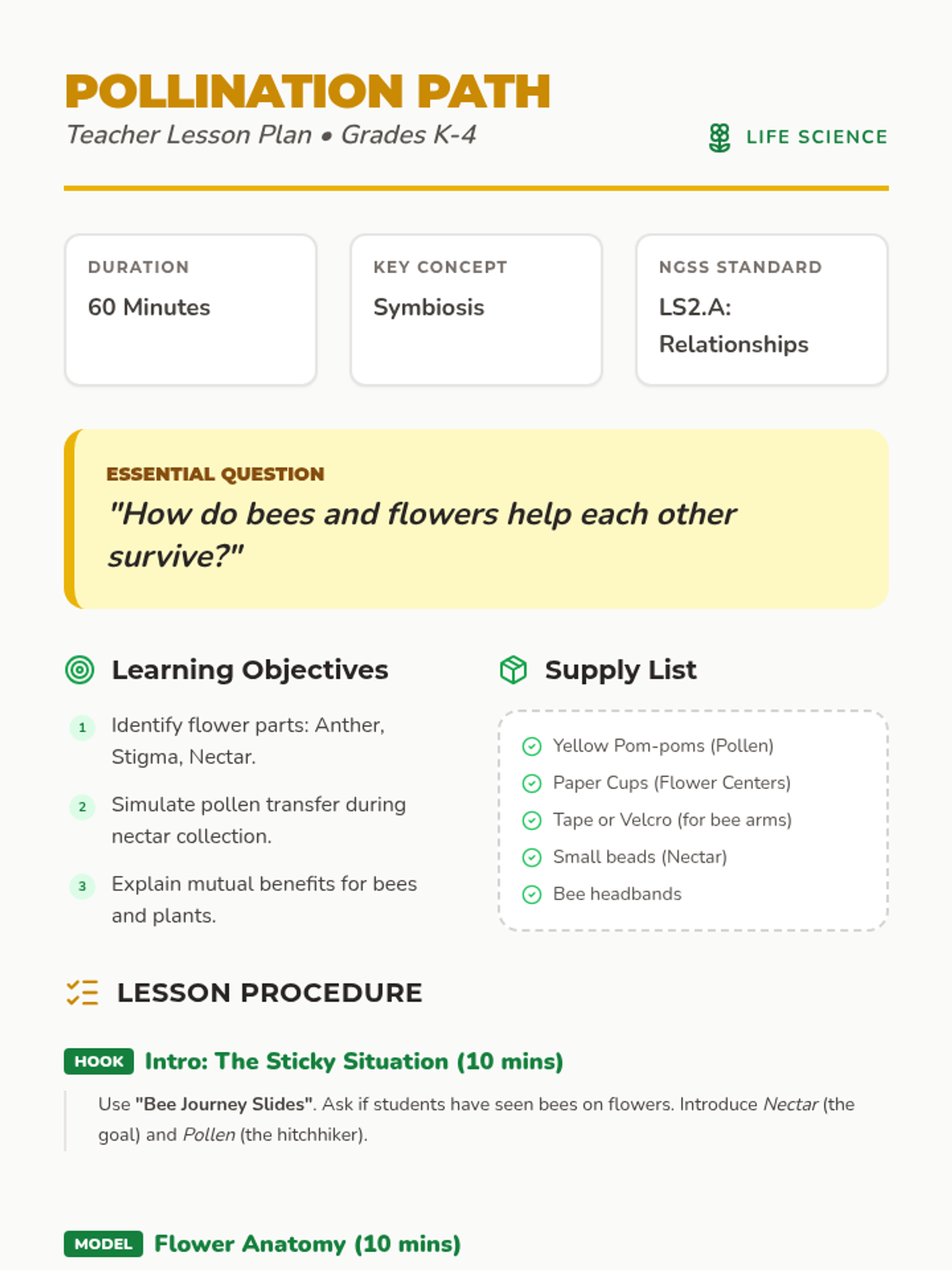
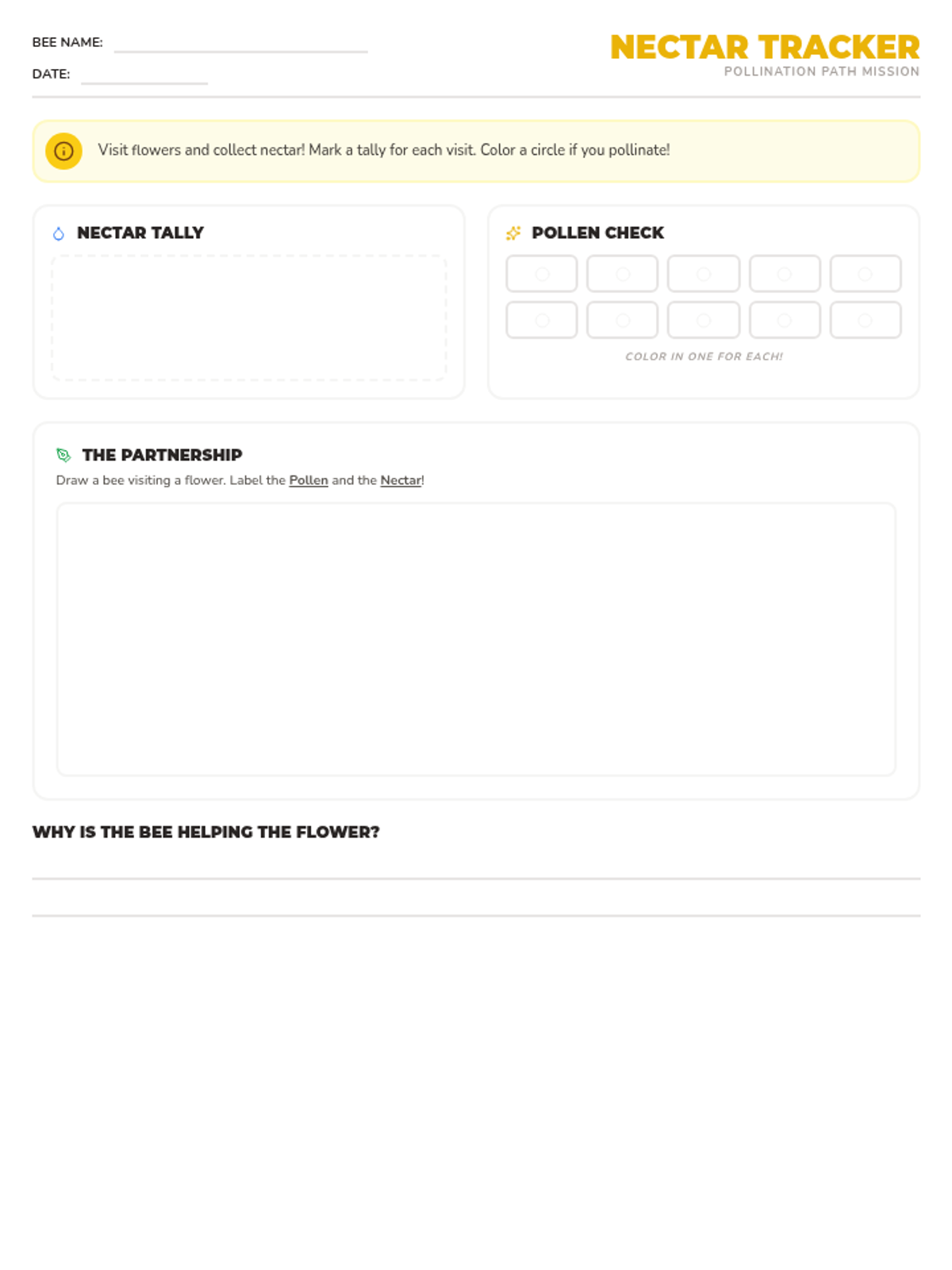
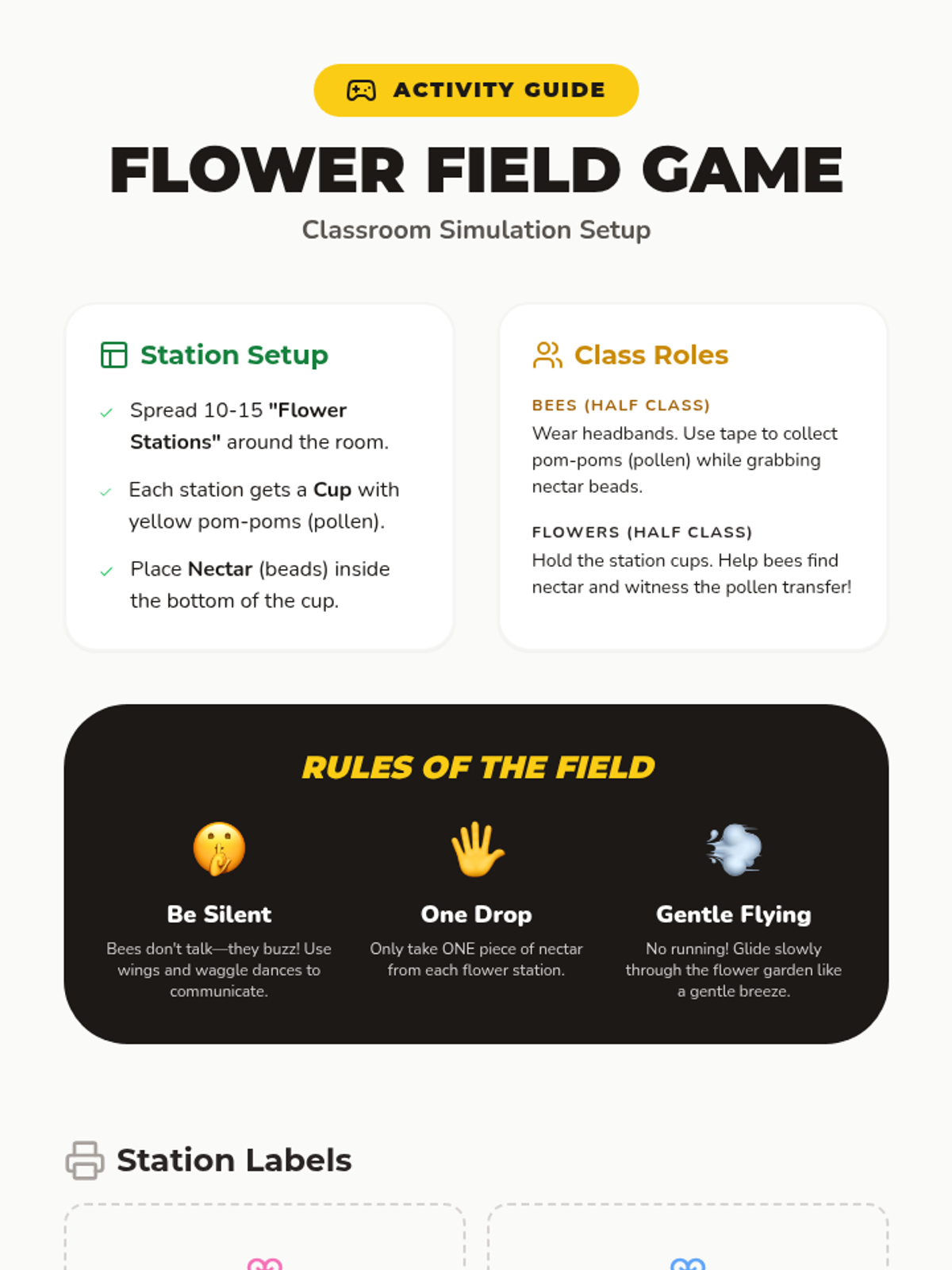
Students simulate the pollination process through a high-energy movement game, learning about the symbiotic relationship between bees and flowers and its importance to our food system.