Students differentiate between volume (cubic units) and capacity (liquid units), learning the conversion factors and contexts for each measurement.
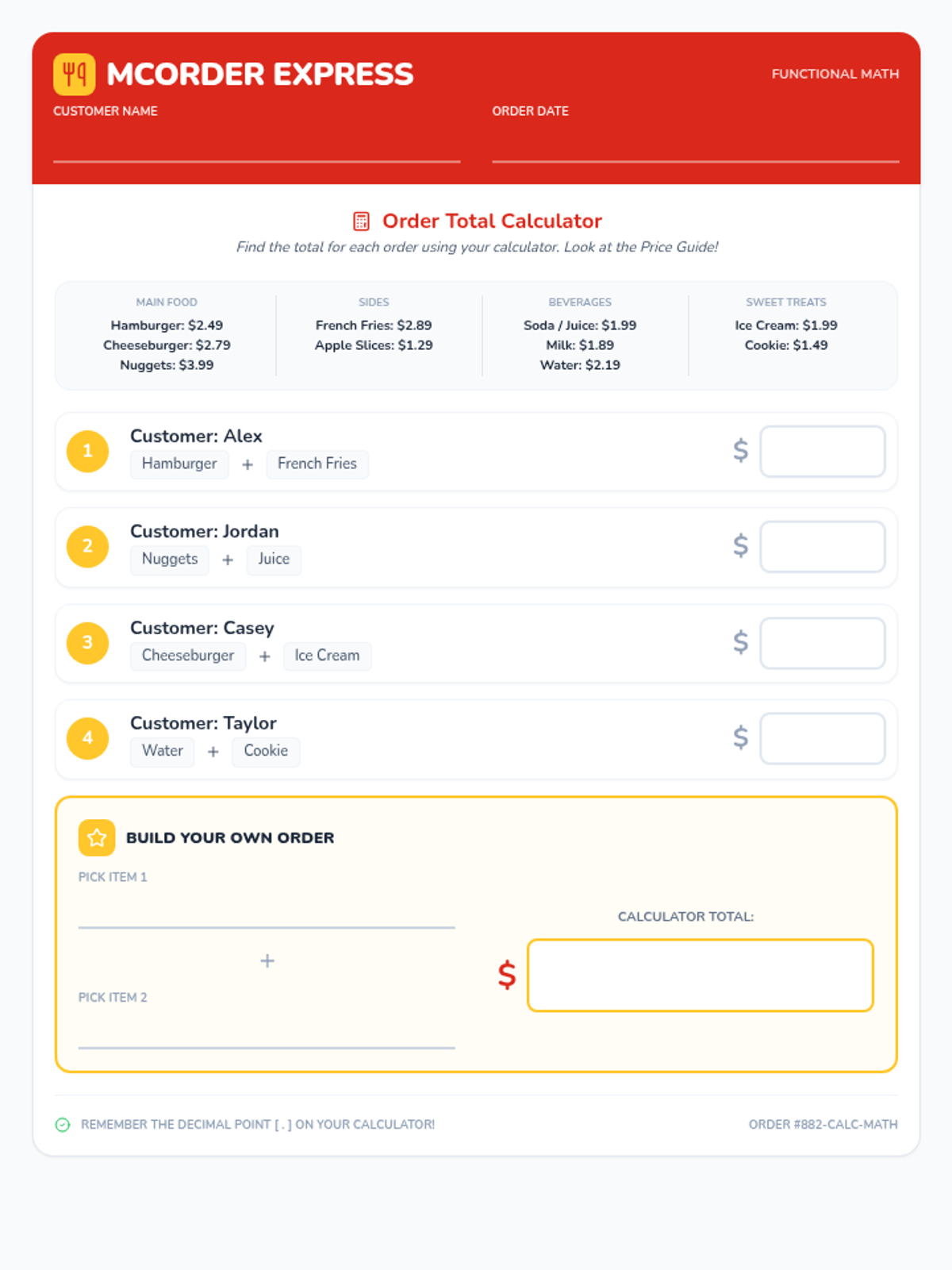
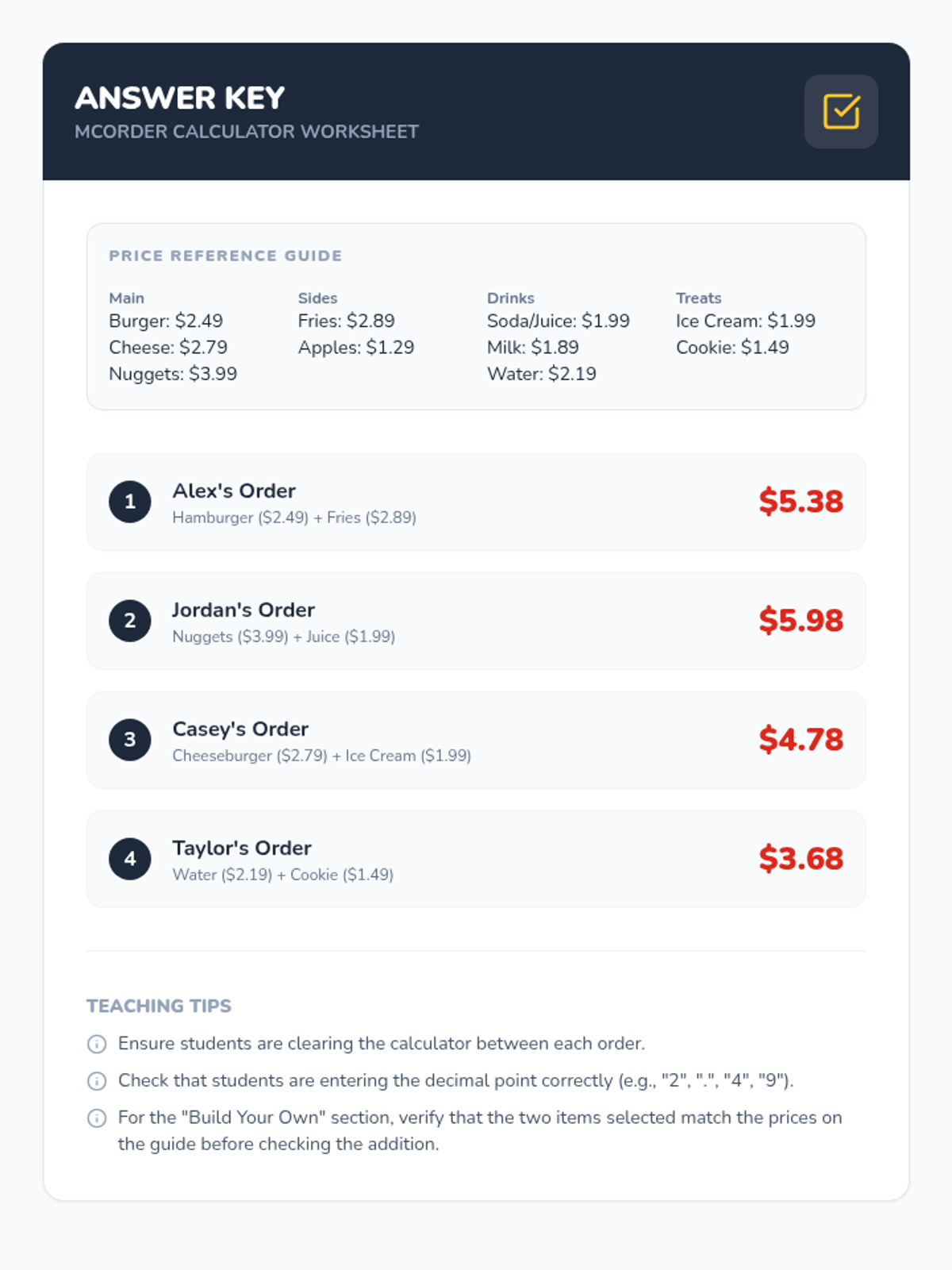
A functional math lesson focused on adding two menu items using a calculator within the context of a digital fast food ordering app. Students practice selecting items from a McDonald's-themed menu and totaling their purchases.
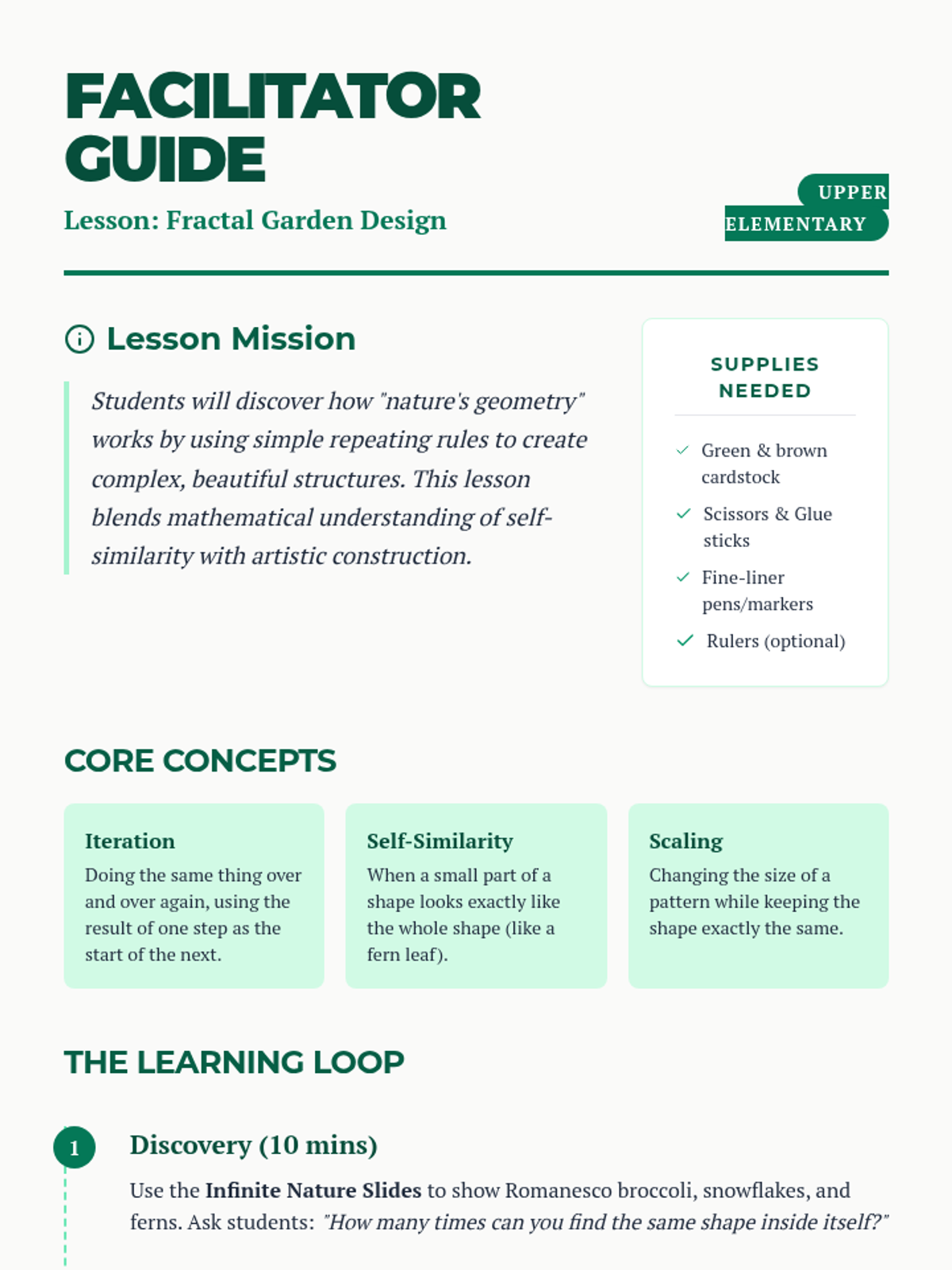
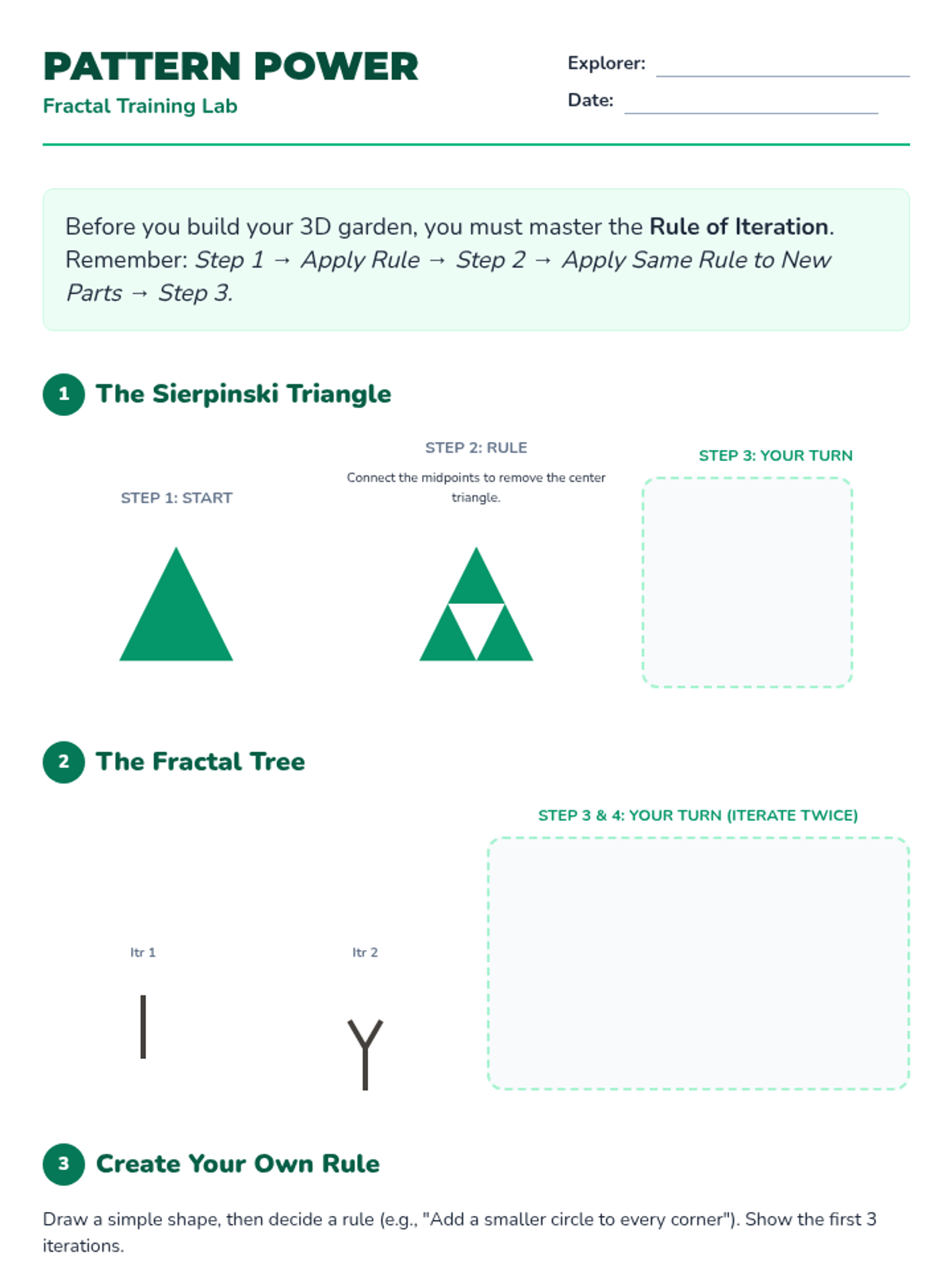
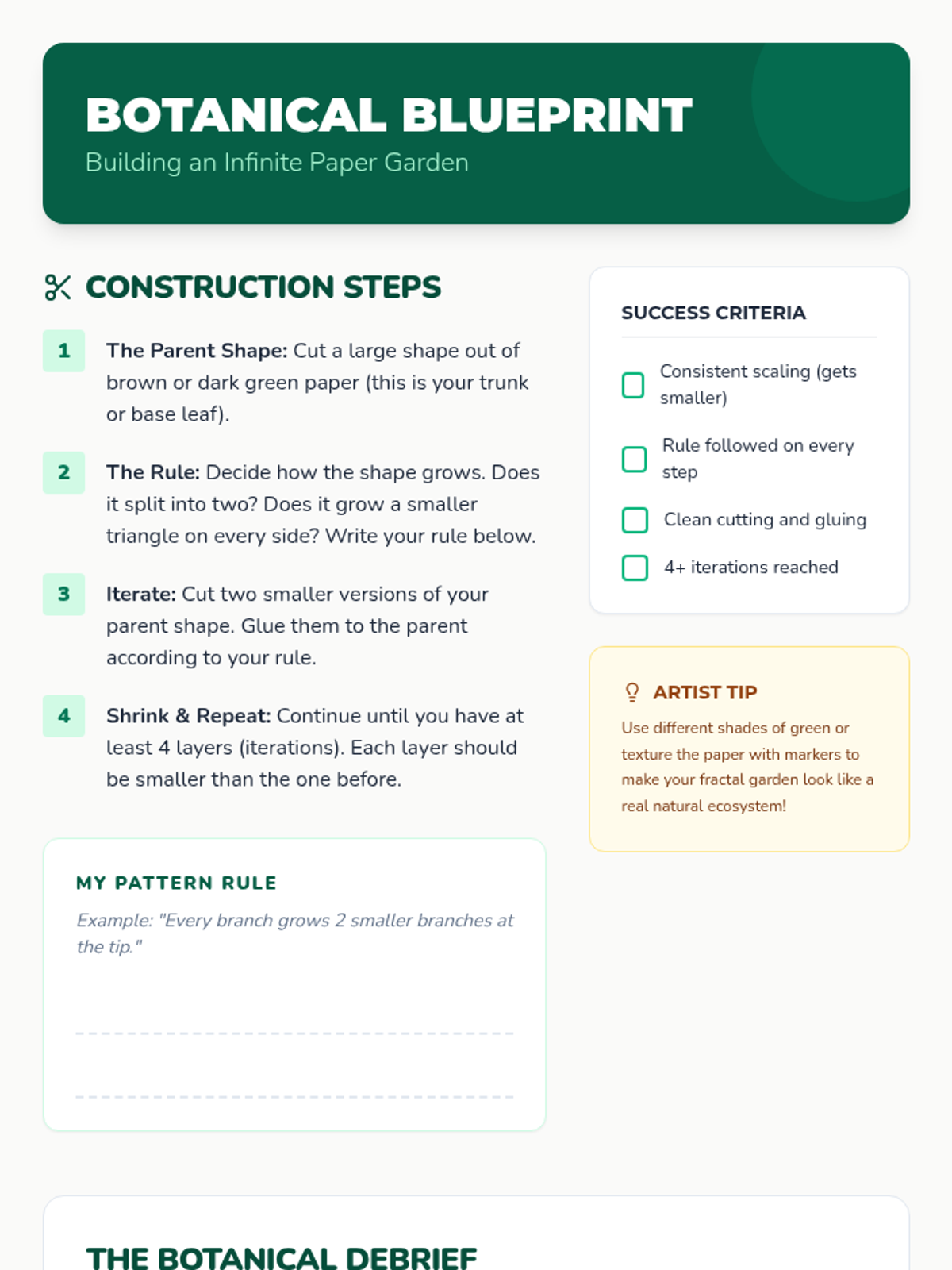
Students explore the intersection of geometry and botany by creating 'fractal gardens' using paper and repeating patterns. They learn how simple mathematical rules of iteration generate the complex structures found in ferns, trees, and flowers.
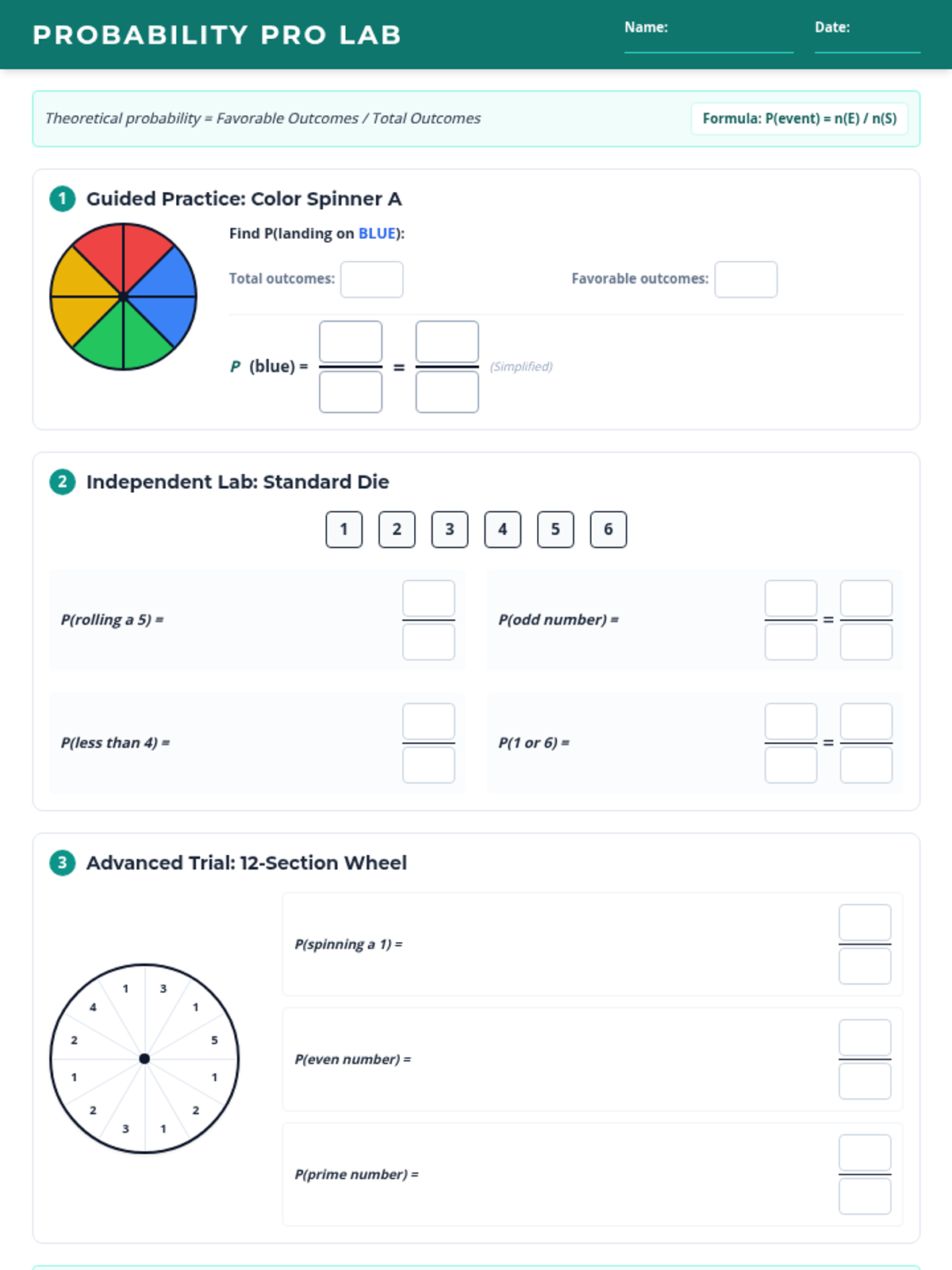
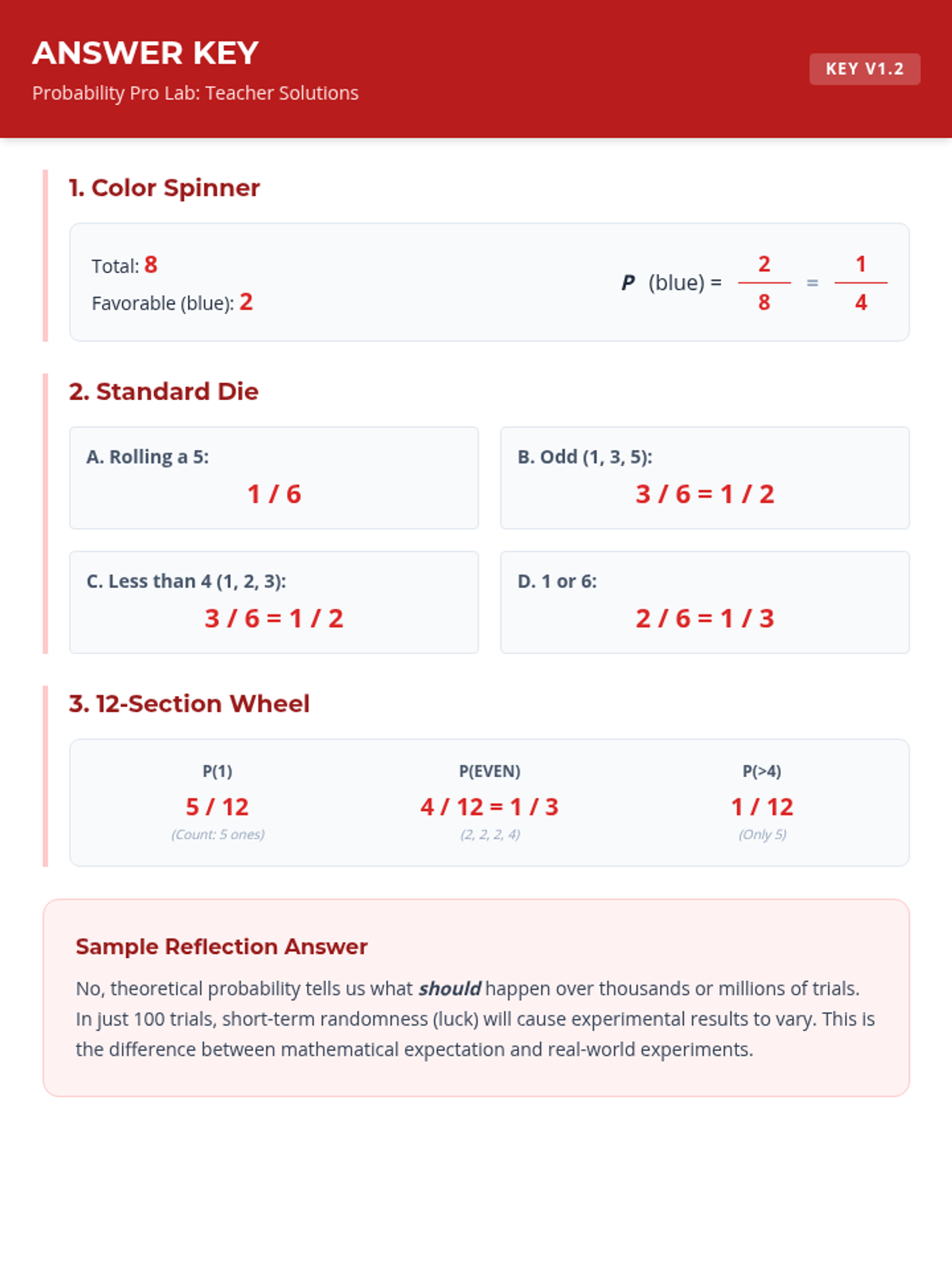
A guided practice lesson on theoretical probability focusing on standard dice and custom spinners for 6th-grade math students.
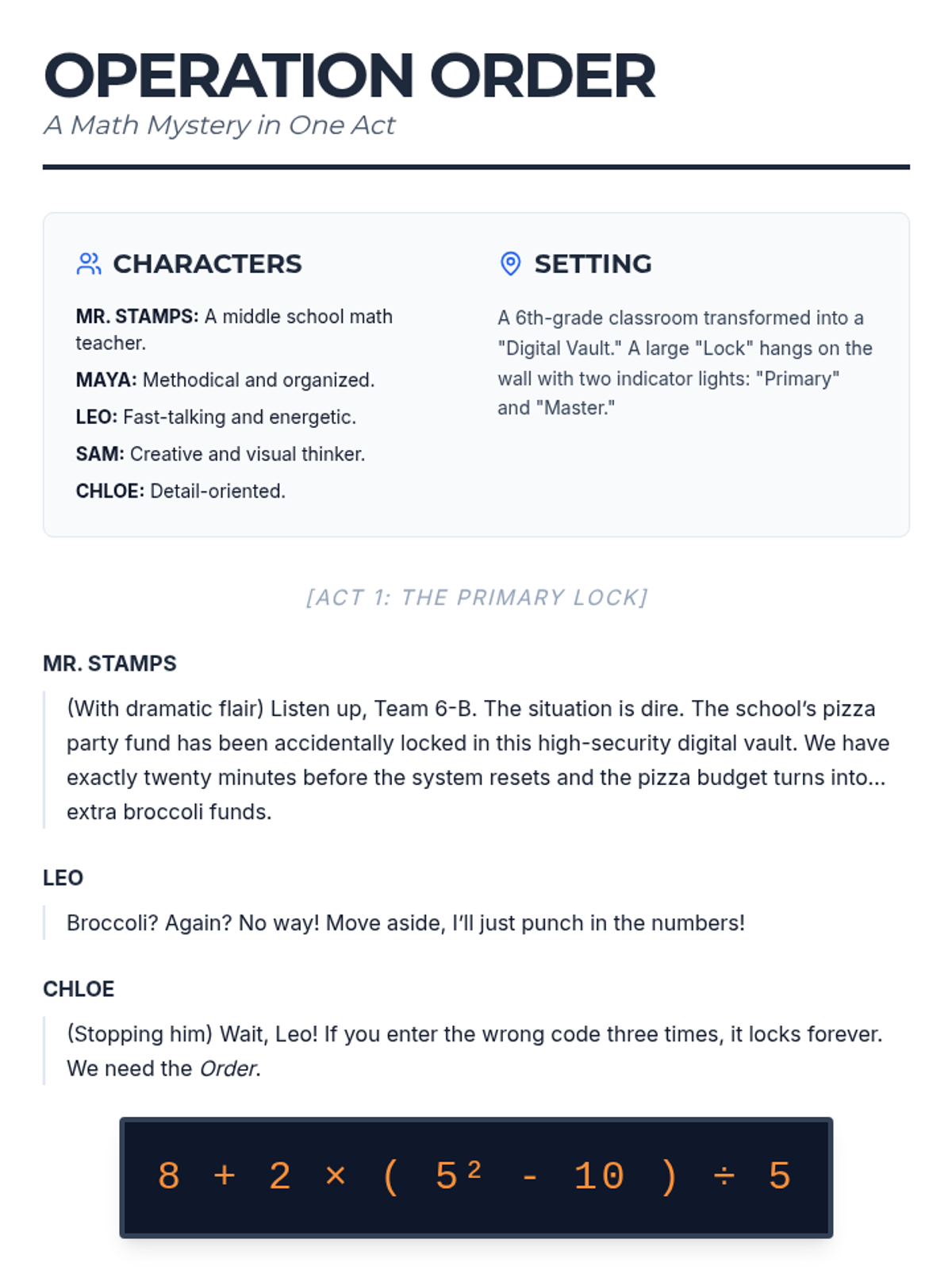
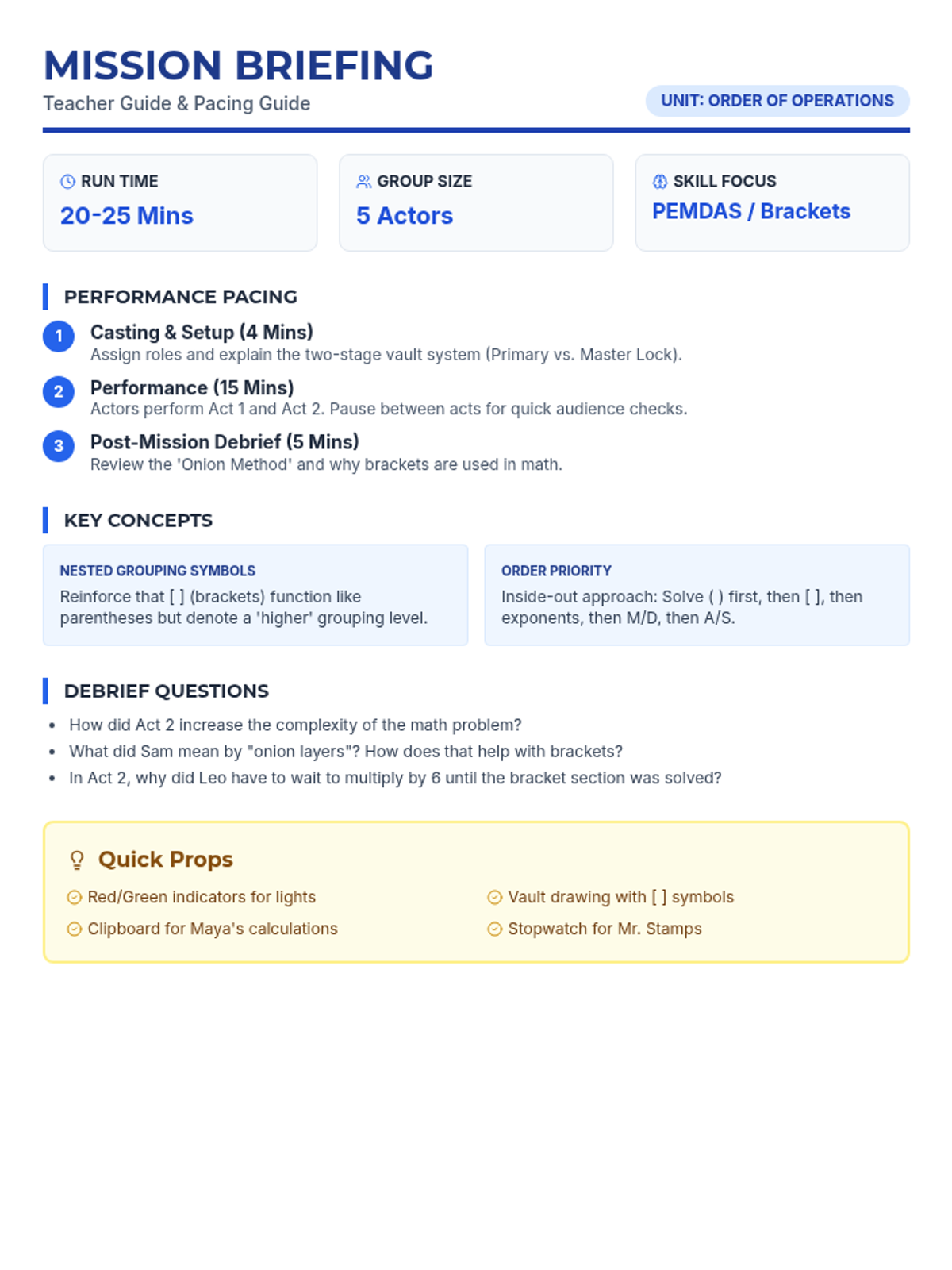
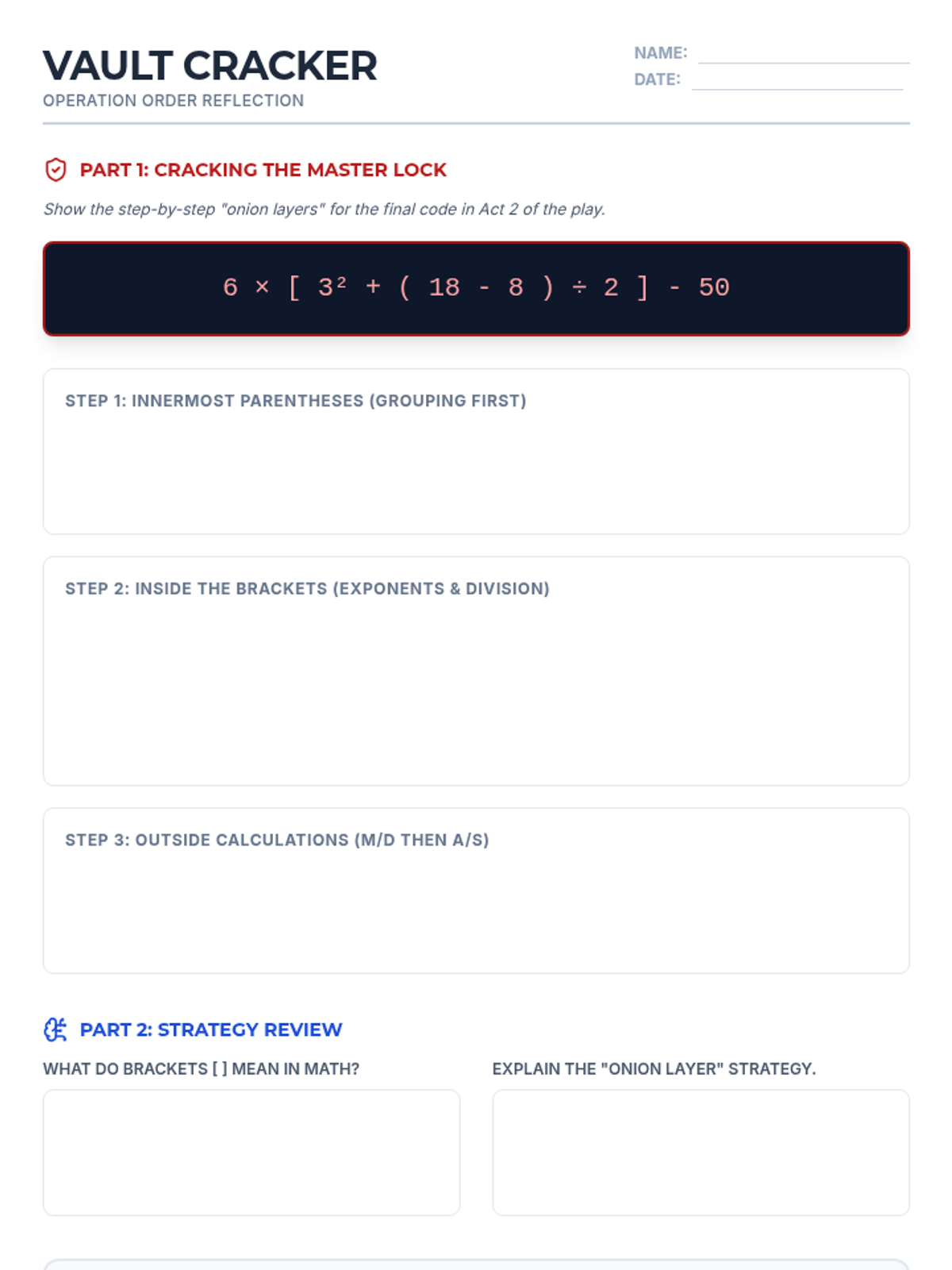
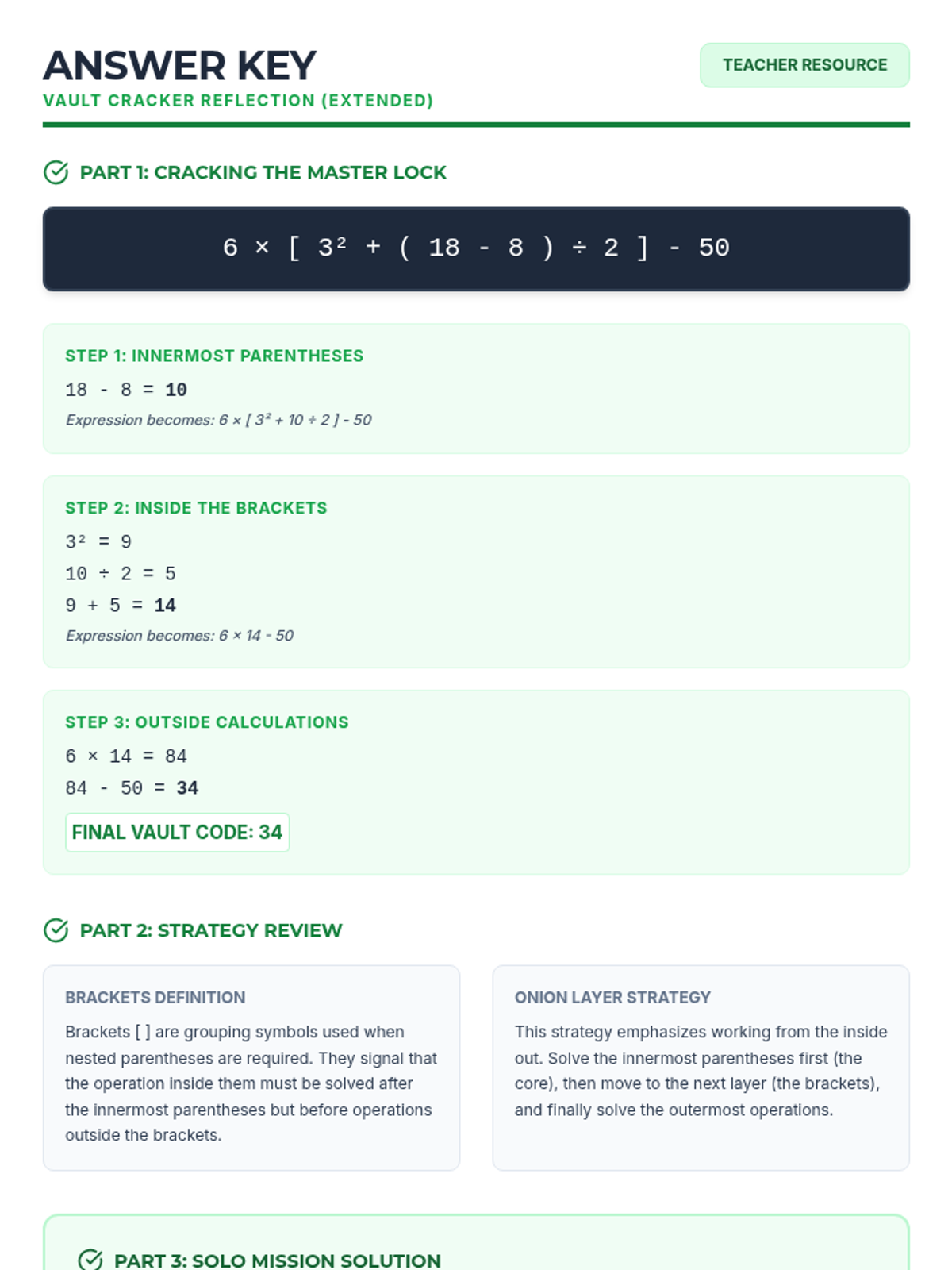
A collaborative math-themed drama lesson where students perform a play about the Order of Operations. The lesson explores teamwork and the real-world application of PEMDAS through an escape room scenario.
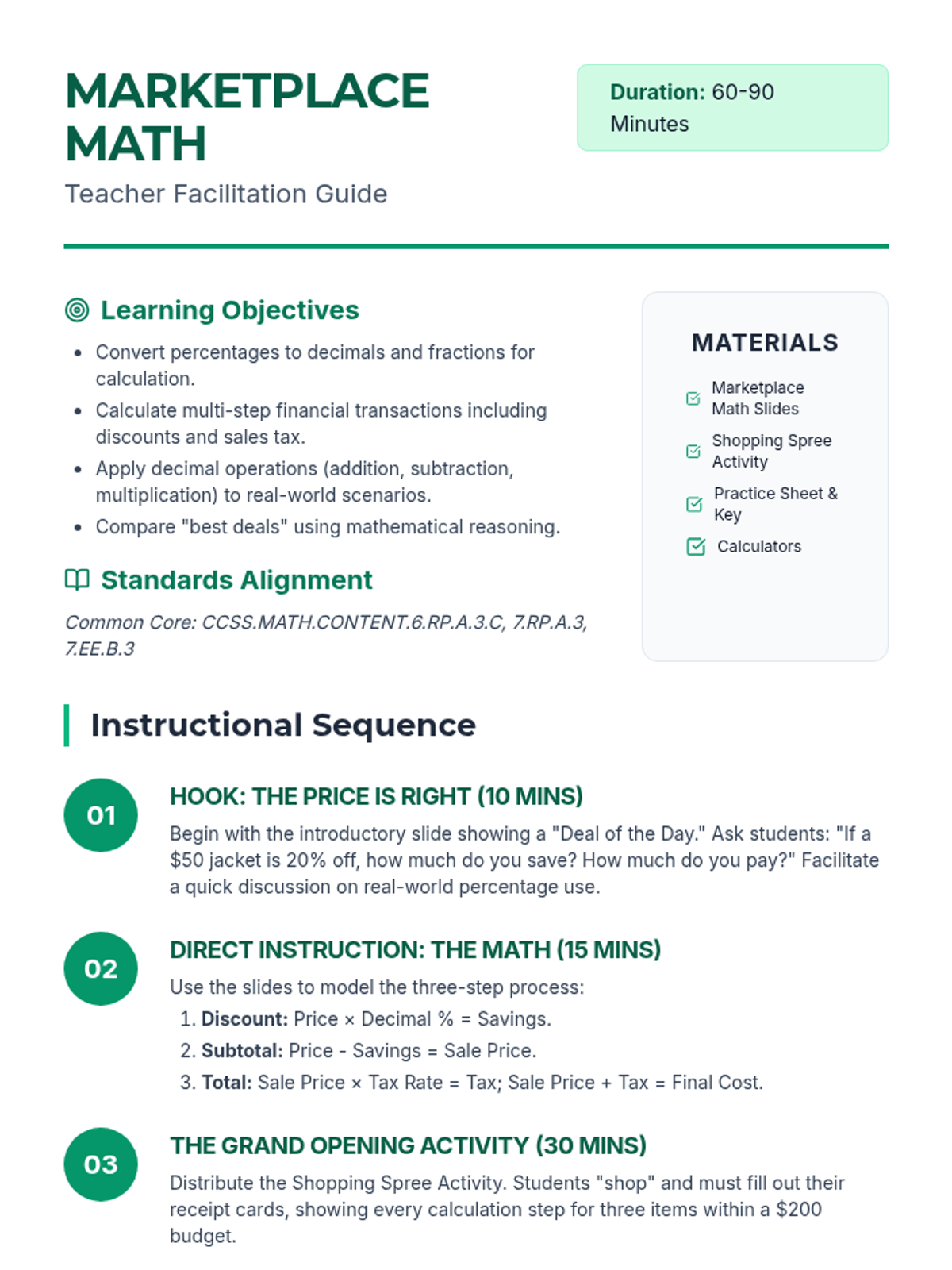
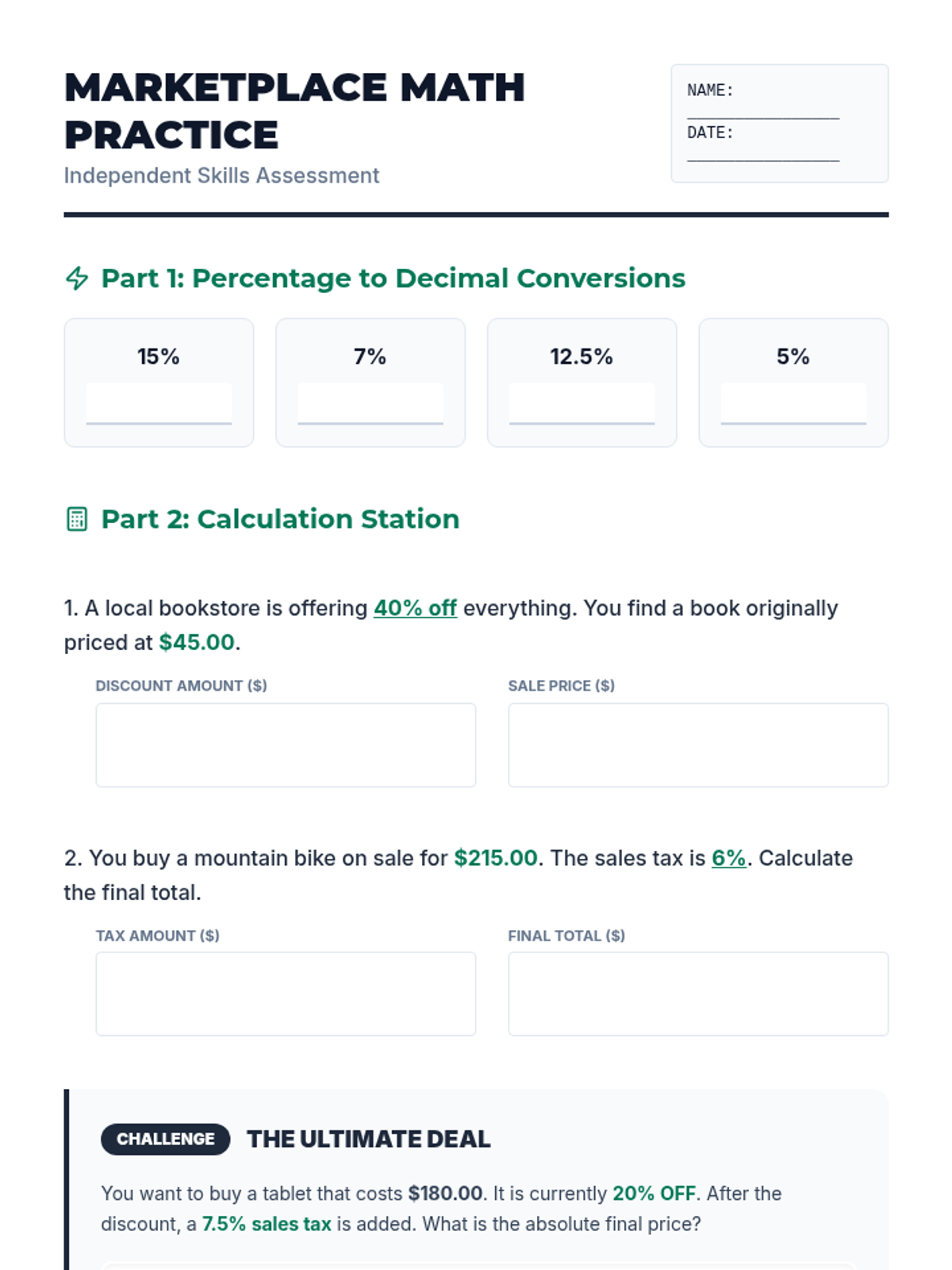
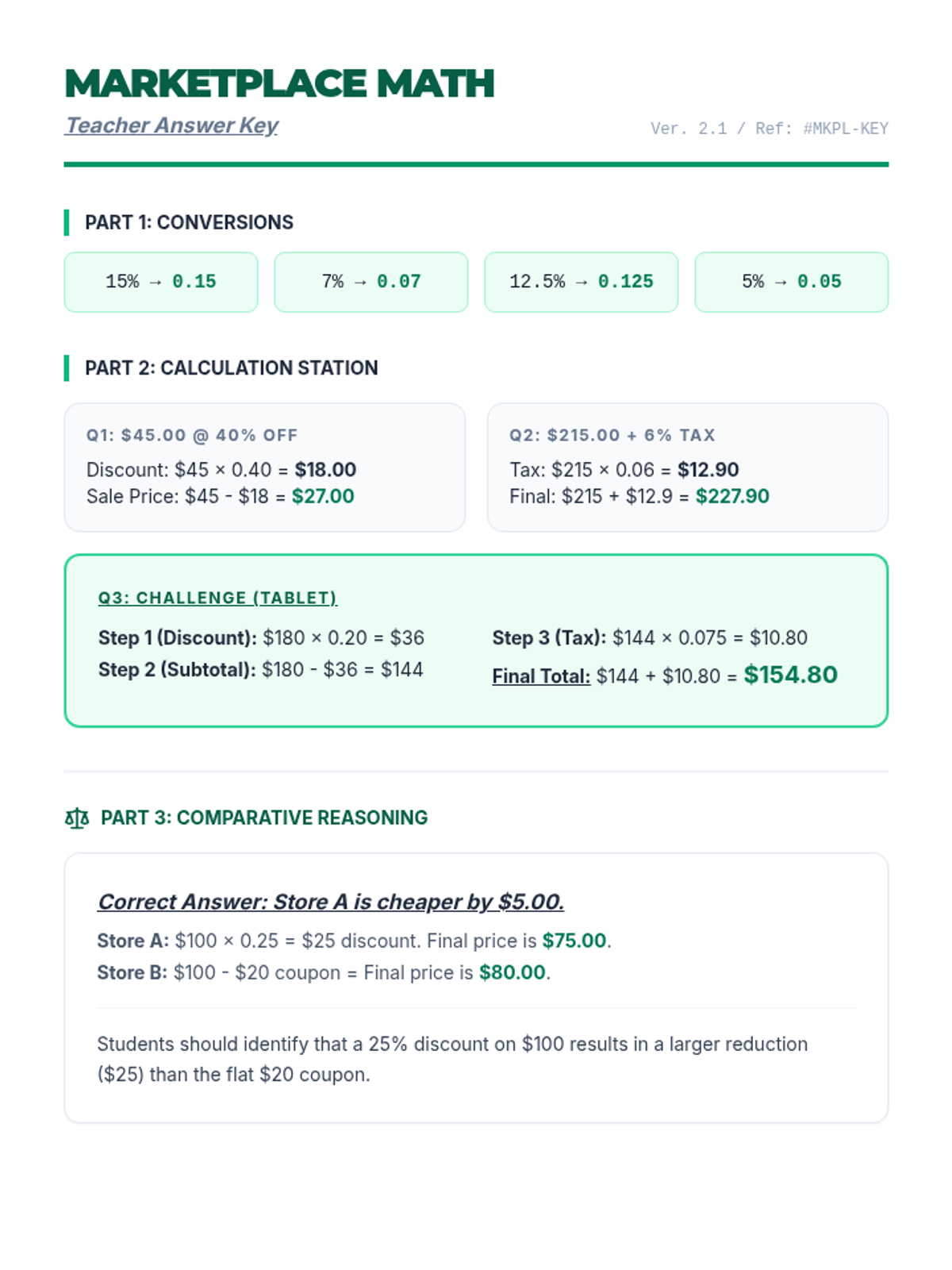
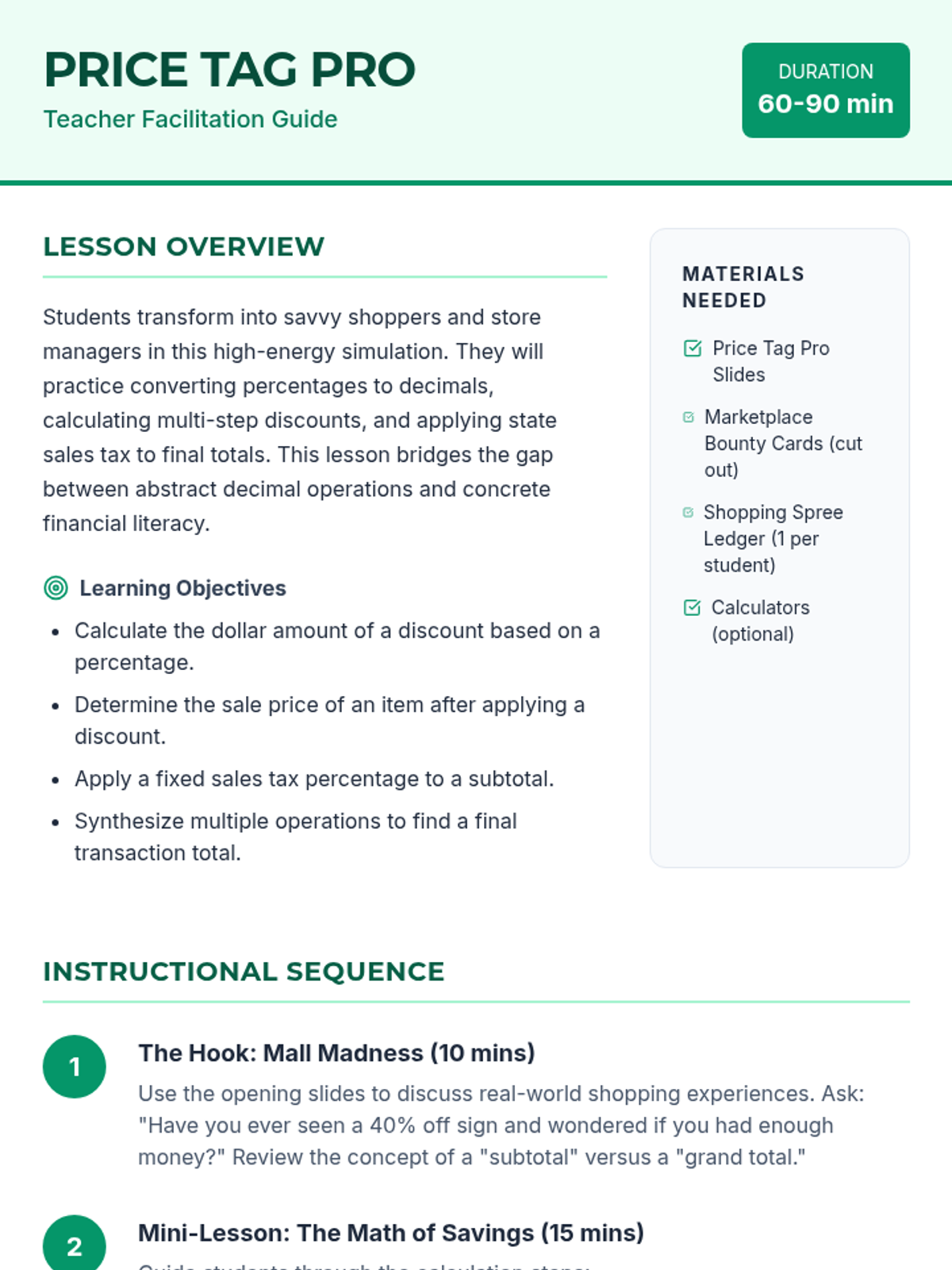
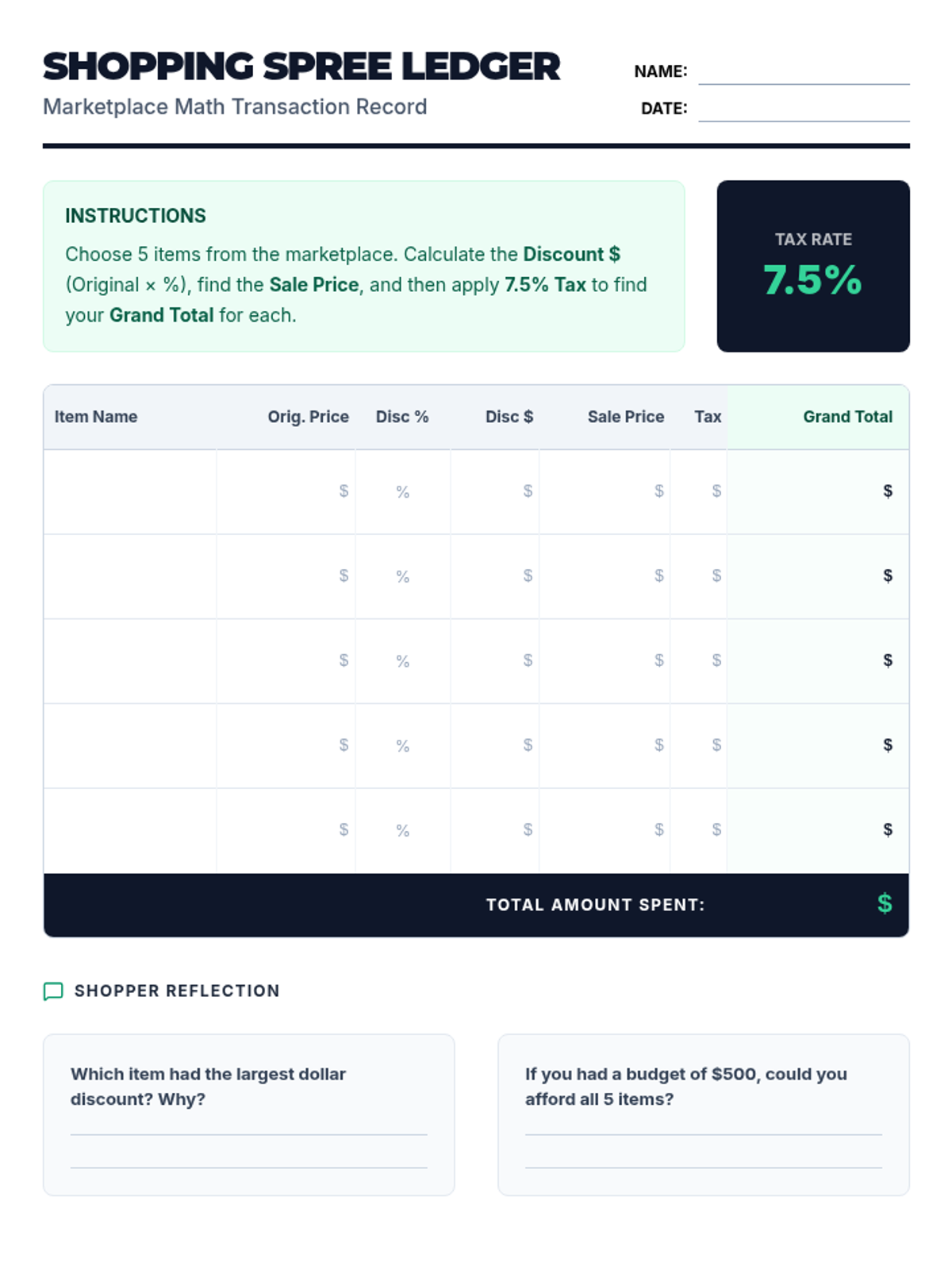
A project-based lesson where students master percentages and decimals by calculating discounts, sales tax, and final totals in a simulated shopping environment.
A project-based math lesson where students master percentages and decimals by navigating a simulated marketplace, calculating real-world discounts and sales tax.
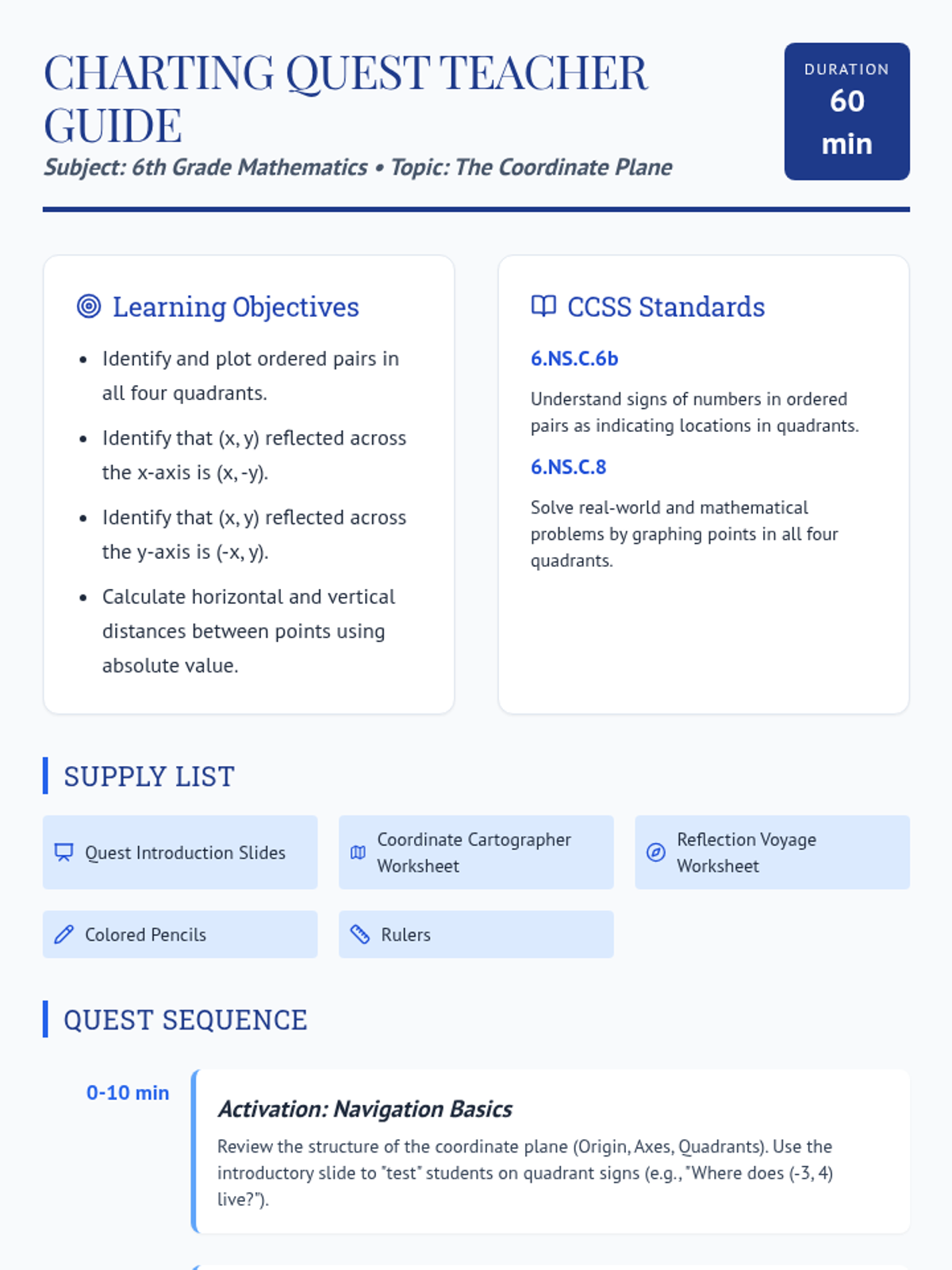
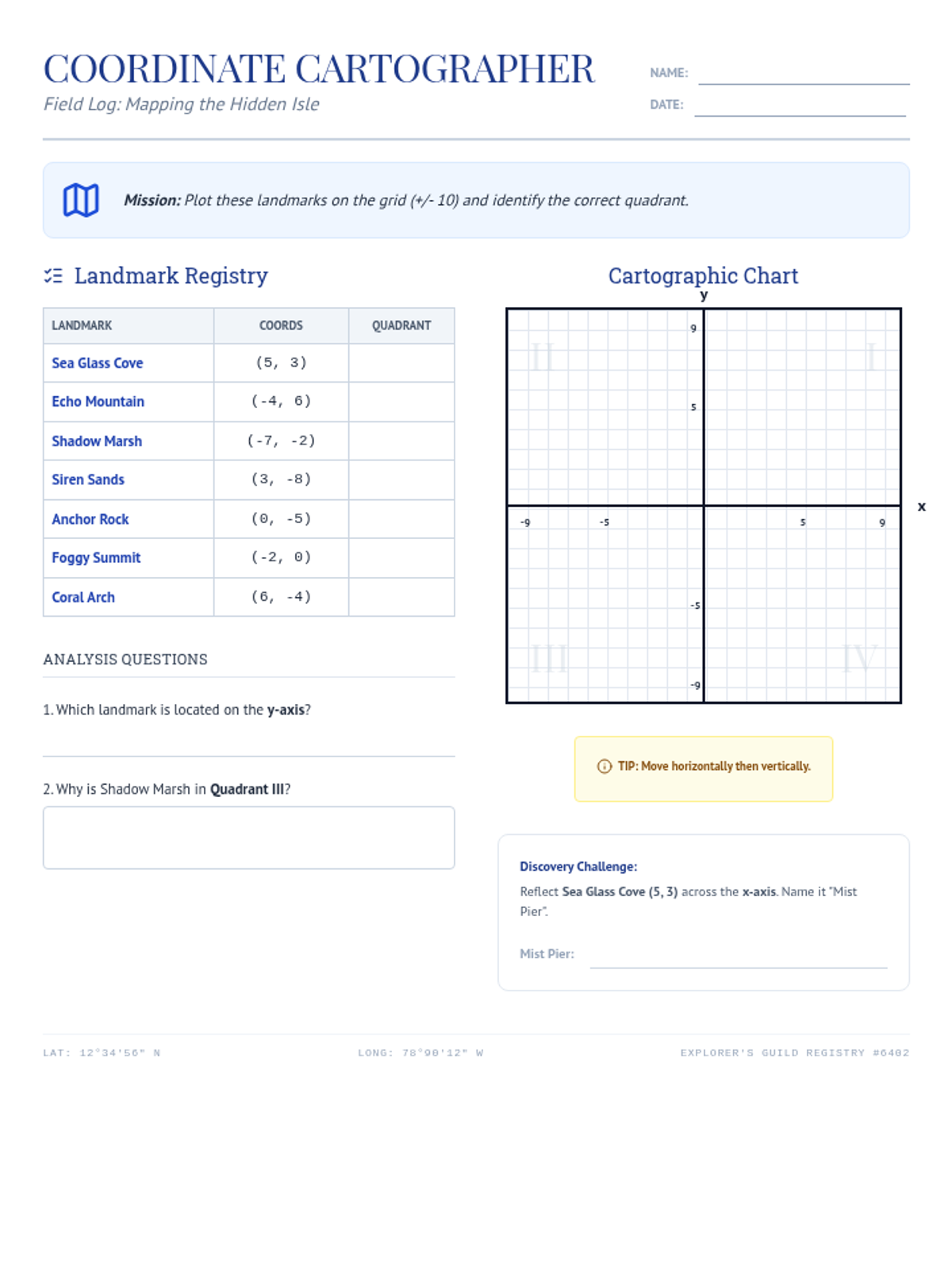
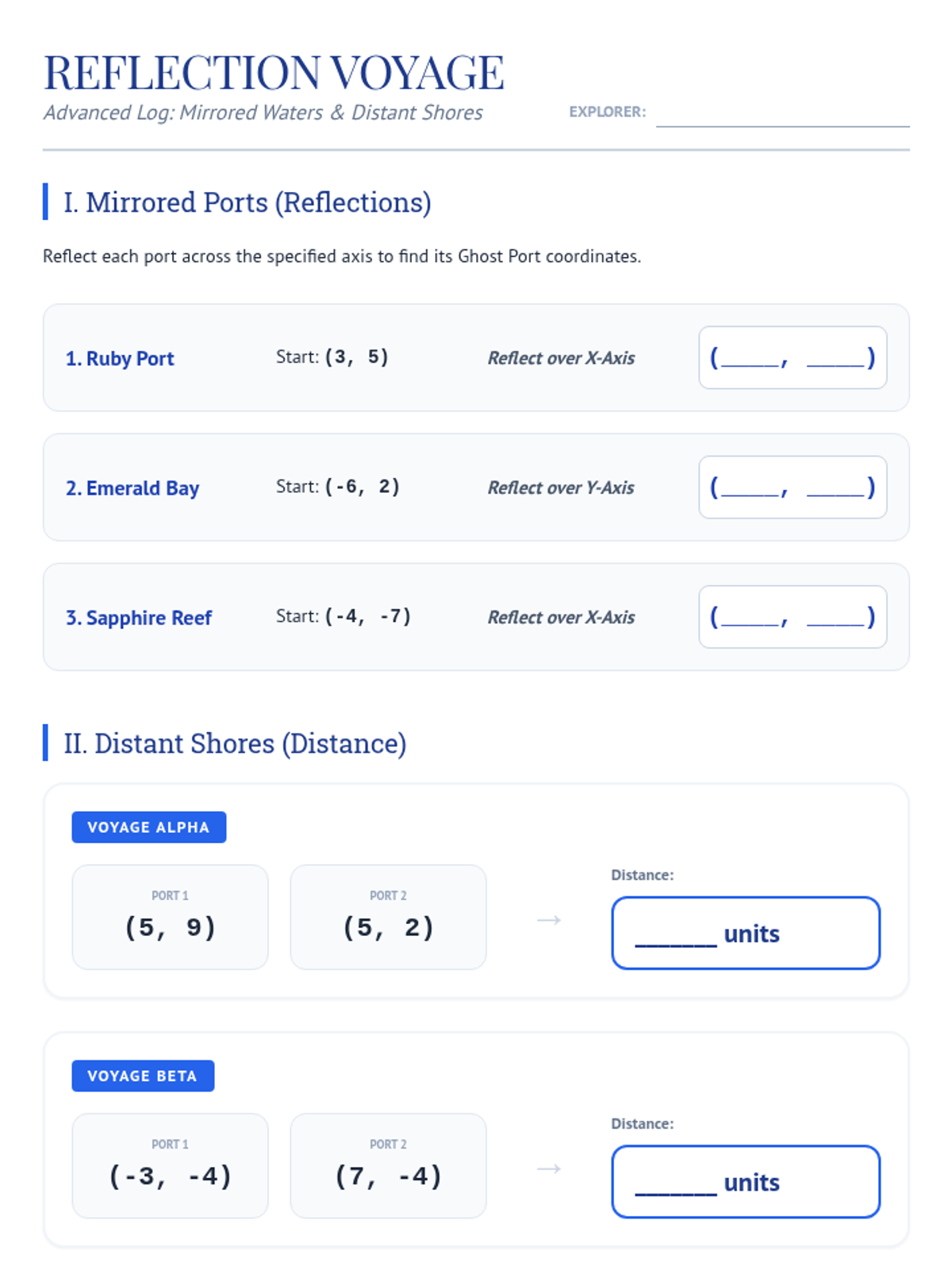
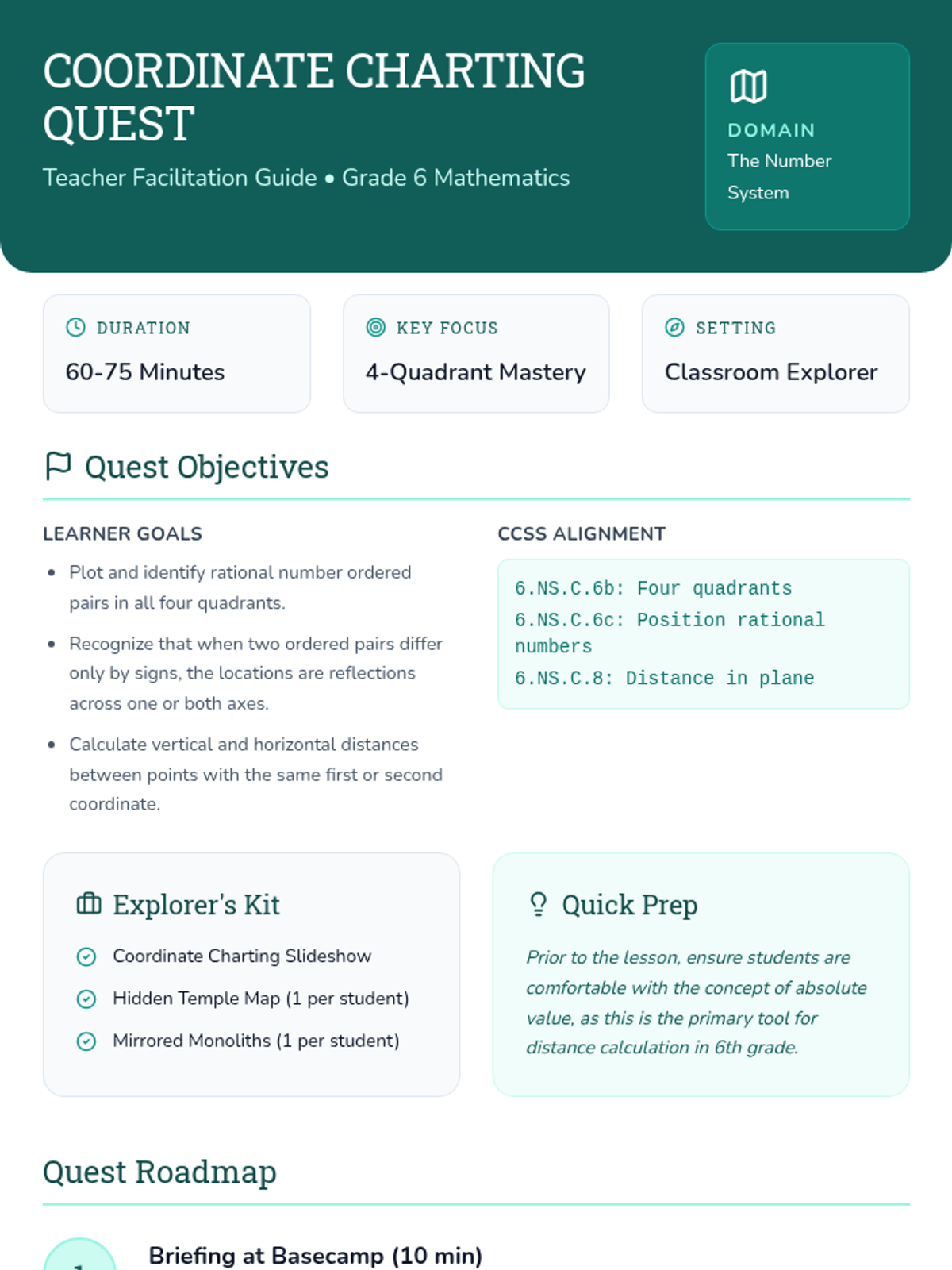
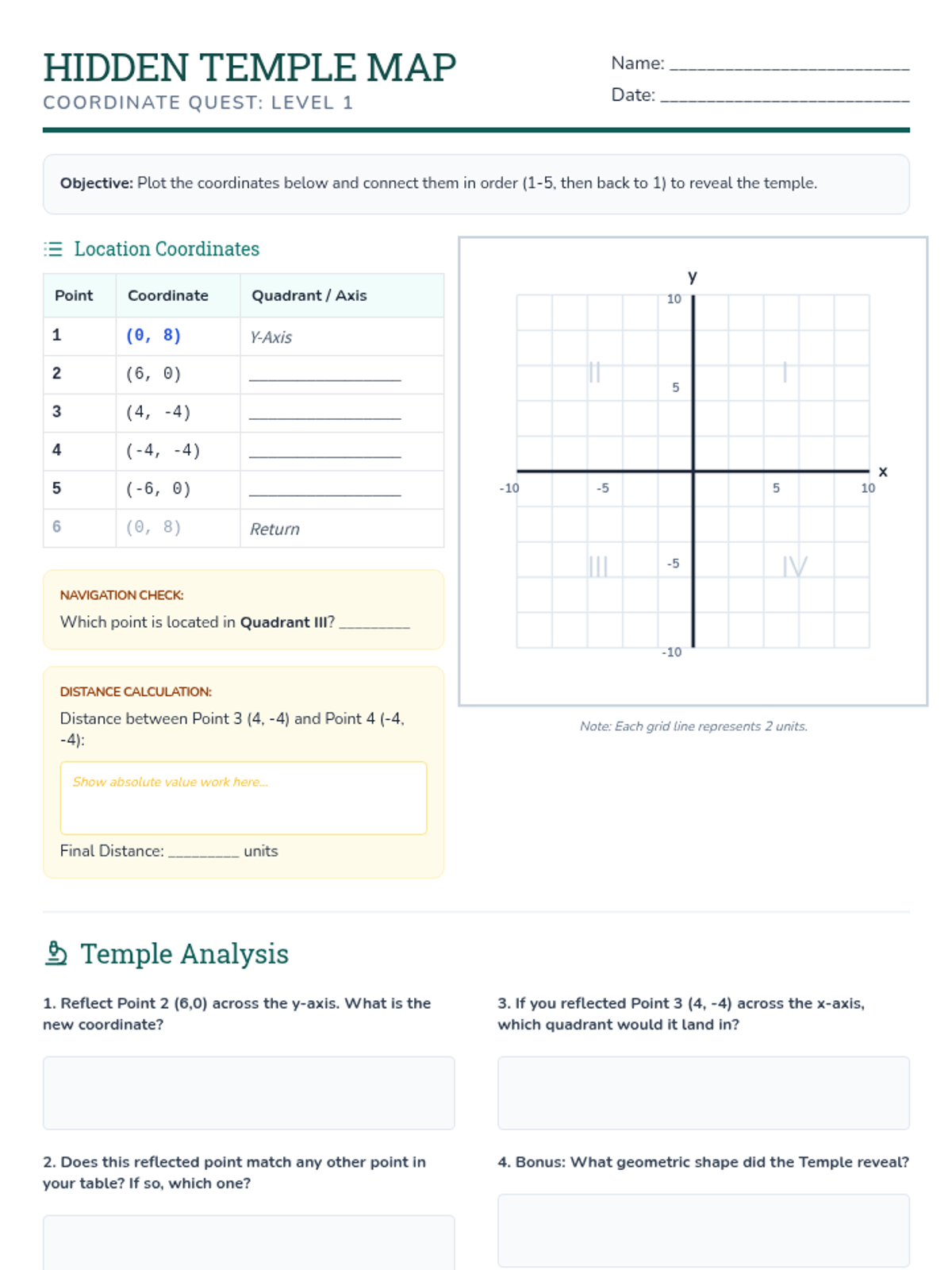
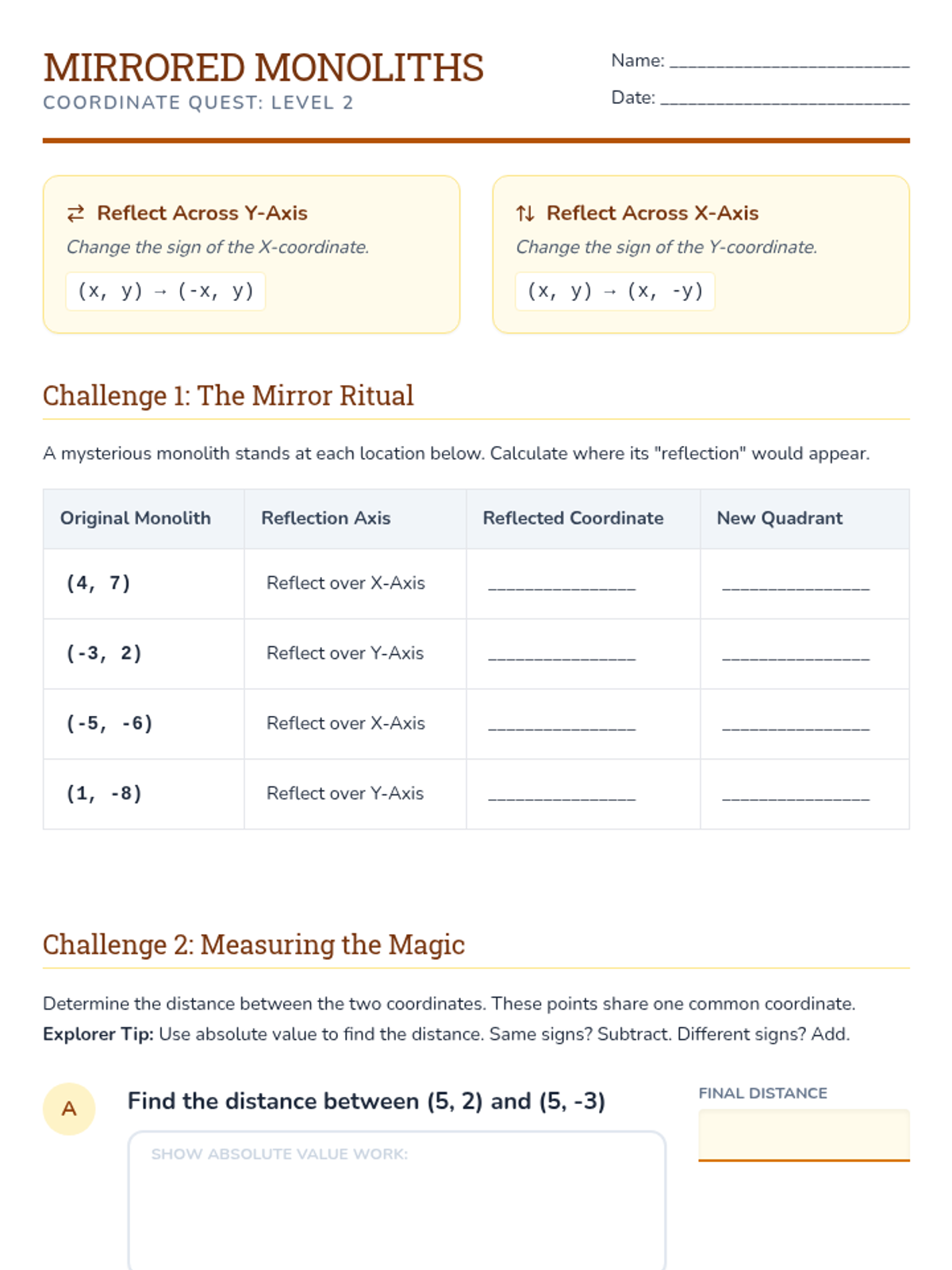
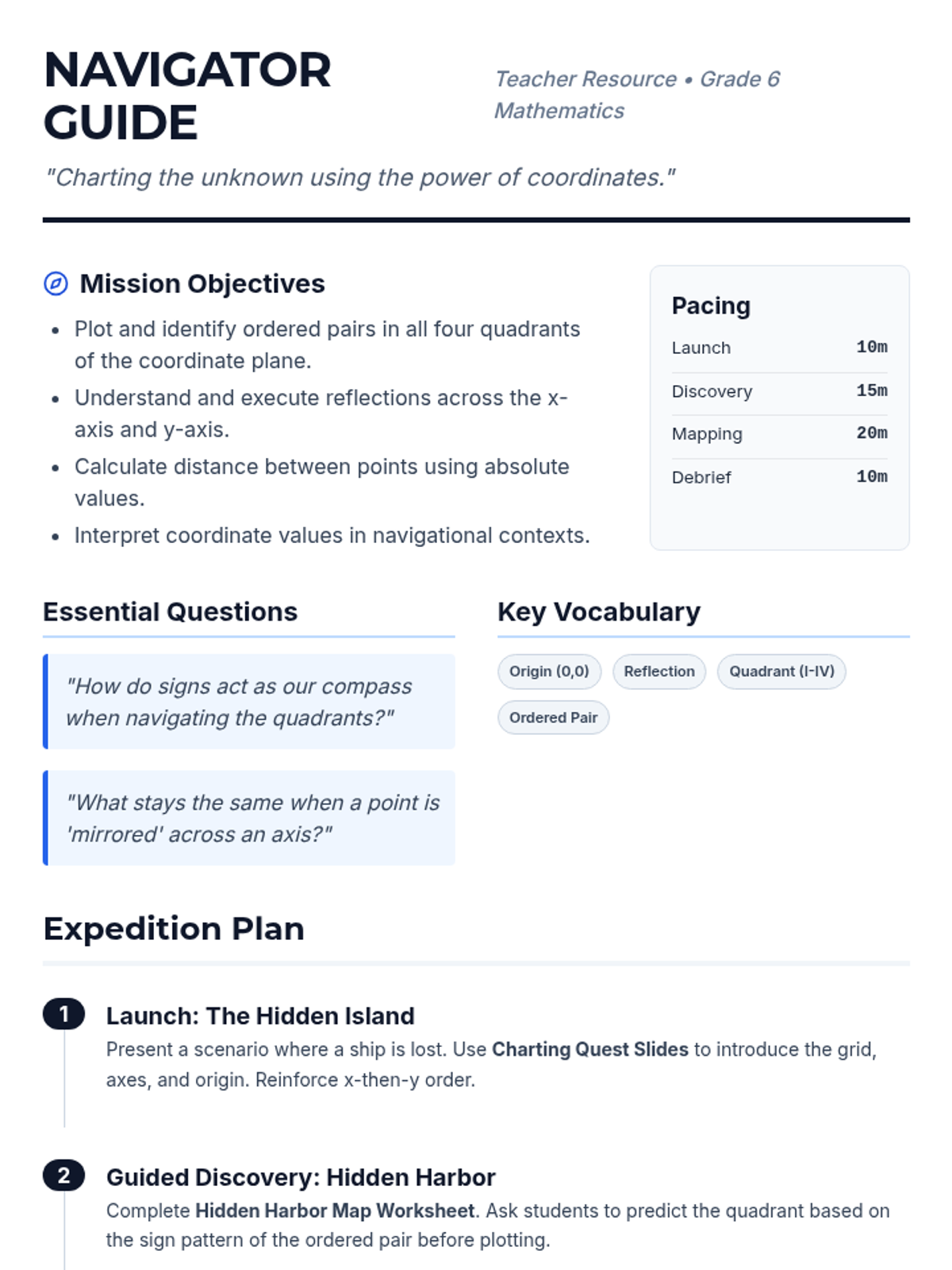
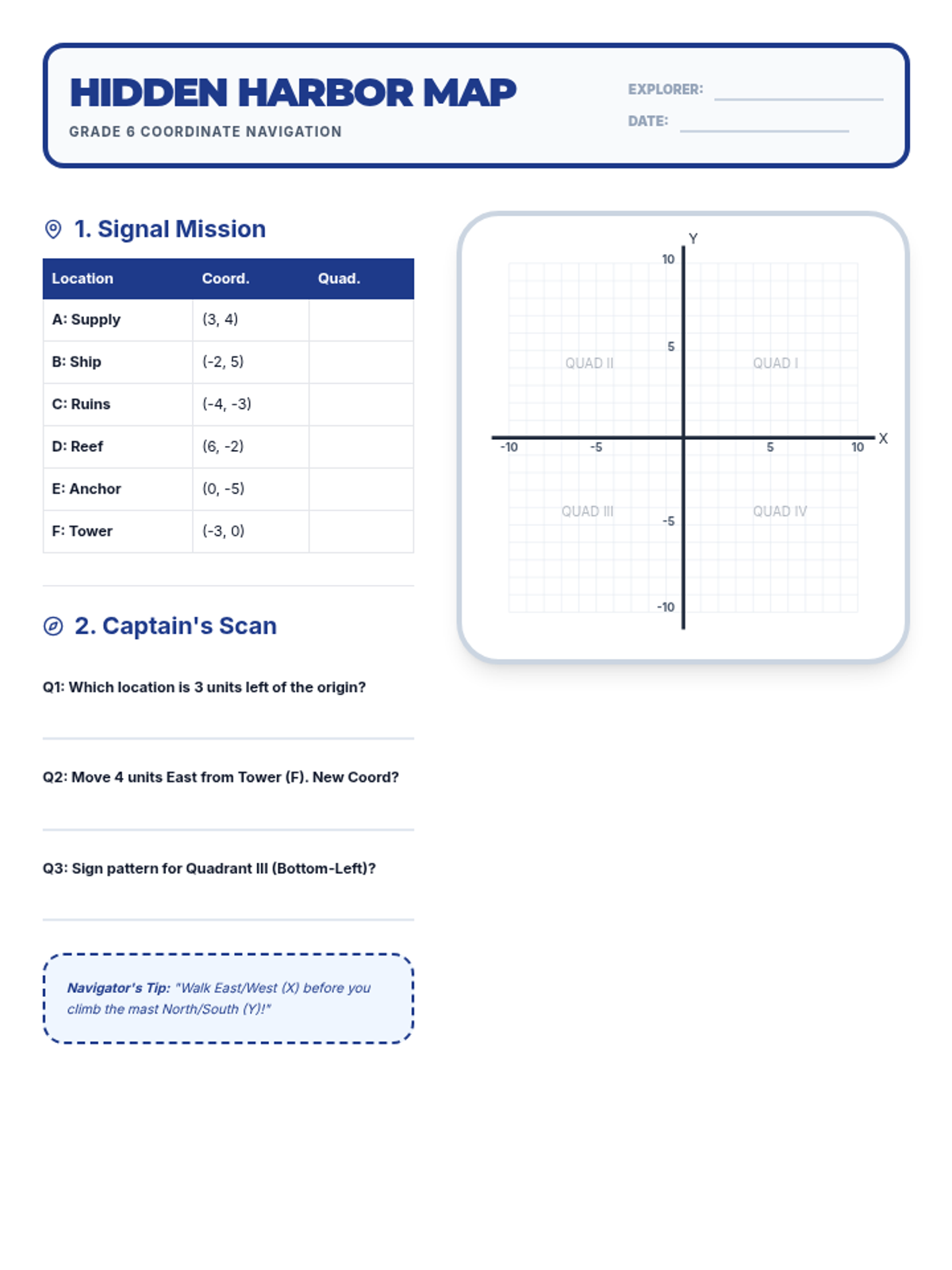
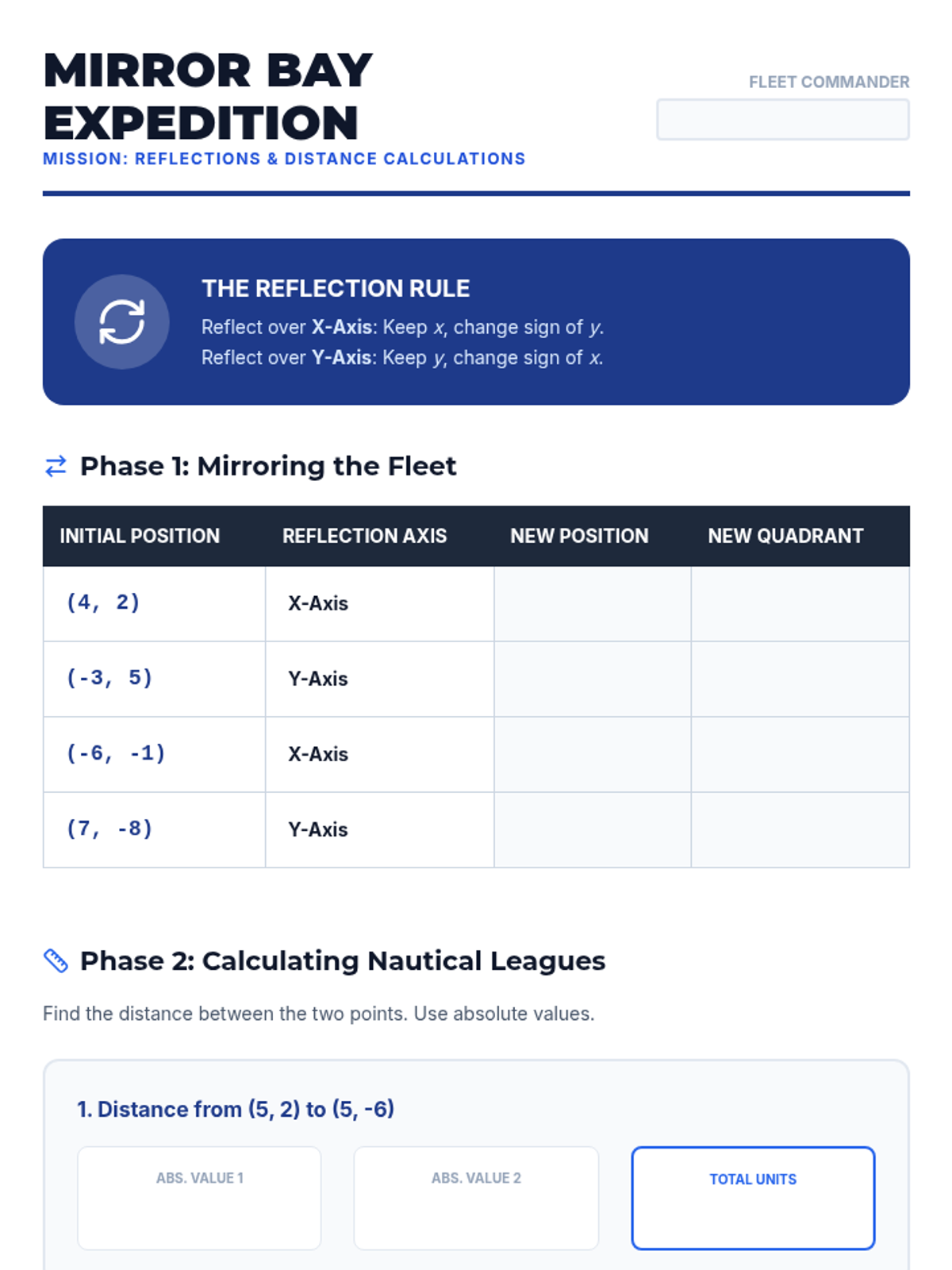
A sixth-grade exploration of the four-quadrant coordinate plane where students act as cartographers to map locations, reflect across axes, and calculate distances between points.
Students embark on a cartographic journey across the four quadrants of the coordinate plane. They will master plotting ordered pairs, identifying reflections across axes, and calculating distances between points through an immersive adventure theme.
Students embark on a cartographic journey to master the coordinate plane, covering all four quadrants, reflections, and distance calculations through a navigational lens.
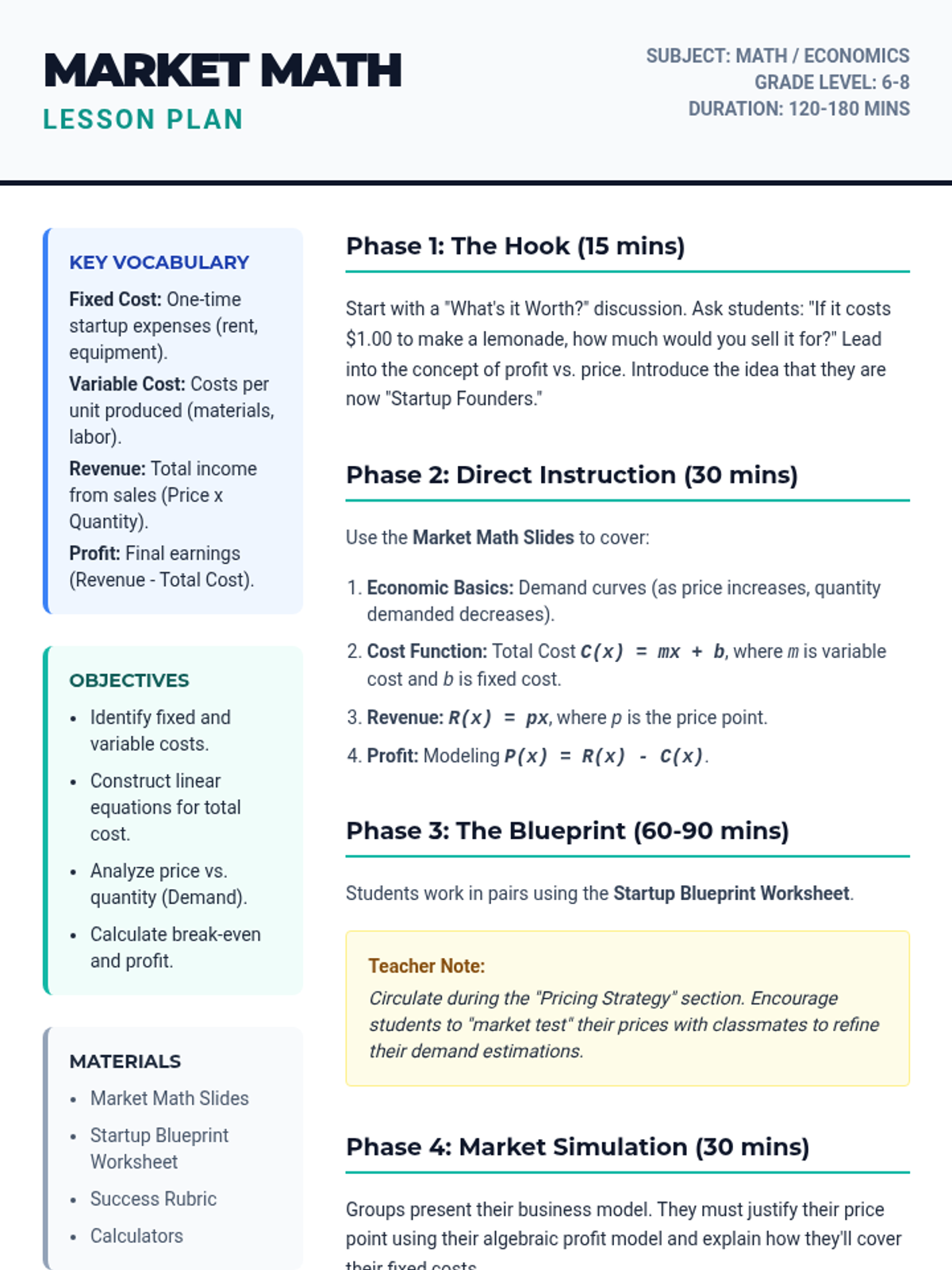
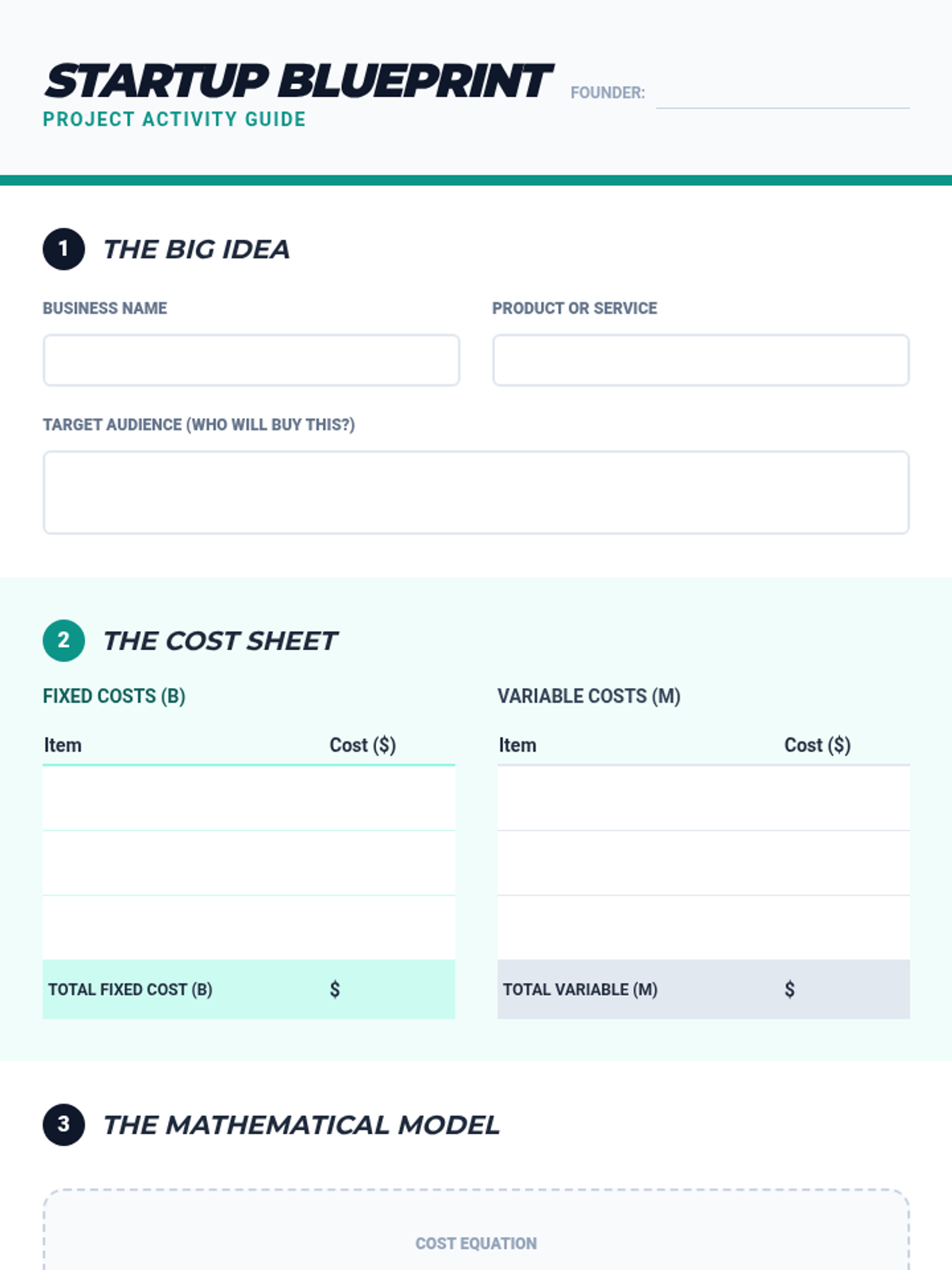
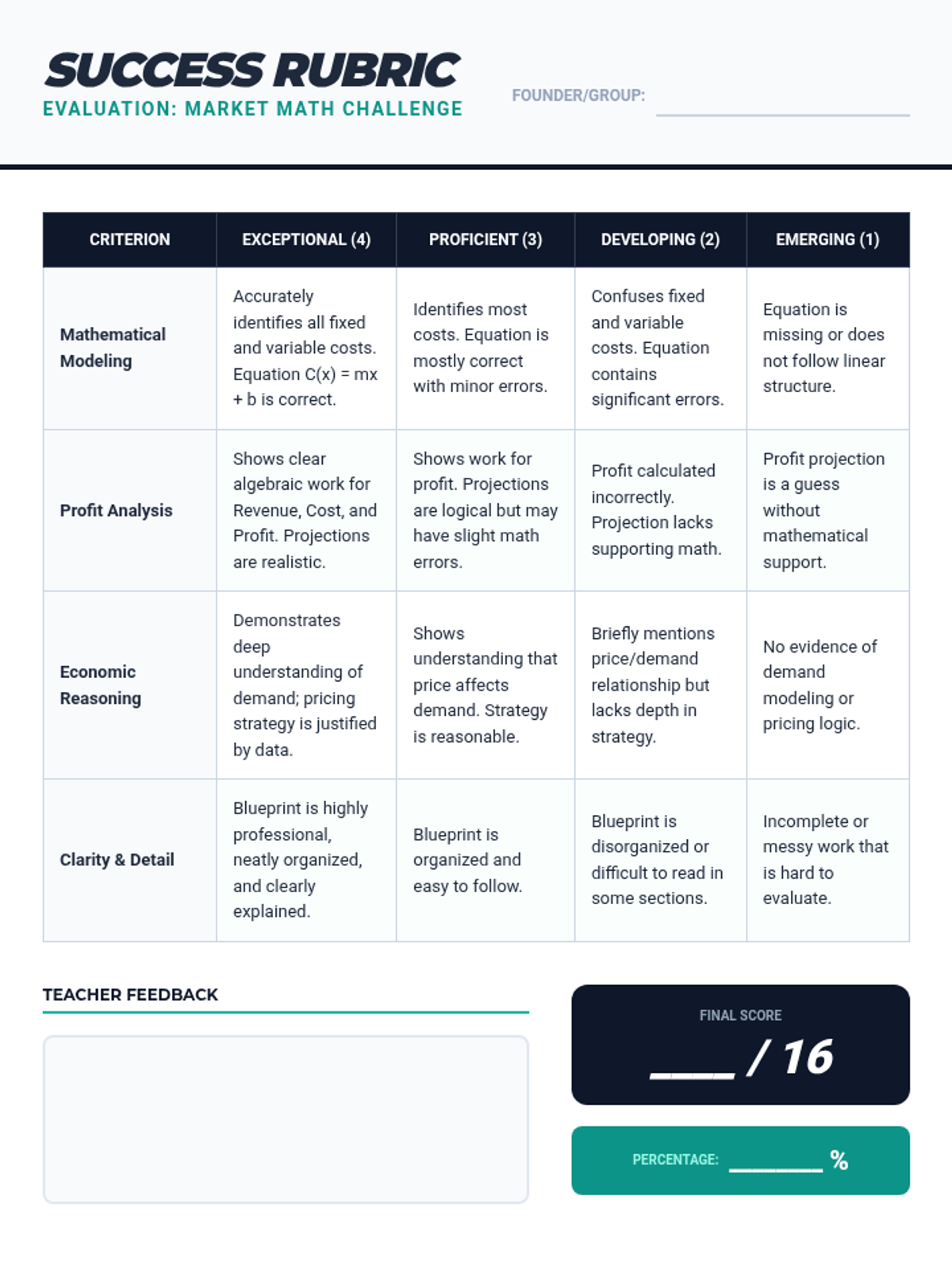
Middle school students design a small business model to apply principles of economics and algebraic reasoning through startup cost calculation and profit modeling.
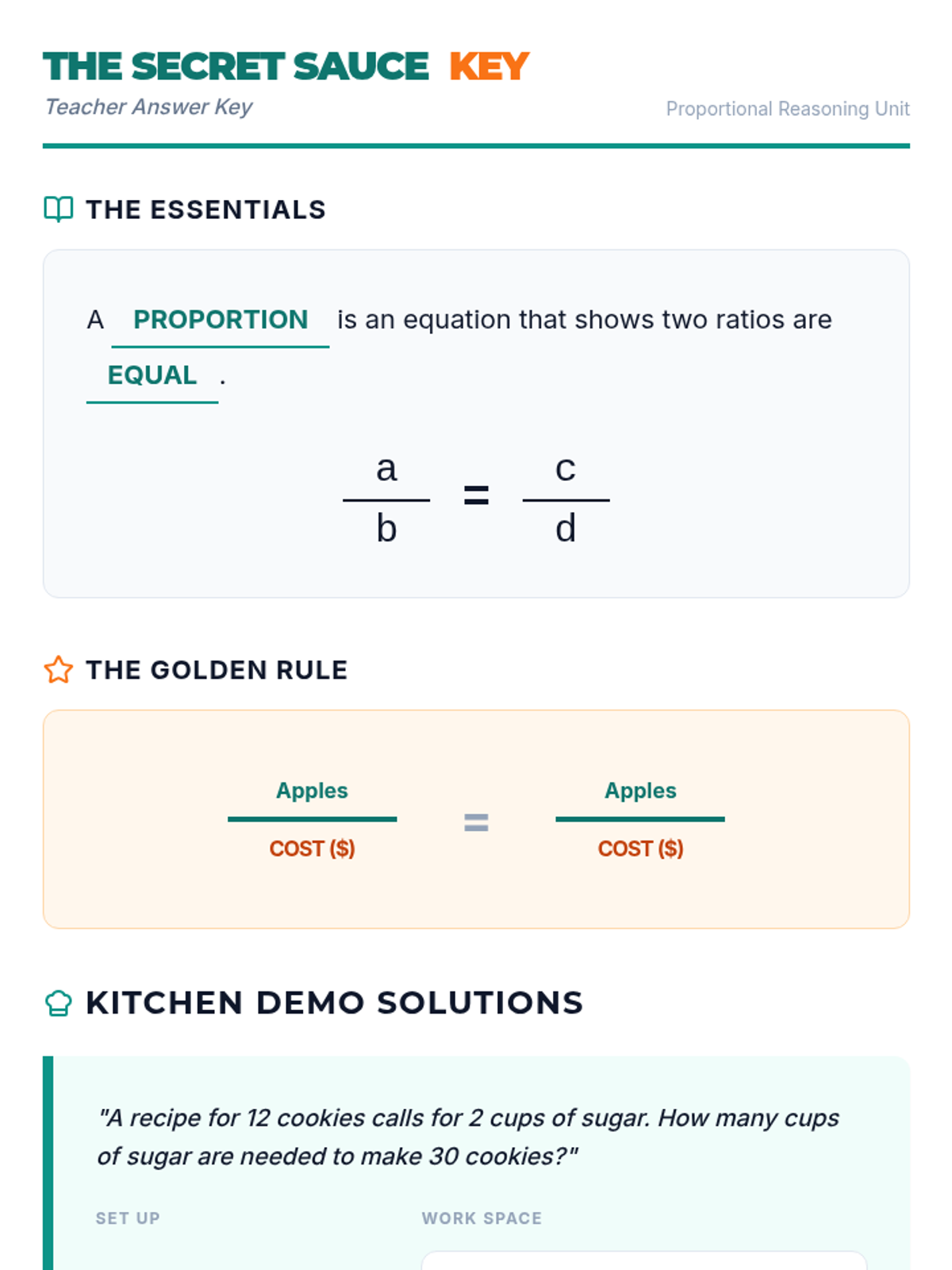
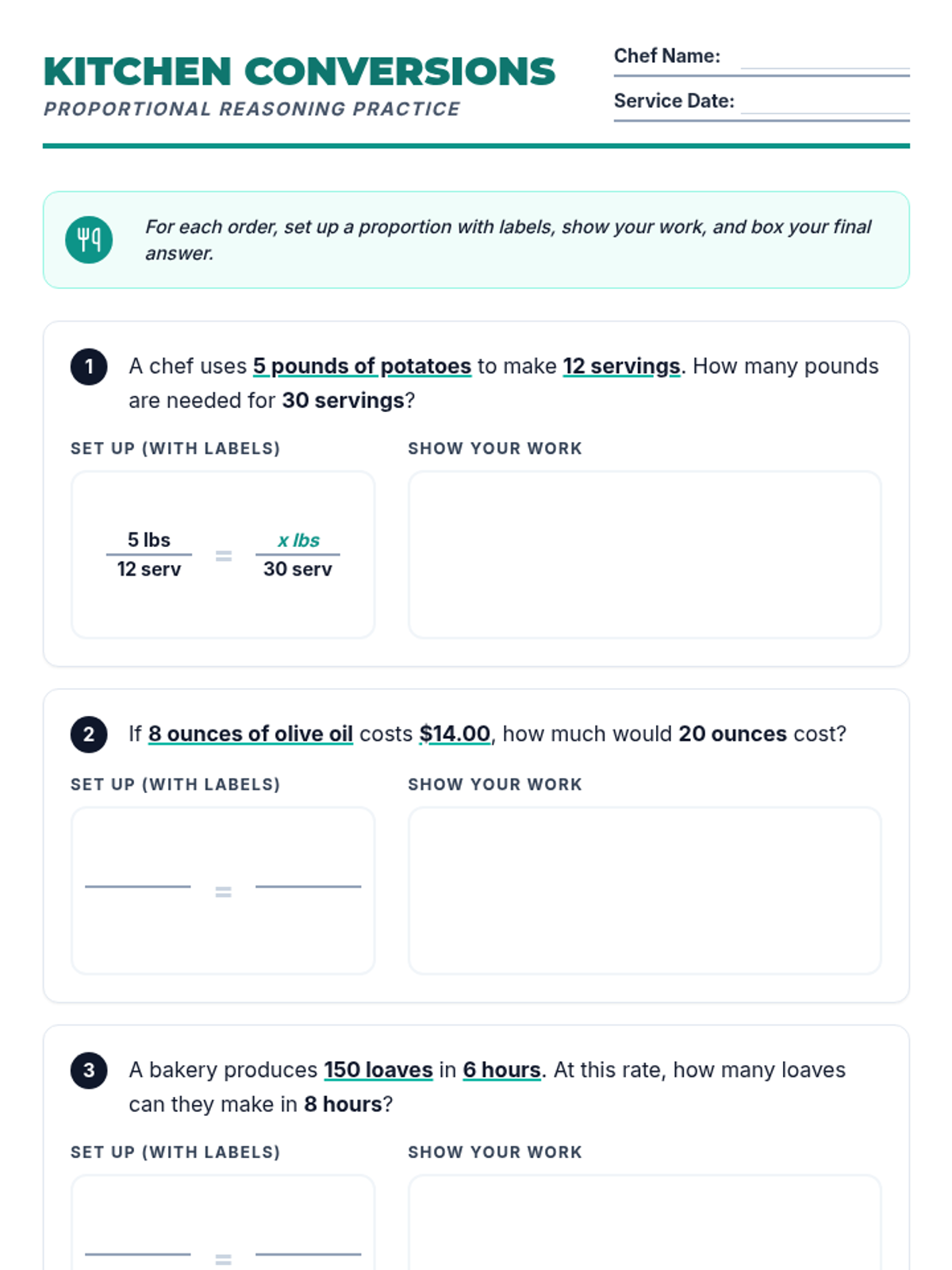
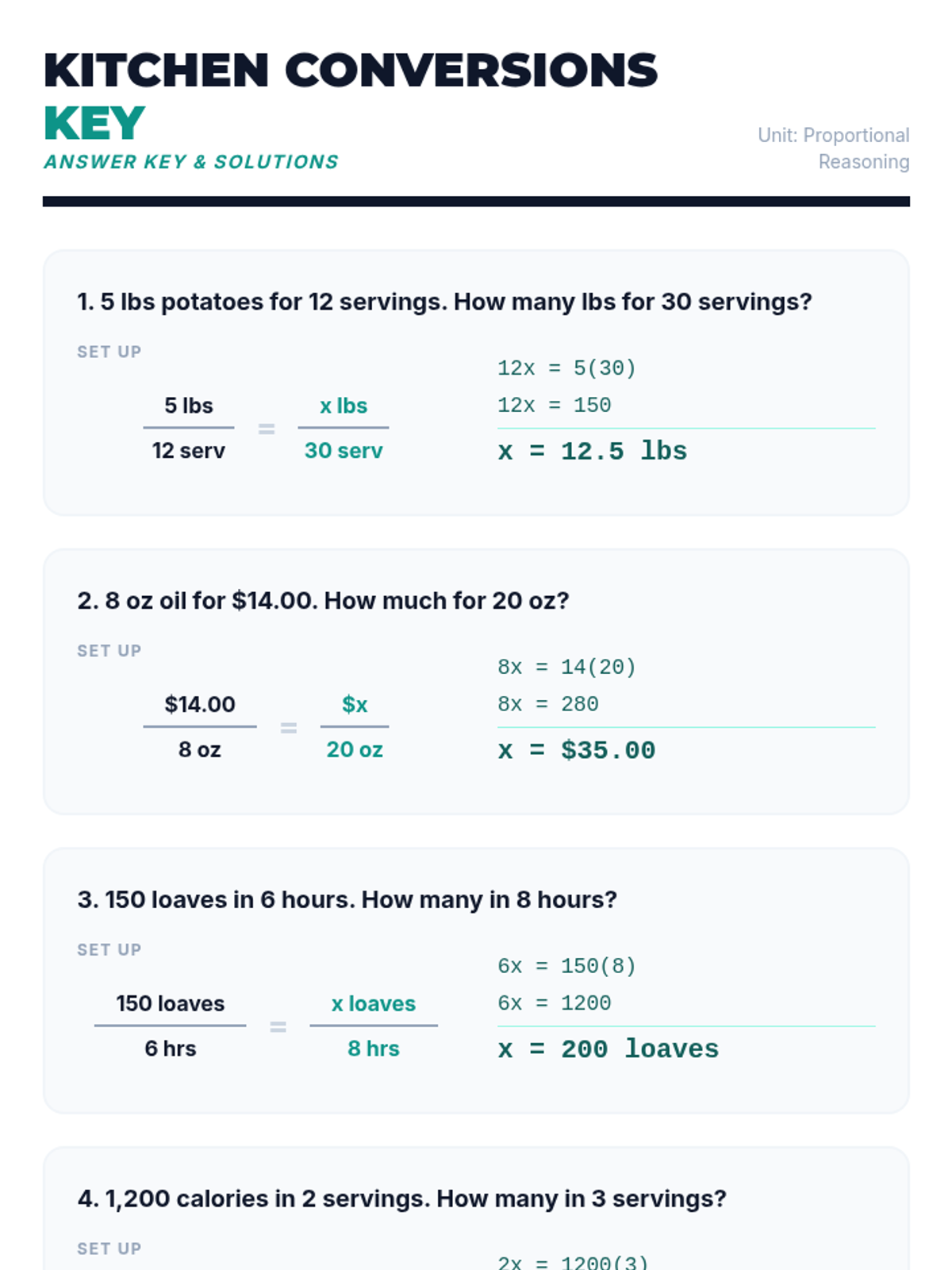
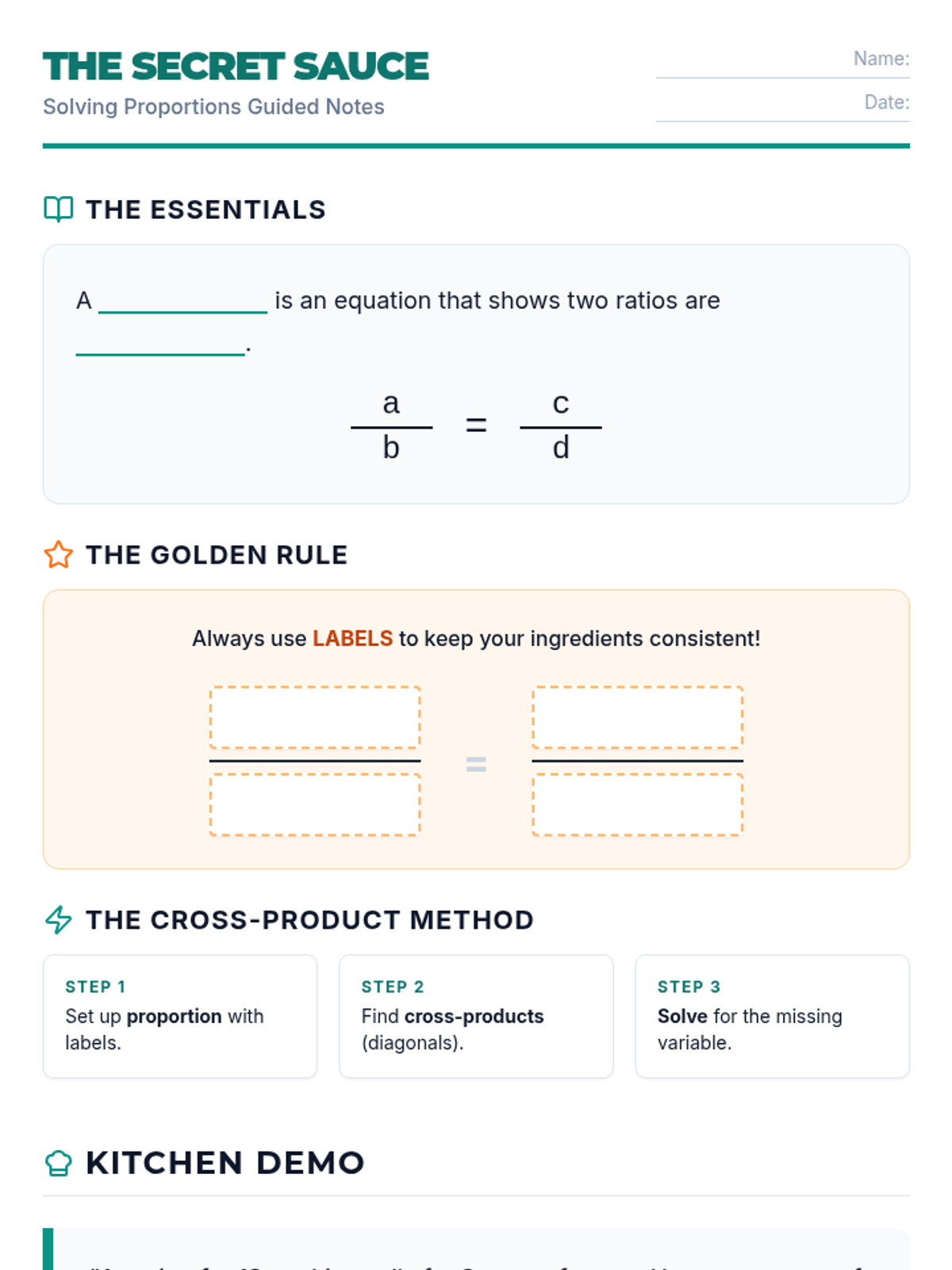
A comprehensive lesson on solving proportional word problems using a culinary theme. Students will learn to set up and solve proportions using cross-multiplication and scaling strategies.
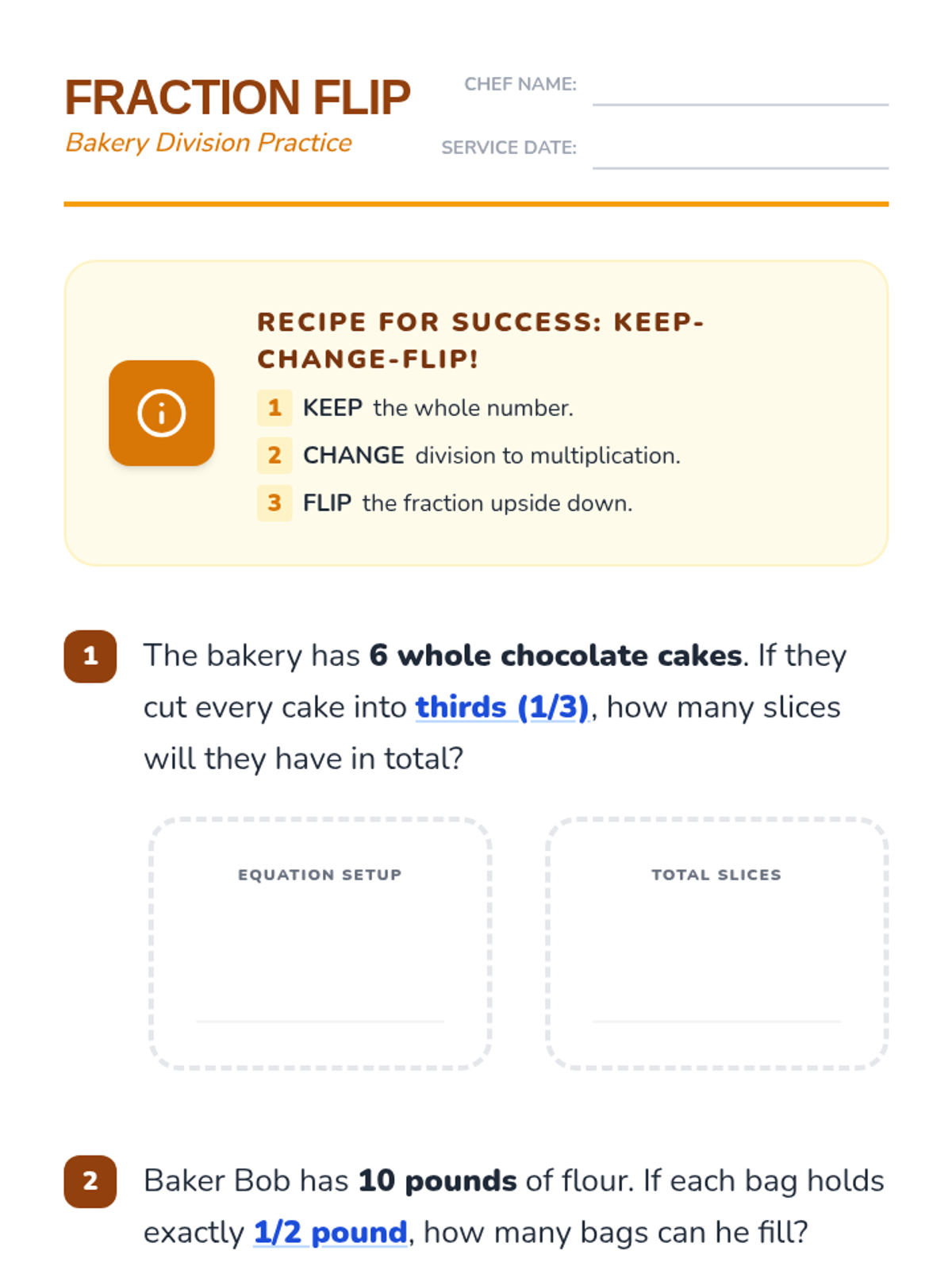
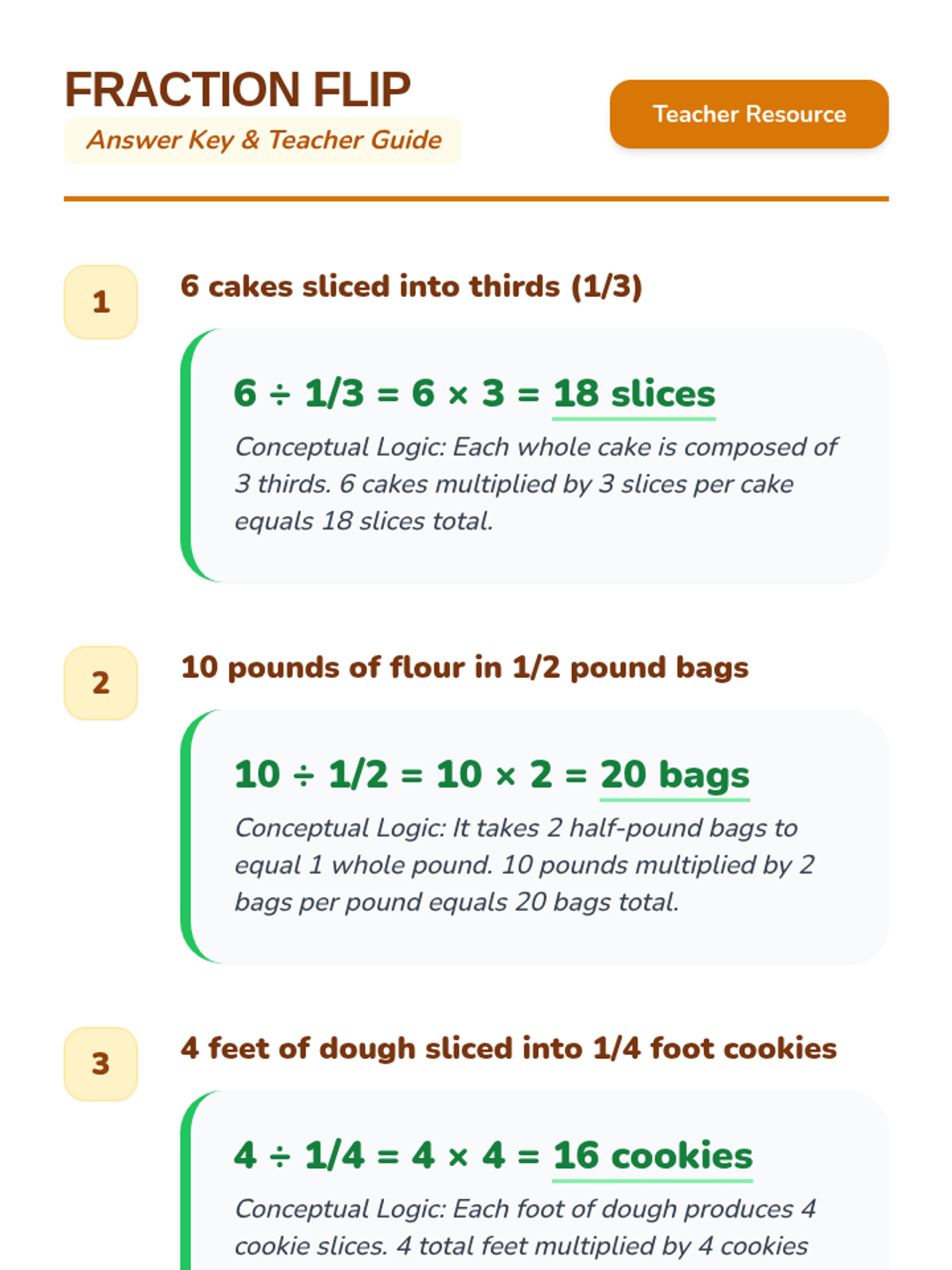
A visual, step-by-step guide to dividing whole numbers by unit fractions using real-world bakery and kitchen contexts. Students will learn the visual logic and the 'multiply by the reciprocal' method through engaging word problems.
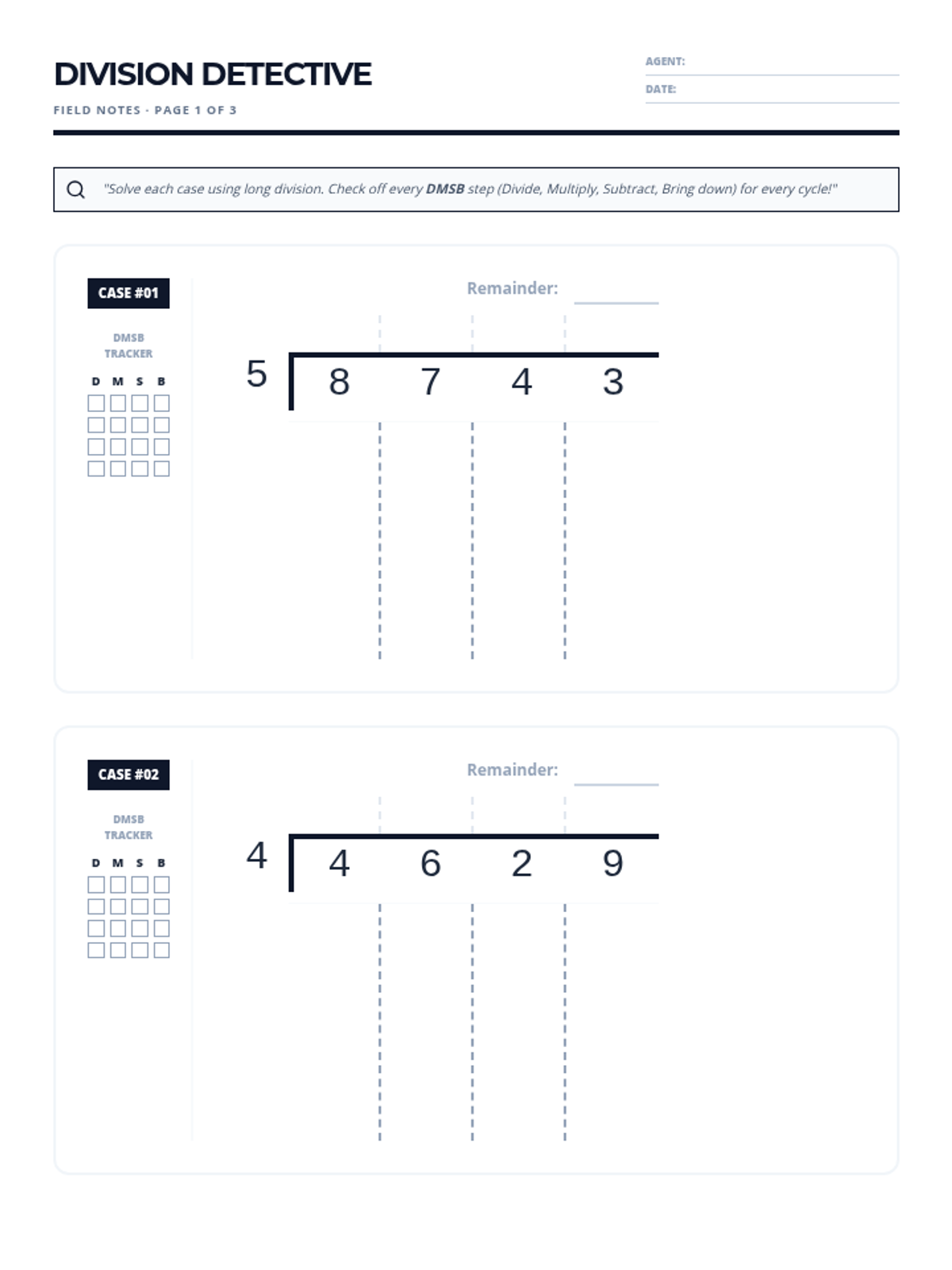
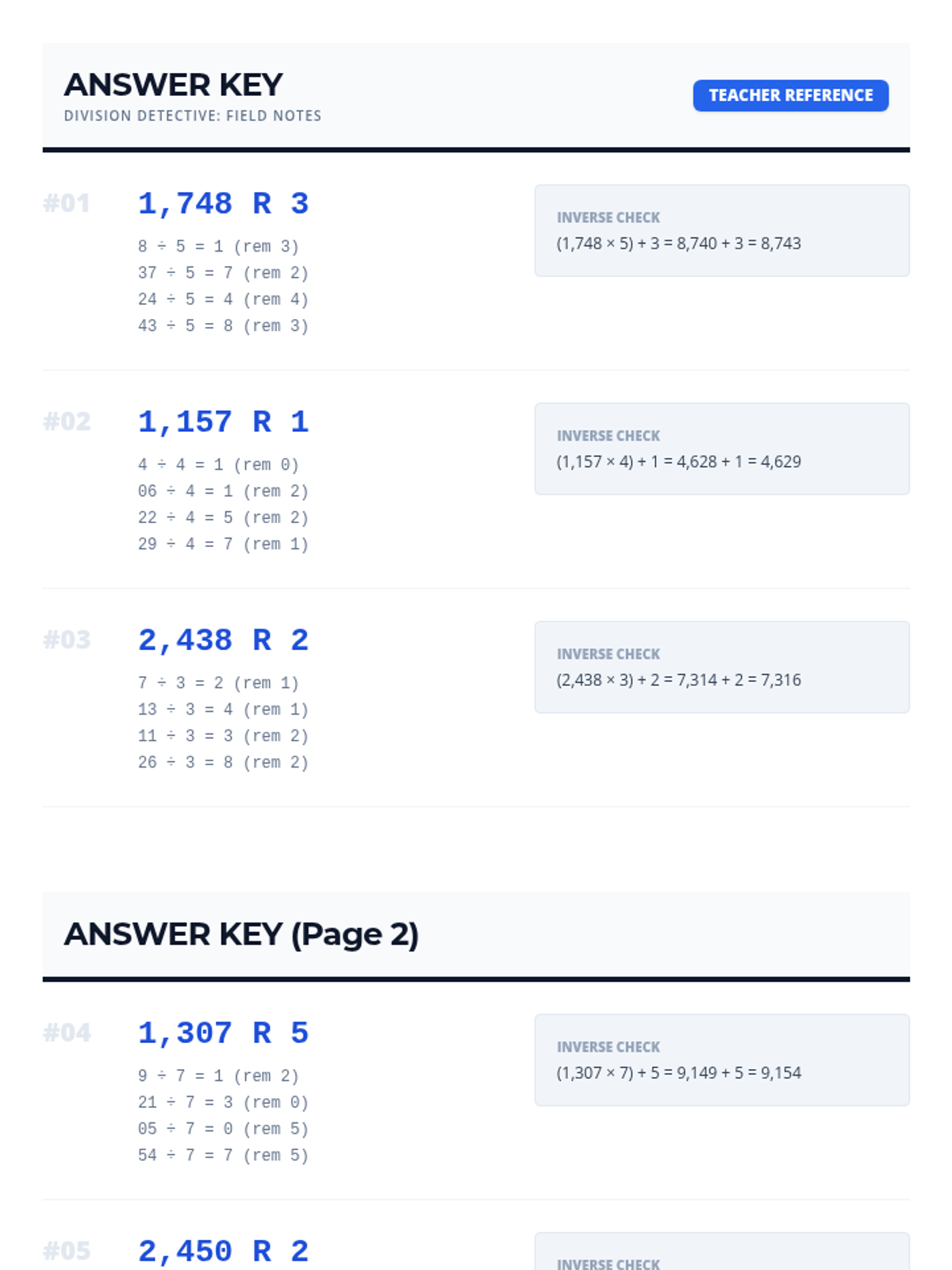
A detective-themed math lesson focused on long division of 4-digit numbers by 1-digit divisors, featuring guided practice and clear procedural scaffolds.
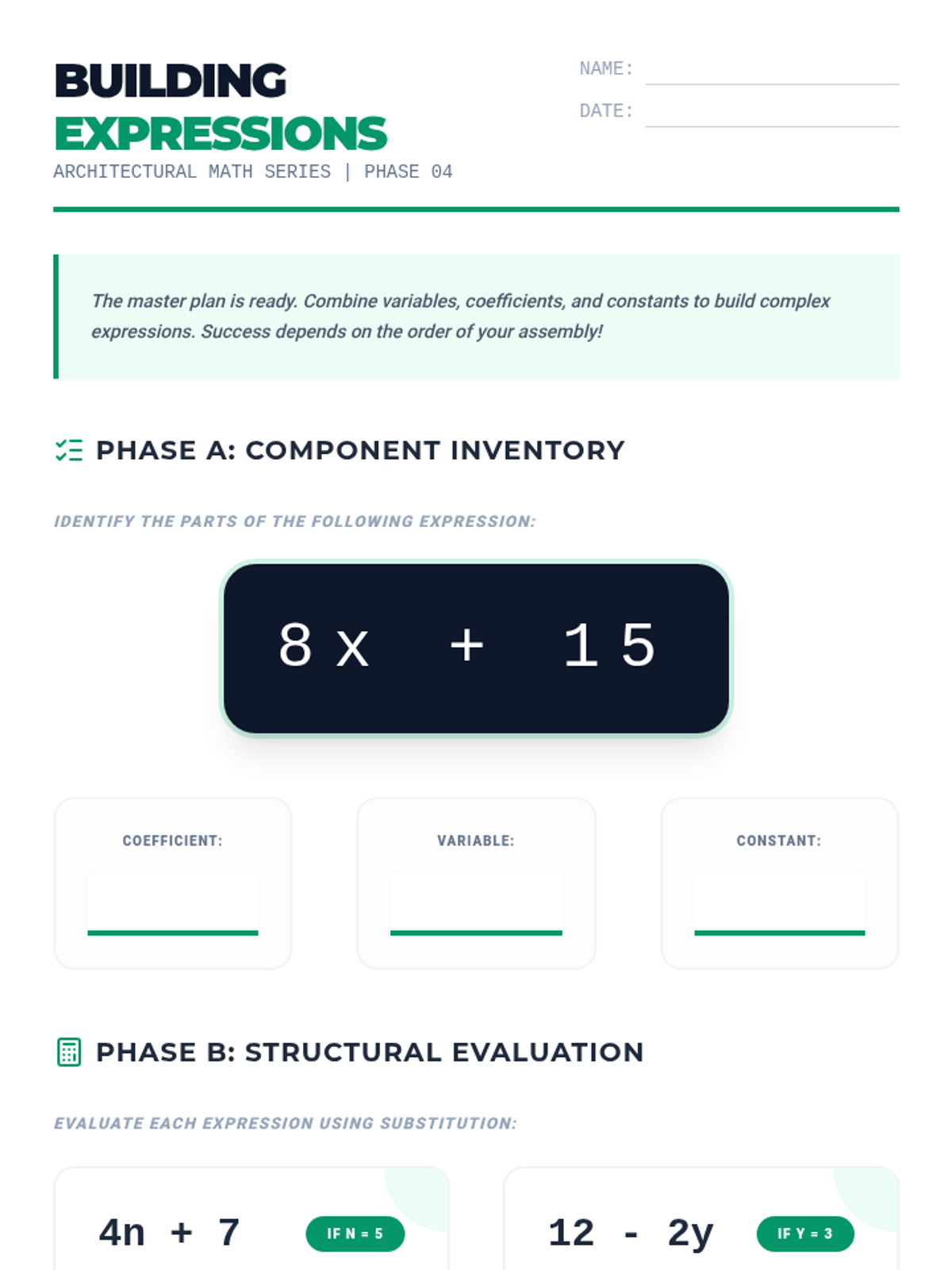
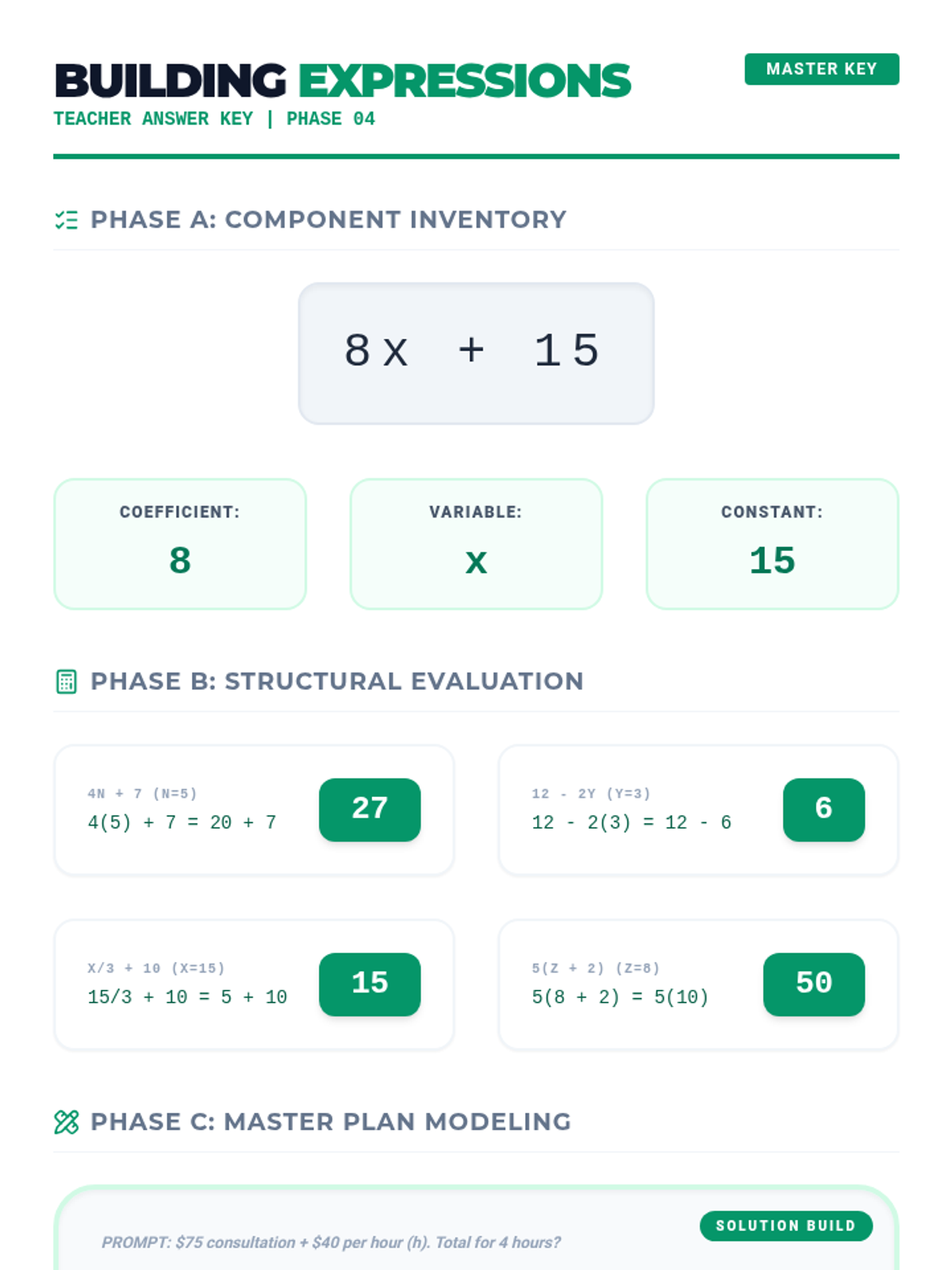
Assembling full algebraic expressions and equations, learning to manipulate variables like architectural components.
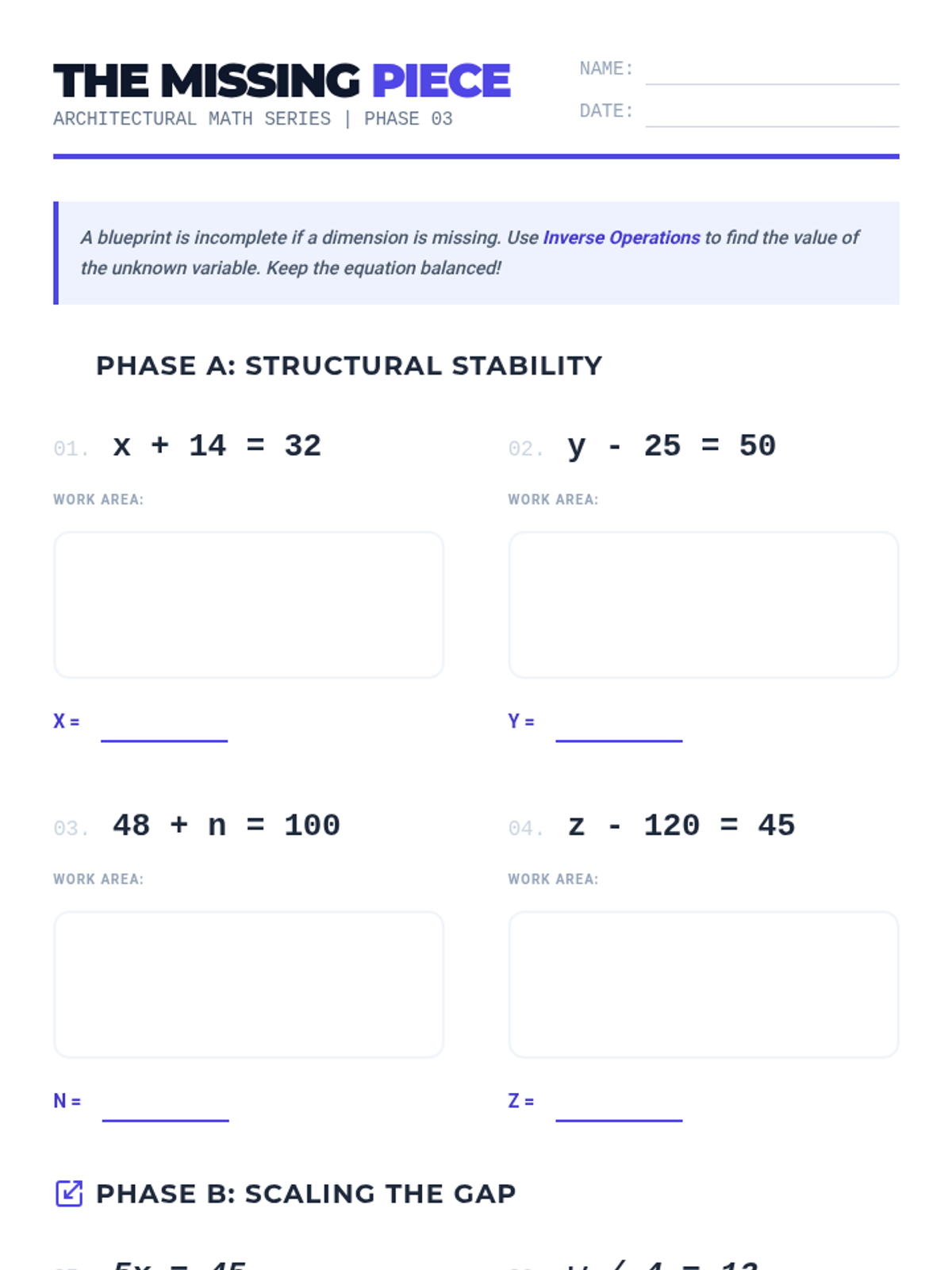
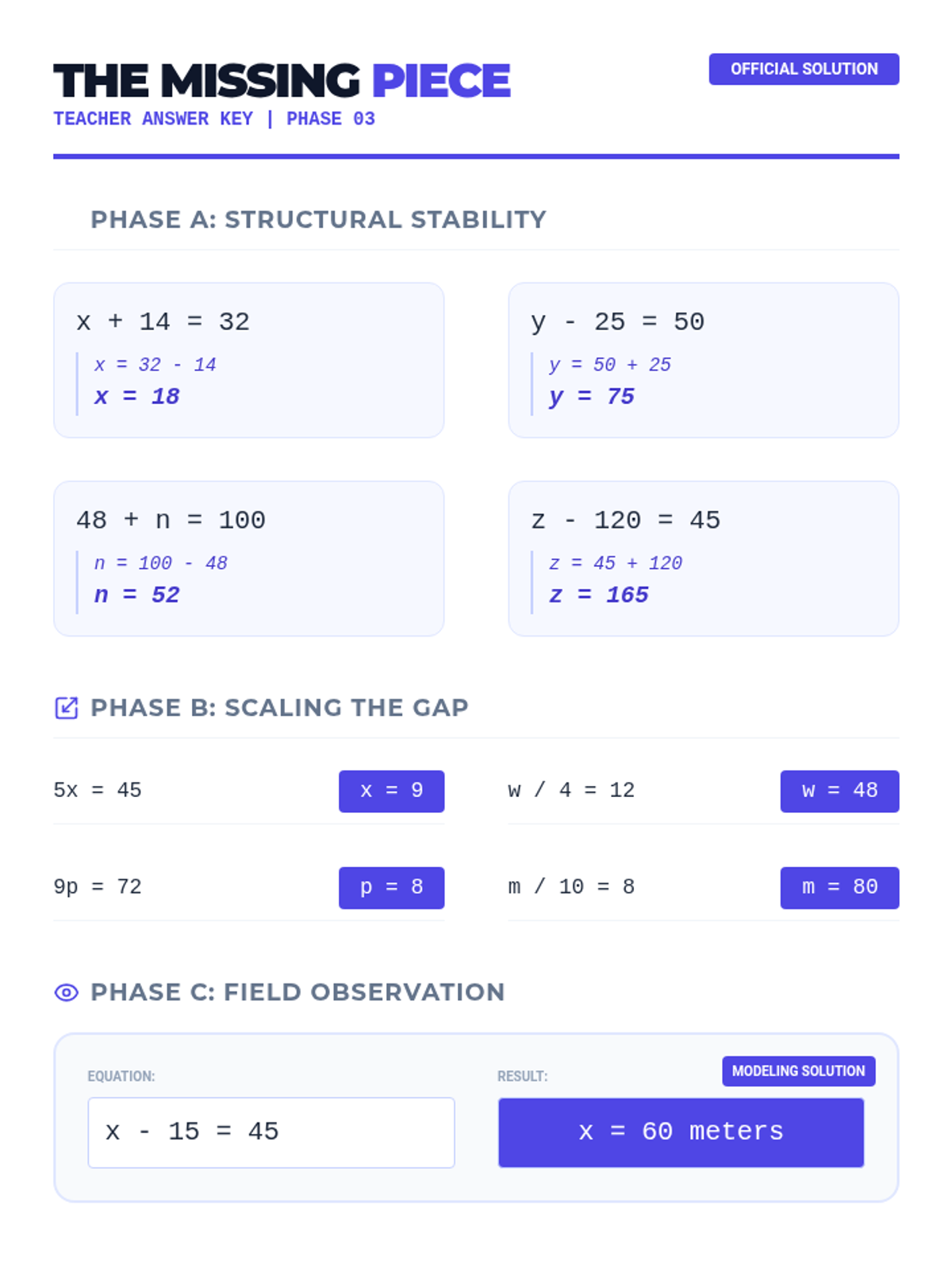
Introducing the concept of the unknown as a structural gap that needs to be filled, shifting from arithmetic to early algebraic thinking.
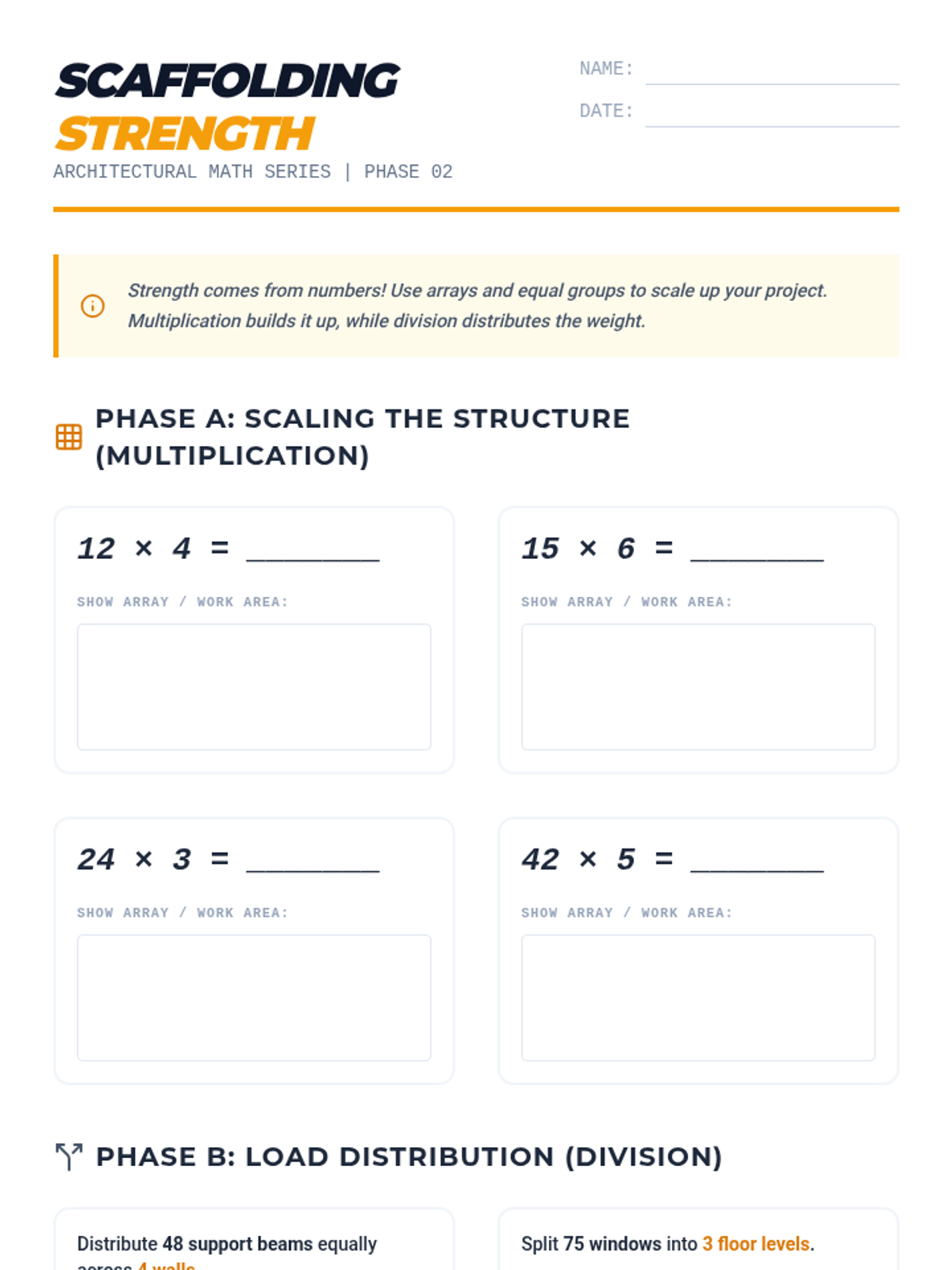
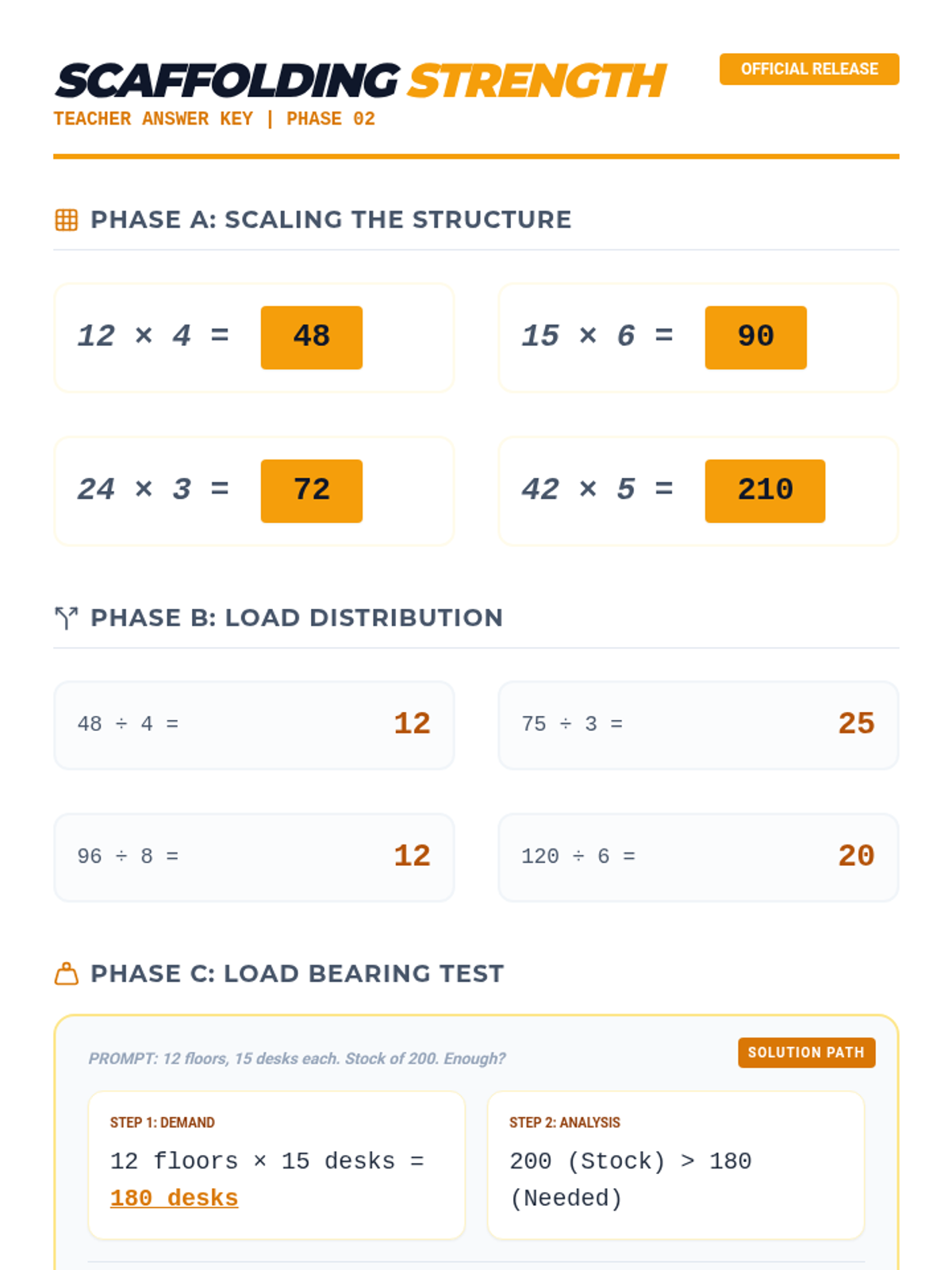
Scaling up operations with multiplication and division, exploring arrays and equal groups as the scaffolding for complex math.
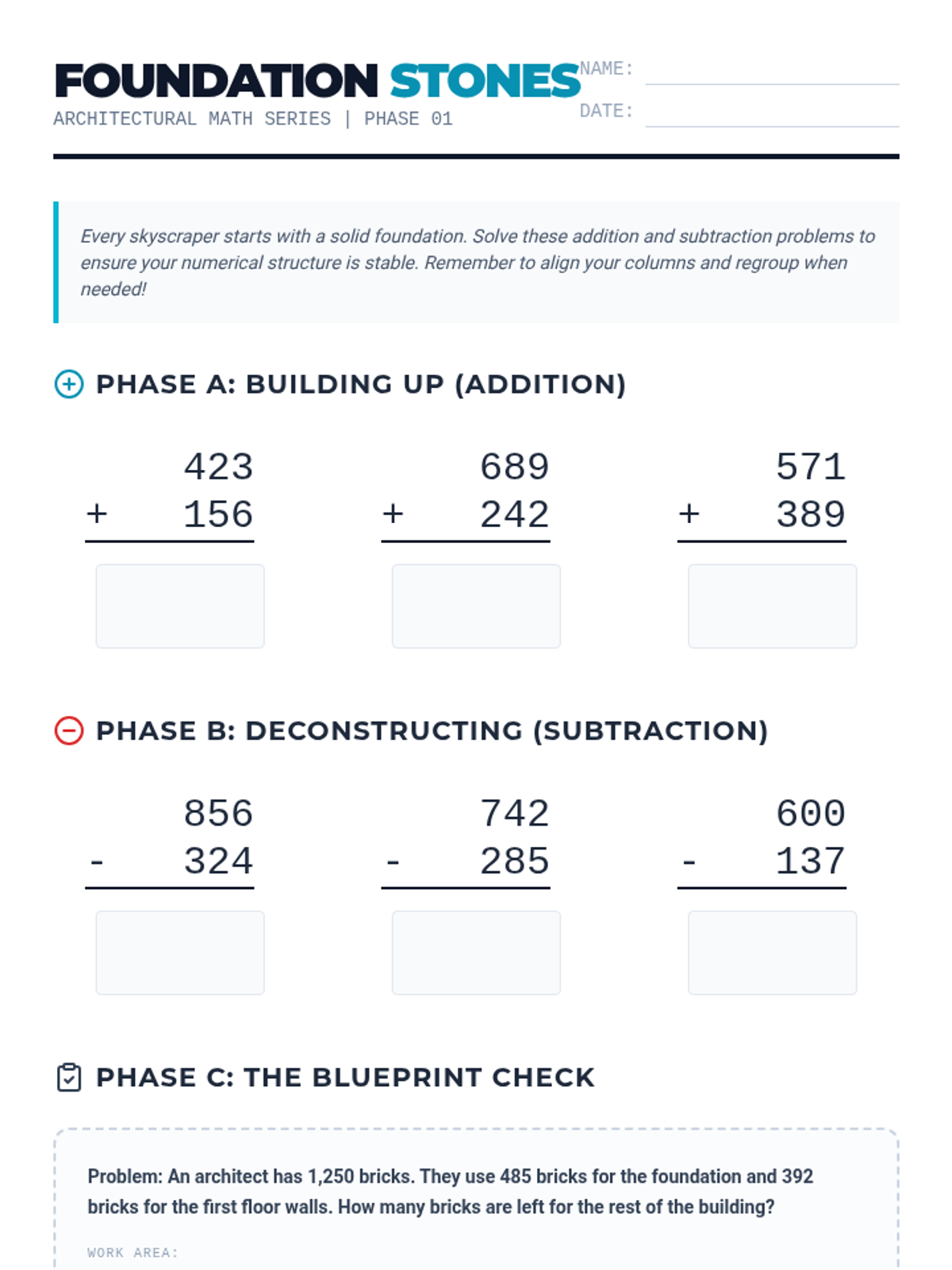
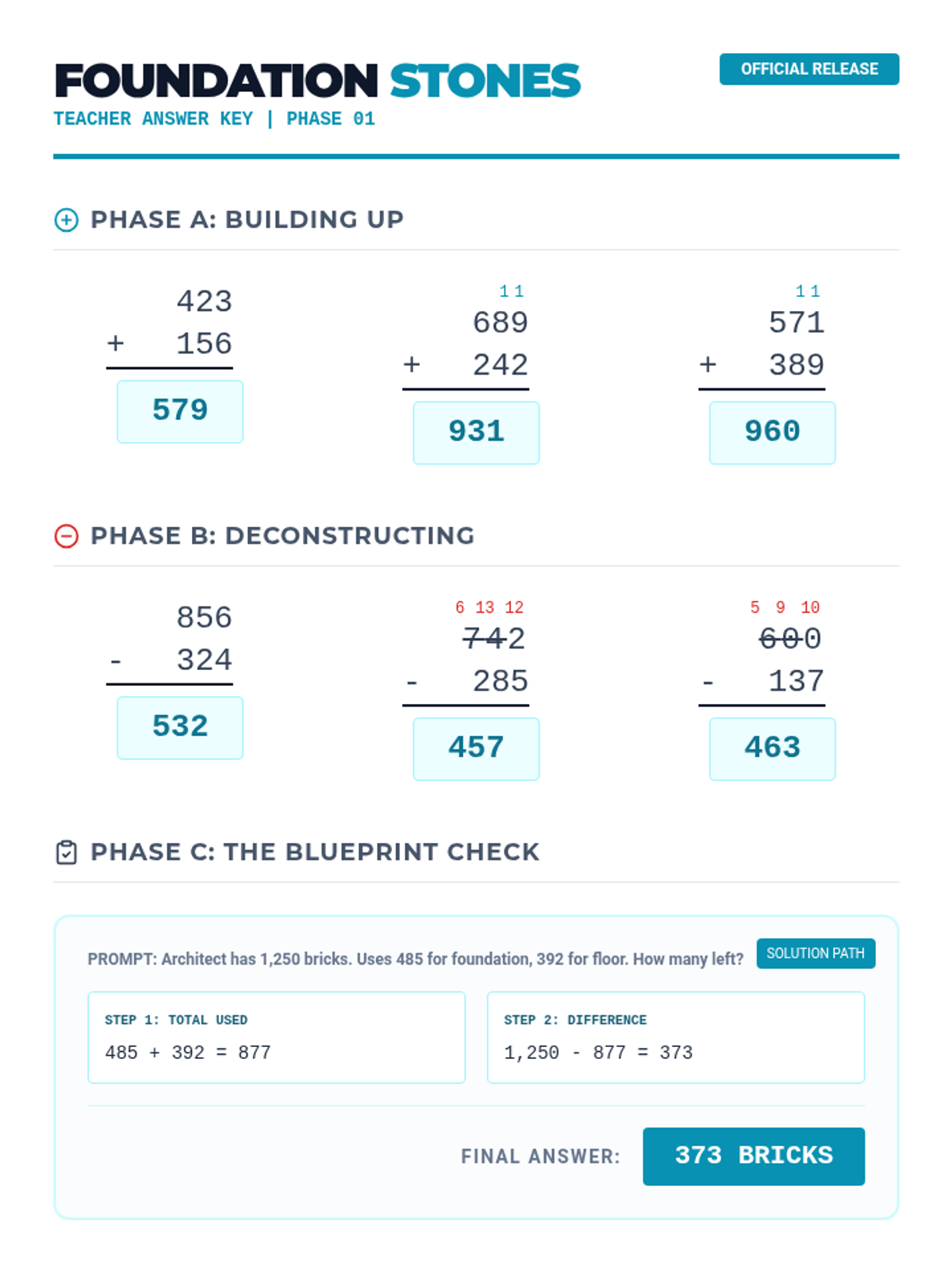
Mastering the core mechanics of addition and subtraction using place value and architectural grouping strategies.
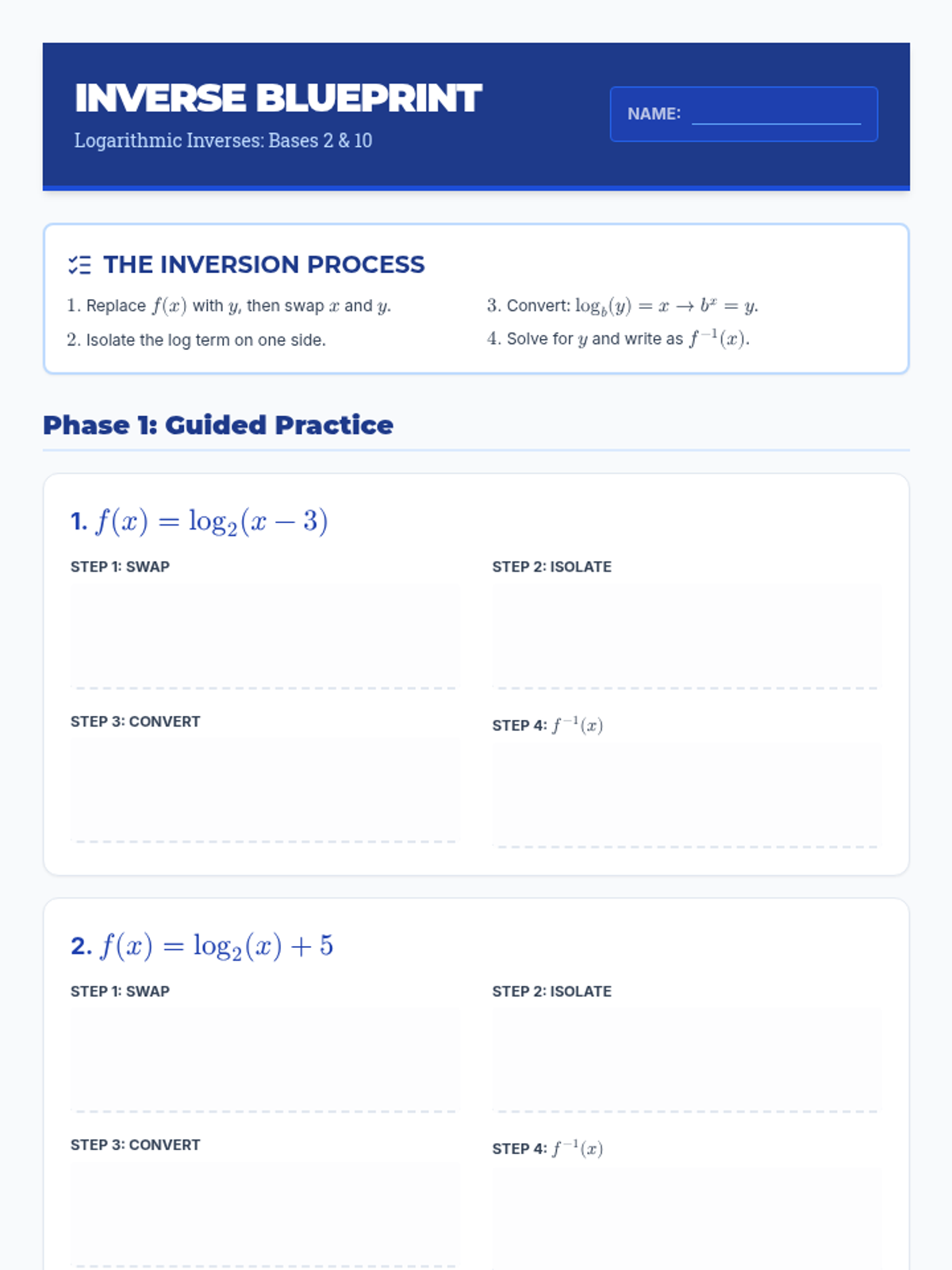
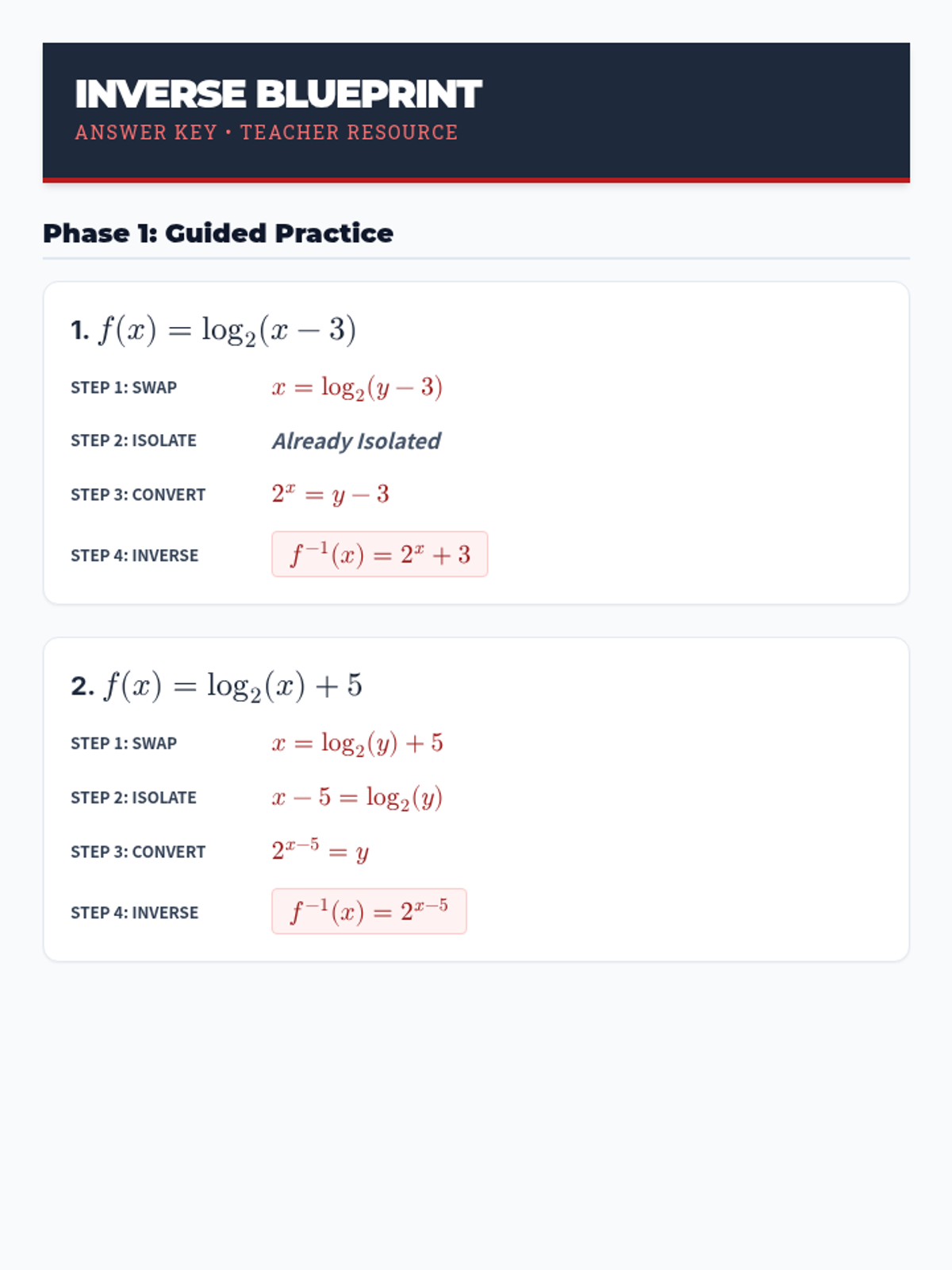
A focused lesson on finding the inverse of basic logarithmic functions using algebraic steps, specifically focusing on base 10 and base 2.
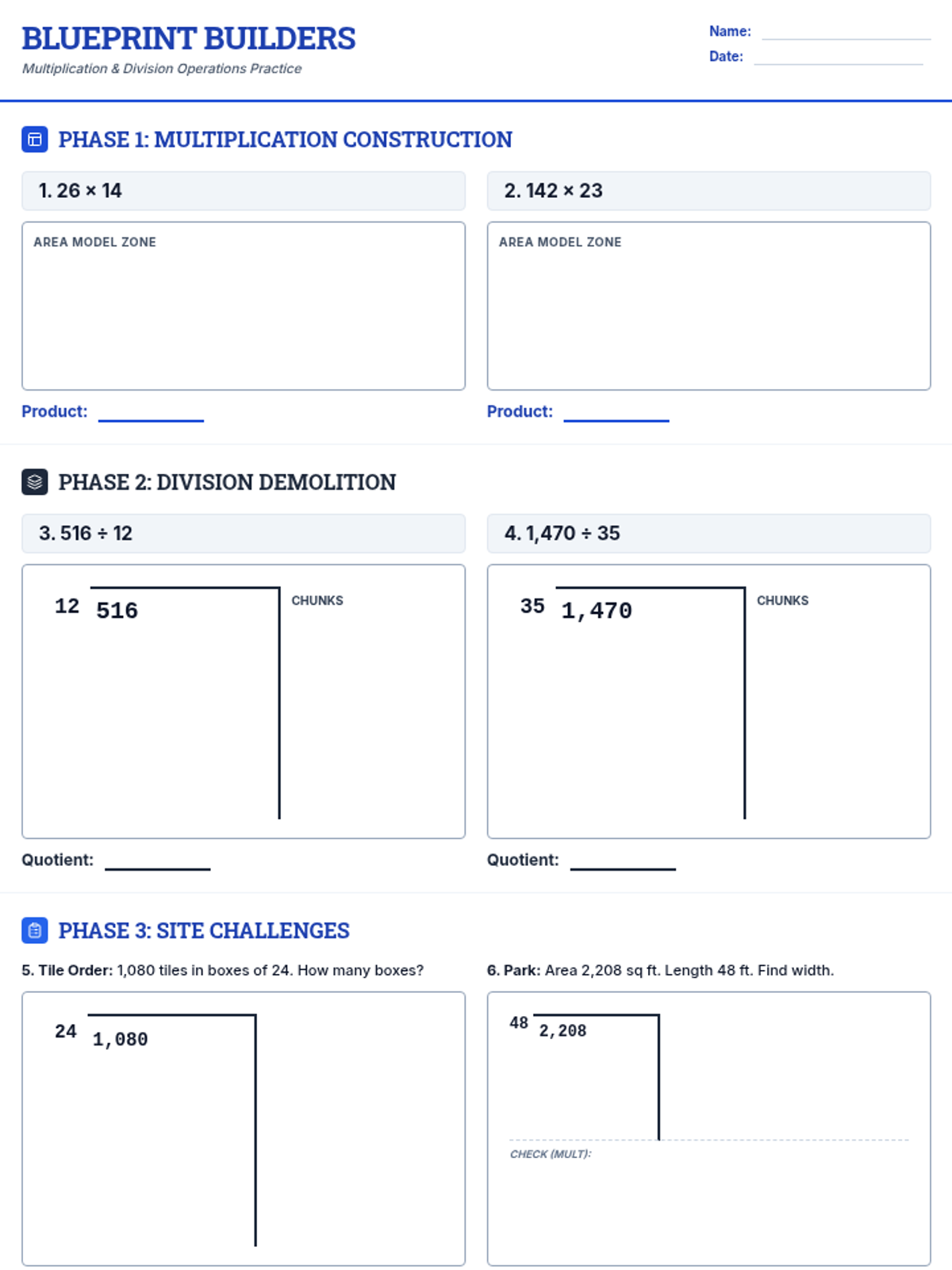
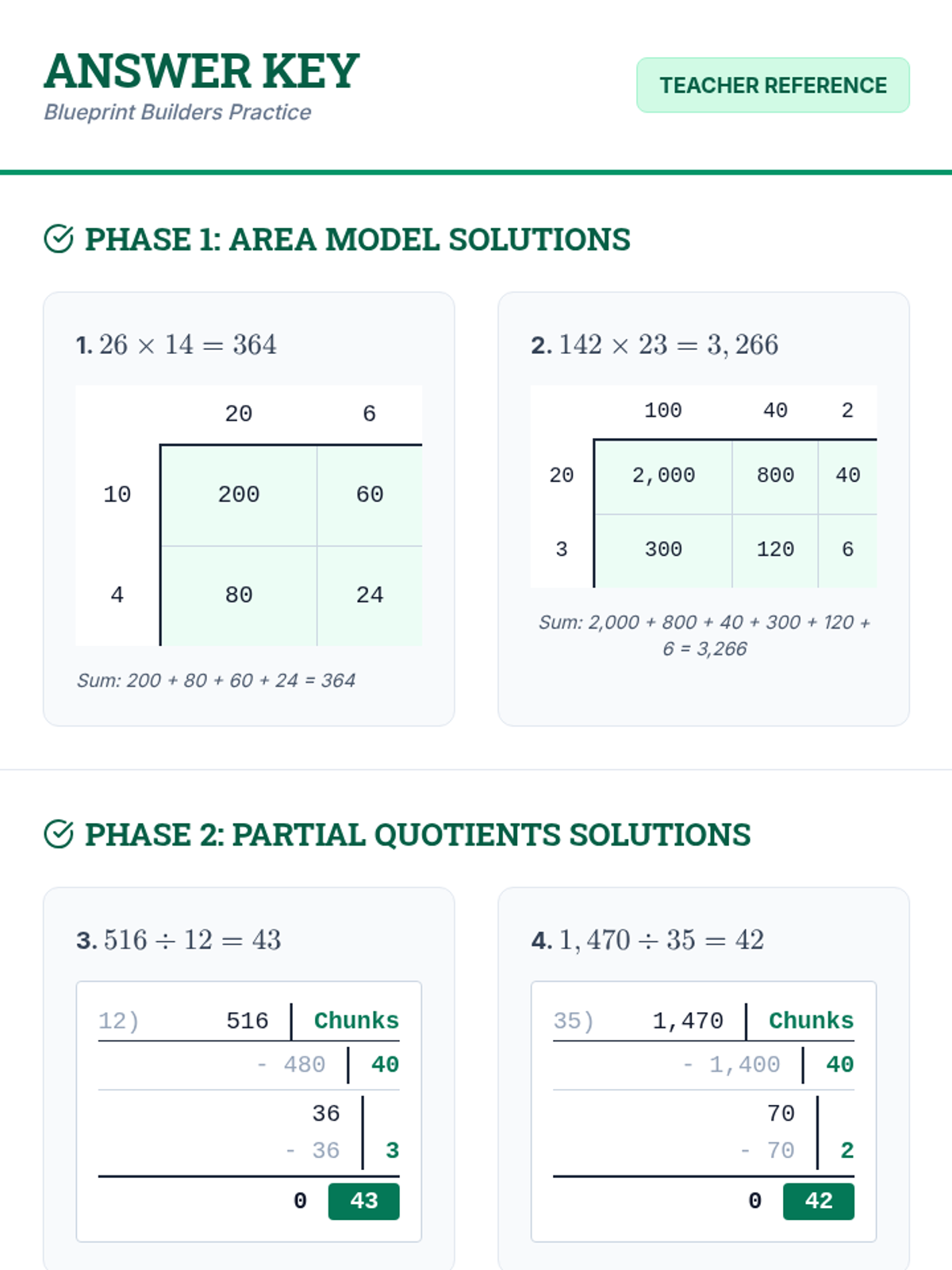
A comprehensive lesson on multi-digit multiplication and division using area models and partial quotients, highlighting the inverse relationship between these operations.
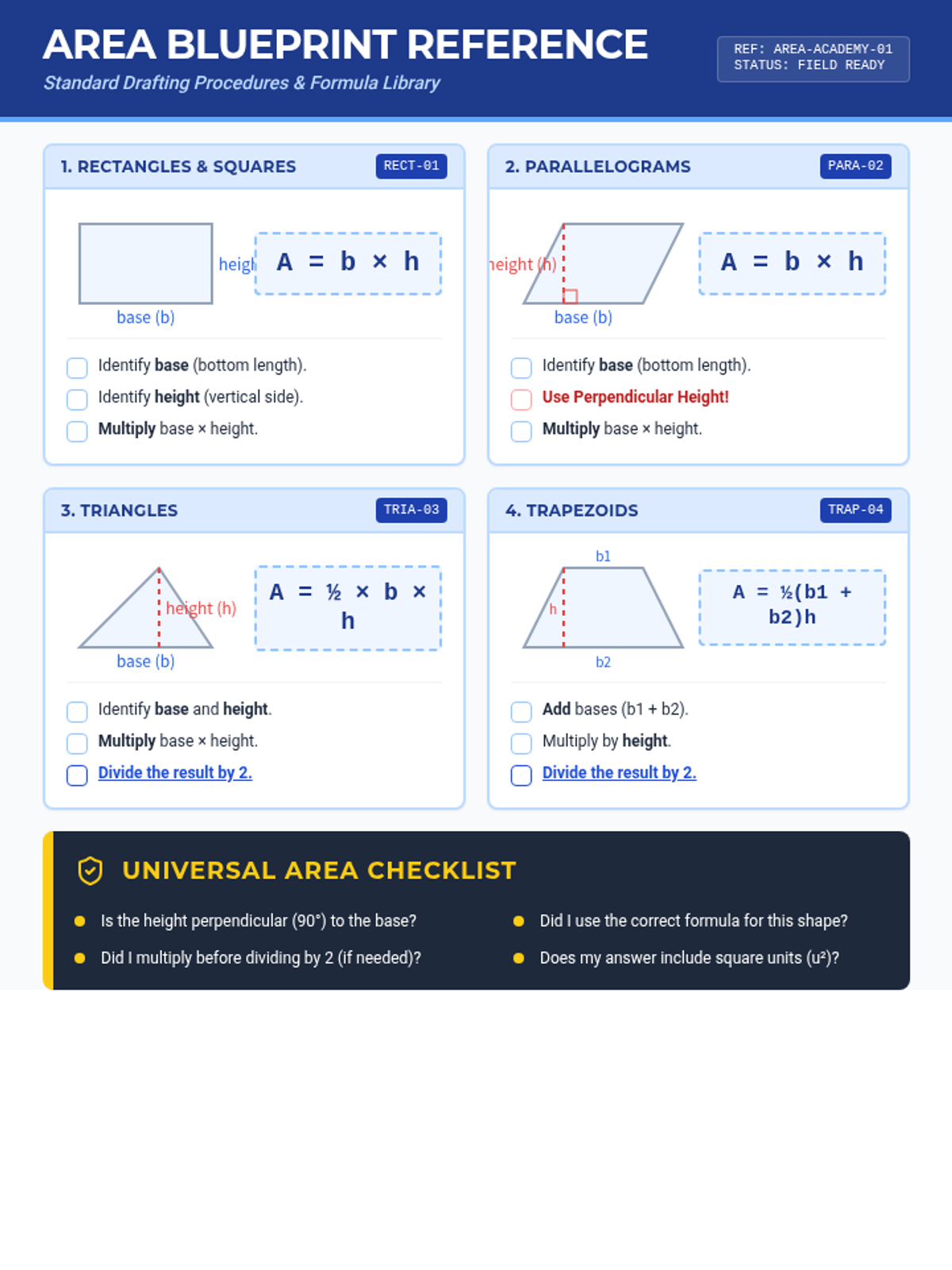
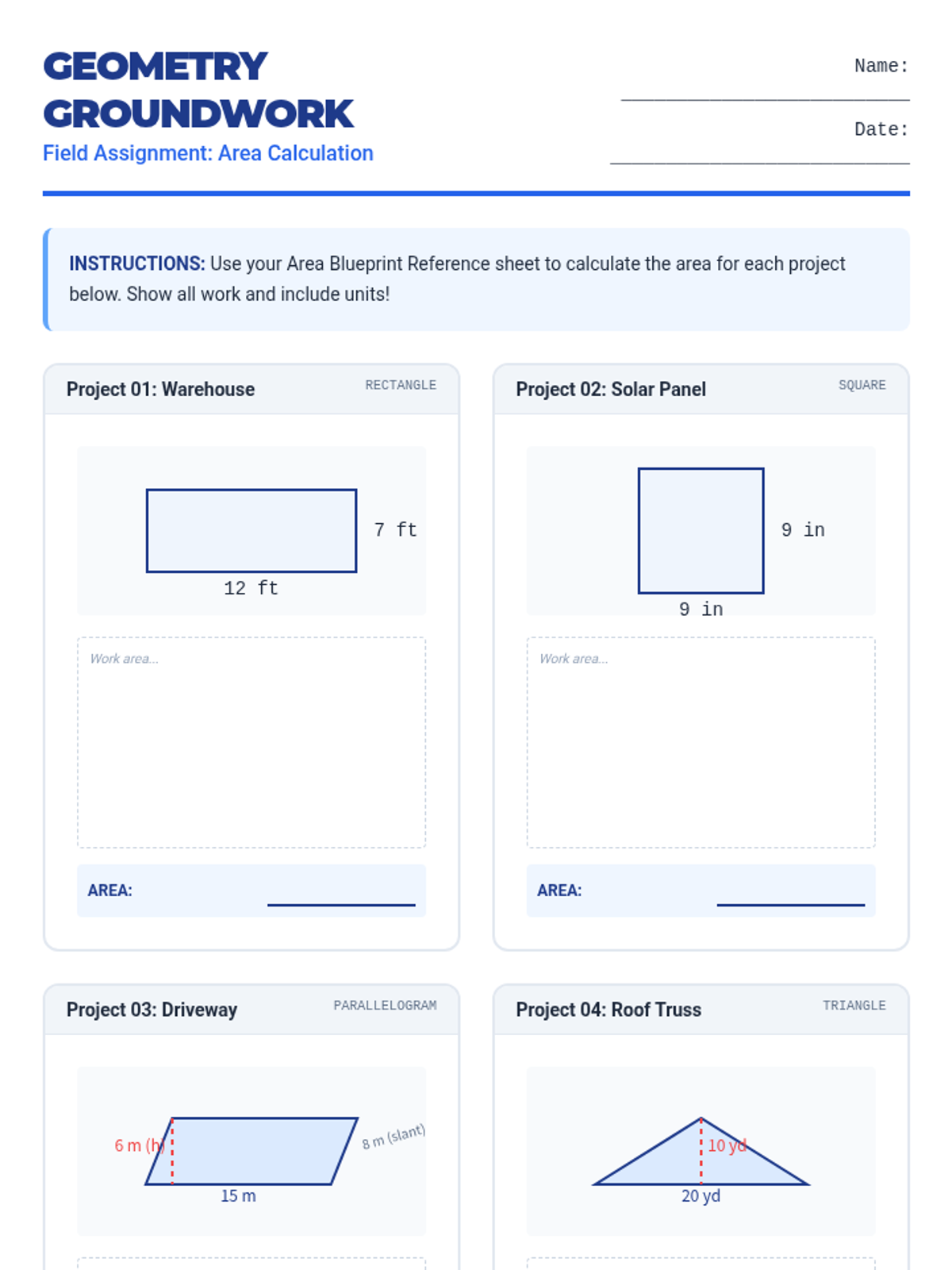
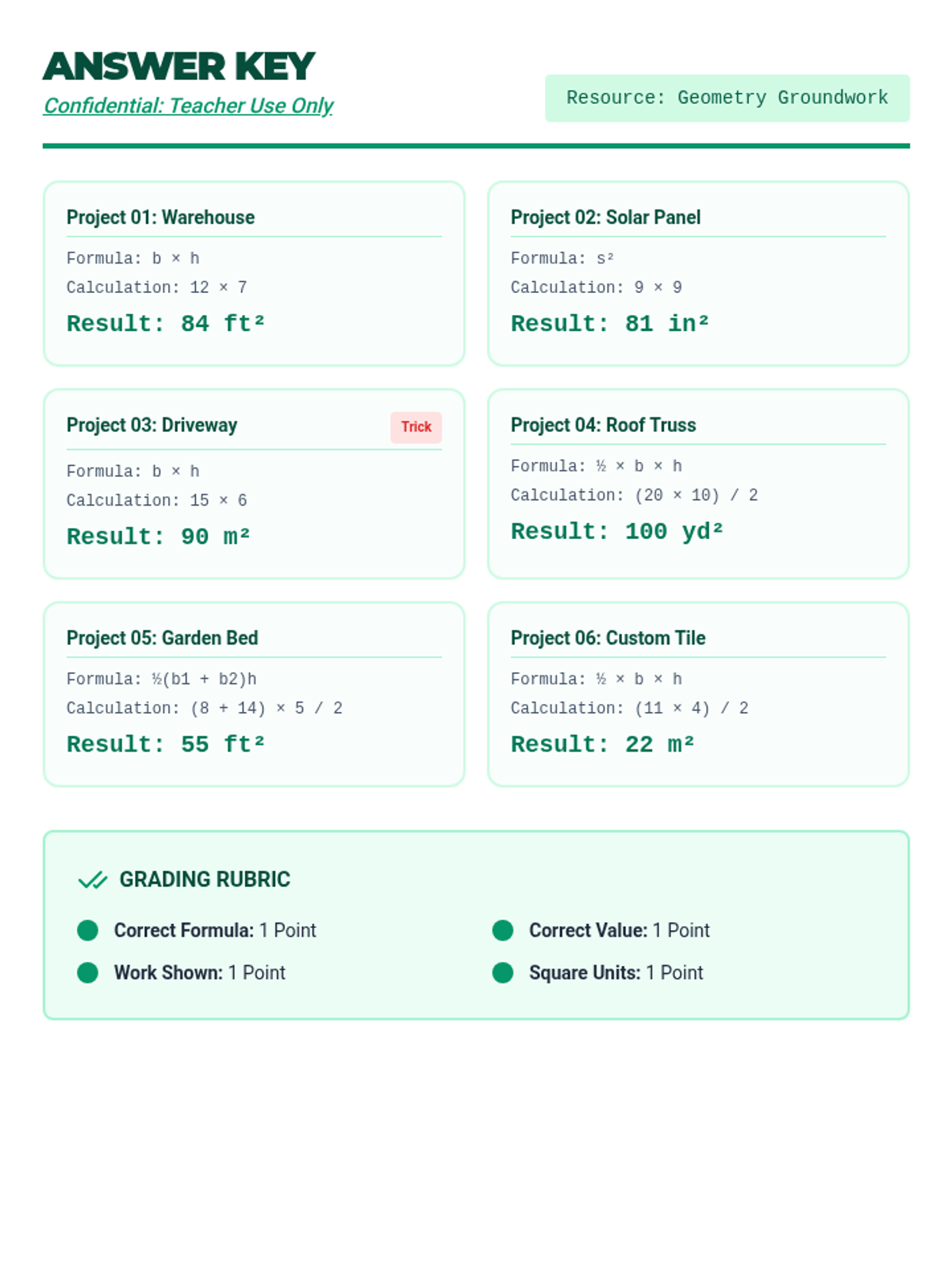
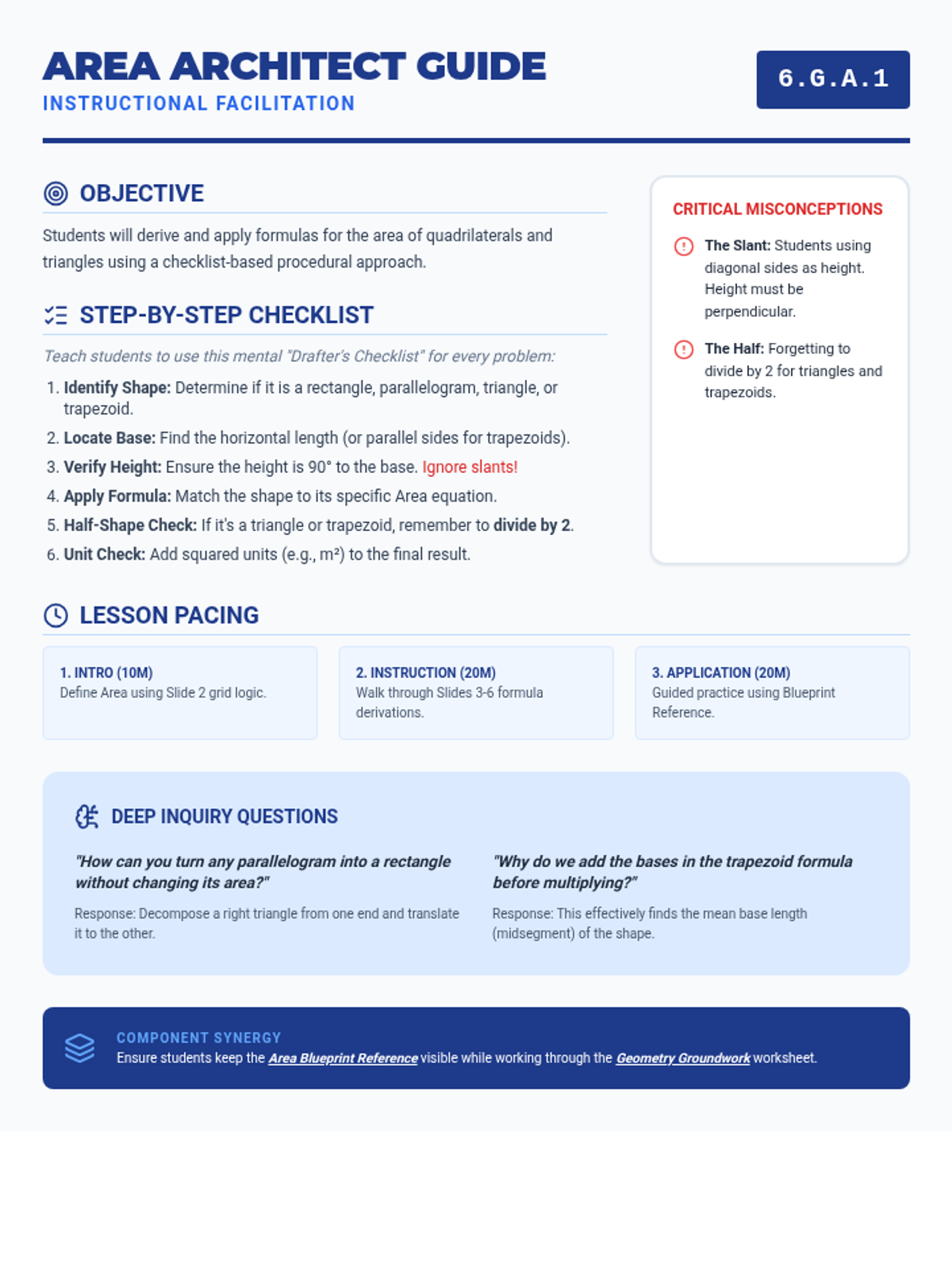
Students will learn to identify base and height dimensions and apply formulas to find the area of various quadrilaterals and triangles using step-by-step checklists.
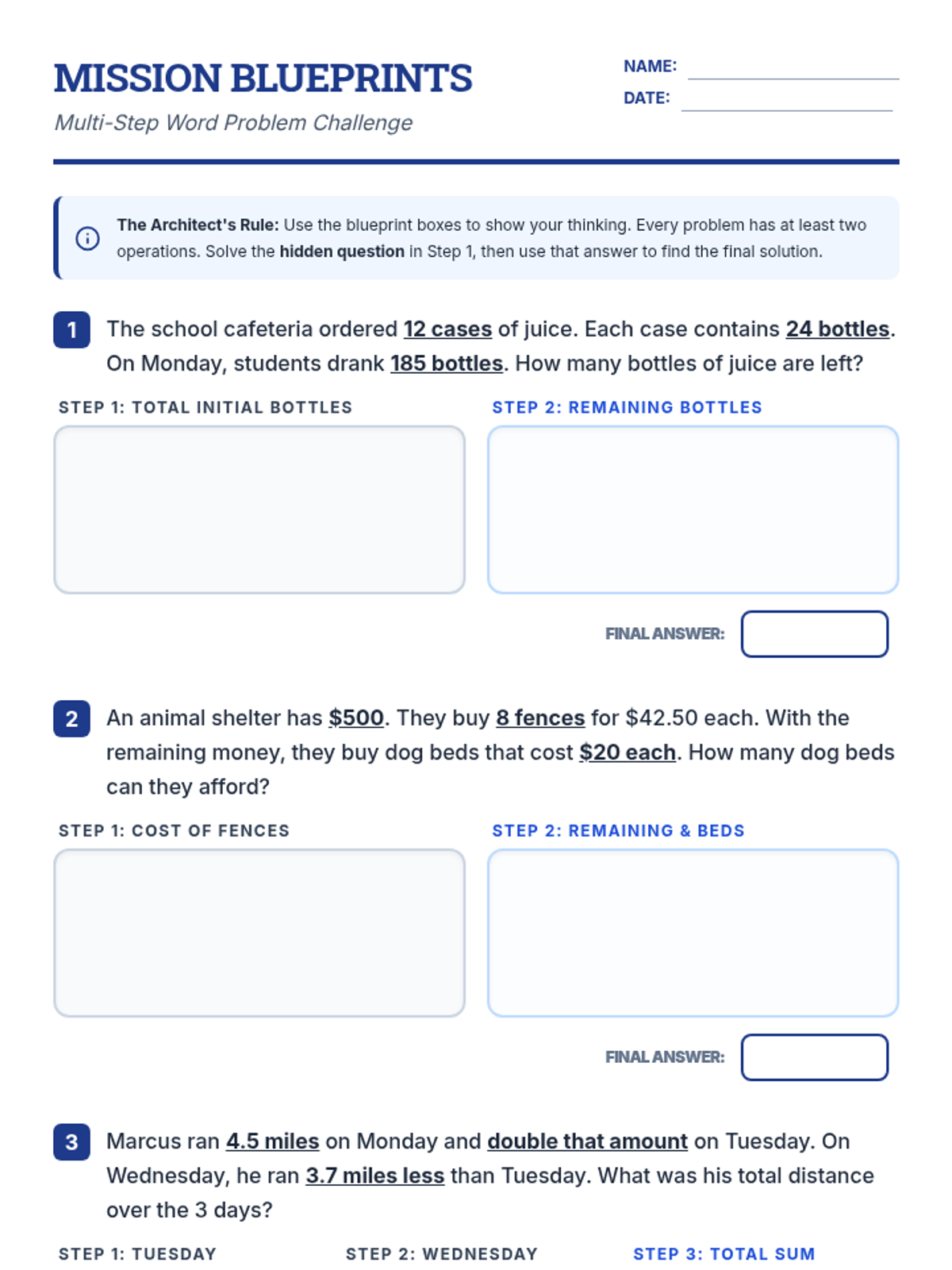
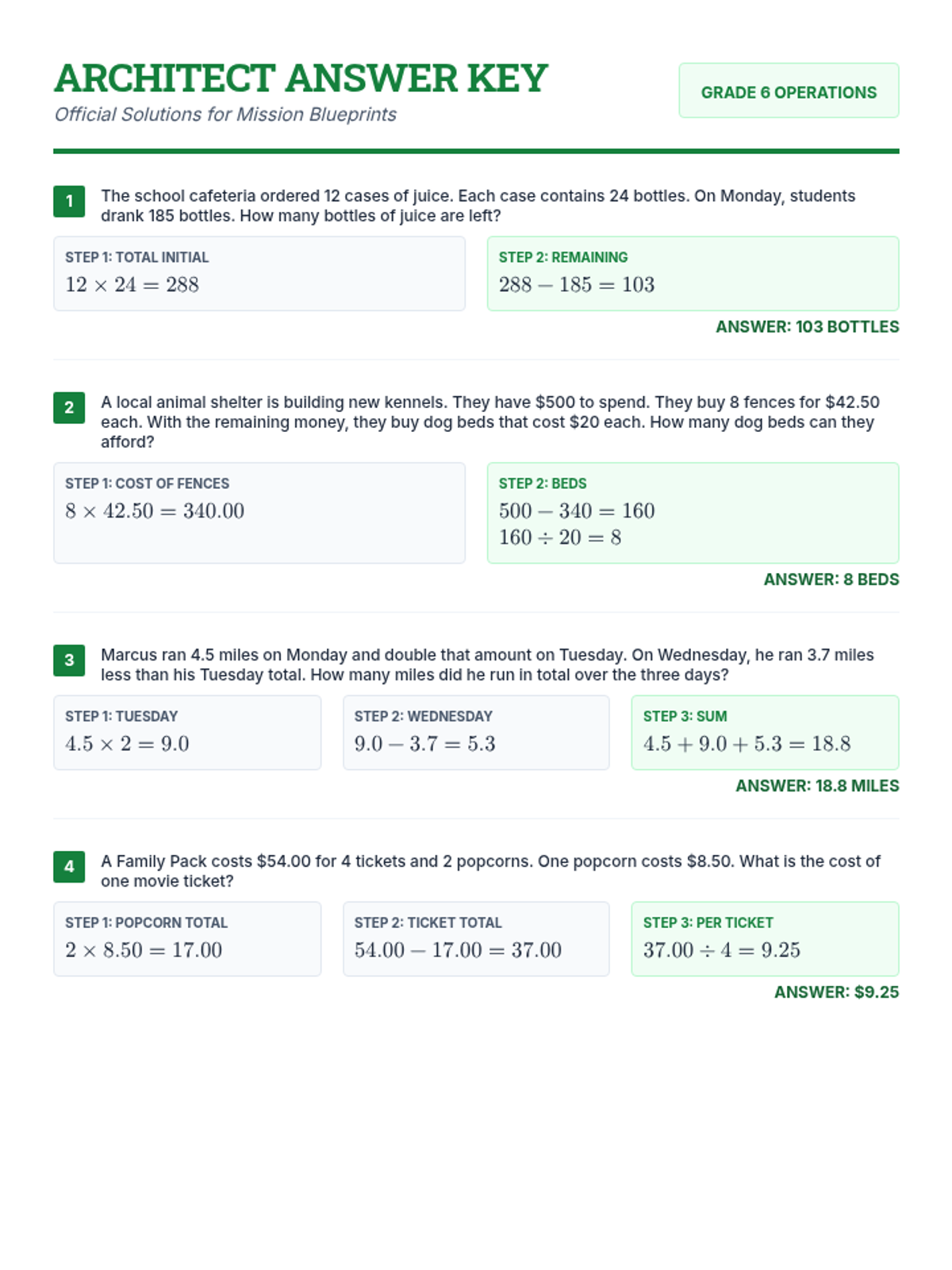
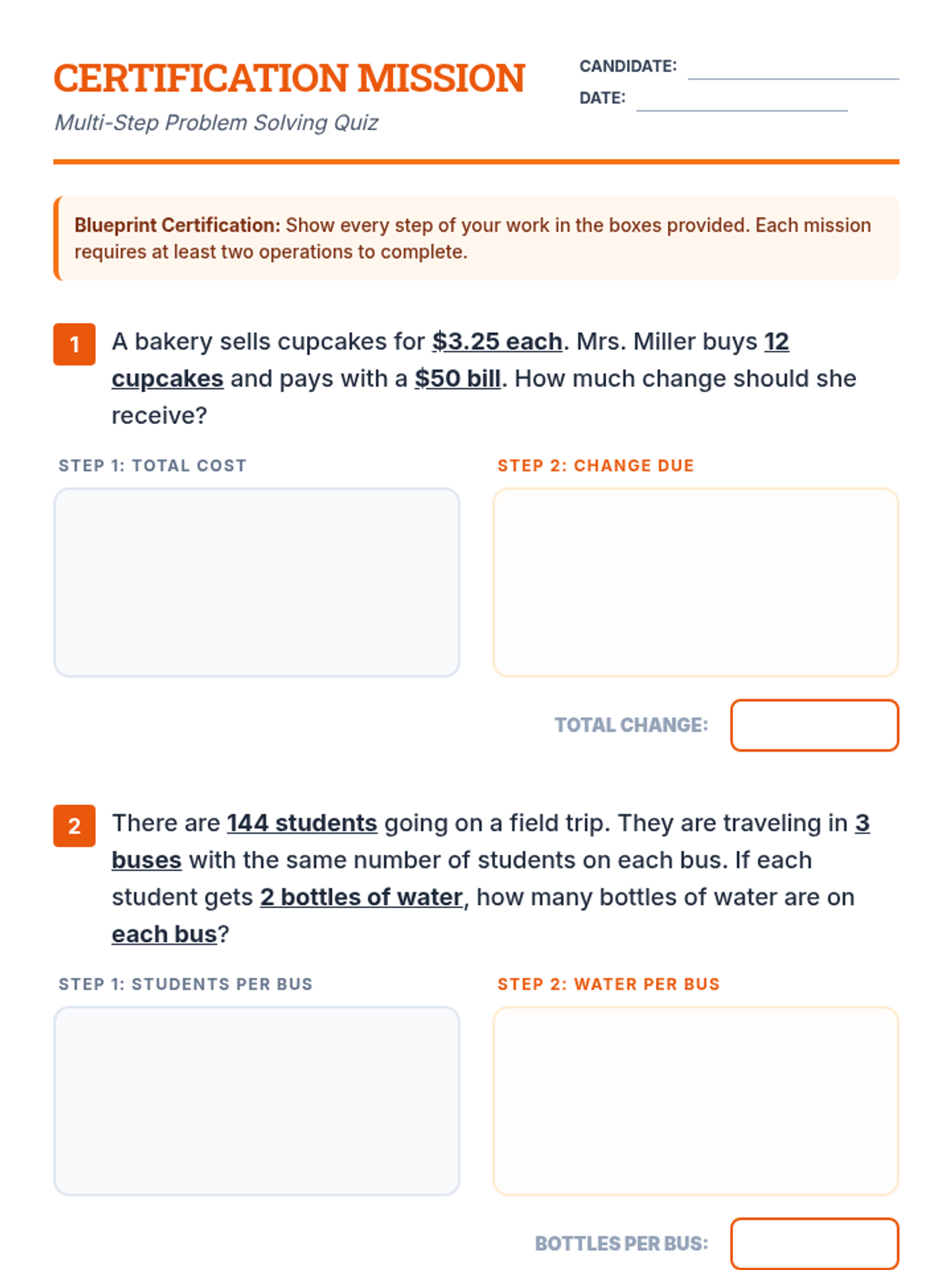
Students learn to use graphic organizer 'blueprints' to decompose multi-step word problems involving addition, subtraction, multiplication, and division into manageable steps.
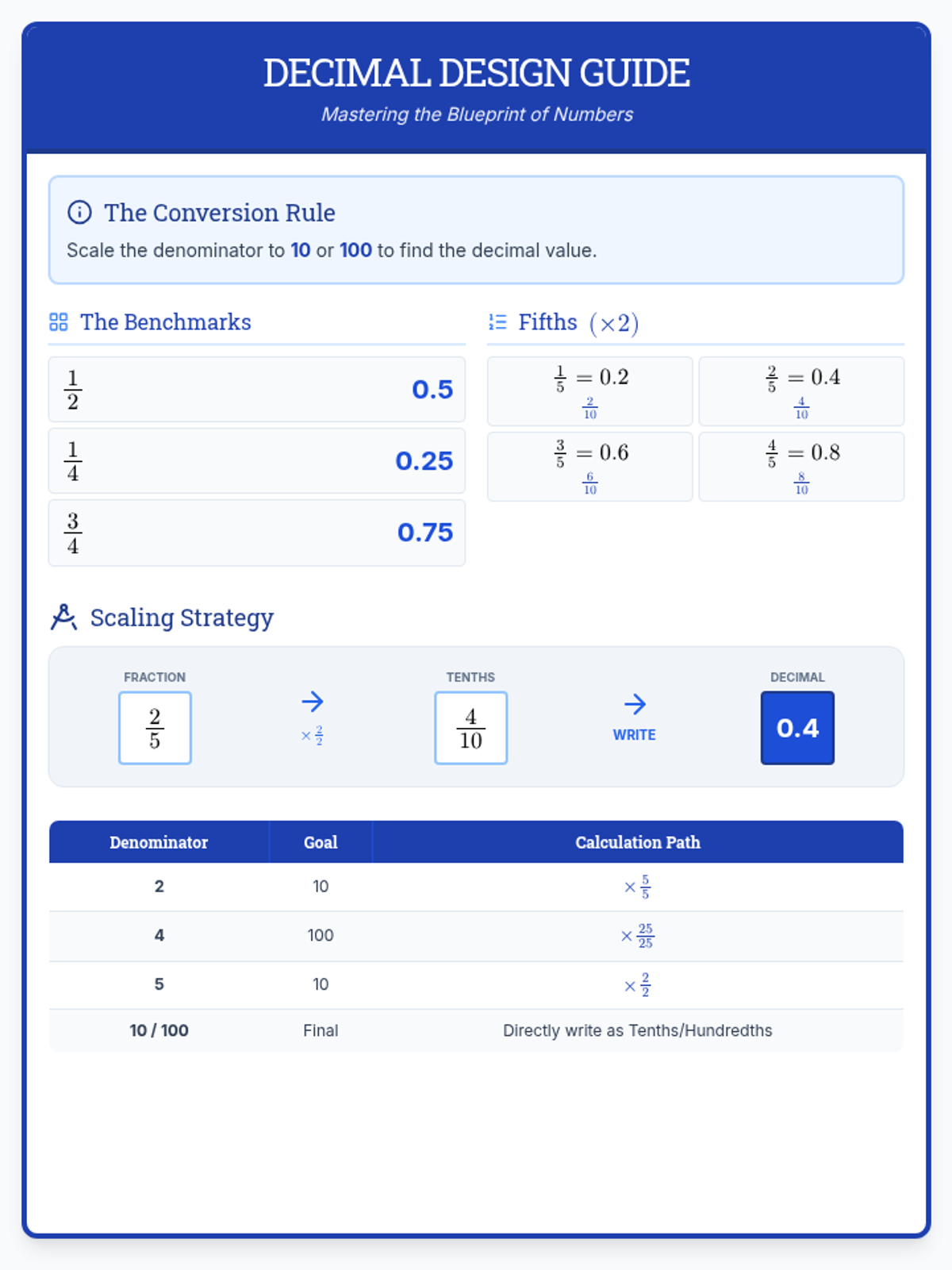
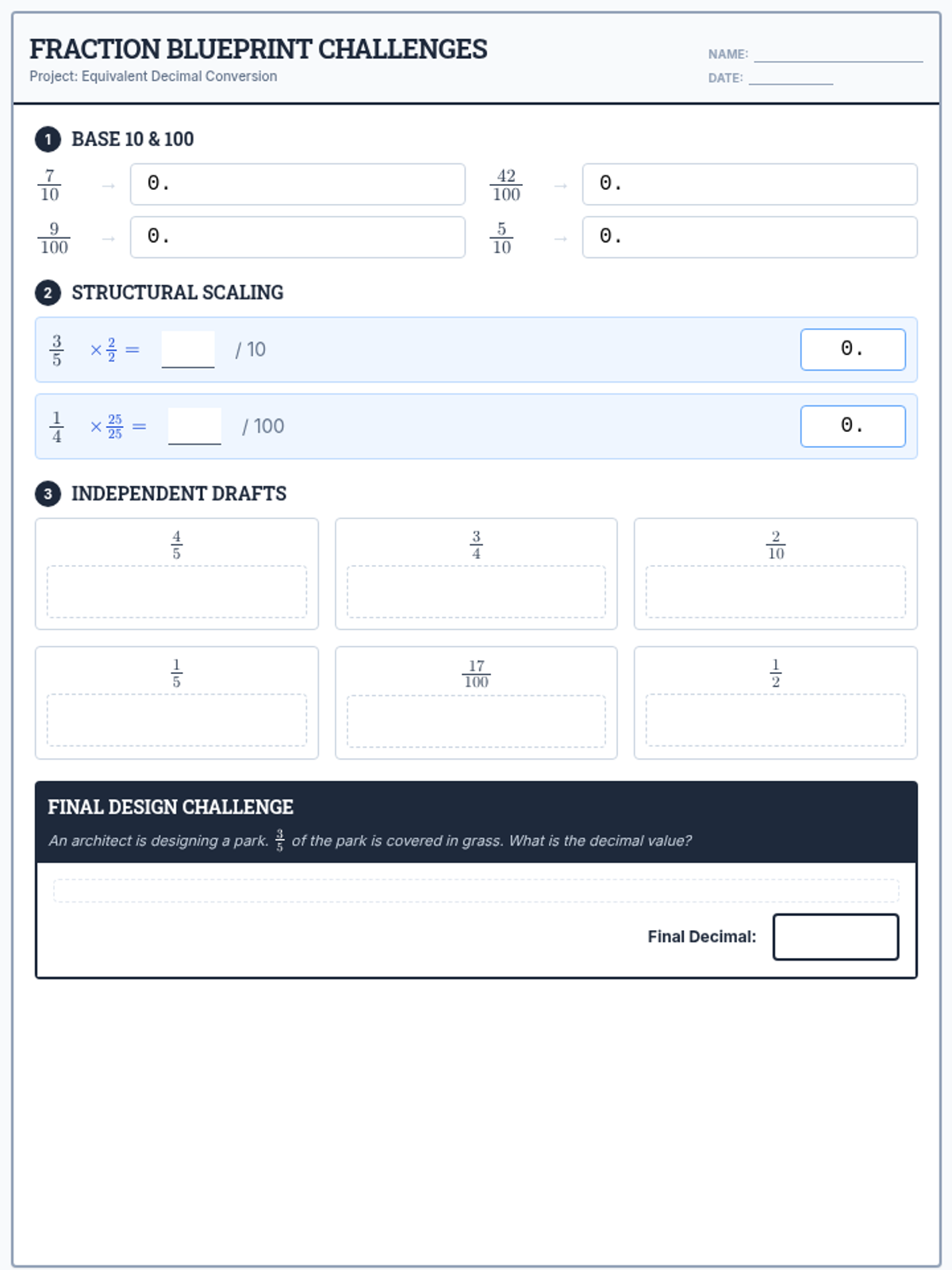
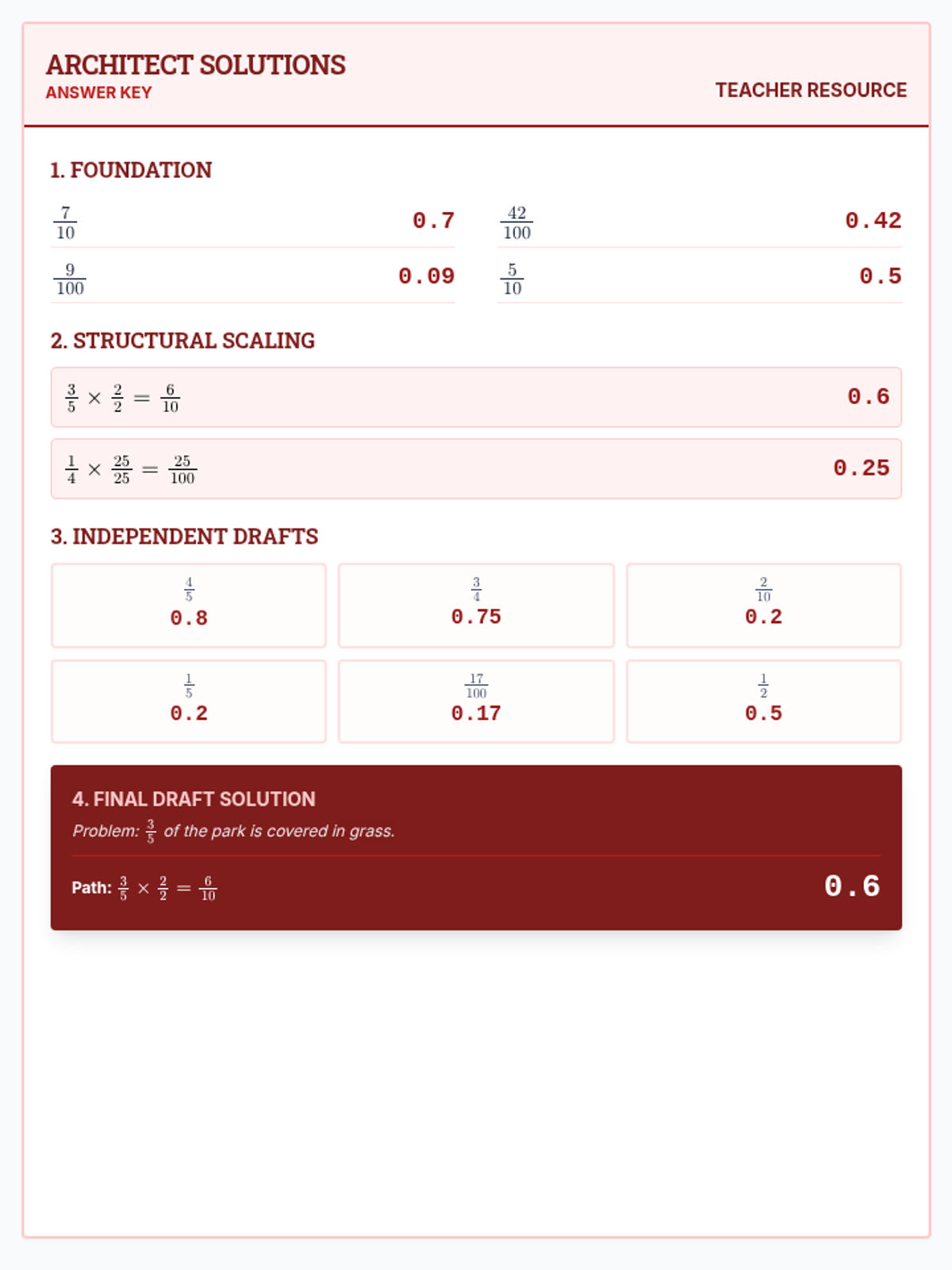
A focused lesson on converting common fractions with denominators of 2, 4, 5, 10, and 100 into their decimal equivalents through visual models and scaling strategies.
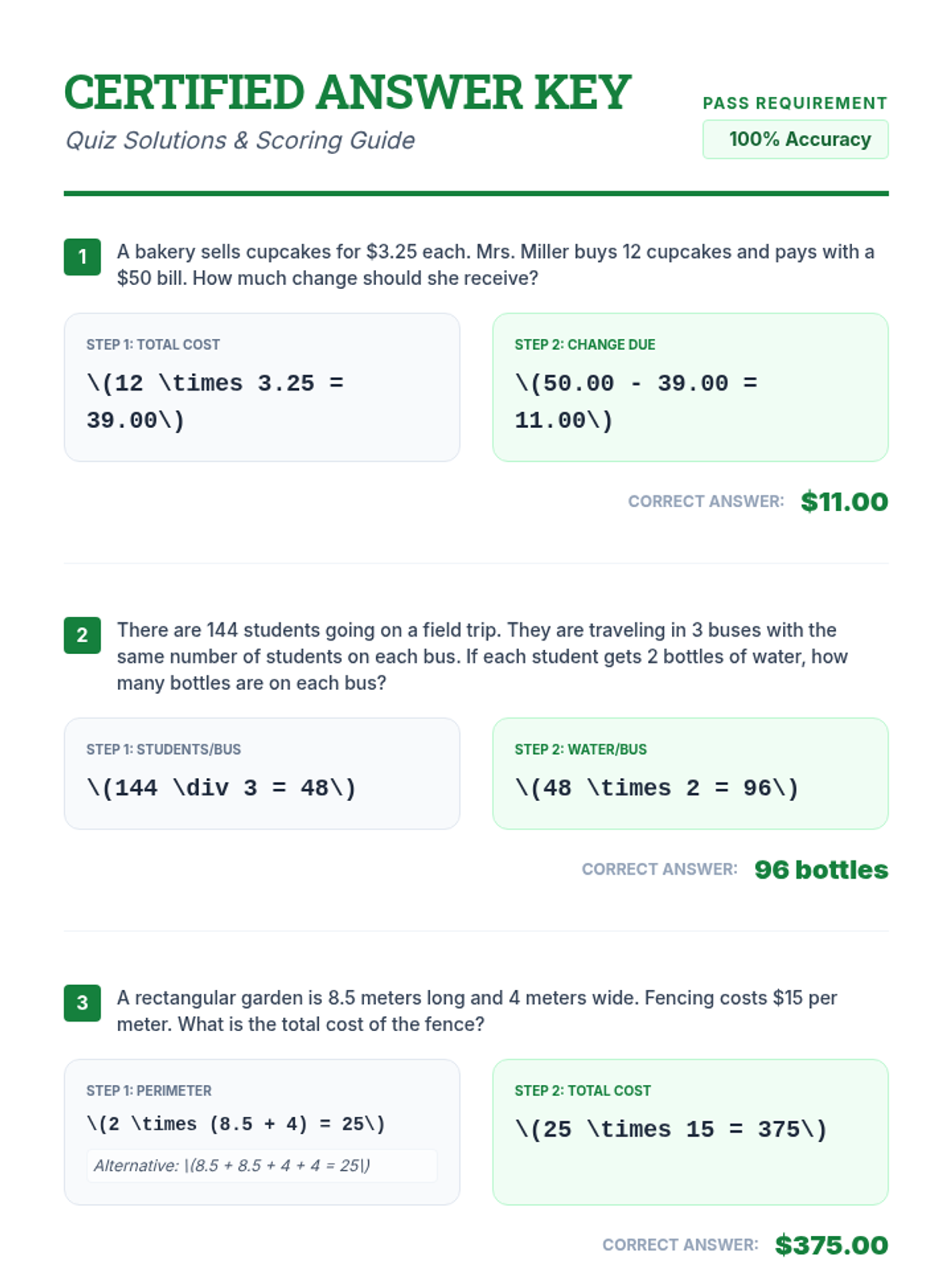
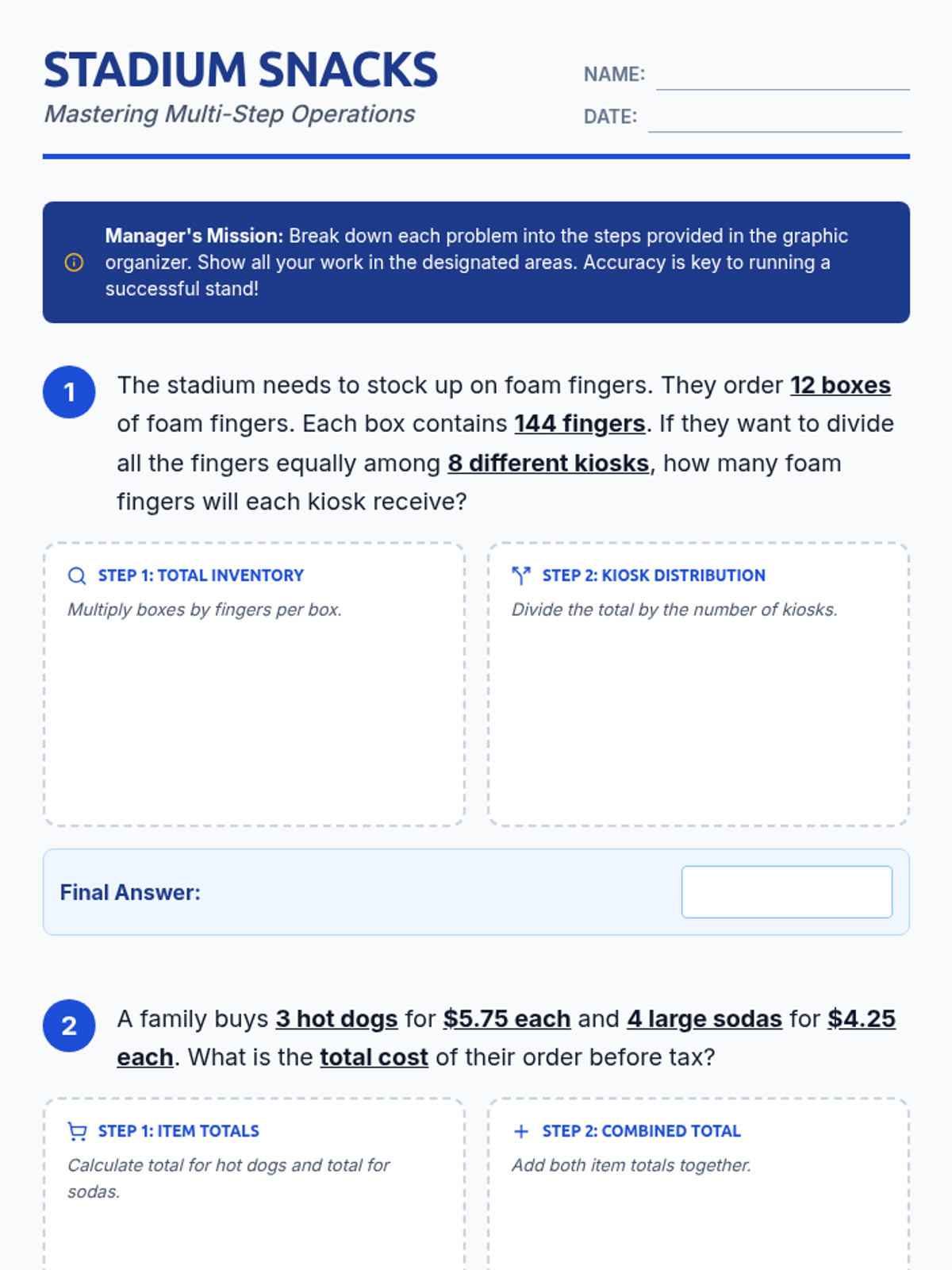
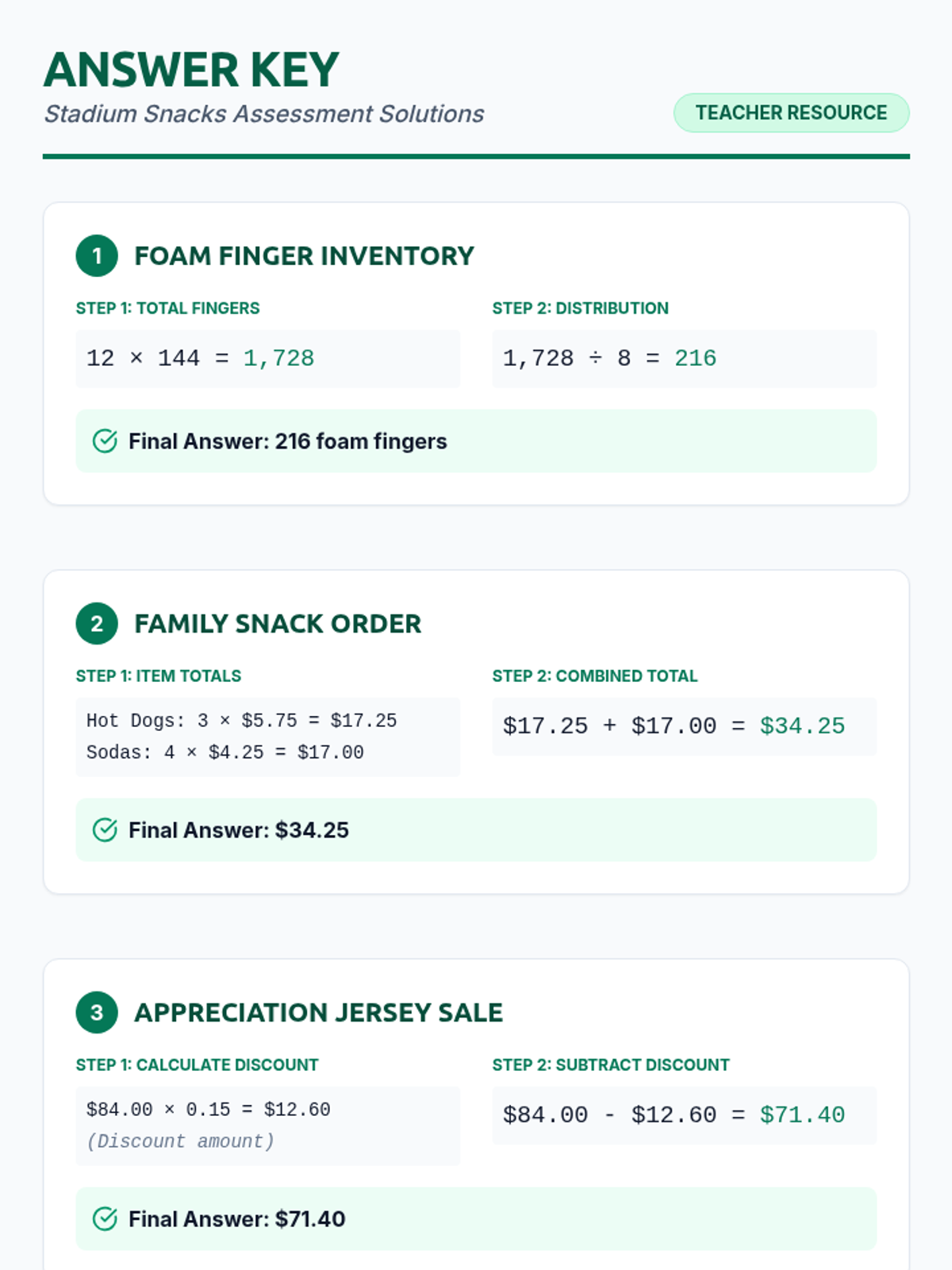
A multi-step math assessment focused on decimals, percentages, and whole number operations within a stadium concession stand theme. Students use graphic organizers to break down complex problems into manageable steps.
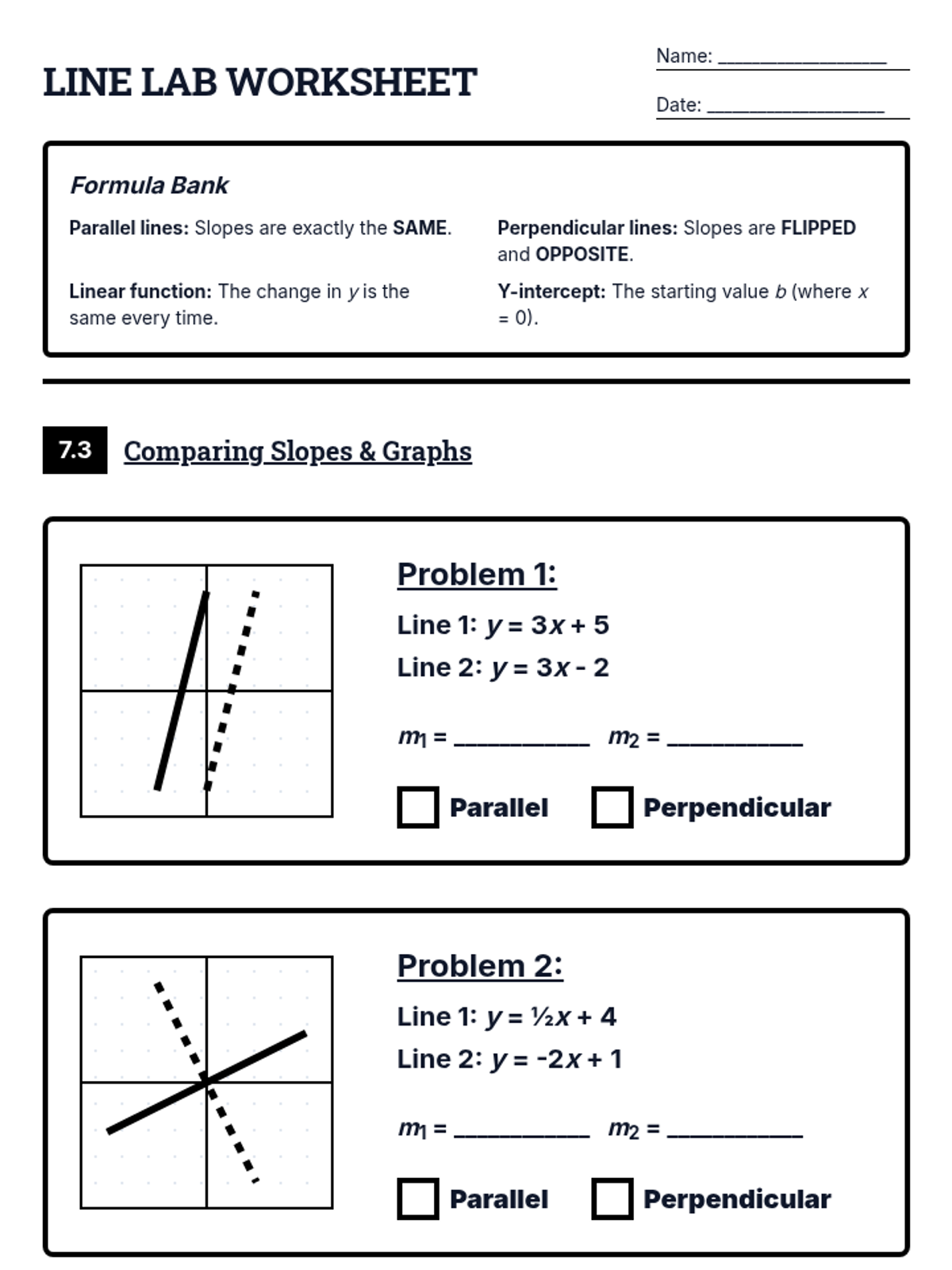
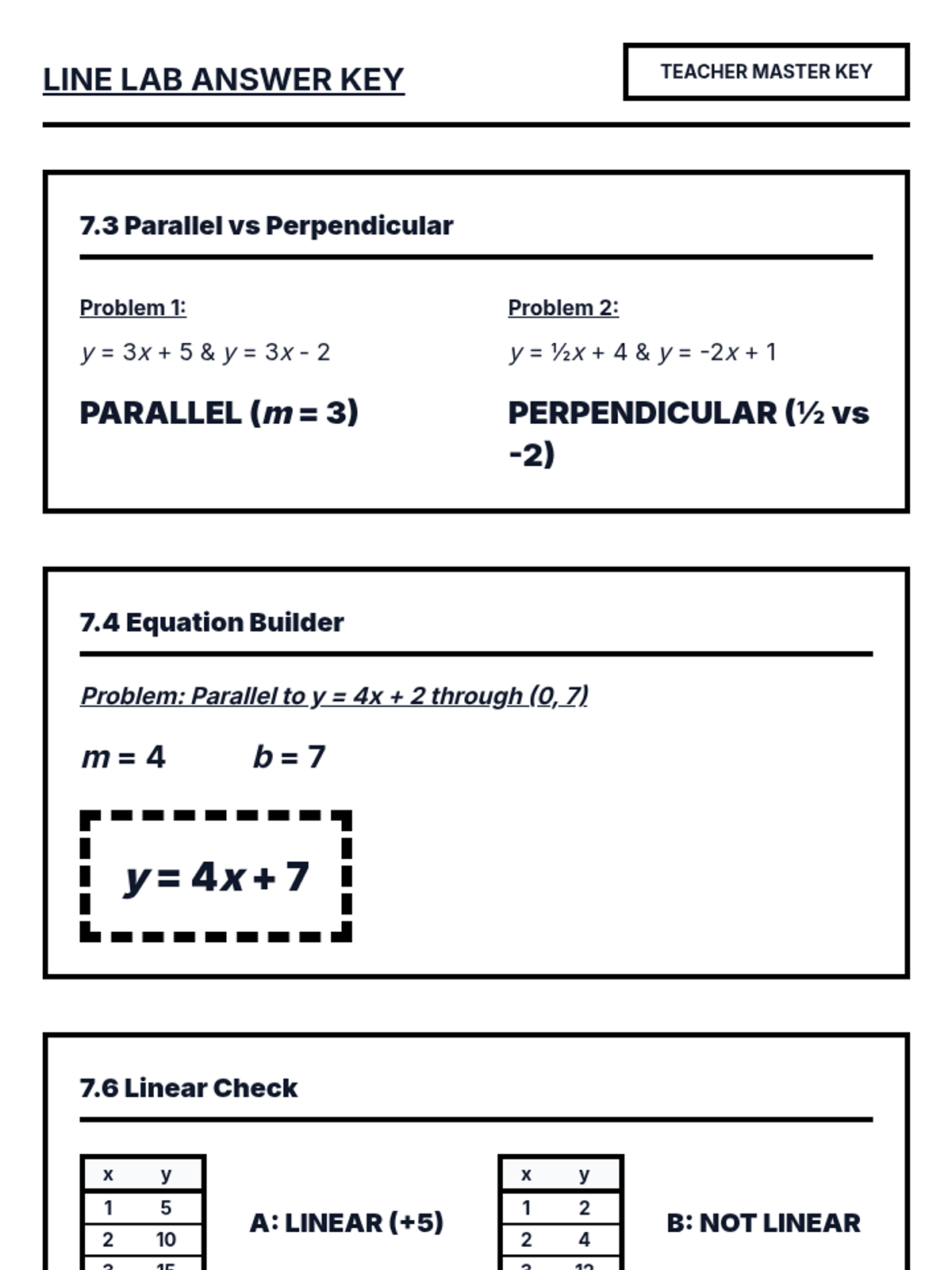
A comprehensive lesson on linear relationships, covering parallel and perpendicular lines, writing equations, and interpreting linear models in real-world contexts, specifically scaffolded for students with IEPs.
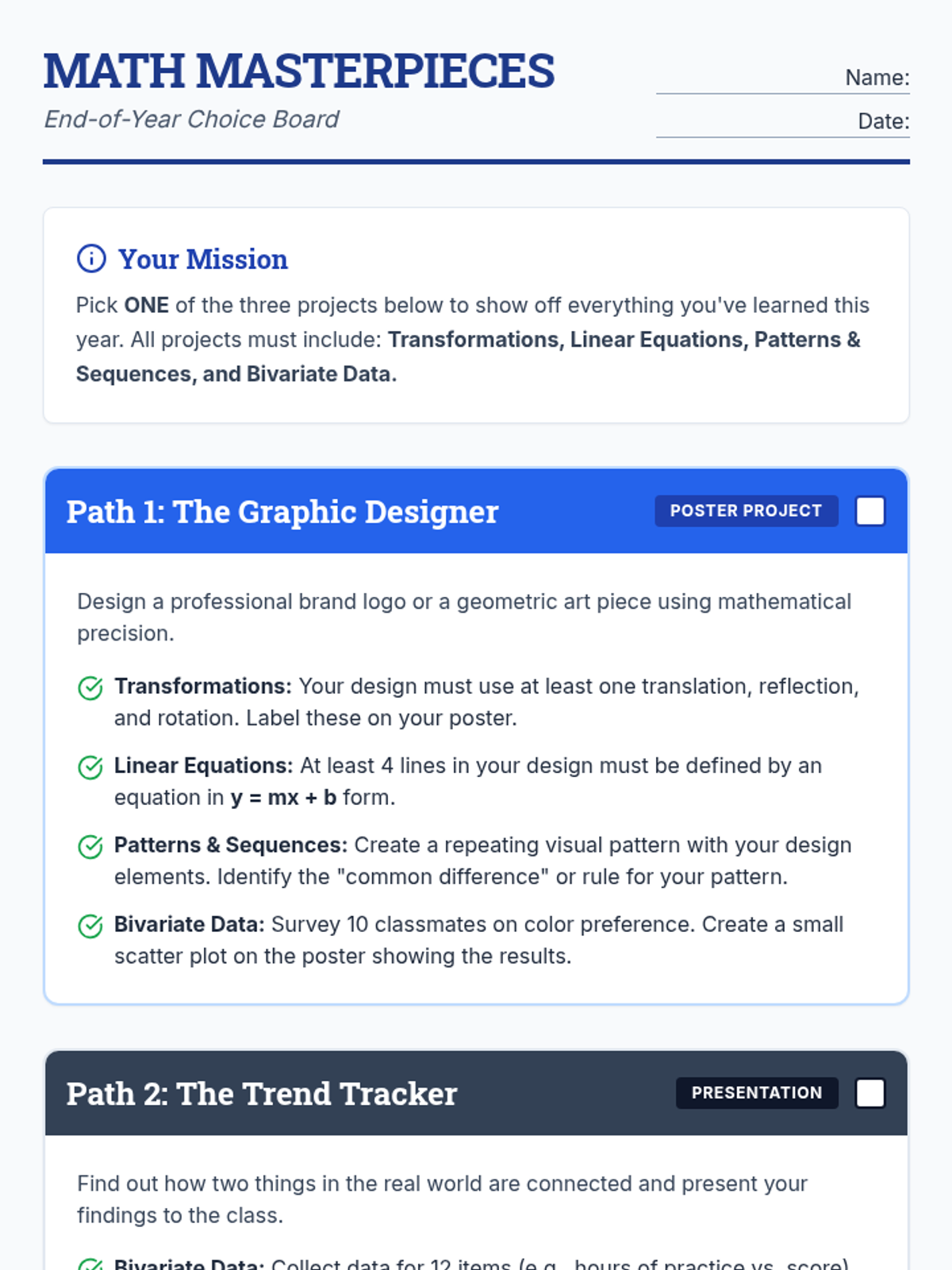
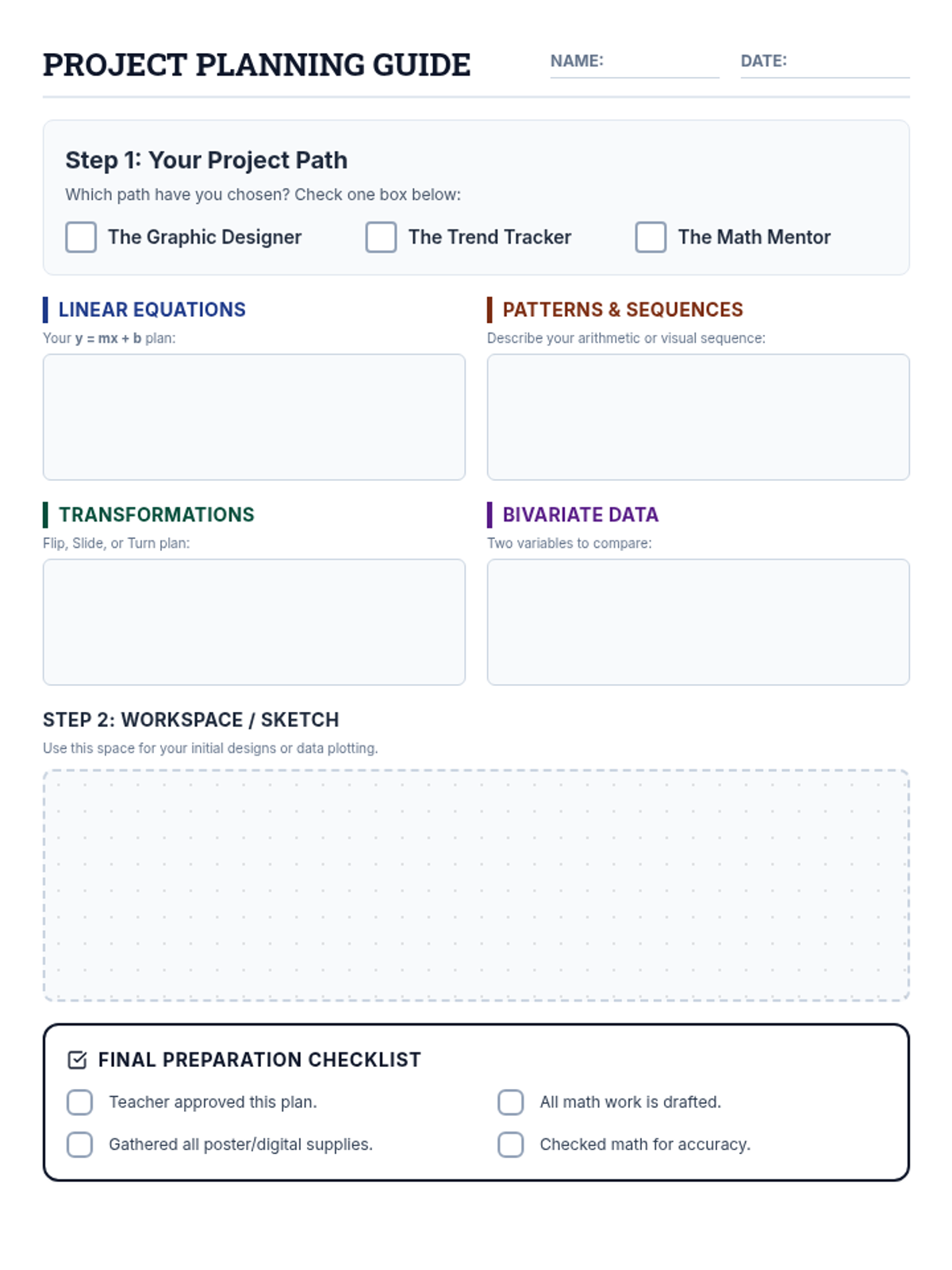
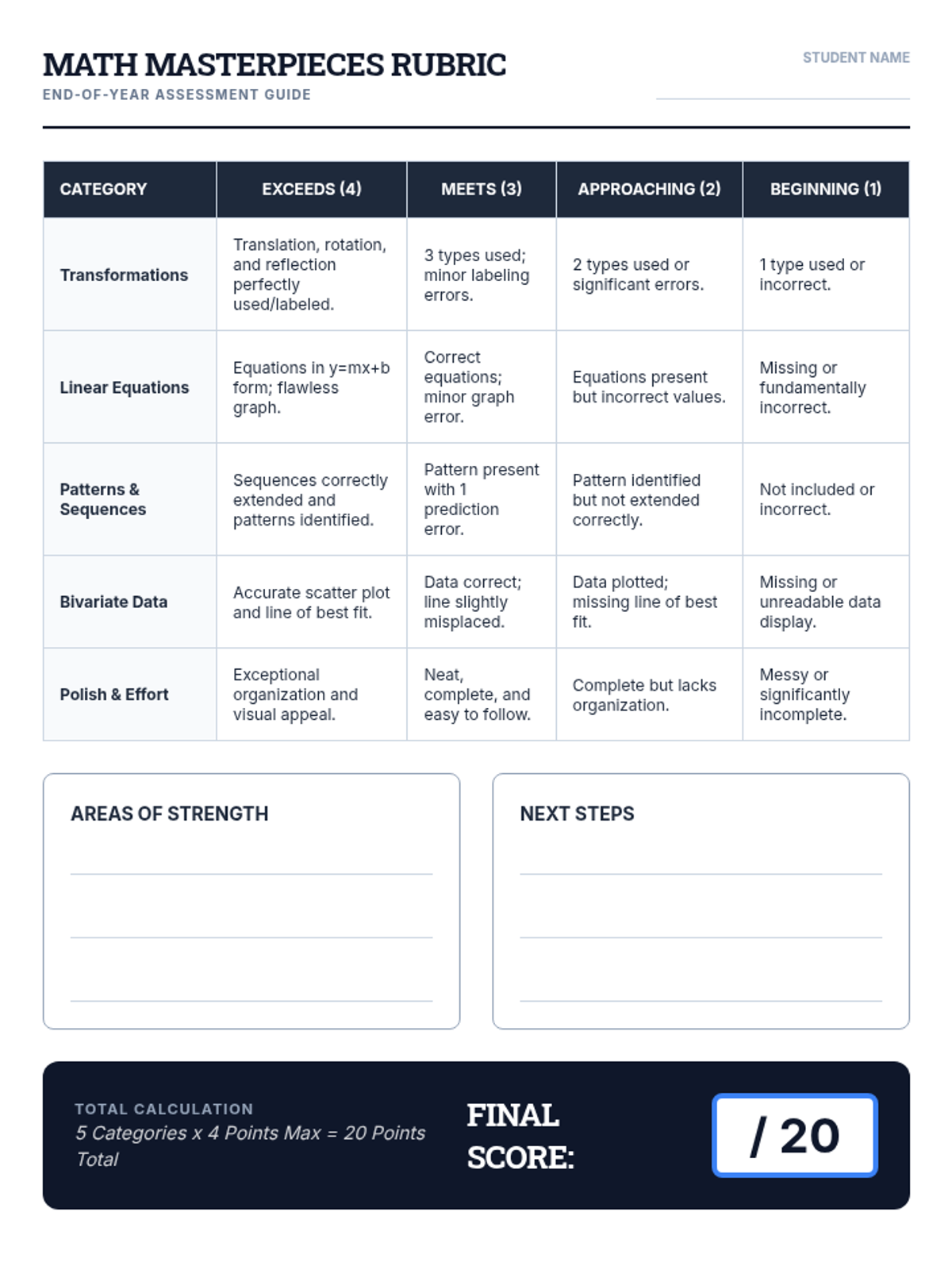
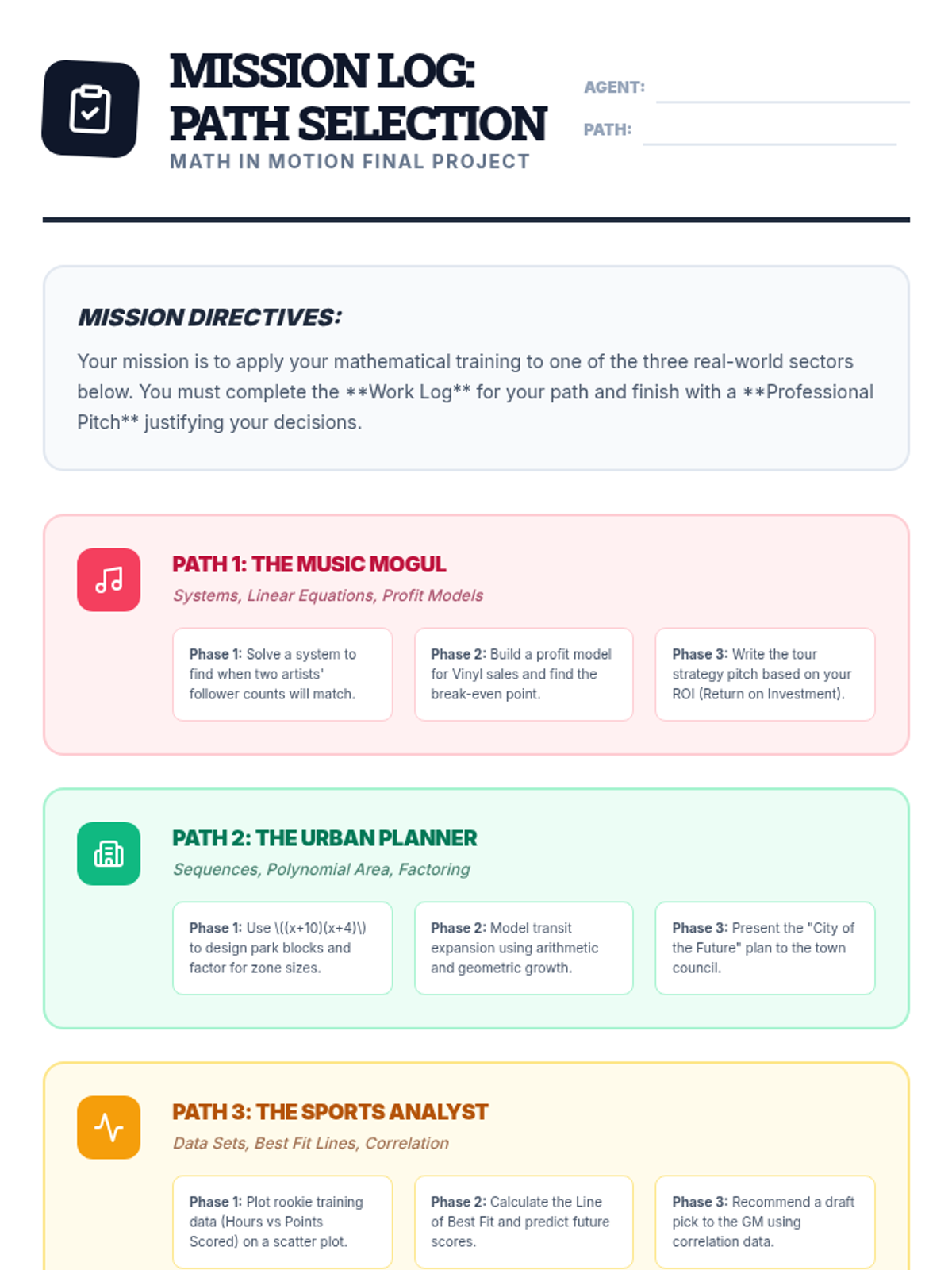
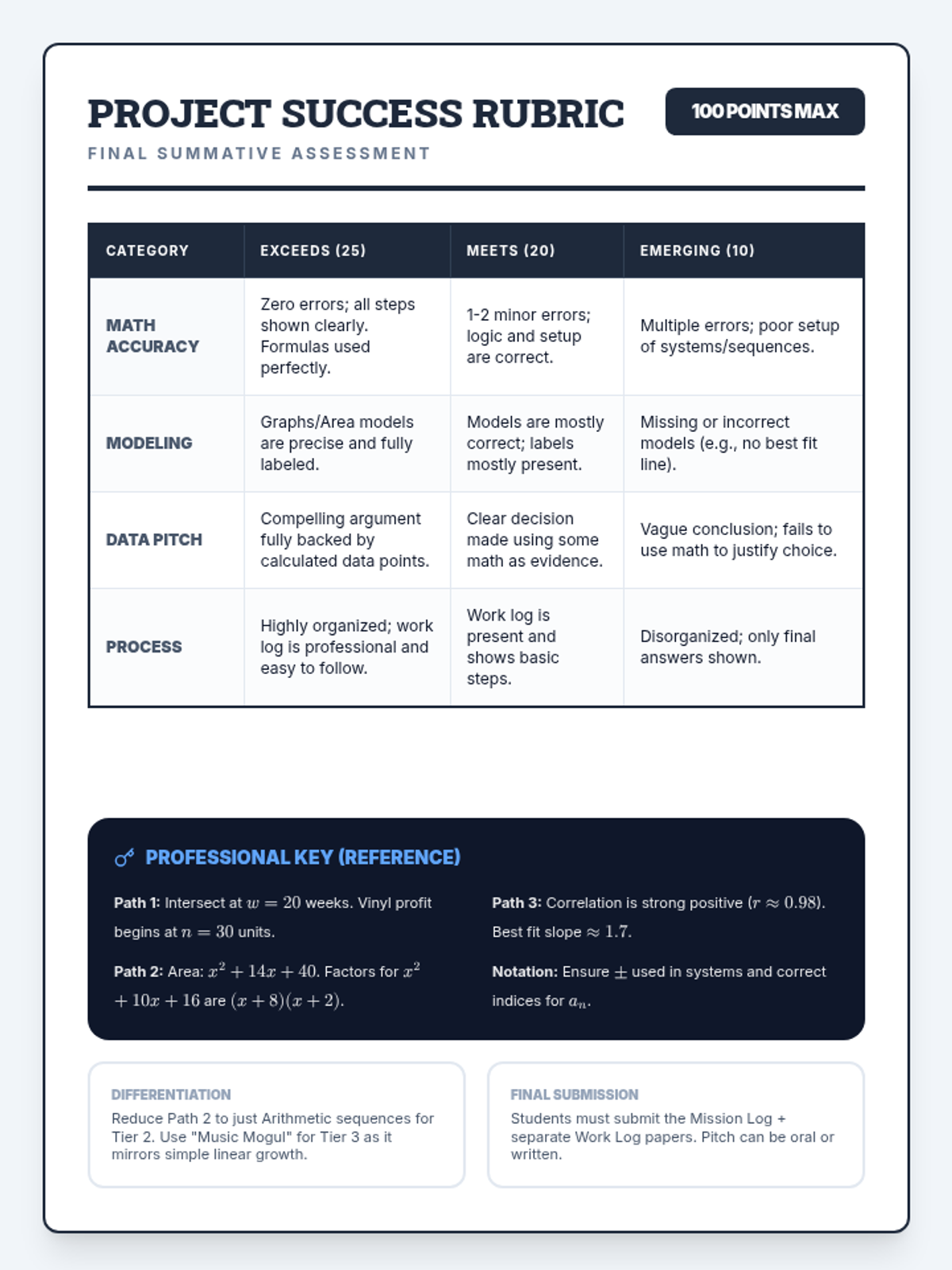
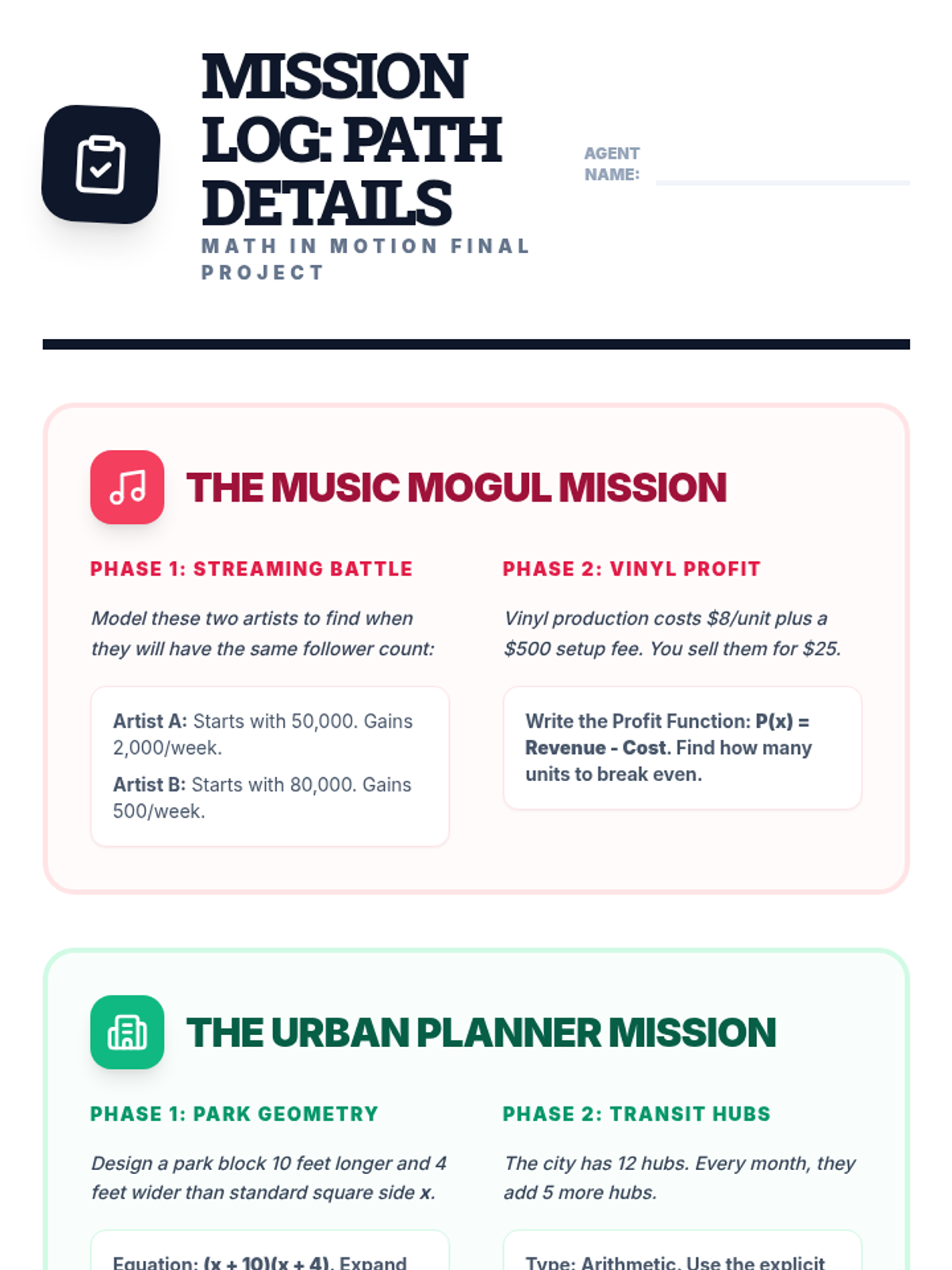
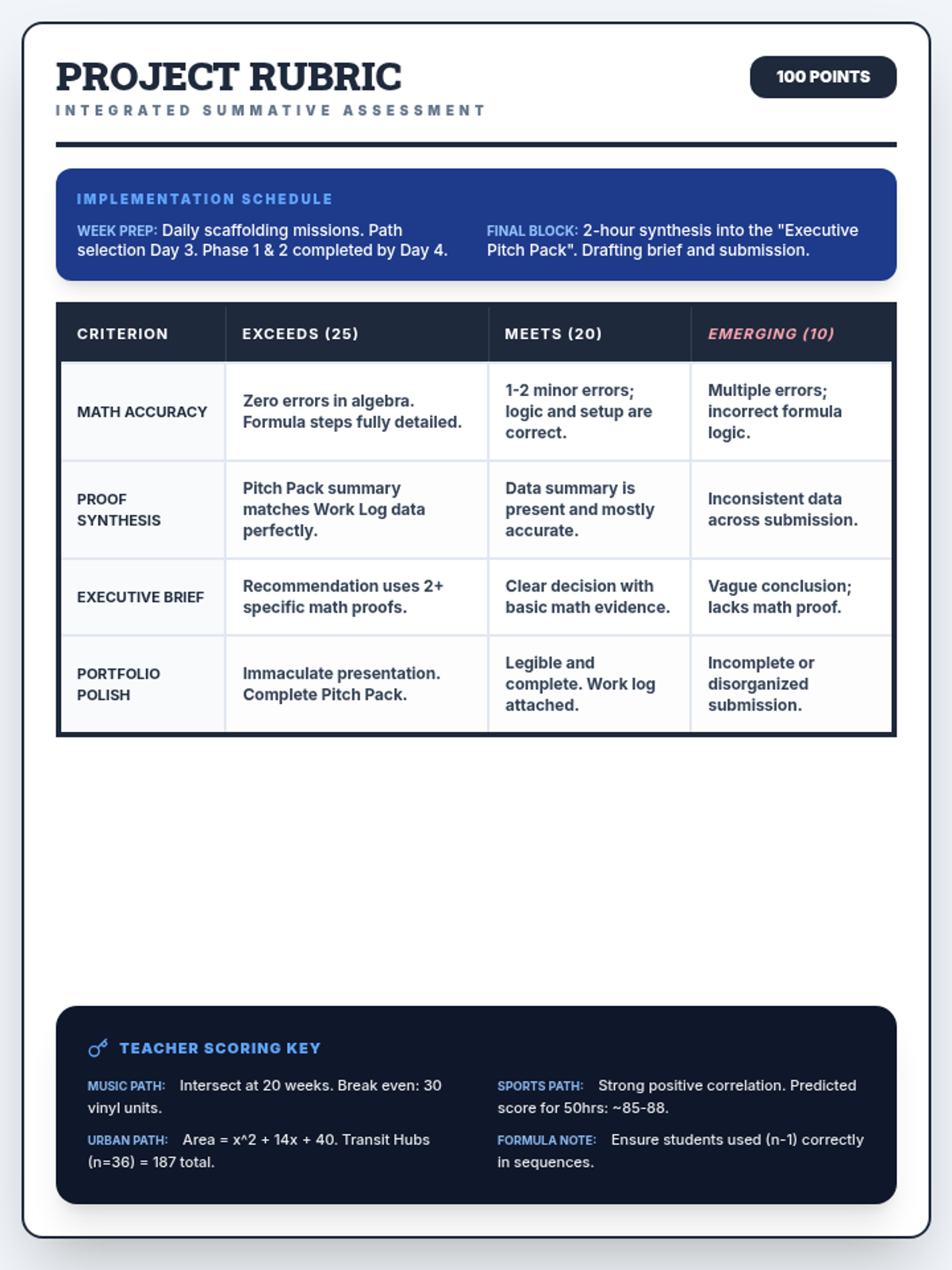
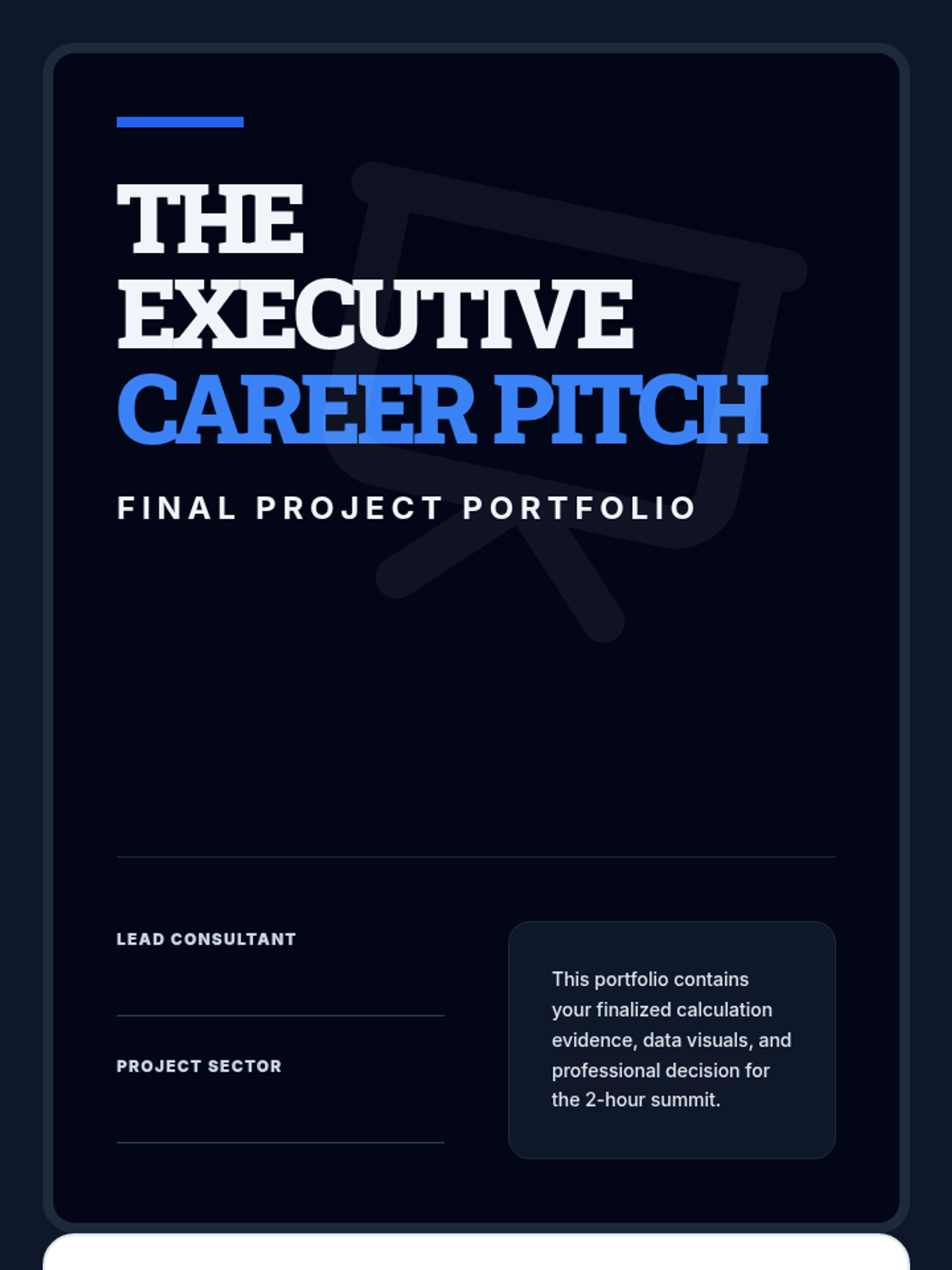
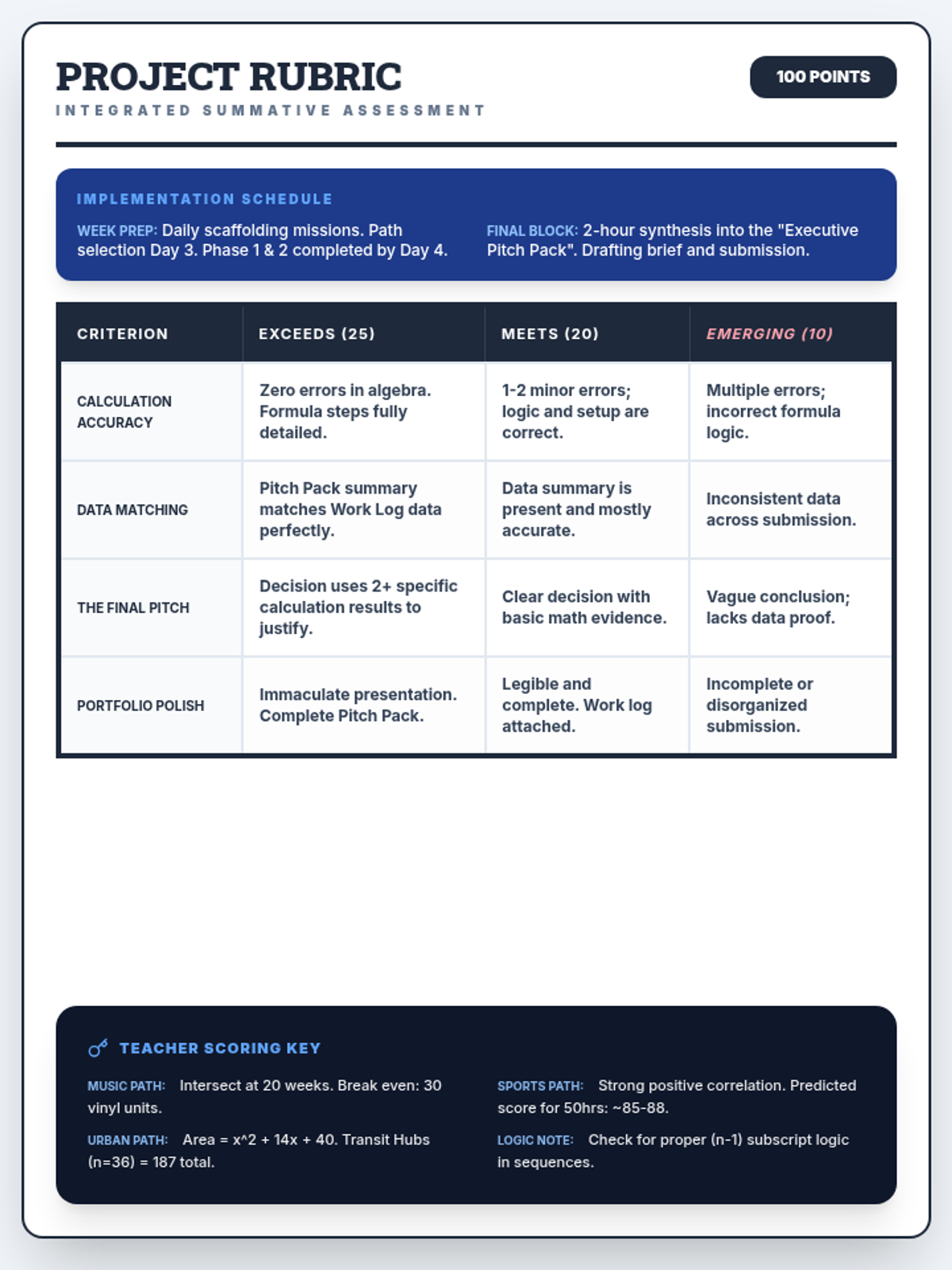
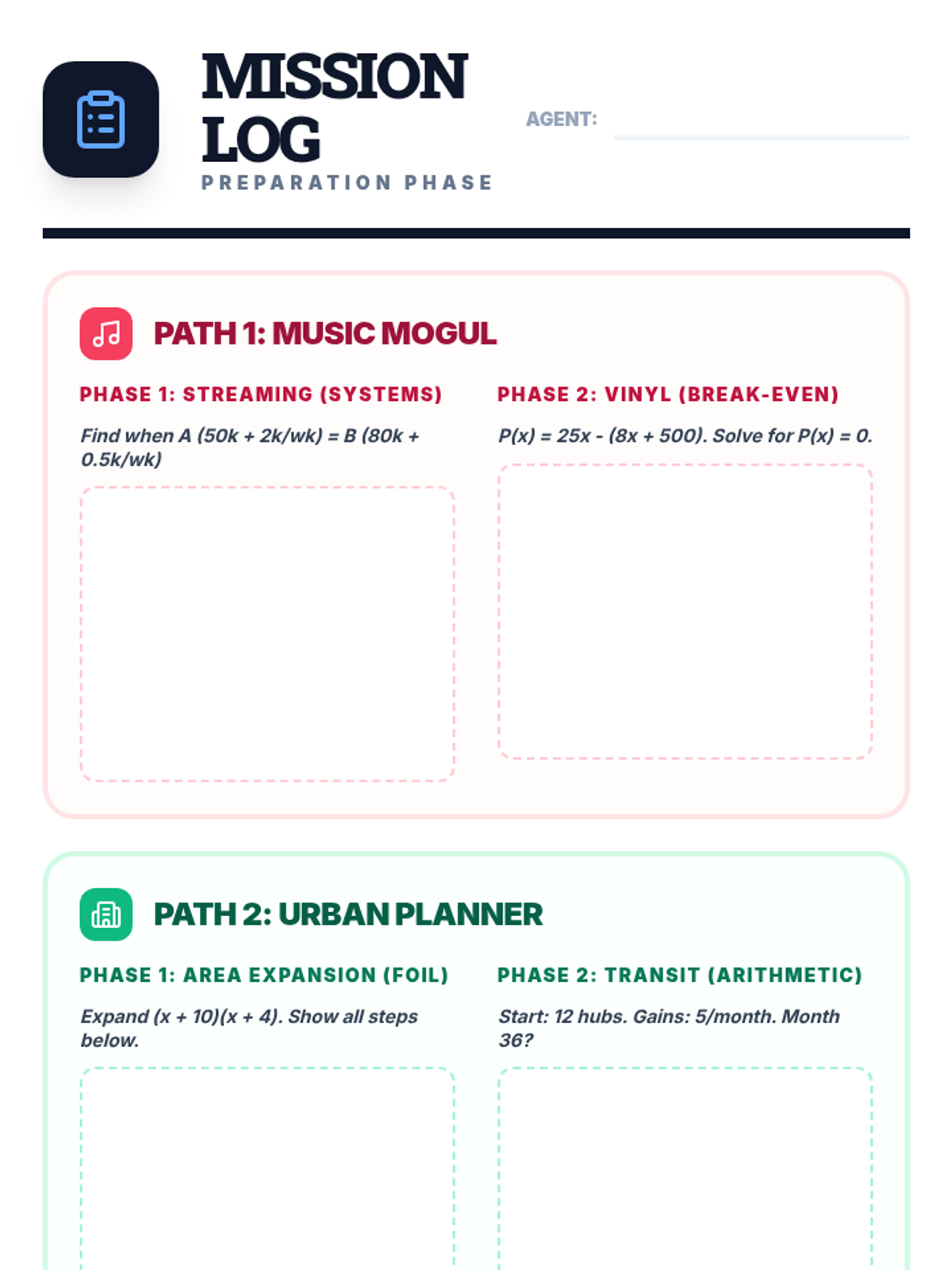
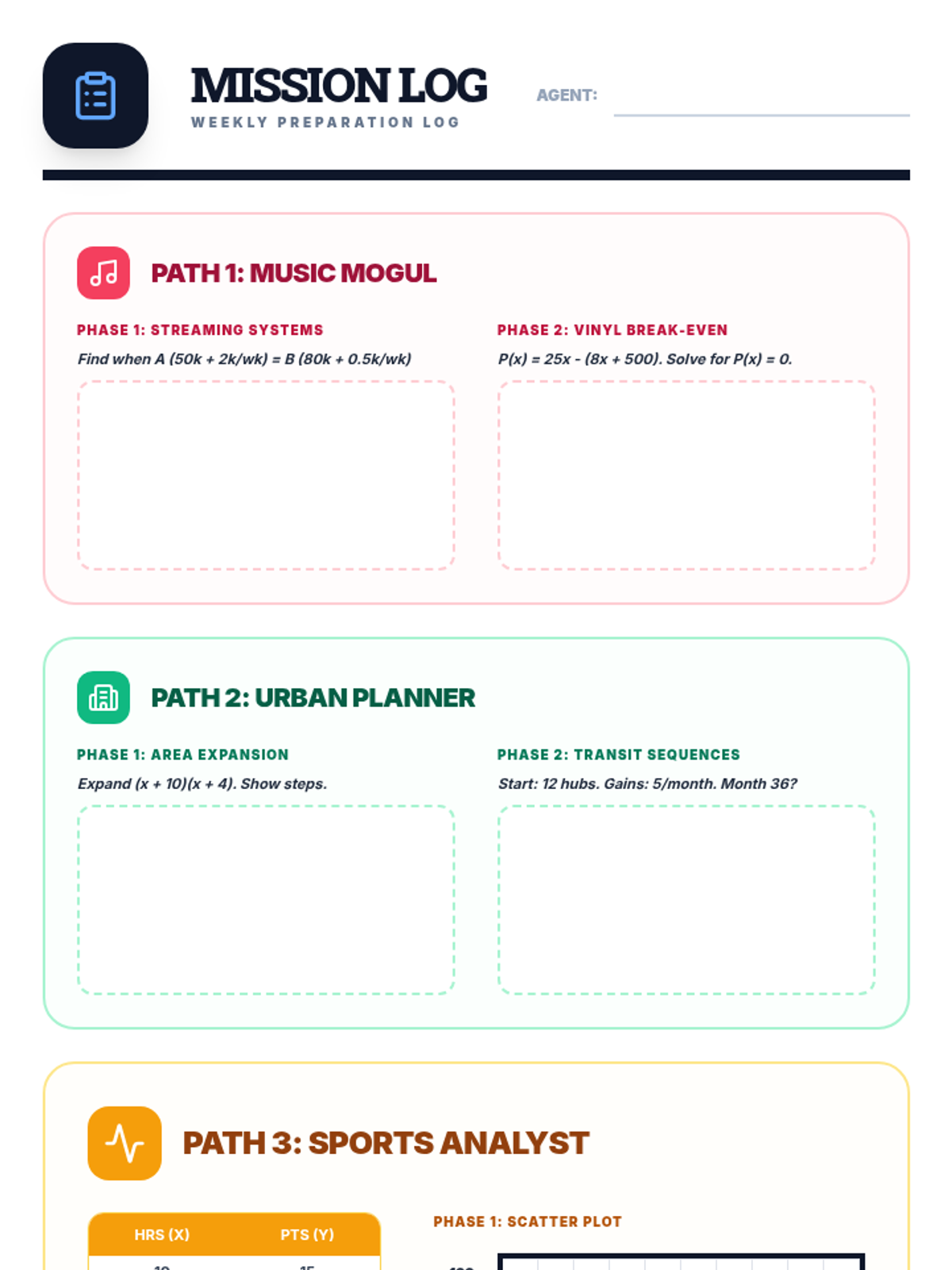
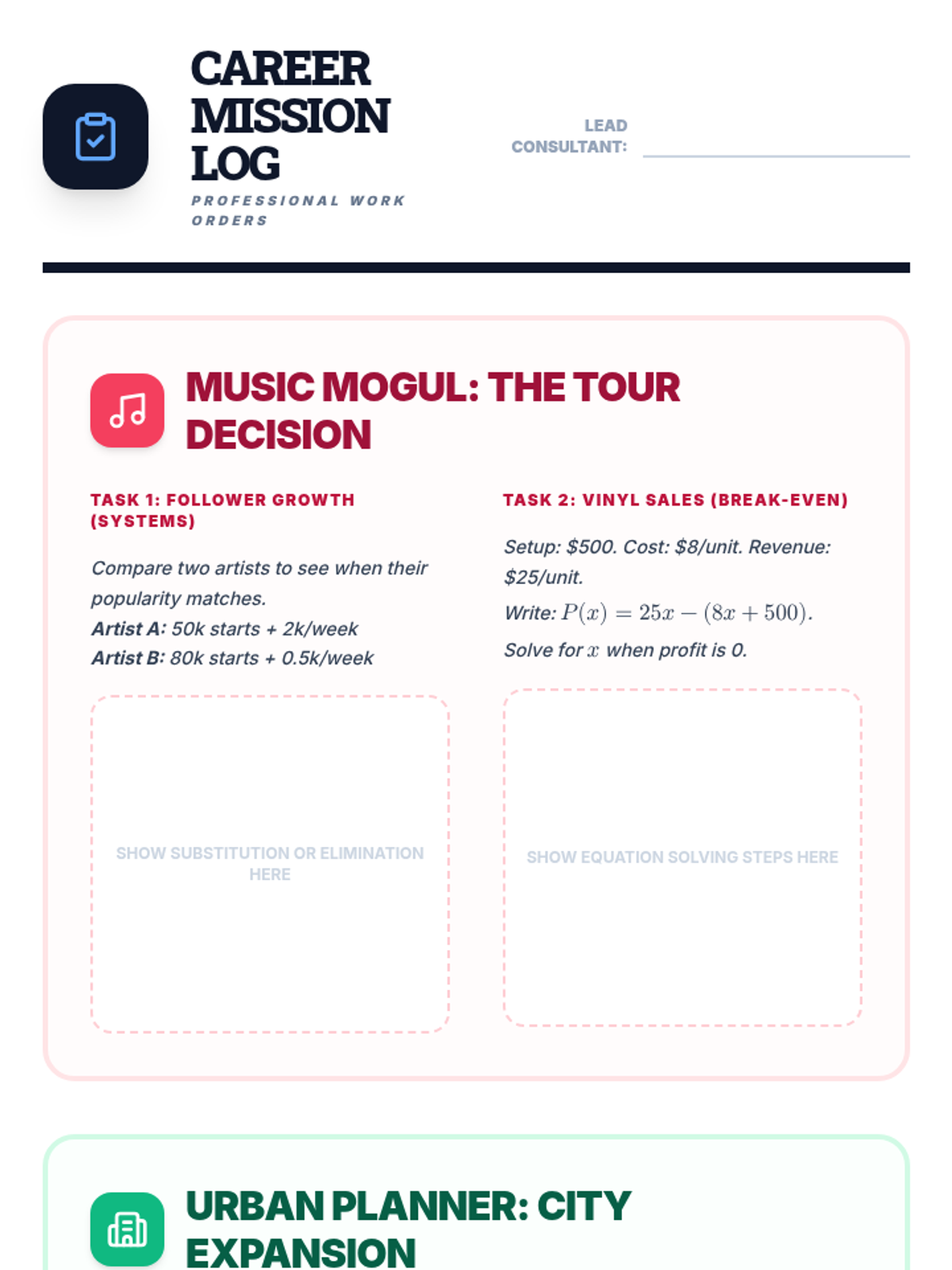
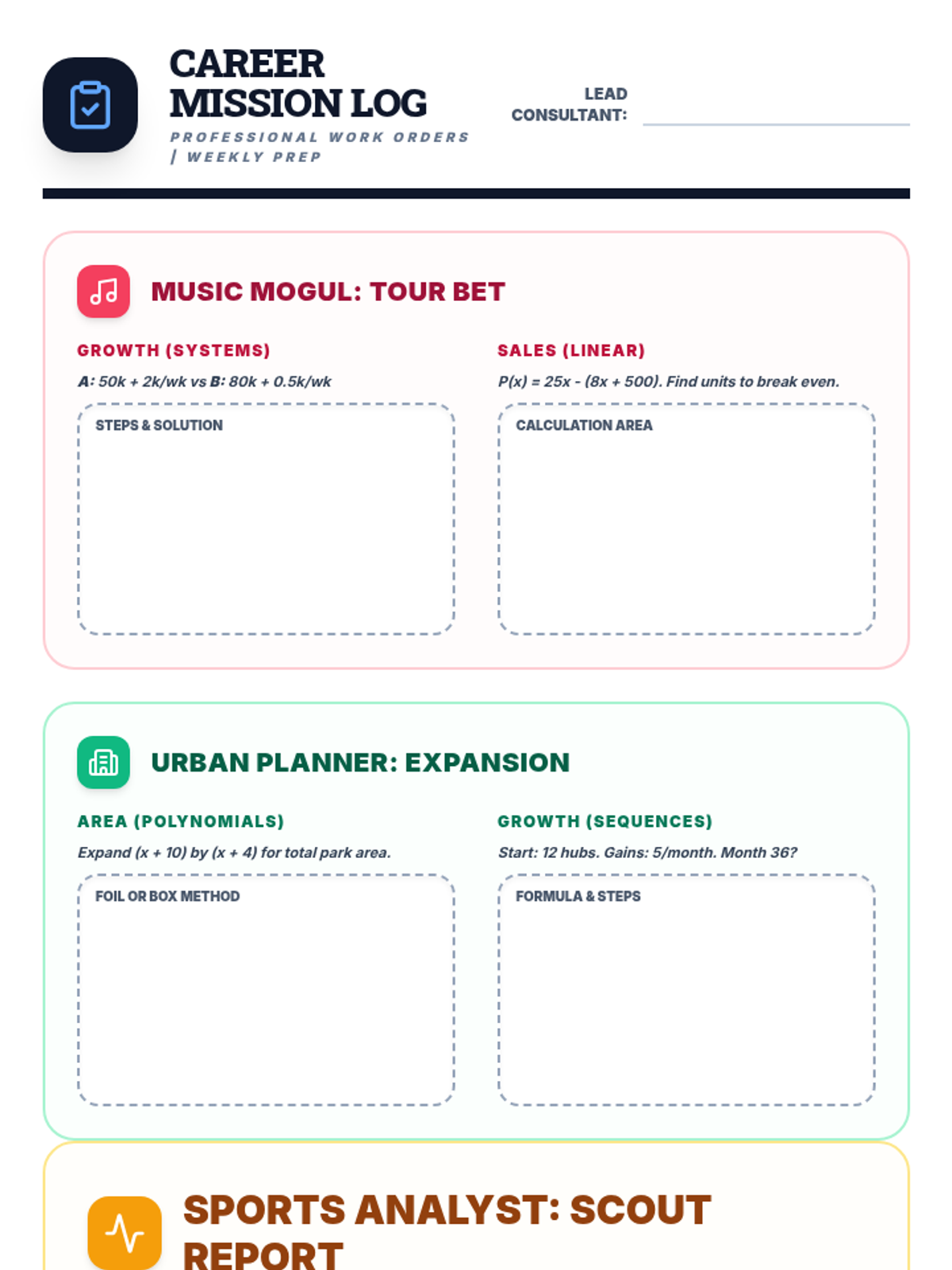
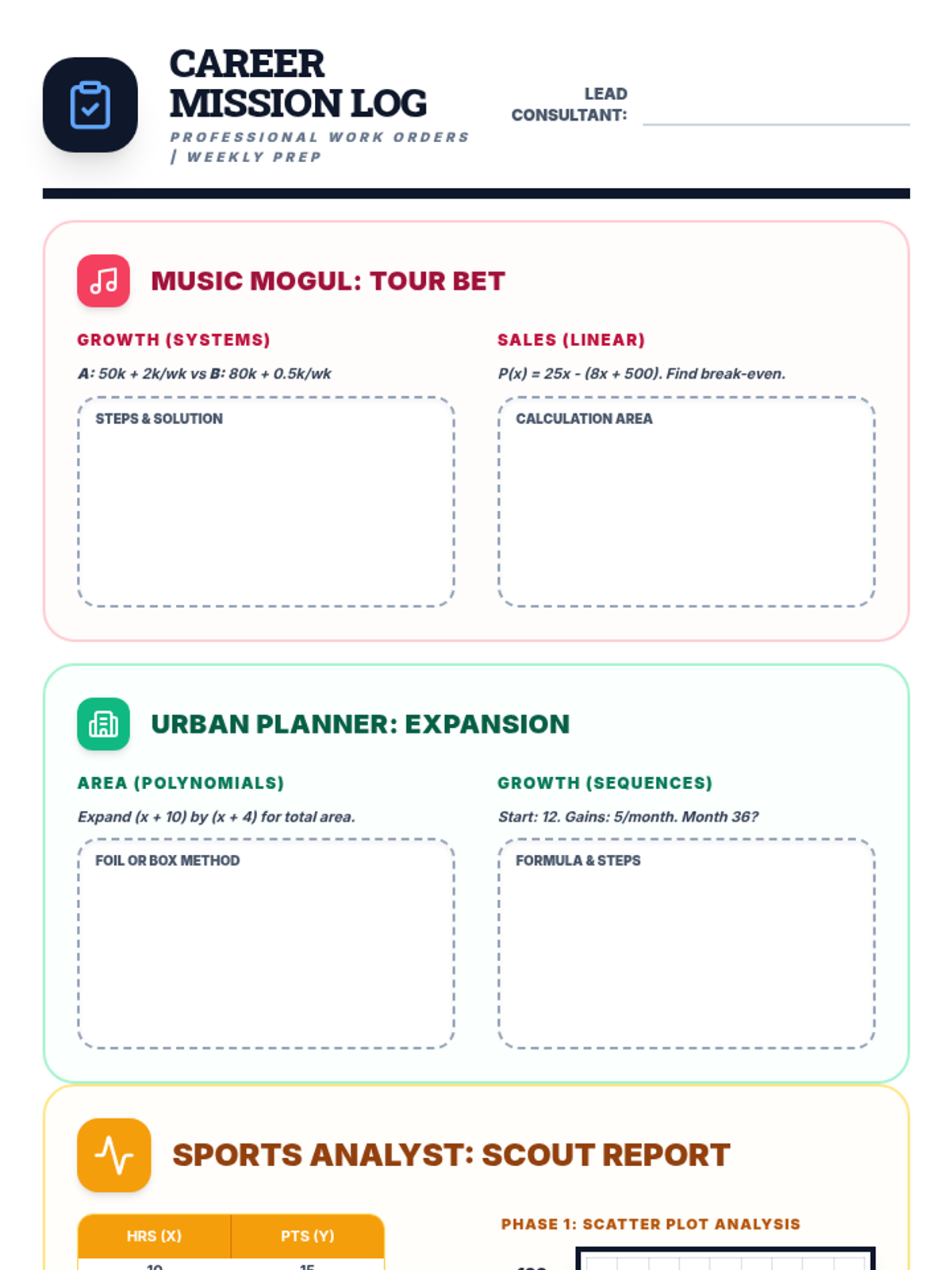
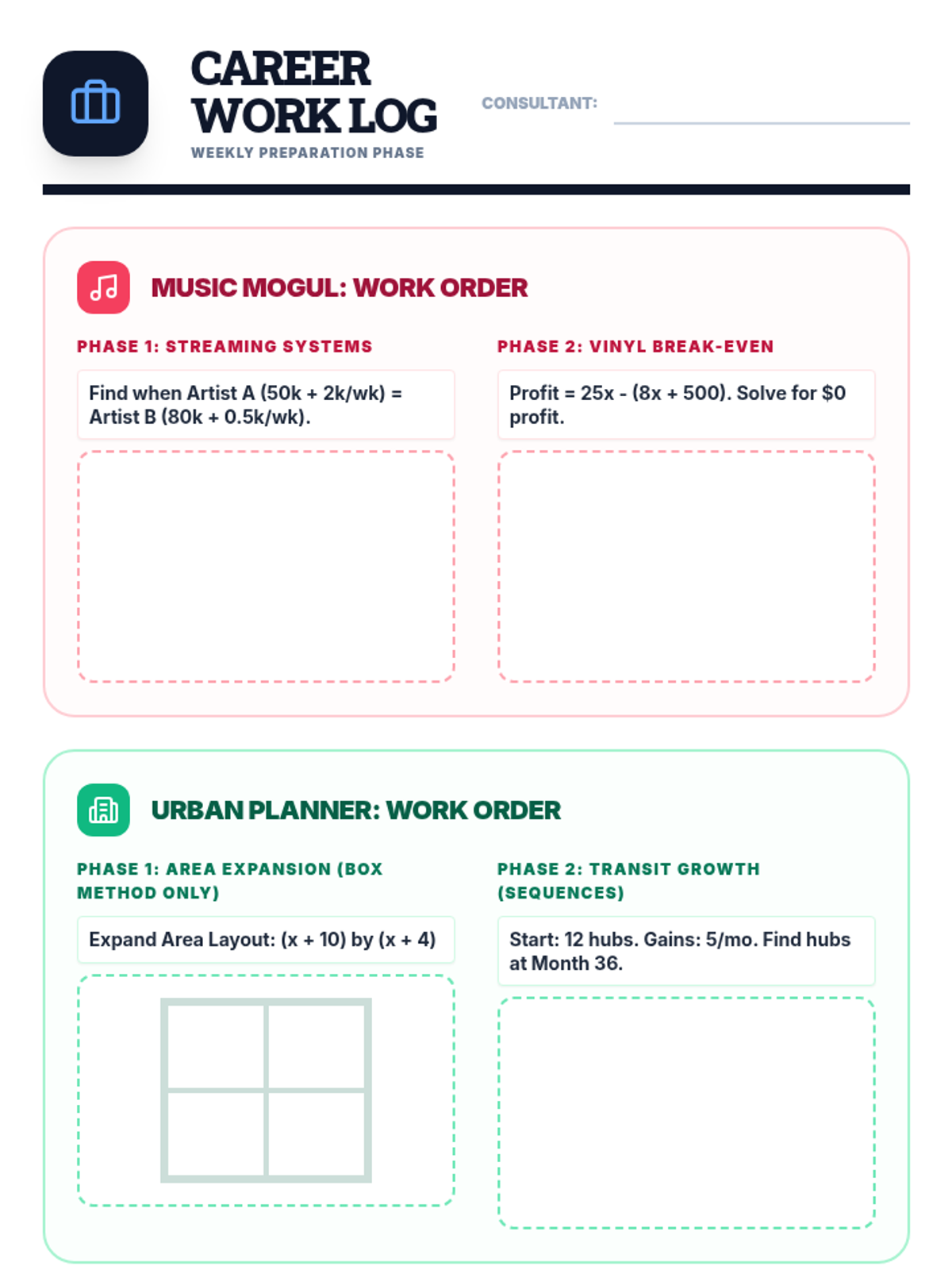
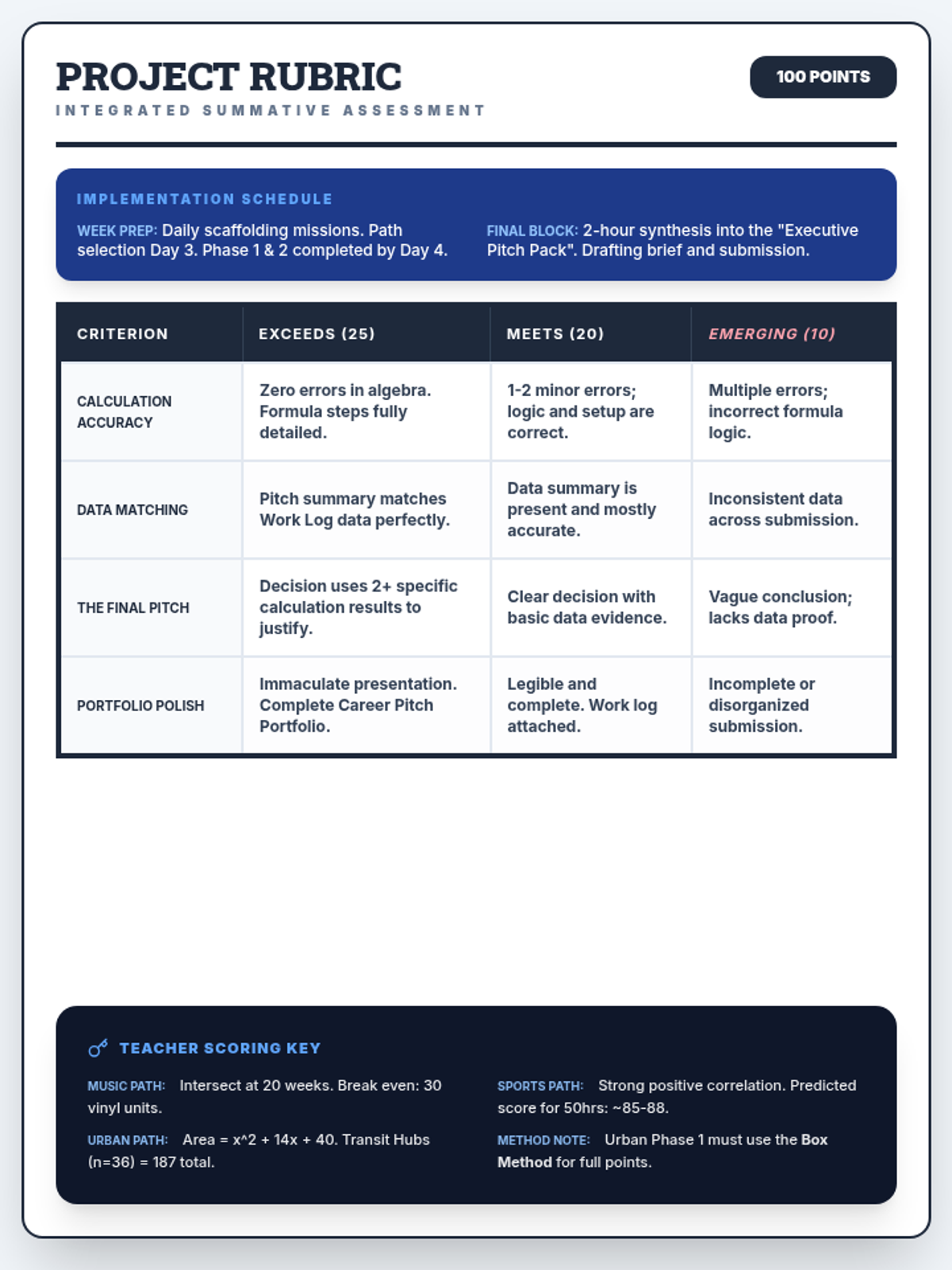
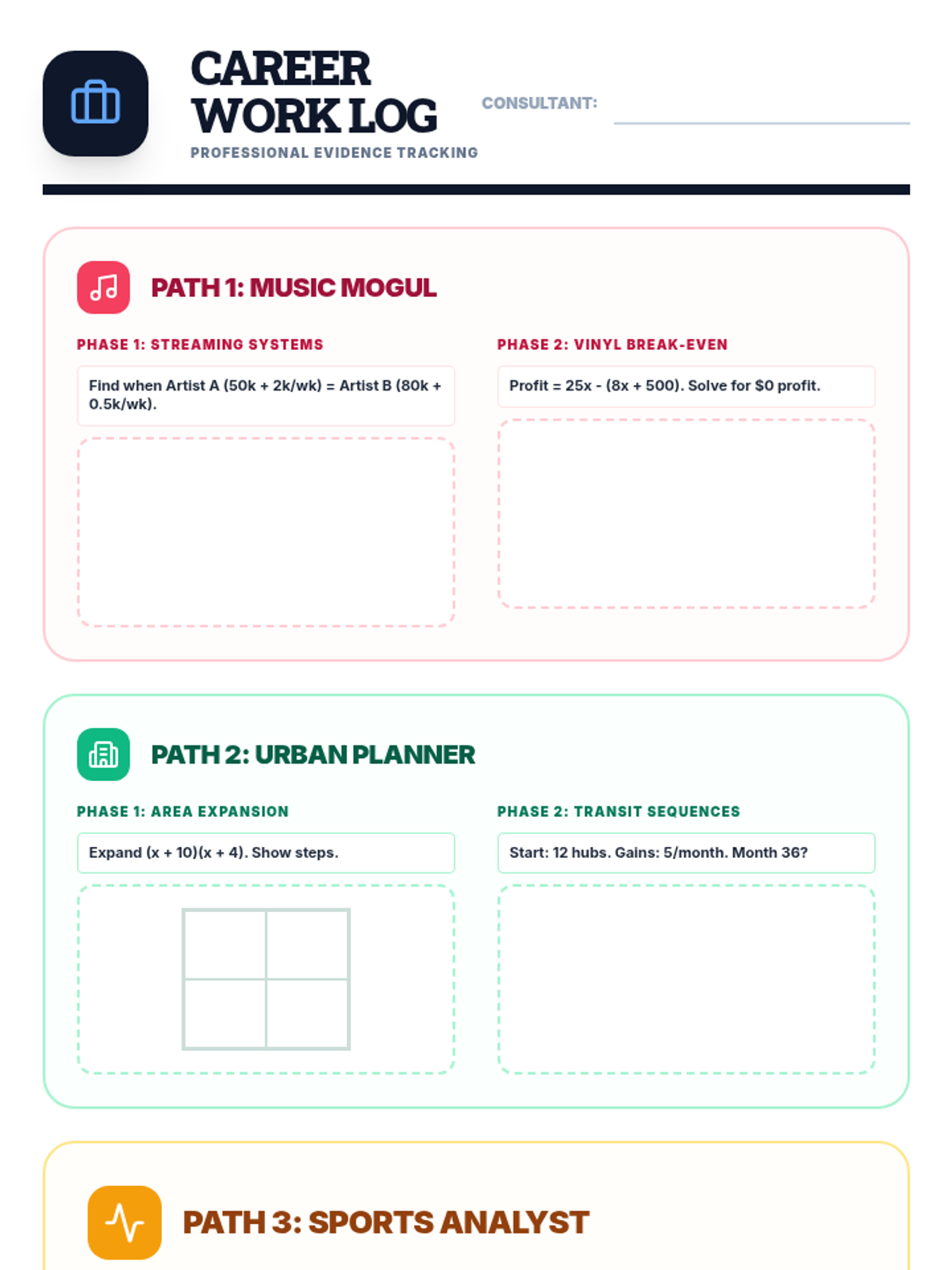
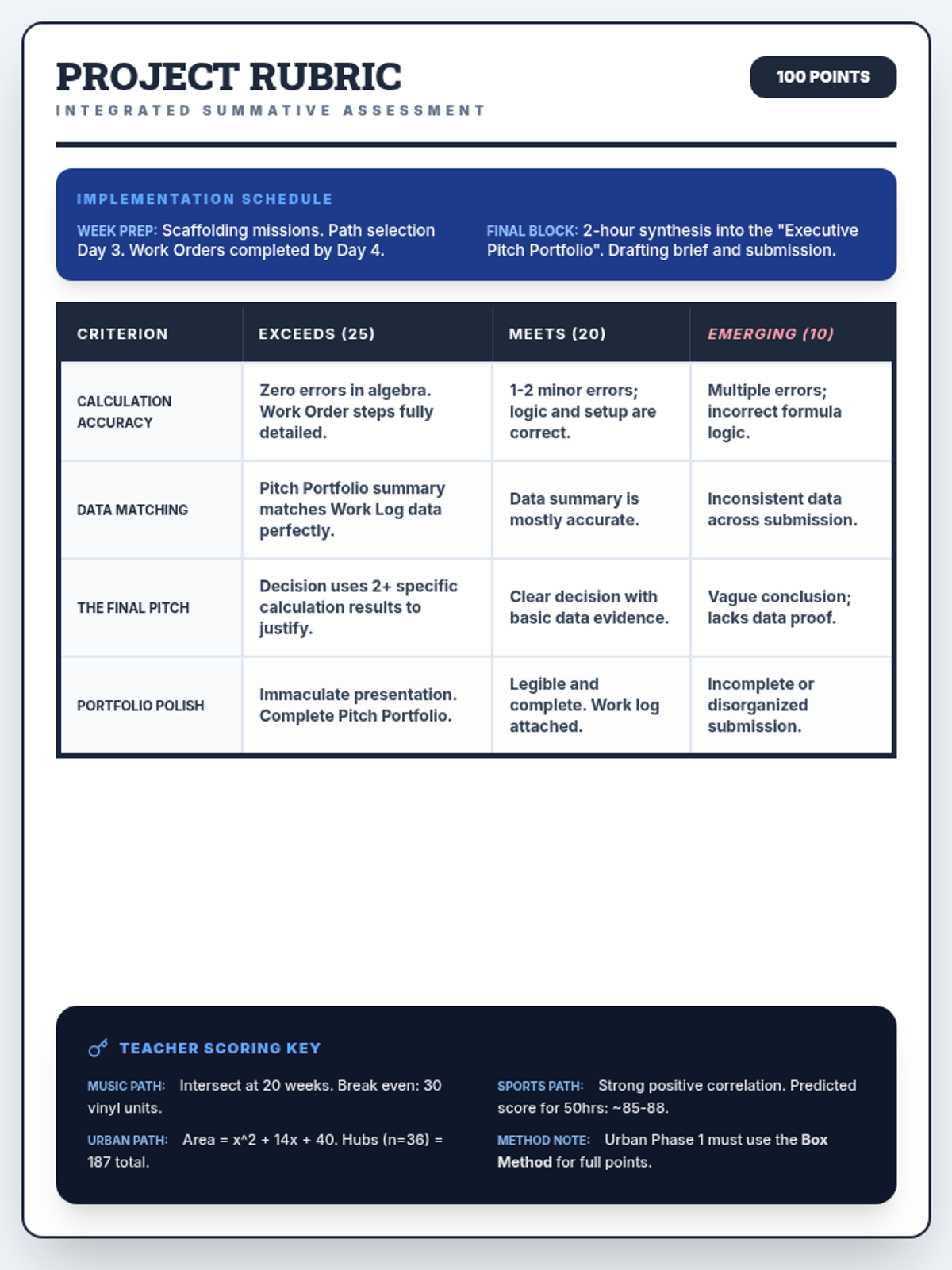
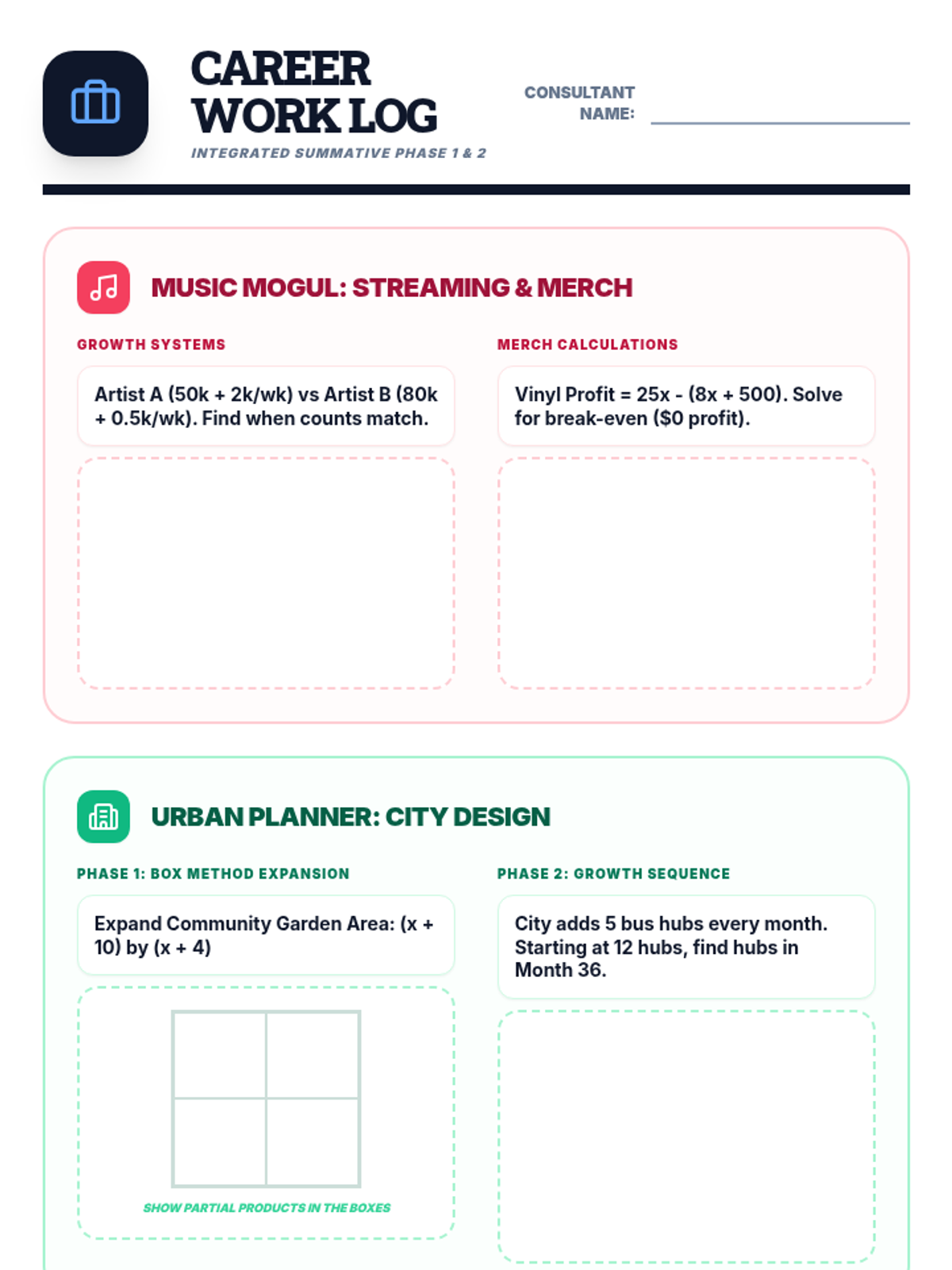
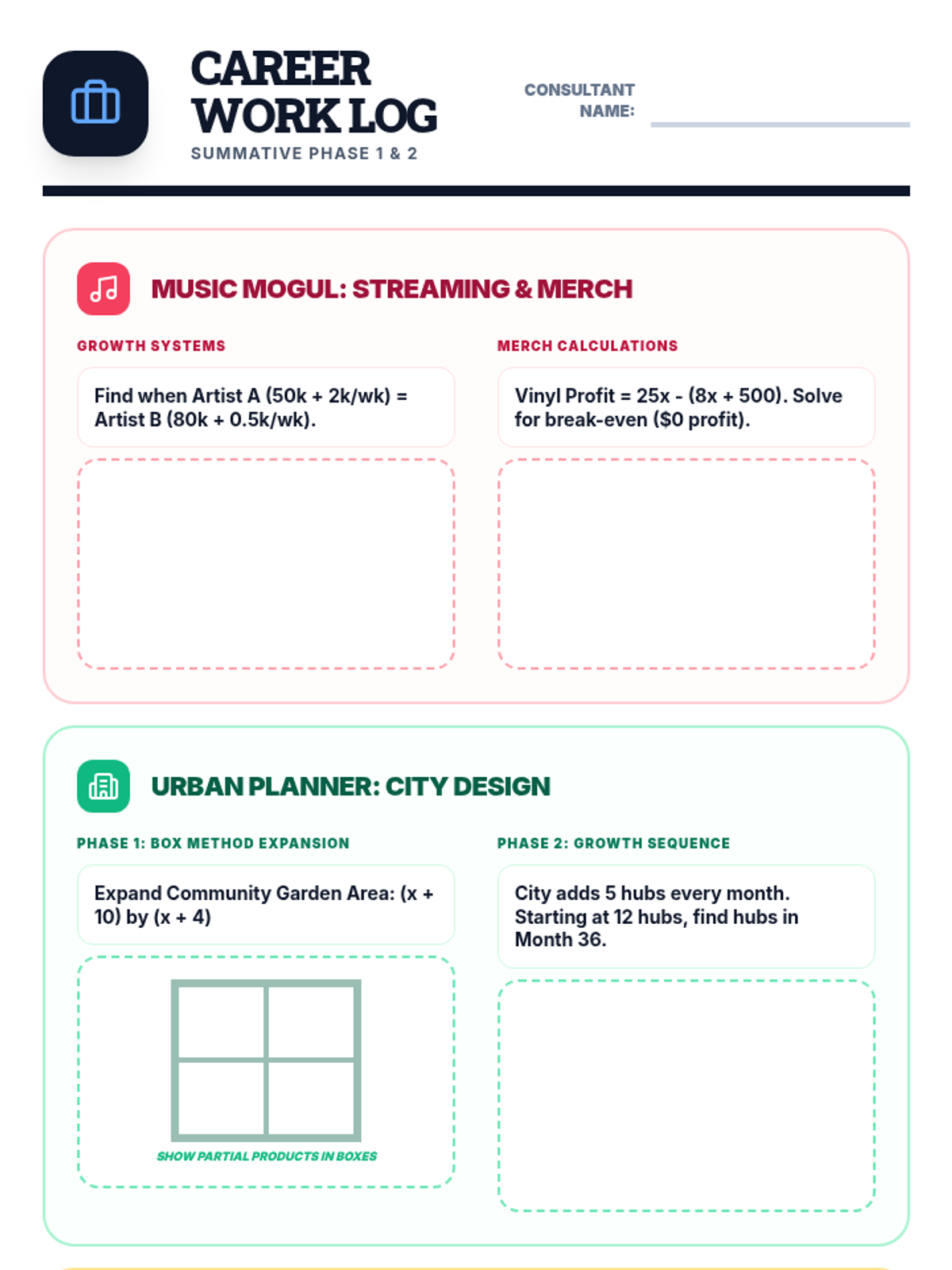
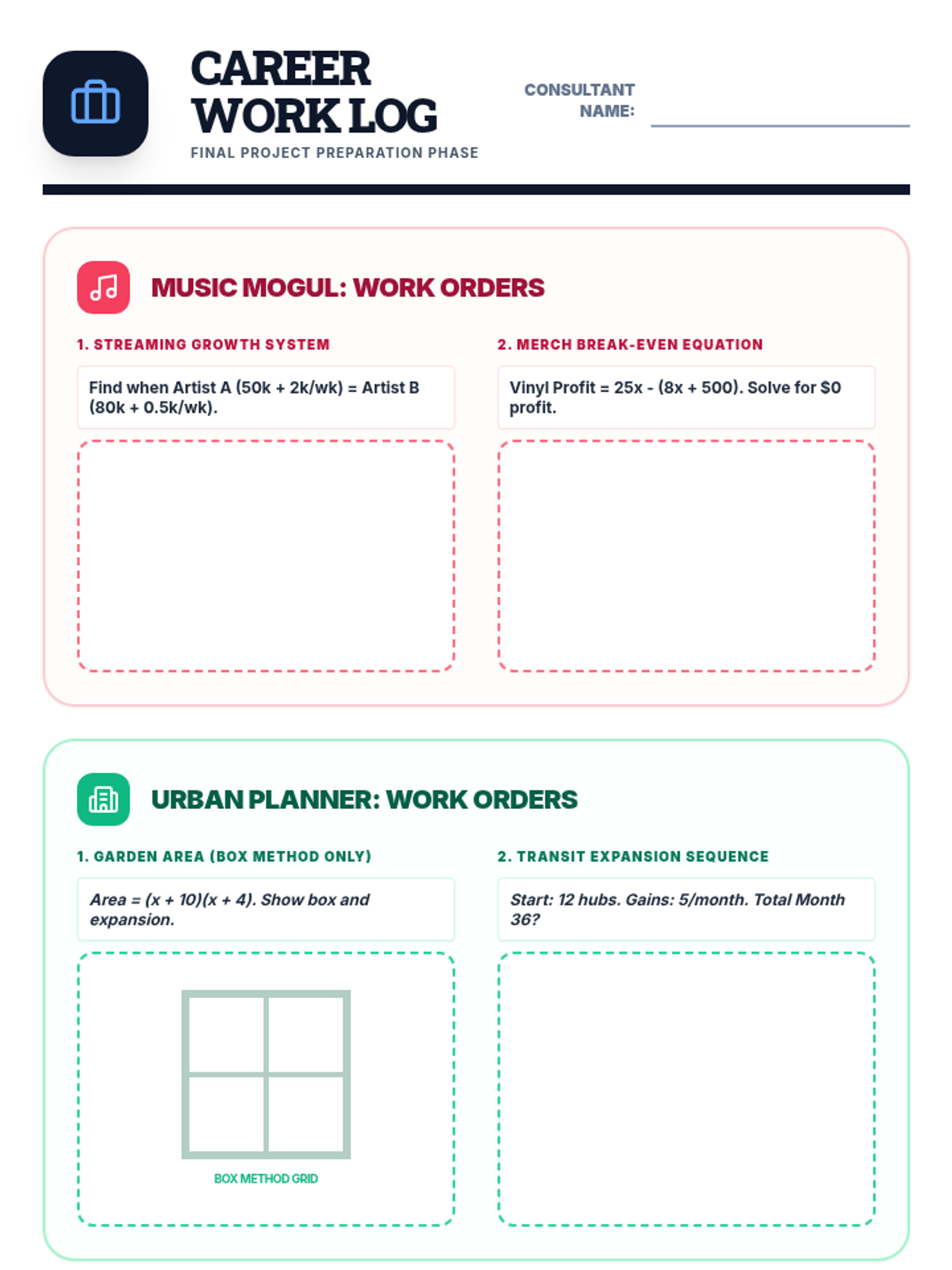
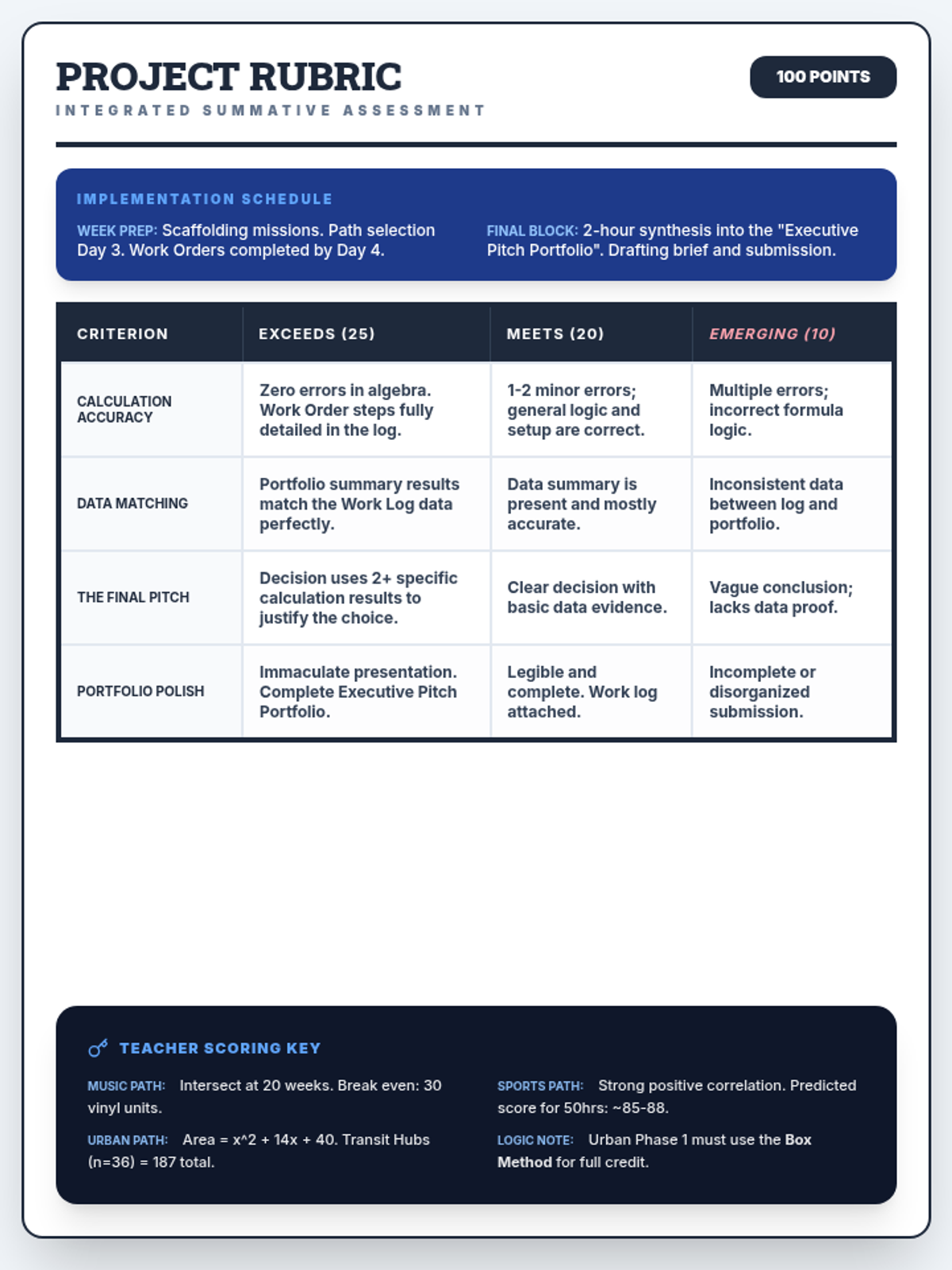
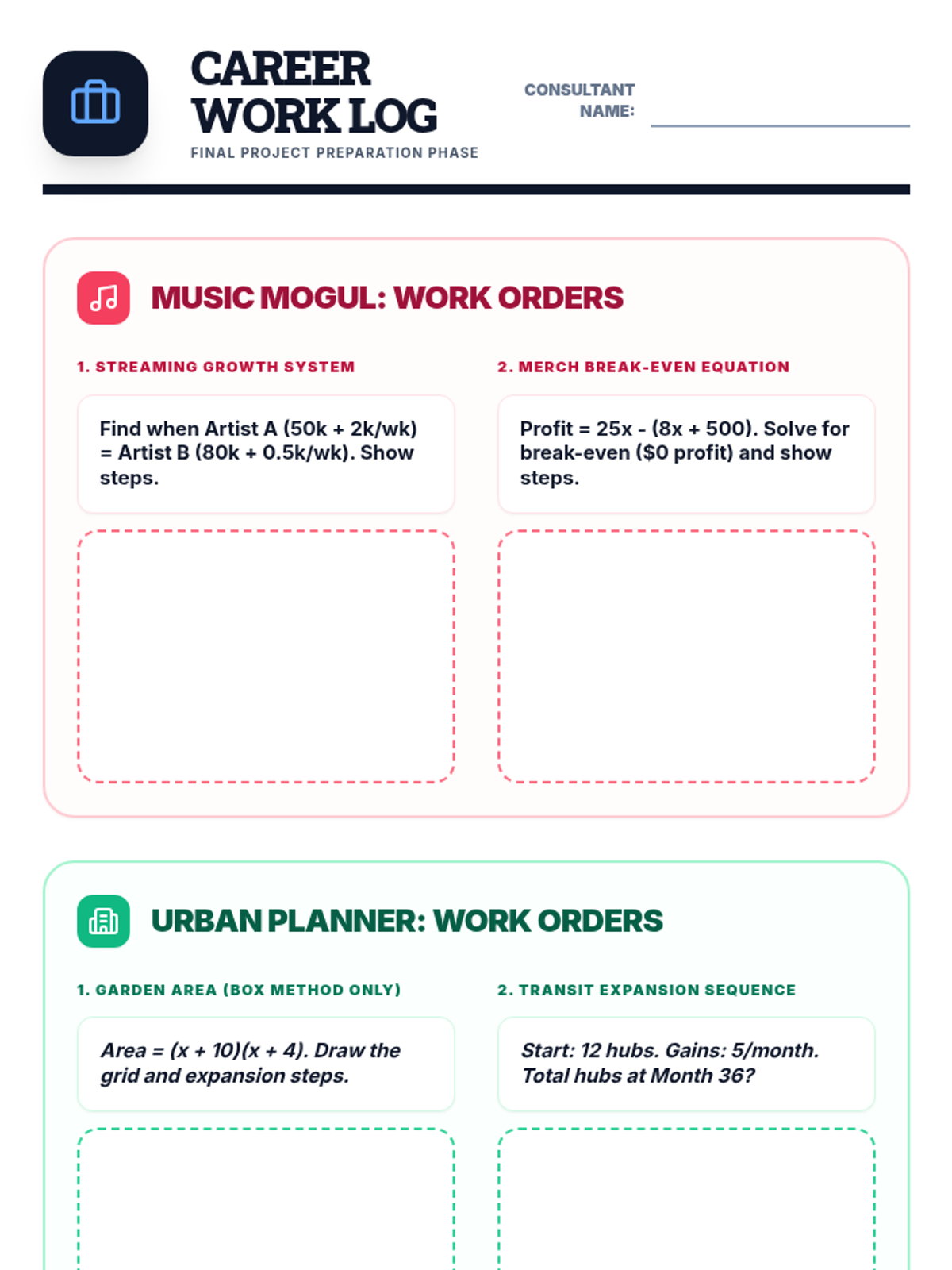
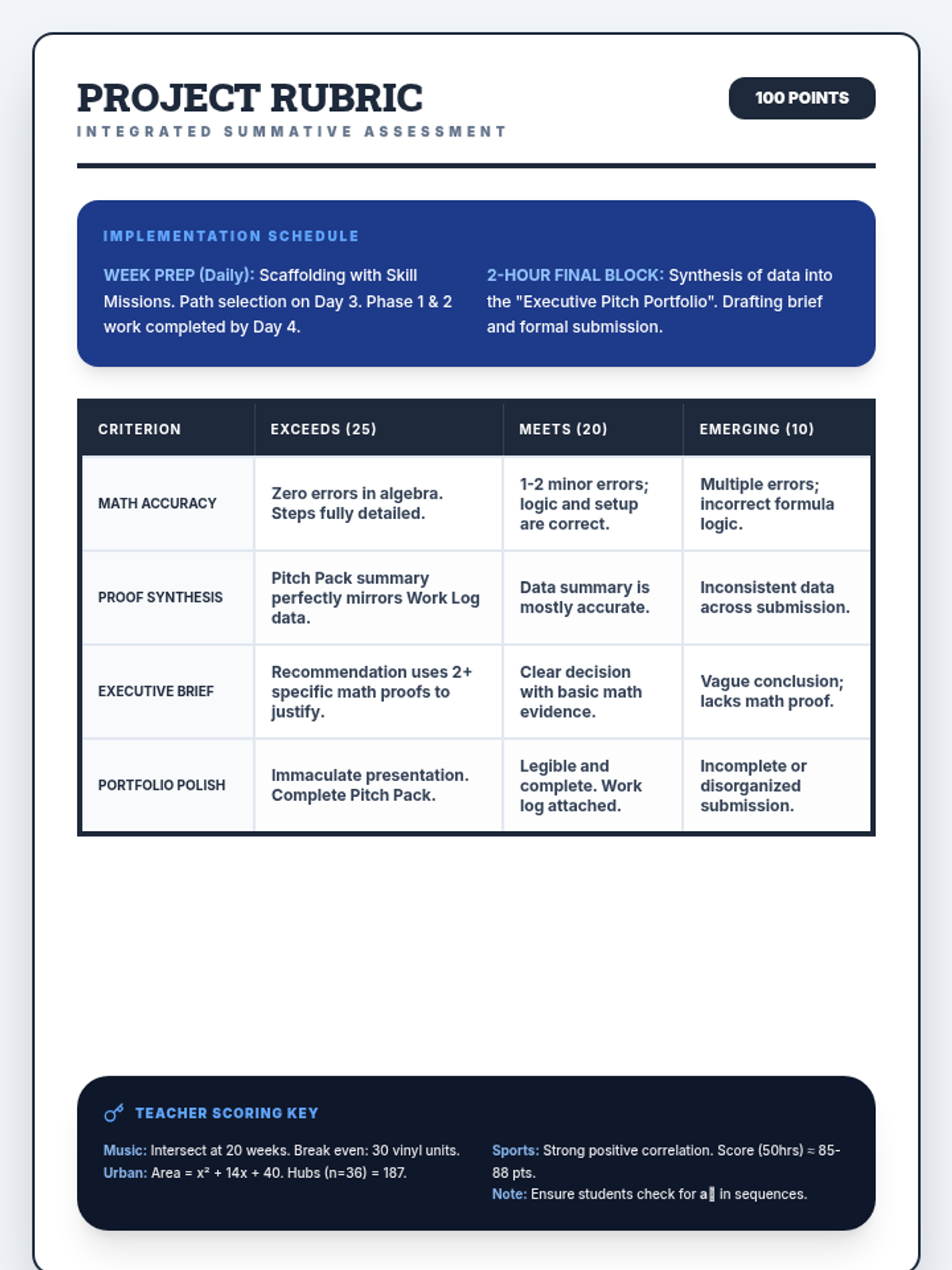
A creative end-of-year project where students choose between three paths to demonstrate mastery of transformations, linear equations, exponents, and bivariate data. Designed with scaffolded options for 8th-grade students.
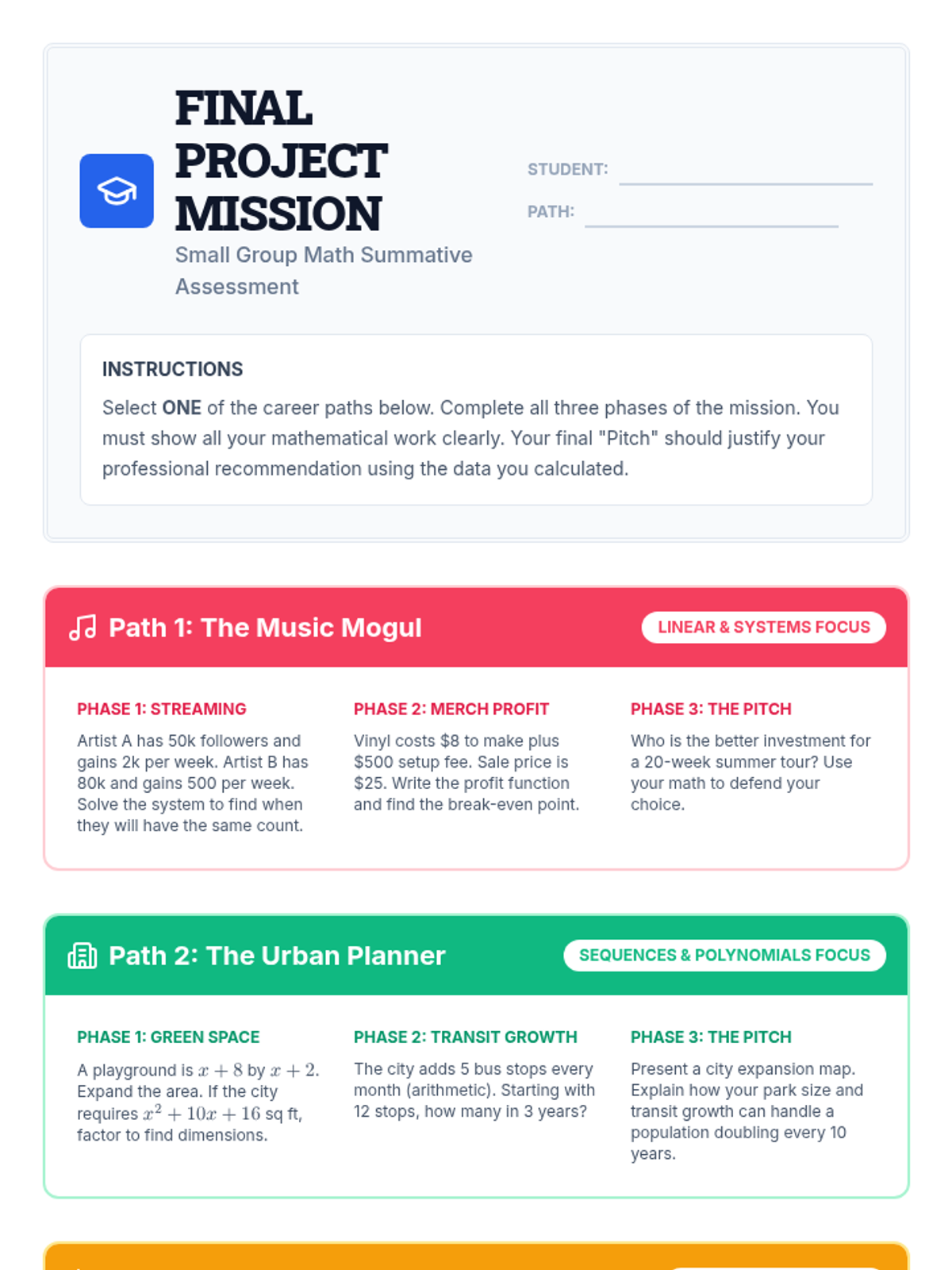
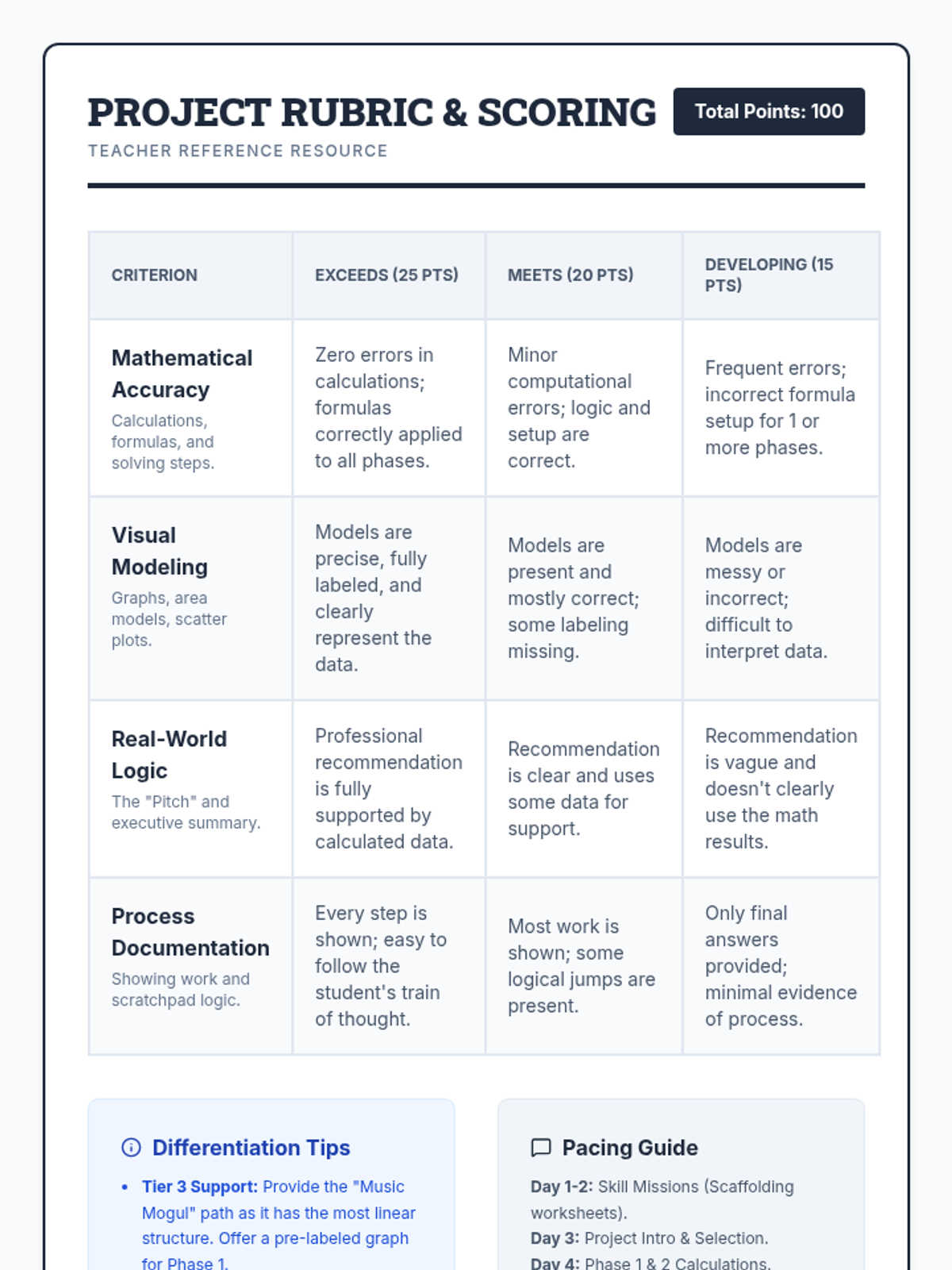
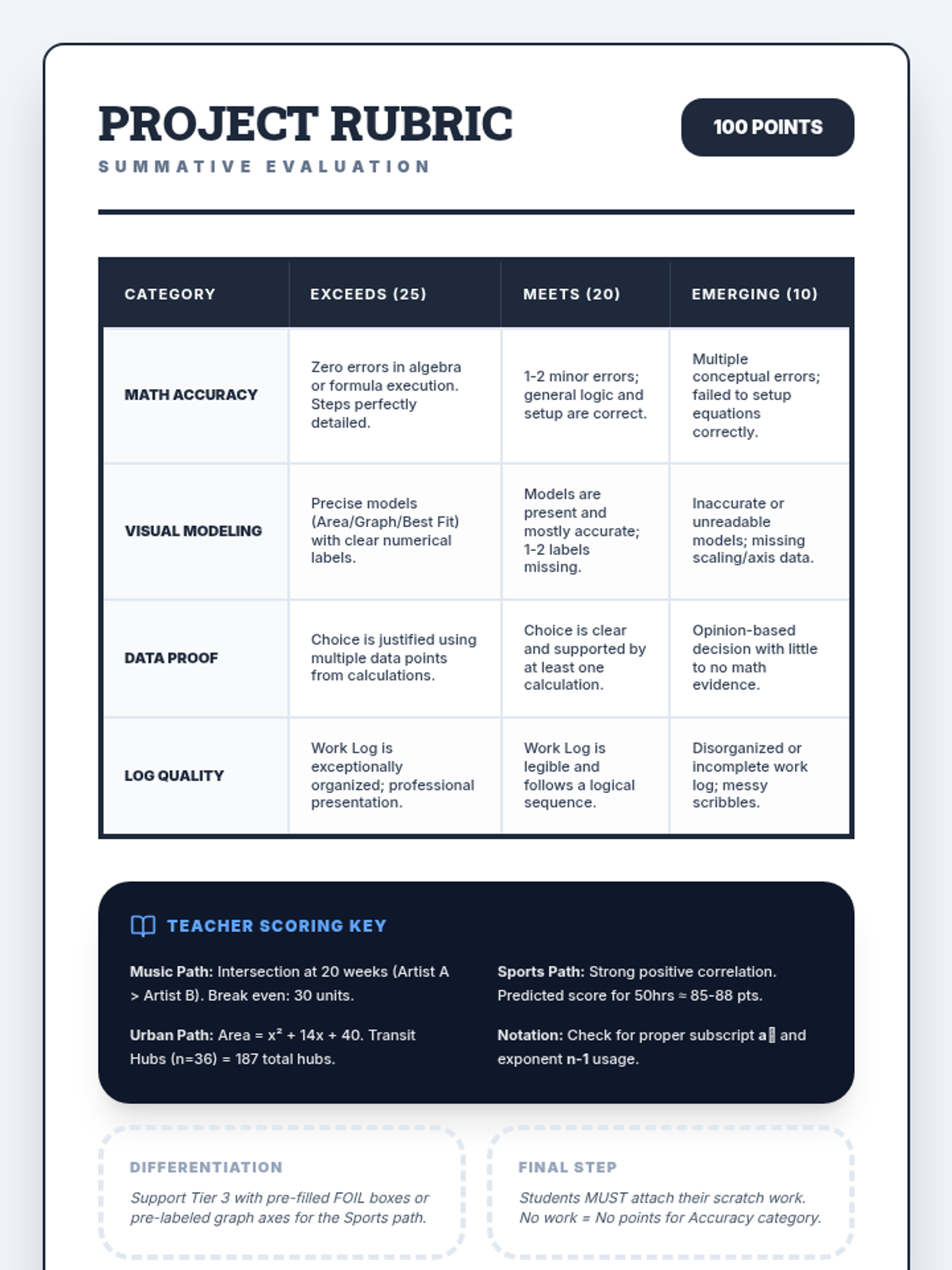
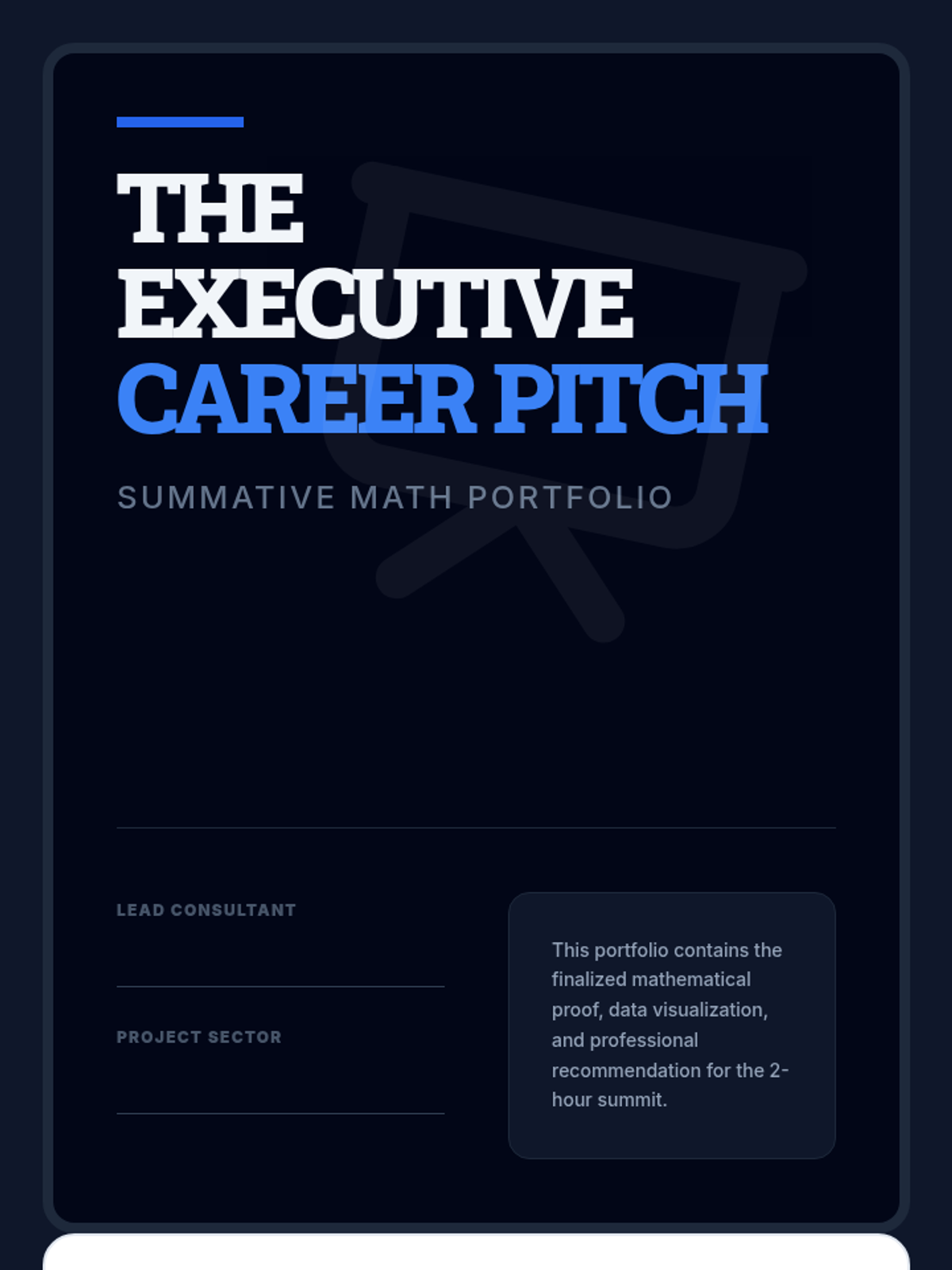
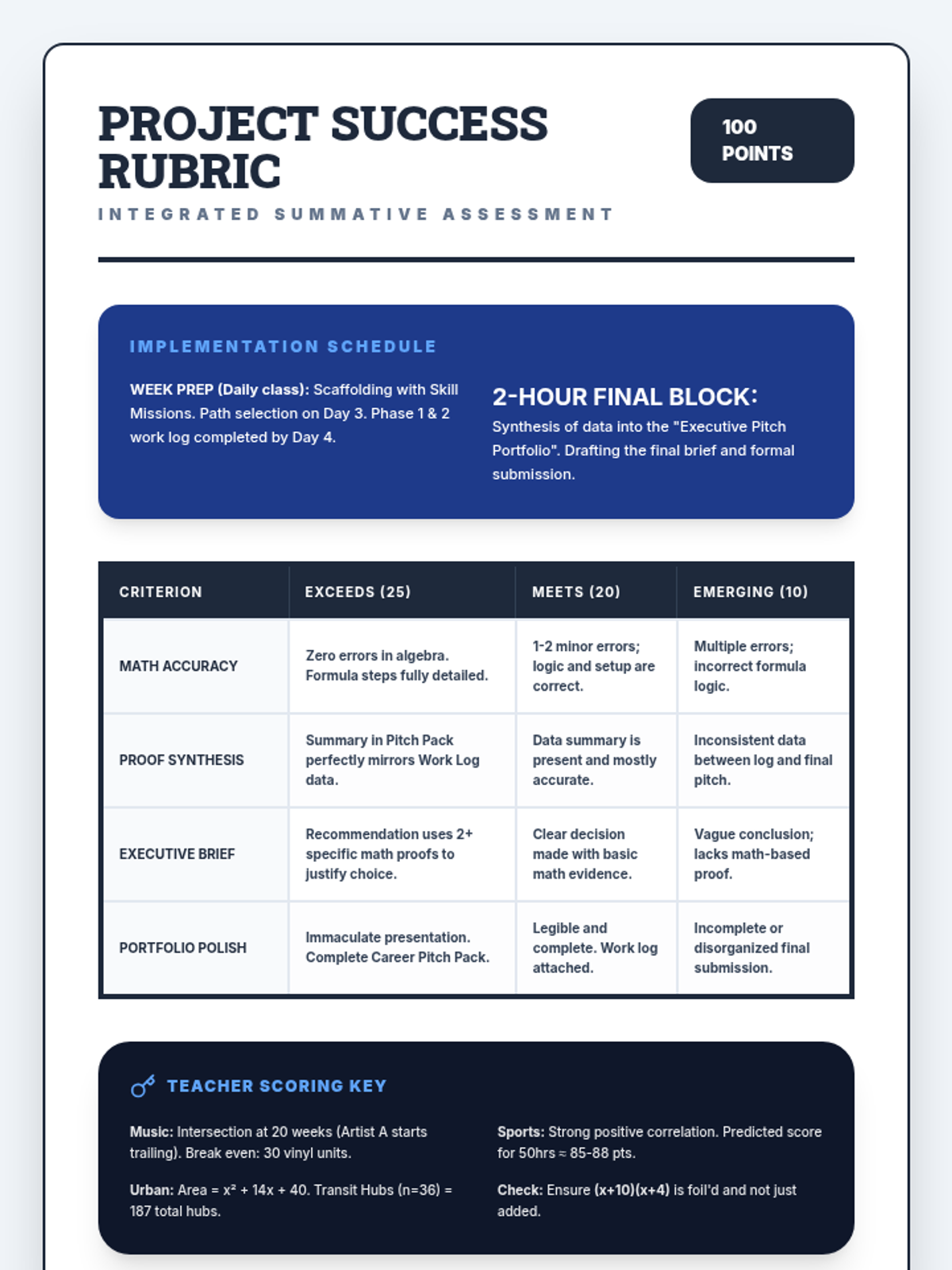
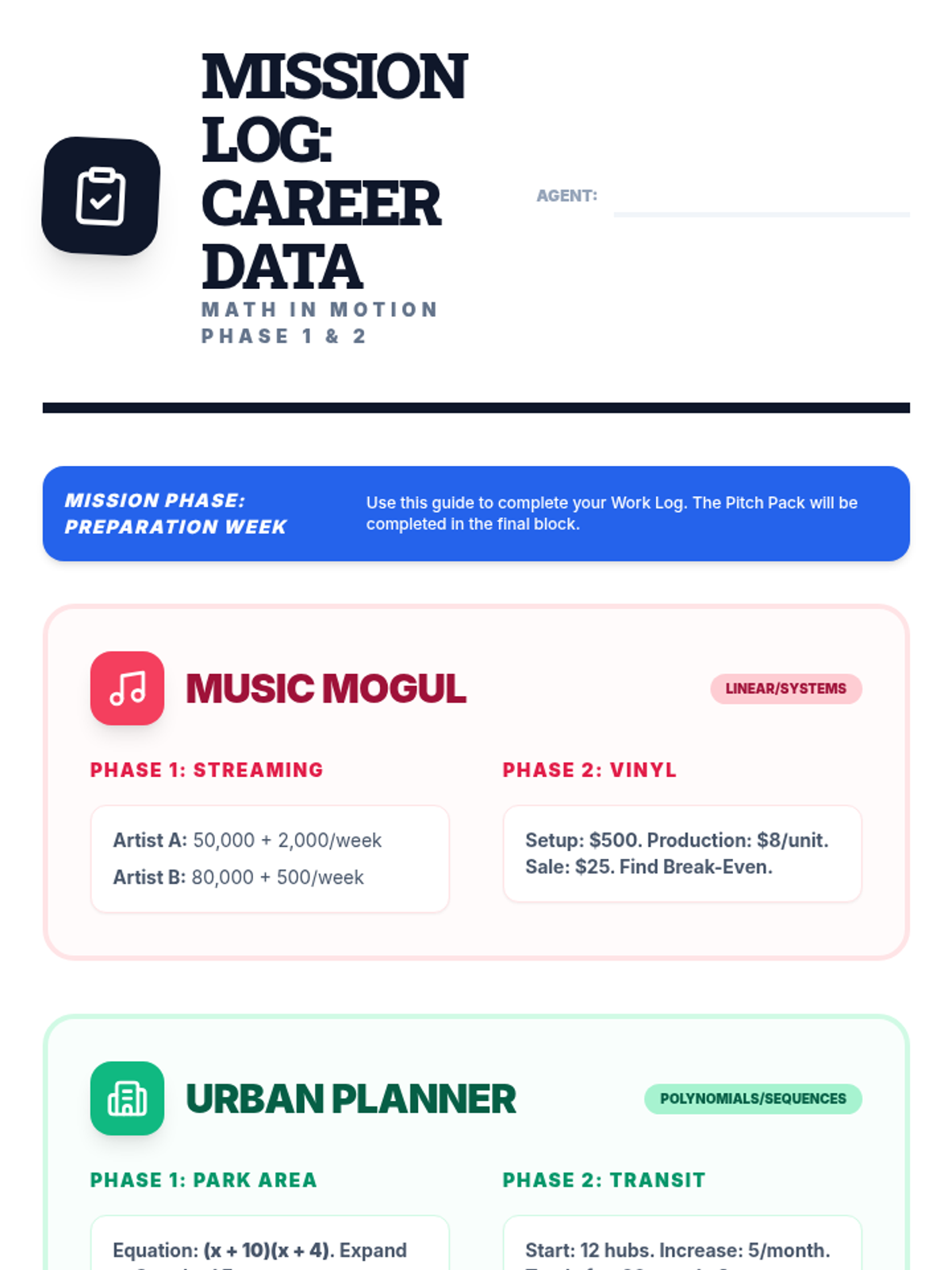
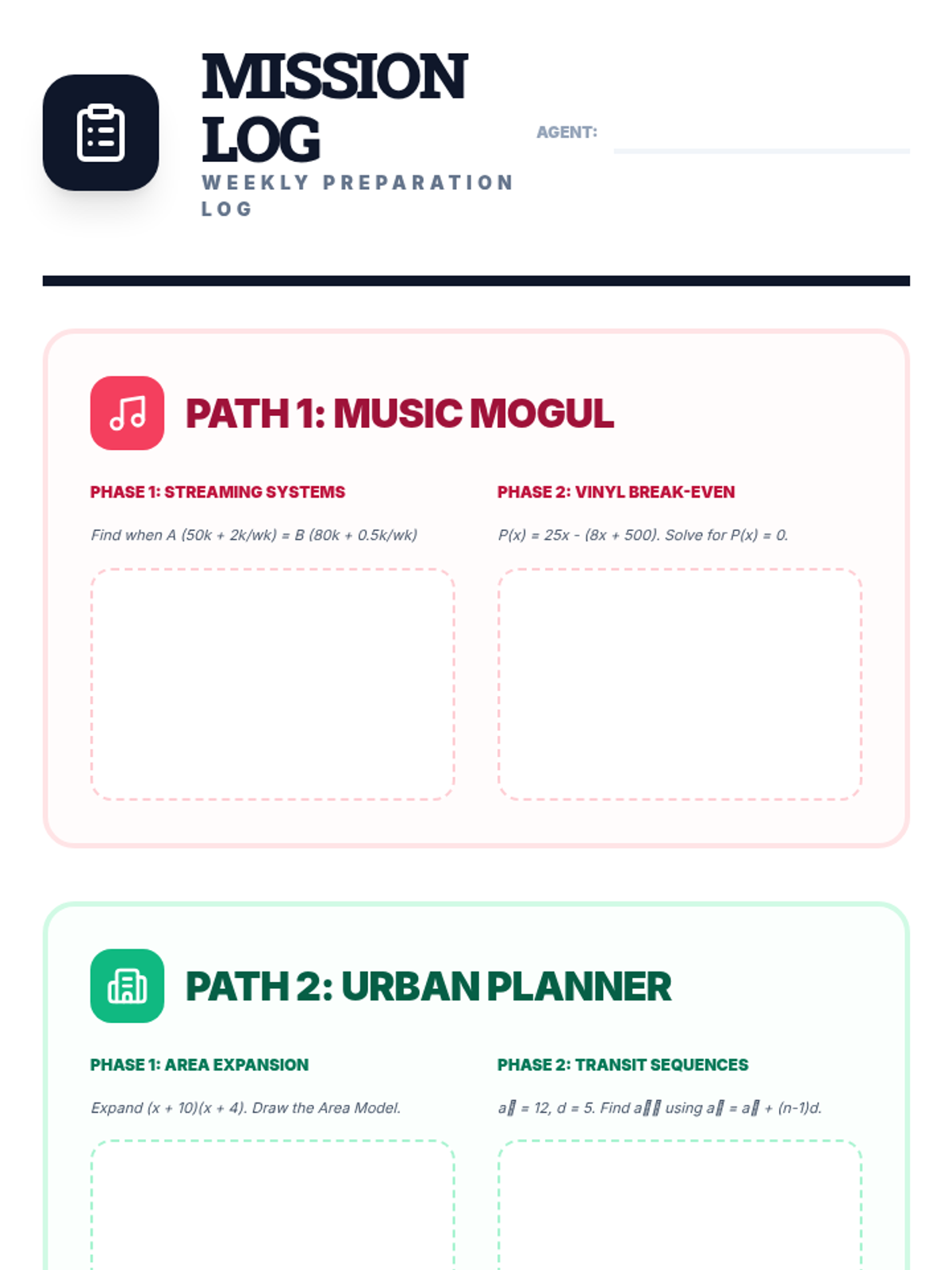
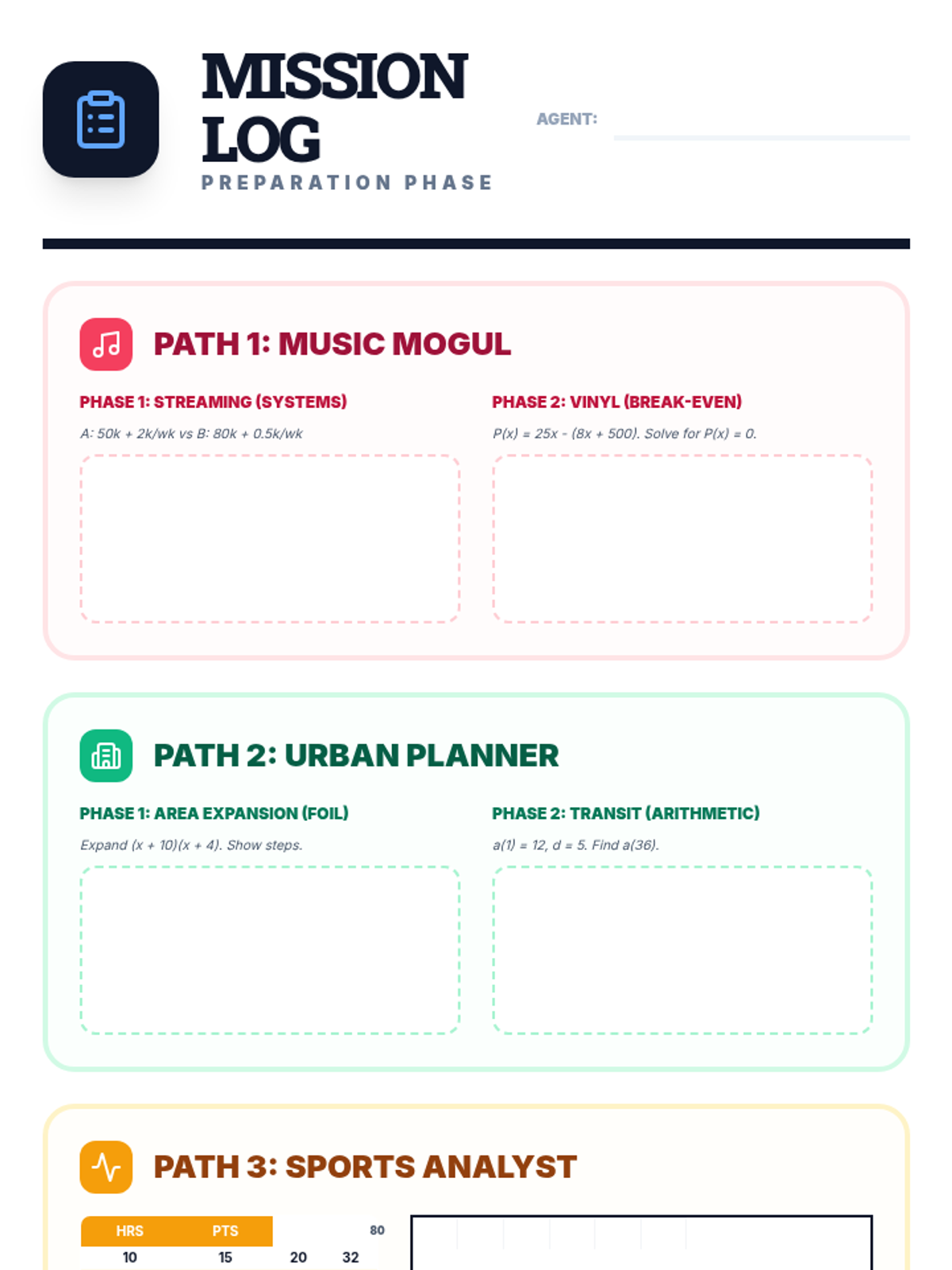
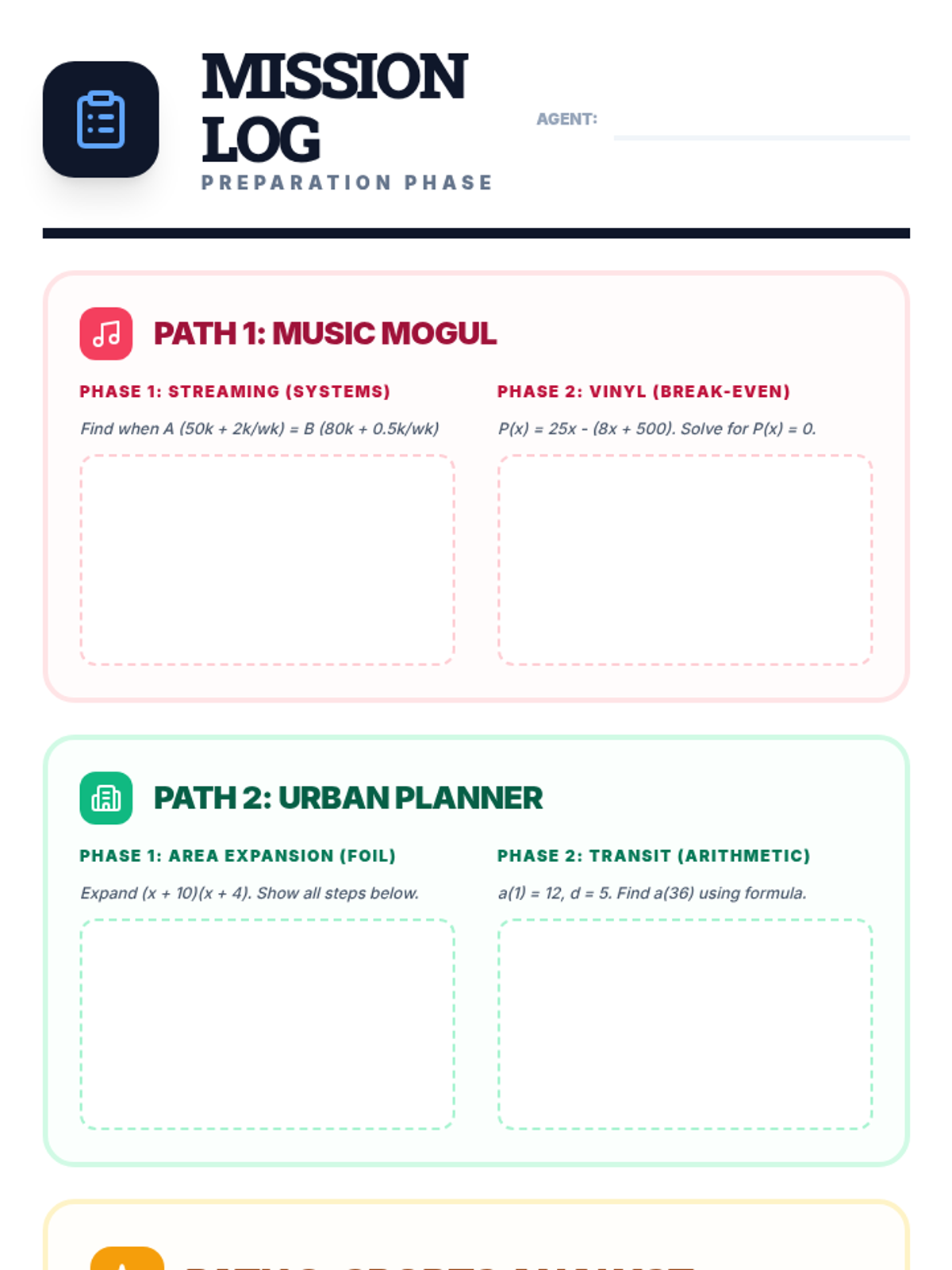
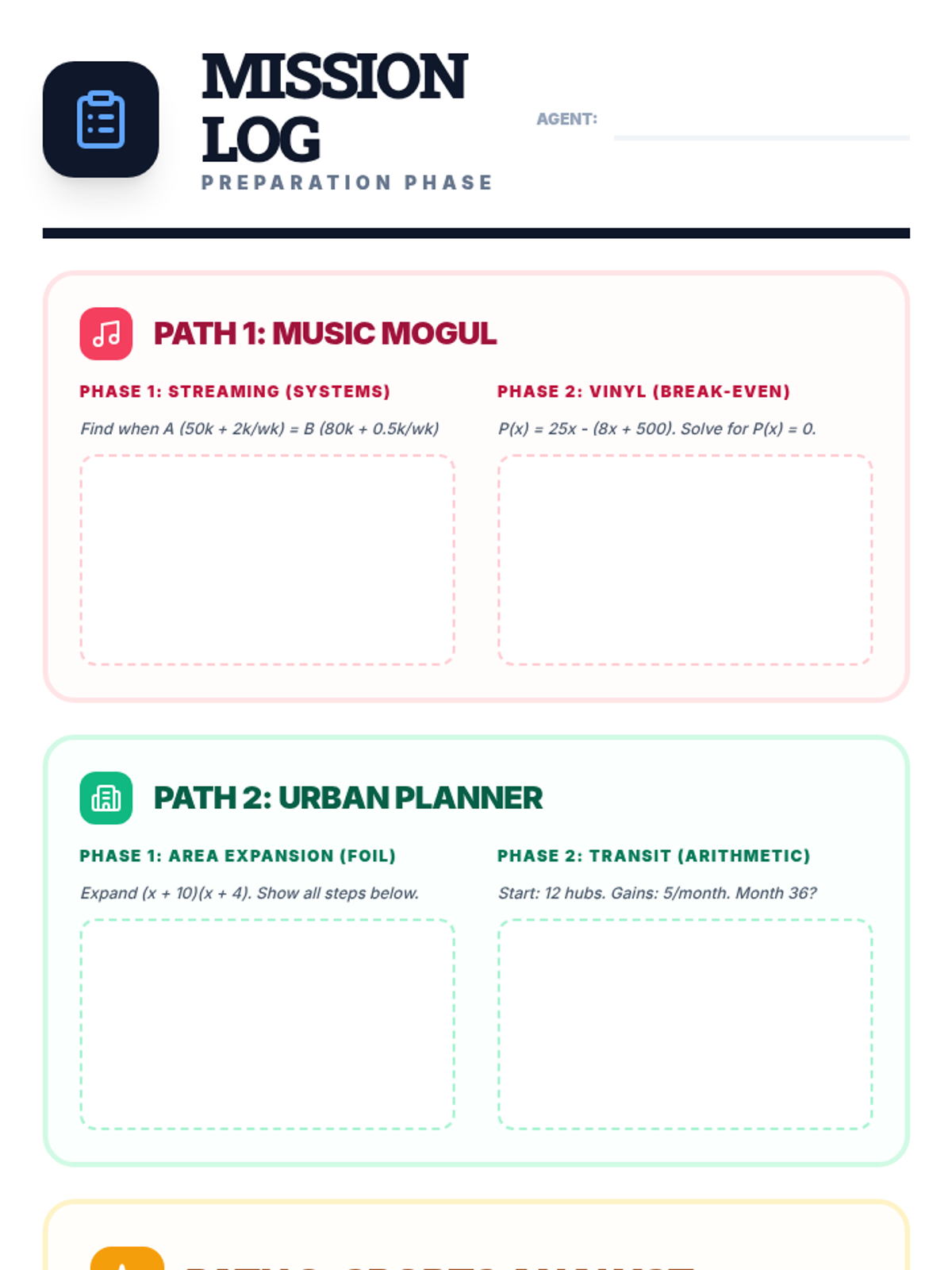
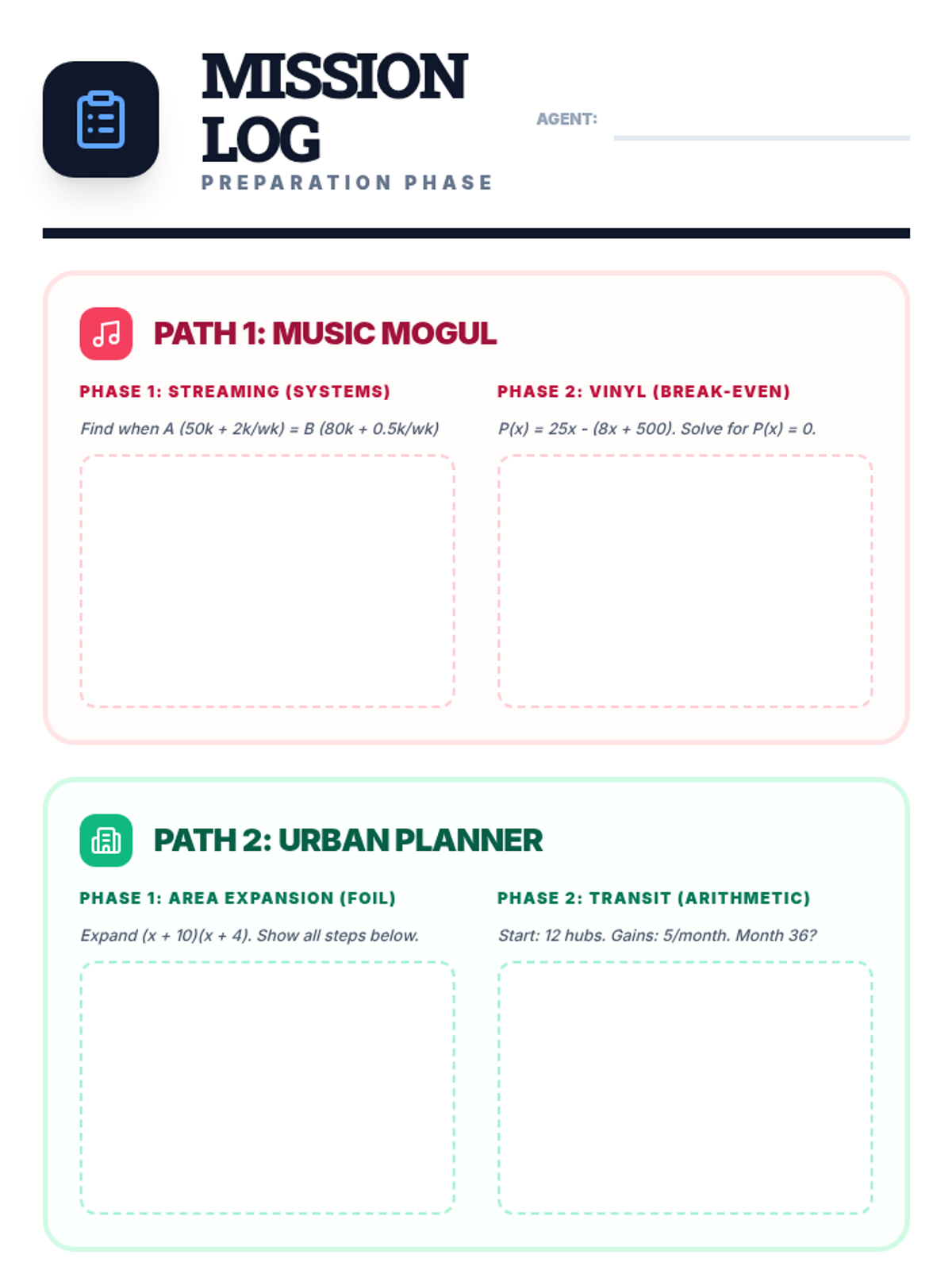
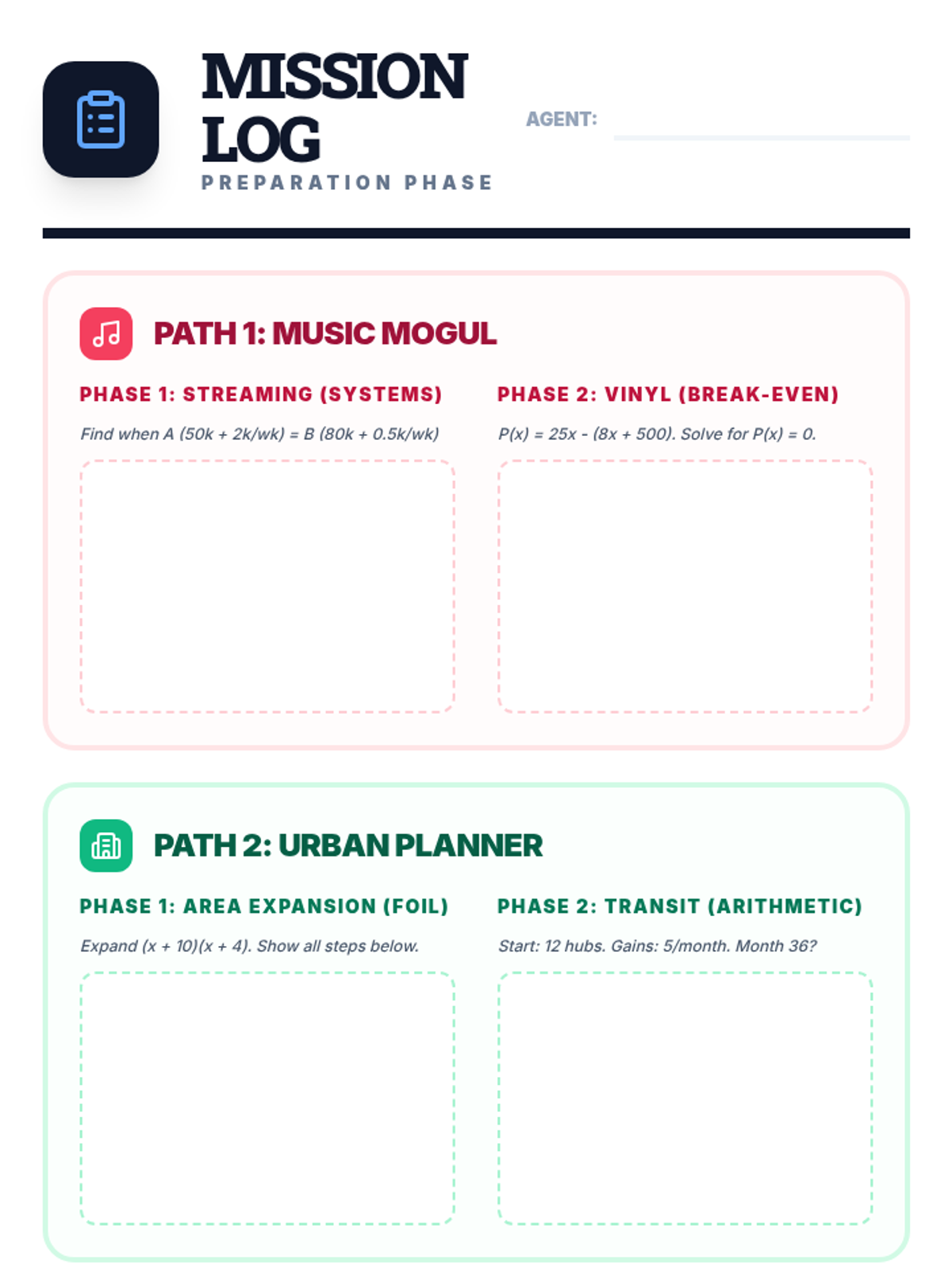
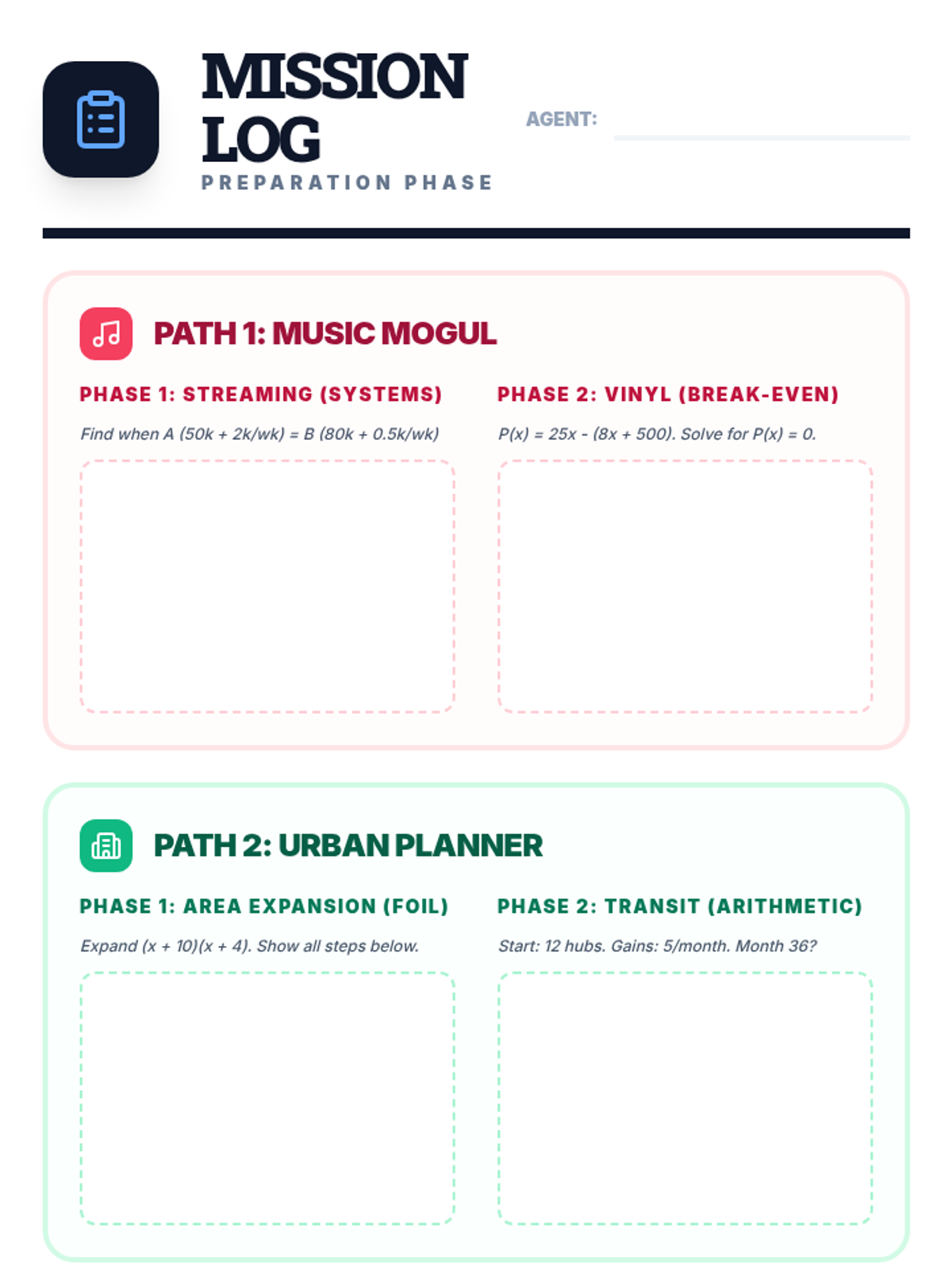
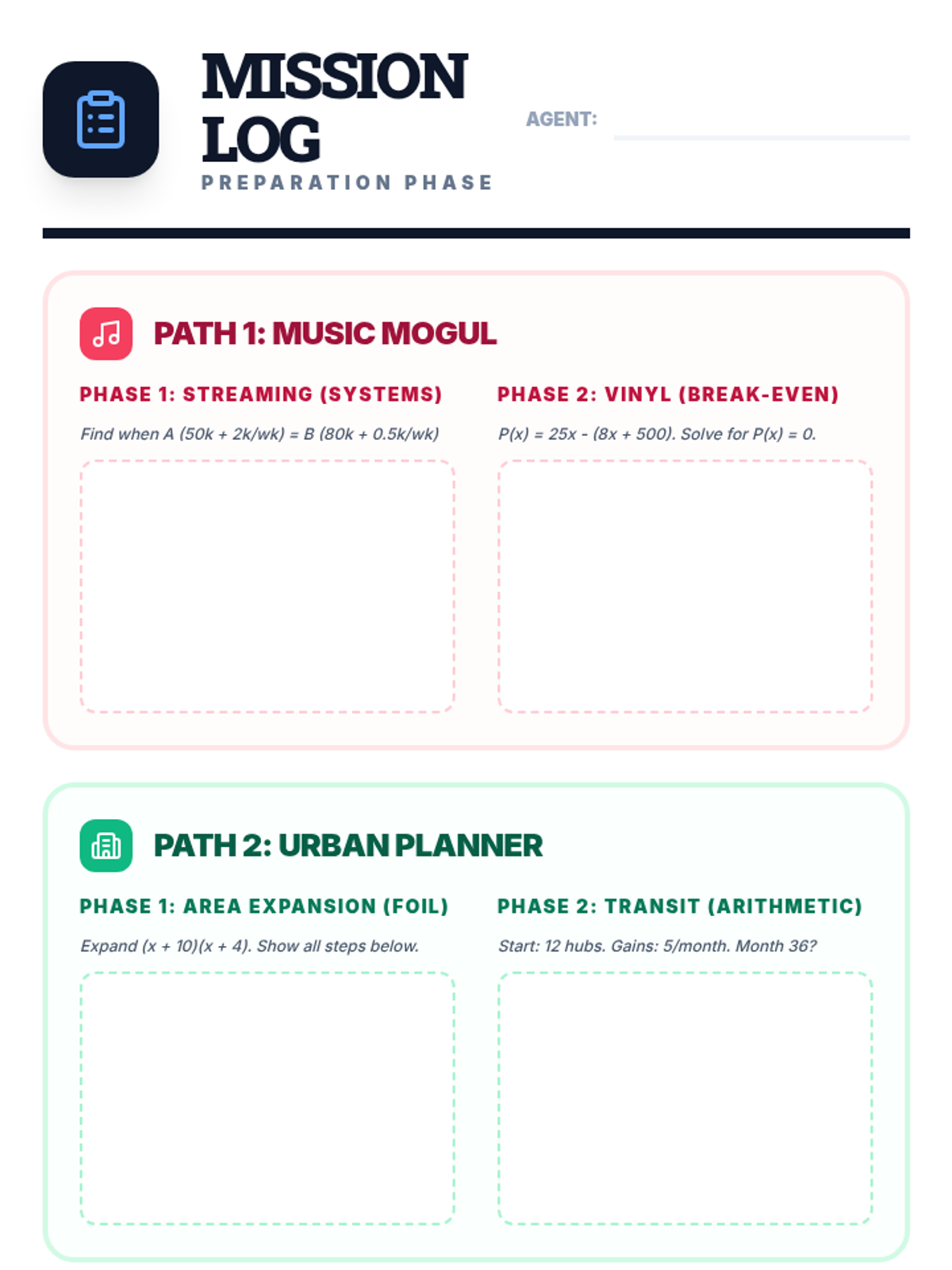
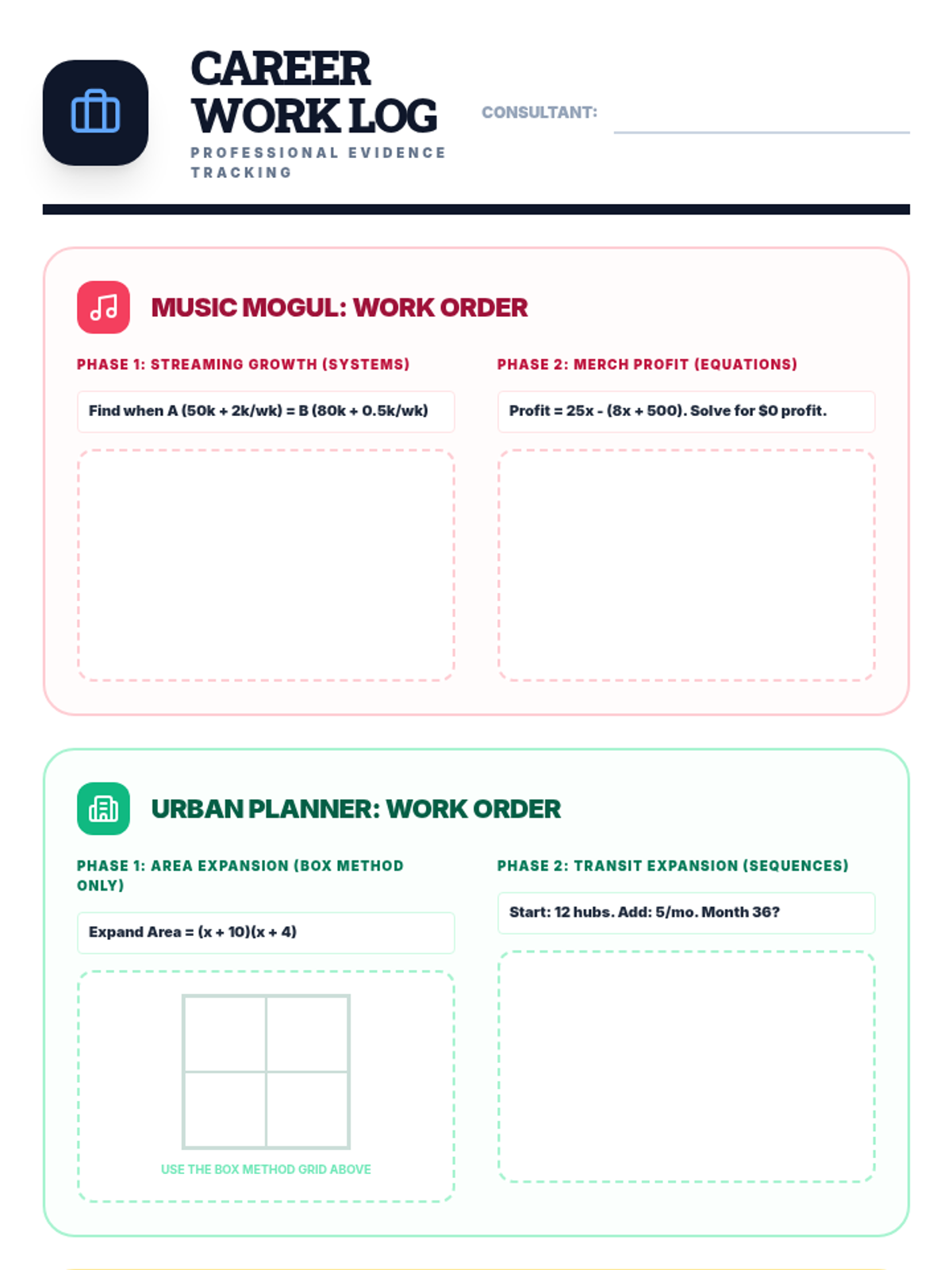
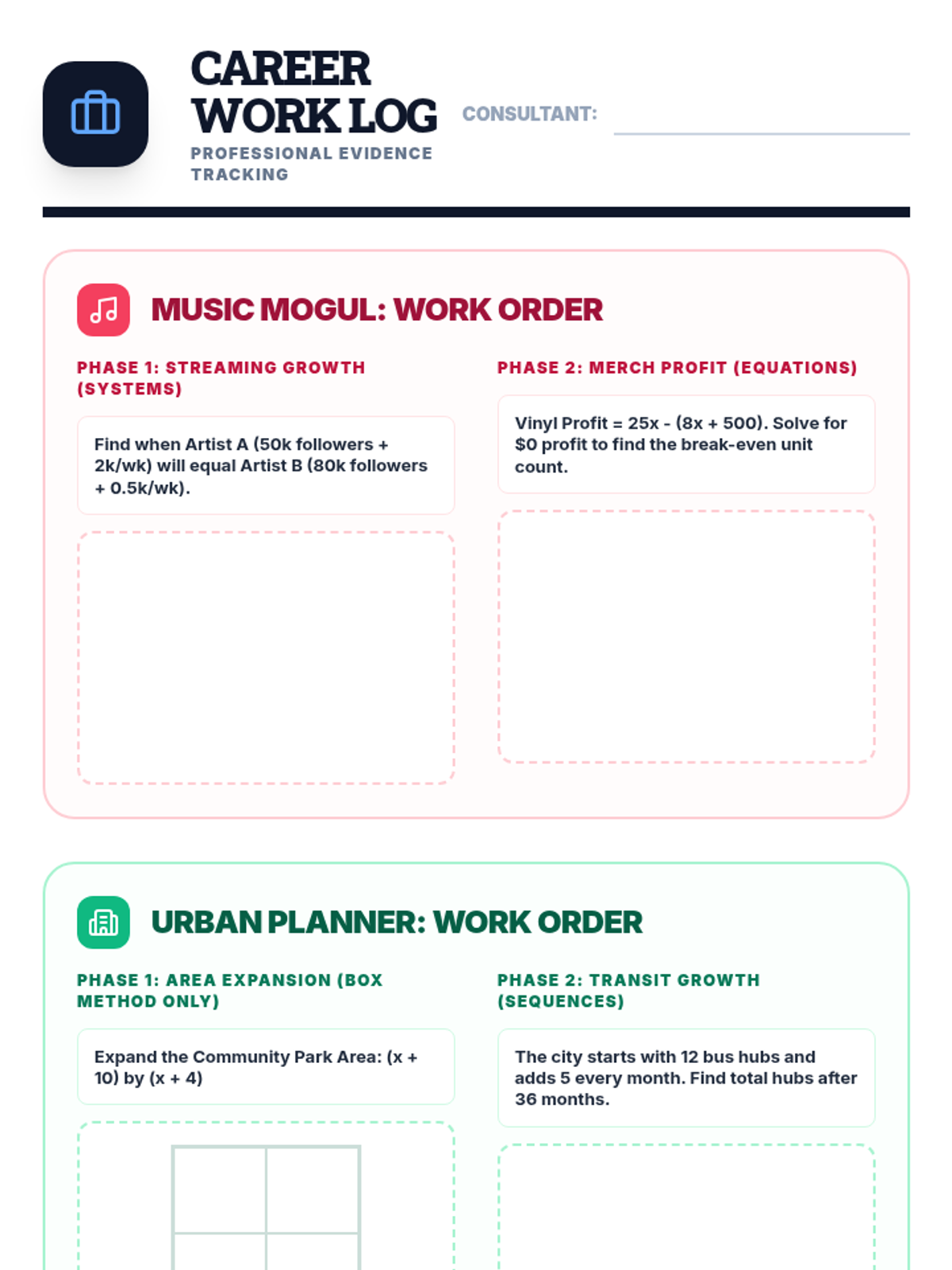
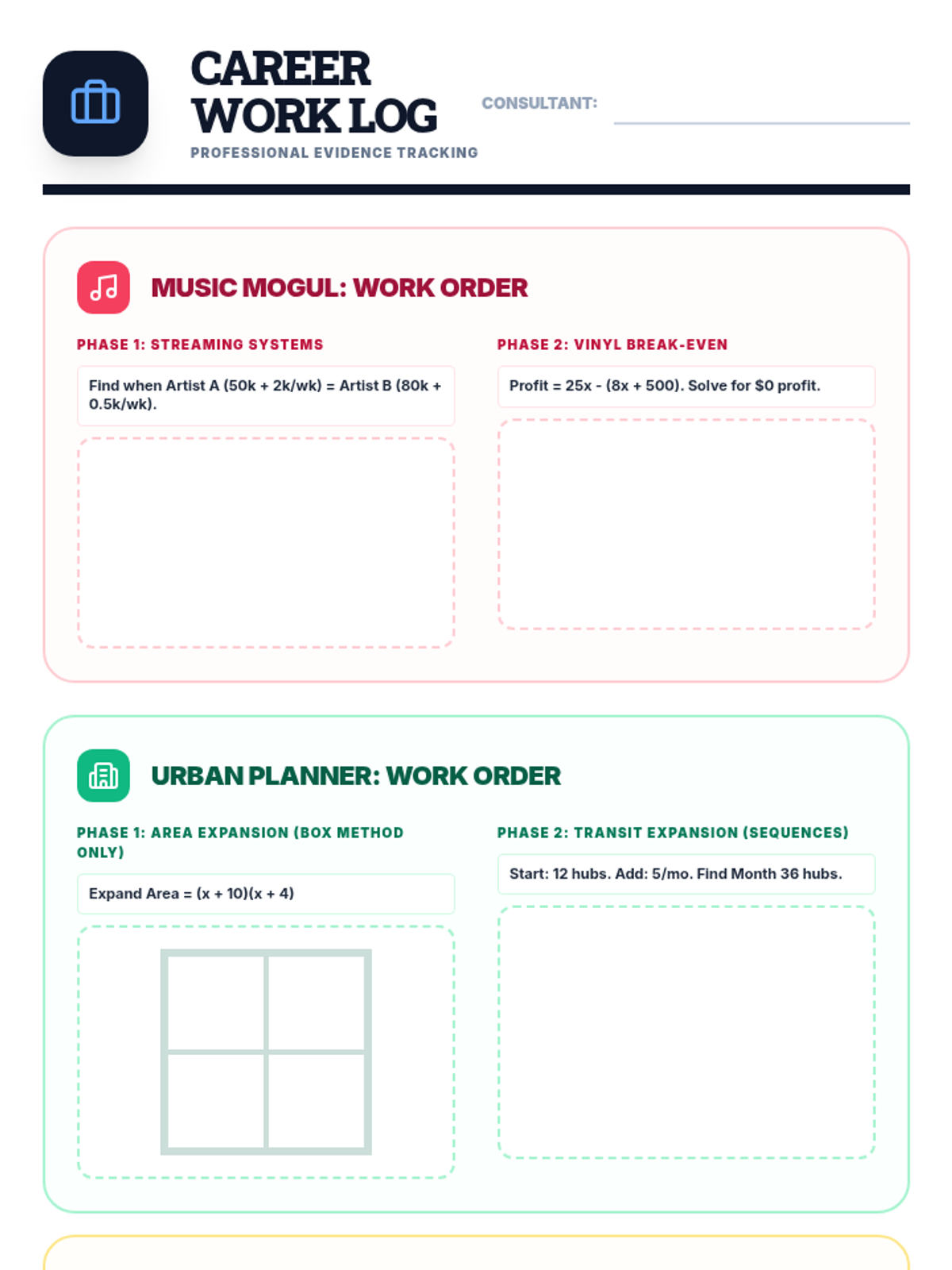
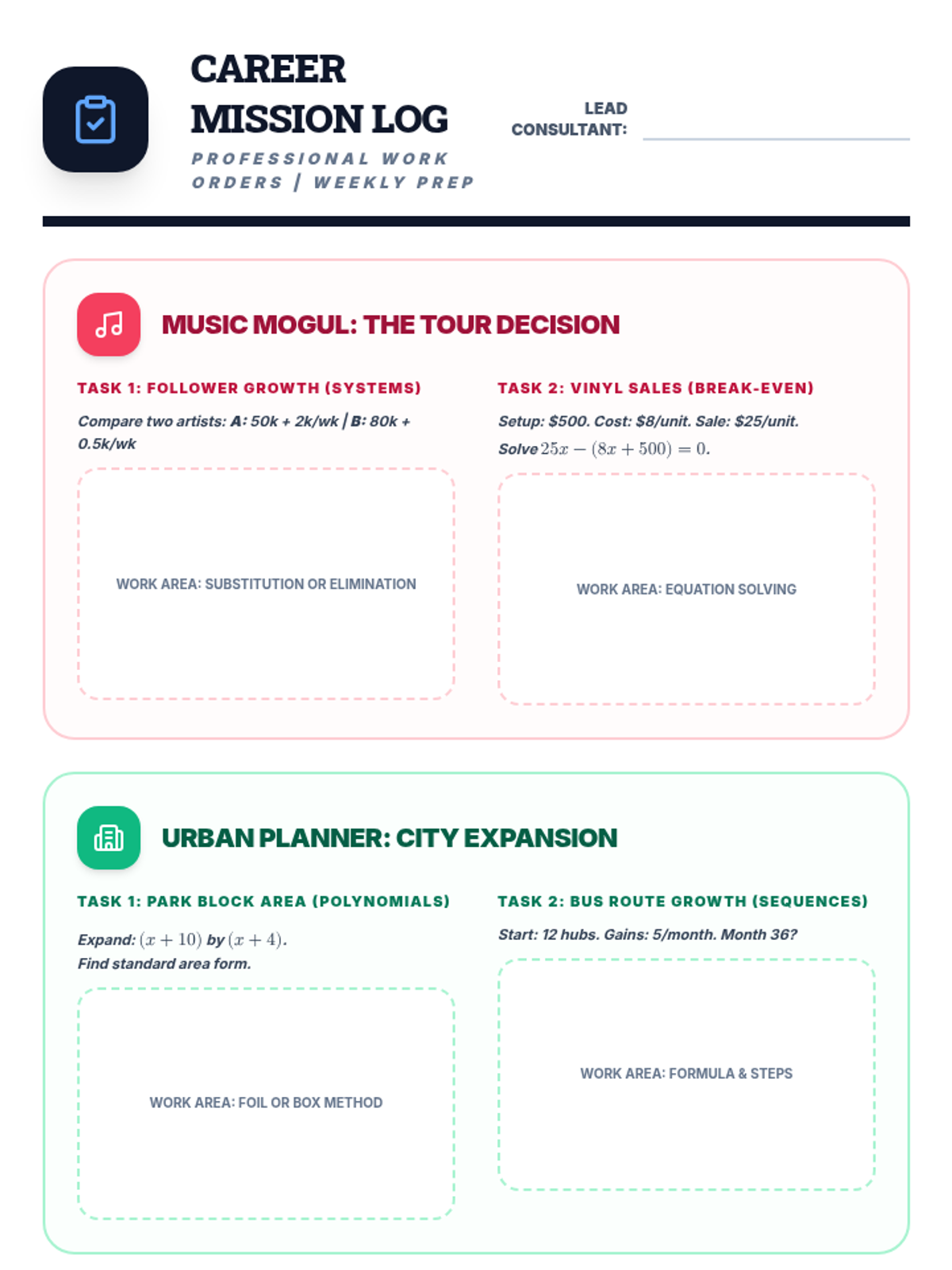
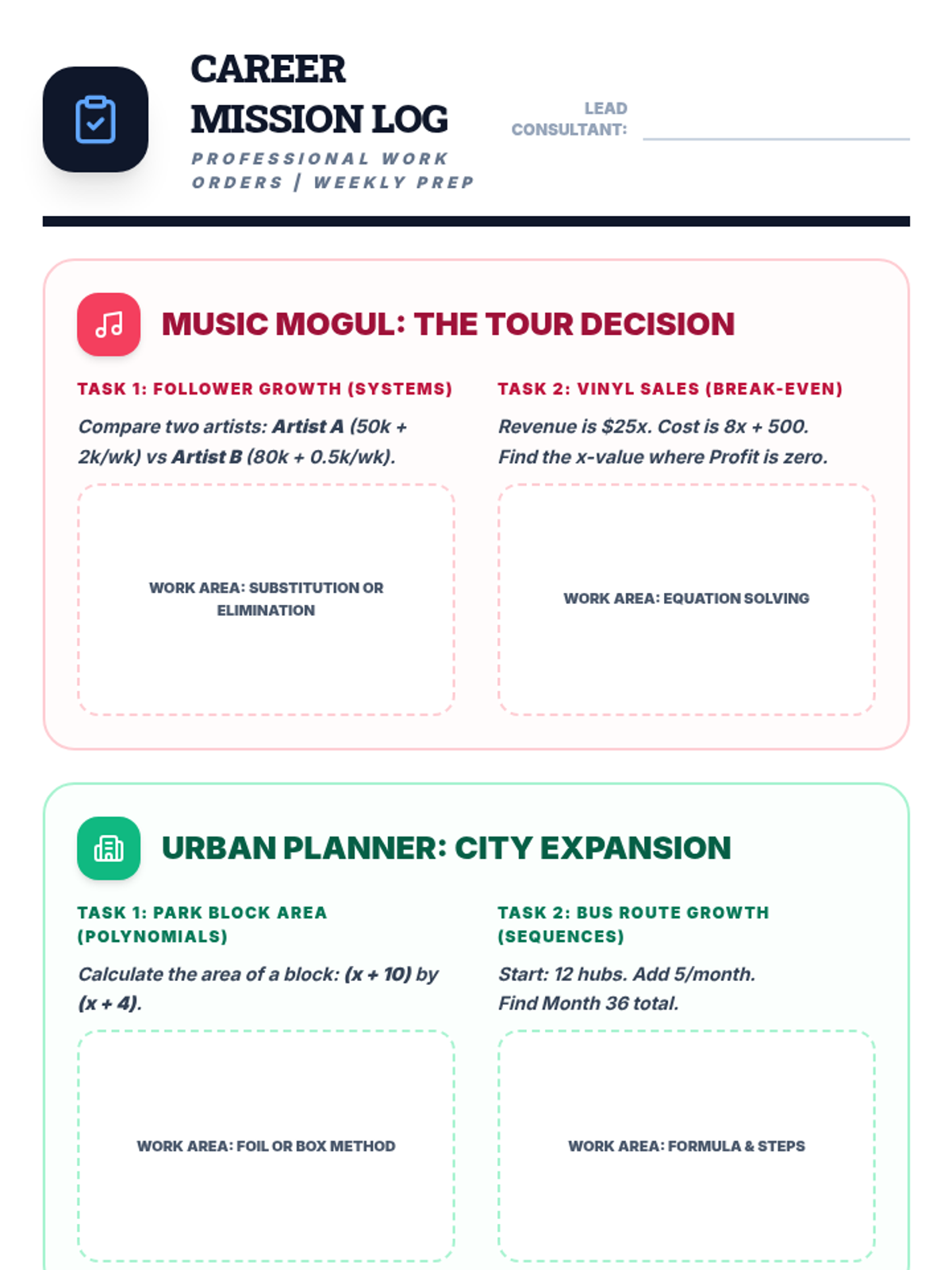
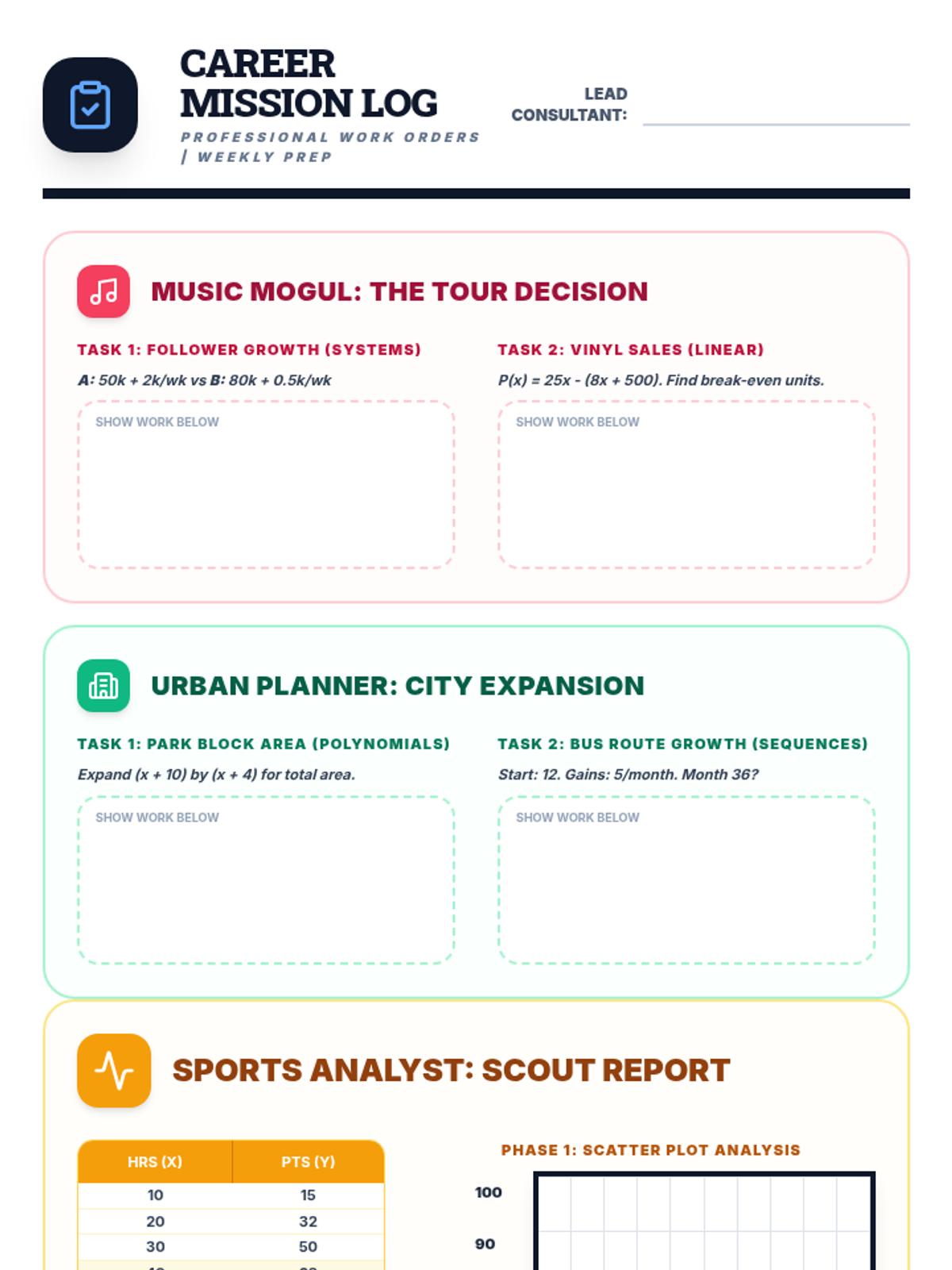
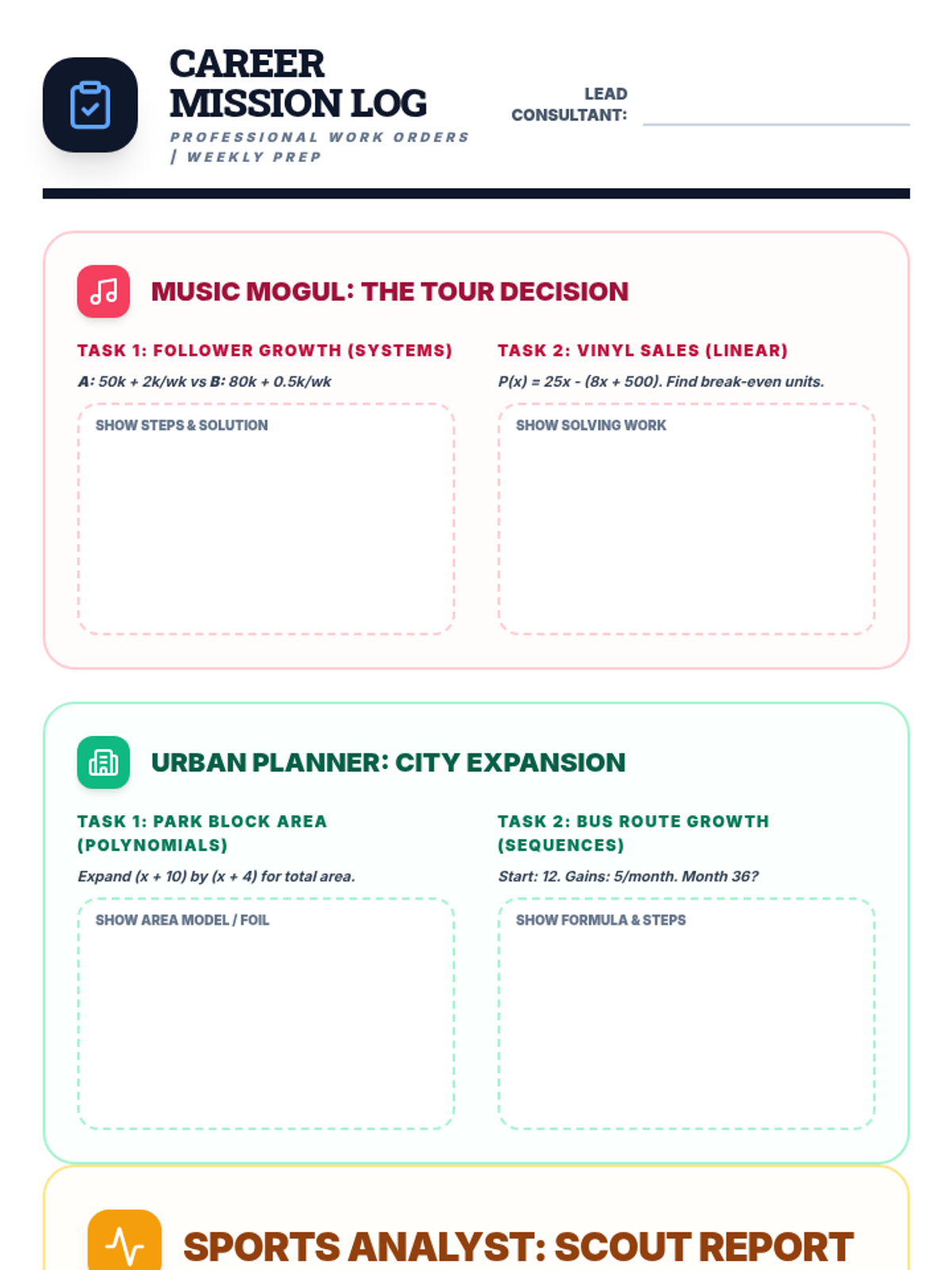
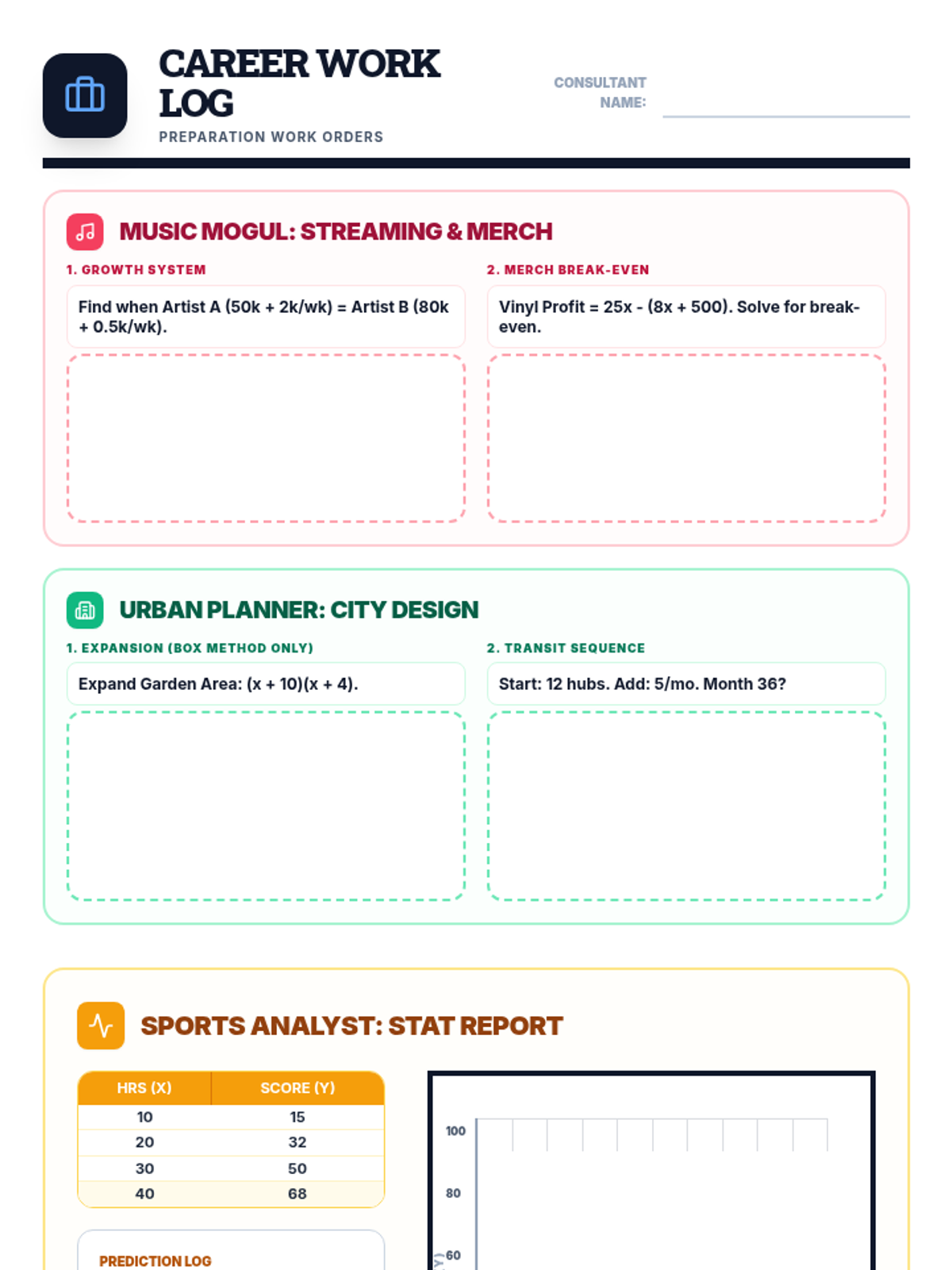
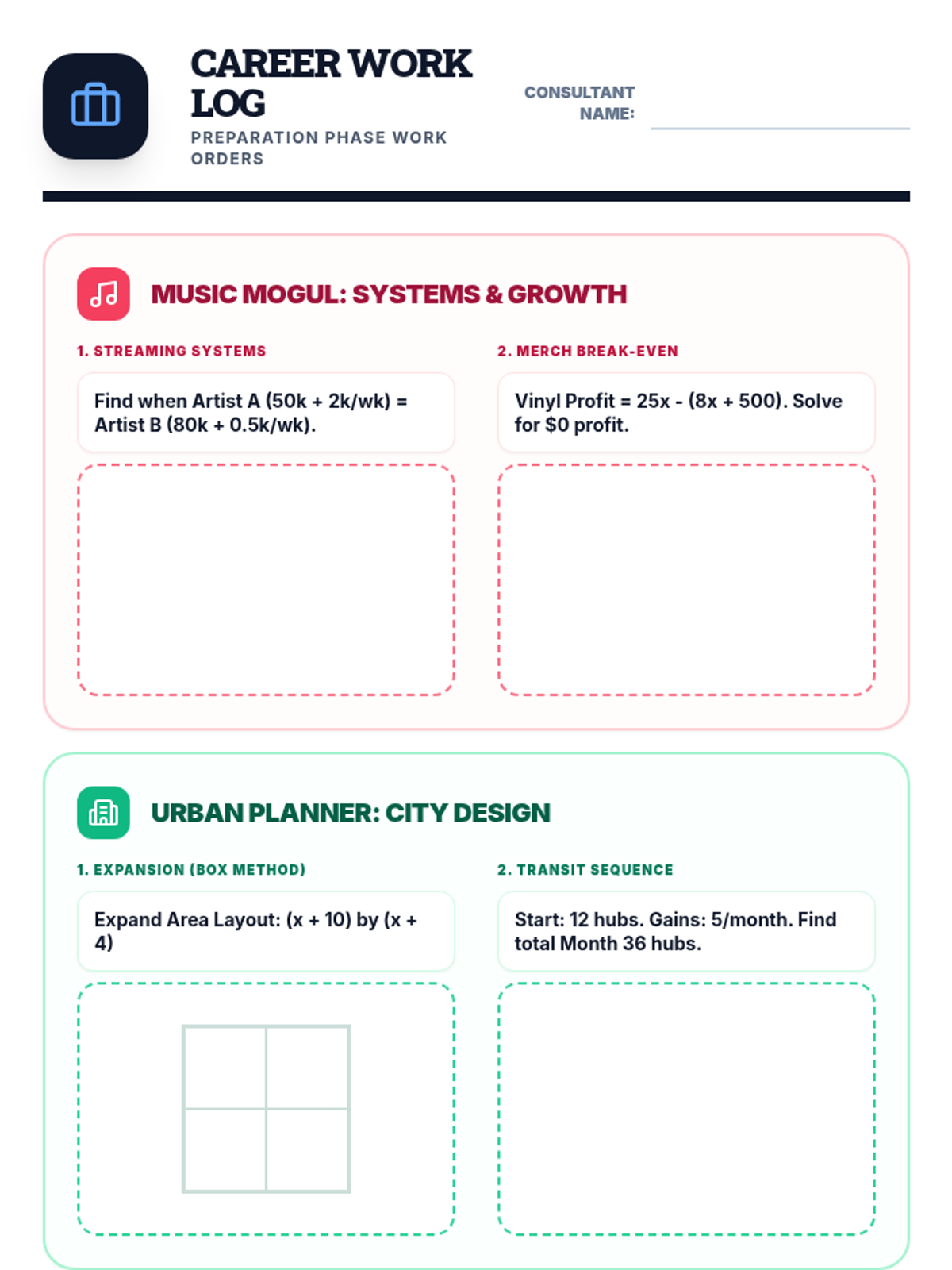
The final project phase where students select one of three real-world career paths (Music Mogul, Urban Planner, or Sports Analyst) to apply their mathematical knowledge in a summative assessment.