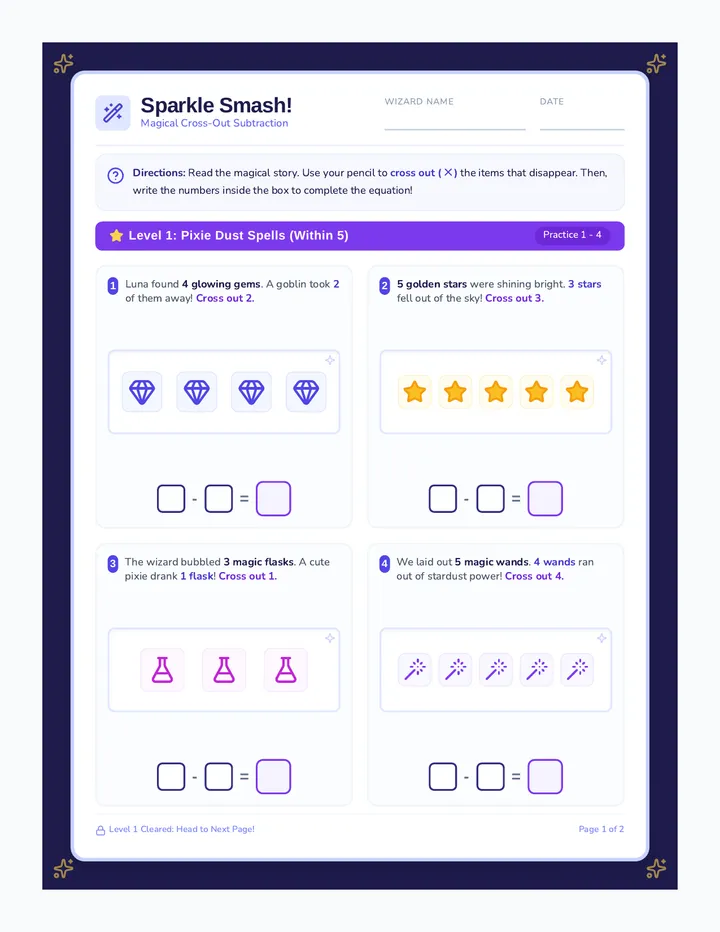
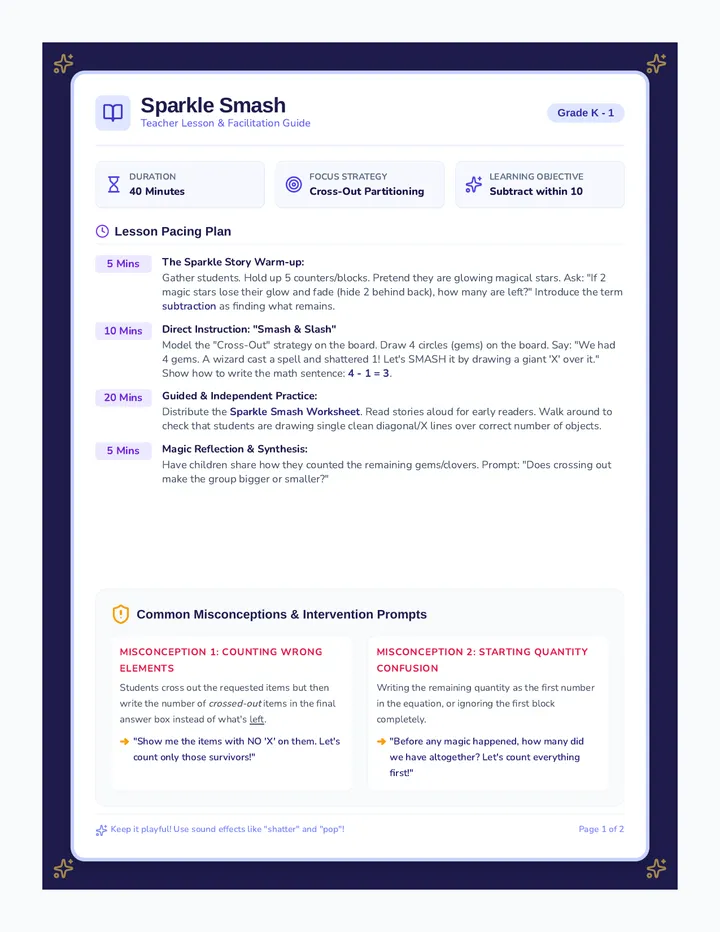
Students start with 10 snack items. They eat one at a time, counting how many are left after each bite (10, 9, 8...). This demonstrates that backward counting matches decreasing quantity.
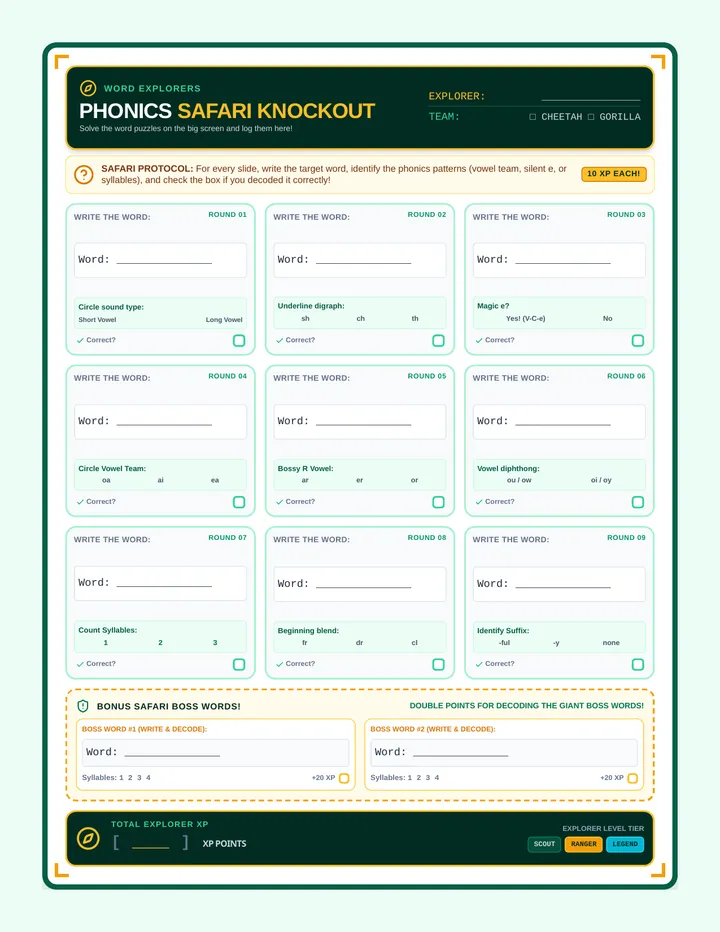
A fun, hands-on activity where students identify numbers 0-20 to reveal a hidden garden critter. Perfect for practicing number recognition and fine motor skills.
A hands-on measurement lesson where students use non-standard units to measure paper plants, fostering number sense and comparison skills through movement-based learning.
A series of math quests where students practice addition and subtraction within 20. Through medieval-themed challenges, students build fluency using ten-frames and number lines.
A series of medieval-themed math challenges focusing on addition and subtraction fluency within 20. Students use visual models like ten-frames and number lines to solve operational problems.
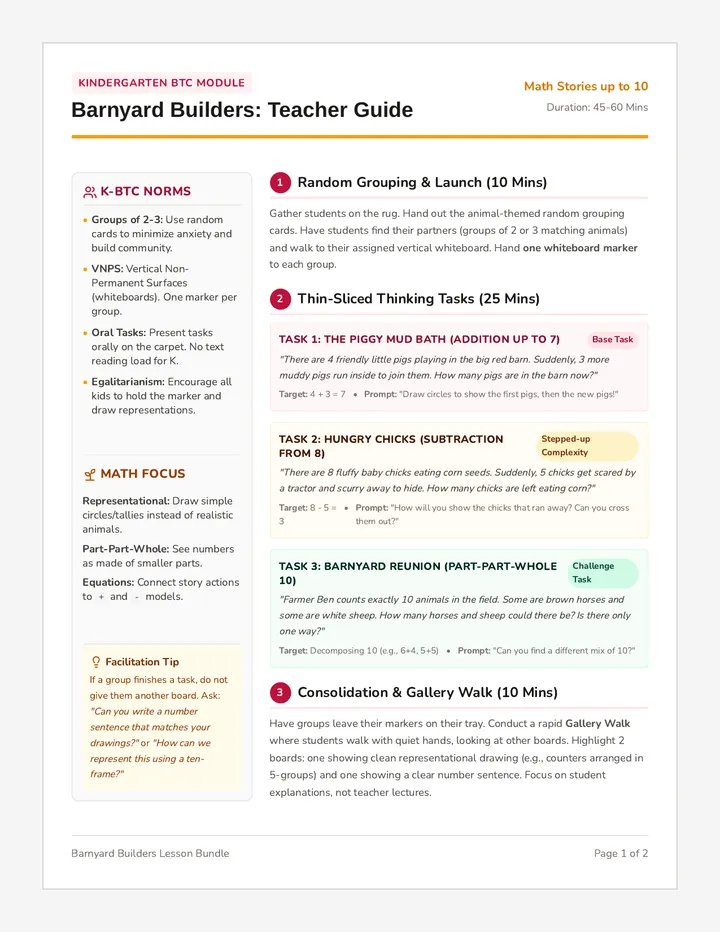
A K-2 math lesson focusing on solving addition and subtraction word problems using part-part-whole mats, bar models, and number lines, while applying counting on/back and making-a-ten strategies.
Targeted practice for identifying numbers 20-40 through rapid-fire visual drills and kinesthetic activities. Focuses on overcoming the 'teen' vs 'ty' confusion and building reliable recall.
A fun, monster-themed lesson focused on identifying and naming numbers 1-20 through a hands-on 'Roll and Cover' game. Students practice subitizing and number recognition in a playful, low-stakes environment.
A magical math lesson where students count, sort, and graph different types of ponies to practice data representation and comparison skills.
Students will explore the concepts of big, medium, and small by comparing various objects in the museum exhibits, promoting vocabulary development and visual discrimination.
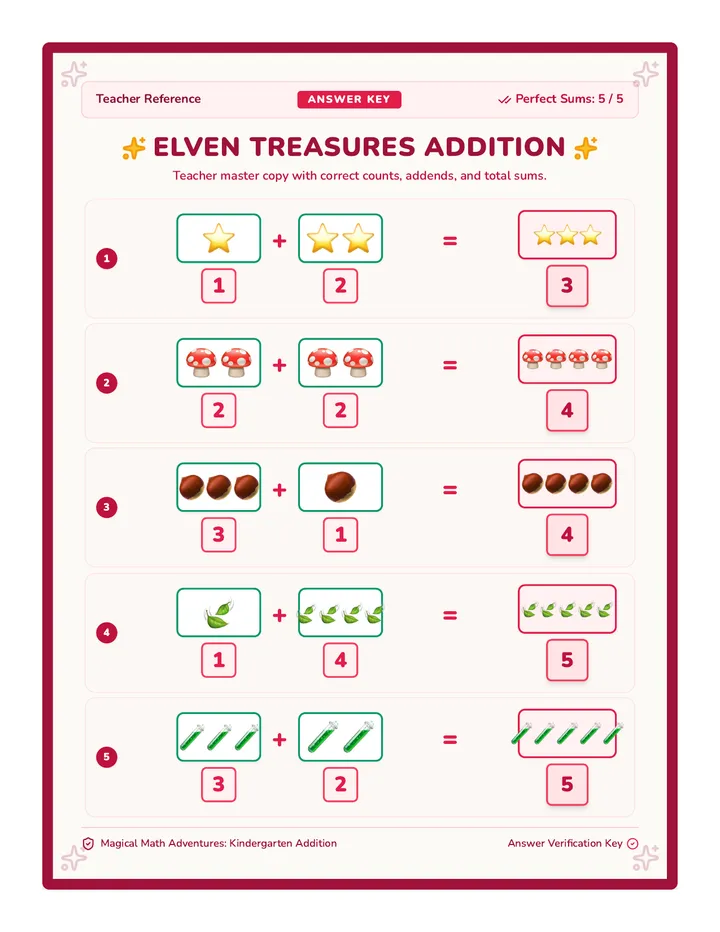
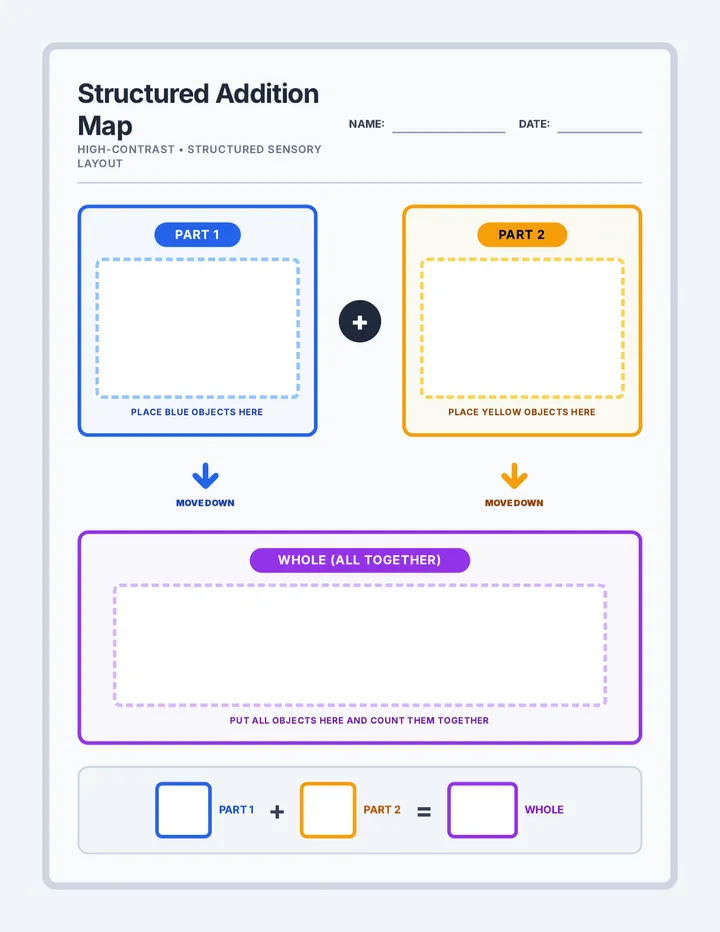
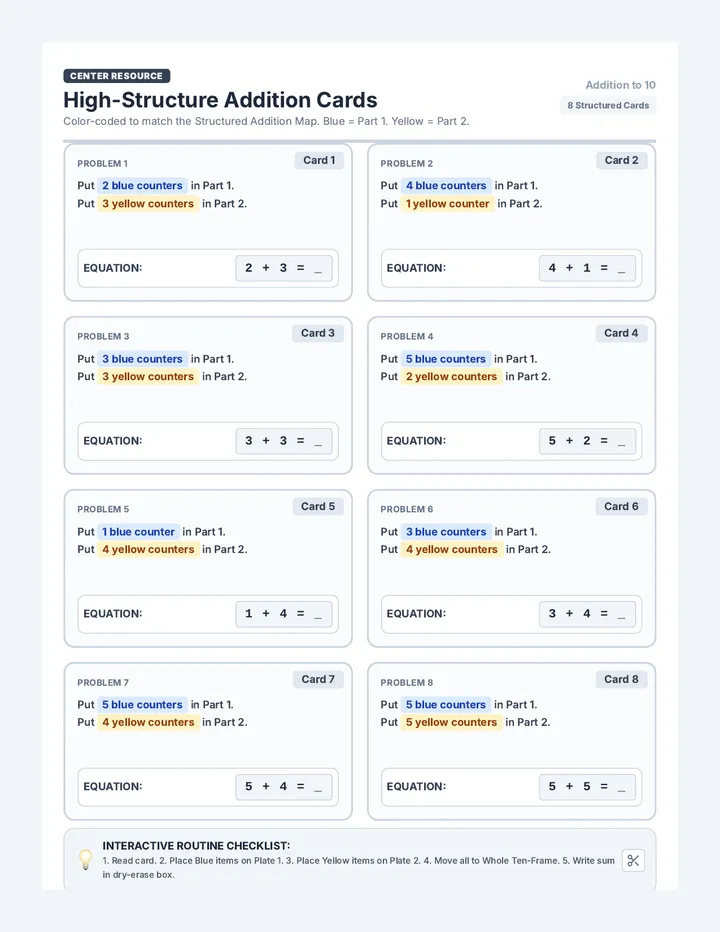
An introduction to simple addition by combining groups of museum objects, focusing on the concept of 'putting together' using visual aids and tactile play scenarios.
Students will practice identifying and counting numbers 1-10 using common items found in a play museum setting, such as grocery items, toy cars, and house windows.
A cumulative review of 2D/3D shapes, positional words, and measurement comparisons to assess mastery.
Students identify 3D shapes (cube, sphere, cone, cylinder) and compare objects based on size and length.
Students identify 2D shapes (circle, square, triangle, rectangle) and use positional language (over, under, beside) to describe location.
Students count sets of pennies and nickels and analyze data from bar graphs to solve comparison problems. Subtraction skills are reinforced through data-based word problems.