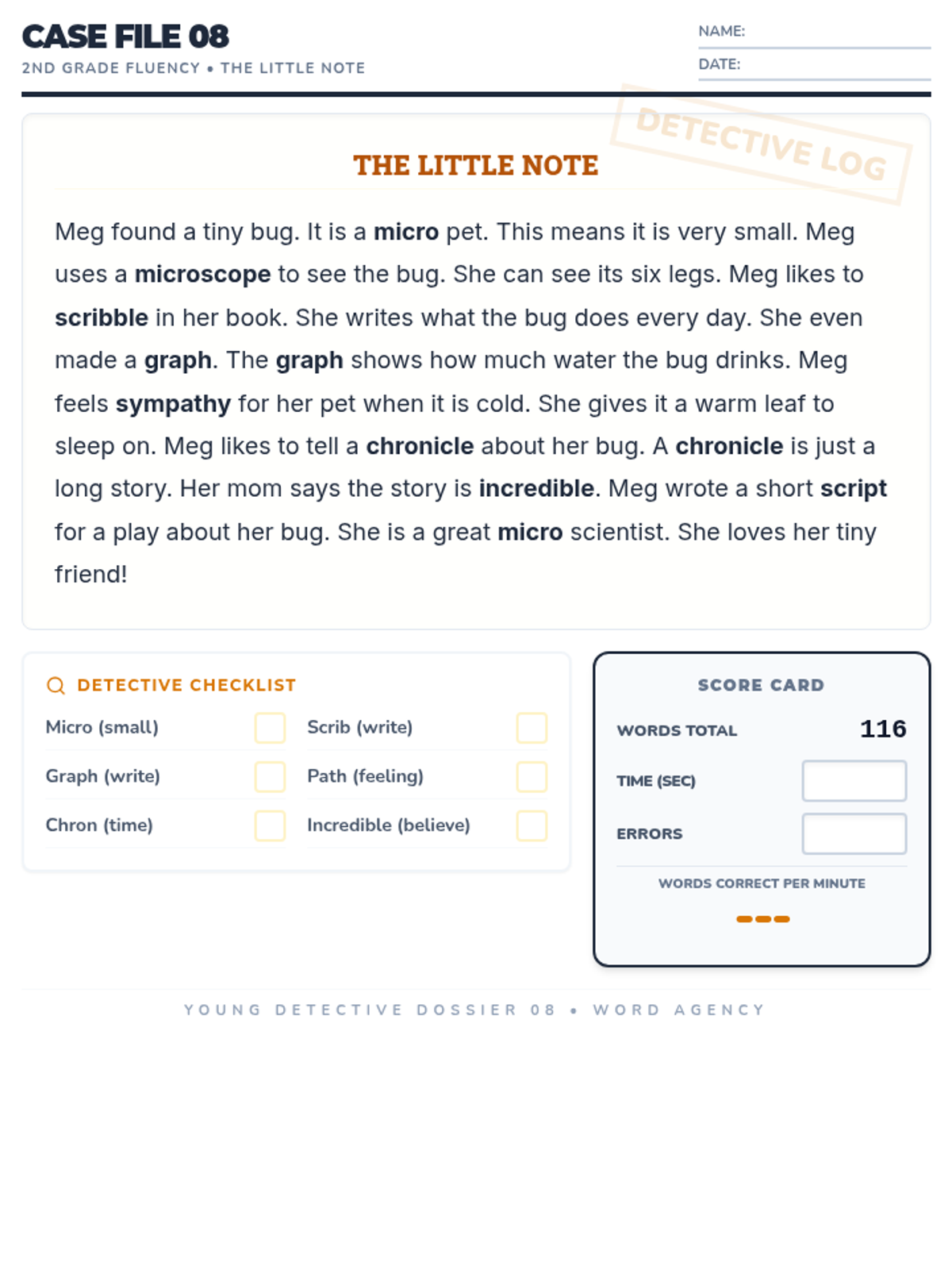
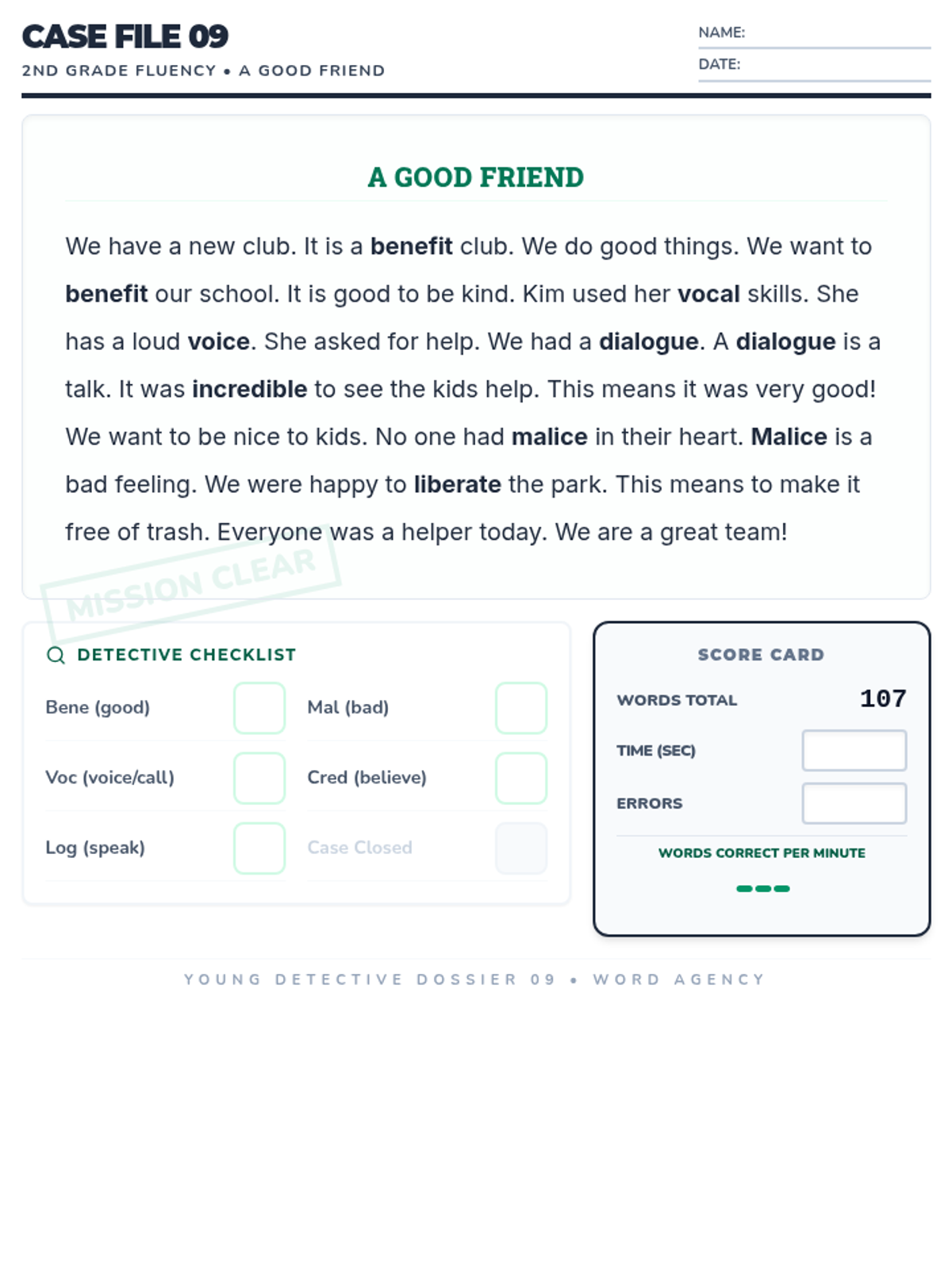
A progress monitoring lesson focused on assessing student mastery of common diphthongs (oi, oy, ou, ow, aw, au). Includes student reading lists and a teacher tracking sheet for data collection.
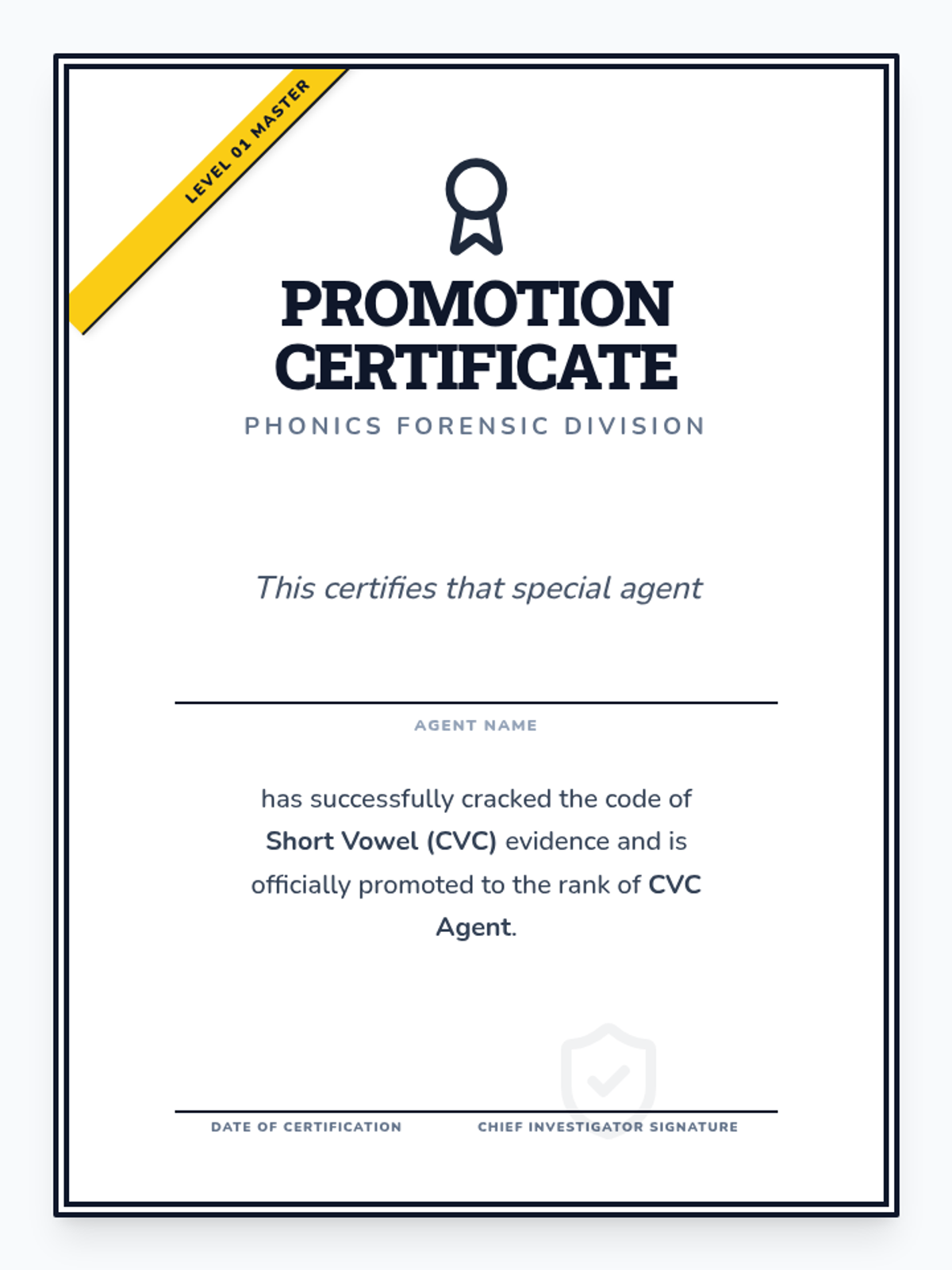
Recognition and awards for students as they master each detective-themed phonics level.
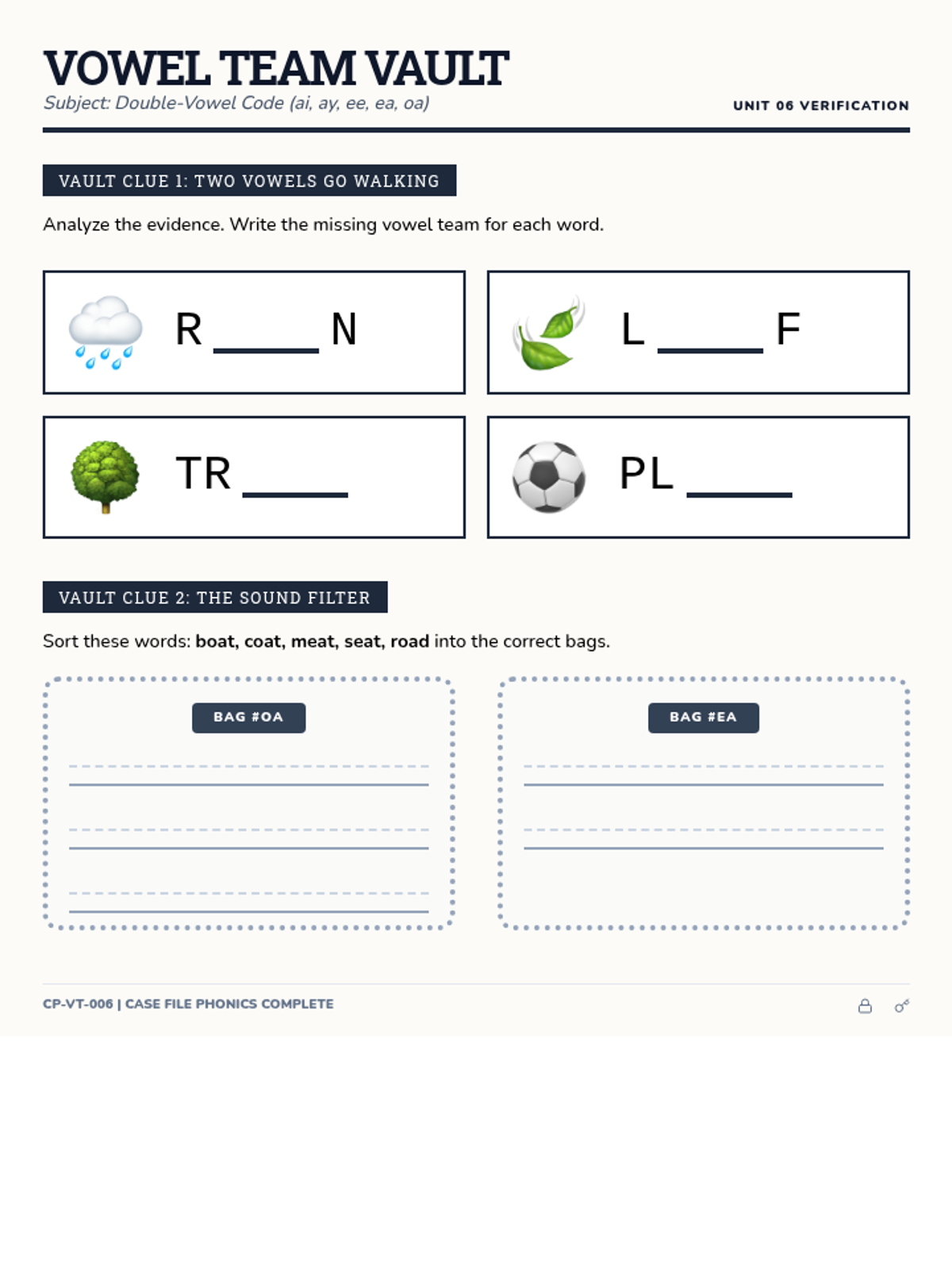
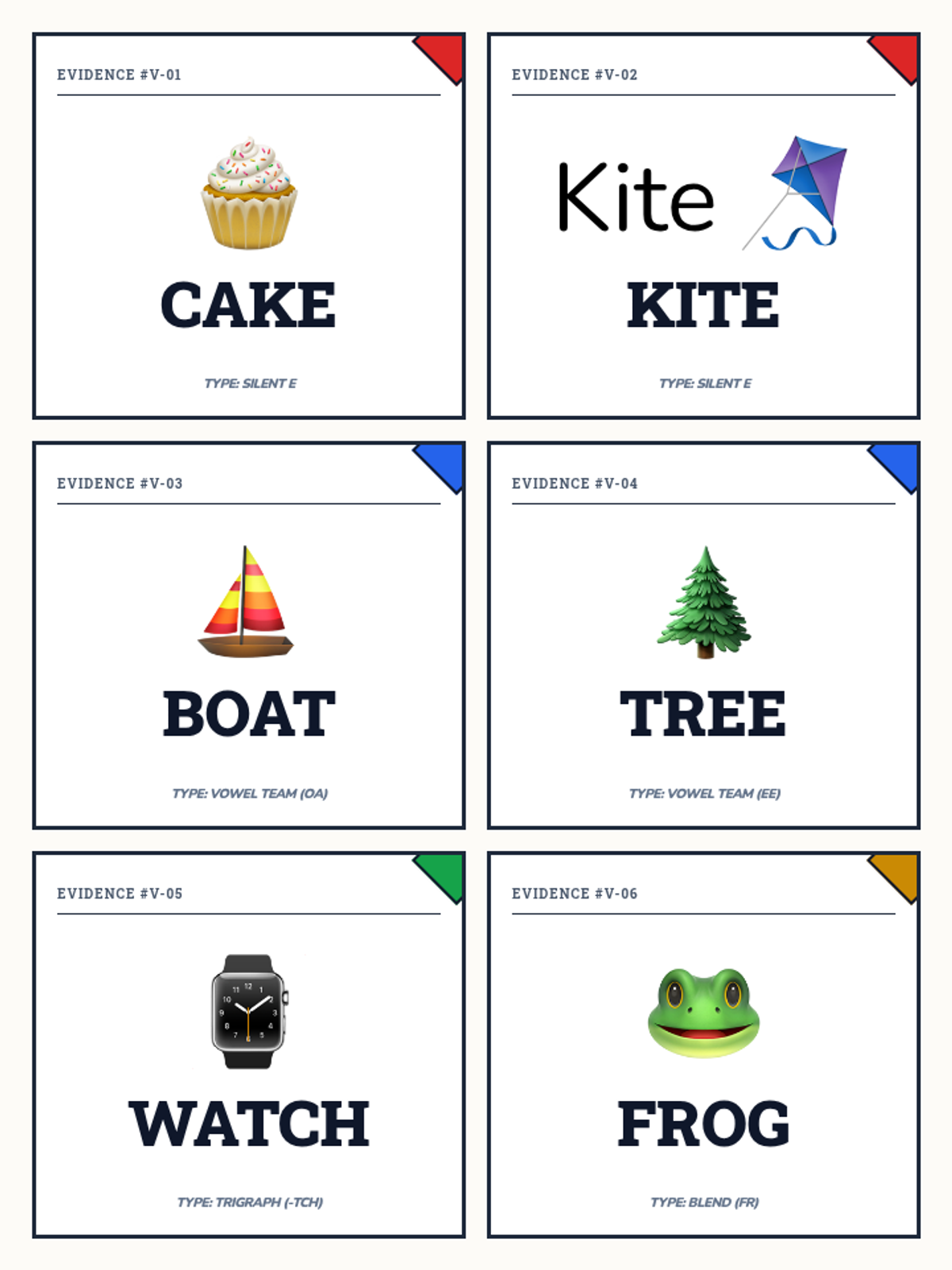
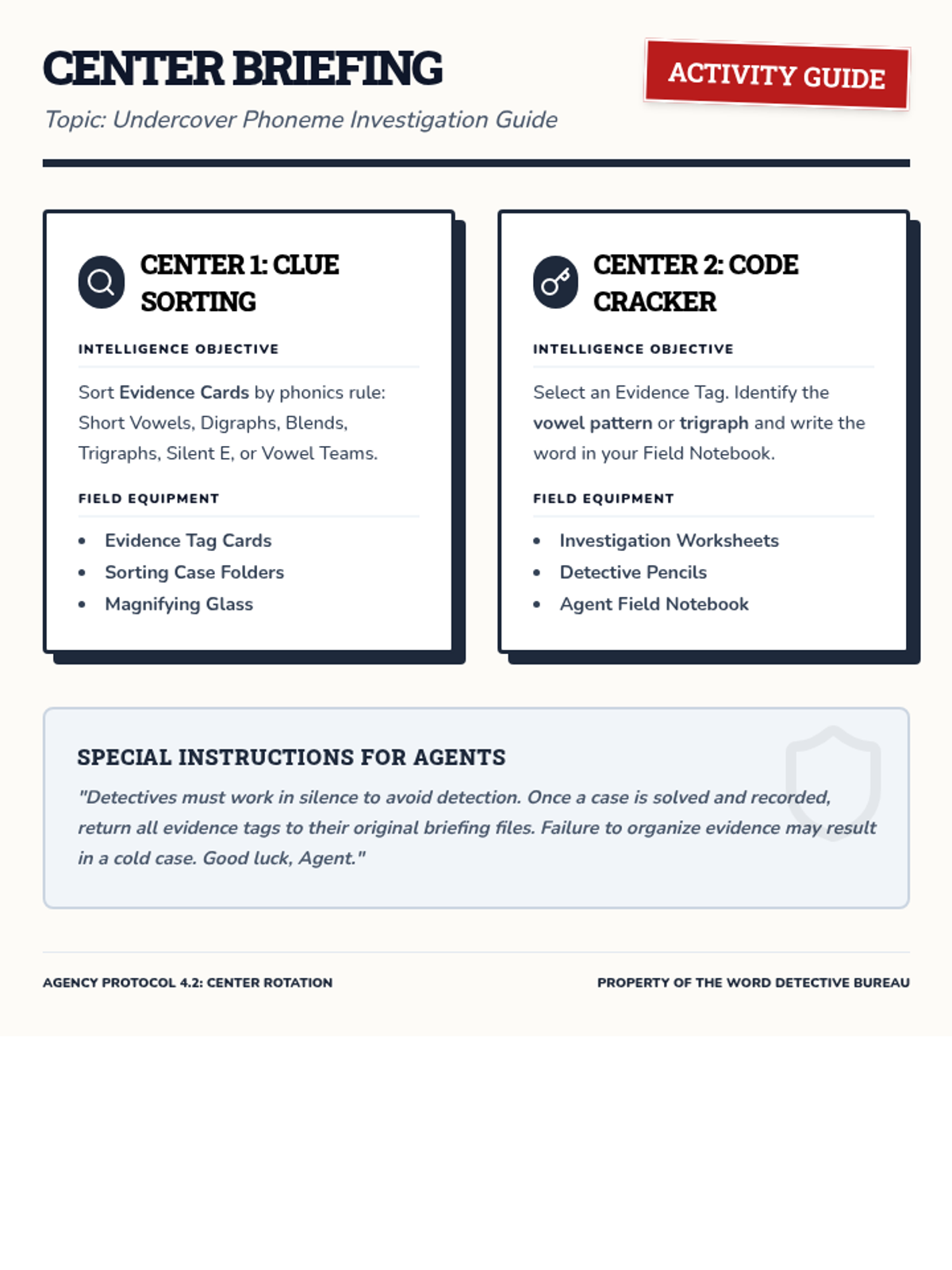
Investigating vowel teams and their distinct sounds in multi-syllabic and complex words.
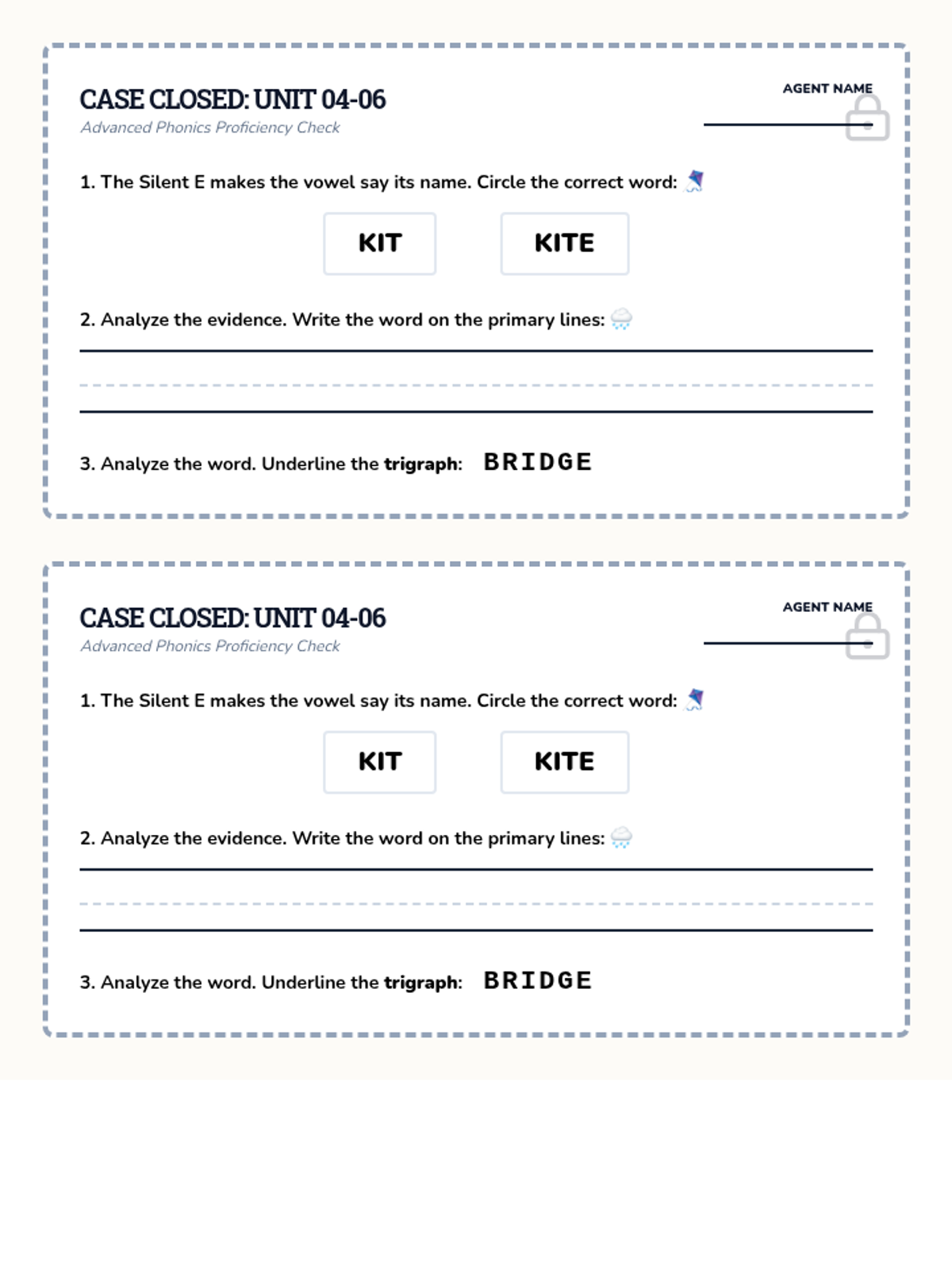
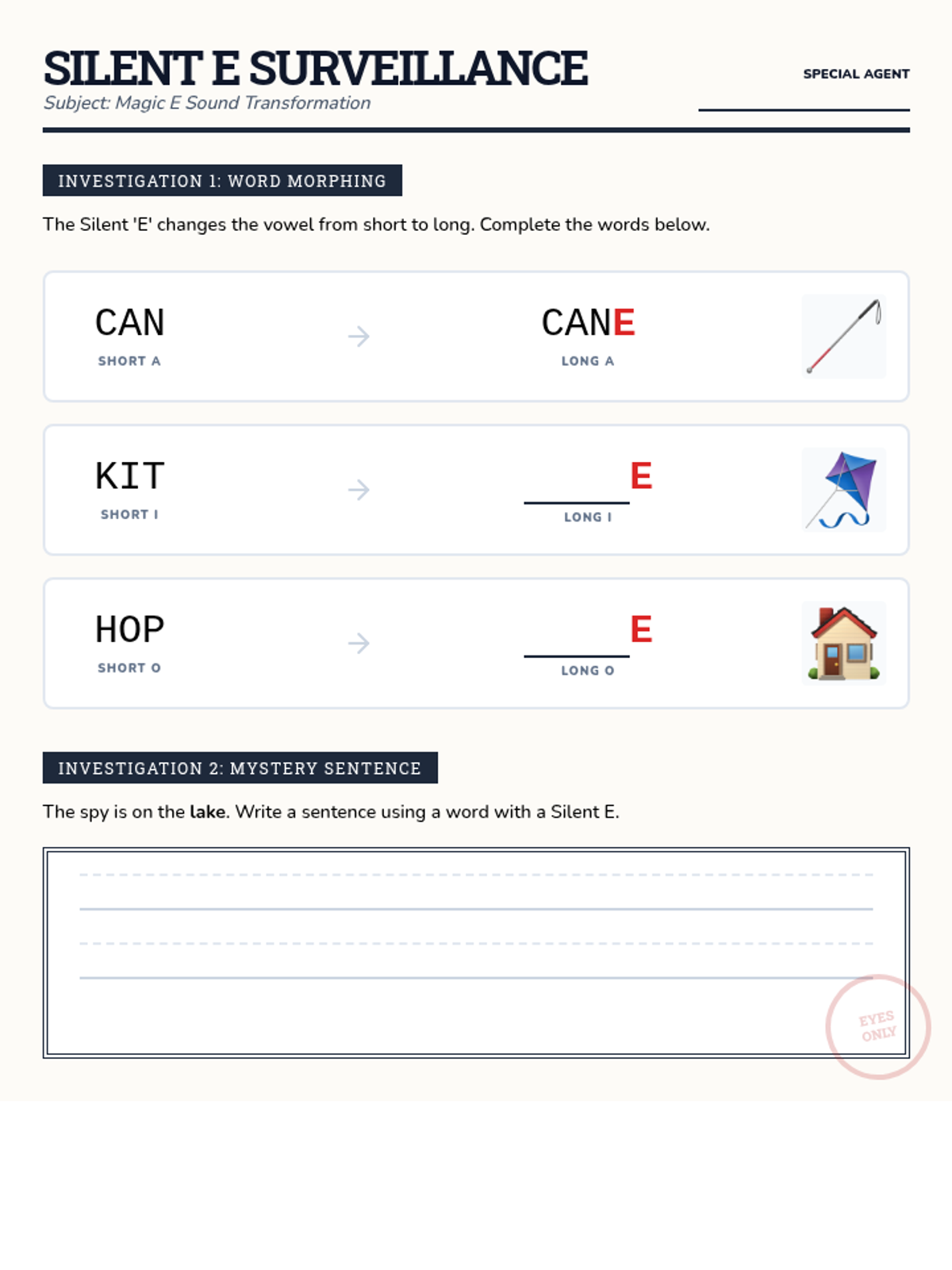
Cracking the code of the silent e and its effect on long vowel sounds.
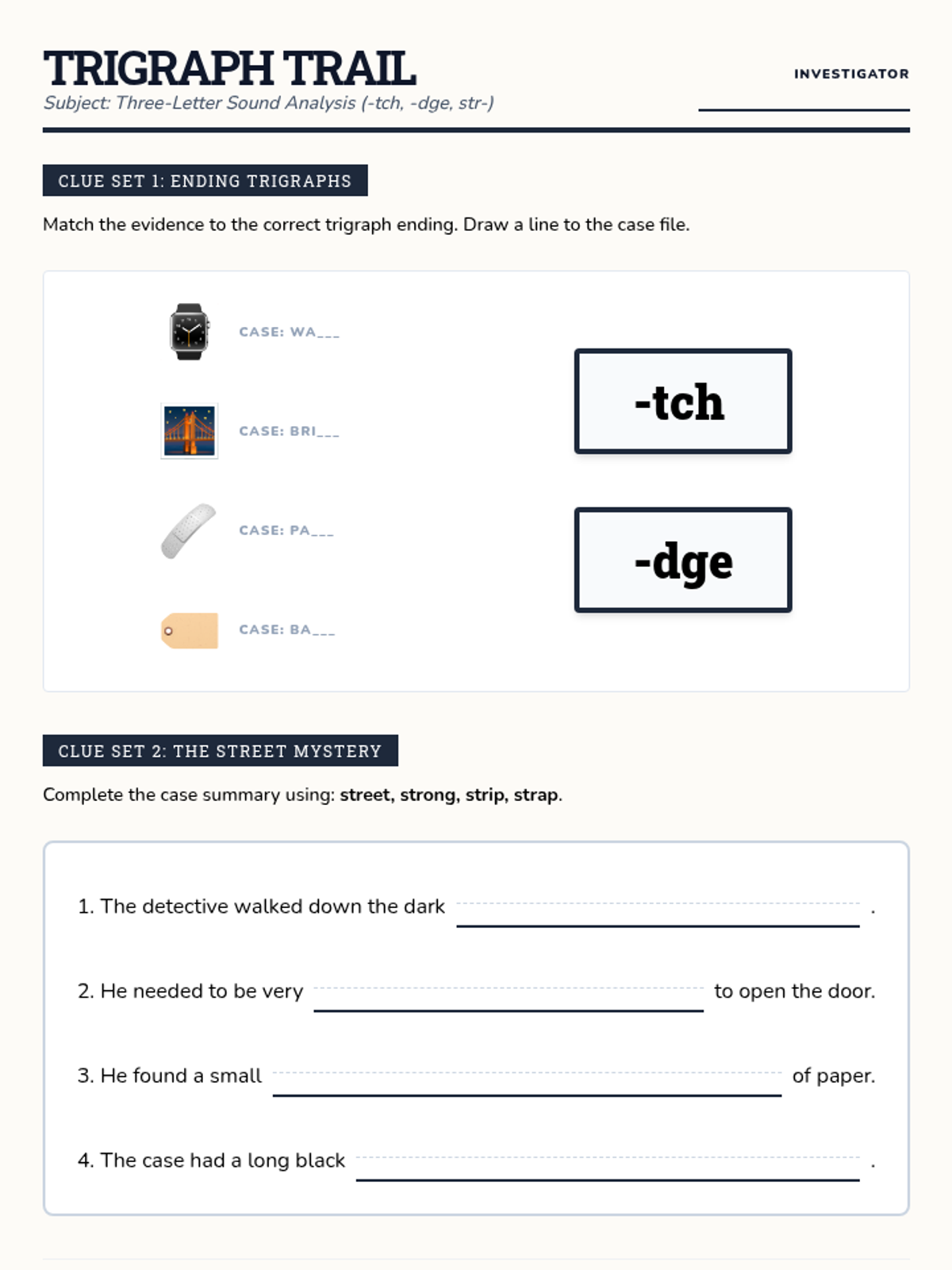
Exploring complex trigraphs (tch, dge) and three-letter blends (str, spl) as high-level evidence.
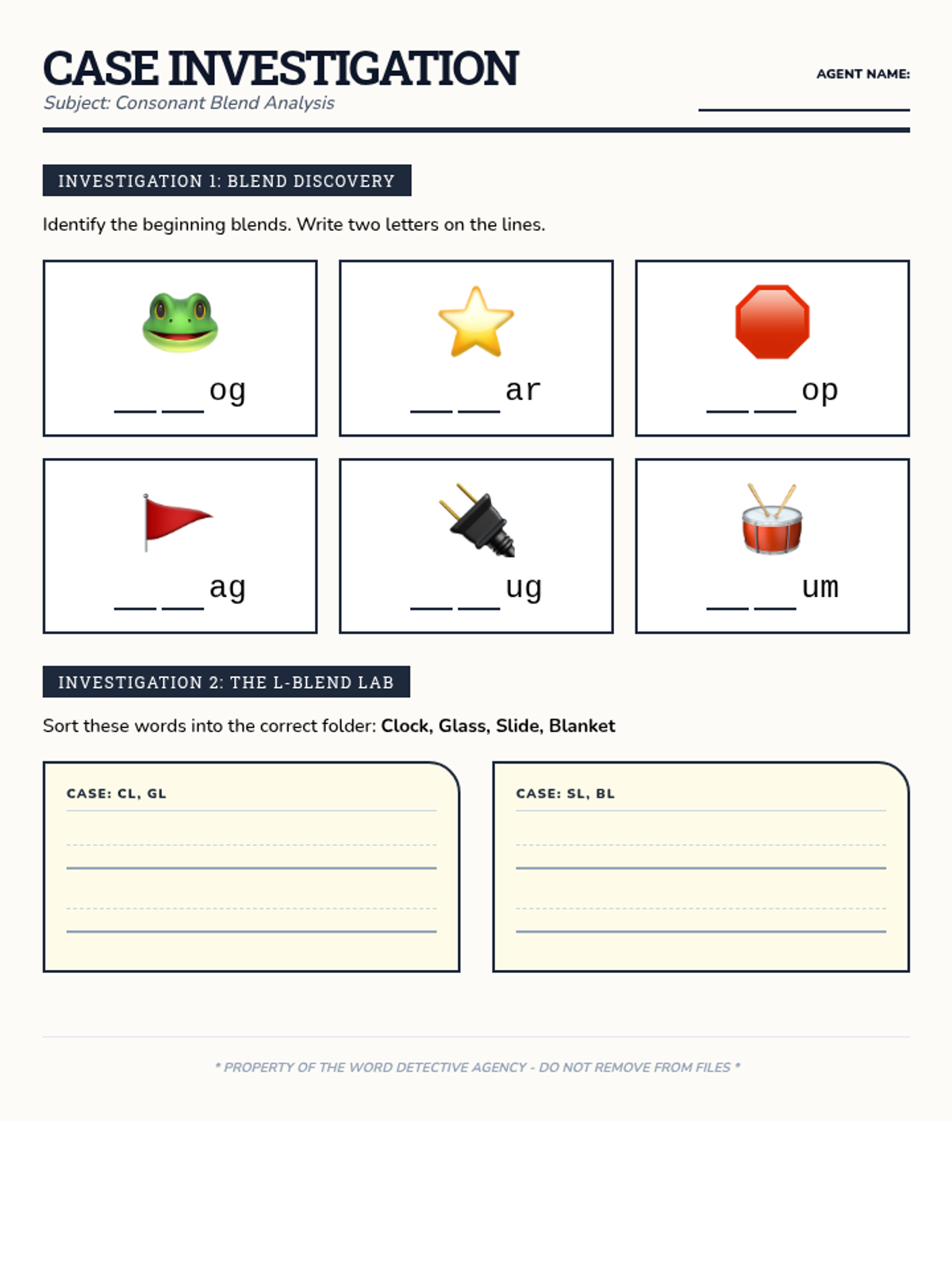
Mastering consonant blends through investigative word work and center activities.
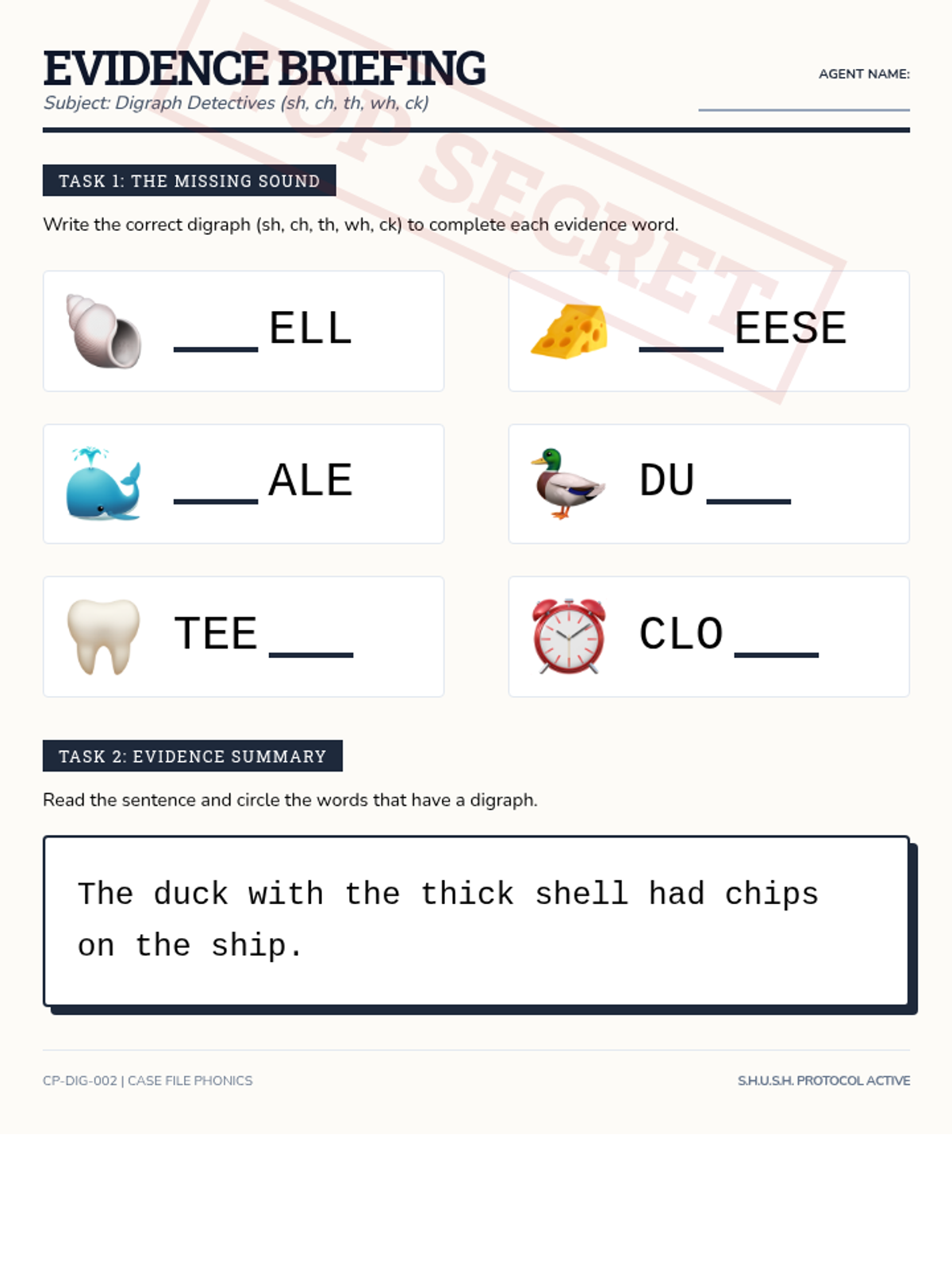
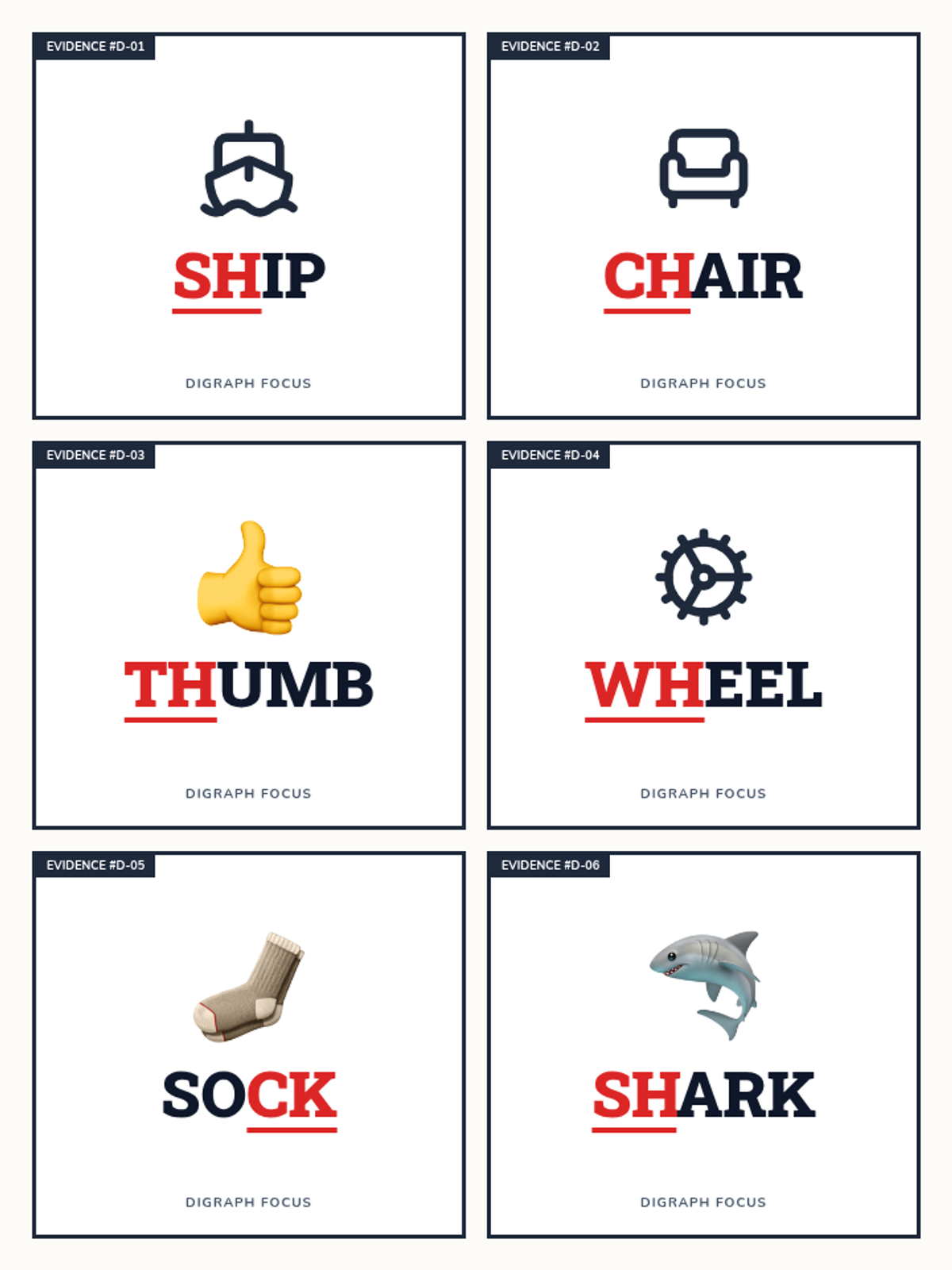
Identifying and reading words with common digraphs (sh, ch, th, wh, ck) in a crime-solving context.
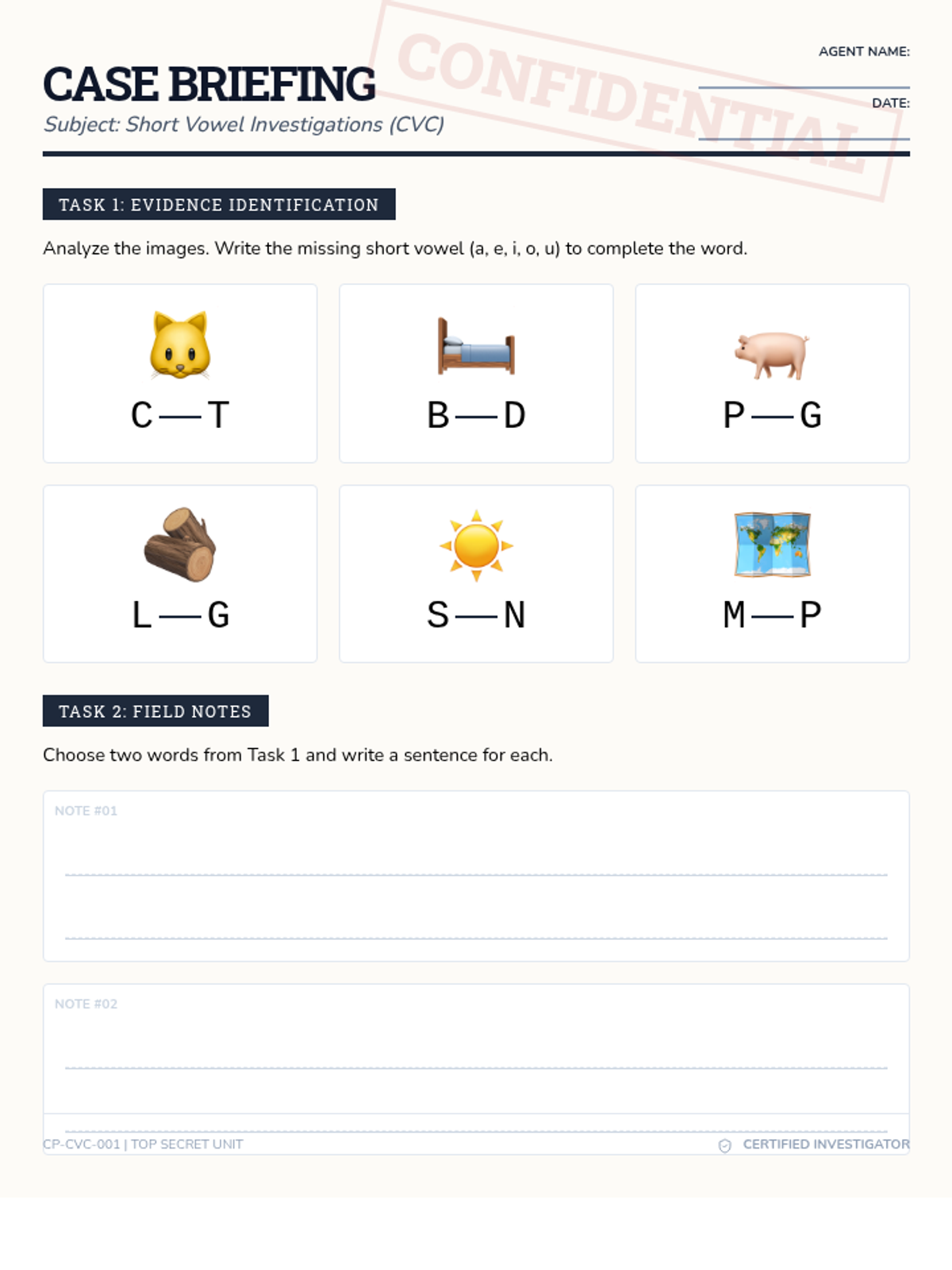
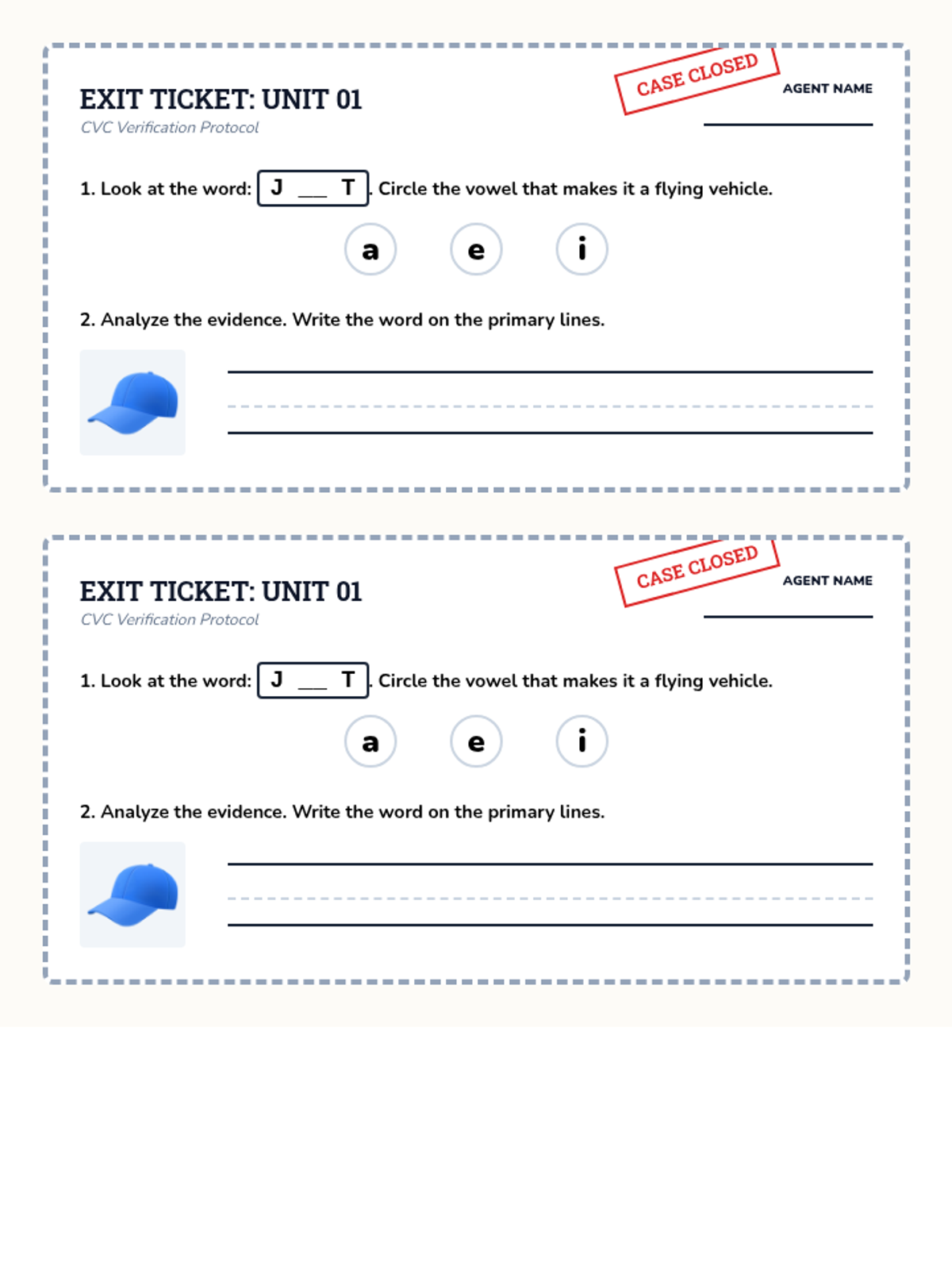
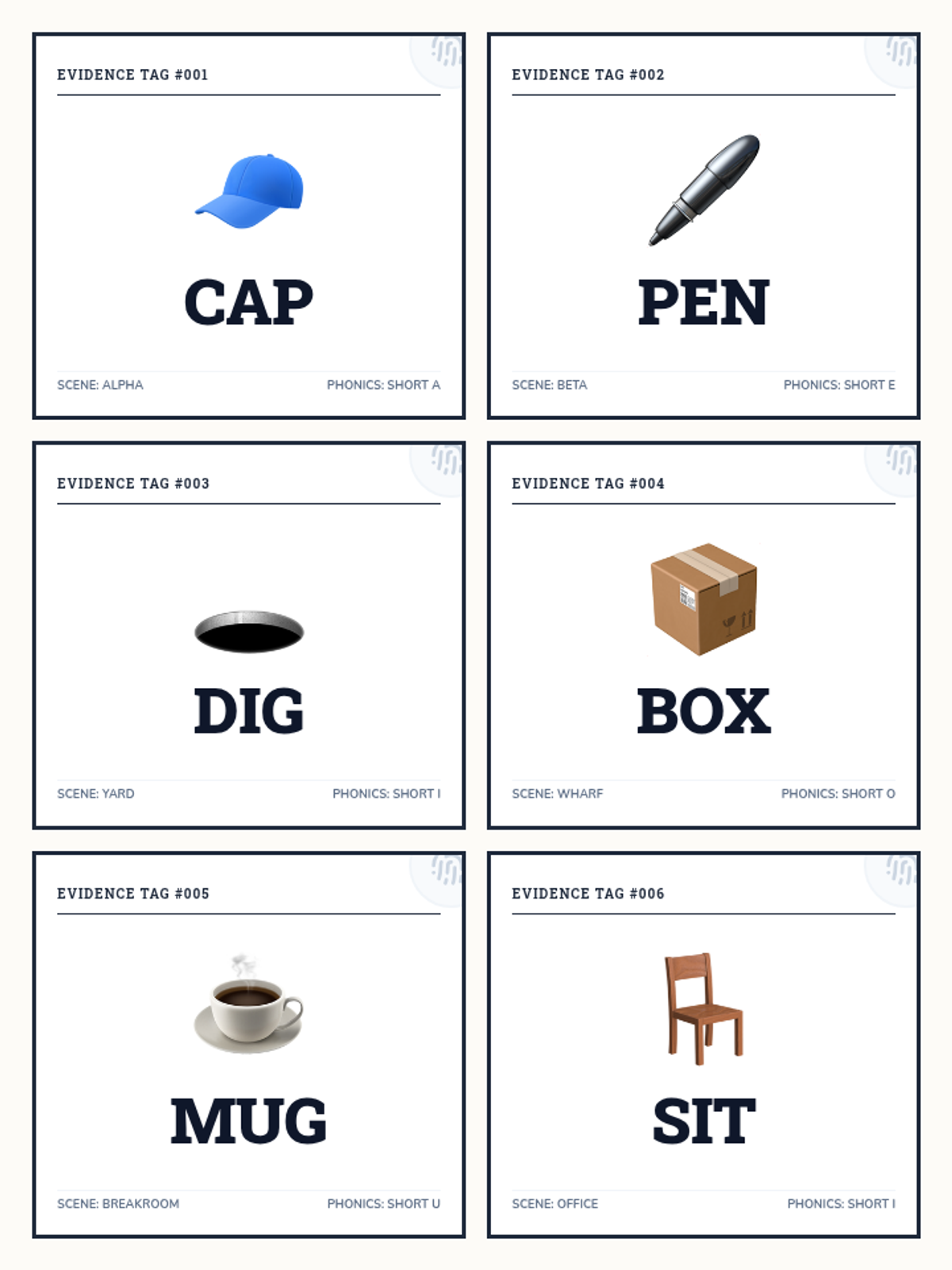
Foundational practice with short vowel (CVC) words using detective-themed worksheets and centers.
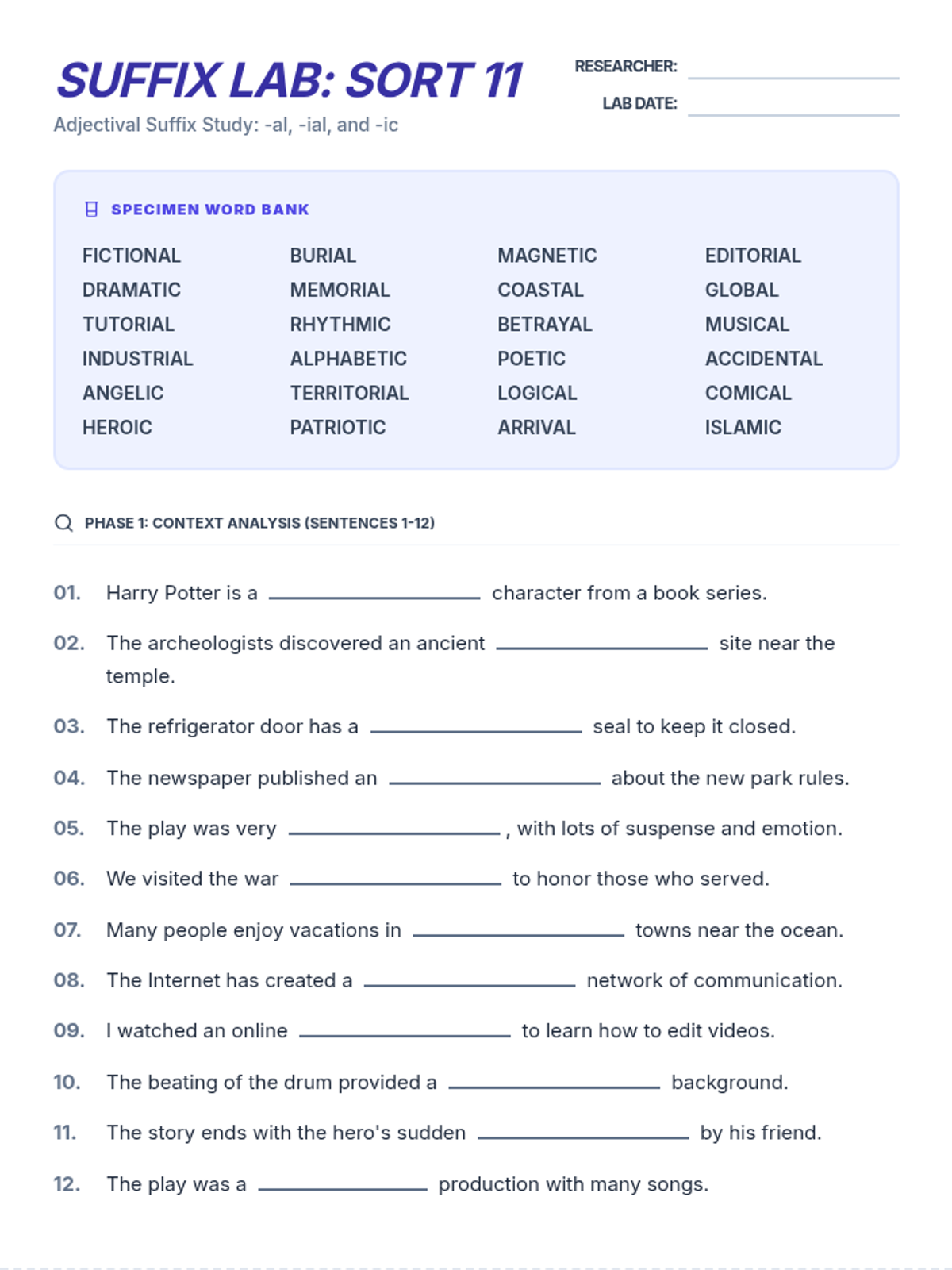
A lesson focused on the suffixes -al, -ial, and -ic. Students analyze how these suffixes form adjectives from nouns, representing relating to or having qualities of.
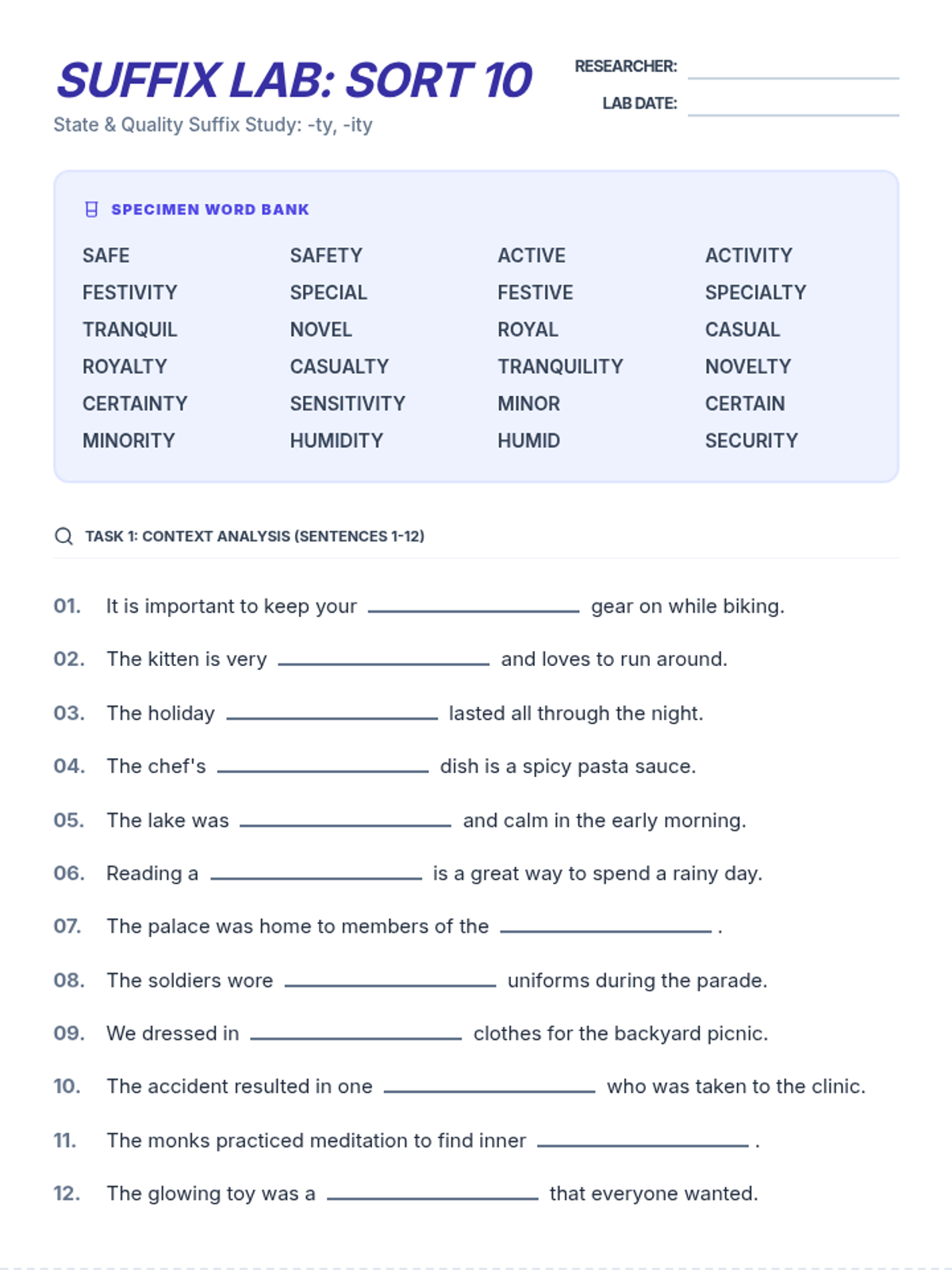
A lesson focused on the suffixes -ty and -ity. Students analyze how these suffixes form nouns from adjectives, representing states or qualities.
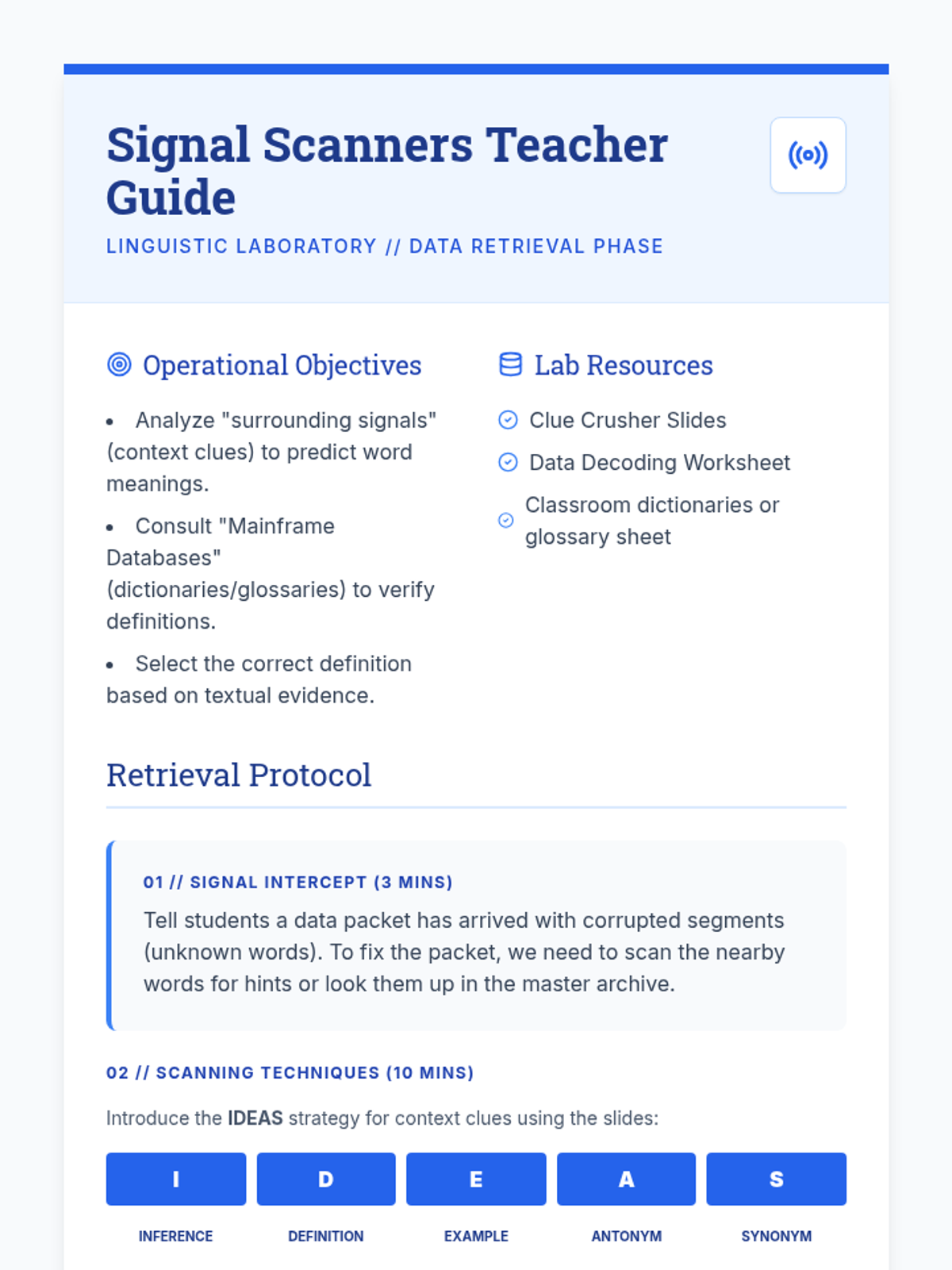
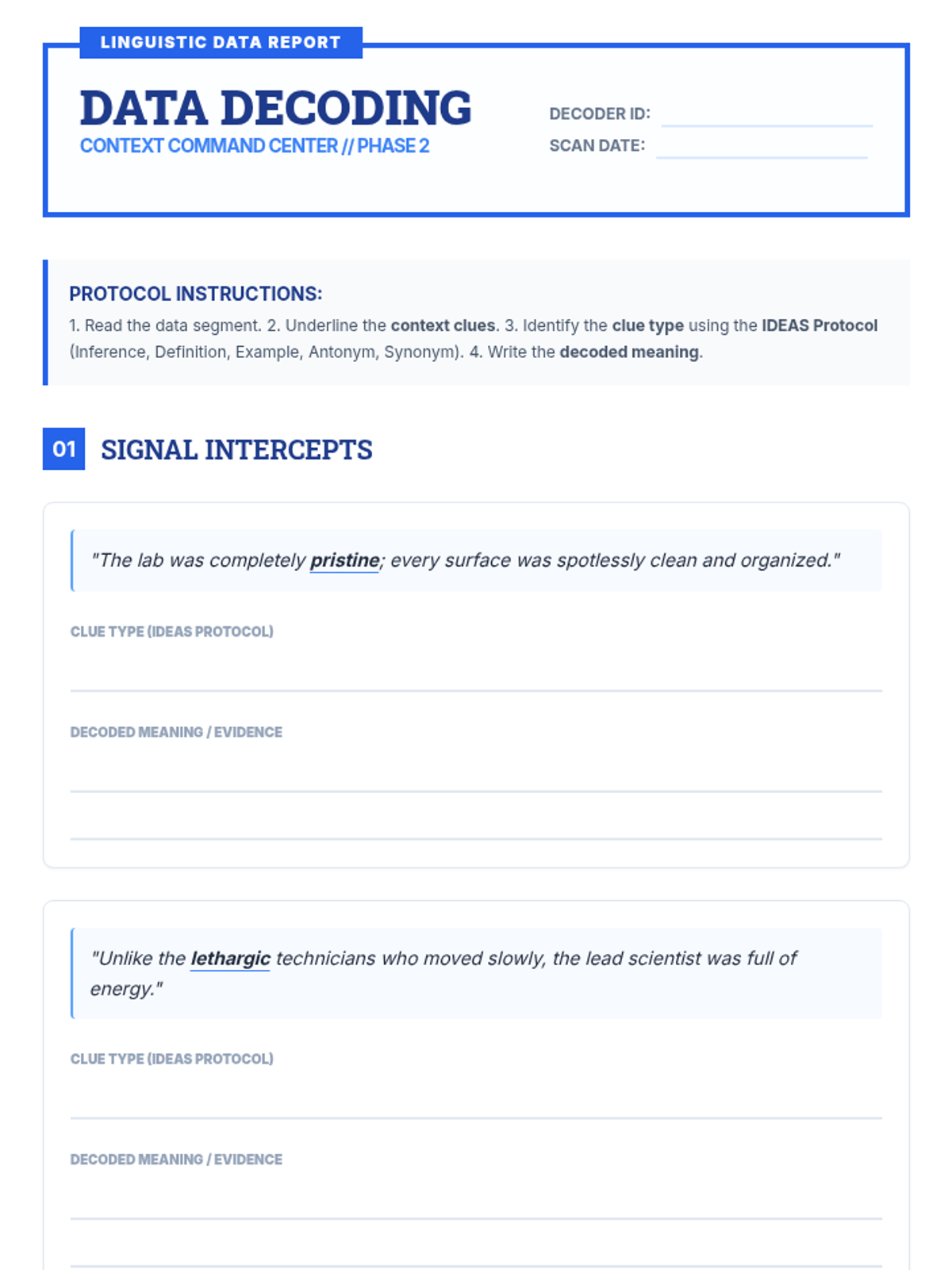
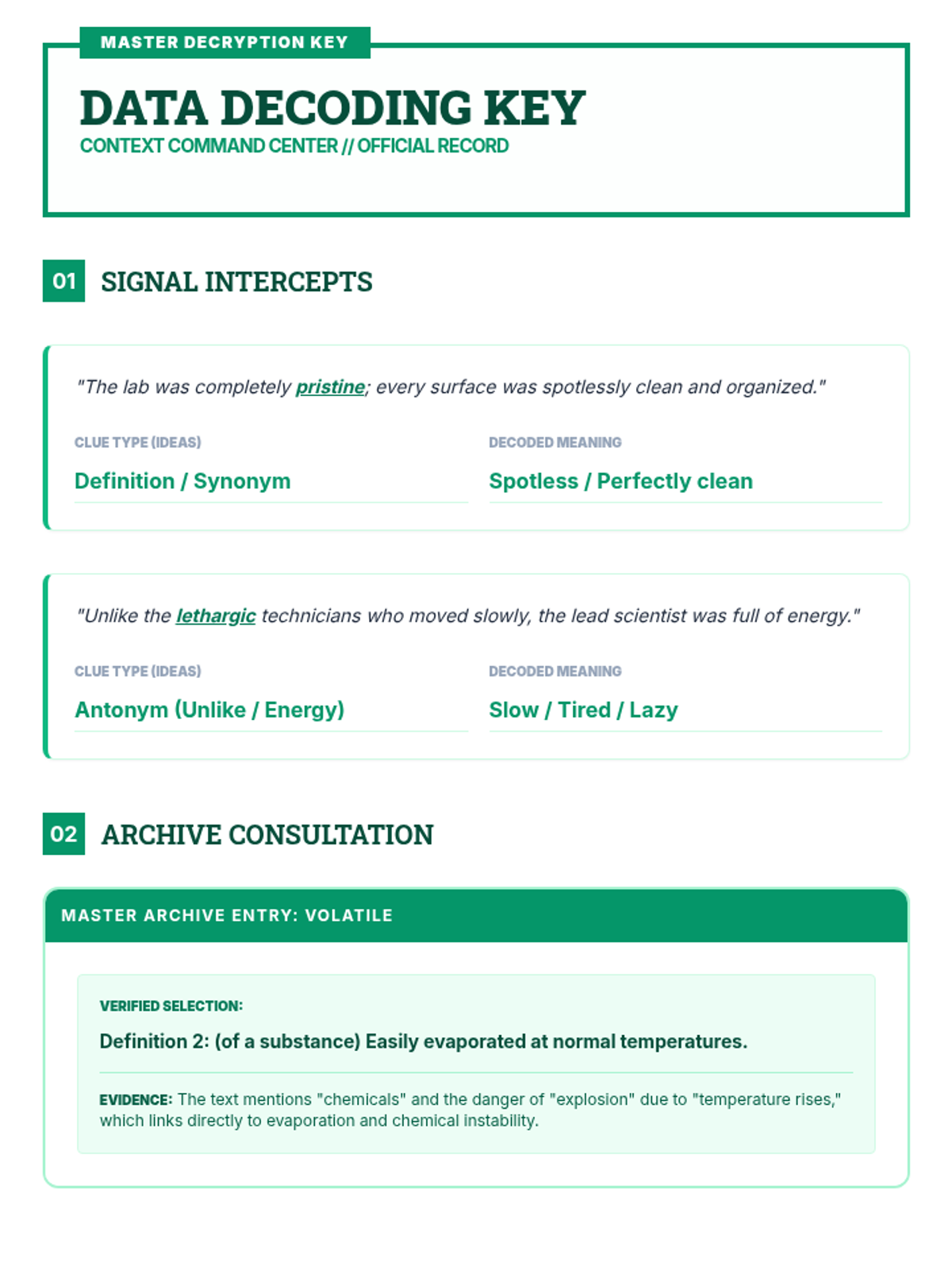
A focused small group lesson exploring how to use context clues and reference materials like dictionaries and glossaries to decipher unknown words.
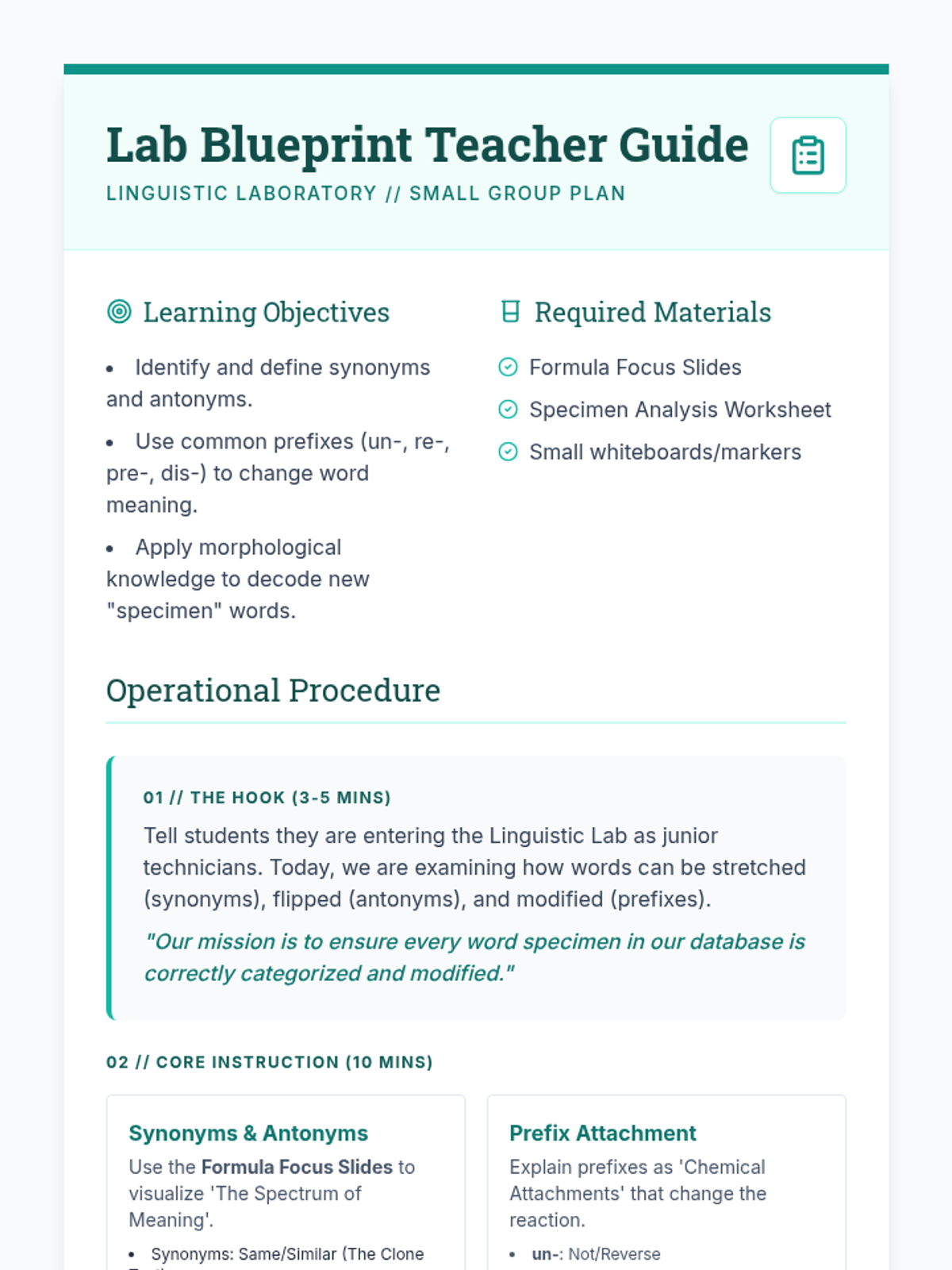
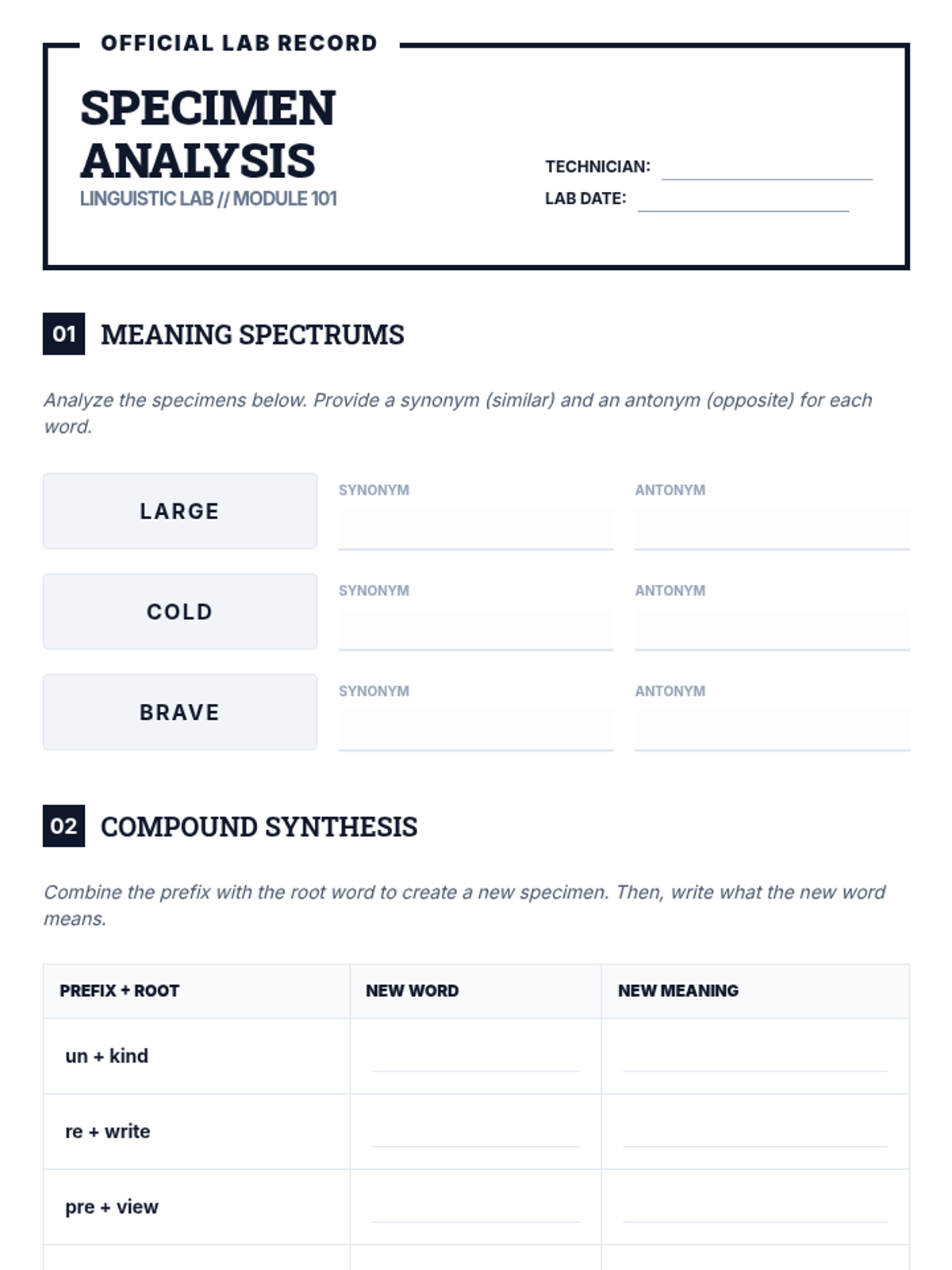
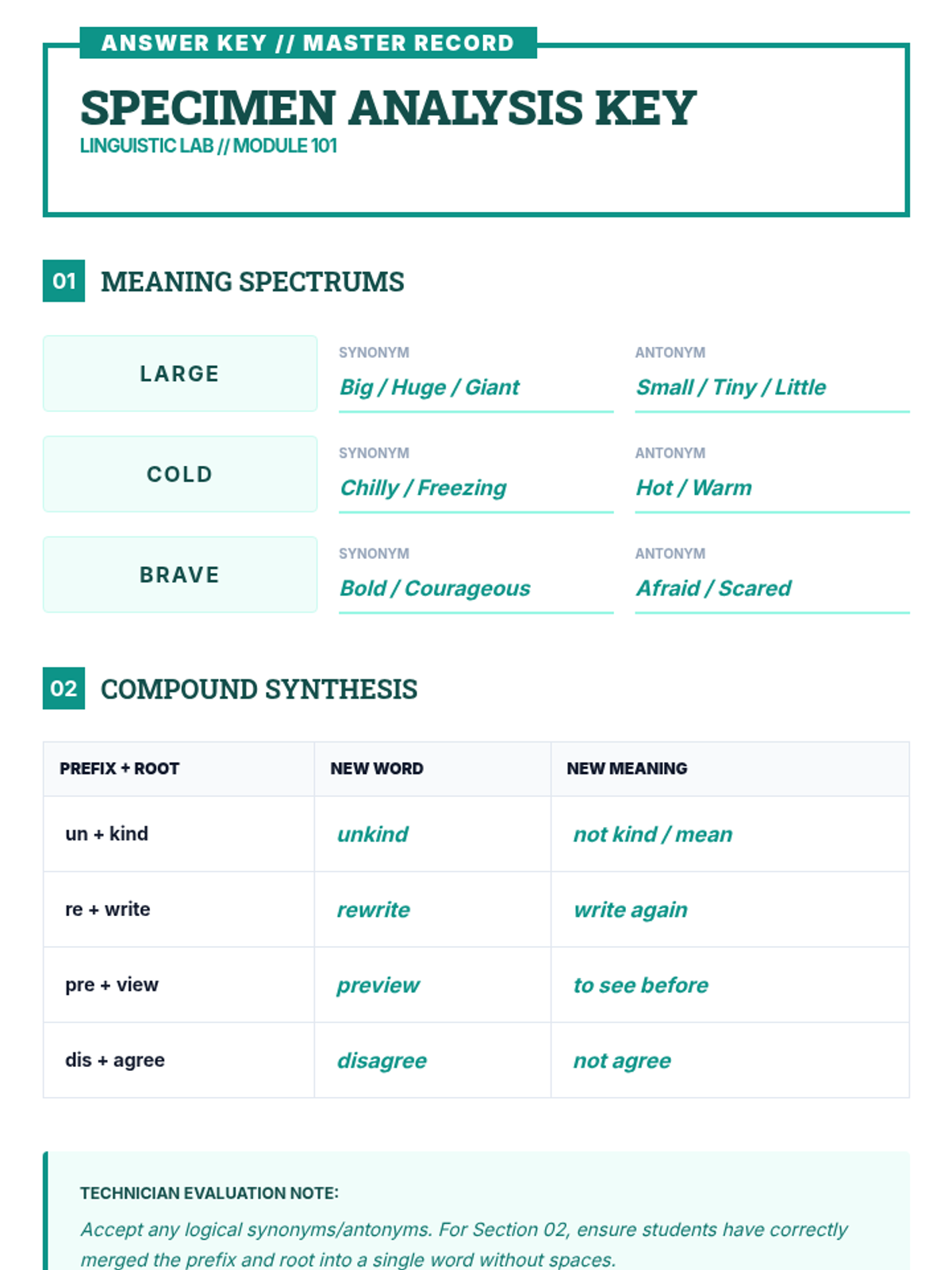
A focused small group lesson exploring the mechanics of words through synonyms, antonyms, and common prefixes using a clinical laboratory theme.
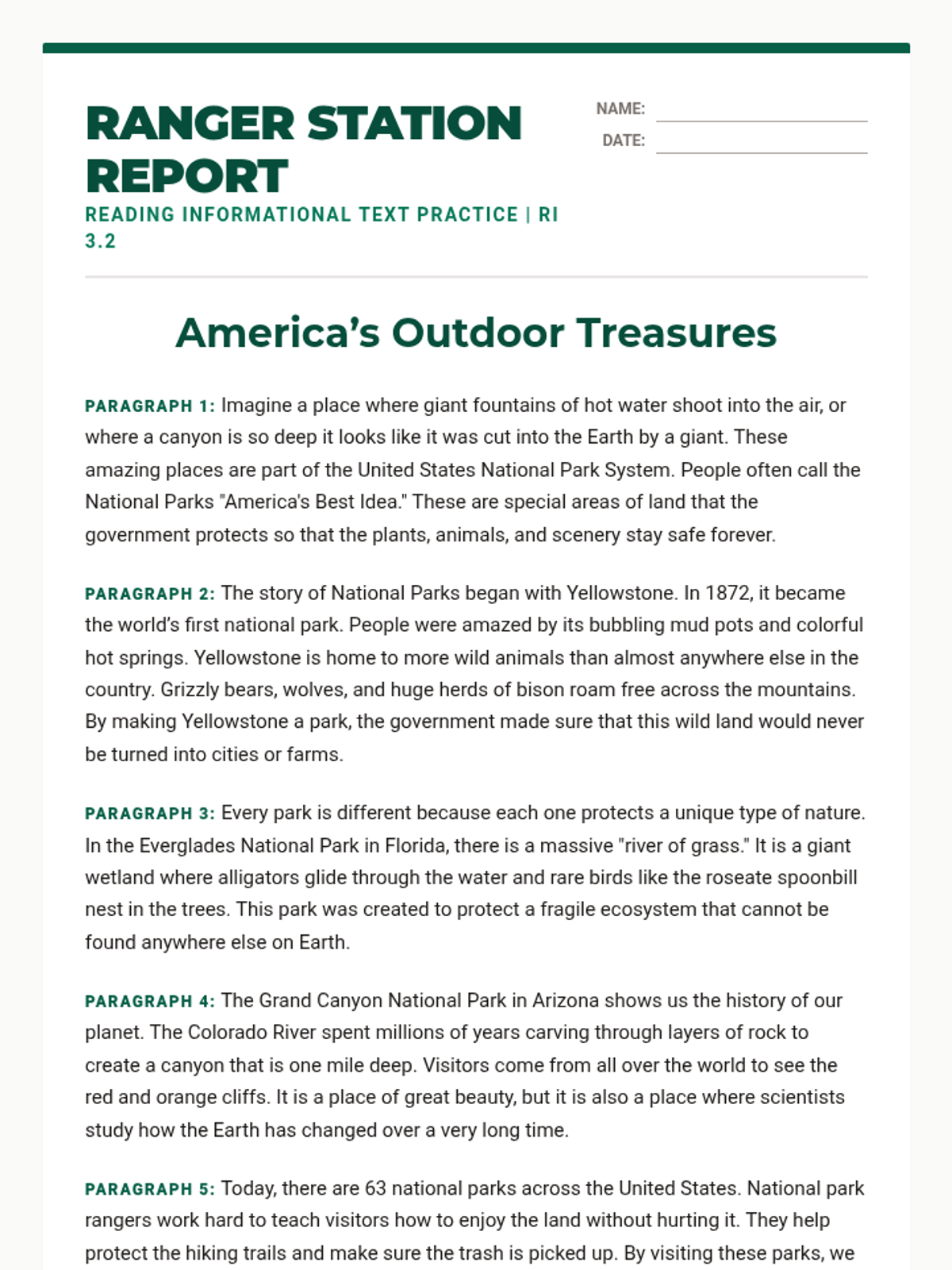
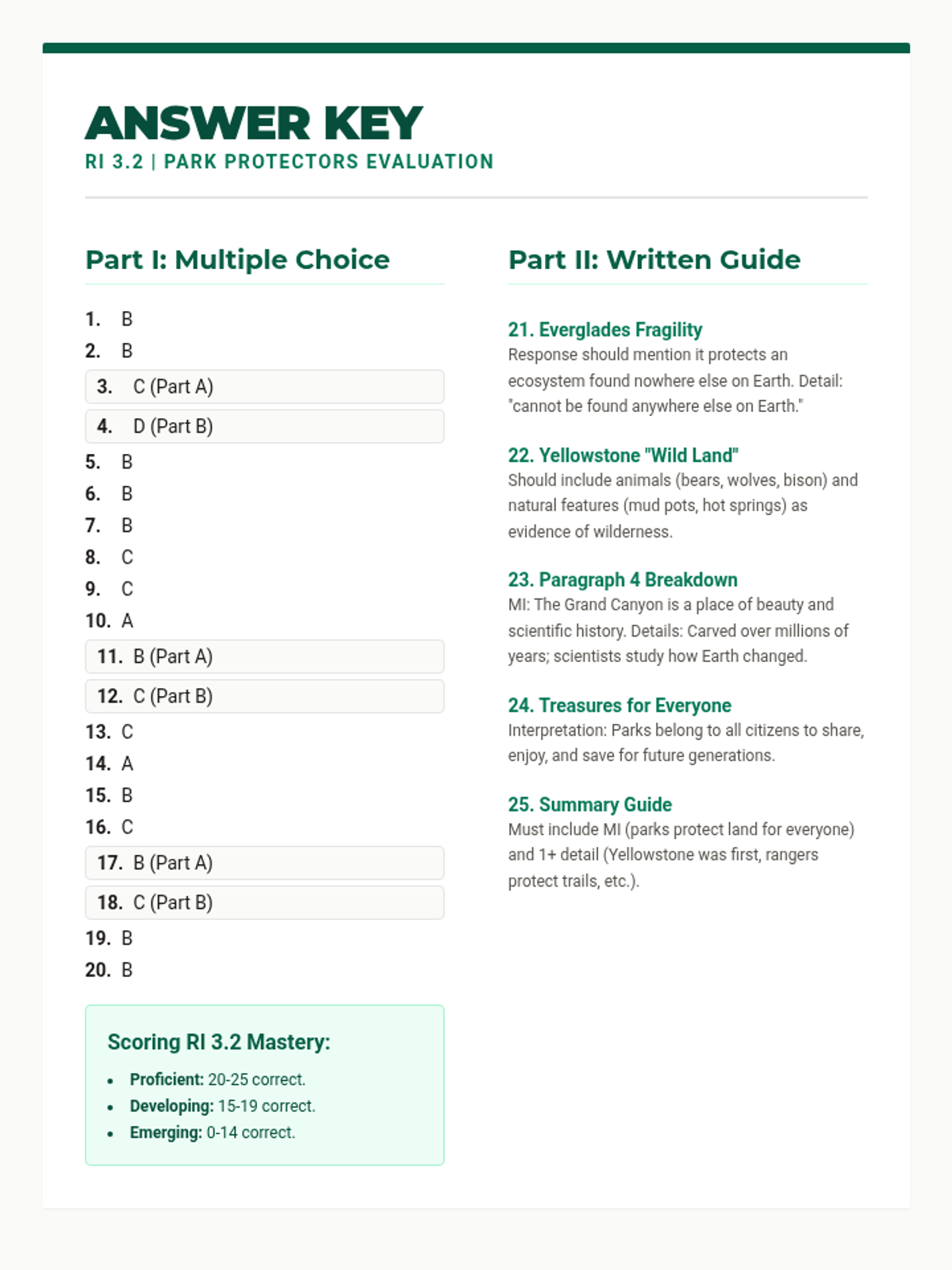
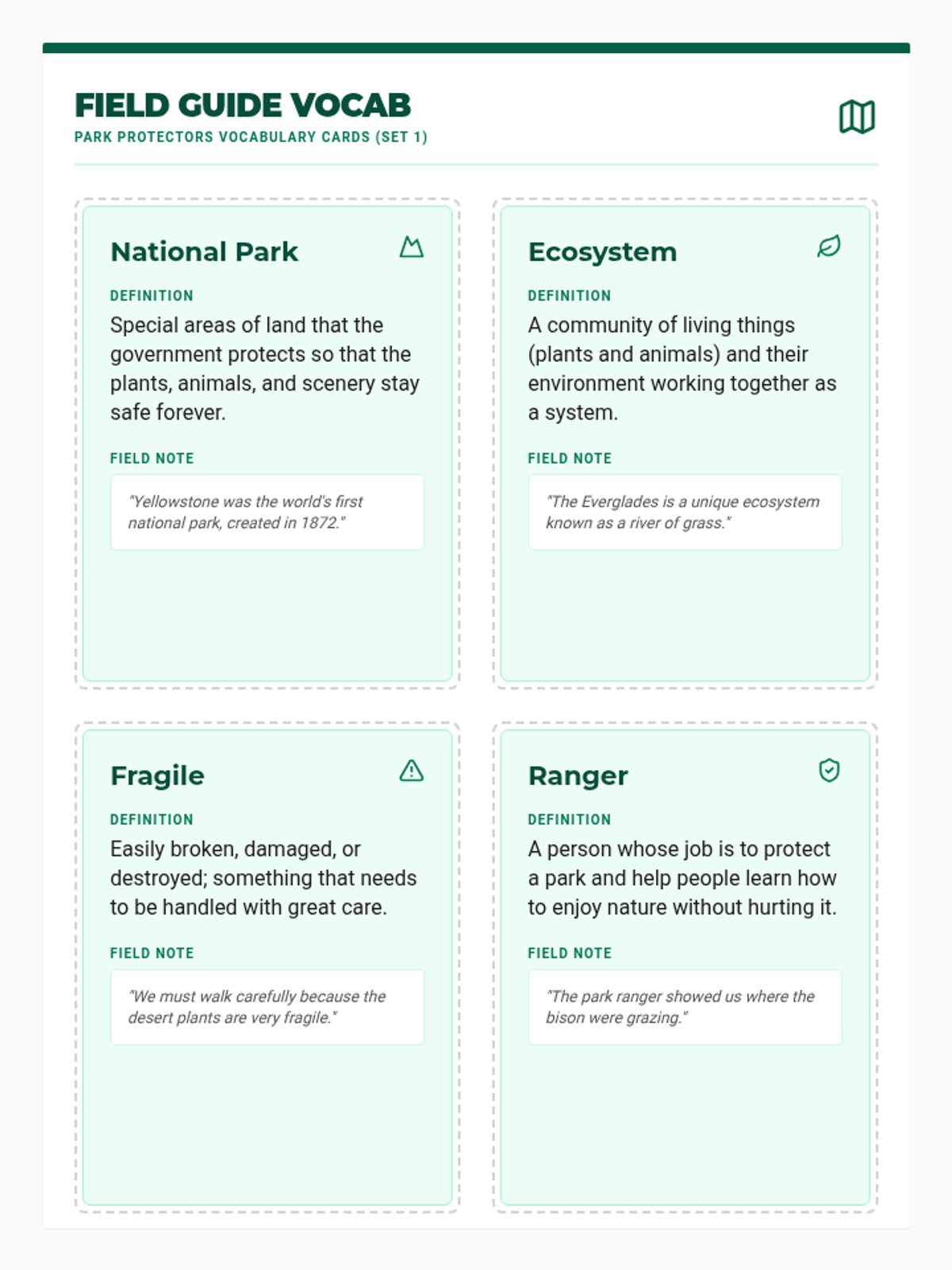
A comprehensive reading comprehension lesson focused on RI 3.2 (Main Idea and Key Details) using the engaging topic of US National Parks. Students will read an informational passage and answer 25 EOG-style questions to build mastery in identifying central messages and supporting evidence.
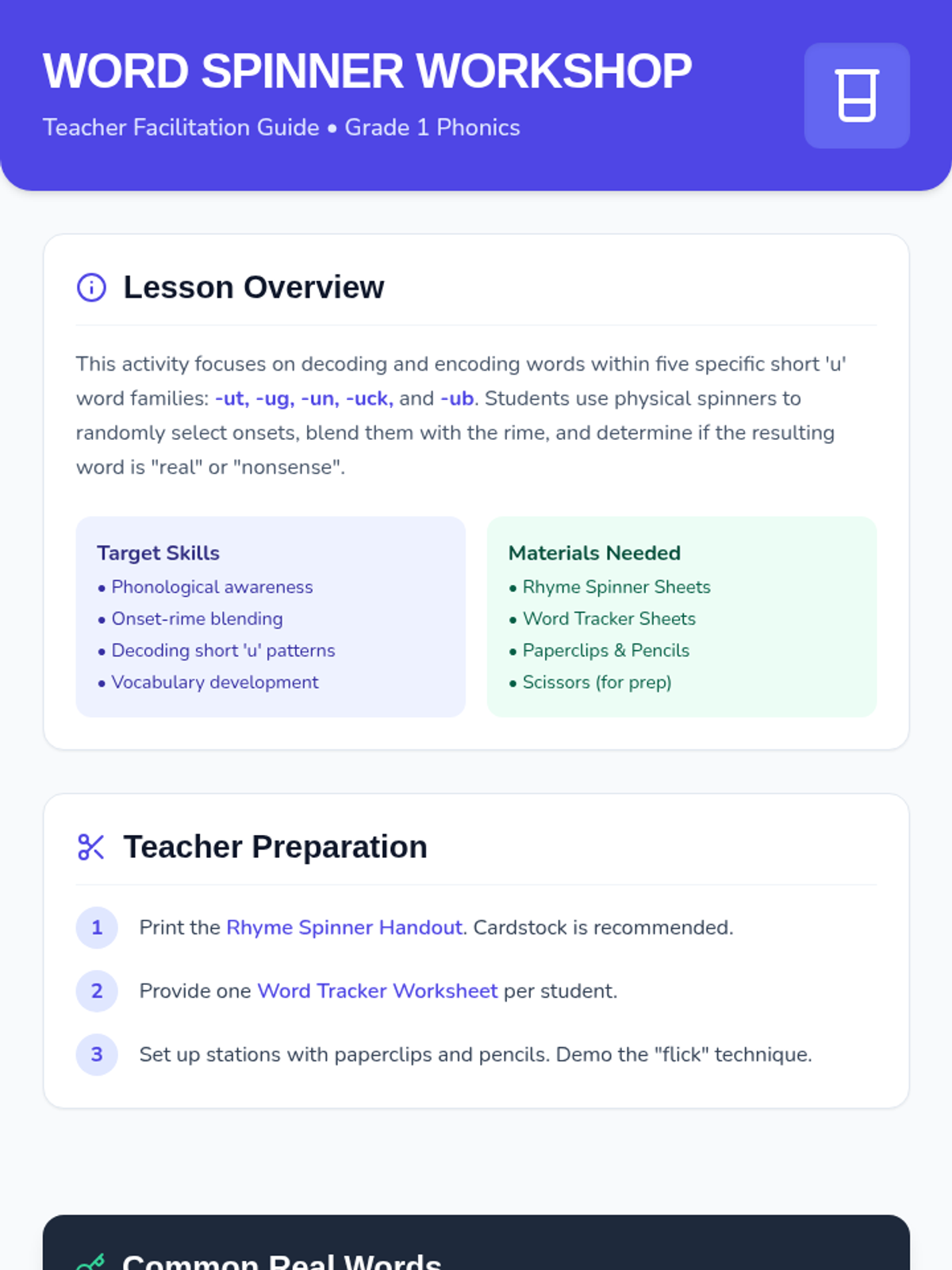
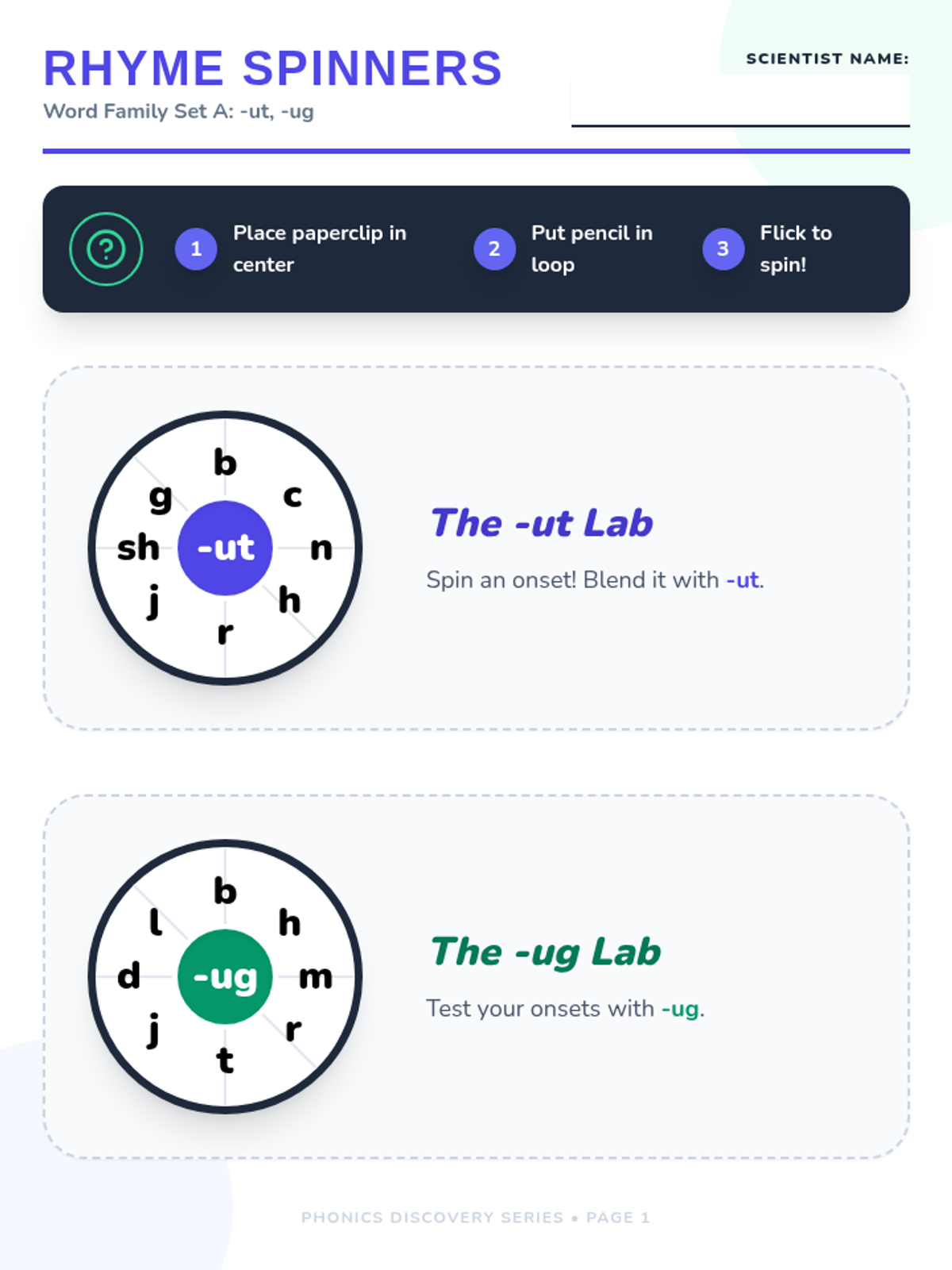
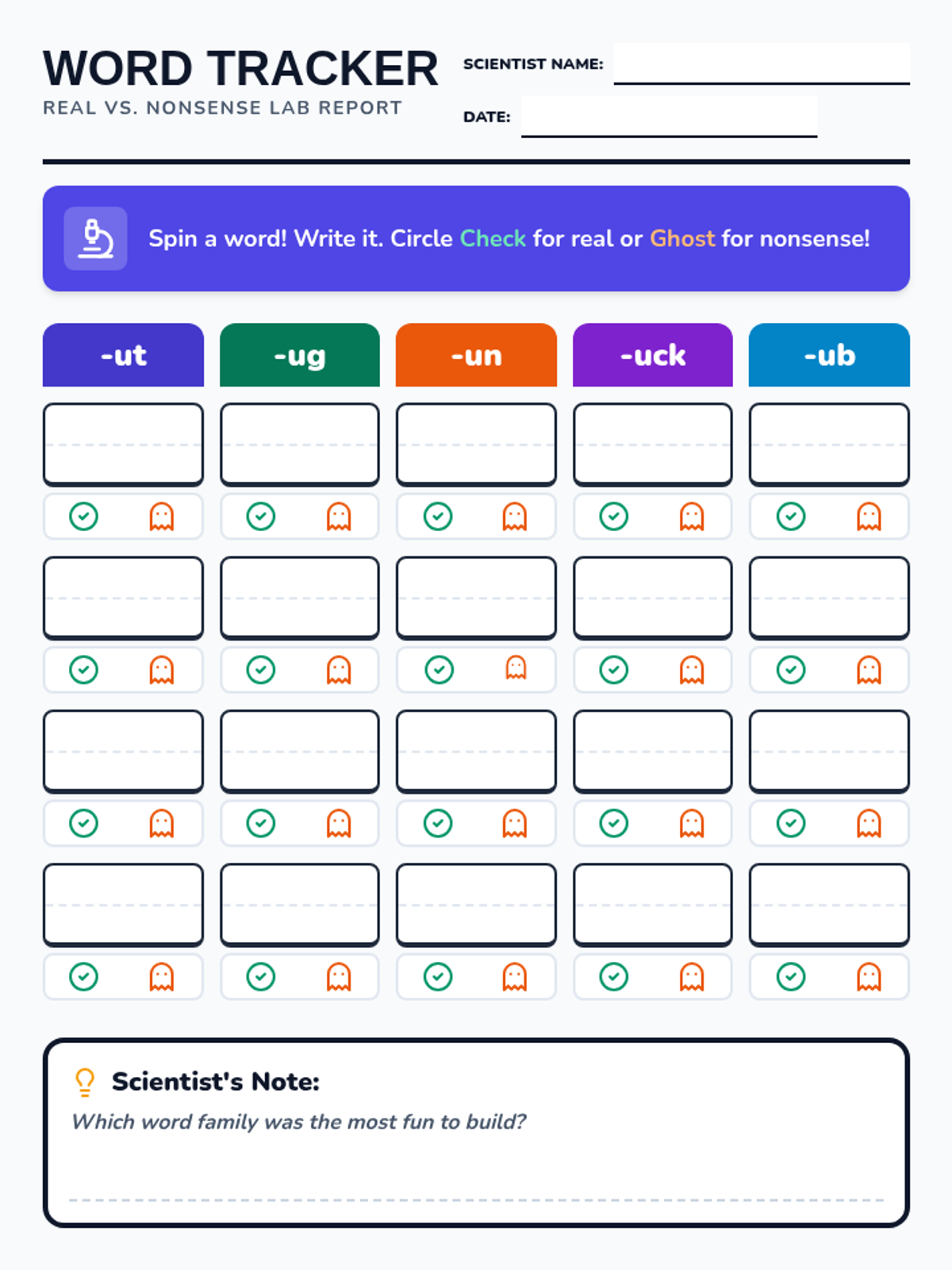
A hands-on phonics lesson where students use spinners to combine onsets with the -ut, -ug, -un, -uck, and -ub rimes to build real and nonsense words.
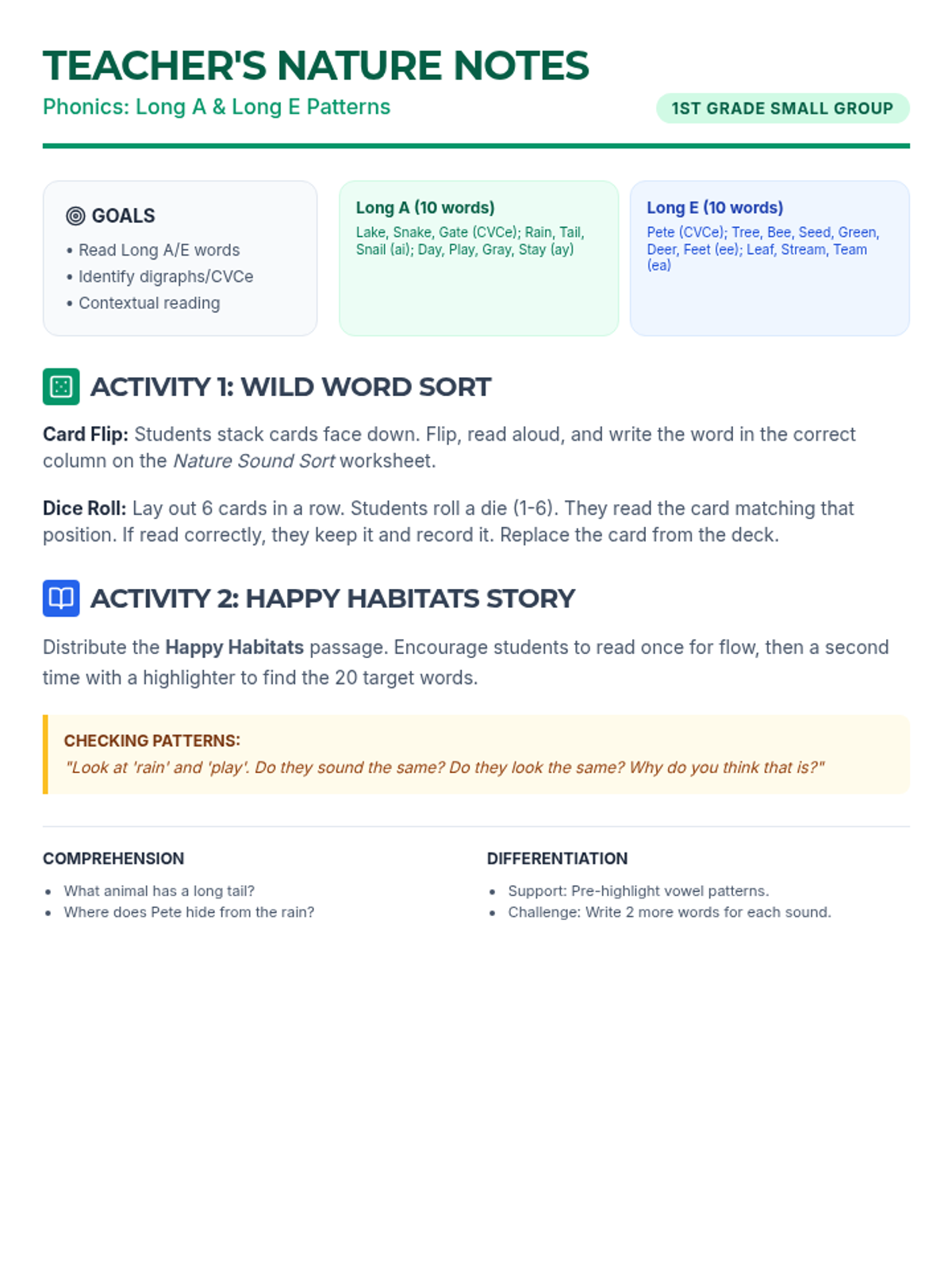
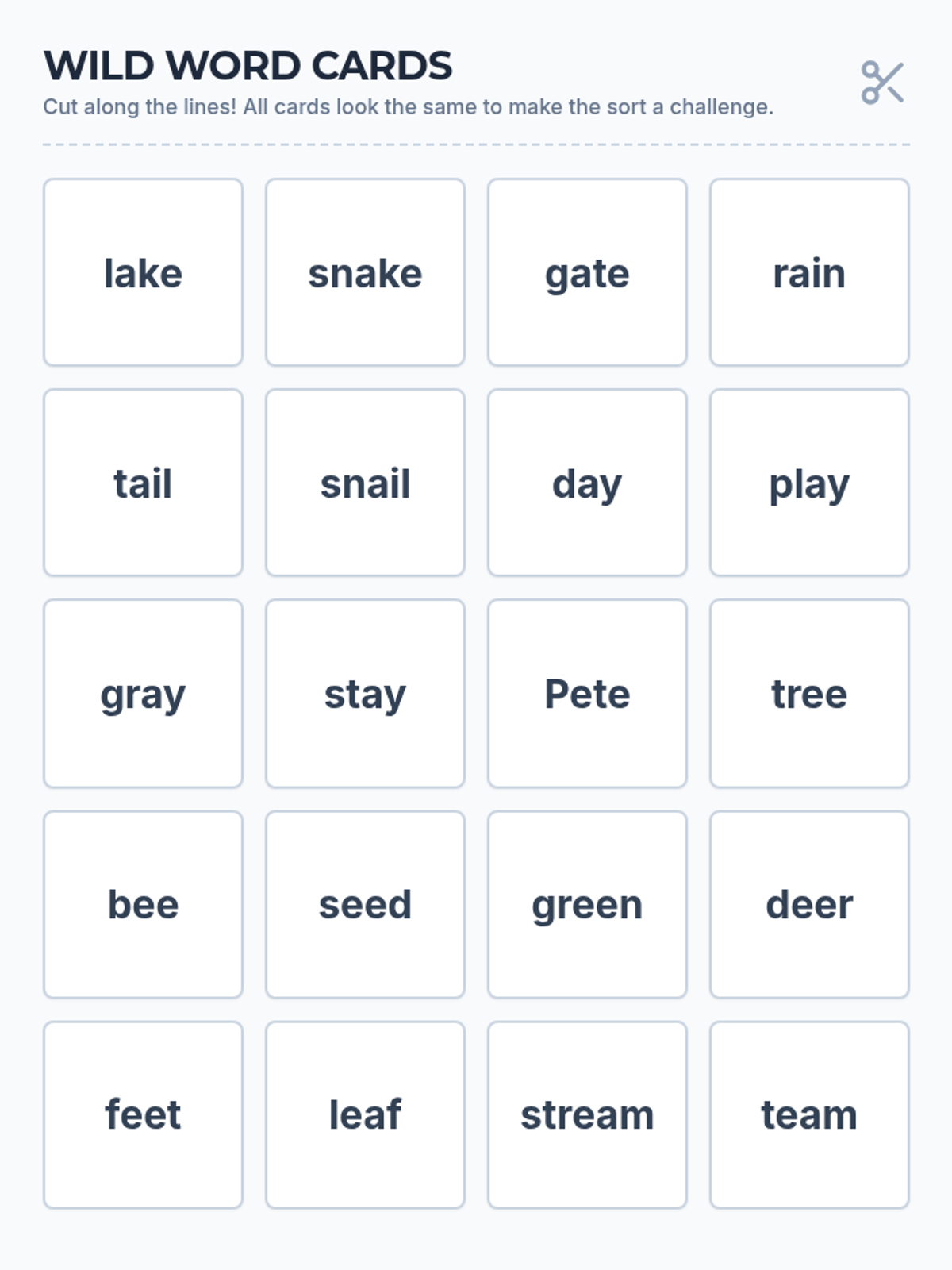
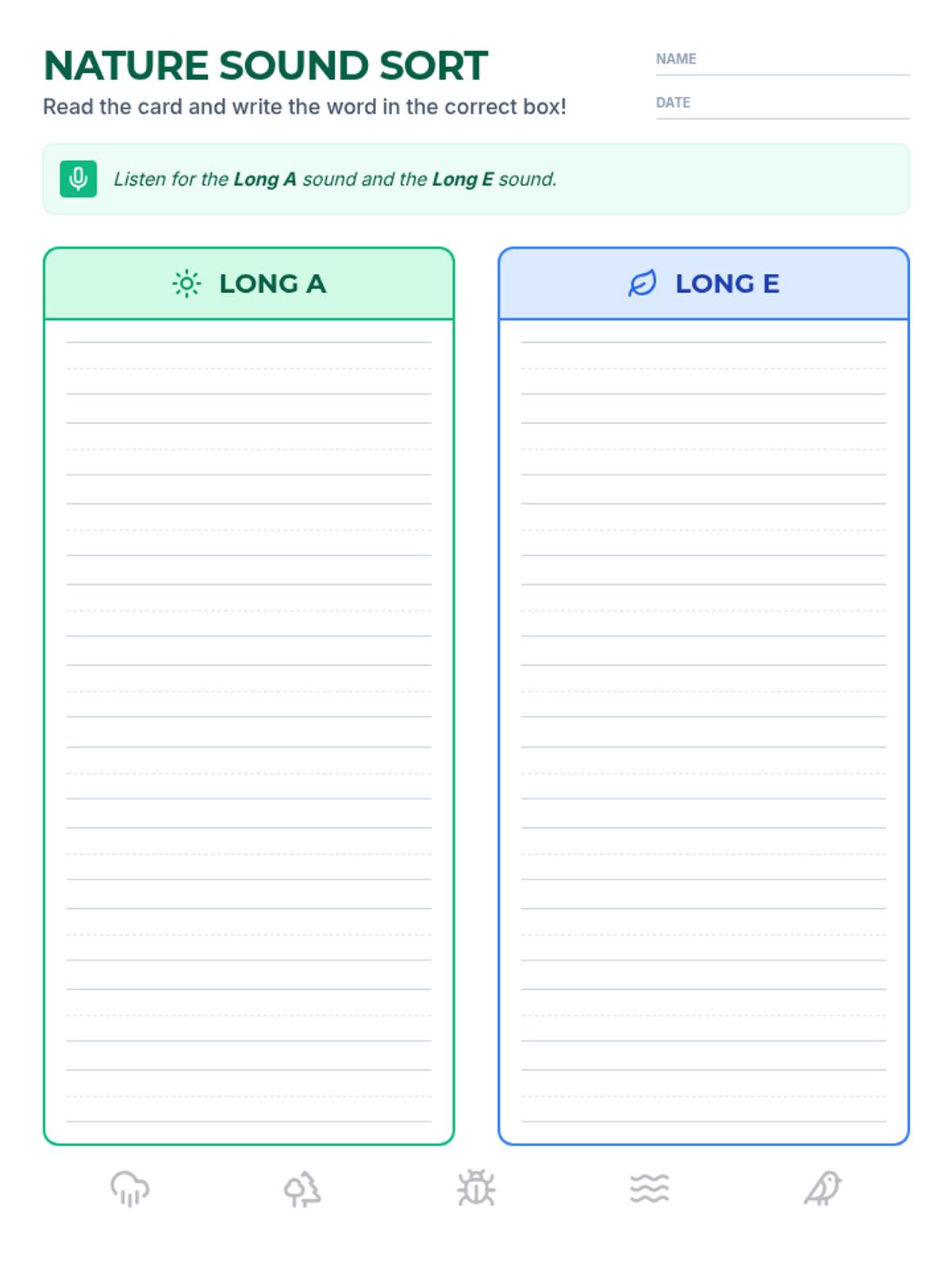
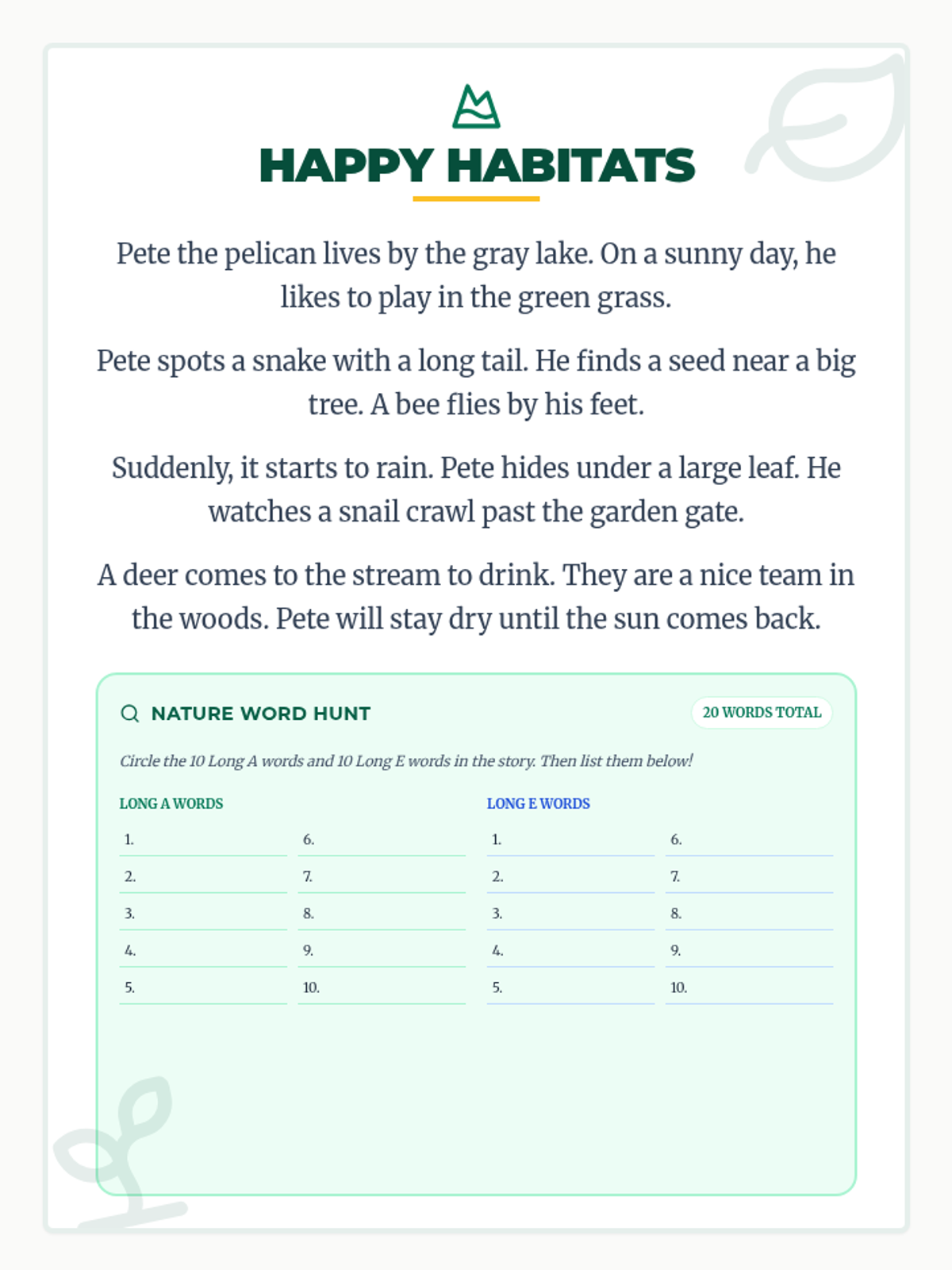
A small-group tutoring lesson focusing on long 'a' and long 'e' vowel digraphs and silent 'e' patterns through interactive sorting and a nature-themed story.
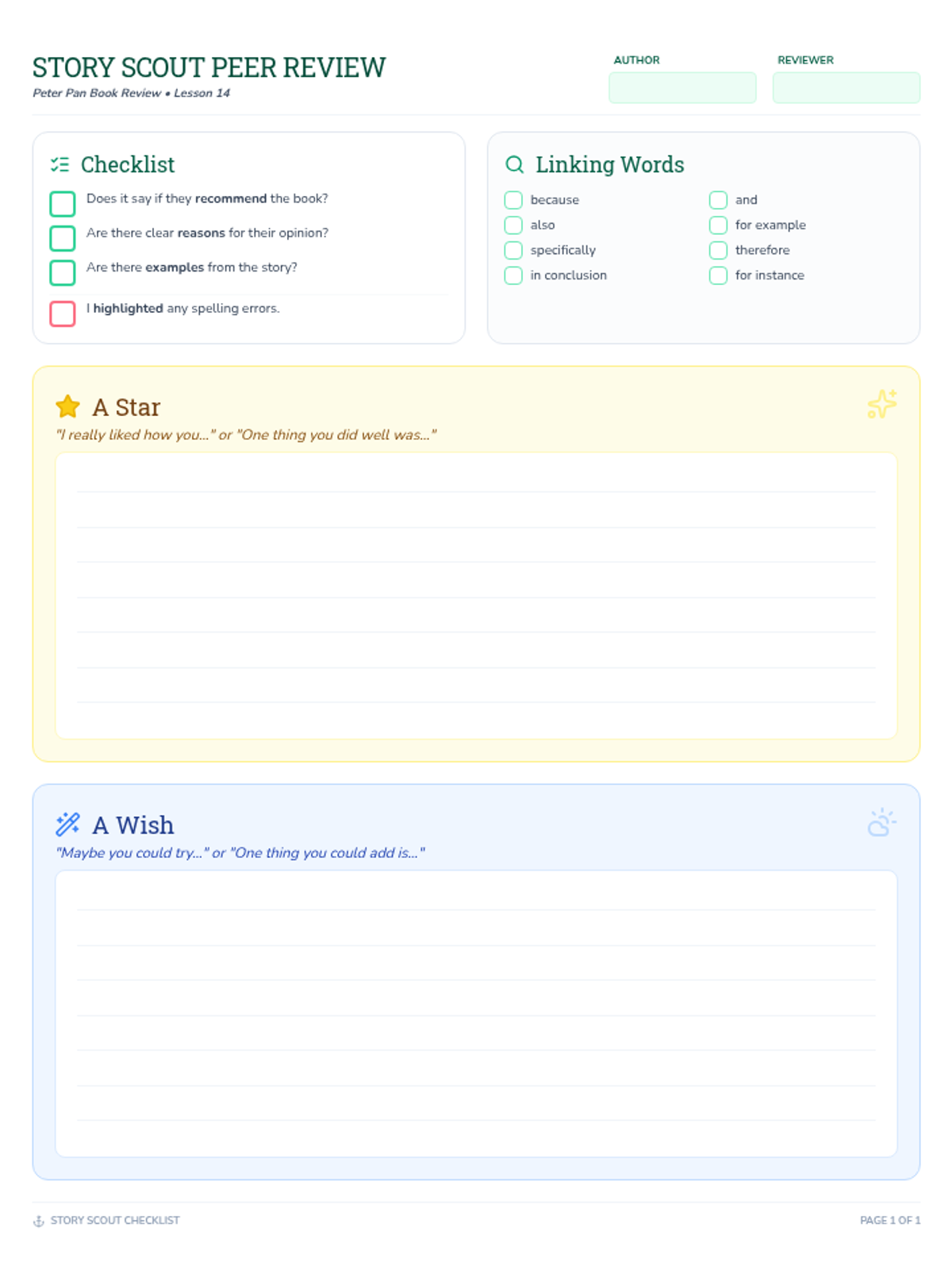
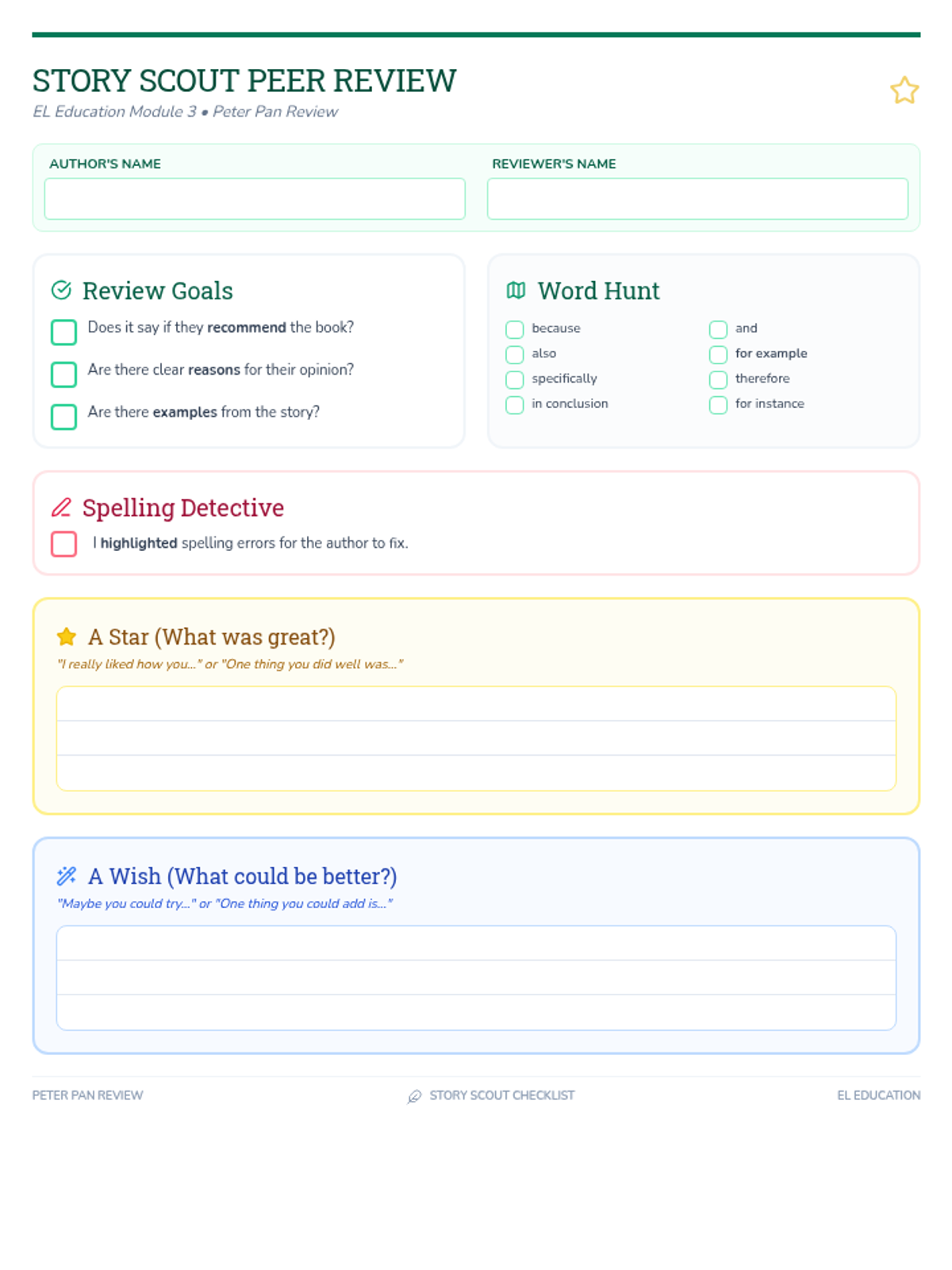
In this lesson, students engage in the peer review process to refine their Peter Pan book reviews, focusing on the use of linking words and spelling accuracy.
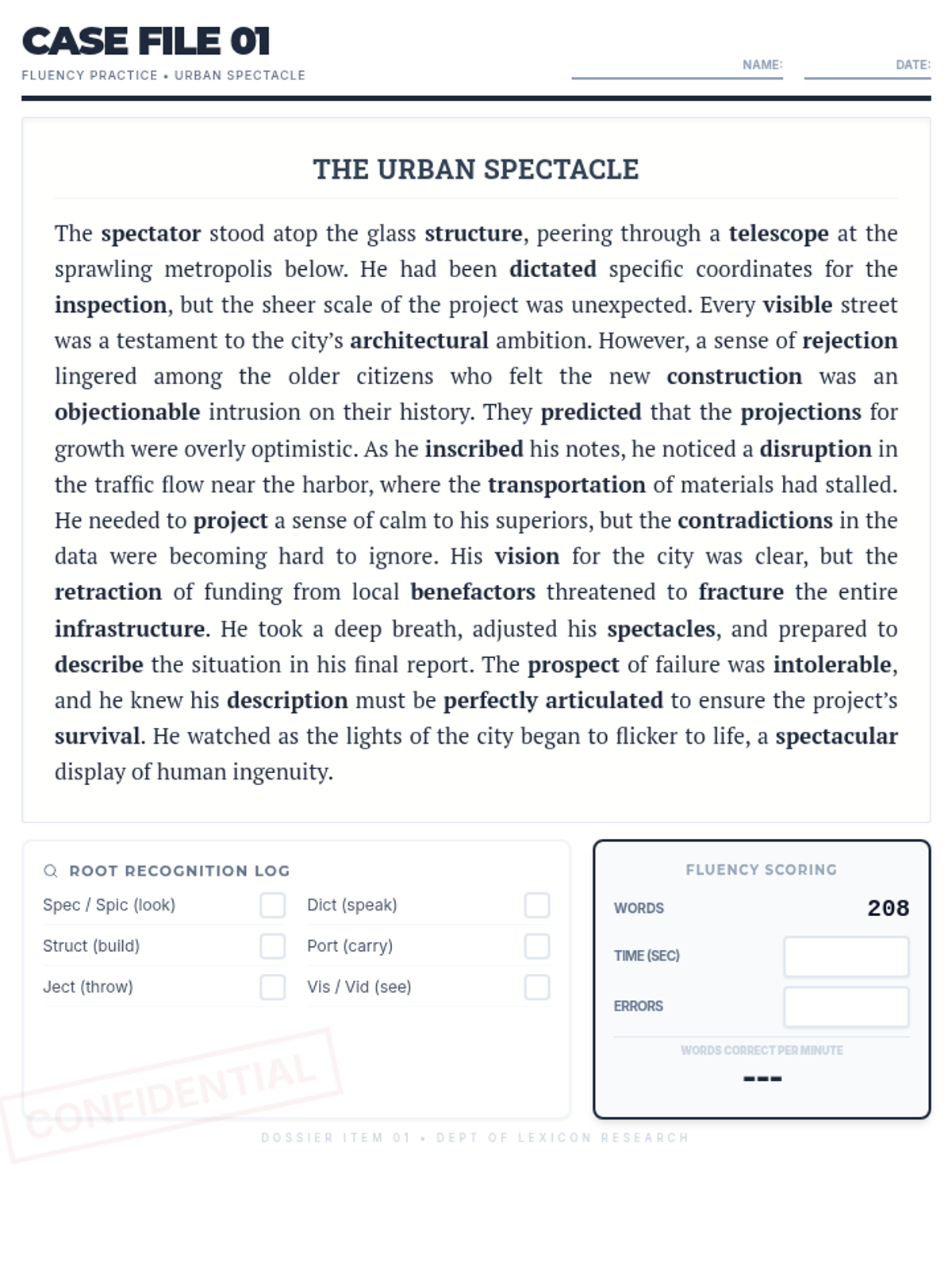
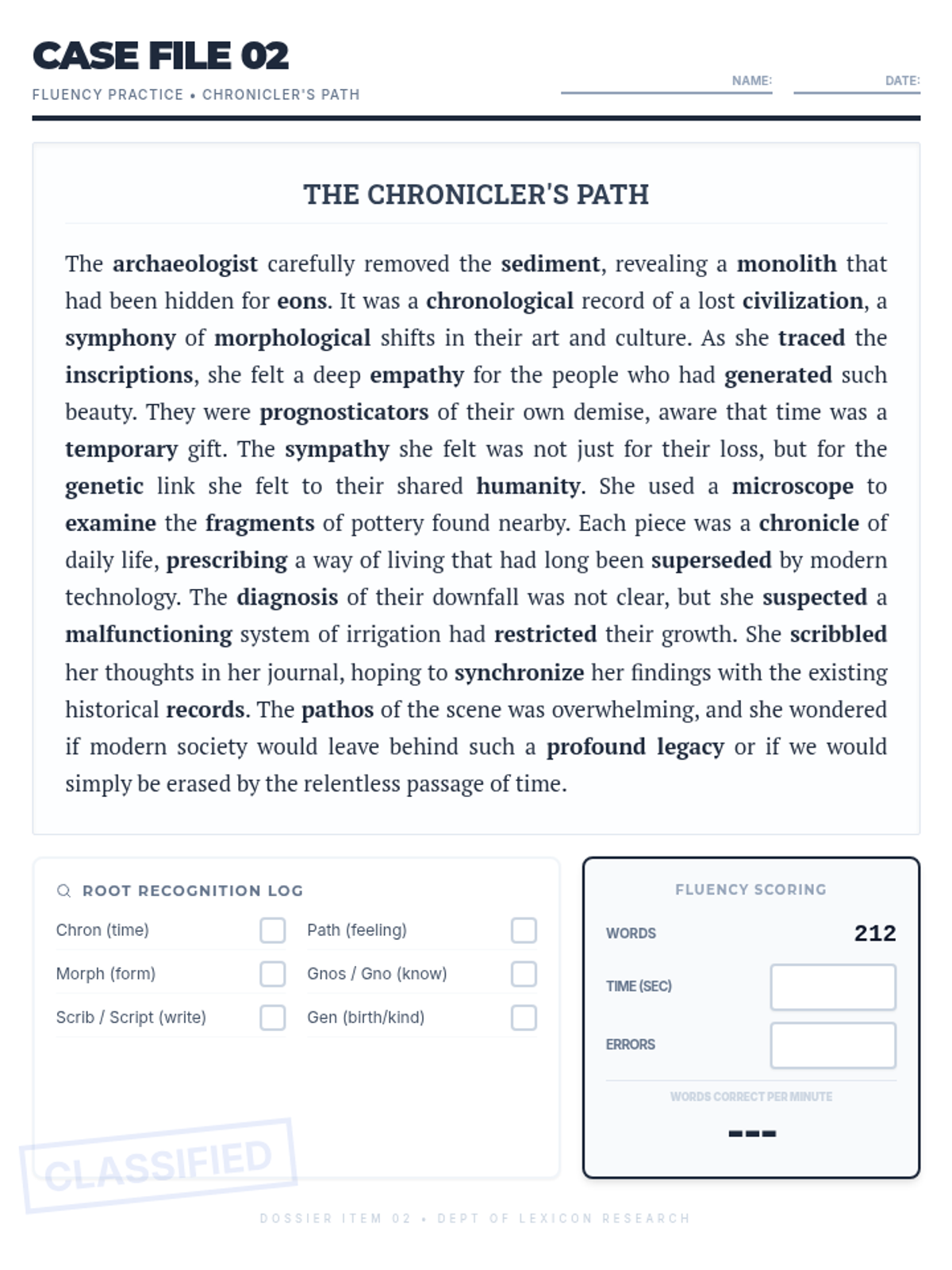
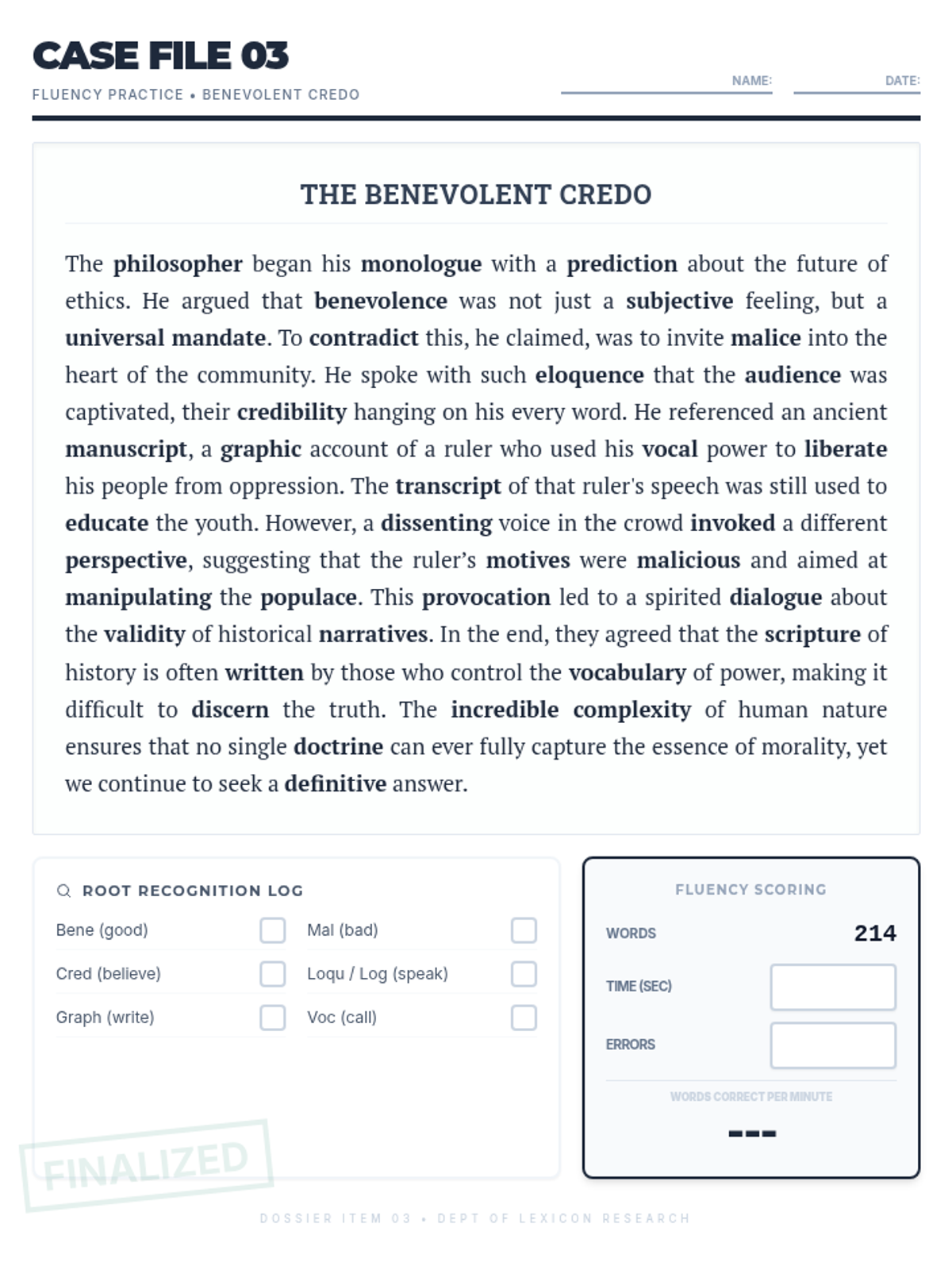
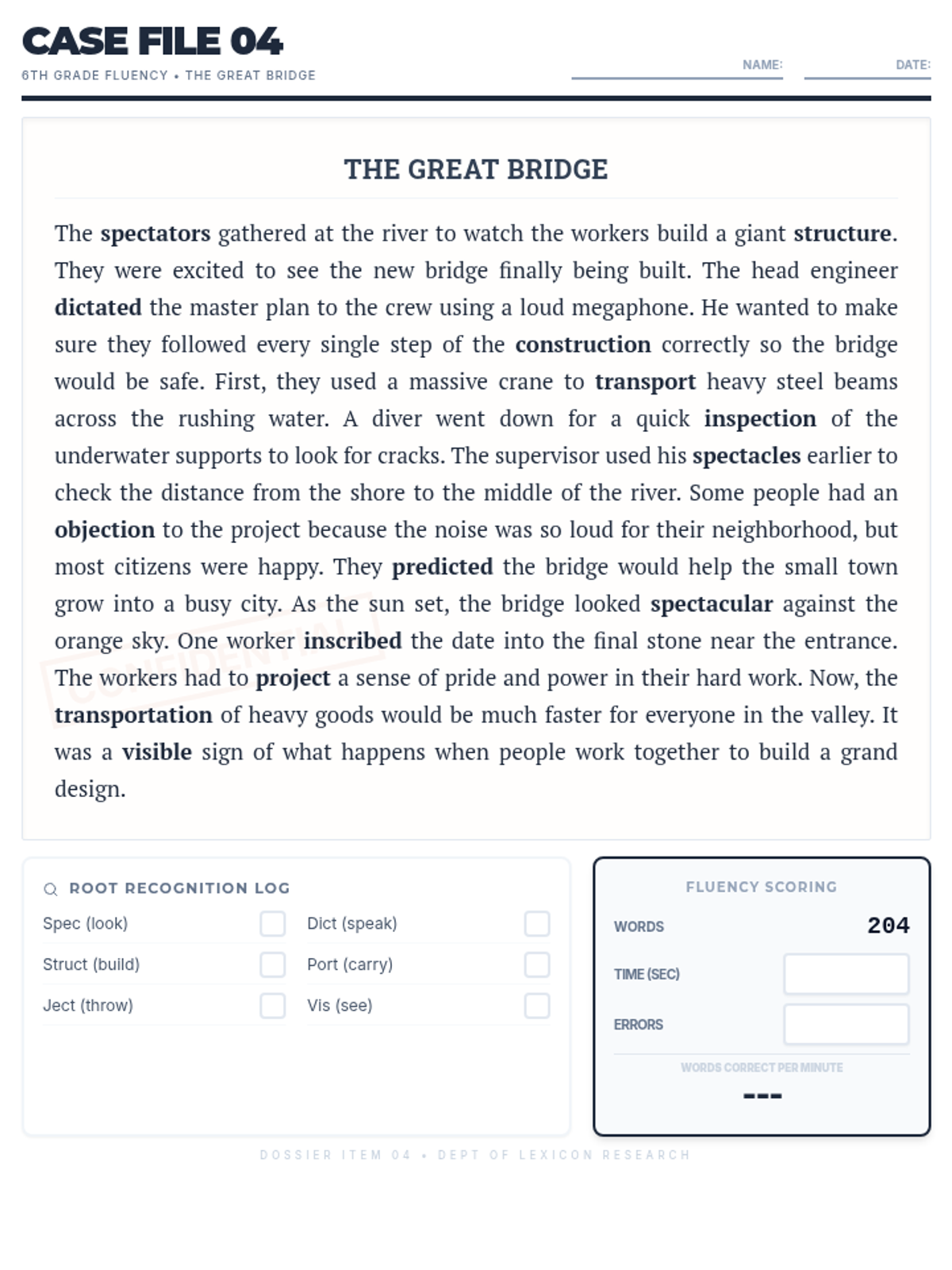
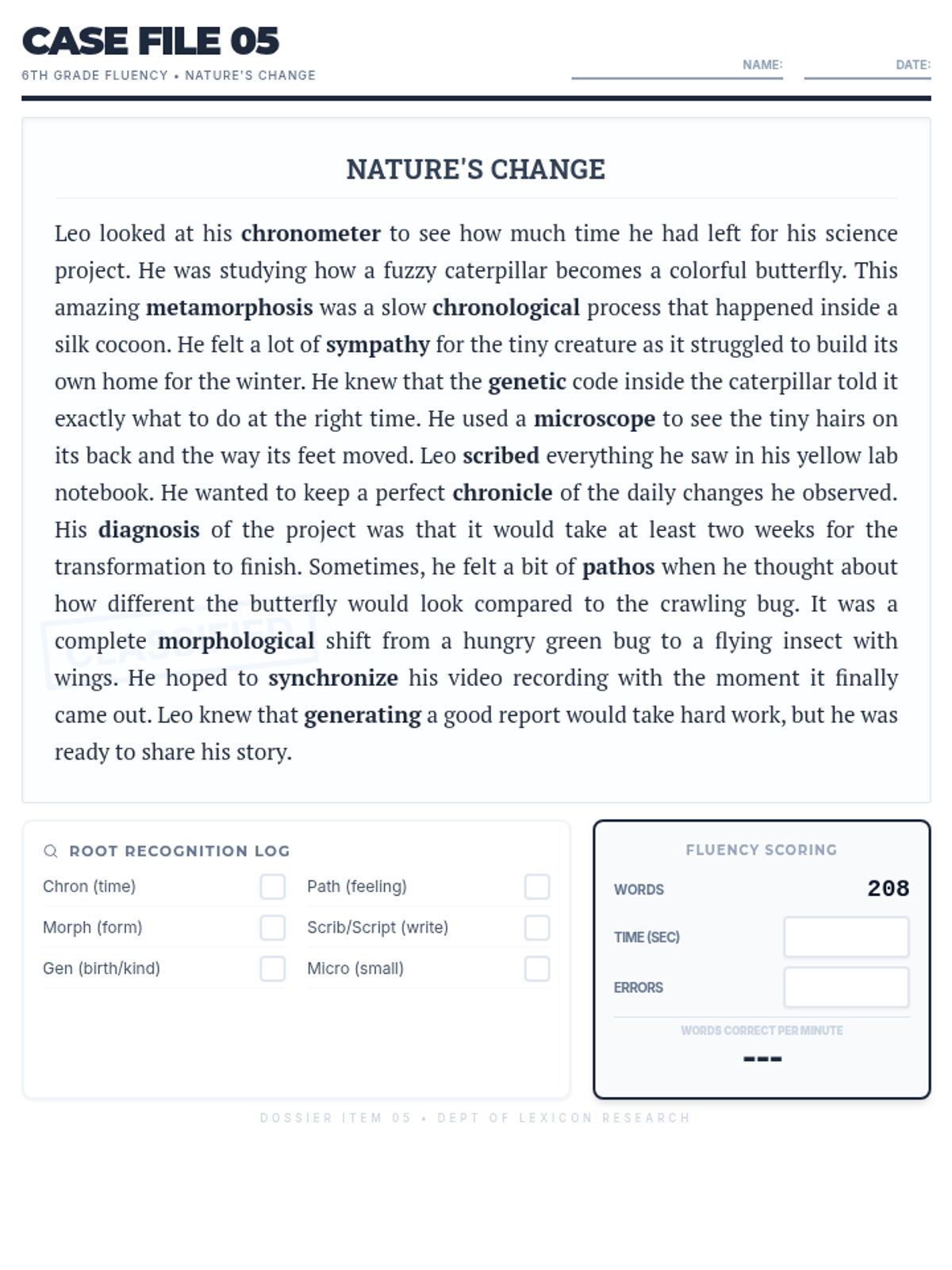
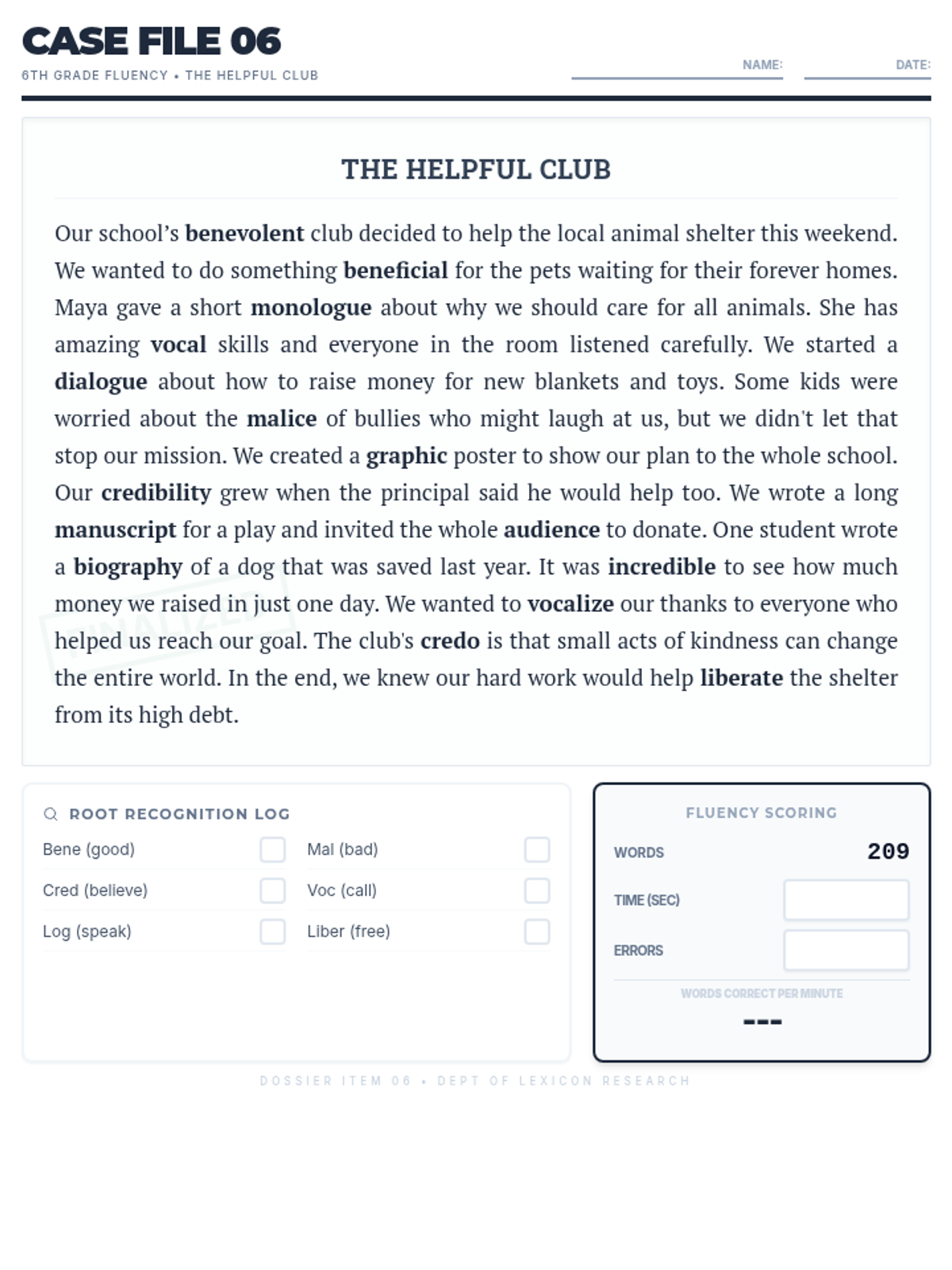
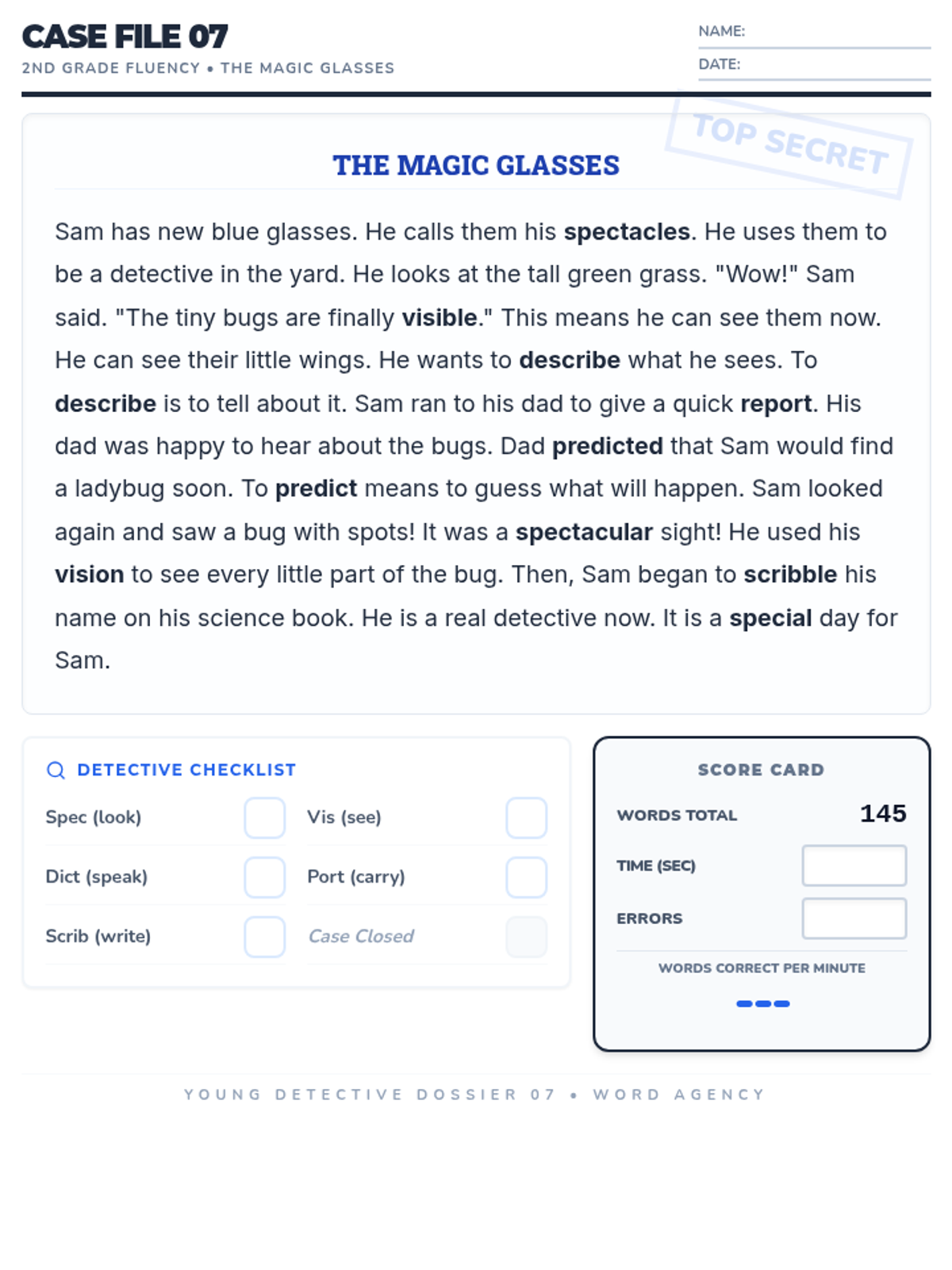
A series of high school and 6th-grade level fluency passages designed to reinforce Greek and Latin root word recognition through age-appropriate narratives and tracking tools.
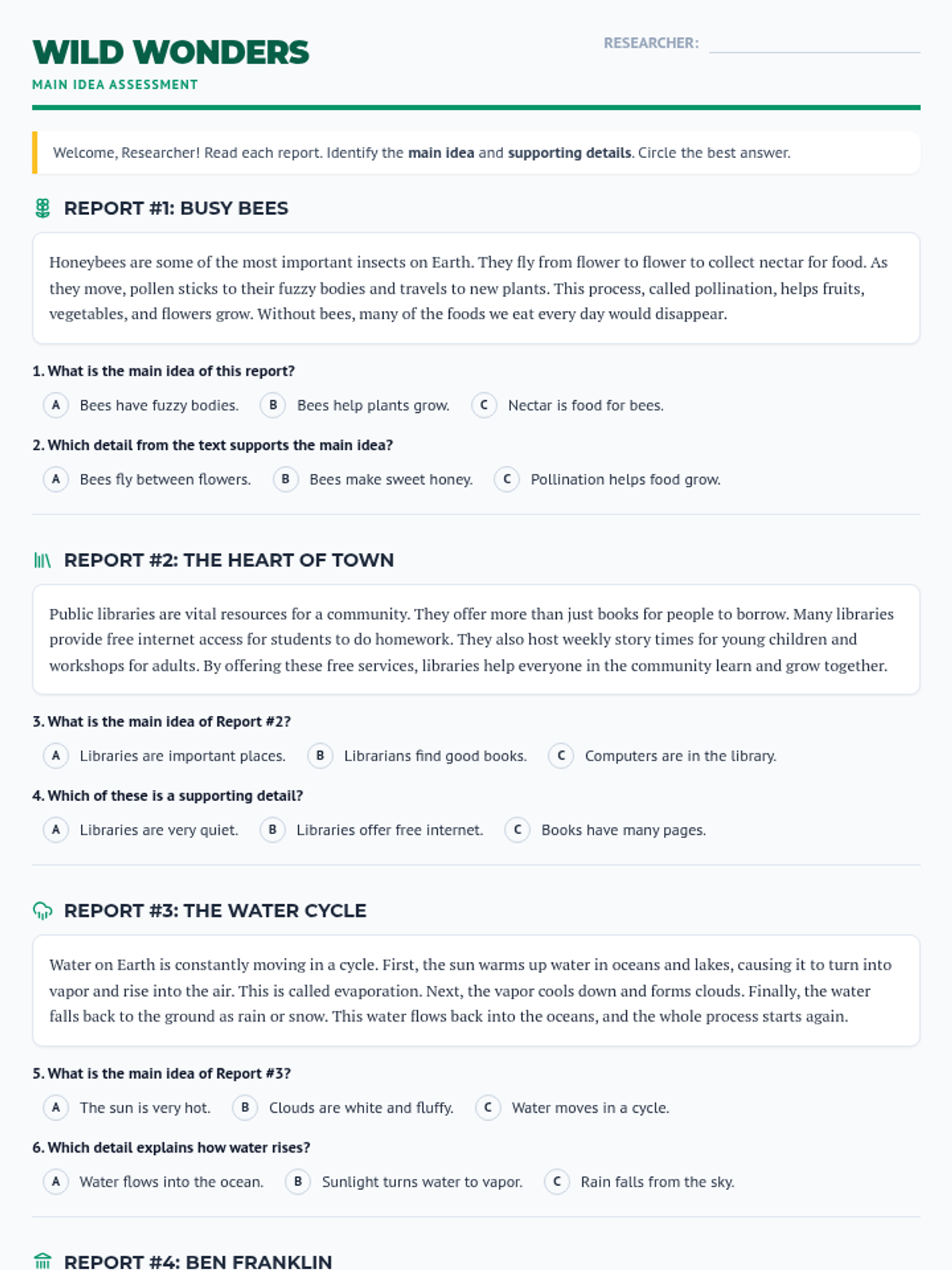
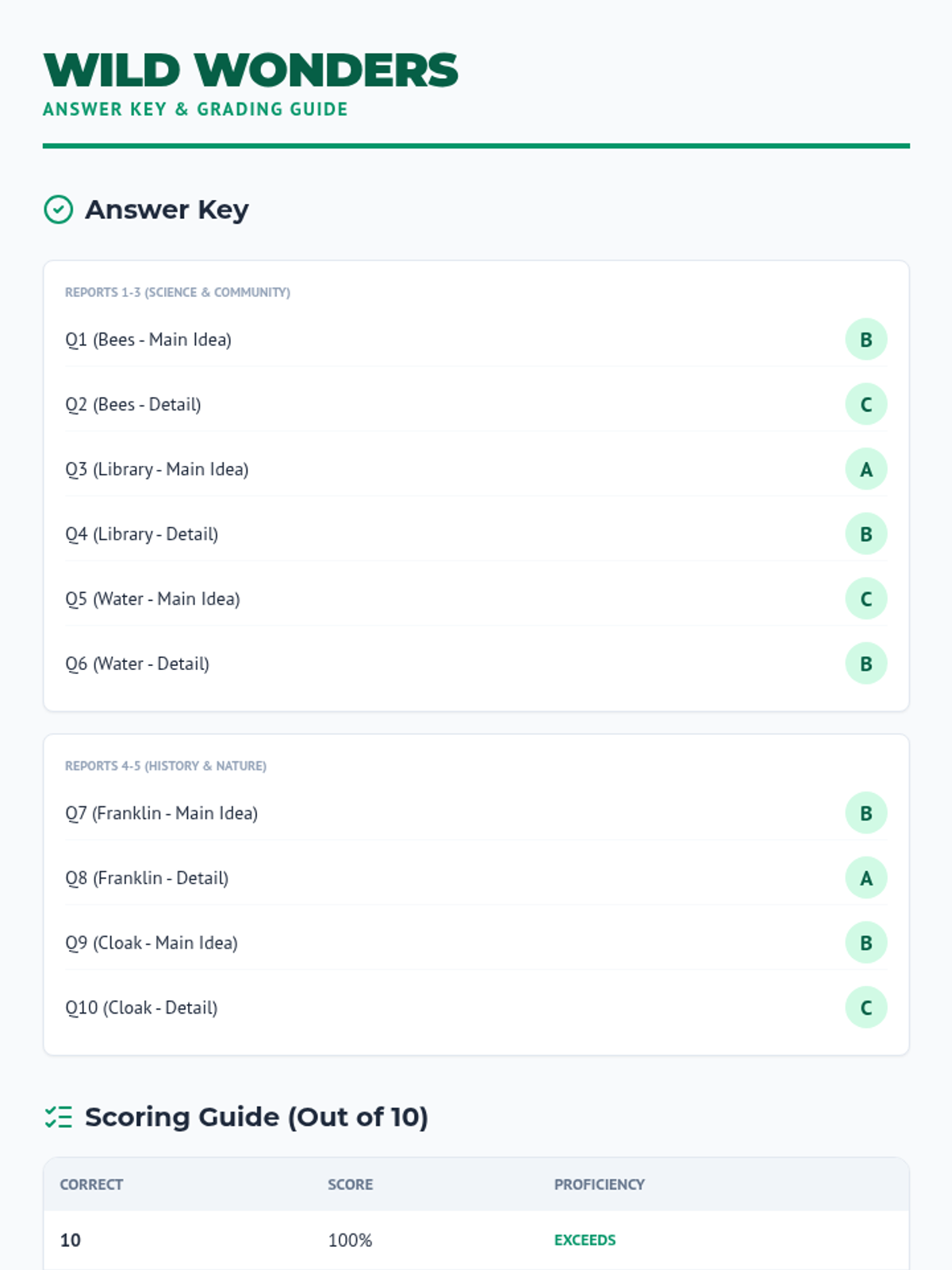
An end-of-week assessment for 3rd graders focusing on identifying main ideas and supporting details within informational texts about science and social studies.
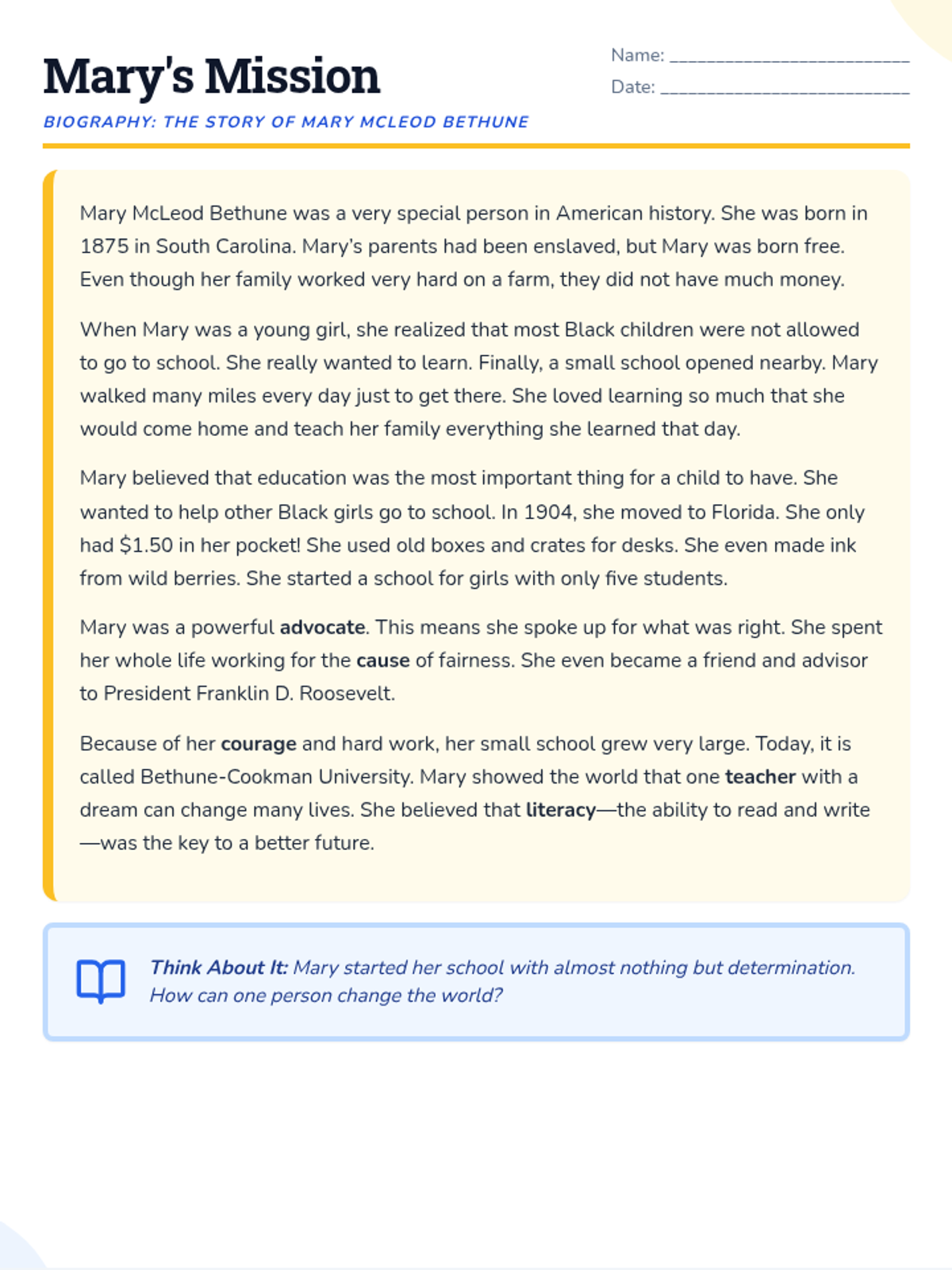
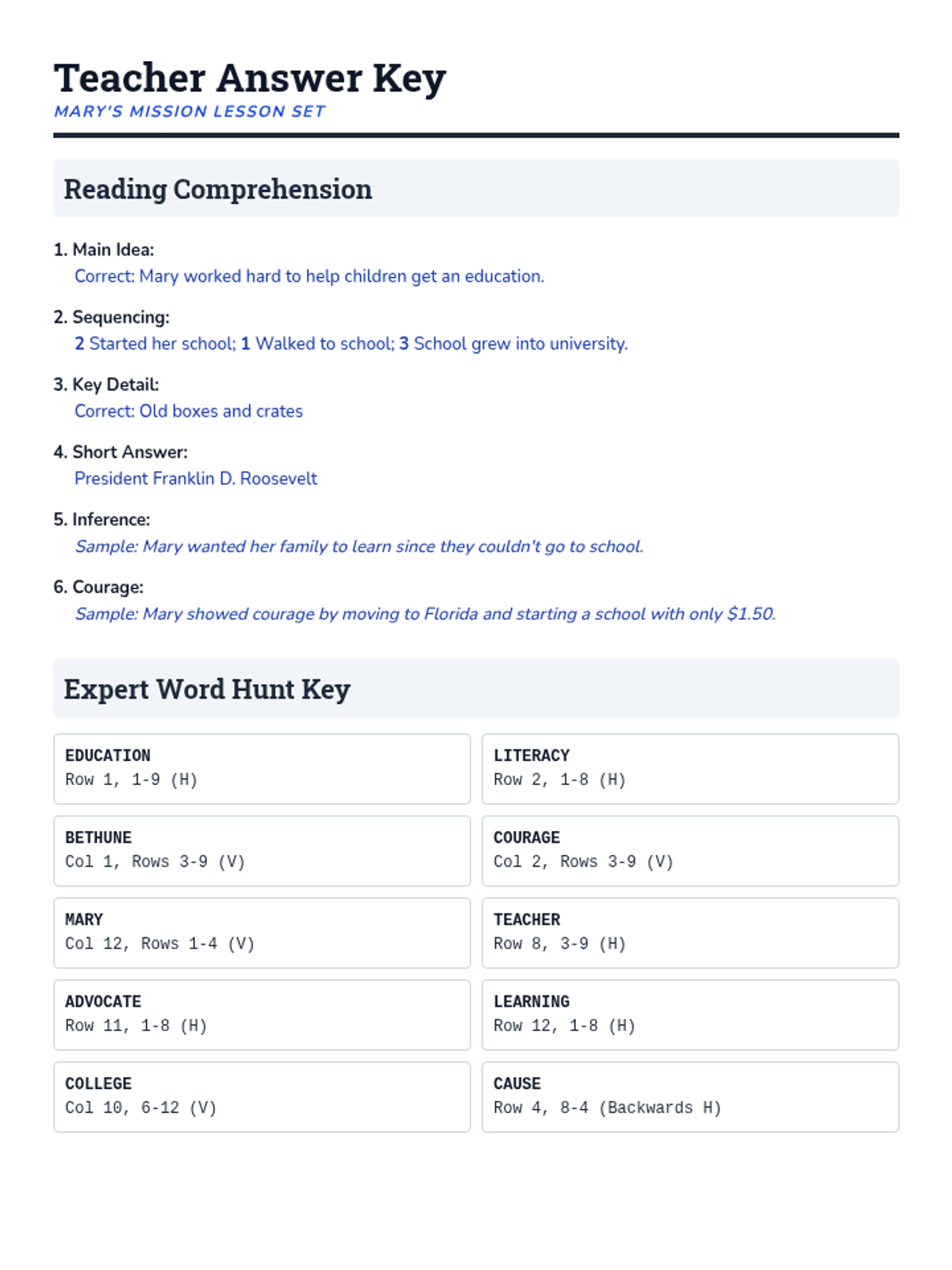
A second-grade literacy lesson focused on the life and impact of Mary McLeod Bethune, emphasizing reading comprehension, sequencing, and vocabulary.
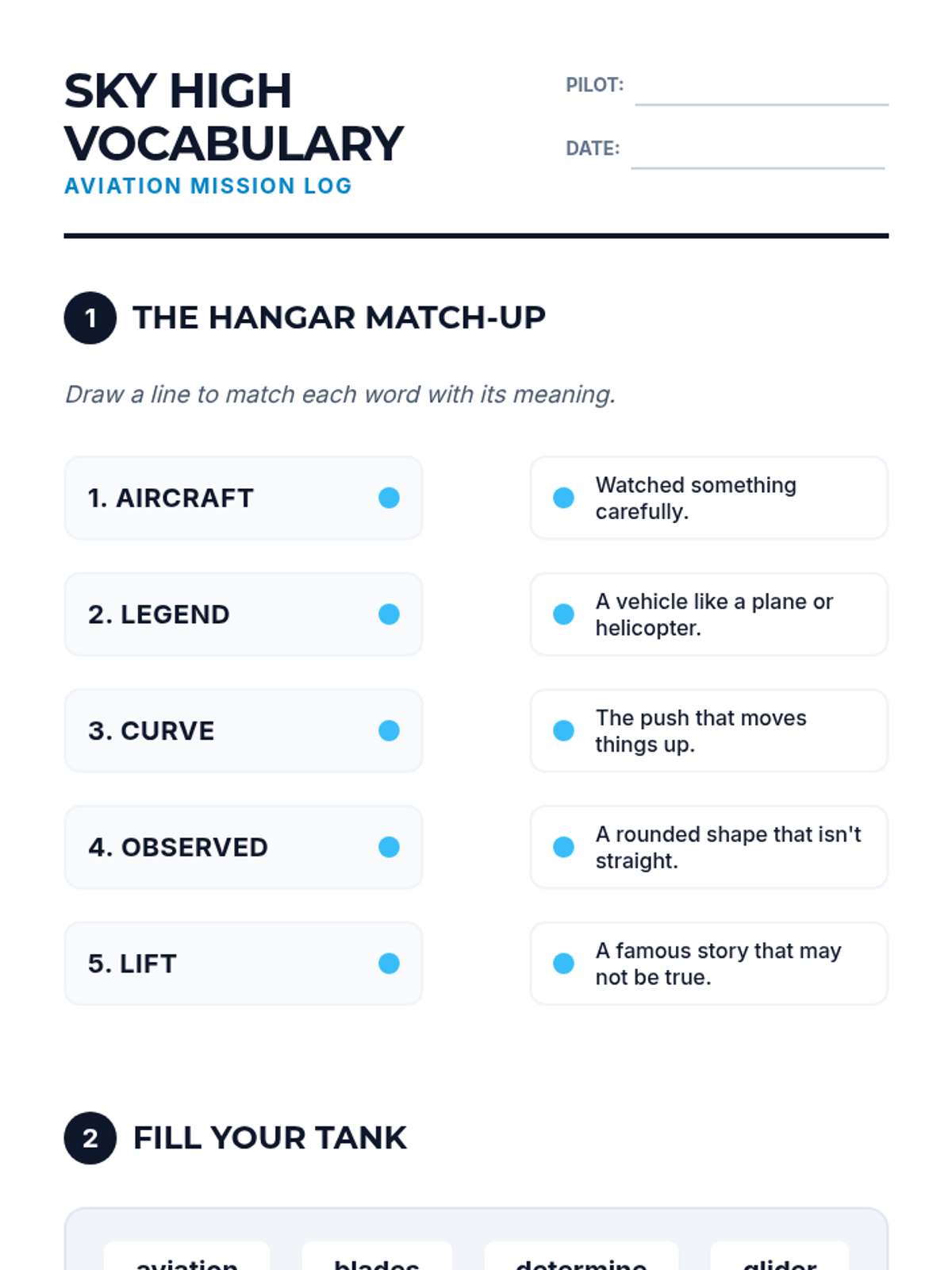
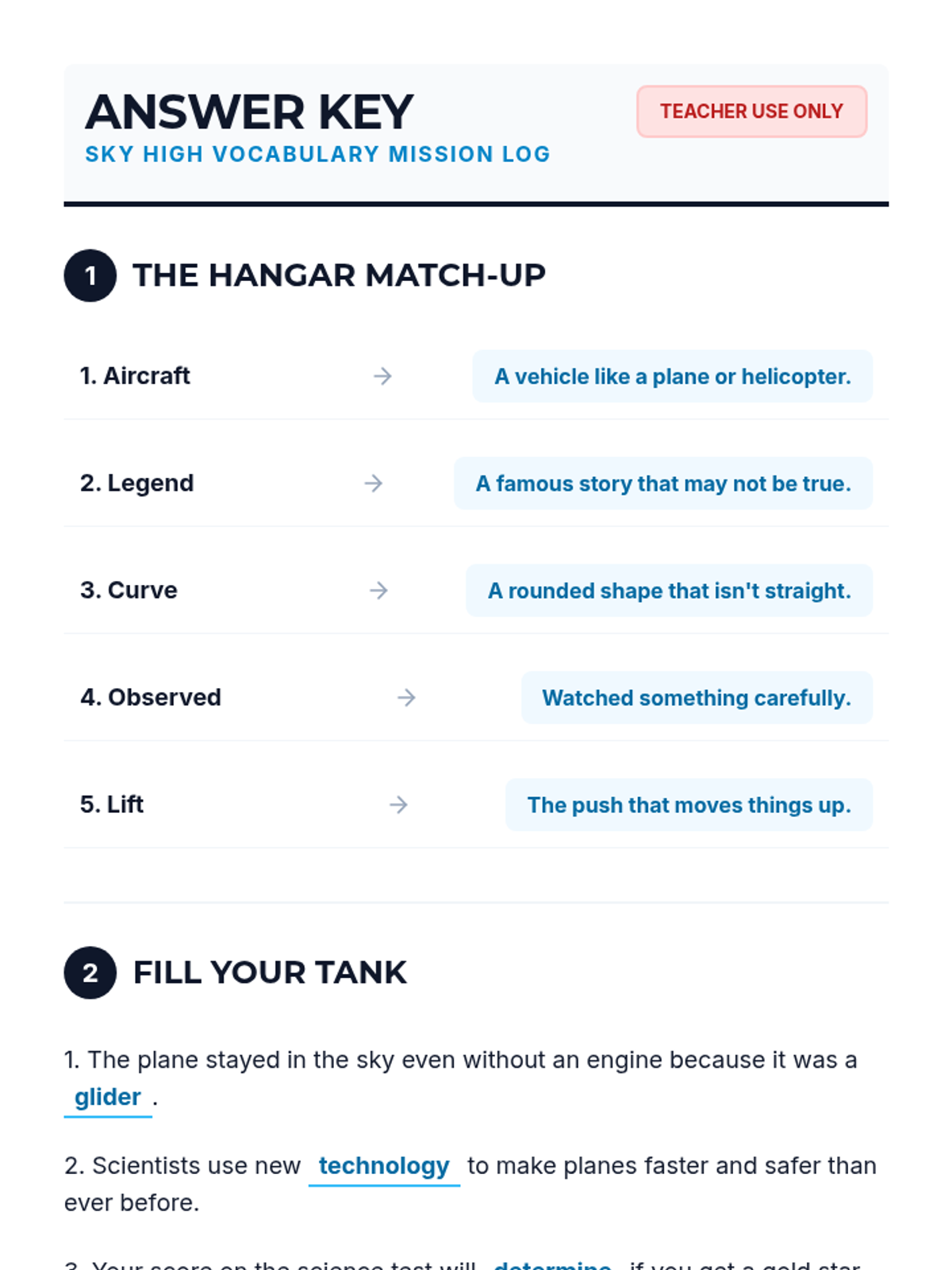
A vocabulary lesson focused on aviation terms for 2nd grade students, featuring definitions, visual aids, and sentence frames.
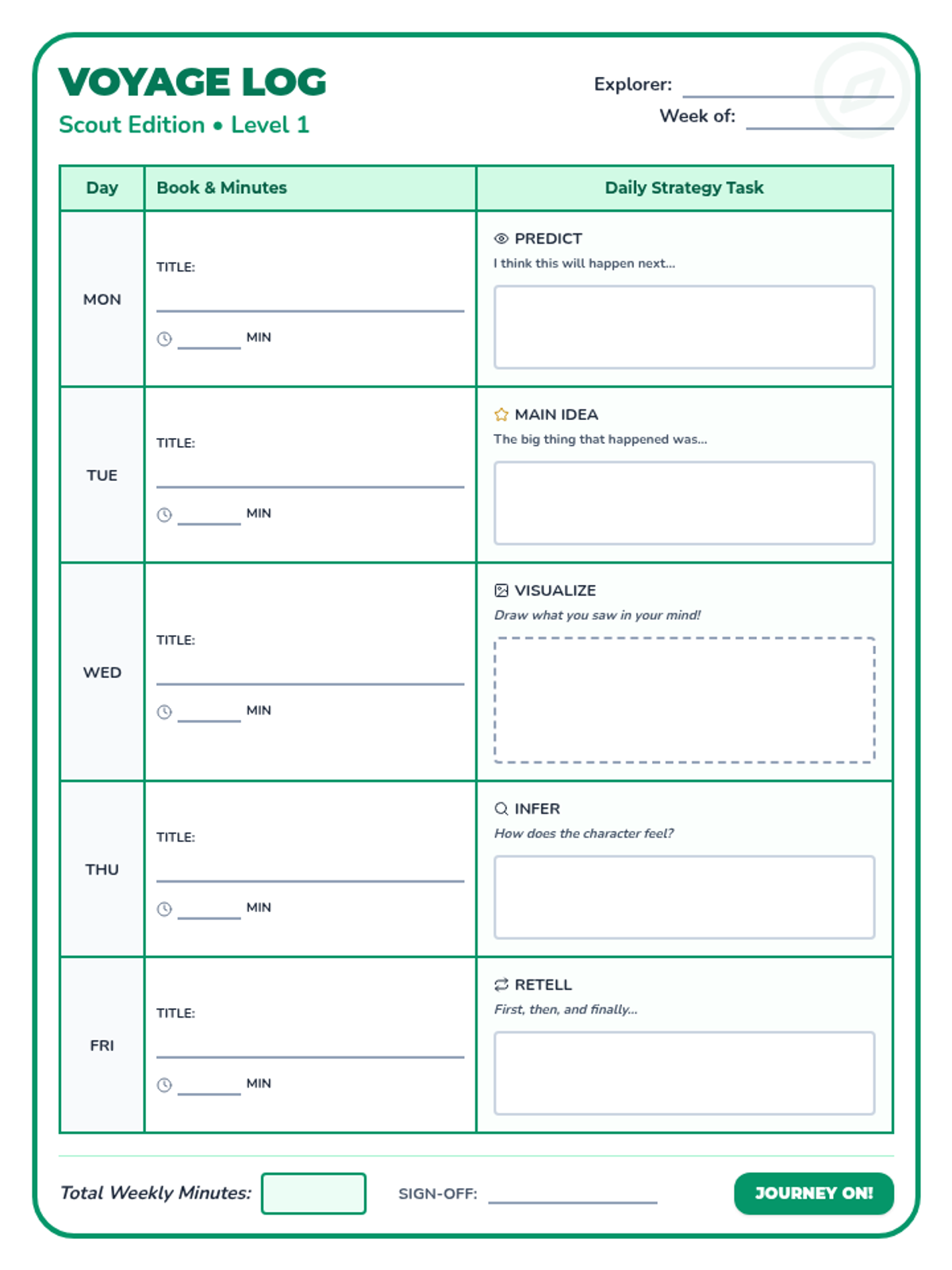
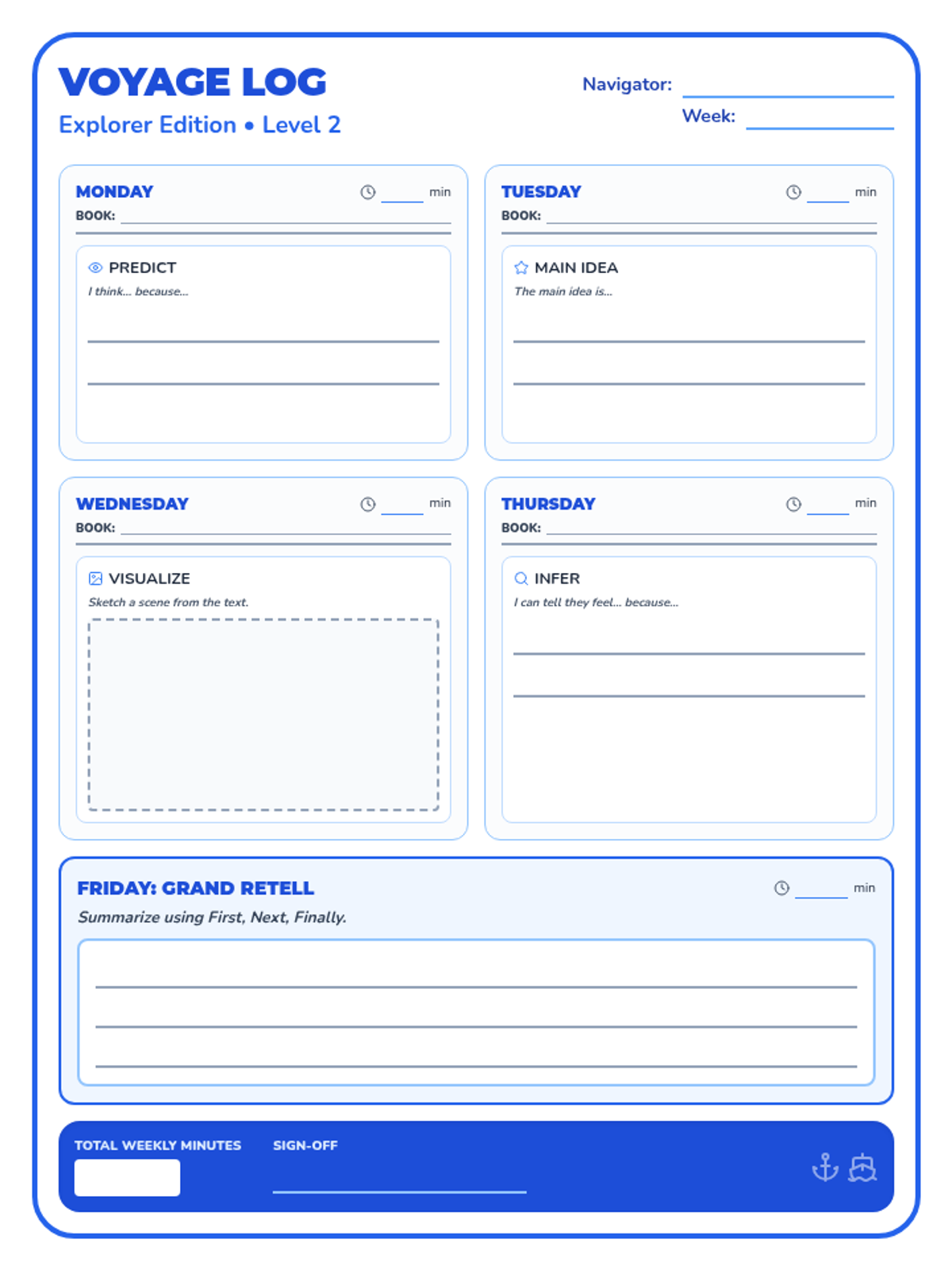
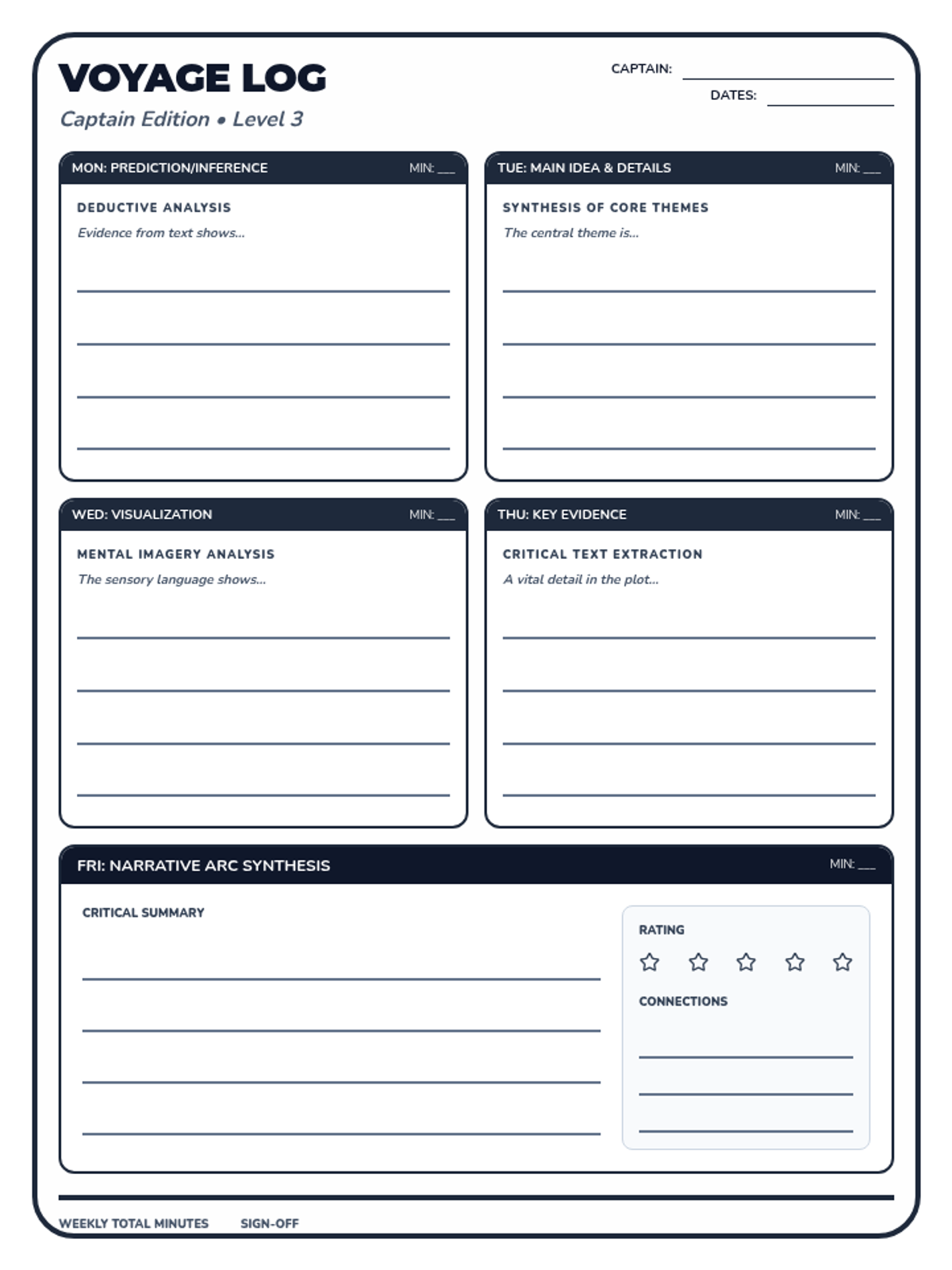
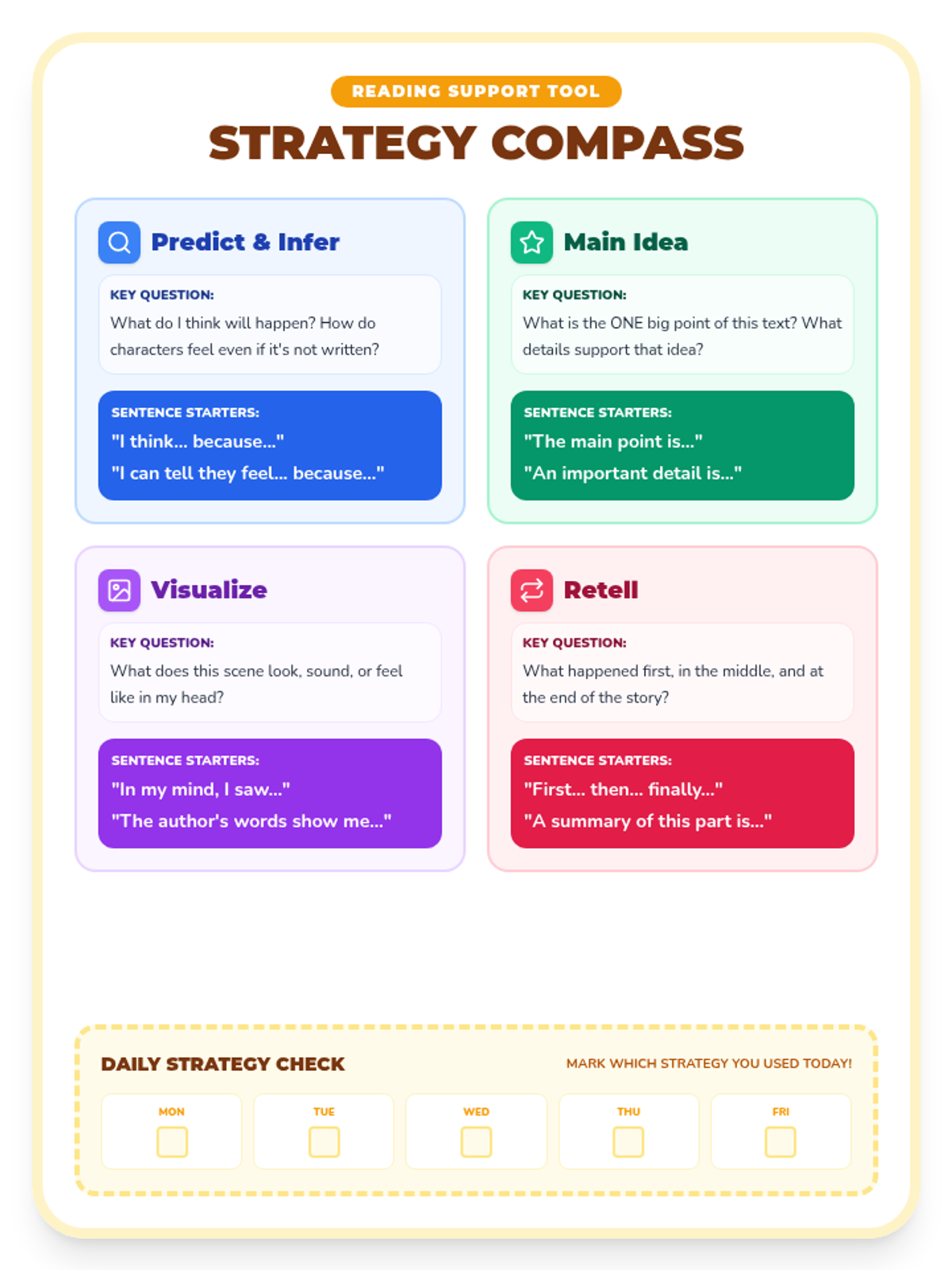
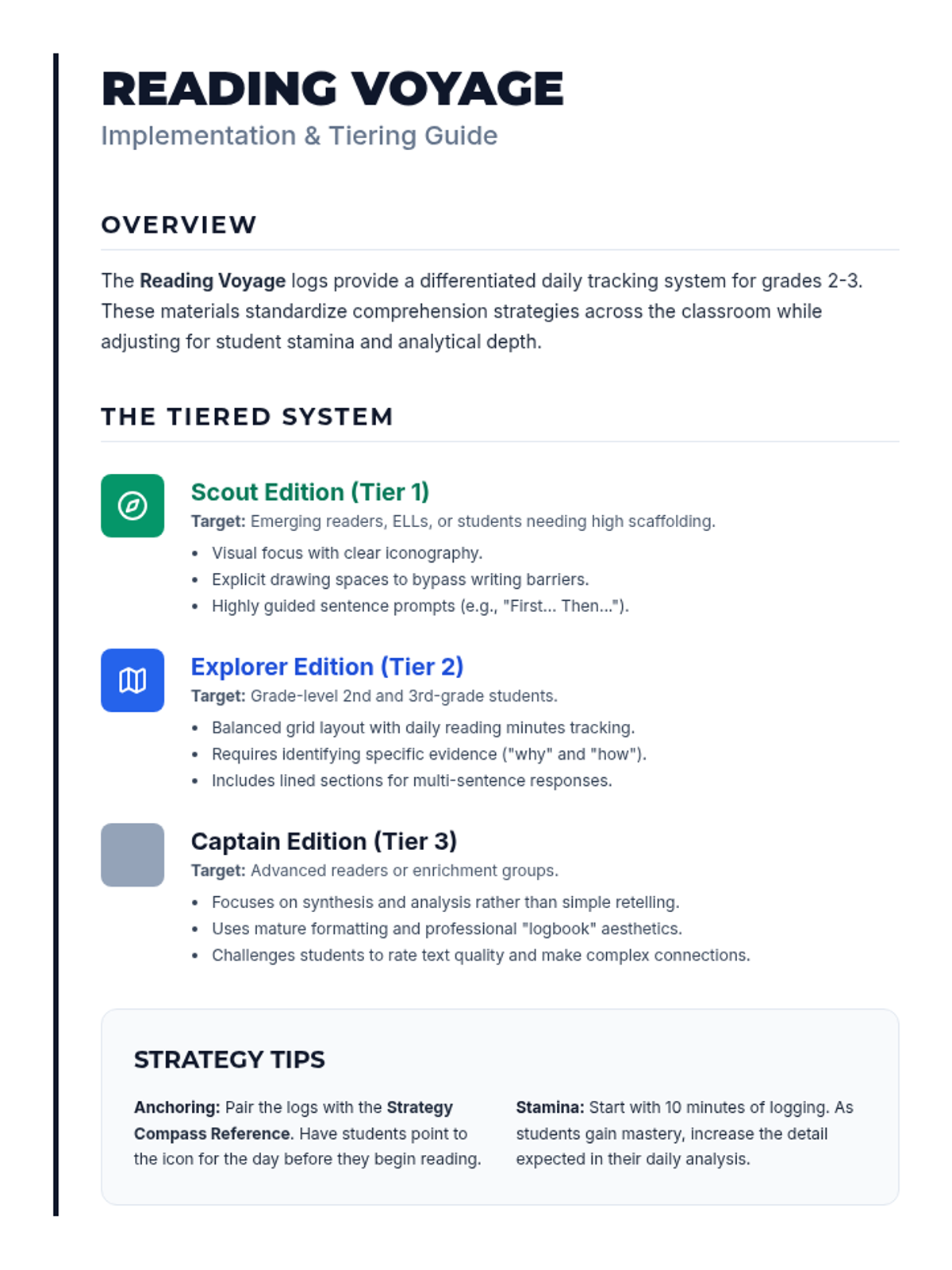
A set of tiered daily reading trackers for 2nd-3rd grade students, focusing on predicting, inferring, main idea, and visualizing. These logs provide differentiated support for various reading levels within a single classroom.
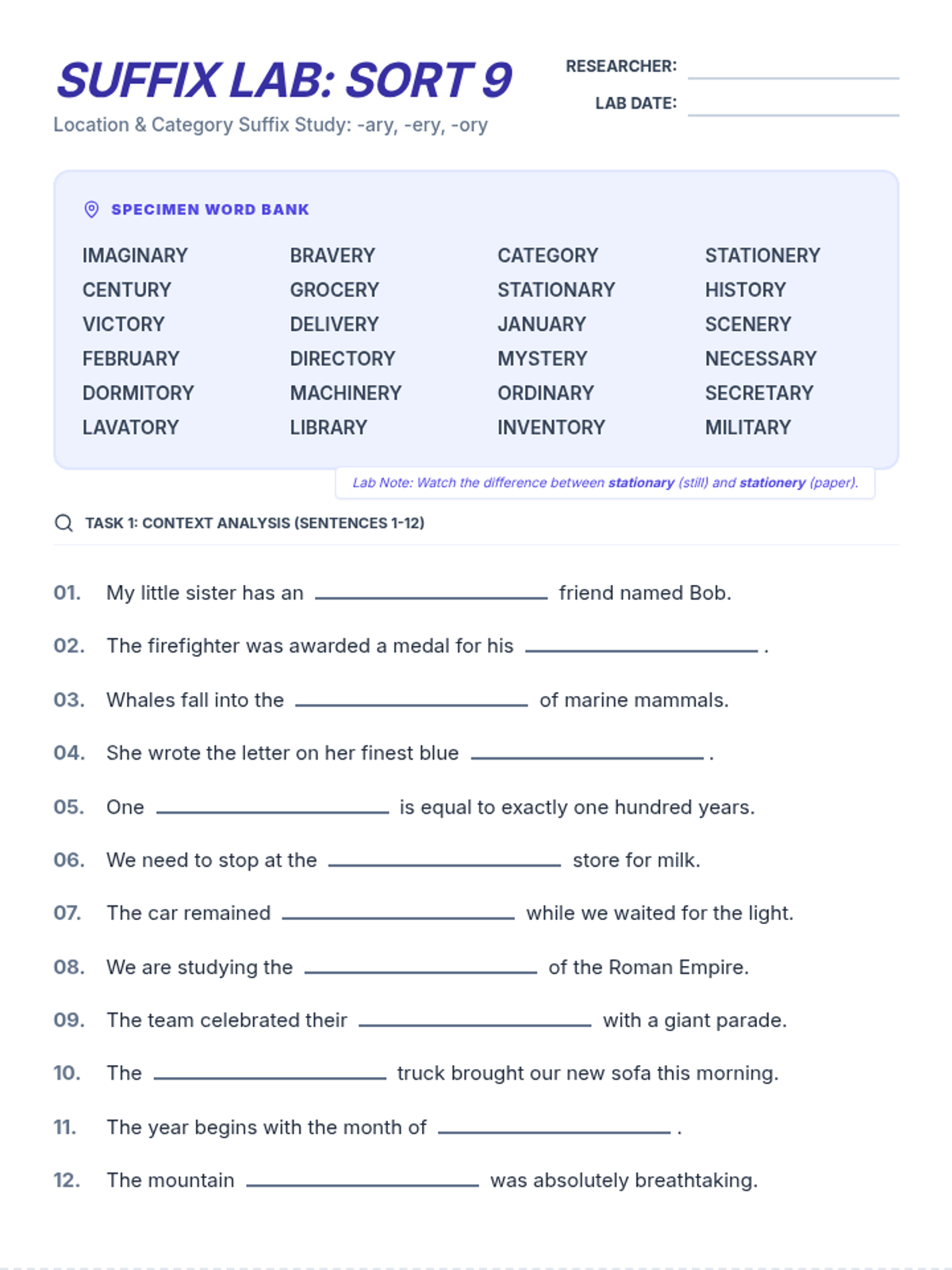
A lesson focused on location and category suffixes (-ary, -ery, -ory). Students analyze how these suffixes form nouns and adjectives related to places, groups, and qualities.
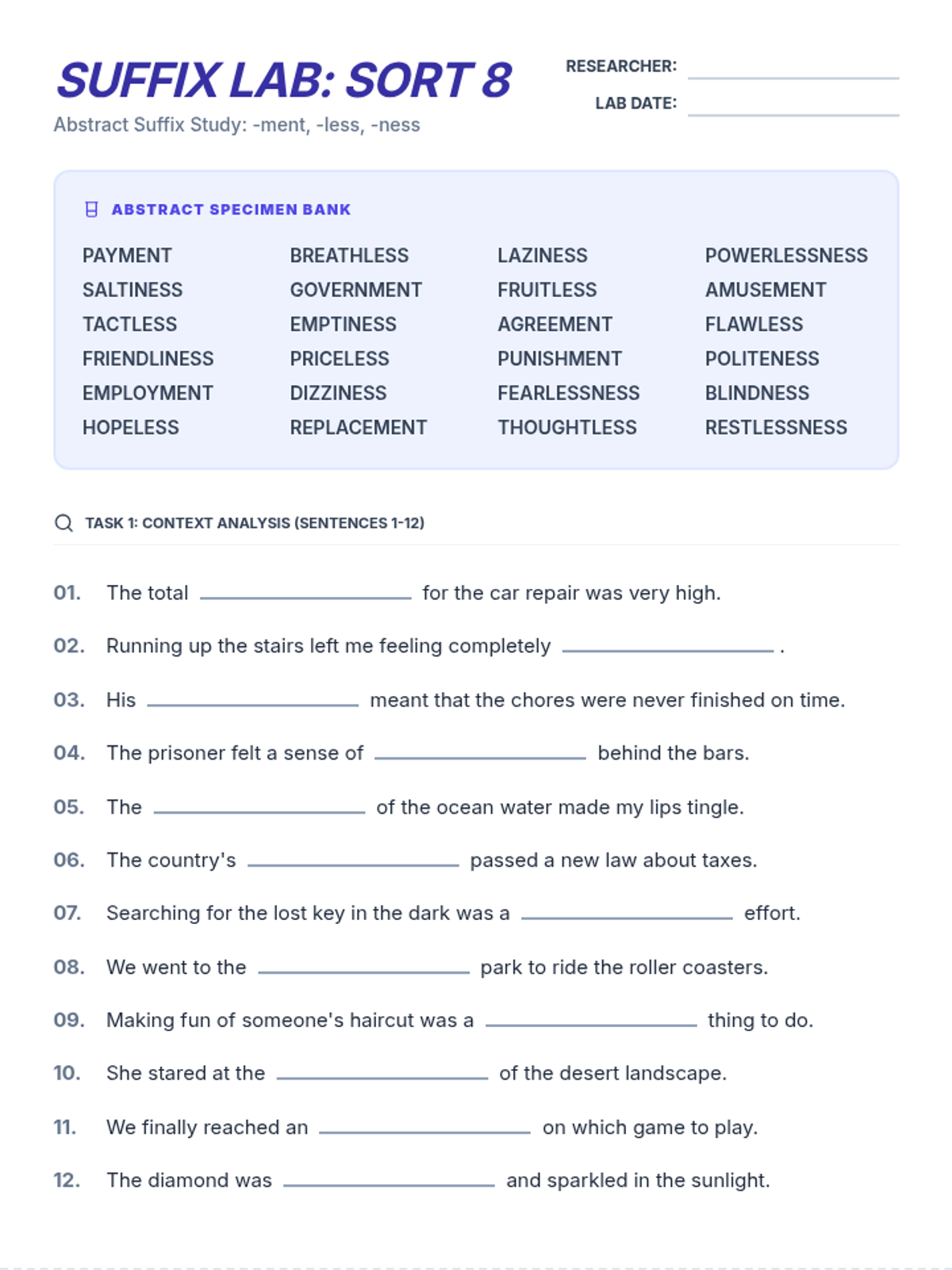
A lesson focused on abstract suffixes (-ment, -less, -ness). Students explore how these suffixes form nouns and adjectives related to states, qualities, and actions.
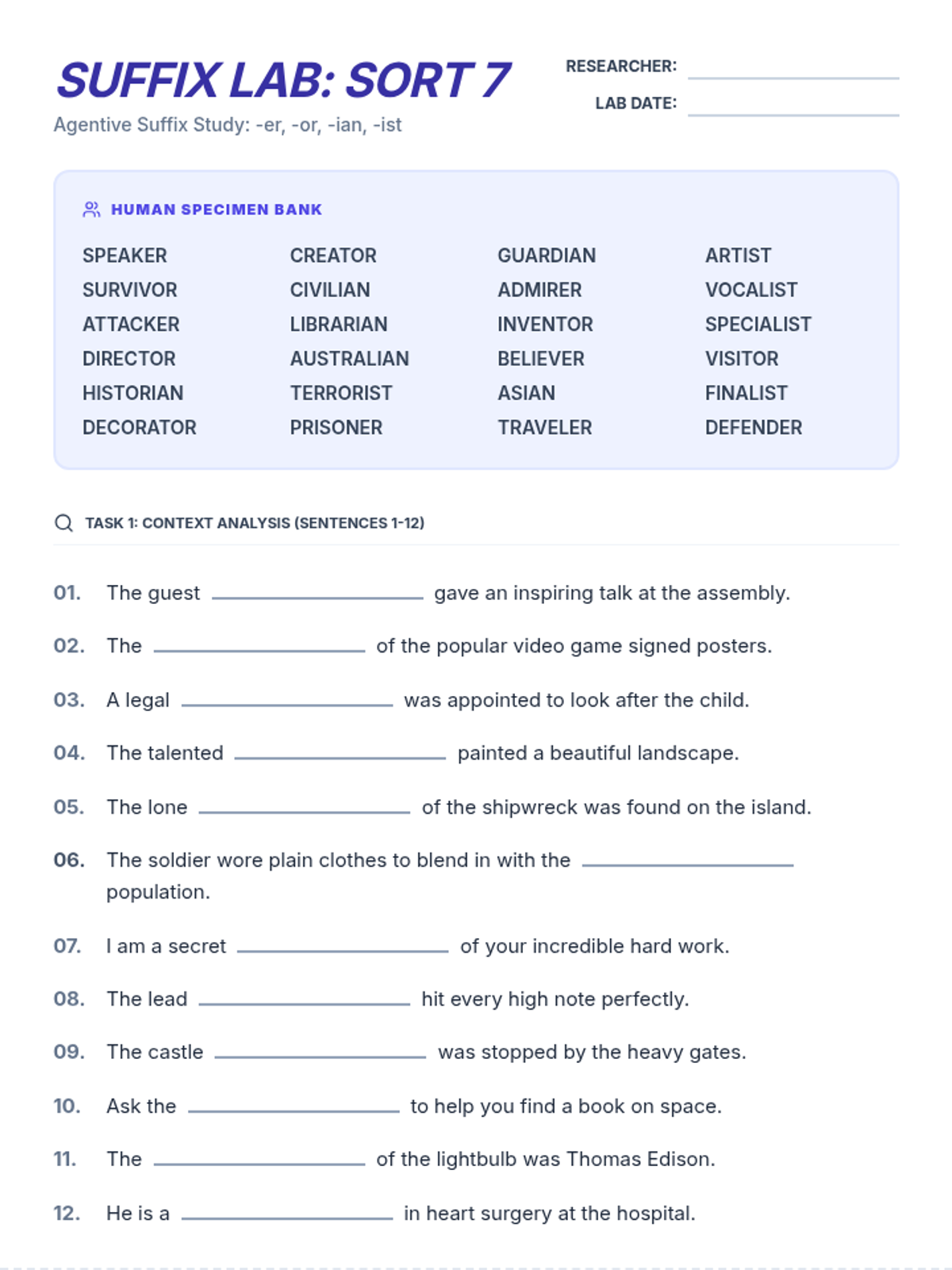
A lesson focused on agentive suffixes (-er, -or, -ian, -ist). Students analyze how these suffixes identify people who perform specific actions or hold certain roles.
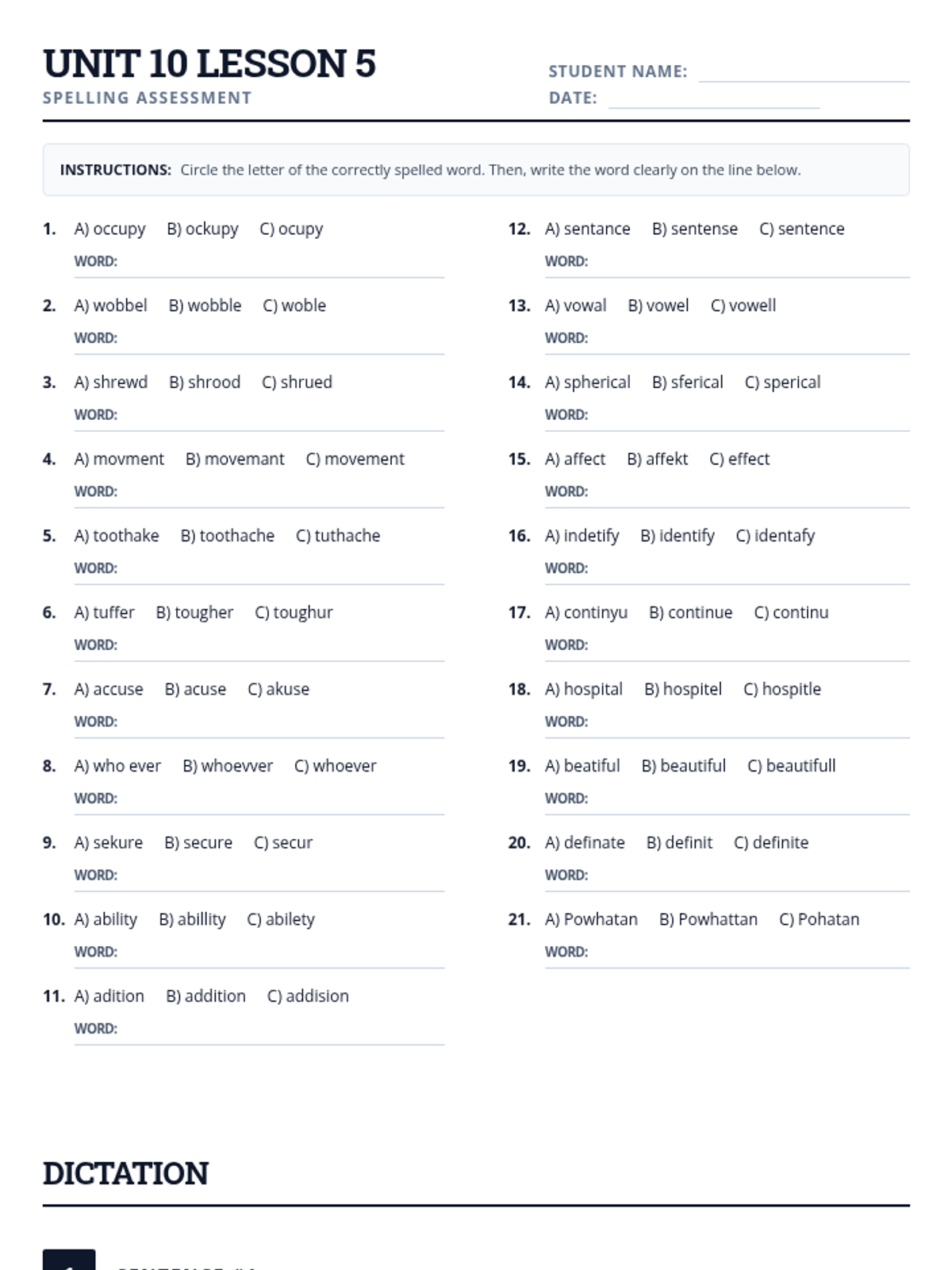
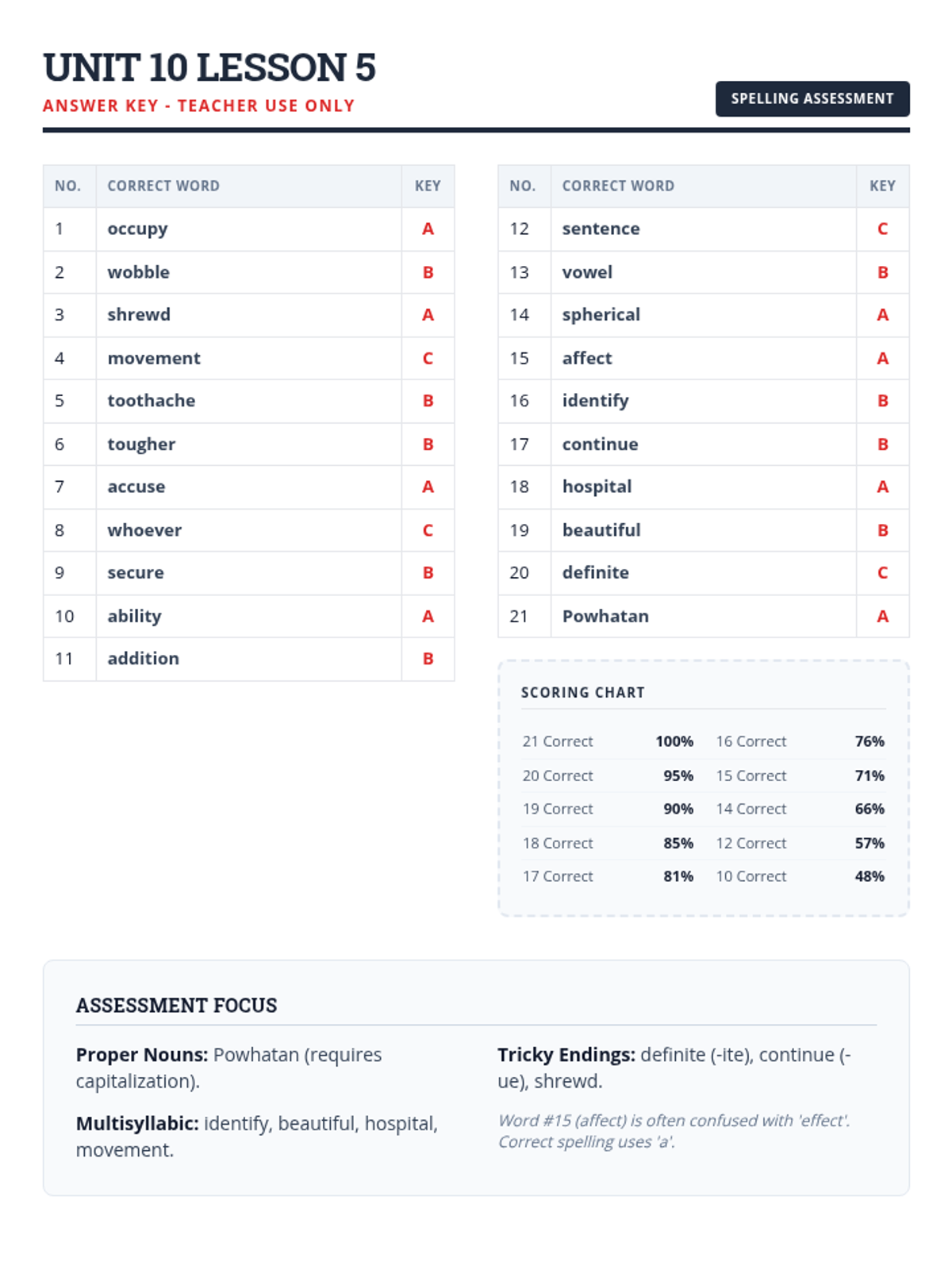
A spelling assessment for Unit 10 Lesson 5 featuring 21 words including 'occupy', 'identify', and 'Powhatan'. Covers double consonants, multisyllabic words, proper nouns, and common vowel teams.
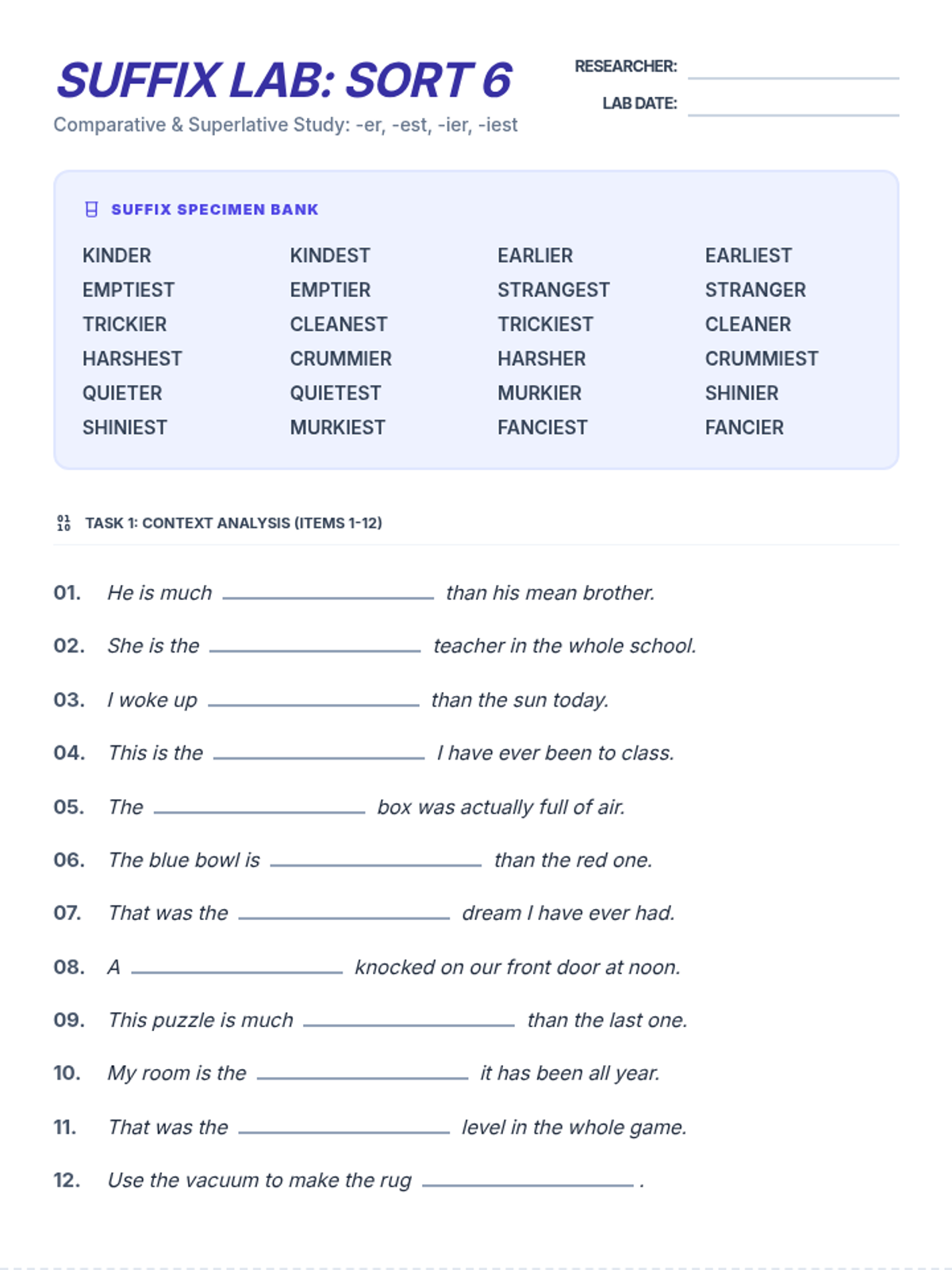
A lesson focused on comparative and superlative suffixes (-er, -est, -ier, -iest). Students explore how these suffixes change adjectives to compare two or more things.
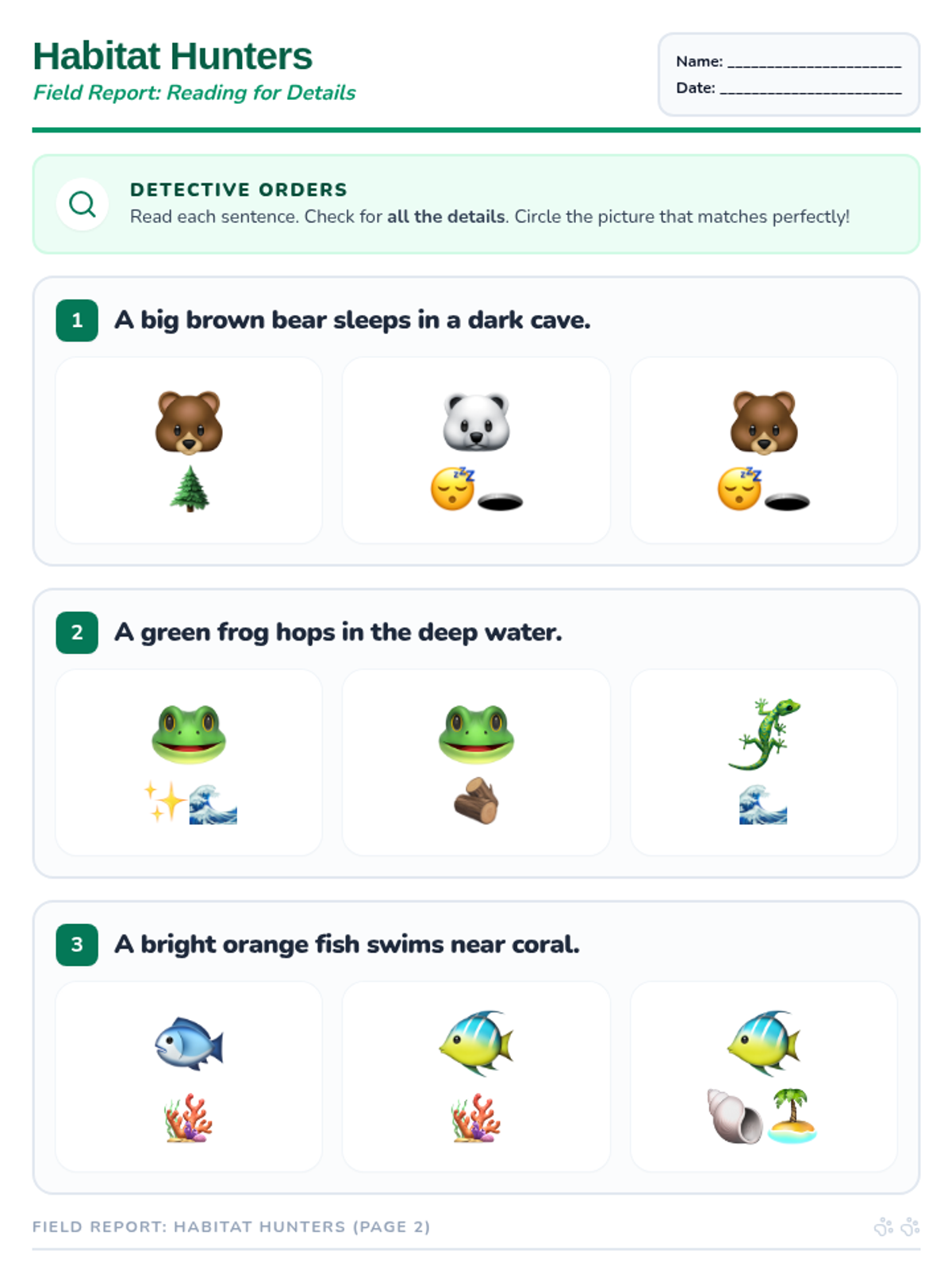
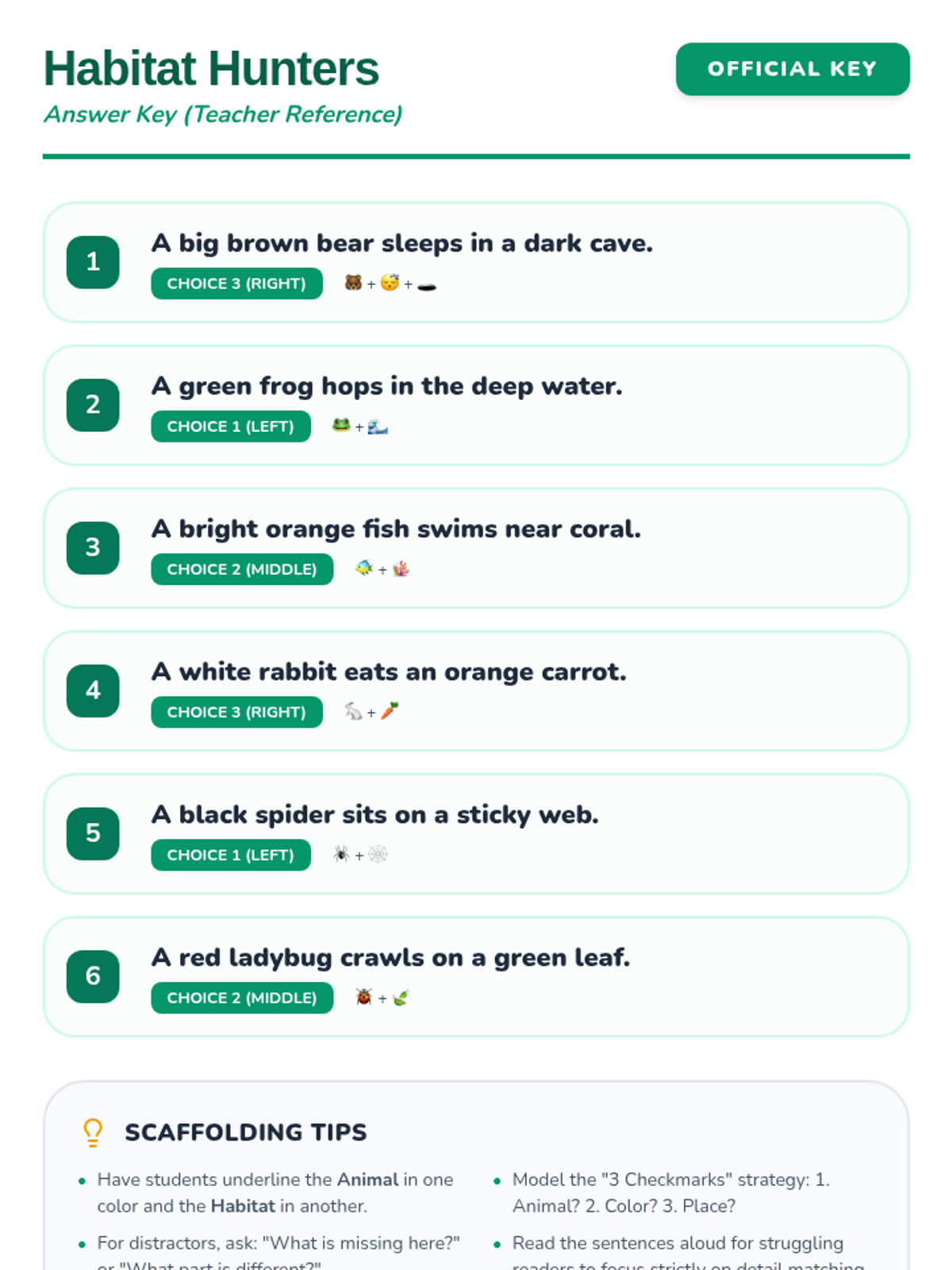
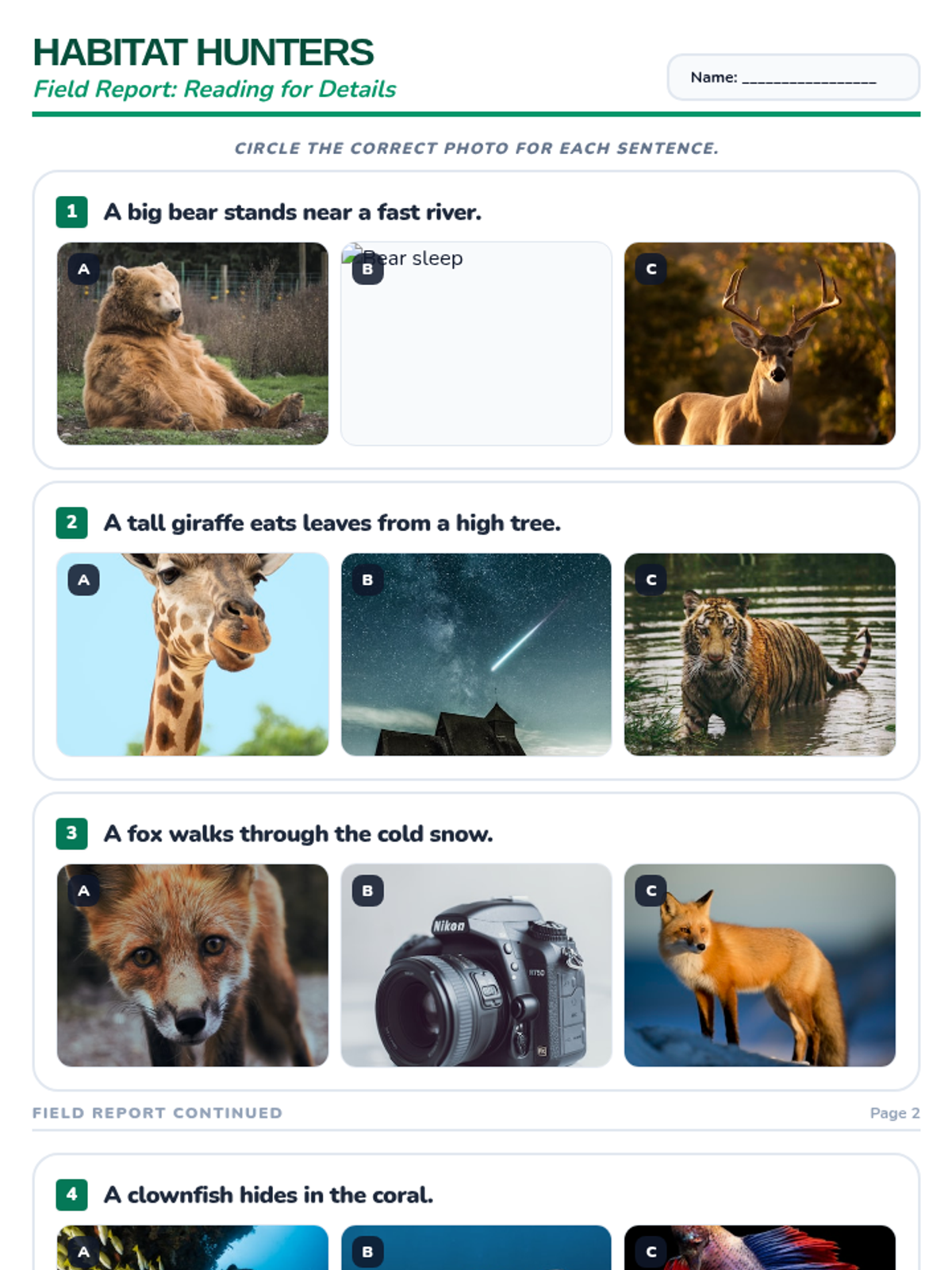
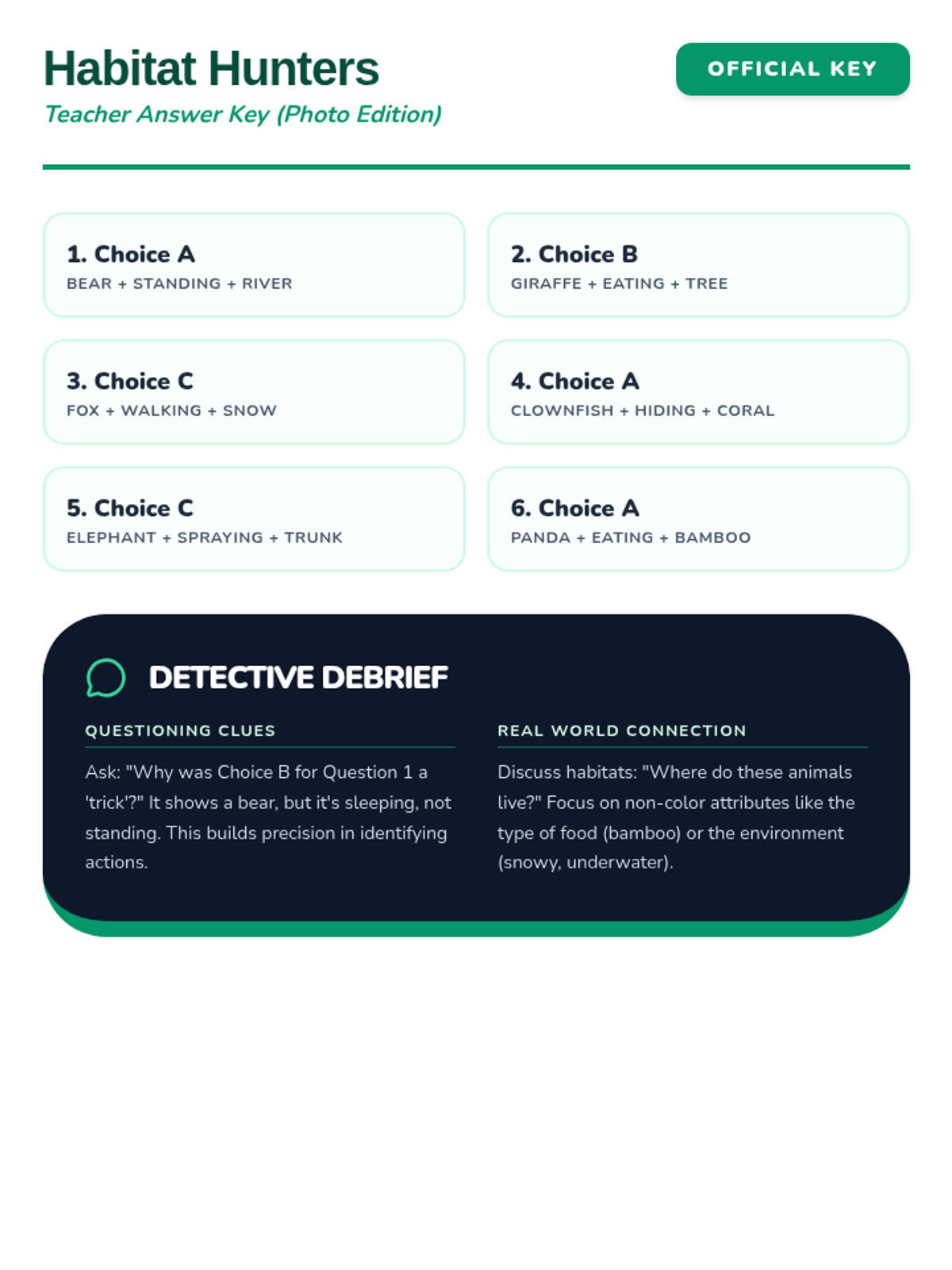
A lesson focused on reading comprehension and attention to detail, where students identify specific animals and their habitats based on multiple descriptive clues.
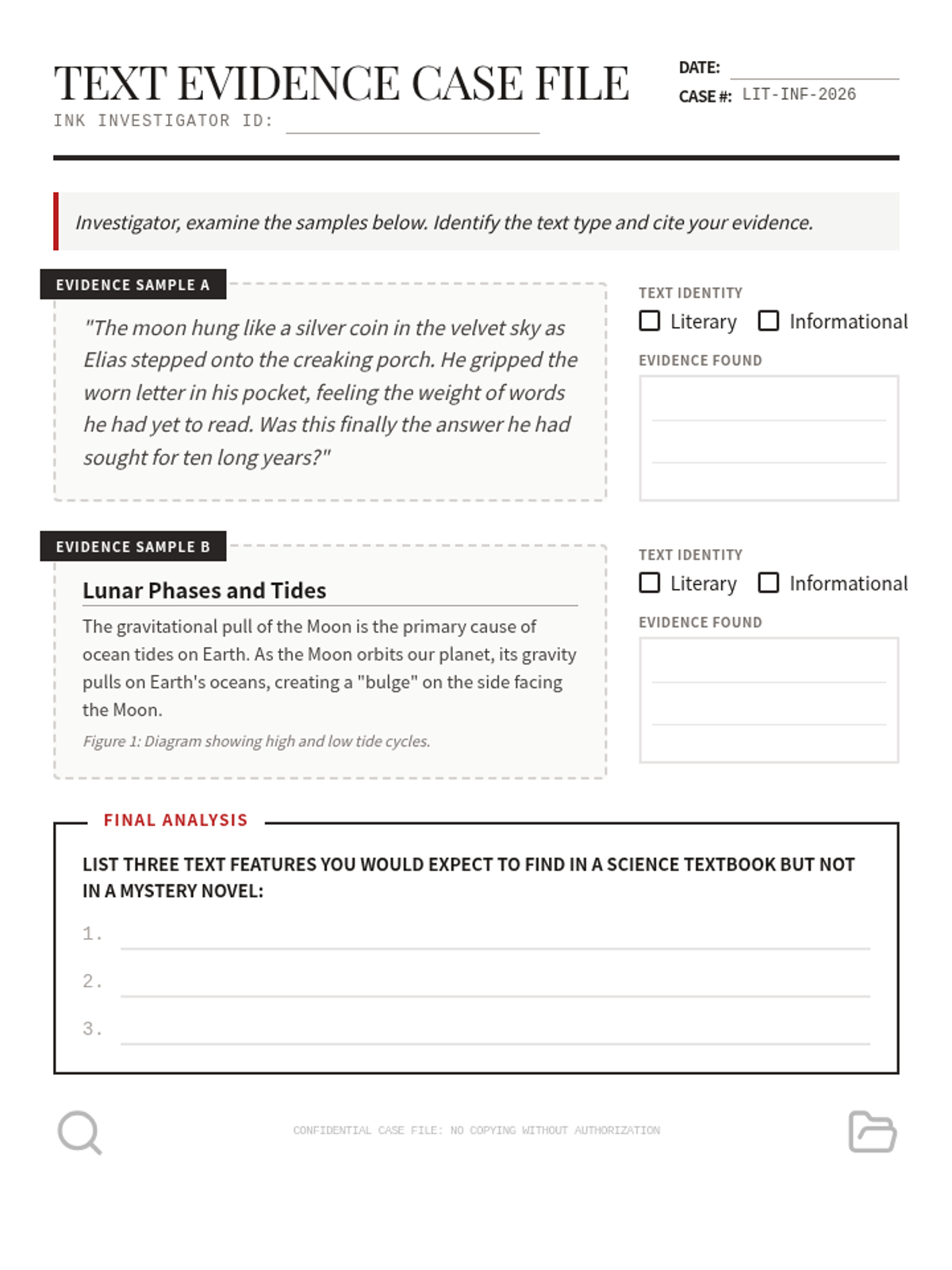
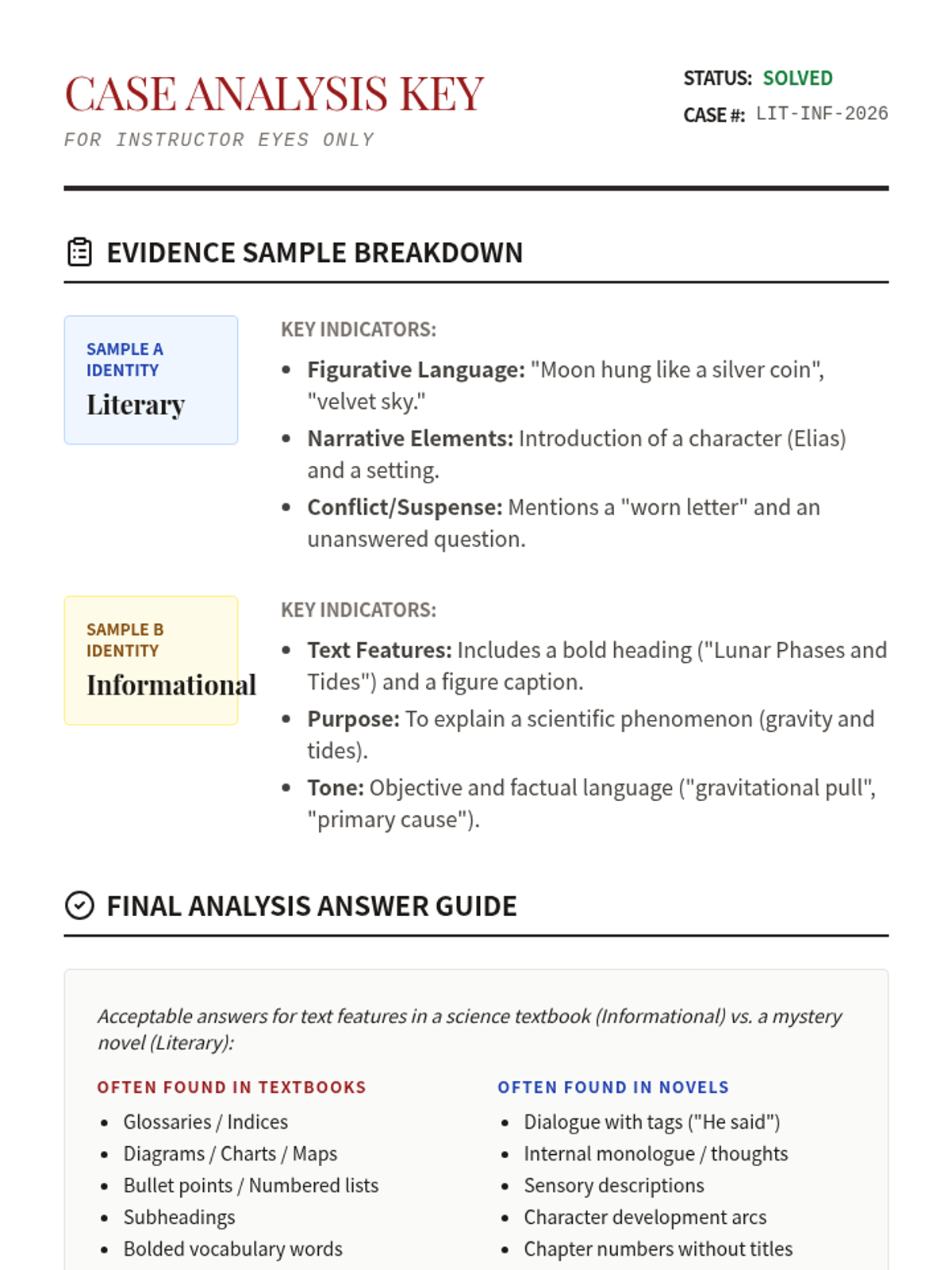
Students learn to distinguish between literary and informational texts by examining purpose, structure, and language features. This lesson uses a detective theme to help students investigate the 'DNA' of different text types.
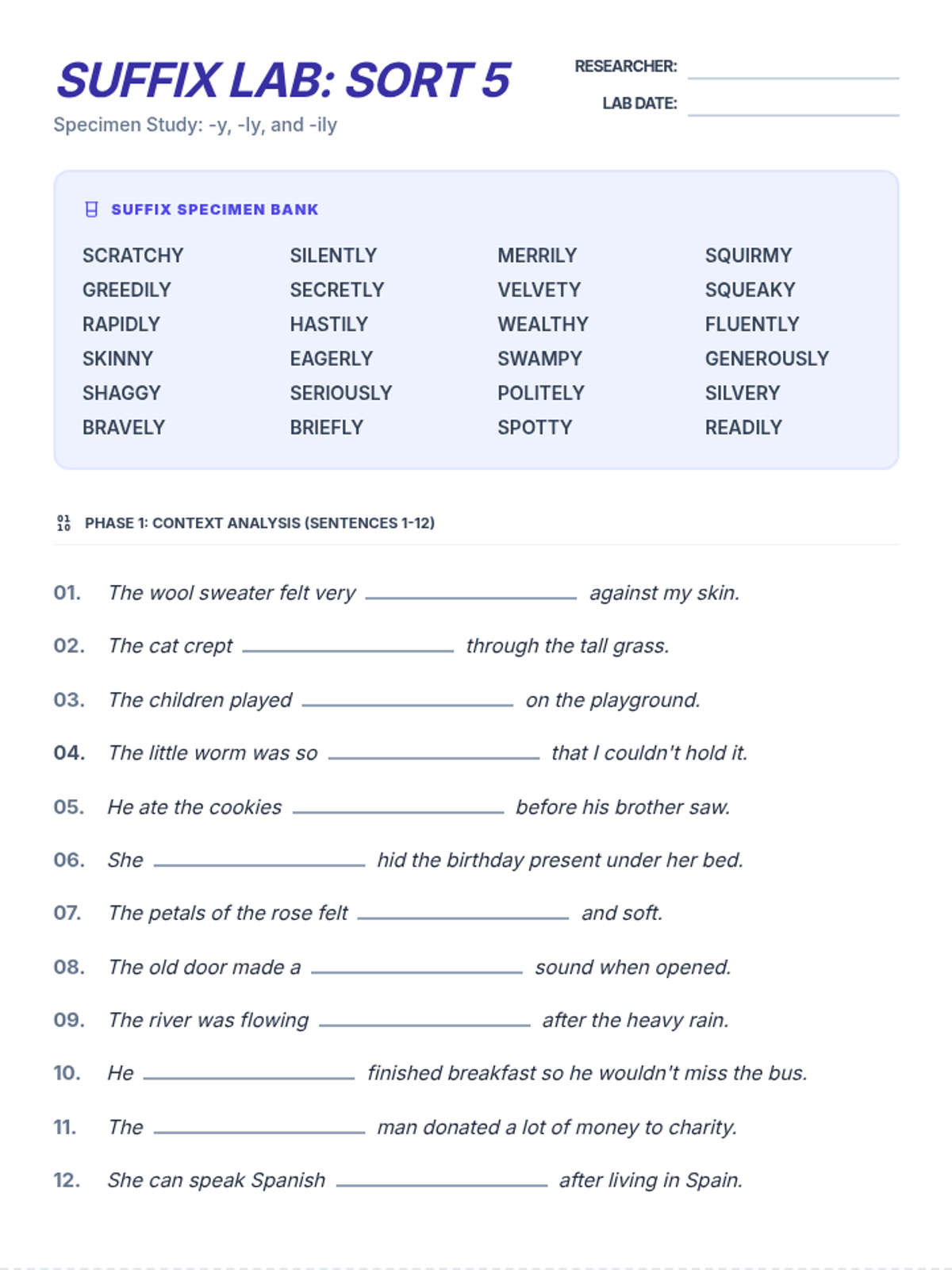
A lesson focused on the suffixes -y, -ly, and -ily. Students analyze how these suffixes change word meanings and usage through contextual application.
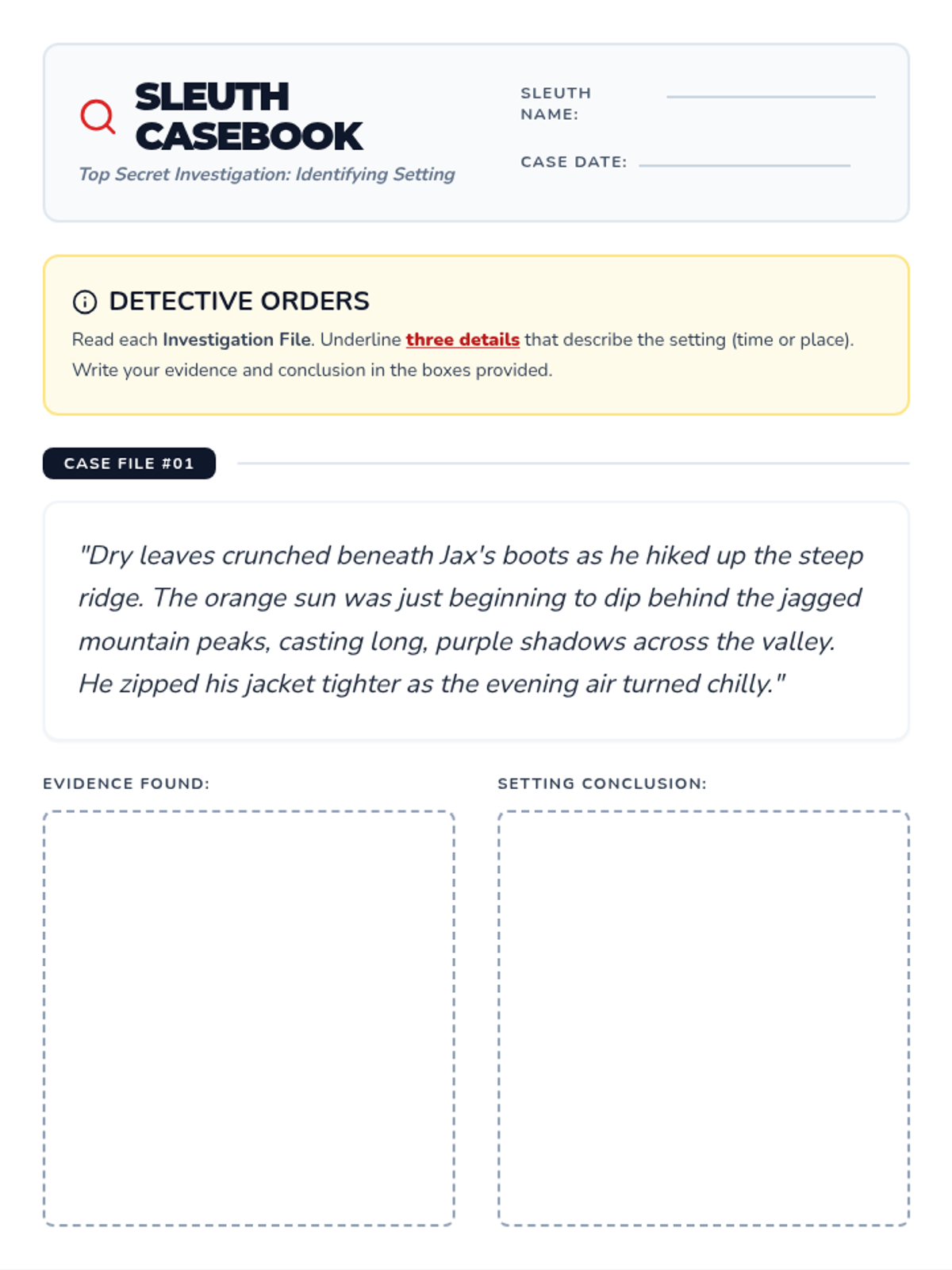
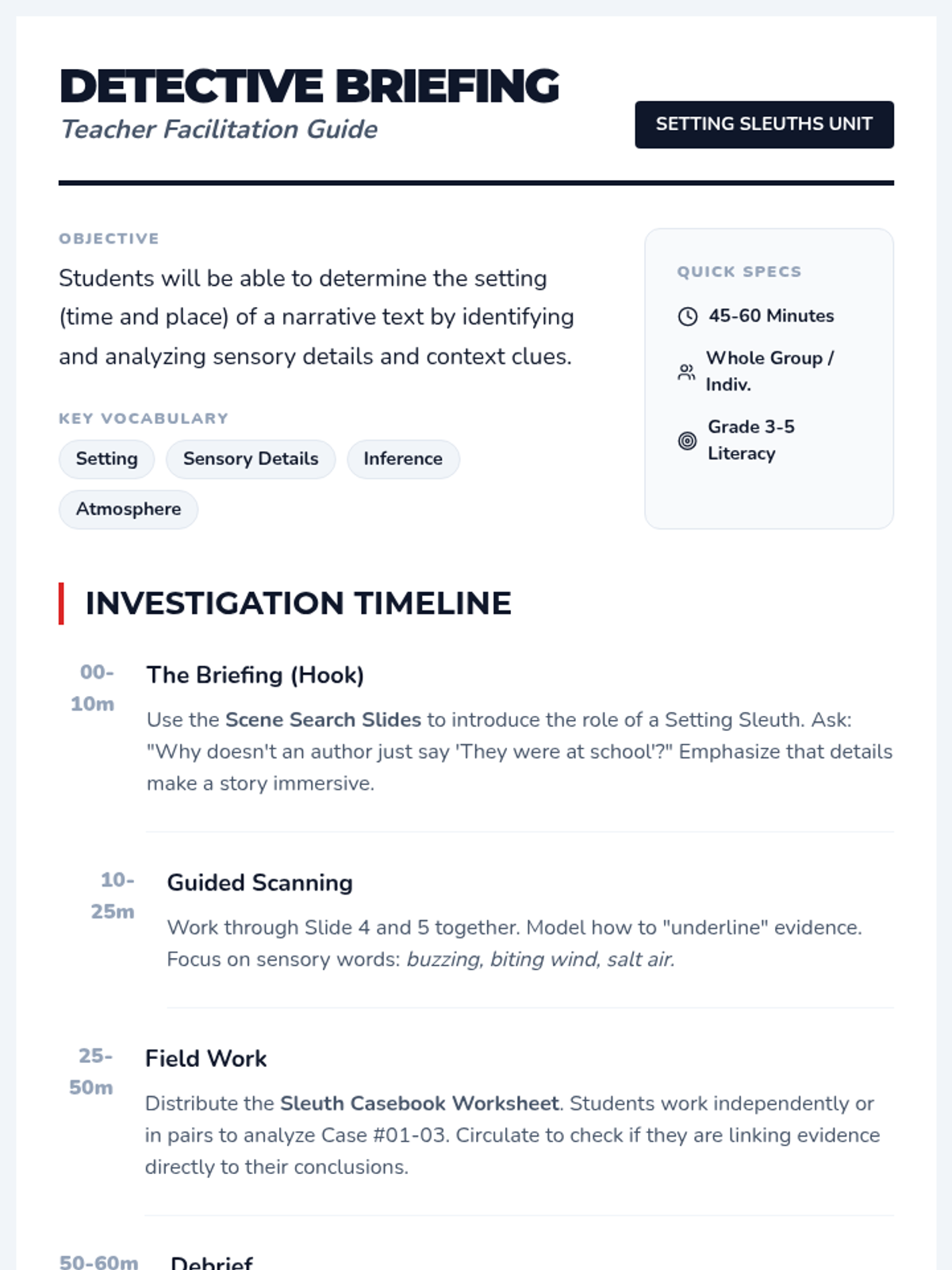
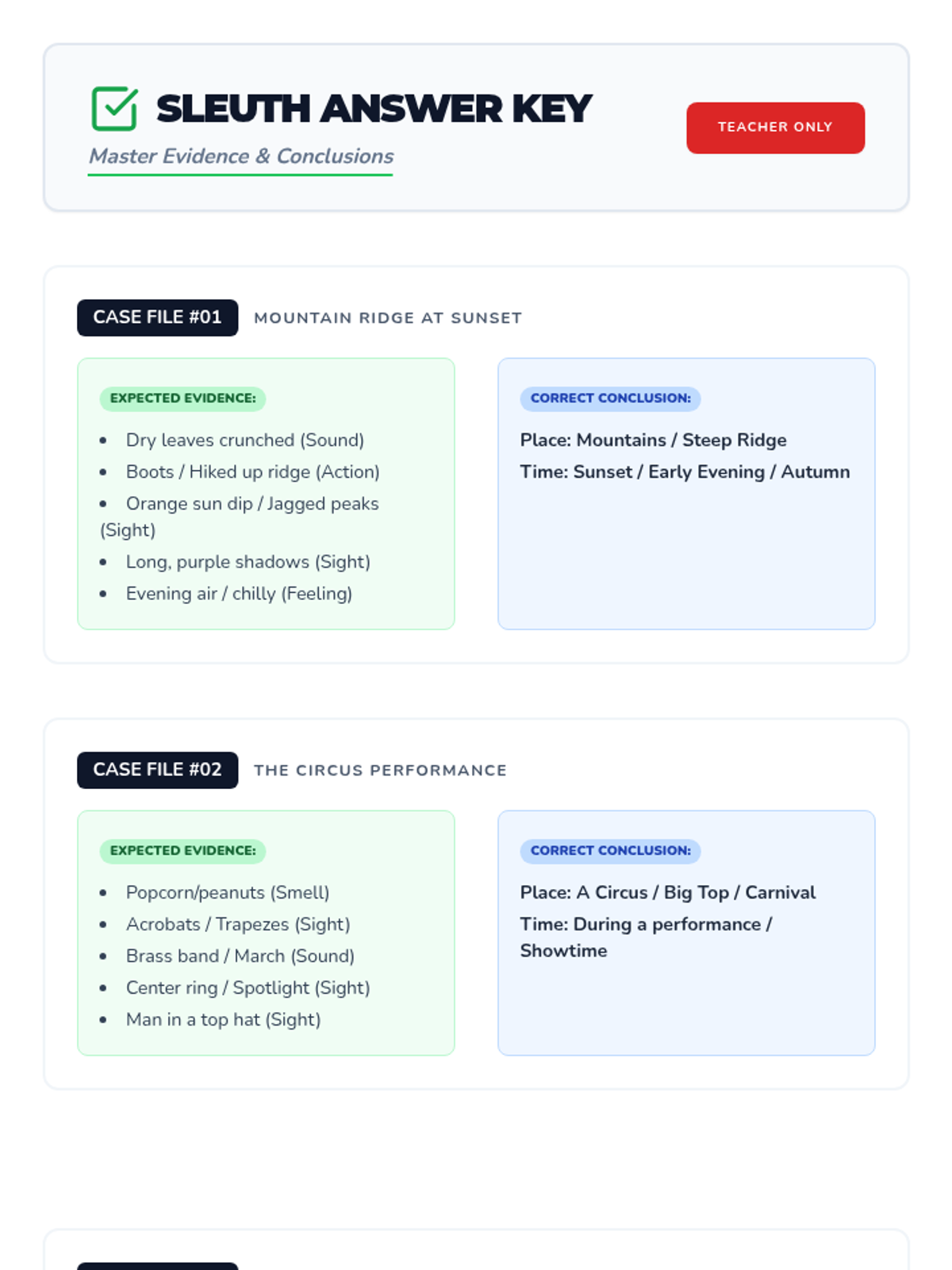
A mystery-themed lesson where students act as 'Setting Sleuths' to identify time and place using sensory details and contextual clues.