Students explore how human-environment interactions have changed throughout history, specifically focusing on the Industrial Revolution, to design a sustainable city for the year 2050 that minimizes negative impacts.
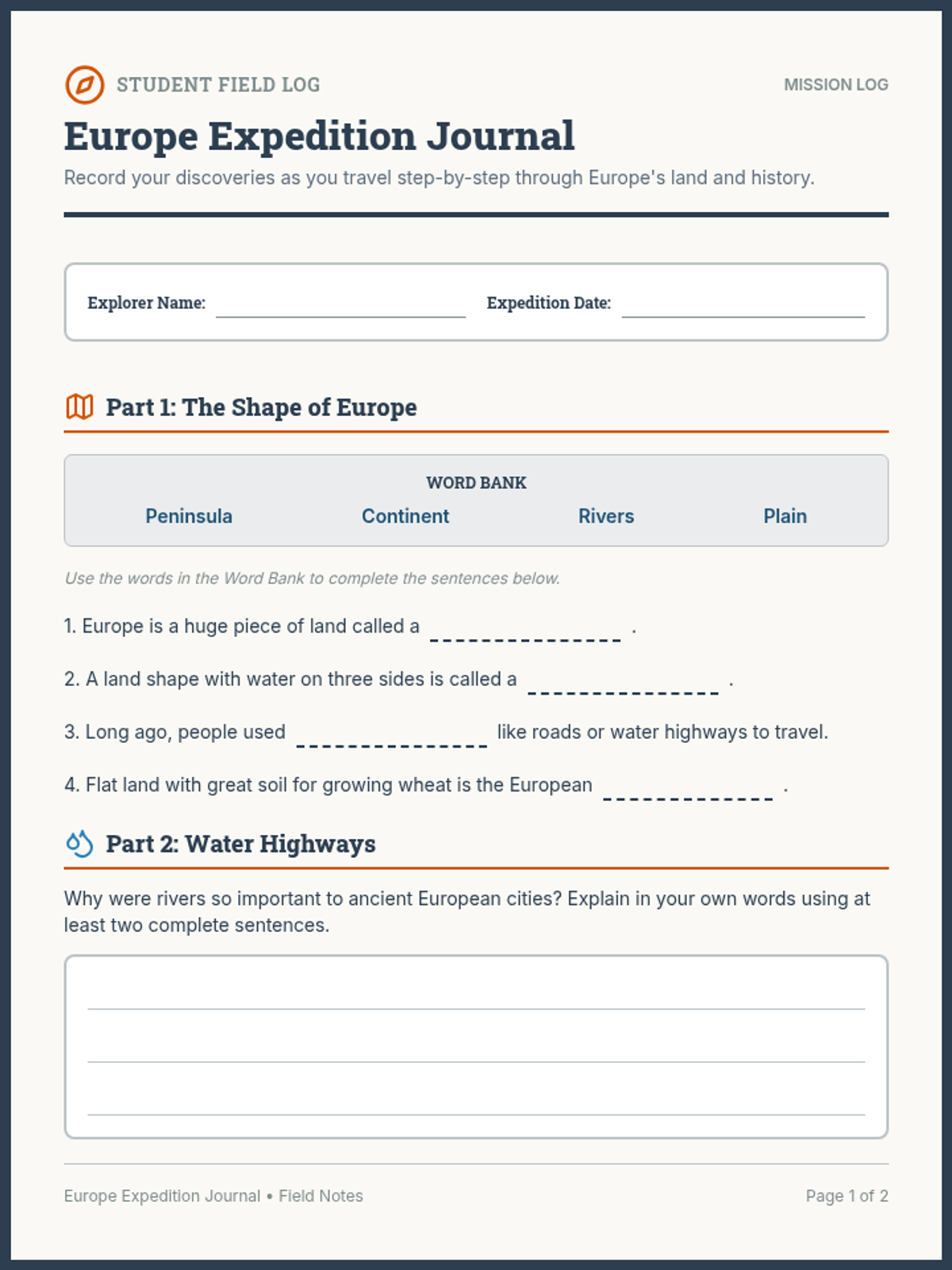
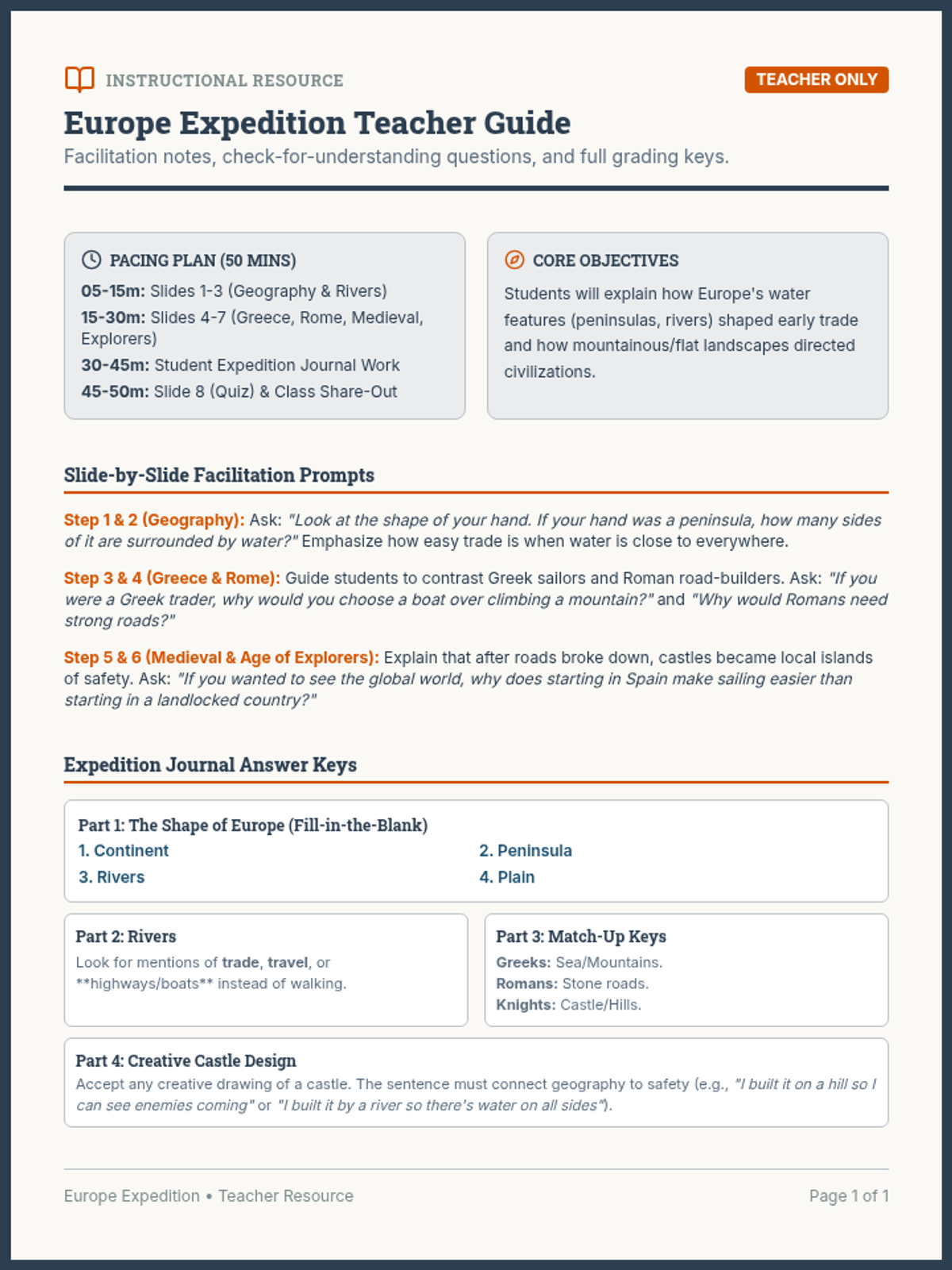
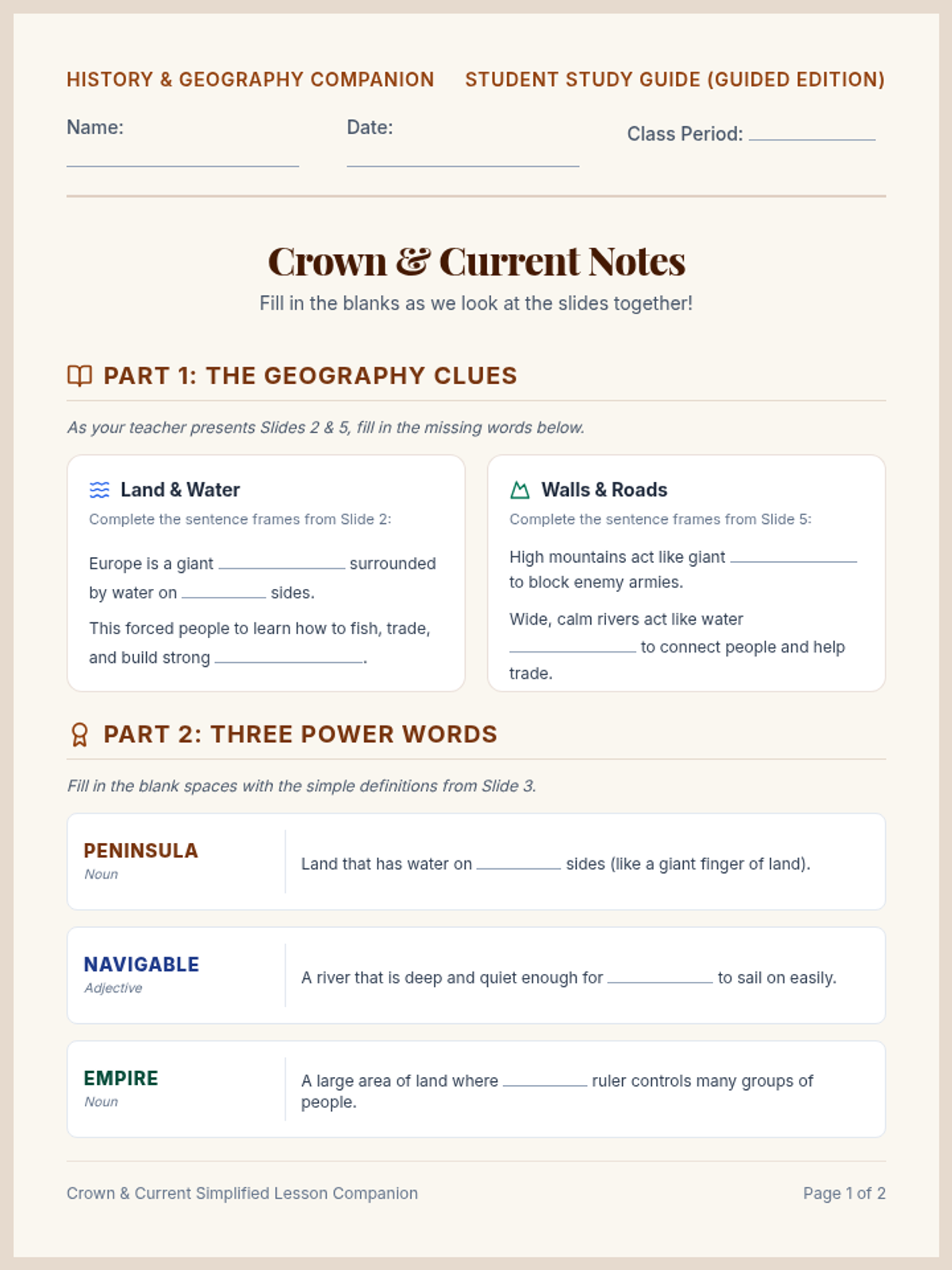
A step-by-step journey through Europe's unique geography and history, written at an accessible 600-700 Lexile level. Students explore how the physical landscape shaped historical civilizations from Ancient Greece to modern Europe.
A lesson exploring the intersection of Europe's unique physical geography and its dramatic history, focusing on how barriers and natural highways shaped civilizations.
A cohesive morning routine framework designed to engage students immediately upon entering the classroom. This lesson integrates daily administrative templates with historical quote analysis, map literacy, and current events discussions to prime students' minds for social studies learning.
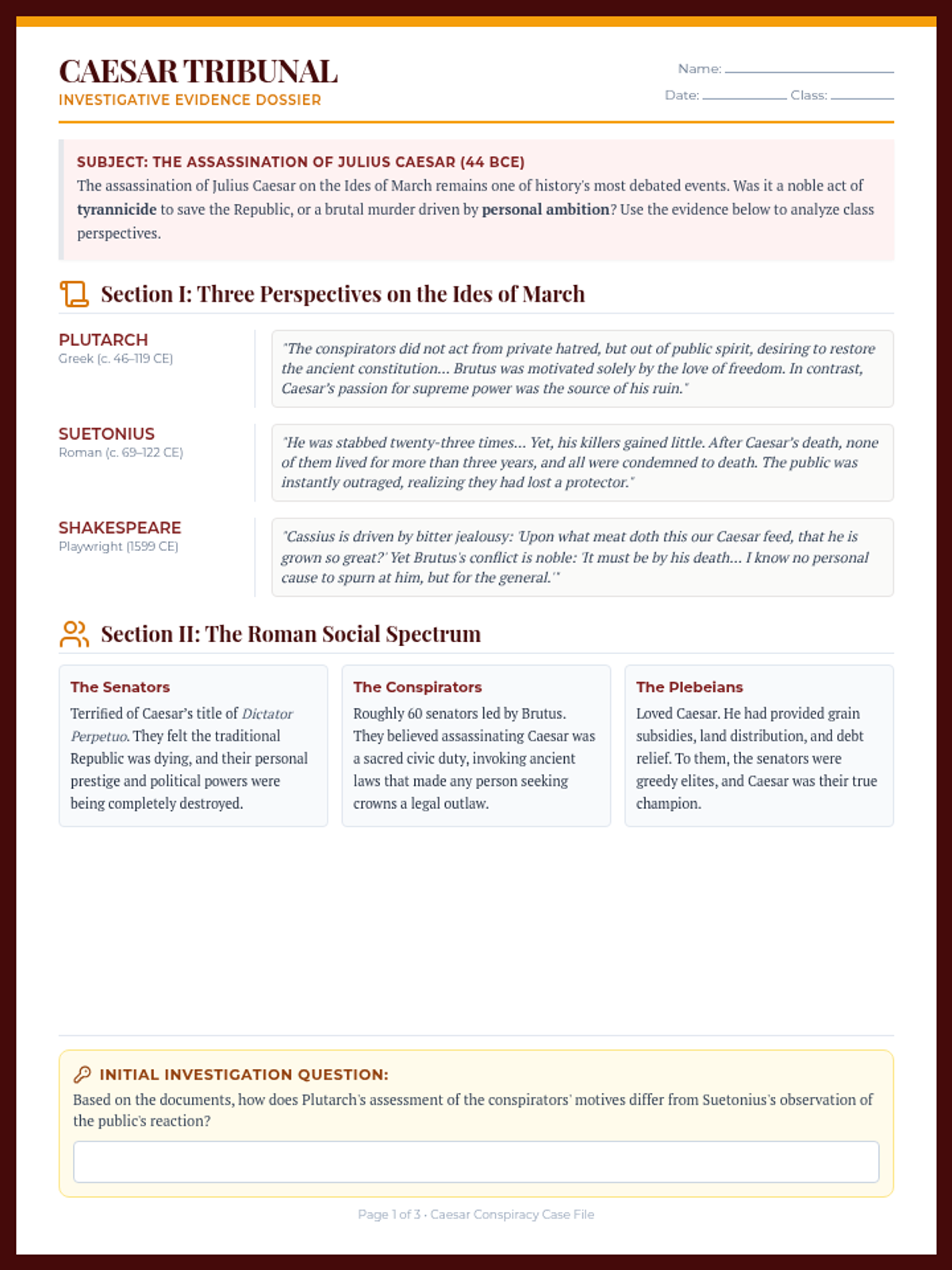
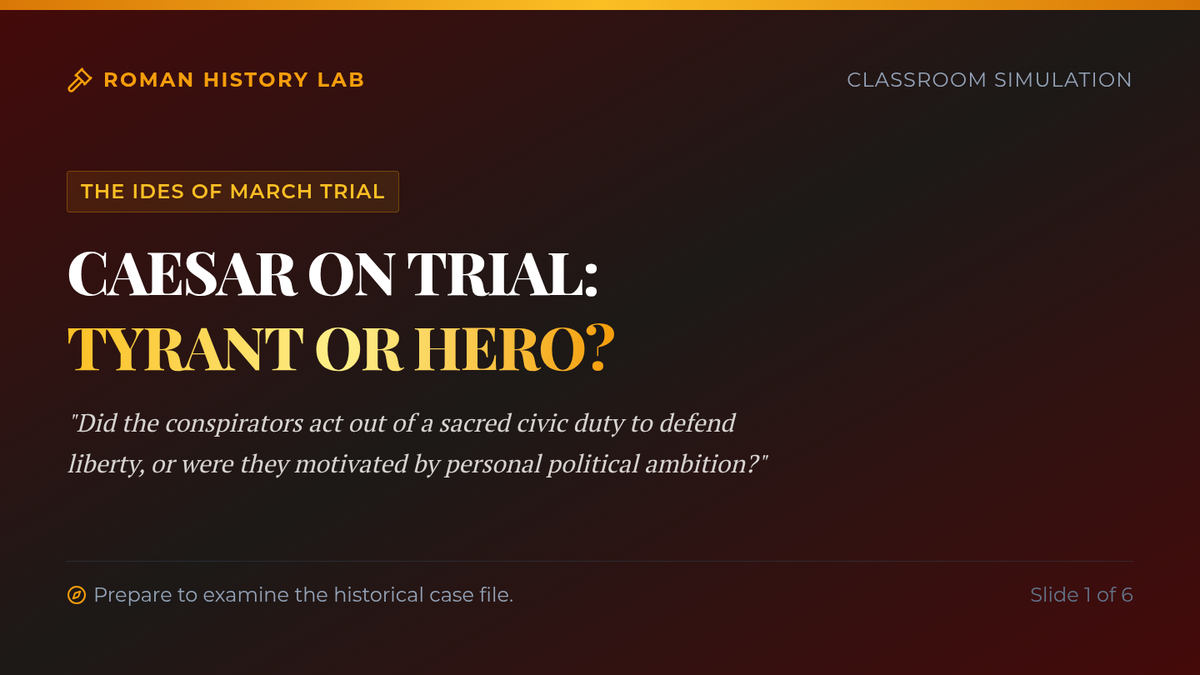
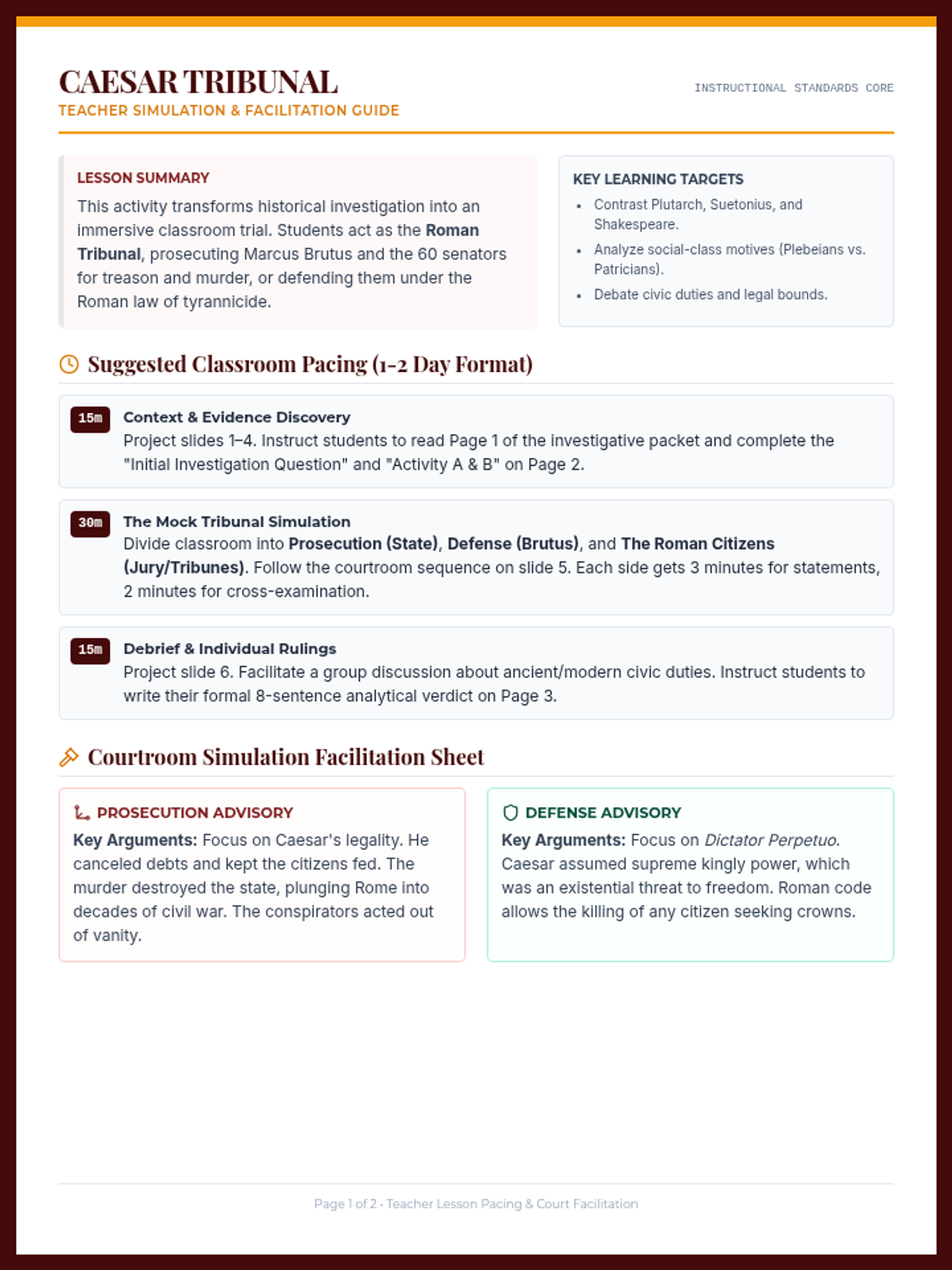
A comprehensive classroom simulation and analysis lesson about the assassination of Julius Caesar. Students examine historical perspectives, engage with primary sources, and debate civic duty through a mock trial and a three-page investigative document.
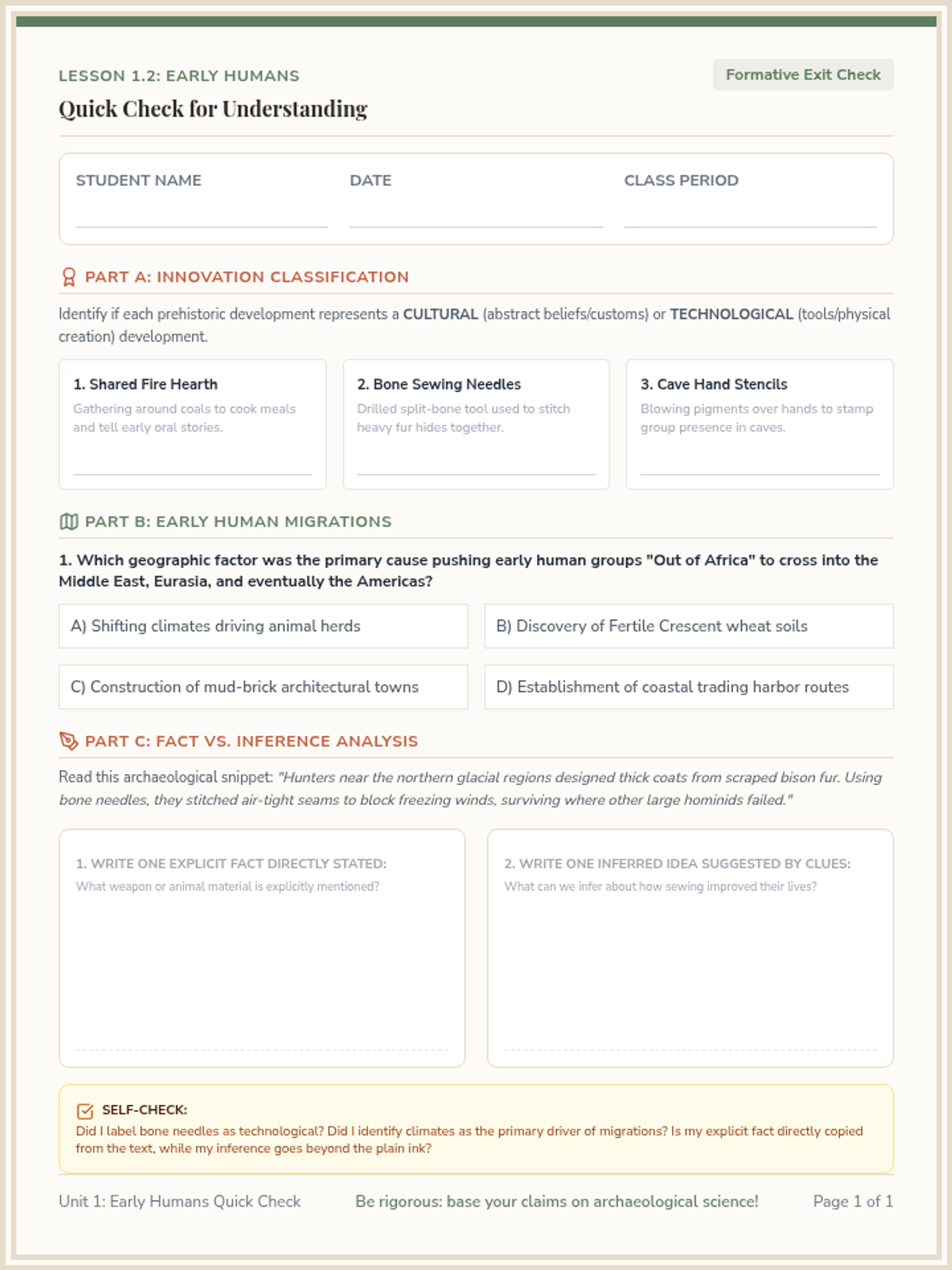
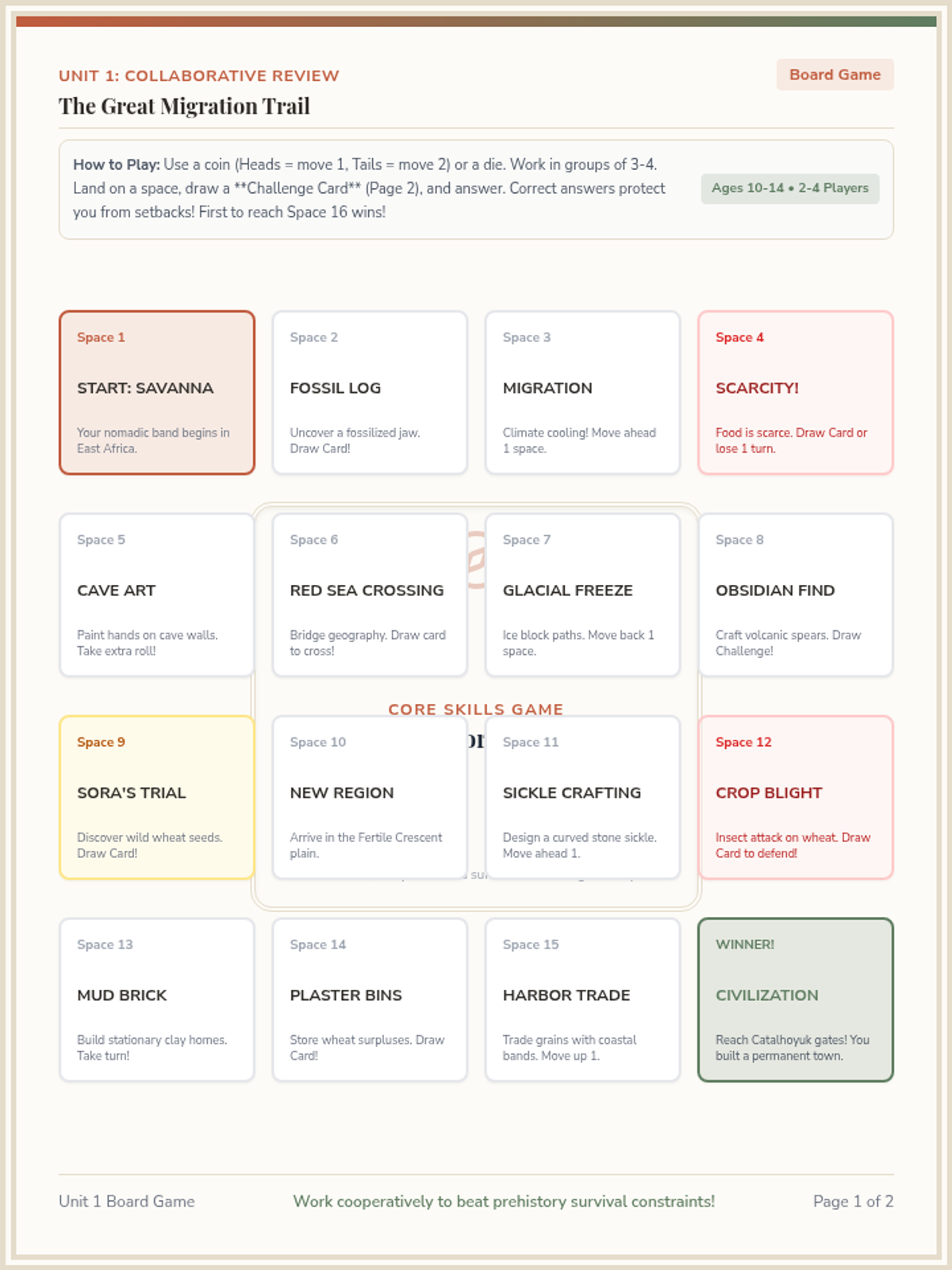
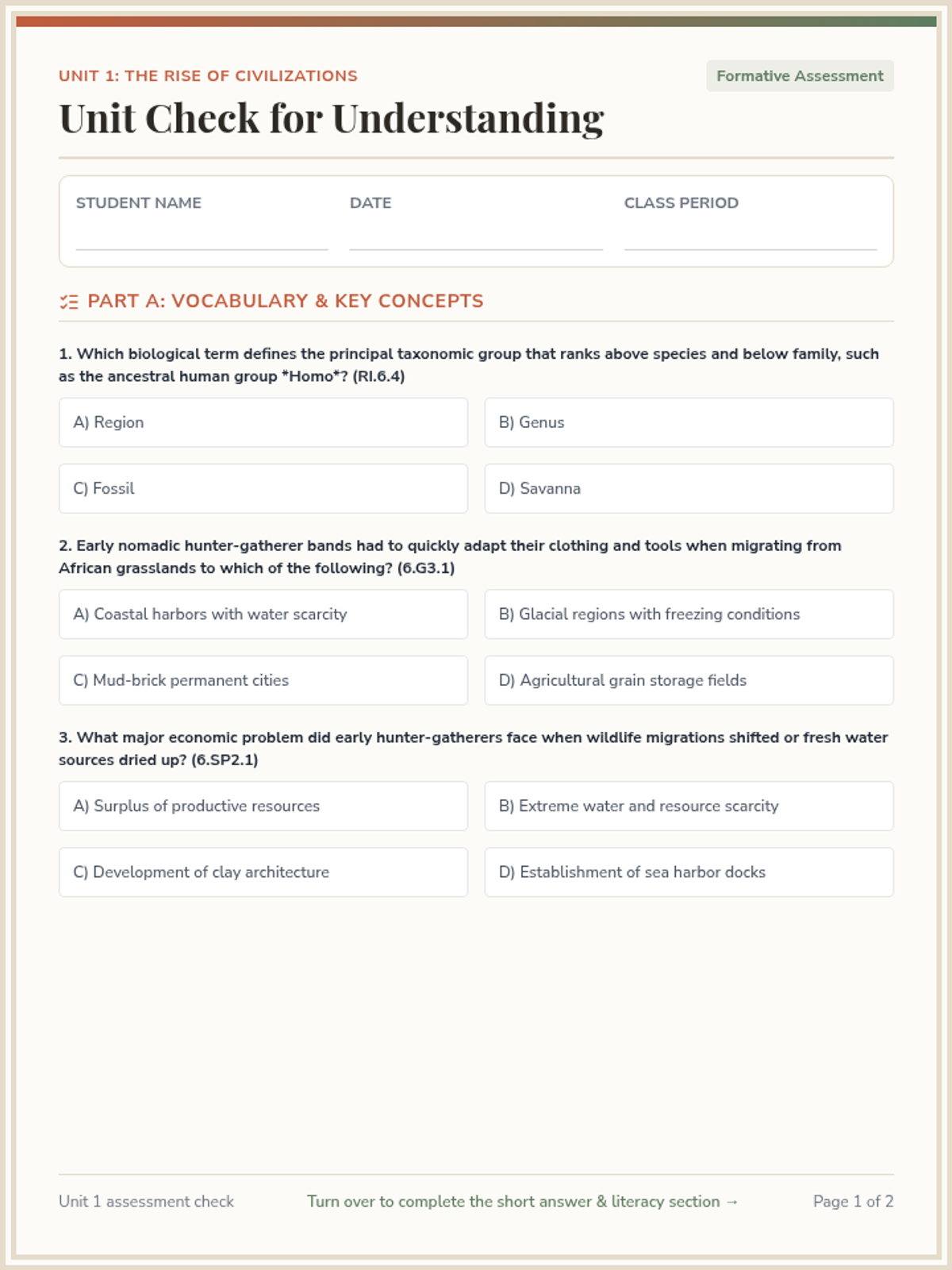
An intermediate lesson examining how early humans migrated out of Africa, adapted to different global climates, and used cultural and technological innovations to improve their lives.
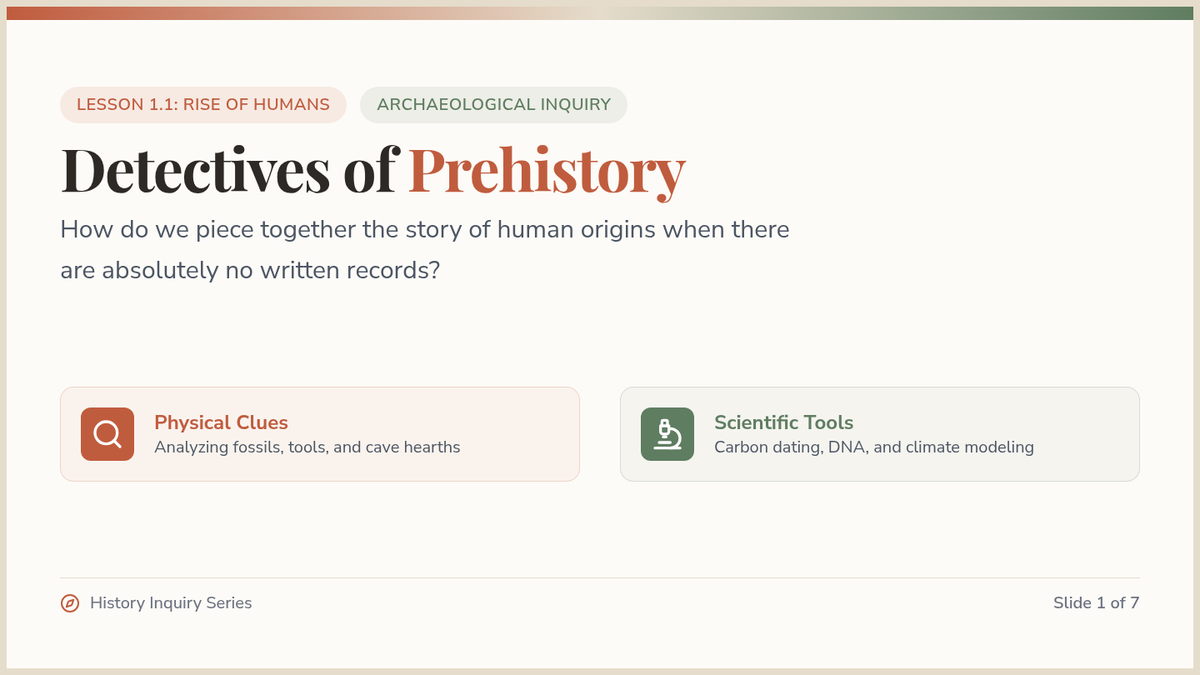
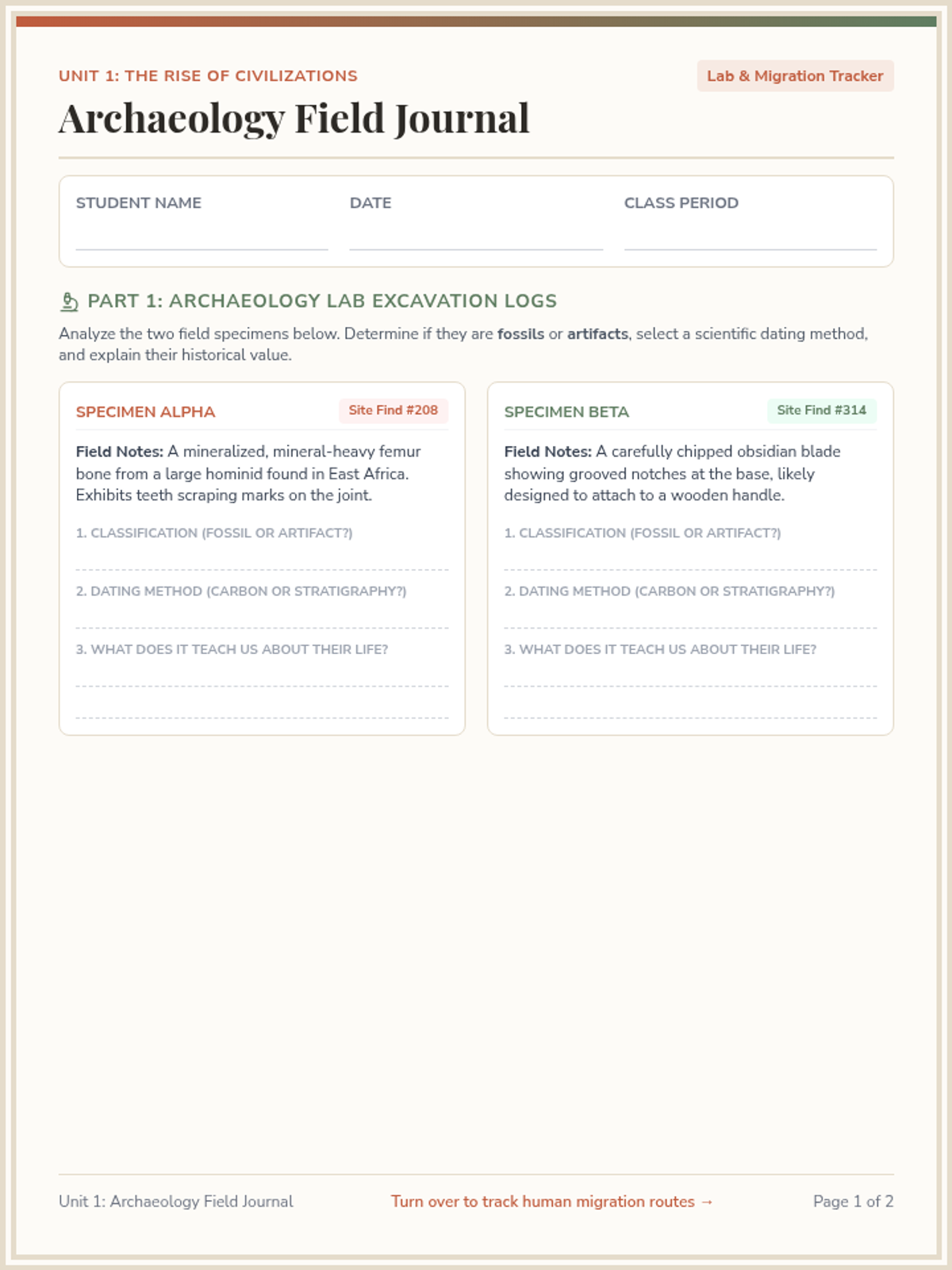
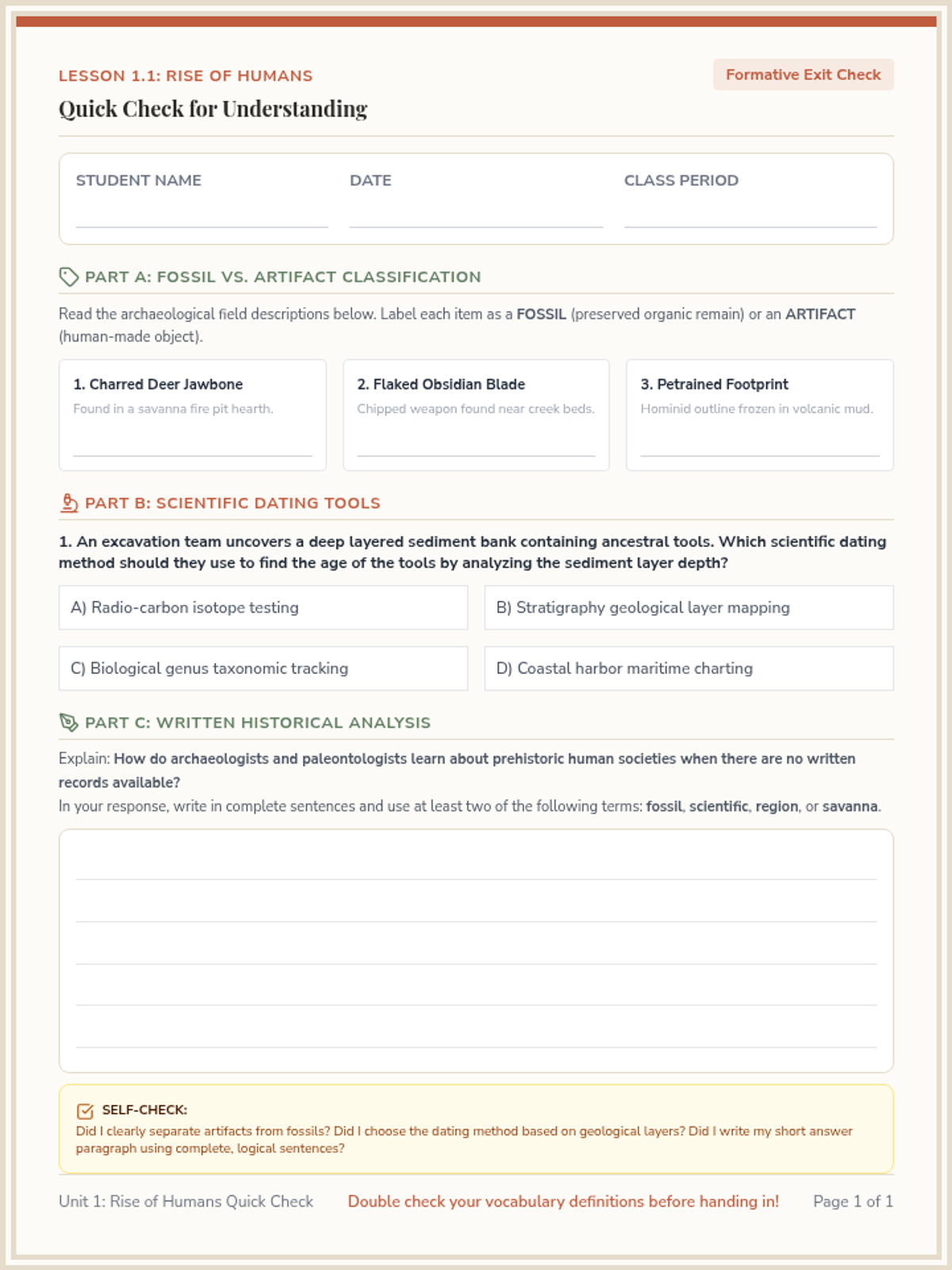
An introductory lesson exploring how archaeologists, paleontologists, and scientists reconstruct prehistoric human society using fossils, scientific testing, and geographical migration tracks.
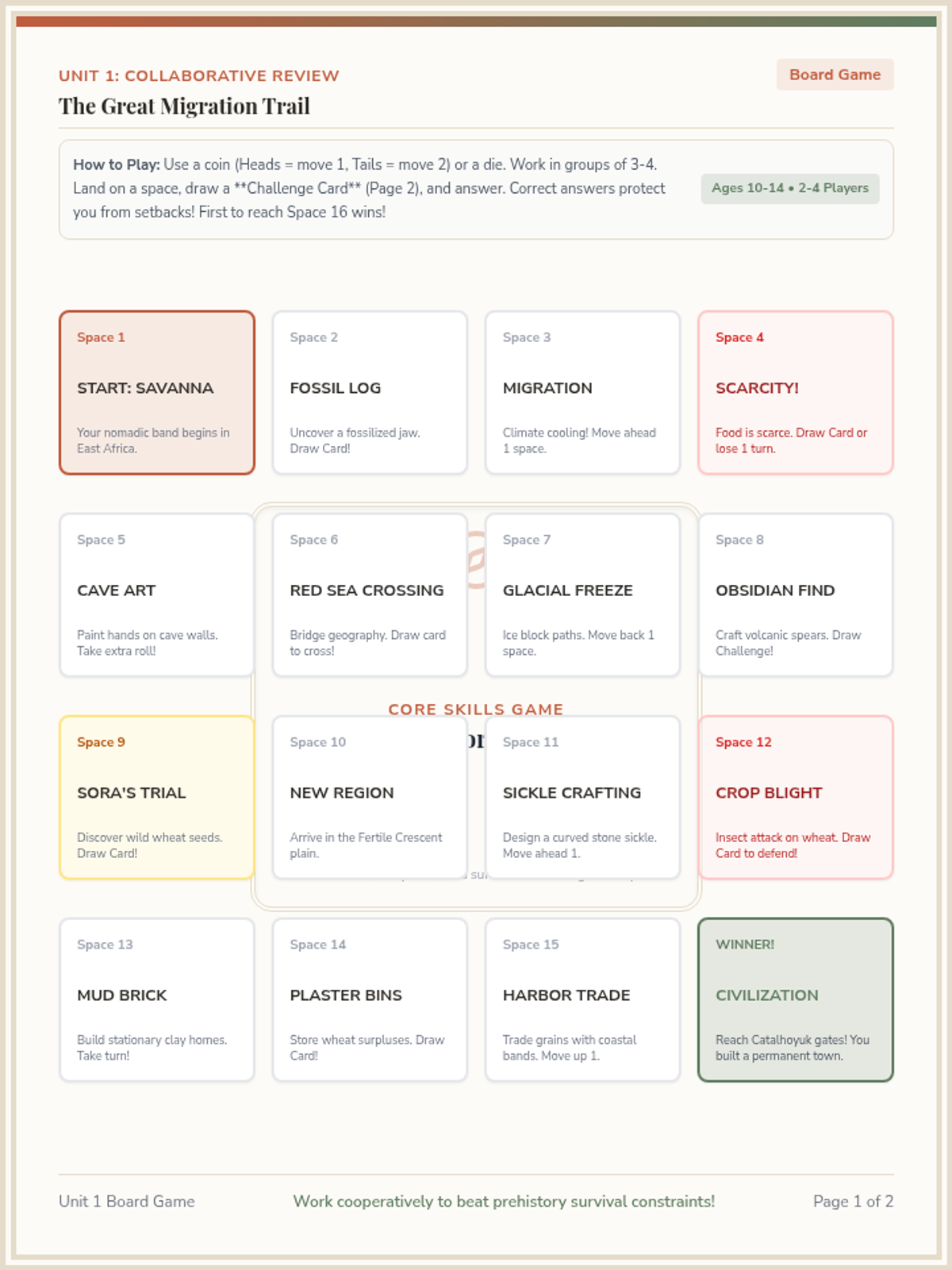
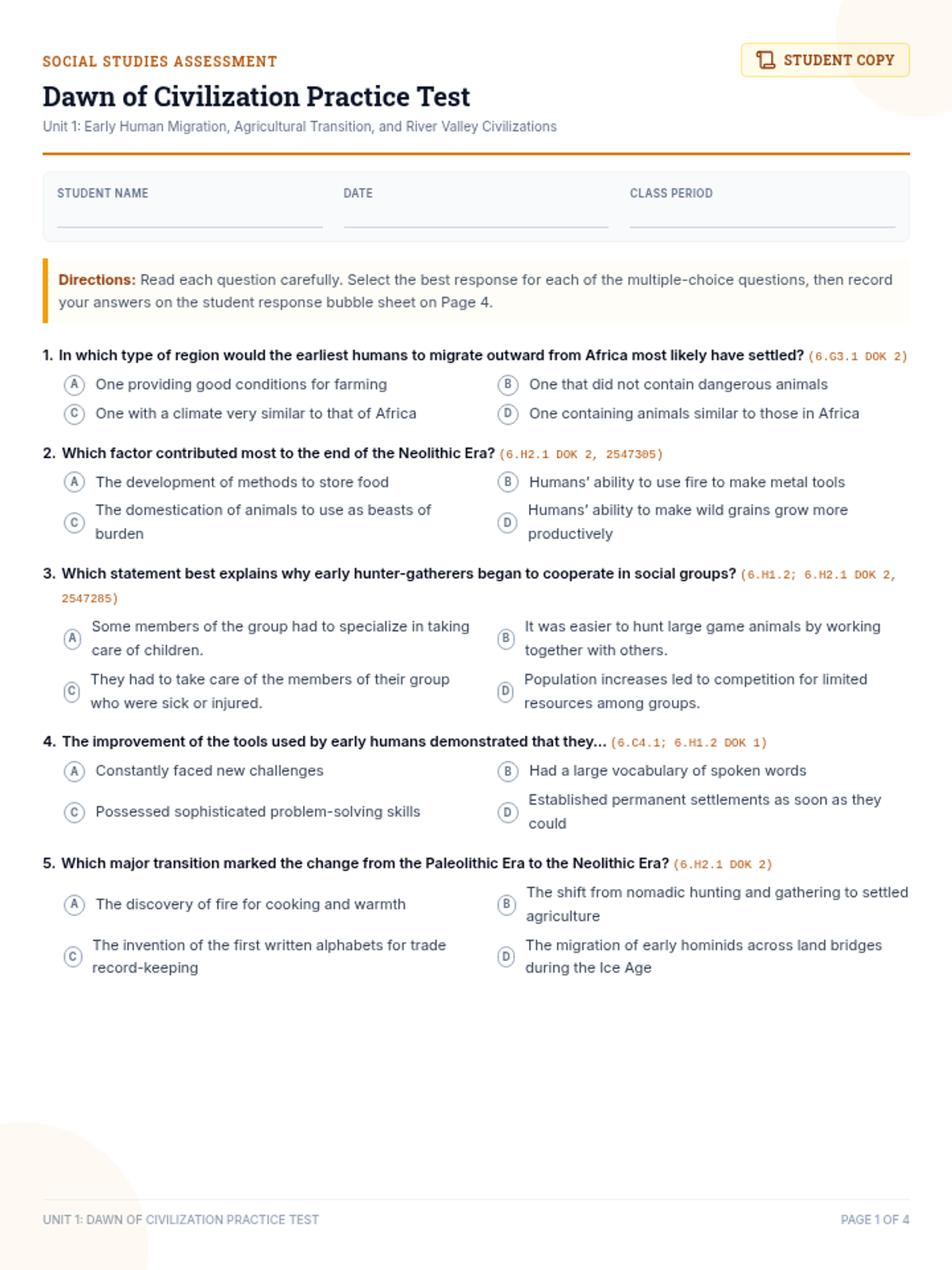
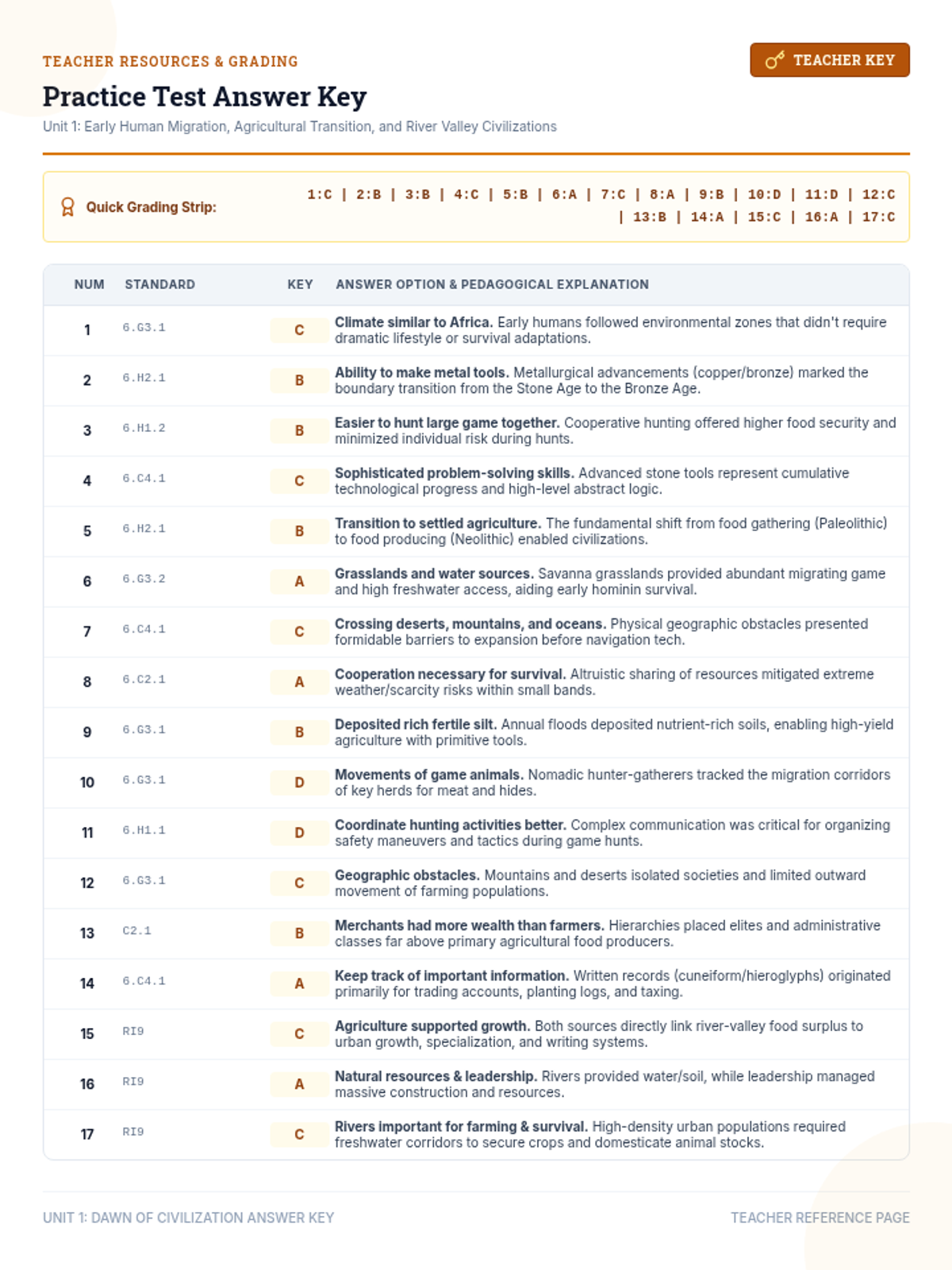
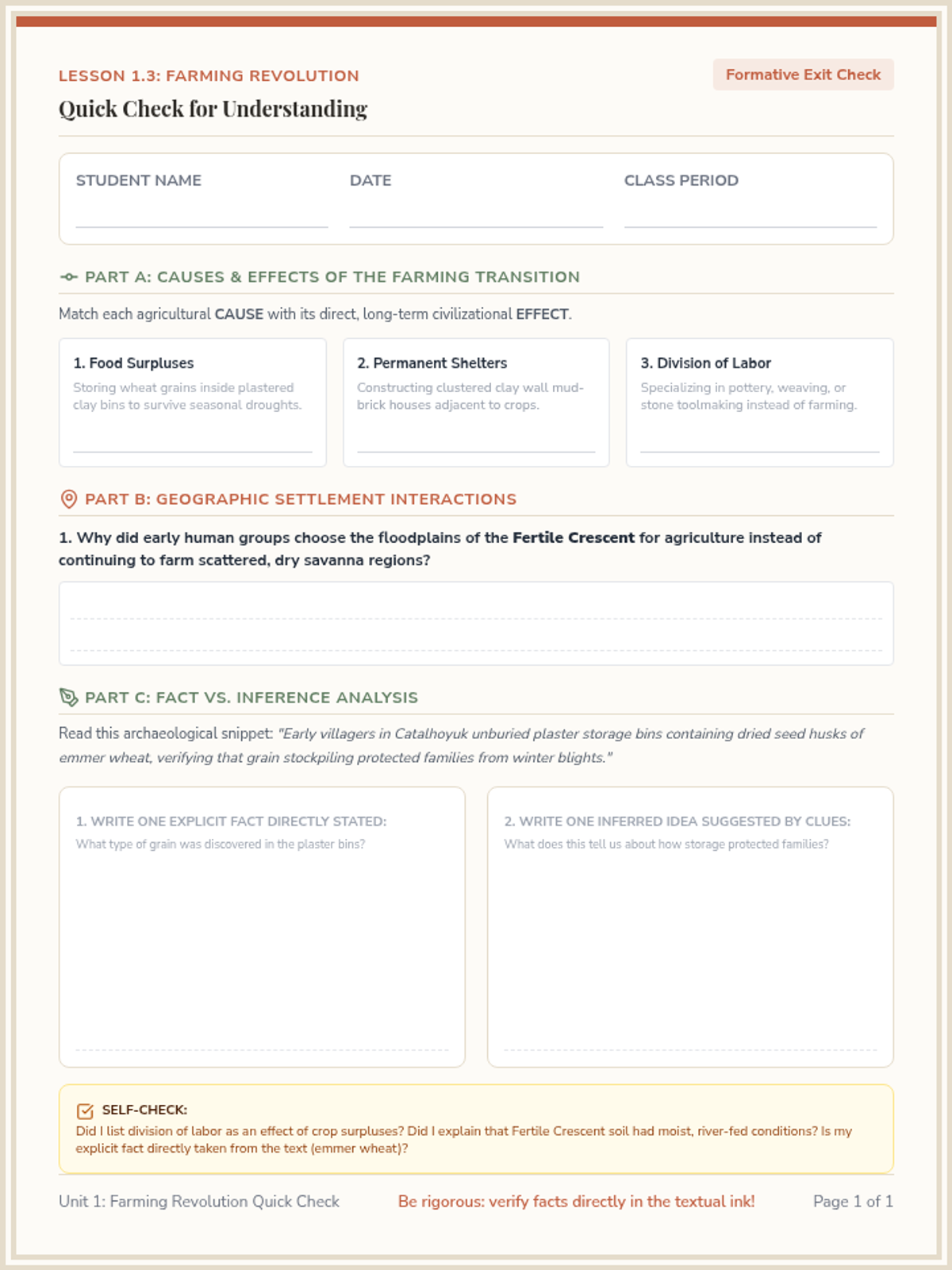
An exploration of early human migration, the transition from hunter-gatherers to agrarian societies, and the rise of the first river valley civilizations in Mesopotamia and ancient Egypt.
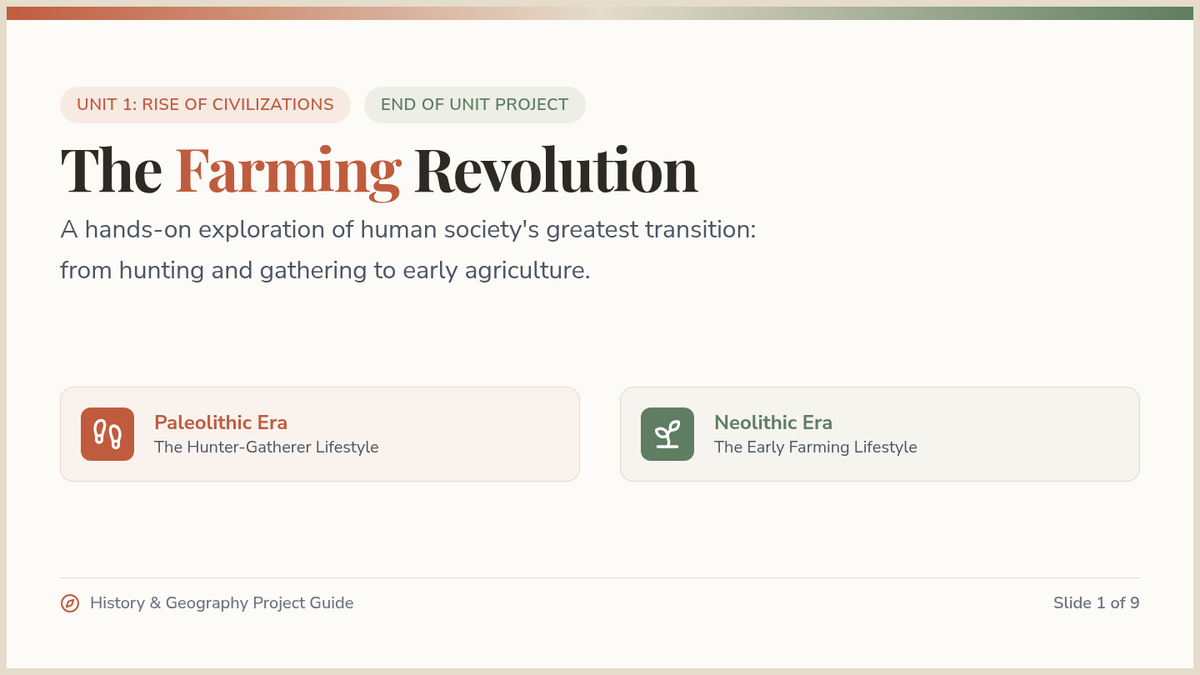
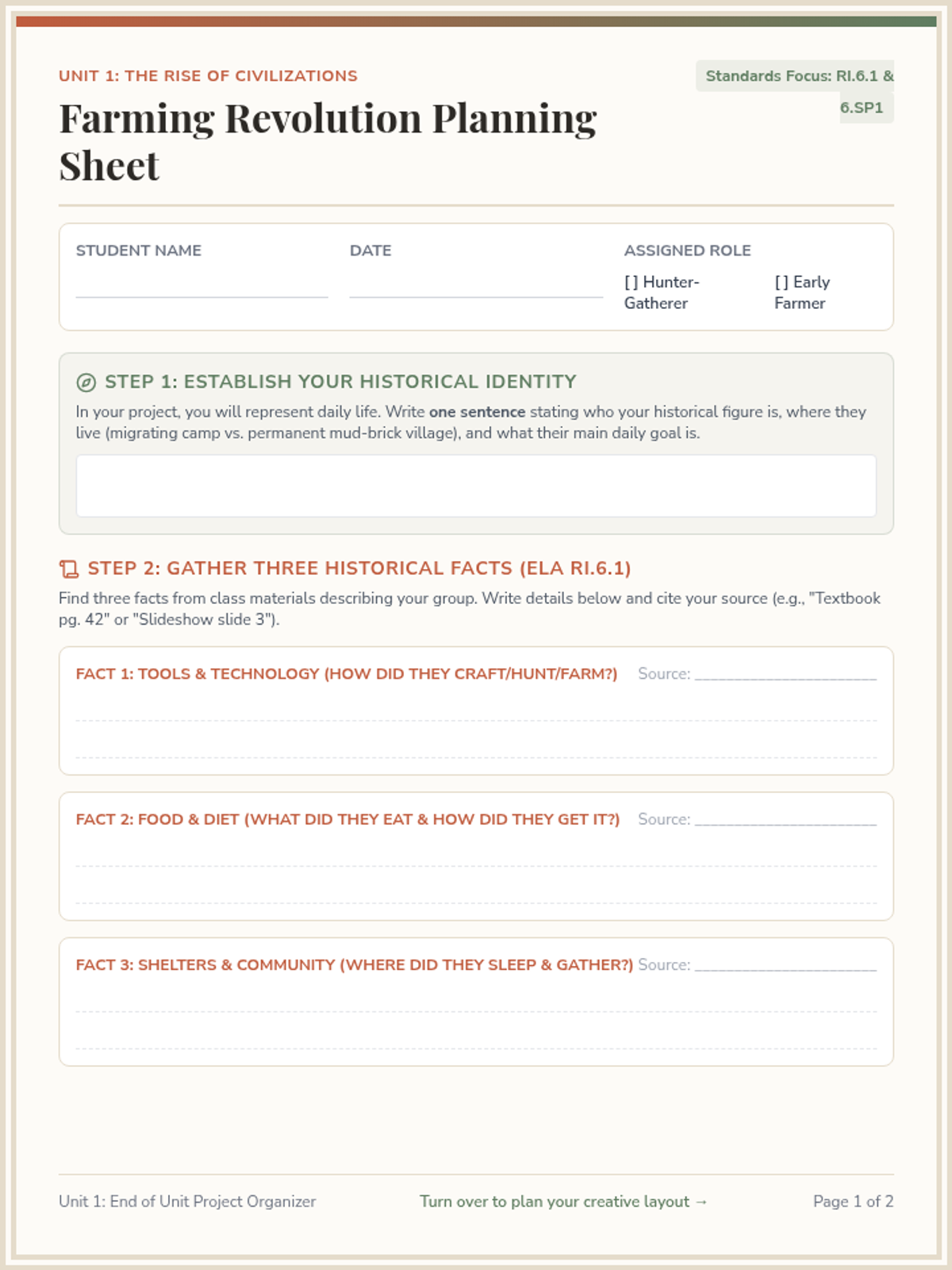
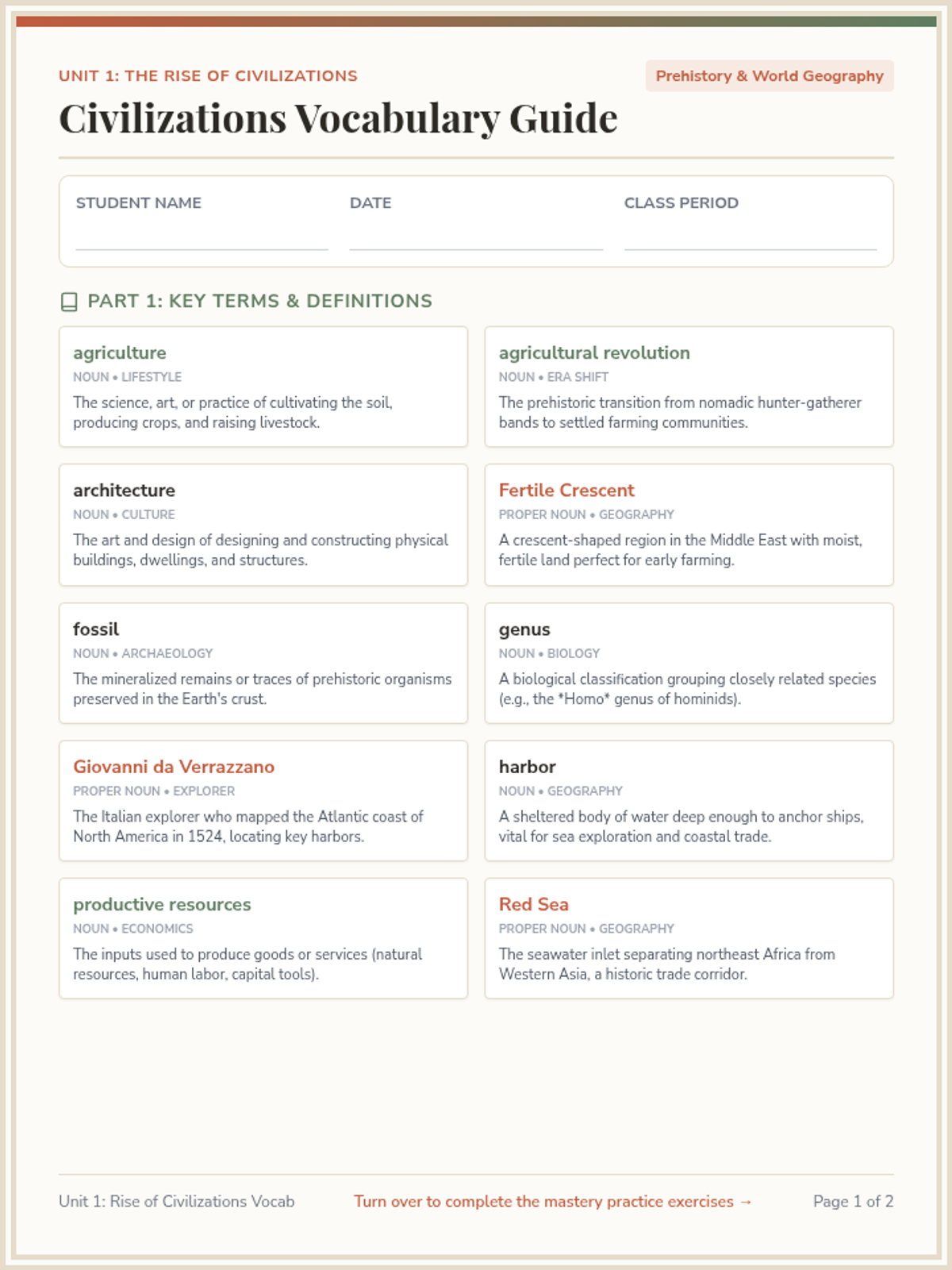
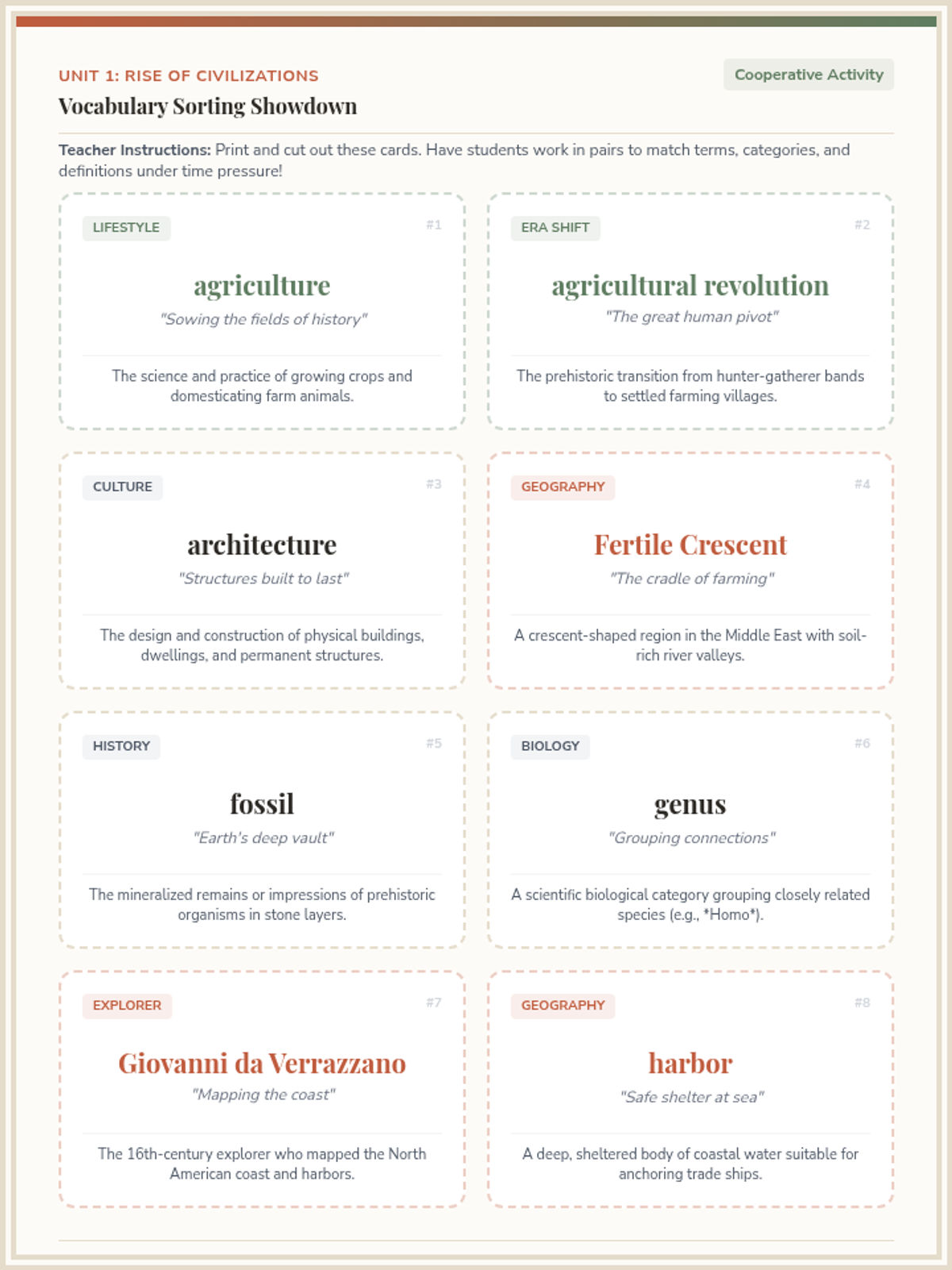
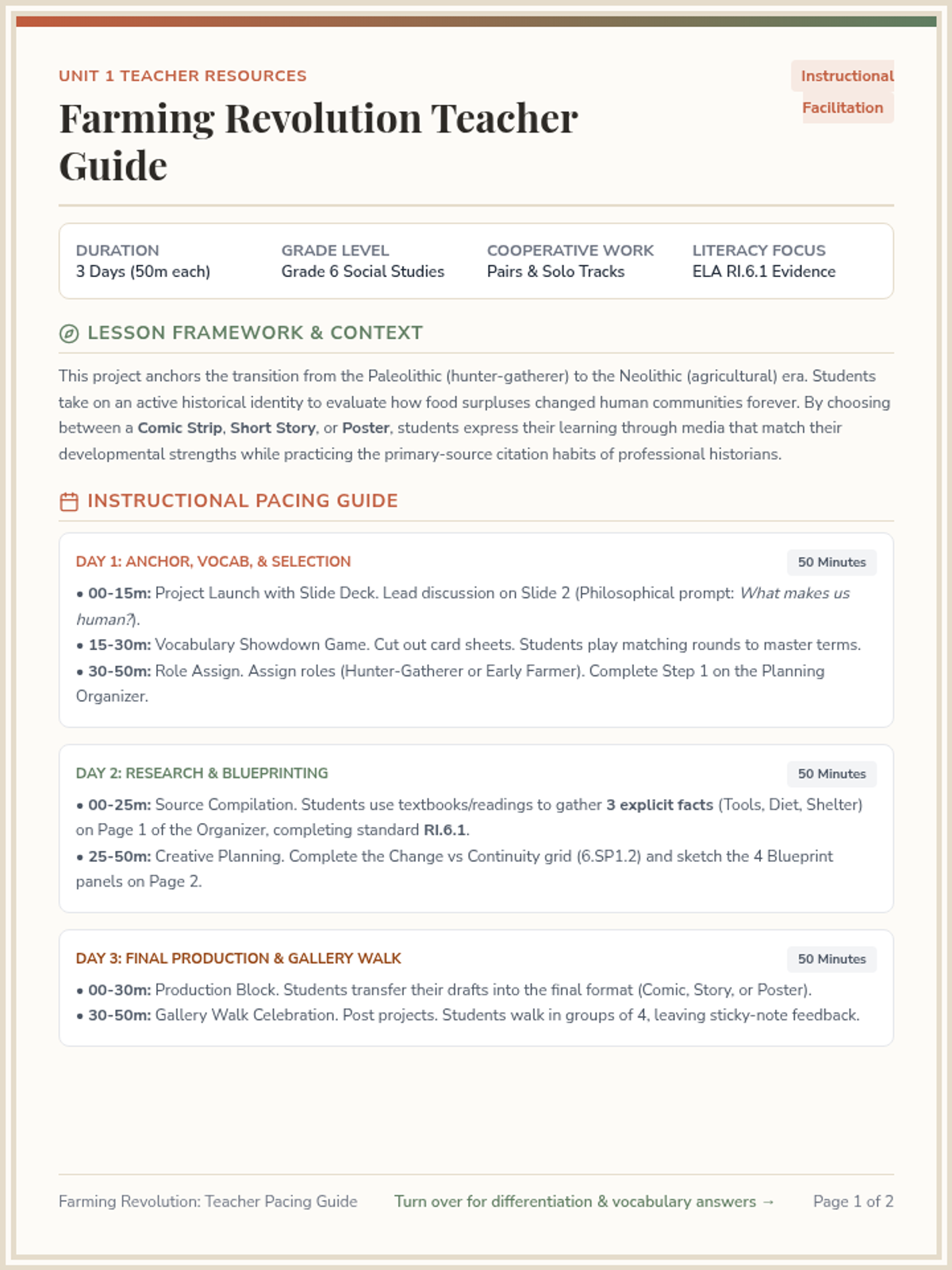
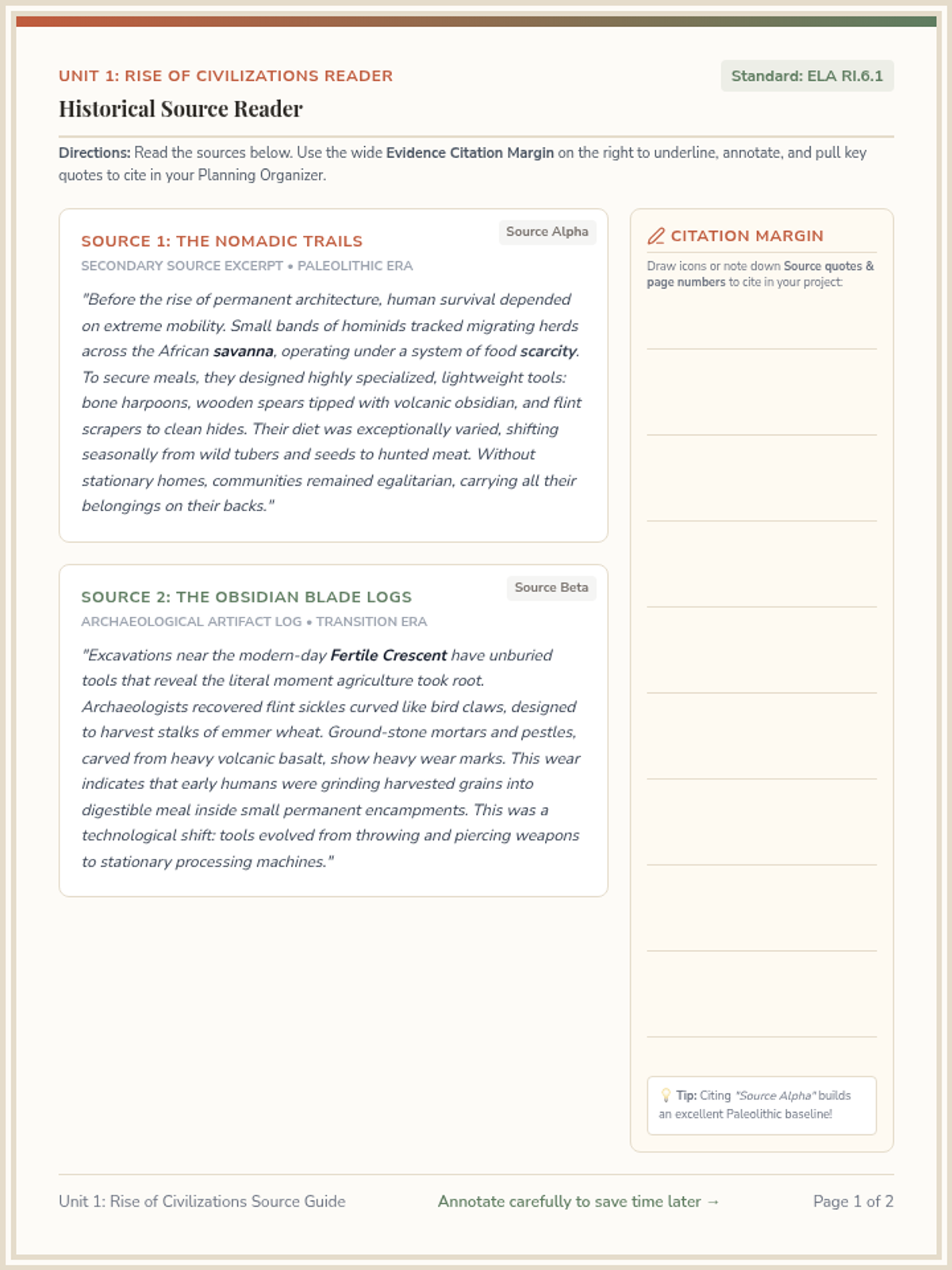
A project-based lesson where students explore the dramatic transition from hunter-gatherer societies to early agricultural communities. Students analyze historical evidence to create a comic, short story, or poster detailing daily life in their assigned era.
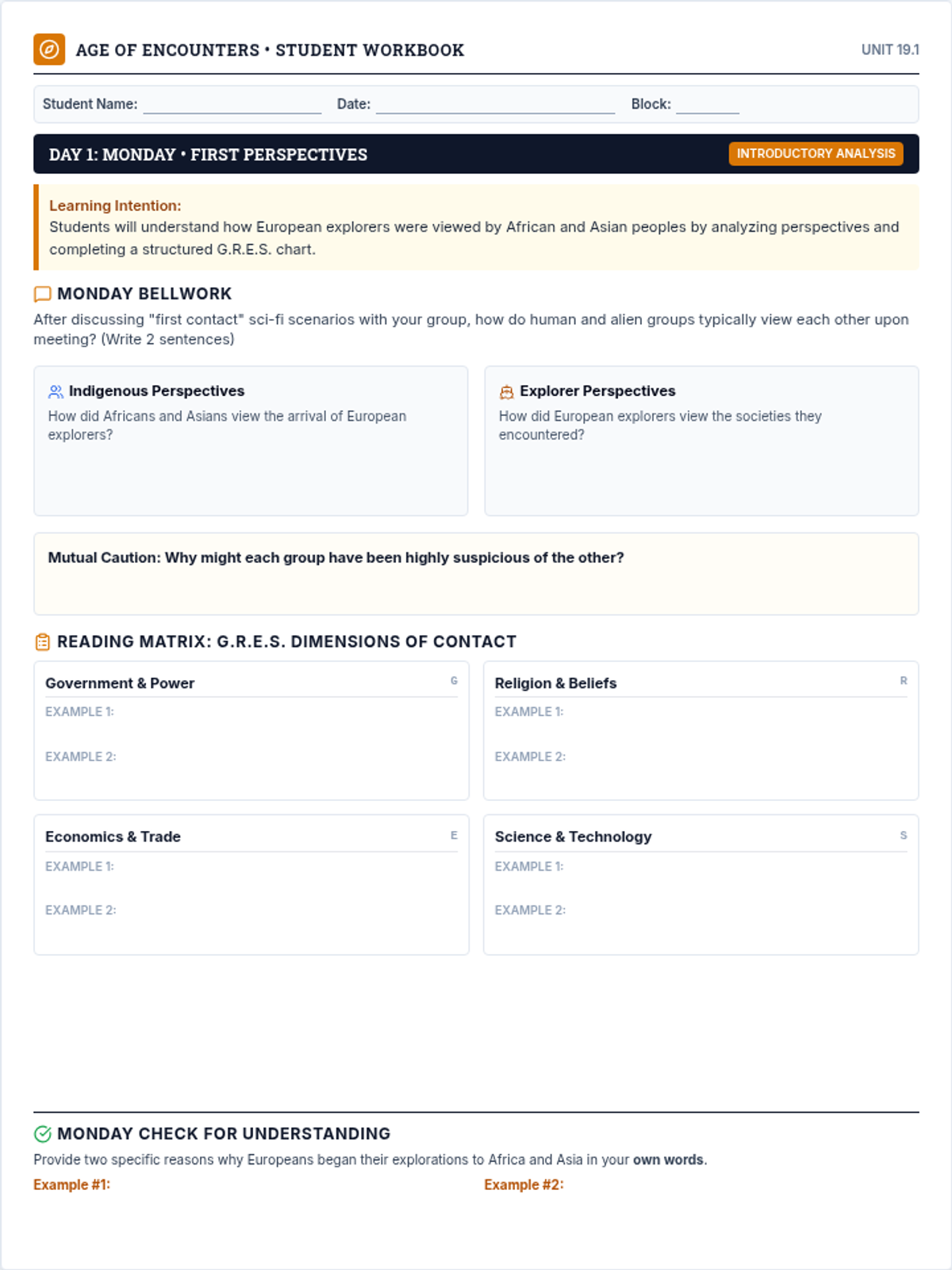
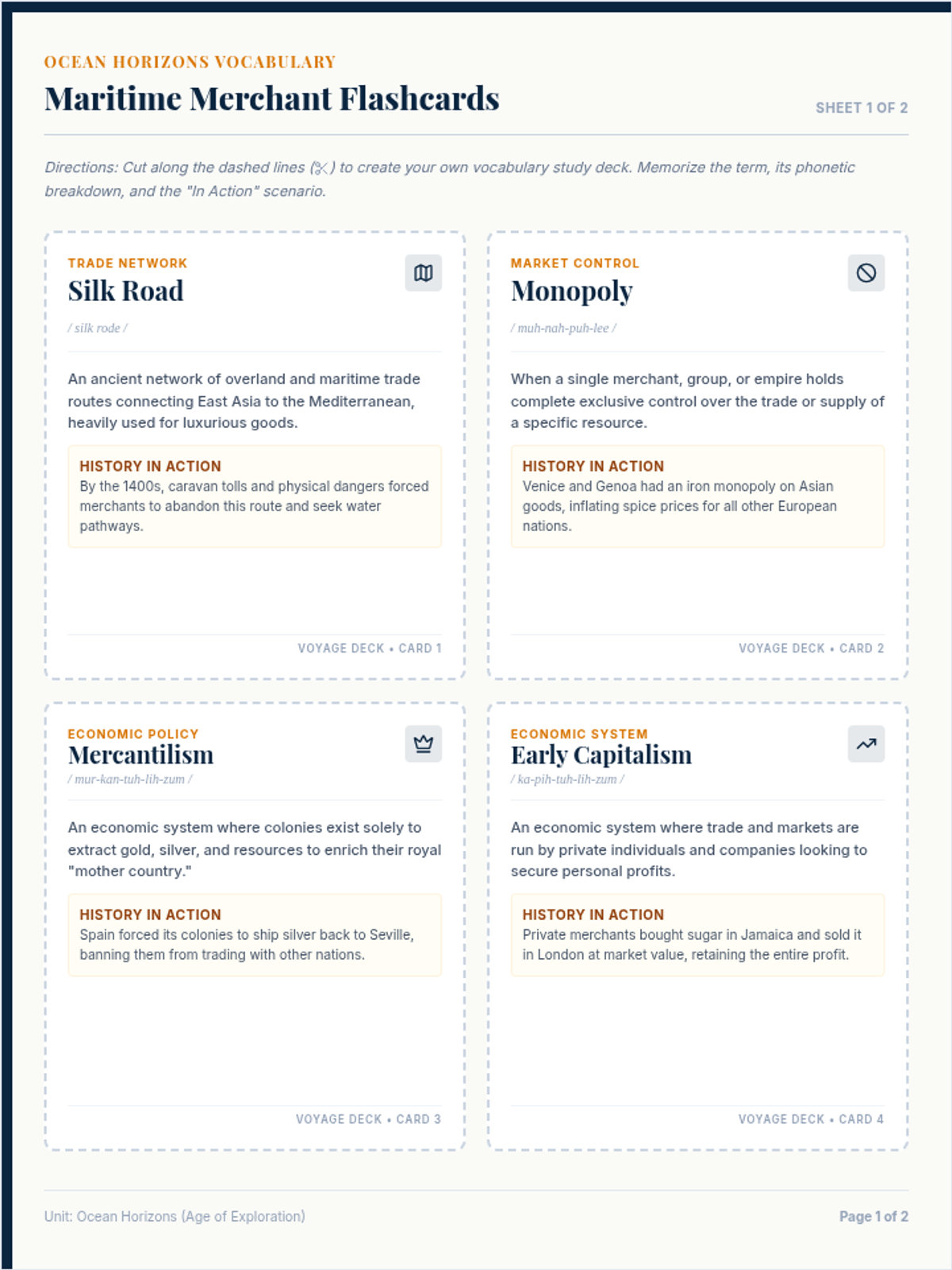
A comprehensive 5-day history unit exploring the Age of Exploration, cultural exchanges, technological innovations in navigation, the Transatlantic Slave Trade, and encounters with East Asian empires.
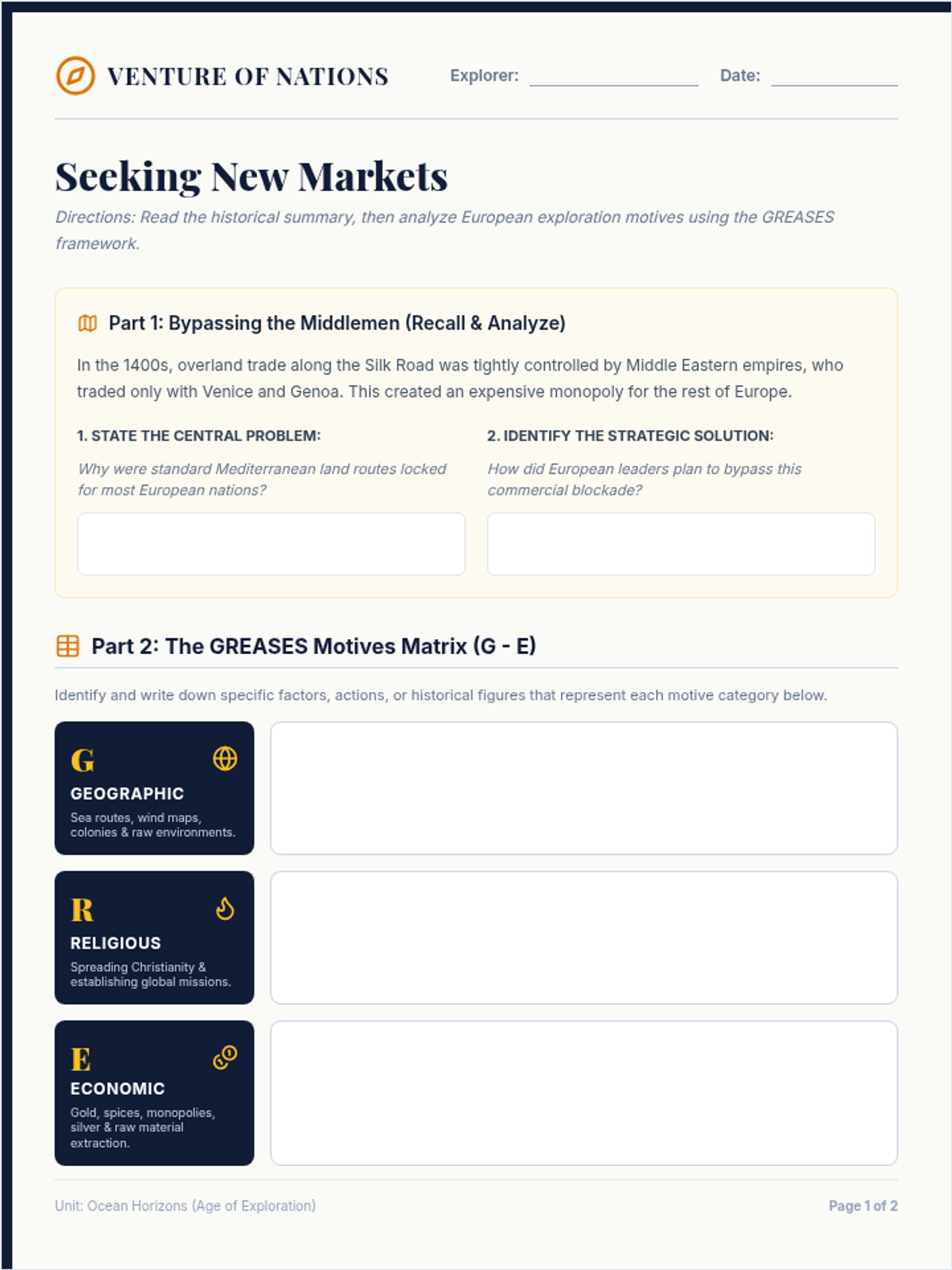
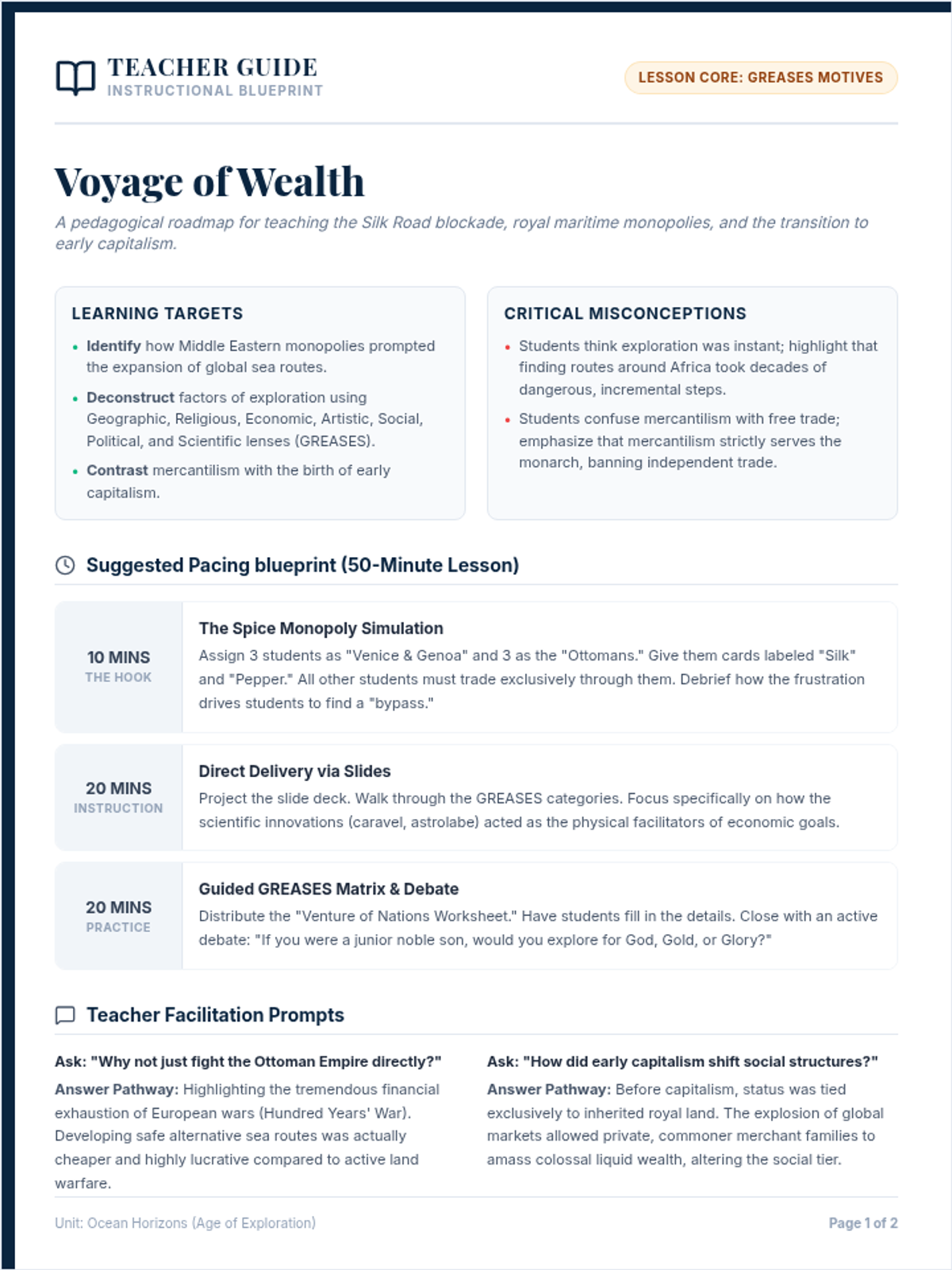
An in-depth exploration of the factors that drove European powers to seek new trade routes, introducing the GREASES framework for historical analysis of global expansion.
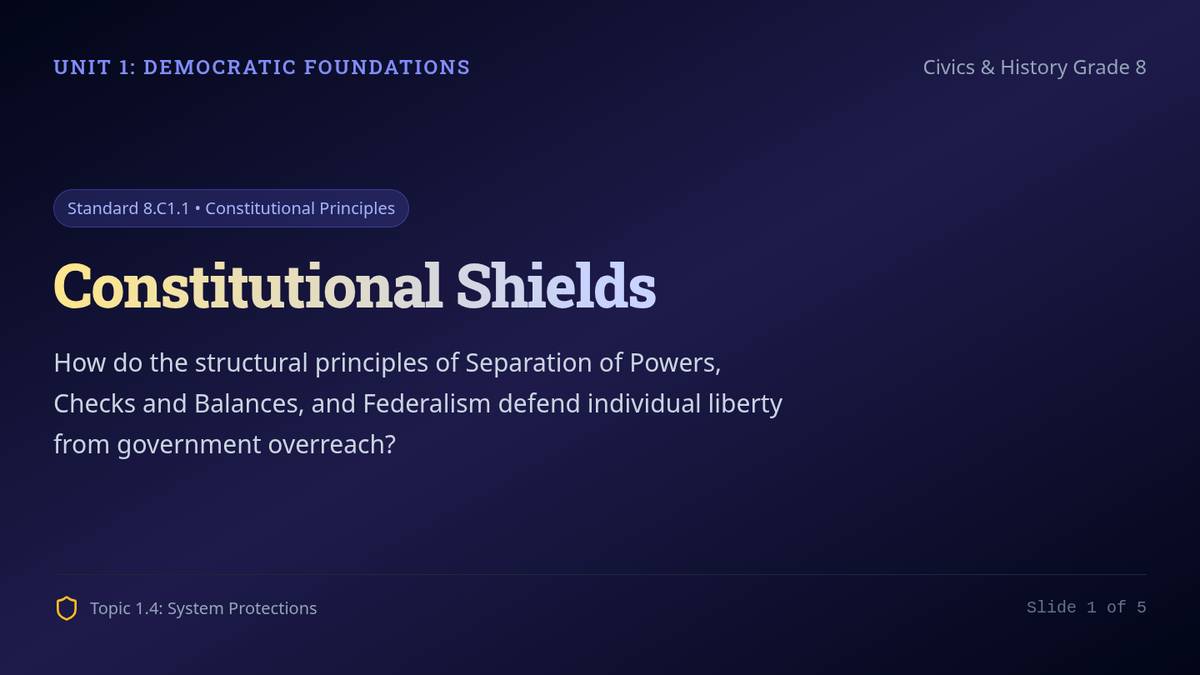
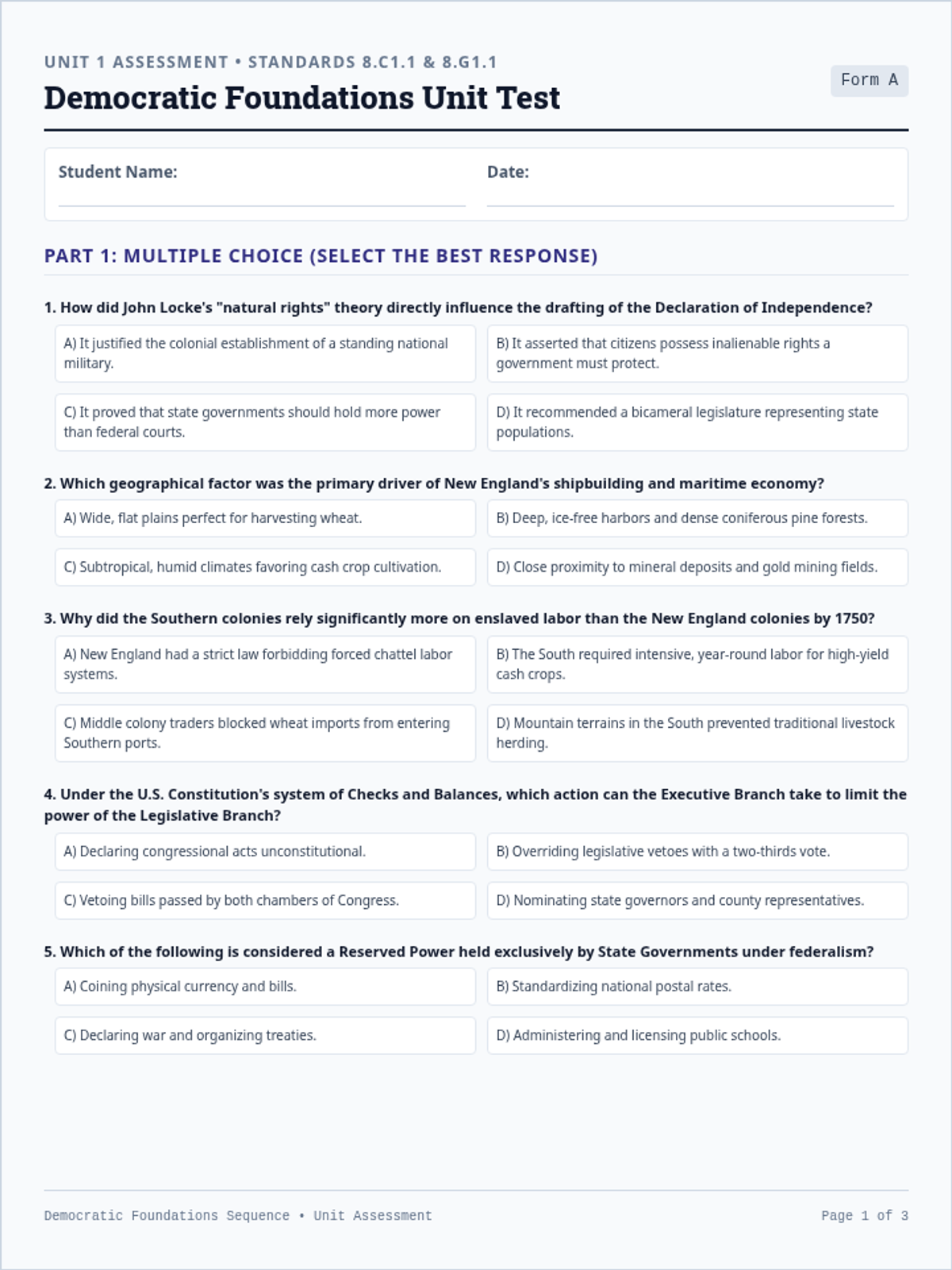
A deep dive into the structural principles of the U.S. Constitution, focusing on separation of powers, checks and balances, and federalism, culminating in a standards-aligned unit assessment.
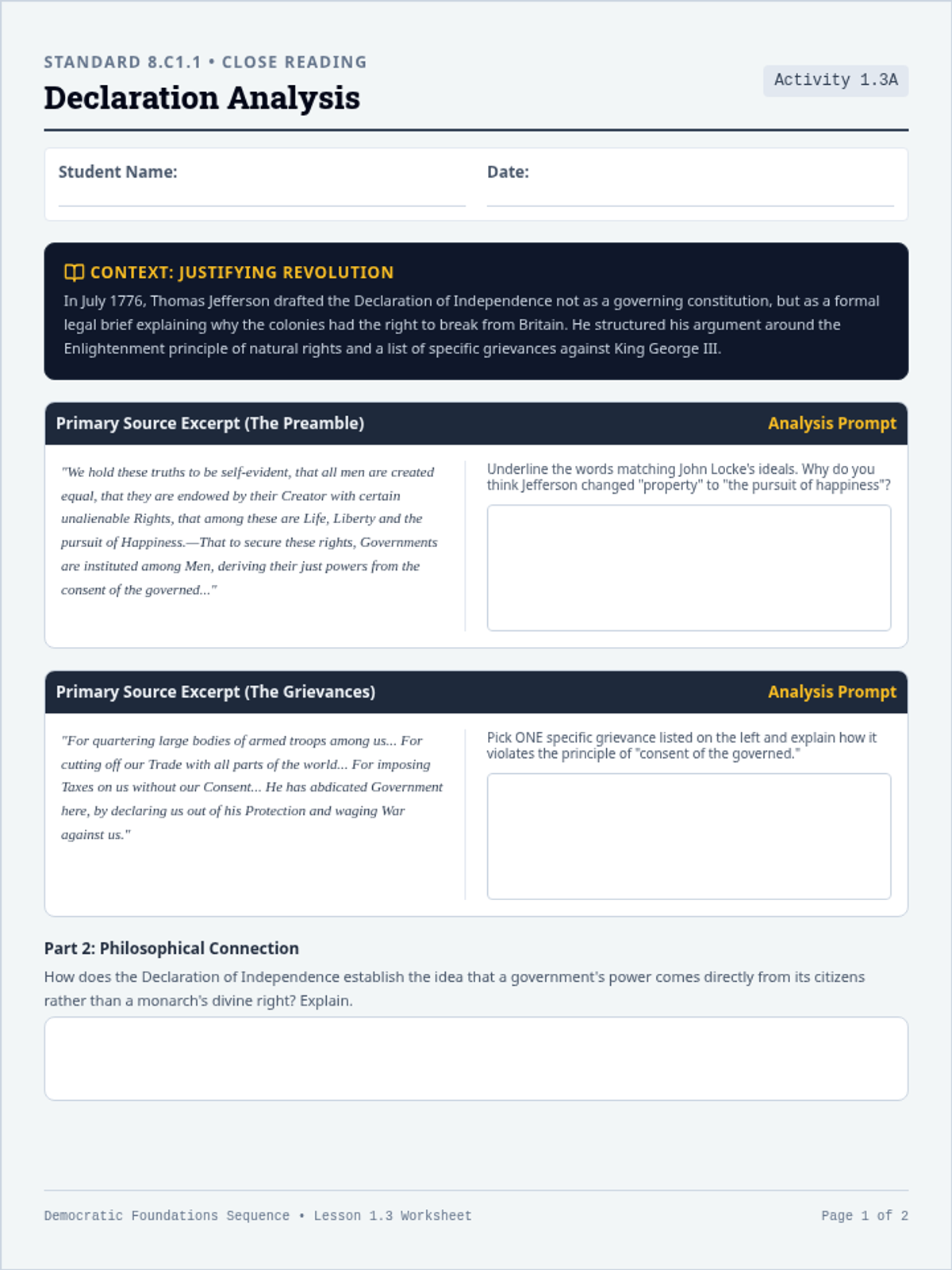
A close analytical reading of the Declaration of Independence and the original United States Constitution, detailing the historical grievances and the structural compromises of early American nation-building.
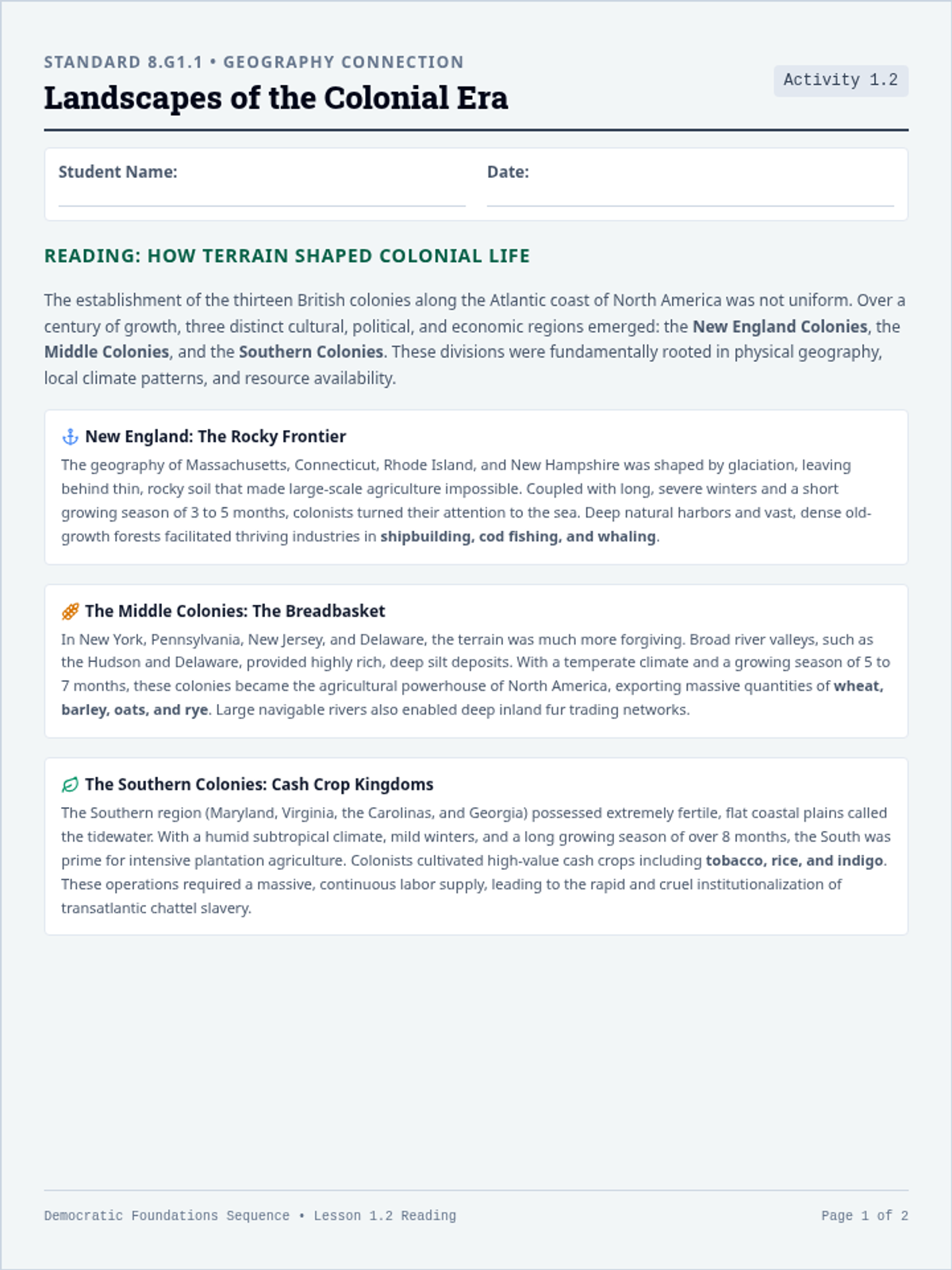
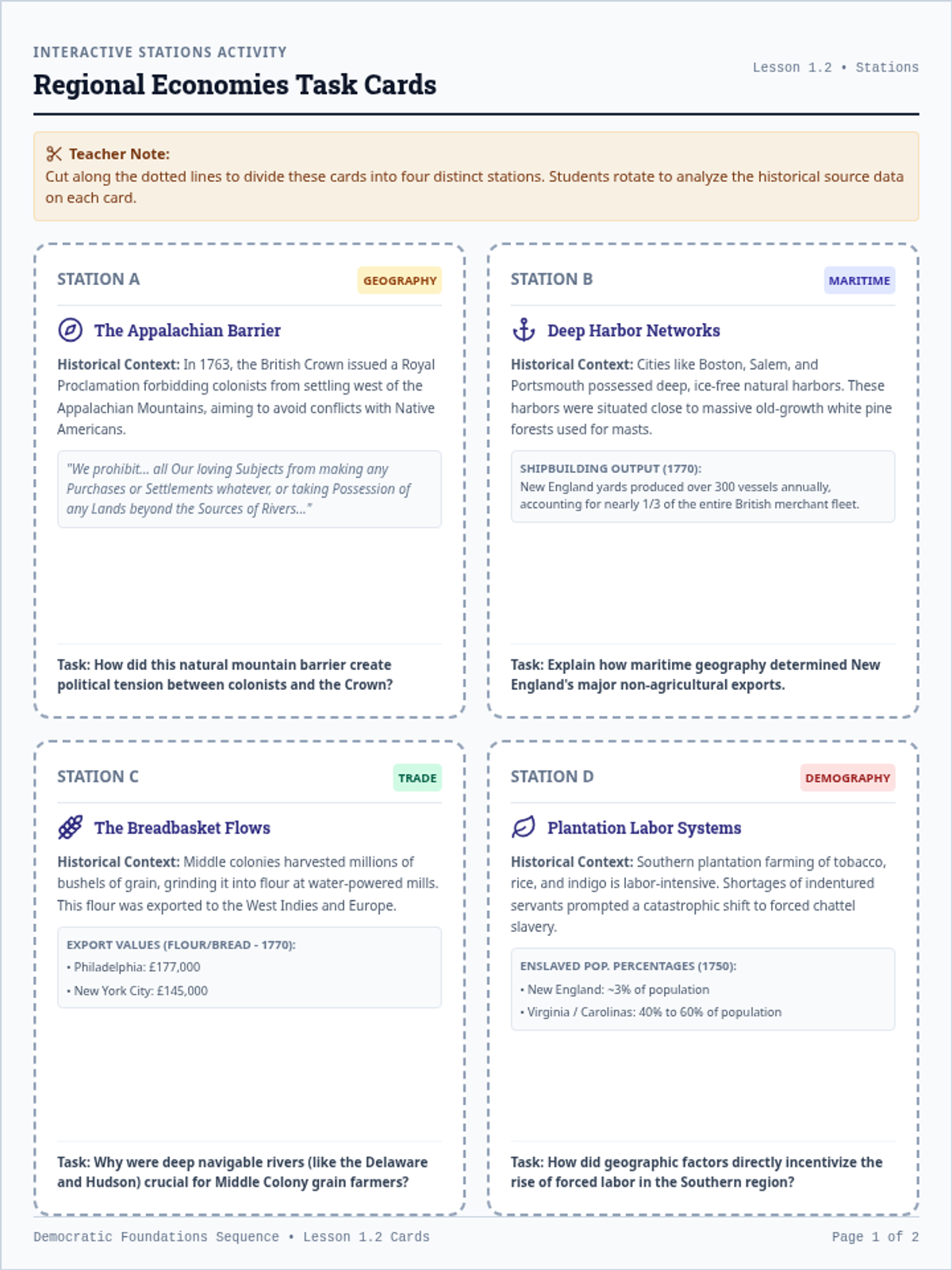
An analysis of early American regional geography, resource distribution, and economic systems, investigating how physical geography shaped the development of distinct Northern, Middle, and Southern colonial societies.
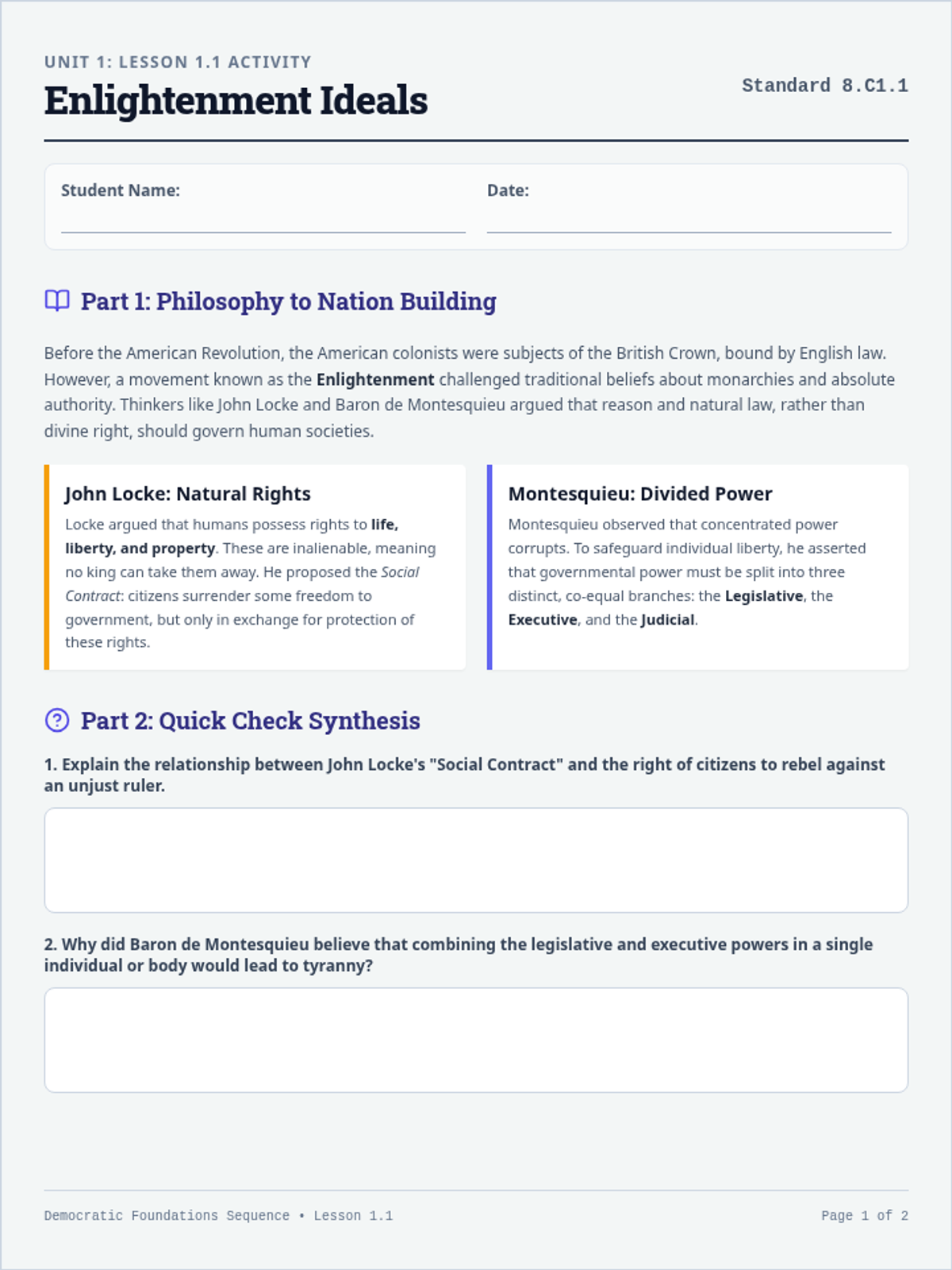
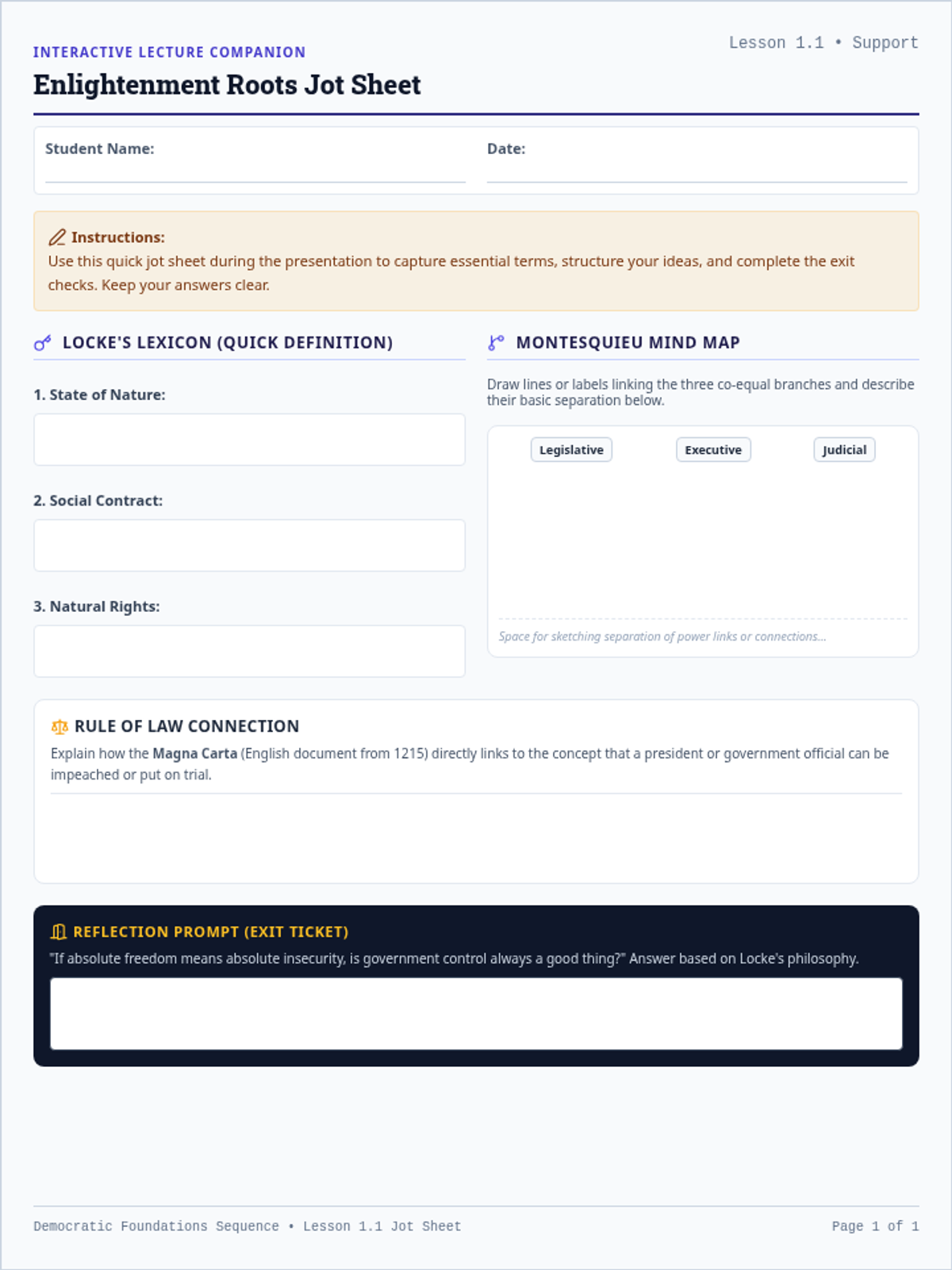
An exploration of how European Enlightenment thinkers like John Locke and Baron de Montesquieu, along with historic English documents like the Magna Carta, shaped early American beliefs about government and individual liberty.
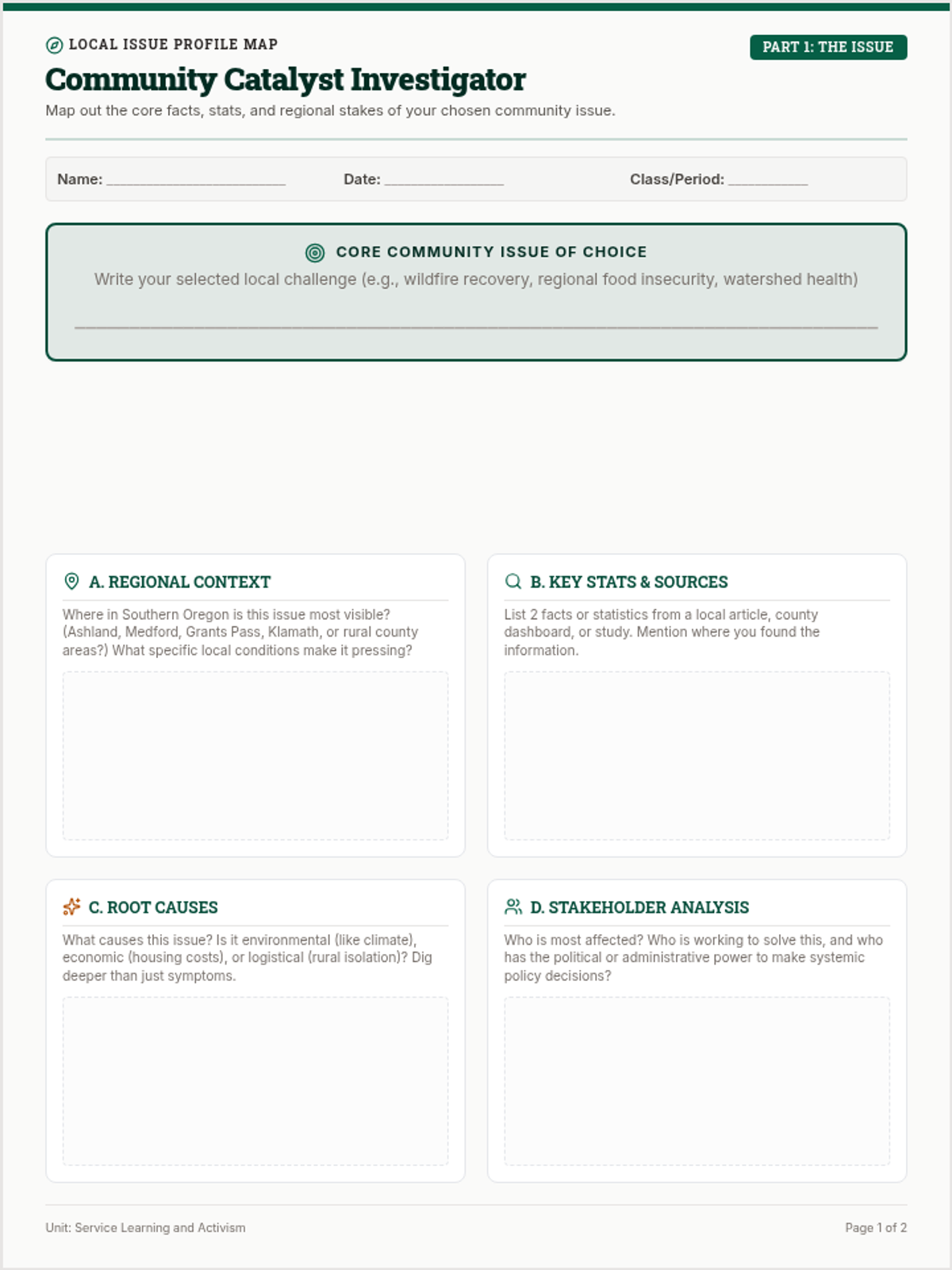
A service-learning and community activism lesson localized for Southern Oregon. Students explore the spectrum of community impact, brainstorm local issues, and research a self-selected cause using guided organizers.
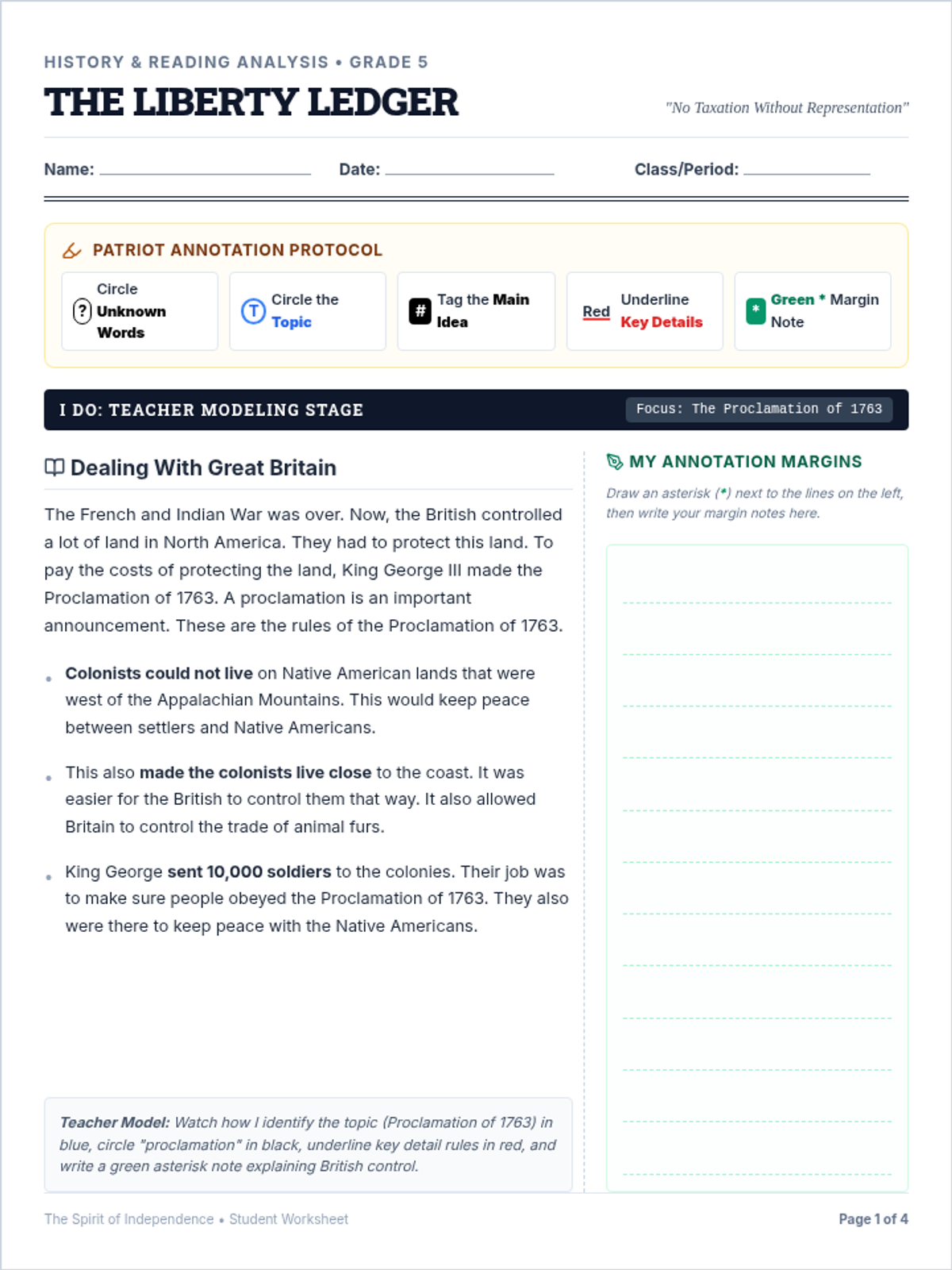
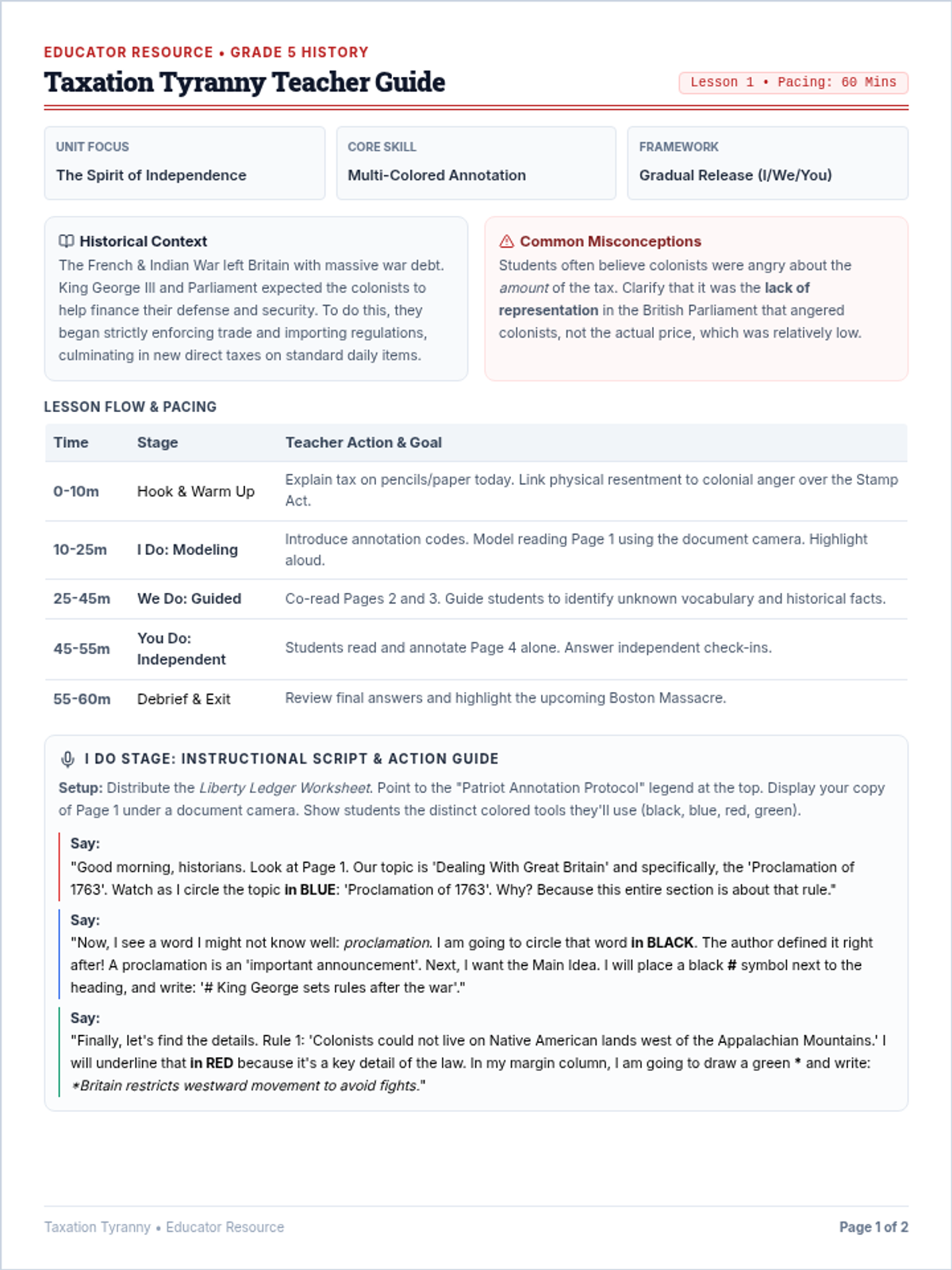
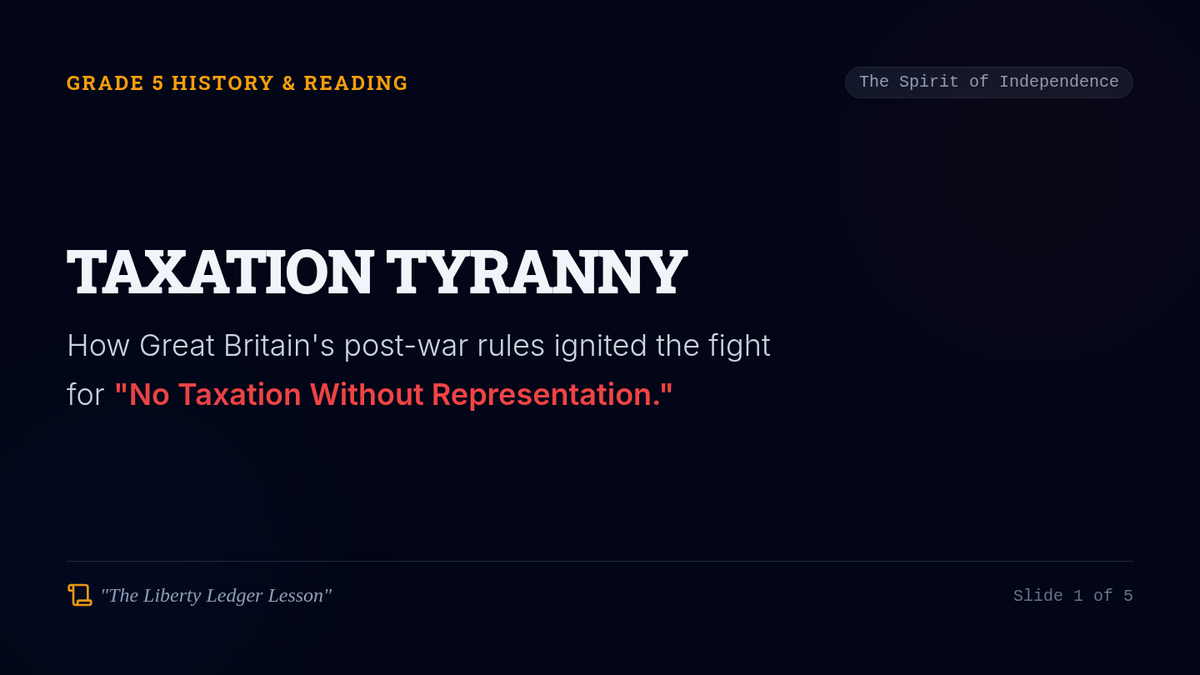
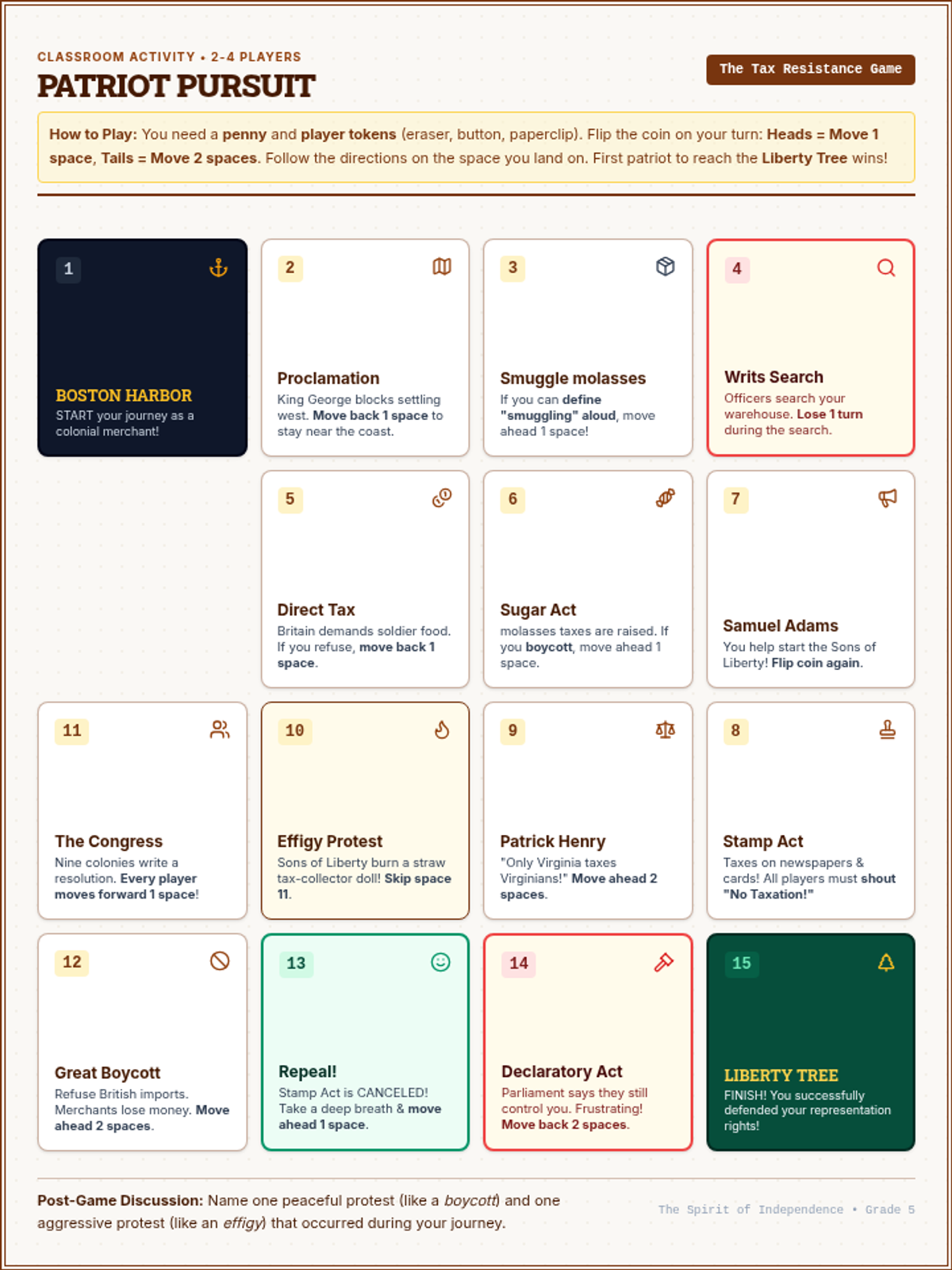
A fifth-grade history and reading lesson focusing on Great Britain's post-French and Indian War policies, introducing the concept of 'No Taxation Without Representation' through a structured Gradual Release of Responsibility (I Do, We Do, You Do) framework. Students use a precise multi-colored annotation strategy to analyze the historical text.
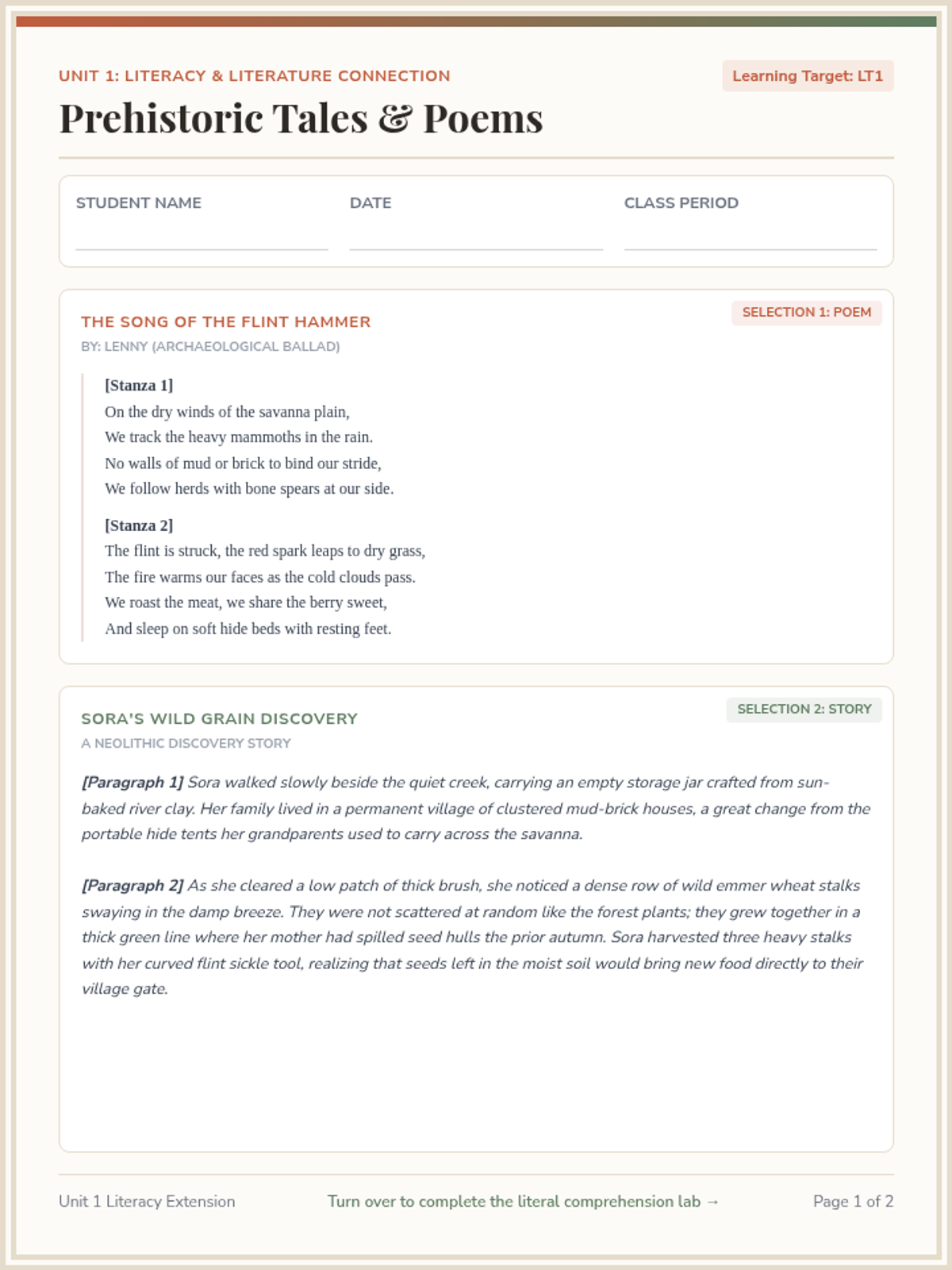
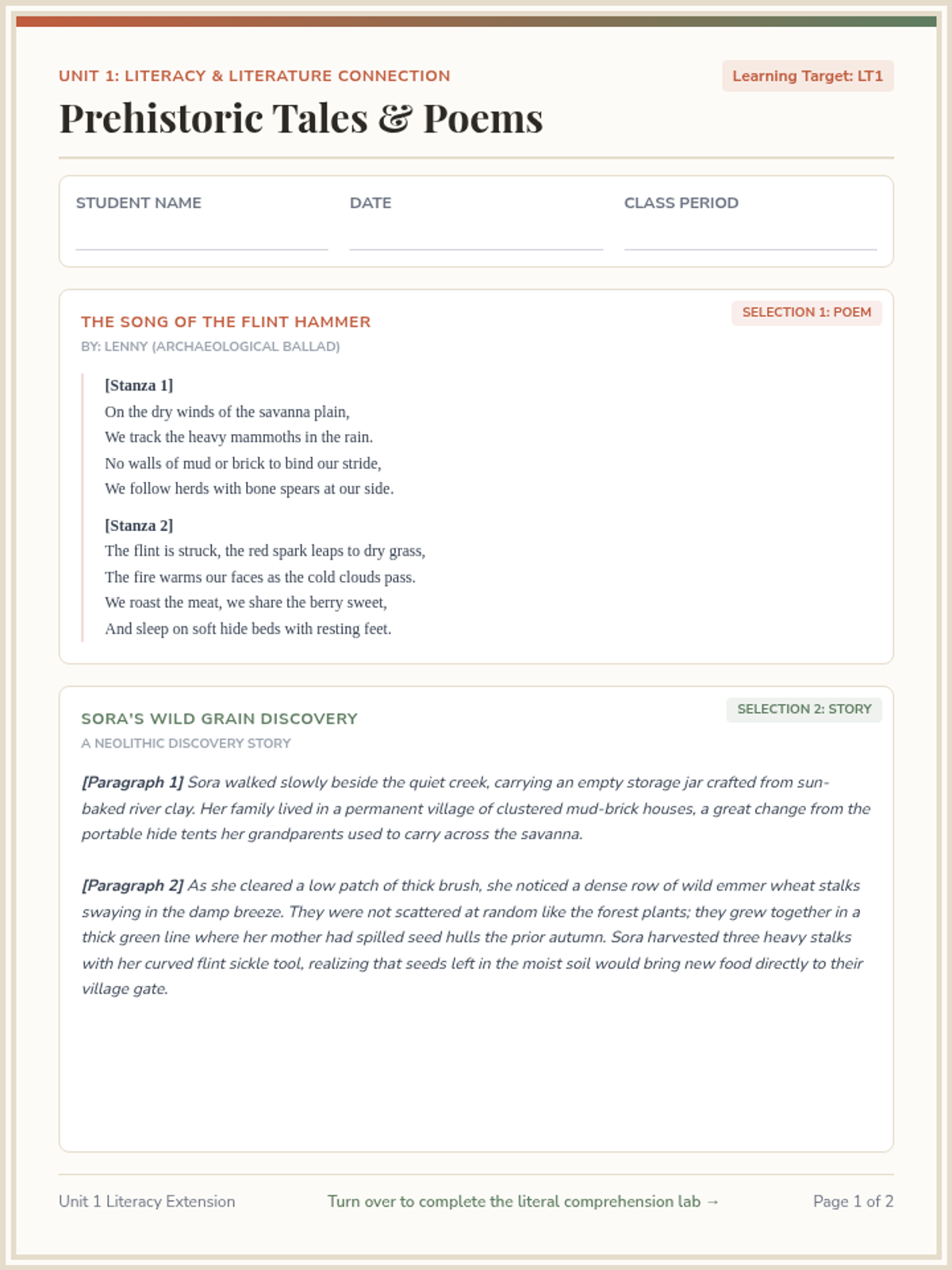
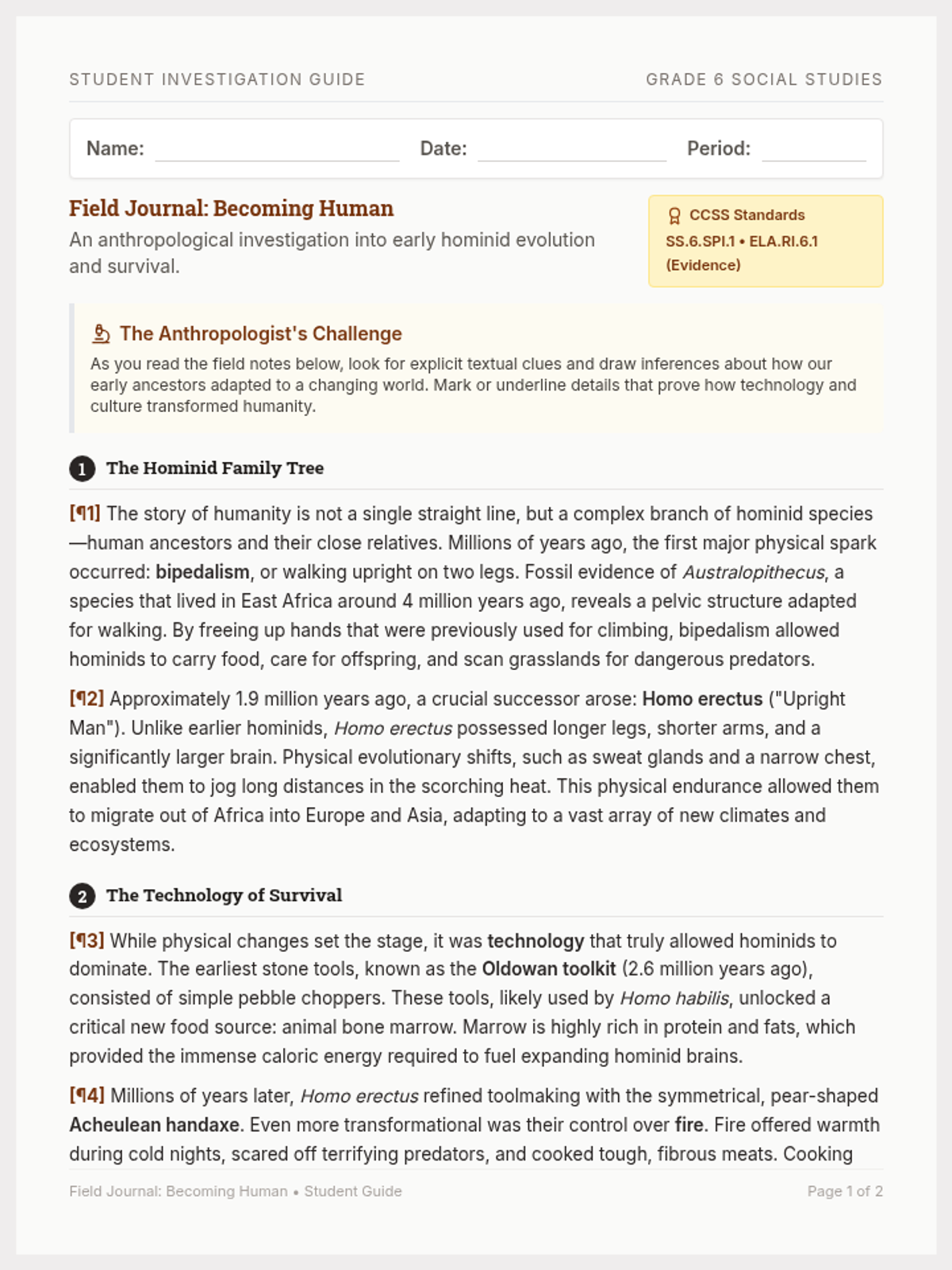
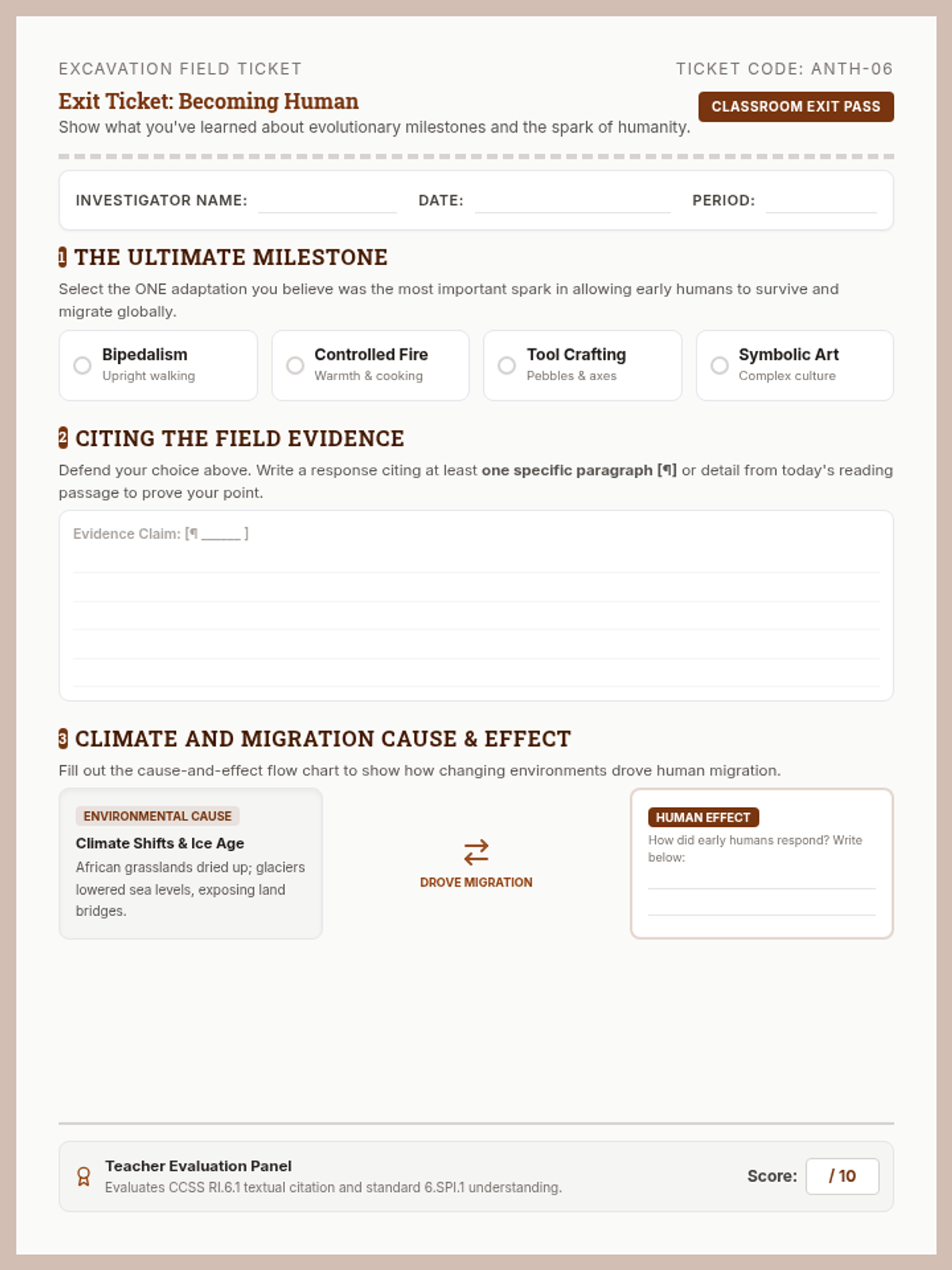
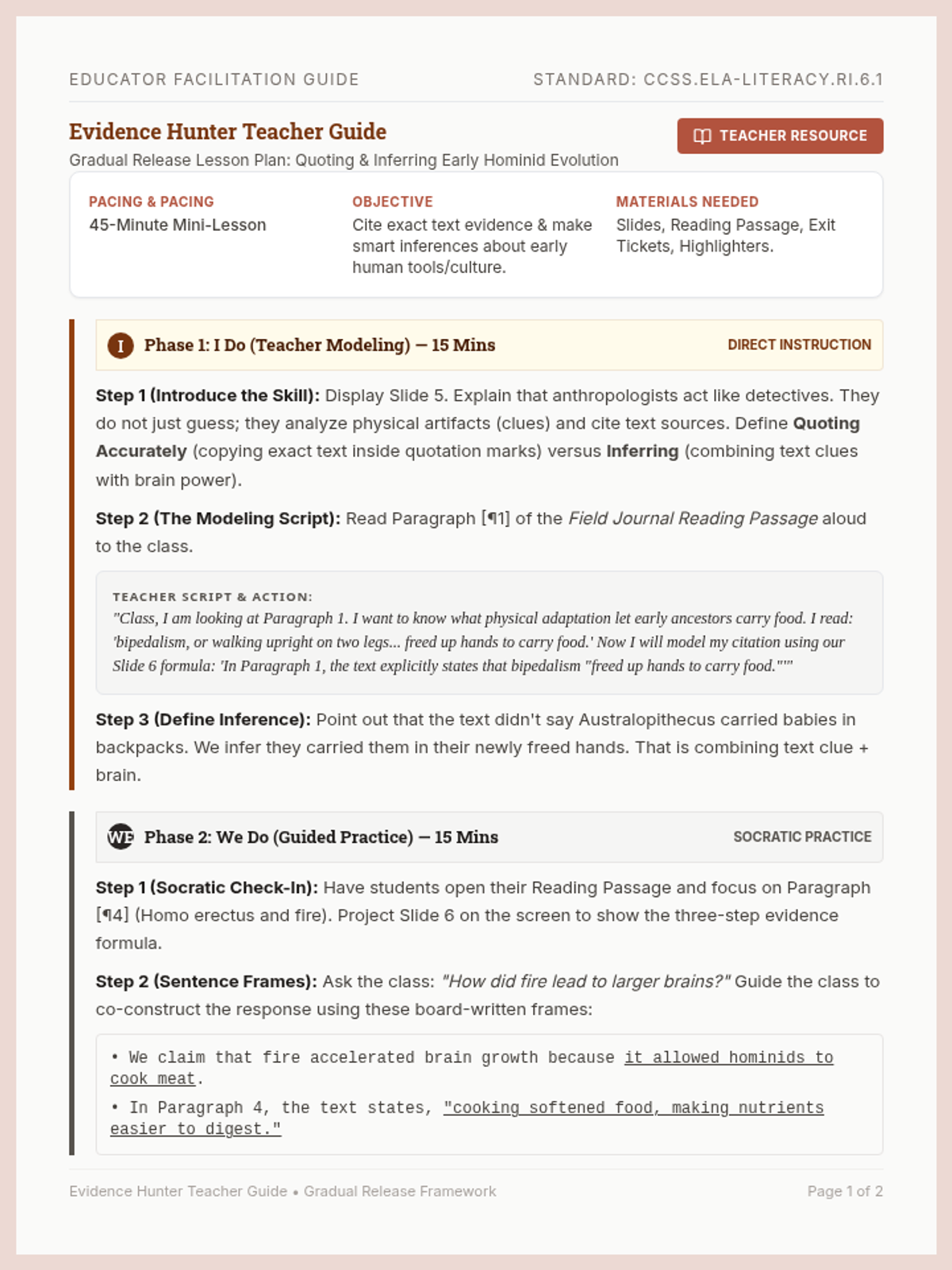
A 6th-grade social studies lesson investigating early human evolution, tool adaptations, cultural practices, and migration patterns, integrated with CCSS ELA-Literacy RI.6.1.