A comprehensive lesson on using demonstratives (this, that, these, those) correctly, themed around a museum curator's task of cataloging artifacts based on distance and number.
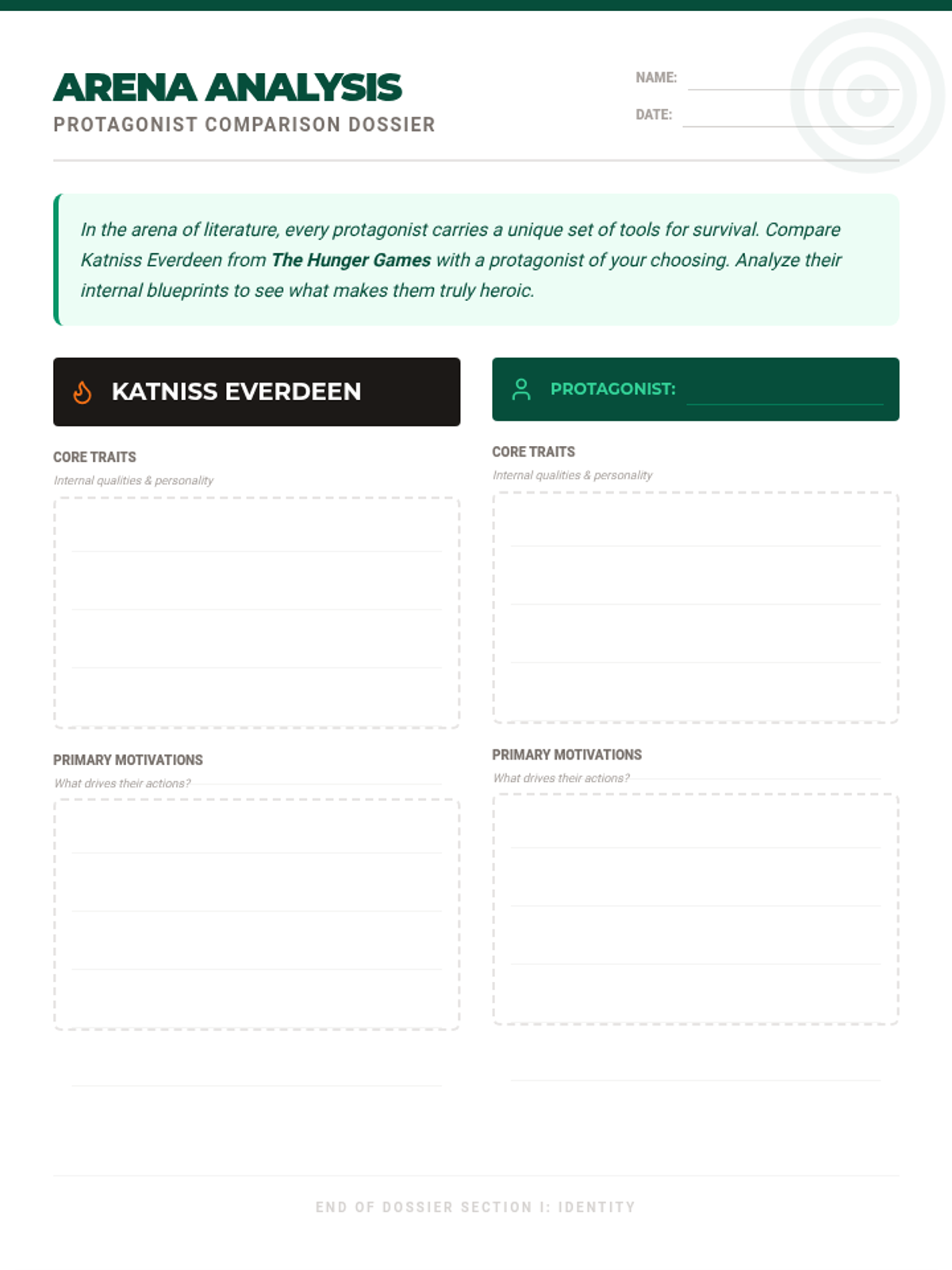
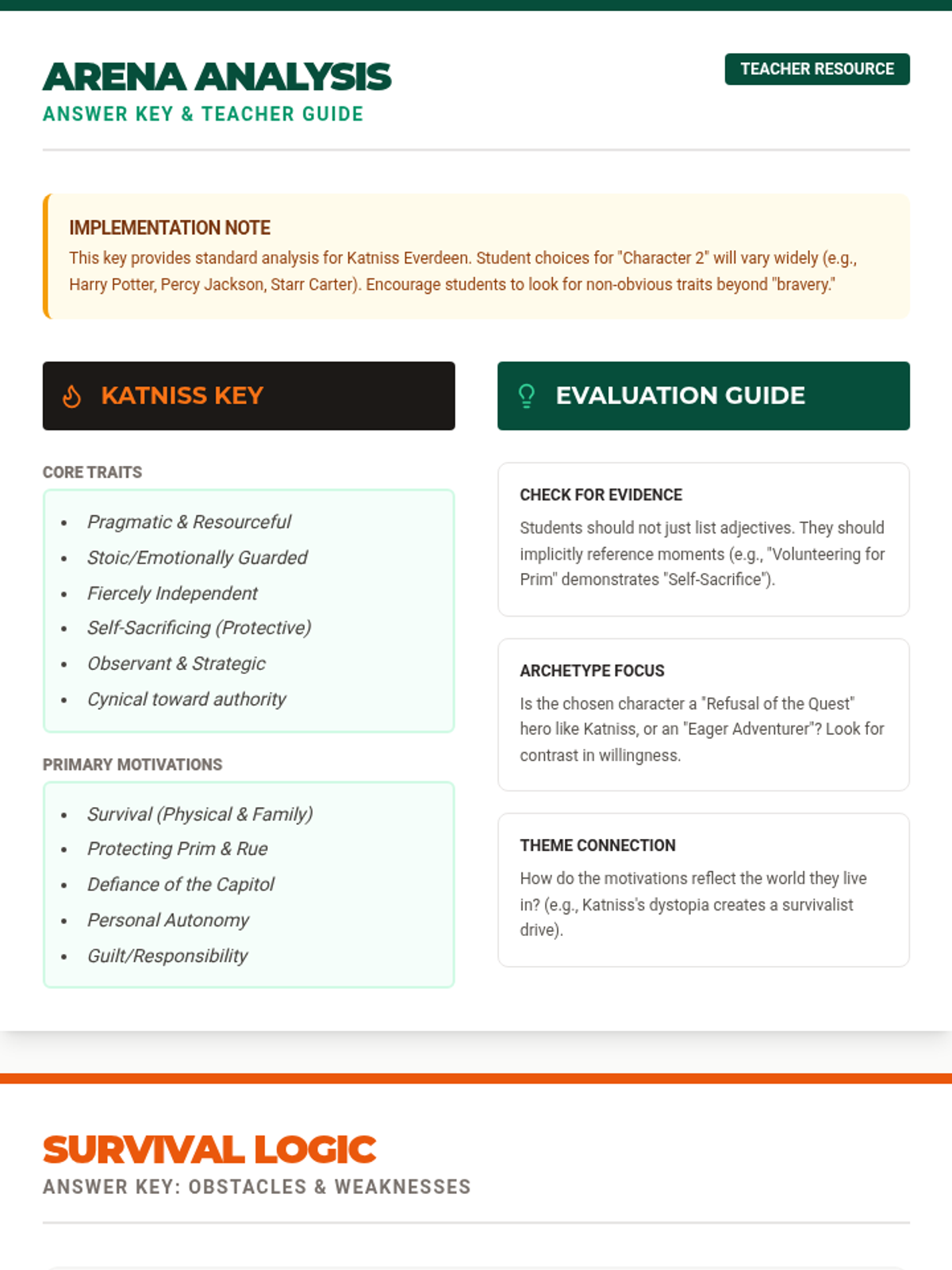
A deep-dive character analysis lesson comparing Katniss Everdeen with other literary protagonists to explore universal hero archetypes and character development.
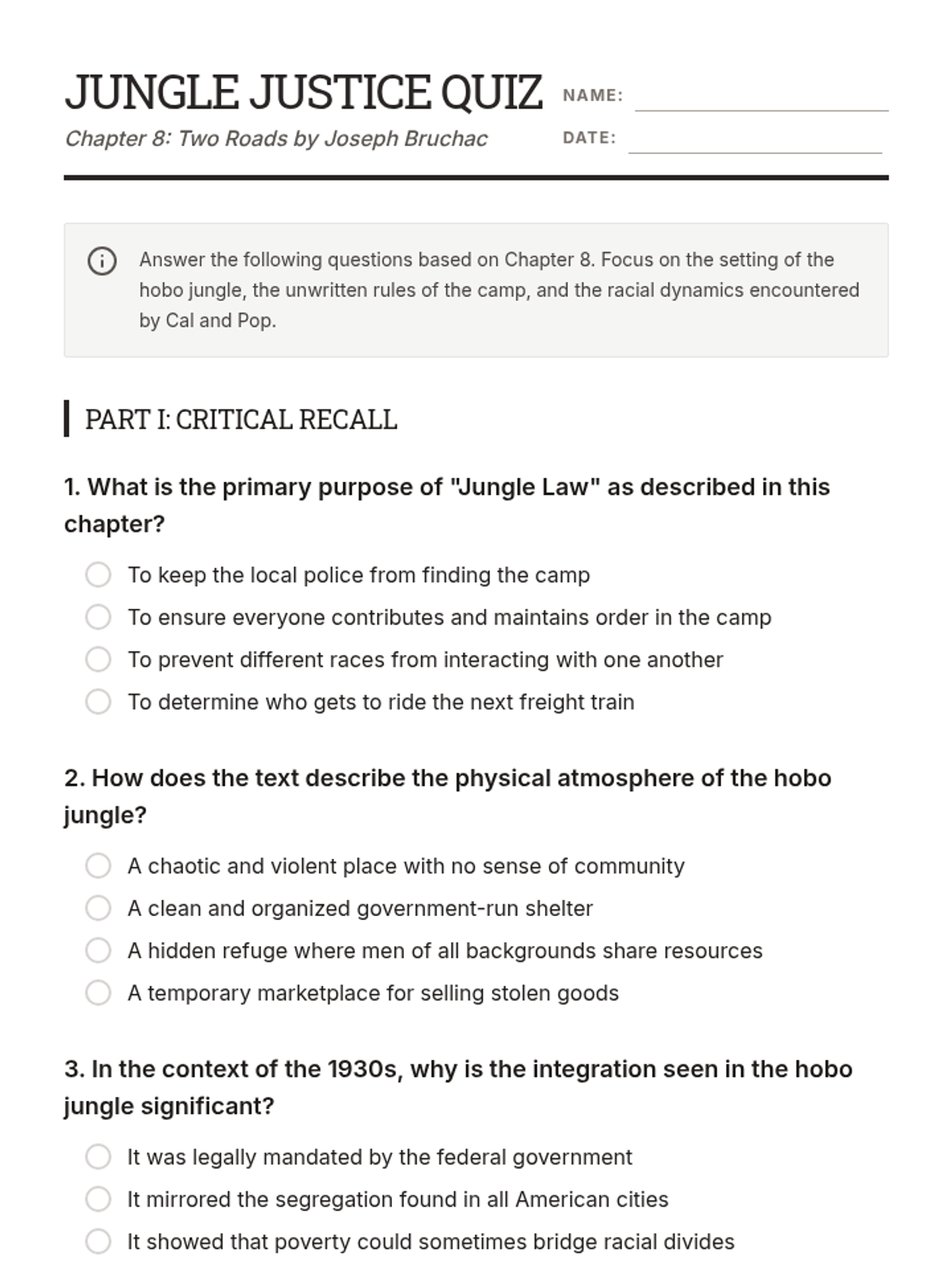
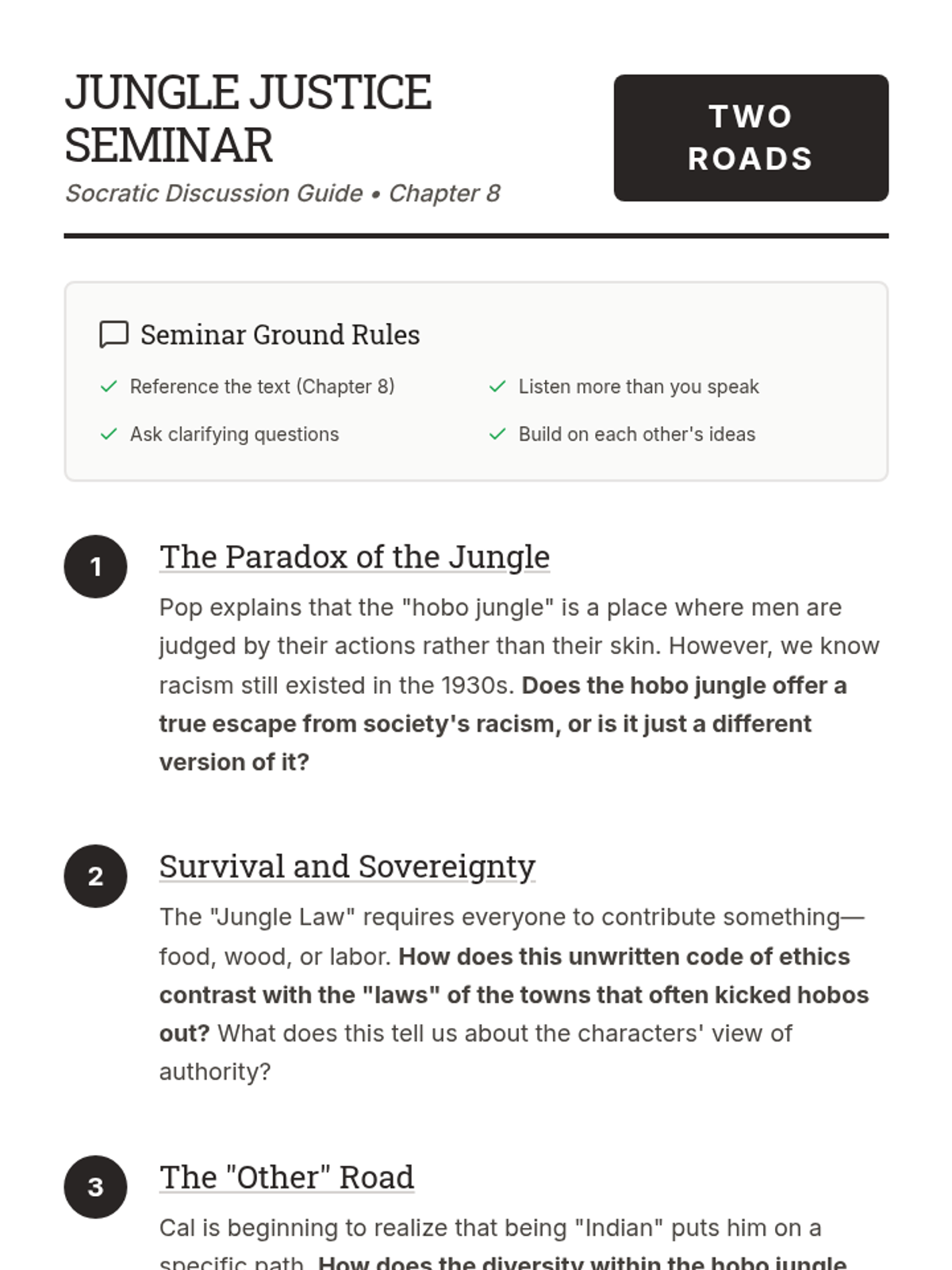
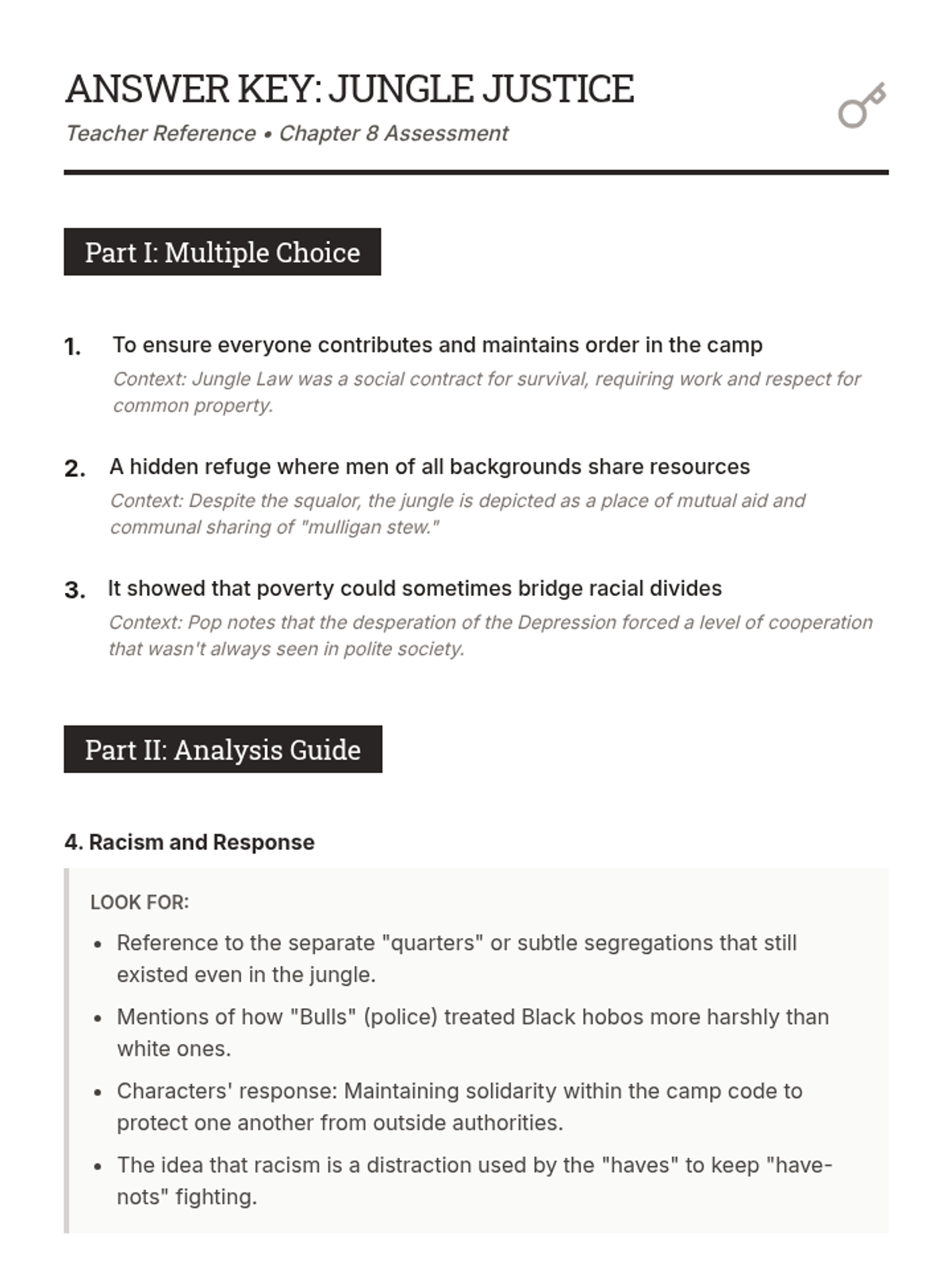
A lesson exploring Chapter 8 of 'Two Roads', focusing on the socio-economic and racial dynamics of hobo jungles during the Great Depression.
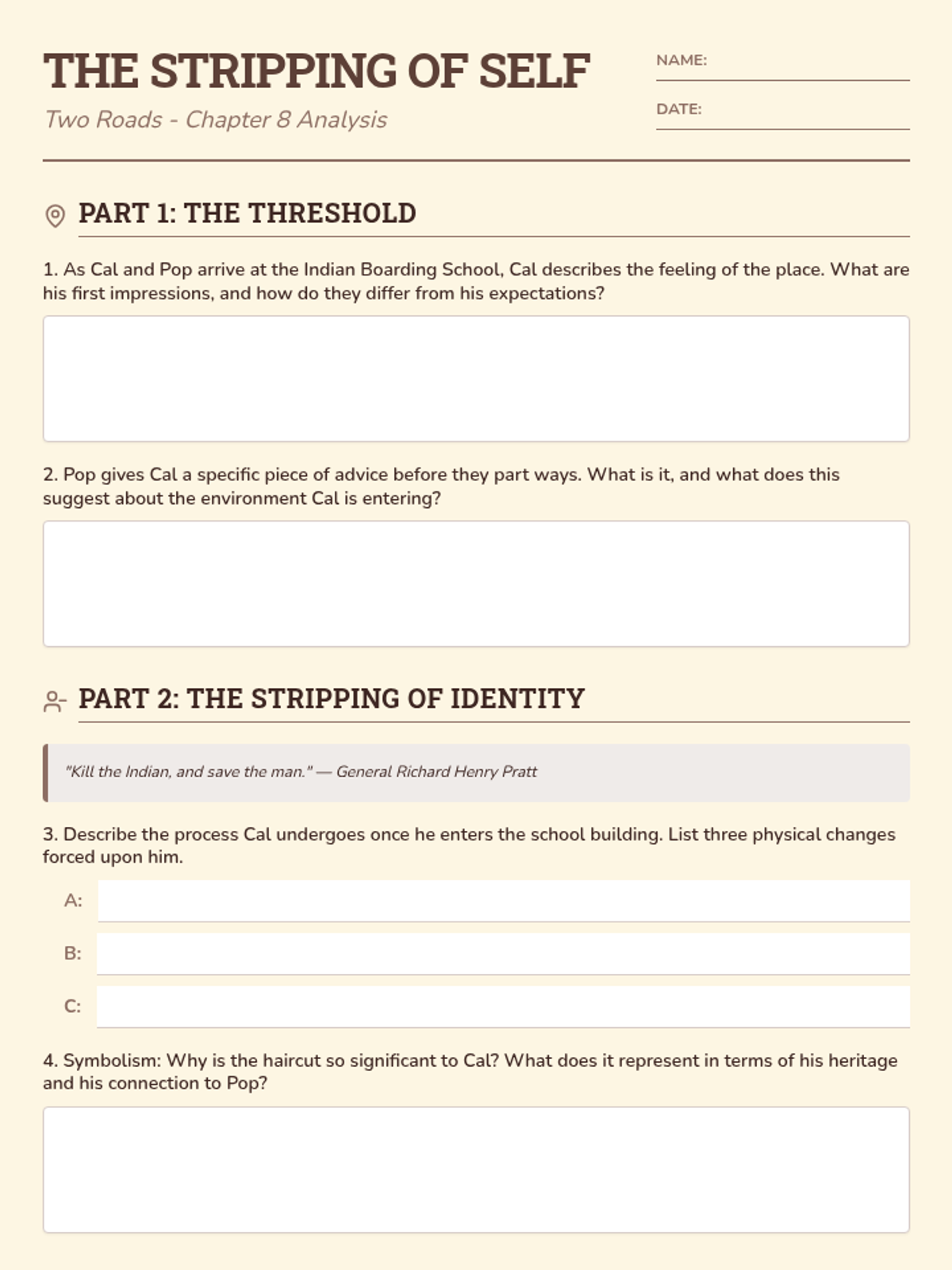
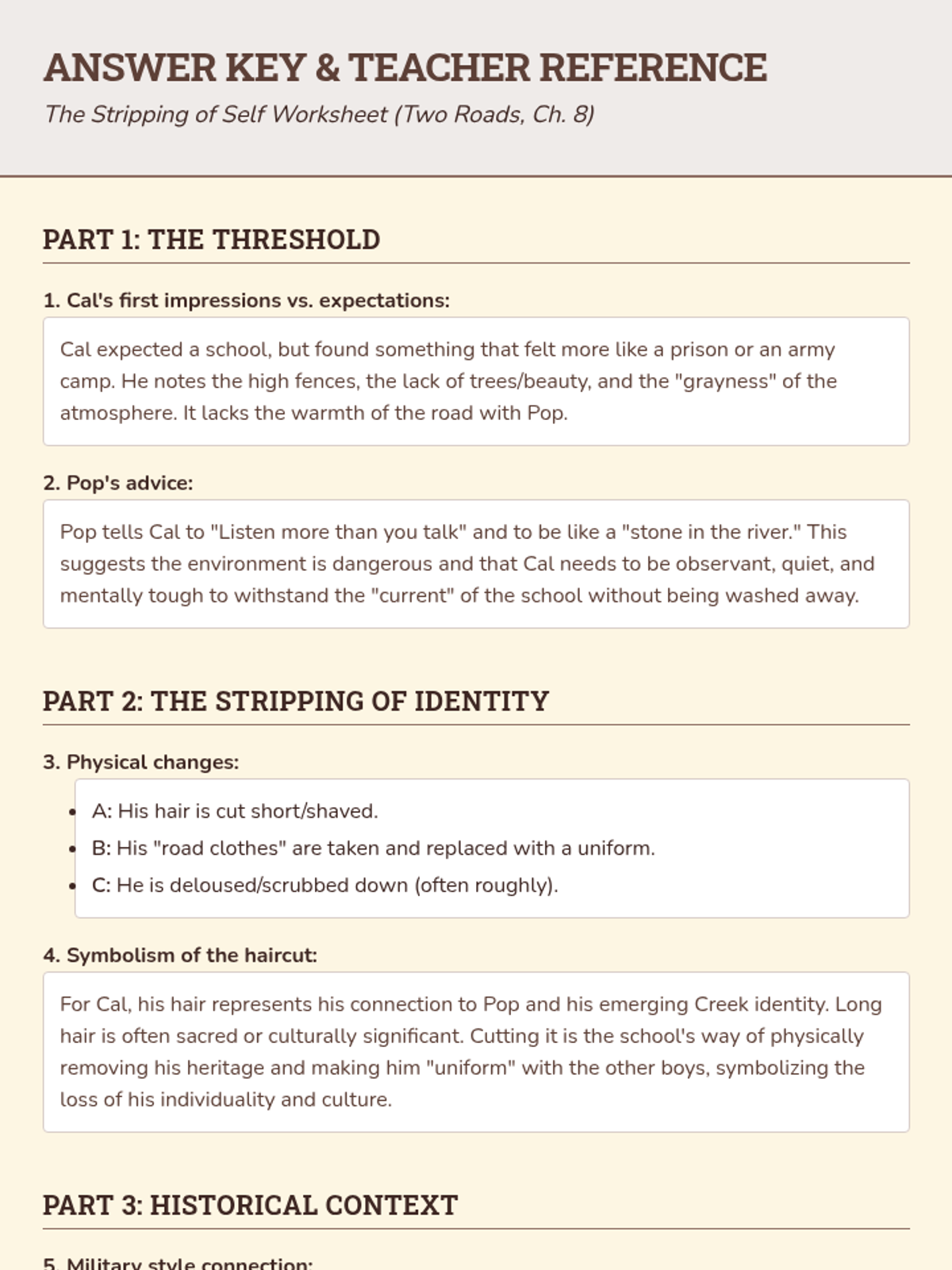
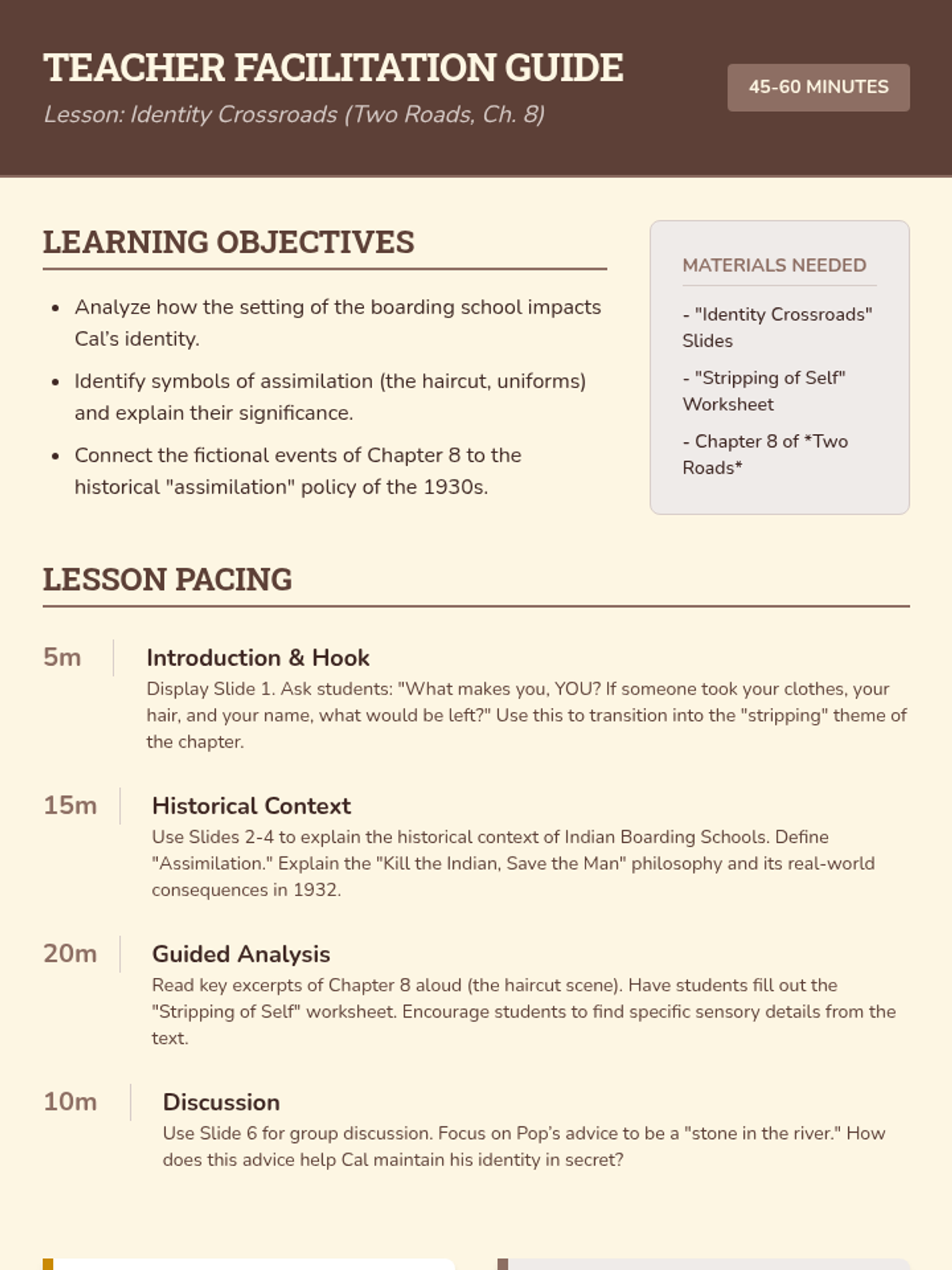
A focused exploration of Chapter 8 of Joseph Bruchac's 'Two Roads,' examining the historical reality of Indian Boarding Schools and the impact of forced assimilation on Cal's identity. Students will analyze the symbolic 'stripping' of identity and the historical context of the 1930s.
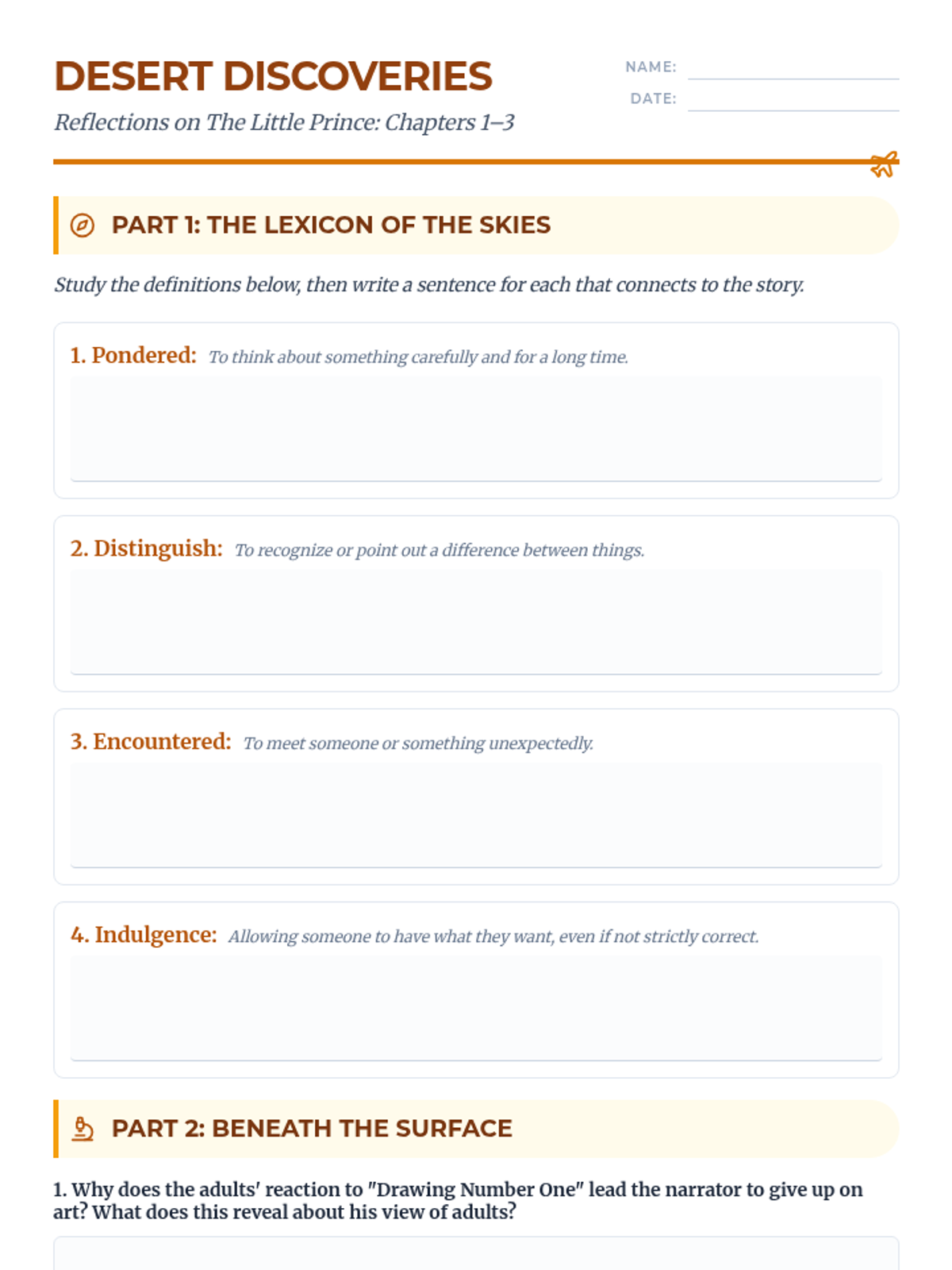
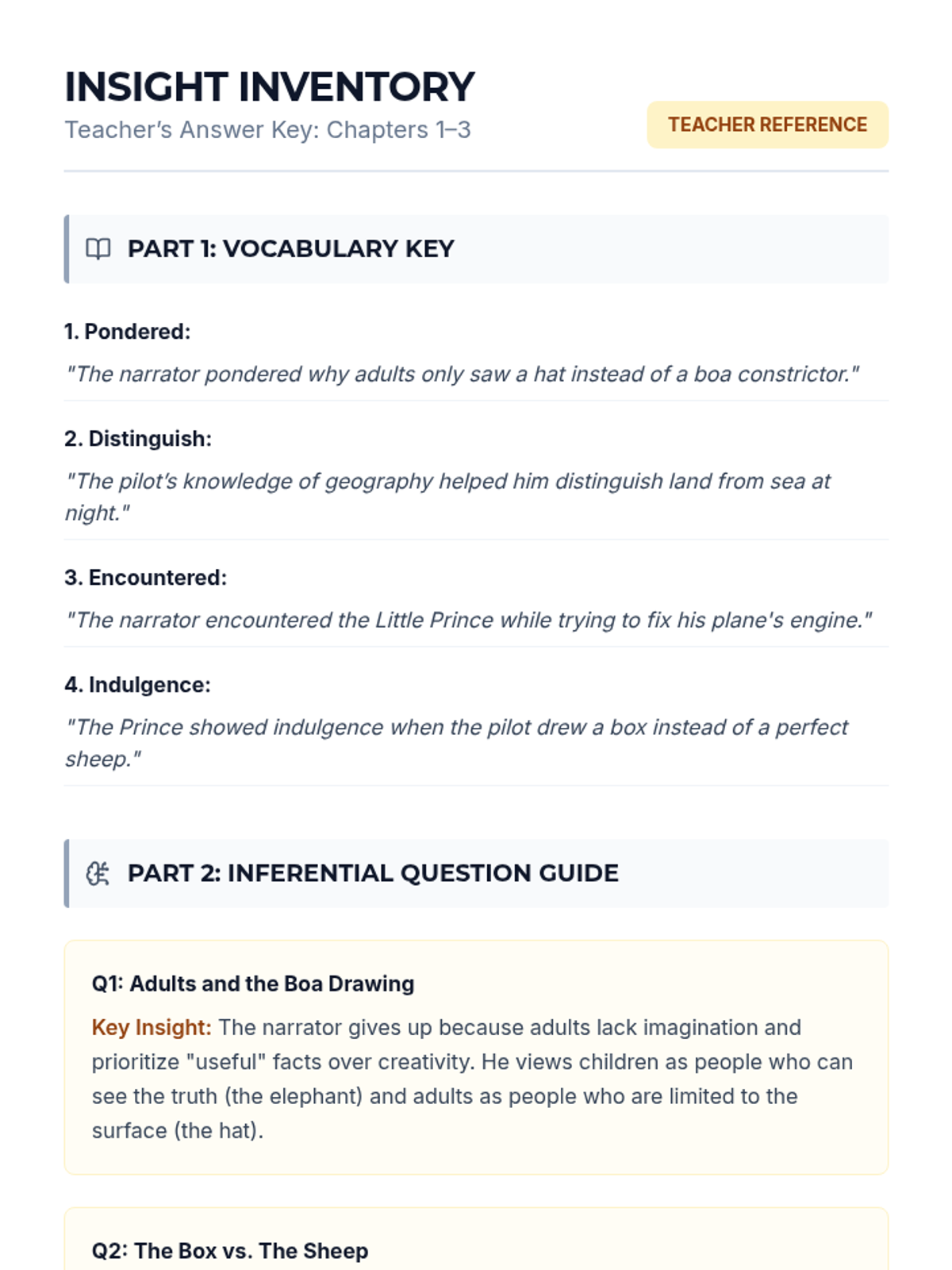
A deep dive into the opening chapters of The Little Prince, focusing on the narrator's childhood perspective and his fateful meeting with the prince in the Sahara. Students will analyze academic vocabulary and practice high-level inferential thinking.
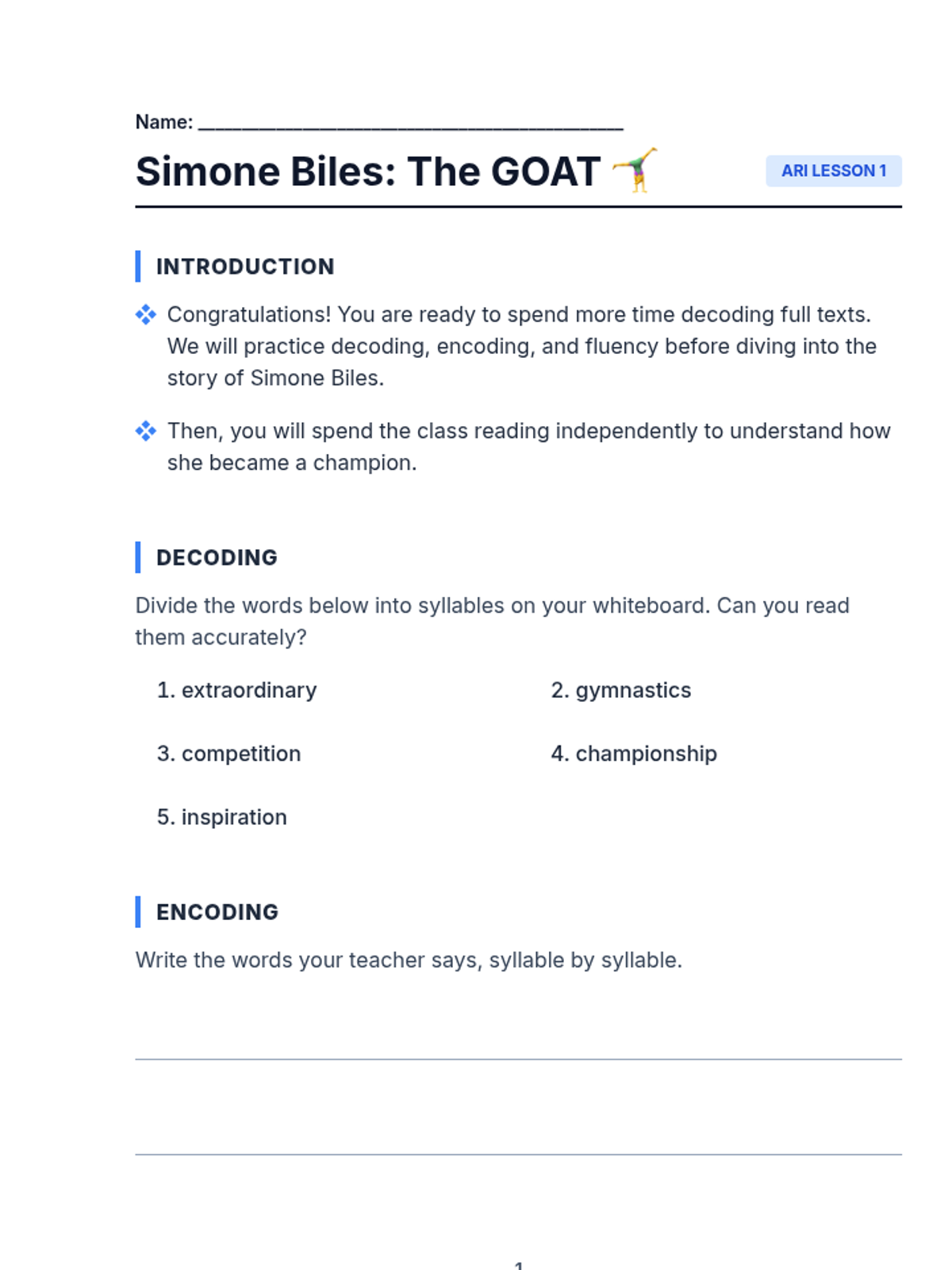
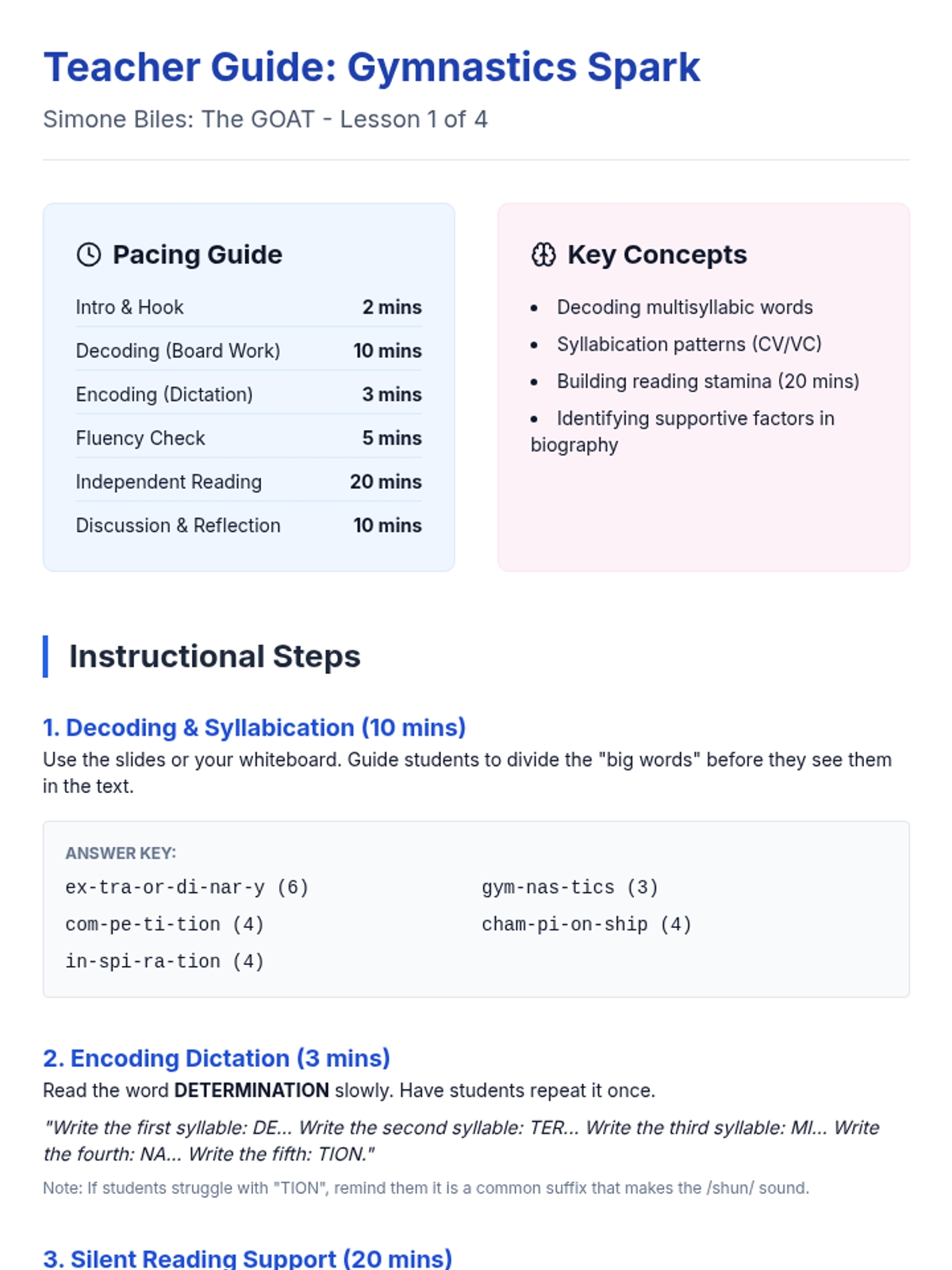
The first lesson in a series about Simone Biles, focusing on her early life, discovery of gymnastics, and the impact of her training. Students practice decoding multisyllabic words before engaging in a 20-minute silent reading session.
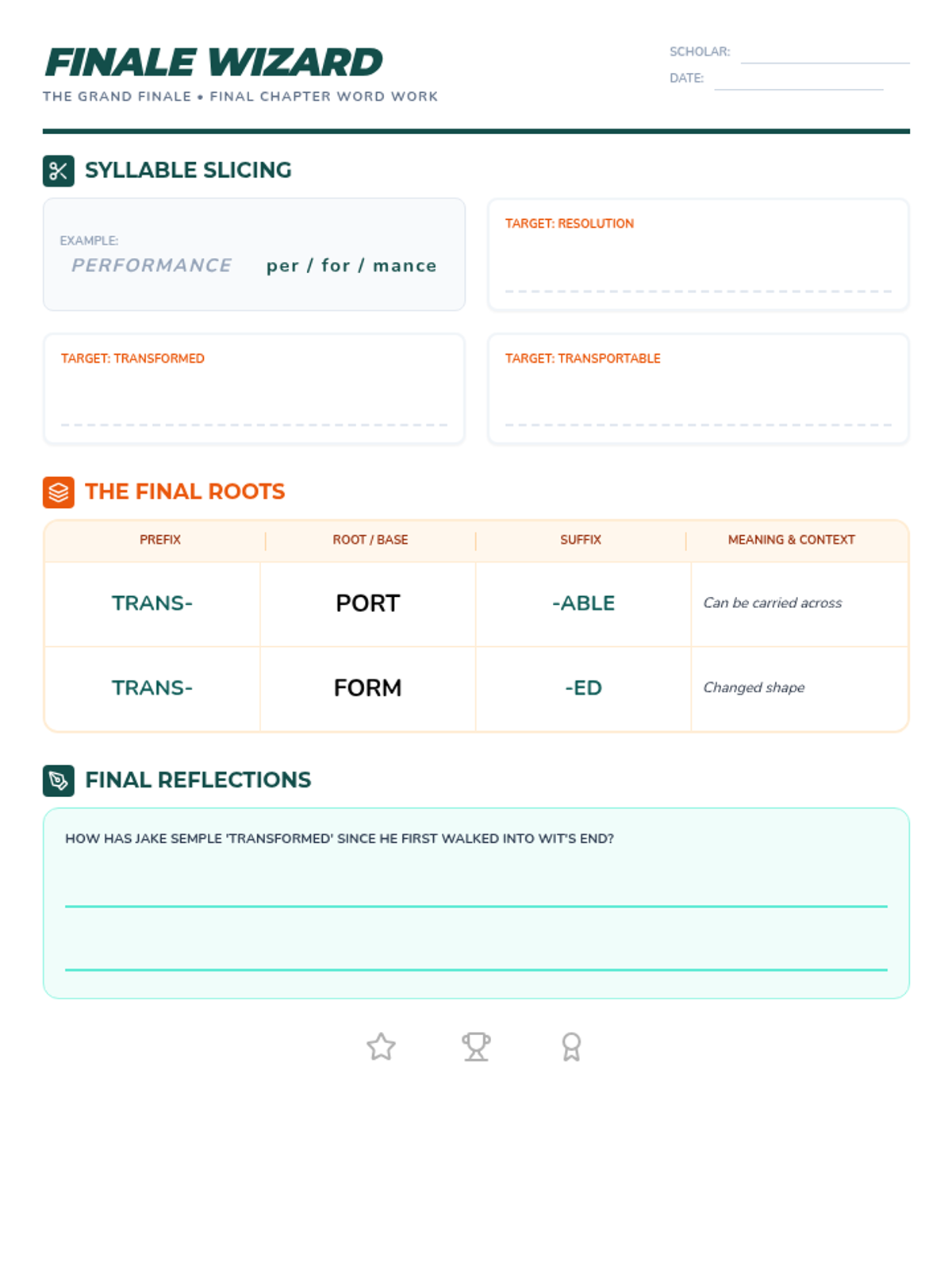
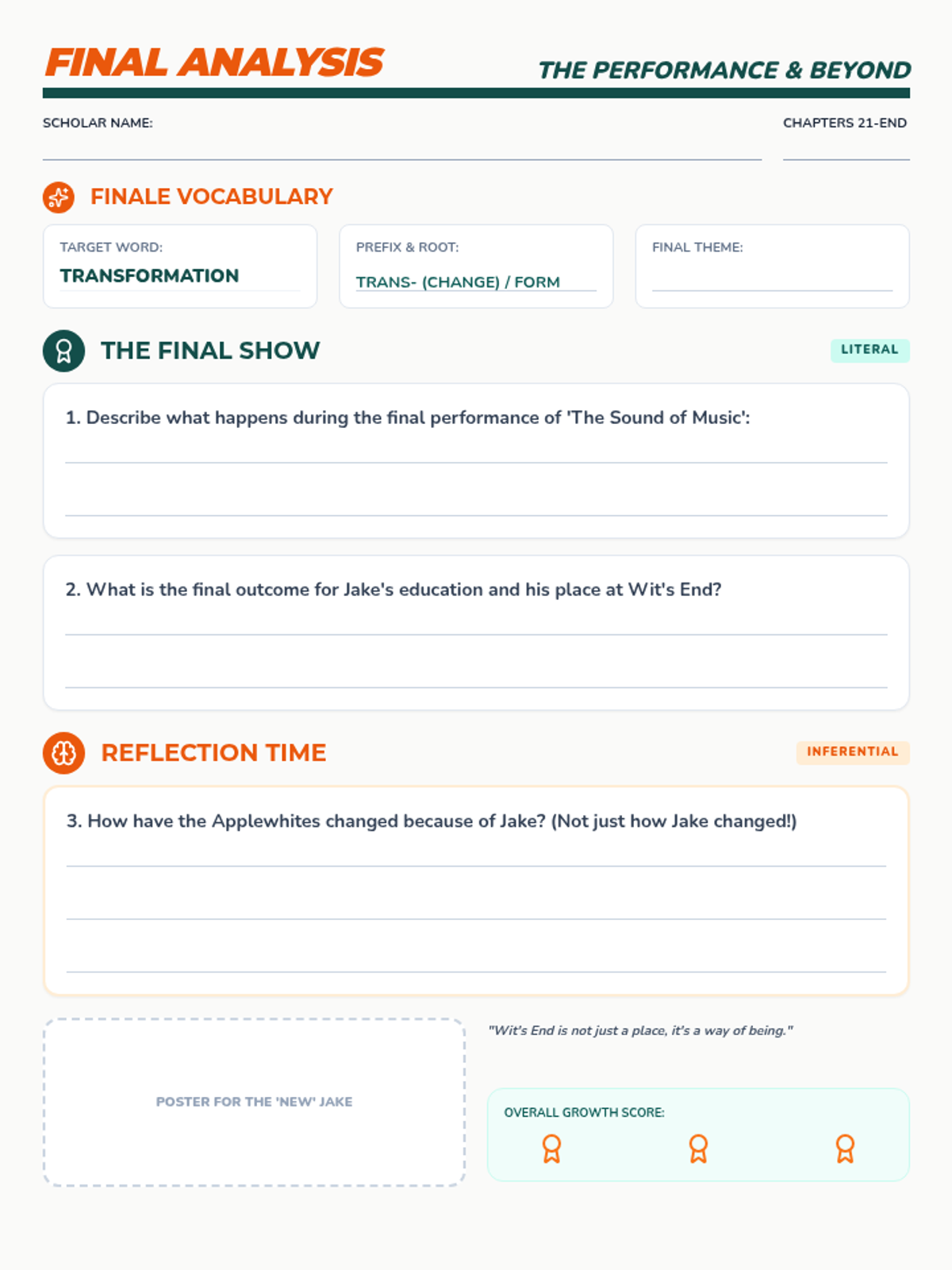
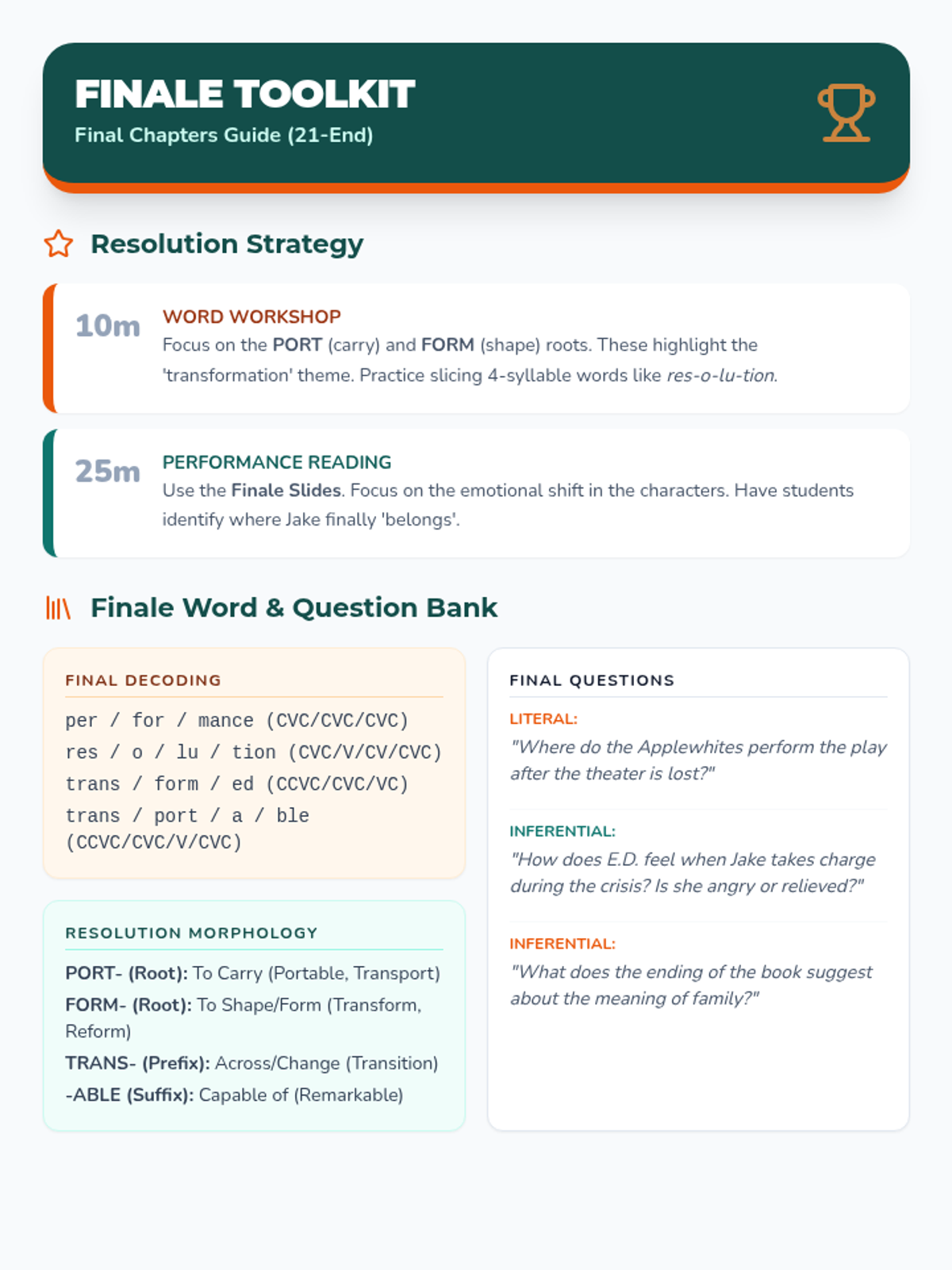
The concluding phase of the routine, focusing on the final performance, the resolution of the novel's conflicts, and the lasting changes in Jake and the Applewhites.
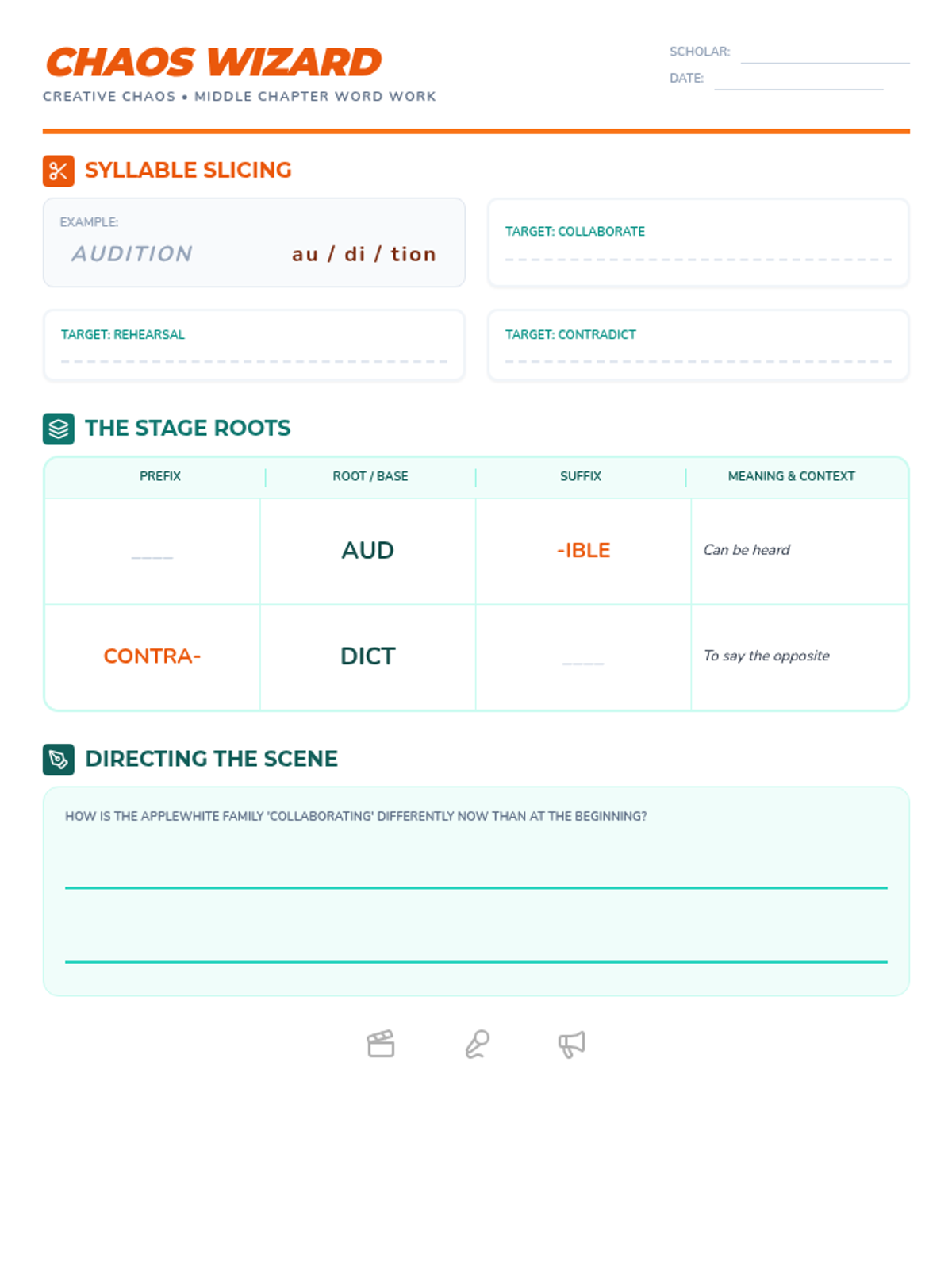
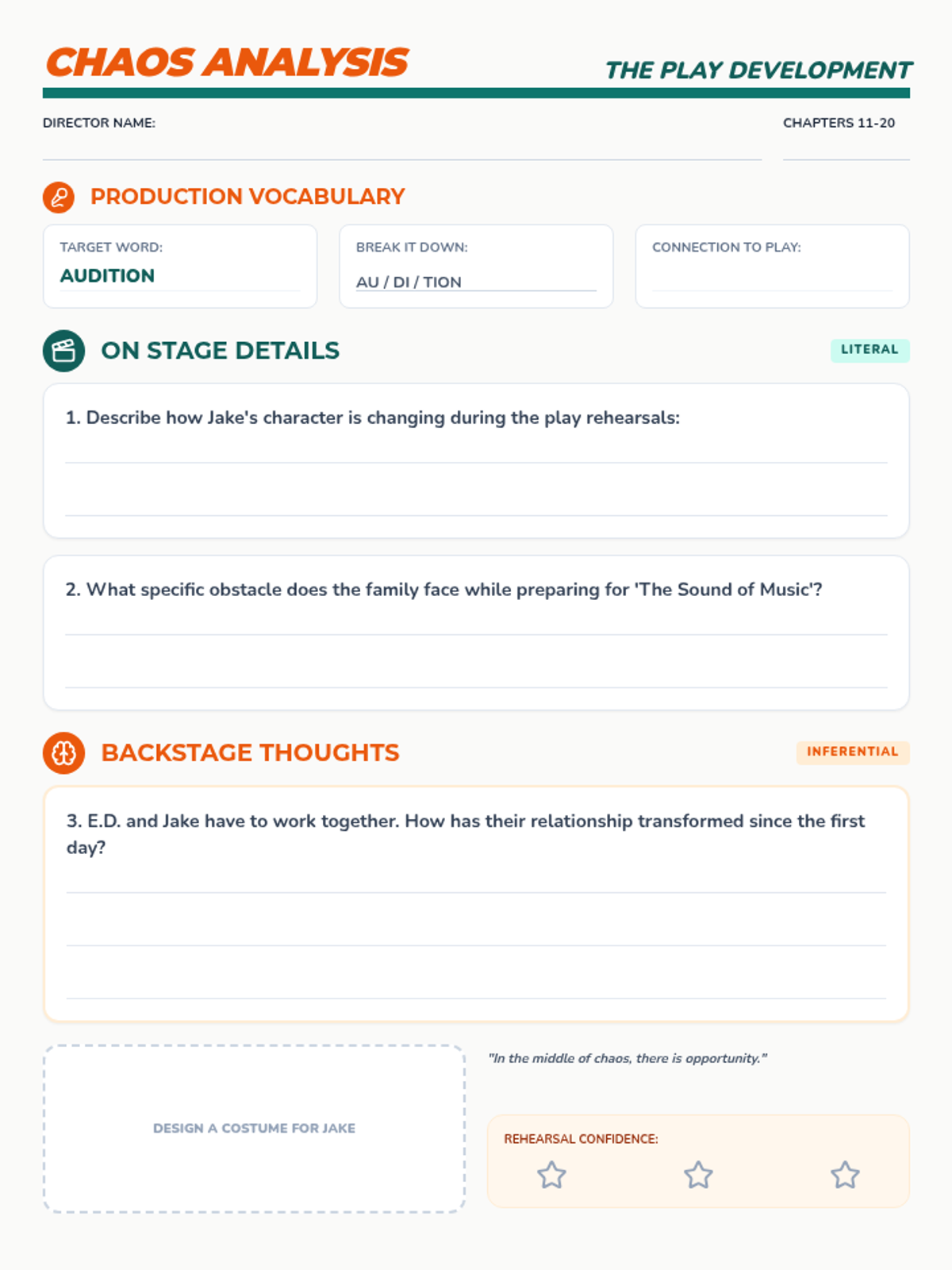
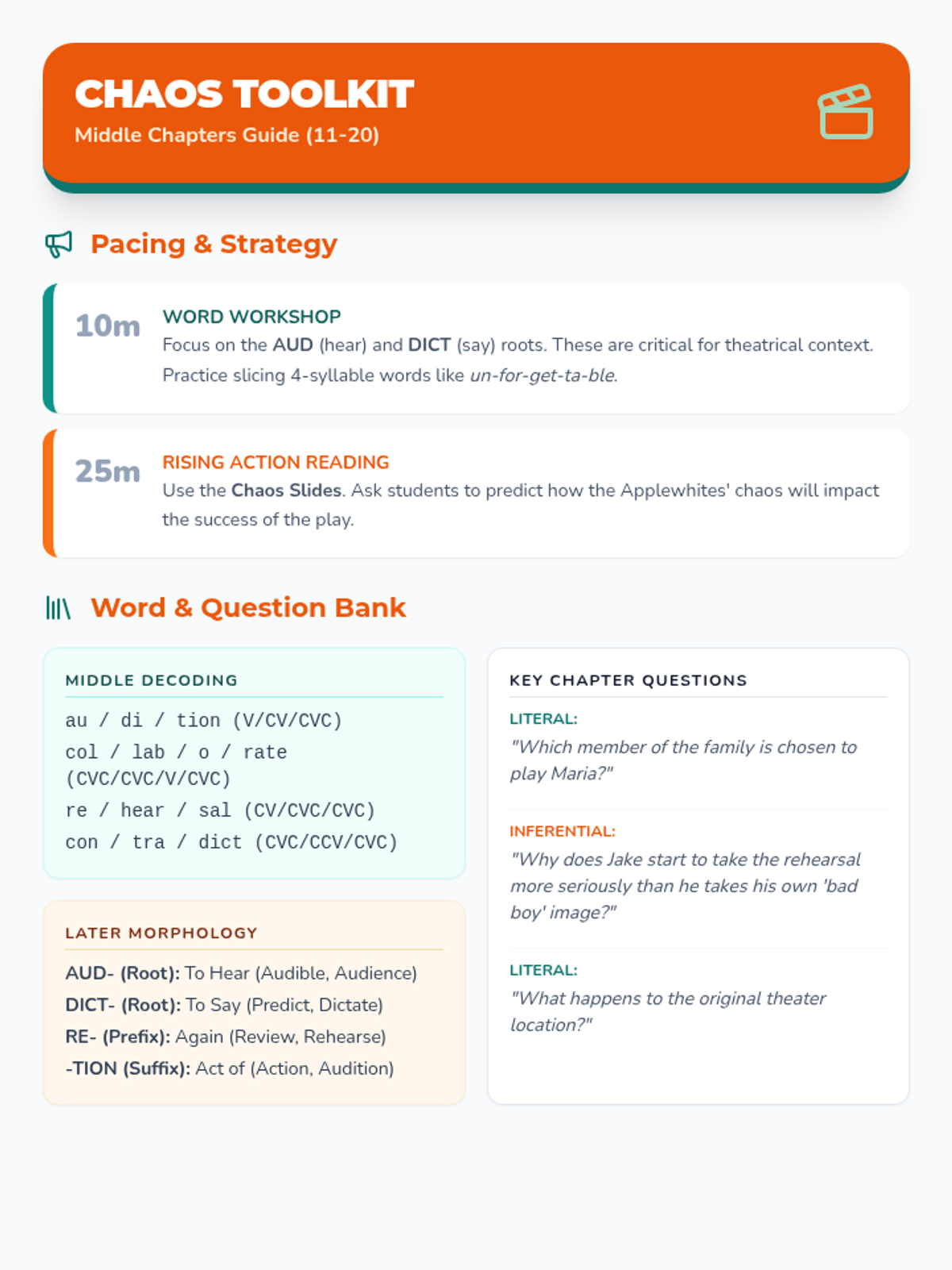
The middle phase of the routine, focusing on the development of the play 'The Sound of Music' and the increasing cooperation between the eccentric family members.
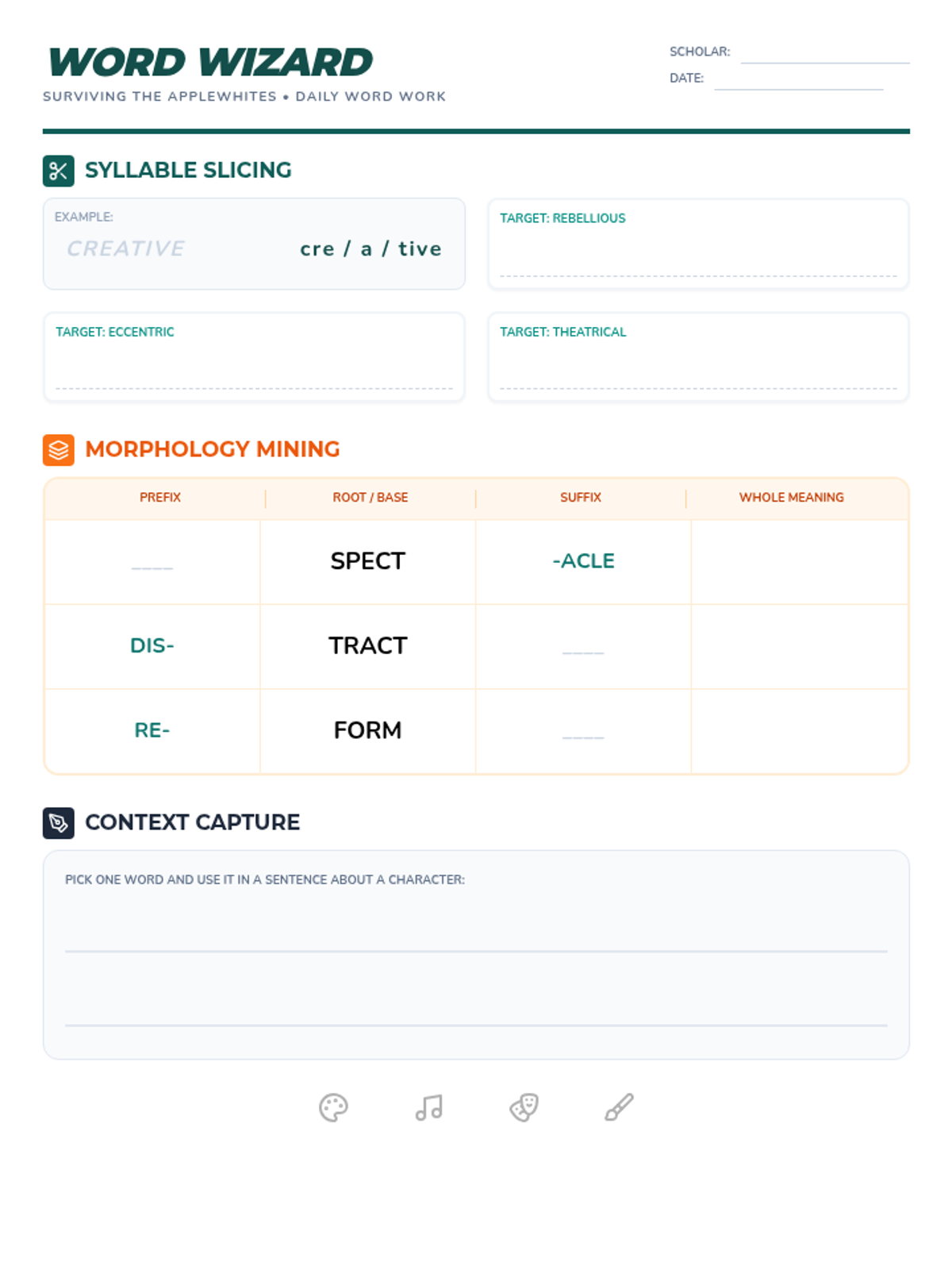
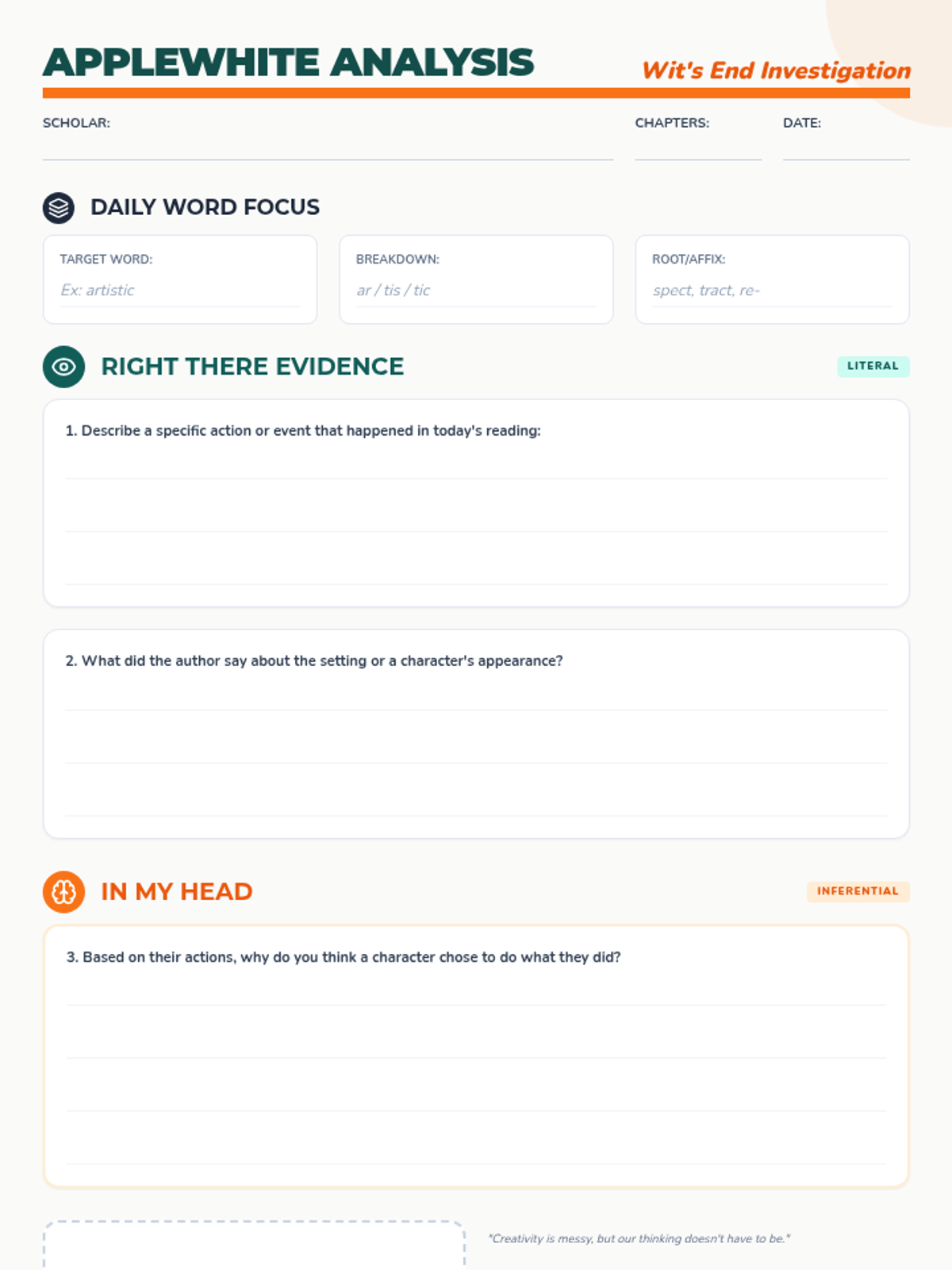
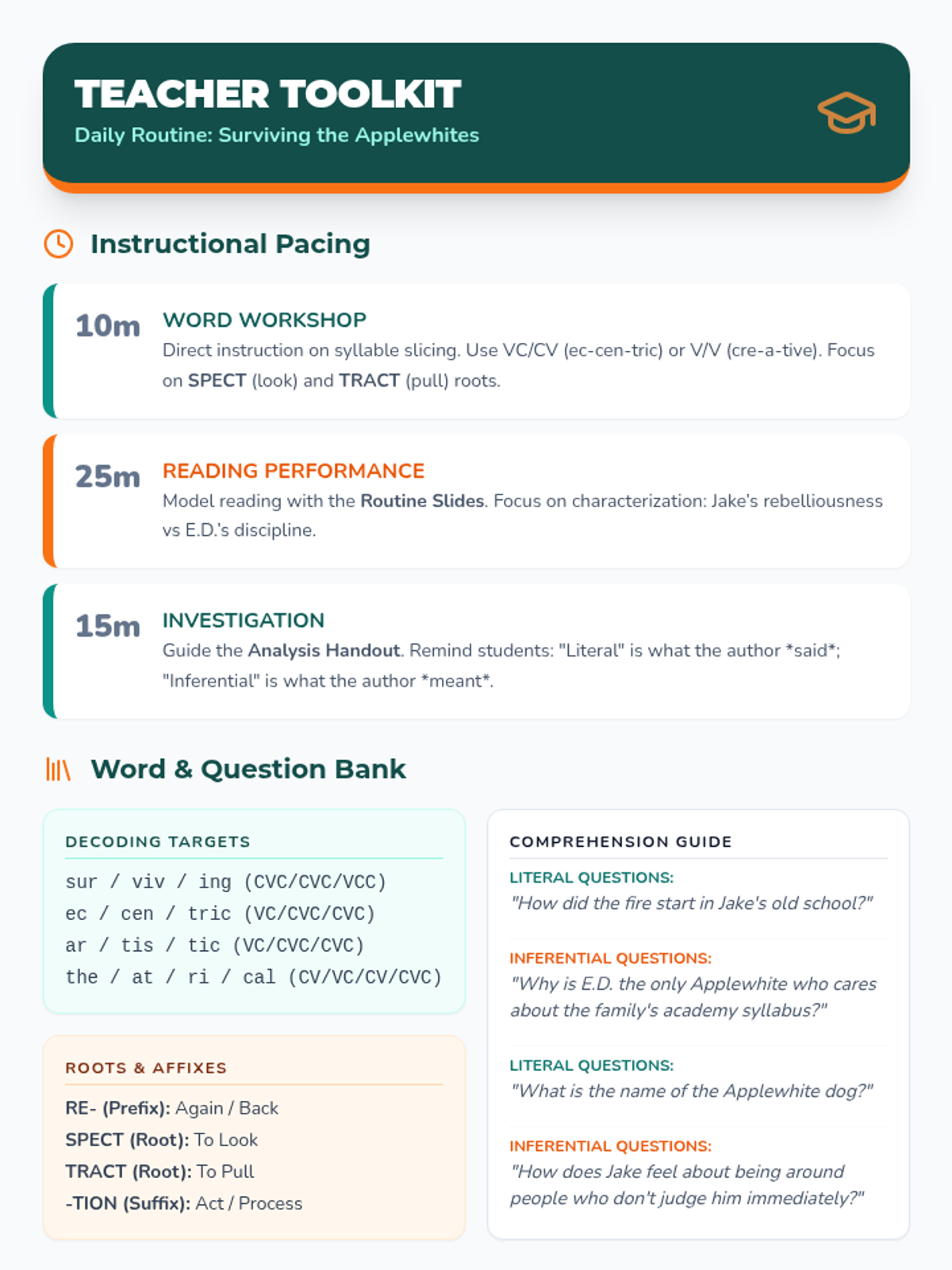
The introductory phase of the daily routine, focusing on character introductions, the setting of Wit's End, and the initial clash of personalities between Jake and E.D.
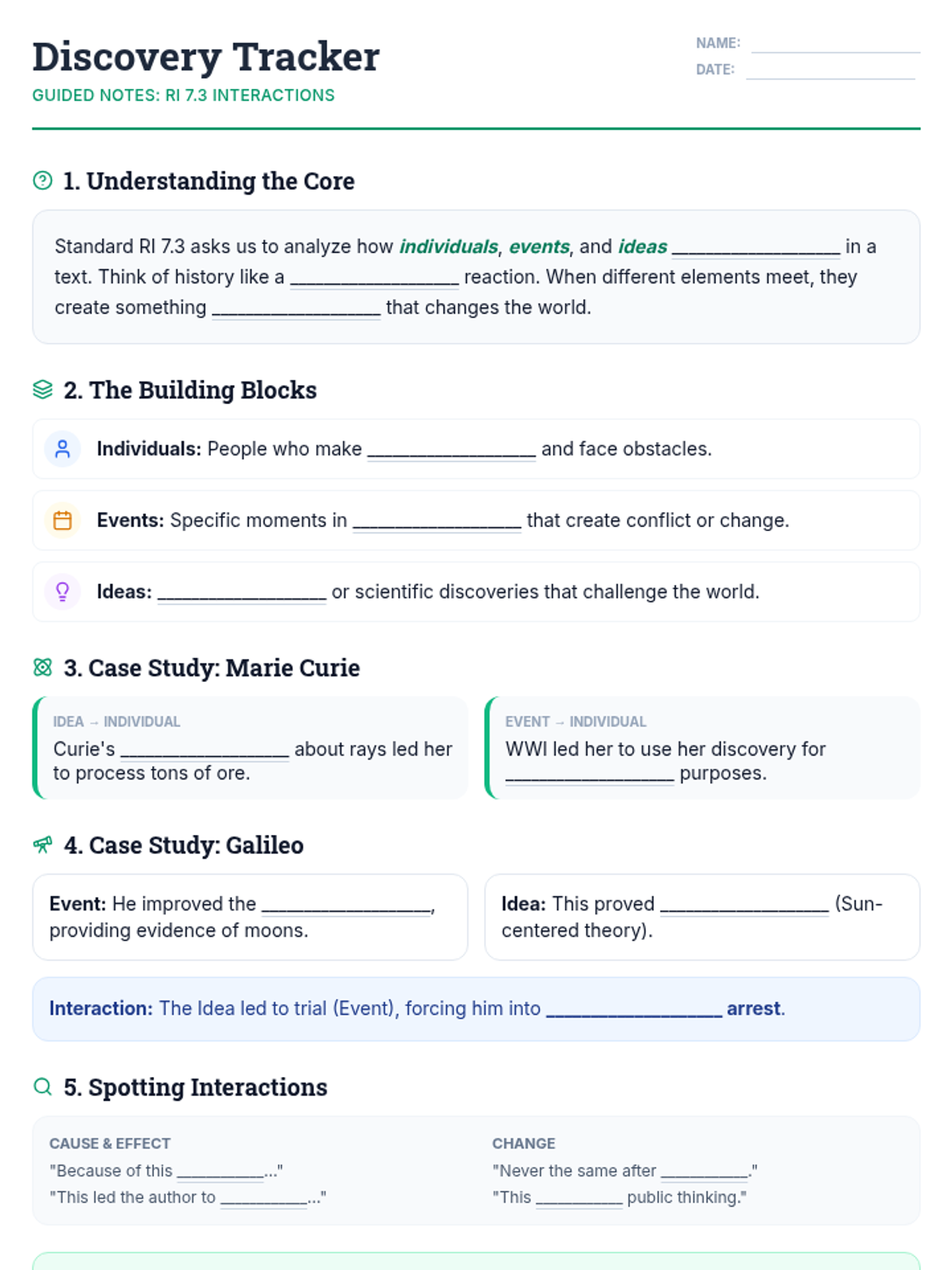
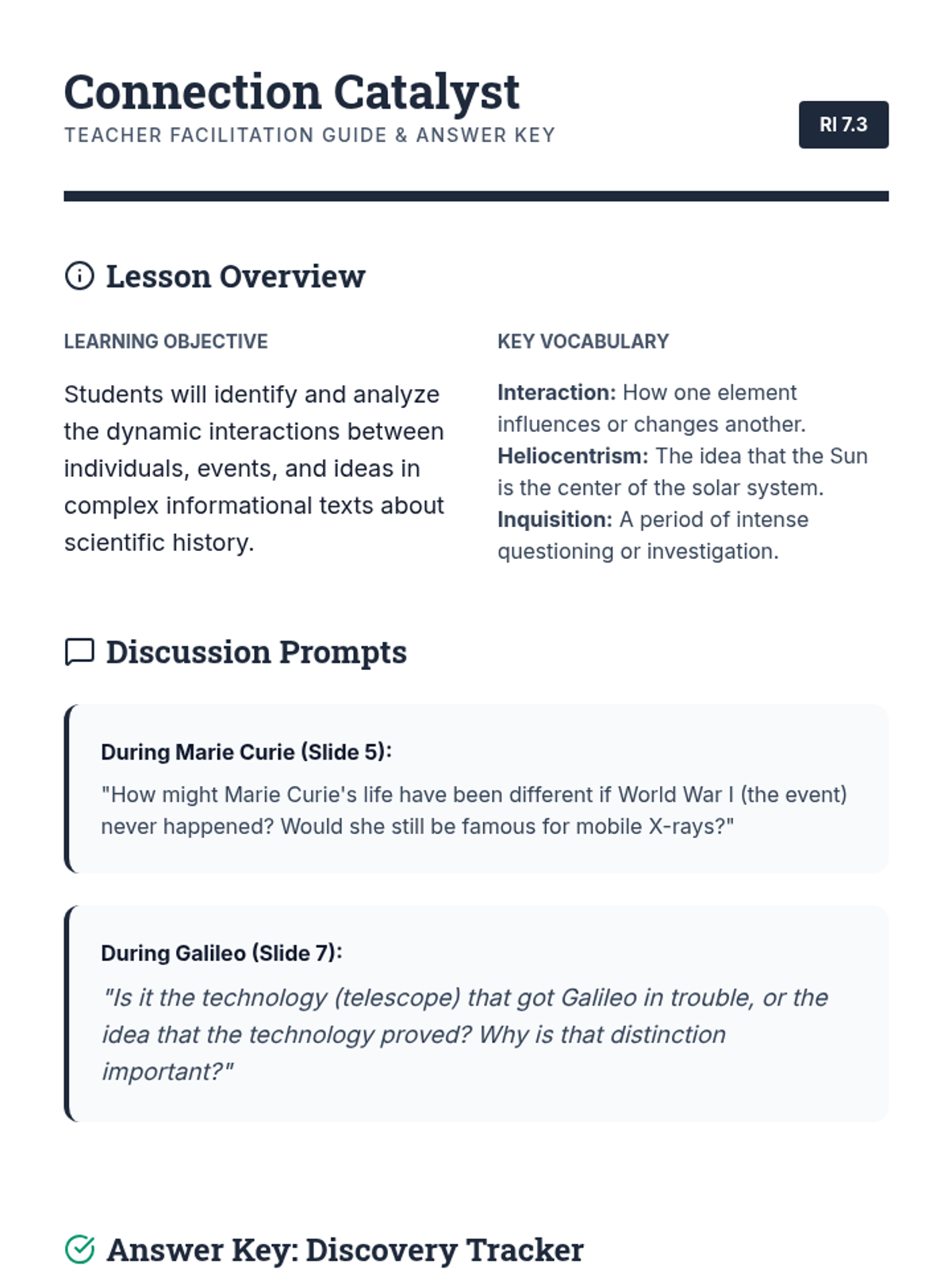
Students will analyze how individuals, events, and ideas interact in the context of historical biographies and scientific breakthroughs, specifically targeting RI 7.3.
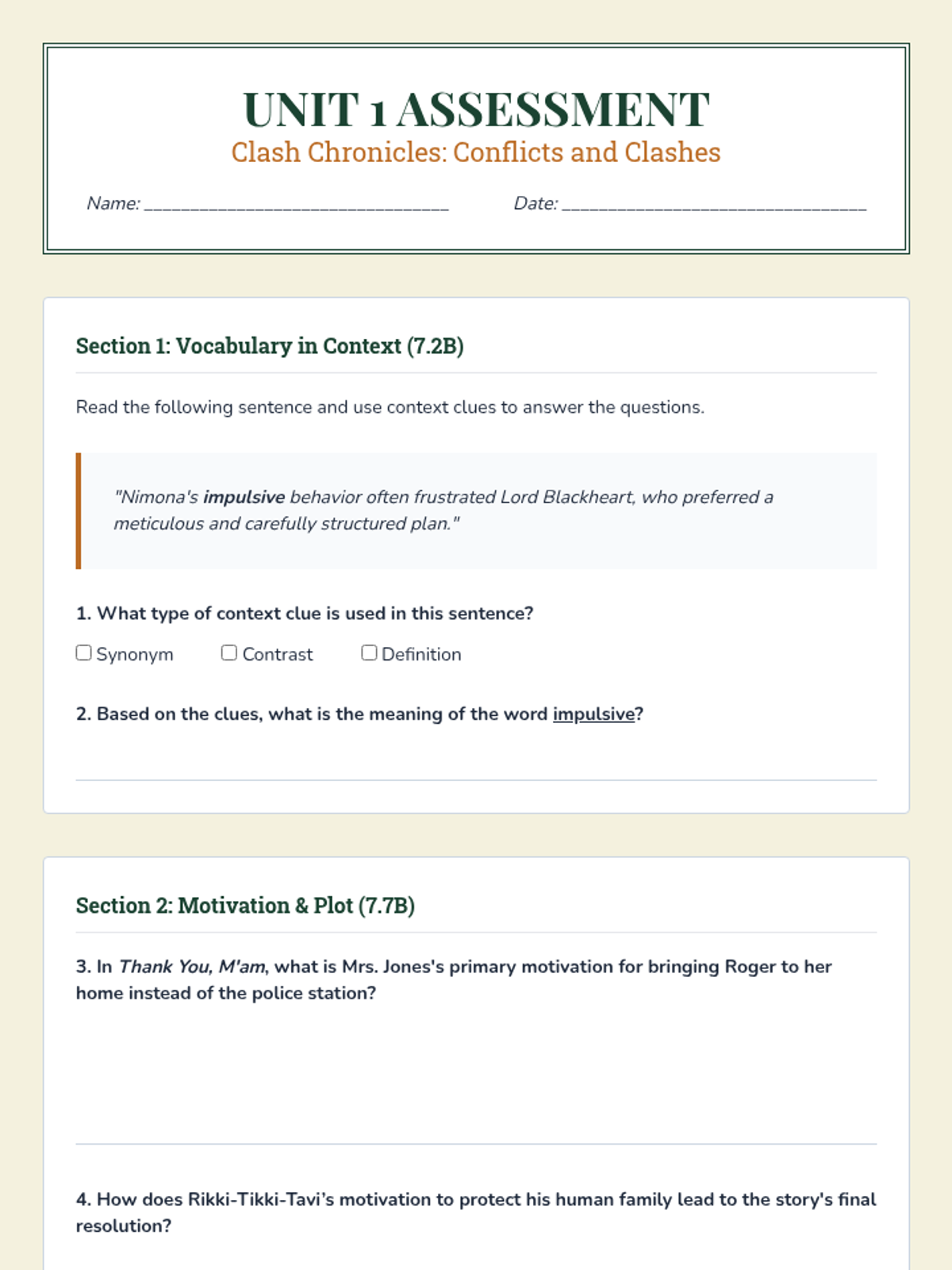
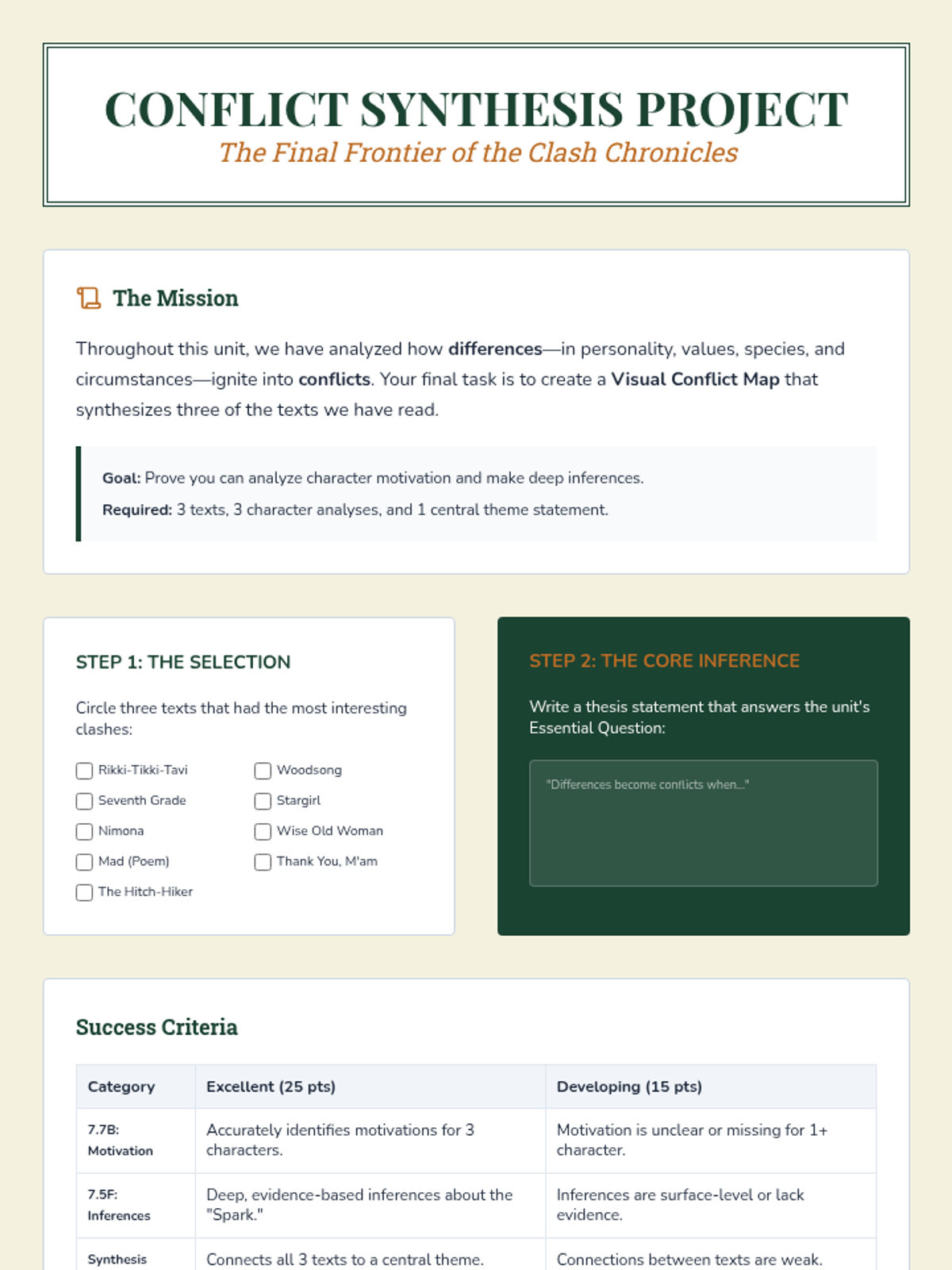
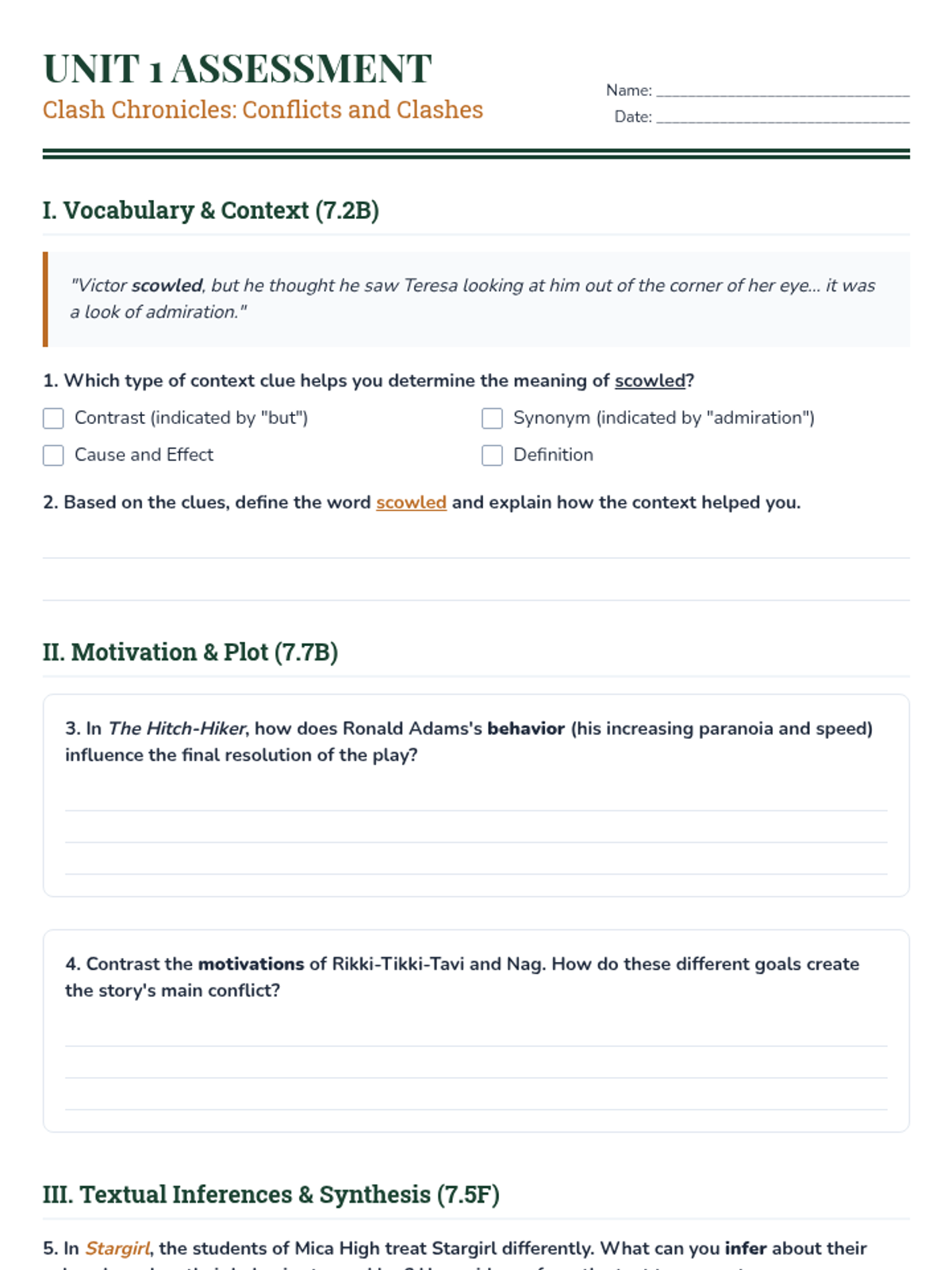
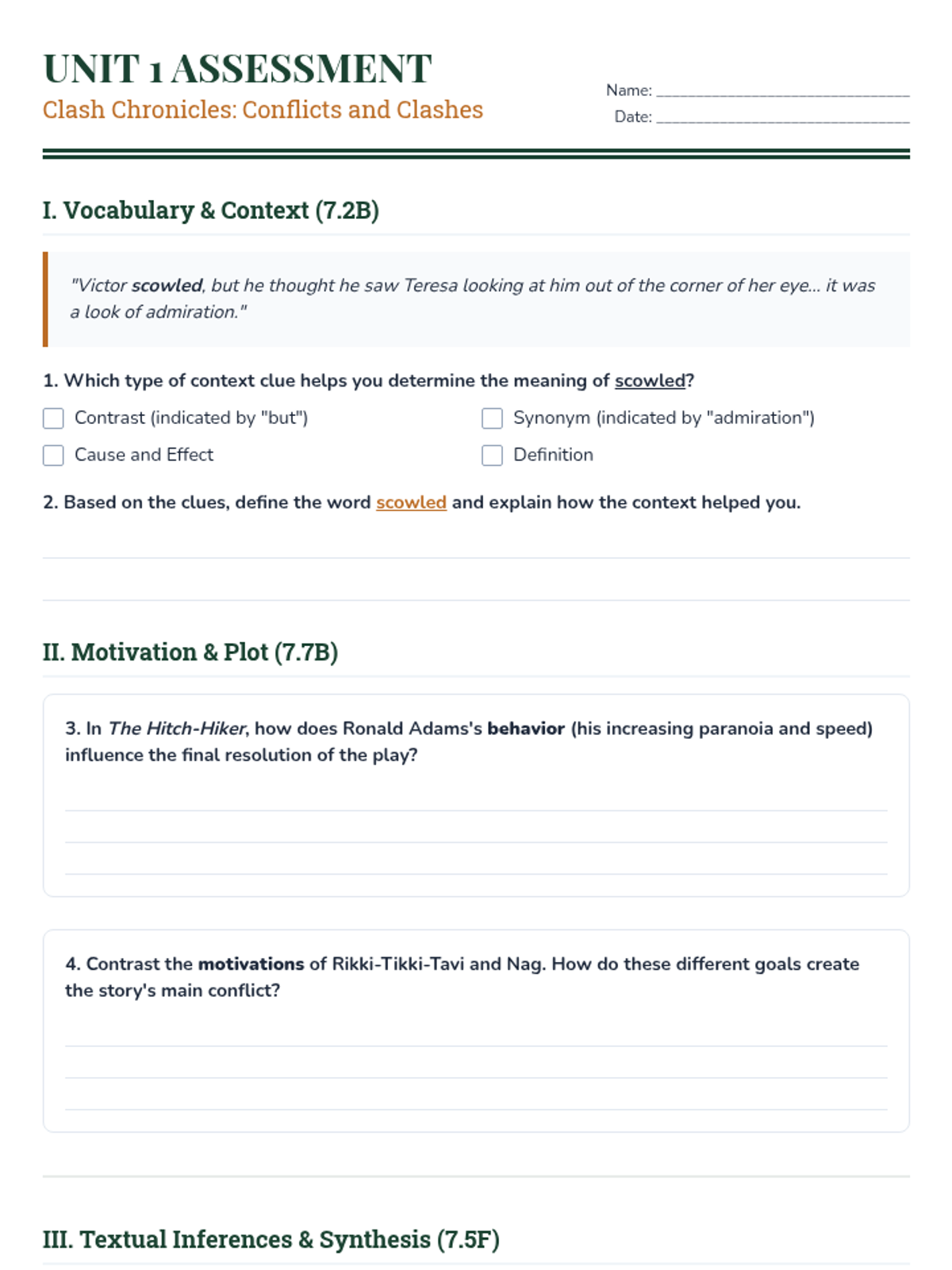
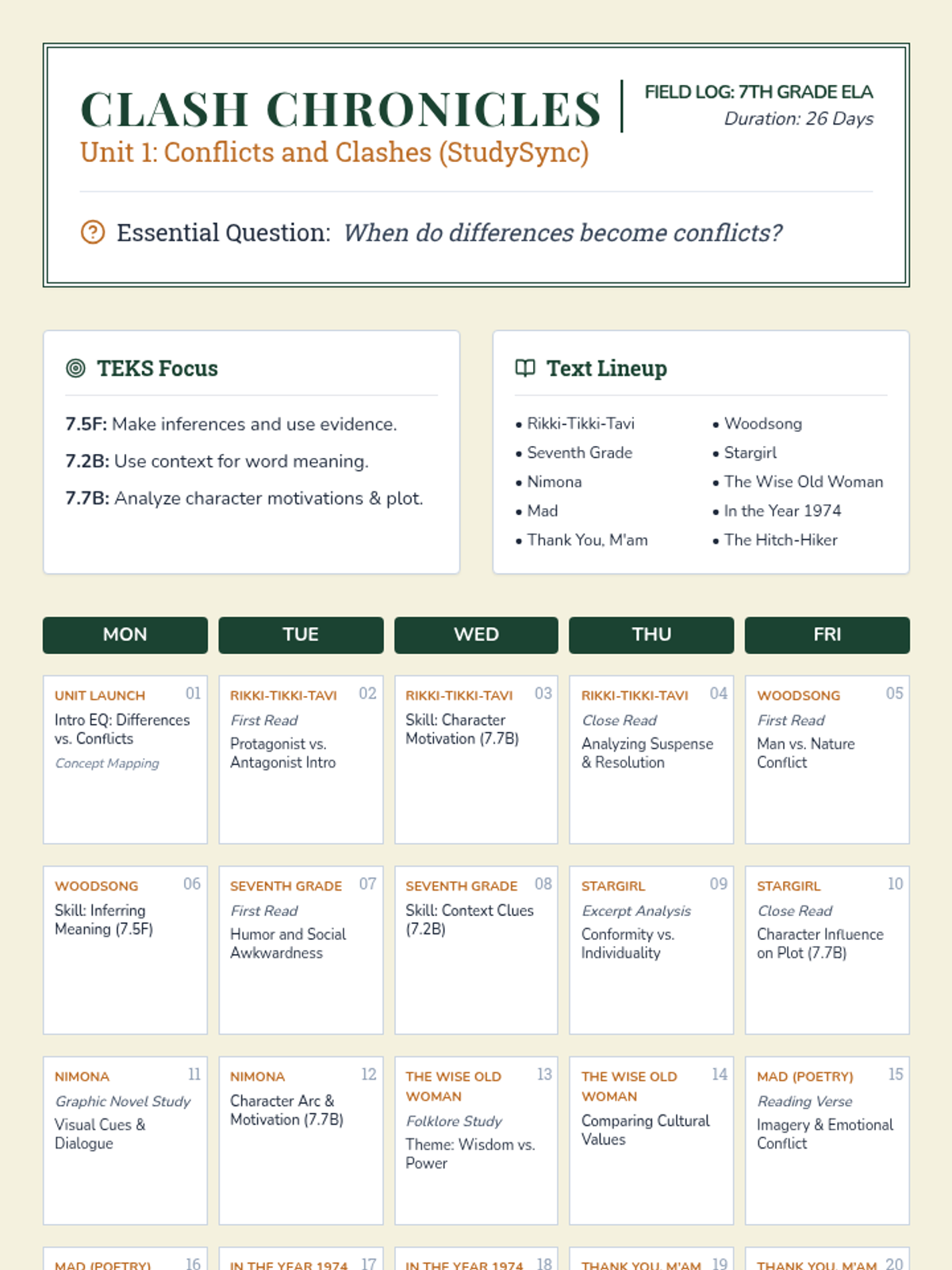
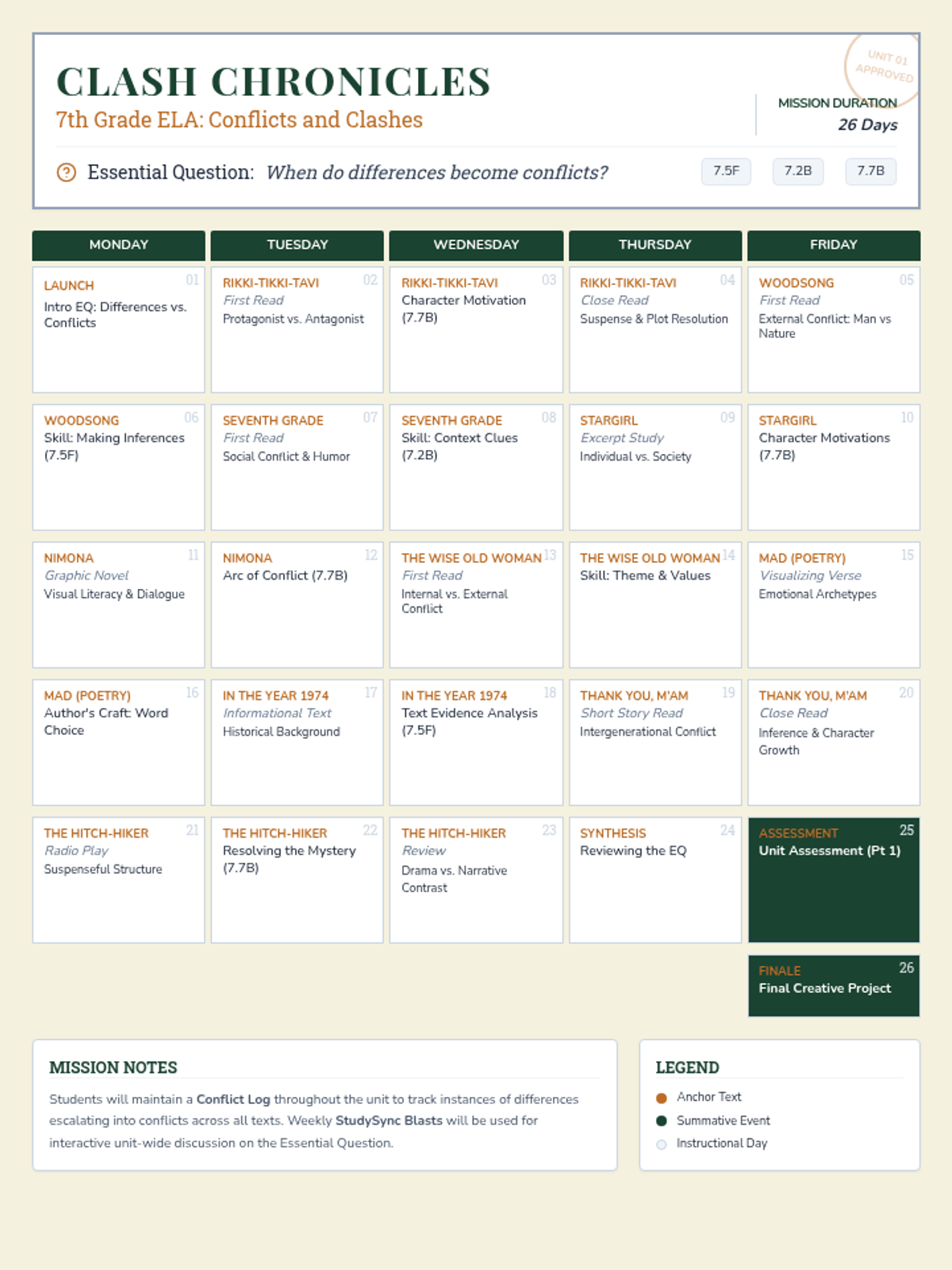
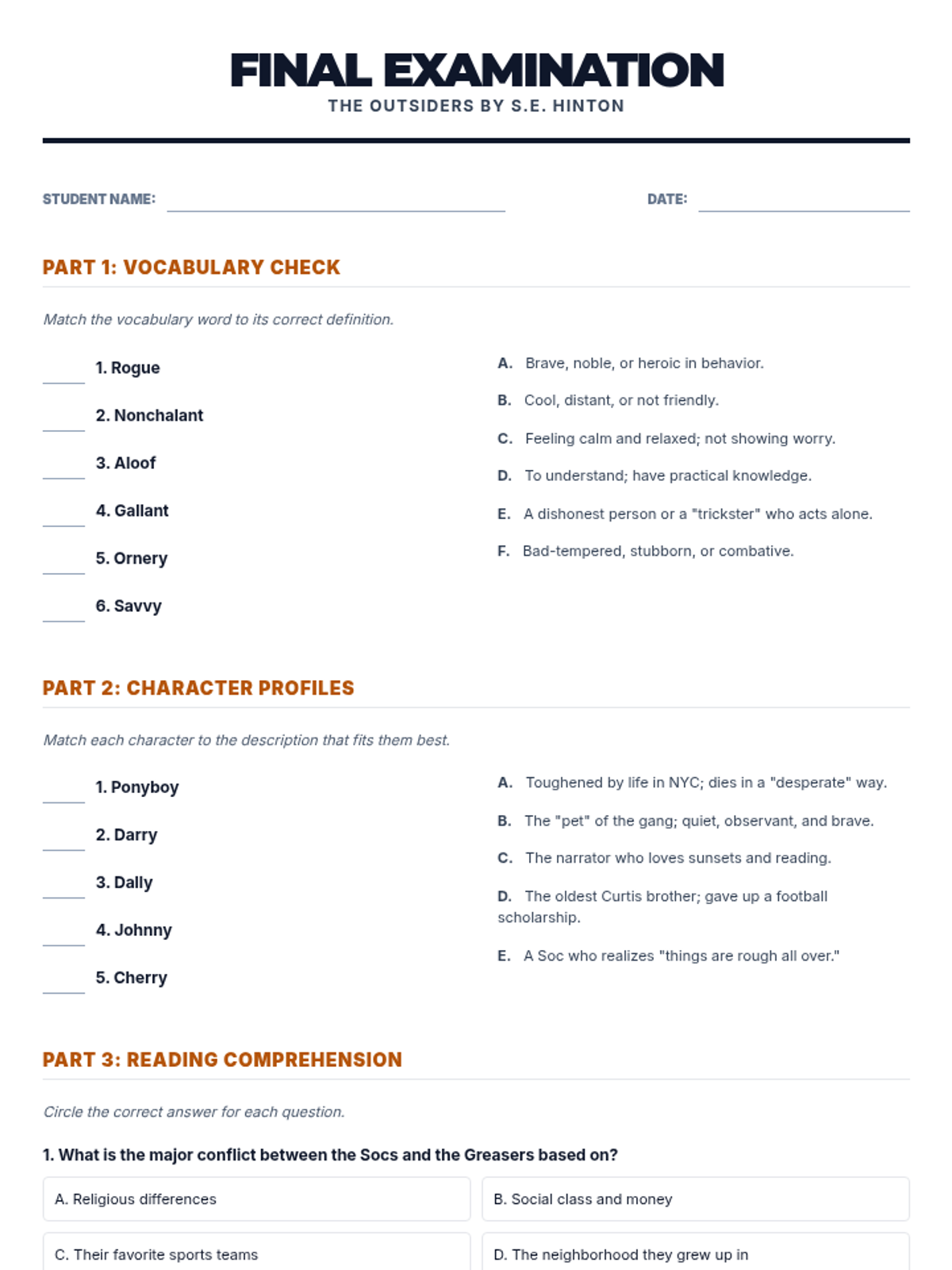
Synthesizing unit themes and essential questions in a final assessment.
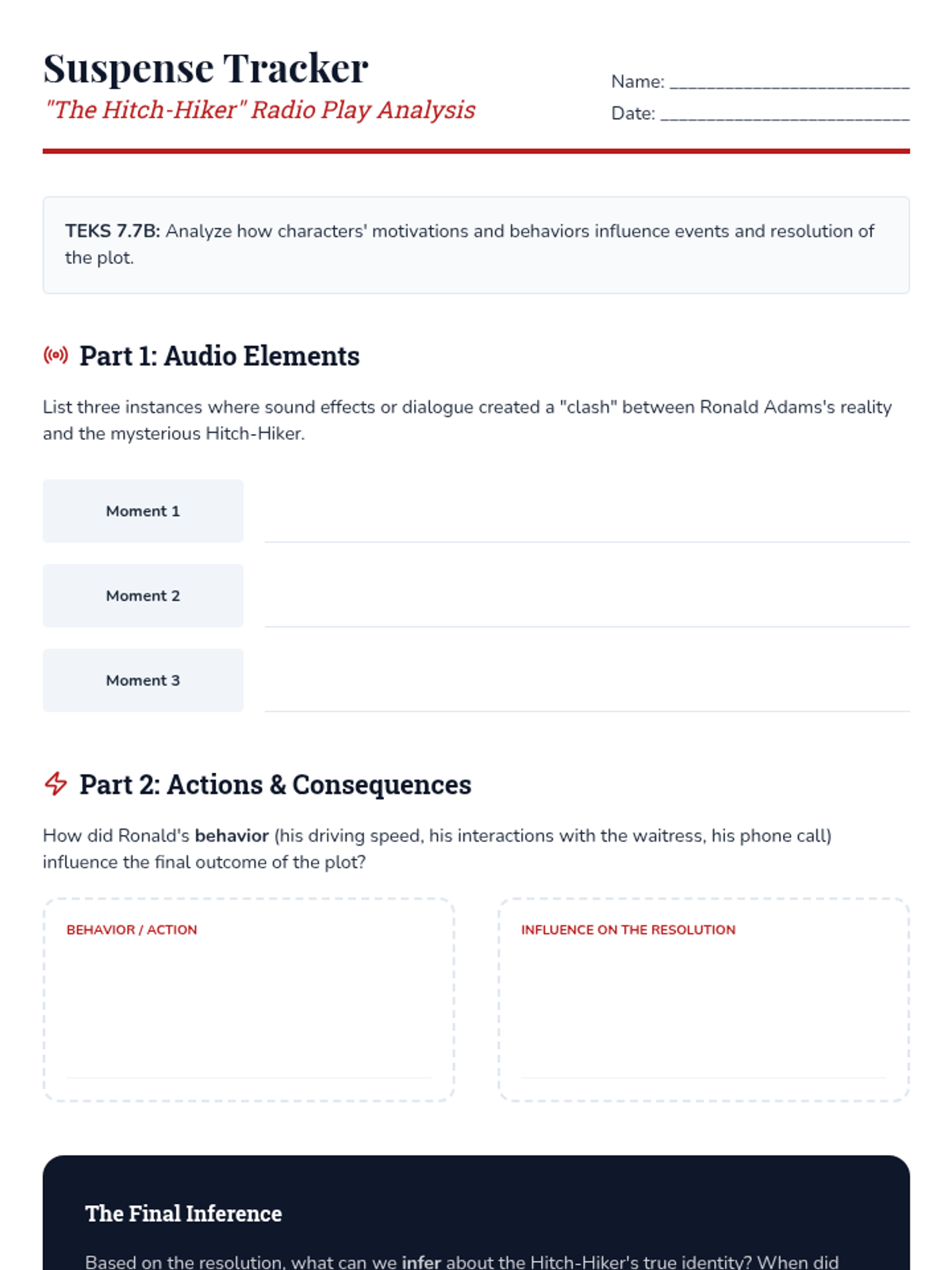
Building suspense and analyzing plot resolution in 'The Hitch-Hiker'.
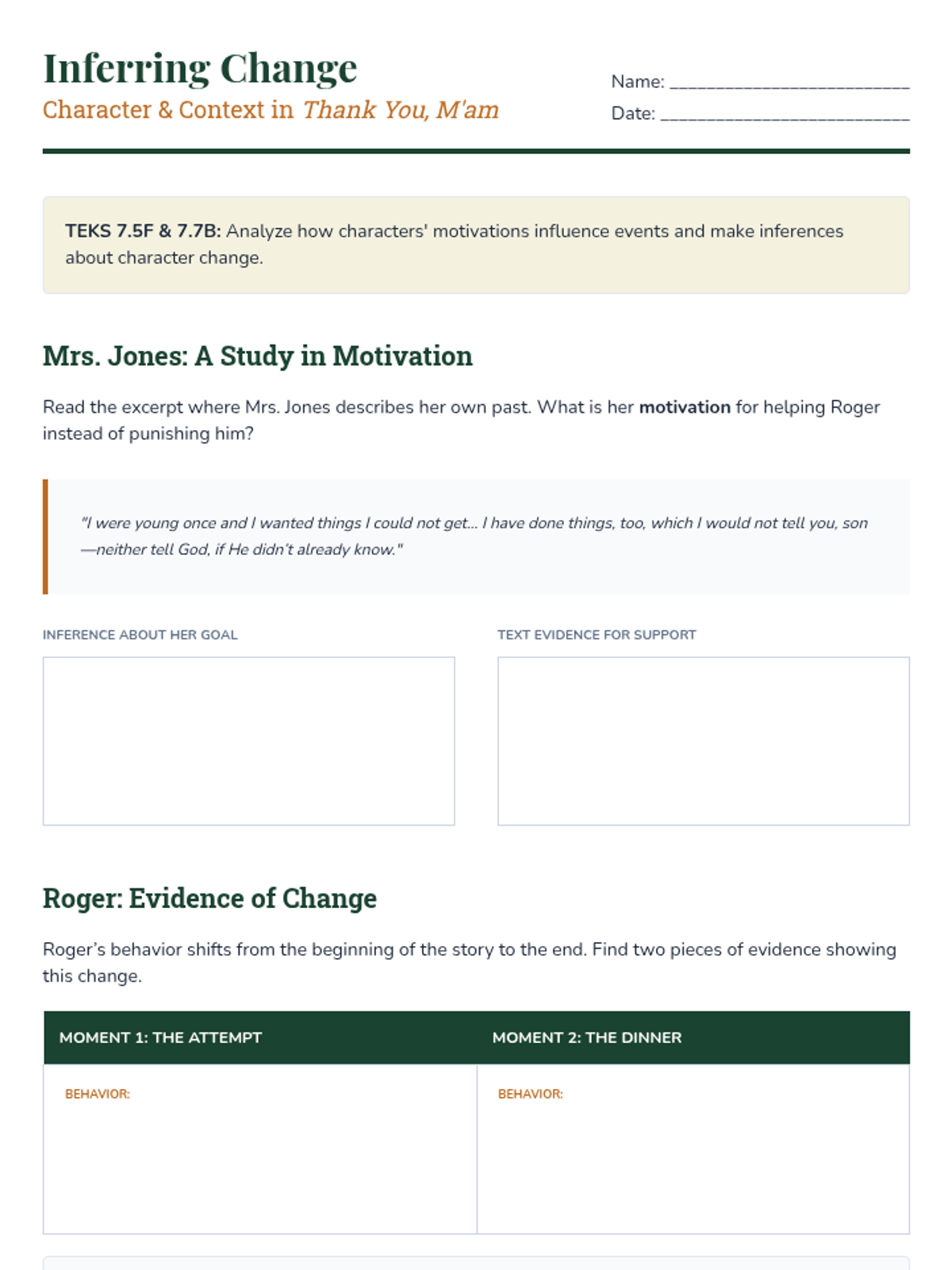
Investigating the impact of the past on the present through 'In the Year 1974' and 'Thank You, M’am'.
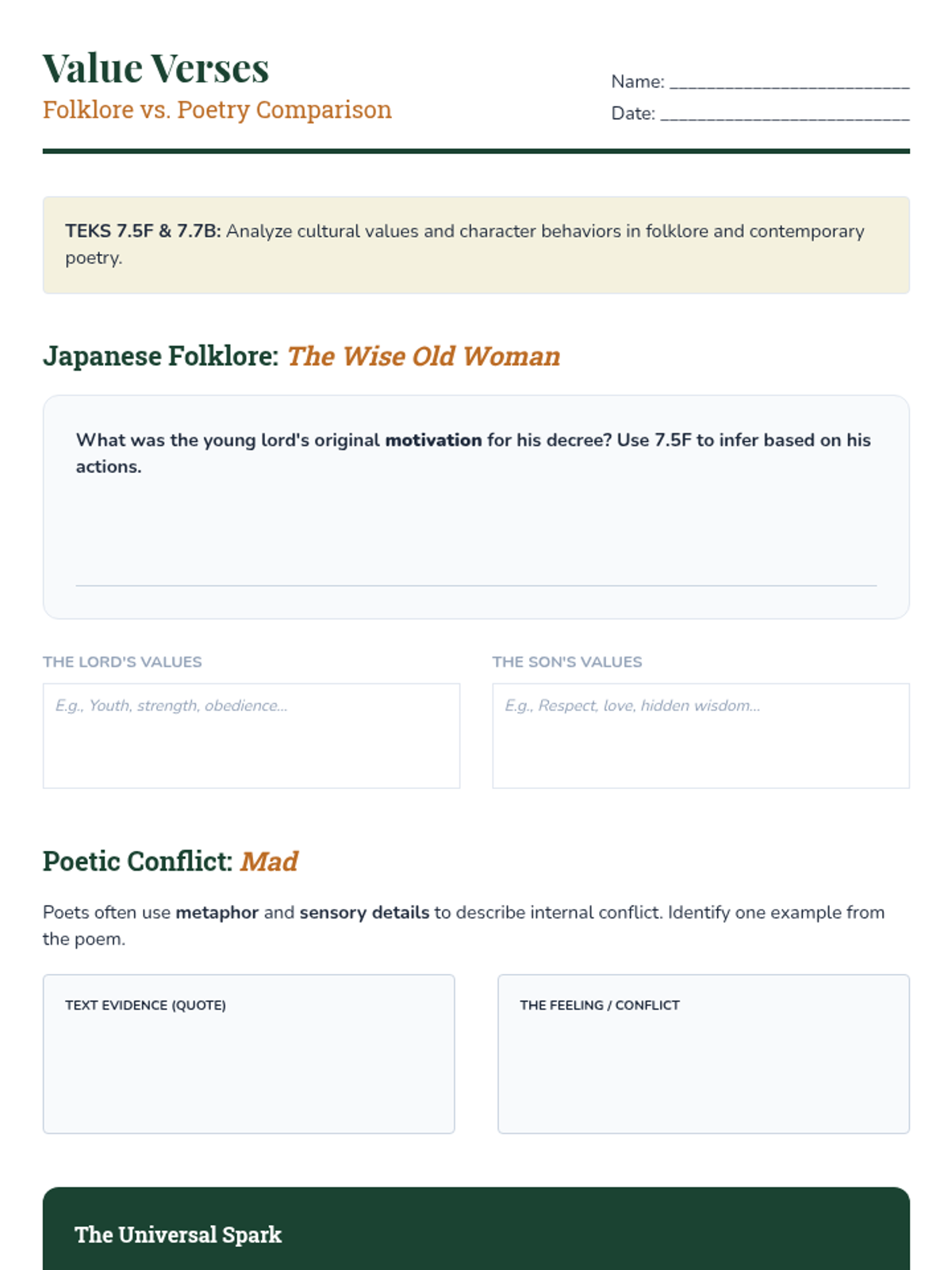
Examining internal conflict and cultural values in 'The Wise Old Woman' and 'Mad'.
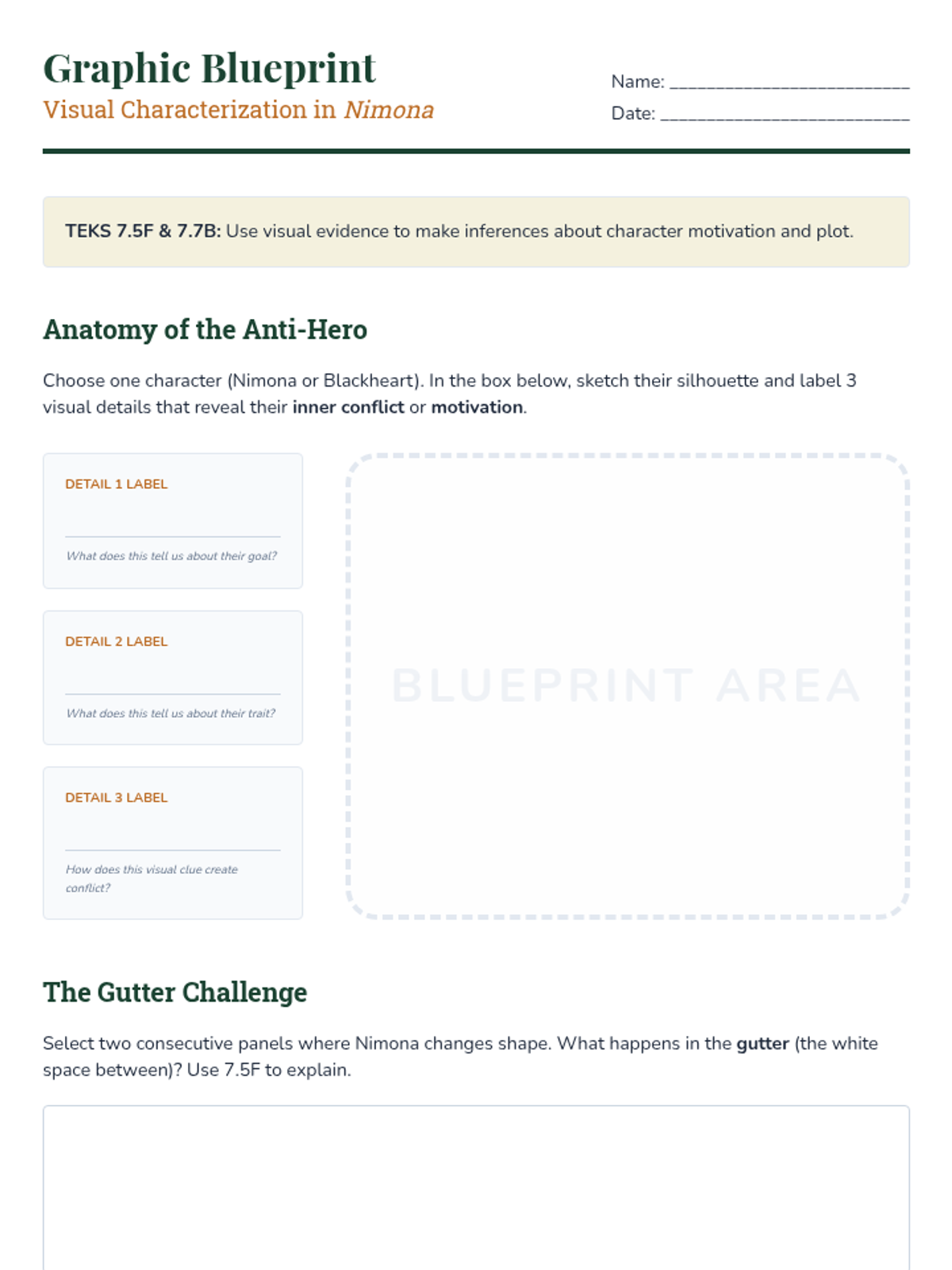
Breaking tropes and analyzing character complexity in the graphic novel 'Nimona'.
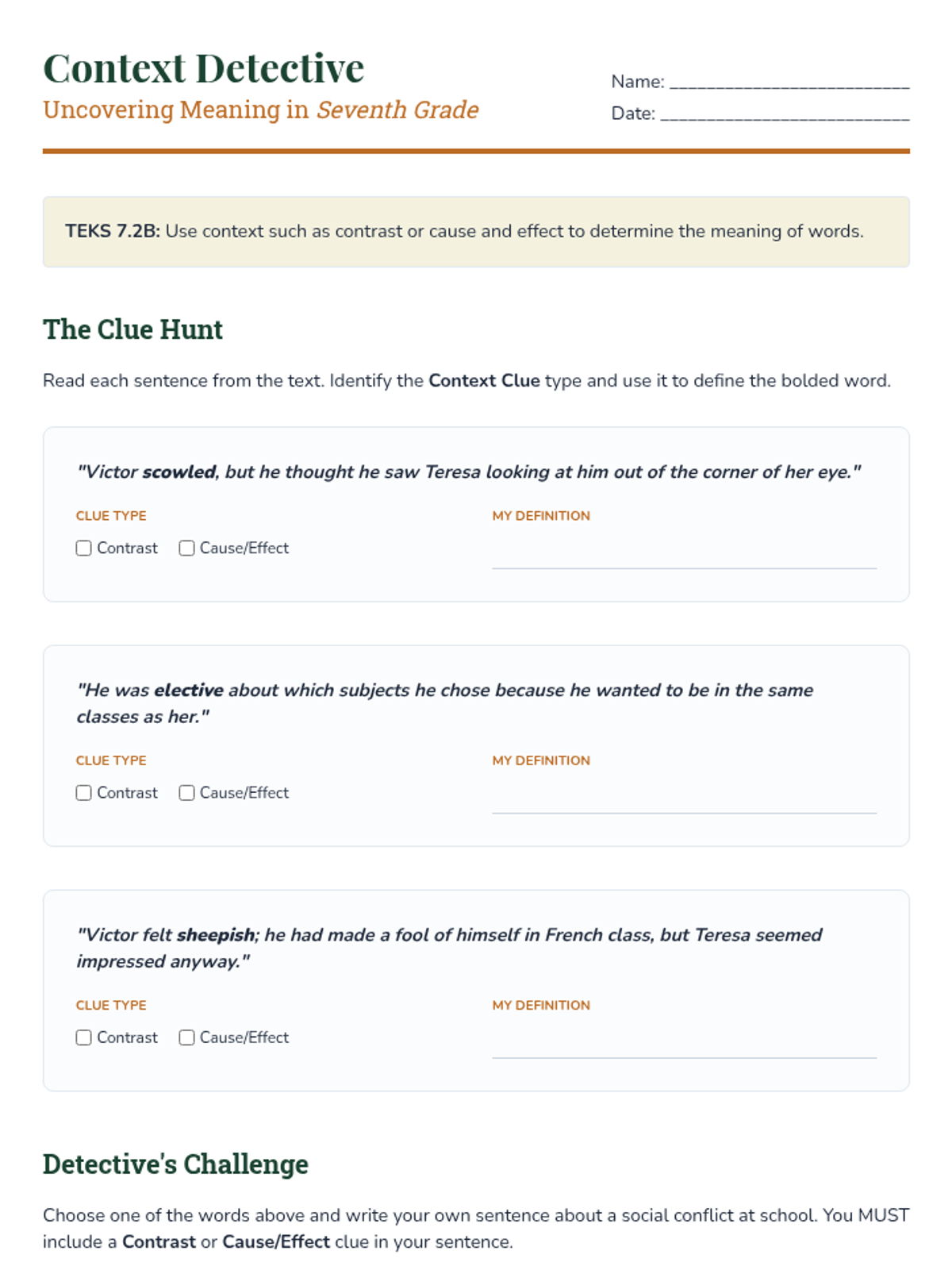
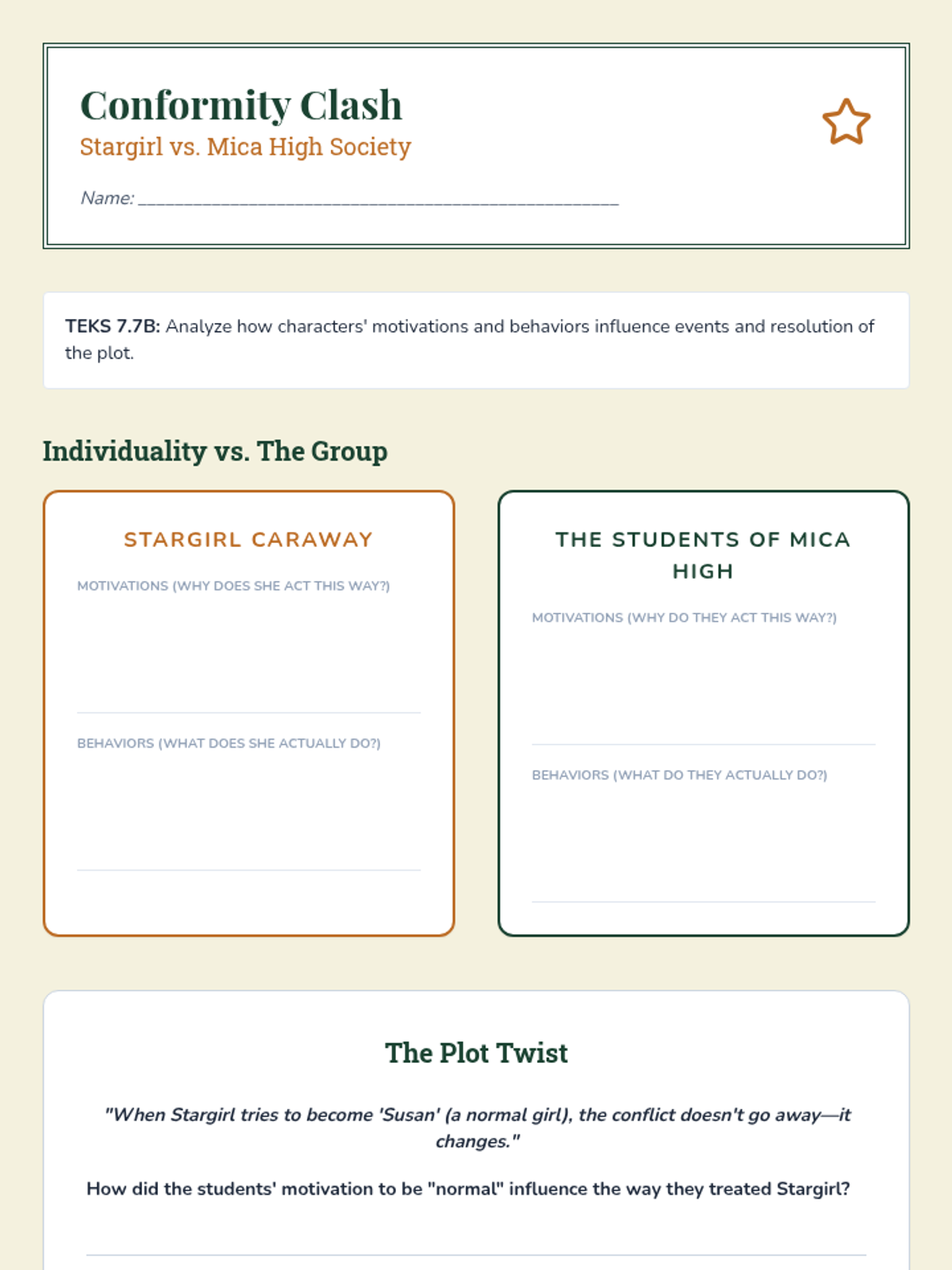
Exploring social conflict and the pressure to conform in 'Seventh Grade' and 'Stargirl'.
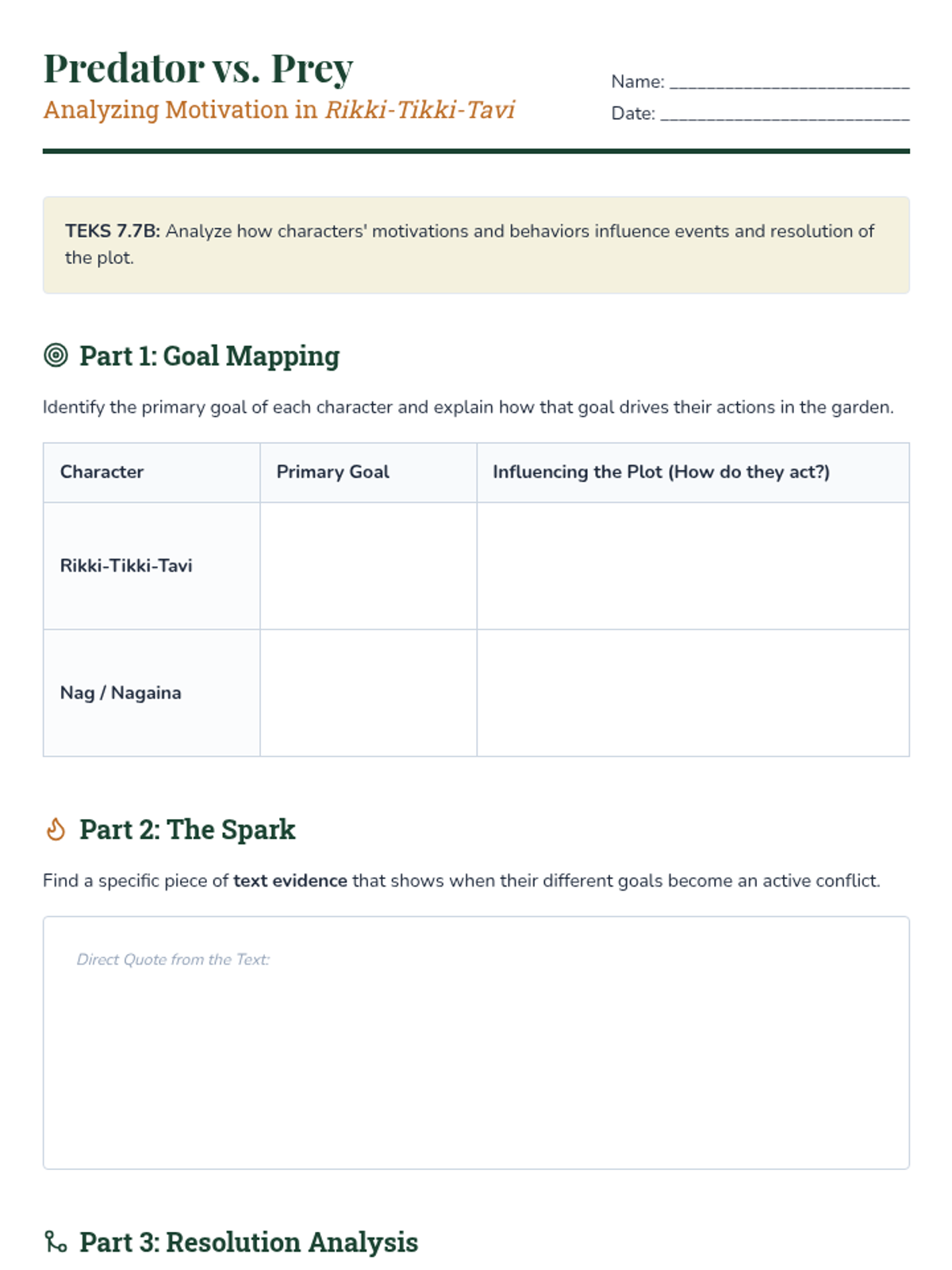
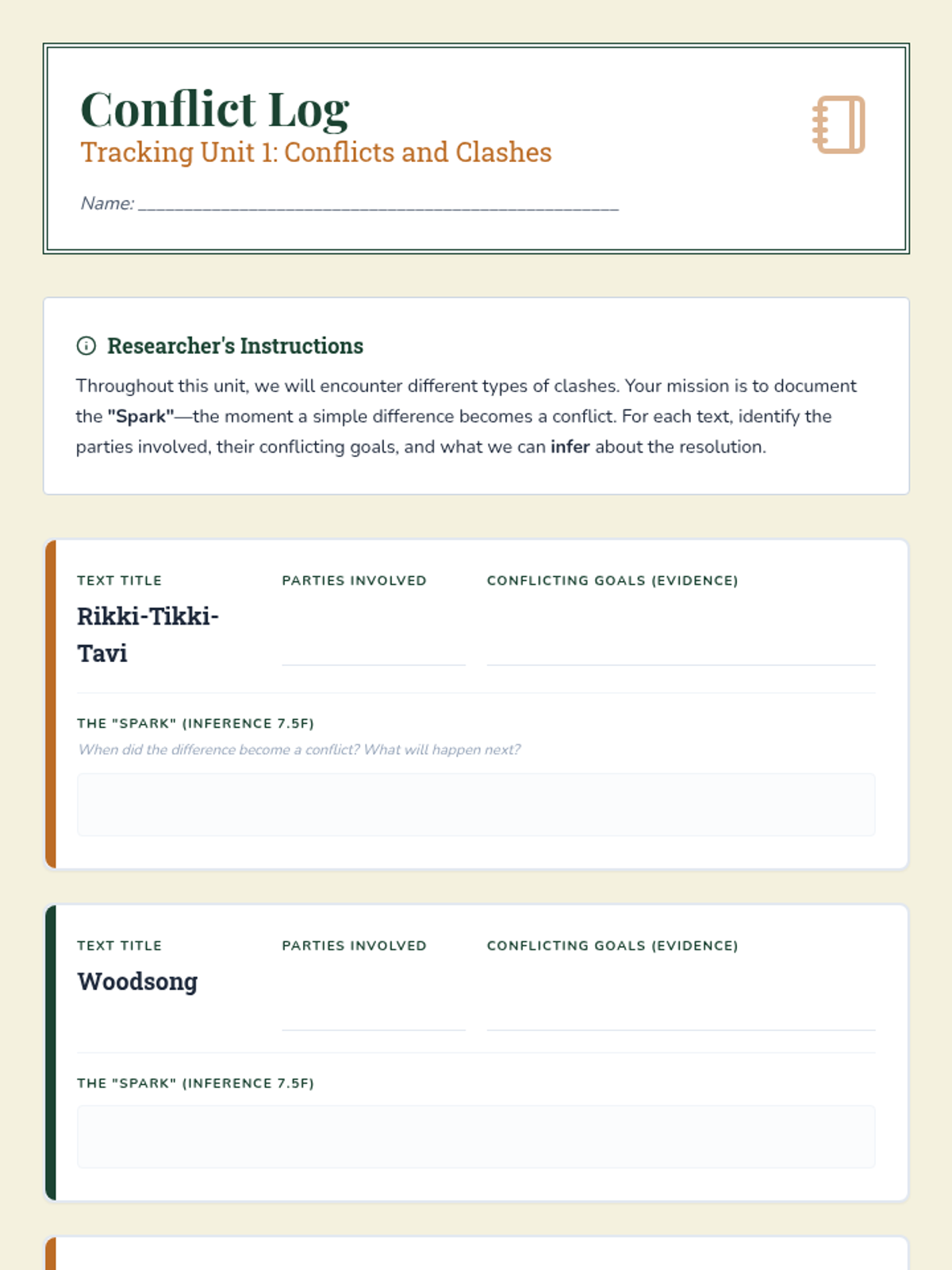
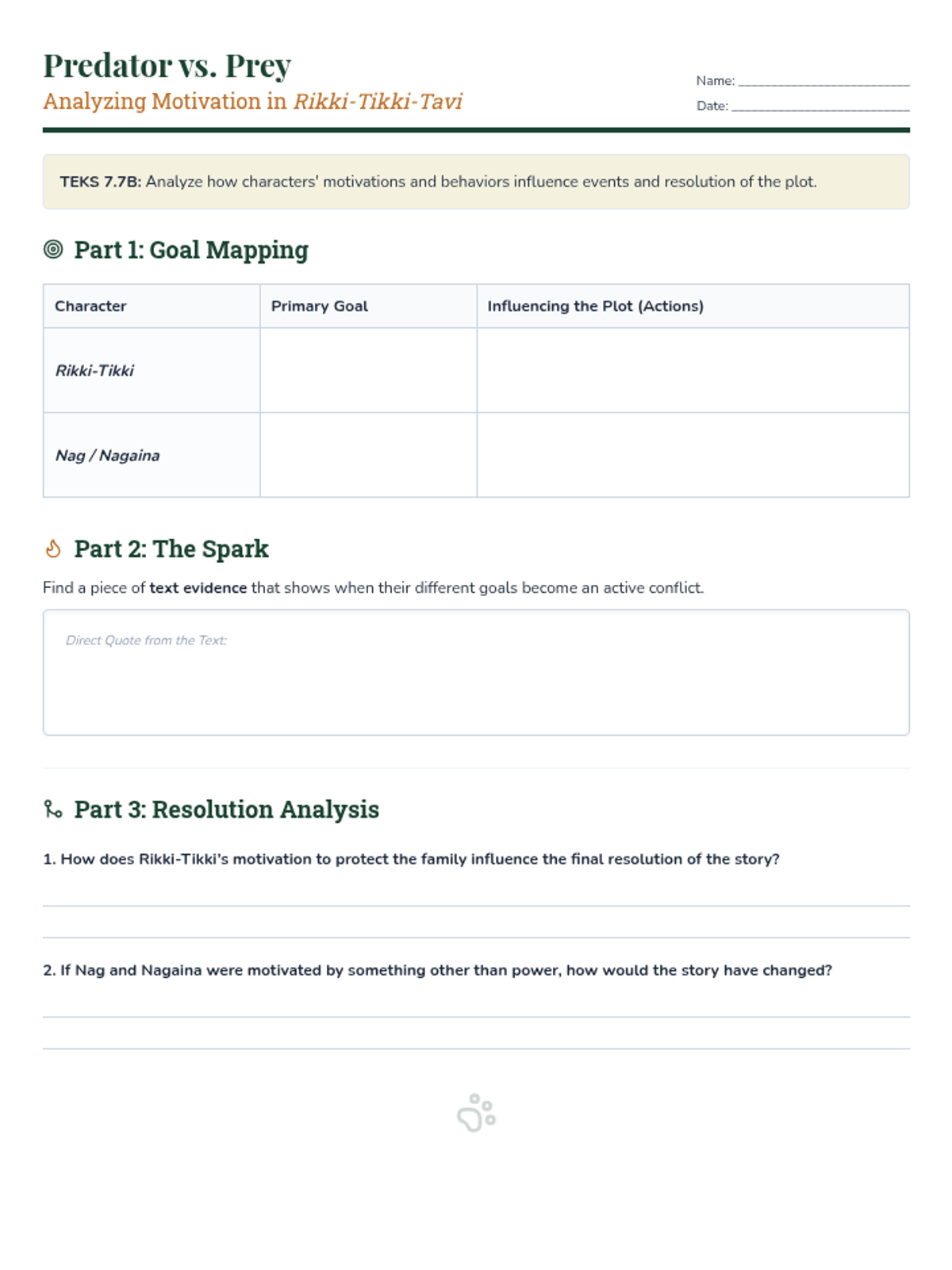
Intro to Unit, Essential Question, and analyzing character motivation in Kipling's 'Rikki-Tikki-Tavi'.
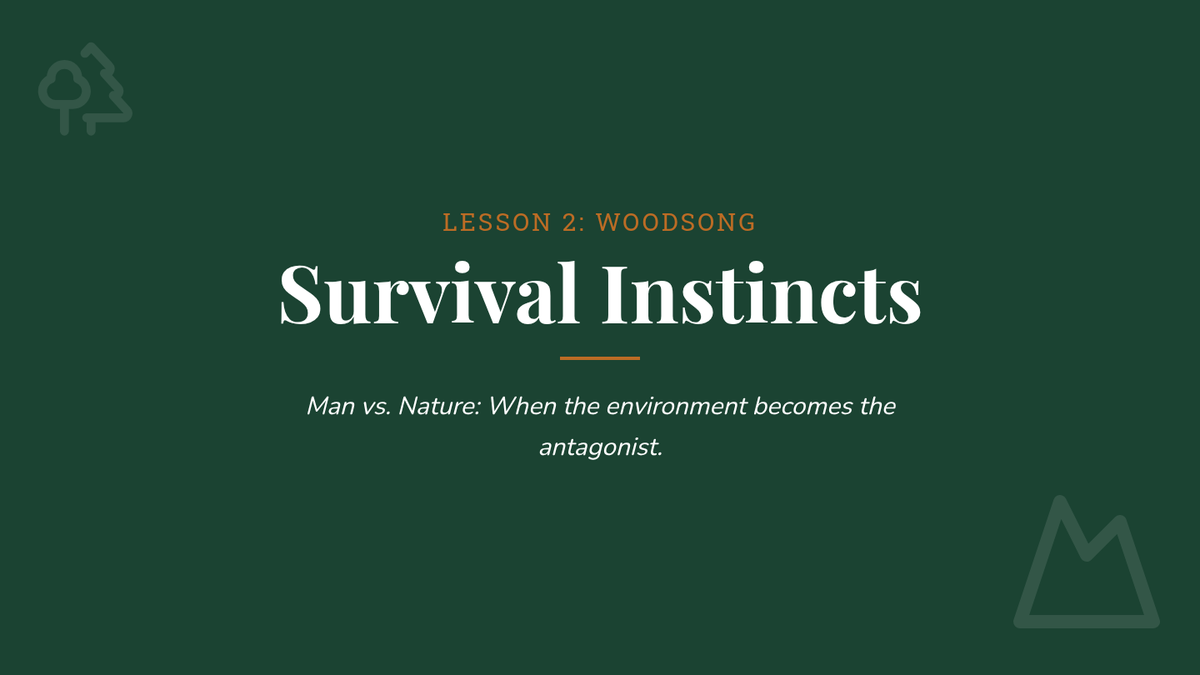
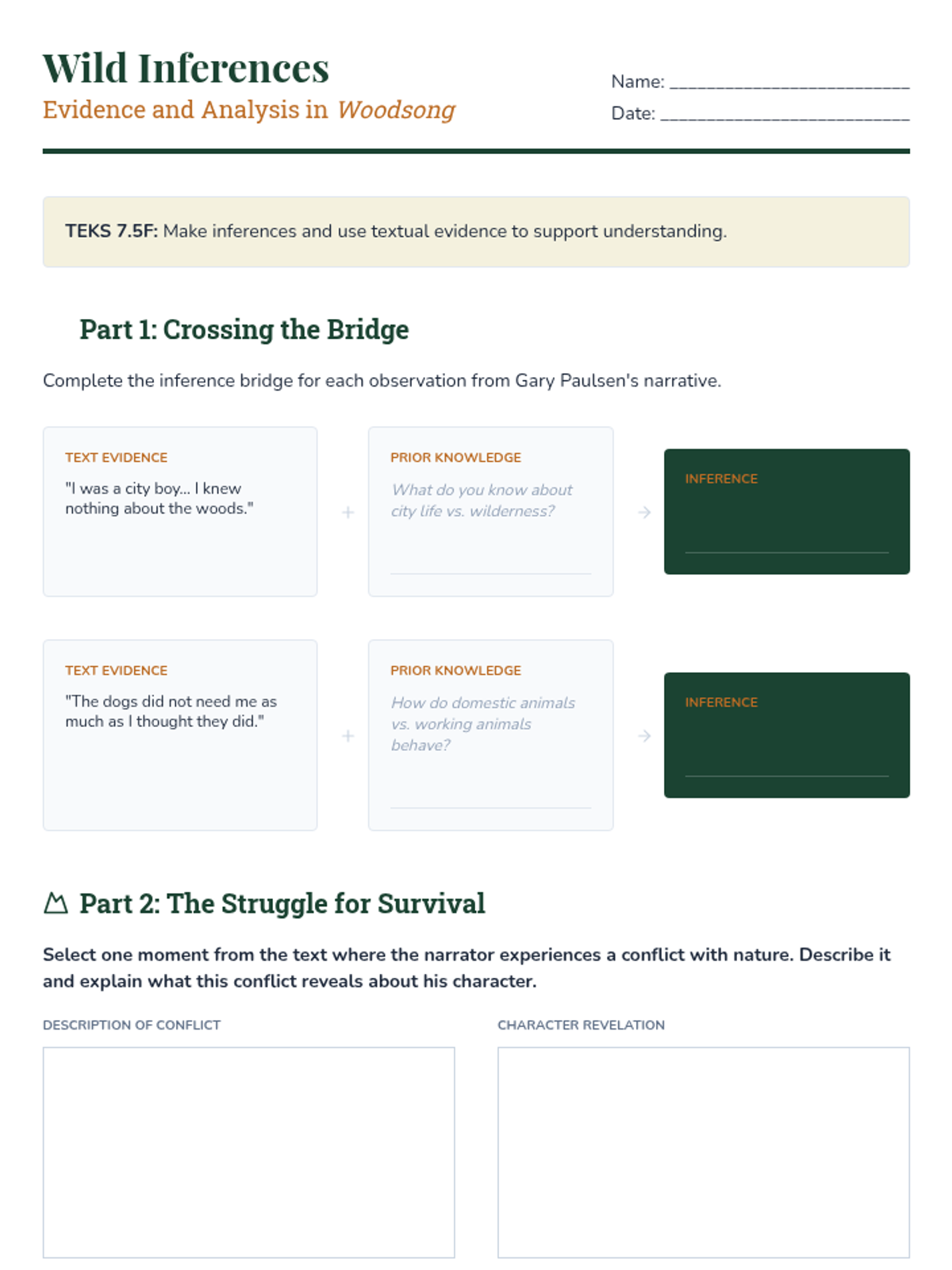
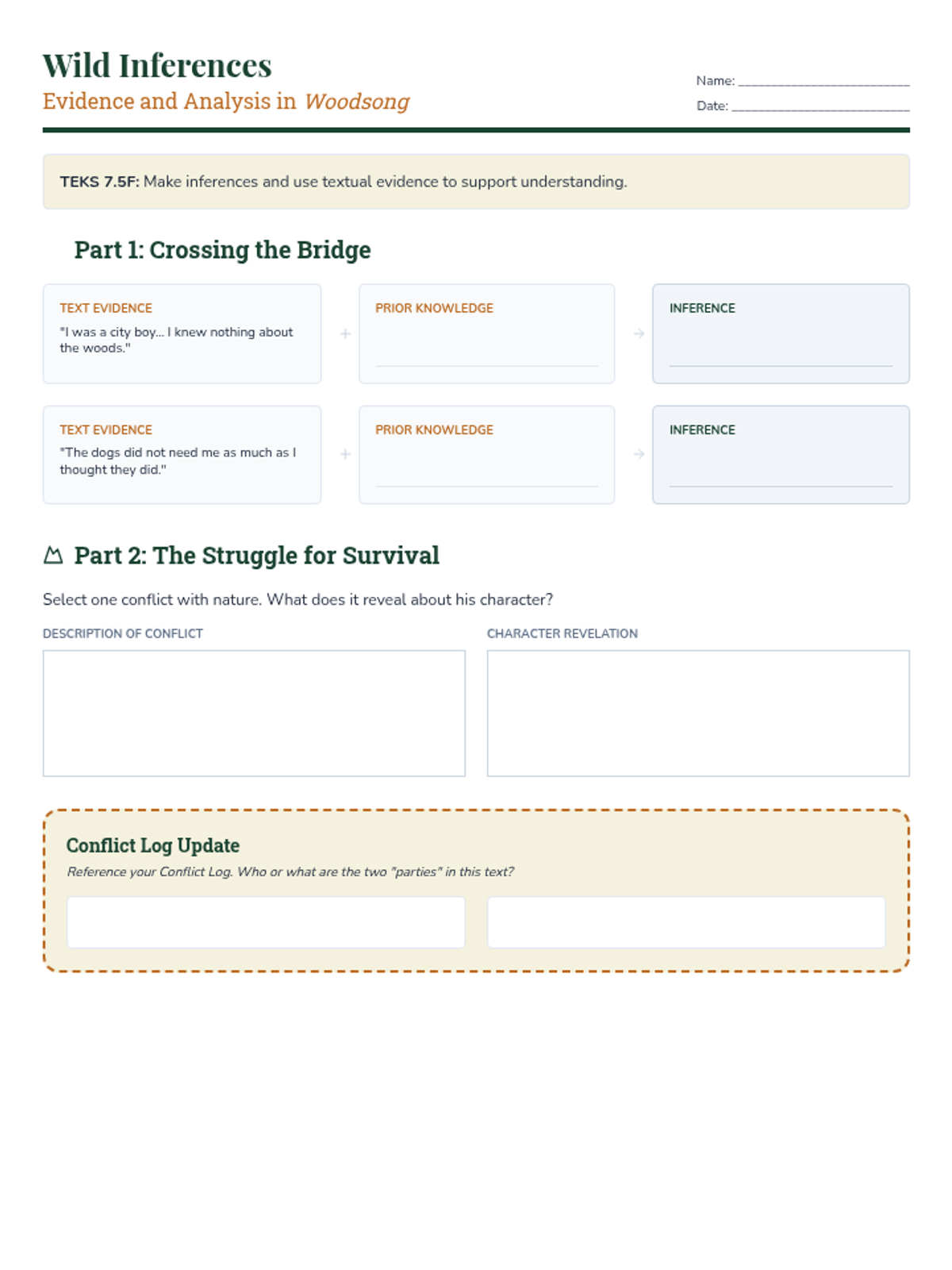
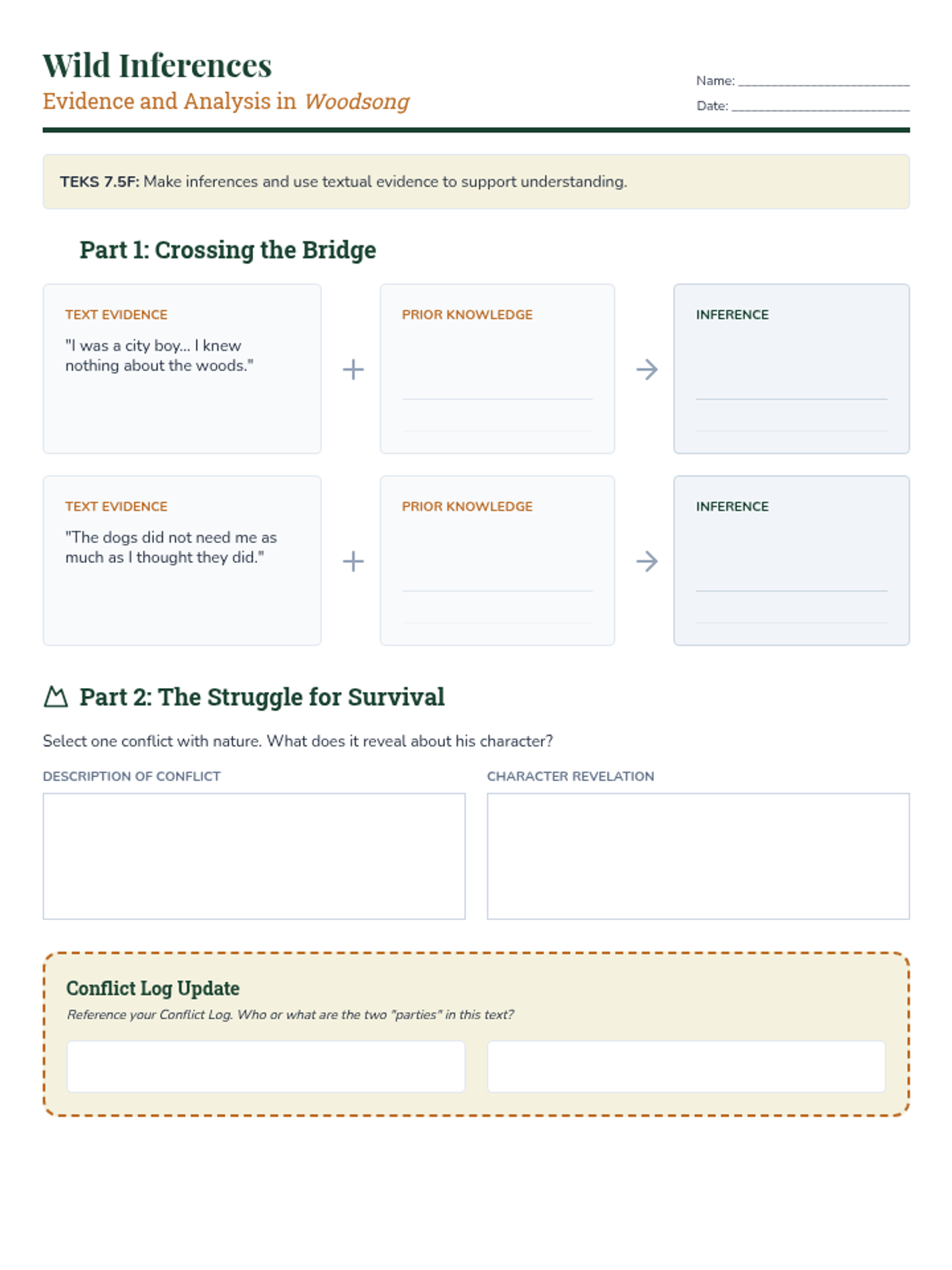
Analysis of survival and external conflict in informational texts through 'Woodsong'.
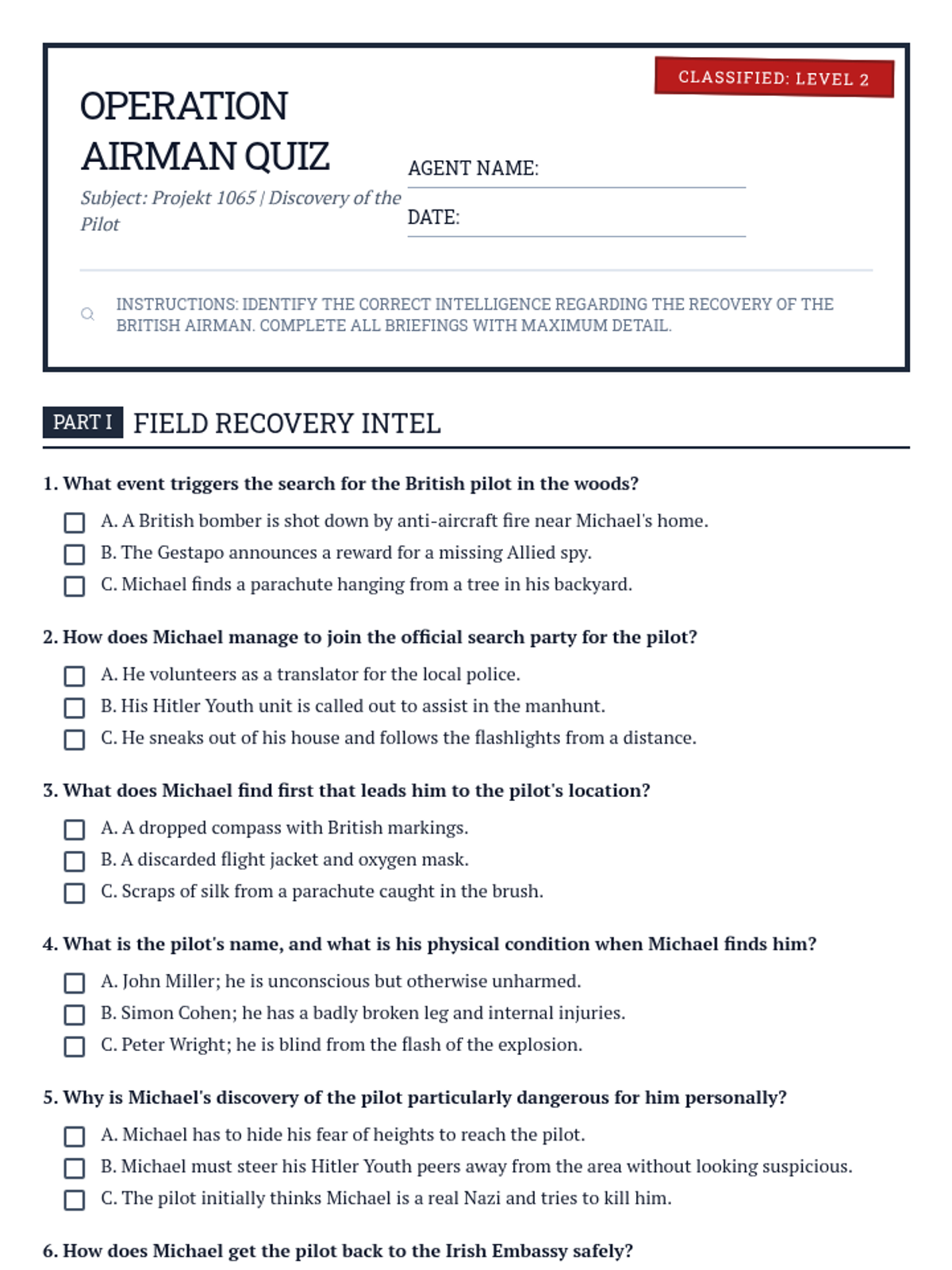
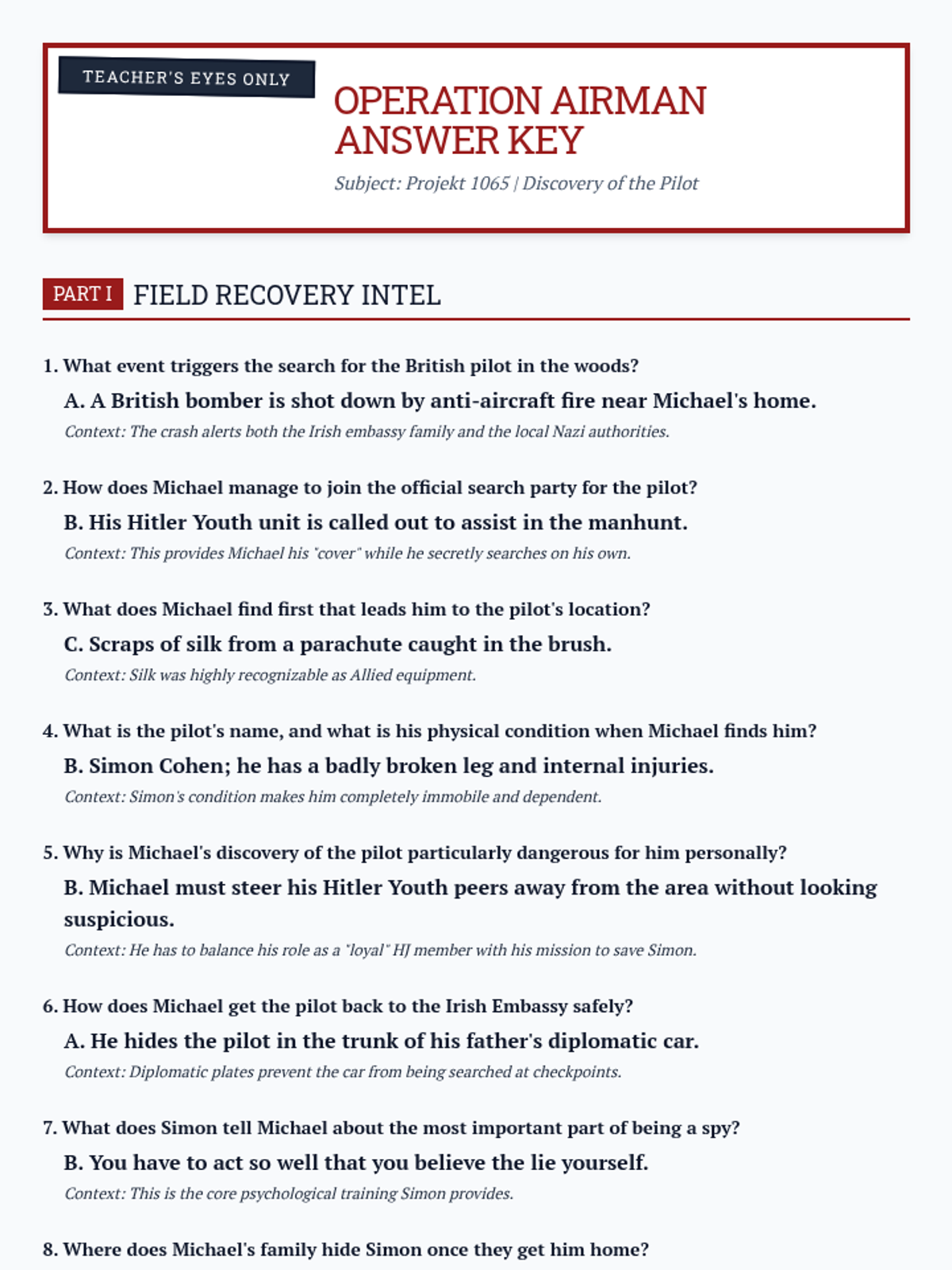
A comprehensive assessment covering chapters 7 through 21 of Alan Gratz's 'Projekt 1065', focusing on Michael's initiation into the Hitler Youth and the discovery of the jet plane blueprints.
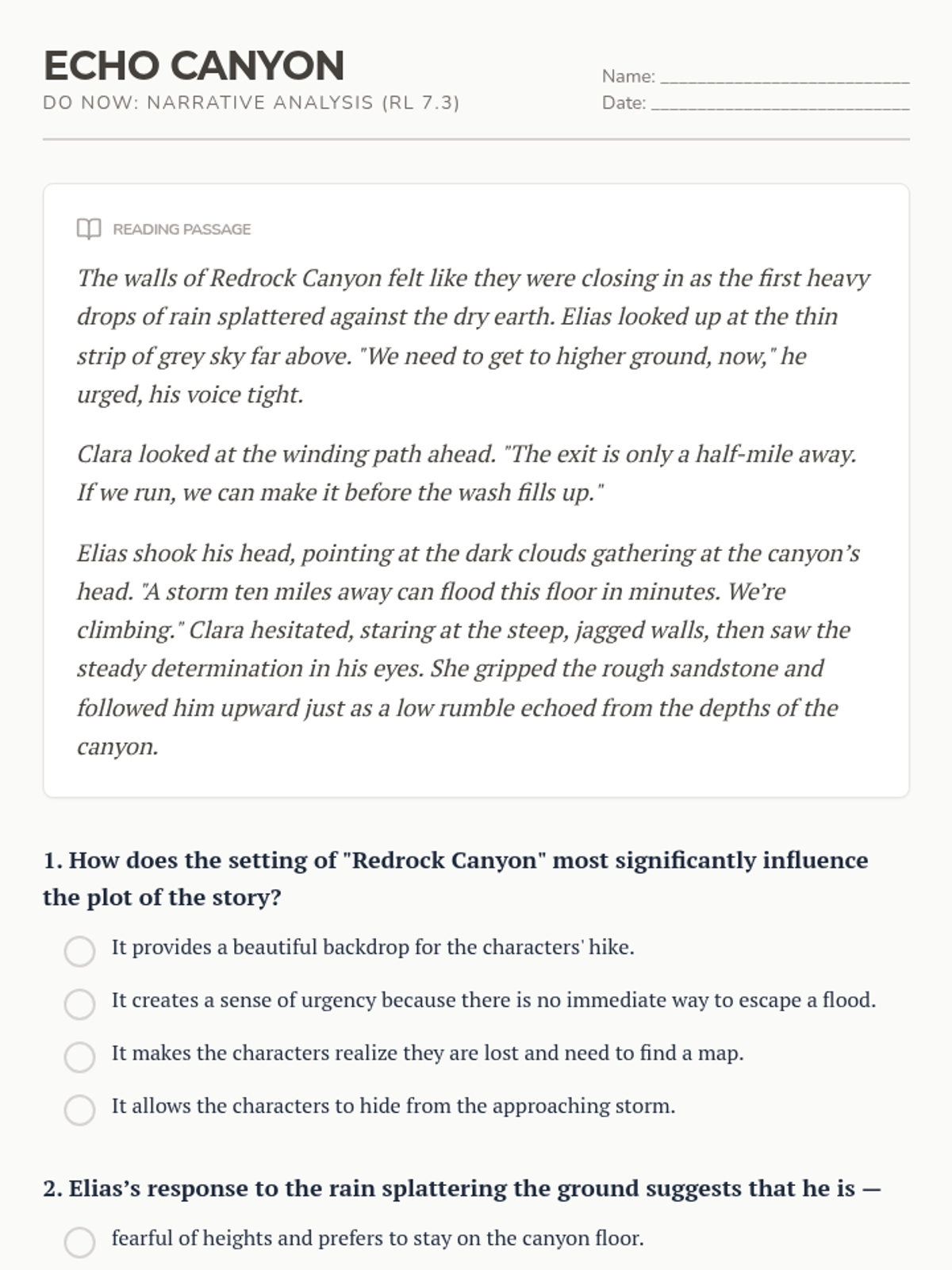
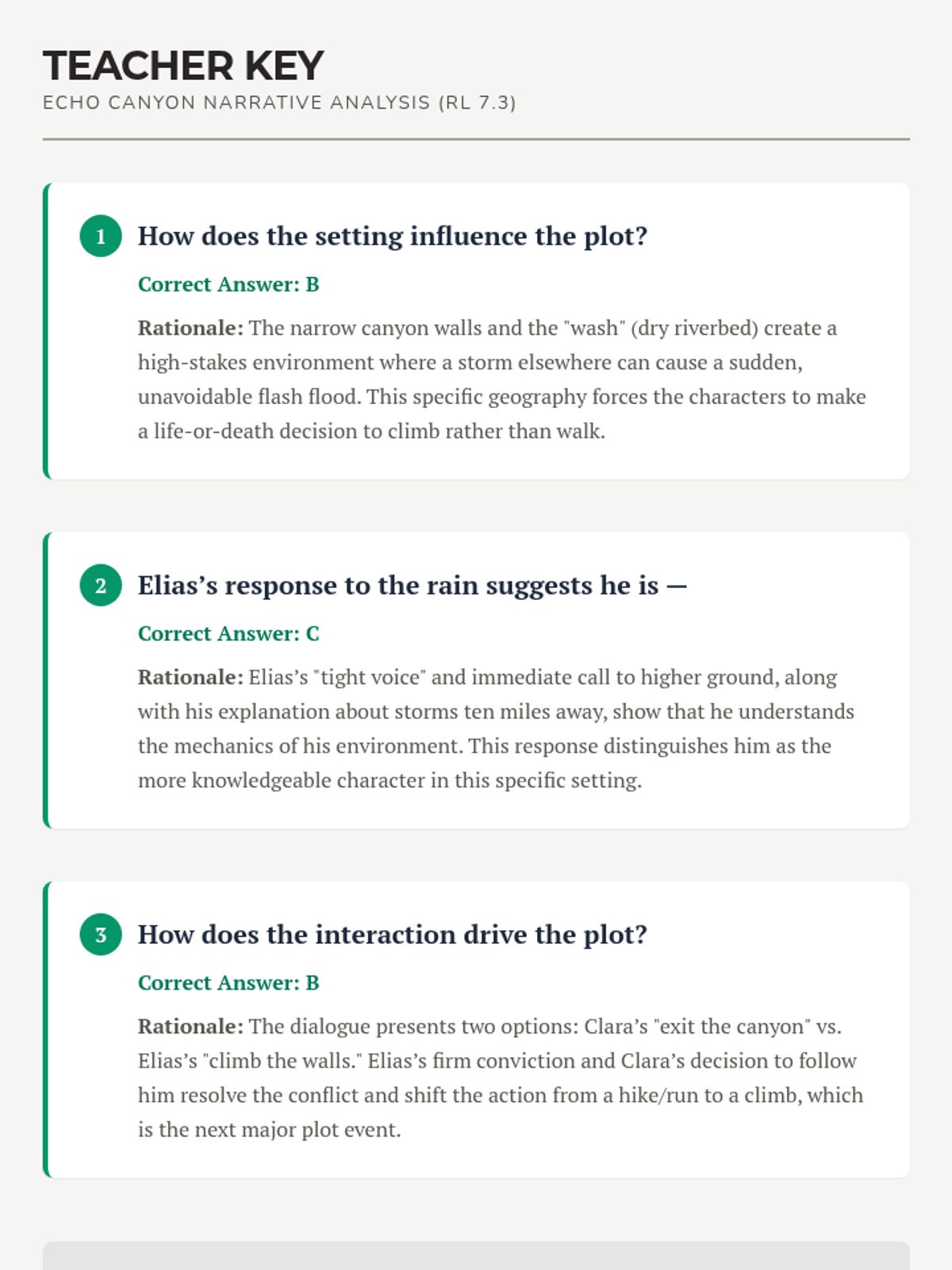
A focused lesson on RL 7.3, analyzing how setting, character responses, and interactions drive a narrative forward.
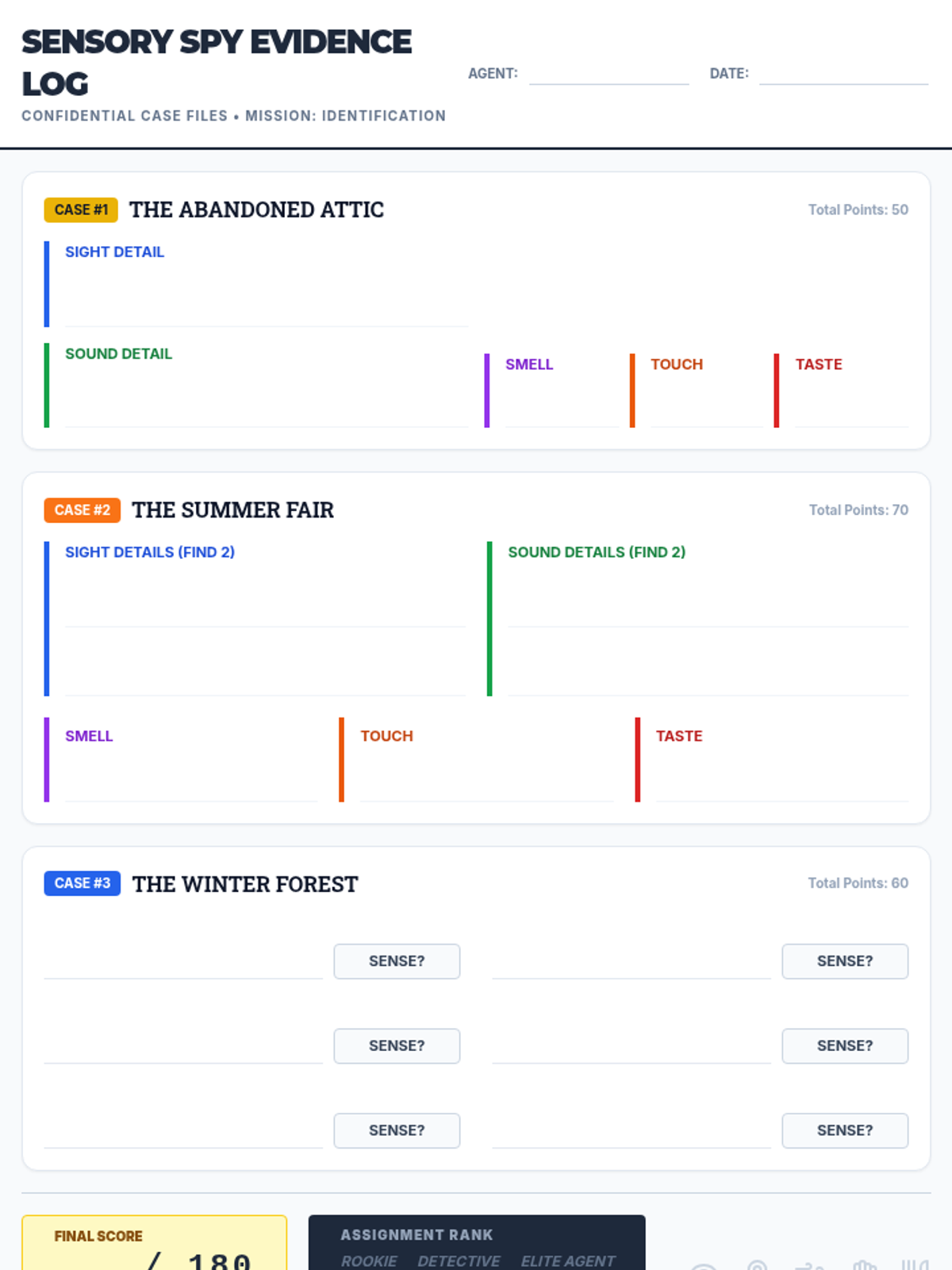
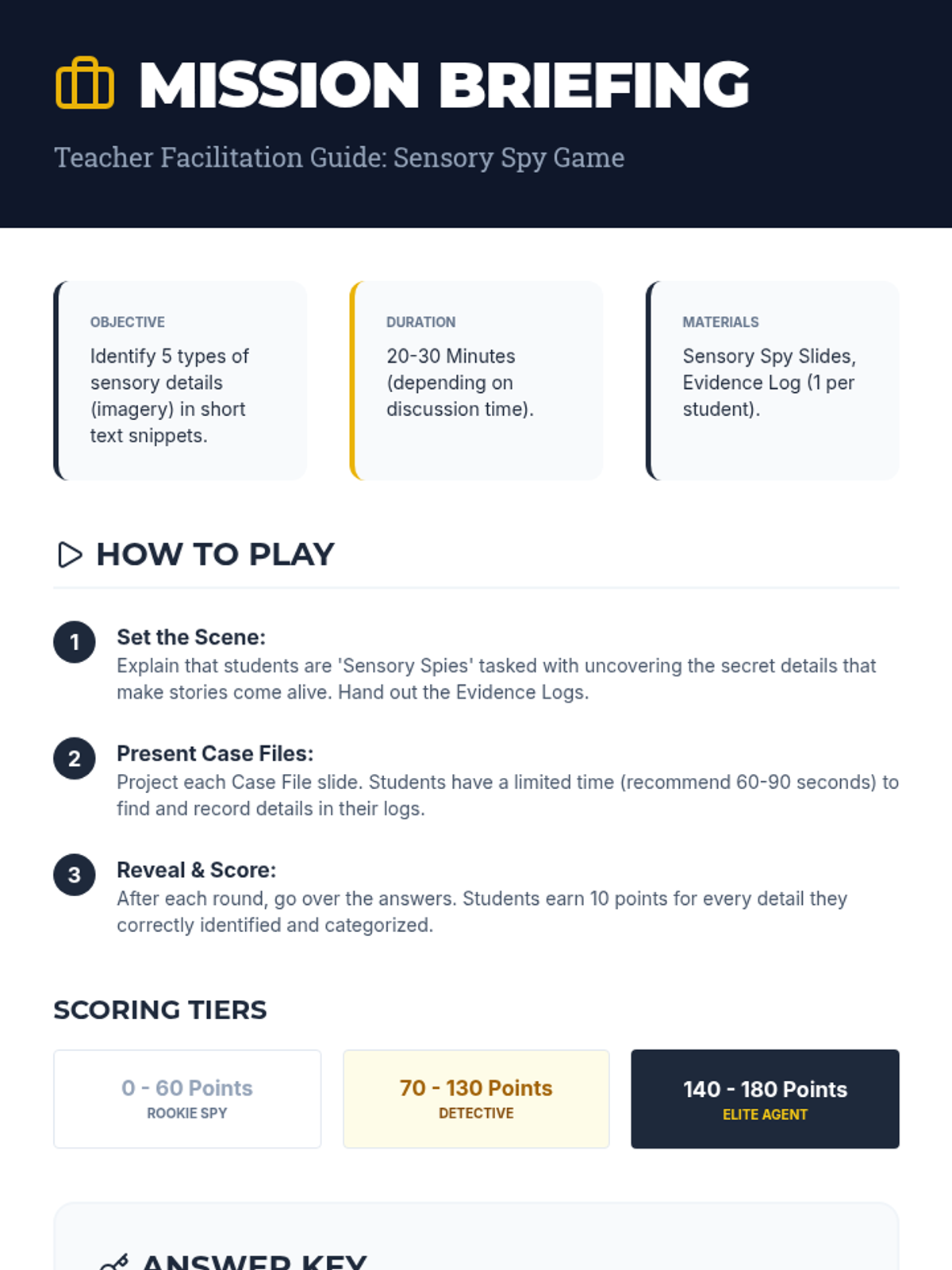
A fast-paced, interactive game where students become 'Sensory Spies' to track down descriptive language in high-interest short story snippets. Students compete to identify sights, sounds, smells, tastes, and textures hidden within case files.
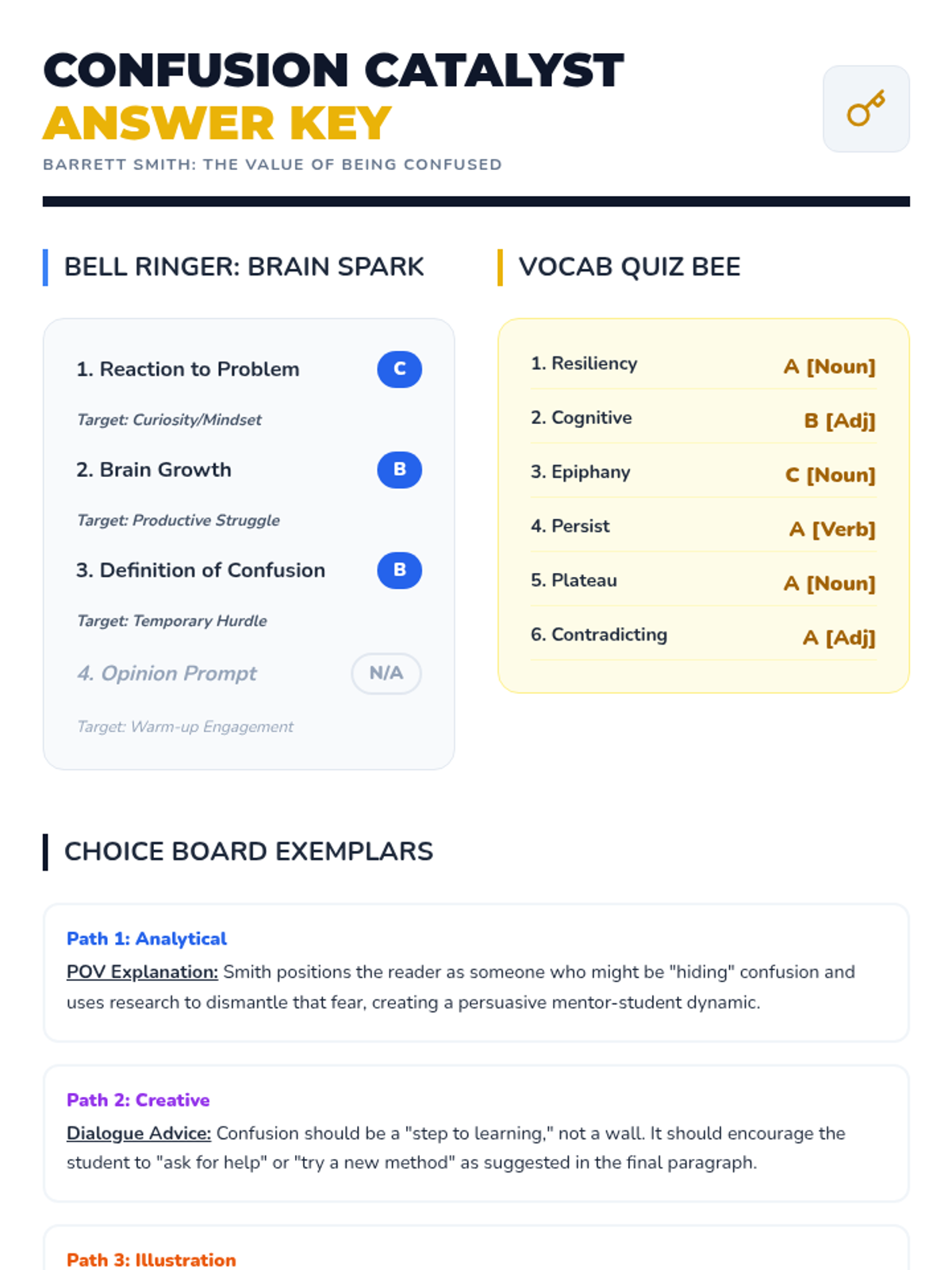
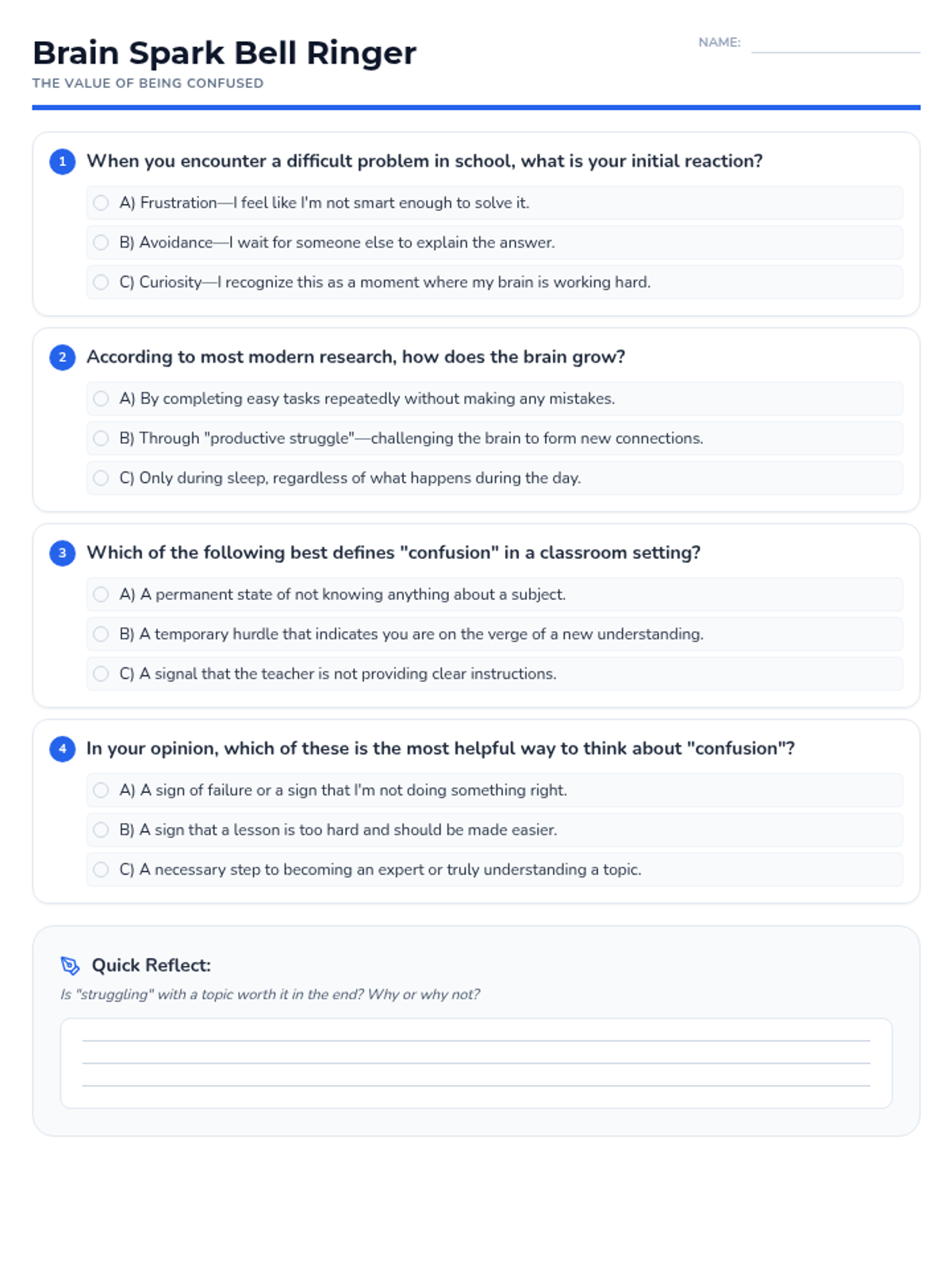
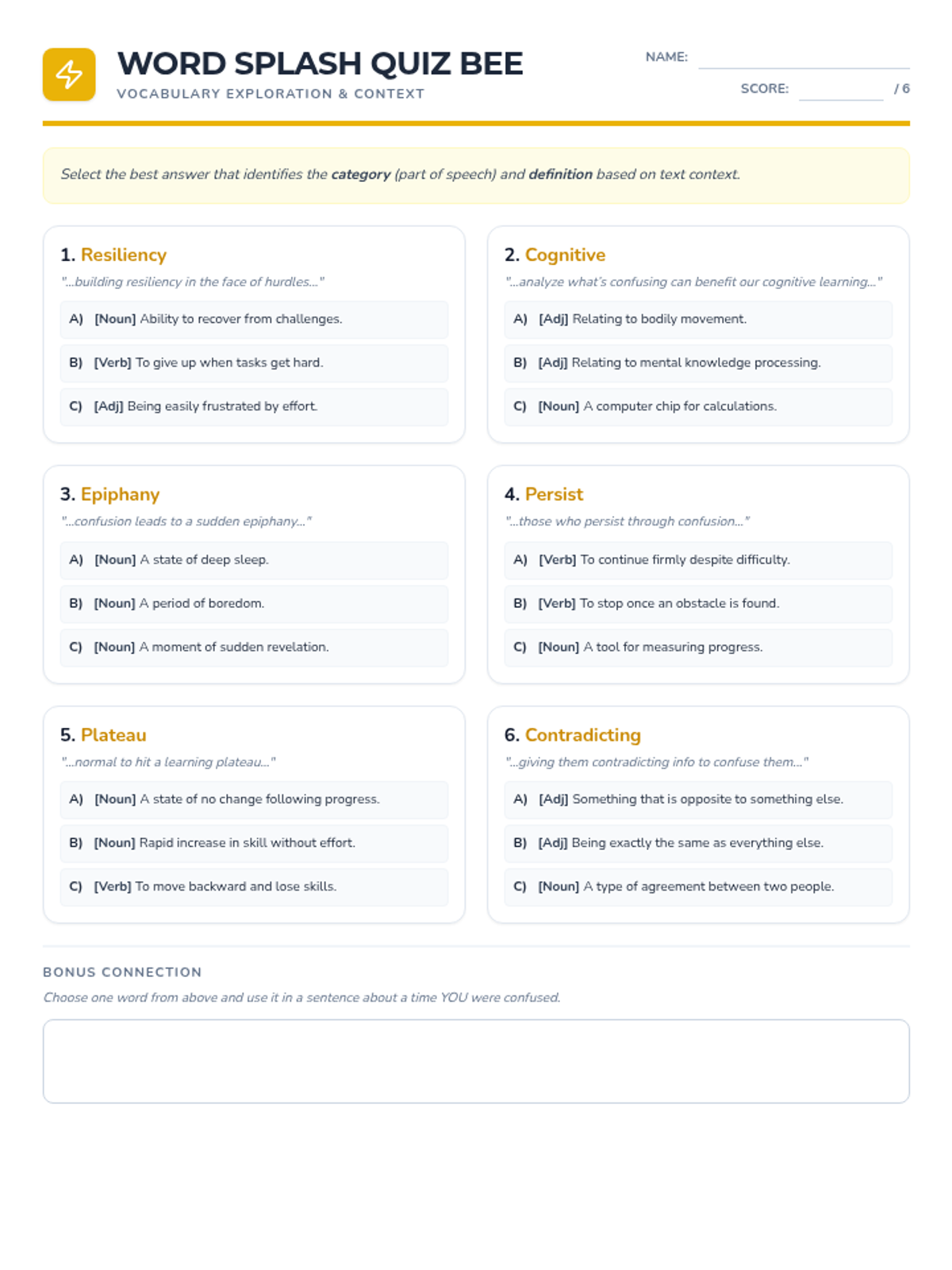
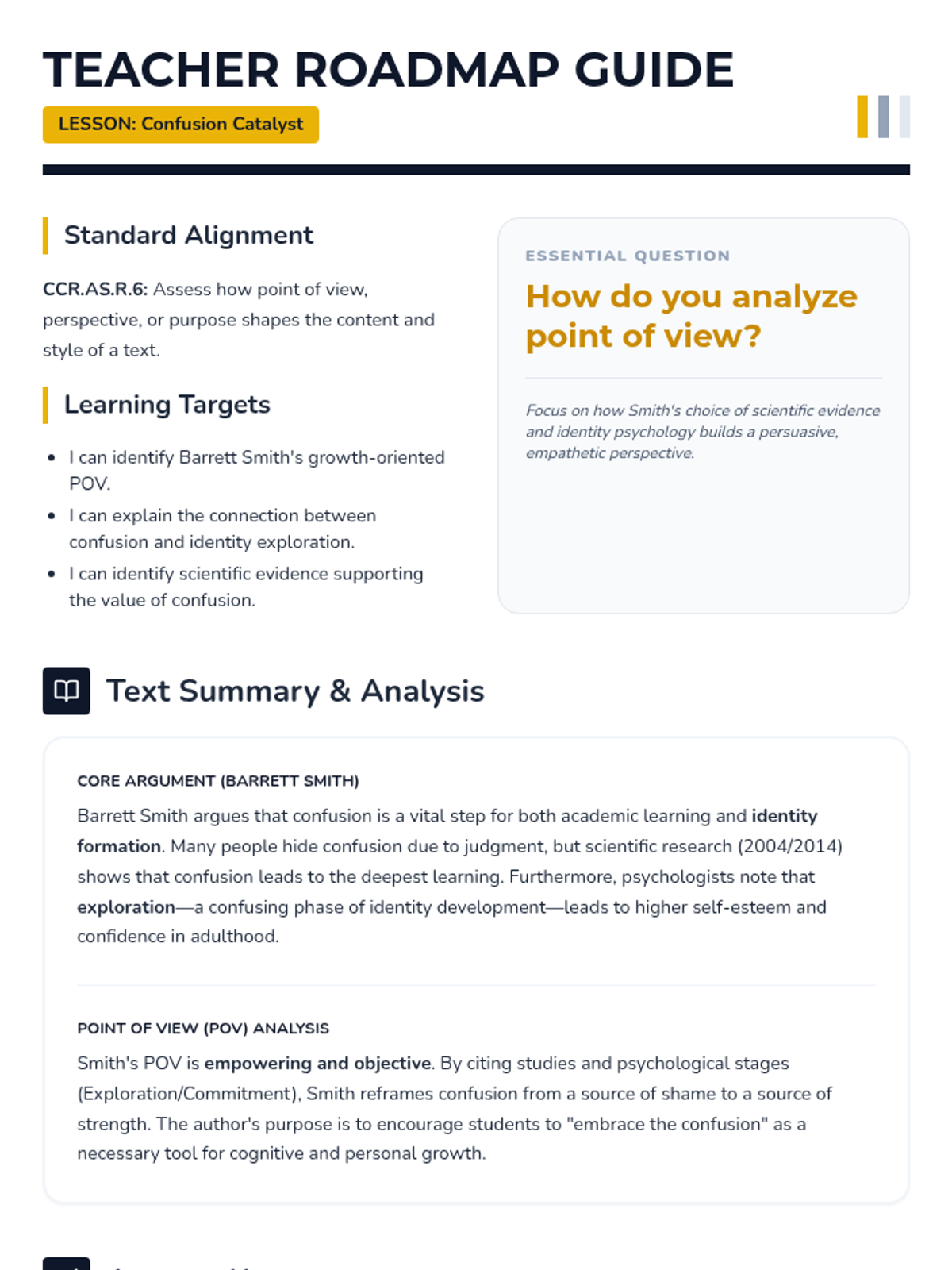
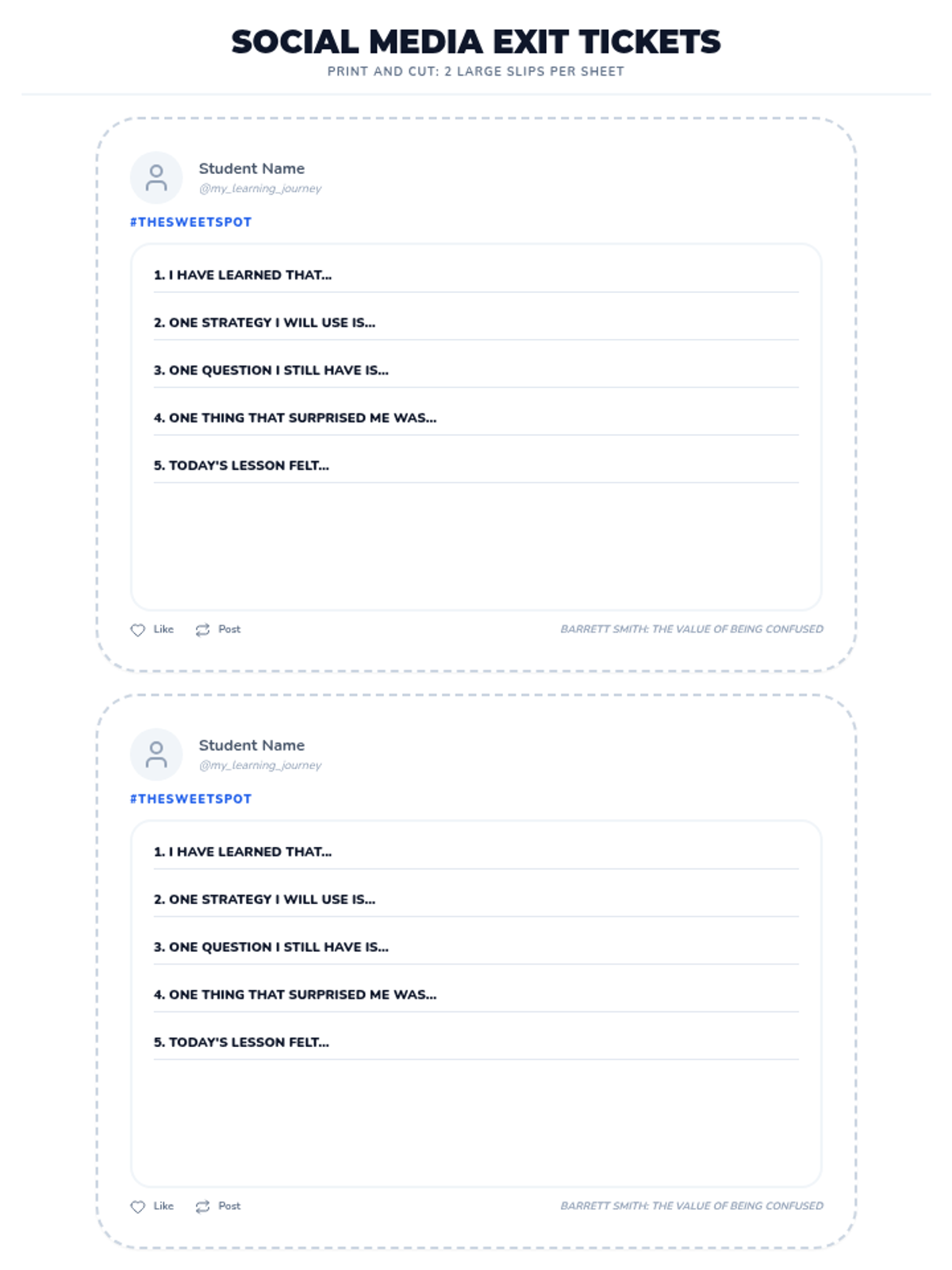
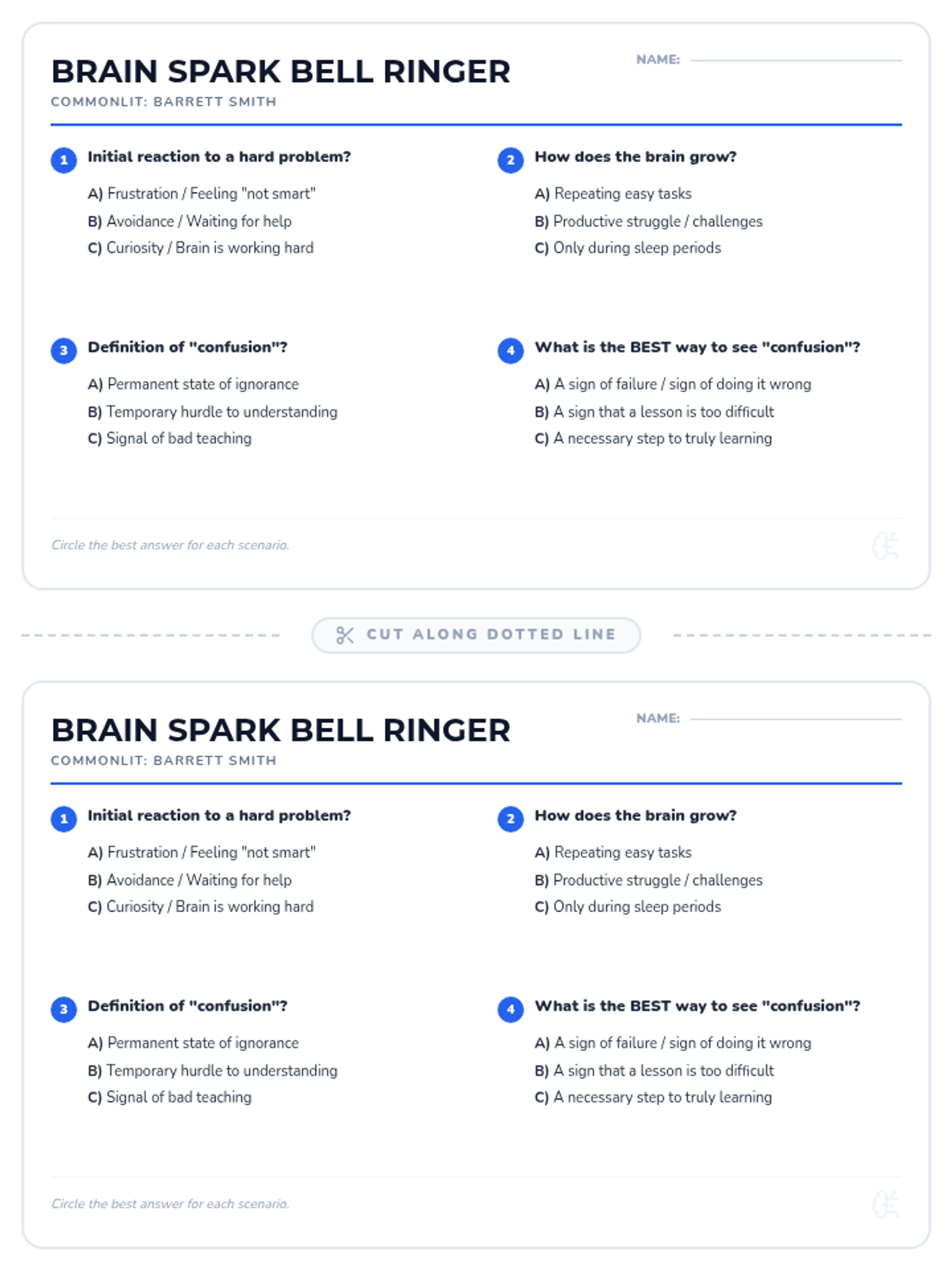
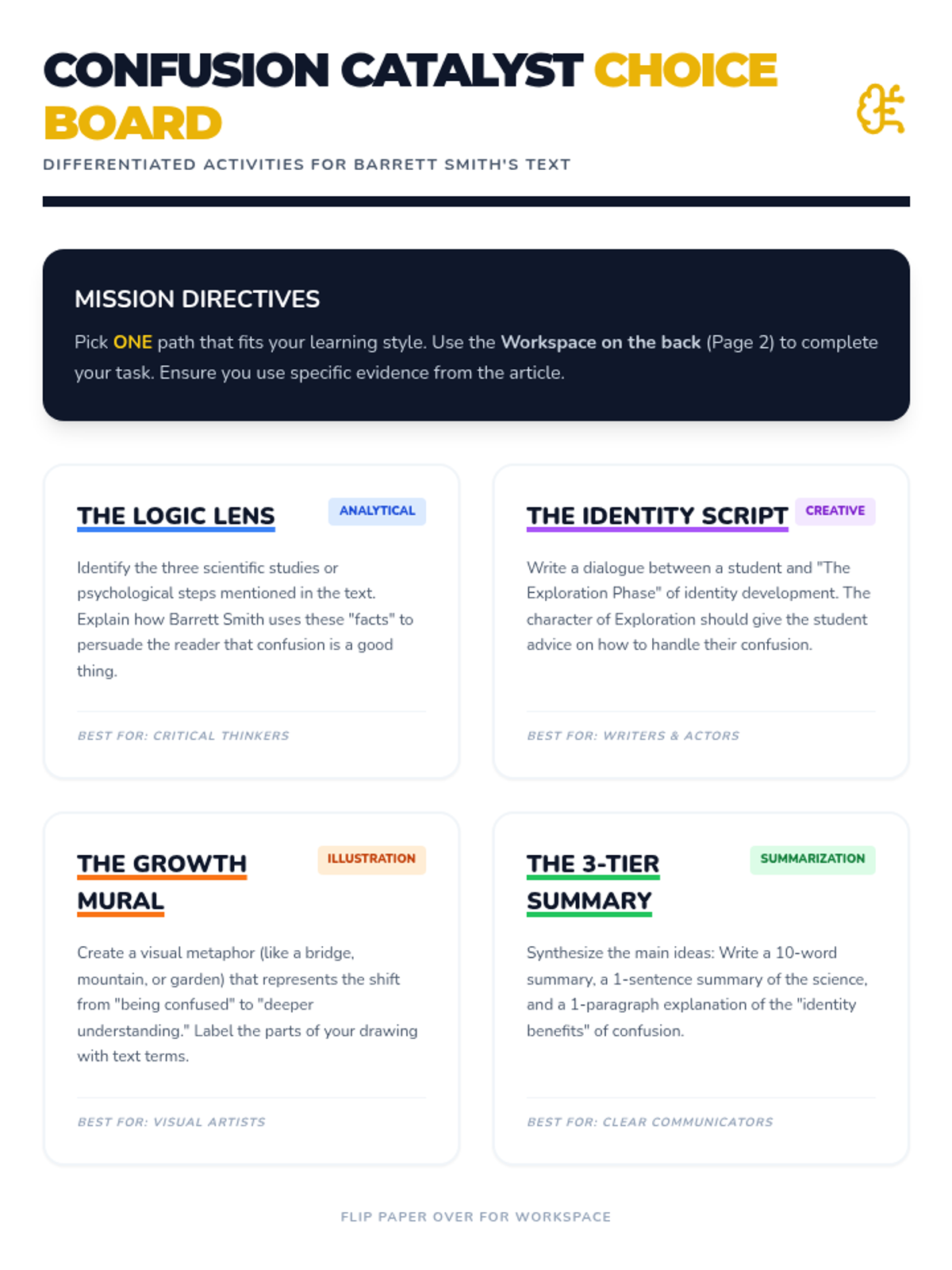
An analysis of Kimberly Tyson's 'The Value of Being Confused' focusing on how the author uses perspective to reframe confusion as a learning tool. Includes vocabulary development, collaborative discussion, and creative choice-based assessment.
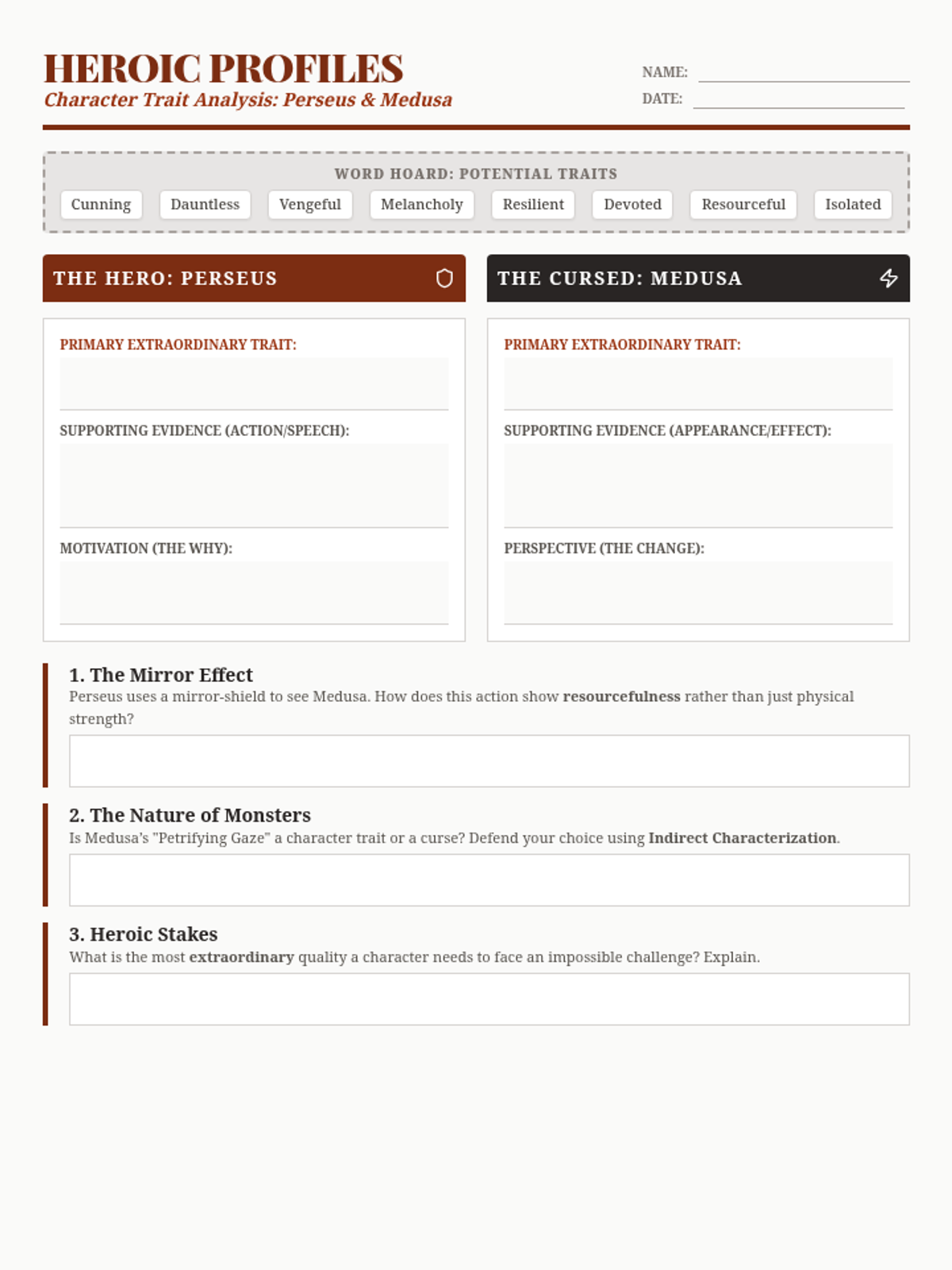
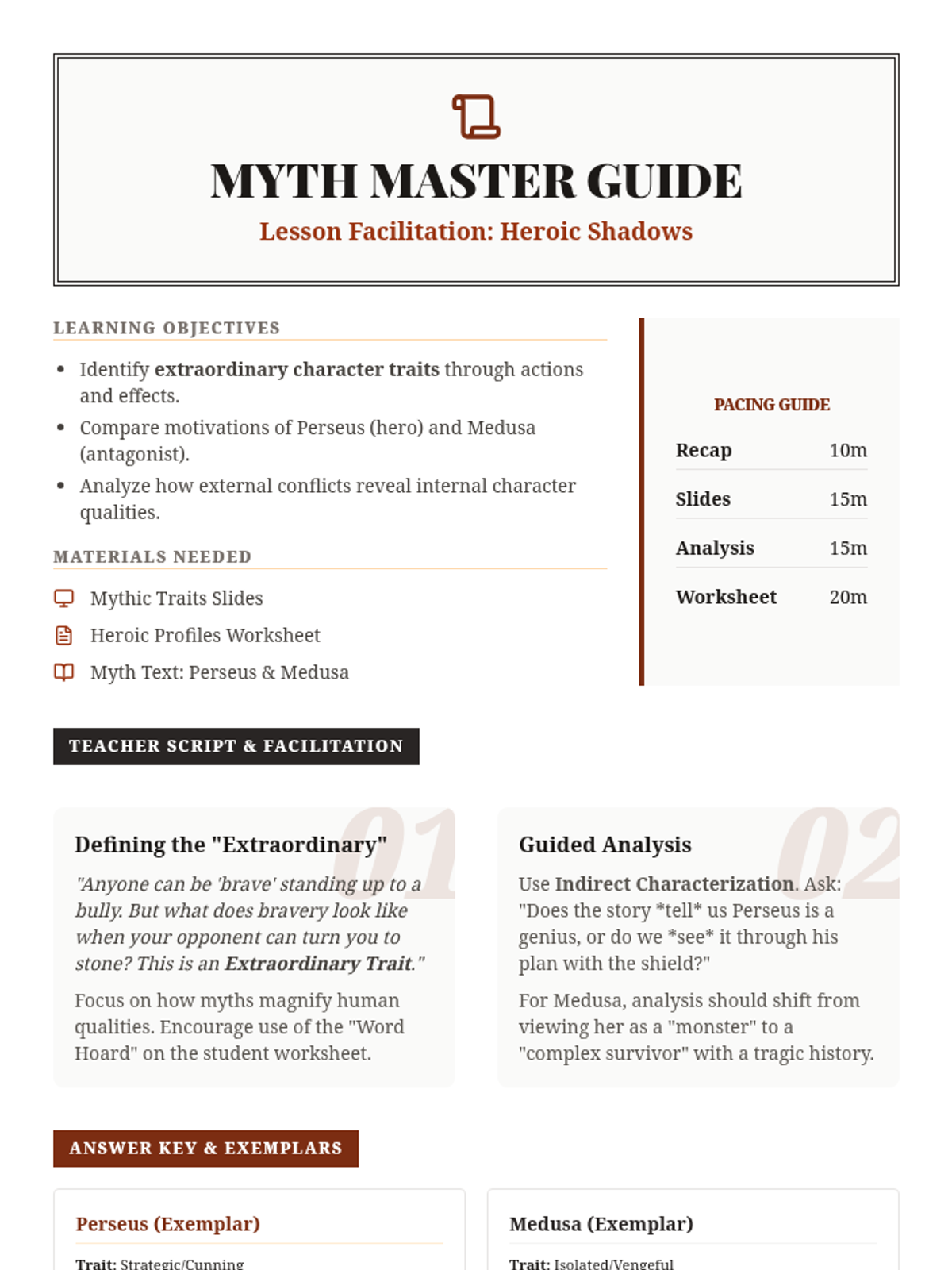
An analysis of character traits through the Greek myth of Perseus and Medusa, focusing on how extraordinary circumstances reveal inner qualities.
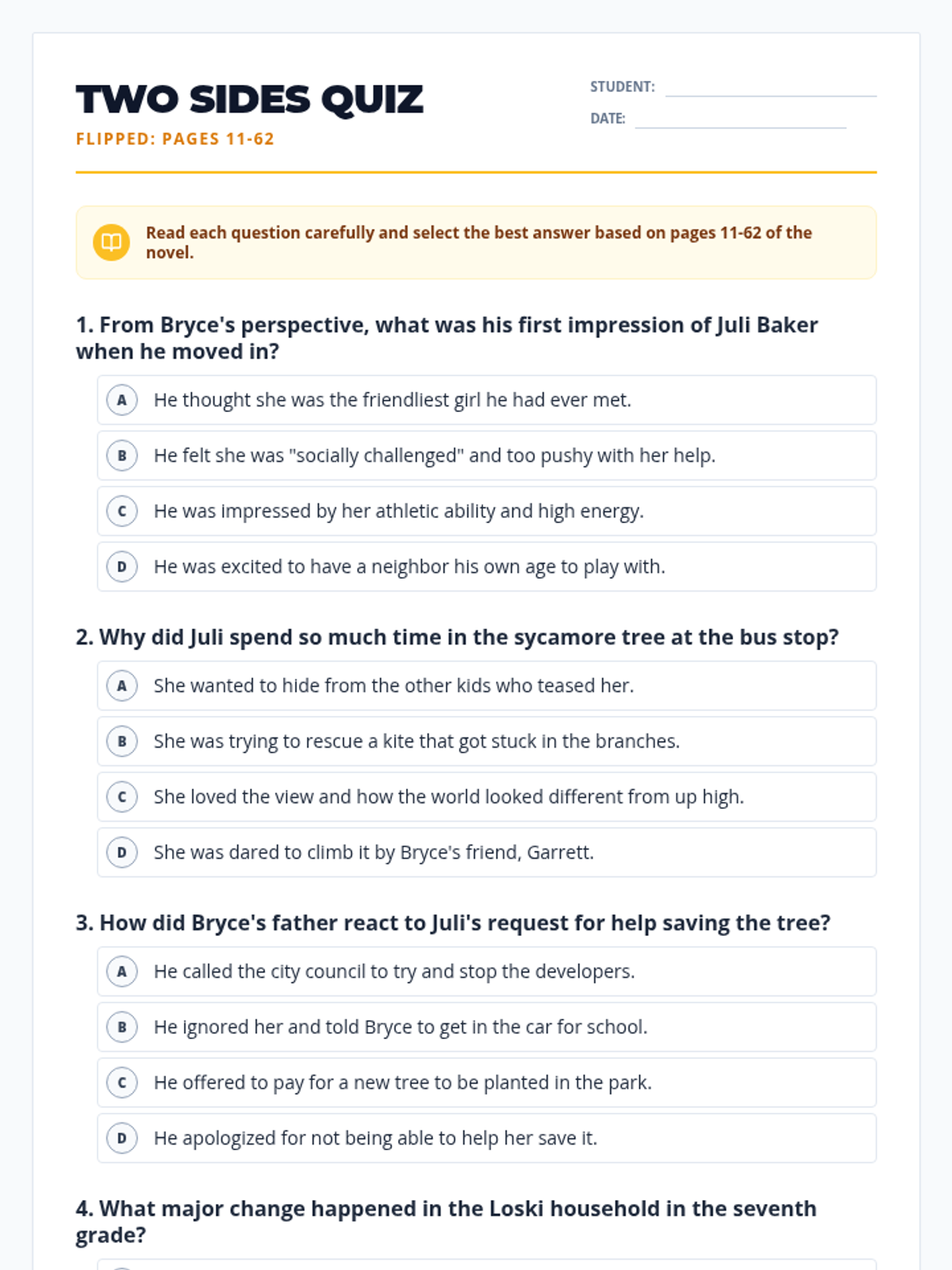
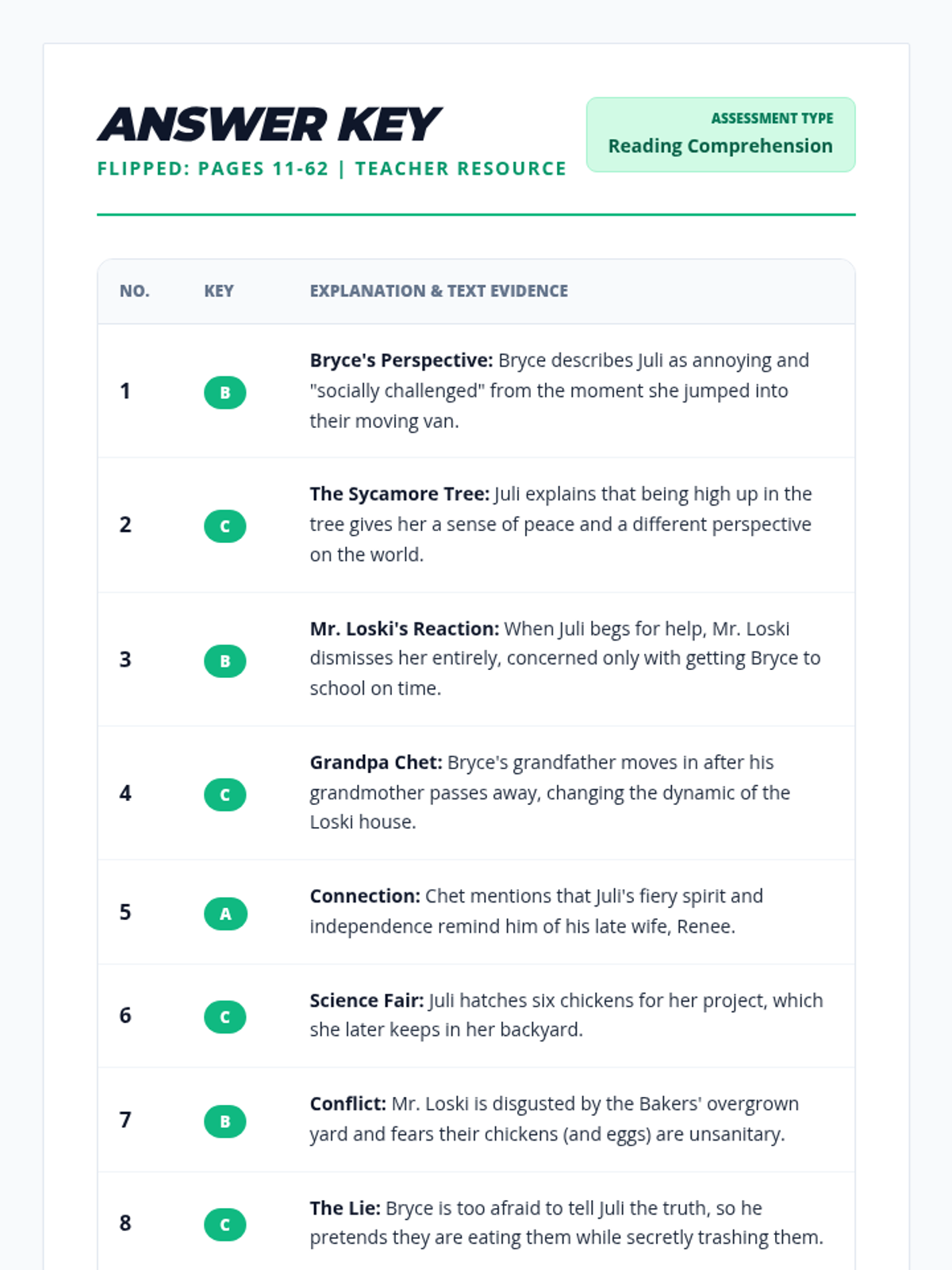
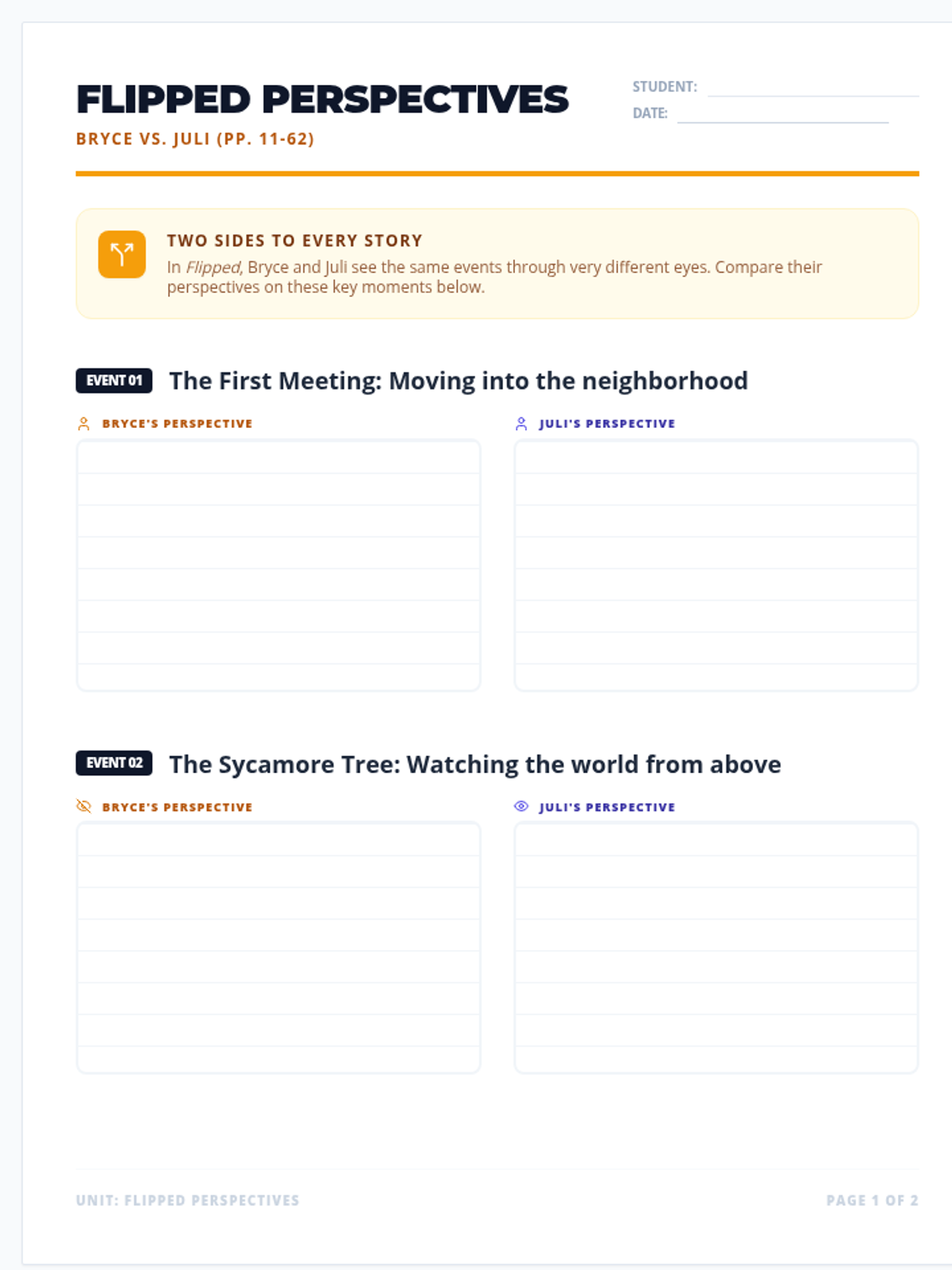
A comprehension assessment focused on the initial chapters of 'Flipped' by Wendelin Van Draanen, exploring dual perspectives, character motivations, and key plot points between Bryce and Juli.
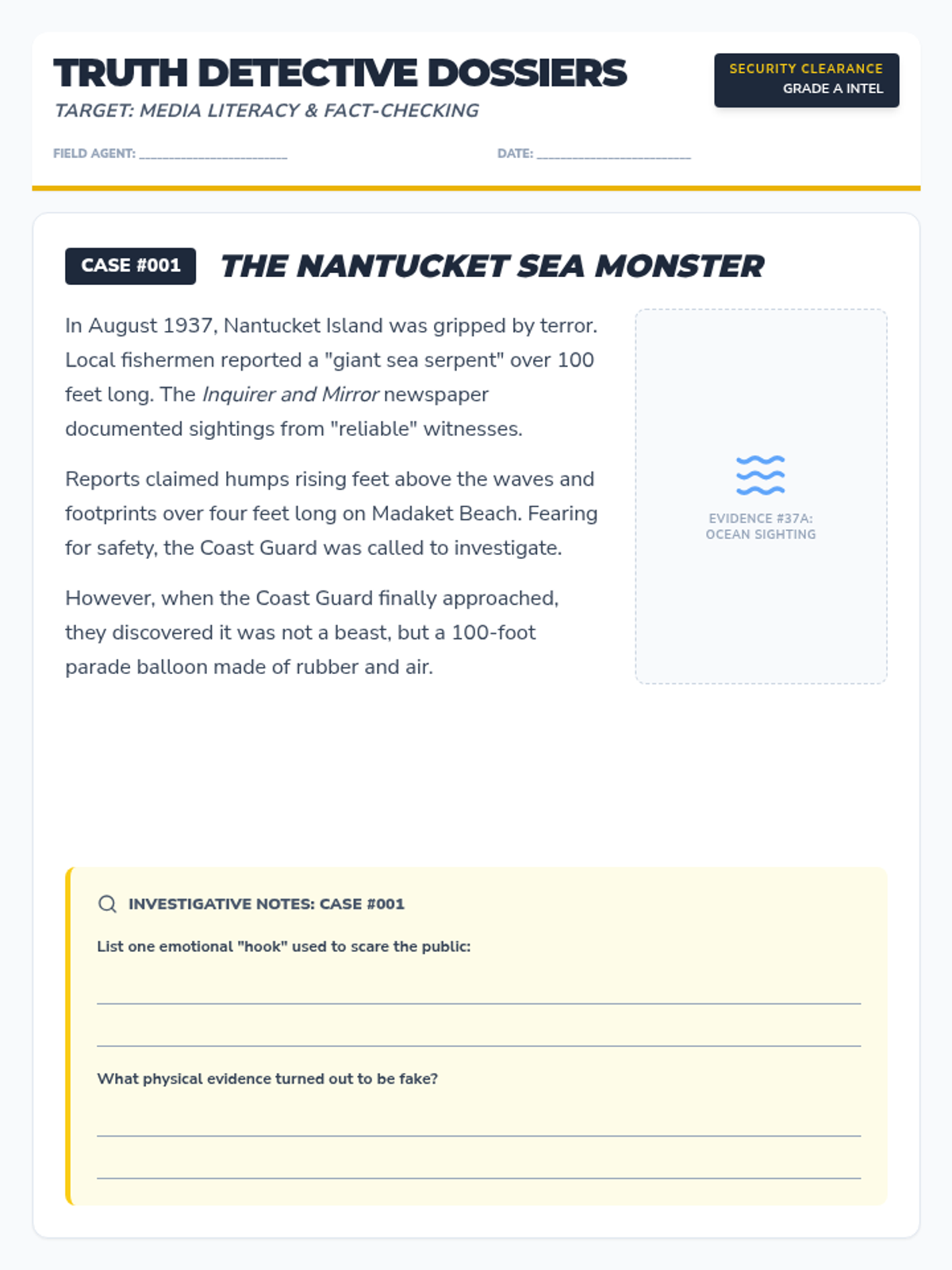
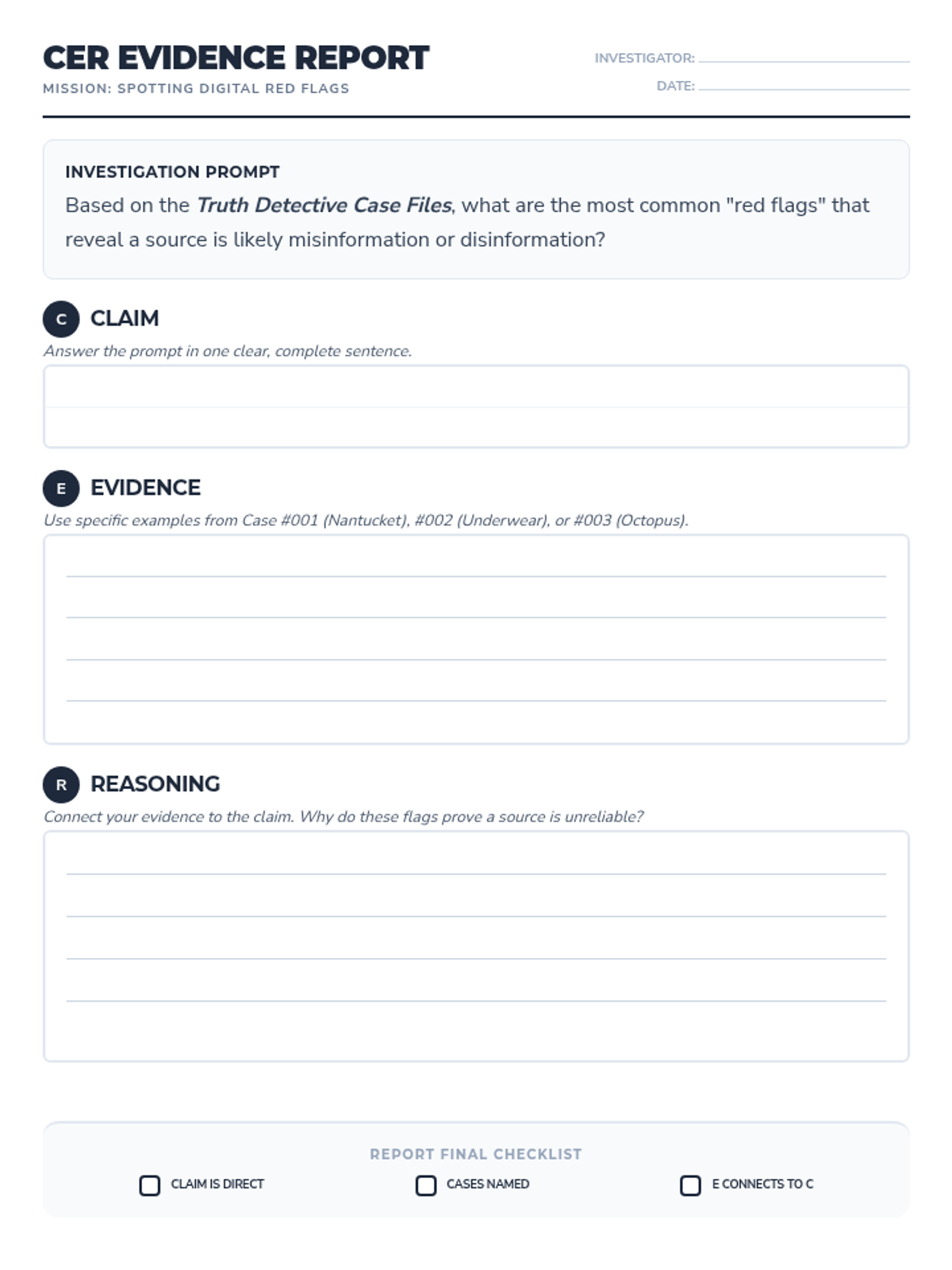
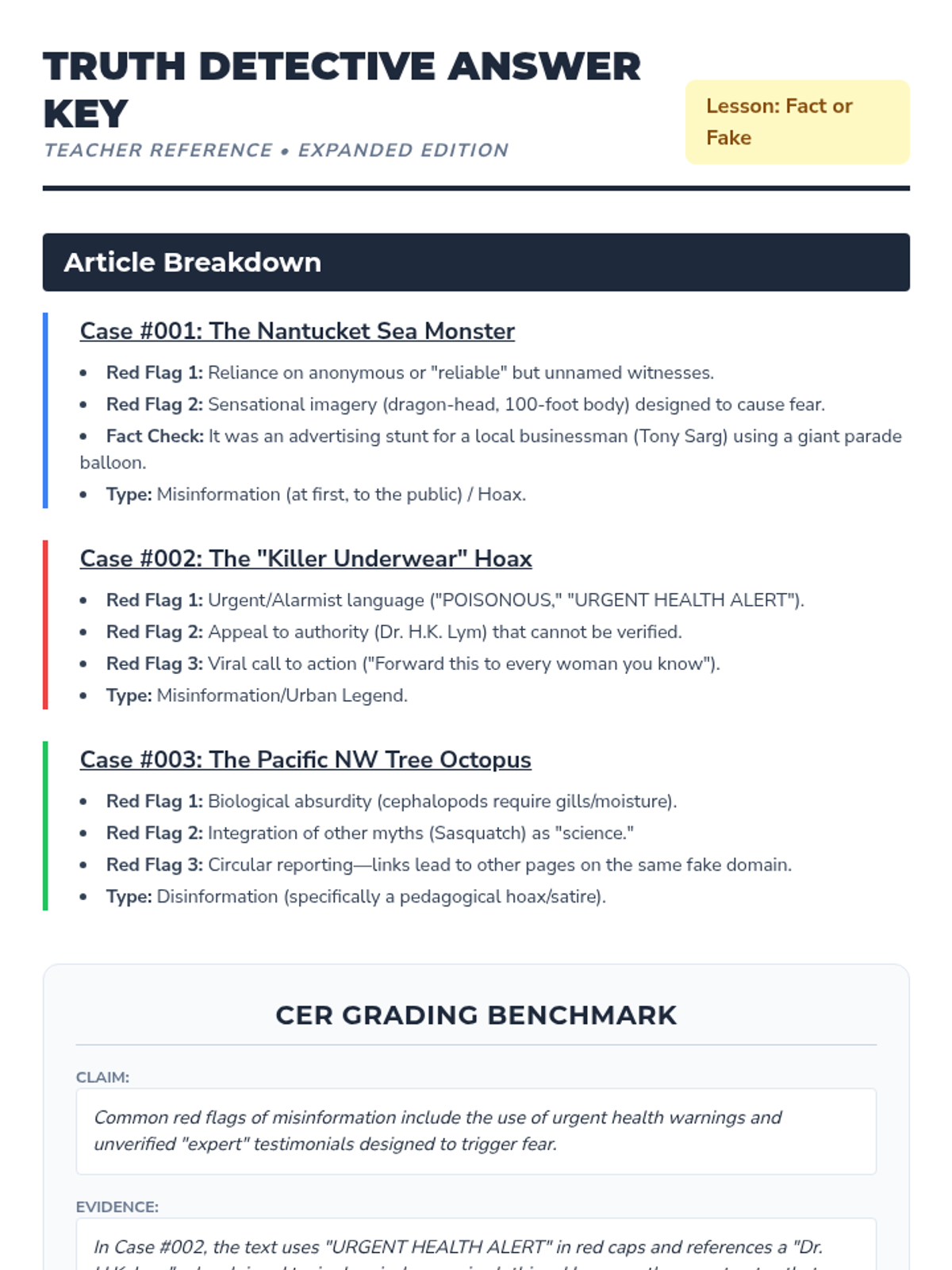
A lesson focused on identifying misinformation and disinformation through short case studies, culminating in a CER (Claim, Evidence, Reasoning) paragraph about spotting digital red flags.
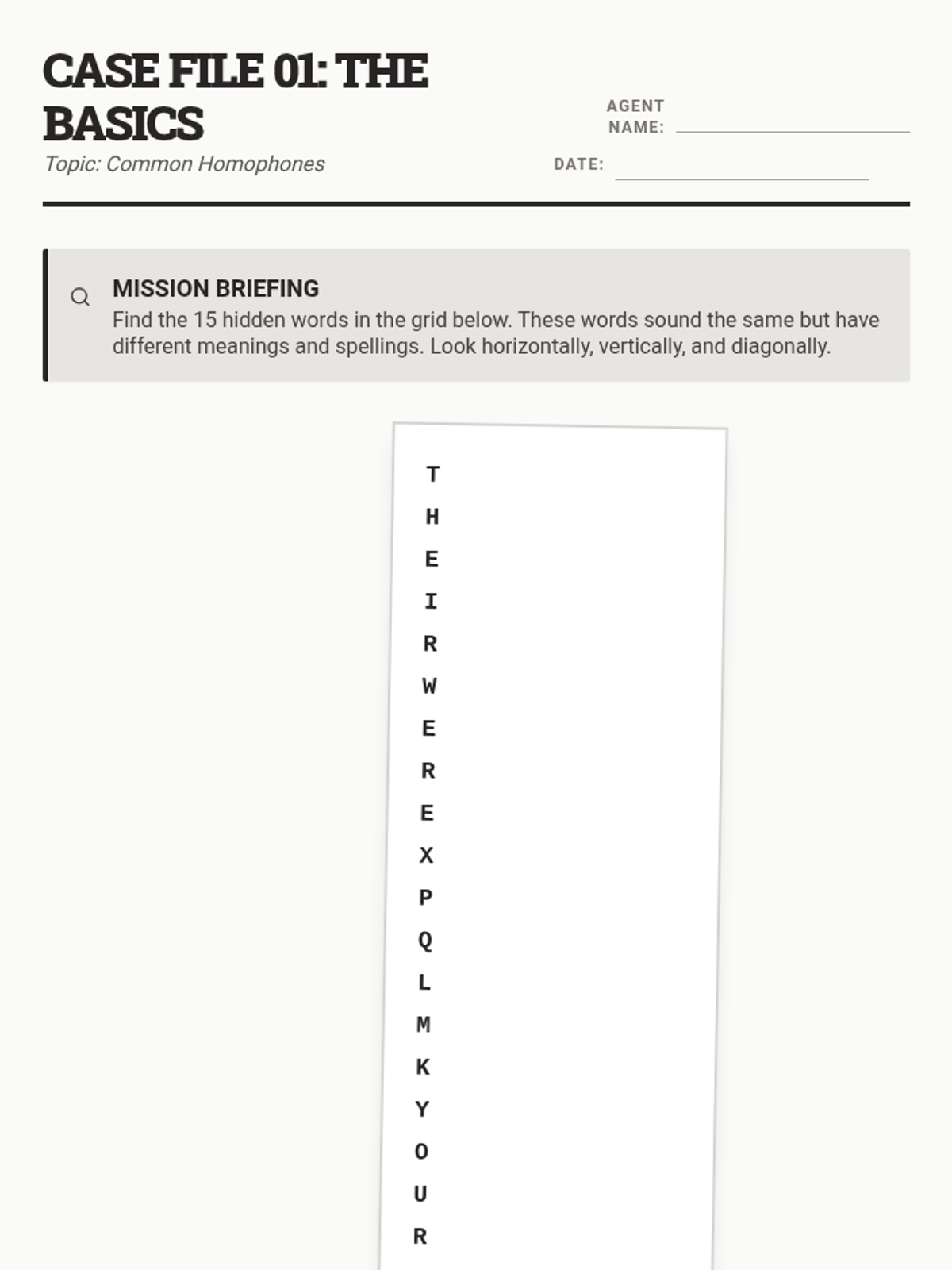
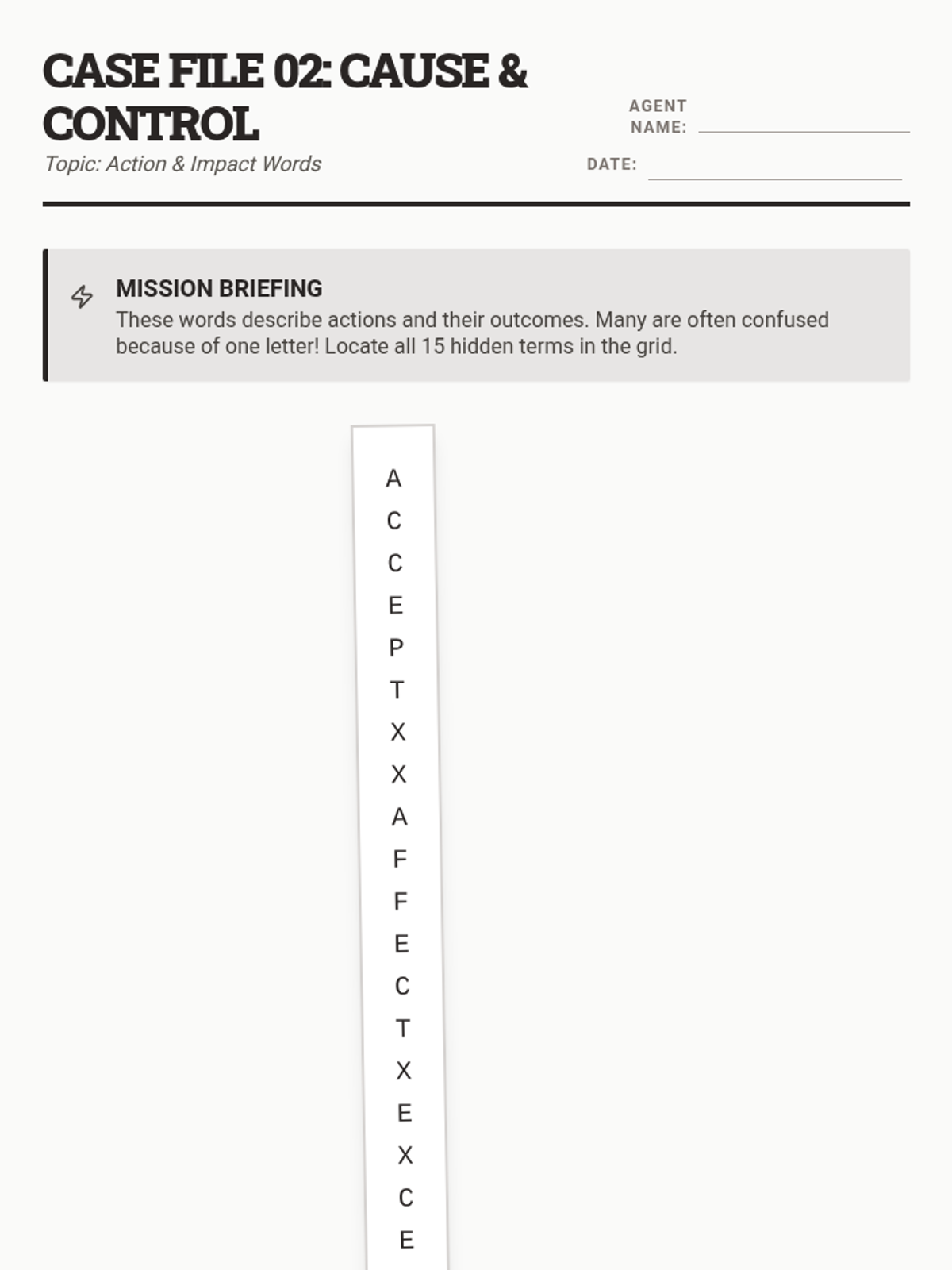
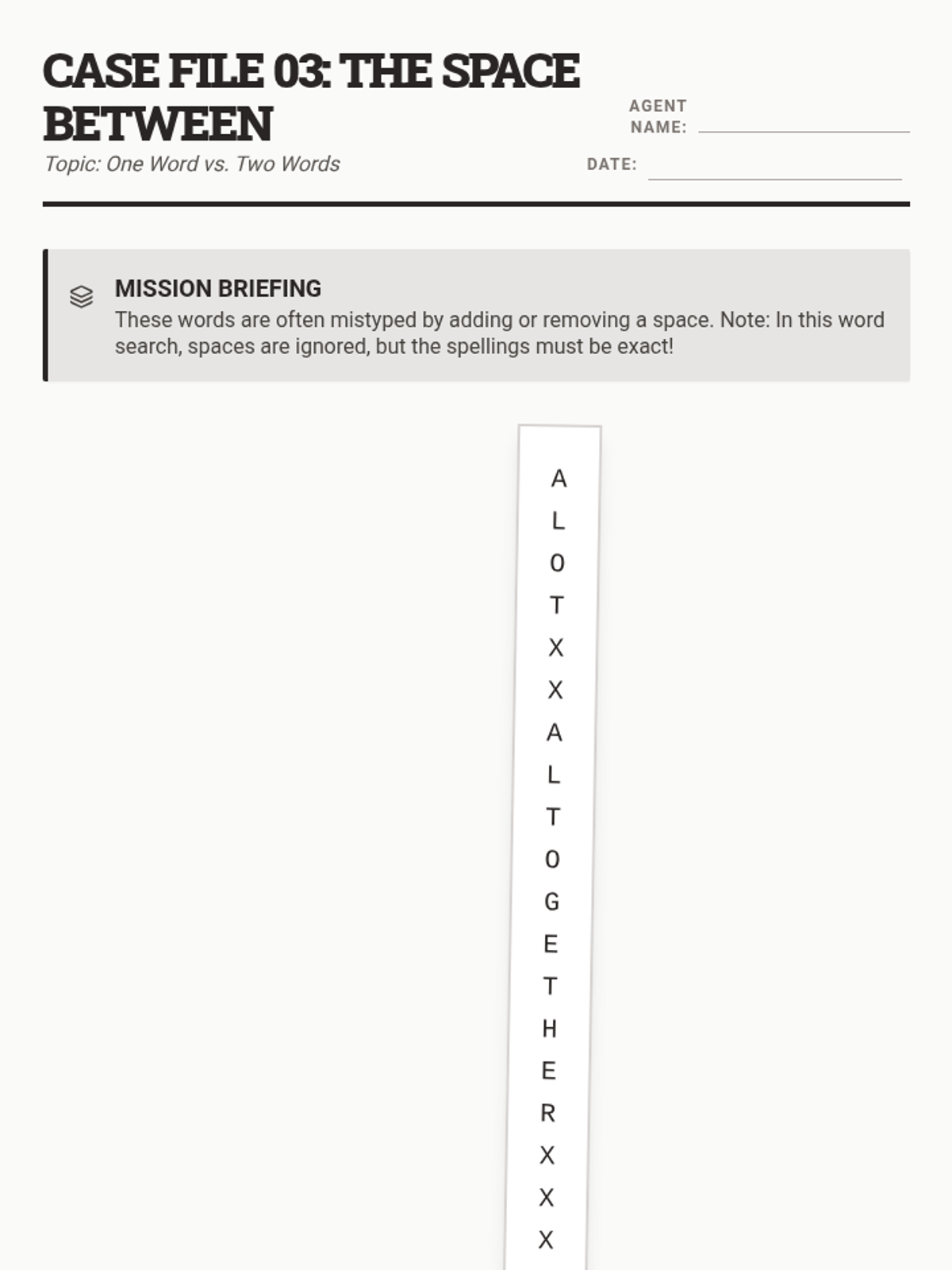
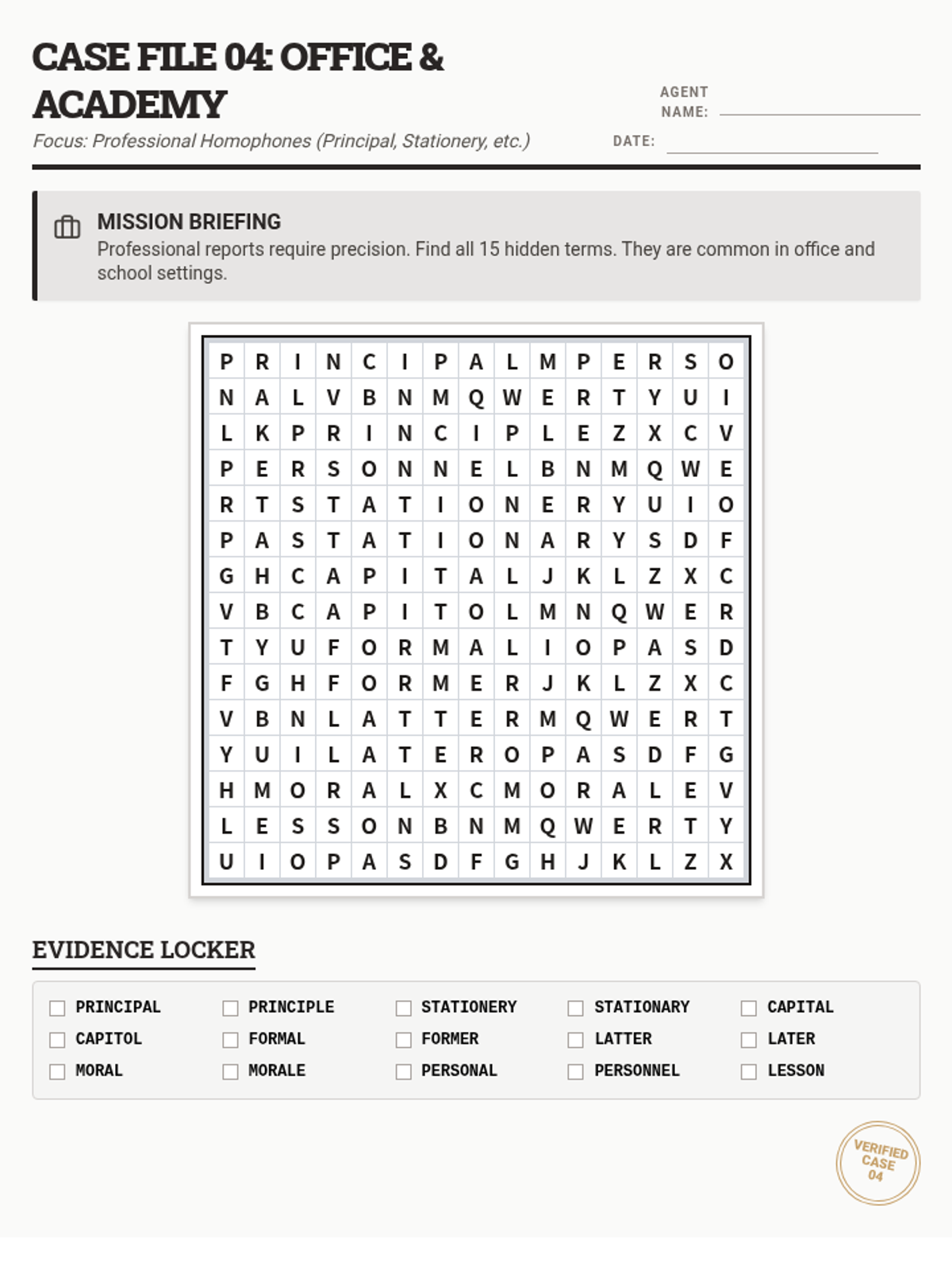
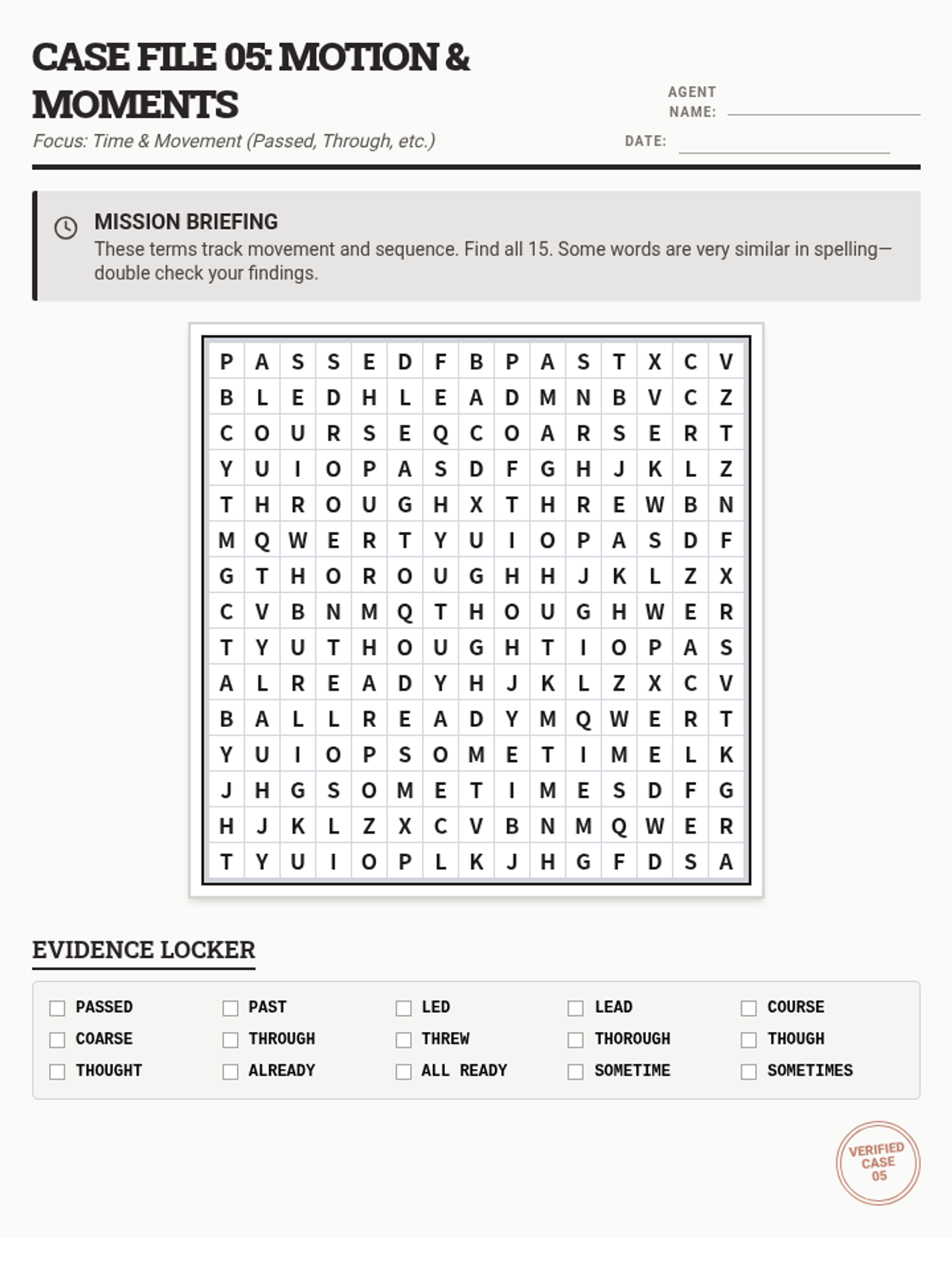
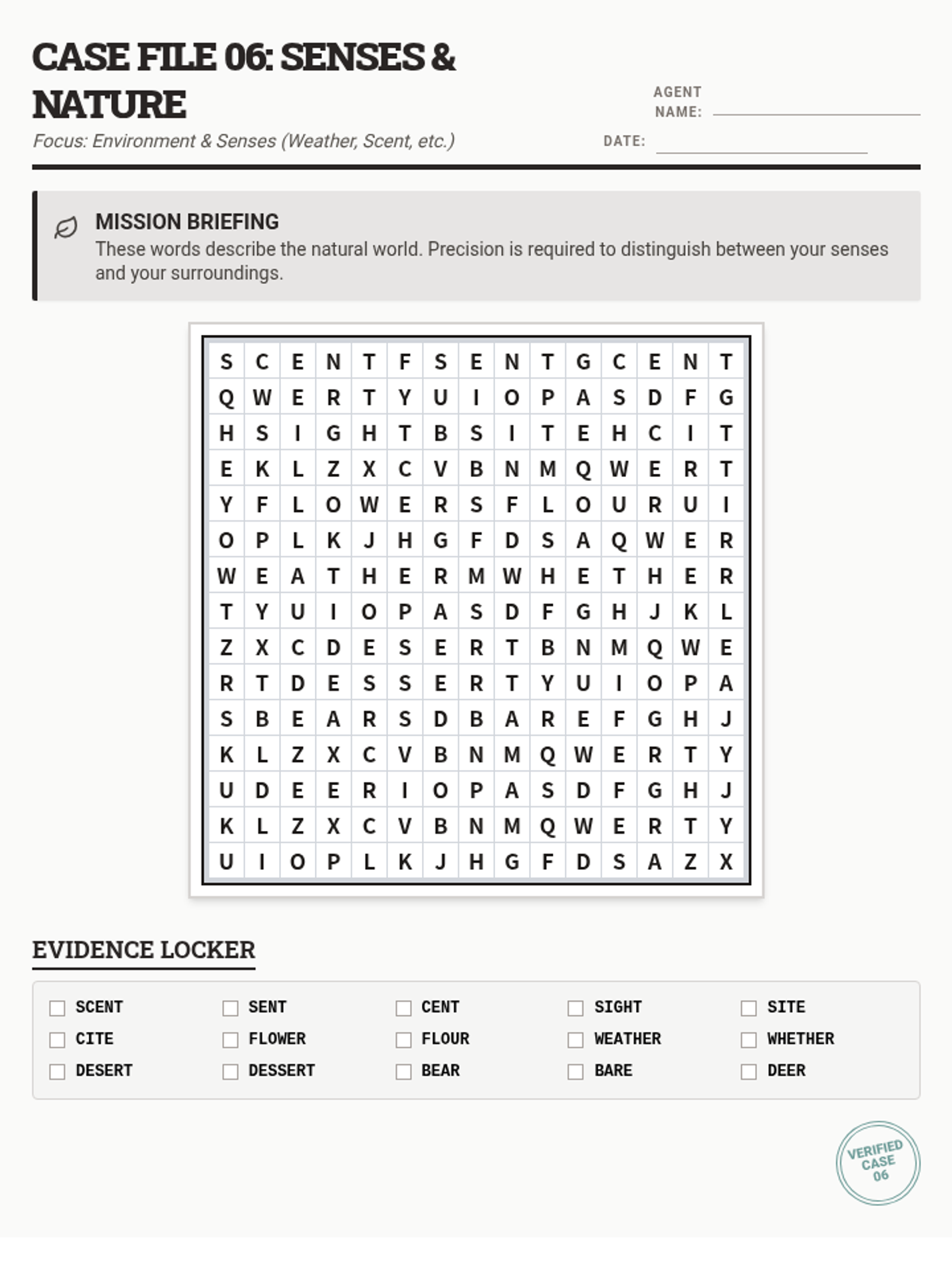
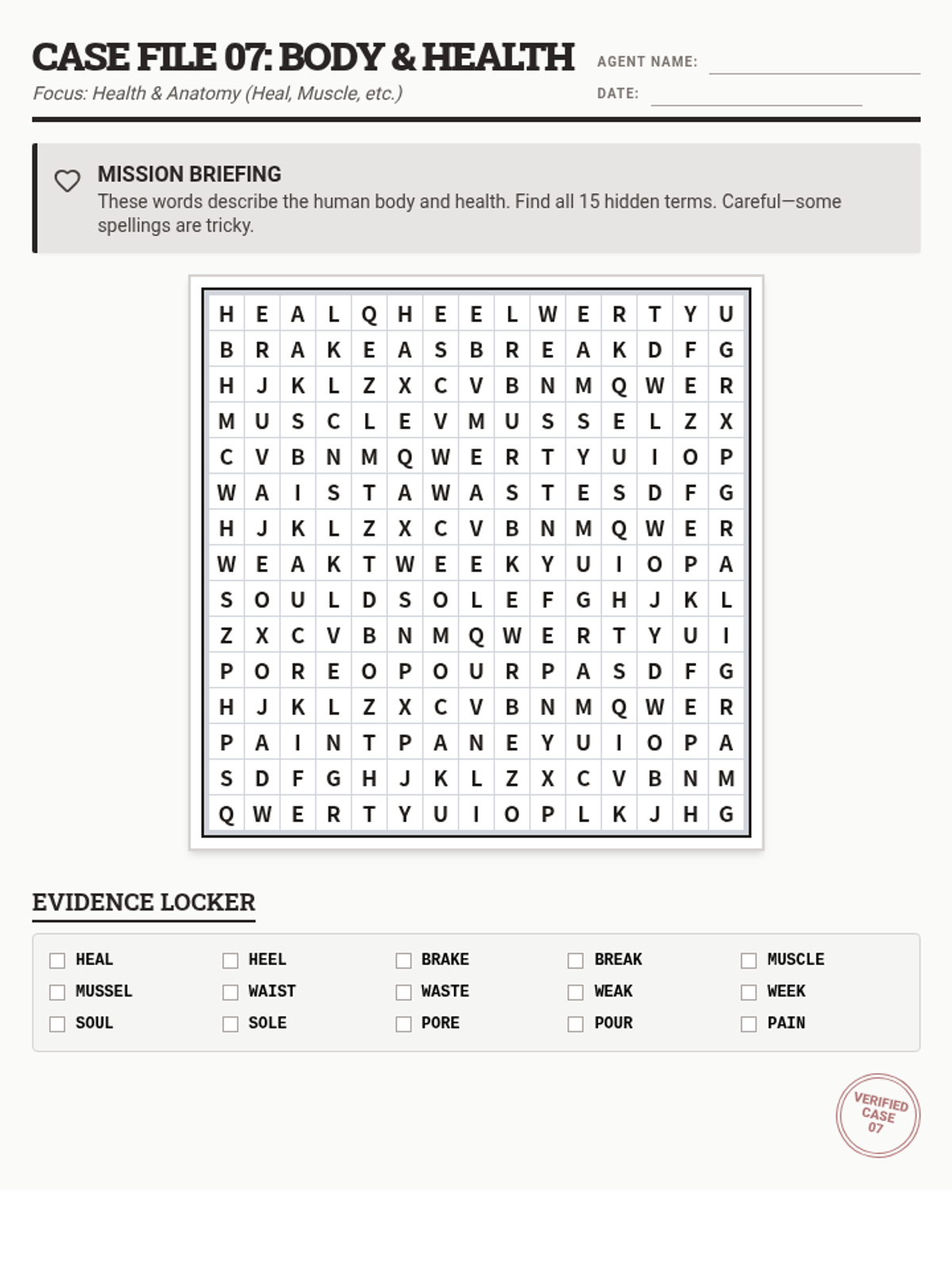
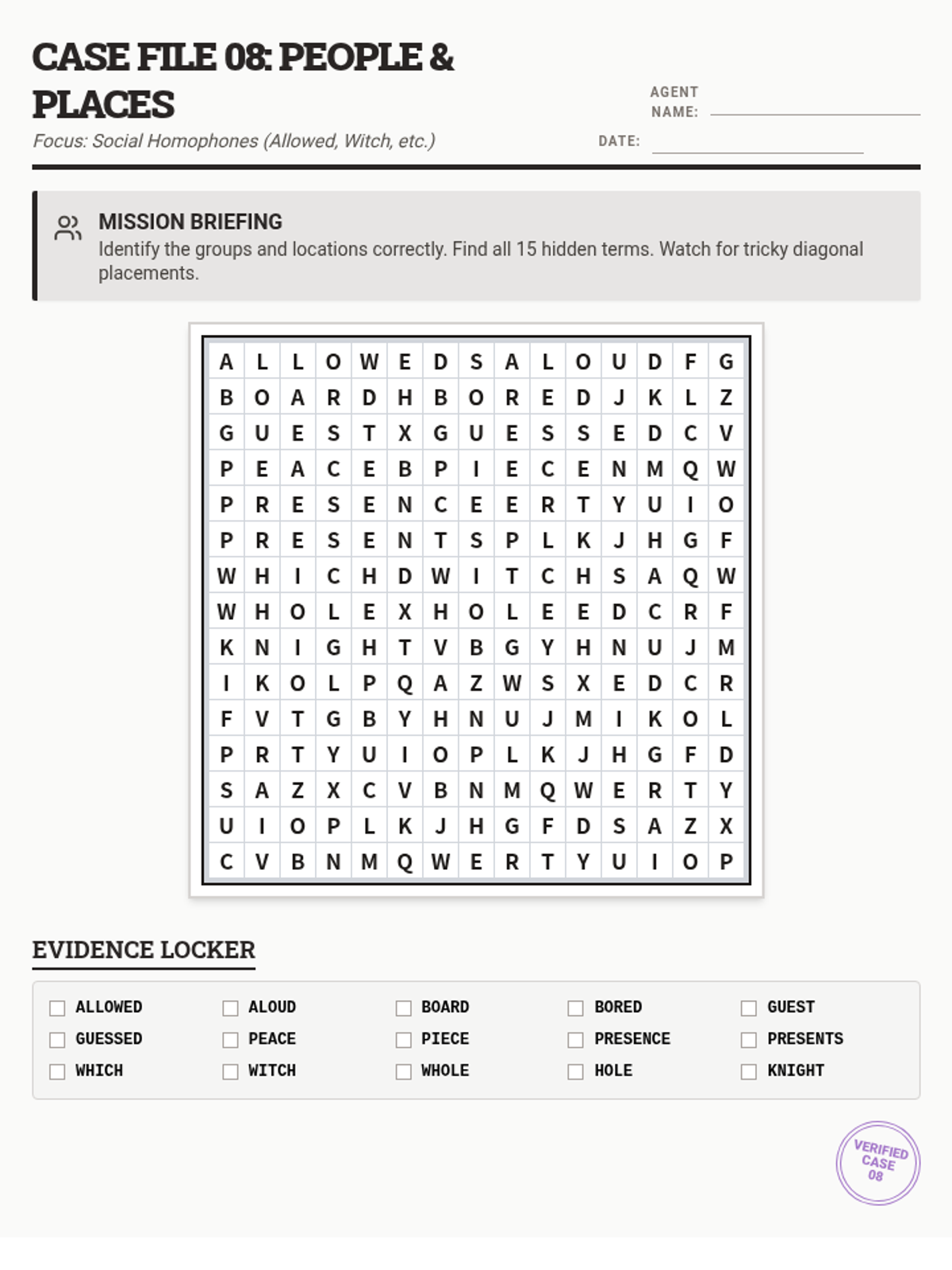
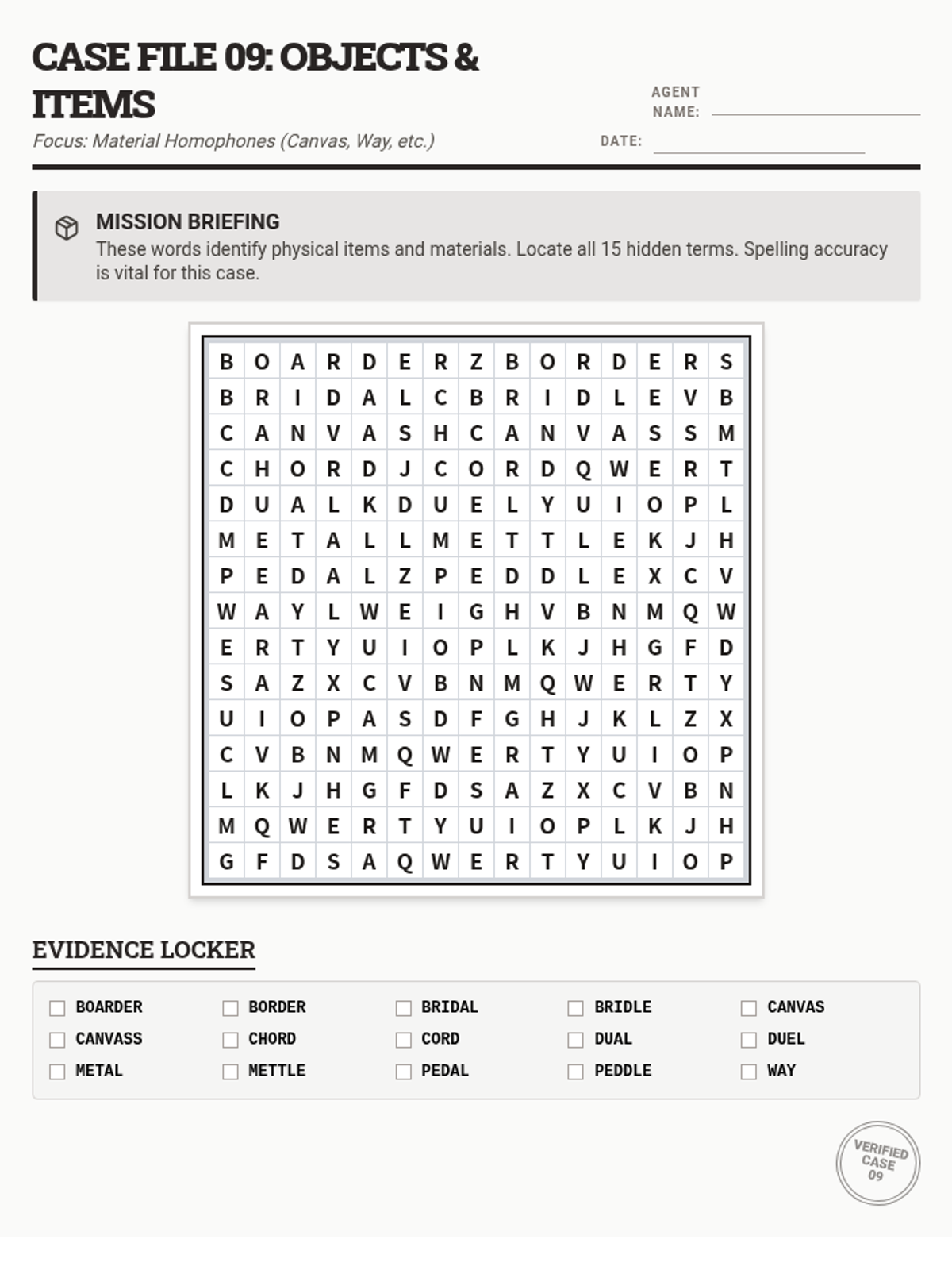
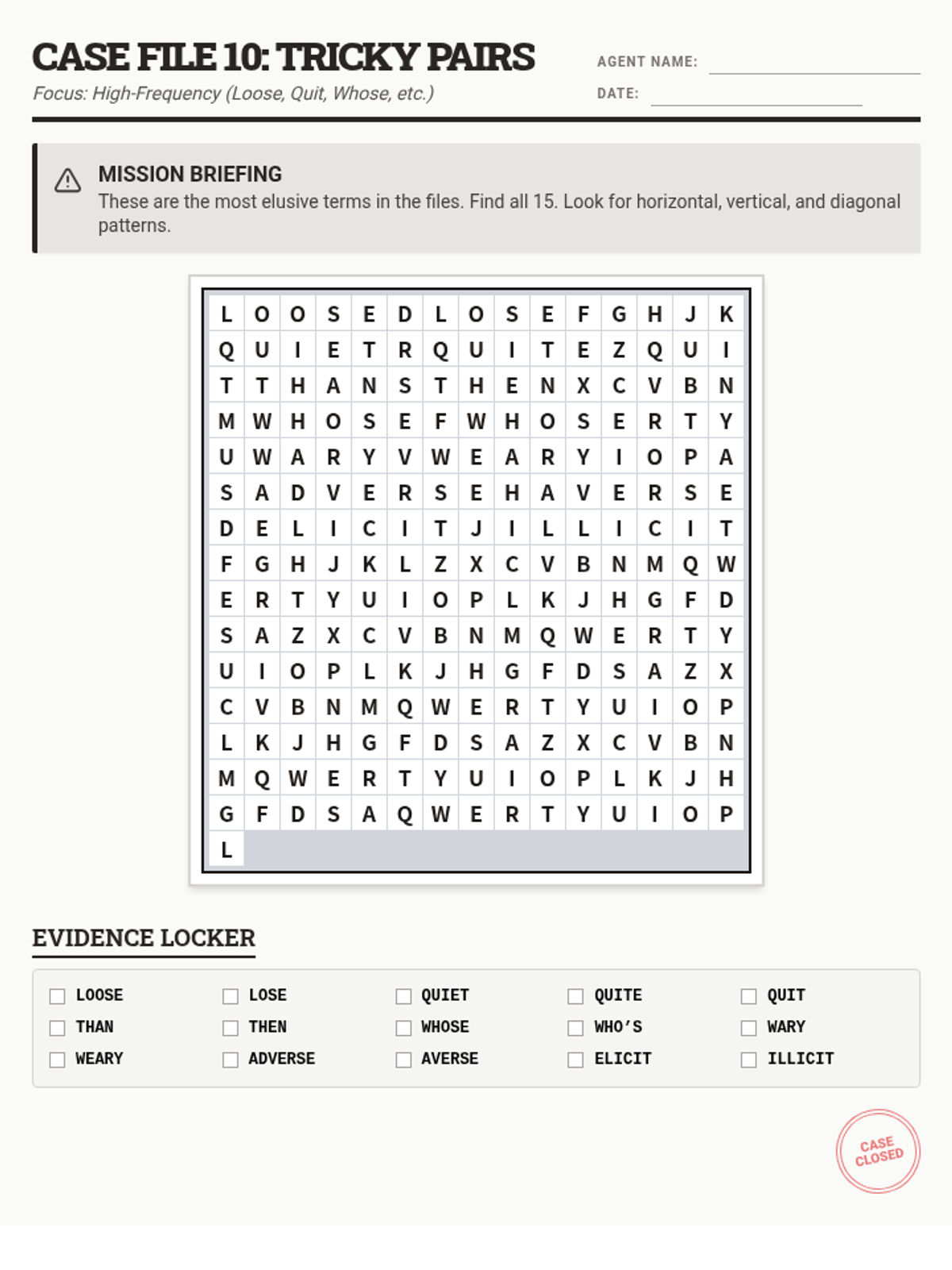
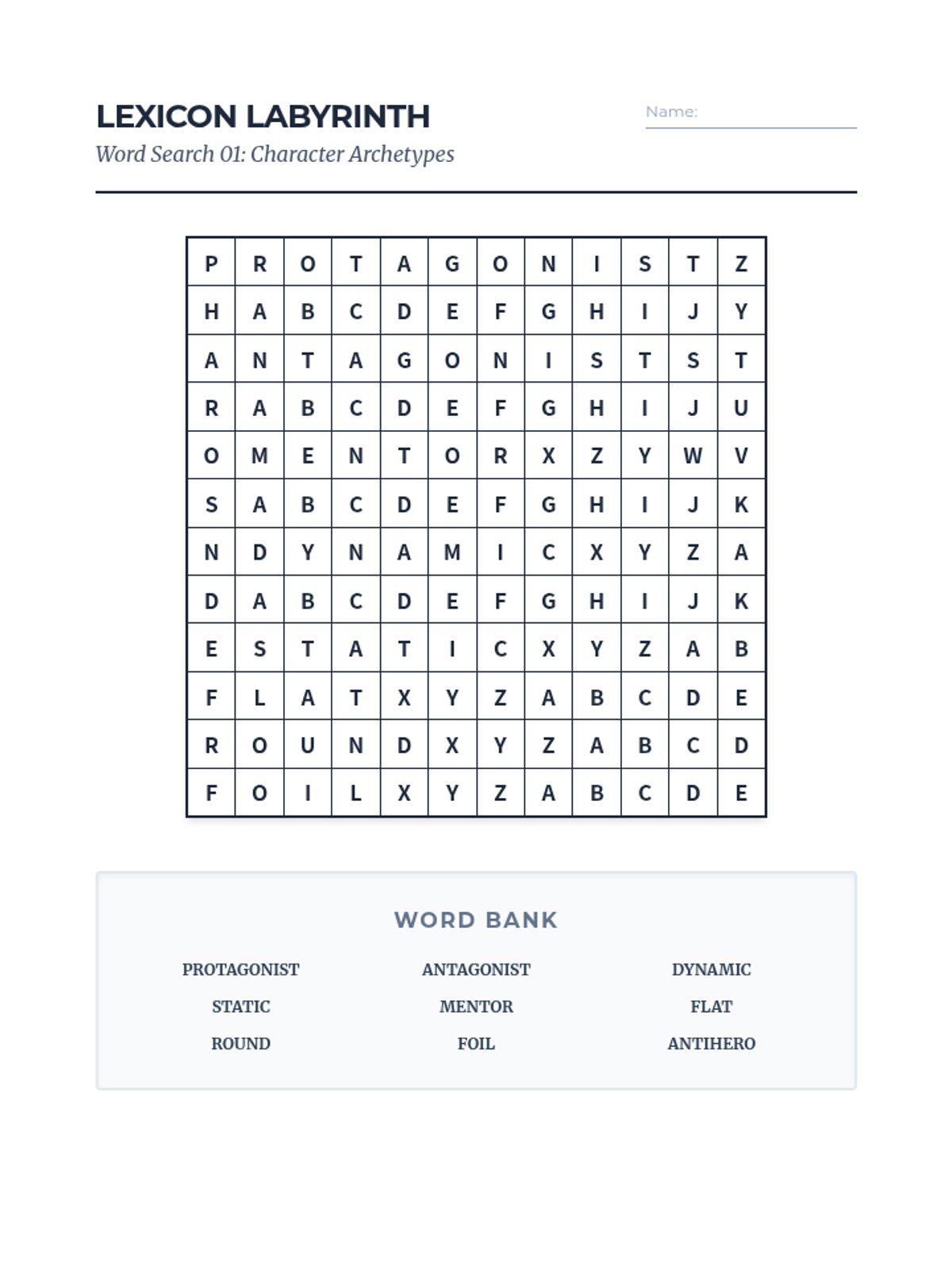
A comprehensive collection of 10 word search puzzles focusing on commonly confused words (homophones and near-homophones). Designed to improve vocabulary recognition and spelling through engaging "Case File" themed activities.
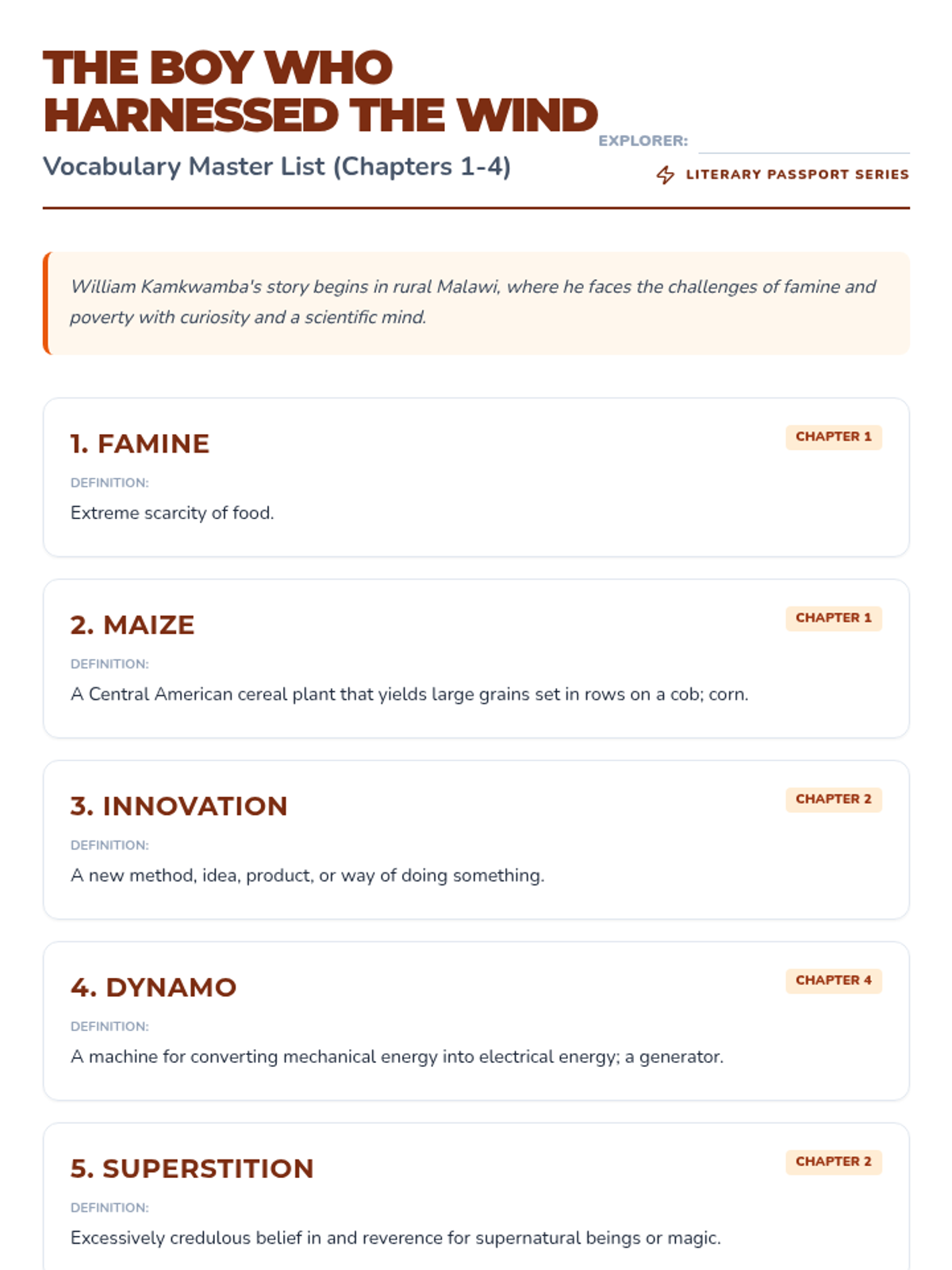
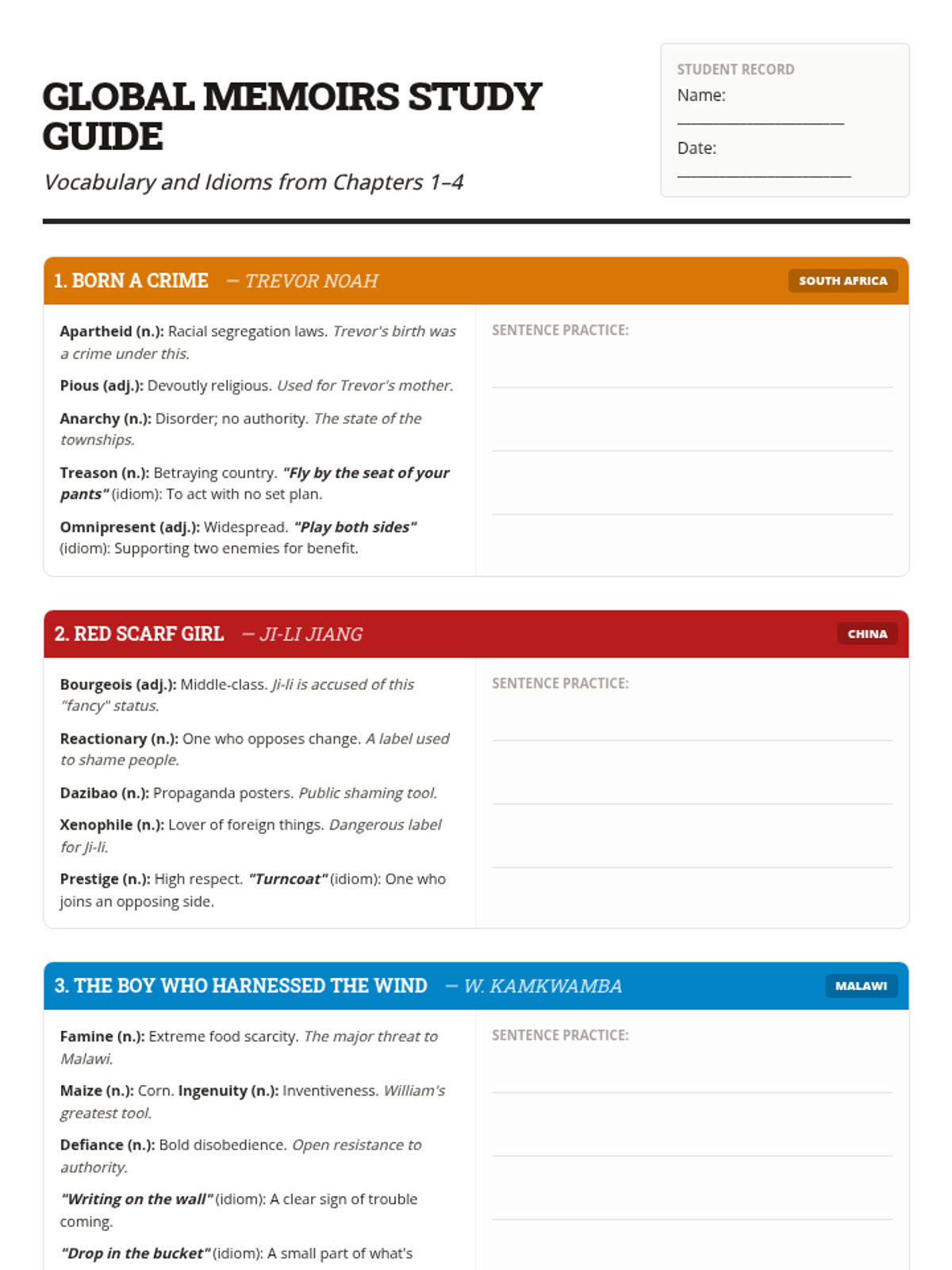
Vocabulary study for the first four chapters of William Kamkwamba's memoir about building a windmill in Malawi.
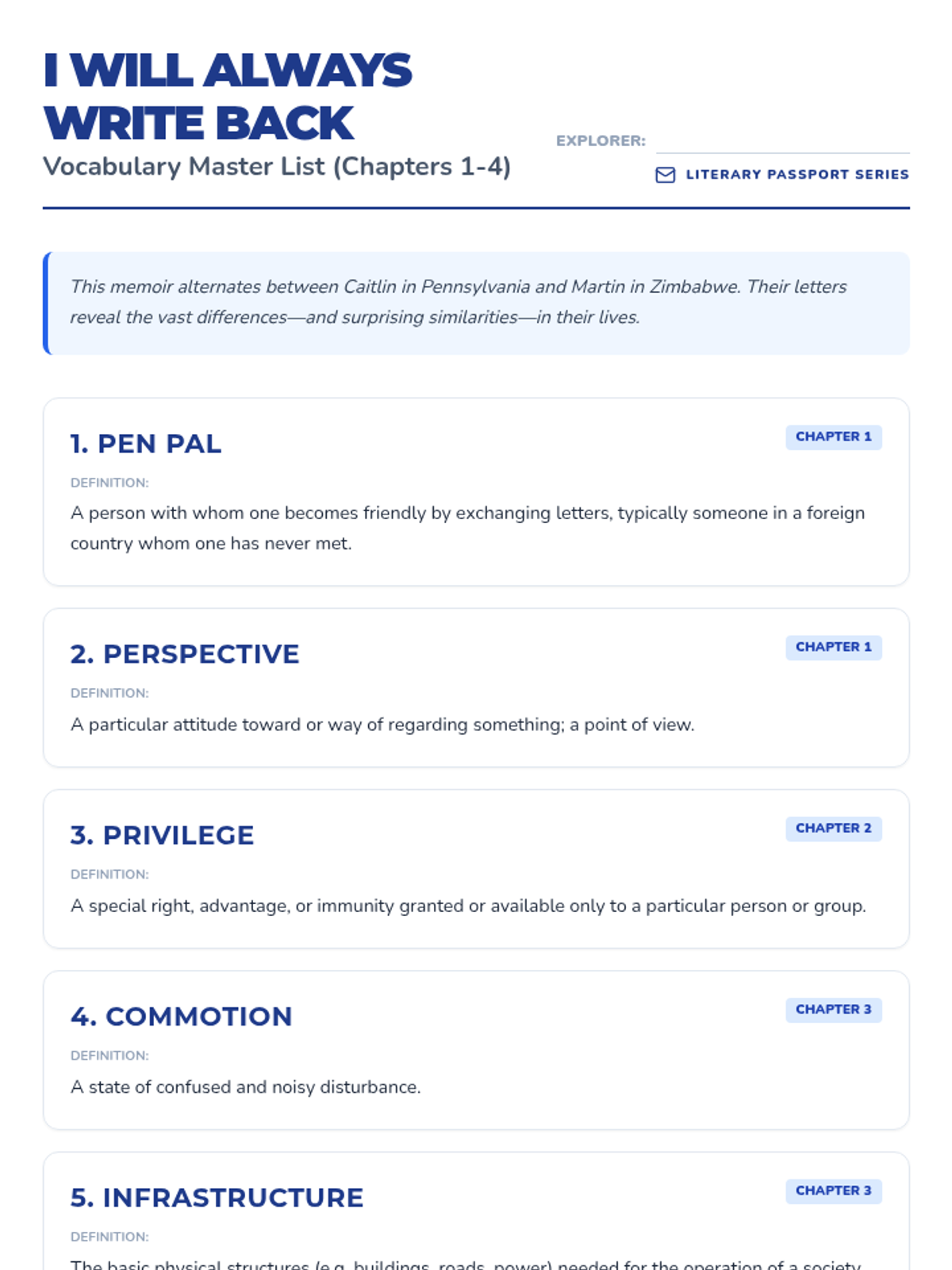
Vocabulary study for the first four chapters of the dual-narrative memoir about a life-changing pen pal relationship.
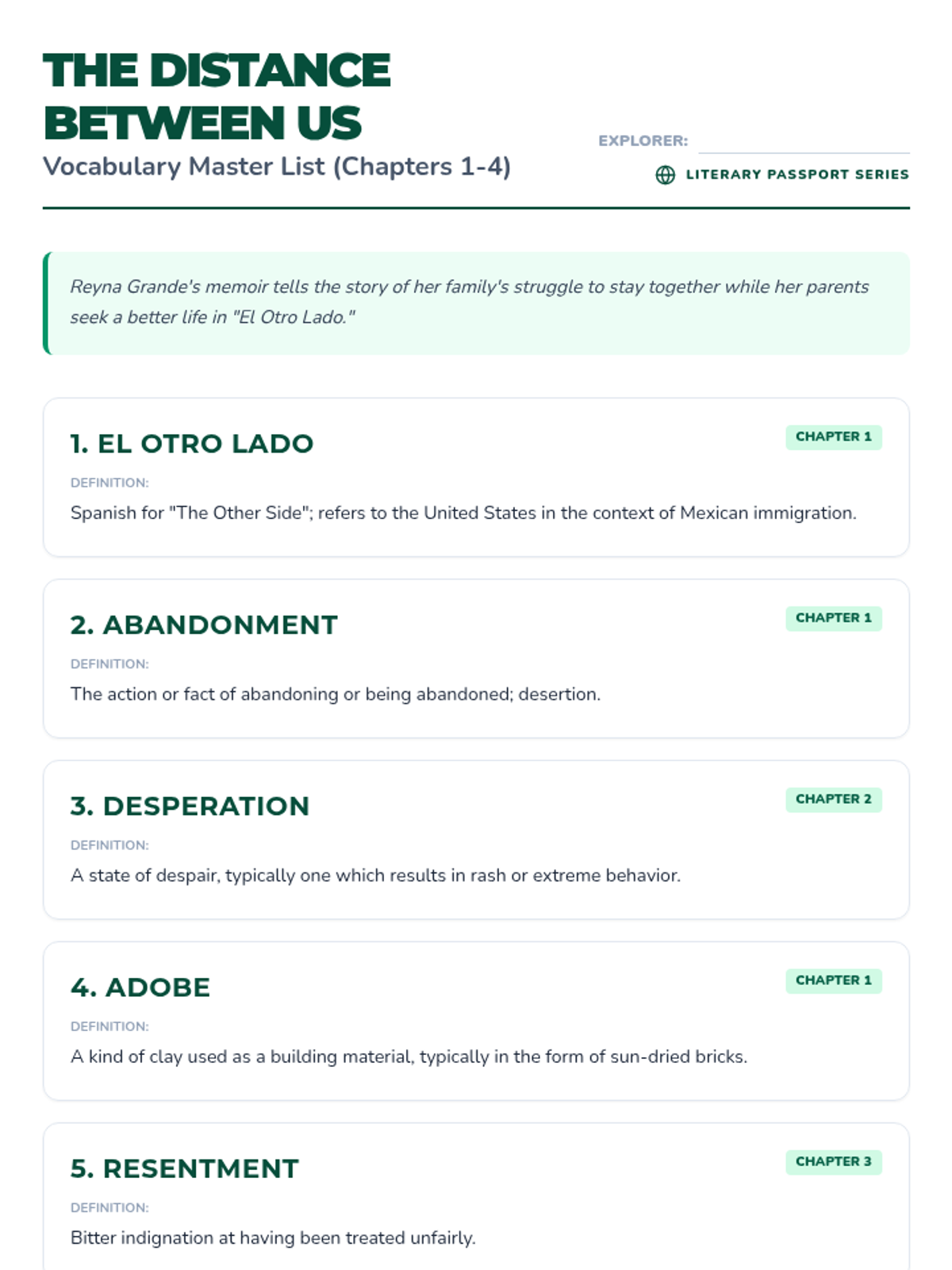
Vocabulary study for the first four chapters of Reyna Grande's memoir about her journey from Mexico to the United States.
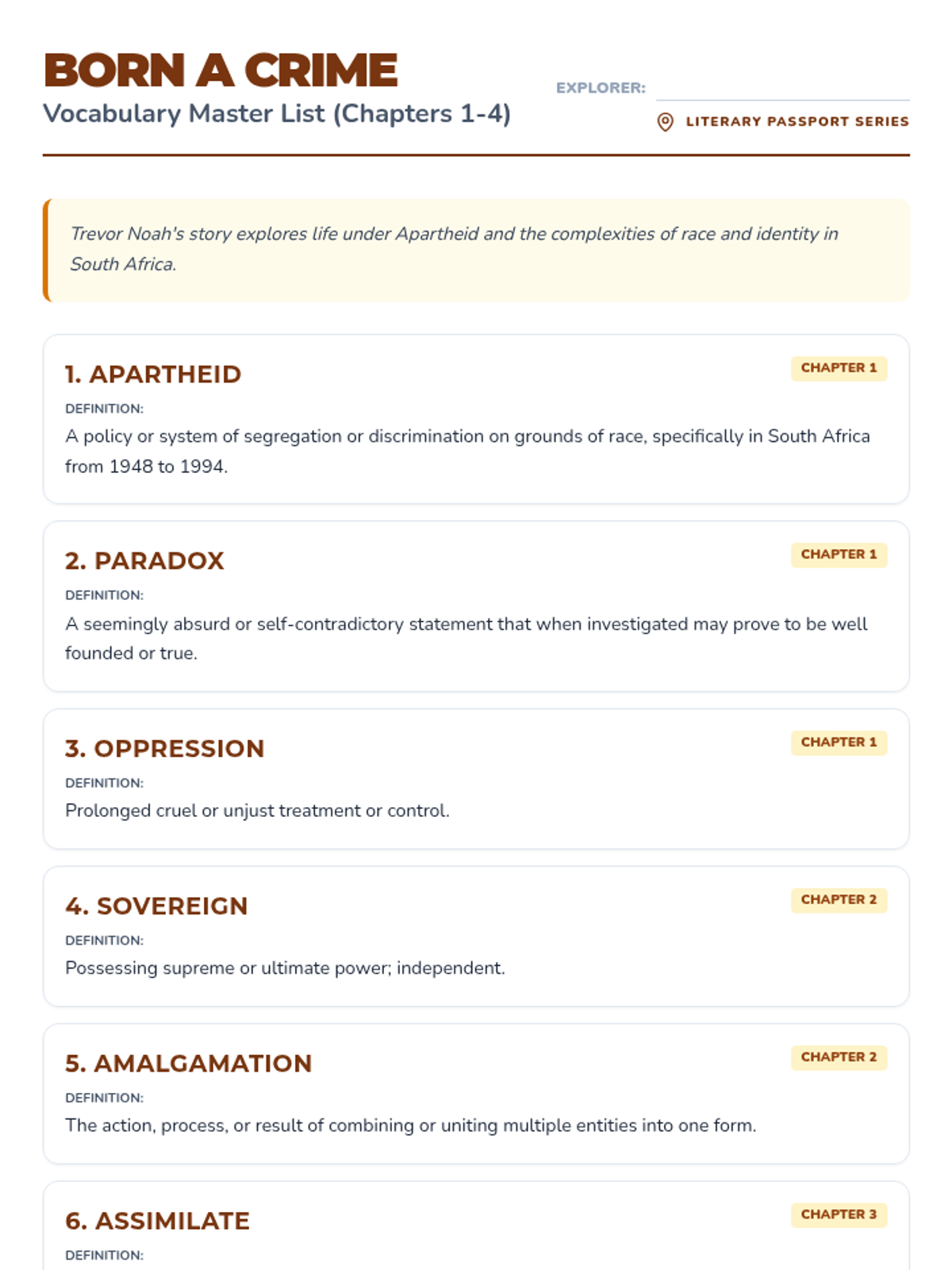
Vocabulary study for the first four chapters of Trevor Noah's memoir about growing up in apartheid-era South Africa.
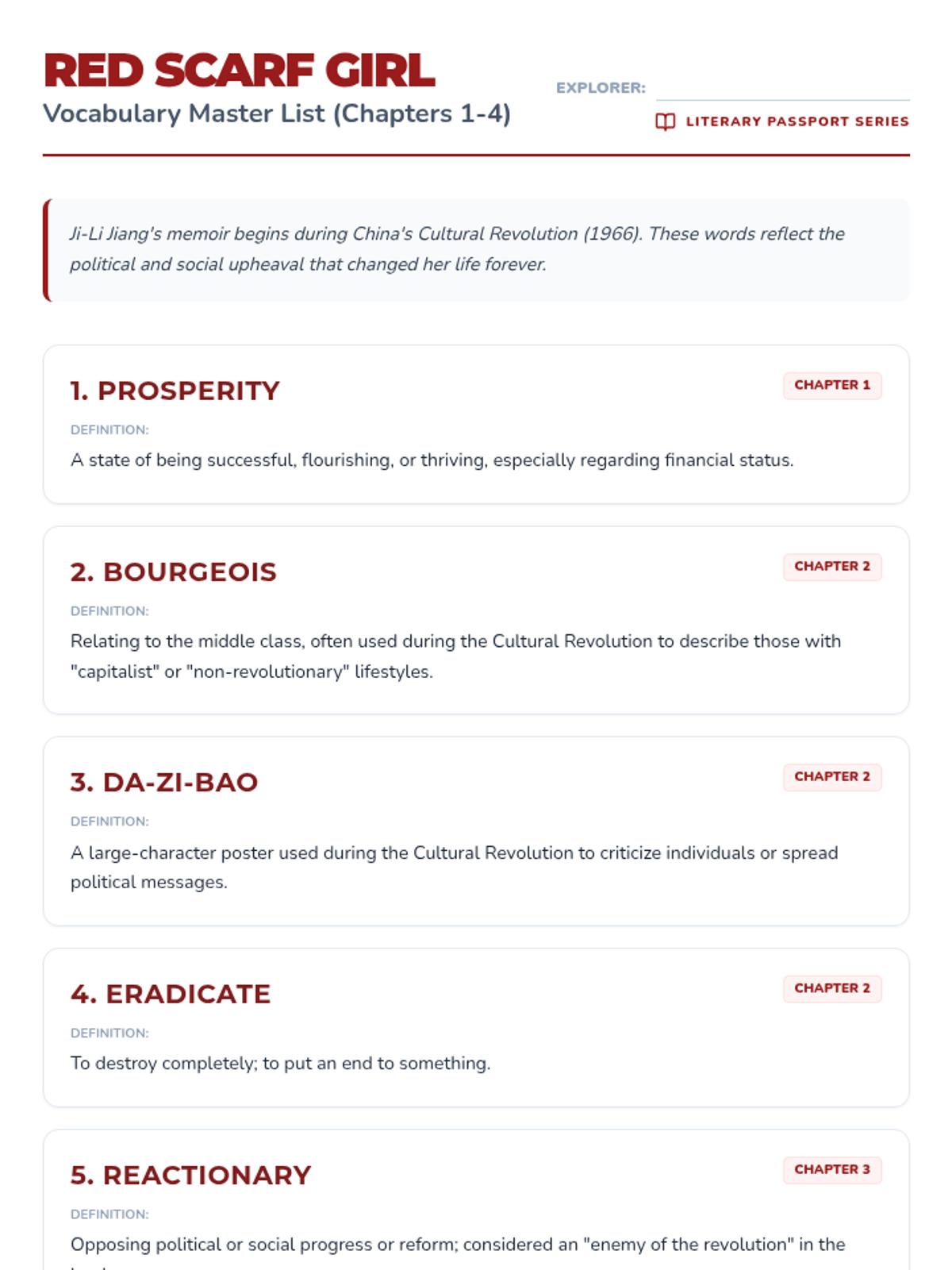
Vocabulary study for the first four chapters of Ji-Li Jiang's memoir about the Cultural Revolution in China.
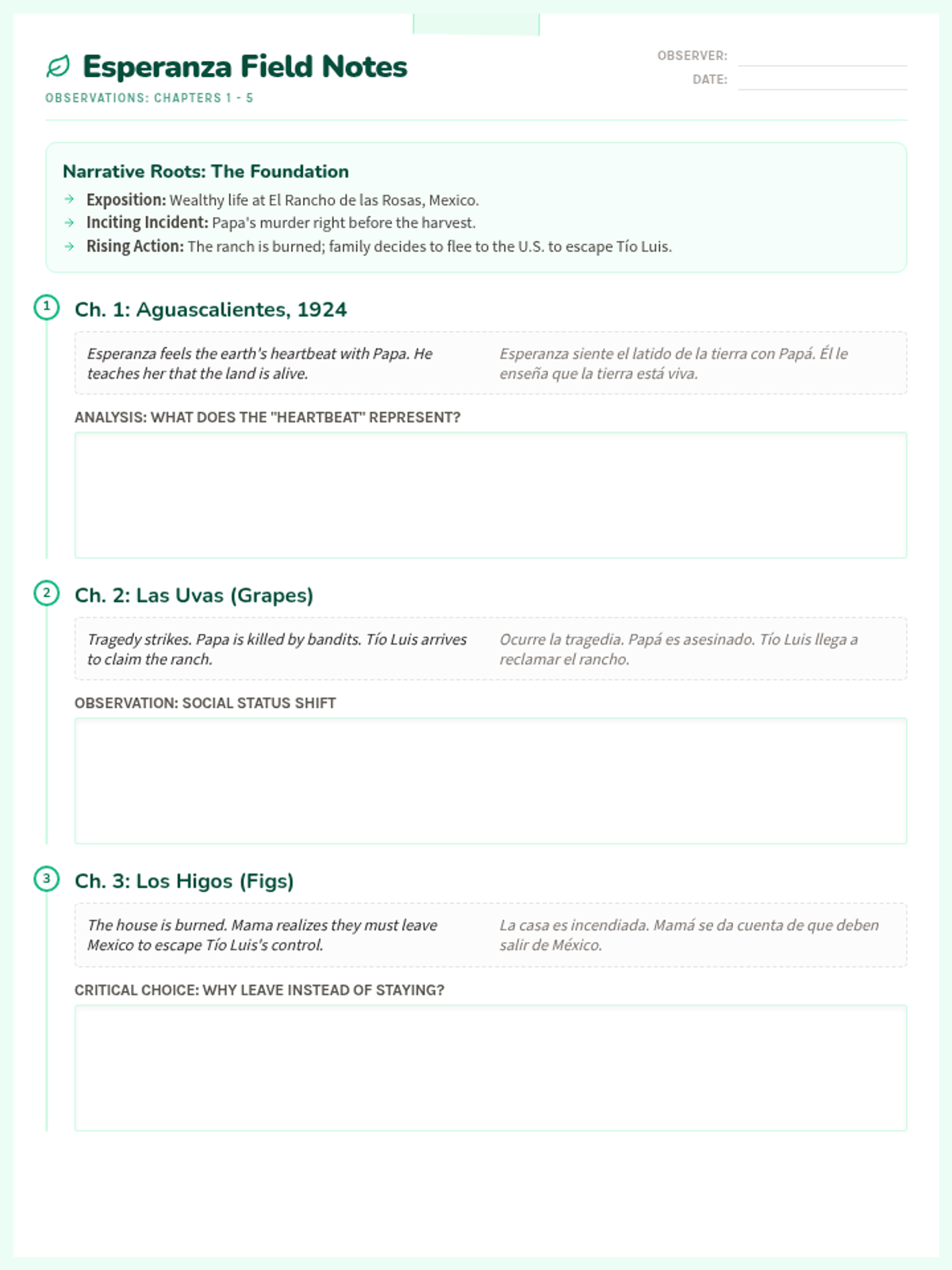
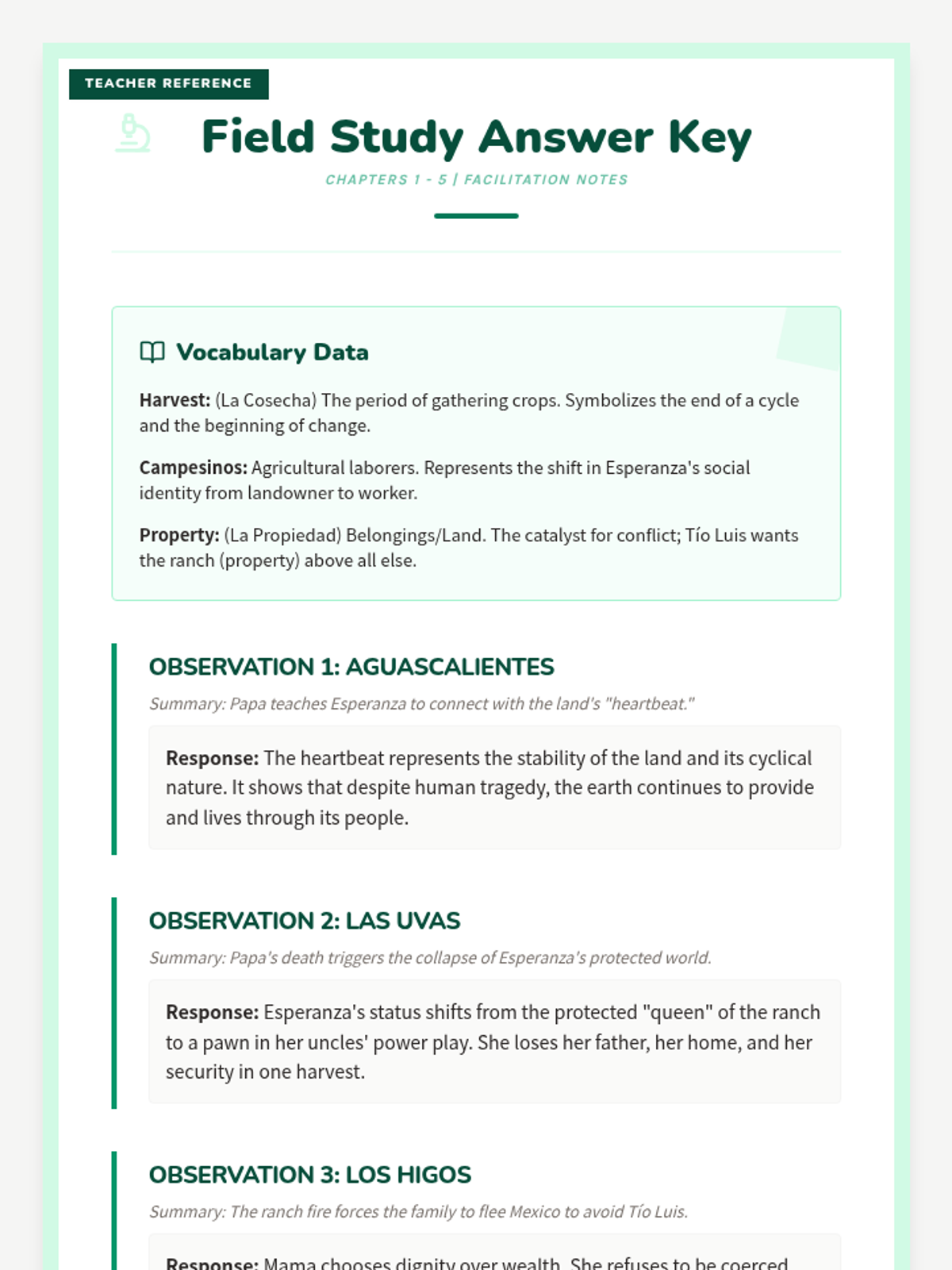
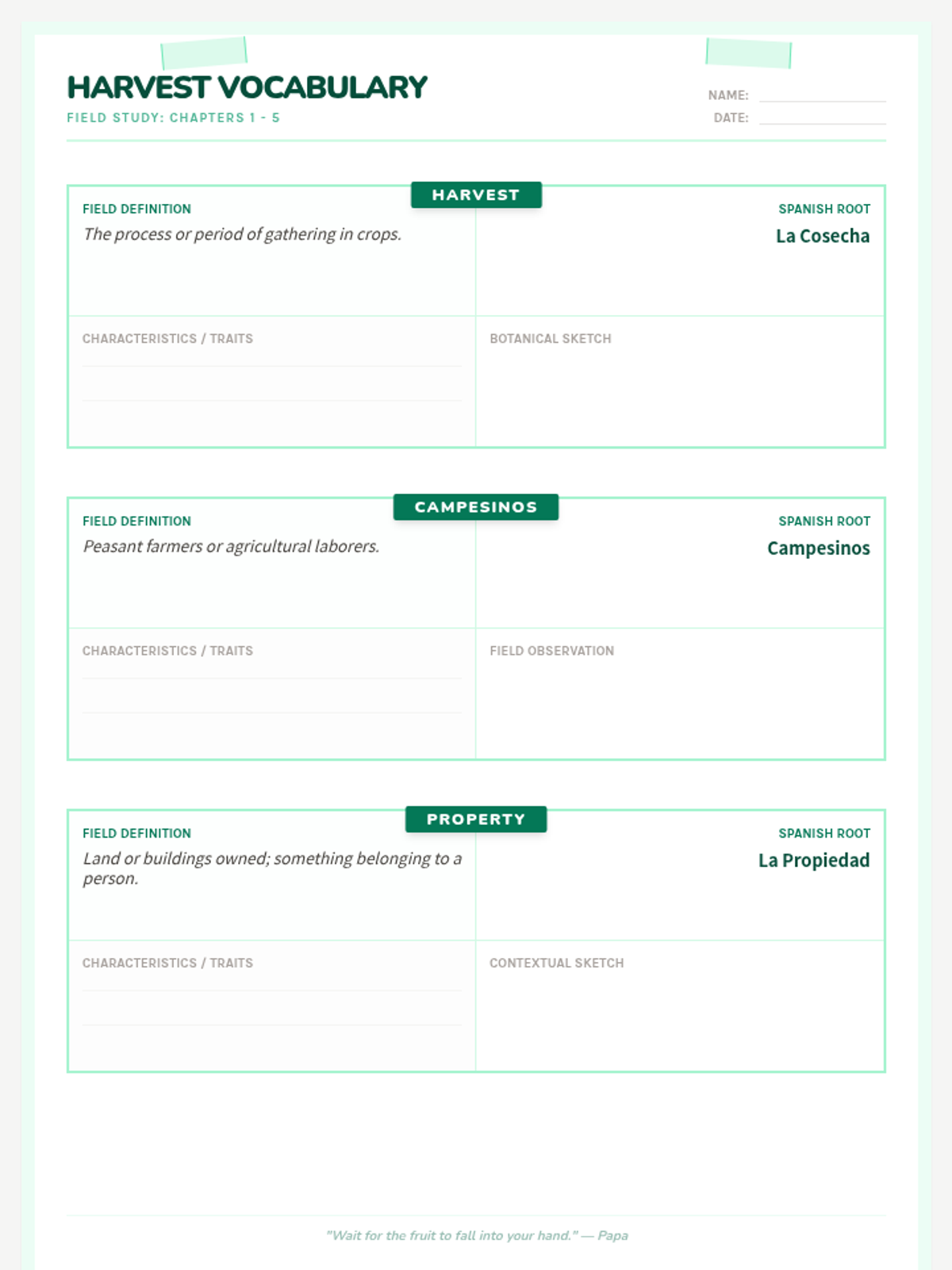
An exploration of the first five chapters of Esperanza Rising, focusing on the dramatic shift from luxury to labor and the beginning of Esperanza's migration journey.
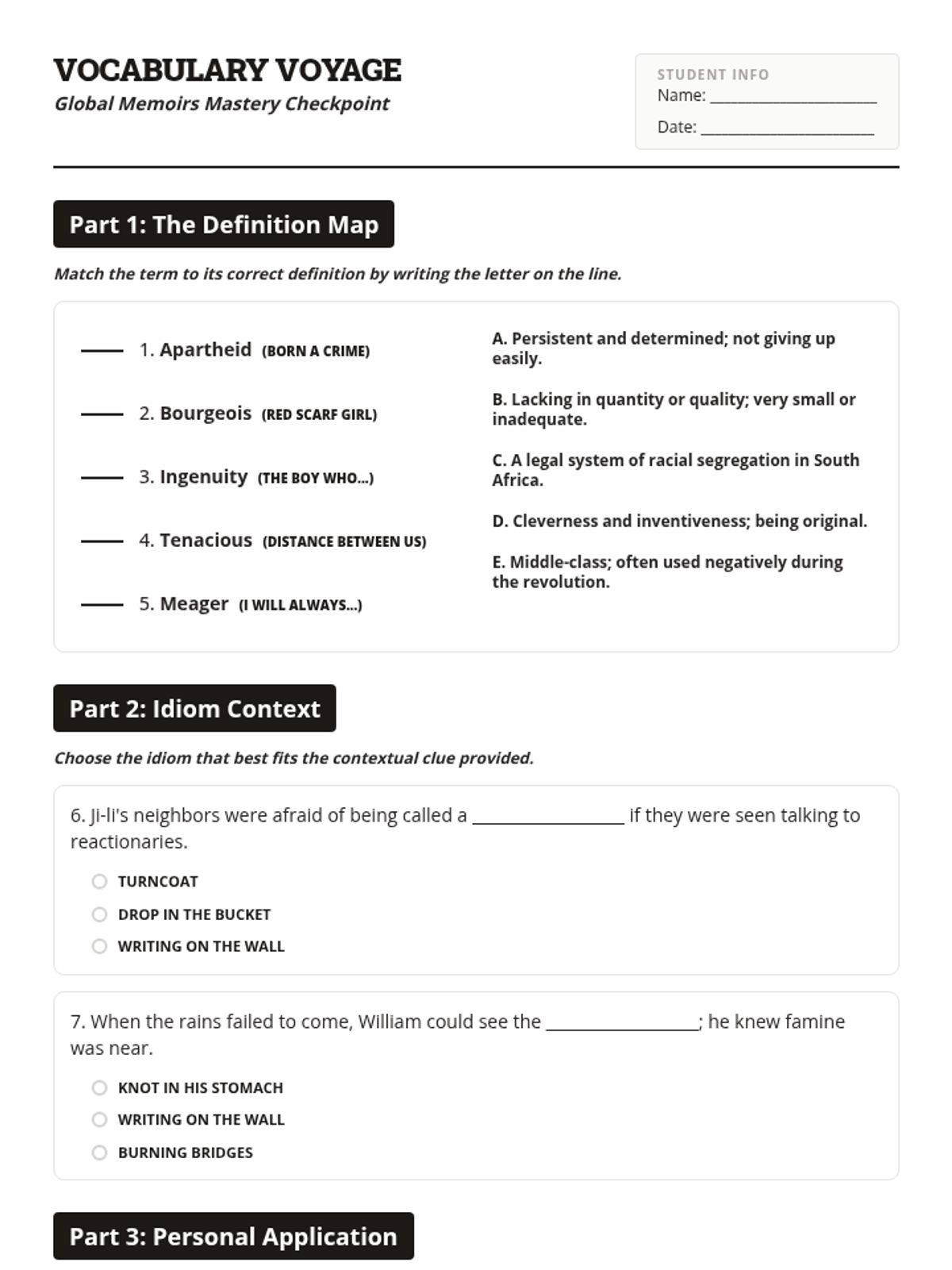
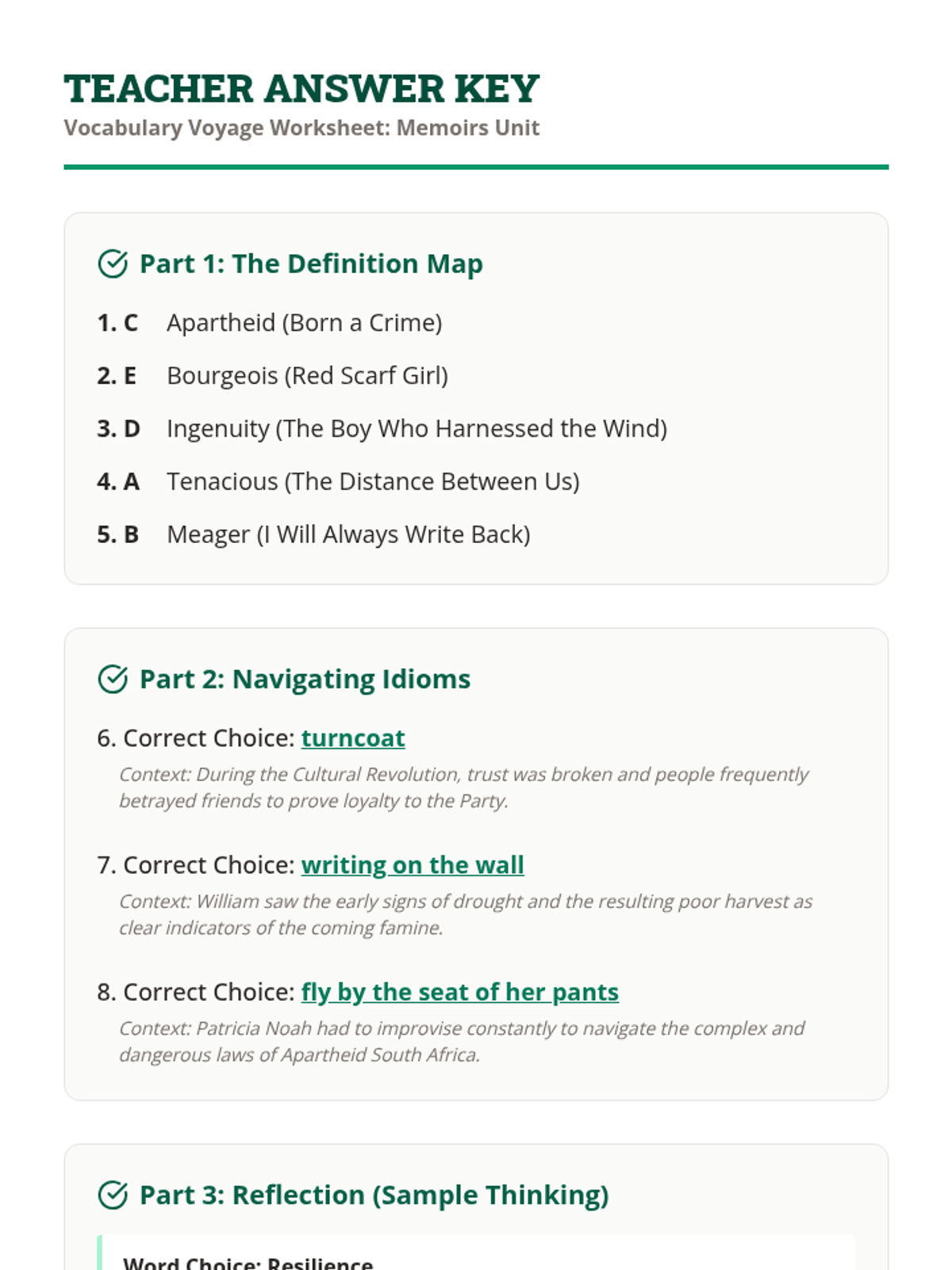
This lesson provides vocabulary lists and practice materials for the first four chapters of five prominent memoirs, helping students master academic vocabulary and idioms within diverse cultural contexts.
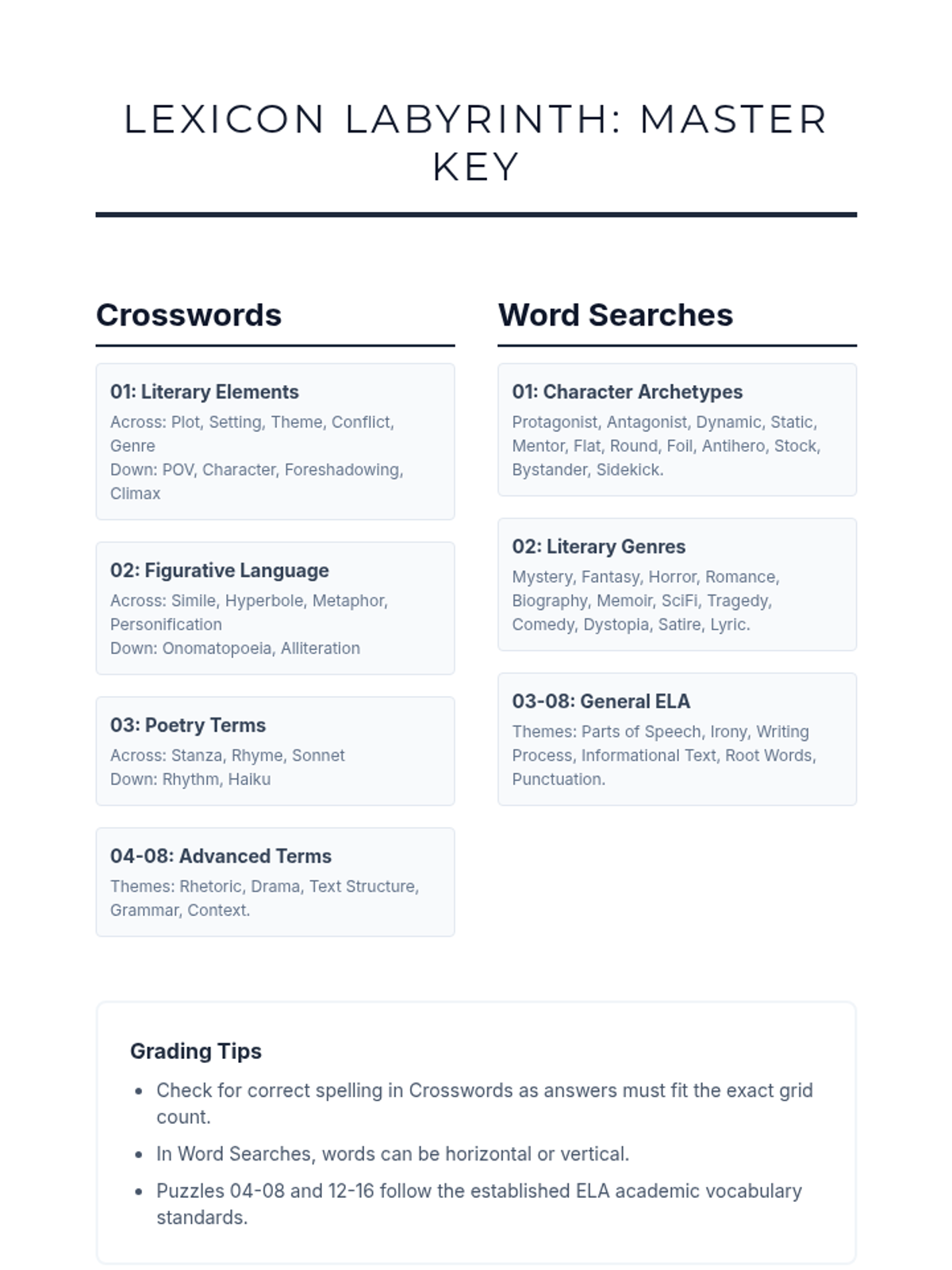
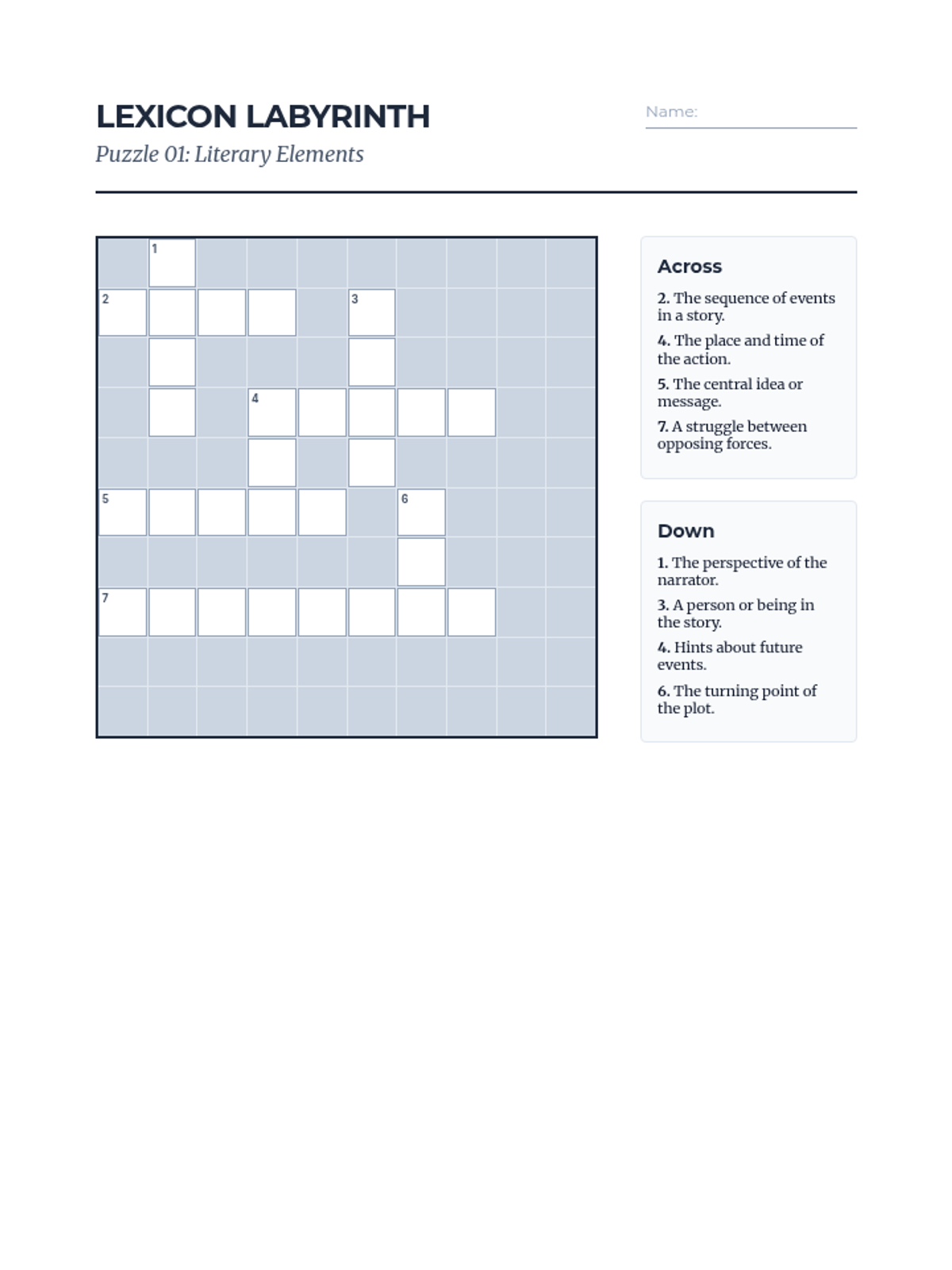
A comprehensive set of vocabulary-building puzzles focused on essential ELA academic terms, covering literary elements, figurative language, rhetorical devices, and more.
A collaborative "Pairs Compare" activity where students work in teams of four to share keywords, locate evidence, and synthesize final answers on index cards.
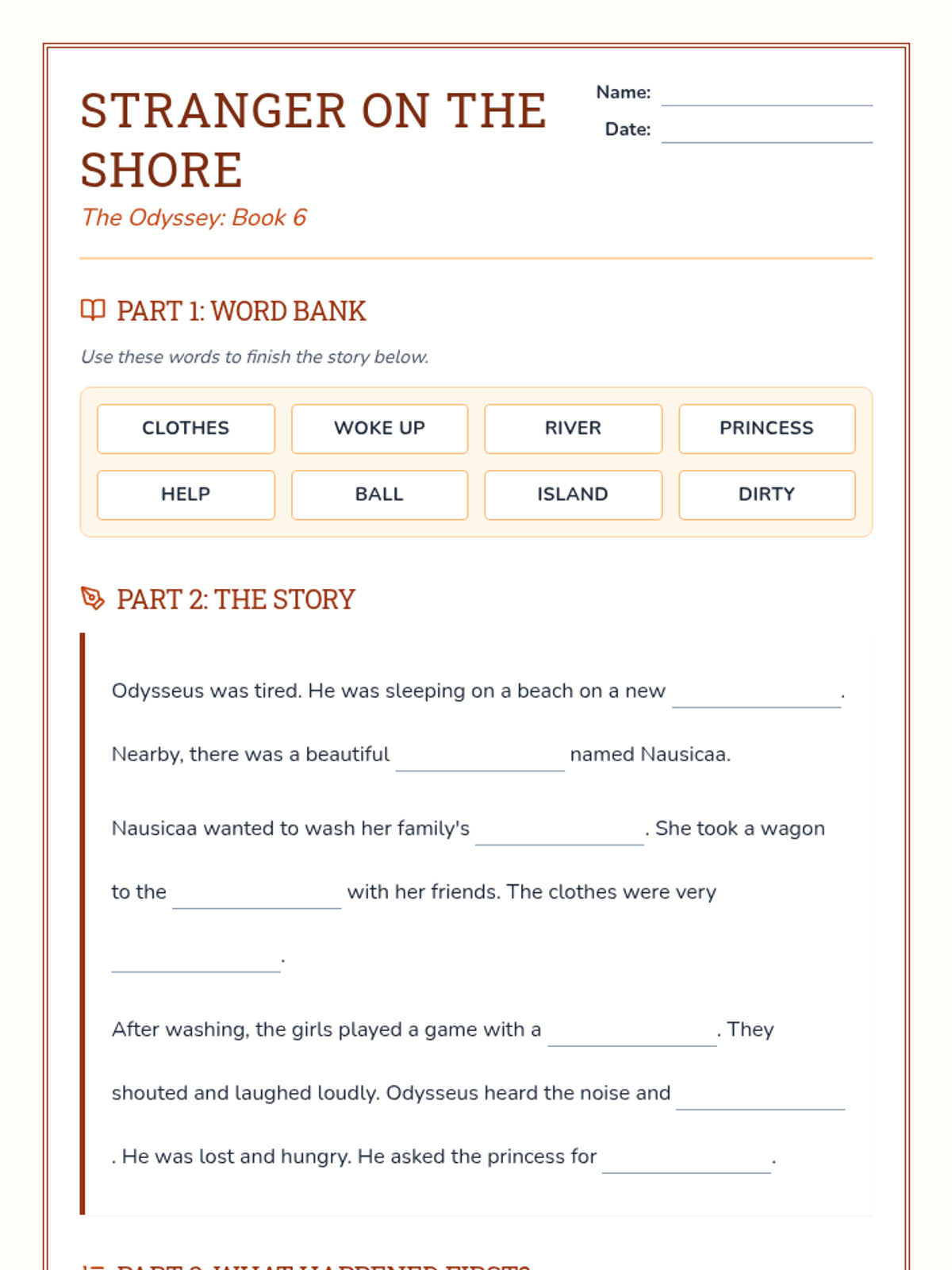
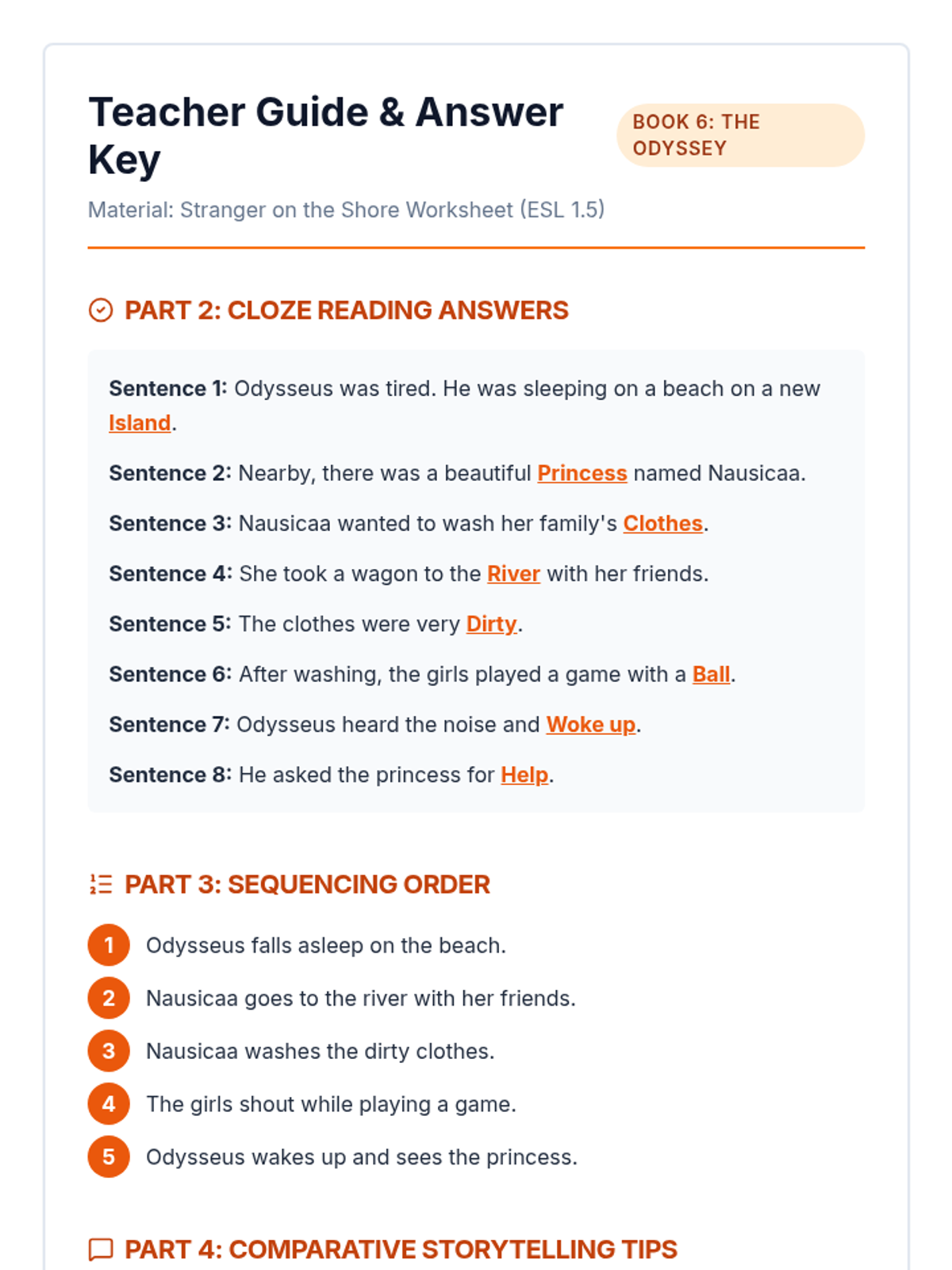
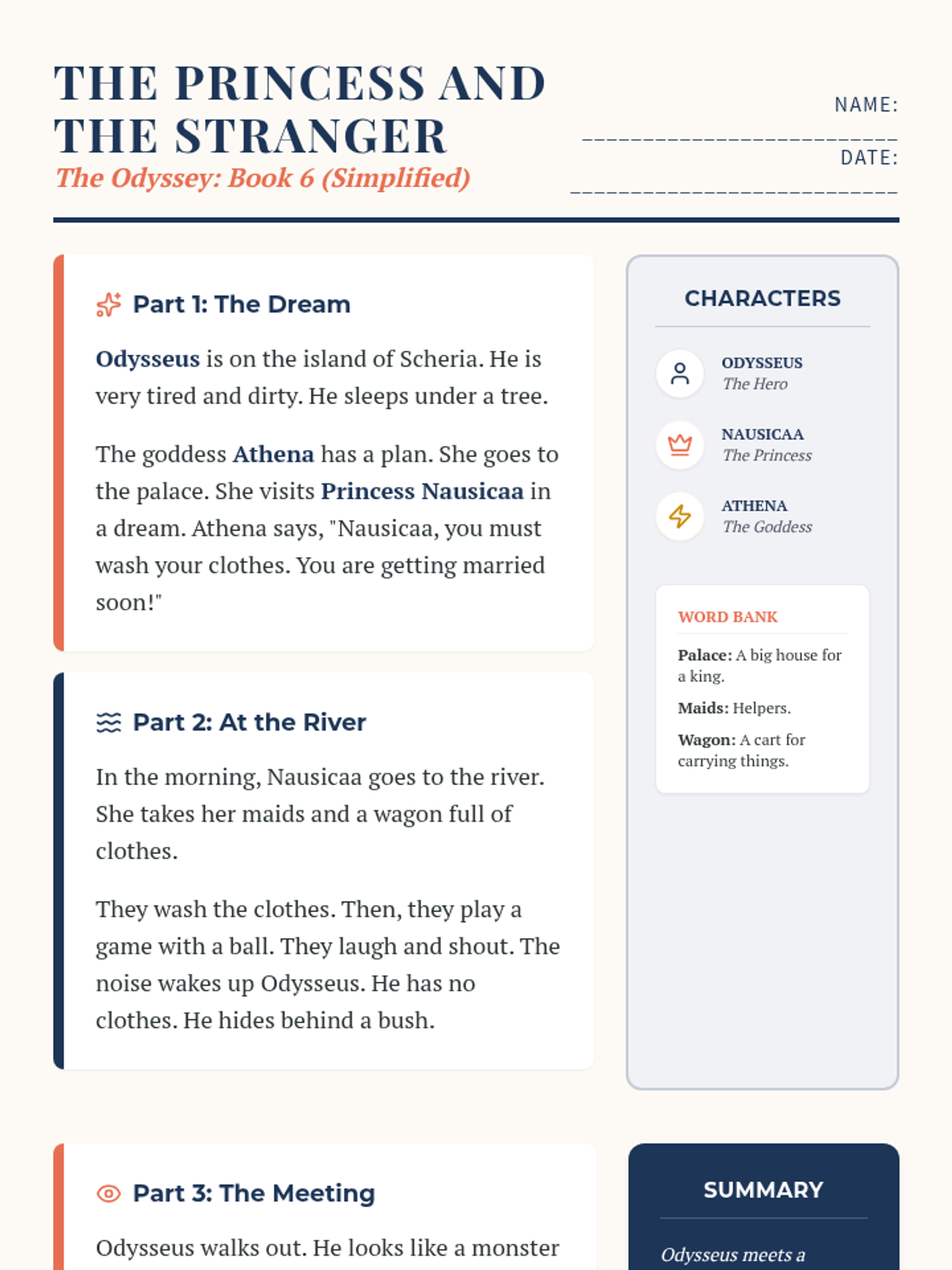
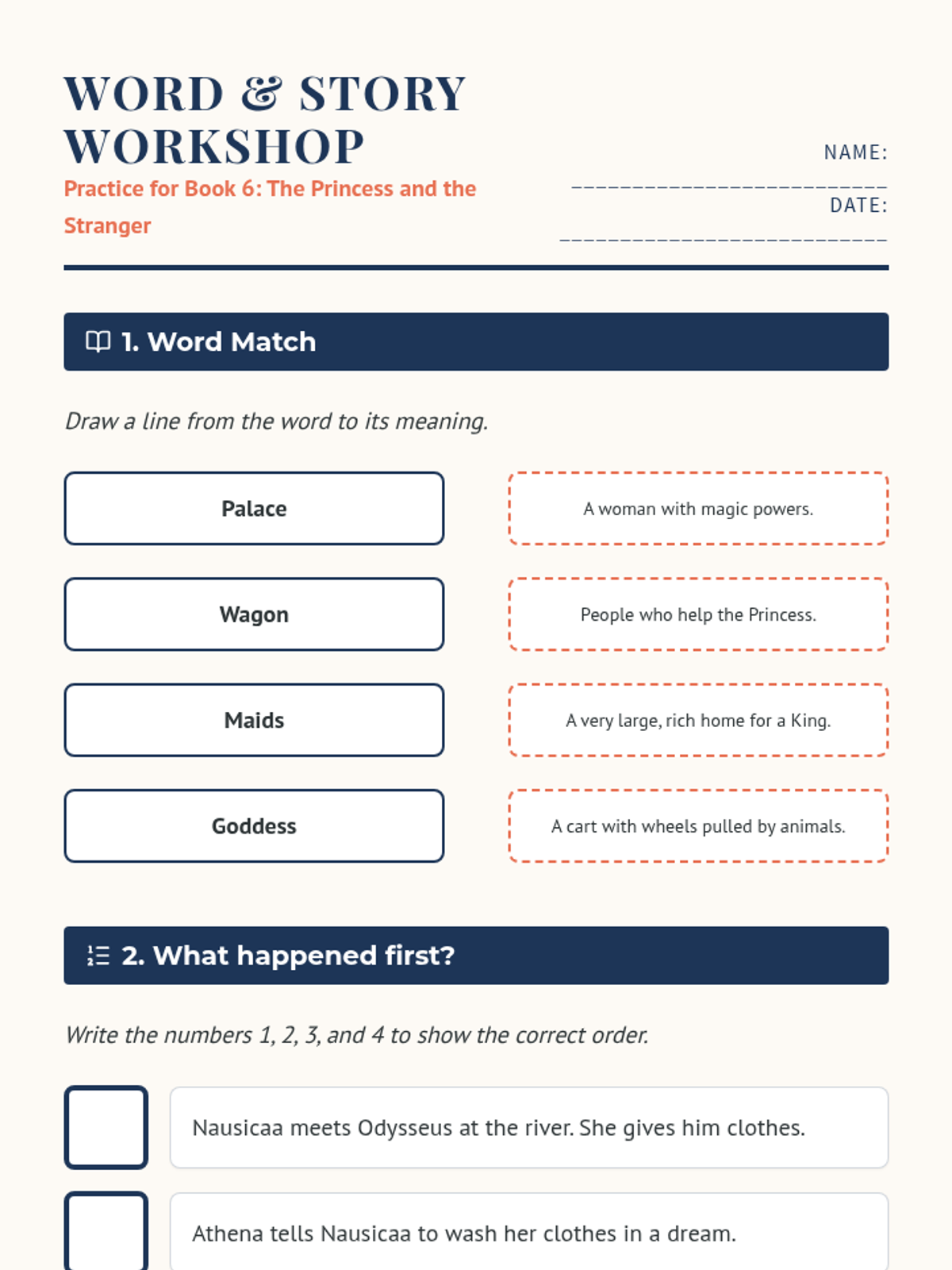
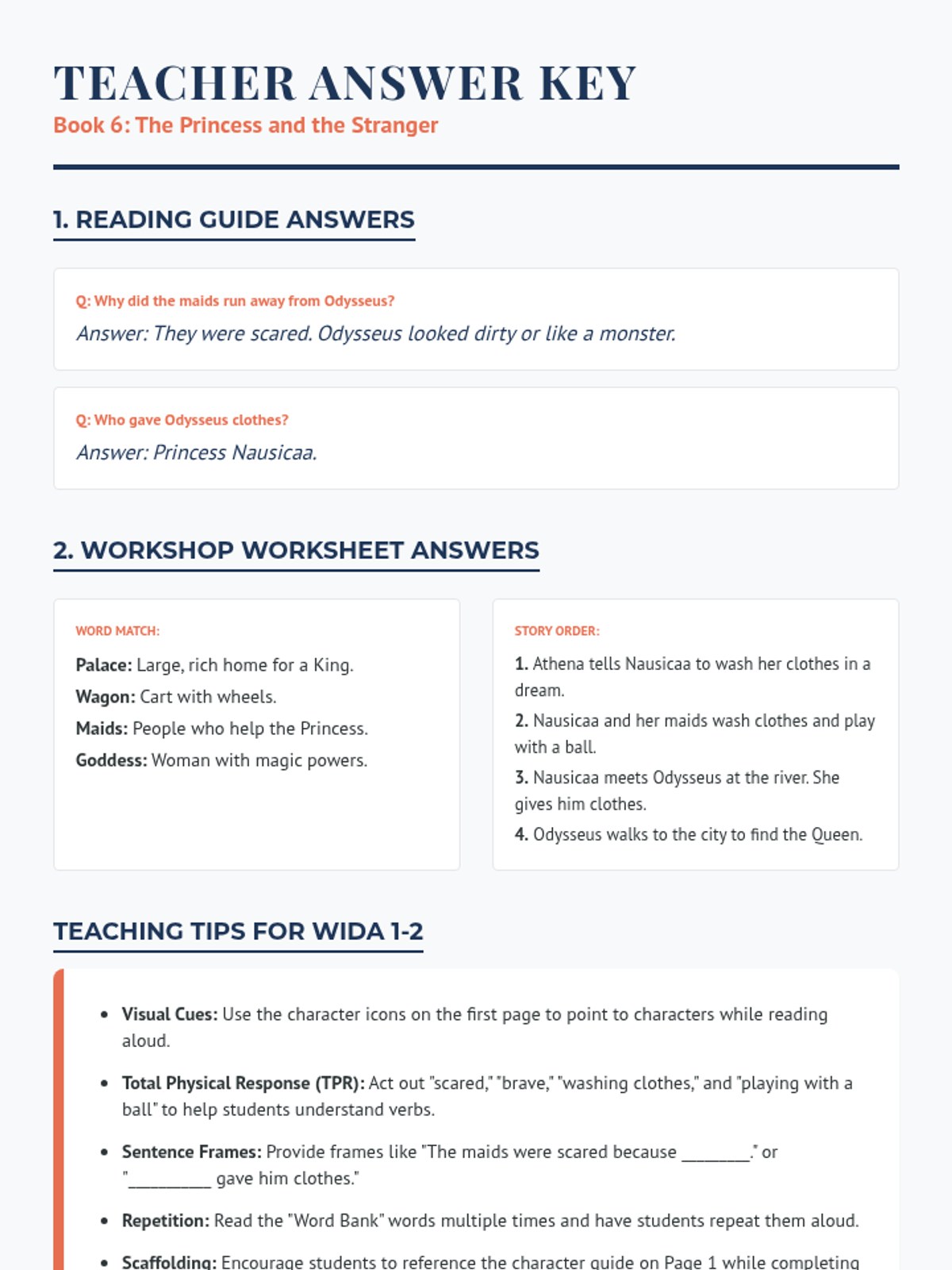
A simplified introduction to Book 6 of The Odyssey for ESL learners, focusing on the encounter between Odysseus and Nausicaa through cloze reading, sequencing, and comparative reflection.
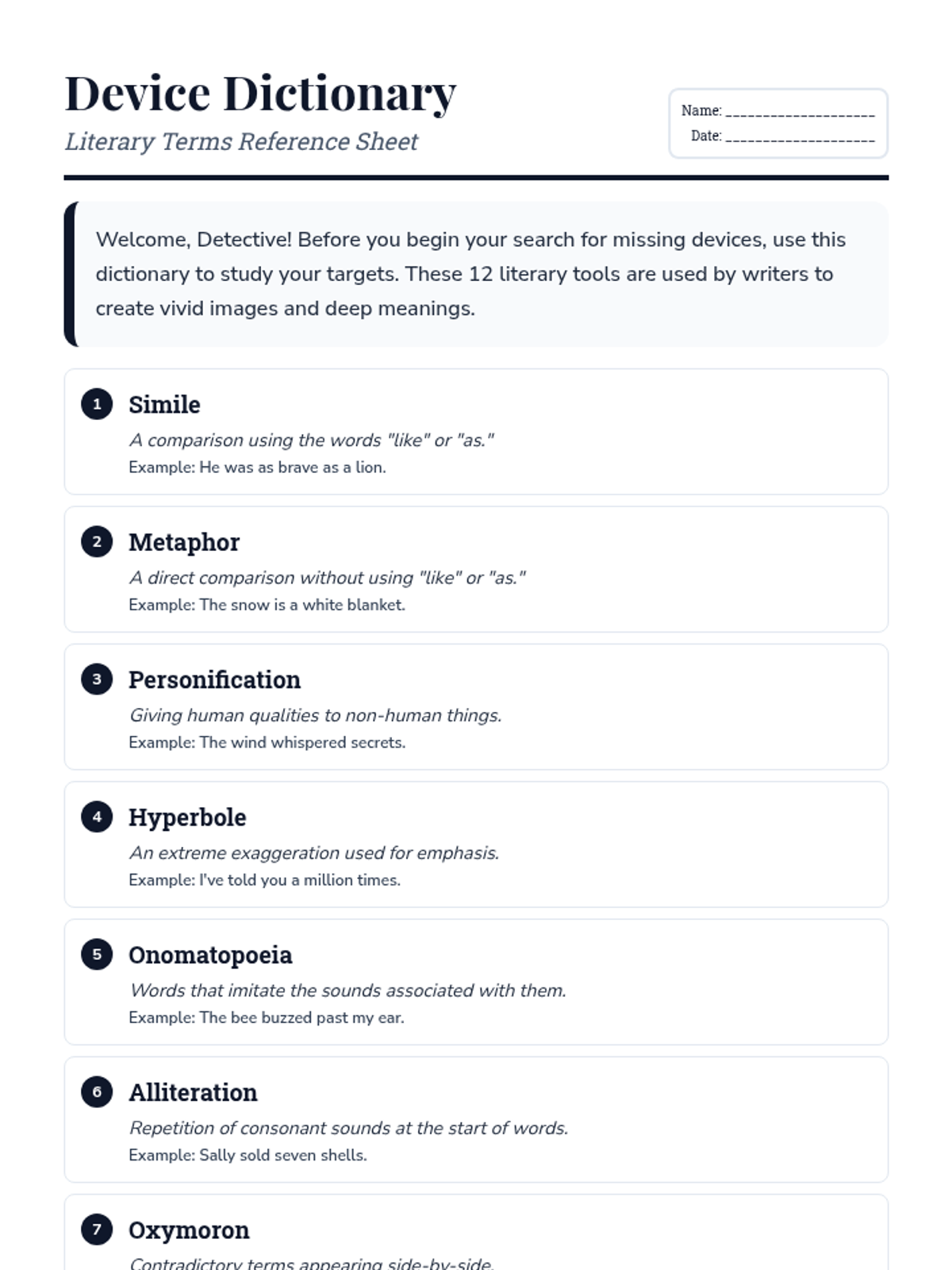
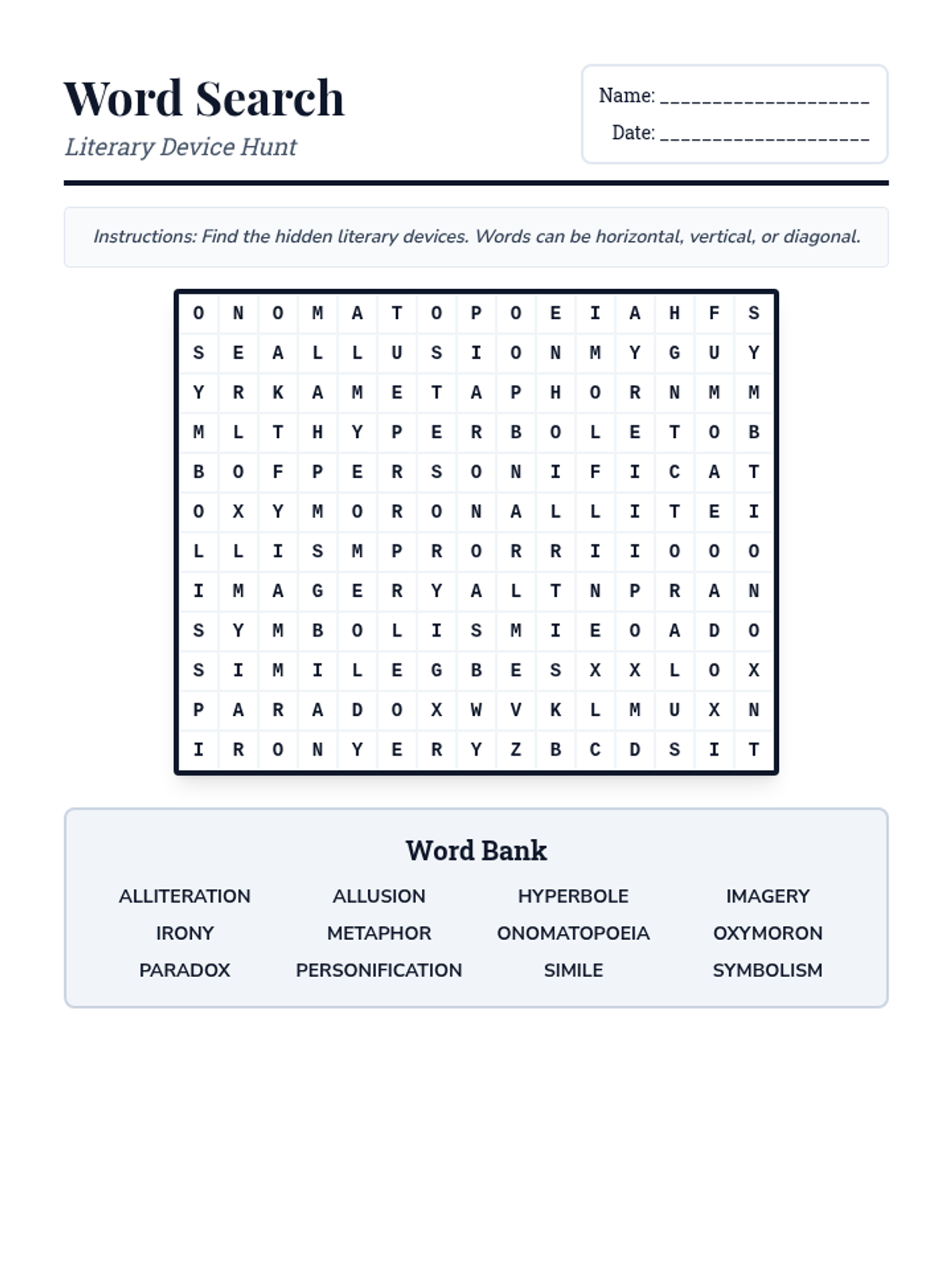
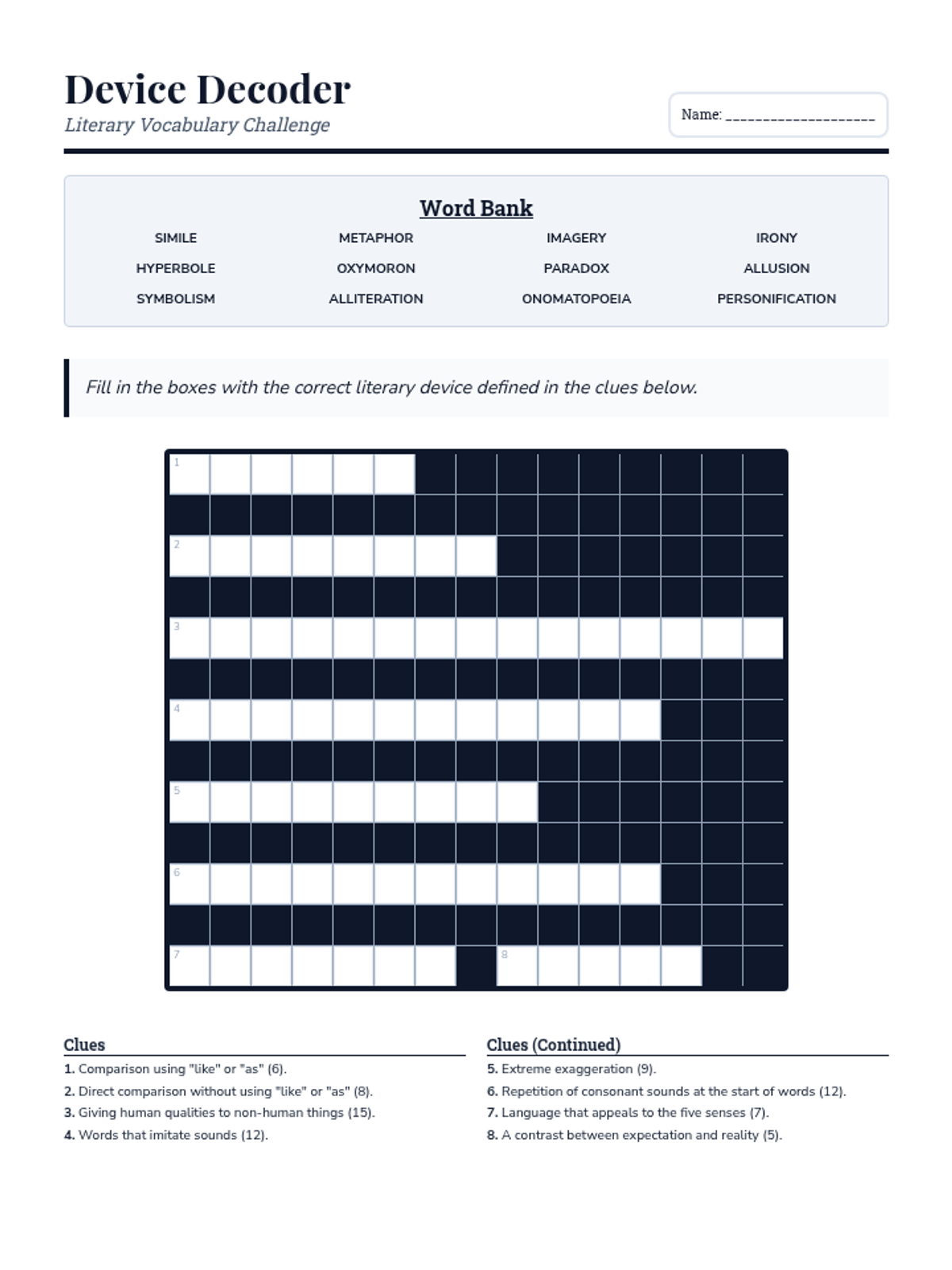
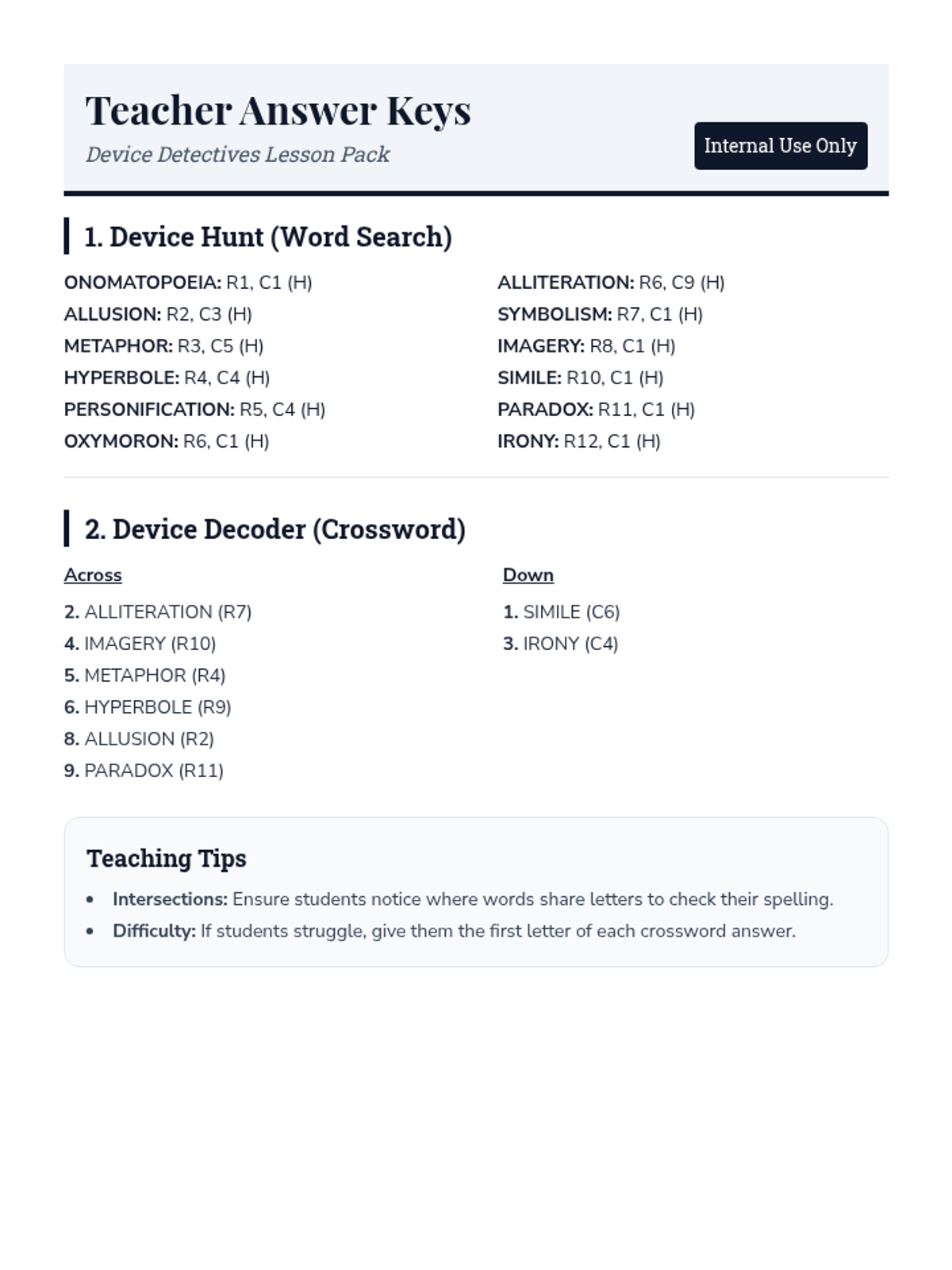
An introductory lesson focusing on identifying and defining common literary devices through engaging puzzles and reference materials.
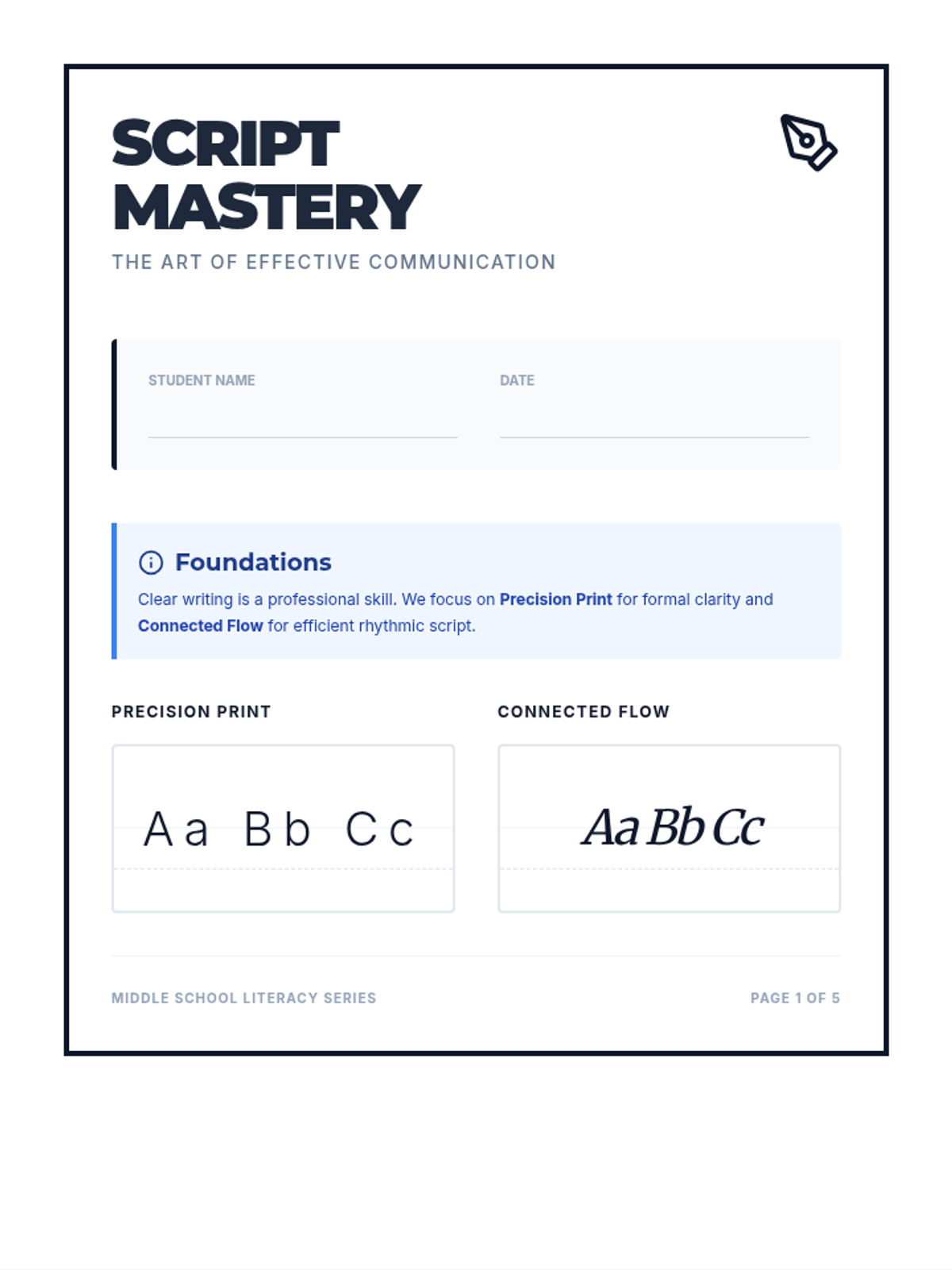
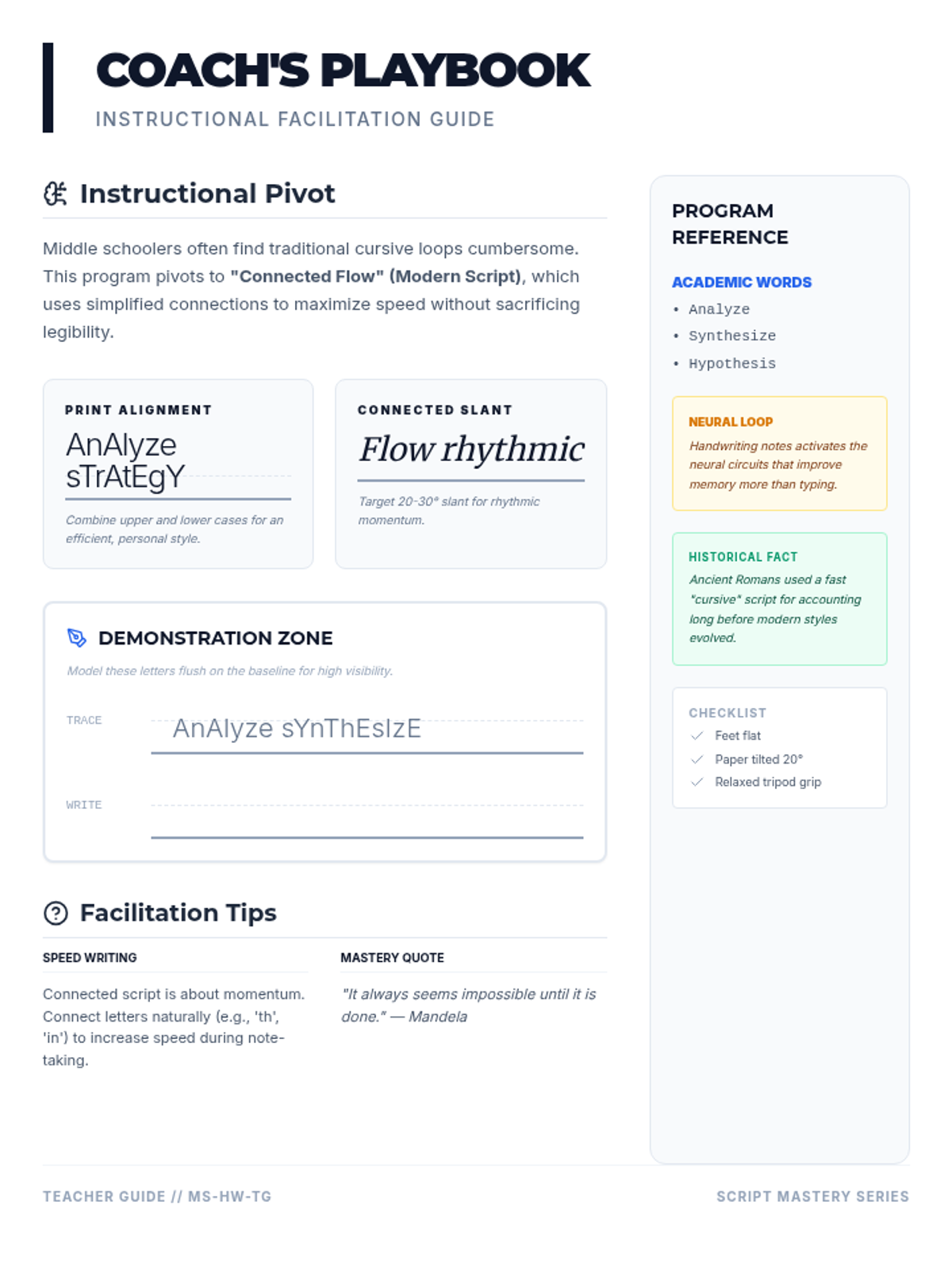
A comprehensive handwriting improvement program for middle school students, blending print and cursive techniques using engaging academic and motivational content.
A simplified exploration of Book 6 of Homer's Odyssey, designed for WIDA Level 1-2 ELL students. The lesson focuses on key characters, basic plot sequencing, and essential vocabulary through a high-interest narrative.
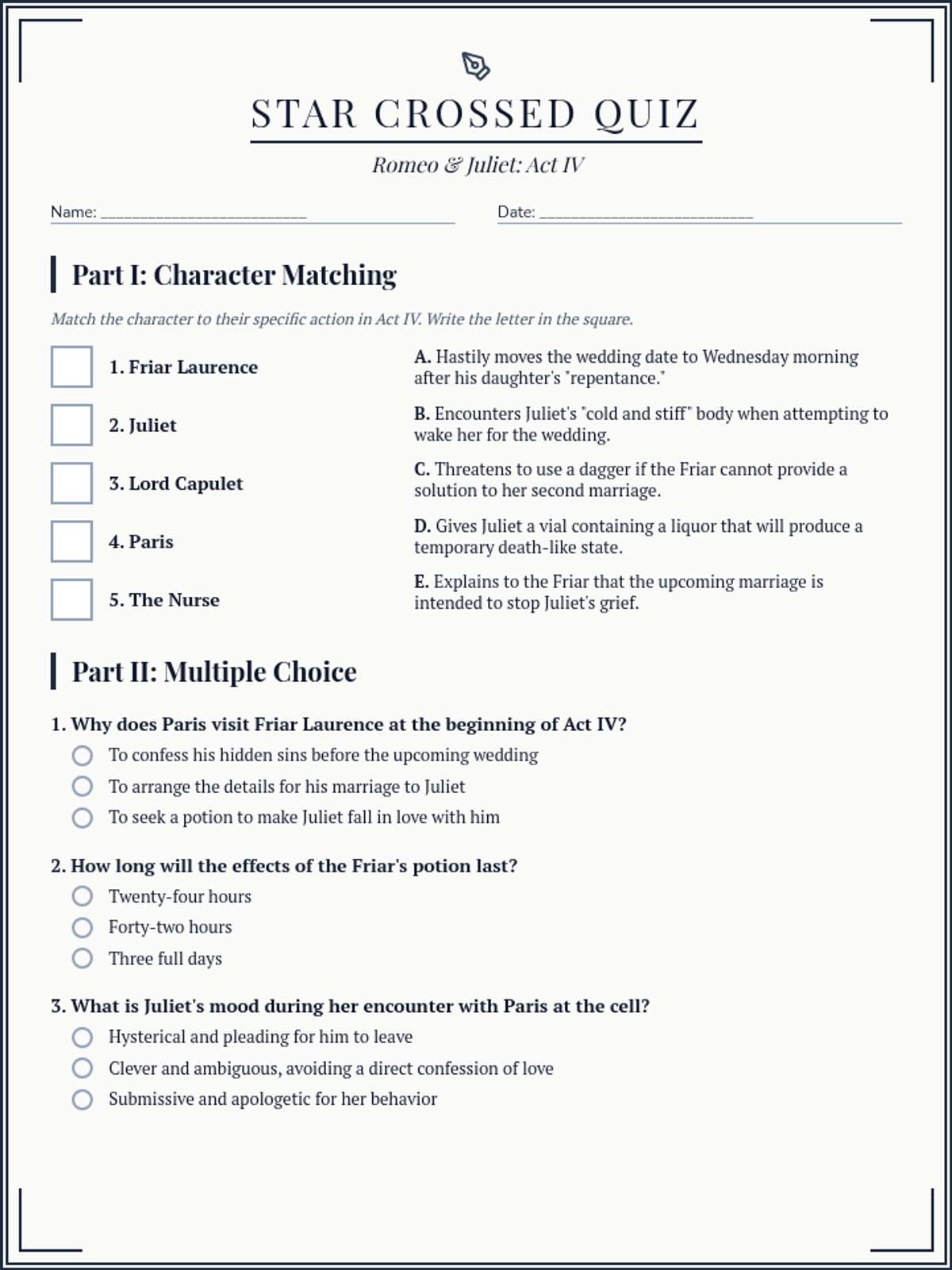
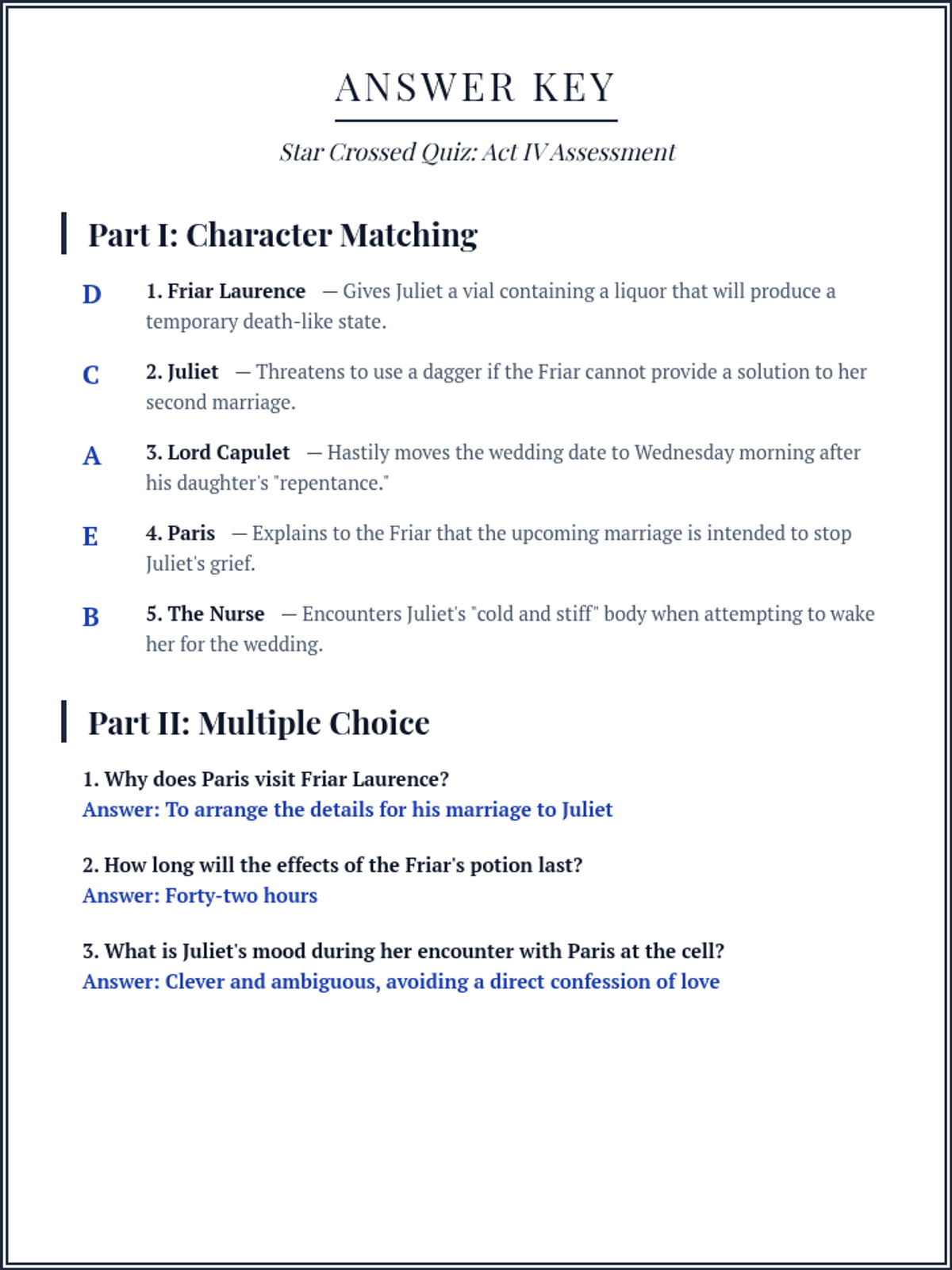
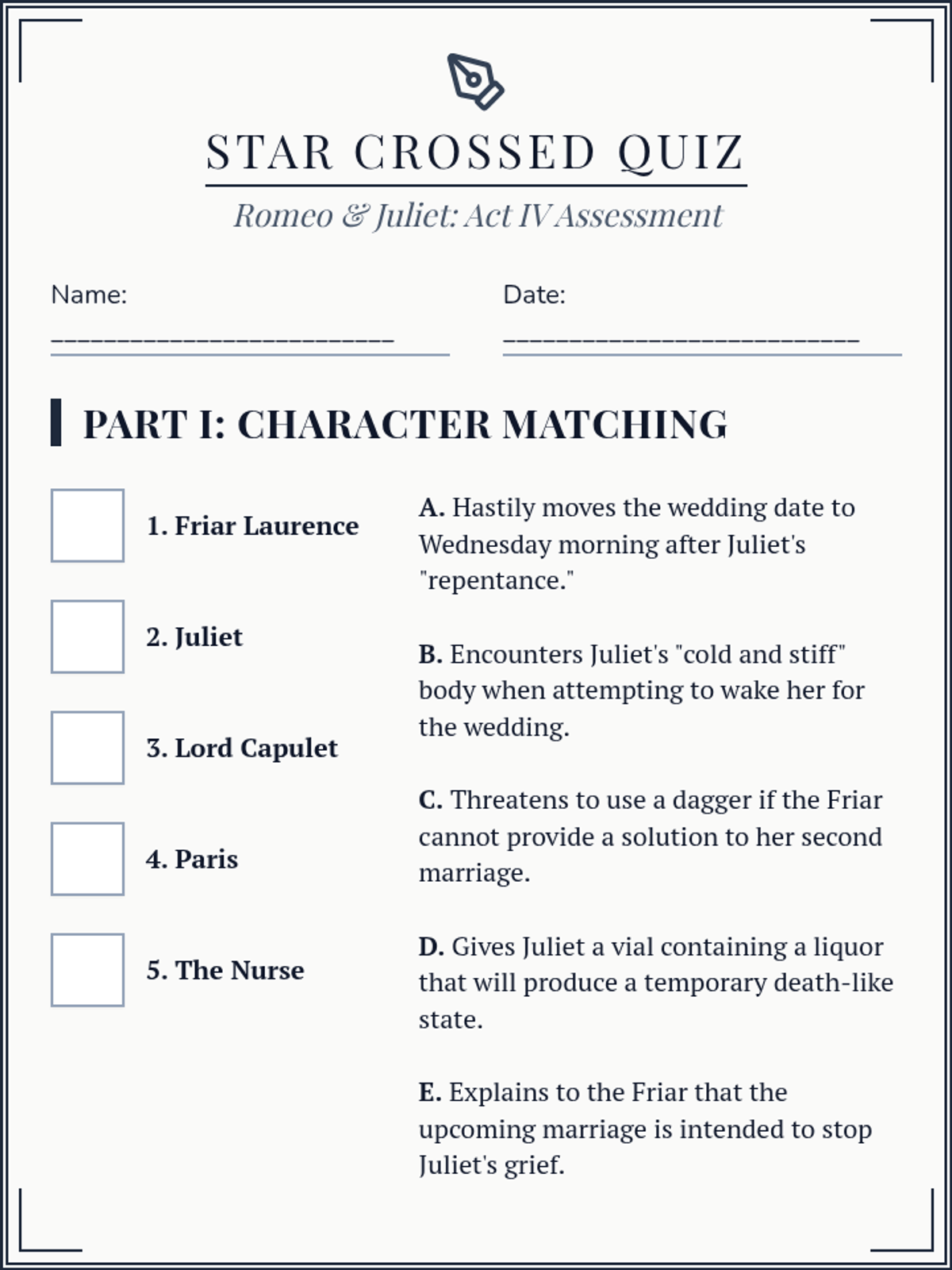
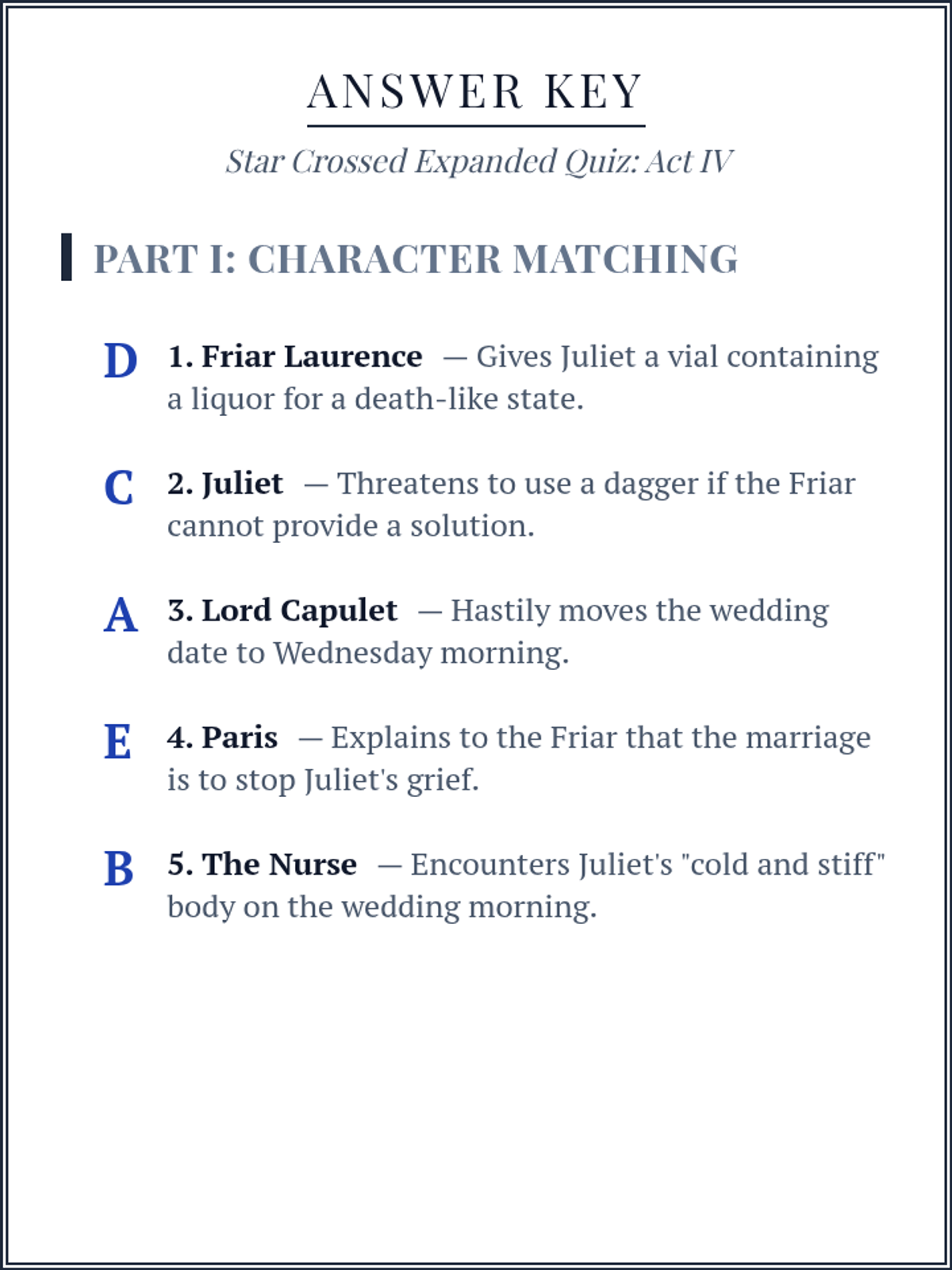
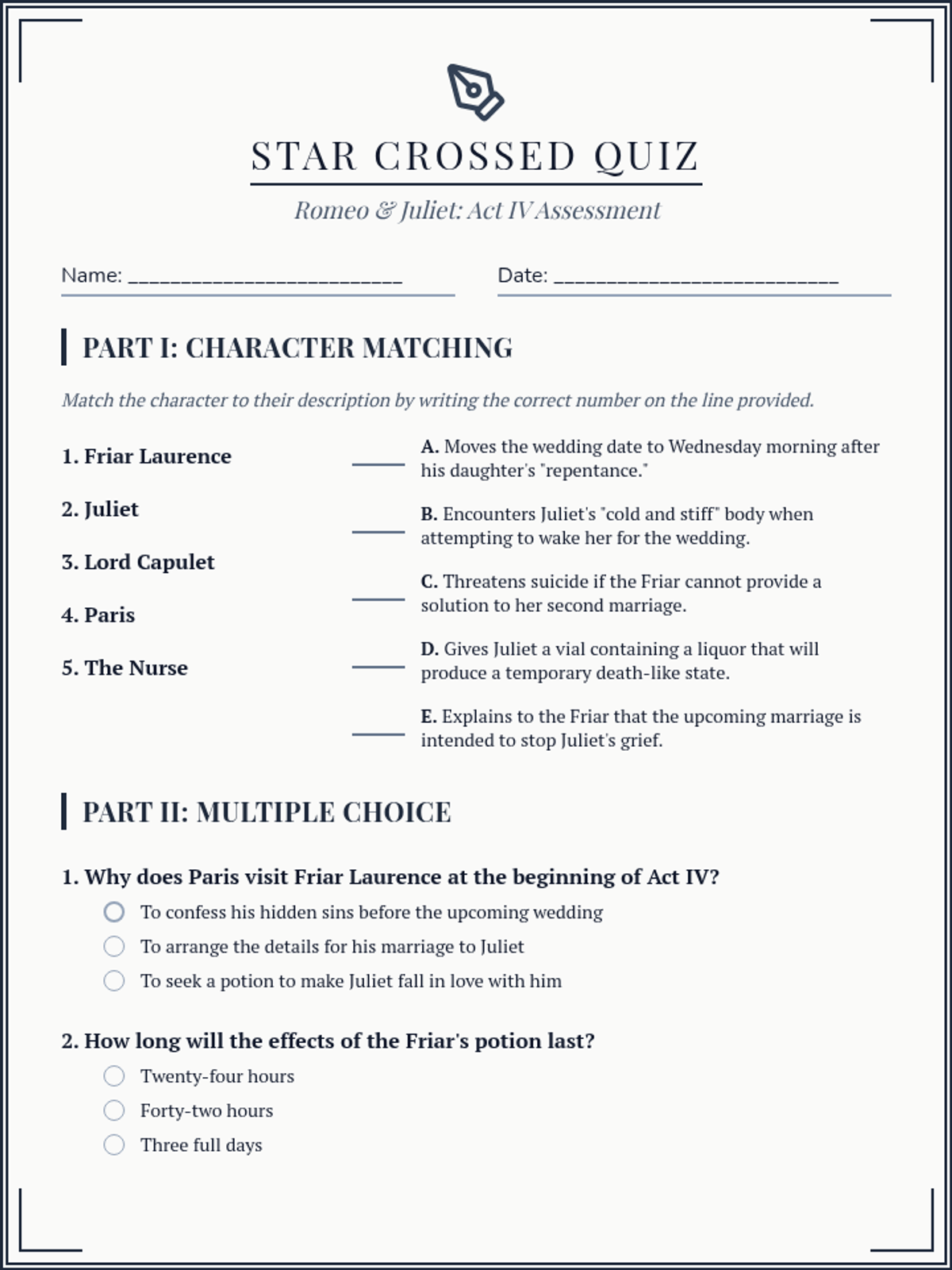
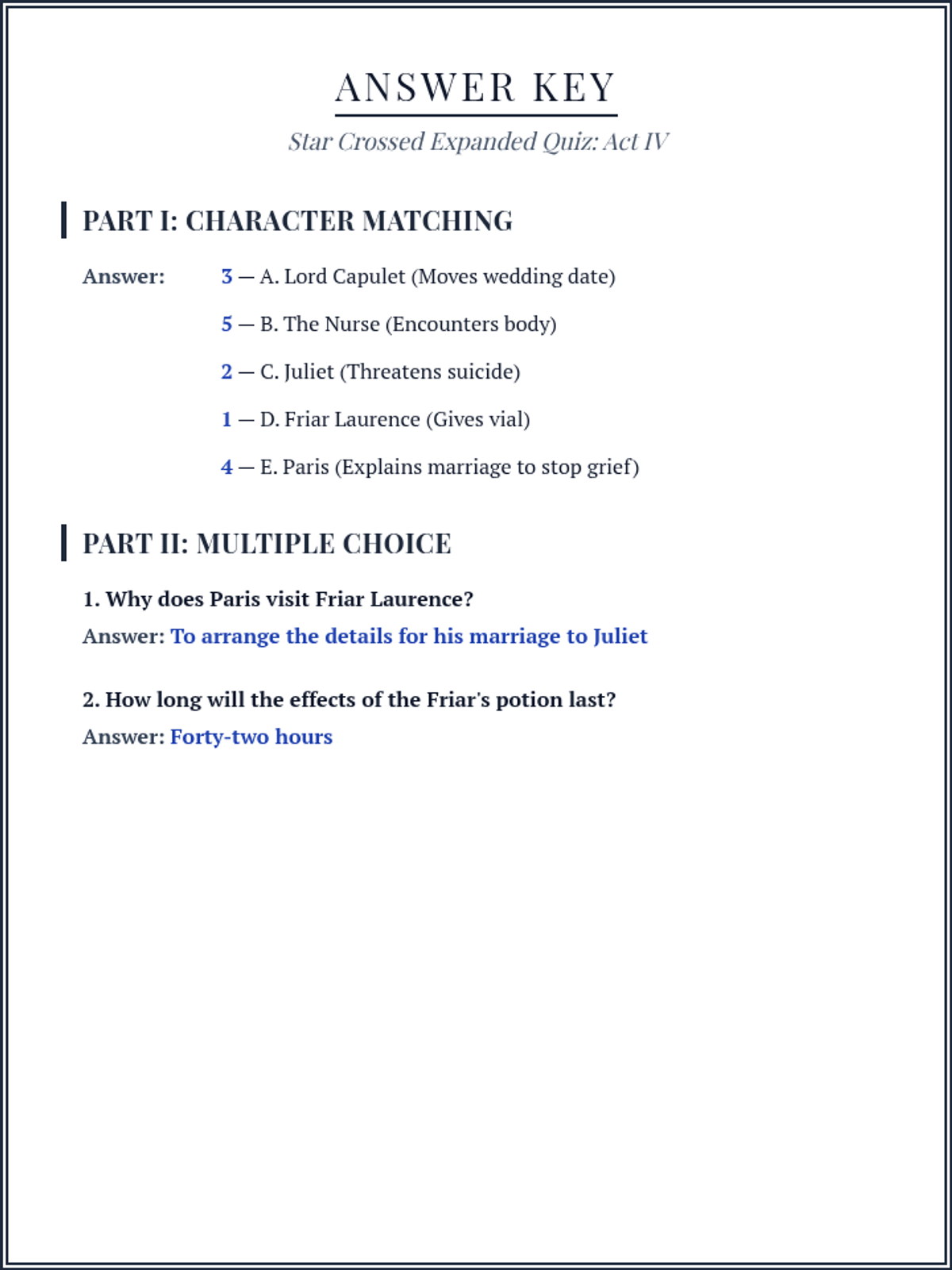
A focused assessment on the pivotal events of Act IV in Shakespeare's Romeo and Juliet, covering the Friar's plan and Juliet's desperate measures.
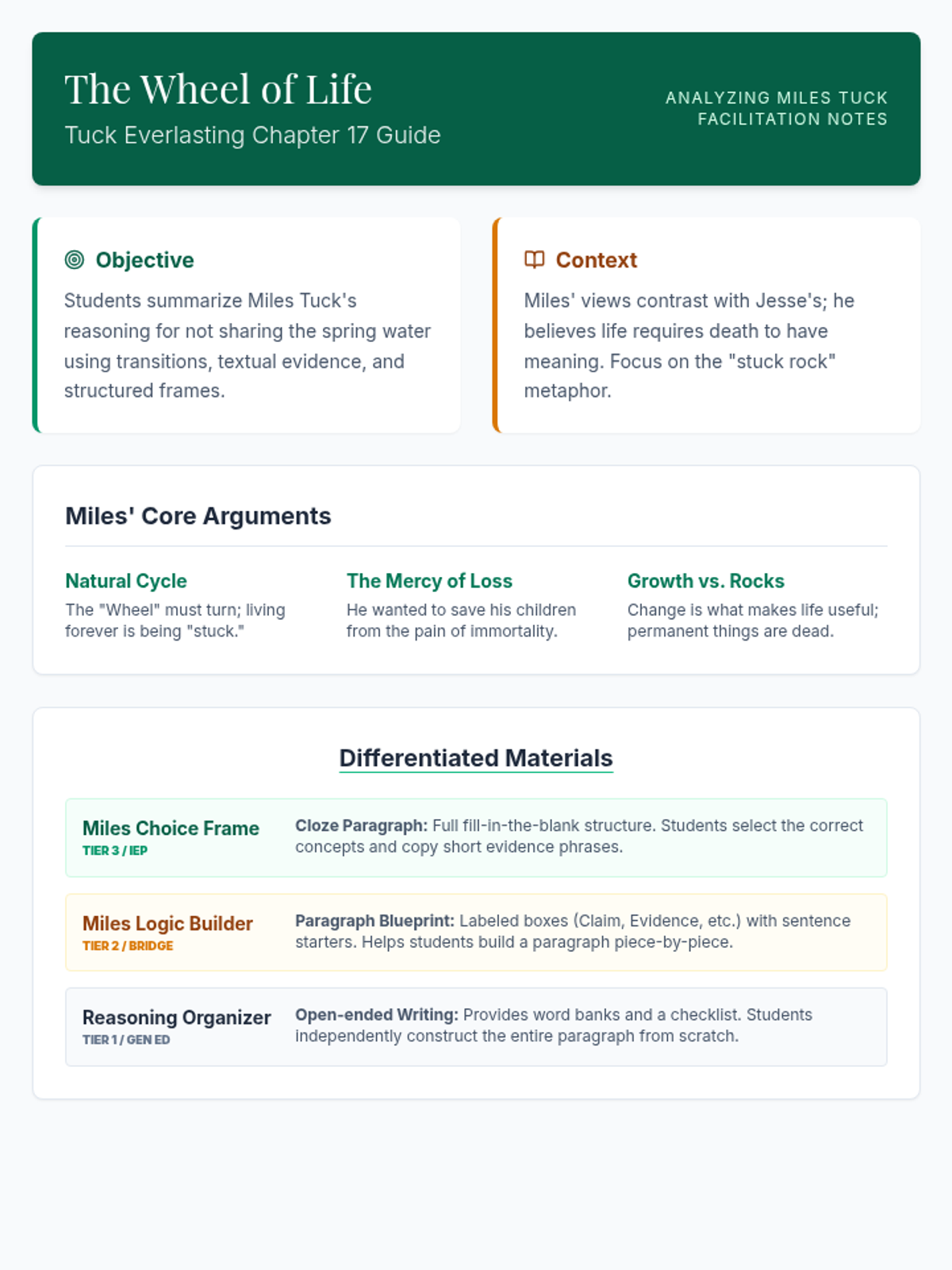
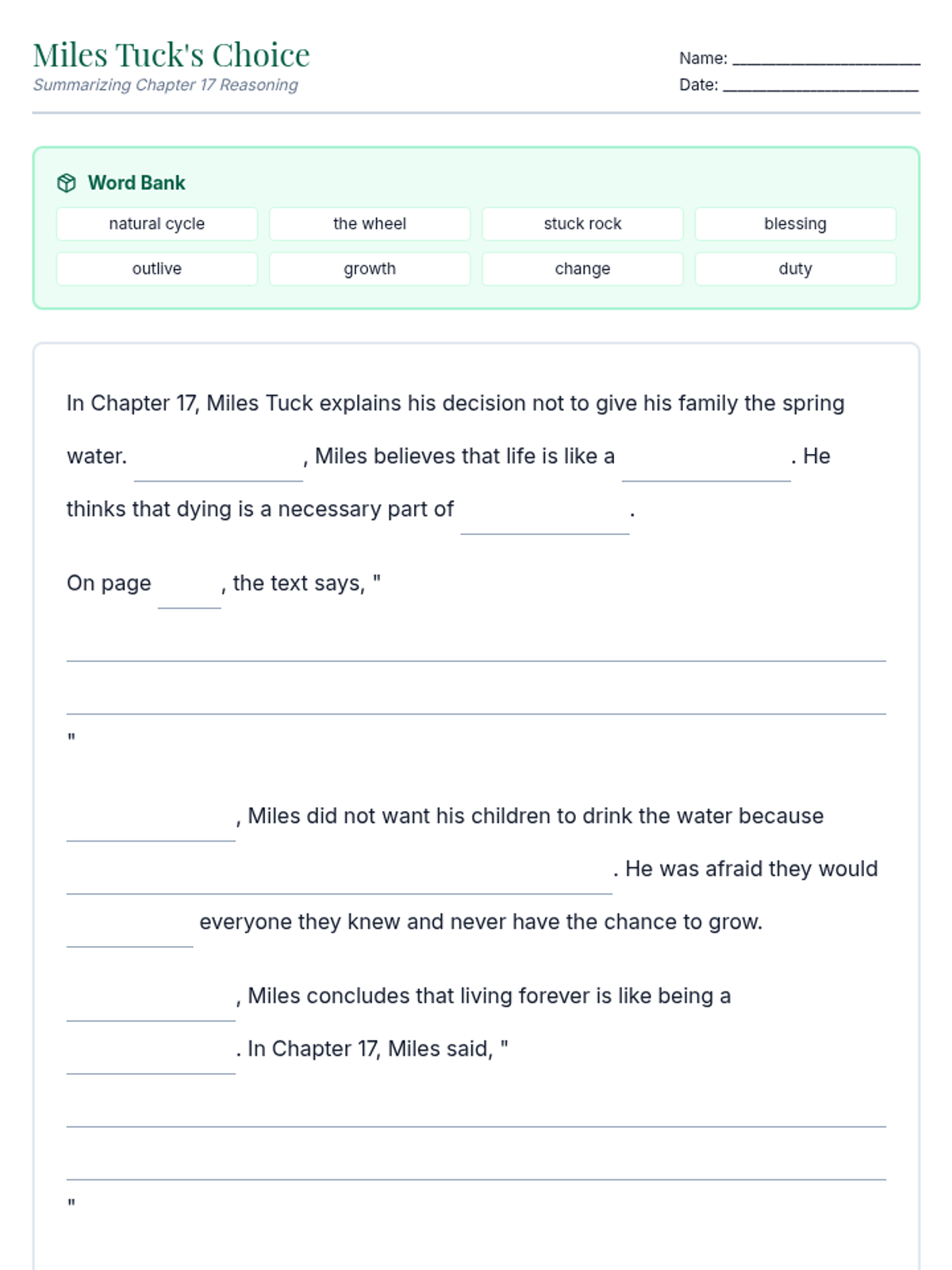
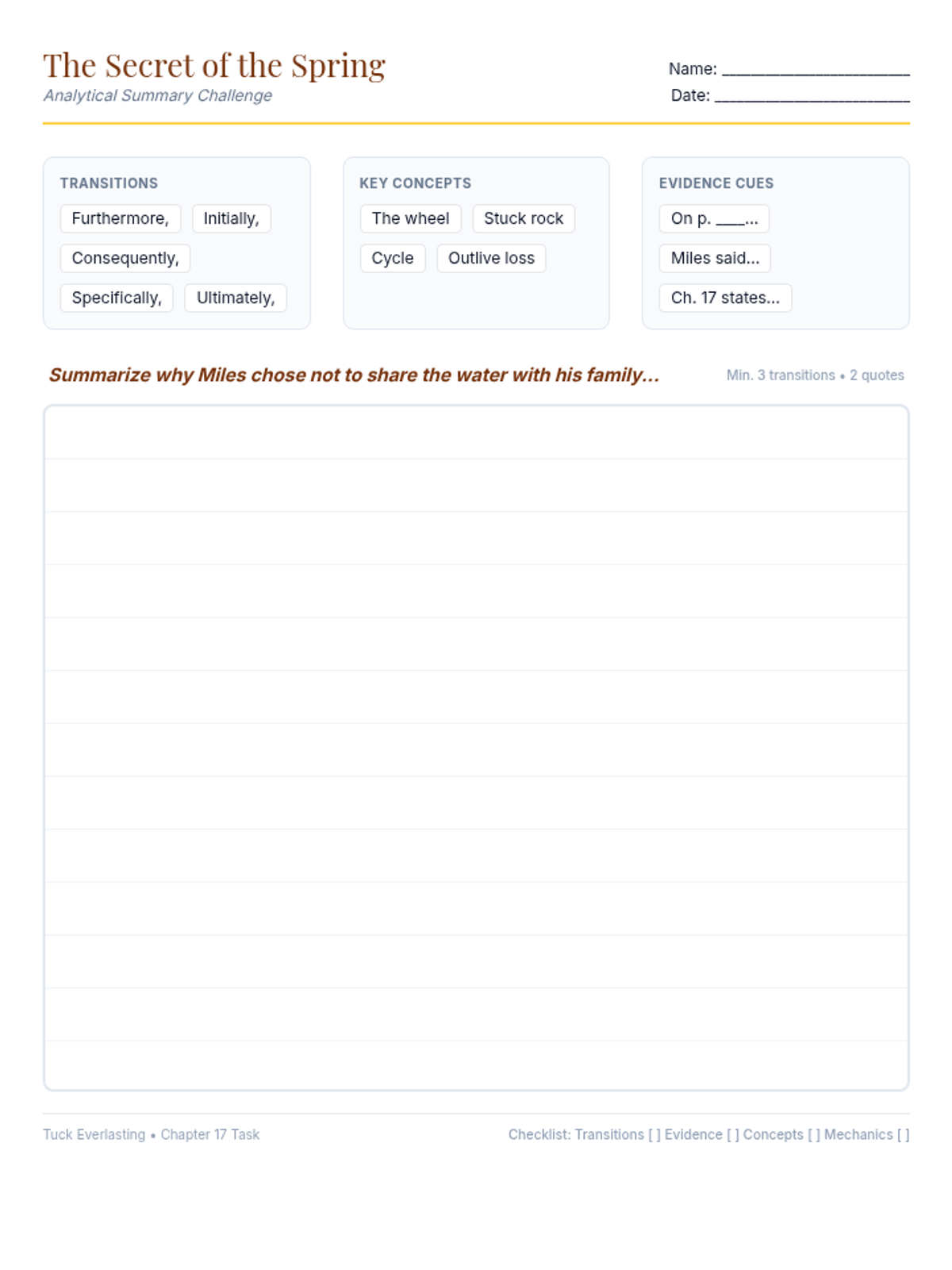
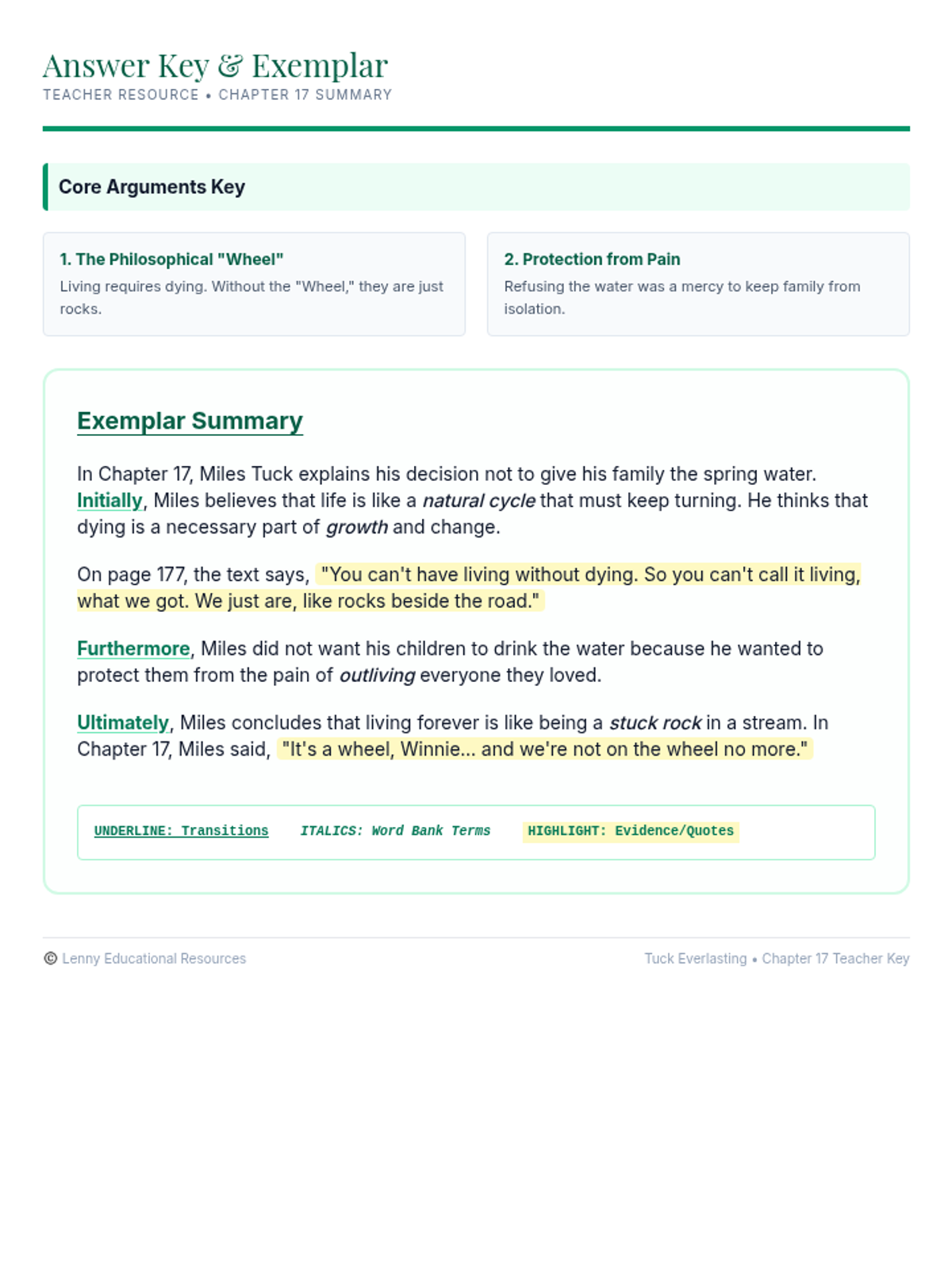
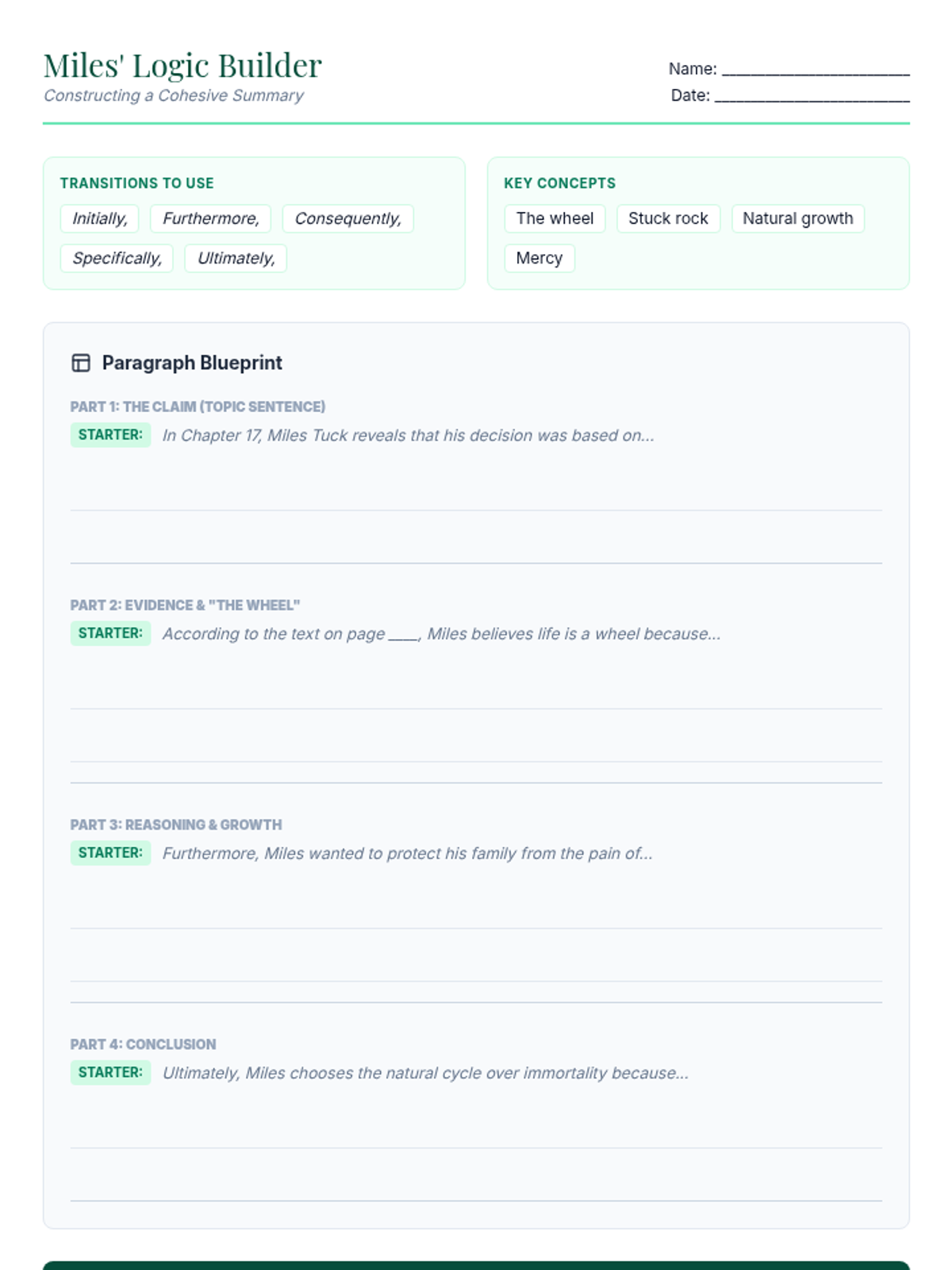
A lesson focused on Chapter 17 of Tuck Everlasting, where students analyze Miles Tuck's complex reasoning for not giving his family the spring water. Students will use transitions and textual evidence to construct a cohesive summary.
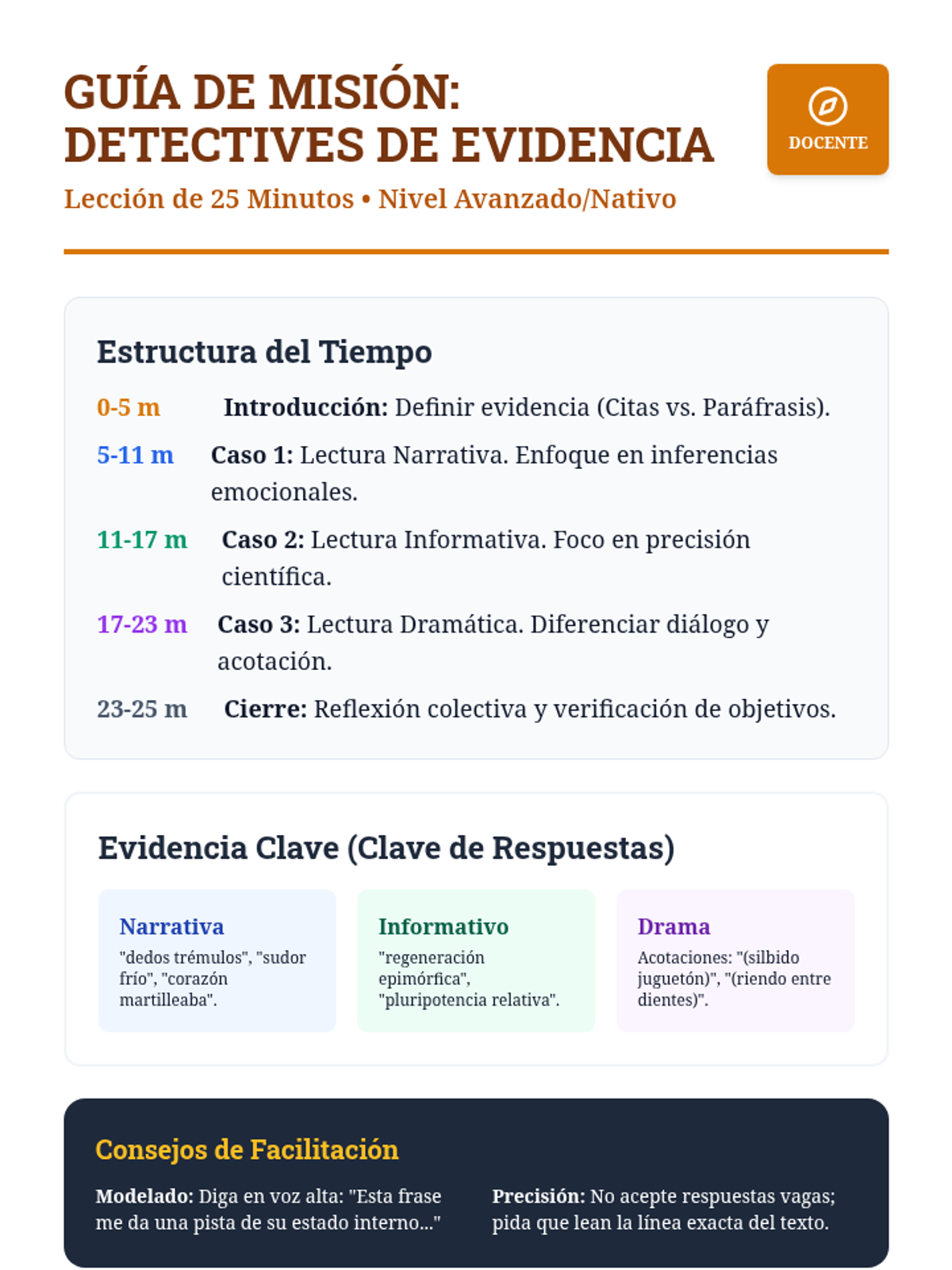
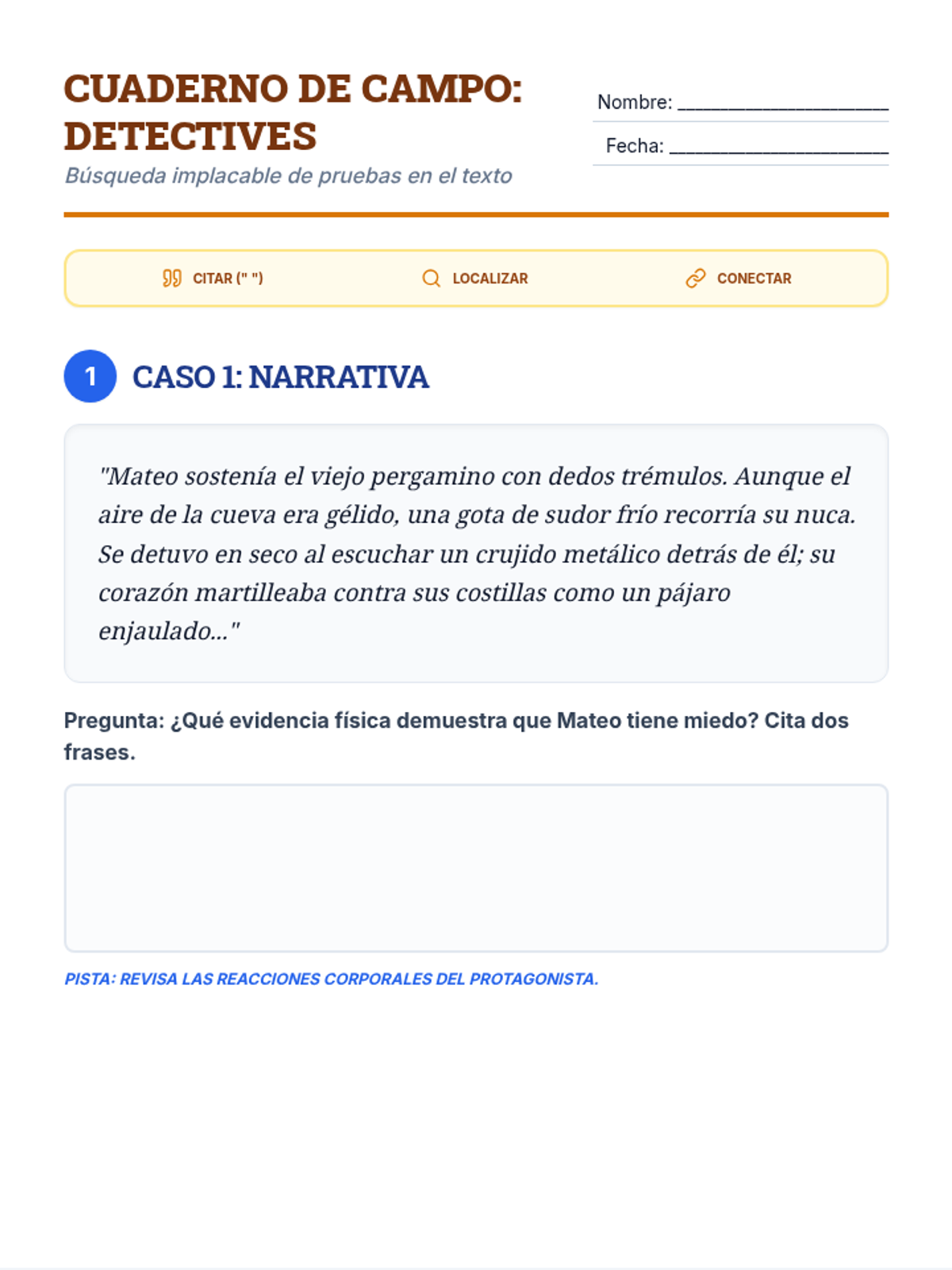
Una lección guiada de 25 minutos para estudiantes avanzados o nativos sobre cómo utilizar la evidencia del texto para respaldar respuestas, utilizando tres géneros distintos: narrativa, informativo y dramático.
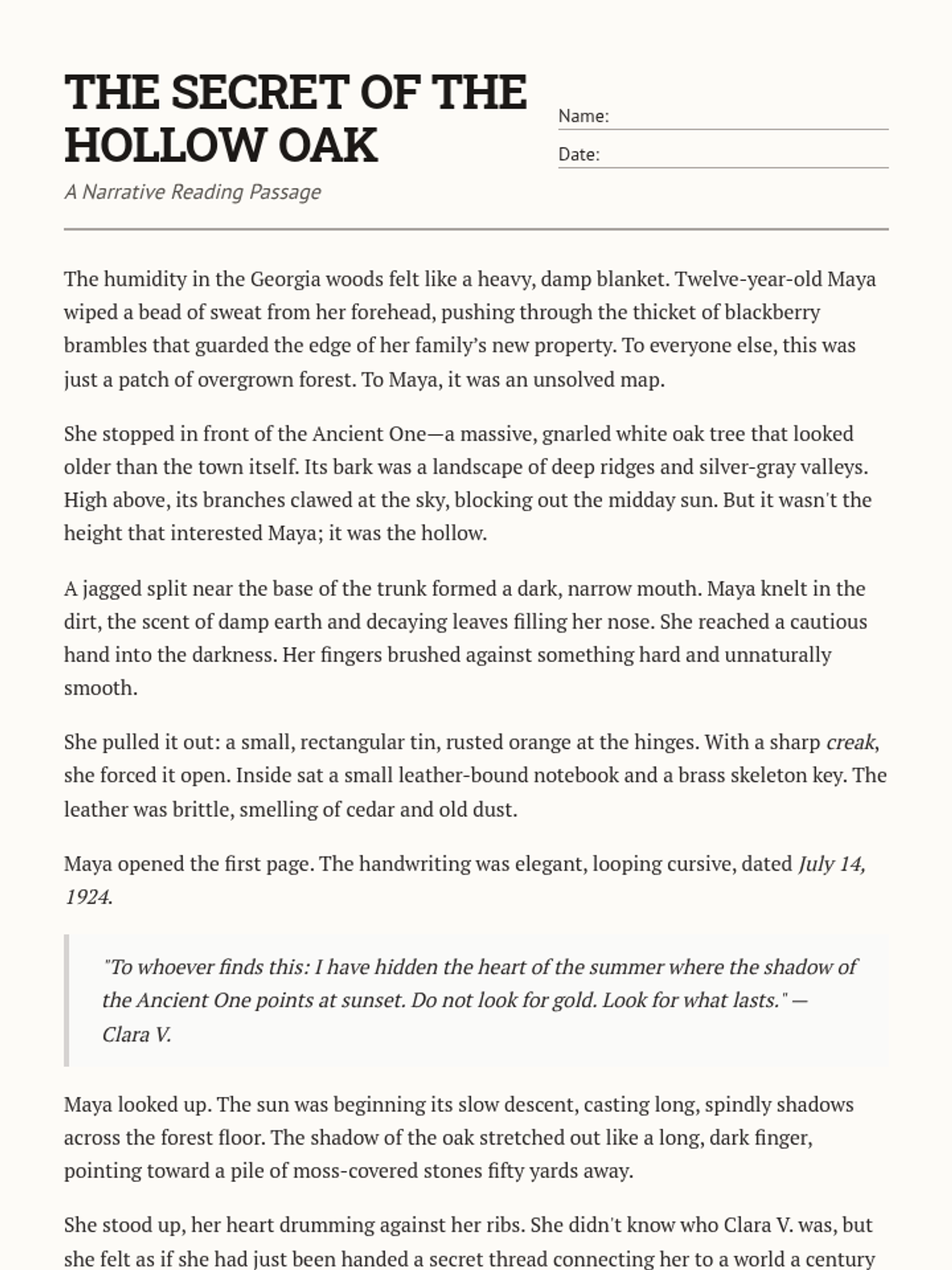
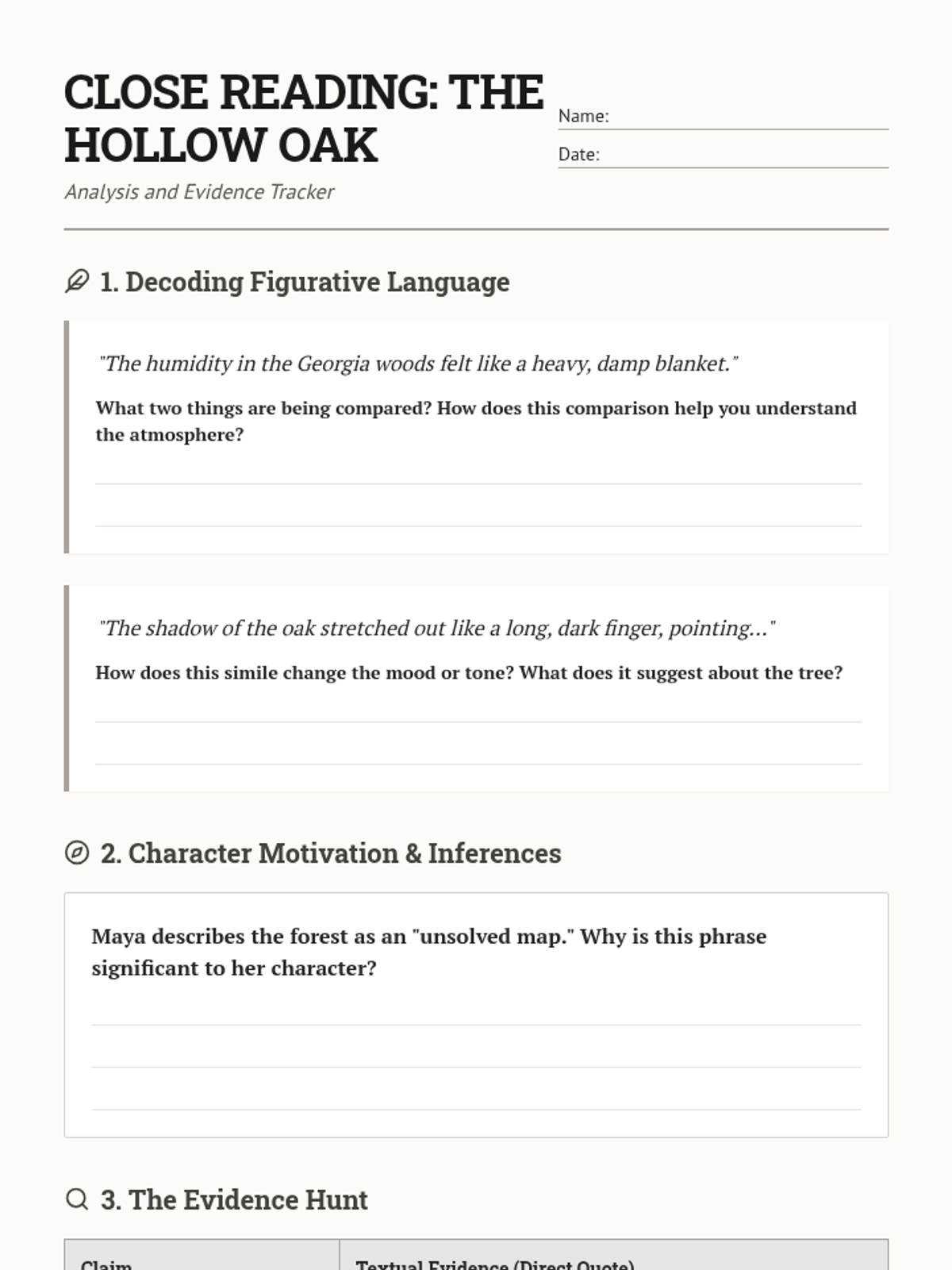
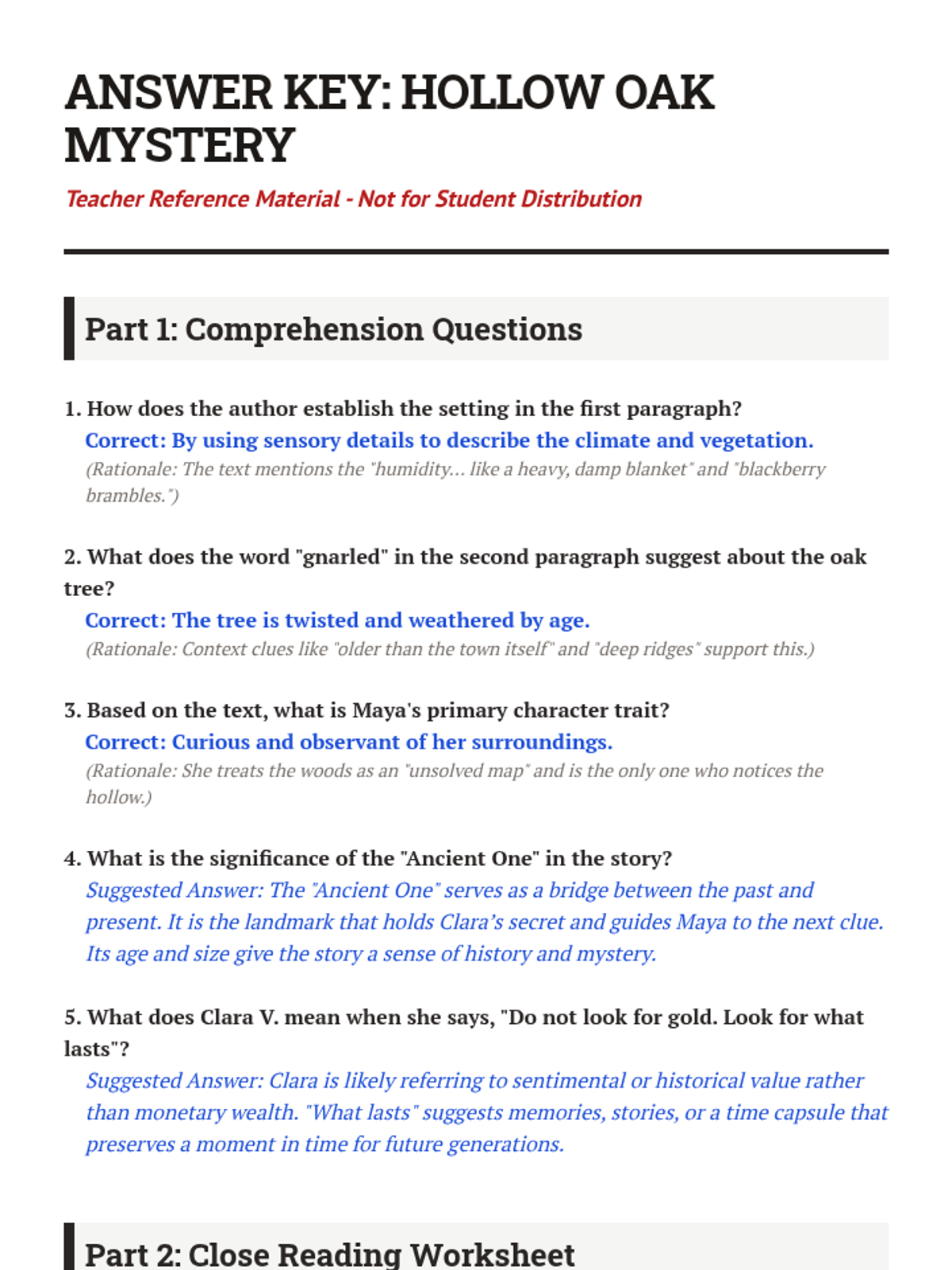
A 7th-grade narrative reading unit focused on 'The Secret of the Hollow Oak,' featuring a passage with comprehension questions and a close reading activity to build analysis skills.
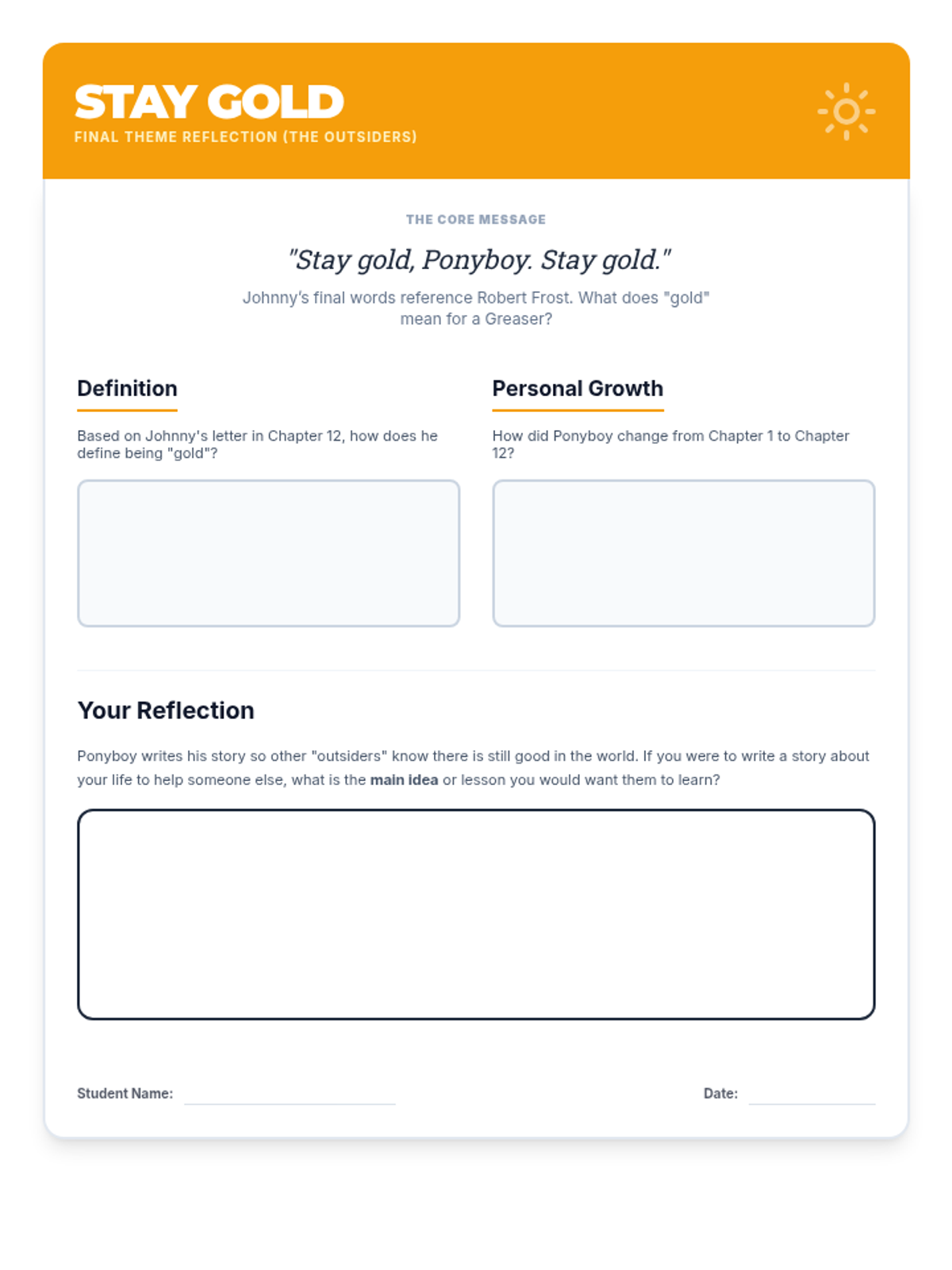
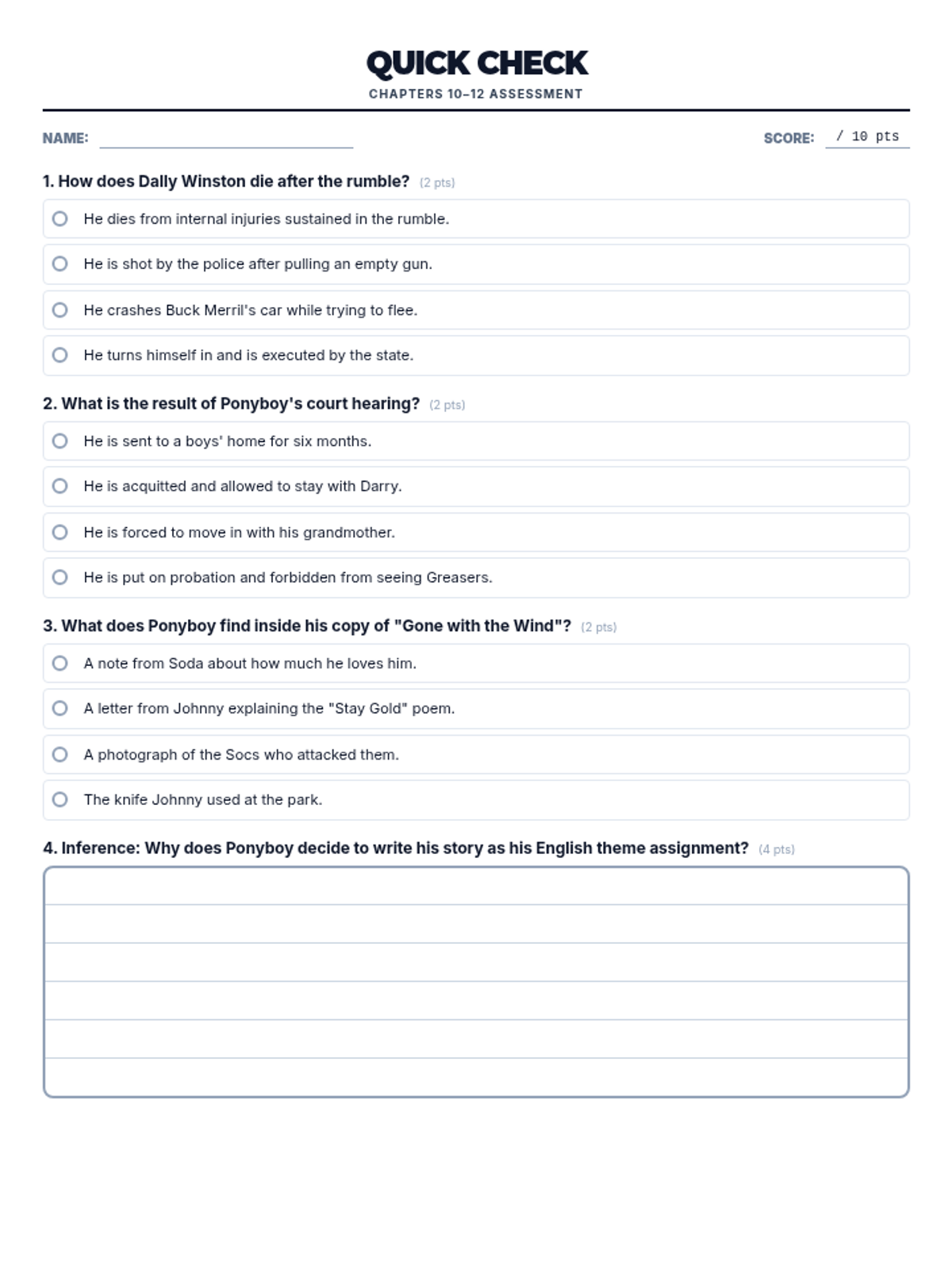
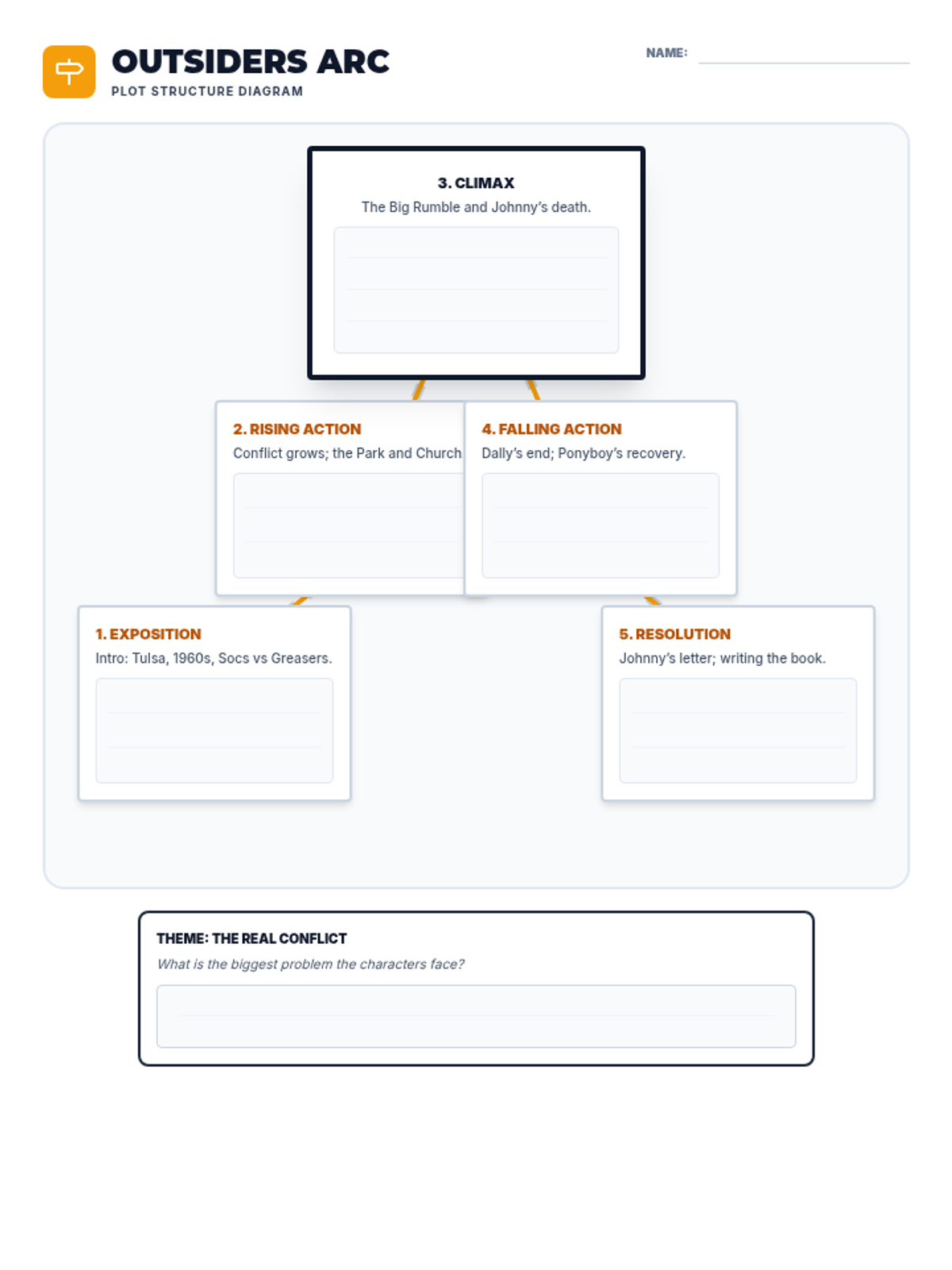
Concludes the novel with Ponyboy's recovery and the realization behind his English theme. Students synthesize themes of identity and 'staying gold' through final reflections.
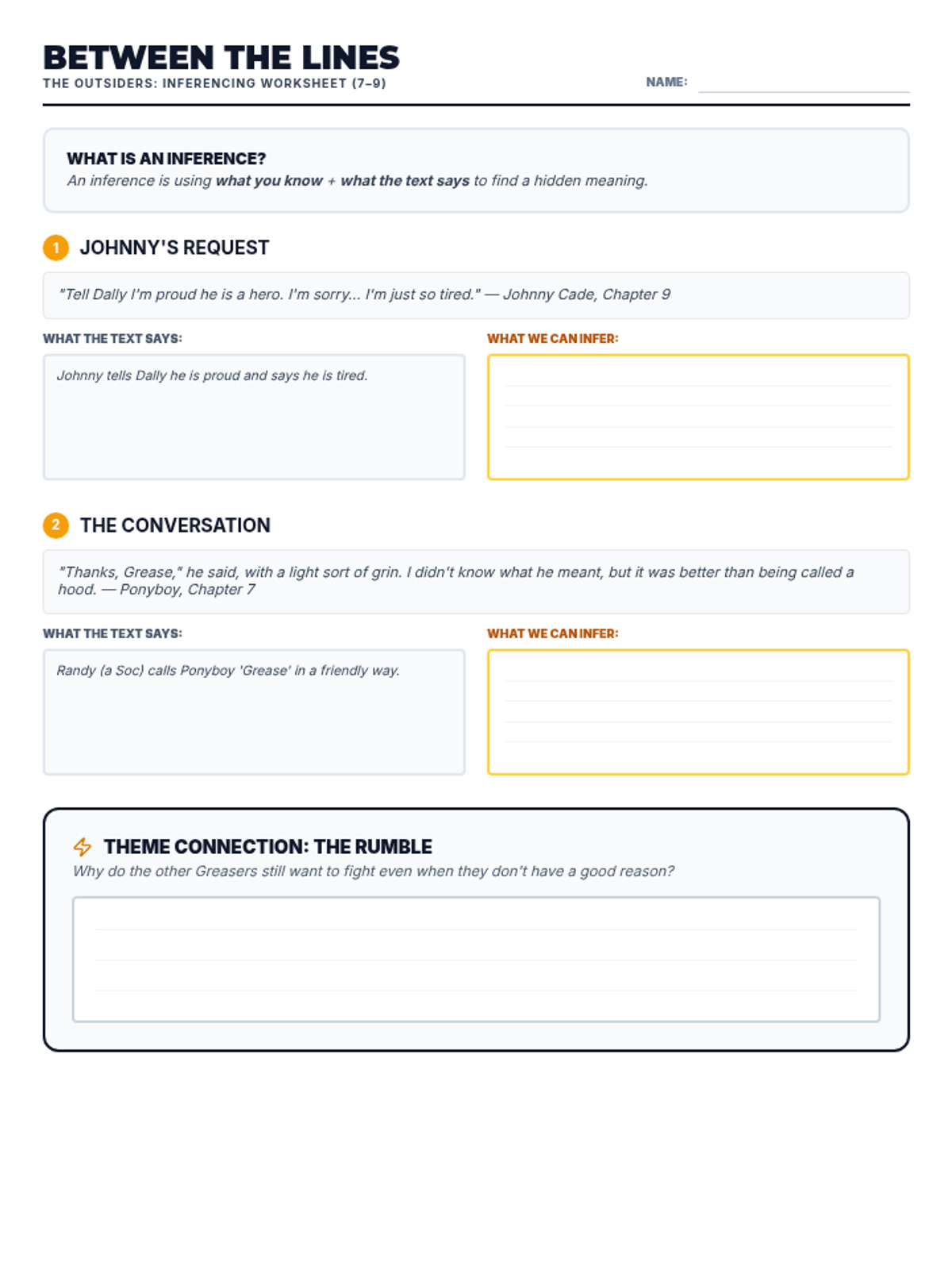
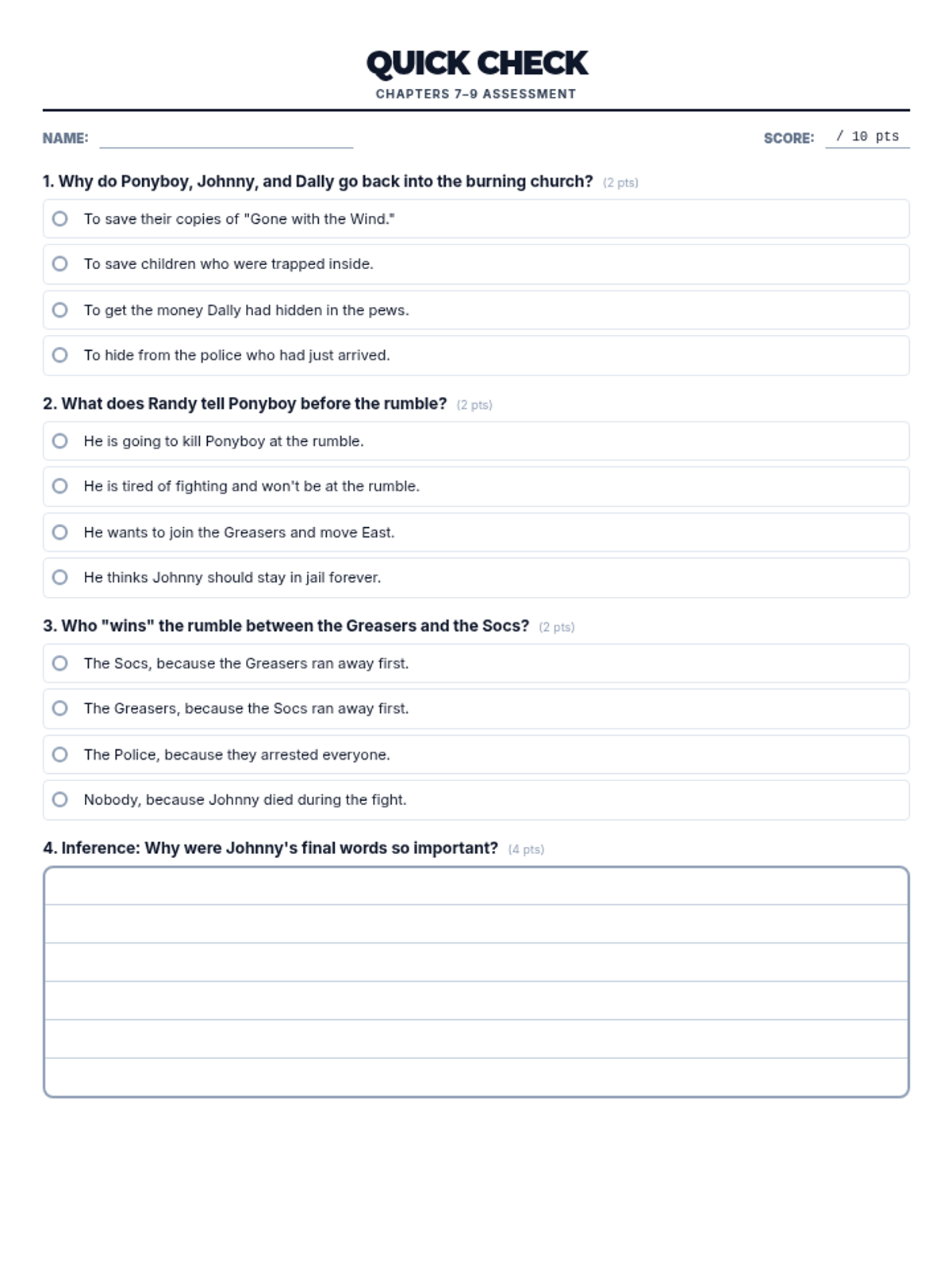
Focuses on the aftermath of the fire, the big rumble, and the deaths of Johnny and Dally. Students analyze theme, loss, and the cycle of violence.
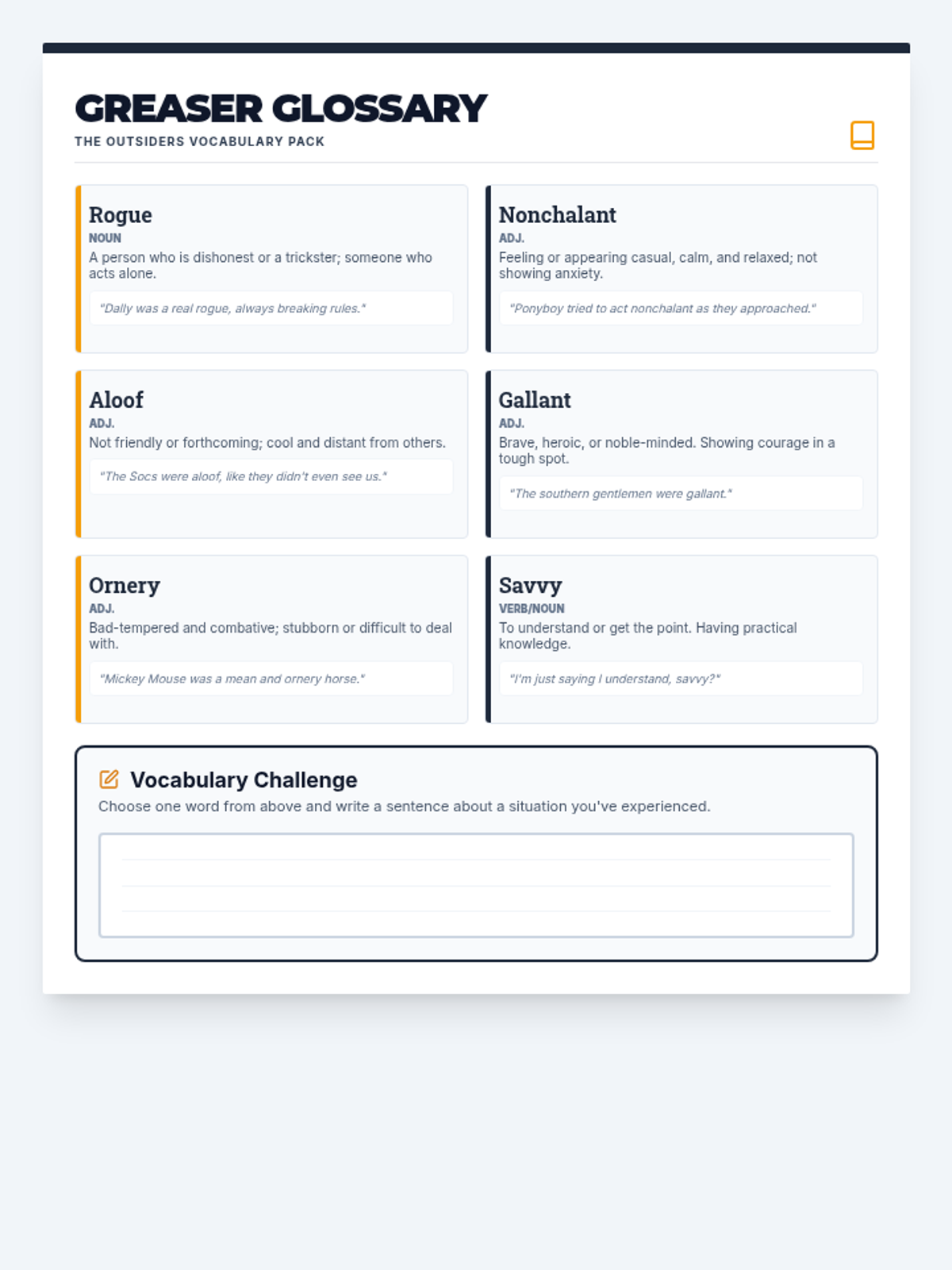
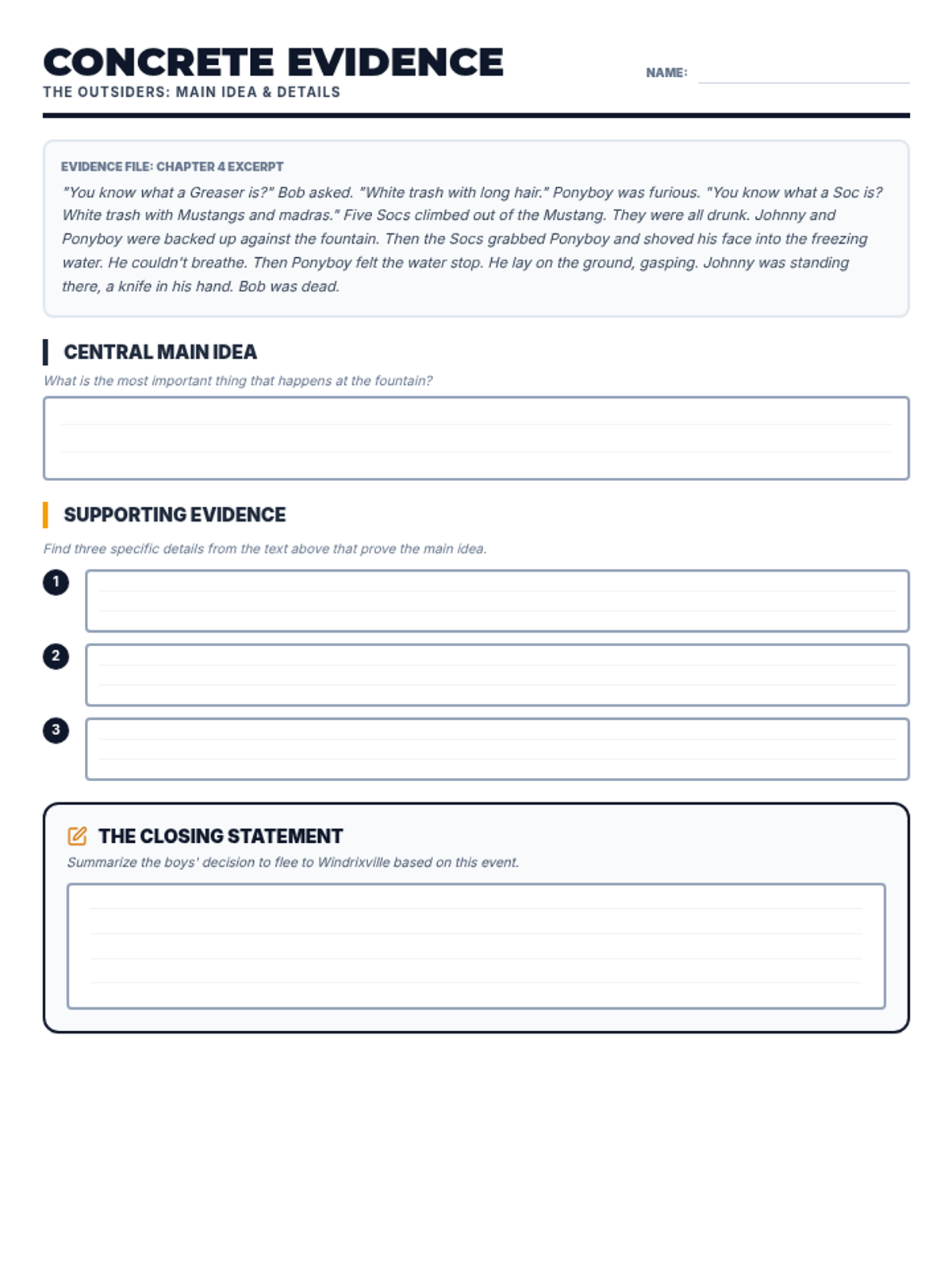
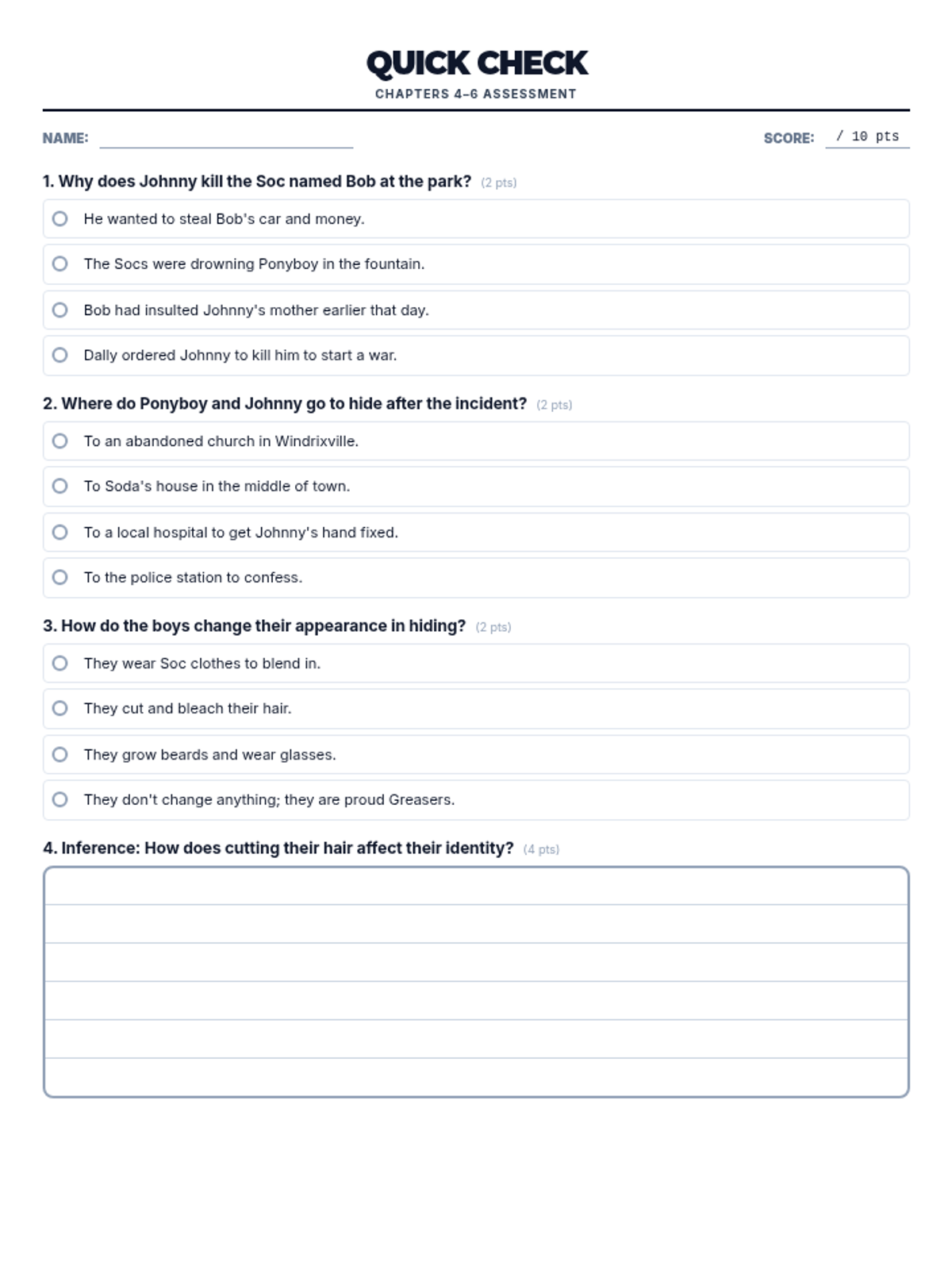
Covers the turning point at the park and the boys' flight to Windrixville. Focuses on context clues, citing evidence for character decisions, and plot progression.