Students investigate the difference between scalars and vectors, learning to represent vectors geometrically and algebraically. They practice calculating magnitude and direction angles in the 2D plane.
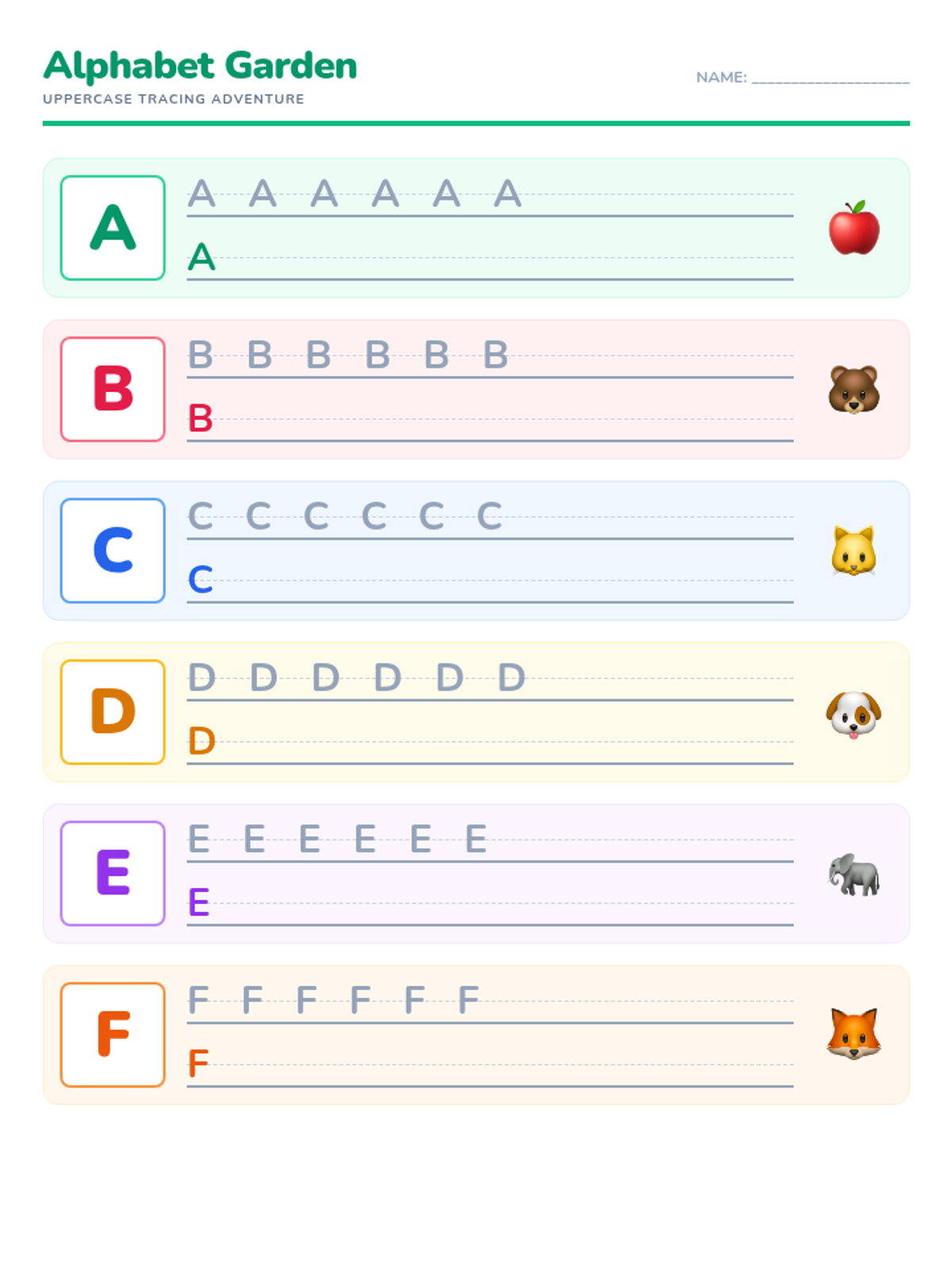
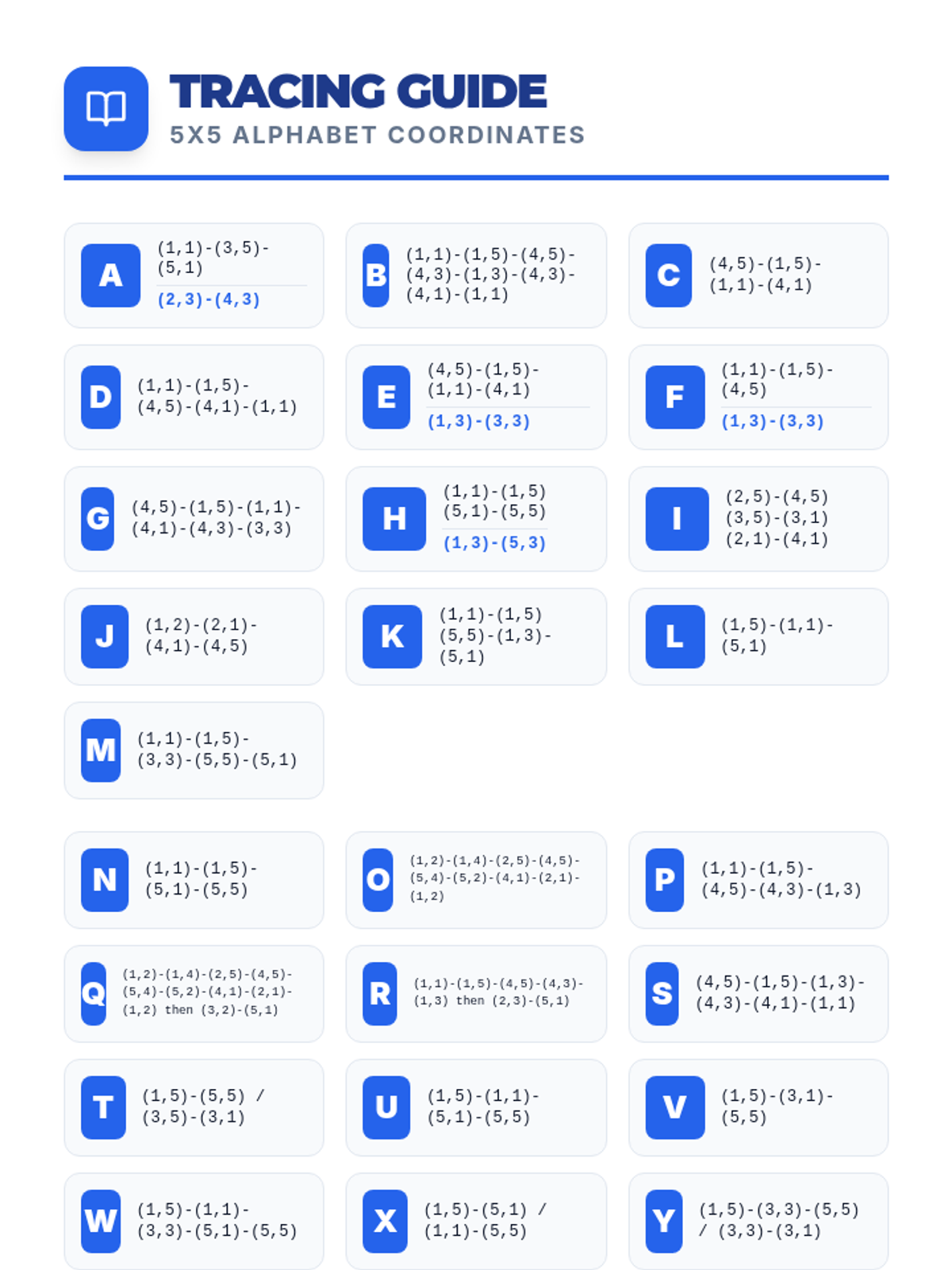
A foundational journey through the uppercase alphabet, focusing on stroke order, pen control, and letter recognition for early learners.
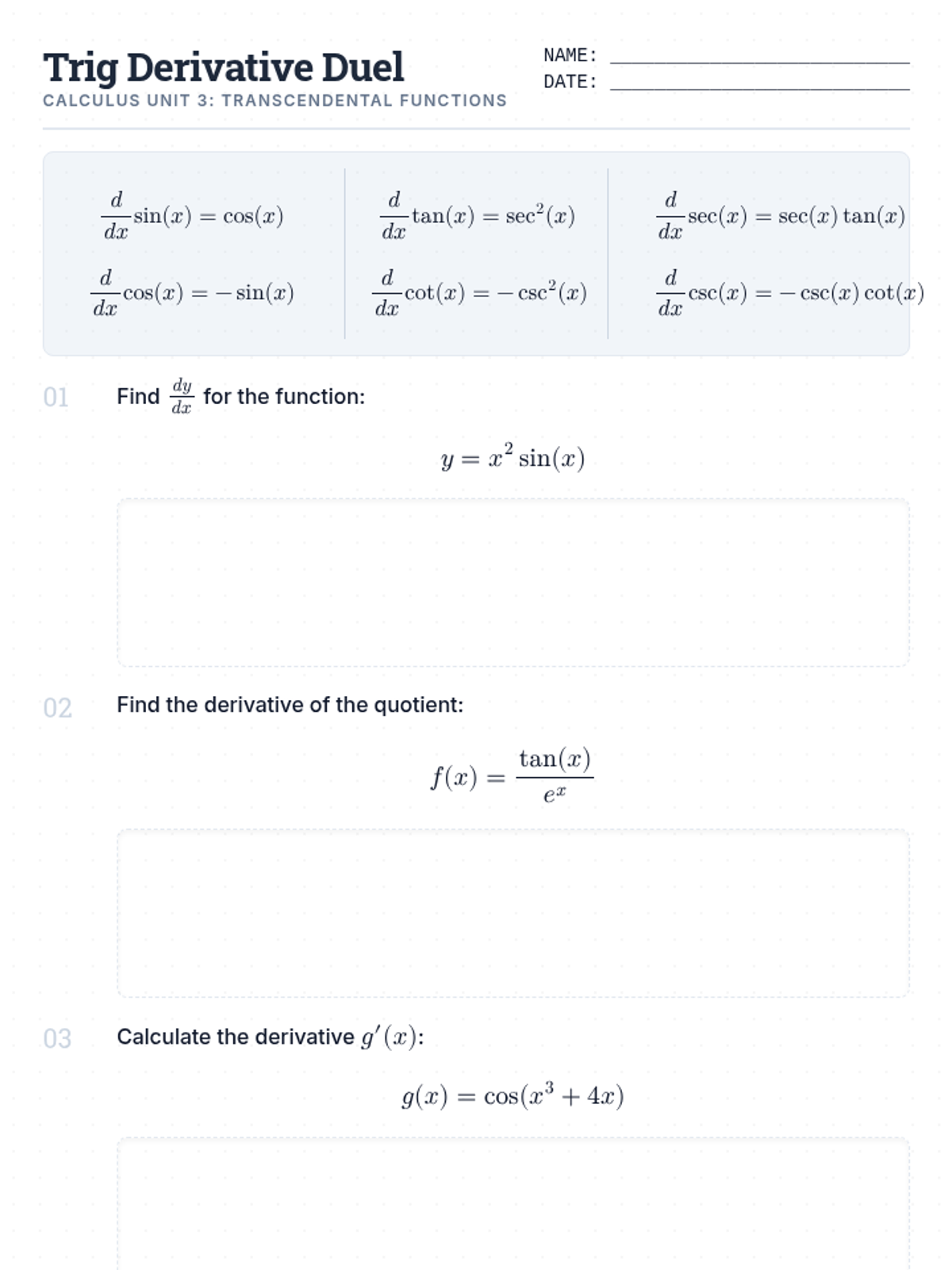
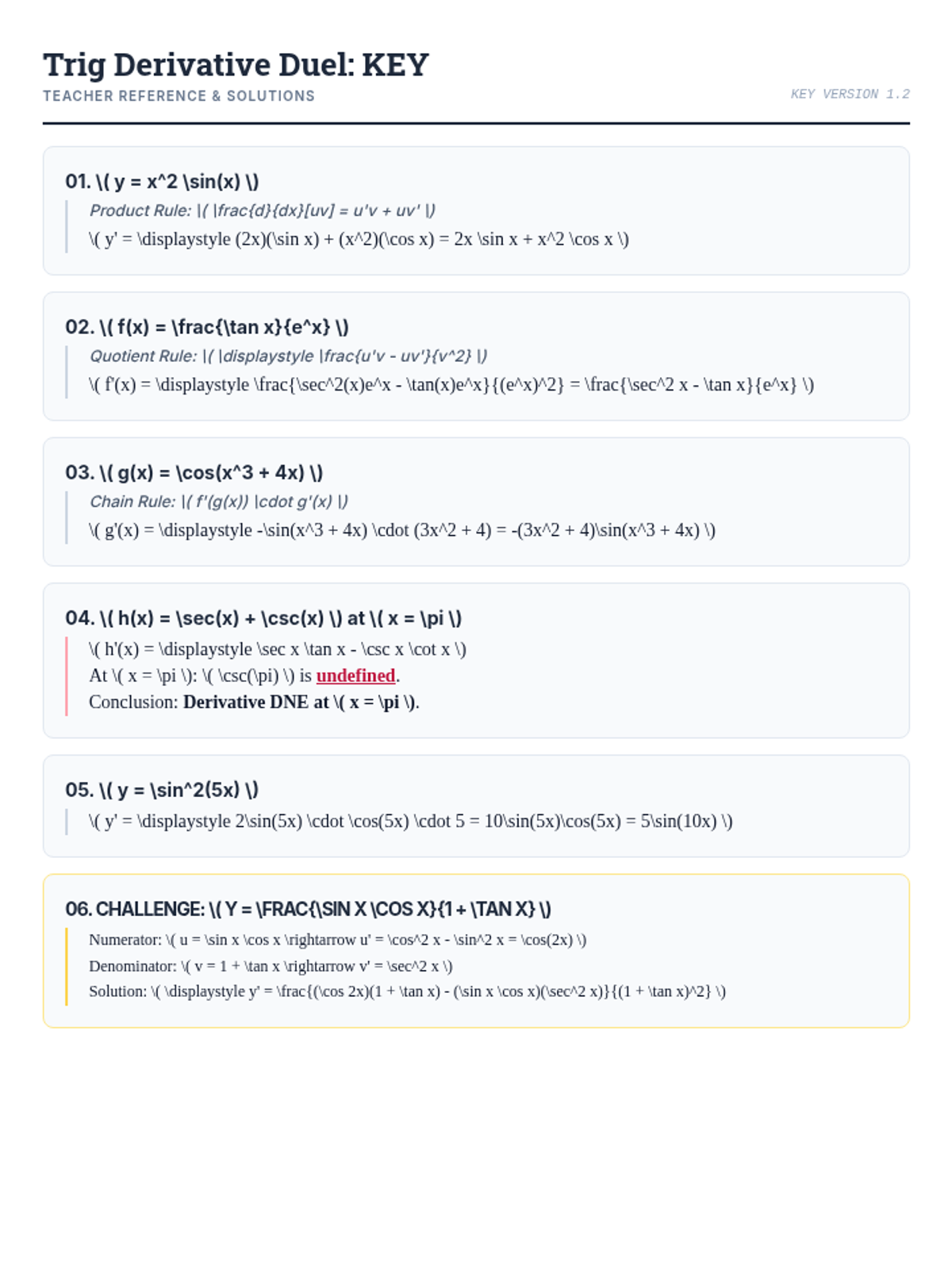
Master the derivatives of the six trigonometric functions through visual explanation and structured practice, including chain rule and product rule applications.
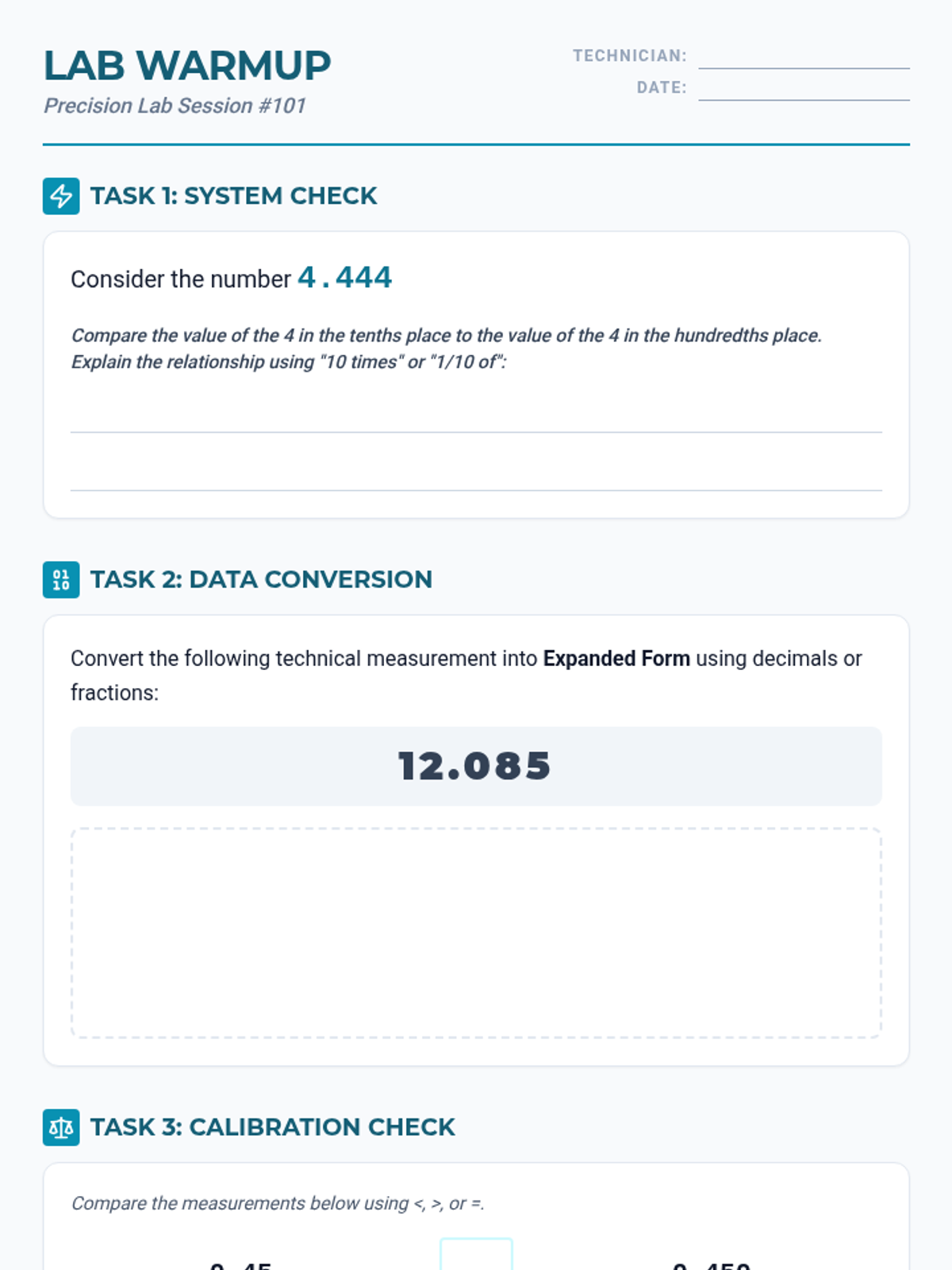
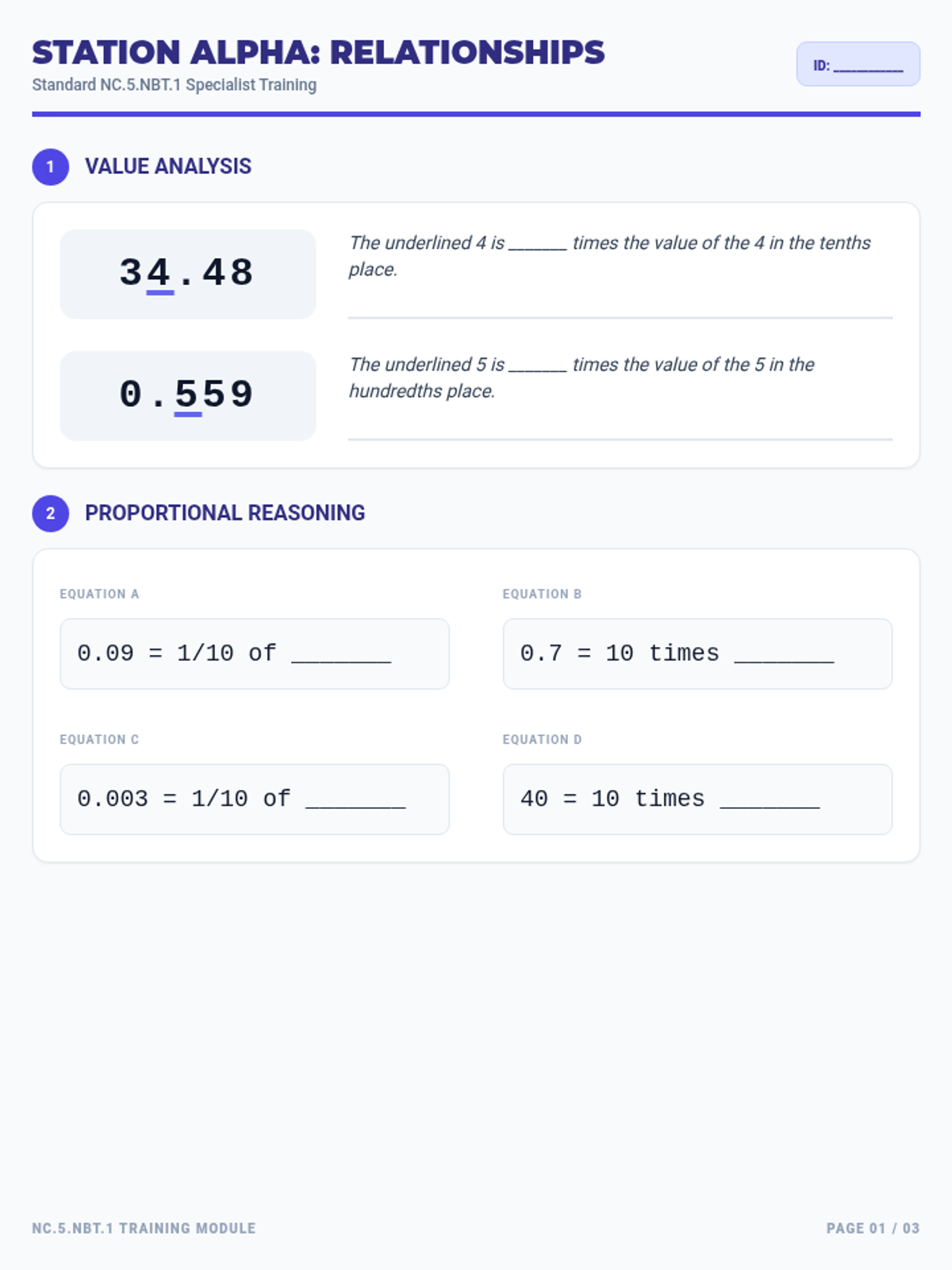
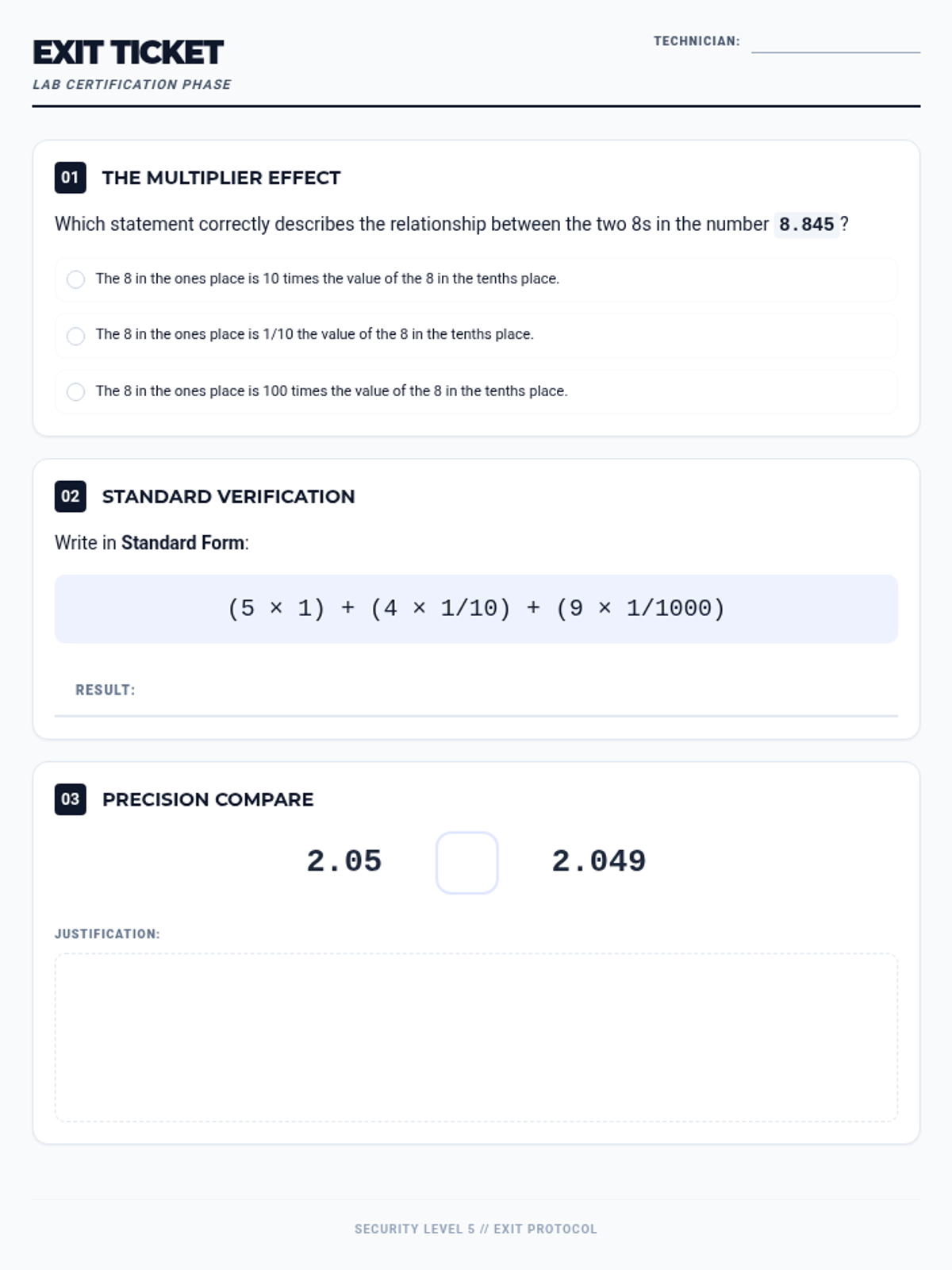
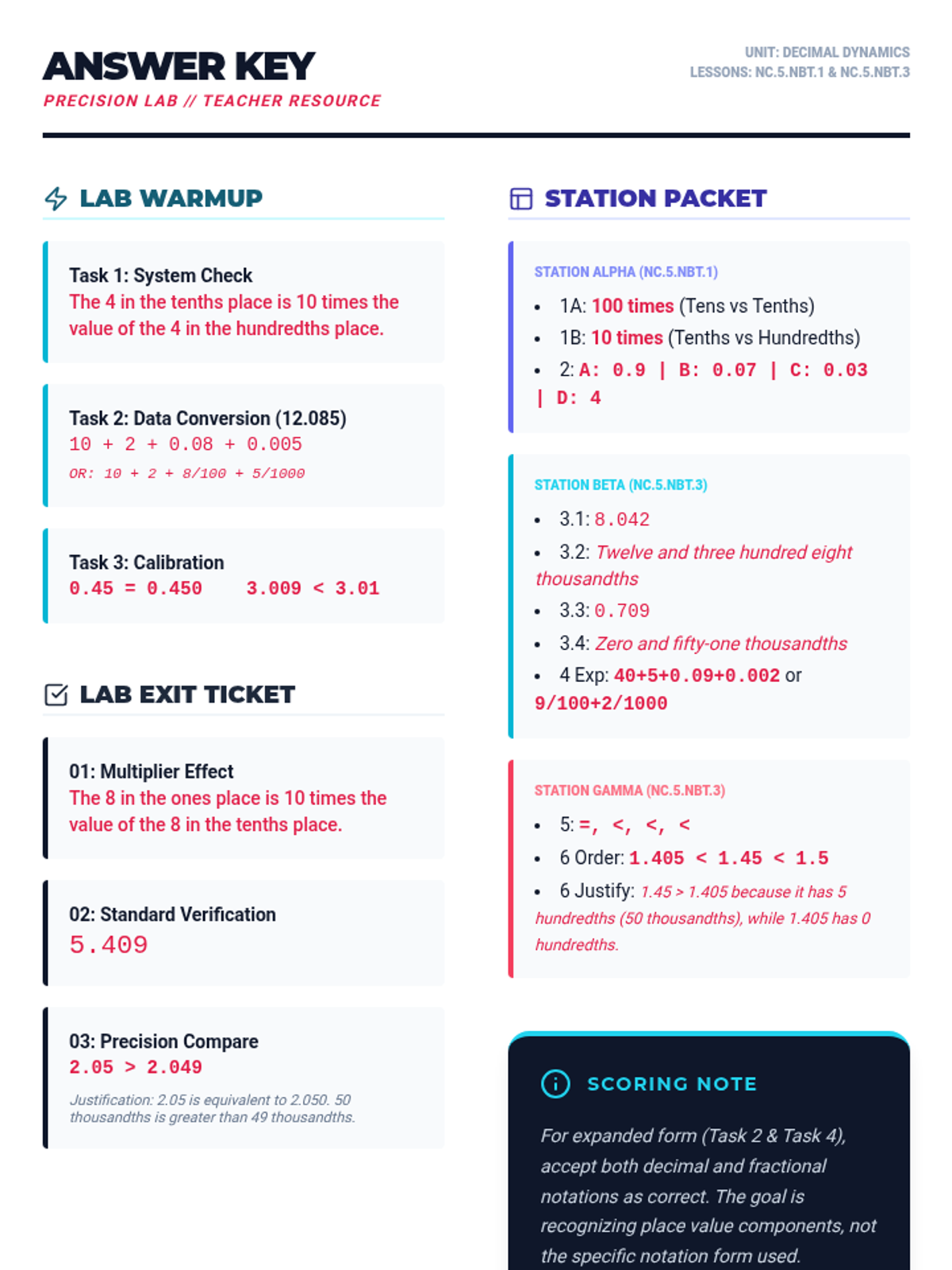
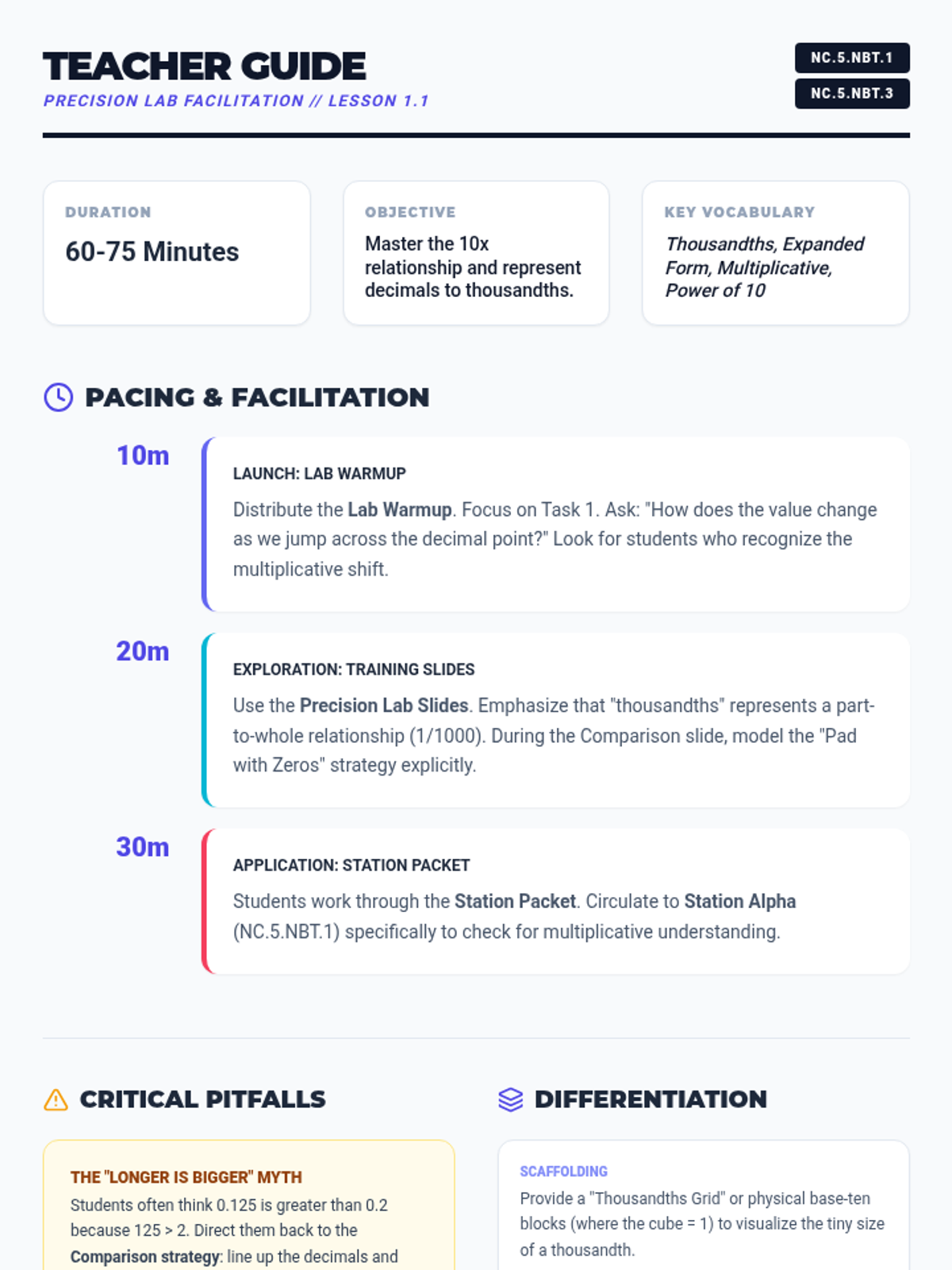
An introductory lesson focused on the multiplicative relationship between place values and the formal representation of decimals through various forms and comparisons.
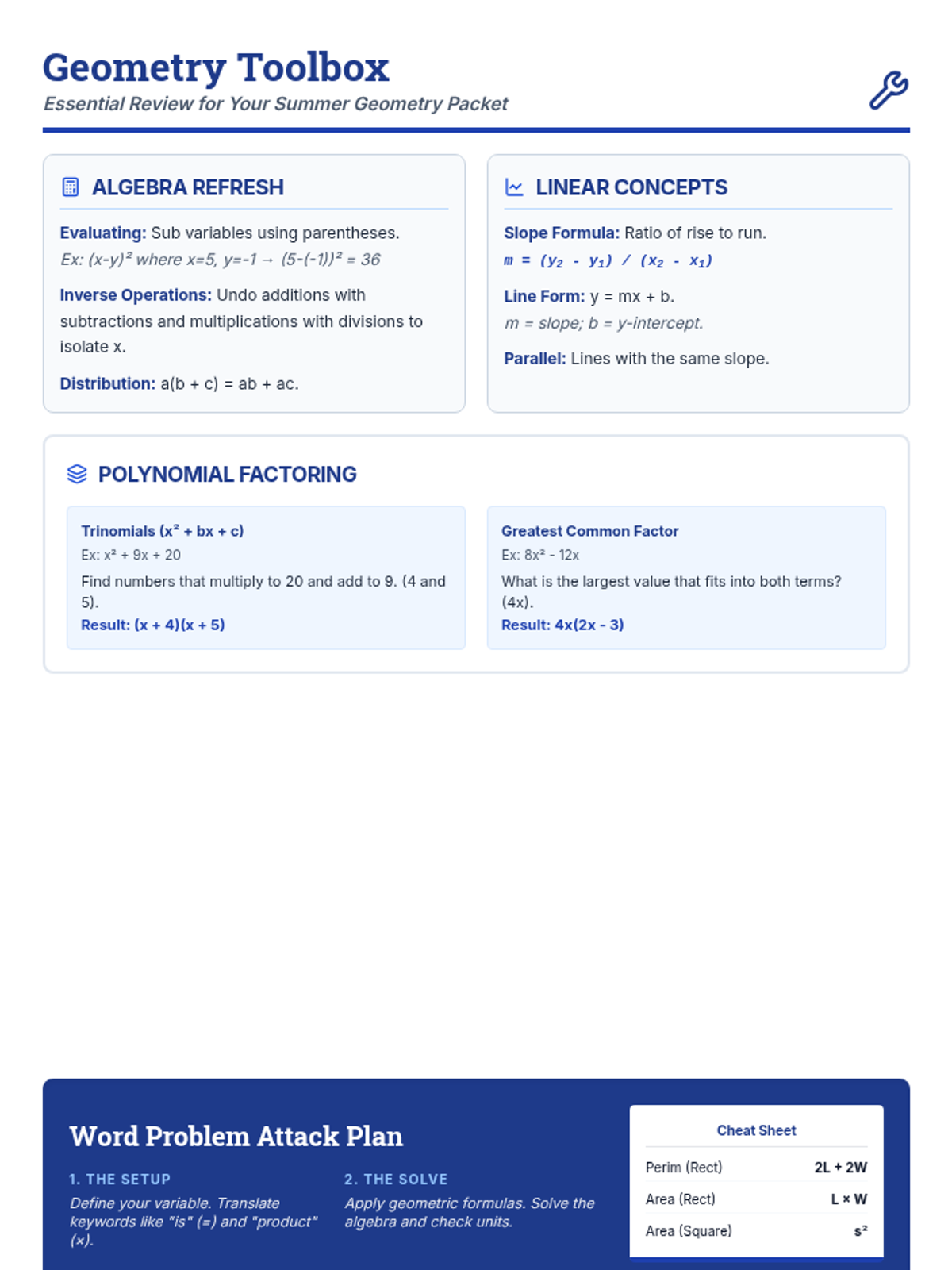
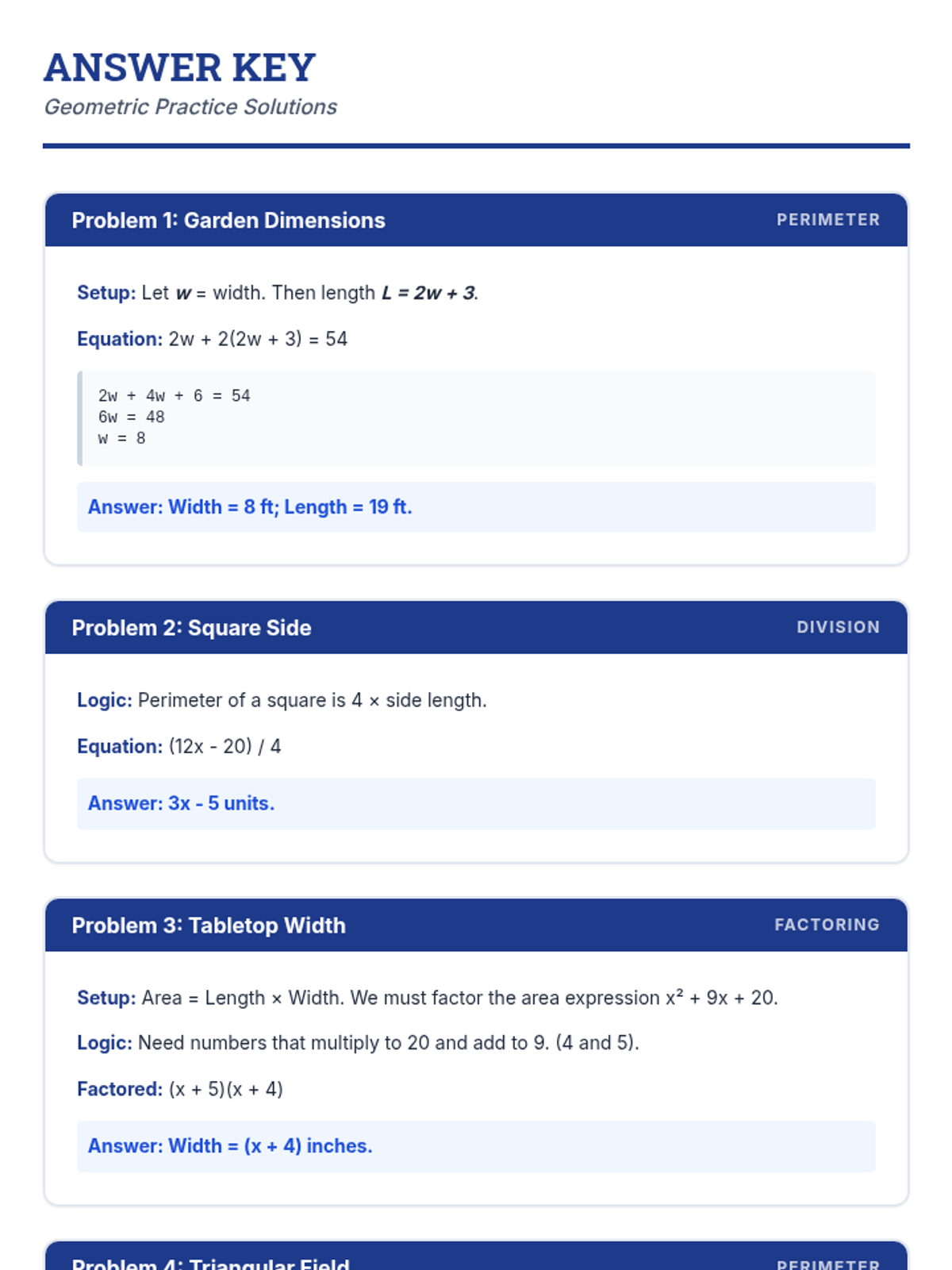
A collection of resources to support students completing their summer geometry packet, focusing on algebra foundations and geometric word problem applications.
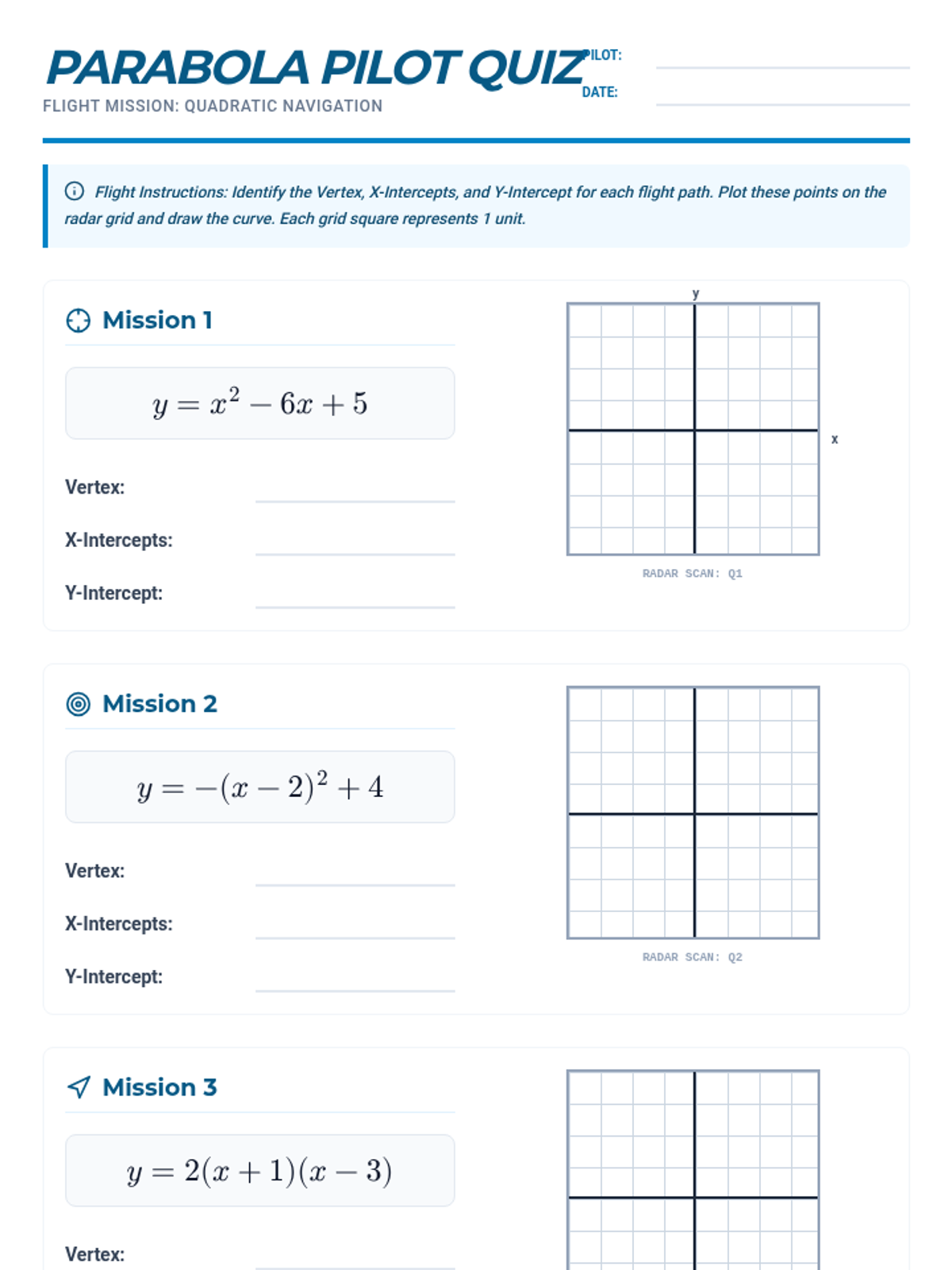
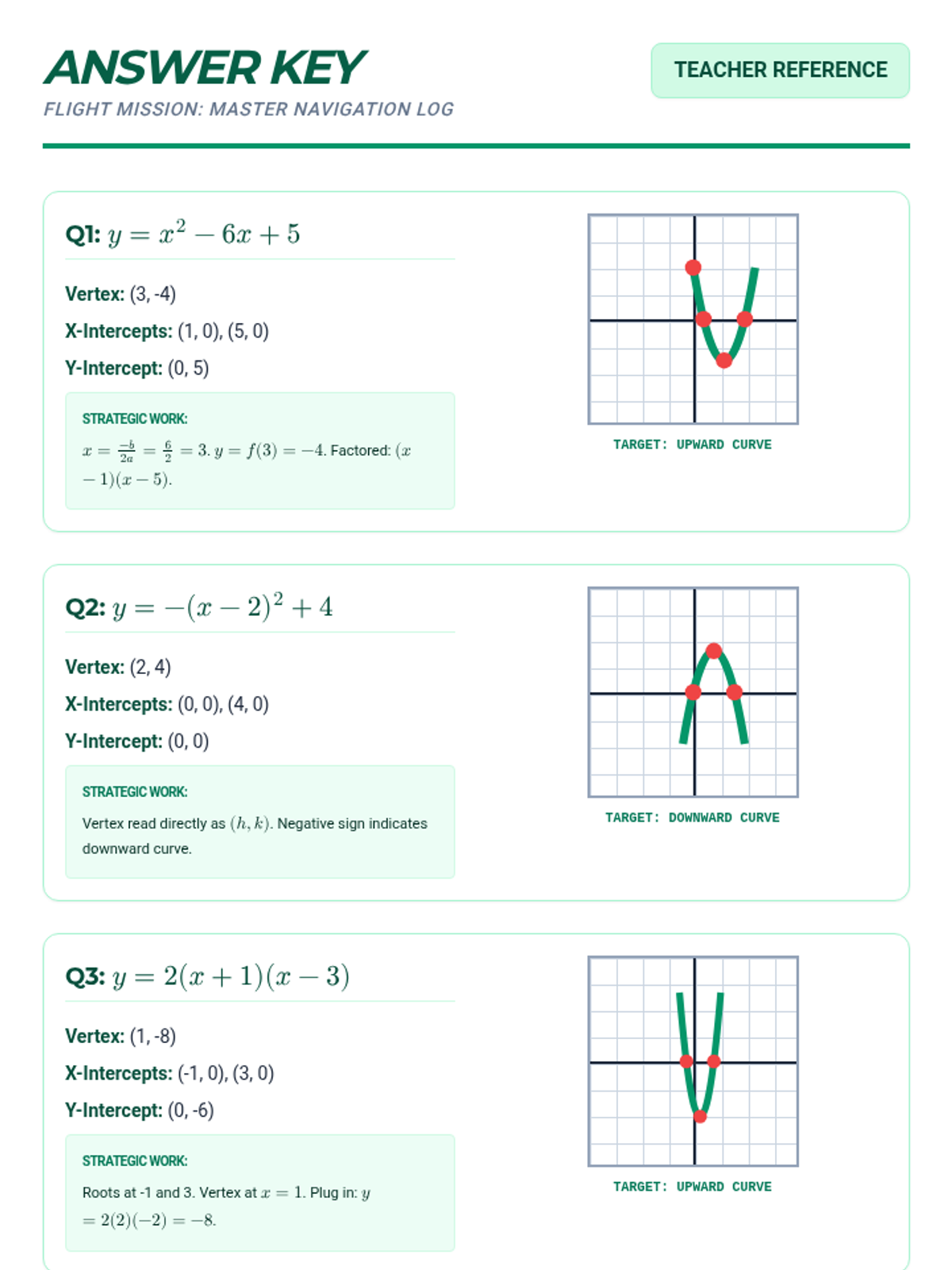
A lesson focused on identifying key features (vertex, intercepts) and graphing quadratic equations across standard, vertex, and factored forms.
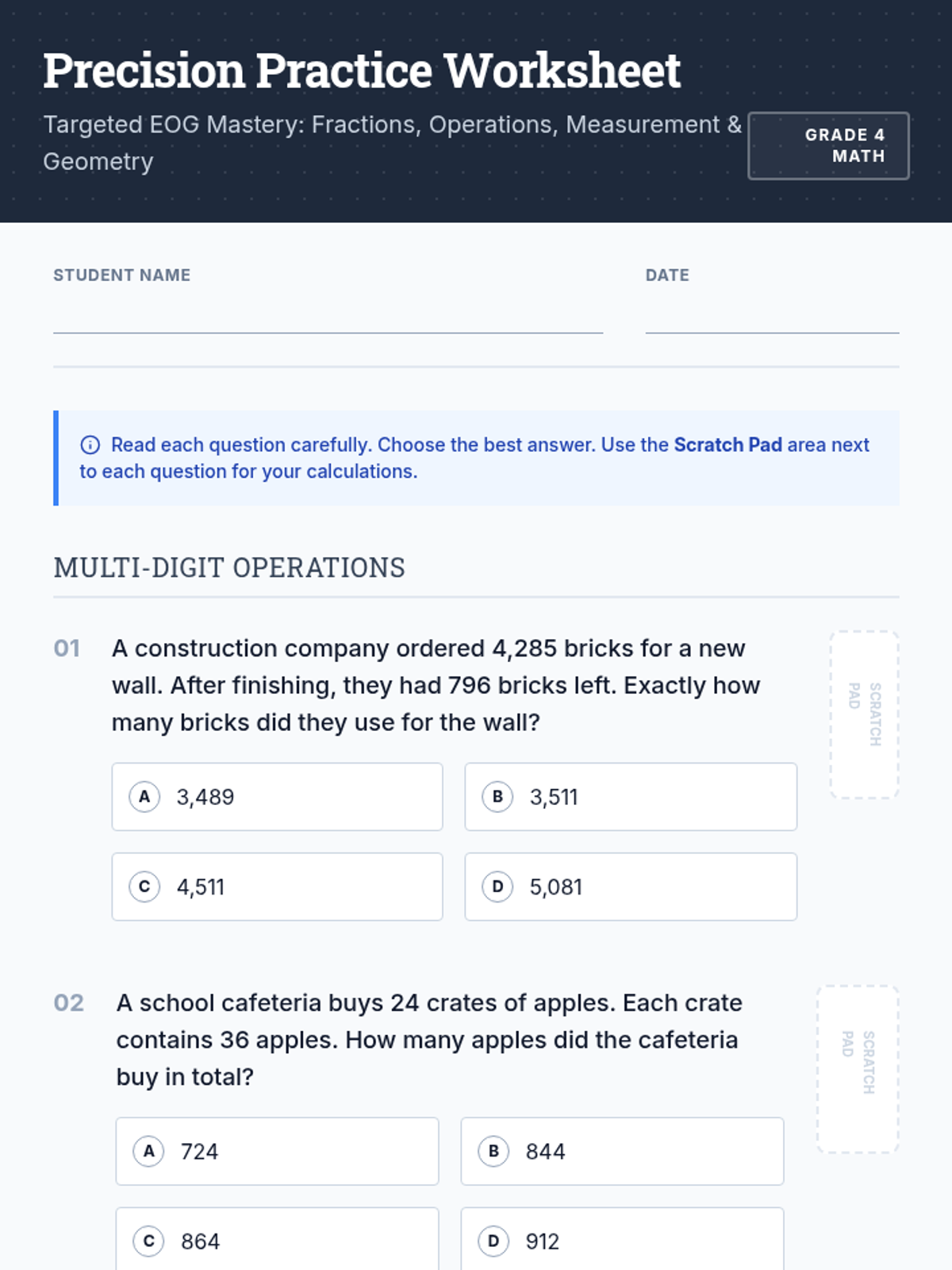
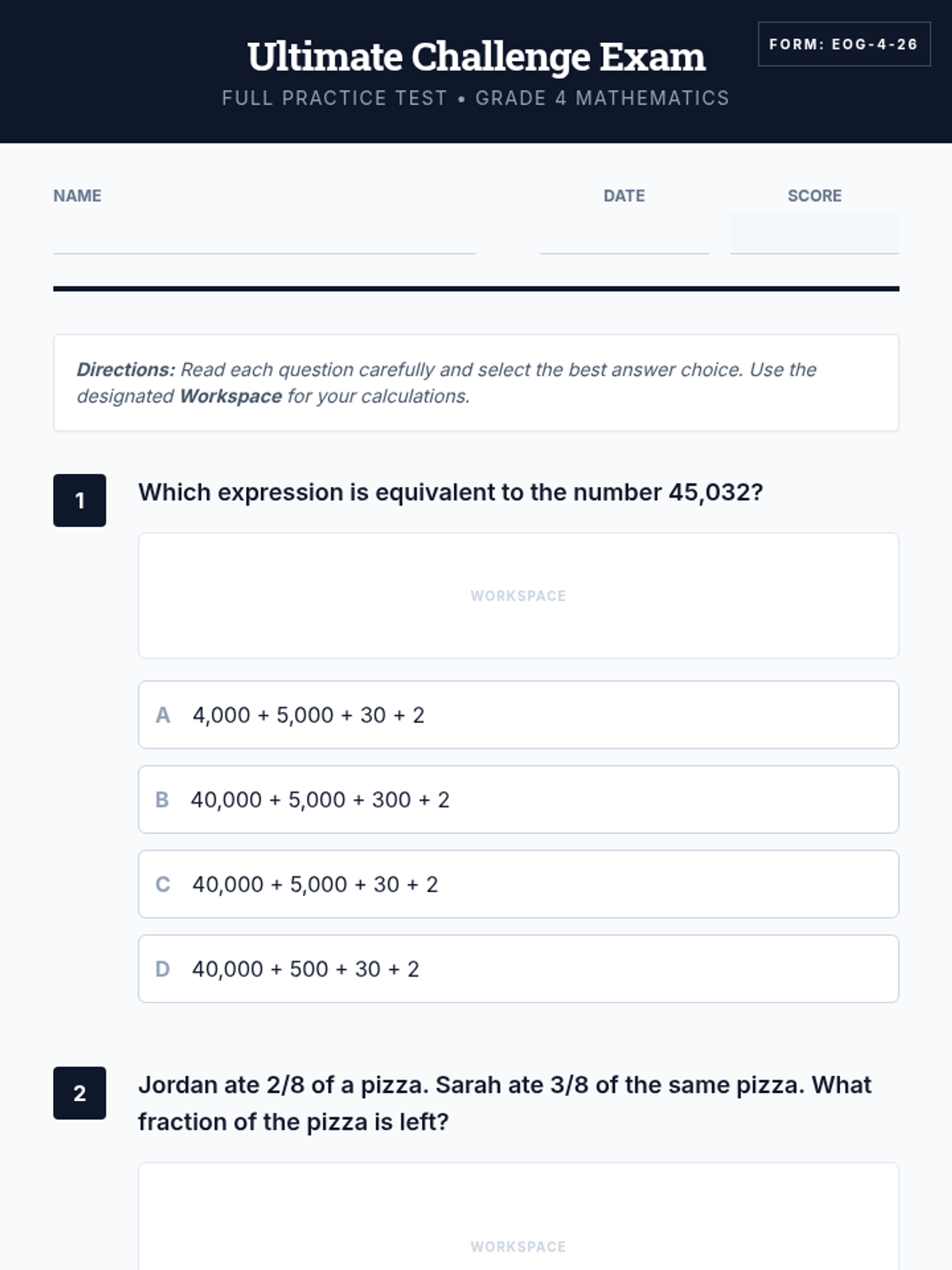
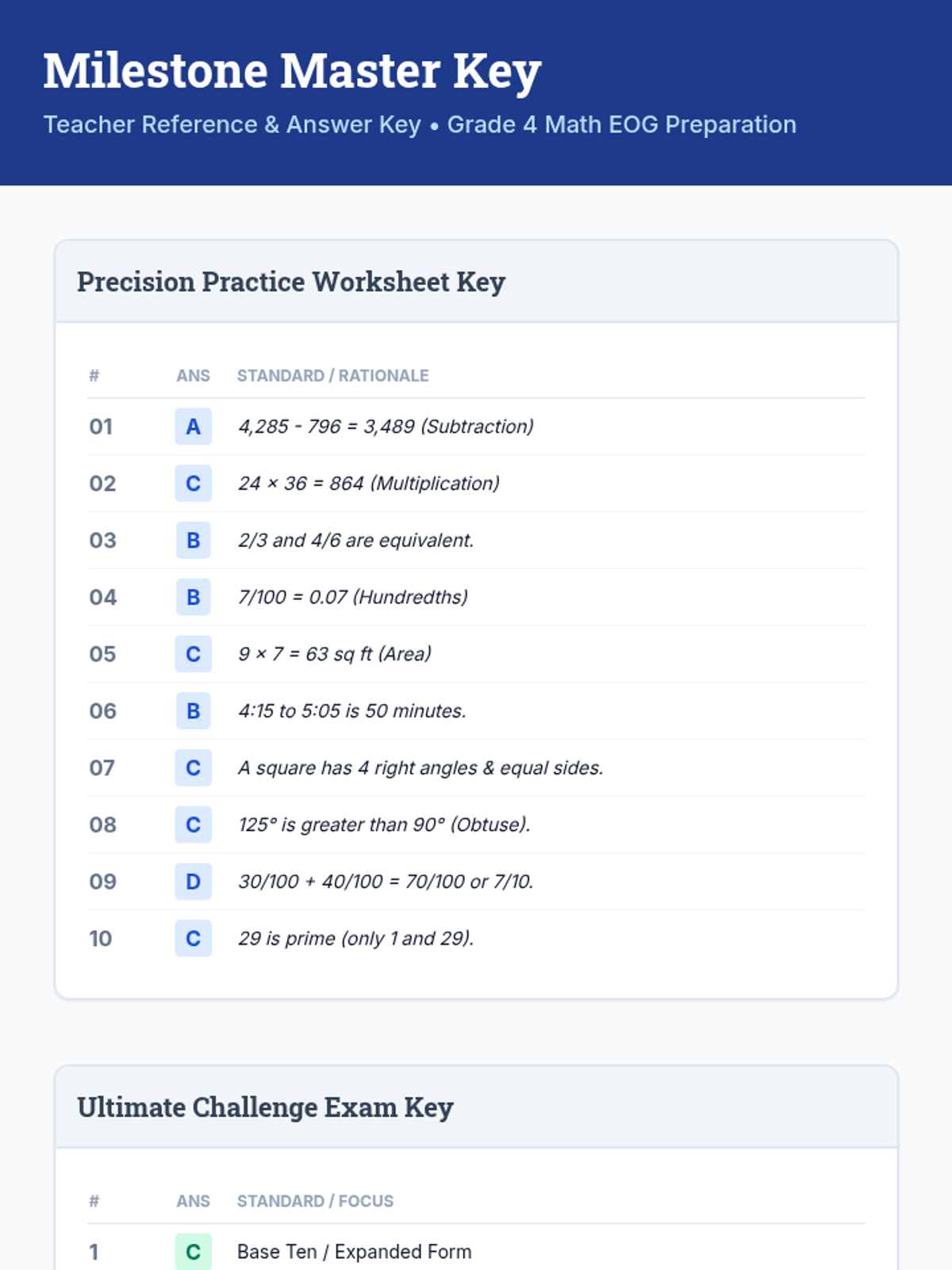
A comprehensive practice suite for 4th Grade Math EOG preparation, focusing on fractions, decimals, multi-digit operations, measurement, data, and geometry. This lesson includes targeted worksheets and a full-length practice exam designed to mimic the rigor of state assessments.
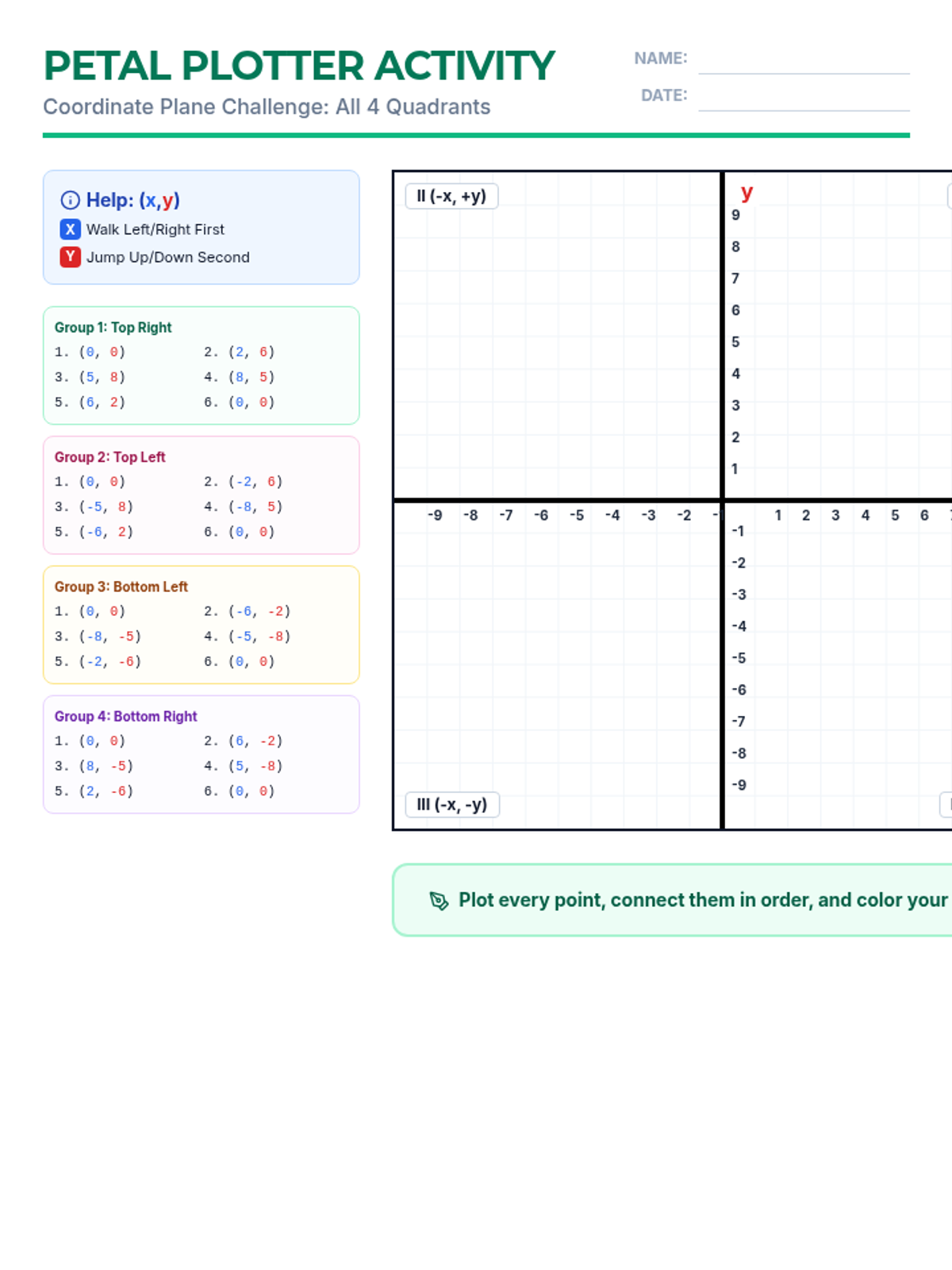
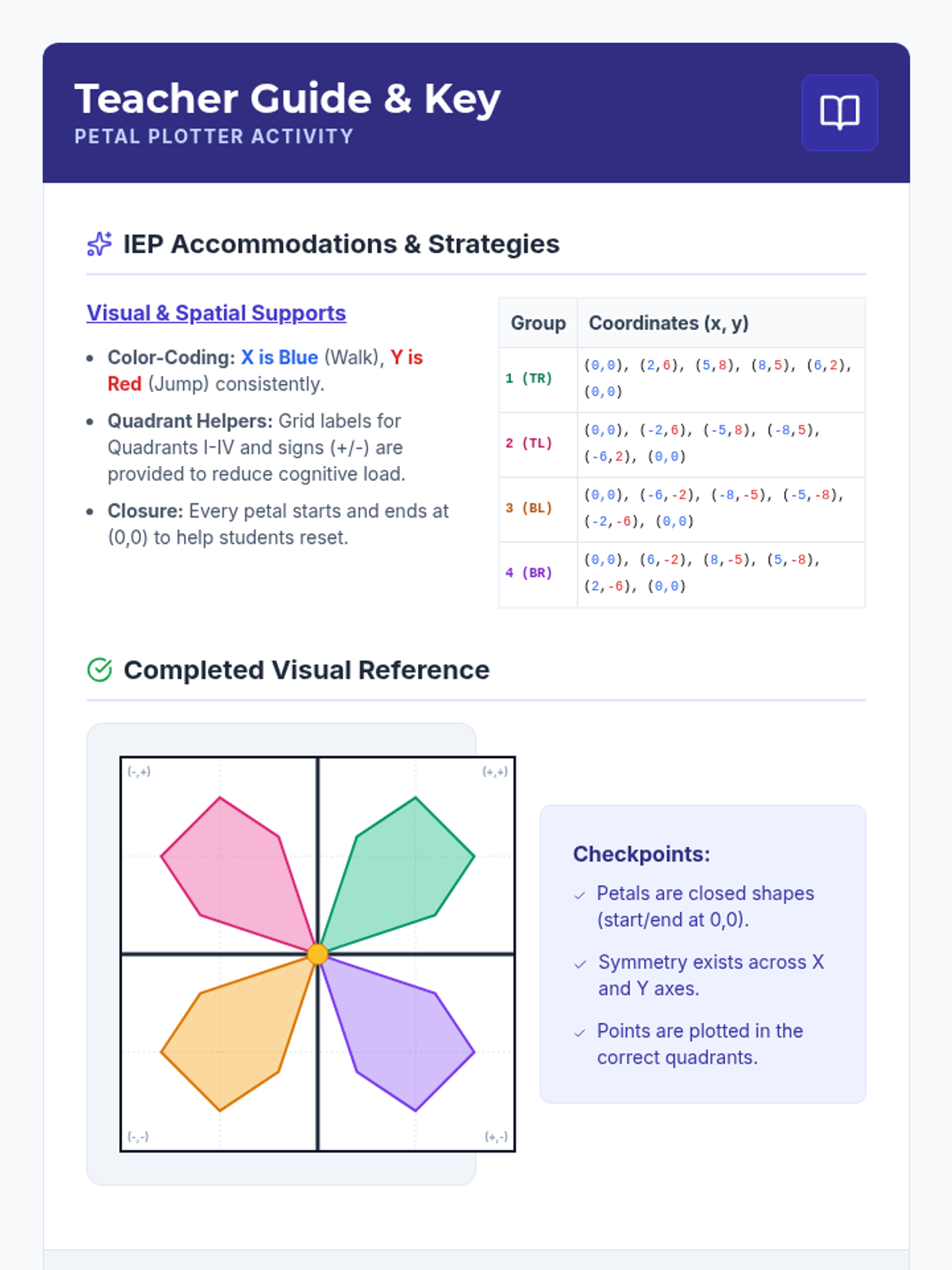
A modified coordinate plane lesson for IEP students focusing on plotting points in all four quadrants to create a seasonal flower image. Includes scaffolding such as color-coding and directional prompts.
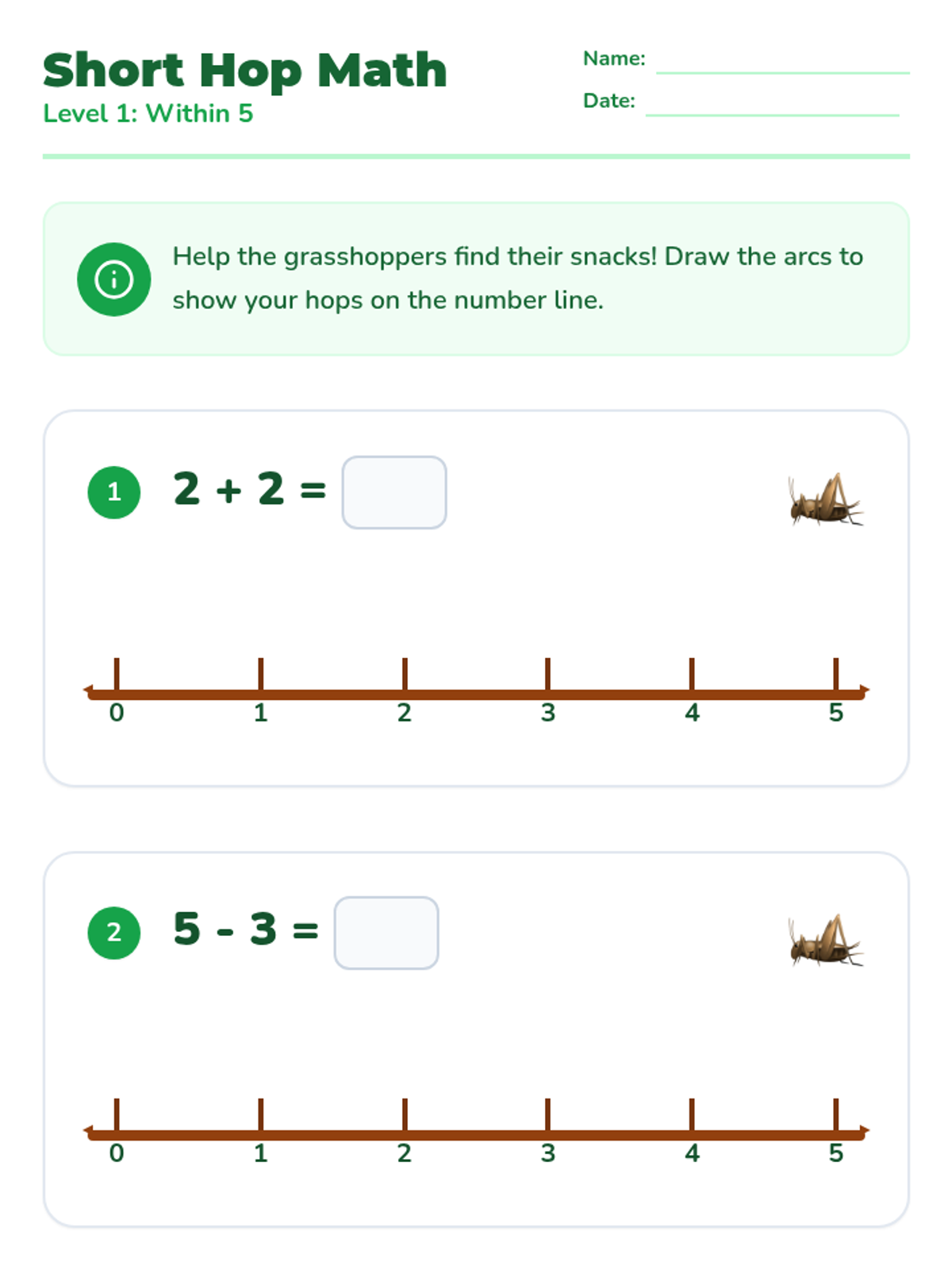
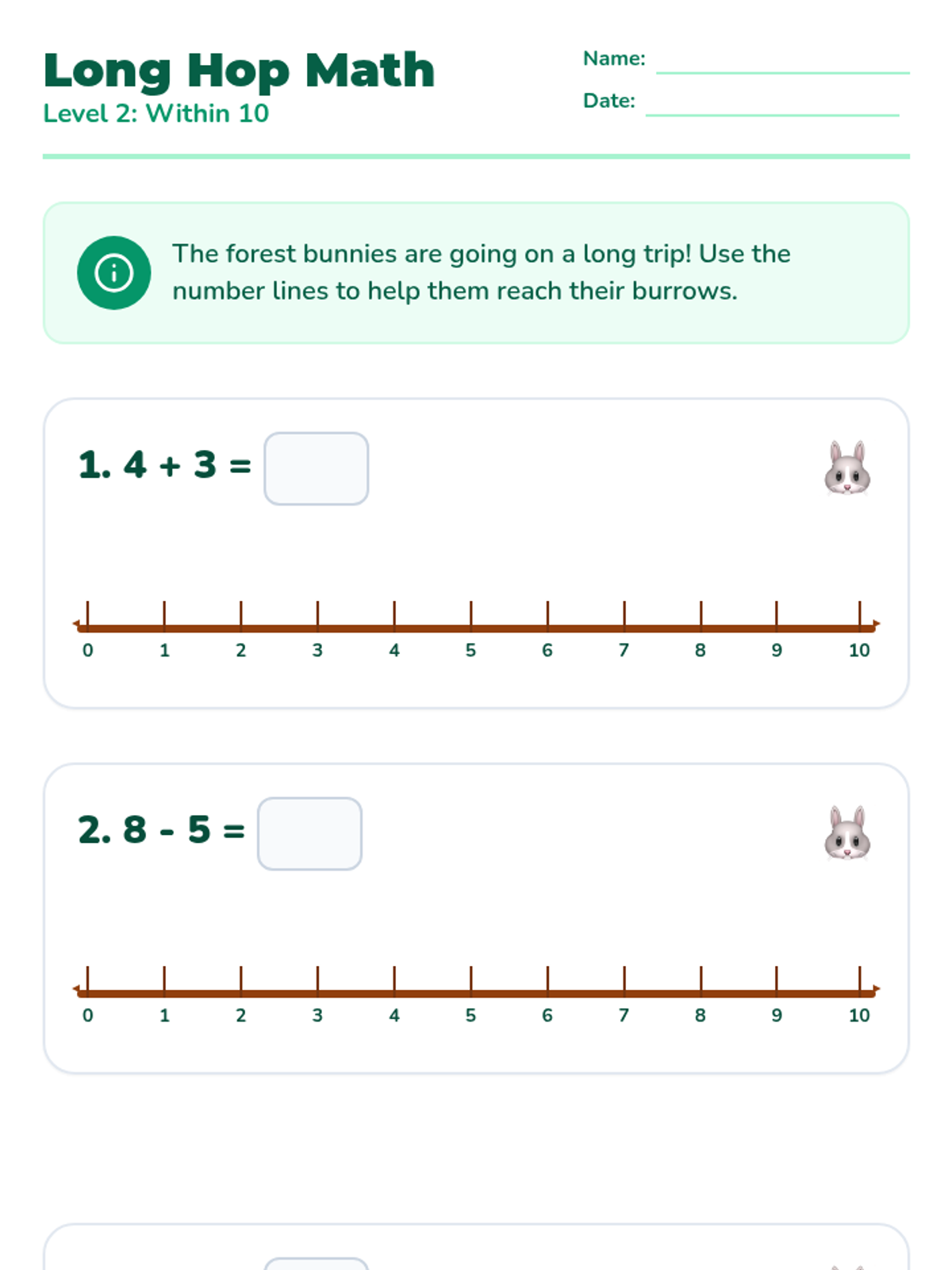
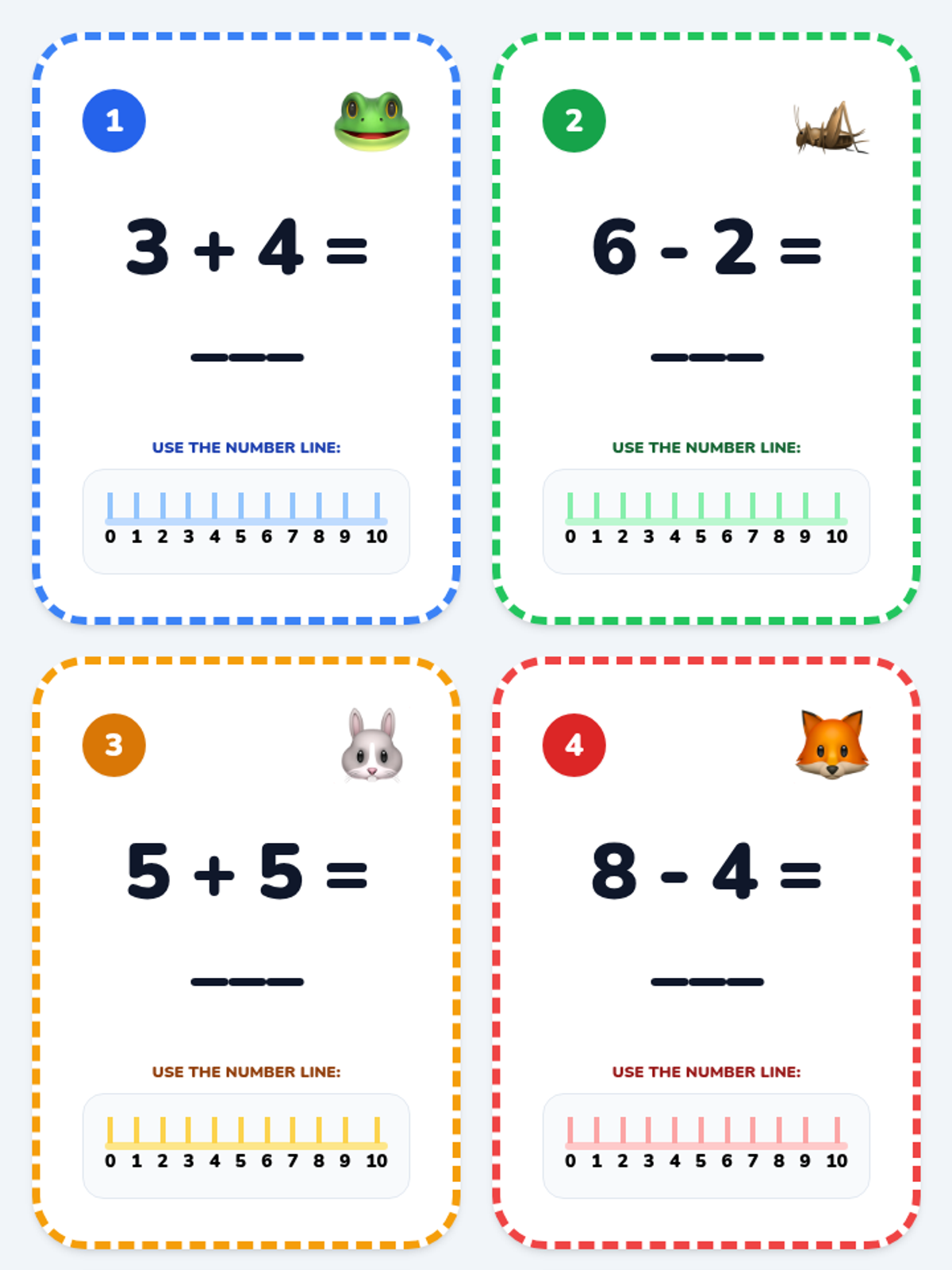
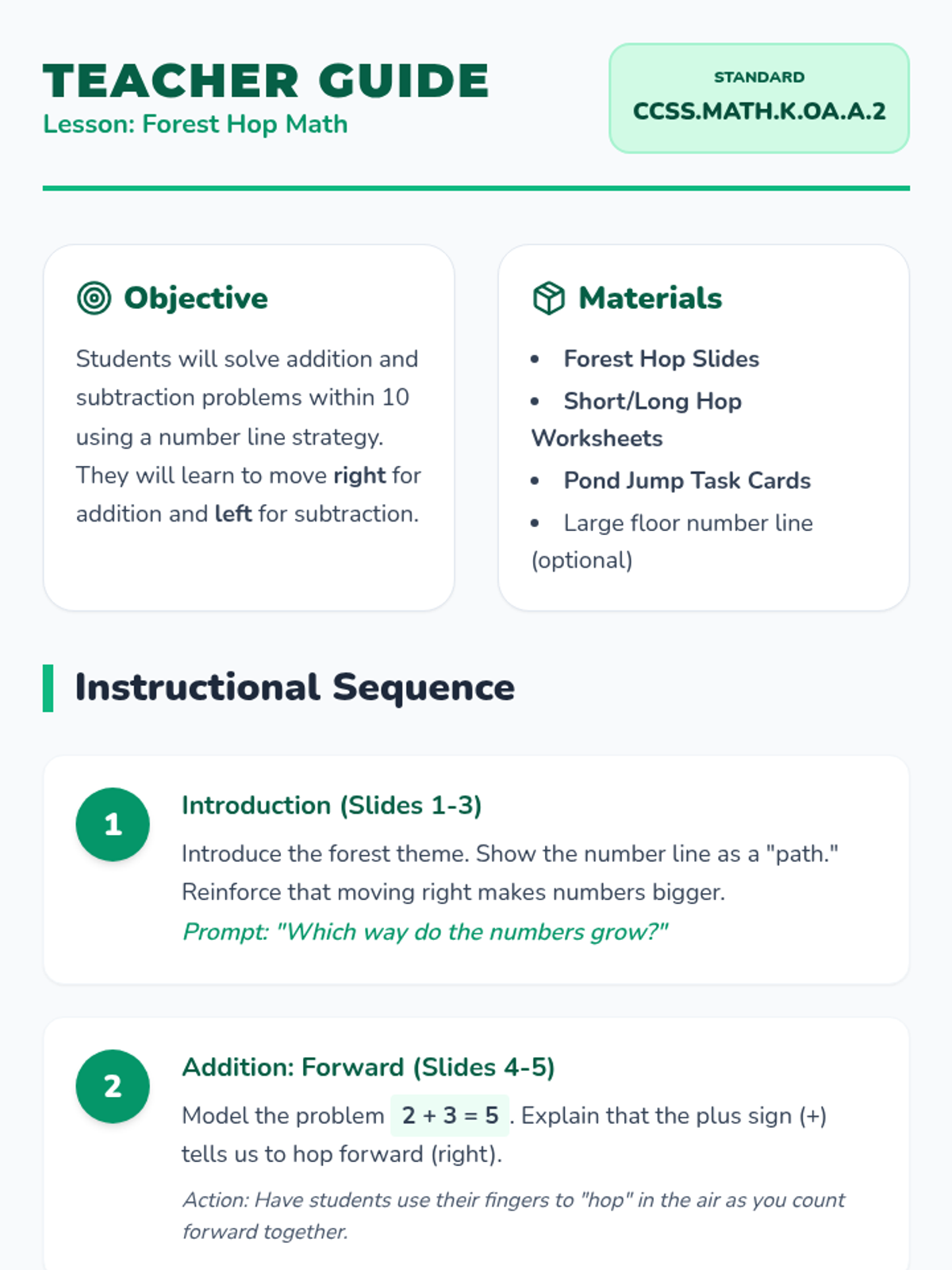
A kindergarten lesson focused on using number line strategies for addition and subtraction through the theme of forest animals hopping along logs. Students will learn to move forward for addition and backward for subtraction within 10.
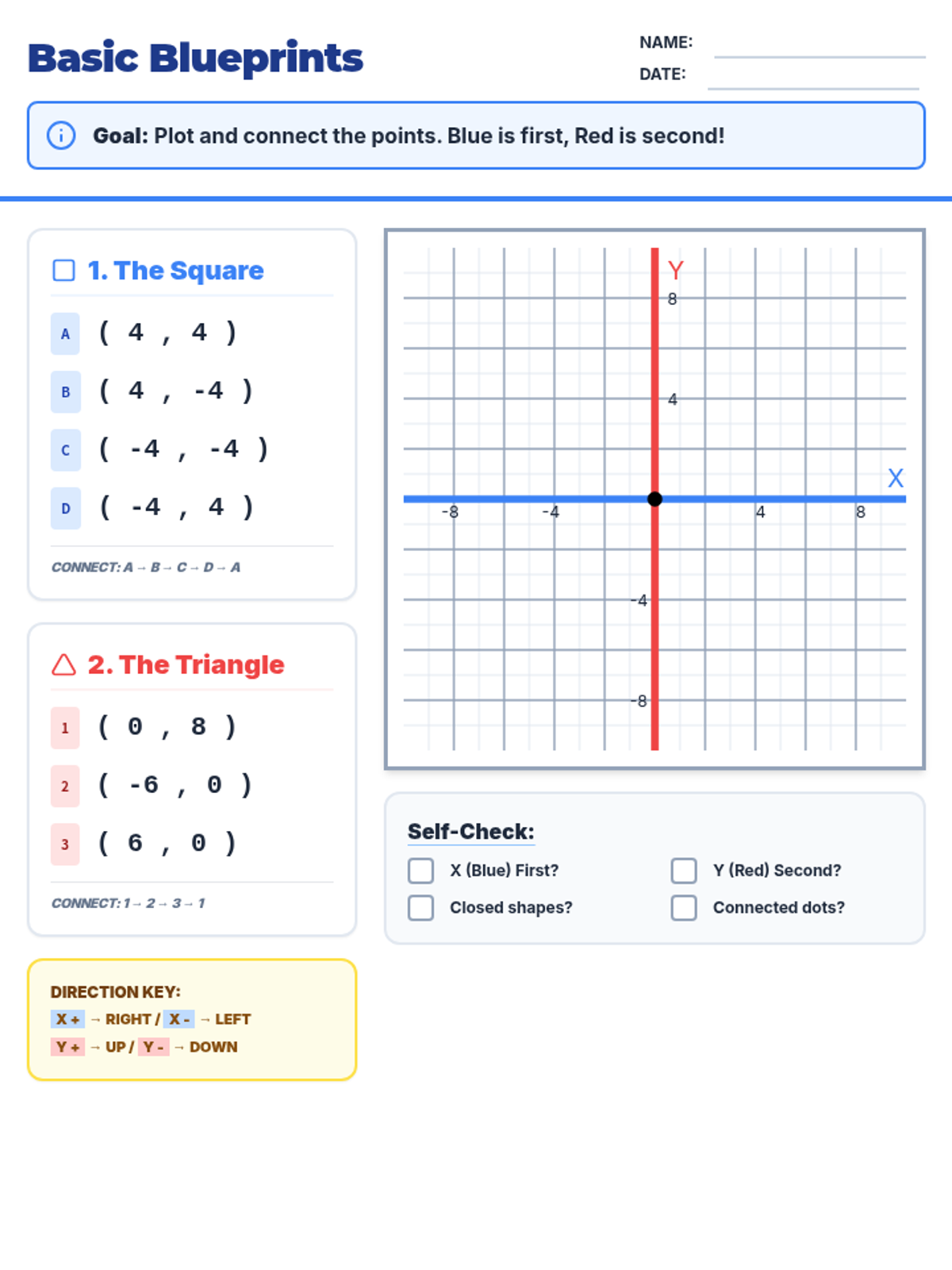
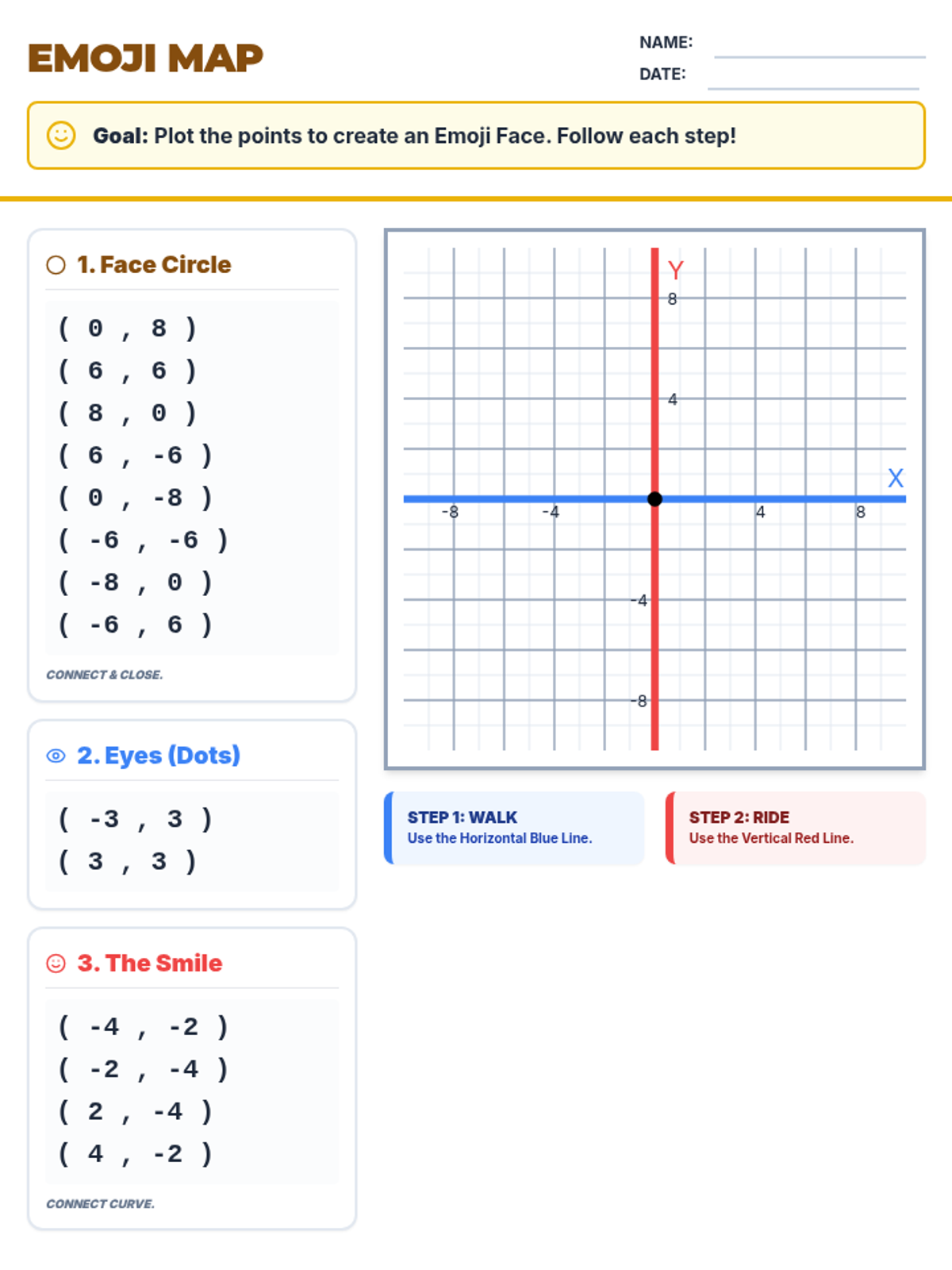
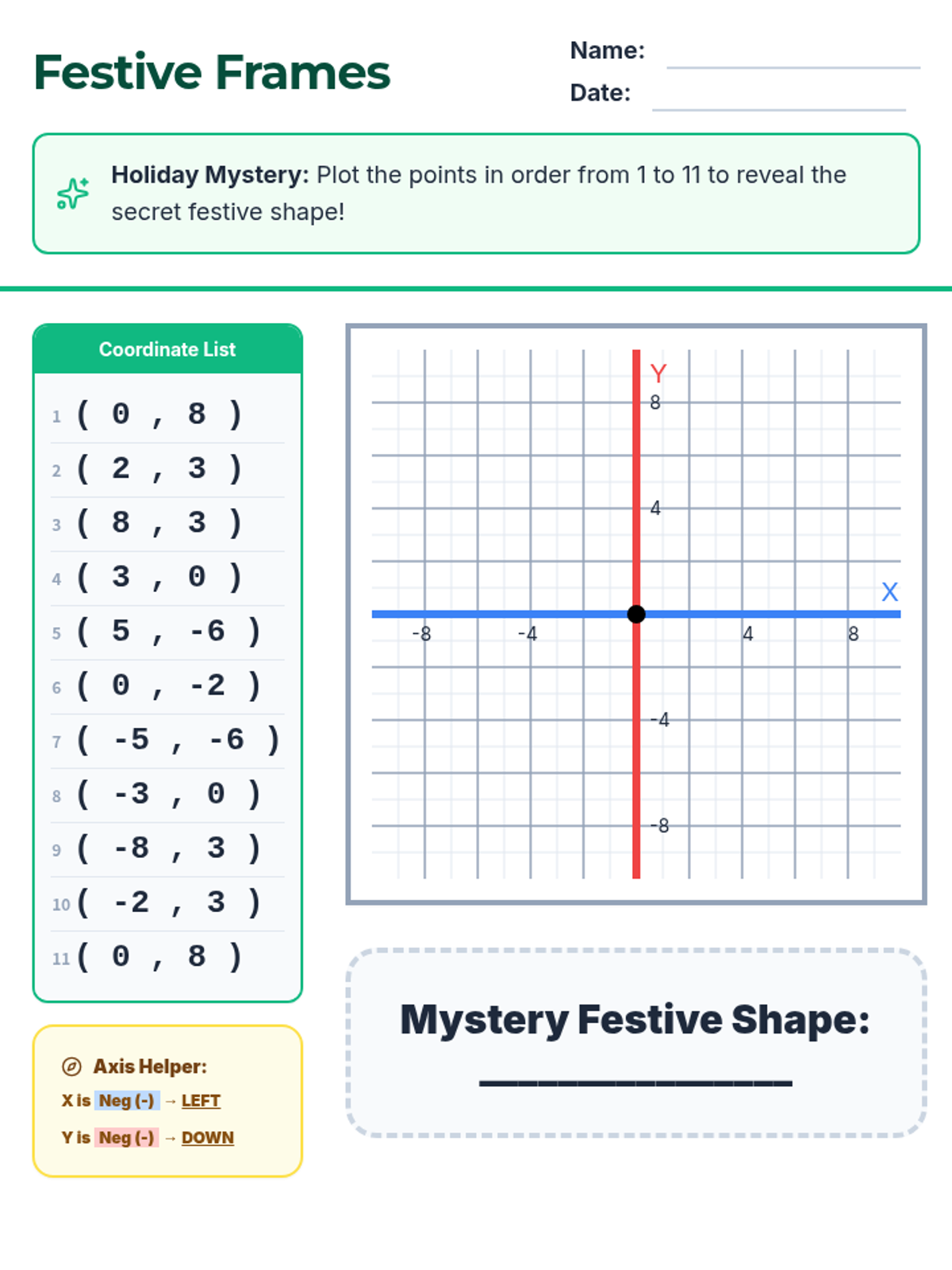
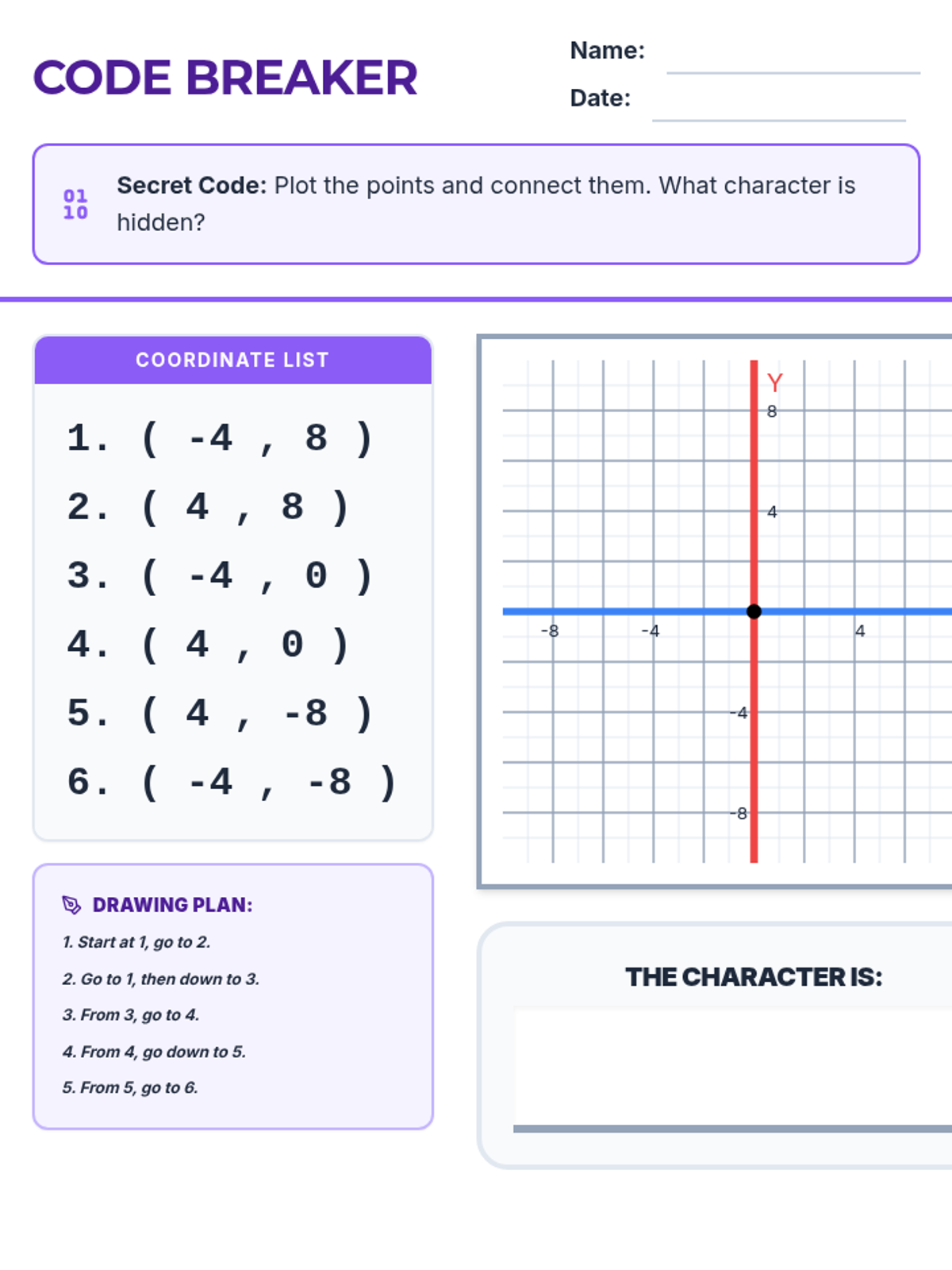
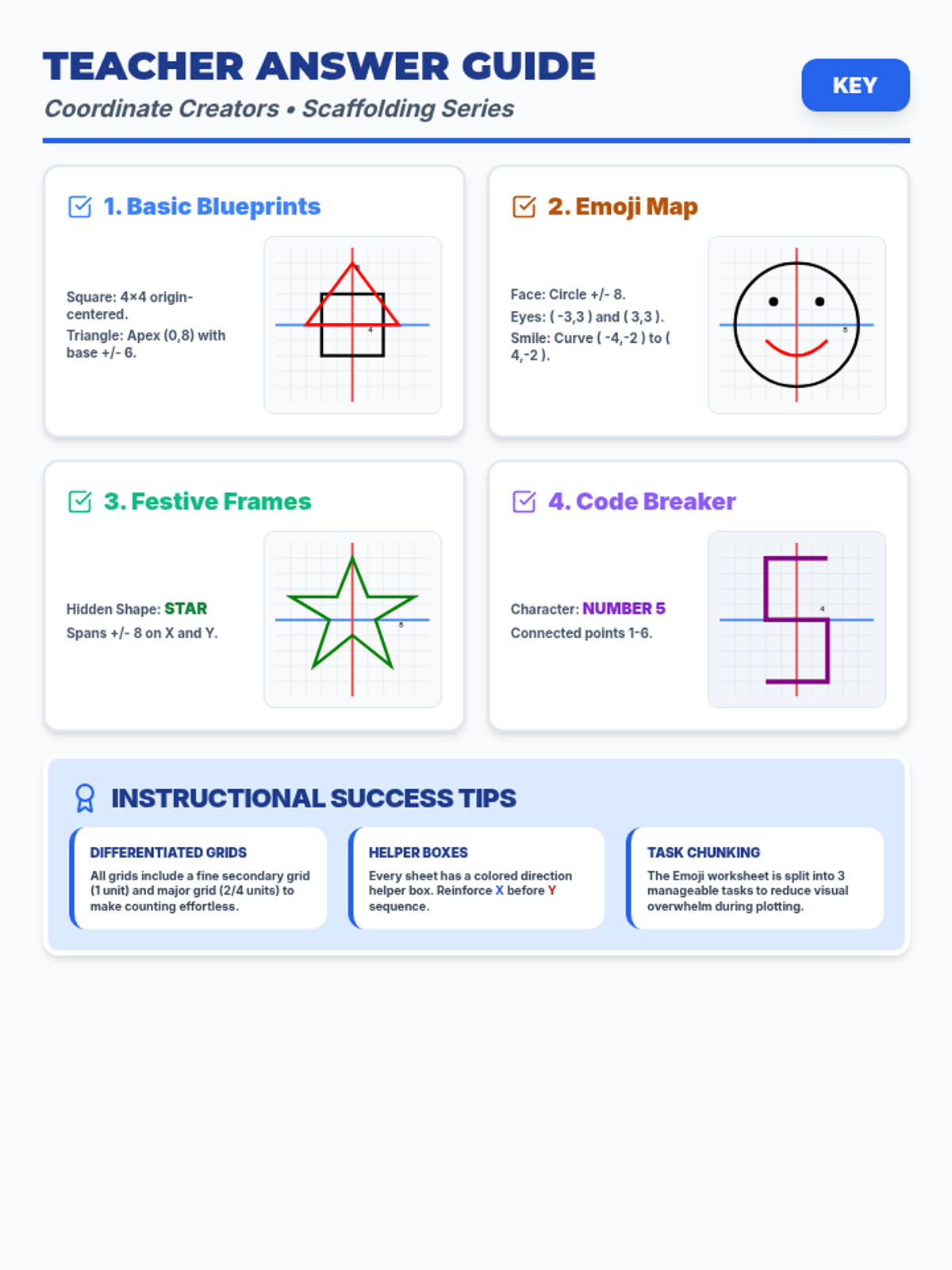
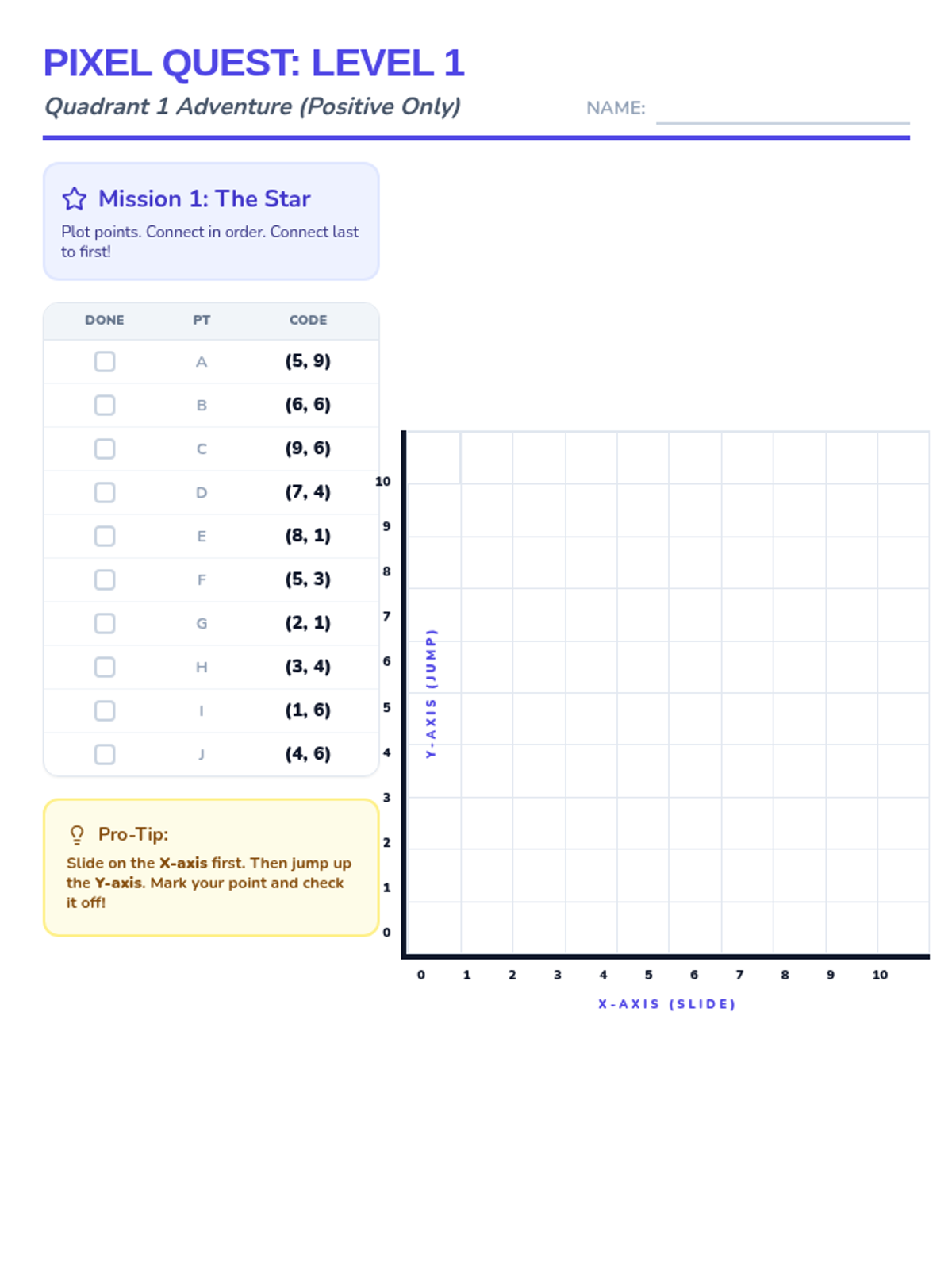
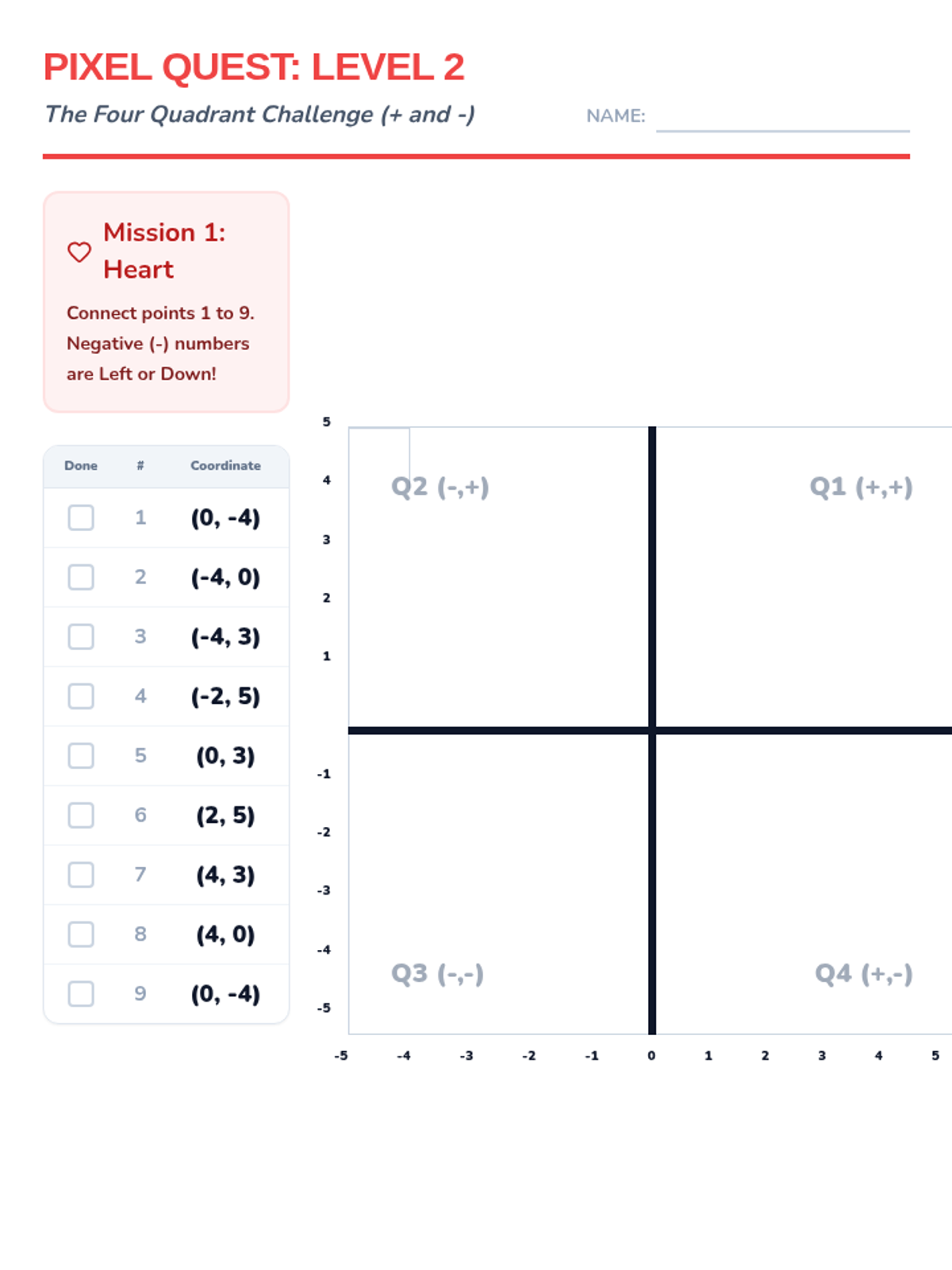
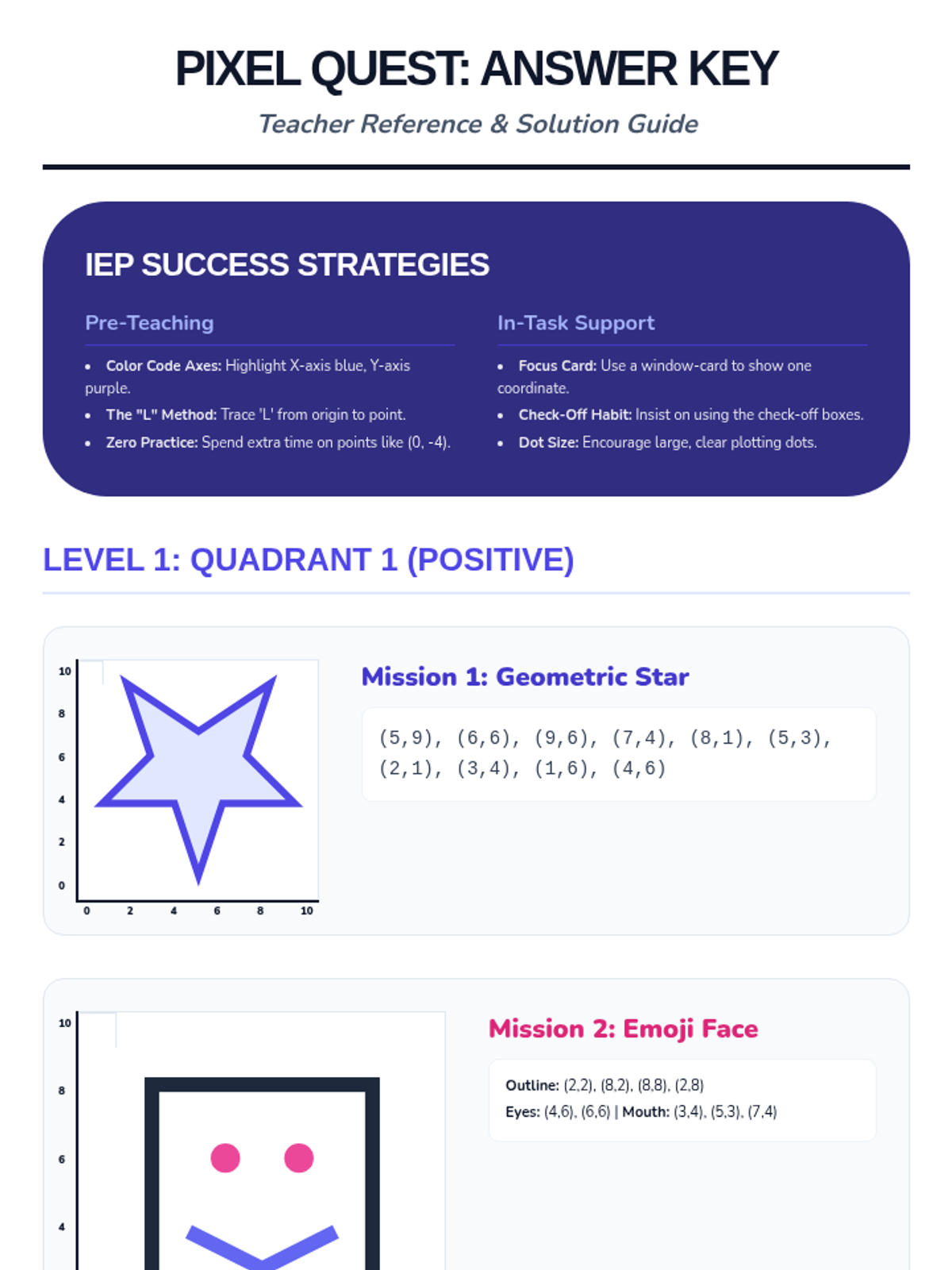
A beginner-friendly introduction to the four-quadrant coordinate plane, specifically designed with scaffolding and visual aids for students with diverse learning needs. Students will practice plotting points to reveal basic shapes, emojis, holiday symbols, and characters.
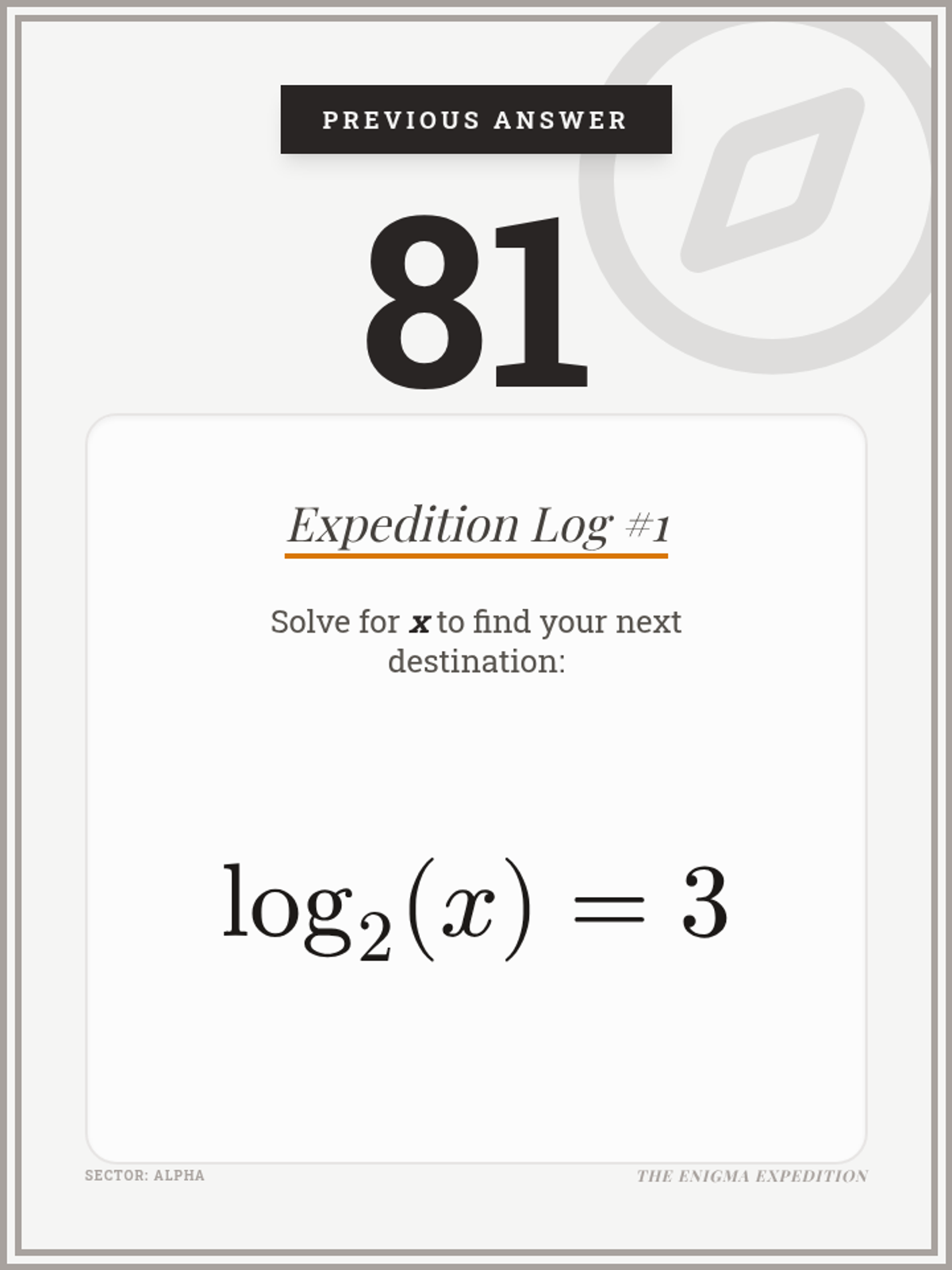
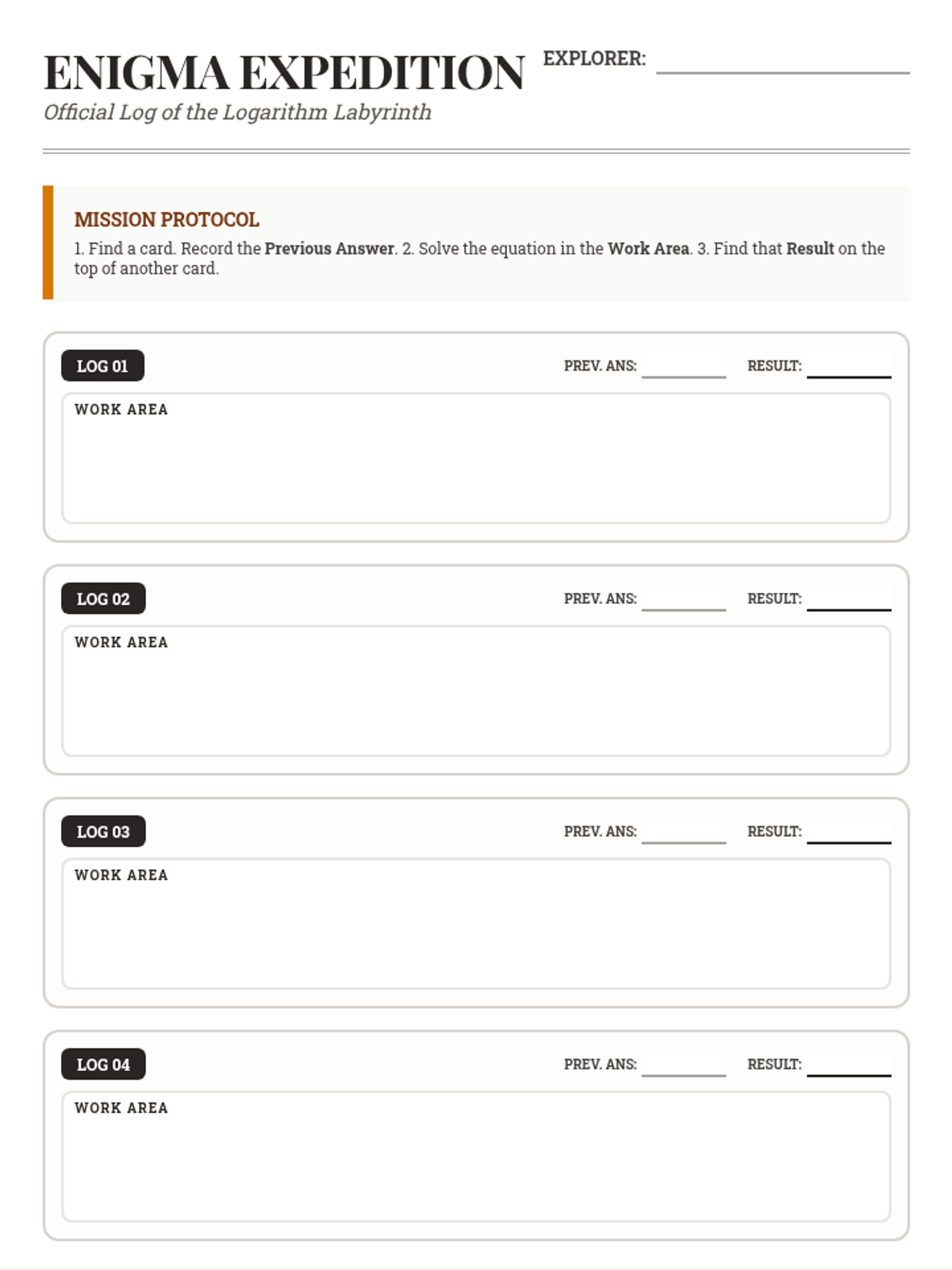
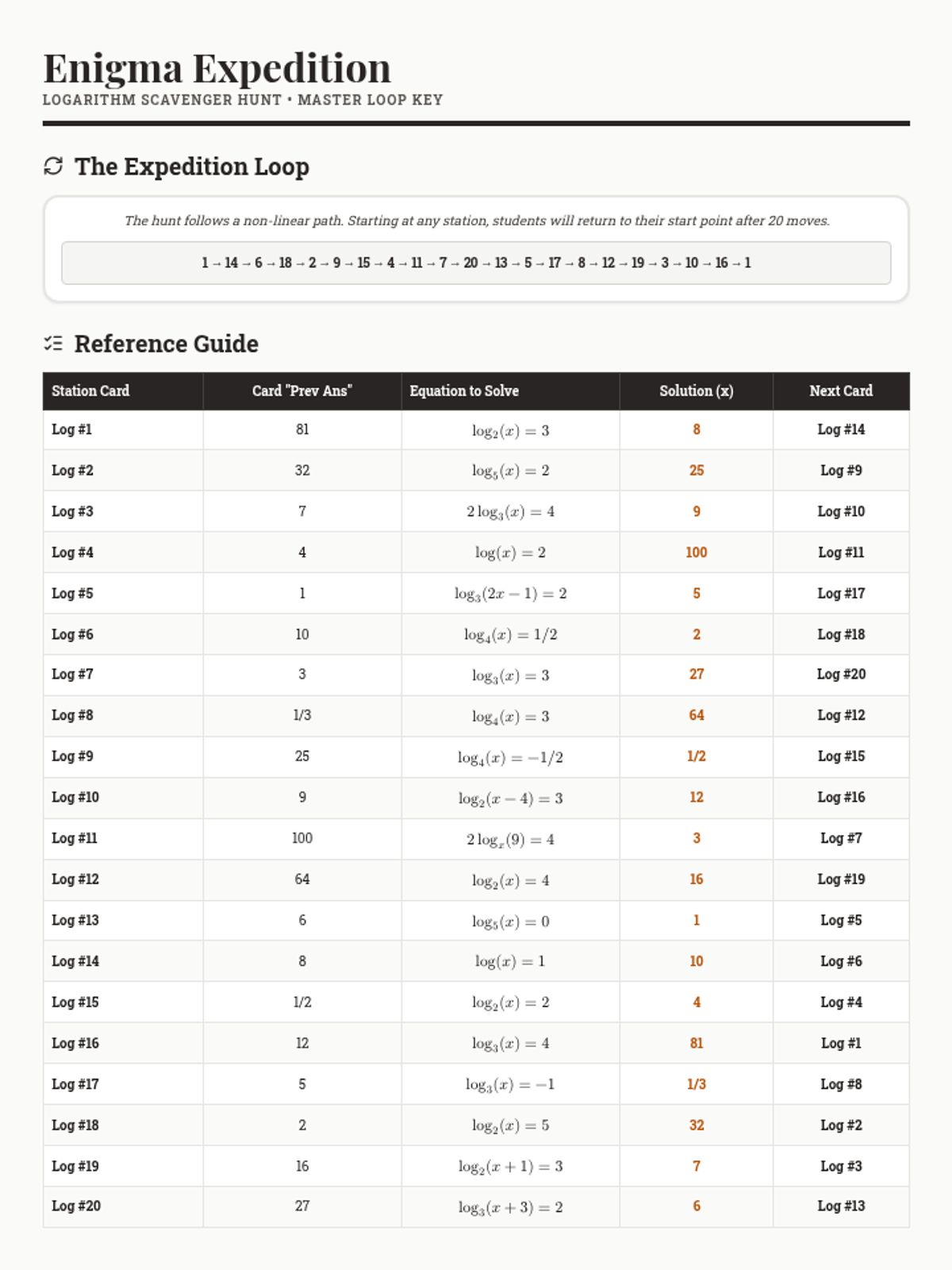
A self-checking scavenger hunt activity where students solve basic logarithmic equations involving conversions, isolations, and simple expressions. The activity is themed as an 'Enigma Expedition' through ancient ruins.
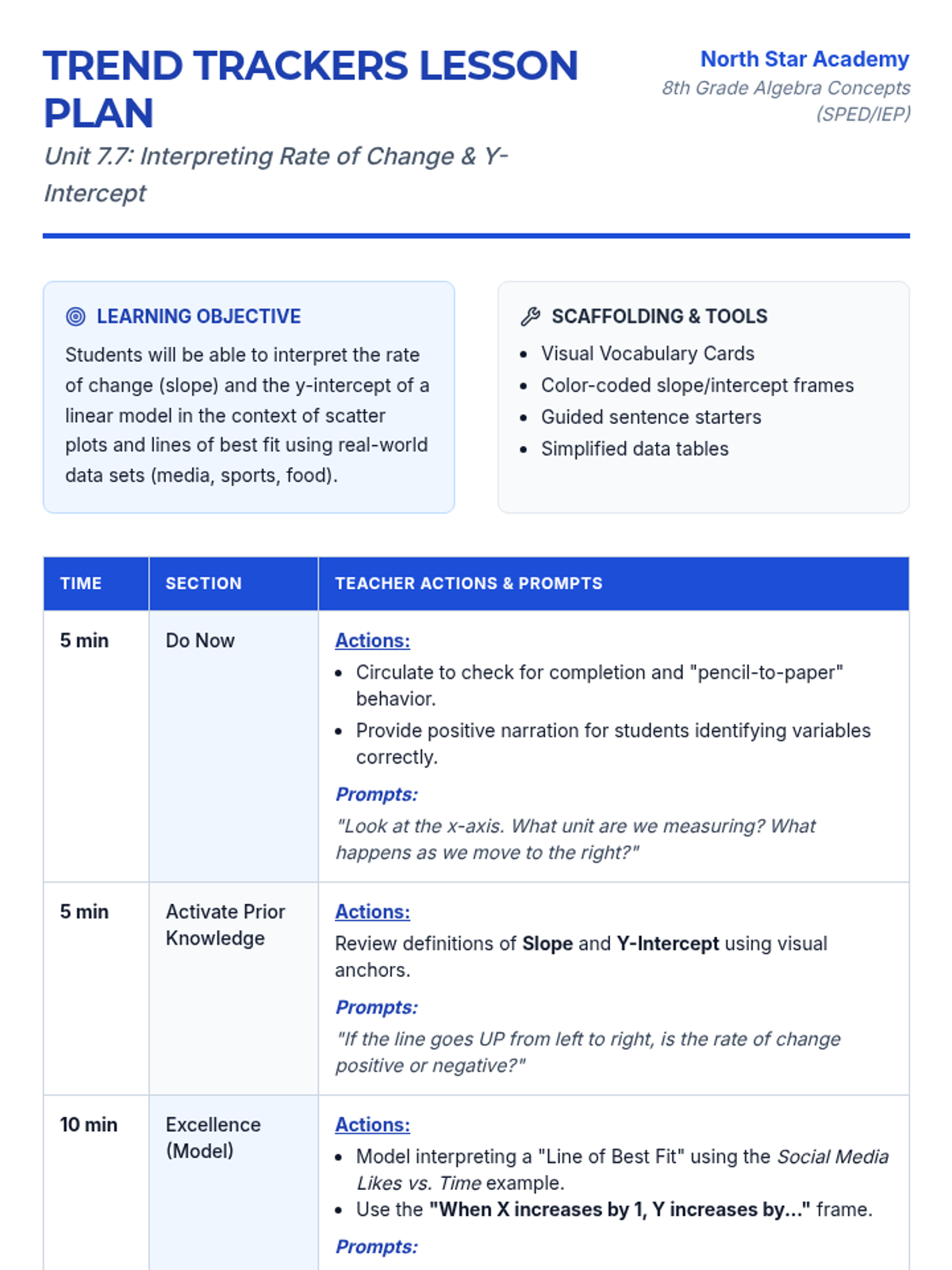
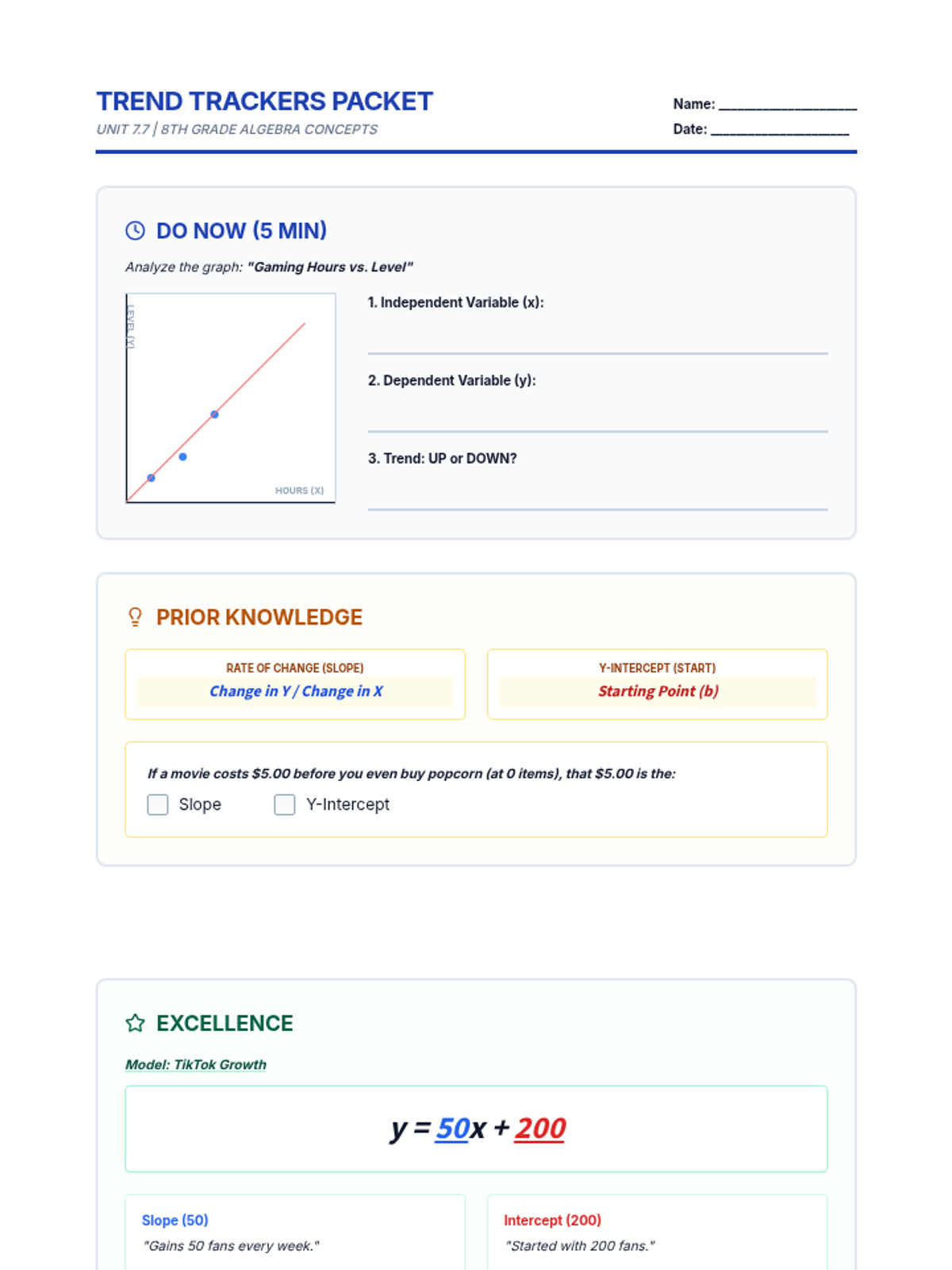
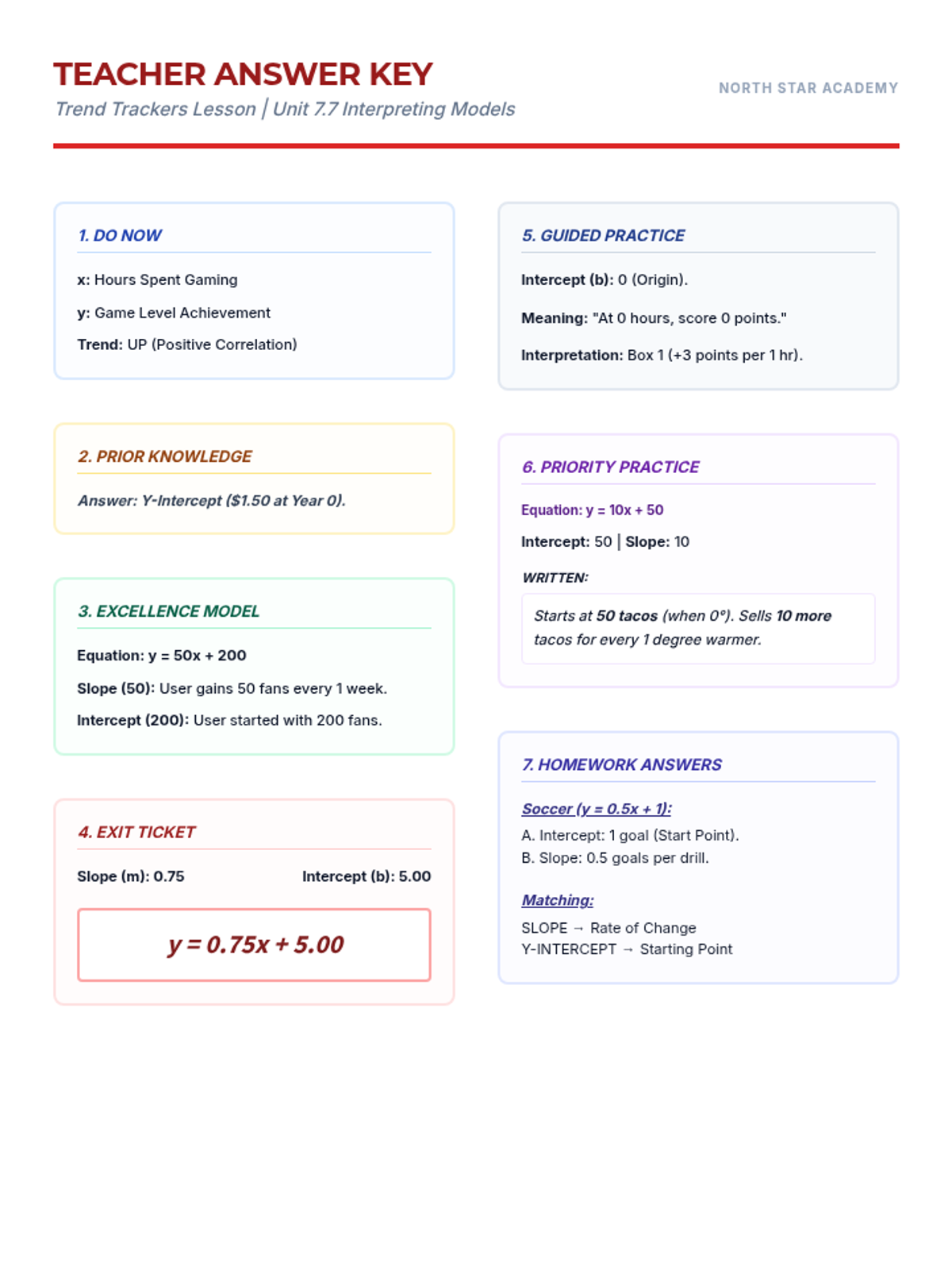
An 8th grade Algebra lesson focused on interpreting slope and y-intercept in the context of scatter plots and lines of best fit, specifically designed for Special Education students with IEP supports.
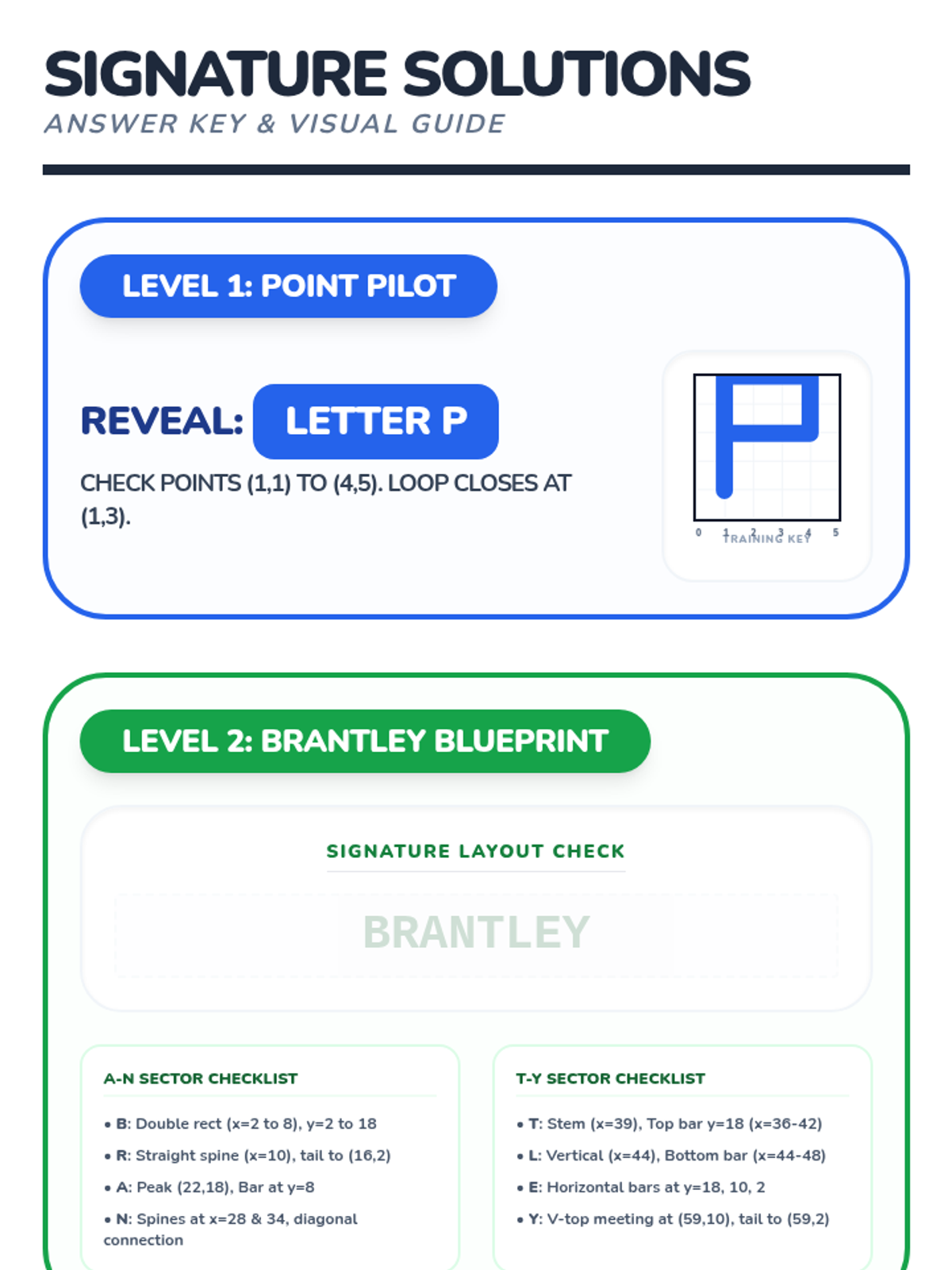
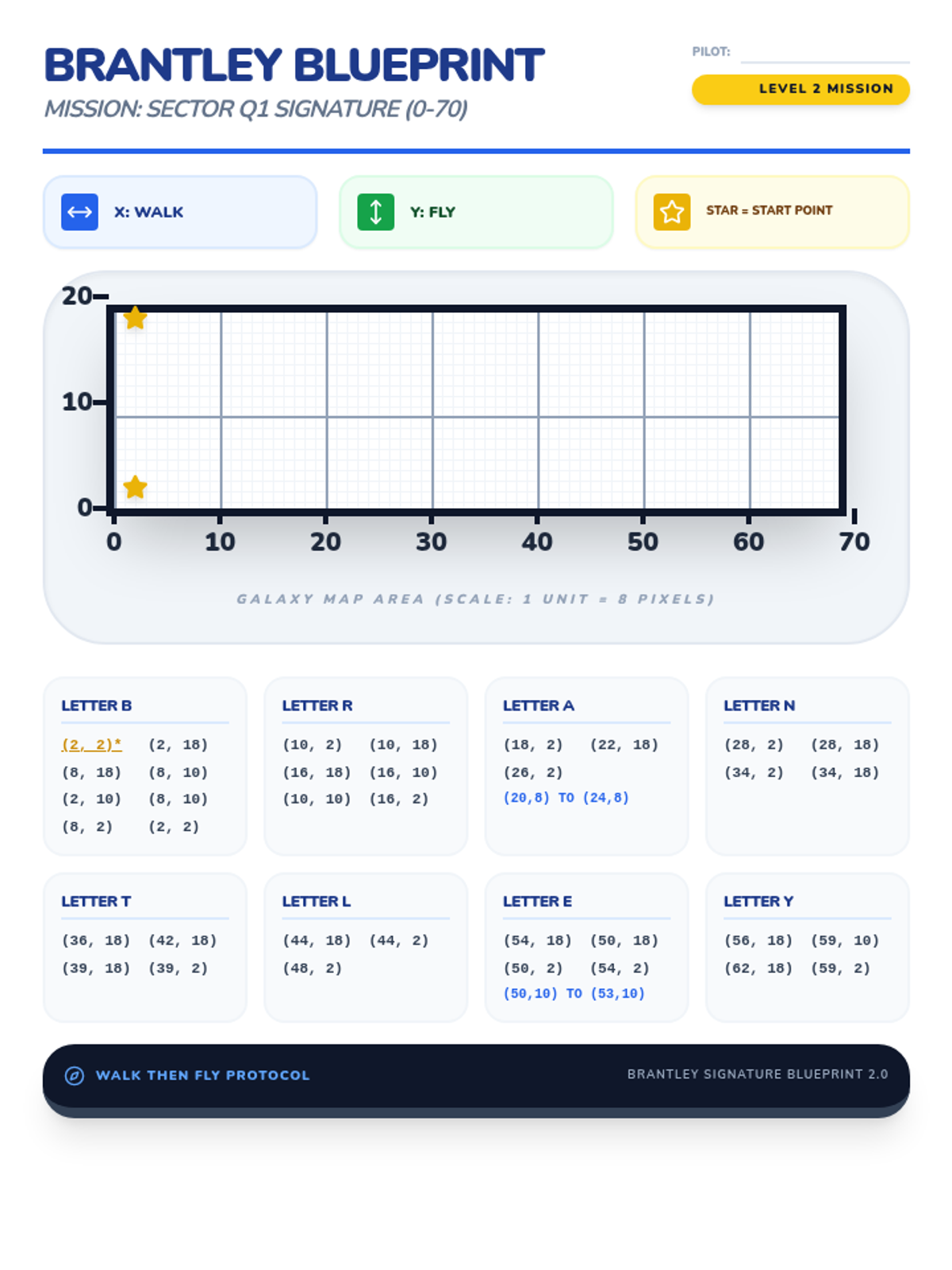
A simplified introduction to plotting points on a coordinate plane (Quadrant 1) to create the signature "Brantley". Designed specifically for IEP students with large grids and clear instructions.
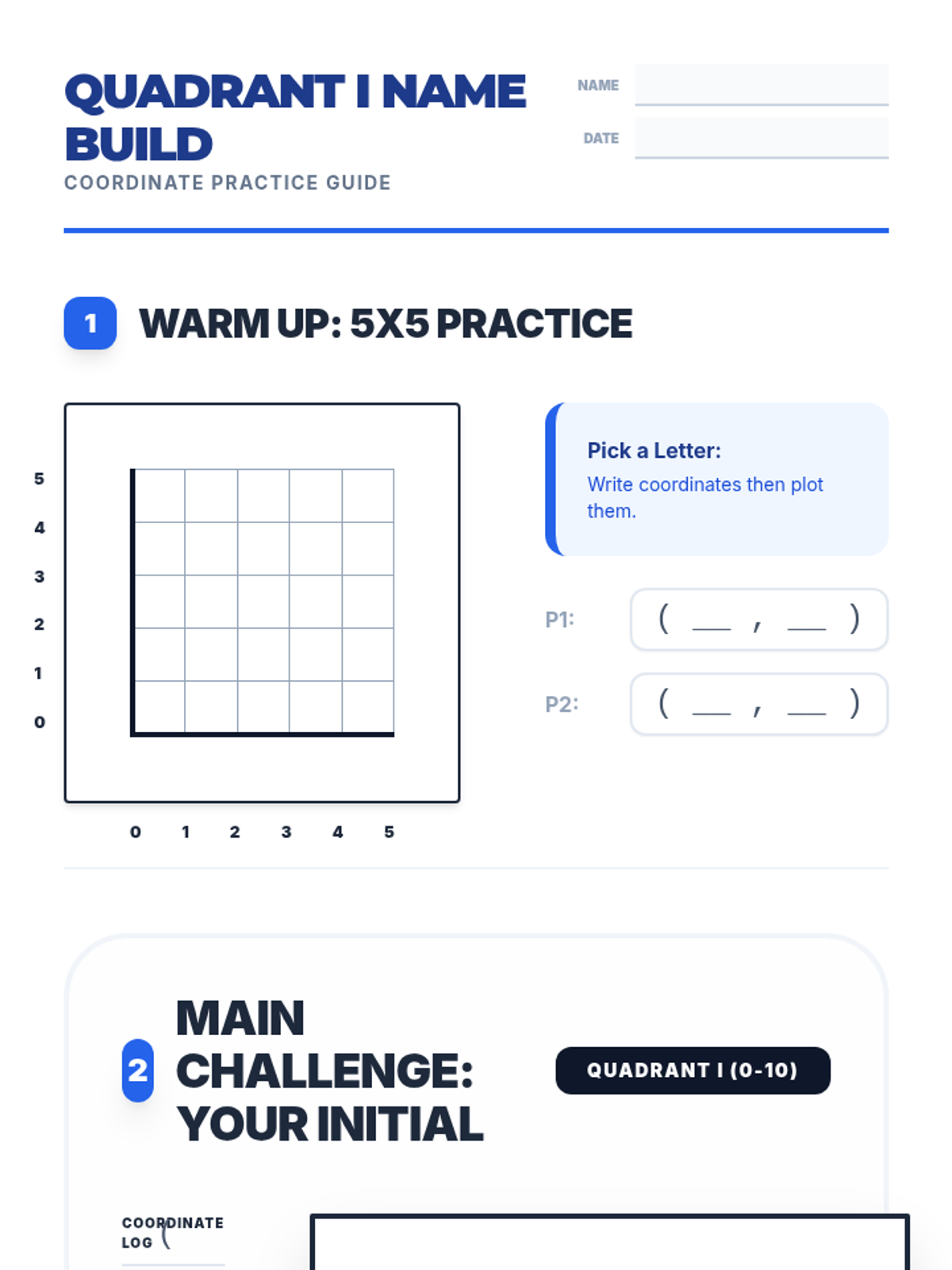
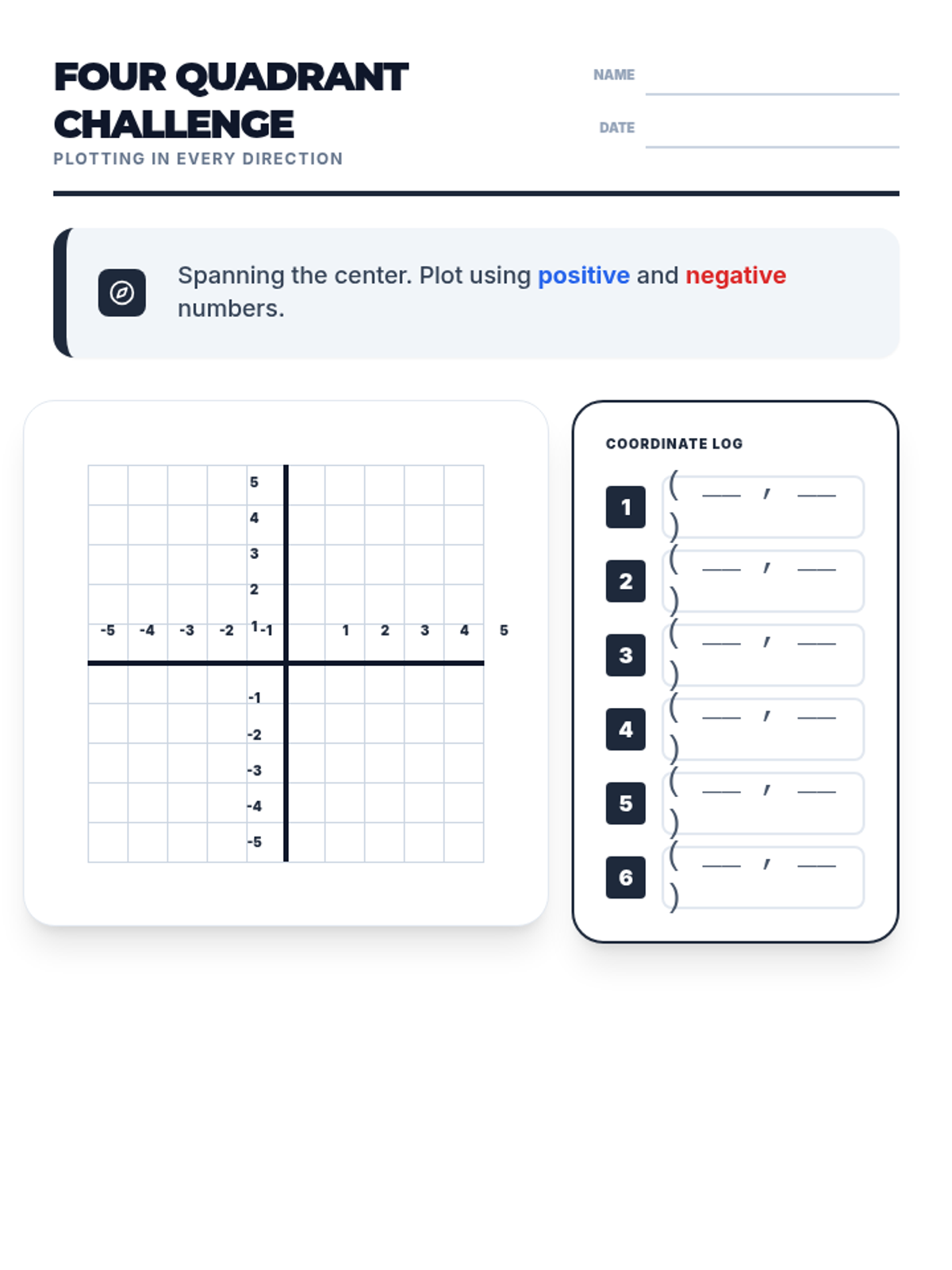
Students learn to plot coordinates to form letters and their own names. This lesson includes differentiated materials for Quadrant I, simplified 5x5 grids, and all four quadrants, with built-in tracing supports for IEP students.
A step-by-step introduction to plotting points on a coordinate plane, specifically designed for IEP students with clear visuals and structured practice. Students move from the first quadrant to all four quadrants using engaging pixel-art style images.
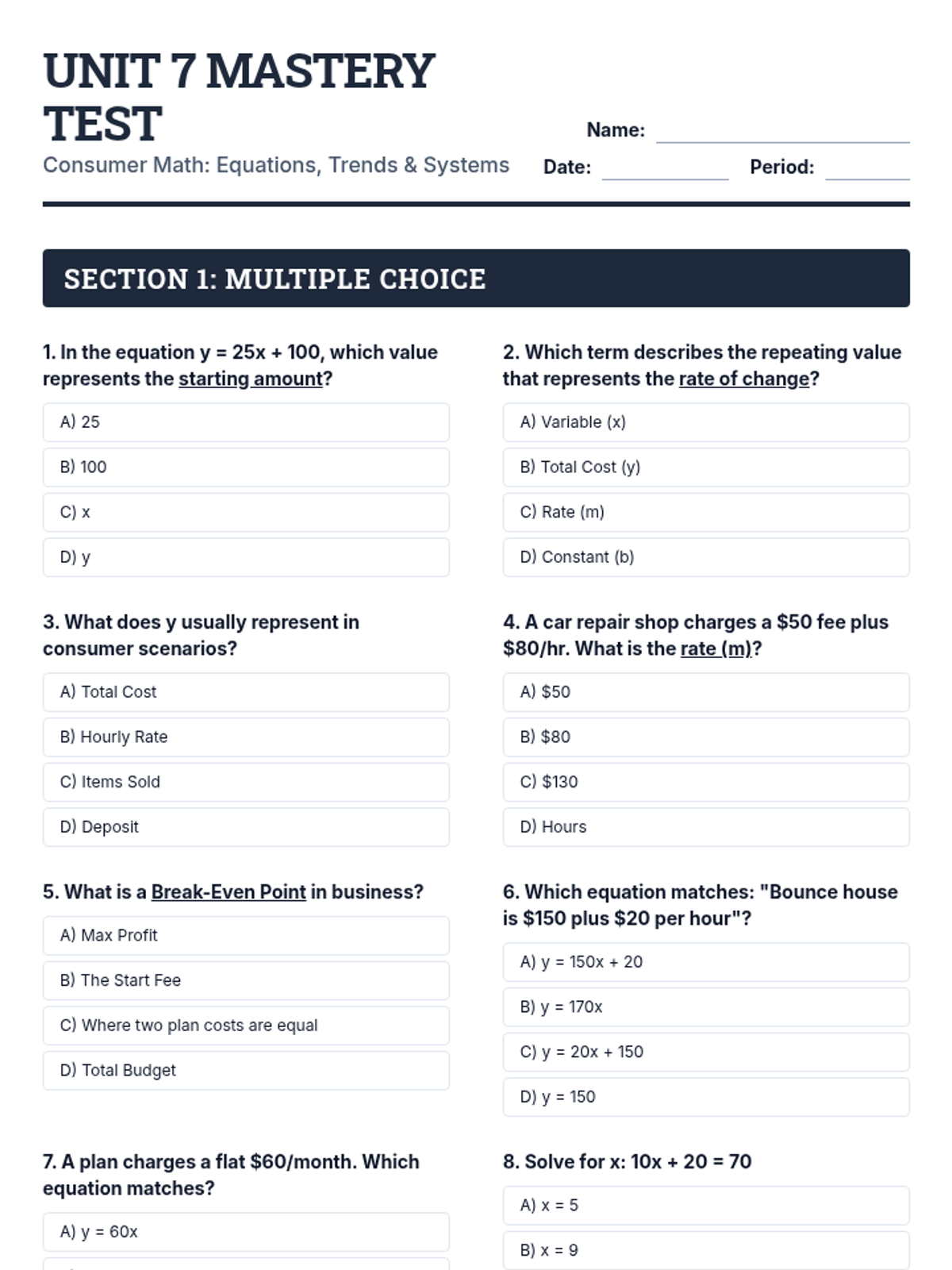
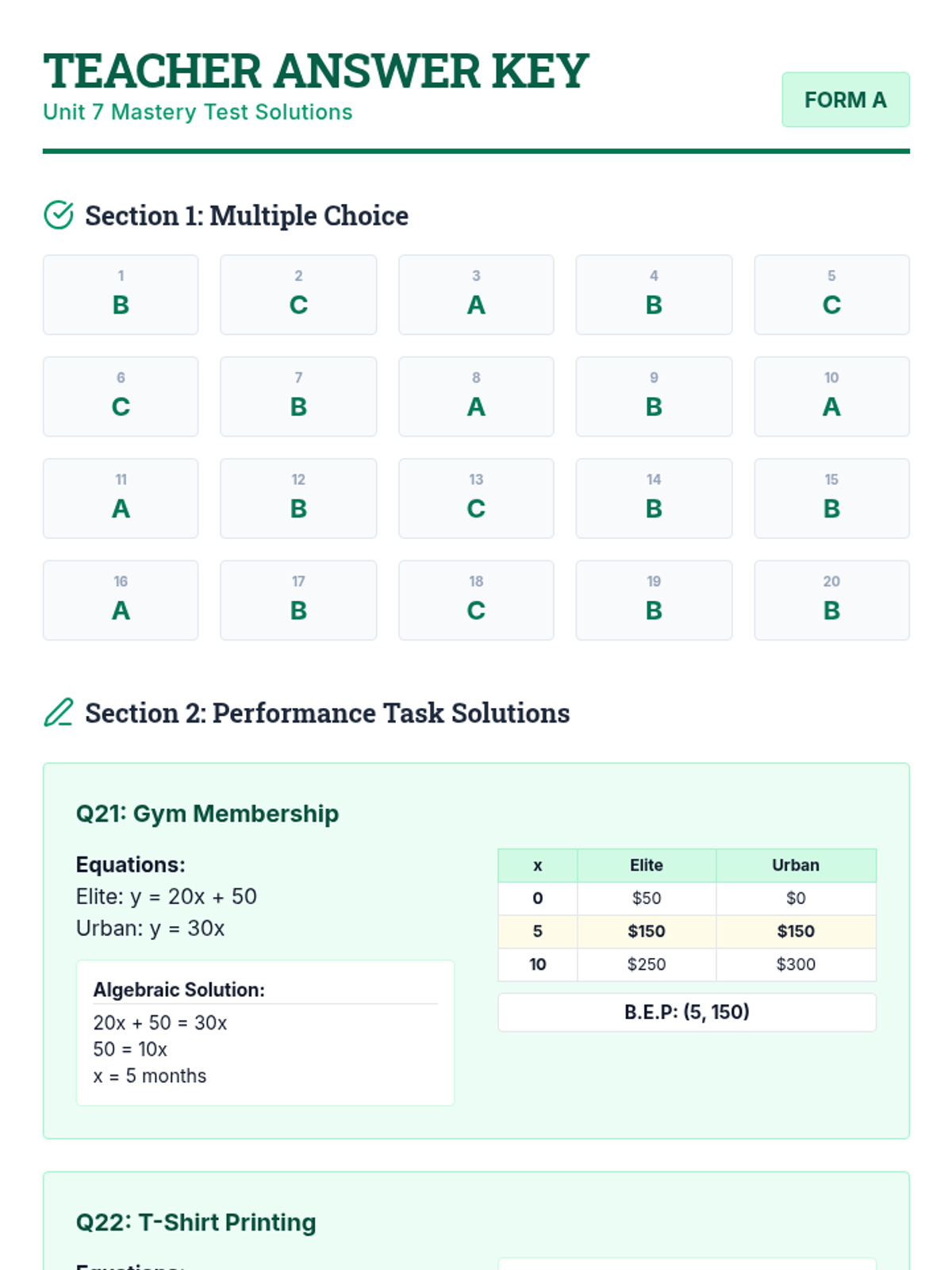
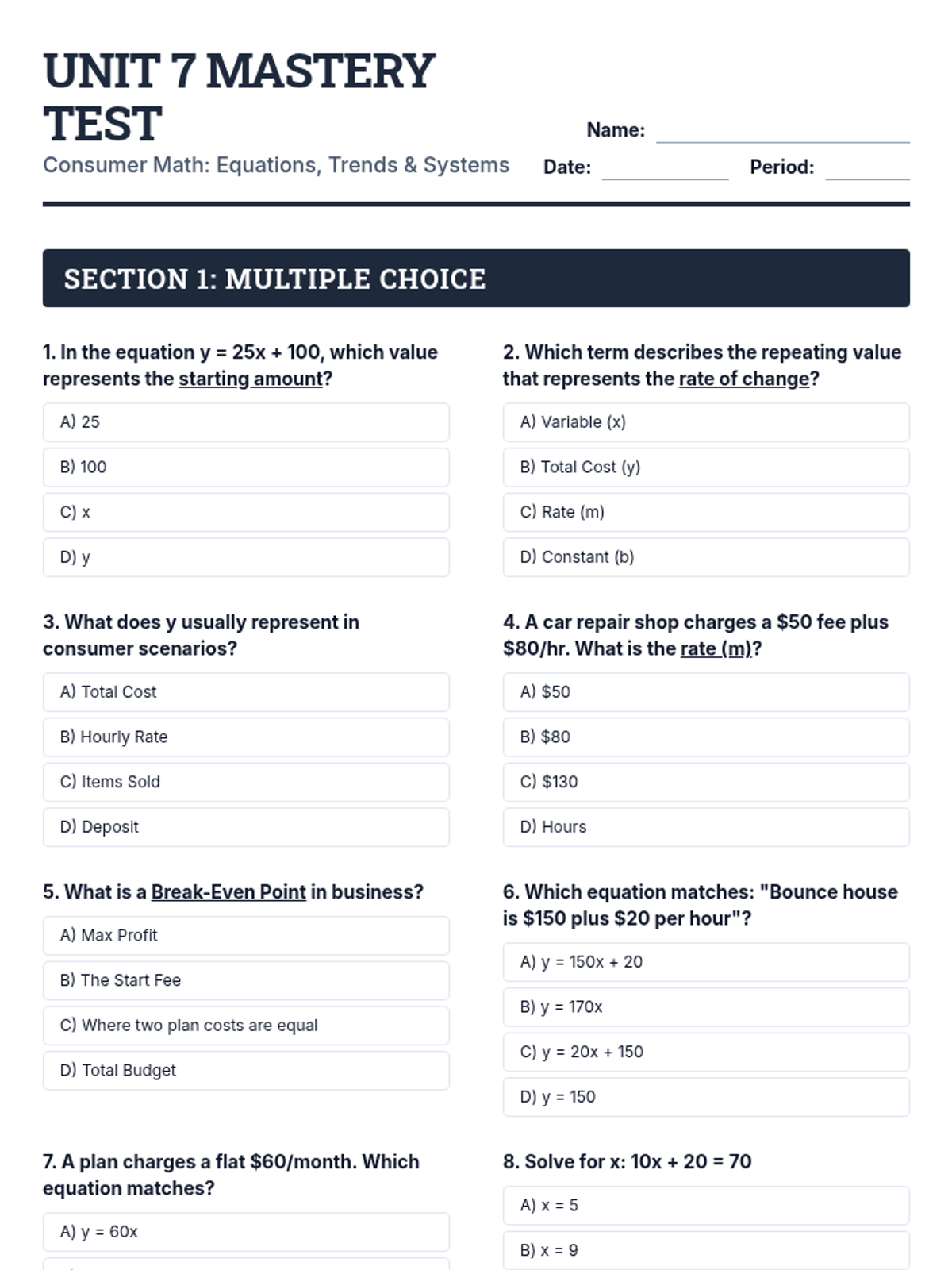
The final summative assessment for the Unit 7 Consumer Math curriculum, covering linear equation translation, table completion, graphing systems, and identifying break-even points.
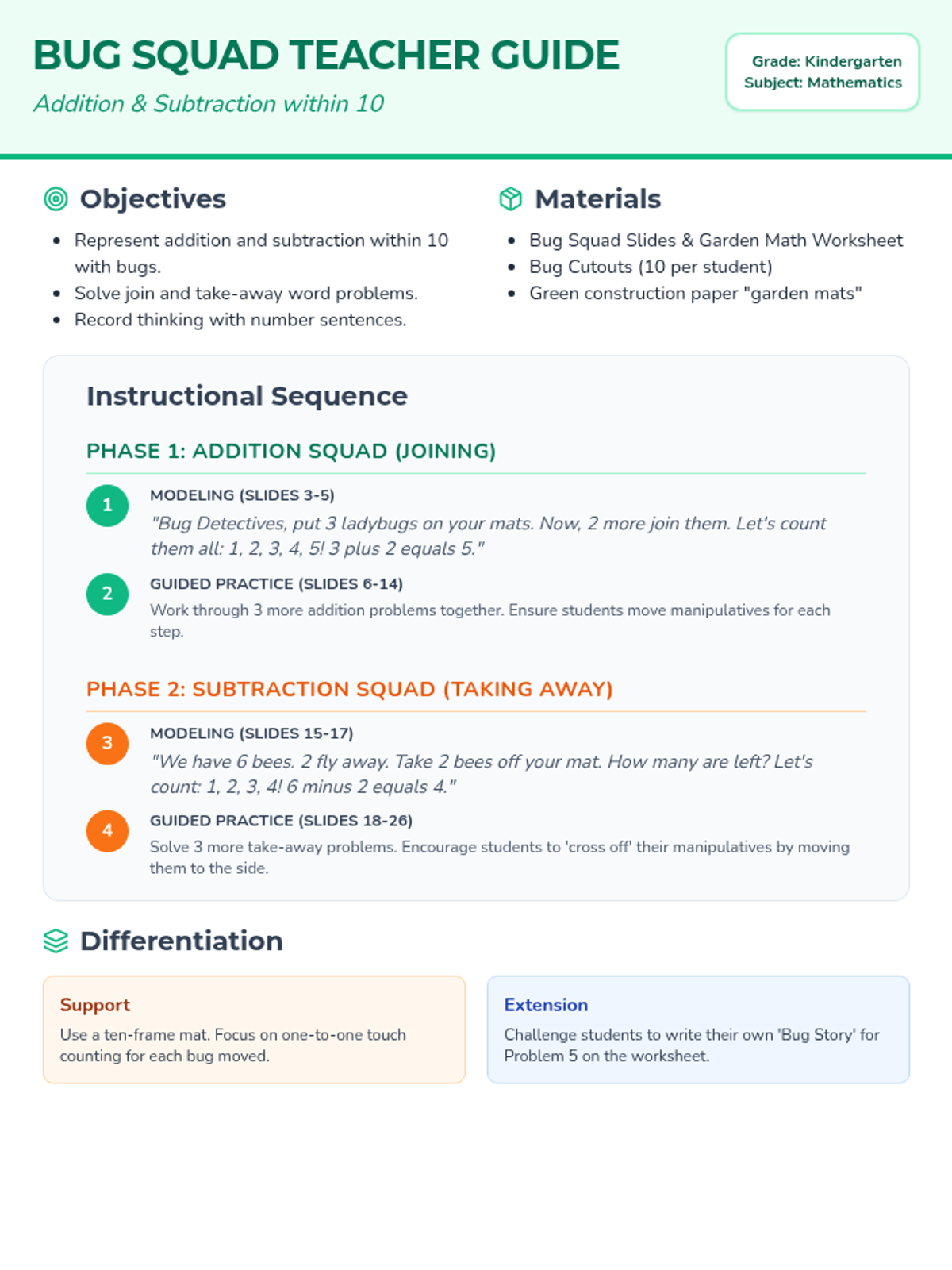
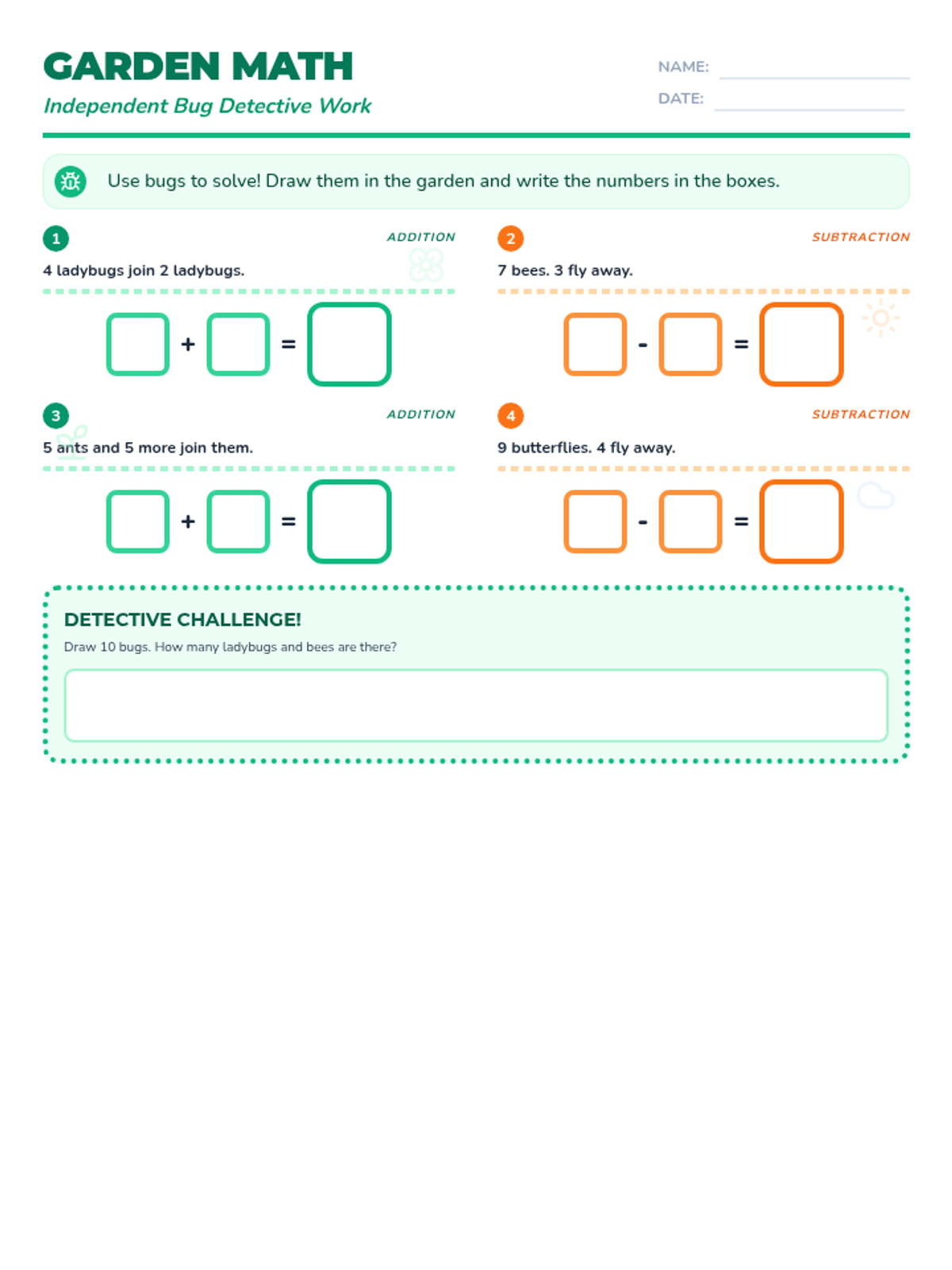
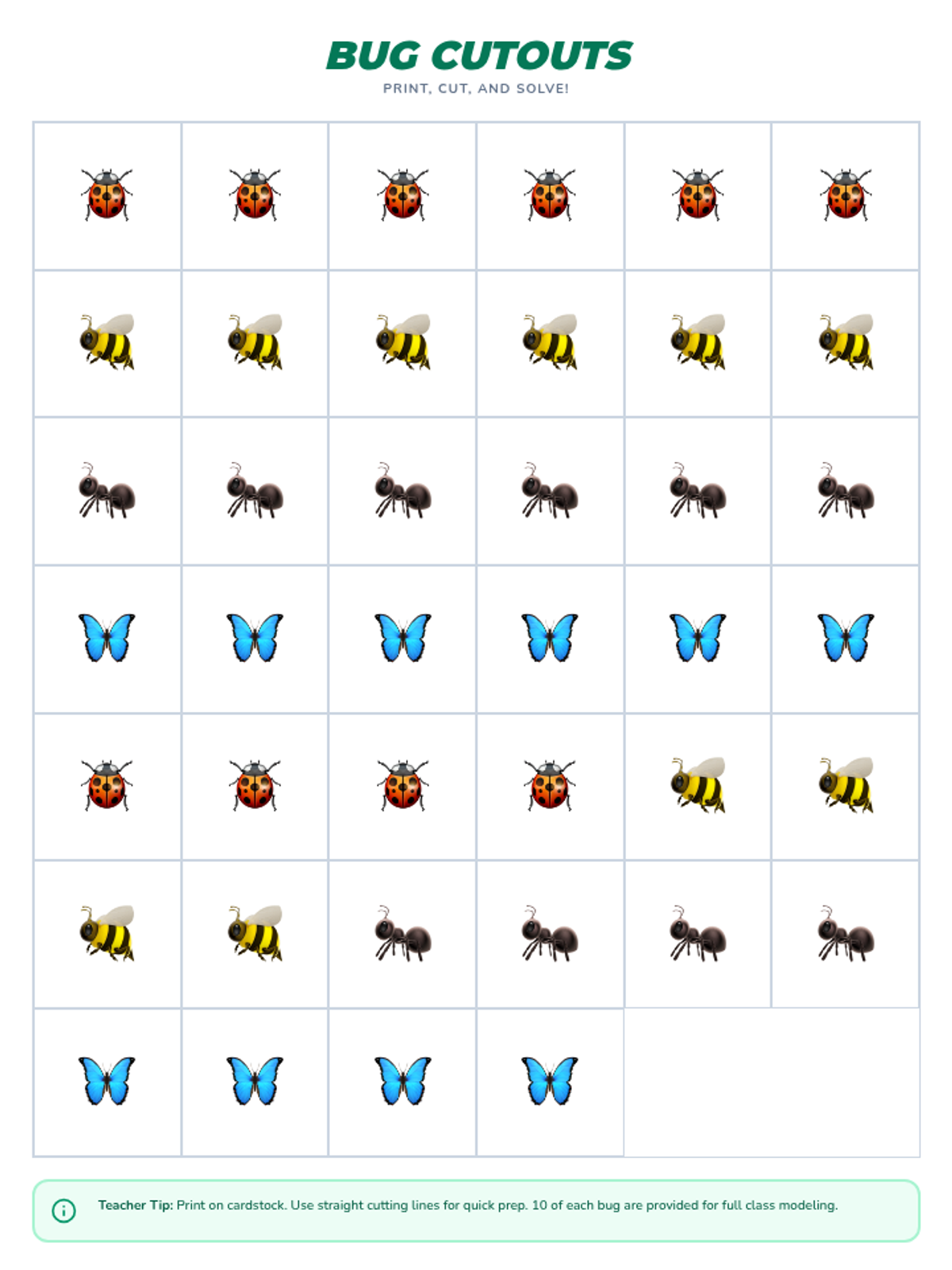
A hands-on Kindergarten lesson using bug manipulatives to model and solve addition and subtraction problems within 10. Students progress from concrete modeling with the teacher to independent practice.
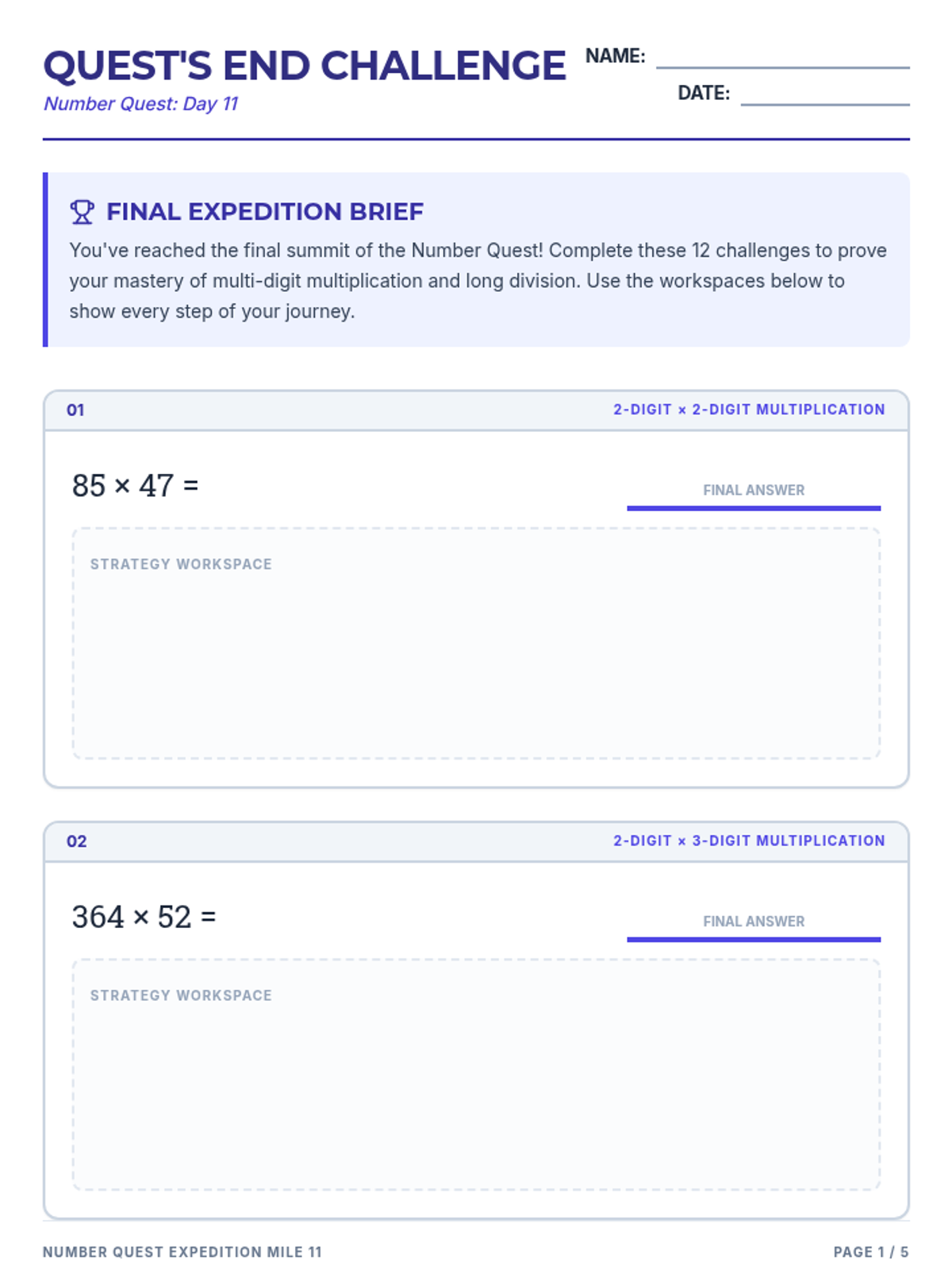
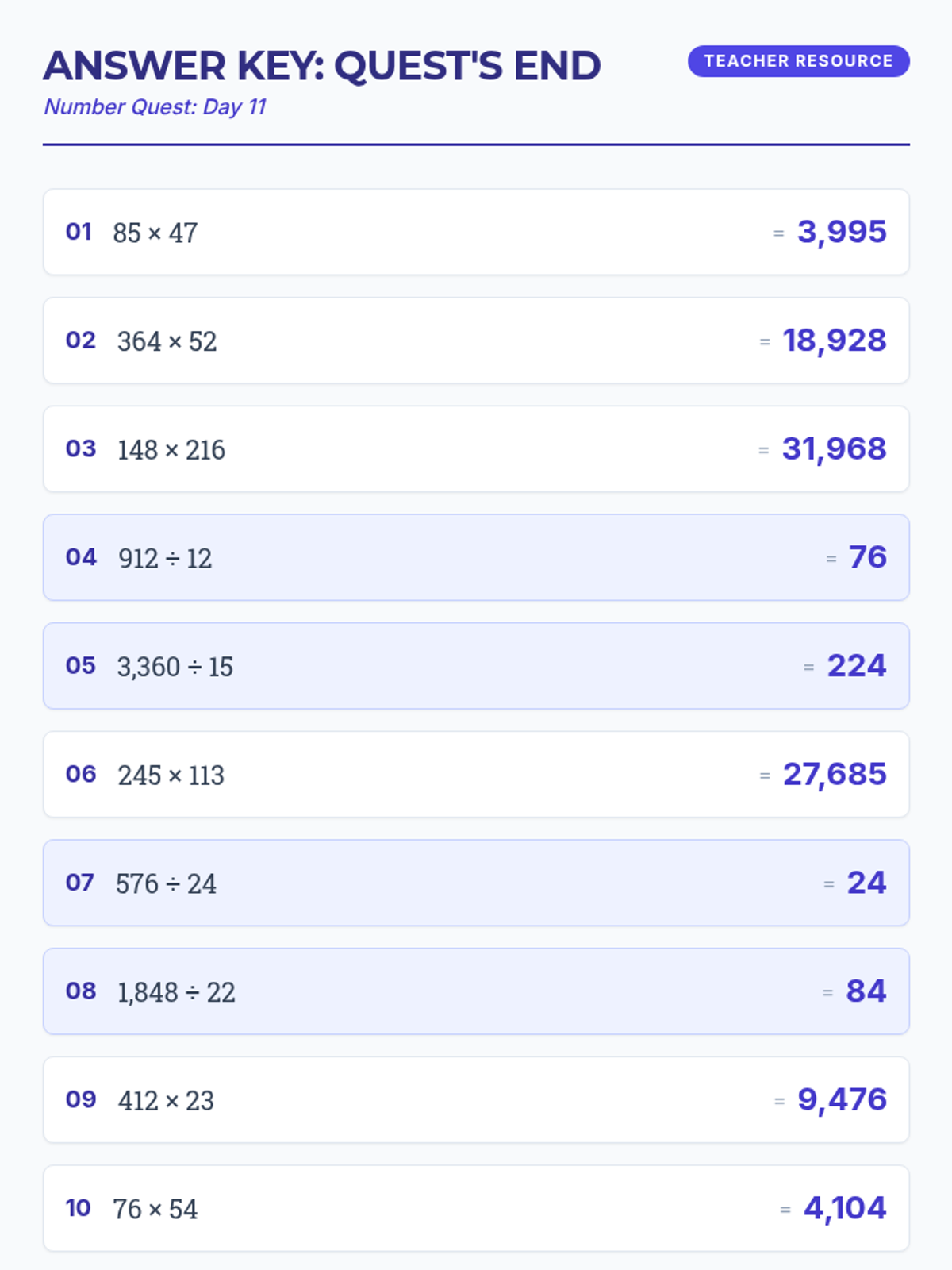
Day 11 of the Number Quest: The final challenge featuring a comprehensive mix of all multiplication and division types.
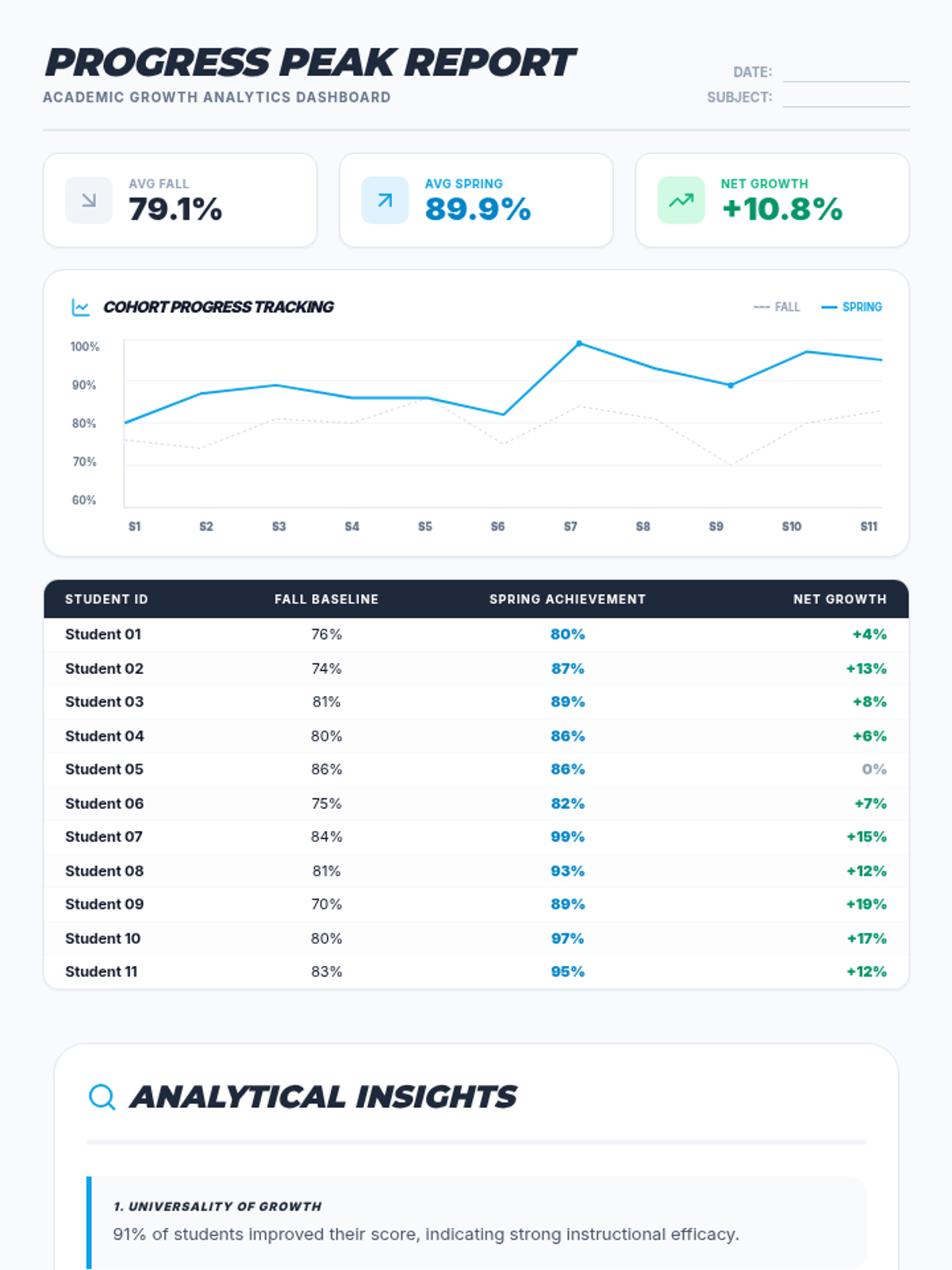
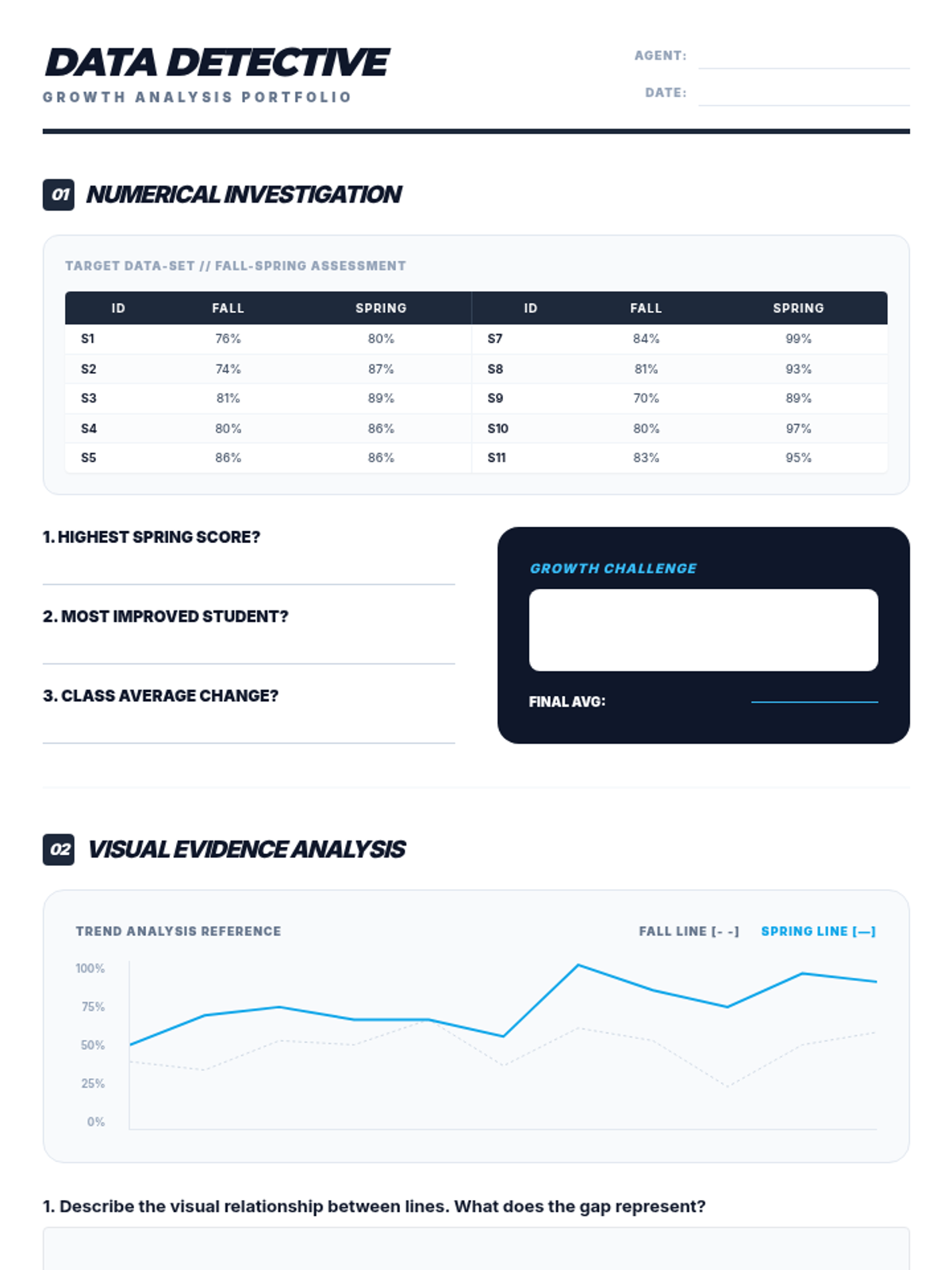
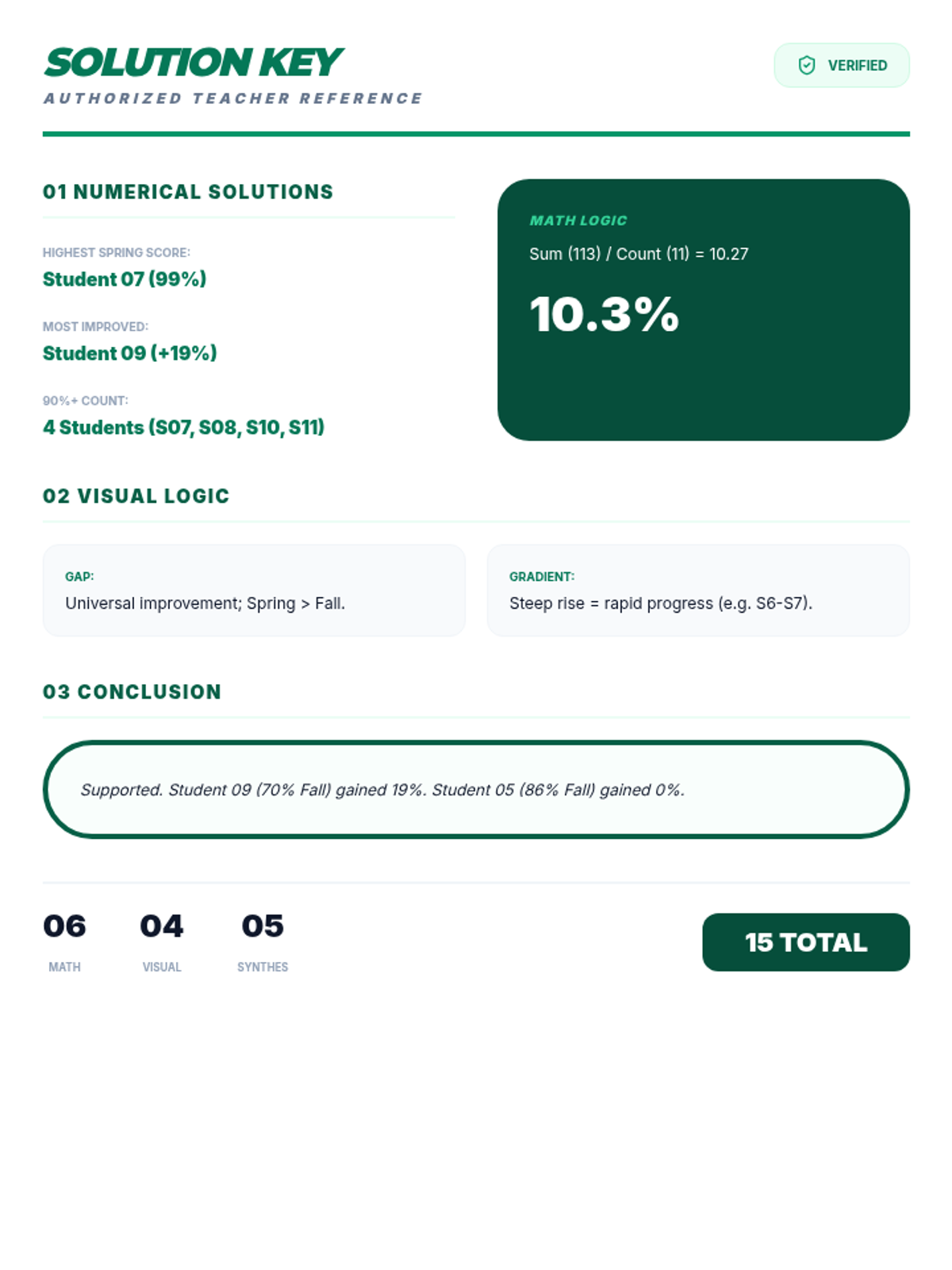
A lesson focused on visualizing academic progress data through line graphs and identifying key trends in student performance.
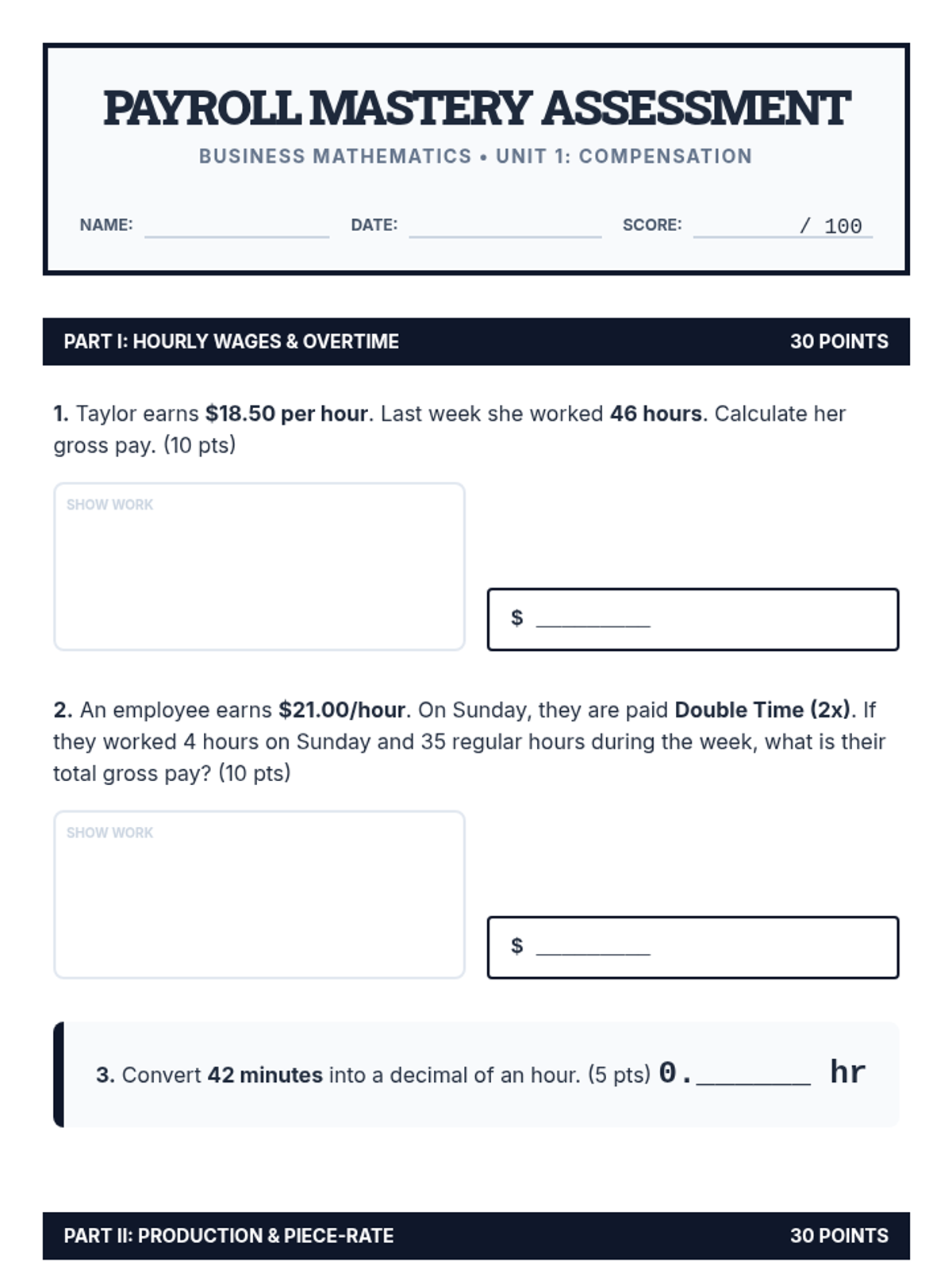
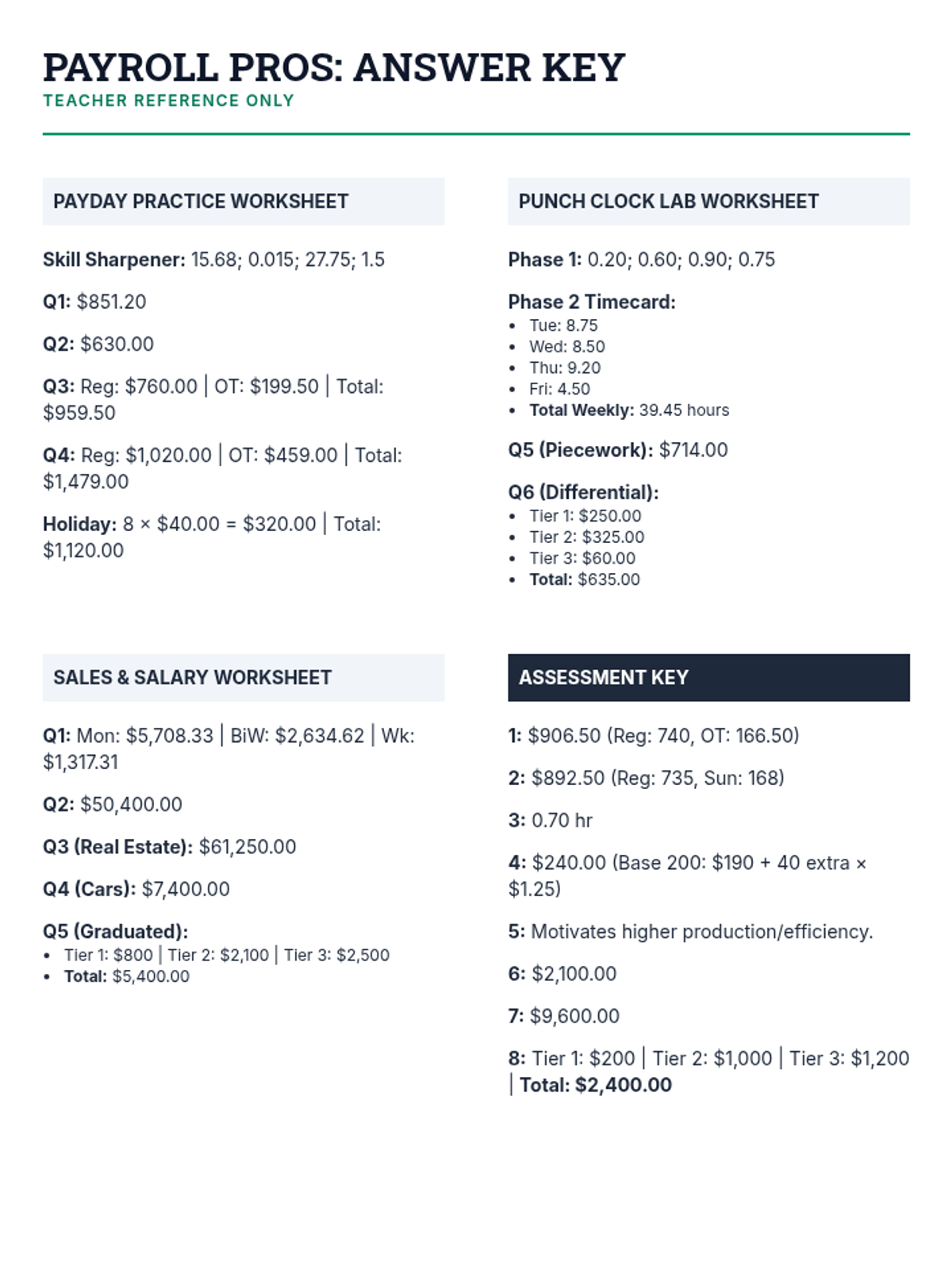
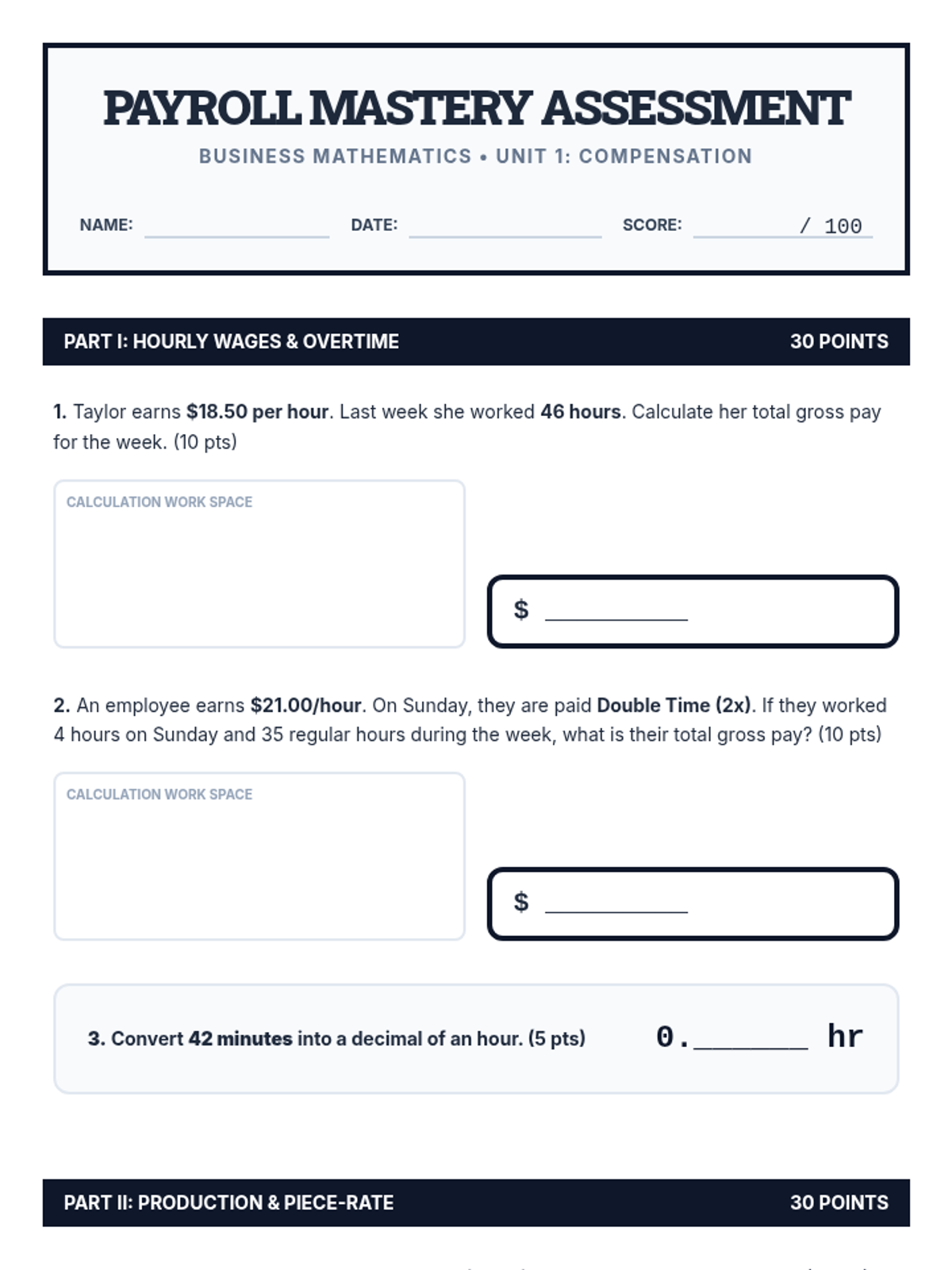
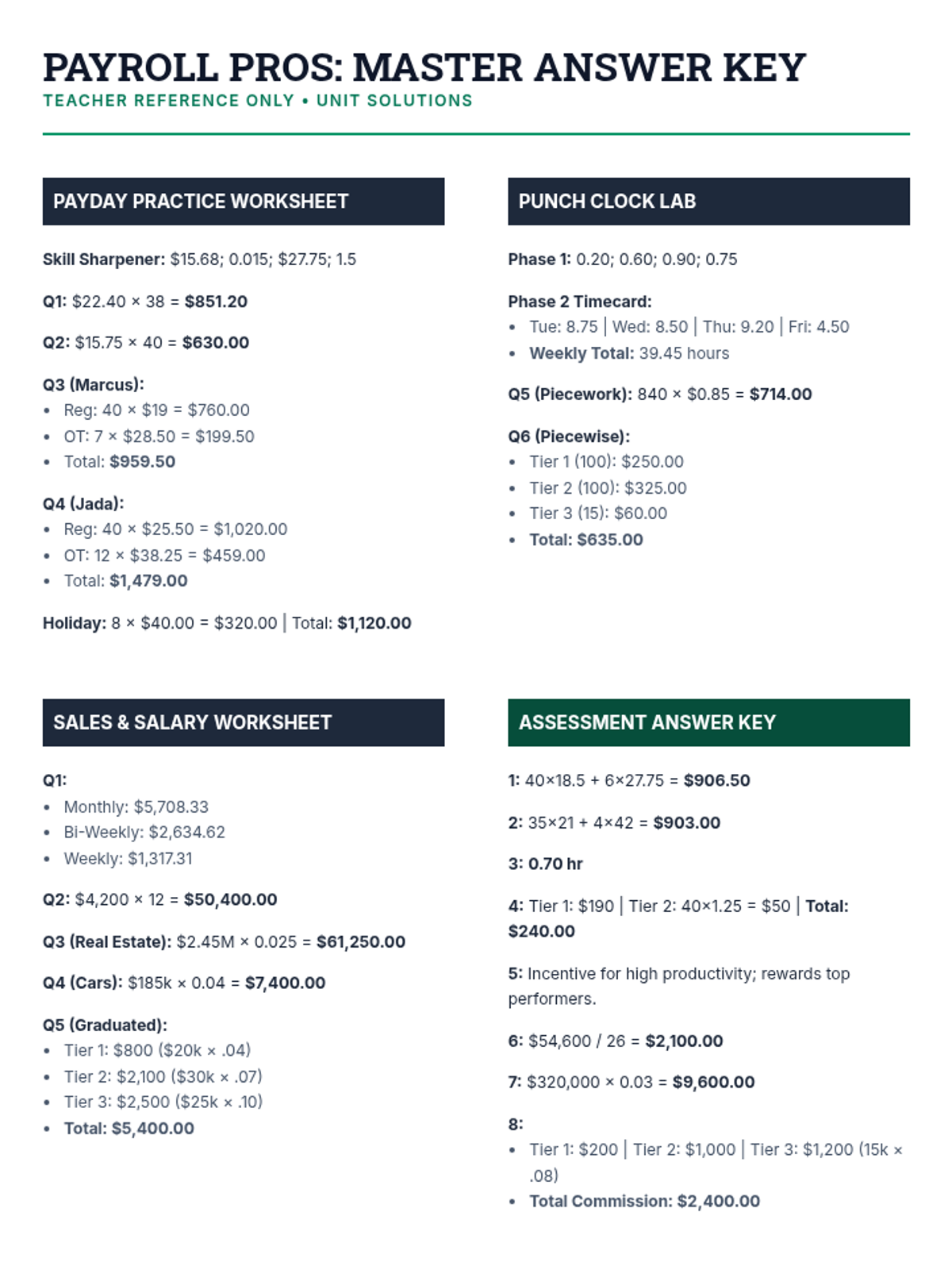
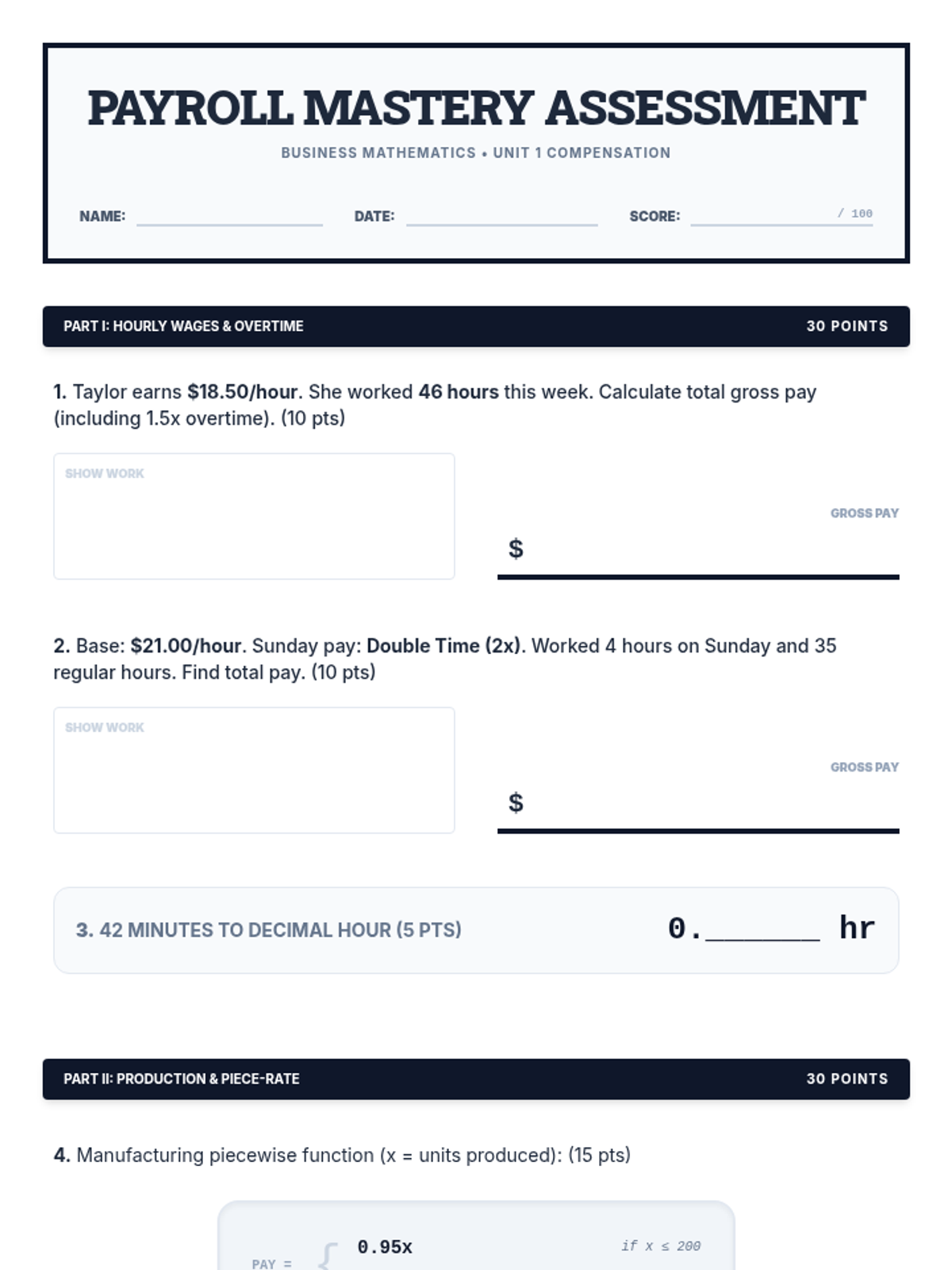
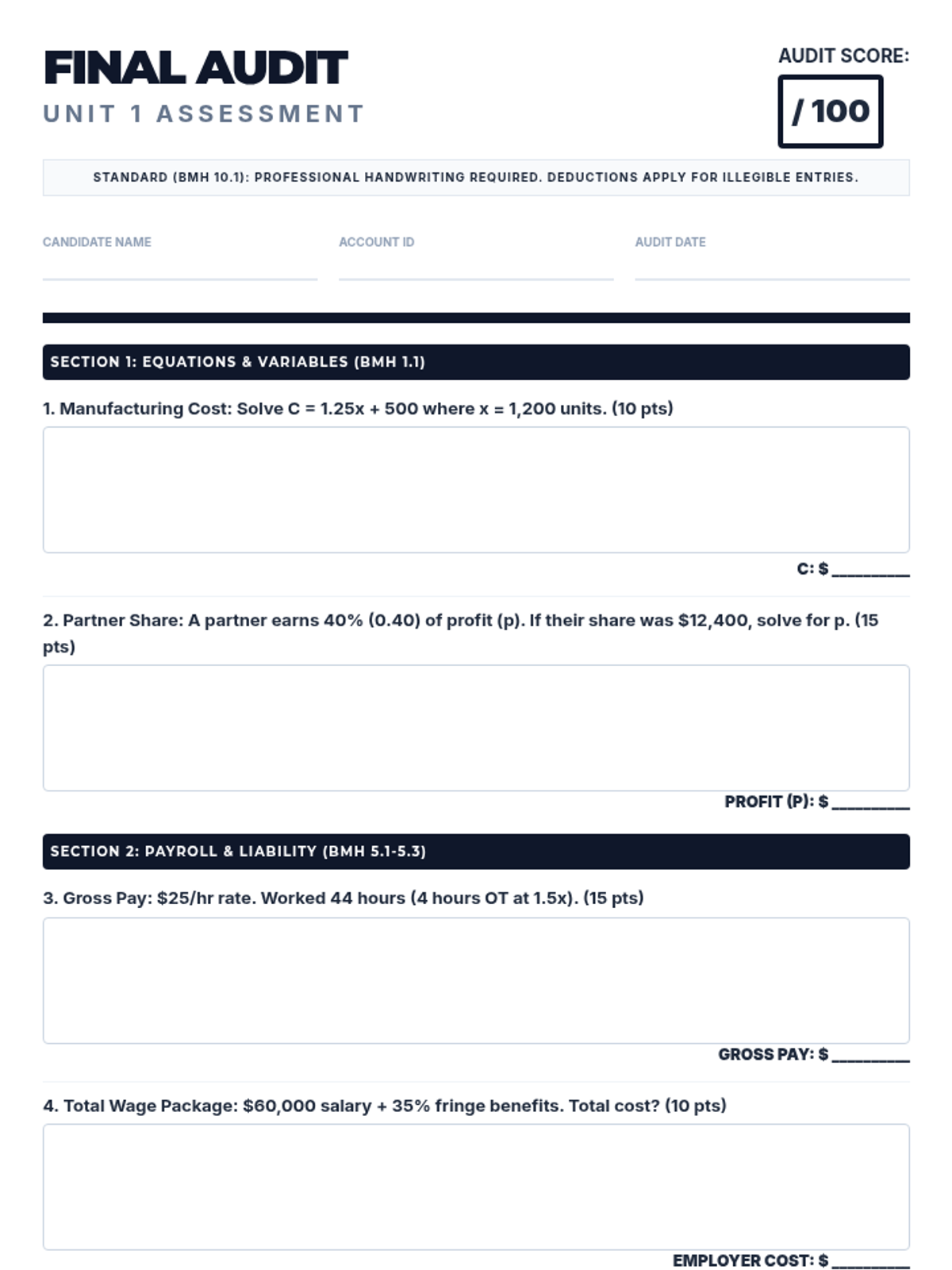
A cumulative review and final assessment covering all pay structures and business math skills taught in the unit.
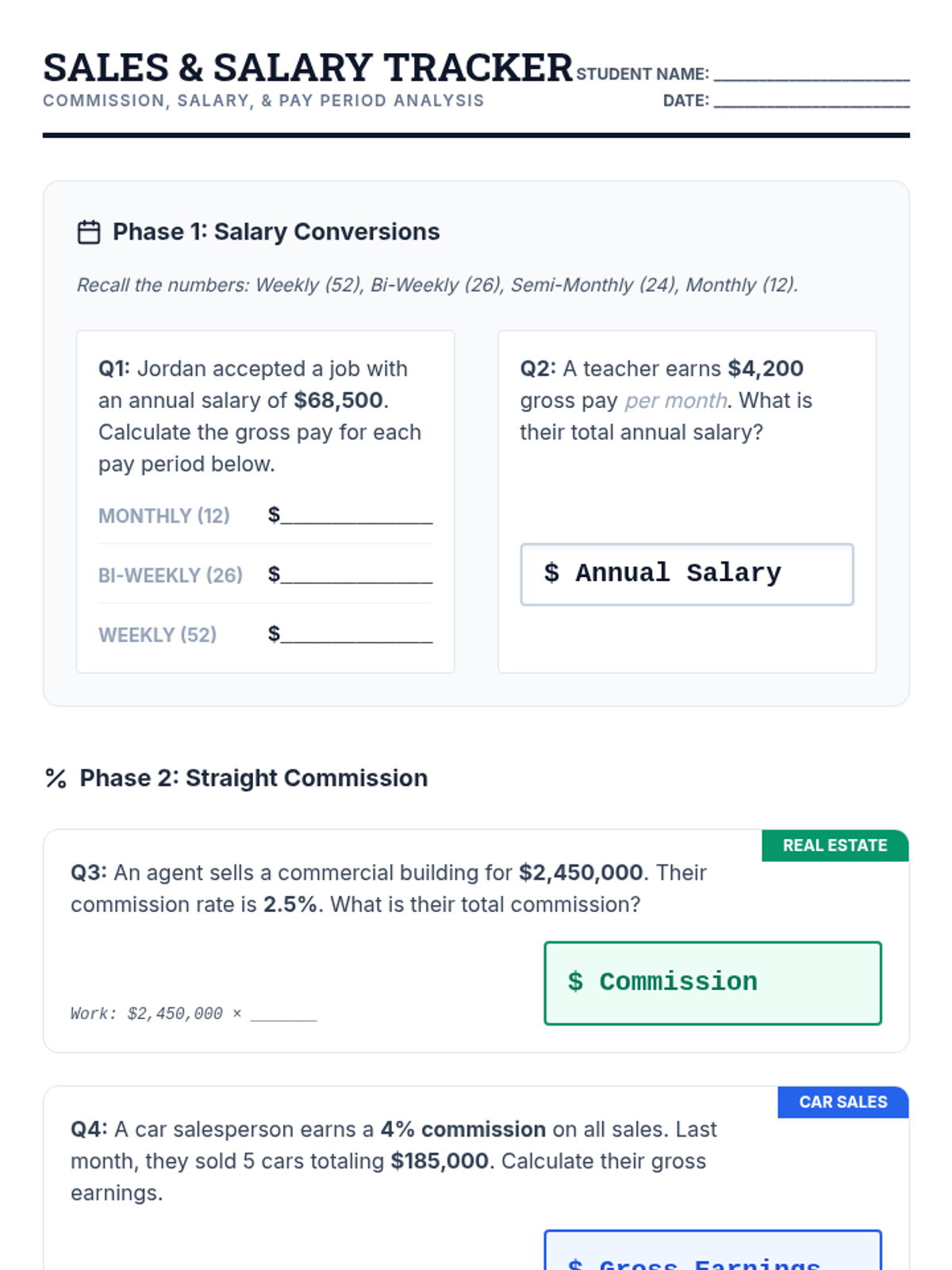
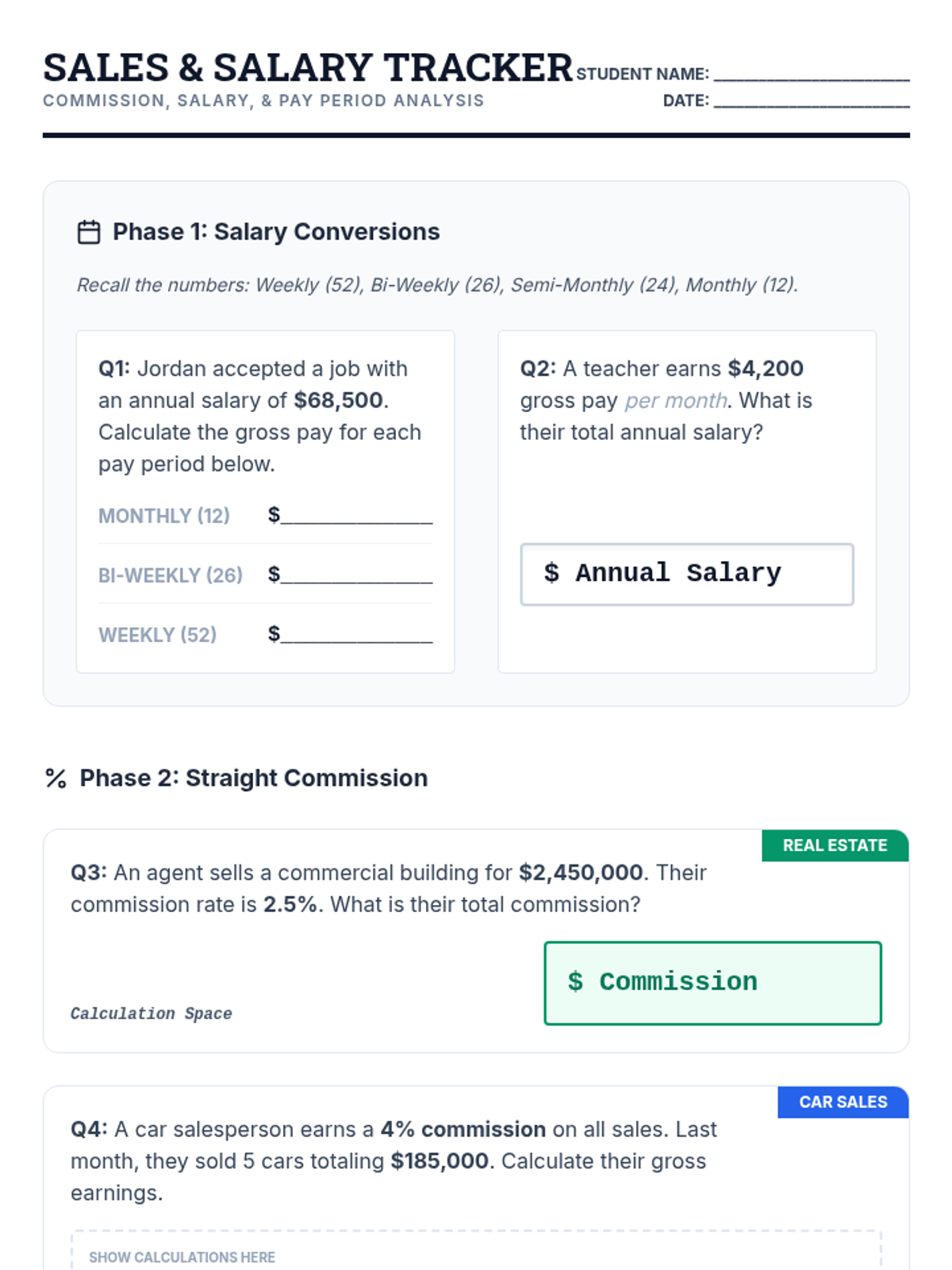
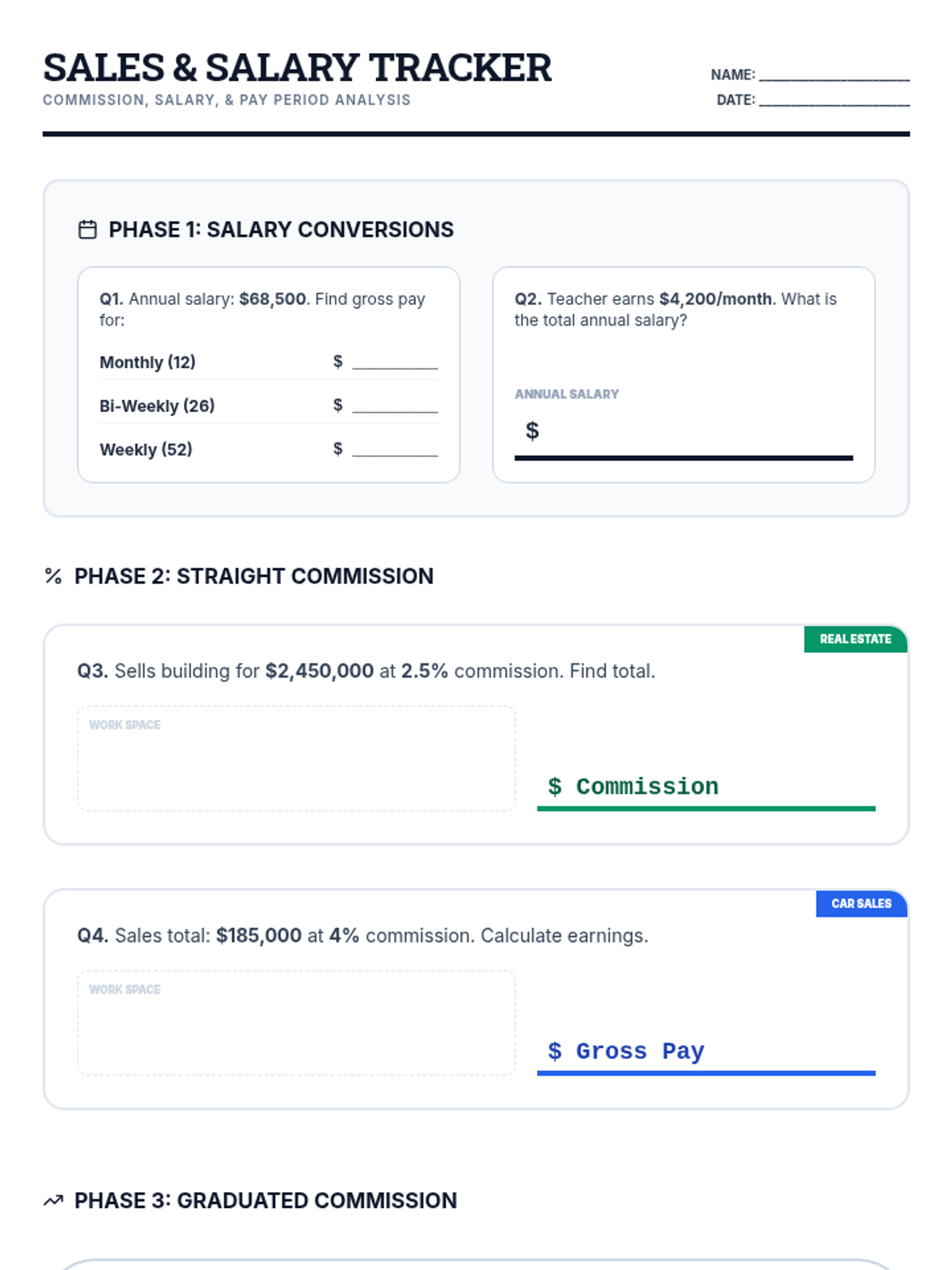
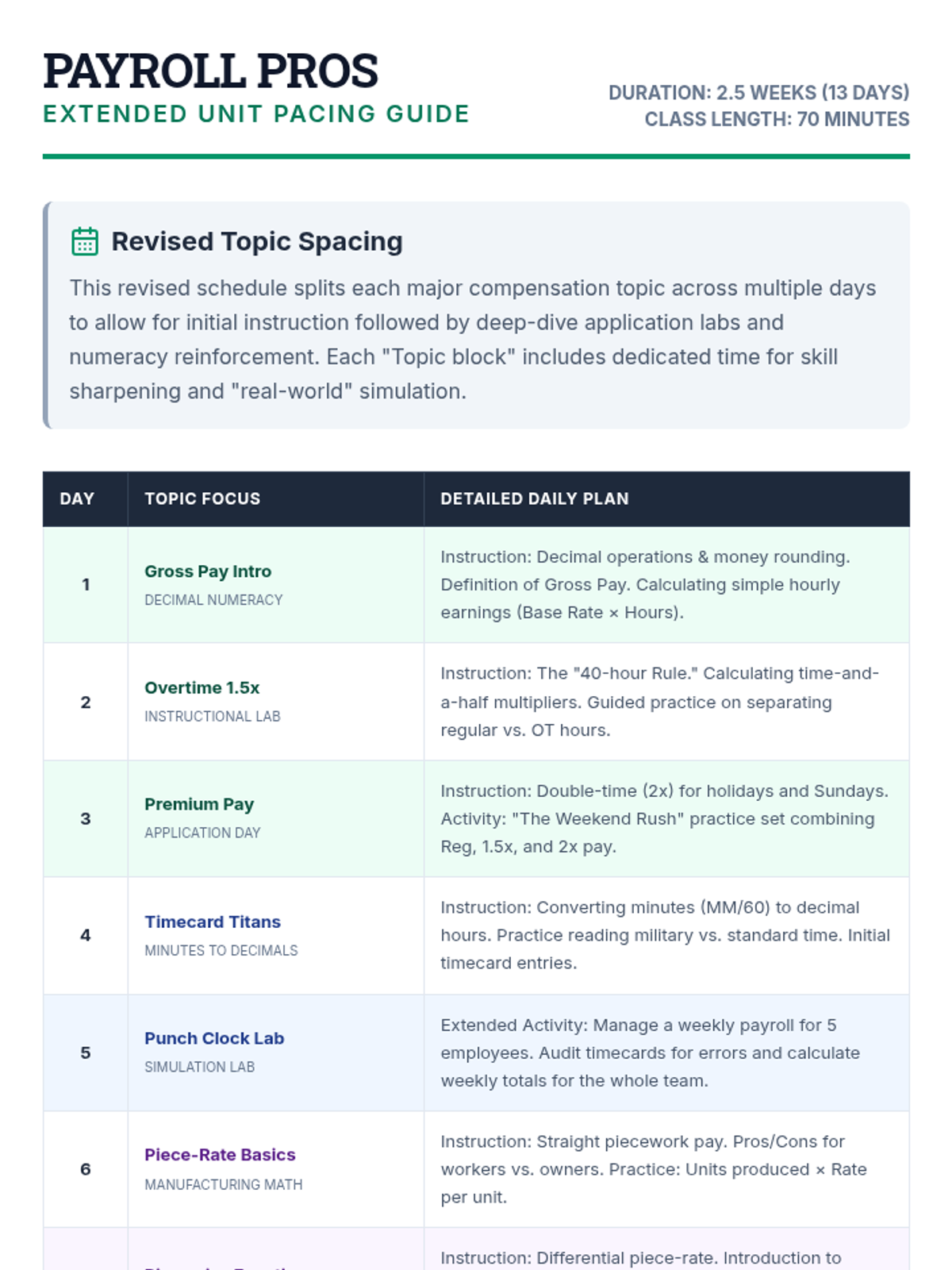
Covers commission-based earnings and salary structures, including a review of fractions as they relate to pay periods and partial earnings.
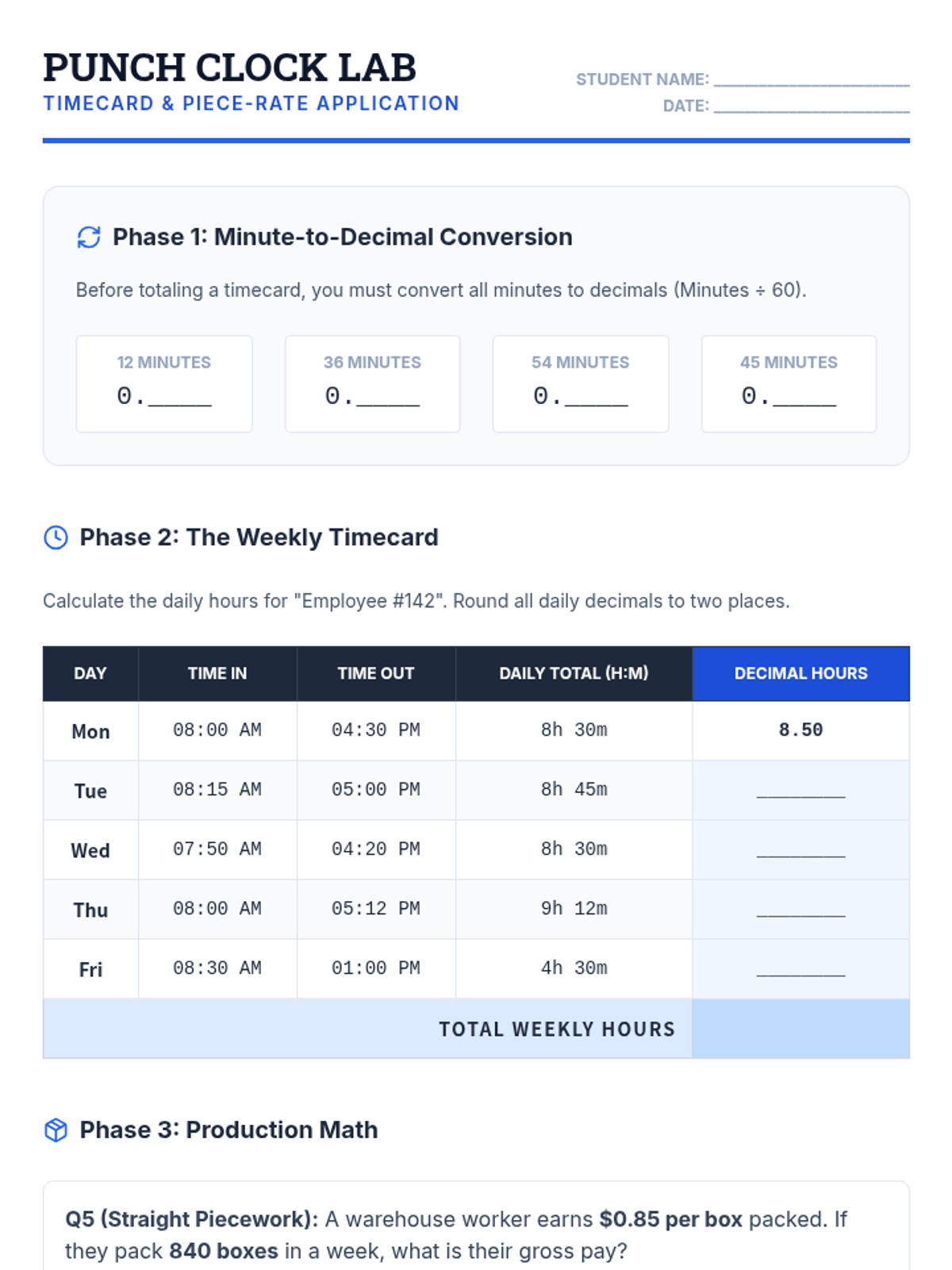
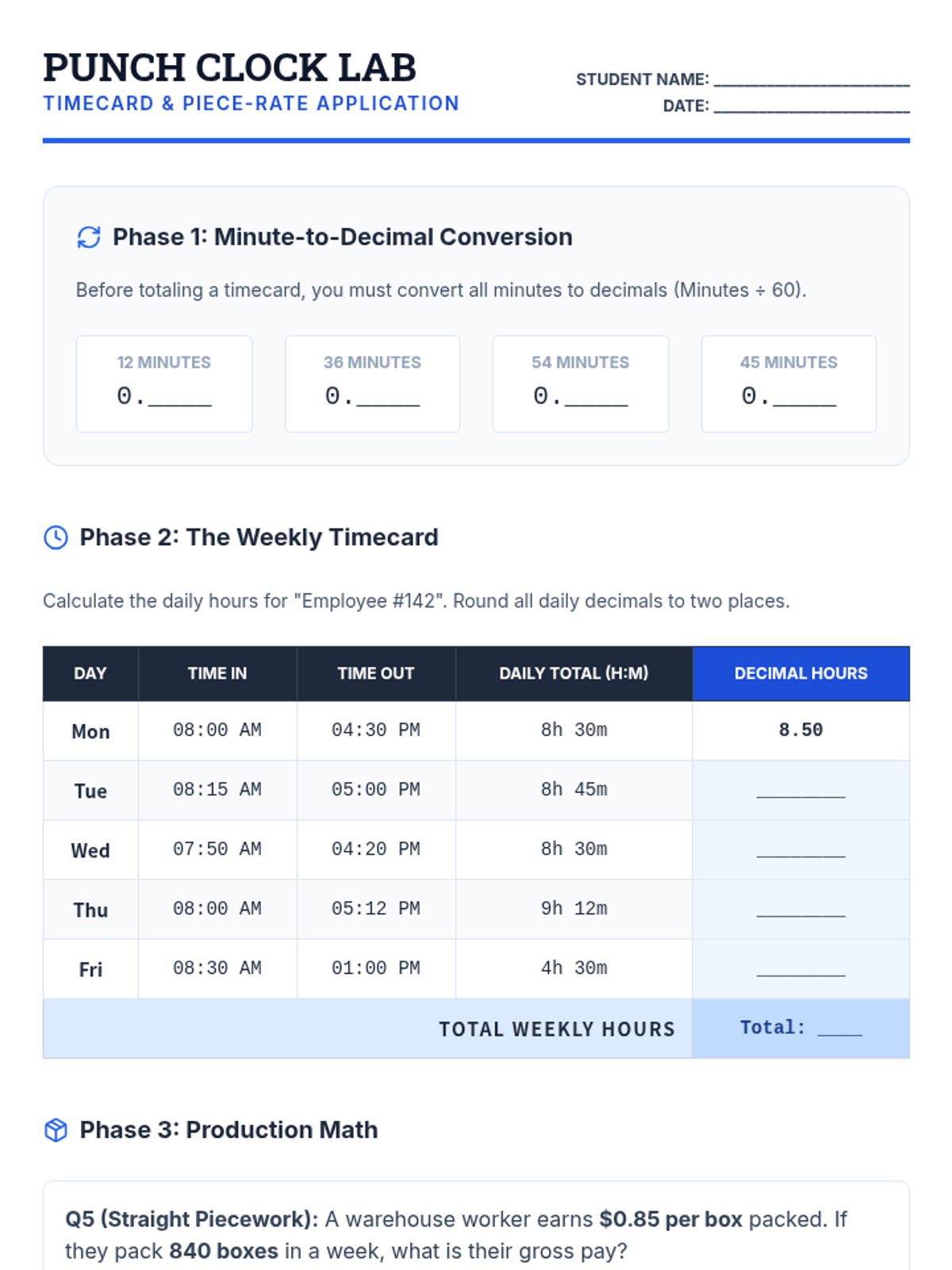
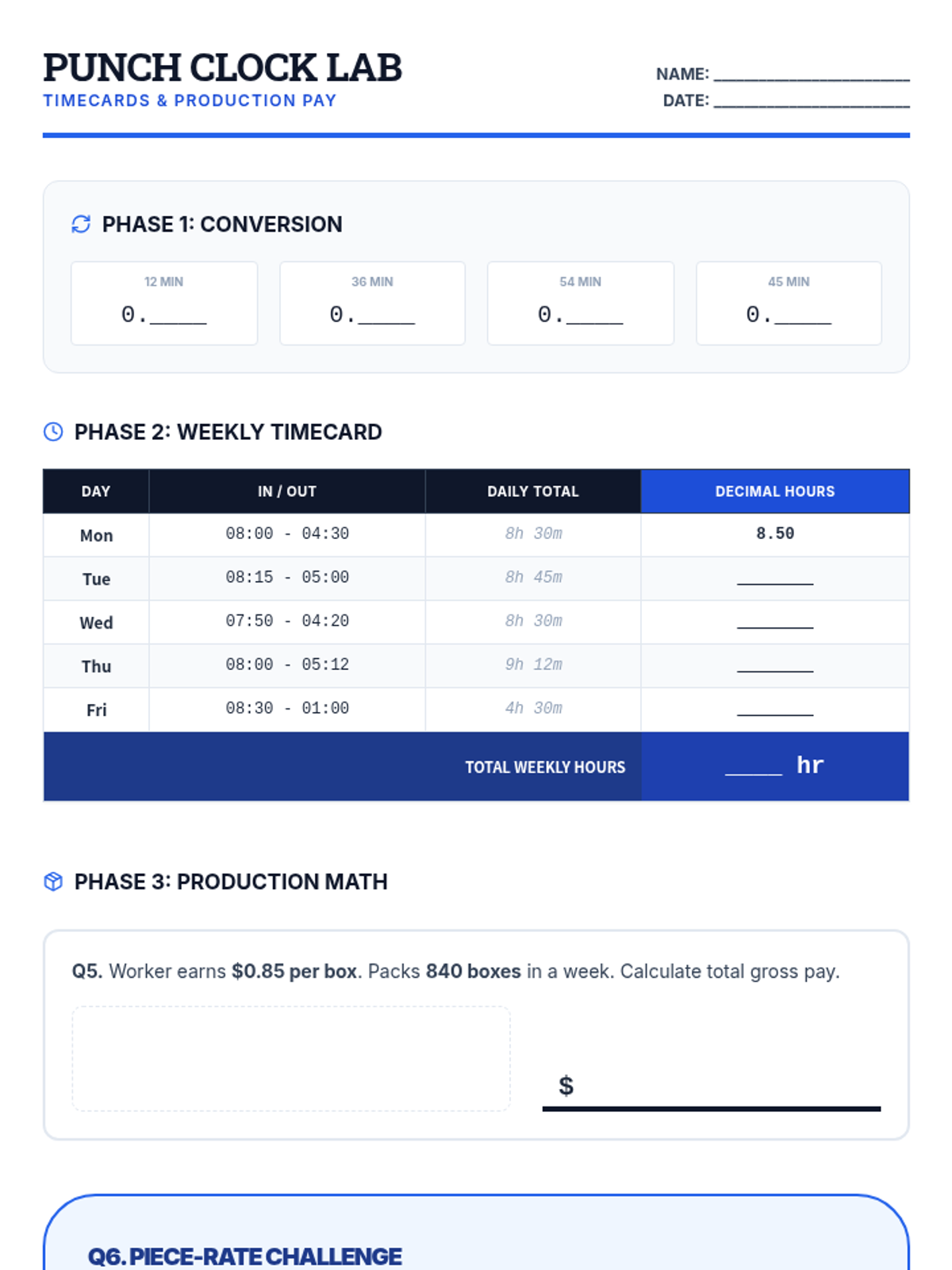
Focuses on tracking work hours through timecards and understanding production-based pay through piecework and piecewise functions.
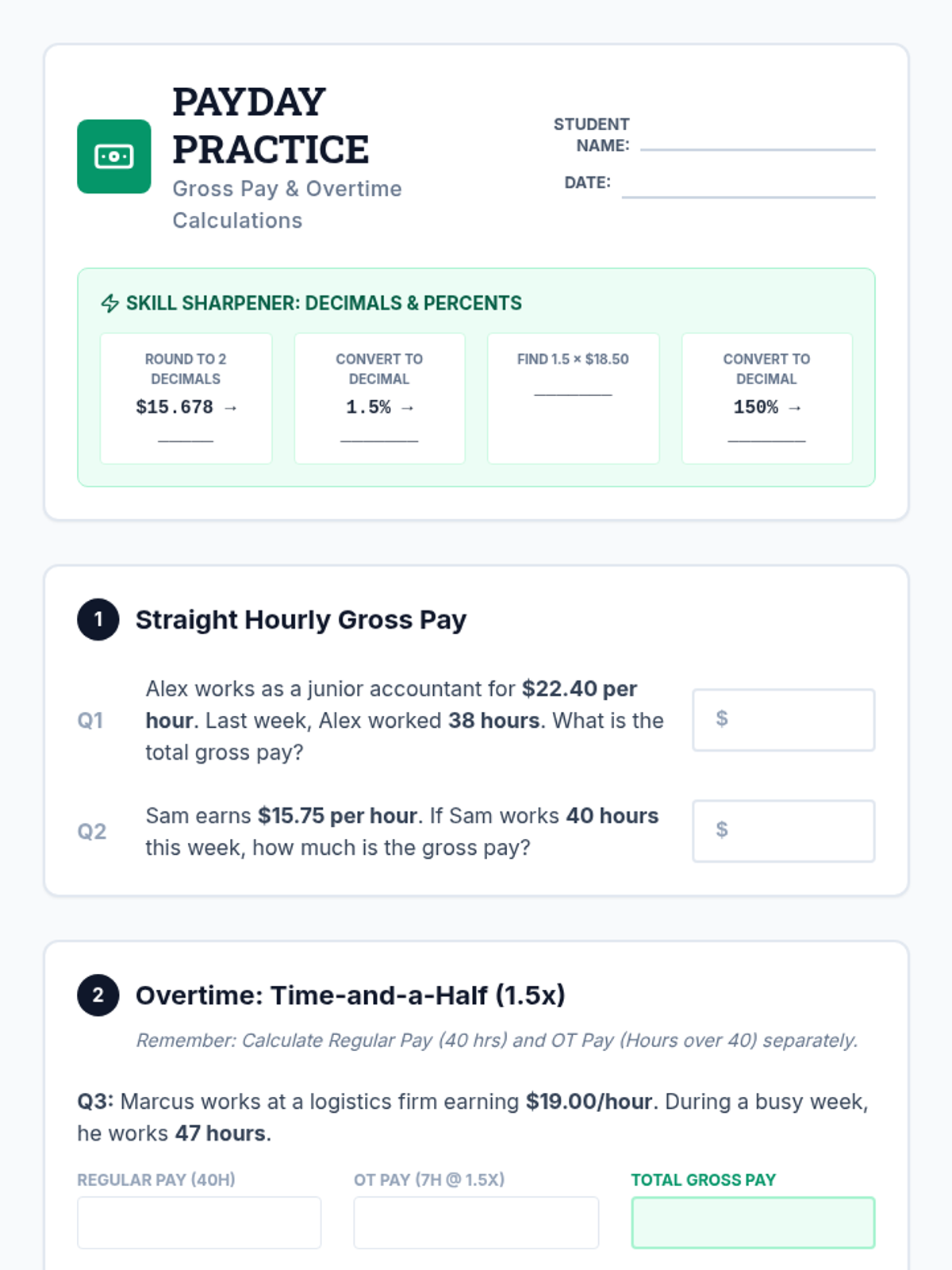
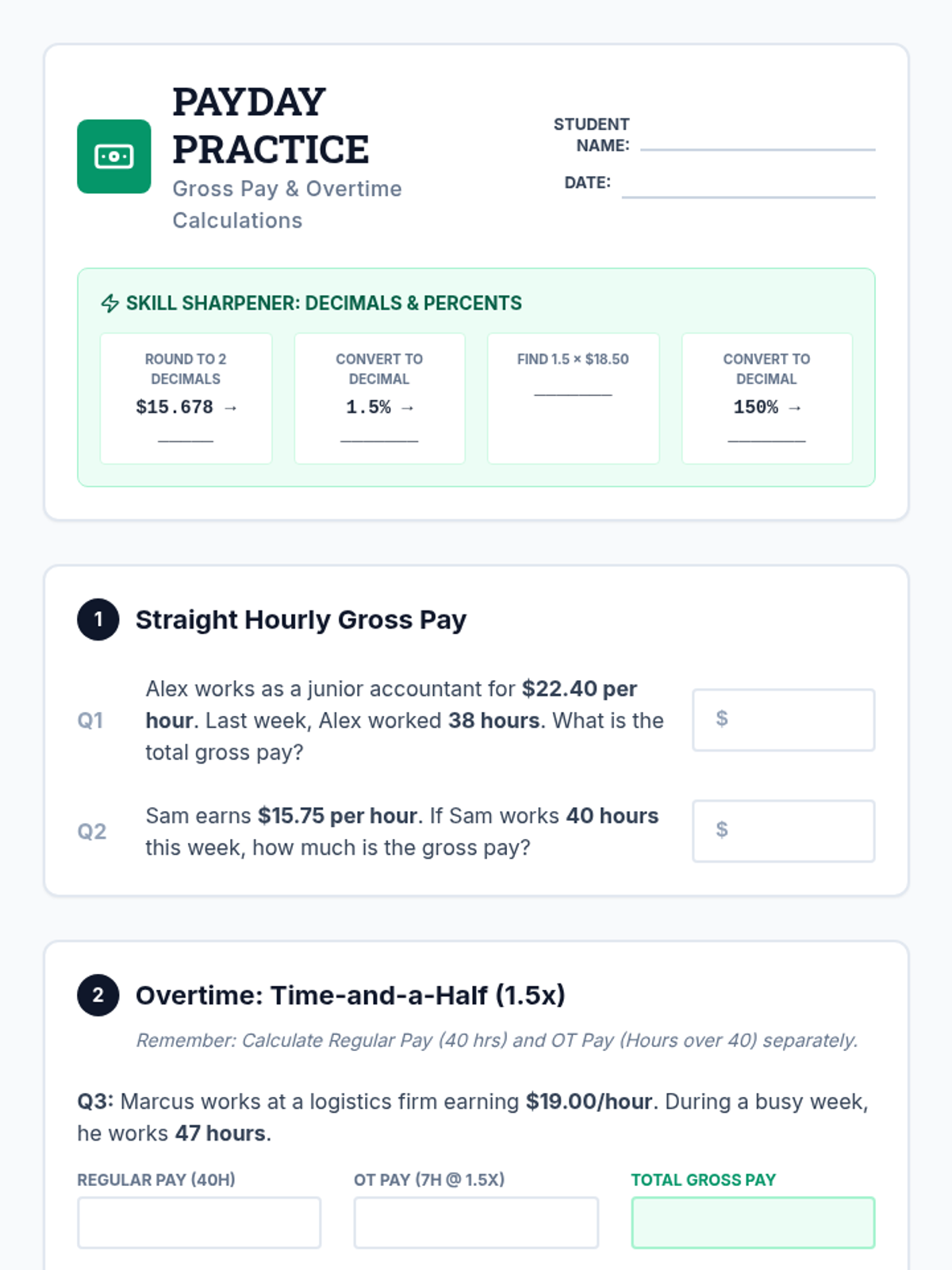
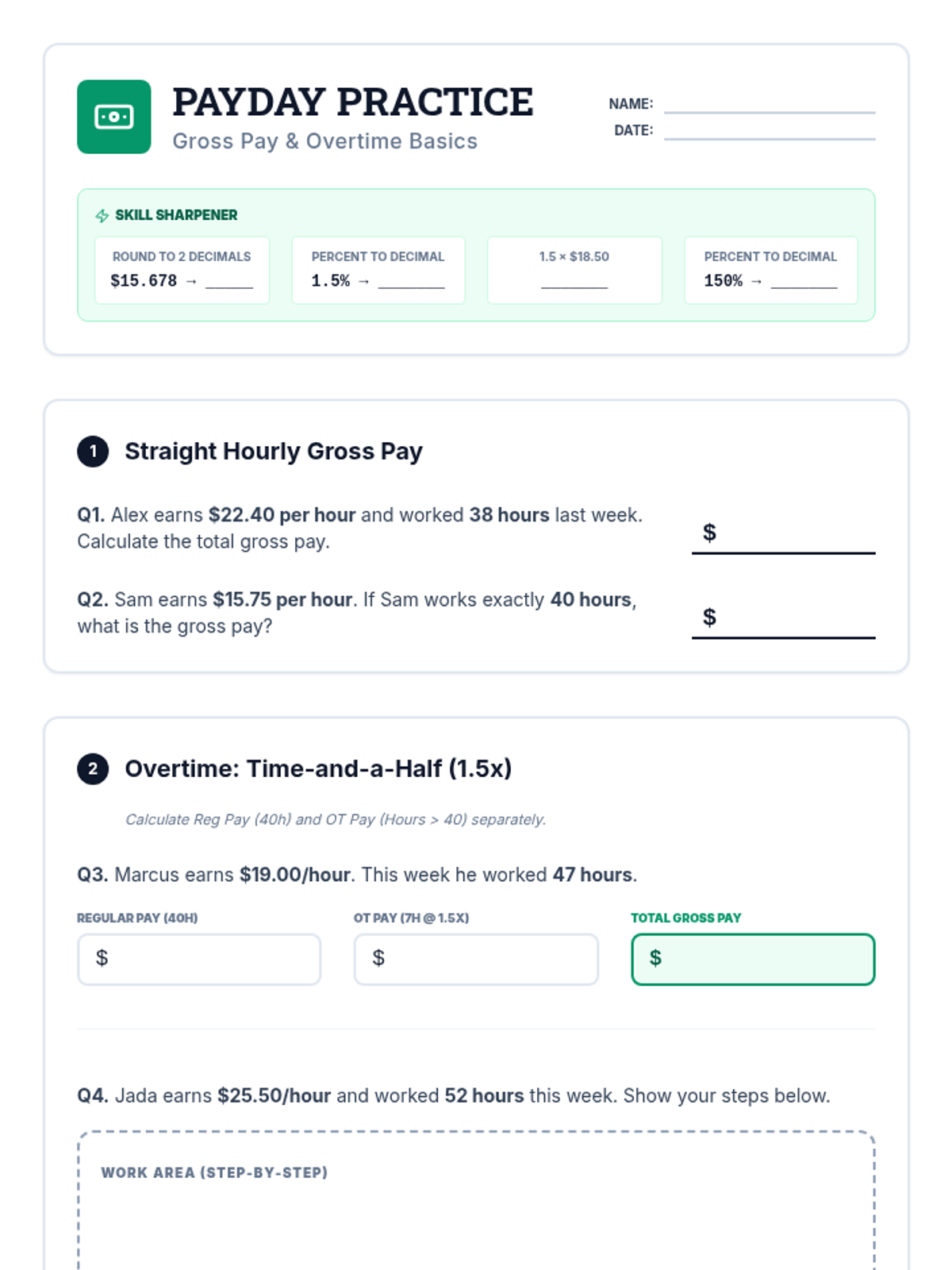
Introduction to gross pay, hourly wages, and overtime calculations, including a review of decimals and percentages for business applications.
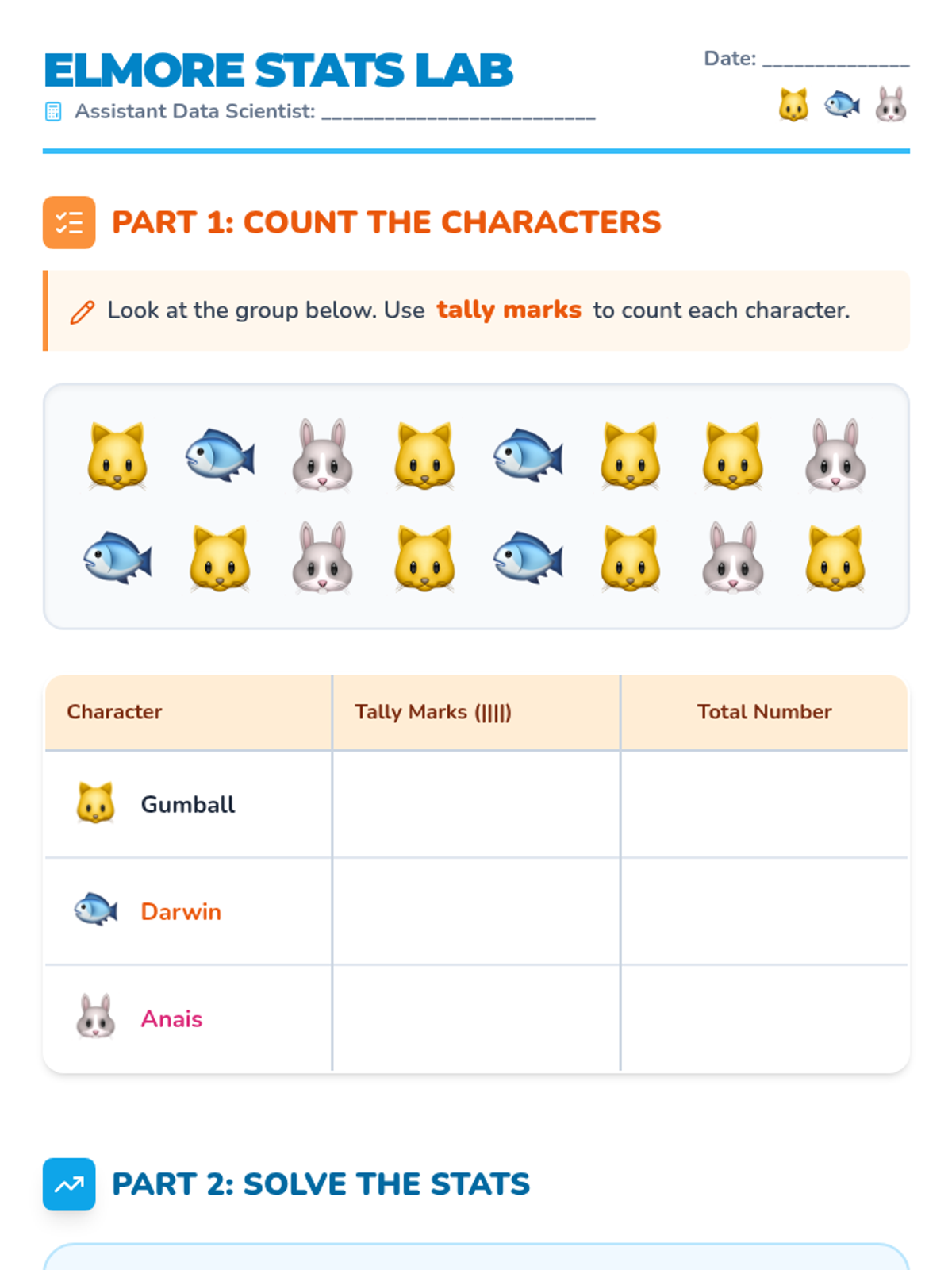
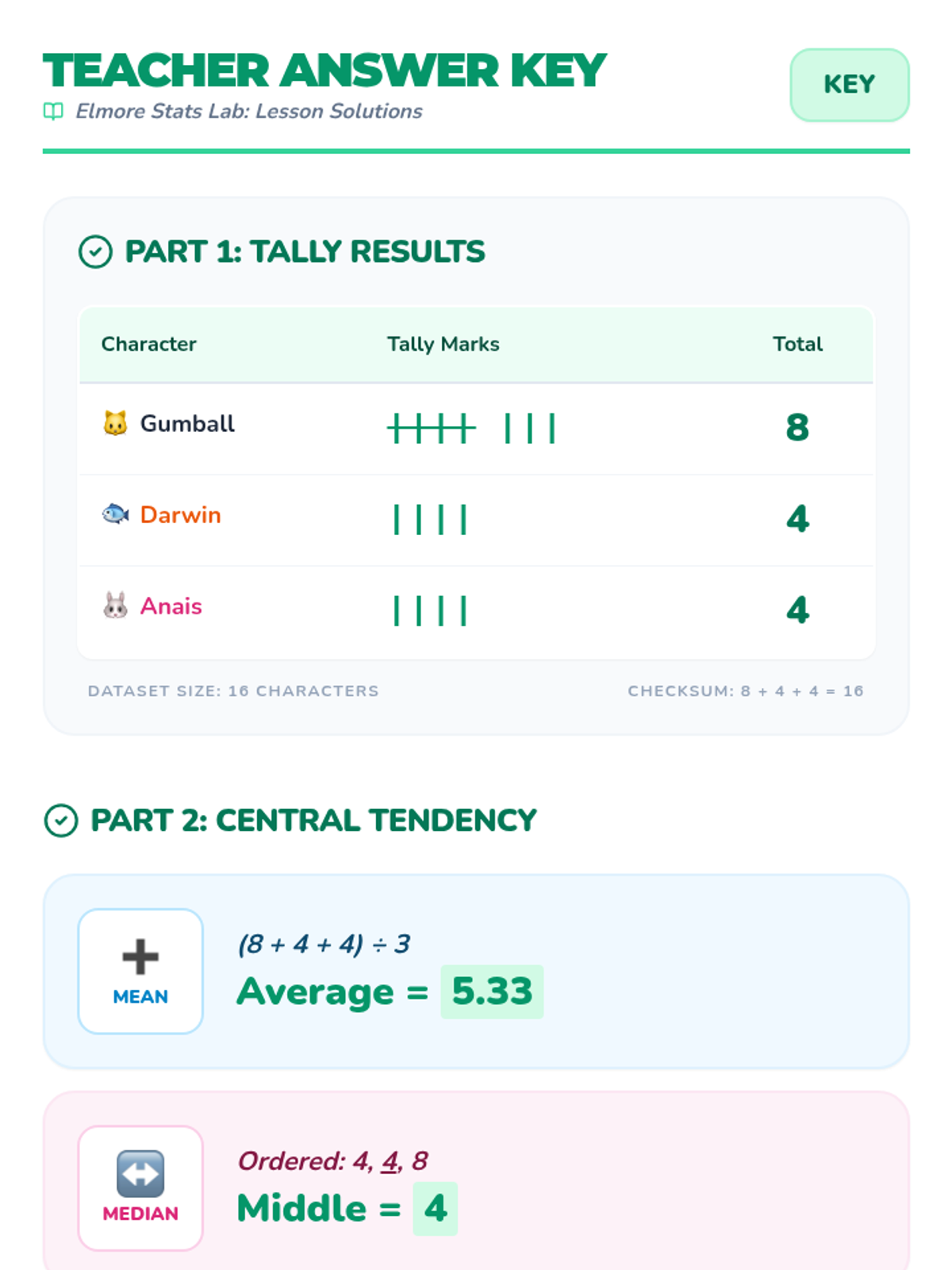
A high-interest statistics lesson themed around the world of Elmore, featuring data collection, central tendency, and probability with visual supports for diverse learners.
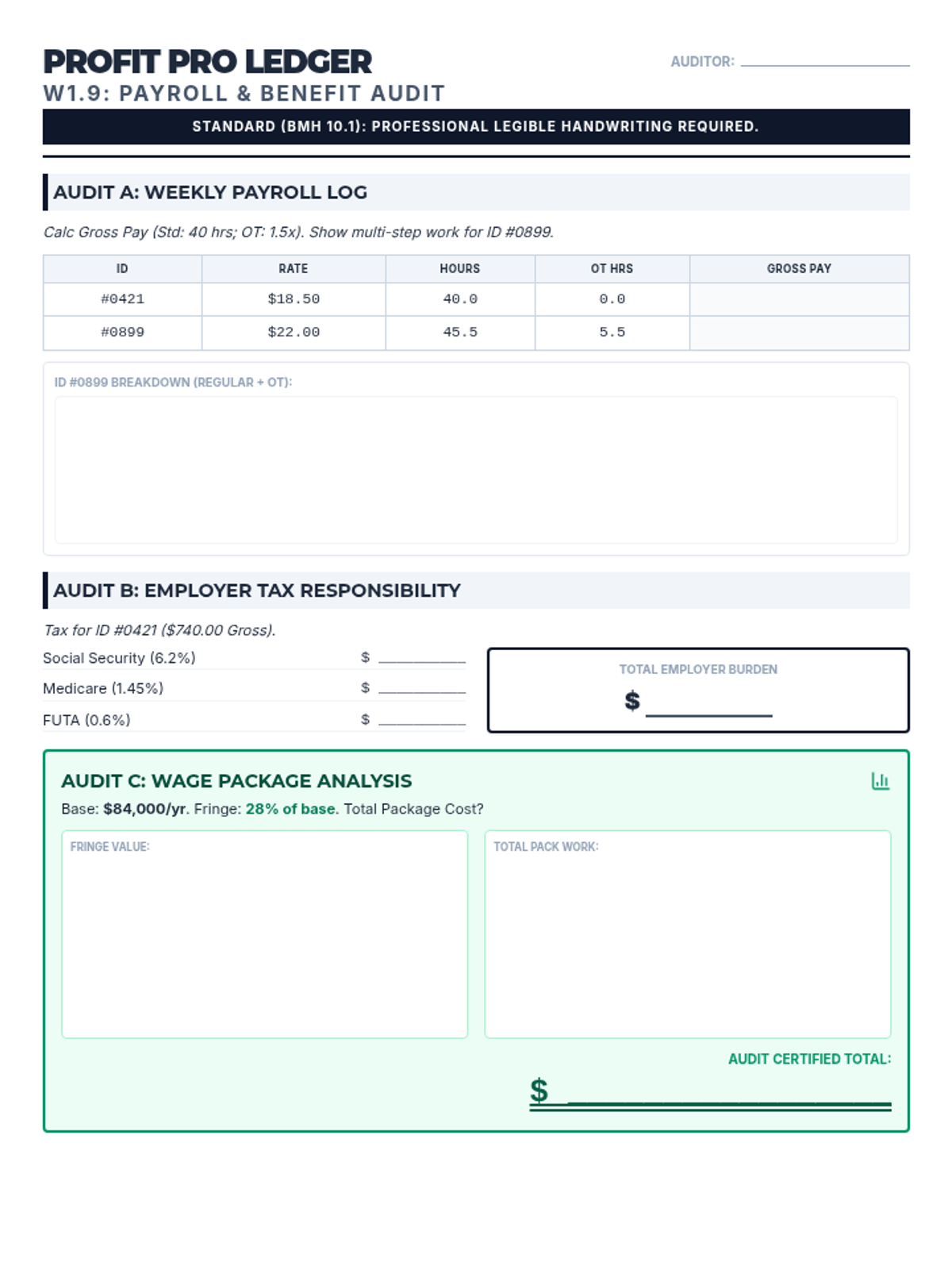
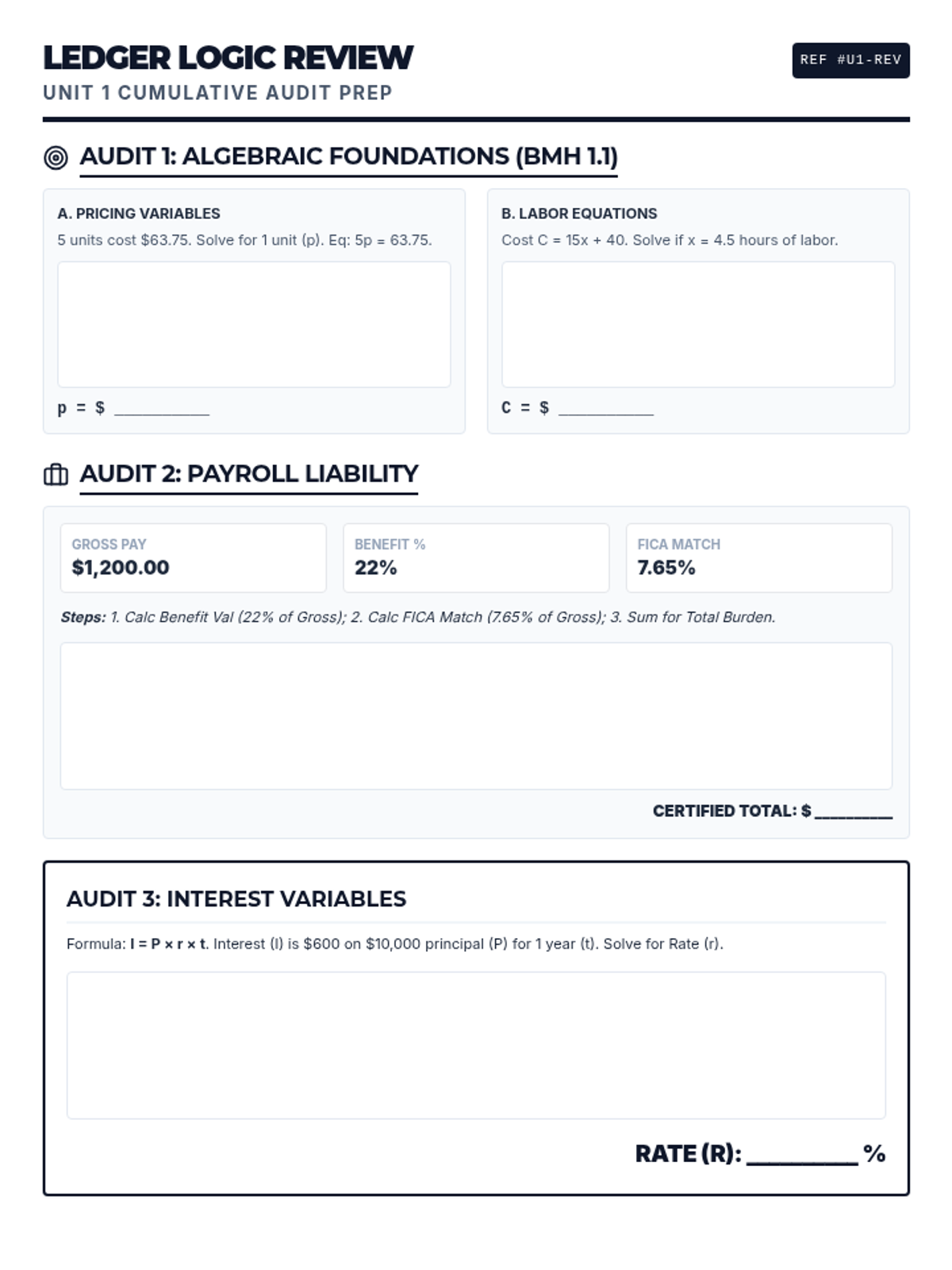
Calculate employee payroll, employer taxes, and fringe benefits while analyzing the total wage package impact.
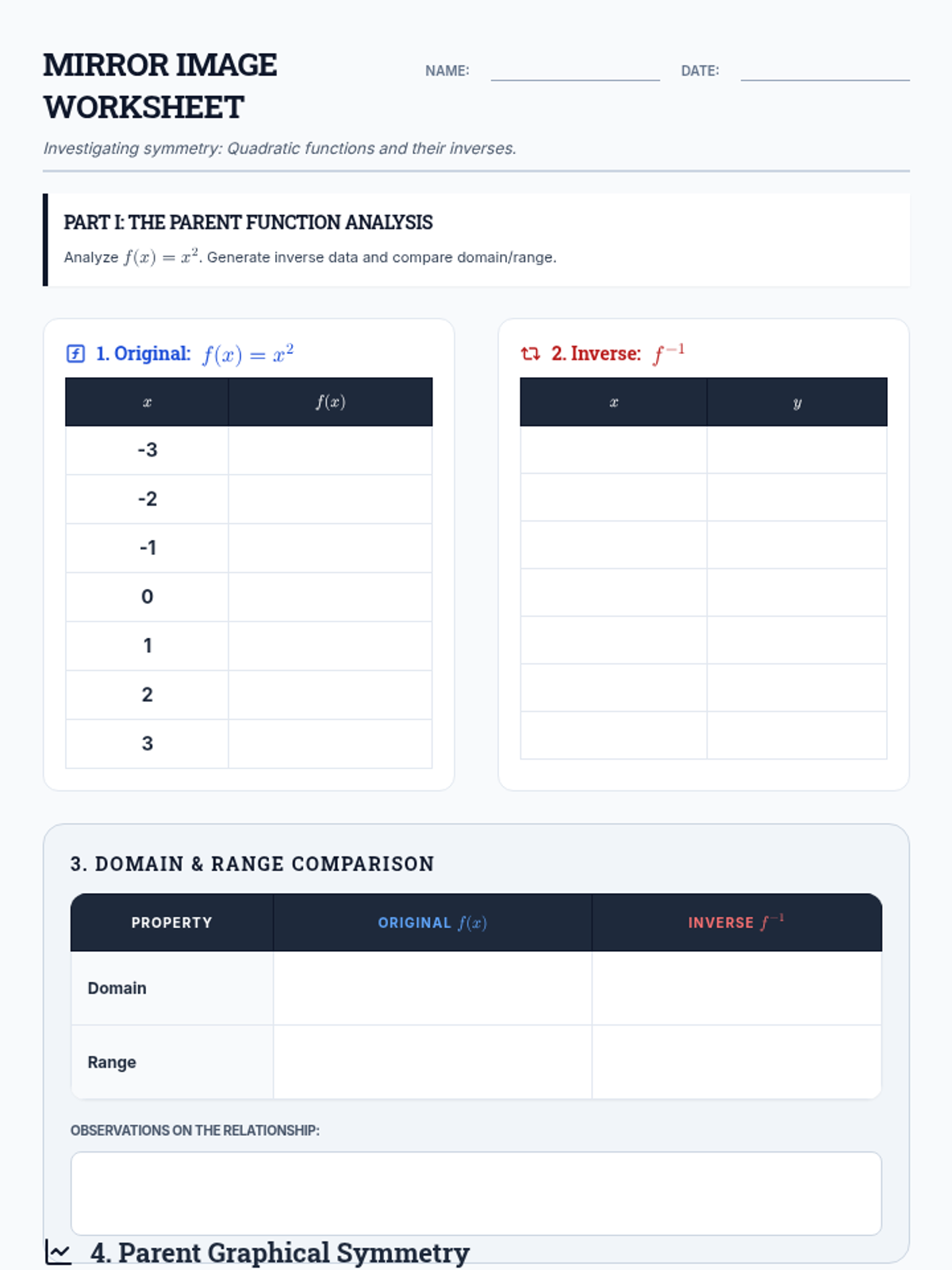
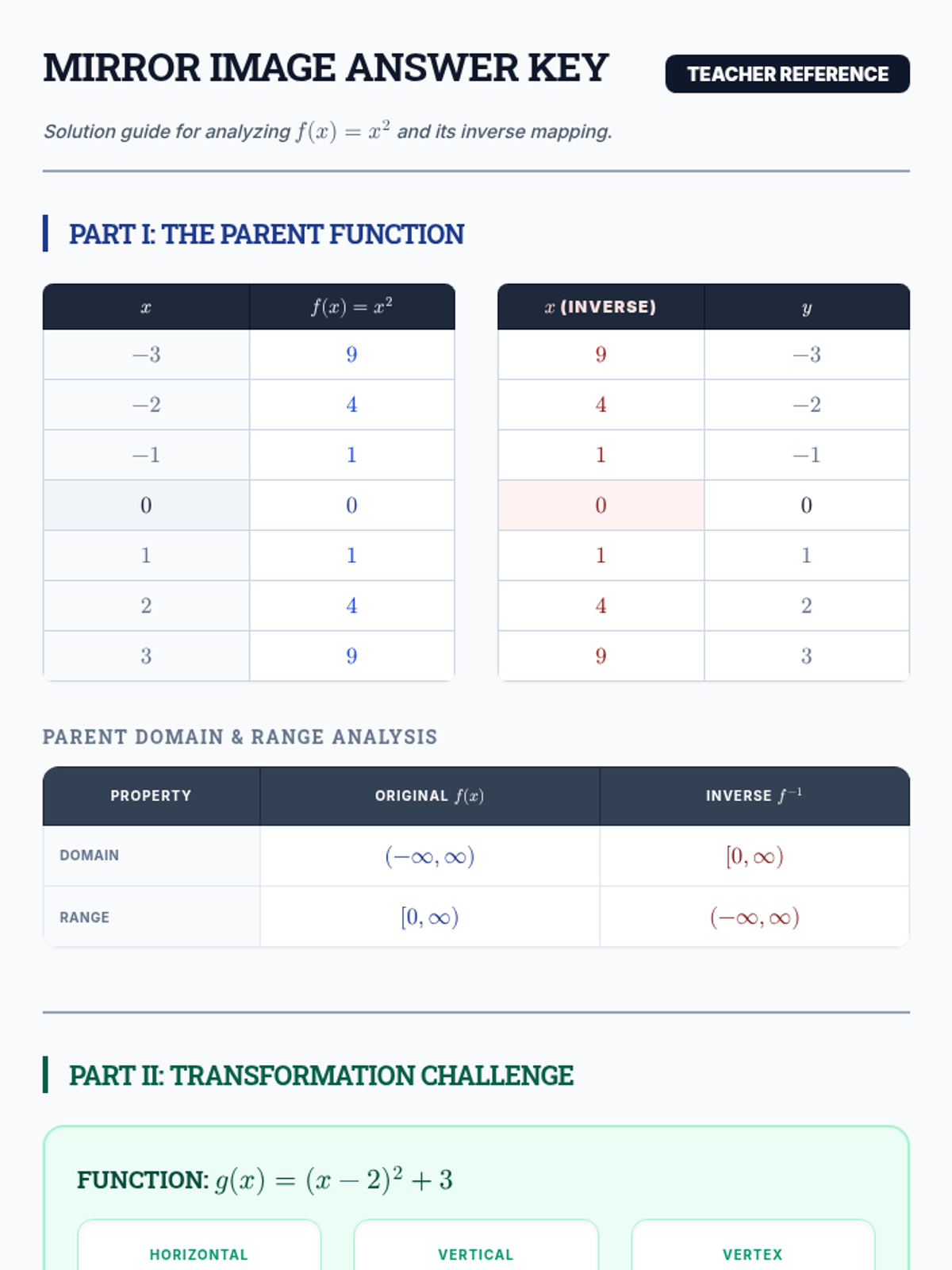
Explore the relationship between a quadratic function and its inverse. Students will graph both, compare domain and range, and determine if the inverse is a function or a relation.
A summative assessment covering decimal, fraction, and percentage operations in business contexts.
A comprehensive review of all unit operations and business applications in preparation for the assessment.
Introduction to the simple interest formula and how it impacts business loans and savings.
Calculating series discounts and determining the final net price for bulk purchasing and vendor negotiations.
Applying percent change to retail scenarios involving markup on cost and markdowns for clearance.
Solving for the base and rate in percentage problems to find original totals and growth rates.
Calculating simple percentages to find sales tax, commission, and specific amounts of a whole.
Mastering the fluid movement between fractions, decimals, and percentages for financial reporting.
Multiplying and dividing fractions to determine production costs and material usage.
Applying fraction addition and subtraction to inventory management and partial unit production.