Una lección interactiva sobre las estructuras externas de los animales y cómo estas partes les ayudan a sobrevivir en su entorno, alineada con TEKS 1.13A.
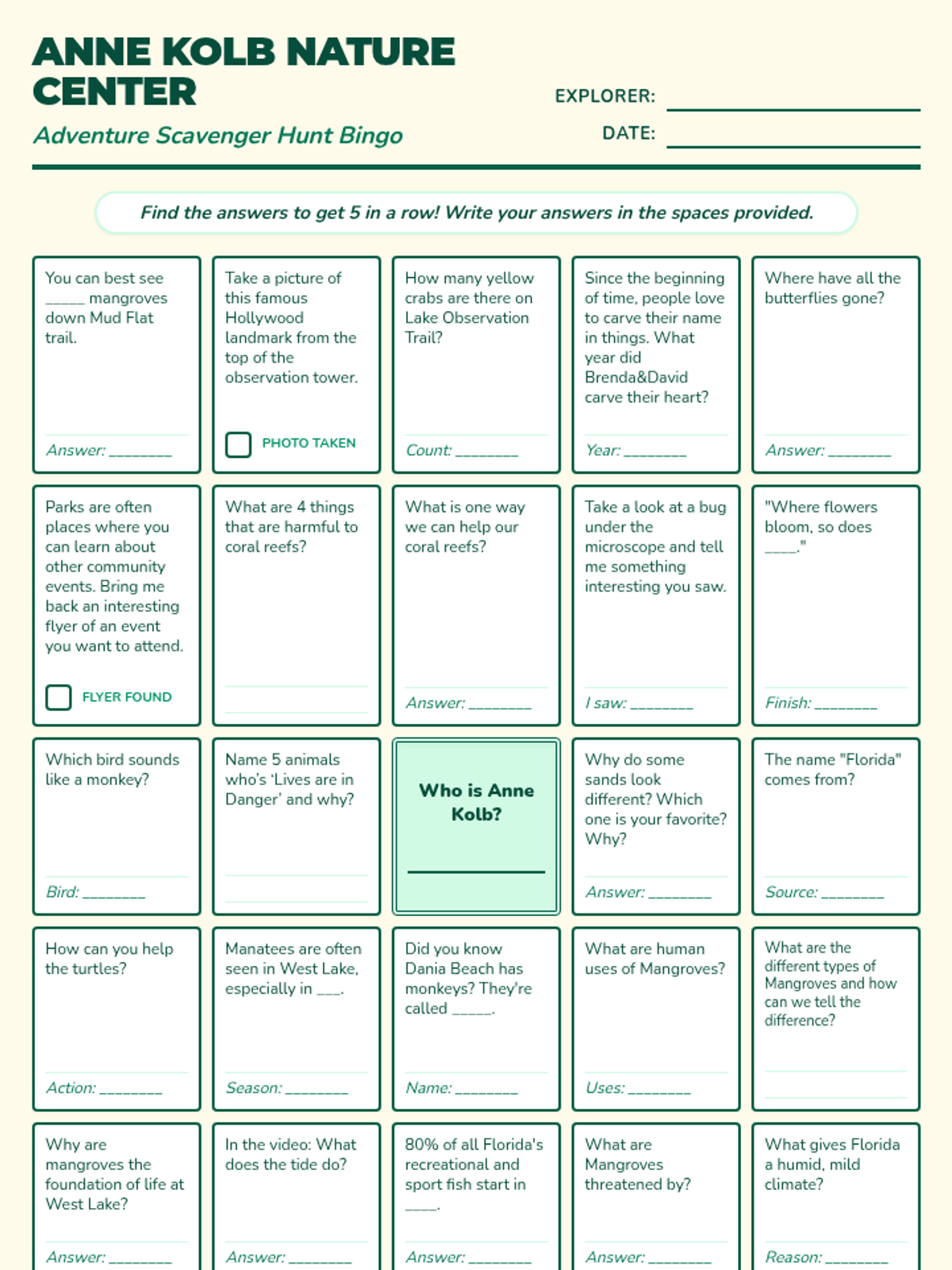
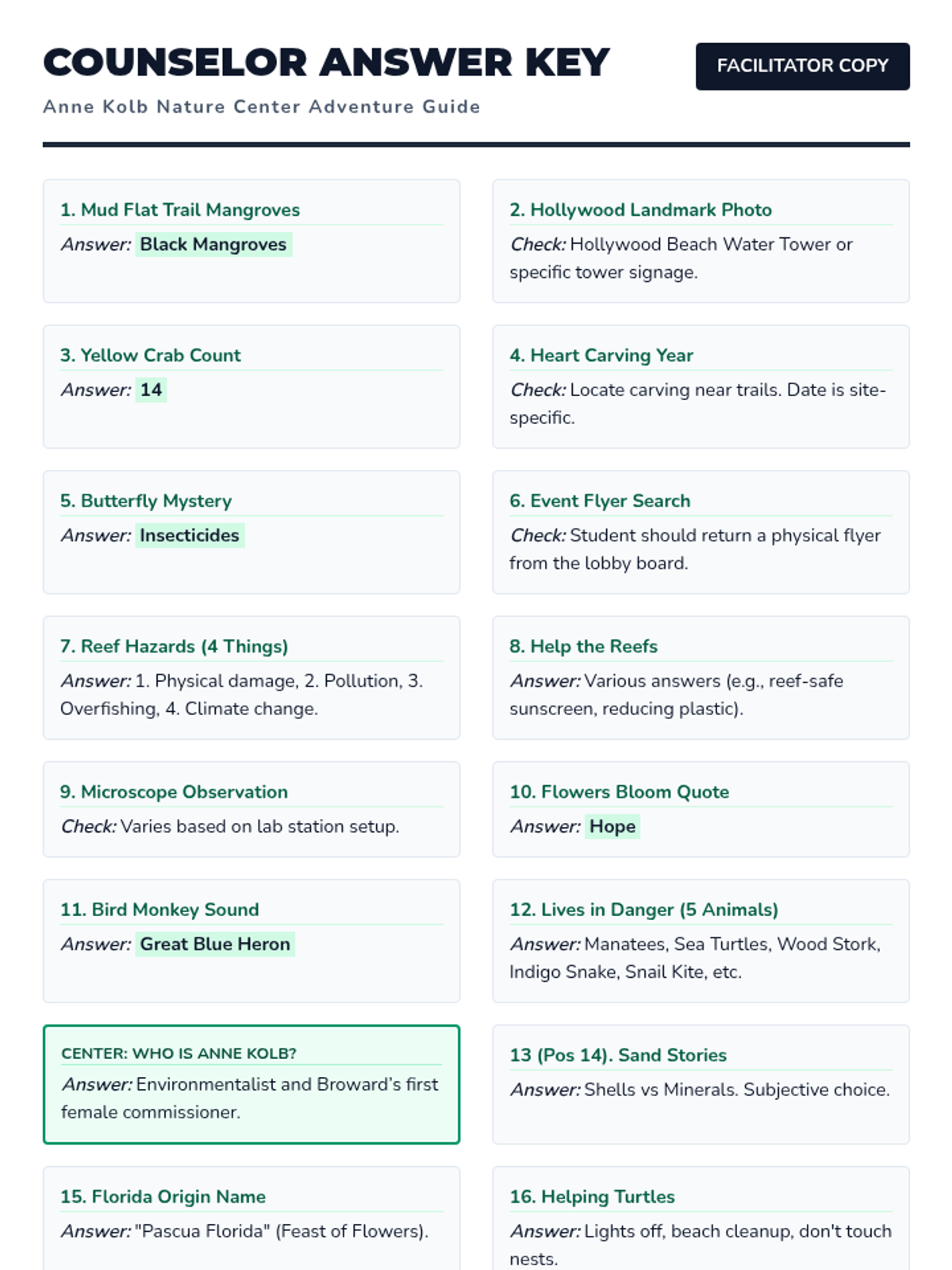
A field trip exploration guide for the Anne Kolb Nature Center, featuring a scavenger hunt BINGO activity and a counselor answer key.
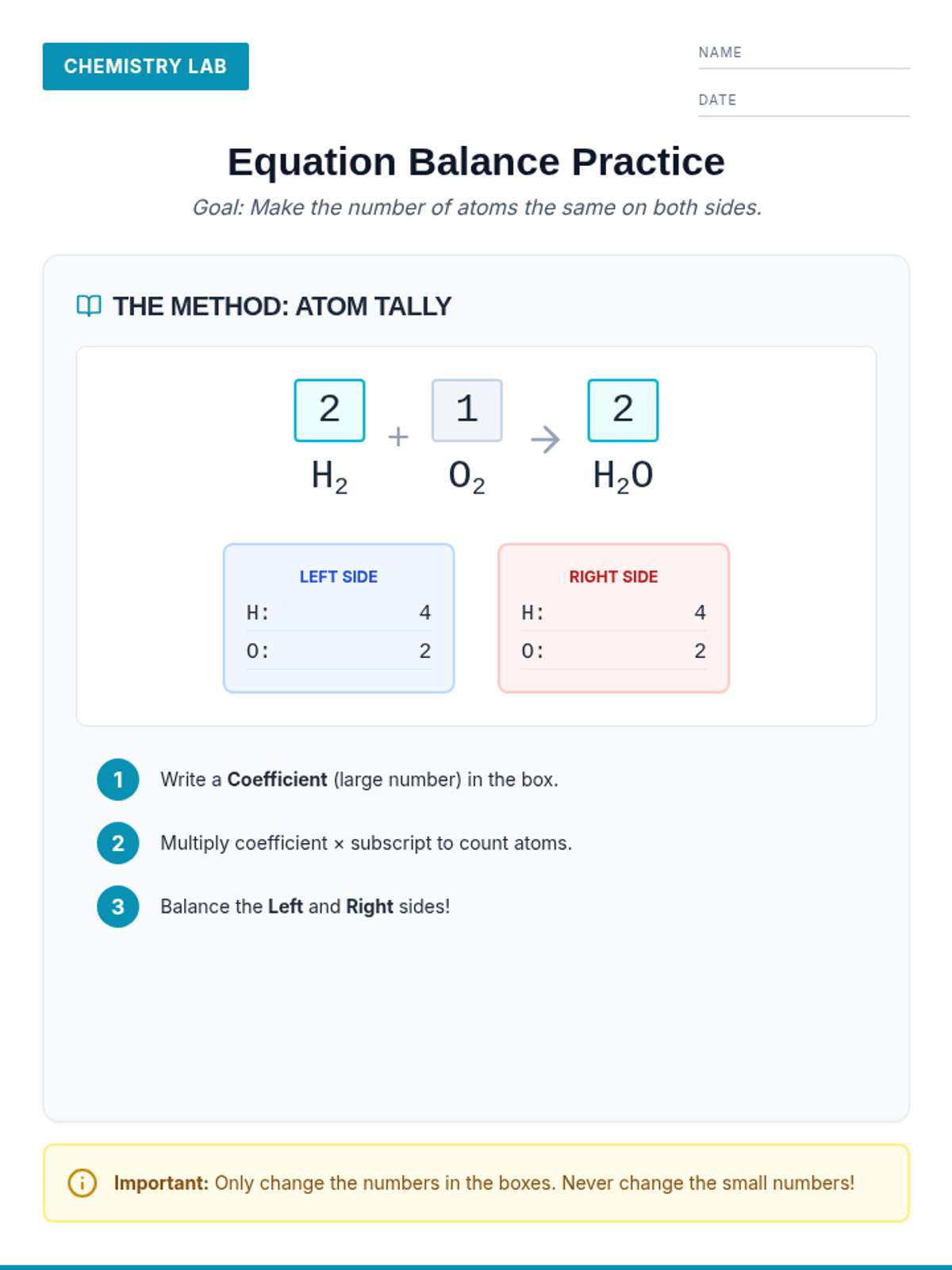
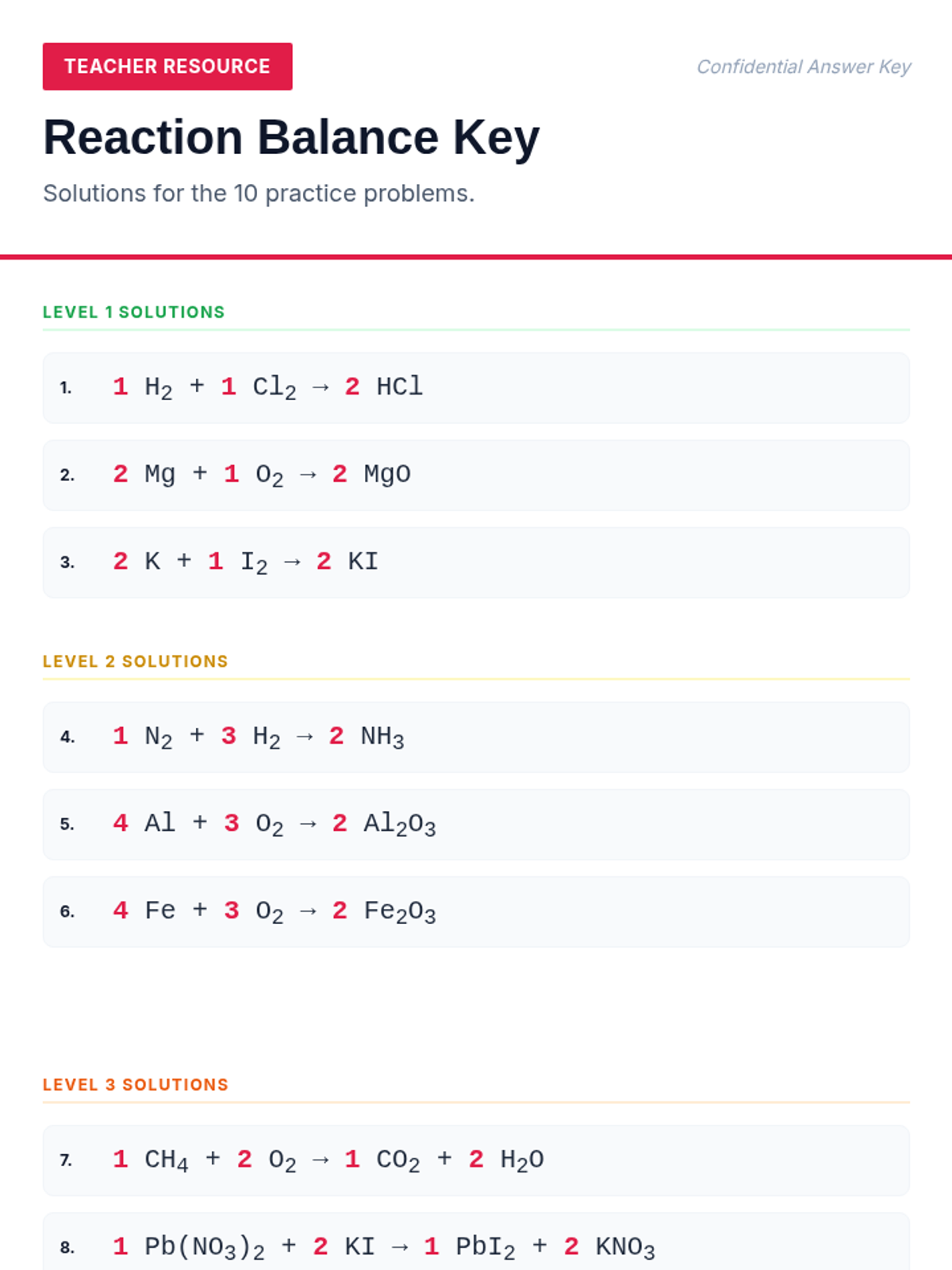
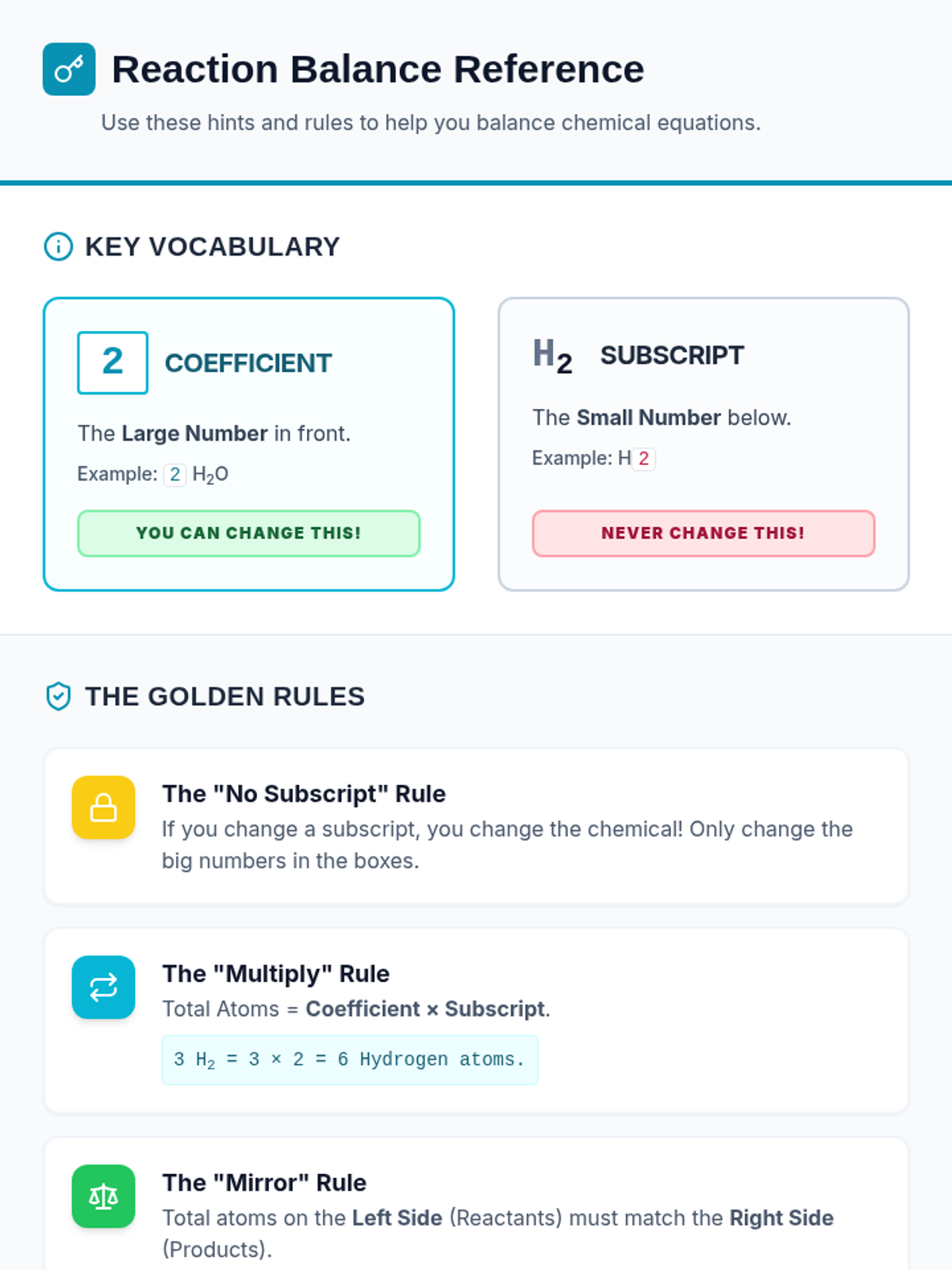
A chemistry lesson focused on the foundational skill of balancing chemical equations, designed for English Language Learners with visual supports and a progressive difficulty structure.
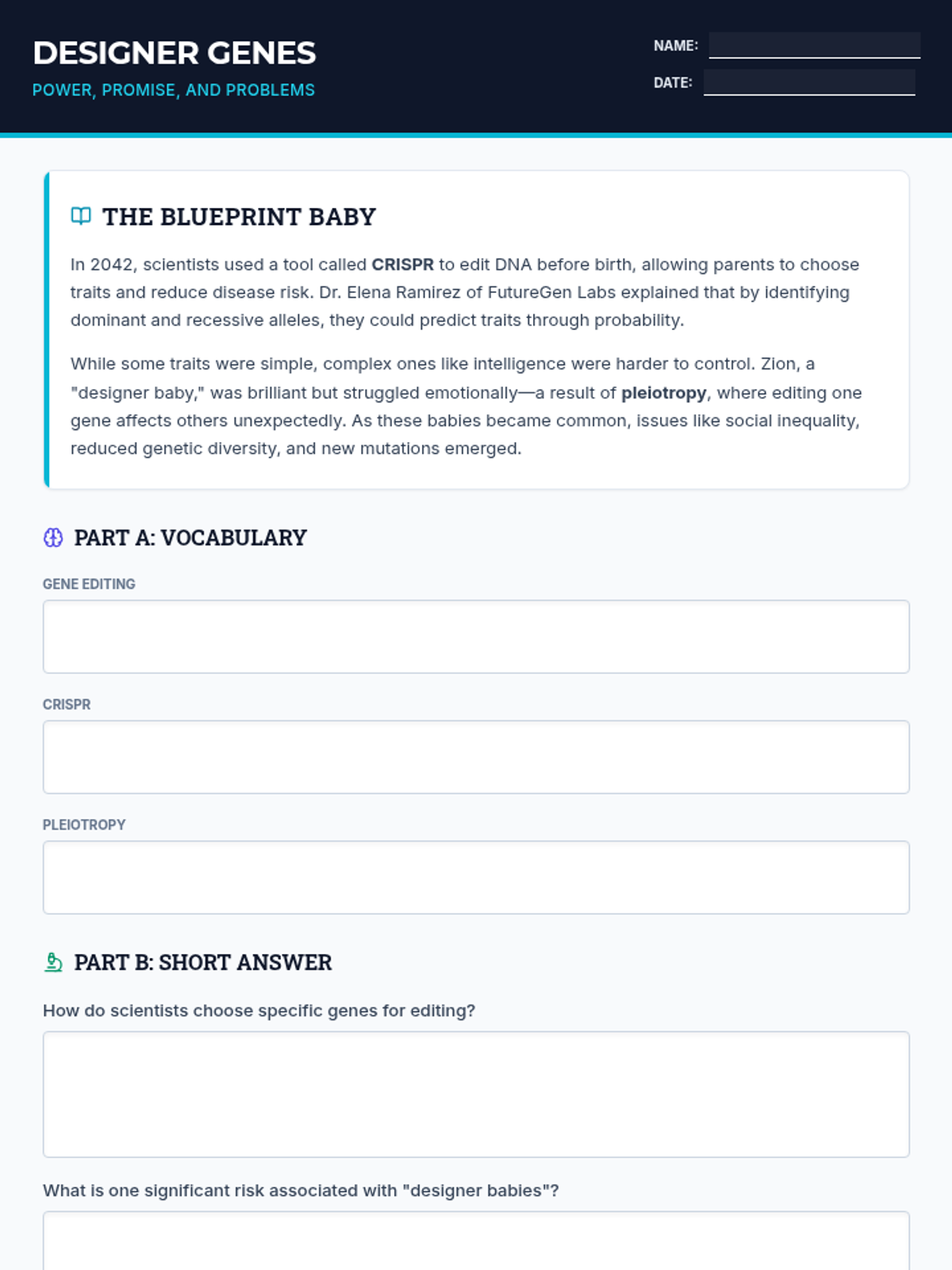
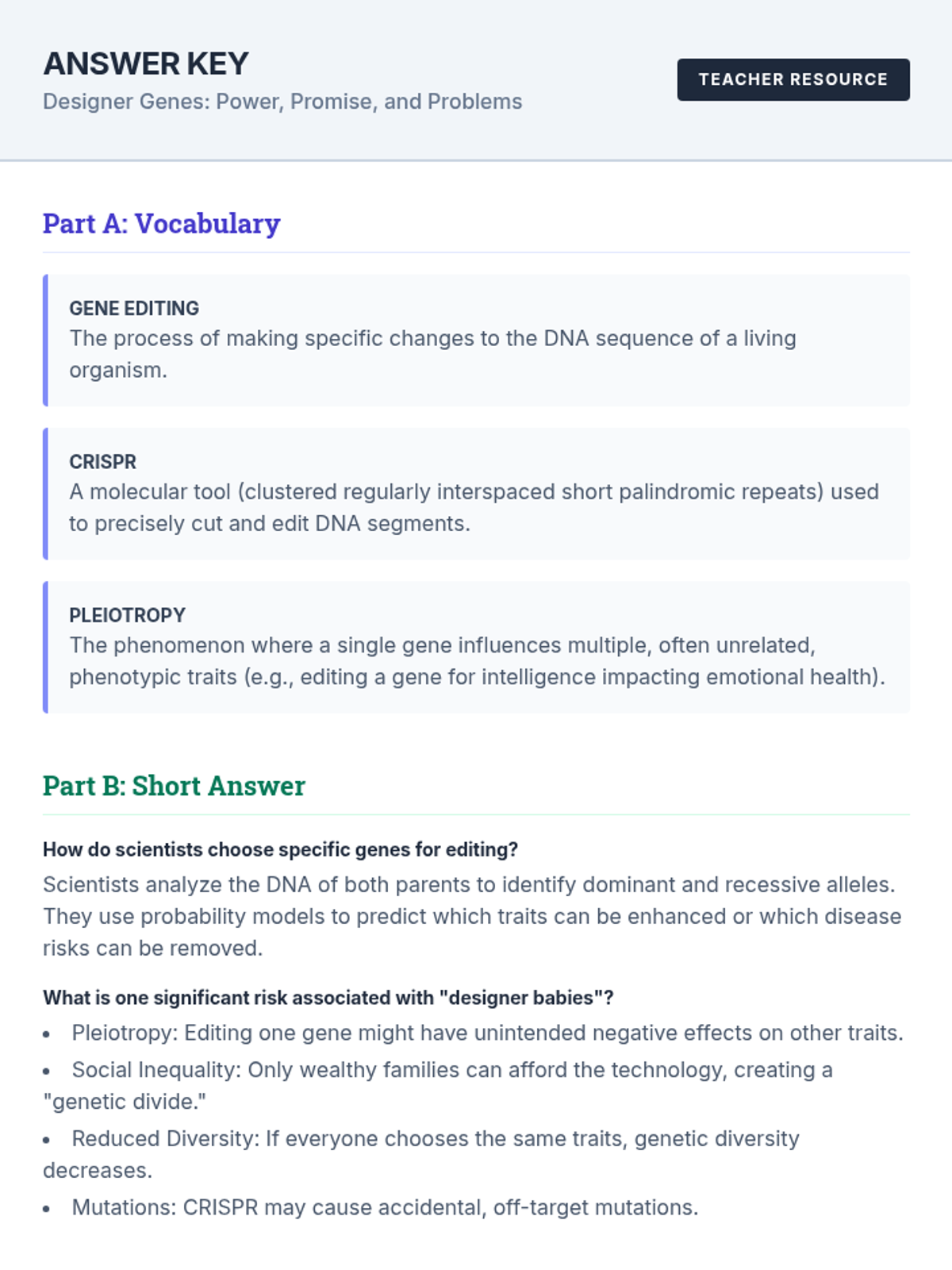
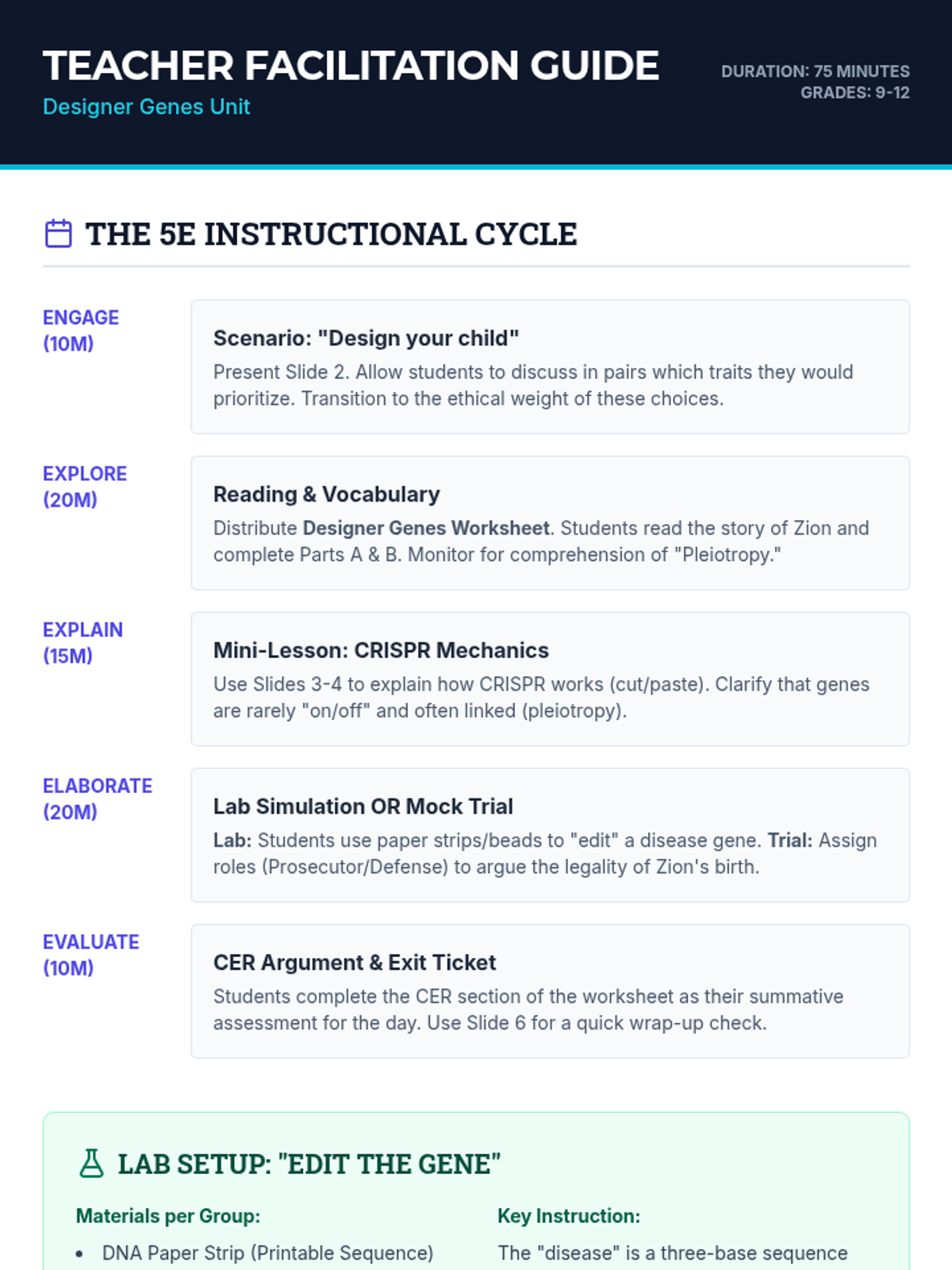
A comprehensive lesson exploring the science, ethics, and societal impact of gene editing through the story of Zion, a 'designer baby'. Students engage in a hands-on DNA simulation and debate the future of human genetics.
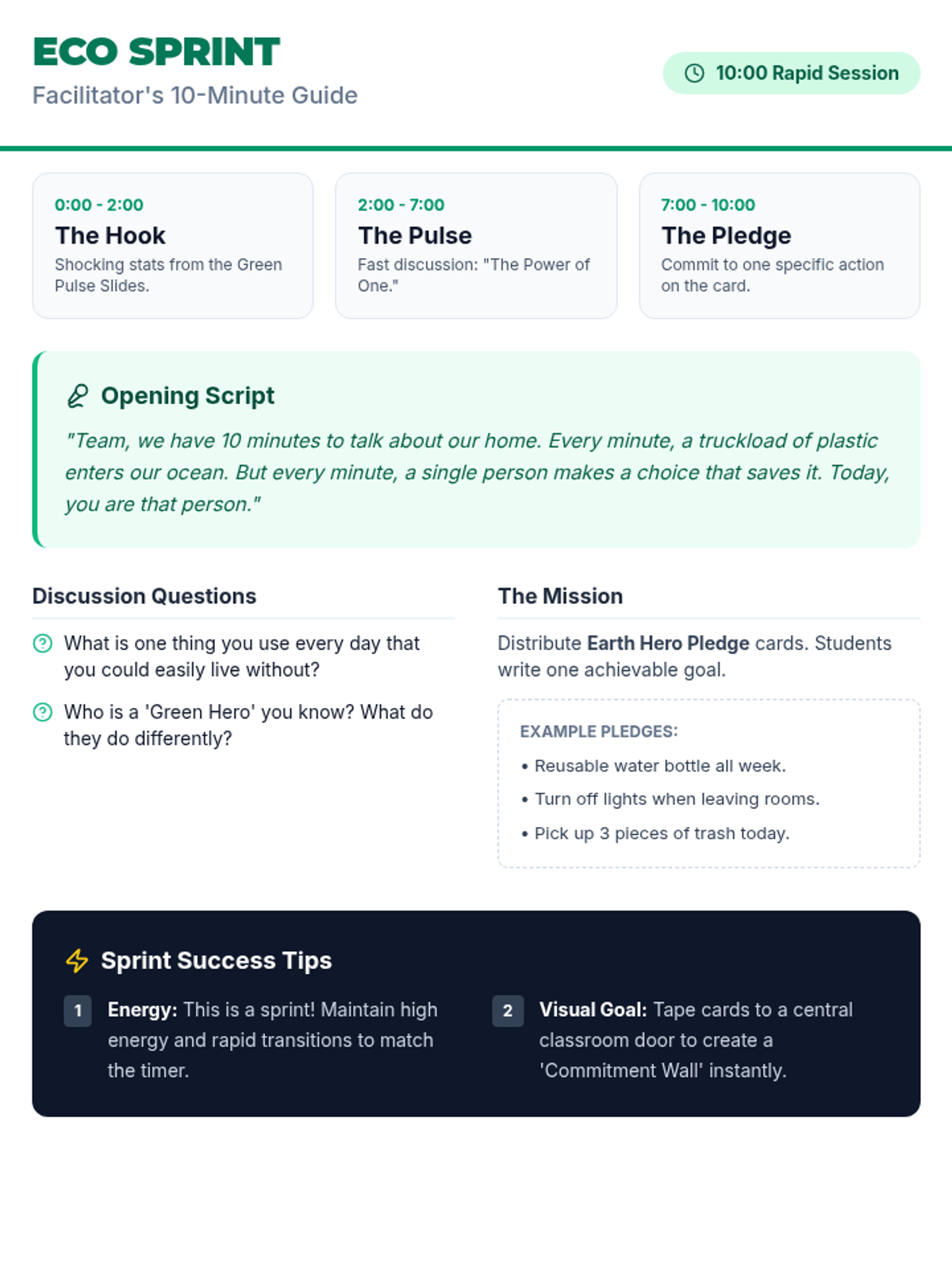
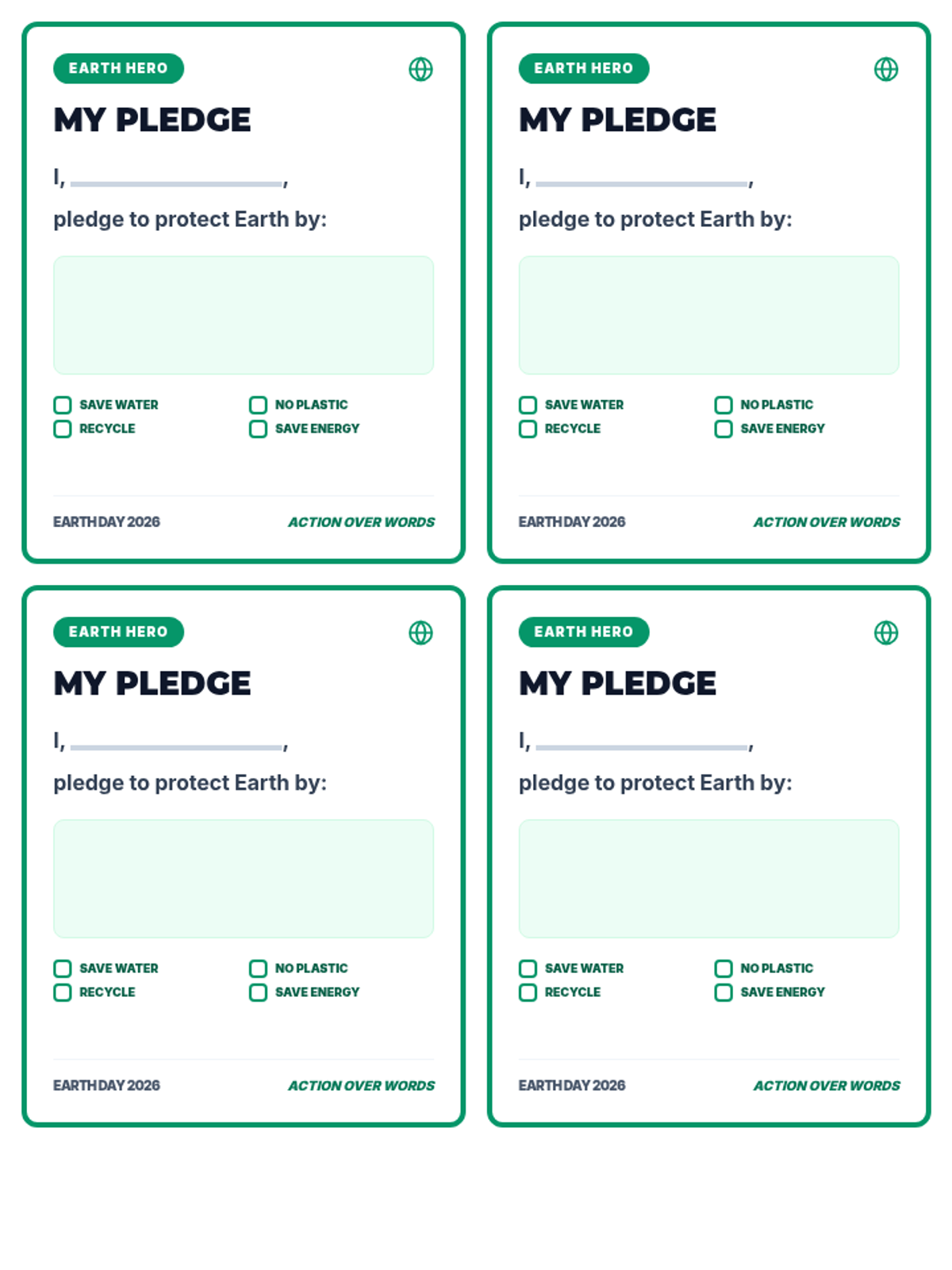
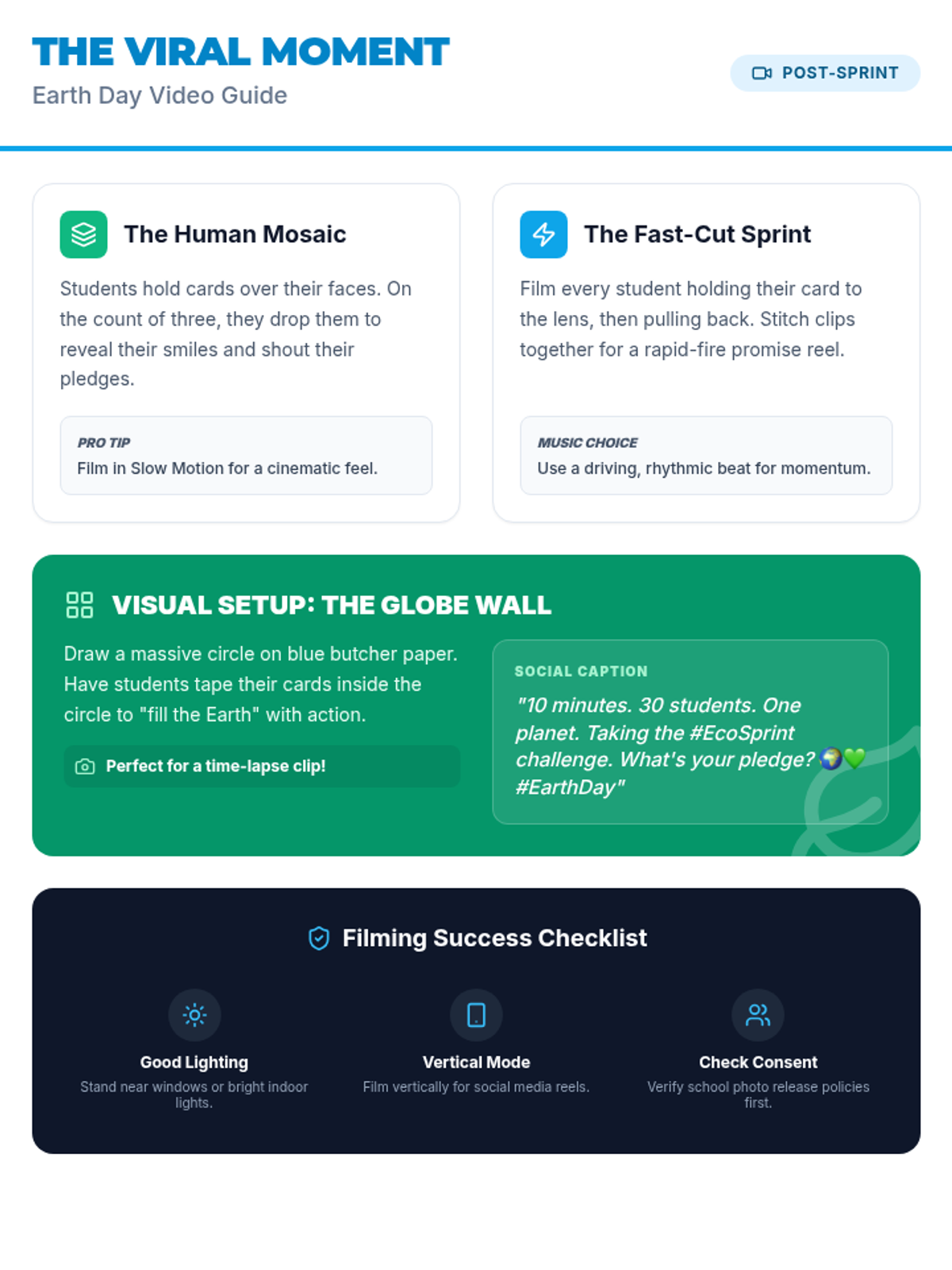
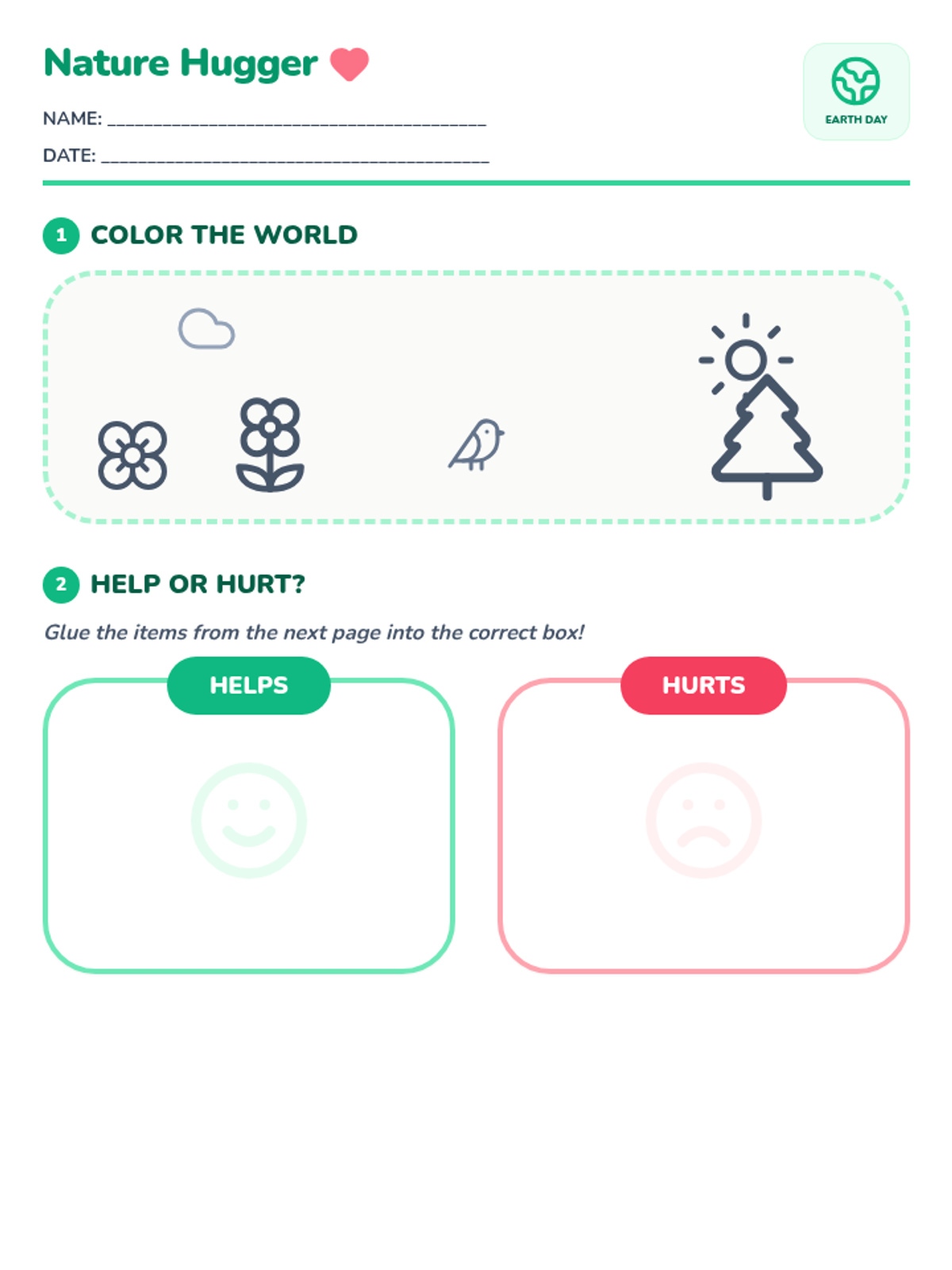
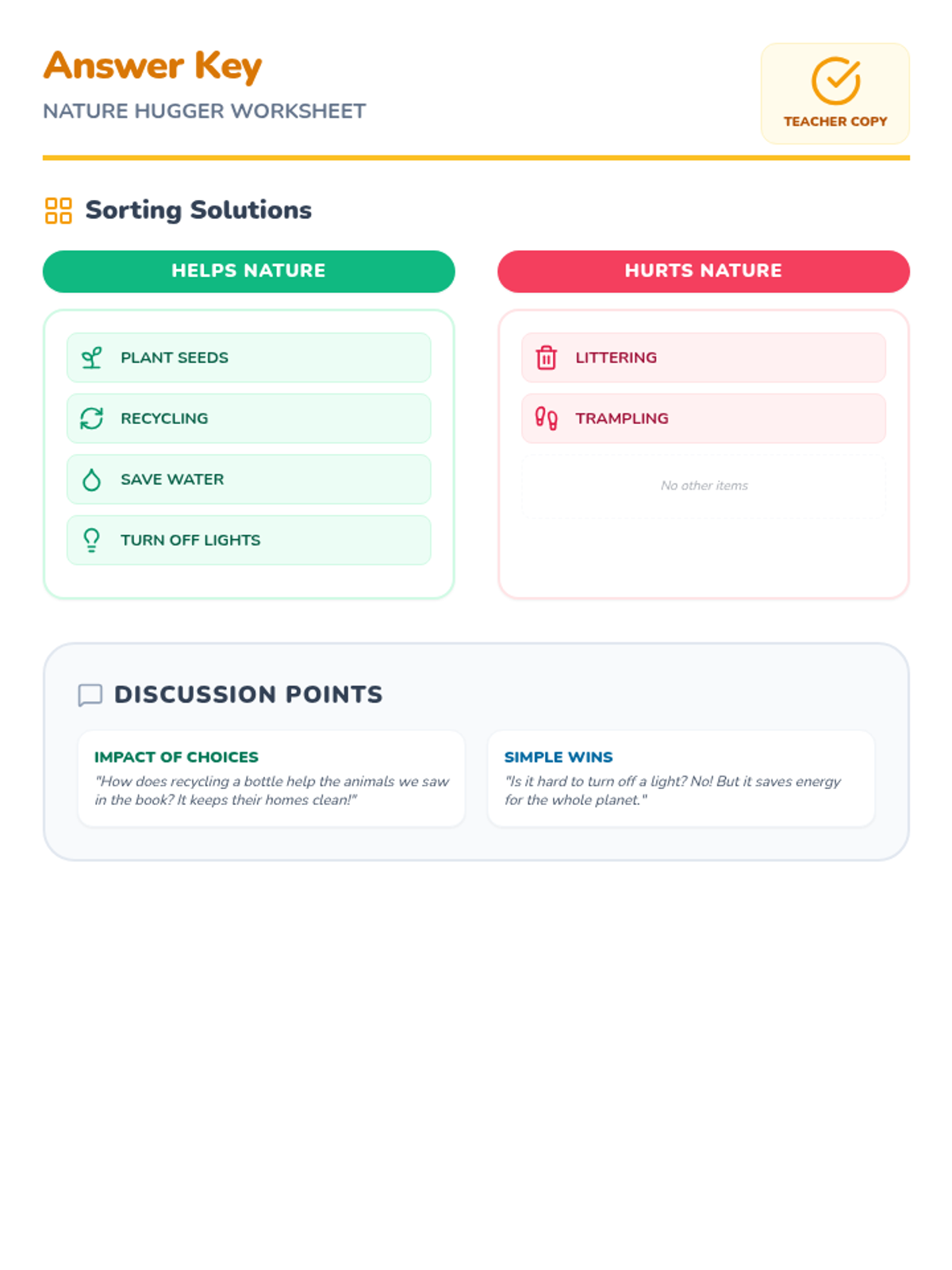
A high-energy, 10-minute Earth Day activation designed to inspire immediate student action through impactful visuals and a personal pledge.
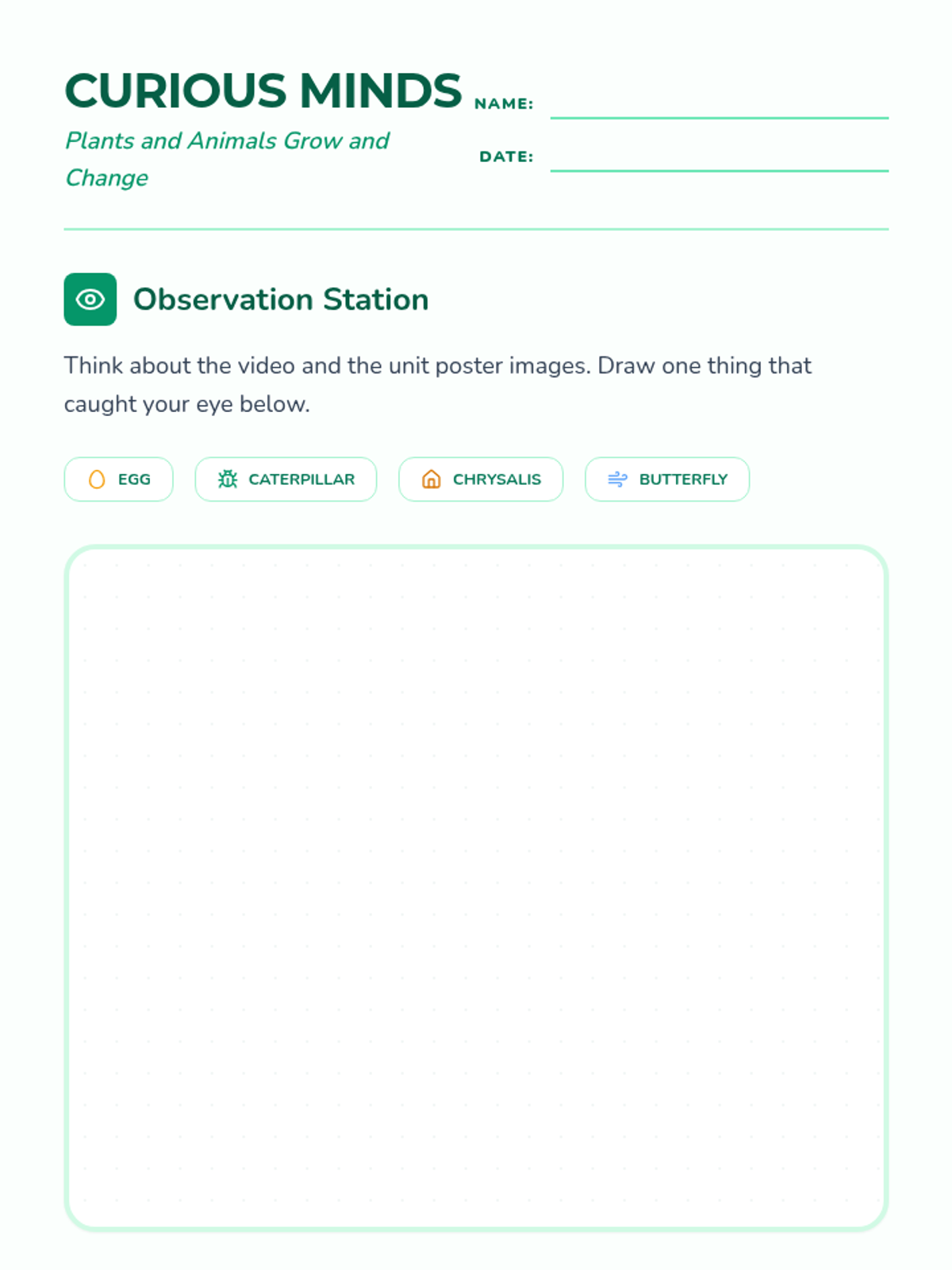
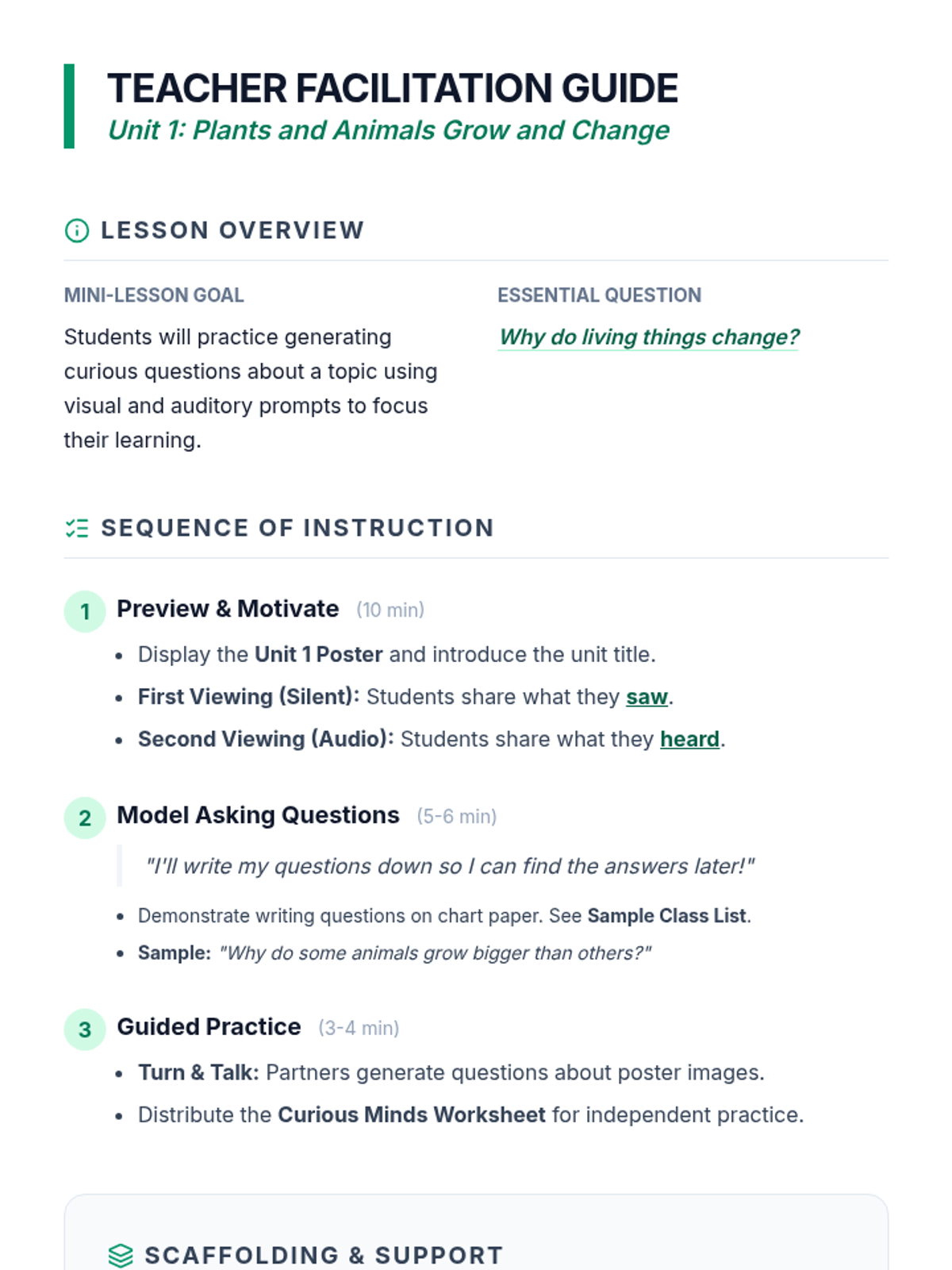
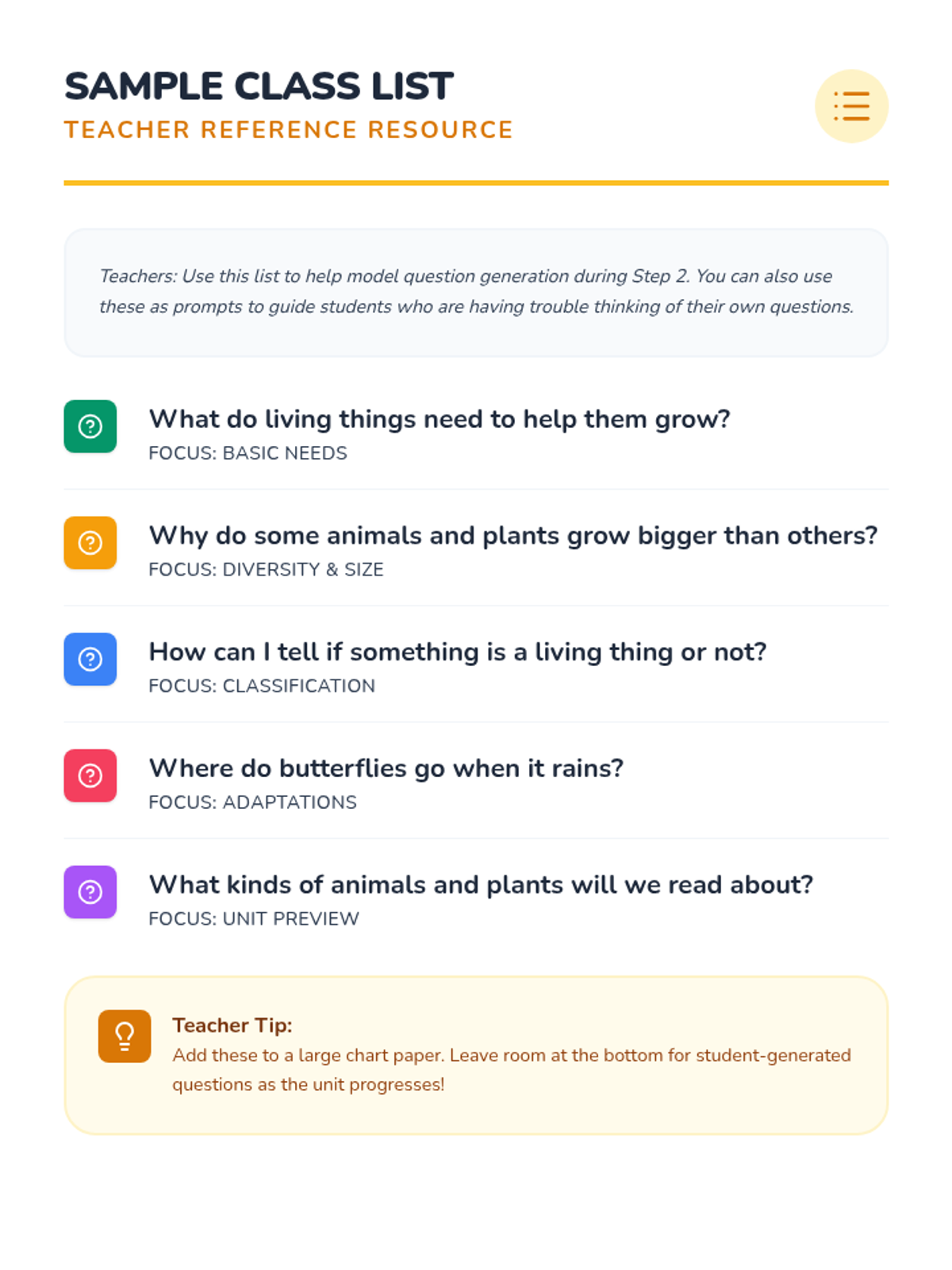
A foundational lesson introducing the concept of growth and change in plants and animals. Students practice generating curious questions based on visual and auditory media to drive their learning throughout the unit.
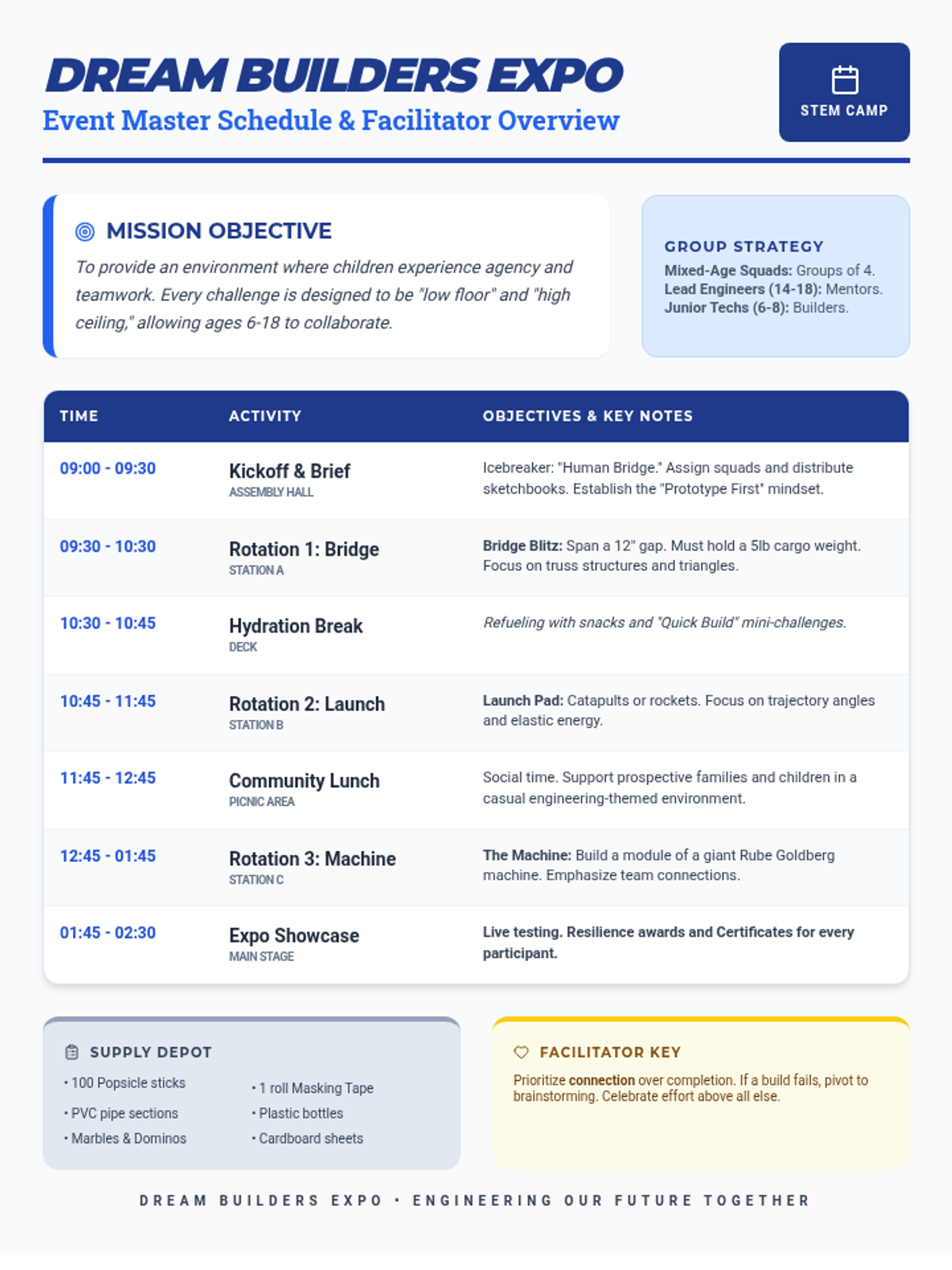
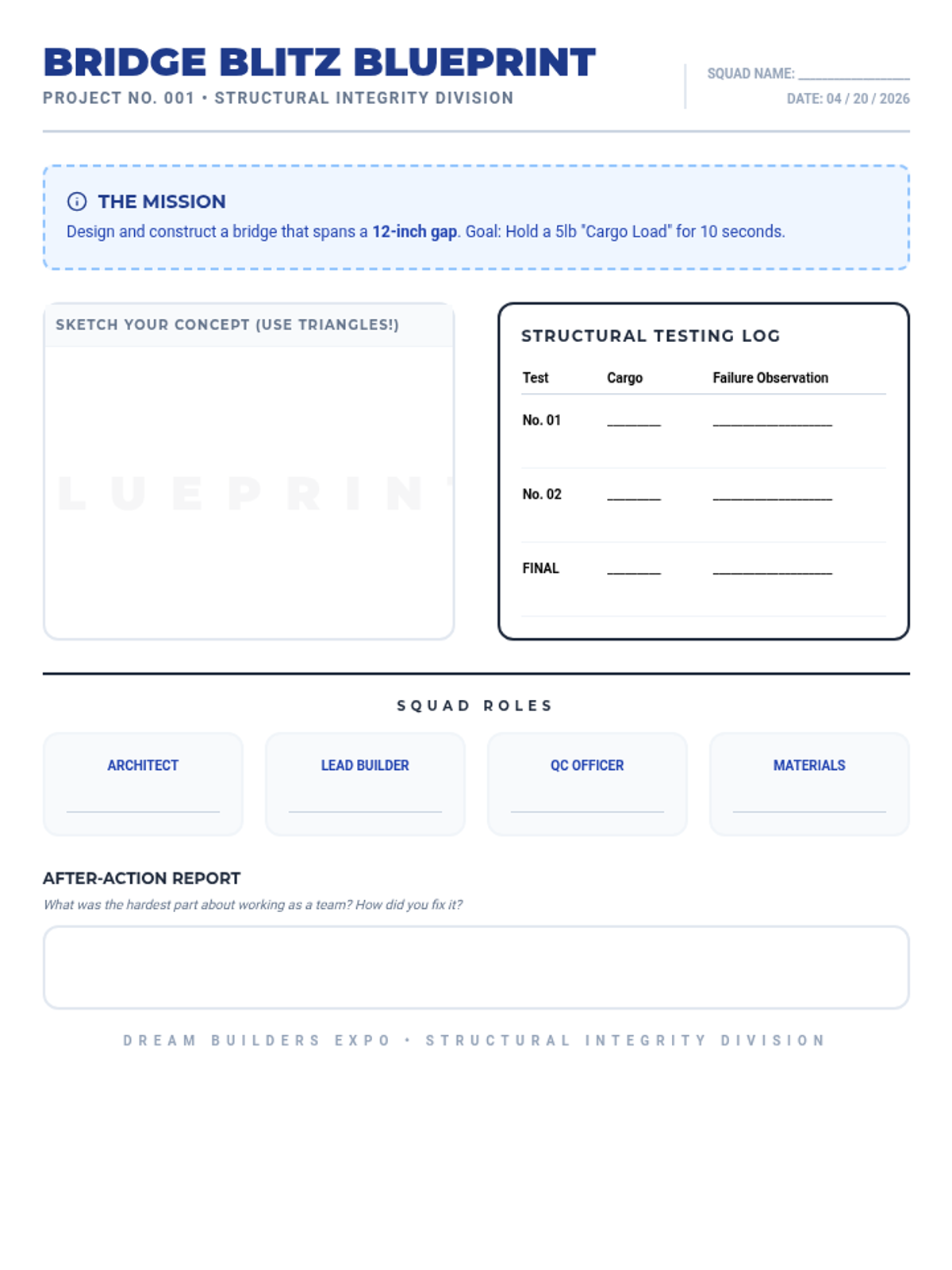
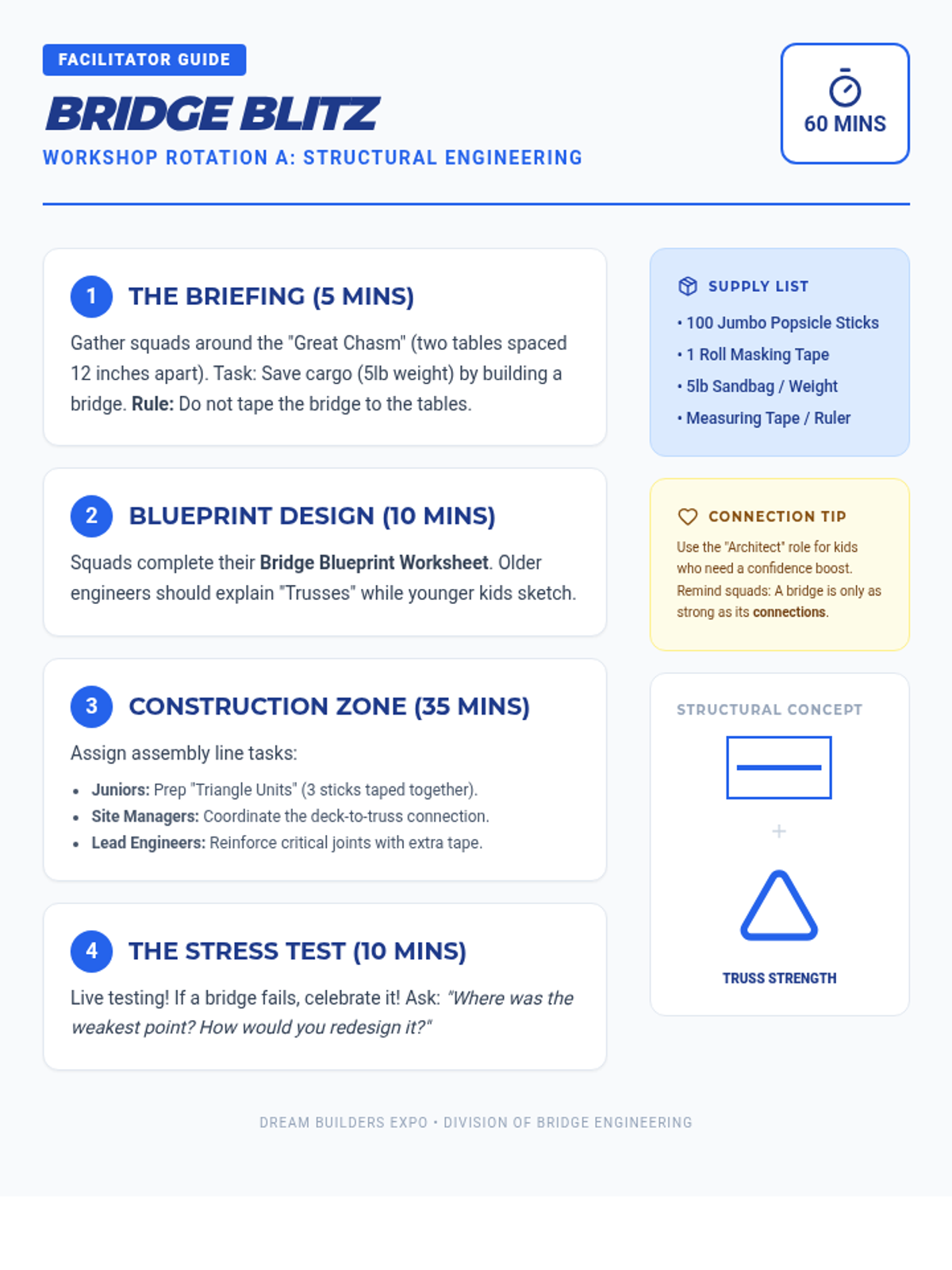
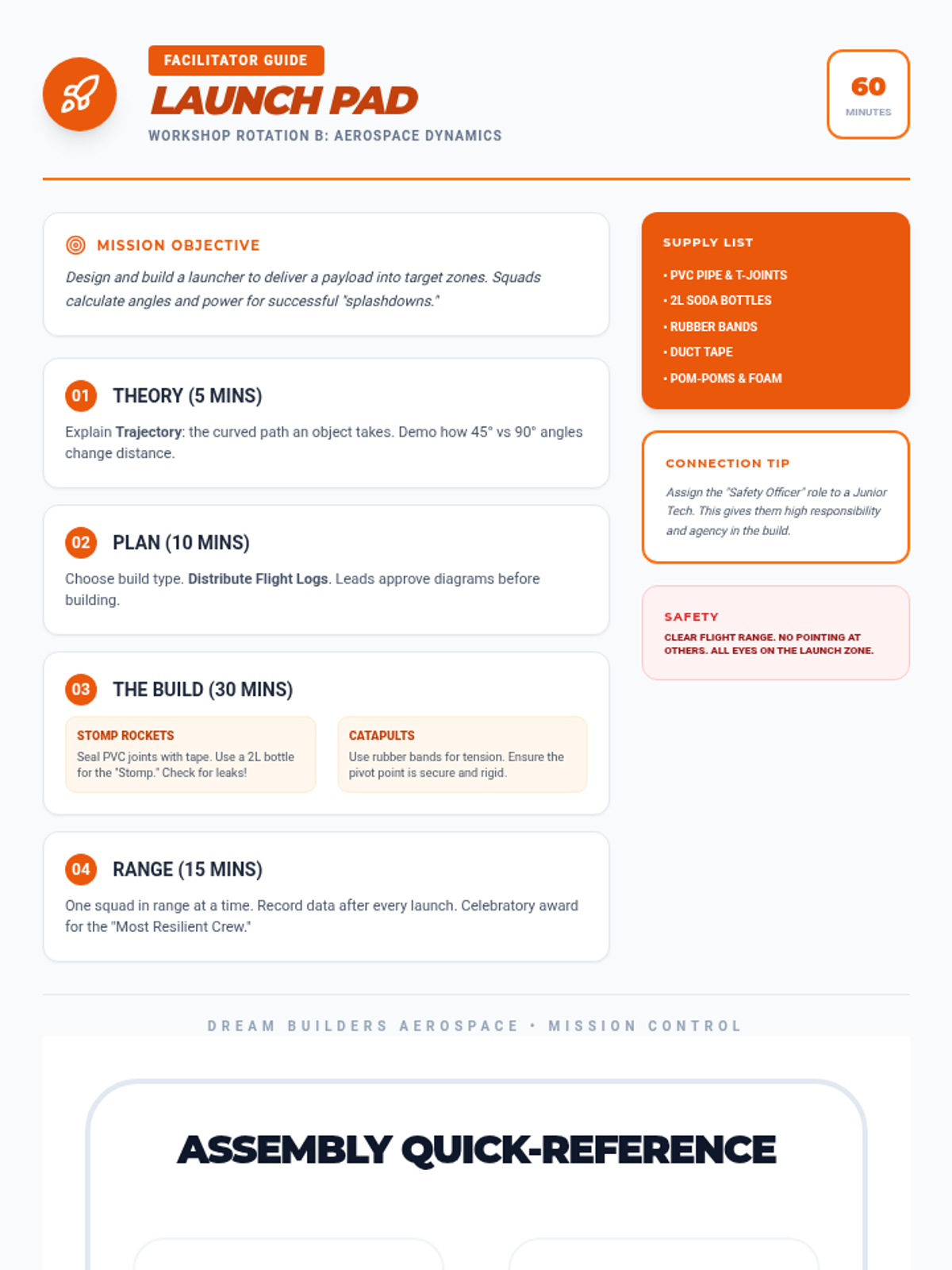
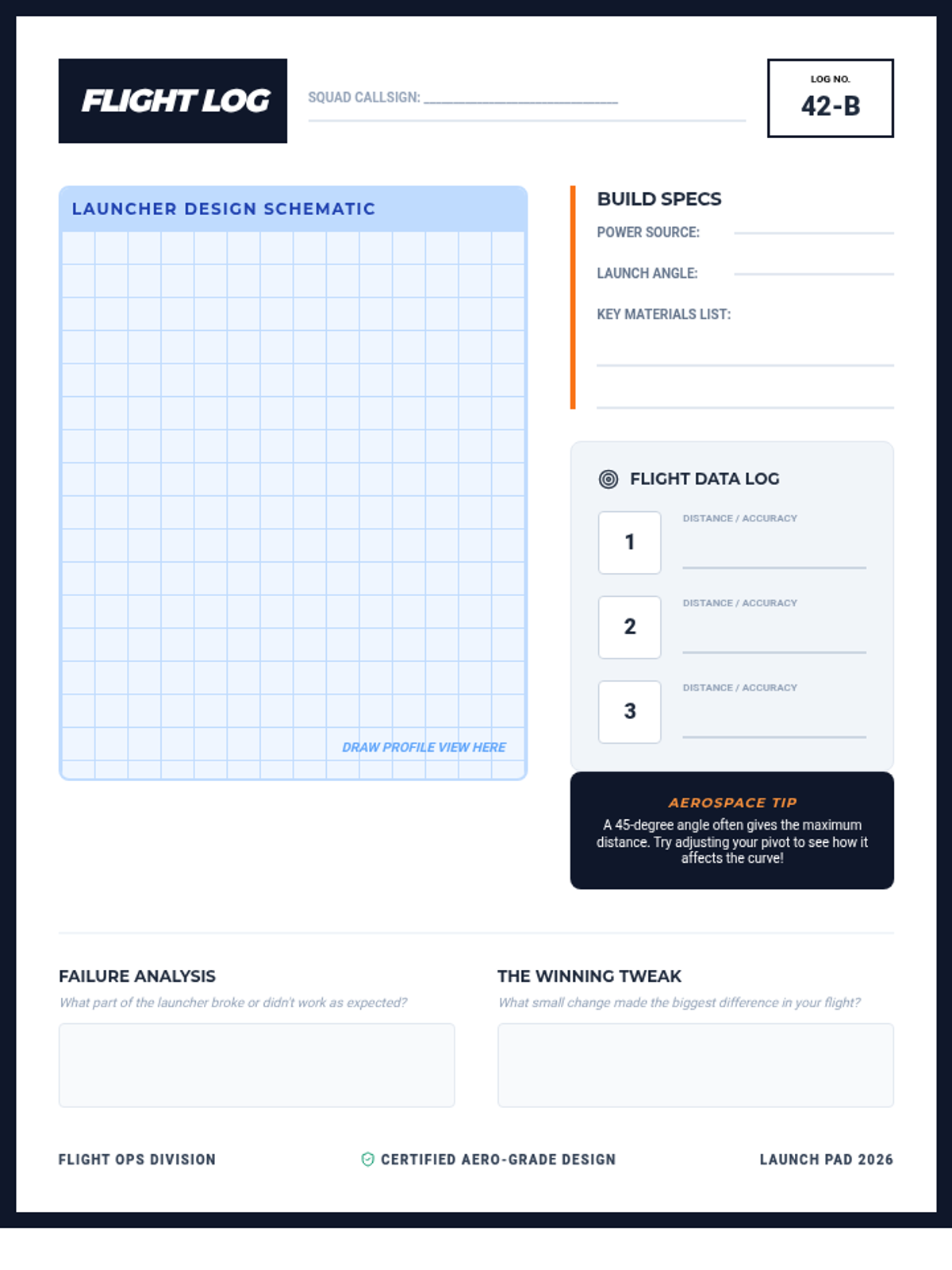
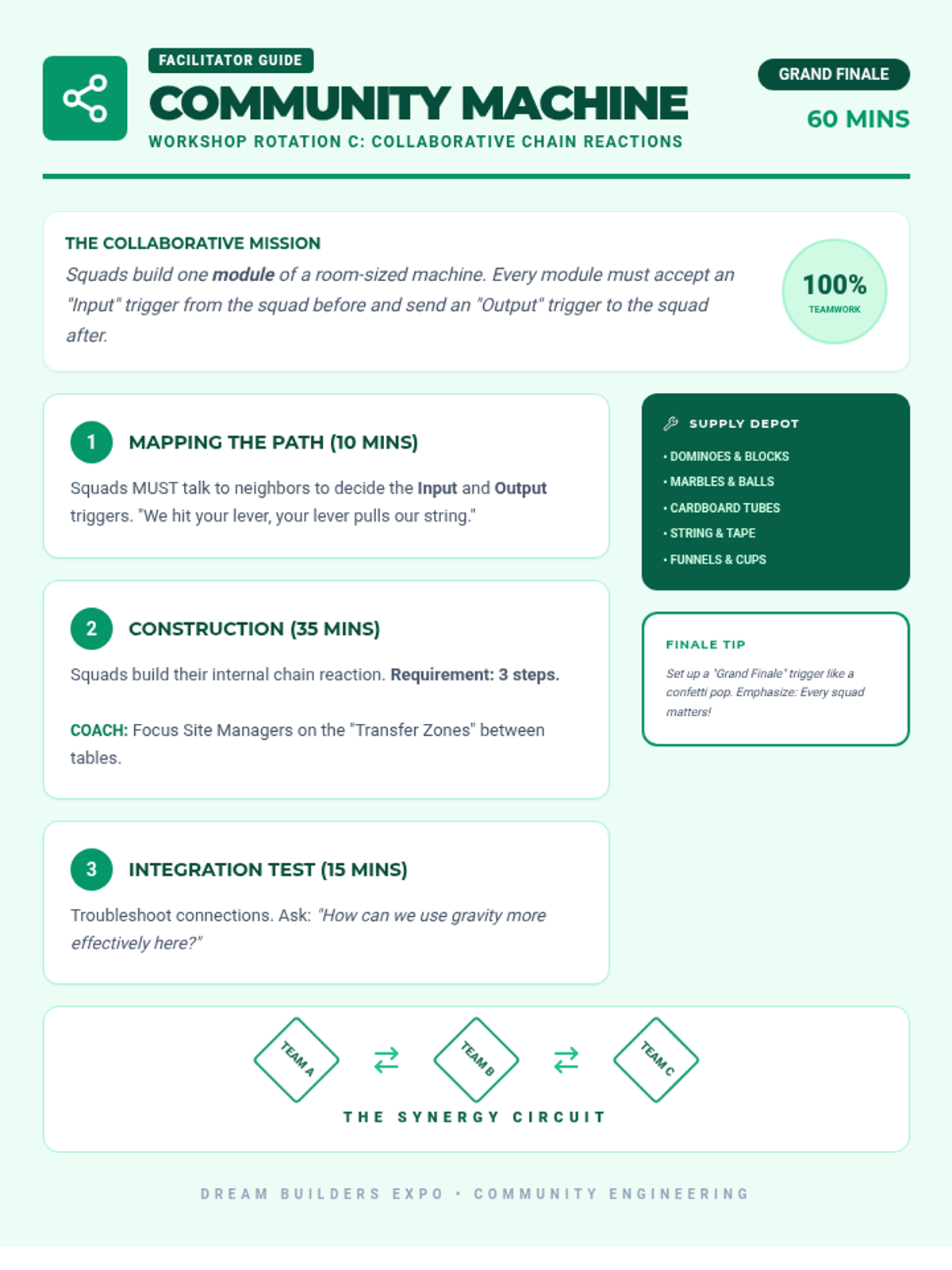
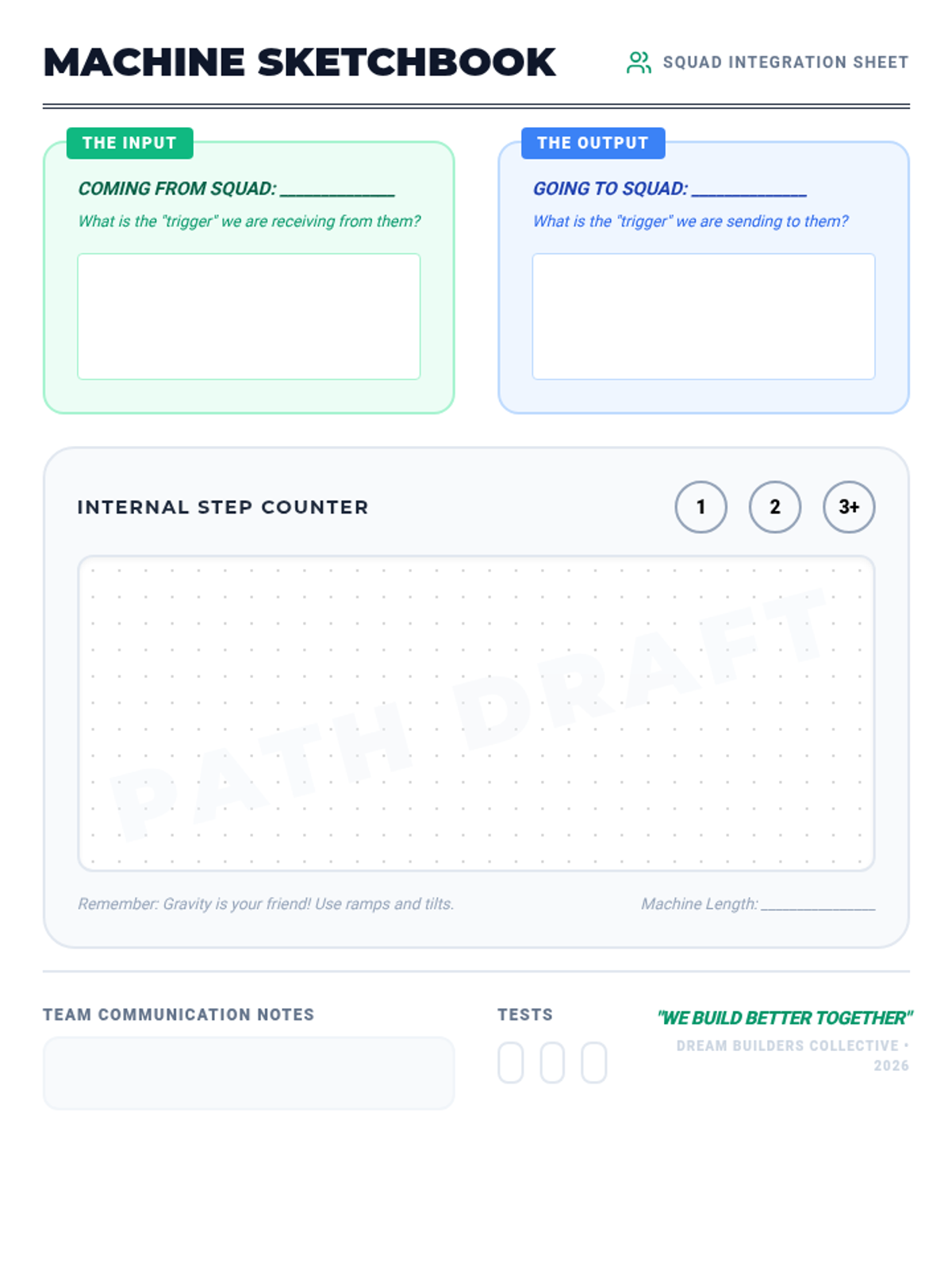
A high-energy STEM event for kids in foster care, focusing on engineering design, collaborative building, and social connection through hands-on challenges.
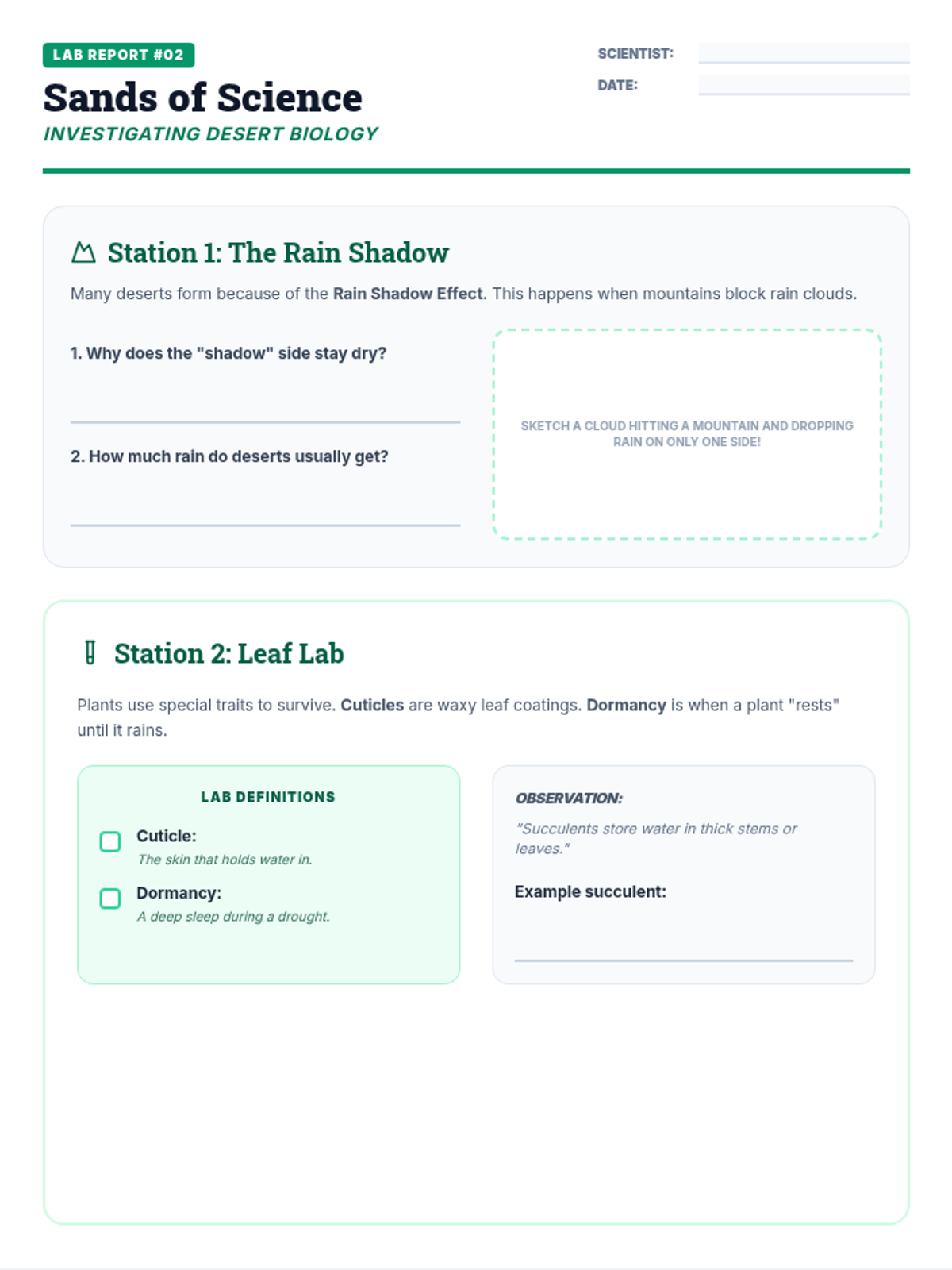
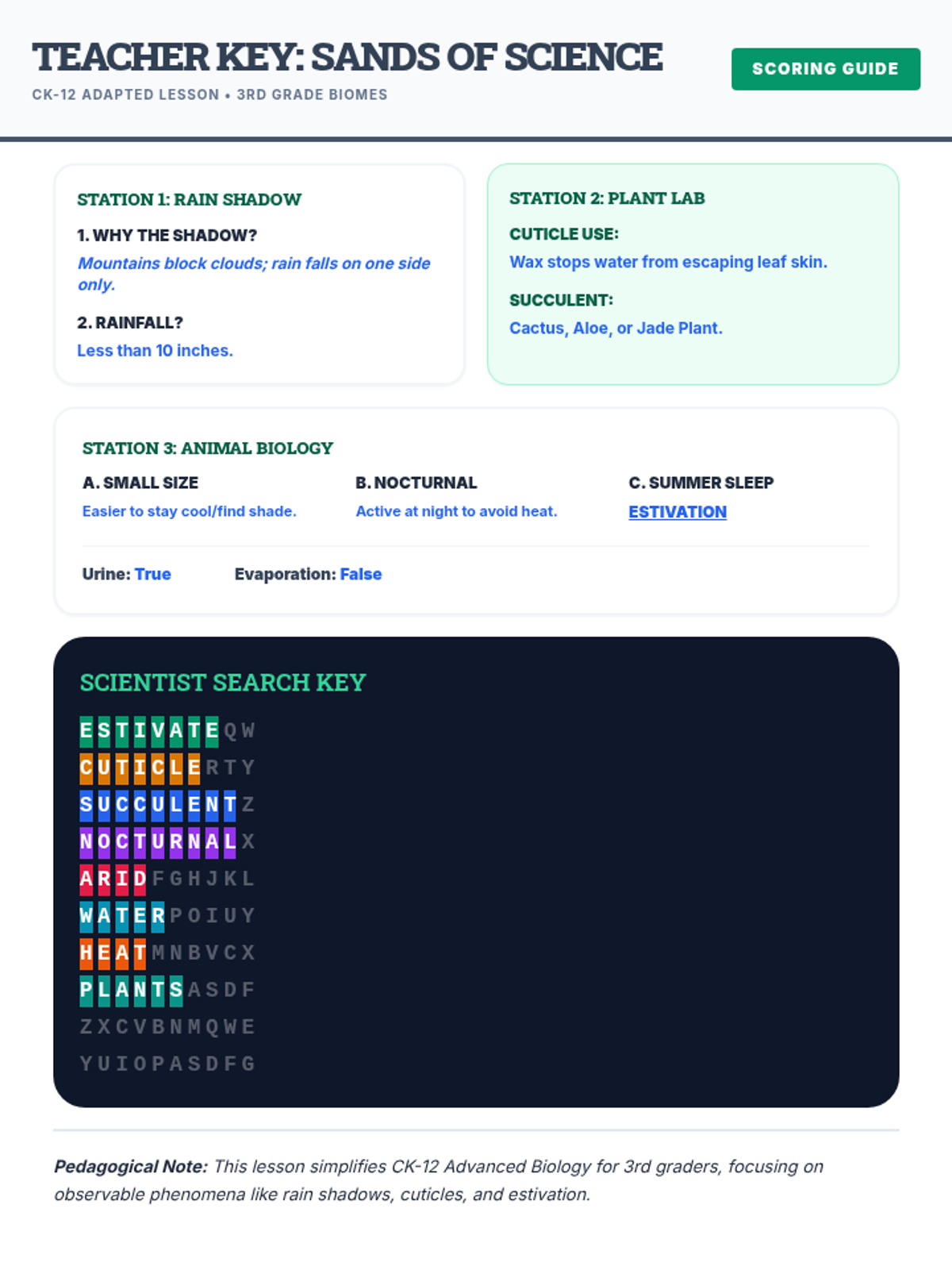
A technical but accessible look into the science of deserts, covering how they form (rain shadows), advanced plant survival, and animal behaviors like estivation.
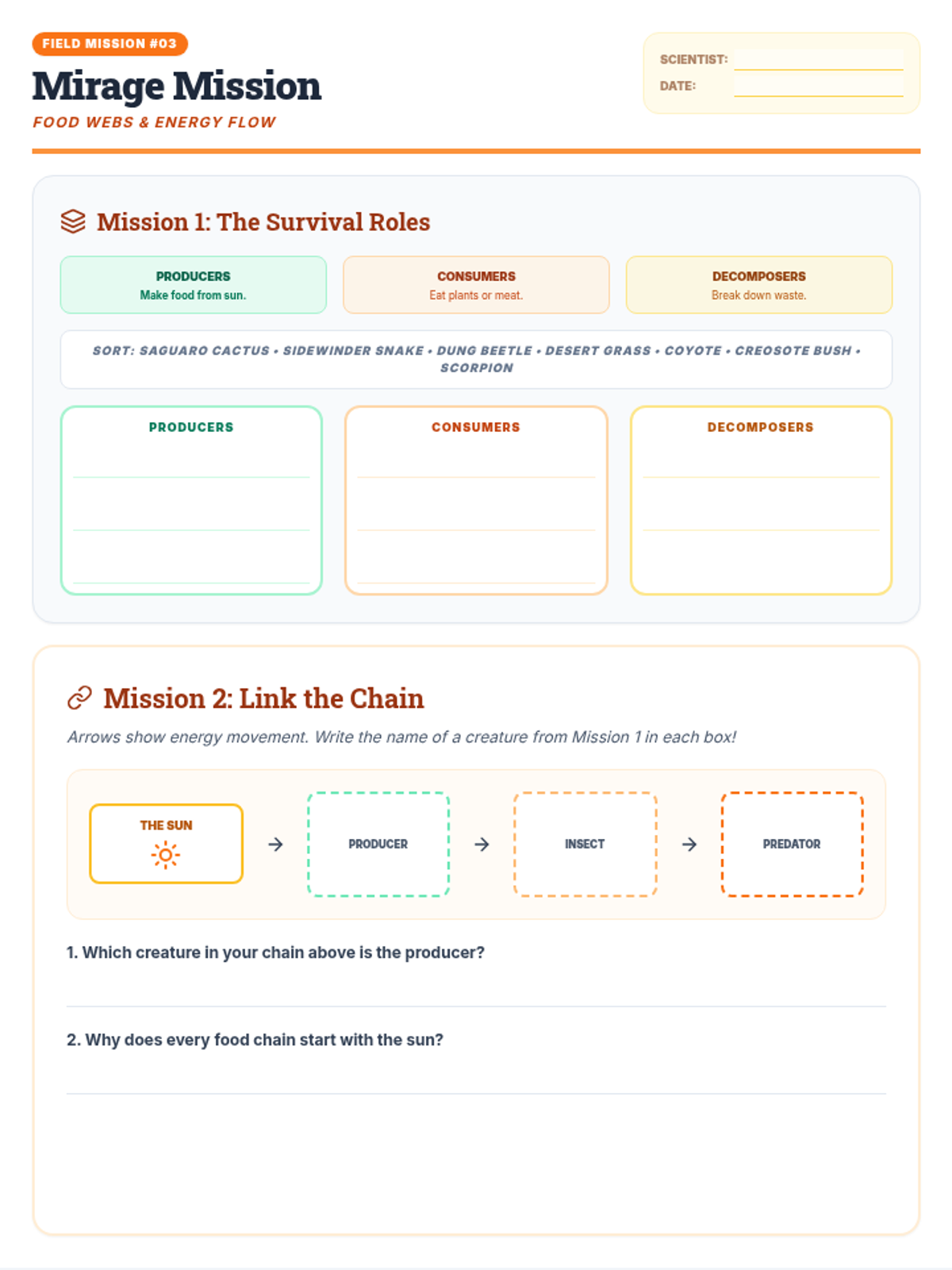
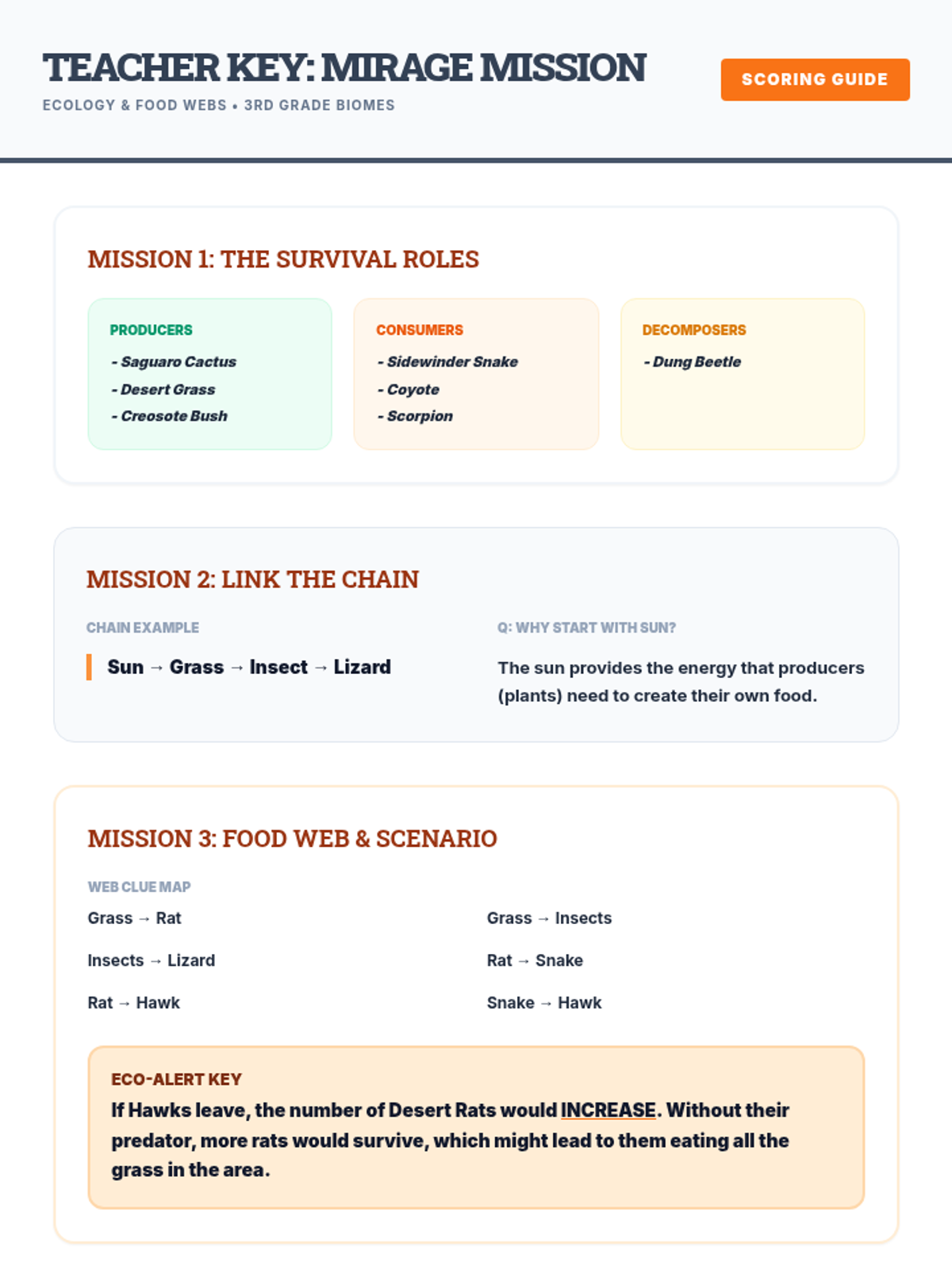
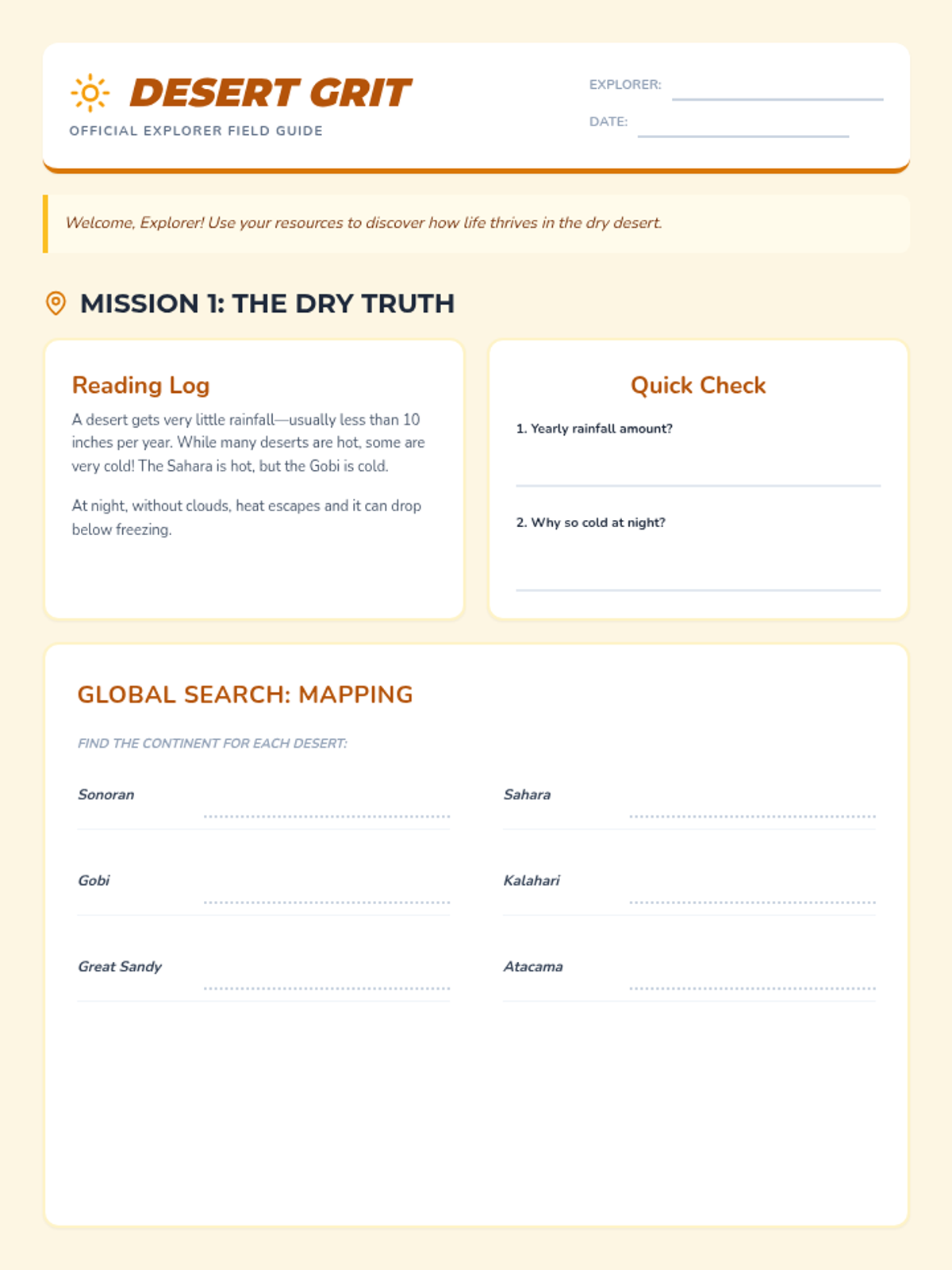
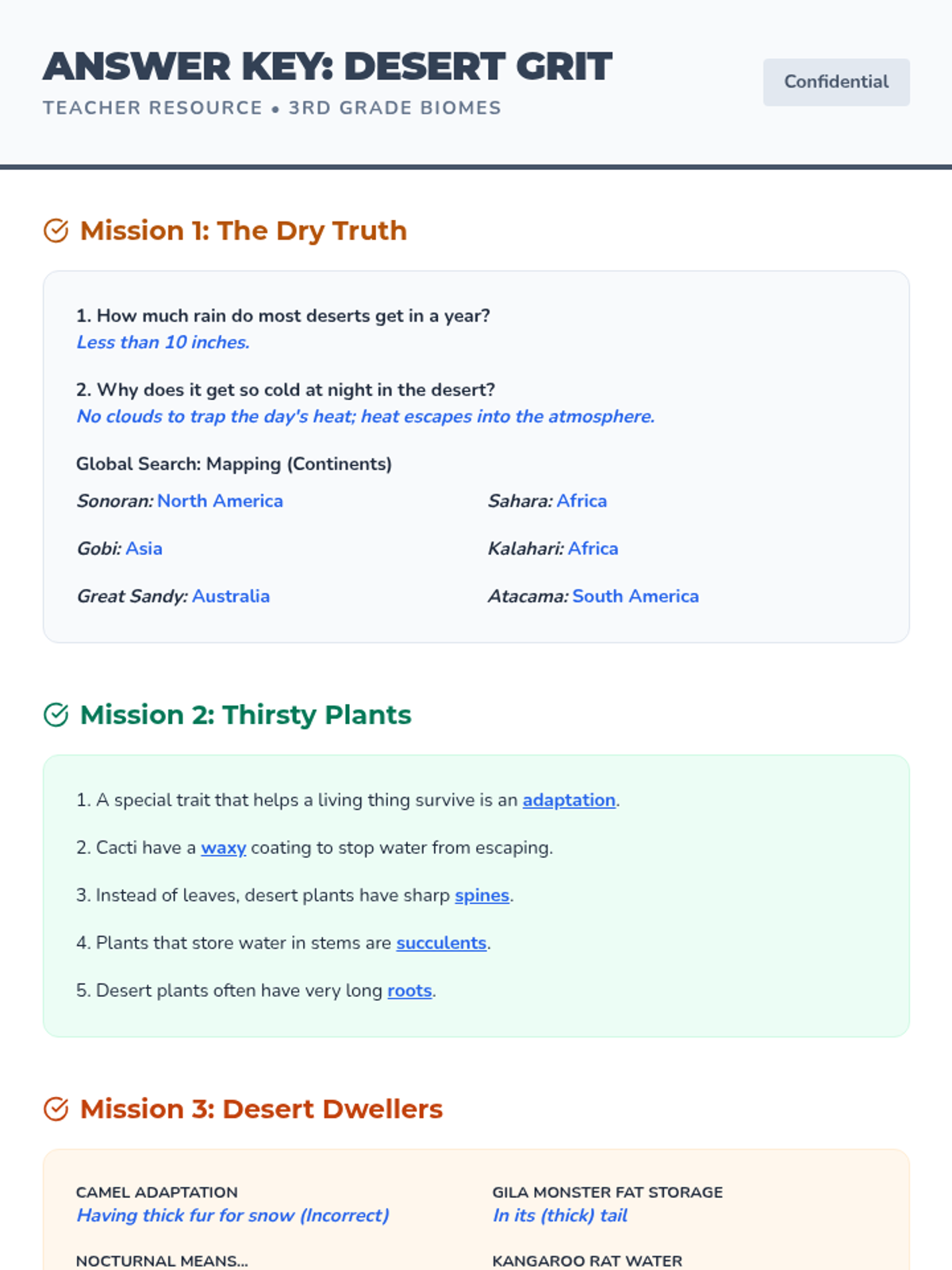
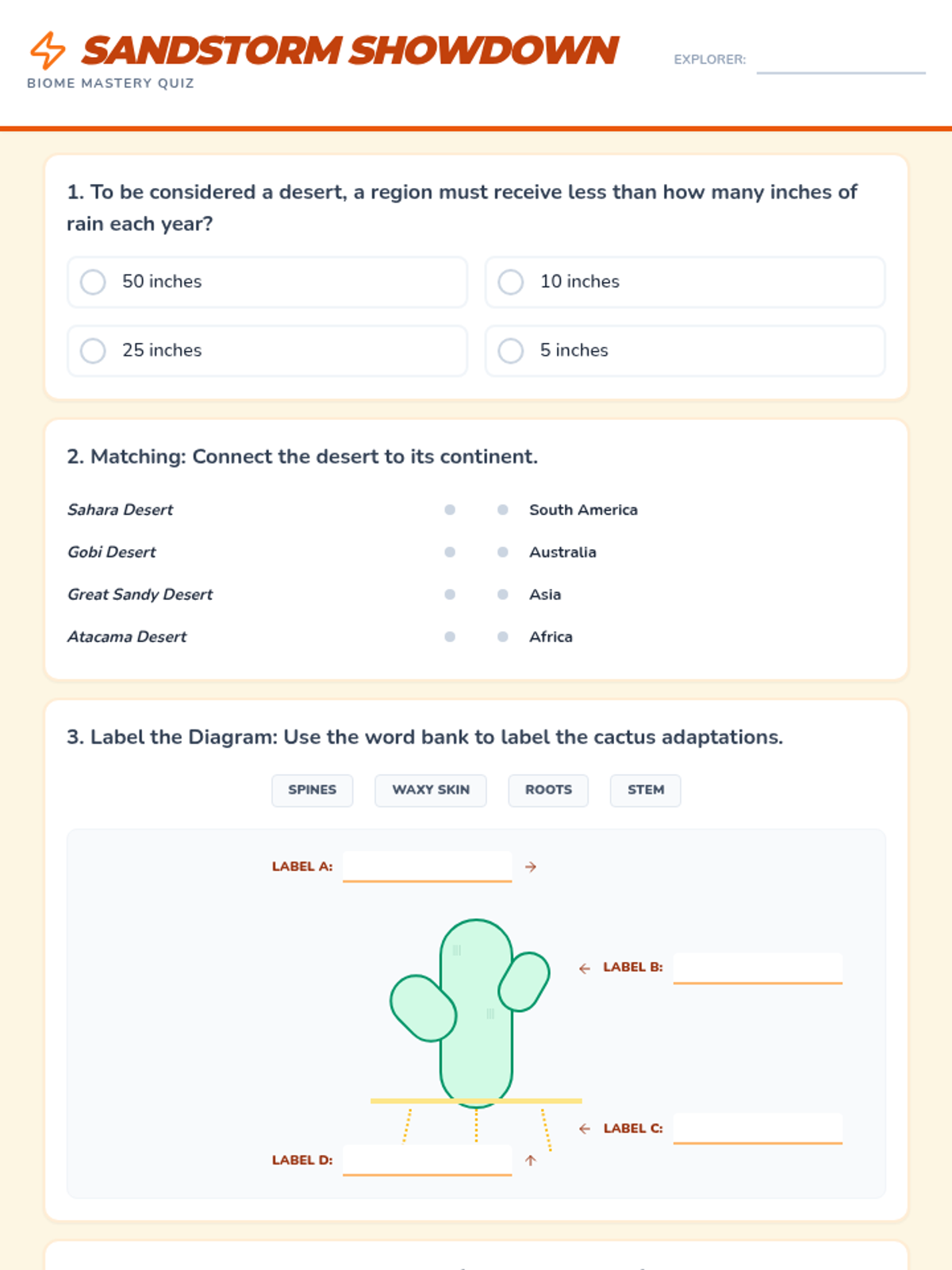
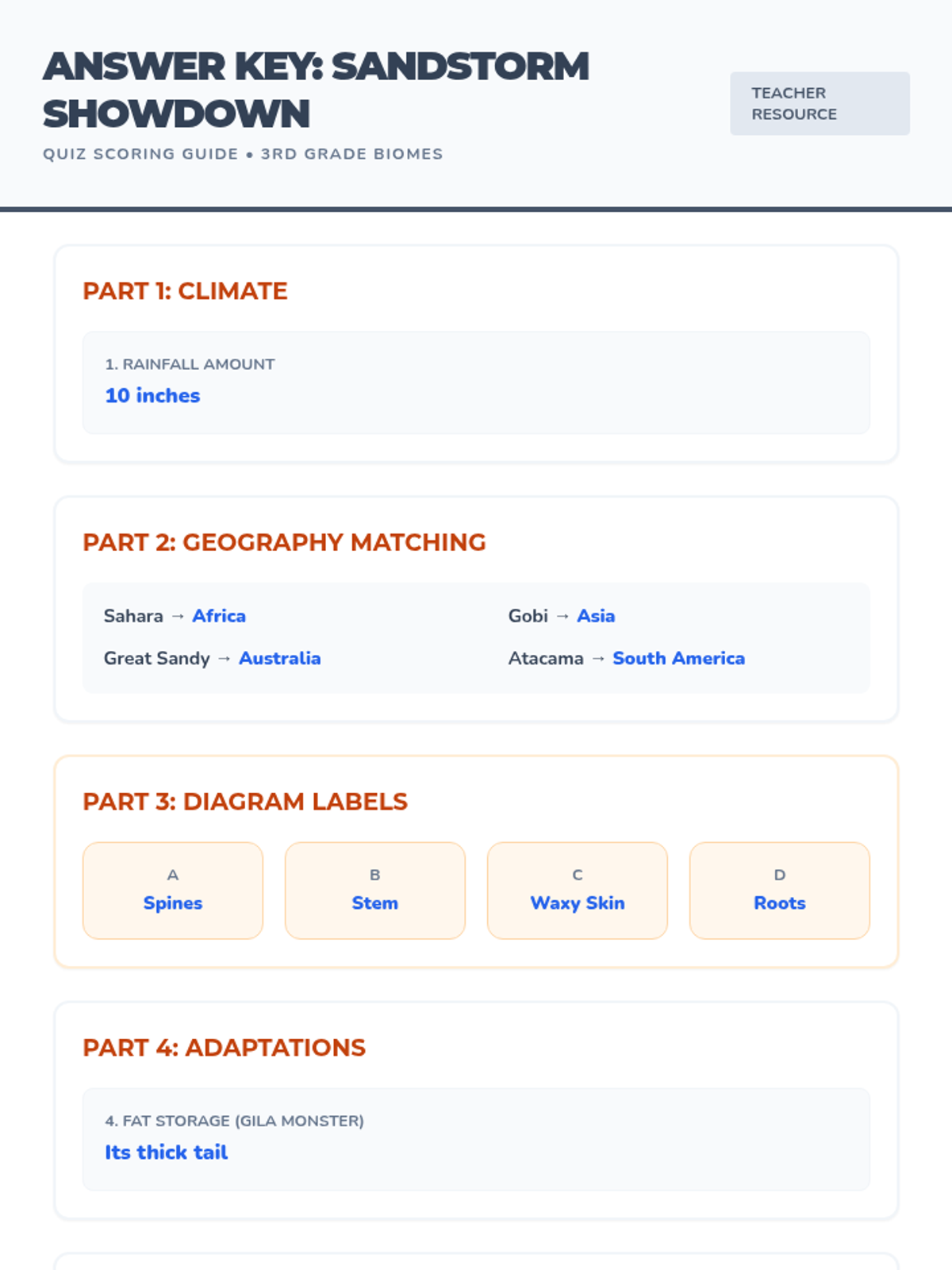
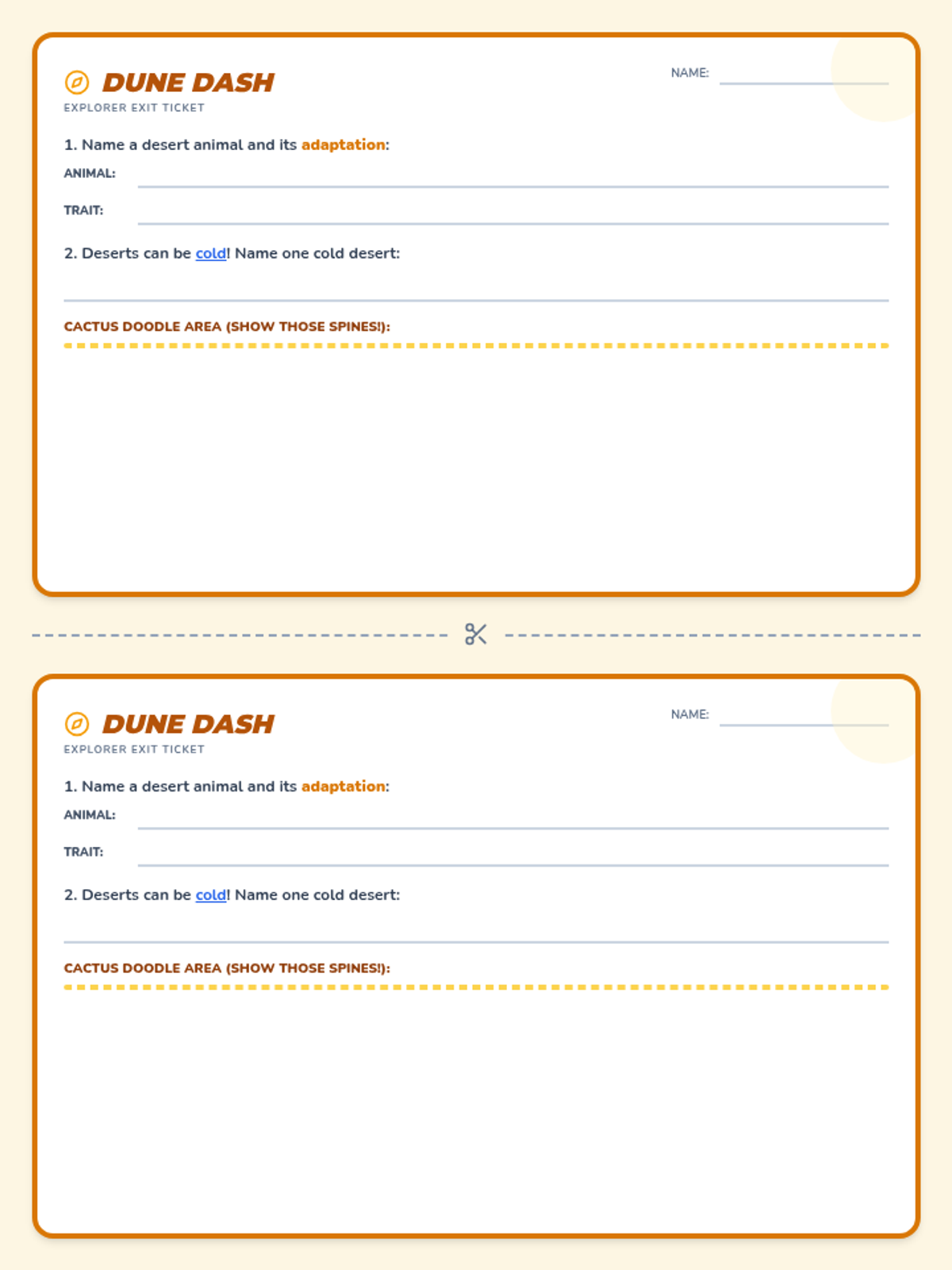
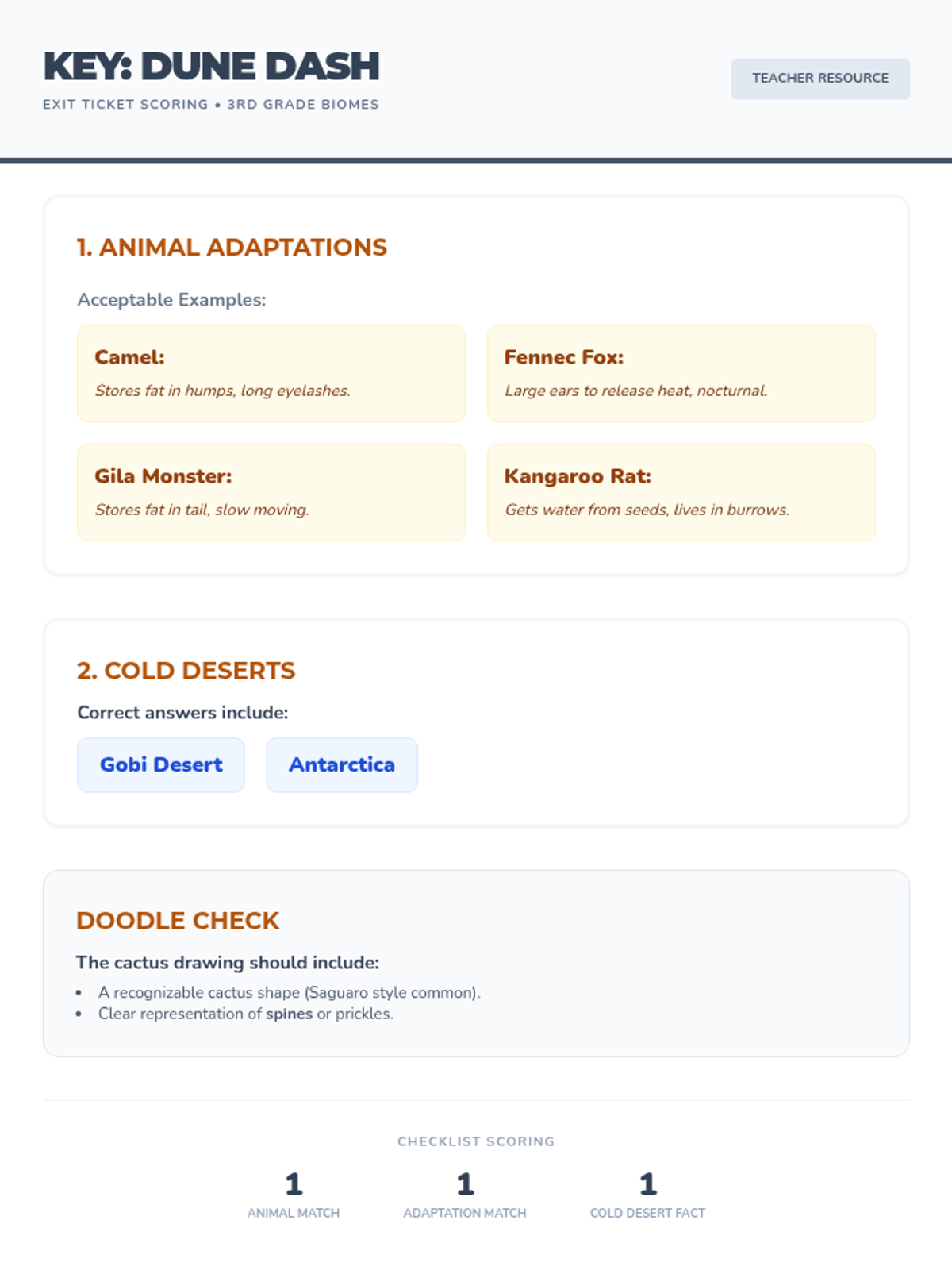
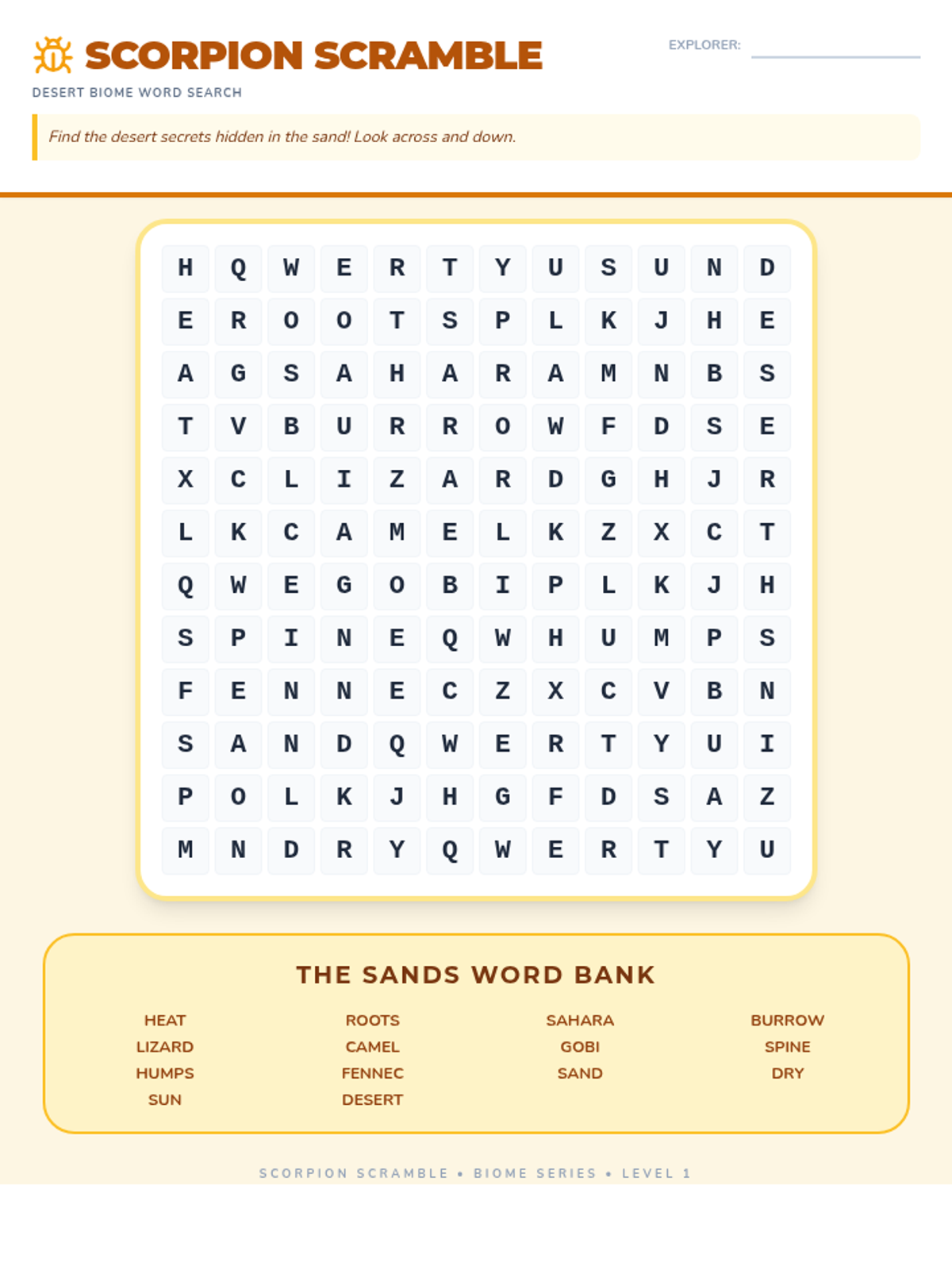
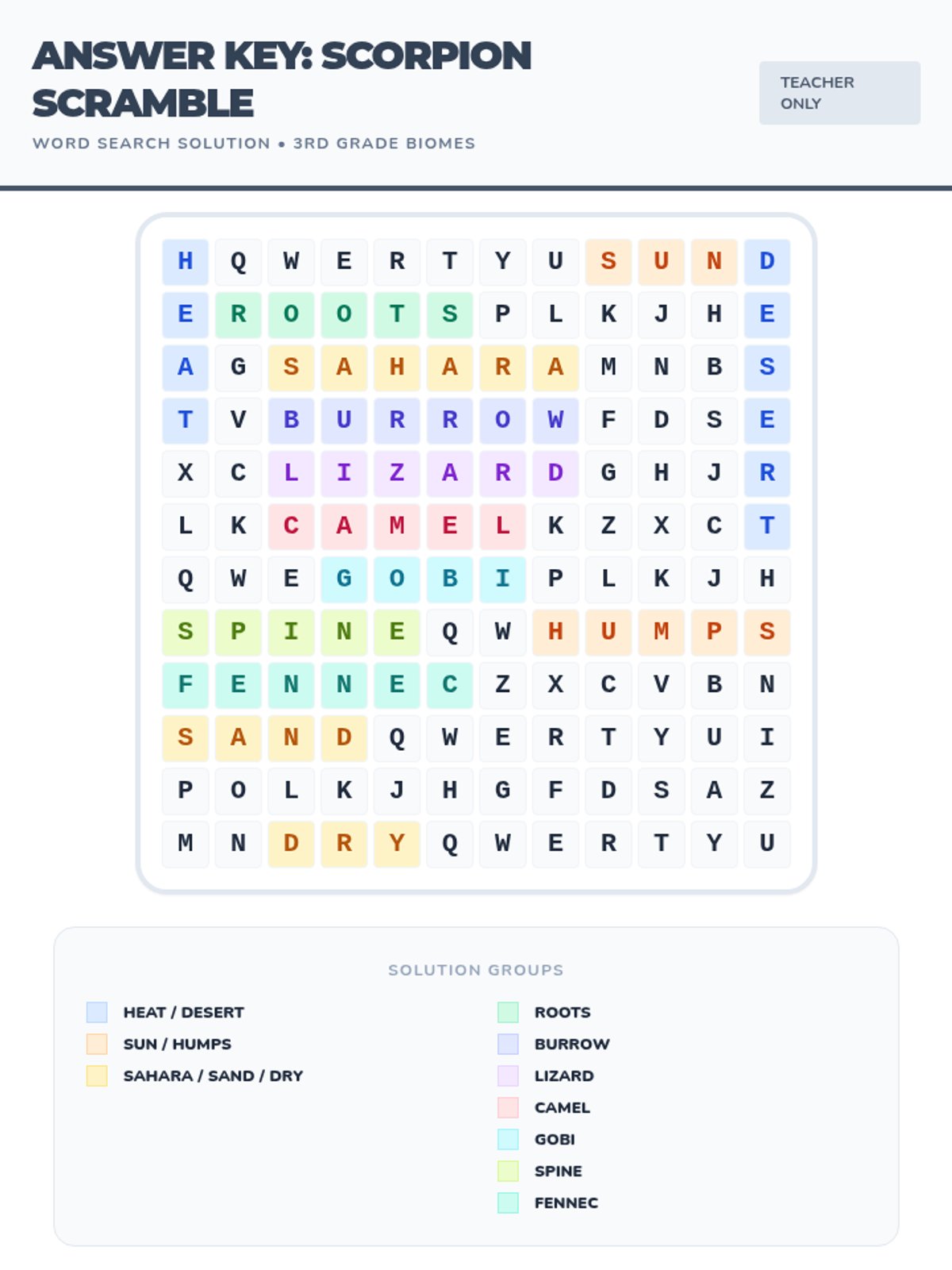
An engaging exploration of the desert biome designed for 3rd-grade students to complete independently. This lesson covers geographical locations, extreme climates, and the remarkable adaptations of desert plants and animals.
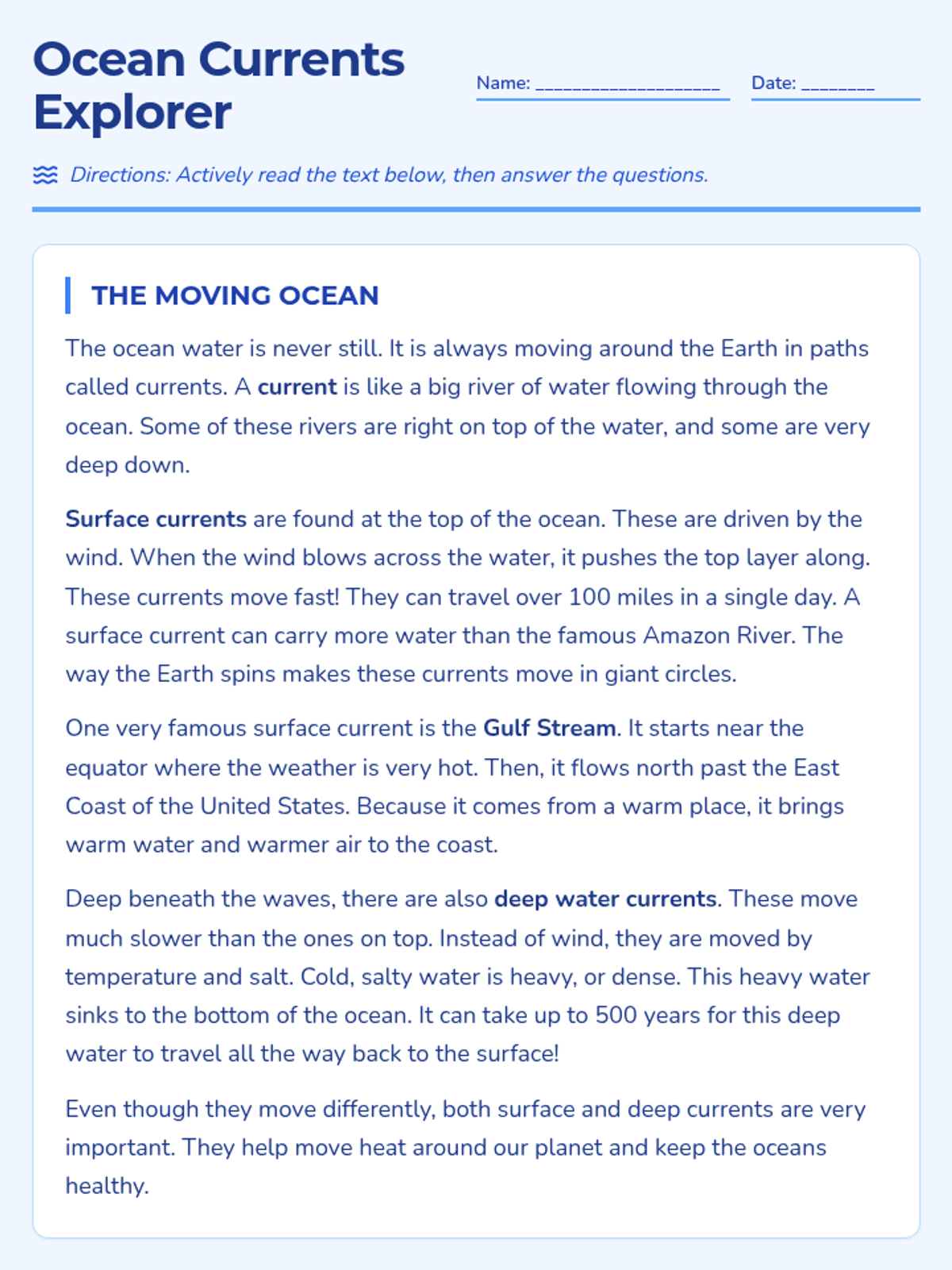
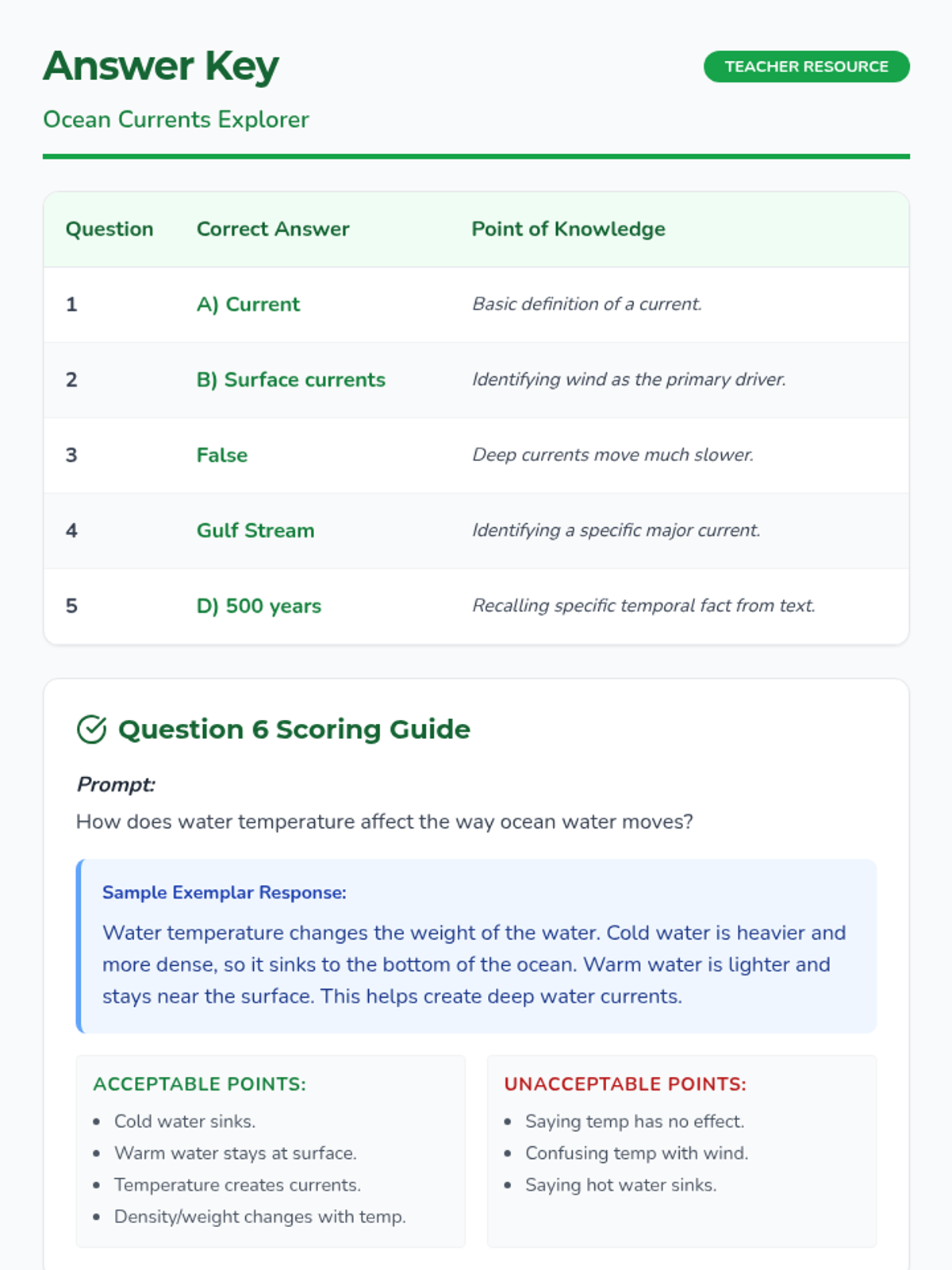
A beginner-friendly exploration of ocean currents, focusing on the differences between surface and deep water movements and how they affect our planet.
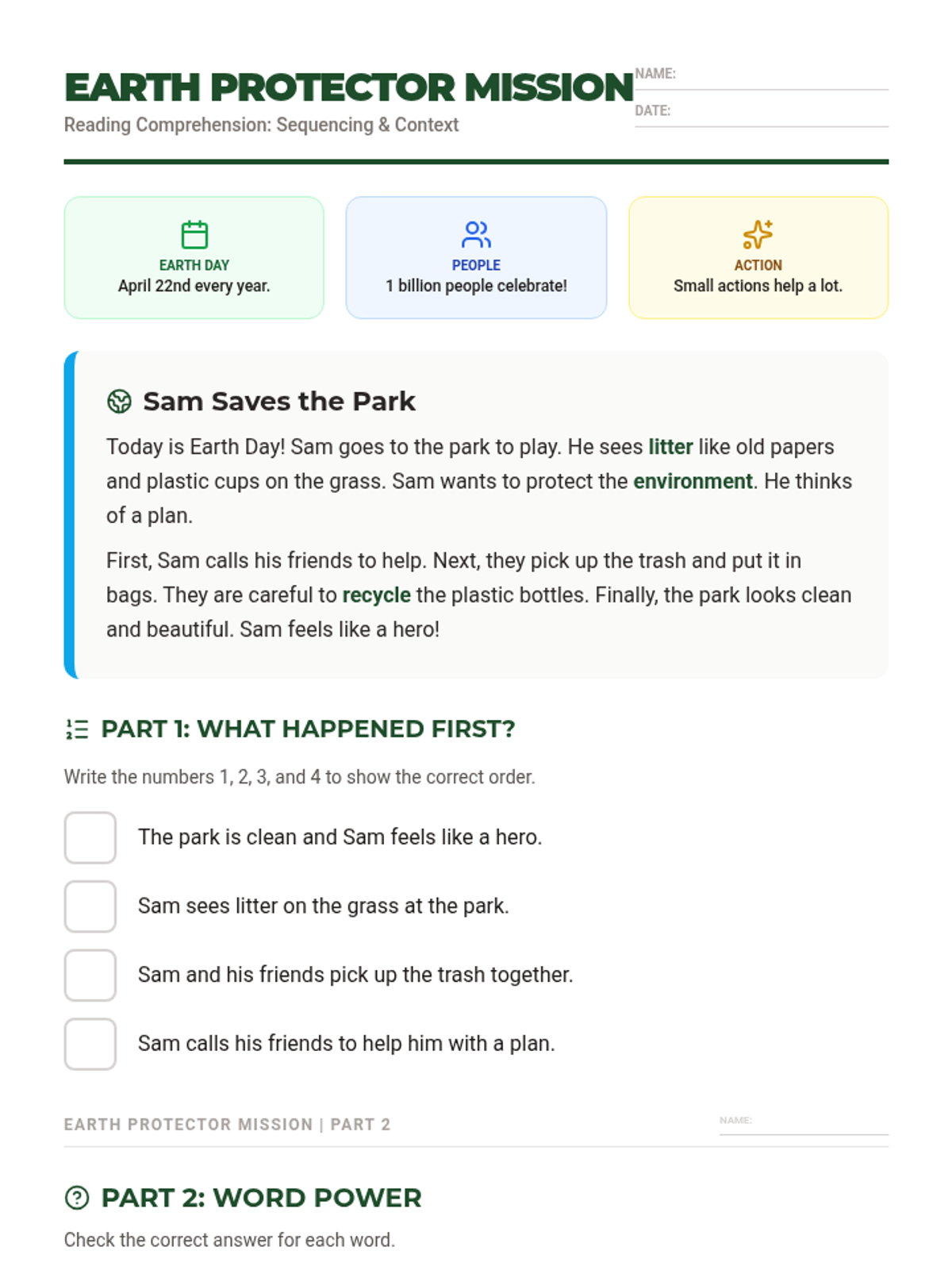
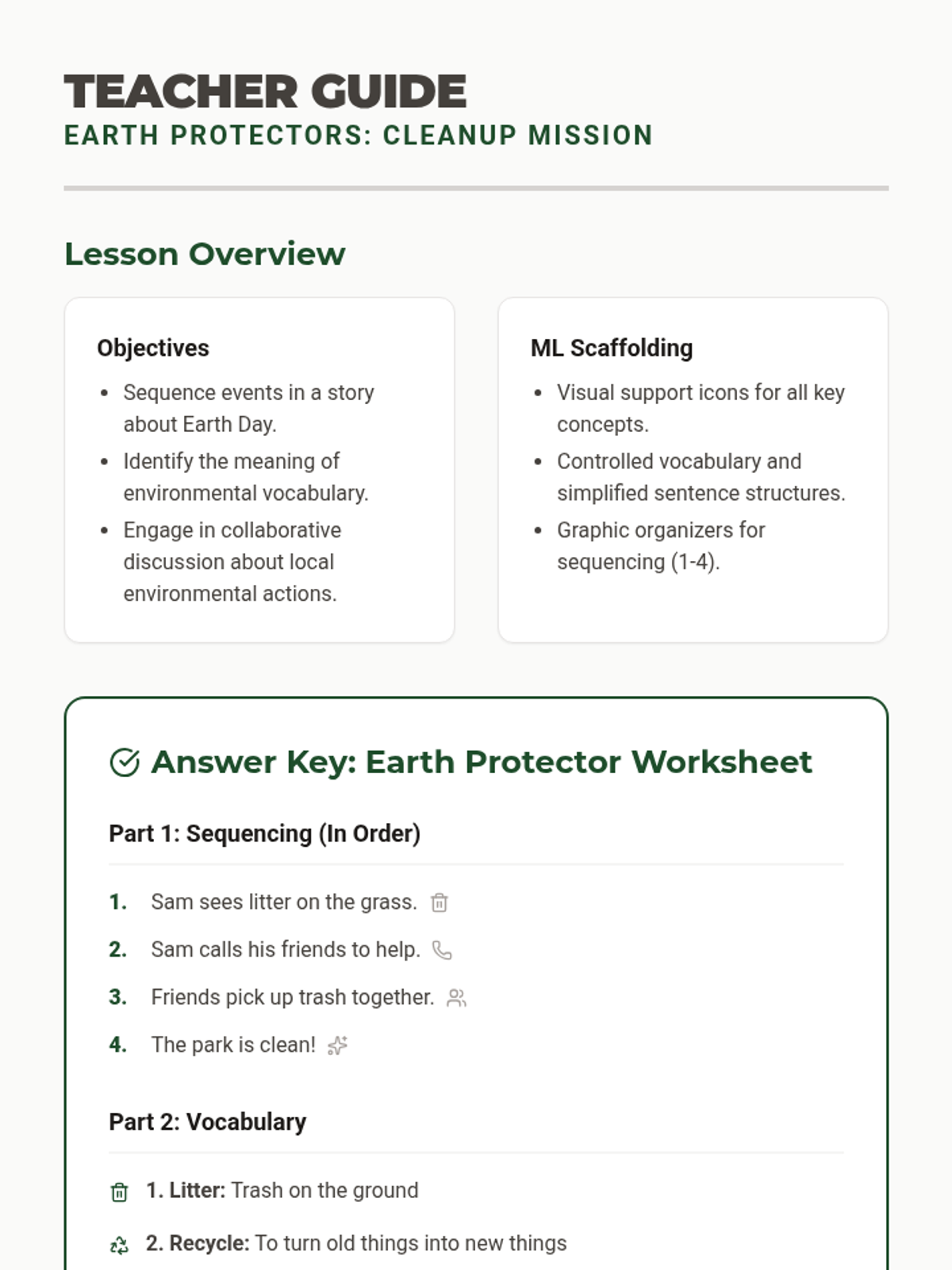
A lesson designed for emerging Multilingual Learners to practice vocabulary in context and sequencing through an engaging story about Earth Day and a park cleanup. Students will learn facts about the environment while building narrative comprehension skills.
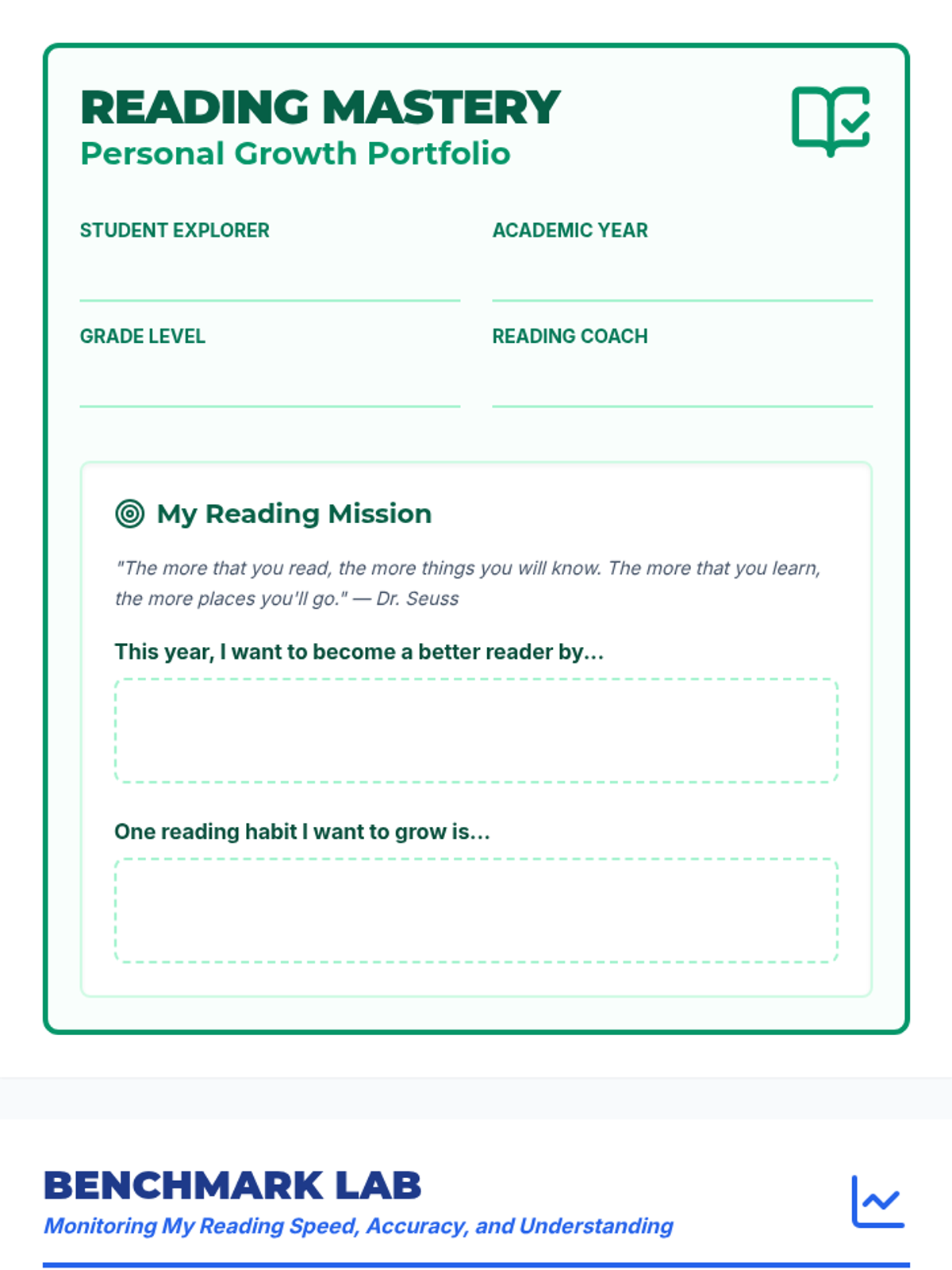
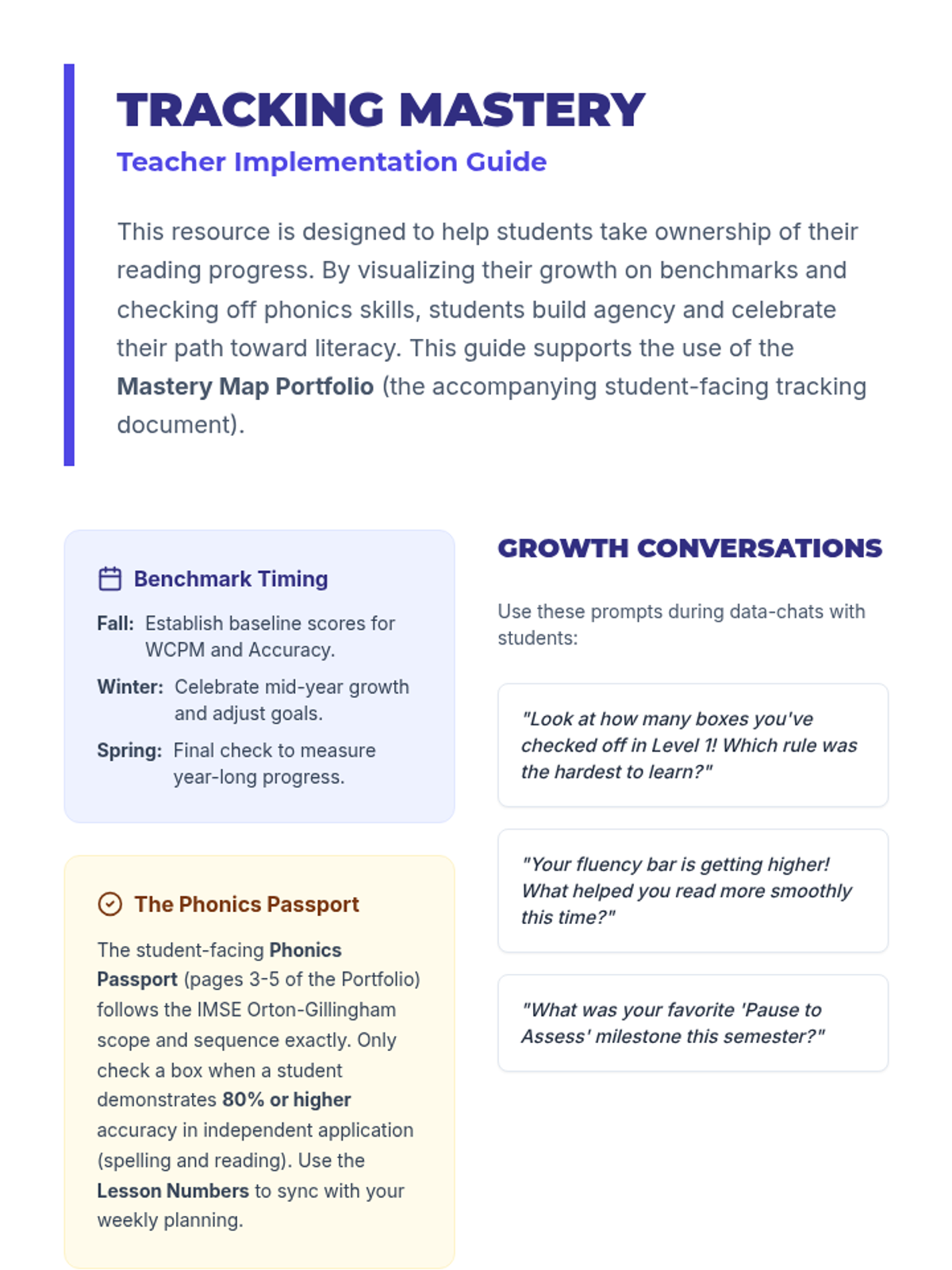
A comprehensive suite of data tracking tools for students to monitor their reading progress, including benchmark assessments and IMSE Orton-Gillingham concept checks from Kindergarten through 5th grade.
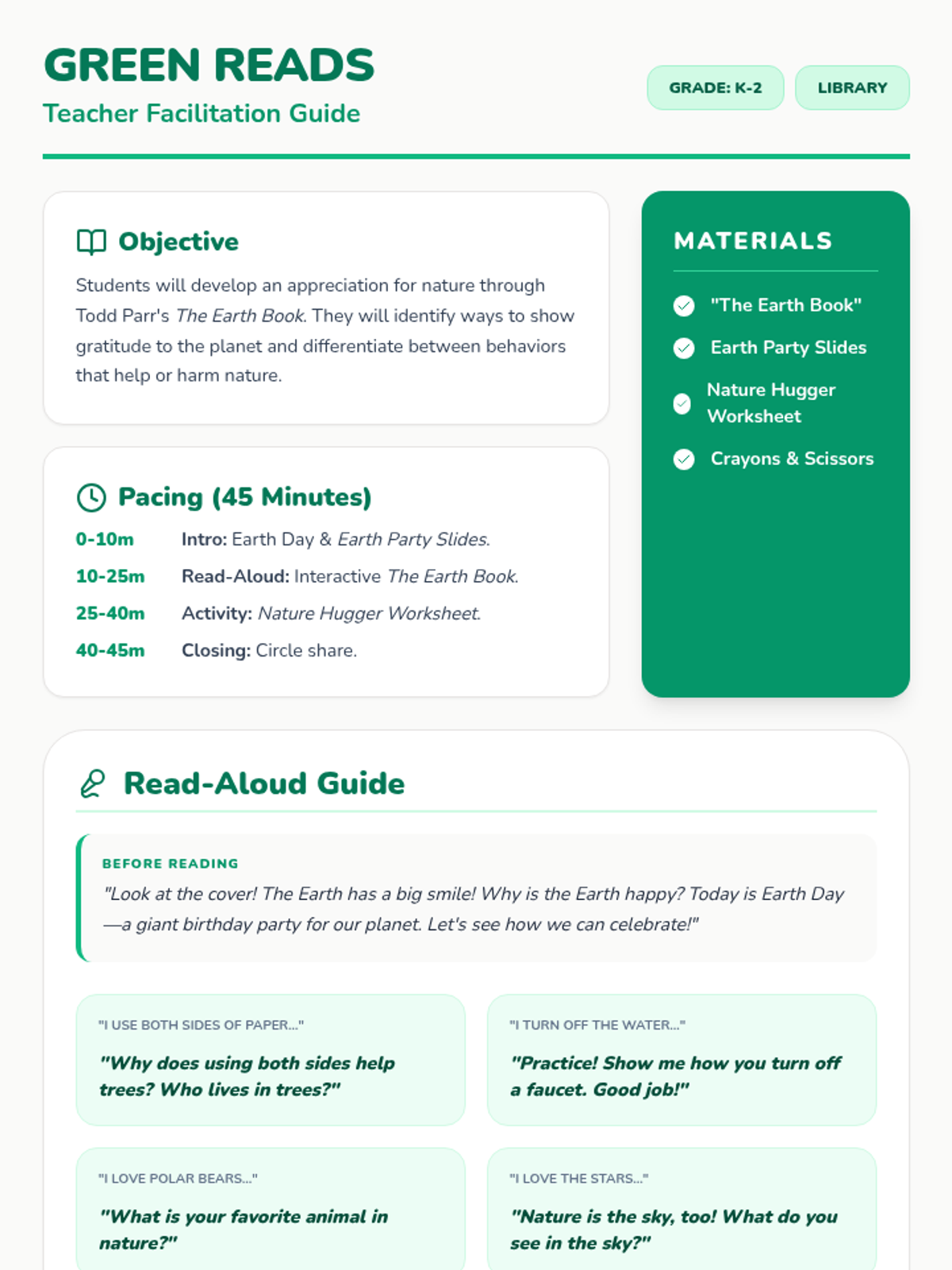
A library-focused lesson for K-2 students that celebrates Earth Day through a nature-themed read-aloud and interactive activities that encourage appreciation and care for the environment.
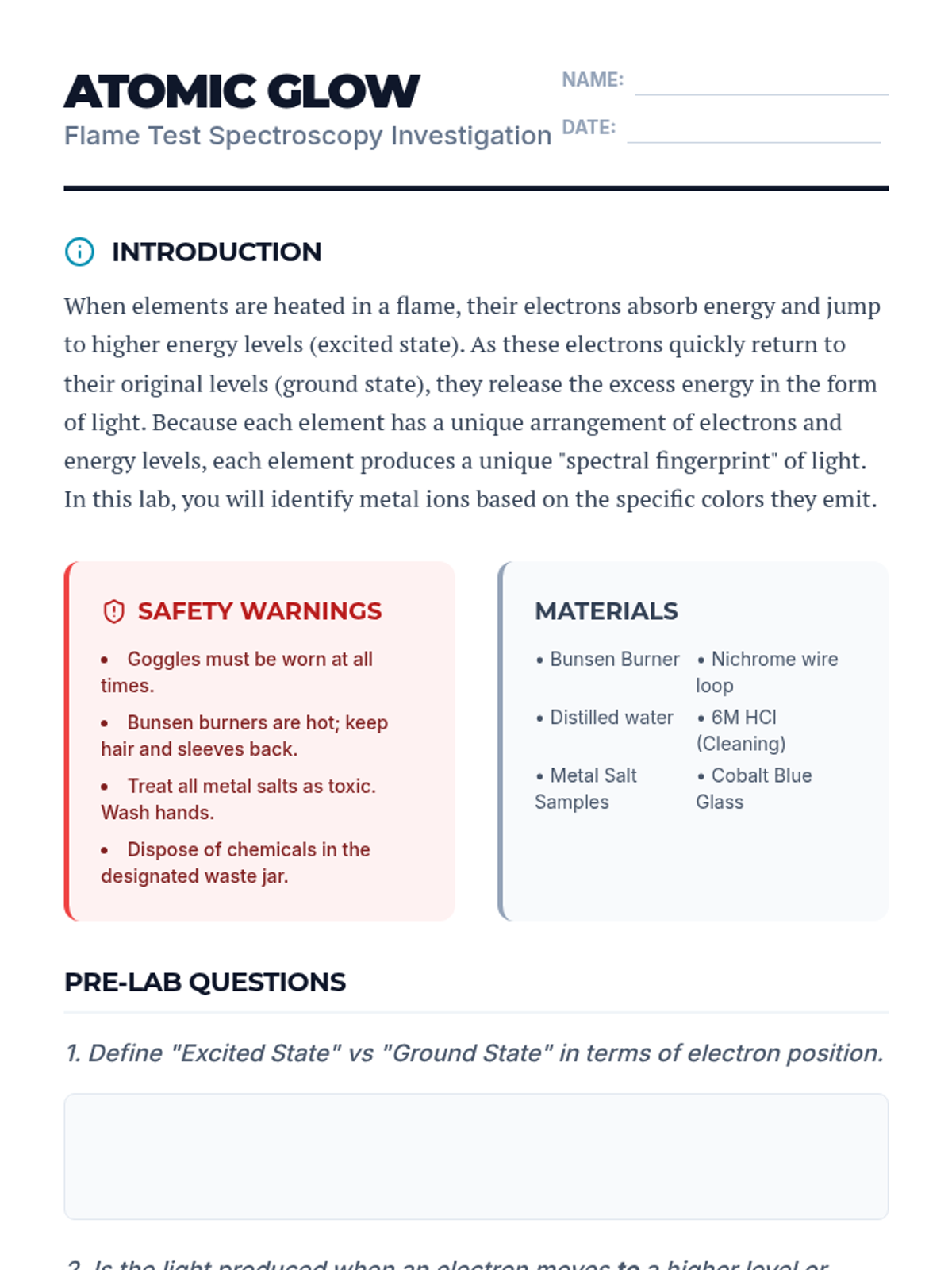
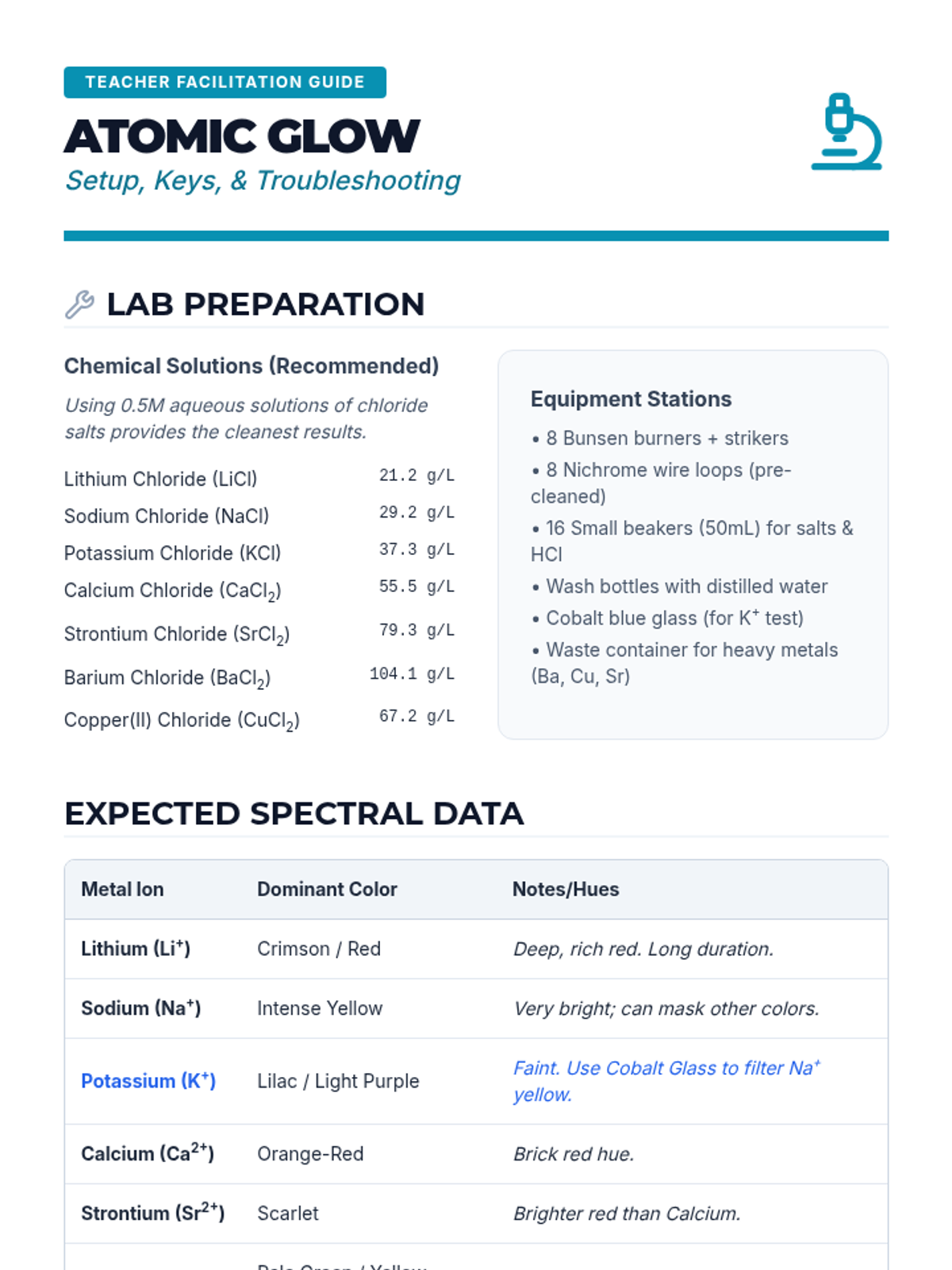
A high school chemistry lab investigating the emission spectra of metal ions through flame tests. Students explore the Bohr model of the atom and identify unknown metal salts based on their characteristic flame colors.
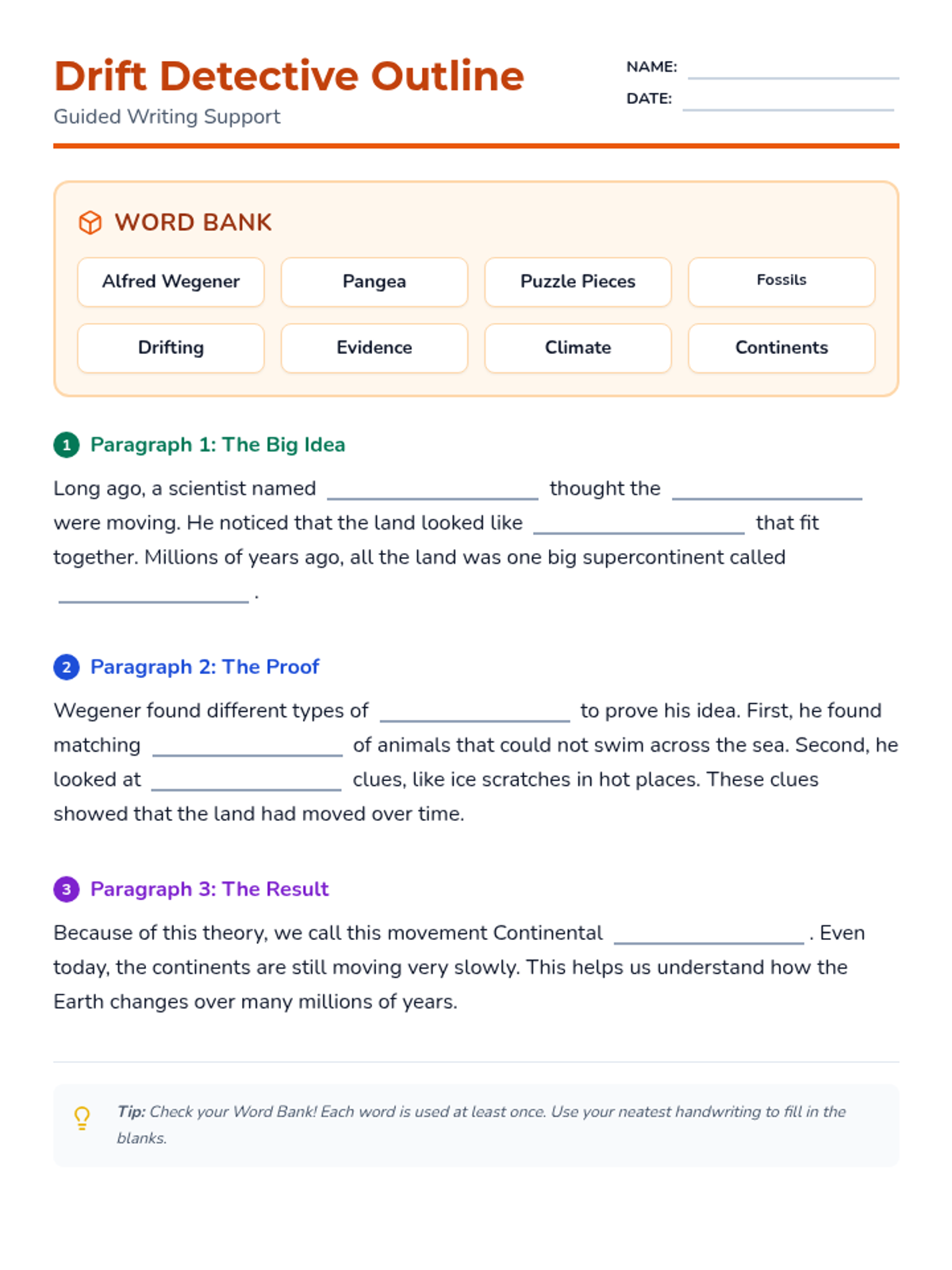
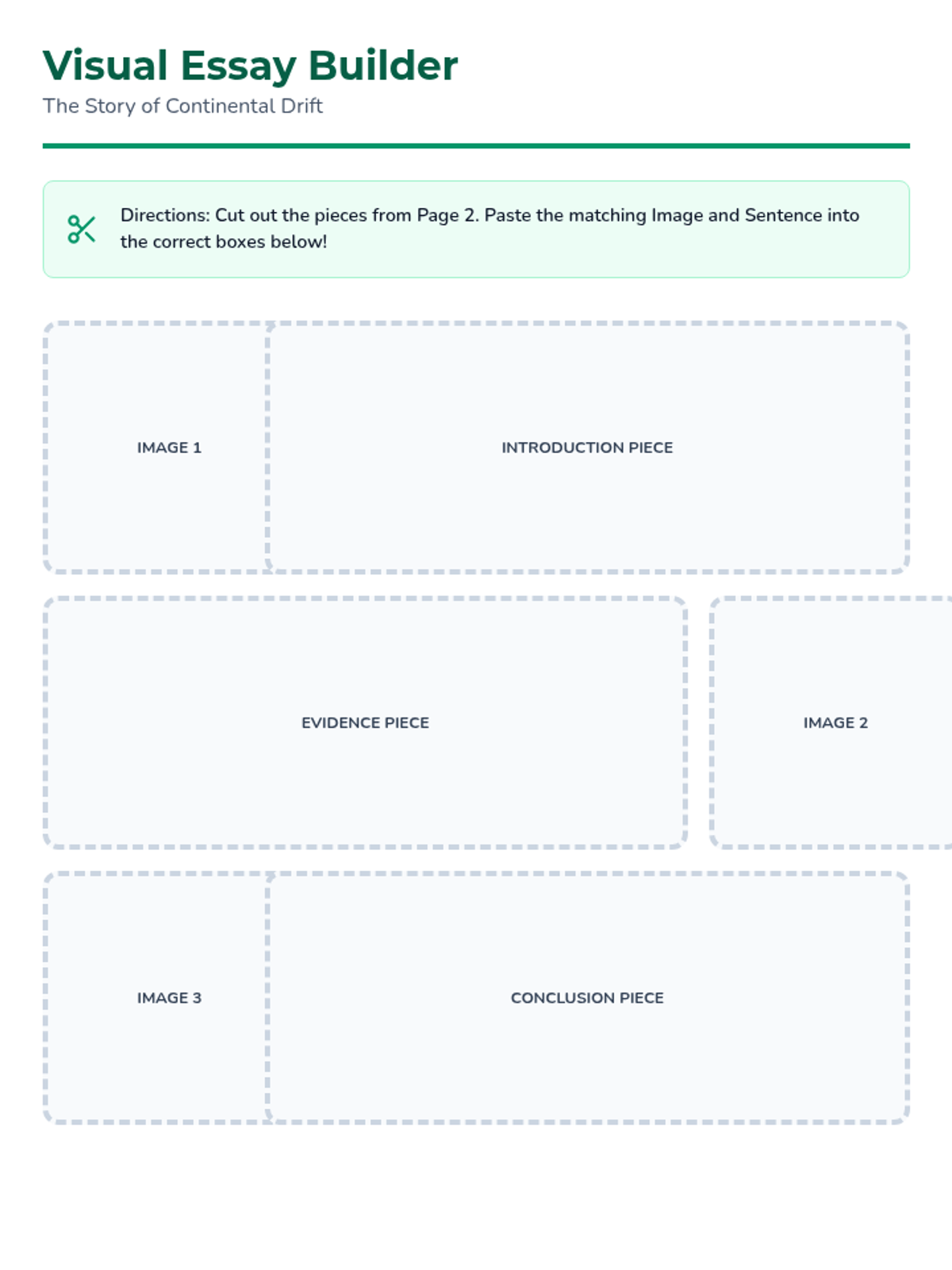
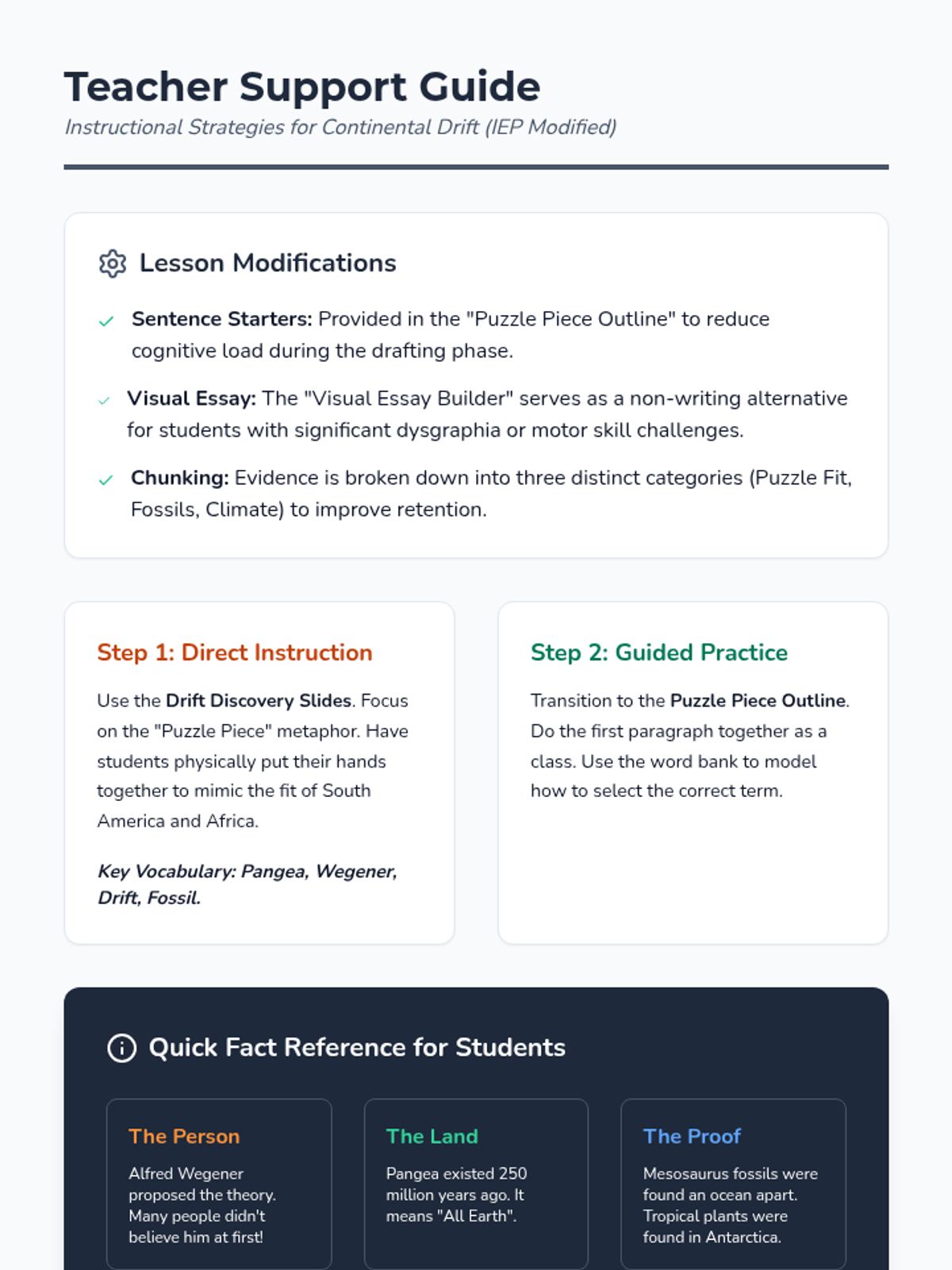
A modified lesson on continental drift designed specifically for IEP students, focusing on Alfred Wegener's theory, Pangea, and the four main pieces of evidence through scaffolded writing and visual activities.
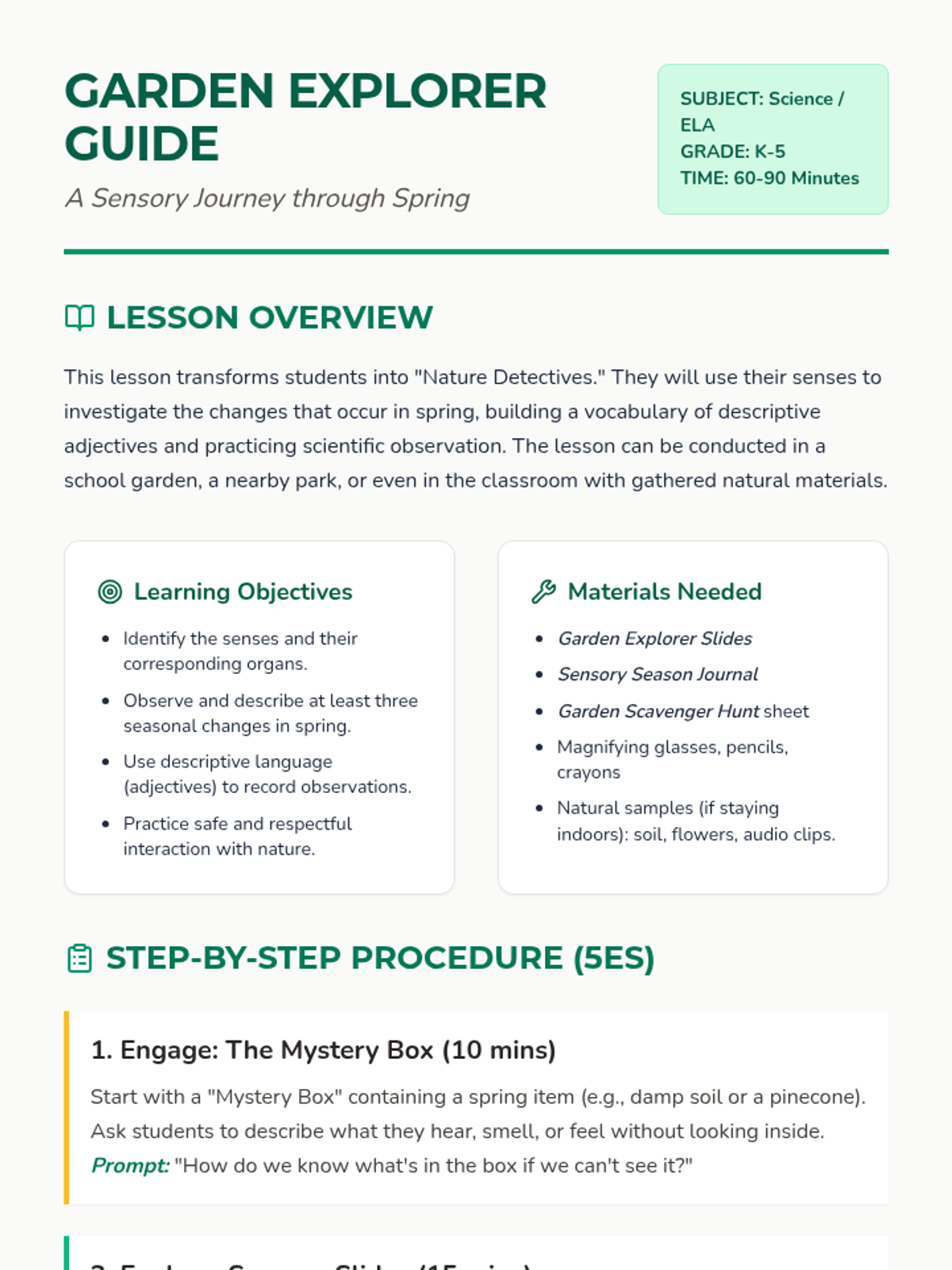
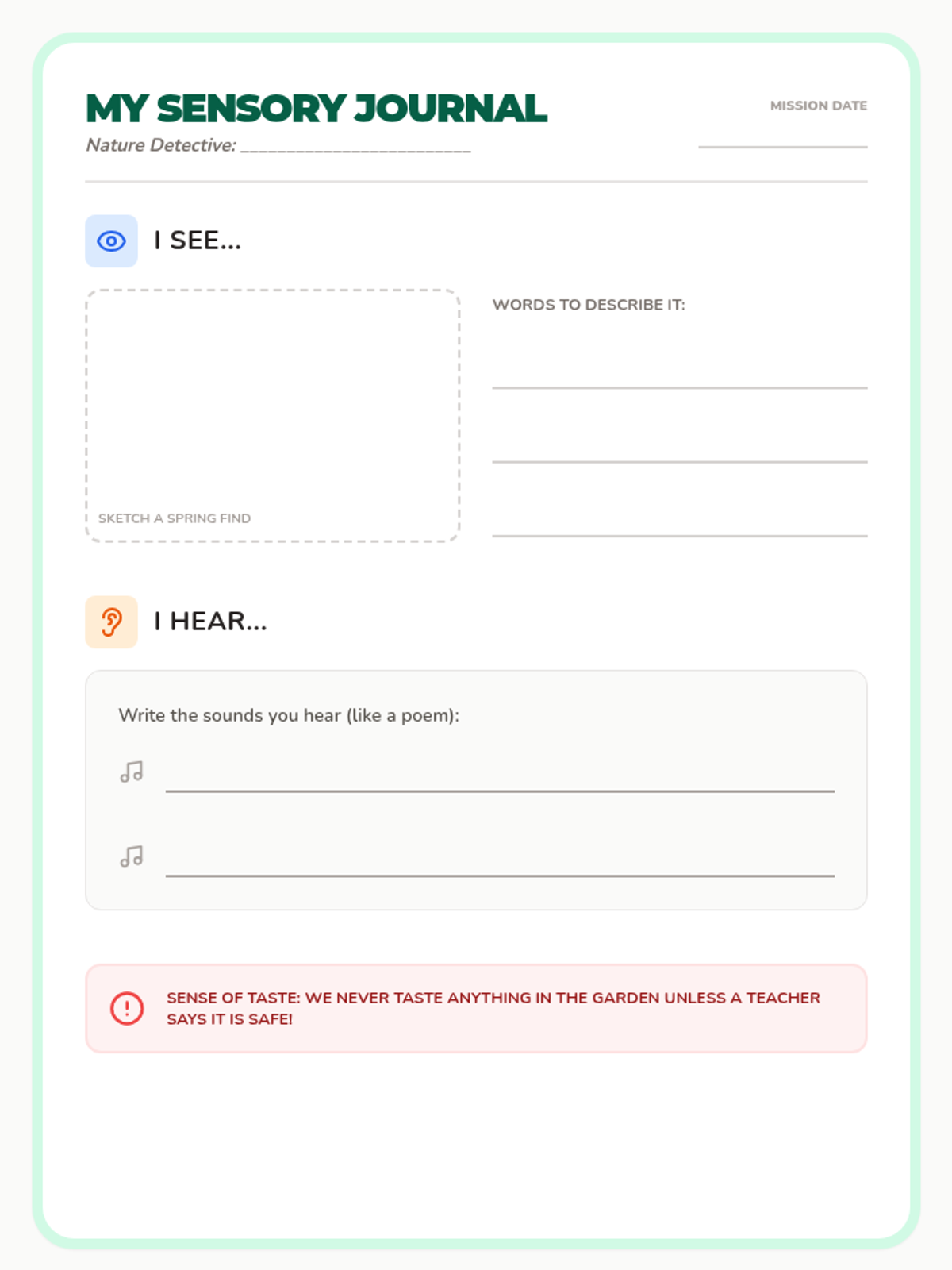
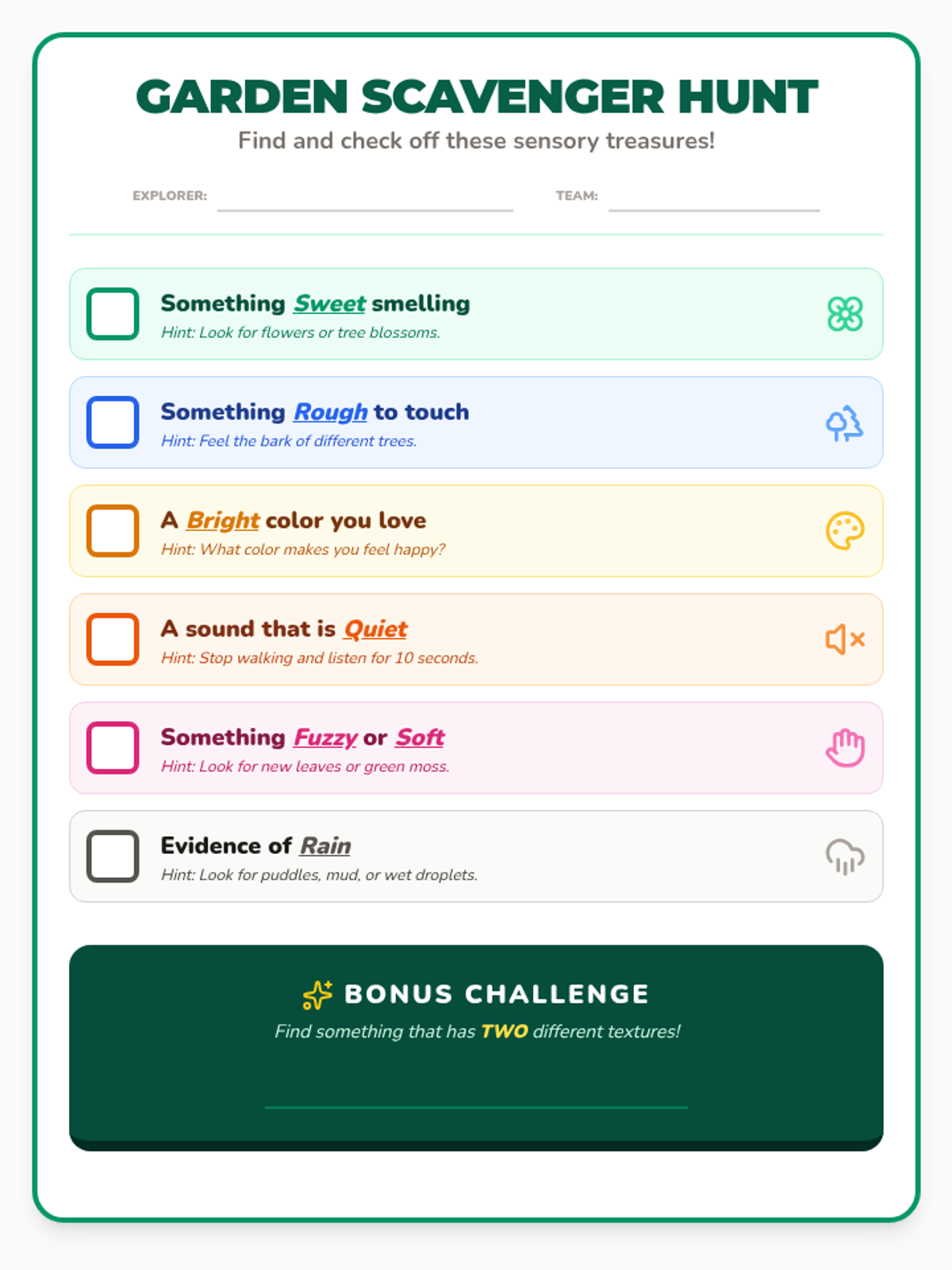
A multi-sensory exploration of spring through the lens of the five senses, designed to build observation skills and descriptive language in K-5 students.
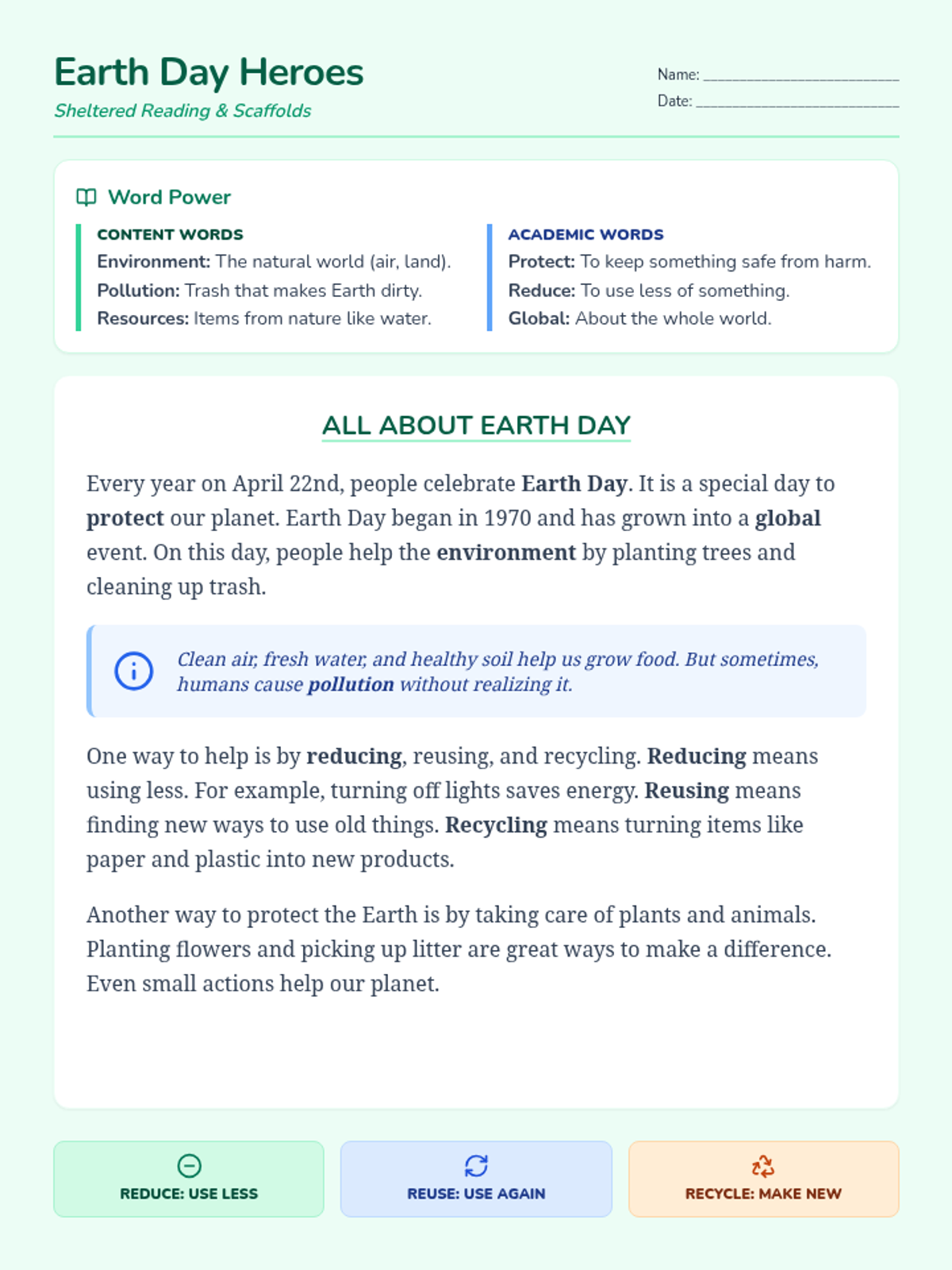
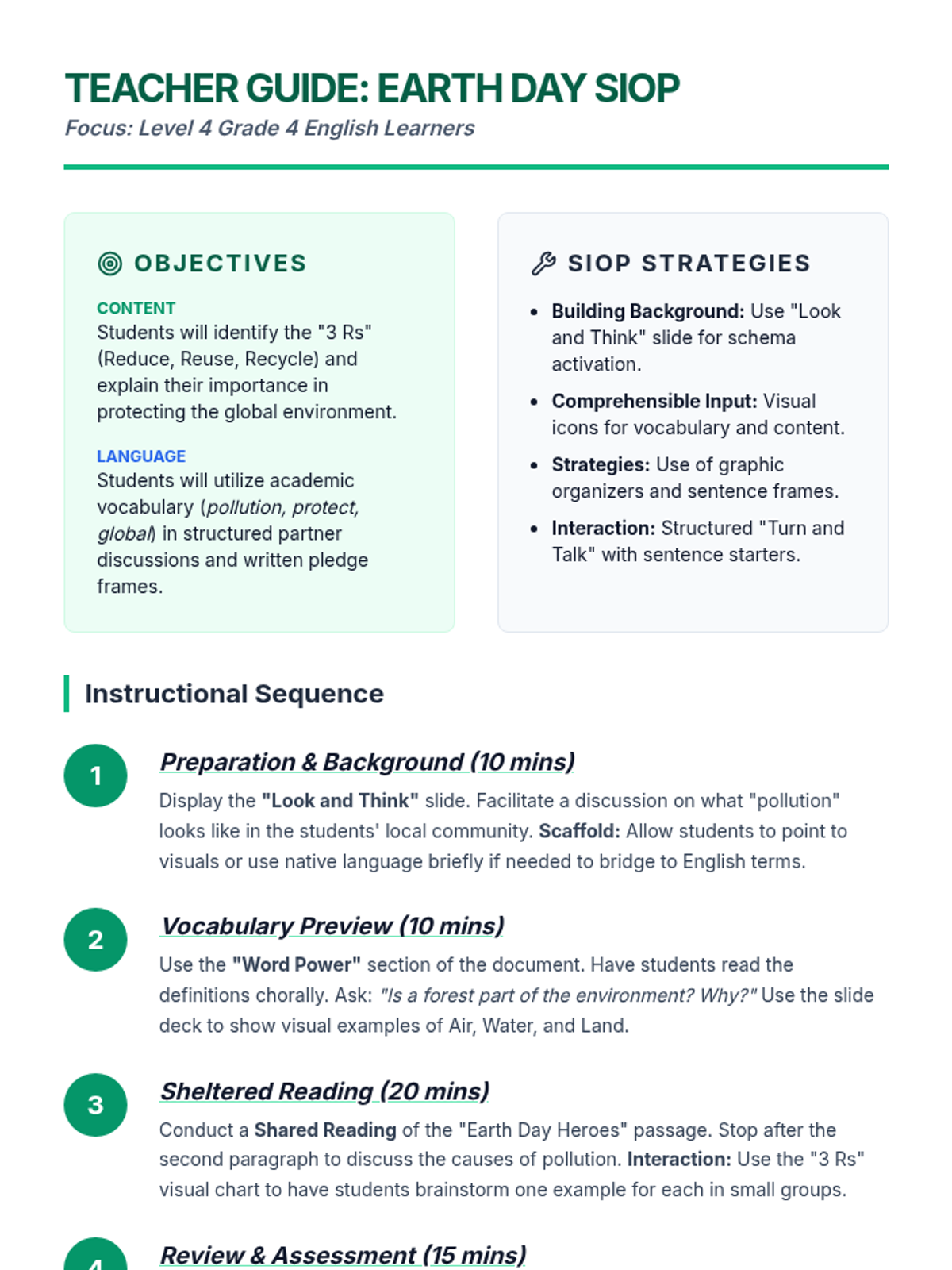
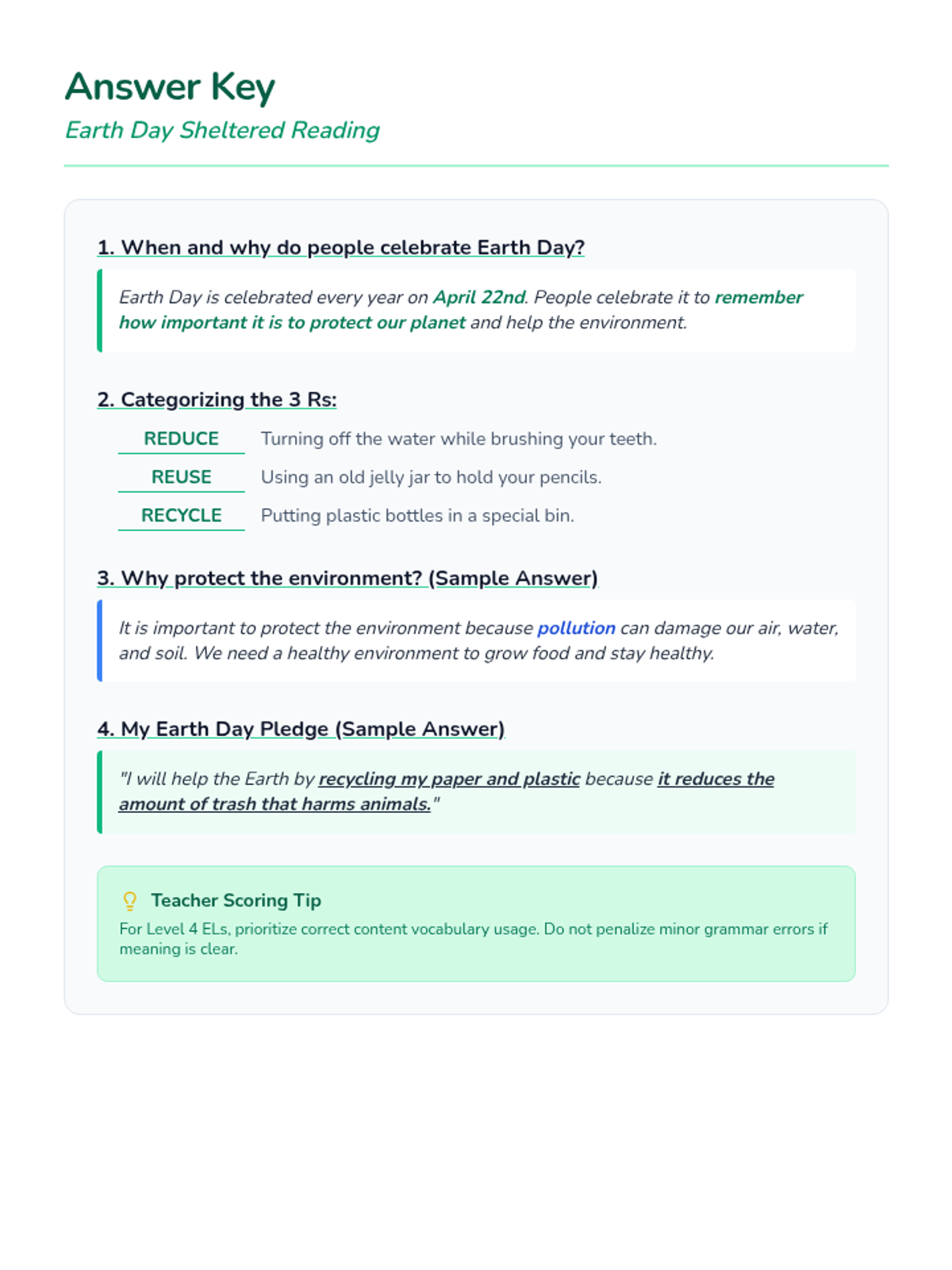
A SIOP-based lesson on Earth Day for Level 4 ELs, focusing on the 3 Rs and environmental protection through visual scaffolds, academic language support, and interactive discussion.