Using attribute blocks, students play games to compare shapes based on their number of sides and corners.
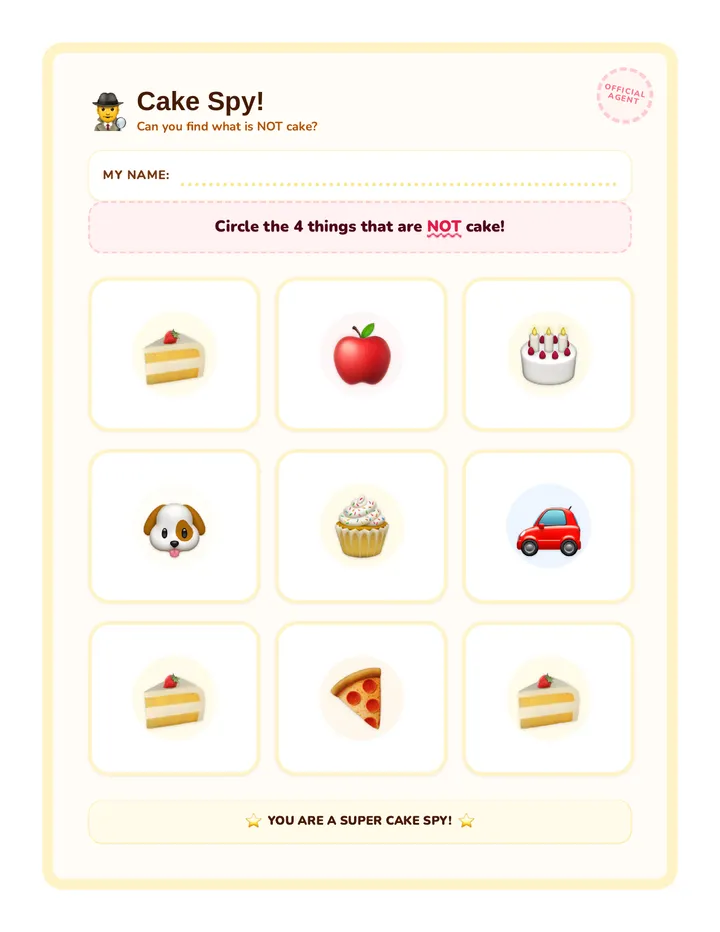
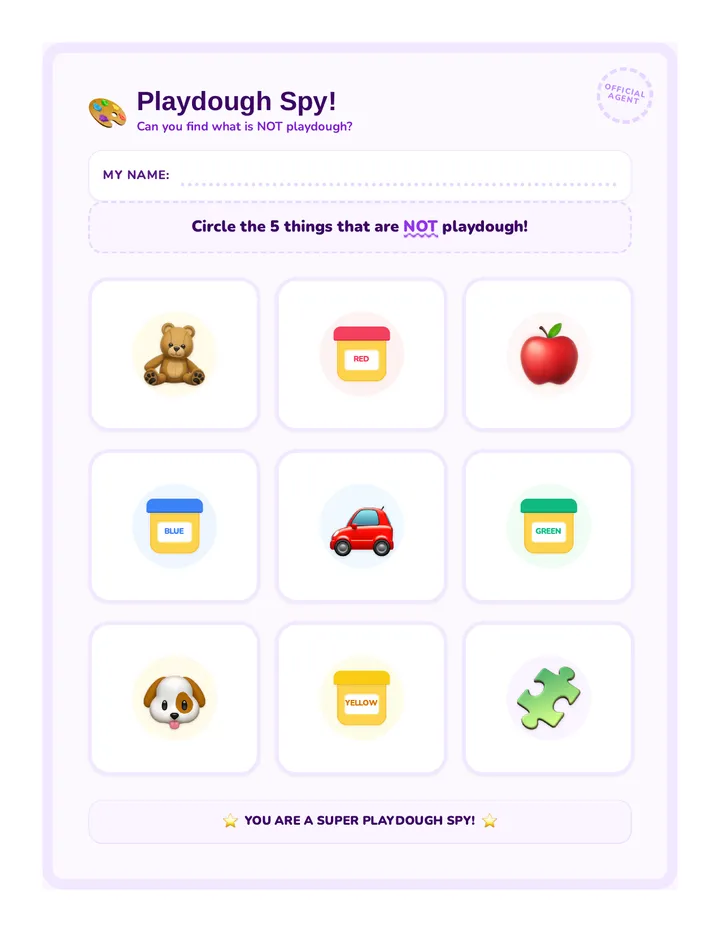
A foundational language and logic lesson for first graders to master the concept of negation ('not') through playful categorization activities.
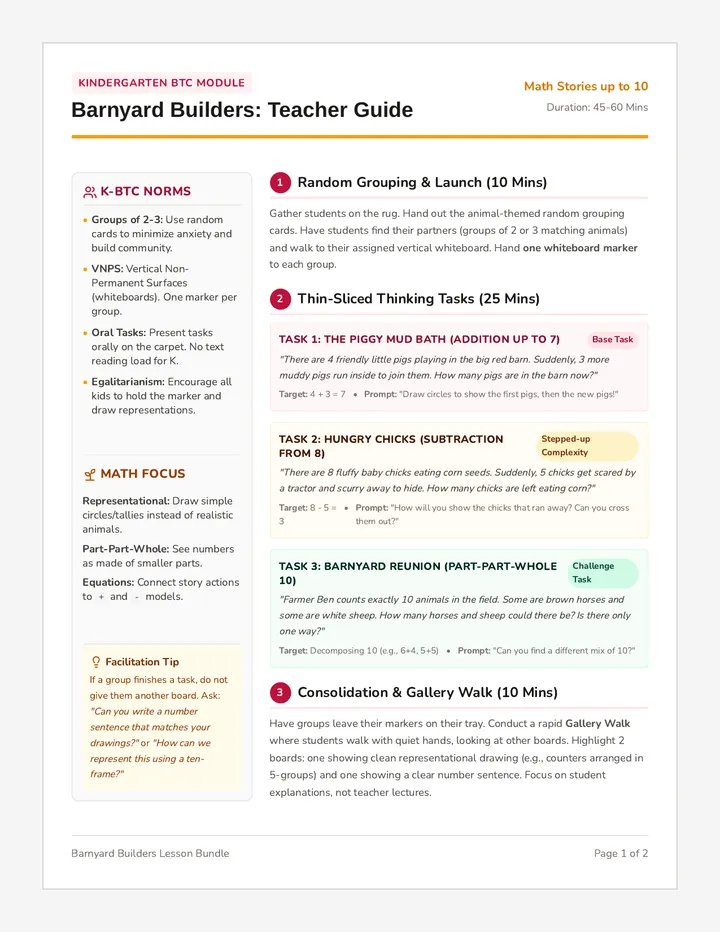
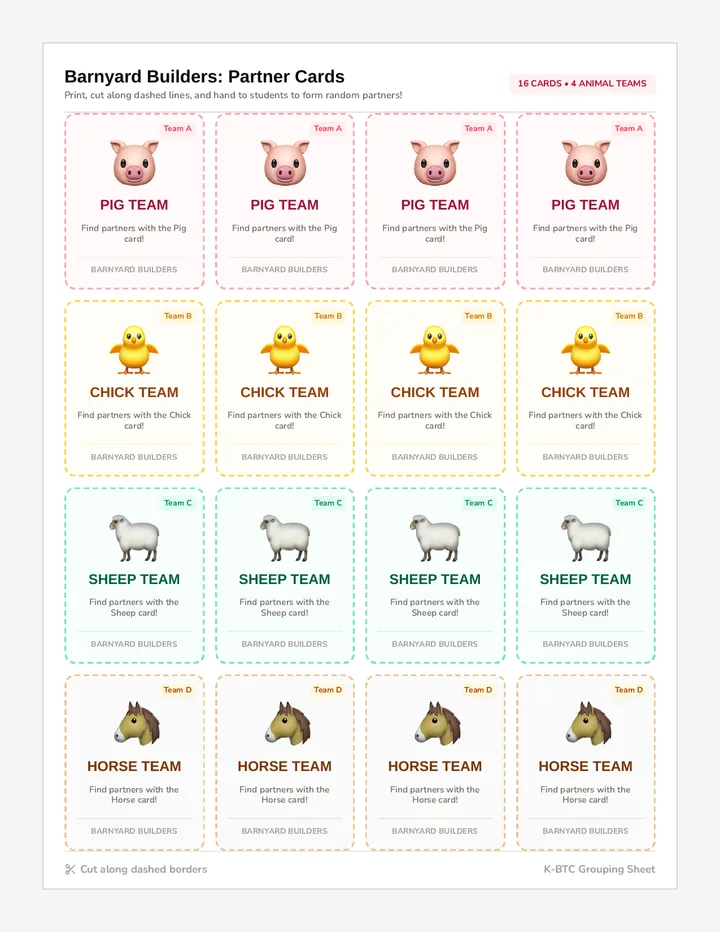
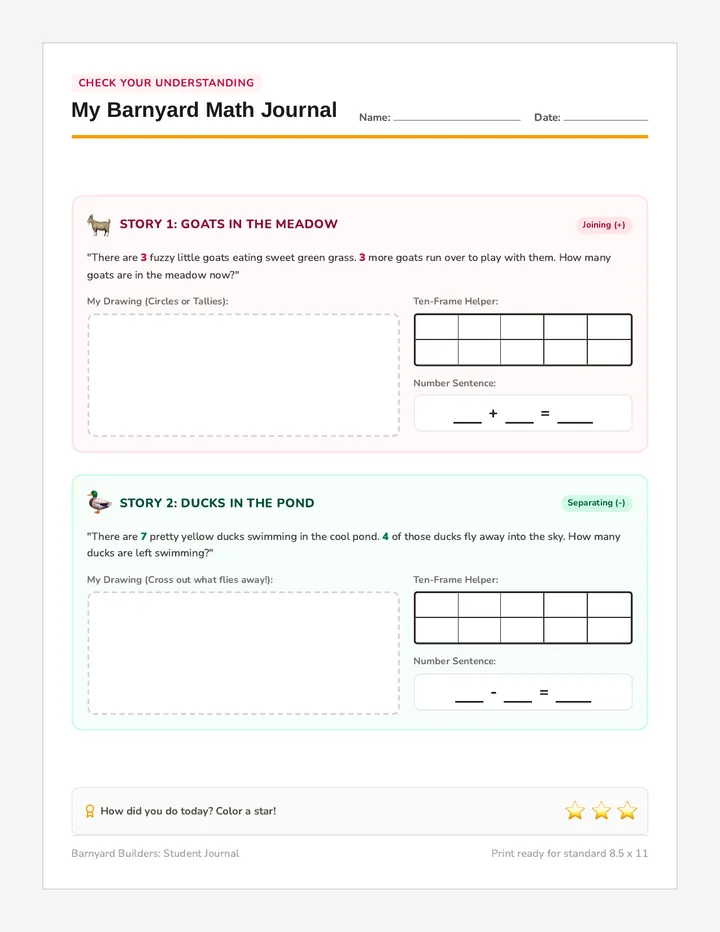
A Kindergarten Building Thinking Classroom (BTC) lesson on math story problems up to 10 using collaborative learning, representational drawings, and number sentences.
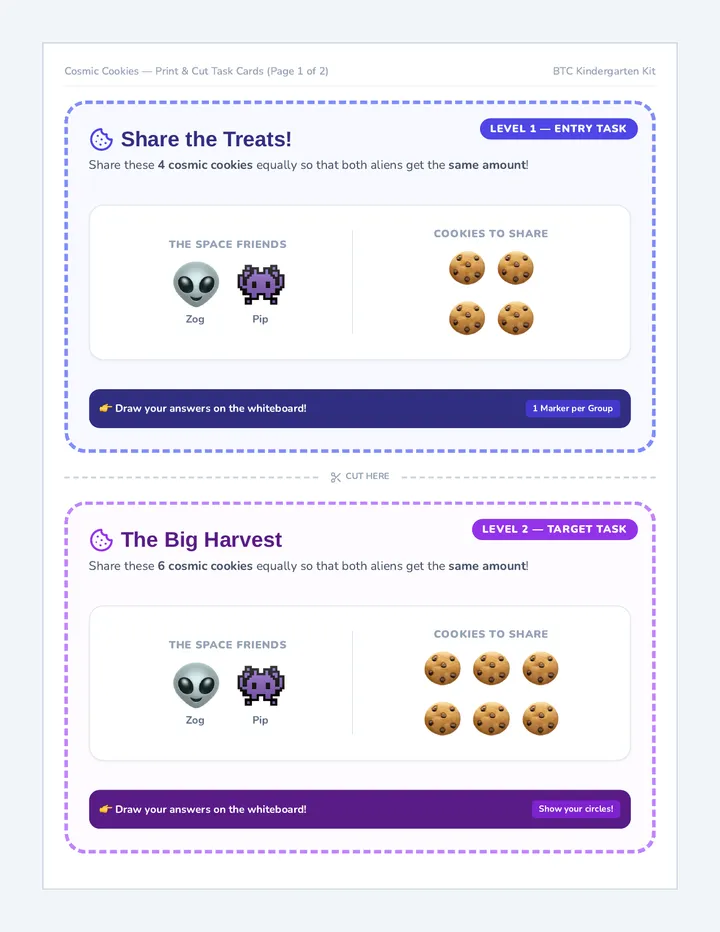
A BTC-inspired 15-minute kindergarten math lesson on fair sharing. Students work in random vertical groups to help adorable space aliens share cosmic cookies equally.
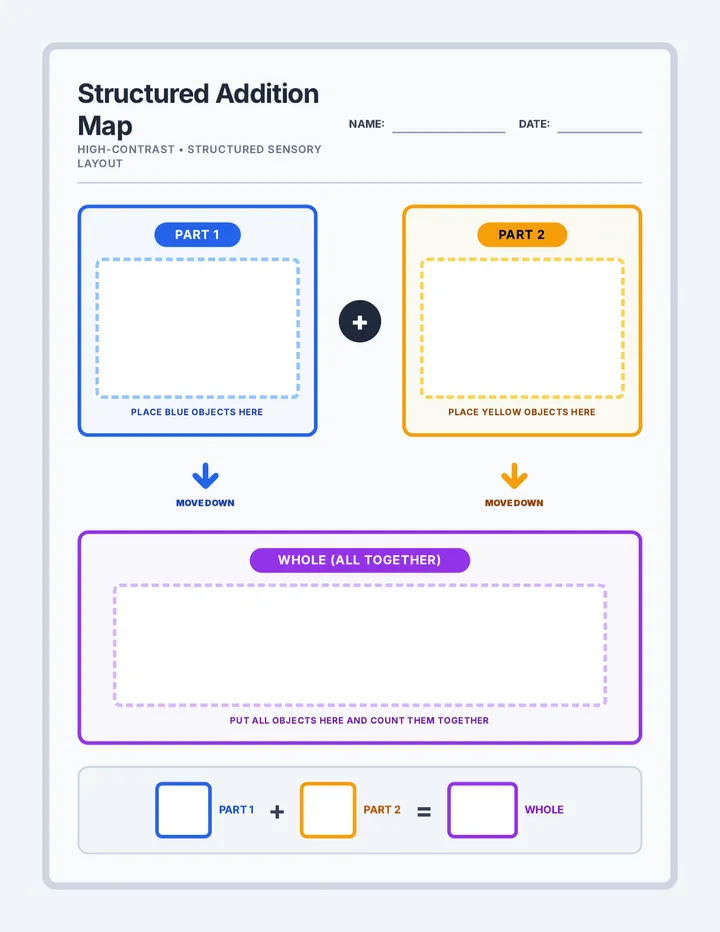
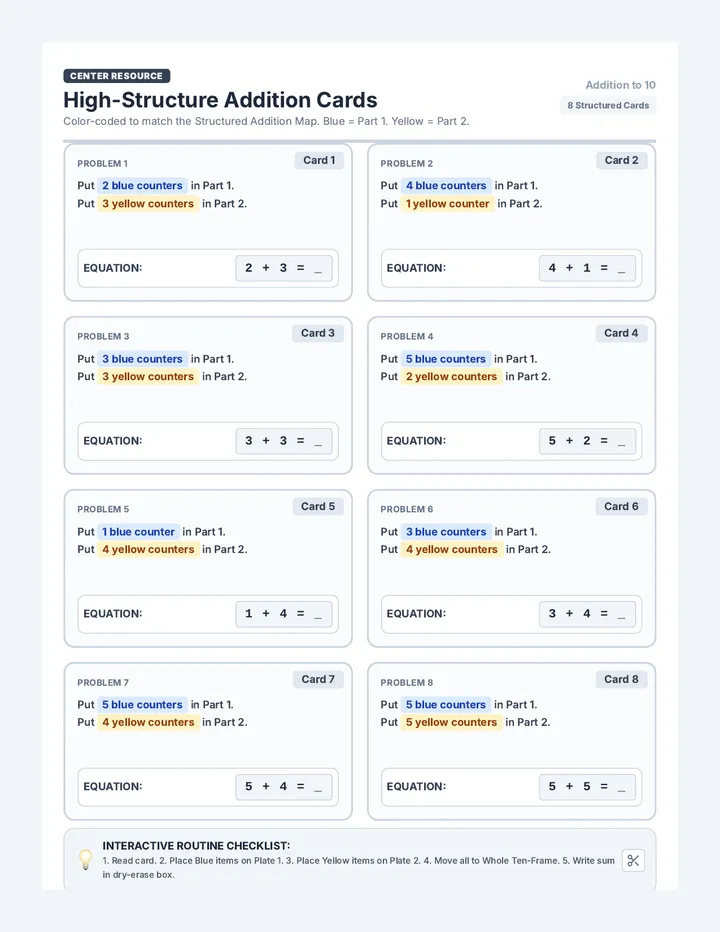
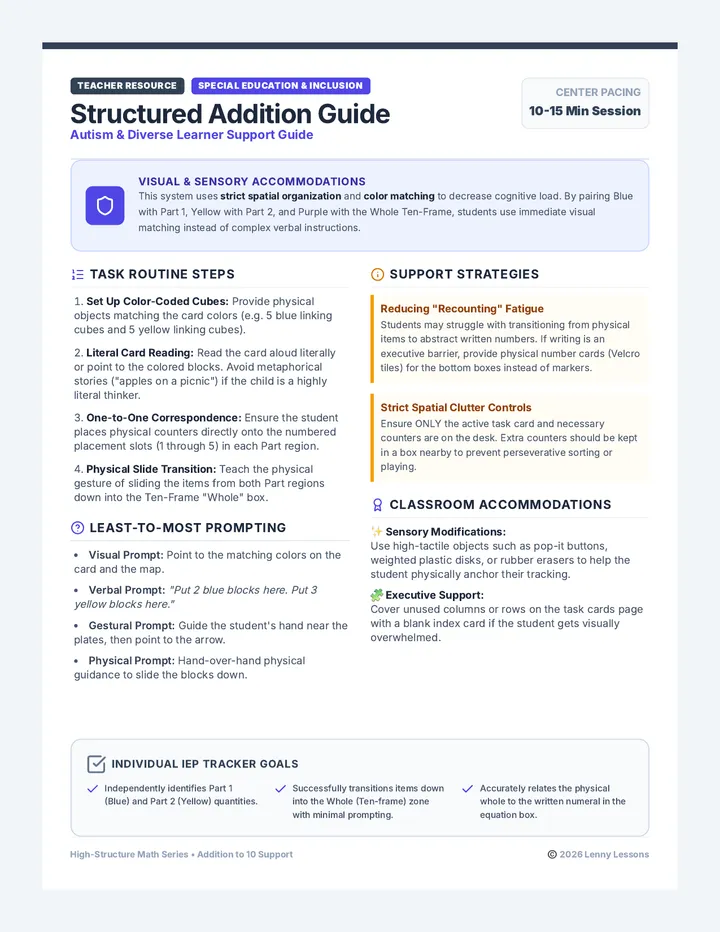
An autism-friendly, high-structure math center featuring a distraction-free Part-Part-Whole Mat with solid, clean workspaces and color-coded task cards for structured physical addition.
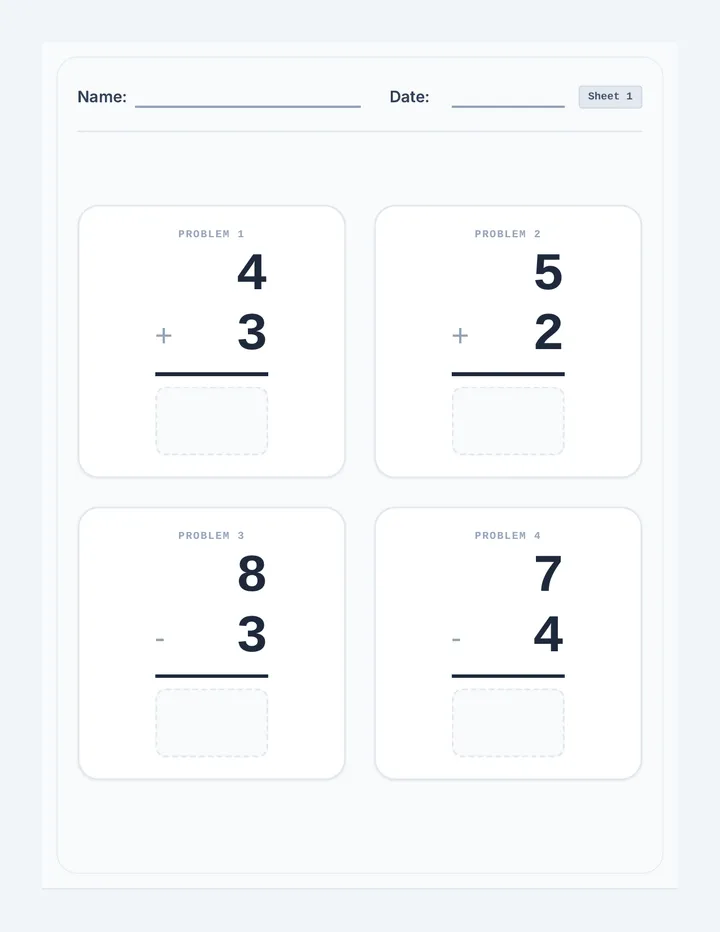
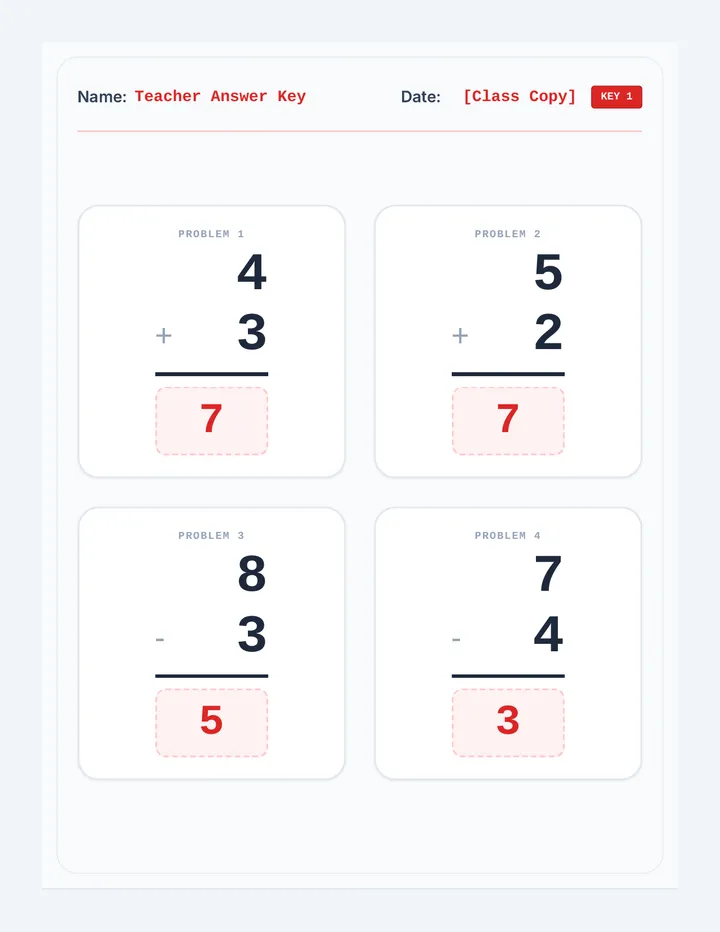
A collection of 20 high-frequency printable math worksheets designed to build addition and subtraction fluency within 20, containing standard vertical algorithm problems.
A foundational lesson exploring how objects, animals, and helpers in our world connect. Students learn to identify associations and explain the logical relationships between paired items through interactive slides, drawing lines, and cut-and-paste worksheets.
Une séance de mathématiques complète de 25 minutes pour la maternelle (PS/MS/GS) sur le thème de la ferme. Comprend un guide de préparation détaillé pour l'enseignant et des fiches de jeu/évaluation imprimables pour le dénombrement, le tri et la comparaison.
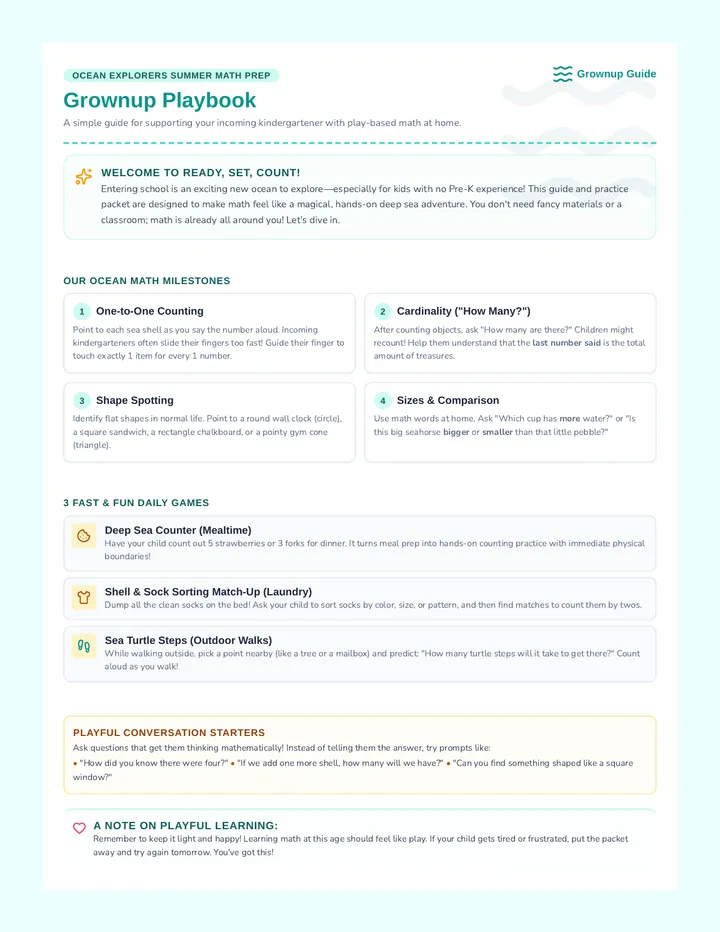
A supportive guide and flyer for families to foster early math skills during the summer before kindergarten, emphasizing hands-on play, spatial vocabulary, and everyday discovery.
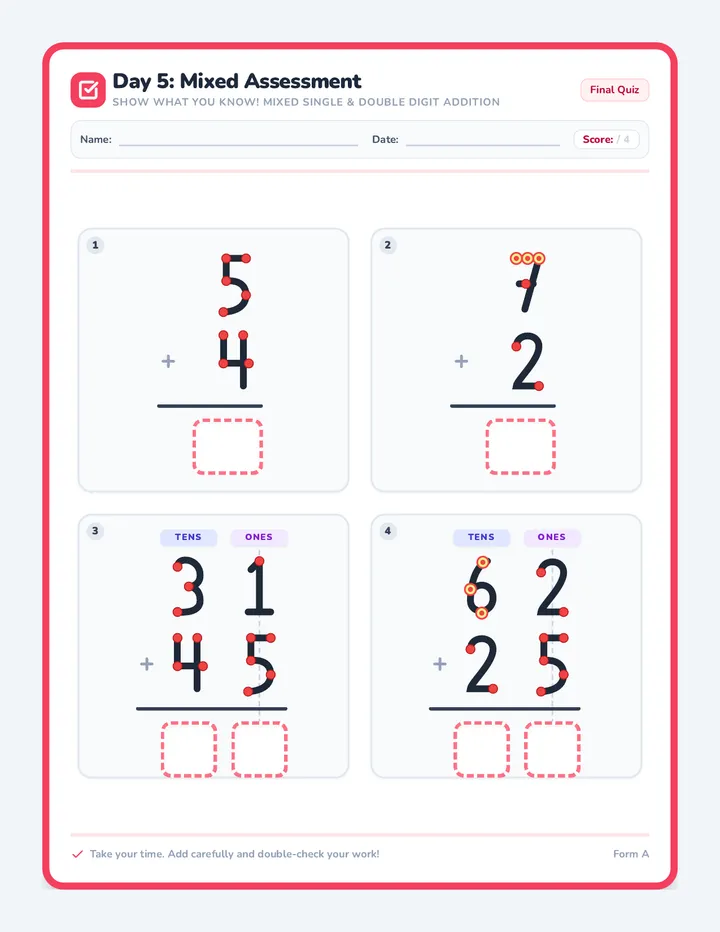
A final day of mixed practice and a structured assessment to measure mastery of single-digit and double-digit touchpoint addition.
Reinforcing double-digit addition using scaffolded materials where grid lines and touchpoints are gradually faded to foster mental math and fluency.
Transitioning to double-digit addition without regrouping, with high-contrast vertical dividers and large columns to support tracking.
Developing single-digit addition with sums up to 10, utilizing single and double touchpoints on numbers 6 through 9 with scaffolded worksheets.
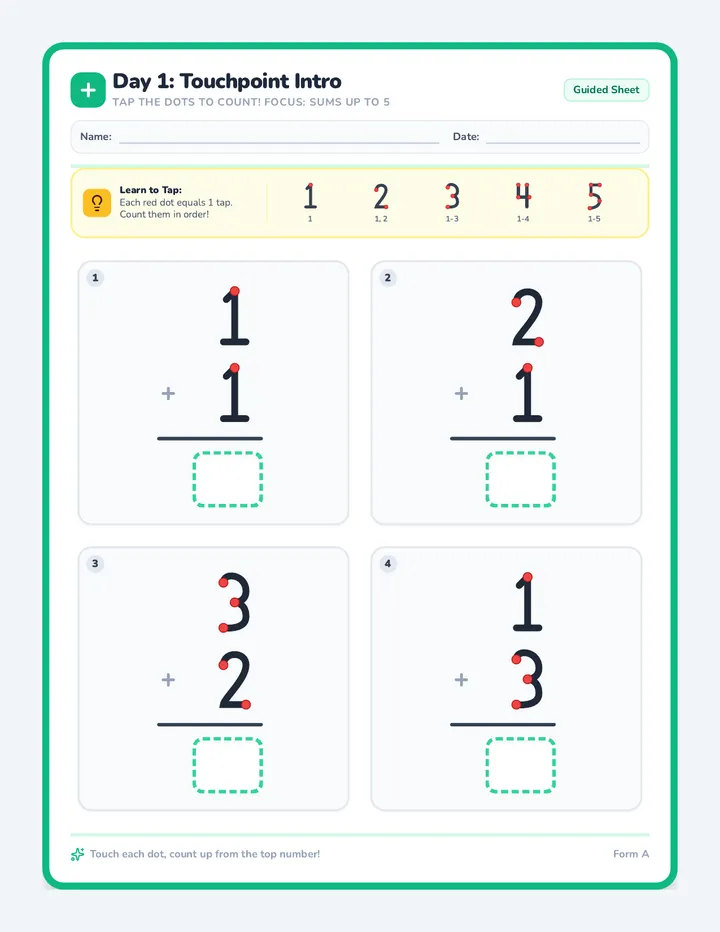
Introduction to single-digit touchpoint addition with sums up to 5, featuring large-print guided and independent practice sheets.
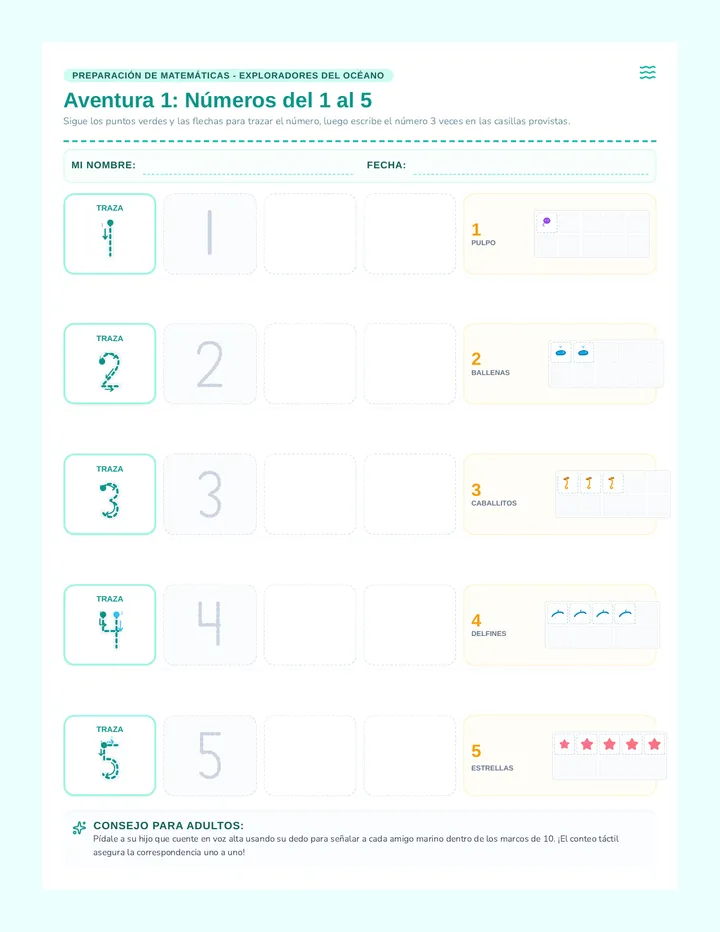
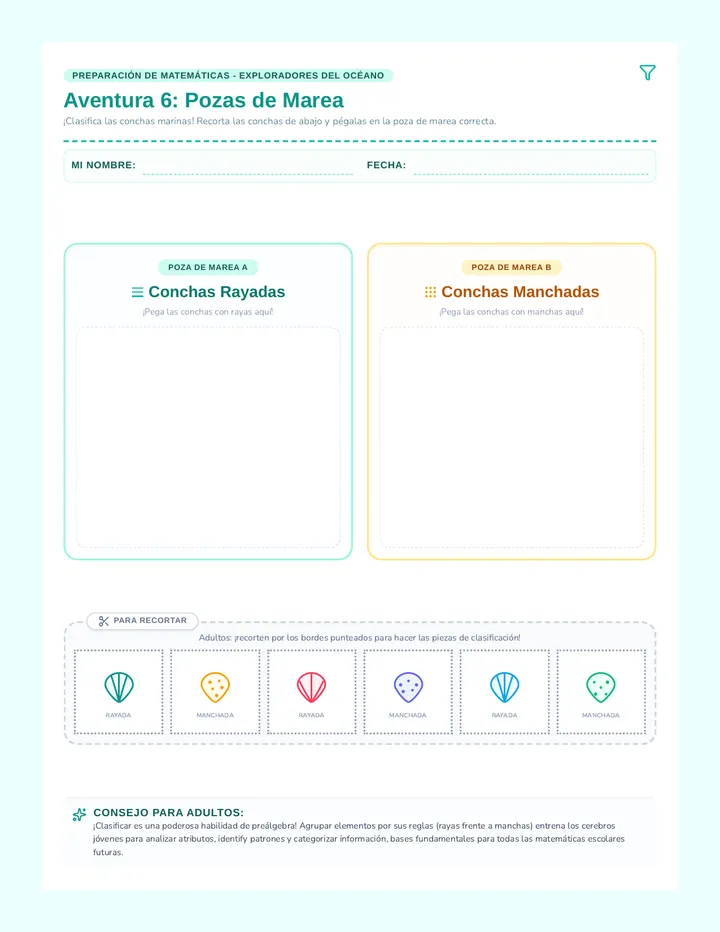
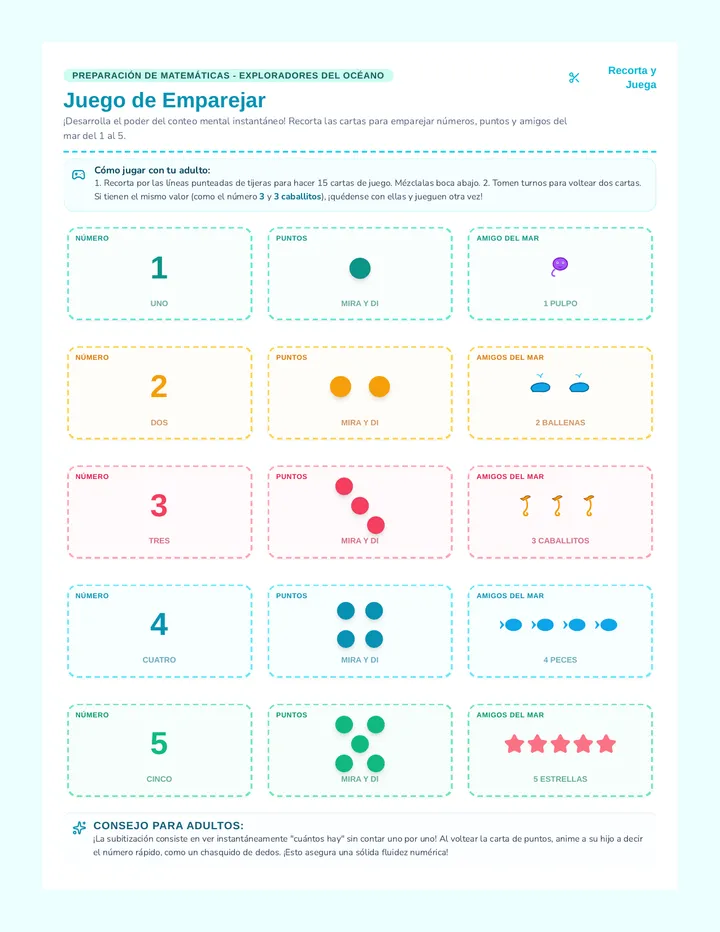
Un programa de preparación de matemáticas de verano con temas del océano diseñado para estudiantes que ingresan a jardín de infantes con un tema mágico y amigable bajo el mar. Ofrece práctica lúdica en español de habilidades matemáticas básicas.
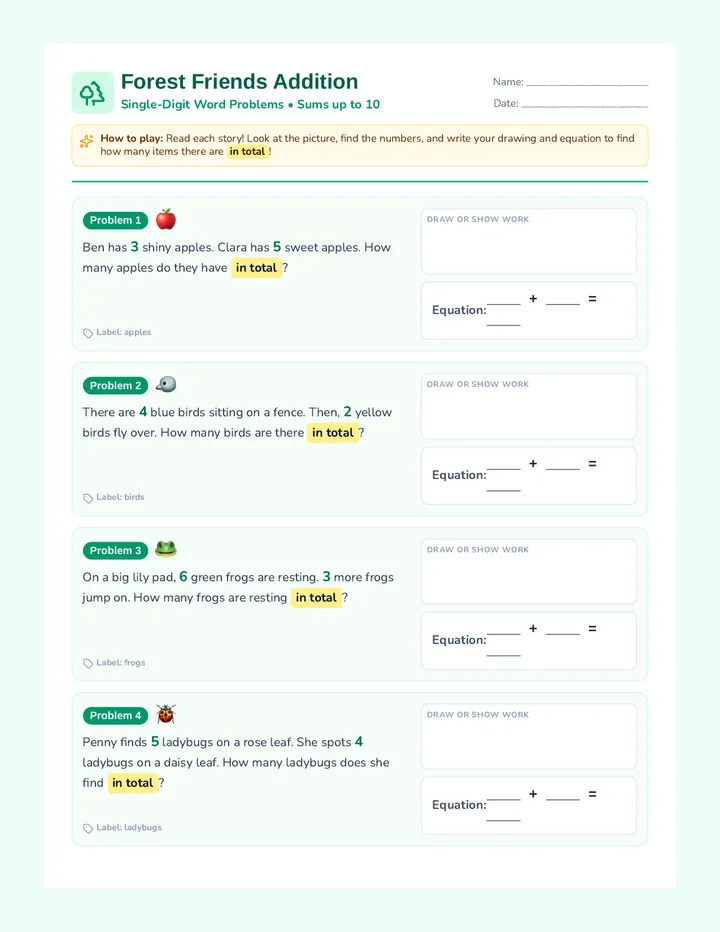
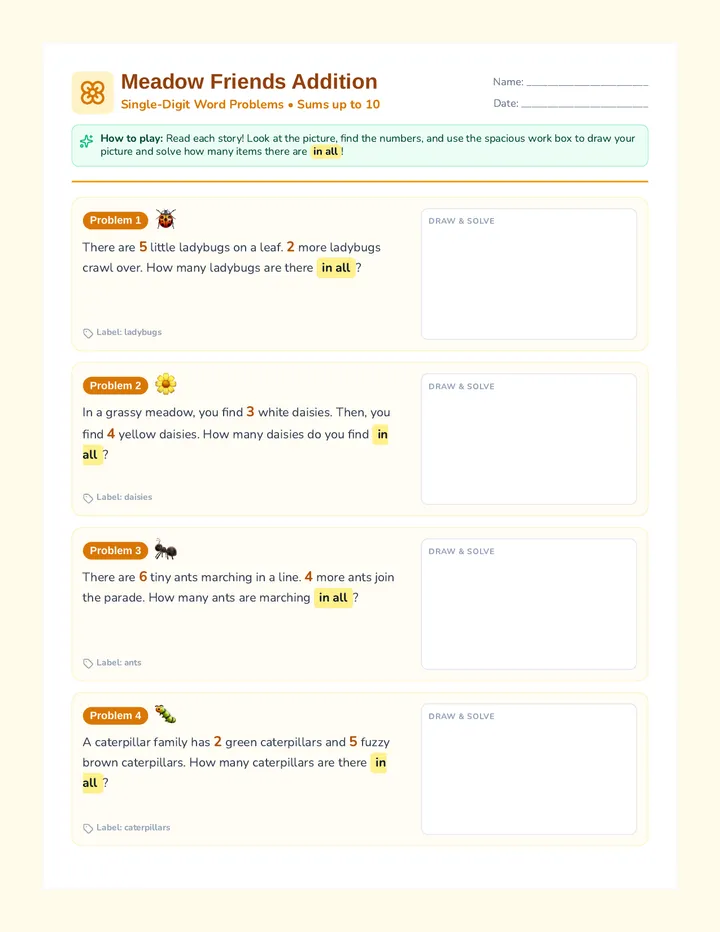
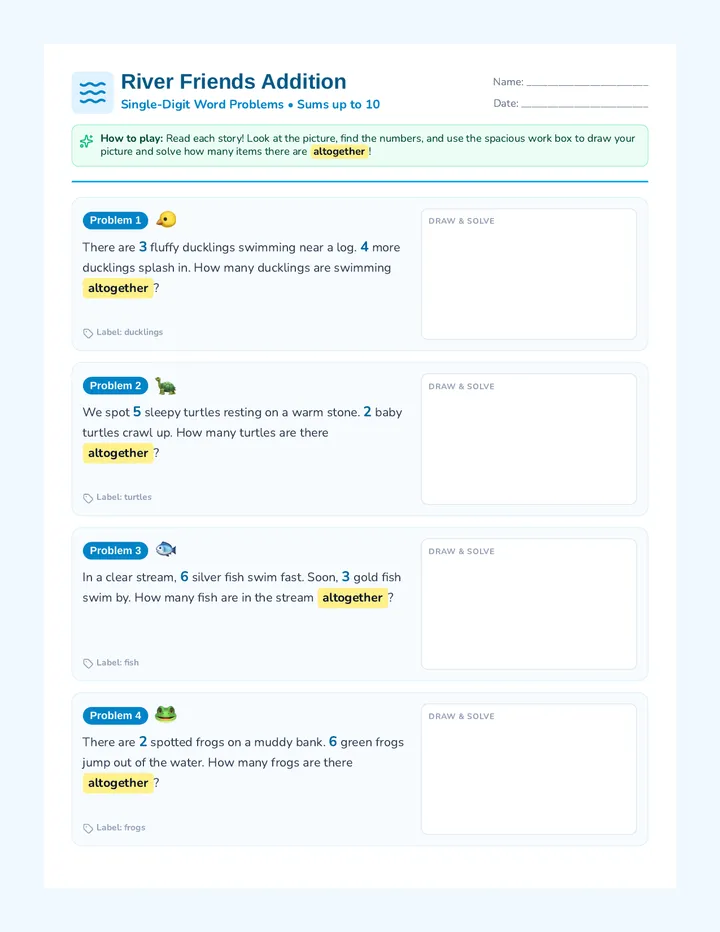
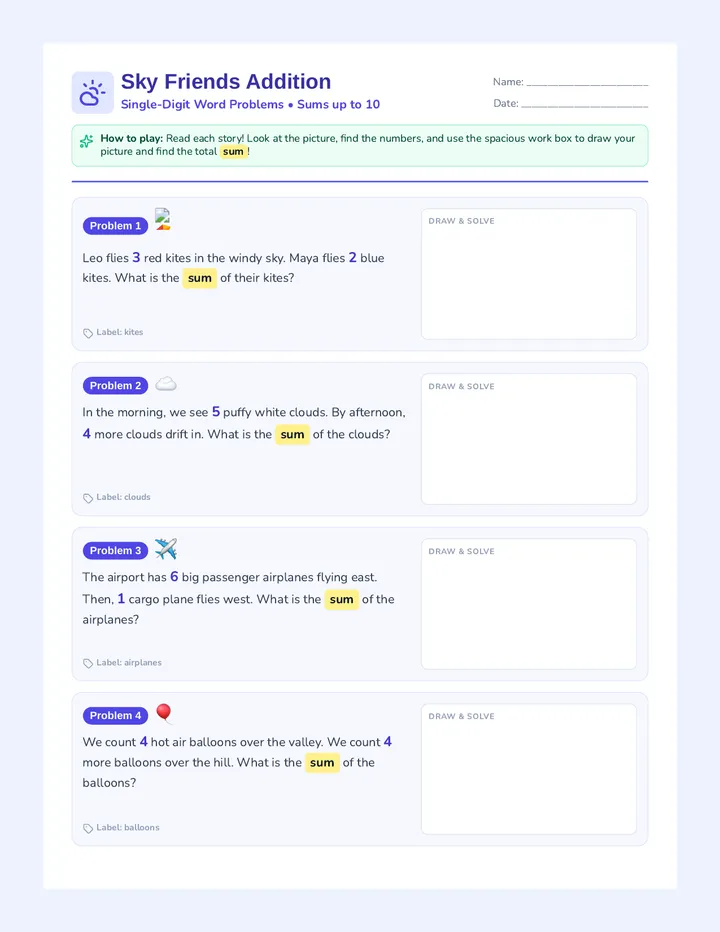
A foundational early-elementary lesson introducing single-digit addition word problems. Students use visual labels and highlighted keywords like 'in total' to parse and solve addition scenarios within 10, supported by spacious workspace grids.
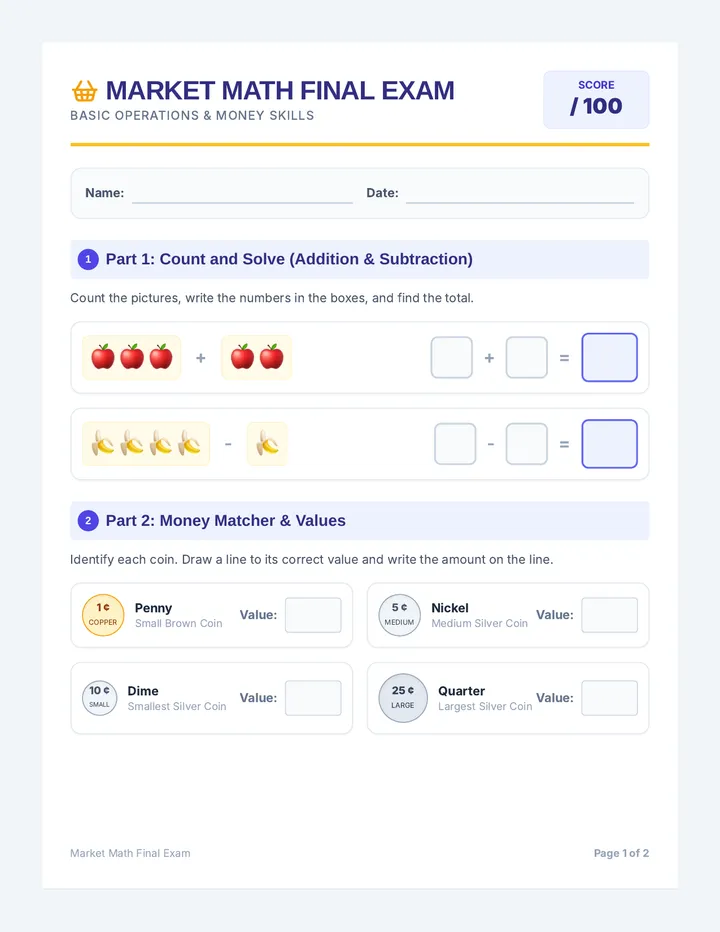
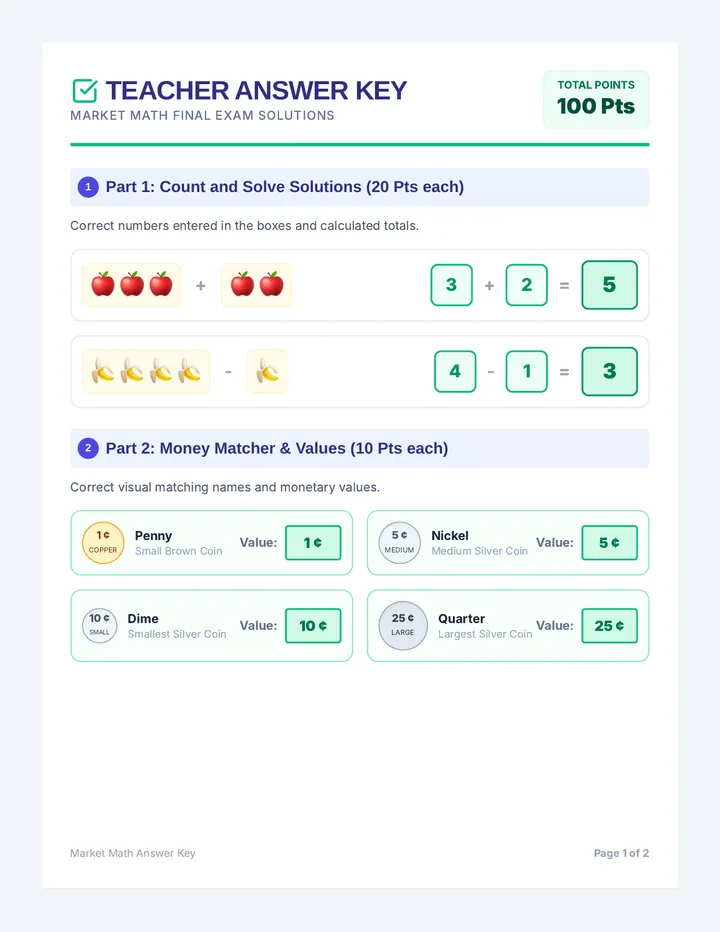
A comprehensive final exam lesson covering basic addition, subtraction, coin identification, and functional life skills grocery shopping math with visual support.
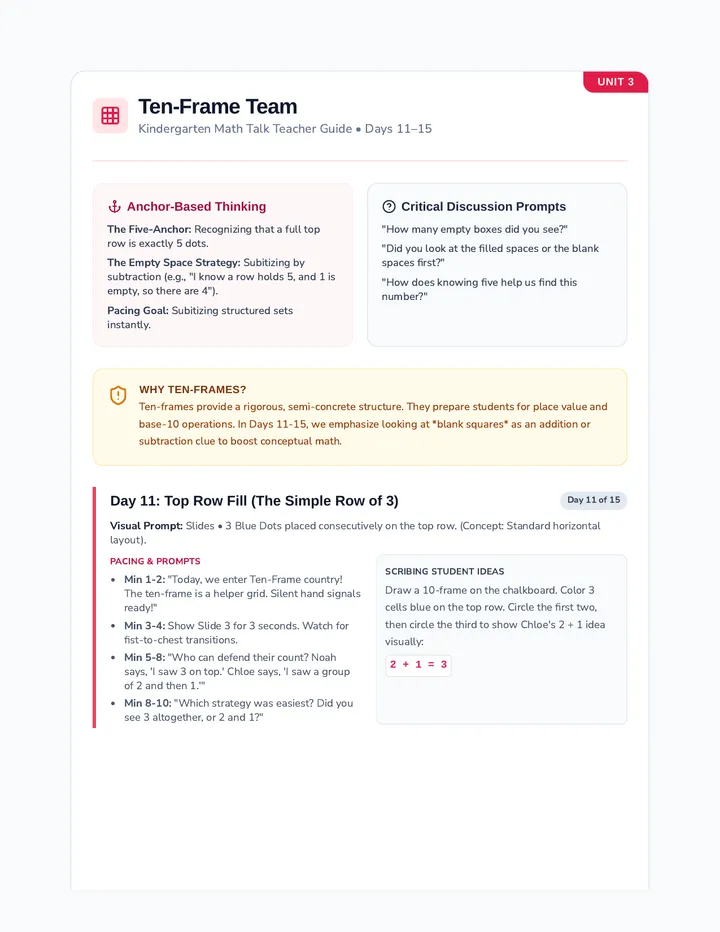
Explores subitizing numbers 1-5 within a ten-frame structure, helping students visualize numbers relative to five- and ten-anchors over Days 11-15.
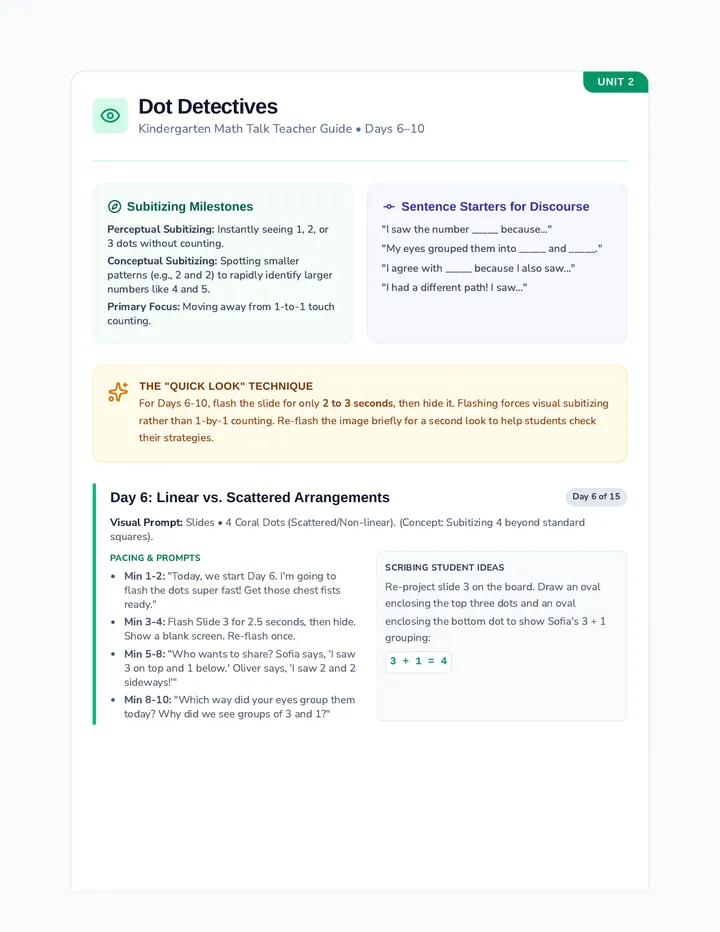
Develops rapid subitizing and spatial awareness for numbers 1 to 5 using varied dot configurations (dice, linear, and scattered) over Days 6-10.
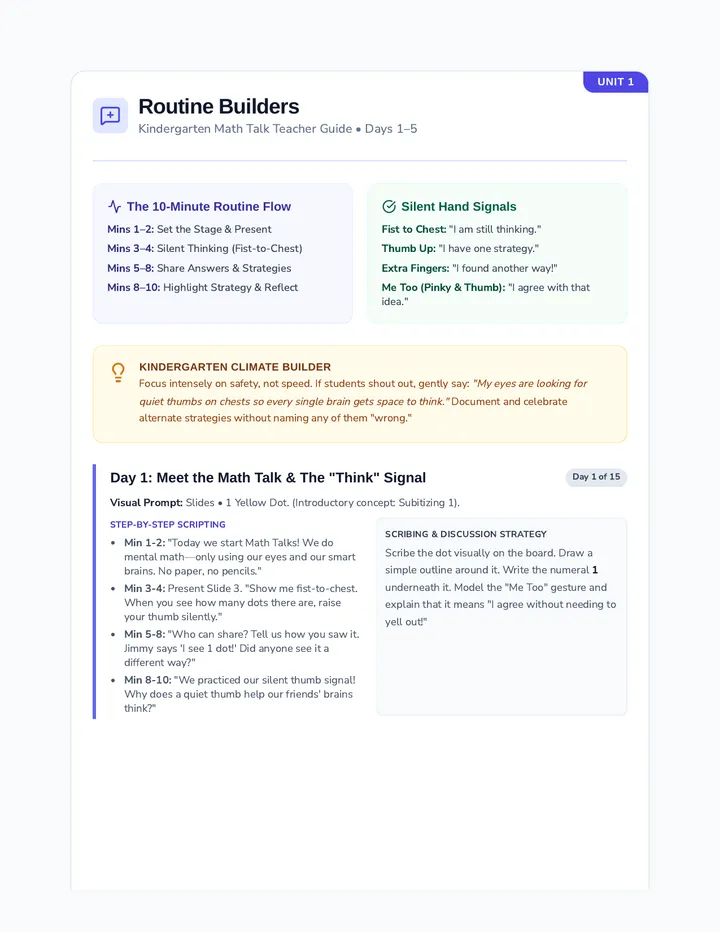
Introduces the foundational mental math protocols, silent hand signals, and first simple visual count talks (dots/fingers) over Days 1-5 to build classroom safety.
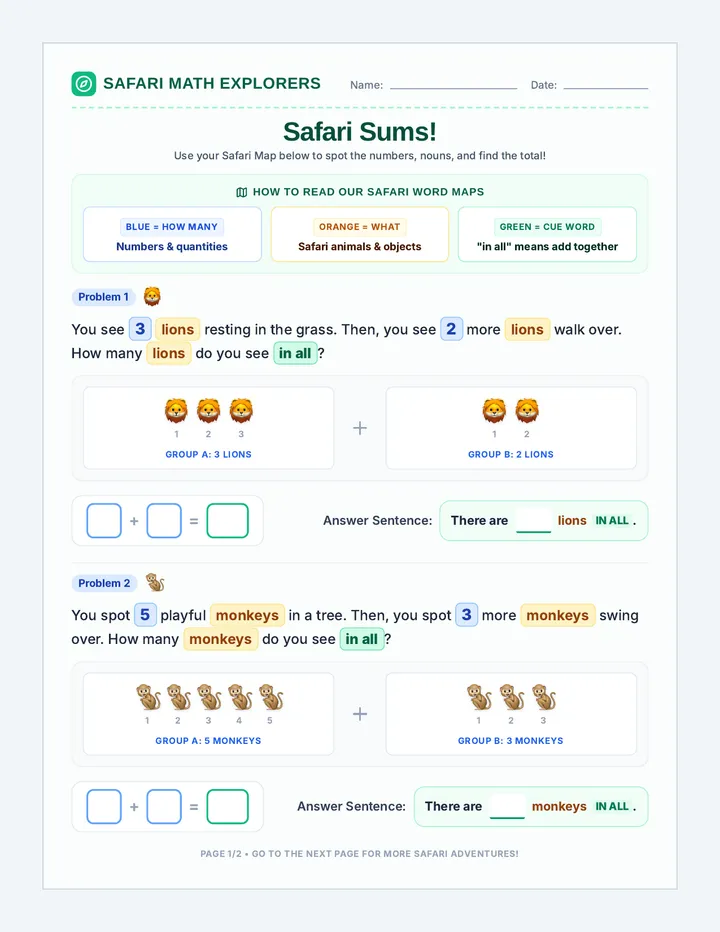
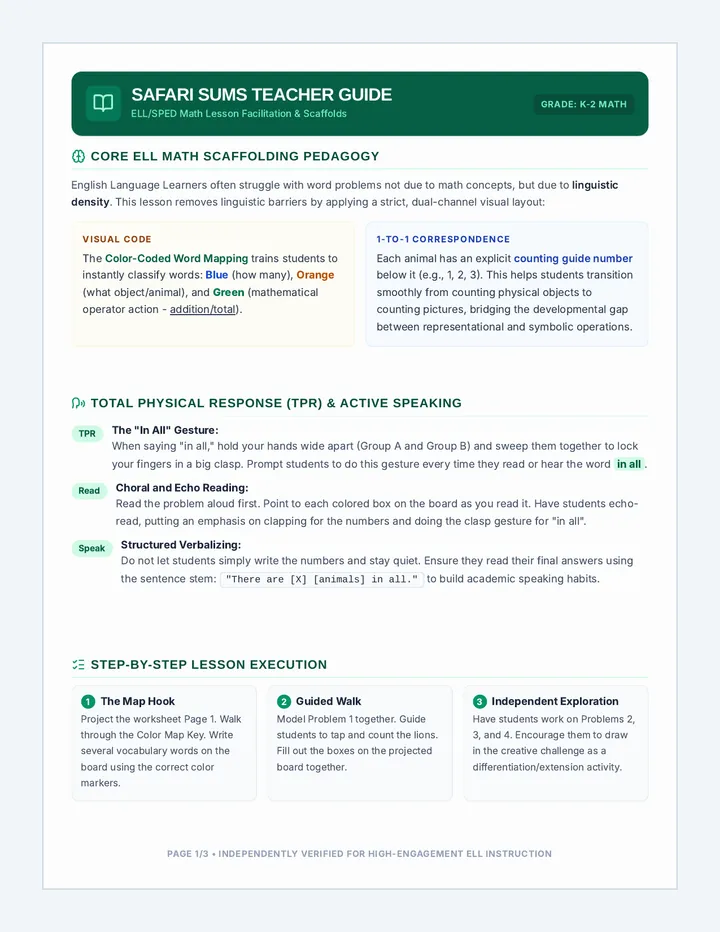
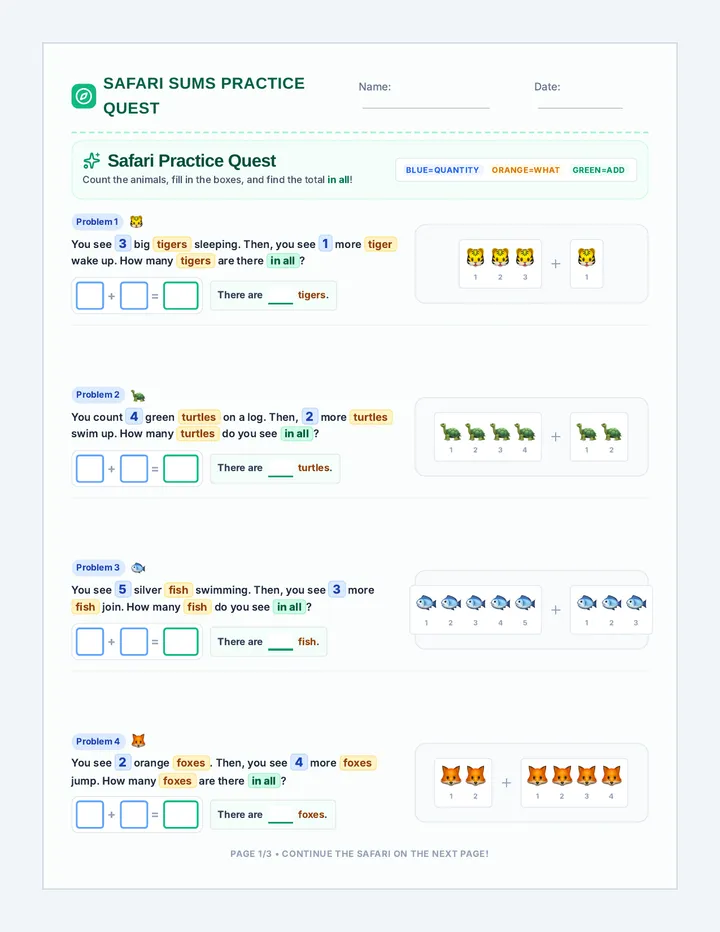
A visual addition lesson designed for English Language Learners (ELL) to master single-digit word problems. It utilizes a Safari theme, clear icon-based pictorial support, and color-coded text highlighting to build confidence in identifying quantities, key nouns, and the 'in all' action cue.
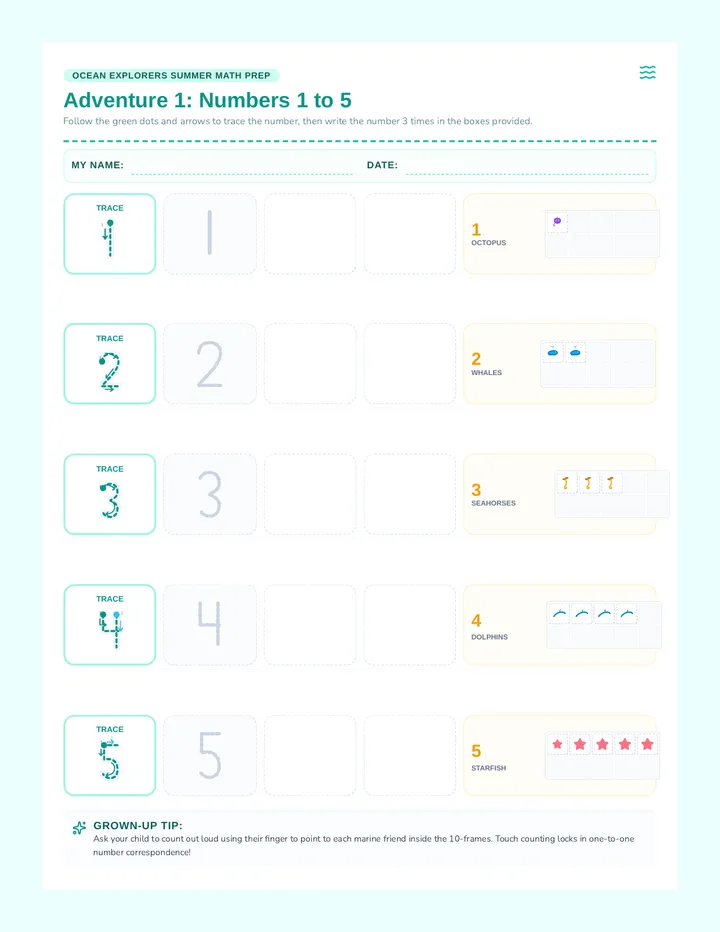
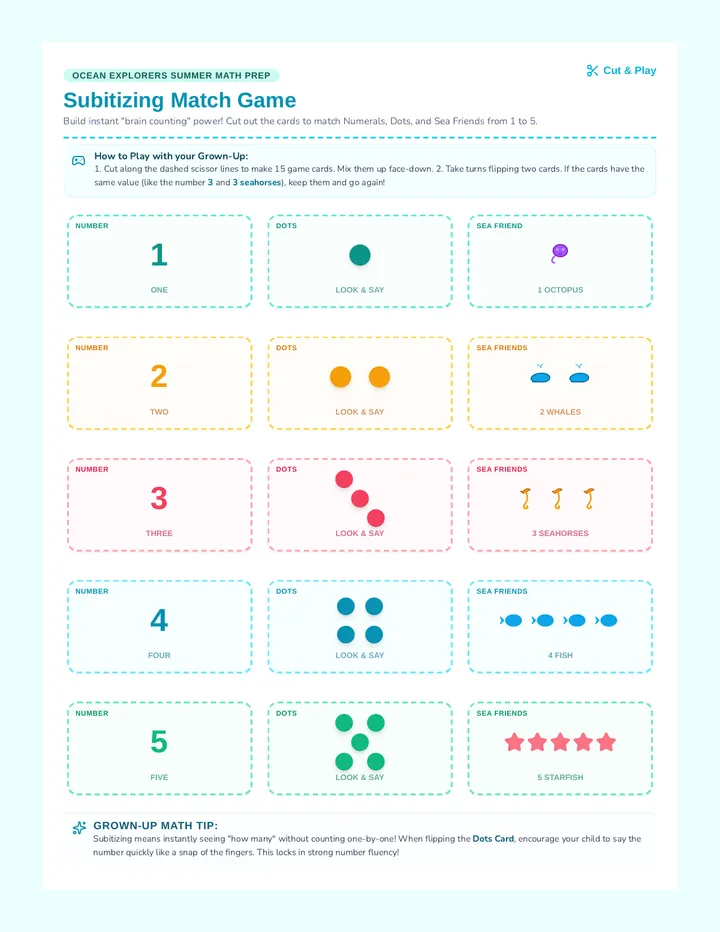
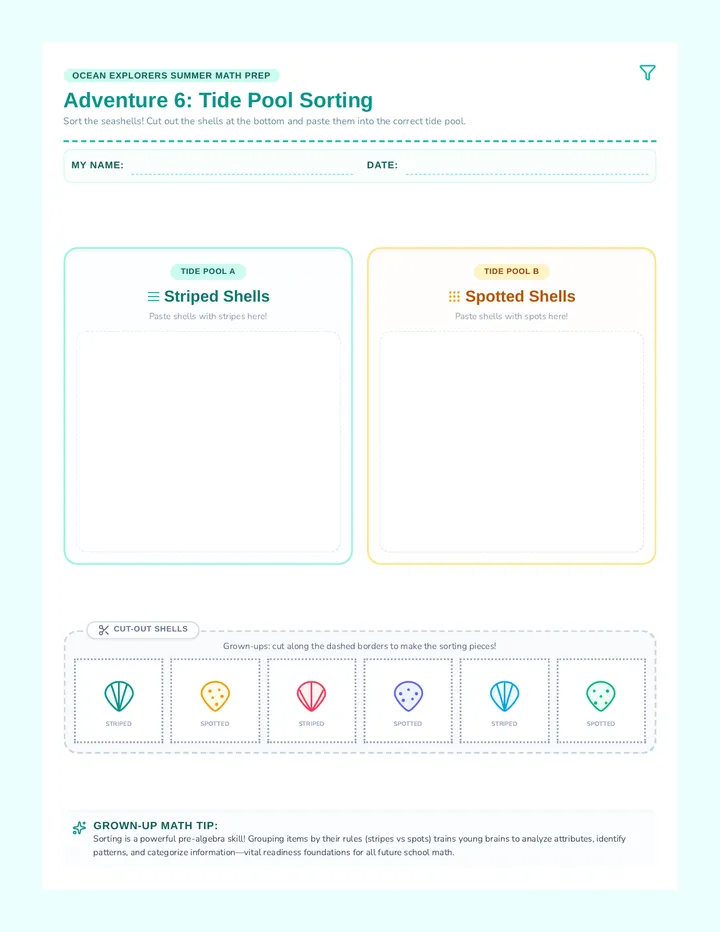
An ocean-themed summer math preparation program designed for incoming kindergarten students with no Pre-K experience, styled with a magical, kid-friendly Under the Sea theme. It provides engaging play-based practice in foundational math ready-to-learn skills.
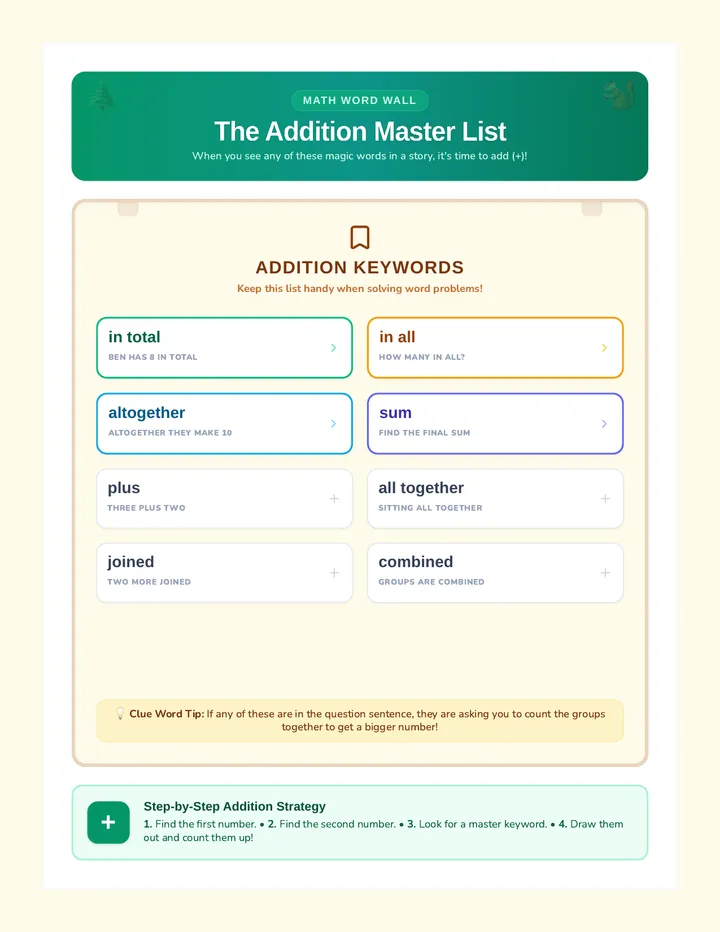
A comprehensive visual vocabulary lesson designed for limited English Language Learners (ELLs) to master critical math addition keywords. Includes highly-visual printable flashcards with simple icon models and a matching reinforcement worksheet.
An active, hands-on small group math lesson for kindergarten and 1st grade students to master adding within 10 using the 'counting on with fingers' strategy. Features an engaging printable board game, customized finger-counting task cards, a student workout recording sheet, and a comprehensive facilitation guide.
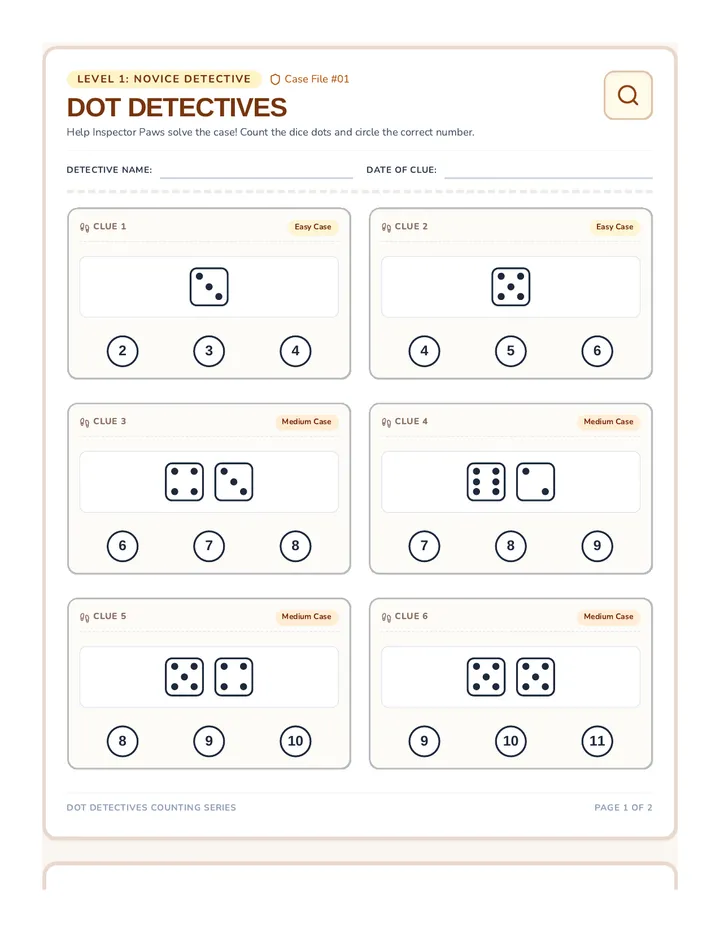
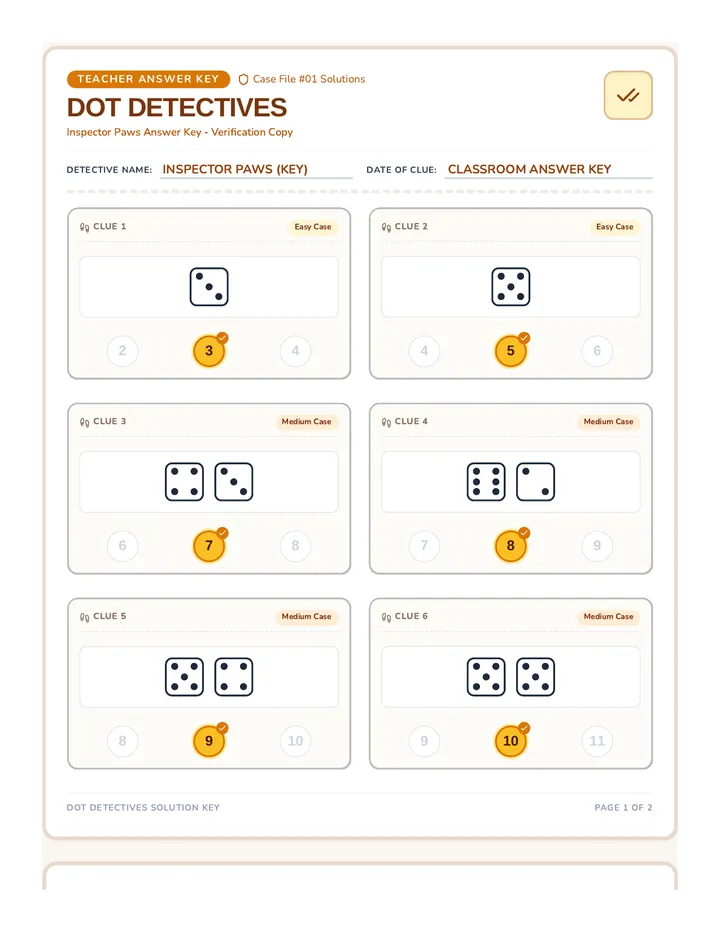
A math-focused kindergarten lesson designed to develop subitizing, counting, and number recognition skills up to 20 using dice. Students work through hands-on guided slides and solve independent case files by counting dot groupings and circling the correct numeral.
A friendly, high-energy kindergarten math lesson exploring capacity. Through a colorful monster theme, students visually compare containers to determine which 'holds more' and which 'holds less' using slides, hands-on partner work, and an interactive worksheet.
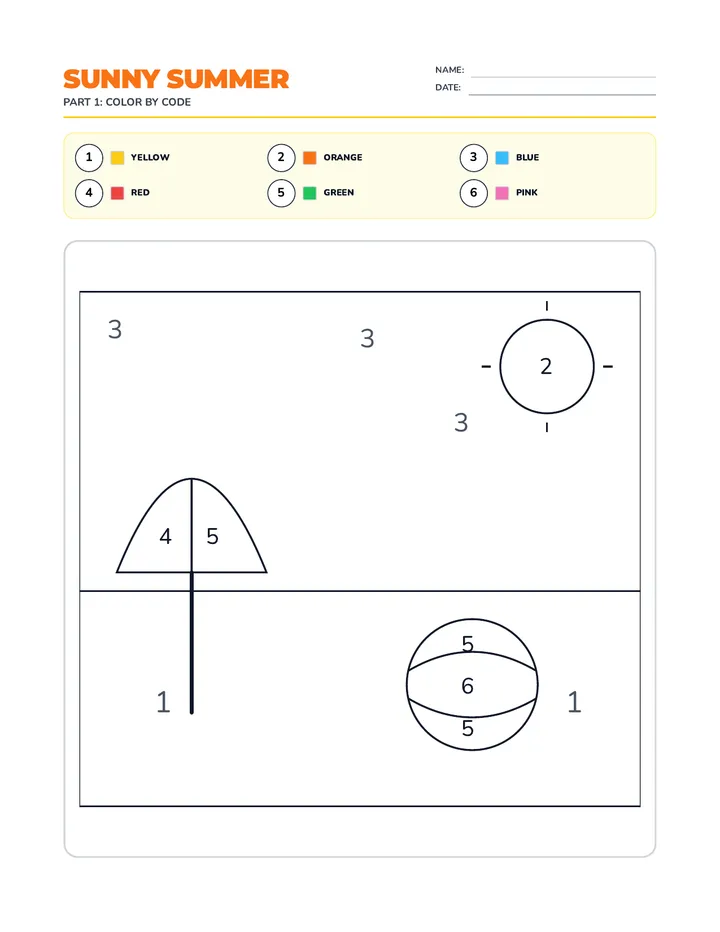
A pair of engaging summer-themed activities for kindergarteners to celebrate the season while practicing fine motor skills and number/color recognition.
A pair of engaging summertime activities for kindergarten students to practice fine motor skills through coloring and cutting/pasting.
A kindergarten lesson focused on comparing the weight of two objects using the terms 'heavier' and 'lighter'. Students will use animal imagery and hands-on center activities to master these concepts.
An outdoor, hands-on math and science lesson where students use bubble solution to explore measurement, geometric shapes, and counting through guided inquiry and play.
A Kindergarten lesson focusing on spatial reasoning and directional language. Students learn map basics and create a personal 'memory map' of their classroom to locate hidden treasures of their favorite experiences.
Kindergarten and 1st-grade students build mental math fluency by skip-counting groups of beach treasures like shells and stones. This hands-on lesson bridges the gap between rote counting and multiplication foundations using a fun beach theme.
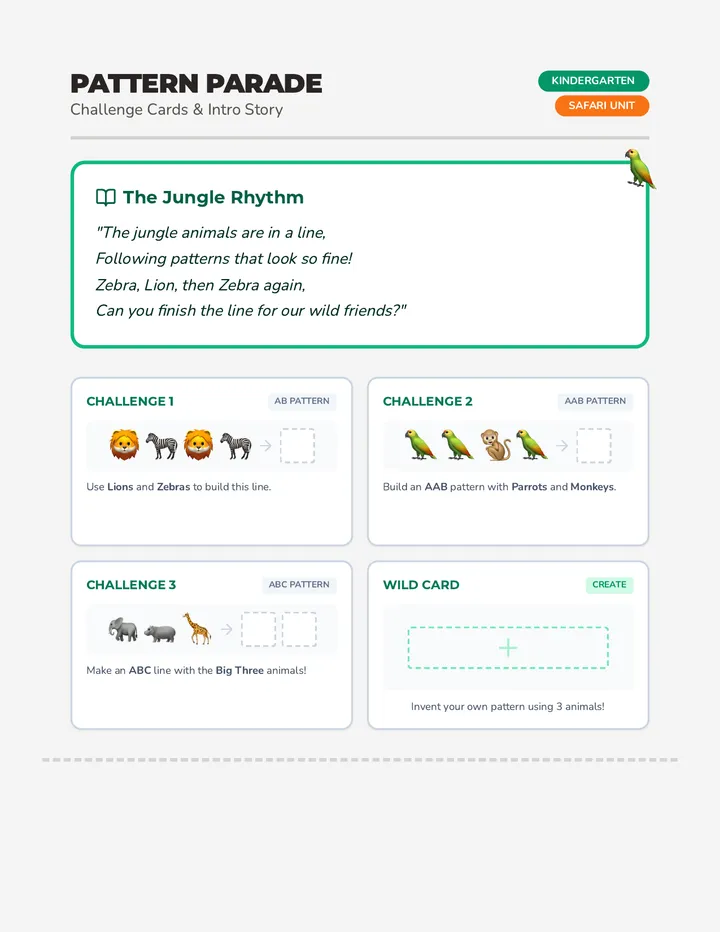
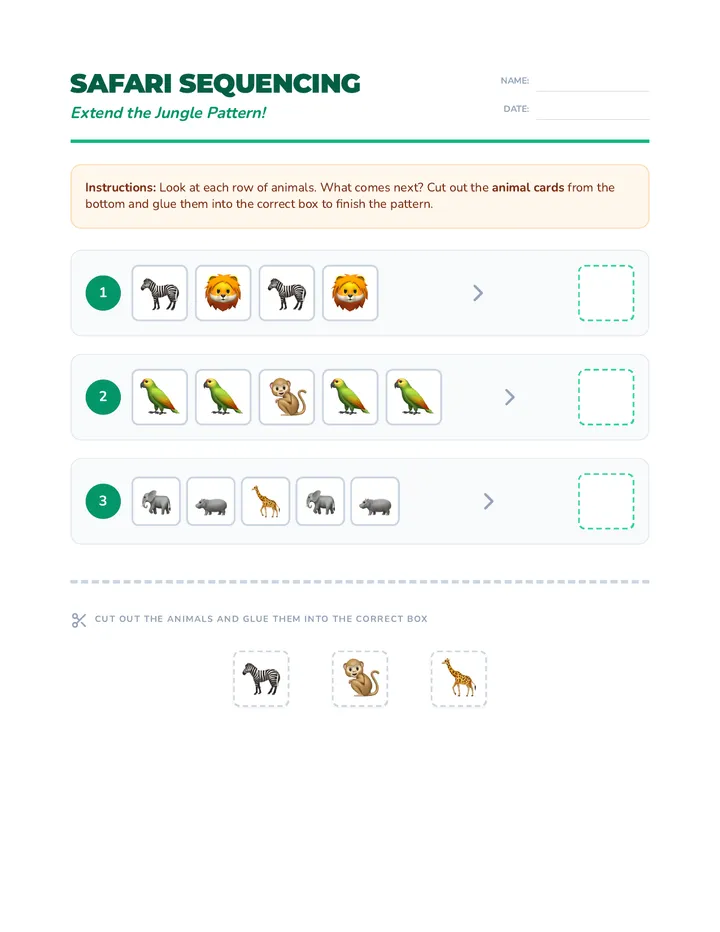
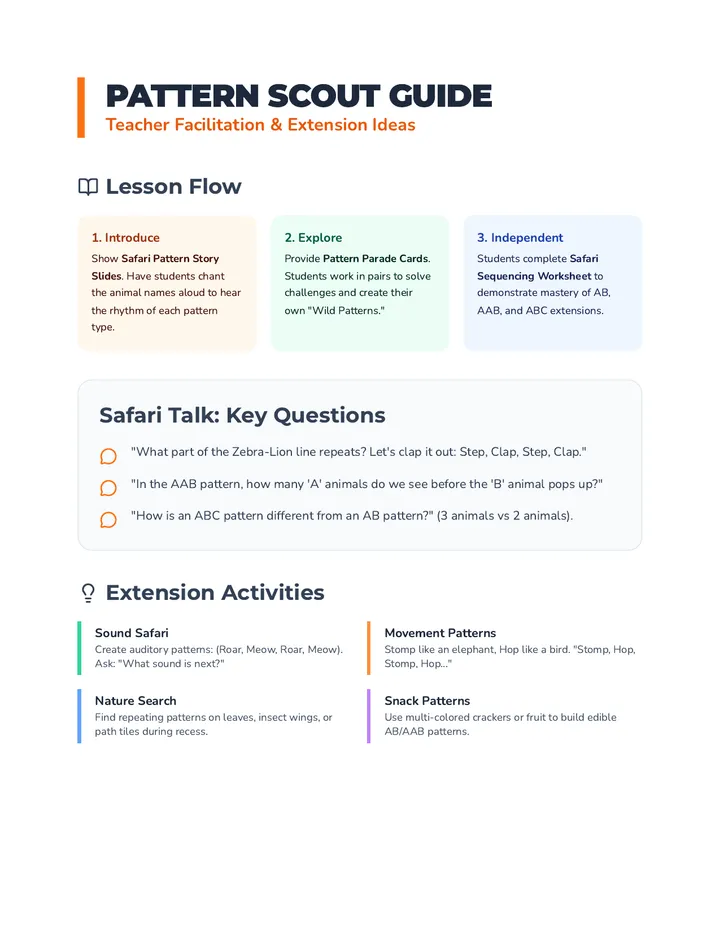
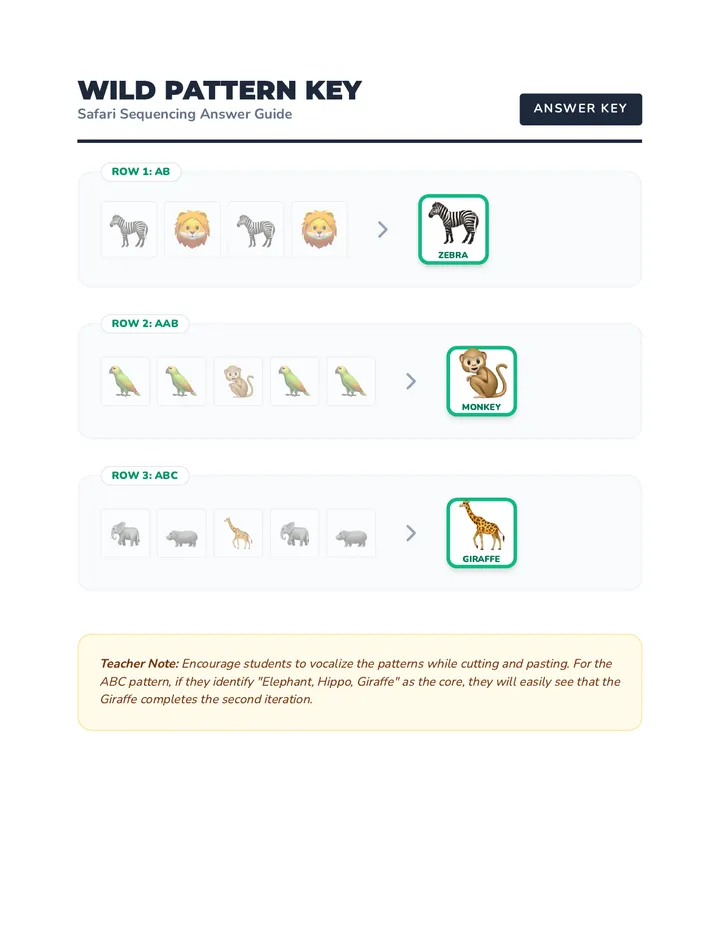
A kindergarten lesson that introduces AB, AAB, and ABC patterns through an animal-themed safari adventure. Students identify, extend, and create patterns using a digital story, hands-on manipulatives, and a cut-and-paste worksheet.
A collection of 'Roll and Race' game boards designed to help students practice basic addition (Adding 1 and Adding 10) using standard dice. These boards are formatted for front-to-back printing.