Learners compare a cylinder and a rectangular prism with the same height and similar widths. They investigate which shape holds more volume and discuss packaging efficiency.
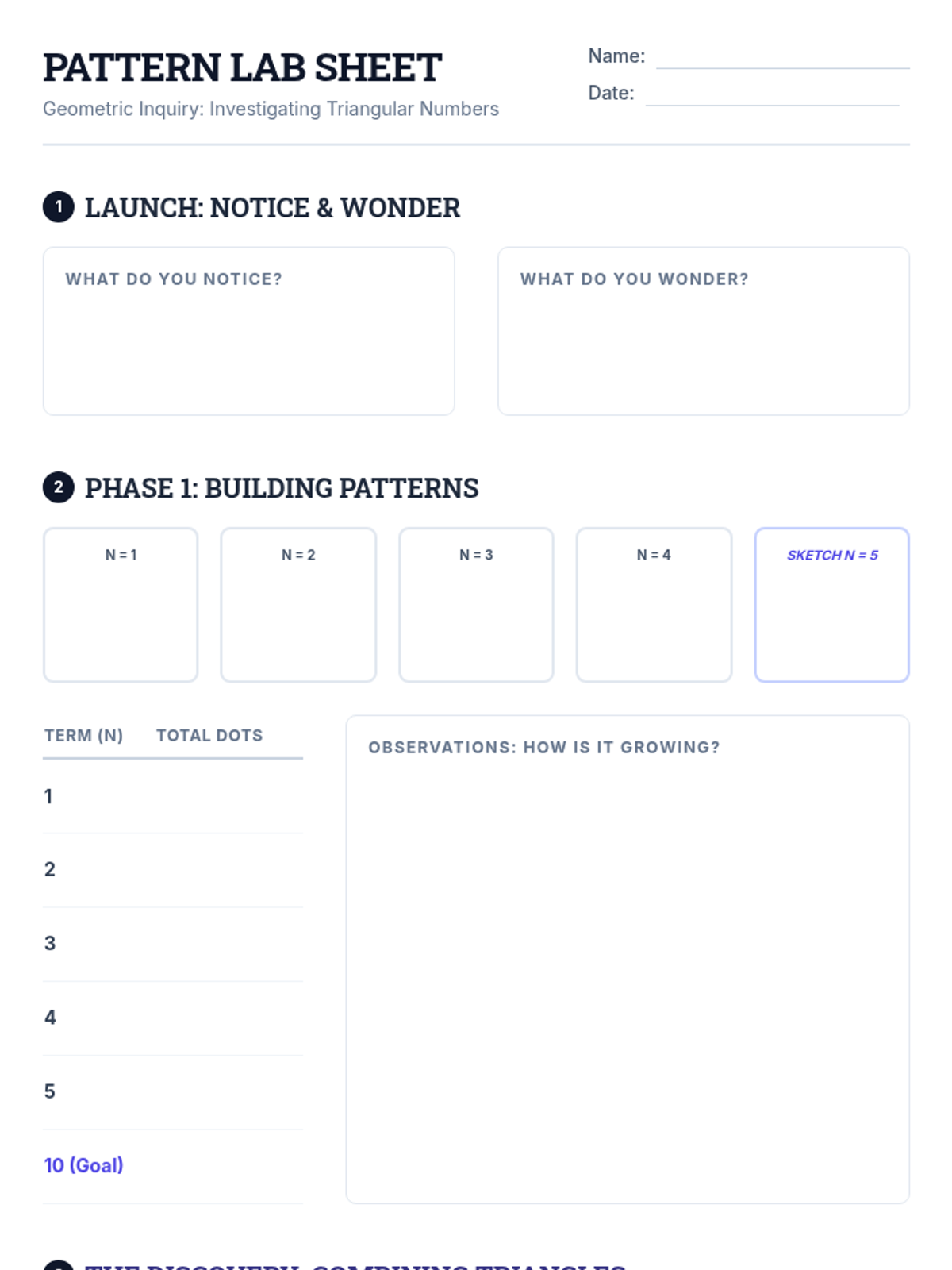
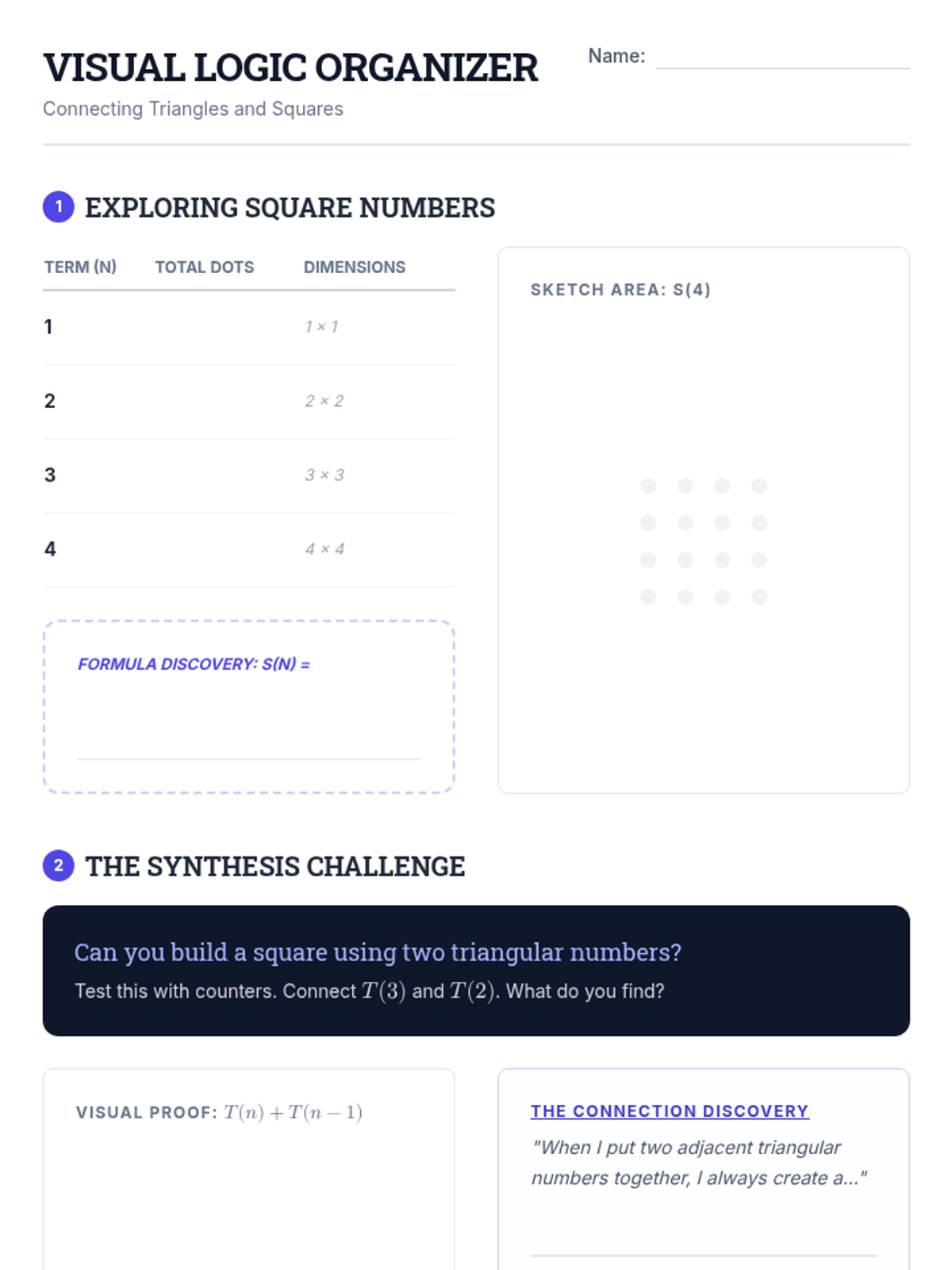
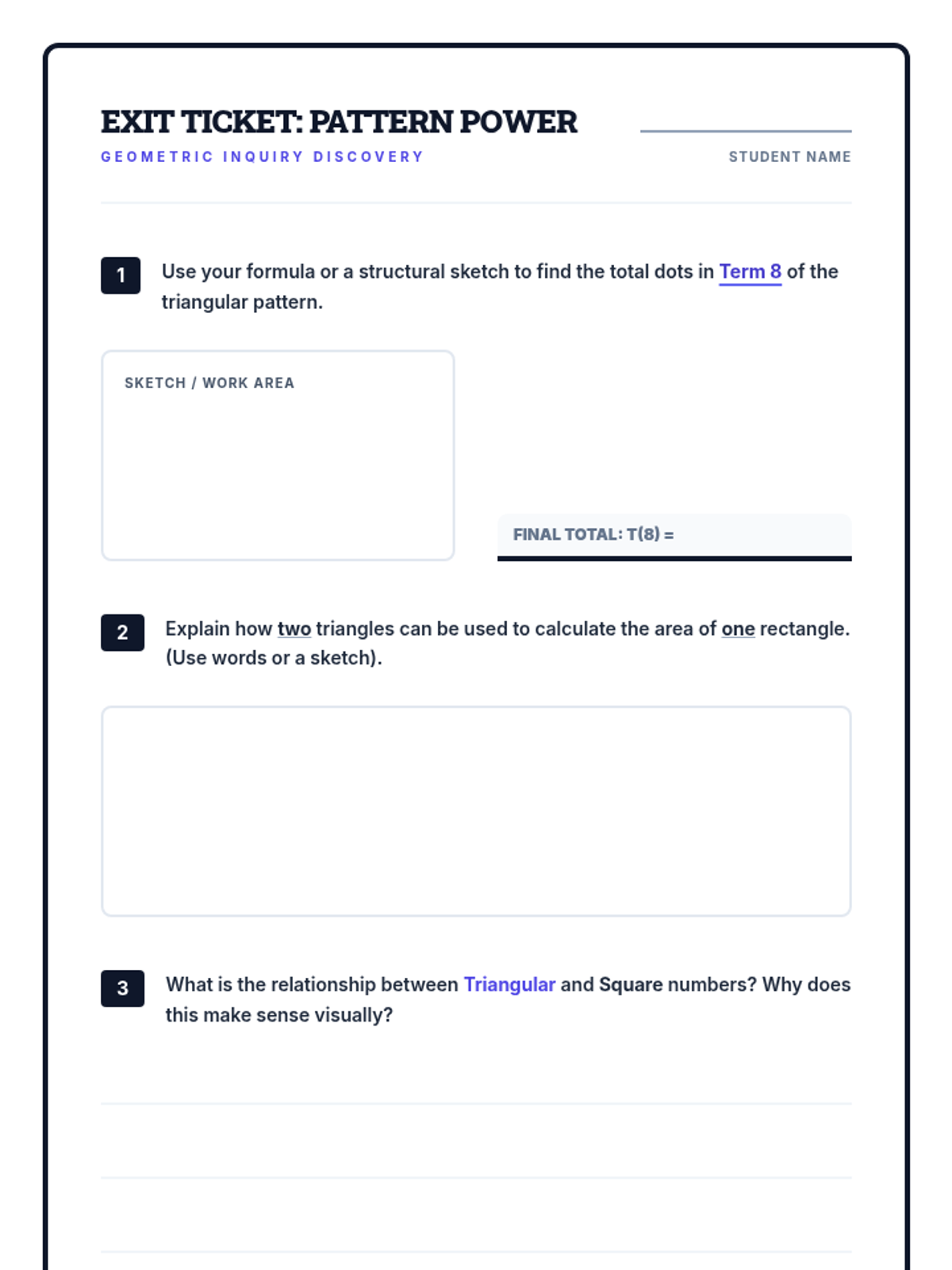
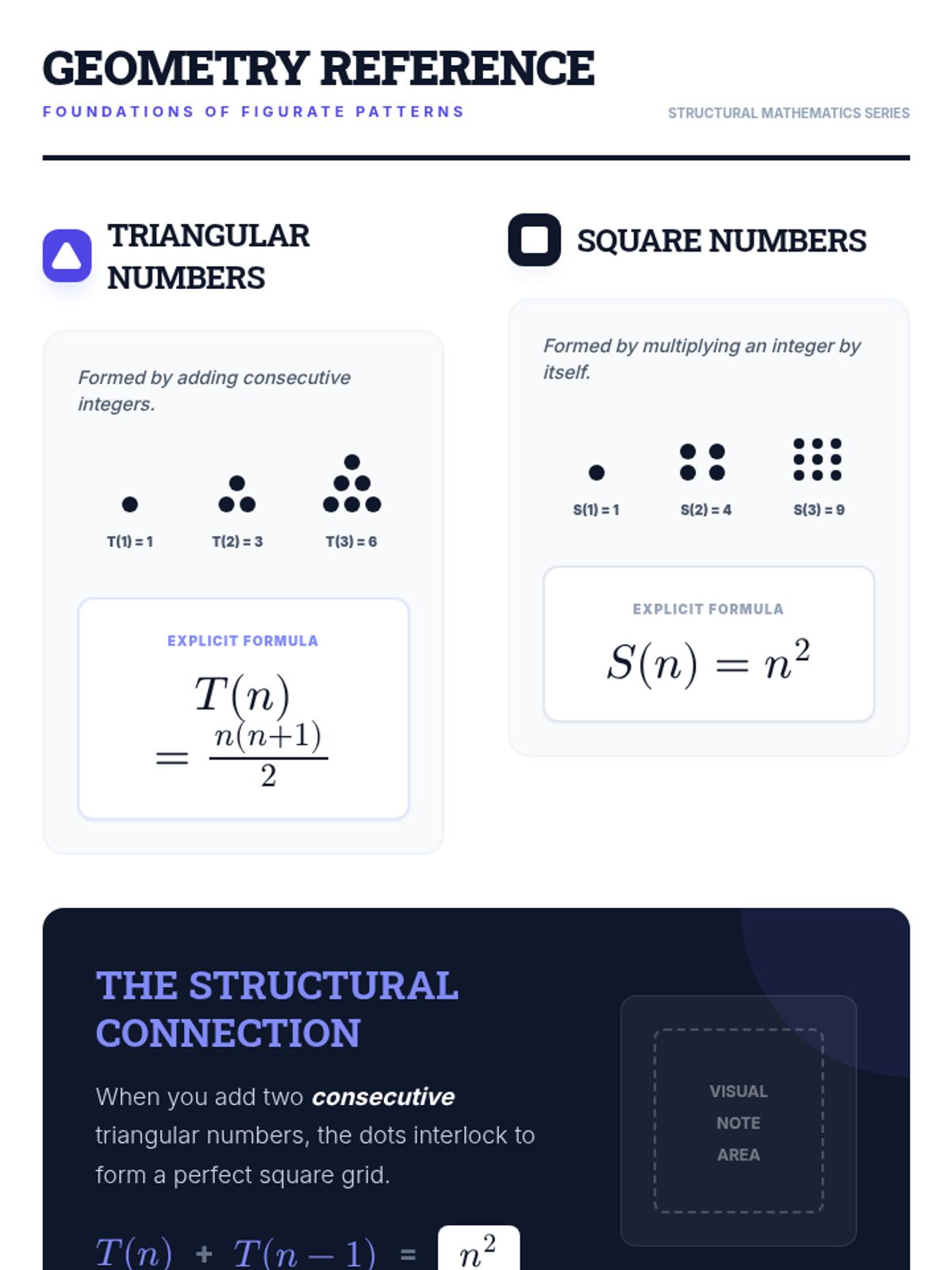
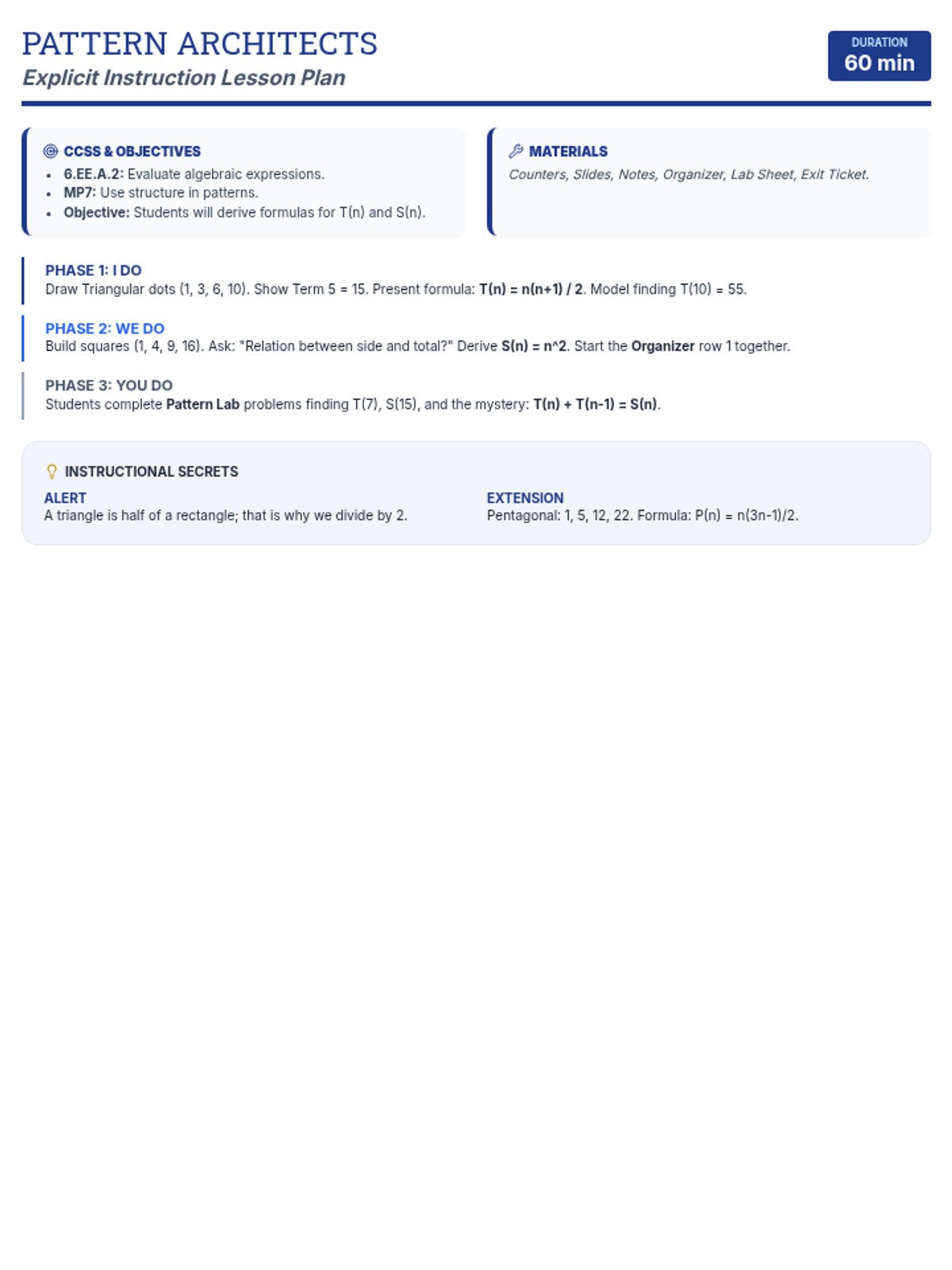
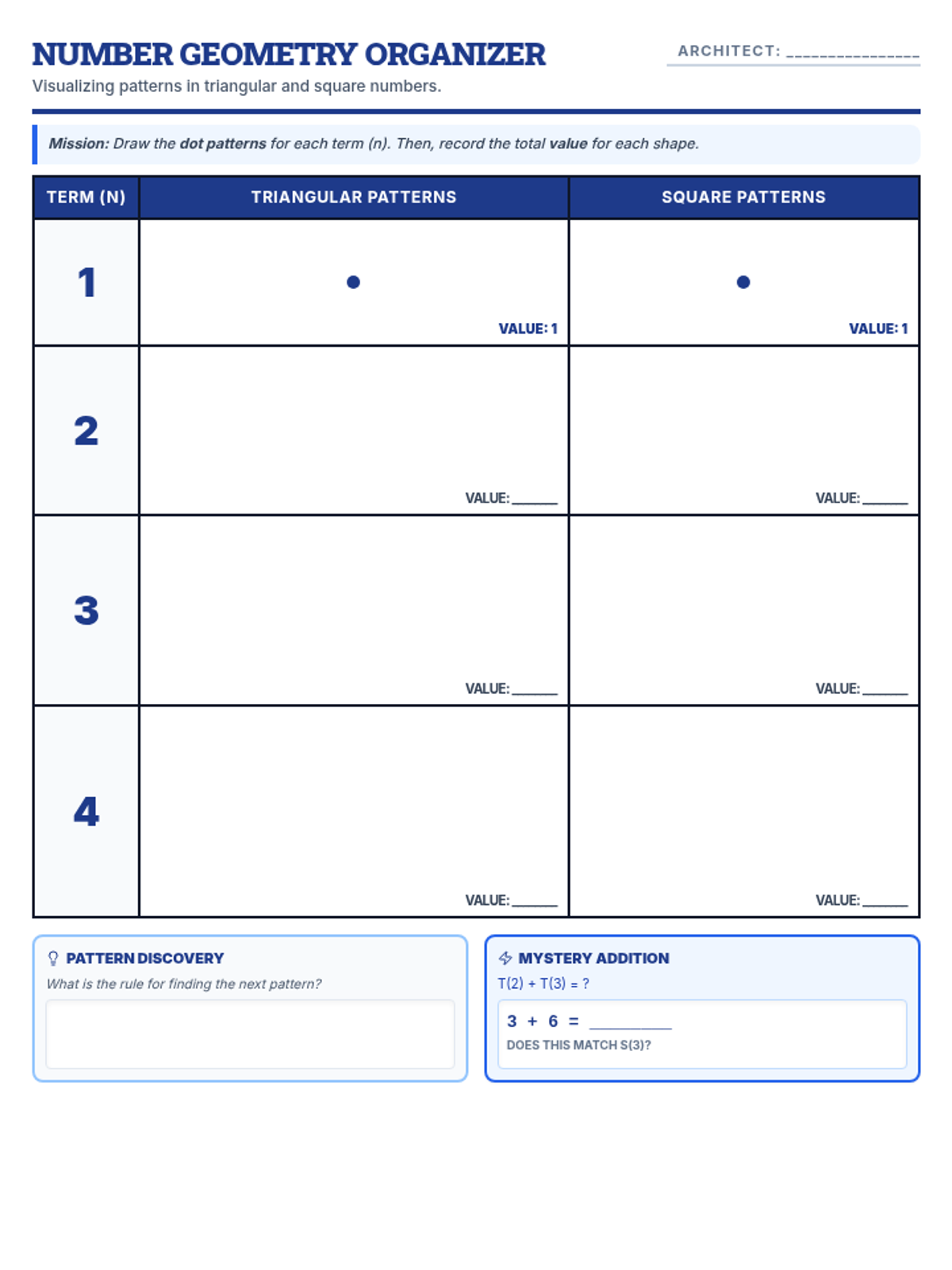
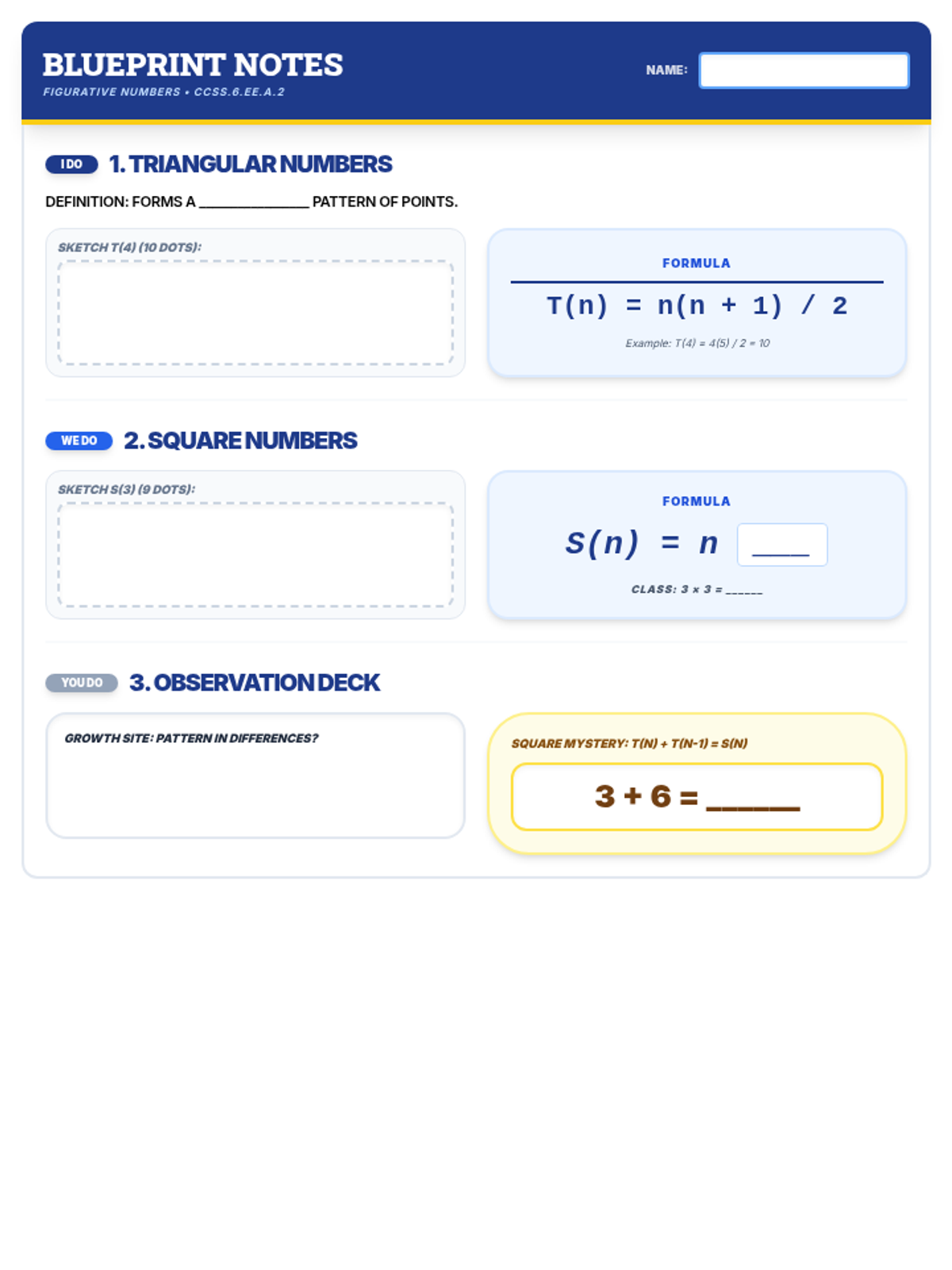
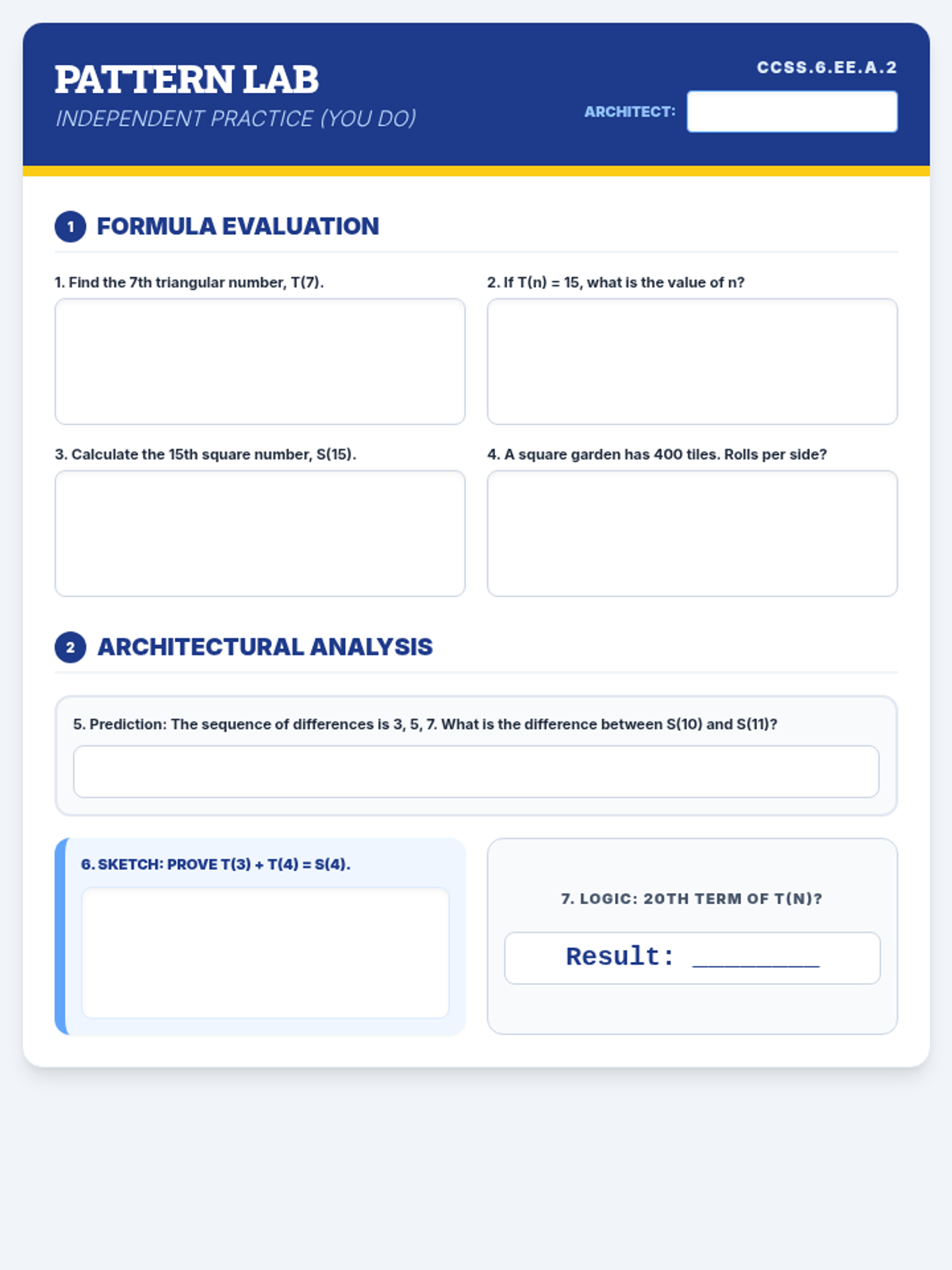
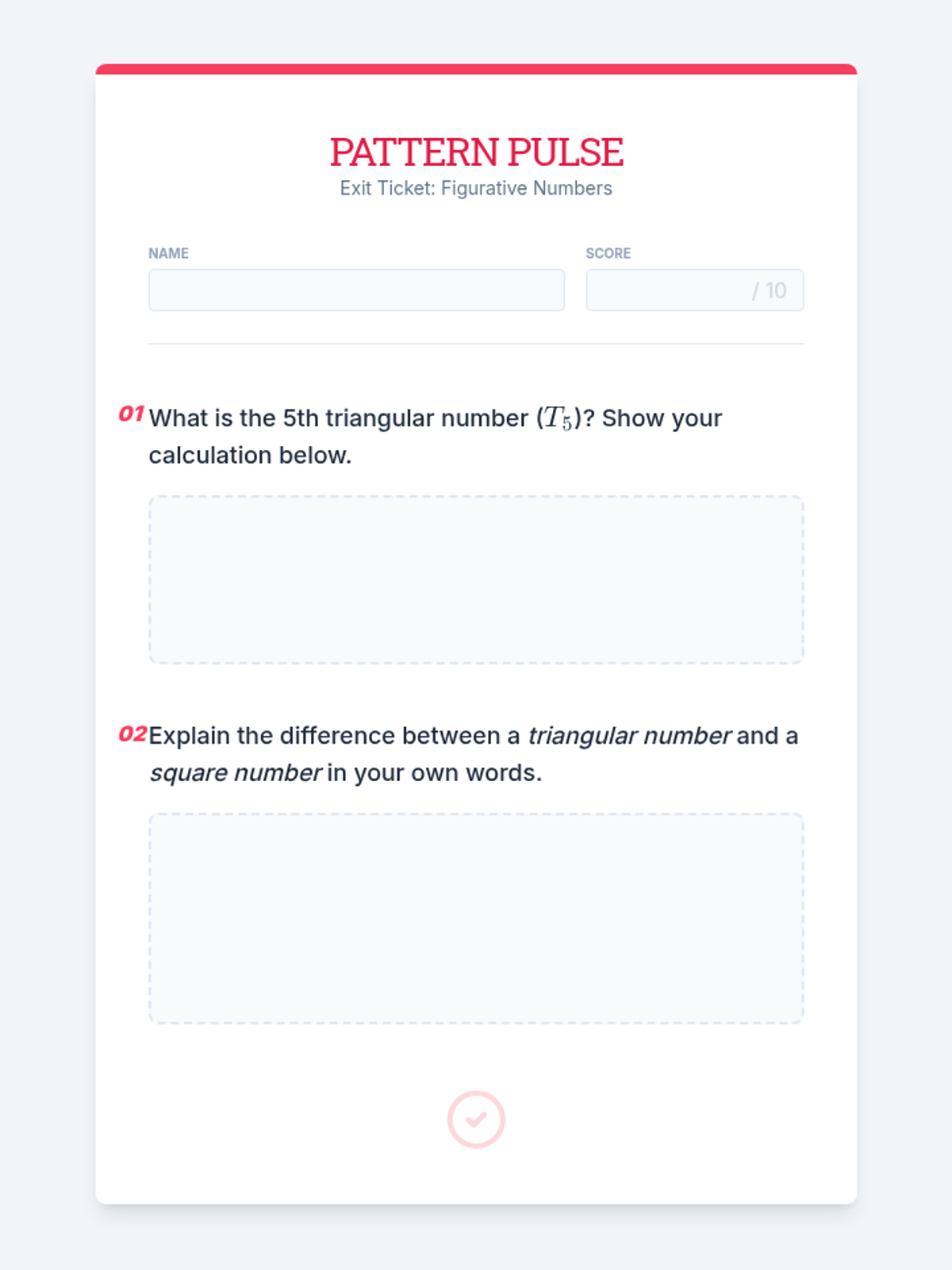
An inquiry-based exploration of triangular and square numbers where students discover formulas through visual manipulation and structural analysis.
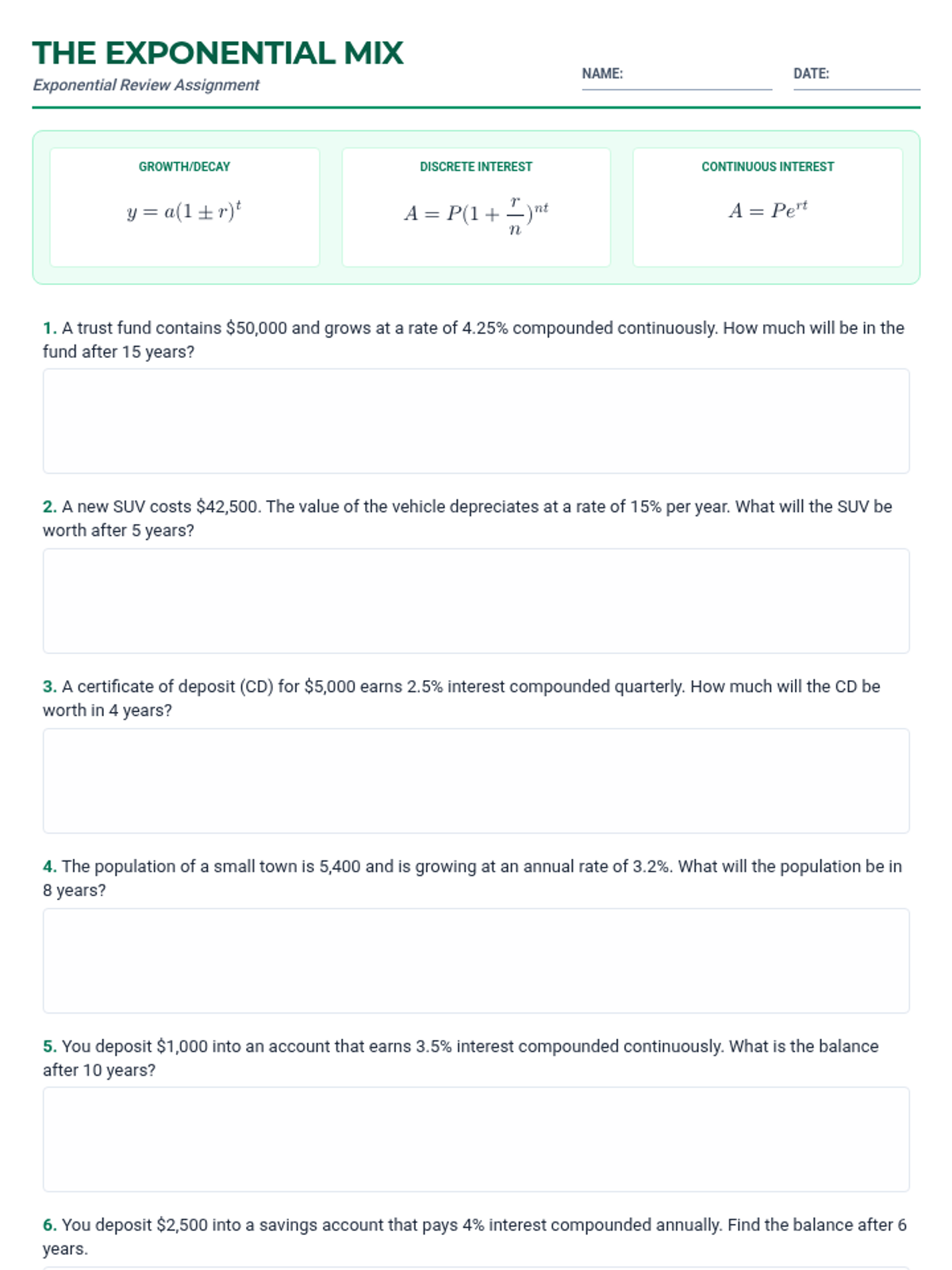
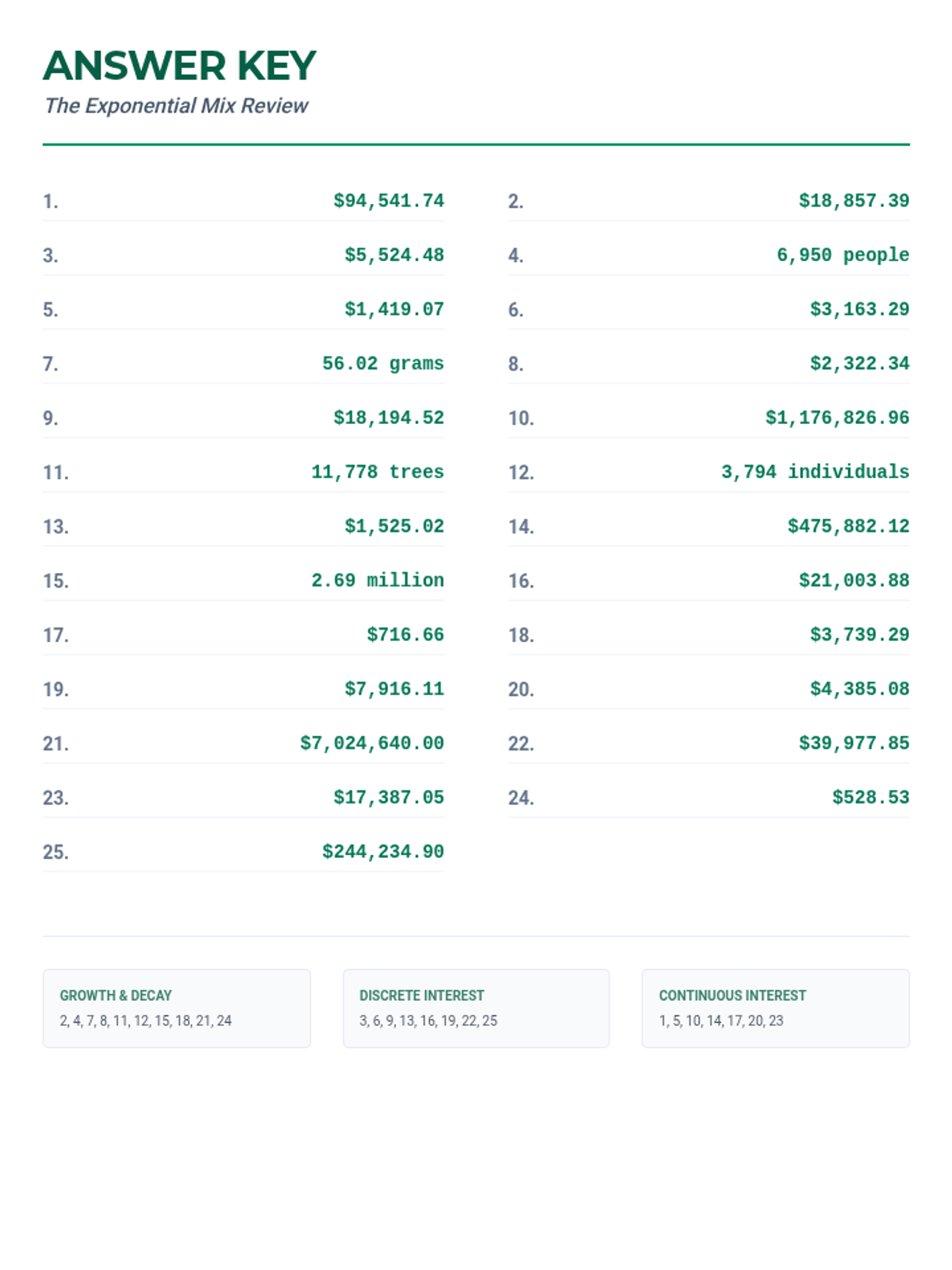
A comprehensive review of exponential growth, decay, and compound interest through real-world scenarios. Students practice applying discrete and continuous formulas to predict future values.
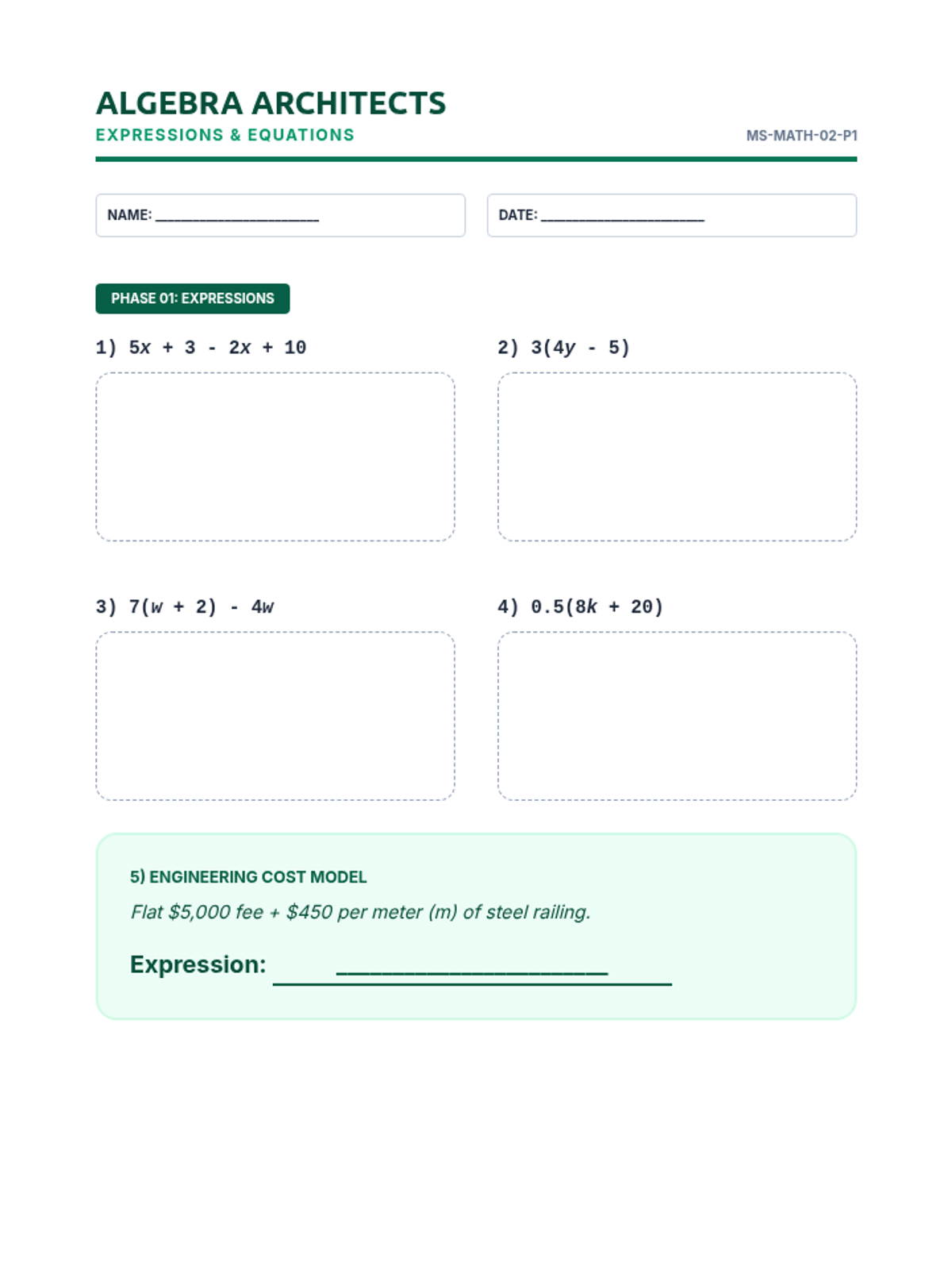
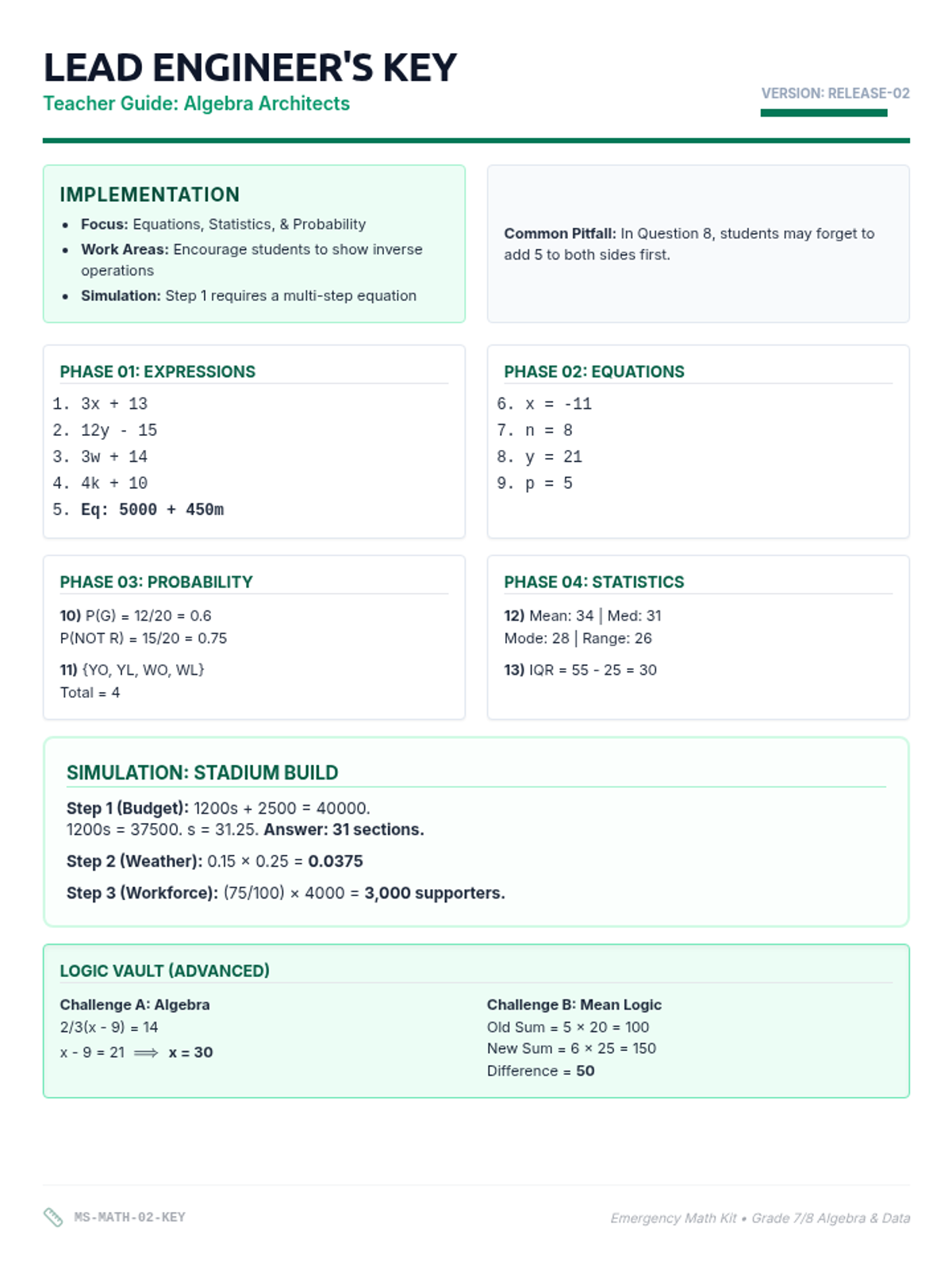
A 90-minute substitute-ready packet covering linear expressions, one- and two-step equations, probability, and statistics. Students act as "logic engineers" to solve real-world modeling problems and analyze data sets.
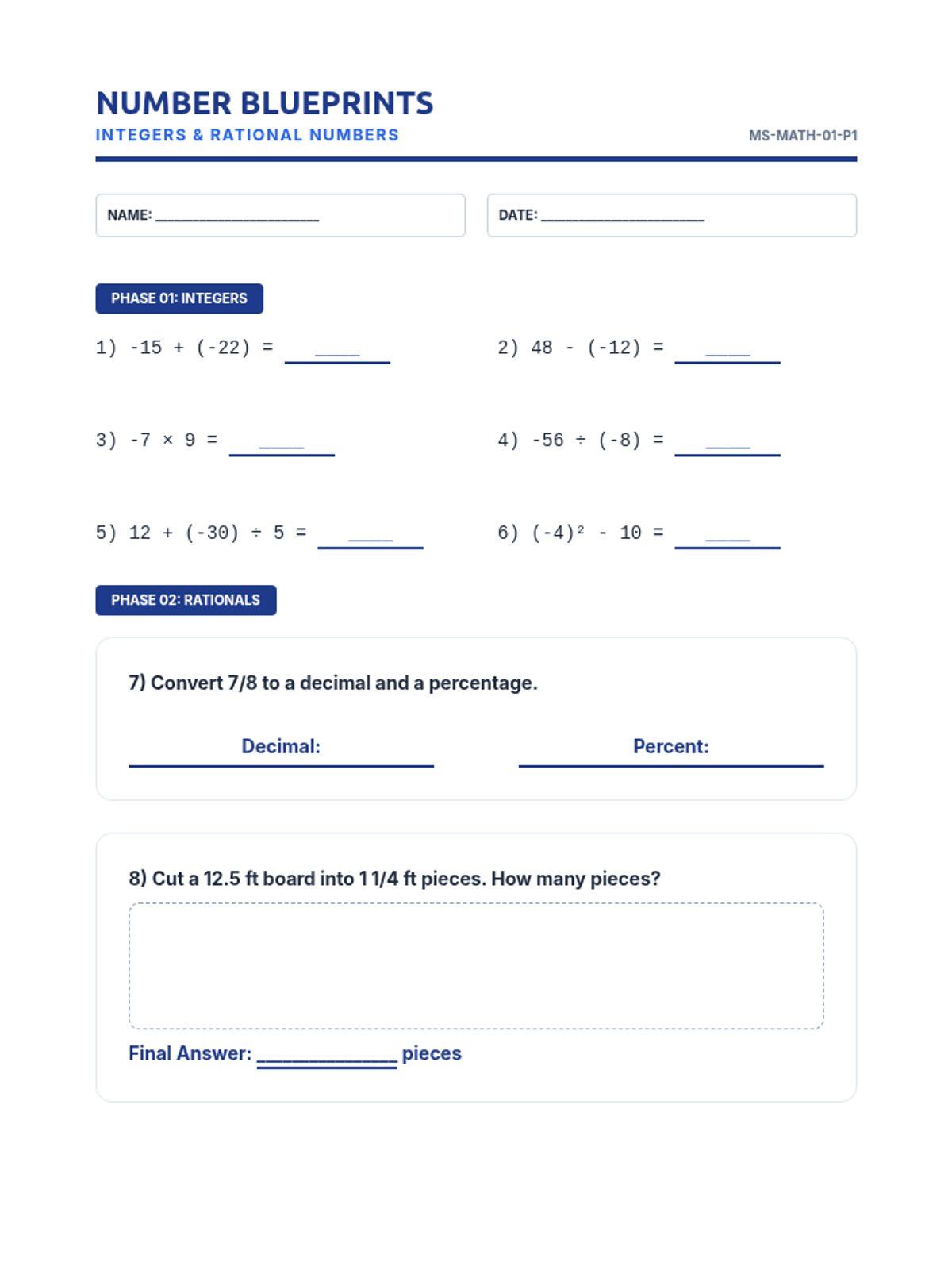
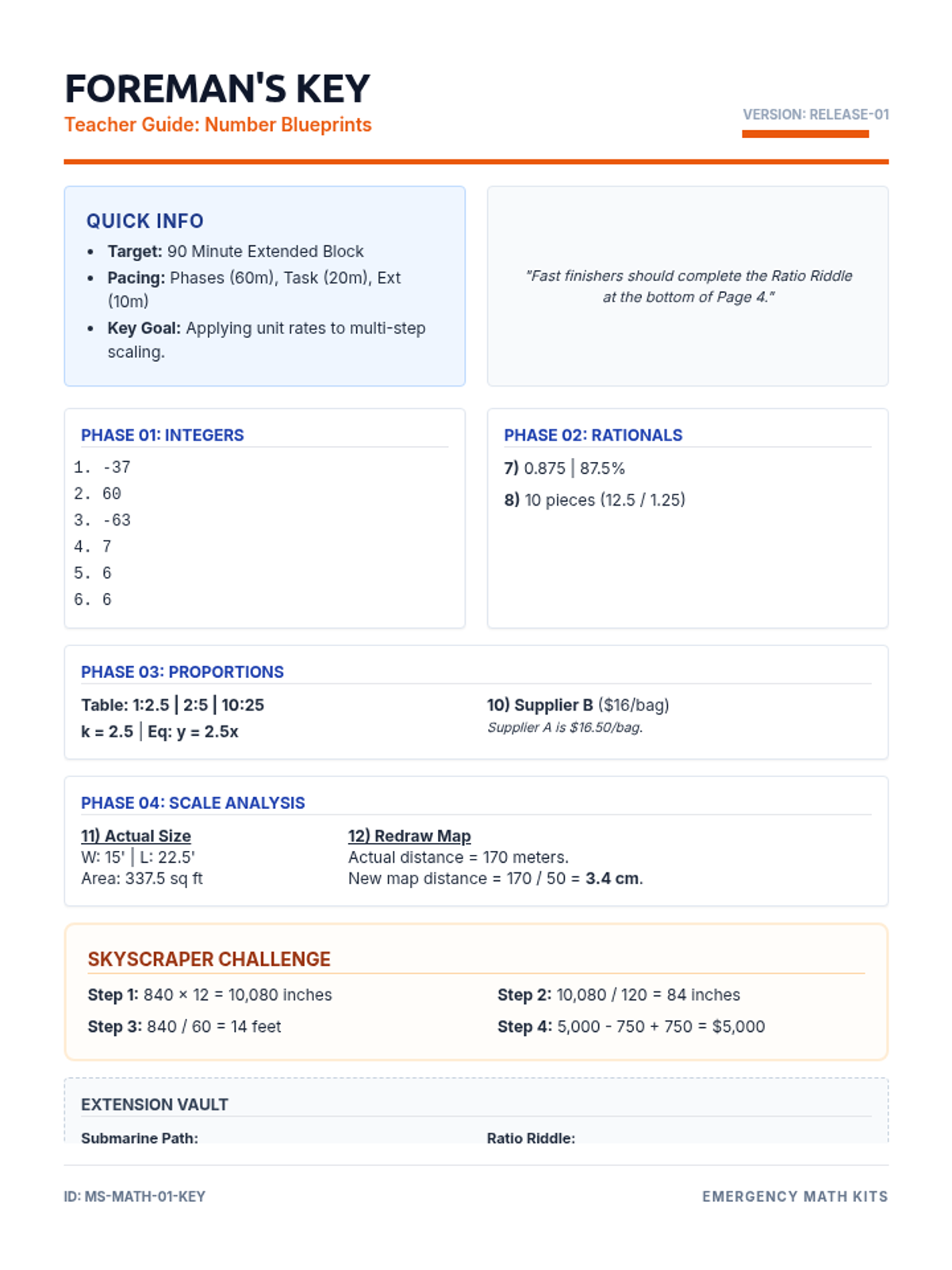
A 90-minute substitute-ready packet focusing on operations with integers, rational numbers, proportions, and scale factors. Students work through a series of "blueprint" challenges to apply their number sense and proportional reasoning.
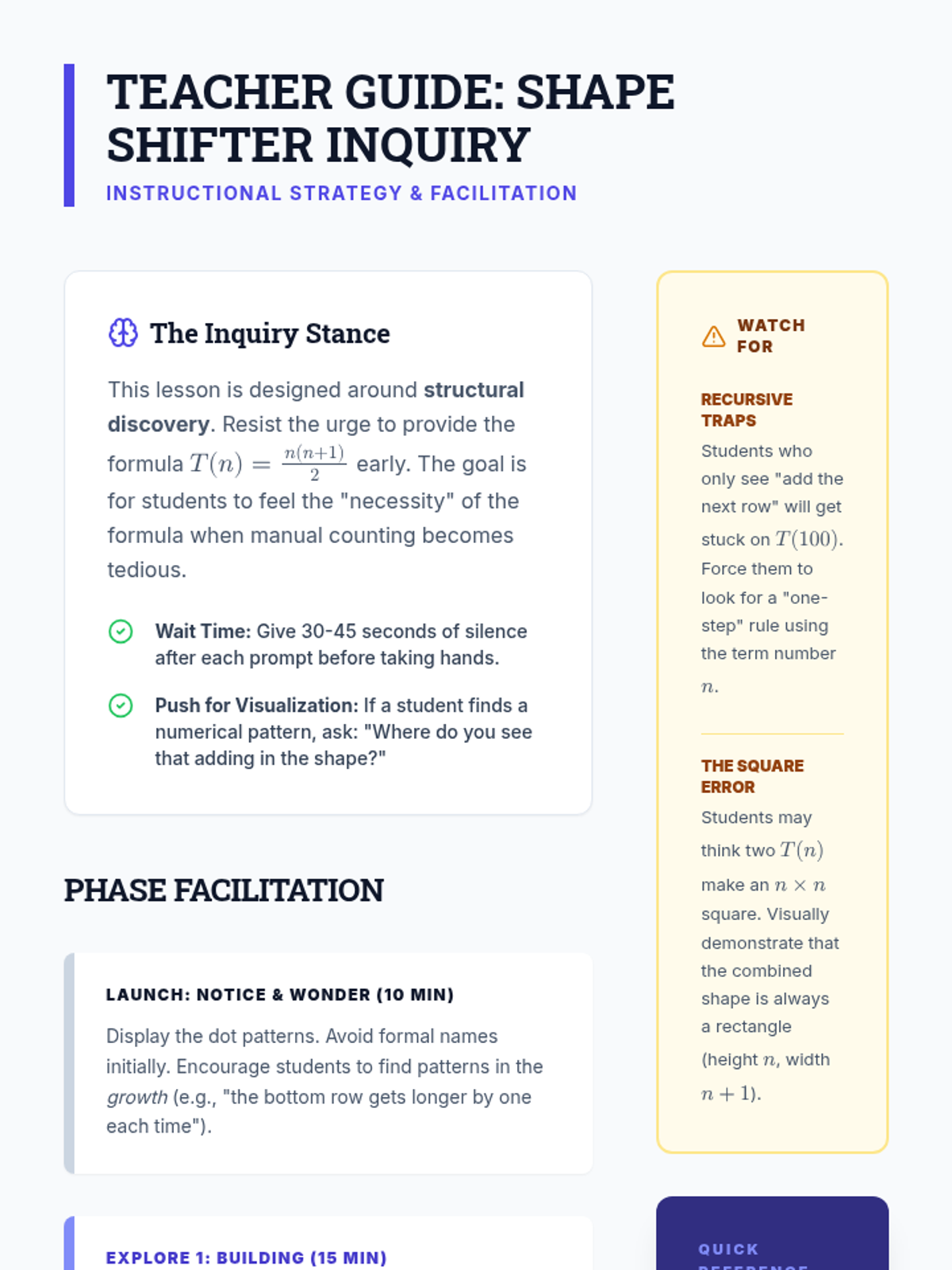
A comprehensive 5E lesson exploring the intersection of geometry and arithmetic through triangular and square numbers. Students will identify patterns, build geometric representations, and derive algebraic formulas for figurative numbers.
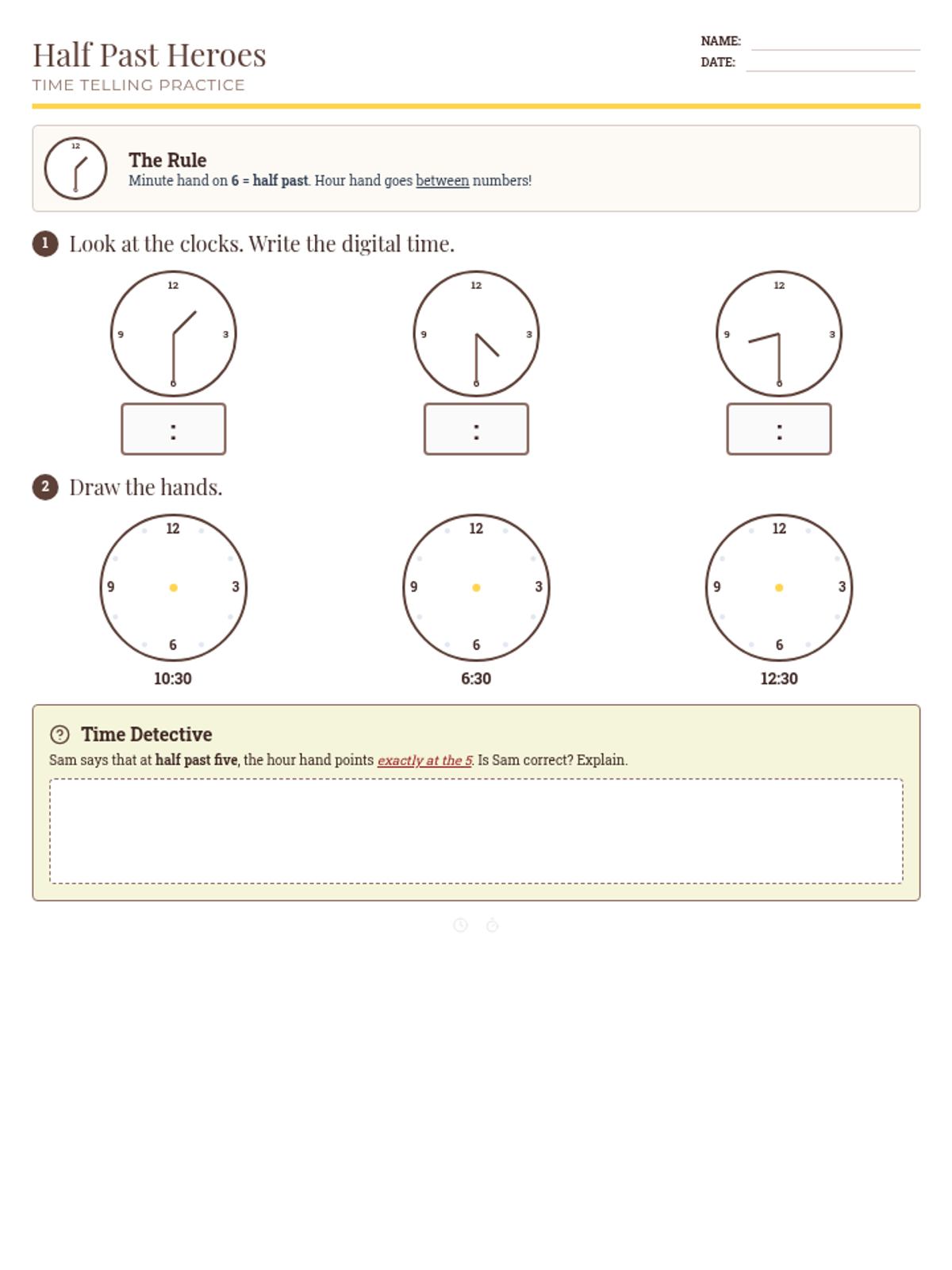
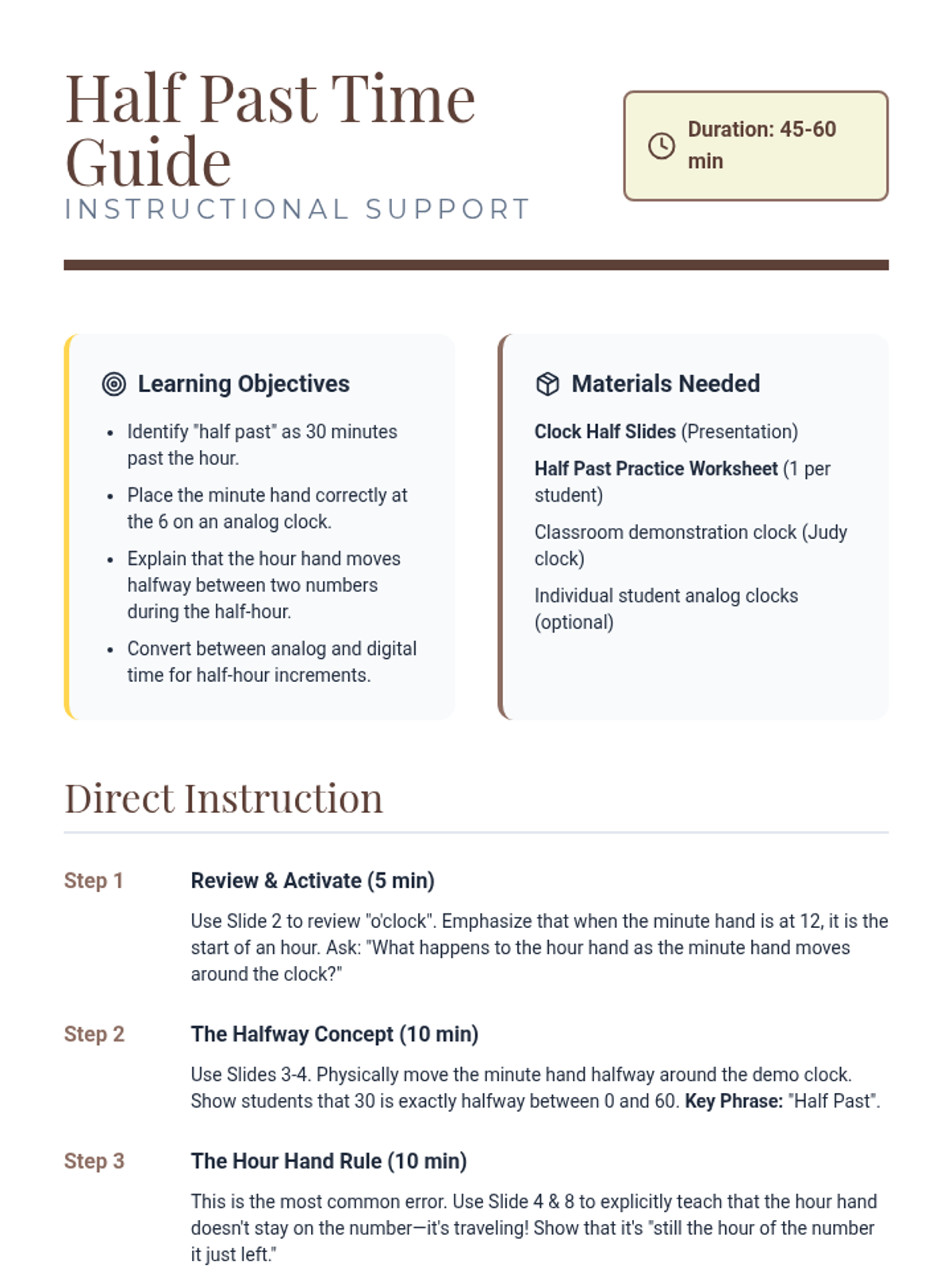
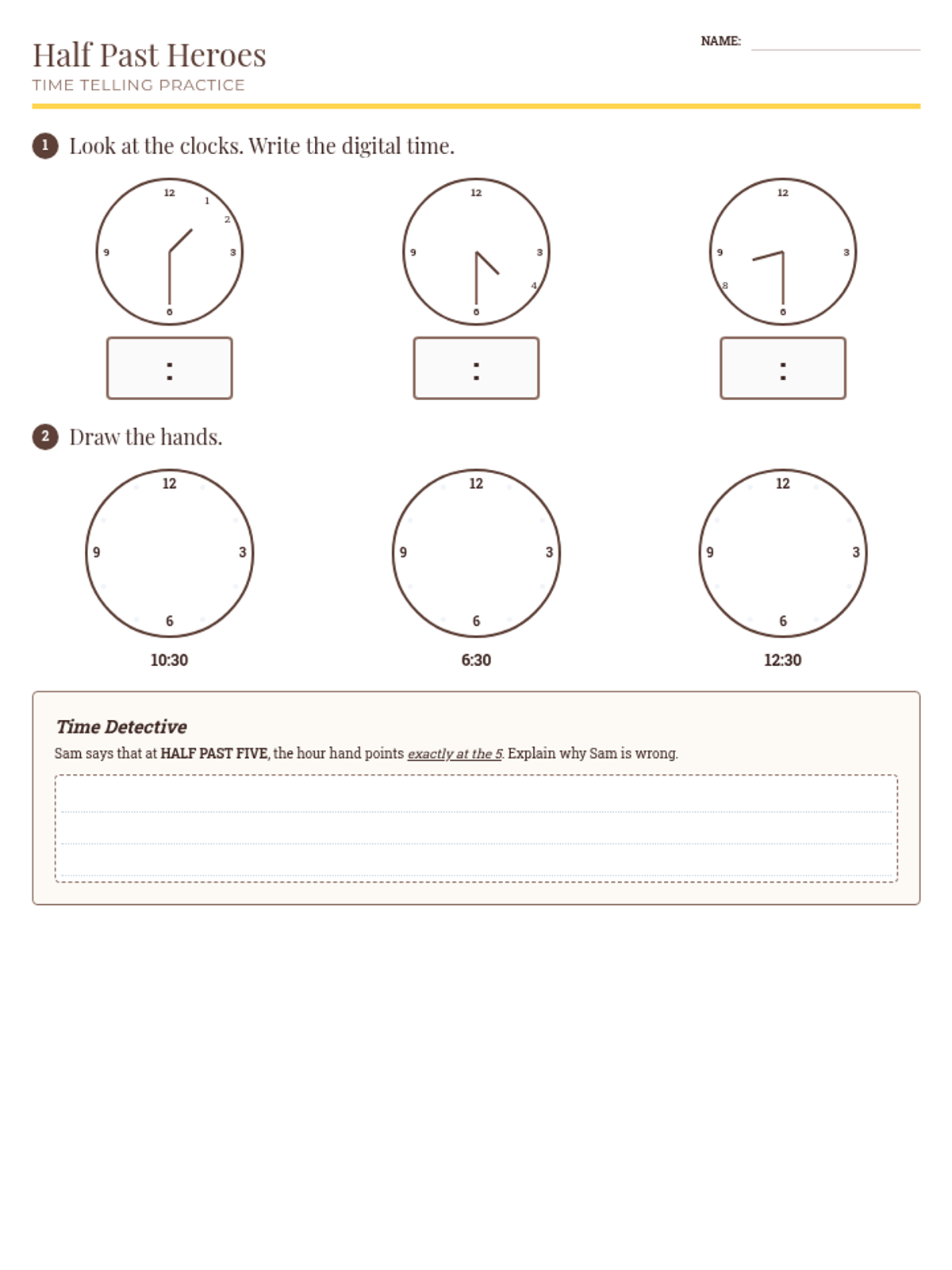
A lesson focused on introducing and practicing telling time to the half-hour, connecting analog and digital representations.
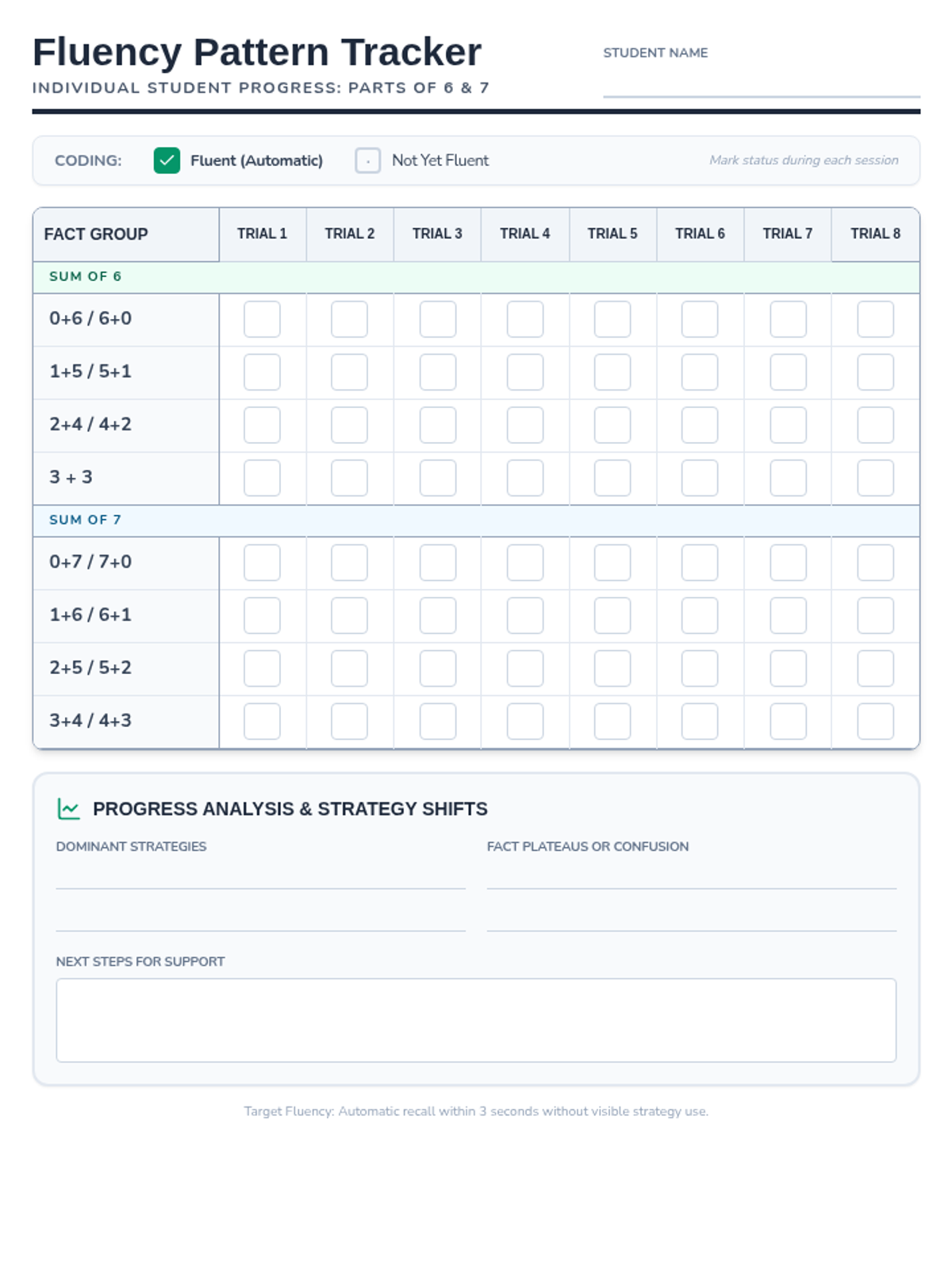
A collection of tools for tracking student progress in mastering number decompositions for 6 and 7.
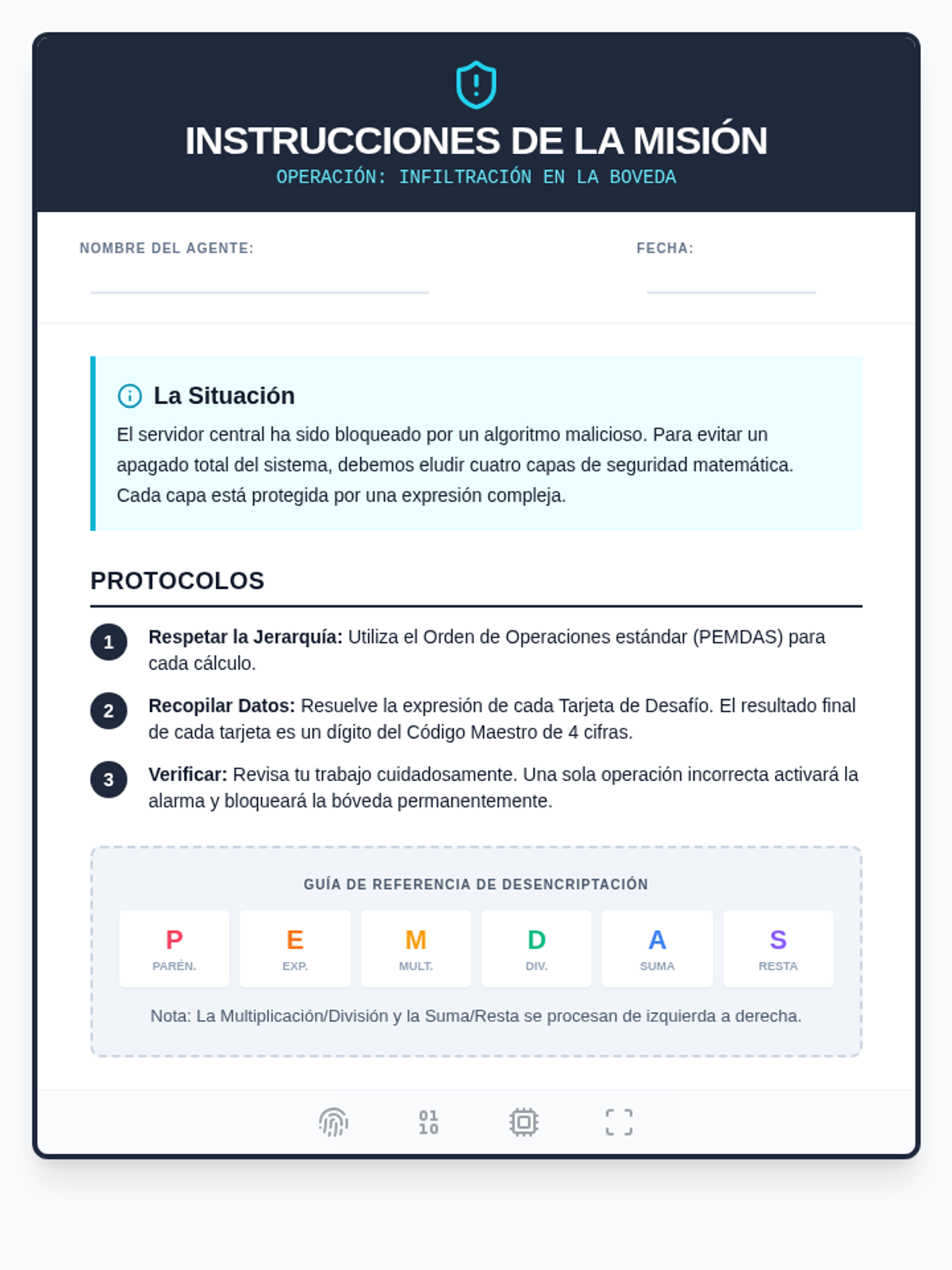
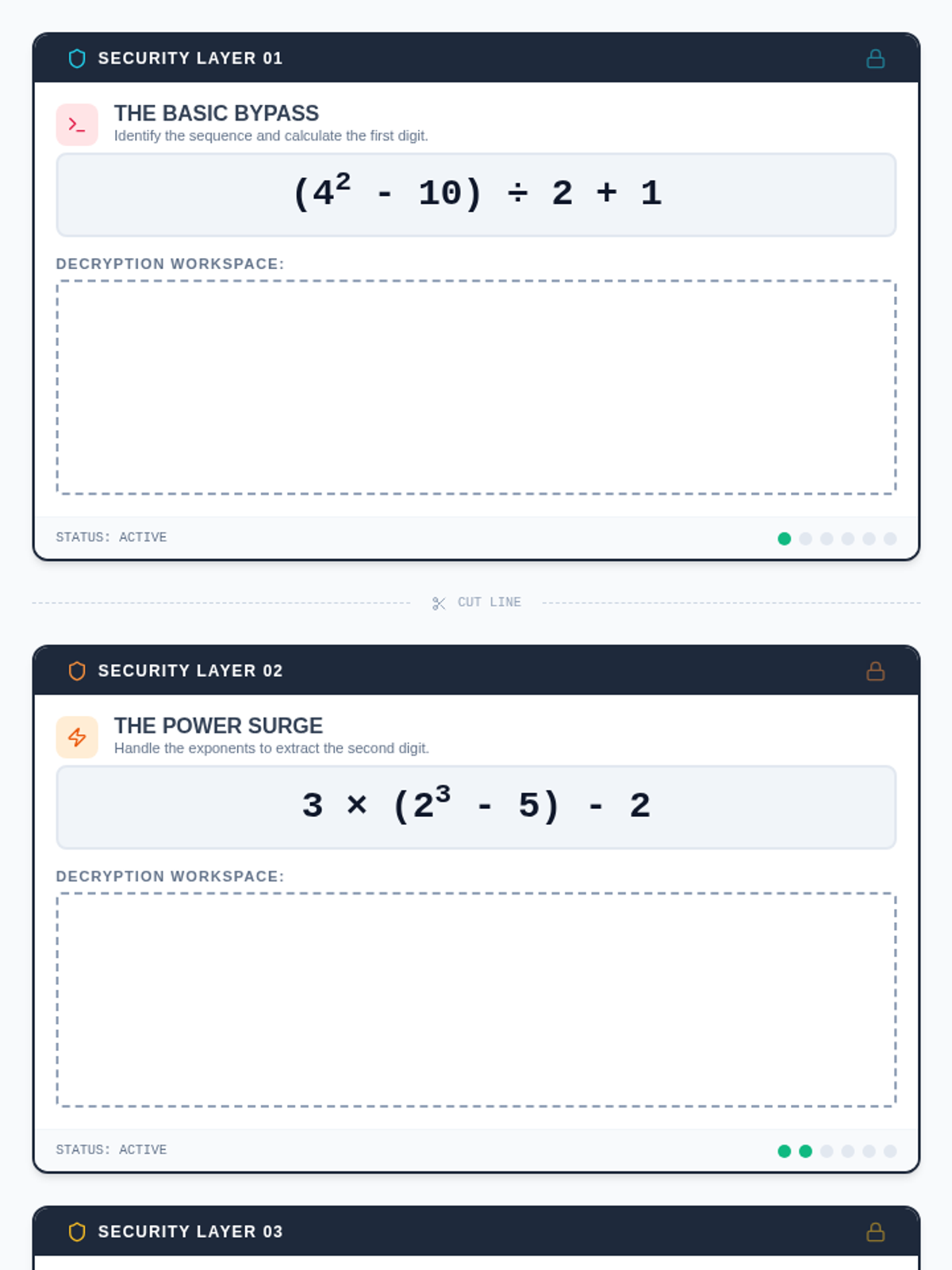
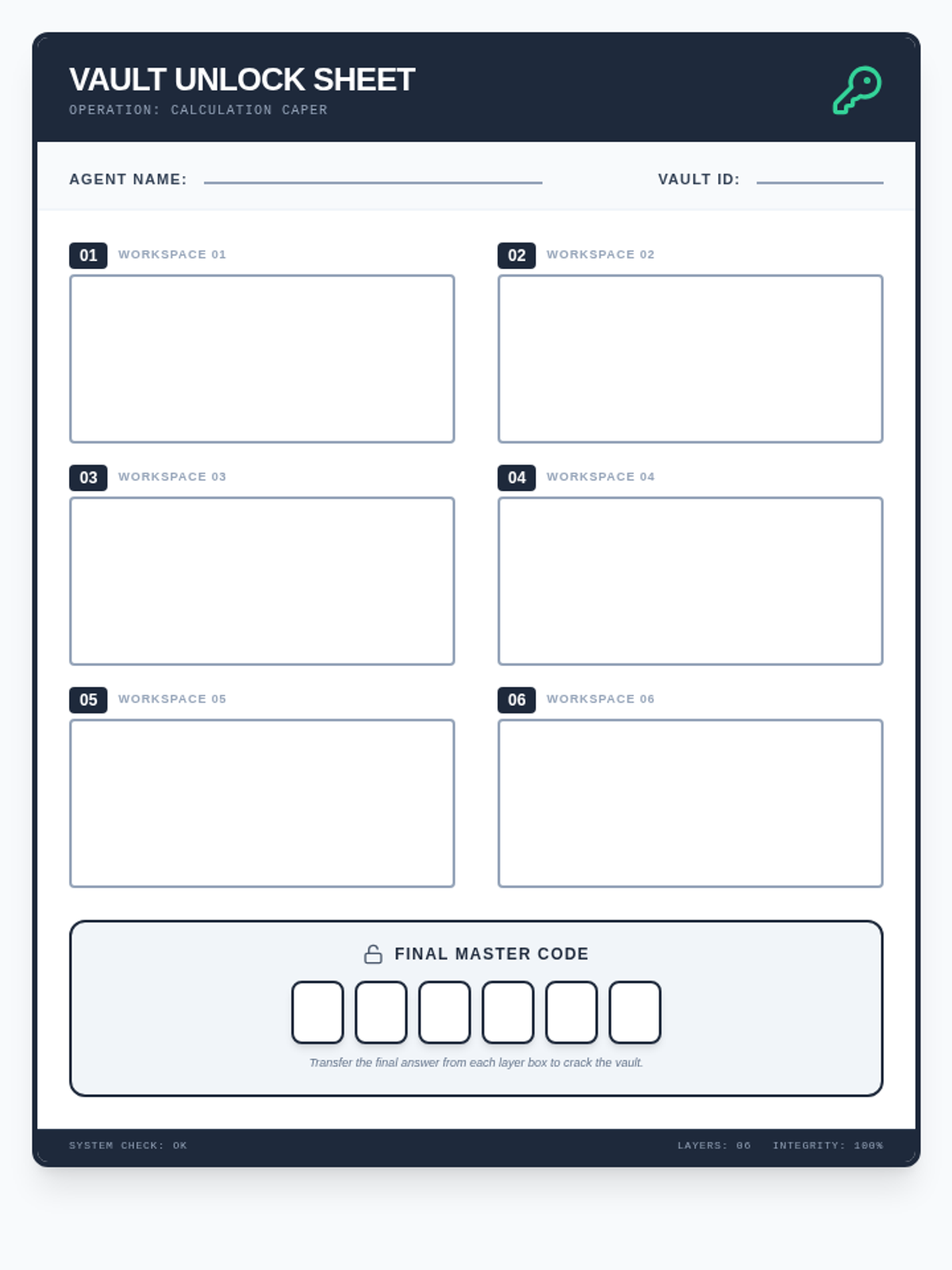
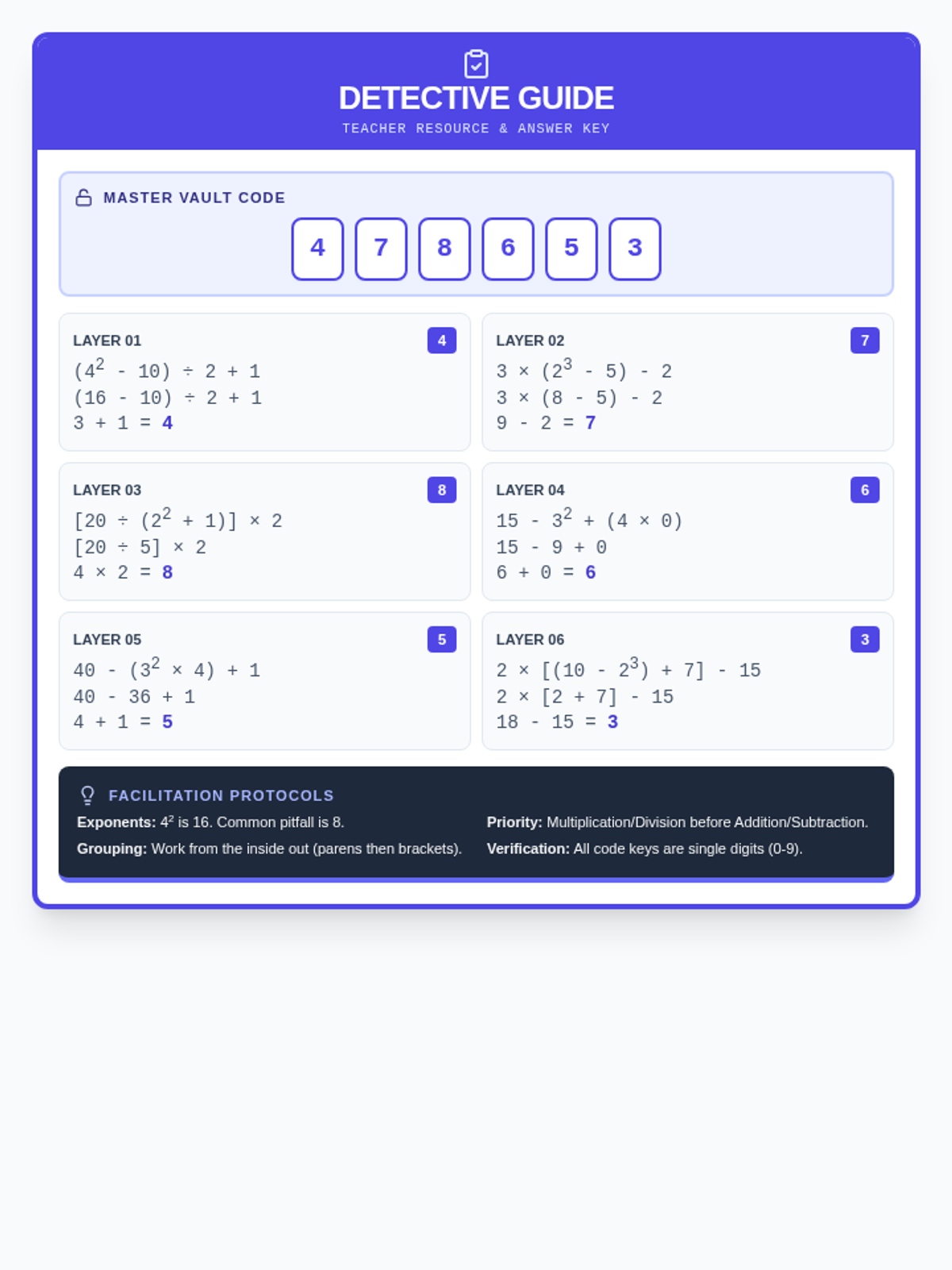
A high-stakes escape room challenge where students solve PEMDAS expressions involving exponents to crack the vault code. Students act as digital detectives navigating four distinct security layers.
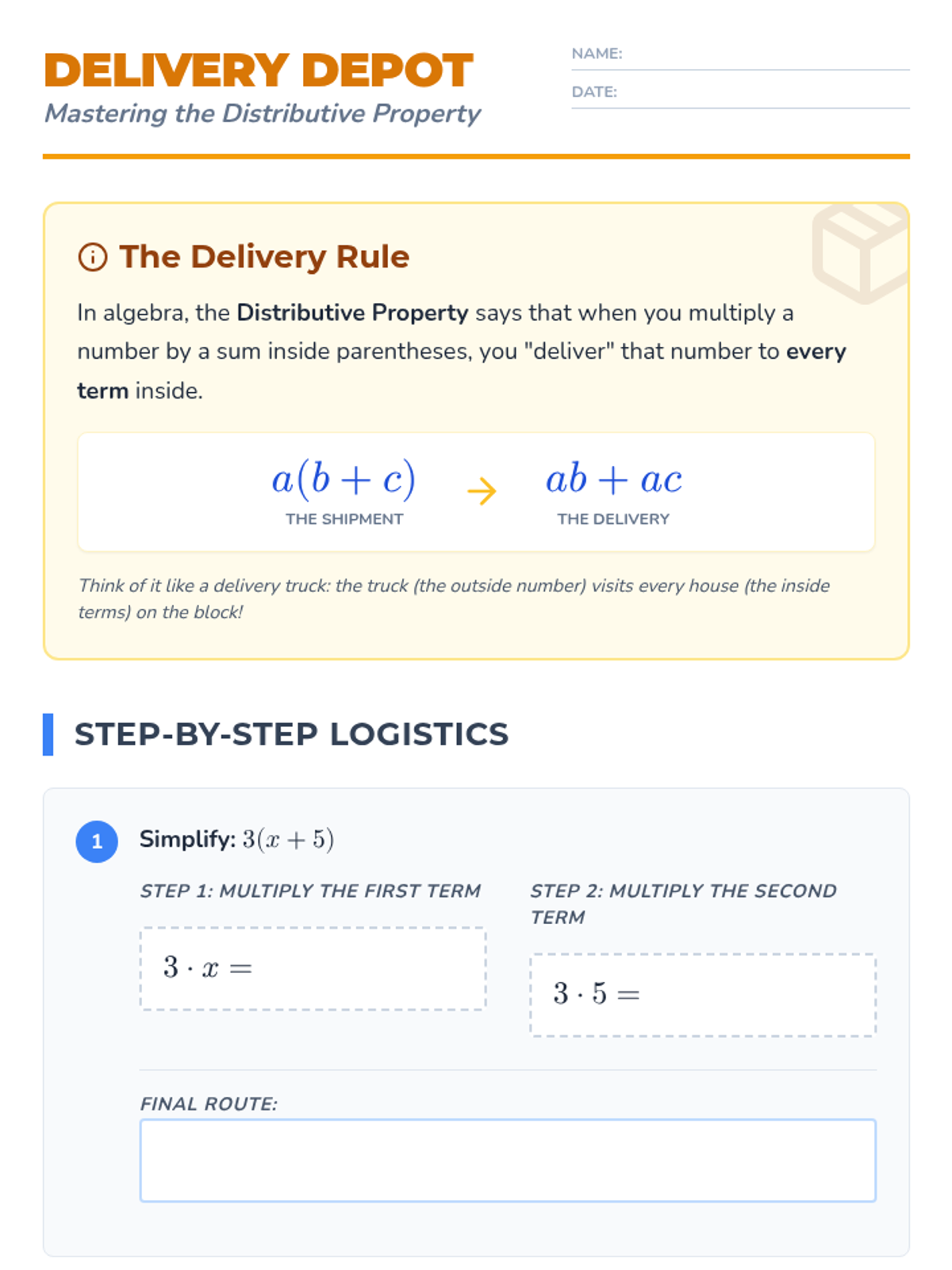
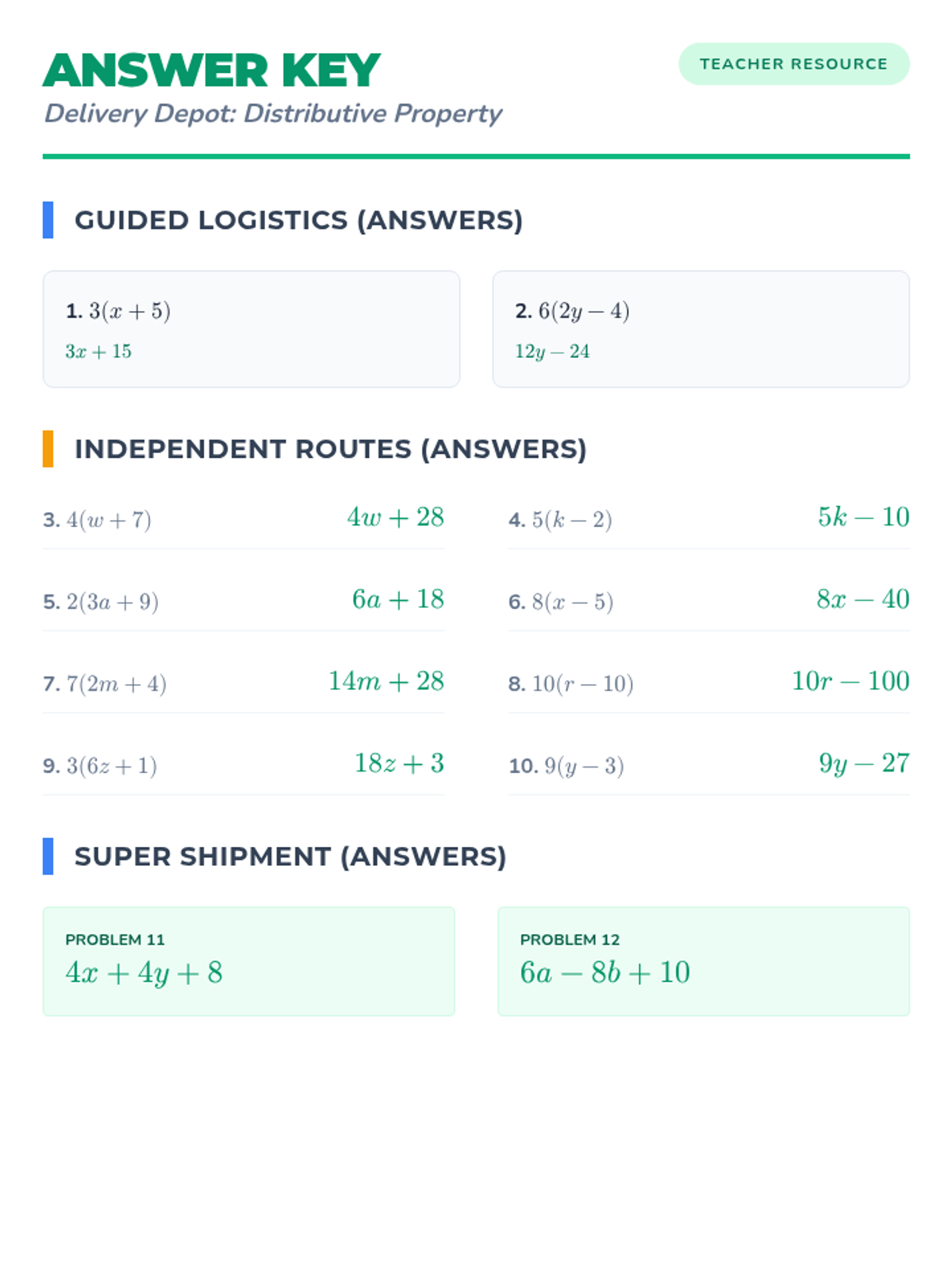
A lesson introducing the distributive property through the metaphor of a delivery service, featuring guided and independent practice.
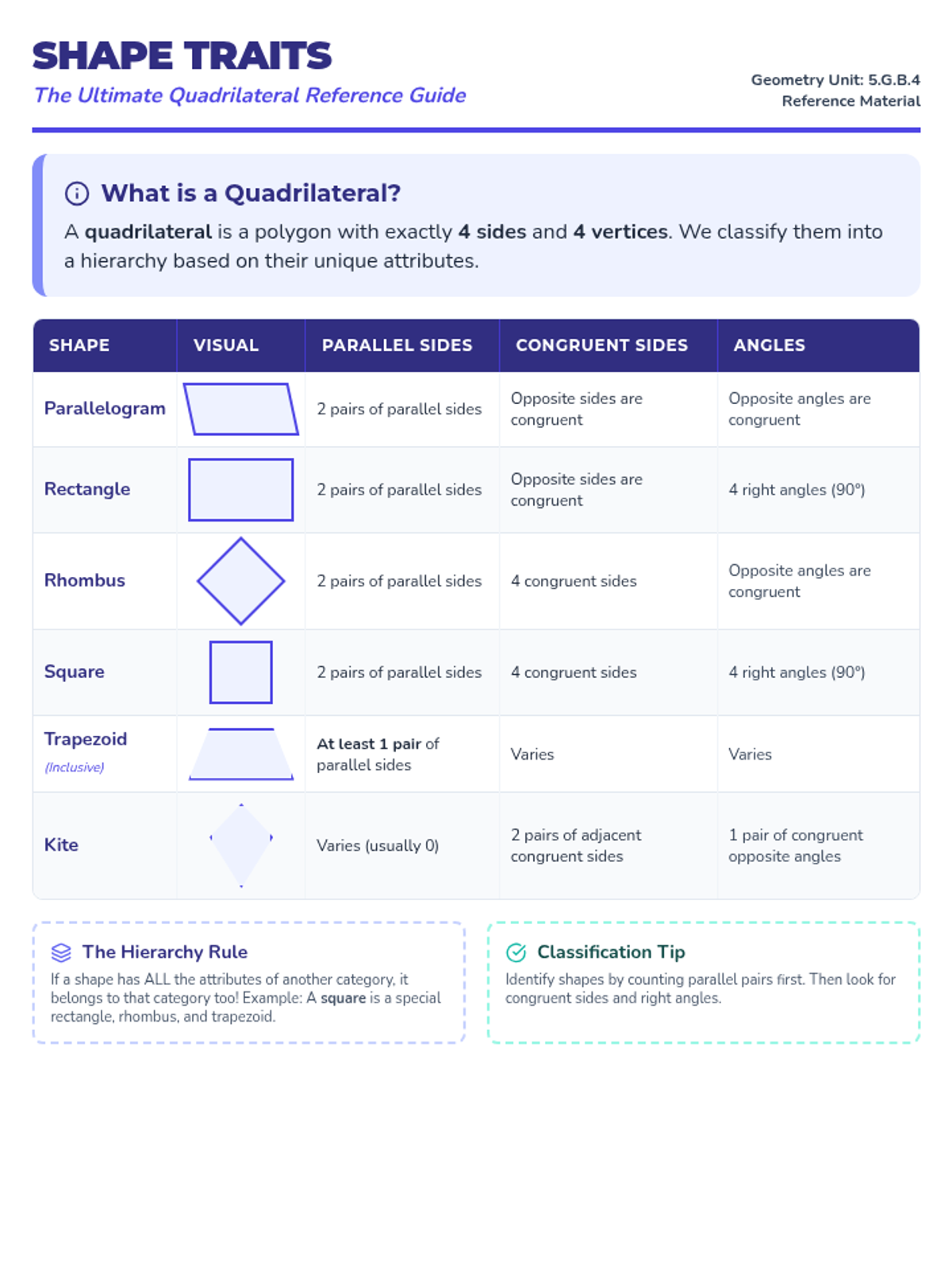
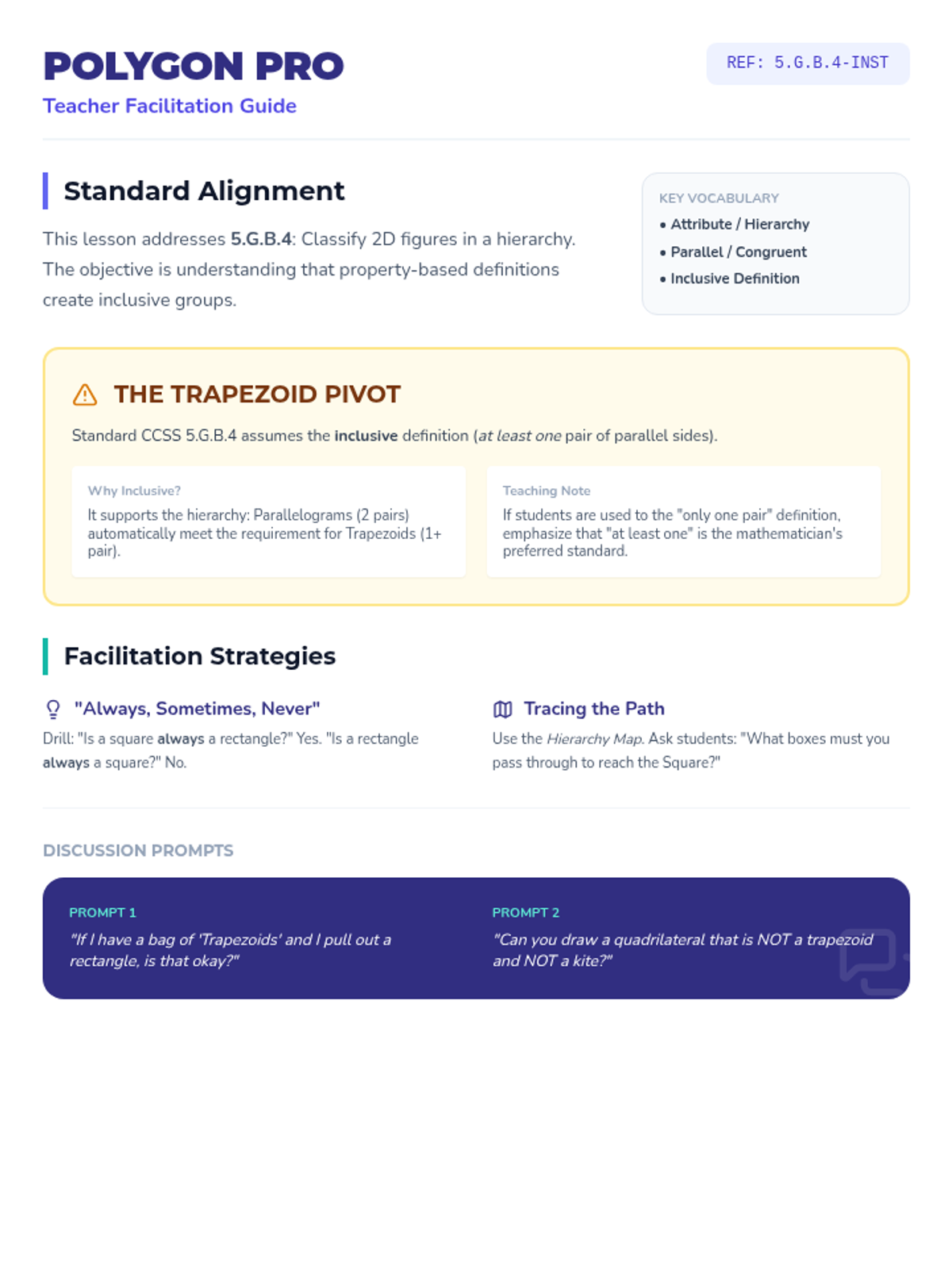
A comprehensive lesson on classifying quadrilaterals based on their properties, focusing on the hierarchy and inclusive definitions required for 5th-grade geometry.
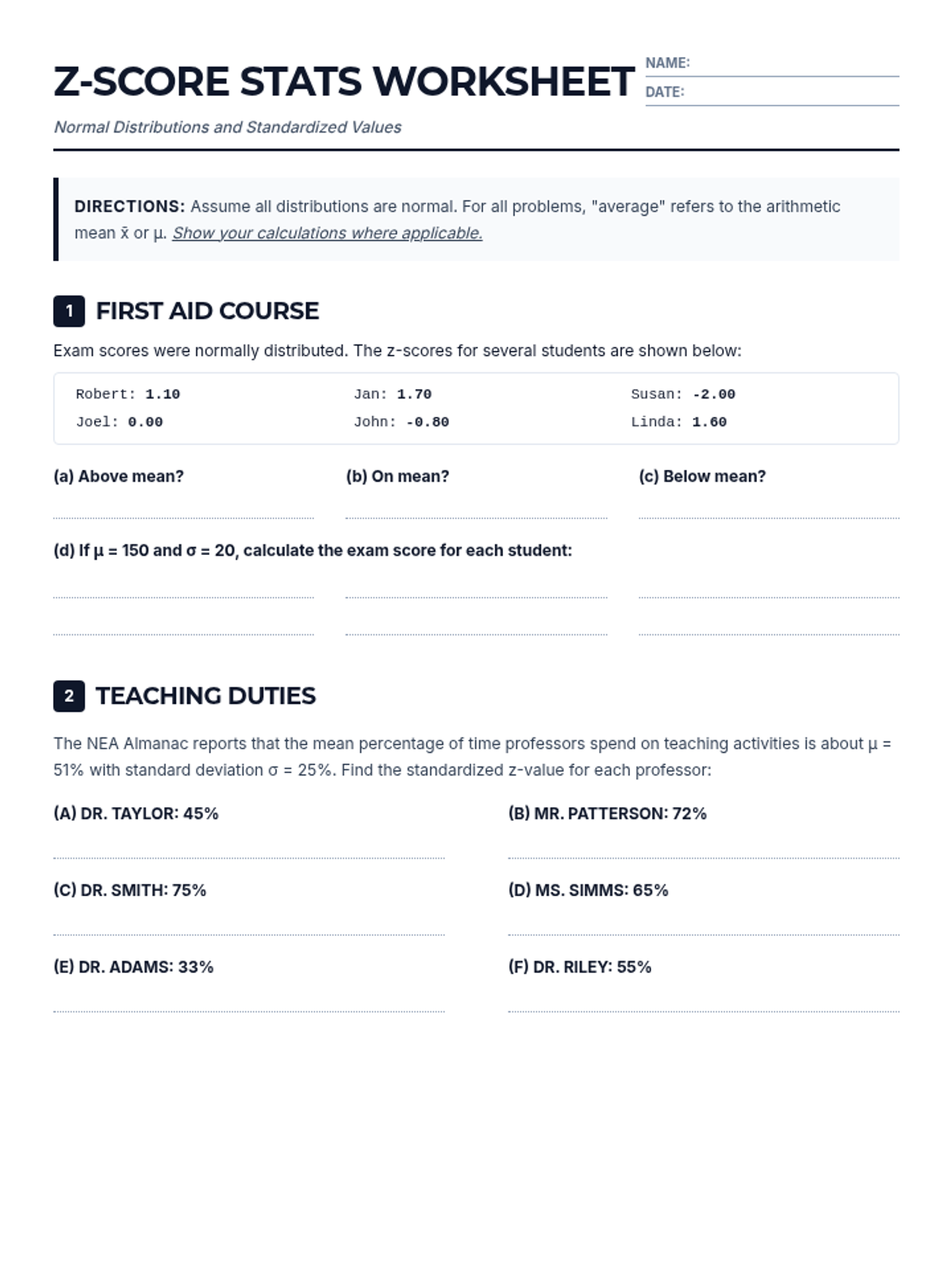
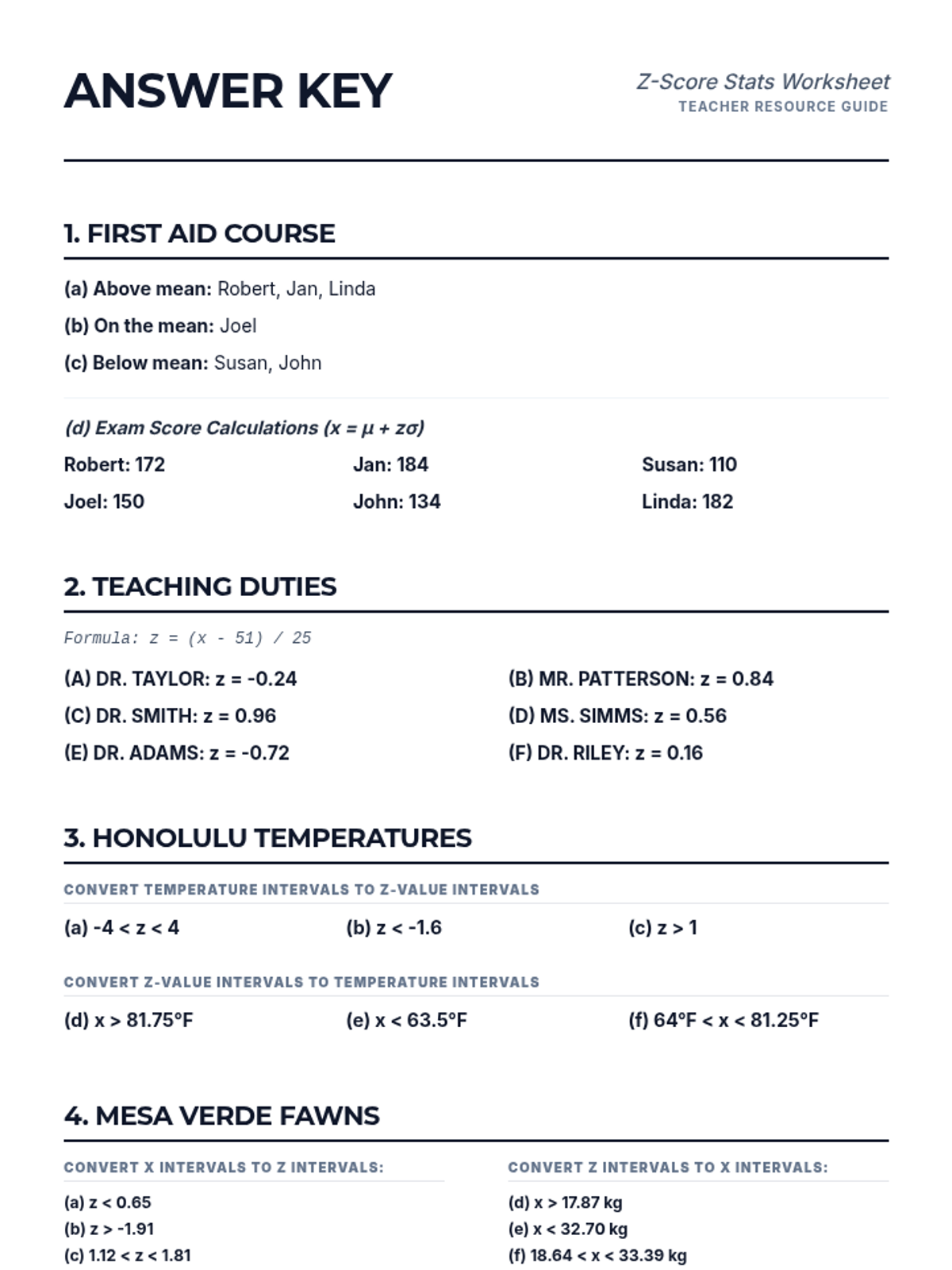
A lesson focused on understanding and applying z-scores to compare values from different normal distributions and interpret real-world statistical data.
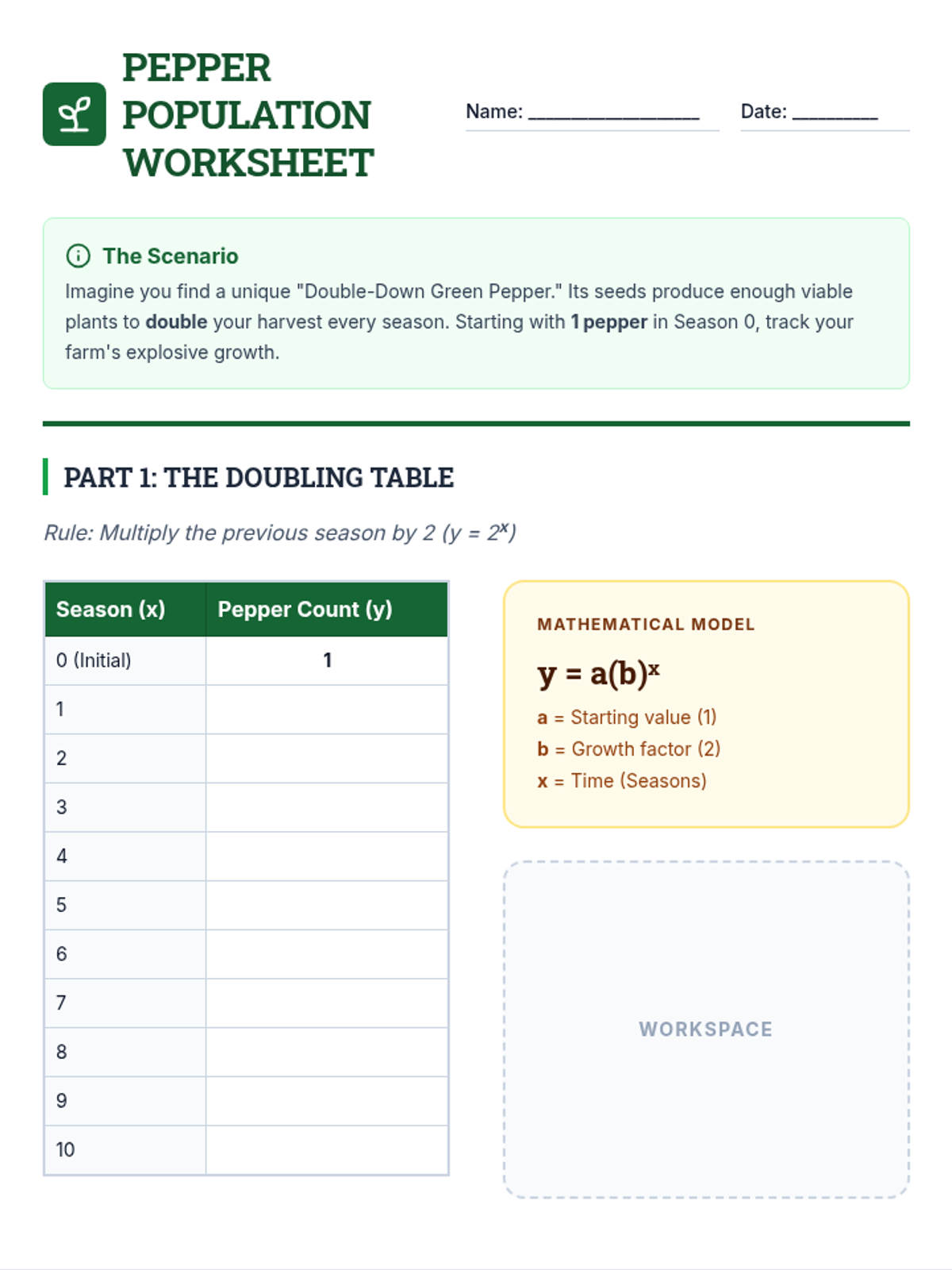
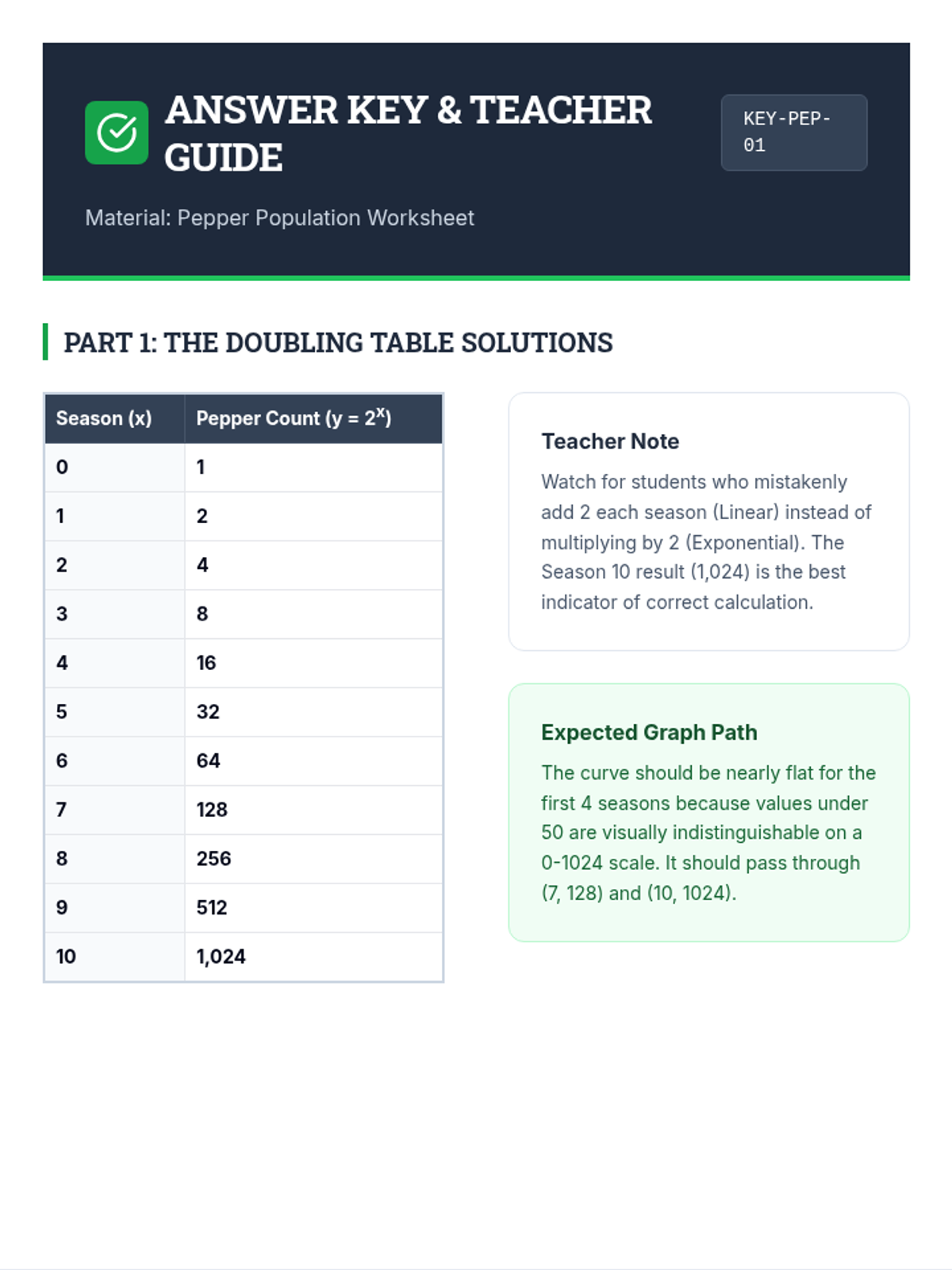
Students will model the exponential growth of a pepper population, starting from one pepper and doubling every season, to understand the power of geometric growth.
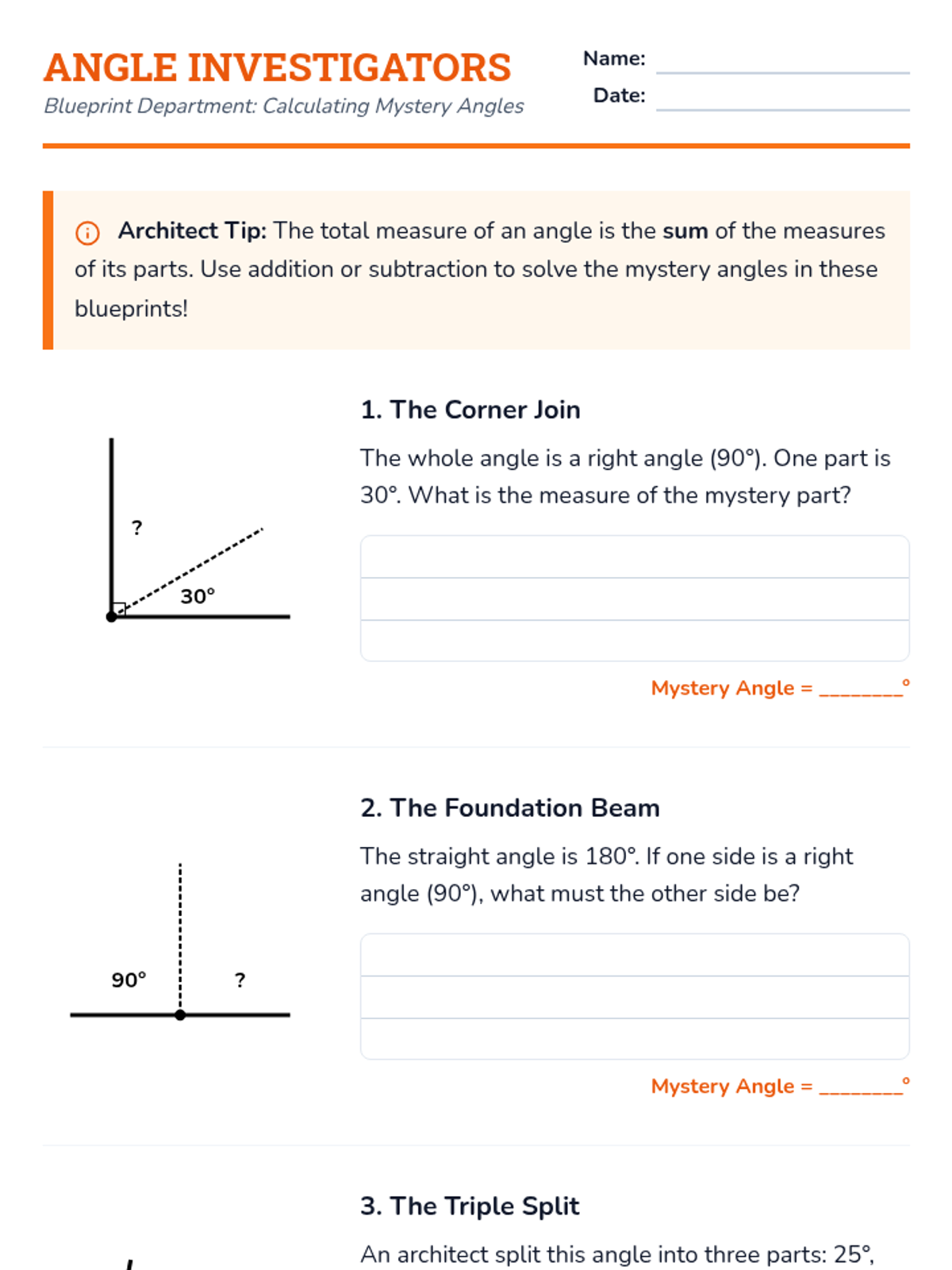
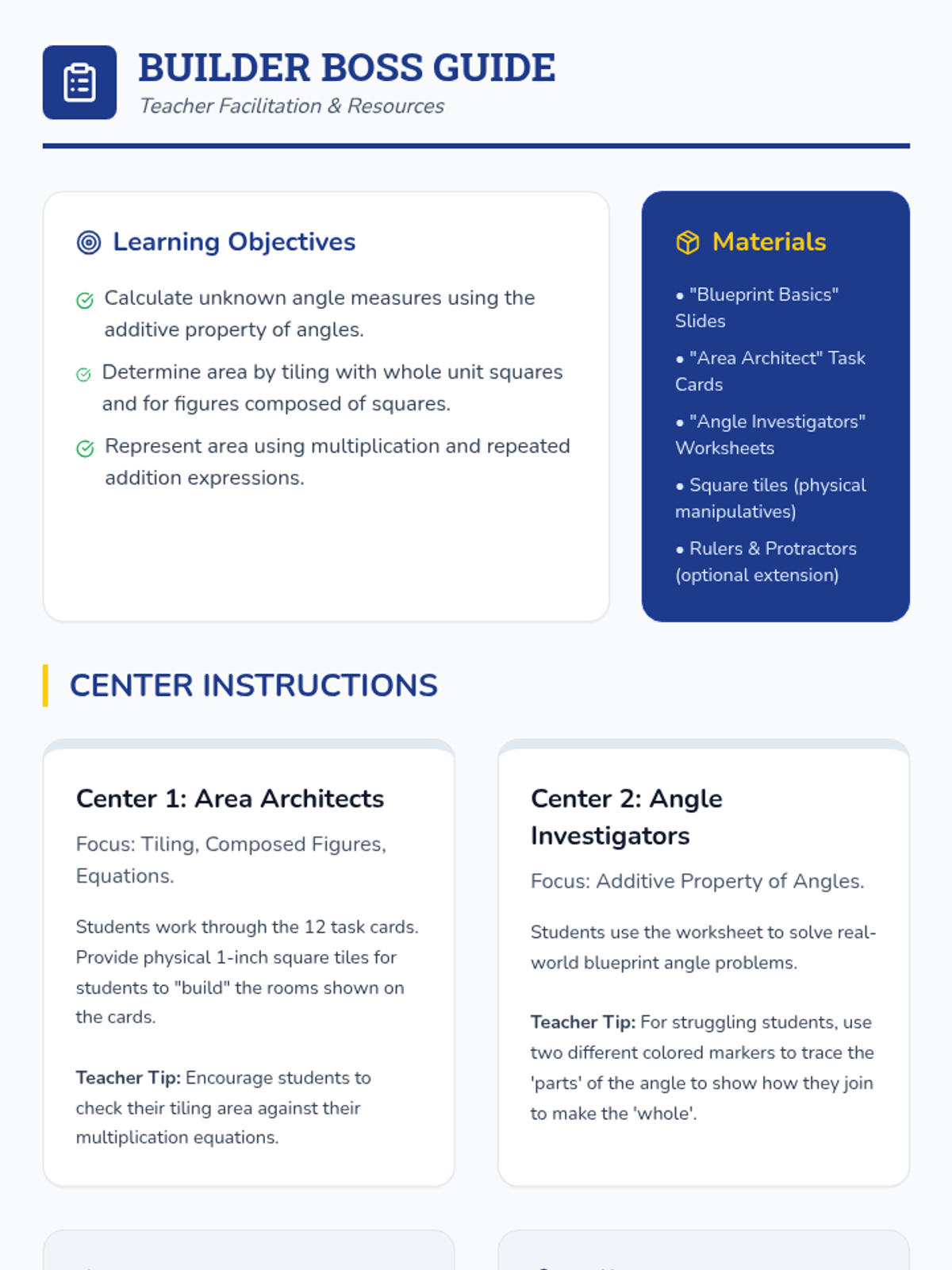
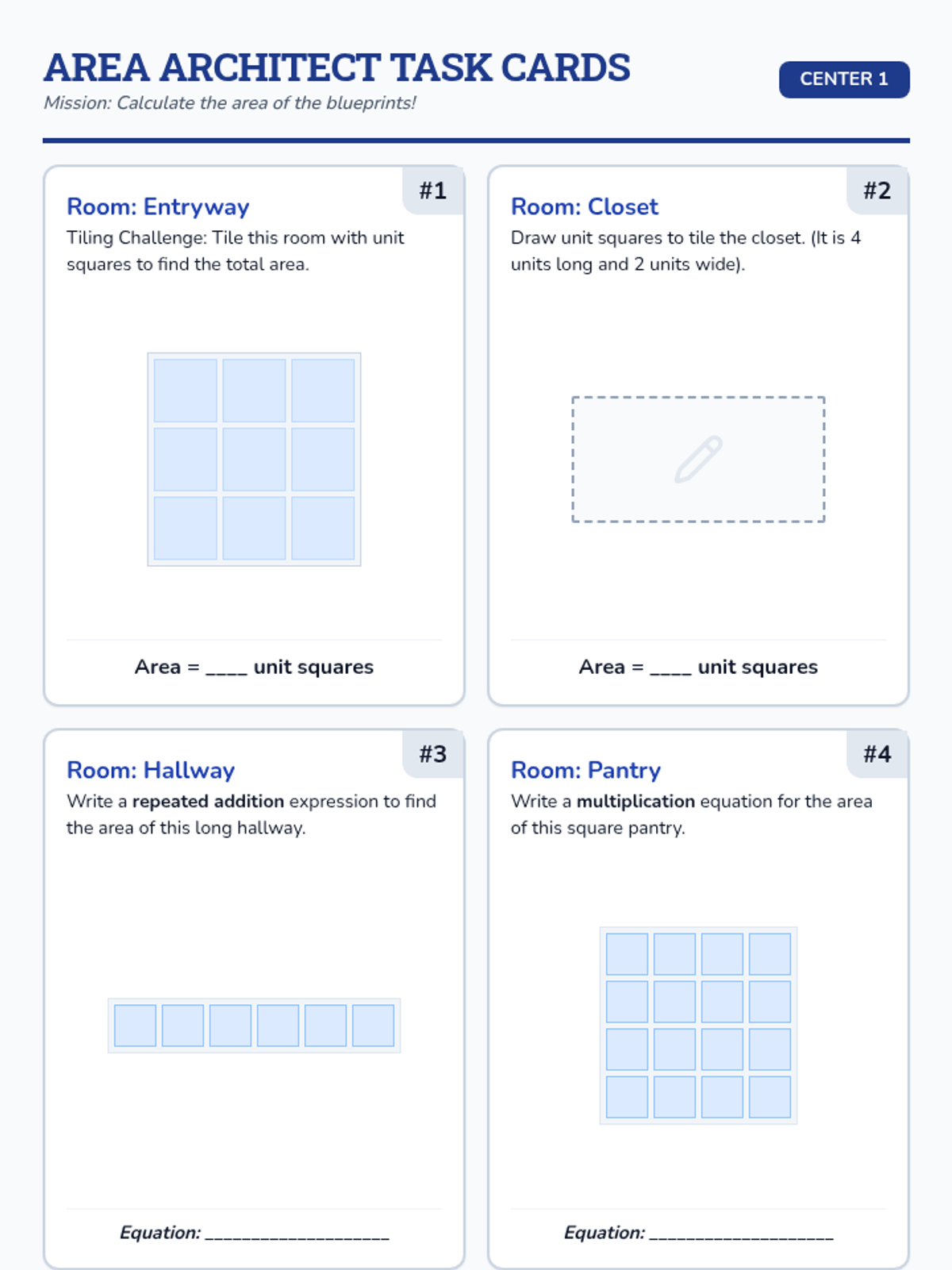
A comprehensive set of small group activities where students calculate unknown angles and determine the area of various figures using tiling and equations. The lesson uses a 'Blueprint Builders' theme to engage students in real-world mathematical applications.
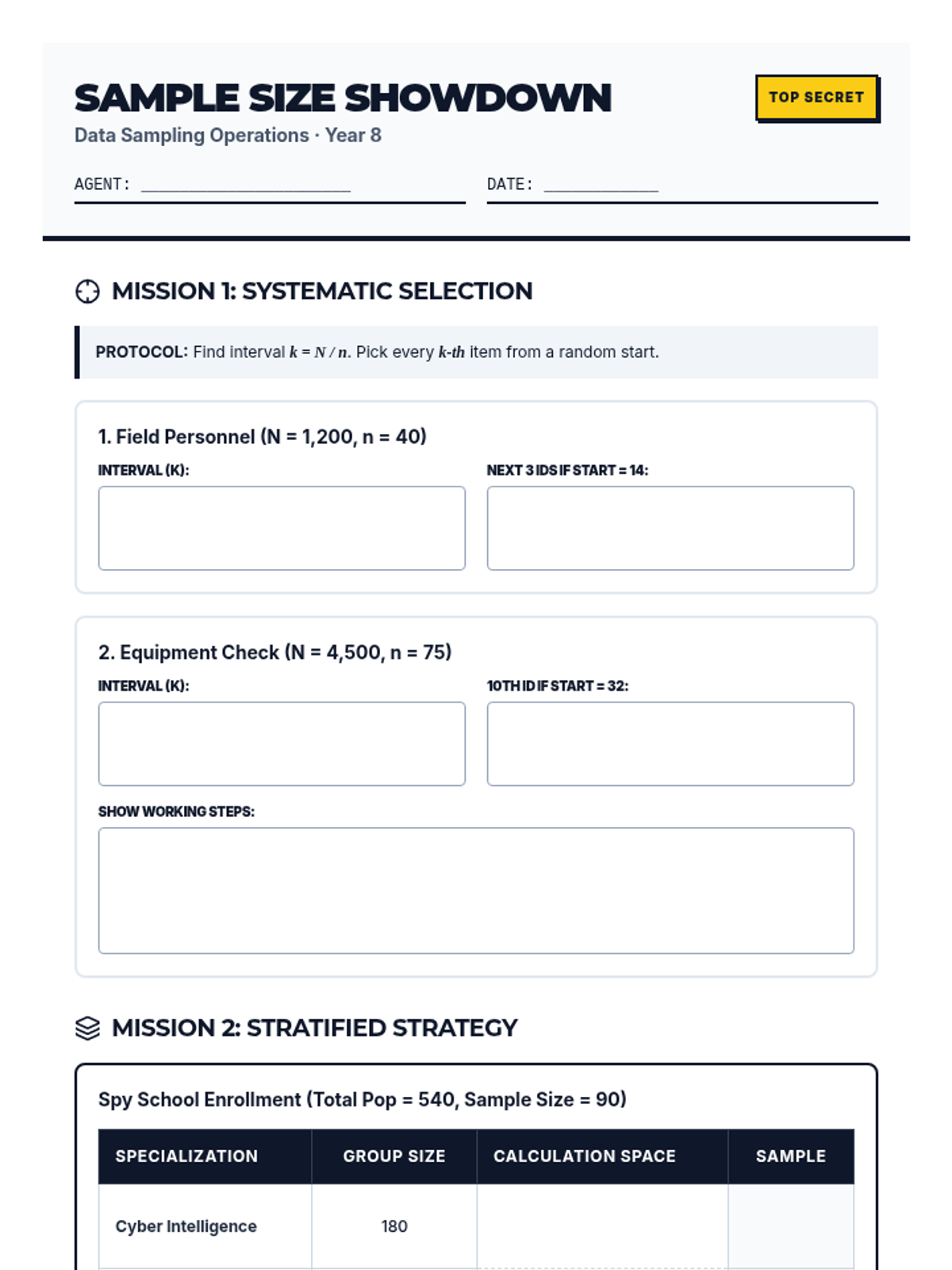
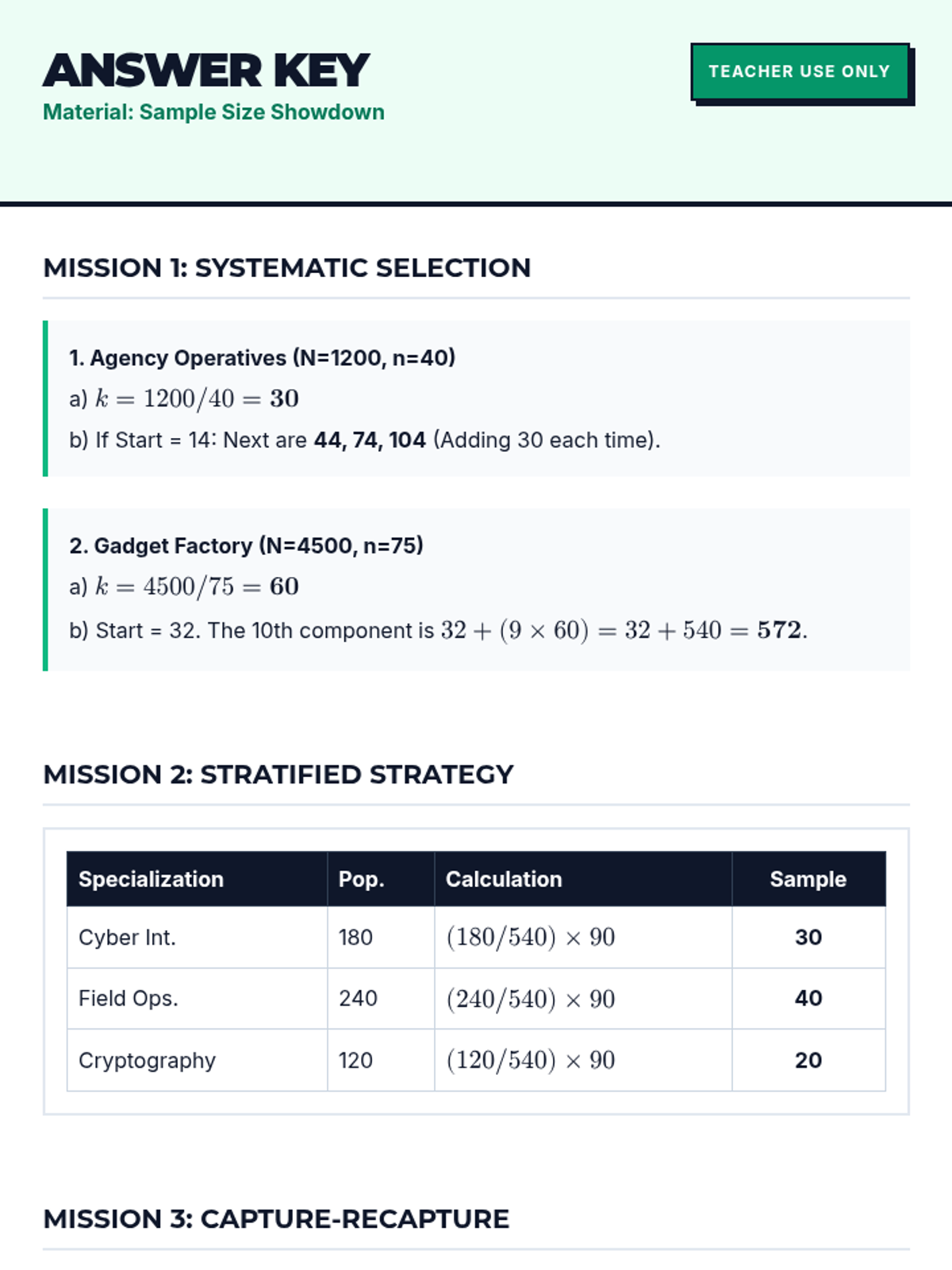
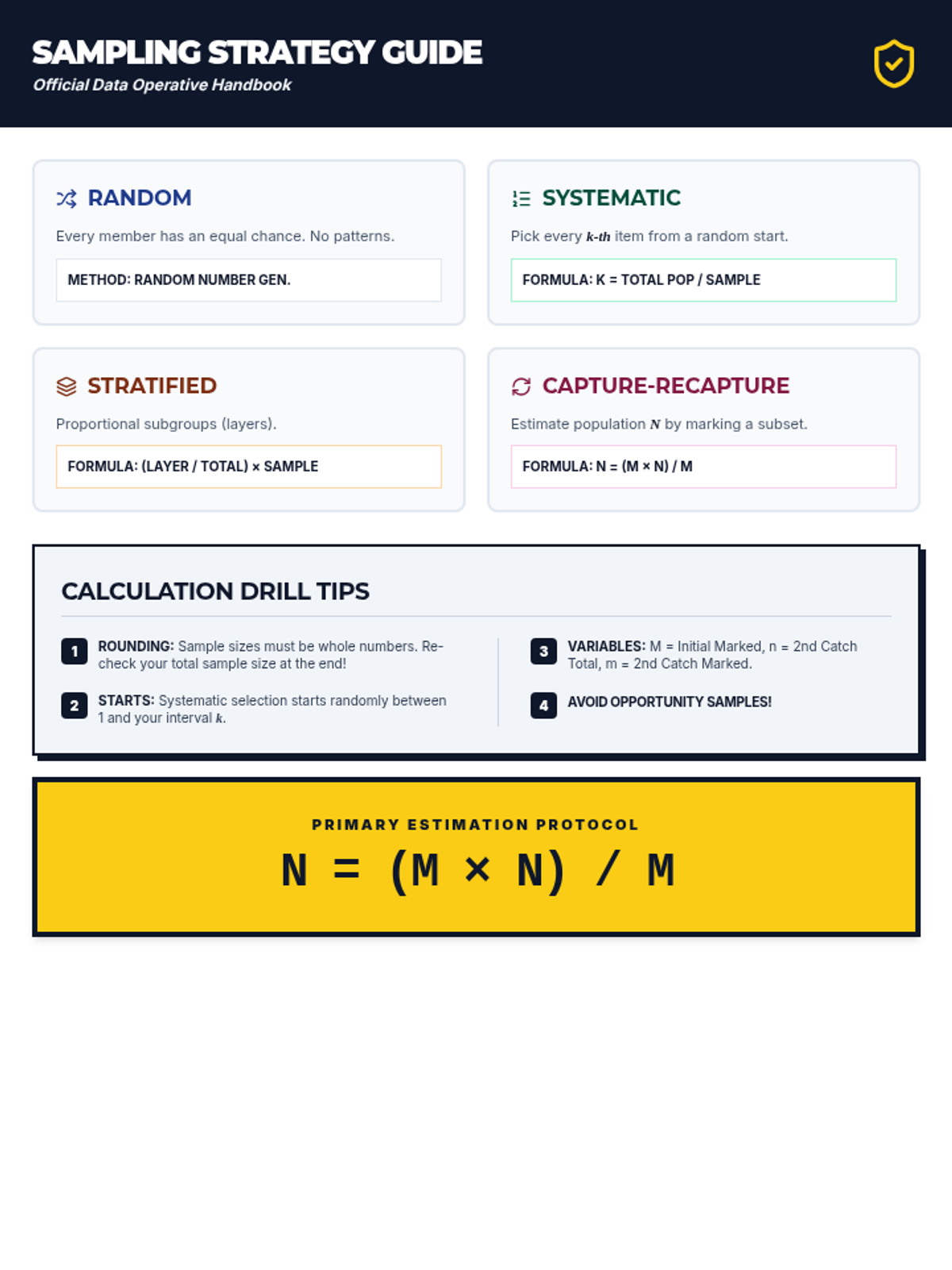
A comprehensive introduction to data sampling methods for Year 8 students, focusing on the mechanics of systematic, stratified, and capture-recapture calculations through a secret agent lens.
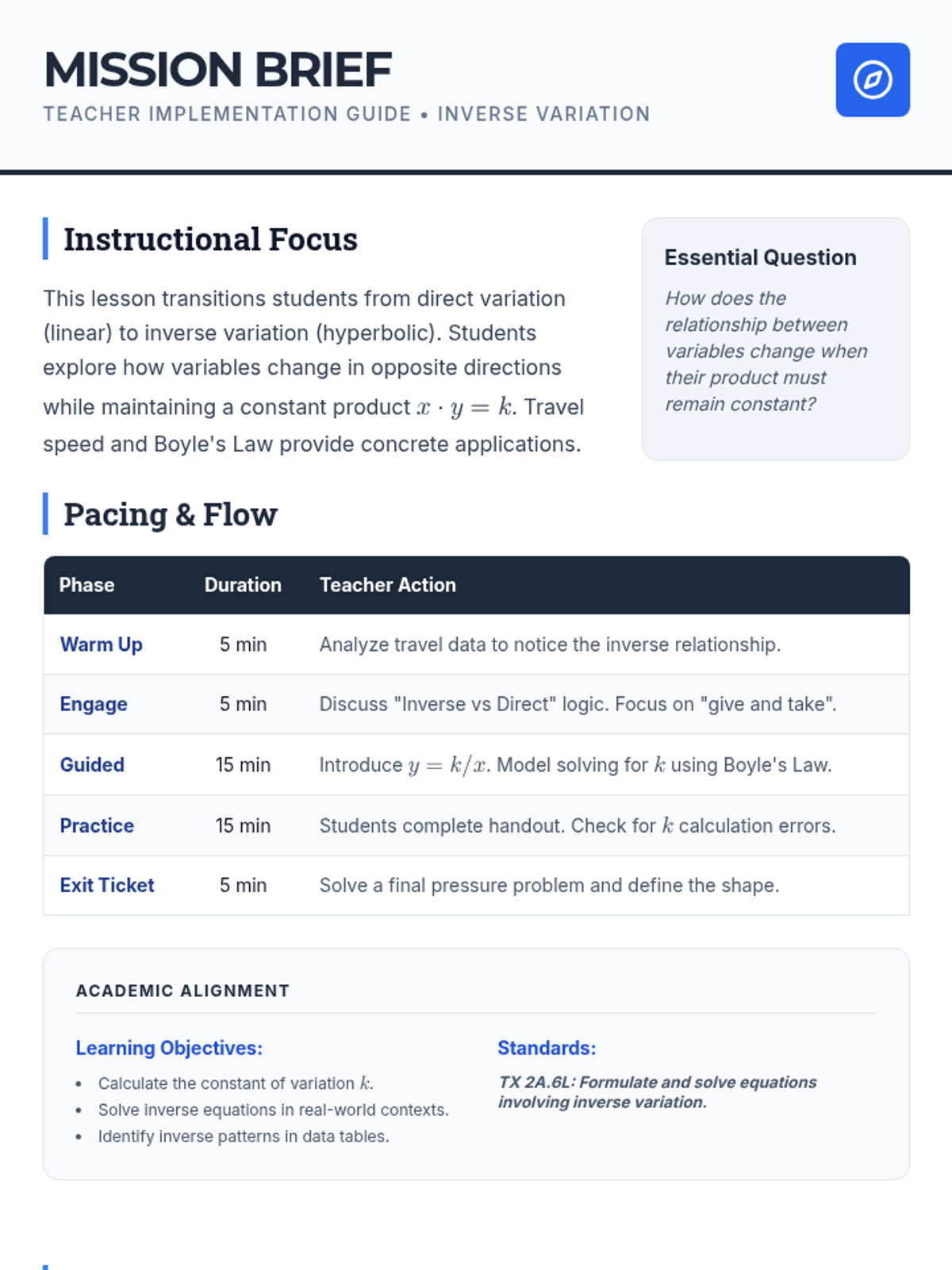
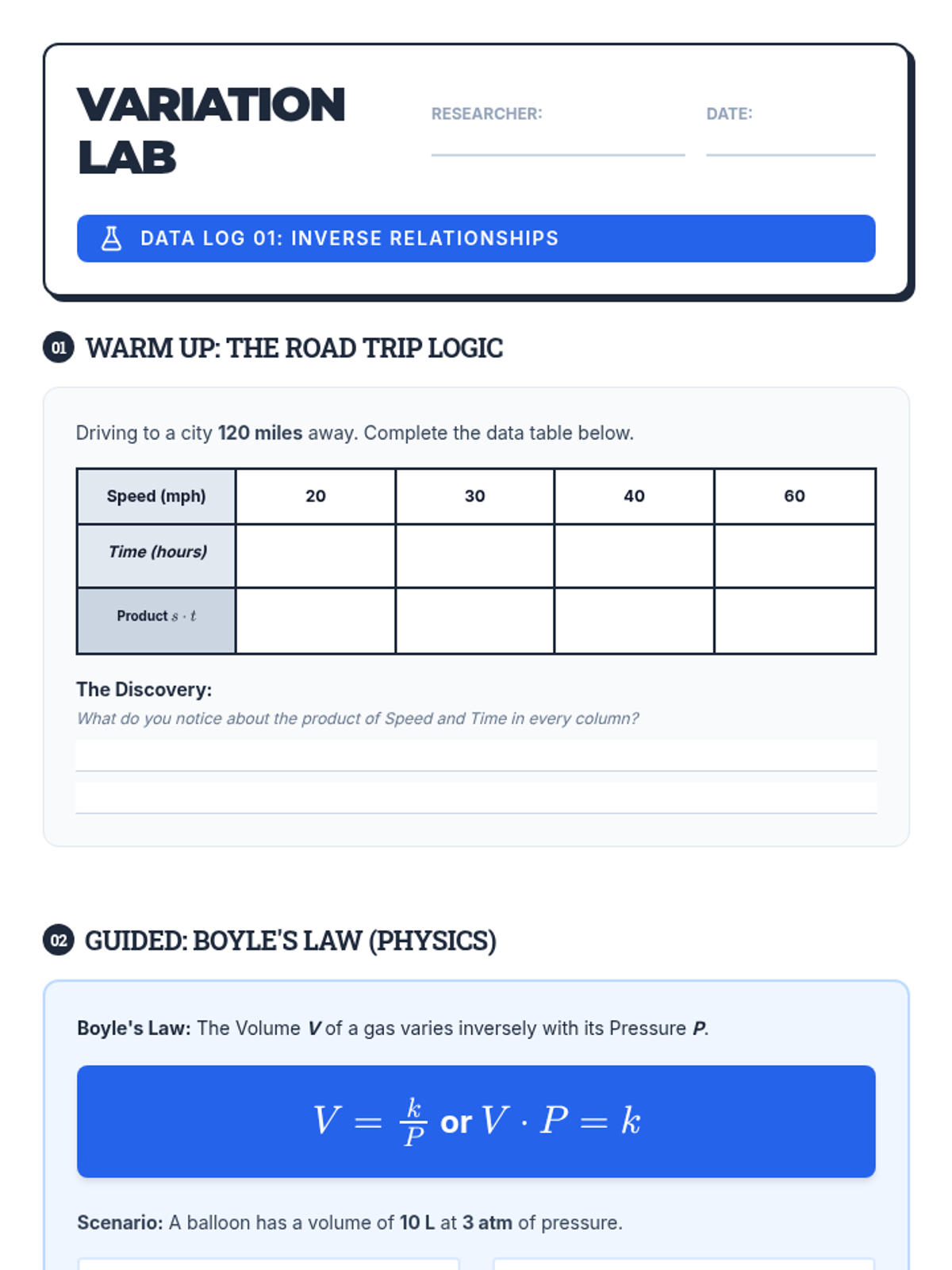
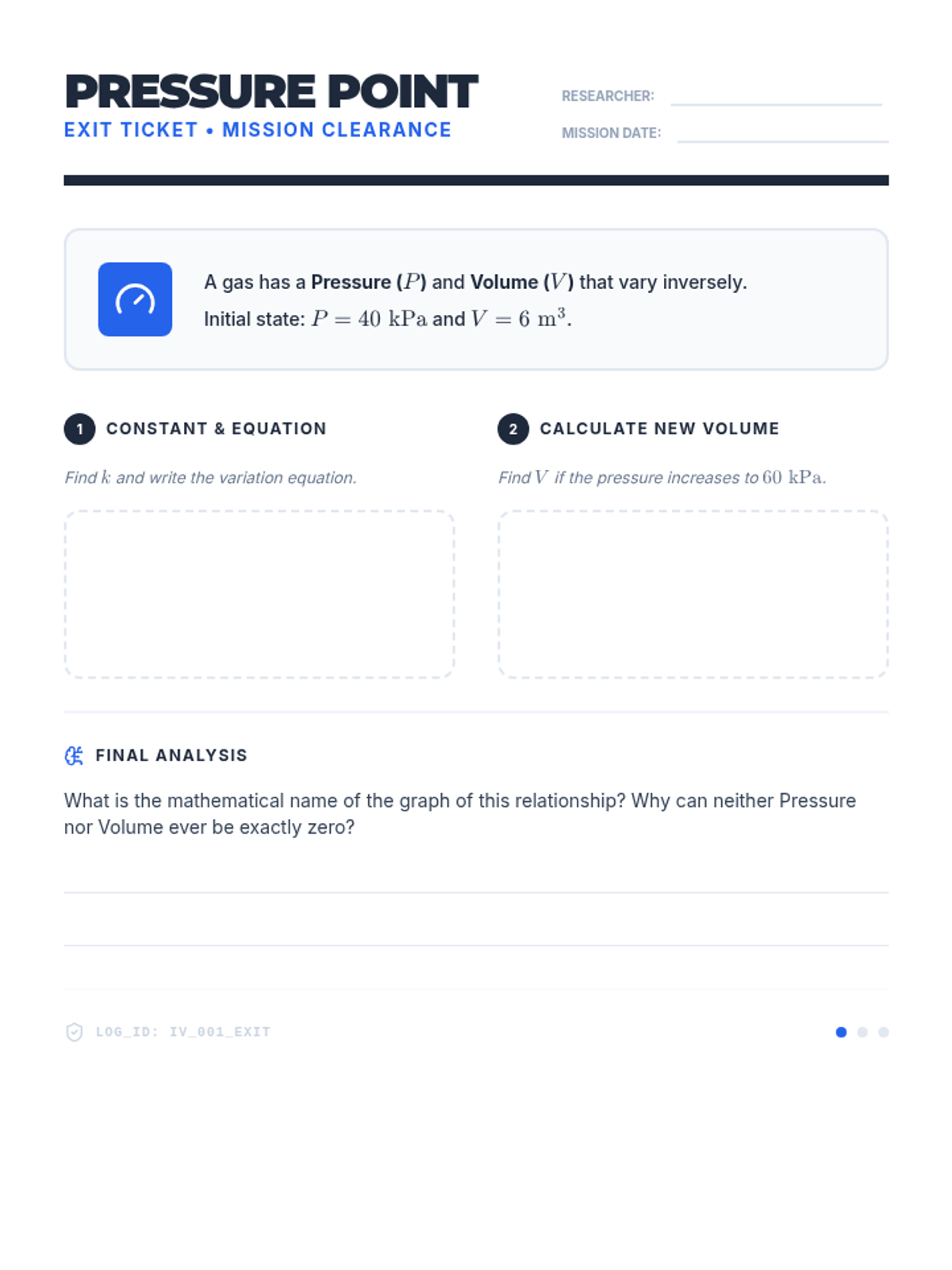
A 45-minute lesson exploring inverse variation through the lens of travel speed and Boyle's Law, focusing on formulating and solving equations for real-world scenarios.
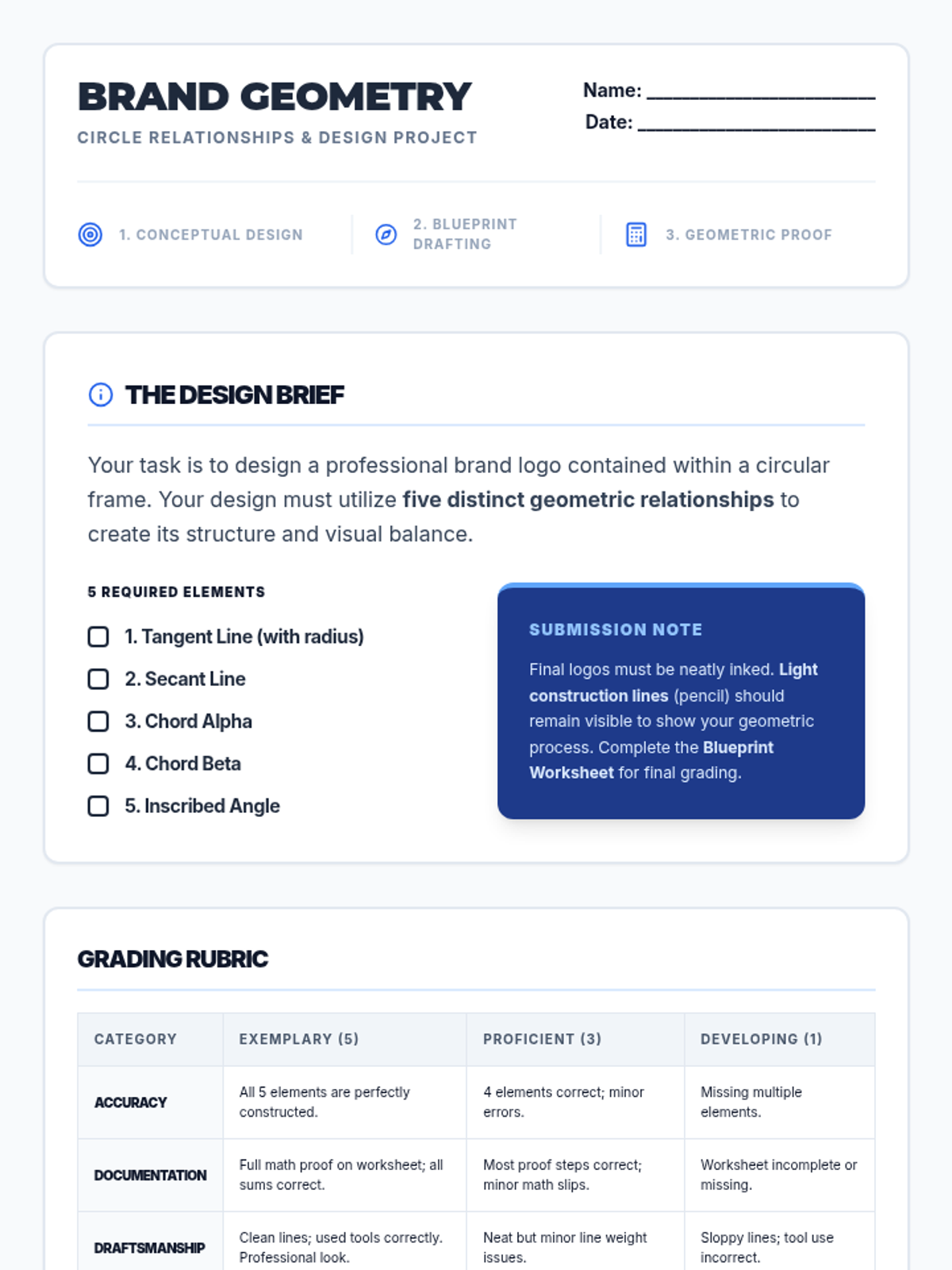
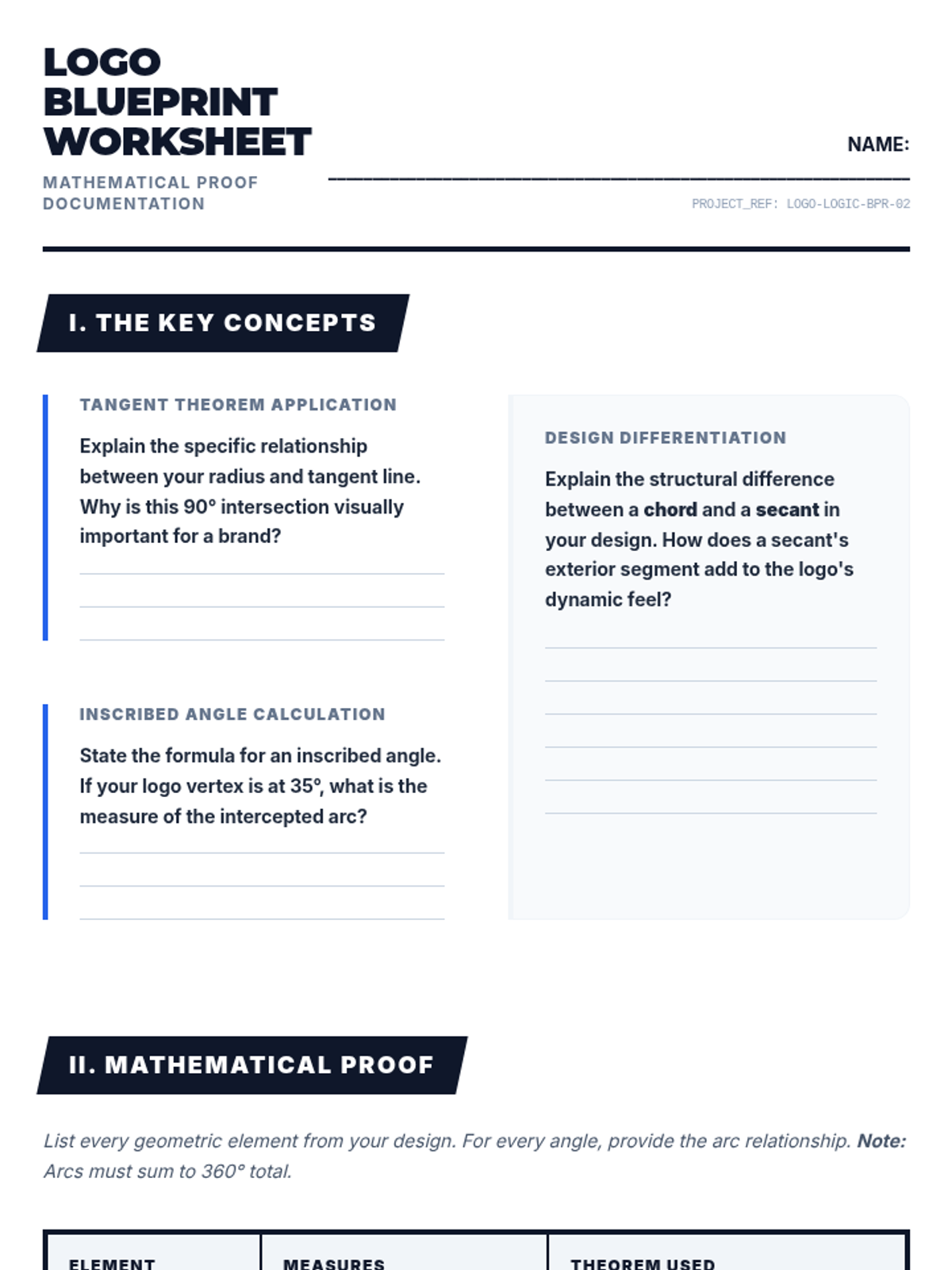
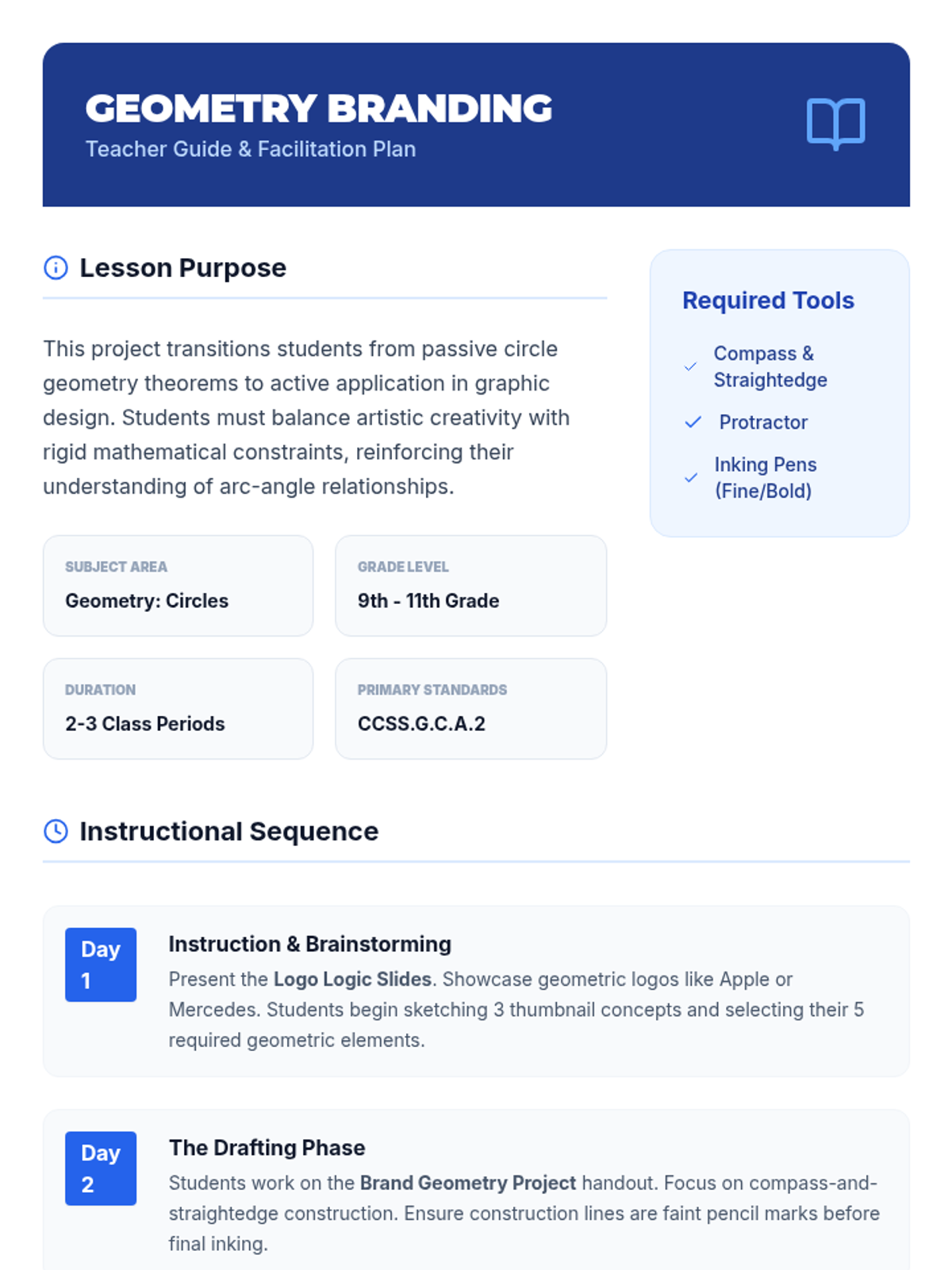
A creative geometry project where students design a brand logo using specific circle properties, including tangents, secants, chords, and inscribed angles. Students must demonstrate both artistic design and geometric precision through calculations.
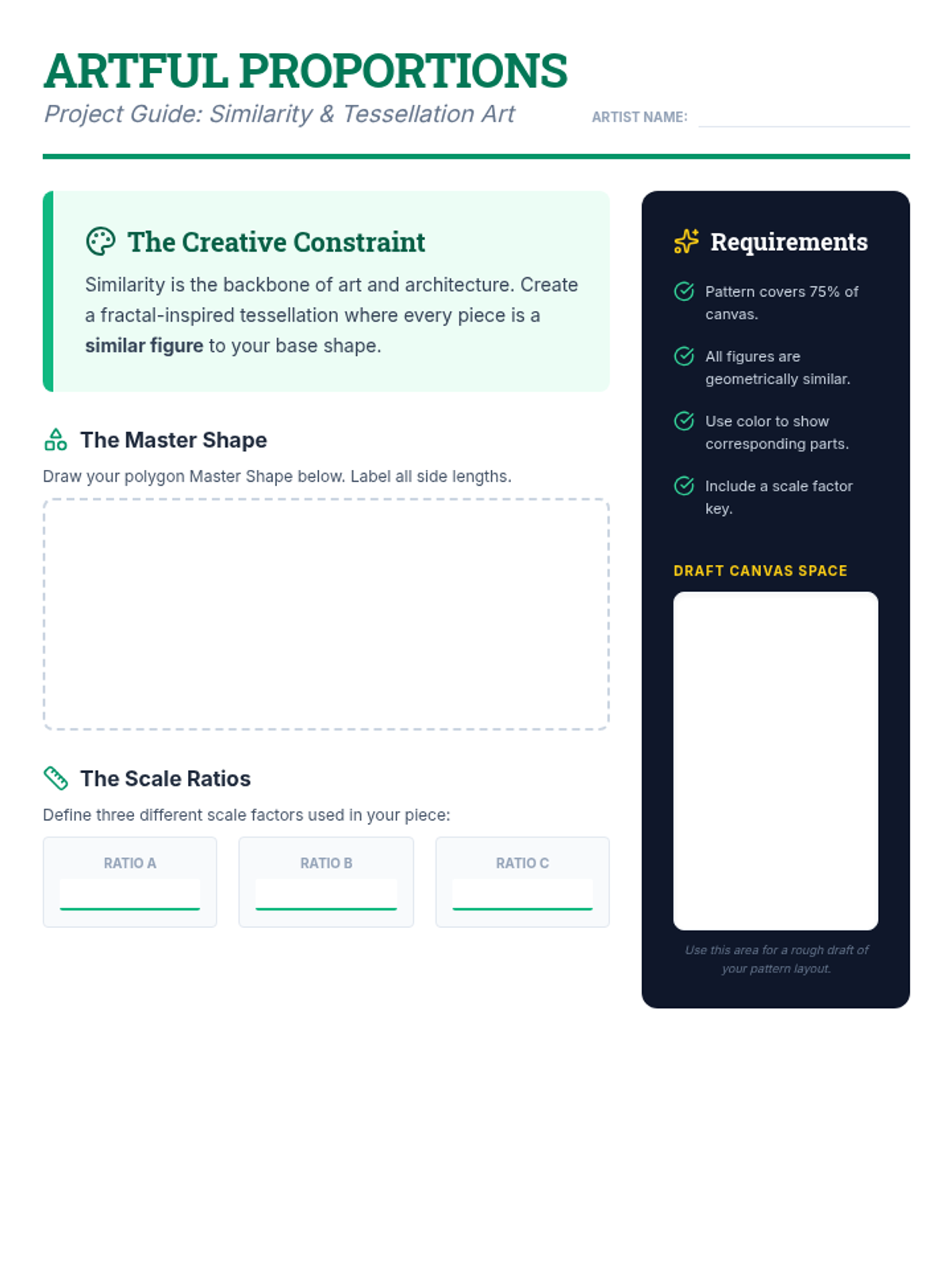
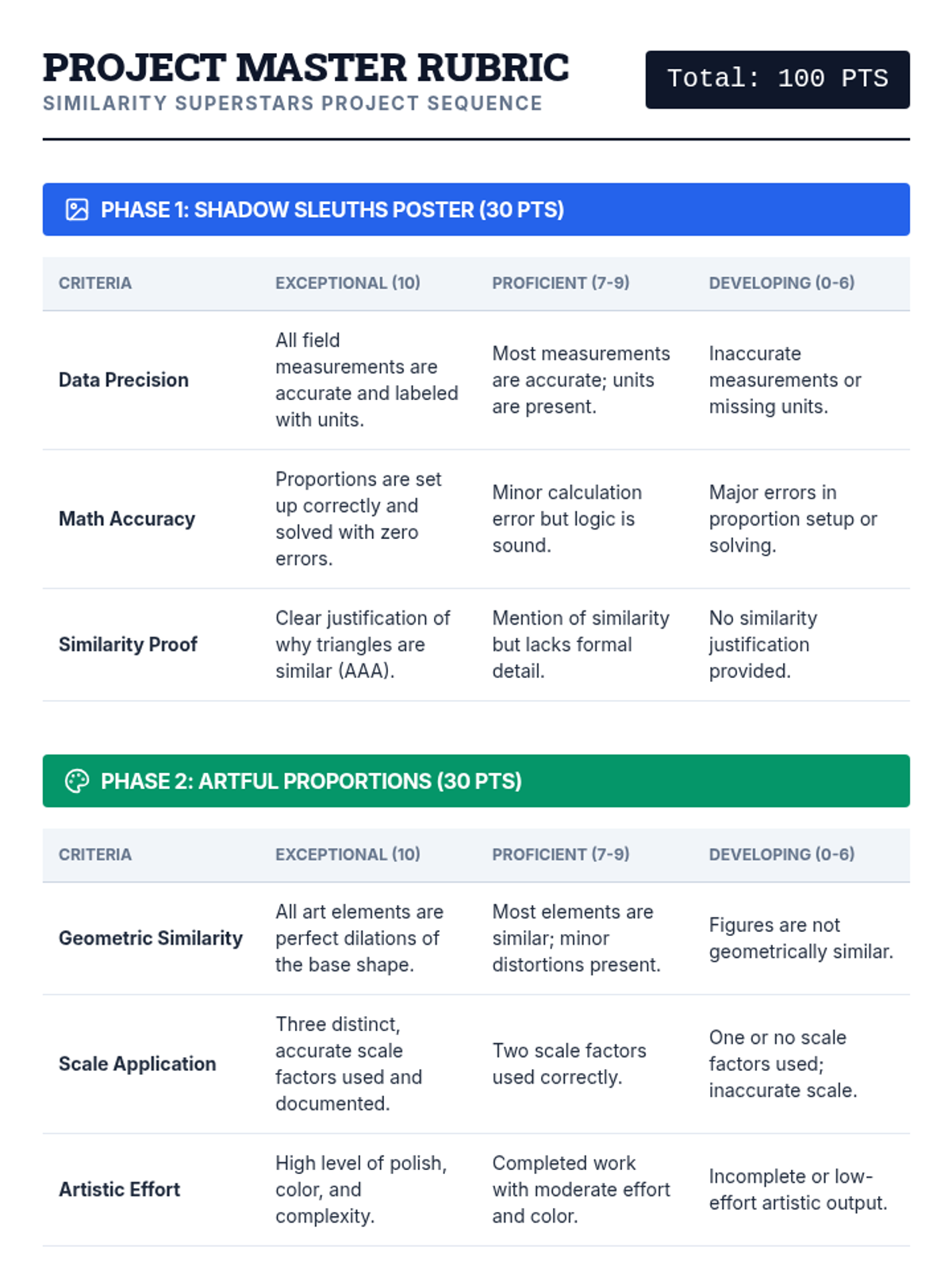
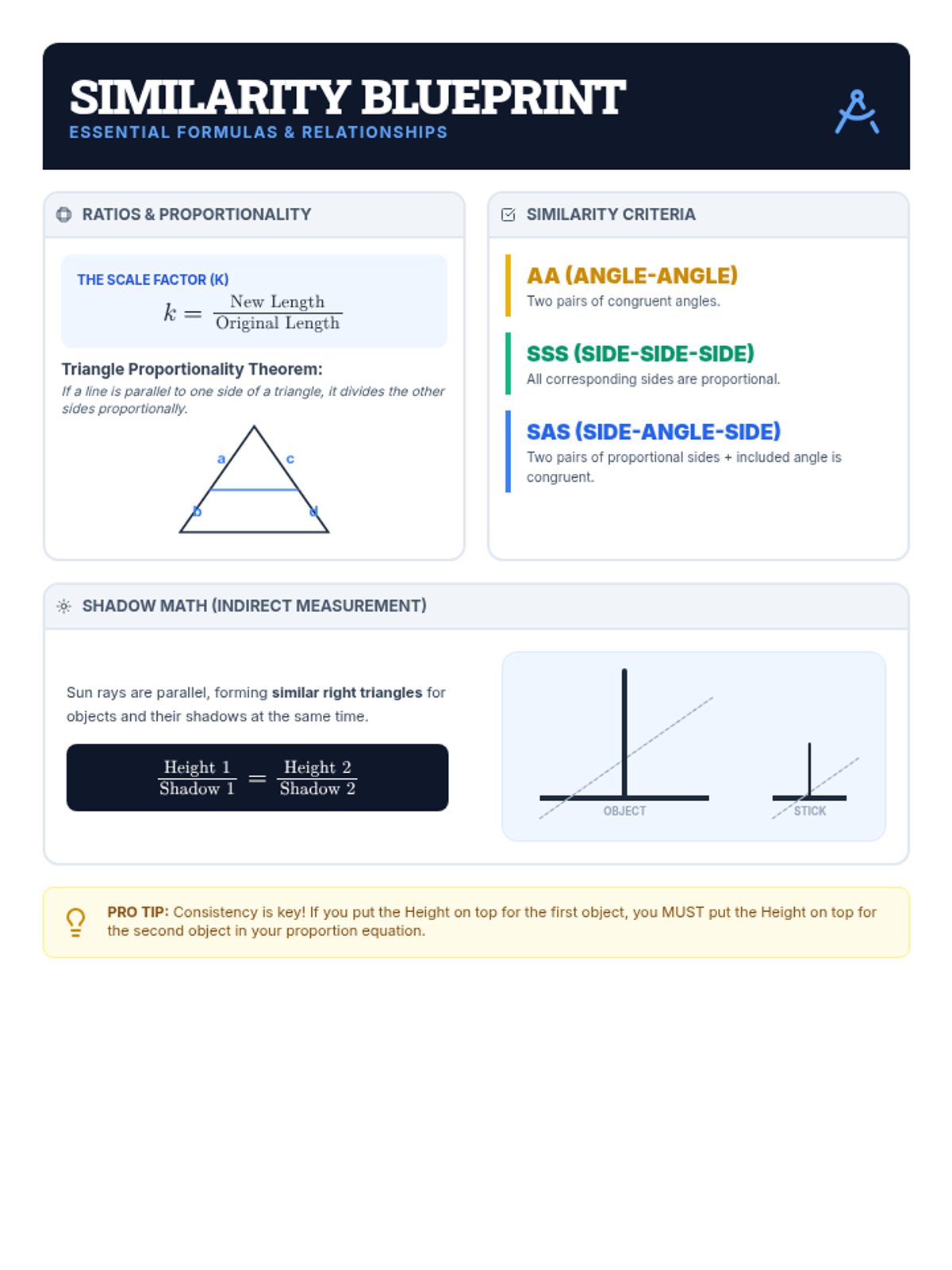
Students explore geometric similarity through art and tessellations, applying ratios and proportional parts to create scaled masterpieces.
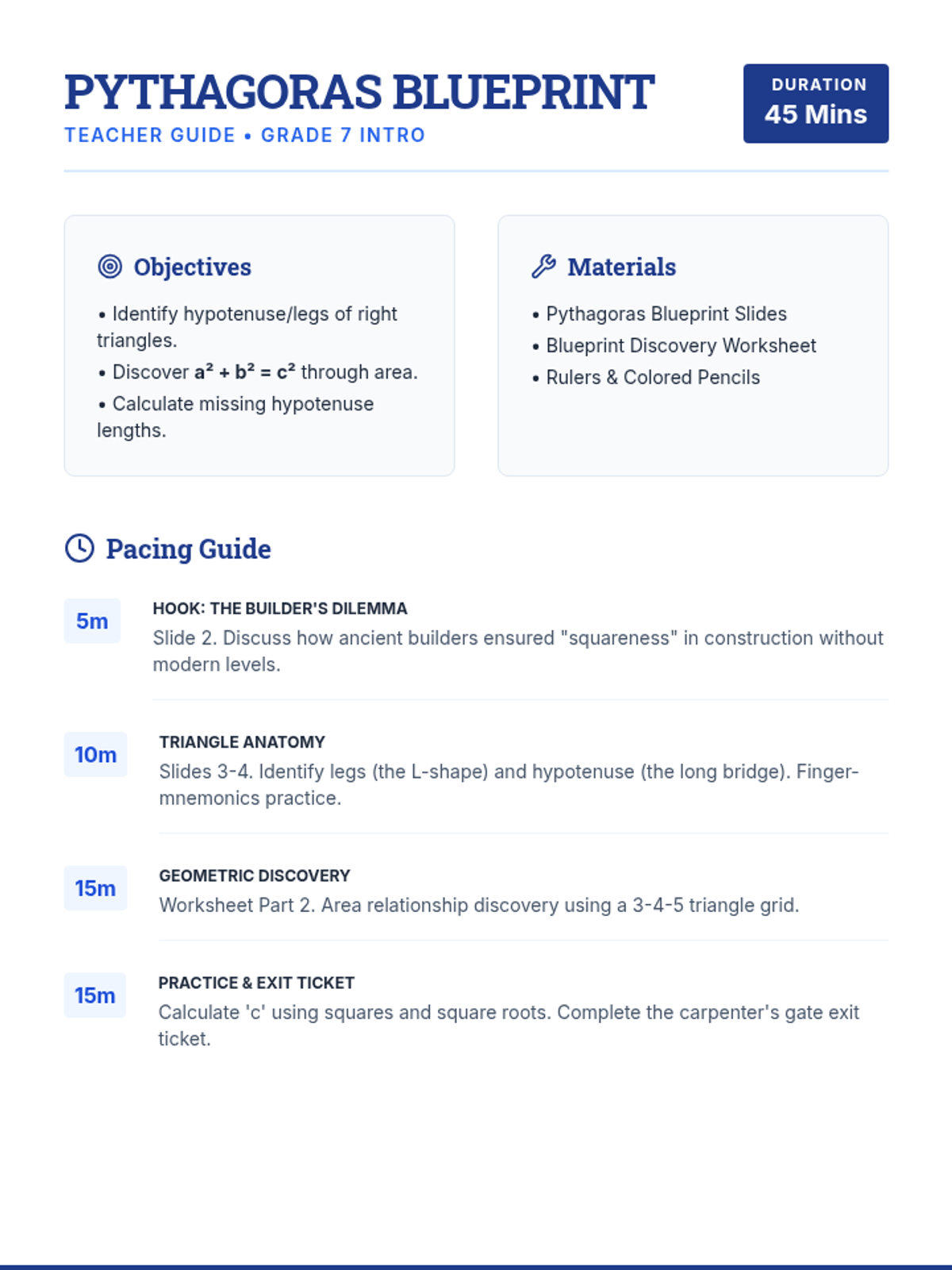
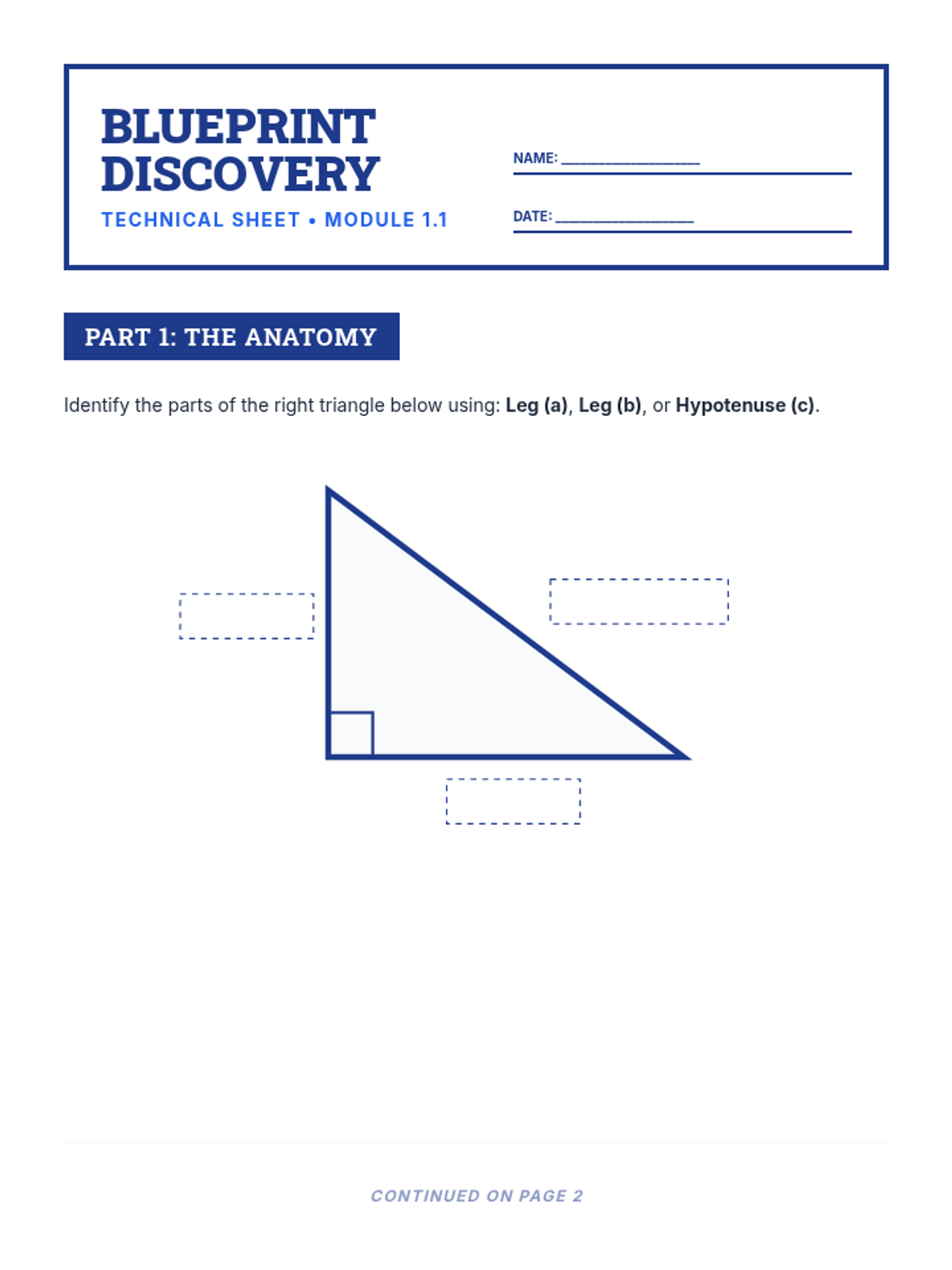
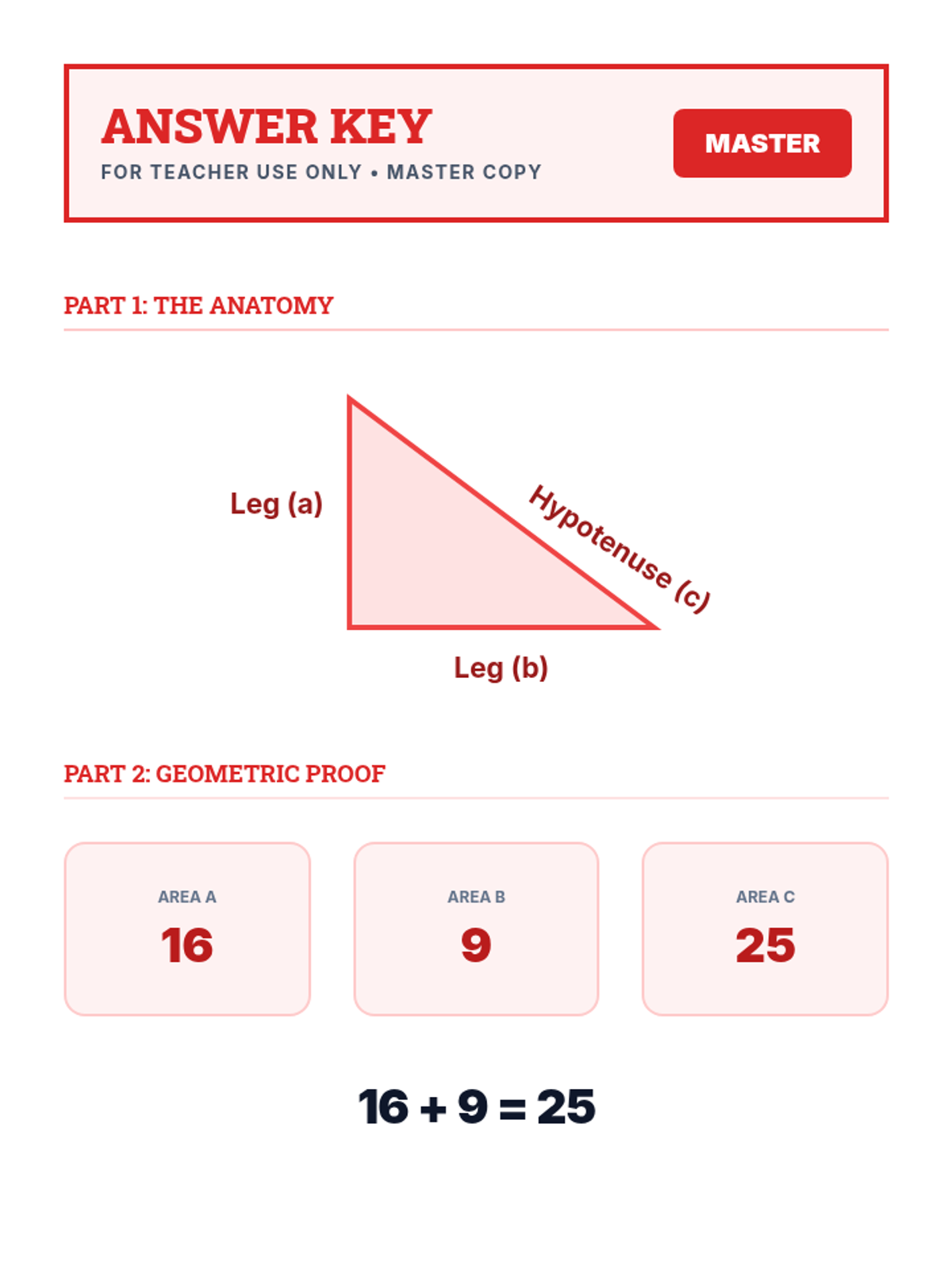
A 45-minute introductory lesson to the Pythagorean Theorem for 7th grade, focusing on identifying triangle parts and discovering the fundamental relationship between side lengths.
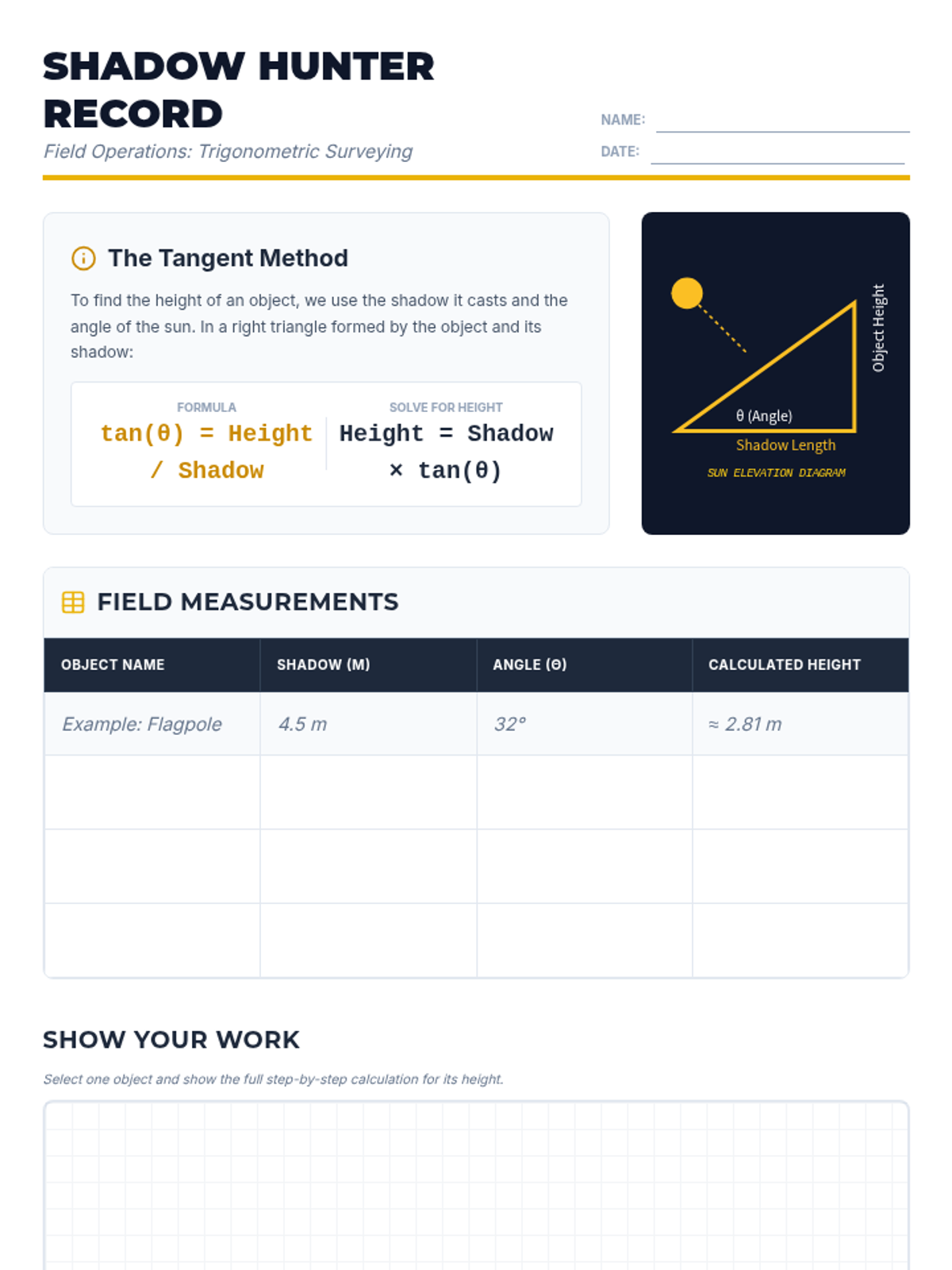
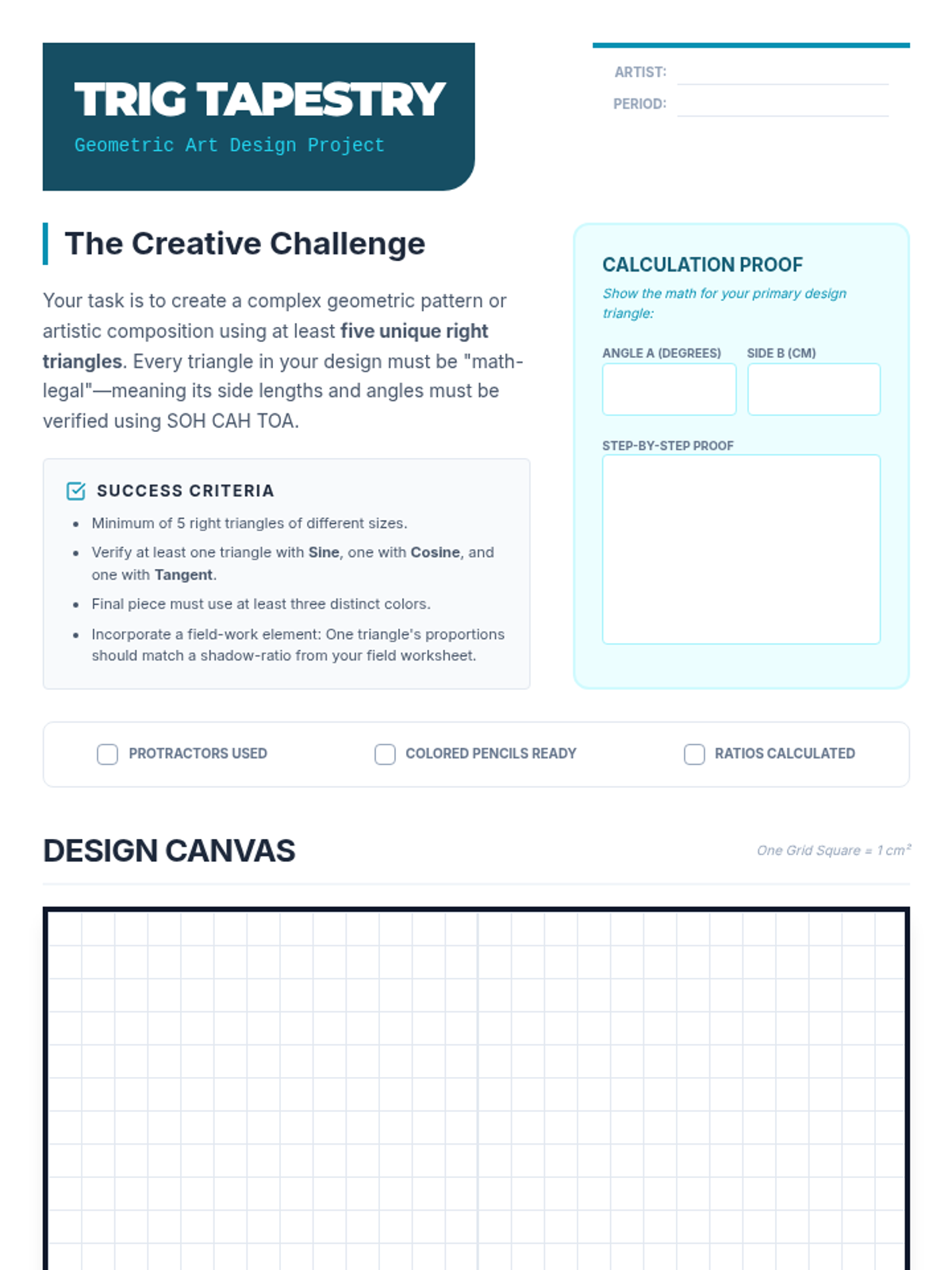
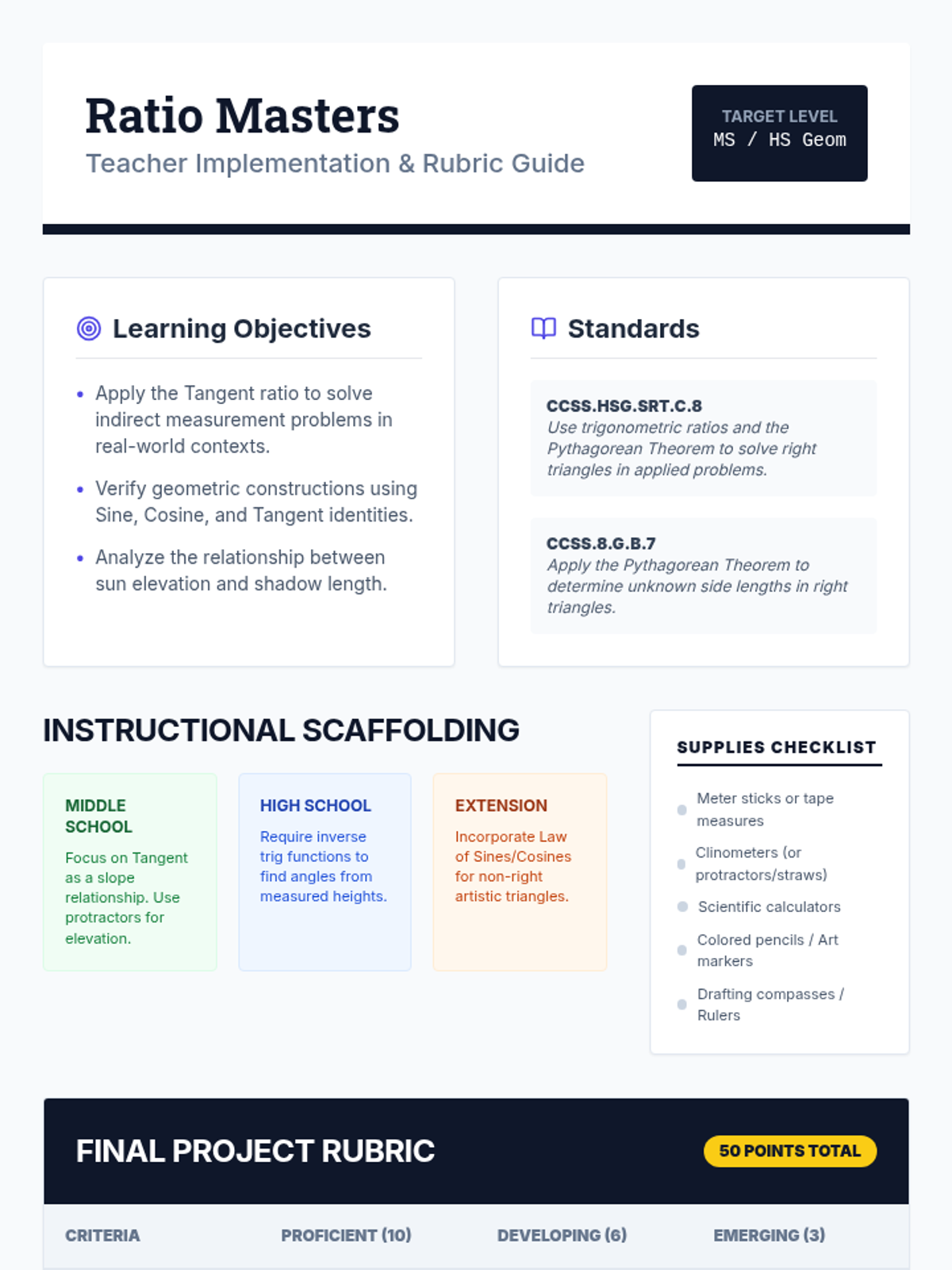
Students learn to apply Sine, Cosine, and Tangent to real-world measurements and abstract artistic design, culminating in a dual-phase project.
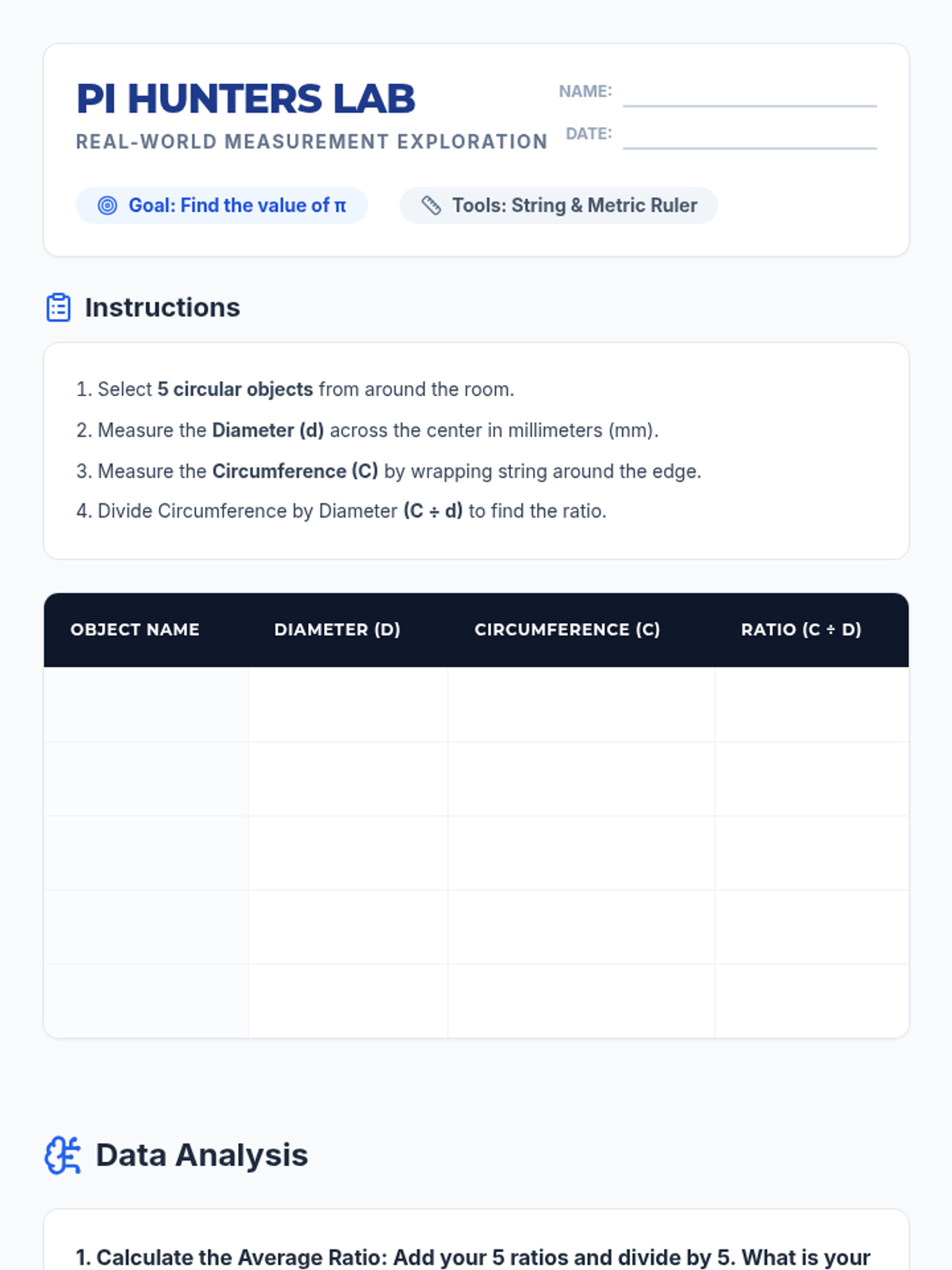
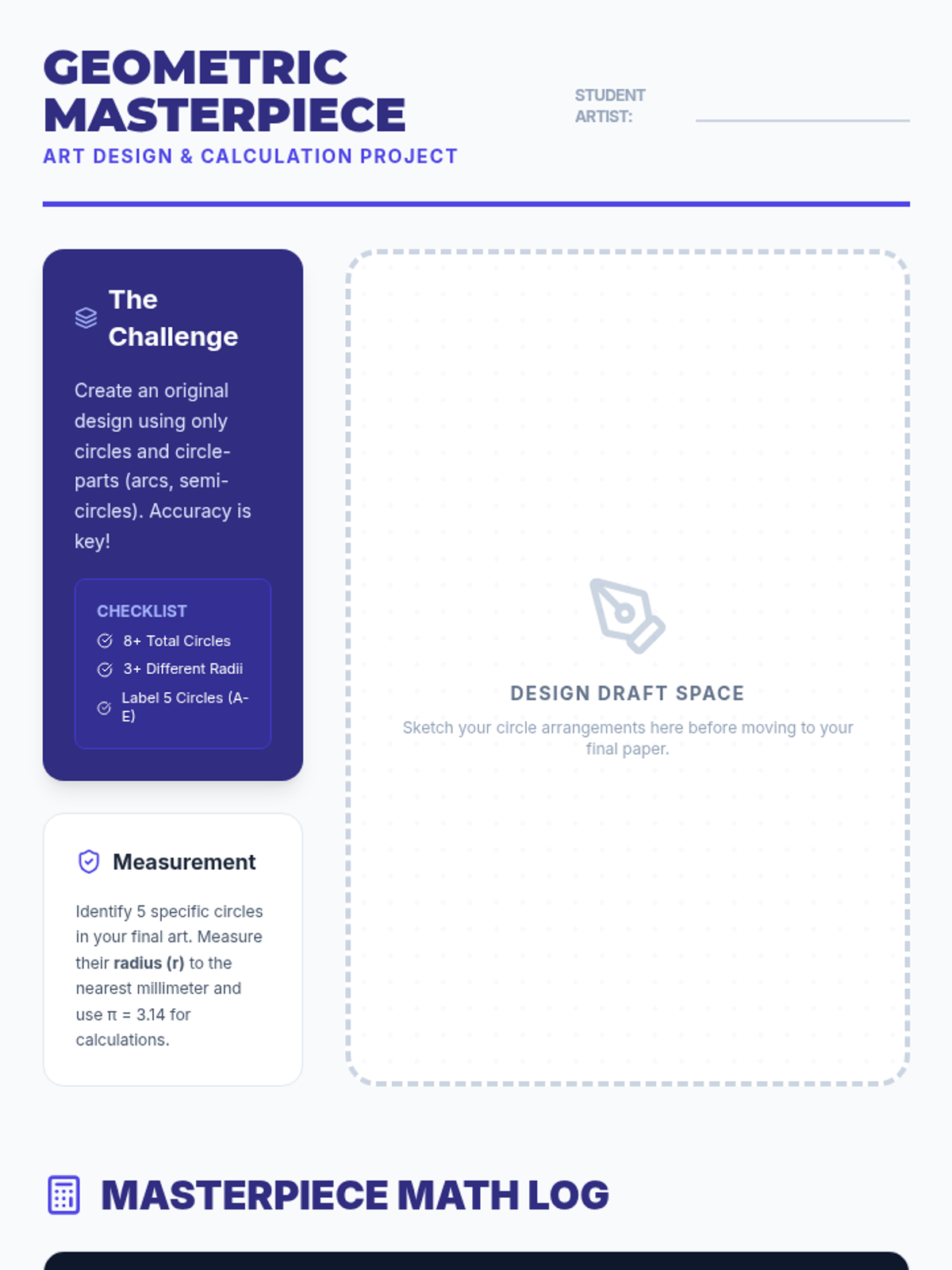
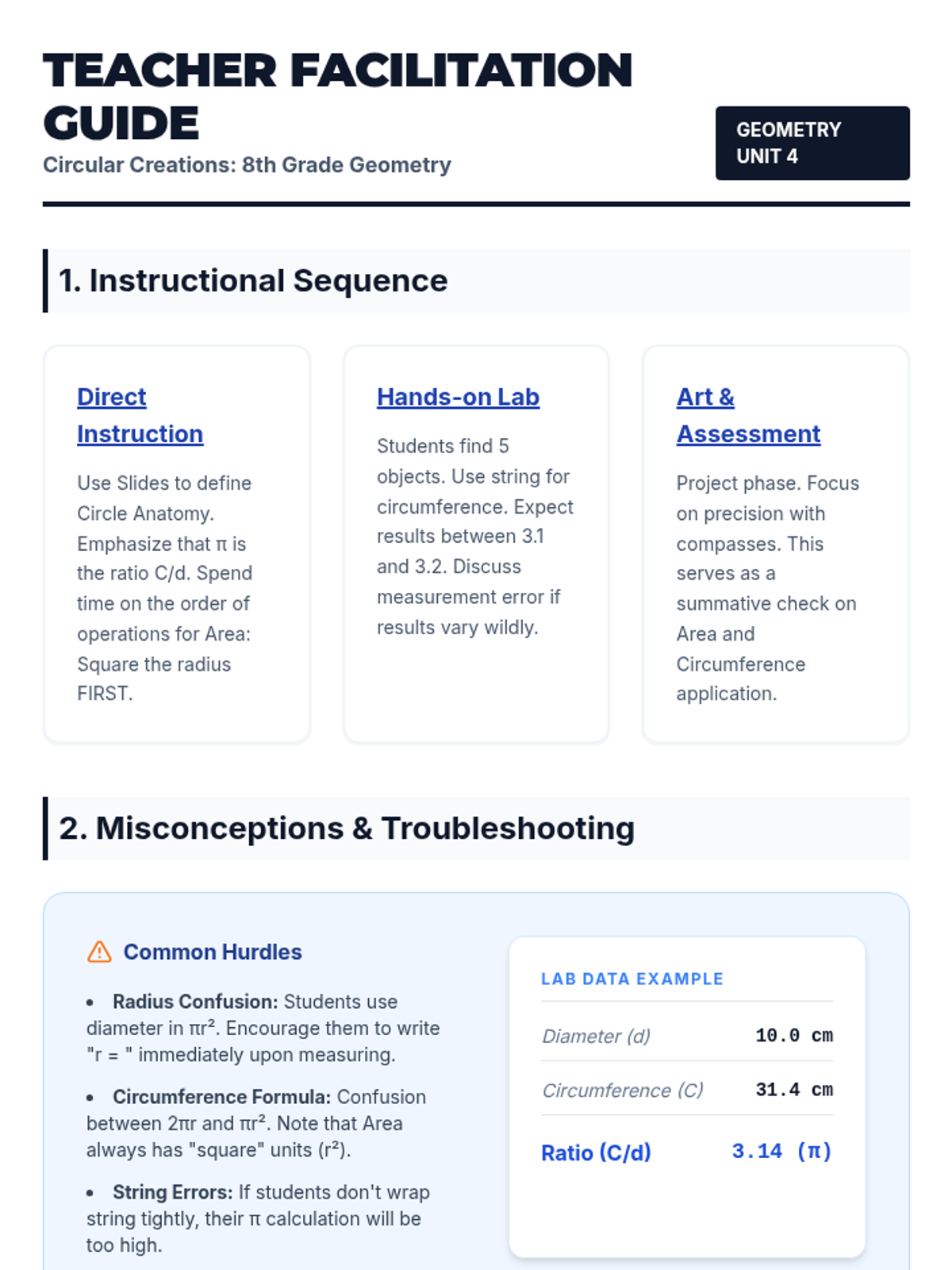
A hands-on geometry lesson where students explore the mathematical properties of circles through real-world measurement and creative geometric art design. Students discover the relationship between circumference and diameter while applying area formulas to their own masterpieces.
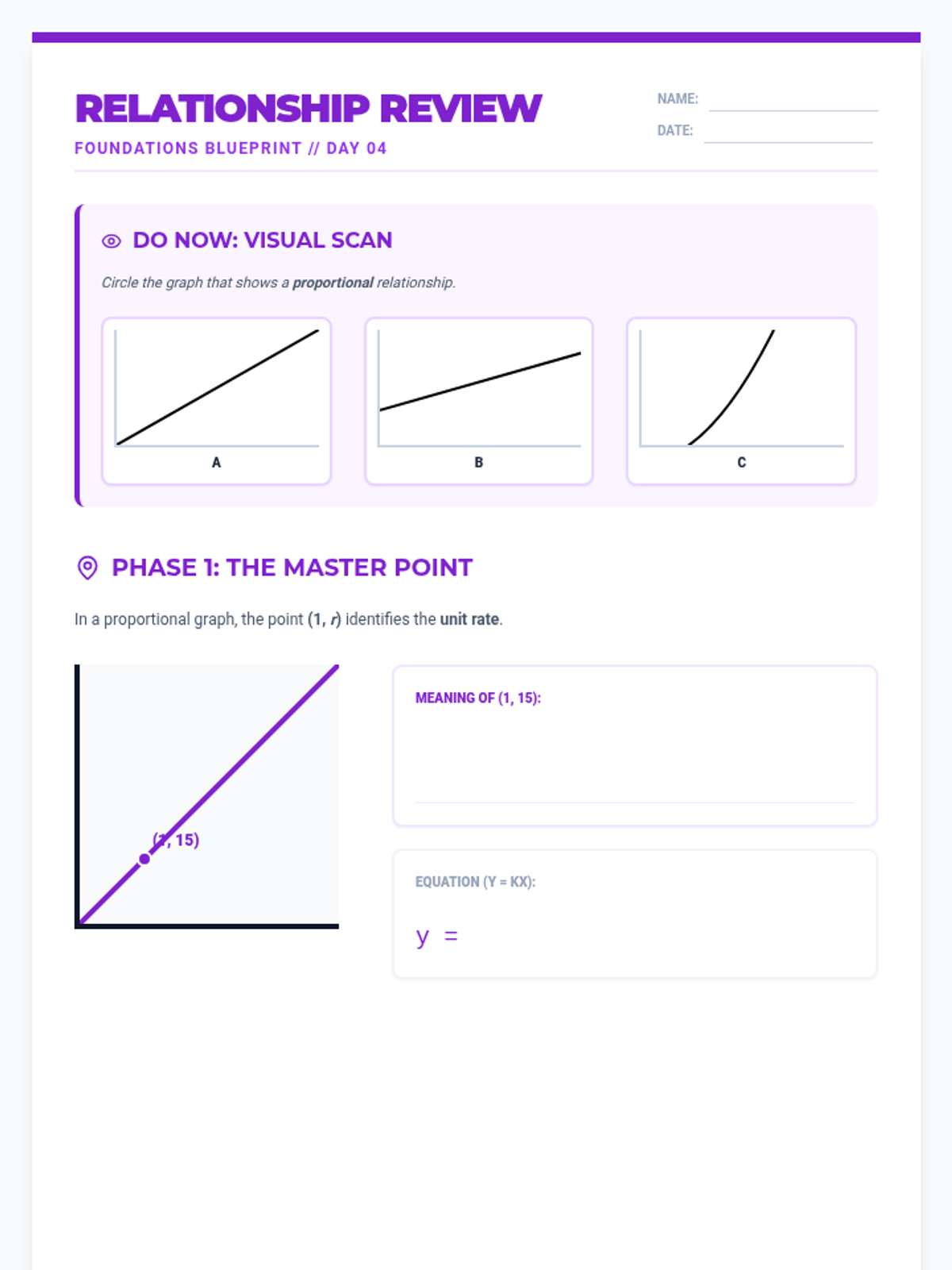
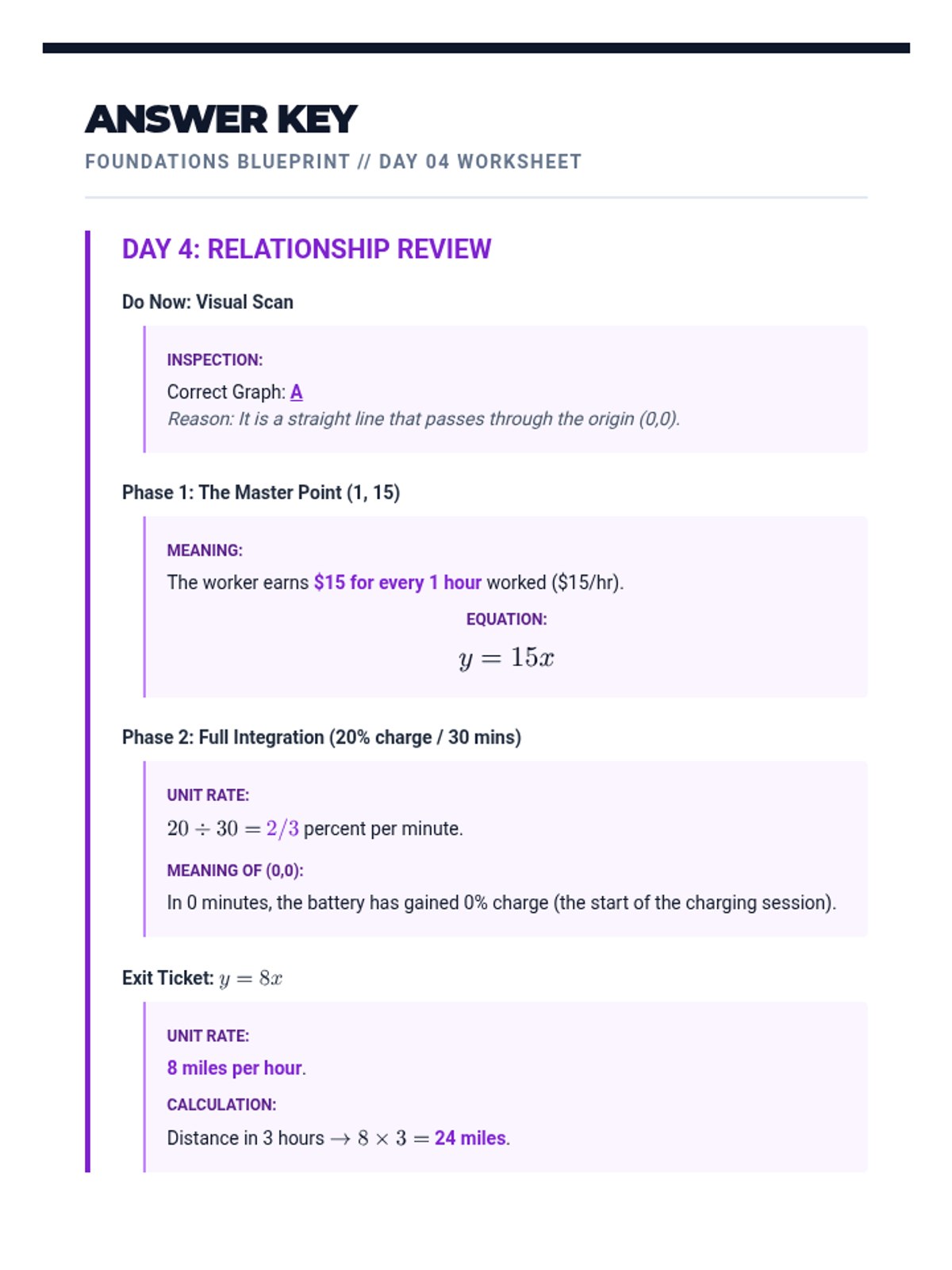
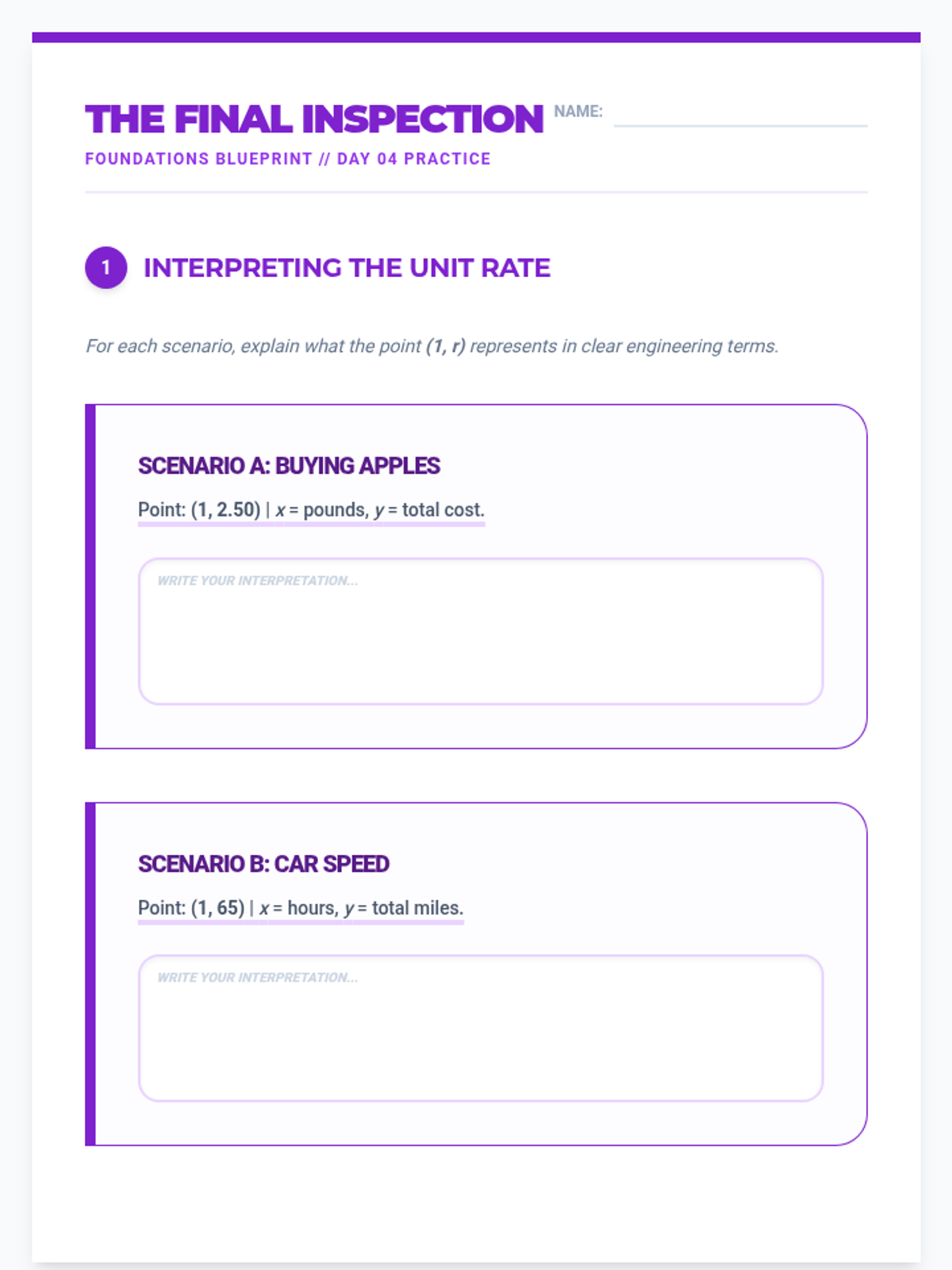
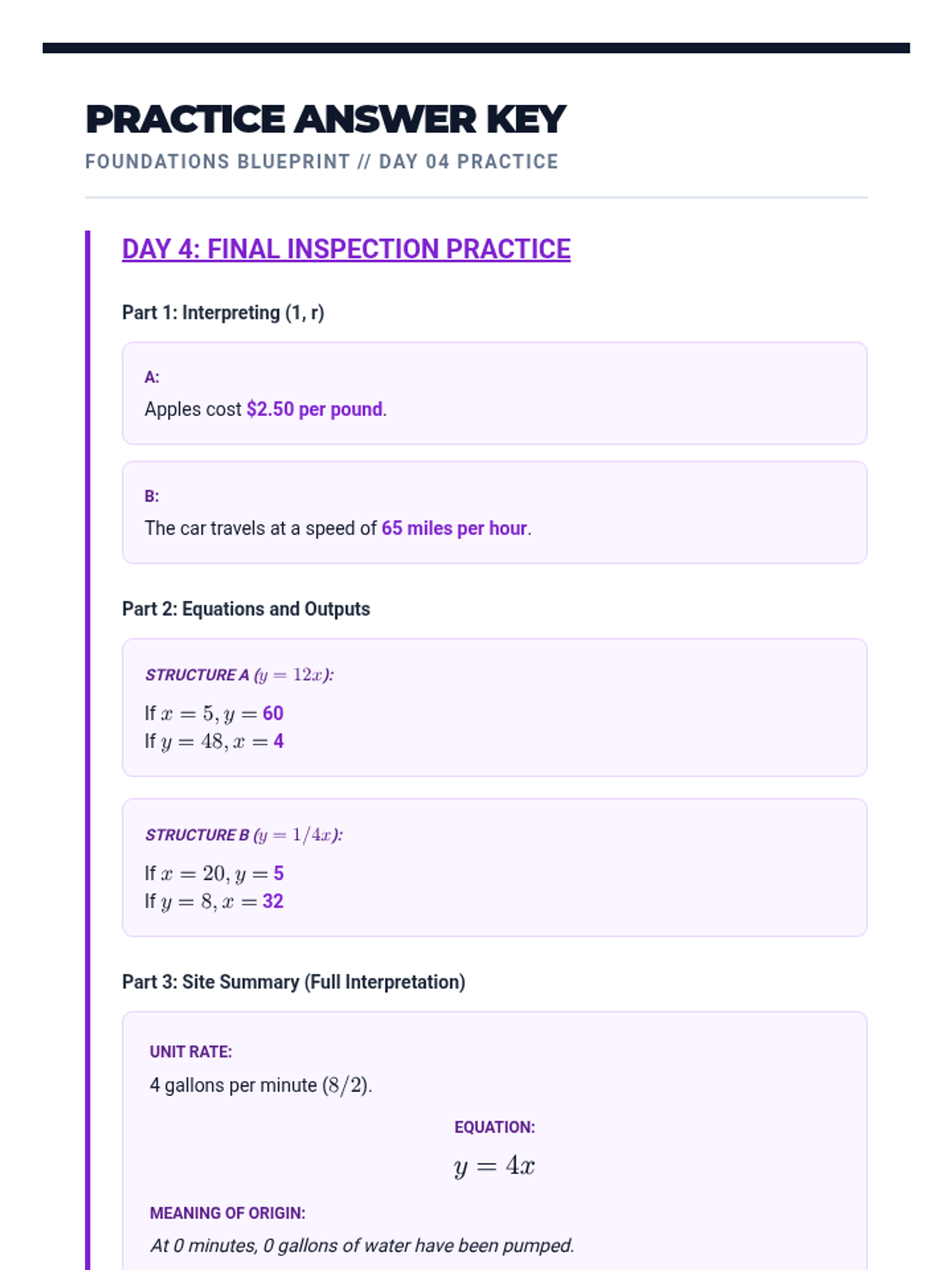
In-depth look at interpreting points on a proportional graph, specifically the unit rate (1, r) and the origin (0, 0).
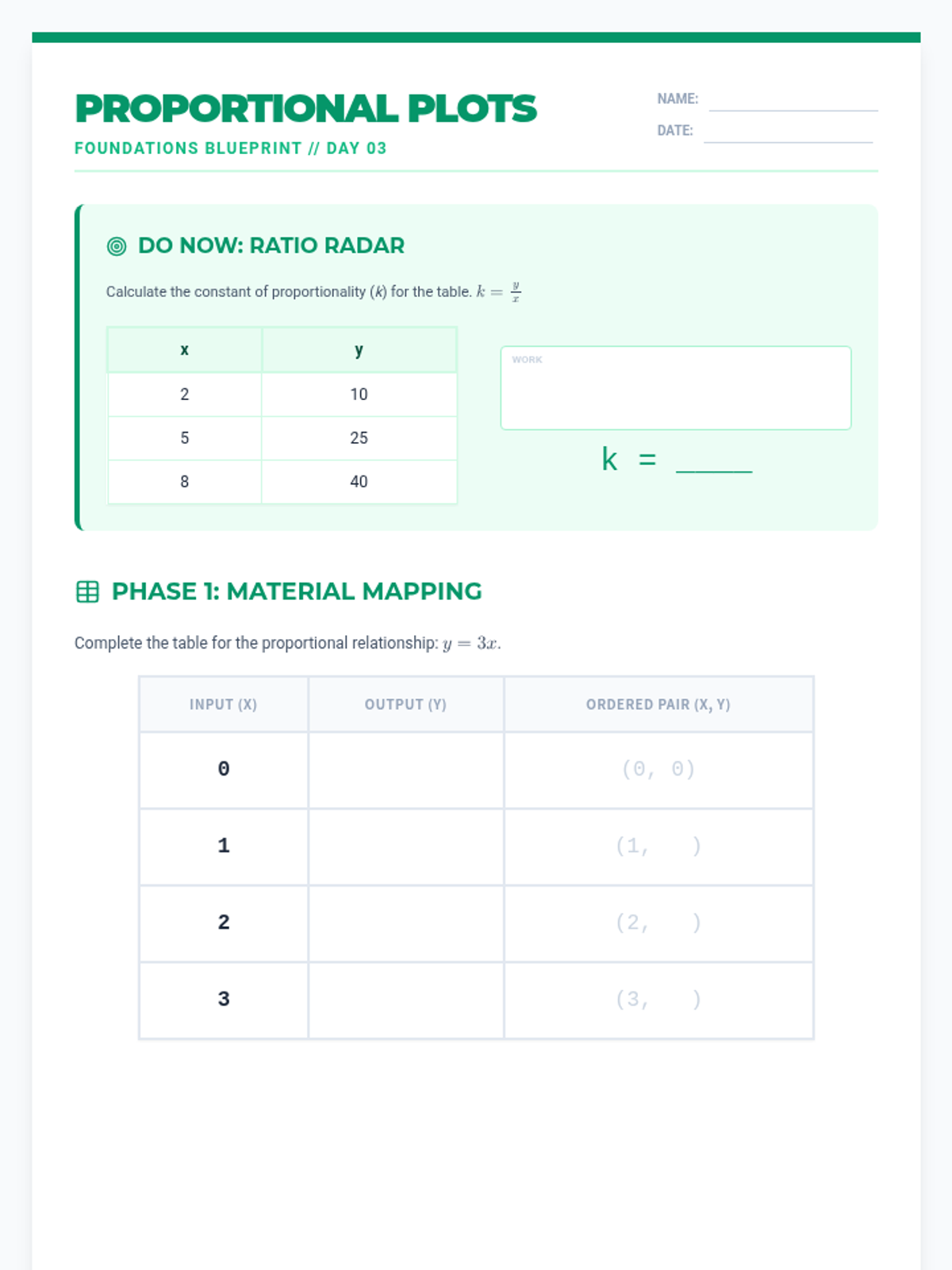
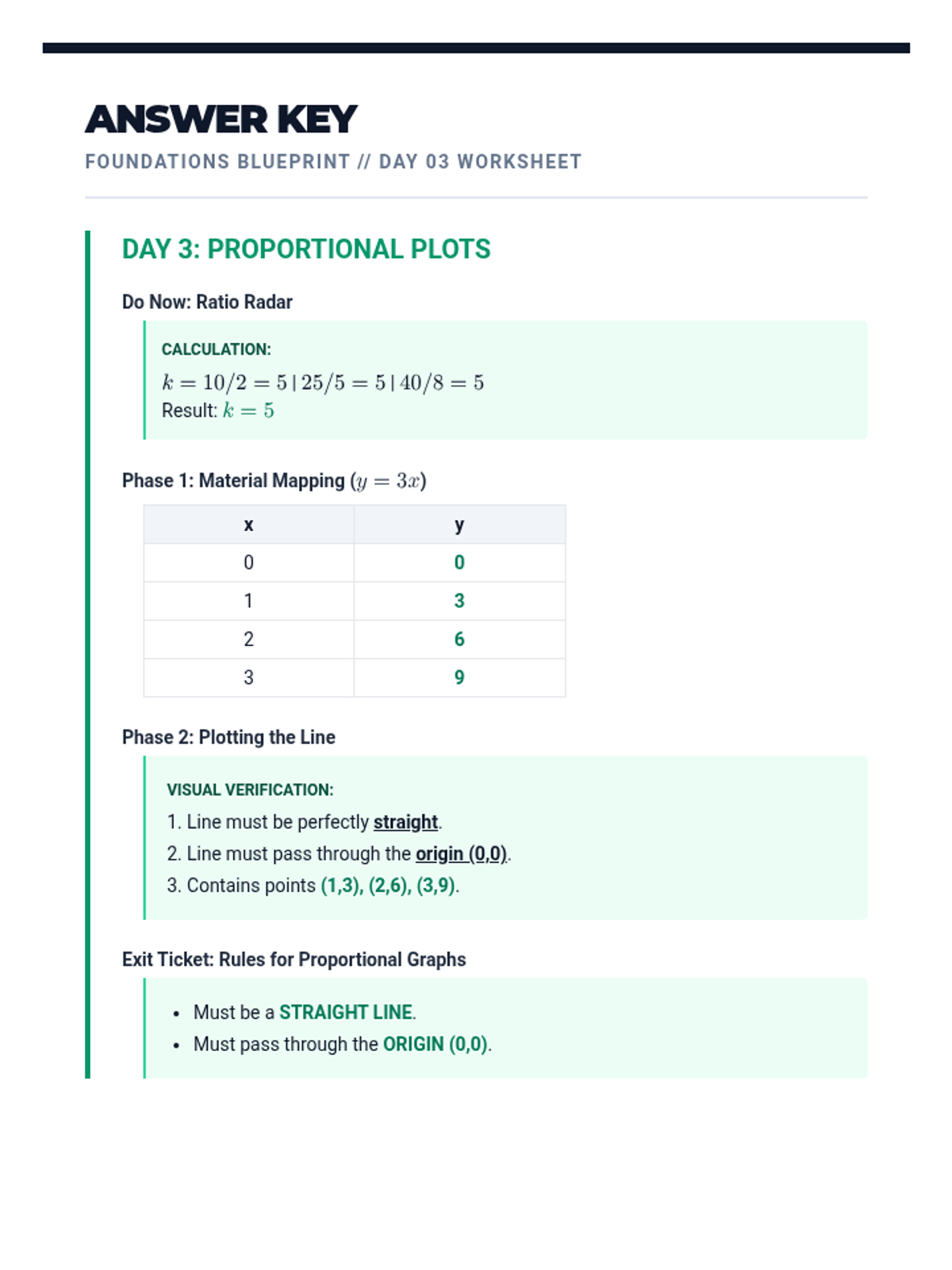
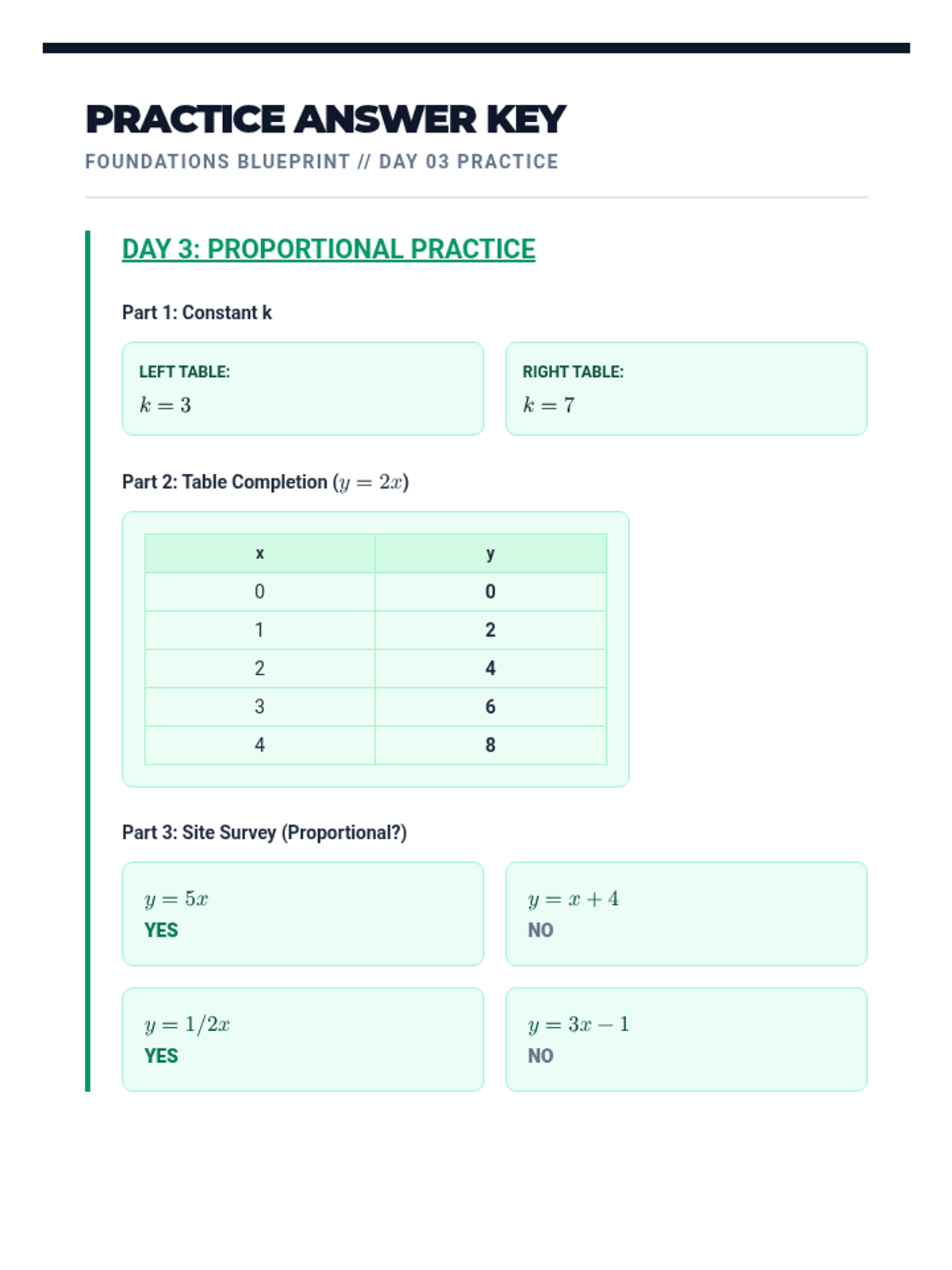
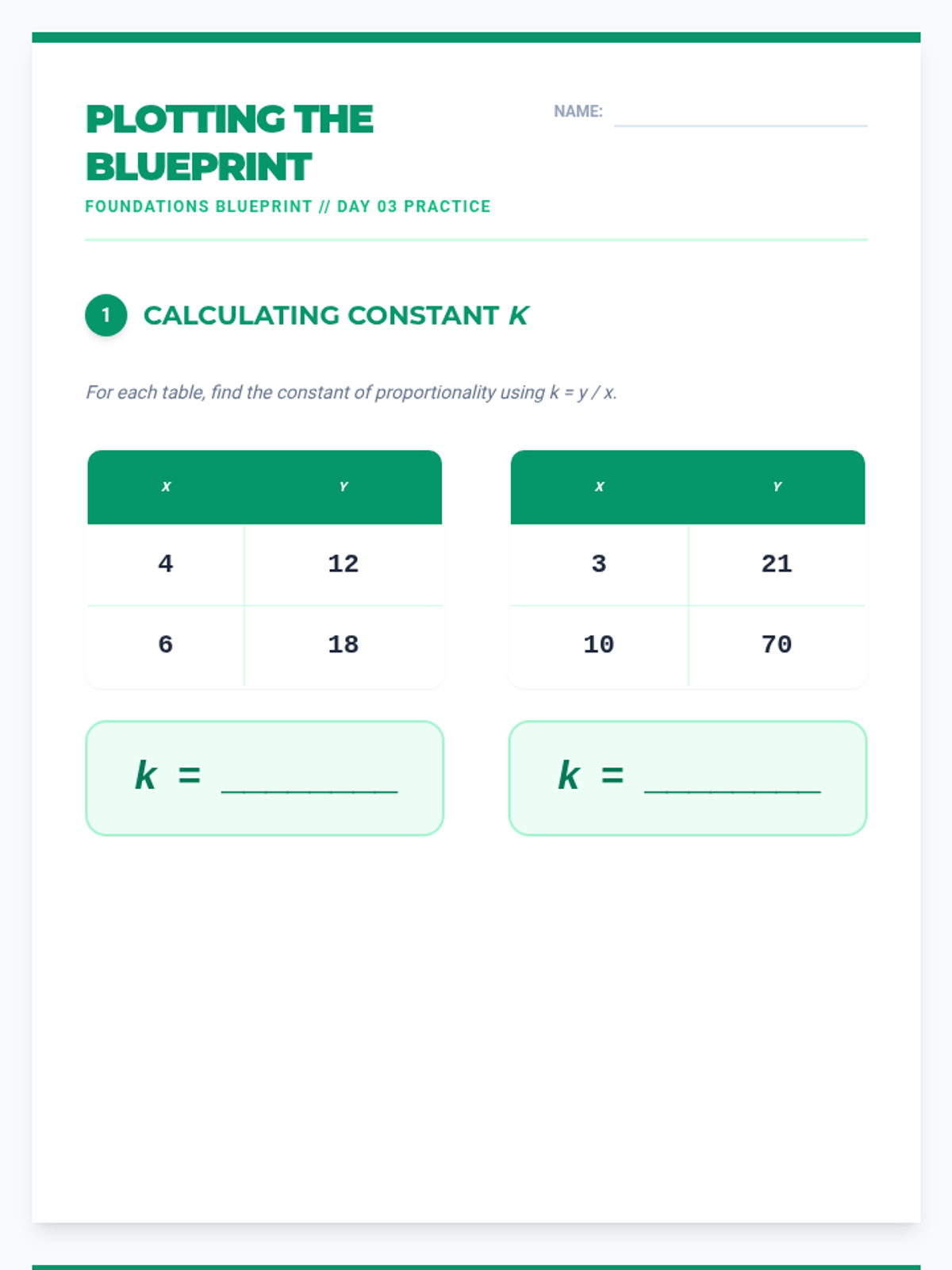
Students identify the constant of proportionality from tables and translate proportional relationships onto coordinate planes.
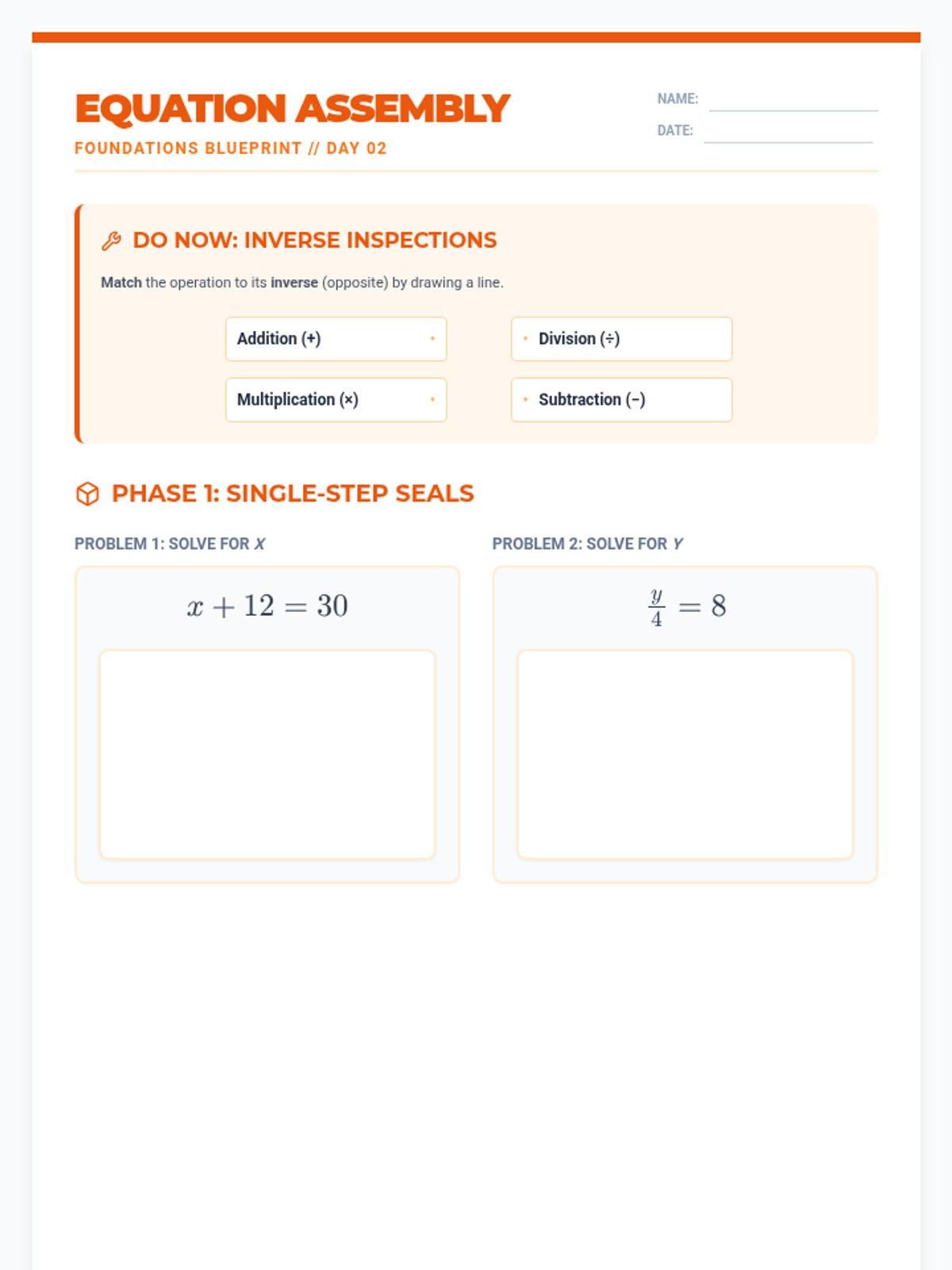
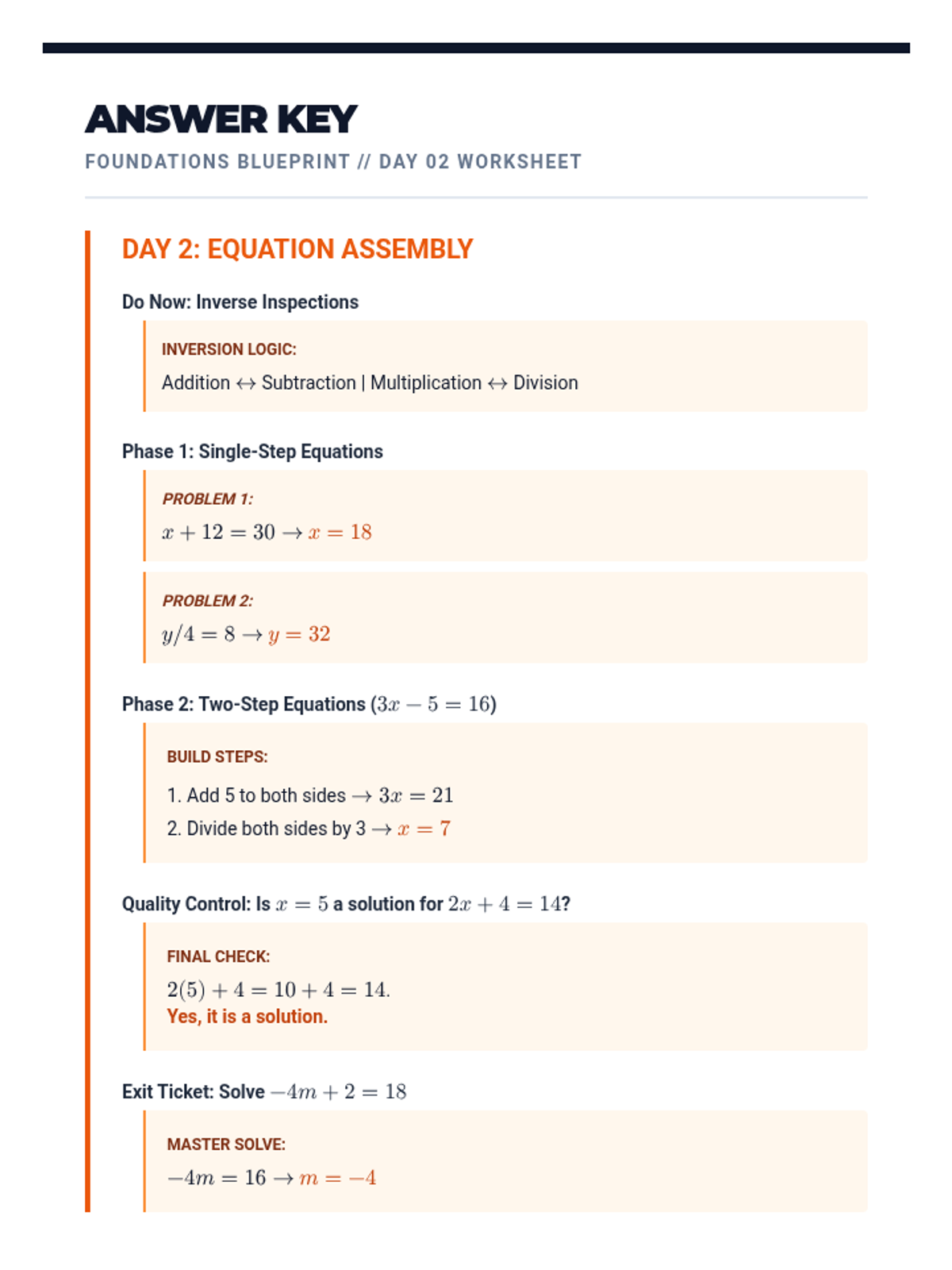
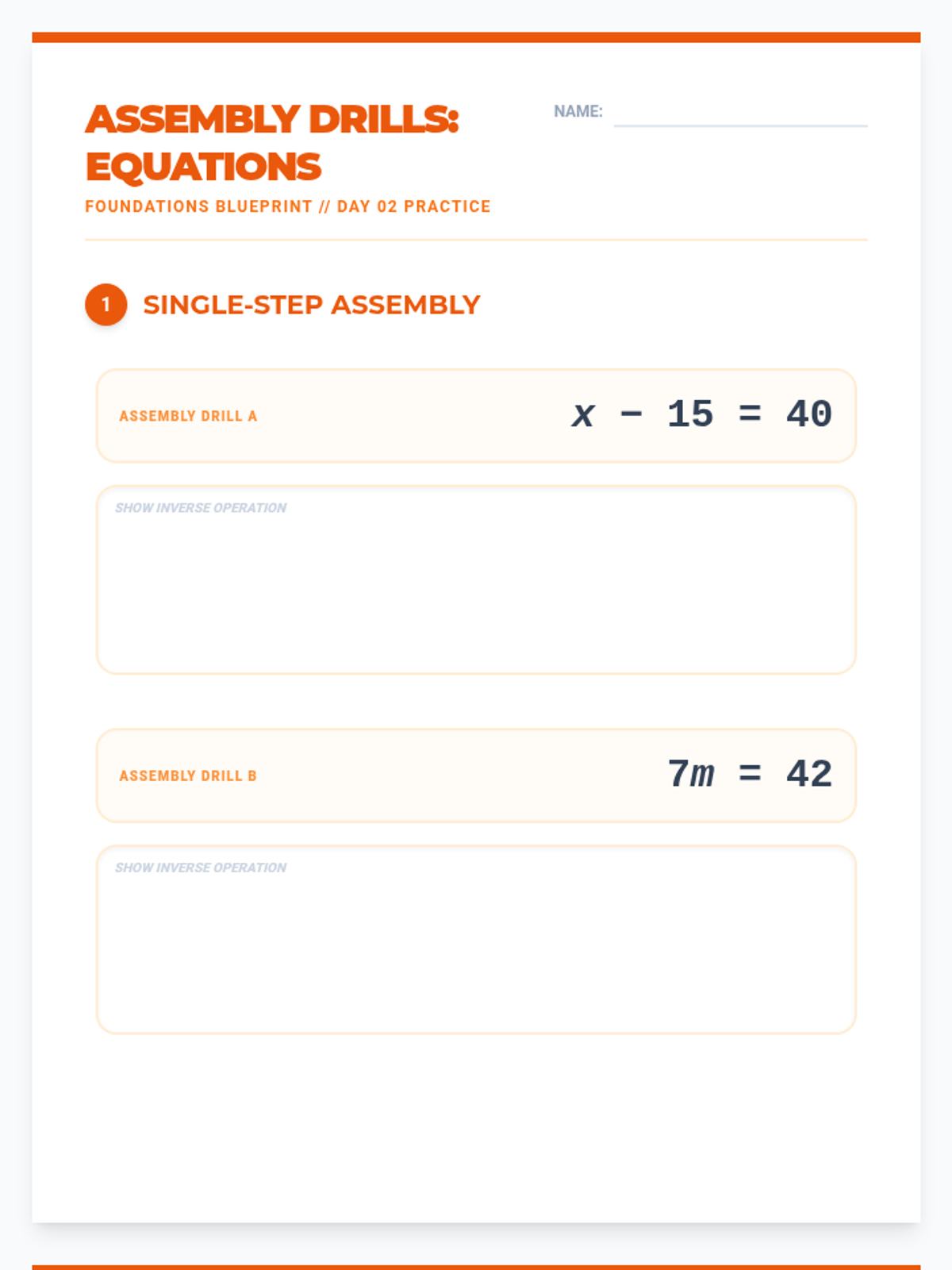
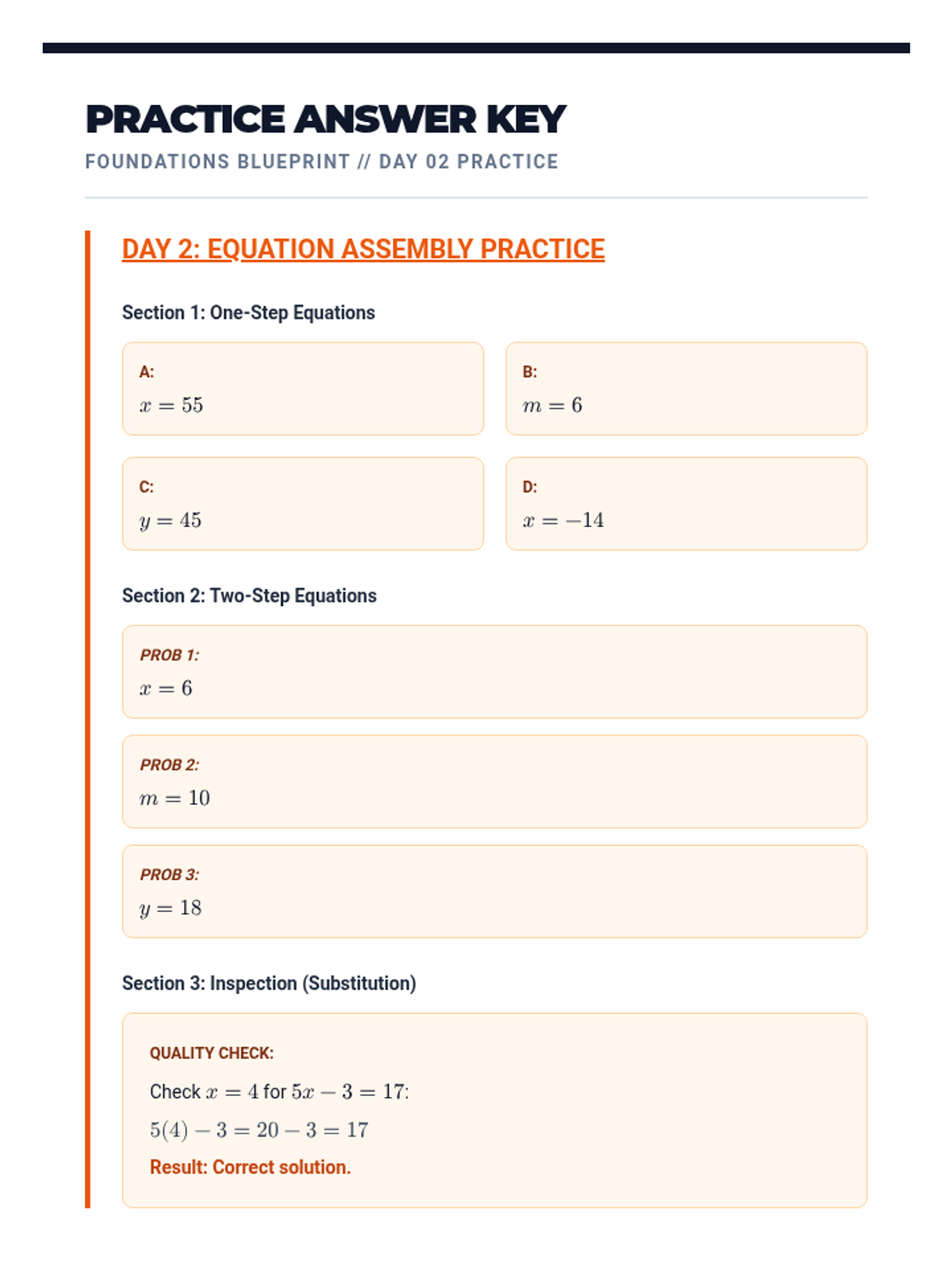
Covers solving one-step and two-step equations using inverse operations and verifying solutions through substitution.
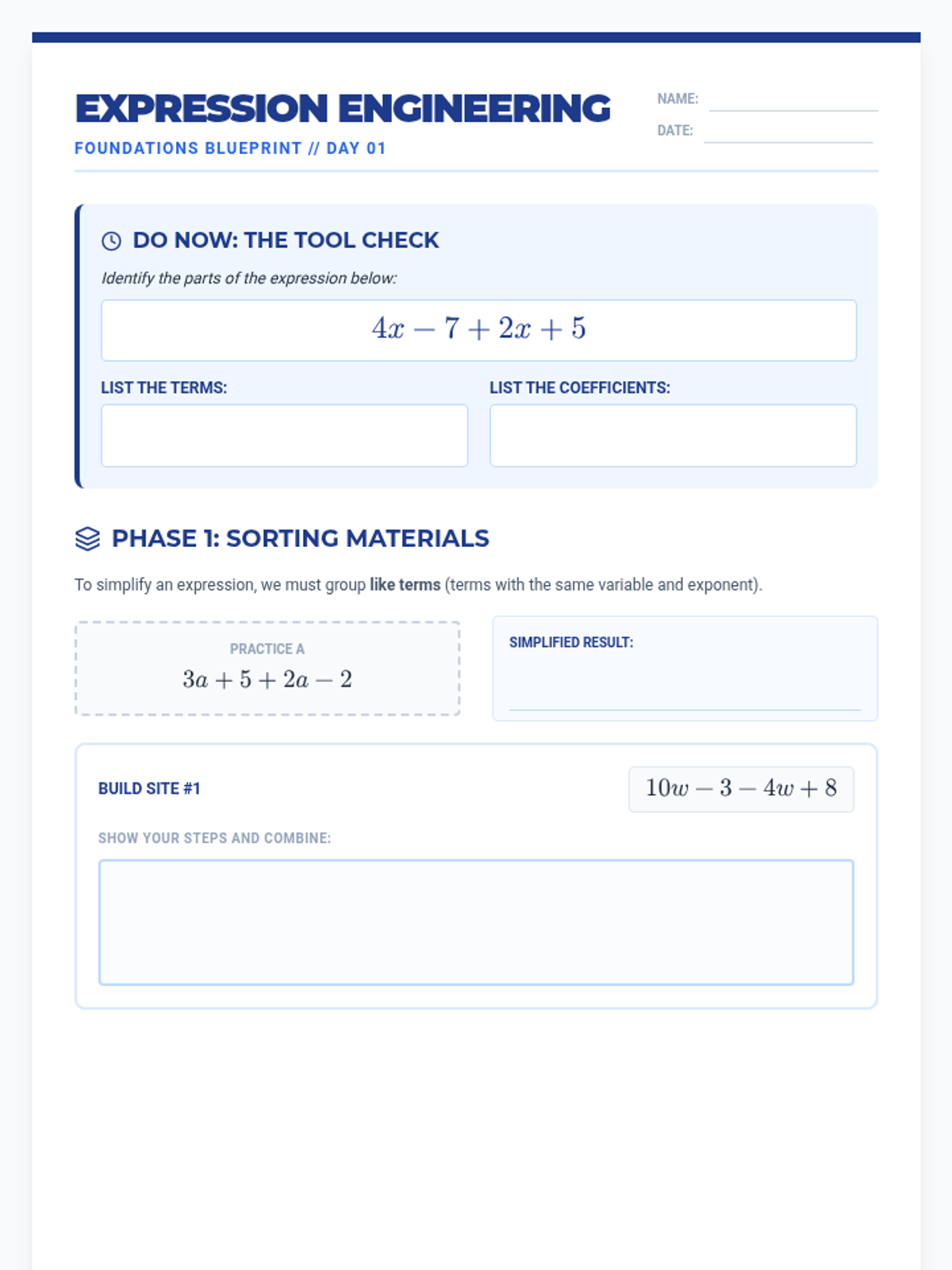
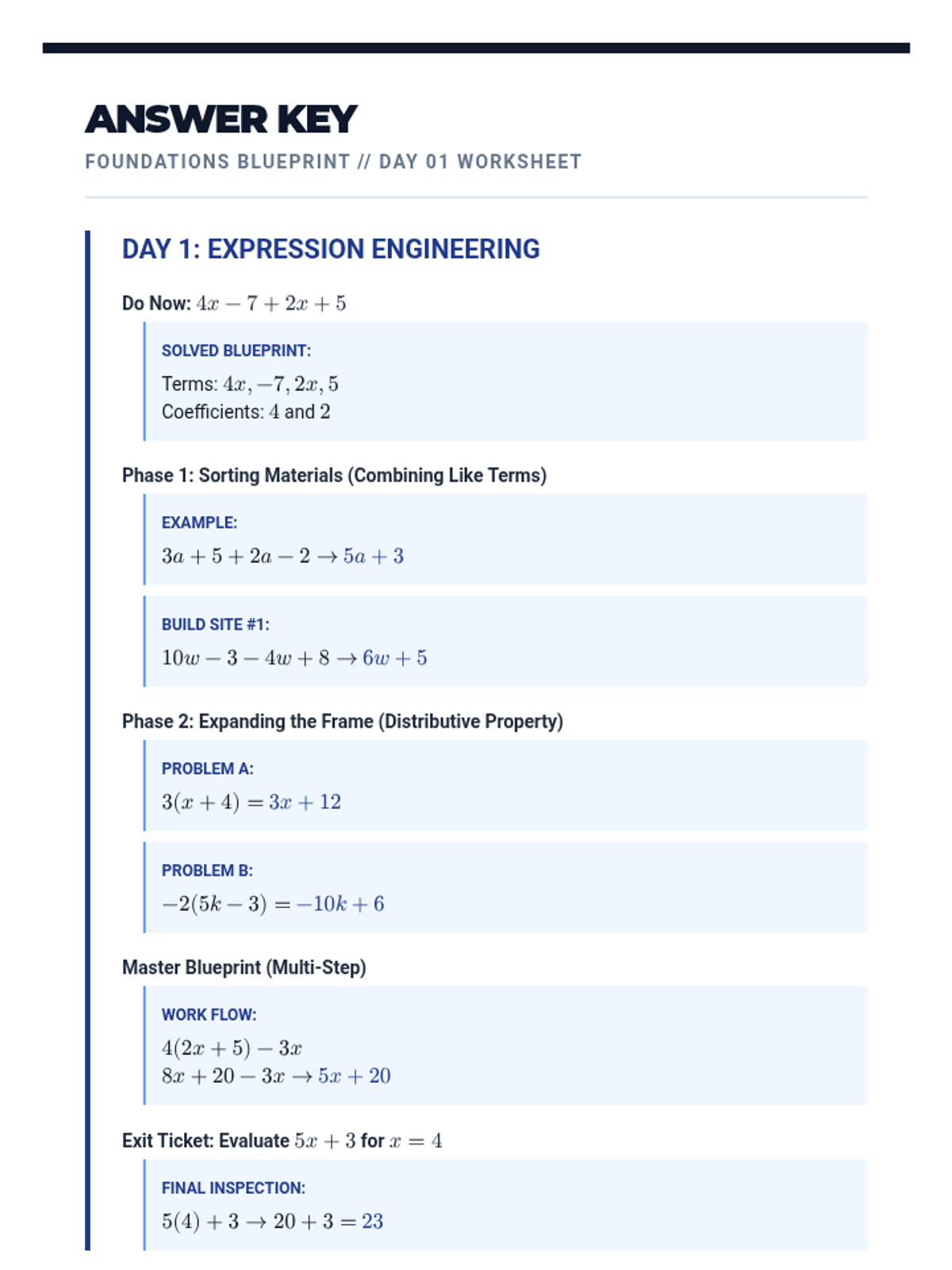
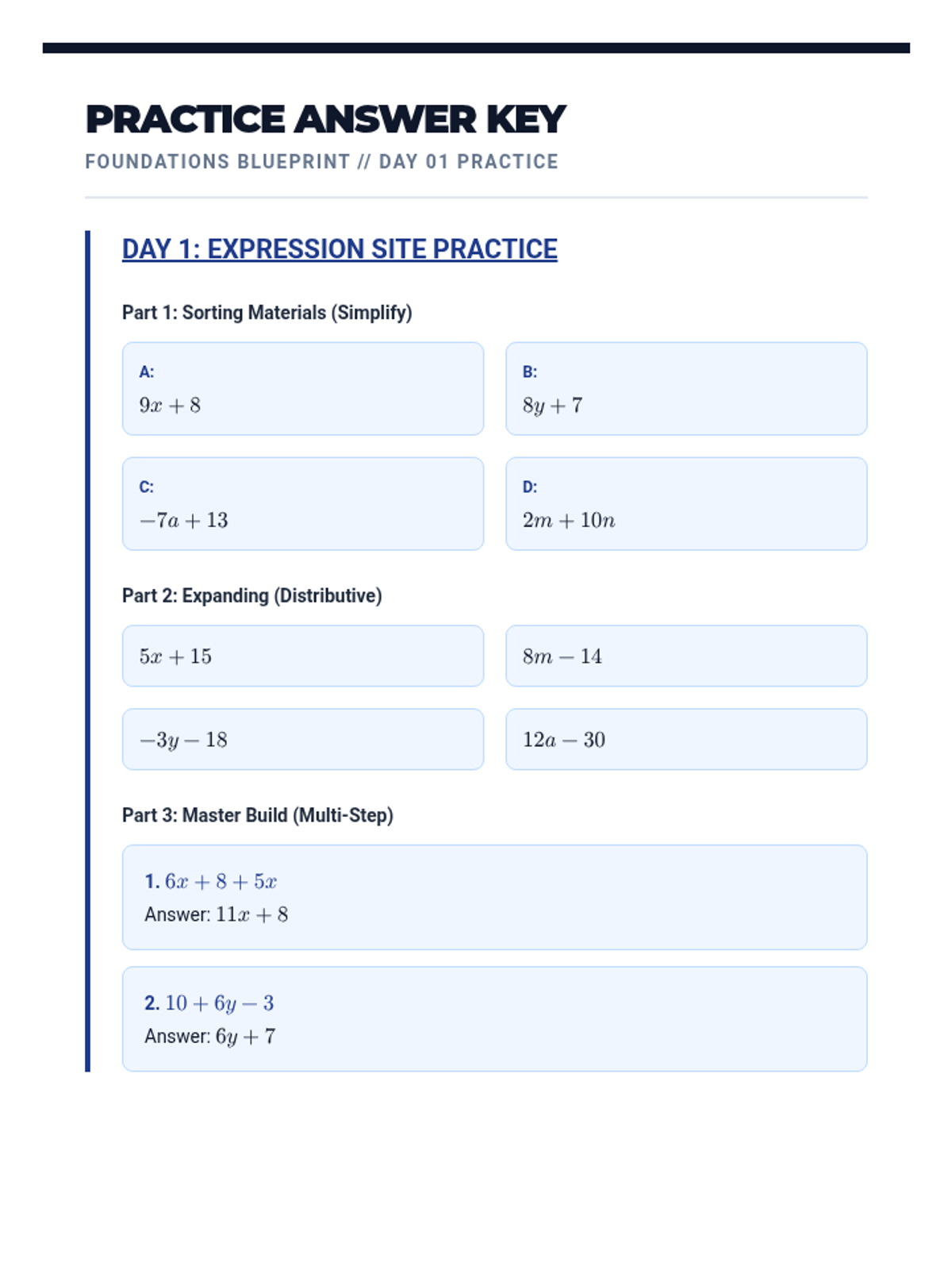
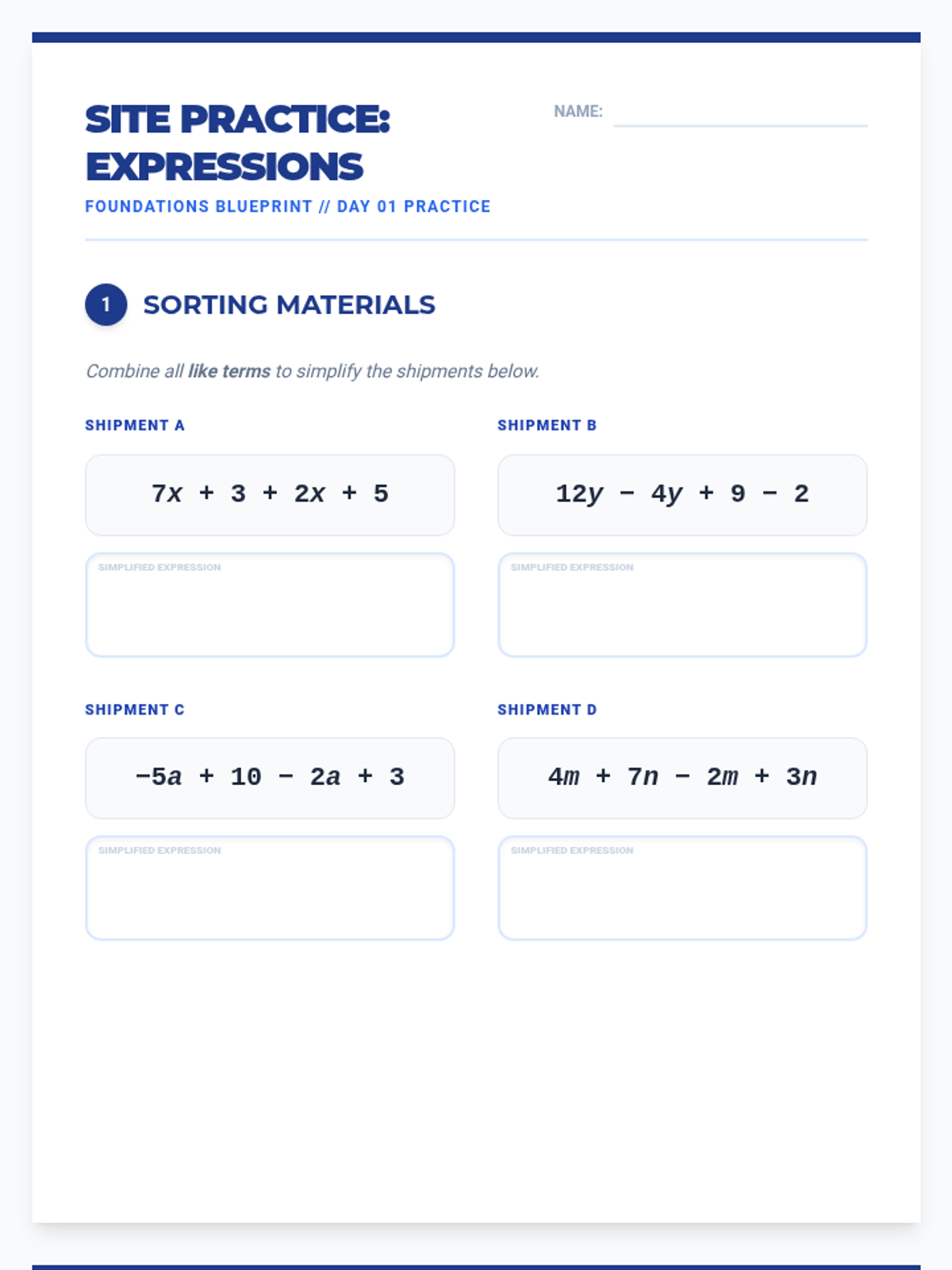
Focuses on identifying terms, combining like terms, and applying the distributive property to simplify algebraic expressions.
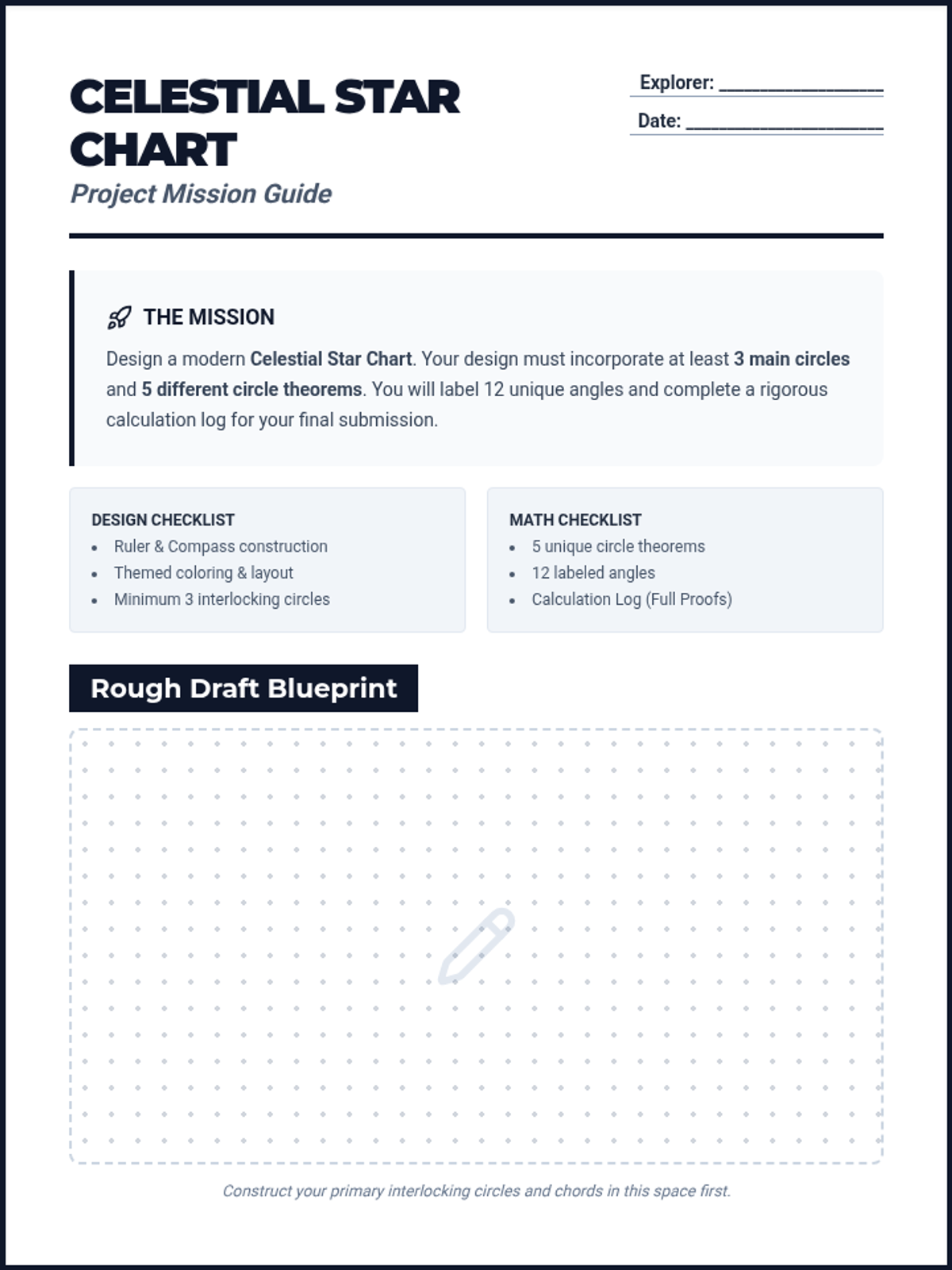
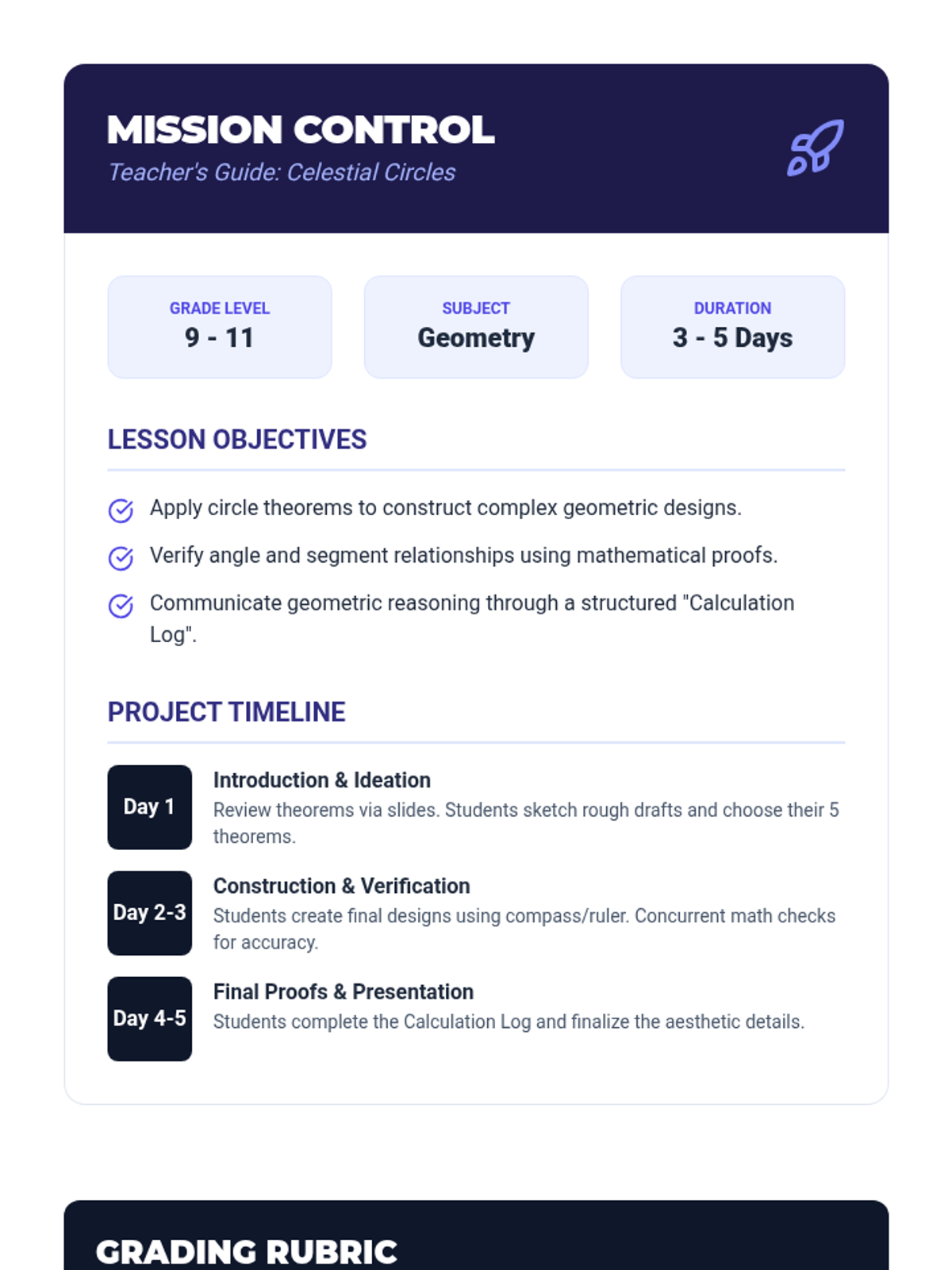
A creative geometry project where students apply circle theorems to design a celestial map or star chart, combining art with rigorous mathematical proofs of angles and segments.
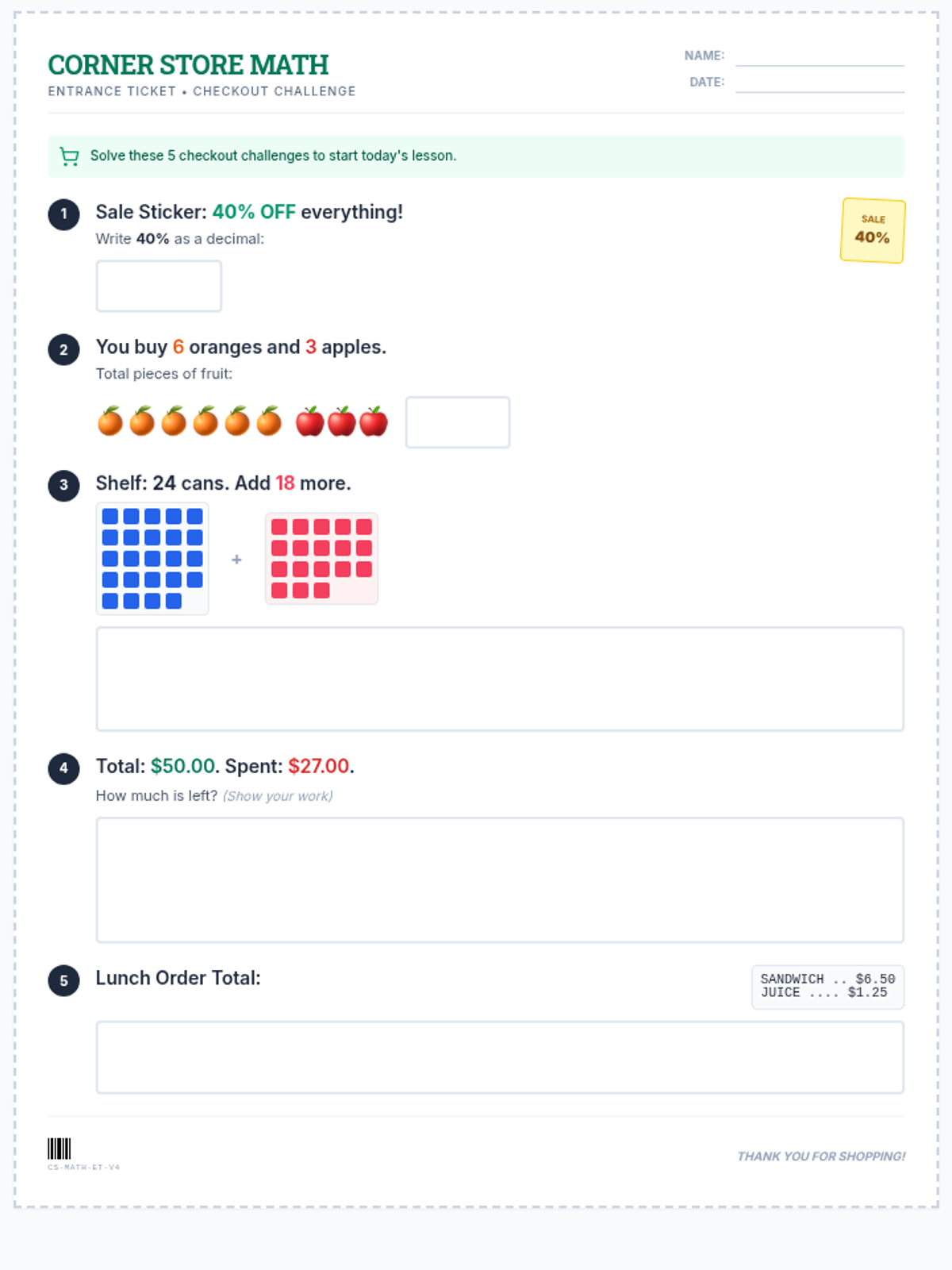
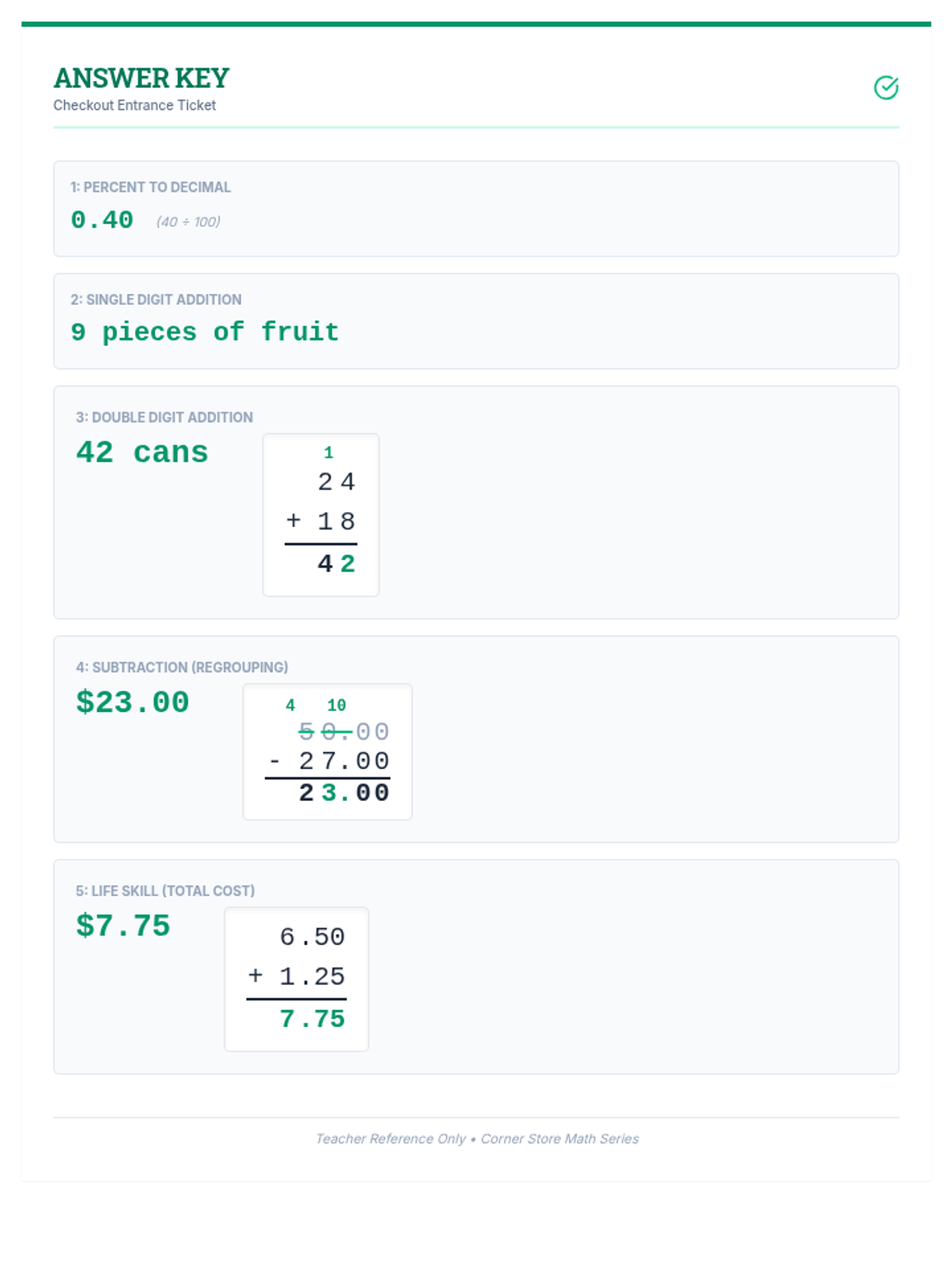
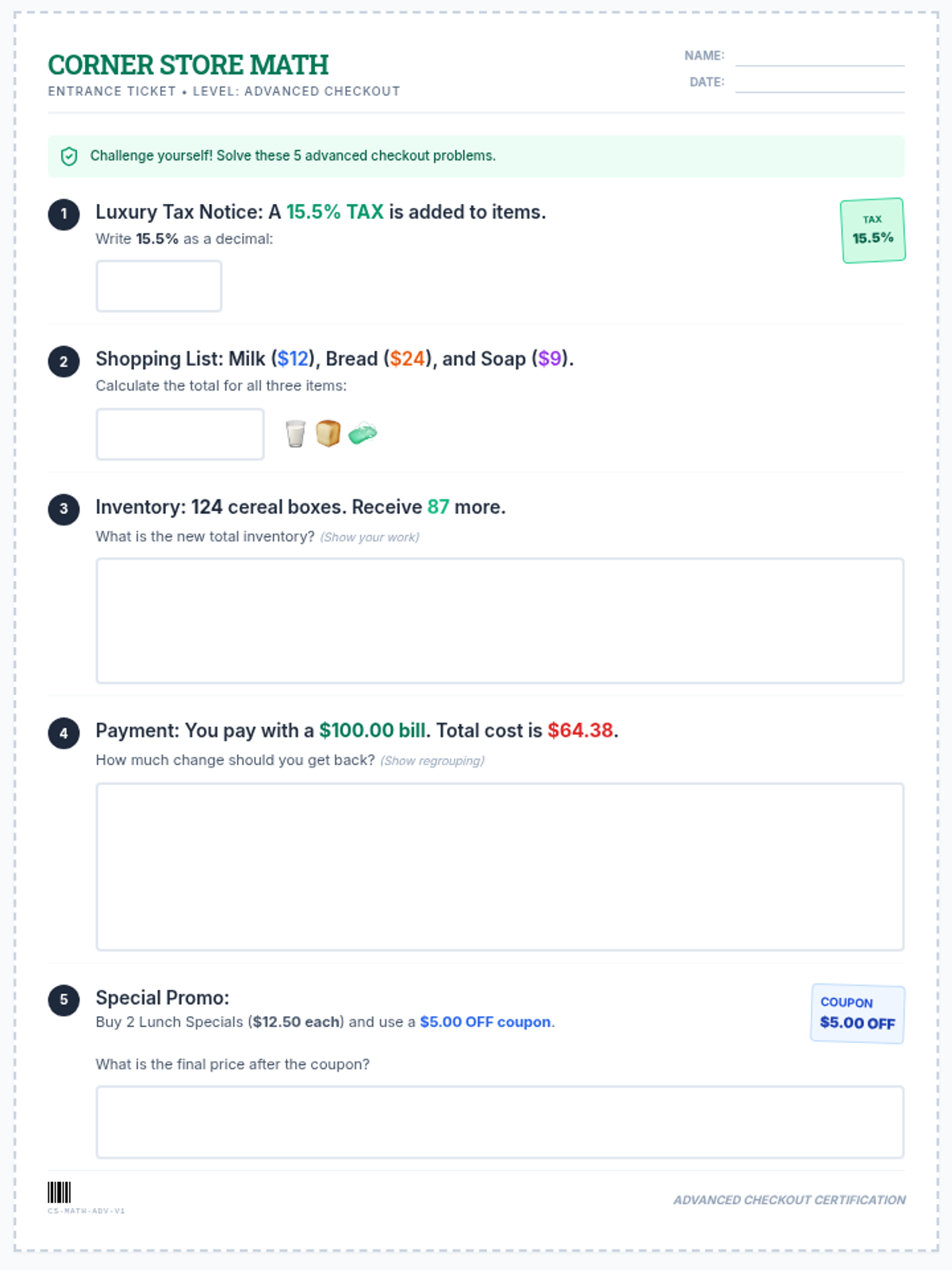
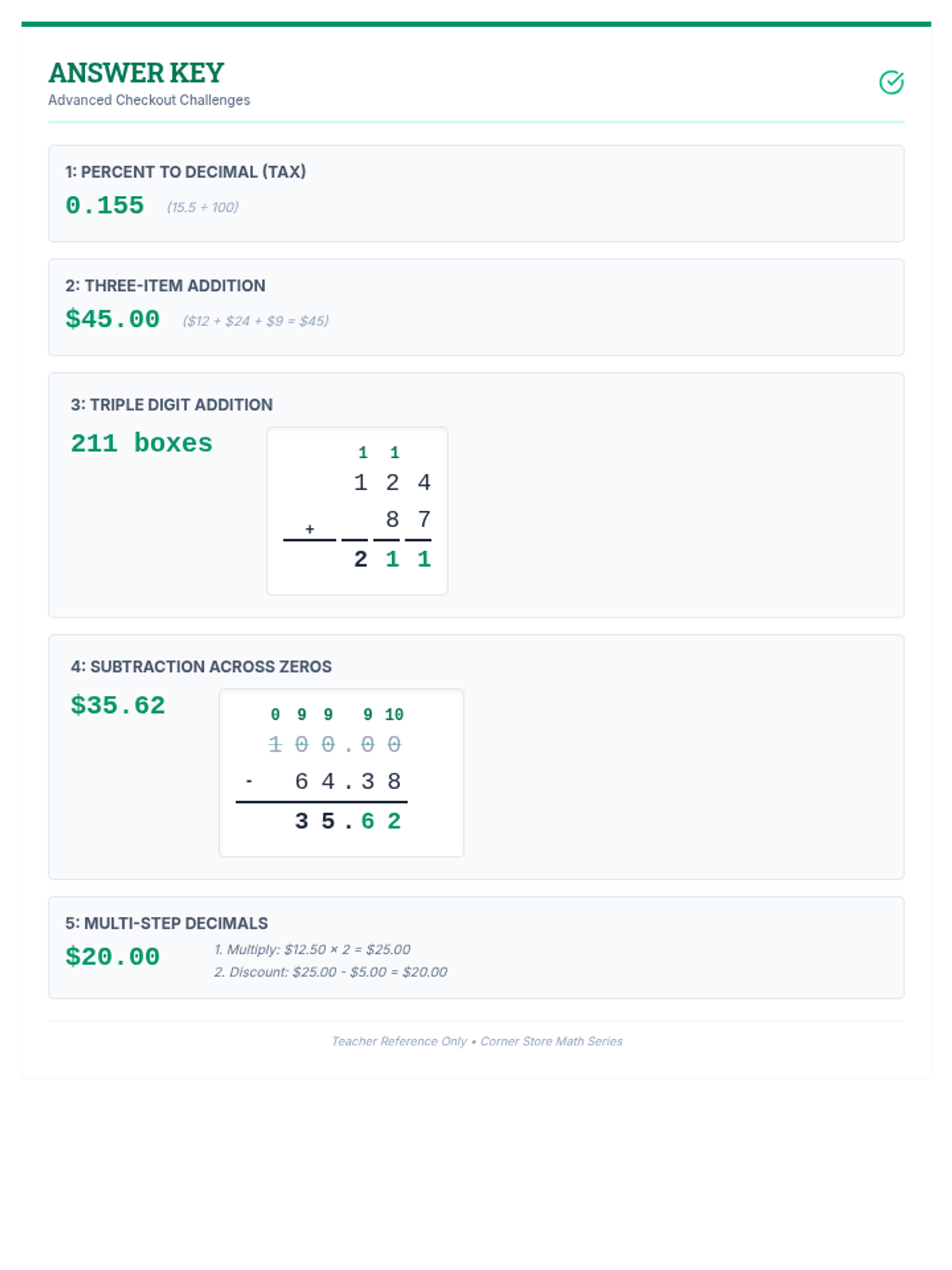
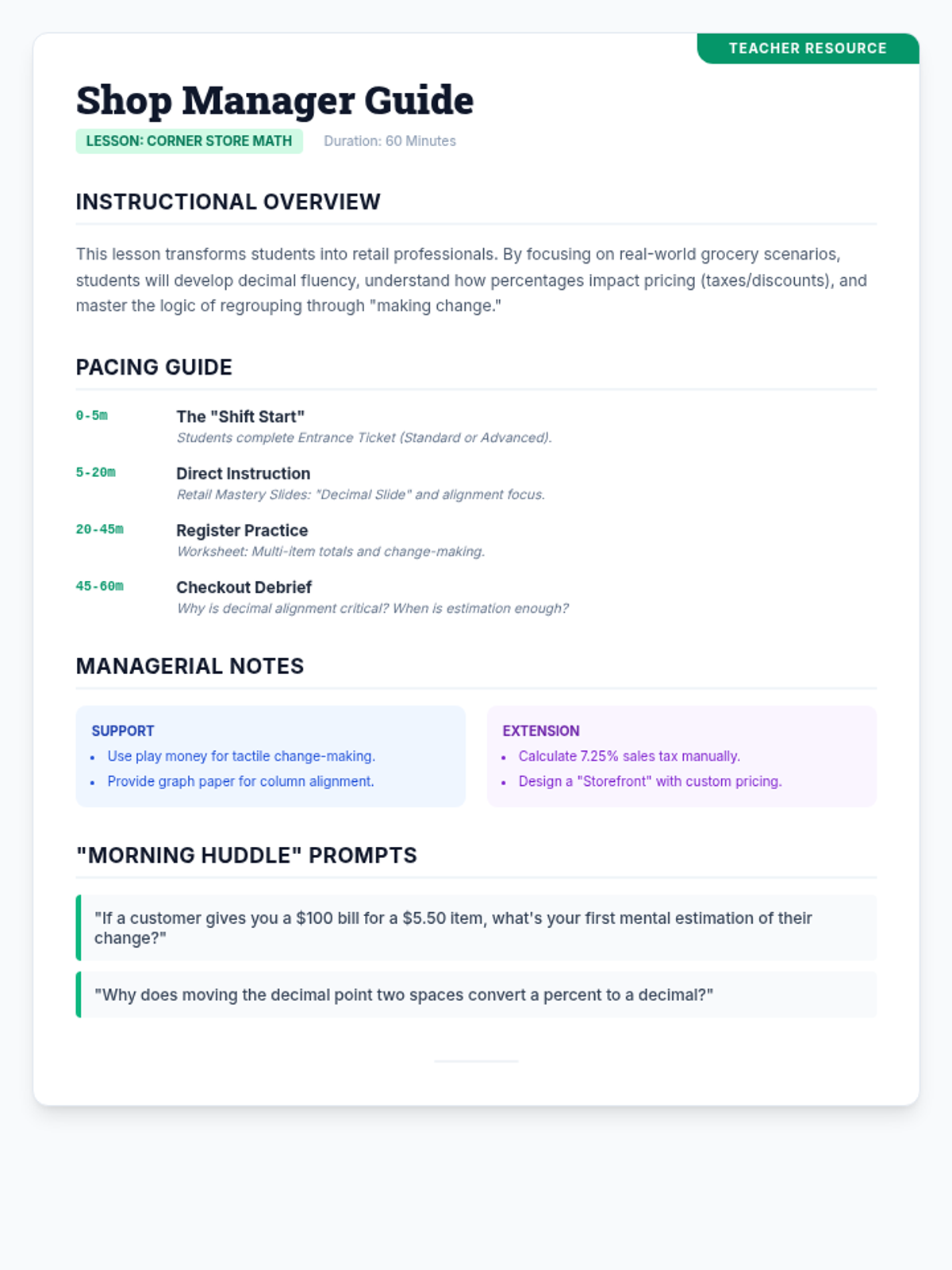
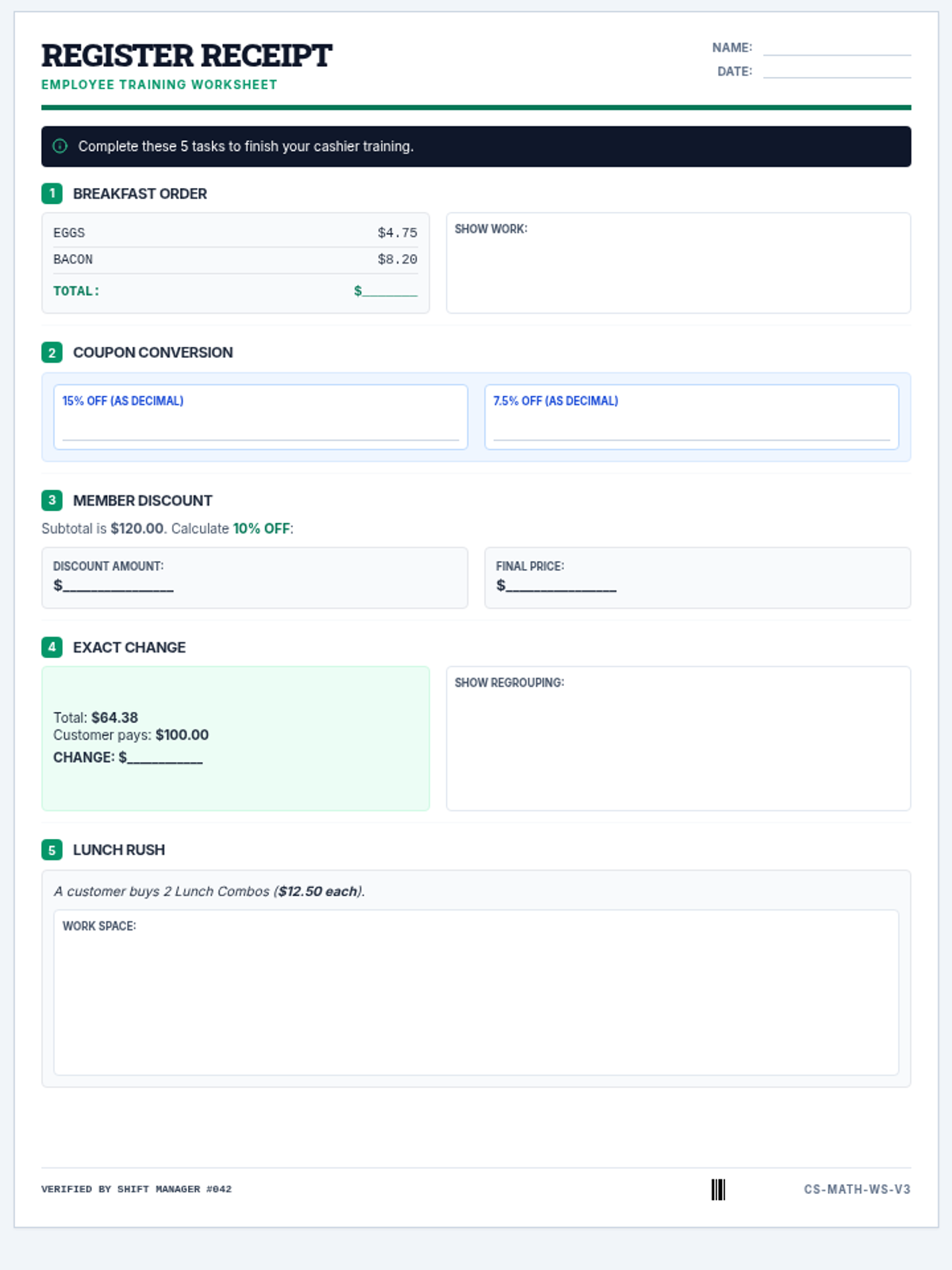
This lesson focuses on practical math applications in a retail setting, covering decimals, percentages, and basic arithmetic with a focus on money management.