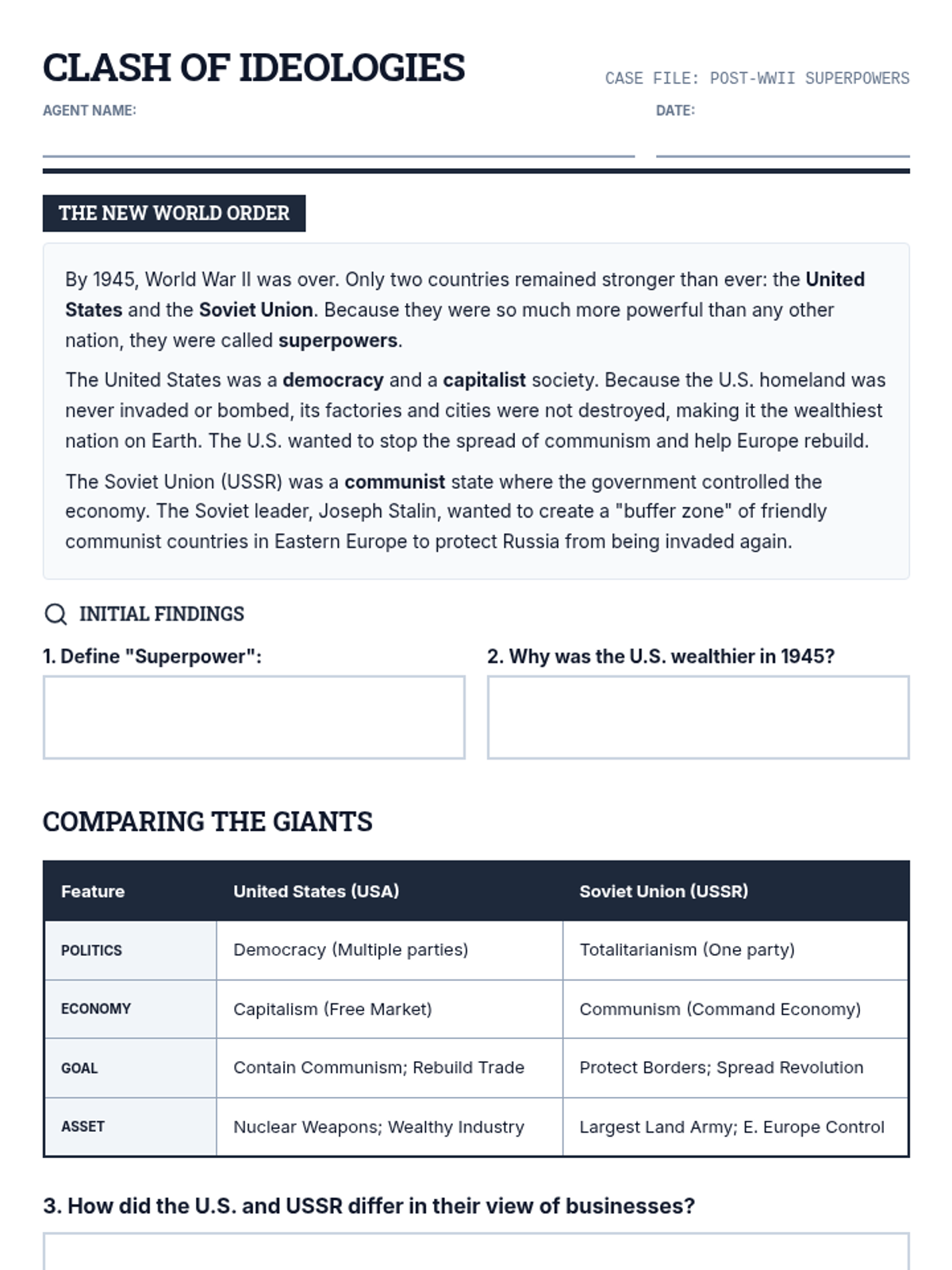
Examine the structural changes in the Americas following the fall of indigenous empires. Students explore the Encomienda system, the Casta hierarchy, and the long-term cultural fusion that shaped modern Latin America.
An immersive exploration of the Spanish Conquest of the Americas through role-play and primary source analysis. Students examine the motivations of various groups and the transformative impacts of colonization.
Students transition from analysis to construction. This lesson uses the TEEEL structure to help students draft high-quality extended responses using the evidence gathered in Lesson 1.
Students will learn to 'read' the four assessment figures. This lesson focuses on individual figure analysis, identifying key data points, and linking visual evidence directly to the three assessment questions.
A revision and scaffolding lesson designed to help Year 8 students prepare for their Geography extended response task on Water in the World, focusing on figure analysis and the TEEEL writing structure.
A festive collection of St. Patrick's Day activities focusing on vocabulary and Irish folklore.
A brief overview of the feudal social contract, focusing on the Oath of Fidelity and the mutual obligations between lords and vassals in Medieval Europe.
Students delve into the legal and social bonds of the feudal contract through a knighting ceremony simulation and drafting their own oaths of fealty.
This lesson explores the debate over how state judges should take office, comparing the merits of democratic elections against the stability of executive appointments. Students will analyze arguments for both sides, focusing on judicial independence, accountability, and the role of the judiciary in a democracy.
In this lesson, students explore the concepts of disability discrimination and accessibility, analyzing how physical, digital, and social barriers impact individuals and the health of a democracy. Students will learn to distinguish between discriminatory practices and legitimate professional boundaries.
The final debate session where students engage in a 20-minute structured argument, applying their psychological knowledge to the question of why students cheat.
A dedicated research session where students work in their debate teams to gather evidence, psychological theories, and real-world examples to support their assigned side.