Students explore the concept of 'clash'—direct engagement with opposing ideas—versus simply stating unrelated points. They analyze sample arguments to identify where true clash happens and where ships pass in the night.
An immersive 45-minute grammar escape room where 6th-grade students solve puzzles involving parts of speech, punctuation, and sentence structure to unlock 'The Grammarian's Vault'.
A collection of five informational passages and assessments focused on RI.7.3, featuring modern icons like Simone Biles and Taylor Swift. Students will analyze how individuals and events are introduced and elaborated upon through anecdotes and examples.
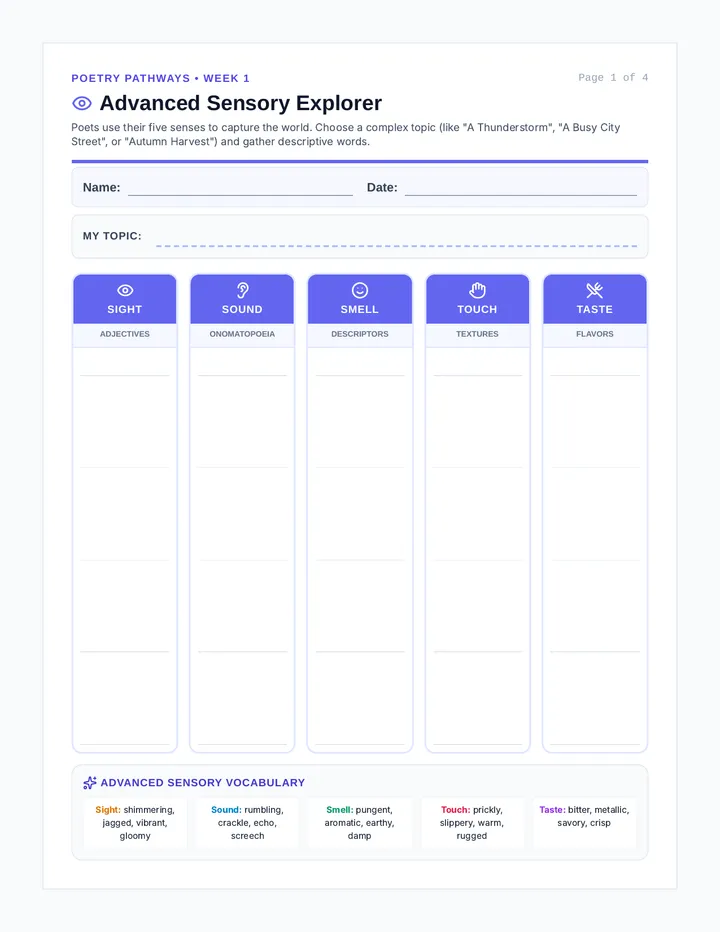
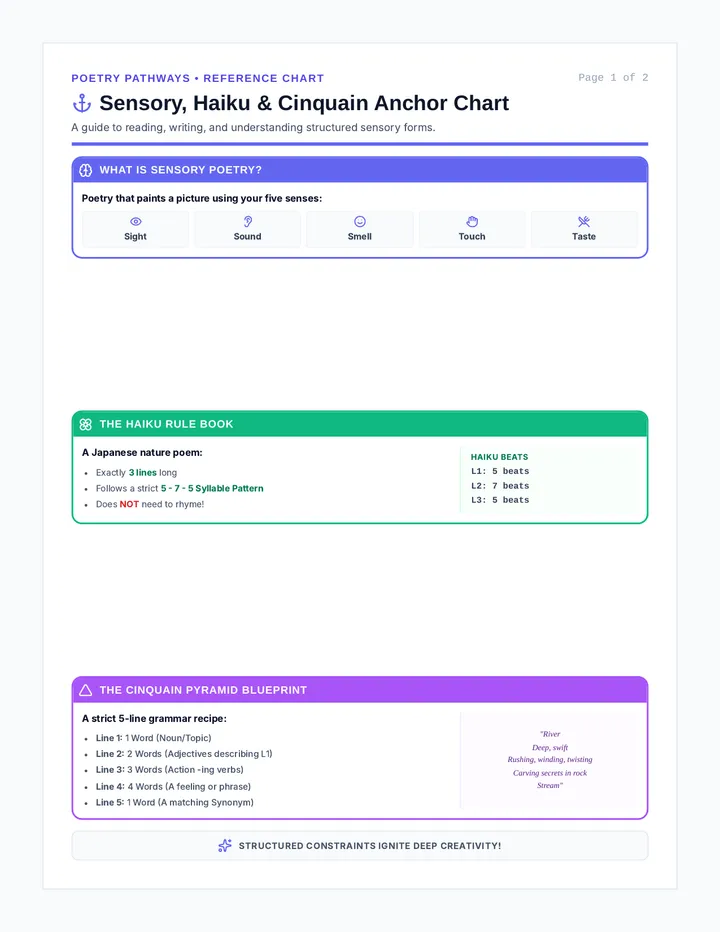
A lesson focusing on the transition of the Watson family from Flint to Birmingham, analyzing setting development and character shifts in chapters 12 and 13.
A deep dive into Chapter 10 of 'The Watsons Go to Birmingham – 1963', focusing on how the Appalachian setting and the shroud of night symbolize the growing racial tensions as the family heads South.
A lesson focusing on the cultural shift of the 1920s through the lens of flapper culture, designed with highly accessible text for middle school students reading at a 1st-grade level. Students will analyze diction to identify positive and negative connotations.
A mini-lesson for a 6th-grade resource room ELA class focusing on Auggie's character traits and his development throughout the first month of school in the novel 'Wonder'. This lesson uses a space-exploration theme and provides high levels of scaffolding.
A mini-lesson for 6th grade resource room students focusing on the theme of kindness and character perspective in the novel Wonder, specifically centered around Mr. Browne's first precept and the transition into middle school.
A collection of reflective and creative activities for Memorial Day, including a poppy craft writing activity, a gratitude letter template, and acrostic poems to honor fallen heroes.
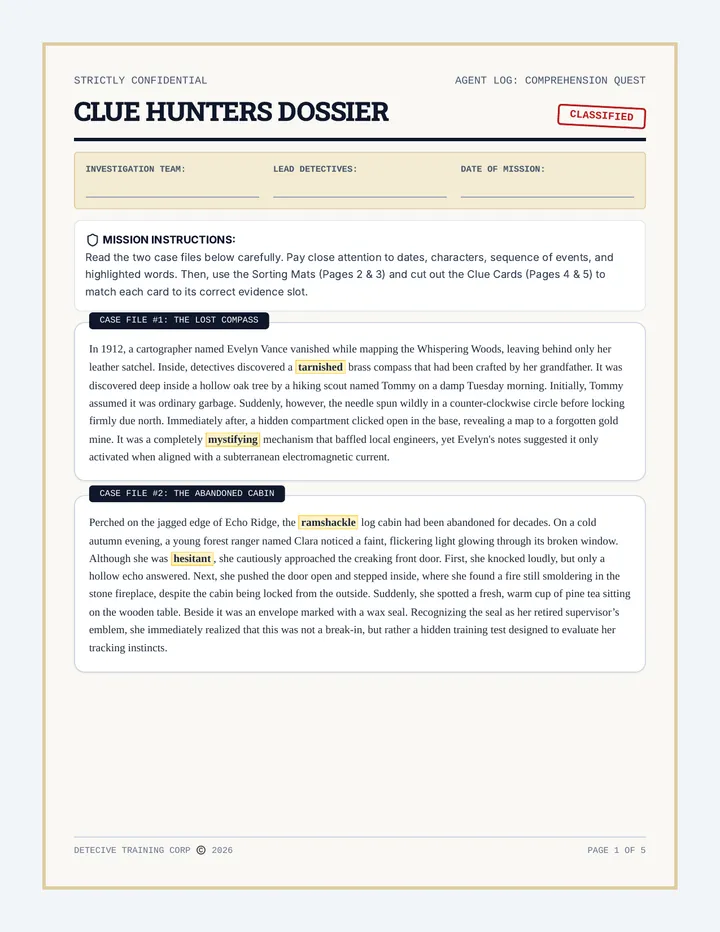
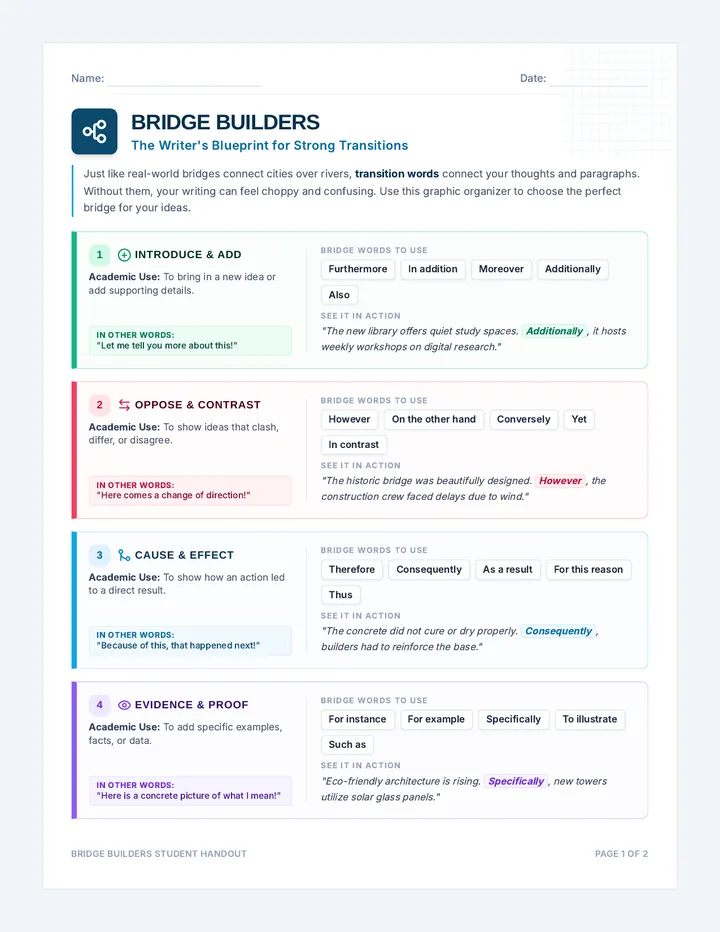
A lesson on identifying and using common transition words to create cohesion in writing. Students will categorize transitions by purpose (Addition, Contrast, Cause/Effect, Time) and use them to link ideas.
A comprehensive lesson on identifying and using main verbs and primary auxiliary verbs (be, do, have) in sentences. Includes a structured lesson plan, a practice handout, and a detailed answer key with monitoring tools.
A lesson exploring the encounter between Odysseus and Polyphemus, focusing on character traits and cleverness through differentiated readings and assessments.
A lesson focusing on identifying and analyzing the five stages of plot structure using the novel Al Capone Does My Shirts as a primary example. Students explore the arc of Moose Flanagan's journey on Alcatraz.
A collection of versatile graphic organizers designed to help students analyze fiction and nonfiction picture books. Each organizer focuses on a specific reading skill, providing a structured framework for student response.
A focused practice session for 6th-grade students to sharpen their listening comprehension skills using SBAC-aligned question stems and an engaging mystery about underwater sounds.
In this lesson, students will enhance simple social scenario sentences by applying descriptive adjectives, expressive adverbs, and coordinating conjunctions (FANBOYS) to create more engaging and complex narrative structures.
A deep dive into the classic Greek myth of Theseus and the Minotaur, focusing on characterization, plot structure, and the complex nature of heroism.
Refining the persuasive piece through peer review and assessment using the secret agent field manual rubric.