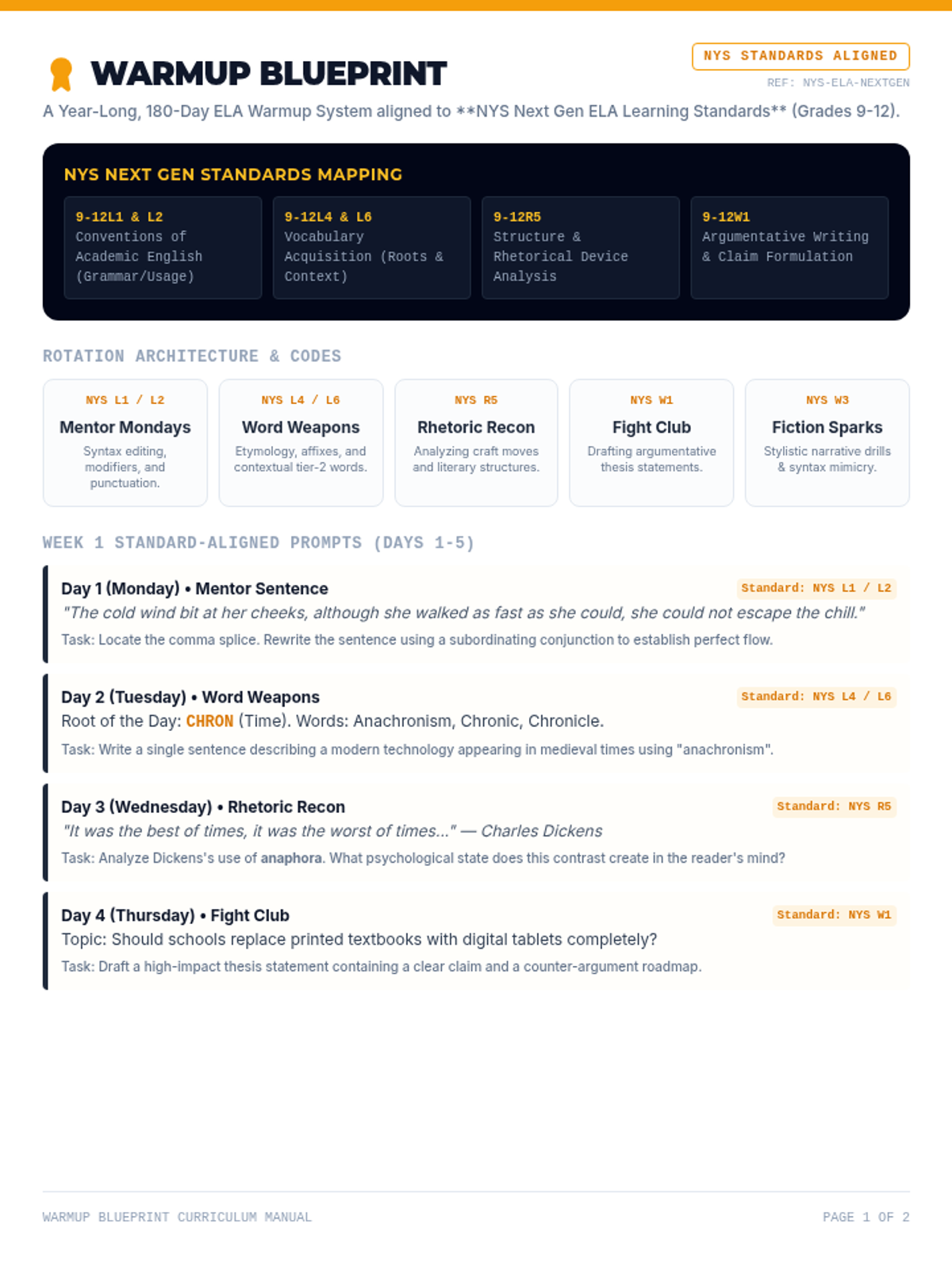
A mastery-based workshop where students apply all editing tools to their own writing, focusing on the '10% Challenge' to reduce word count and increase clarity.
Cumulative review of all consonant-le patterns through mixed word lists, sentence reading, and a final fluency passage.
Practice decoding and encoding consonant-le words that include r-controlled or magic e syllables, such as 'purple' and 'beetle'.
Explore how the first syllable (open or closed) determines the vowel sound in consonant-le words, contrasting pairs like 'apple' and 'maple'.
Introduce the consonant-le syllable type and the 'count back 3' rule for dividing words. Focus on words with closed first syllables like 'bubble' and 'candle'.
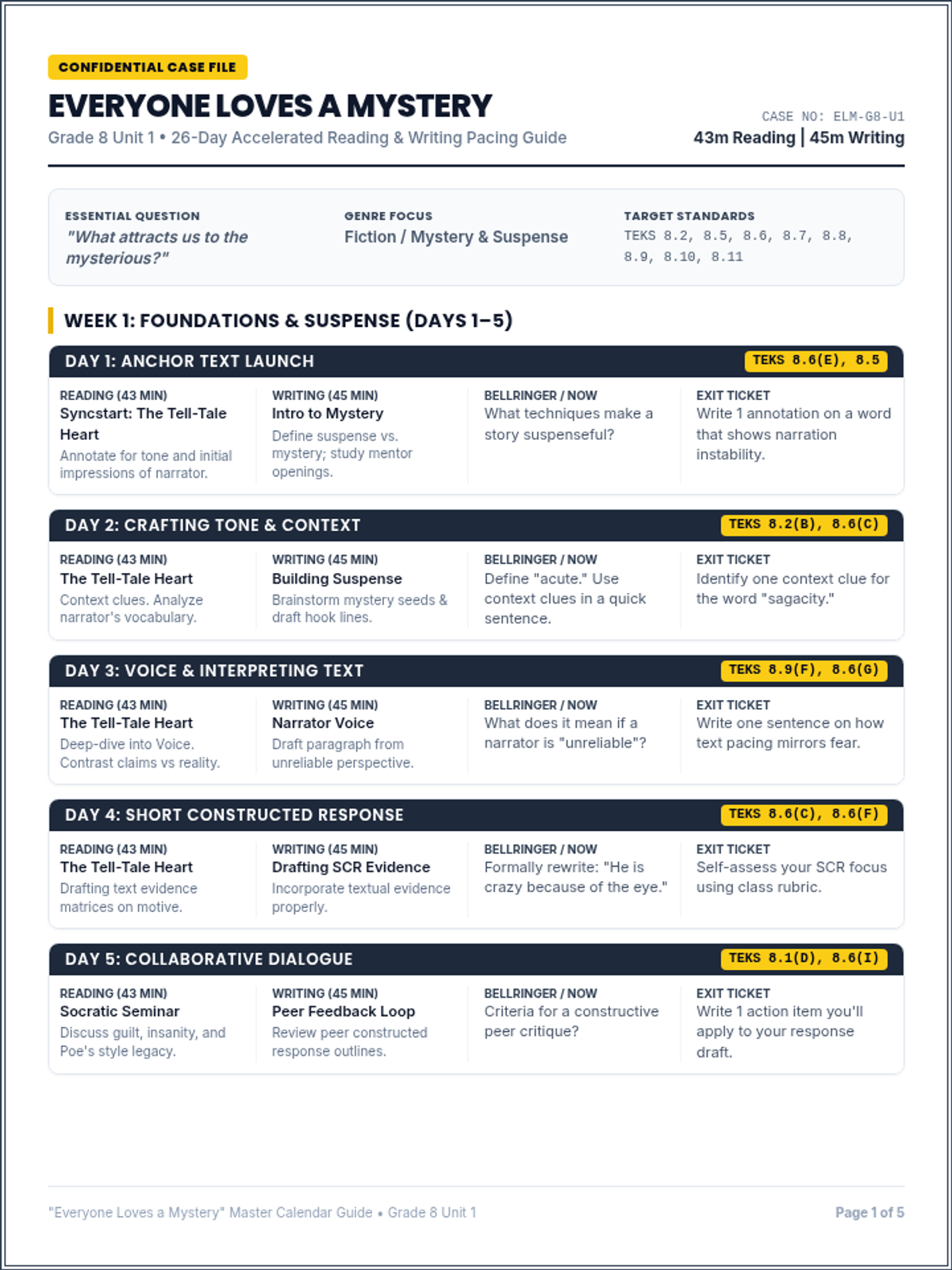
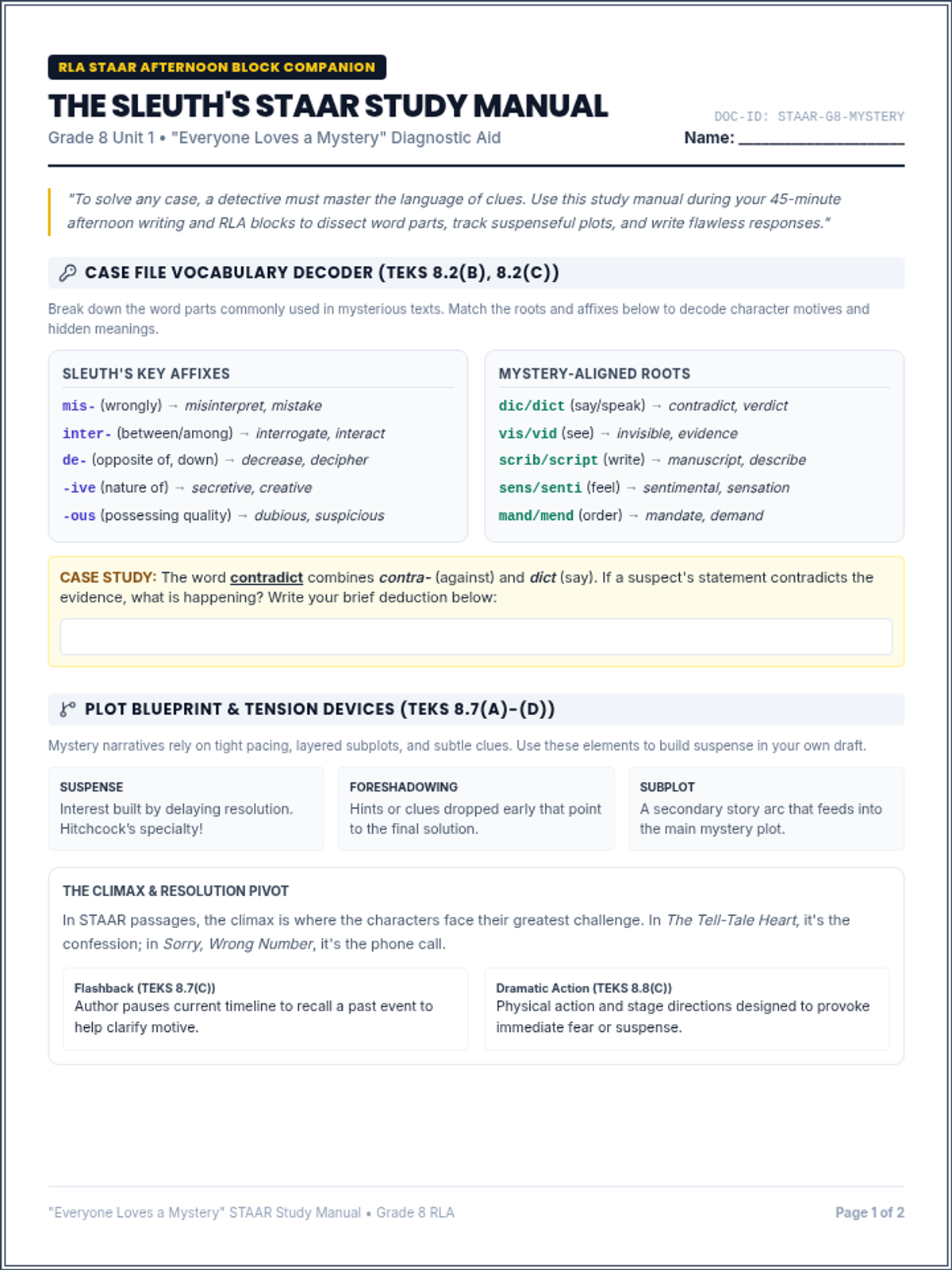
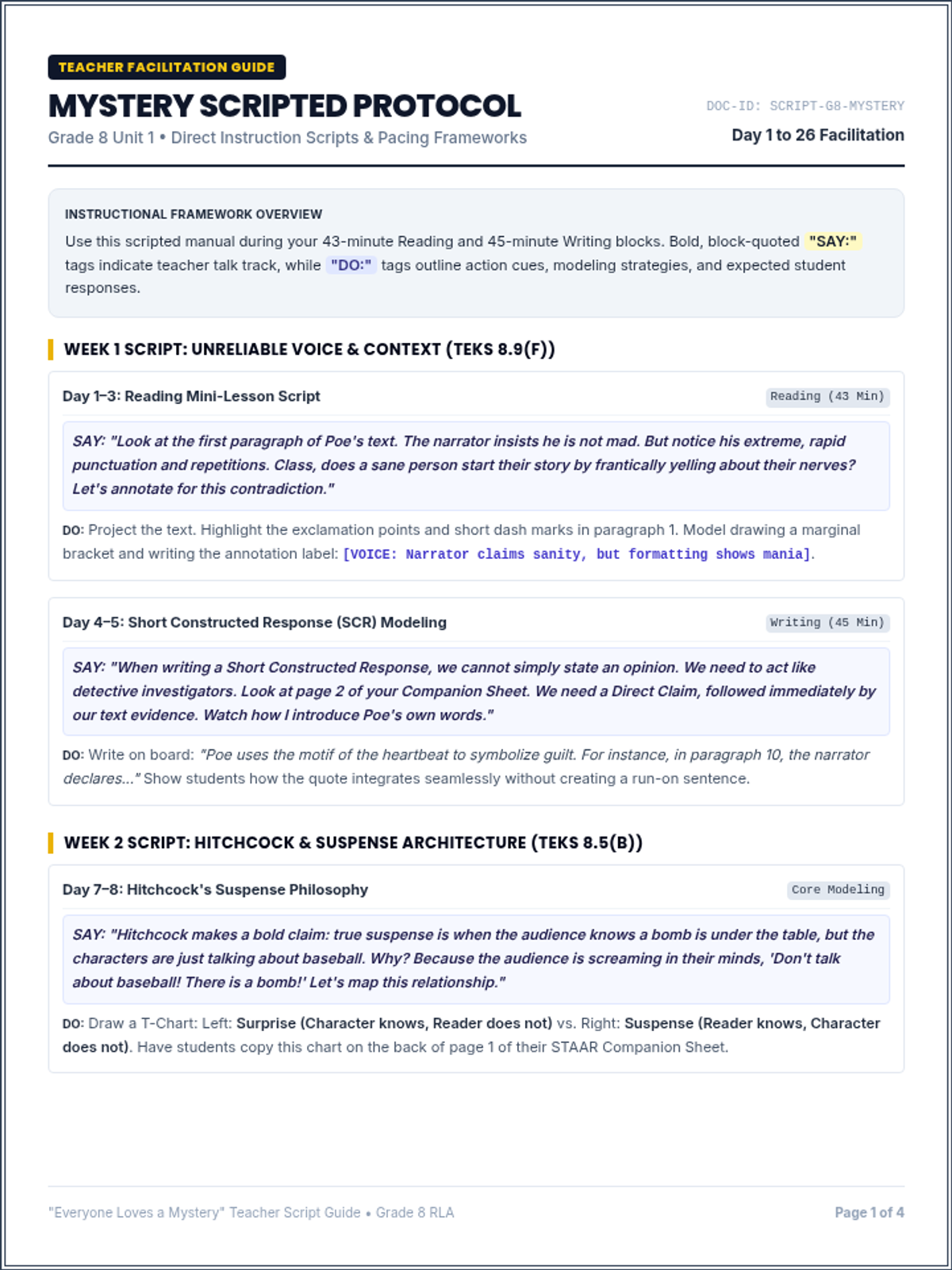
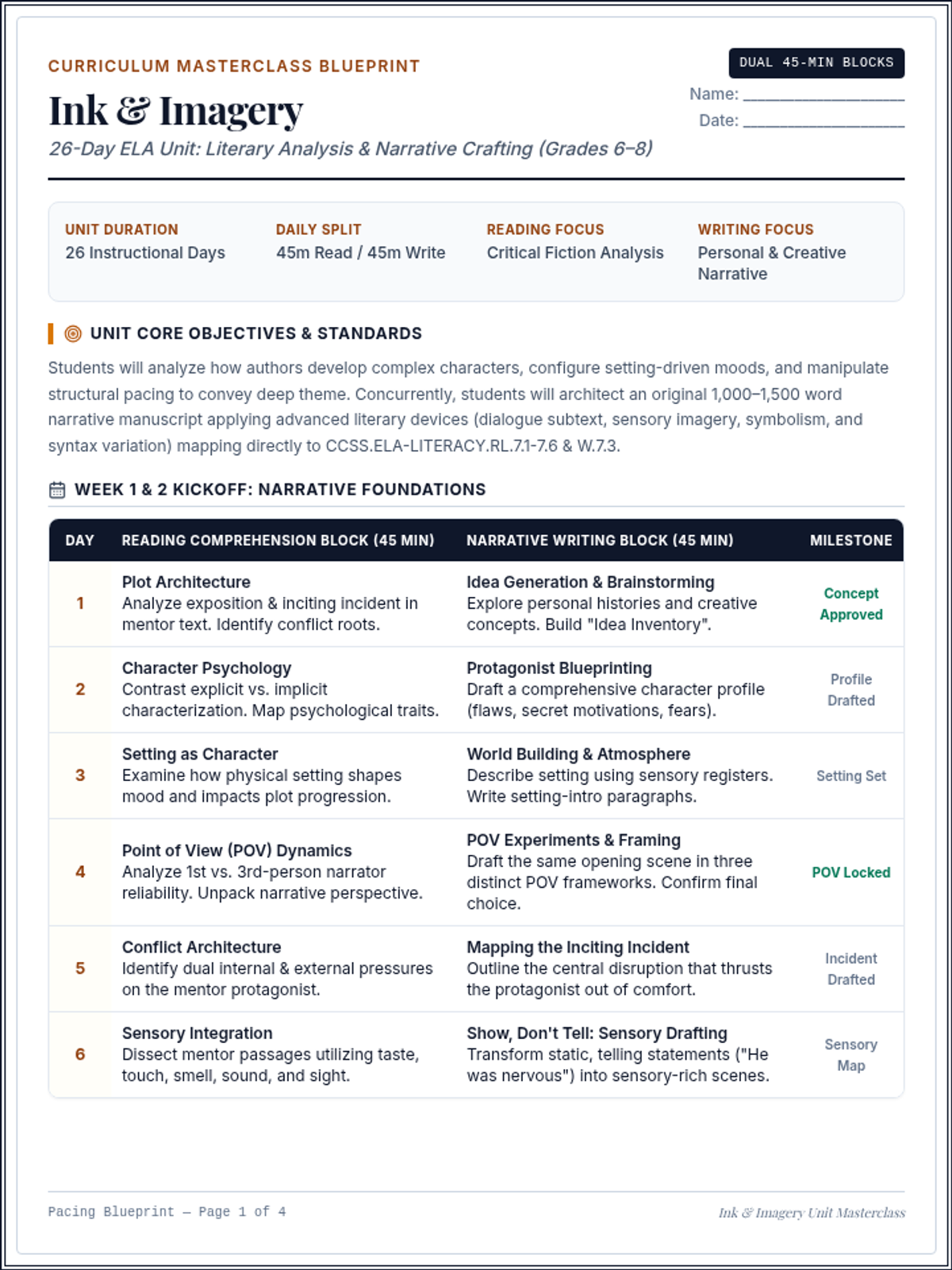
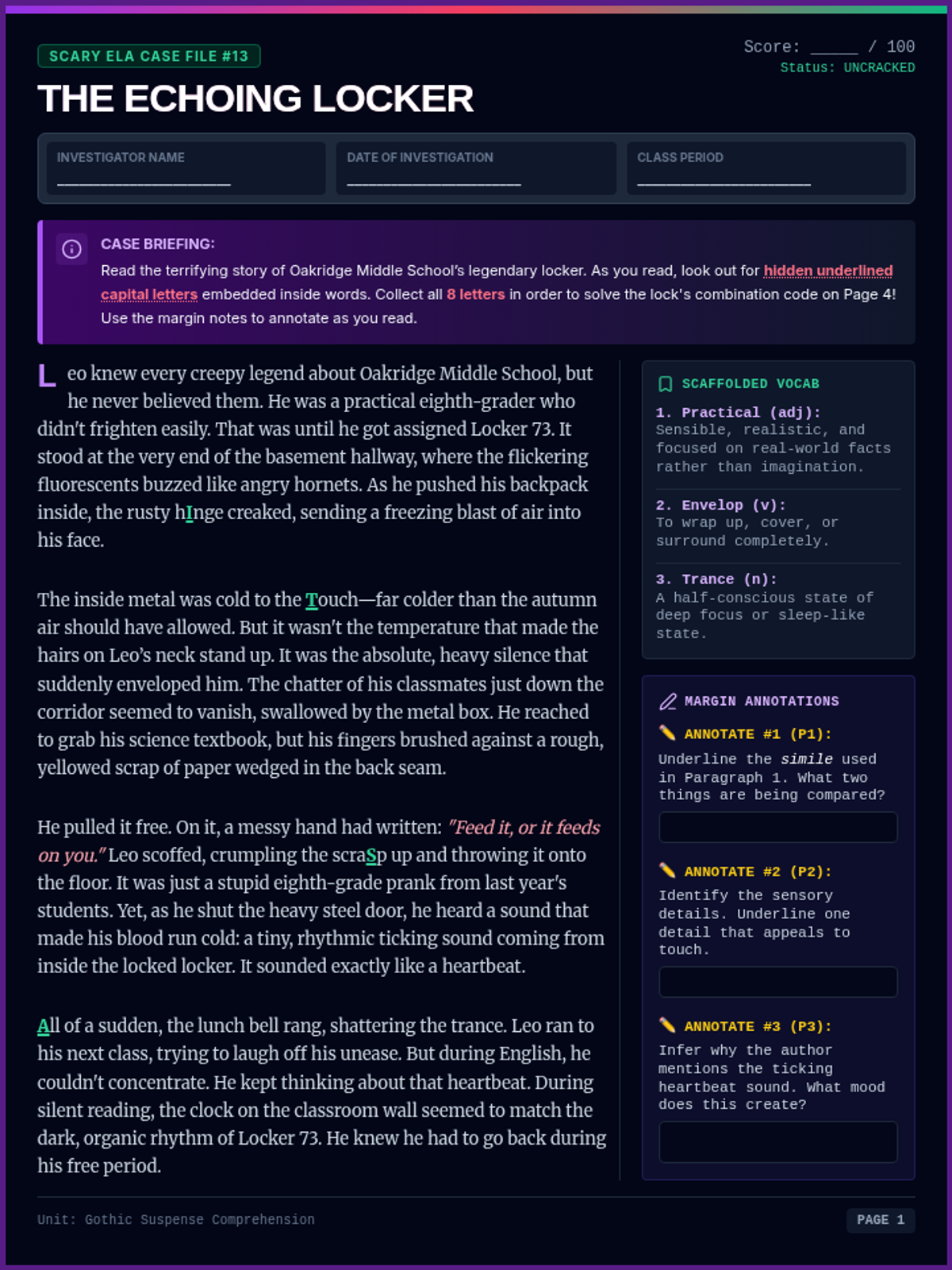
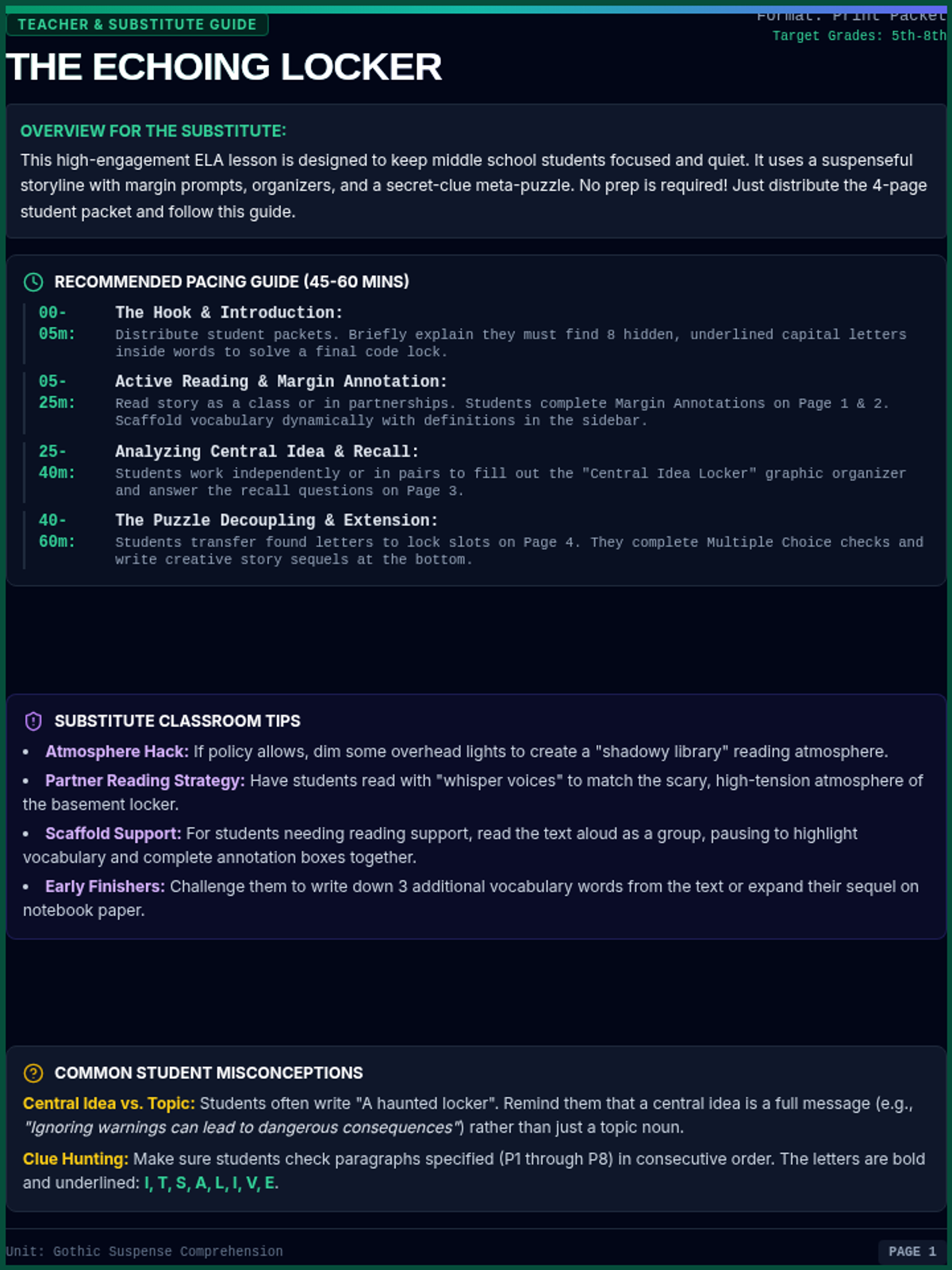
A deep dive into Edgar Allan Poe's 'The Tell-Tale Heart', focusing on the mechanics of suspense, the psychology of the unreliable narrator, and the sharp edge of gothic irony.
A bridge between decoding and fluent reading, this lesson focuses on mastering R-controlled vowels through speed drills, phrase scooping, and repeated reading of short, engaging passages. Students will shift from individual sound isolation to smooth, connected reading.
A collection of 10 short stories designed for beginning readers, focusing on CVC words and high-frequency sight words with visual comprehension support.
A 45-minute grade 5 ESL lesson focused on researching extreme weather using multiple sources. Students investigate tornadoes, hurricanes, or blizzards to build knowledge through structured investigation.
A 45-minute ESL lesson for 5th graders to analyze how point of view influences the description of events using the classic fable of The Three Little Pigs versus the Wolf's perspective.
Students will learn to summarize narrative texts using the 'Somebody Wanted But So Then' (SWBST) framework. This lesson is designed for Grade 4 ESL students at the developing/intermediate level, focusing on identifying key plot elements and synthesizing them into a concise summary.
A 45-minute ESL lesson for Grade 5 students focused on the future perfect tense through the lens of space exploration and interstellar travel. Students will learn to form and use the future perfect to describe completed actions in the future.
A 45-minute Grade 4 ESL lesson focused on decoding unfamiliar words using morphology (un-, re-, dis-, -ful, -less, -able) and context clues. Students act as word scientists to break down and build words within sentences.
A 45-minute ESL lesson for 5th grade focusing on decoding word meanings using common prefixes, suffixes, and Greek/Latin roots. Students act as 'Word Scientists' in a lab to disassemble and rebuild complex vocabulary.
A 45-minute ESL lesson for 4th graders to decode and build words using the roots tele, photo, graph, and aud. students will act as 'Word Scientists' in a laboratory-themed environment.
A comprehensive review of Oregon's 6th-grade ELA standards for Reading Literature and Informational Text, designed to prepare students for the OSAS assessment using a Pacific Northwest field guide theme.
A focused lesson on identifying the main idea in fictional and non-fictional texts, tailored for adult learners preparing for the HSED RLA exam. Includes guided practice with current events and structured graphic organizers.
A set of materials for assessing and practicing 47 key graphemes, including high-visibility flashcards and a comprehensive teacher tracking sheet.
A foundational lesson for Kindergarten SDC students focusing on the letter A, its short sound, and its formation using Handwriting Without Tears principles.
Focuses on emergent writing and composition through play-based storytelling and symbolic representation. Children discover that their marks on paper can communicate thoughts, emotions, and stories to others.
Focuses on print awareness and letter knowledge through meaningful, context-rich exploration. Students discover how symbols represent language in their environment and begin to master letter shapes and sounds through creative play.
Focuses on developing phonological and phonemic awareness through playful sound discrimination, rhyming, and rhythm. Children build an ear for the sounds of language in a collaborative, active environment.
Focuses on building robust oral language and vocabulary through dramatic play, storytelling, and collaborative conversation. Teachers use 'Deeper Learning' strategies to scaffold high-level thinking in early childhood.
Analyze themes, character development, and figurative language in literary excerpts to prepare for the literature portion of the TSIA.
Develop the ability to read between the lines and understand why an author wrote a text, moving beyond the literal.
Master the art of using context clues to define unfamiliar words, essential for tackling complex TSIA passages.