Introduces circle graphs and tables. Students learn to interpret data from different formats and compare categories to find the greatest and least values.
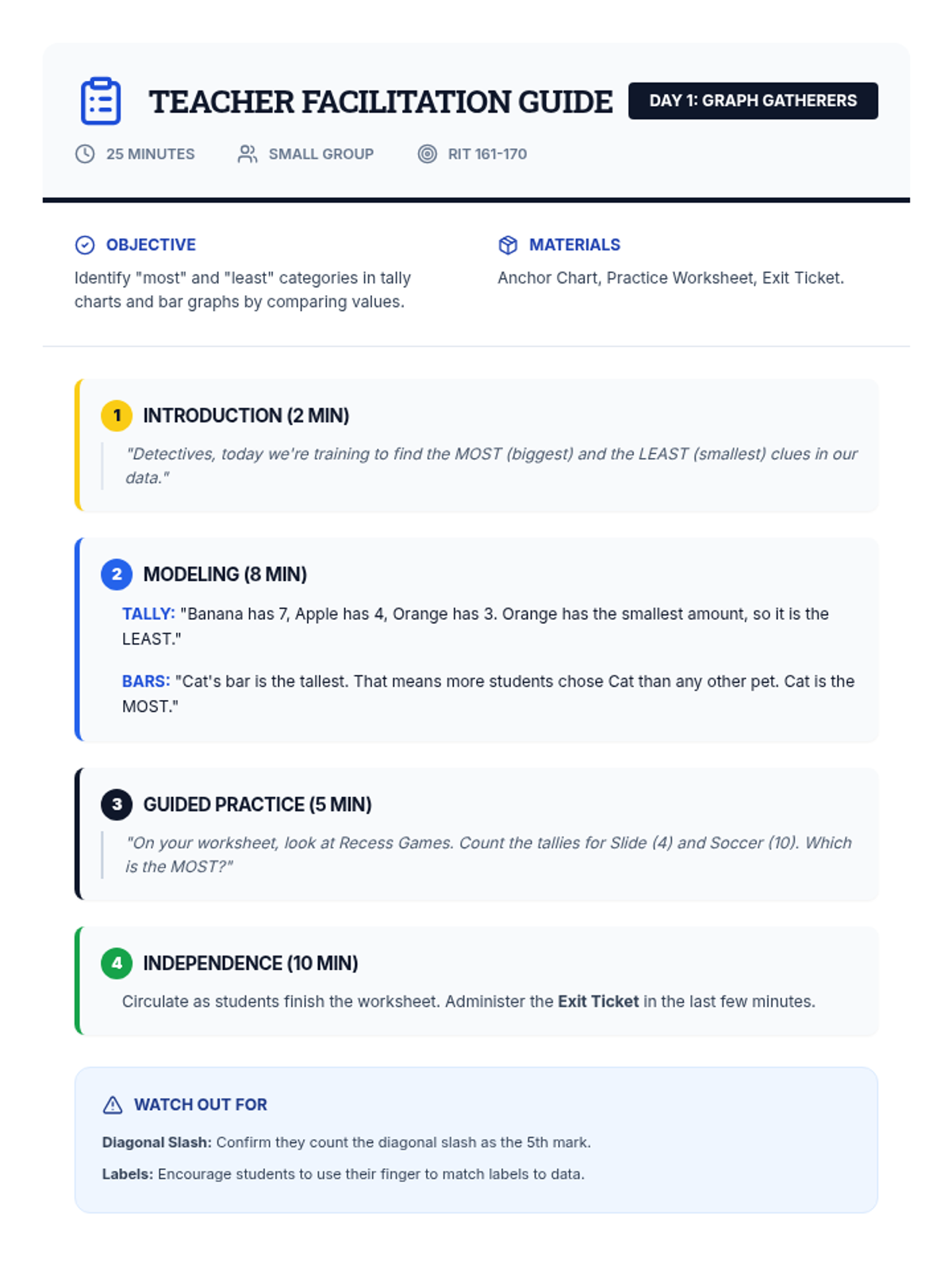
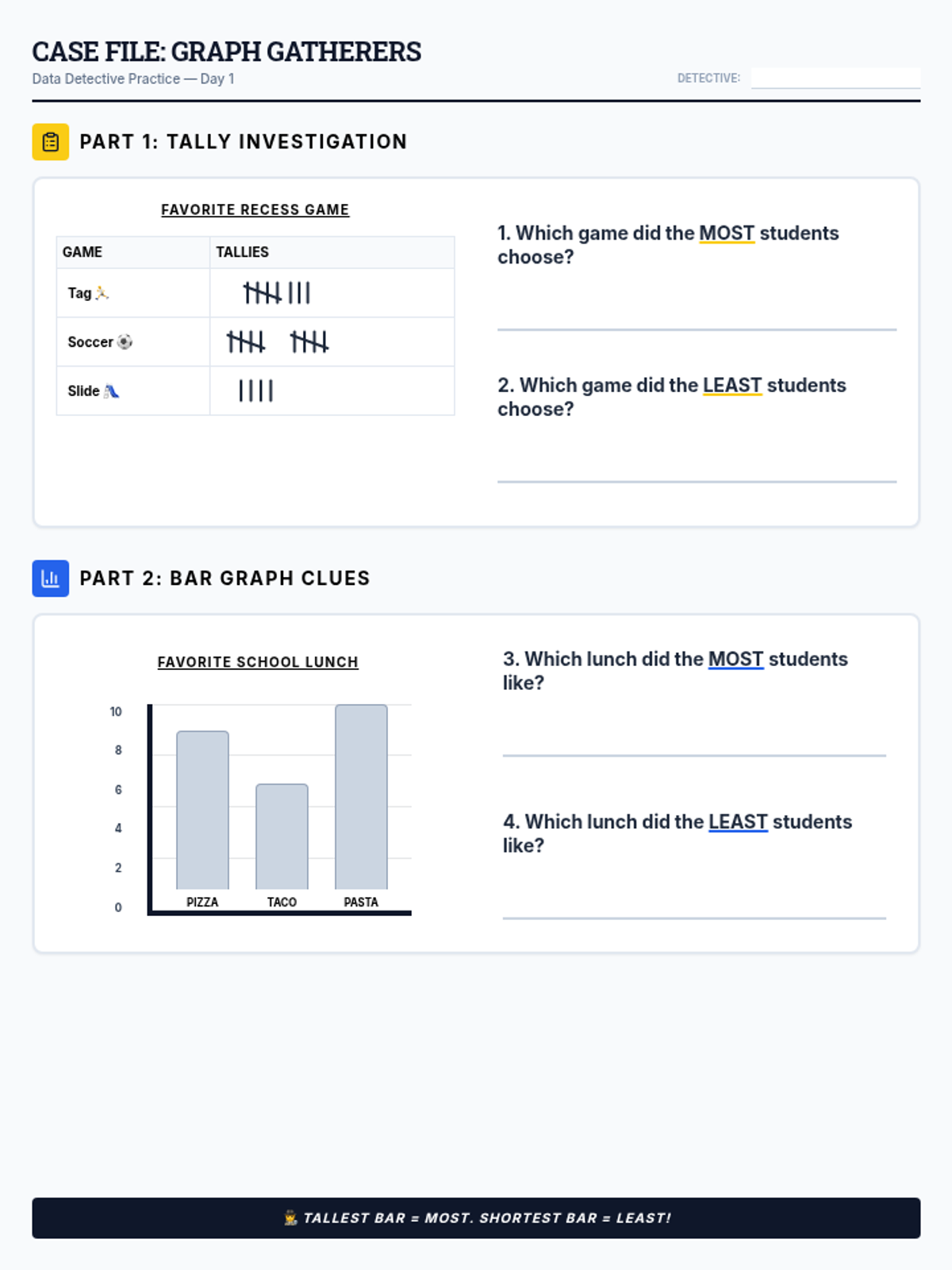
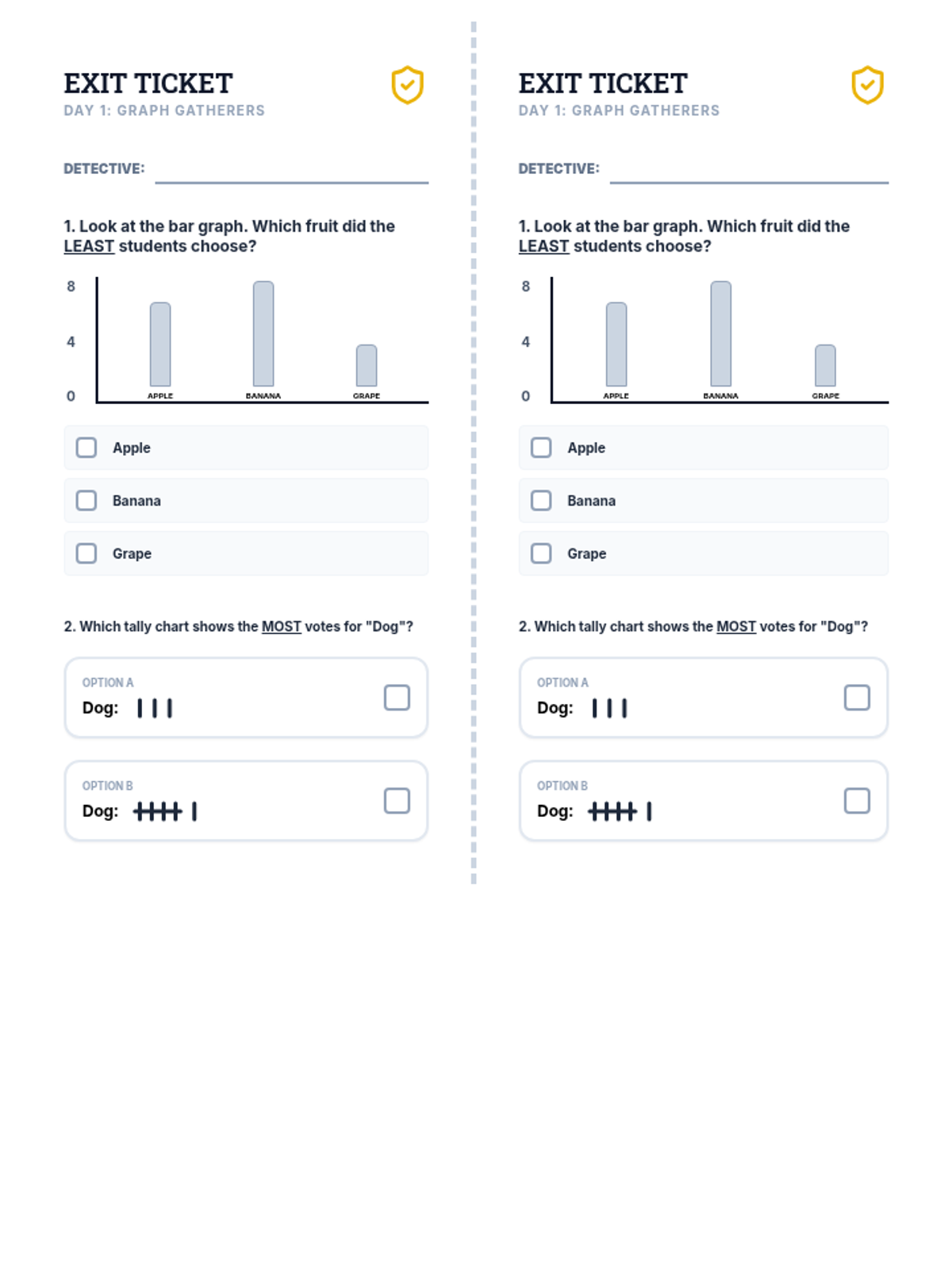
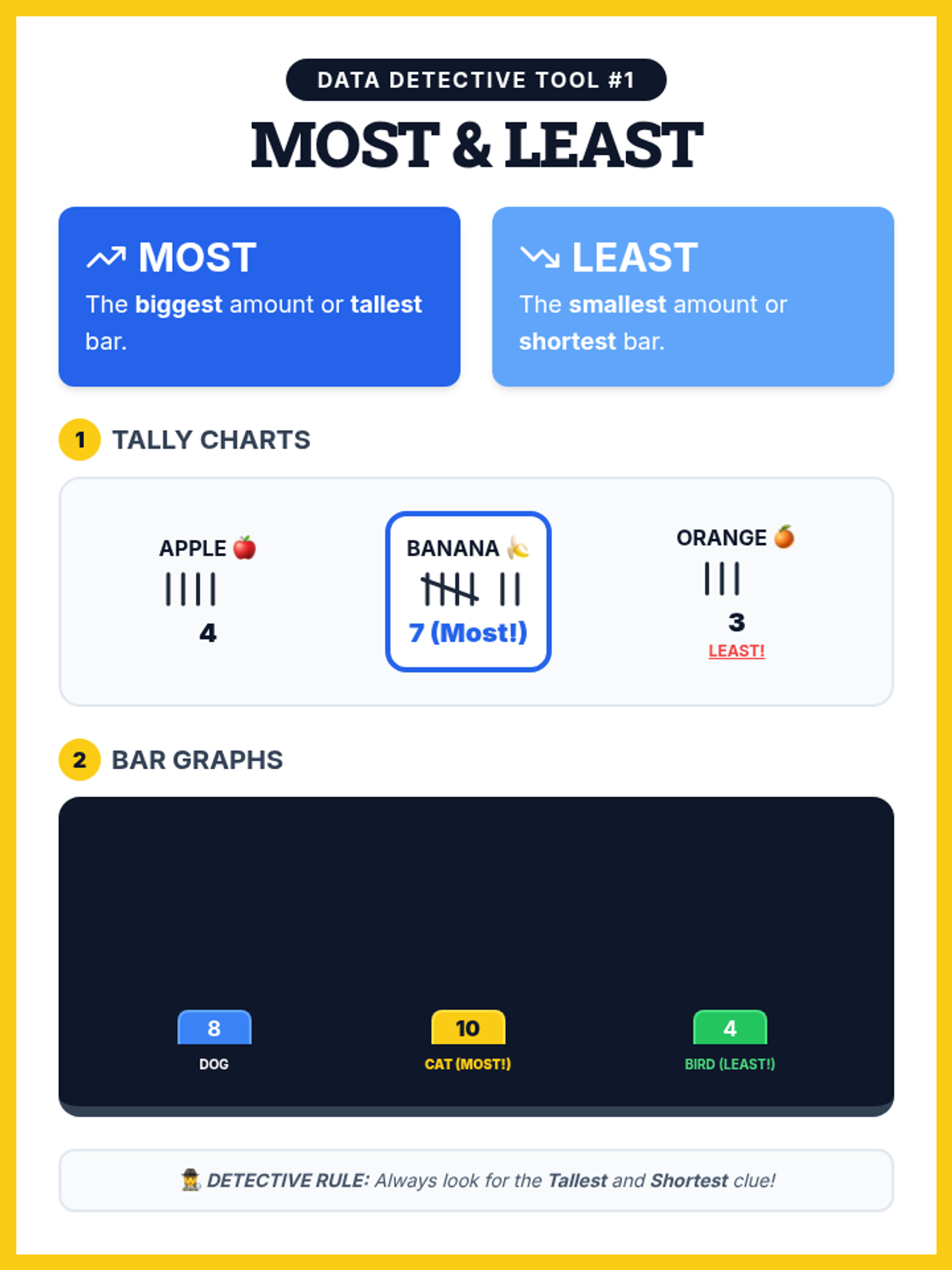
Focuses on reading and comparing data in tally charts and bar graphs. Students practice identifying the 'most' and 'least' categories to meet RIT 161-170 standards.
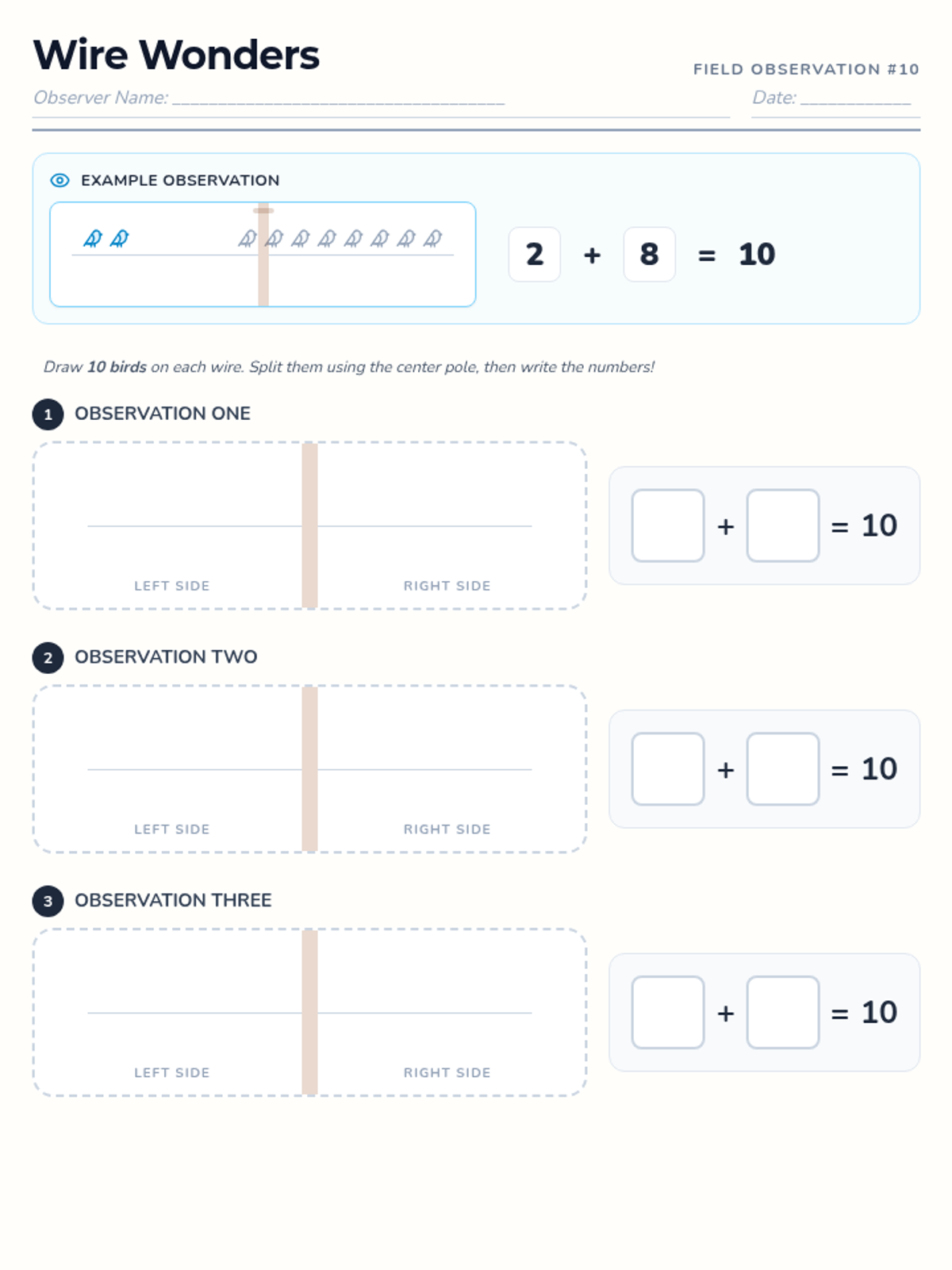
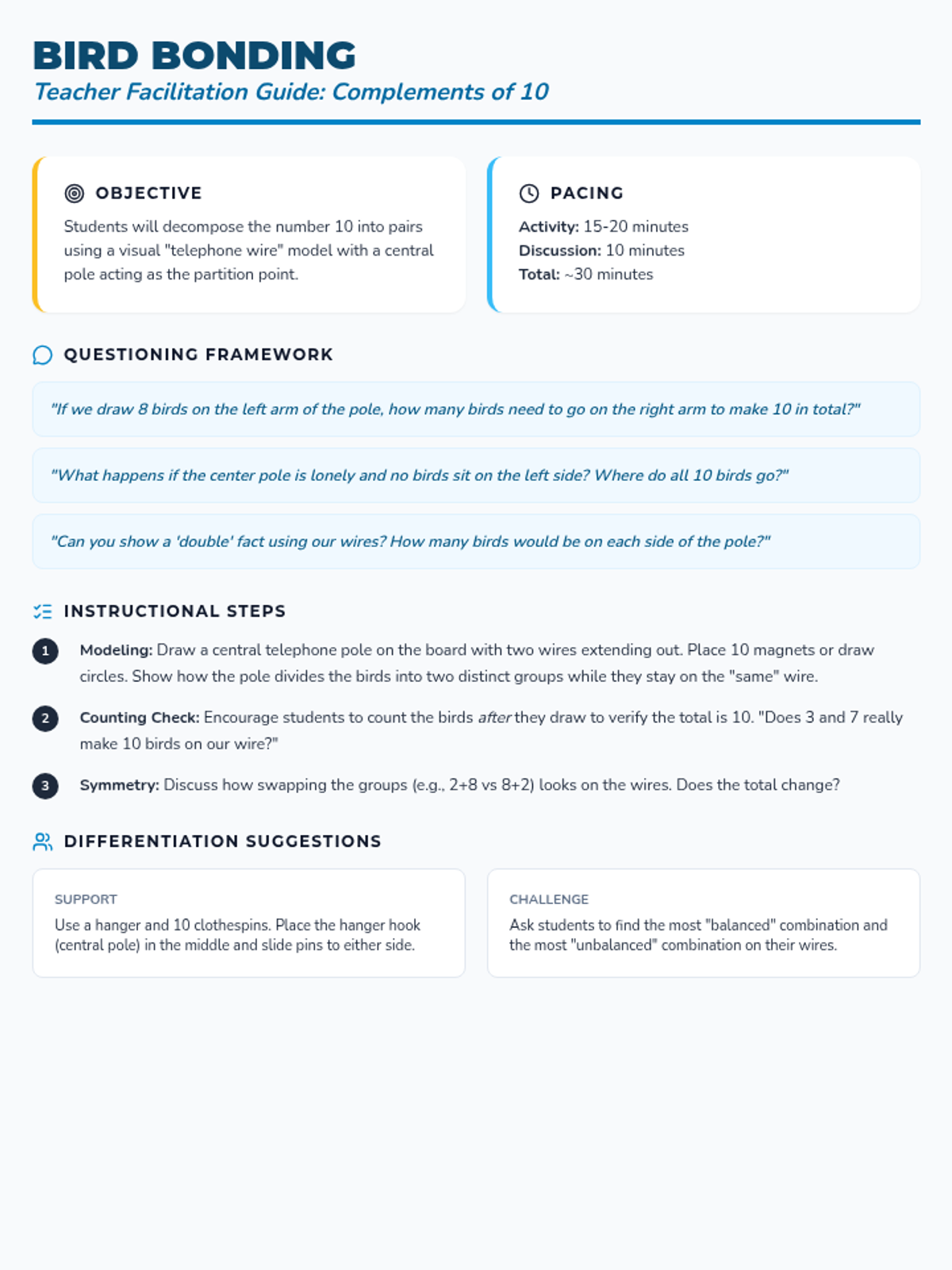
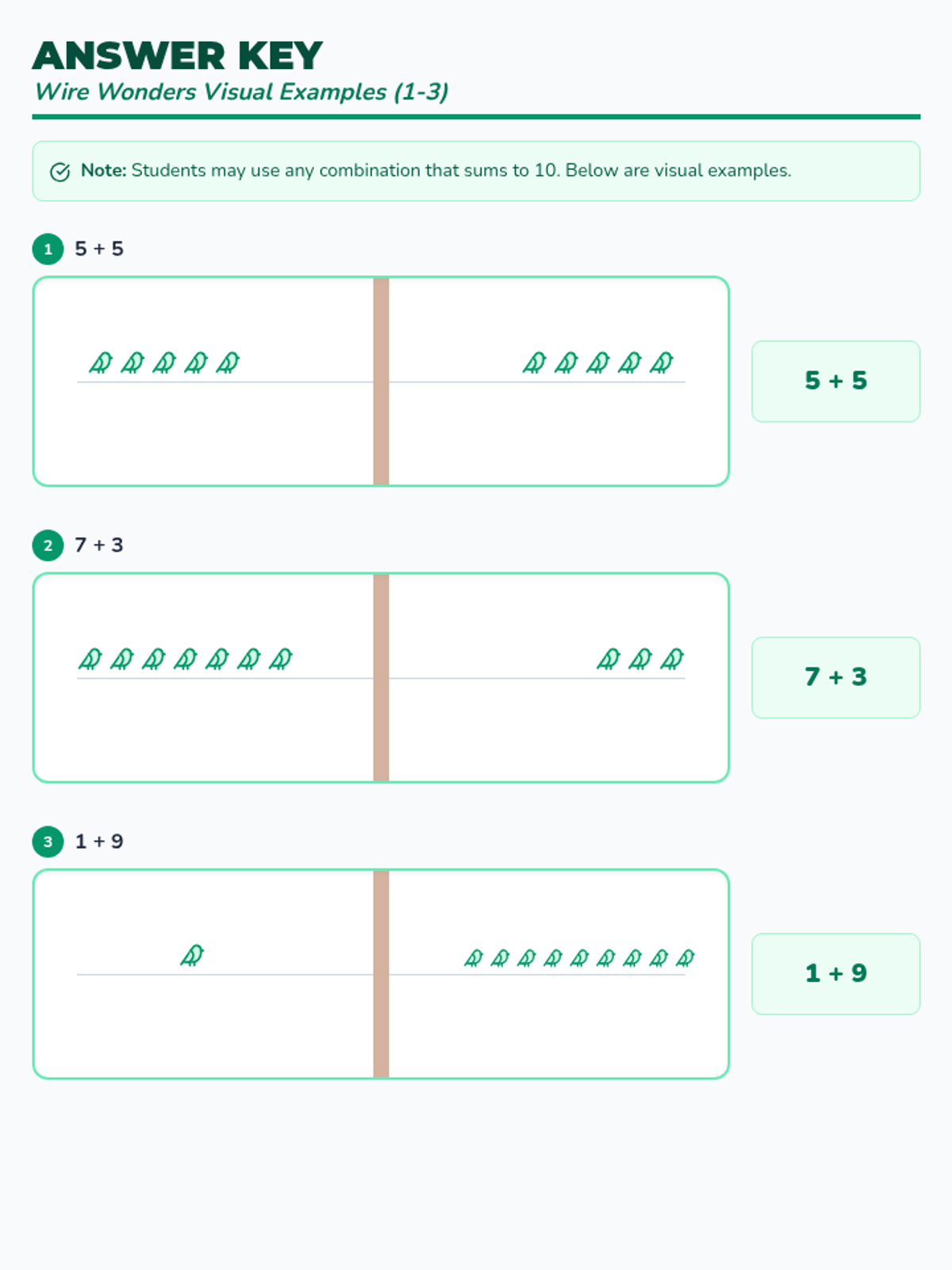
A foundational numeracy lesson where students use a telephone wire visual to explore and record combinations of numbers that sum to ten.
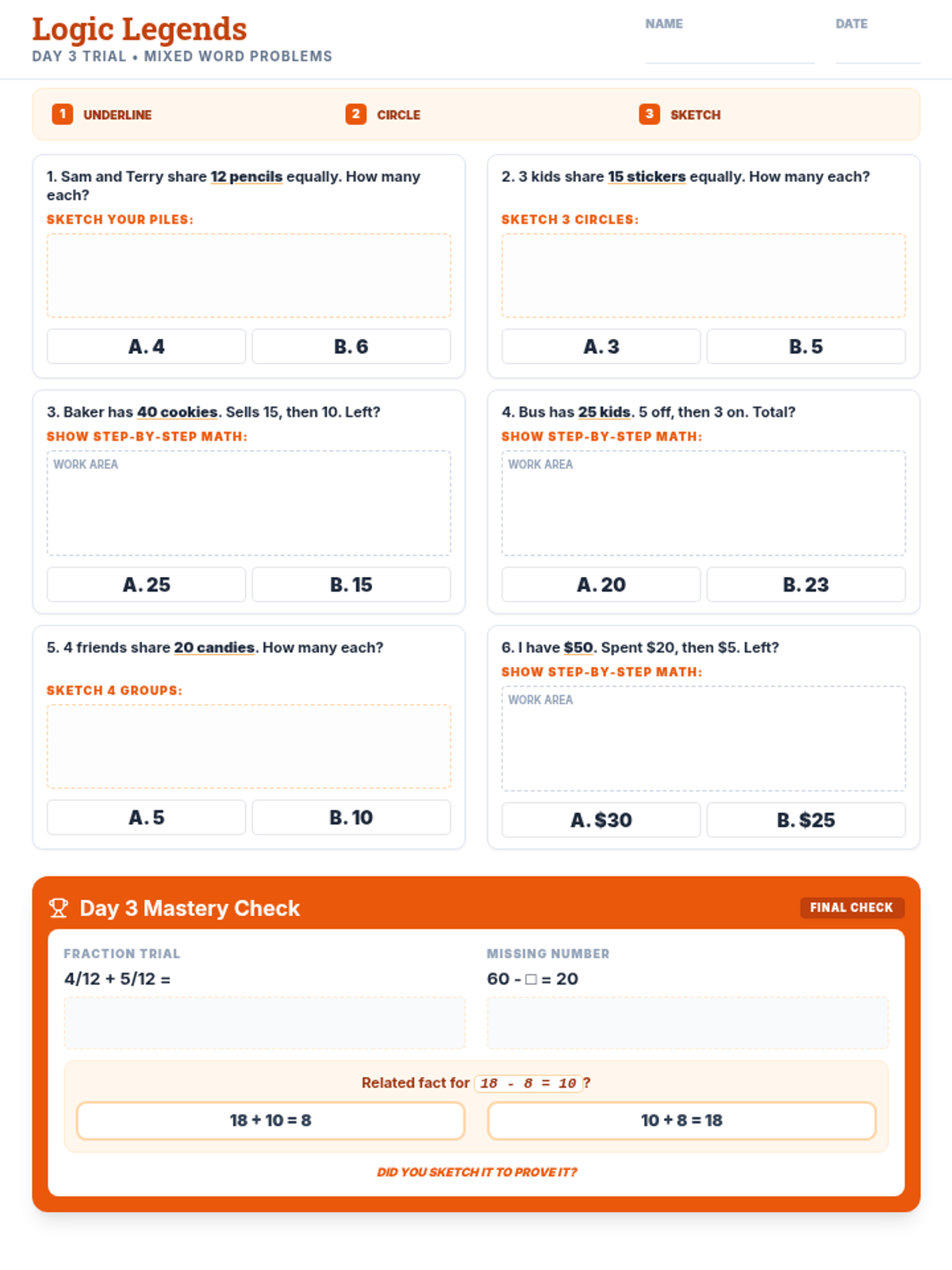
Students apply computation skills to solve real-world word problems involving equal groups and multi-step addition and subtraction.
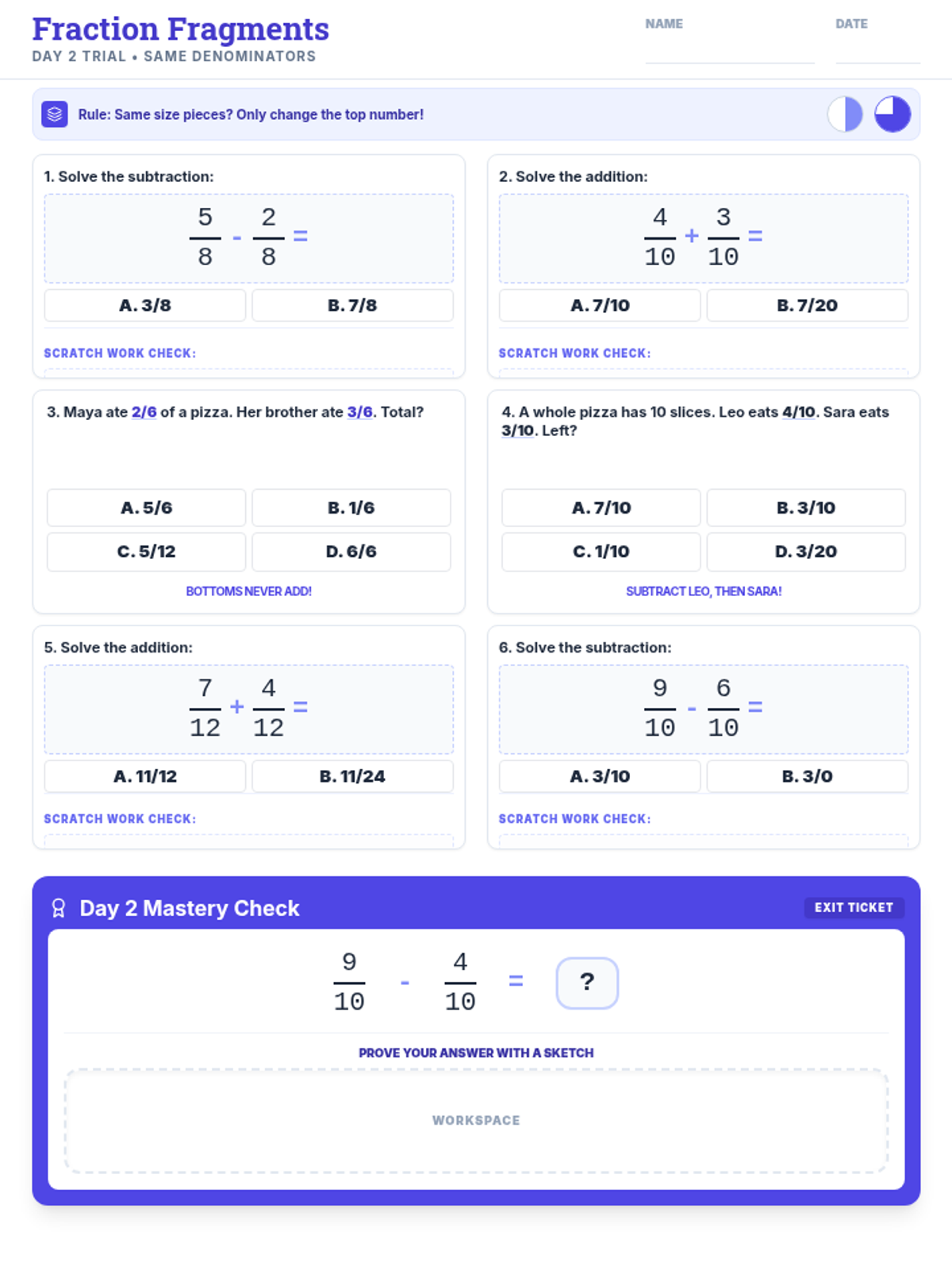
Students explore adding and subtracting fractions with common denominators using visual models and symbolic computation.
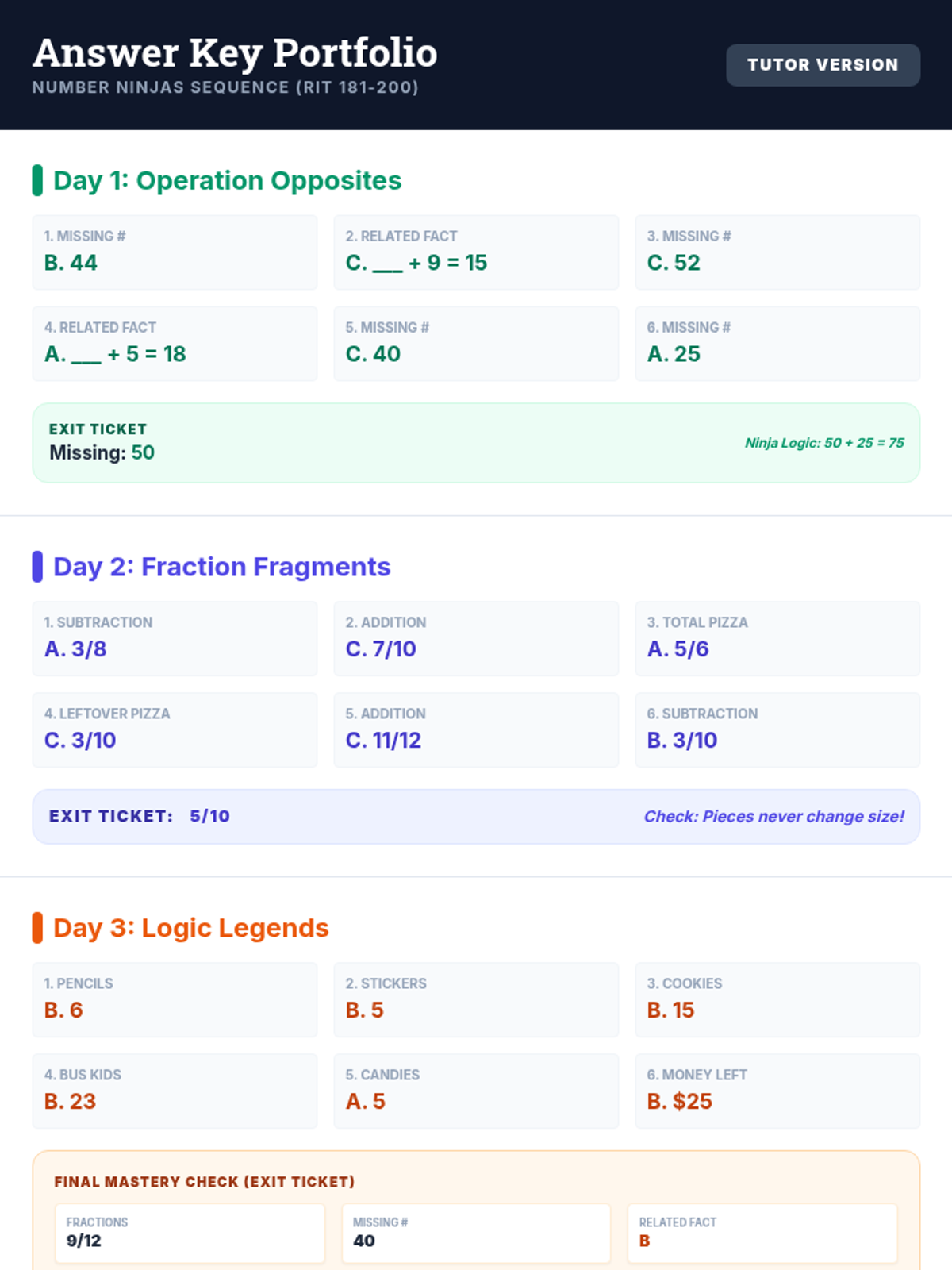
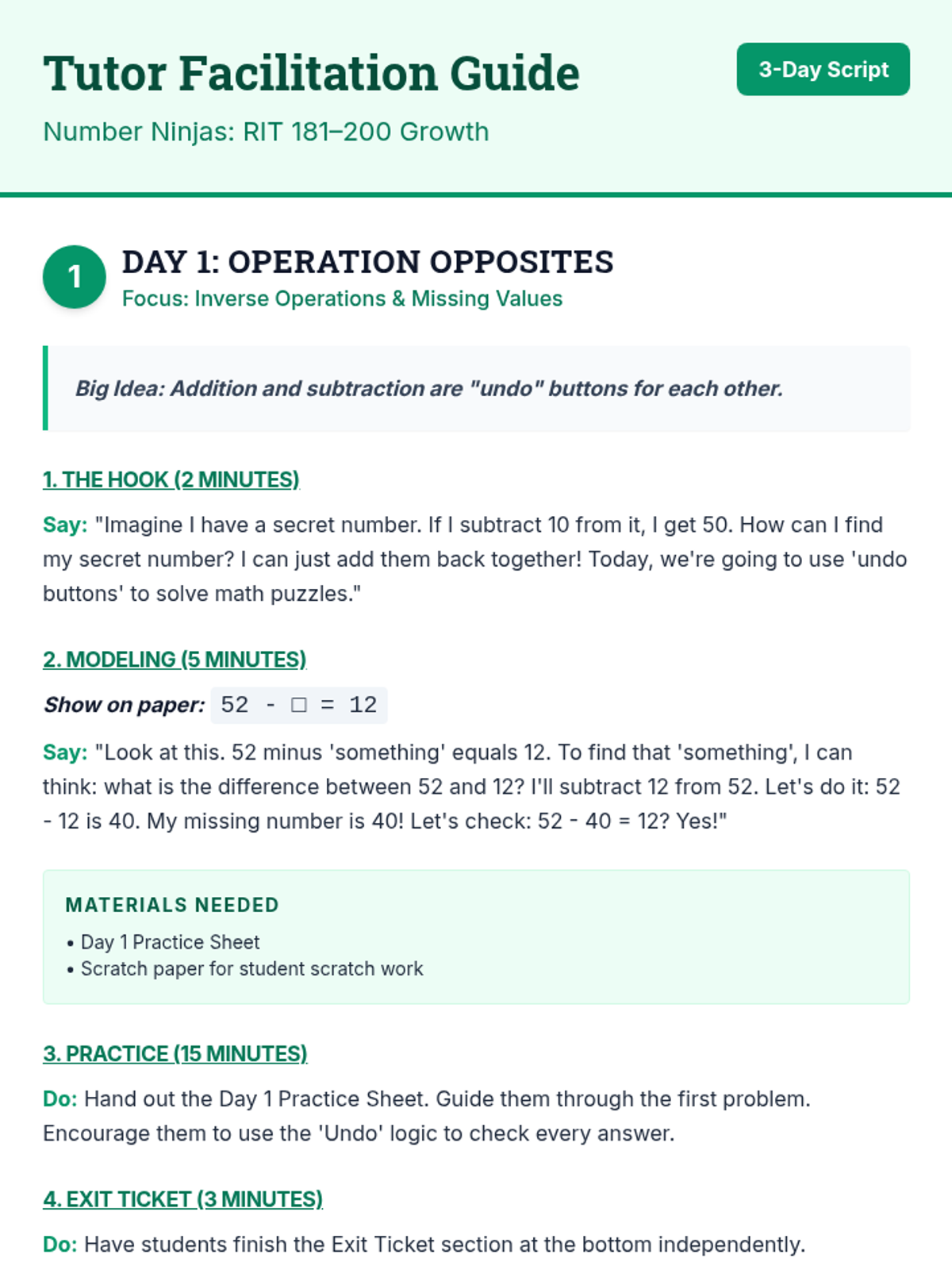
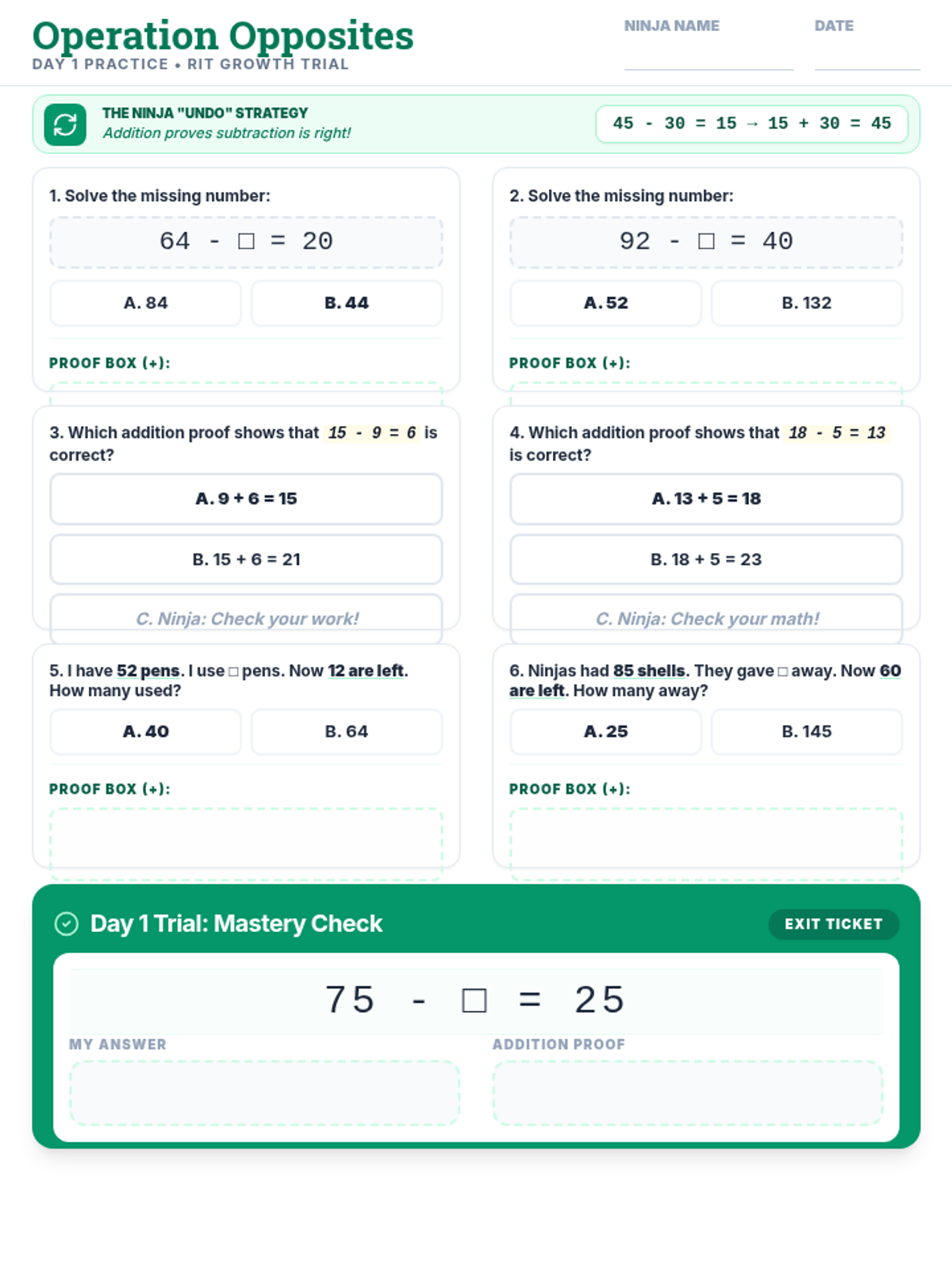
Students learn to use the relationship between addition and subtraction to solve for missing numbers and check their work, bridging the gap from simple subtraction to algebraic thinking.
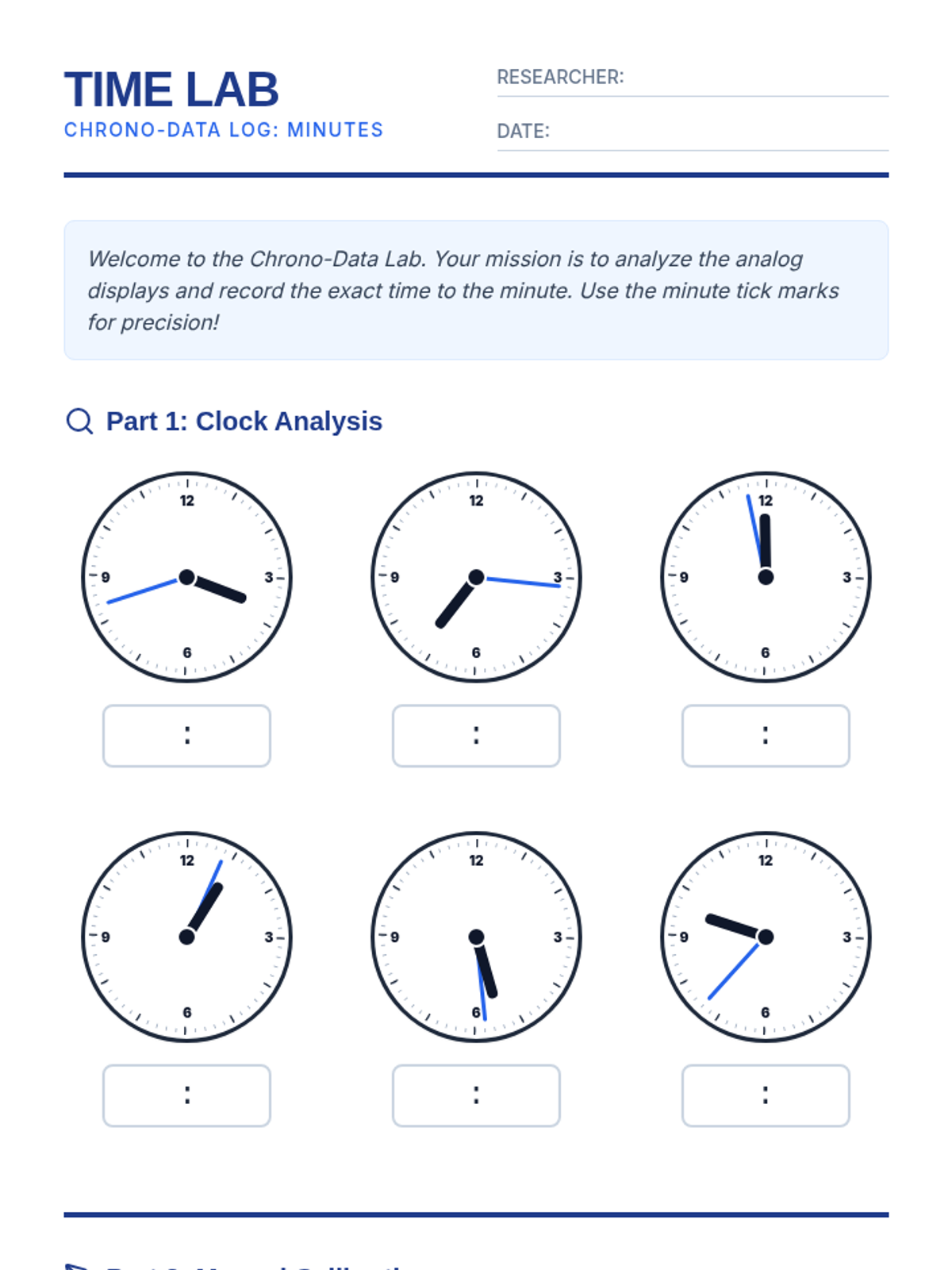
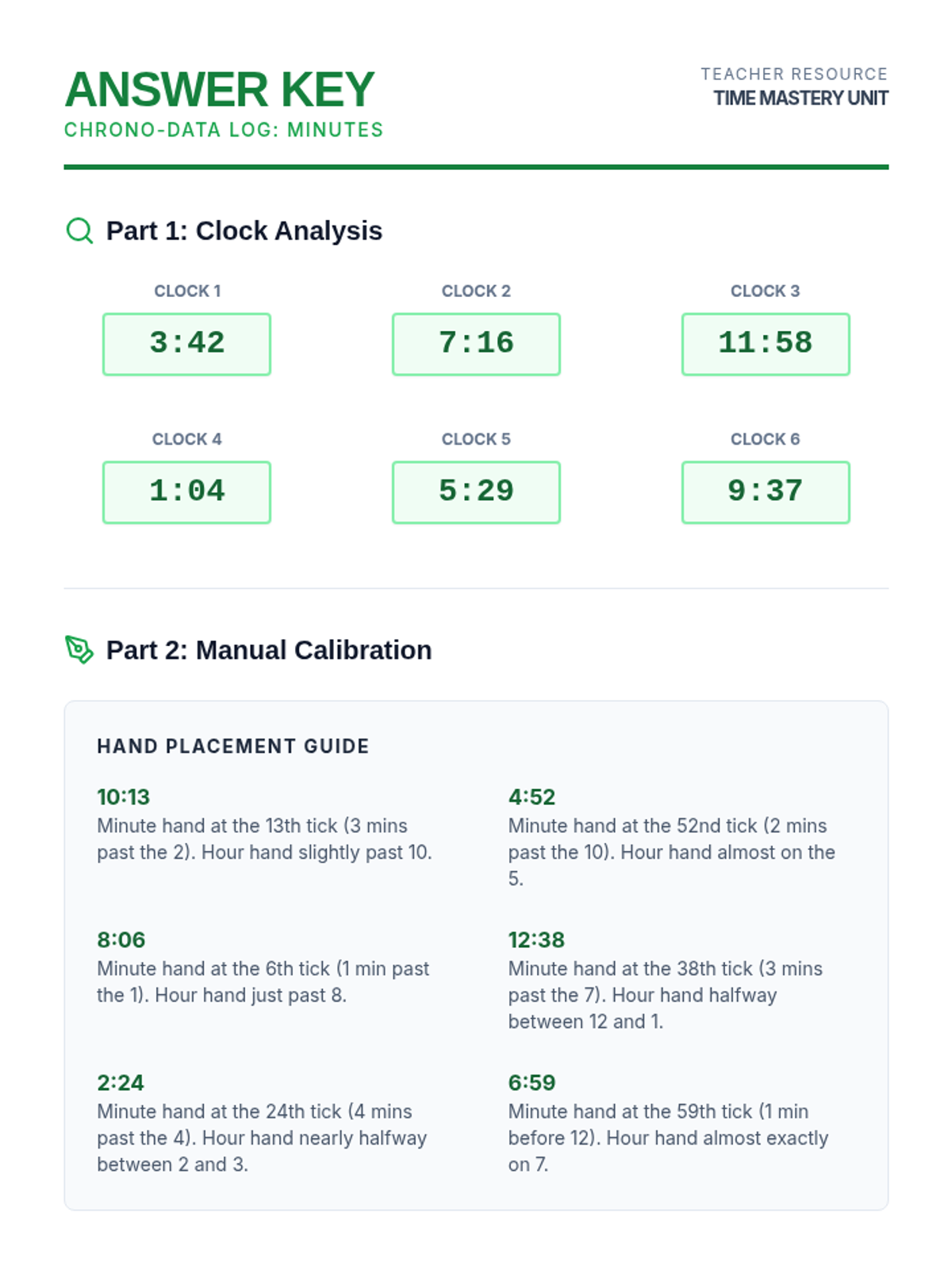
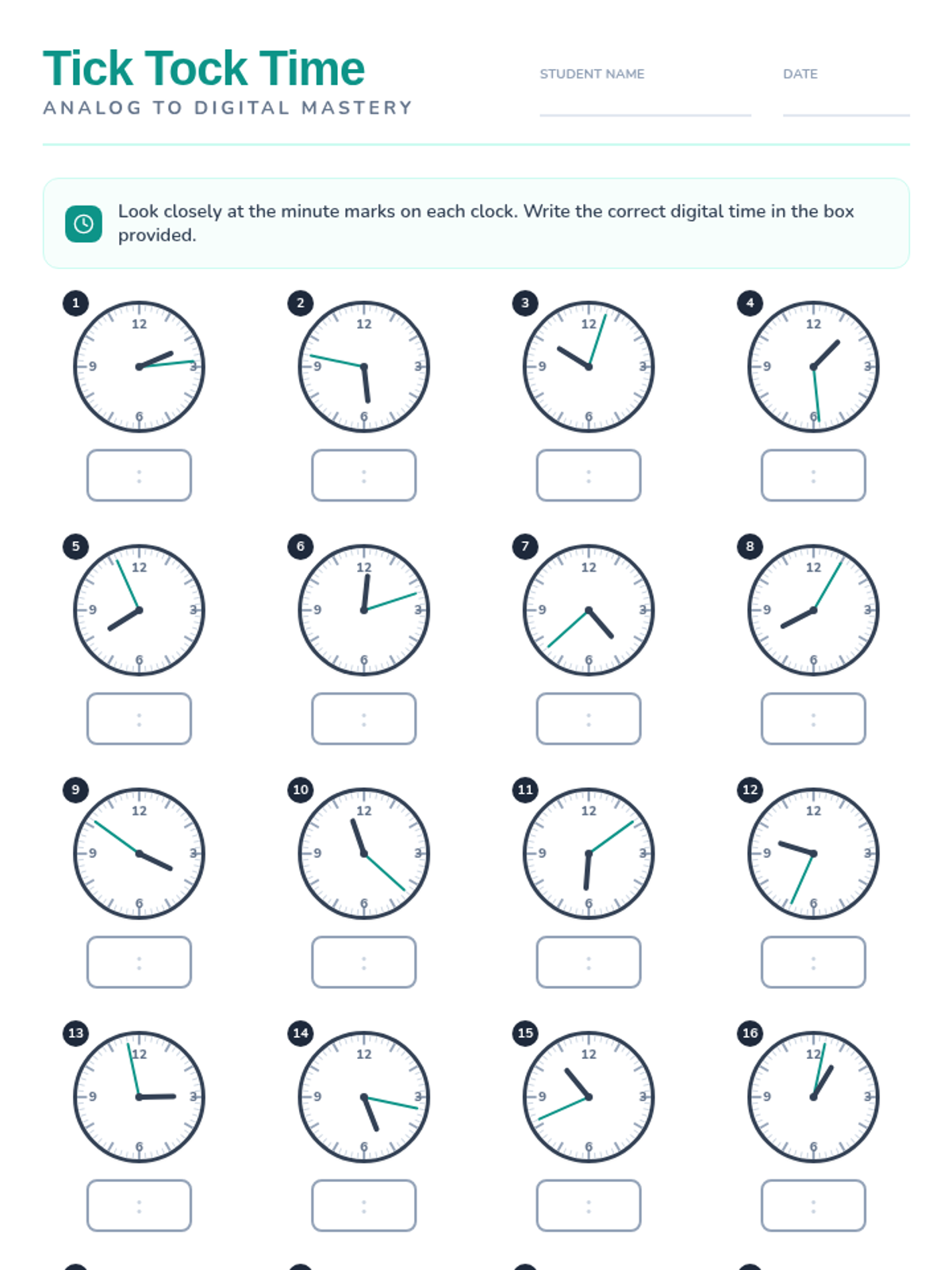
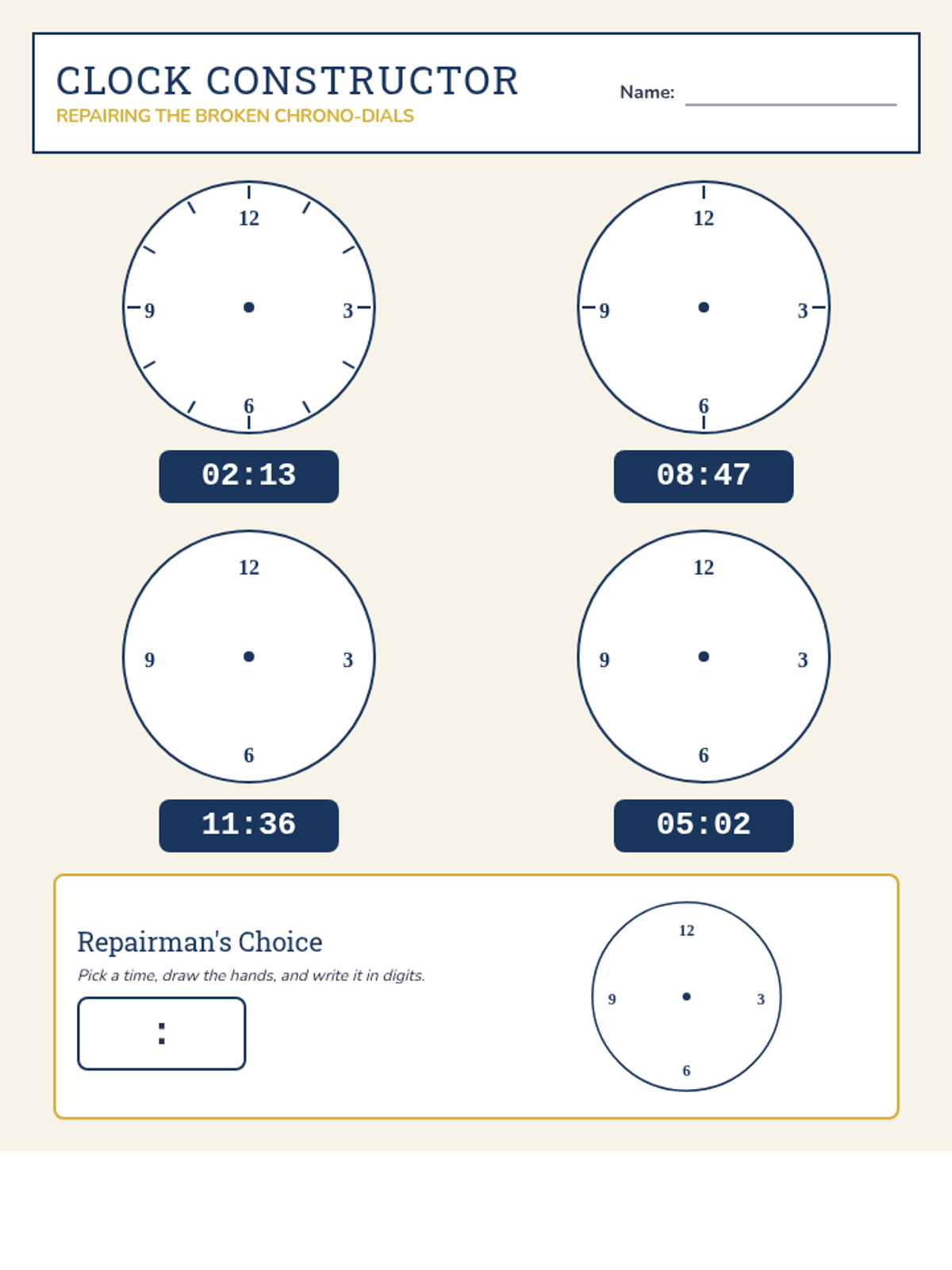
Students will master reading and drawing time on analog clocks to the exact minute through visual analysis and manual practice.
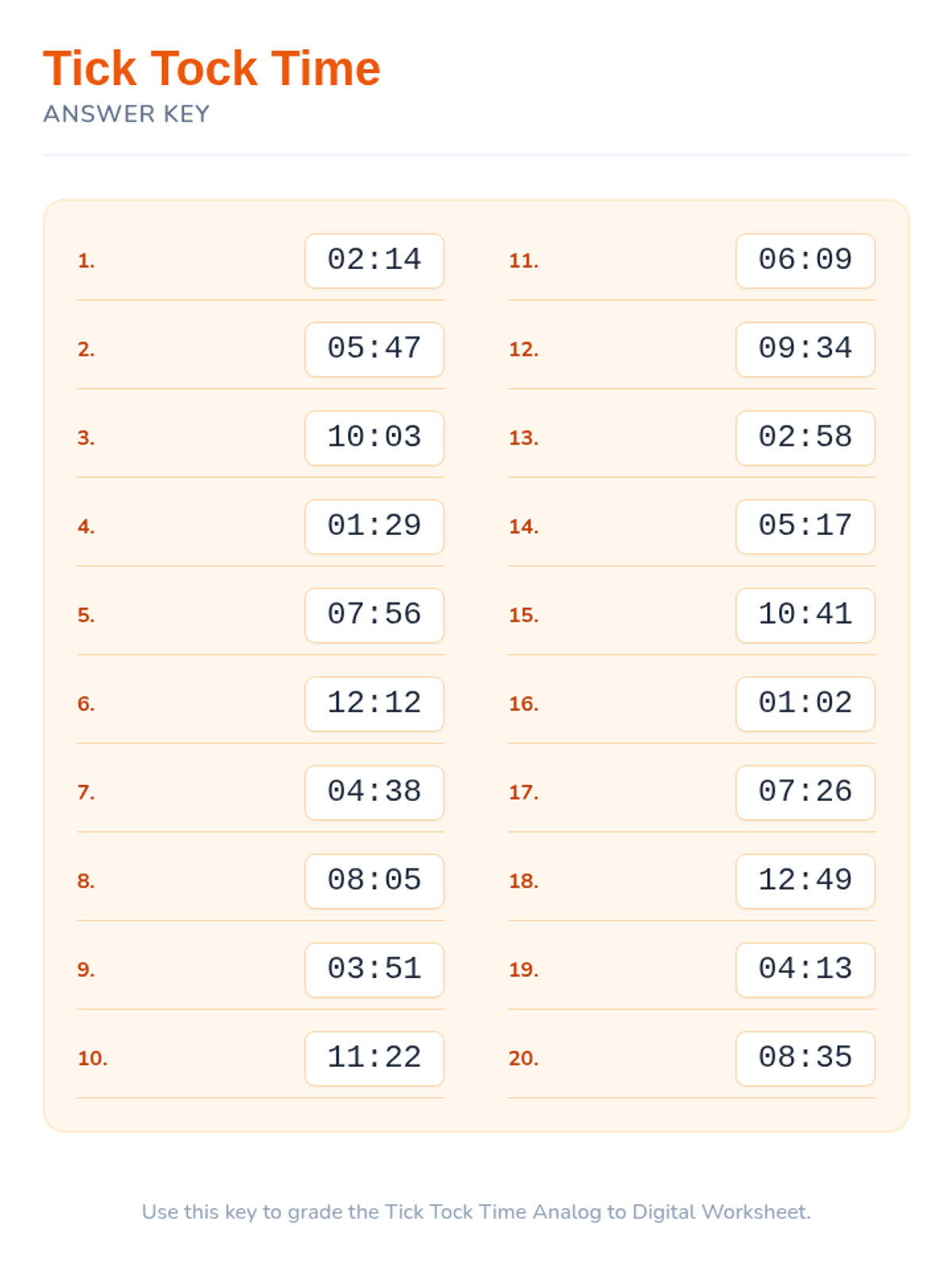
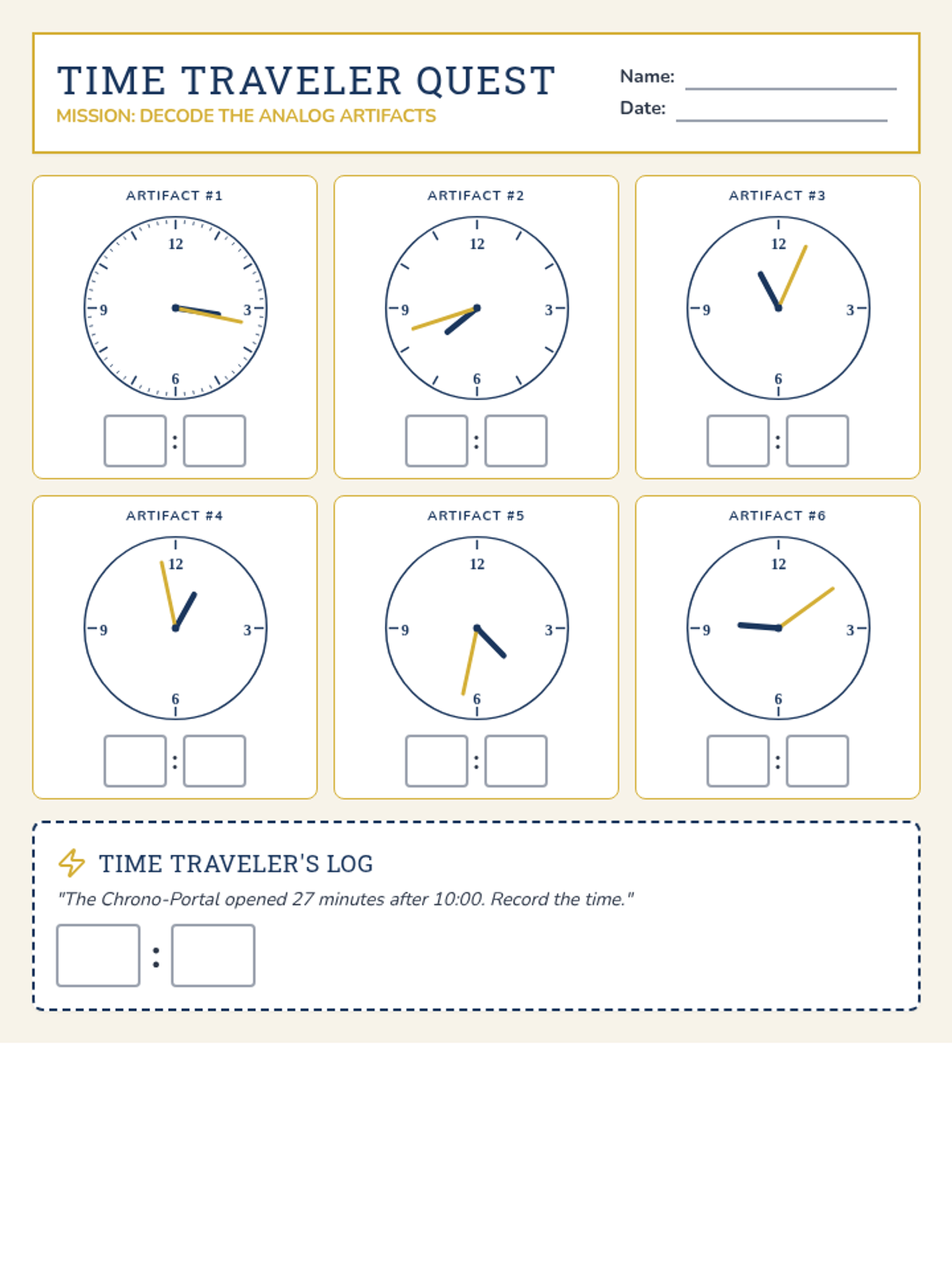
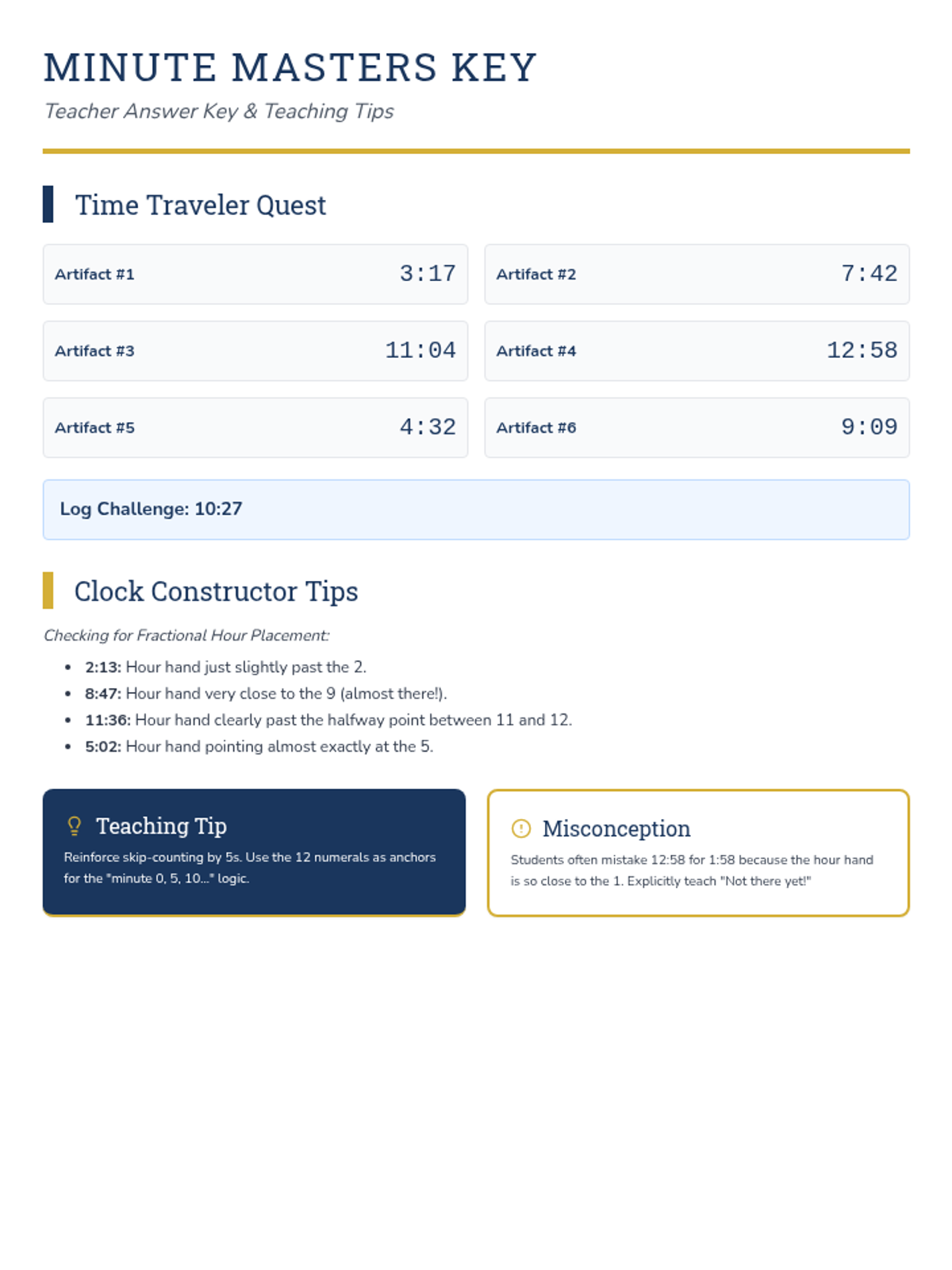
A focused lesson on reading analog clocks to the precise minute and converting them to digital format.
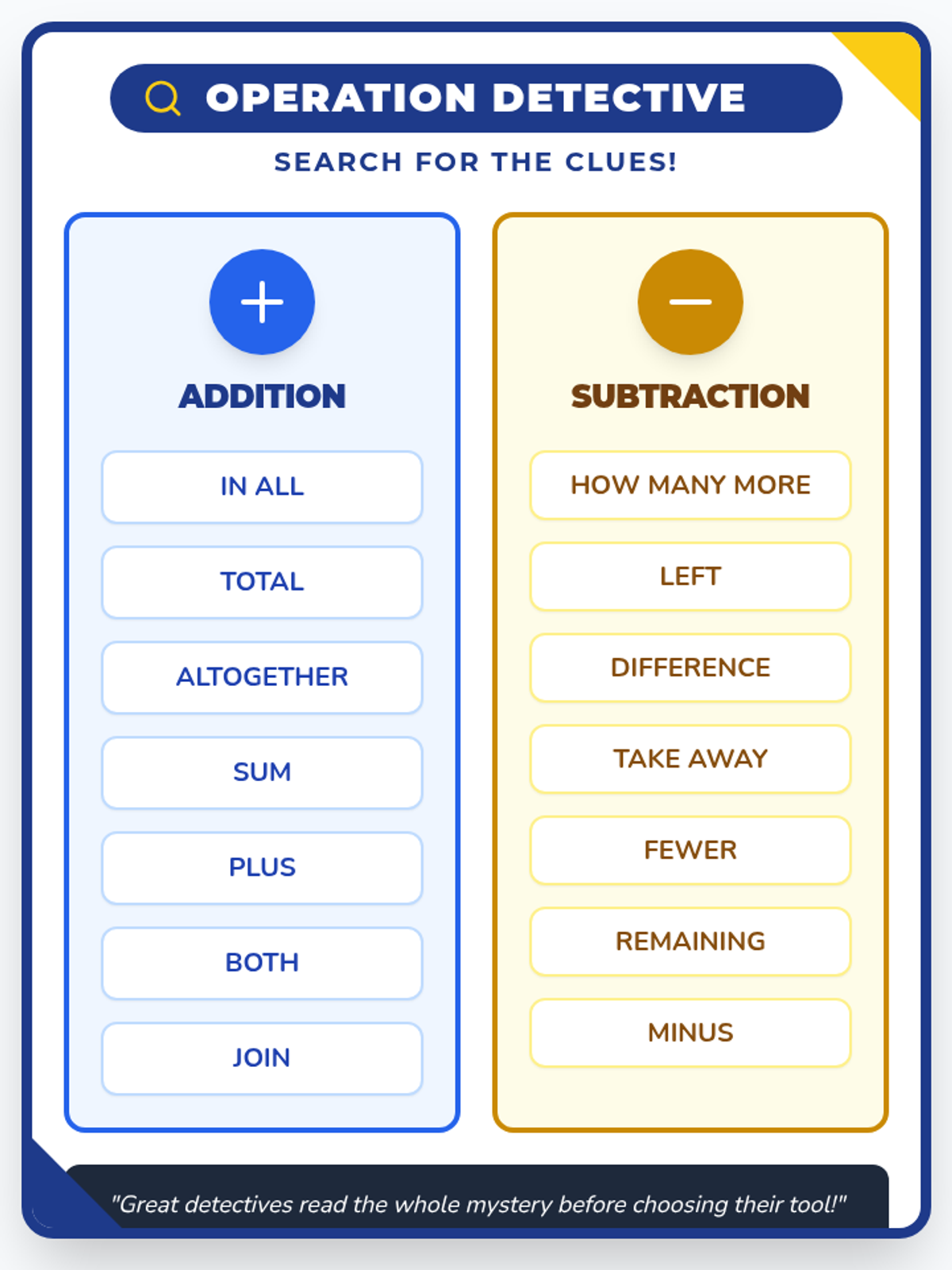
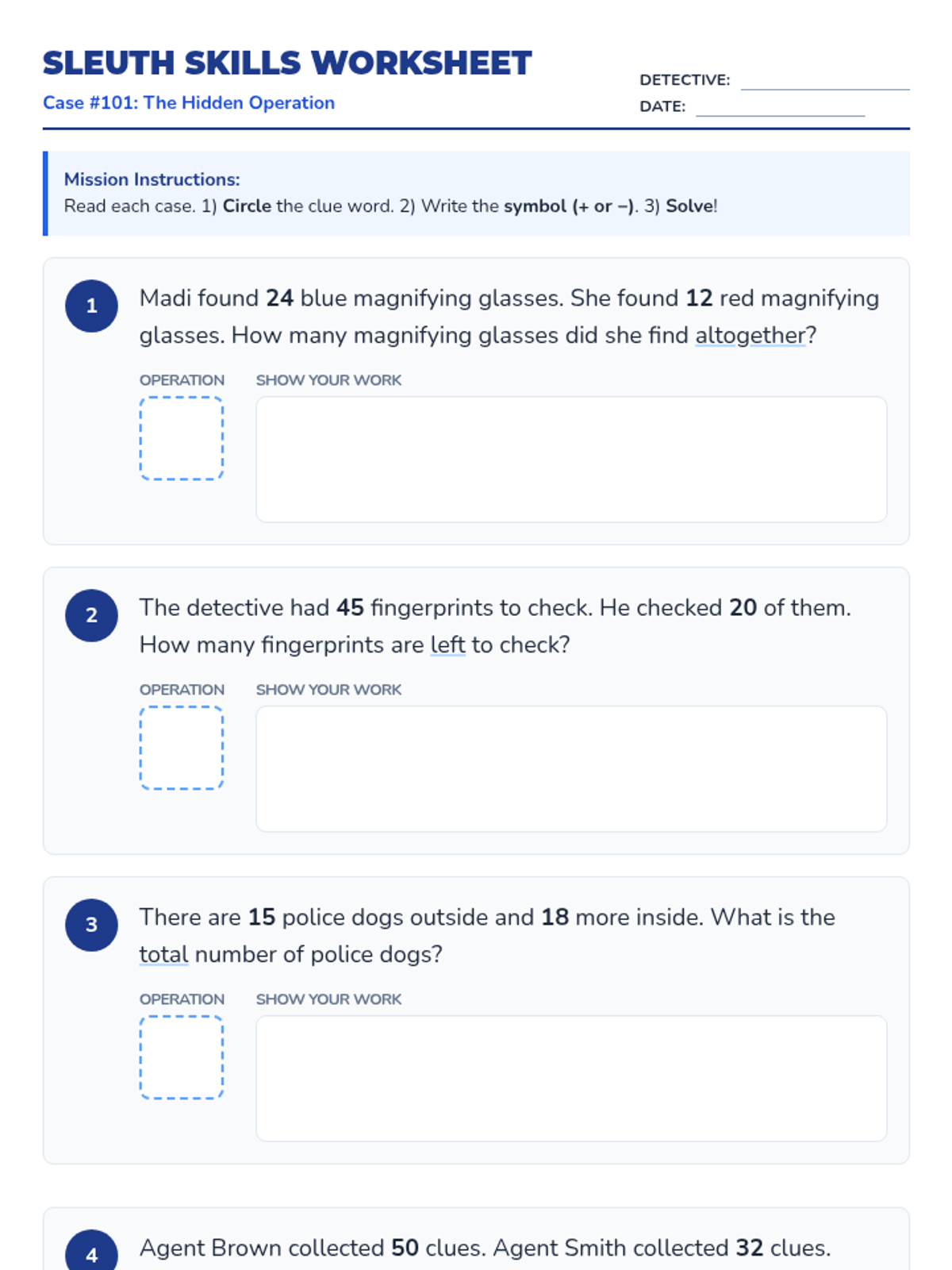
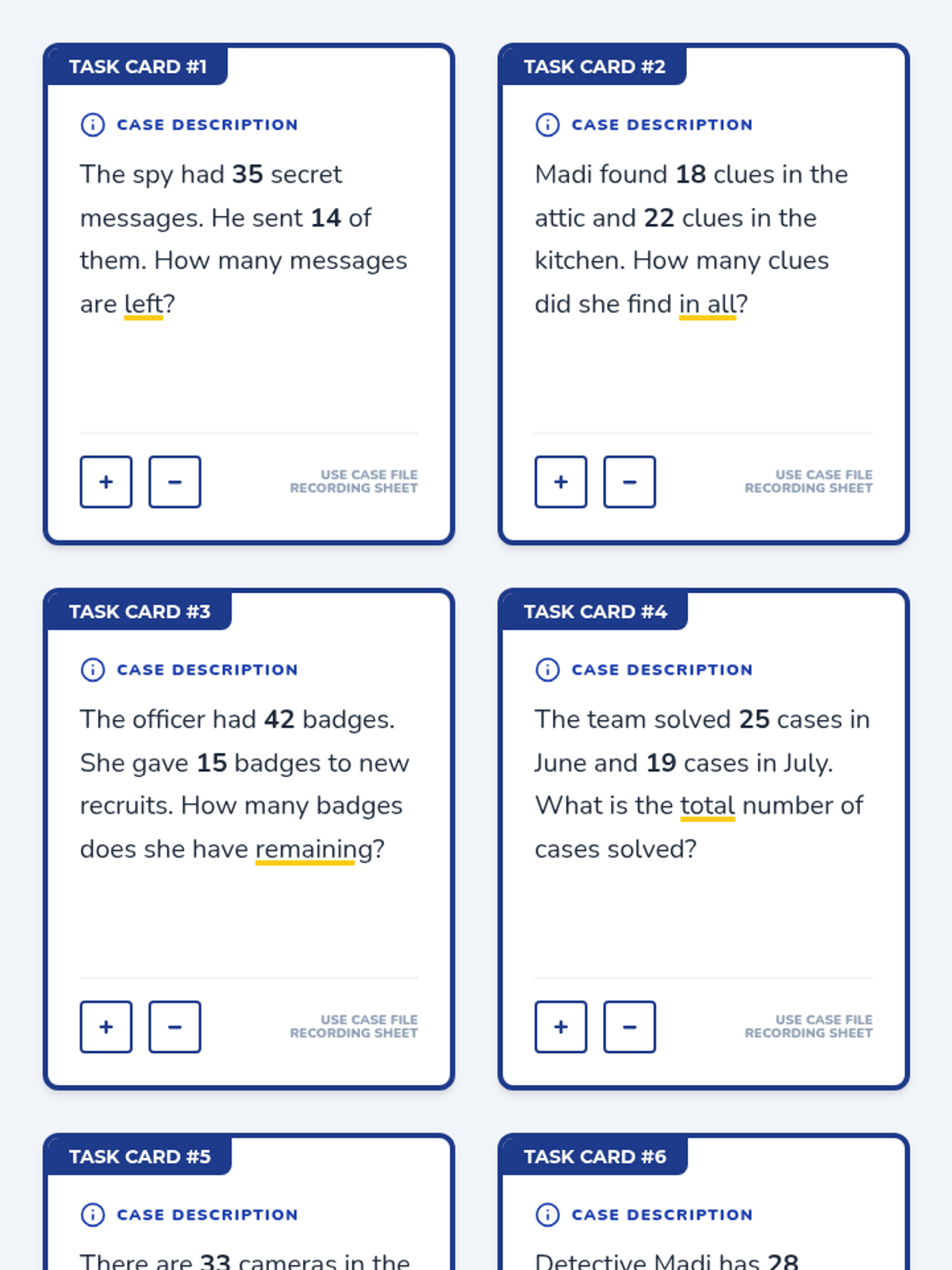
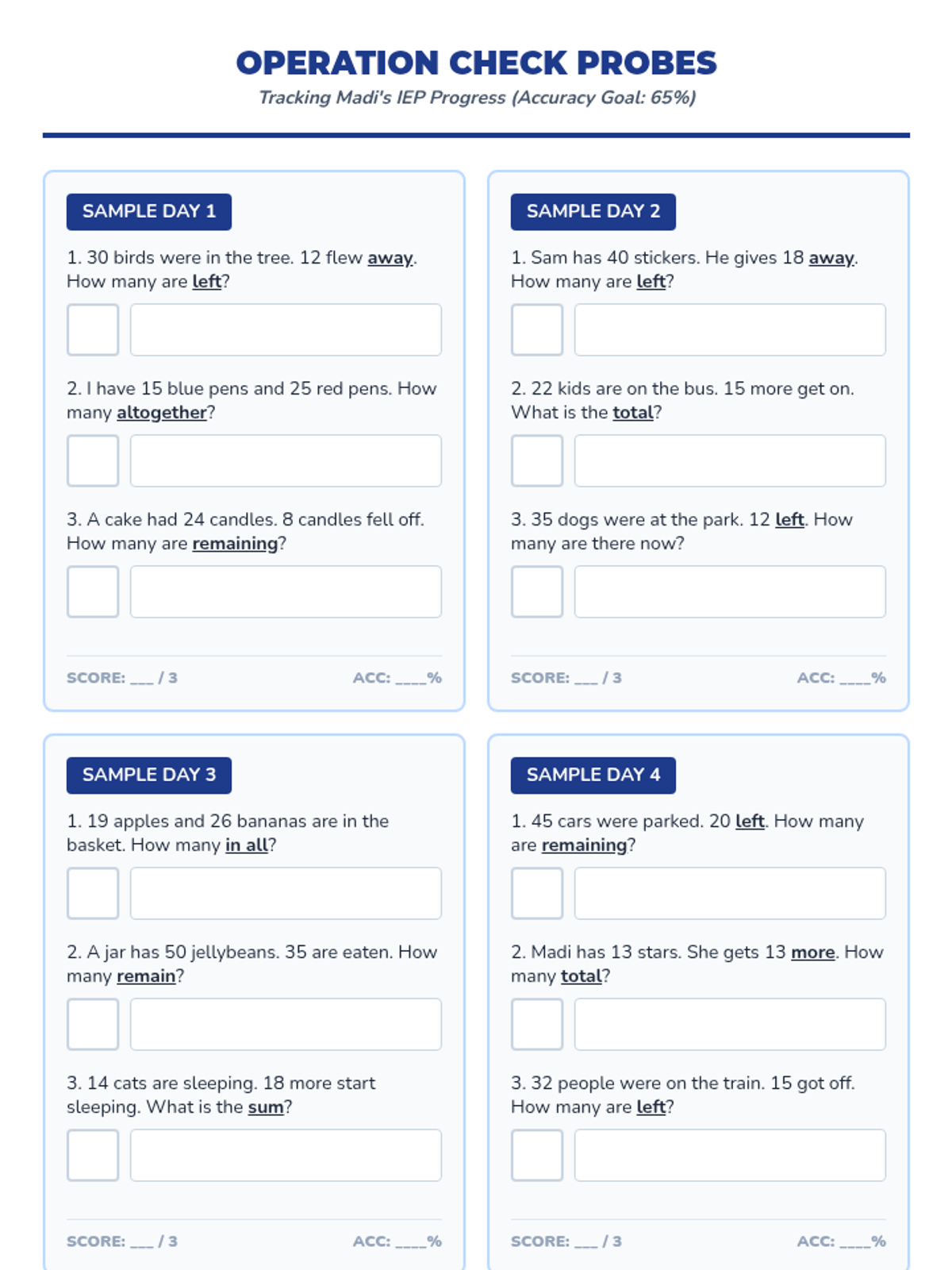
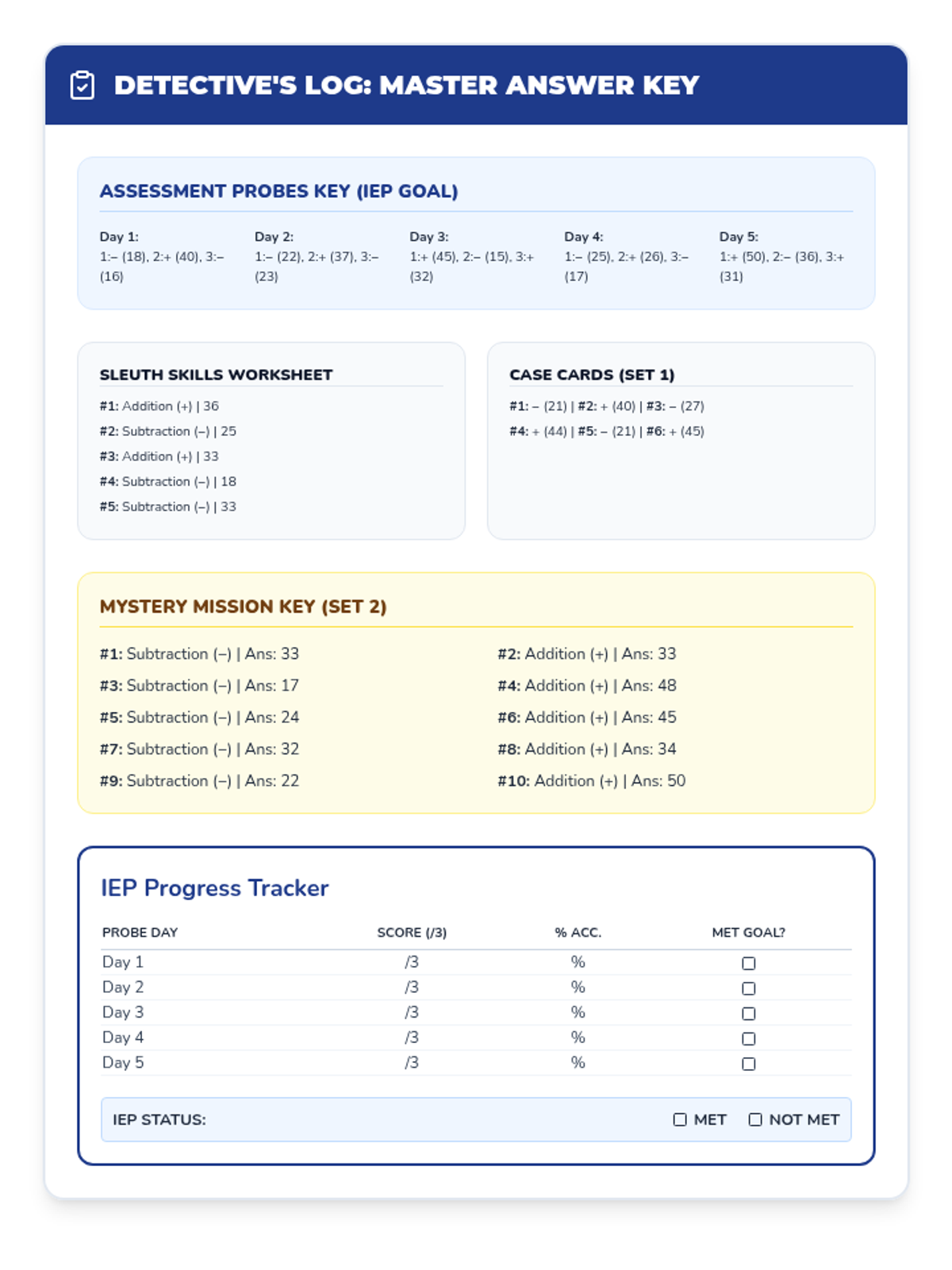
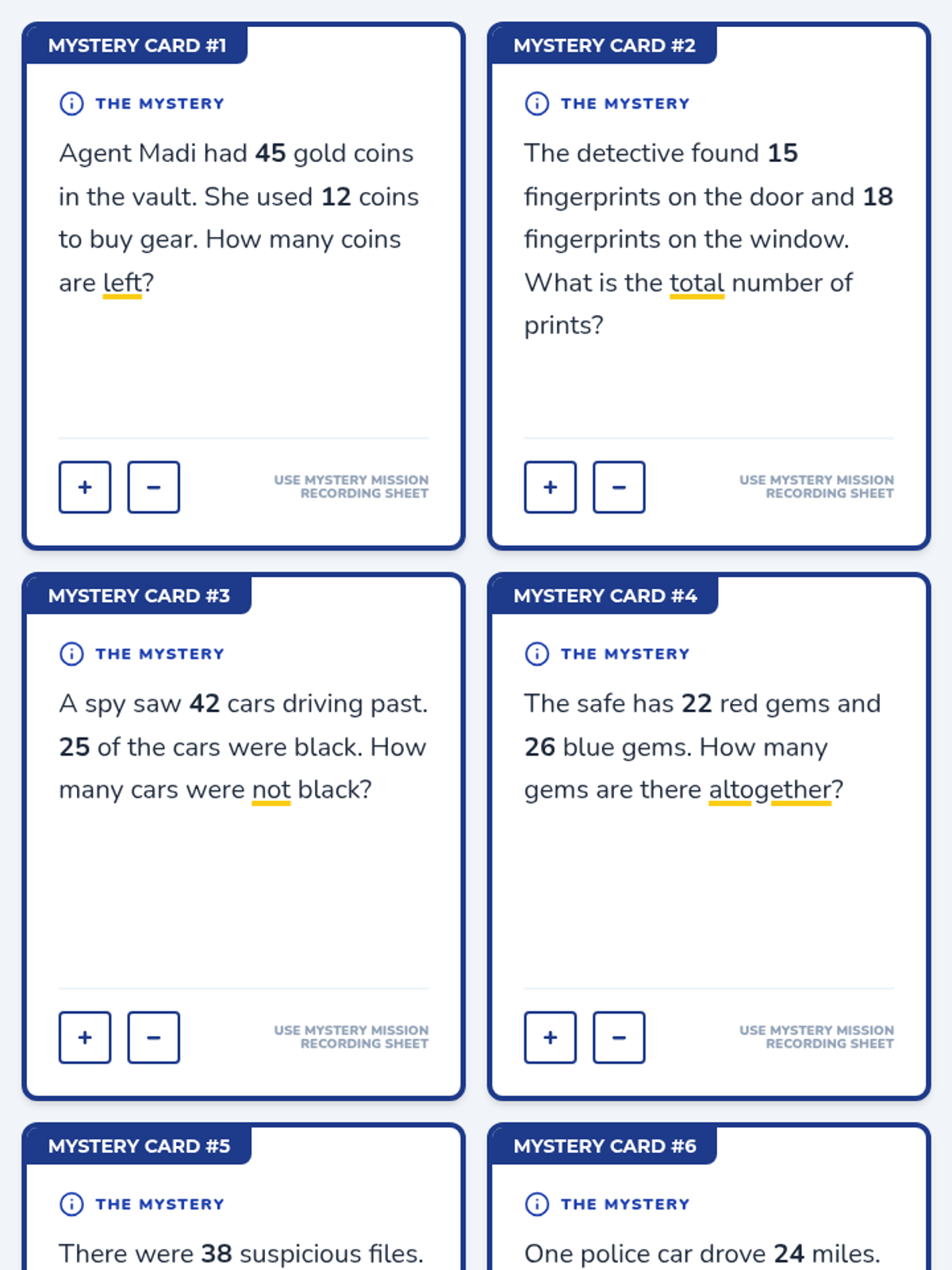
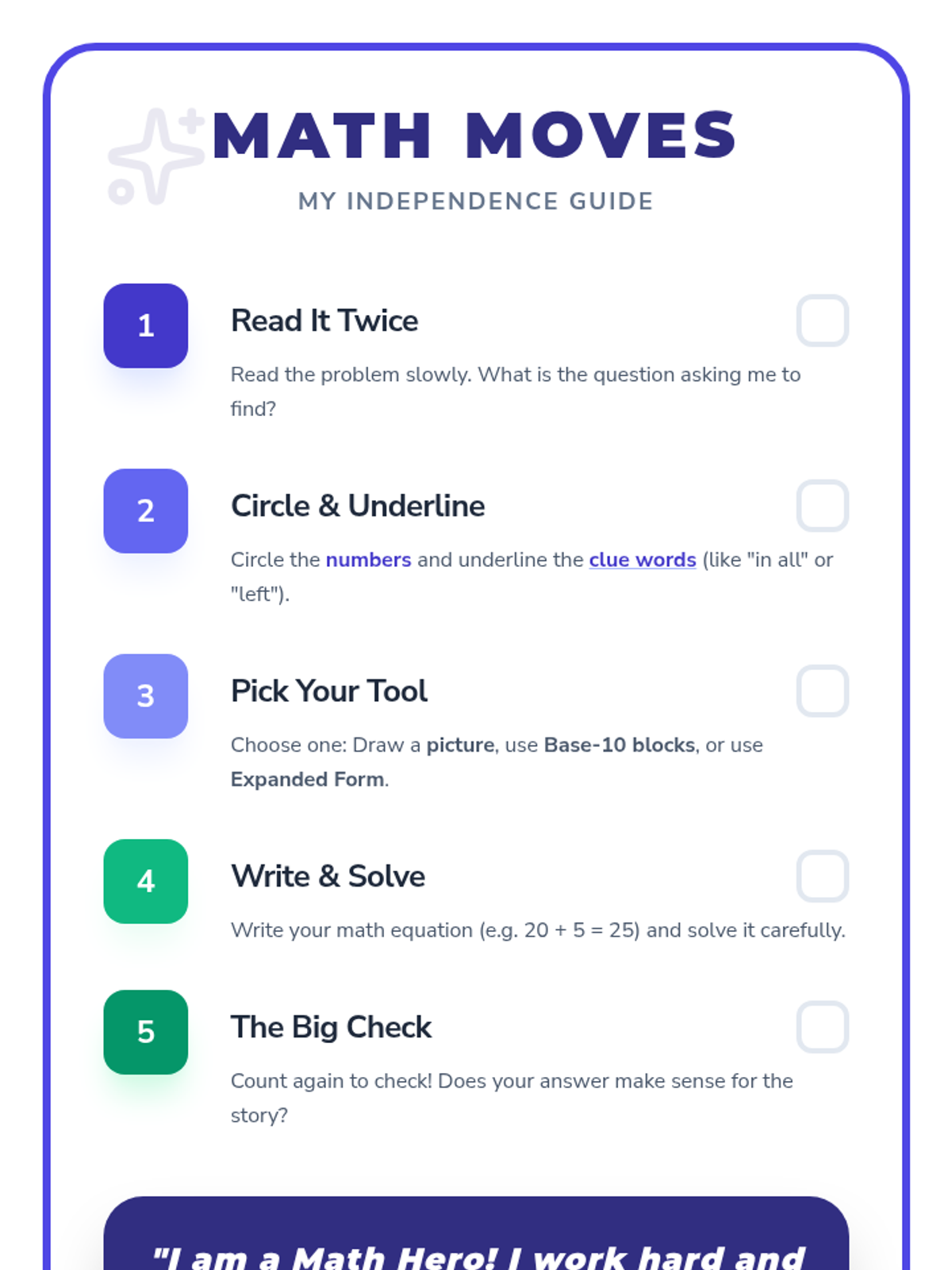
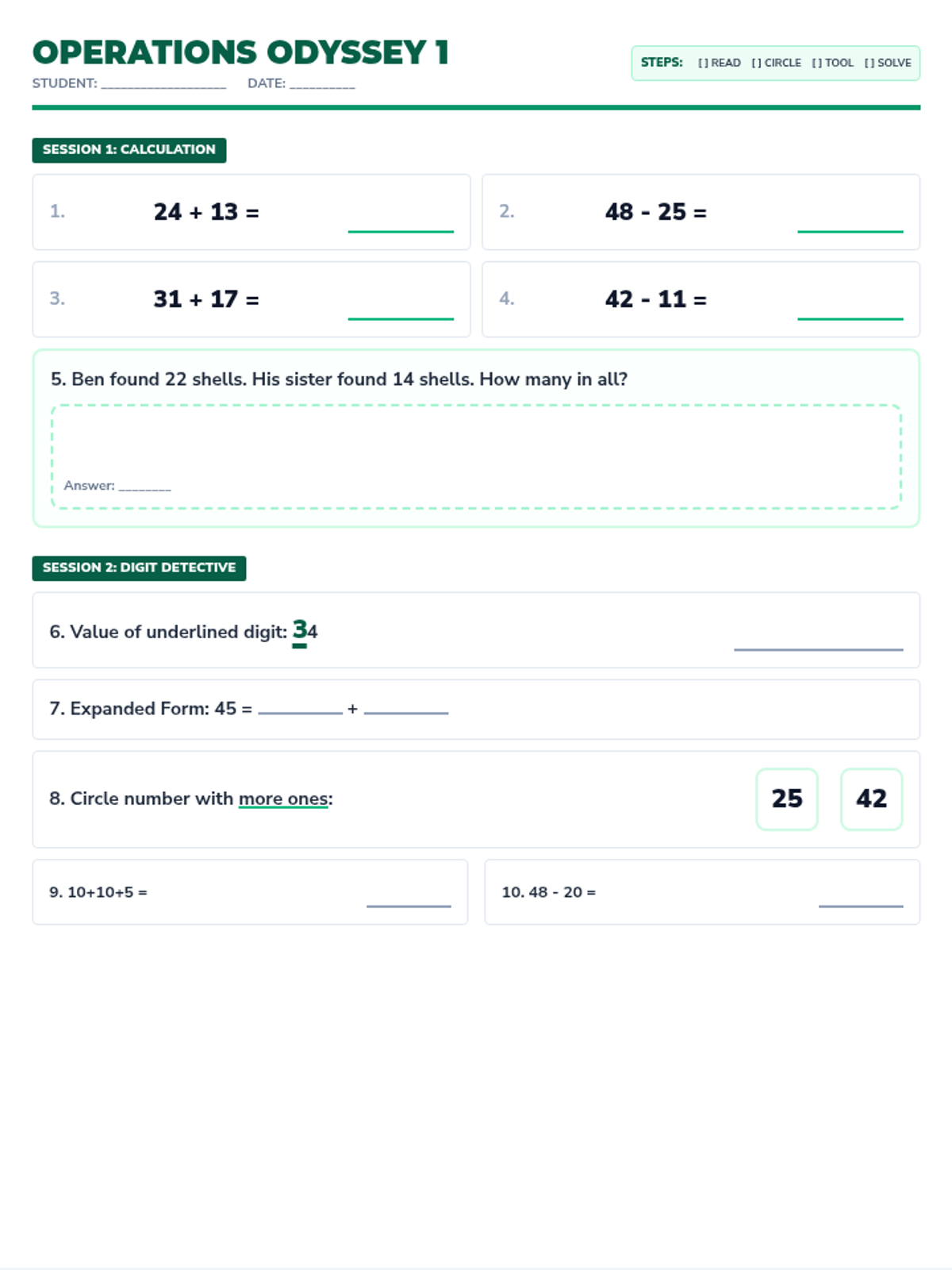
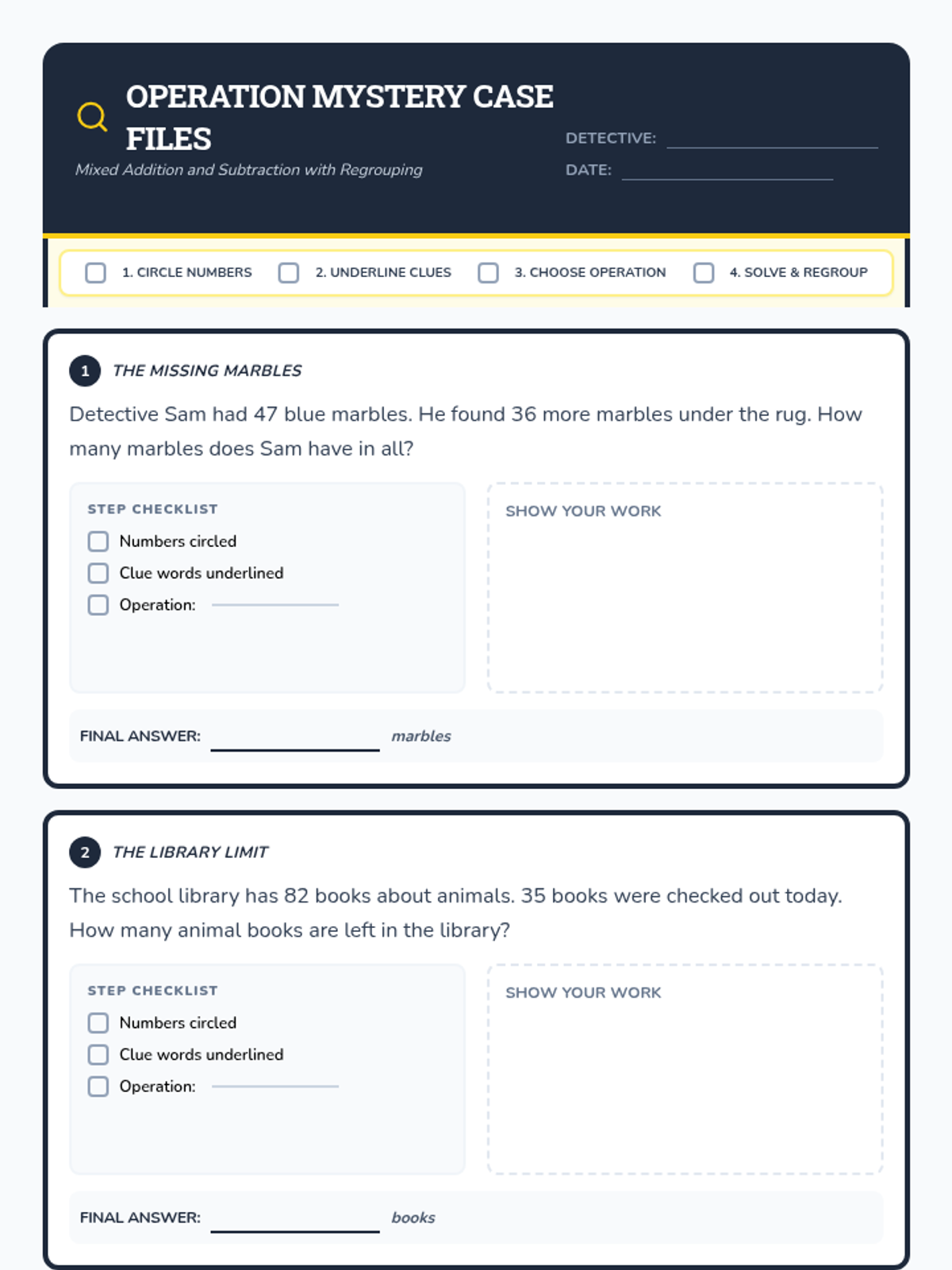
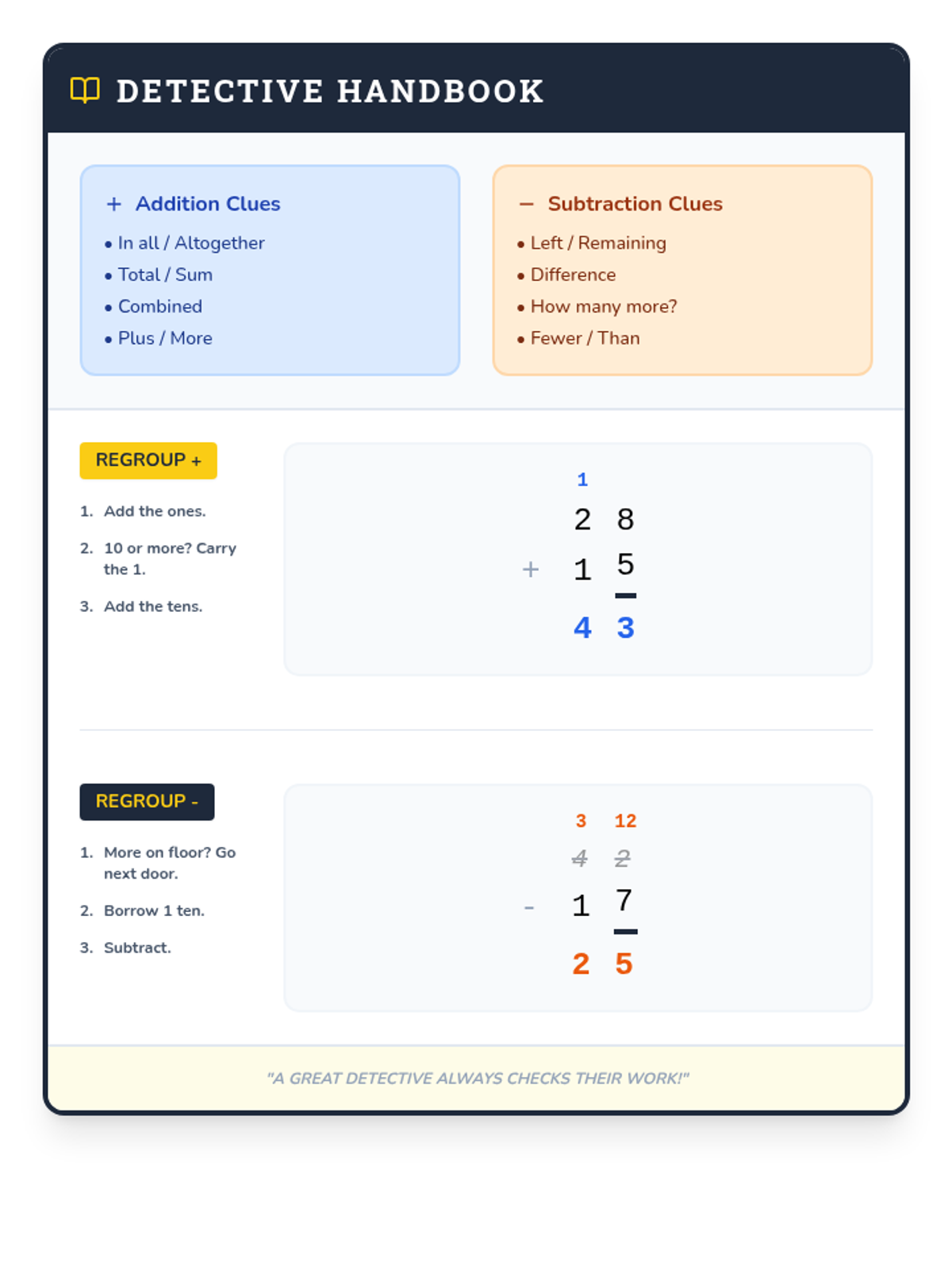
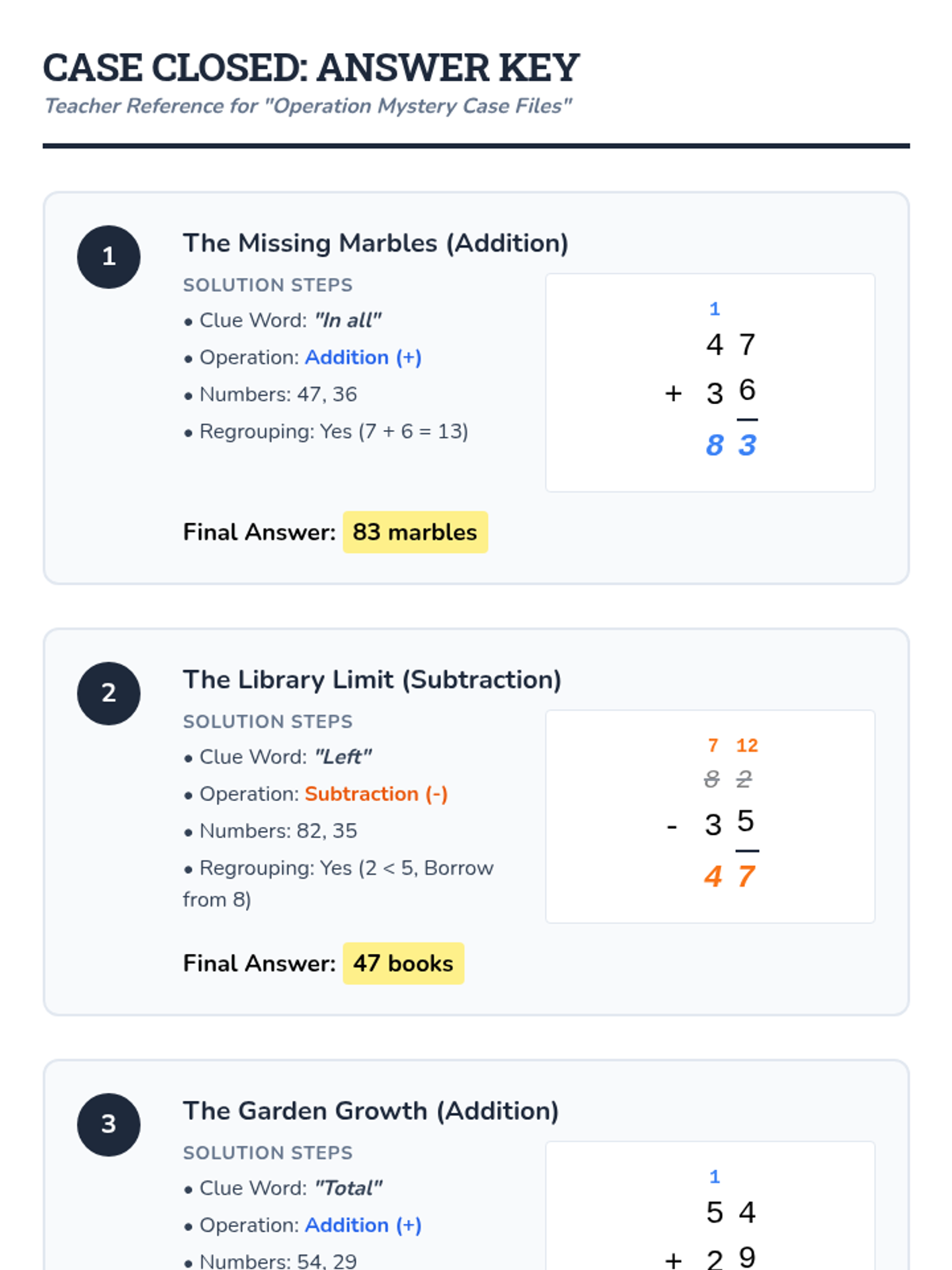
A targeted math unit designed to help students identify the correct operation (addition or subtraction within 50) in word problems using a detective theme.
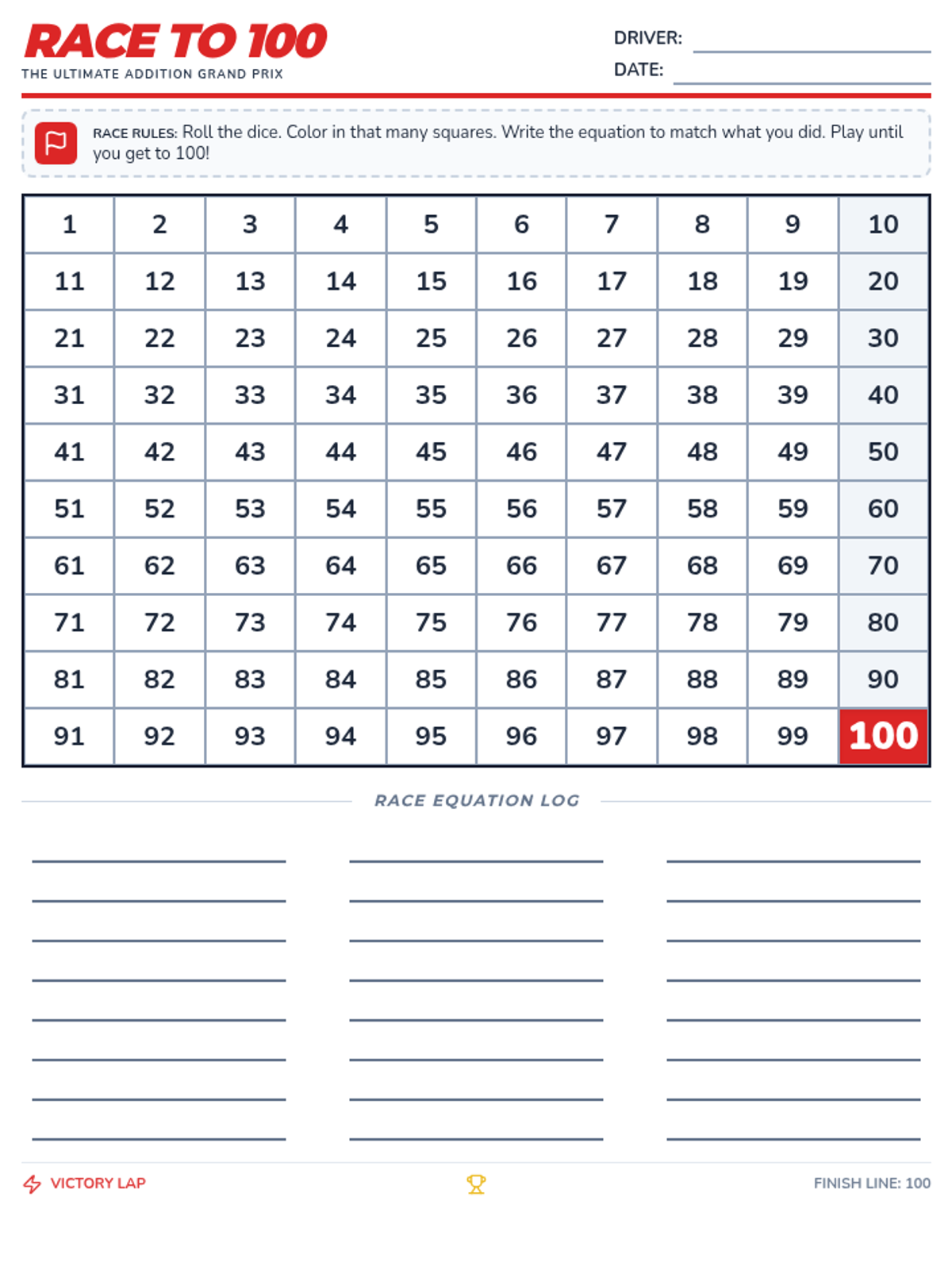
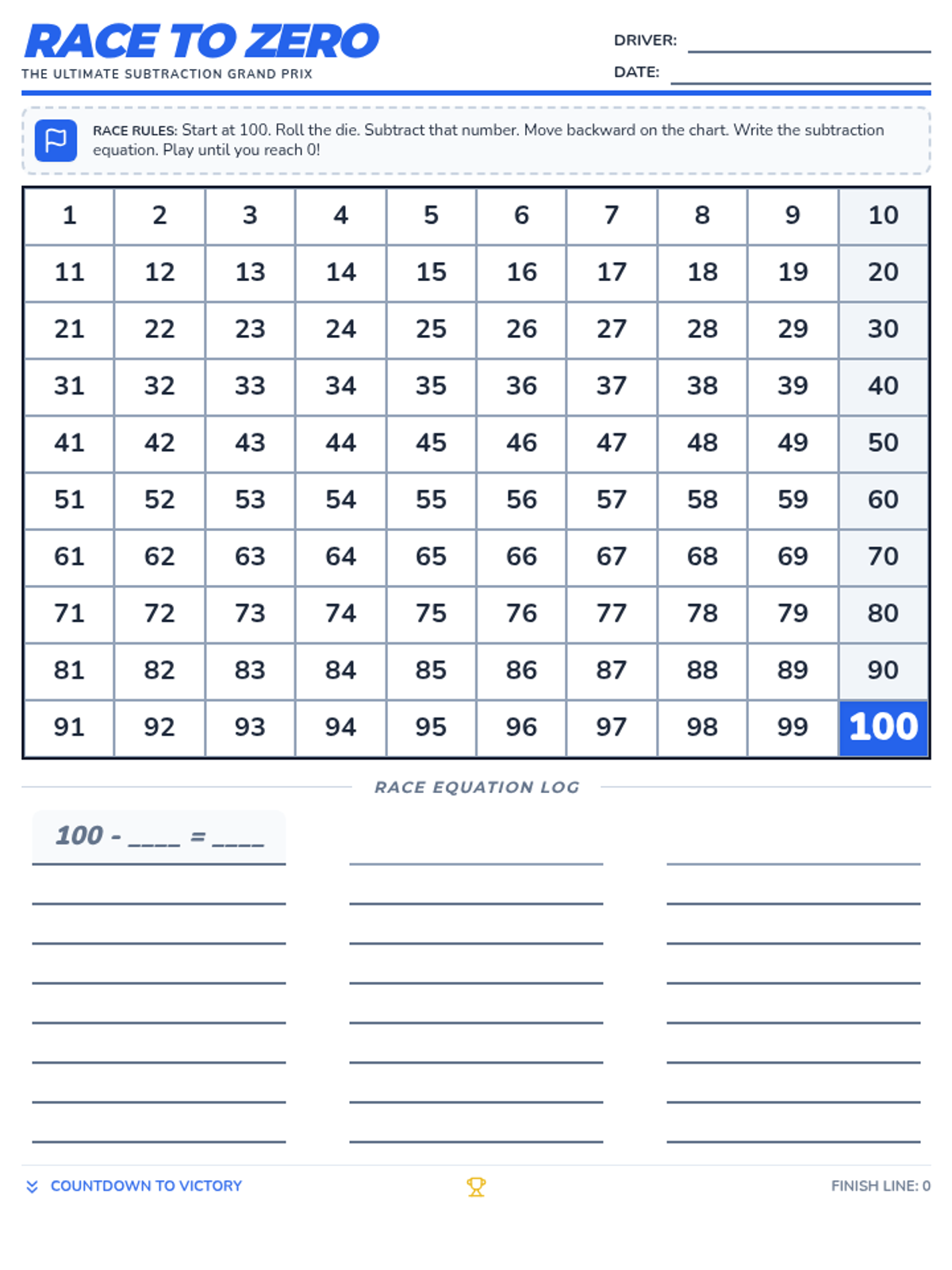
A collection of racing-themed math games focusing on addition and subtraction within 100 using a 100 chart.
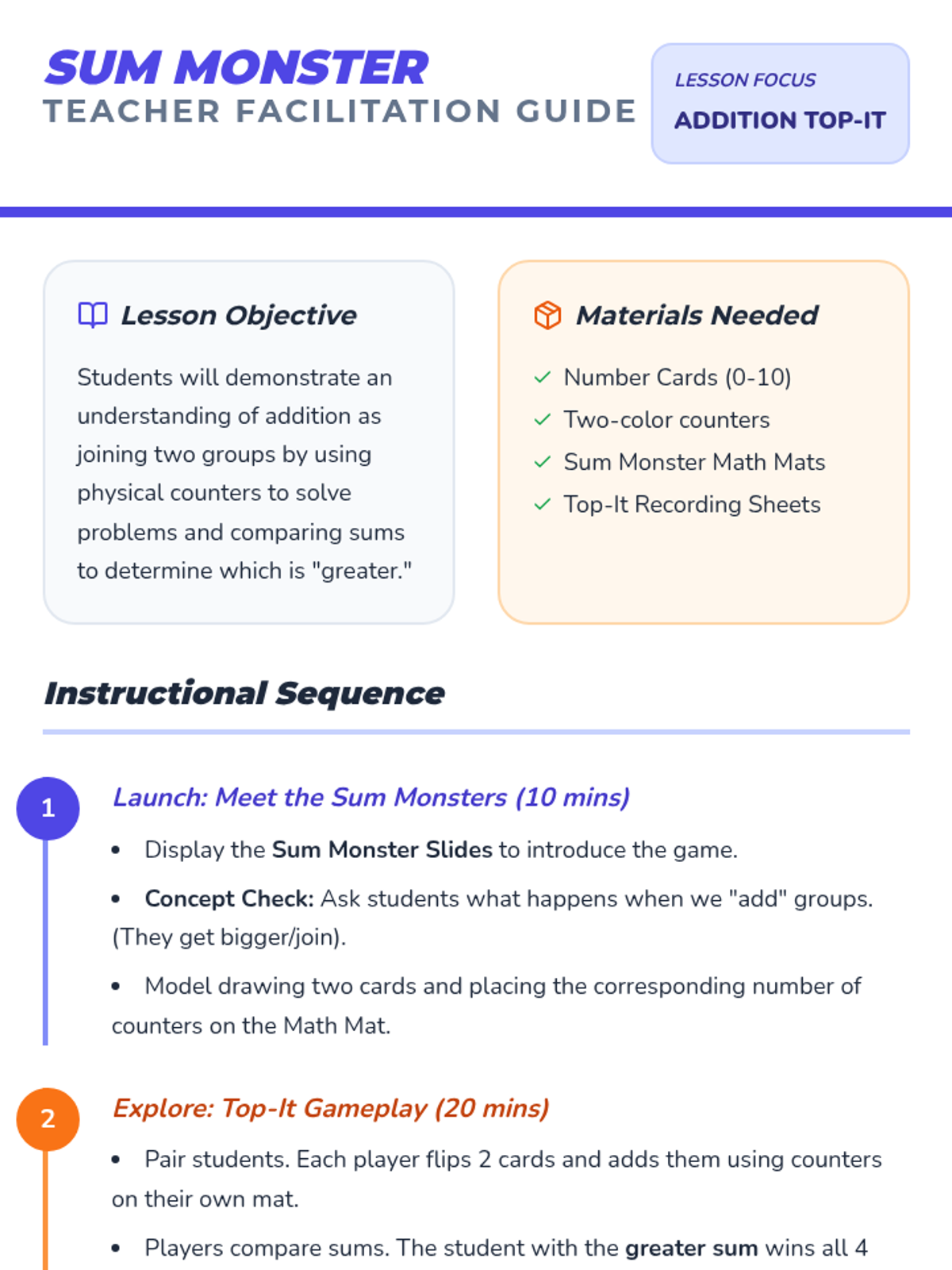
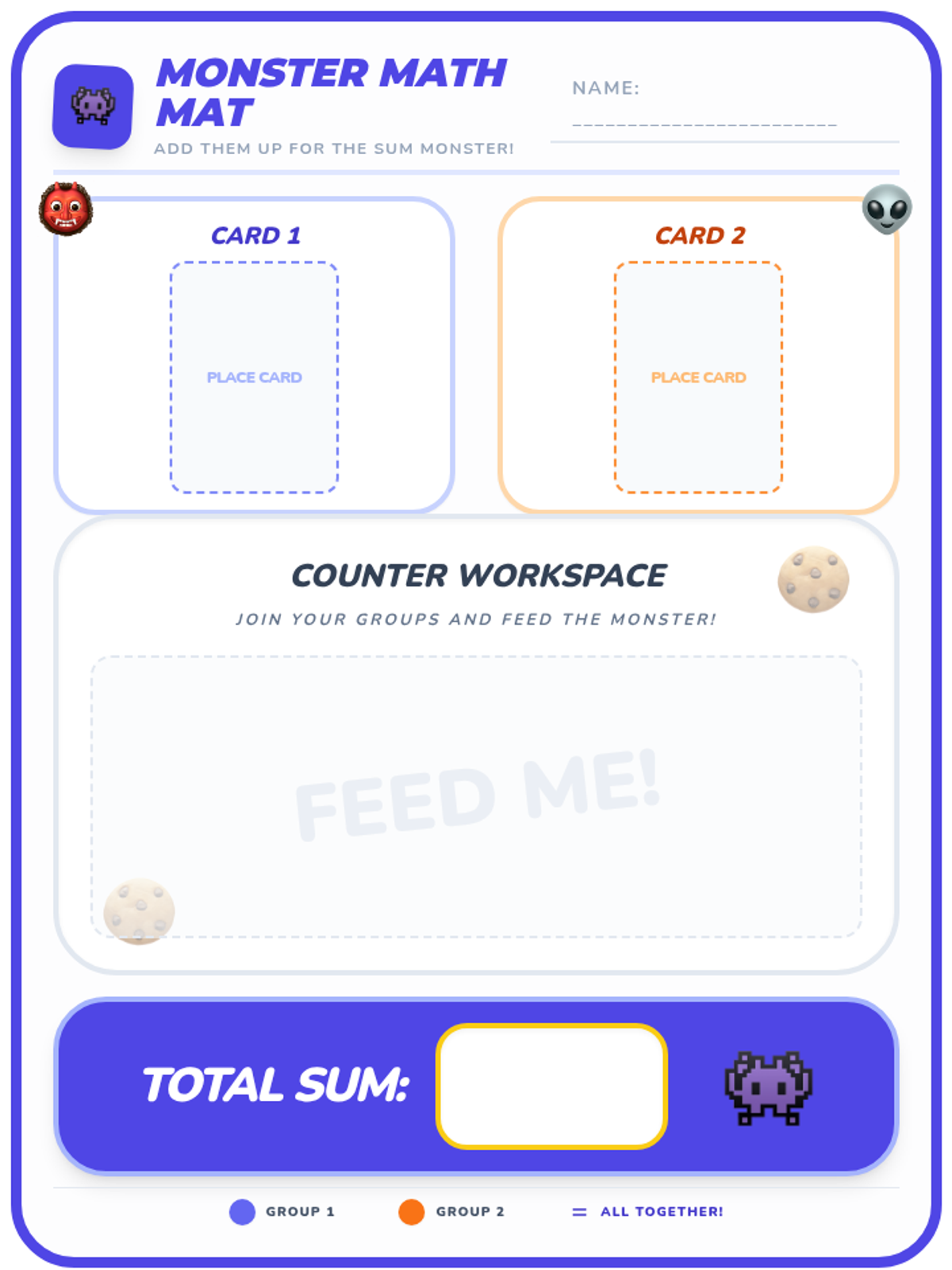
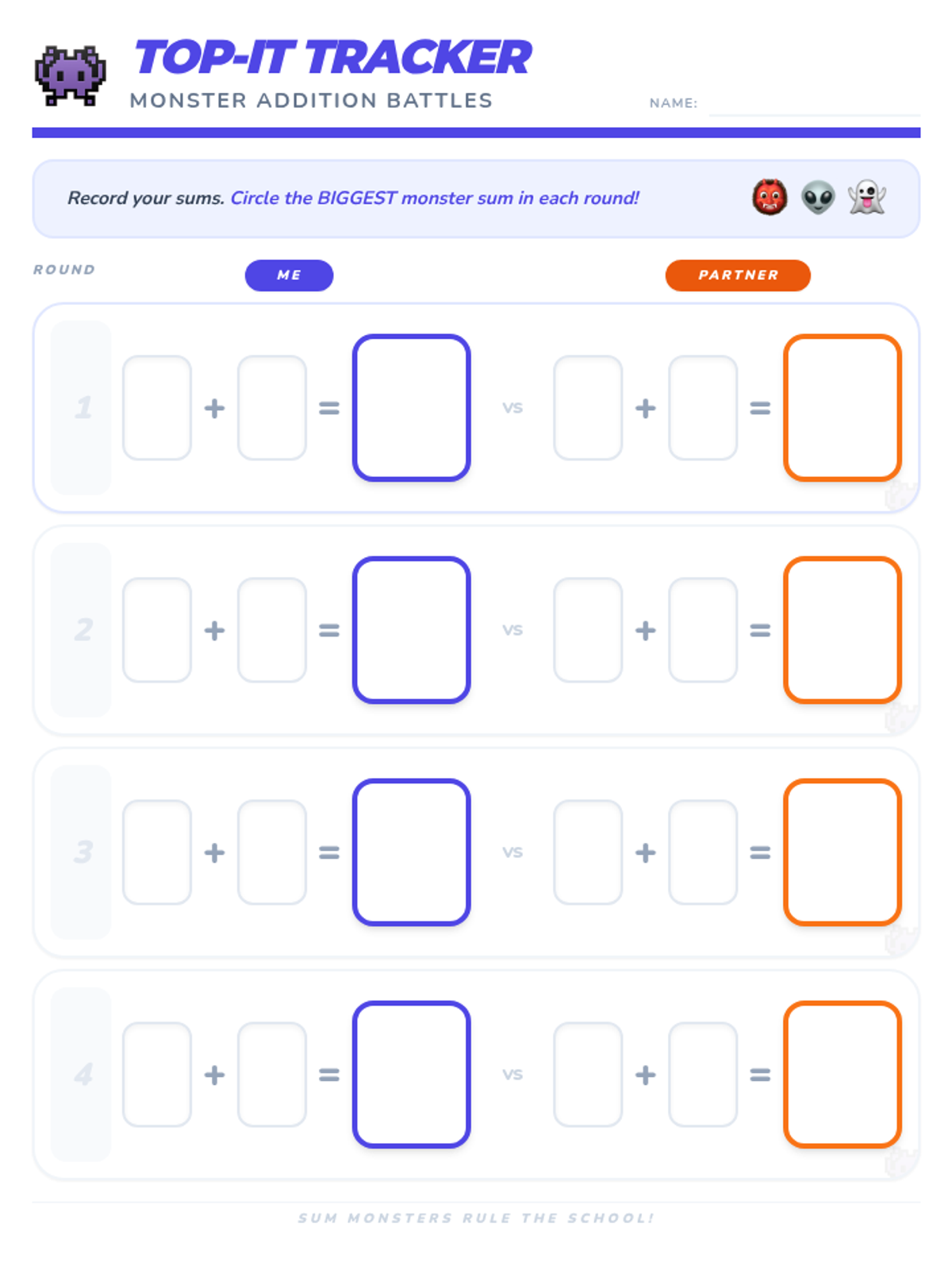
An introductory lesson to the Top-It addition game for kindergarten students, focusing on using concrete counters to solve addition problems and comparing sums.
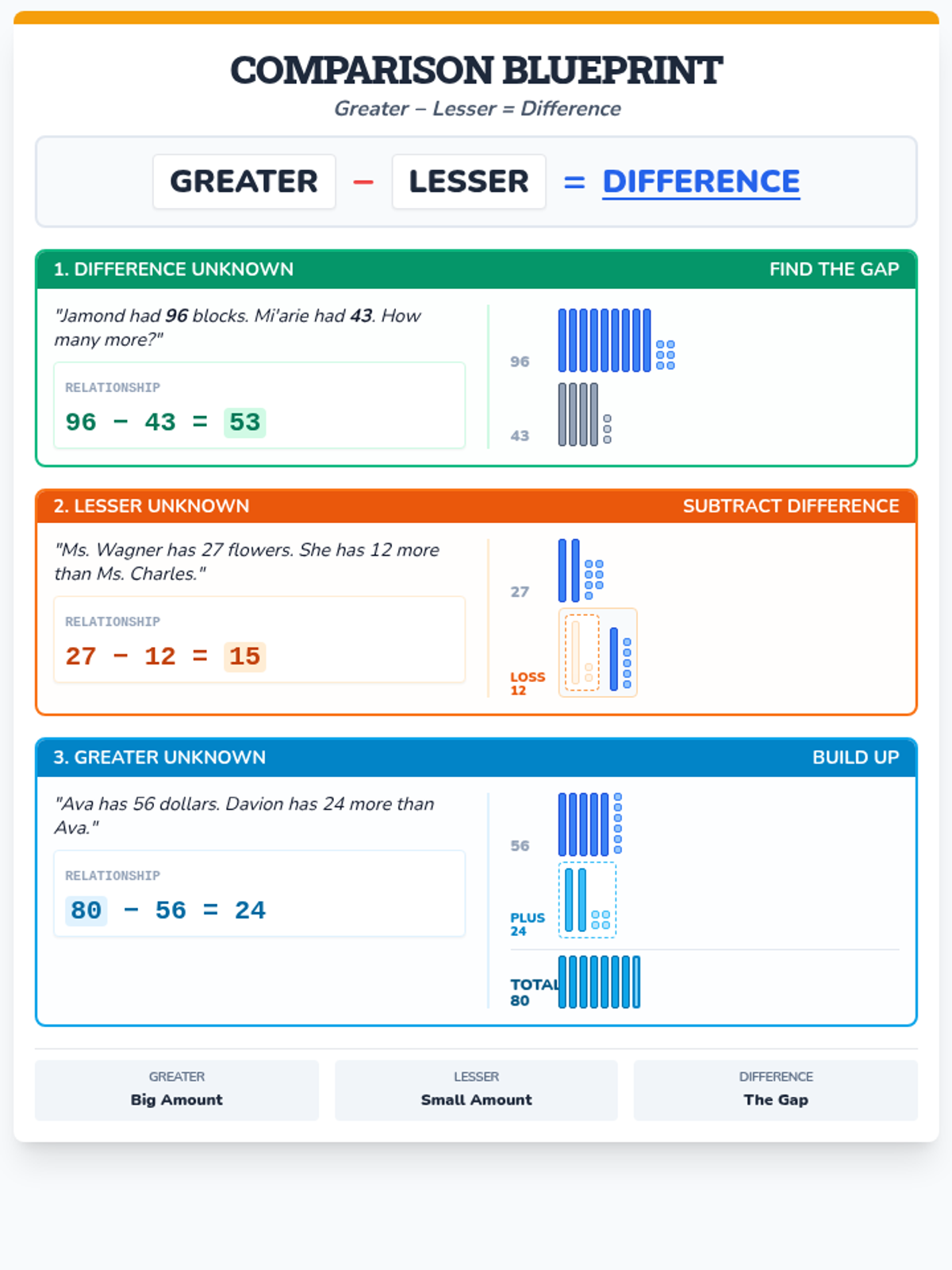
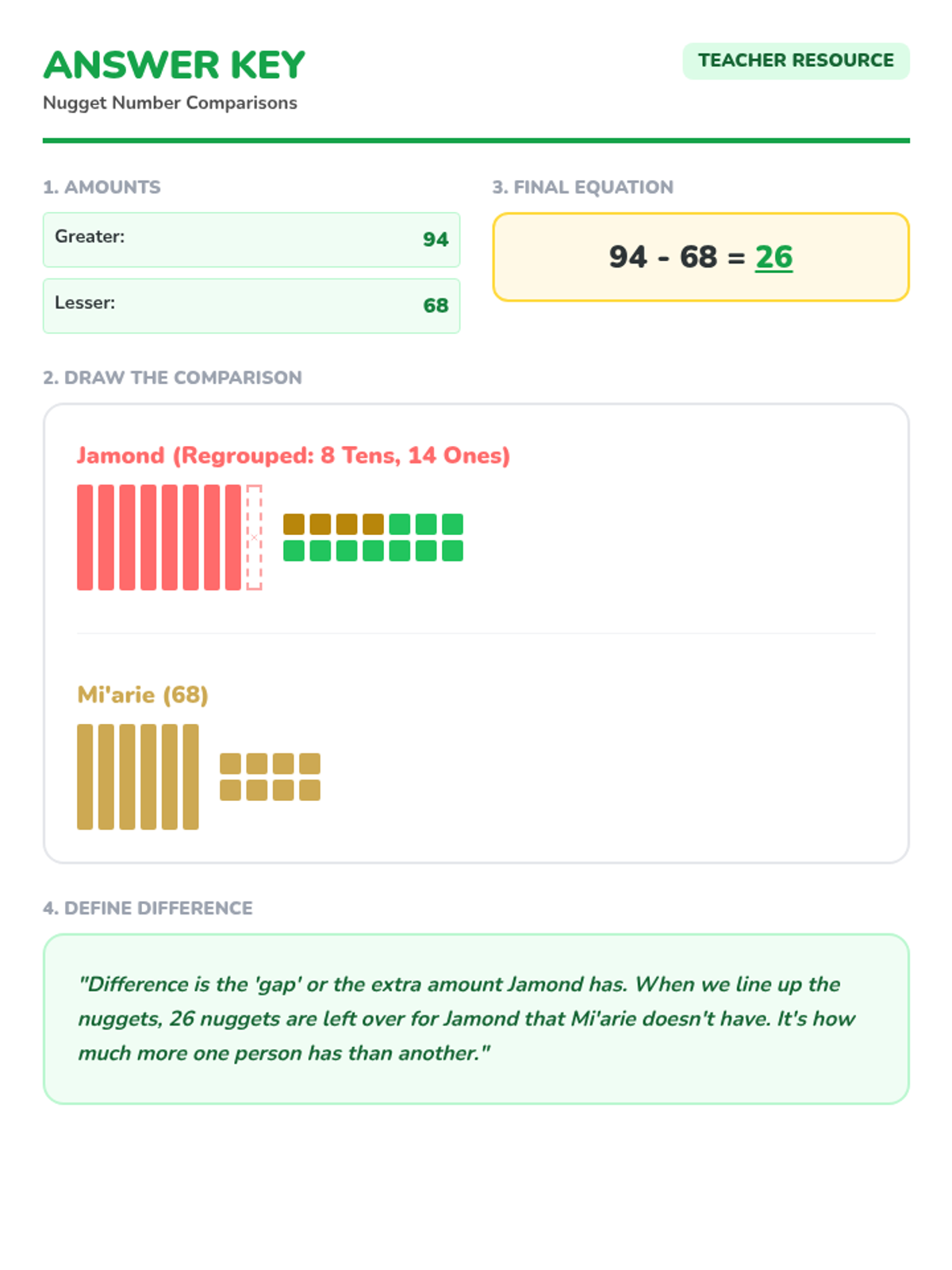
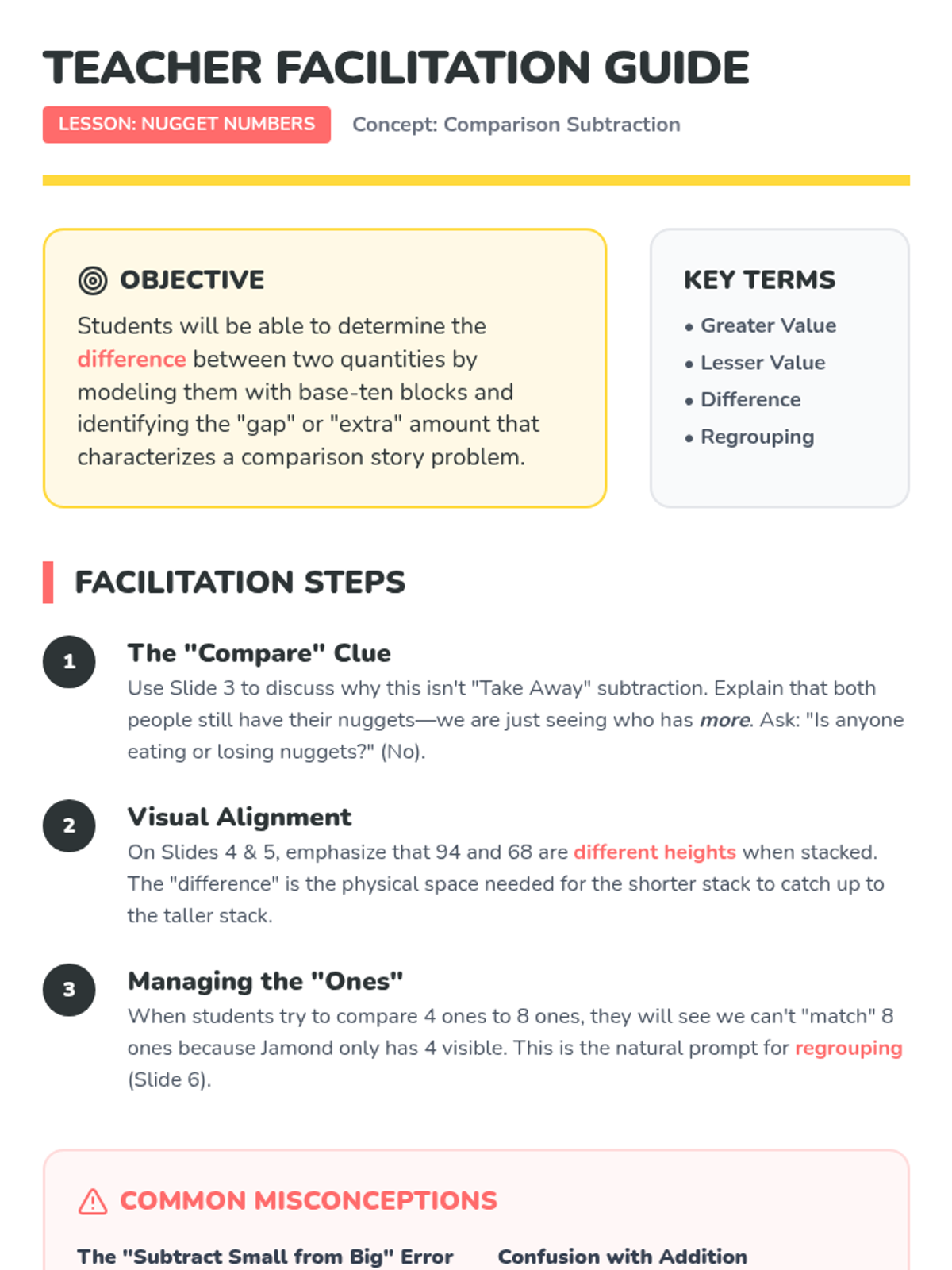
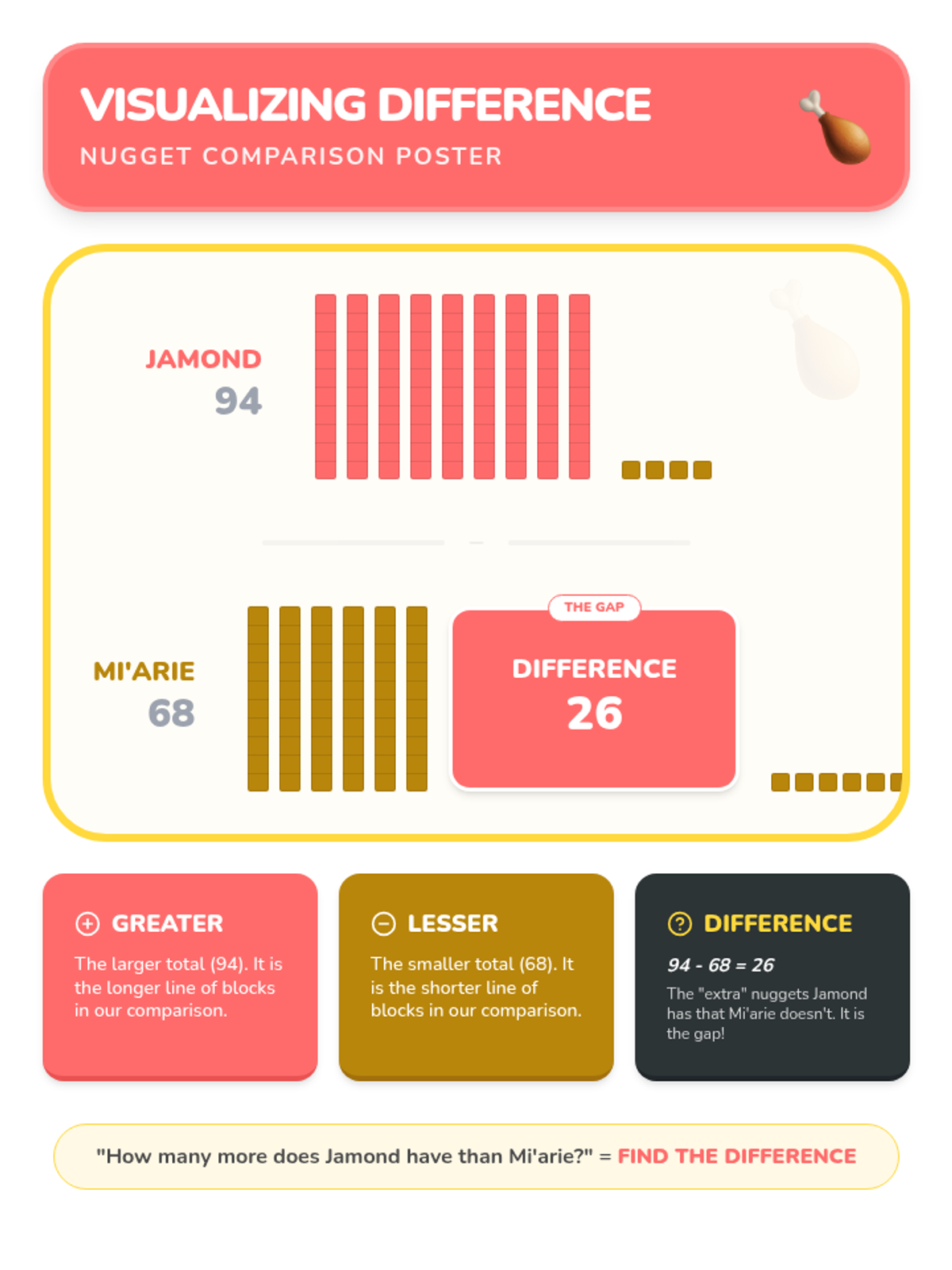
A comprehensive lesson on understanding and solving comparison story problems using the Greater-Lesser-Difference relationship and base ten block visuals.
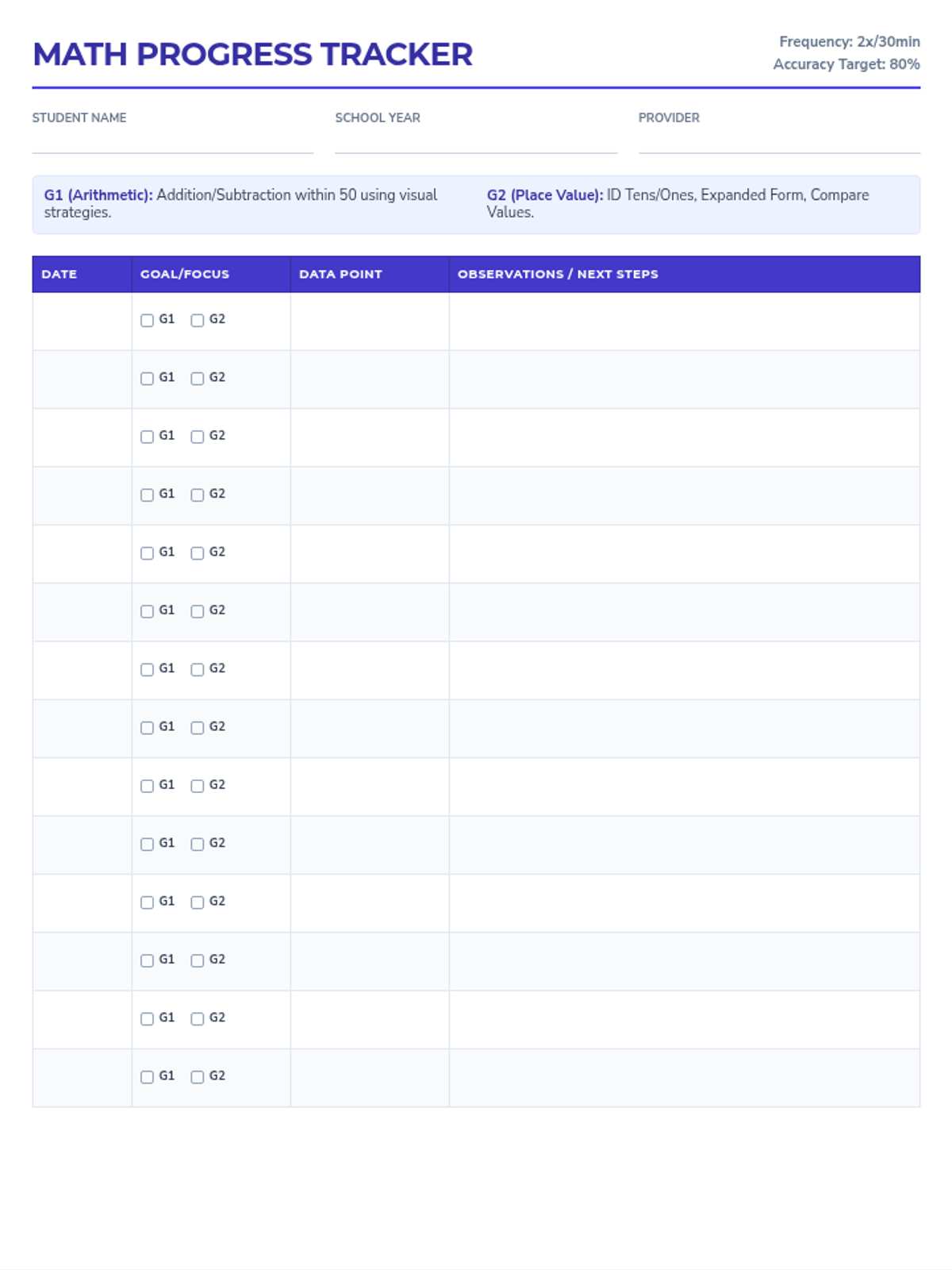
A comprehensive tracking system for monitoring student progress in basic arithmetic and place value concepts, designed for bi-weekly service delivery.
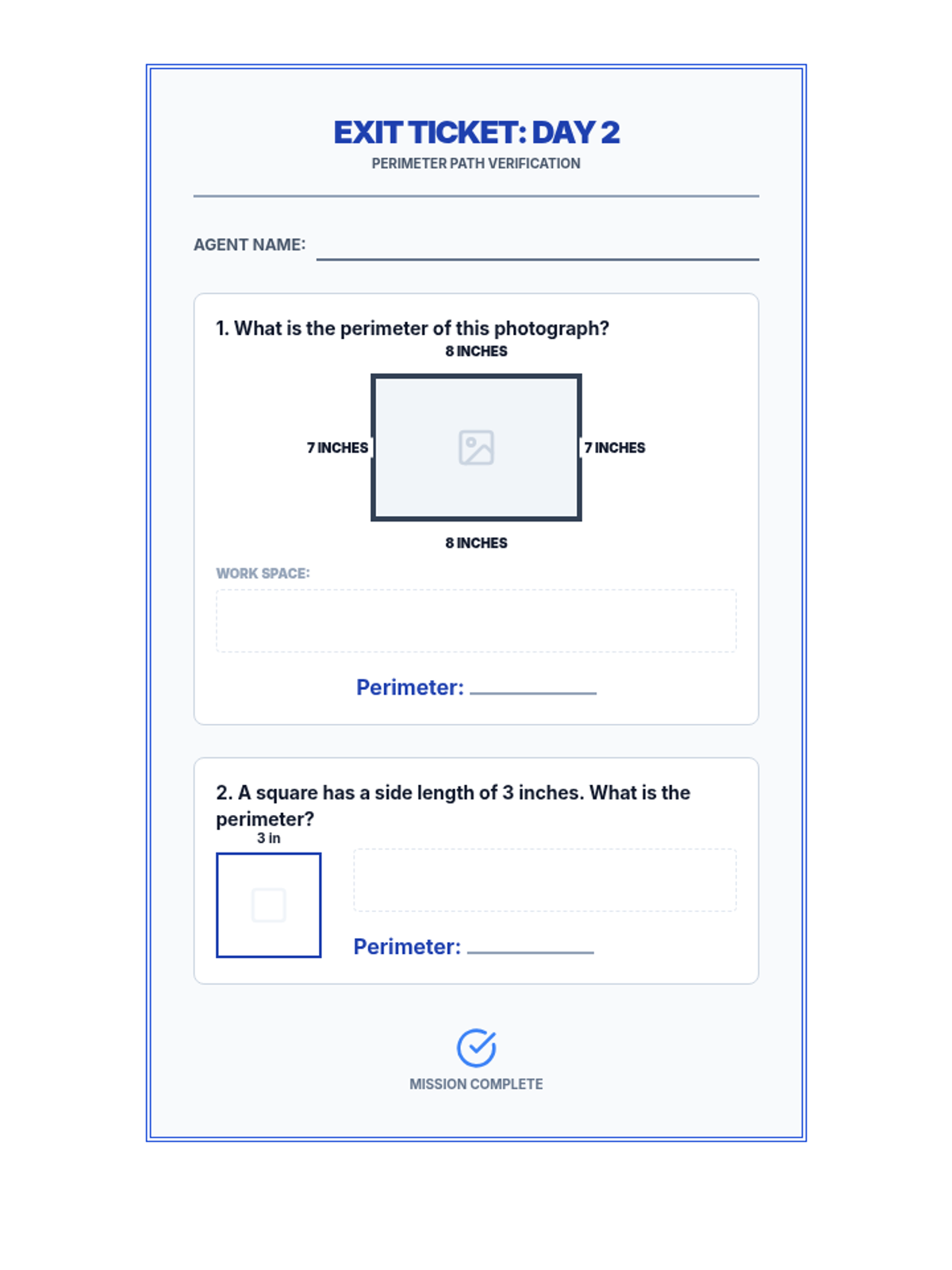
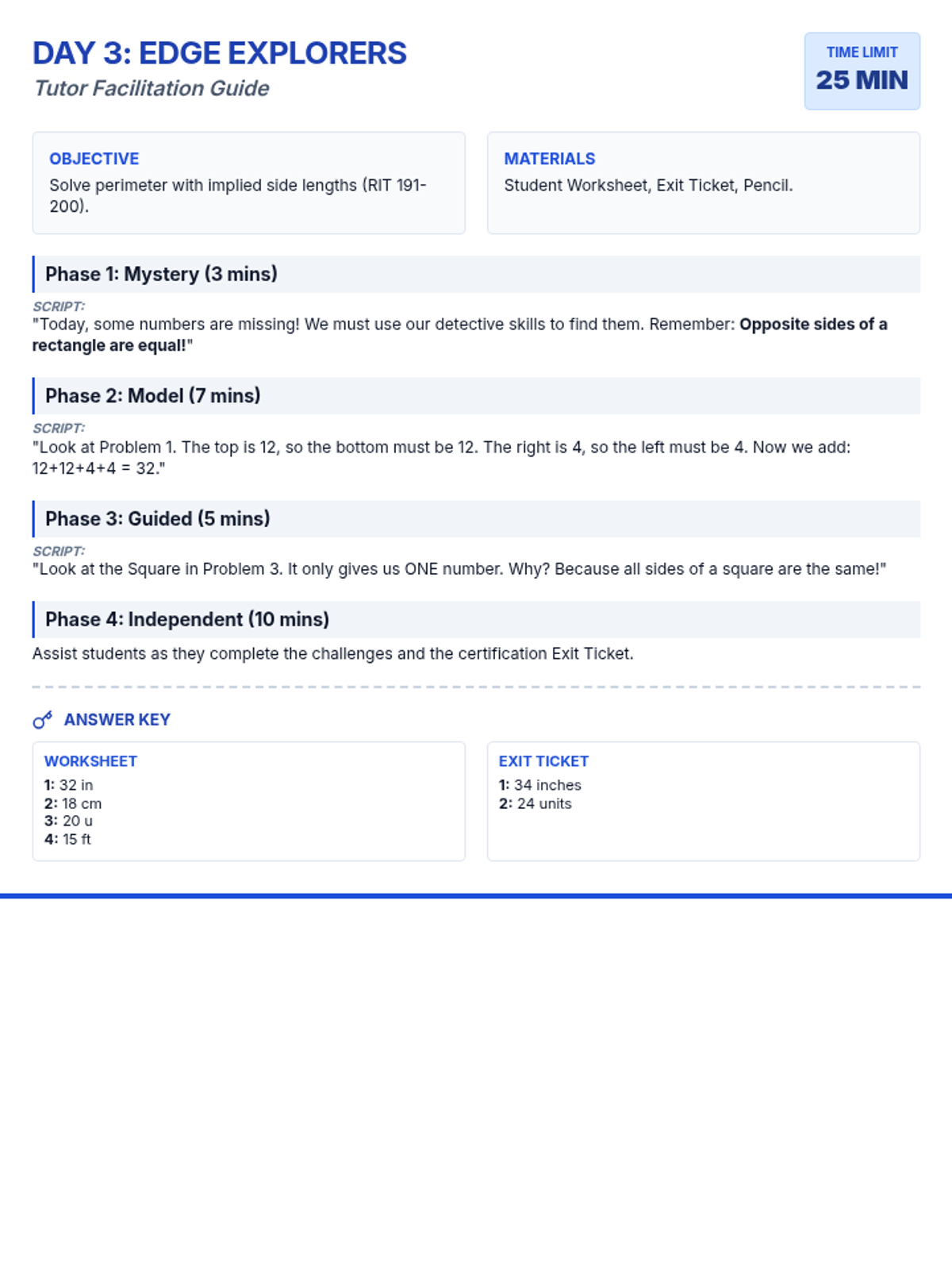
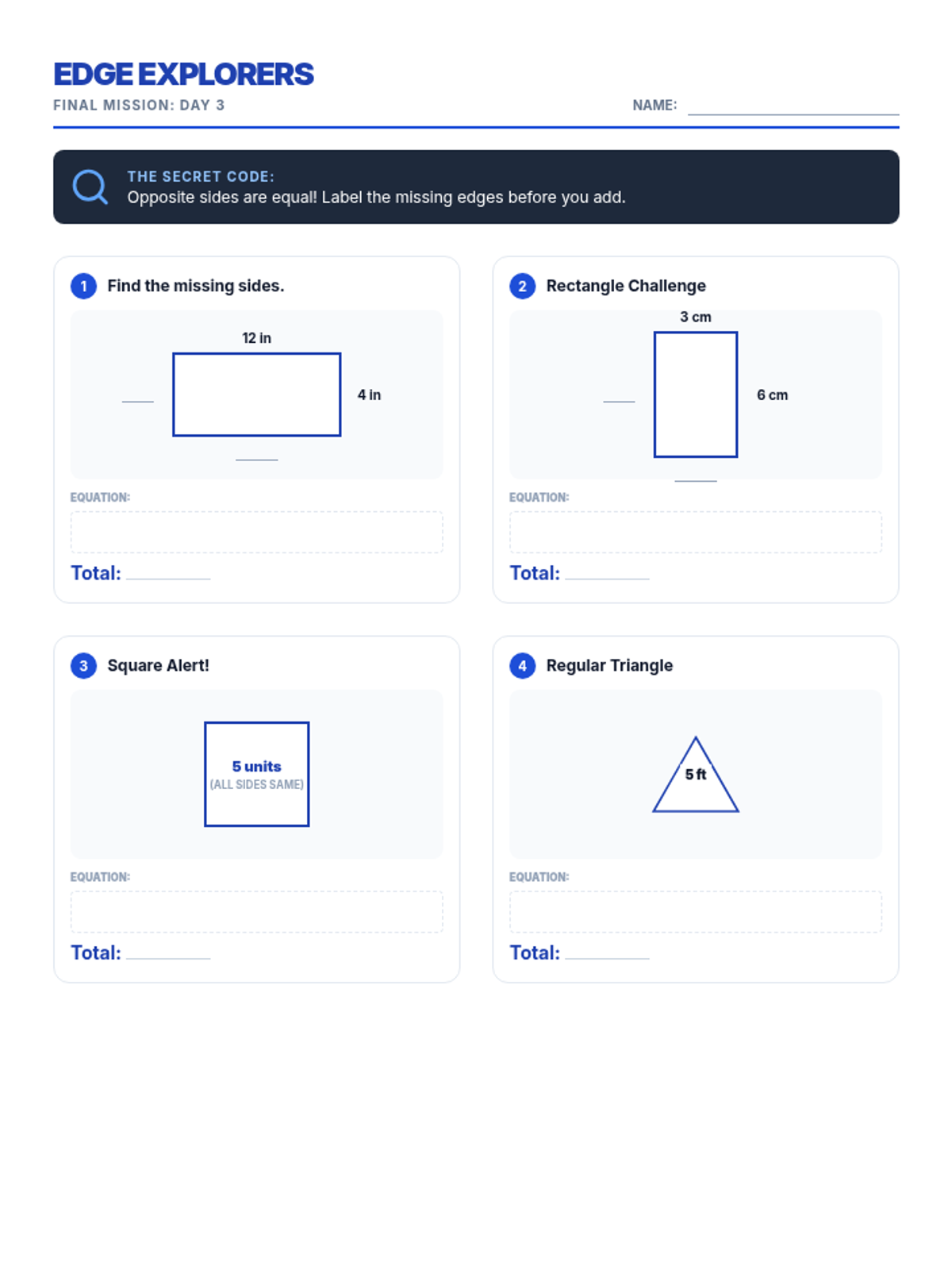
Students solve perimeter problems where some side lengths are implied or shapes are complex (191-200 focus).
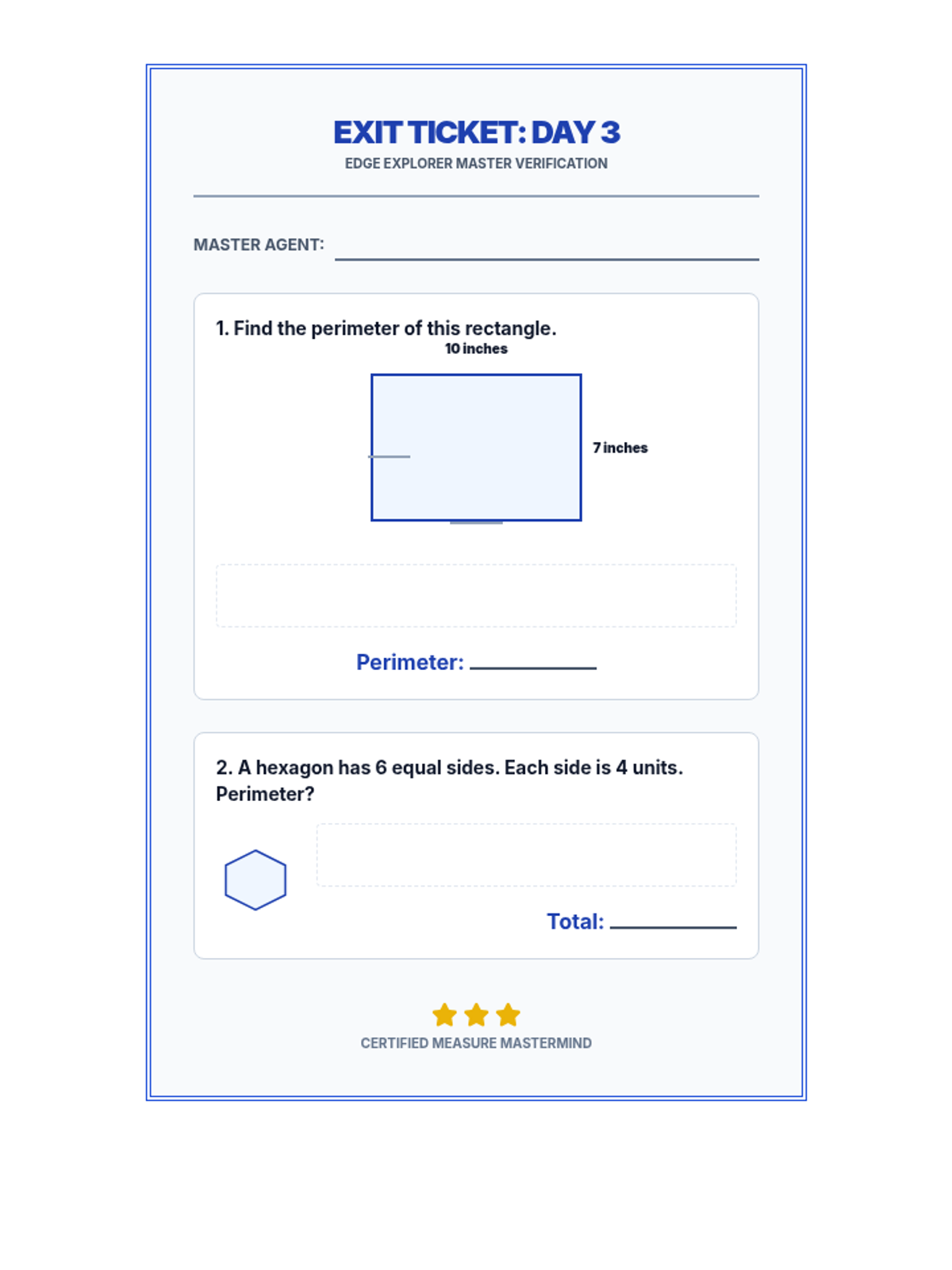
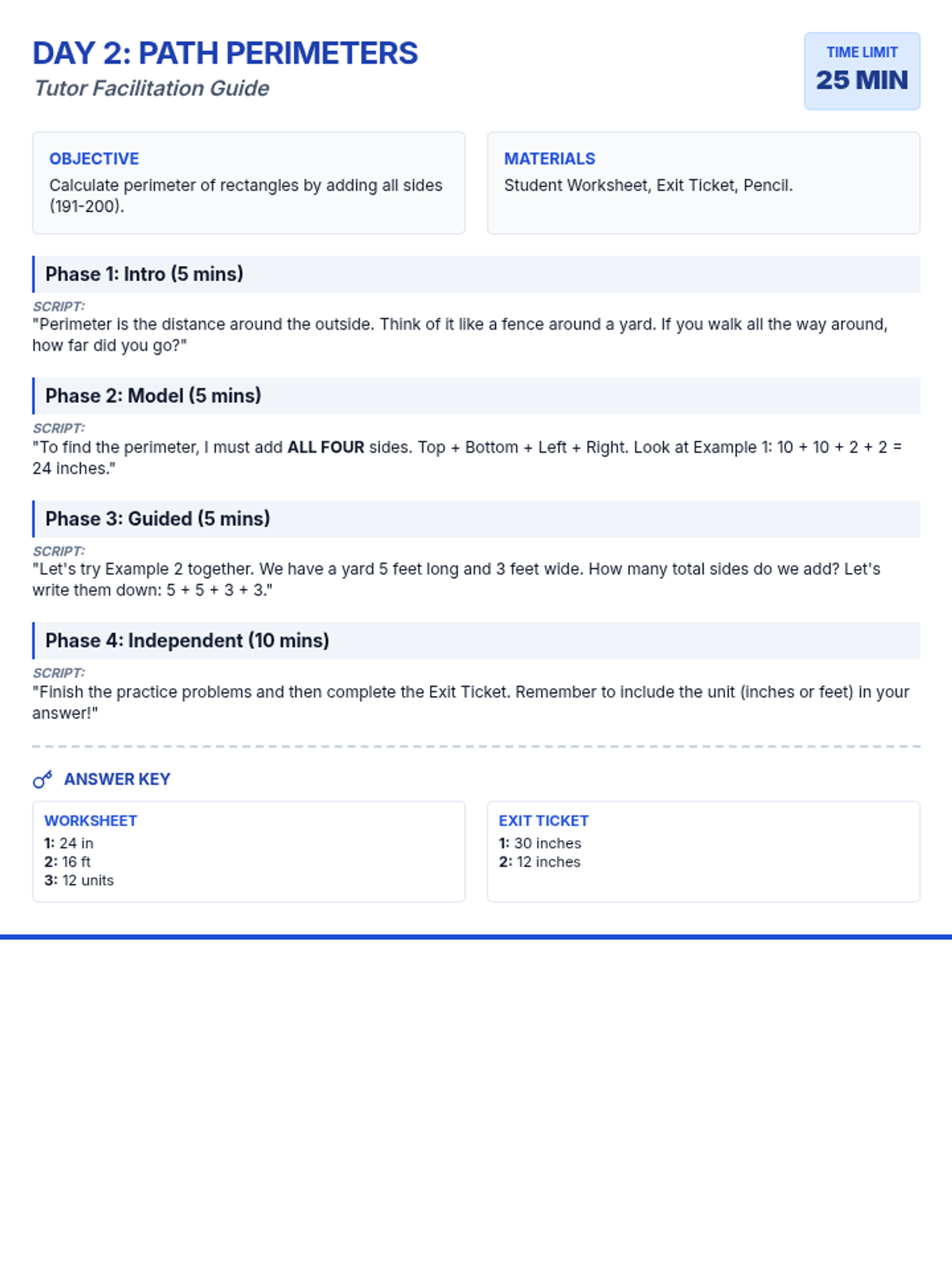
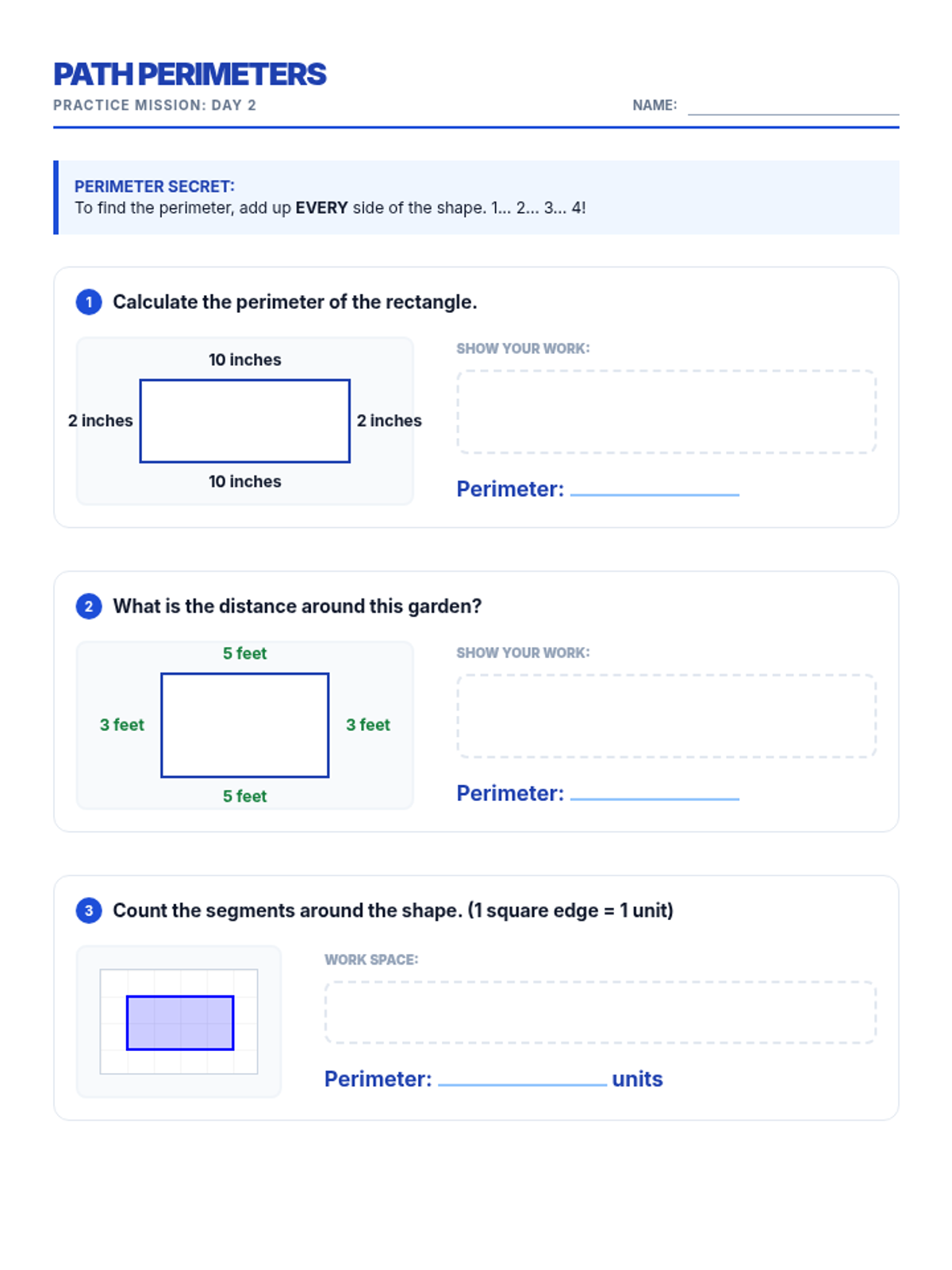
Students transition from basic counting and addition to calculating the perimeter of rectangles (191-200).
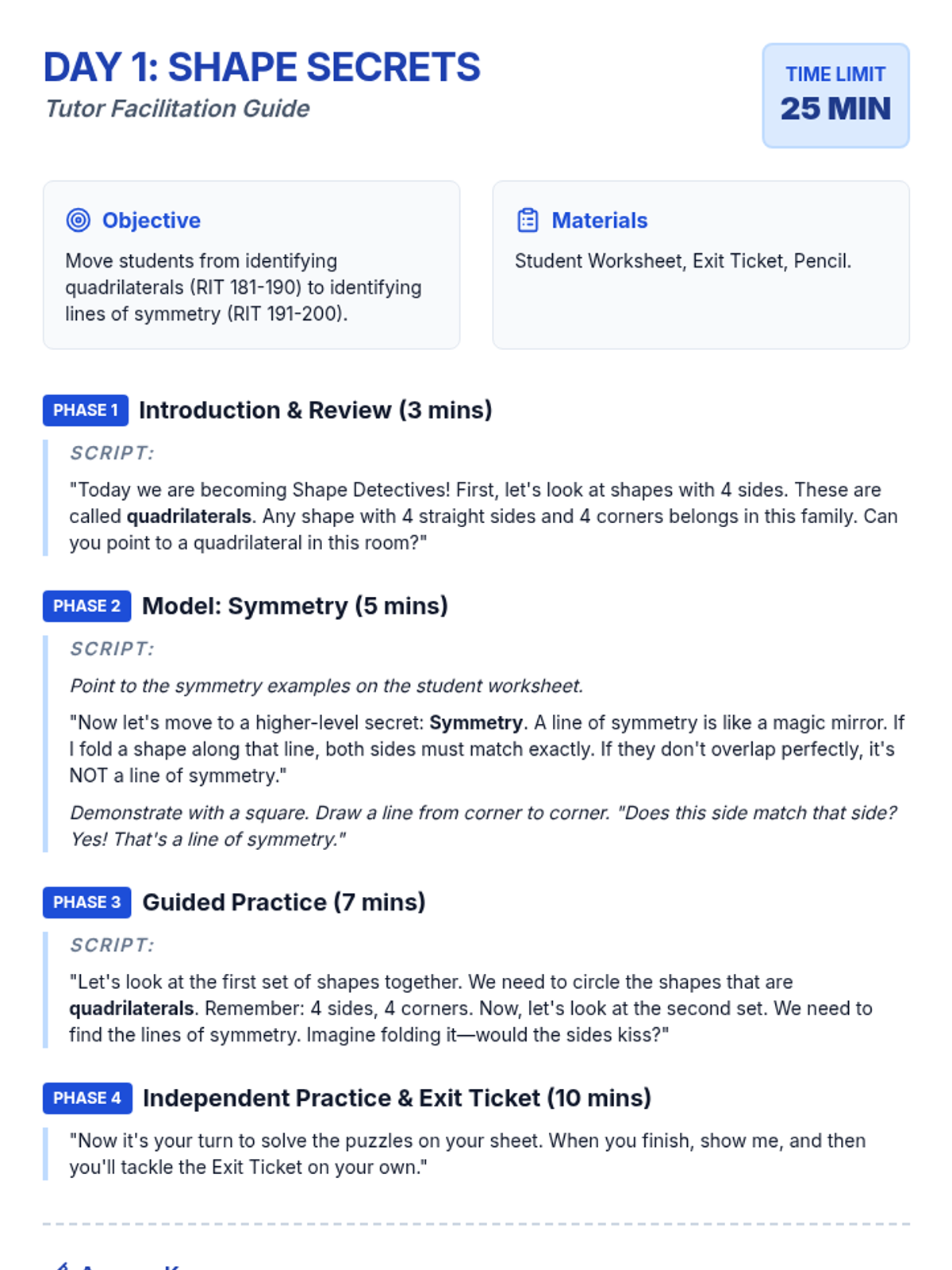
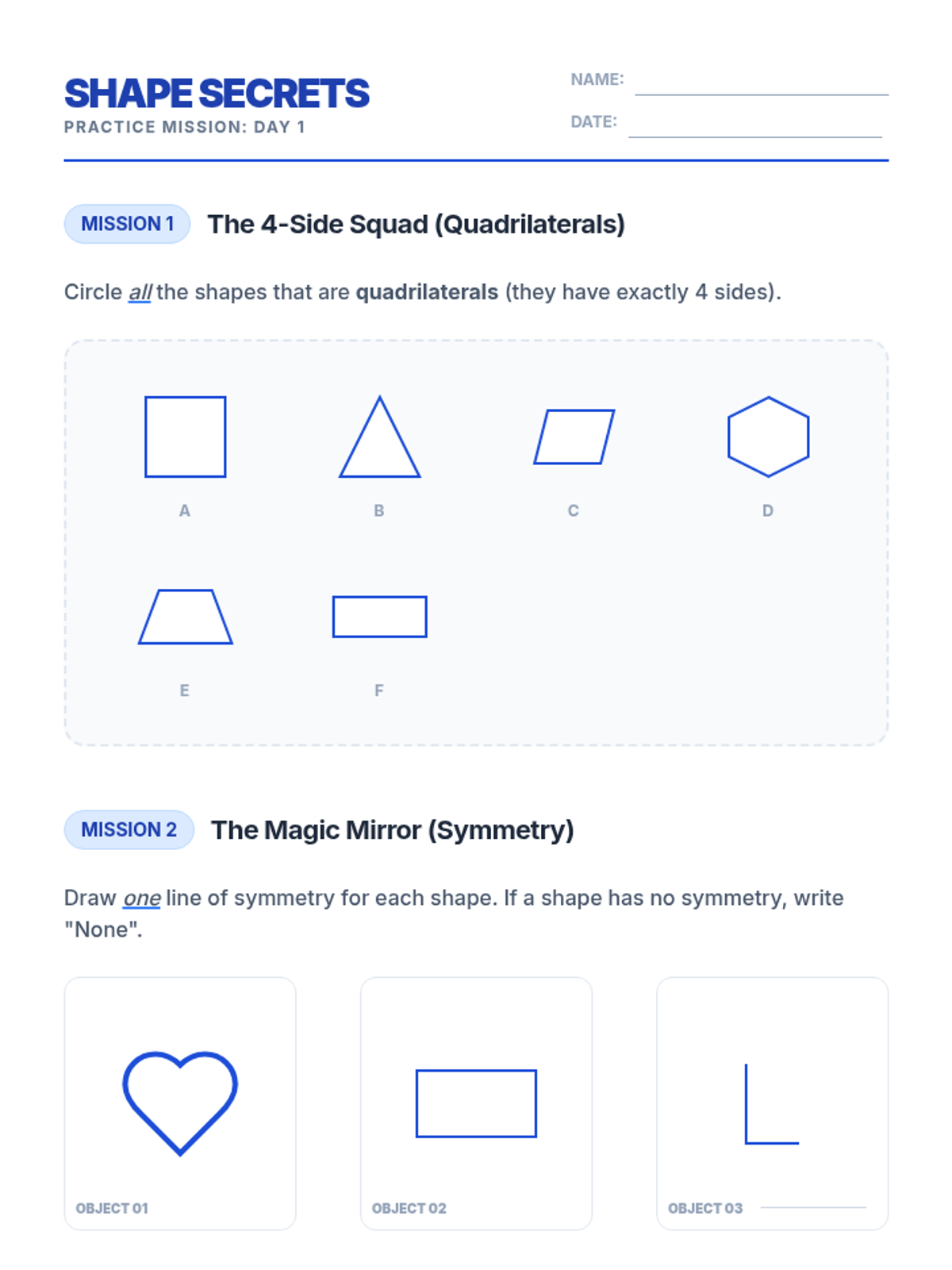
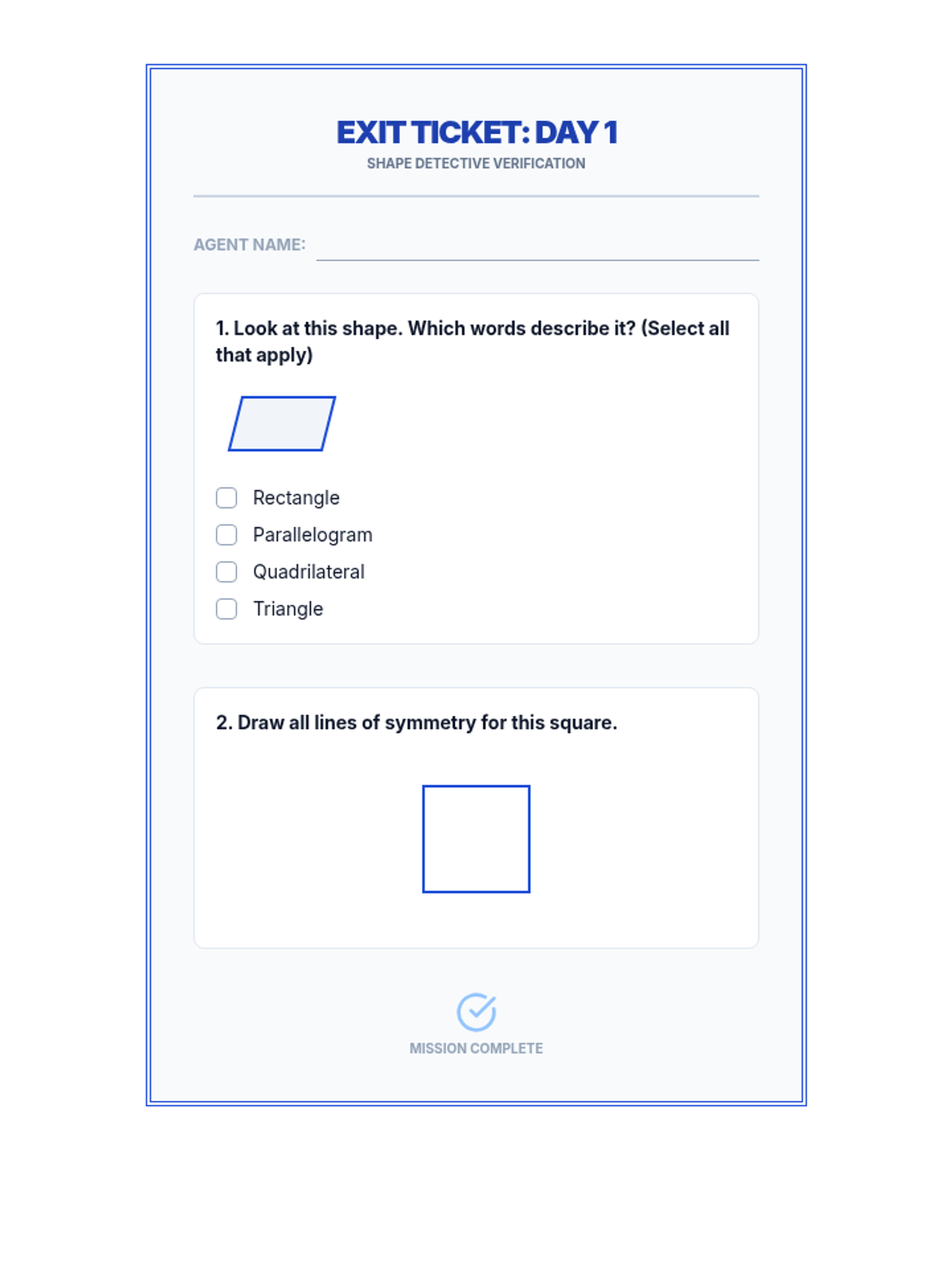
Students identify attributes of quadrilaterals (181-190) and explore lines of symmetry in 2D shapes (191-200).
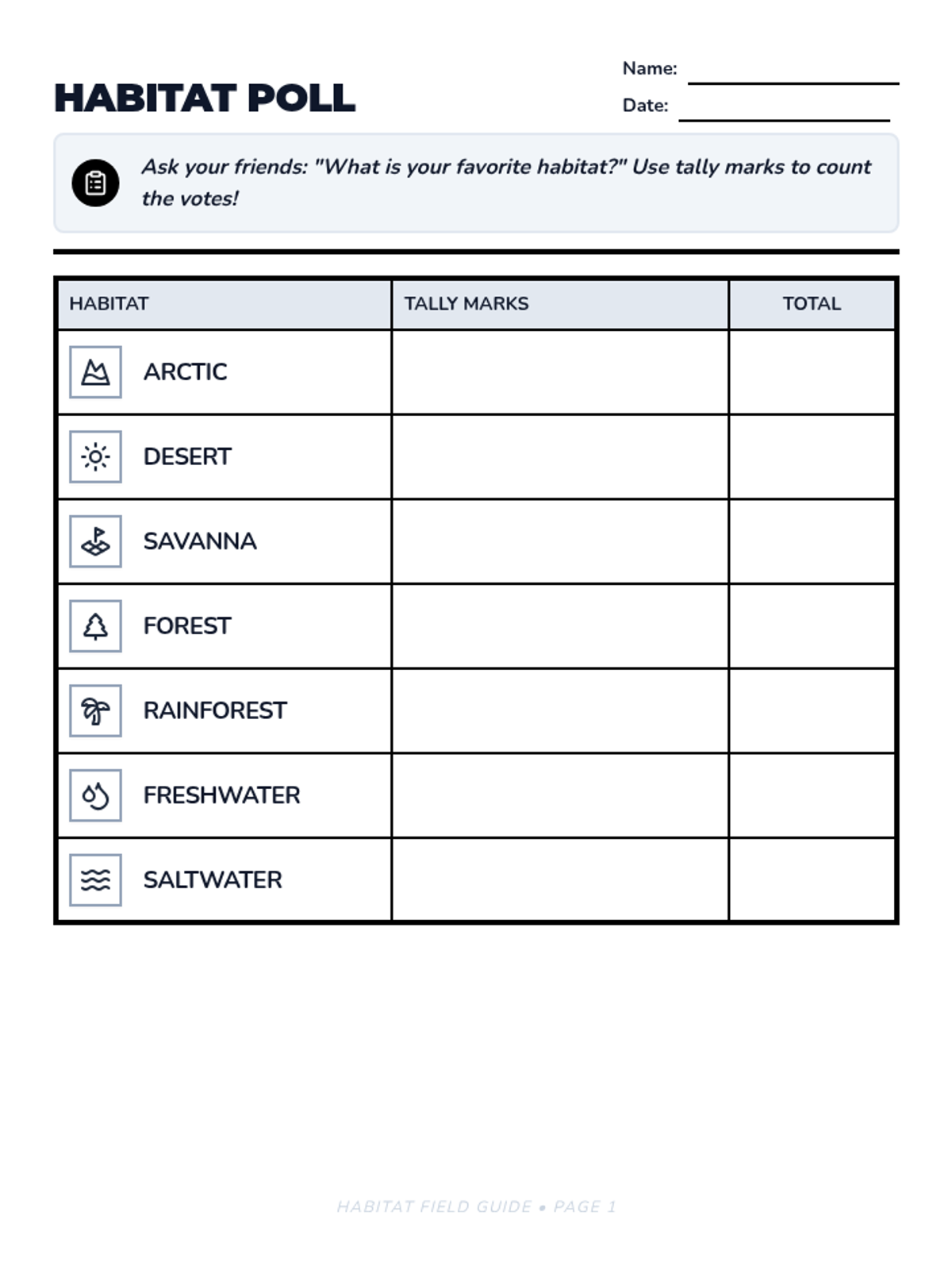
A hands-on data collection and analysis lesson where first graders poll their classmates on favorite habitats, then graph and interpret the results.
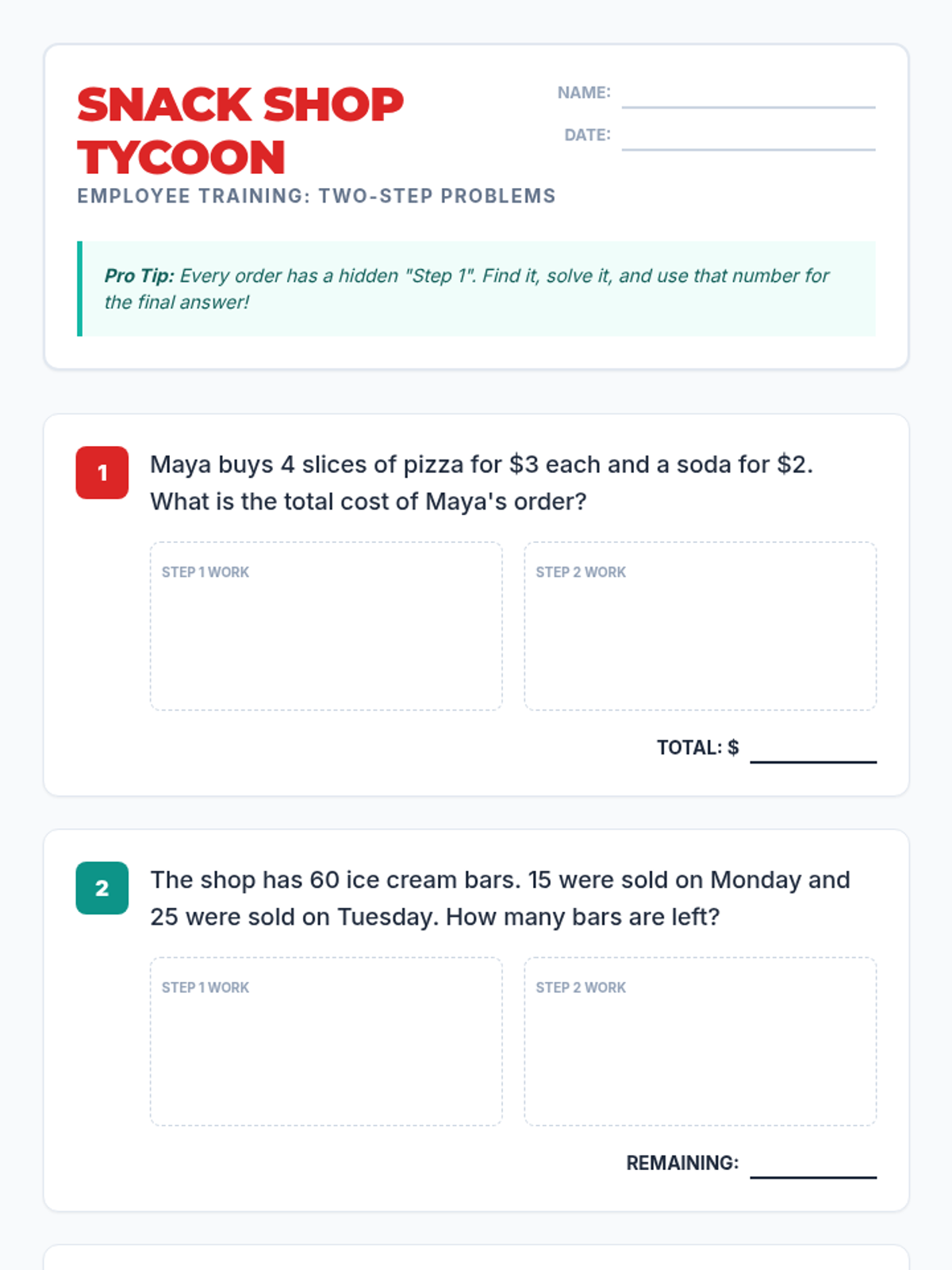
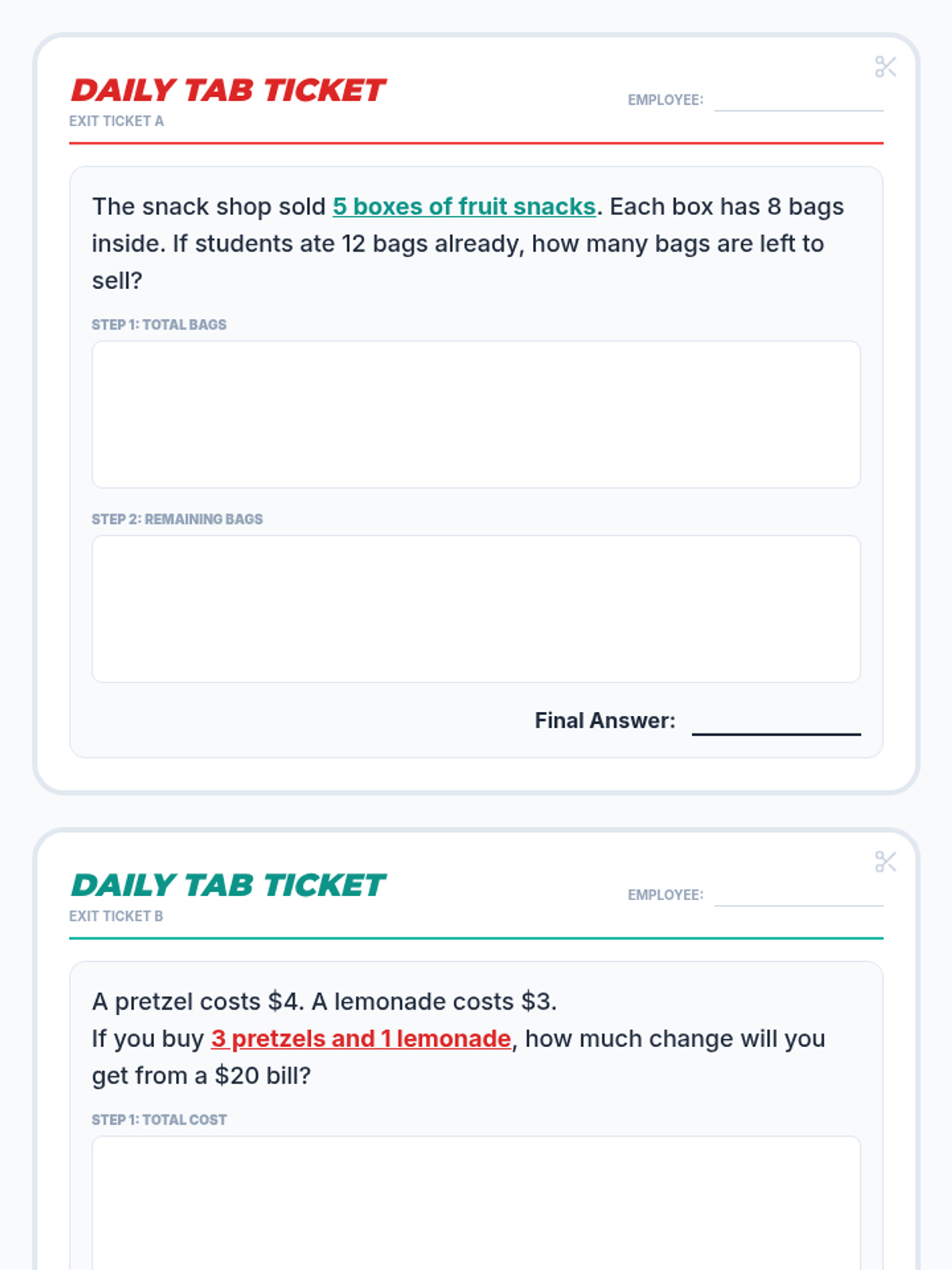
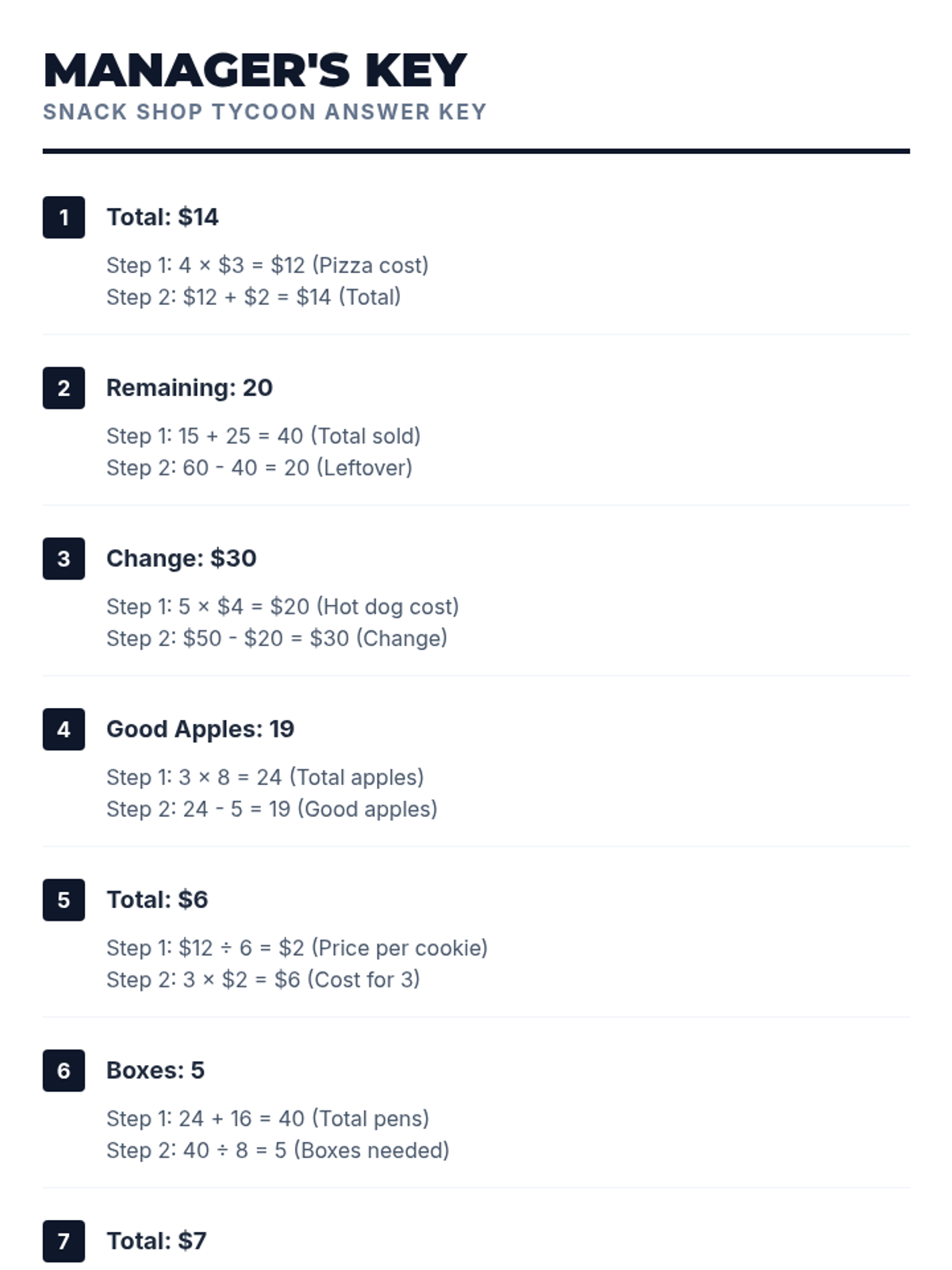
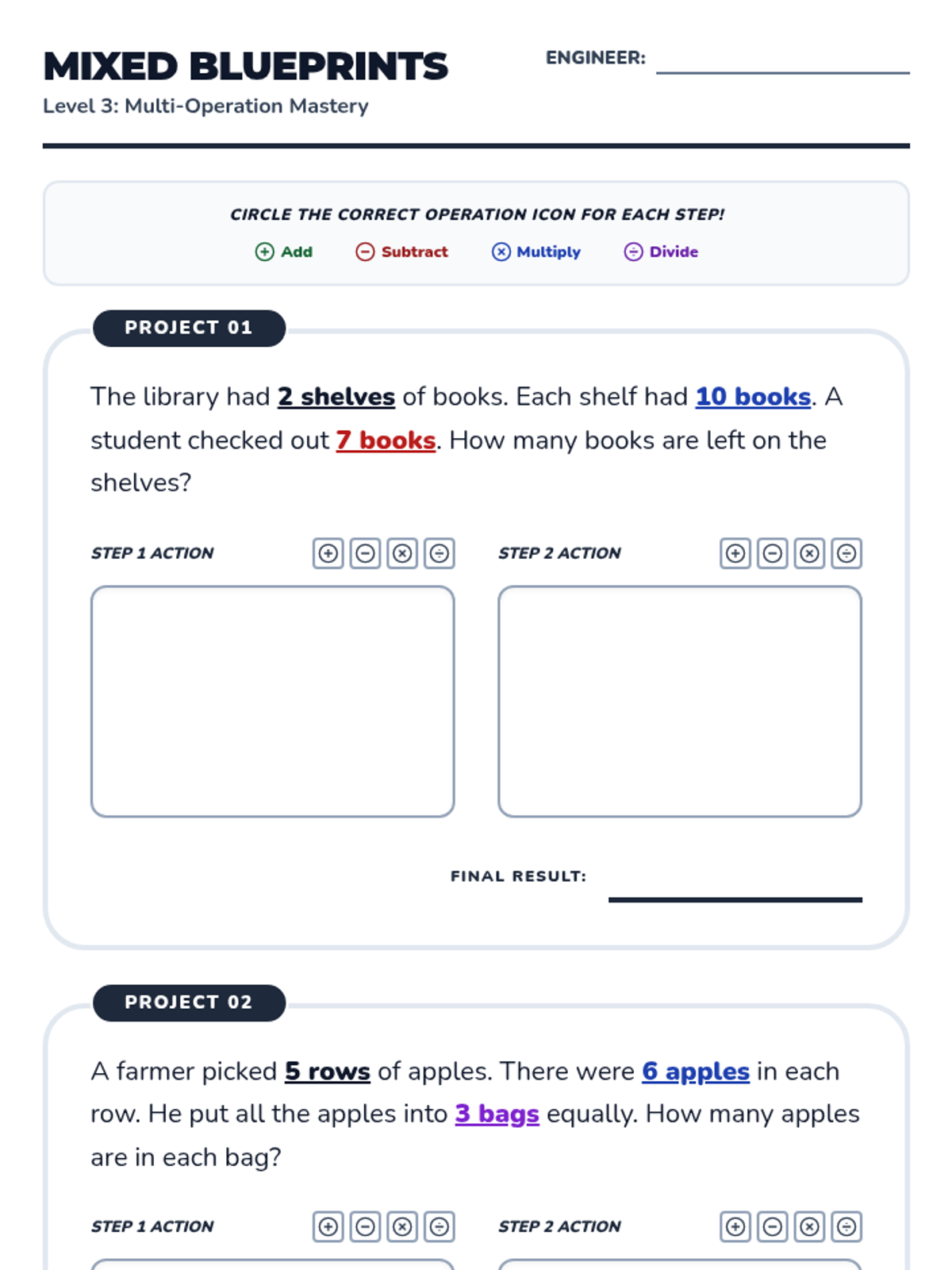
A math lesson focused on solving two-step word problems using the four operations, themed around managing a busy snack shop. Students learn to break down complex problems into manageable steps.
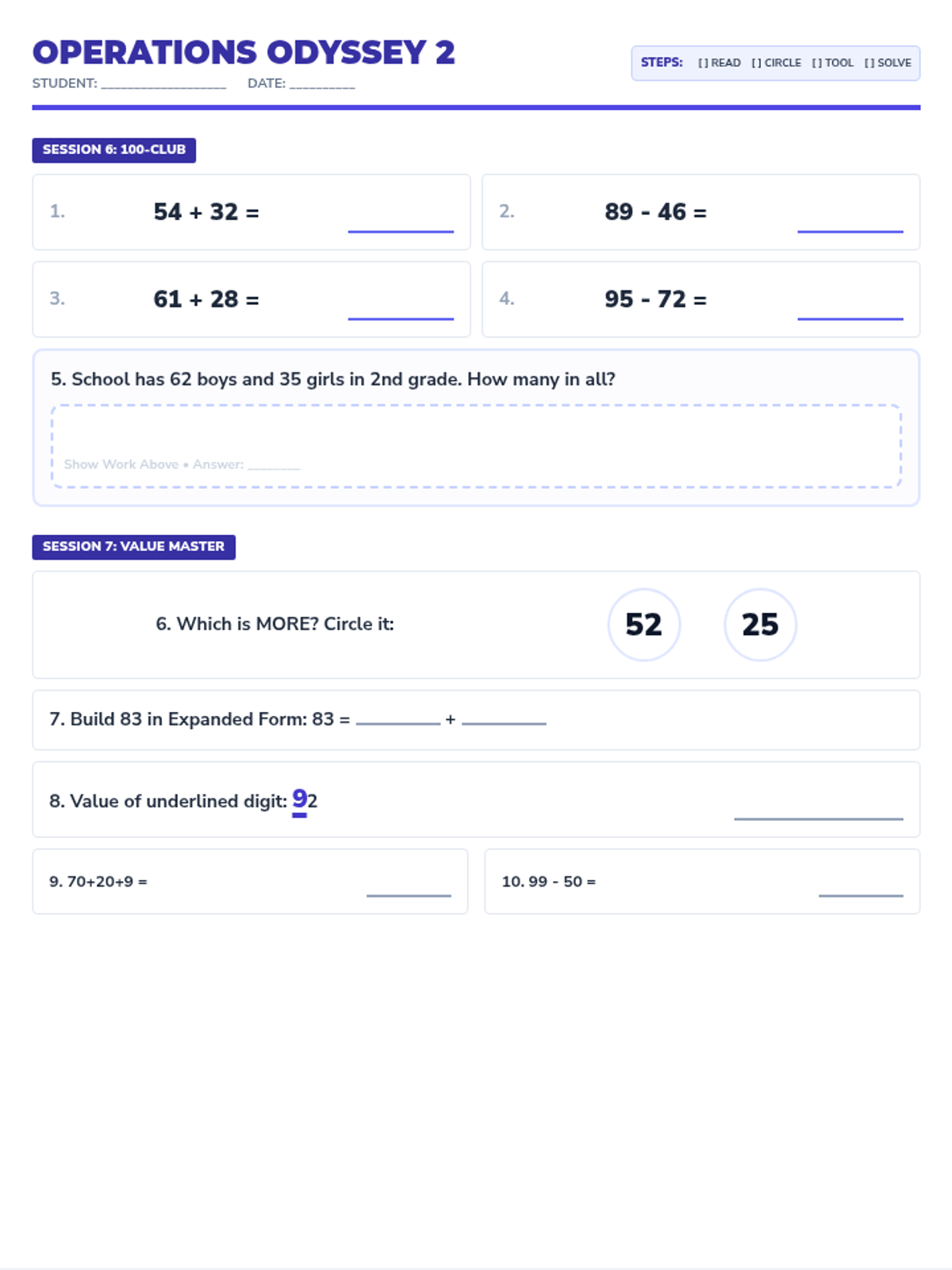
A lesson on solving mixed addition and subtraction word problems with regrouping for 2nd grade. Students use a detective-themed checklist to identify operations and solve double-digit problems accurately.
A comprehensive lesson on telling time to the minute, focusing on reading analog clocks and representing time accurately. Students will practice reading intricate clock faces and drawing hands to represent specific times.
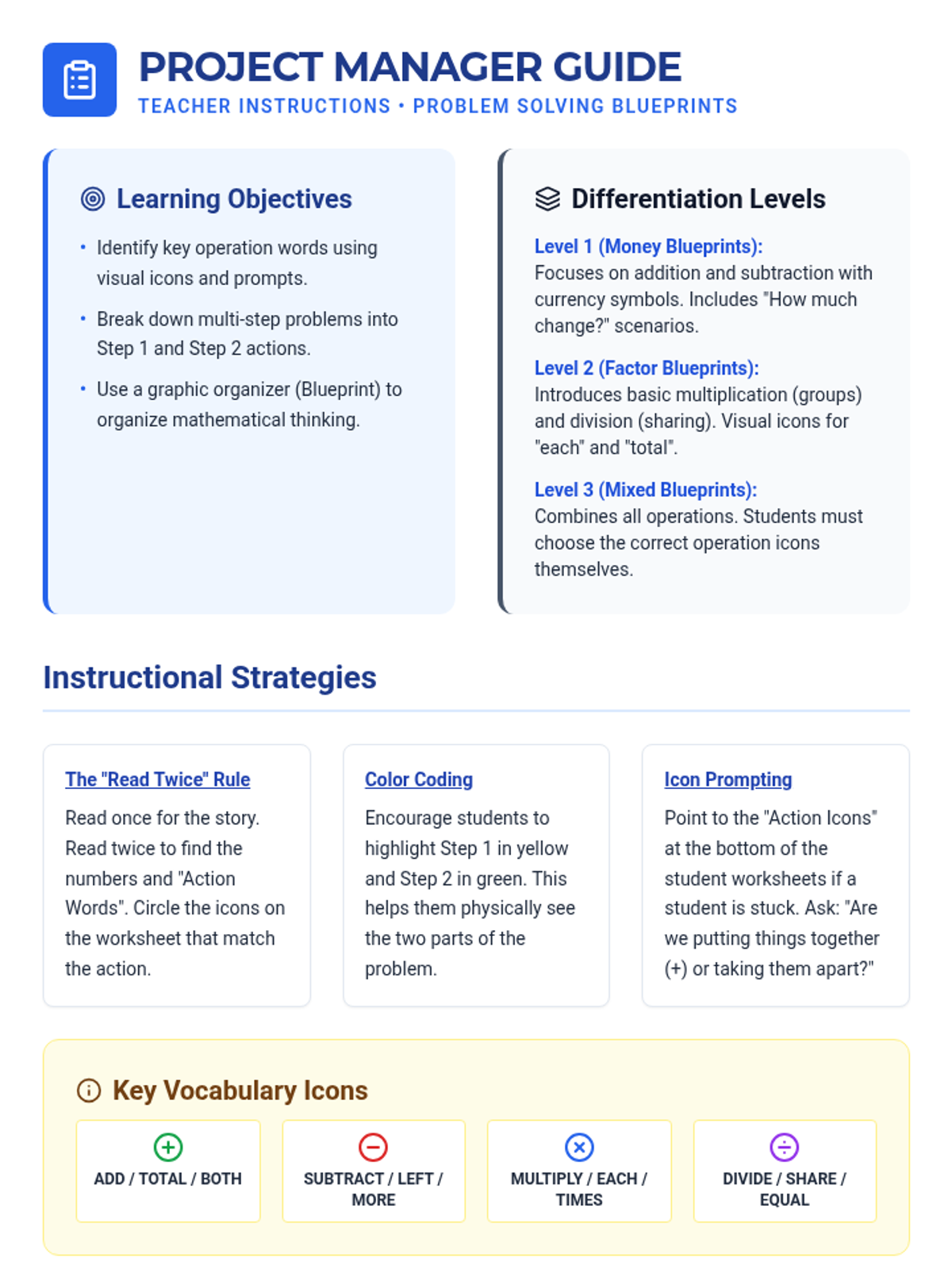
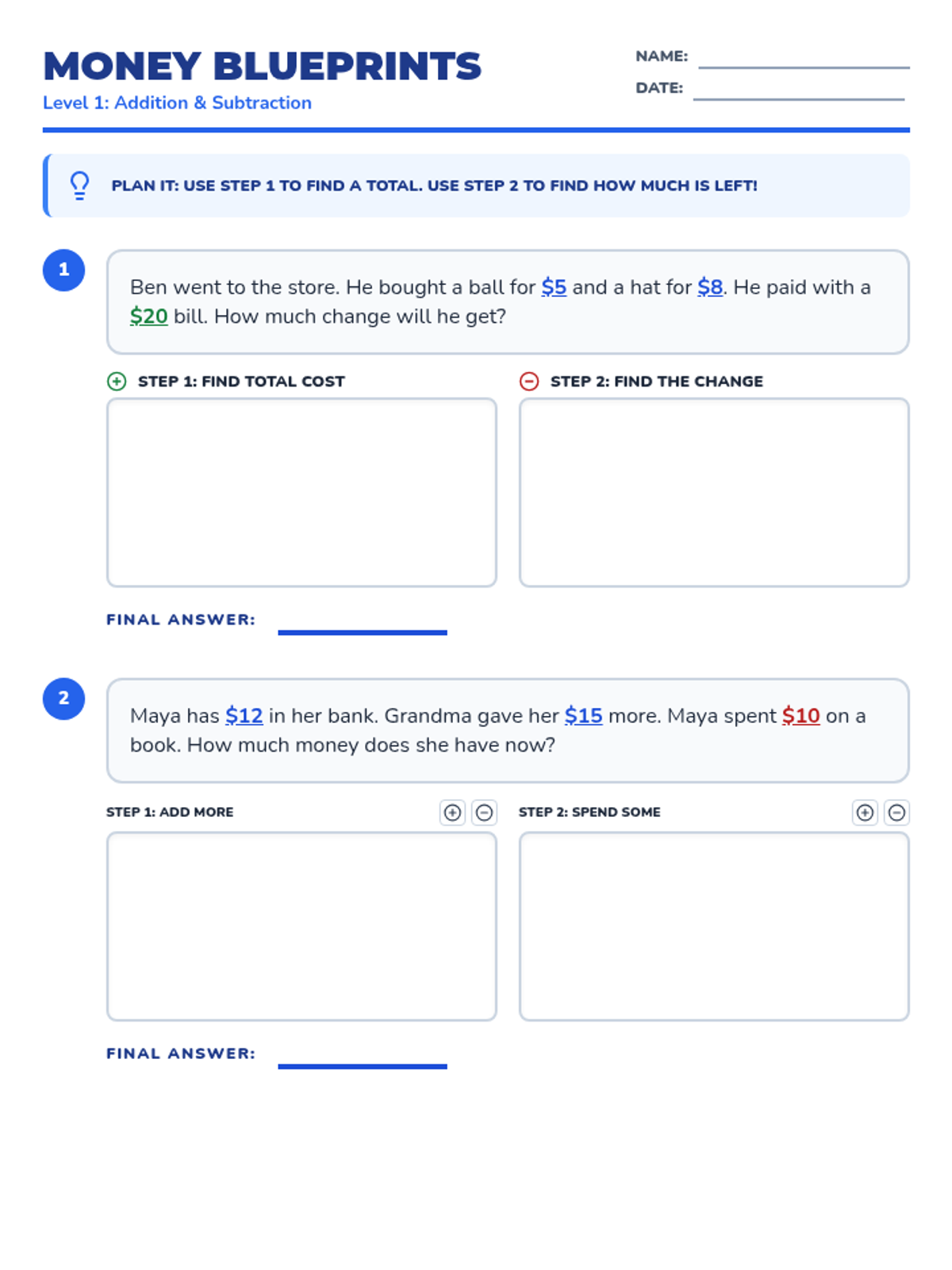
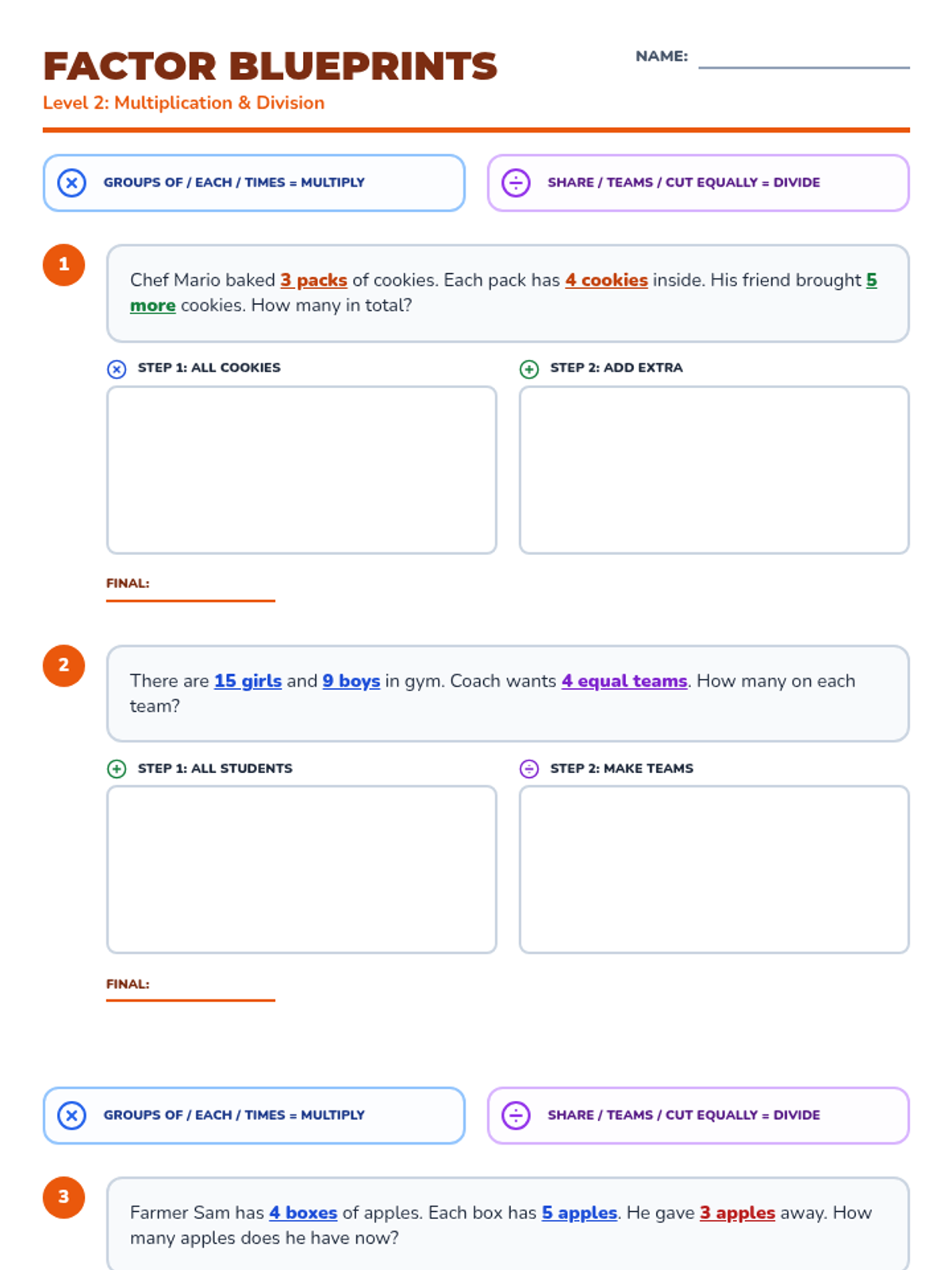
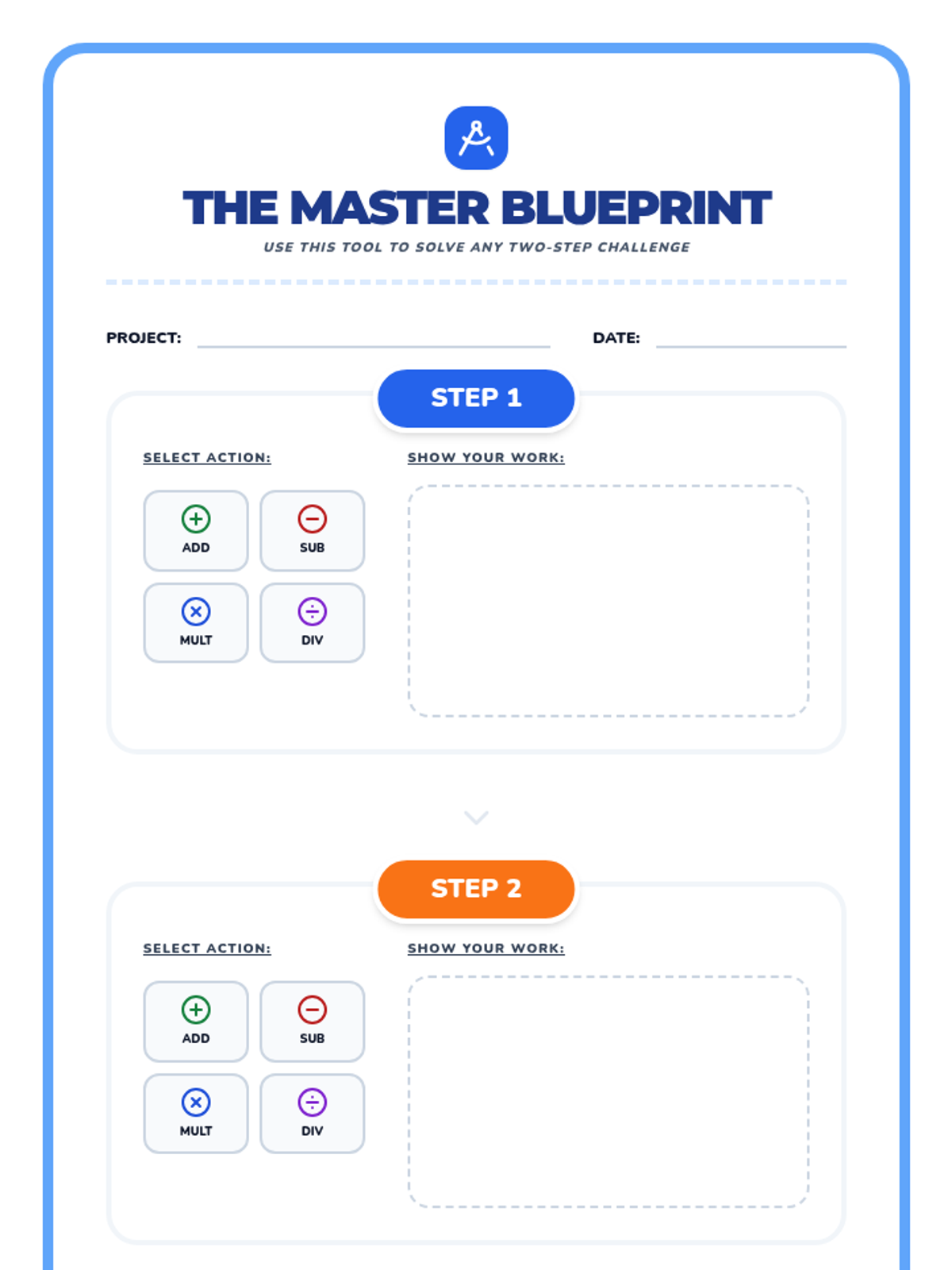
This lesson introduces students to multi-step word problems using a consistent graphic organizer (the Blueprint). It includes differentiated materials for various skill levels and operational focuses.
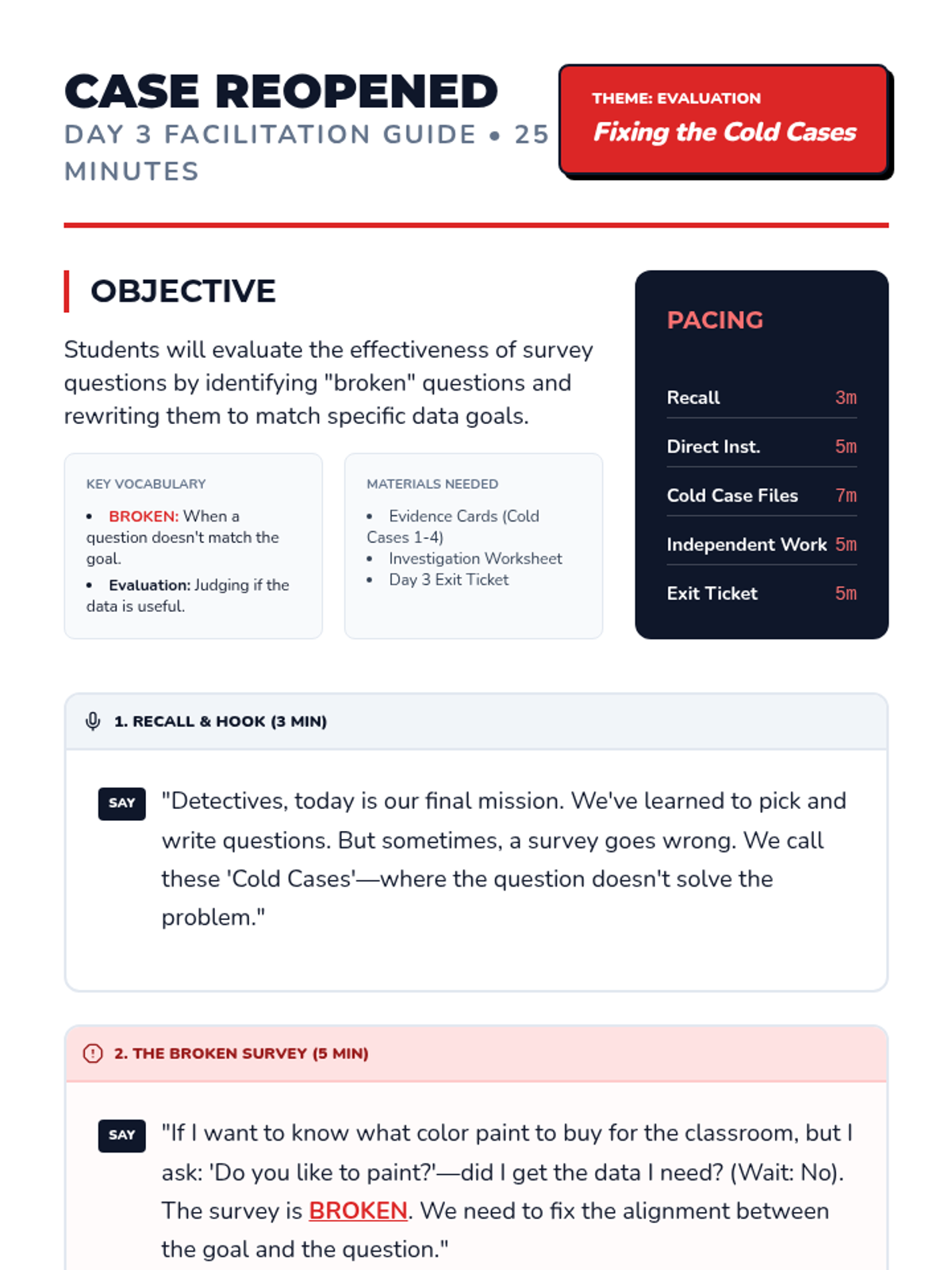
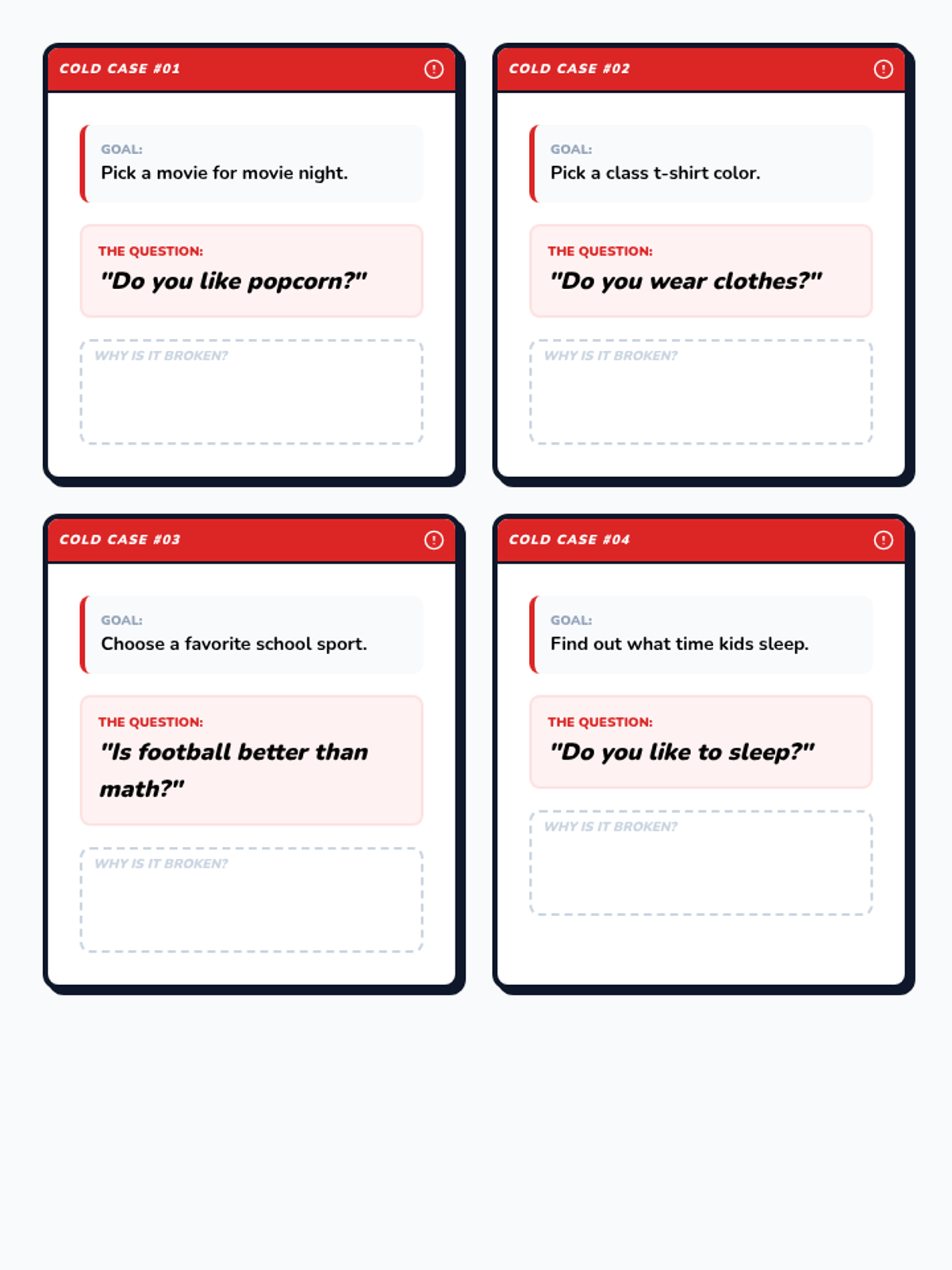
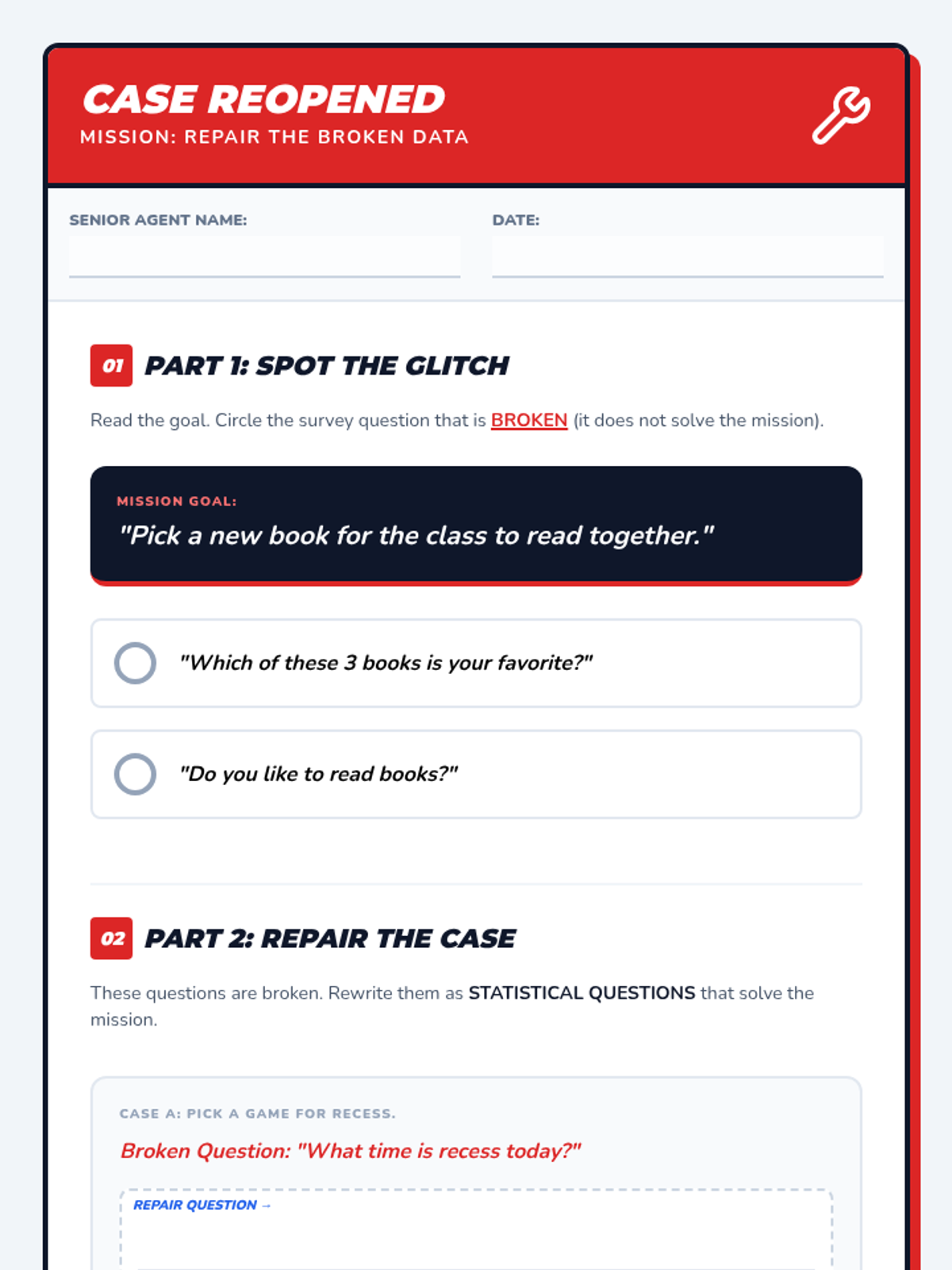
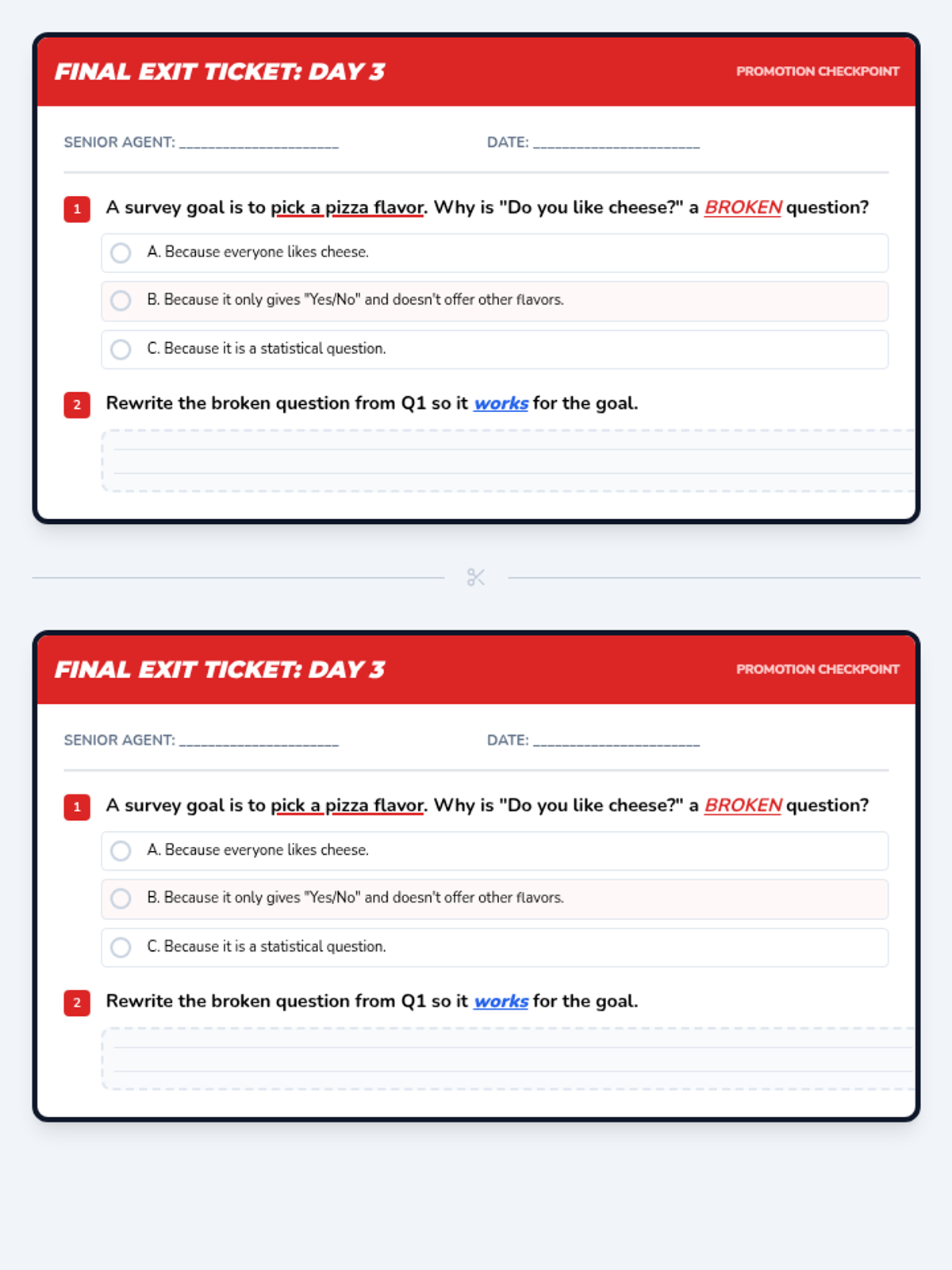
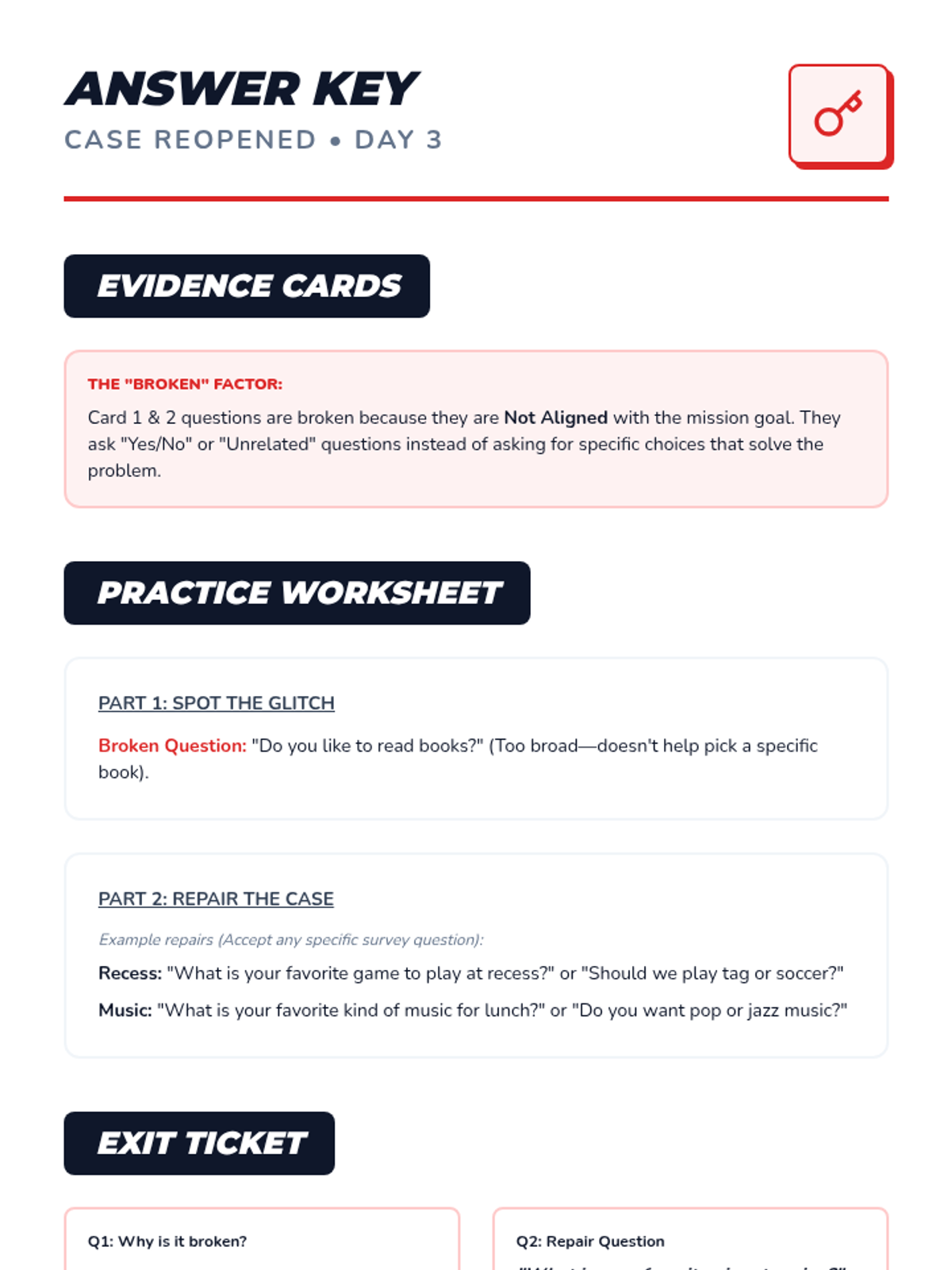
The final mission where students evaluate the effectiveness of data collection. They analyze "broken" surveys where the question didn't match the goal and practice rewriting them for accuracy.
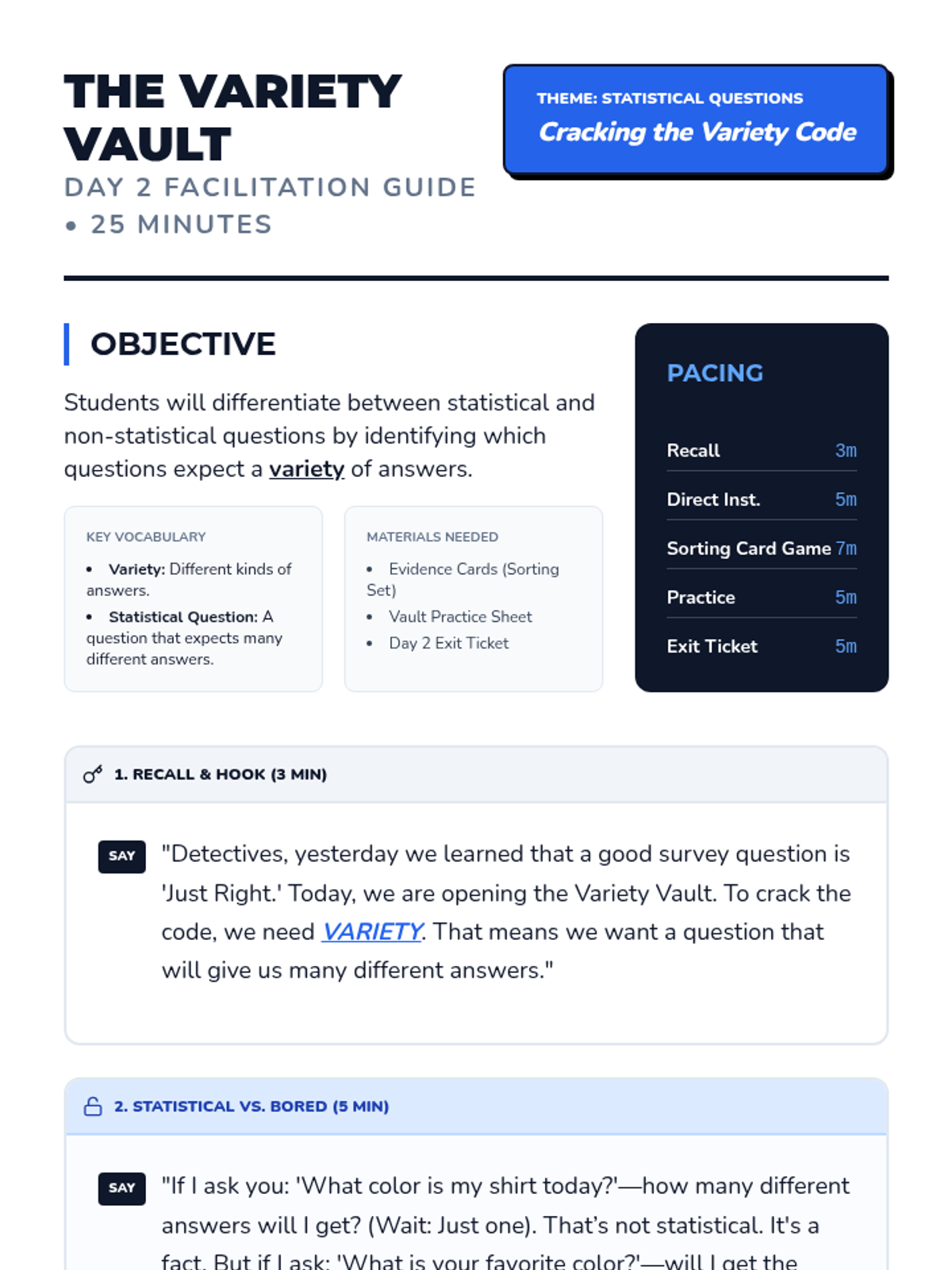
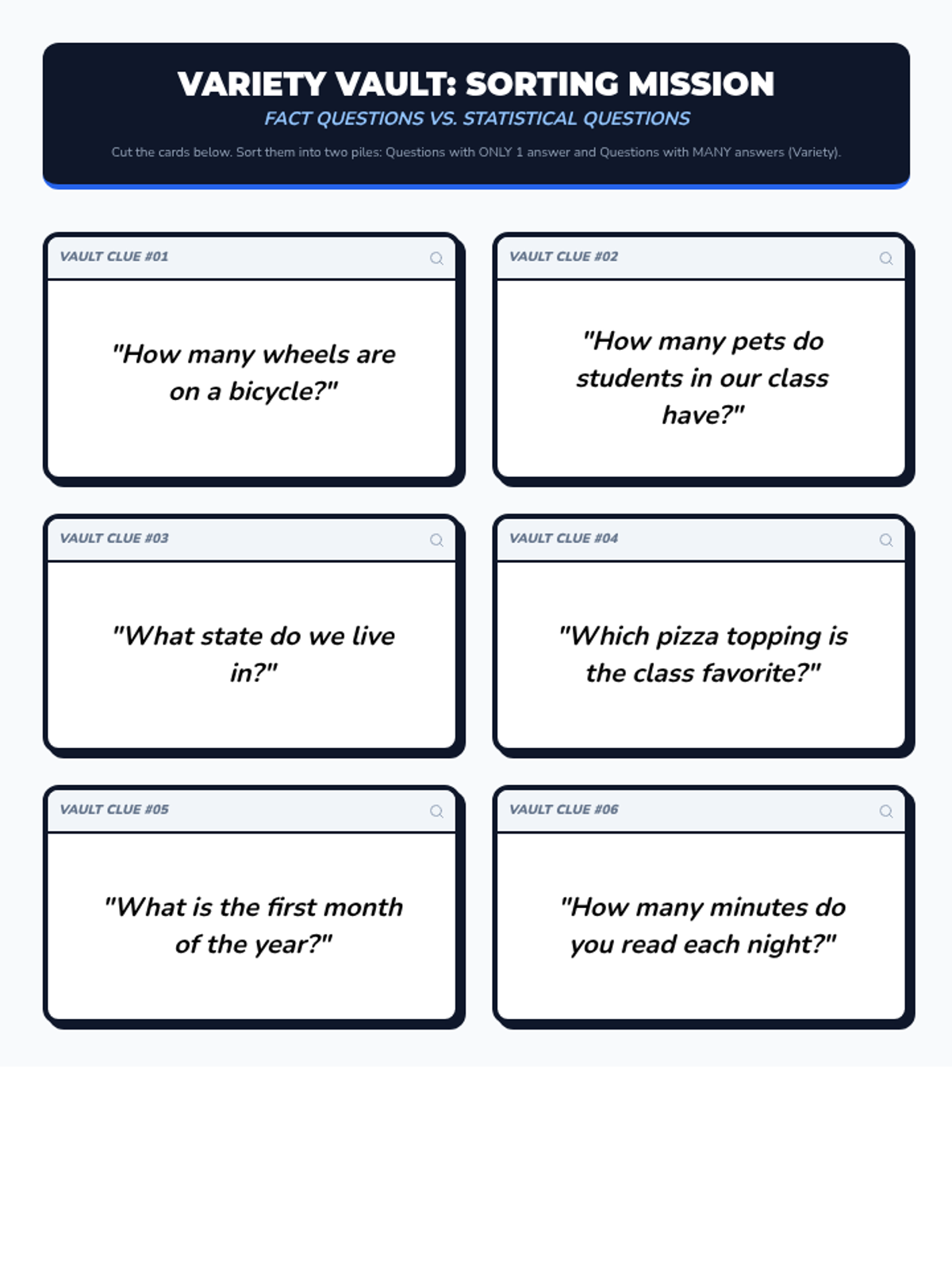
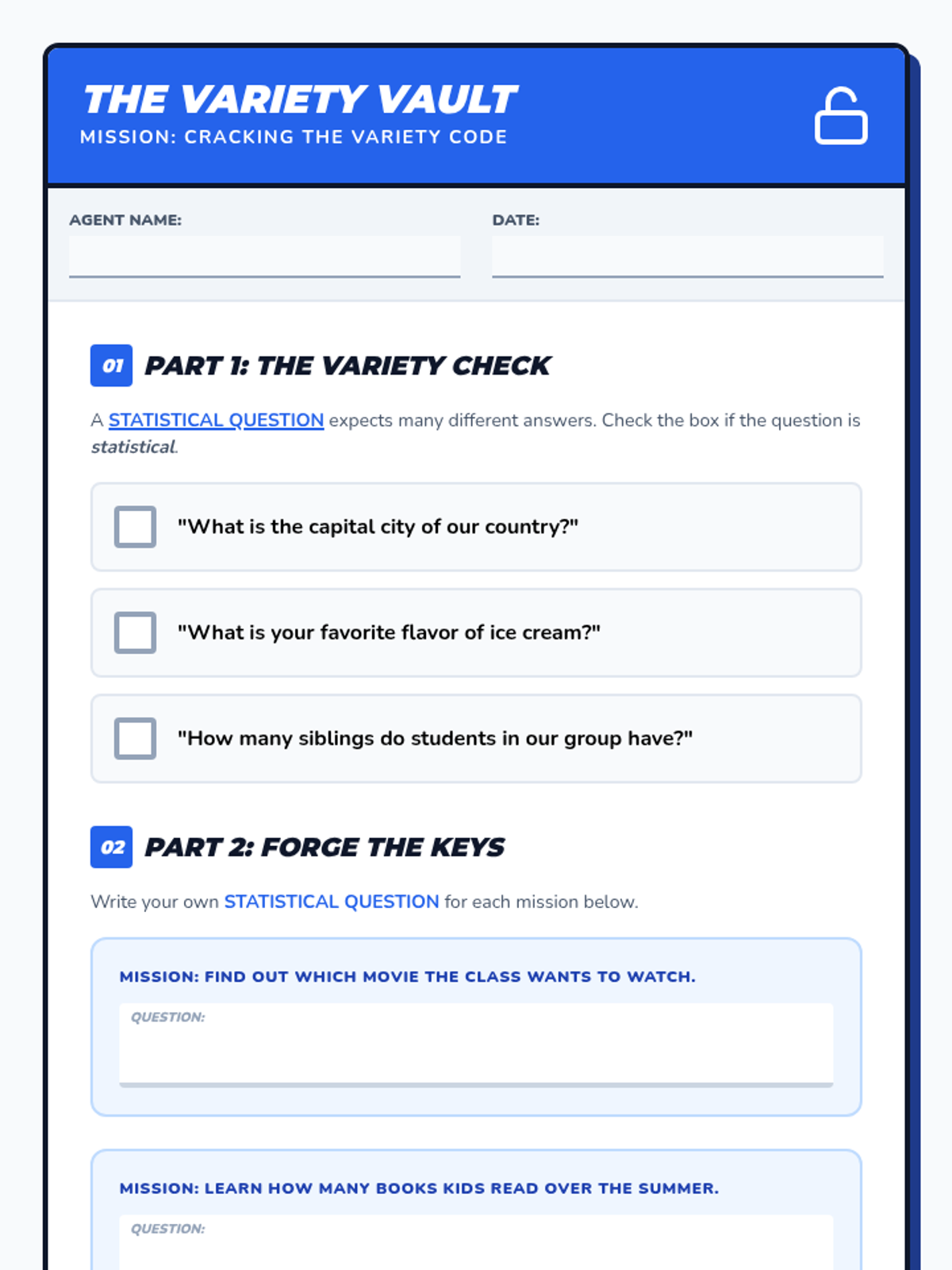
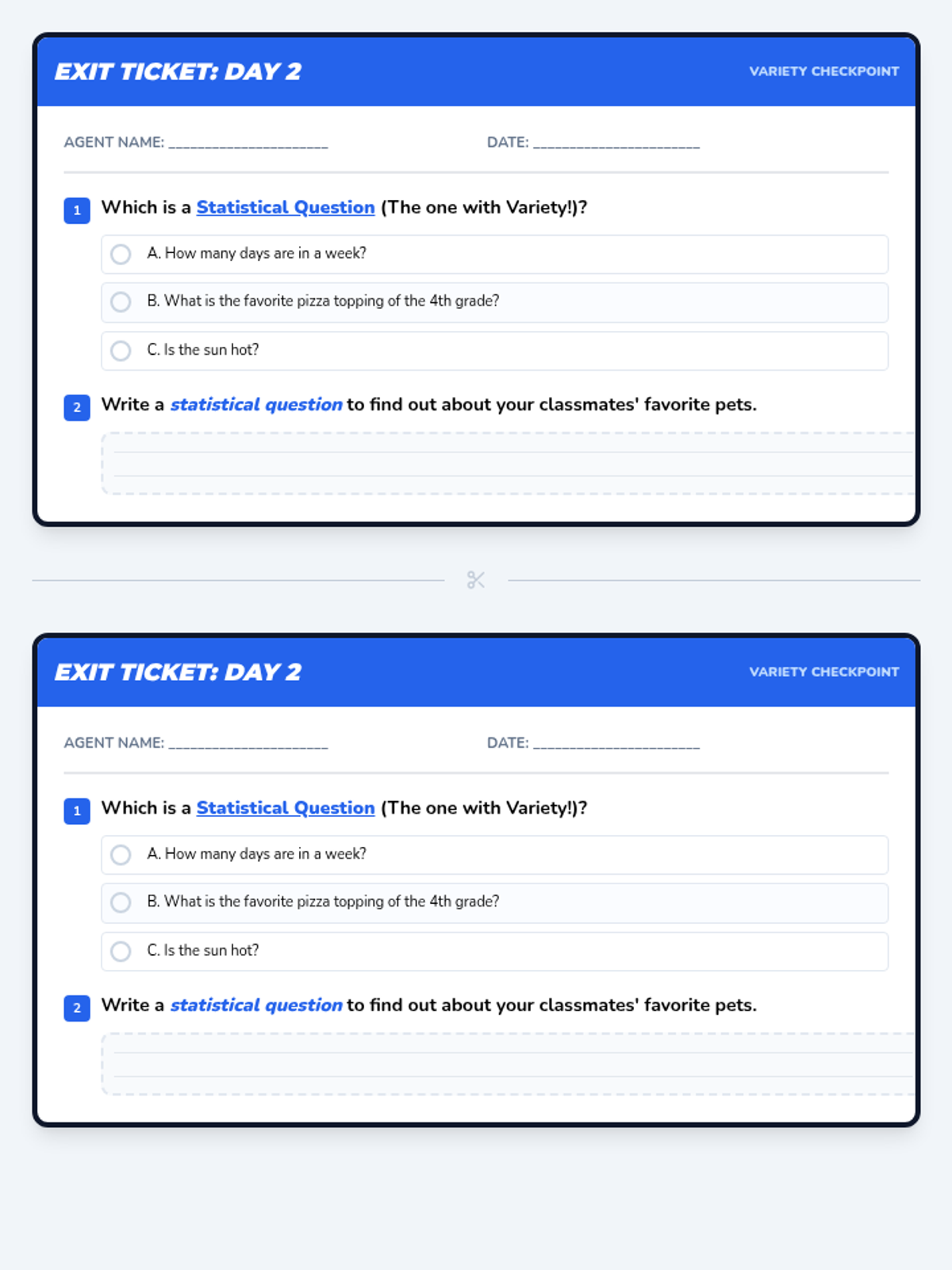
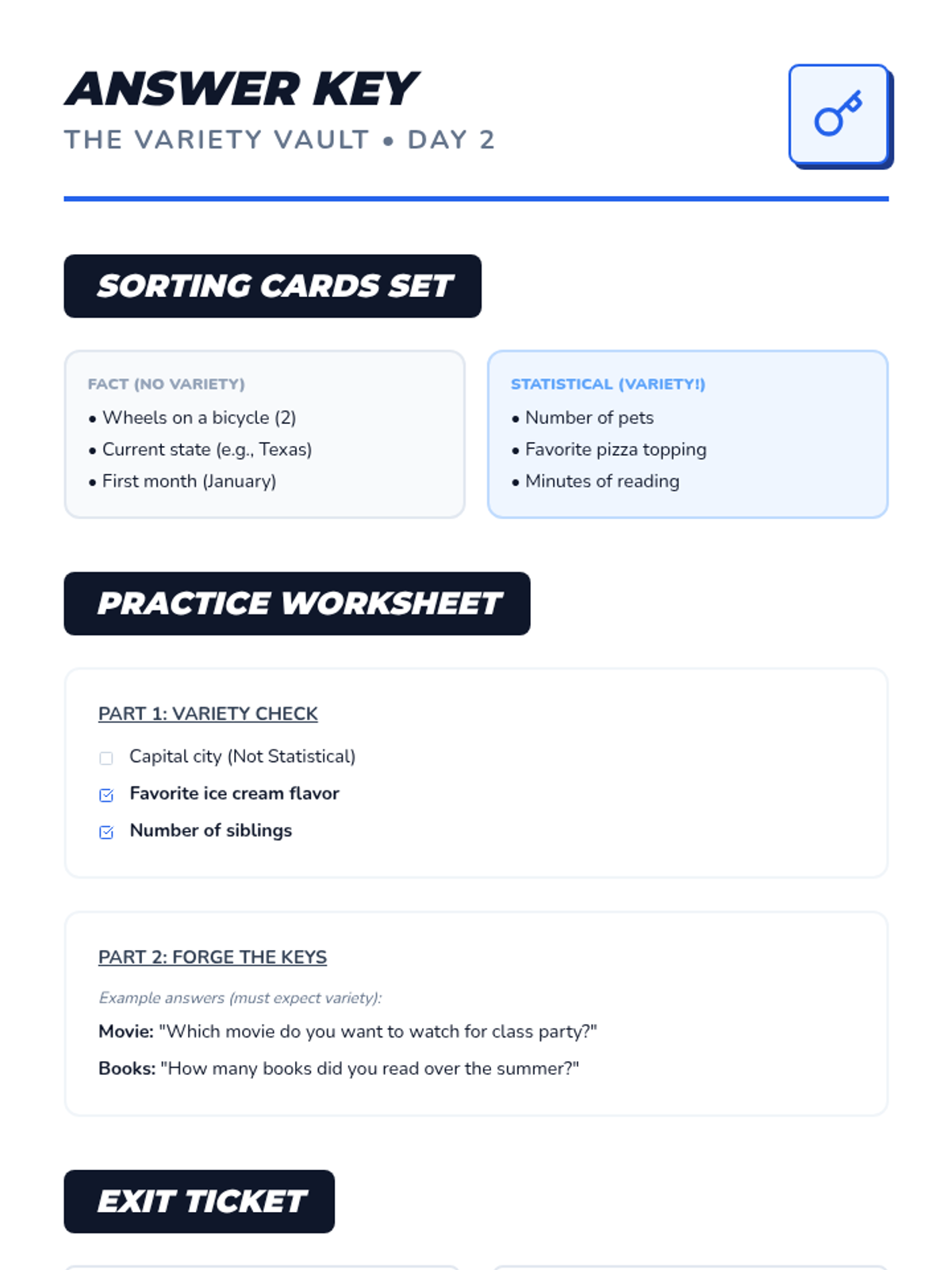
Focuses on differentiating between statistical and non-statistical questions. Students learn that a good survey question must expect a variety of answers to be useful for data collection.
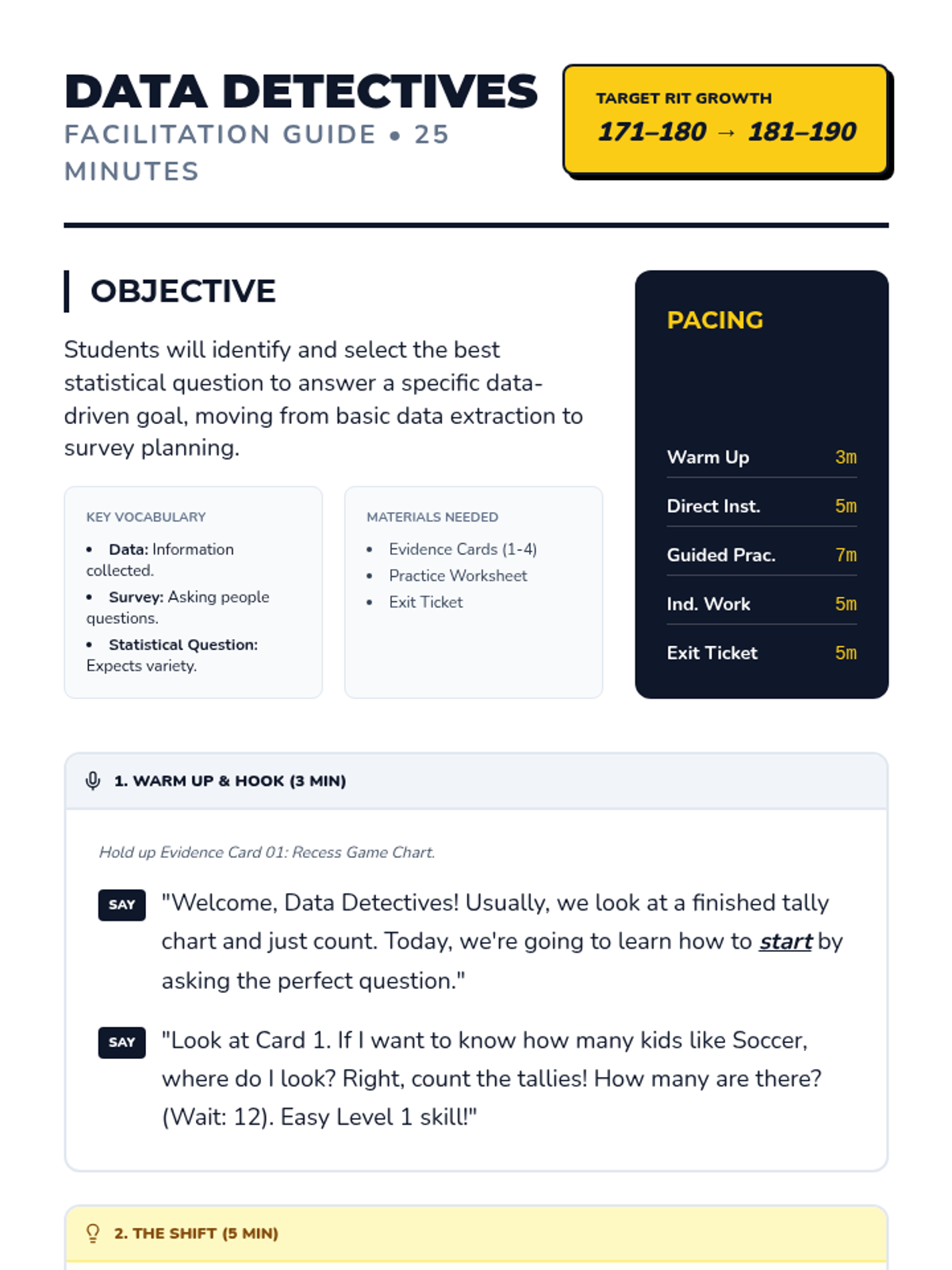
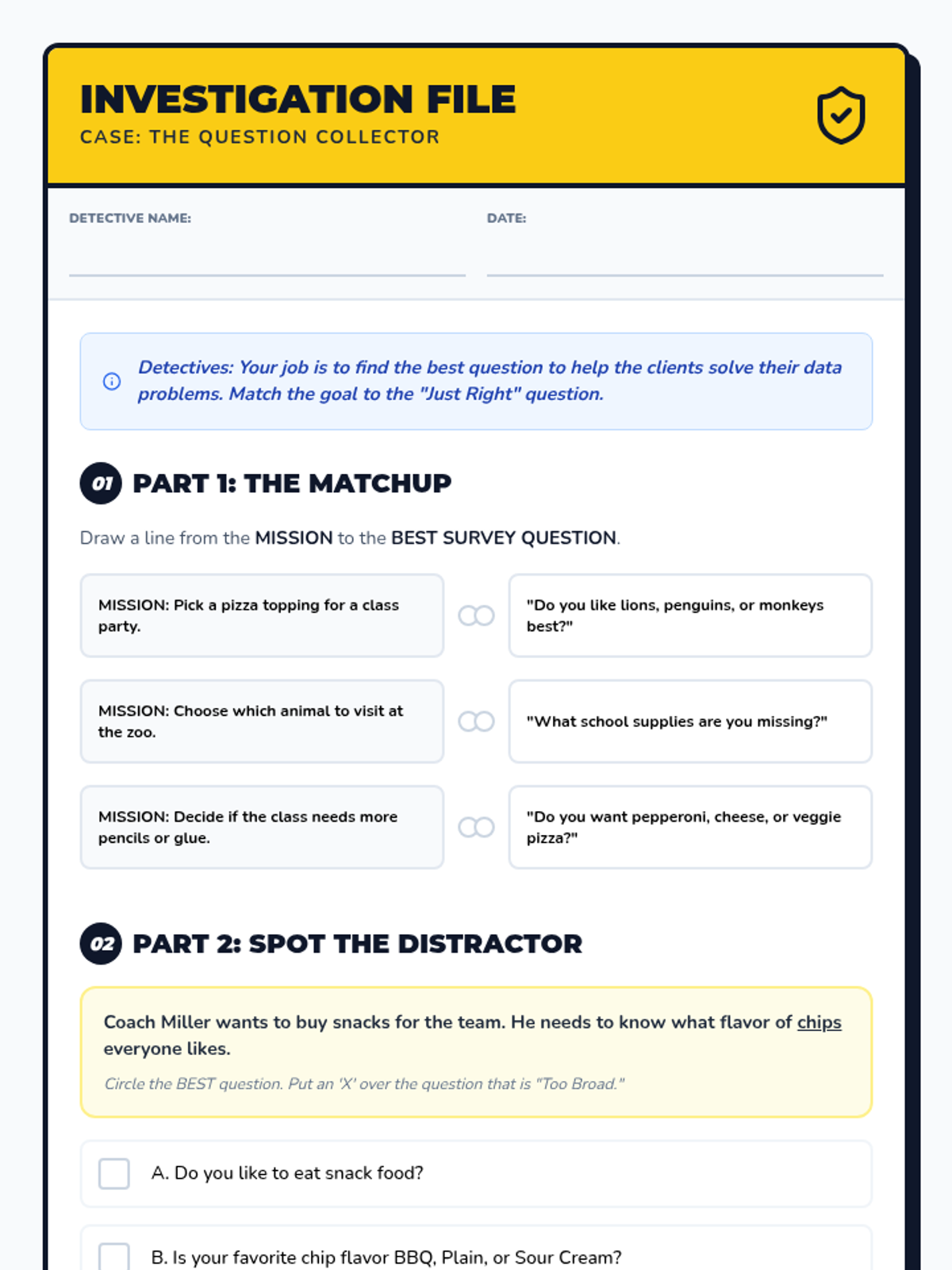
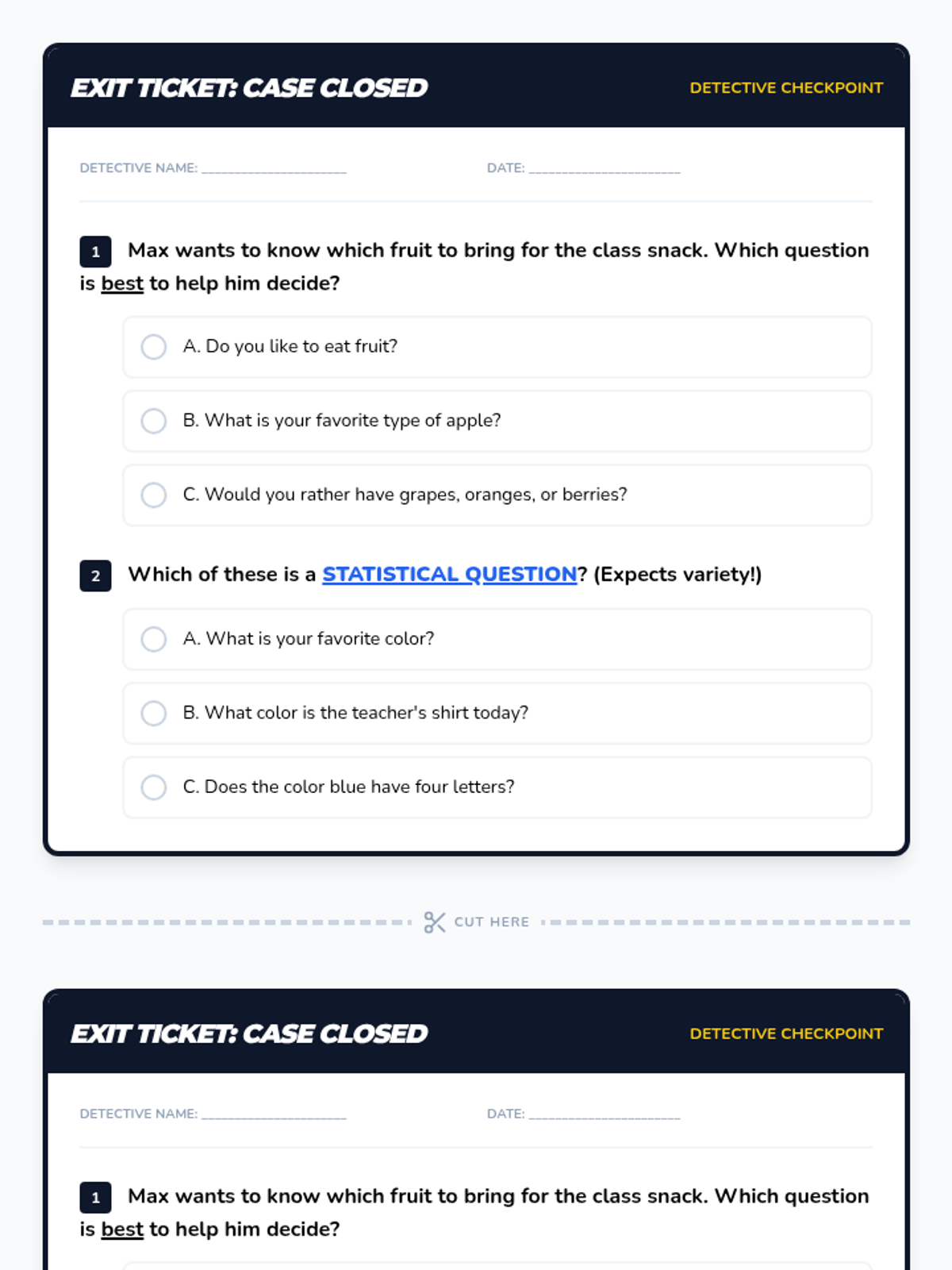
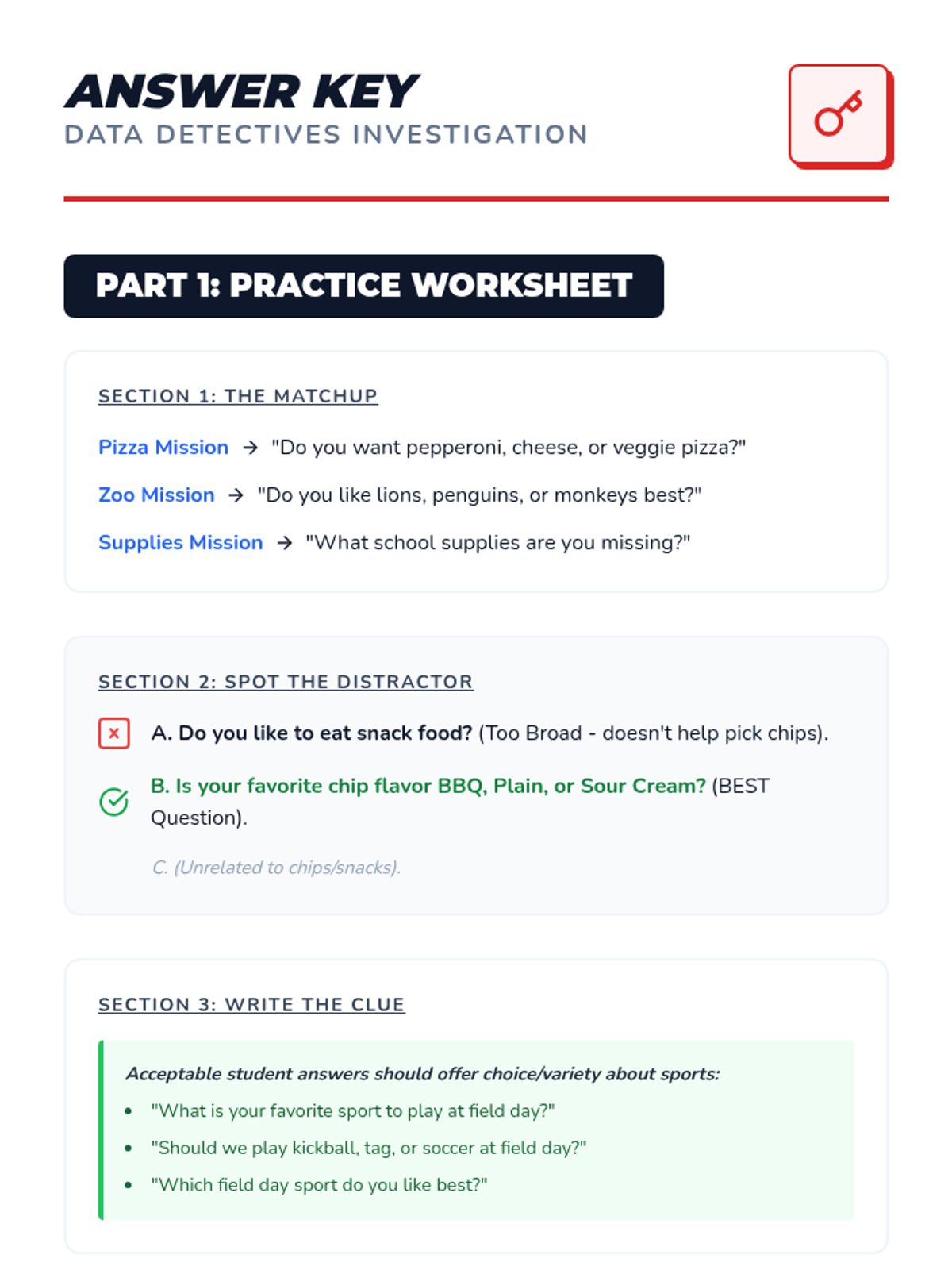
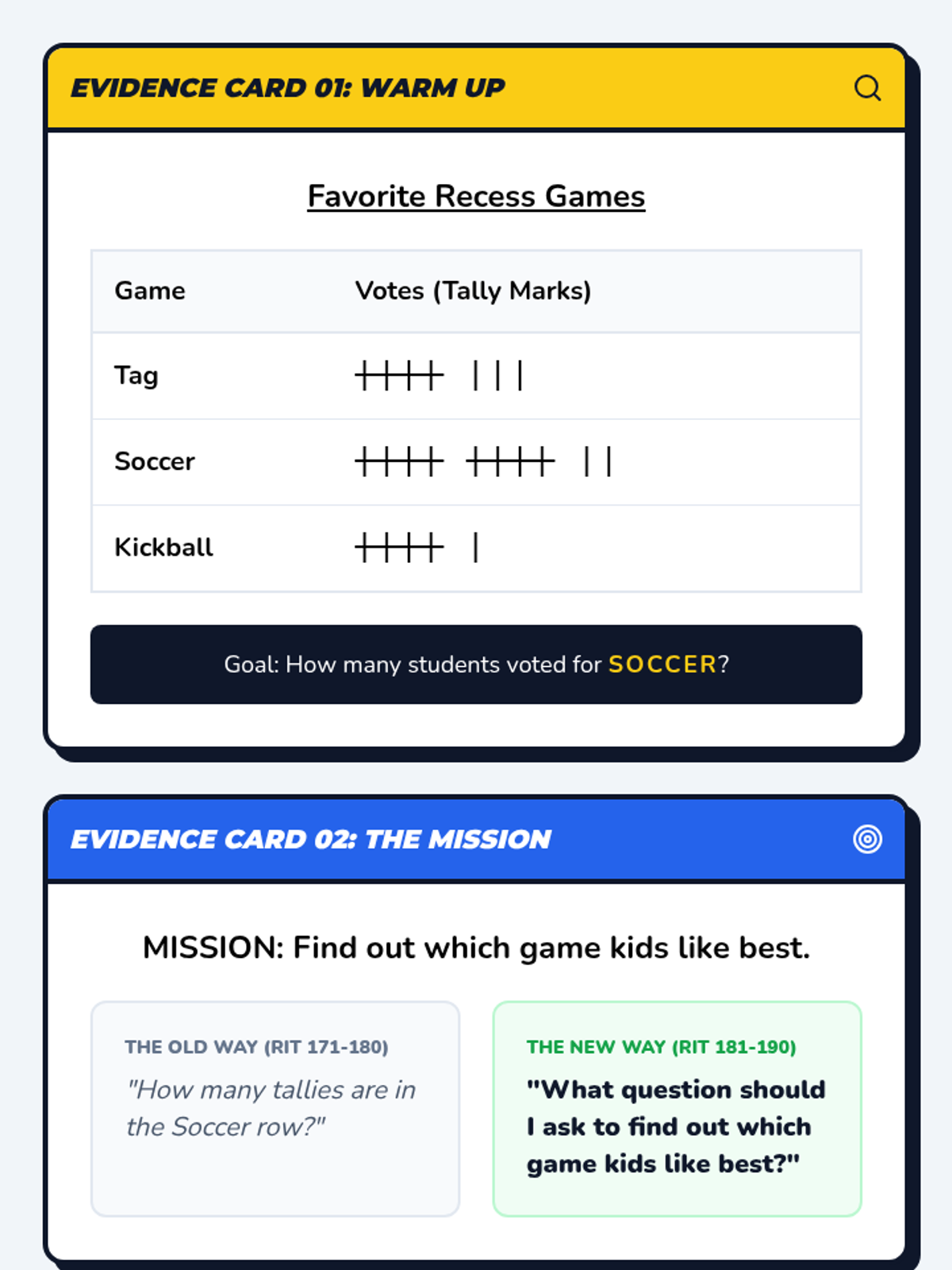
A 25-minute small group lesson designed to move students from RIT 171-180 to 181-190 by shifting from basic data interpretation to formulating and selecting effective statistical questions.
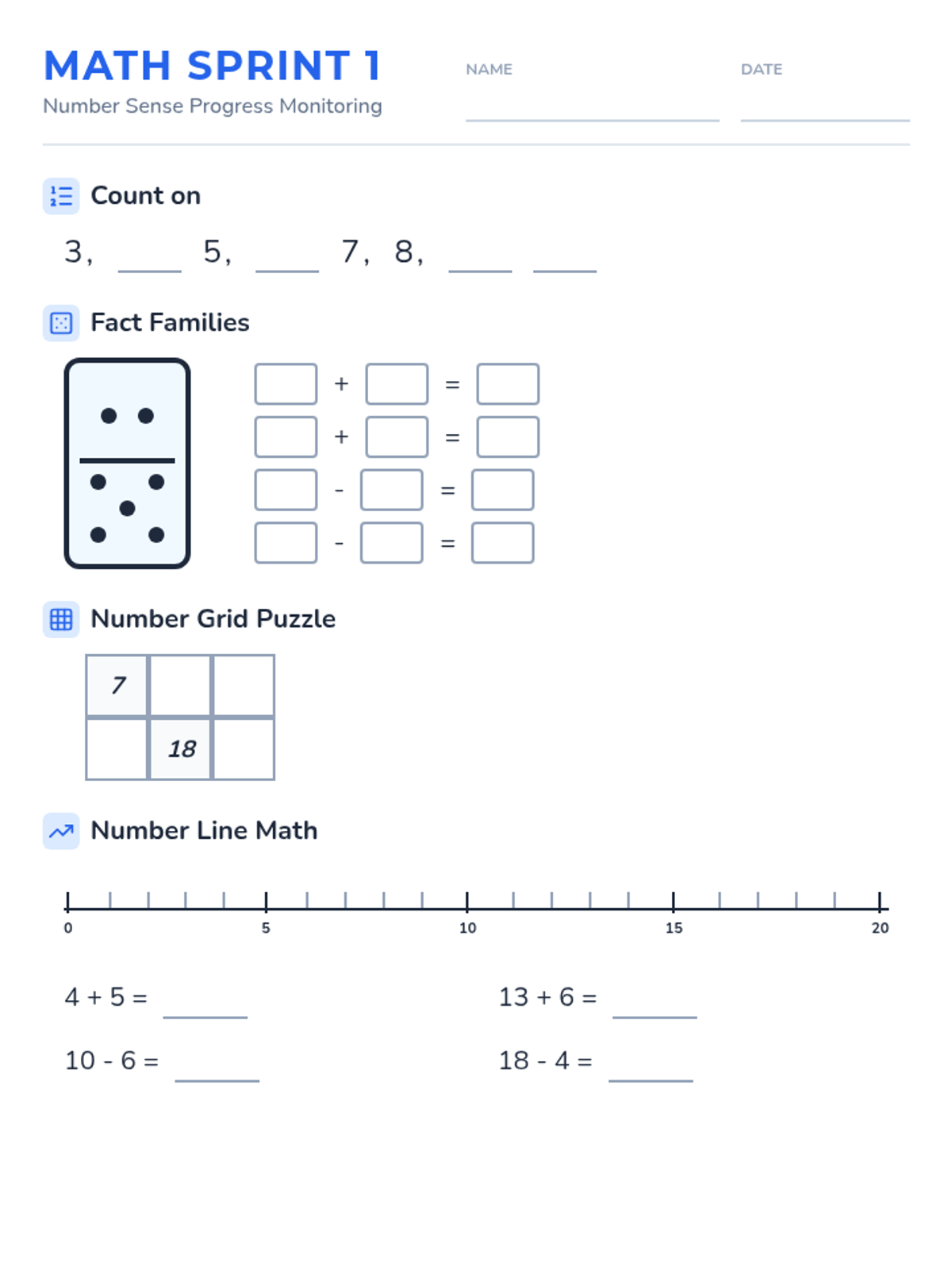
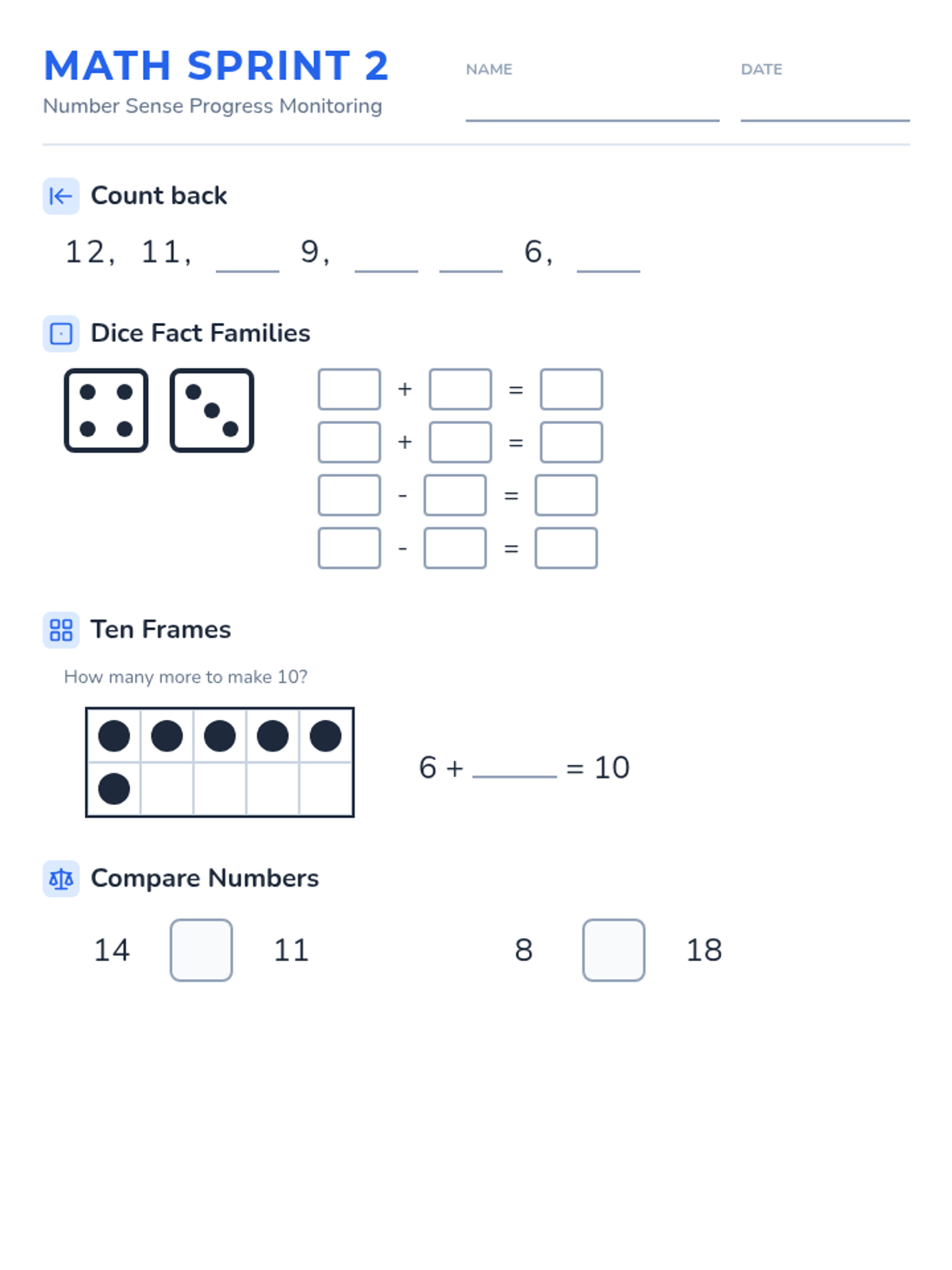
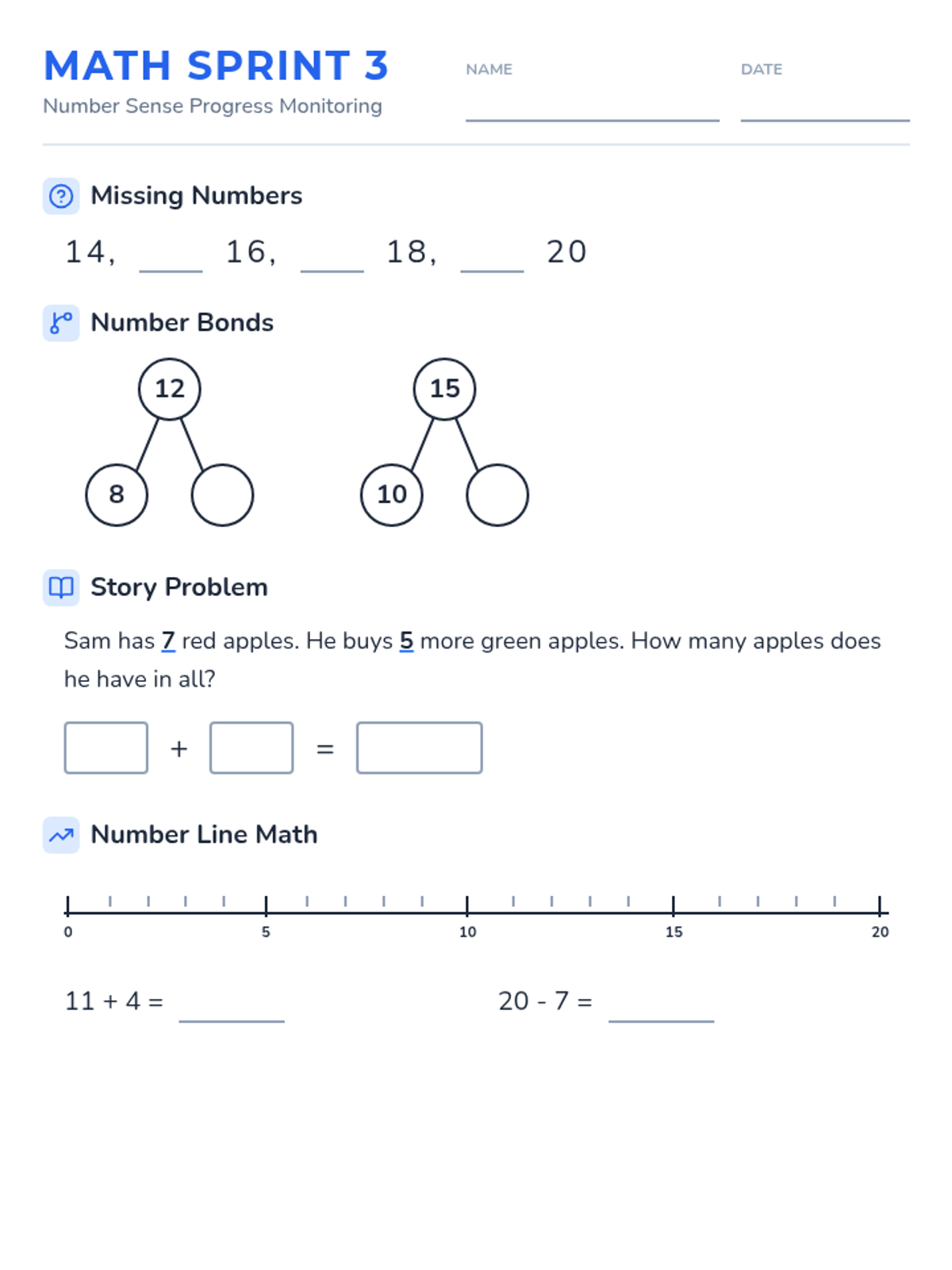
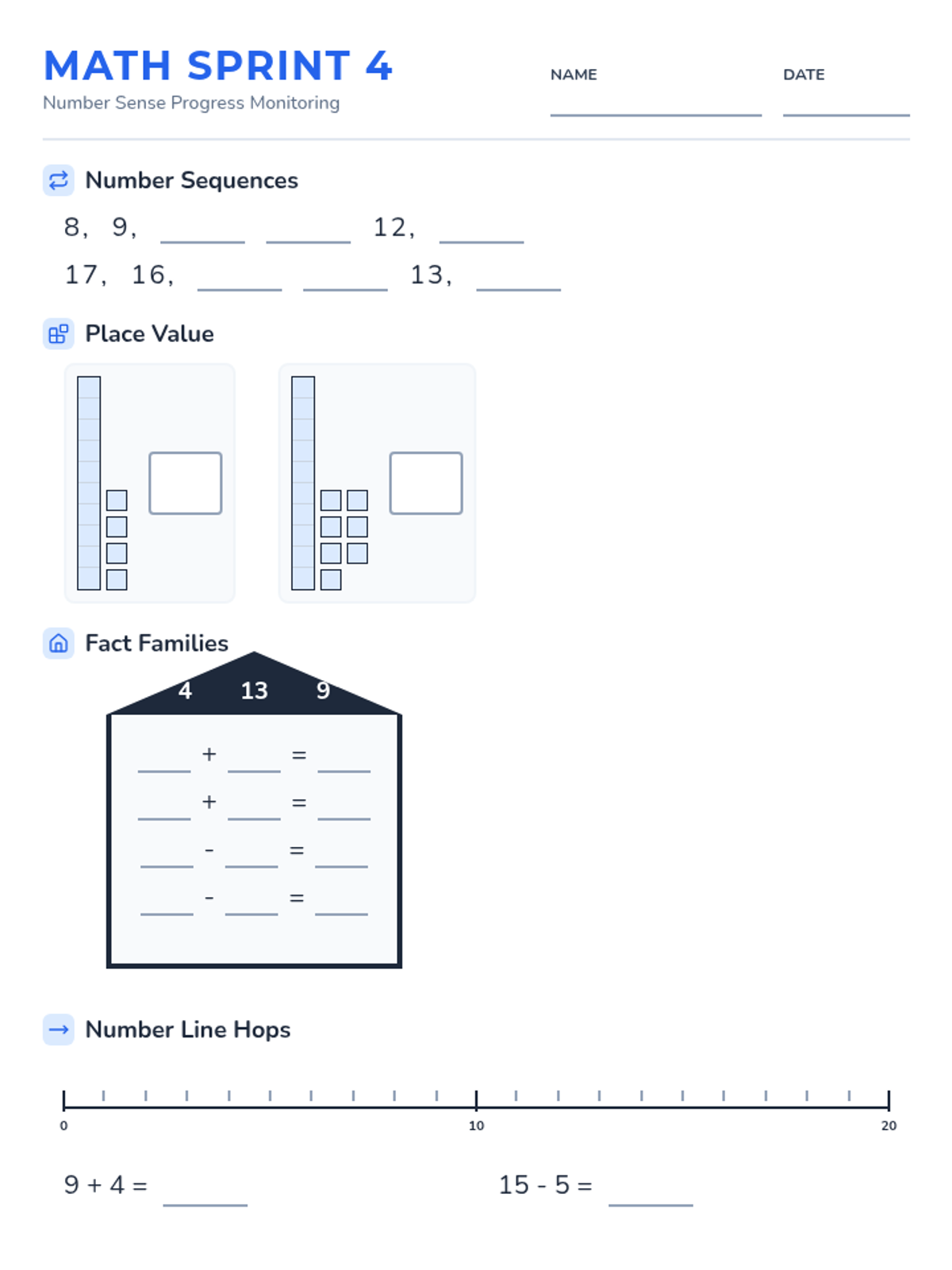
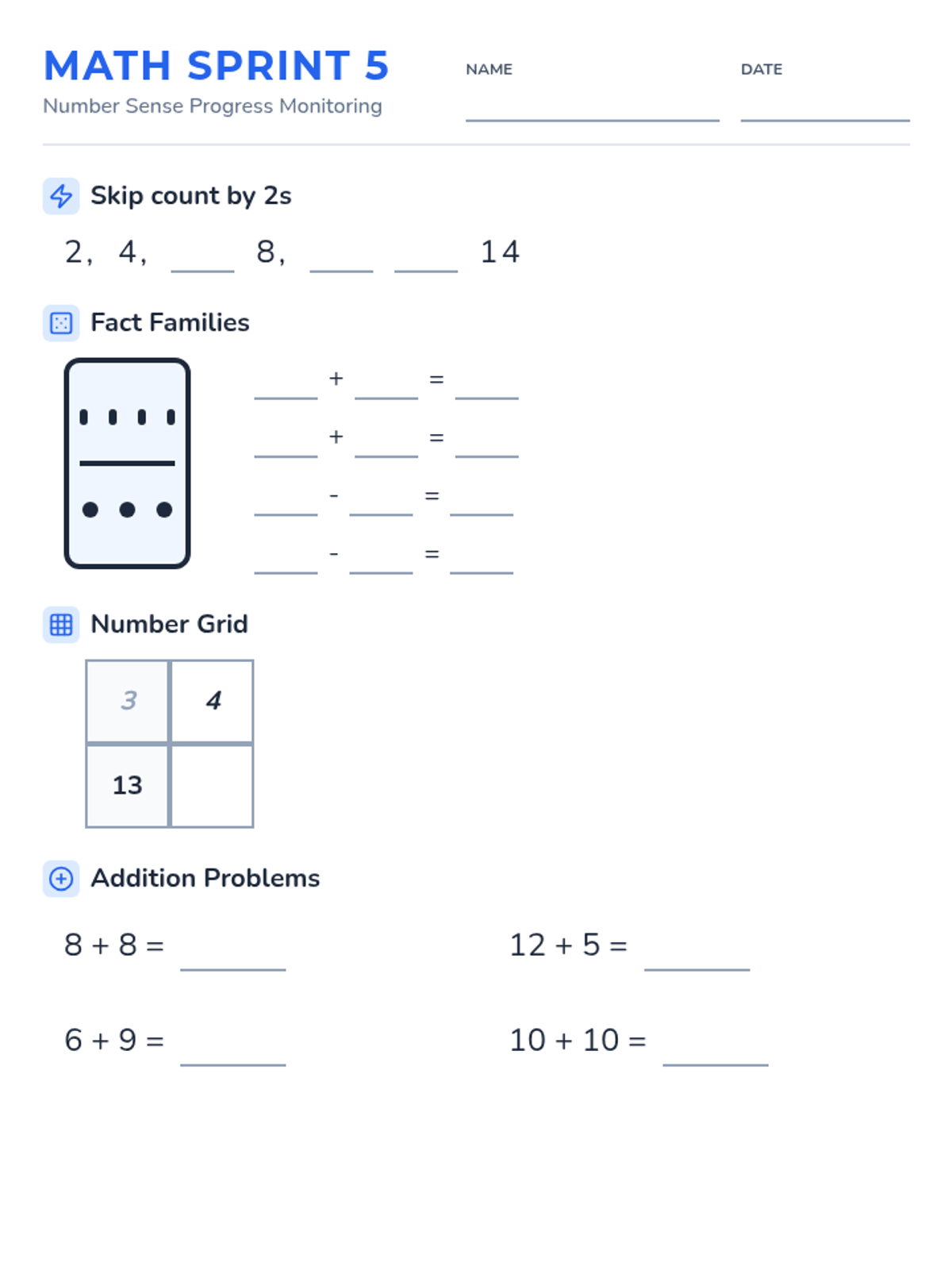
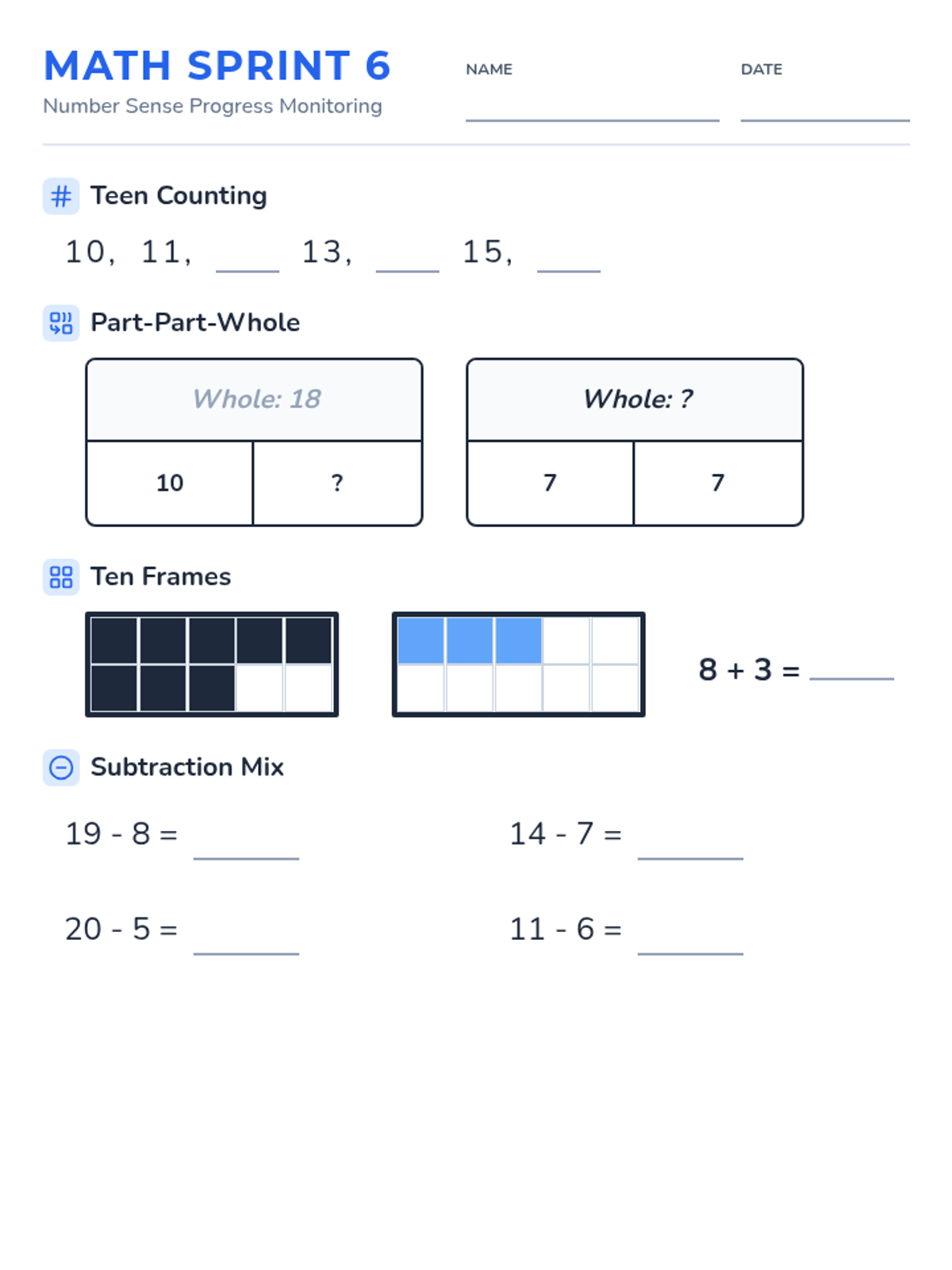
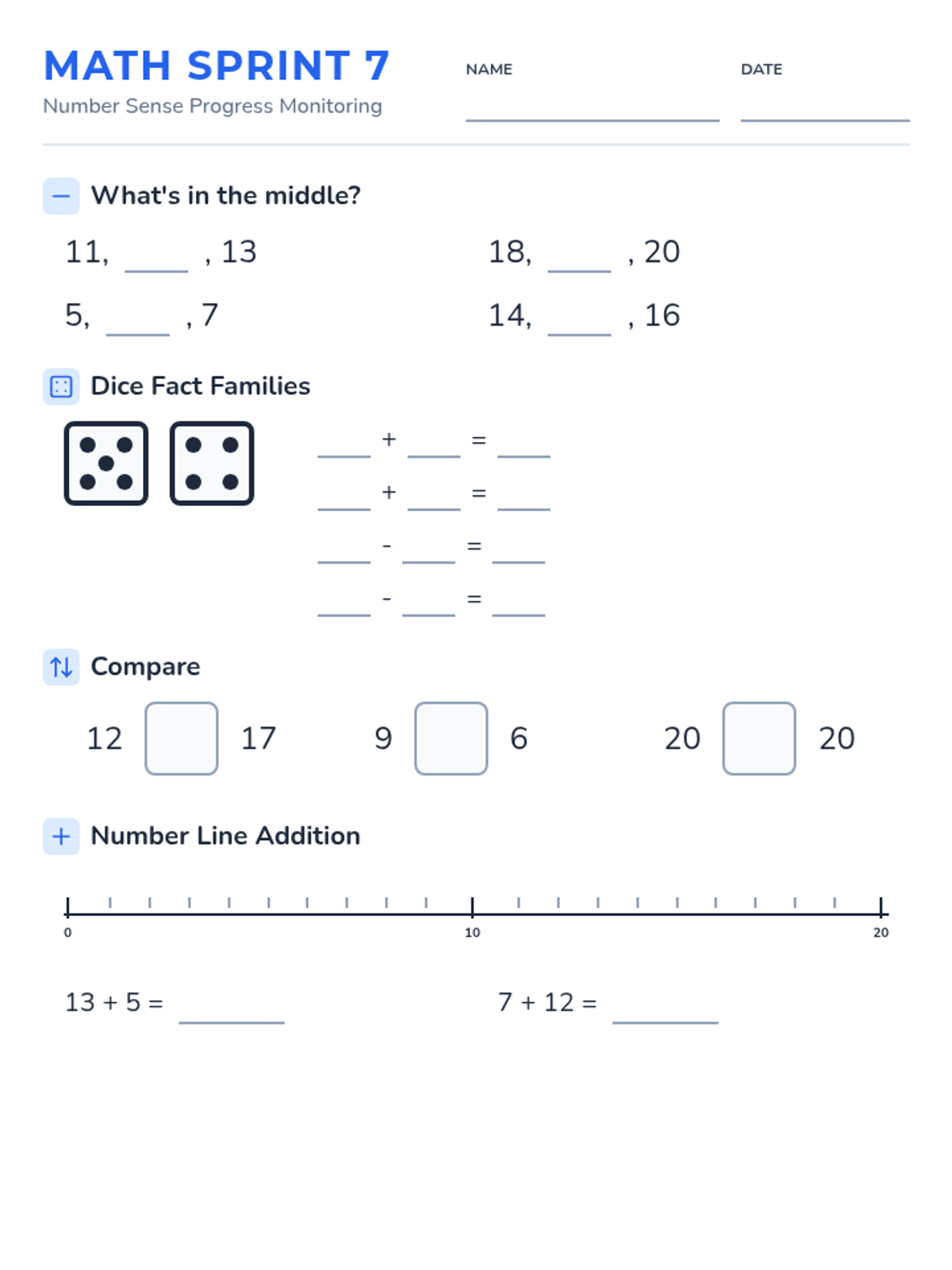
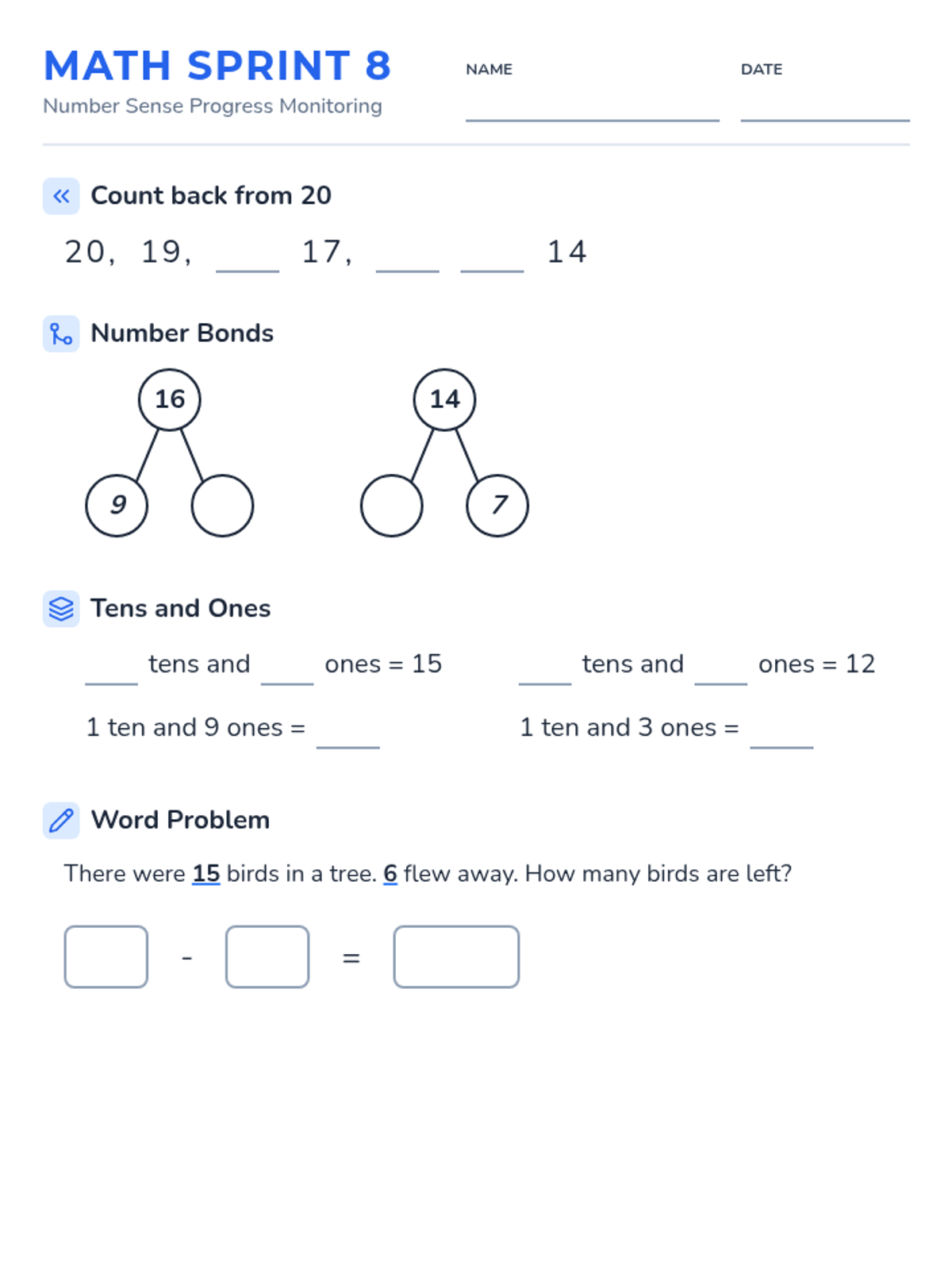
A set of 8 math progress monitoring worksheets focused on core number sense skills for numbers 0-20, including addition, subtraction, fact families, and place value strategies.
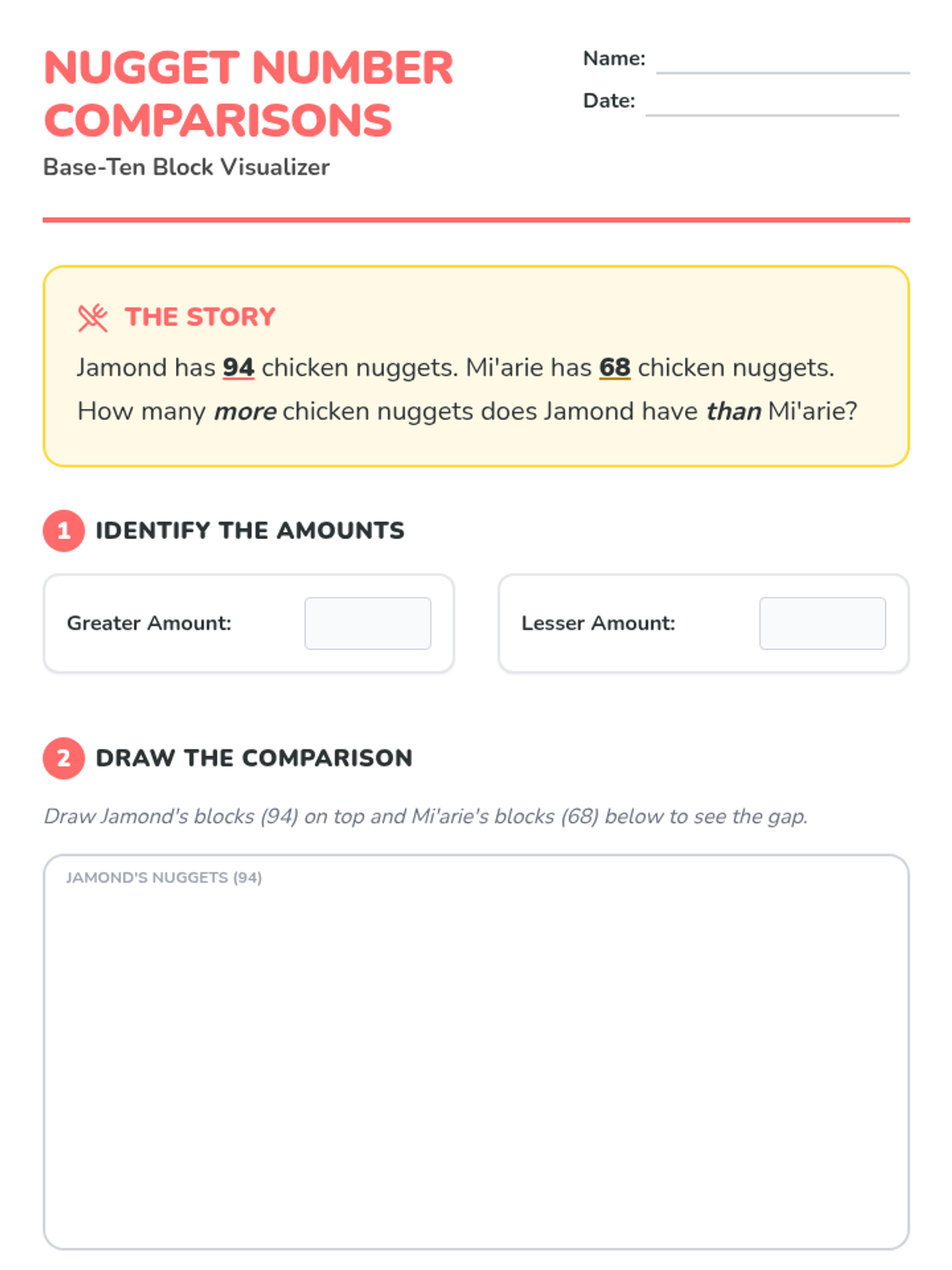
A visual exploration of subtraction using base-ten blocks to compare two quantities. Students learn to identify the greater and lesser values and define 'difference' through a real-world story problem involving chicken nuggets.
A foundational lesson on measurement, specifically focusing on inches and half-inches, translated into Japanese. Students learn to partition rulers and record data.
A comprehensive introduction to measurement, focusing on length, using inches and halves of an inch. Students learn to use rulers, collect data, and represent it on line plots while developing precision in their measurements.
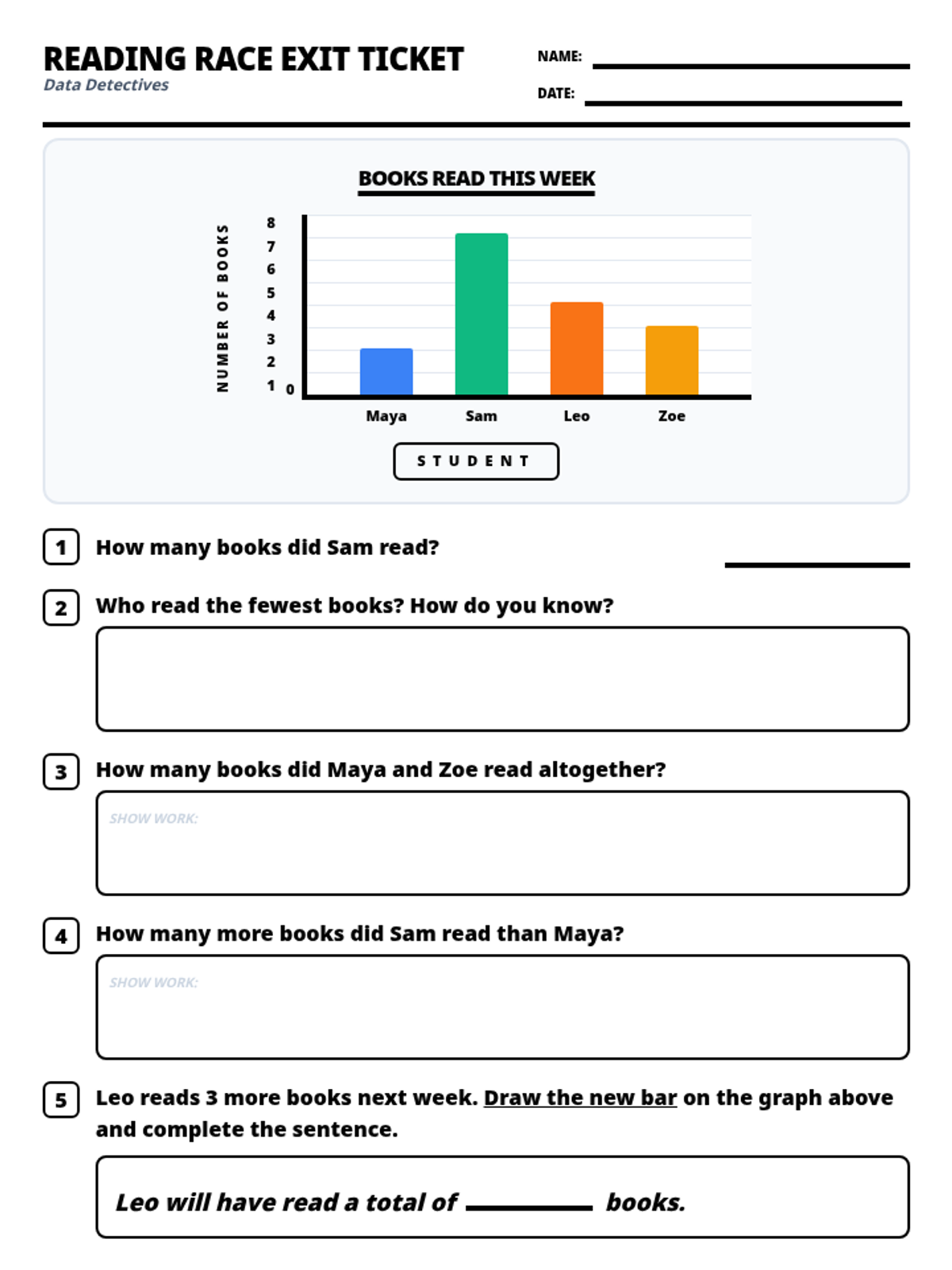
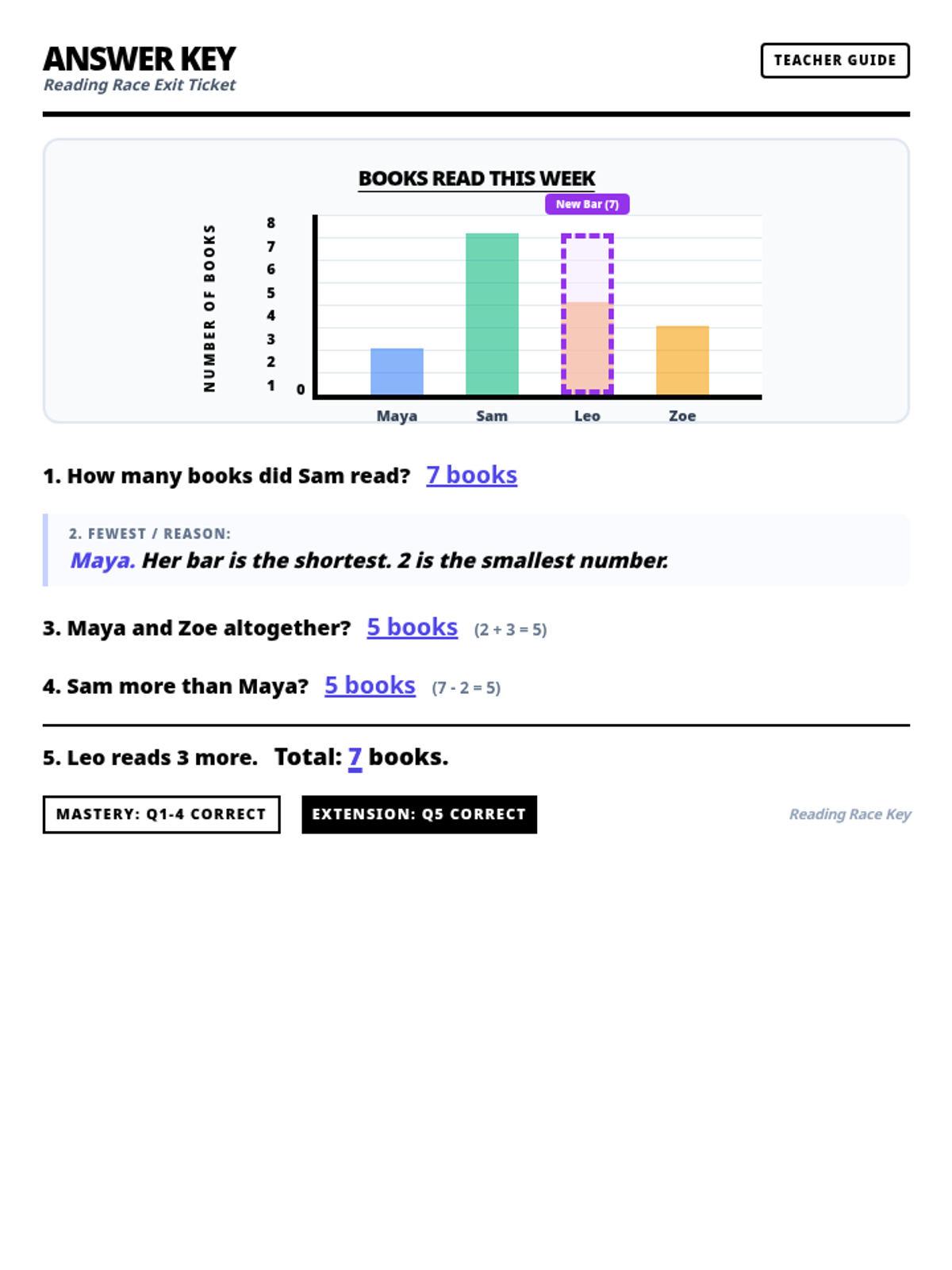
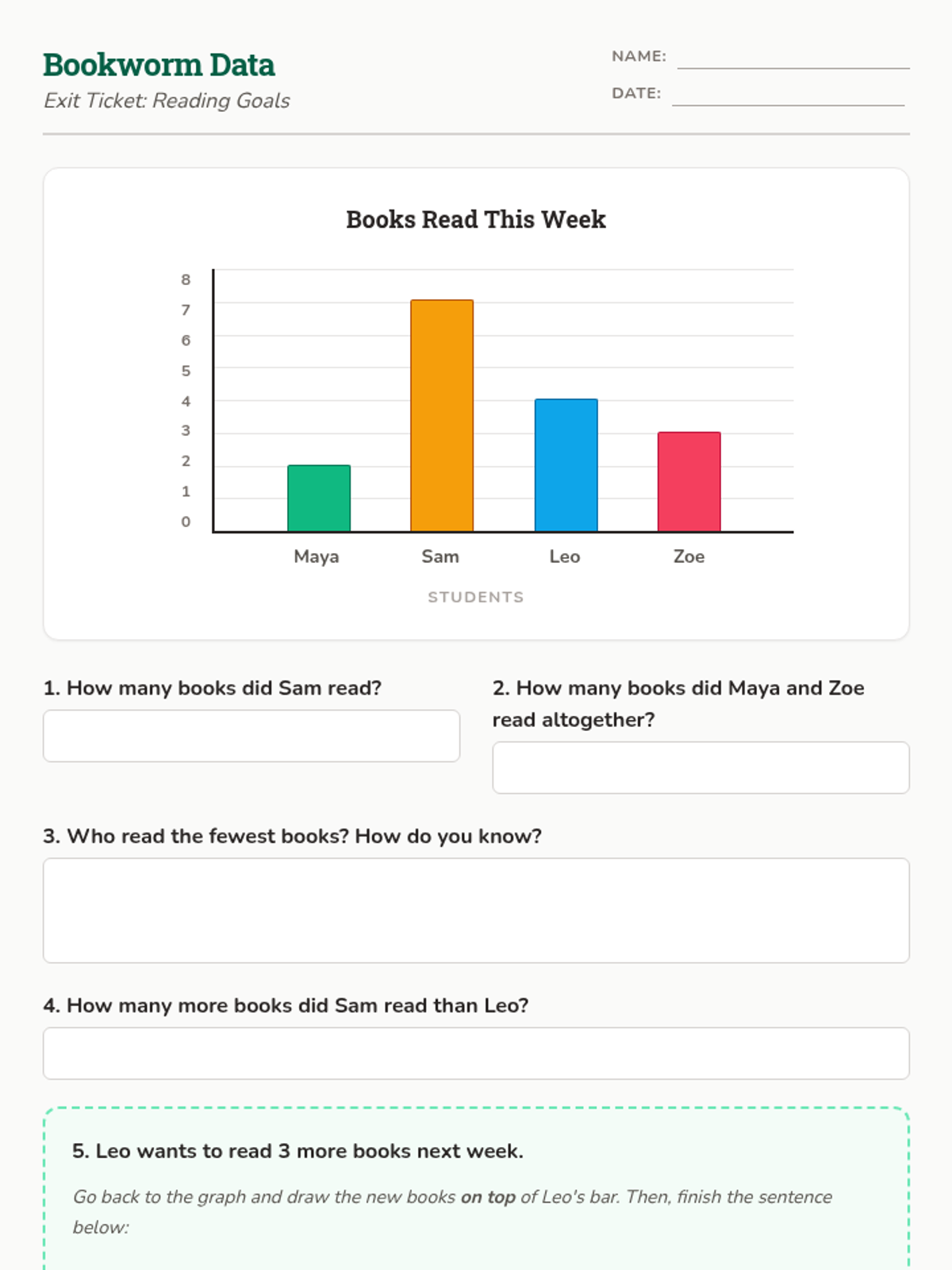
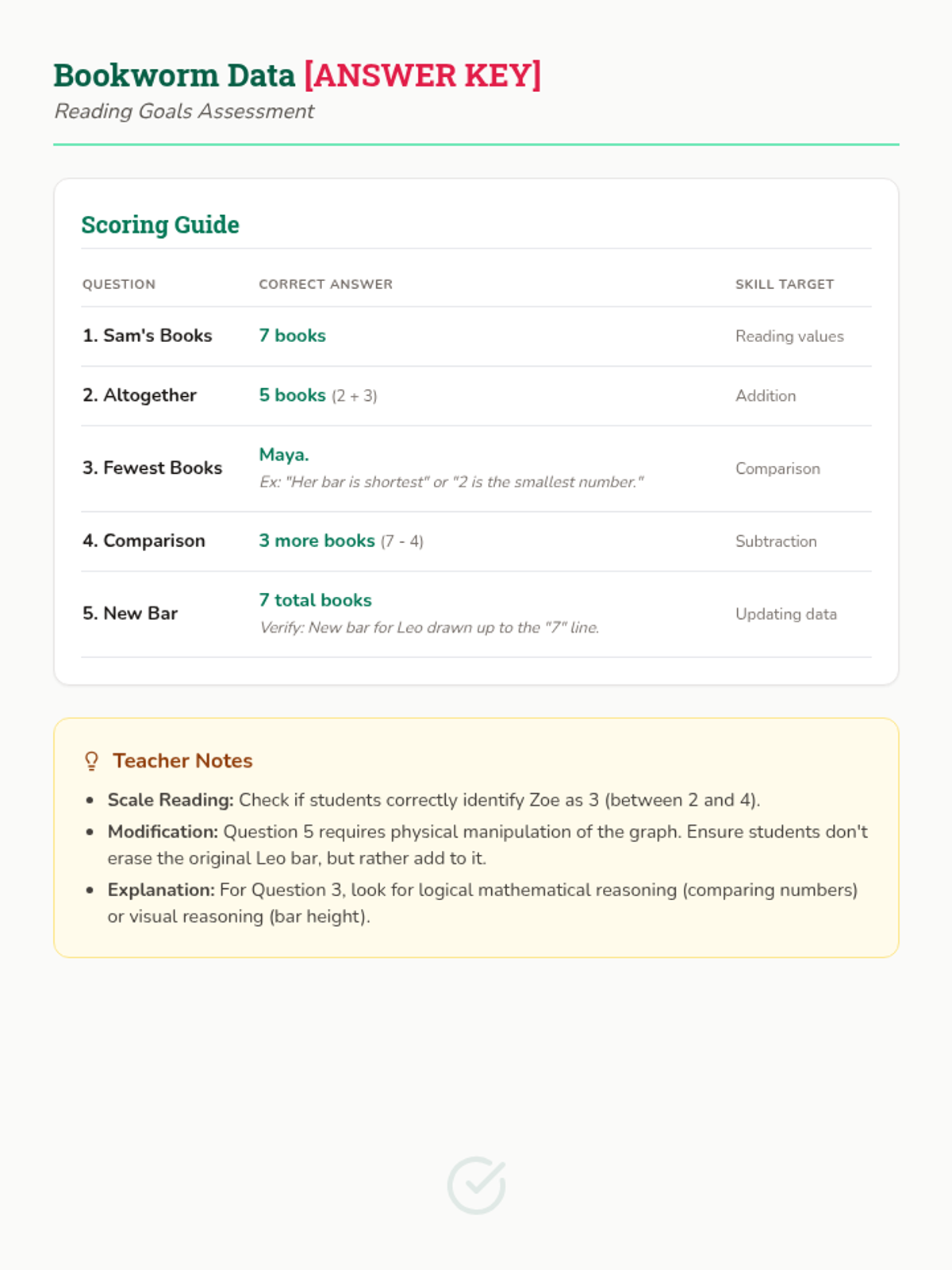
In this lesson, students practice interpreting vertical bar graphs and solving one- and two-step problems using data. The lesson concludes with a book-themed exit ticket where students analyze reading progress.
A lesson focused on interpreting and modifying vertical bar graphs using real-world data about reading habits. Students practice identifying values, comparing data, and updating graphs based on new information.