A hands-on data collection and analysis lesson where first graders poll their classmates on favorite habitats, then graph and interpret the results.
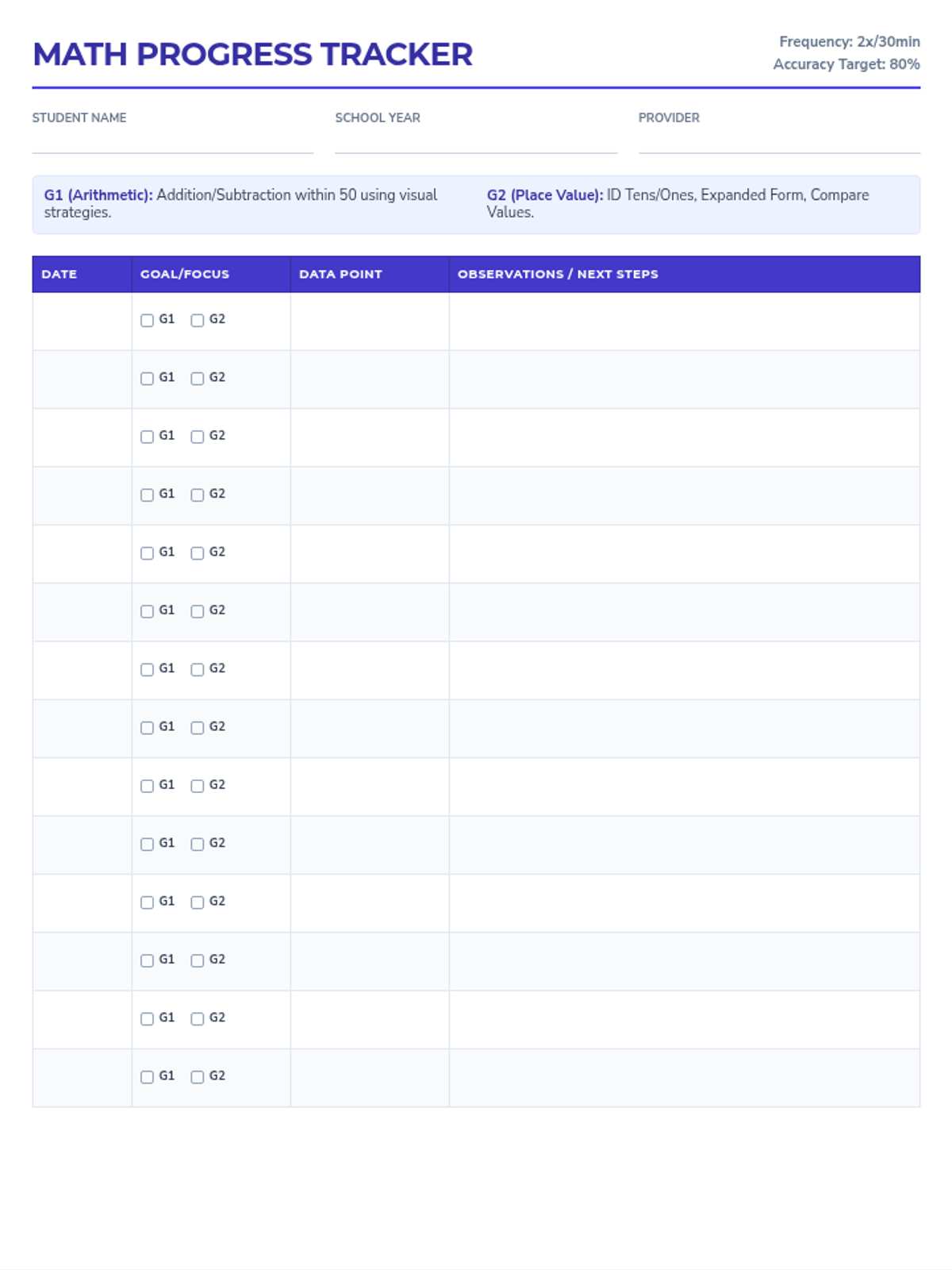
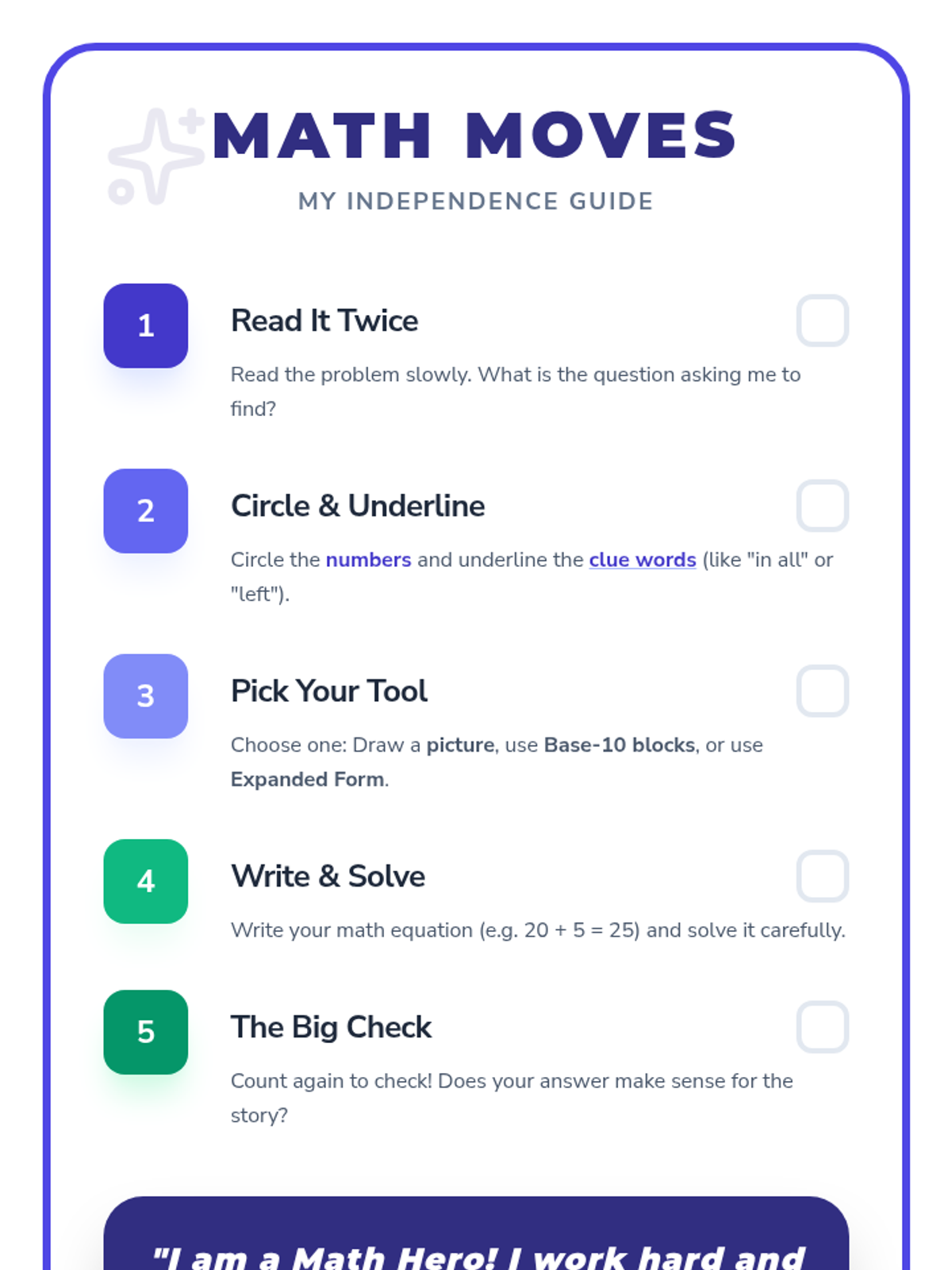
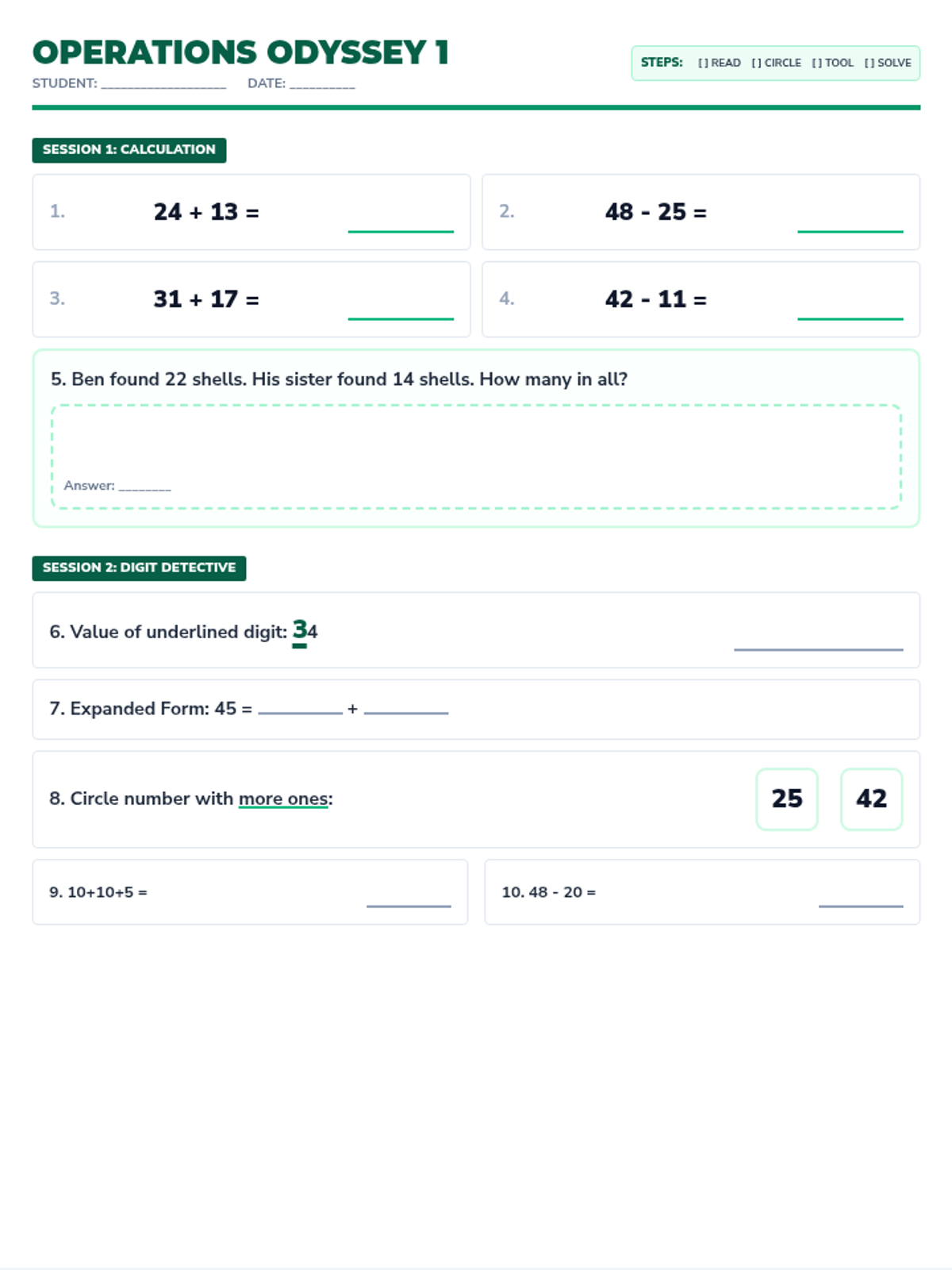
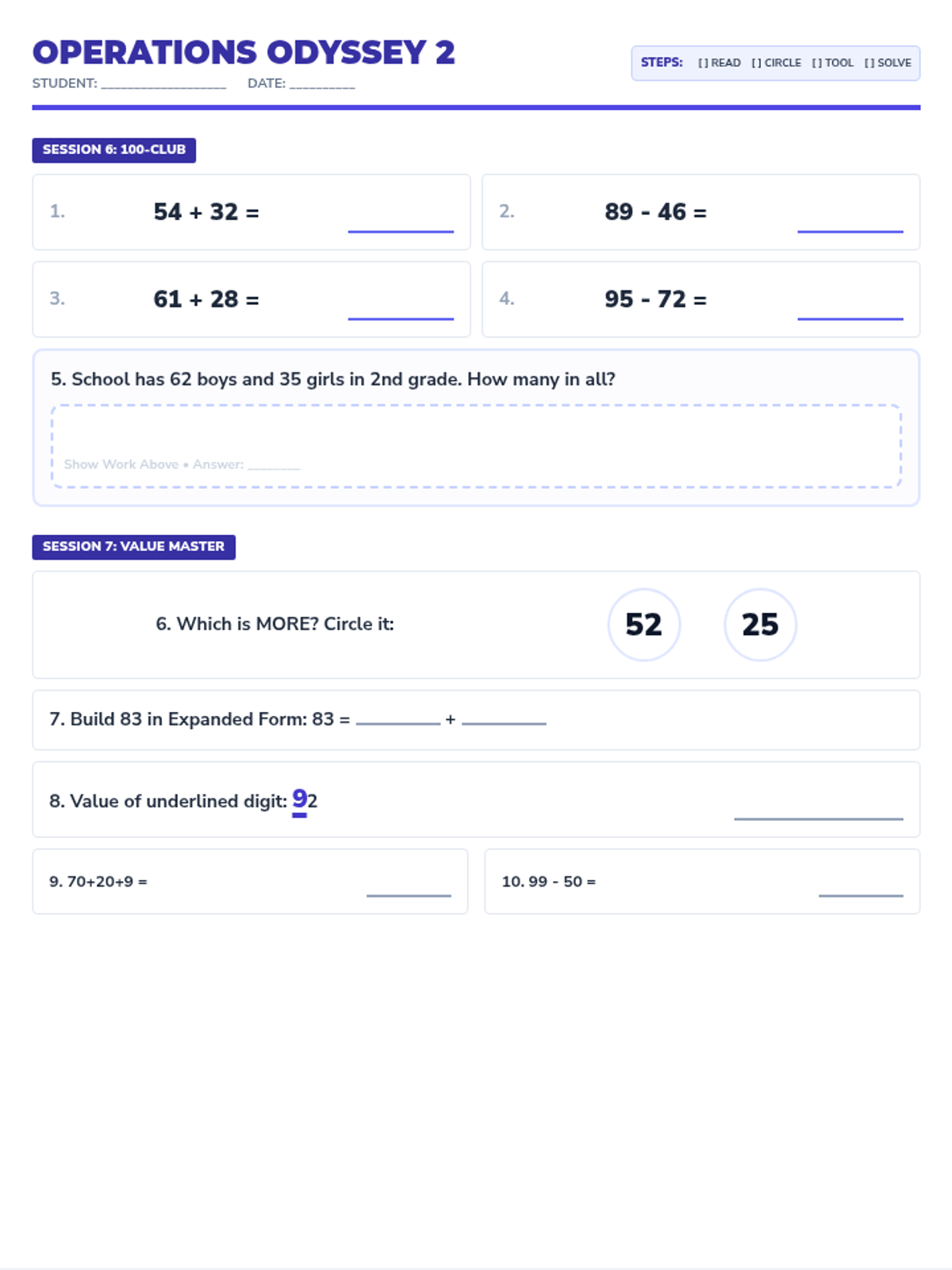
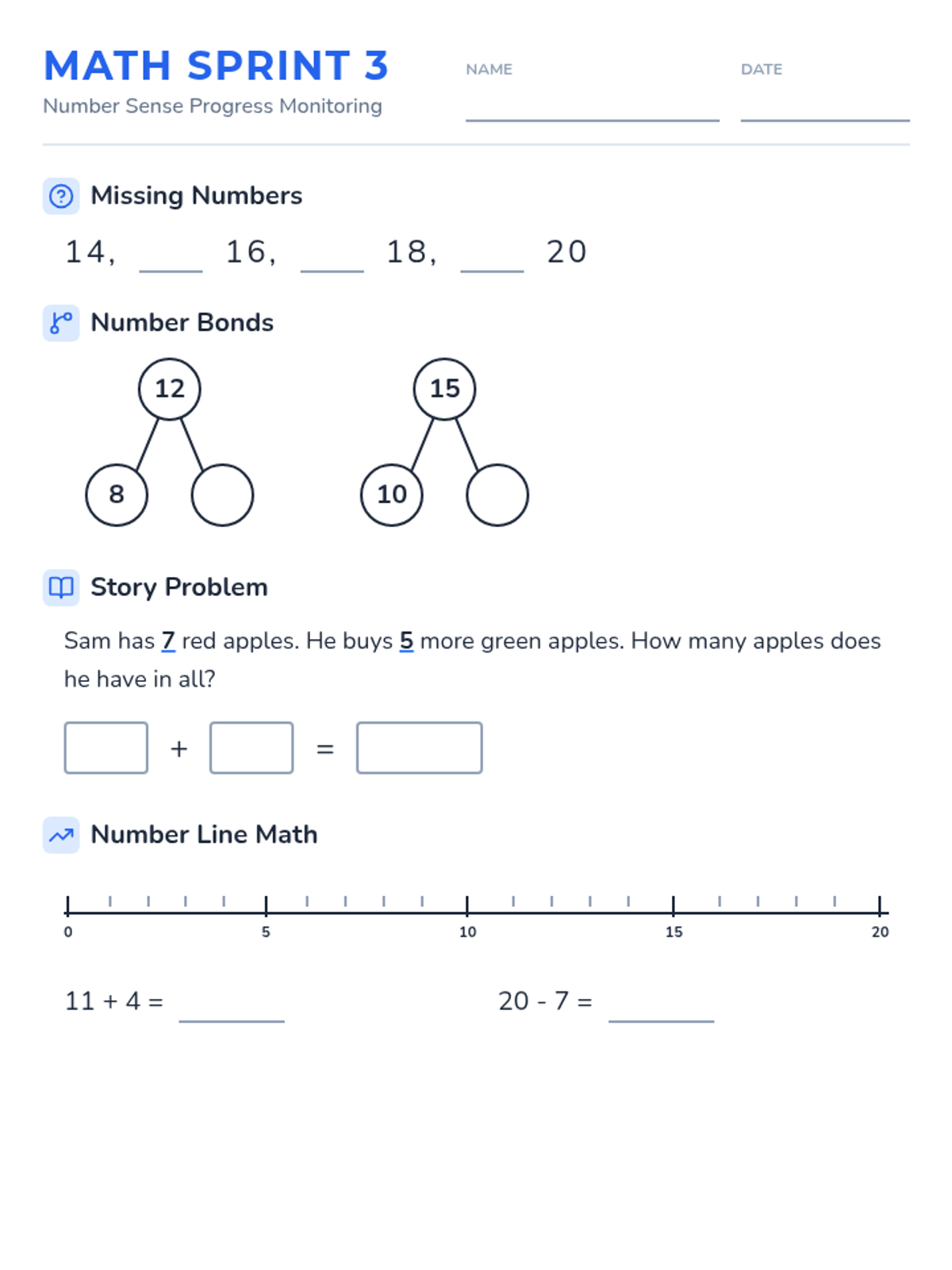
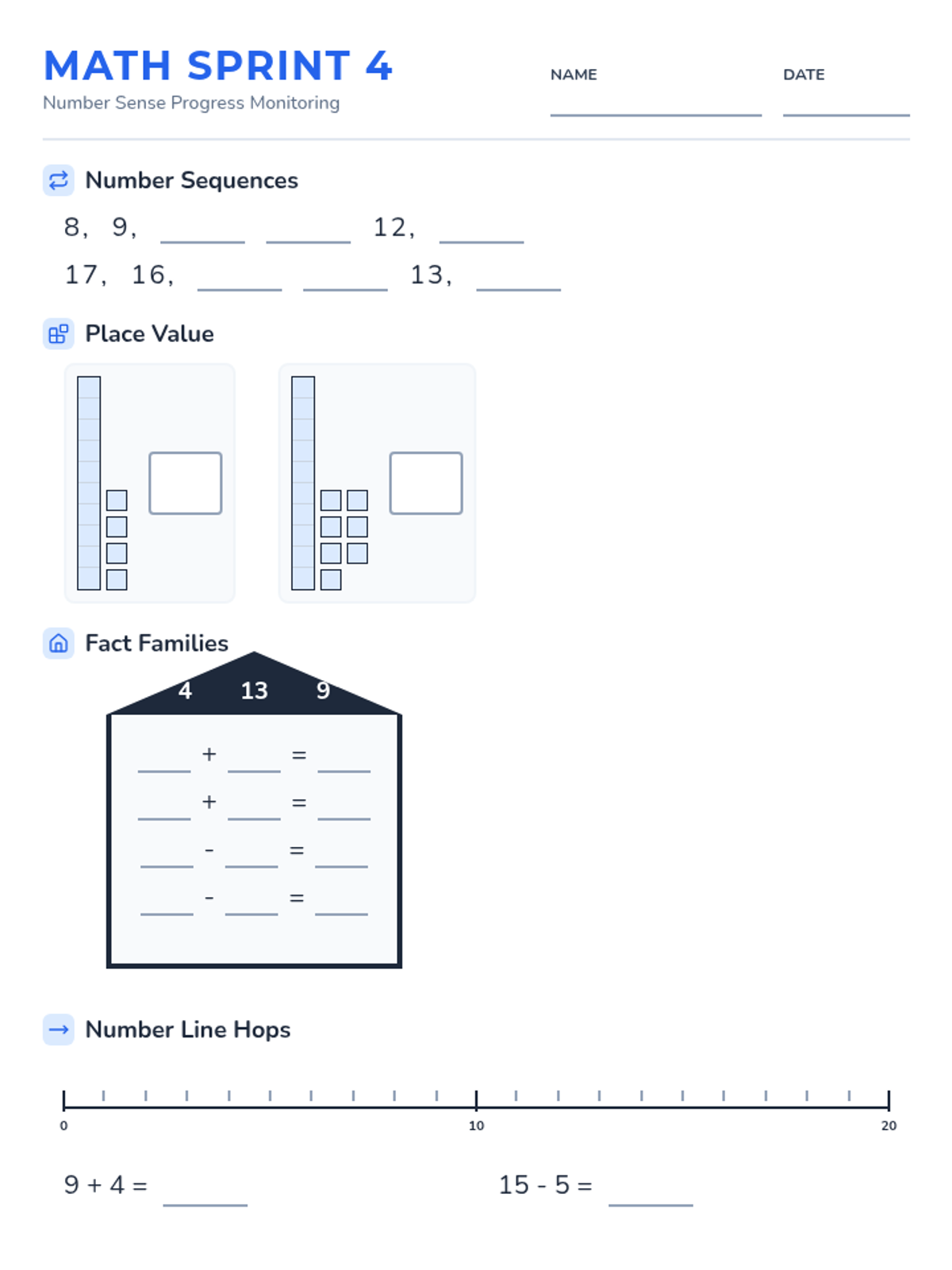
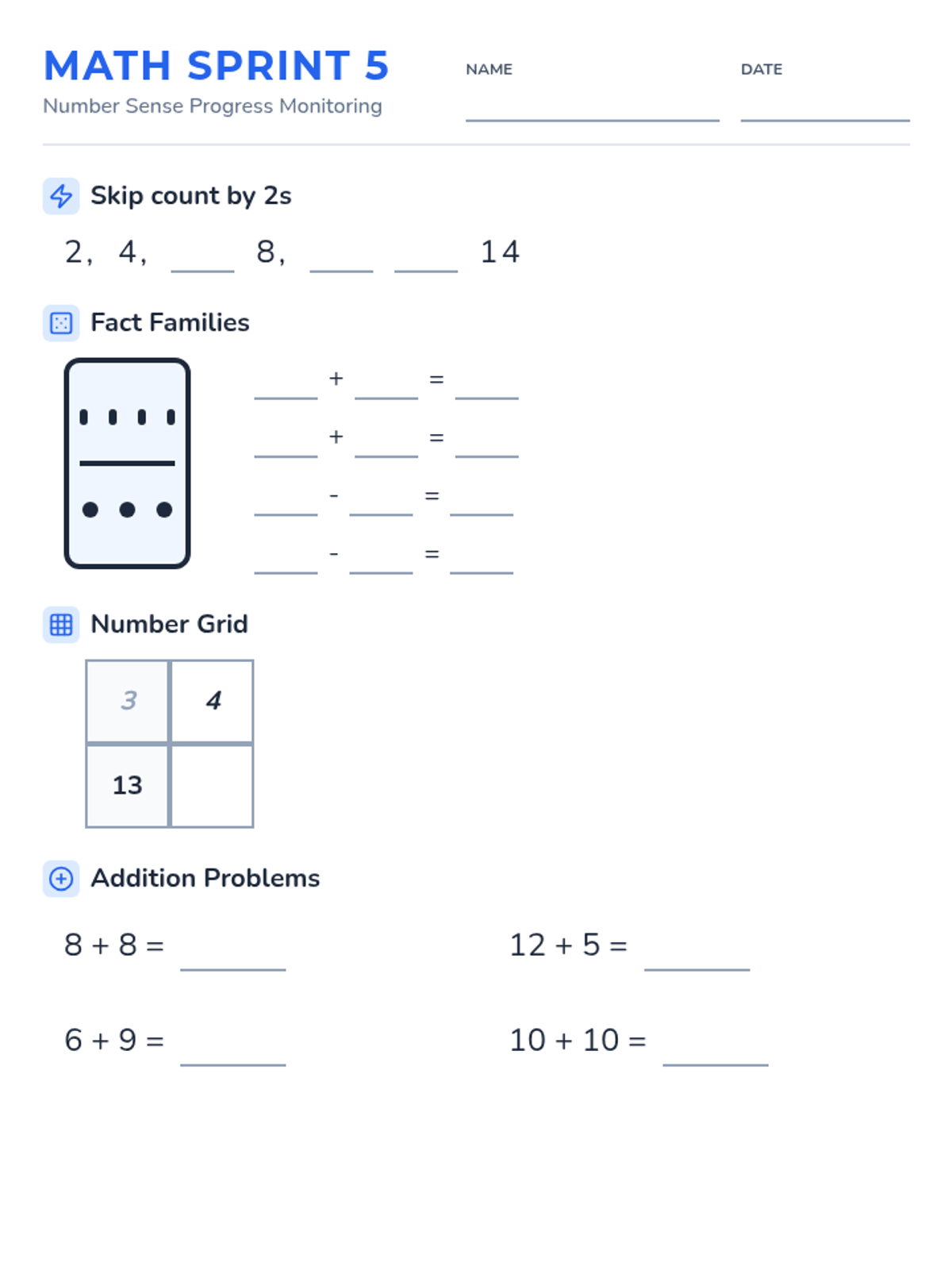
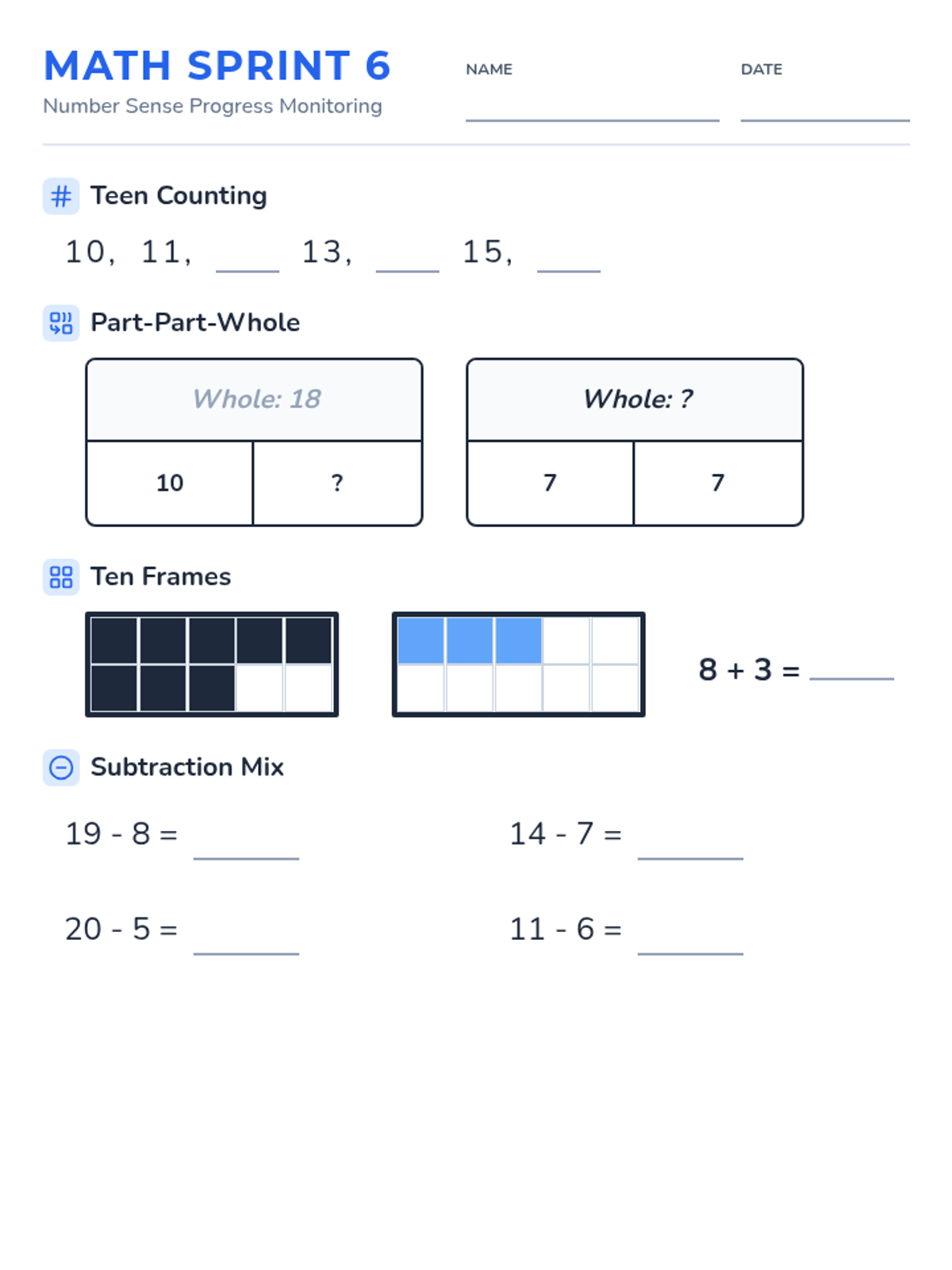
A comprehensive tracking system for monitoring student progress in basic arithmetic and place value concepts, designed for bi-weekly service delivery.
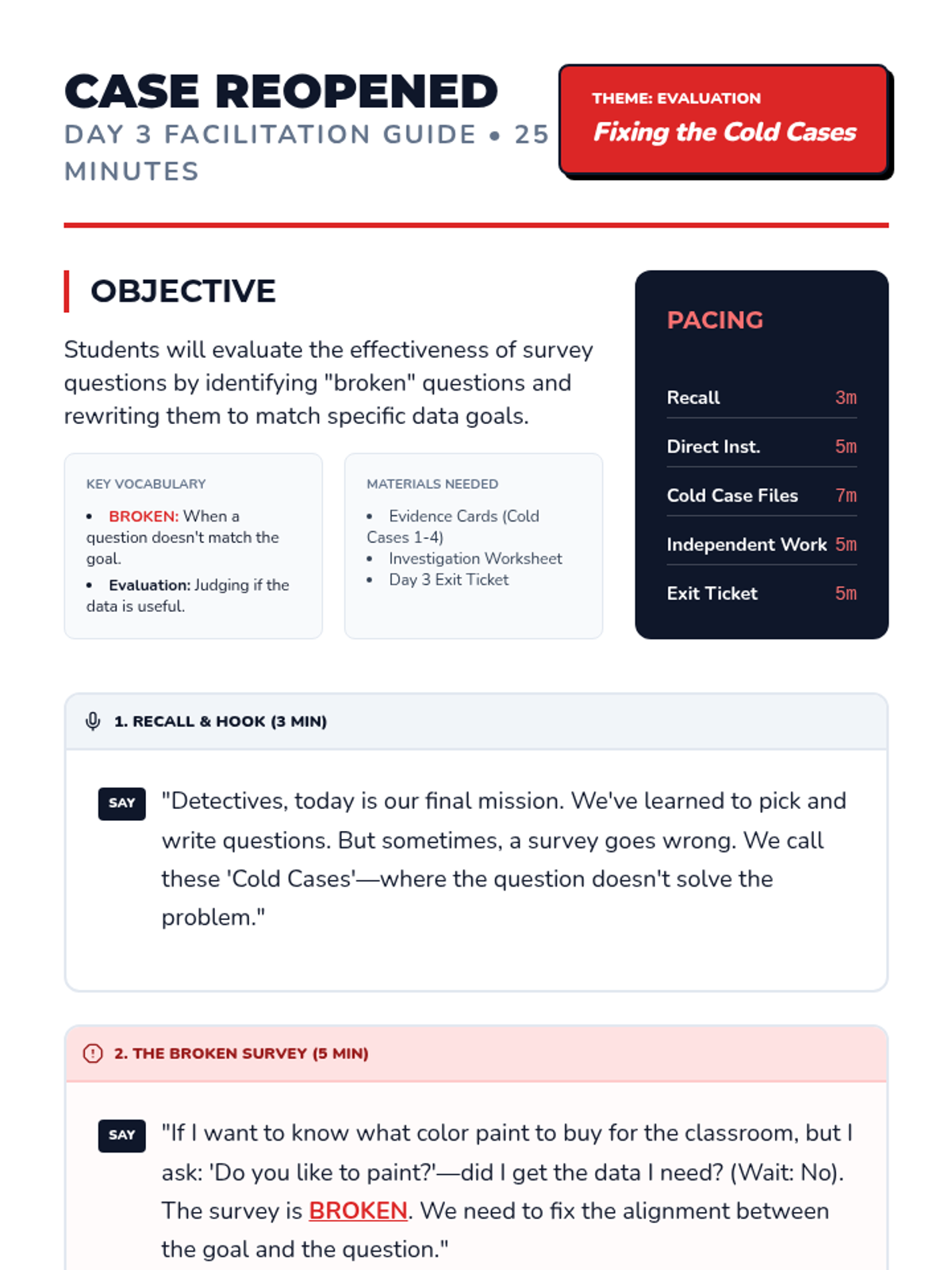
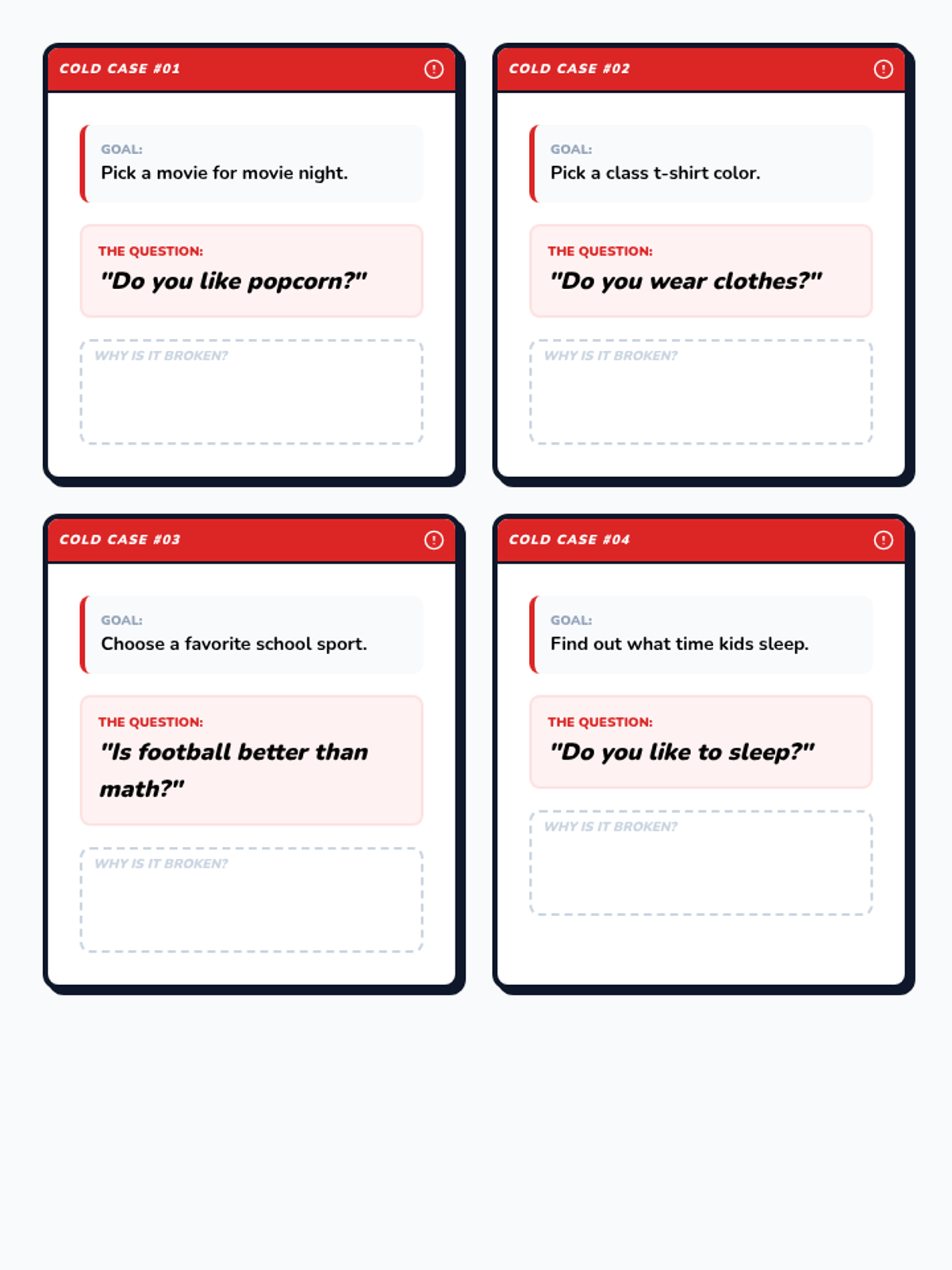
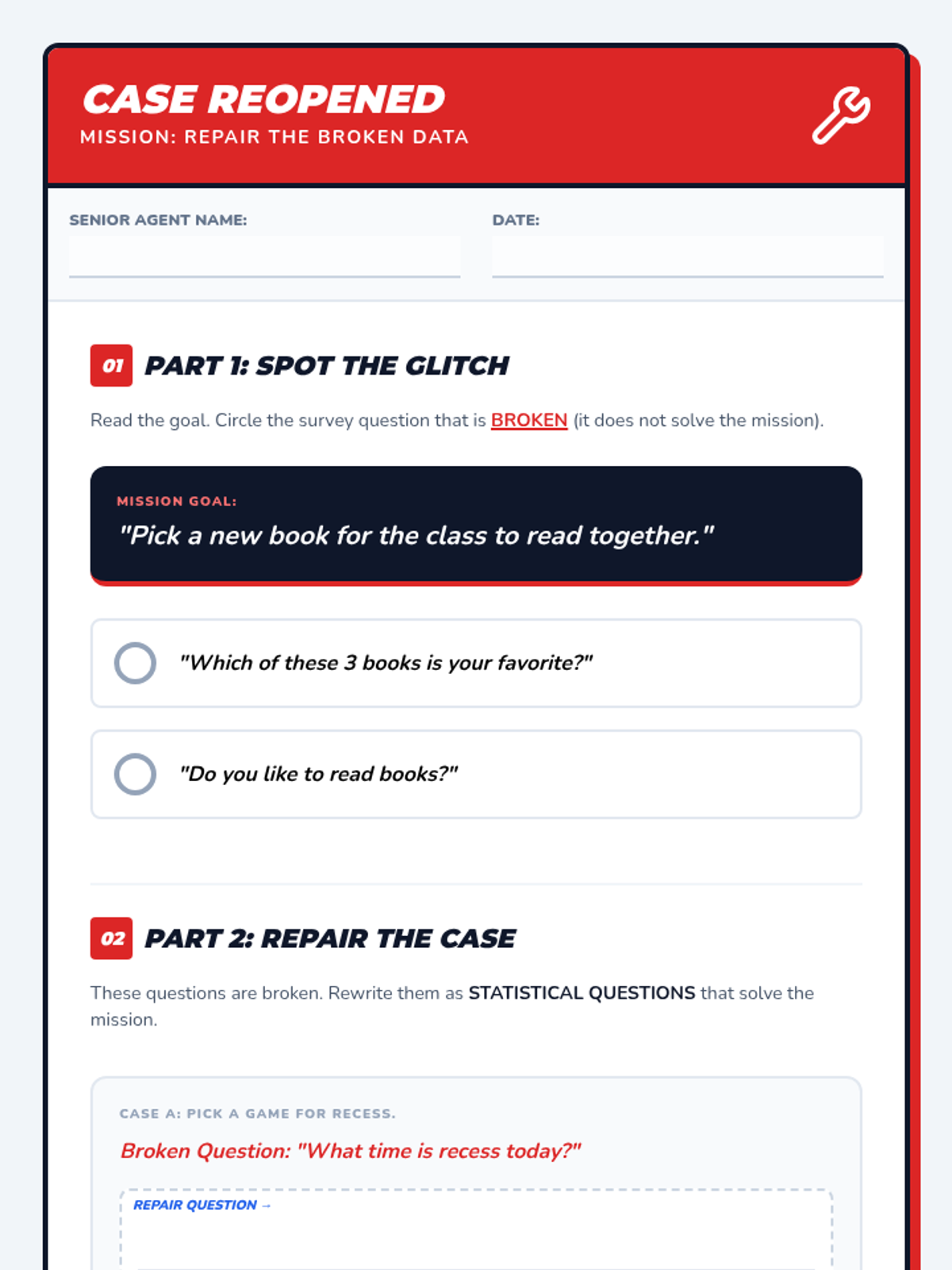
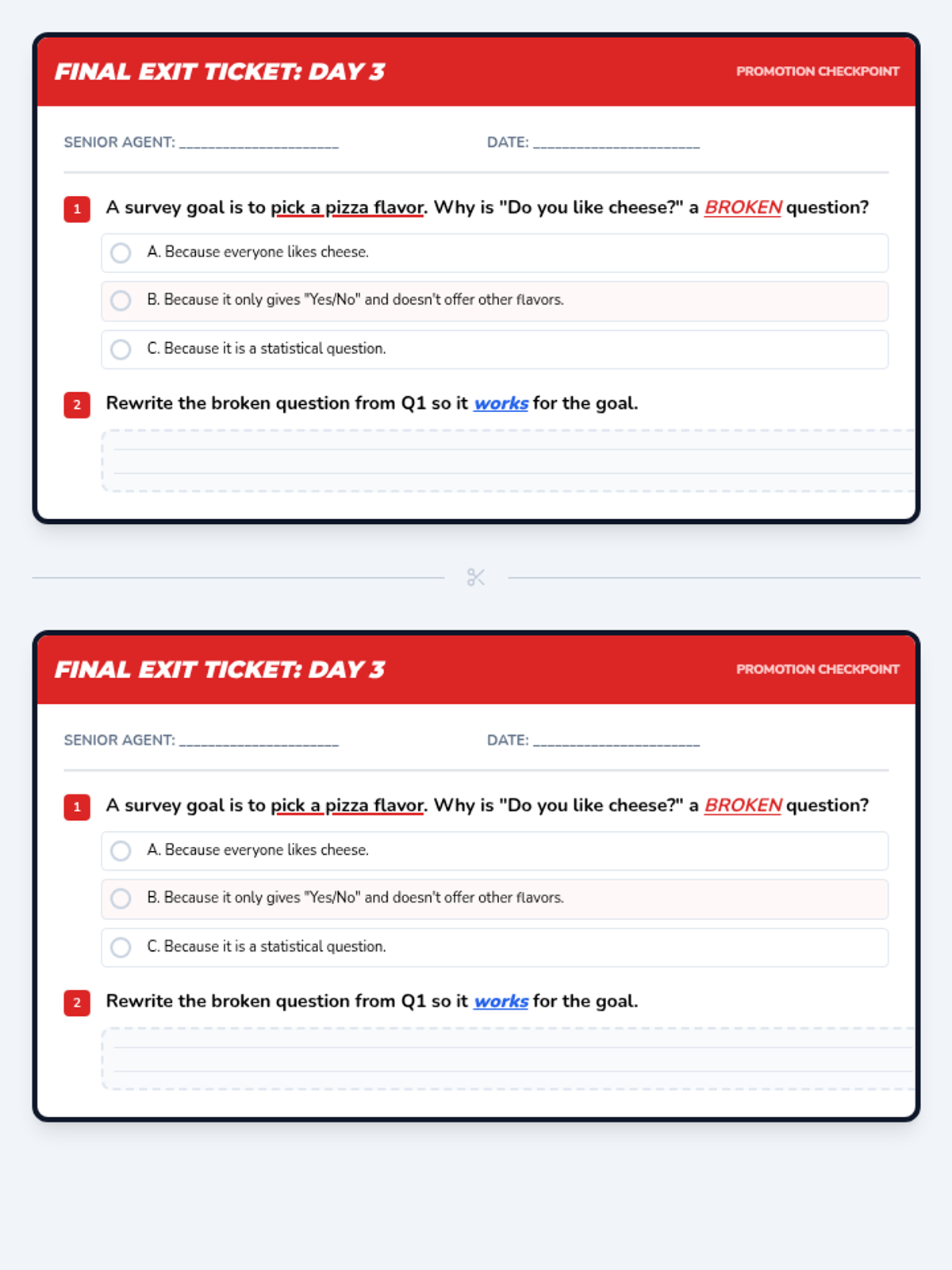
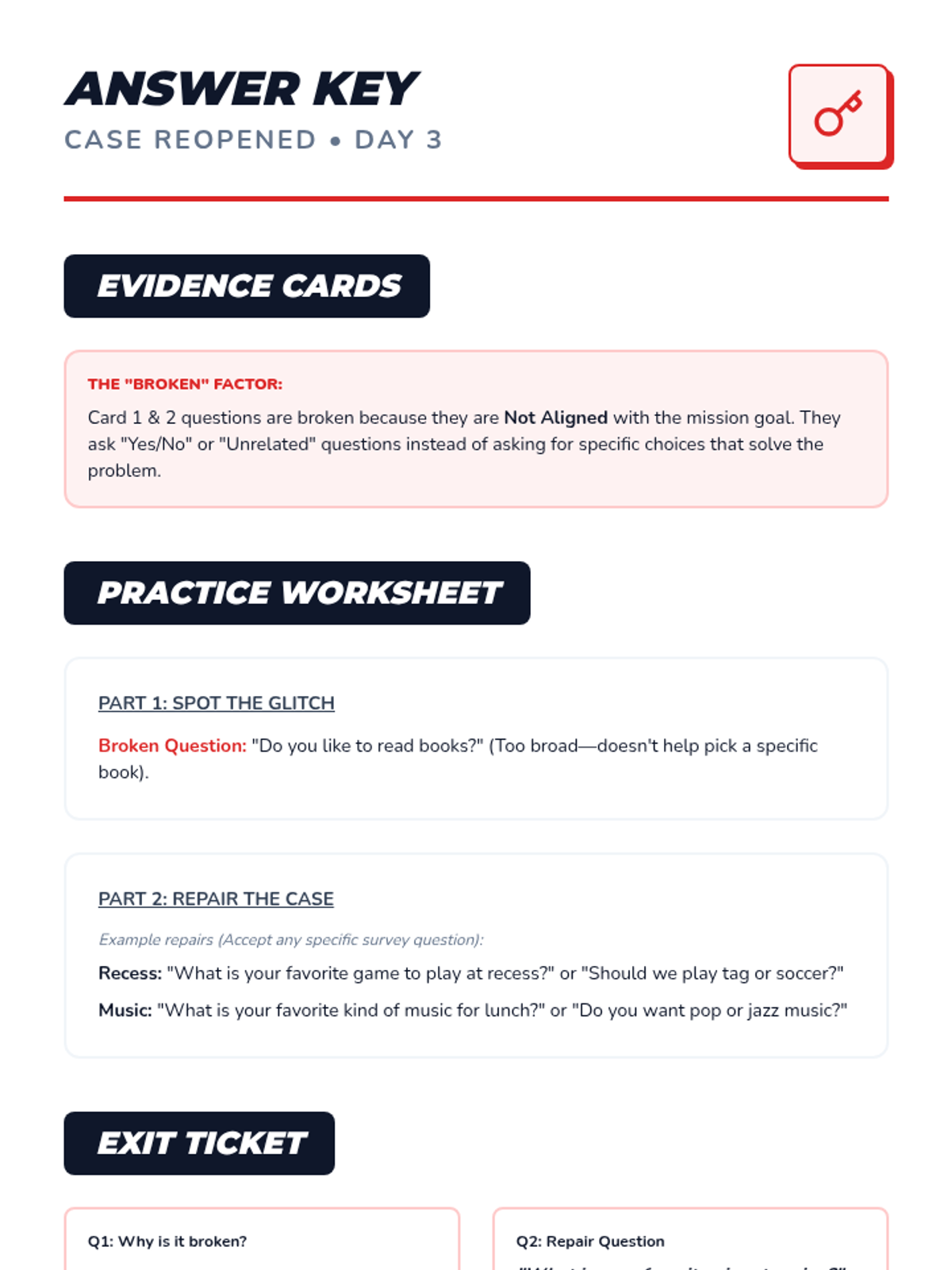
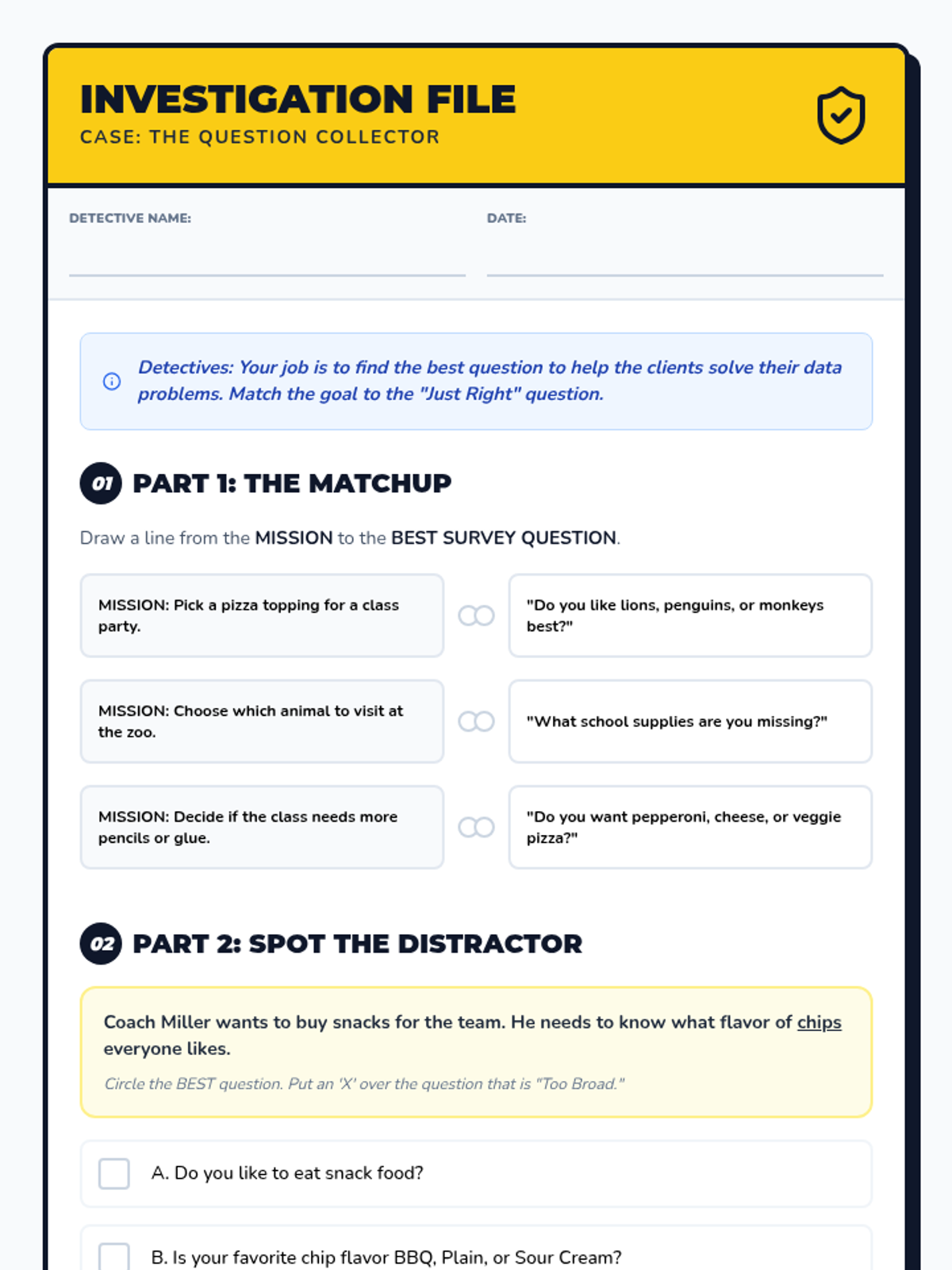
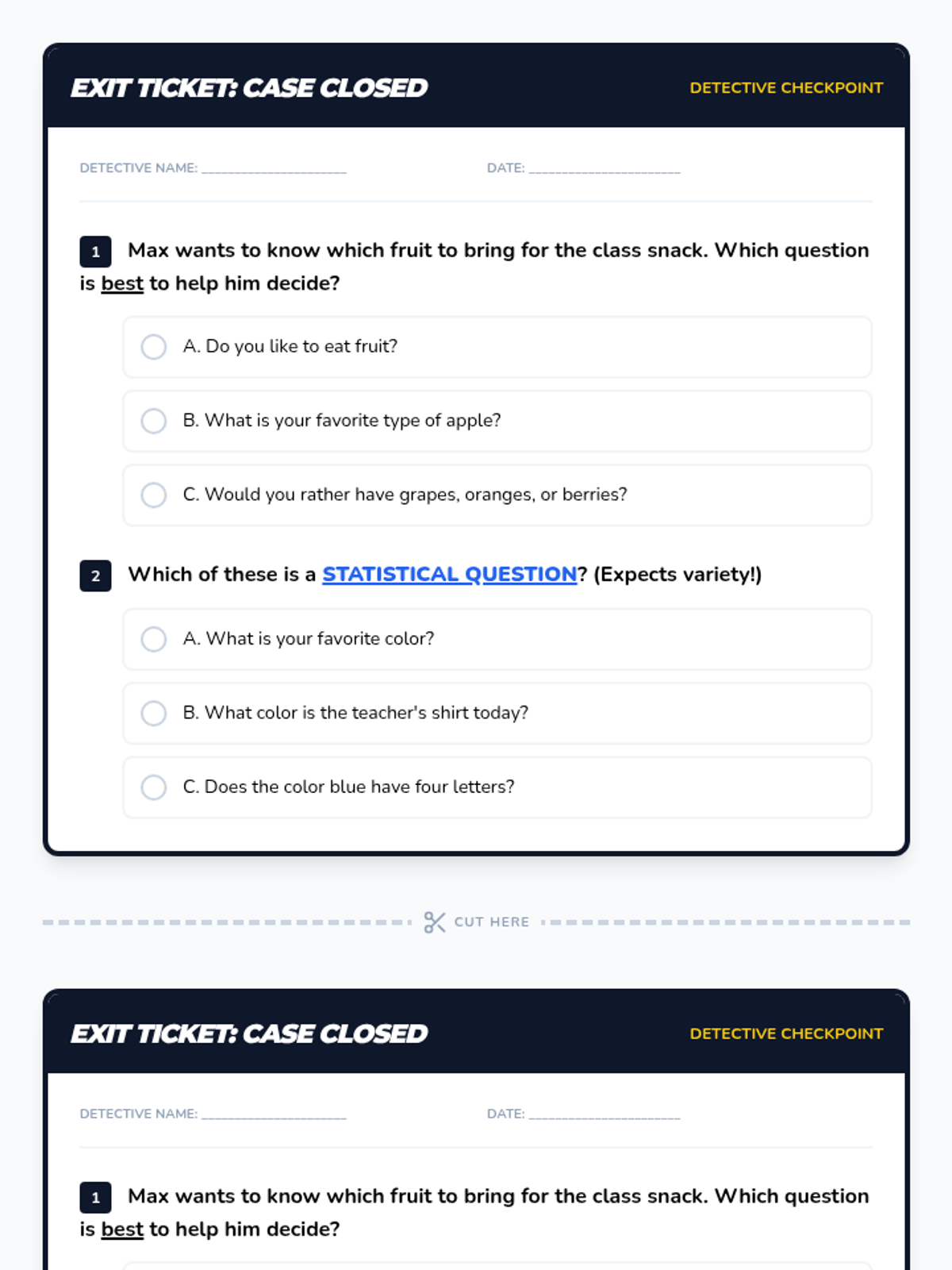
The final mission where students evaluate the effectiveness of data collection. They analyze "broken" surveys where the question didn't match the goal and practice rewriting them for accuracy.
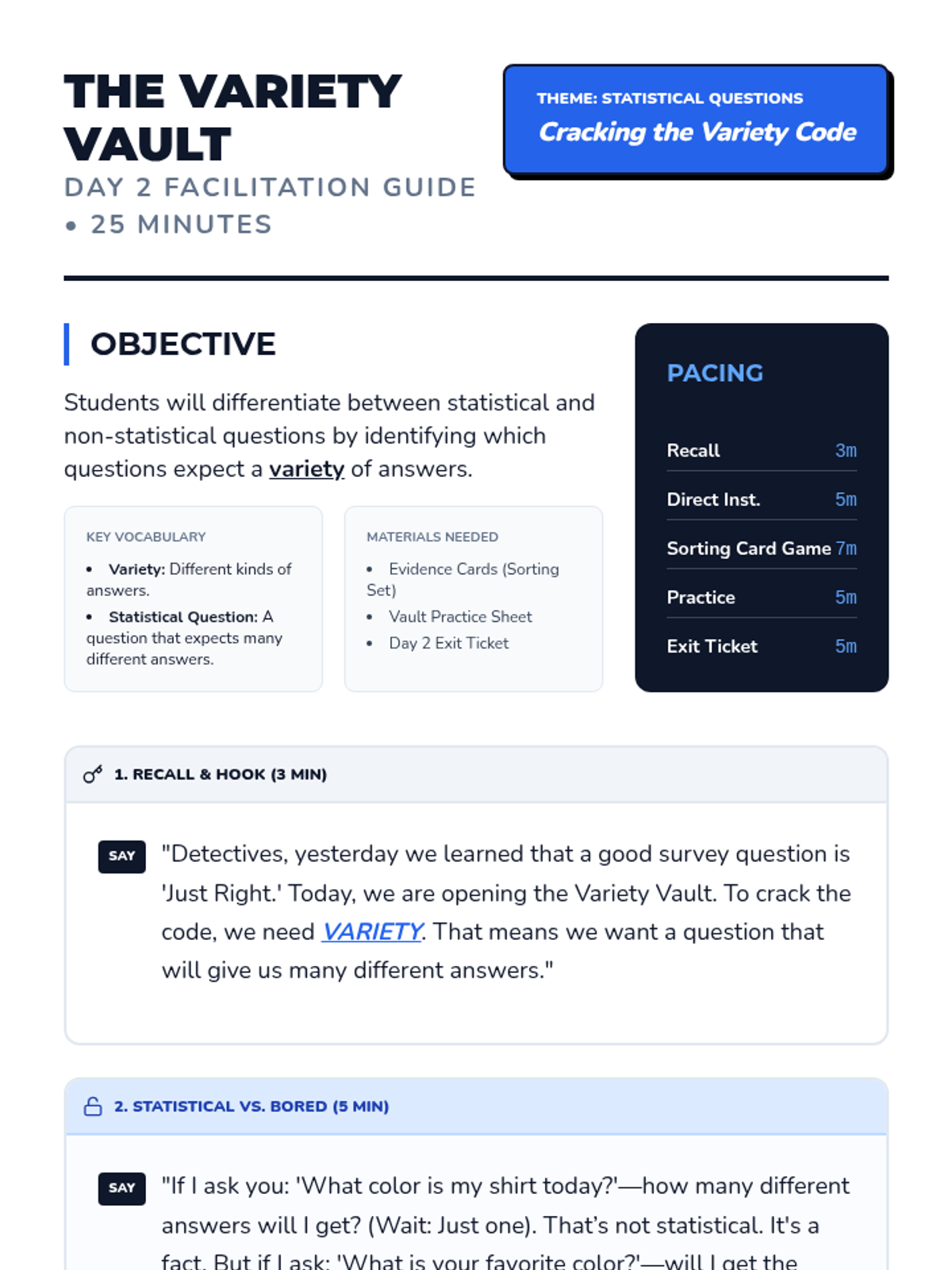
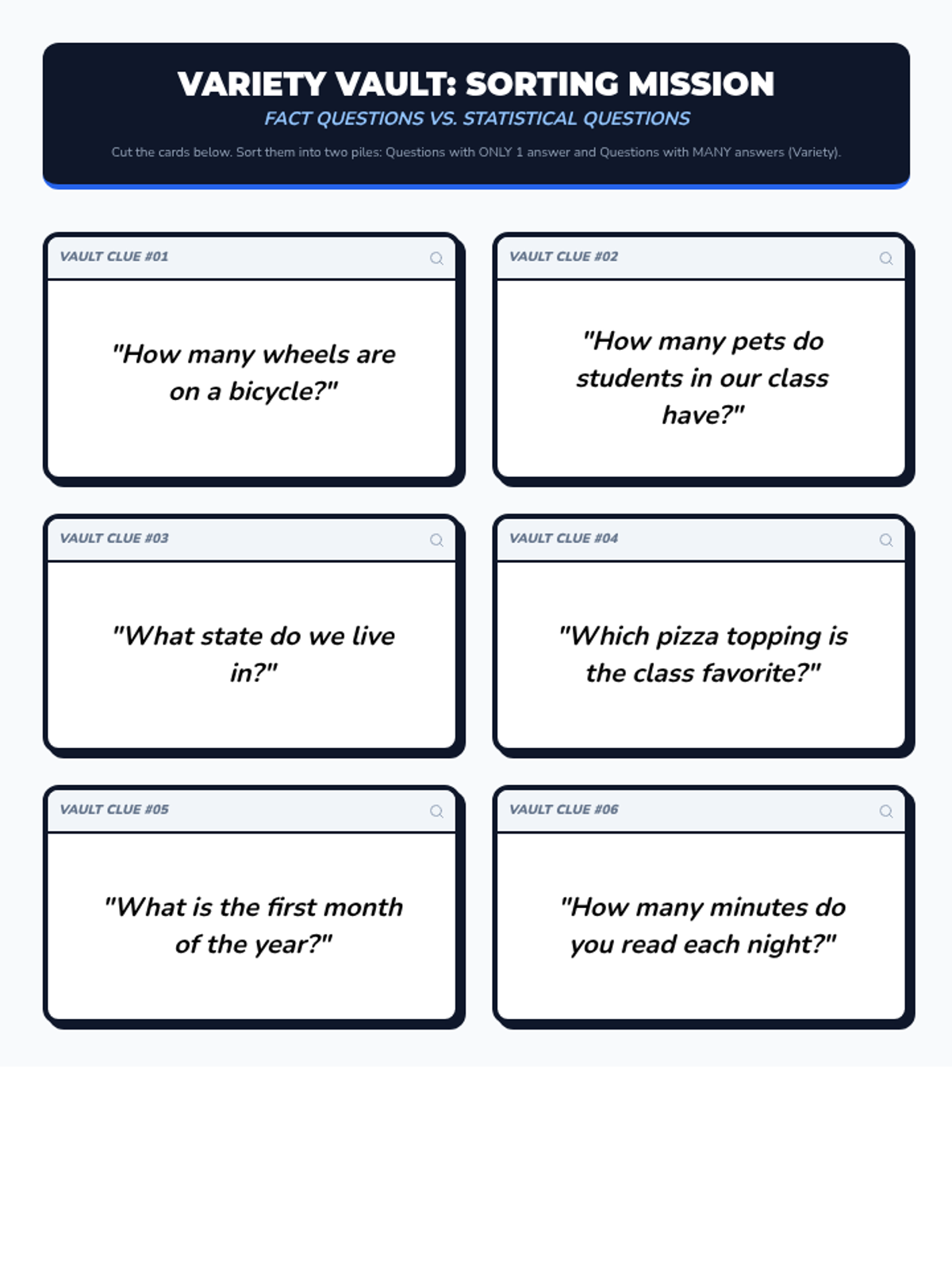
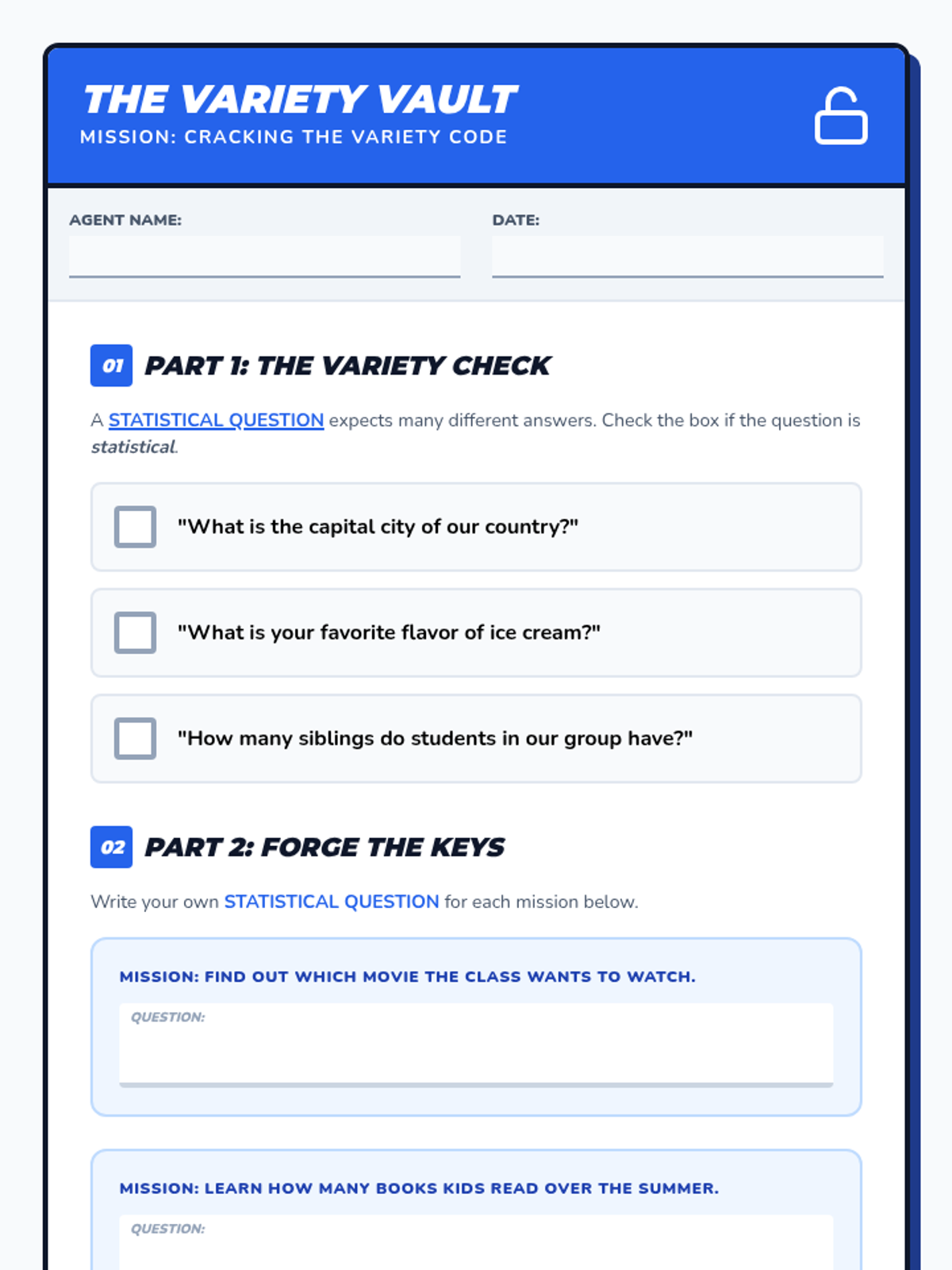
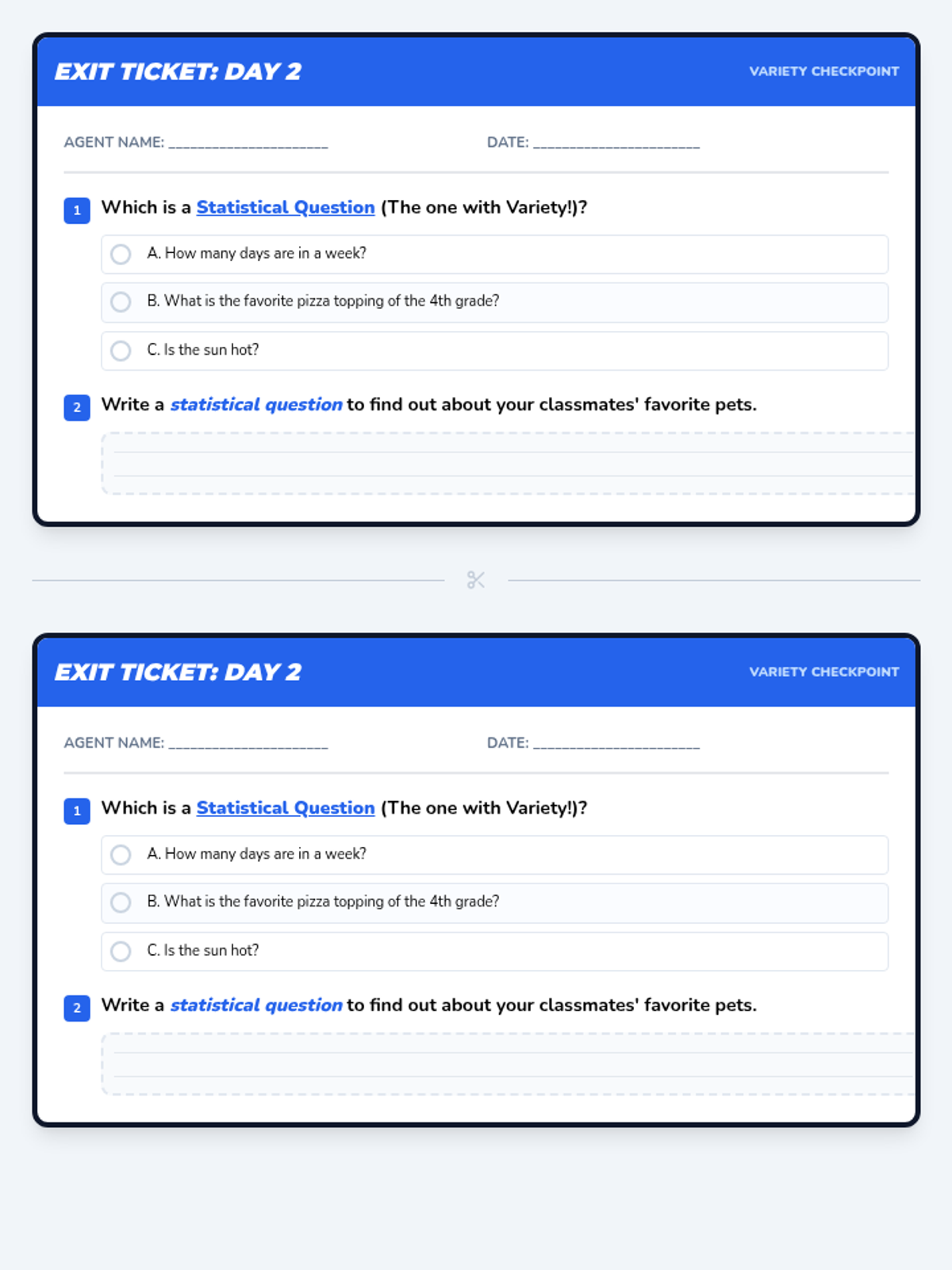
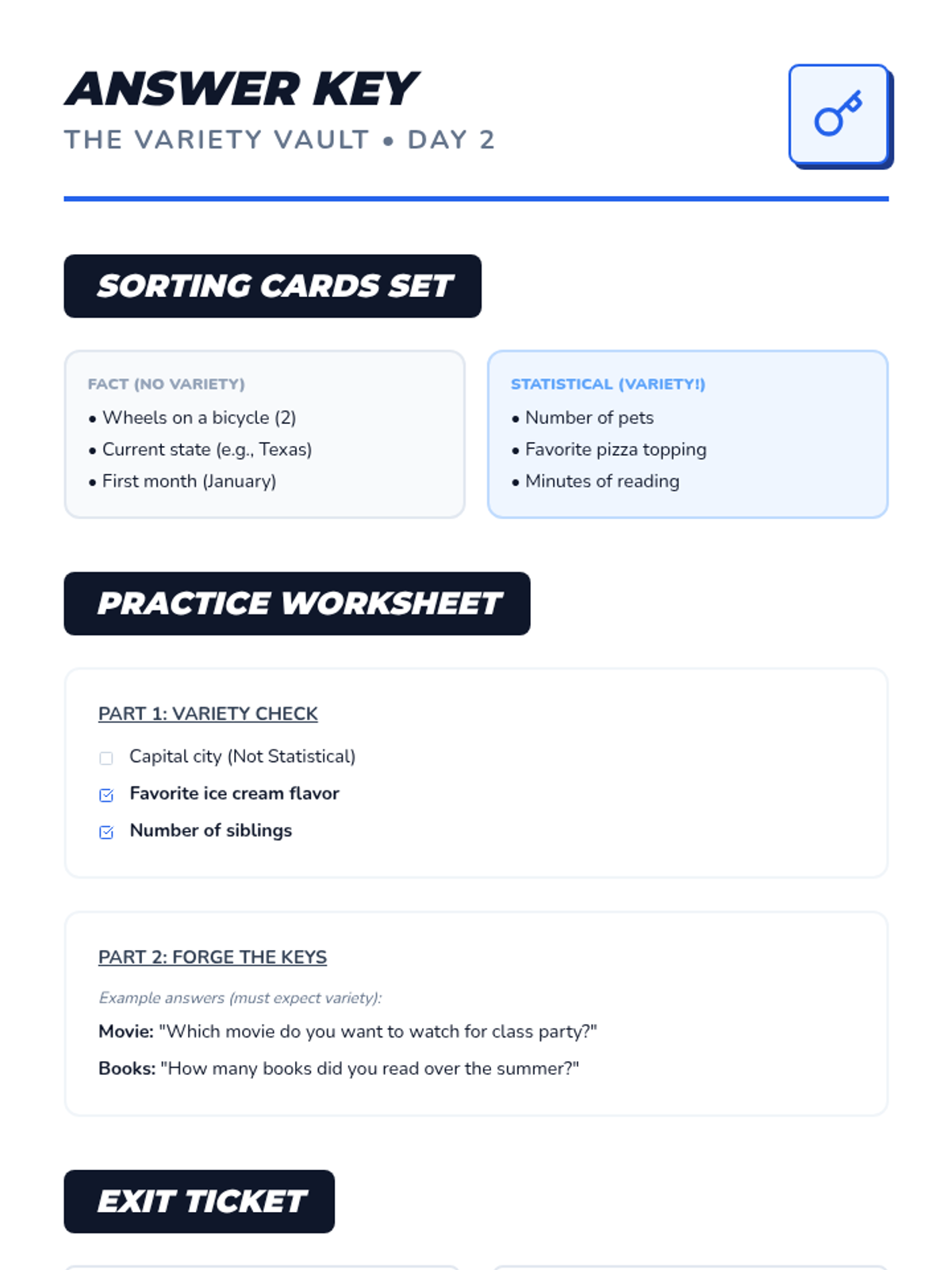
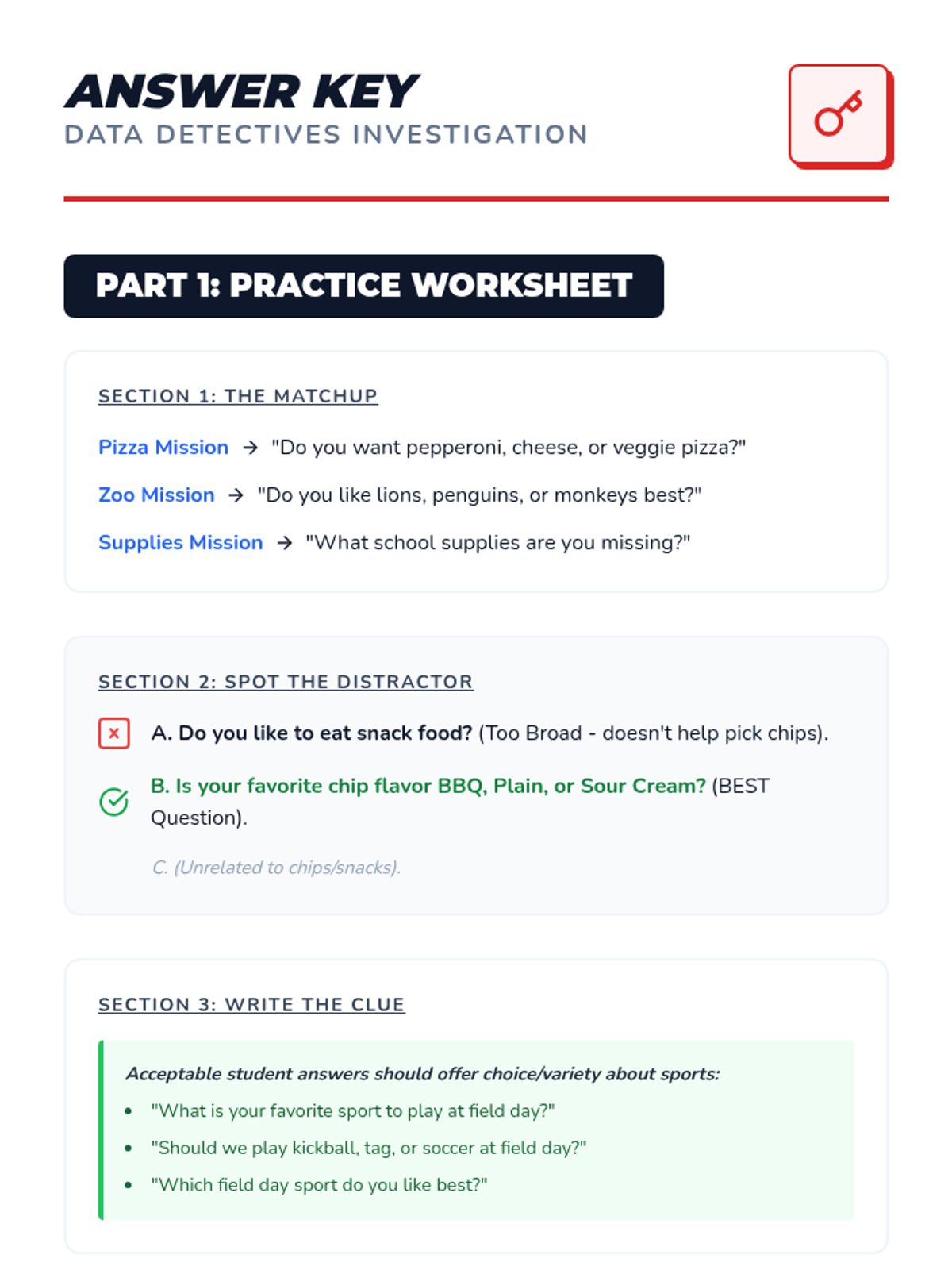
Focuses on differentiating between statistical and non-statistical questions. Students learn that a good survey question must expect a variety of answers to be useful for data collection.
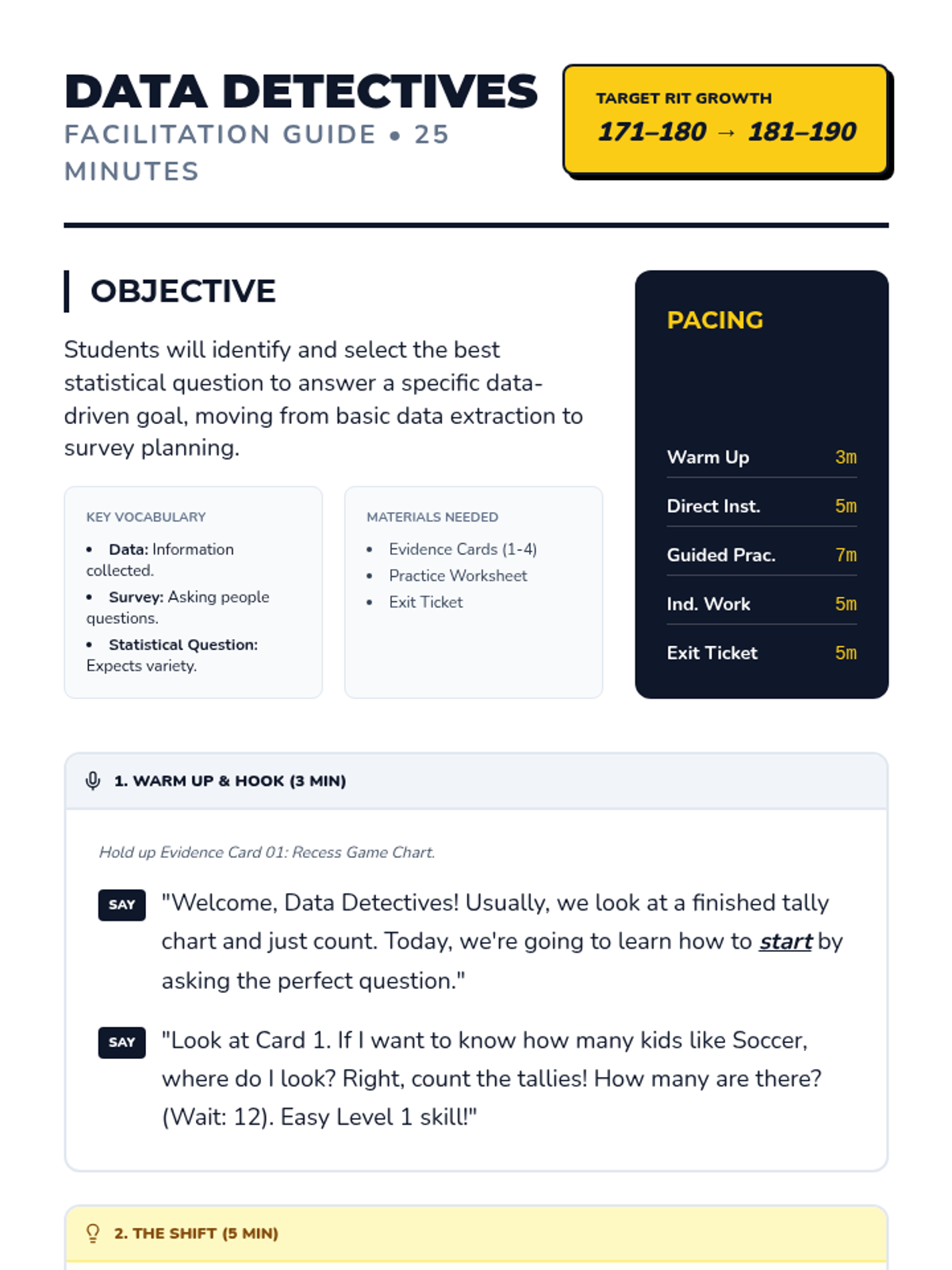
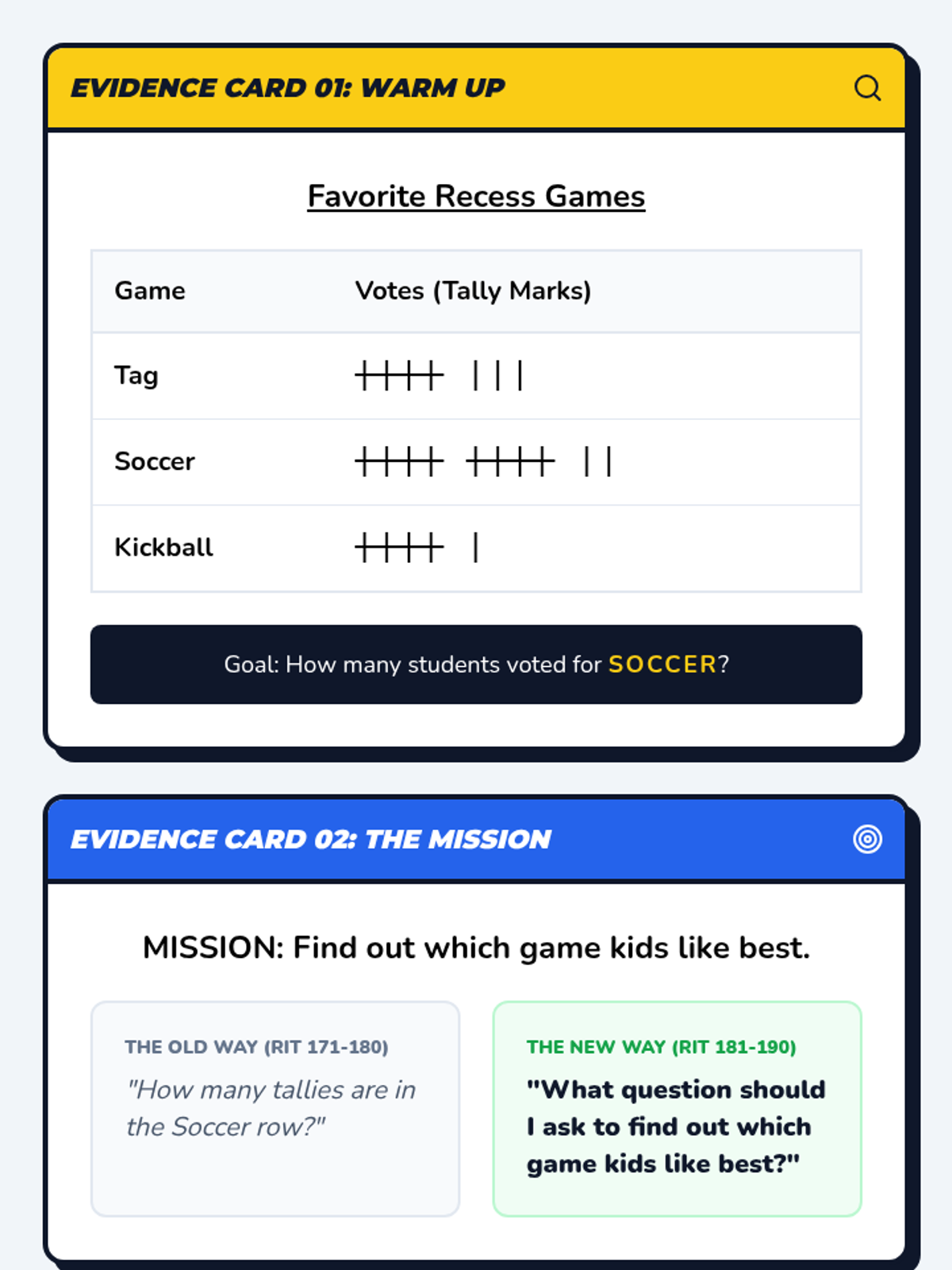
A 25-minute small group lesson designed to move students from RIT 171-180 to 181-190 by shifting from basic data interpretation to formulating and selecting effective statistical questions.
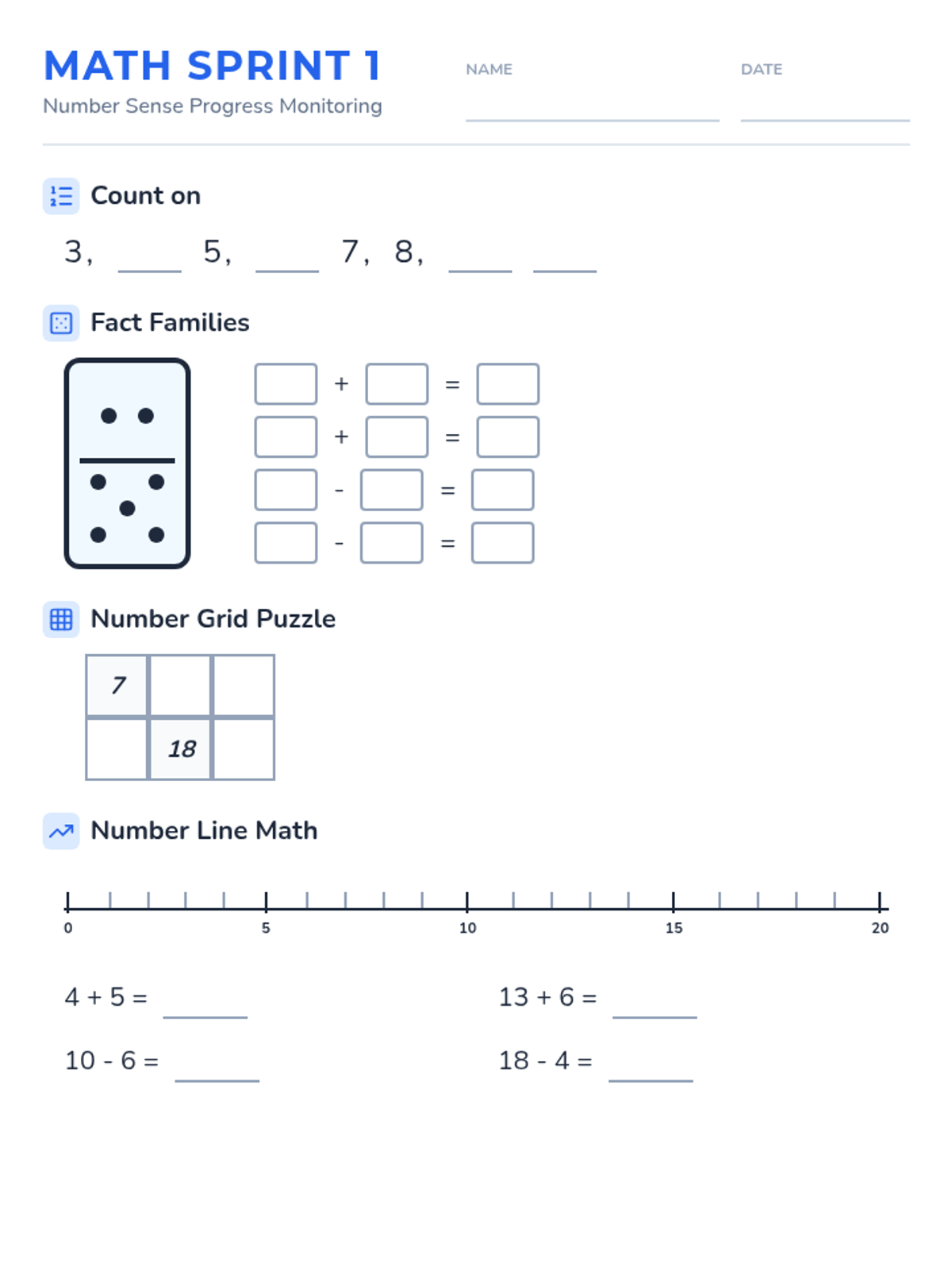
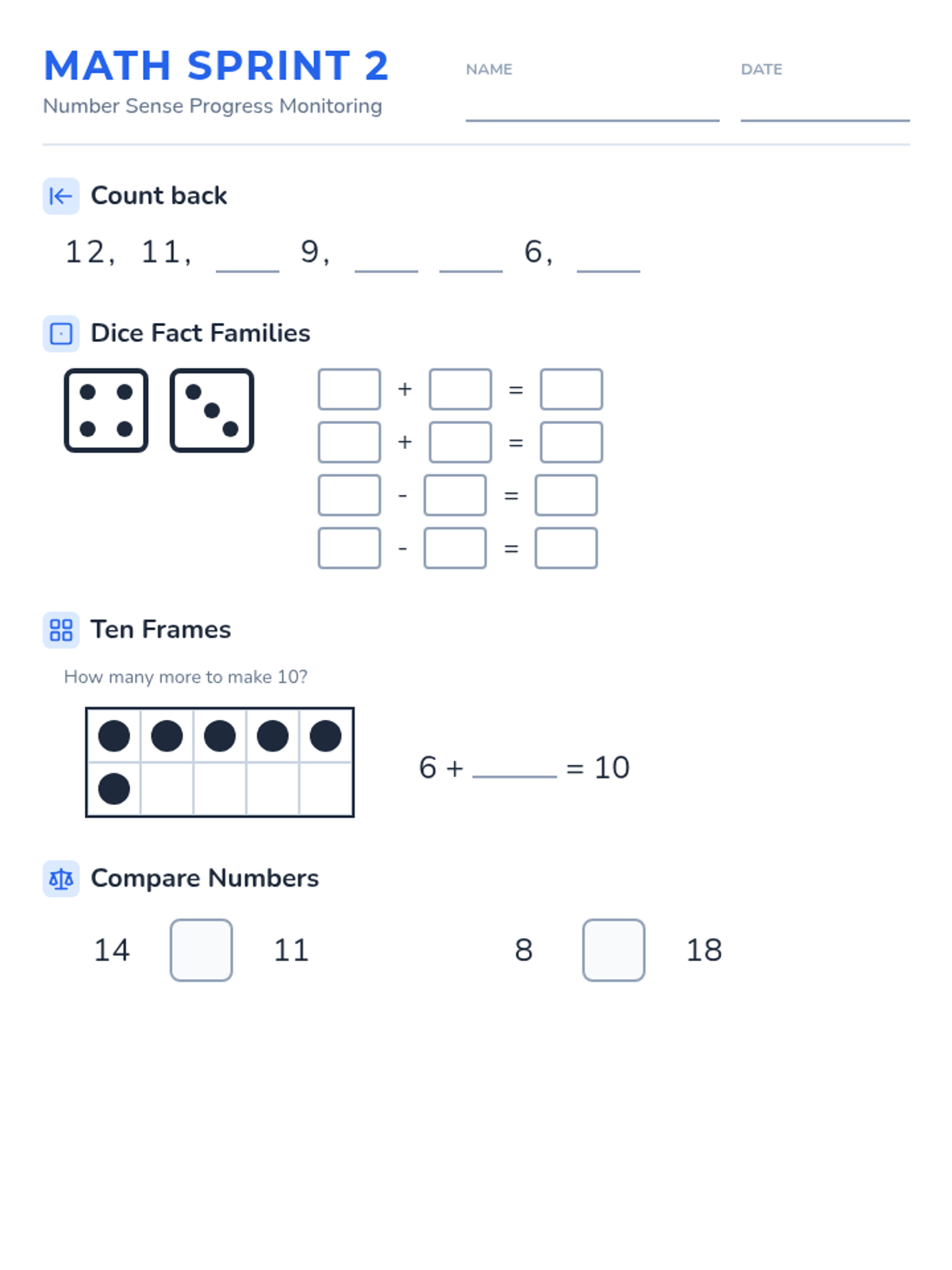
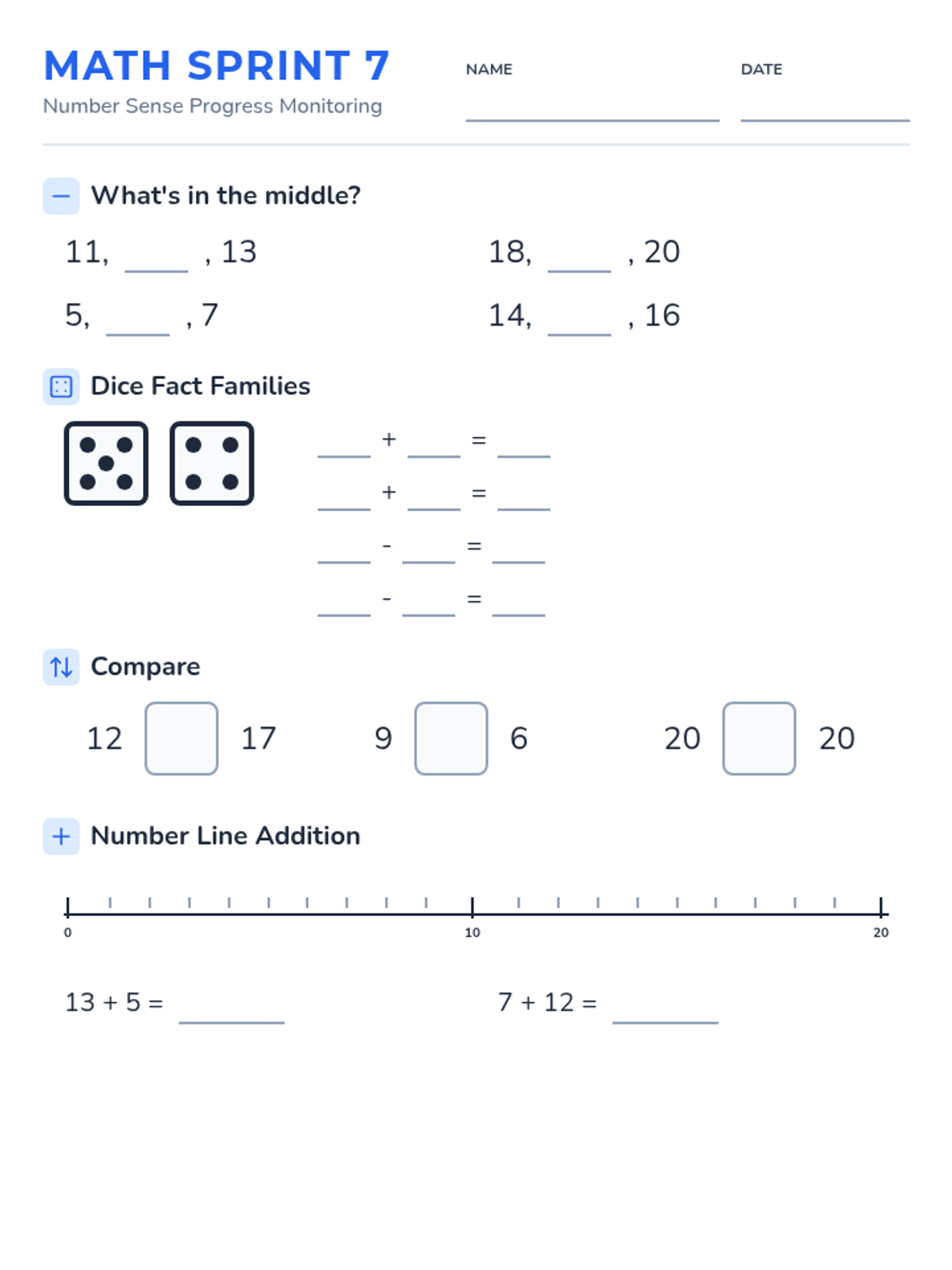
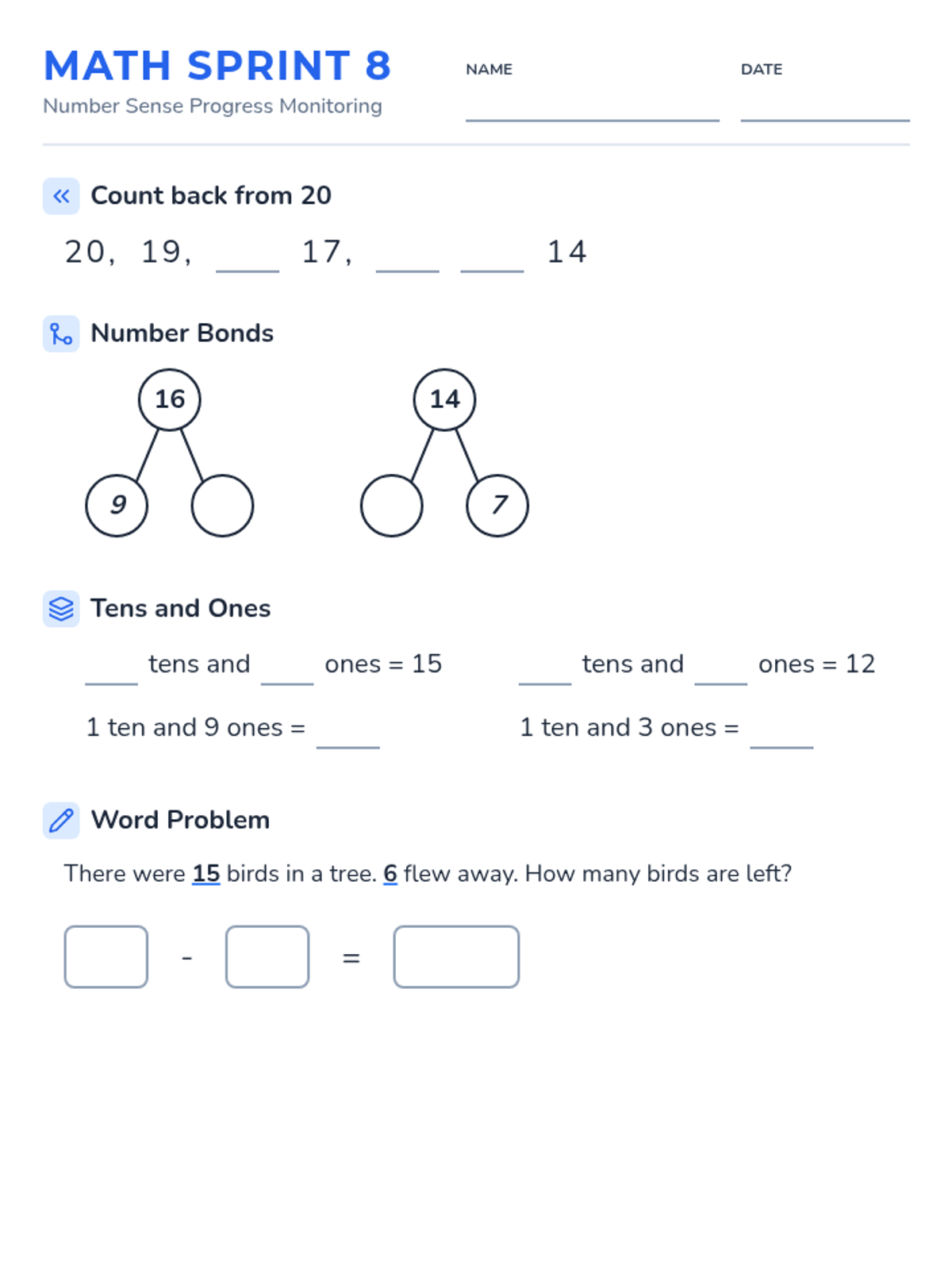
A set of 8 math progress monitoring worksheets focused on core number sense skills for numbers 0-20, including addition, subtraction, fact families, and place value strategies.
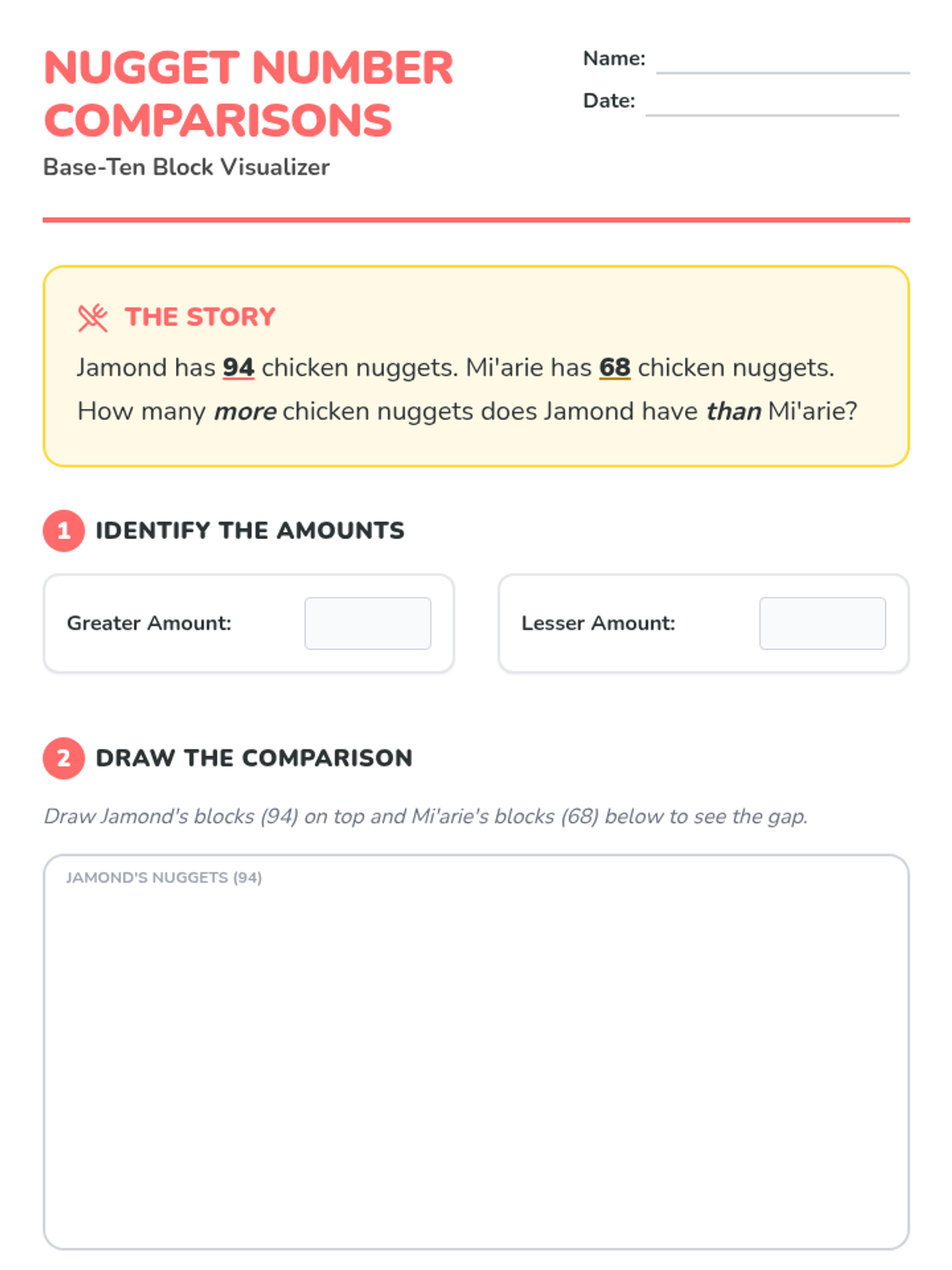
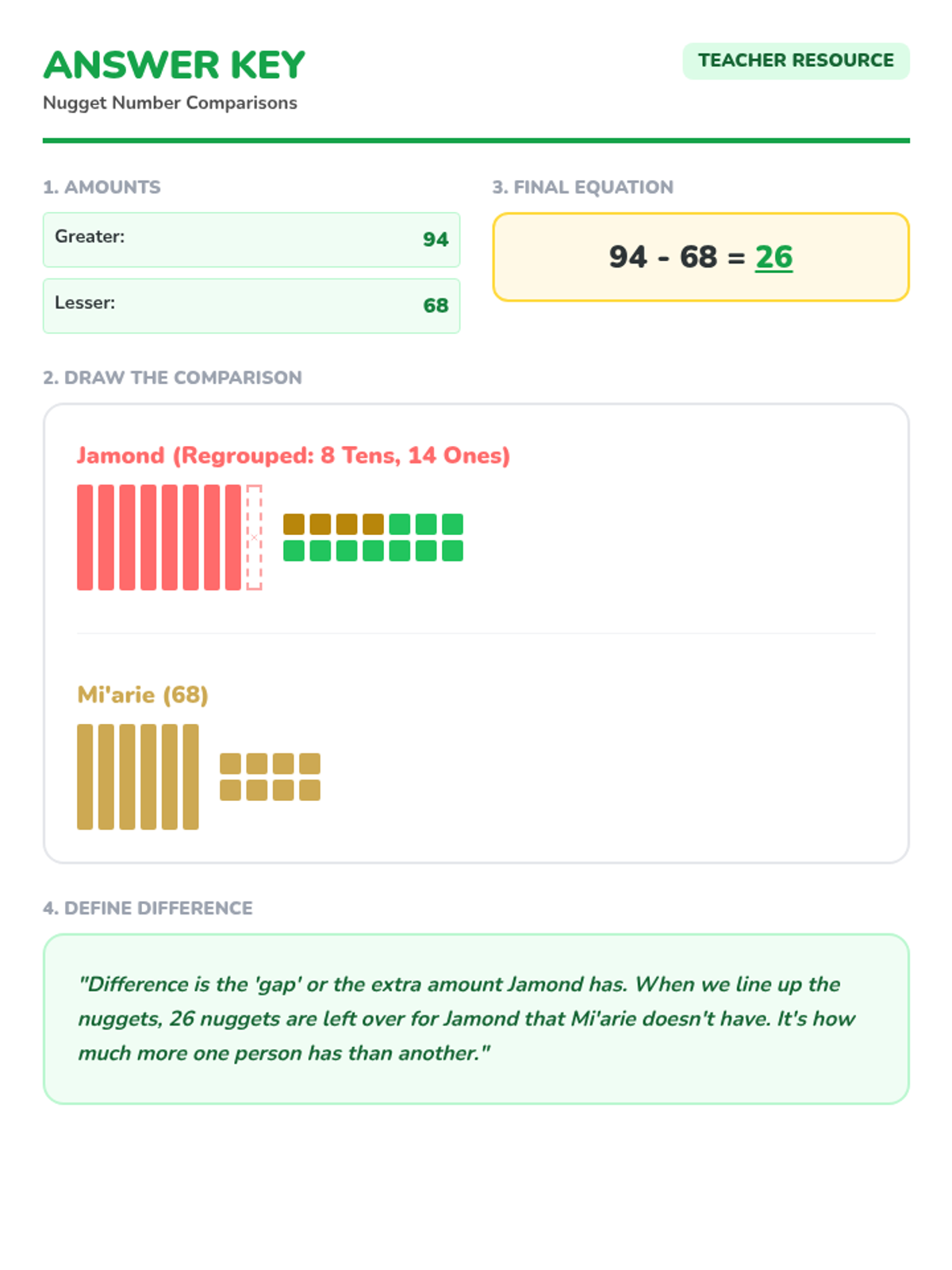
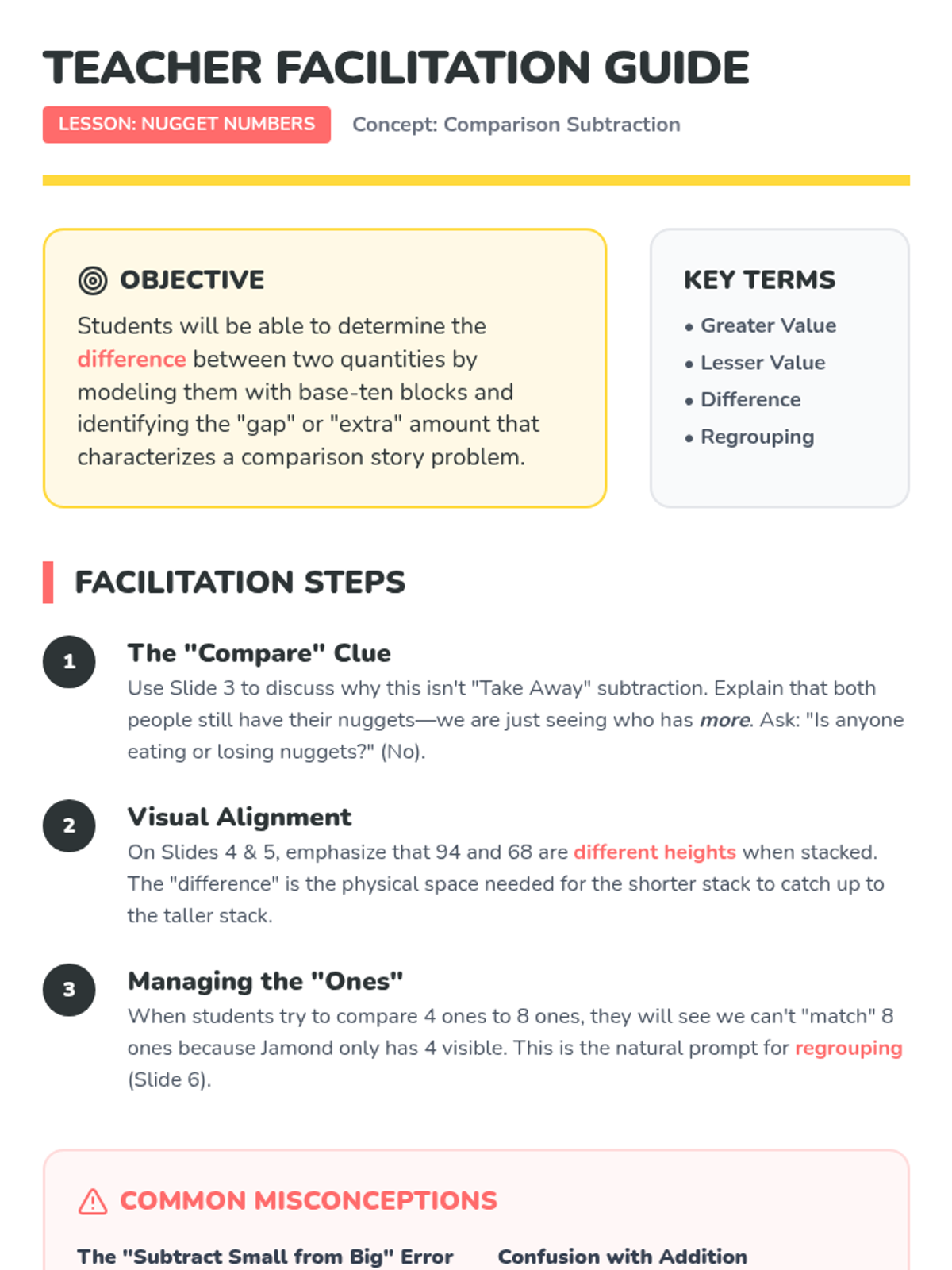
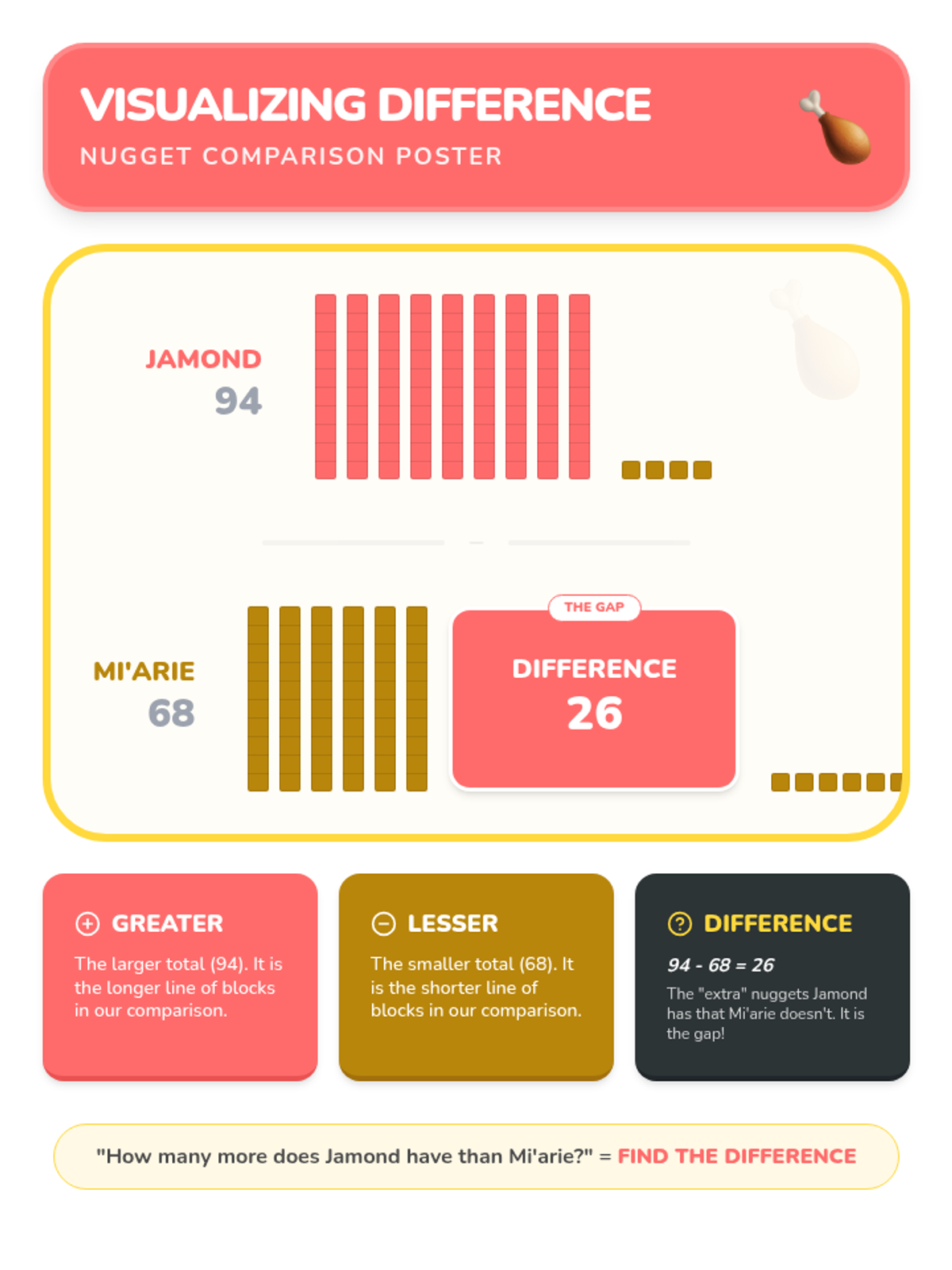
A visual exploration of subtraction using base-ten blocks to compare two quantities. Students learn to identify the greater and lesser values and define 'difference' through a real-world story problem involving chicken nuggets.
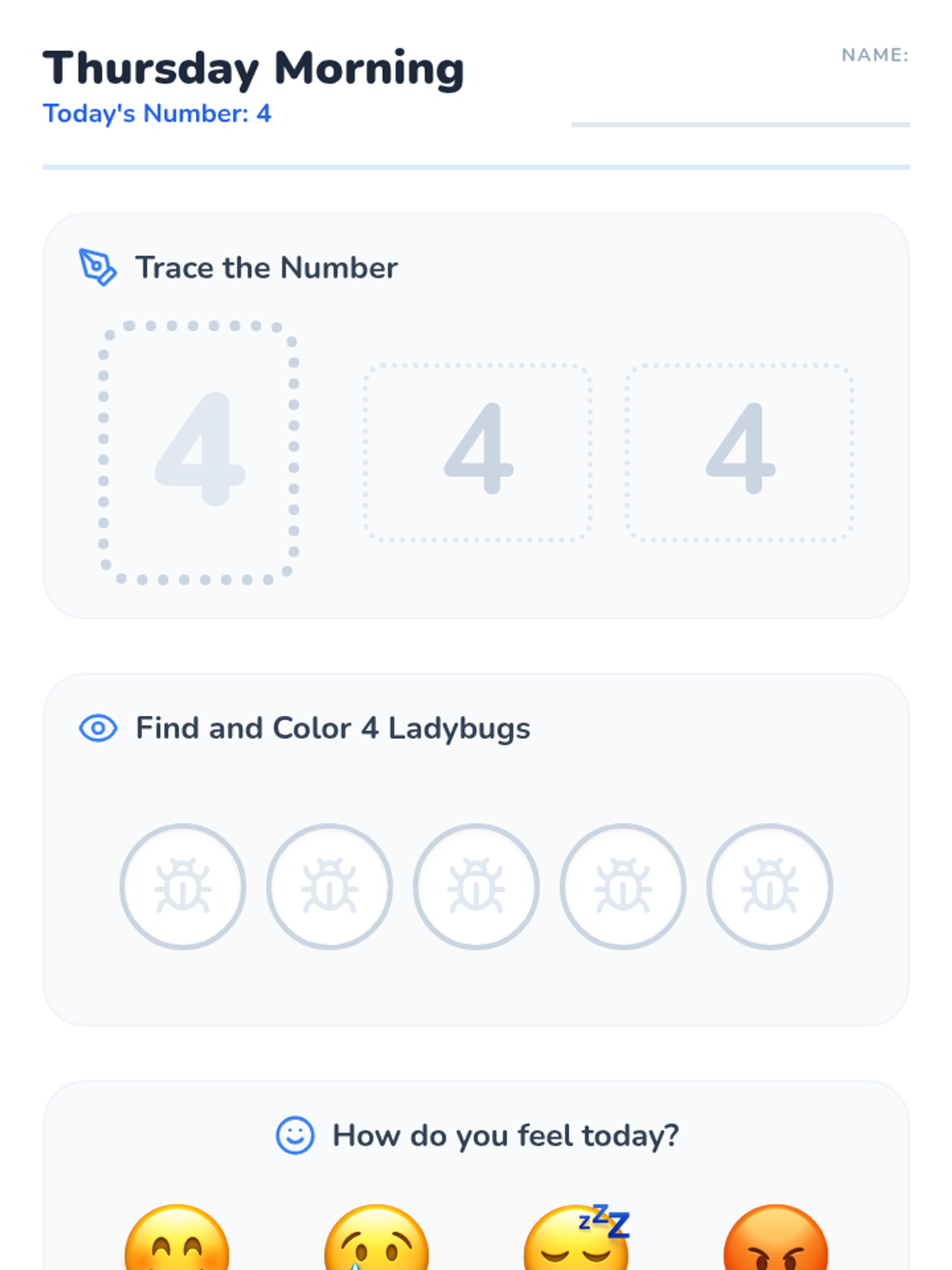
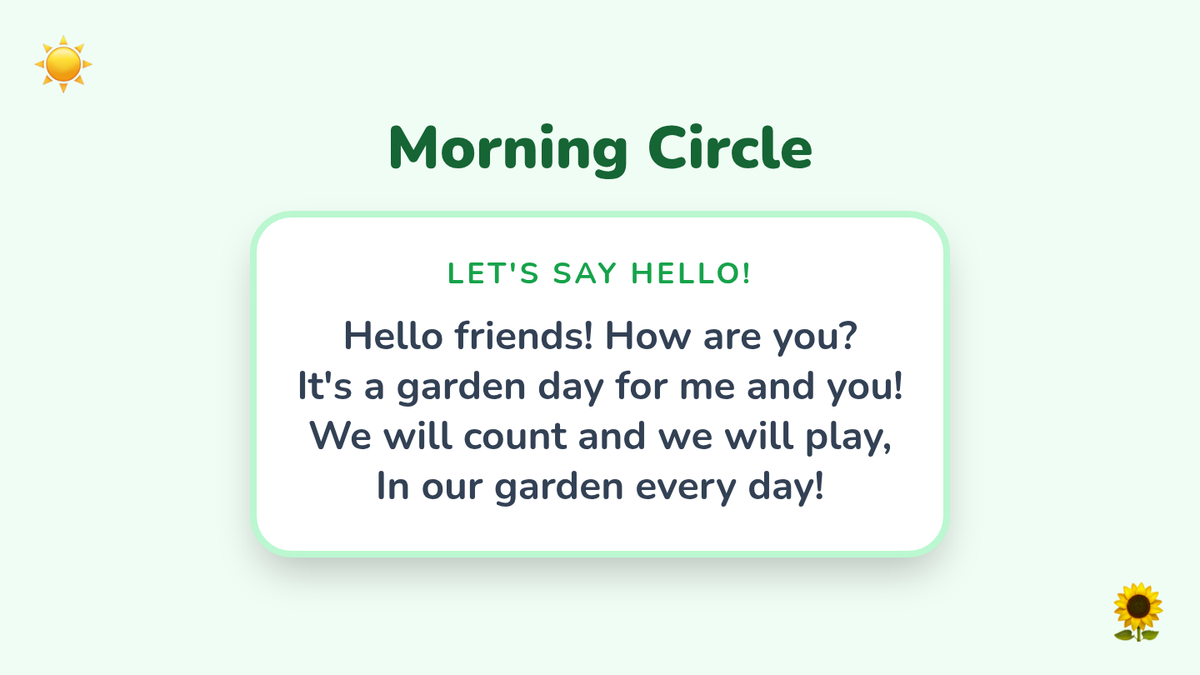
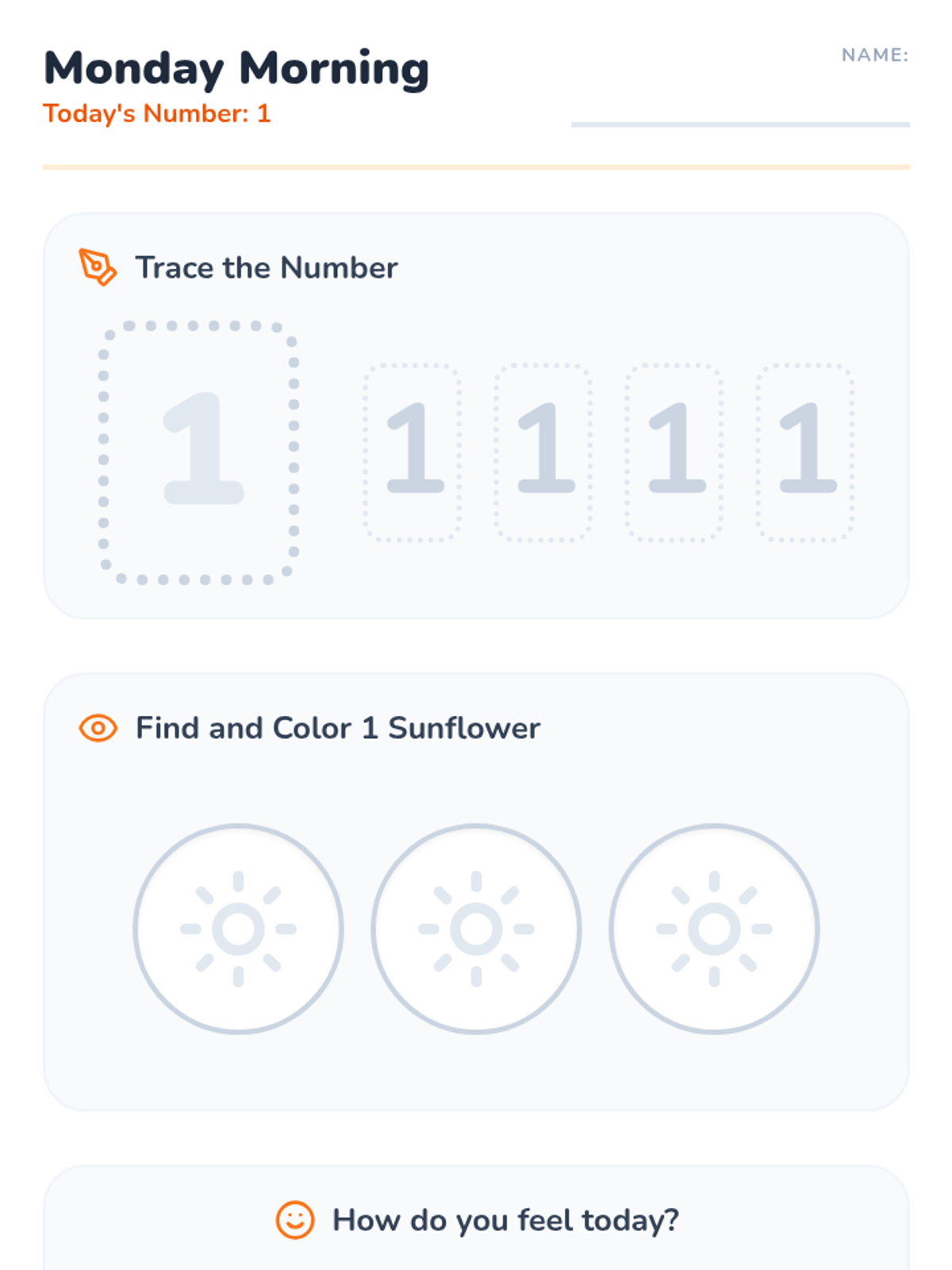
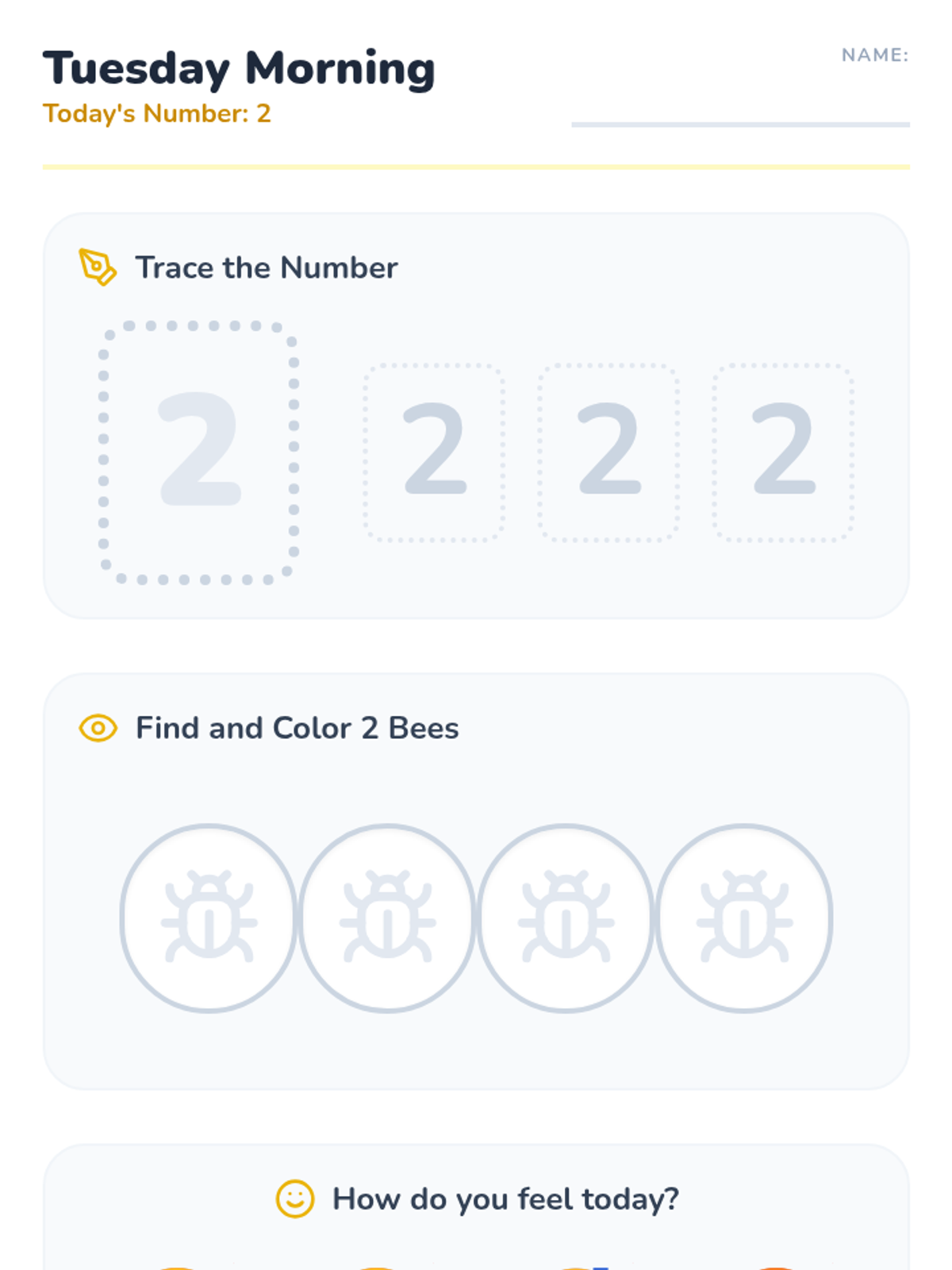
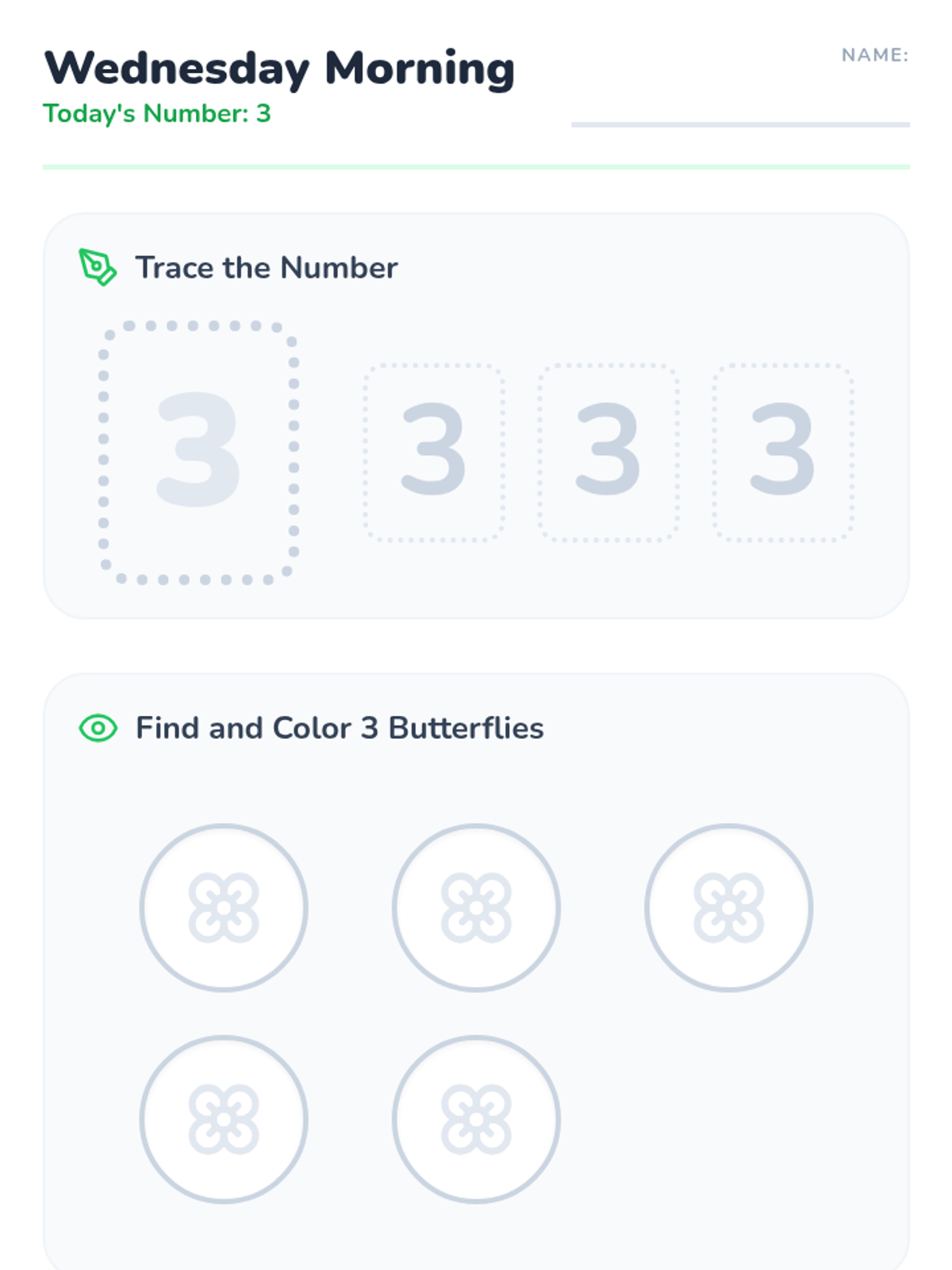
A daily routine lesson for morning circle and daily work, reinforcing garden themes, calendar skills, and social-emotional awareness.
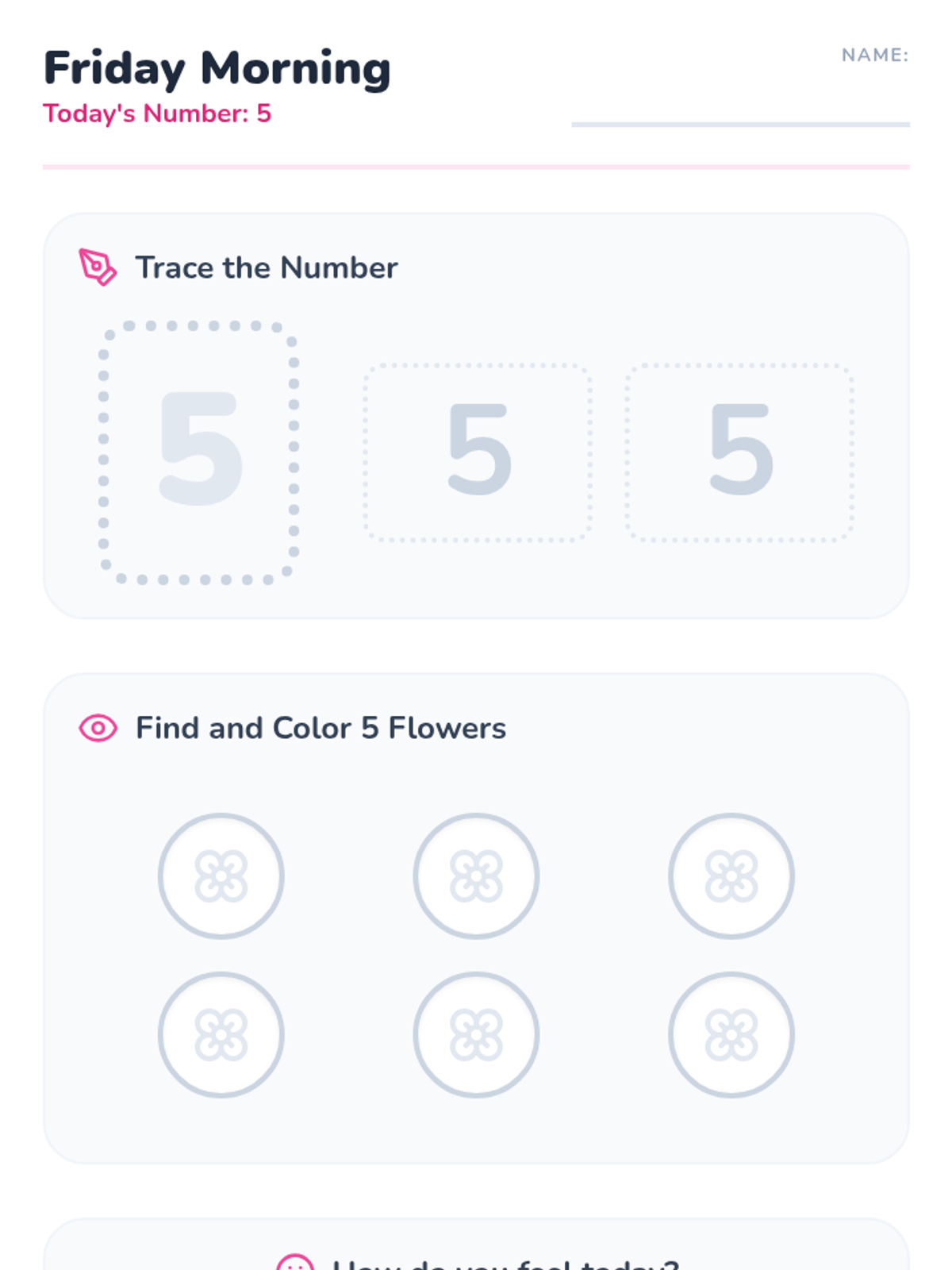
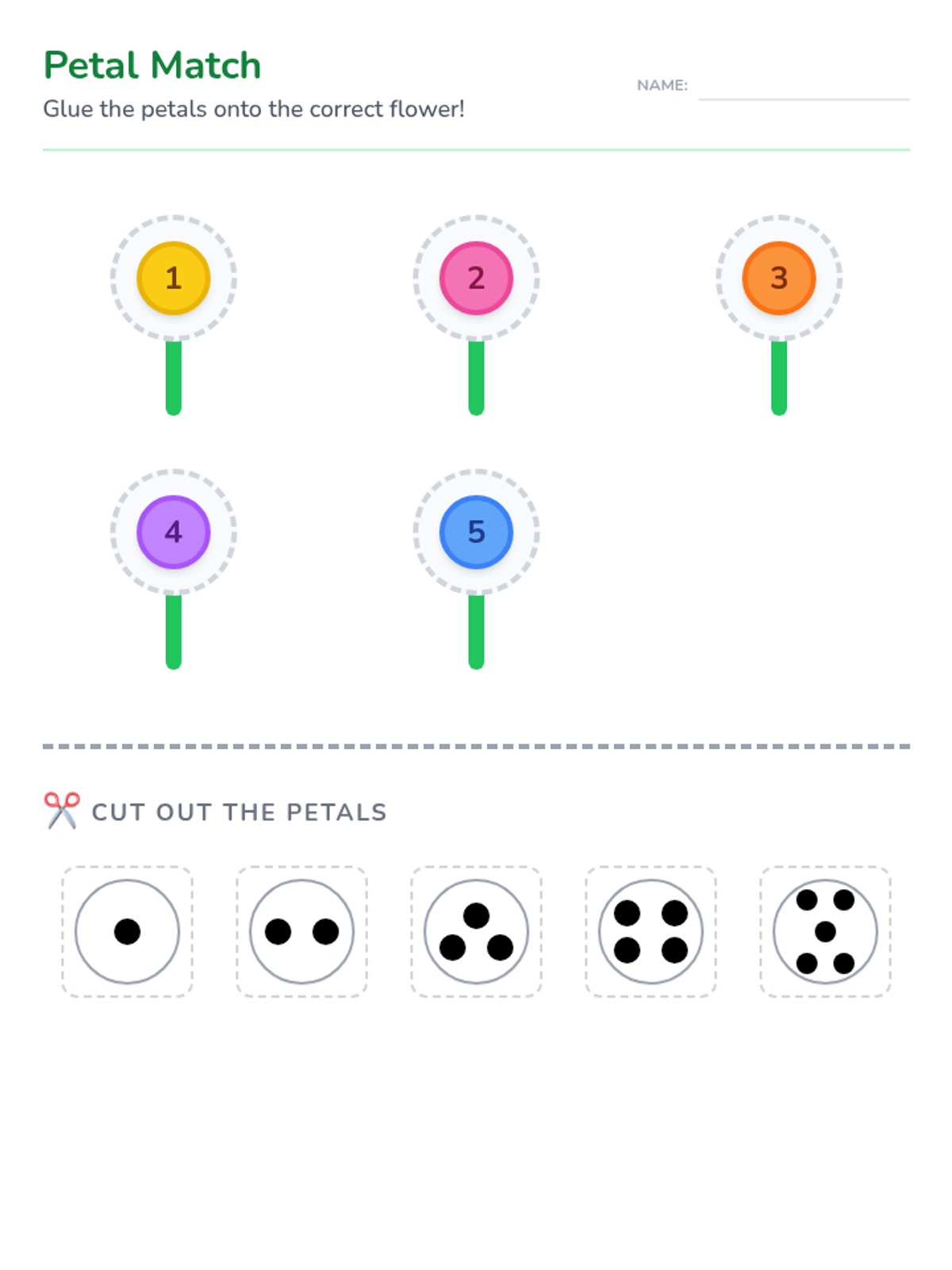
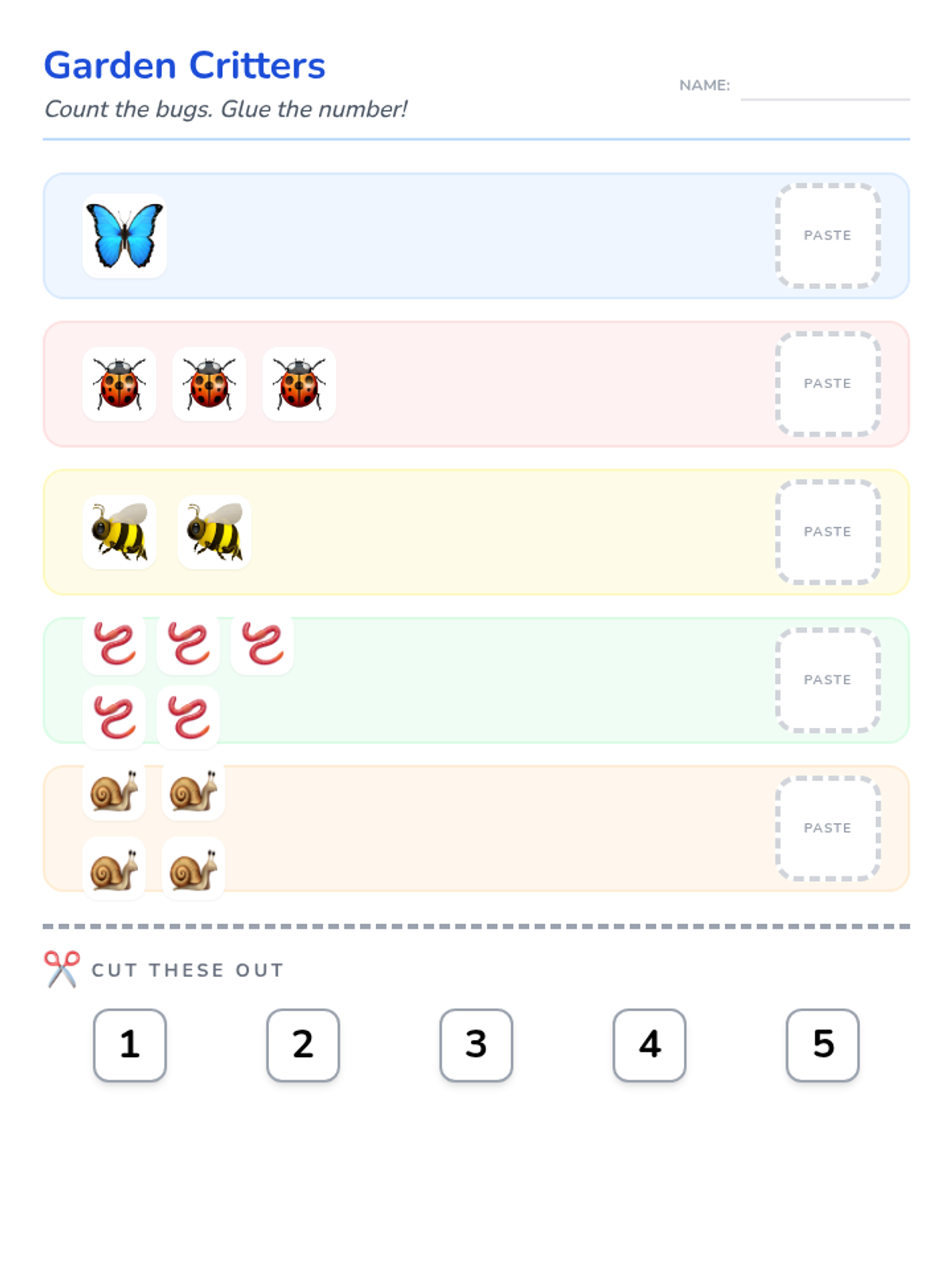
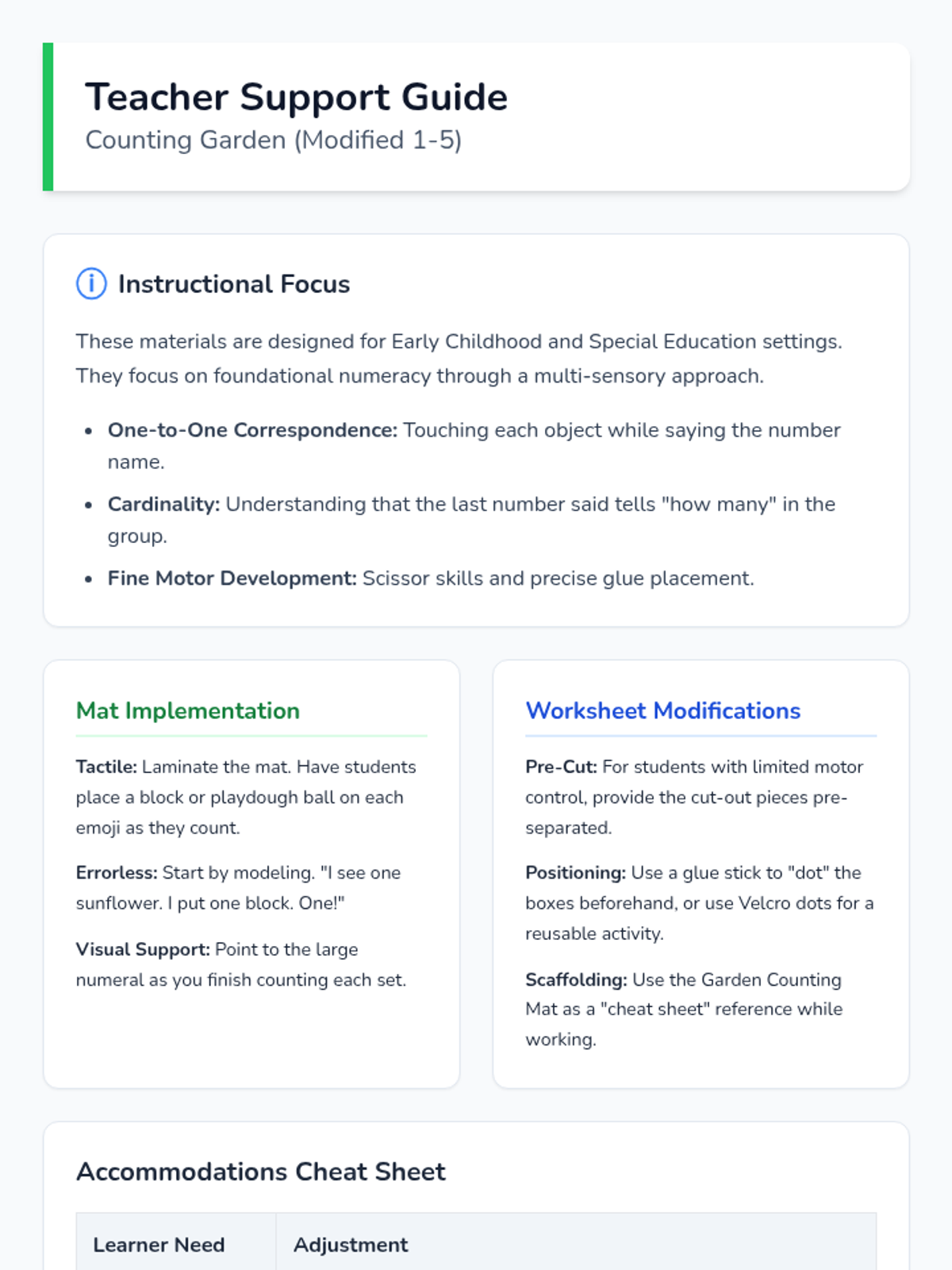
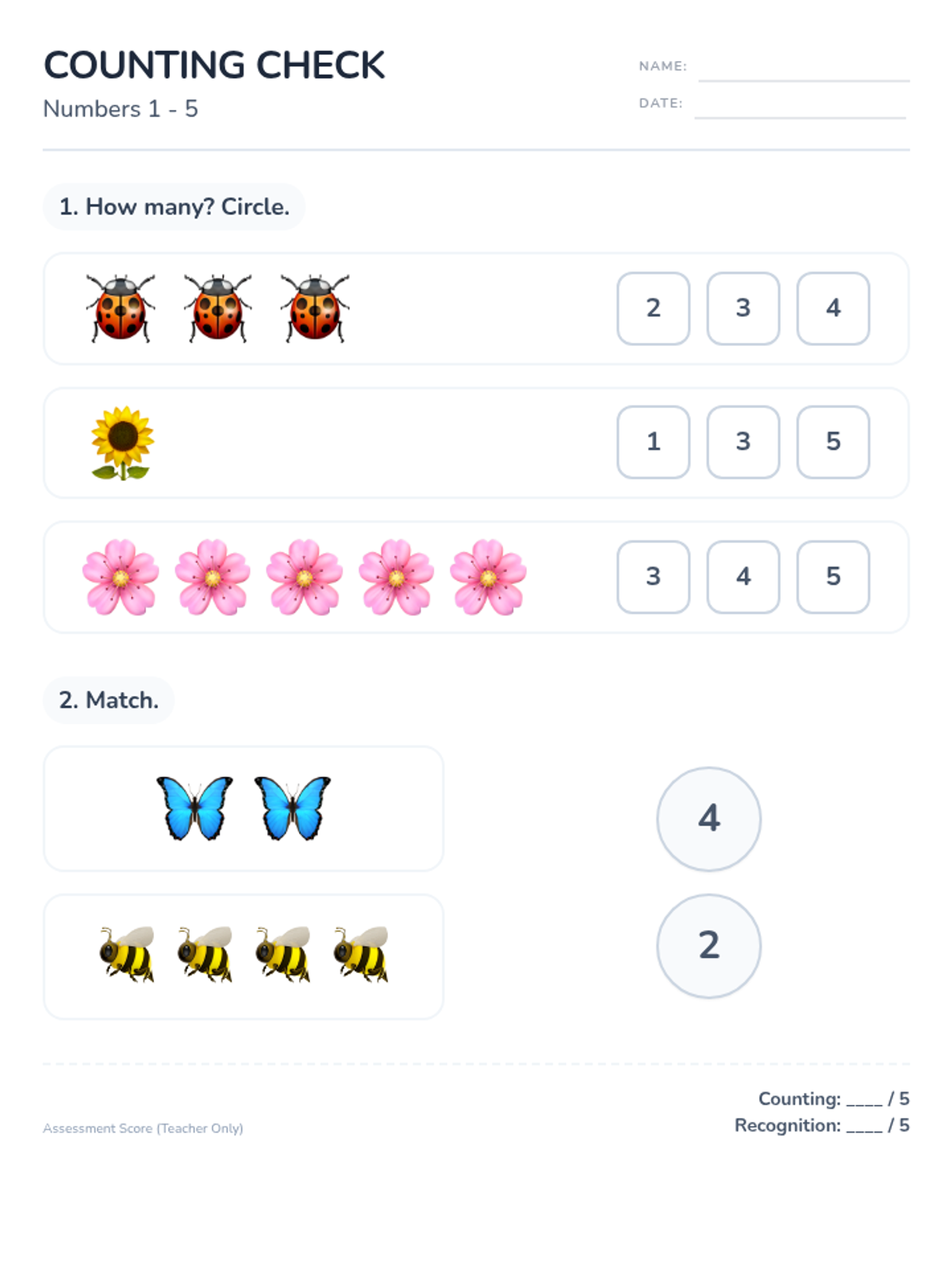
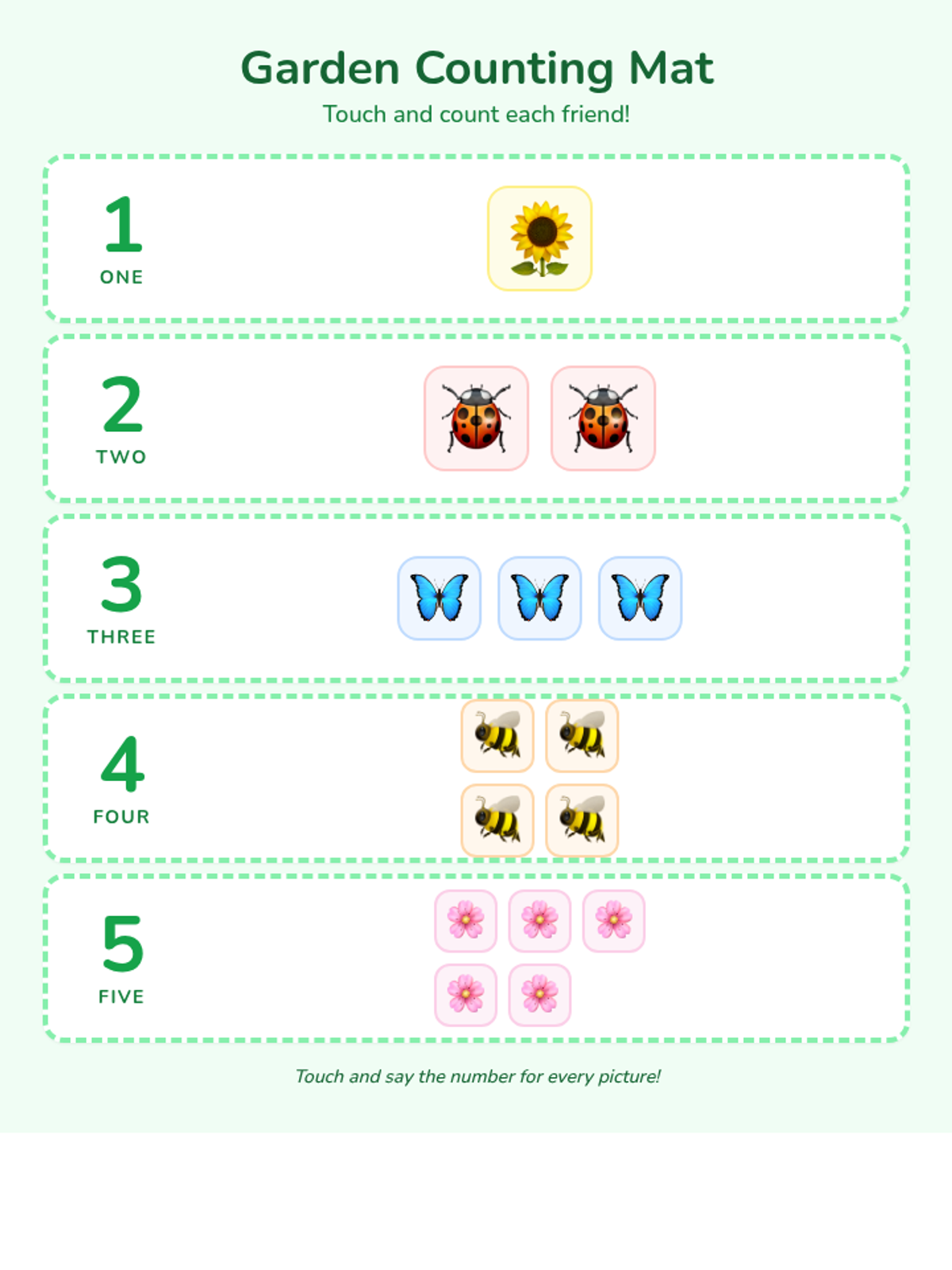
Students explore the numbers 1 through 5 using visual supports and hands-on matching activities to build one-to-one correspondence.
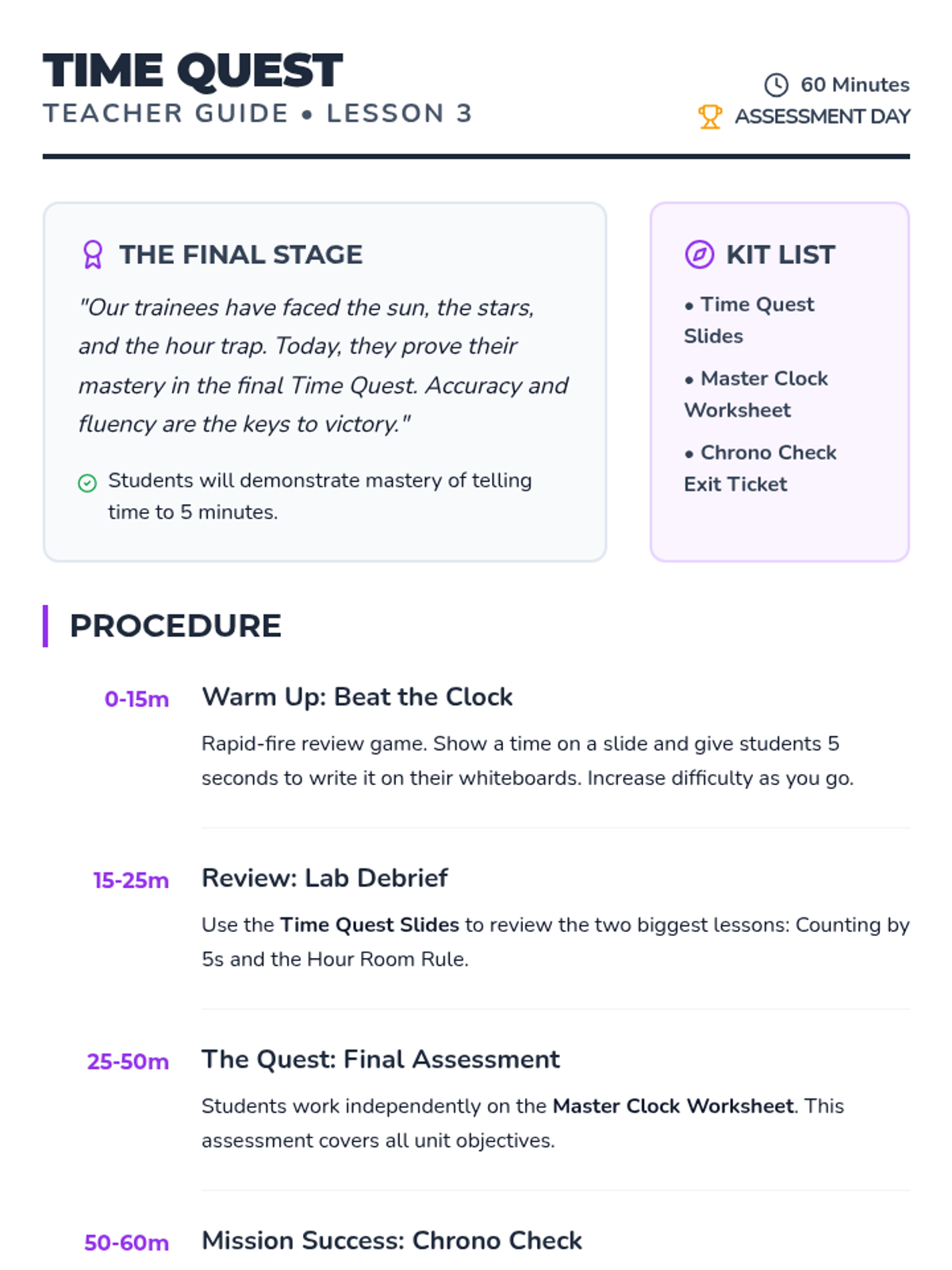
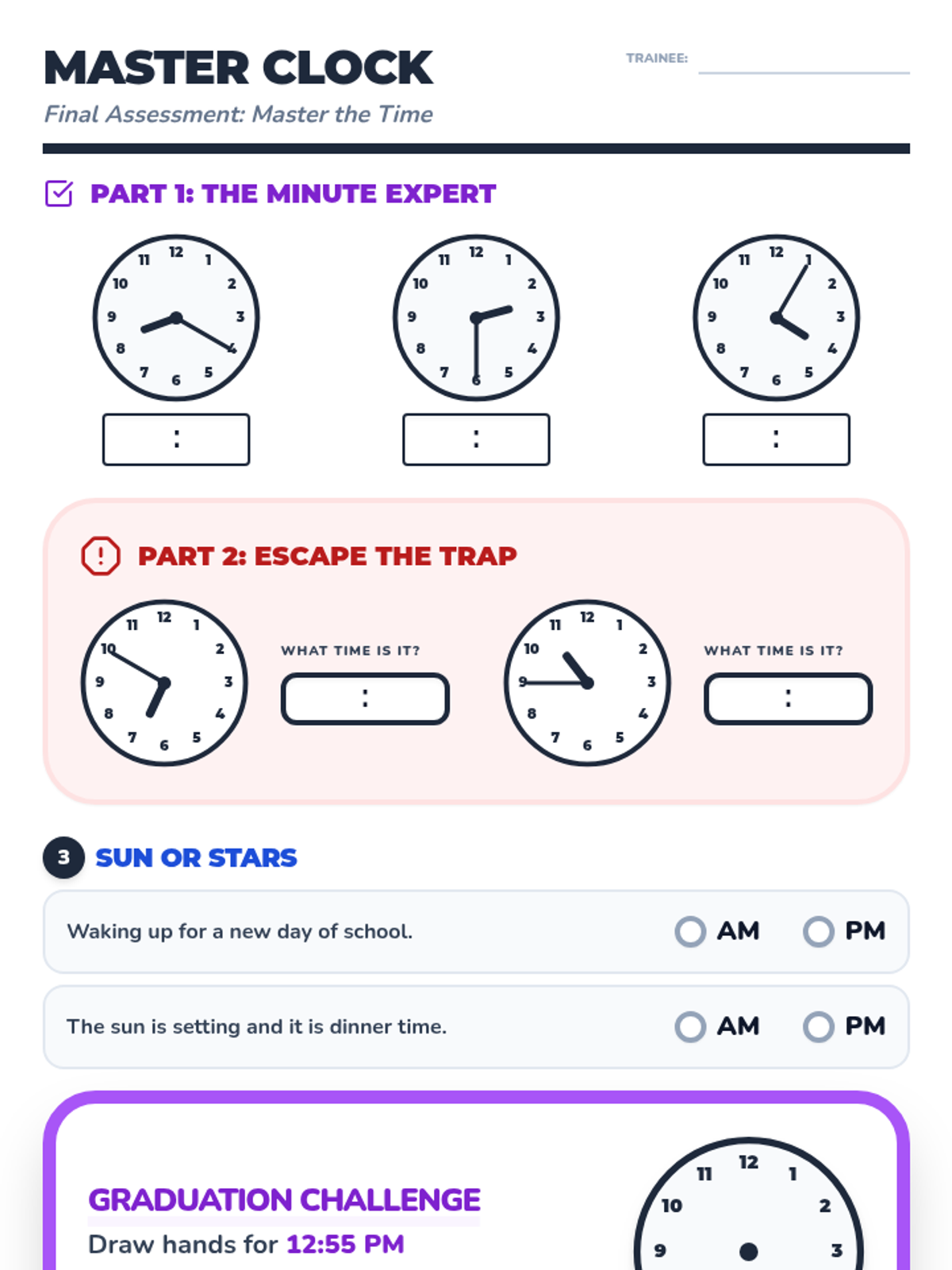
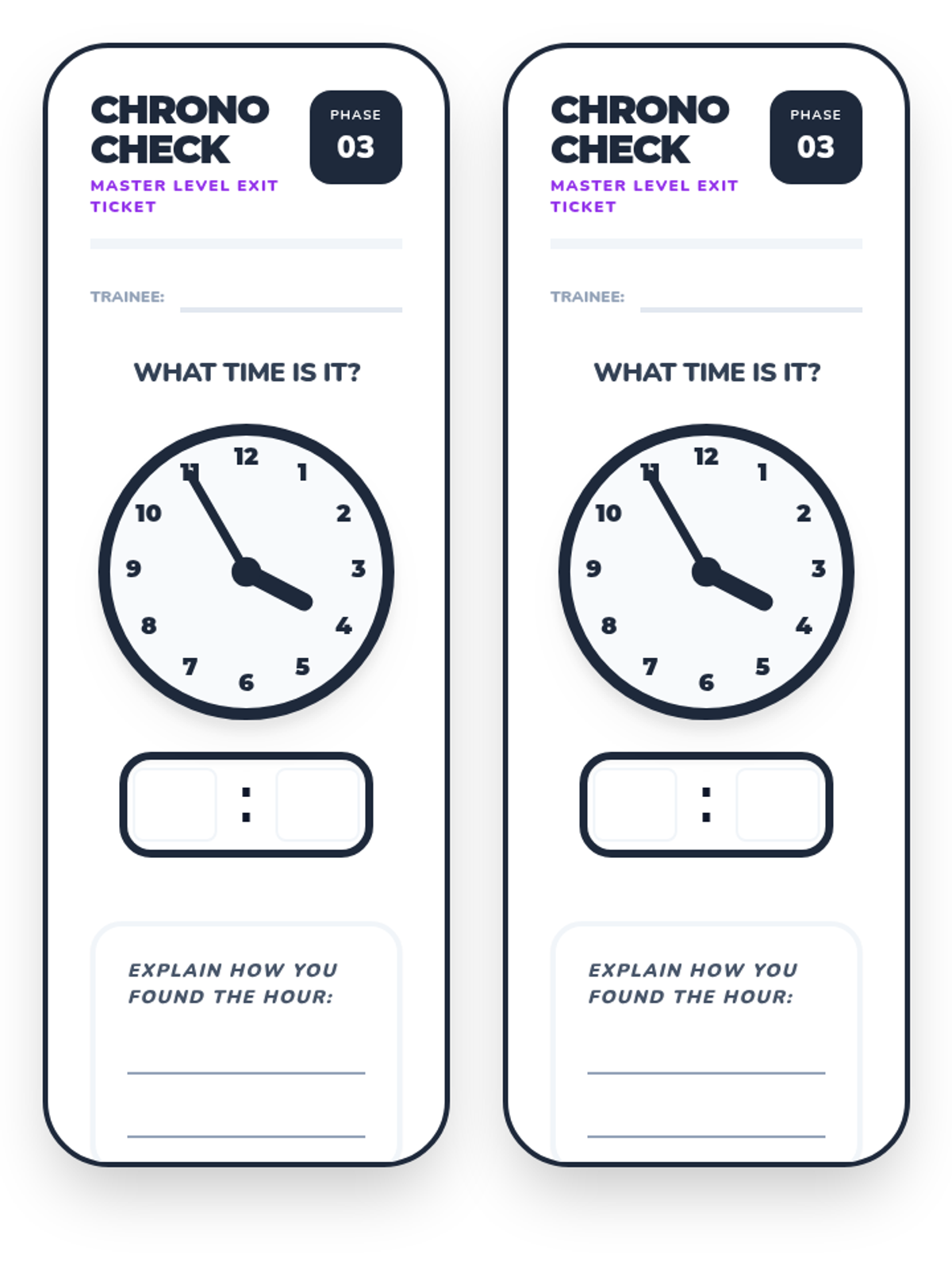
A comprehensive review session featuring task cards and a final challenge to solidify time-telling fluency and accuracy.
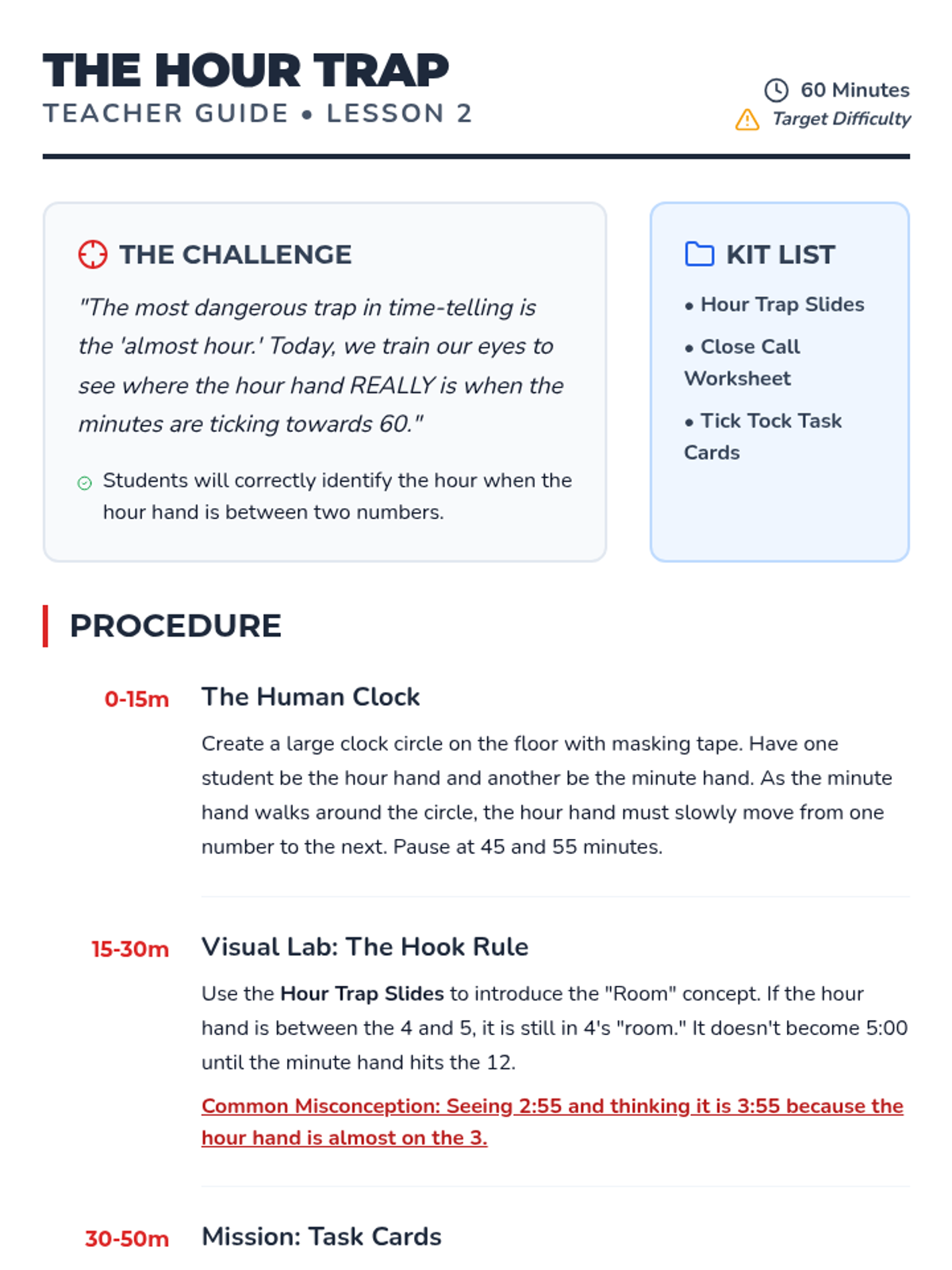
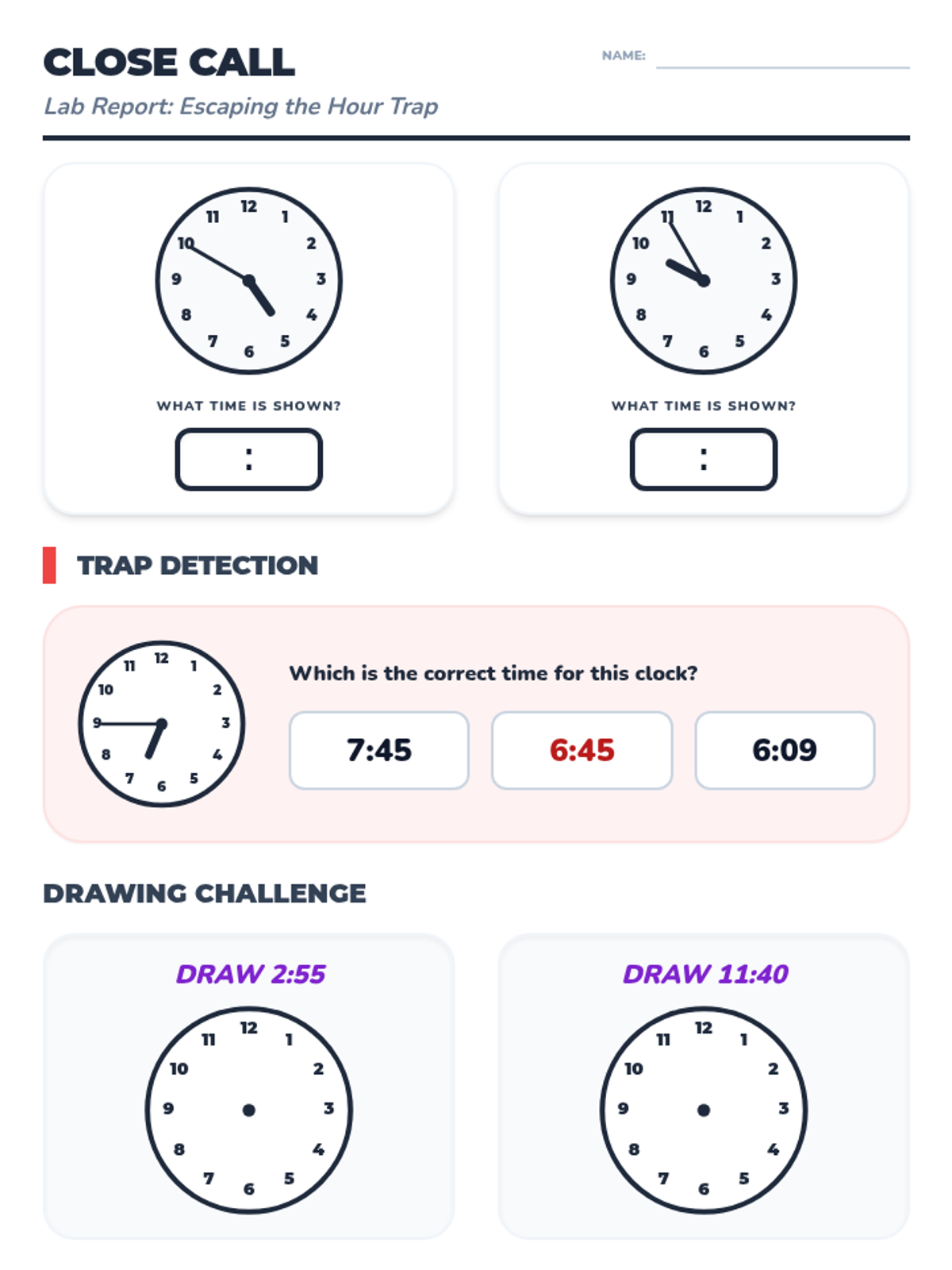
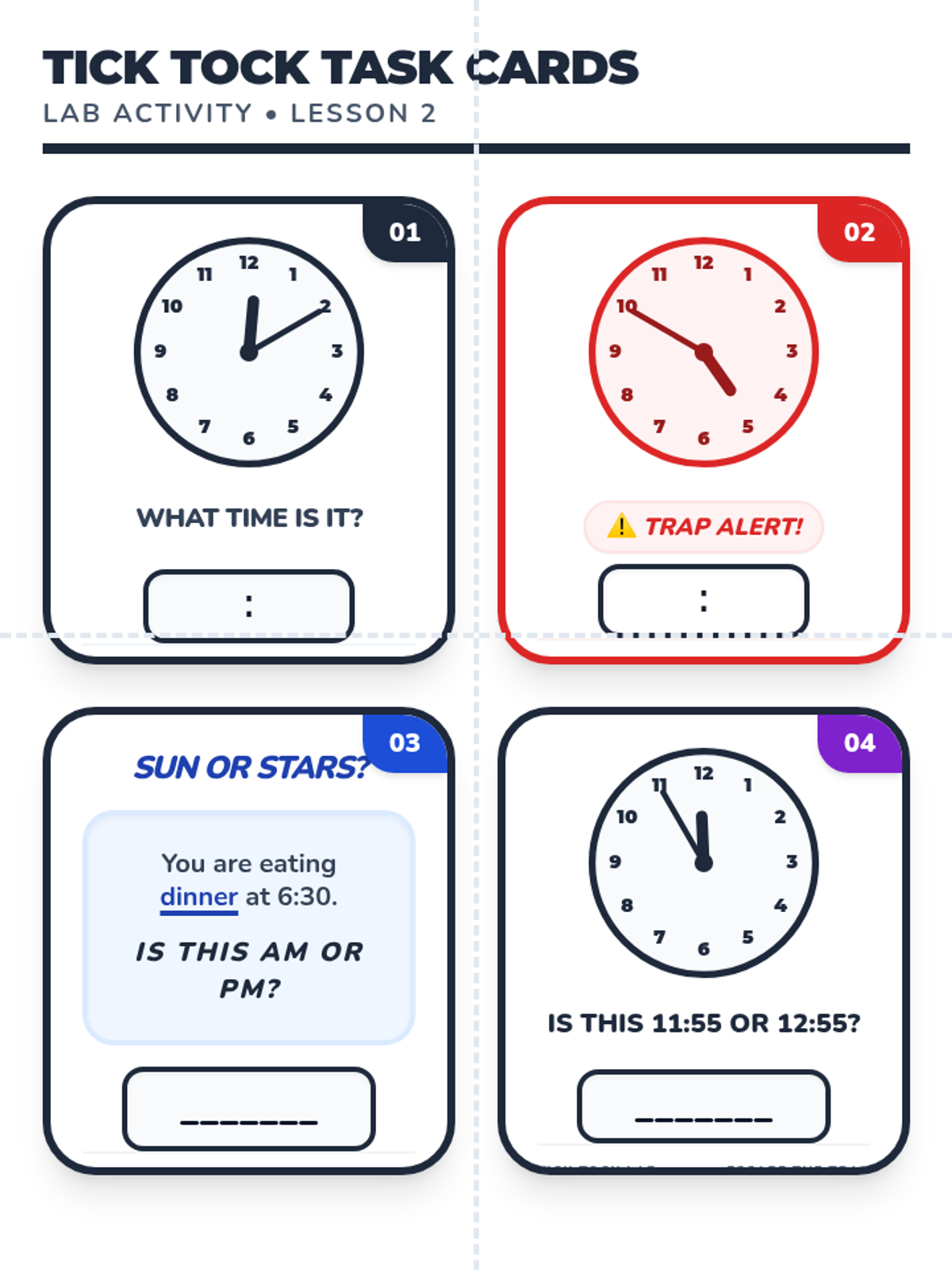
Targets the 'almost hour' challenge where the hour hand appears to be on the next hour even though the minute hand hasn't reached 12 yet.
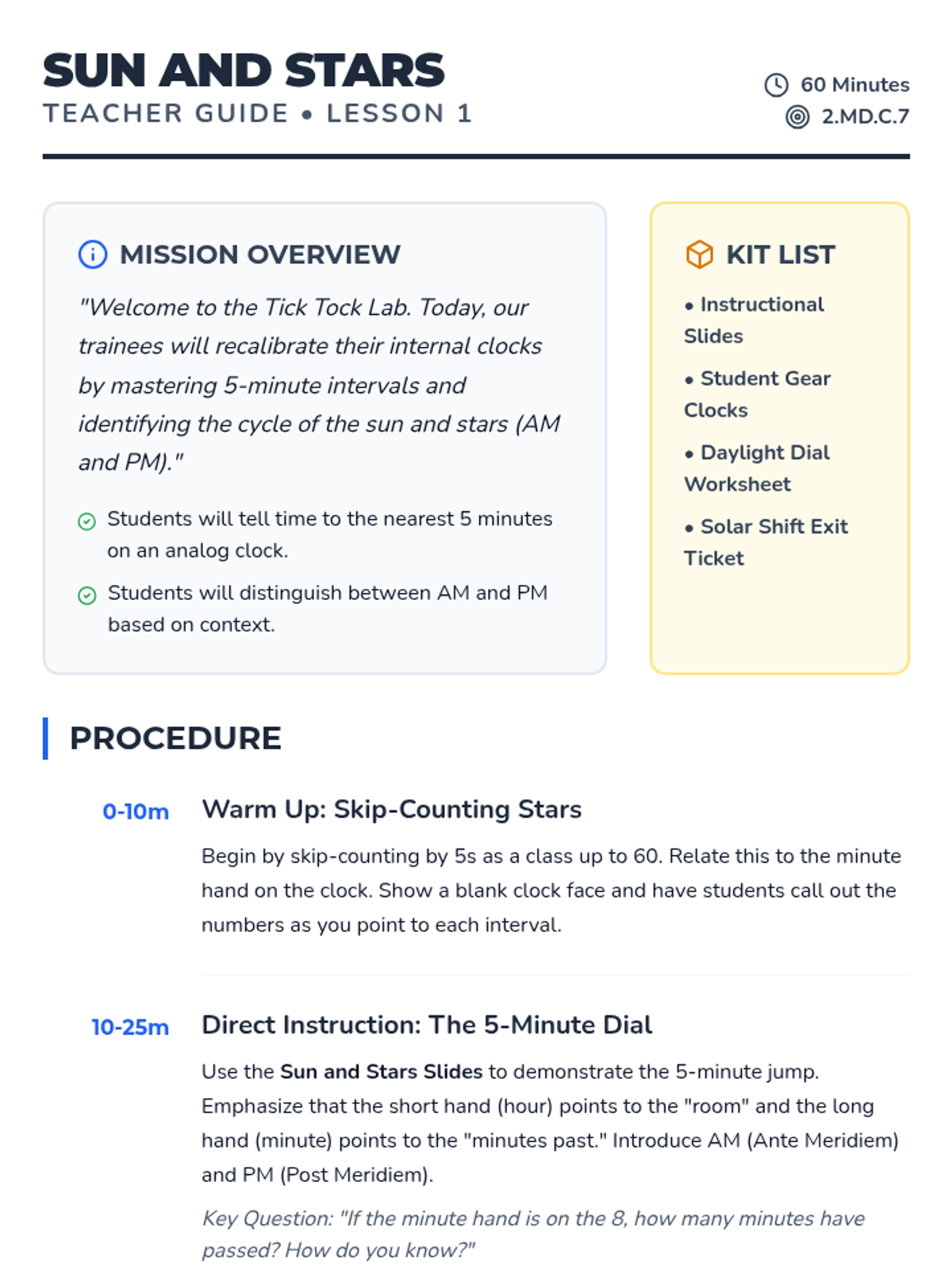
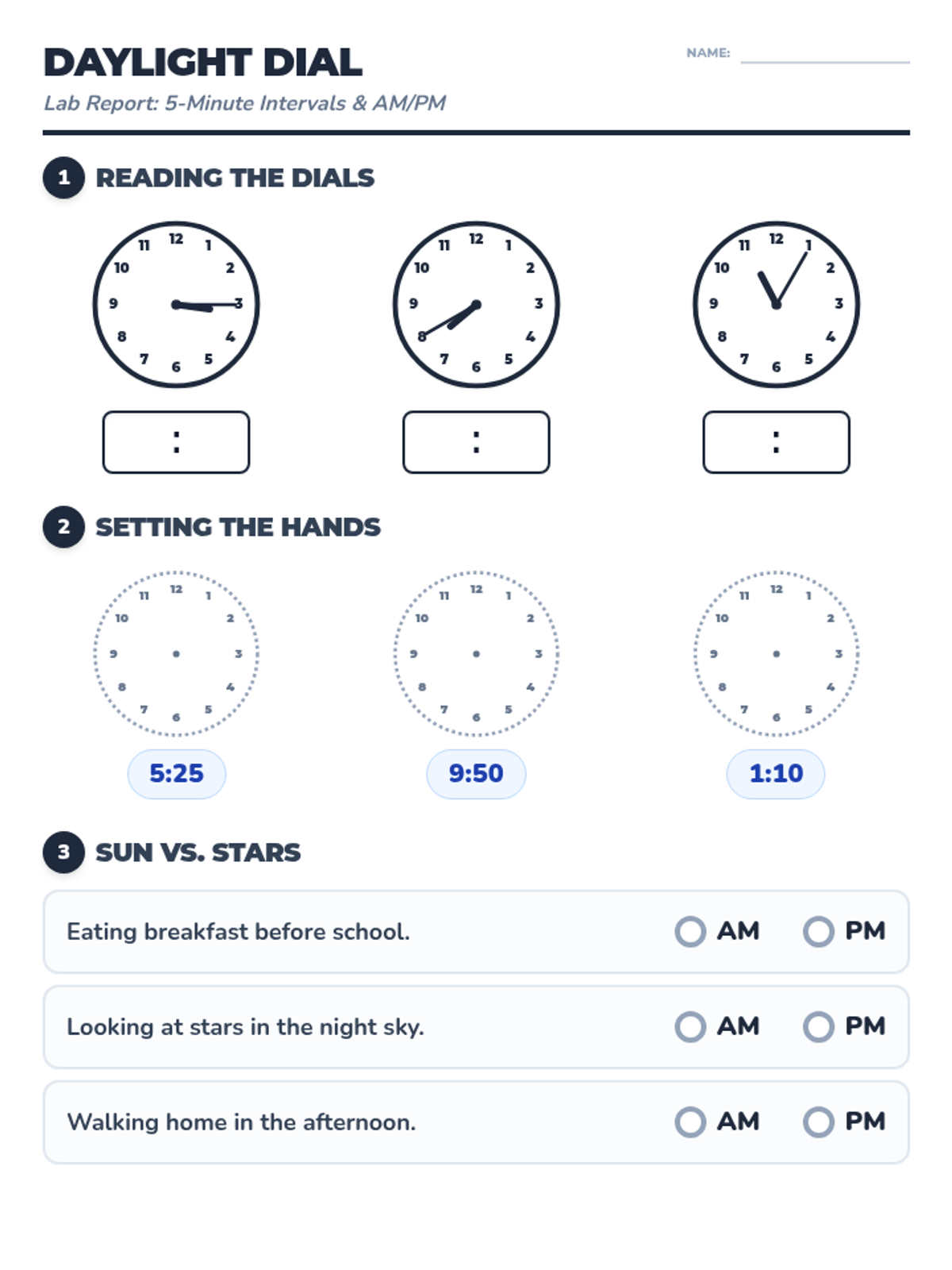
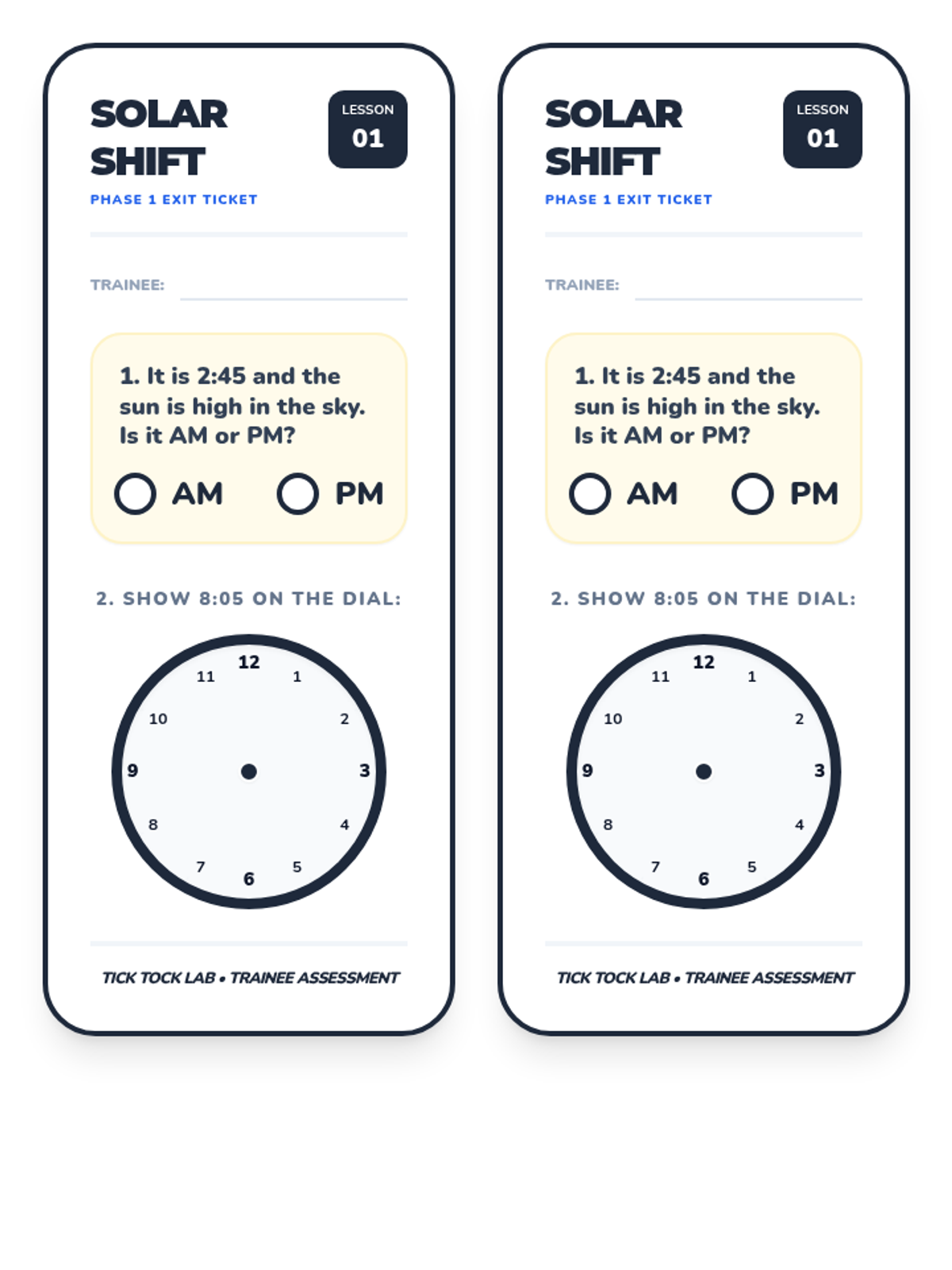
Focuses on reviewing 5-minute intervals on the analog clock and understanding the difference between AM and PM based on daily activities.
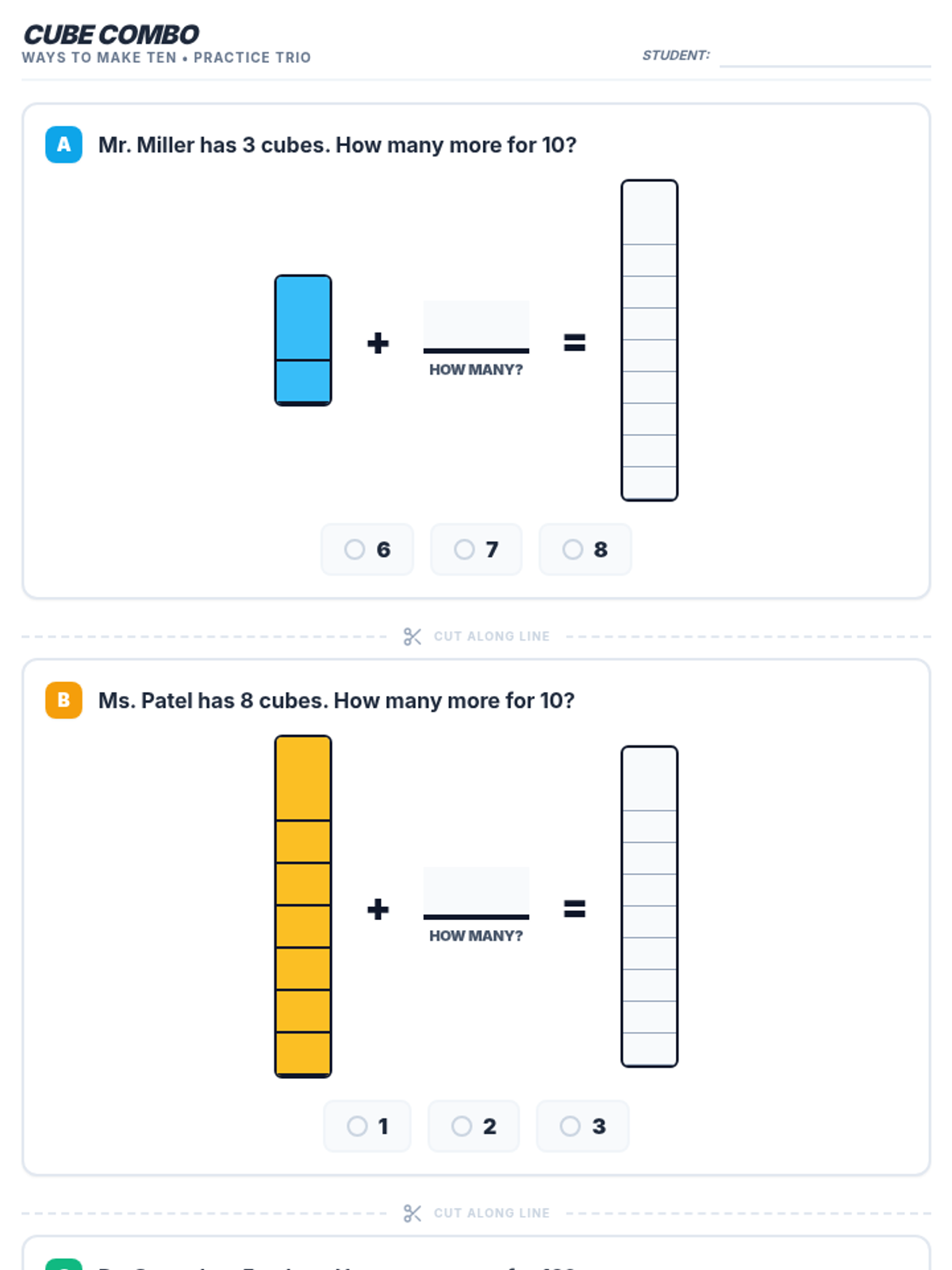
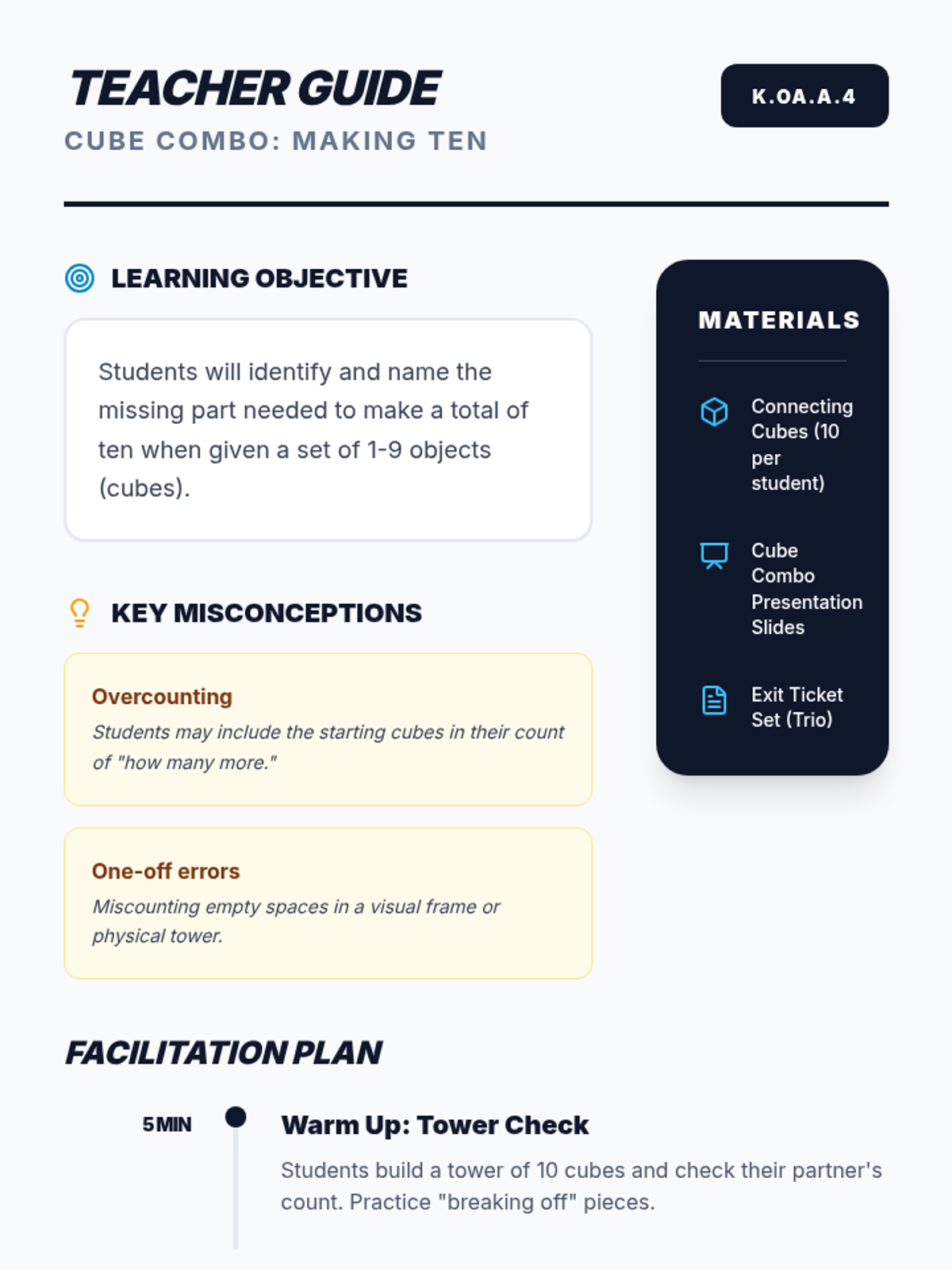
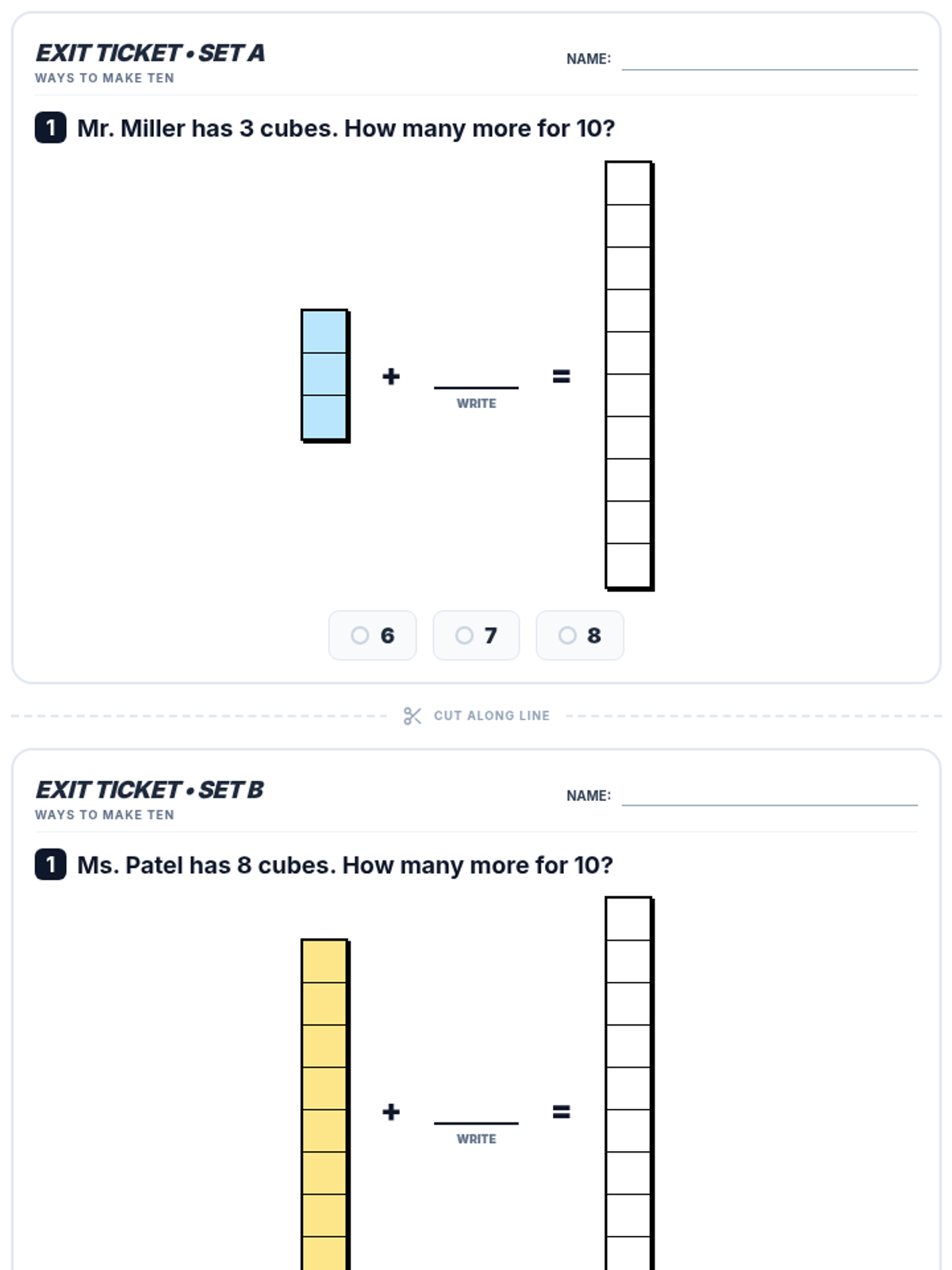
A foundational math lesson focused on decomposing the number ten and identifying pairs of numbers that sum to ten using visual cube models.
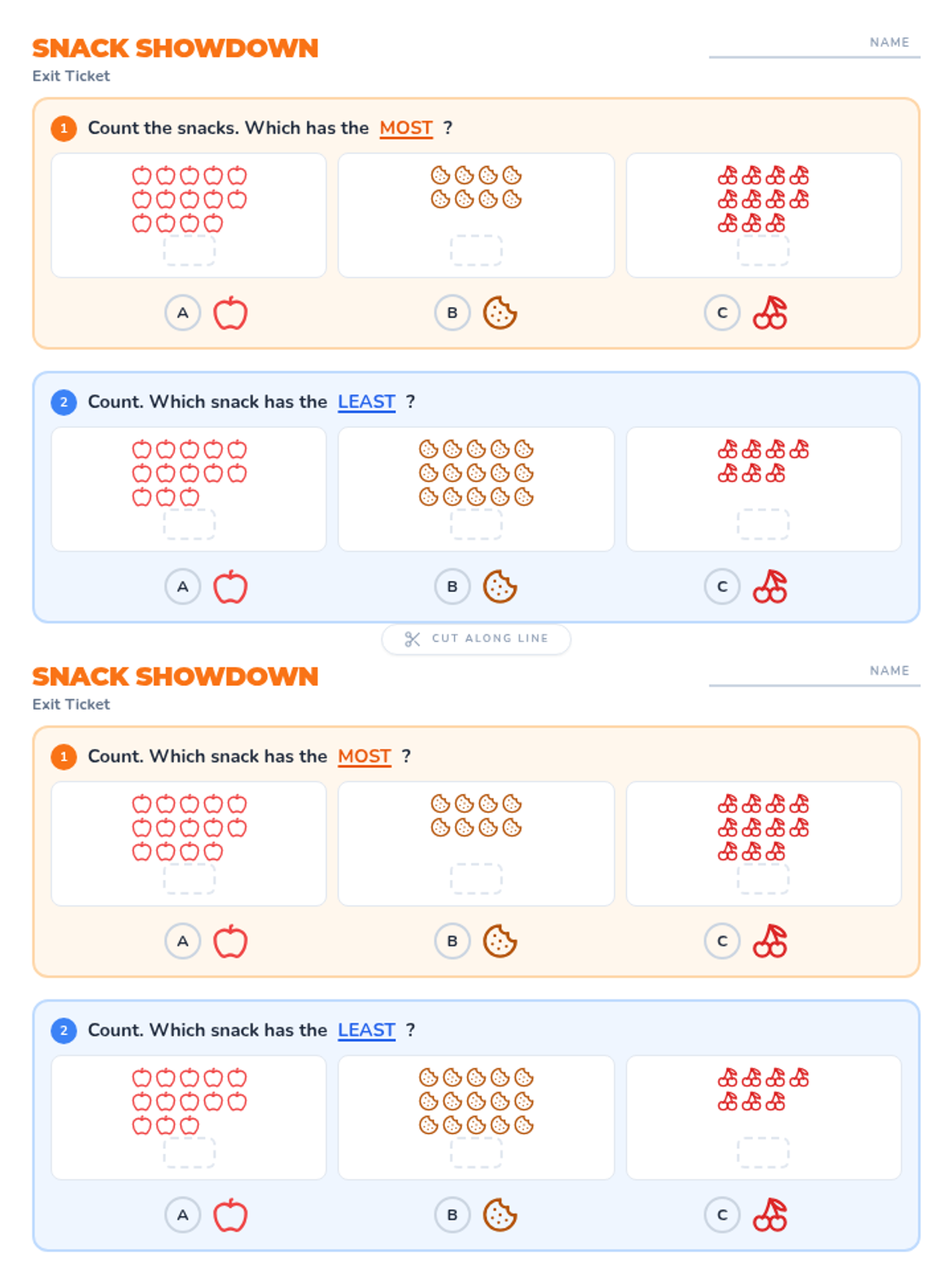
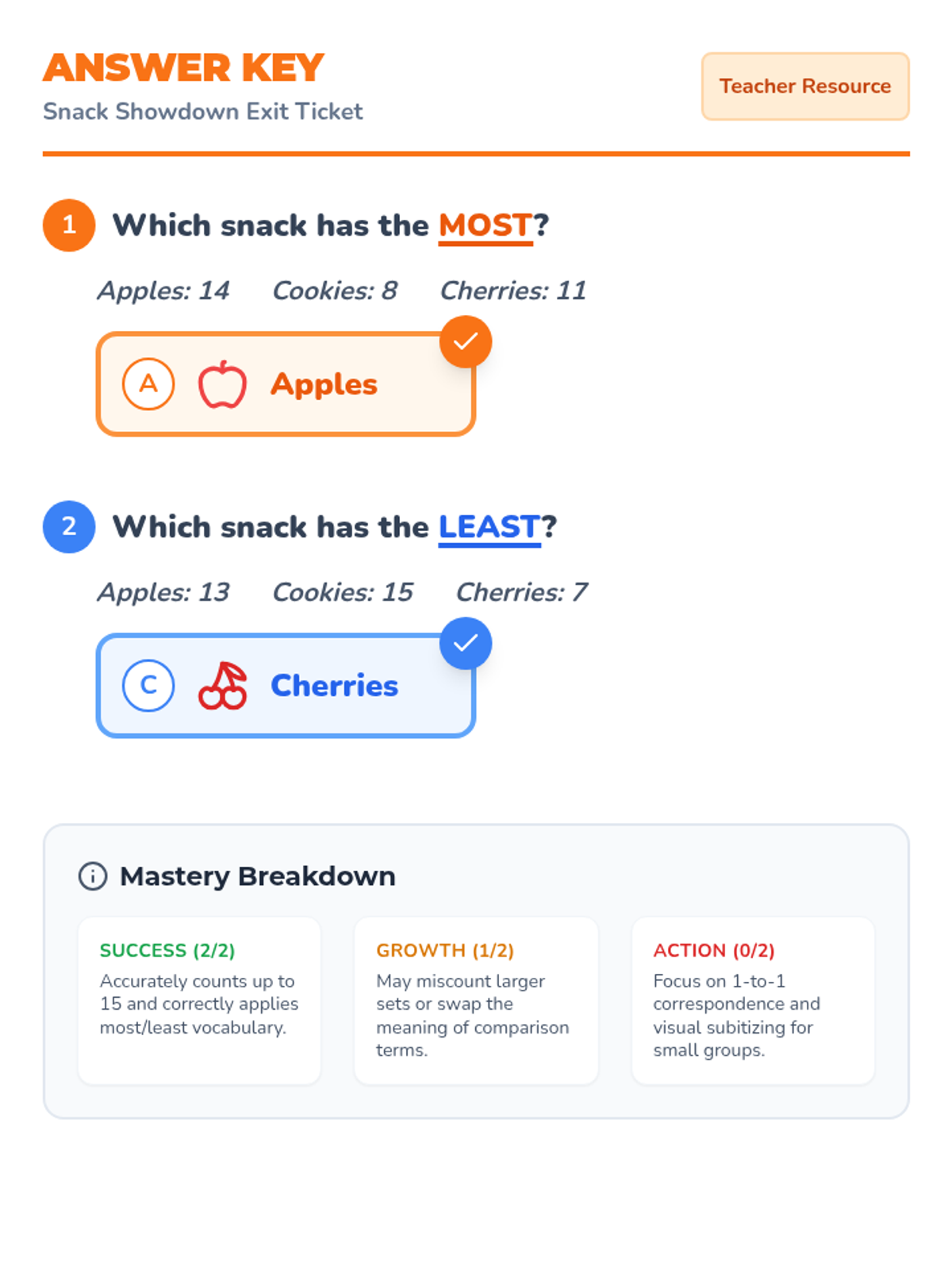
A hands-on lesson focused on counting quantities up to 13 and using the terms 'more' and 'less' to compare groups of objects. Students will practice visual estimation, precise counting, and basic mathematical comparison symbols.
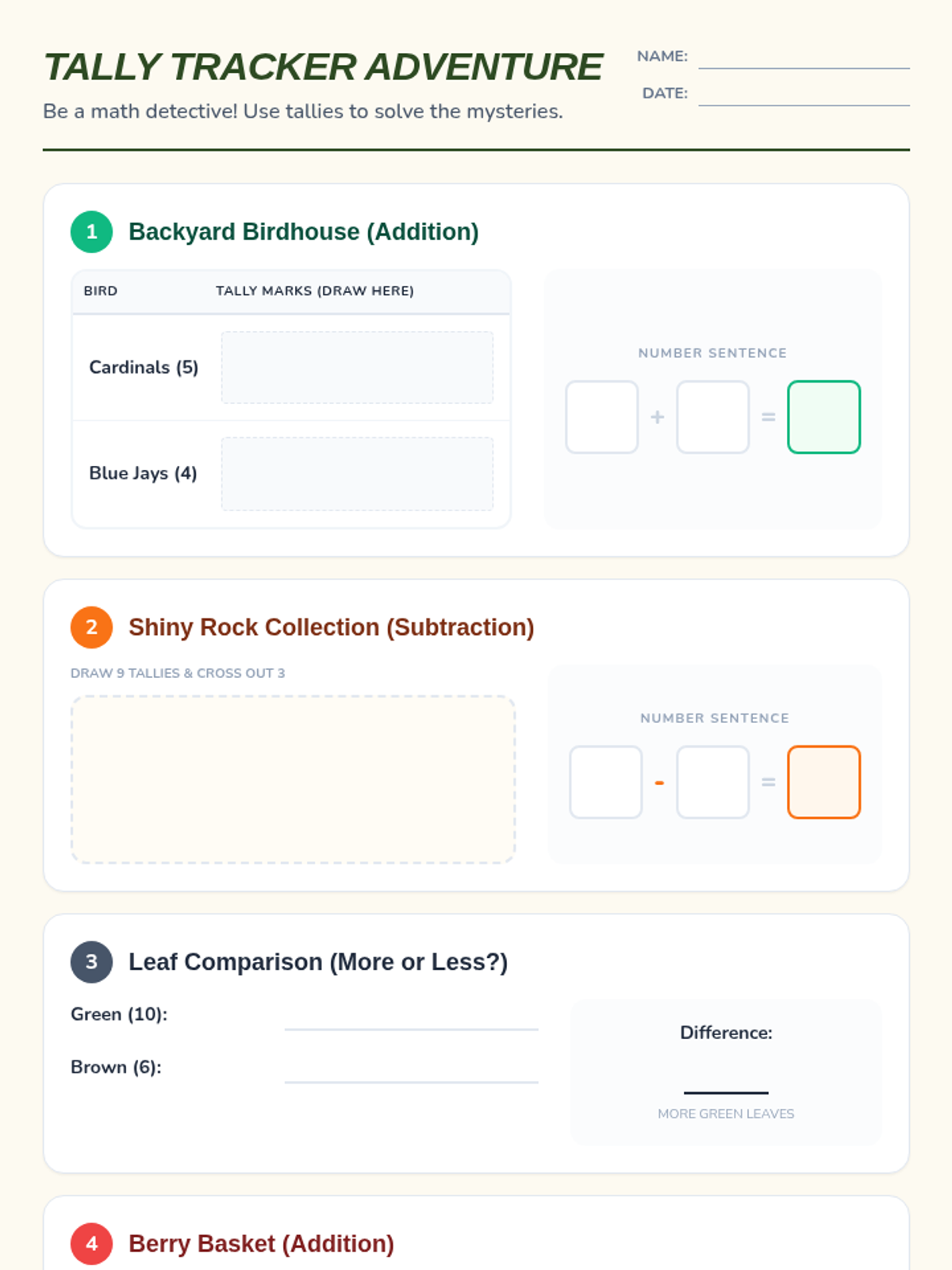
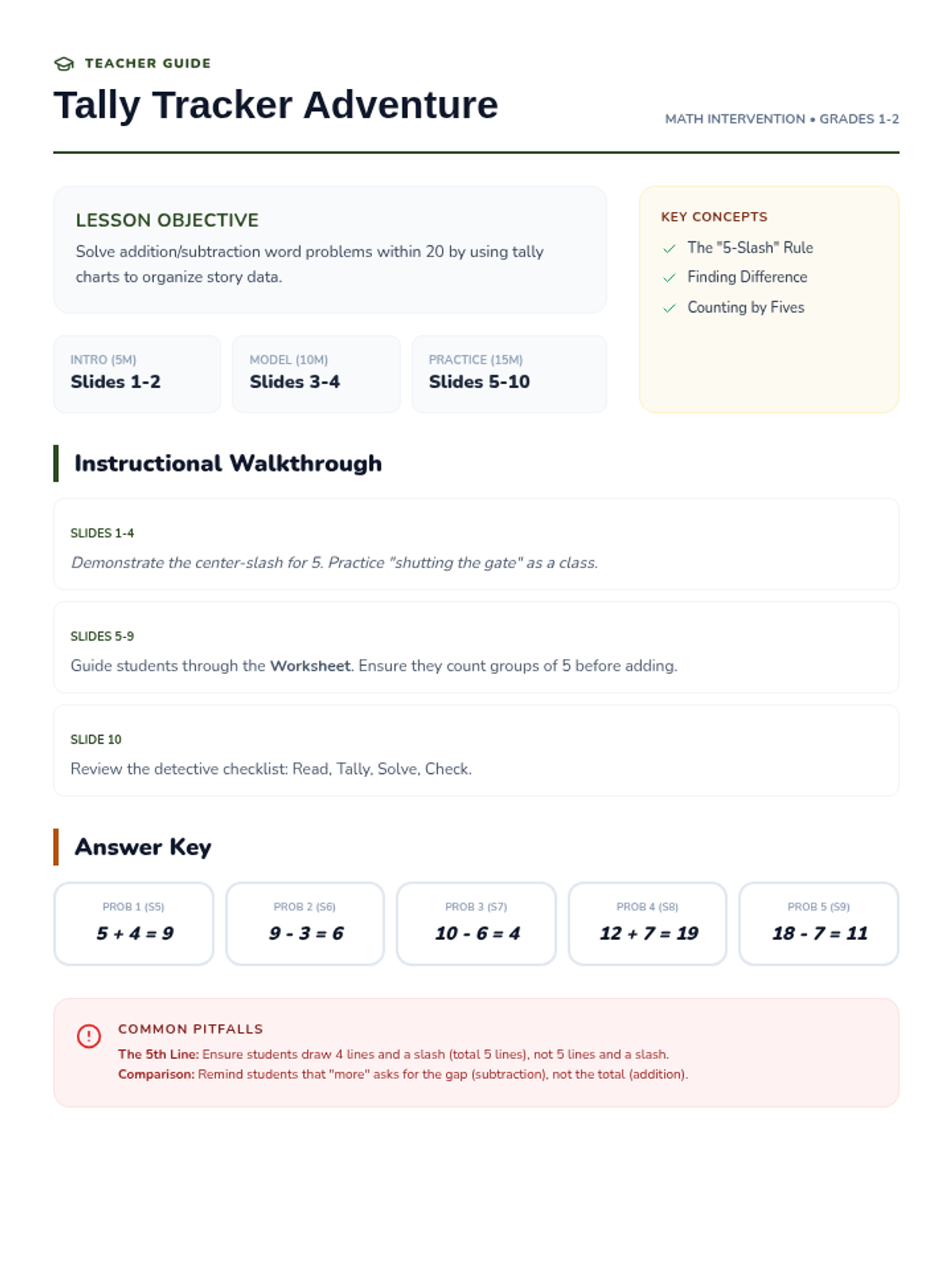
A math intervention lesson for 1st and 2nd graders that teaches students how to use tally charts to organize and solve addition, subtraction, and comparison word problems within 20.
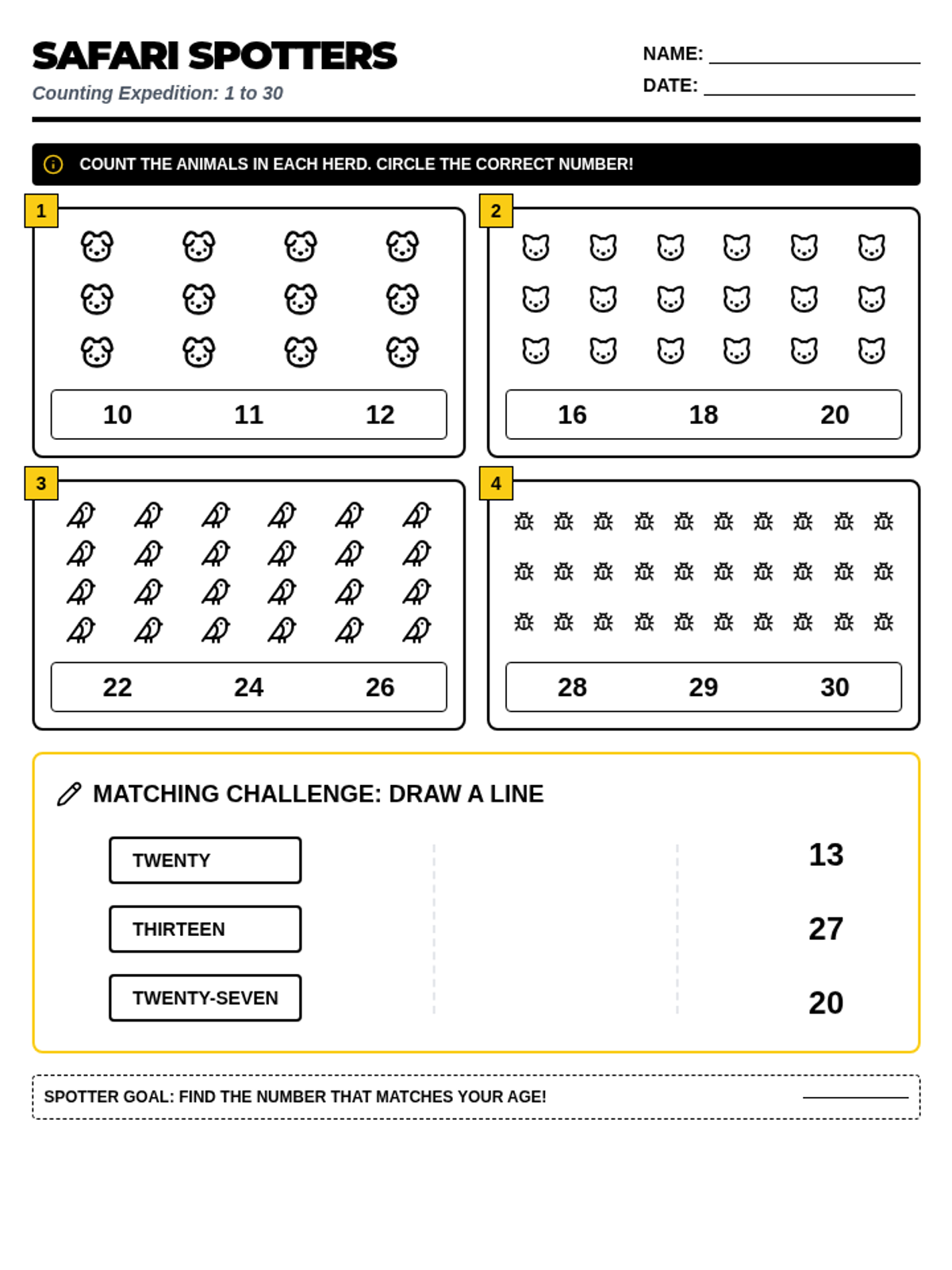
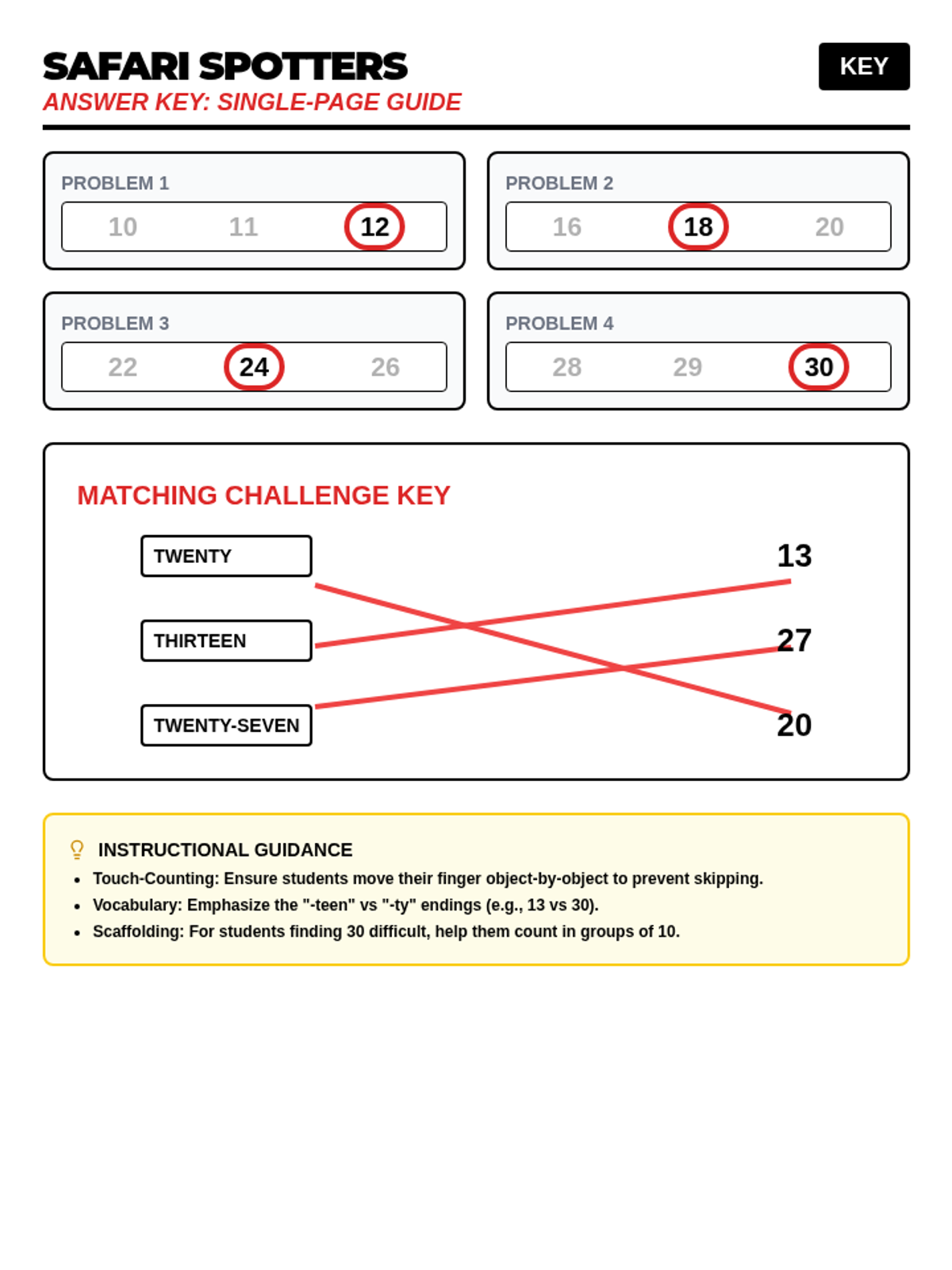
A high-contrast, animal-themed lesson focusing on identifying numbers 1-30 and mastering one-to-one correspondence through engaging visual counting exercises.