A fun, movement-based lesson for K-2 students to learn the difference between stalactites and stalagmites using the 'C' for Ceiling and 'G' for Ground mnemonics. Students create 3D cave art and play active games to reinforce their learning.
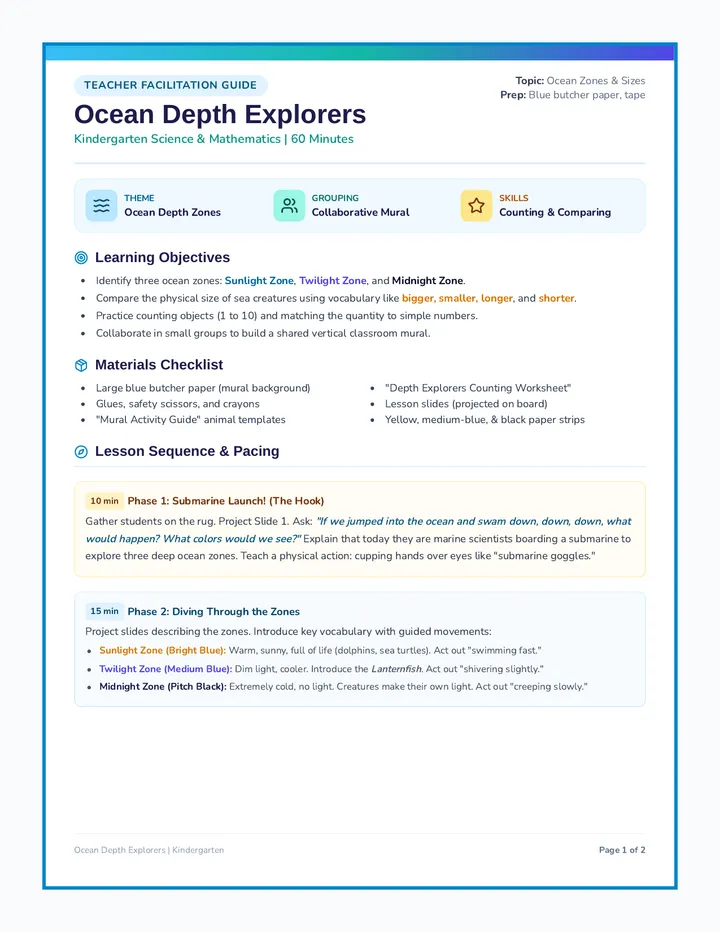
Express new expertise through a multi-page layered flipbook template and structured cooperative writing prompts.
Sing and chant about ocean adaptations, fill out a collaborative Process Grid of focus animals, and use differentiated sentence frames for group writing.
Build vocabulary and deep comprehension using a interactive Cognitive Content Dictionary (CCD) and the story of Ollie the Octopus's Deep Sea Adventure.
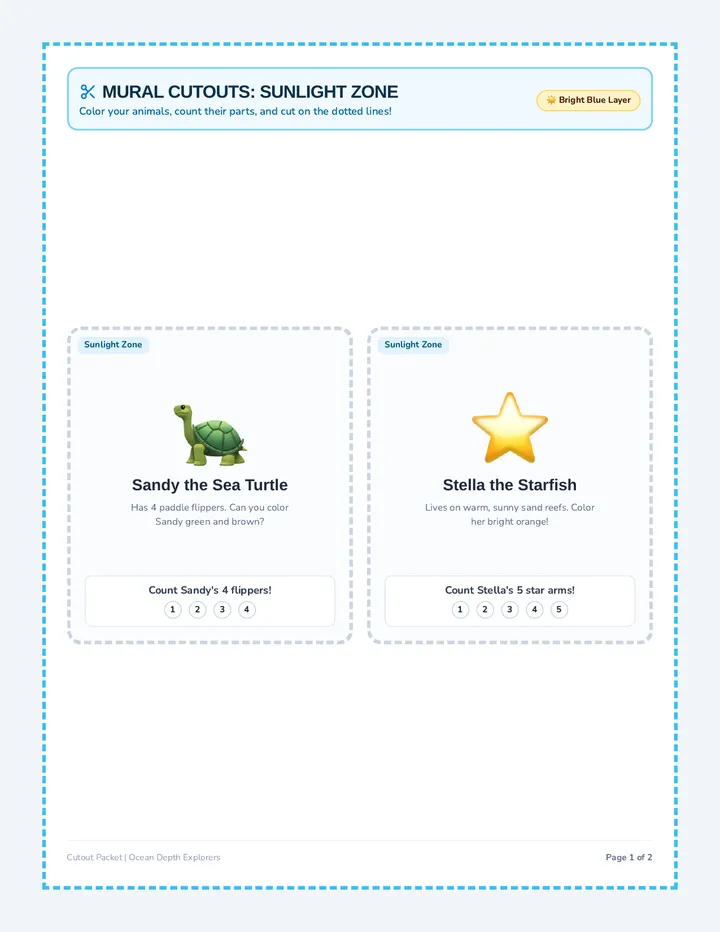
Spark curiosity with high-interest Observation Charts, positive-behavior Literacy Awards, and a large-scale visual blueprint for the multi-zone ocean chart.
A highly differentiated 30-minute lesson where students act as 'Placement Officers' for the Pup Placement Agency. They analyze physical and behavioral traits of dog candidates and match them with appropriate service dog jobs, aligning with the OpenSciEd Grade 3 Trait Variation unit.
An engaging, kid-friendly lesson introducing 2nd graders to the wonders of electricity, exploring its discovery, how it works through simple circuits, and how it is generated safely.
A 30-minute introductory lesson on container capacity for Kindergarten students, using hands-on exploration with water and jars to understand 'more', 'less', and 'full'.
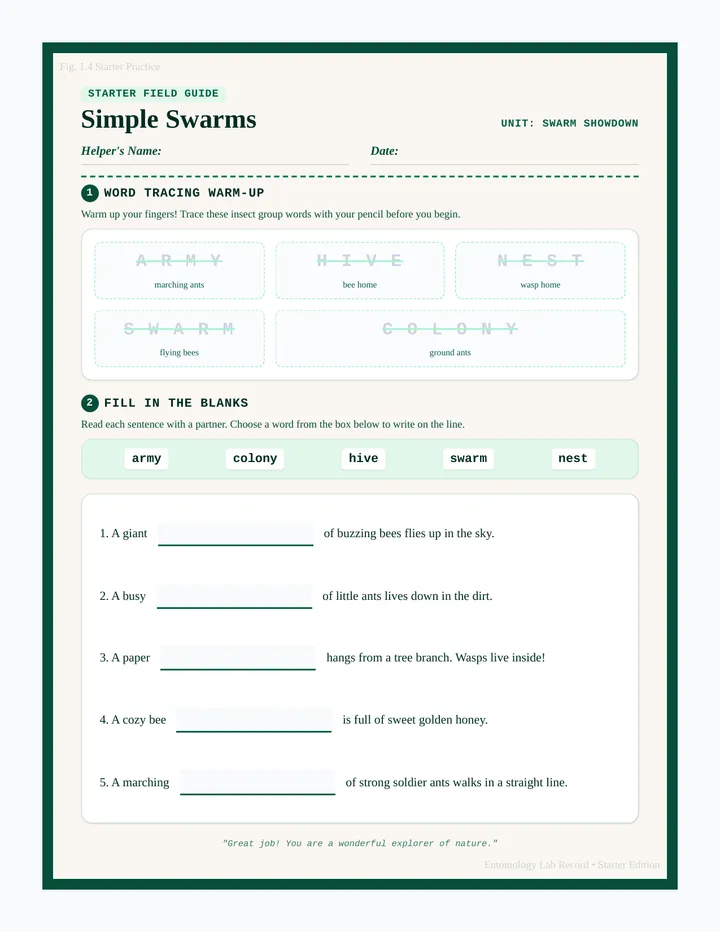
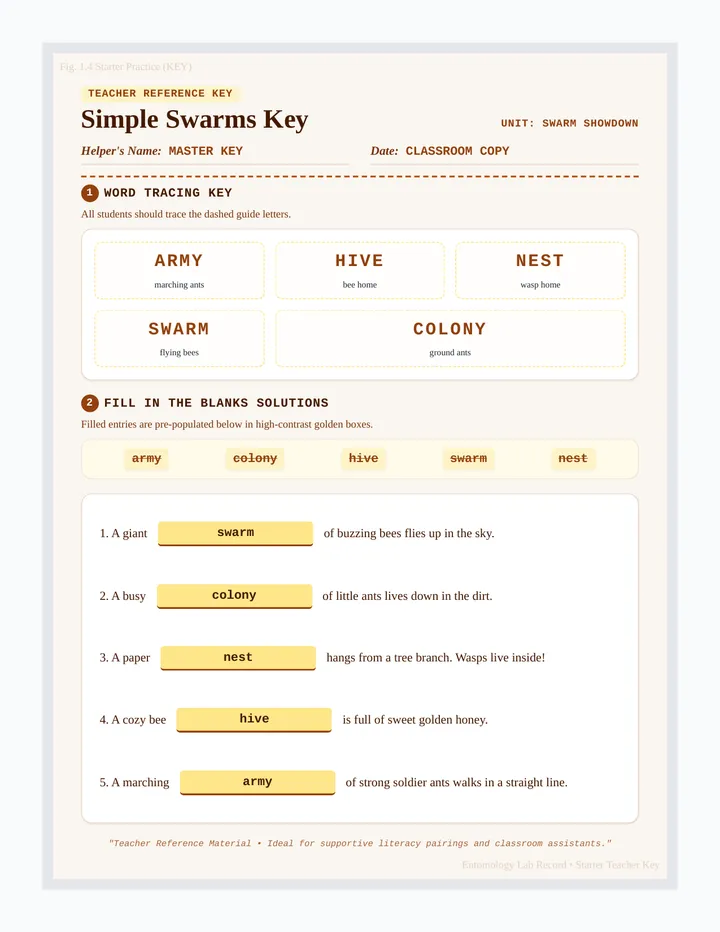
A hands-on follow-up lesson for first graders focusing on the vocabulary of pollination, specifically the roles of bees and butterflies as they move pollen between flowers.
Students will learn how bees move pollen from flower to flower to help plants grow seeds and fruit.
Applying 'au' and 'aw' knowledge to sentence reading and a collaborative board game review.
Building fluency with 'au' and 'aw' words and phrases through repetitive practice and blending routines.
Introduction to the 'au' and 'aw' diphthongs, focusing on phoneme-grapheme mapping and initial word decoding.
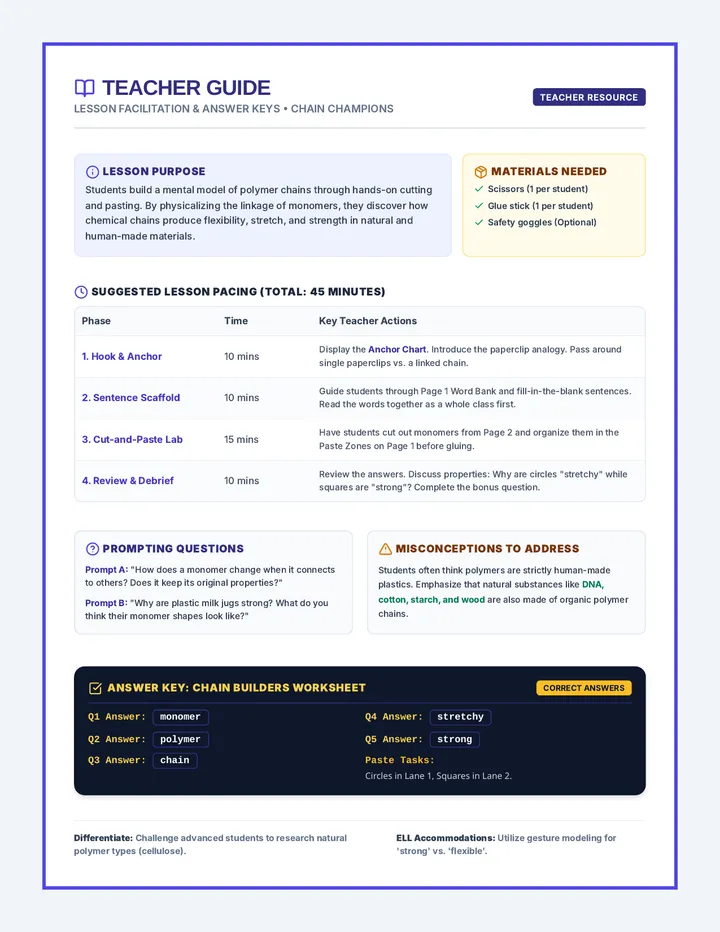
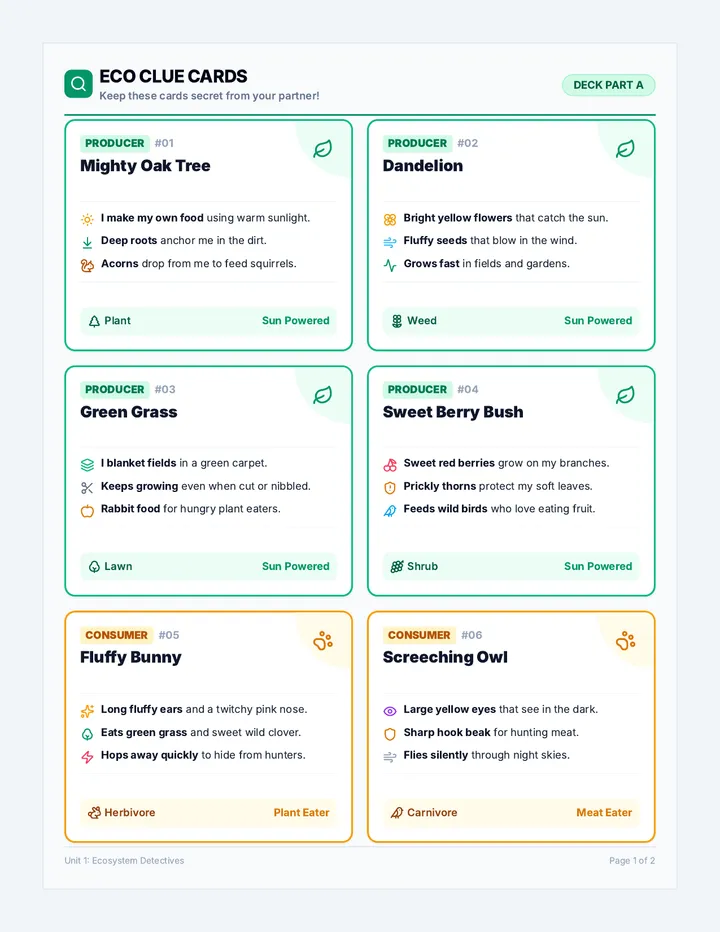
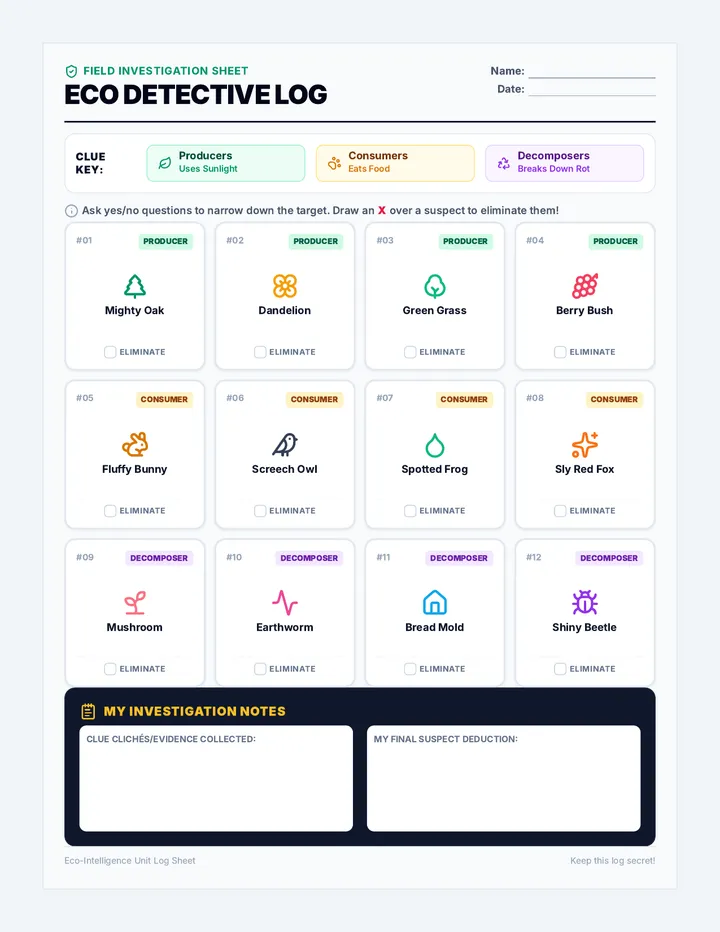
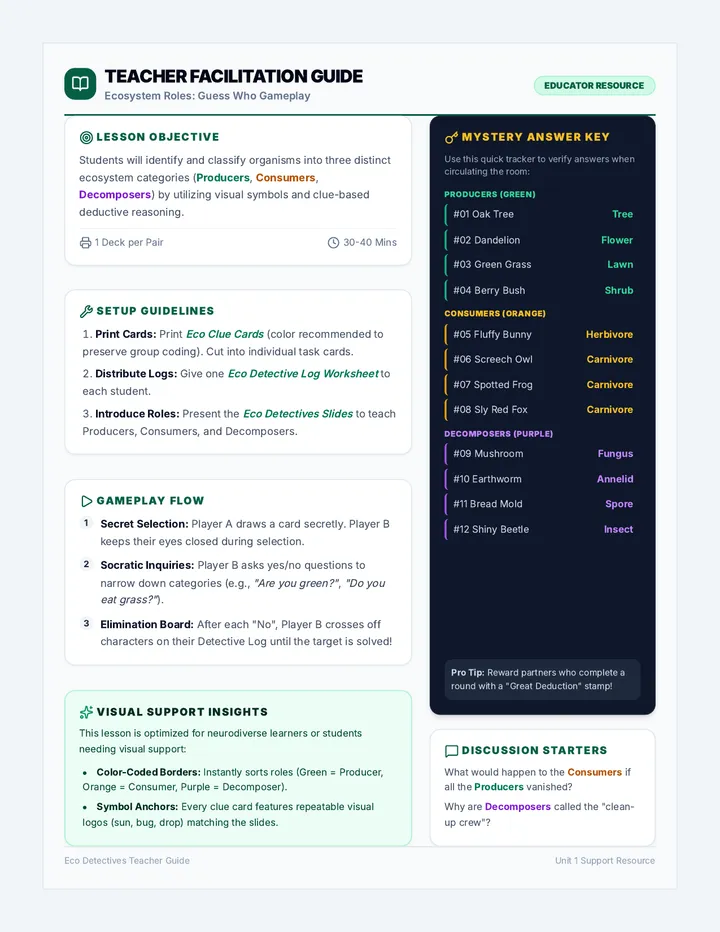
A lesson focusing on ecosystem vocabulary including producers, consumers, and energy flow through food chains and pyramids. Includes tiered materials for elementary and middle school levels.
An enriching alternative to the Unit 2 opinion writing piece. Students act as conservation agents, creating a Public Service Announcement (PSA) to advocate for the protection of an endangered pollinator.
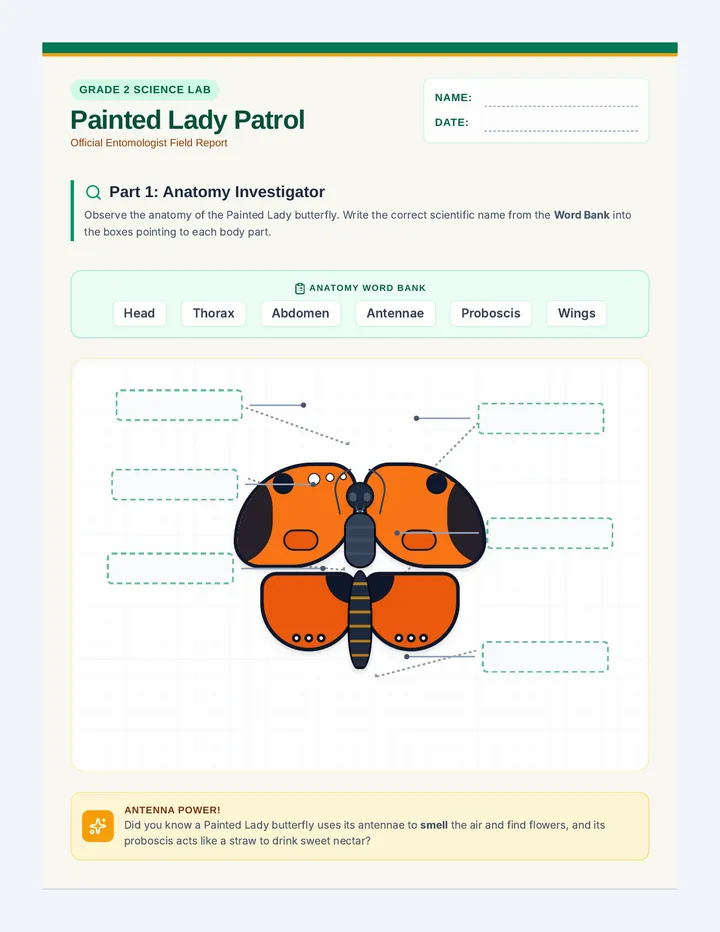
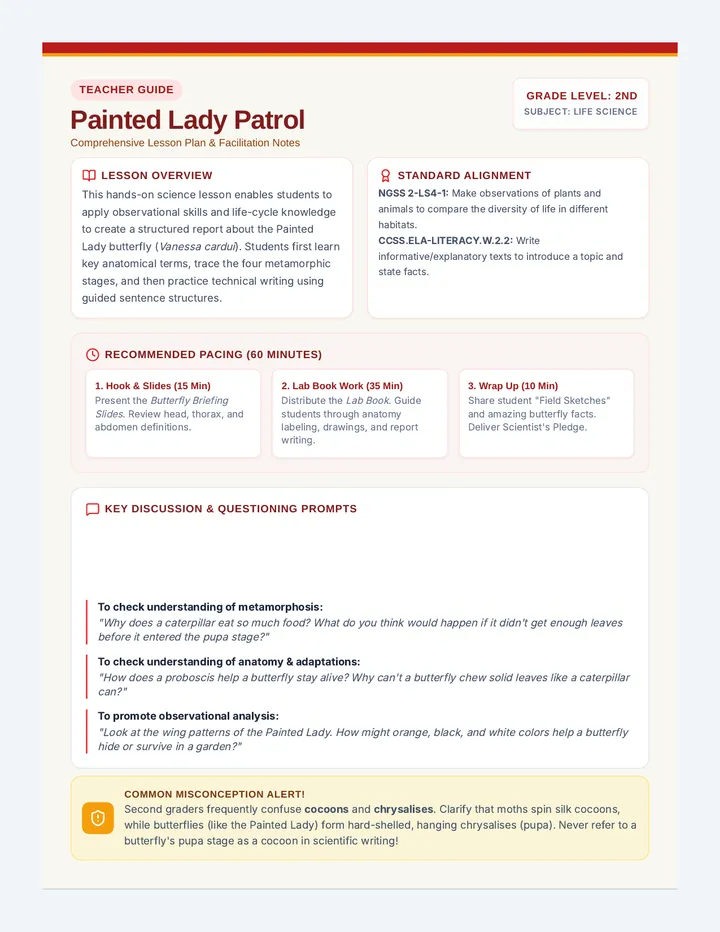
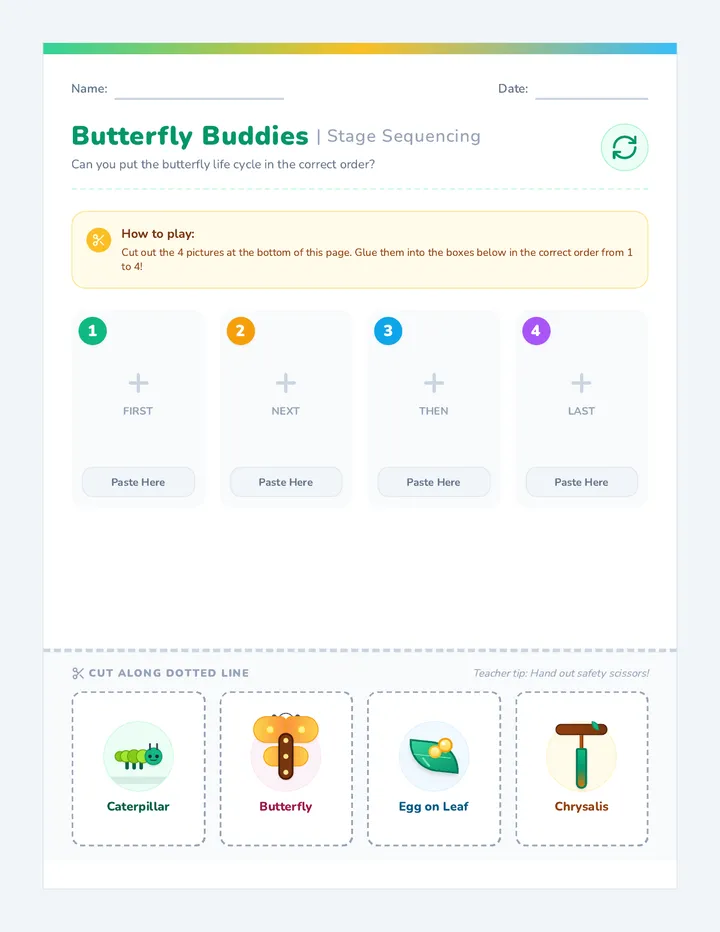
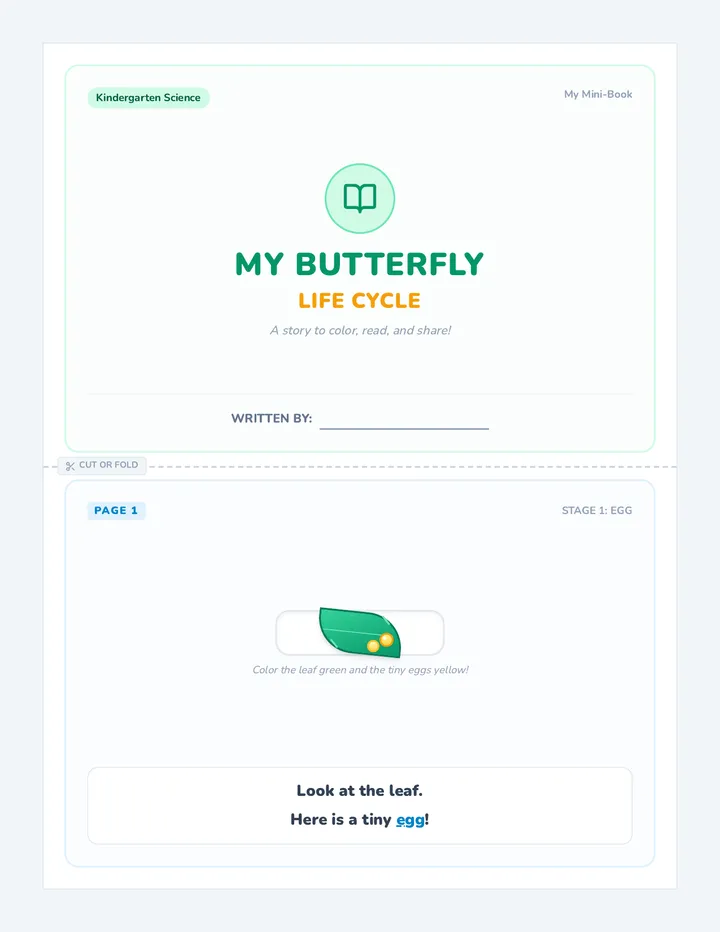
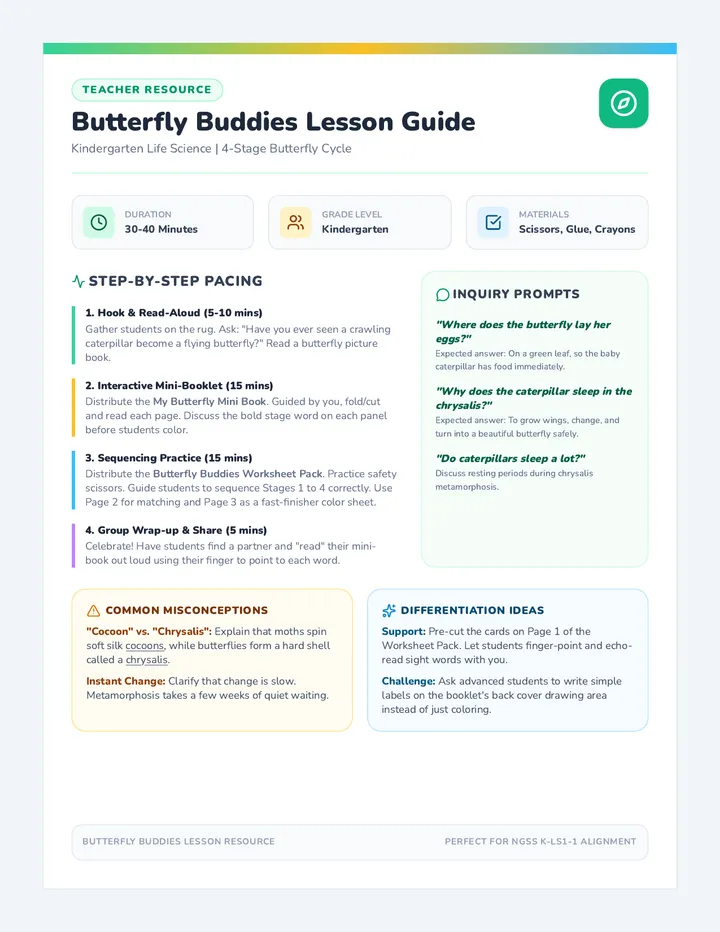
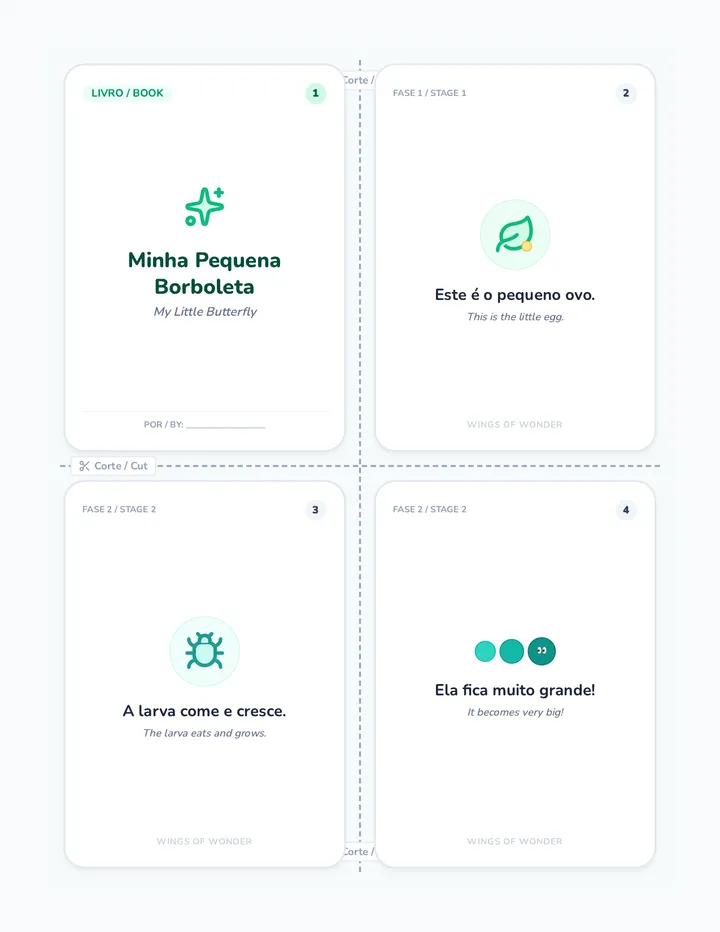
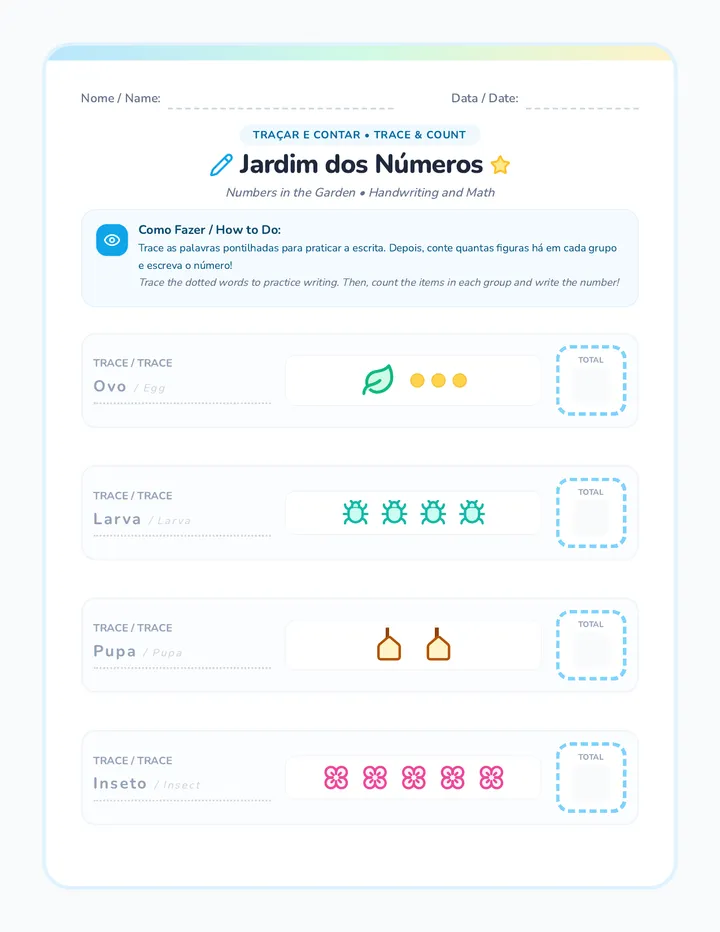
Focuses on the transformation and physical characteristics of butterflies based on the text 'A Butterfly Is Patient.' Students explore the life cycle stages and start to connect these stages to the butterfly's role as a pollinator.
A hands-on categorization activity for kindergarteners to distinguish between summer and winter activities using cut-and-paste techniques.
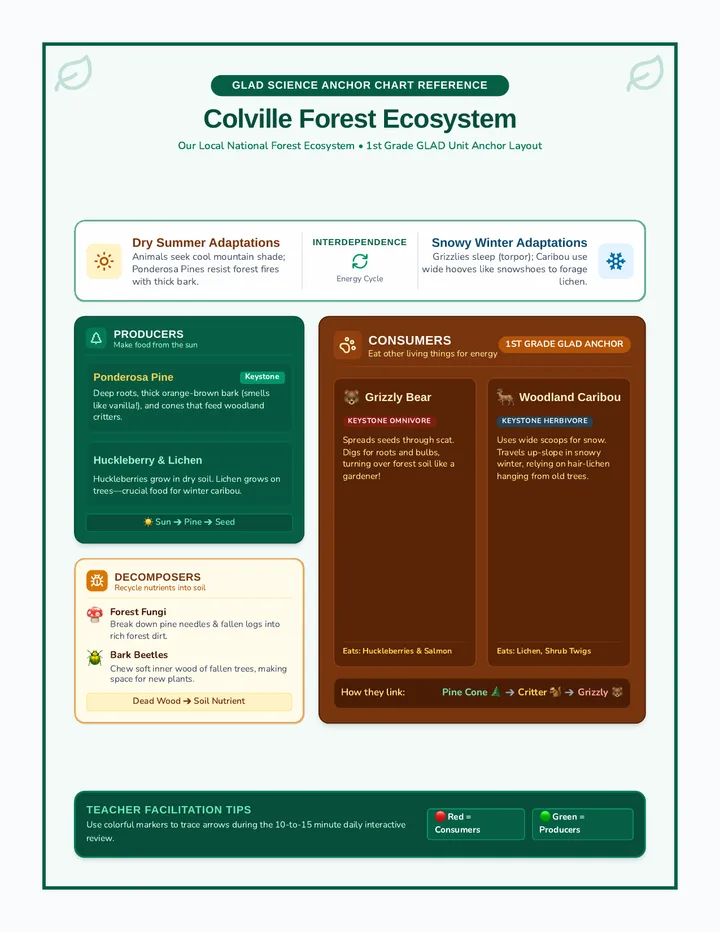
A foundational lesson on food chains across various ecosystems, specifically designed for special education students. Includes visual-heavy instruction on producers, consumers, and decomposers.
Students explore the engineering wonders of bird nests, observing local bird behavior and designing their own nest models using natural materials to understand animal adaptations and structural design.
A collaborative STEM challenge where 6th grade mentors guide 2nd grade buddies to design and build the tallest possible tower using only index cards and tape. This lesson focuses on teamwork, engineering design principles, and measurement skills within a 40-minute window.
A lesson on surface water interactions with land, featuring My Little Pony characters to explain streams, lakes, and wetlands. Students learn key geological terms through simple bullet points and visual support.
A simplified science lesson on food chains designed for 8th-grade students with severe disabilities, focusing on basic energy flow from sun to predator.
In this kitchen science inquiry, students investigate the three states of matter and observe chemical reactions by creating 'fizzing cakes' using baking soda and vinegar. They explore reversible and irreversible changes while competing in a simulated Bronx-style bake-off challenge.
Introducing the letter 'g' and the /g/ sound. Students practice words like 'gas', 'gap', and 'tag'.
Introducing the letter 'o' and the short /o/ sound. Blending practice with 'got', 'hot', and 'mom'.
Introducing the letter 'r' and the /r/ sound. Students read and write words like 'rat', 'ram', and 'rid'.
Introducing the letter 'd' and the /d/ sound. Practice includes 'dad', 'mad', and 'sad'.
Introducing the letter 'f' and the /f/ sound. Students practice blending 'fat', 'fit', and 'if'.
Introducing the letter 'i' and the short /i/ sound. Students read and write words like 'it', 'sit', and 'is'.
Introducing the letter 's' and the /s/ sound. Practice includes blending 'sat', 'mat', and 'Sam'.
Introducing the letter 't' and the /t/ sound. Students practice blending CVC words like 'mat' and 'at'.
Introducing the letter 'm' and the /m/ sound. Students begin to blend 'a' and 'm' to read the word 'am'.
Introducing the letter 'a' and the short /a/ sound. Students practice letter formation and identifying the /a/ sound at the beginning of words.
An introduction to the temperate forest ecosystem for 2nd graders, focusing on seasonal changes, plant life, and animal adaptations. Students will build foundational science vocabulary through visual aids and hands-on observation prompts.
Advanced academic challenges for 8th-grade students, synthesizing reading, math, and science within a complex fantasy framework.
Science exploration through a fantasy lens, covering life cycles, habitats, and simple physical science for 2nd graders.
Fantasy-themed math practice for 2nd graders, focusing on addition, subtraction, and word problems in a magical setting.
A collection of magical fantasy reading prompts designed for 2nd grade students to practice reading comprehension, main idea identification, and character trait analysis.
A hands-on lesson for elementary students on how to select plants and assemble a beautiful, healthy summer hanging basket using the 'Thriller, Filler, Spiller' method.
An introductory lesson for K-1 students exploring the versatile uses of computers in everyday life, focusing on the distinction between work and play.