A hands-on experiment where students observe the transformation of caterpillars into butterflies, focusing on habitat, life cycles, and scientific measurement.

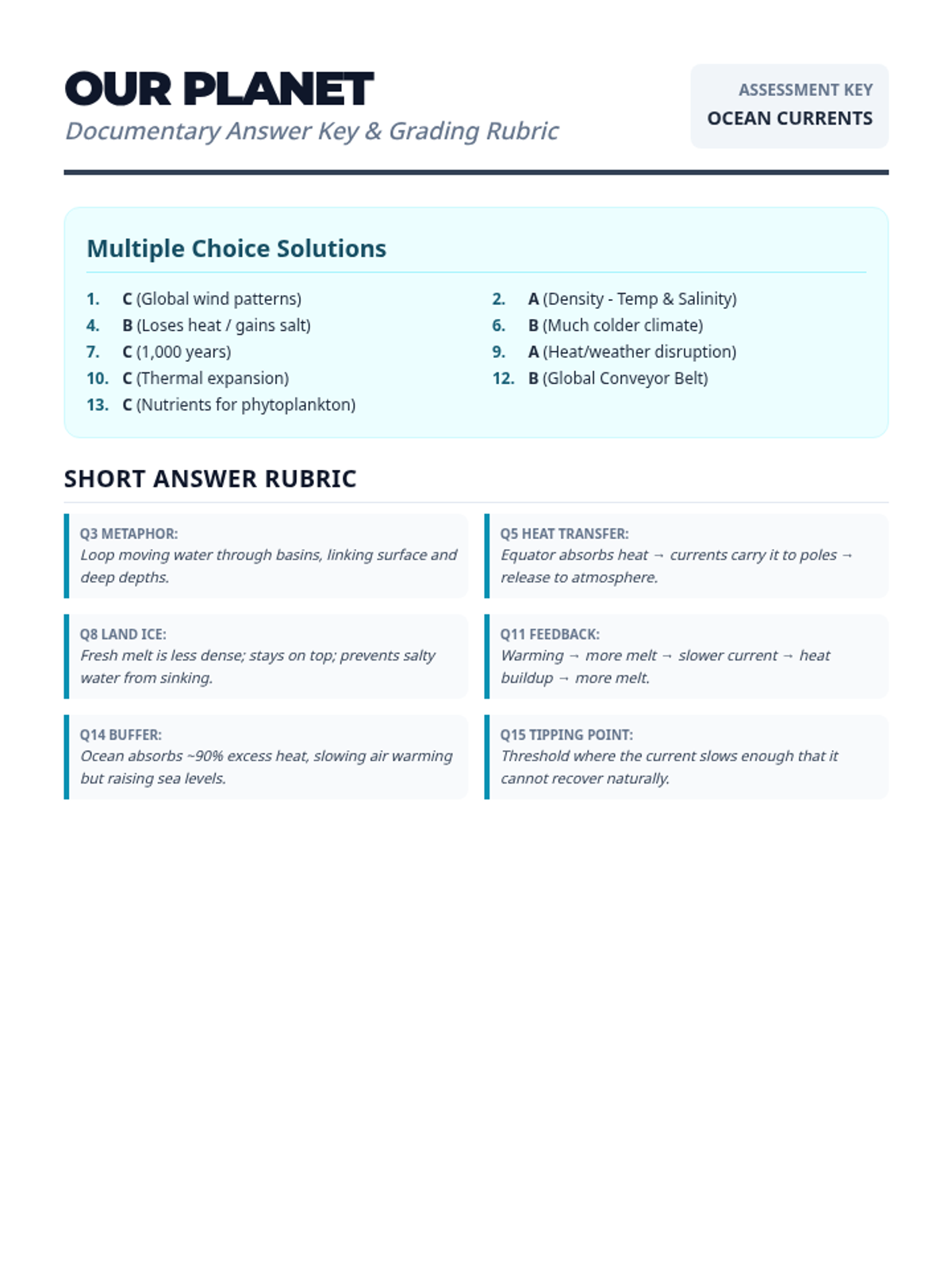
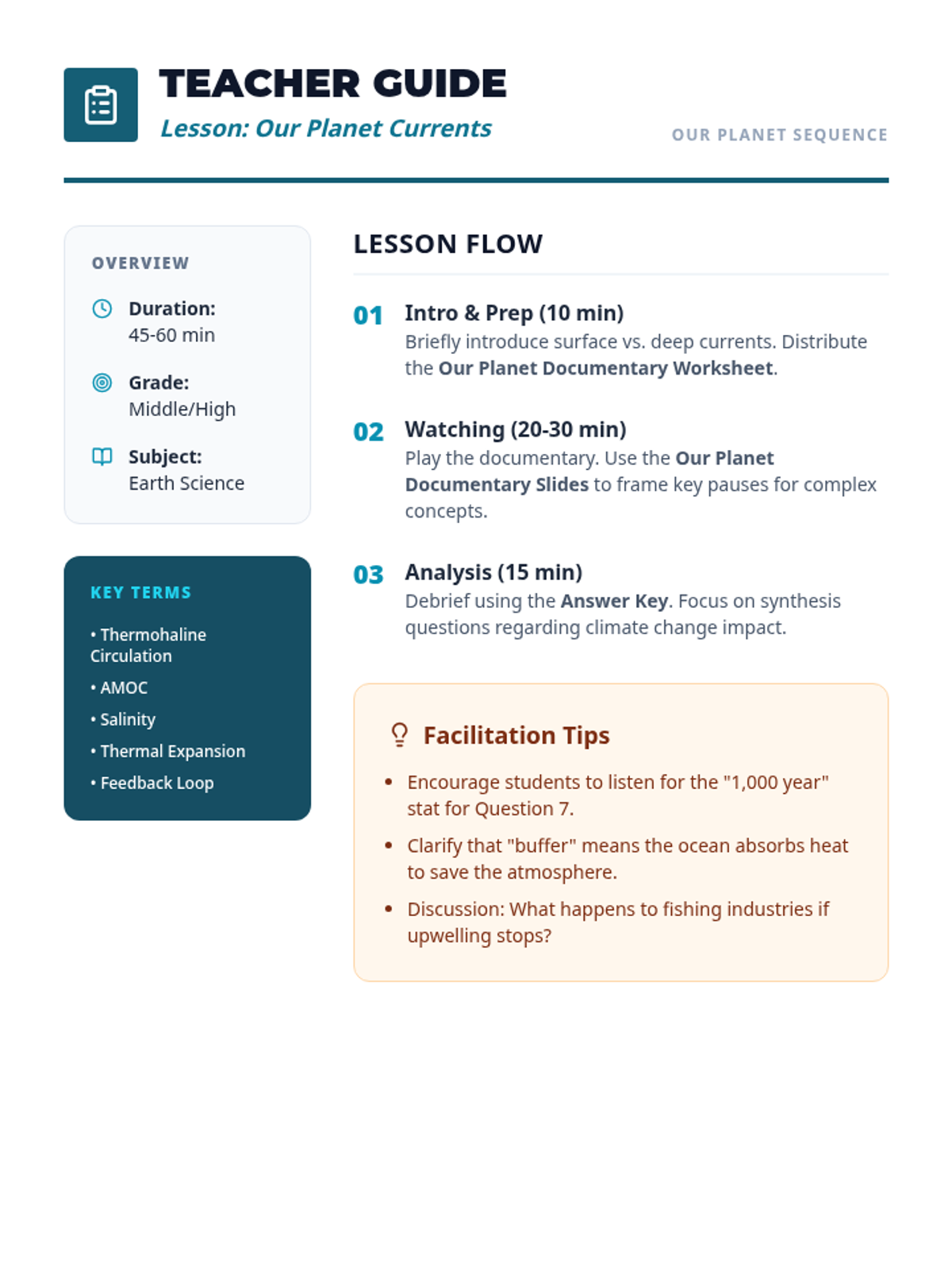
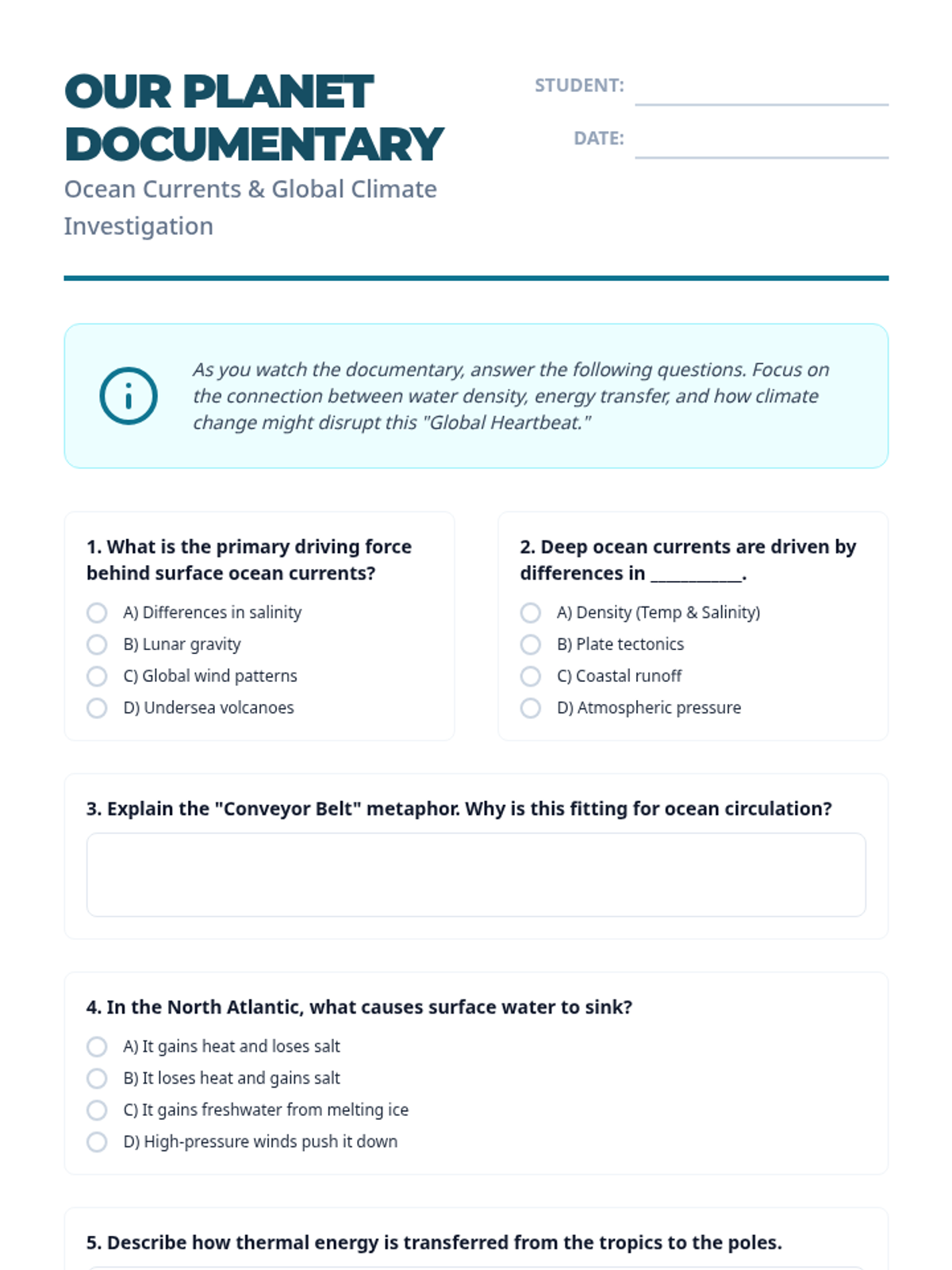
An investigation into how ocean currents distribute heat and regulate the climate of our planet.
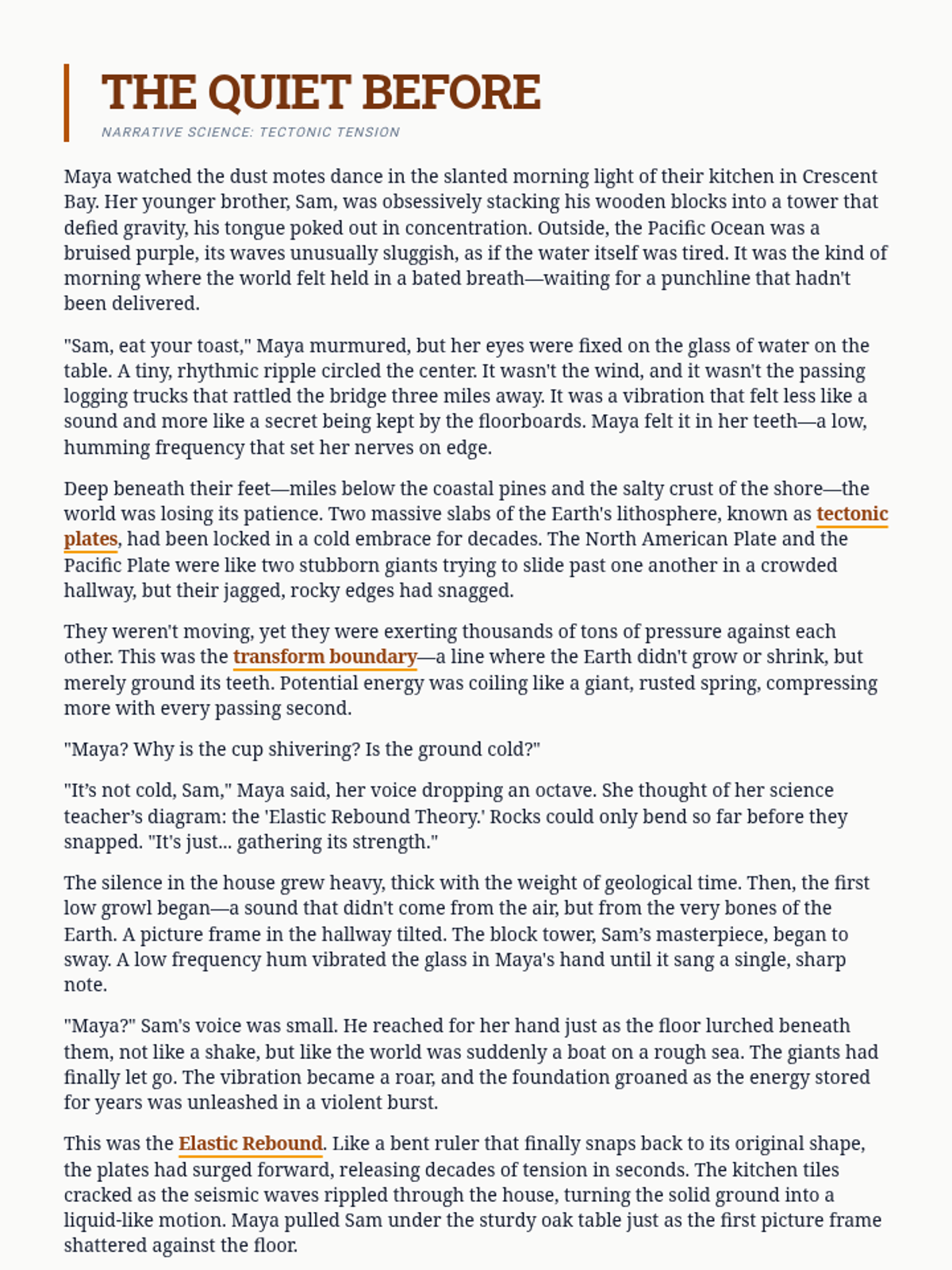
An introductory lesson focused on the narrative 'hook' that blends character development with the scientific reality of tectonic movement.
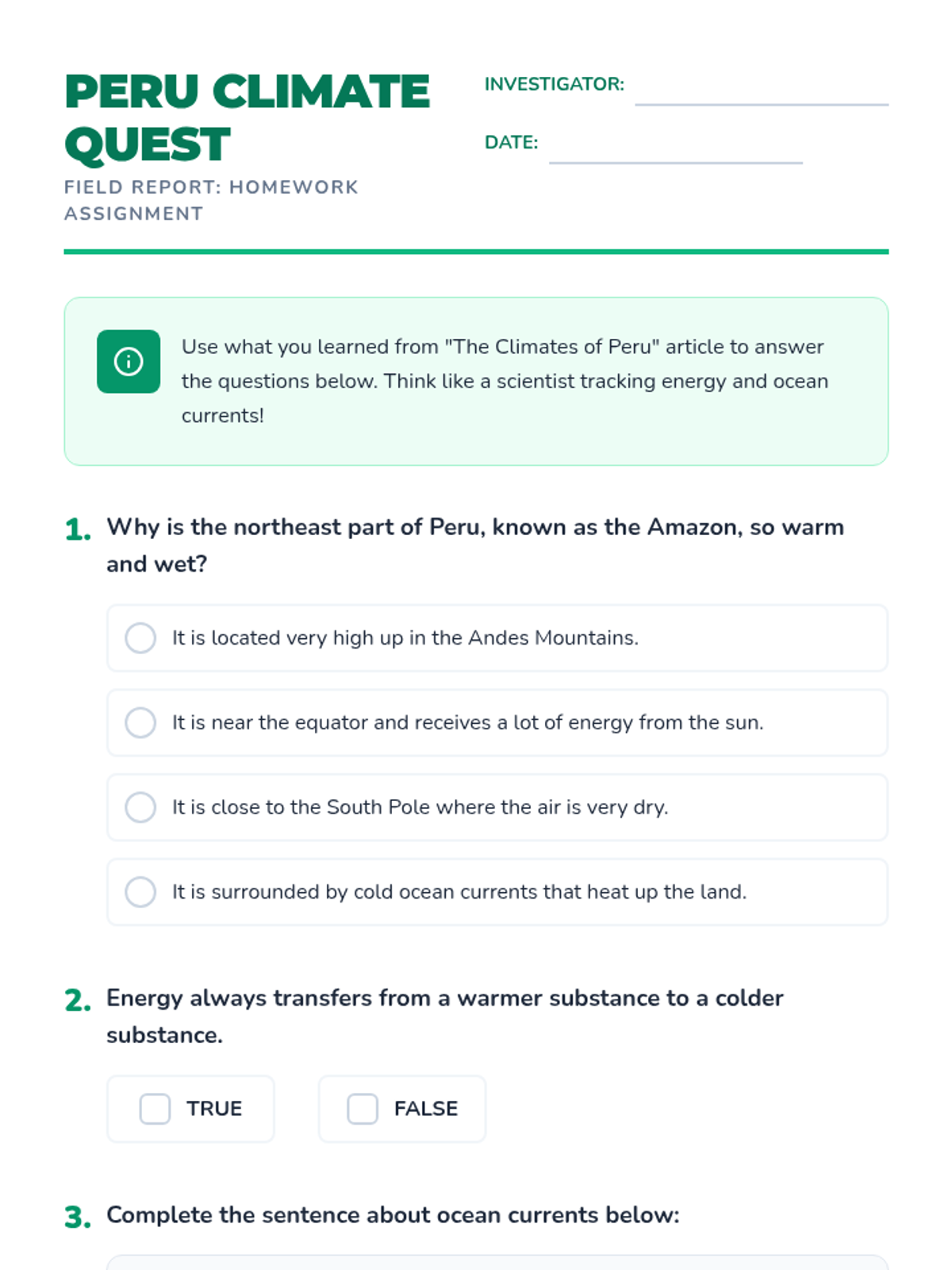
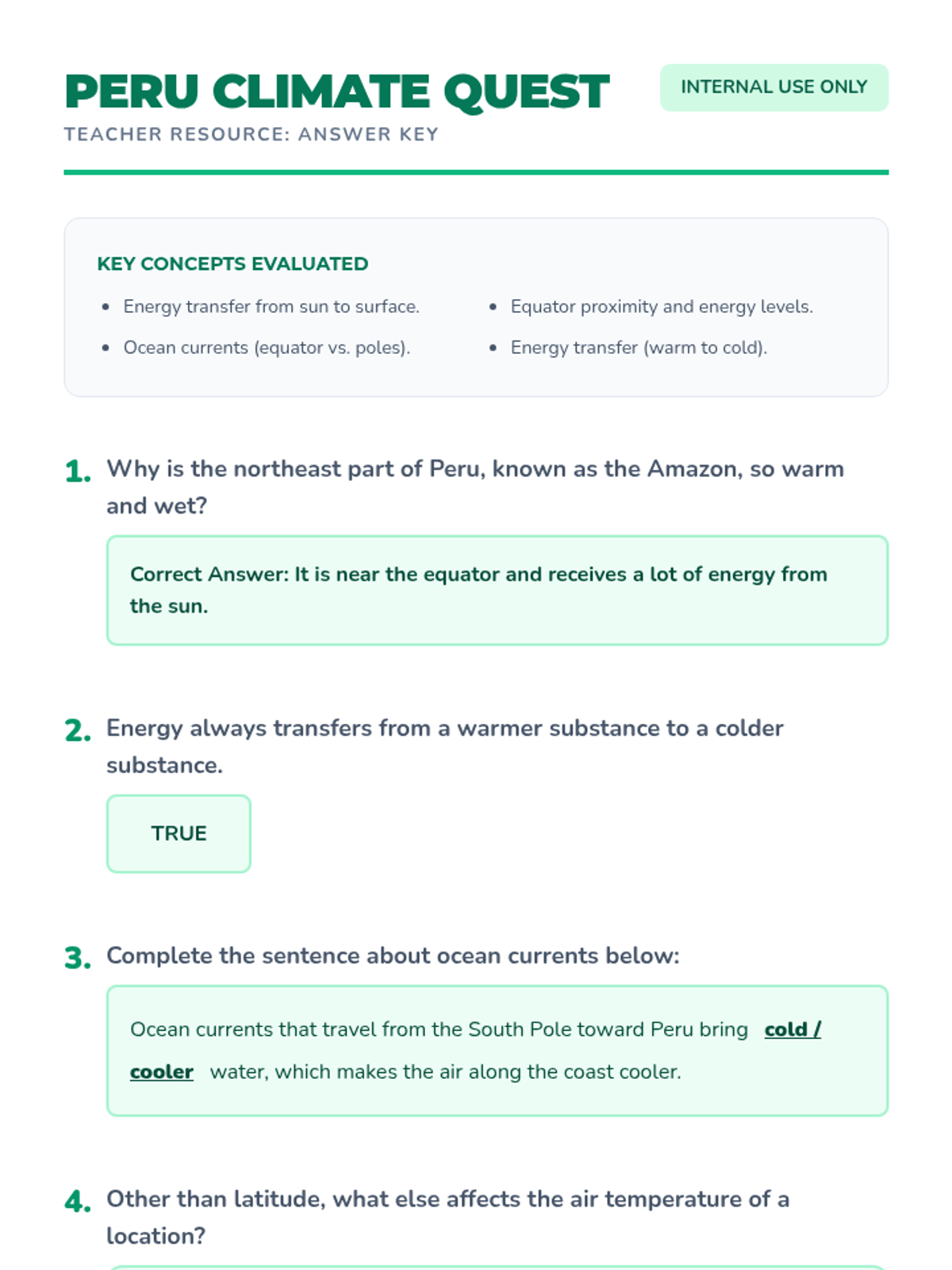
A lesson exploring how latitude and ocean currents influence the diverse climates of Peru, based on energy transfer principles.
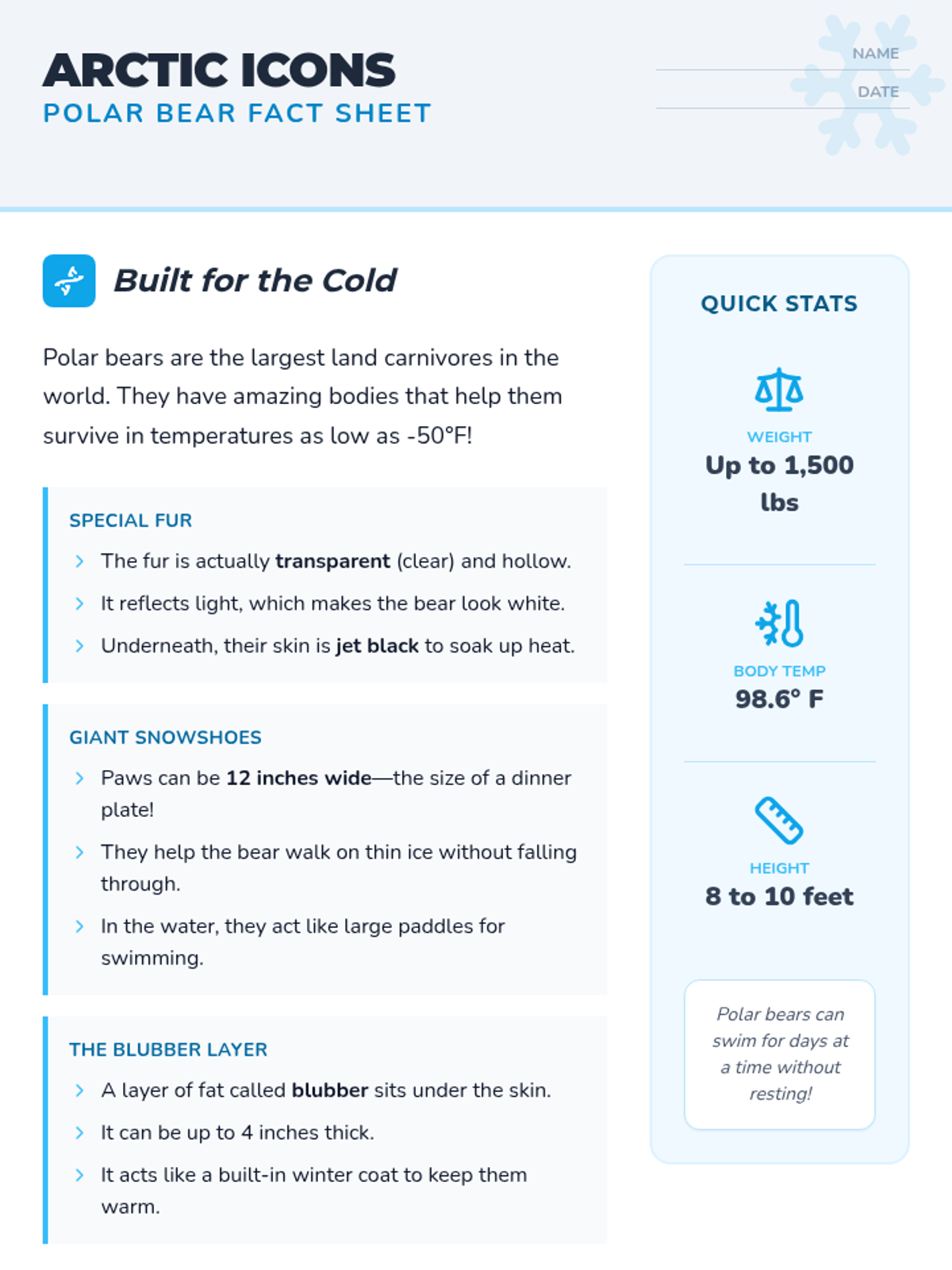
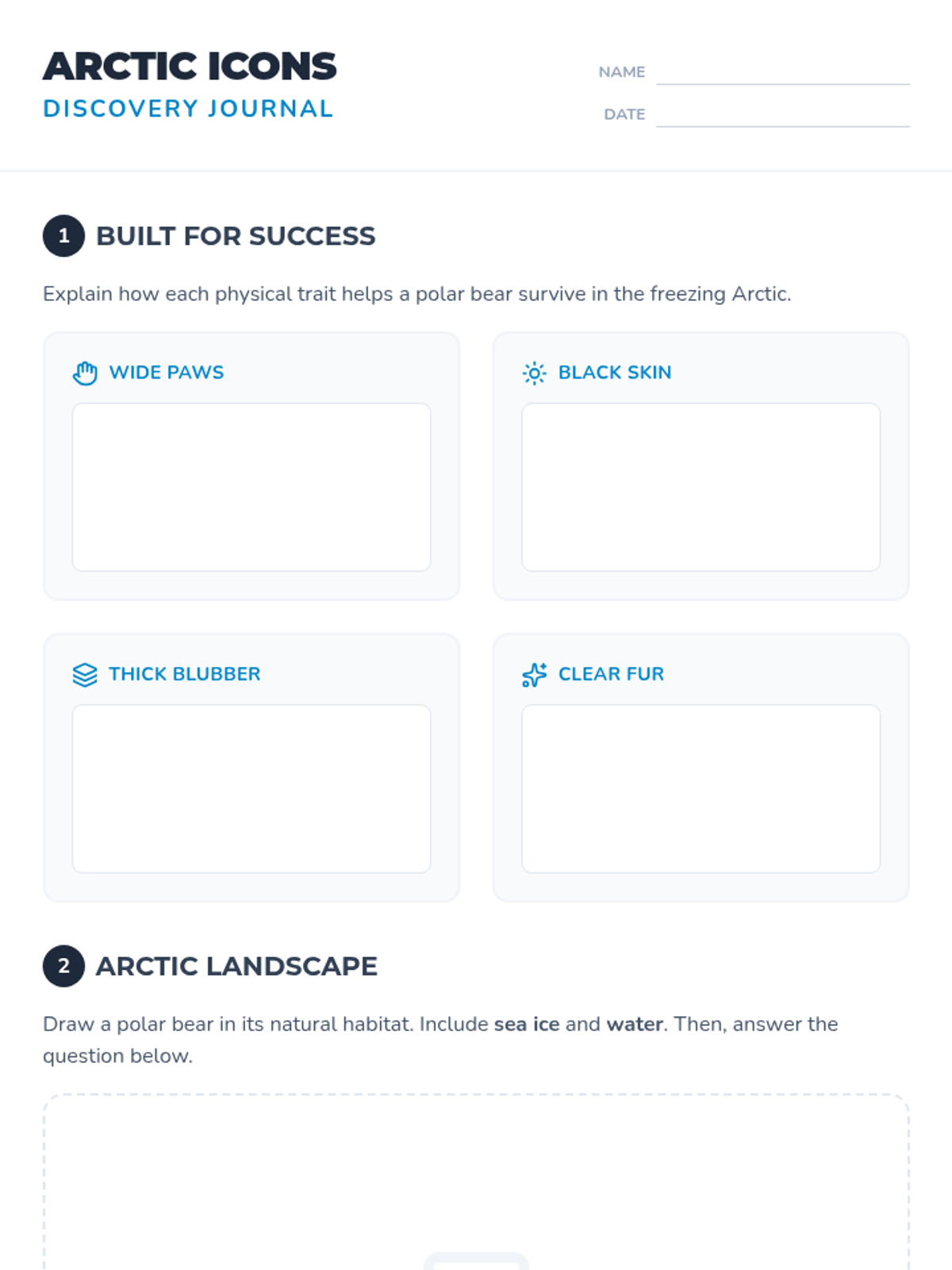
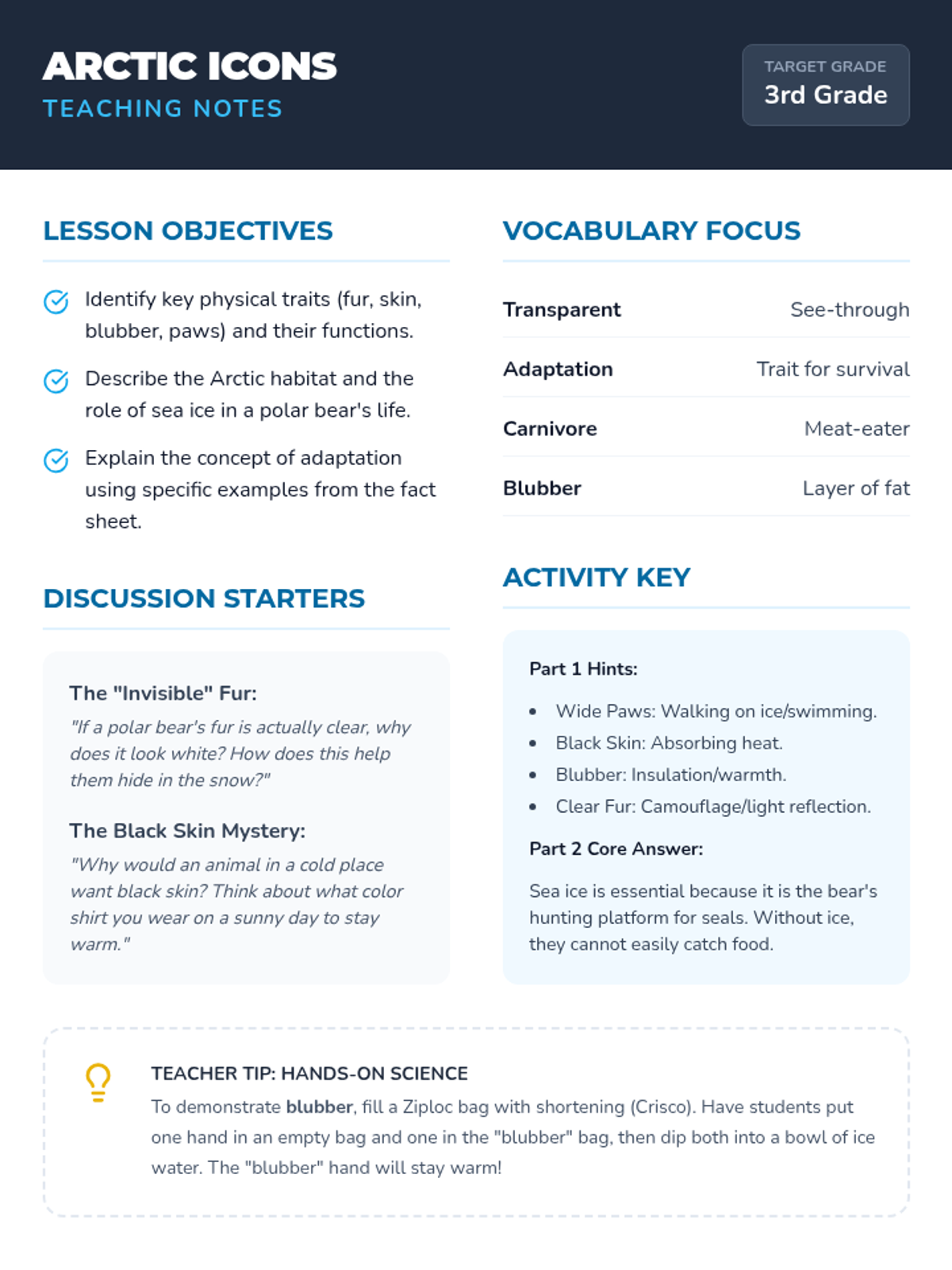
A foundational lesson on polar bear anatomy and environment, focusing on how physical adaptations allow survival in the harsh Arctic habitat.

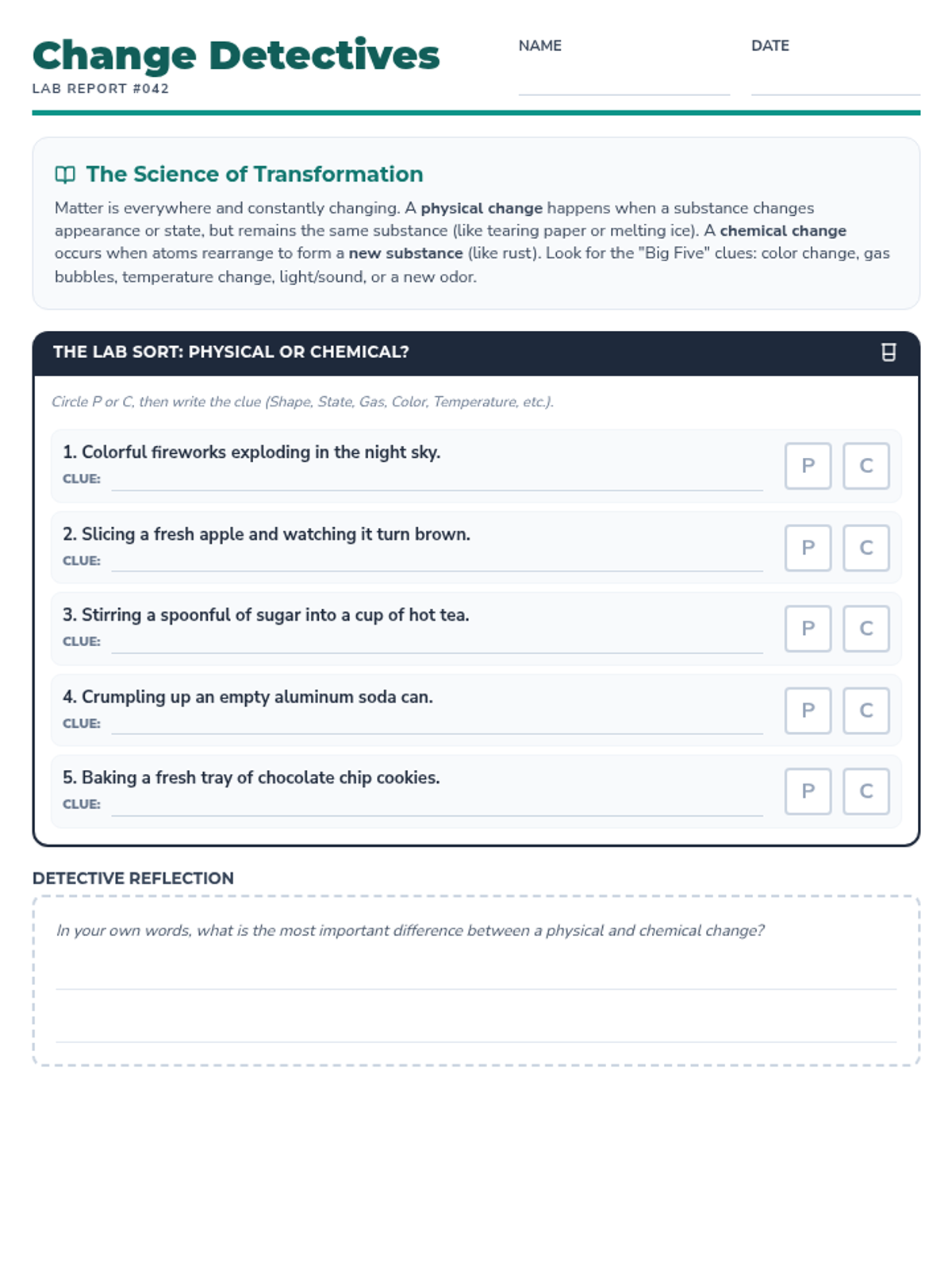
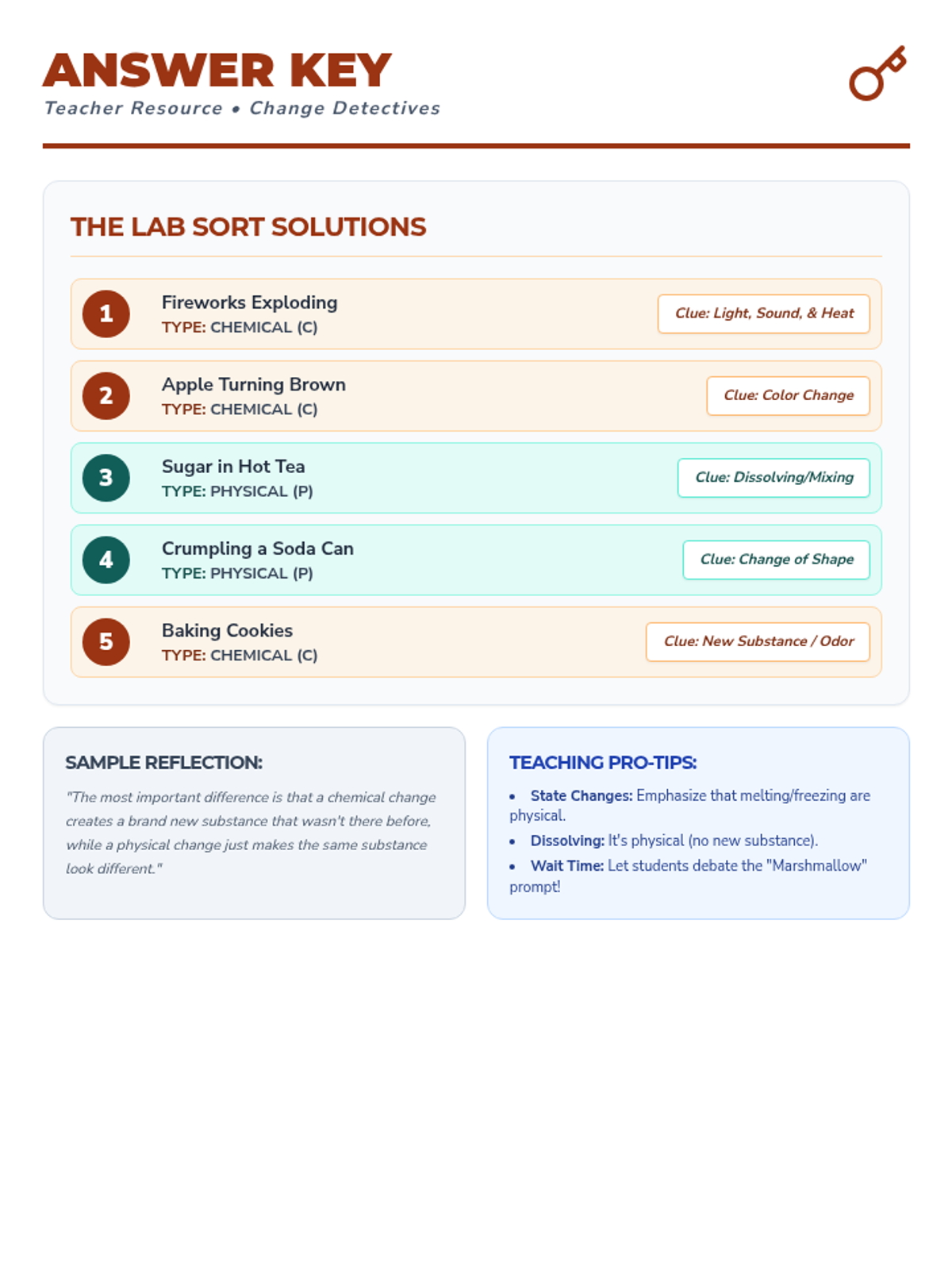
A mini-lesson exploring the fundamental differences between physical and chemical changes through interactive slides and a categorizing activity.

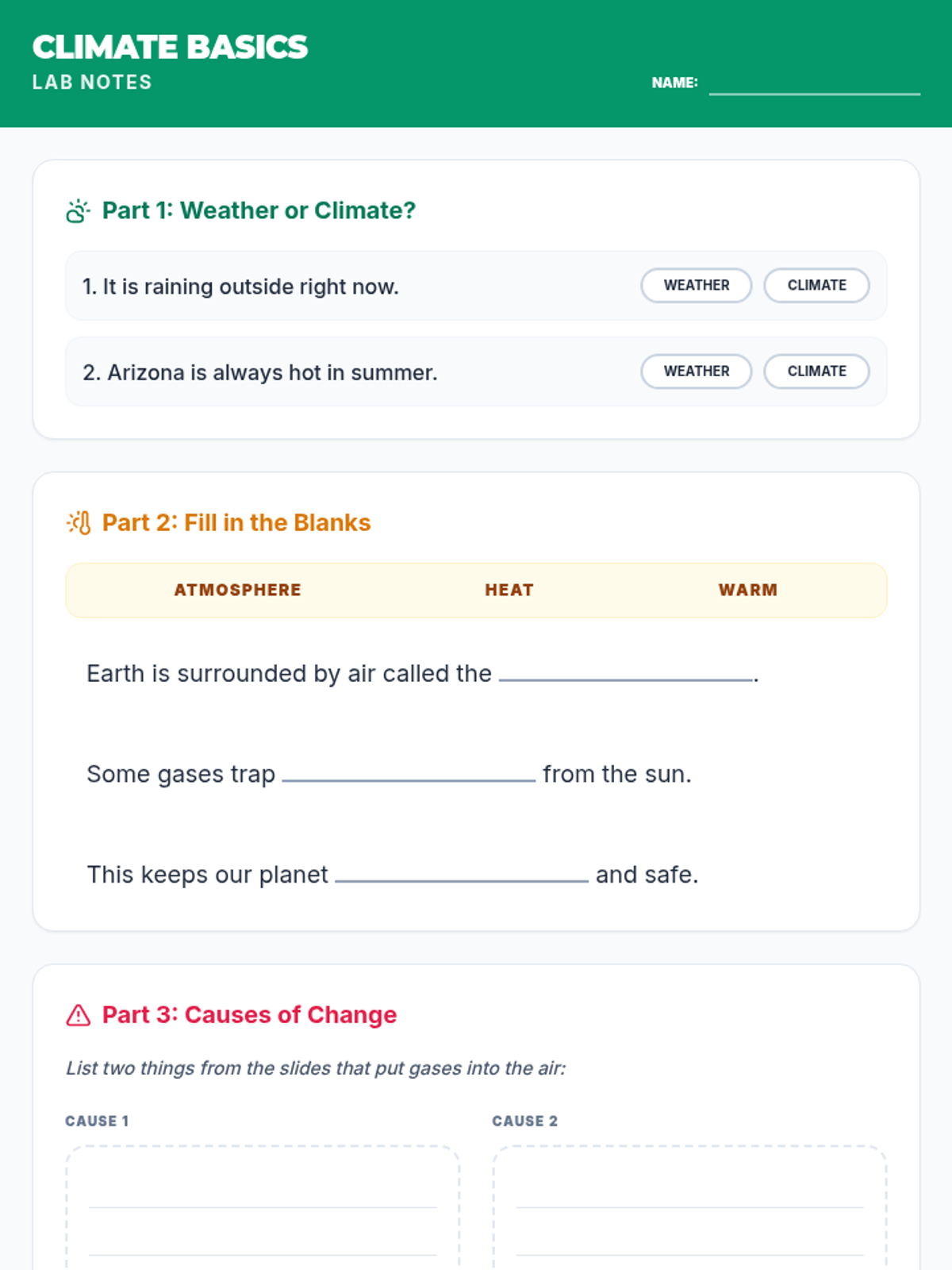
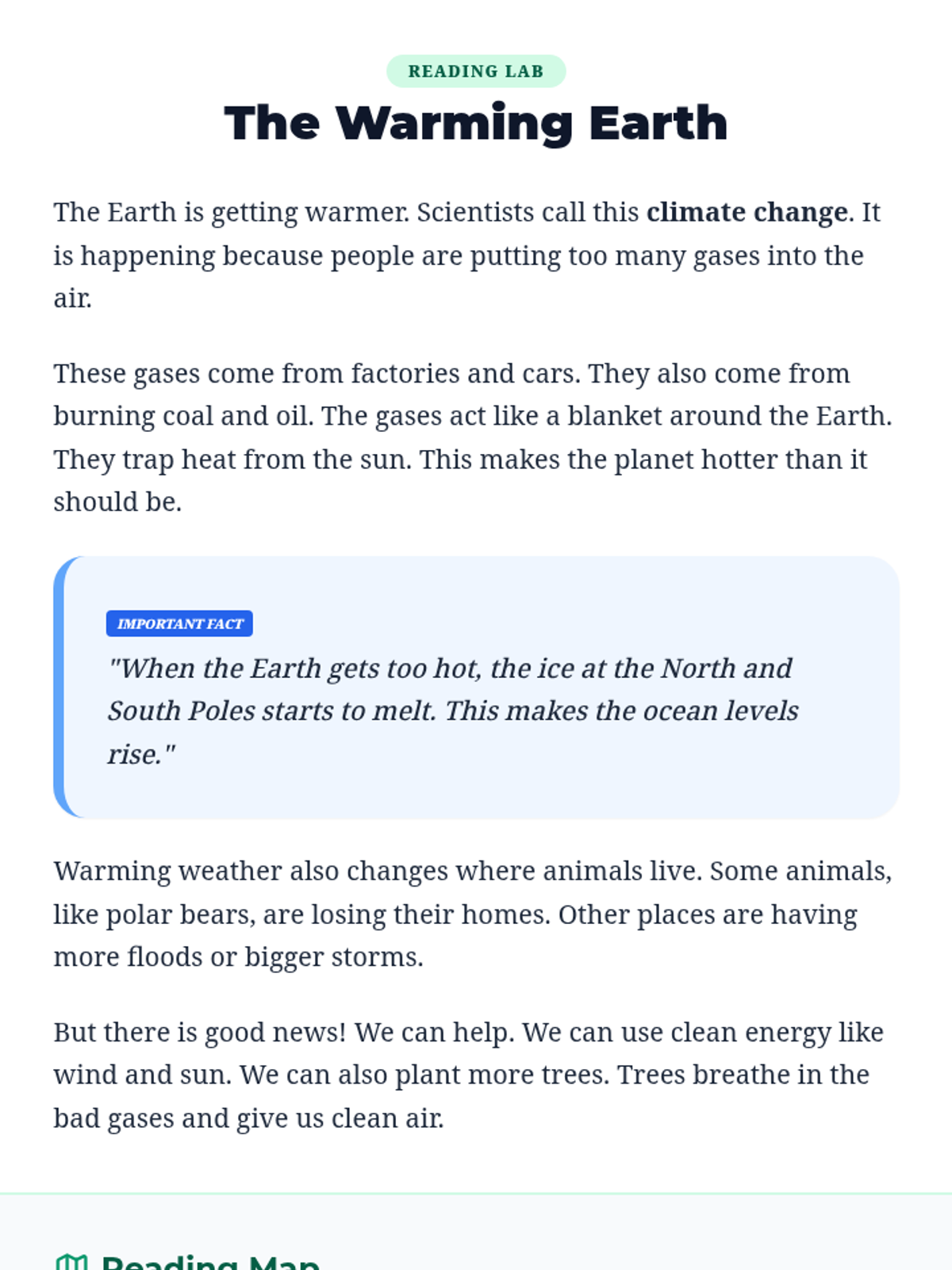
Students will explore the basics of climate change, the greenhouse effect, and how personal choices affect the planet. The lesson includes a presentation, guided notes, and specialized activities for reading, writing, listening, and speaking.
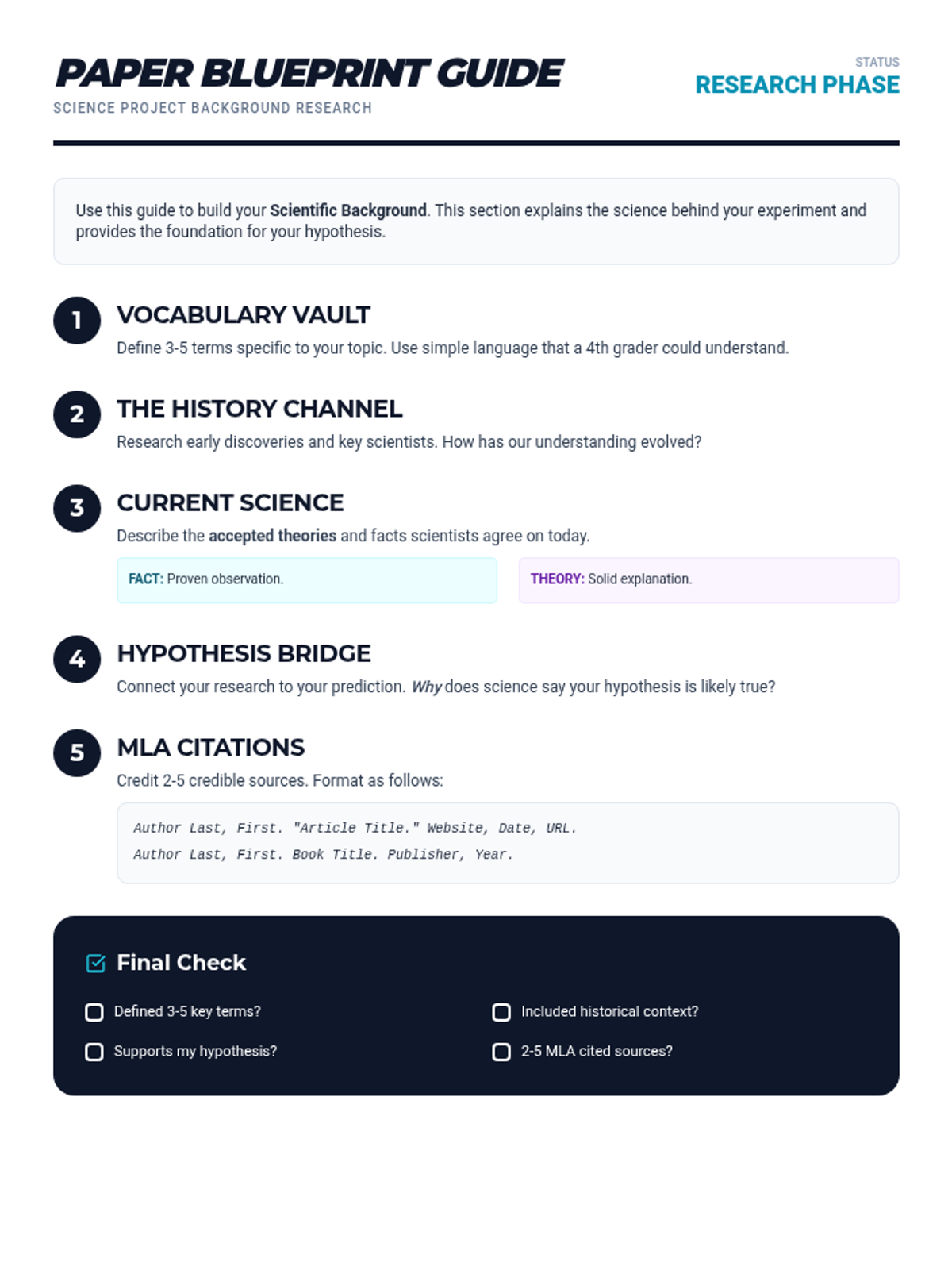
A comprehensive guide and template to help students research and write the background section for their independent science projects, covering terminology, history, and modern theories.
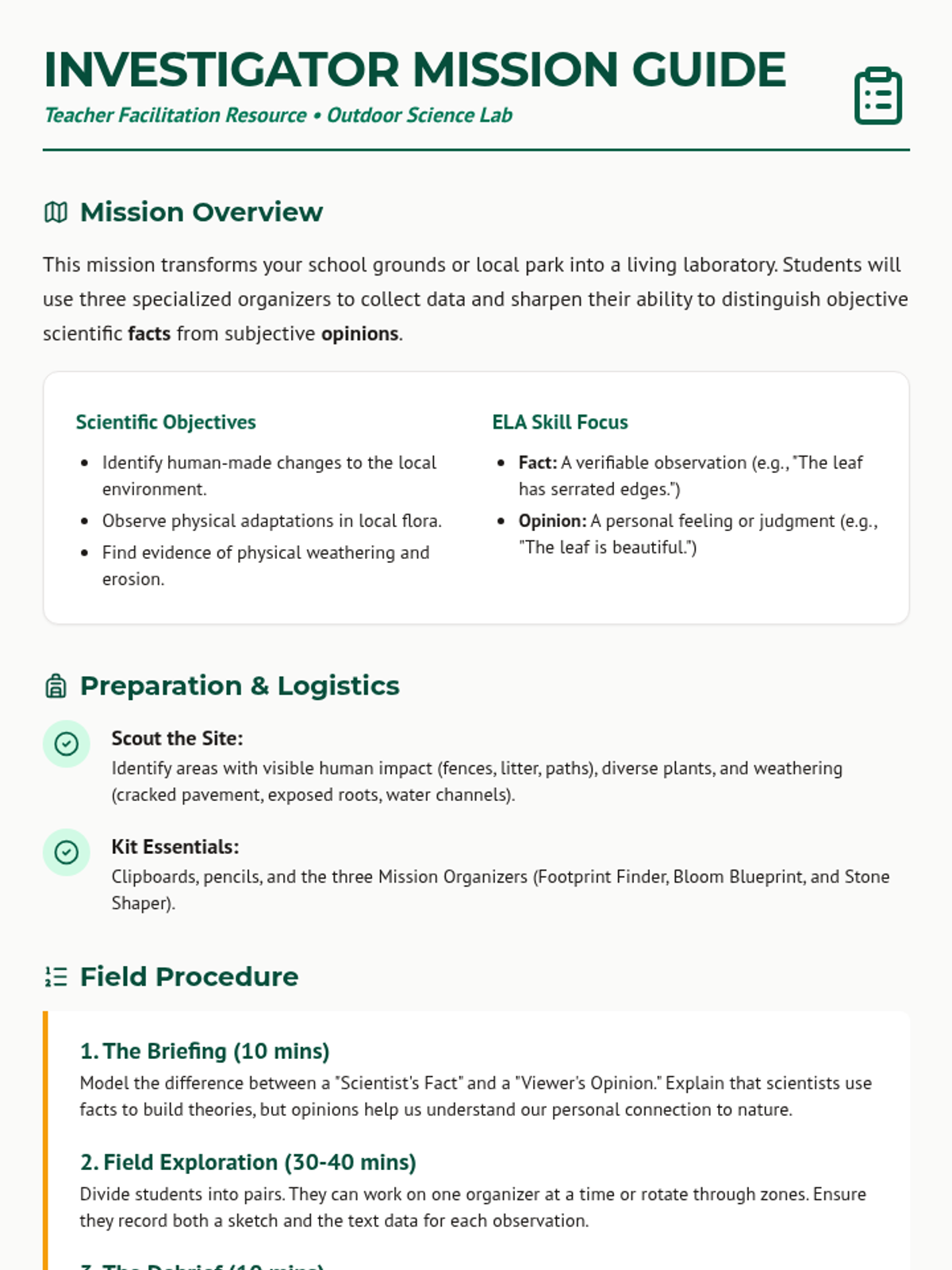
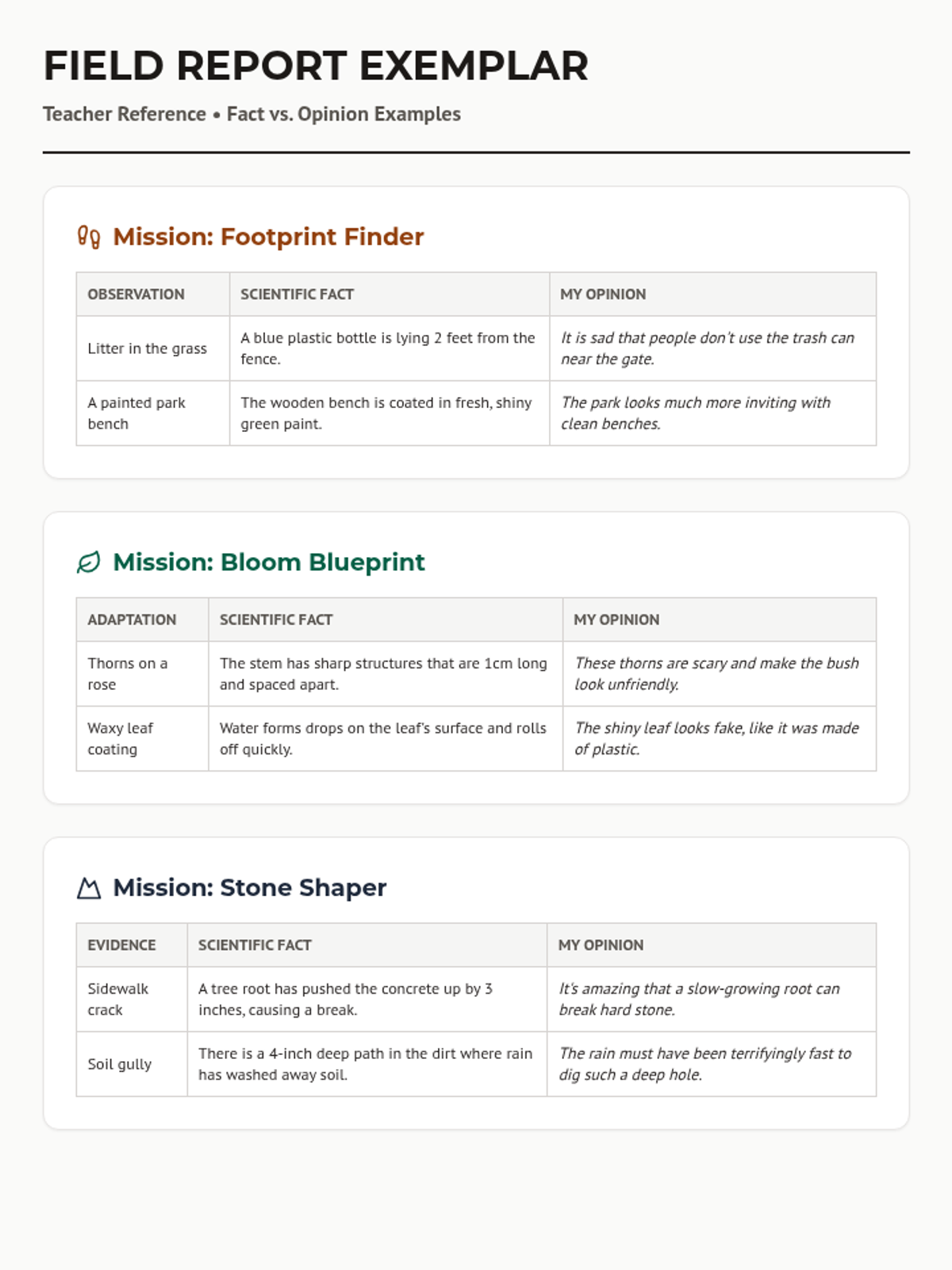
A series of outdoor observation activities where students explore human impact, plant adaptations, and geological changes while practicing the ELA skill of distinguishing between fact and opinion.
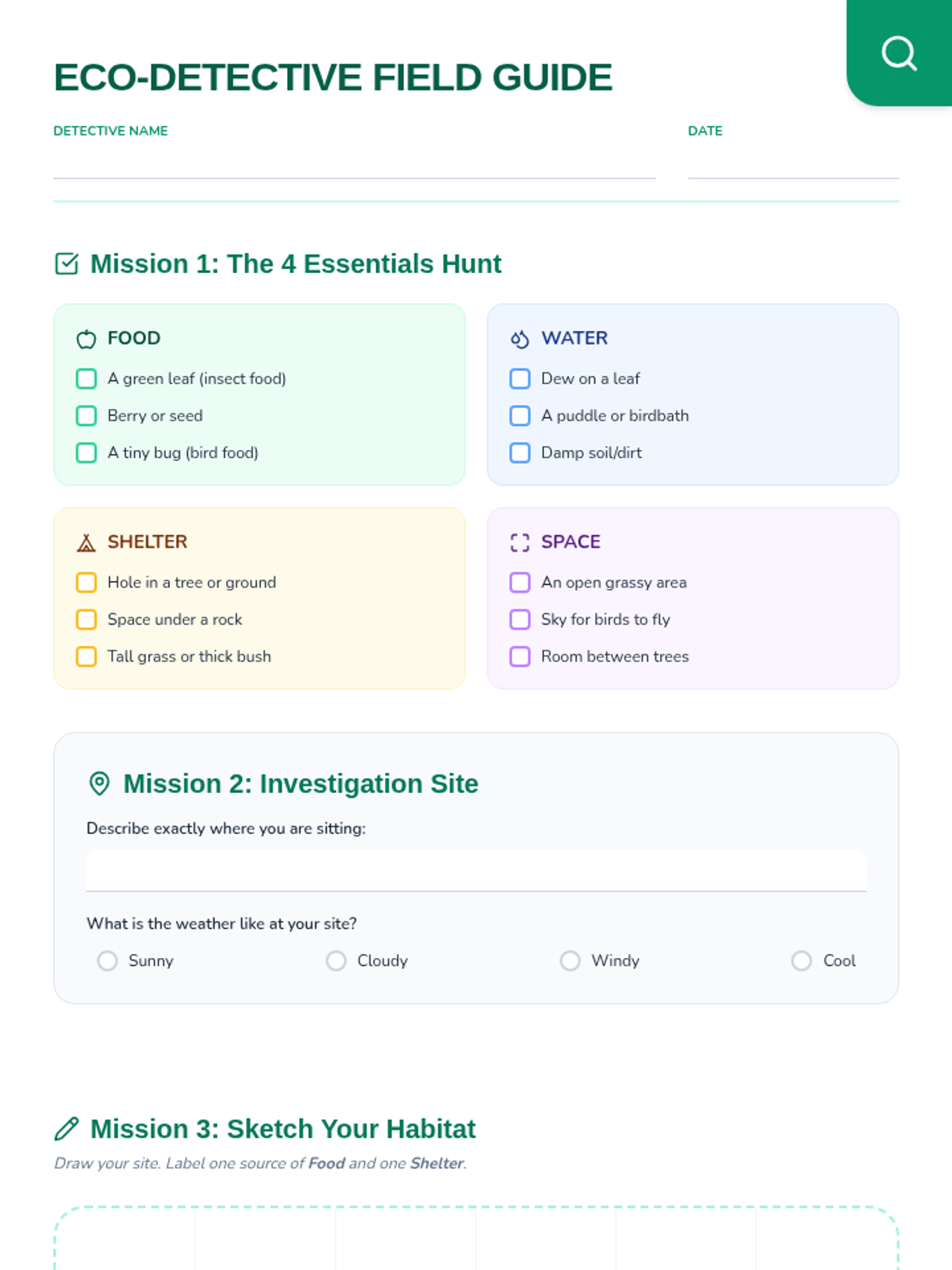
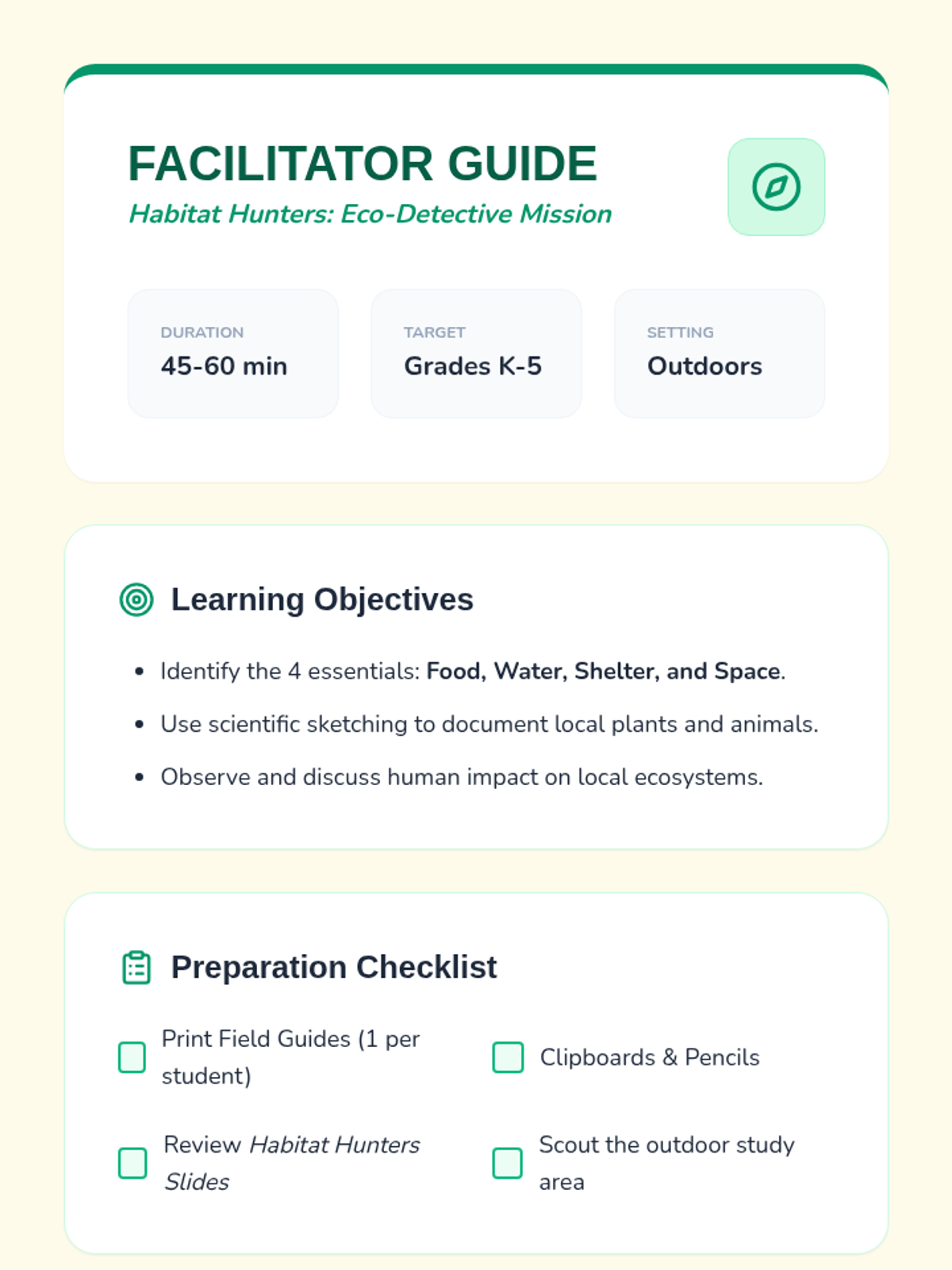
An immersive outdoor exploration where students become 'Eco-Detectives' to identify the essential components of local habitats through observation and sketching.
An interactive exploration of the Moon's 28-day cycle, terminology, and the eight distinct lunar phases through visual diagrams and observation exercises.
A hands-on exploration of the physics of color, focusing on additive light mixing and subtractive pigment mixing through experimentation.
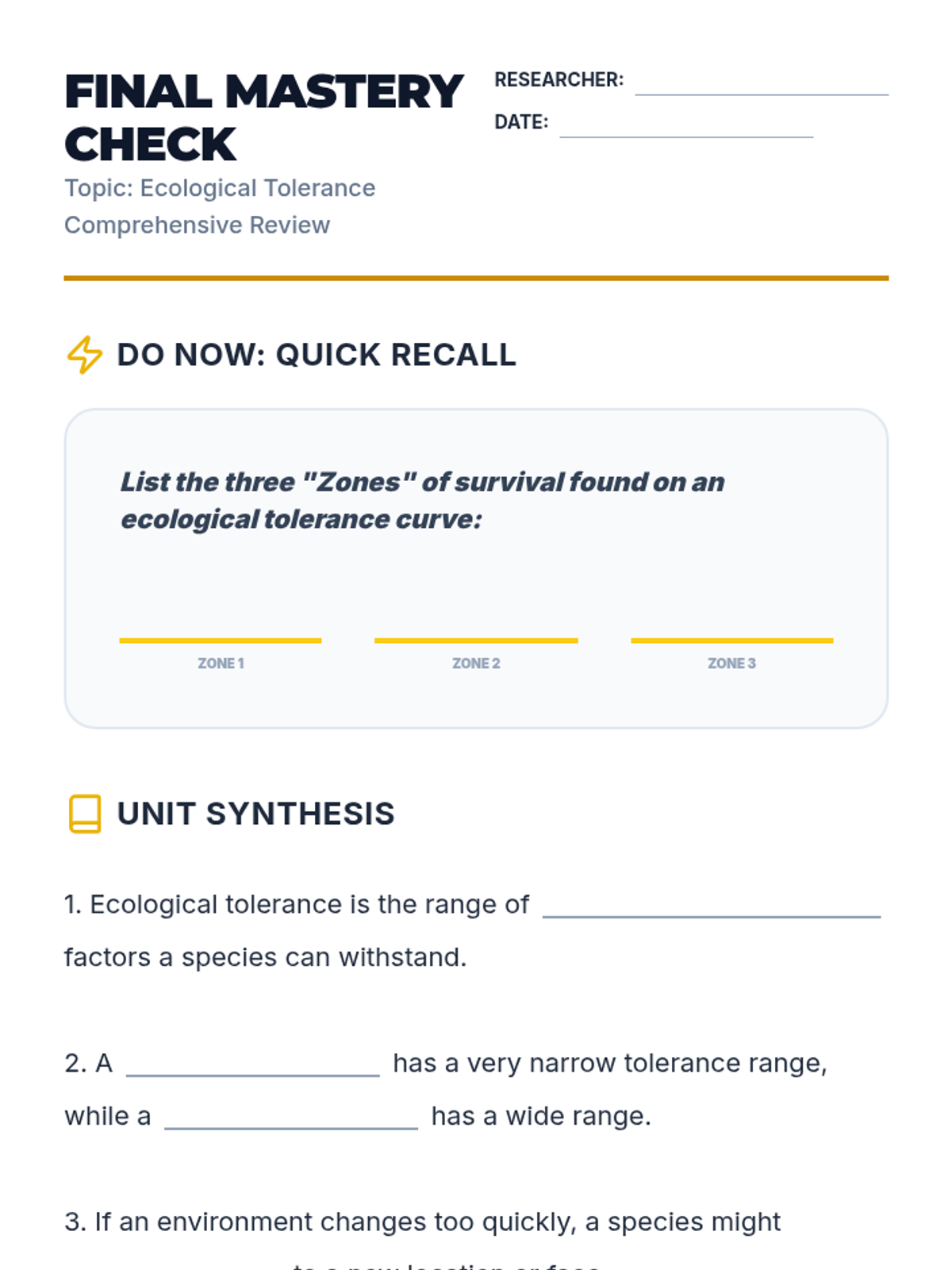
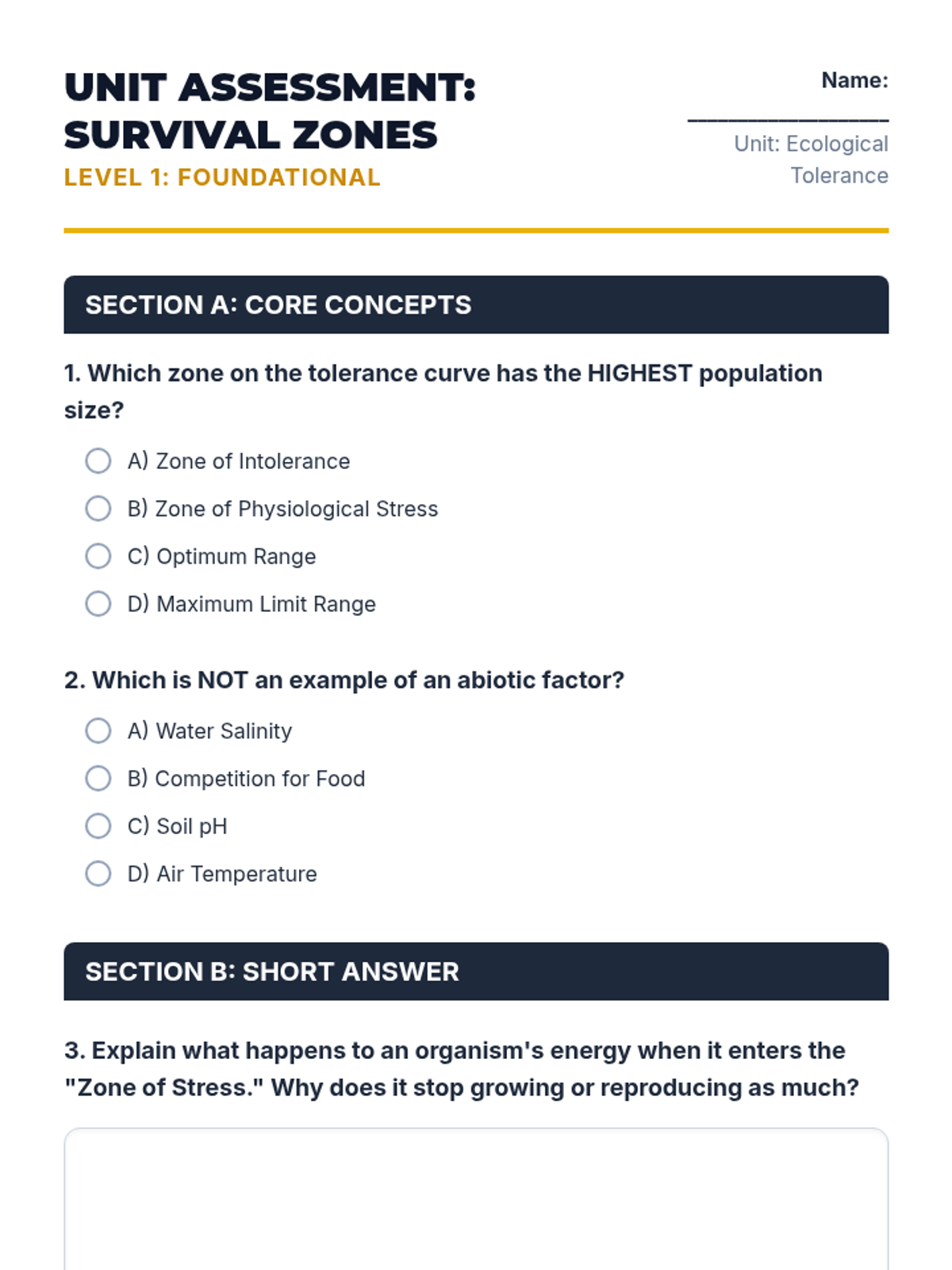
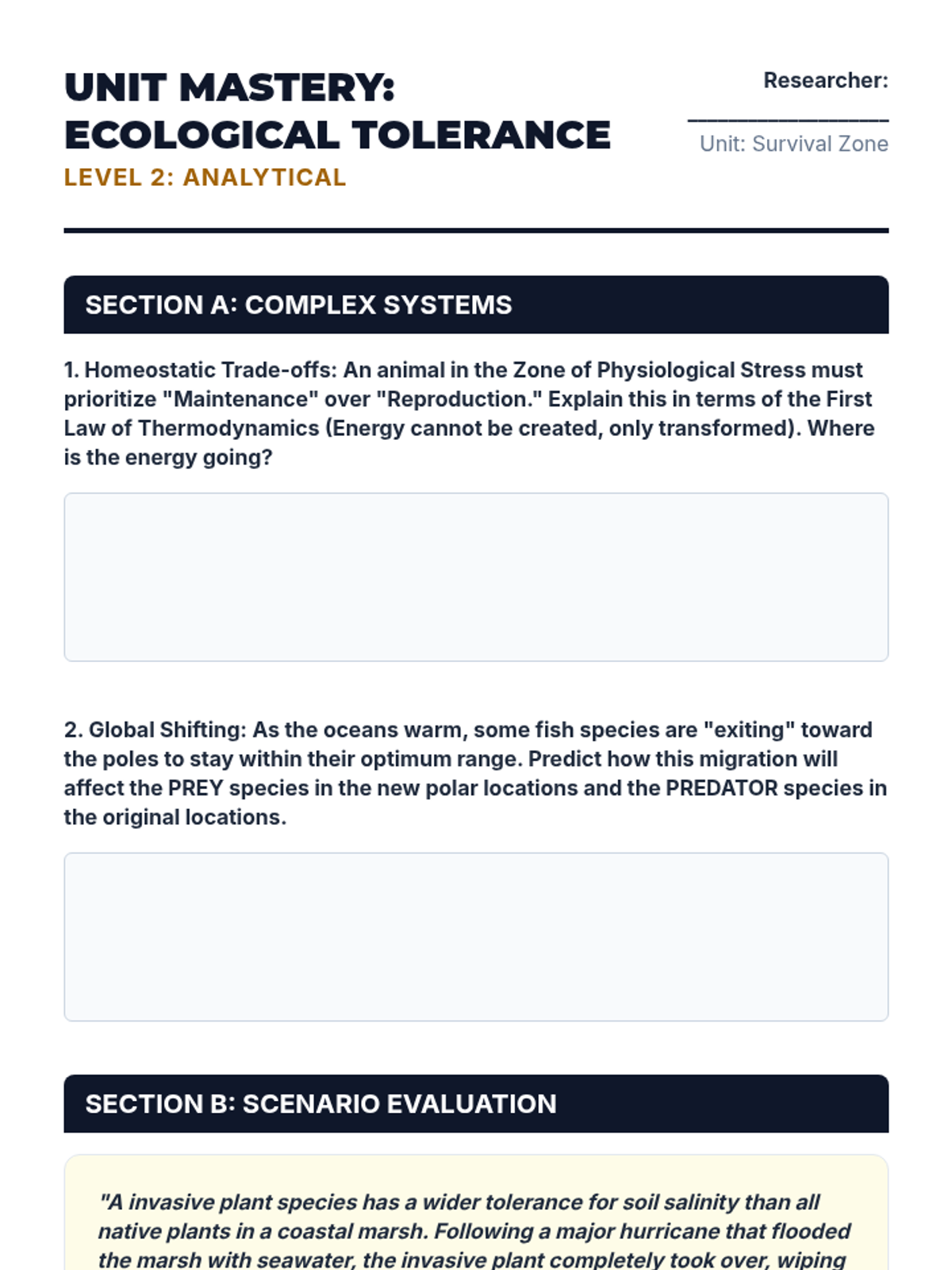
A comprehensive review and assessment of the week's learning through differentiated practice and synthesis.
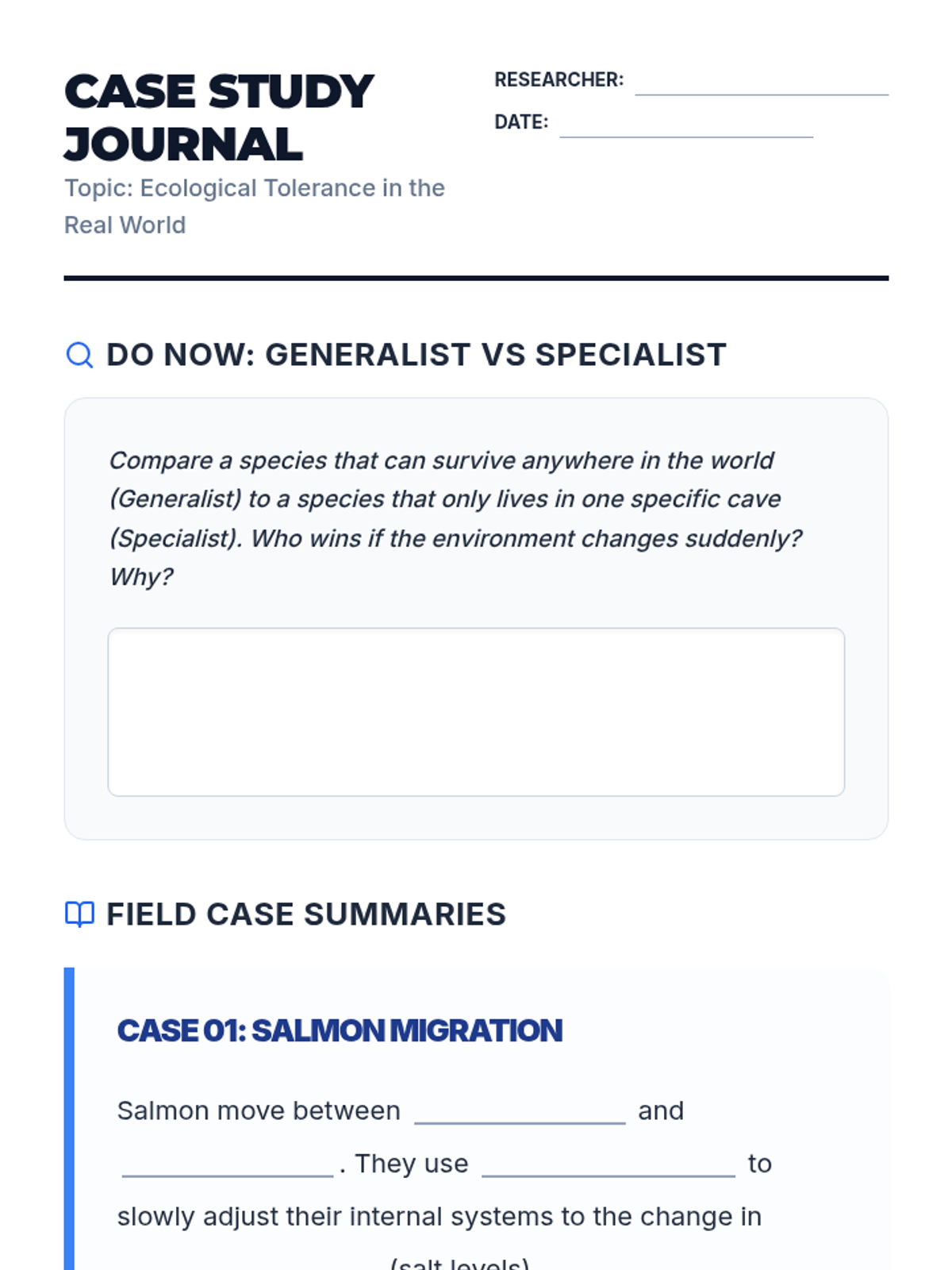
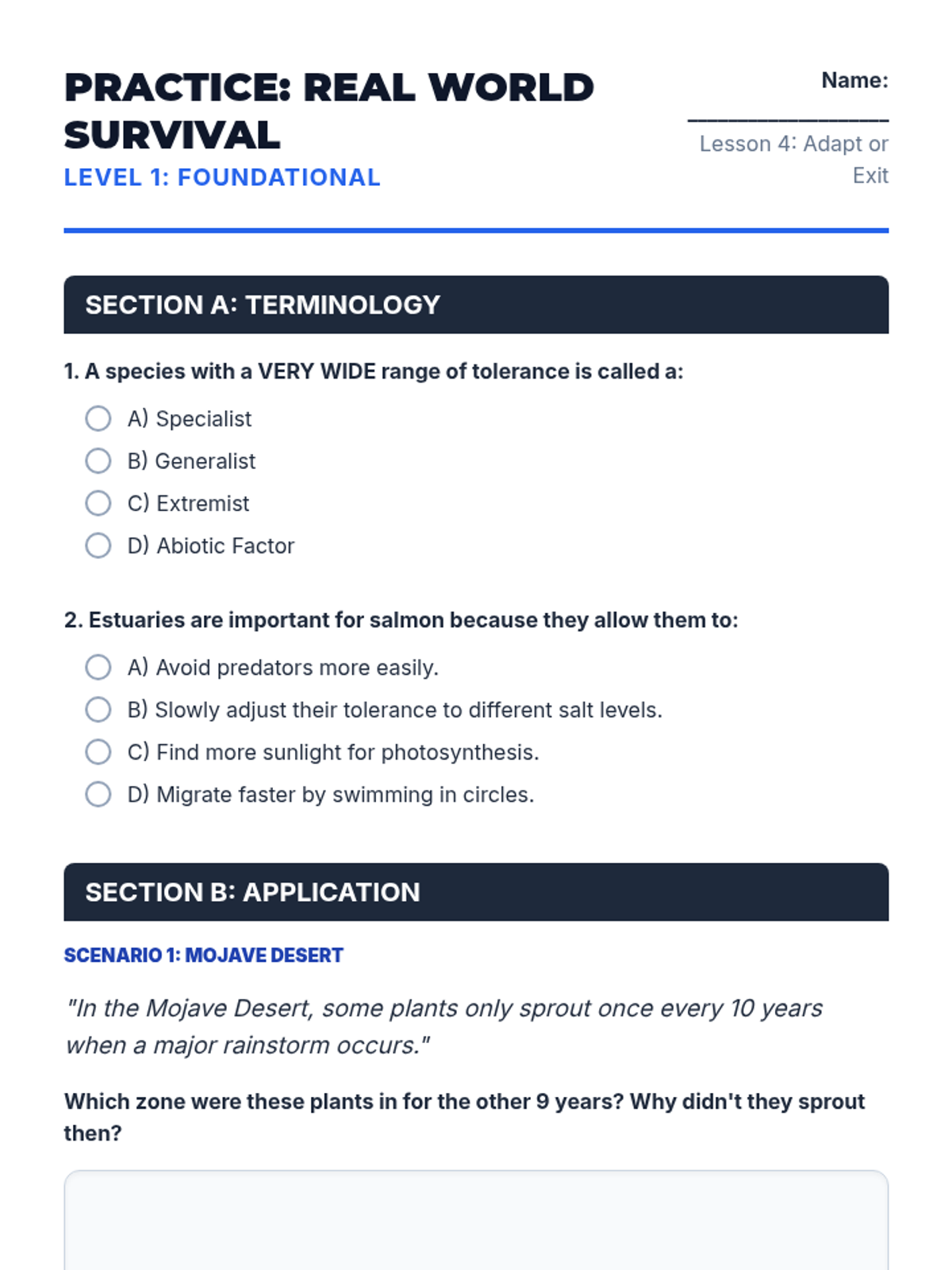
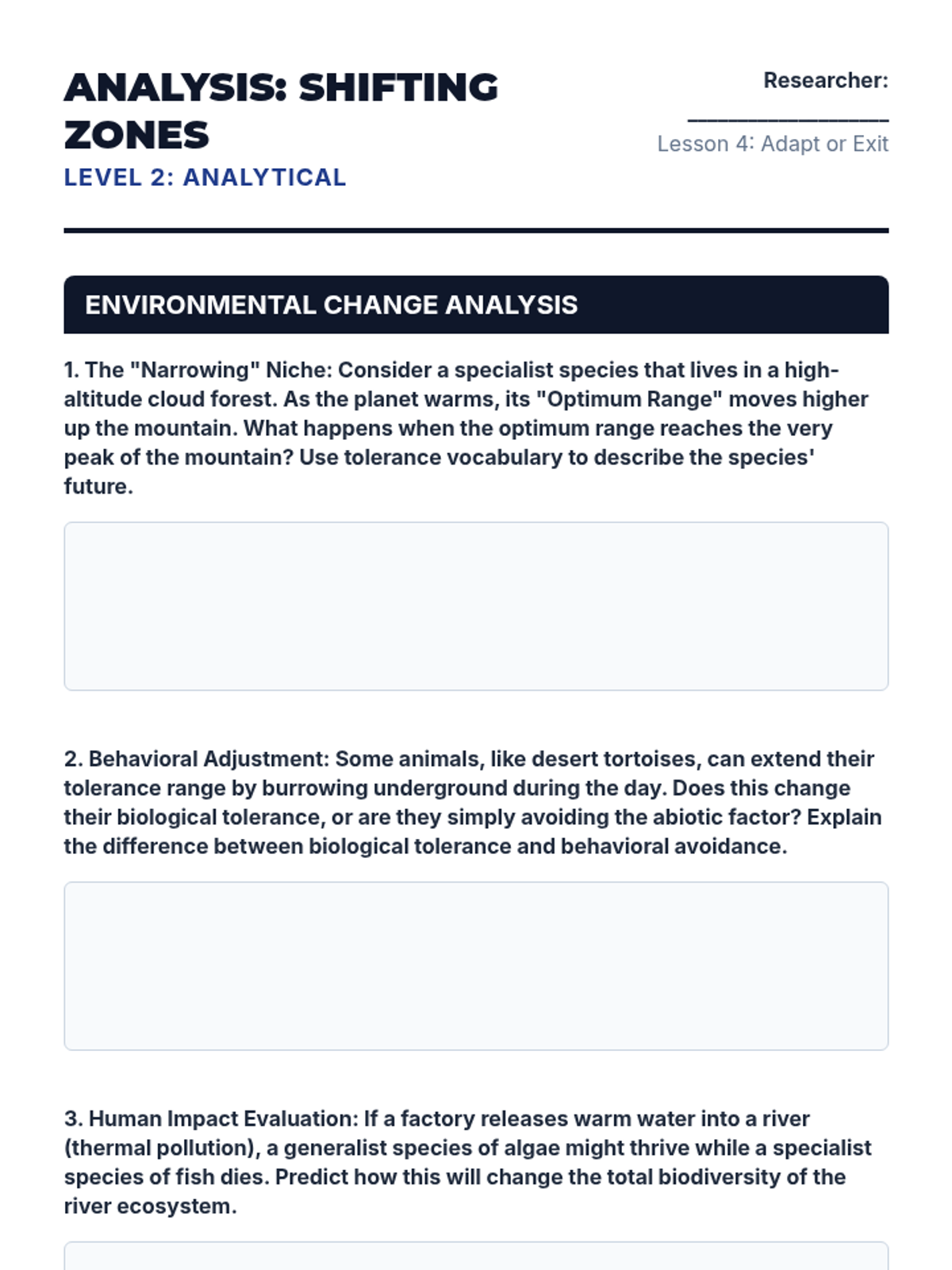
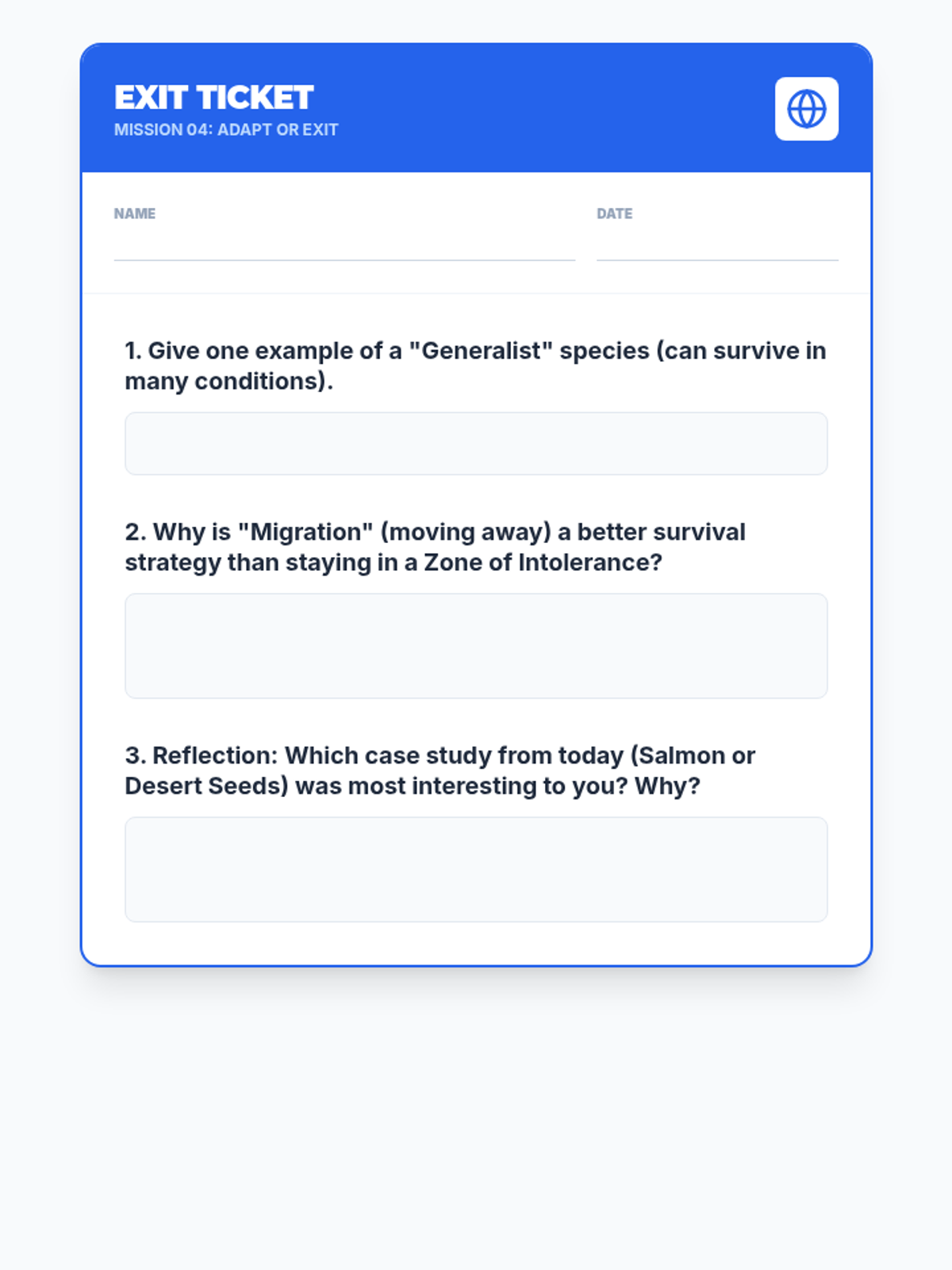
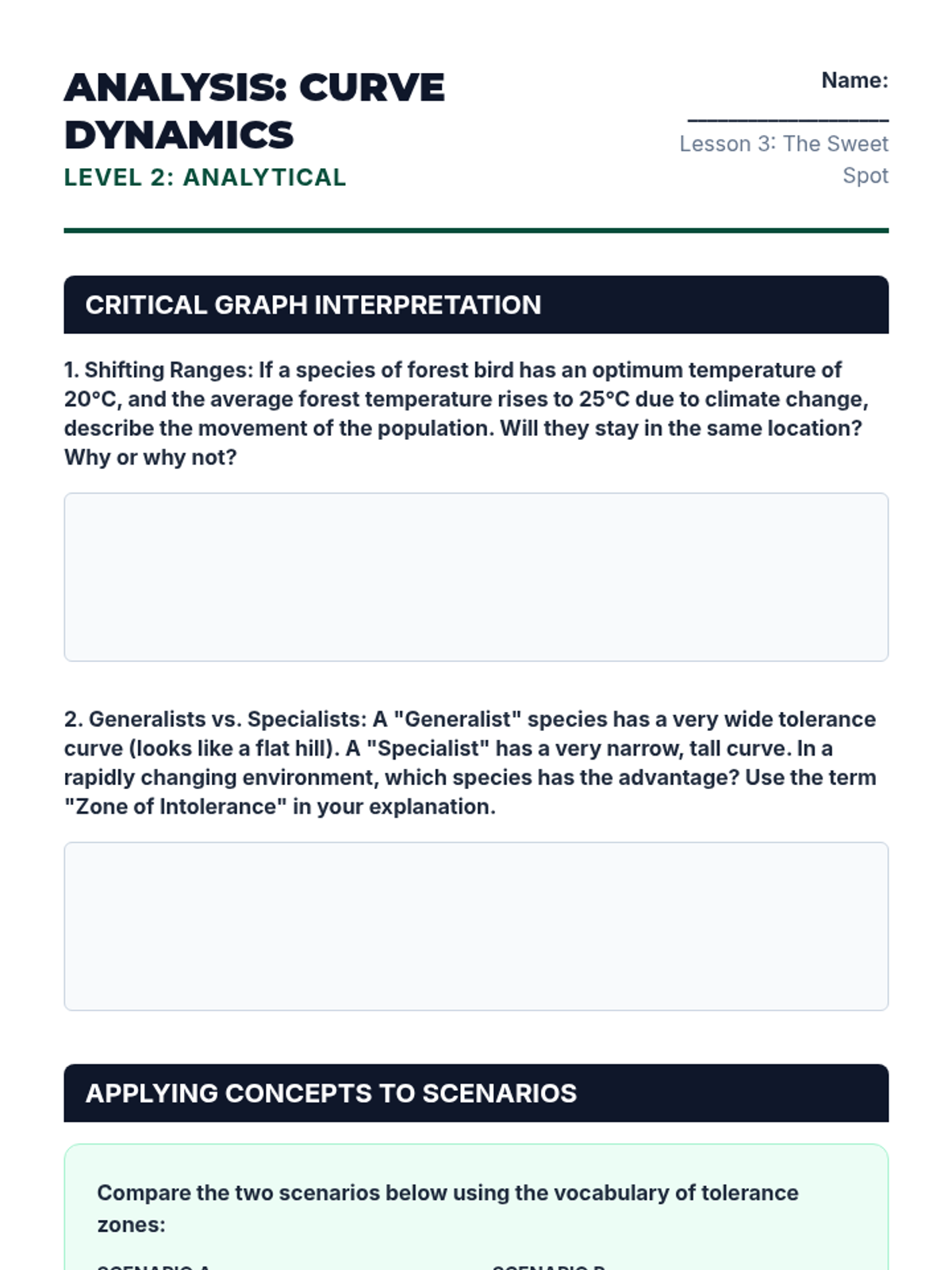
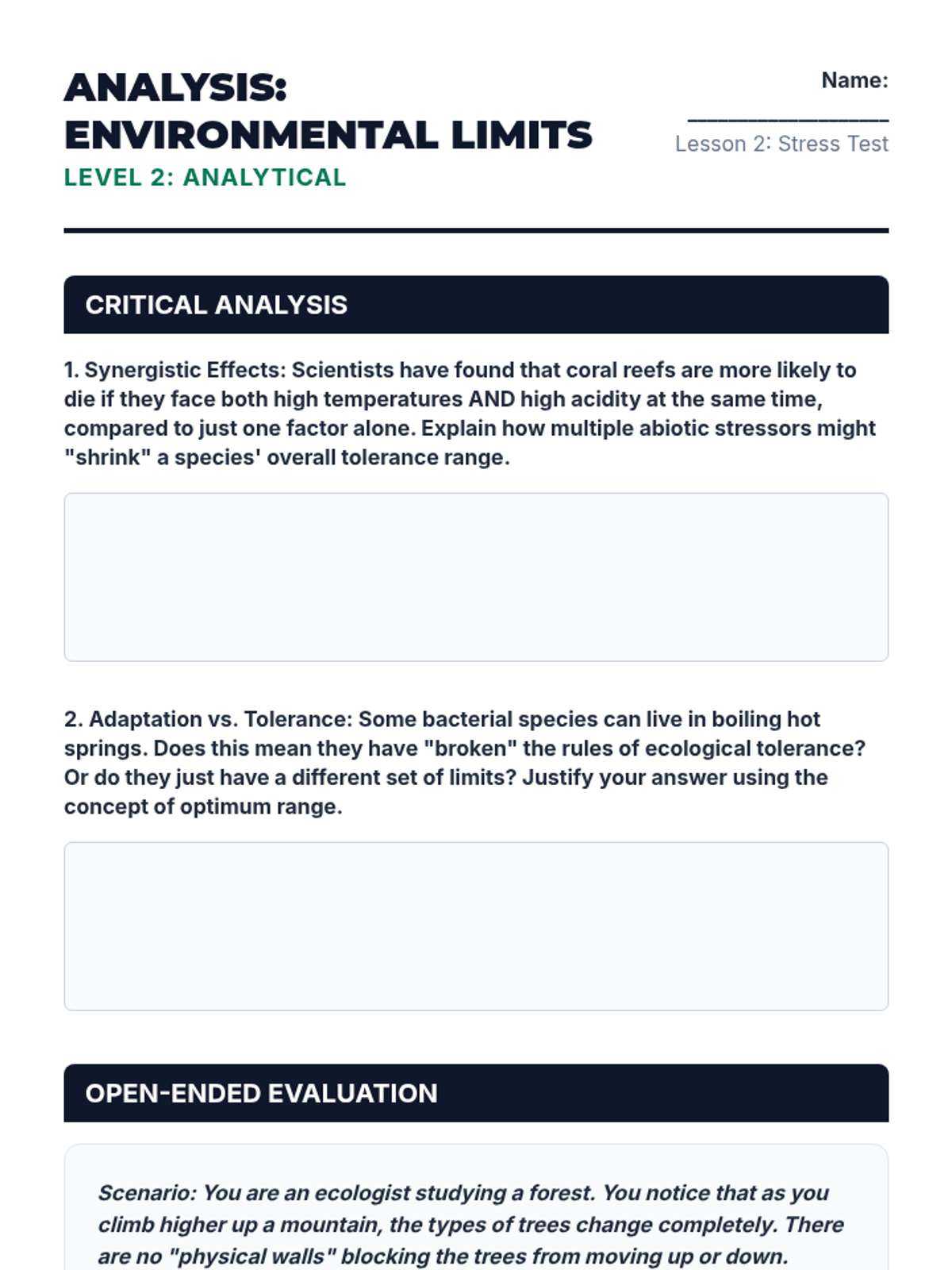
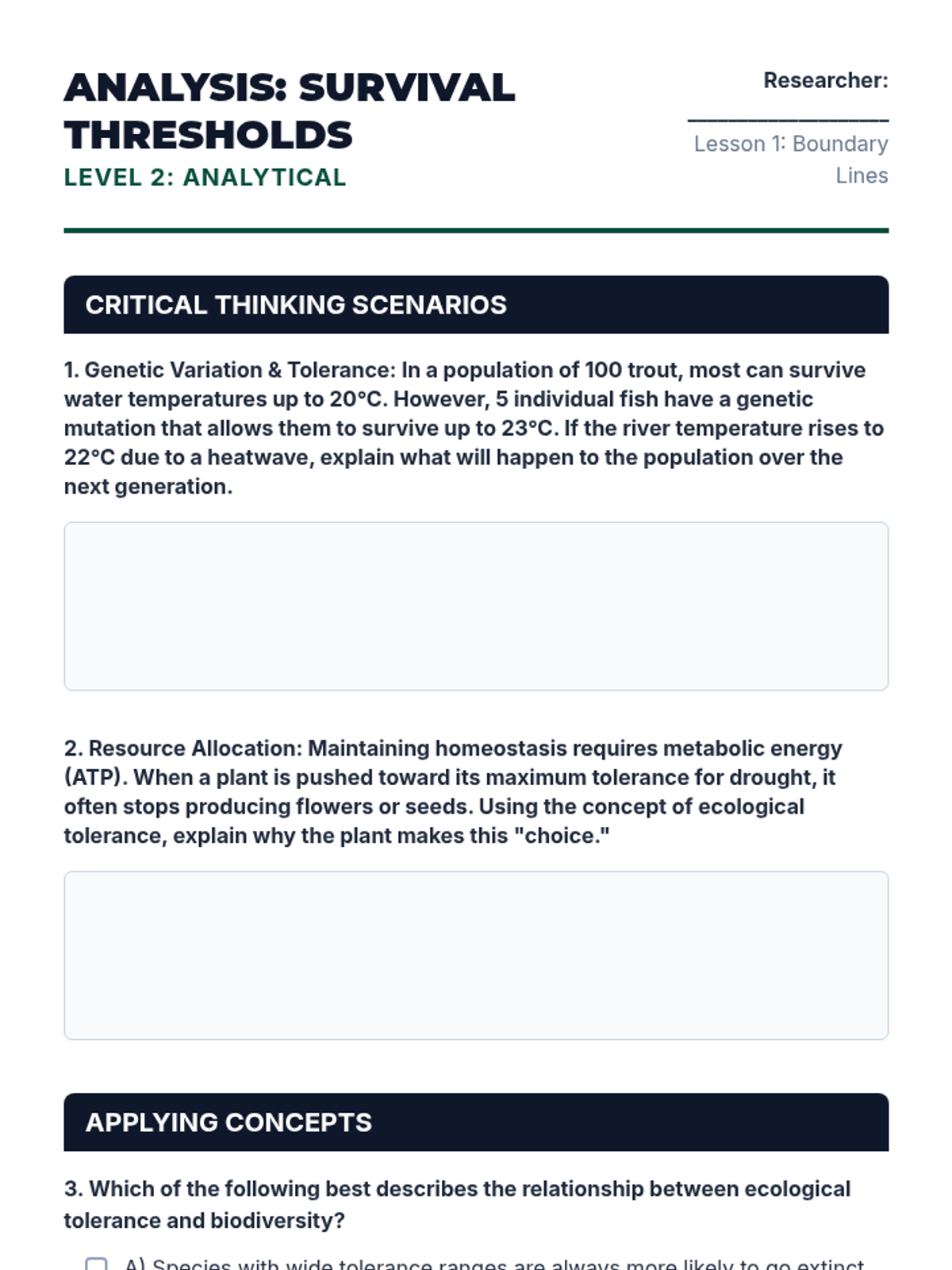
Apply tolerance concepts to real-world scenarios such as coral bleaching, invasive species, and climate-driven migration.
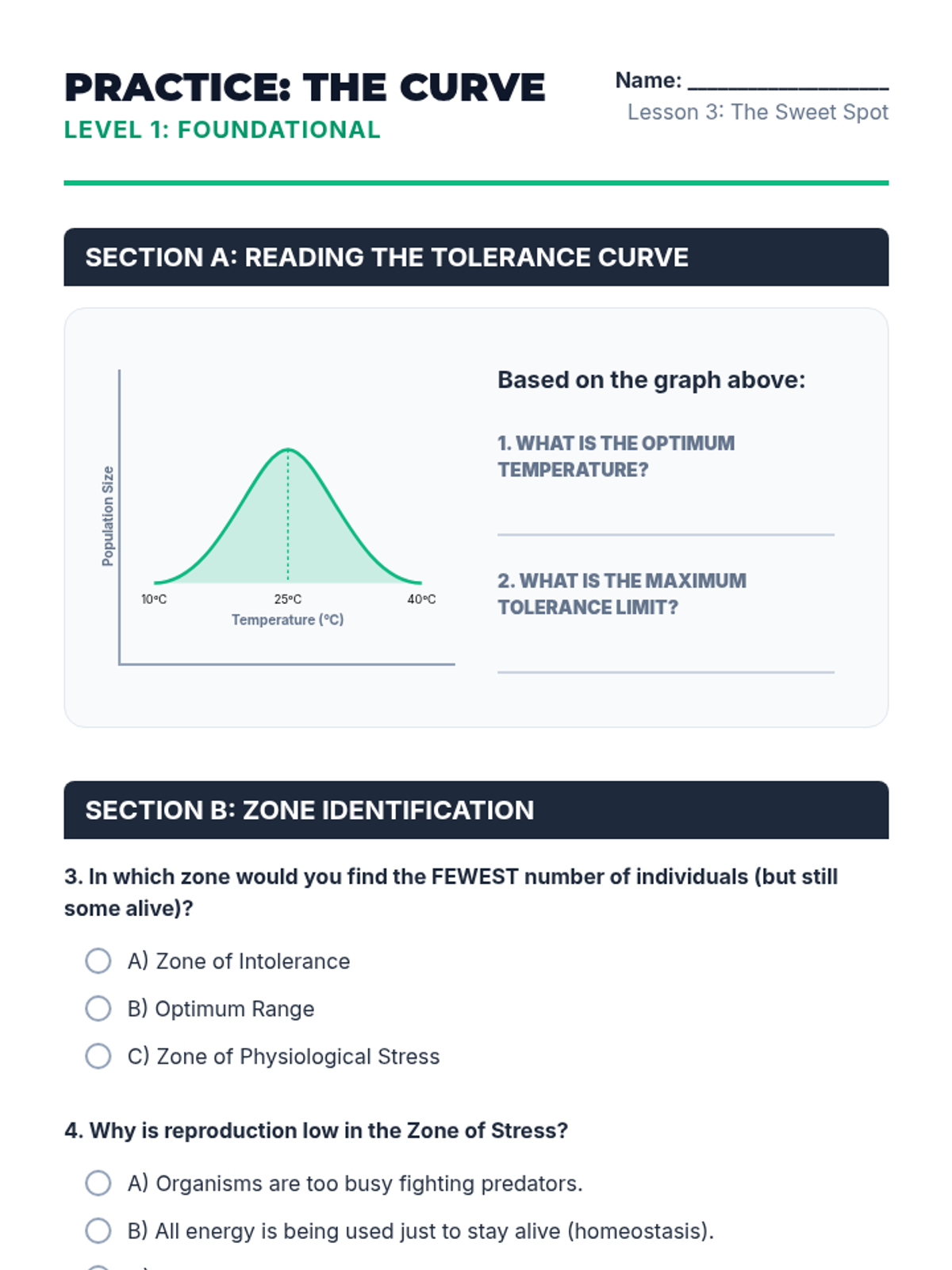
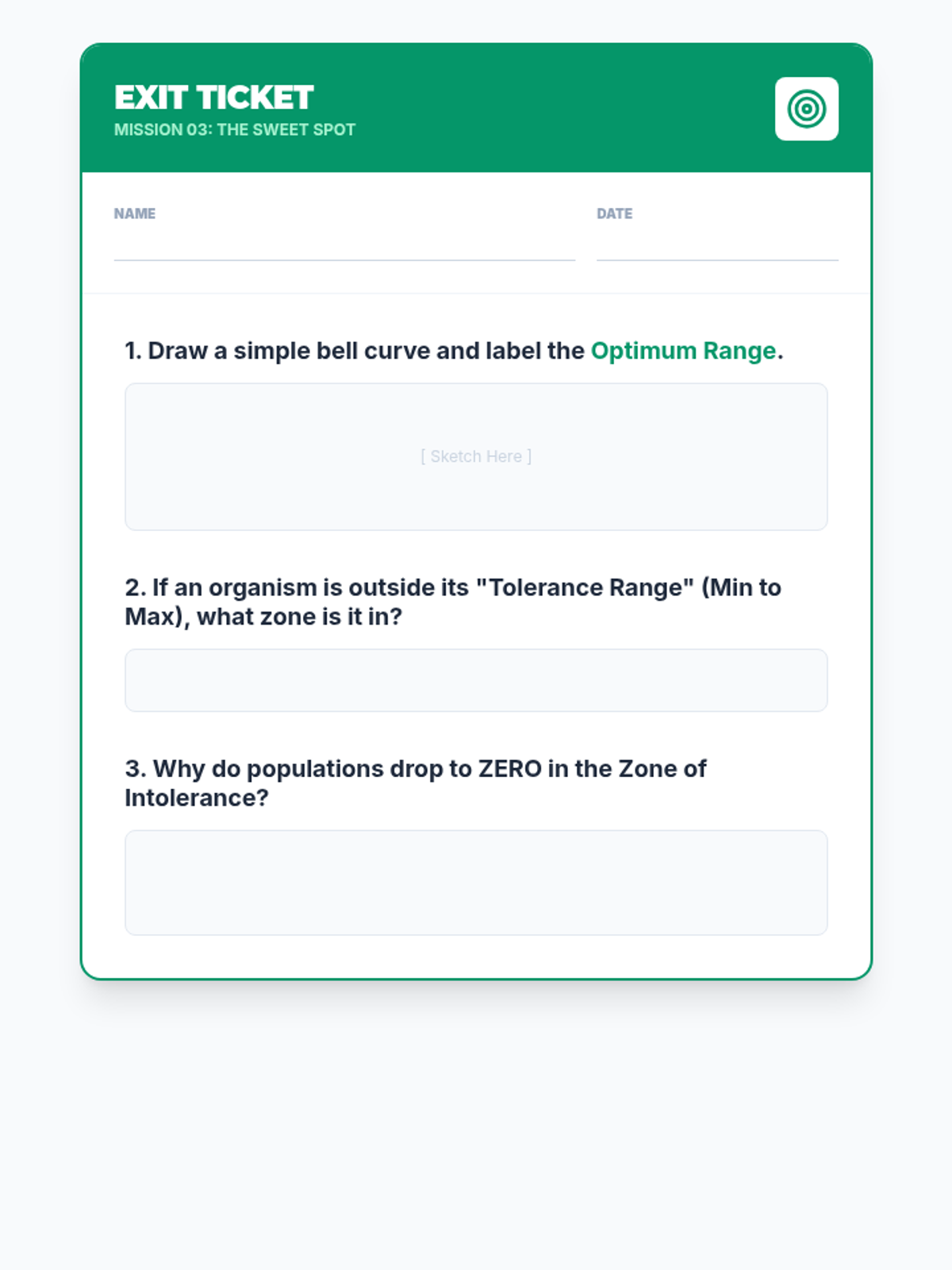
Master the ecological tolerance curve by defining and identifying the optimum range, zone of physiological stress, and zone of intolerance.
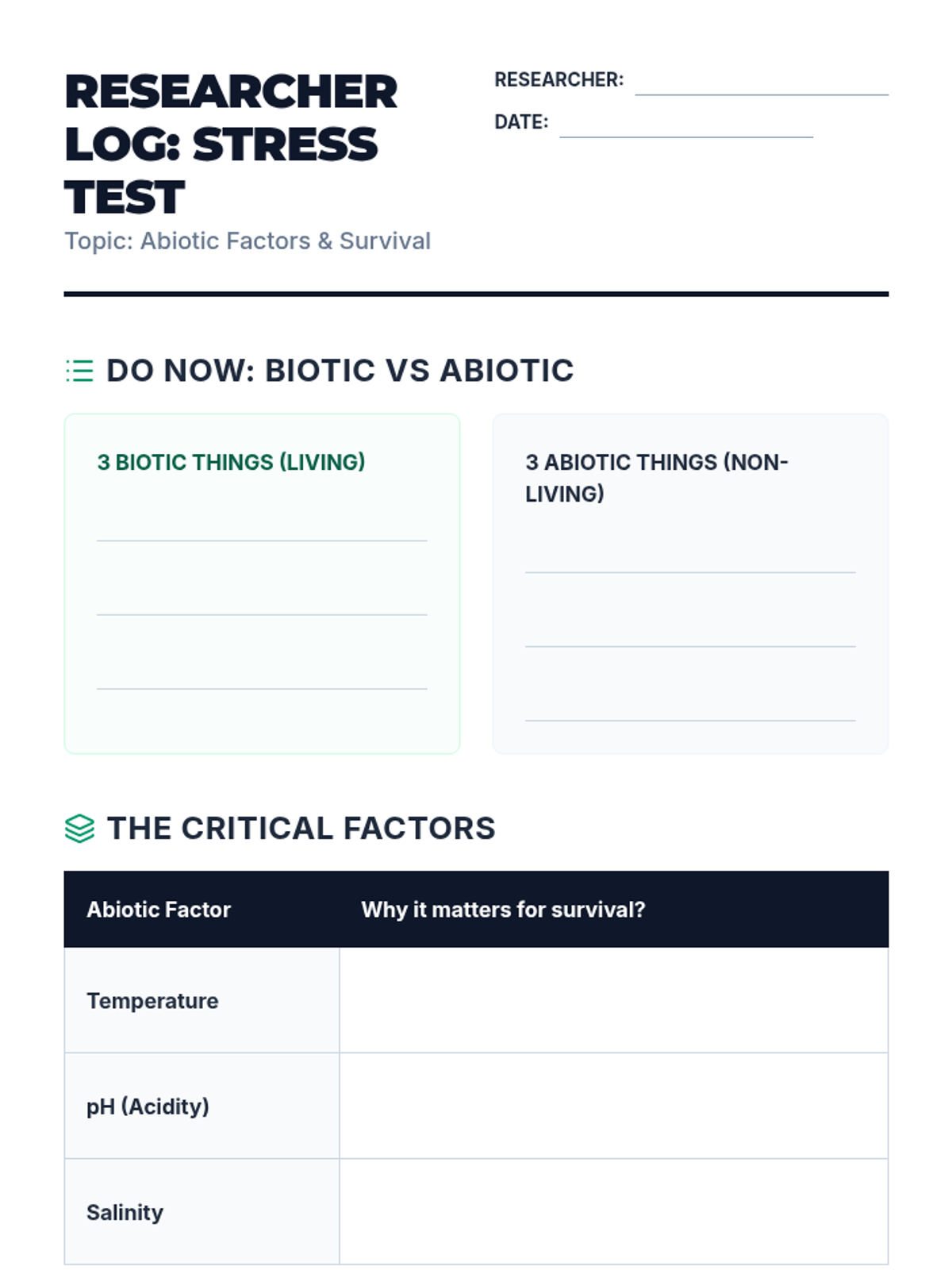
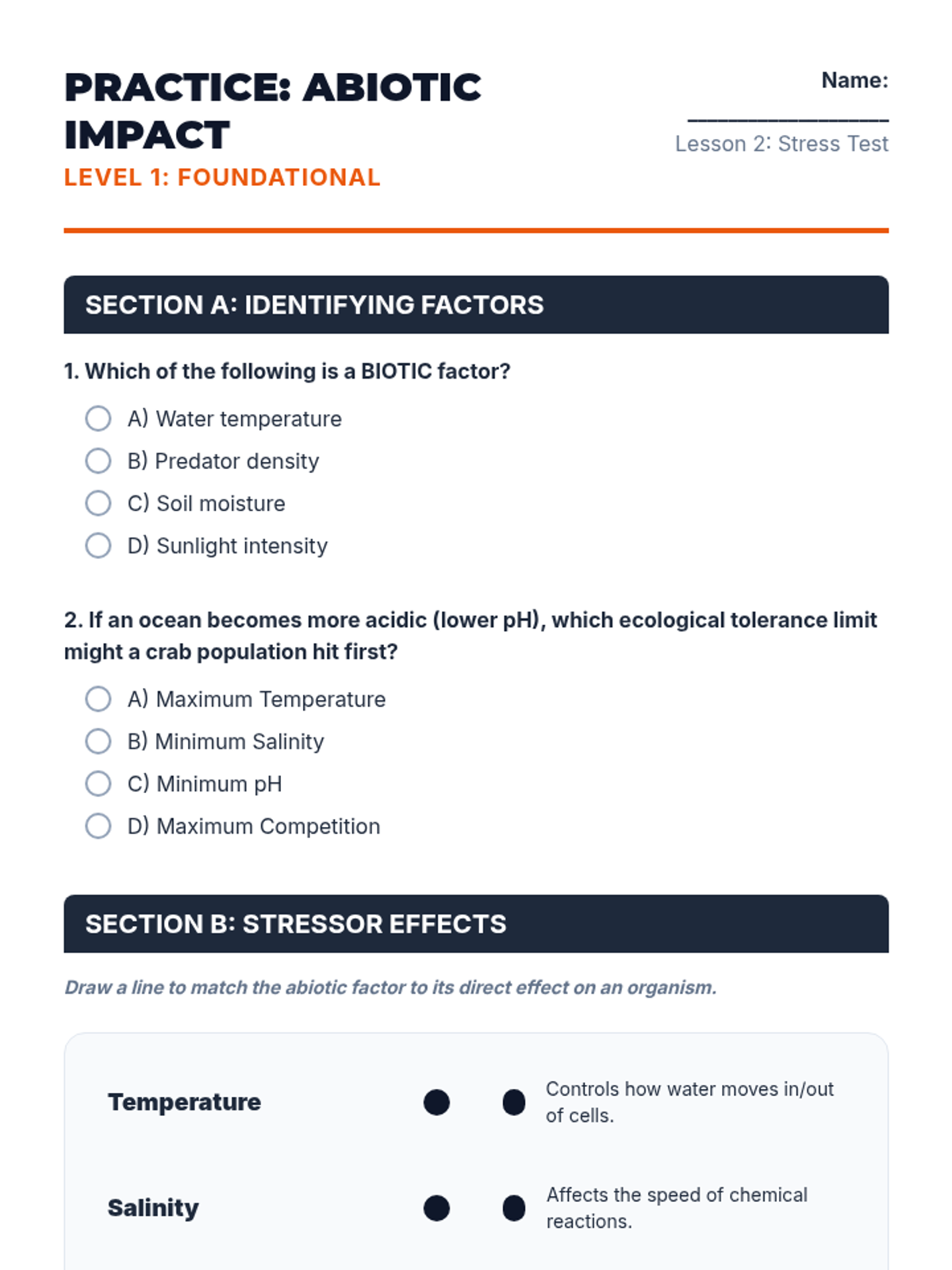
Identify and analyze specific abiotic factors like temperature, pH, and salinity that dictate whether a species thrives or perishes.
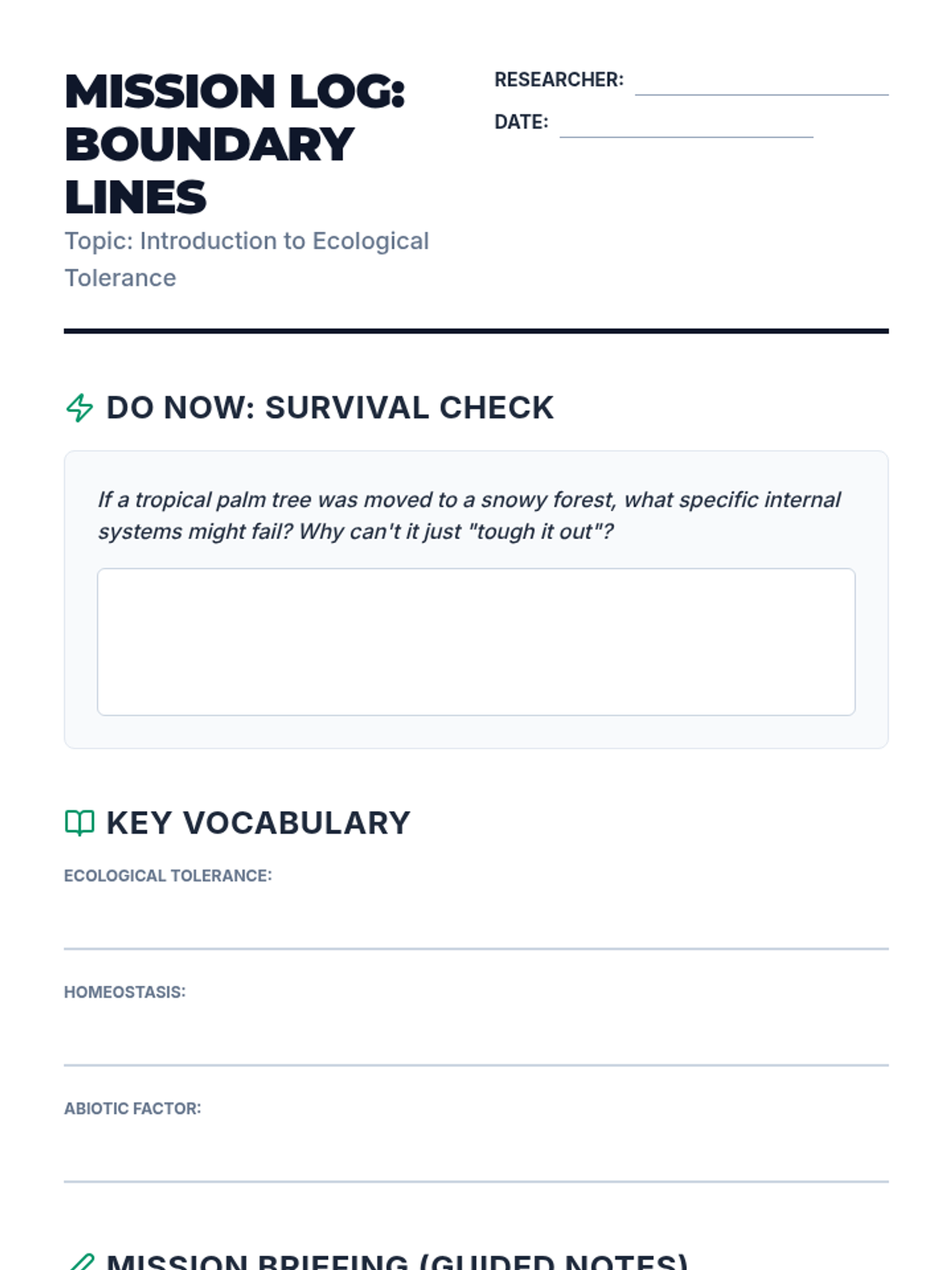
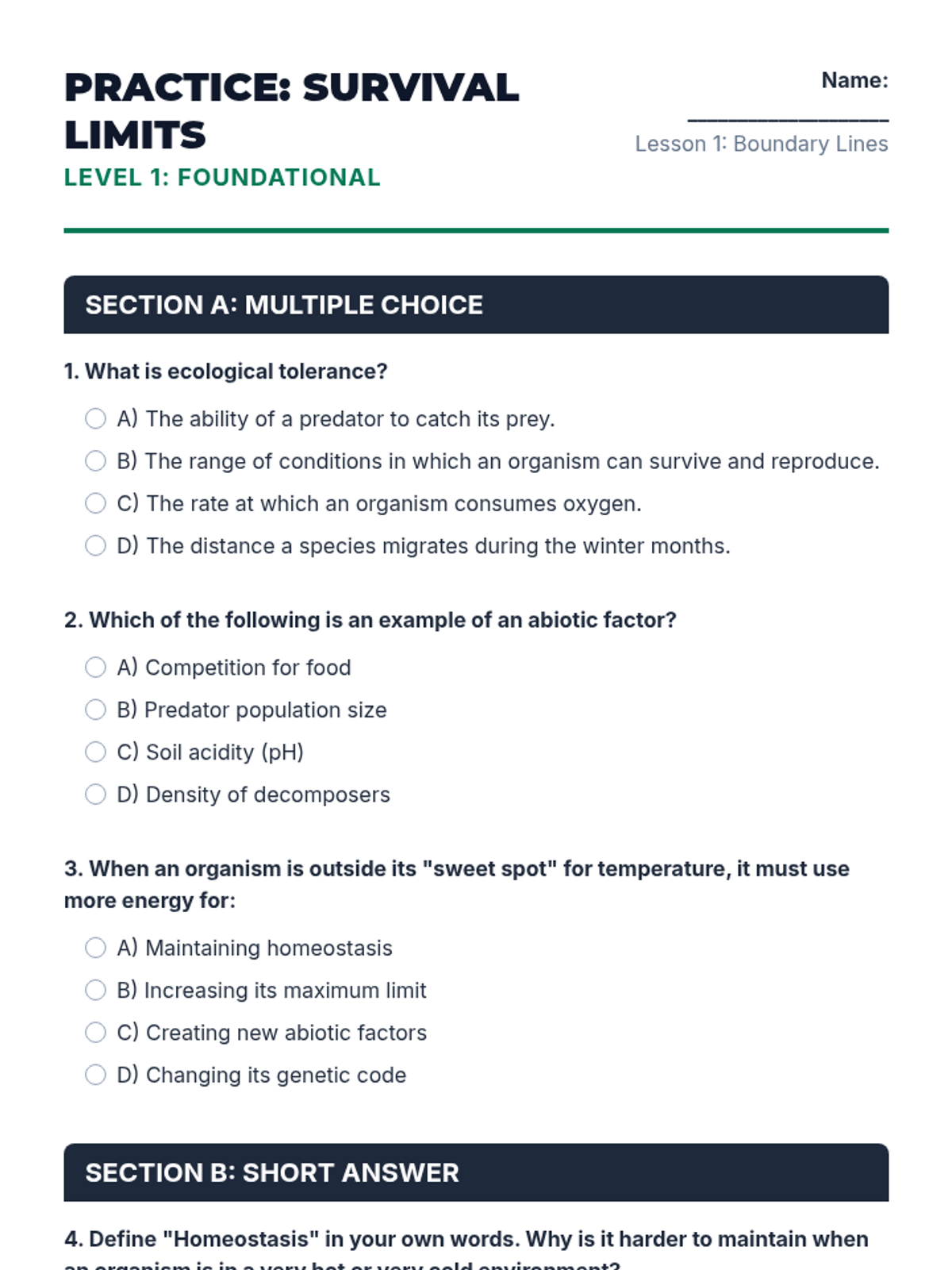
Introduce the concept of ecological tolerance and the basic biological necessity for staying within specific environmental ranges.