Focusing on the strategic logic of non-violent conflict, students analyze why some mass movements succeed in toppling regimes while others fail. They study case studies from the Arab Spring and Color Revolutions.
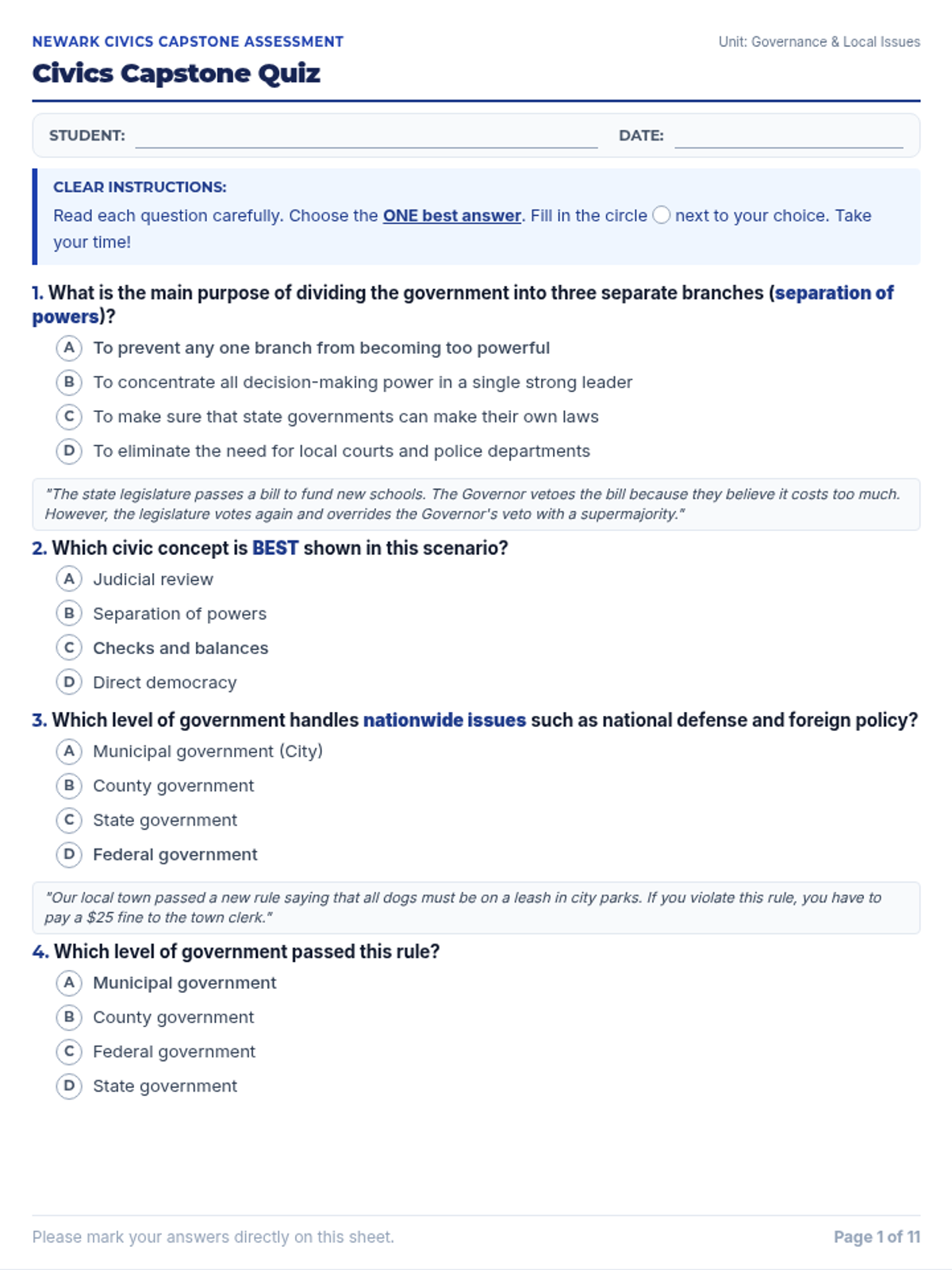
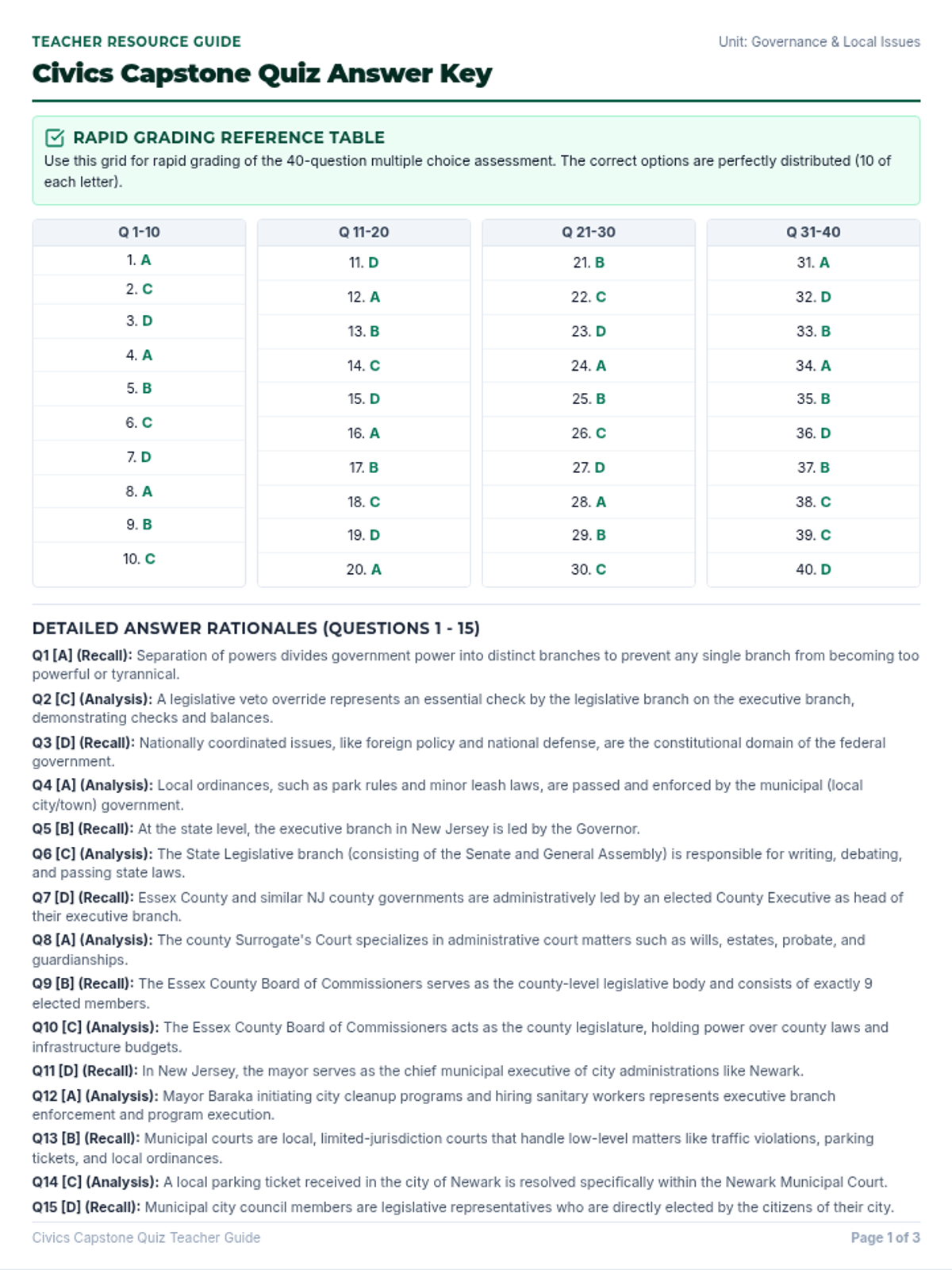
A comprehensive assessment unit for high school civics, covering separation of powers, municipal and county government levels, and local social issues such as homelessness and food deserts in New Jersey.
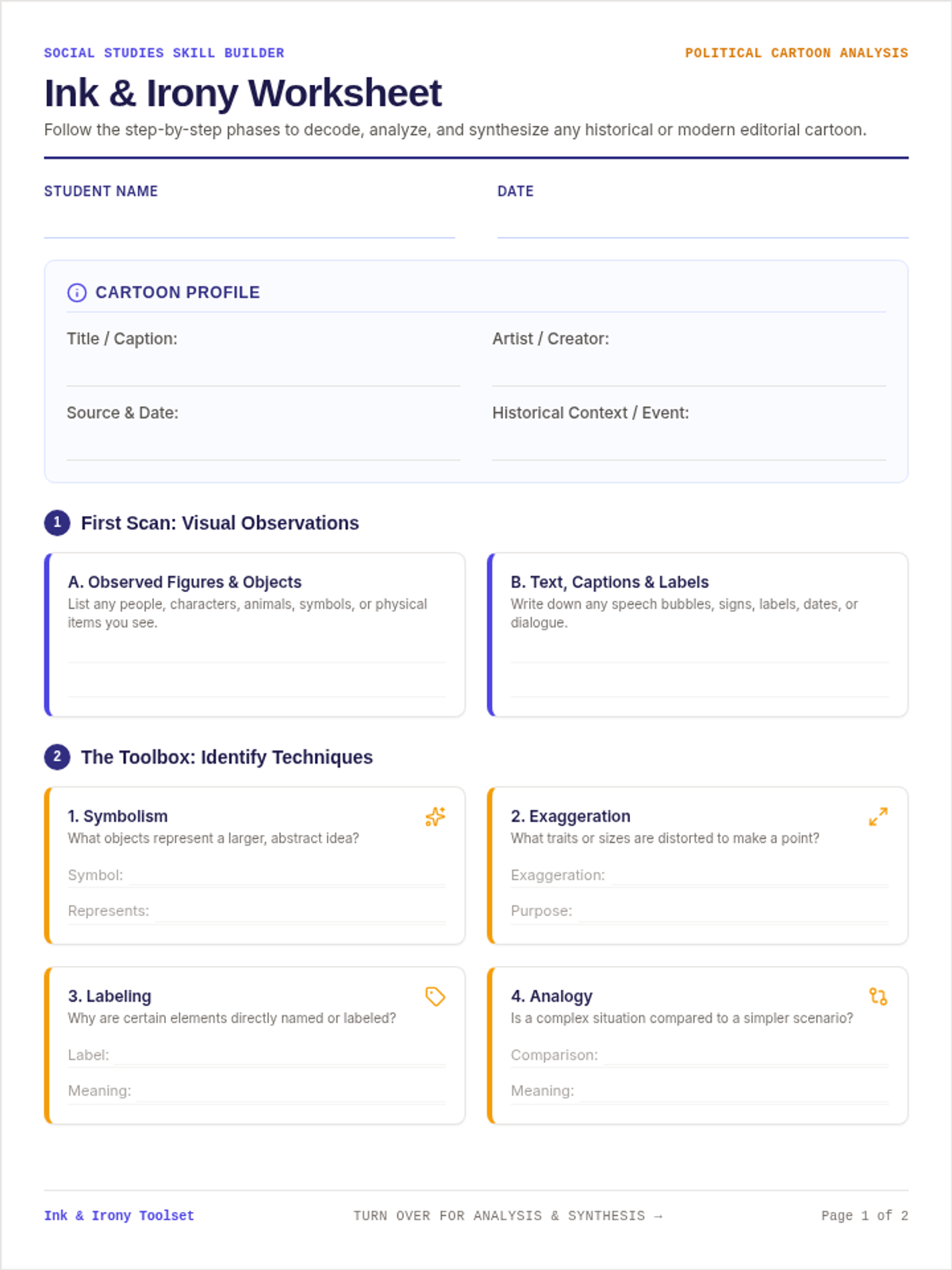
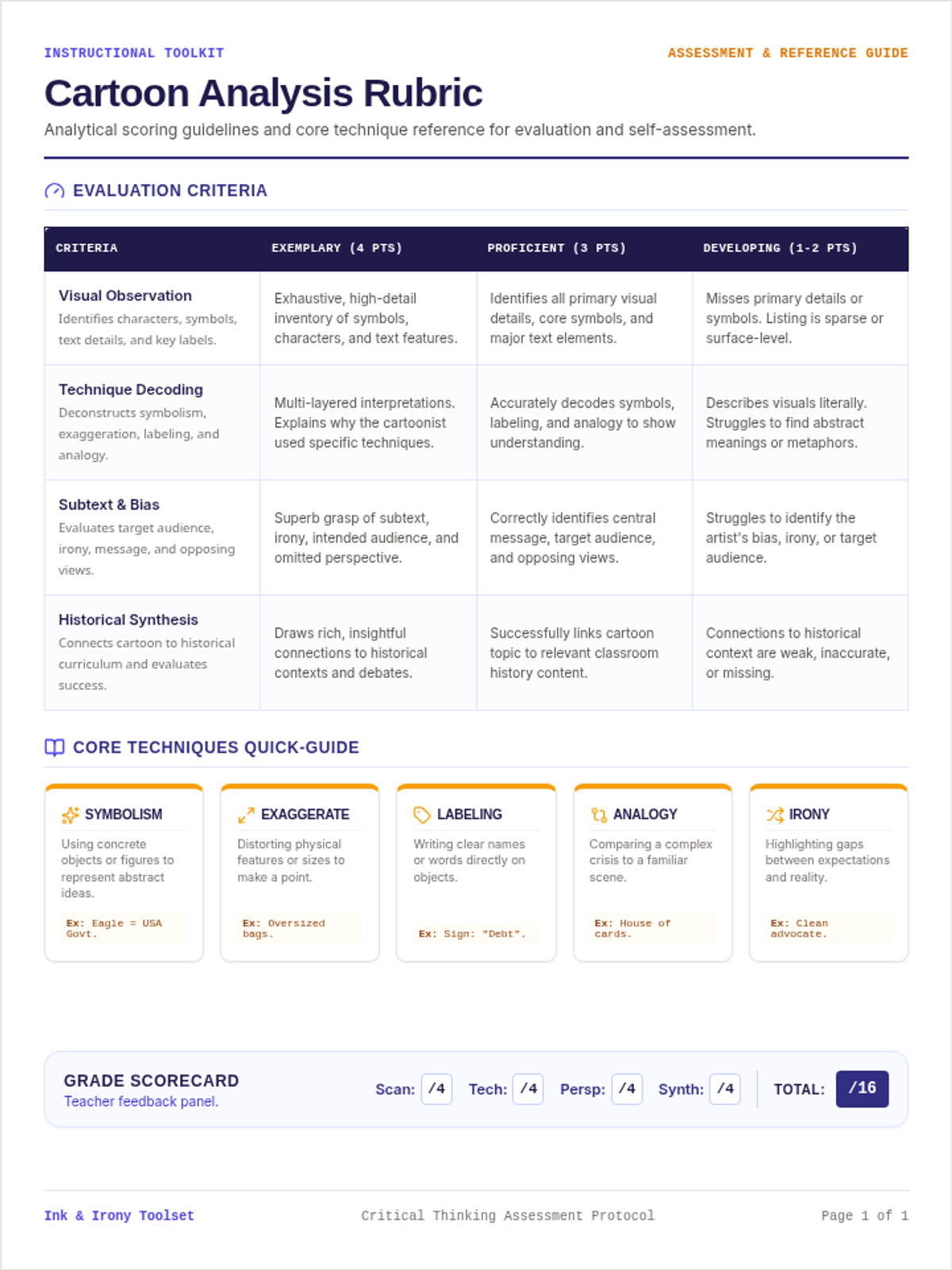
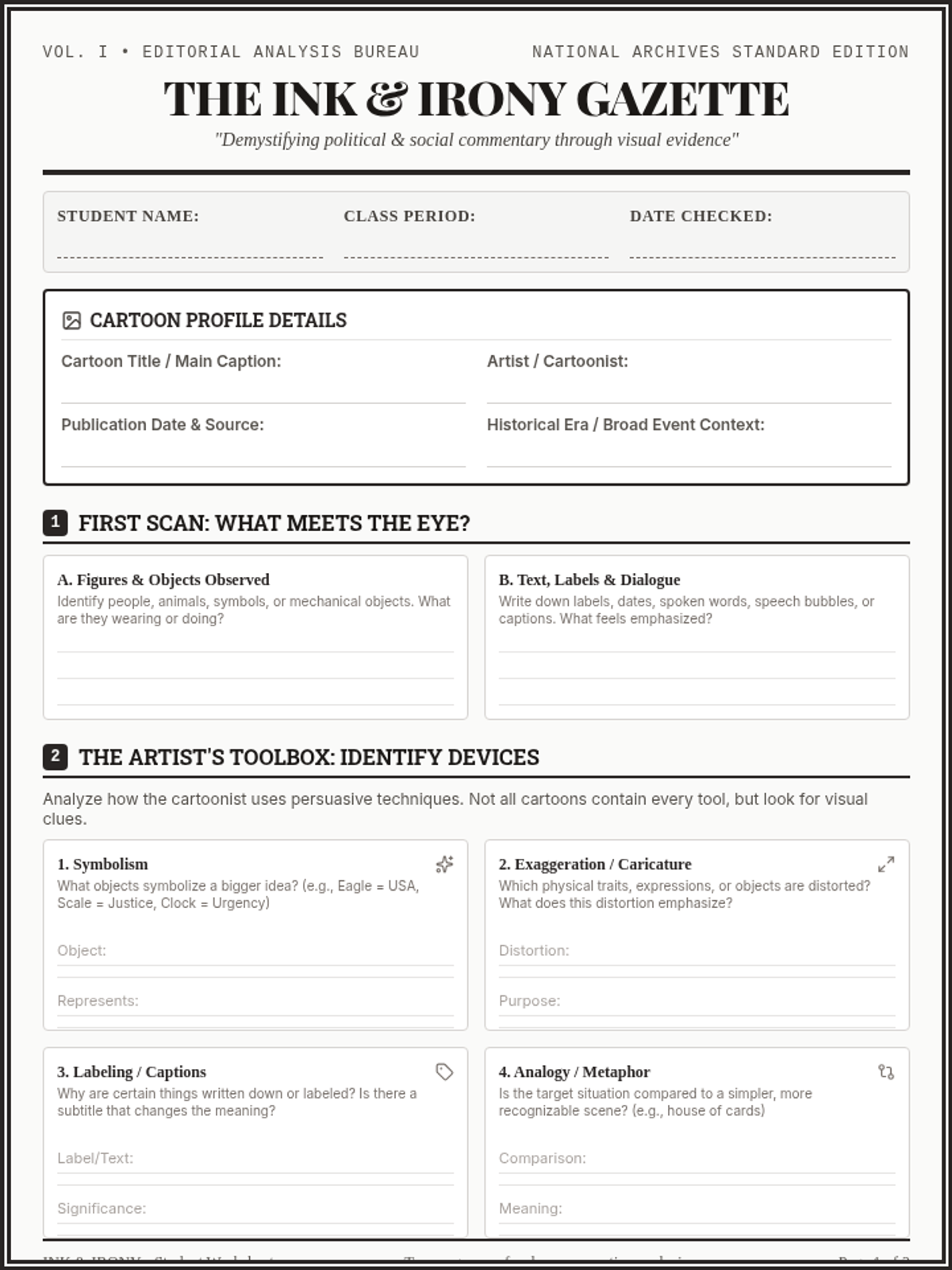
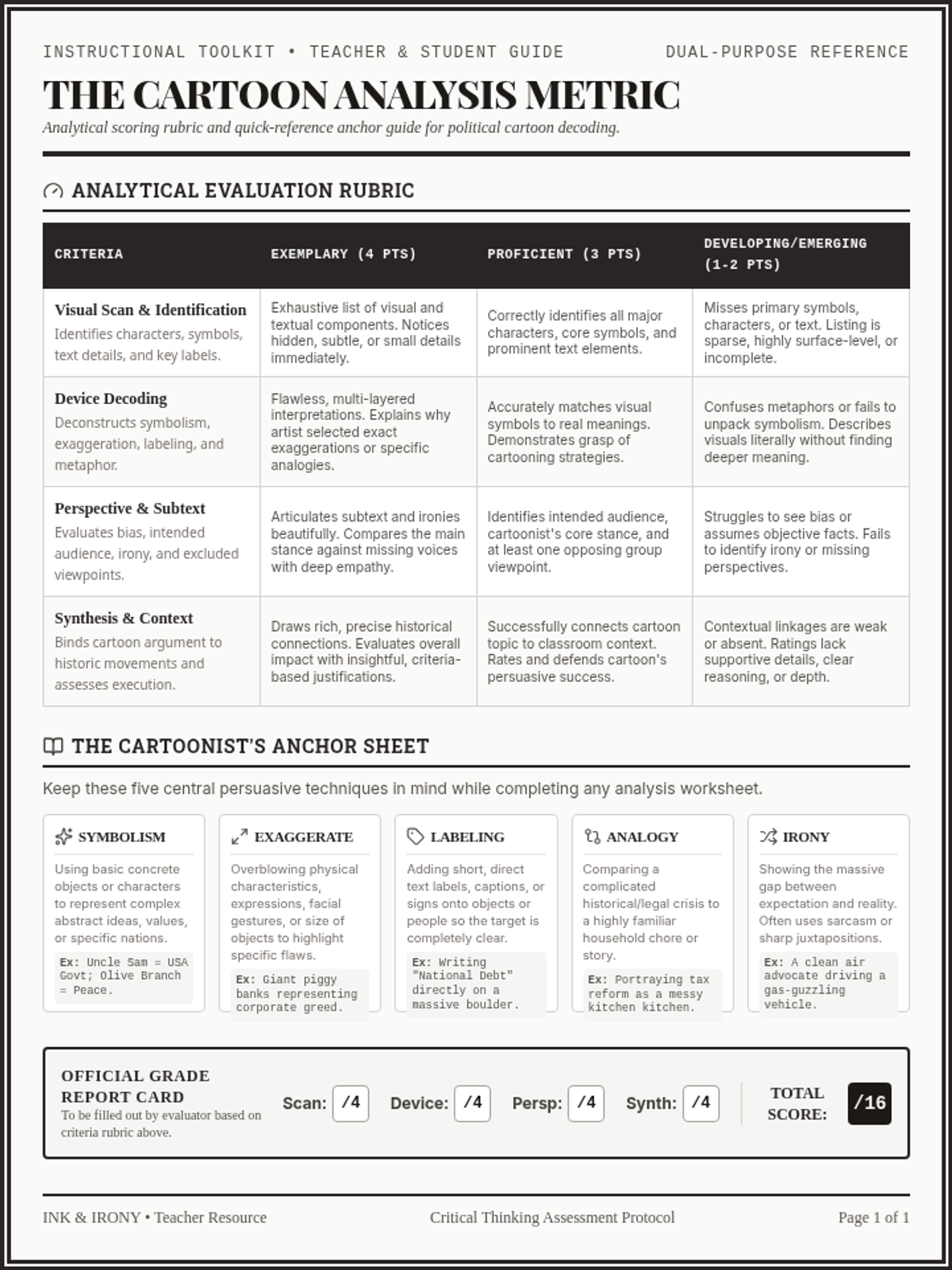
A comprehensive instructional toolkit for analyzing editorial and political cartoons. Features a versatile double-page graphic organizer and a structured assessment rubric adaptable to any historical era.
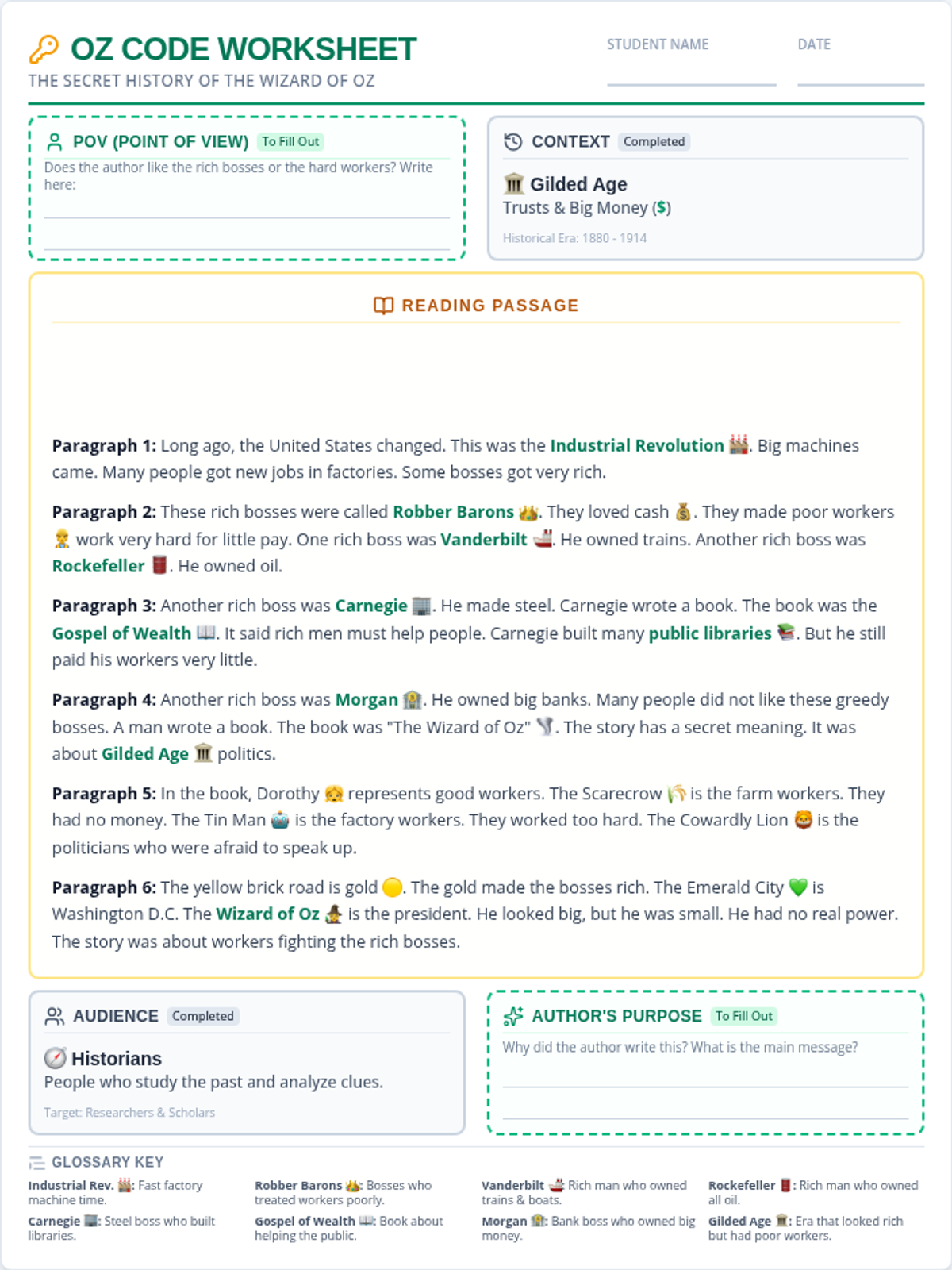
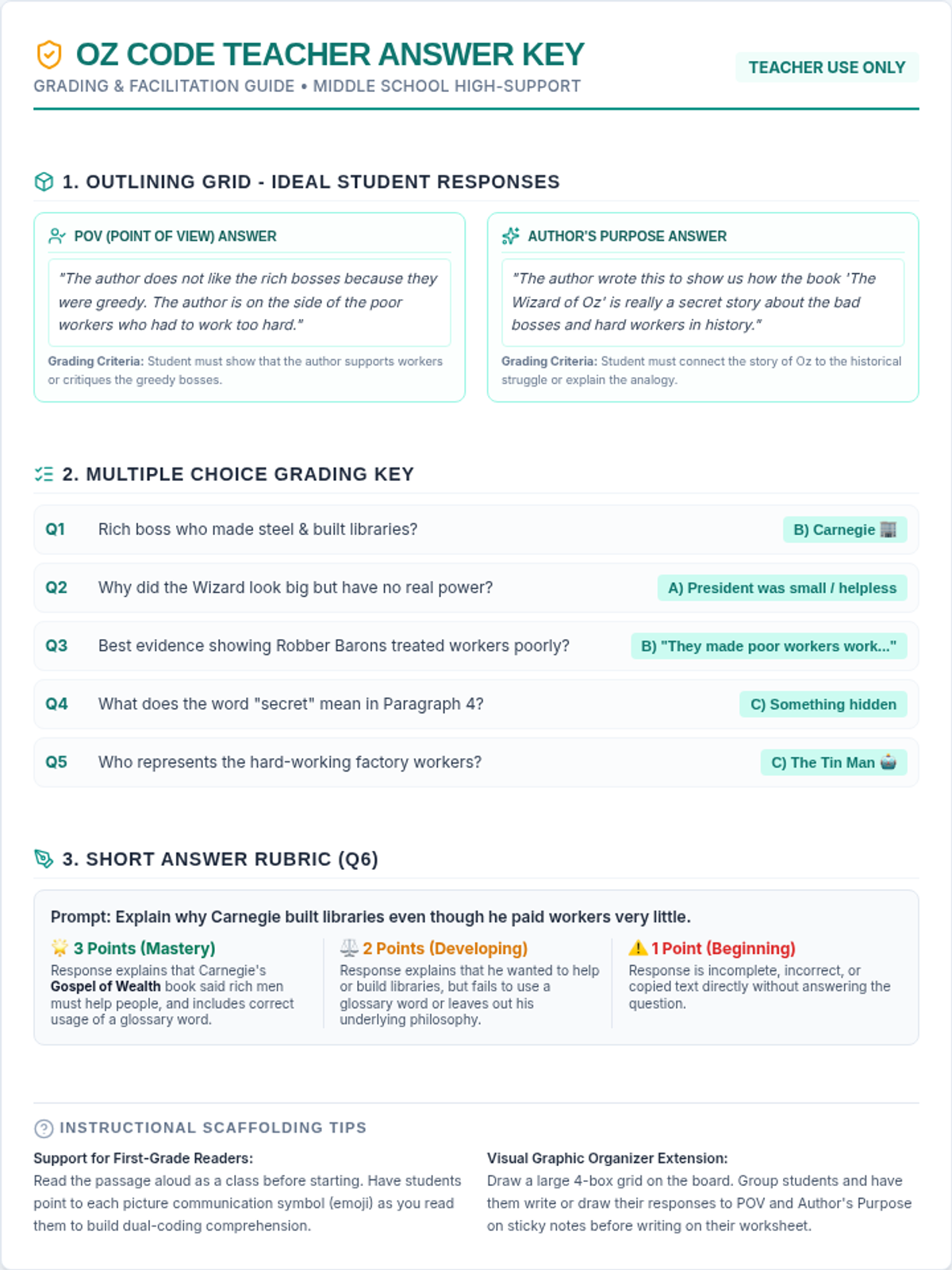
A lesson on the Gilded Age, the Industrial Revolution, robber barons, and their symbolic representation in L. Frank Baum's 'The Wizard of Oz'. Designed with high-support scaffolding for middle schoolers reading at a first-grade level.
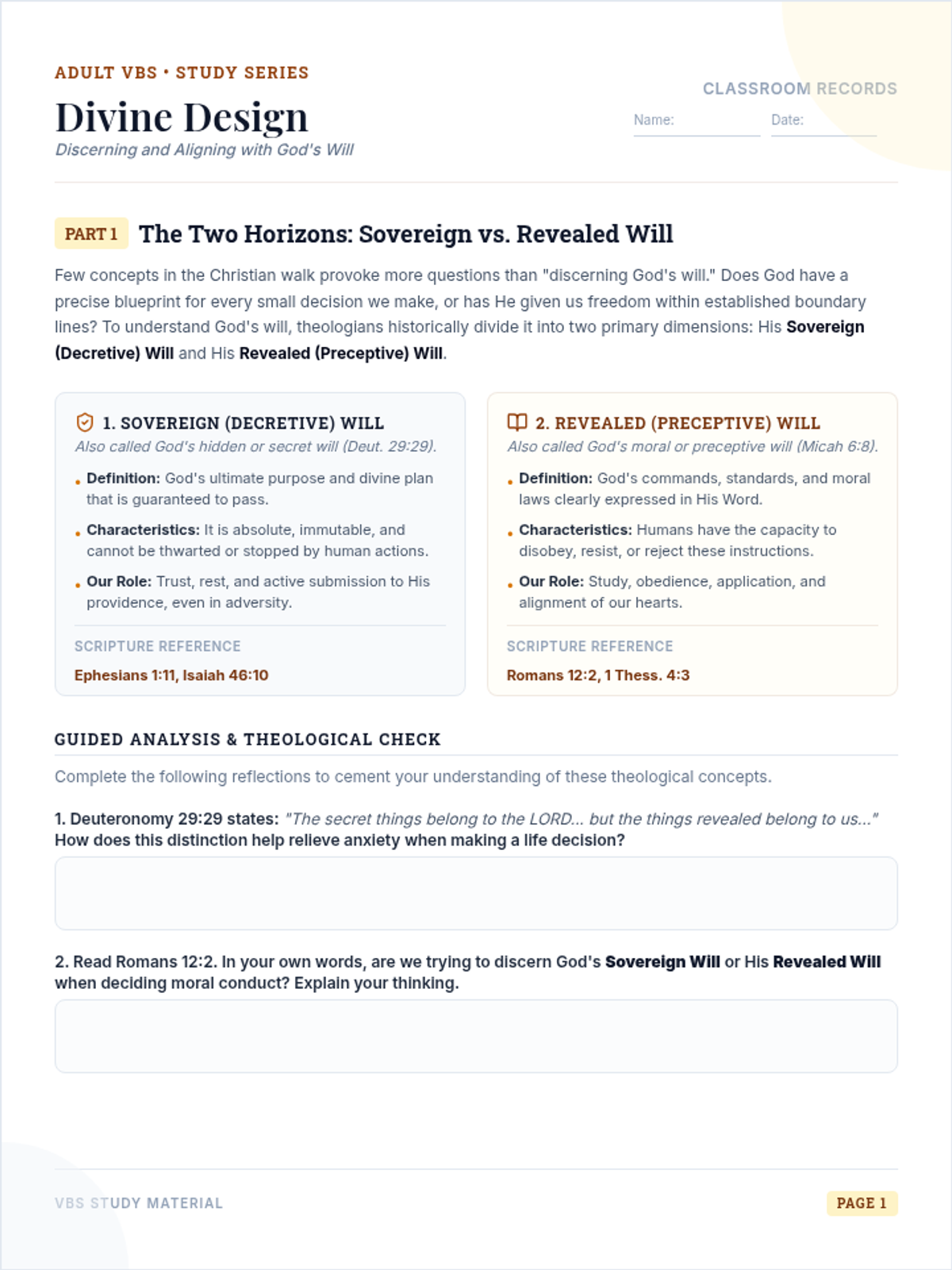
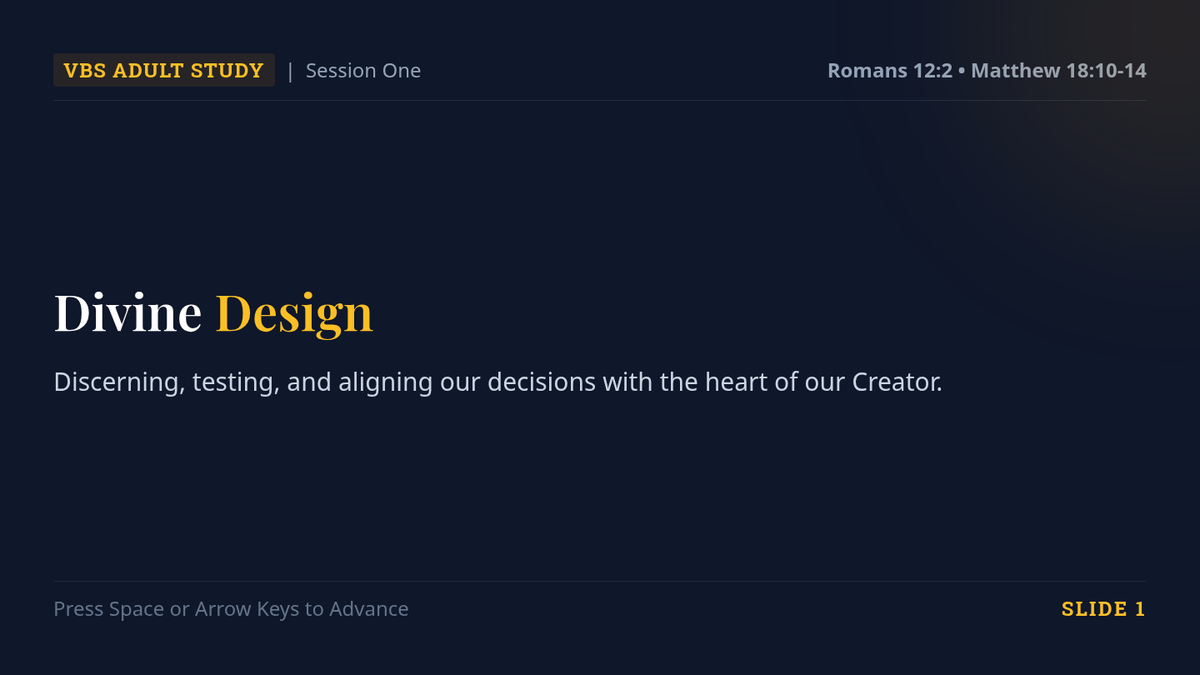
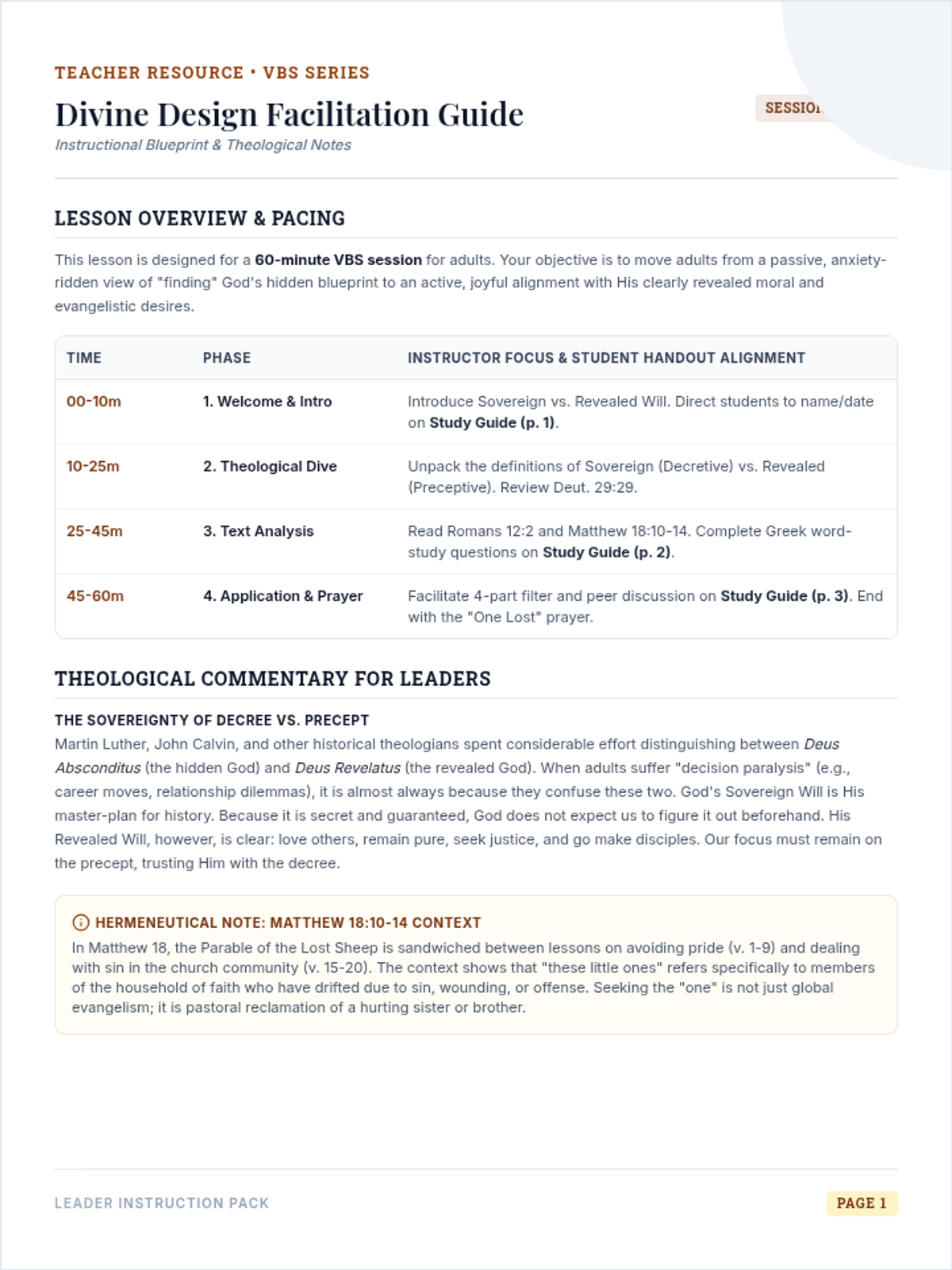
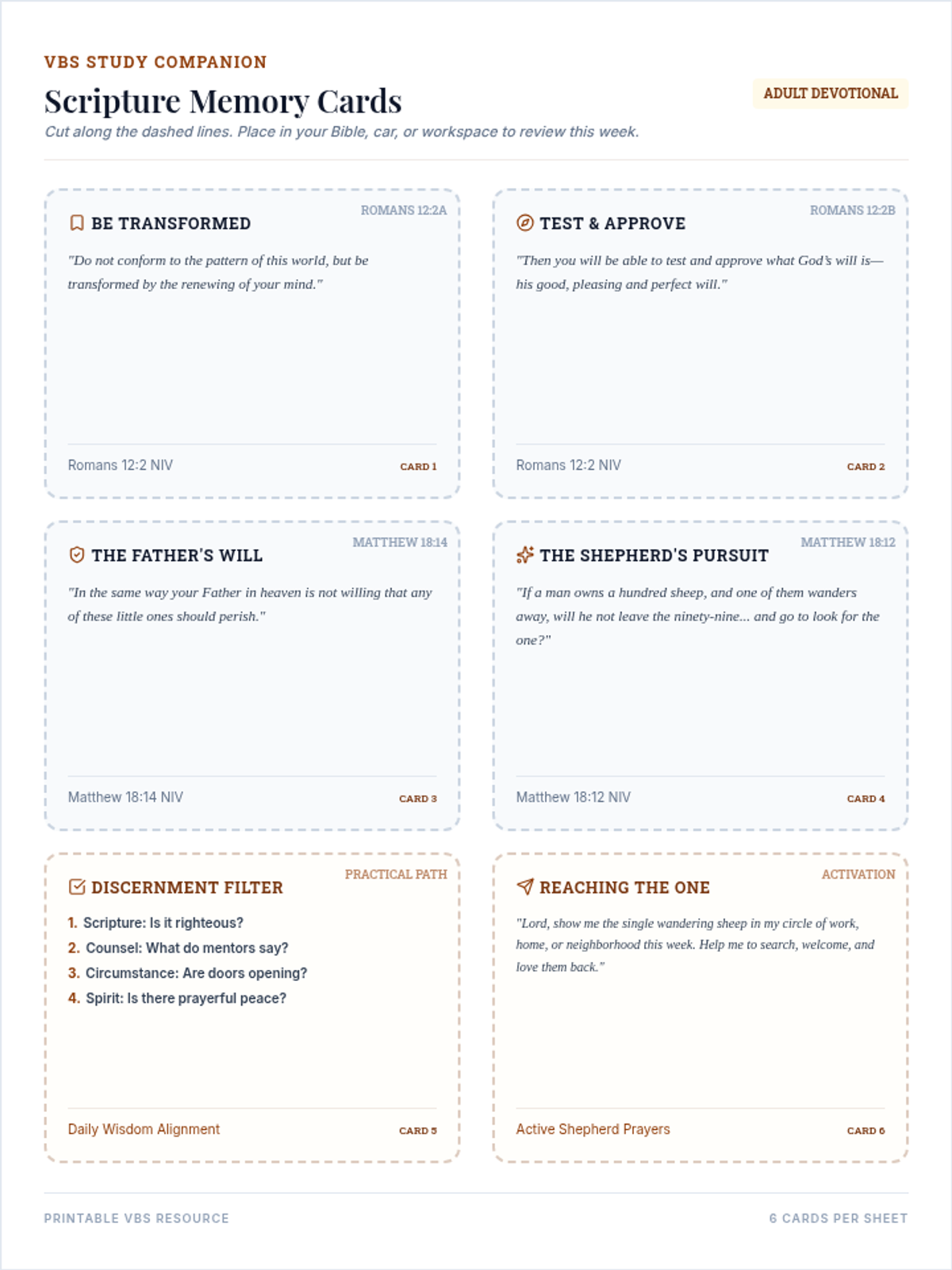
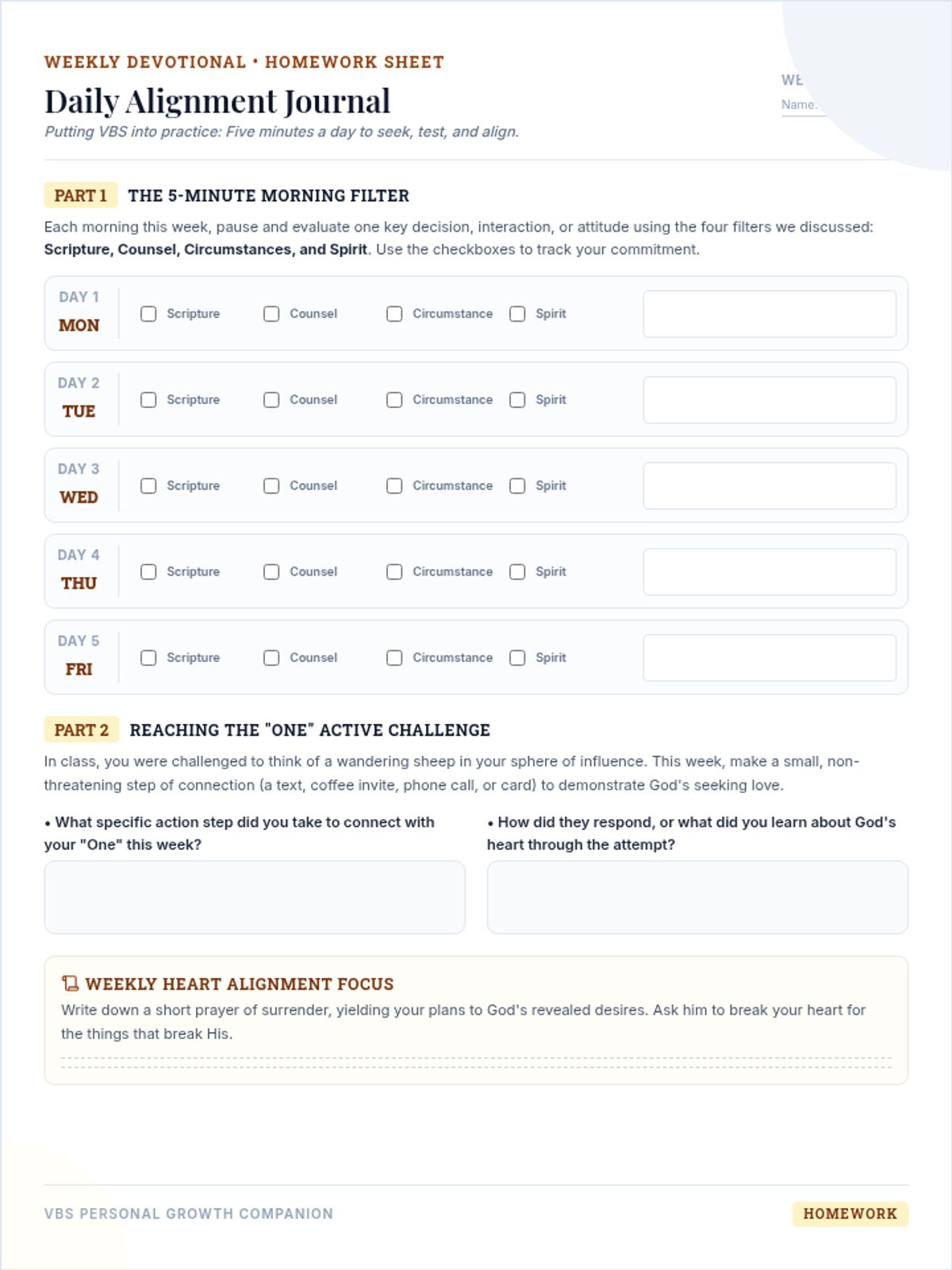
An adult Vacation Bible School (VBS) lesson focusing on discerning and aligning with God's will. Through Romans 12:2 and Matthew 18:10-14, adults will define God's will (Sovereign vs. Revealed), understand His design that none should be lost, and discover practical paths to daily discernment and evangelism.
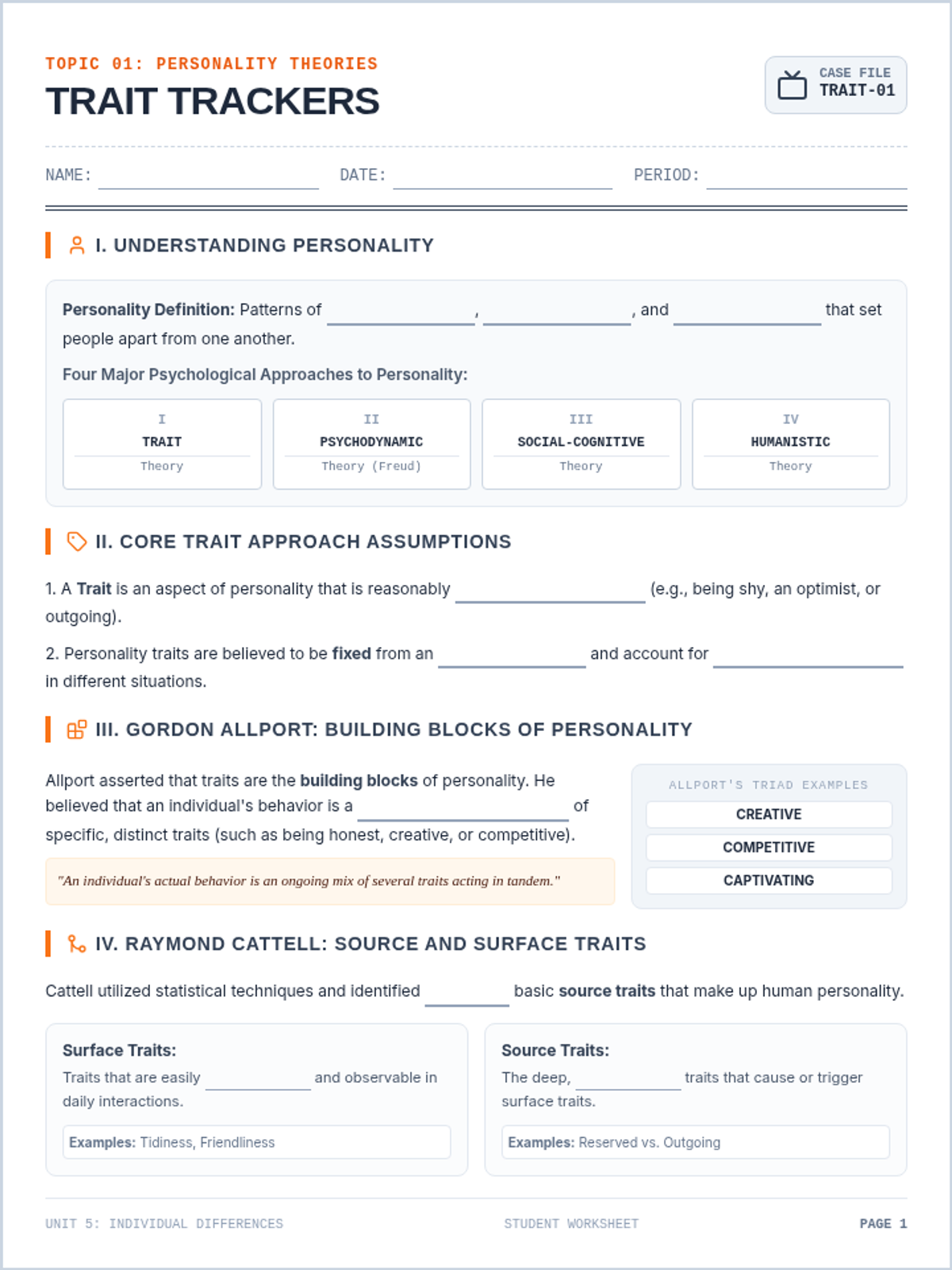
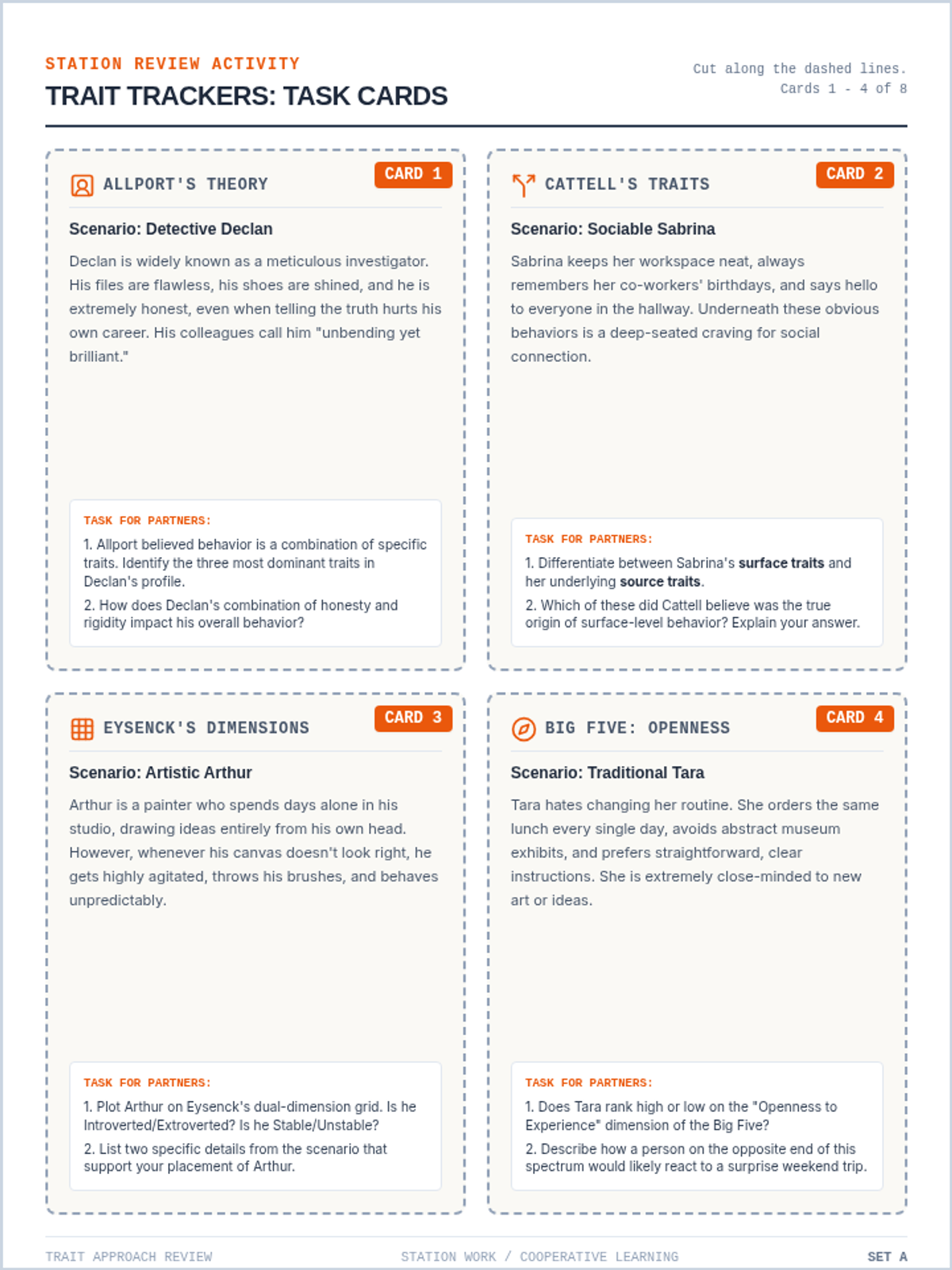
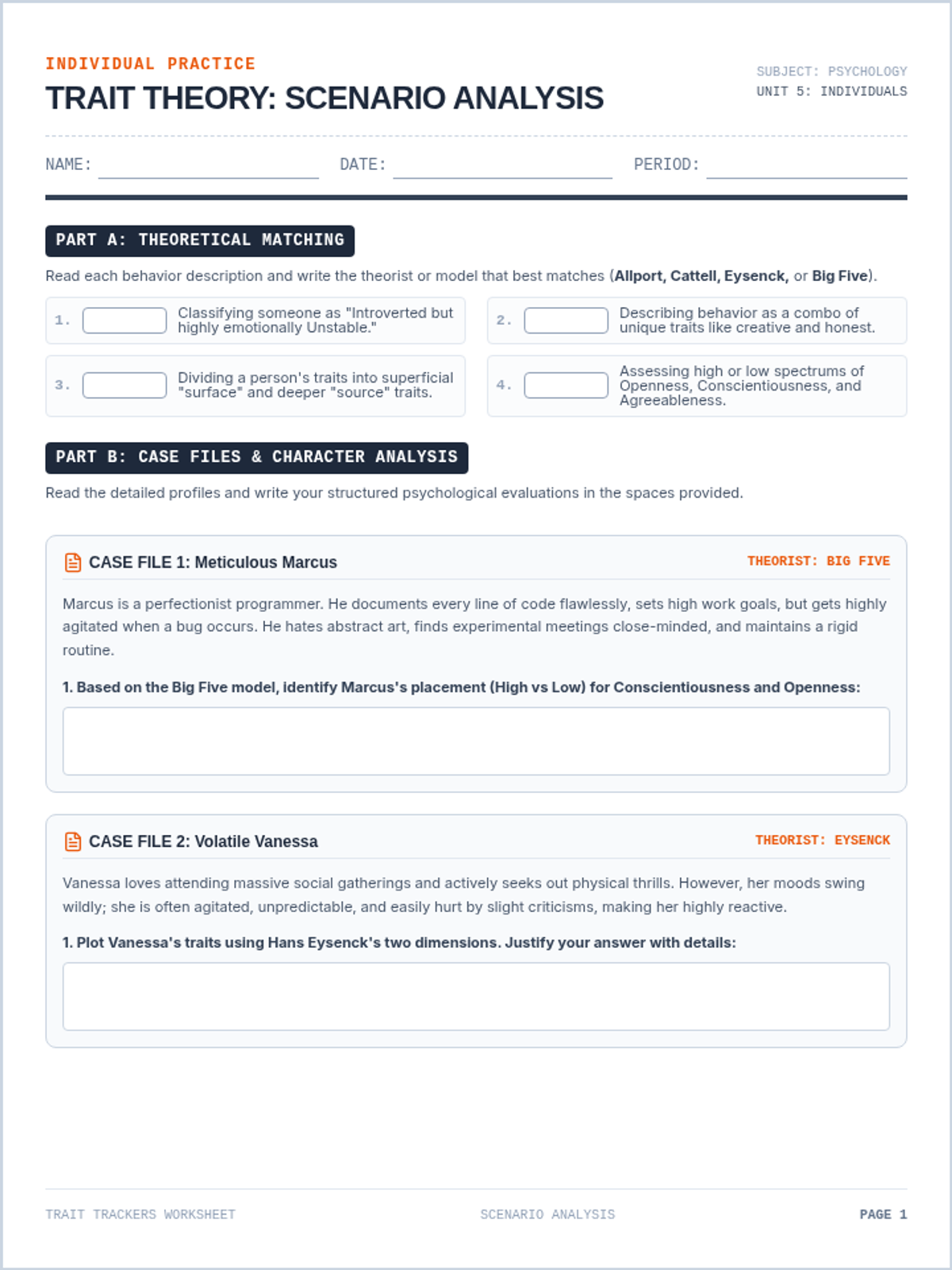
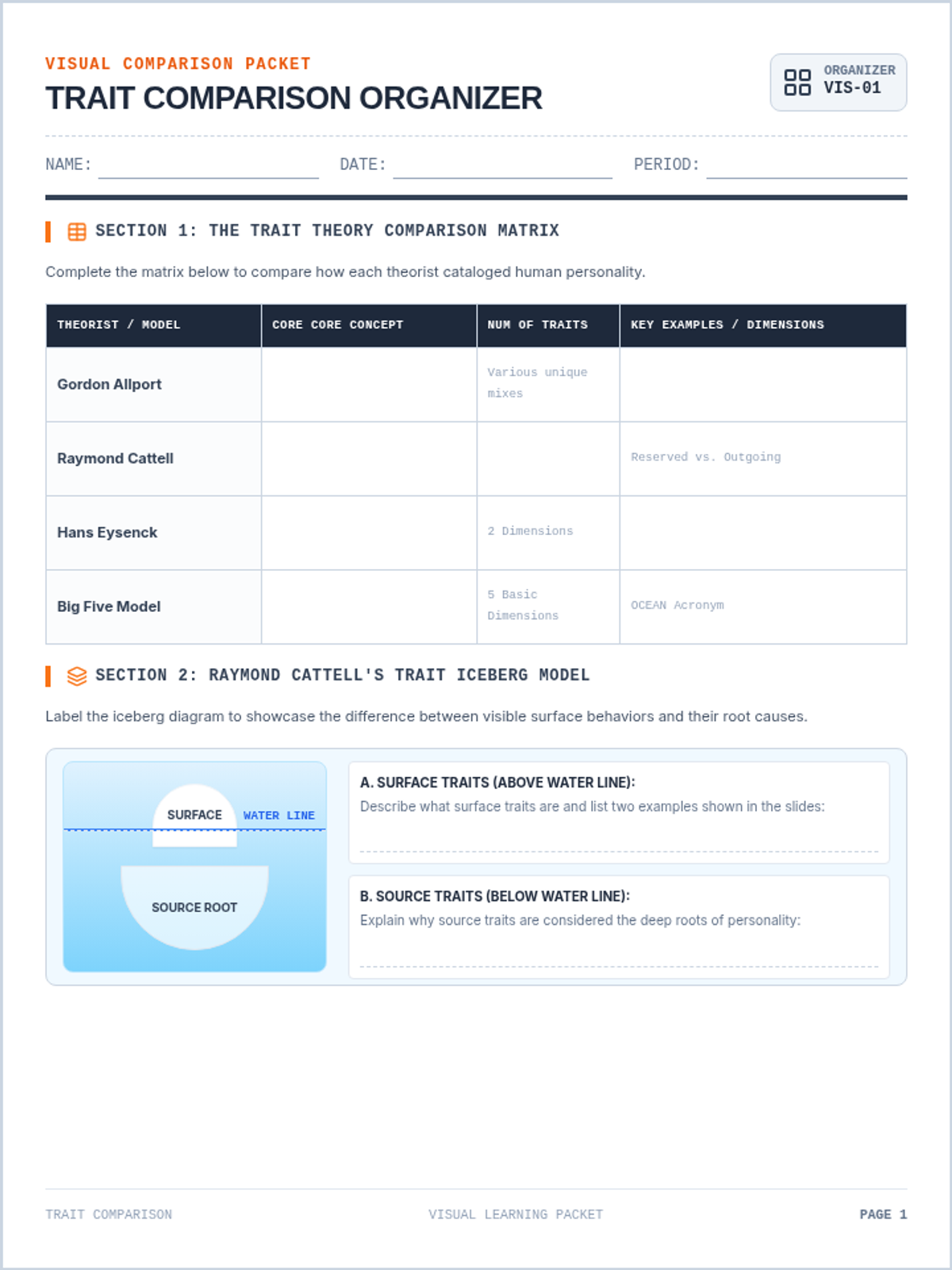
An introductory lesson on the Trait Approach to personality, guiding students through key definitions, major theorists (Allport, Cattell, Eysenck), the Big Five model, and the real-world applications and limitations of trait theory.
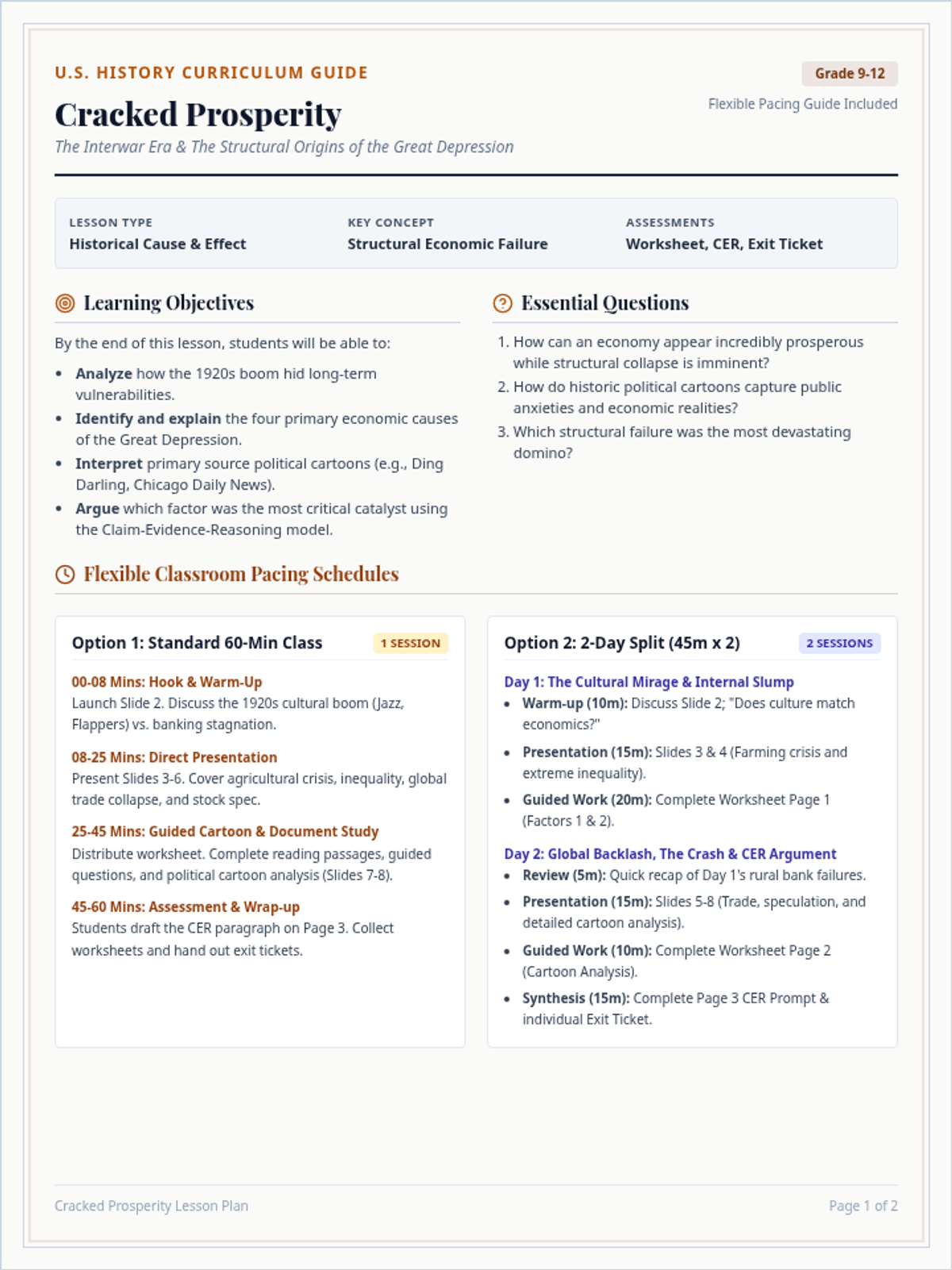
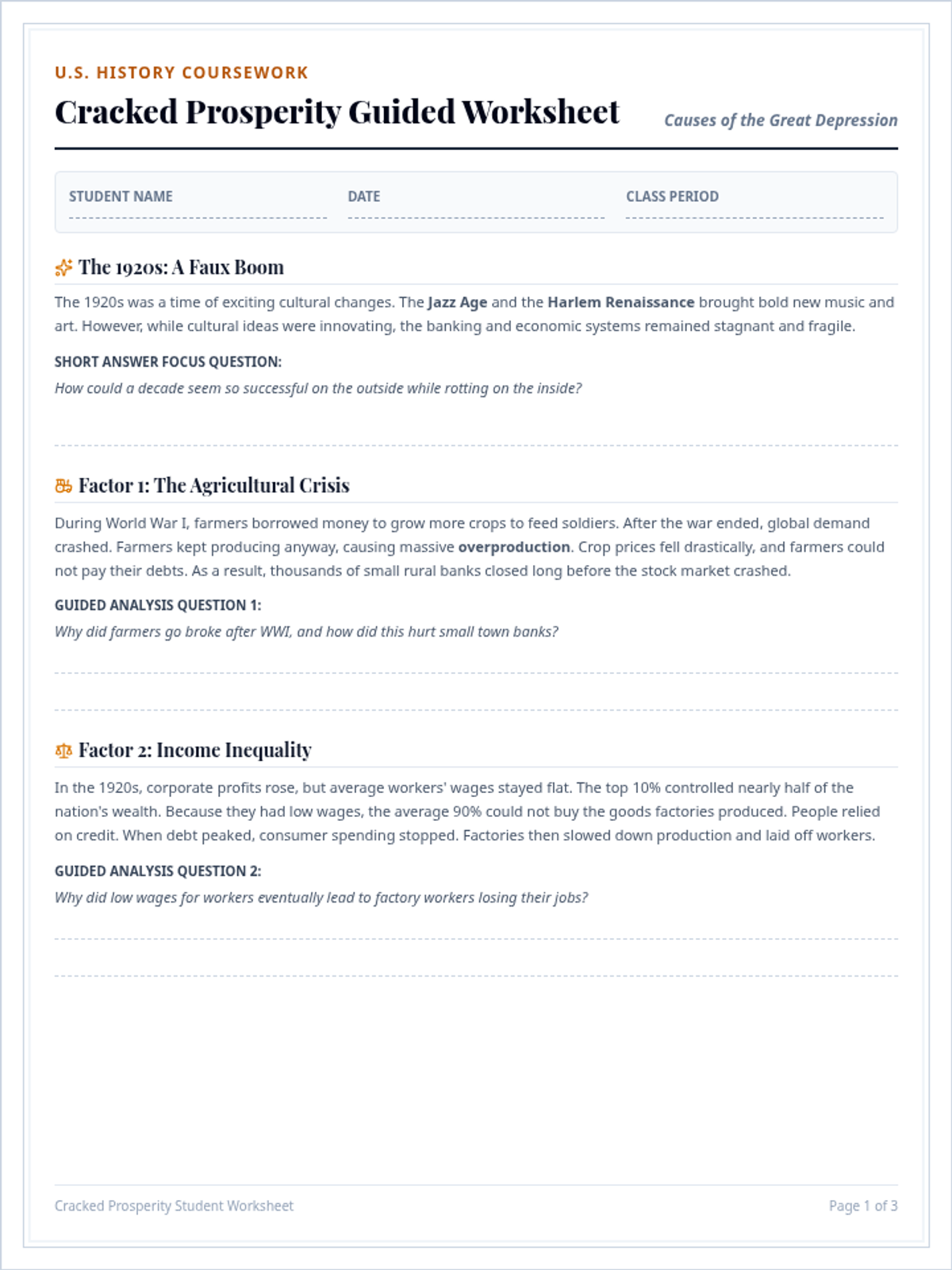
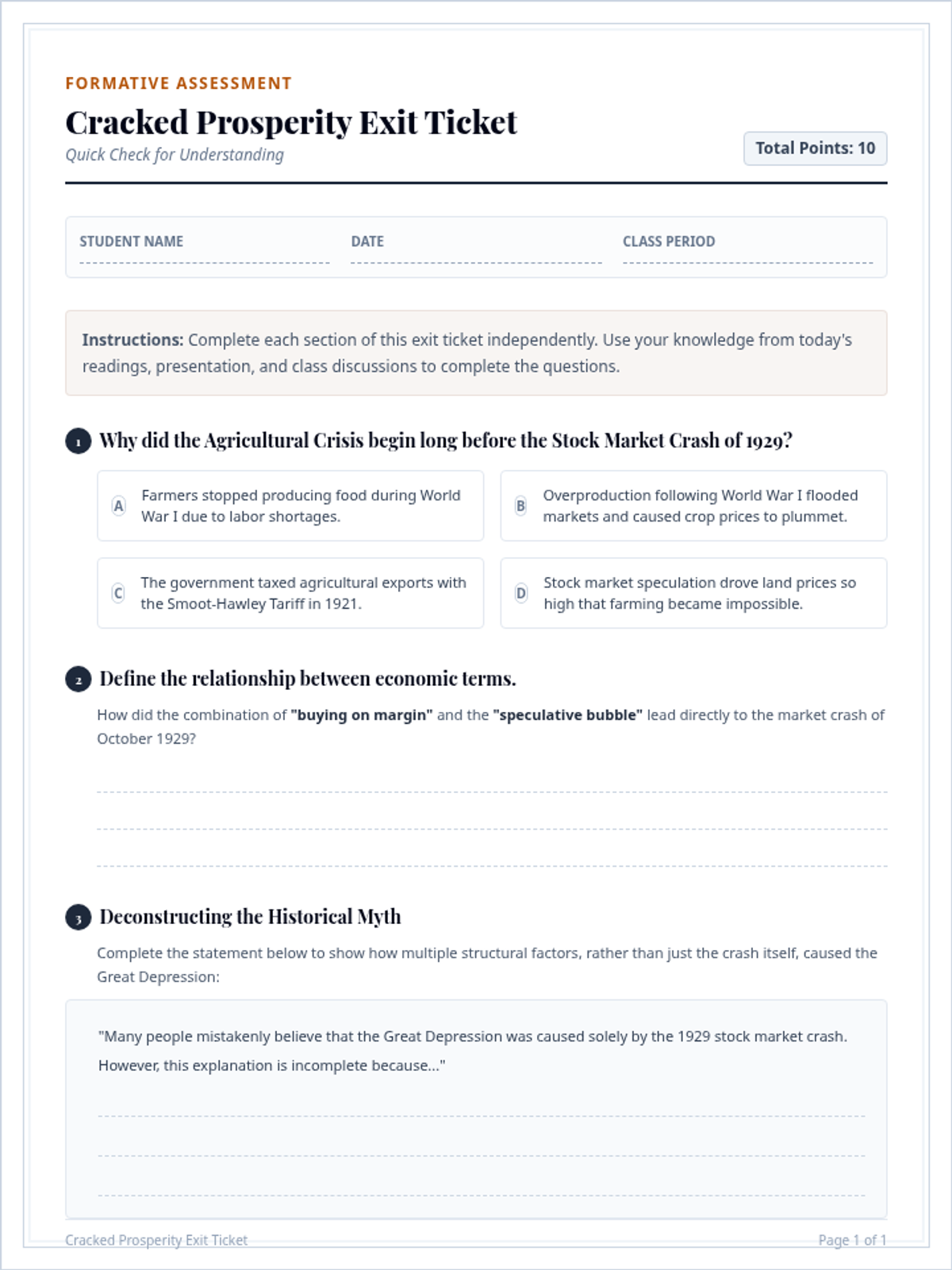
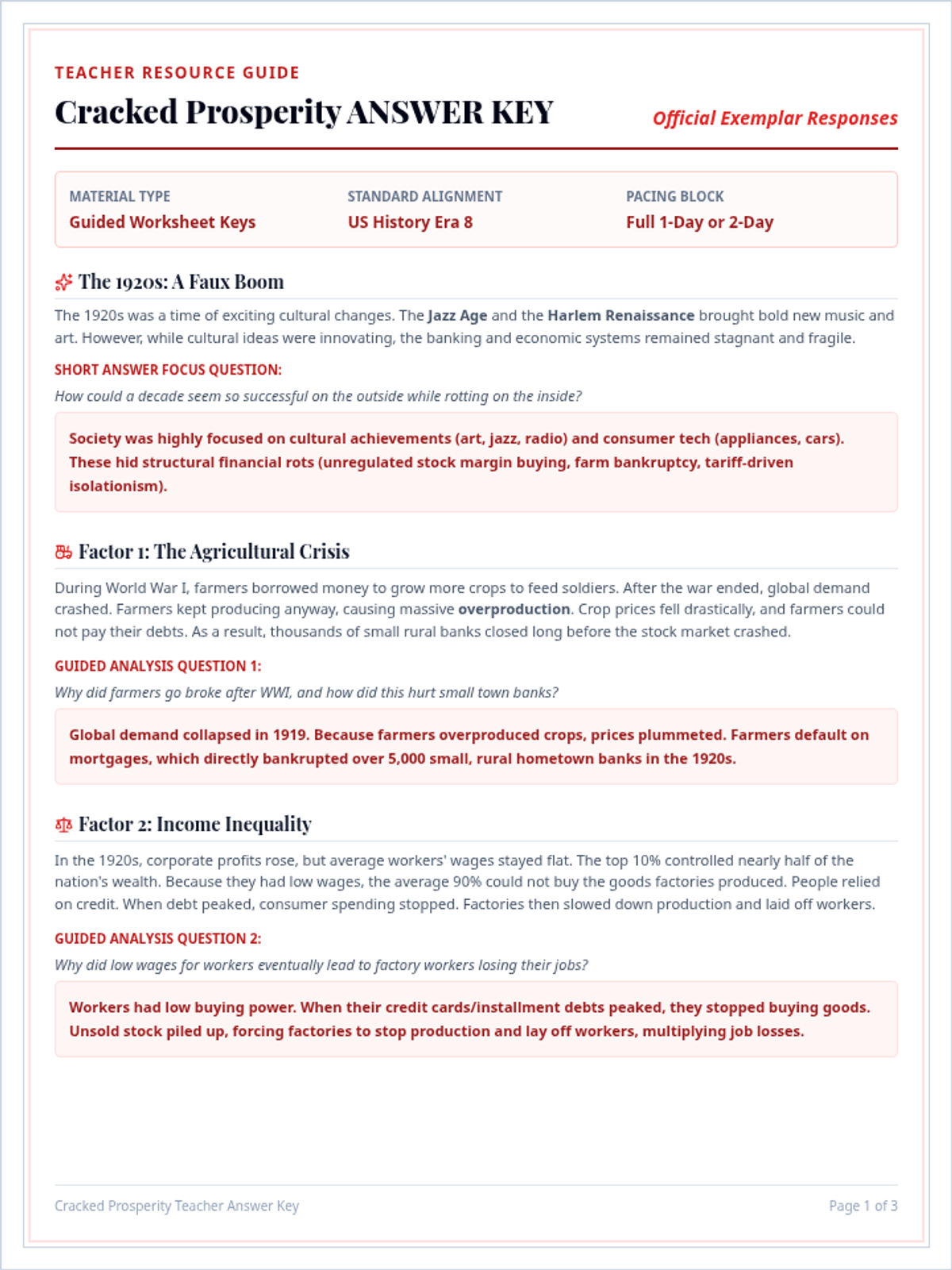
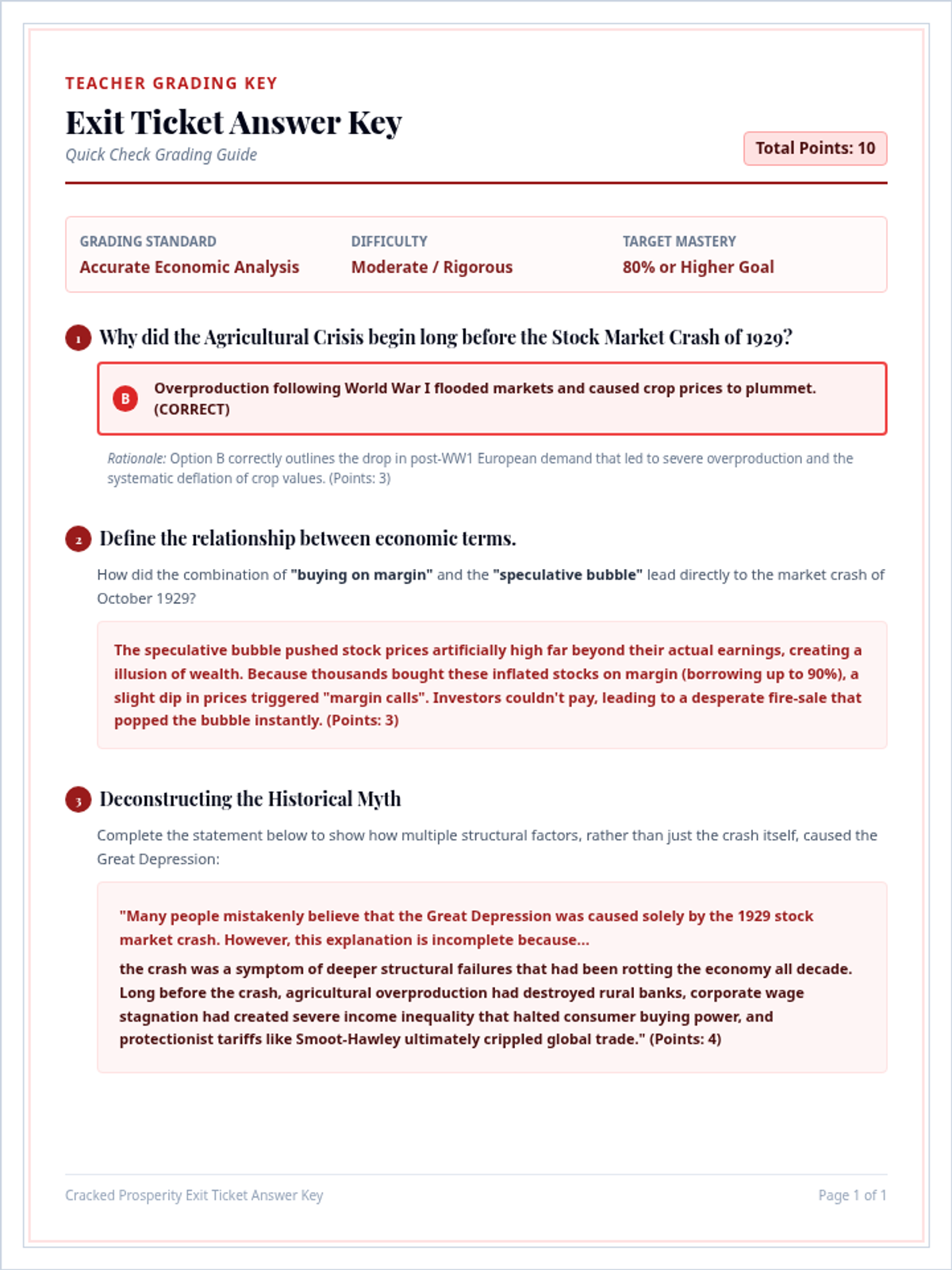
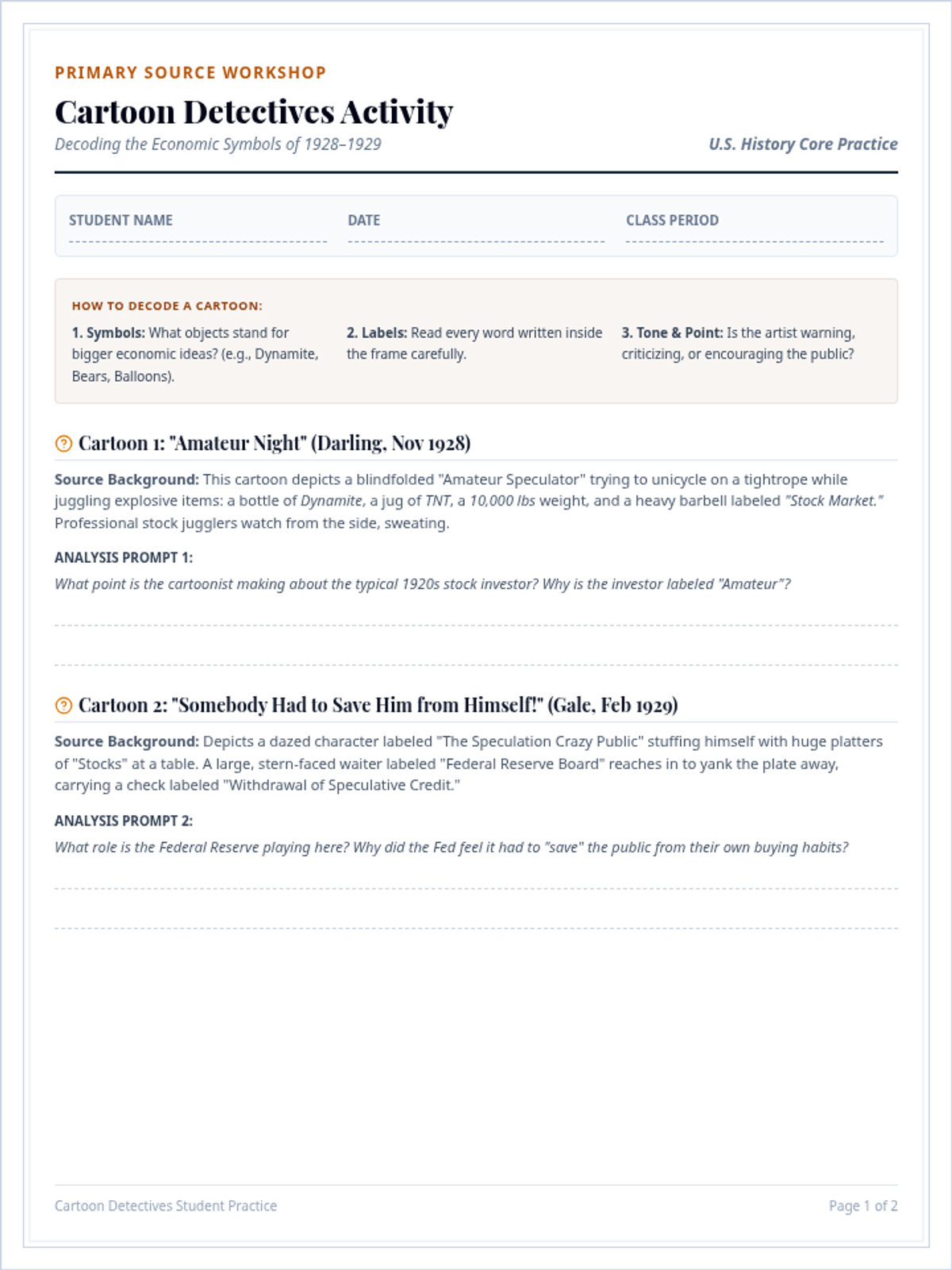
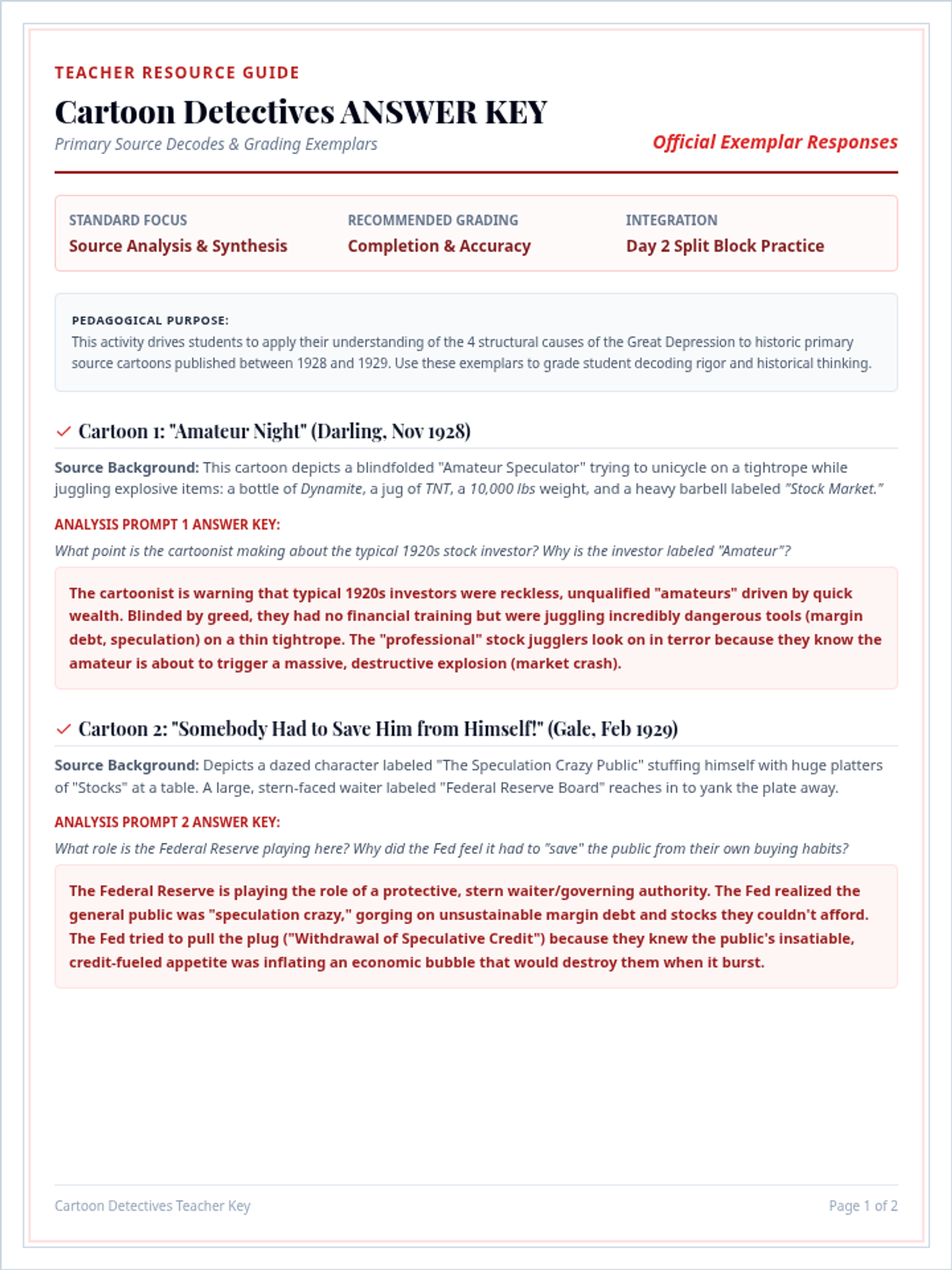
A comprehensive lesson exploring the transition from the roaring optimism of the 1920s to the structural causes of the Great Depression, including the agricultural crisis, income inequality, global trade collapse, and the 1929 stock market crash.
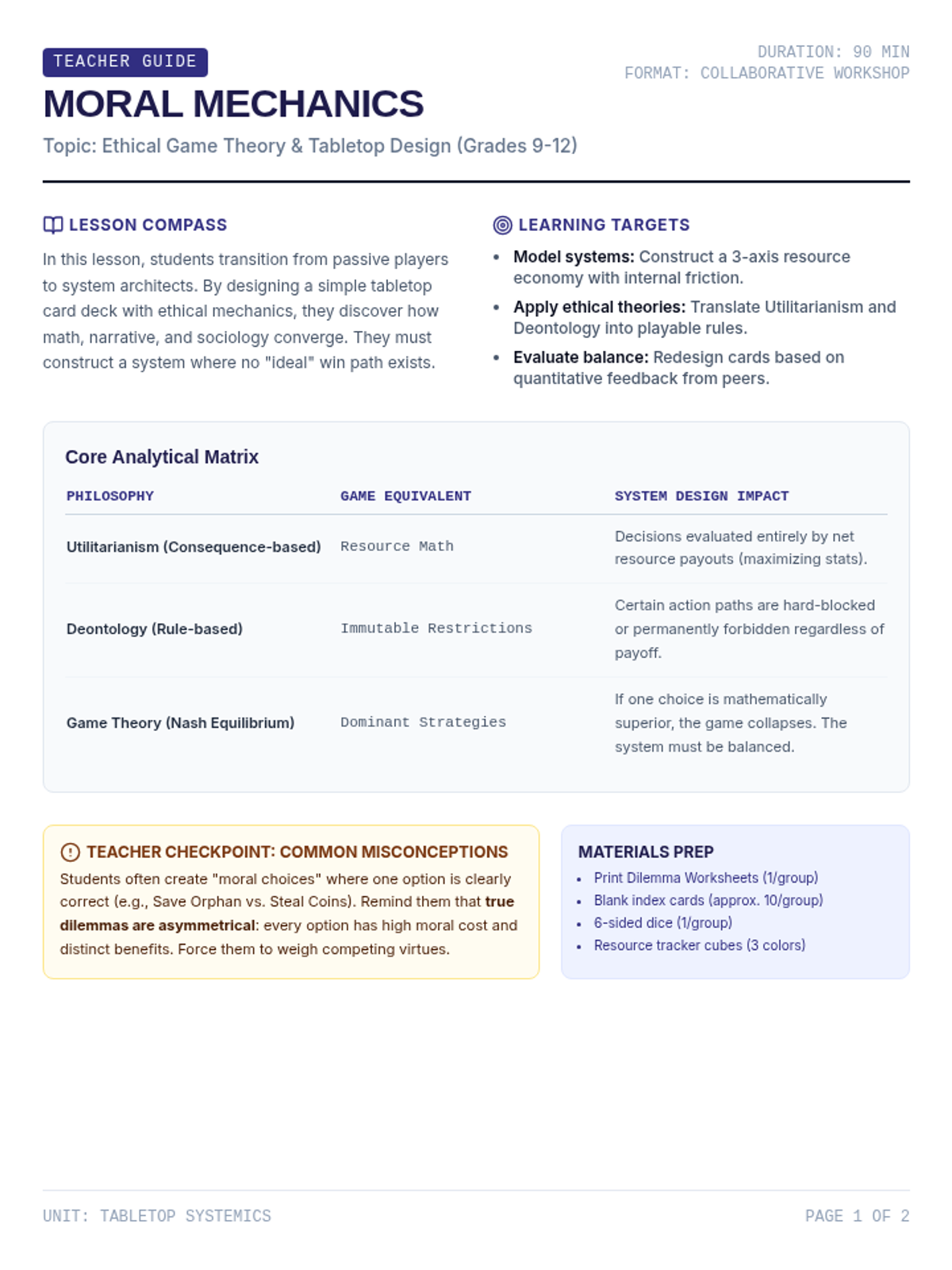
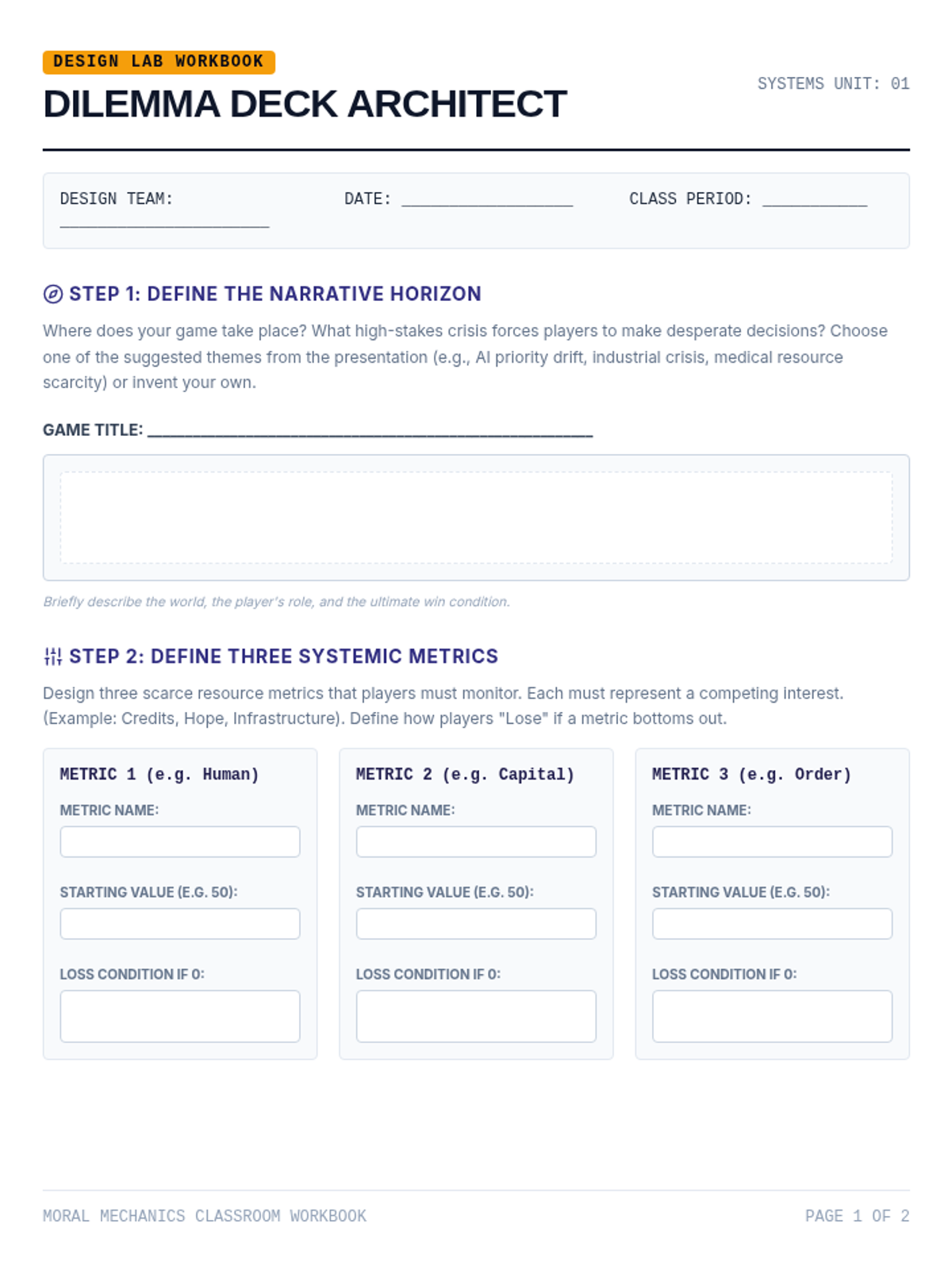
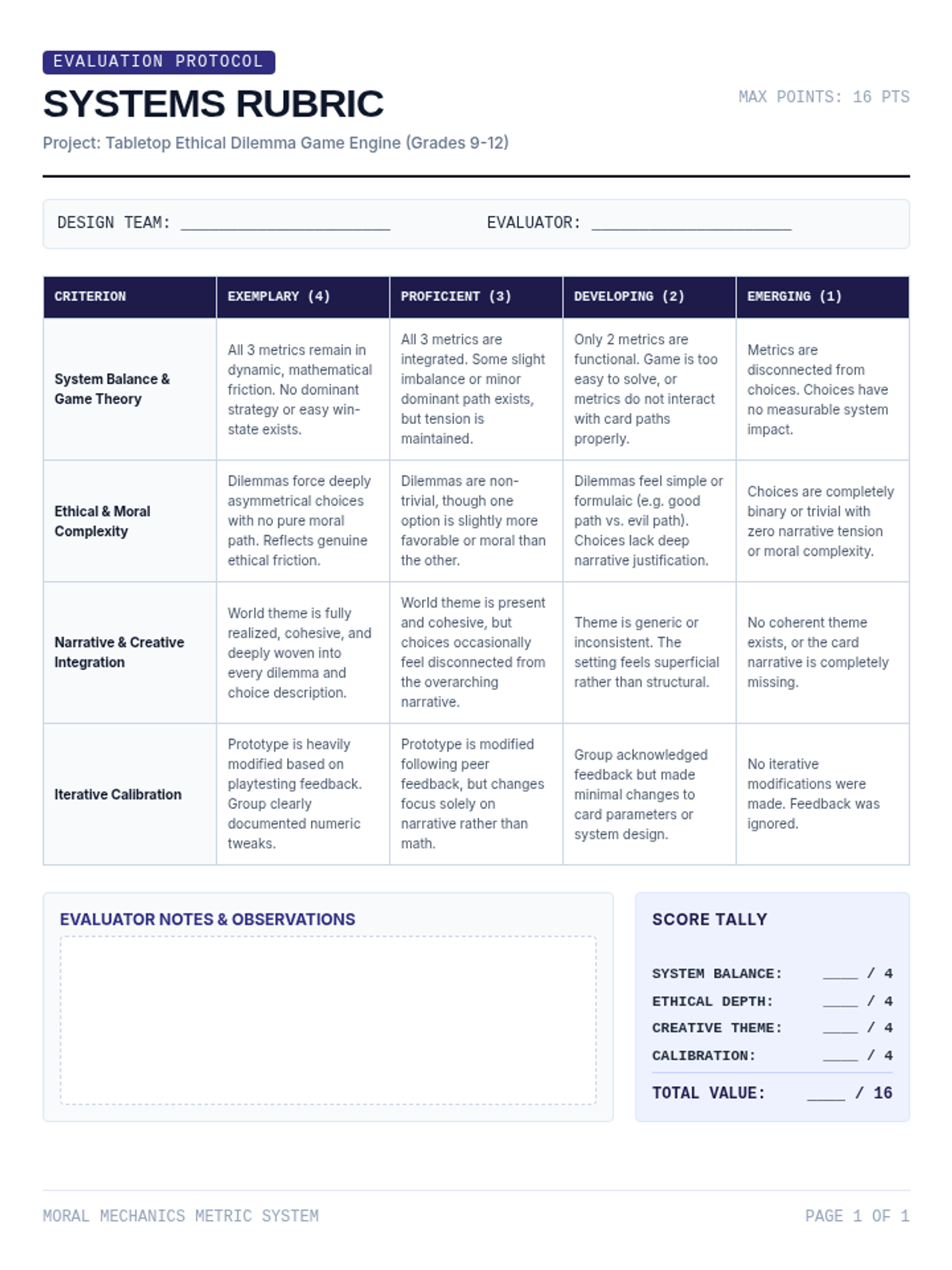
A high school lesson where students collaborate to design a tabletop card game centered on real-world ethical choices, applying game theory, logical reasoning, and creative writing to balance competing moral priorities.
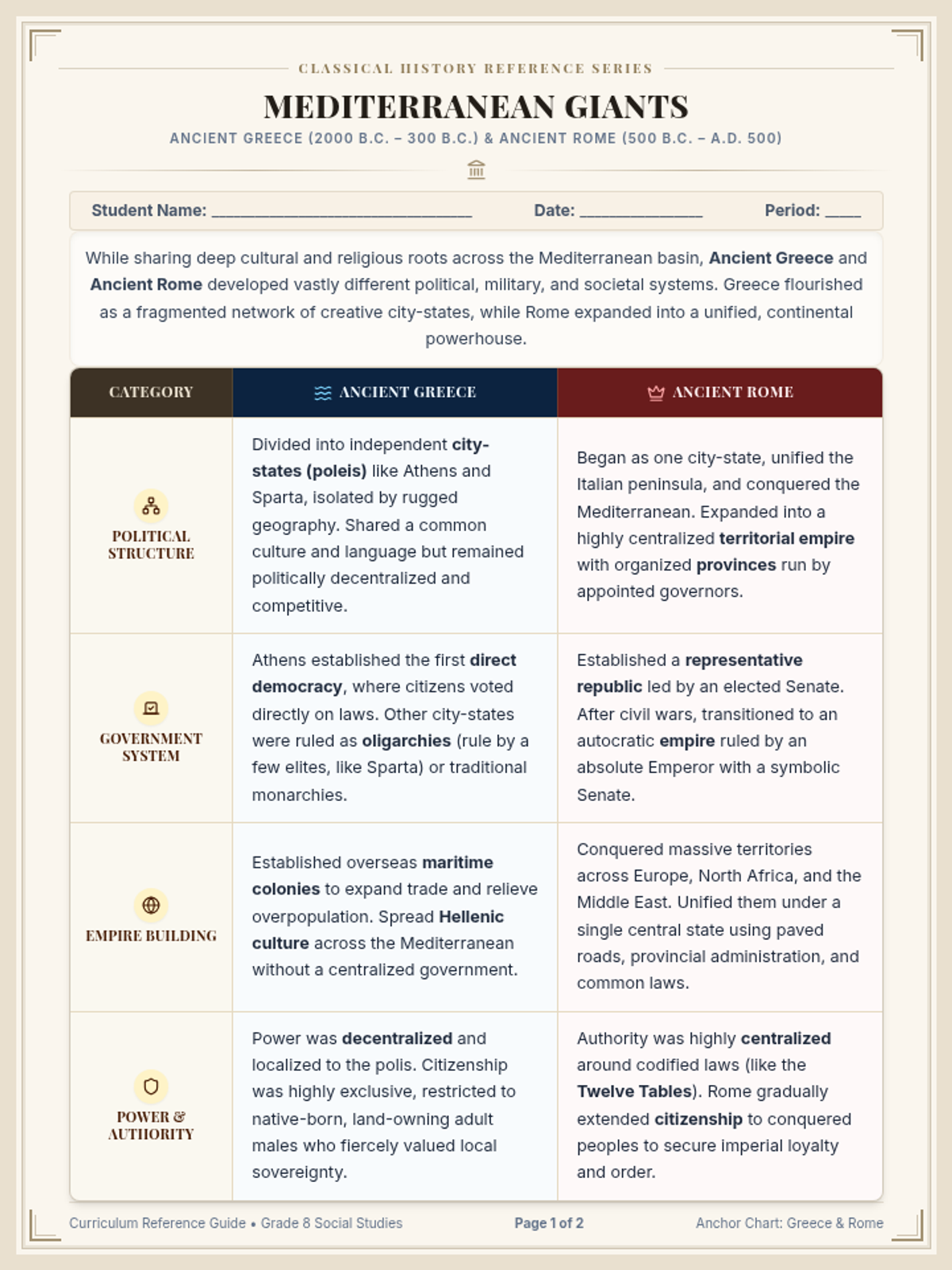
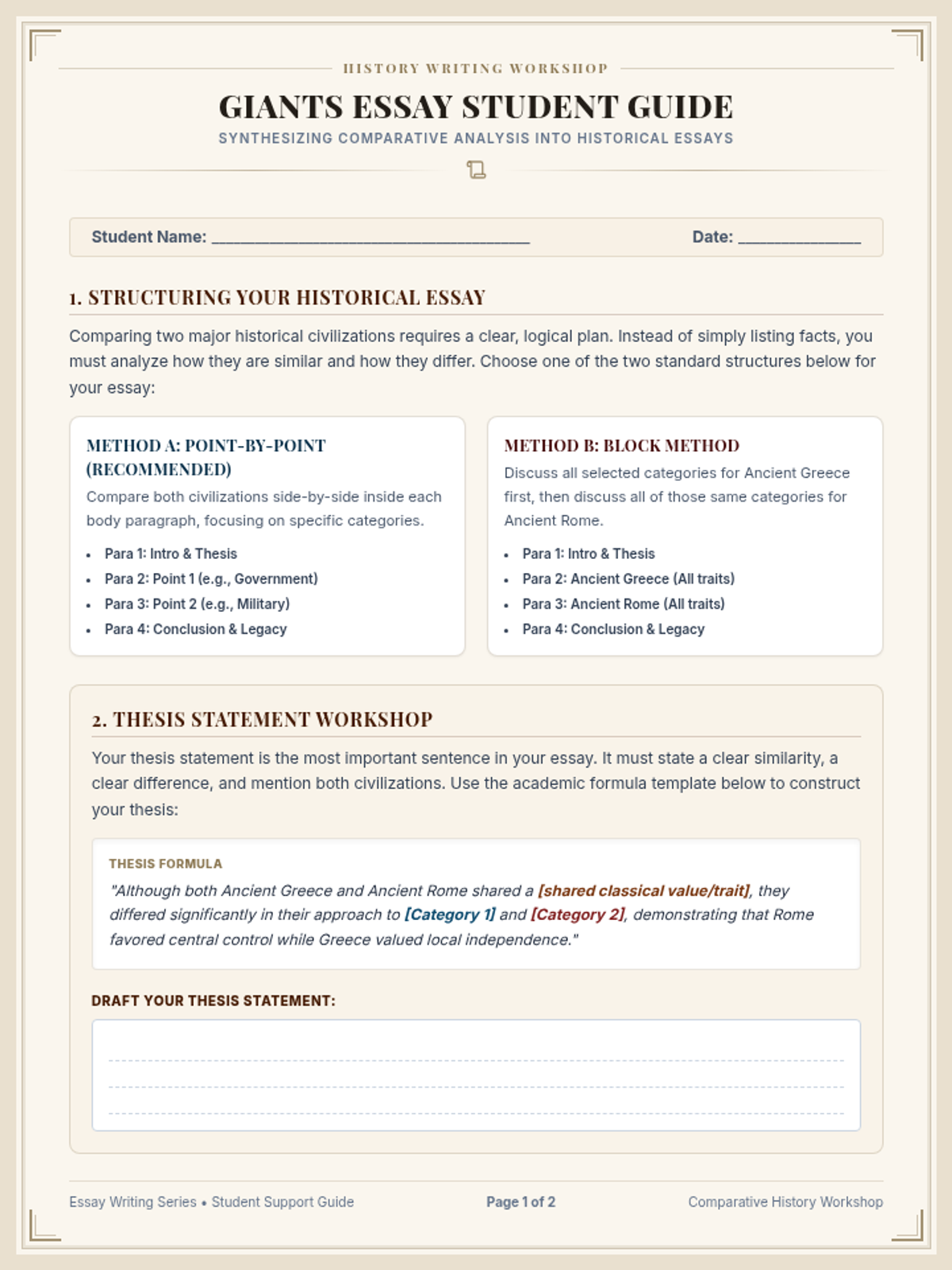
An exploration of the core differences and connections between Ancient Greece and Ancient Rome. This lesson focuses on comparative analysis across political, economic, geographic, and cultural structures, helping students understand how these two titans shaped Western Civilization.
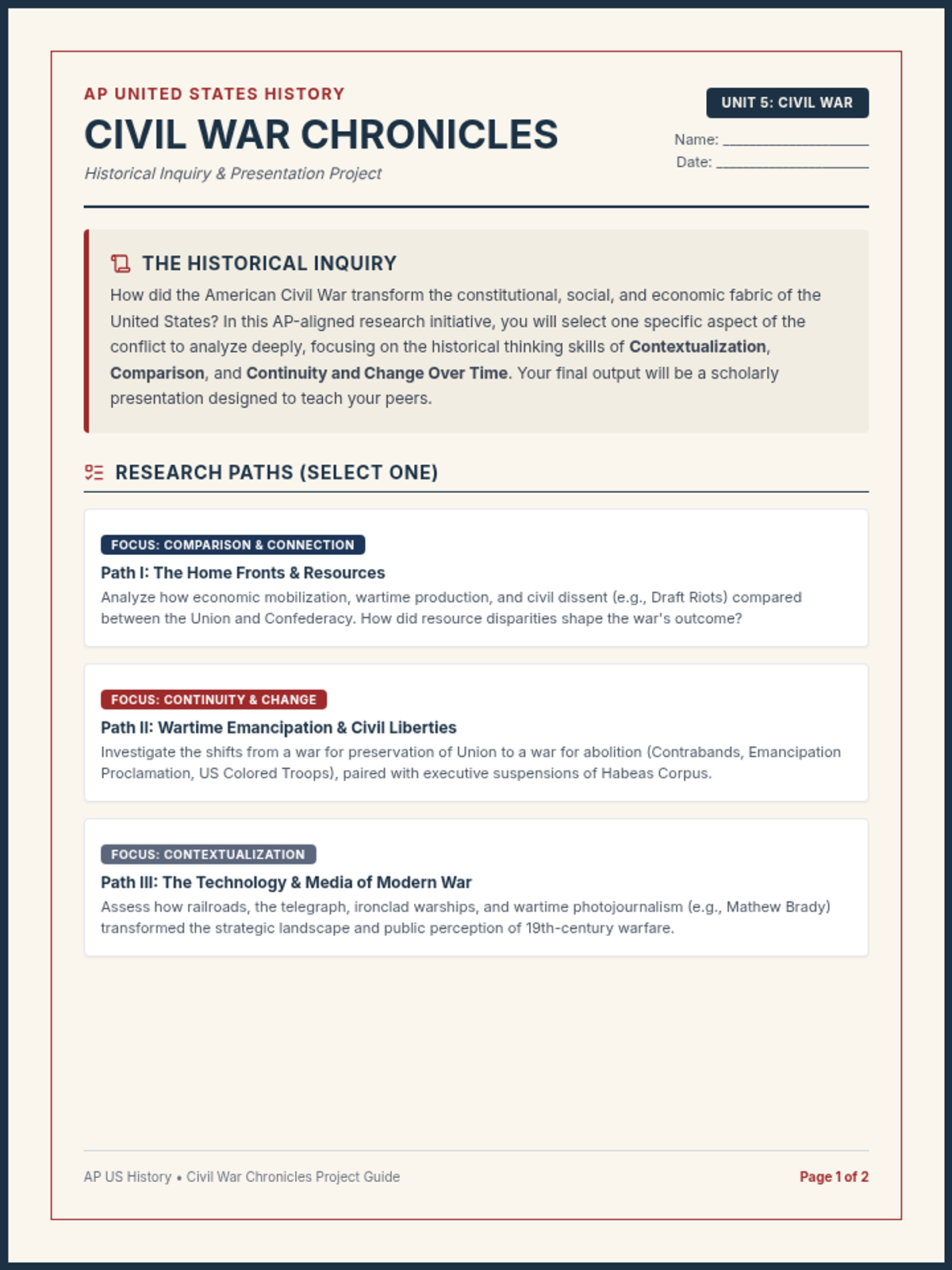
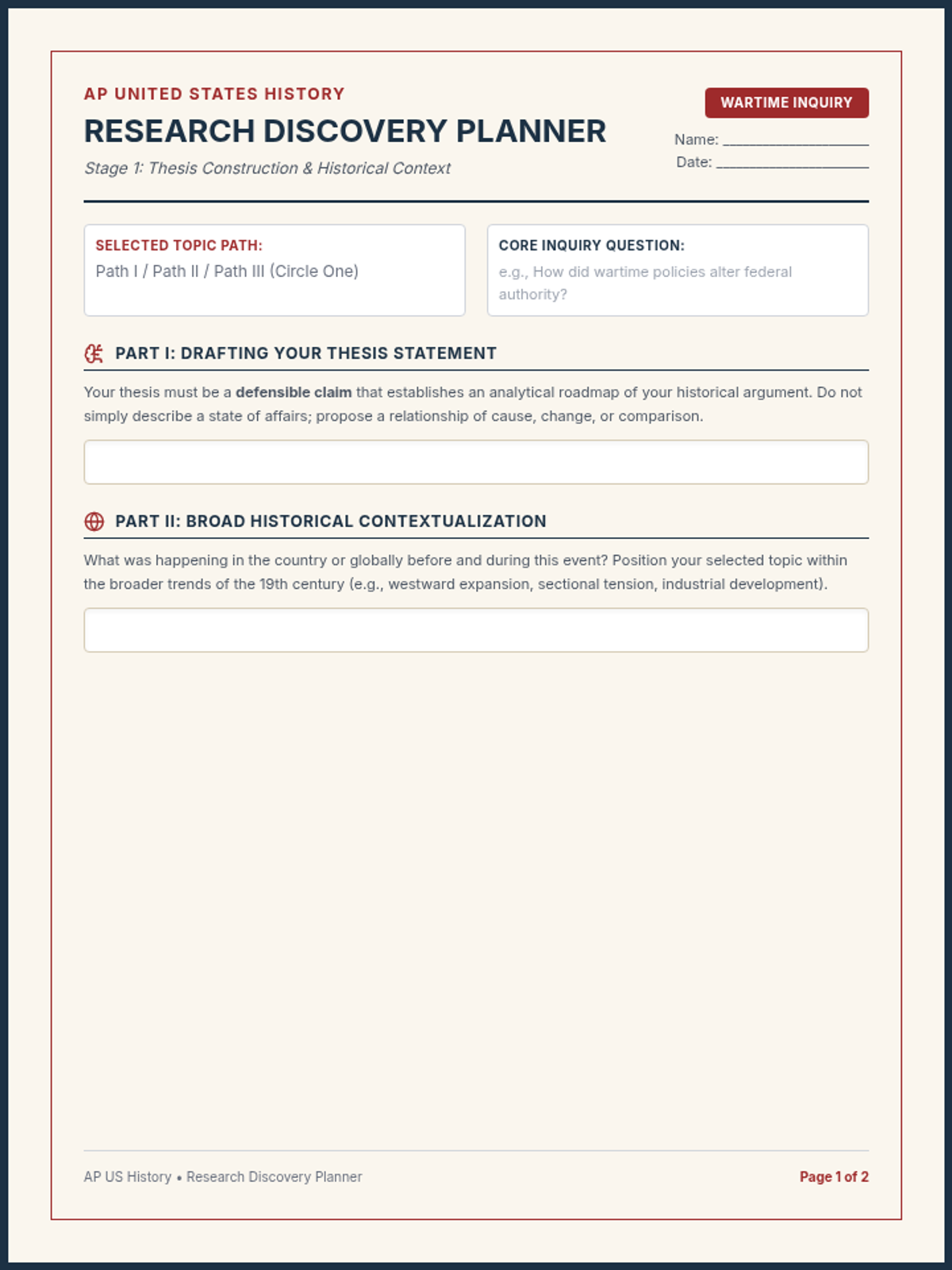
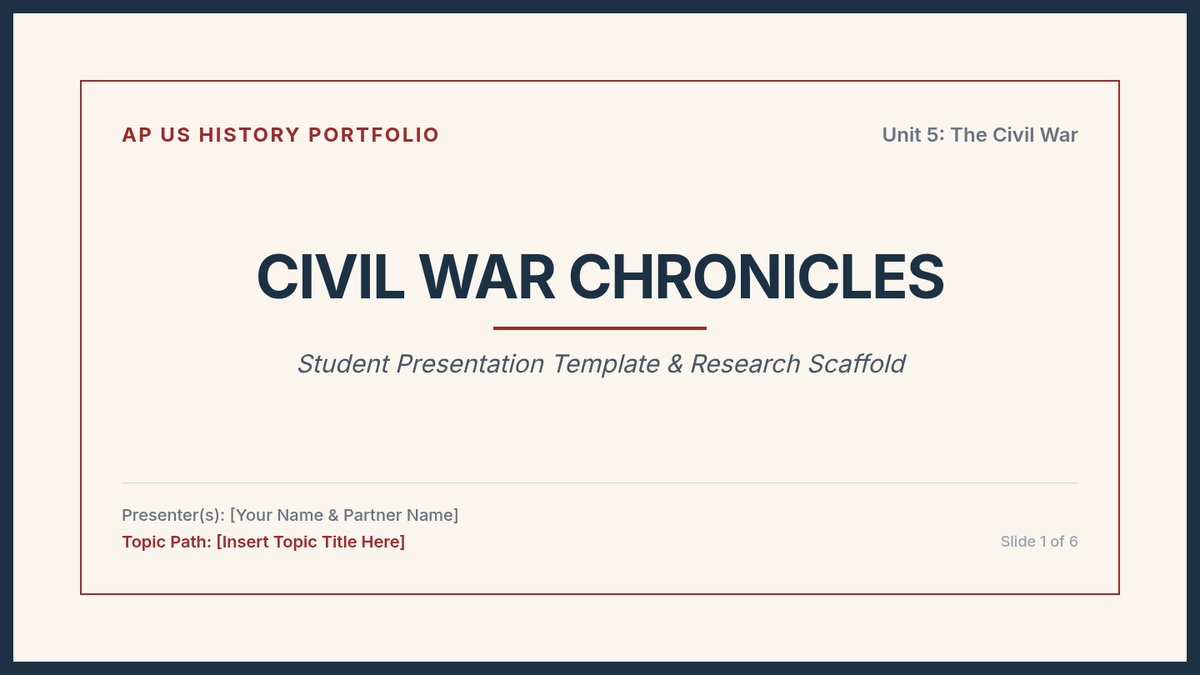
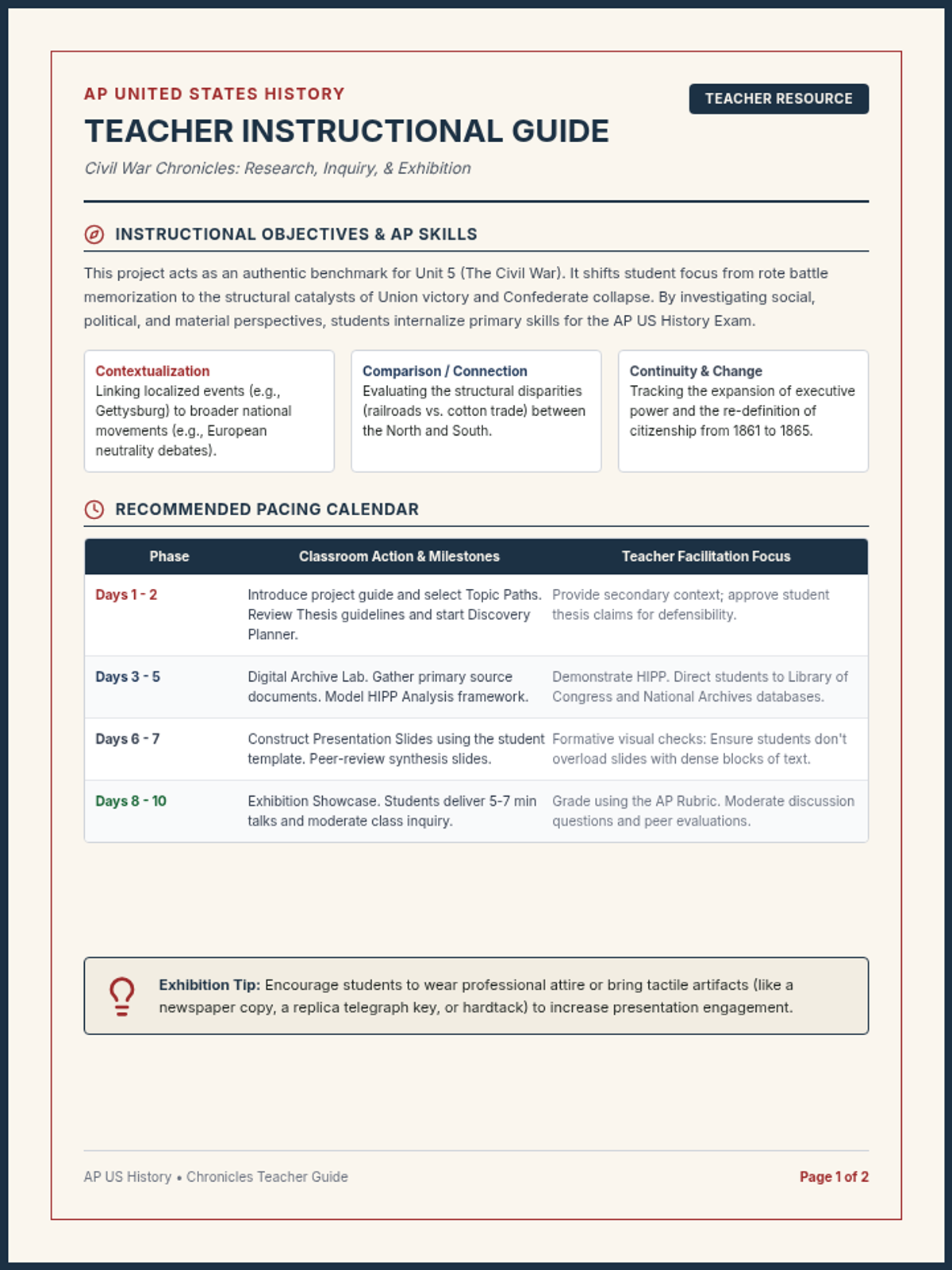
A comprehensive AP US History research and presentation project exploring the Civil War. Students engage in deep historical inquiry using AP-aligned skills including contextualization, comparative analysis, and continuity and change over time.
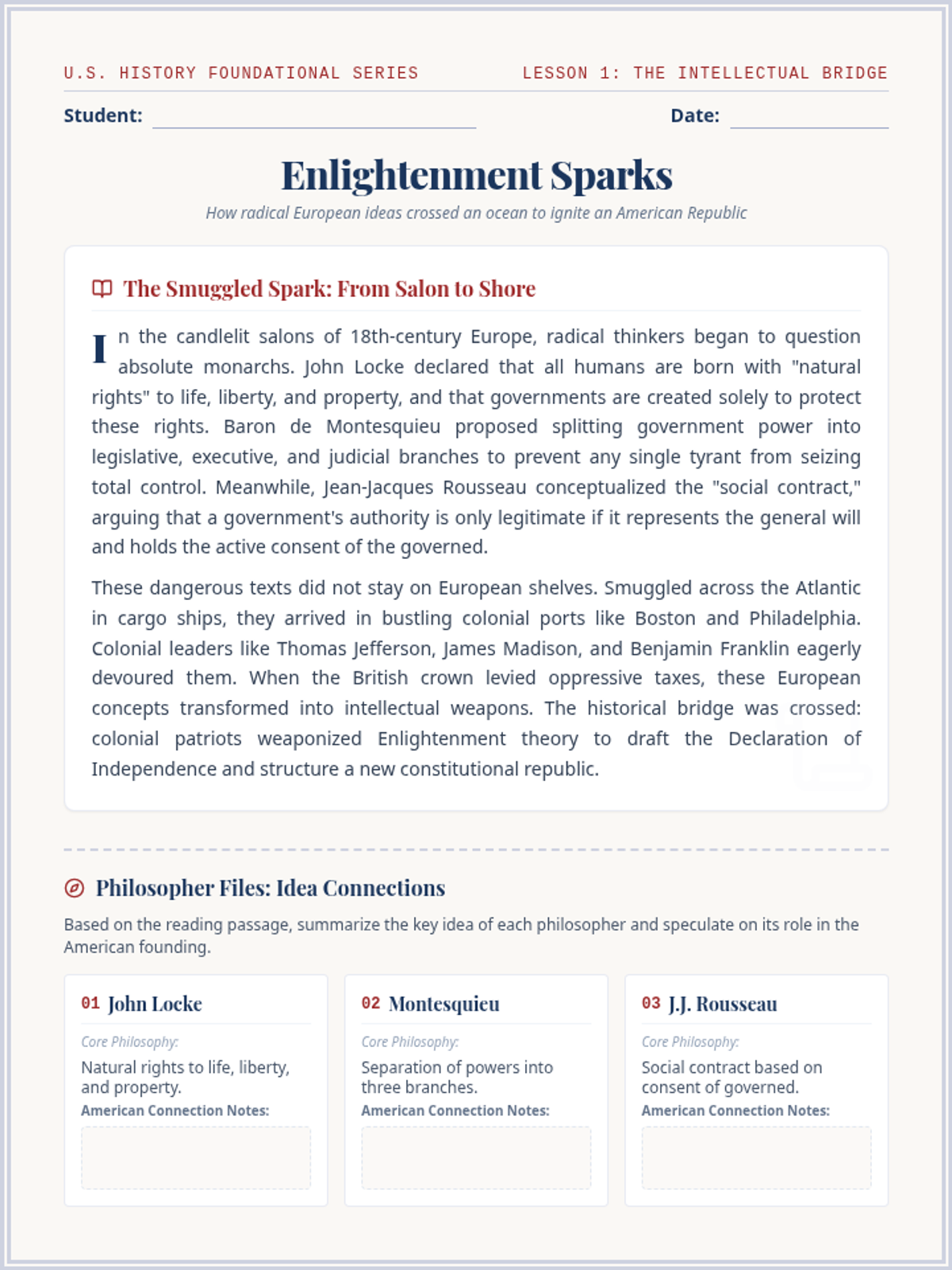
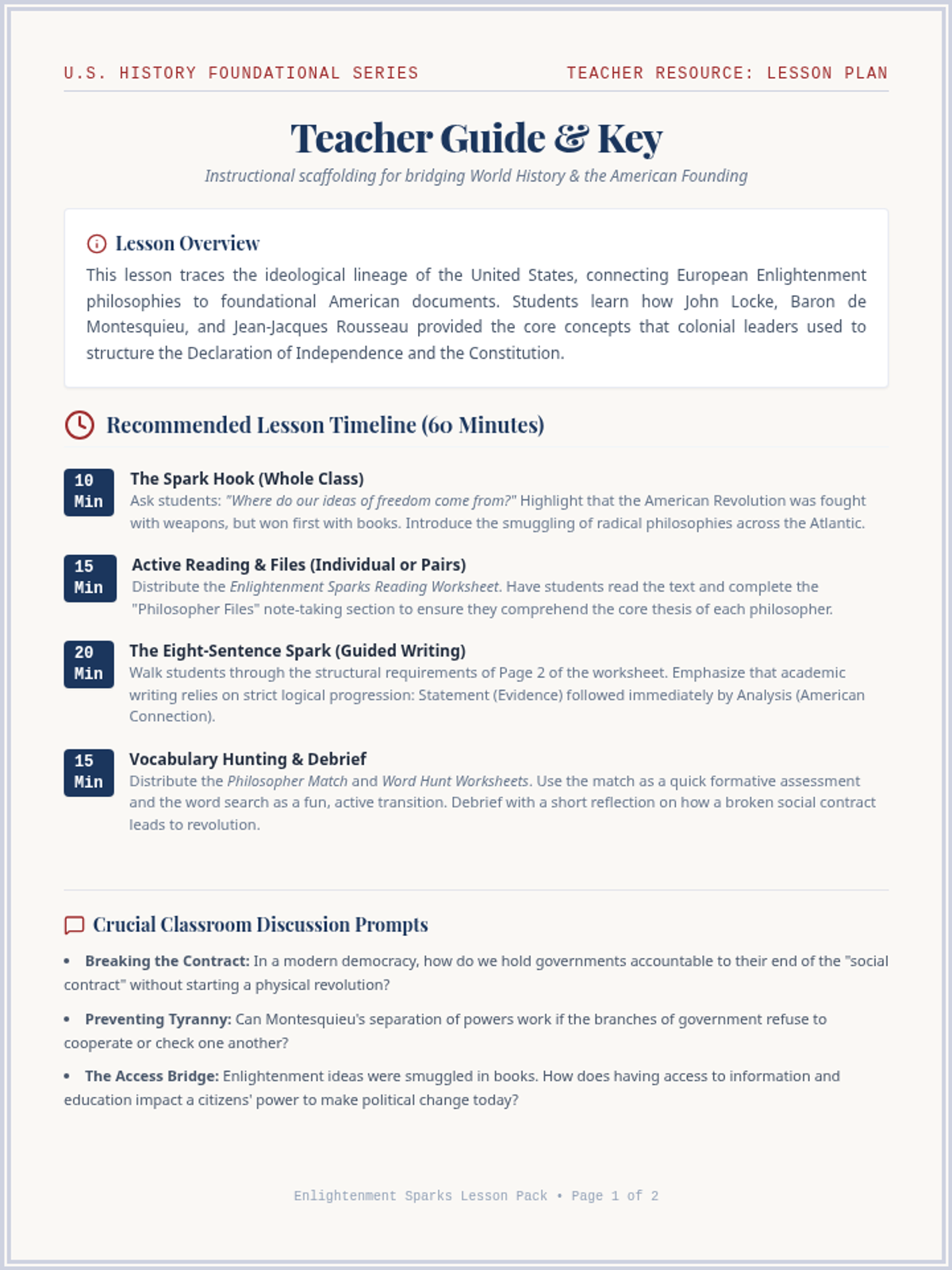
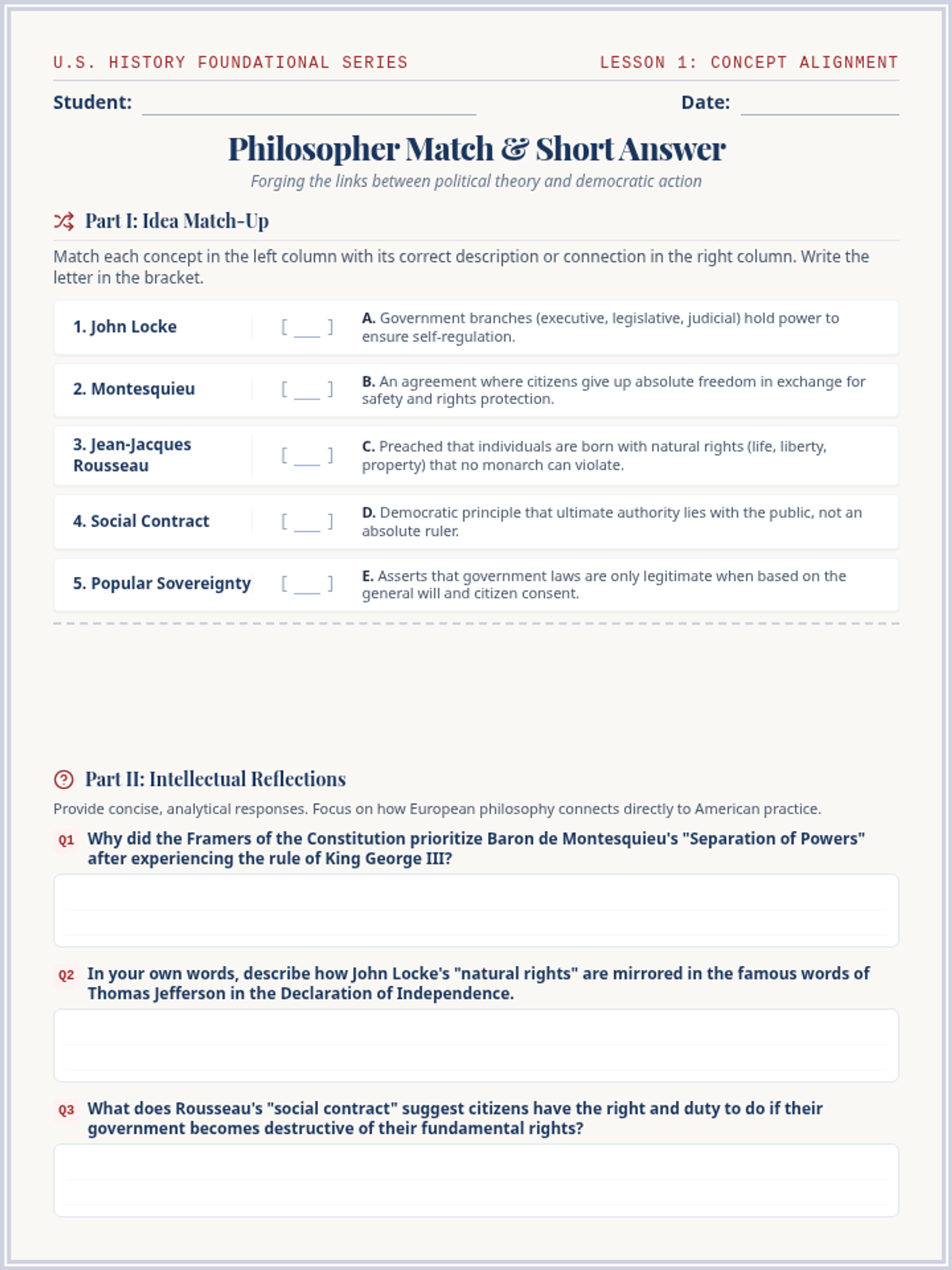
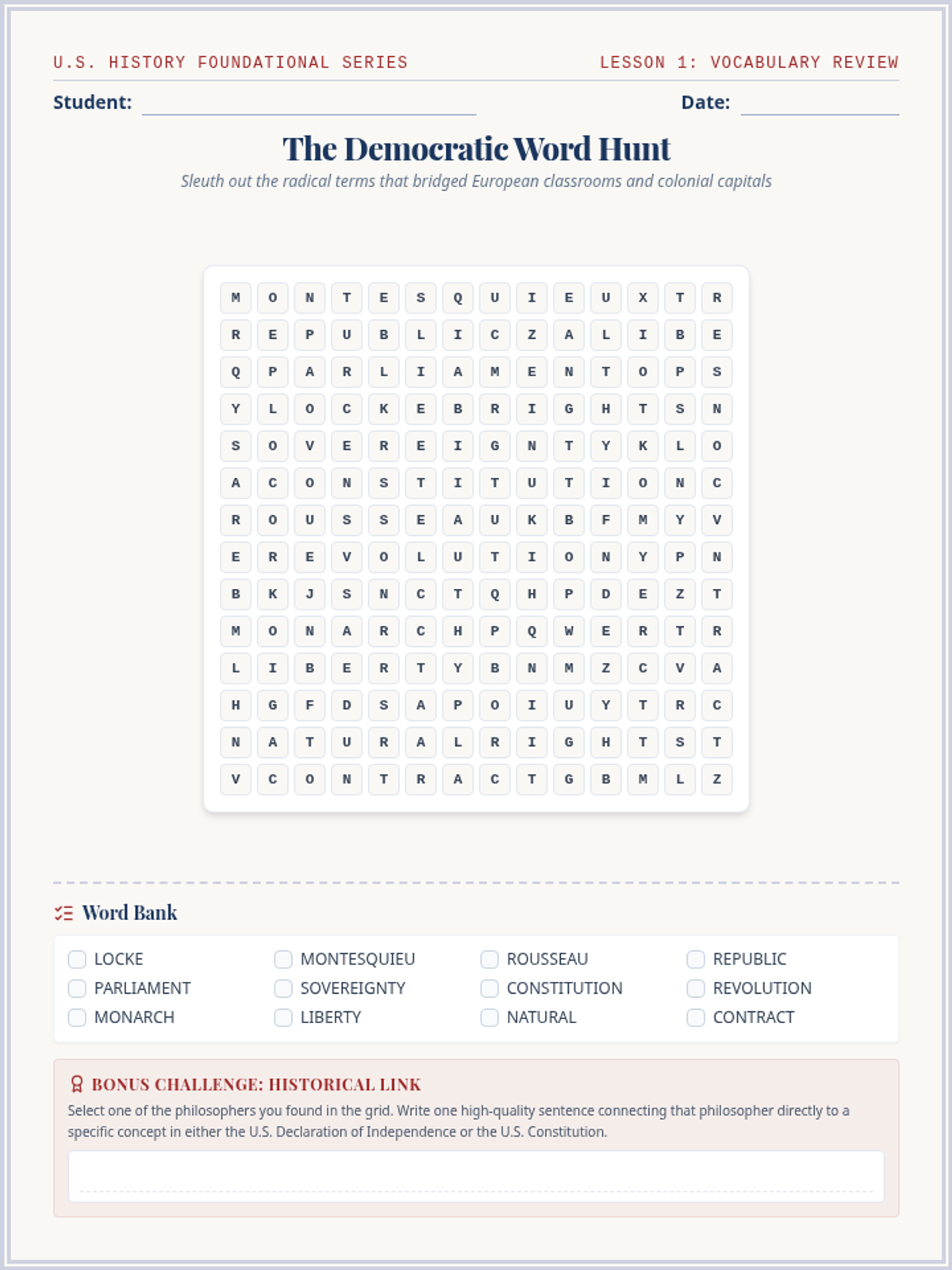
An introductory US History lesson bridging the World History Age of Enlightenment with the founding of the United States. Students explore how radical European ideas crossed the Atlantic to spark a constitutional republic through a historical narrative, text-based writing, matching, short-answer questions, and a thematic word hunt.
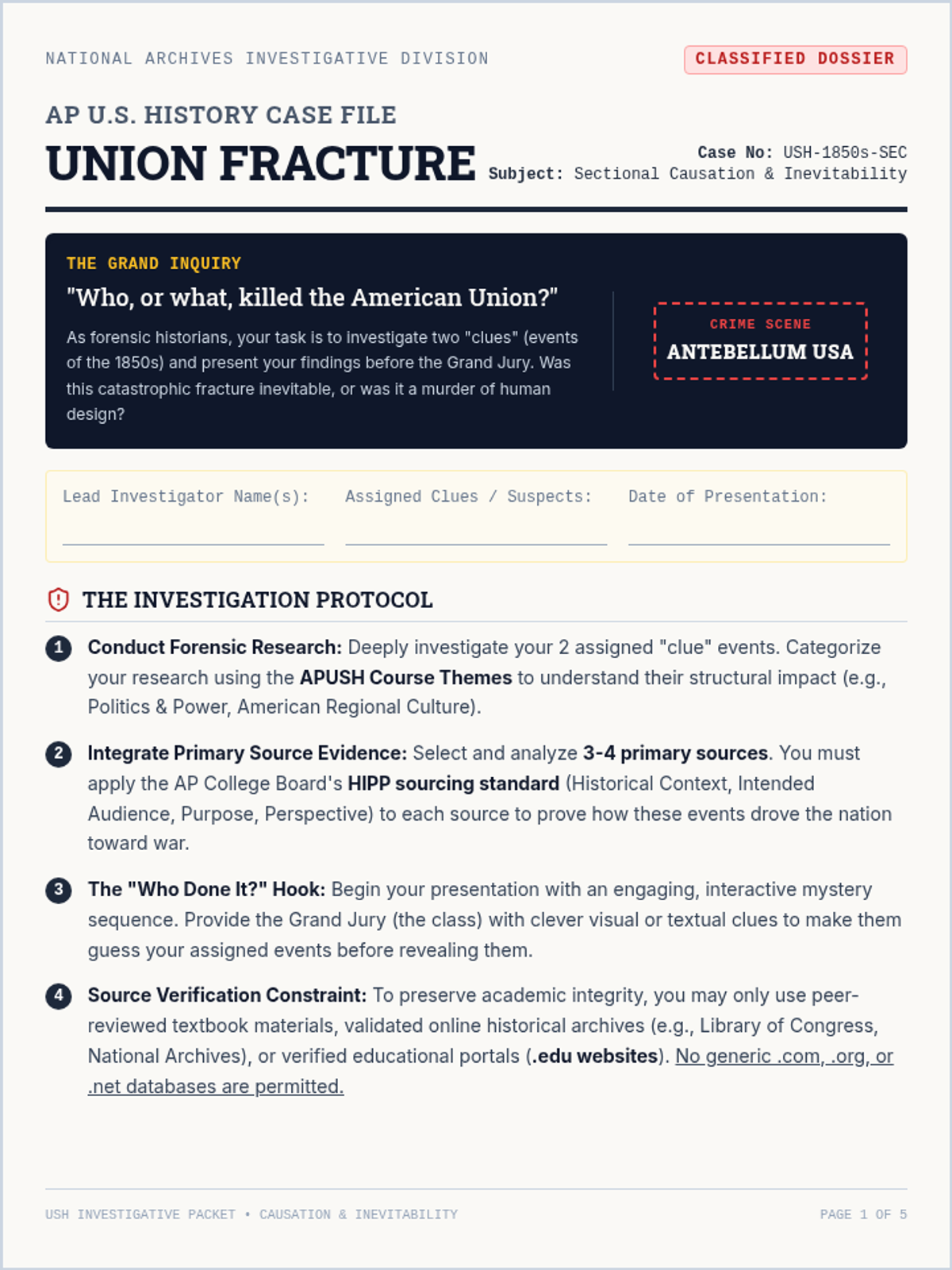
An AP U.S. History unit investigating the critical events of the 1850s that tore the Union apart. Students examine causation, sectionalism, and the inevitability of the Civil War through primary source analysis and presentation of historic clues.