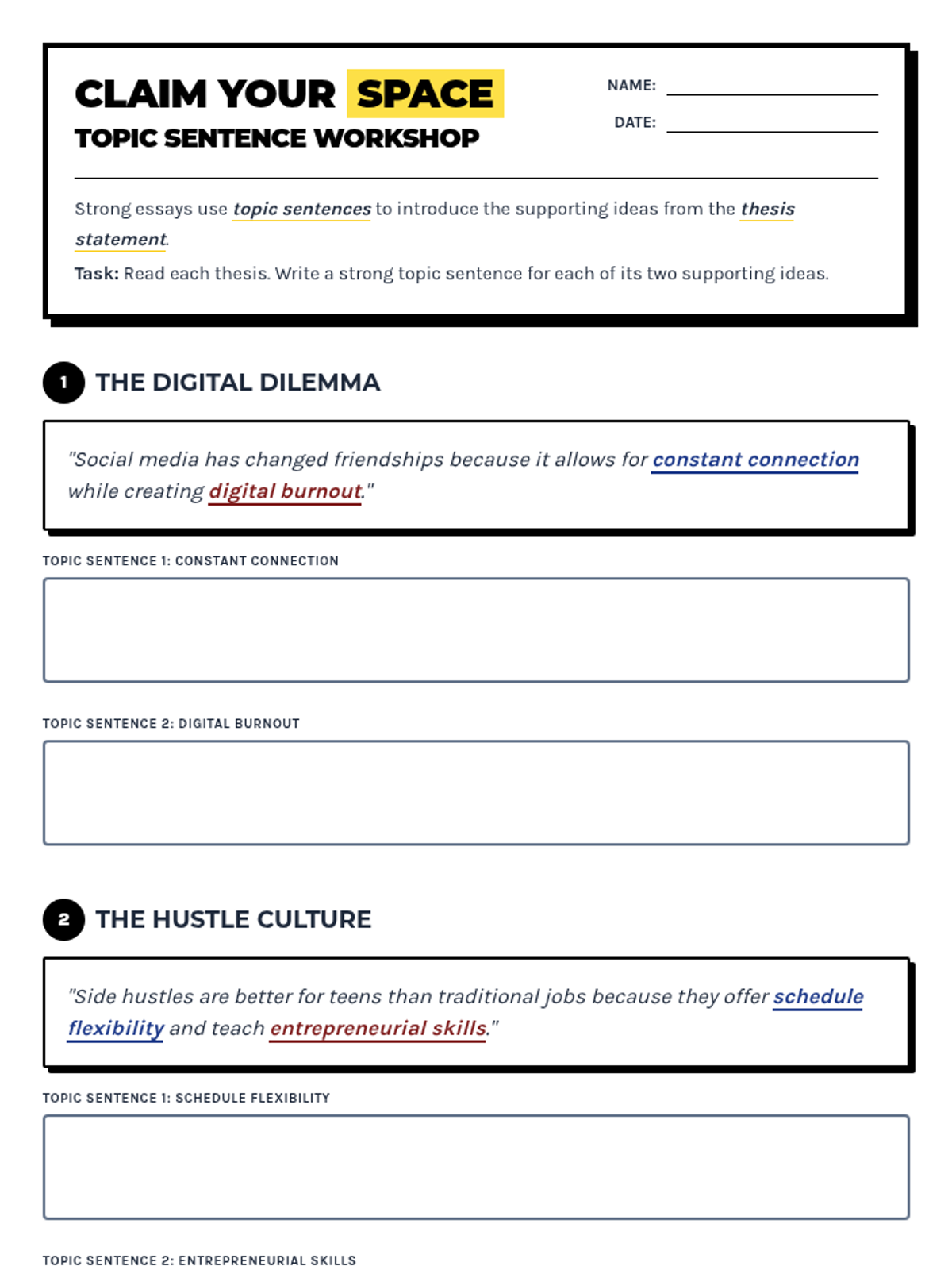
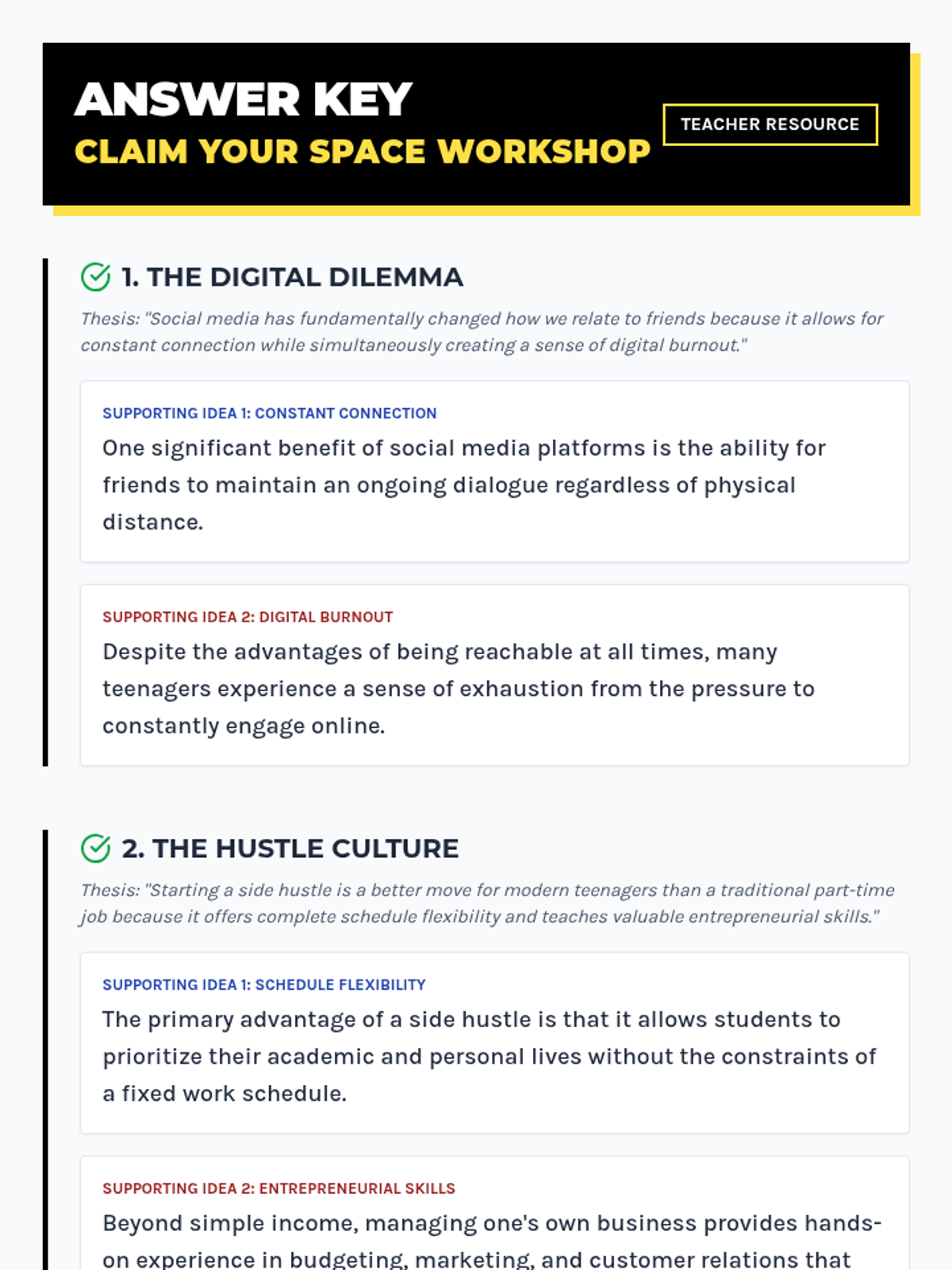
A lesson focused on the structural link between a thesis statement and its supporting topic sentences using real-world contexts. Students will practice extracting key ideas from a thesis to build the foundation of a cohesive argument.
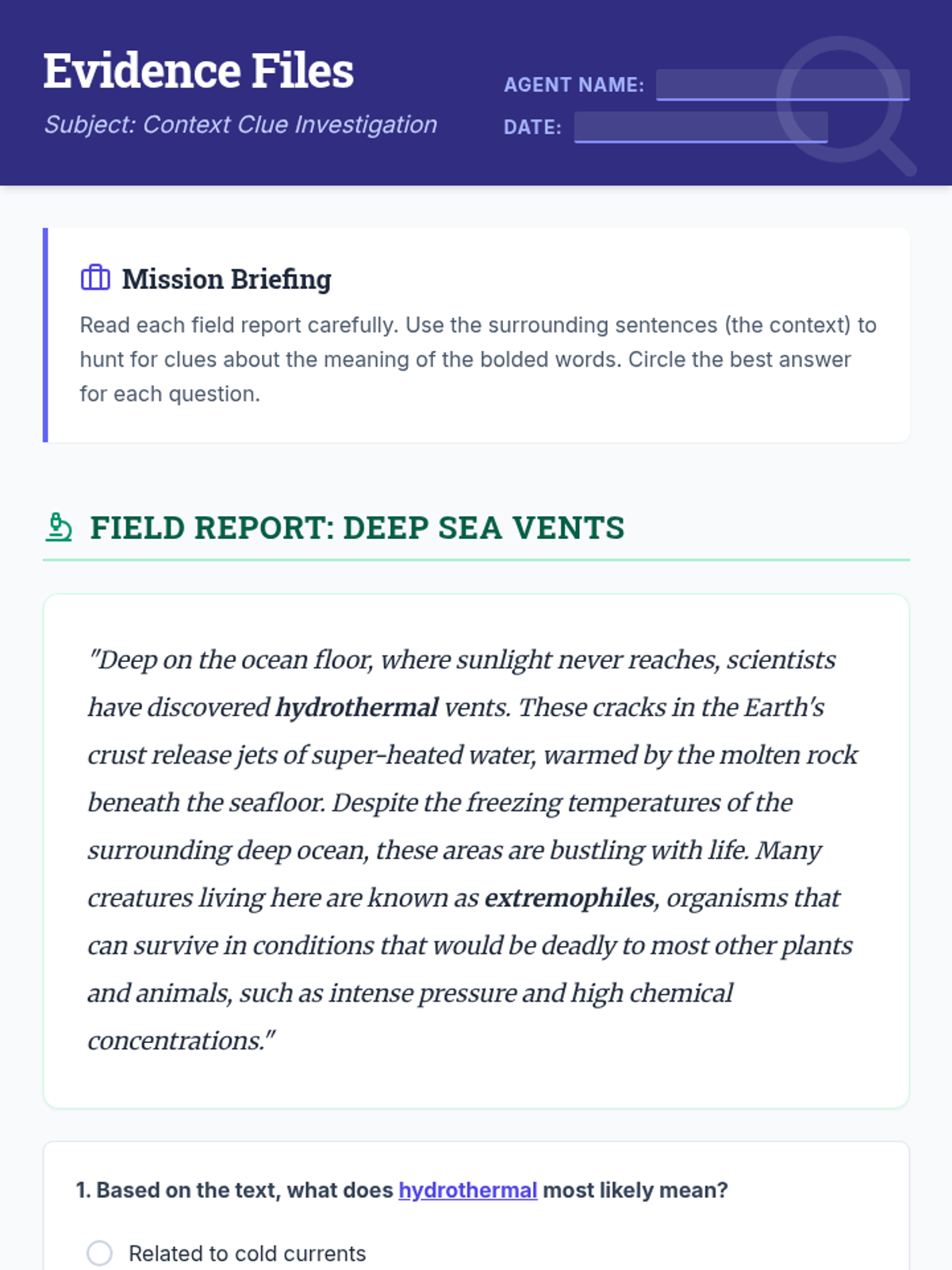
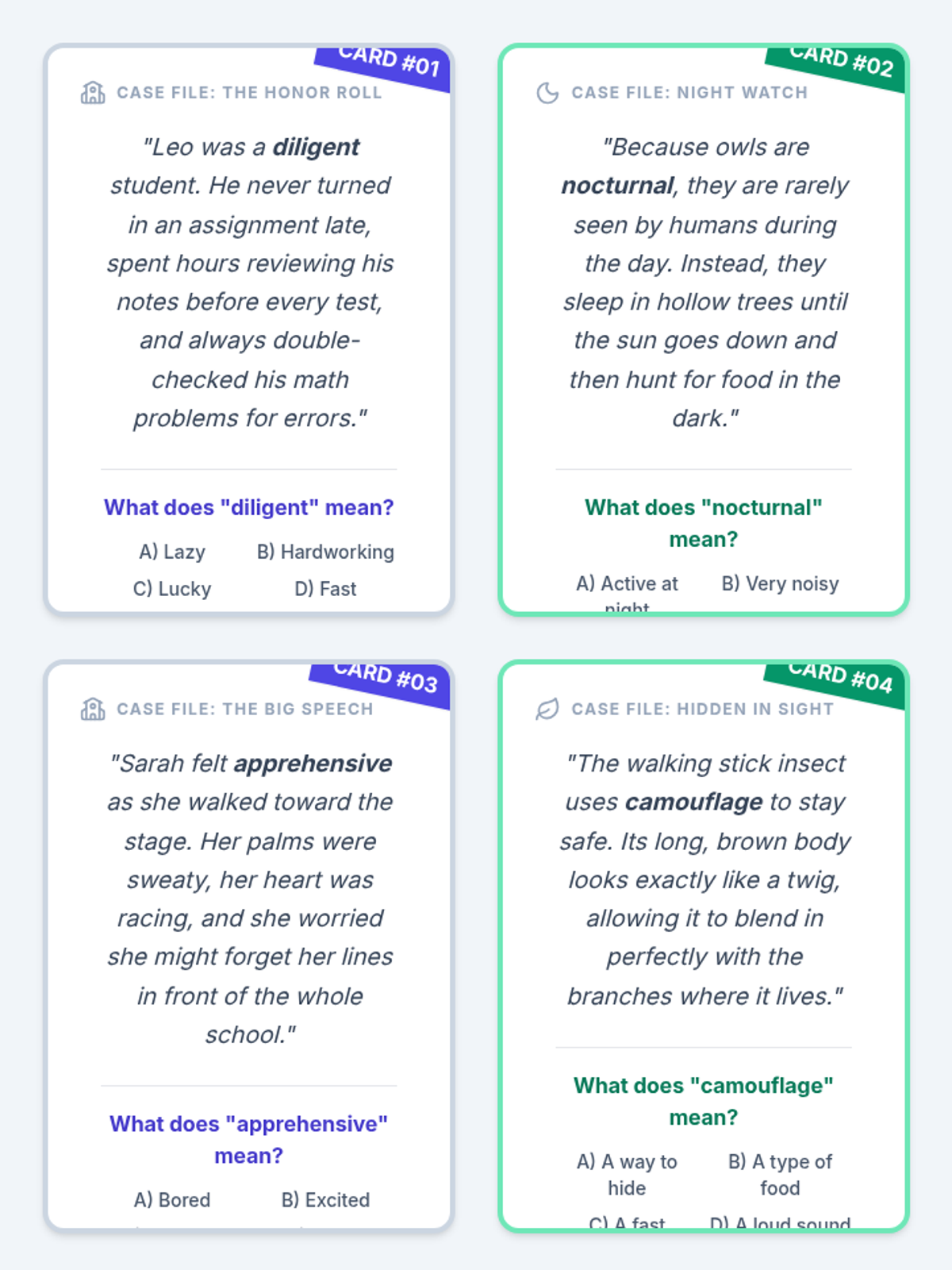
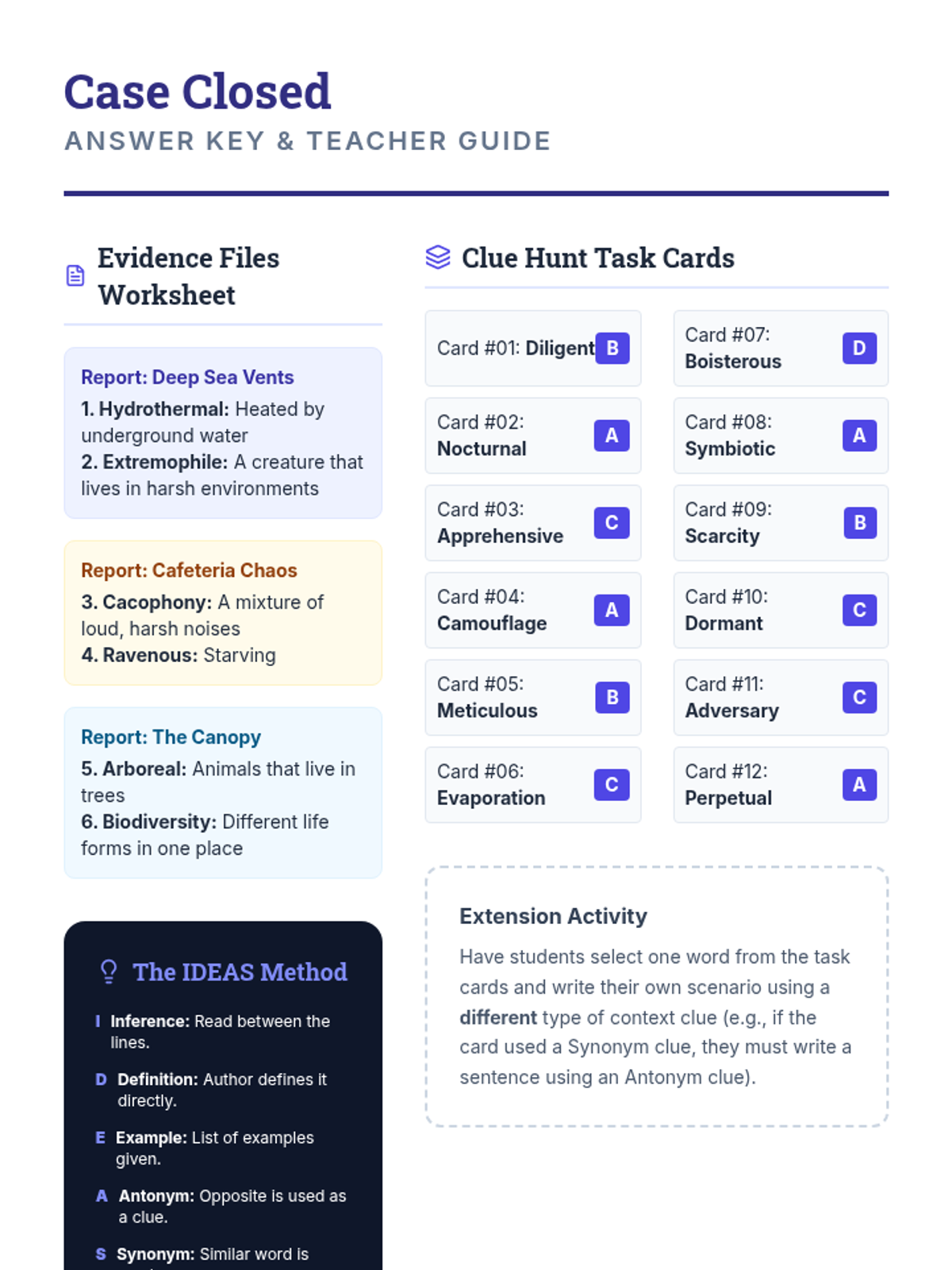
A focused lesson on using context clues to determine word meaning in both scientific texts and school-based narratives. Includes guided practice, independent work, and a hands-on task card activity.
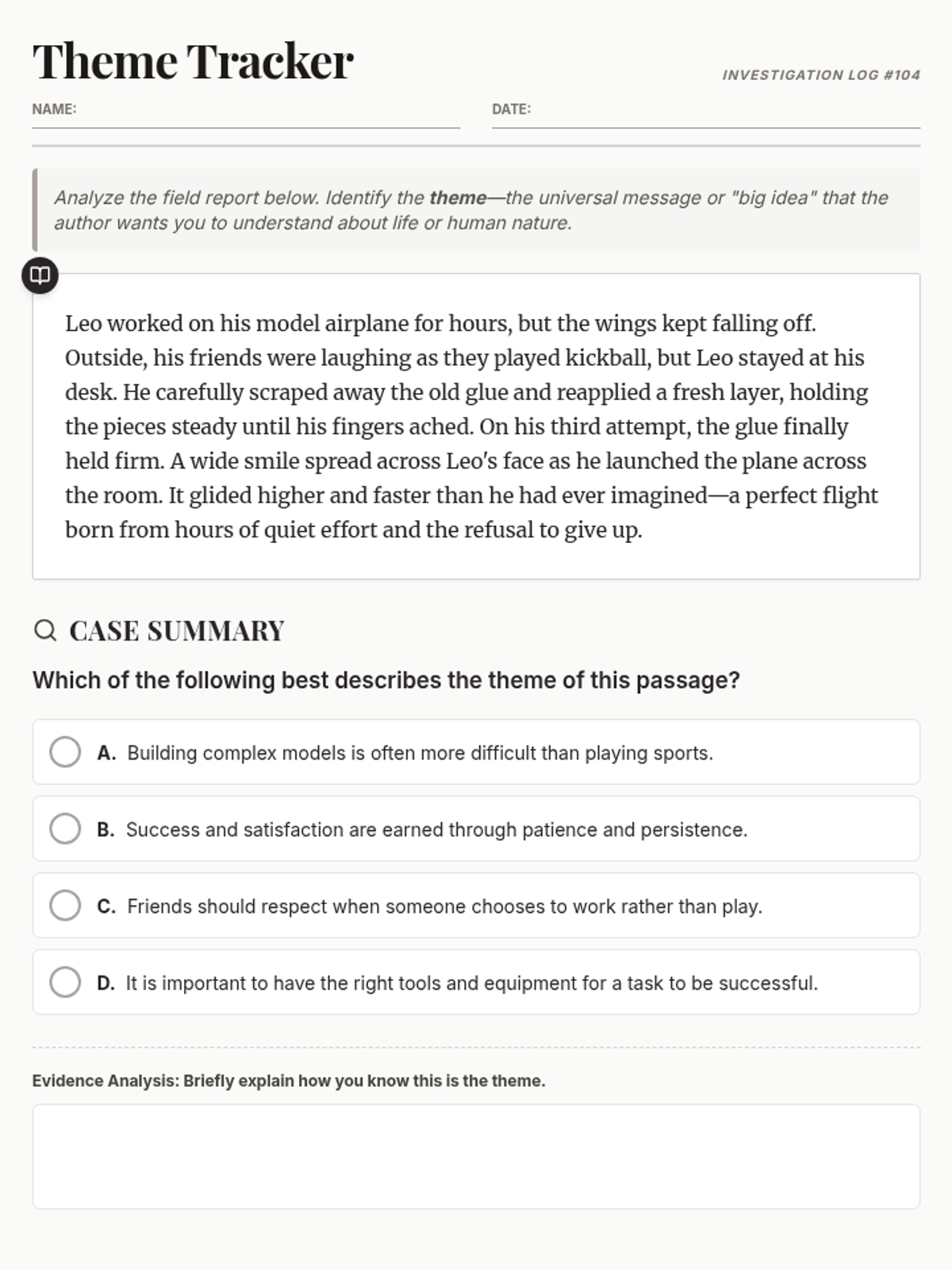
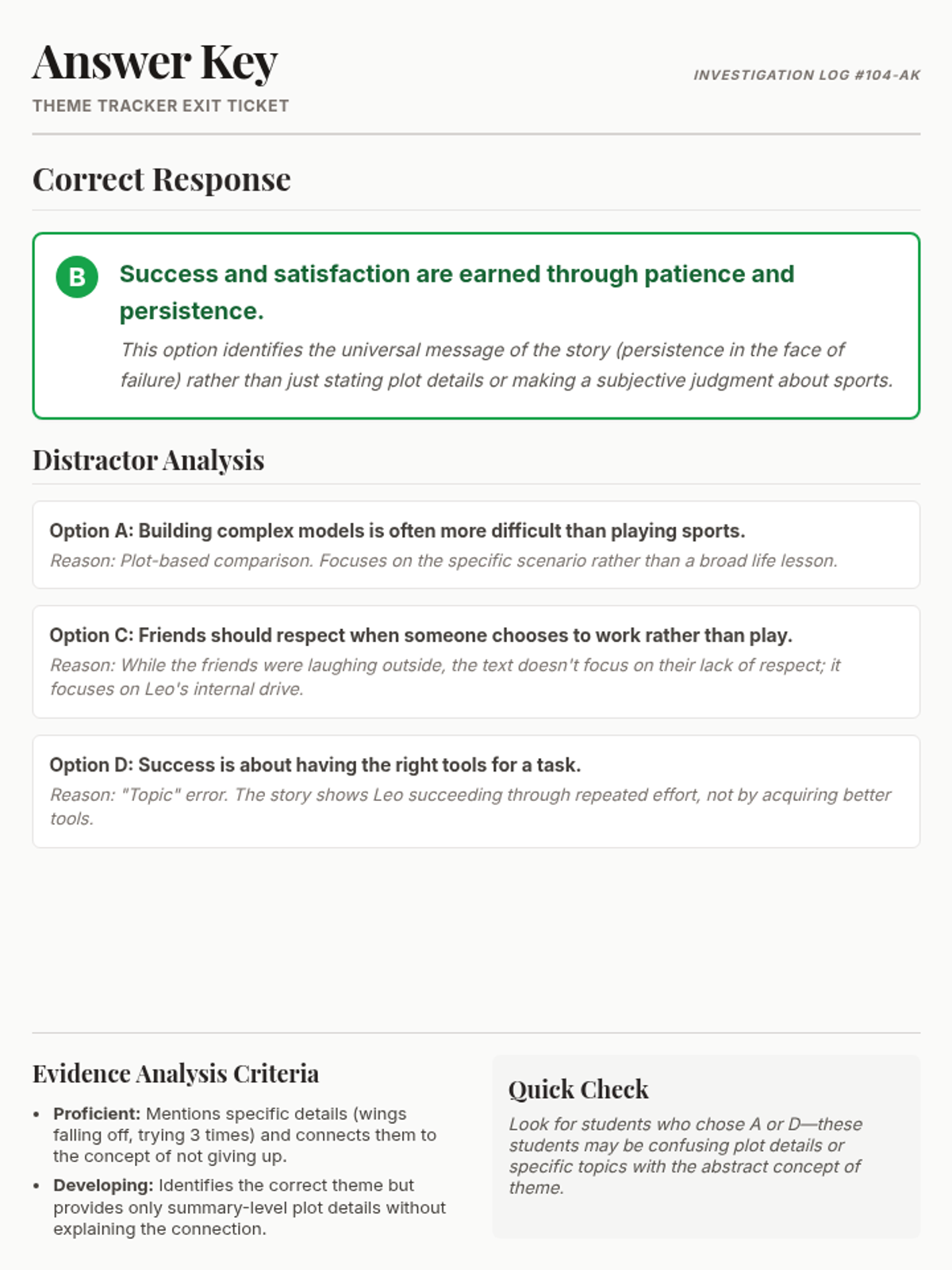
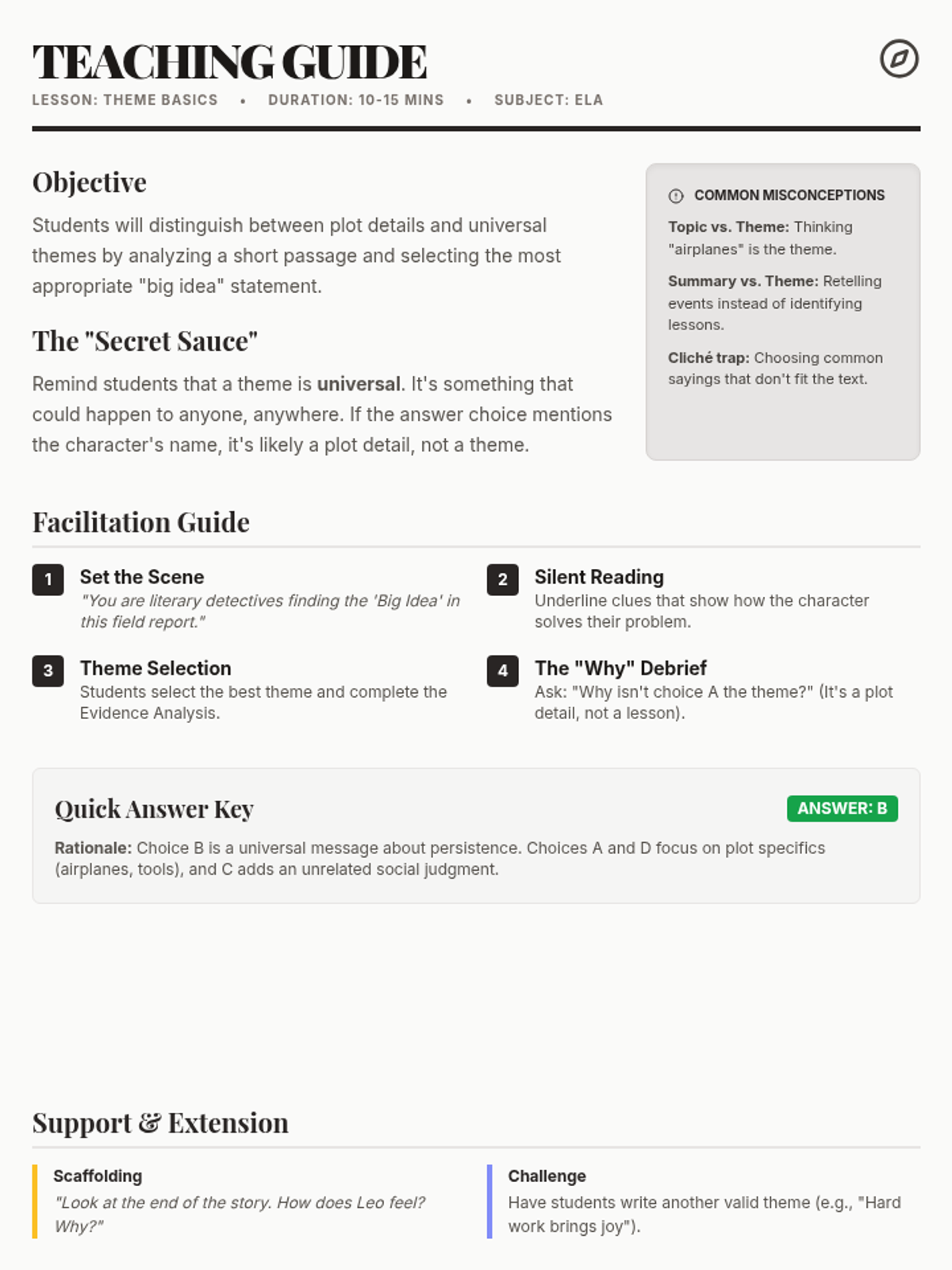
A short, focused lesson on identifying themes in literature using short fictional passages. Students learn to distinguish between plot details and universal messages.
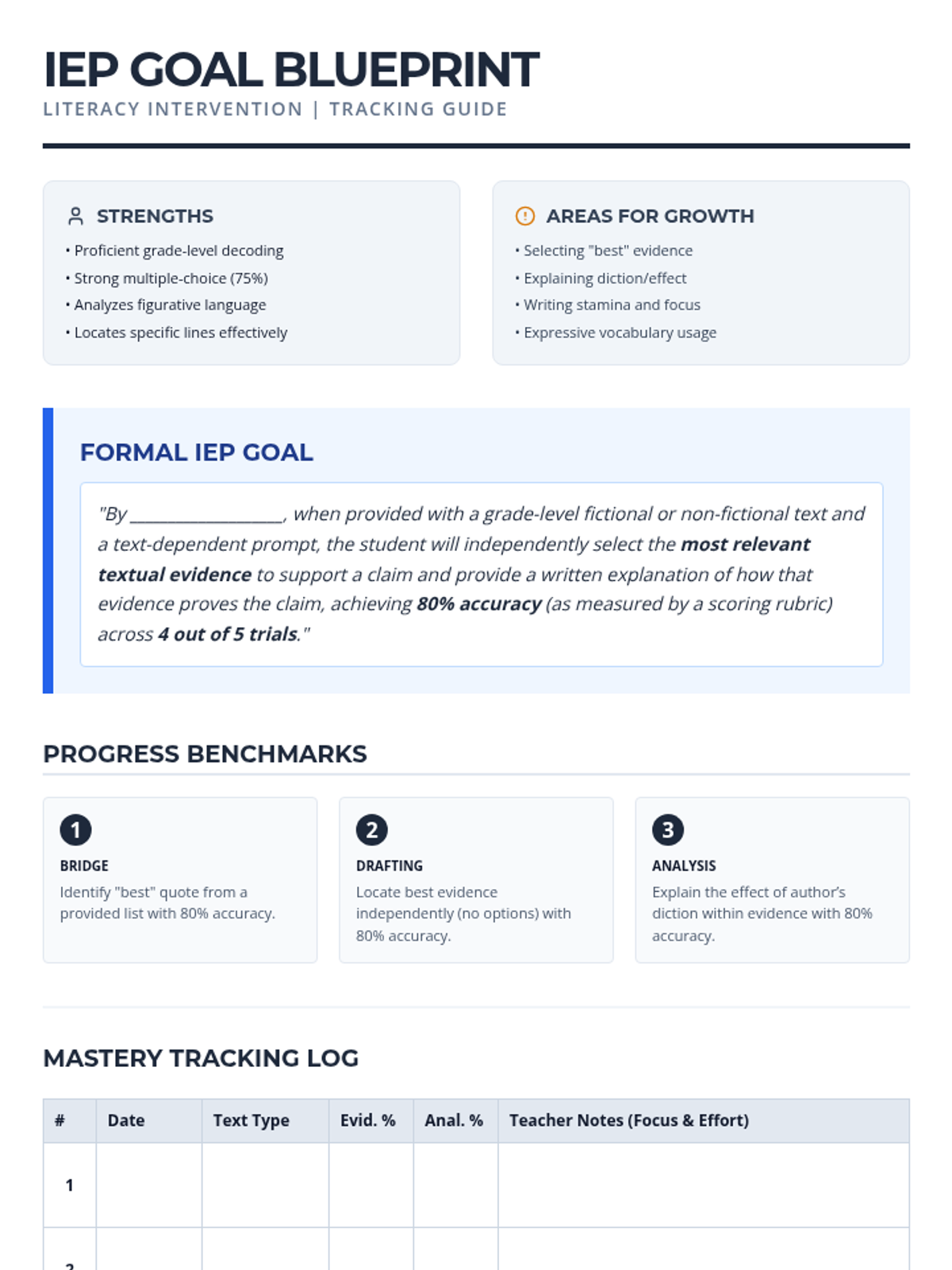
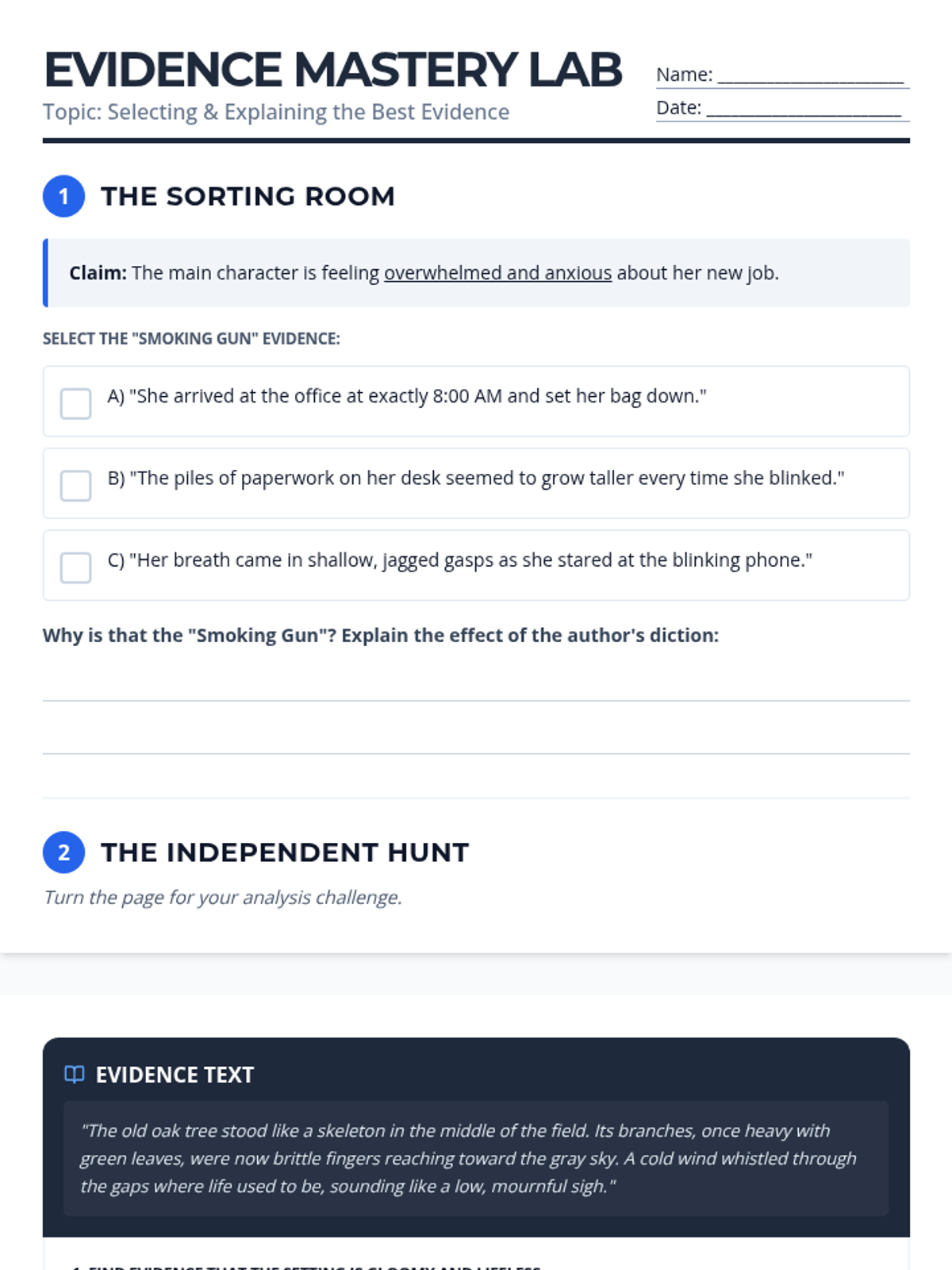
A comprehensive lesson focused on helping students master the skill of selecting and citing the 'best' textual evidence to support an argument, specifically designed to address gaps in writing and diction analysis.
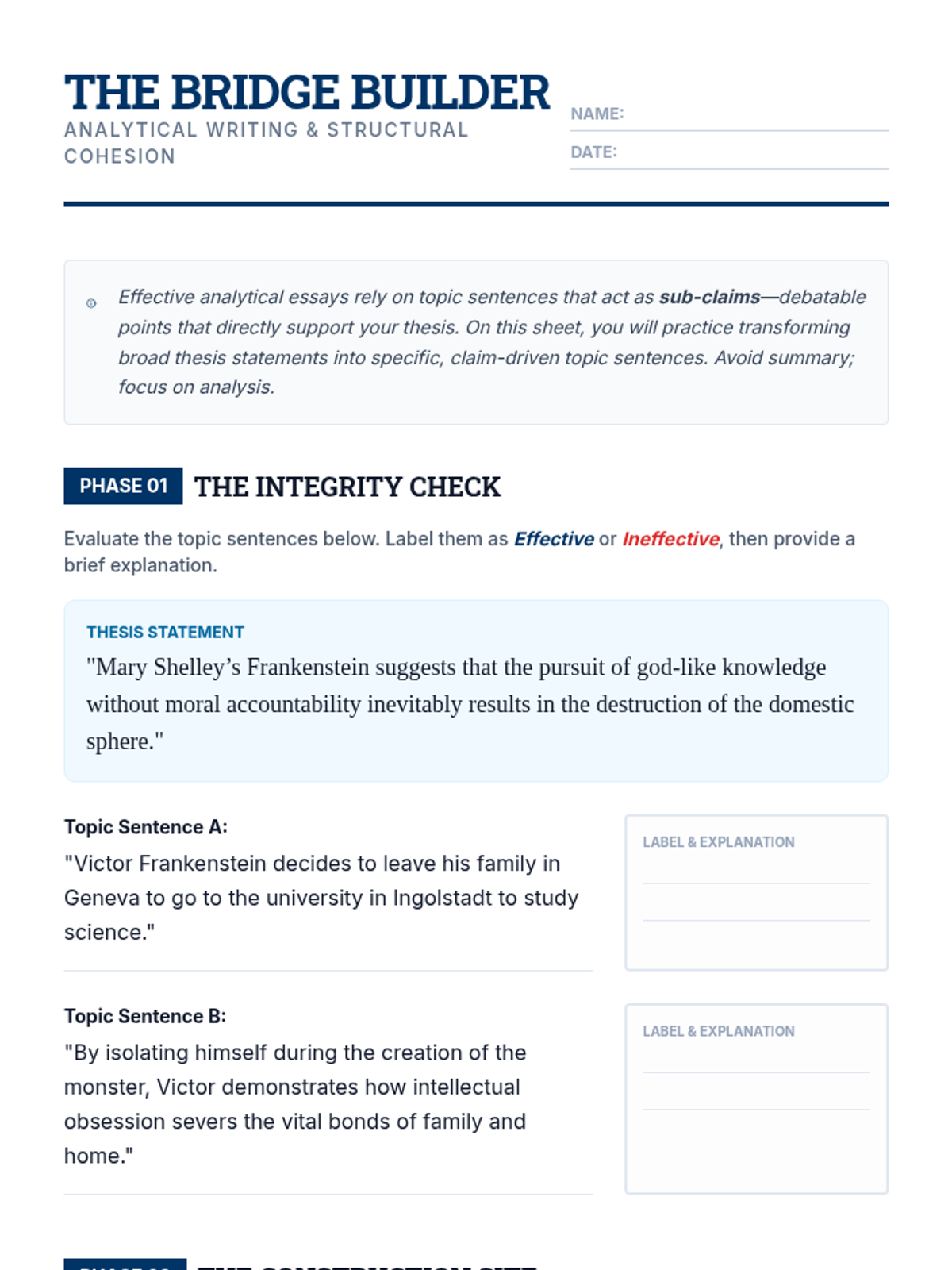
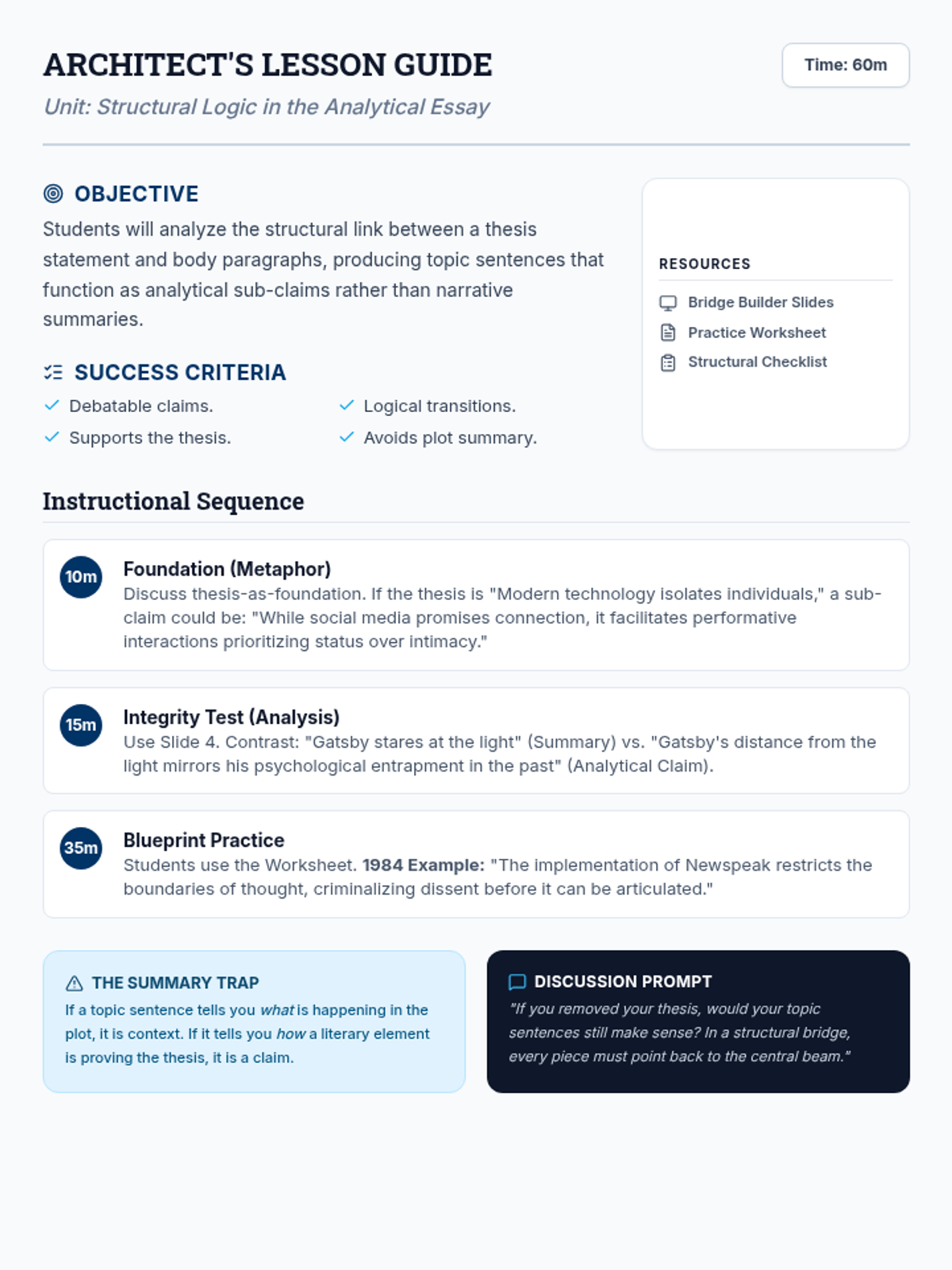
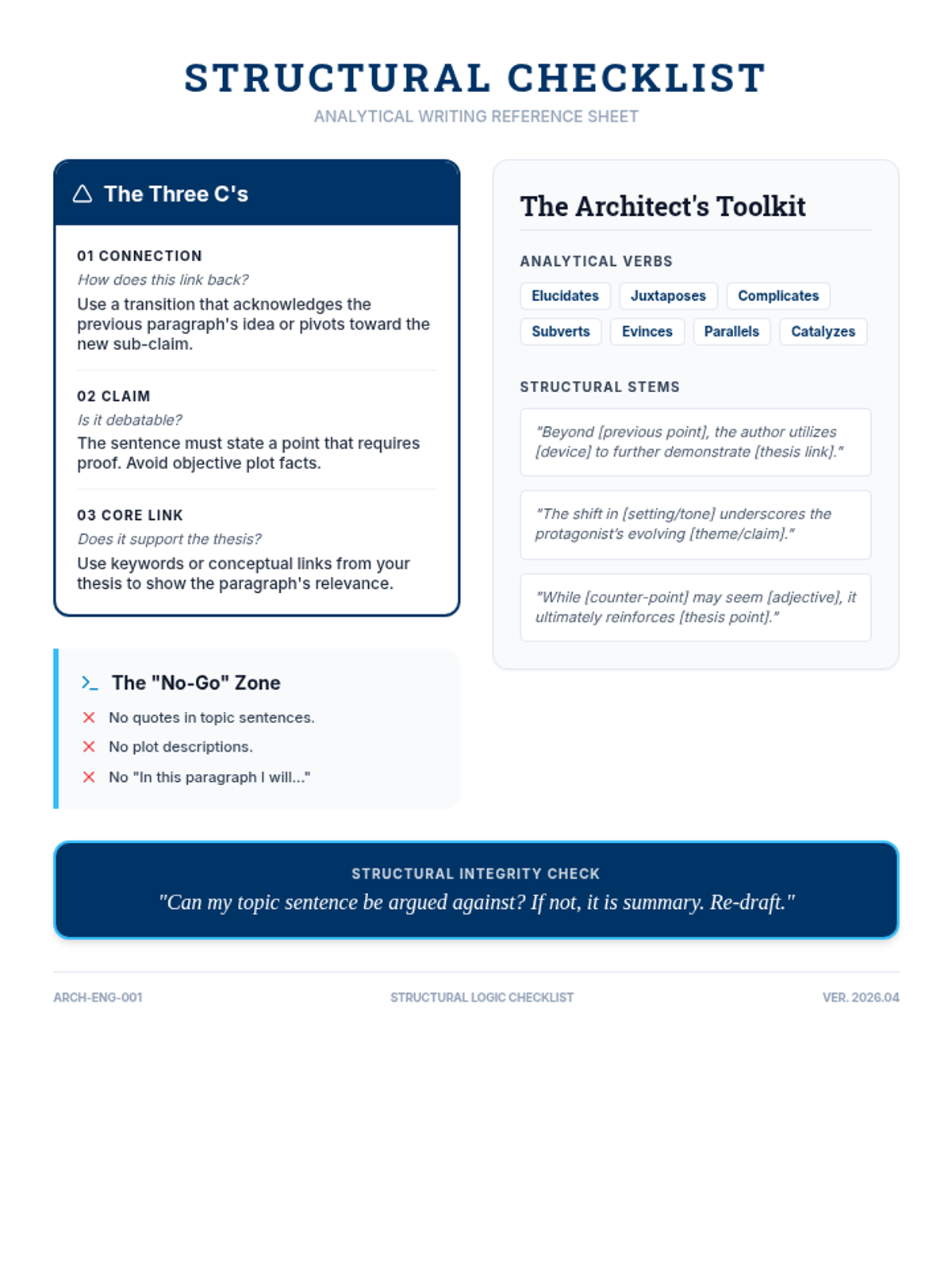
A rigorous lesson on bridging the gap between an analytical thesis statement and body paragraphs through logical, claim-driven topic sentences.
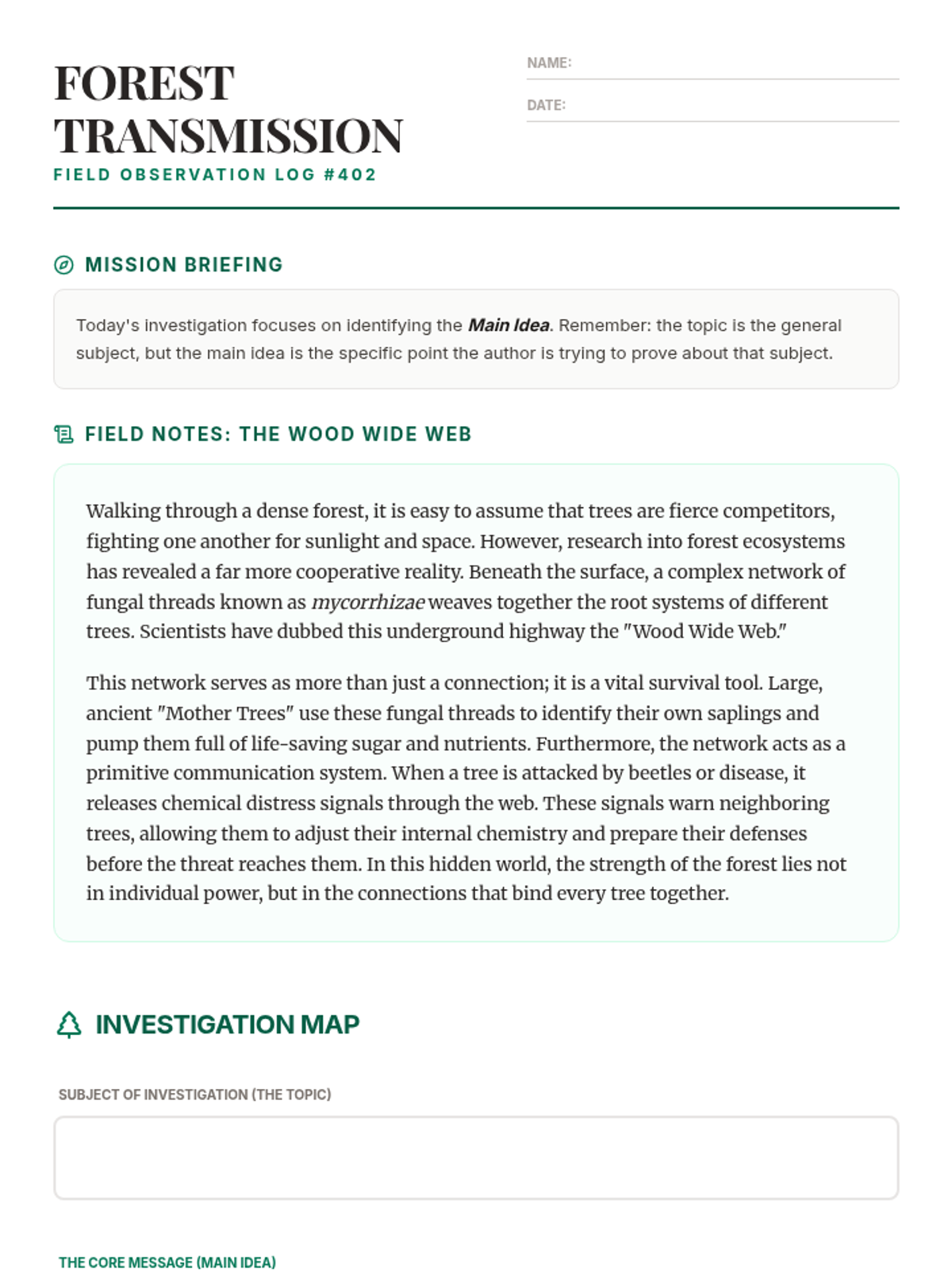
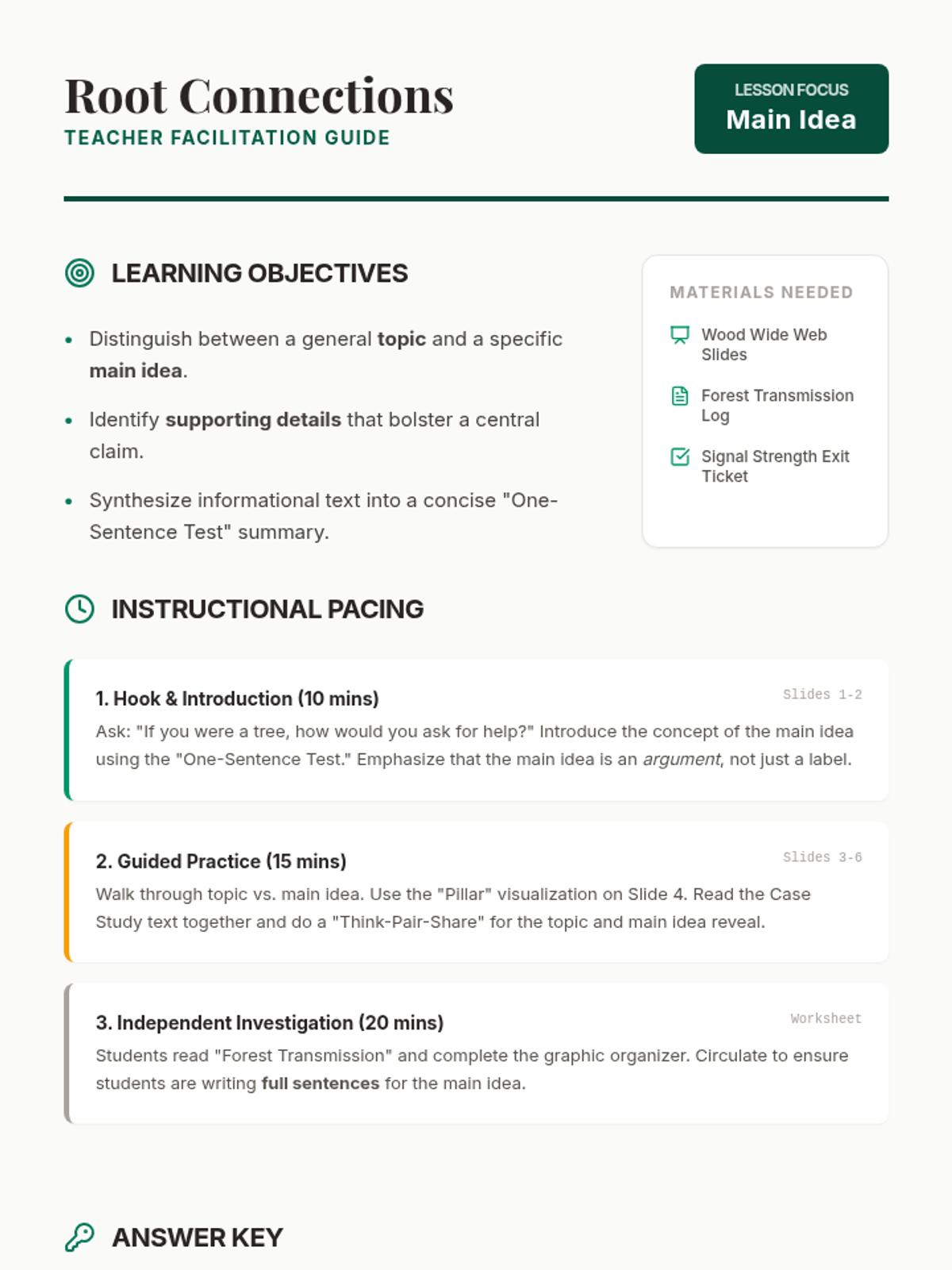
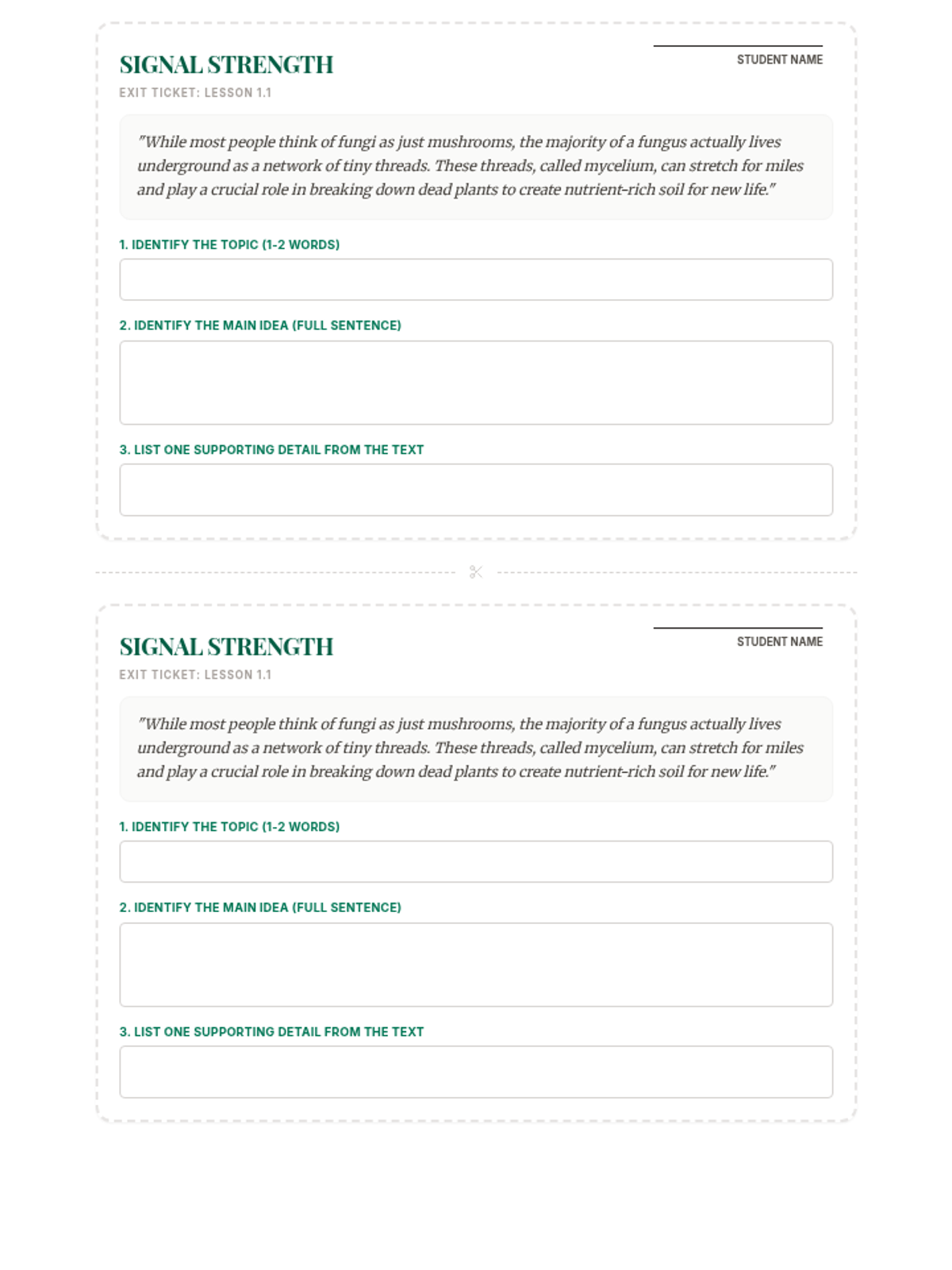
Students explore the 'Wood Wide Web'—the underground fungal network trees use to communicate—while learning strategies to identify the main idea and distinguish it from the topic and supporting details.
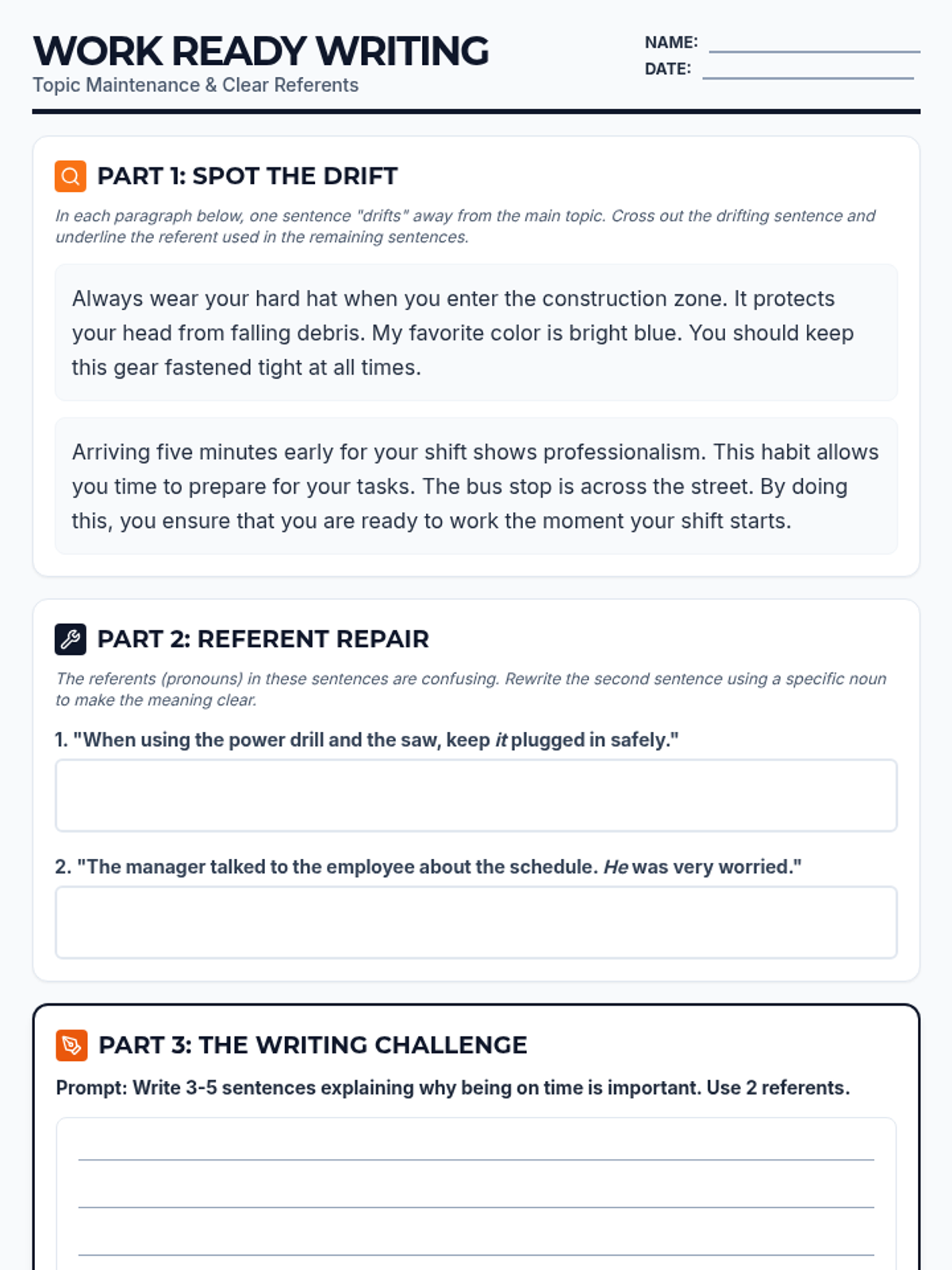
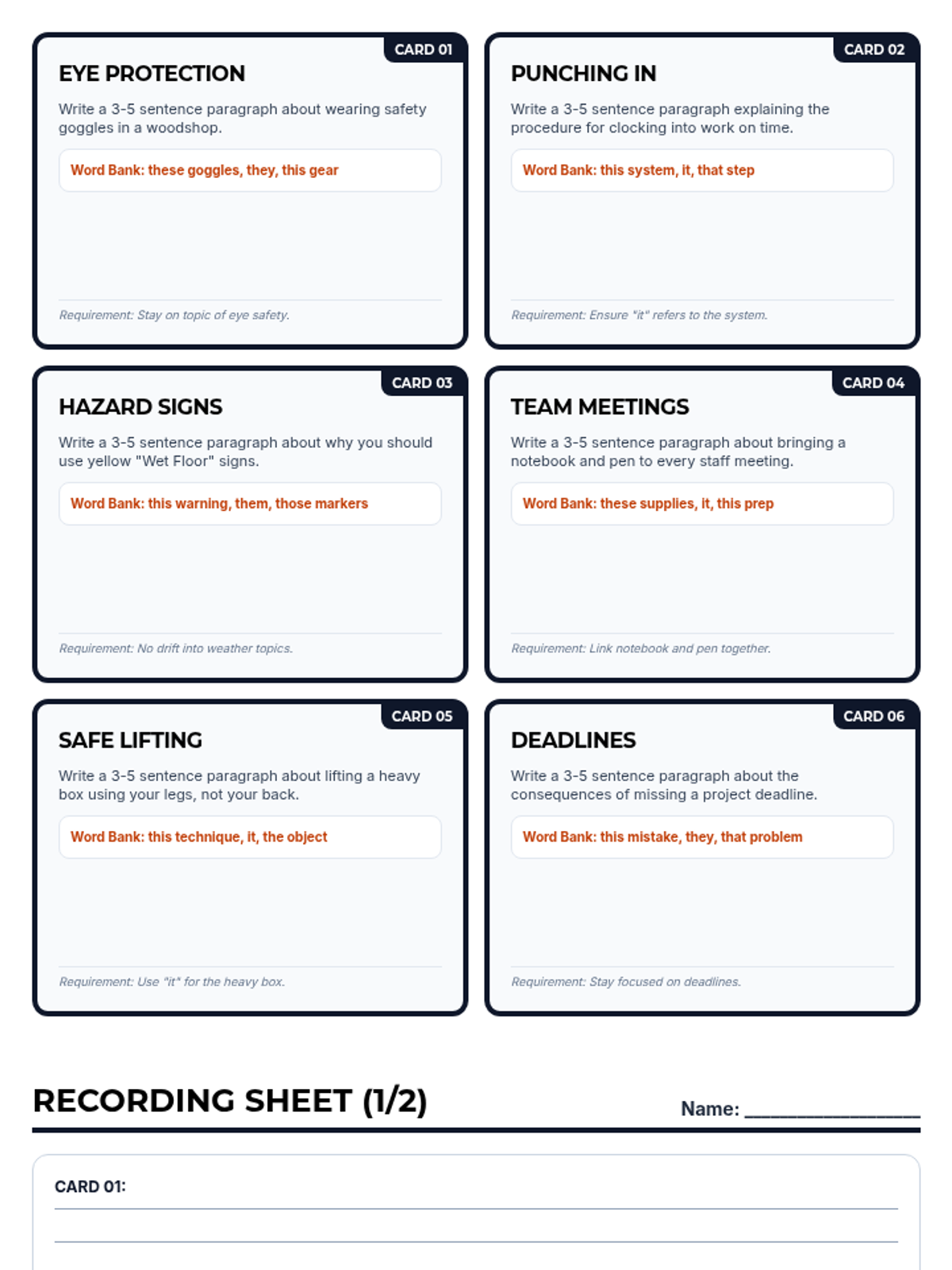
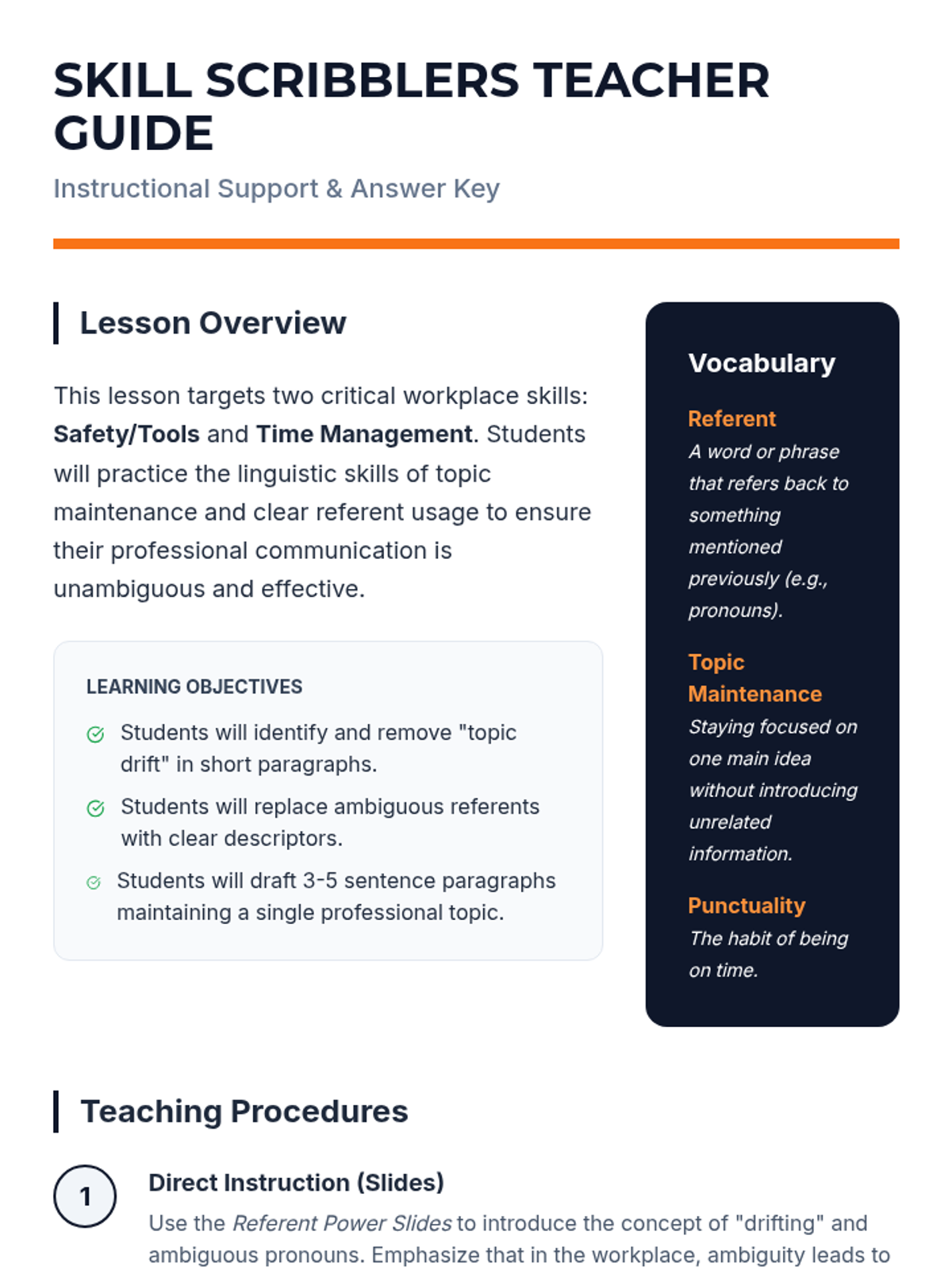
A lesson focused on teaching high school students how to write cohesive 3-5 sentence paragraphs about workplace safety and time management, emphasizing topic maintenance and the use of clear referents.
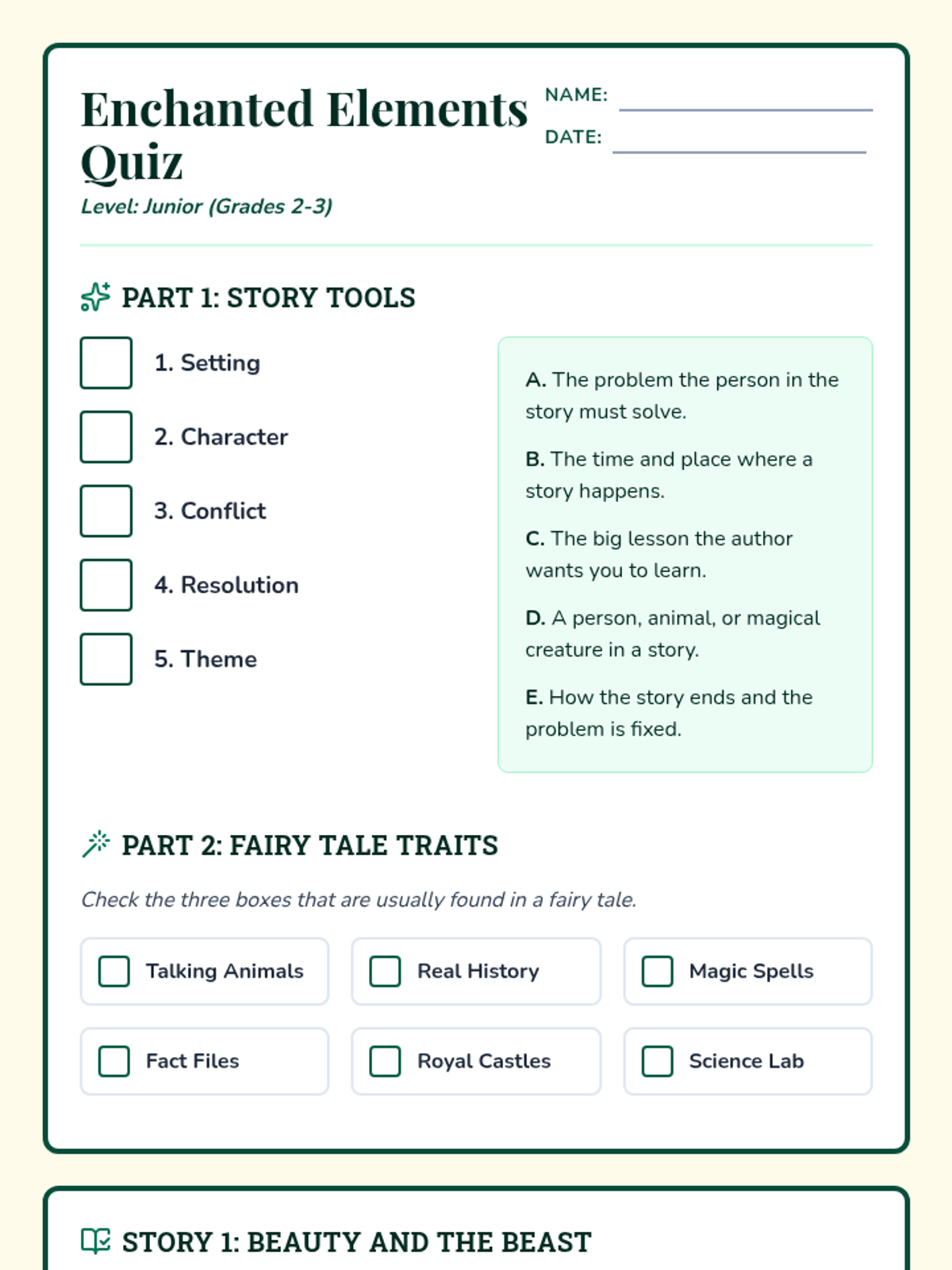
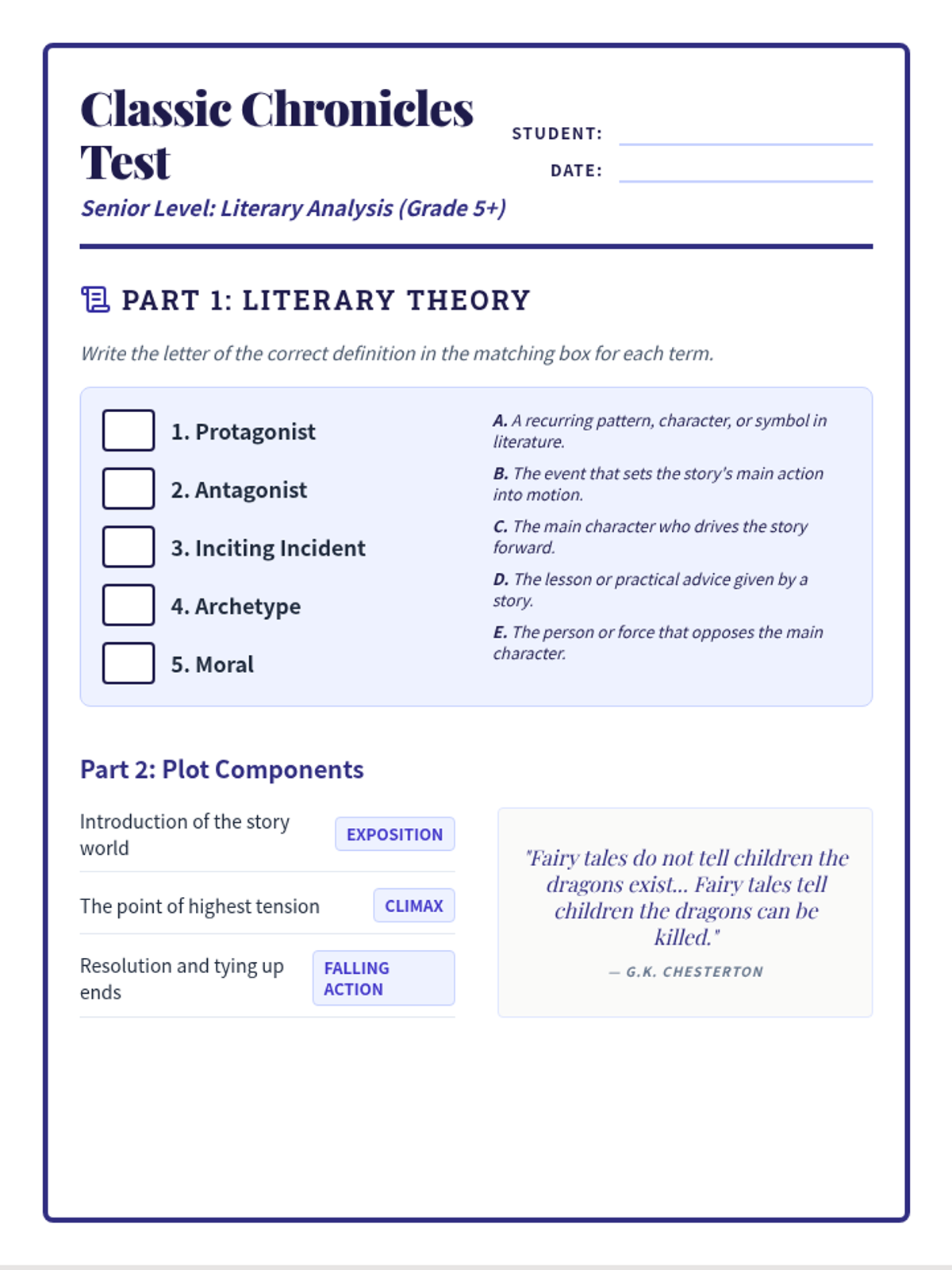
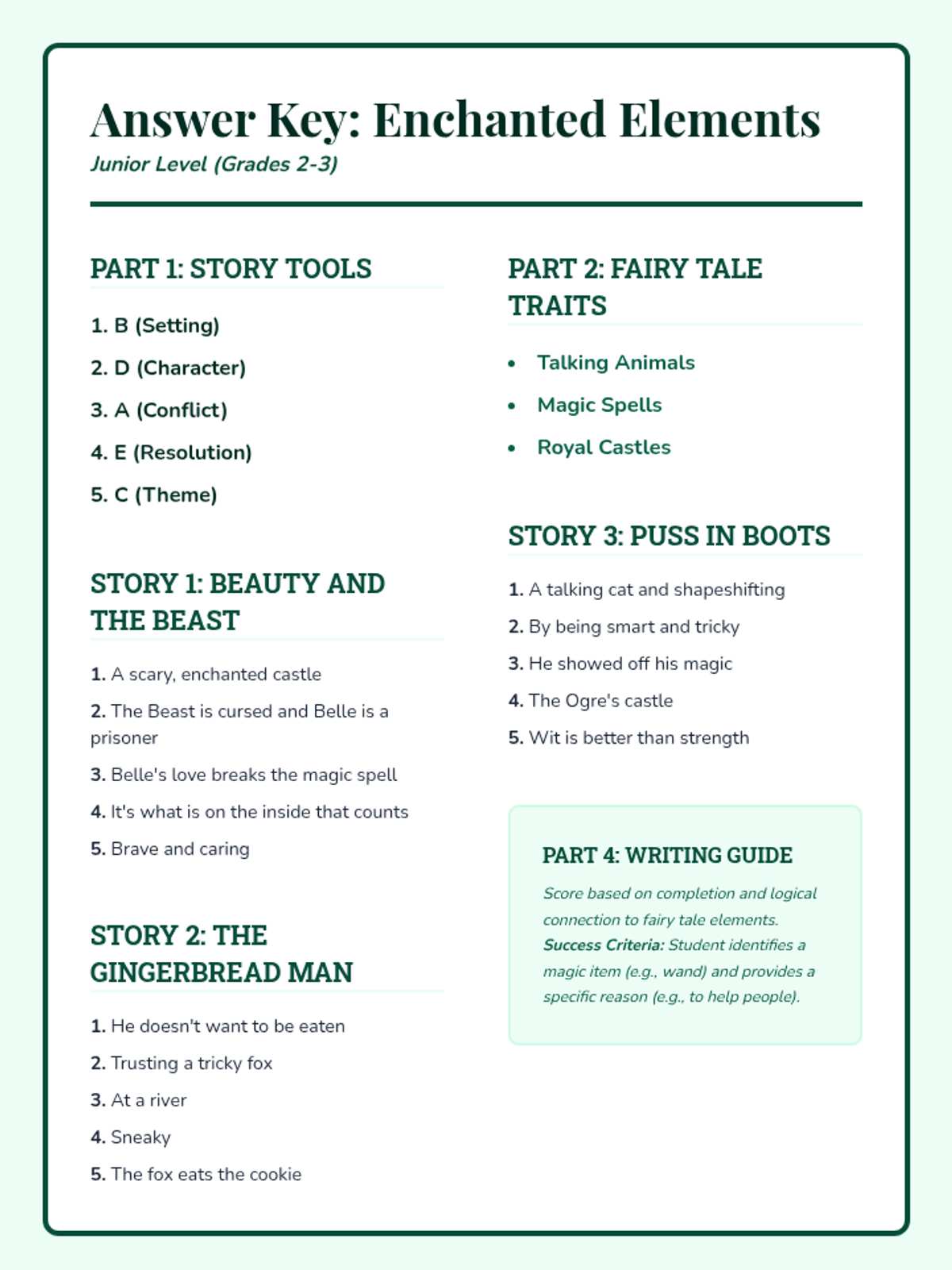
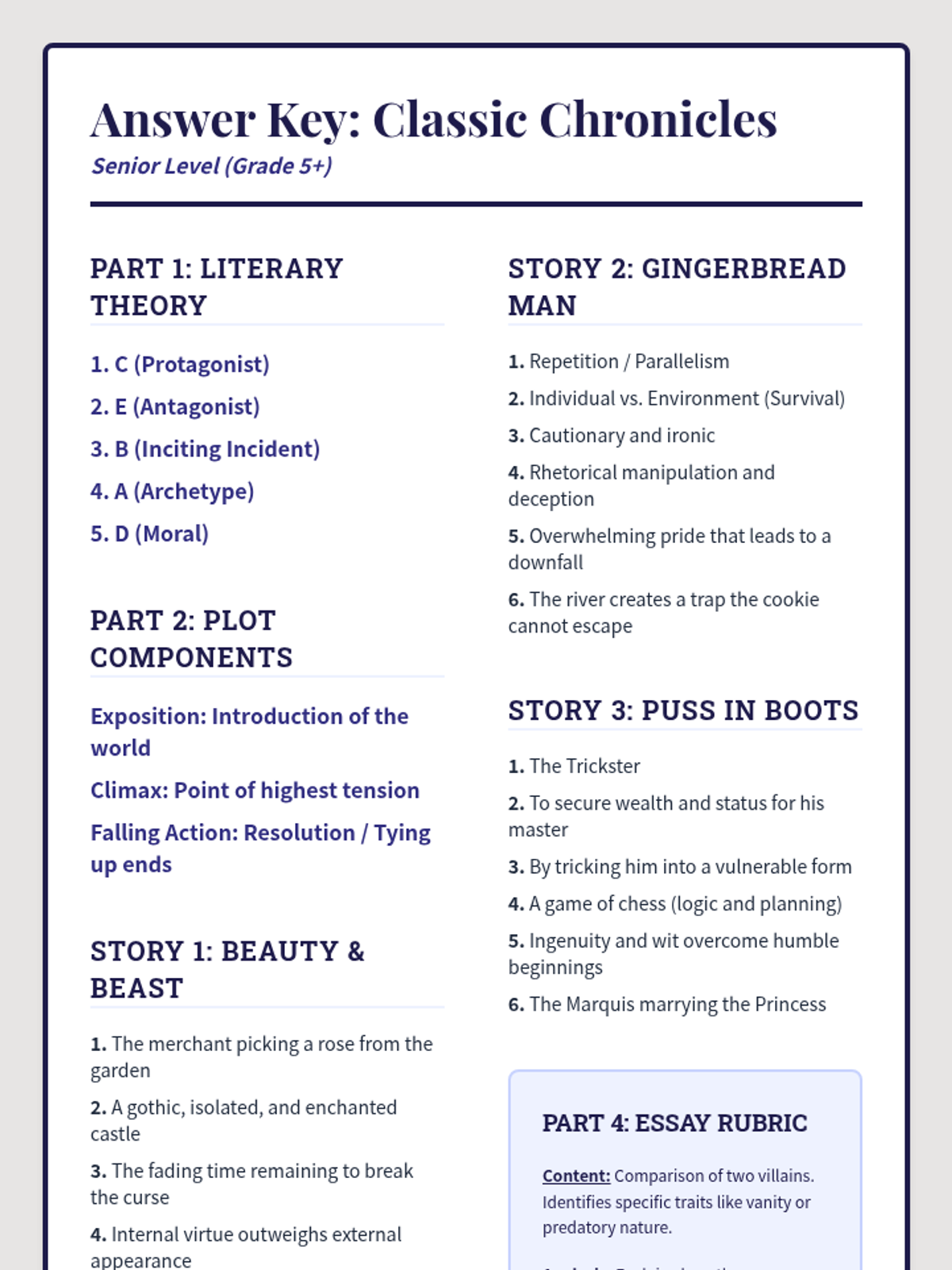
A comprehensive assessment on fairy tale elements and plot structures for elementary students, featuring two differentiated levels to meet specific grade-level standards.
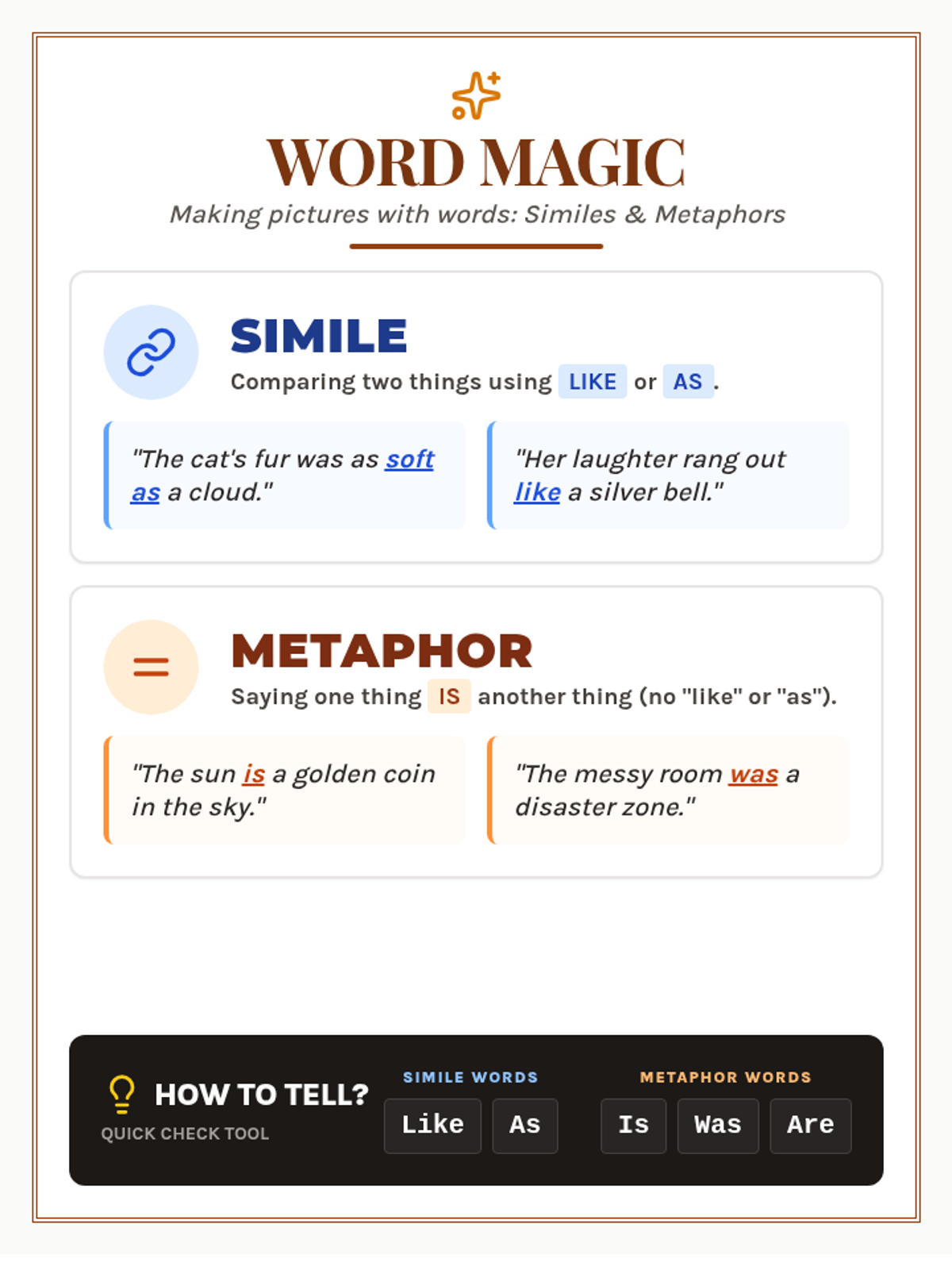
A lesson focused on identifying and using similes and metaphors to enhance poetic imagery and descriptive writing.
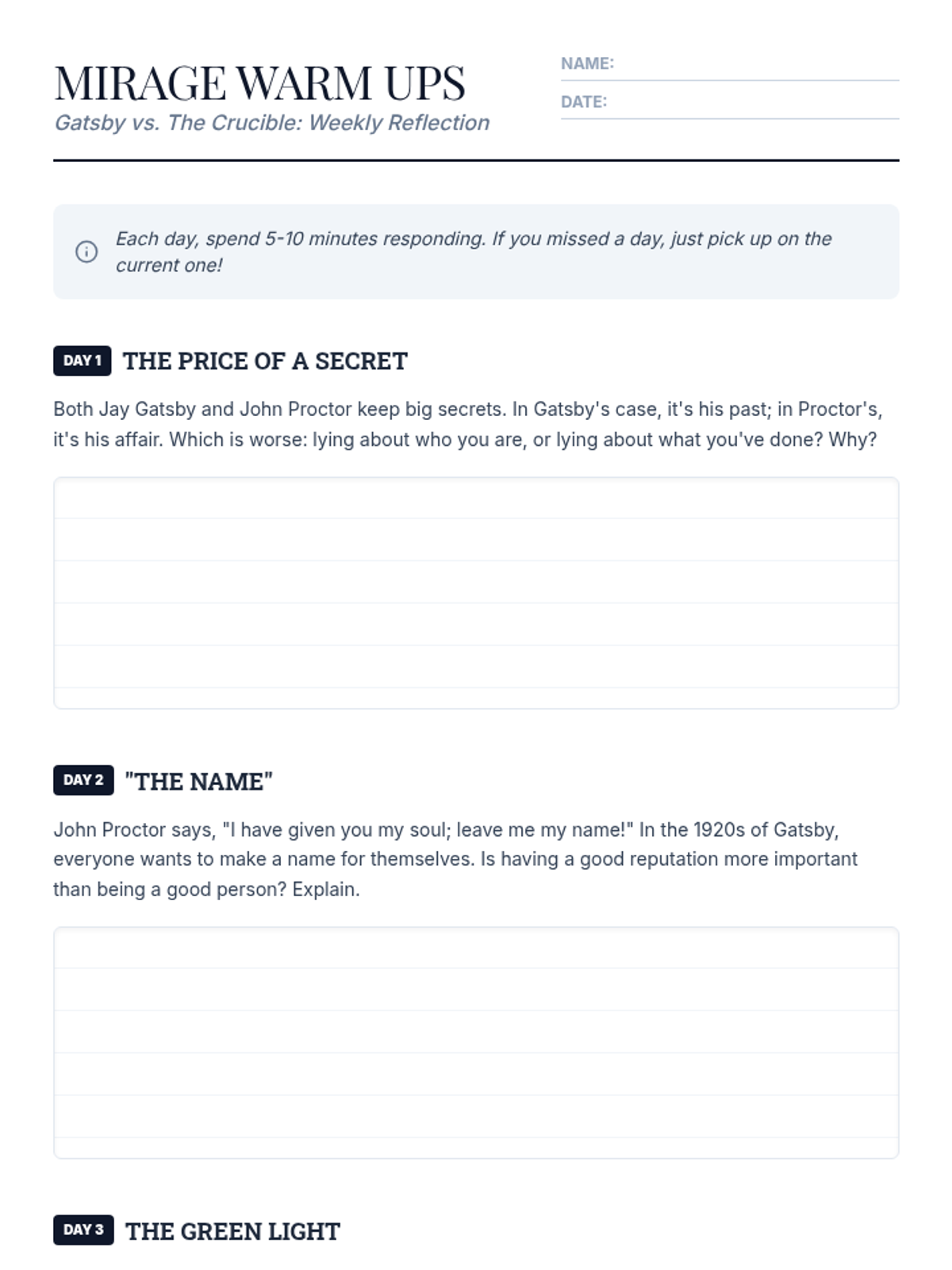
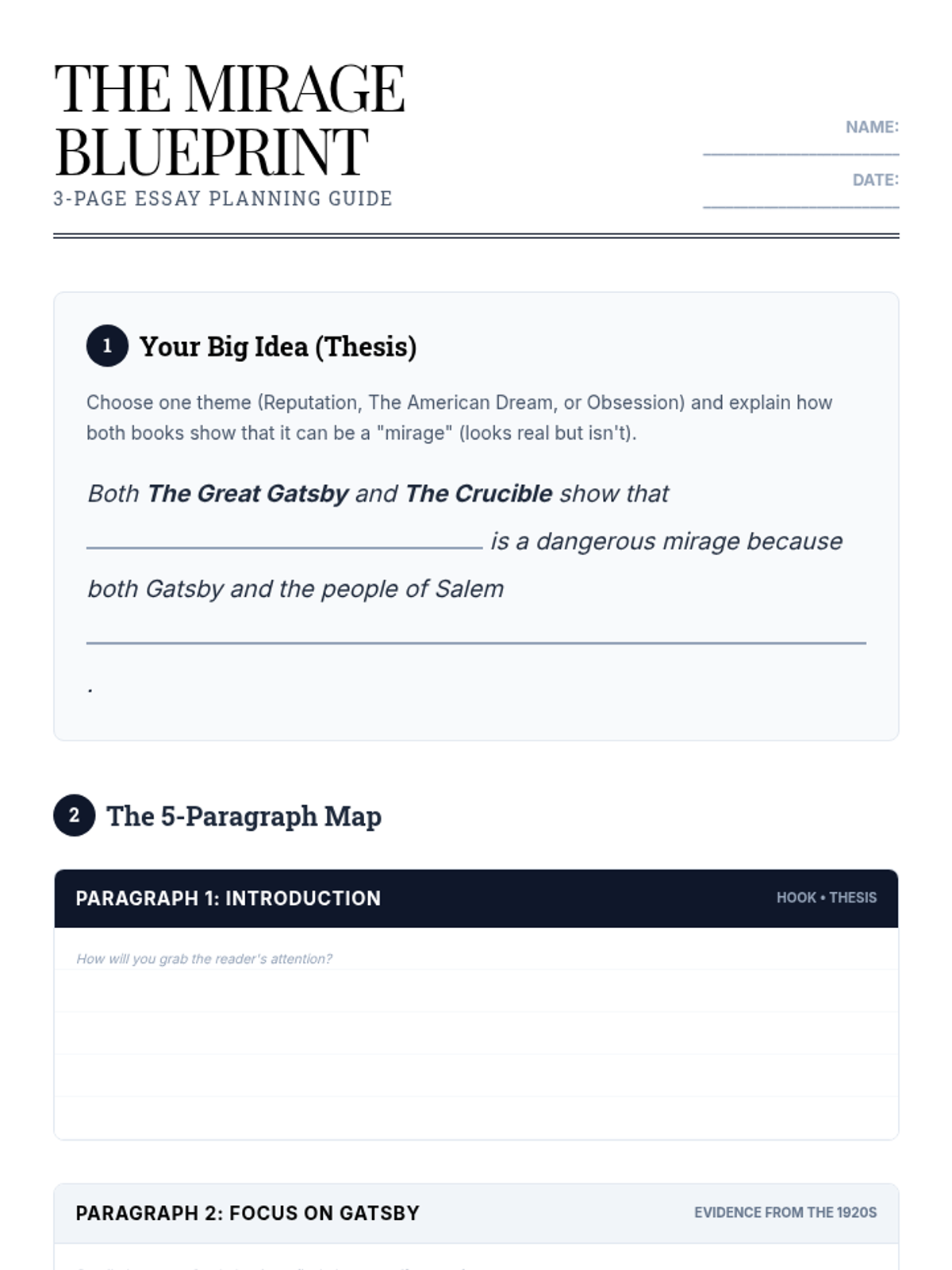
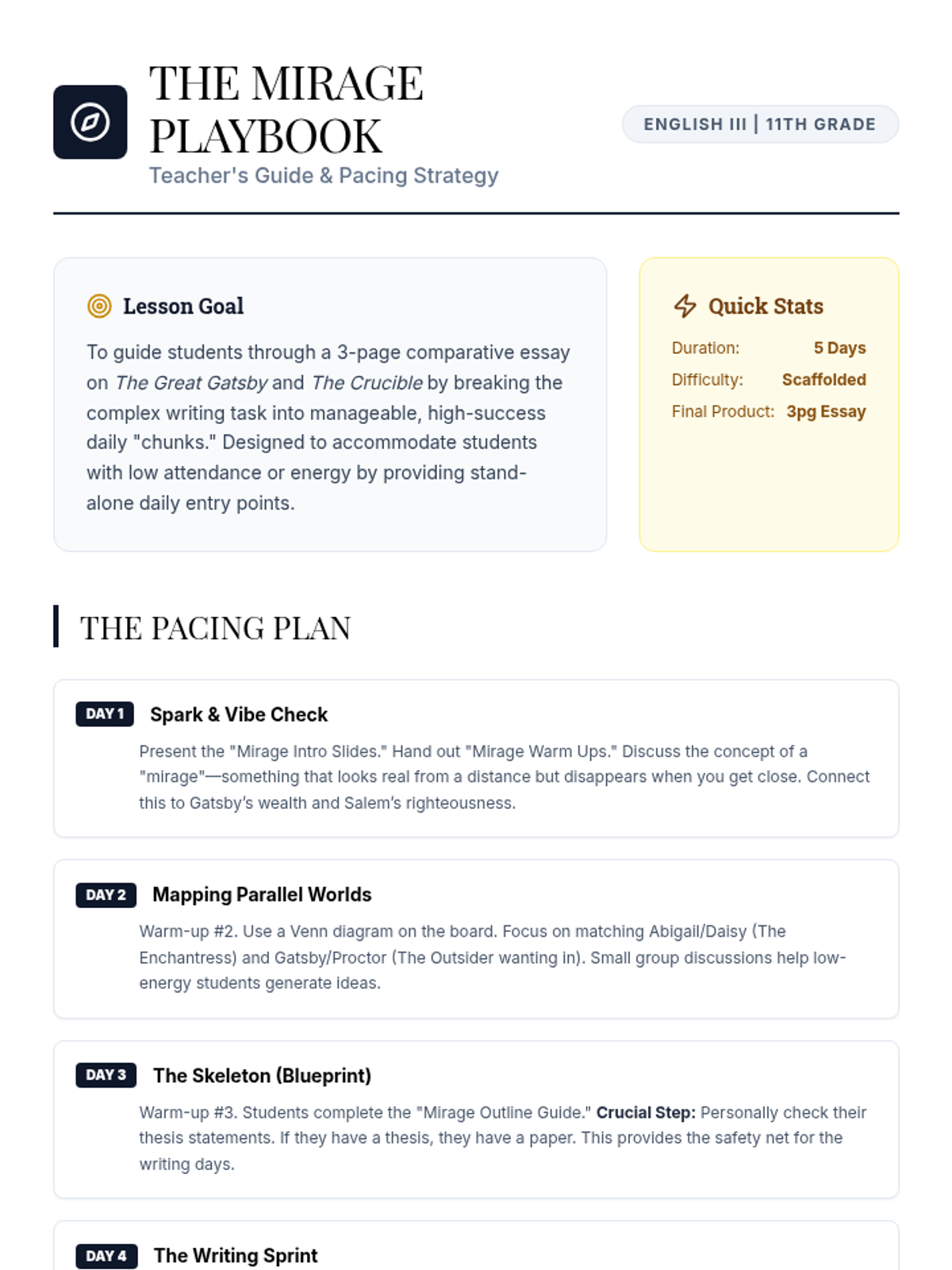
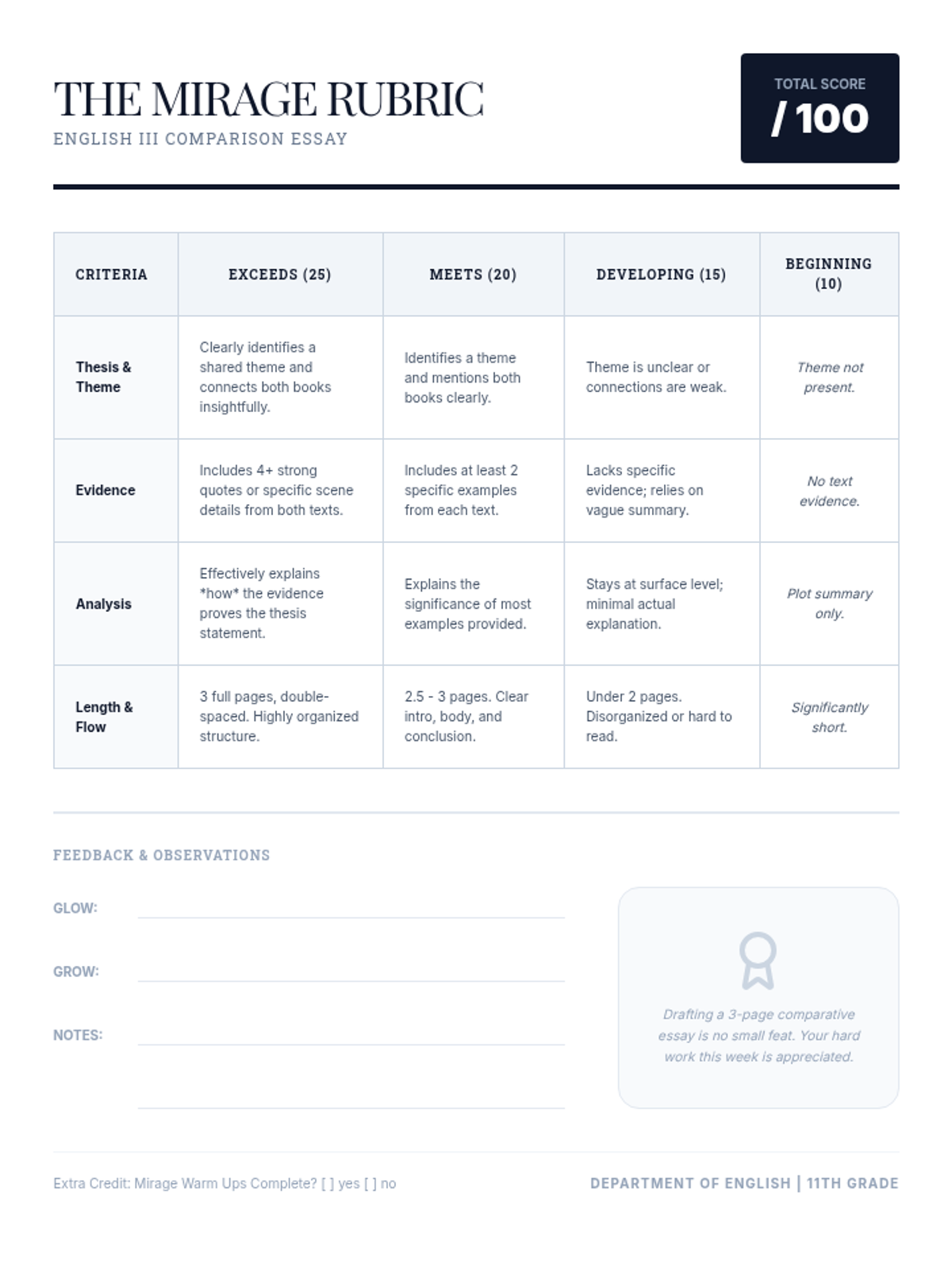
A week-long exploration comparing The Great Gatsby and The Crucible, specifically designed to engage students with varying attendance and energy levels through scaffolded activities and a structured writing process.
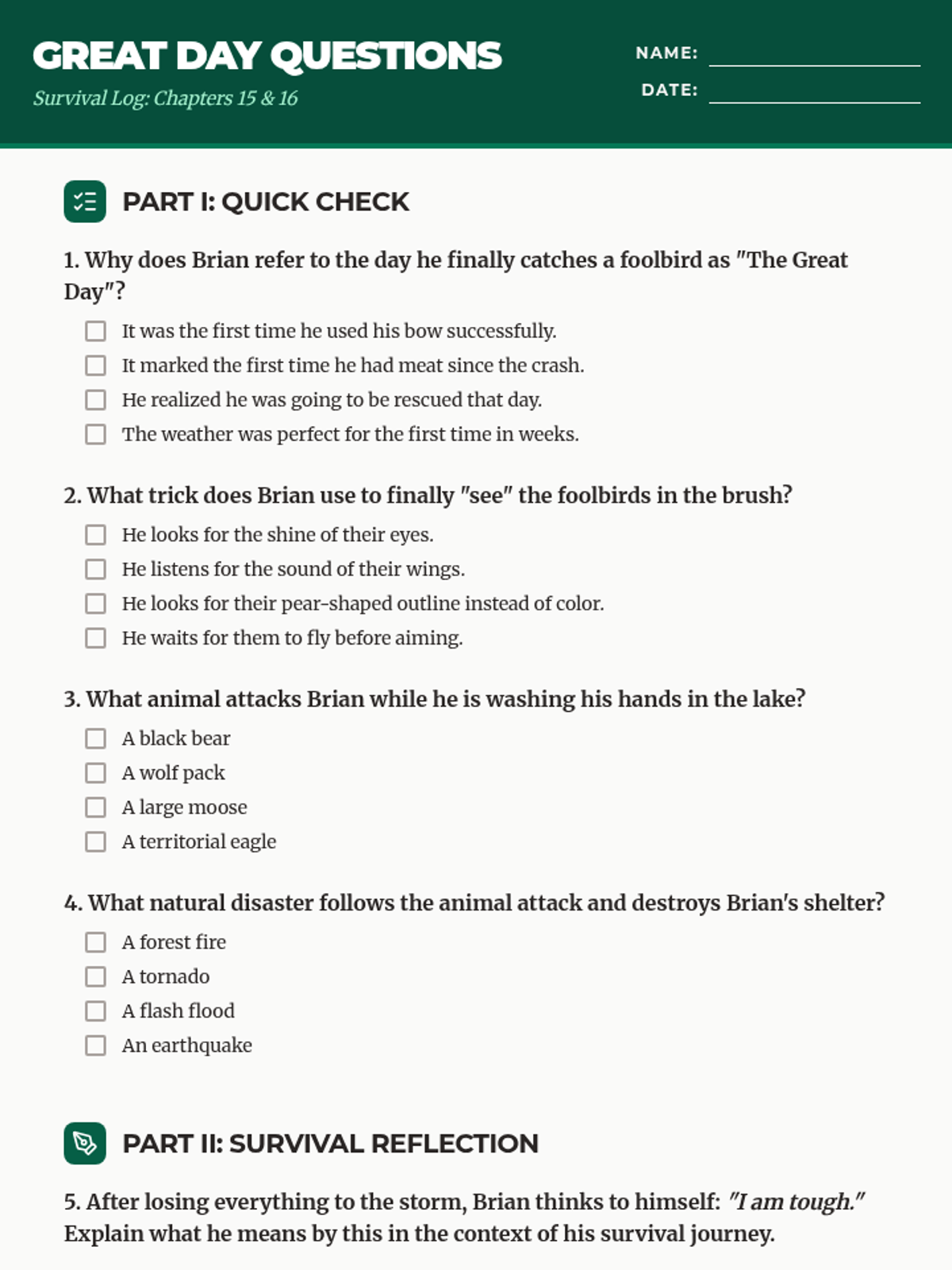
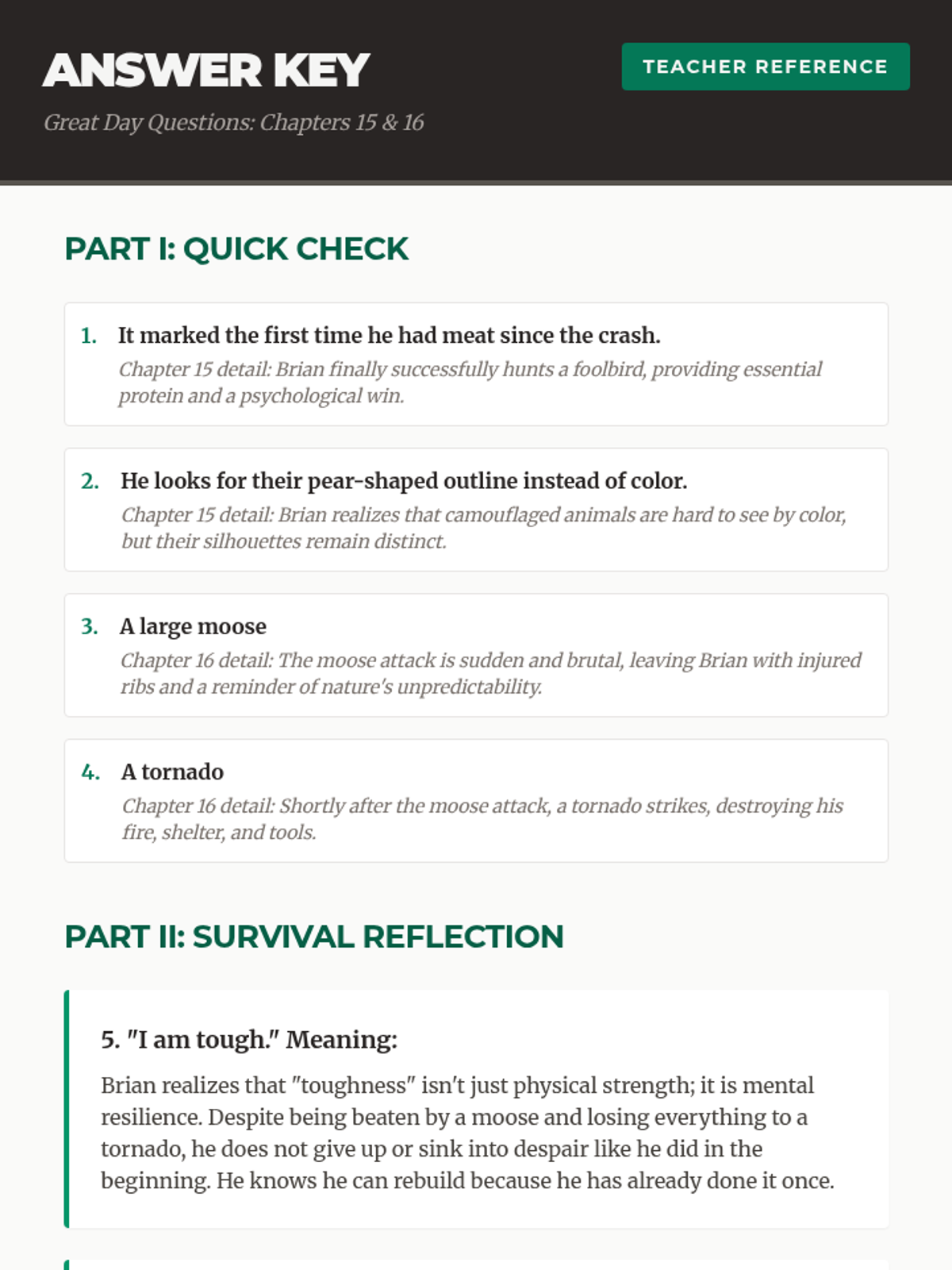
A focused study on chapters 15 and 16 of Hatchet, covering the 'Great Day' of Brian's first meat and the devastating moose attack and tornado.
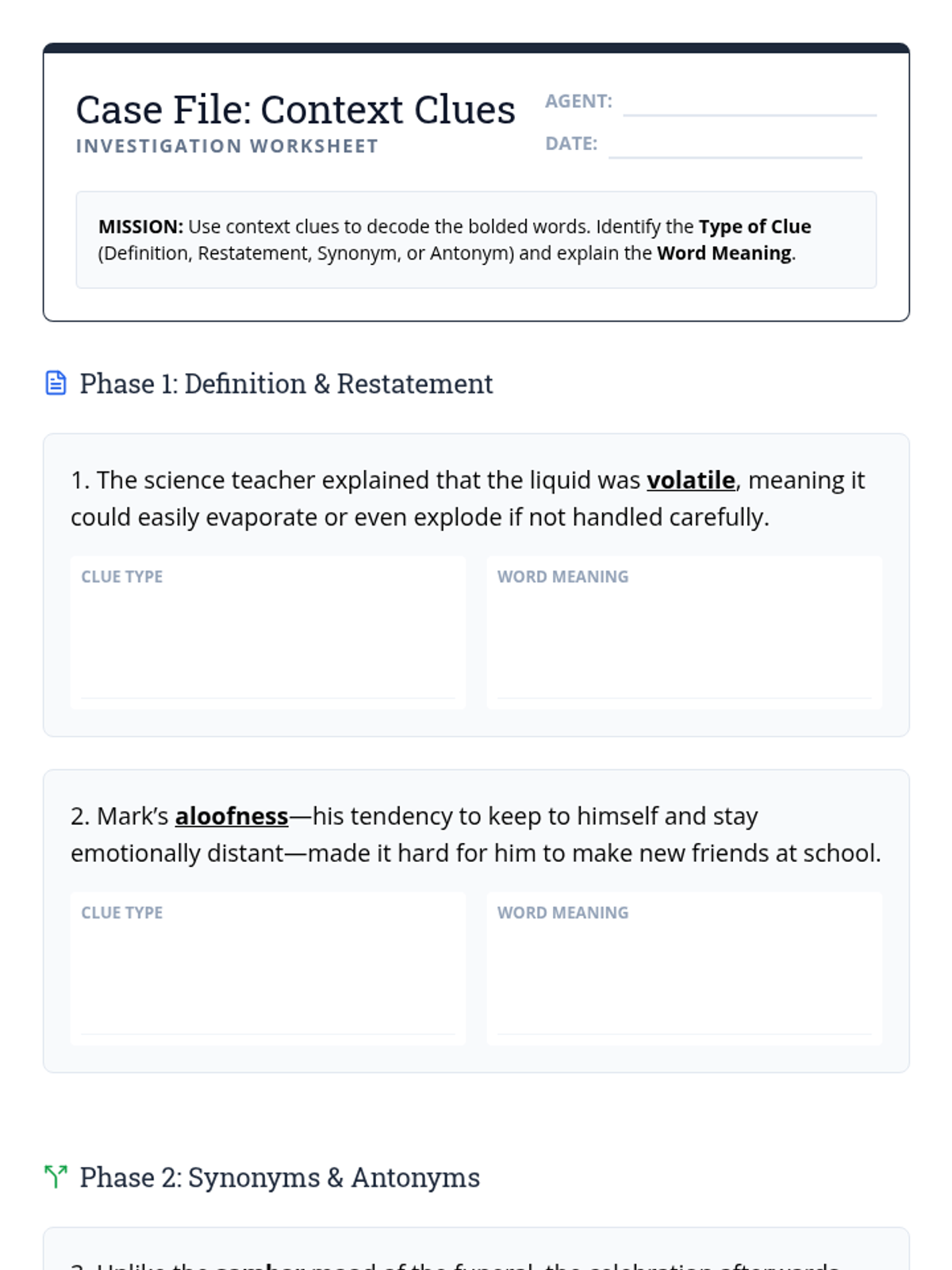
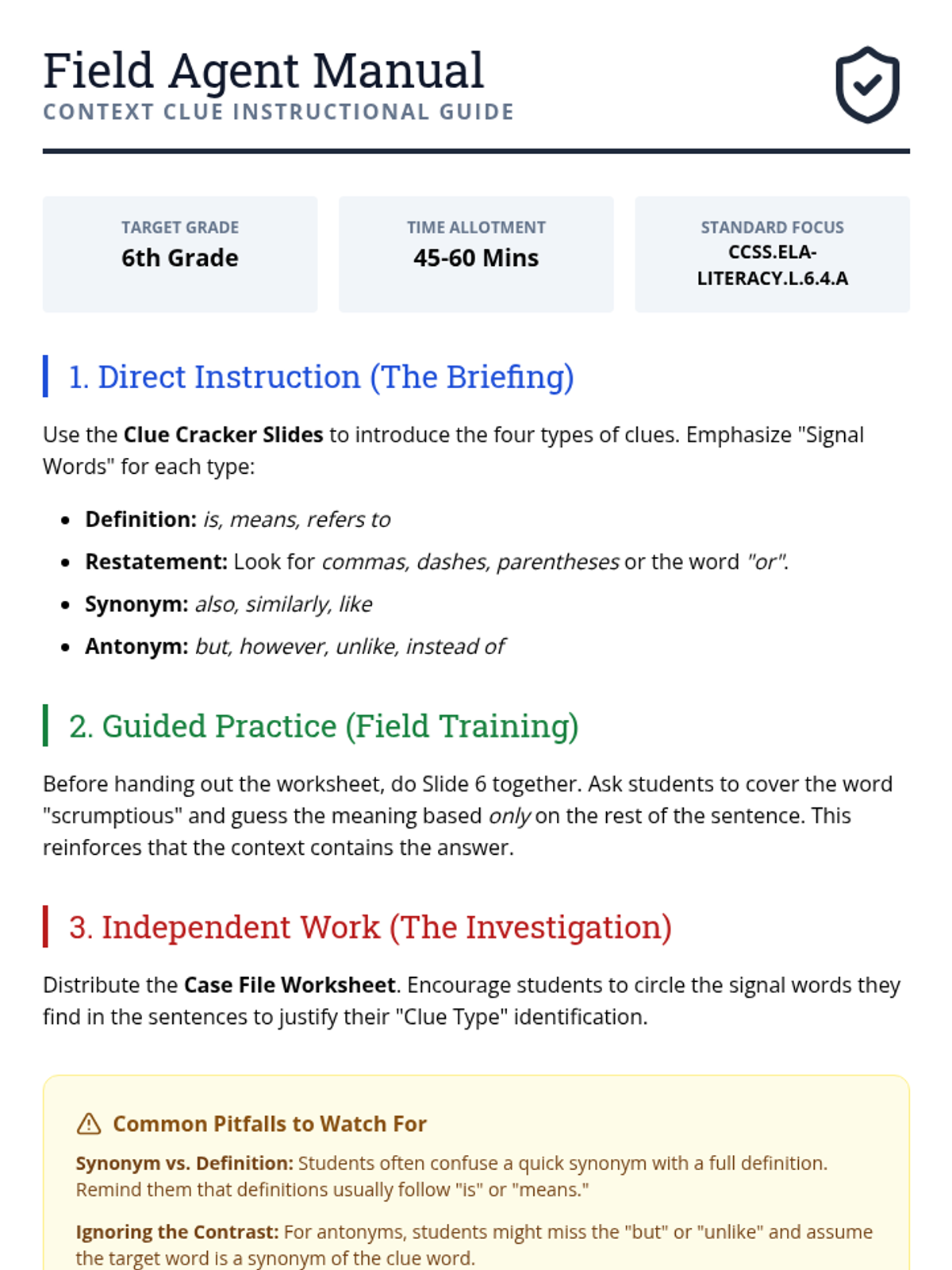
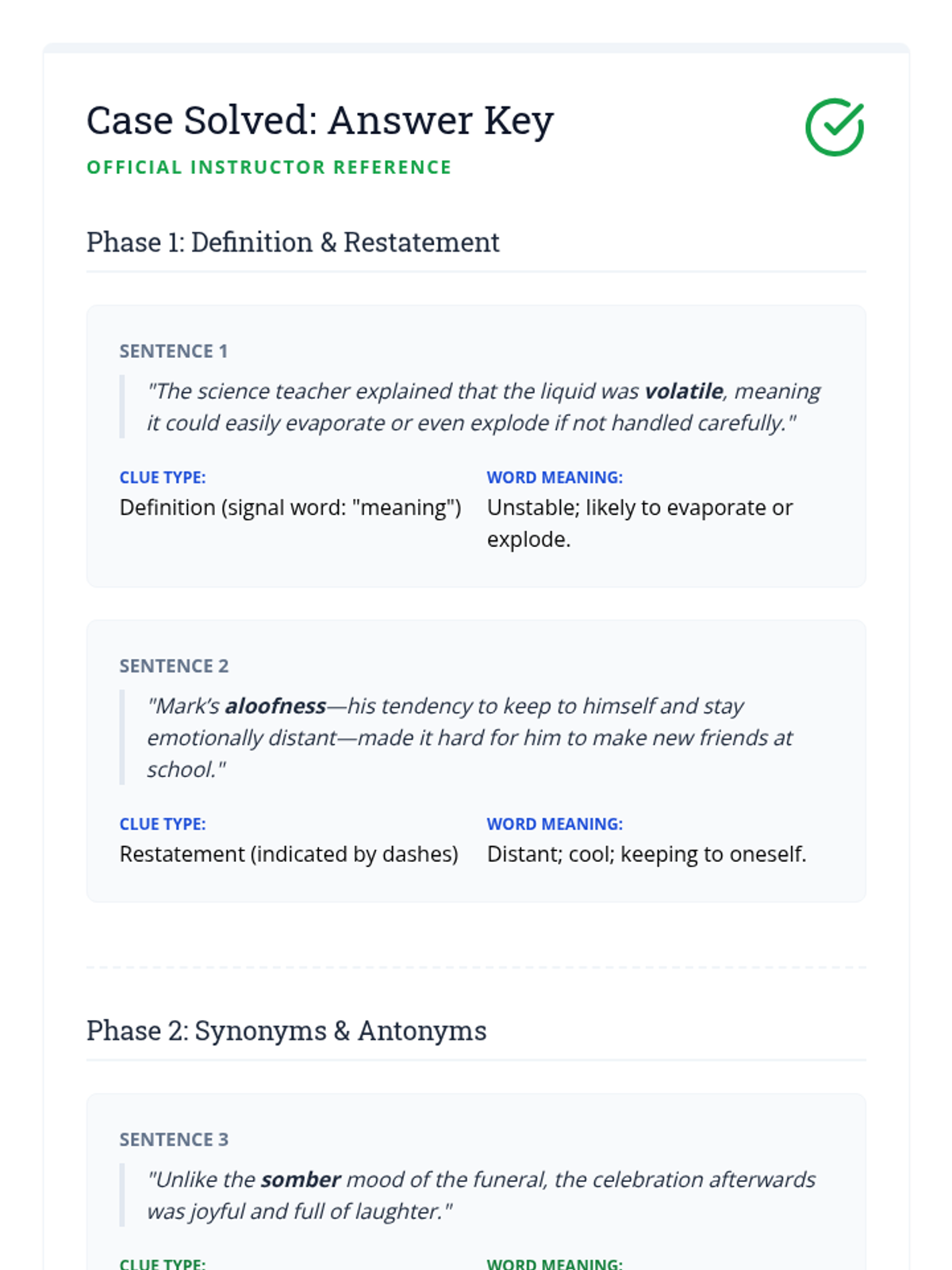
Students will learn to identify and use definition, restatement, synonym, and antonym context clues to determine the meaning of unfamiliar vocabulary in 6th-grade level texts.
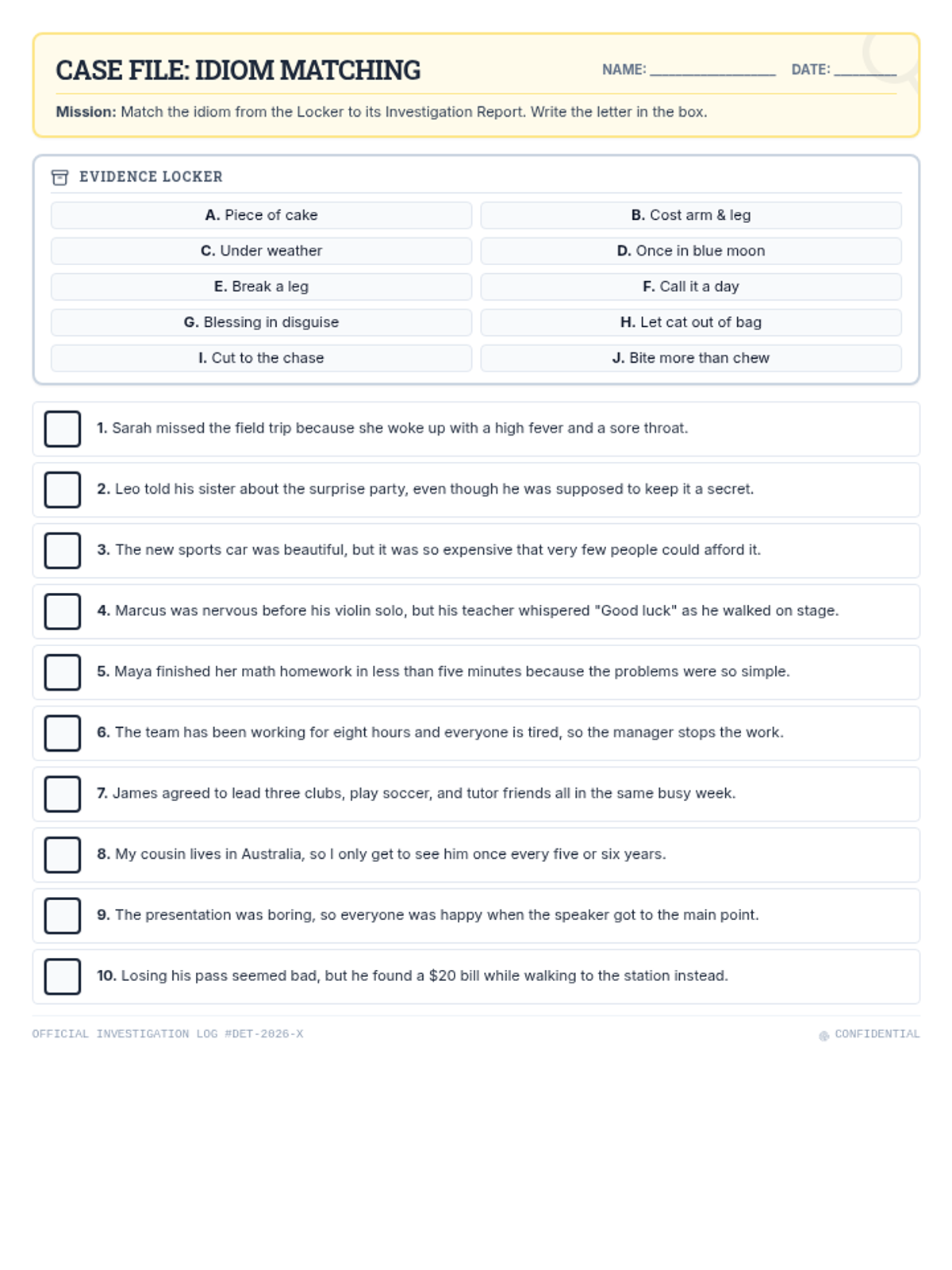
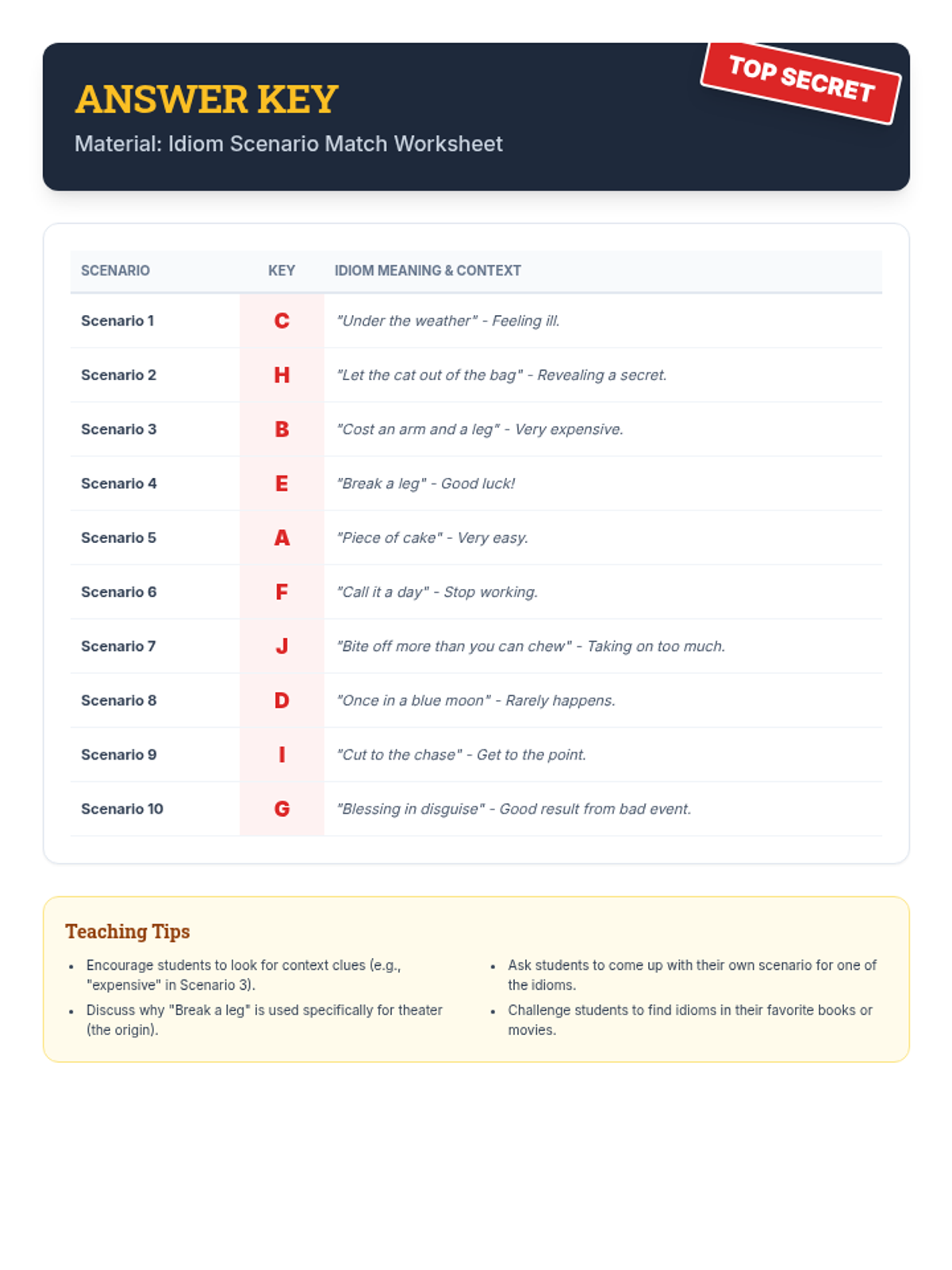
A lesson introducing common idioms and practicing their use in real-world scenarios through a detective-themed investigation.
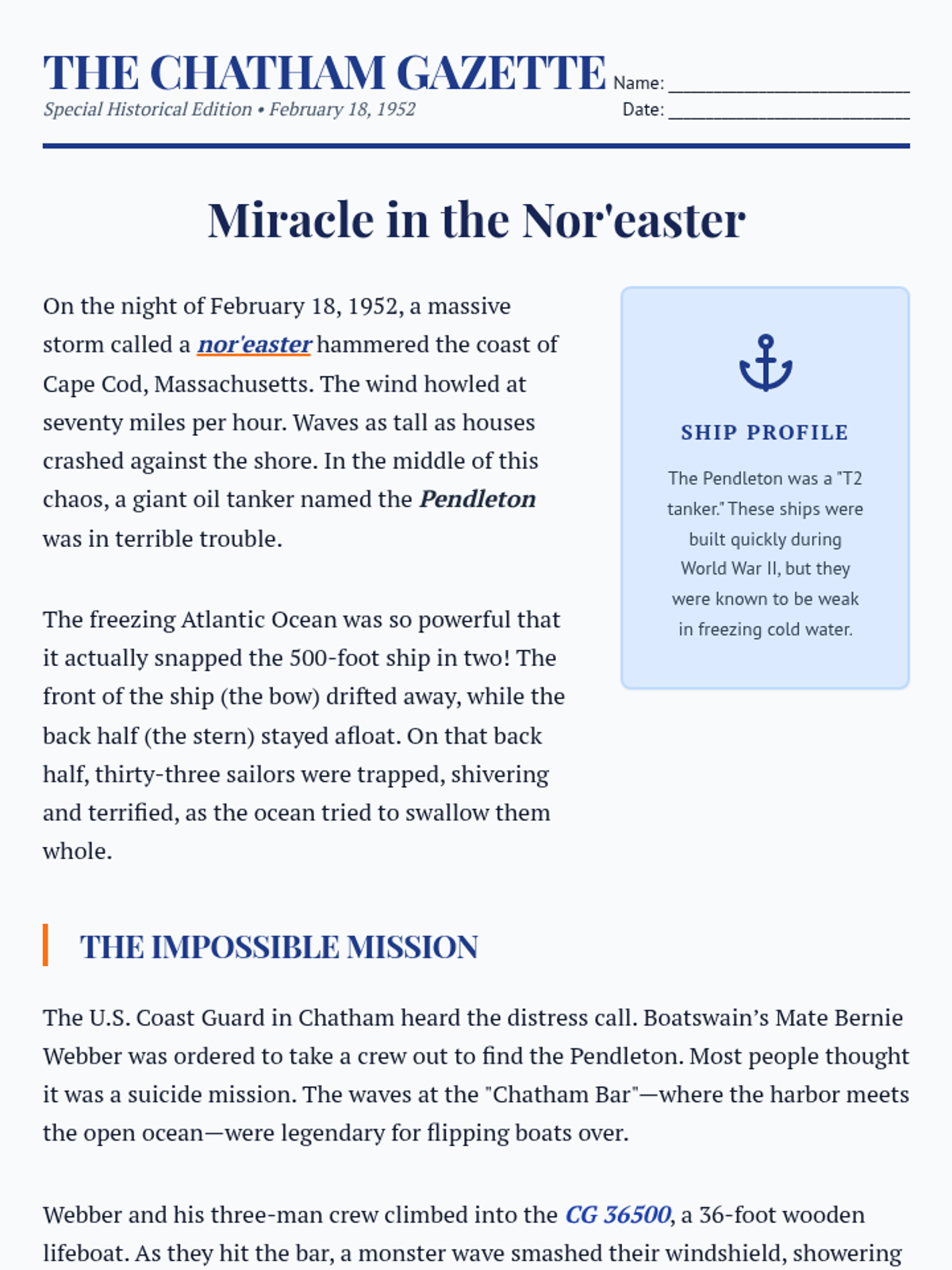
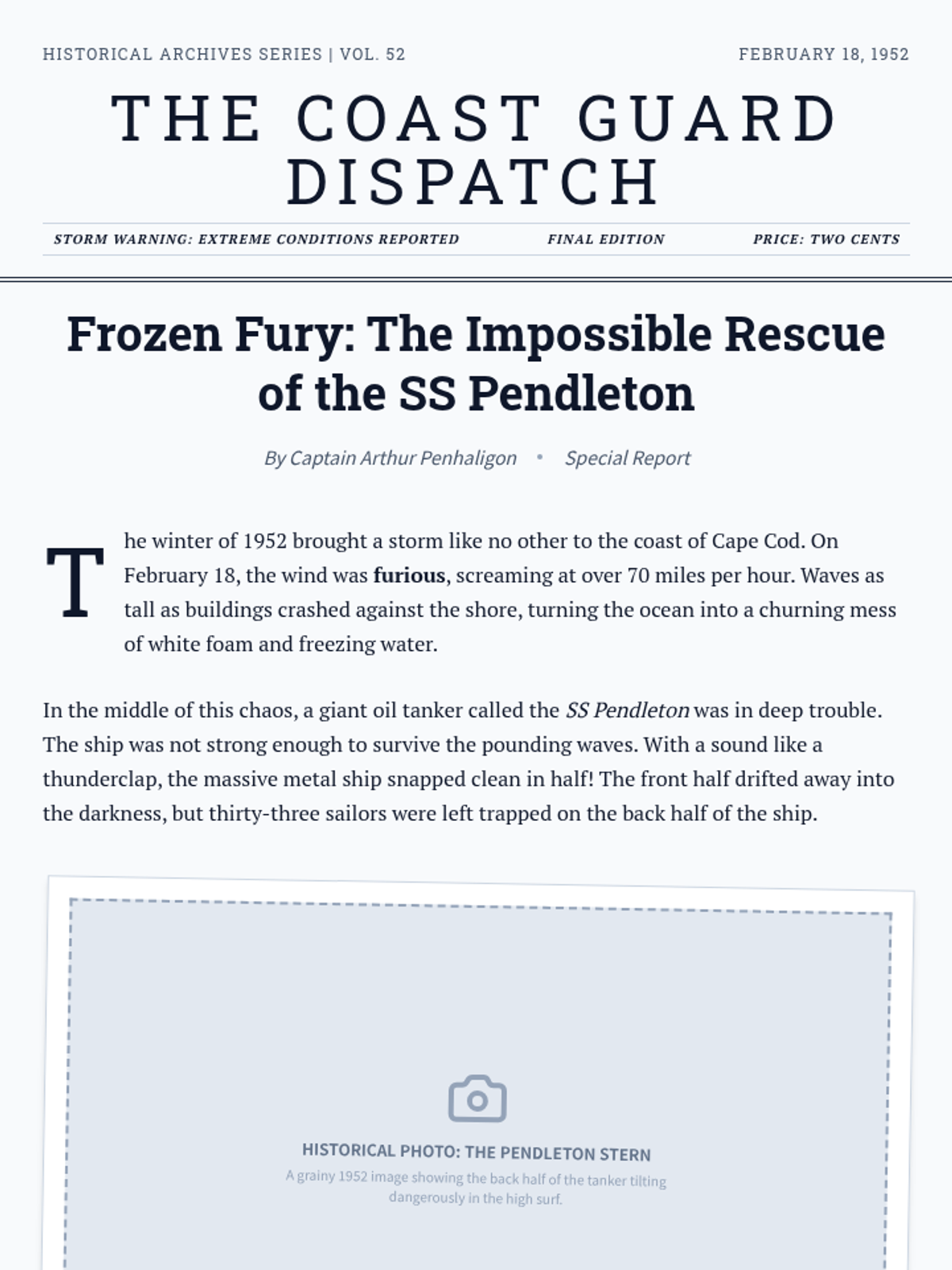
A lesson centered on the historic 1952 Pendleton rescue off the coast of Chatham, Massachusetts, featuring a Lexile-leveled informational article and assessment.
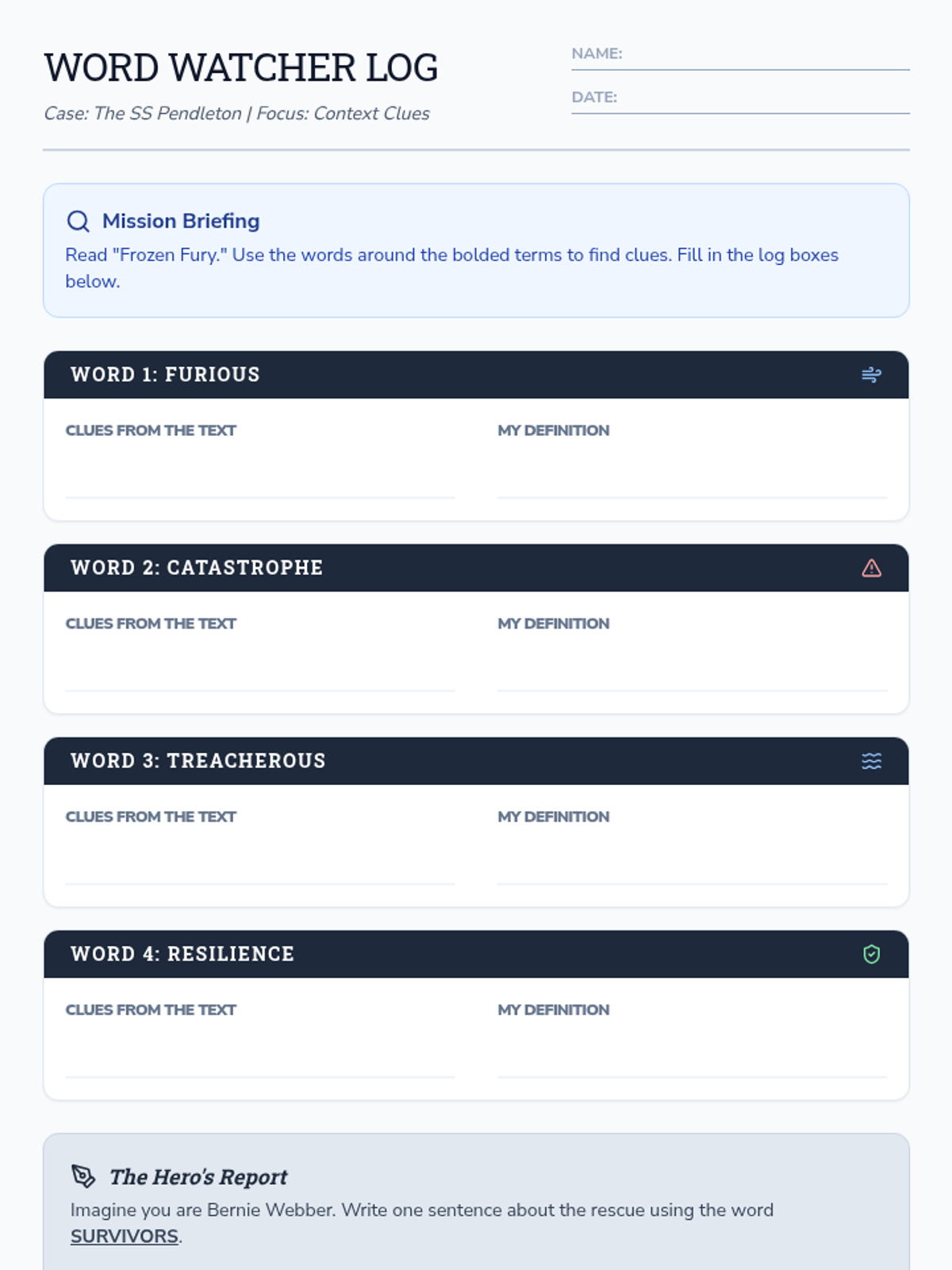
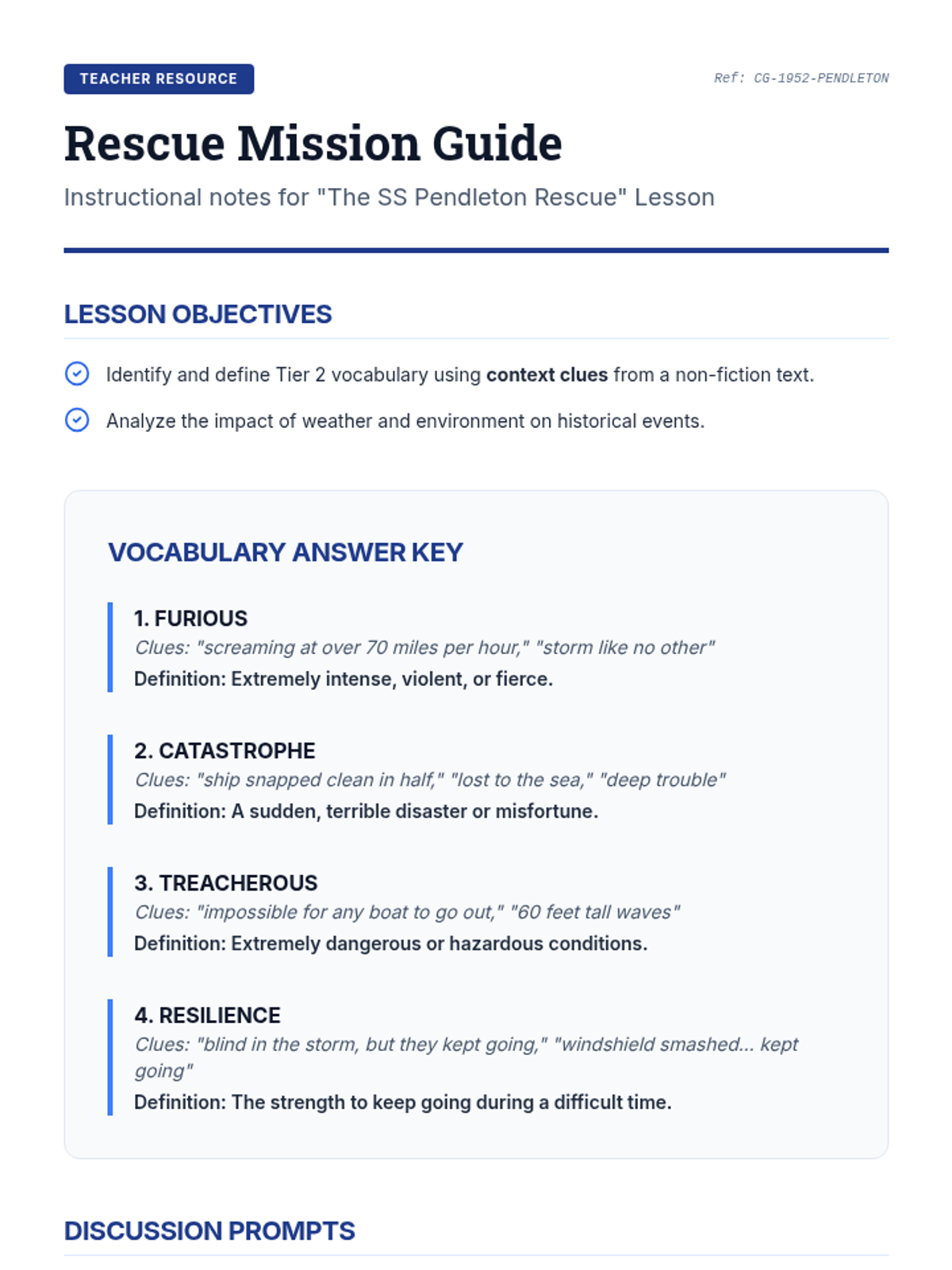
A lesson centered on the 1952 Pendleton rescue, focusing on reading comprehension and vocabulary acquisition through context clues. Students explore a historical non-fiction account of one of the greatest small-boat rescues in Coast Guard history.
A lesson focused on the transition from thesis statements to body paragraphs through the creation of effective topic sentences.
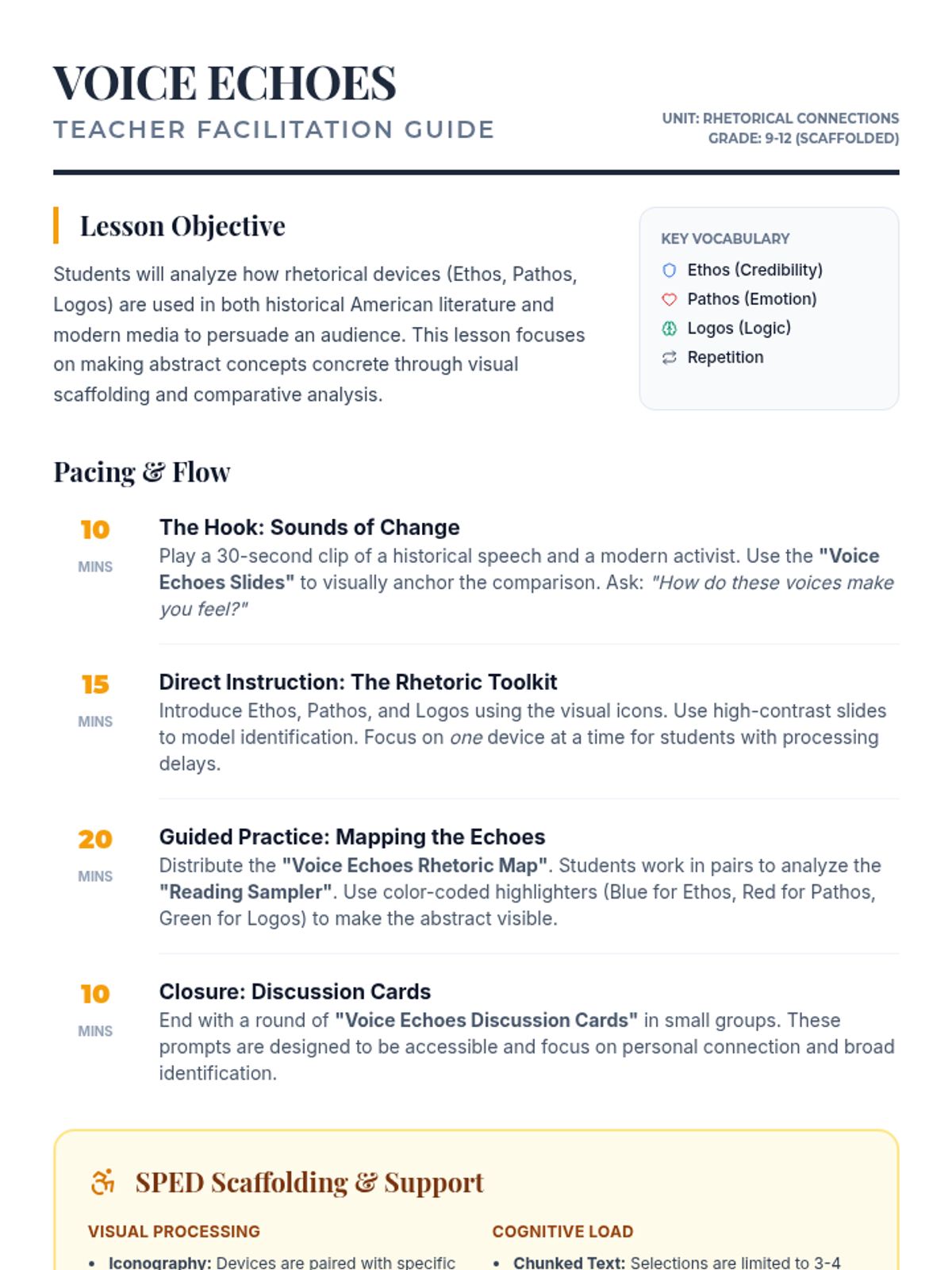
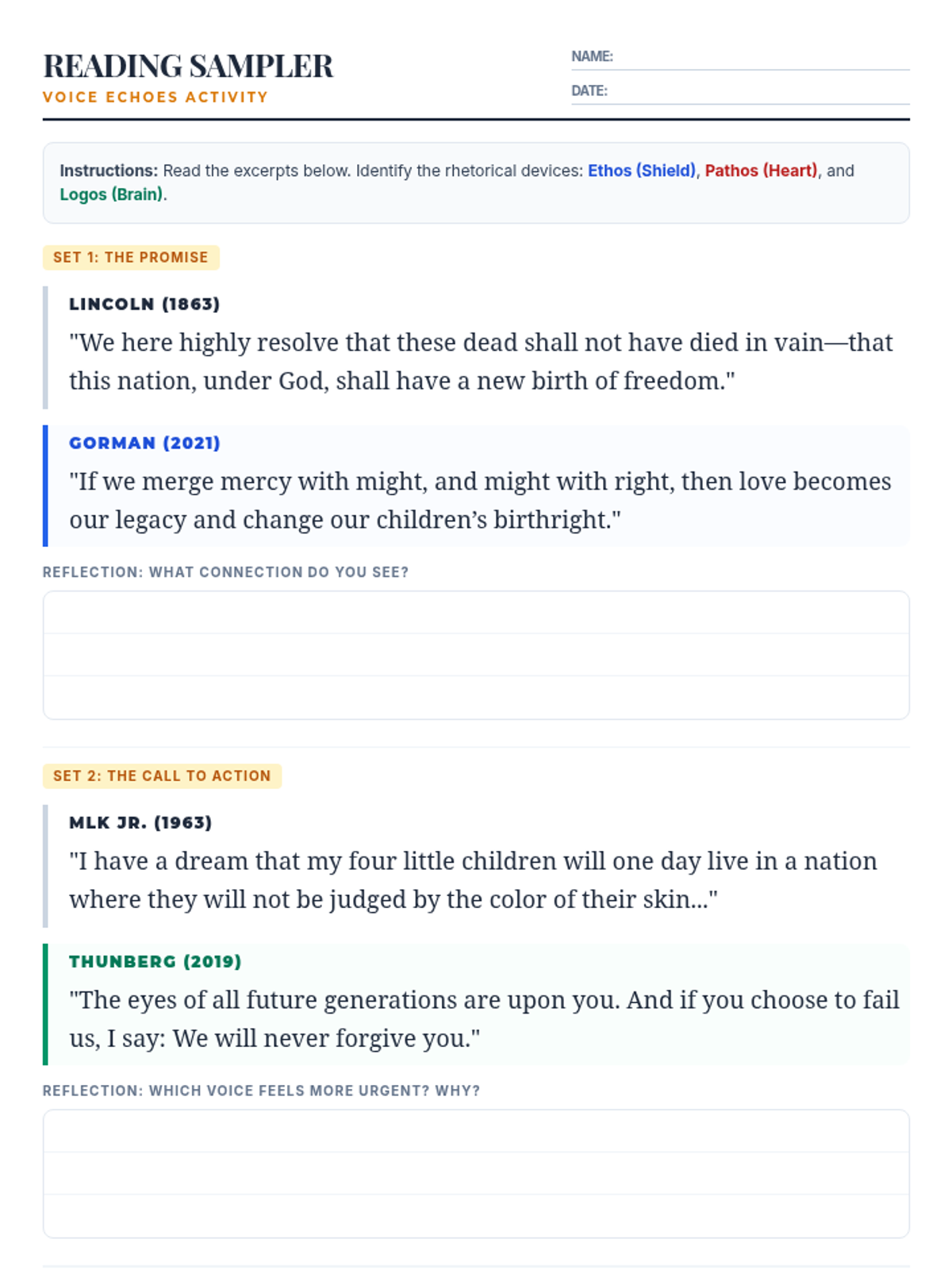
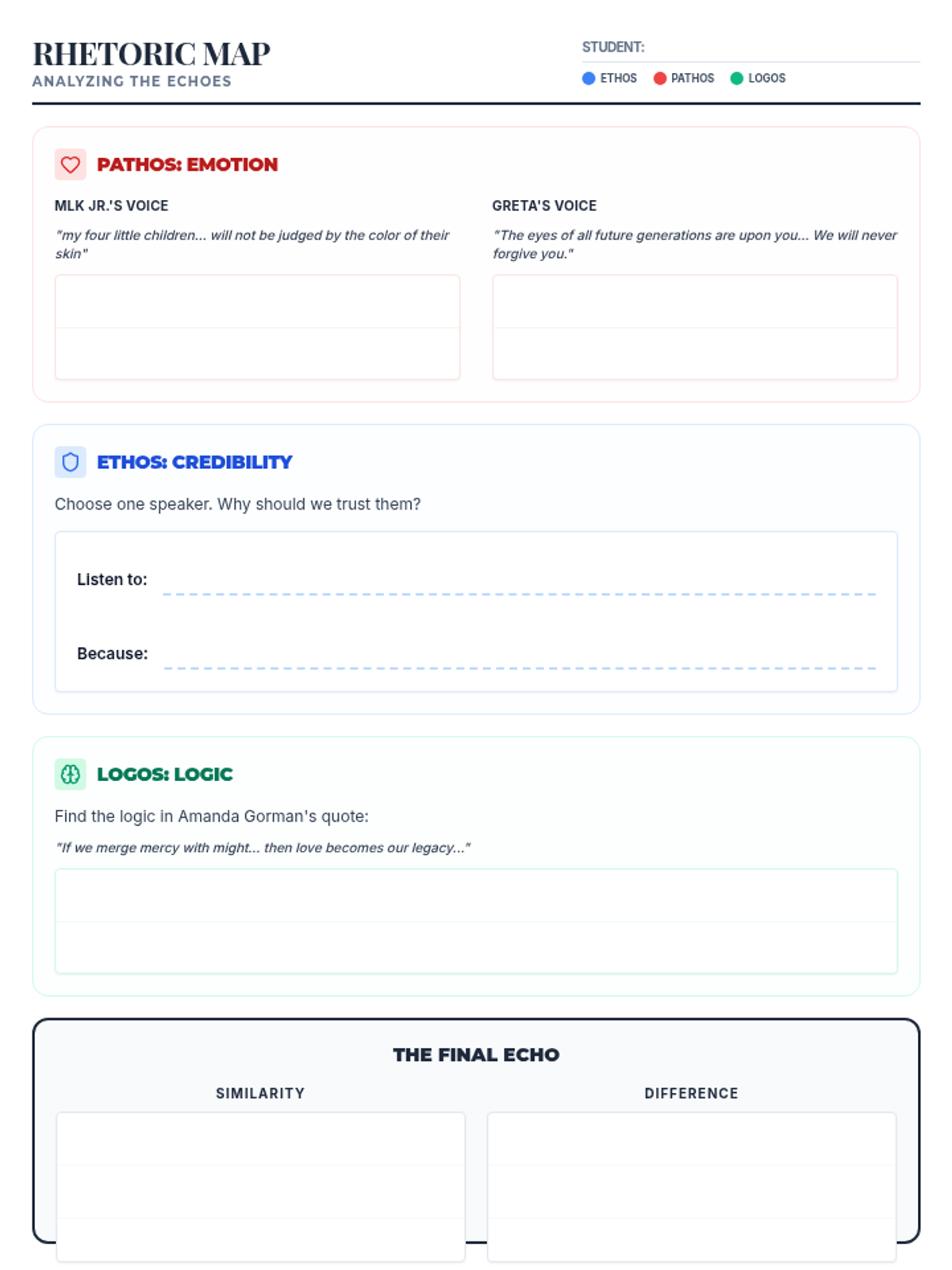
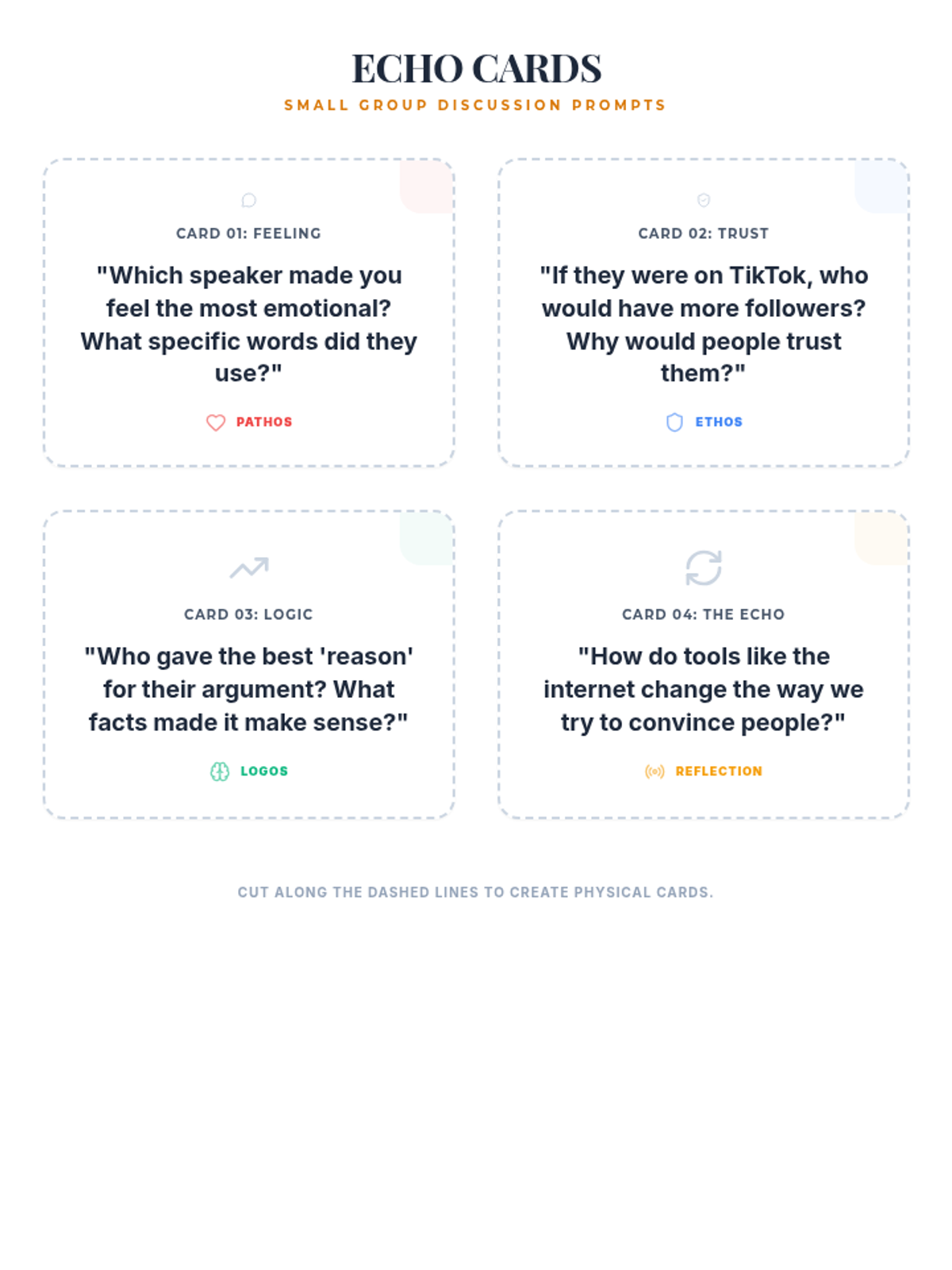
A lesson connecting historical American literature to modern media through the lens of rhetorical devices, specifically scaffolded for Special Education support. Students will identify enduring themes and persuasive techniques across different eras.
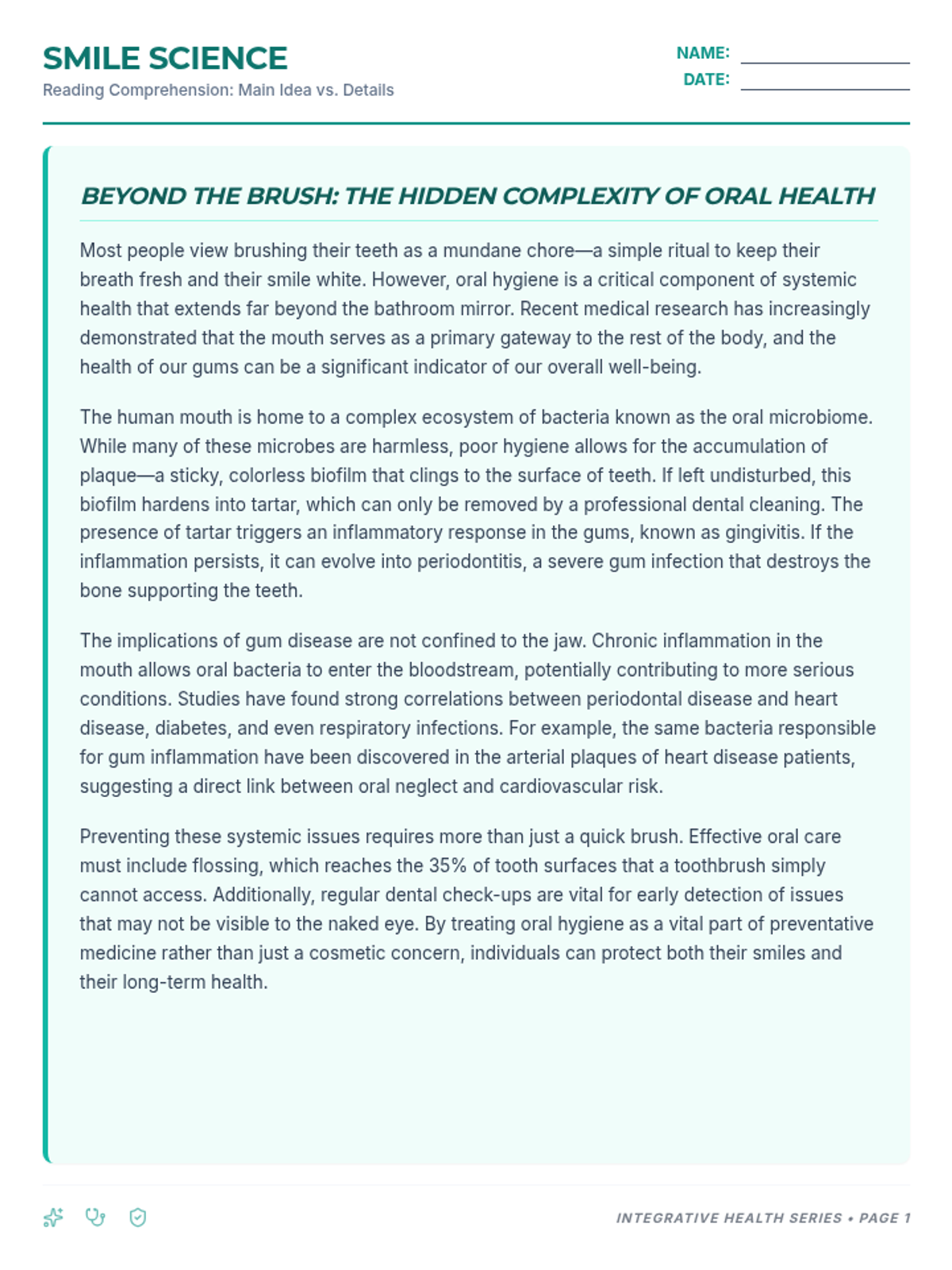
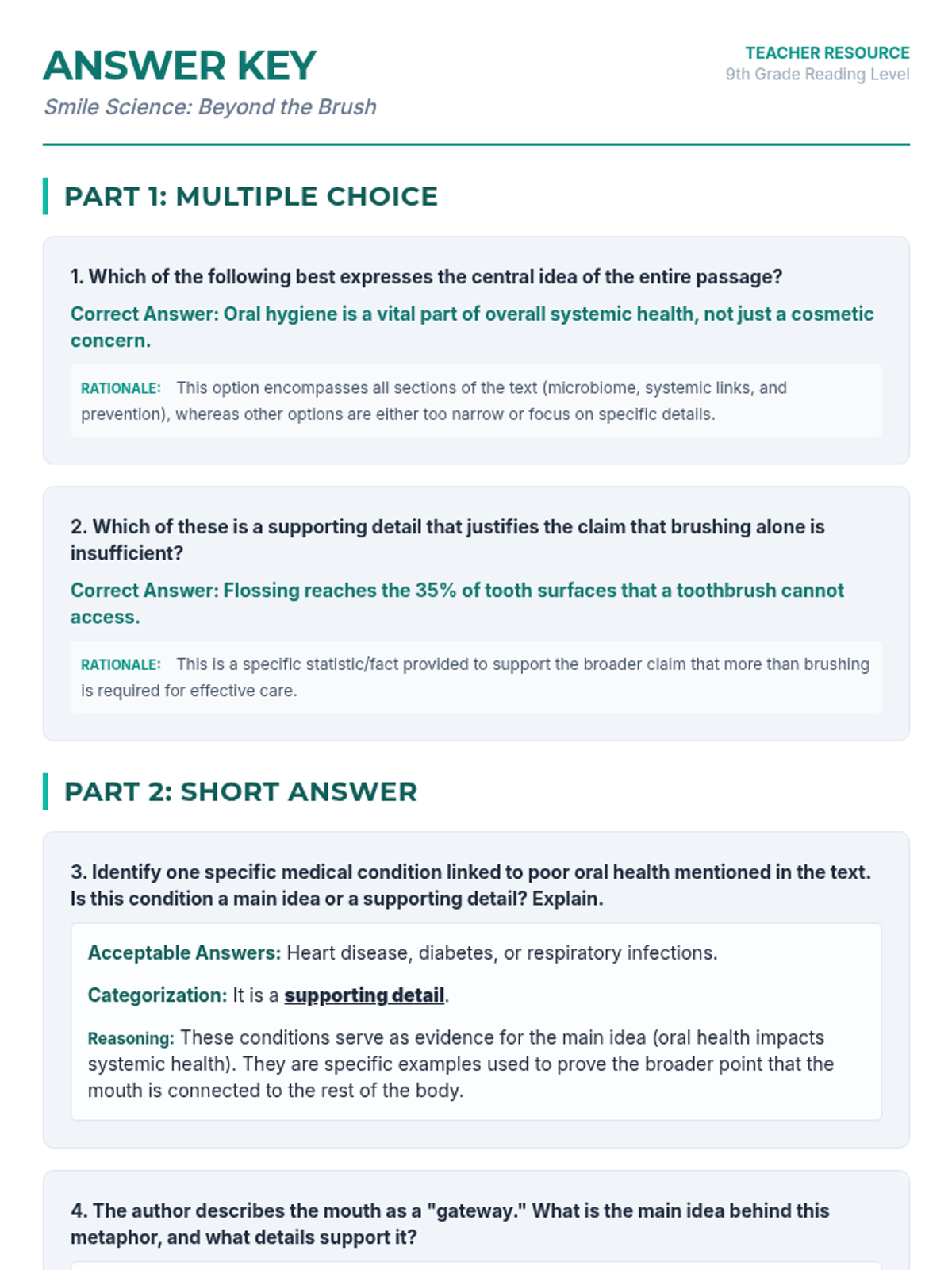
A lesson focused on analyzing informational text about dental hygiene, specifically targeting the ability to distinguish between central ideas and supporting details at a 9th-grade level.
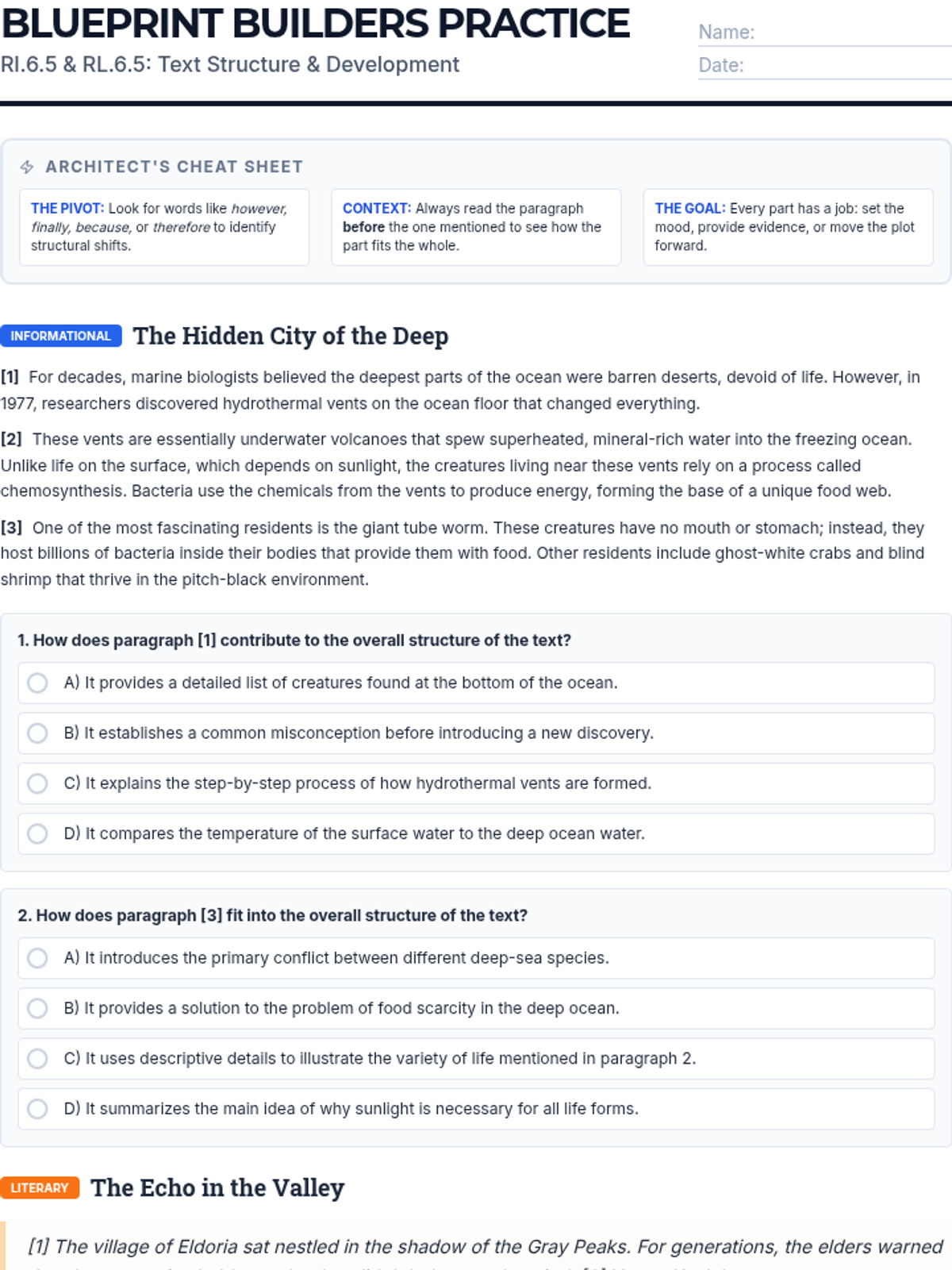
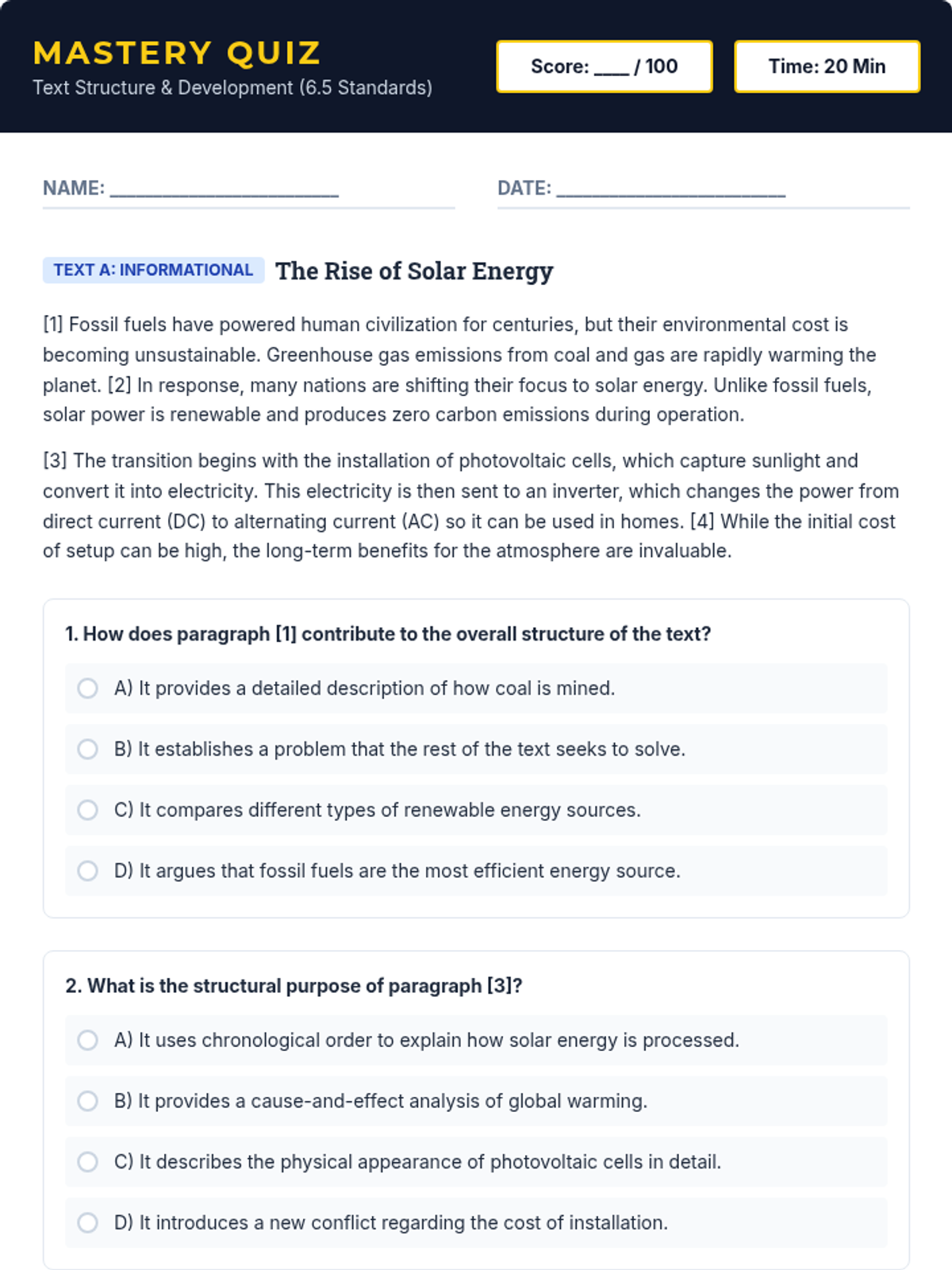
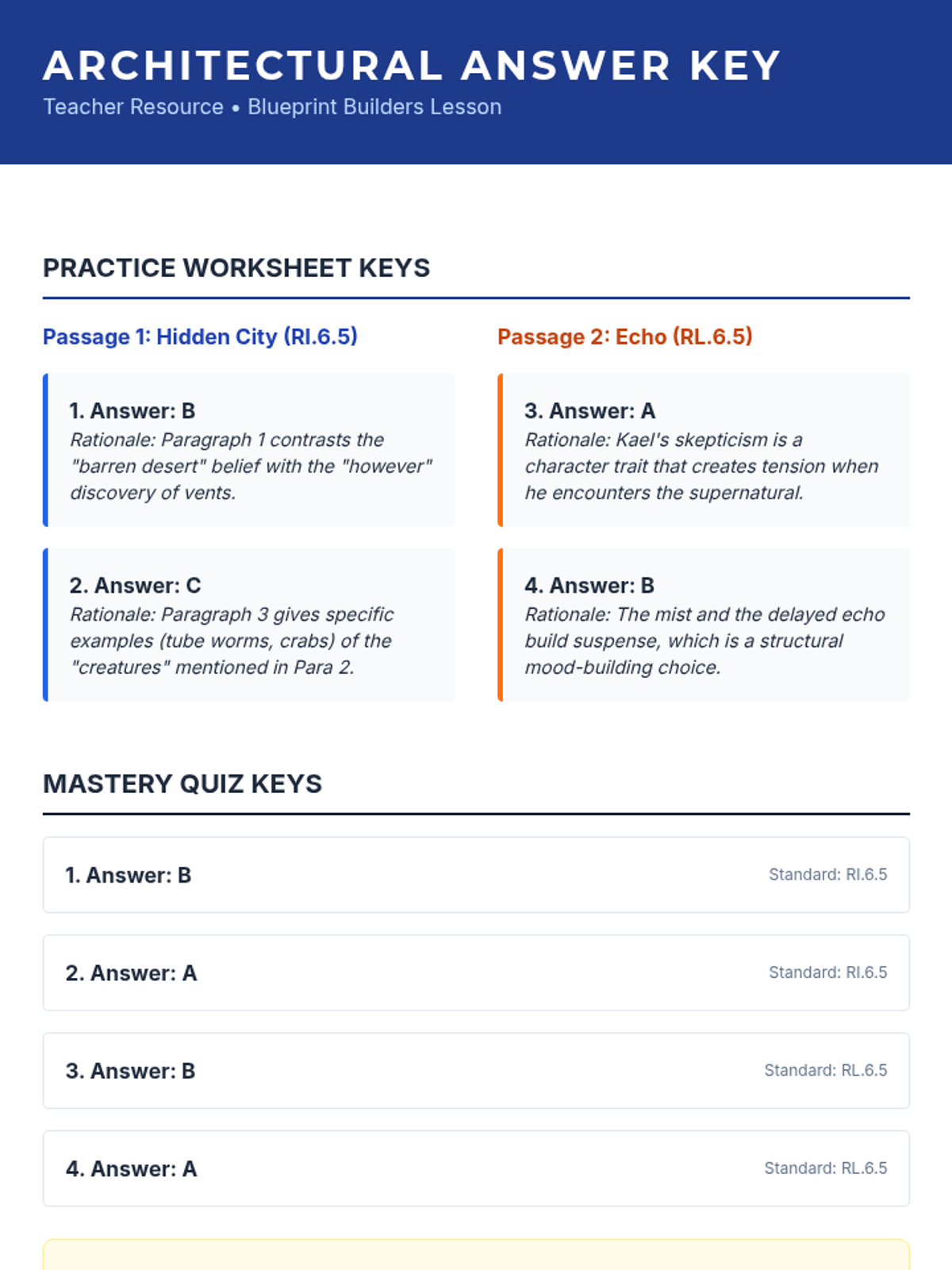
A comprehensive 90-minute reteach lesson focusing on RI.6.5 and RL.6.5, analyzing how specific parts of a text contribute to its overall structure and development. Students take on the role of 'Text Architects' to deconstruct and evaluate informational and literary blueprints.
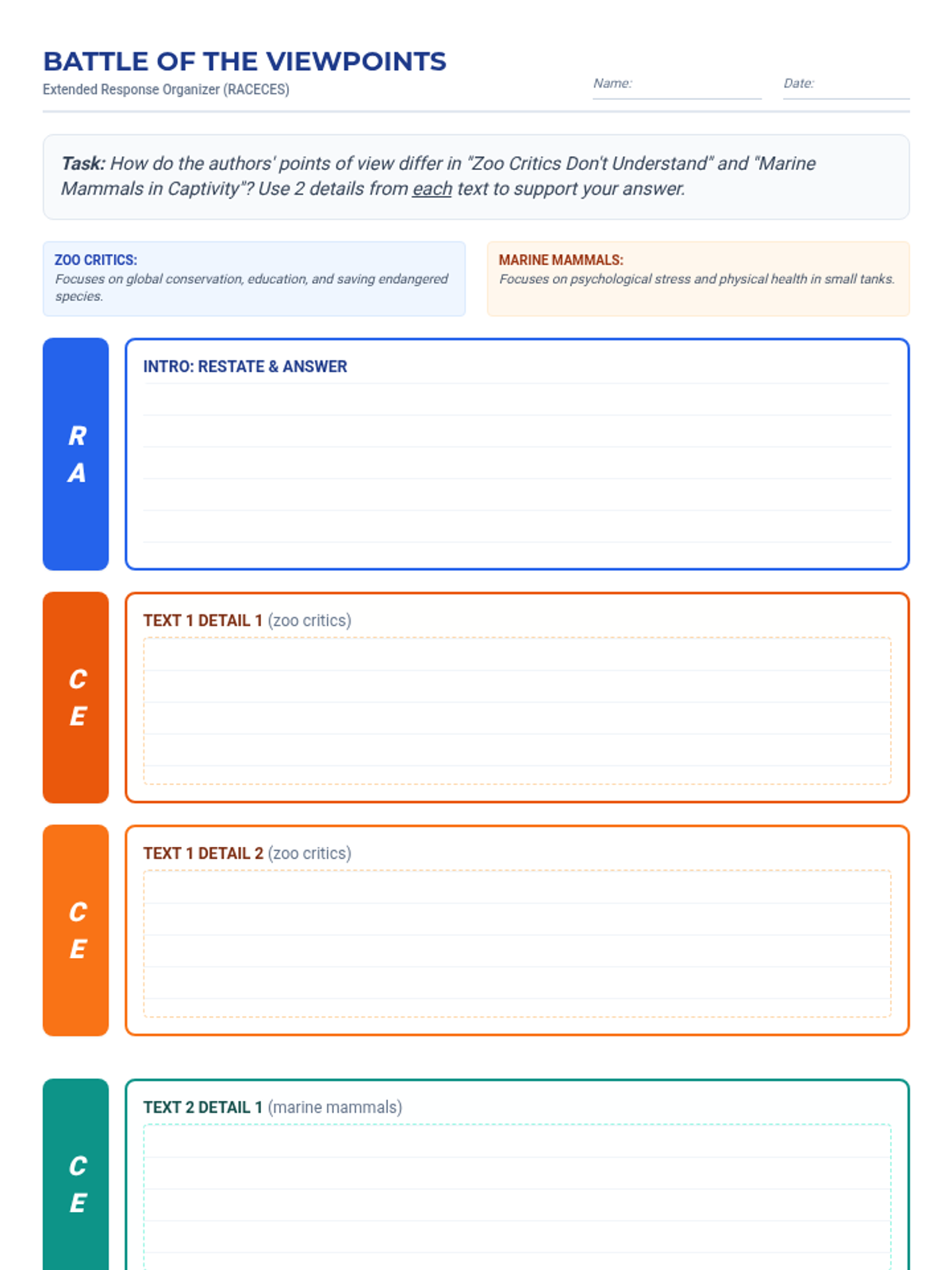
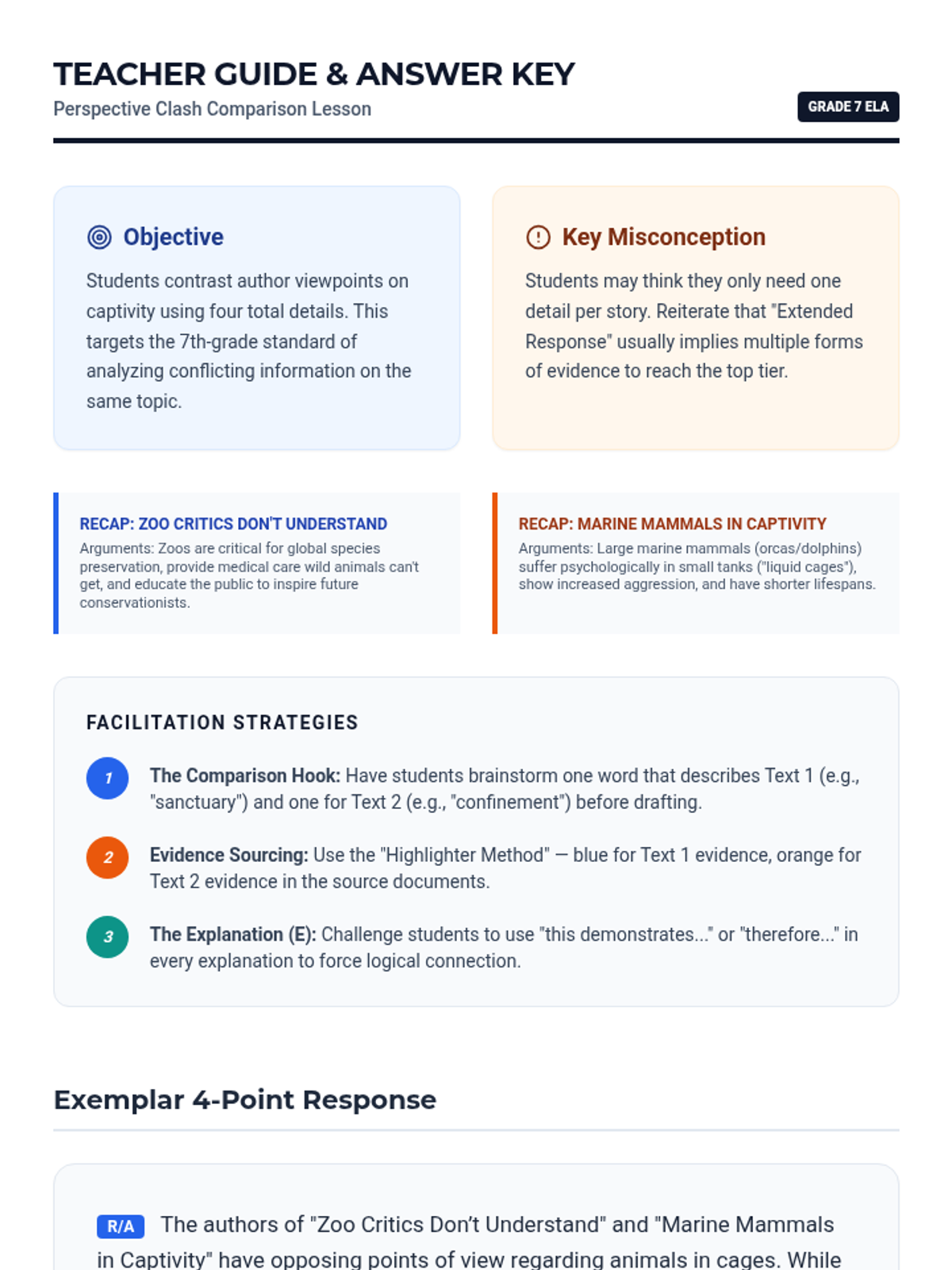
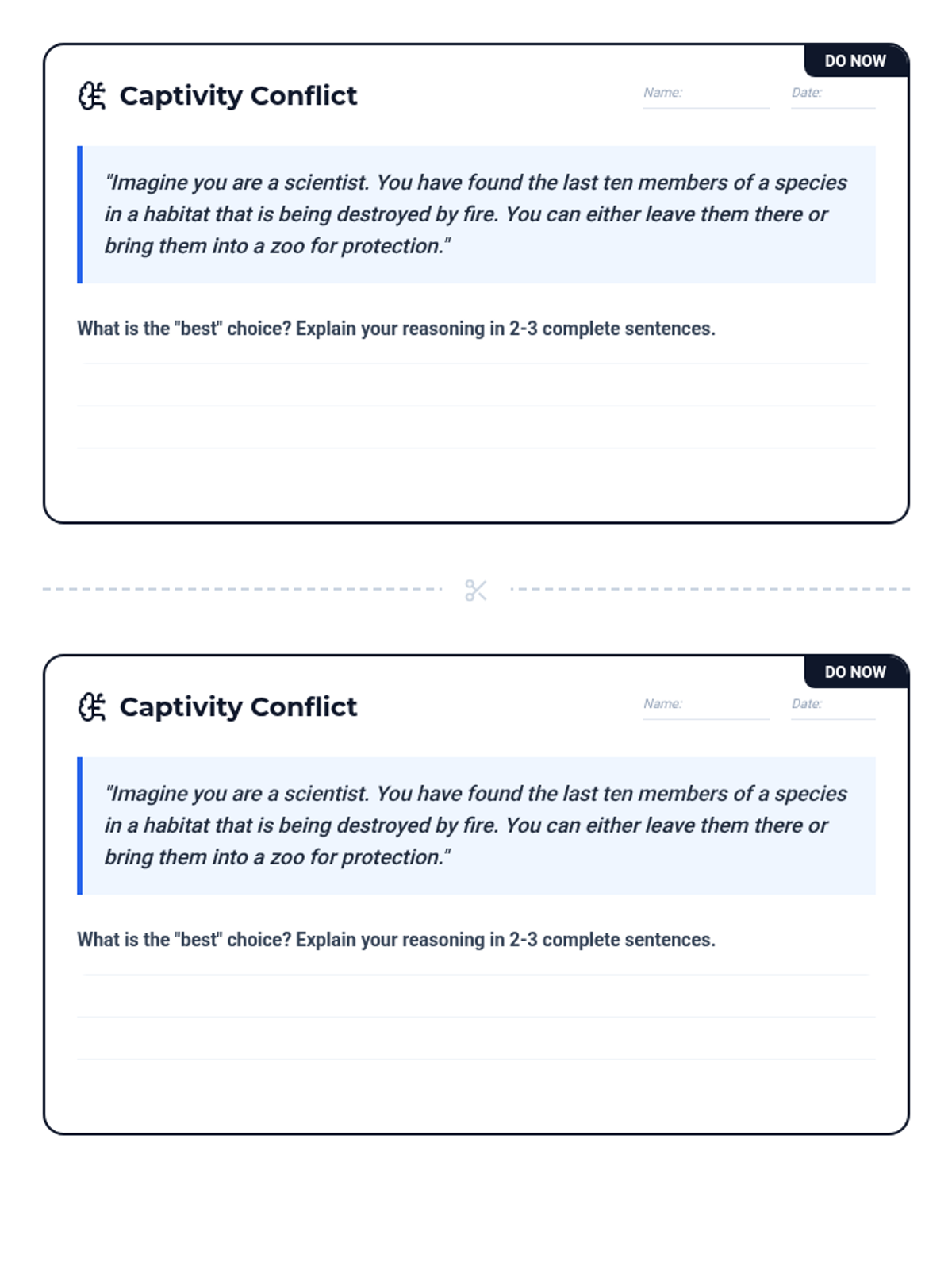
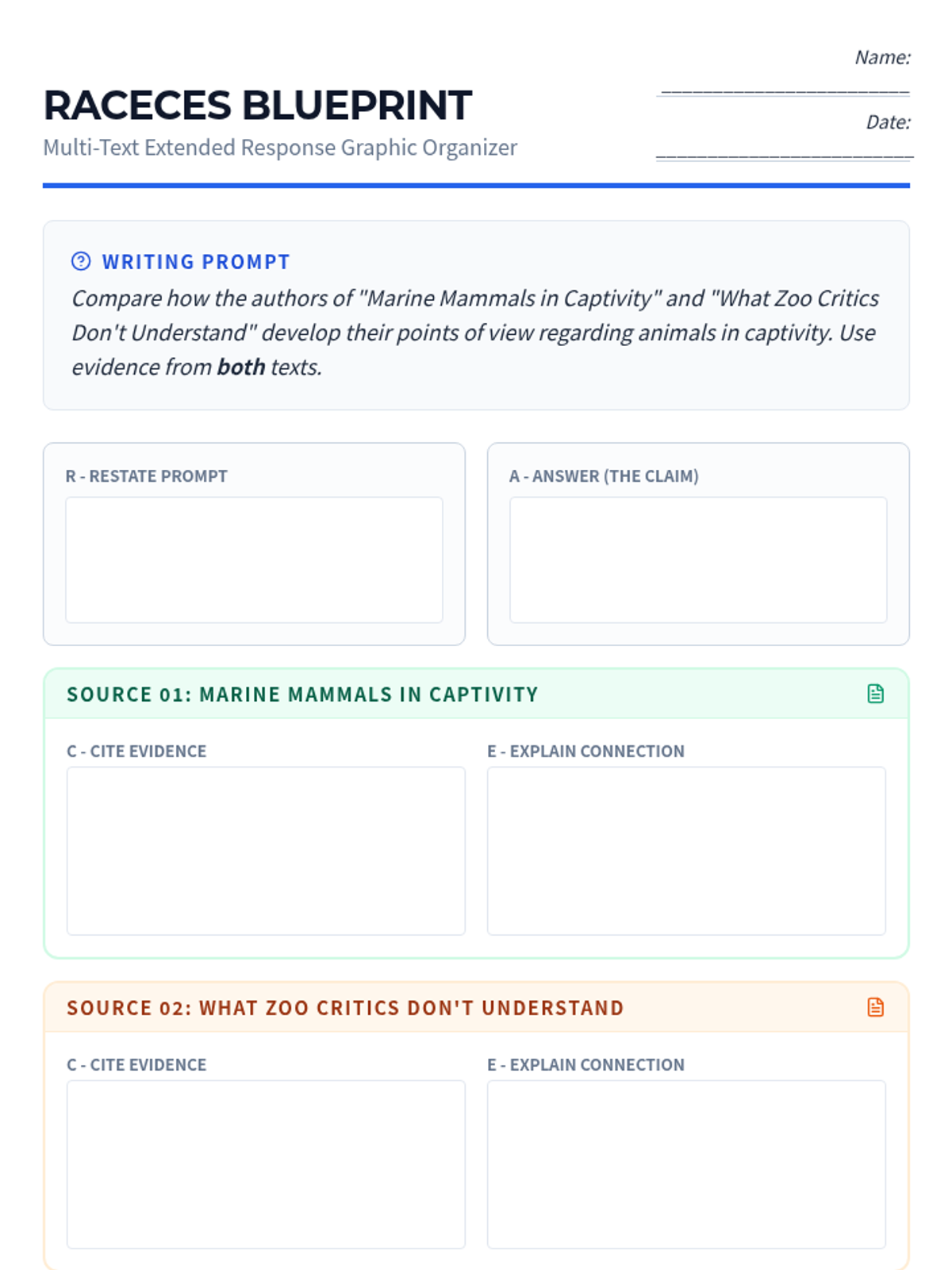
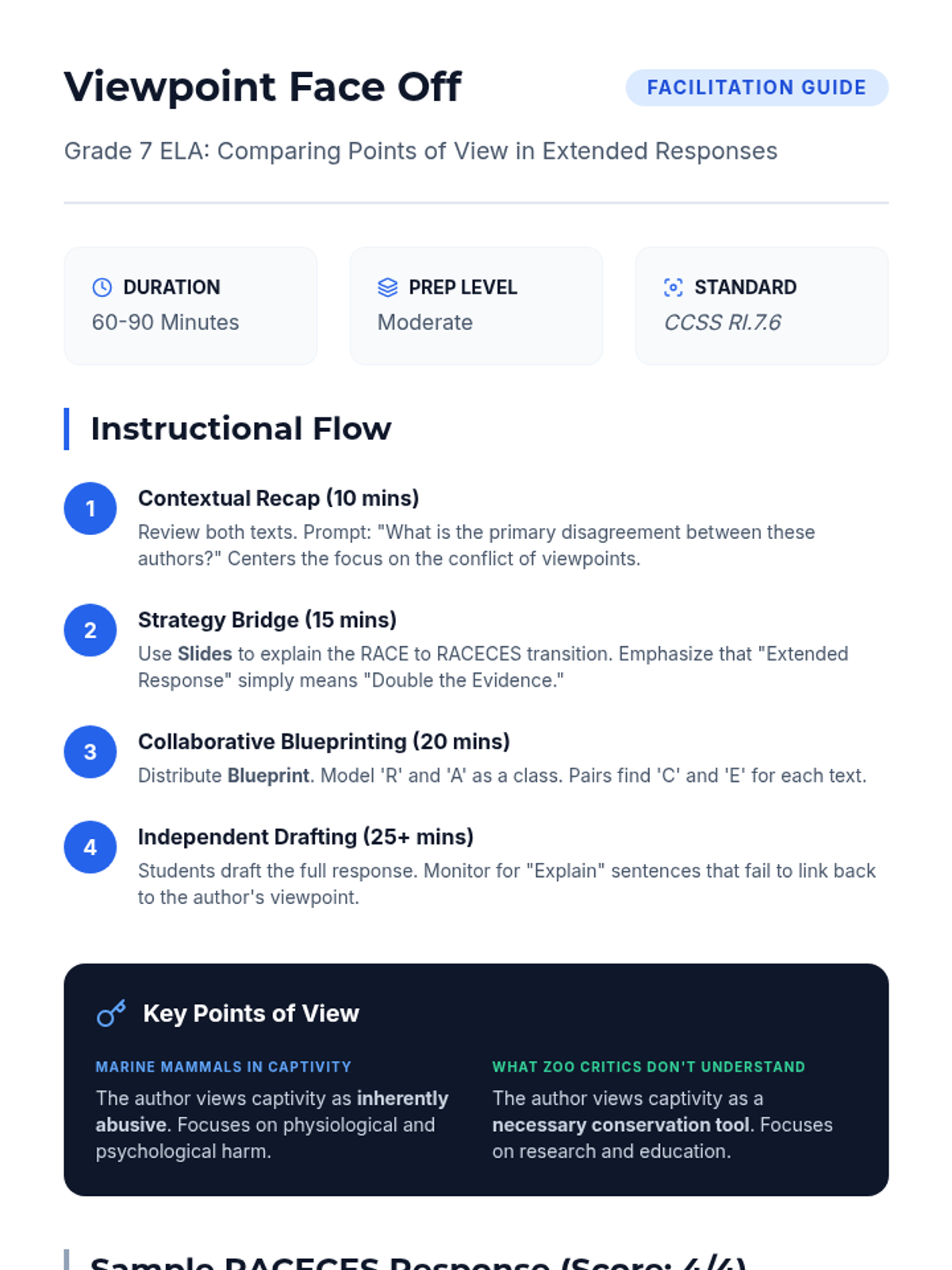
This lesson guides 7th-grade students through the process of writing an extended response that compares and contrasts the points of view of two authors. Students will utilize the RACECES strategy to structure their analysis of 'Zoo Critics Don't Understand' and 'Marine Mammals in Captivity.'
This lesson guides 7th-grade students through writing an extended response comparing authors' points of view in 'Marine Mammals in Captivity' and 'What Zoo Critics Don't Understand'. Students learn to expand their RACE skills into the RACECES format for multi-text analysis.