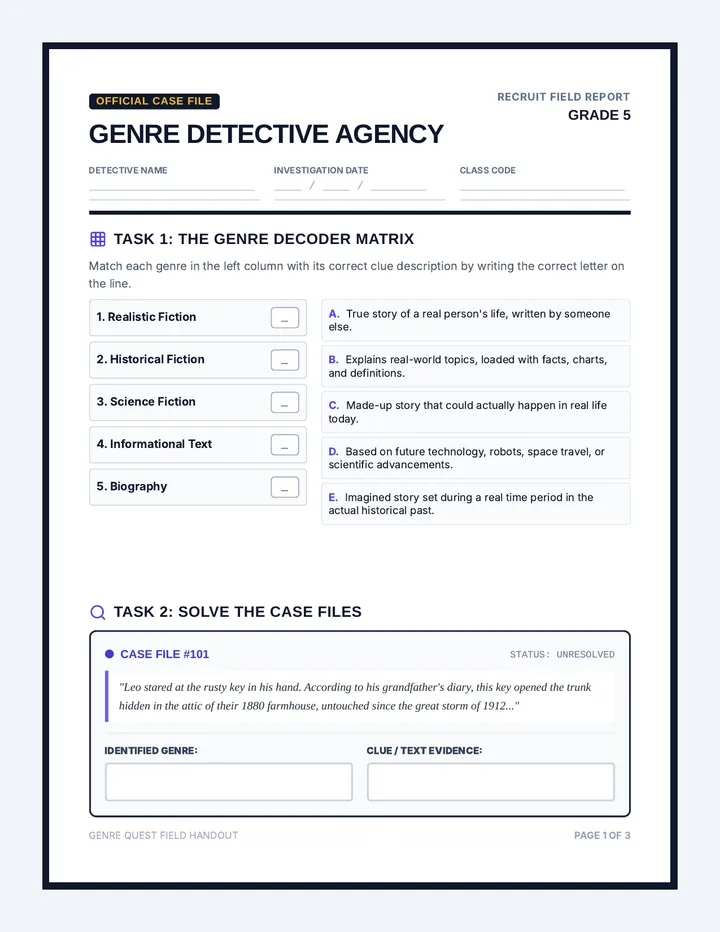
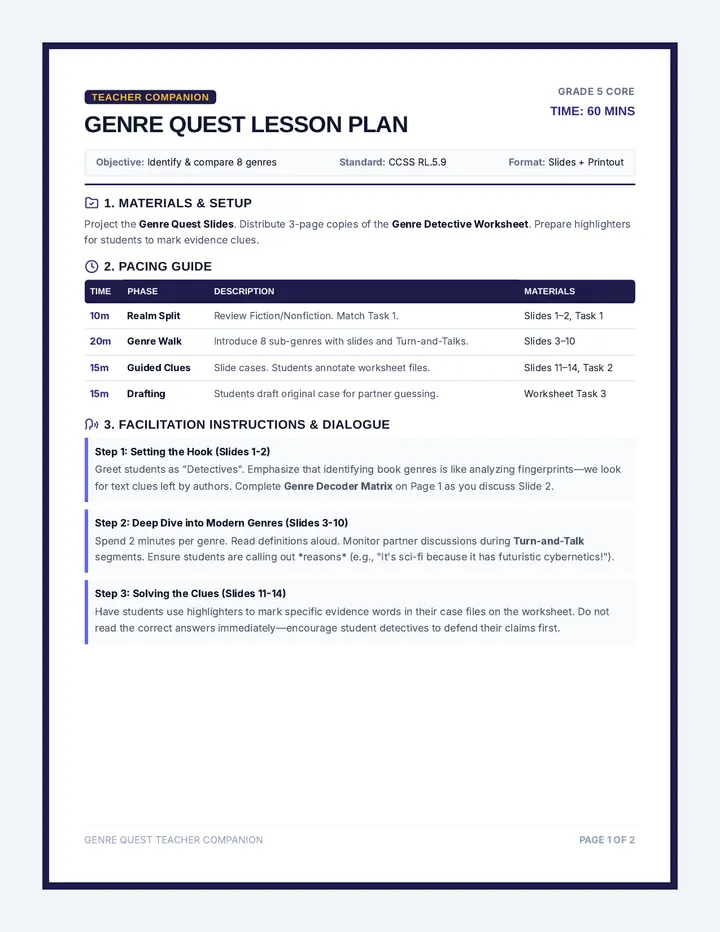
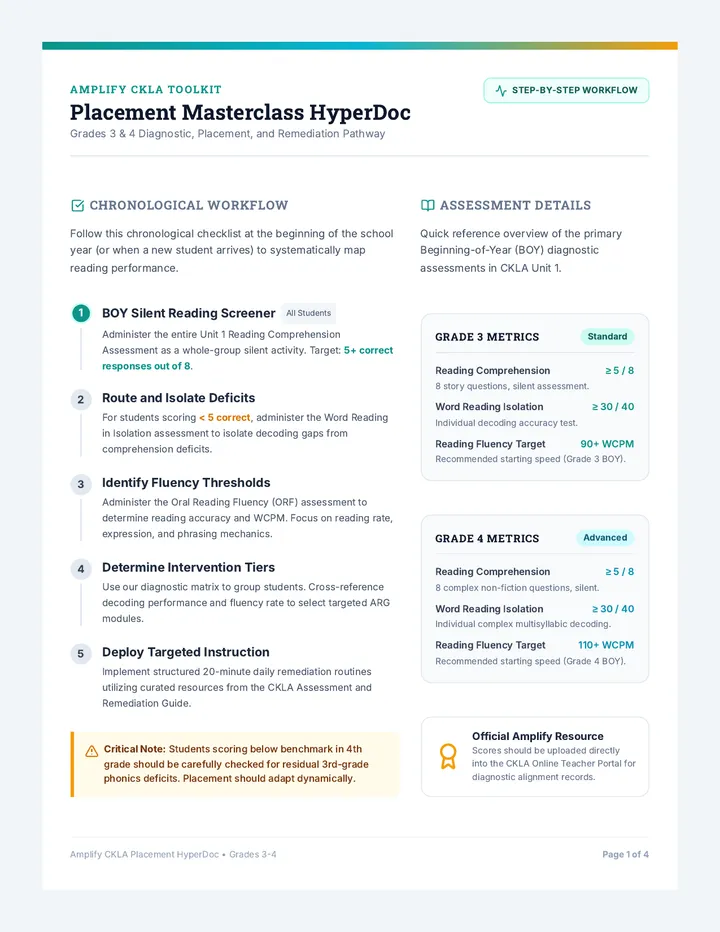
A 15-minute reteach lesson designed to help 5th-grade students distinguish between main idea, summary, and theme in expository nonfiction texts, specifically modeling the format of Question 37 from the NYS Grade 5 ELA IA.
A comprehensive lesson exploring the human brain's capabilities and the nature of intelligence, featuring an informational text analysis and a multiple intelligences choice board.
A lesson focused on common prefixes (un-, re-, pre-, dis-) and suffixes (-ful, -less, -er, -ly) using a 'Word Workshop' theme to help students understand how word parts change meanings.
A foundational phonics lesson focusing on the glued sounds -all, -am, and -an through visual aids, tracing practice, and blending activities.
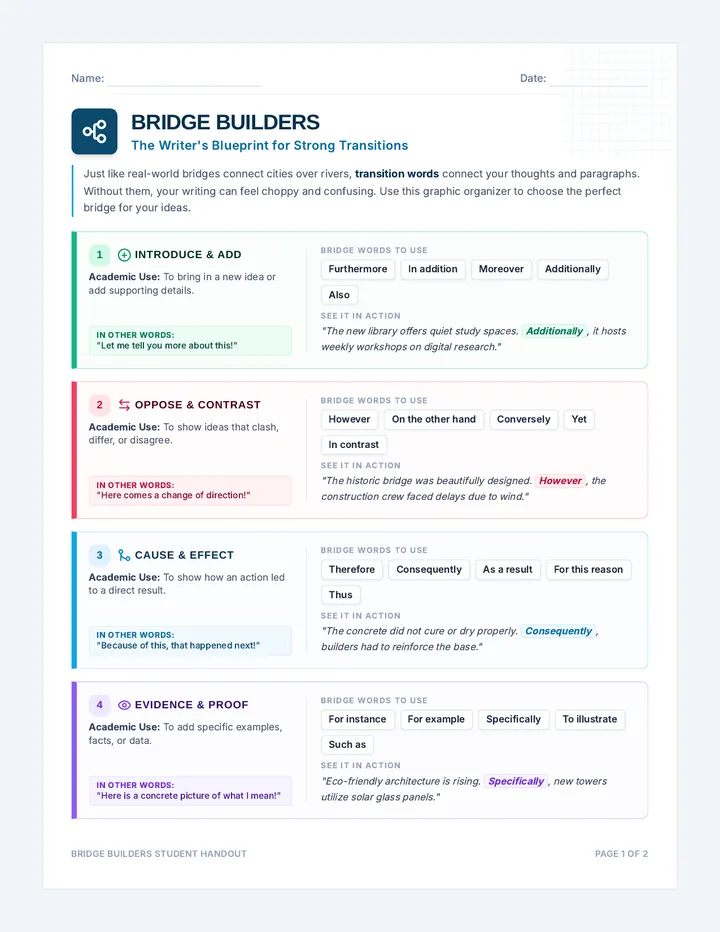
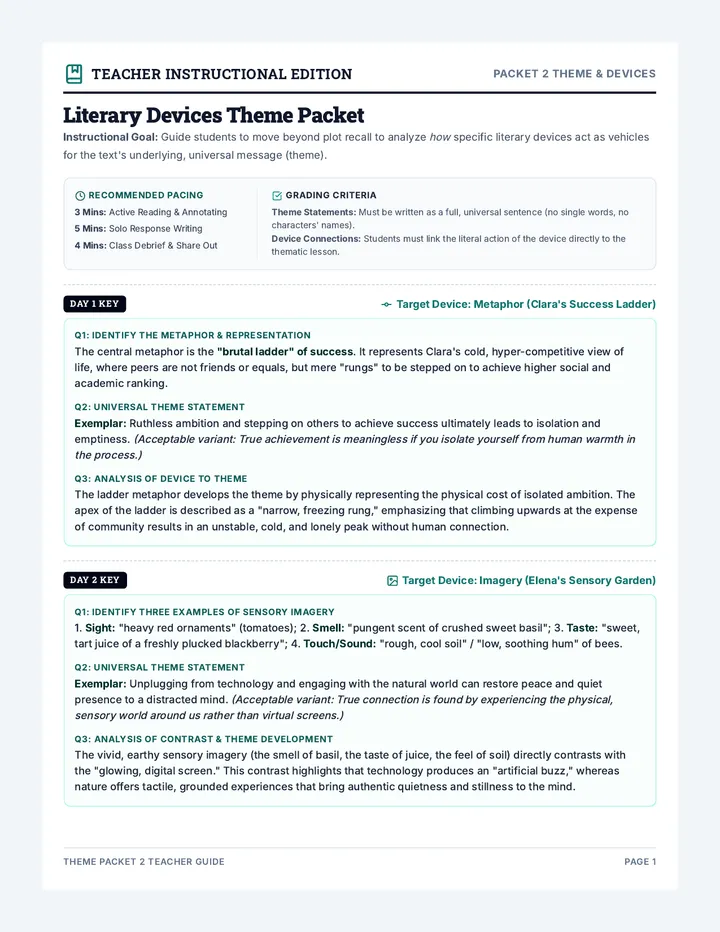
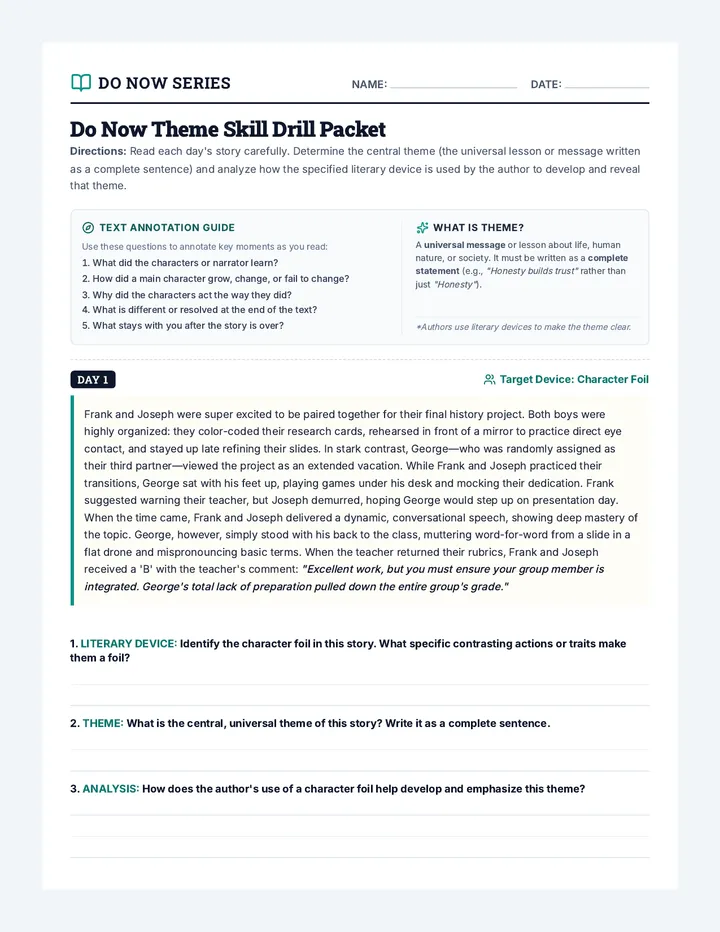
A lesson focused on analyzing how specific parts of a text contribute to the overall structure and the development of an argument through evidence. Students learn to see texts as 'blueprints' where every sentence serves a structural purpose.
An introductory lesson on building simple sentences using the 'Who + Doing What' formula. Students will use visual prompts to construct their own sentences with a focus on capitalization and ending punctuation.
A foundational writing lesson for first-grade students focused on building complete sentences with correct capitalization, punctuation, and grammar using a 'Sentence Builders' theme.
A space-themed fluency lesson for first graders, focusing on nonsense word decoding and sentence structure to build oral reading confidence.
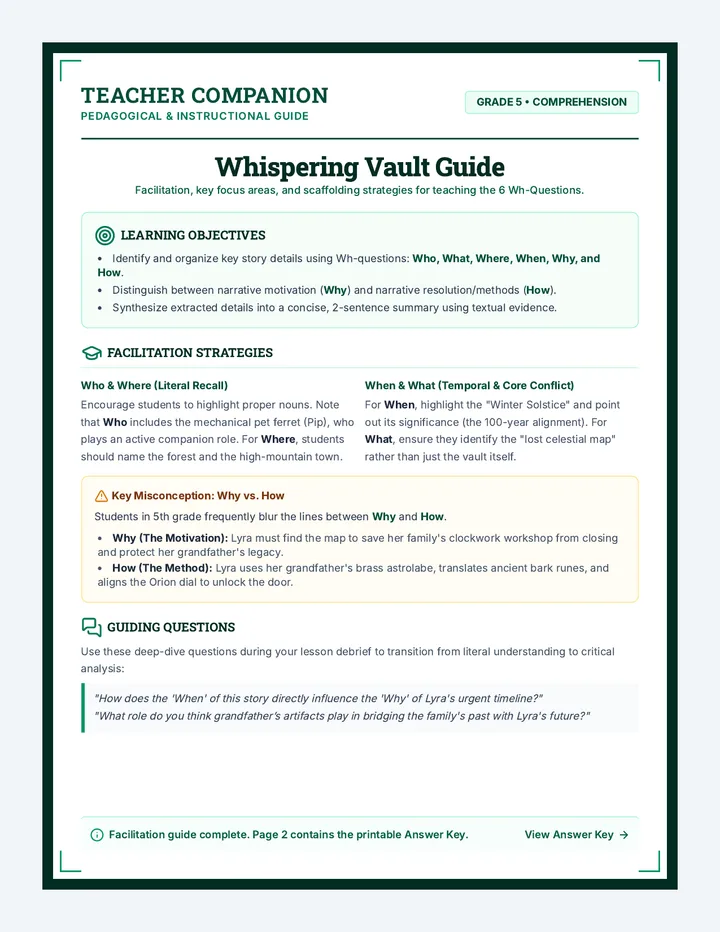
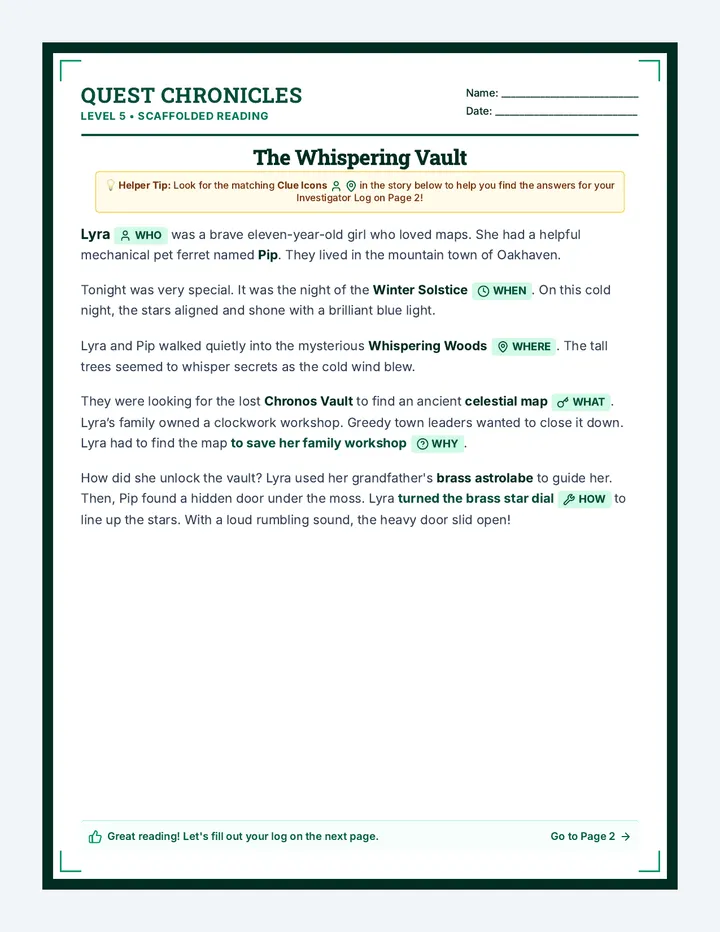
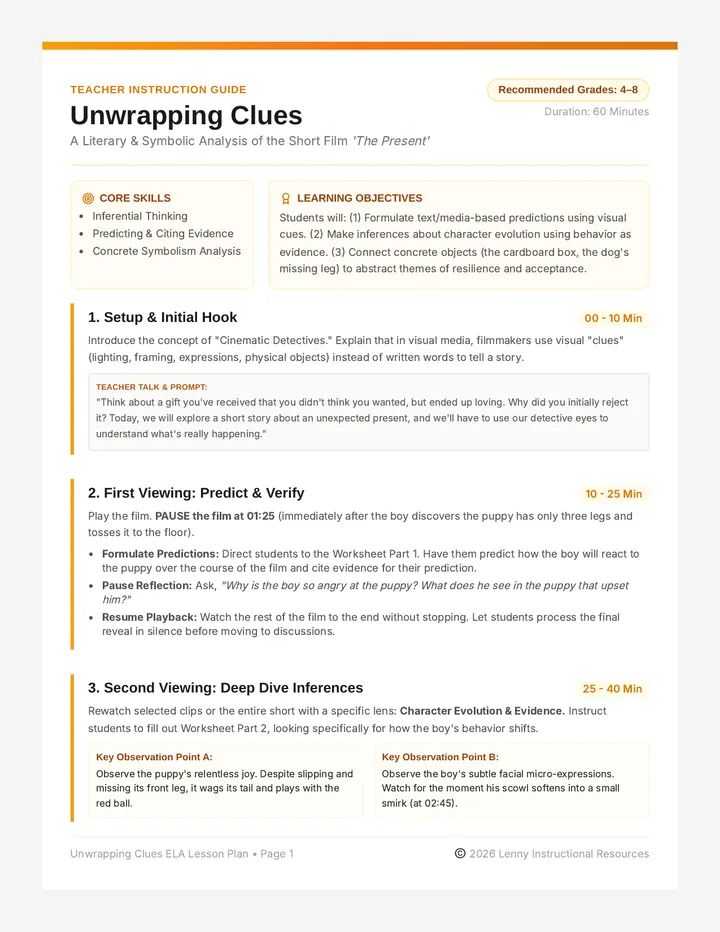
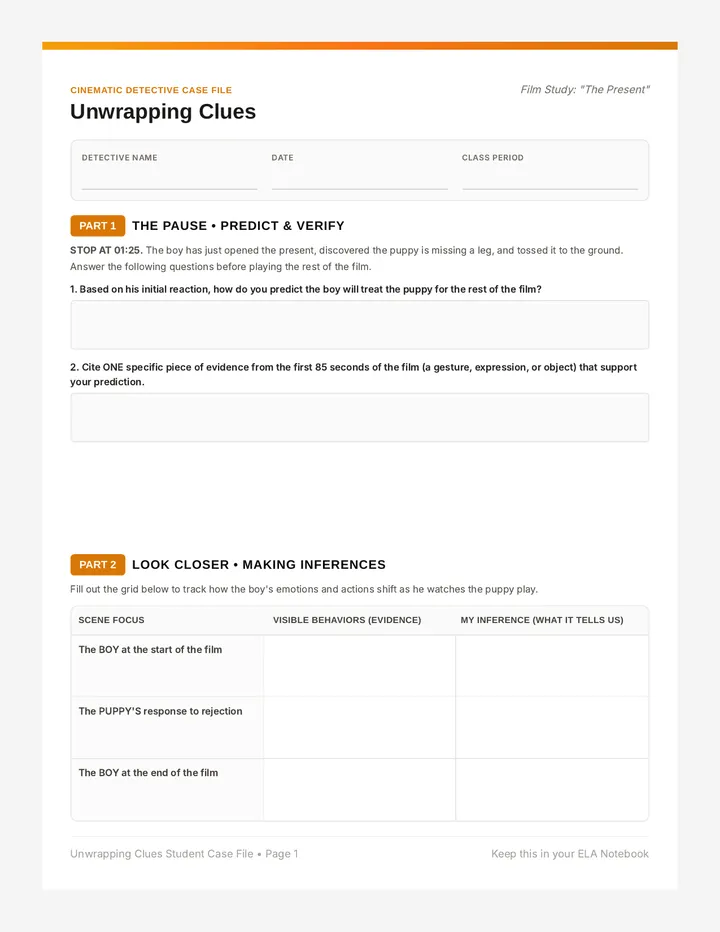
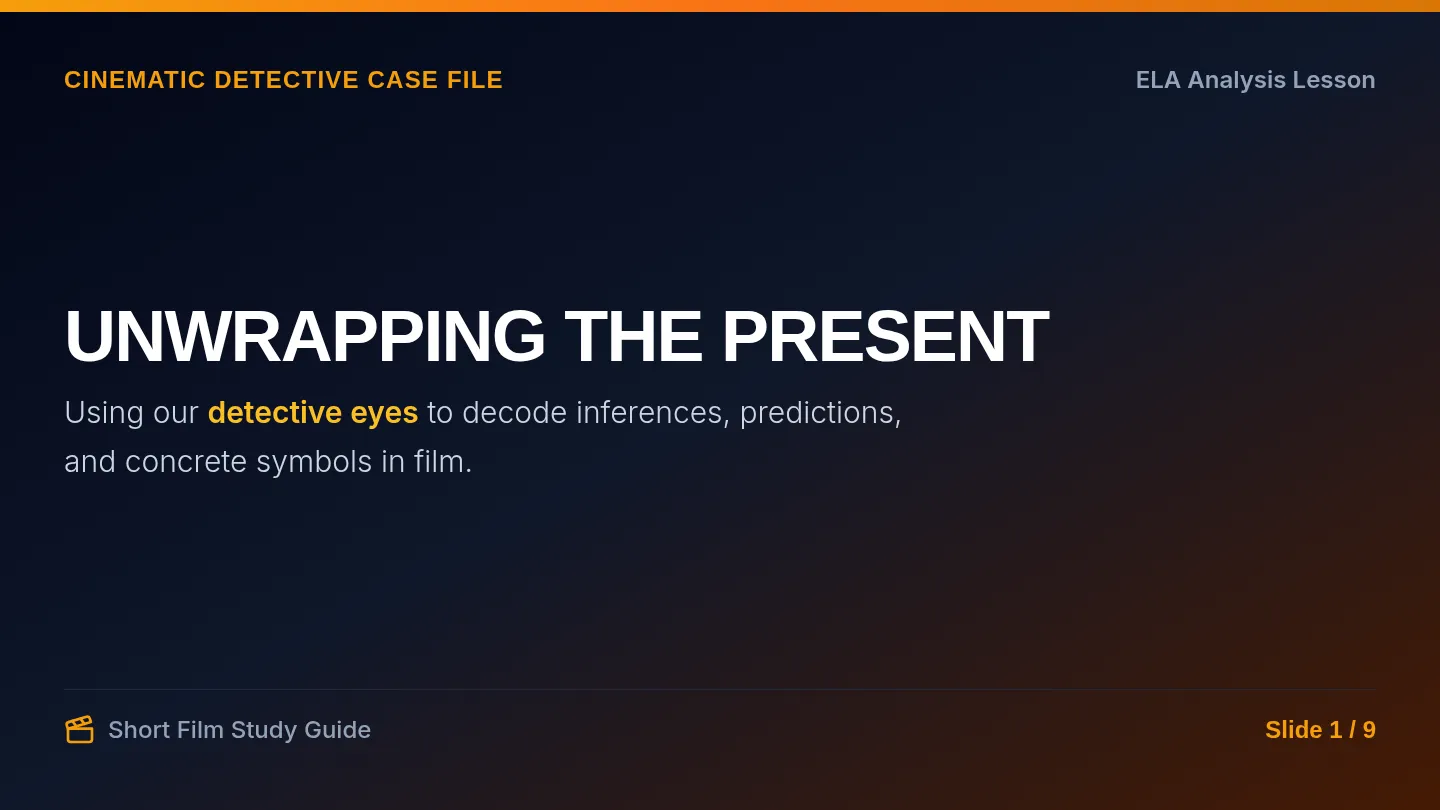
A comprehensive lesson where students learn to use text evidence and background knowledge to make logical predictions about what will happen next in a story.
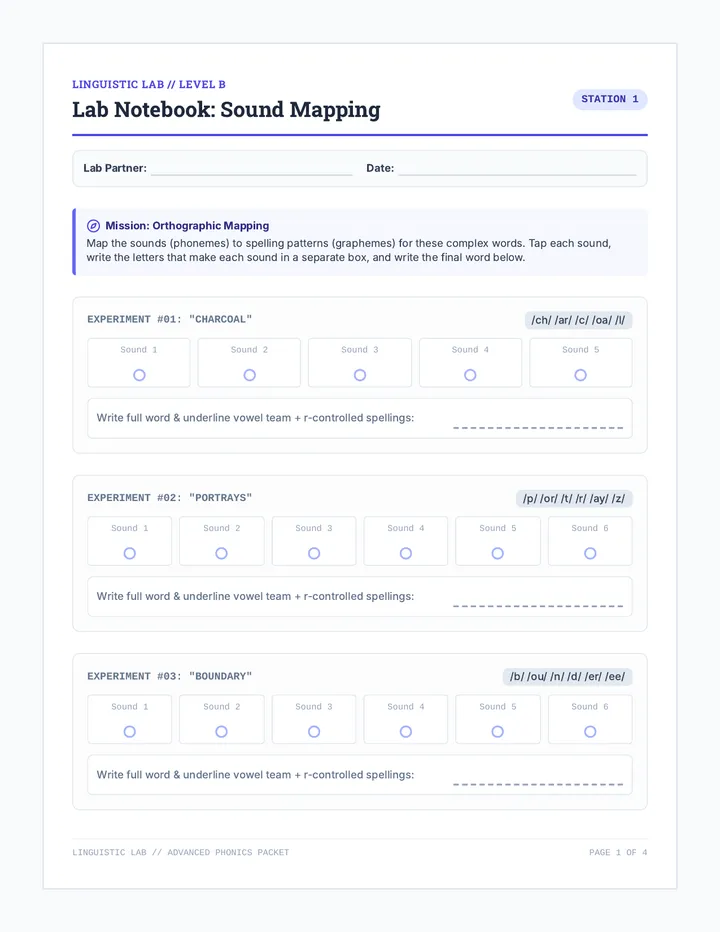
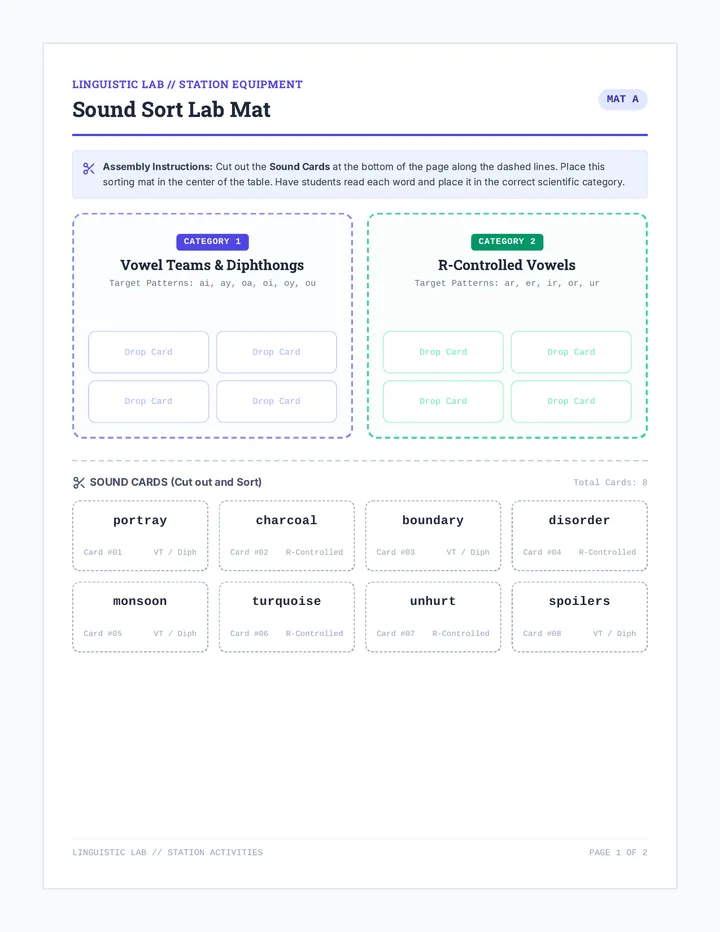
A focused study on the prefix 'RE-', the root 'GEO', and the suffix '-LESS' through the lens of Greek and Roman mythology. Students will read myth-inspired stories and complete activities to master these common word parts.
Day 2 of the Water Worlds unit. Students tackle longer informational texts and transition to using a Venn Diagram strategy to categorize similarities and differences in environmental zones, animal adaptations, and global importance.
A morning work resource focused on reading comprehension and multiple-choice practice within a space exploration theme.
Students journey to the Sahara Desert to learn about the nomadic Tuareg people, making inferences about desert survival and predicting the arrival of life-sustaining water.
Students travel to the Andes Mountains in Peru to learn about traditional potato harvesting and weaving, practicing inferences about survival in high altitudes and predicting the steps of a cultural ceremony.
Students explore the vibrant floating markets of Thailand, using sensory details and cultural clues to make inferences and predict events in a nonfiction narrative.