Investigating how the affordable Model T Ford reshaped American geography, led to the growth of suburbs, and changed family life.
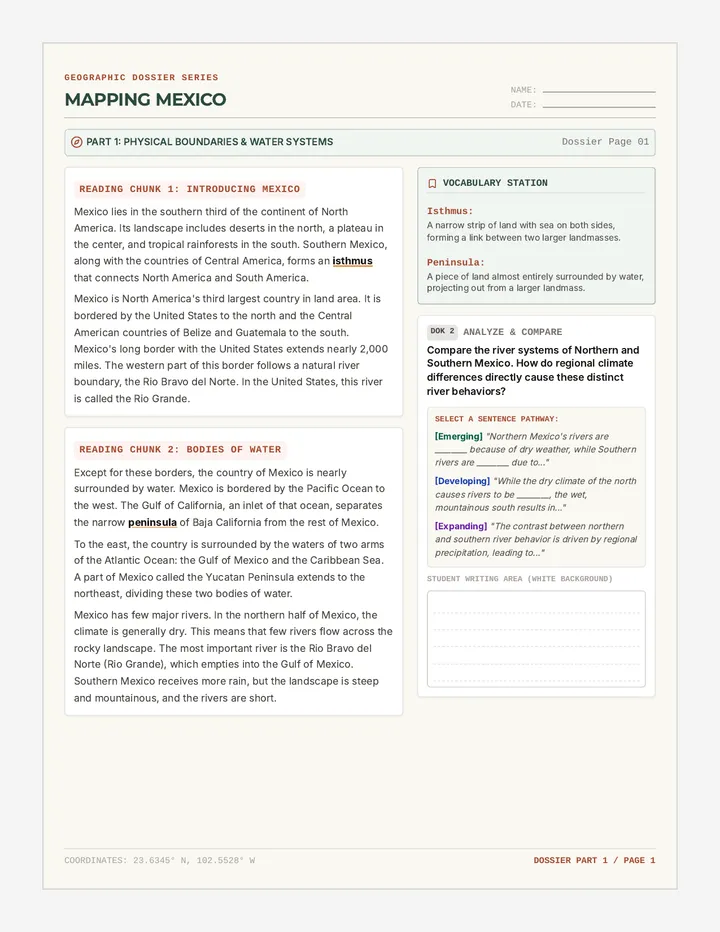
A comprehensive lesson exploring Mexico's physical geography, diverse climates, and distinct economic regions. Students engage in structured side-by-side reading, vocabulary analysis, and DOK2/DOK3 text-dependent analysis.
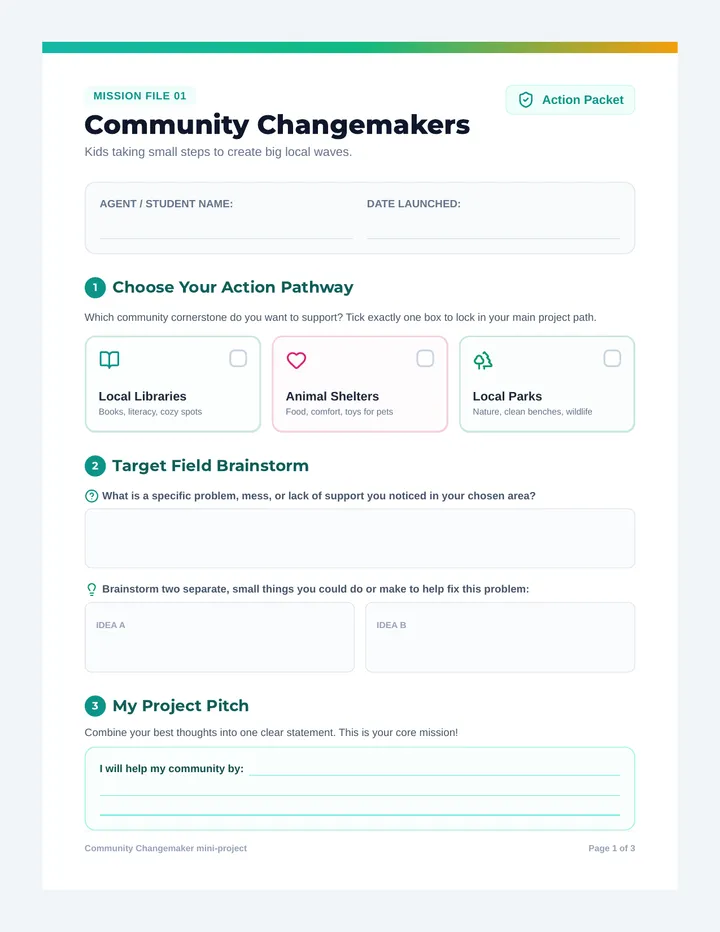
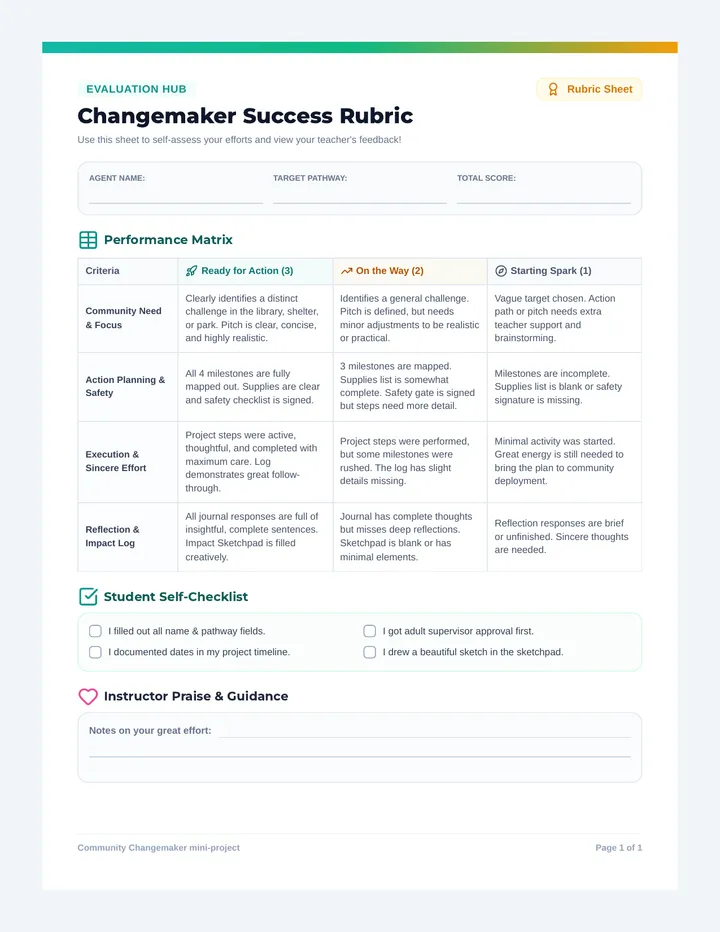
A mini-project curriculum designed to empower young students to become local community changemakers. It guides them through brainstorming, planning, and executing simple, impactful action projects for local libraries, animal shelters, or parks.
A foundational civics lesson on incumbency, electoral advantages, and media literacy. Students explore why current politicians usually win reelection and learn to distinguish between objective news reports and opinion articles.
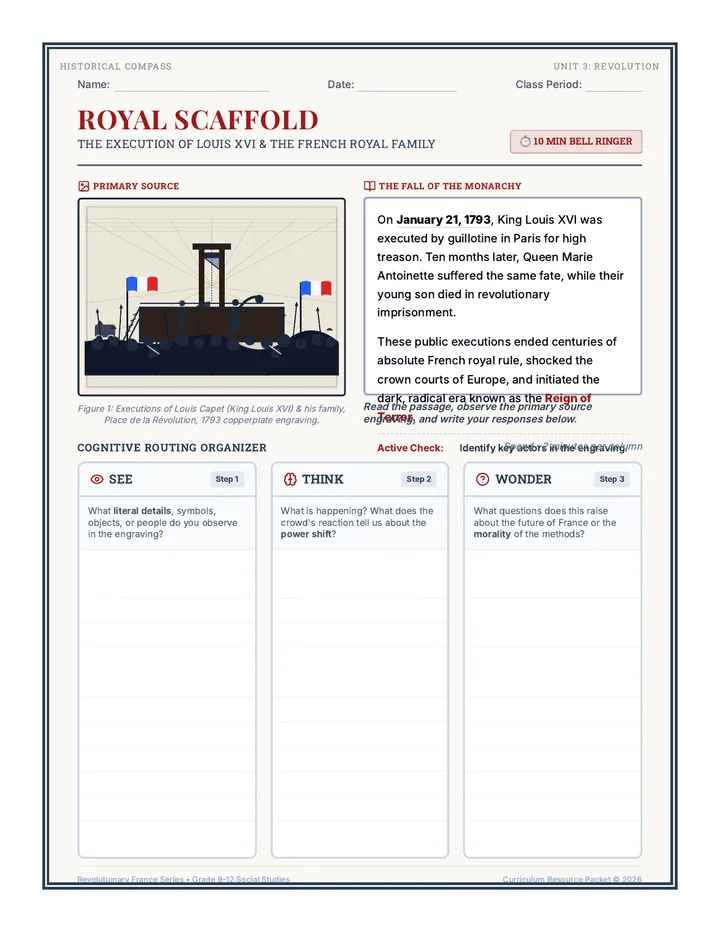
A quick, high-impact bell ringer lesson exploring the execution of King Louis XVI and the French royal family through a primary source engraving and a See-Think-Wonder cognitive routing activity.
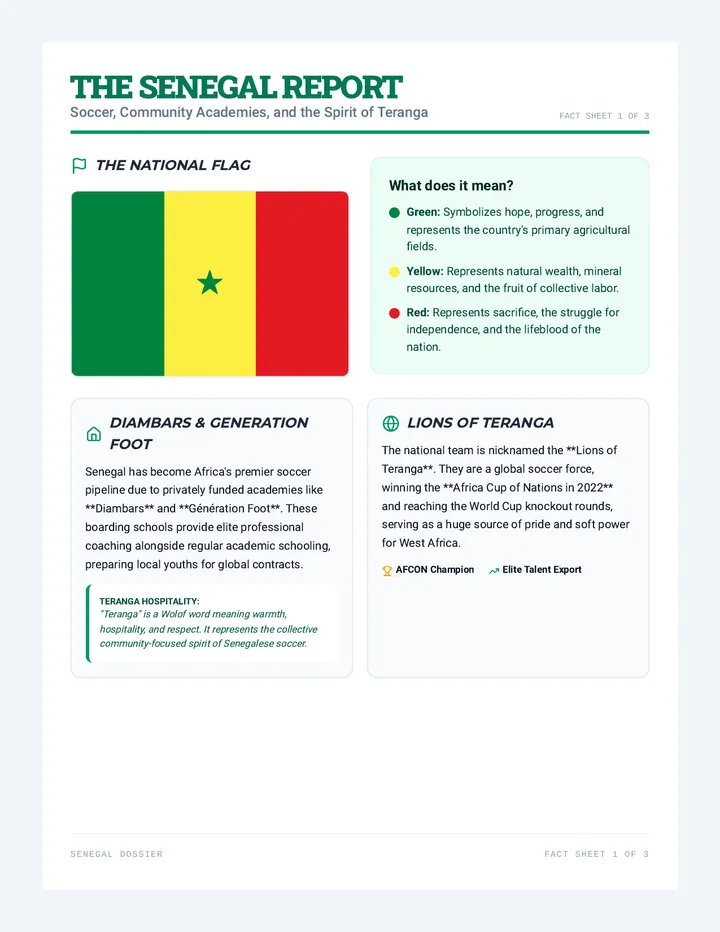
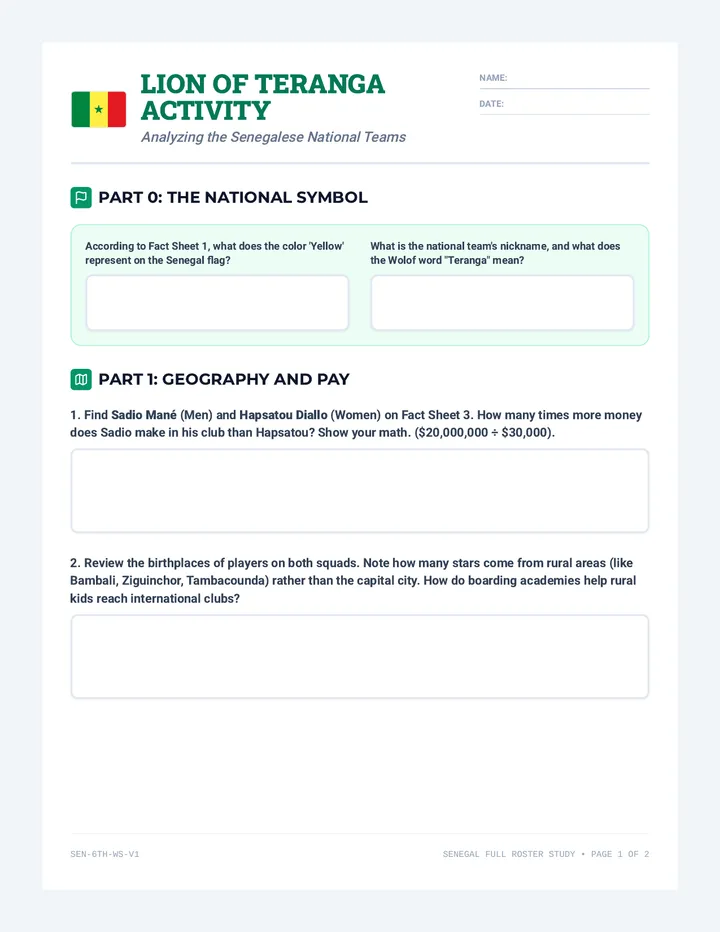
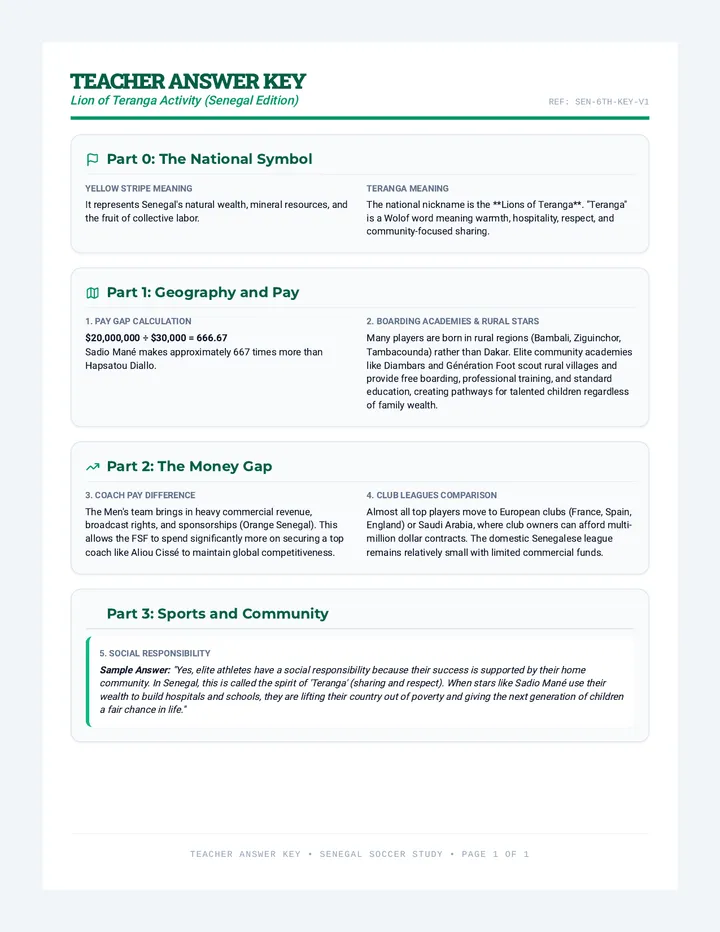
An investigation of Senegal's national soccer program (Lions of Teranga), French-African economic ties, and community soccer academies.
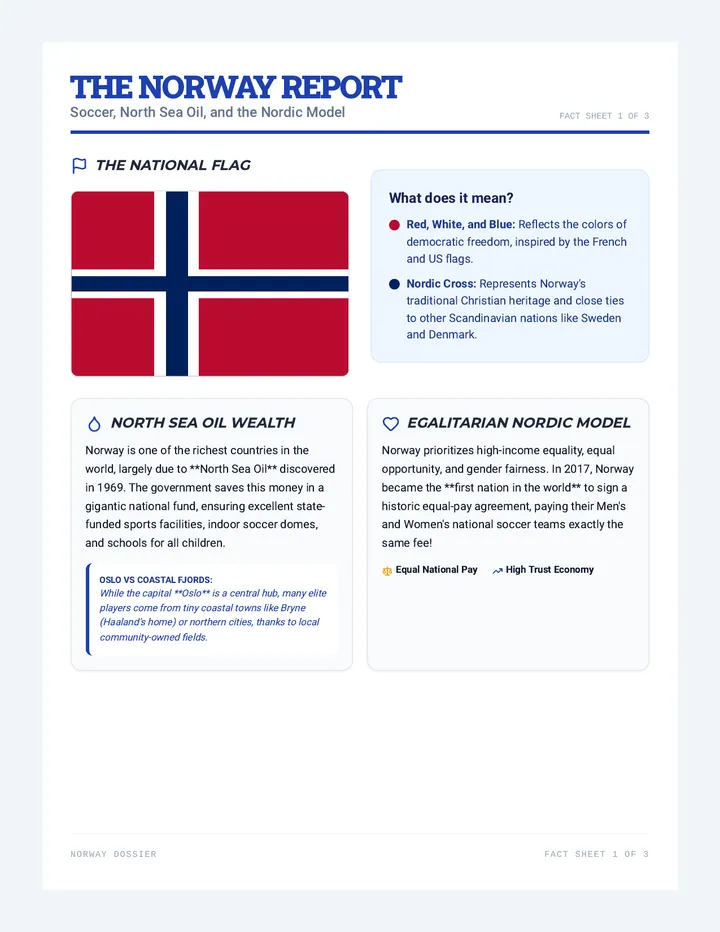
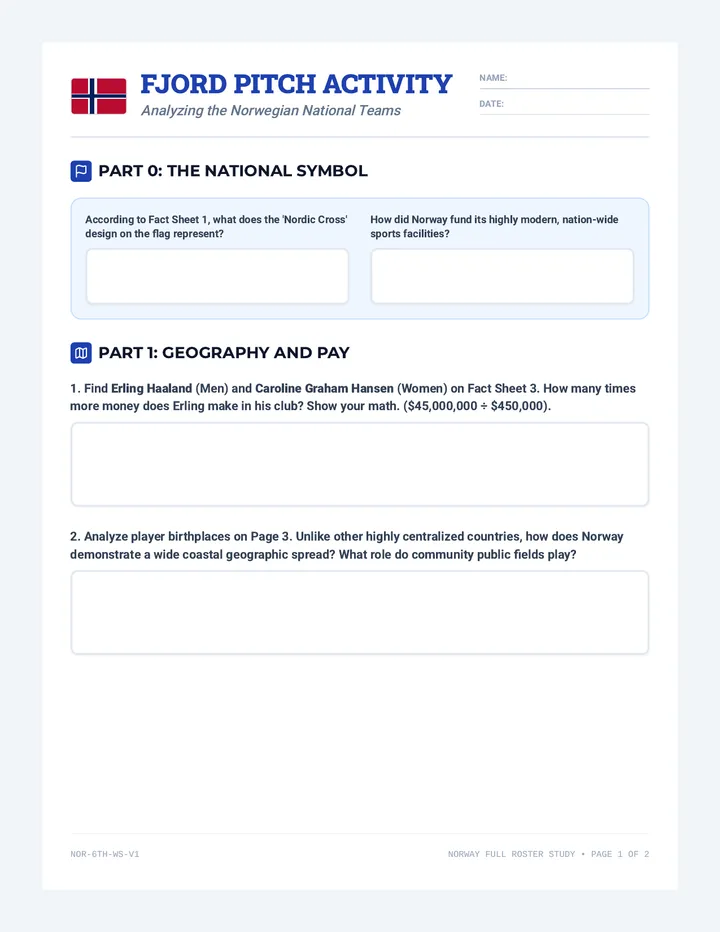
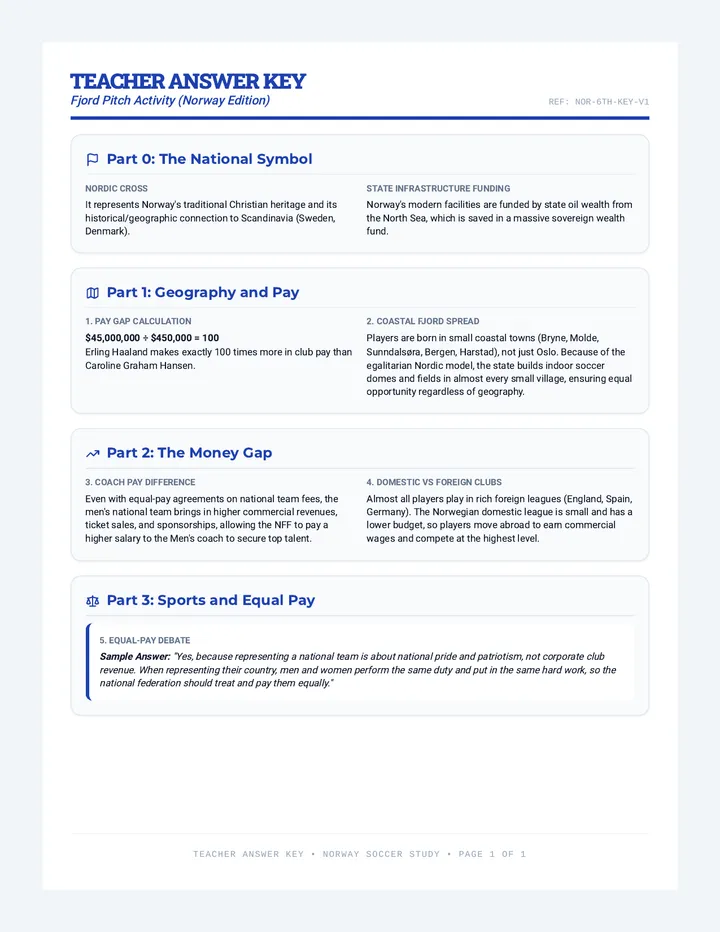
An exploration of Norway's soccer renaissance, wealth from North Sea oil, and its high-income equality model in professional sports.
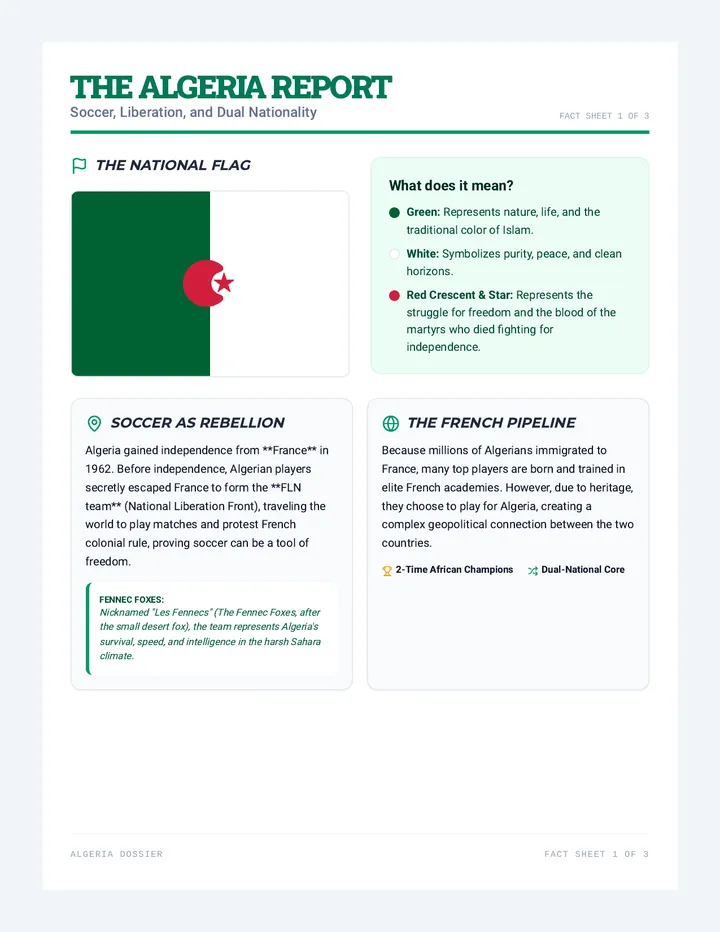
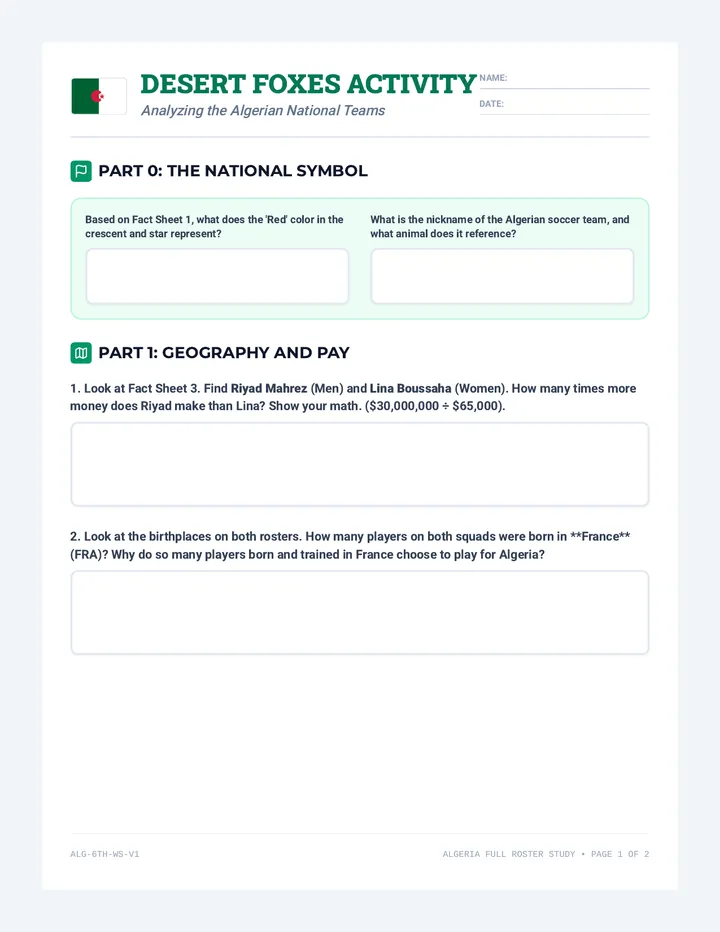
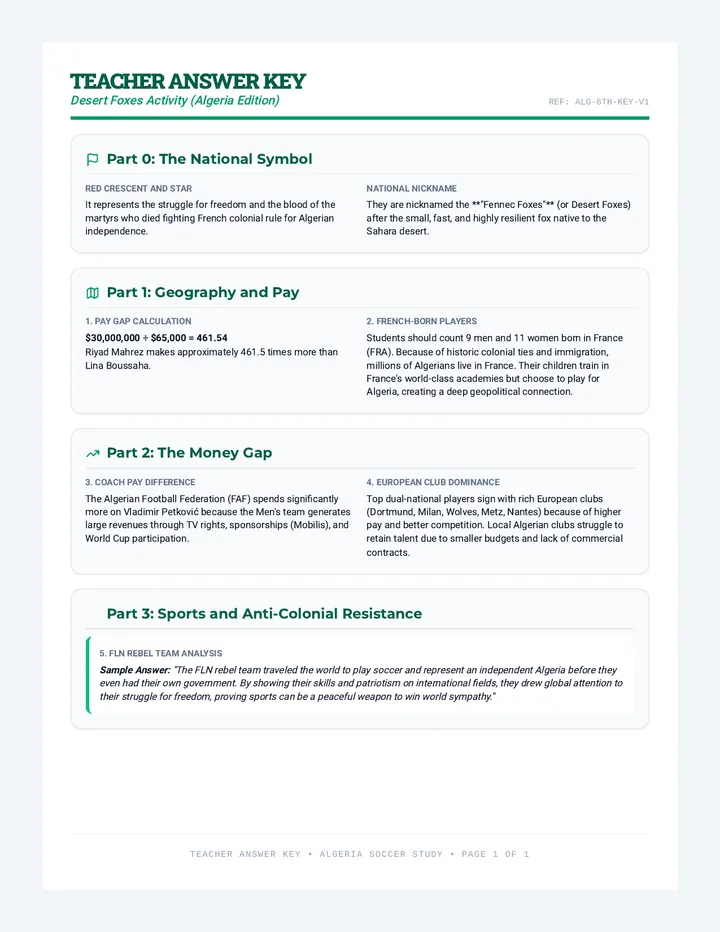
An investigation of Algerian soccer (Fennec Foxes), the geopolitics of French-Algerian dual citizenship, and soccer as a historic symbol of anti-colonial resistance.
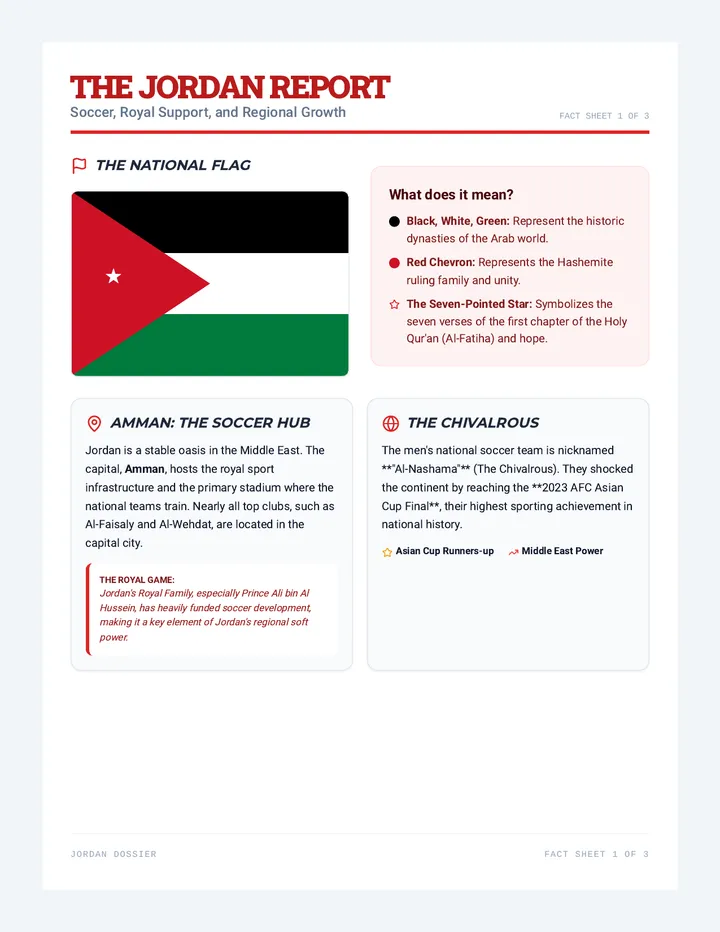
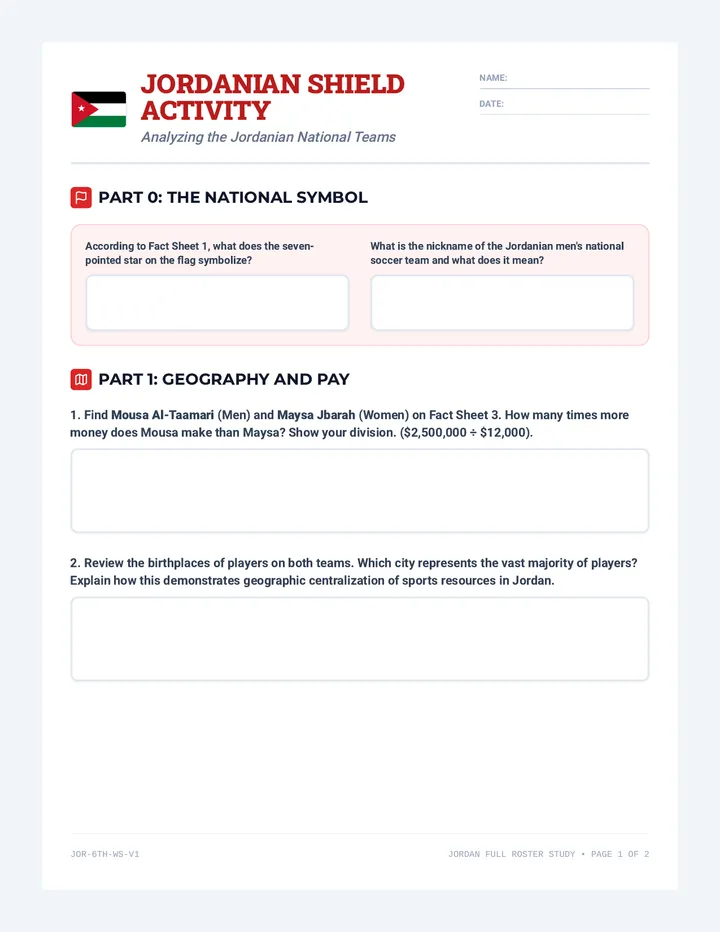
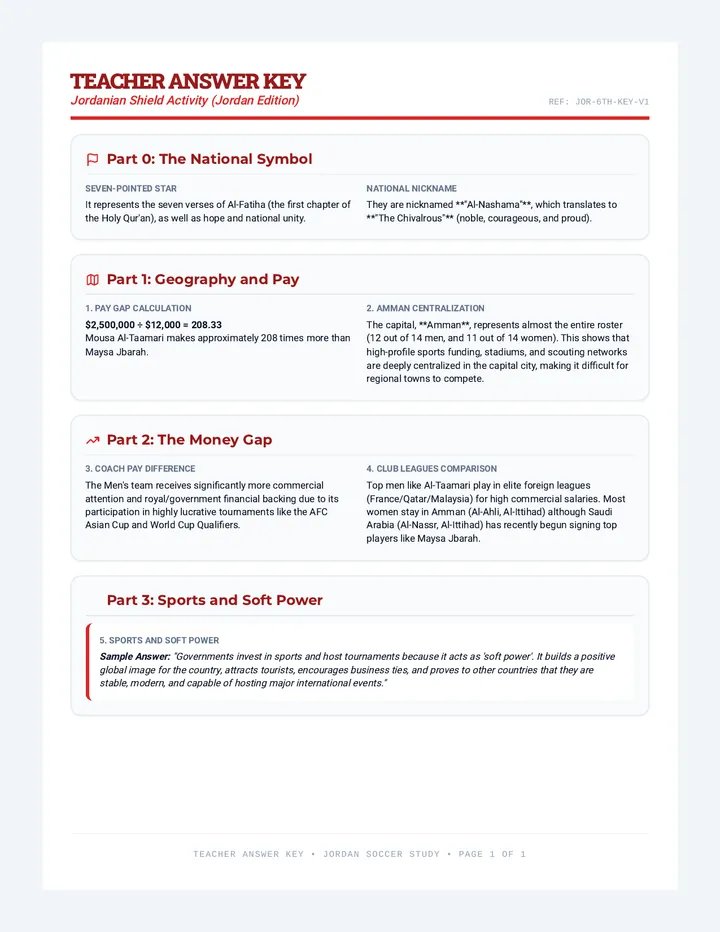
An exploration of Jordan's rise in Asian soccer, regional development, and the geopolitical role of sports infrastructure in the Middle East.
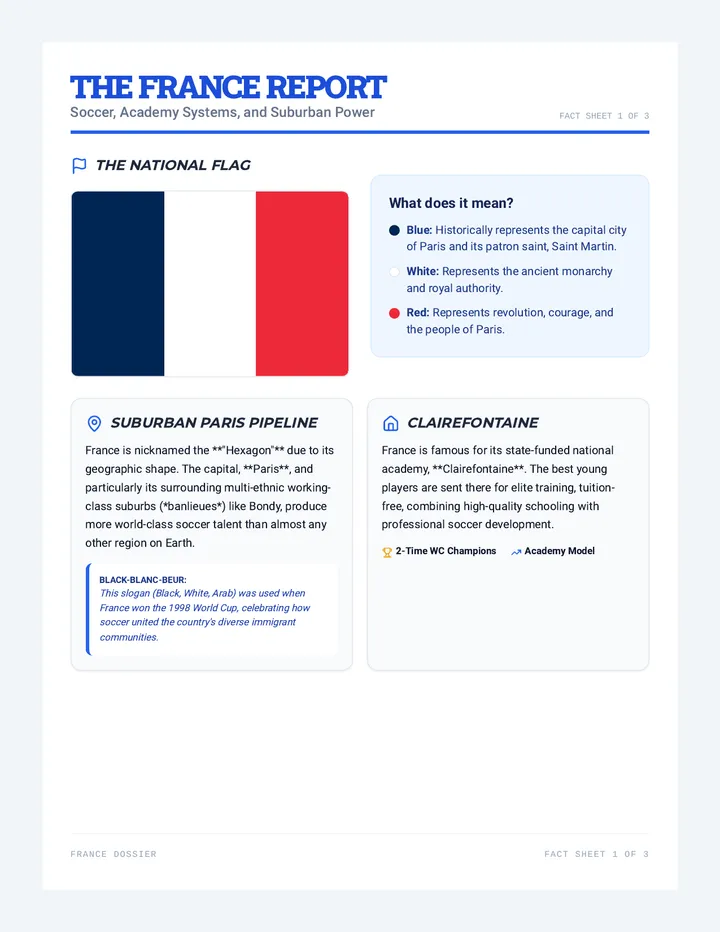
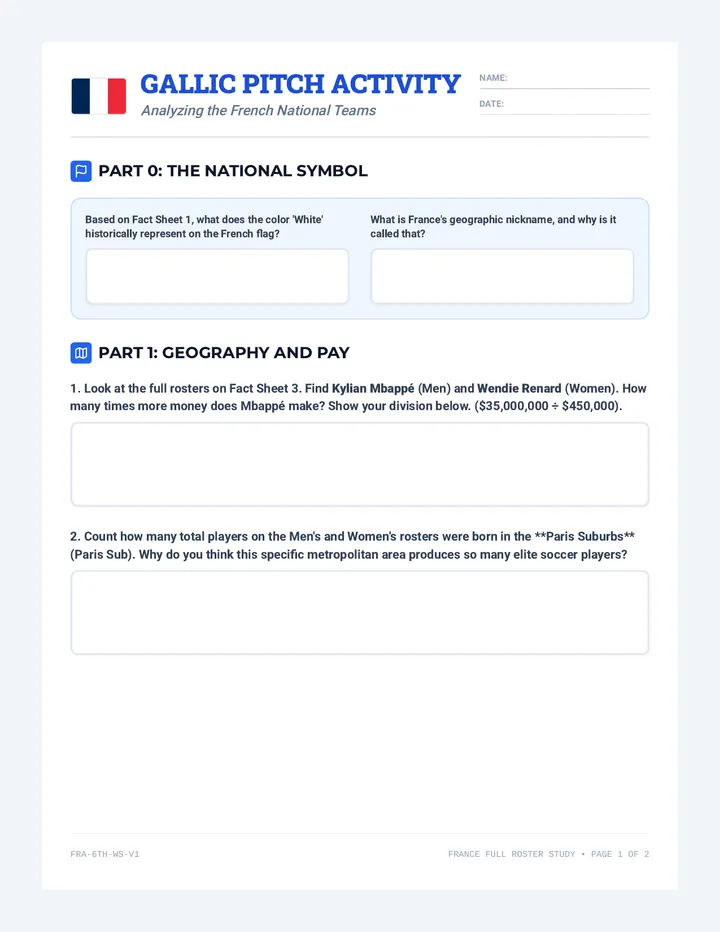
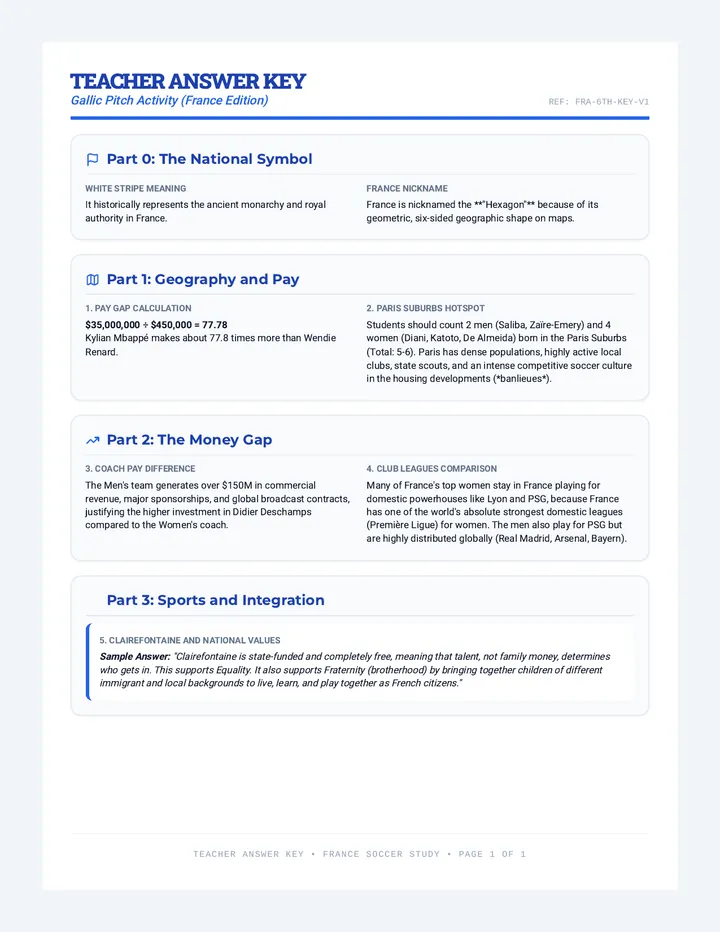
An investigation of France's elite soccer academies, the economics of Ligue 1, and the geopolitics of suburban Paris soccer.
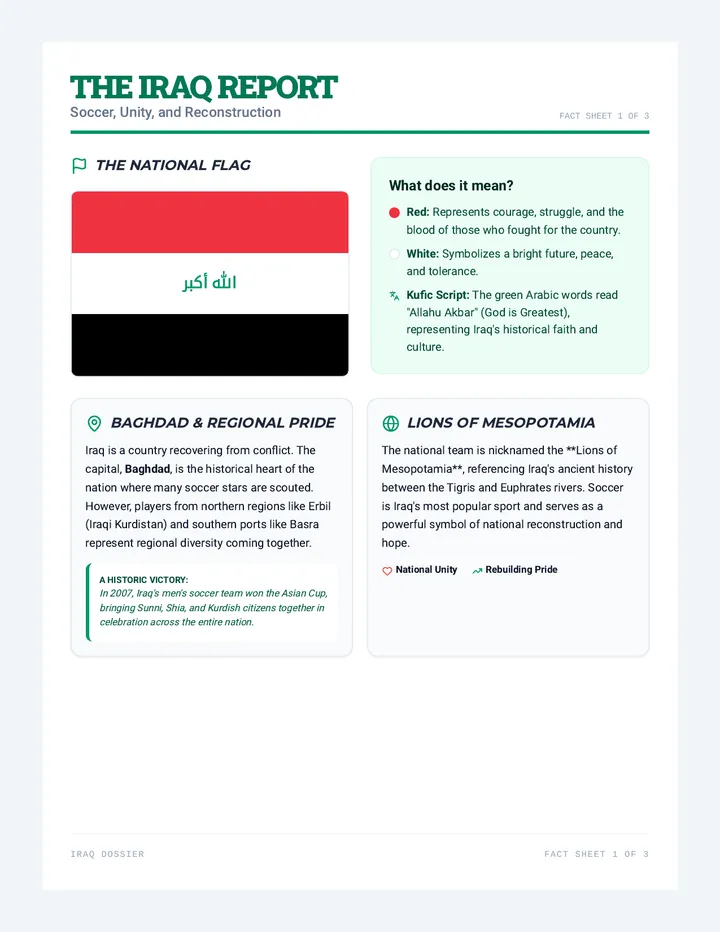
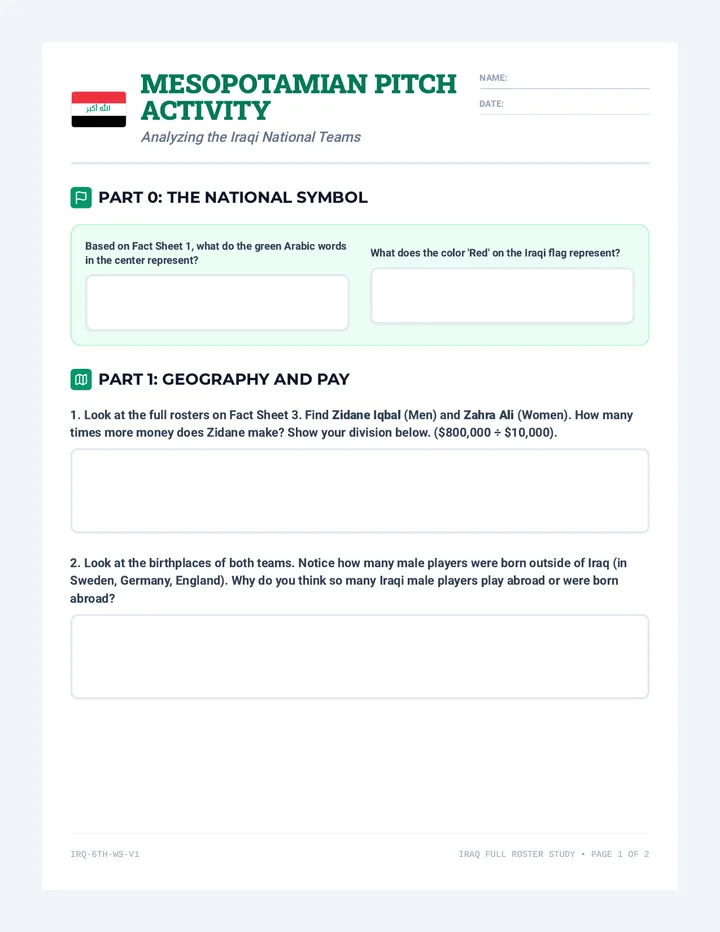
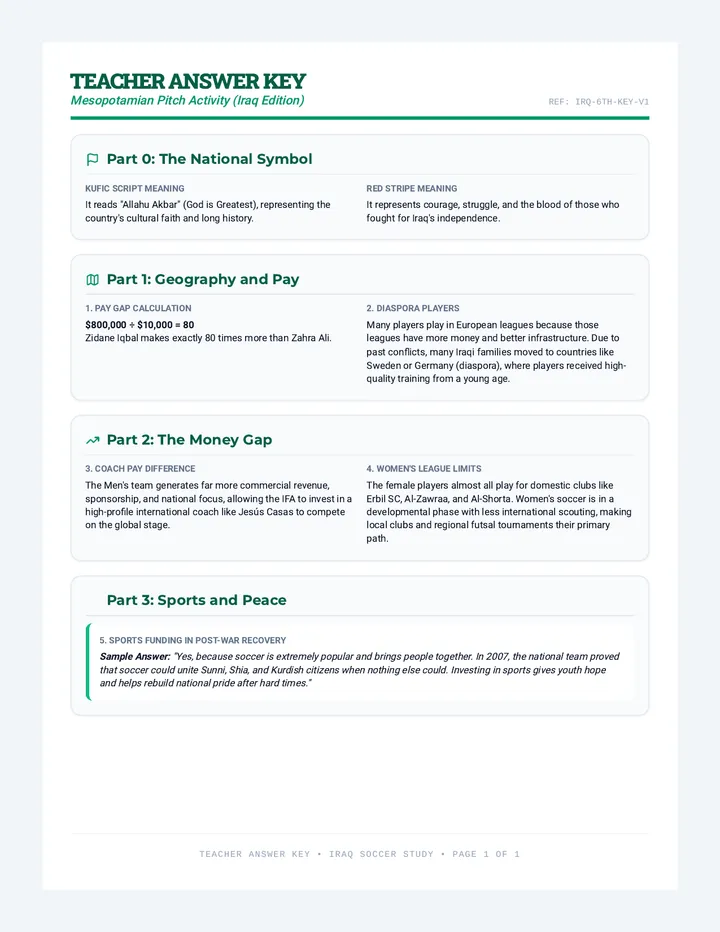
An exploration of soccer, national identity, and post-war reconstruction in Iraq, analyzing the Lions of Mesopotamia national soccer program.
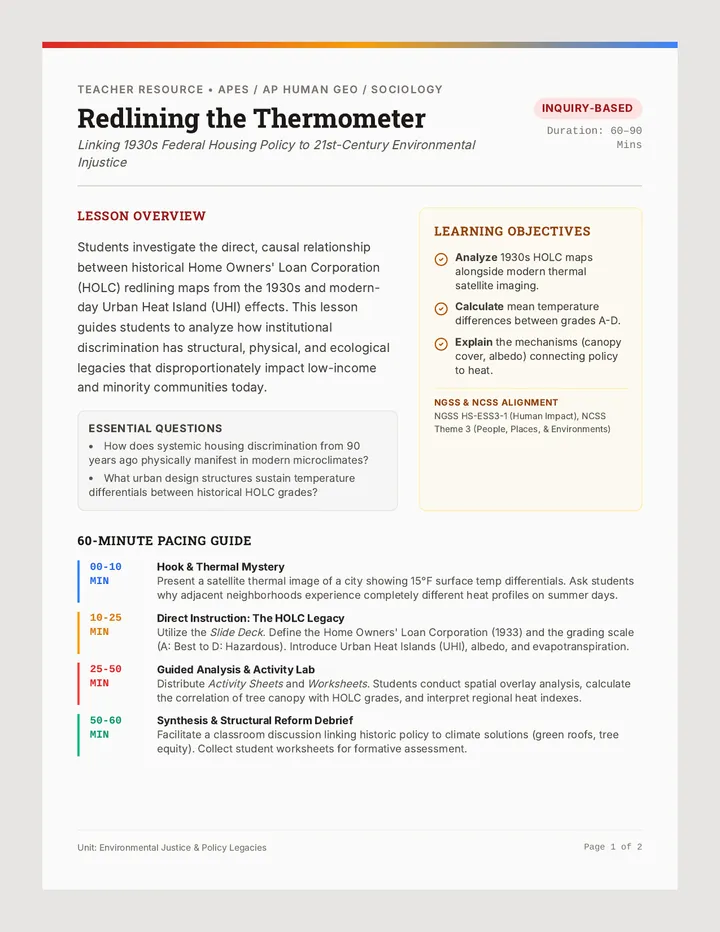
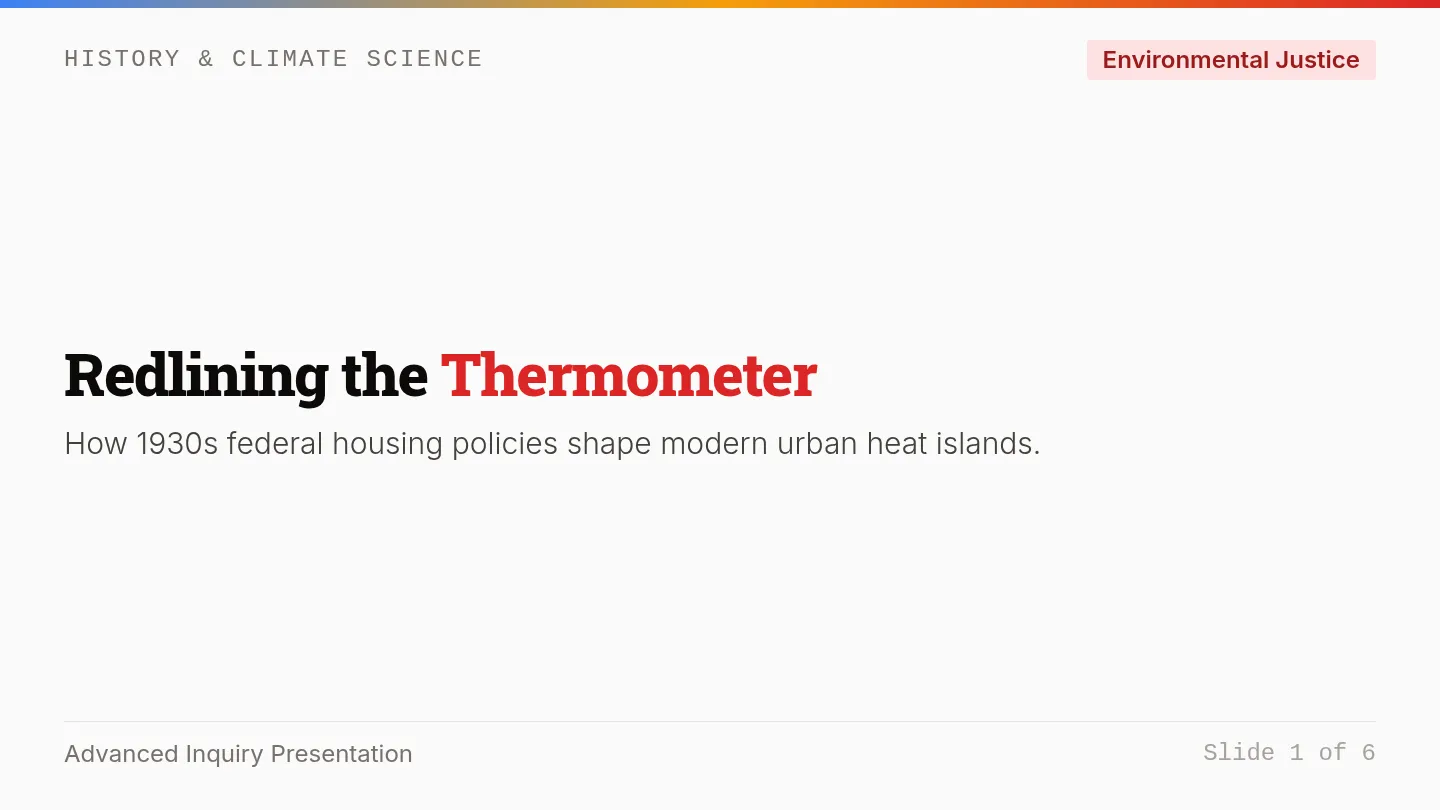
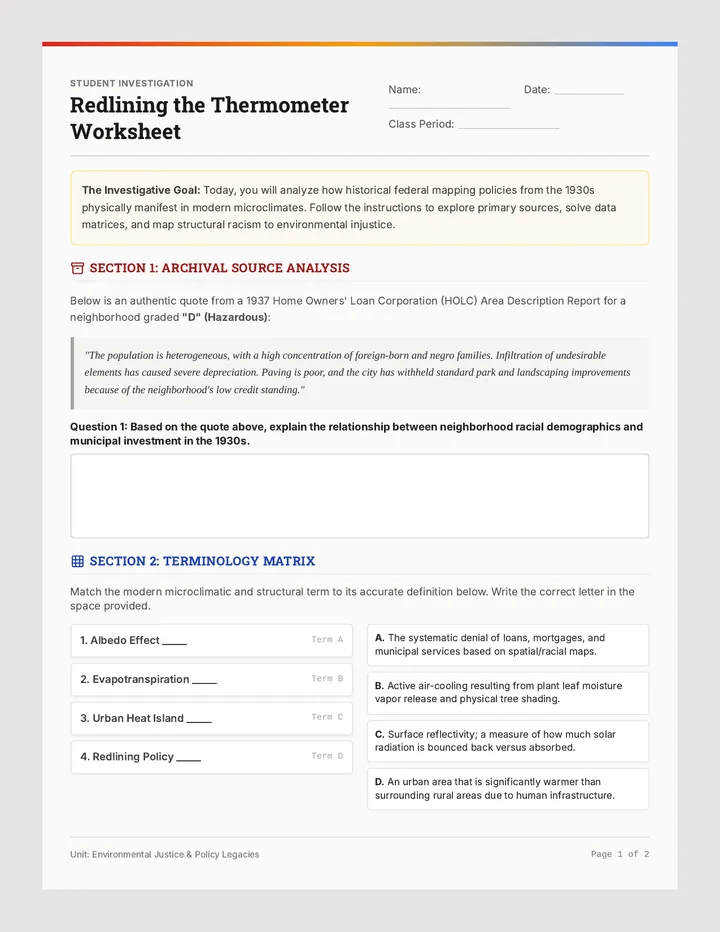
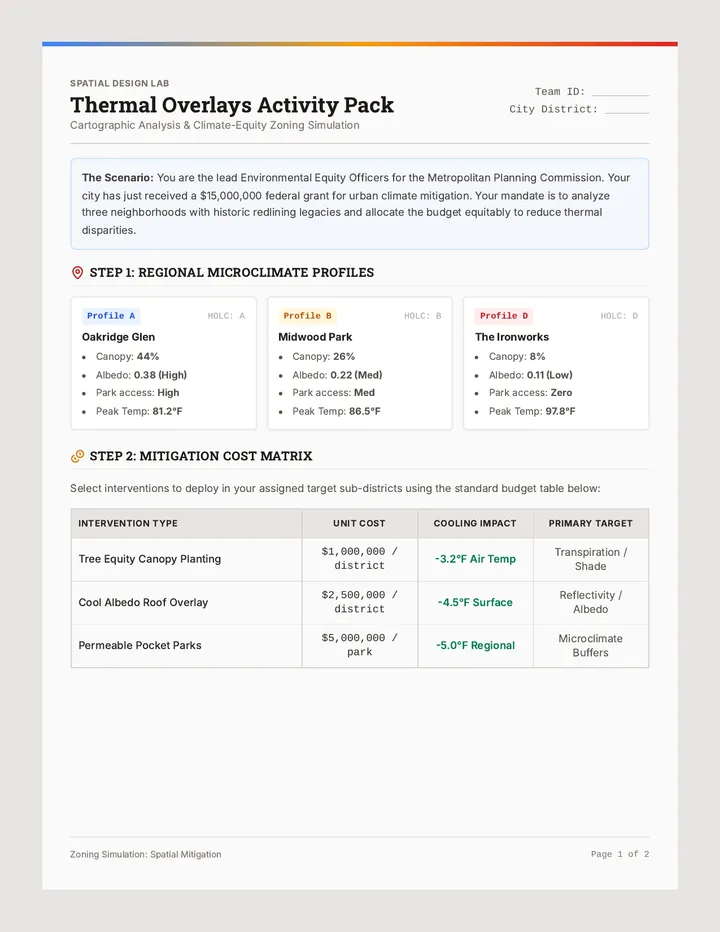
An advanced, interdisciplinary lesson for high school and undergraduate students exploring the causal relationship between 1930s Home Owners' Loan Corporation (HOLC) redlining maps and modern-day urban heat island (UHI) effects, analyzing systemic racism and environmental injustice.
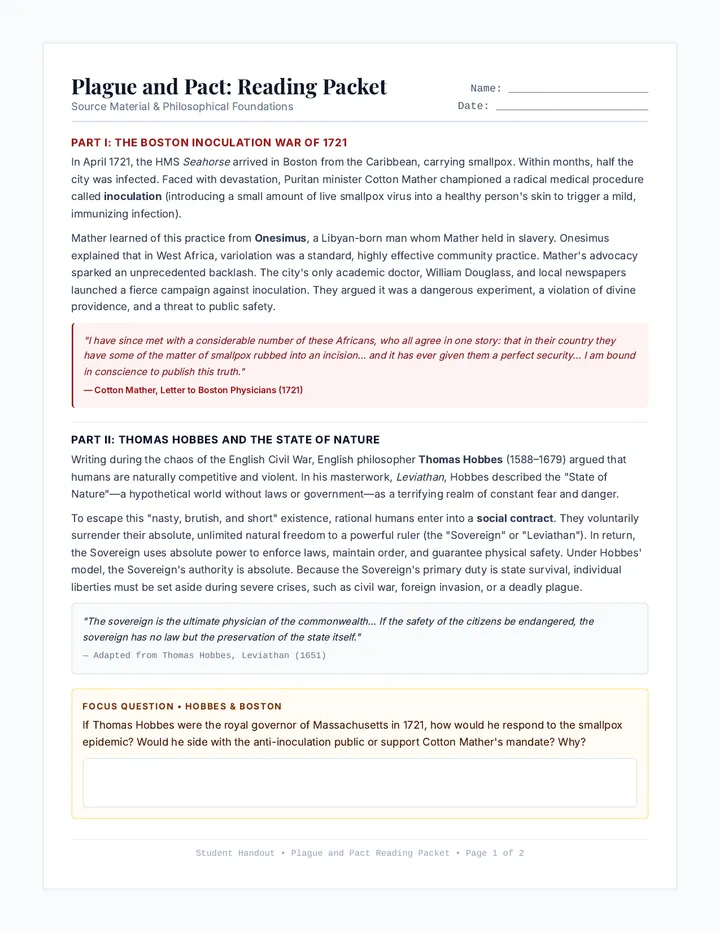
An inquiry-based lesson exploring how historical epidemics (from the Black Death to Smallpox inoculation) tested and reshaped the social contract between citizens and states, forcing a reckoning between personal liberty and public safety.
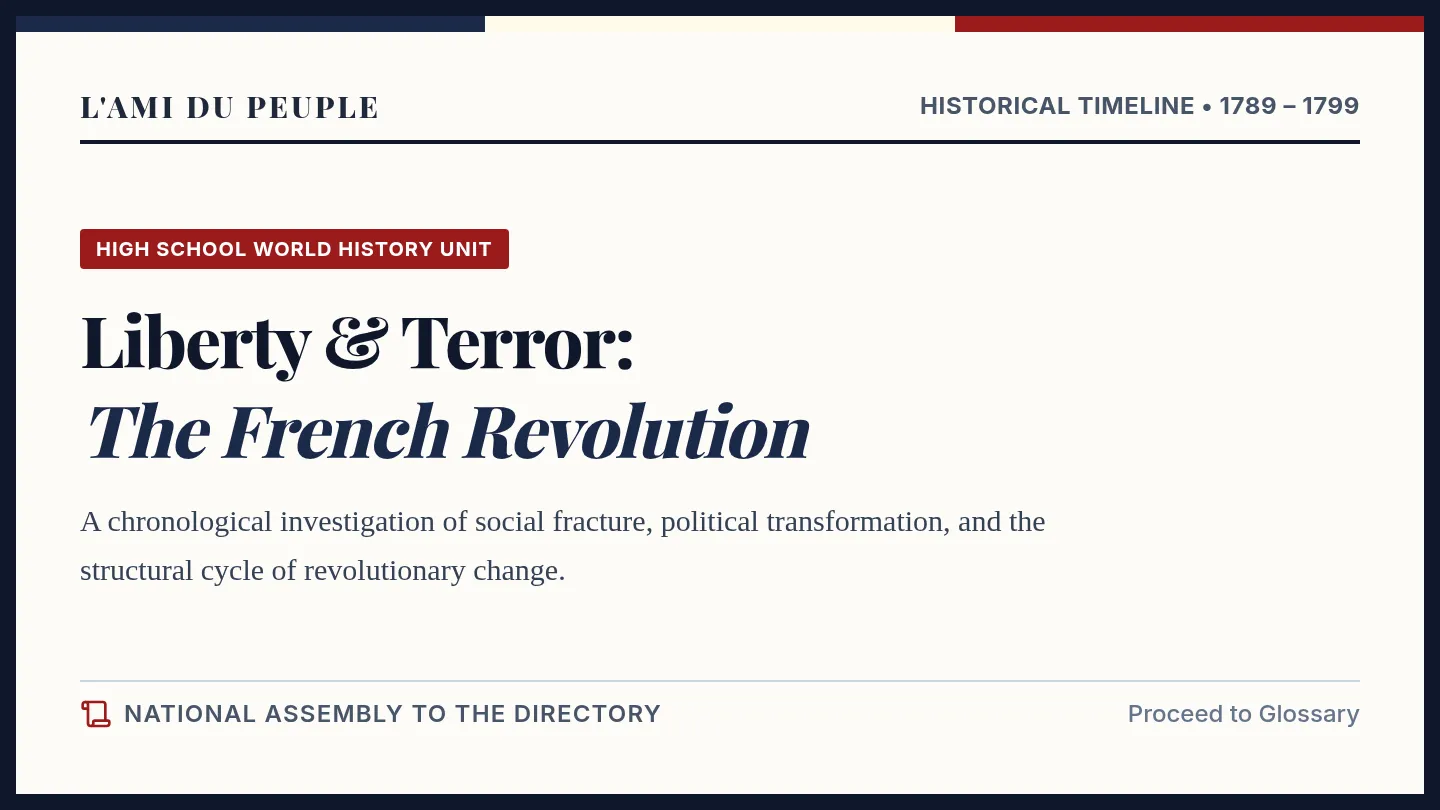
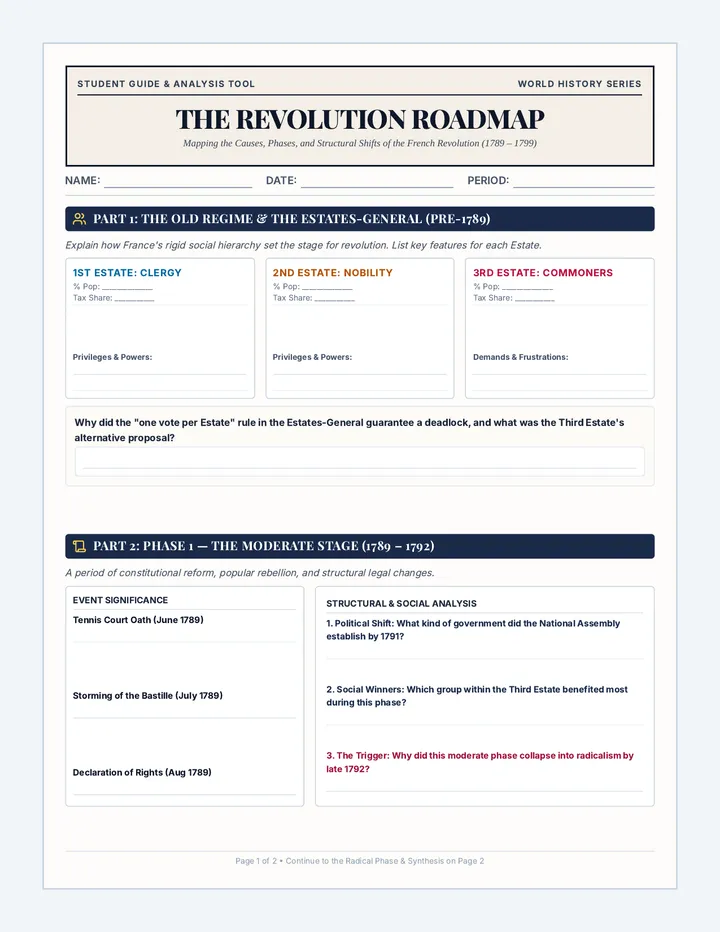
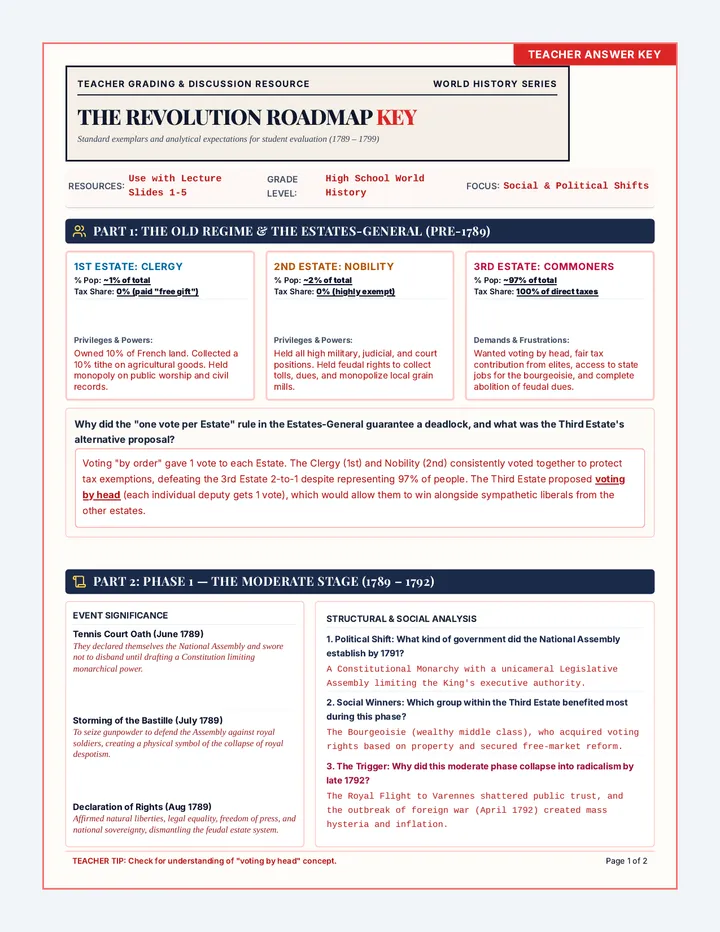
A lesson that contextualizes the key phases of the French Revolution (1789-1799) from the National Assembly to the Directory, guiding students to analyze social dynamics, political shifts, and cause-and-effect relationships.
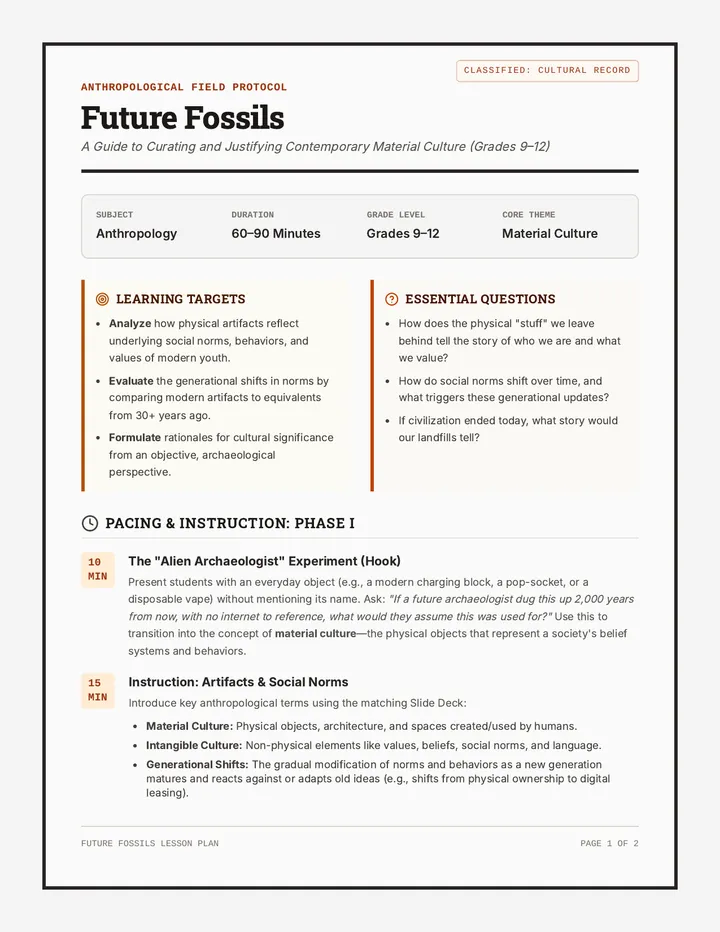
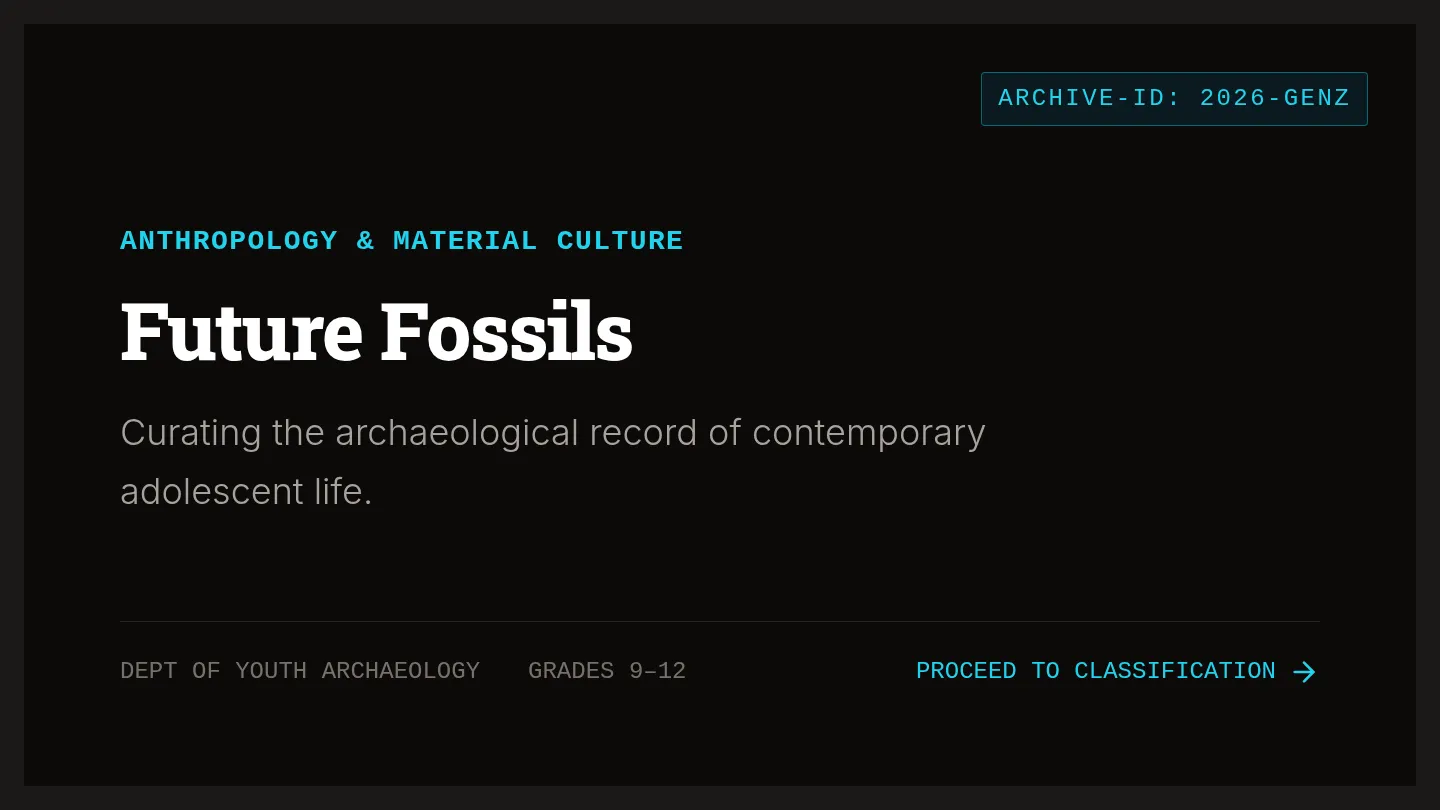
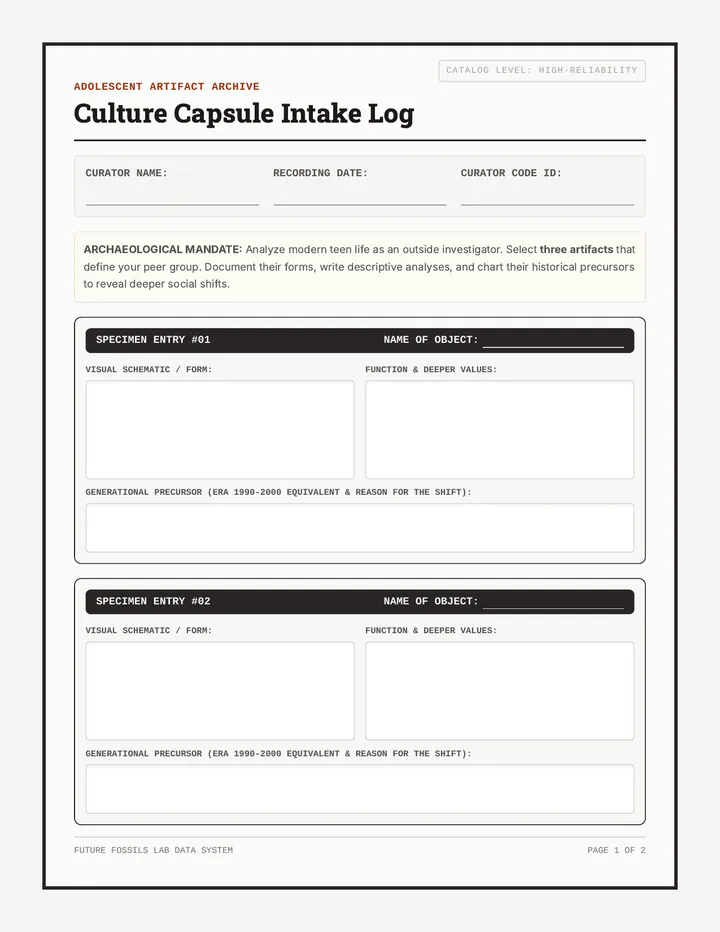
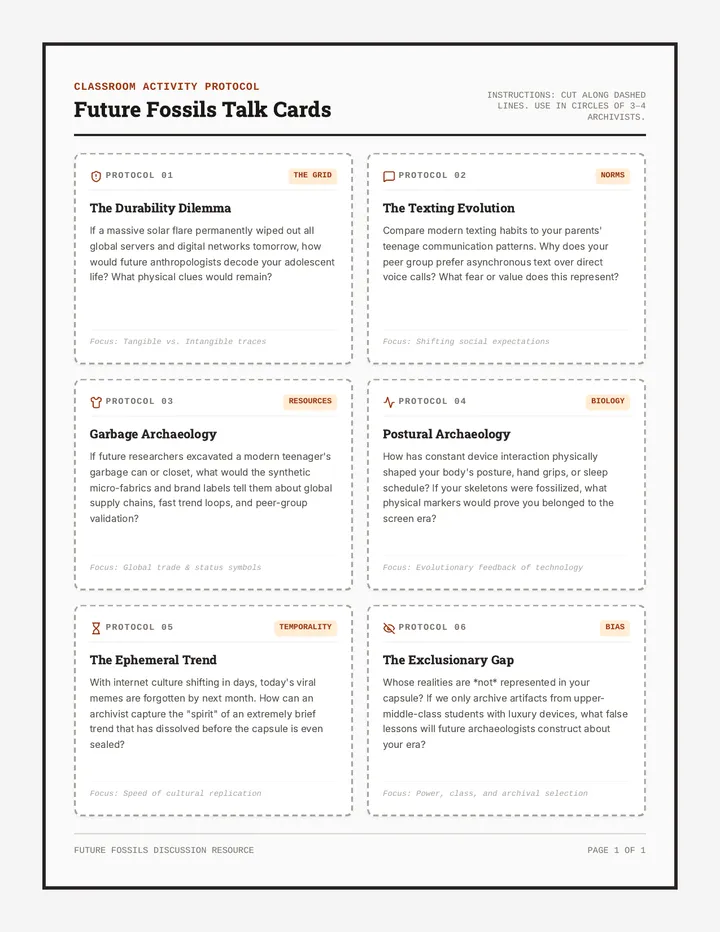
An anthropology lesson where high school students curate and analyze contemporary artifacts that represent modern adolescent culture, exploring generational shifts in social norms and material culture.
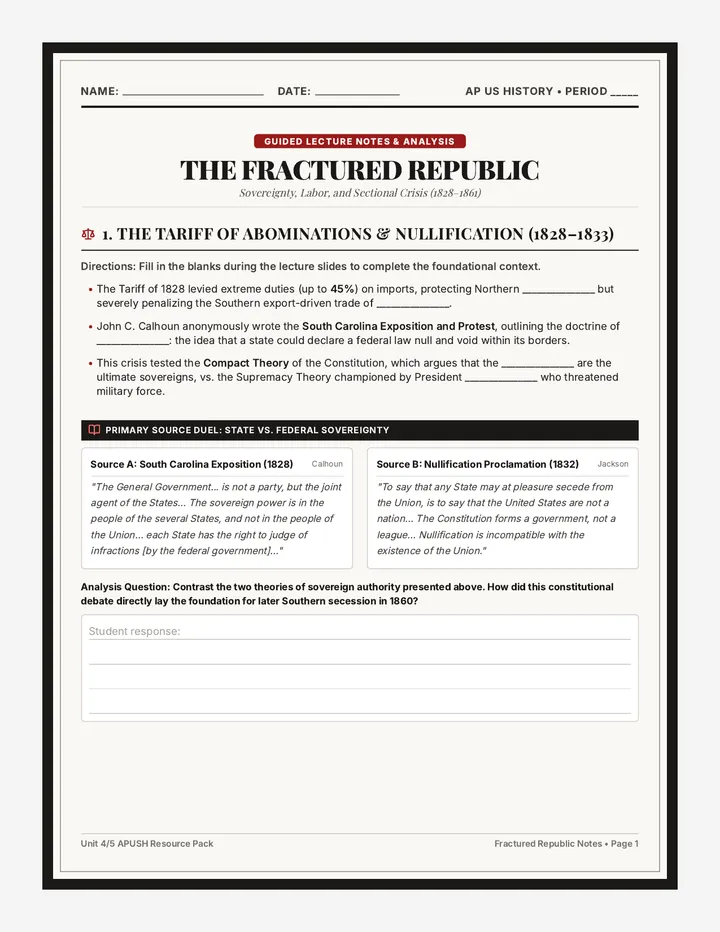
An advanced AP US History lesson exploring the constitutional, economic, and political crises that fractured the United States between 1828 and 1861. Students analyze key events including the Tariff of Abominations, State v. Mann, the Wilmot Proviso, and the rise of the Know-Nothing Party through lectures and structured primary sources.
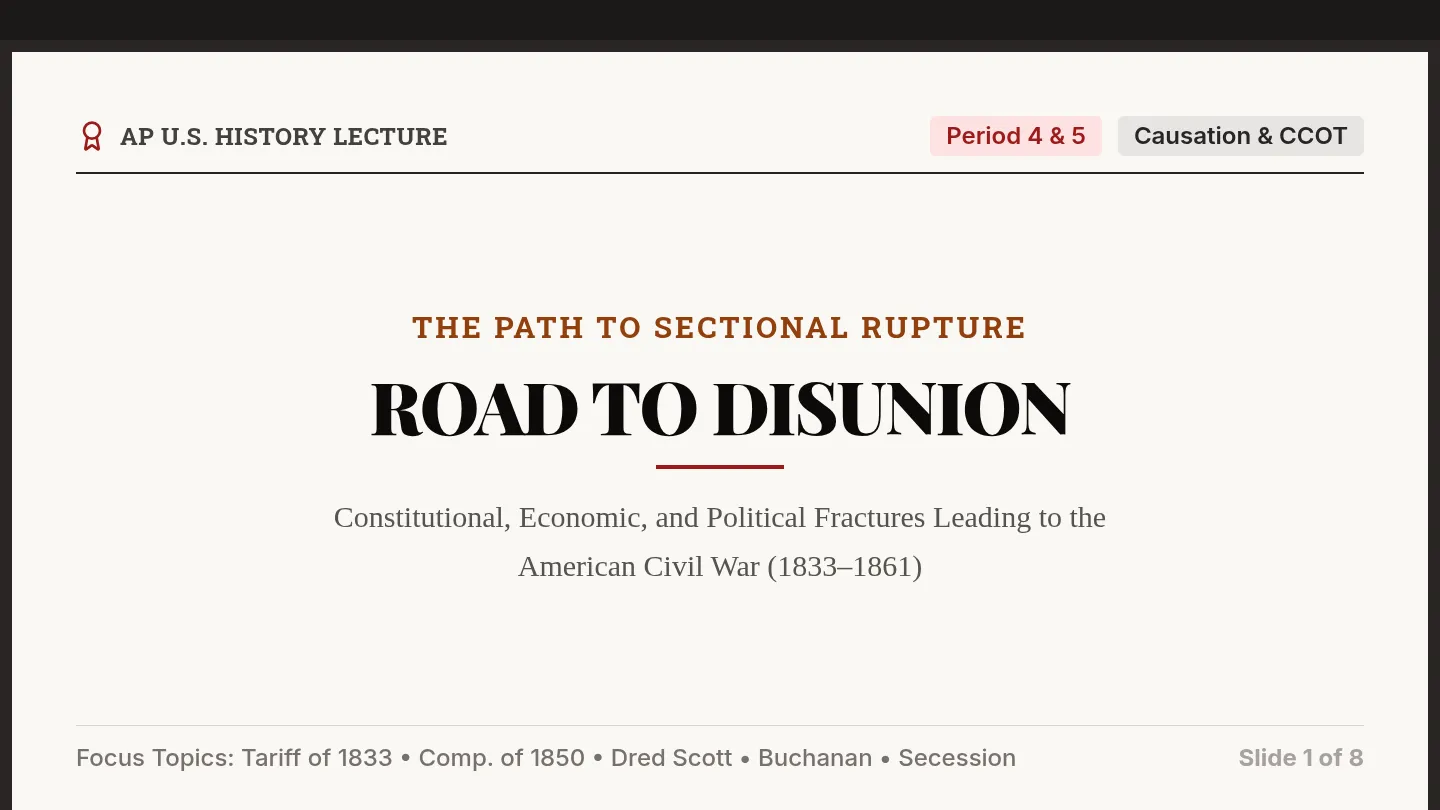
An advanced AP US History lecture series exploring the constitutional, economic, and political crises that fractured the United States between 1833 and 1861. This lesson highlights key legislative compromises, executive decisions, and judicial rulings that made sectional conflict and the Civil War inevitable.
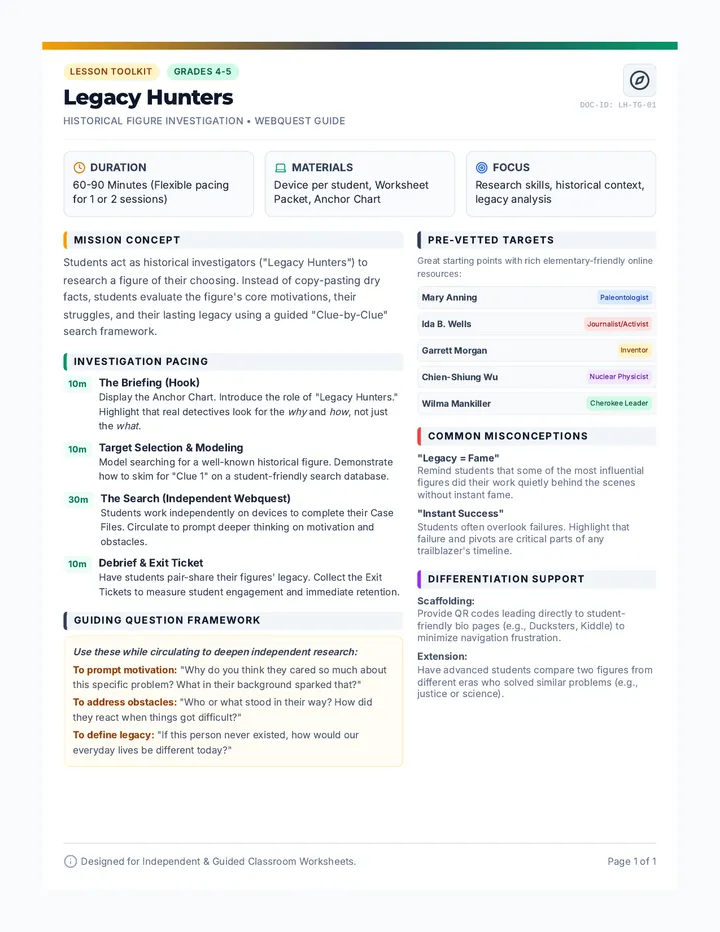
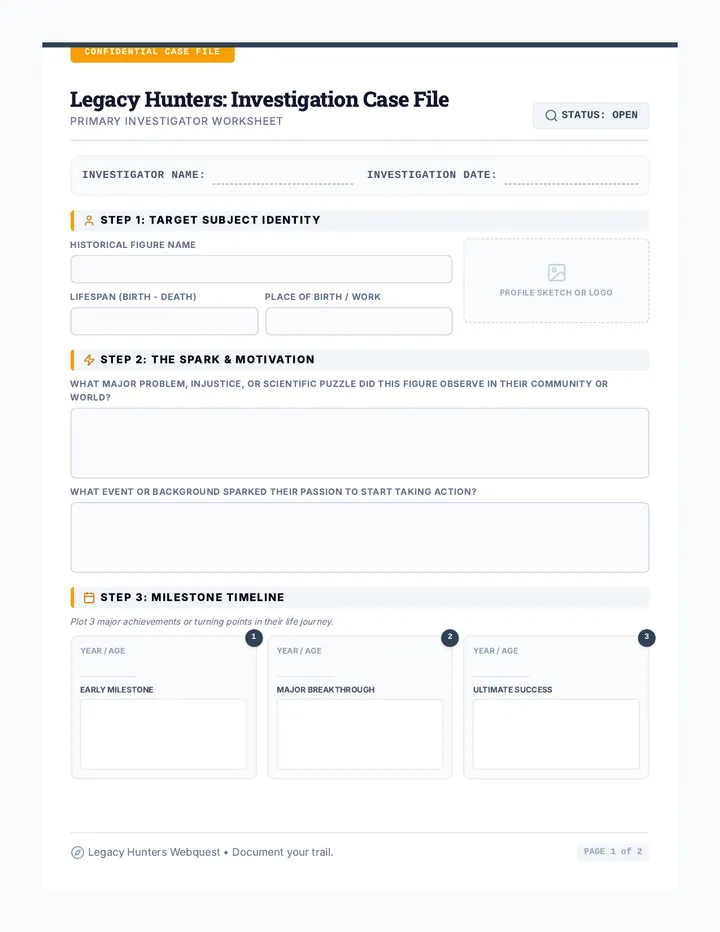
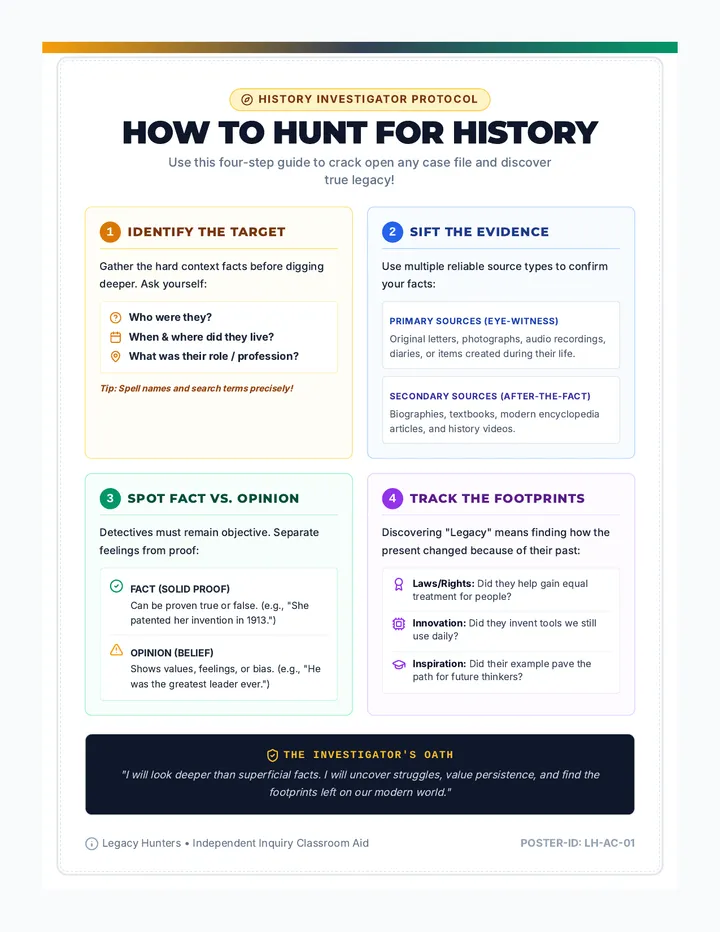
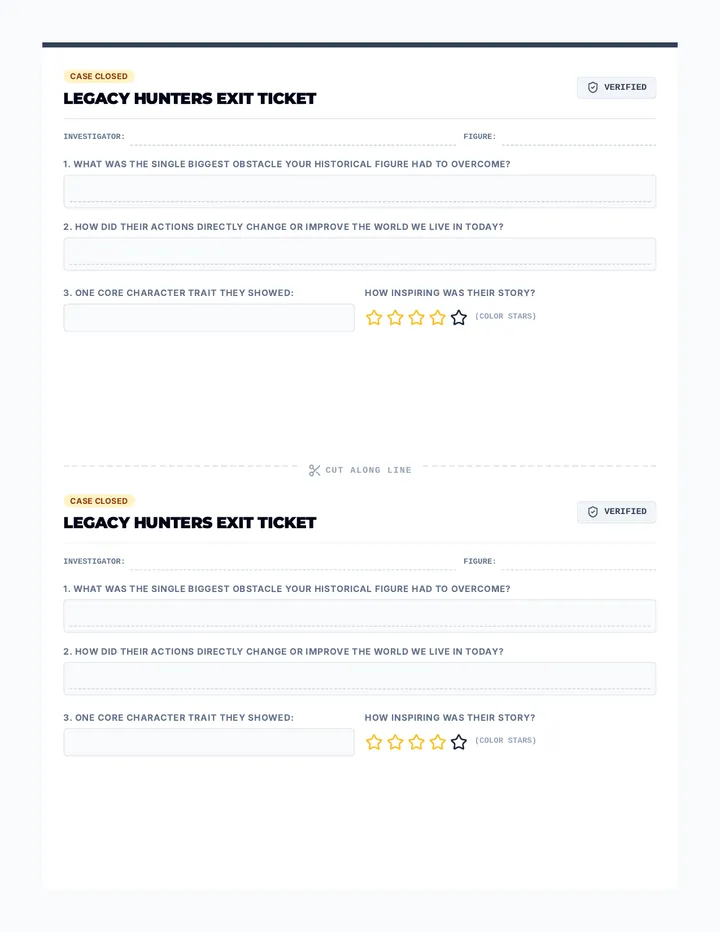
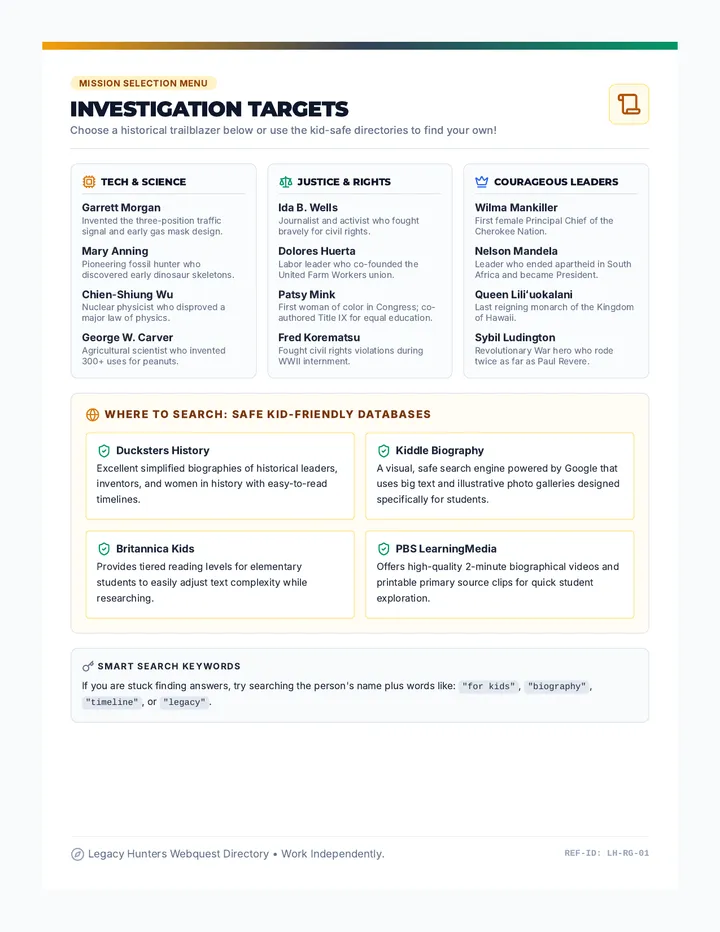
A complete history webquest lesson bundle designed for late elementary students to independently research diverse historical figures. Students act as research detectives to discover the lives, struggles, and lasting legacies of inventors, activists, and leaders.
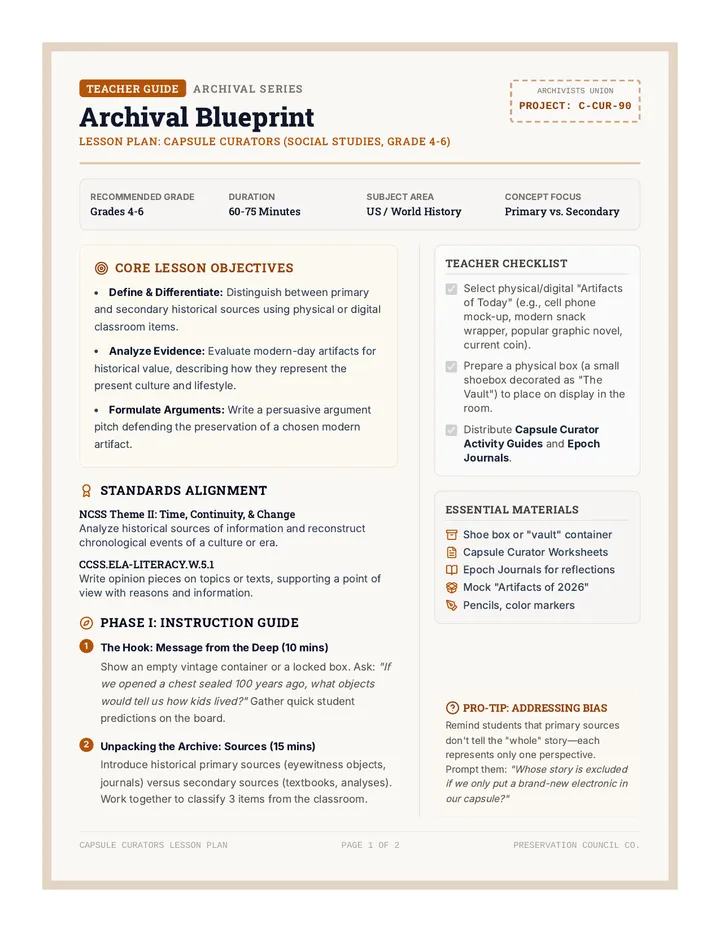
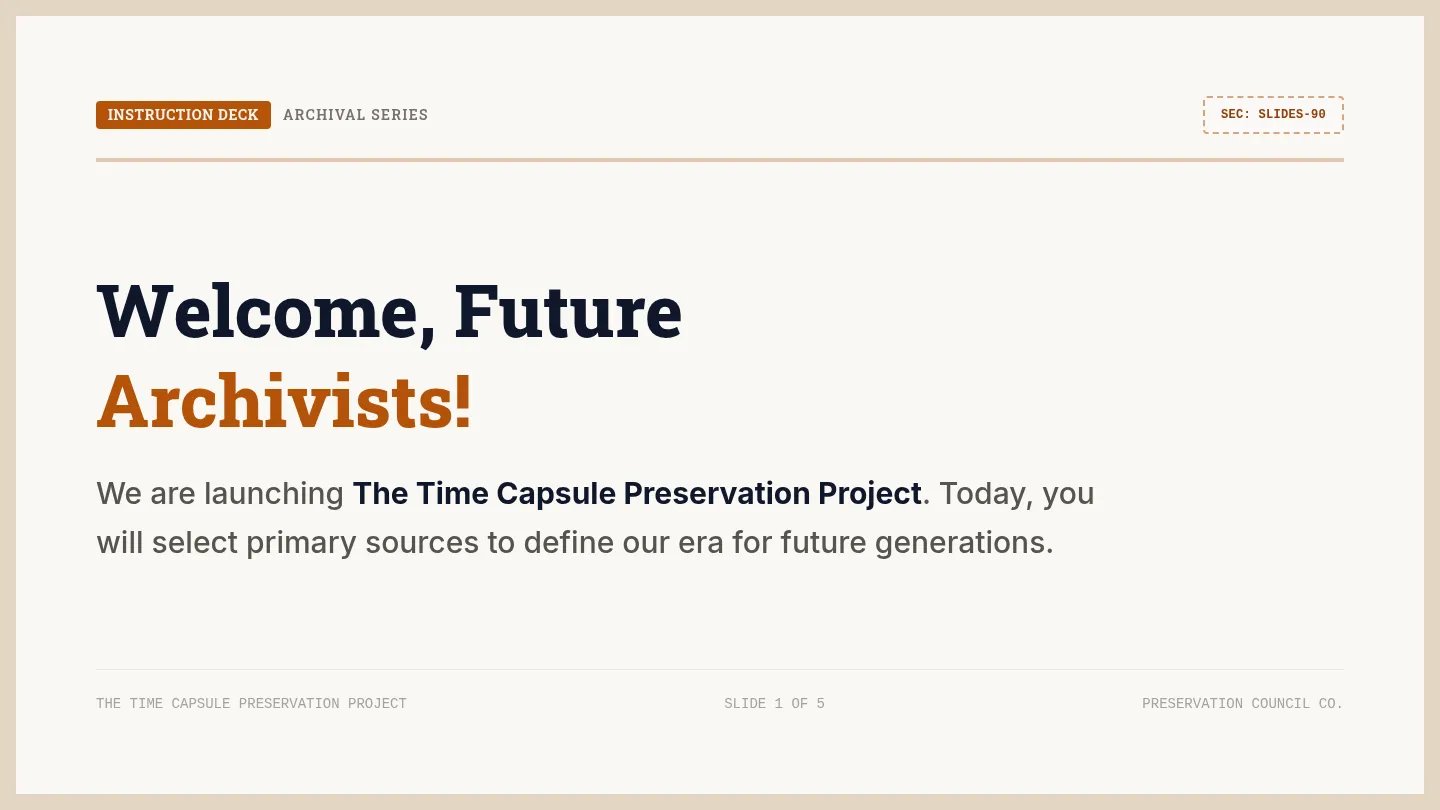
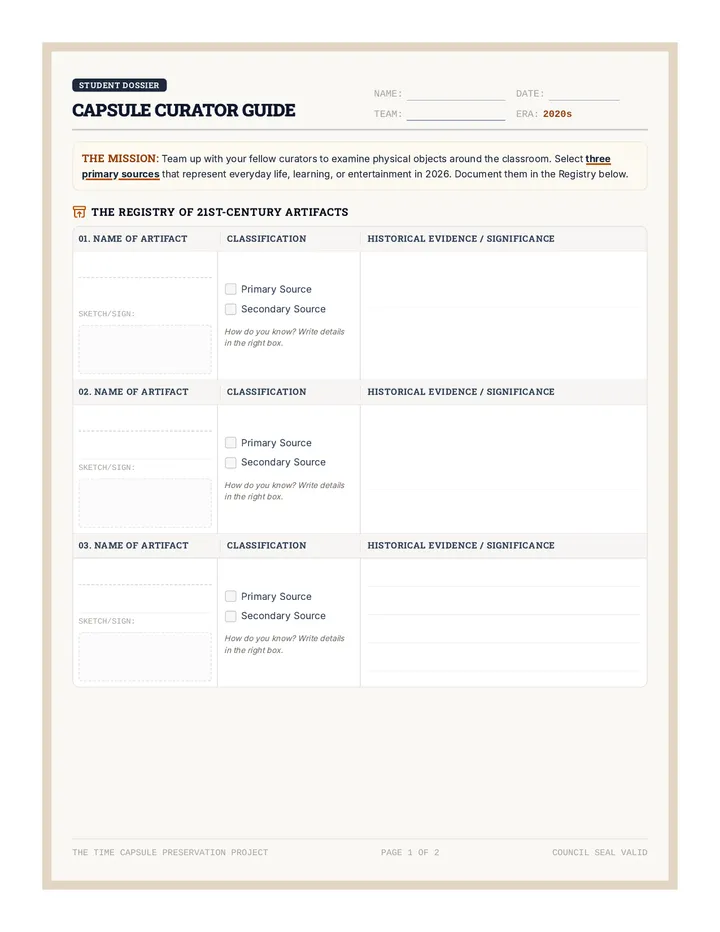
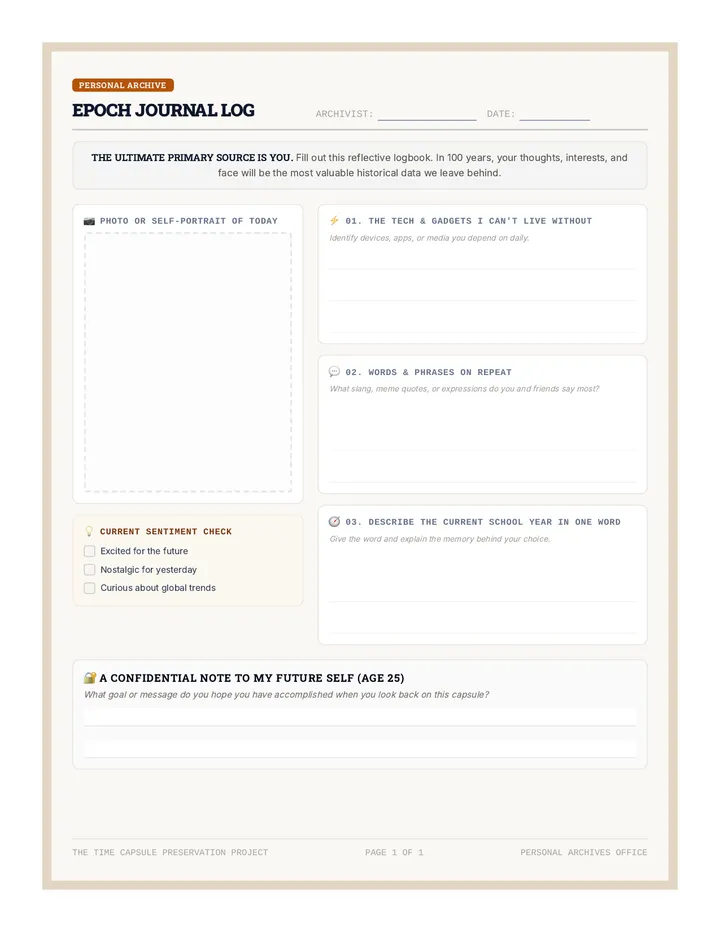
An inquiry-based social studies lesson where students explore primary and secondary sources by curating a classroom time capsule. Students analyze modern artifacts, select items representing their epoch, and write persuasive letters to future historians.
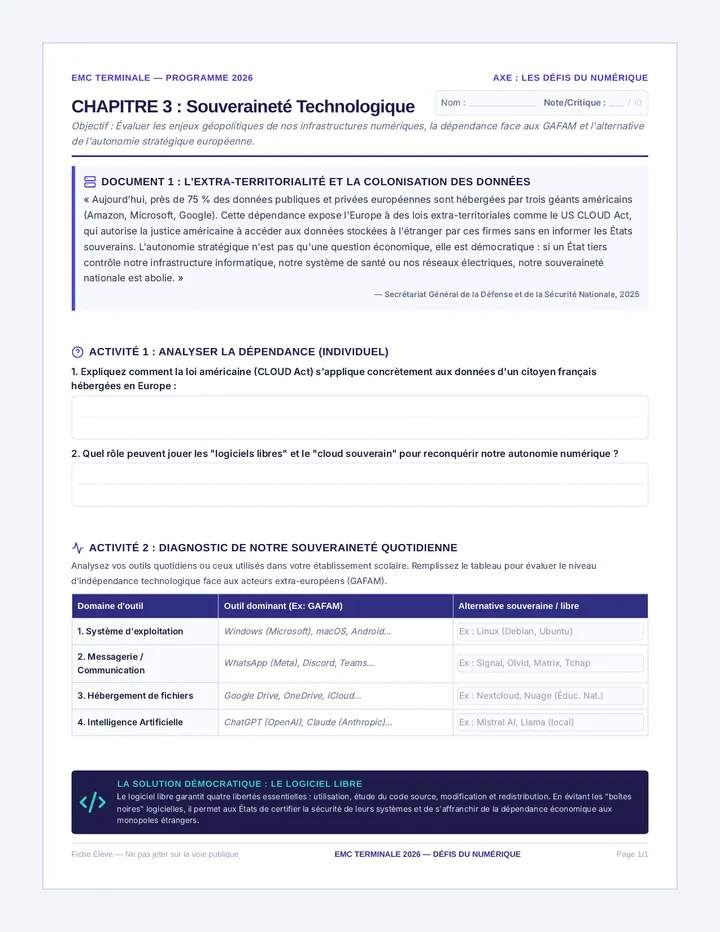
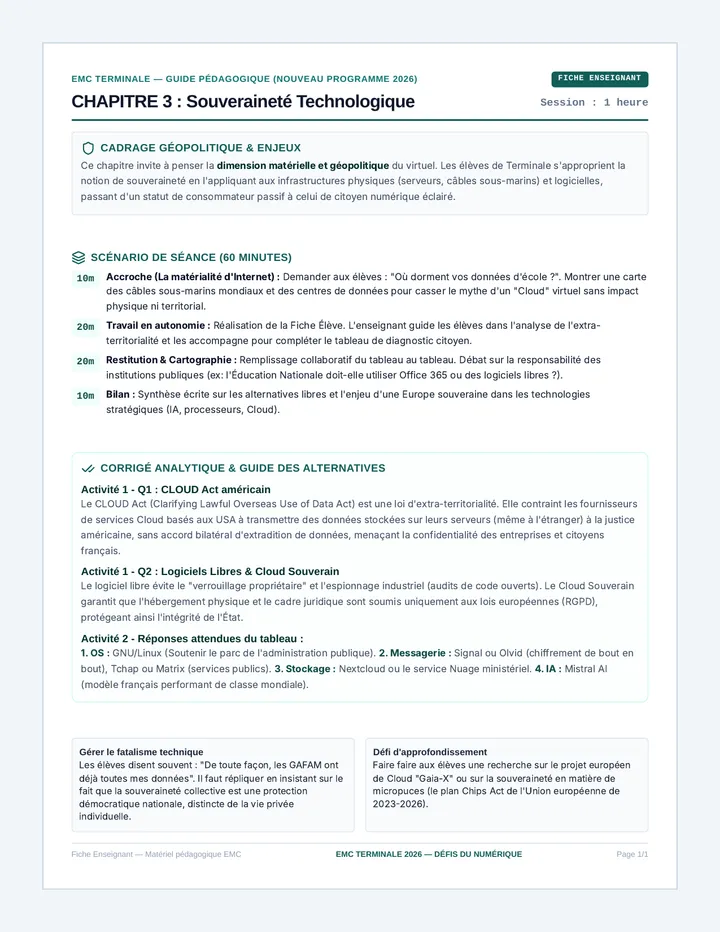
Ce troisième chapitre interroge la dimension géopolitique et économique du numérique : le rôle et l'influence des GAFAM et des géants de l'IA, la souveraineté des données citoyennes, le cloud souverain et l'alternative du logiciel libre pour l'indépendance nationale et européenne.
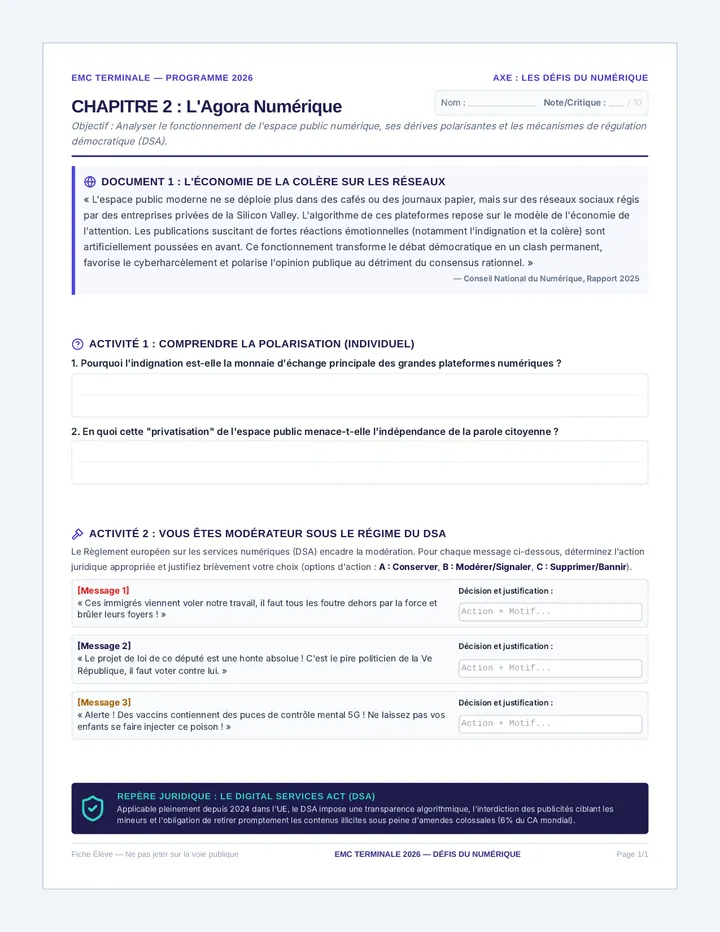
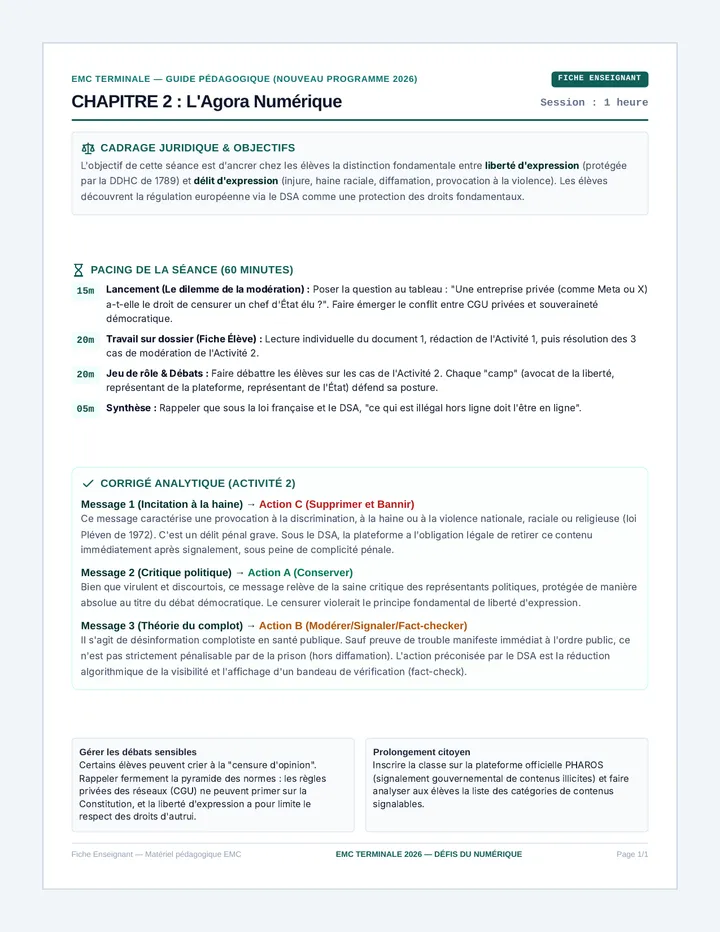
Ce deuxième chapitre traite de la structure de l'espace public numérique, en abordant la polarisation des débats sur les réseaux sociaux, les bulles de filtres, la liberté d'expression face à la modération et la haine en ligne, ainsi que la citoyenneté numérique active.
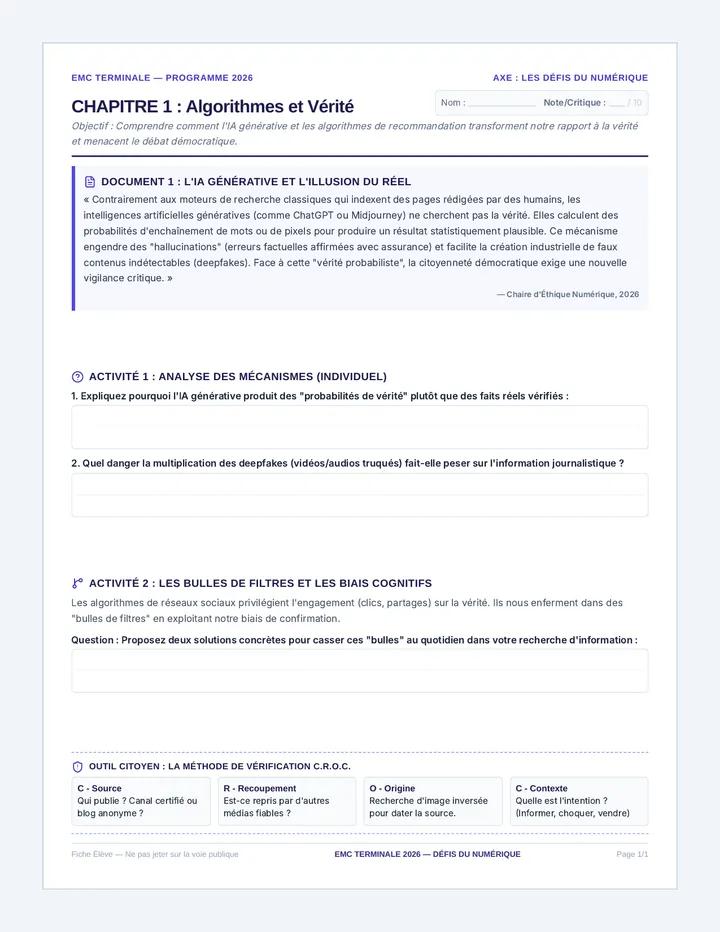
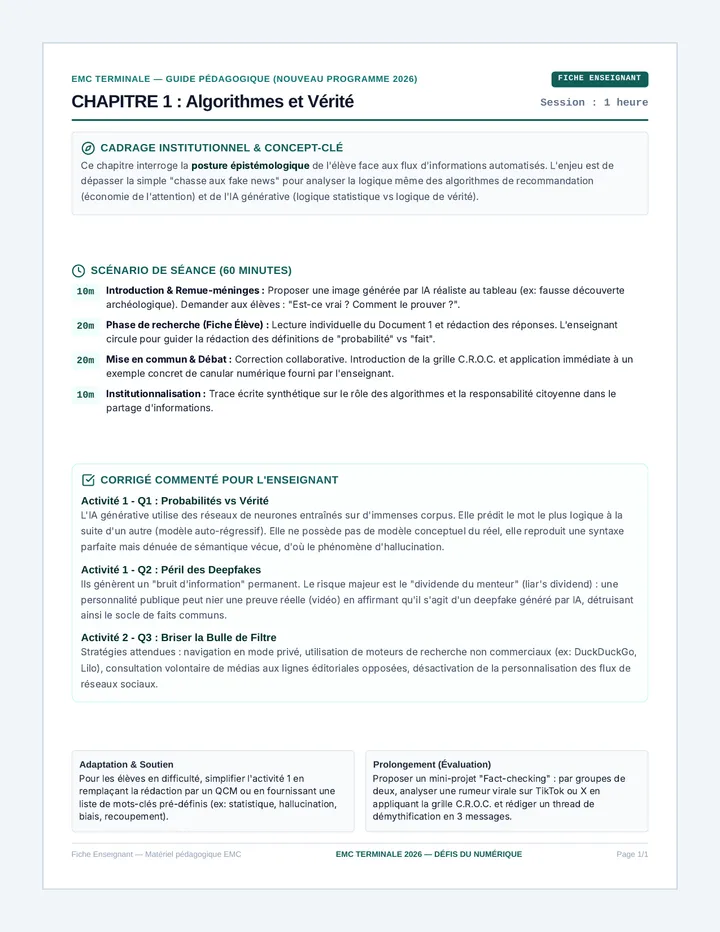
Ce premier chapitre explore l'impact de l'intelligence artificielle générative et des algorithmes de recommandation sur la vérité historique, scientifique et journalistique. Les élèves analysent la notion de désinformation, les deepfakes et l'importance de l'épistémologie critique.
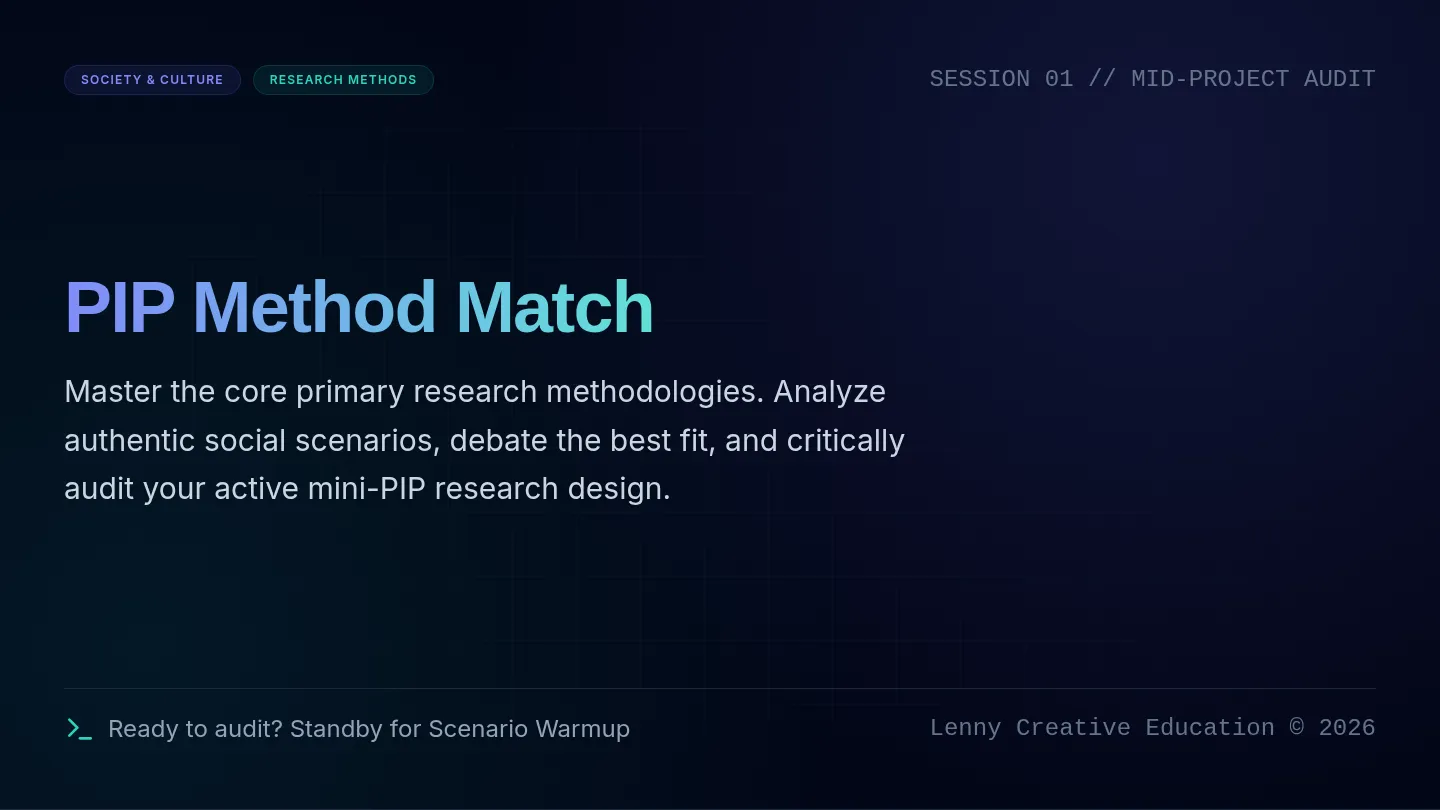
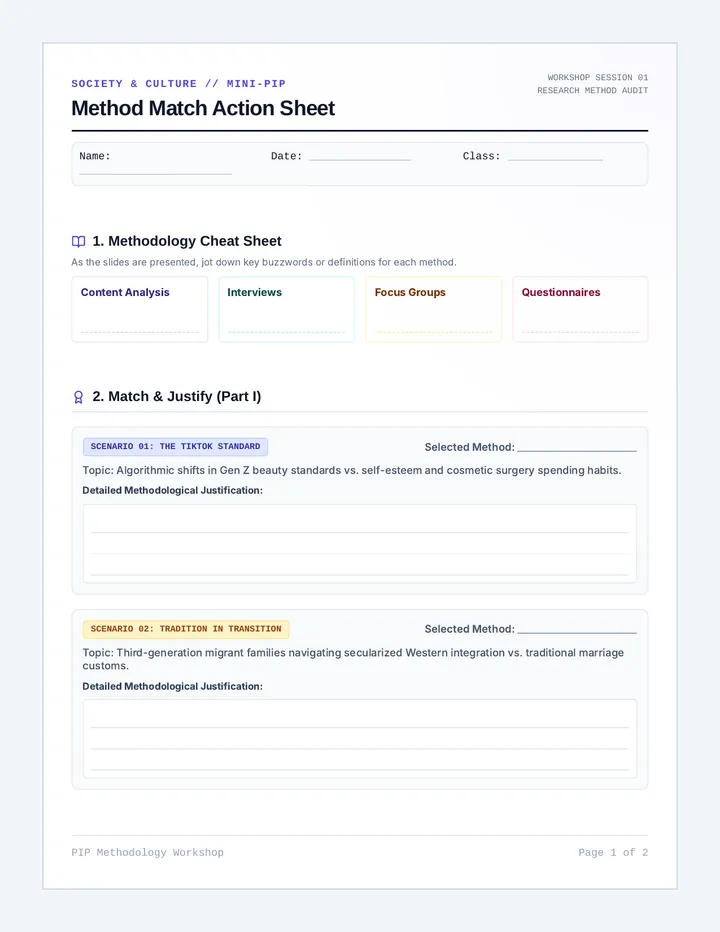
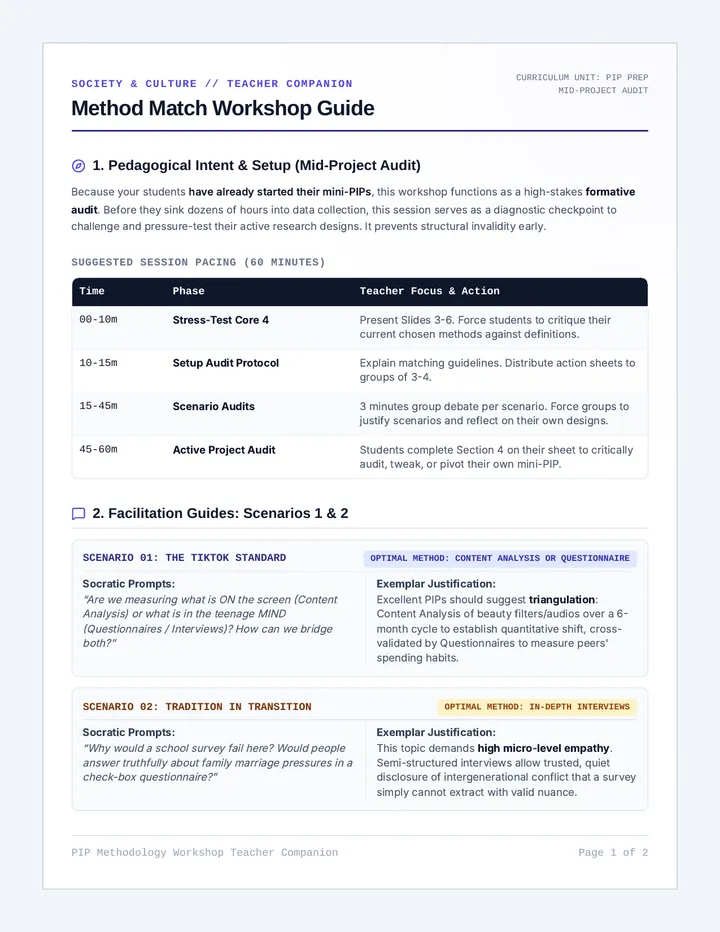
A hands-on workshop designed to introduce Society and Culture students to key research methodologies (Content Analysis, Interviews, Focus Groups, and Questionnaires) for their Personal Interest Projects (PIPs). Students analyze authentic research scenarios and justify the best methodological fit for each PIP topic.
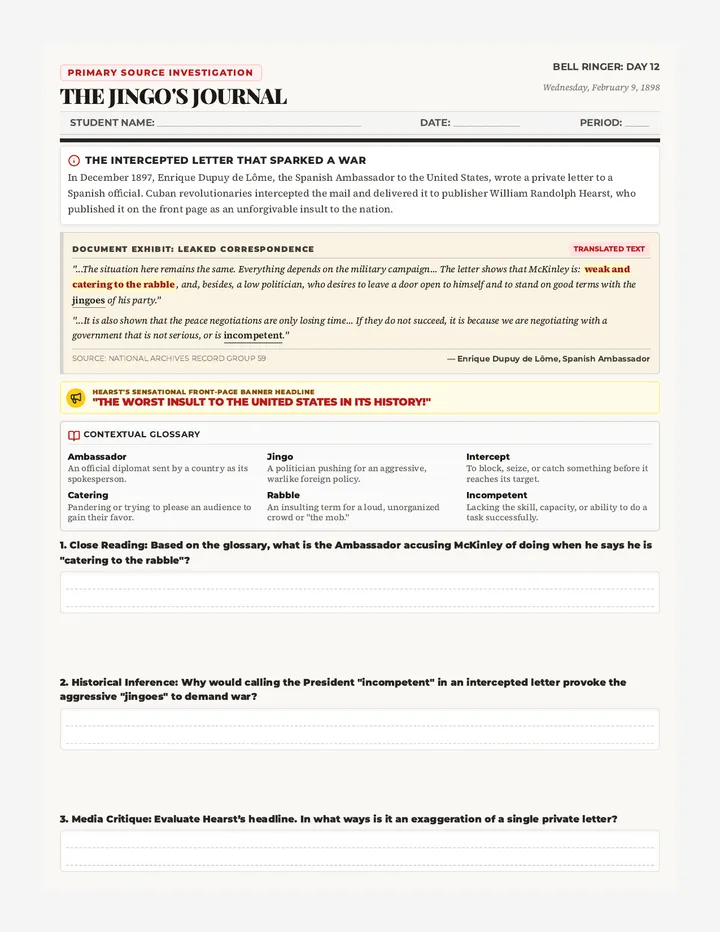
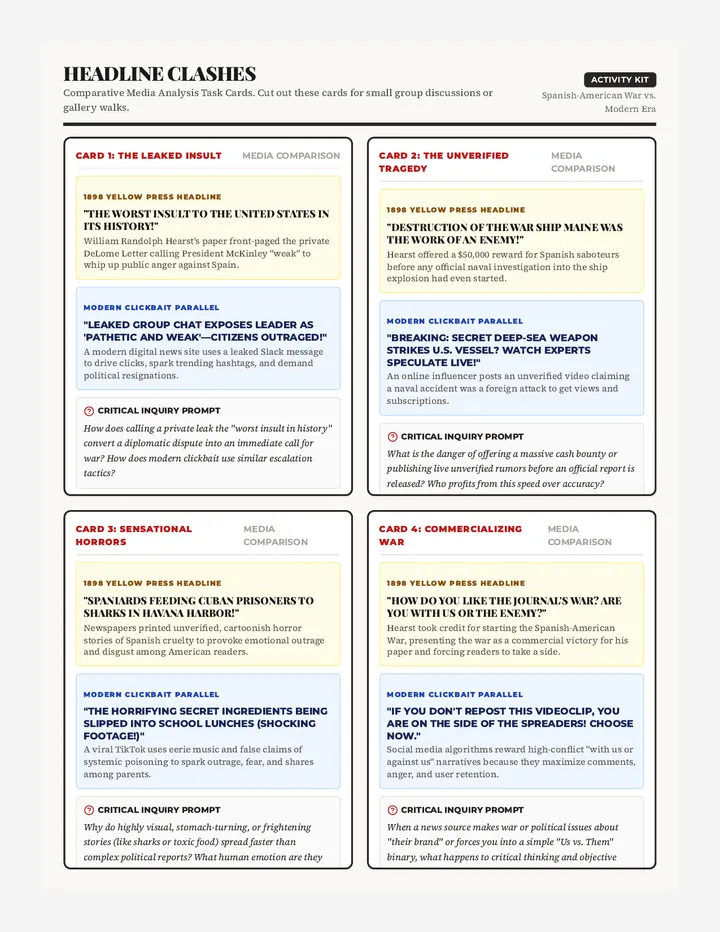
Students examine yellow journalism through the lens of the historical DeLome Letter leak of 1898. They analyze sensationalized media, understand the historical context of the Spanish-American War, and draw parallels to modern media.
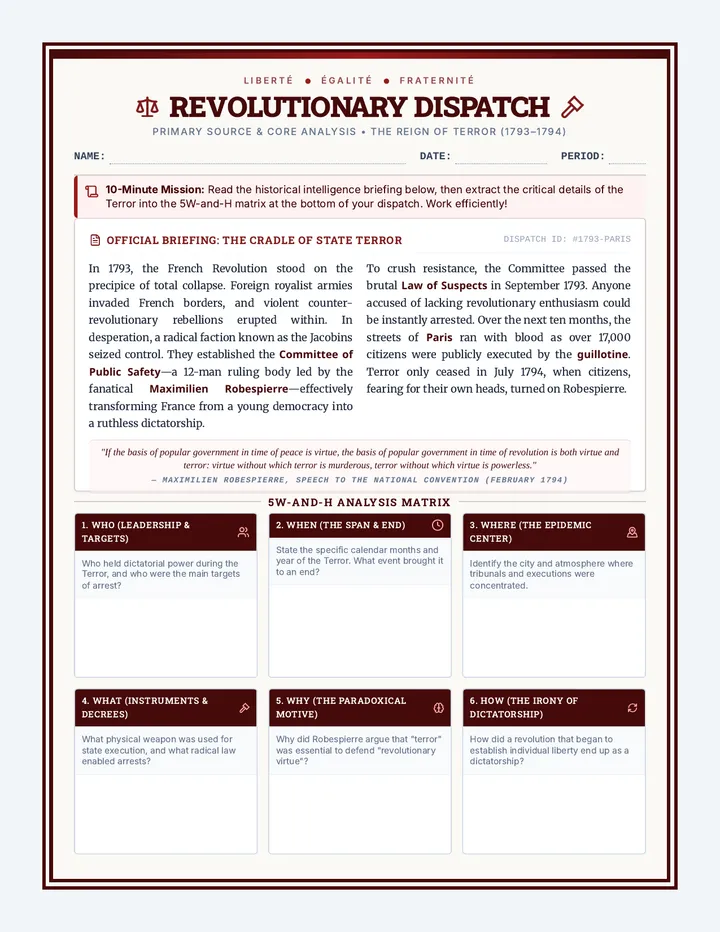
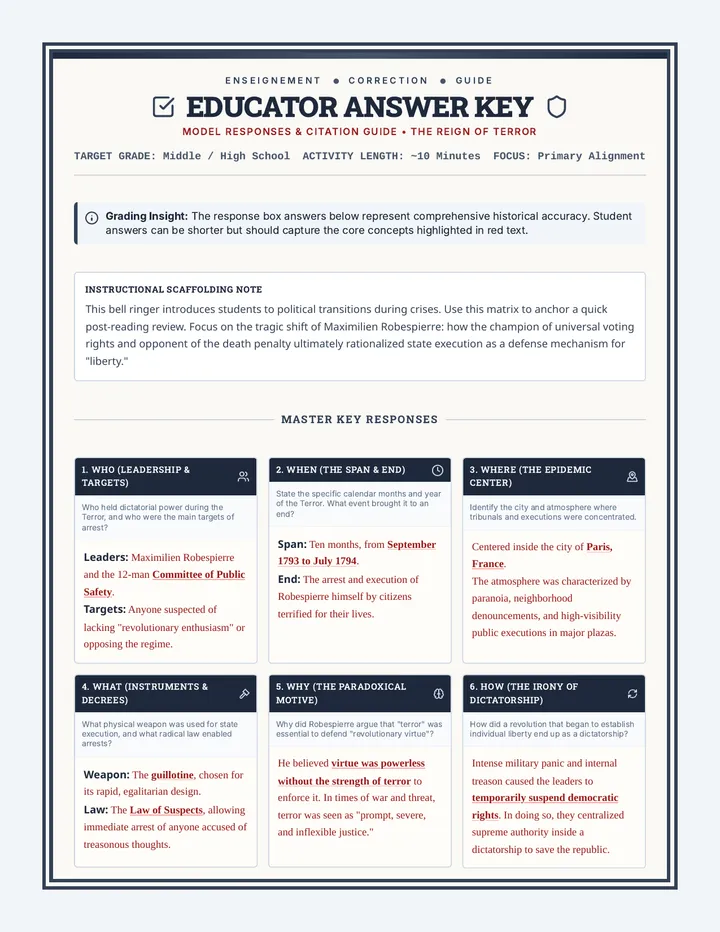
A deep dive into the French Revolution's bloodiest phase, analyzing how revolutionary ideals twisted into state-sponsored terror under Robespierre.
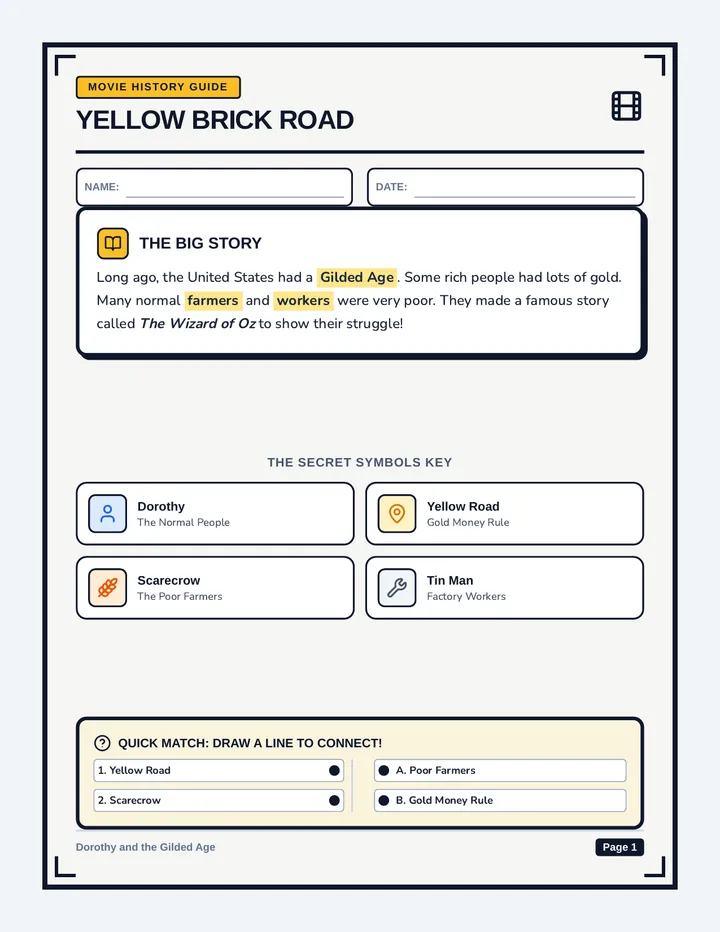
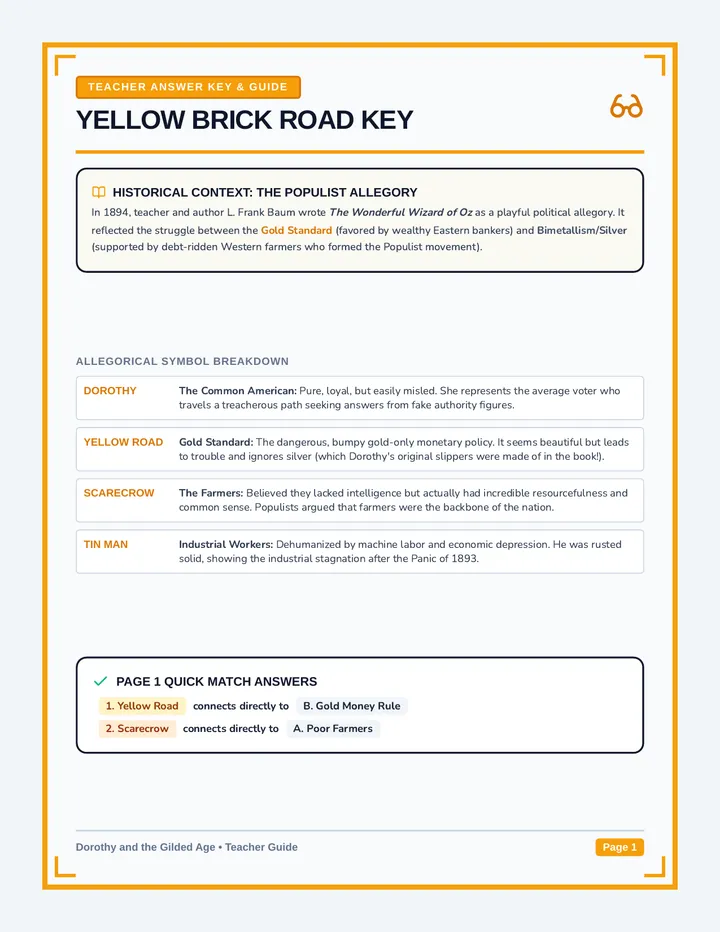
A highly accessible watch guide lesson linking The Wizard of Oz (1939) to Gilded Age politics (Populism, the Gold Standard, and industrial workers), designed specifically for middle school students reading at a 1st-grade level using visual matching, word banks, and literal multiple-choice questions.