Arid Atlas Slides ARID ATLAS
Global Deserts & Misconceptions
Two Truths & A Lie
Deserts cover about 20% of Earth's land surface.
Deserts are defined as environments that are always hot.
Deserts receive less than 25 cm (10 inches) of rain per year.
Which one is the lie? Discuss with your neighbor!
Defining the Desert
Watch for the scientific definition of a desert!
Embedded media
LOOK FOR:
Examples of cold deserts mentioned.
LISTEN FOR:
The exact amount of rainfall a desert gets.
WHAT IS A DESERT?
Scientific Definition
An environment that receives less than 25 cm (10 inches) of rain or snow per year.
Notice: Temperature is NOT part of the official definition!
Hot Deserts
Scorching days, cool nights.
Cold Deserts
Freezing temperatures year-round.
A Global Desert Tour
Watch the landscape of each desert. Is it sand, ice, or rock?
Embedded media
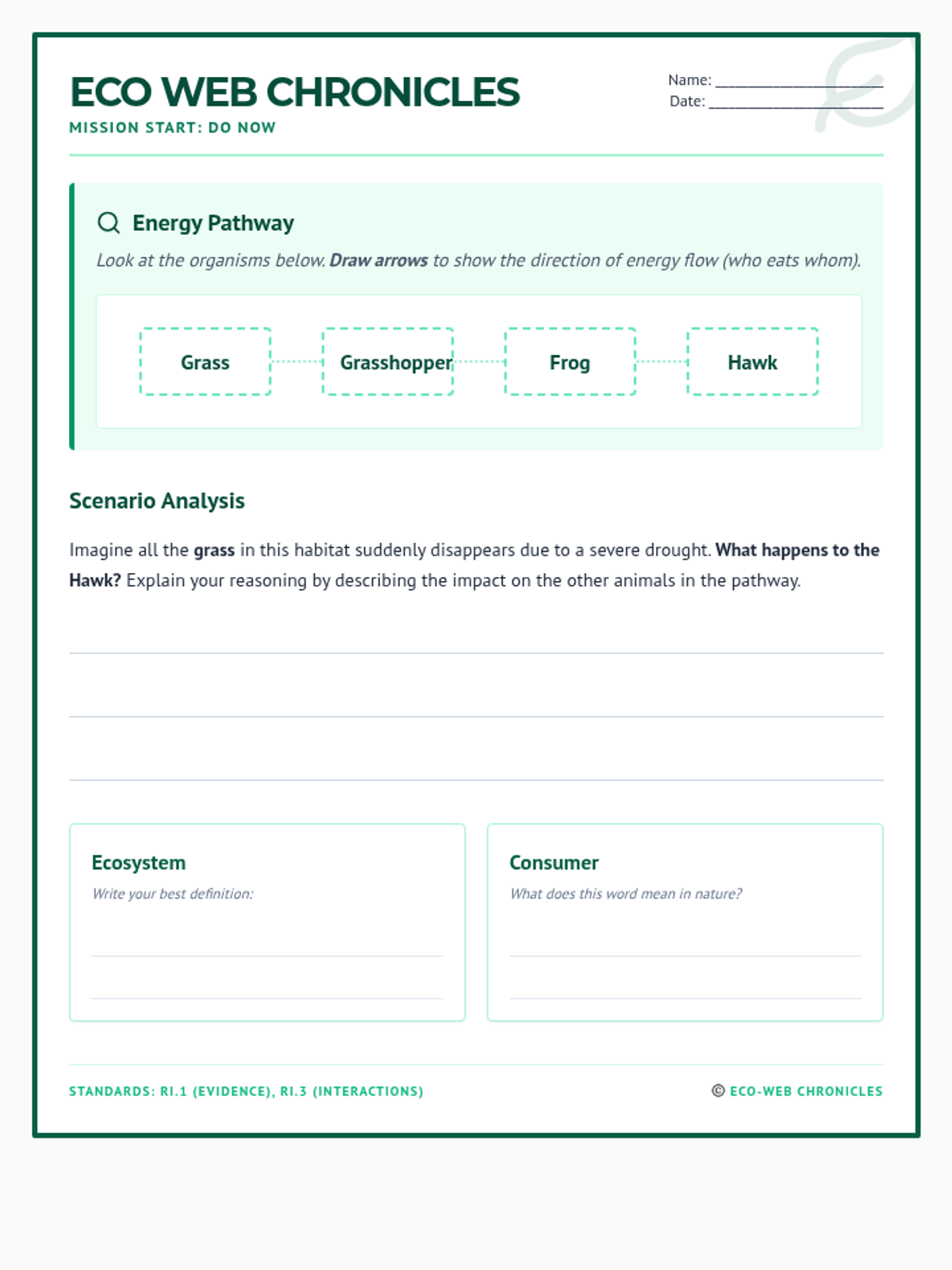
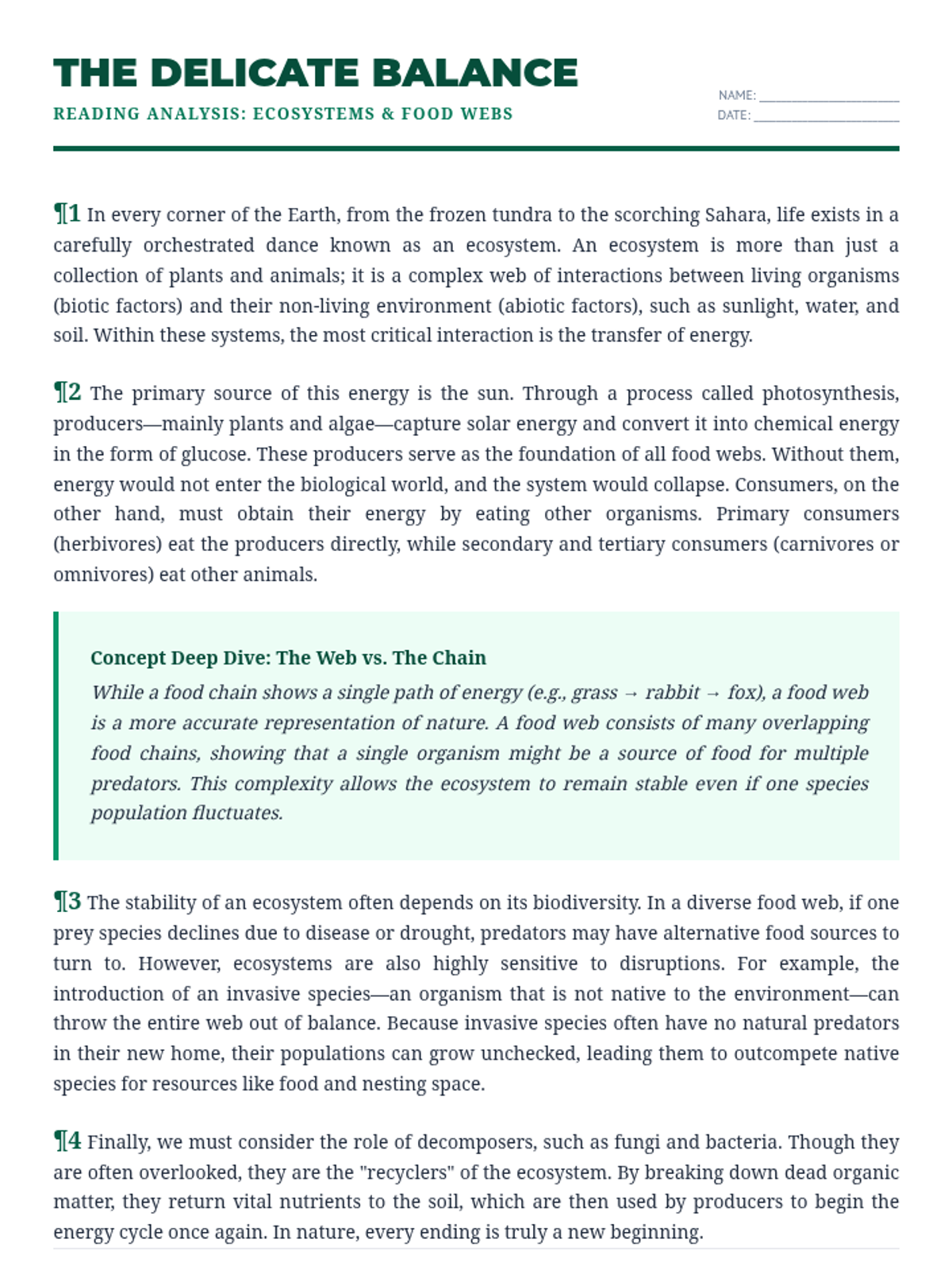
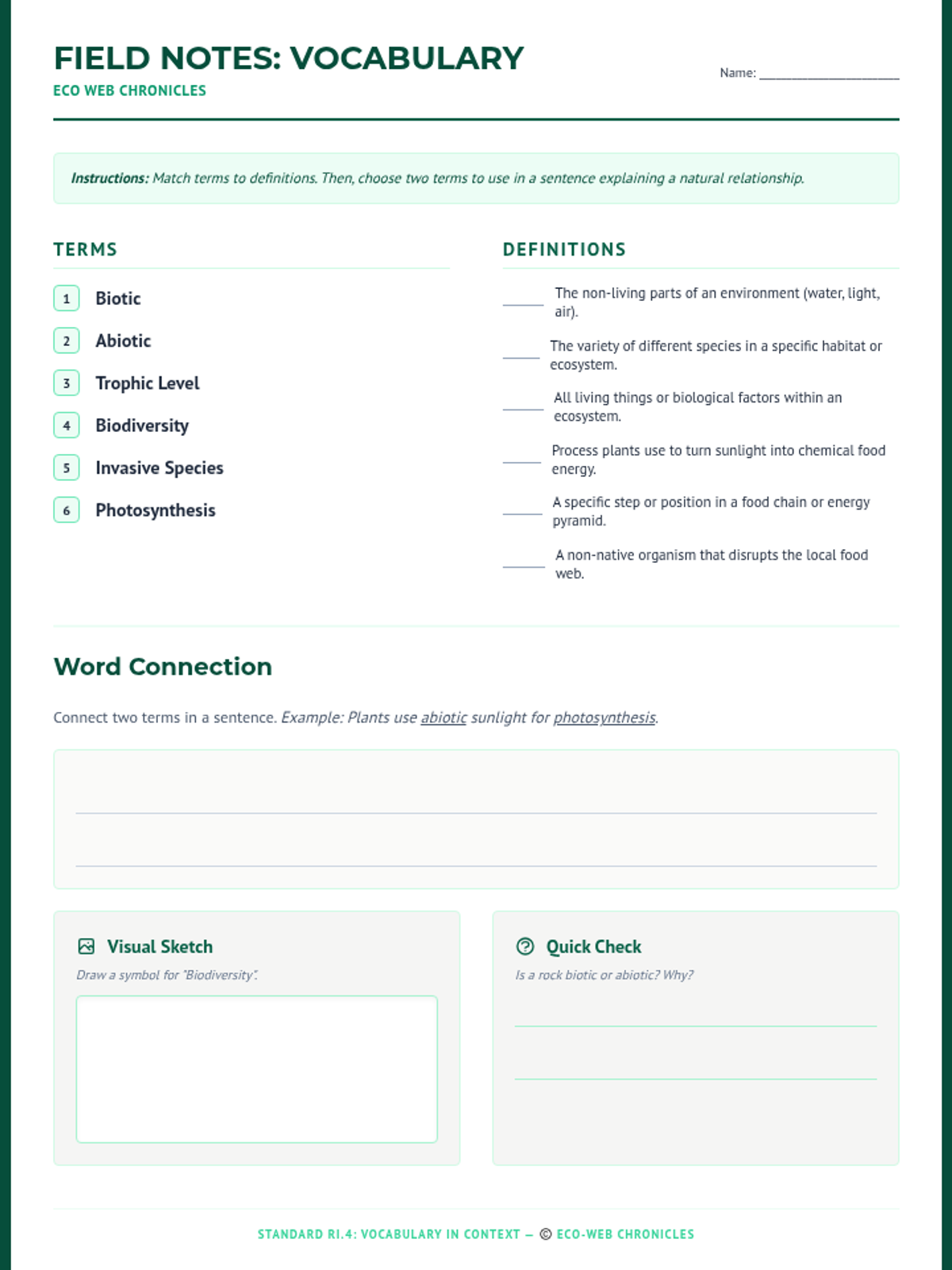
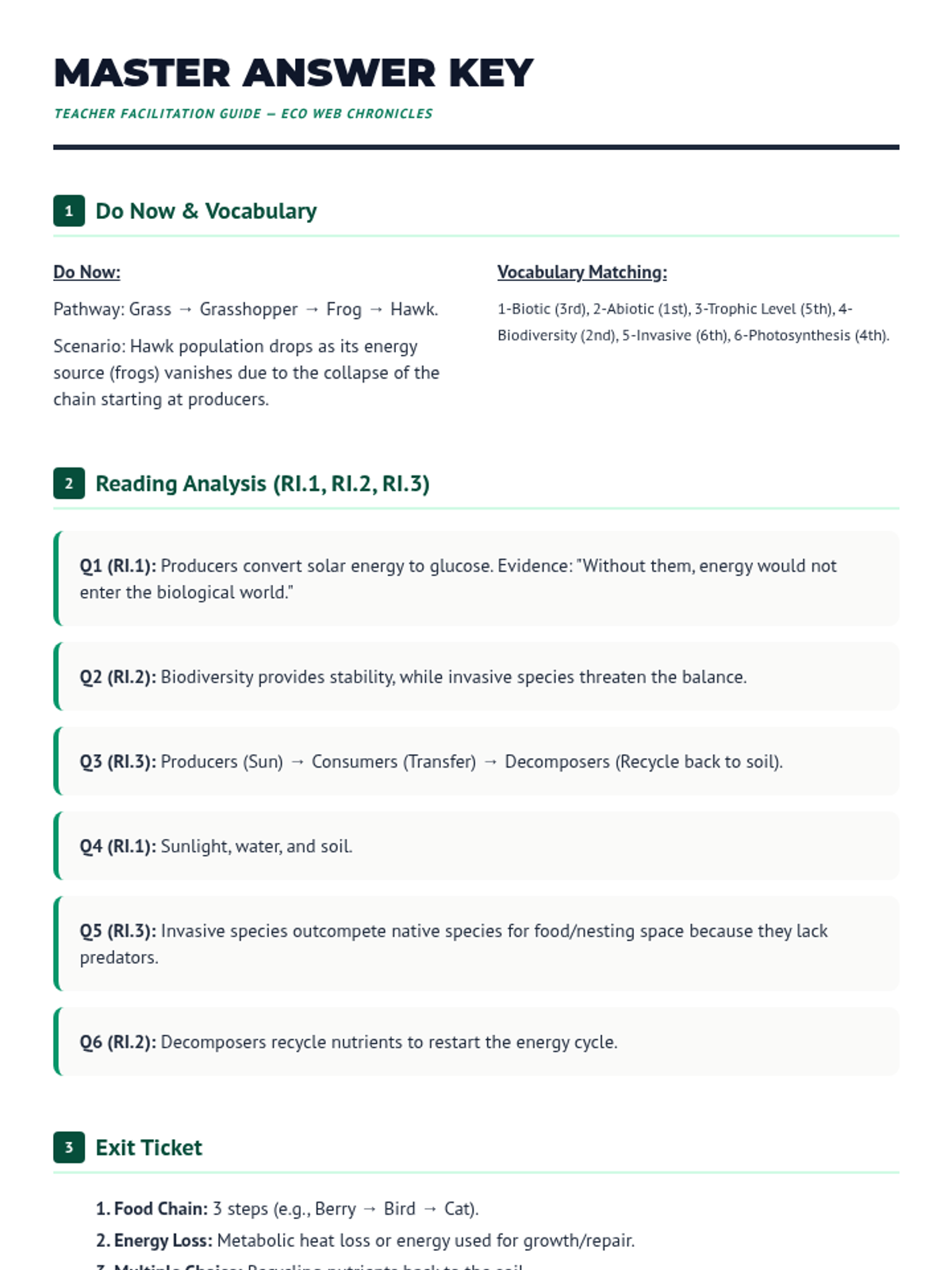
GOBI SONORAN SAHARA ARCTIC ANTARCTIC
Checking the Latitude
EQUATOR (0°)
!
Cold deserts are often located at the extreme North and South Poles.
!
Hot deserts are often found near 30° Latitude (North and South of the Equator).
CRITICAL QUESTION:
Do you notice a pattern between a desert's temperature and its distance from the equator?
Exit Ticket
"Define a desert using the scientific definition (rainfall) rather than its temperature."
Turn your slip in at the door!
Arid Atlas Teacher Guide ARID ATLAS
Teacher Facilitation Guide
Subject: Geography / Science
Grade Level: 4th-5th Grade
Duration: 45 Minutes
Learning Objective
Students will define deserts based on annual precipitation (rainfall) rather than temperature and identify the global distribution and latitude patterns of both hot and cold deserts.
Required Materials
Arid Atlas Slides & Projector
Desert Detective Map (1 per student)
Dry Truths Exit Ticket (1 slip per student)
Colored Pencils (Red and Blue)
Atlases or Digital Maps (optional)
Lesson Flow & Pacing
0-5
Minutes
Warm-up: Two Truths and a Lie
Slide 2
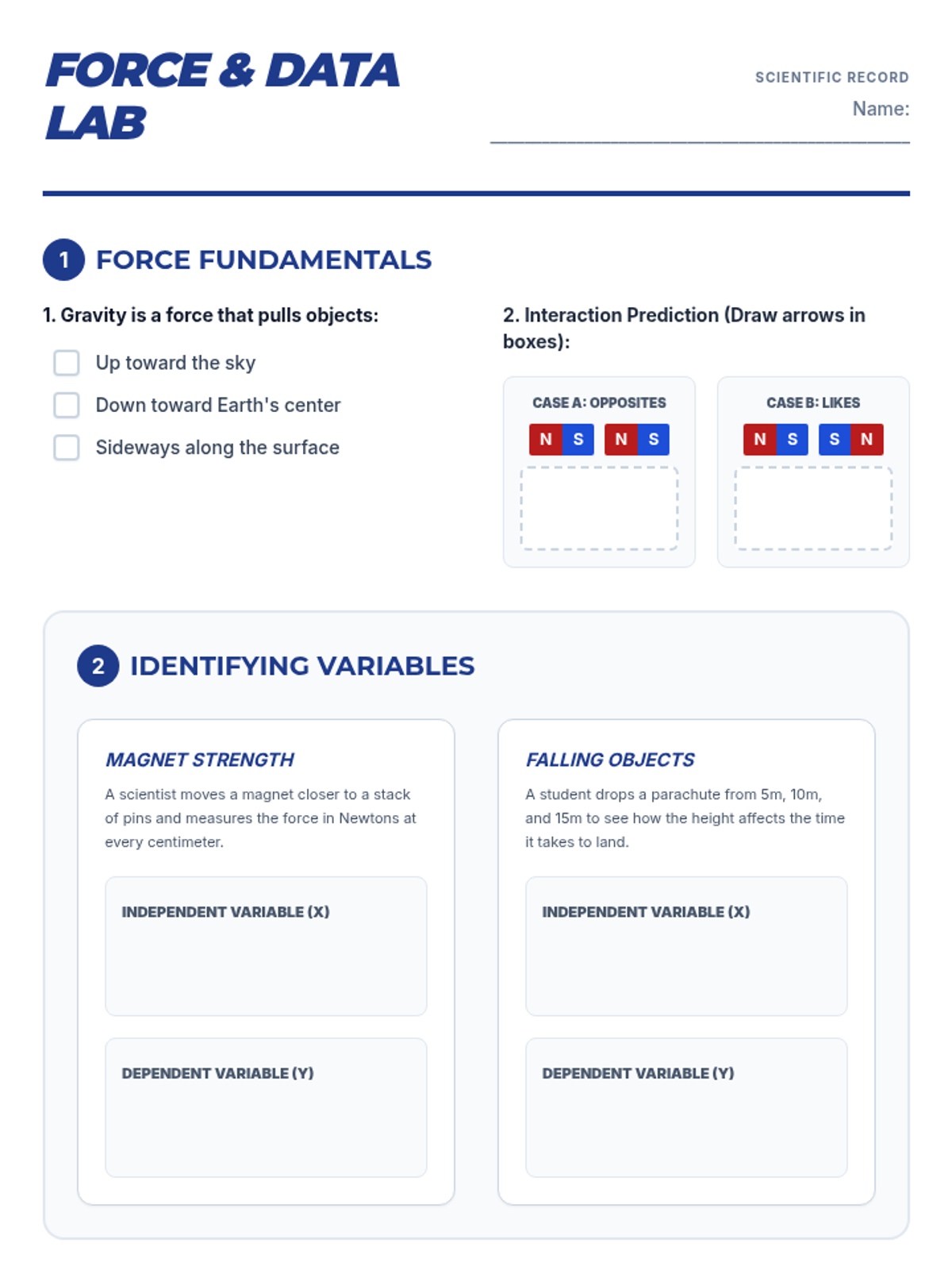
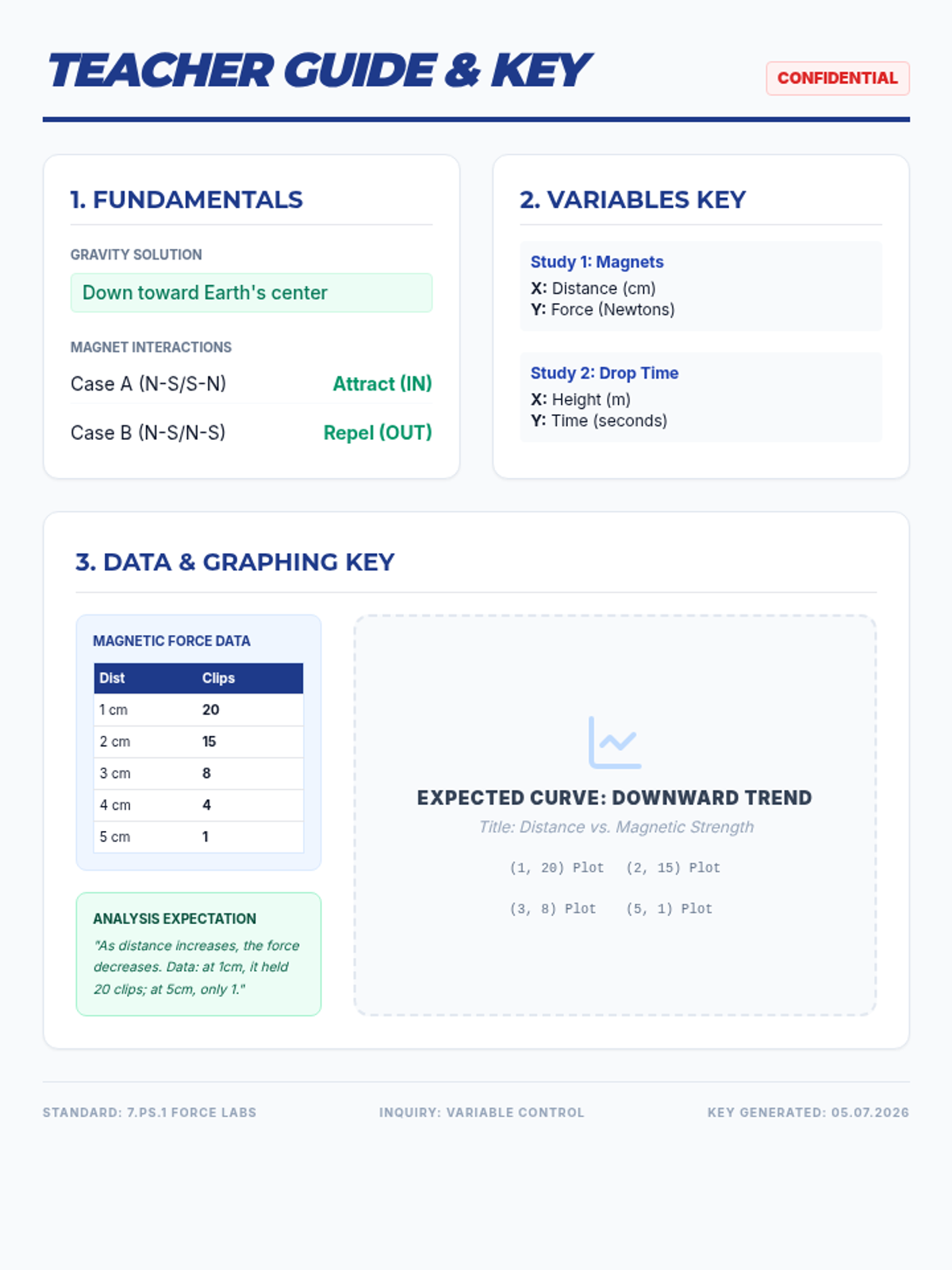
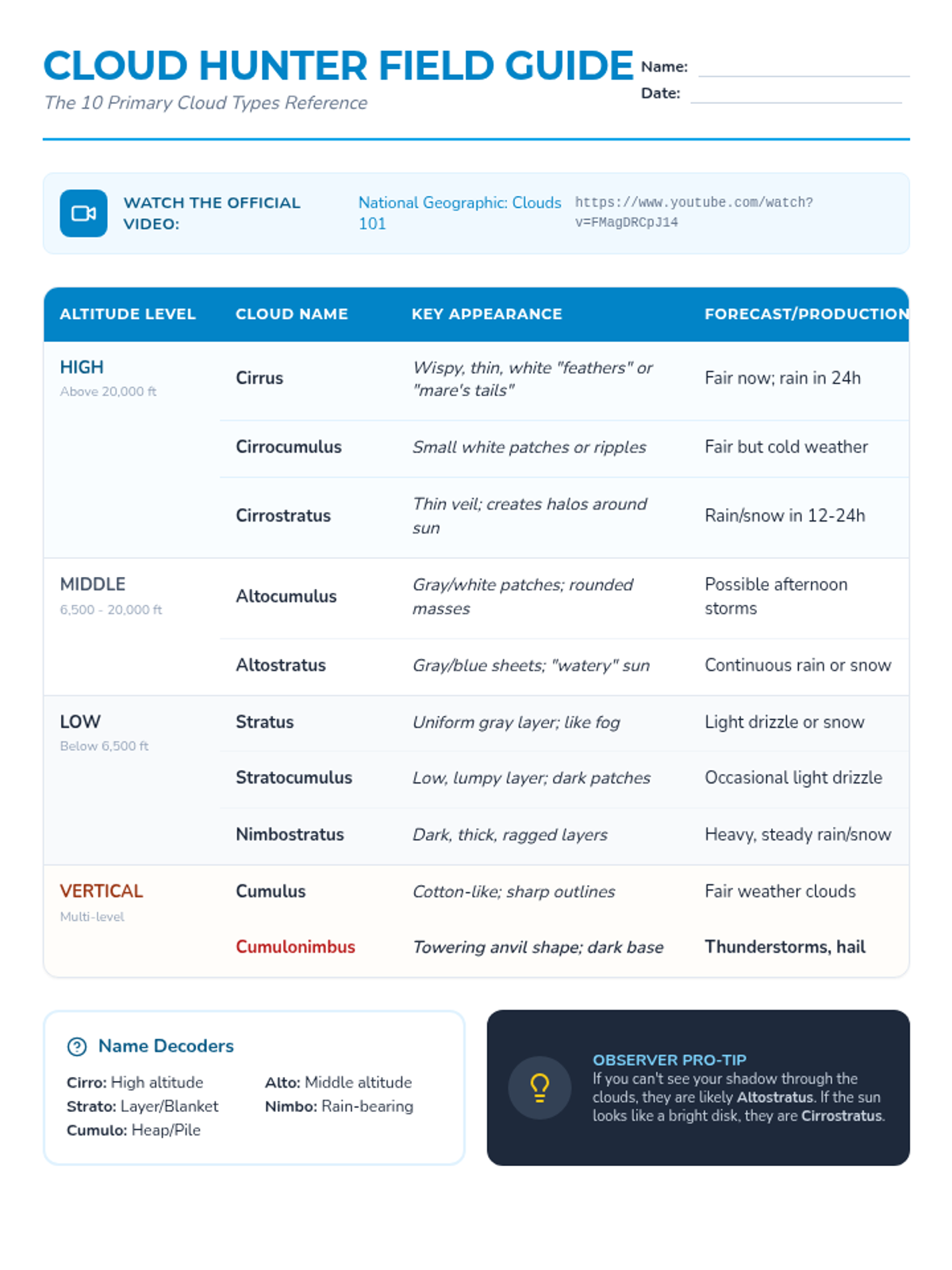
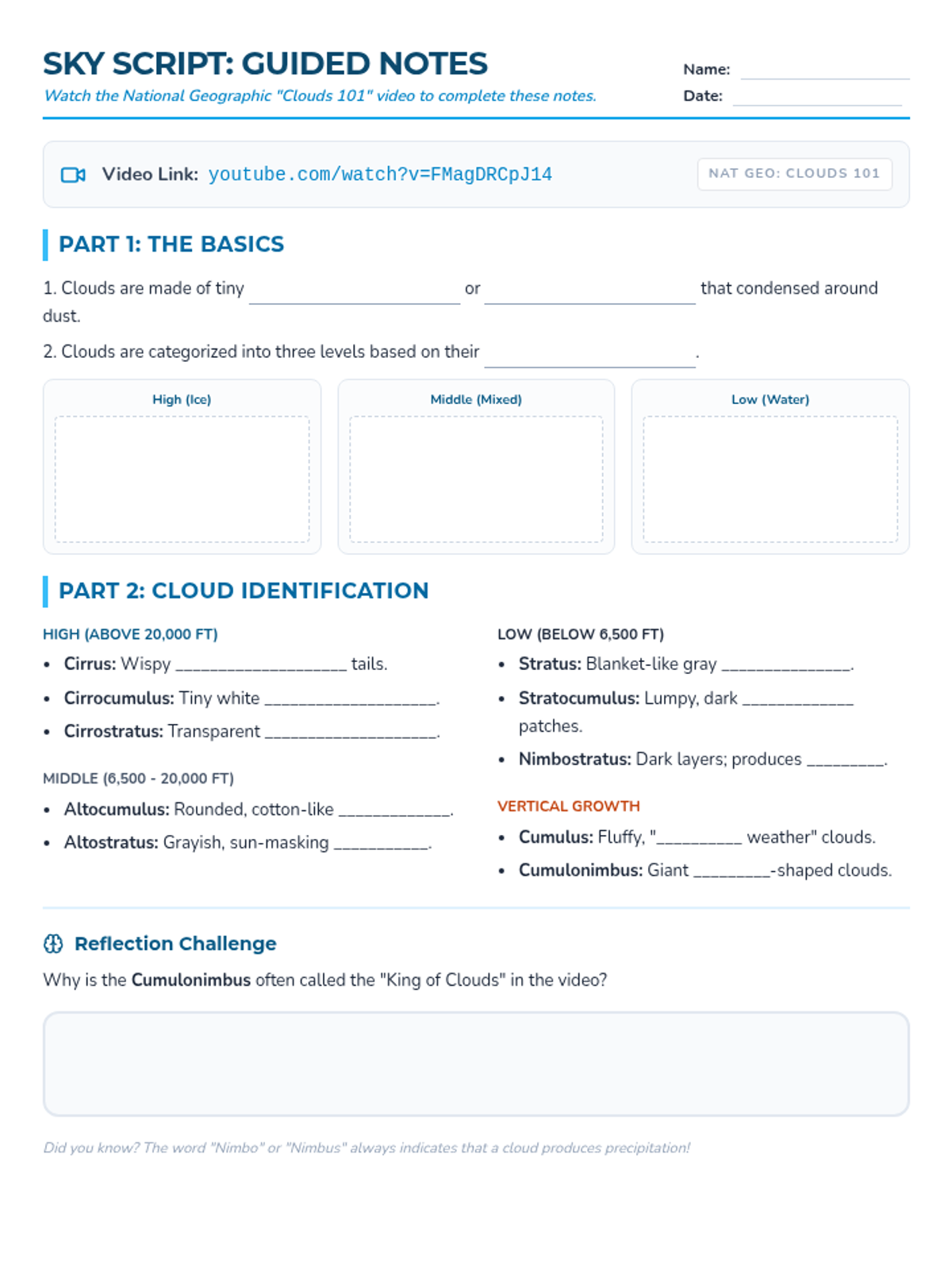
Display the three statements. Have students whisper to a neighbor which they think is the lie. Reveal: Statement #2 is the lie. Explain that while many deserts are hot, "always hot" is not what makes a desert a desert.
5-15
Minutes
Video: Defining the Desert
Slides 3-4
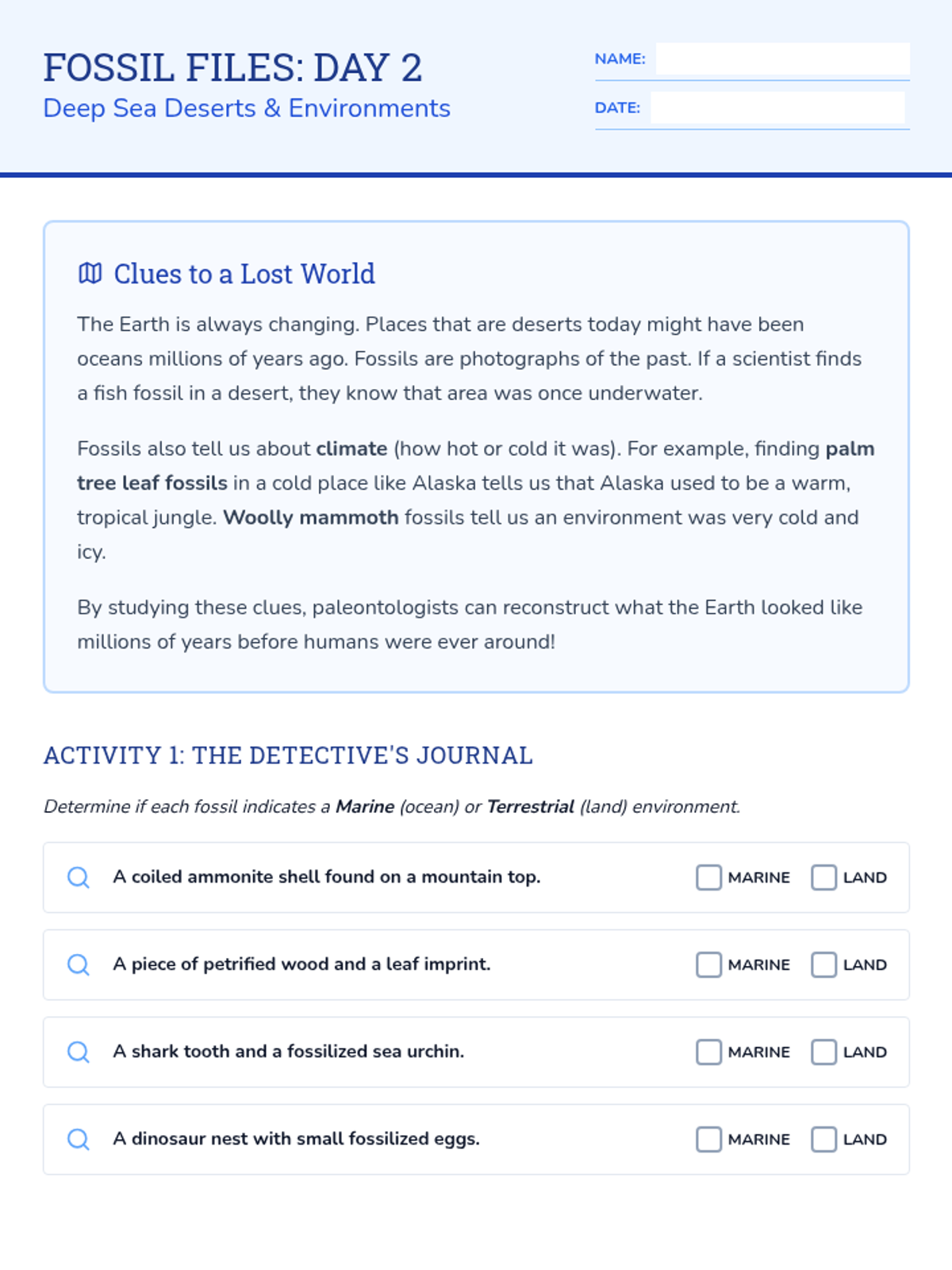
Watch the video (0:00-1:08). Stop at the 1:08 mark. Ask: "What was the magic number for rainfall?" (25cm/10in). Discuss the examples of cold deserts mentioned: Gobi, Arctic, and Antarctic.
Key Misconception: Clarify that "precipitation" includes snow. Cold deserts are dry because the air is too cold to hold much moisture, not just because there's no sun!
15-40
Minutes
Main Activity: Mapping the Biomes
Slides 5-6
Distribute the Desert Detective Map and colored pencils. Play the "Global Tour" segment (4:55-end) for visual reference.
Identify locations: Gobi, Sahara, Sonoran, Arctic, and Antarctic.
Color-code: Blue for cold deserts, Red for hot deserts.
Discussion: Look at the latitude lines. Why are the red ones in the middle and the blue ones at the top/bottom? (Distance from equator/Solar energy).
40-45
Minutes
Closure: Exit Ticket
Slide 7
Distribute the Dry Truths Exit Ticket . Students must write the definition focusing on rainfall. This serves as a quick check for understanding before they leave.
Discussion Anchors
The Cold vs. Hot Challenge
"How are the survival challenges in the Gobi Desert (cold) similar to the Sahara (hot)? What do both environments lack?"
Latitude Patterns
"Most hot deserts are found near 30° North or South latitude. Why don't we find major deserts right on the Equator?" (Equator is low pressure/high rain).
Desert Detective Map Worksheet DESERT DETECTIVE MAP
Global Biome Investigation
NAME:
DATE:
MISSION BRIEFING
1. Locate and label the 5 deserts listed below on your map.
2. Circle the name in RED if it is a HOT desert.
3. Circle the name in BLUE if it is a COLD desert.
Sahara Gobi Sonoran Arctic Antarctic
Arctic Circle
Equator
Antarctic Circle
North America
Europe
Asia
South America
Africa
Australia
Mapping Zone: Use your atlas or digital map to mark locations
1
Look at your color-coding. What pattern do you see between the desert's temperature and the Equator?
2
Based on the video, why is the Arctic considered a desert even though it is covered in ice and snow?
Hot Desert
Cold Desert
ARID ATLAS SERIES • GEOGRAPHY LAB
Dry Truths Exit Ticket Slips DRY TRUTHS
Exit Ticket
Student Name
Challenge: Define a desert using the scientific definition (rainfall) rather than its temperature.
Arid Atlas • Lesson Closure © Geography Science Lab
DRY TRUTHS
Exit Ticket
Student Name
Challenge: Define a desert using the scientific definition (rainfall) rather than its temperature.
Arid Atlas • Lesson Closure © Geography Science Lab
DRY TRUTHS
Exit Ticket
Student Name
Challenge: Define a desert using the scientific definition (rainfall) rather than its temperature.
Arid Atlas • Lesson Closure © Geography Science Lab