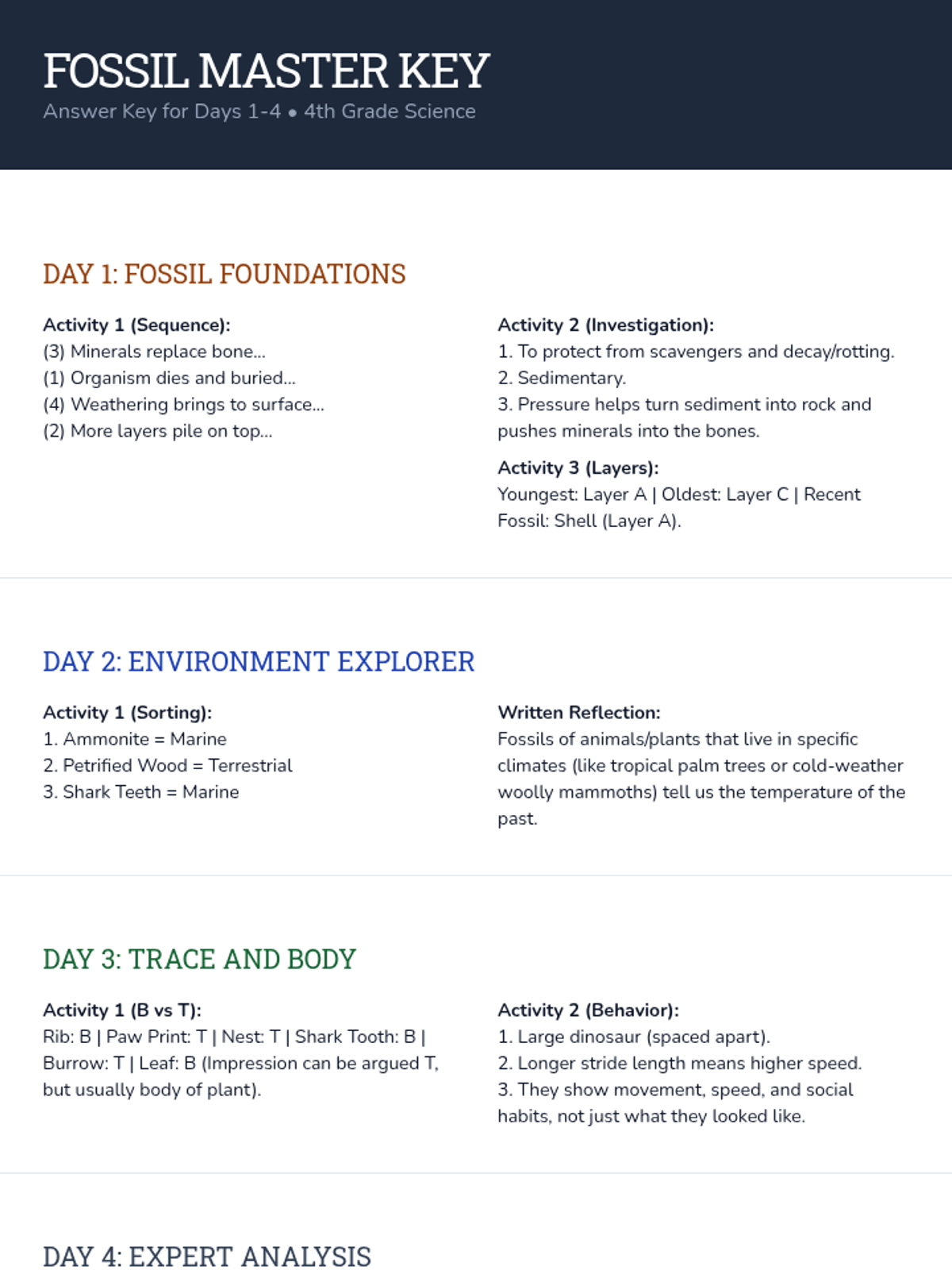
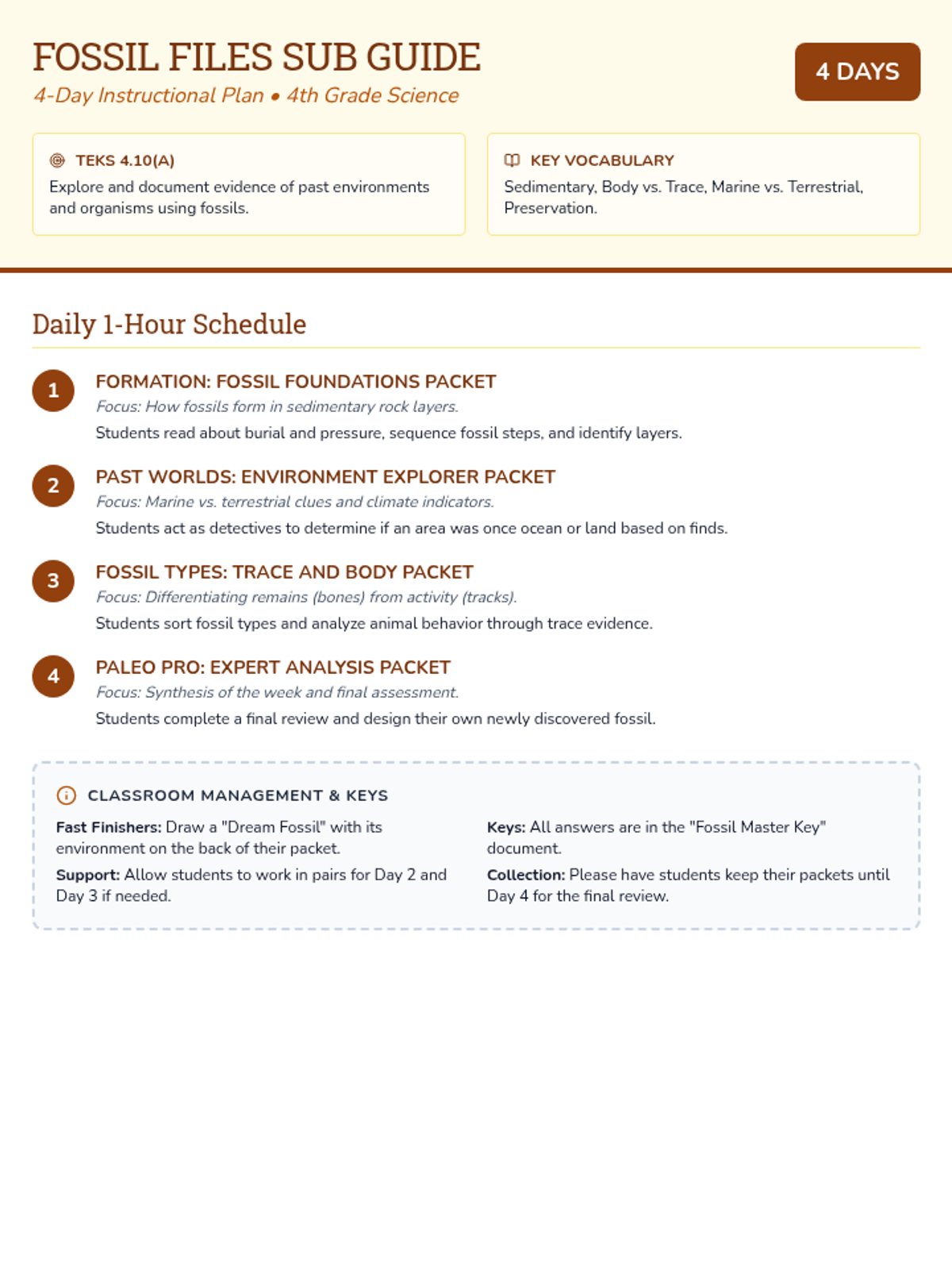
A 4-hour independent learning sequence where students investigate fossil formation, environmental changes over time, and the secrets of the fossil record.
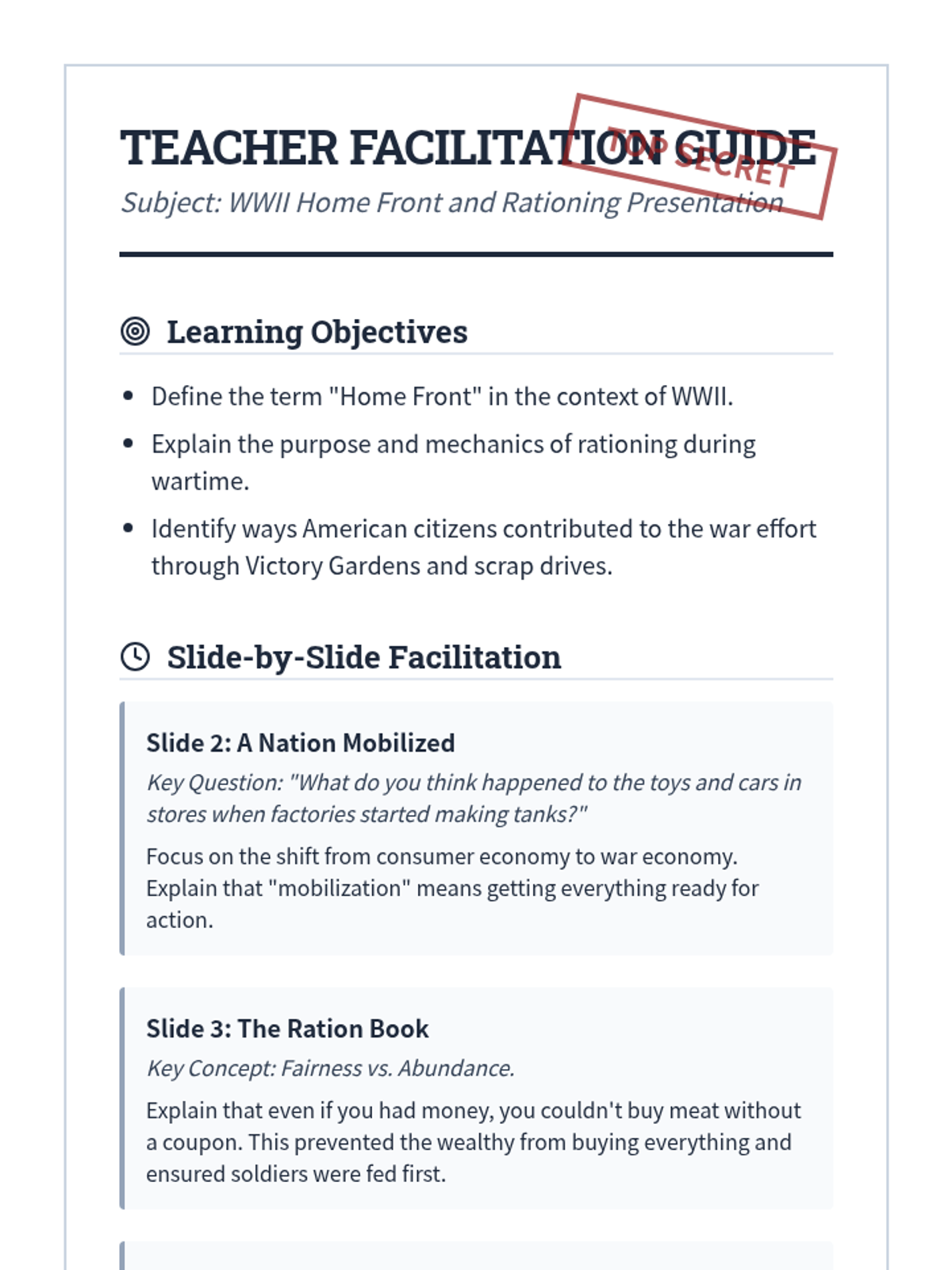
An exploration of life in America during World War II, focusing on how rationing, Victory Gardens, and community efforts supported the war from home.
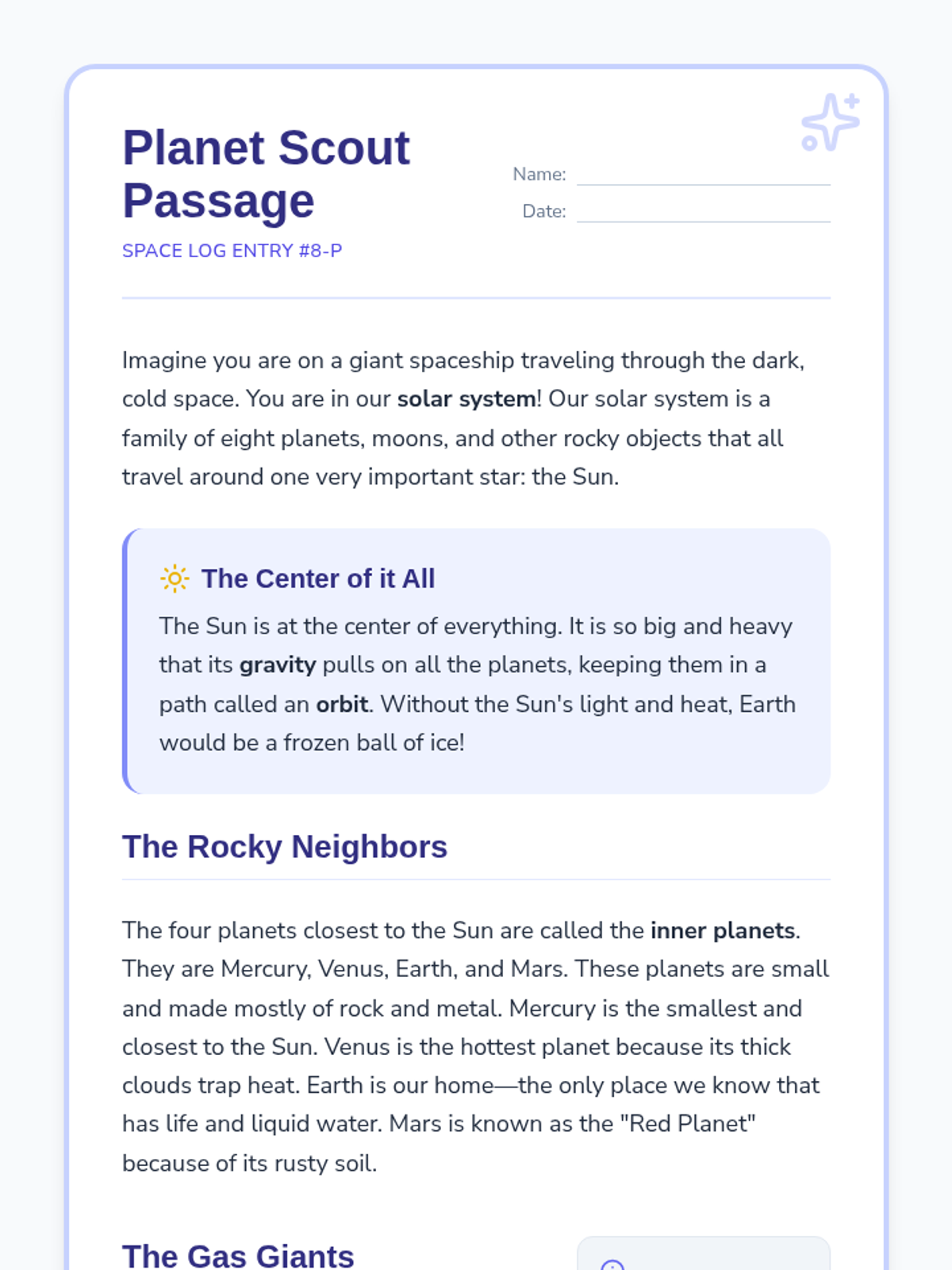
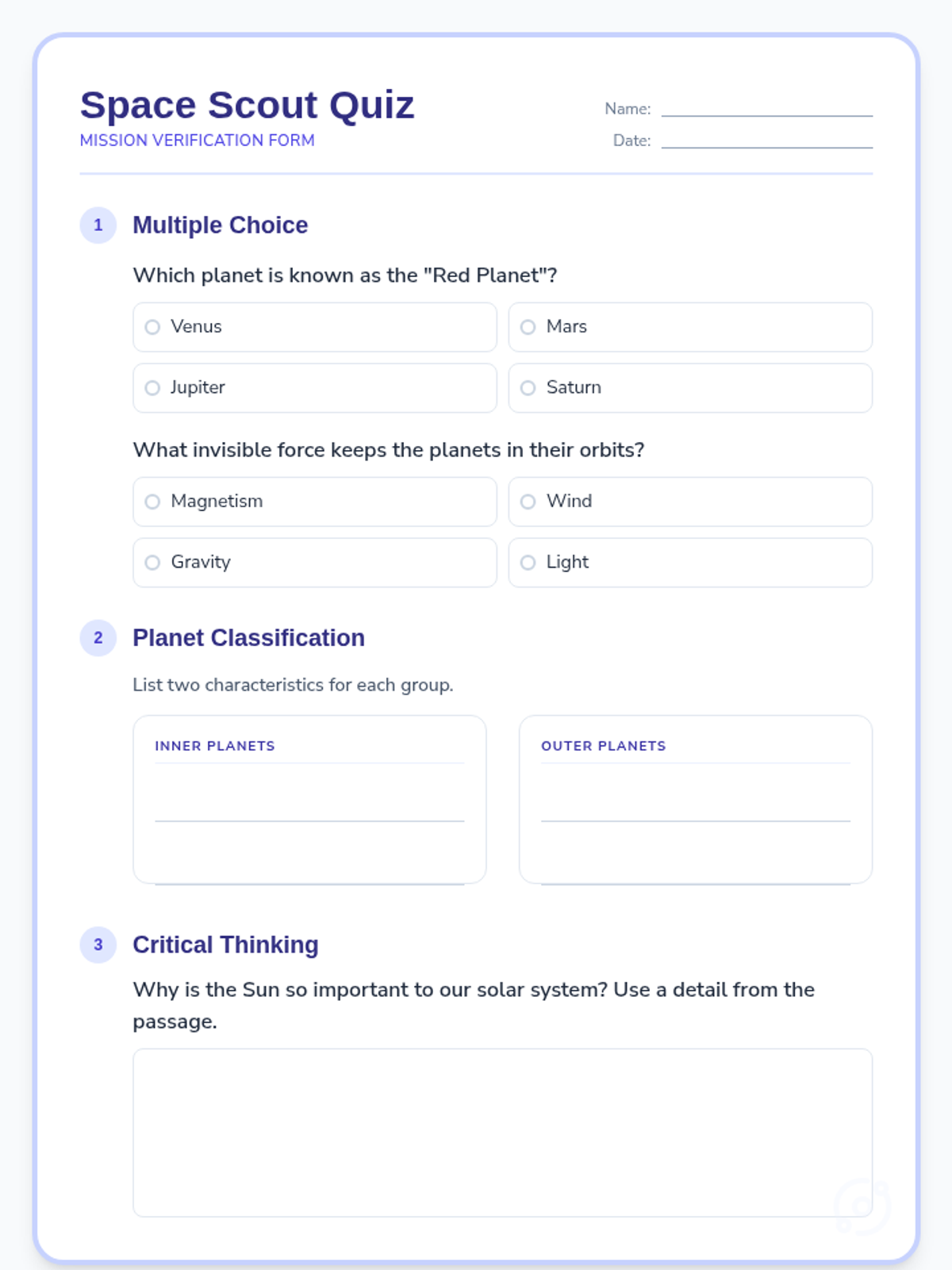
Students explore the eight planets of our solar system, learning about their unique characteristics and the forces that keep them in orbit.
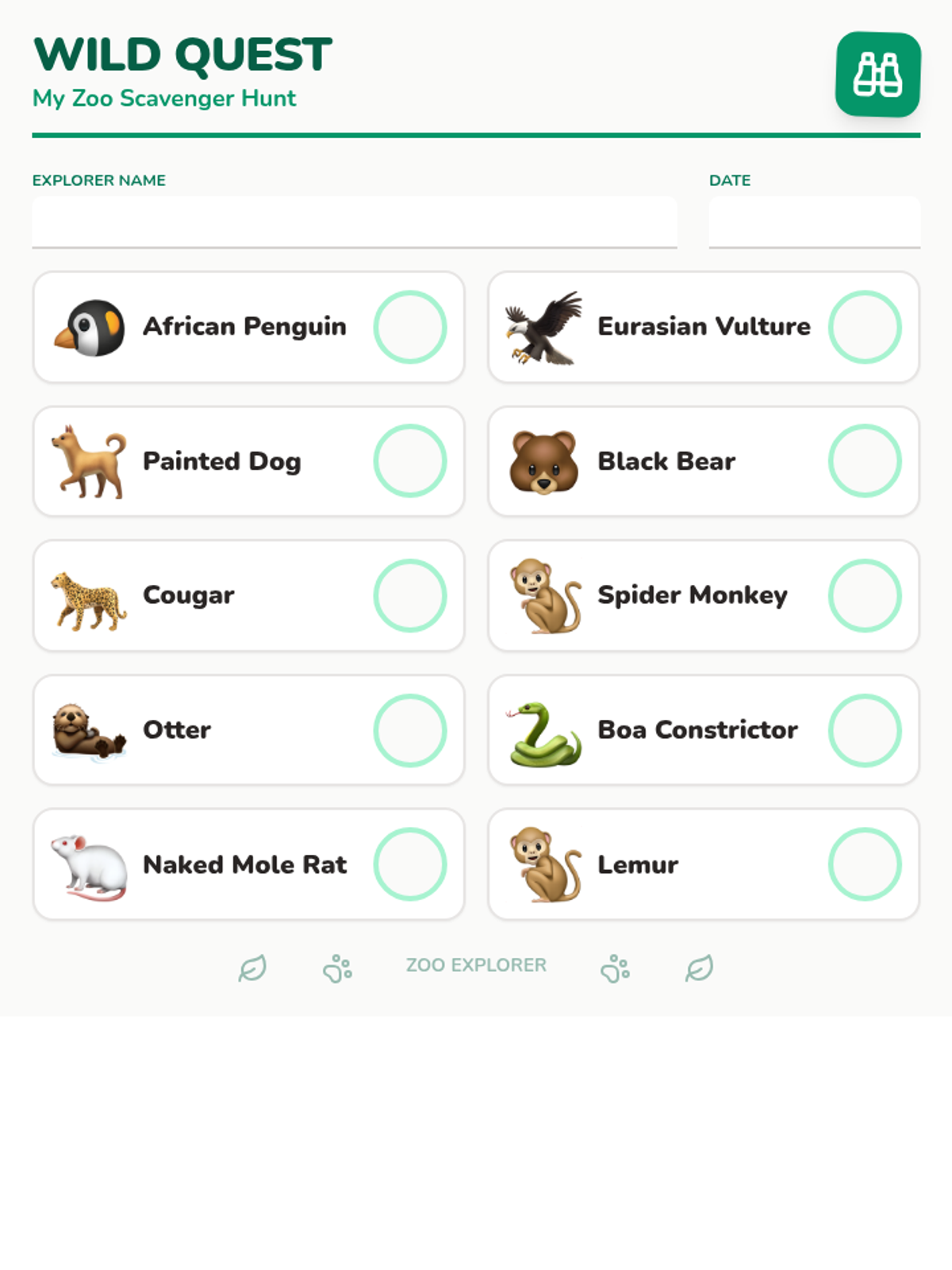
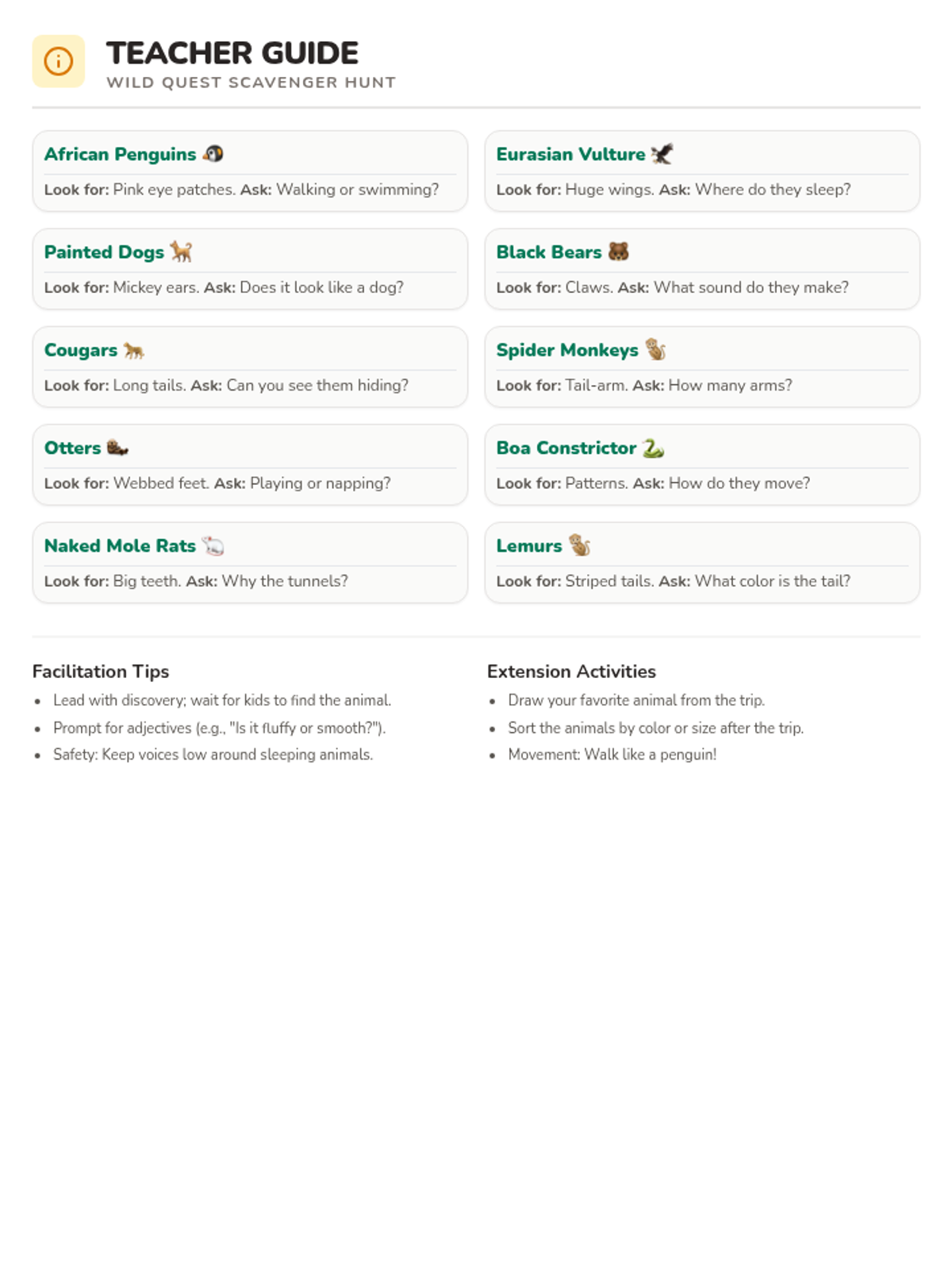
A fun, visual zoo scavenger hunt designed for Pre-K students to identify and observe specific animals during a field trip.
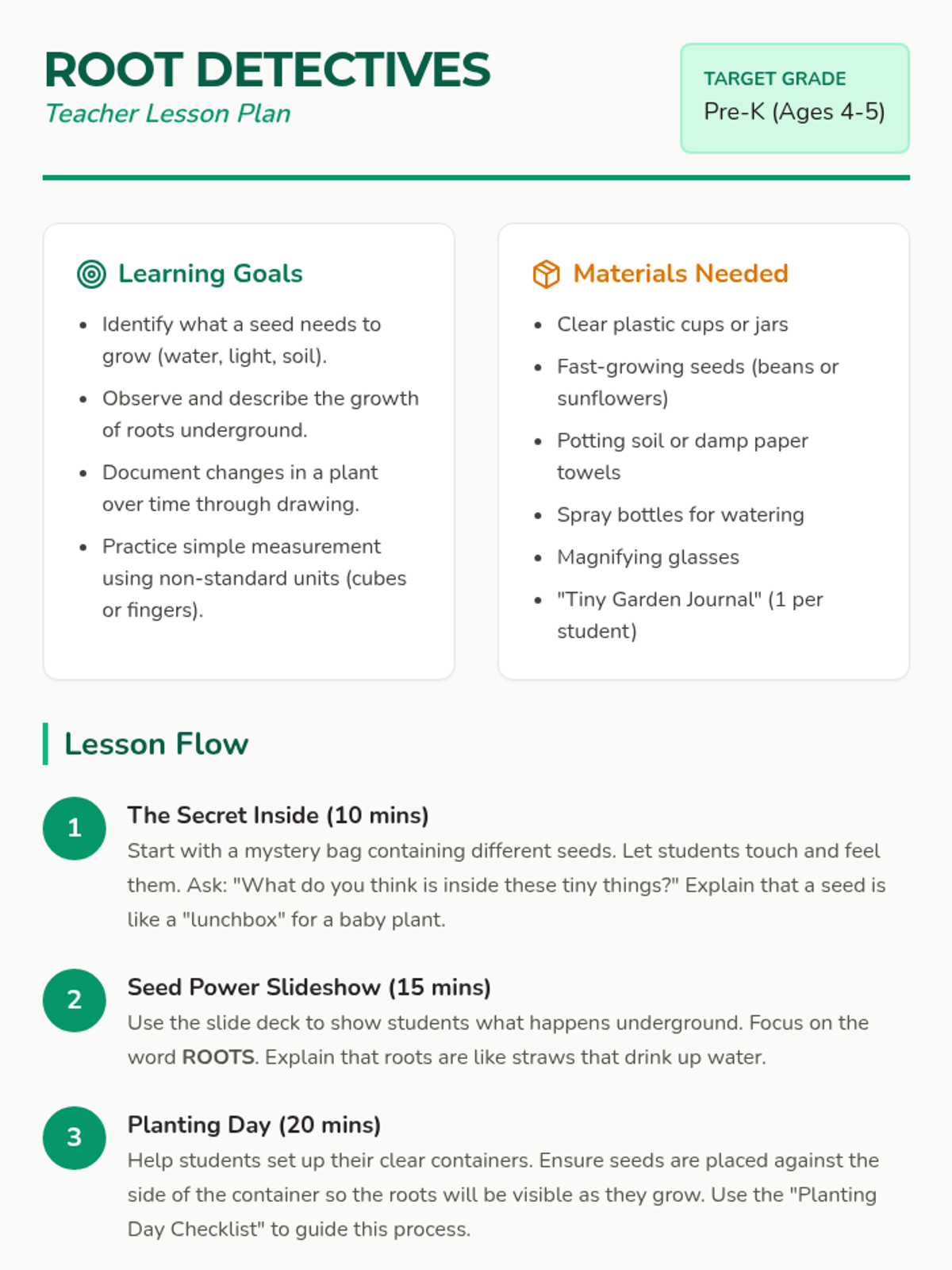
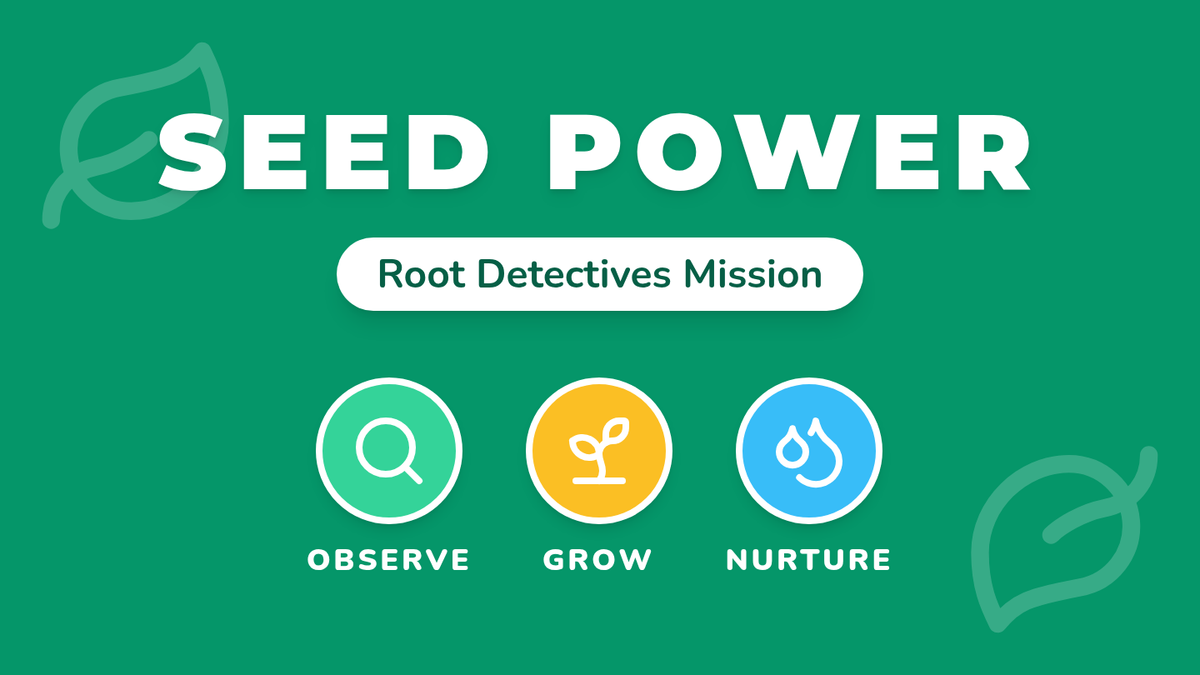
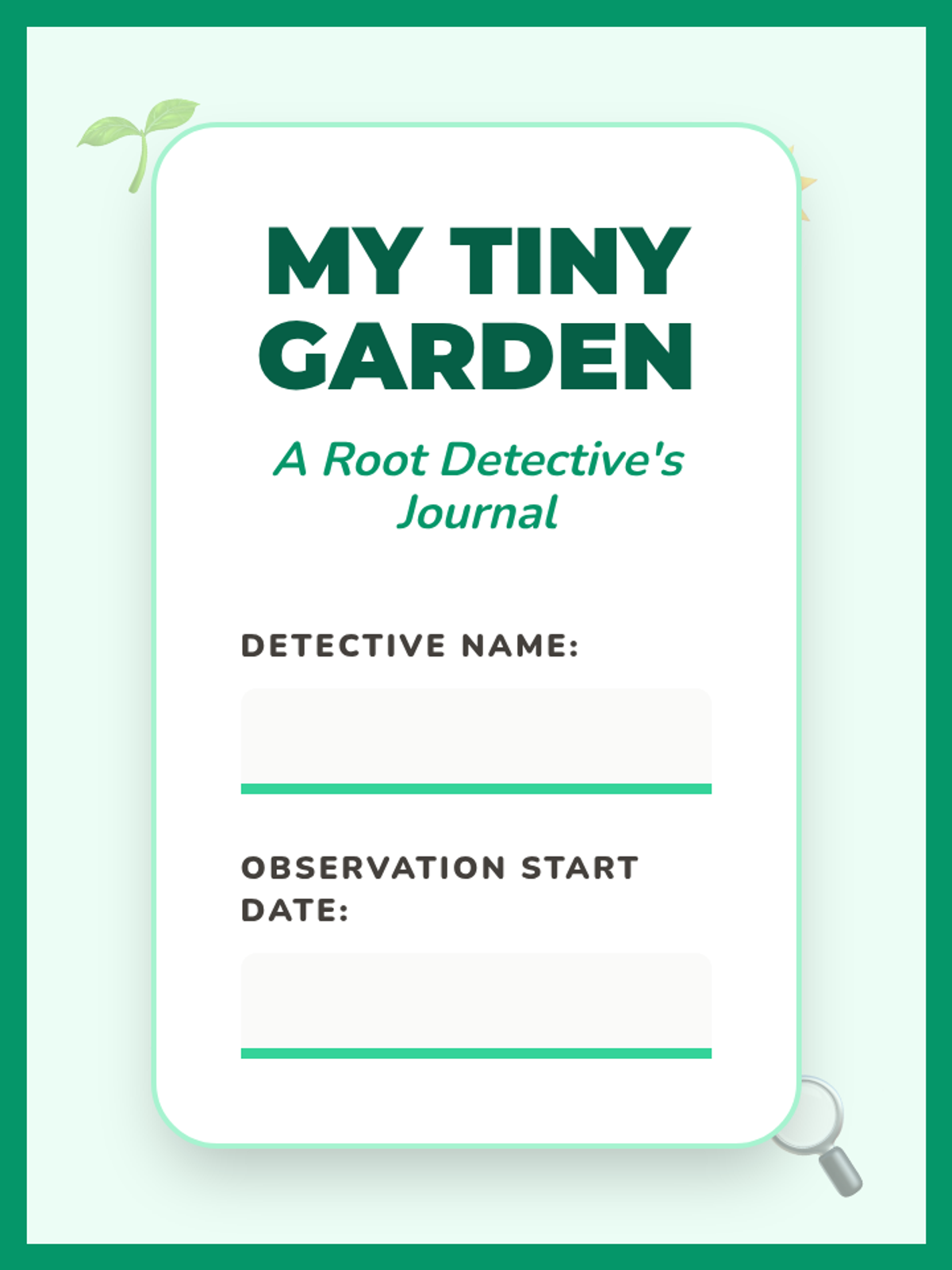
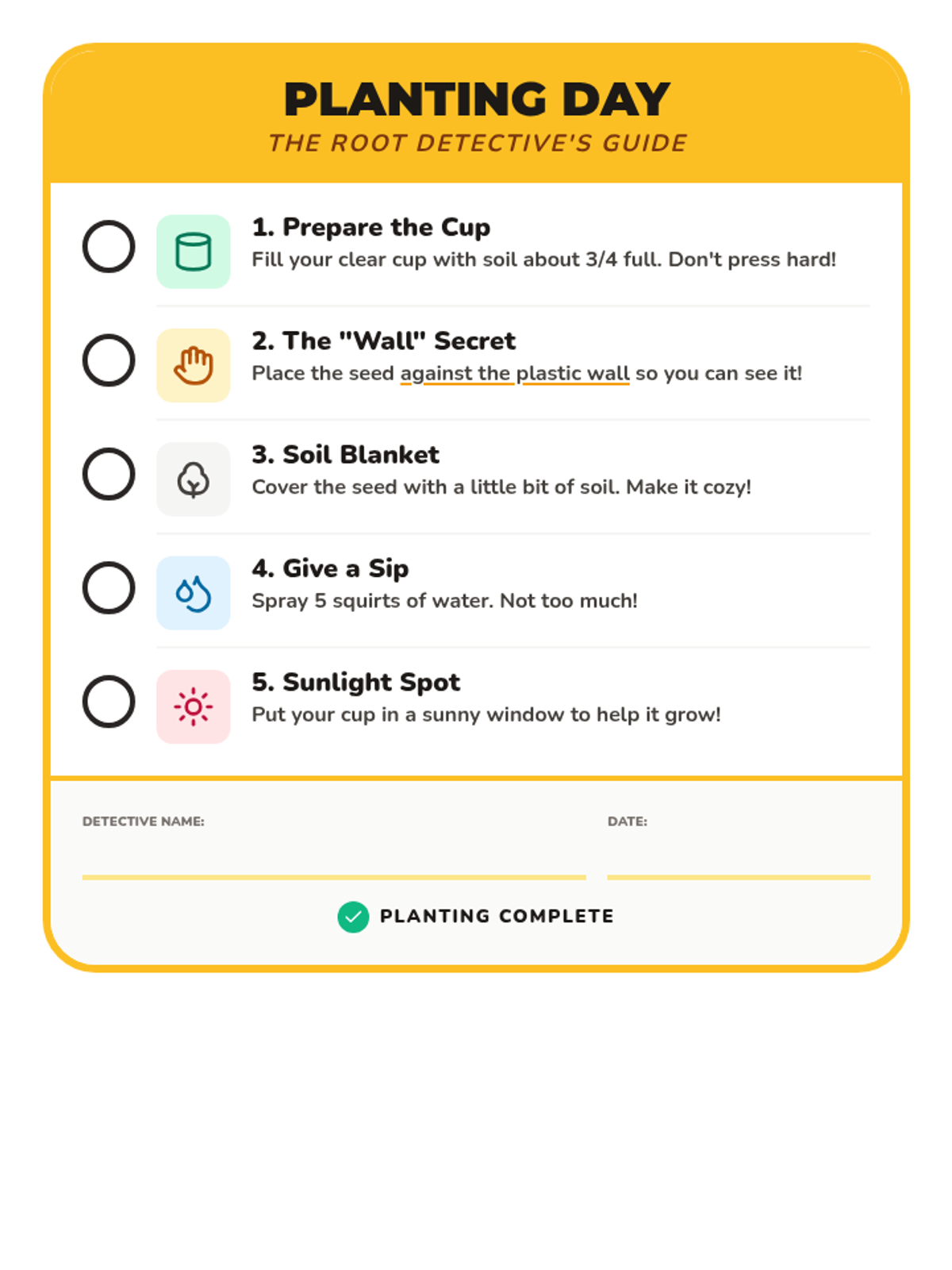
A hands-on botany lesson where Pre-K students plant seeds in clear containers to observe root growth and learn about the life cycle of plants through daily journaling.
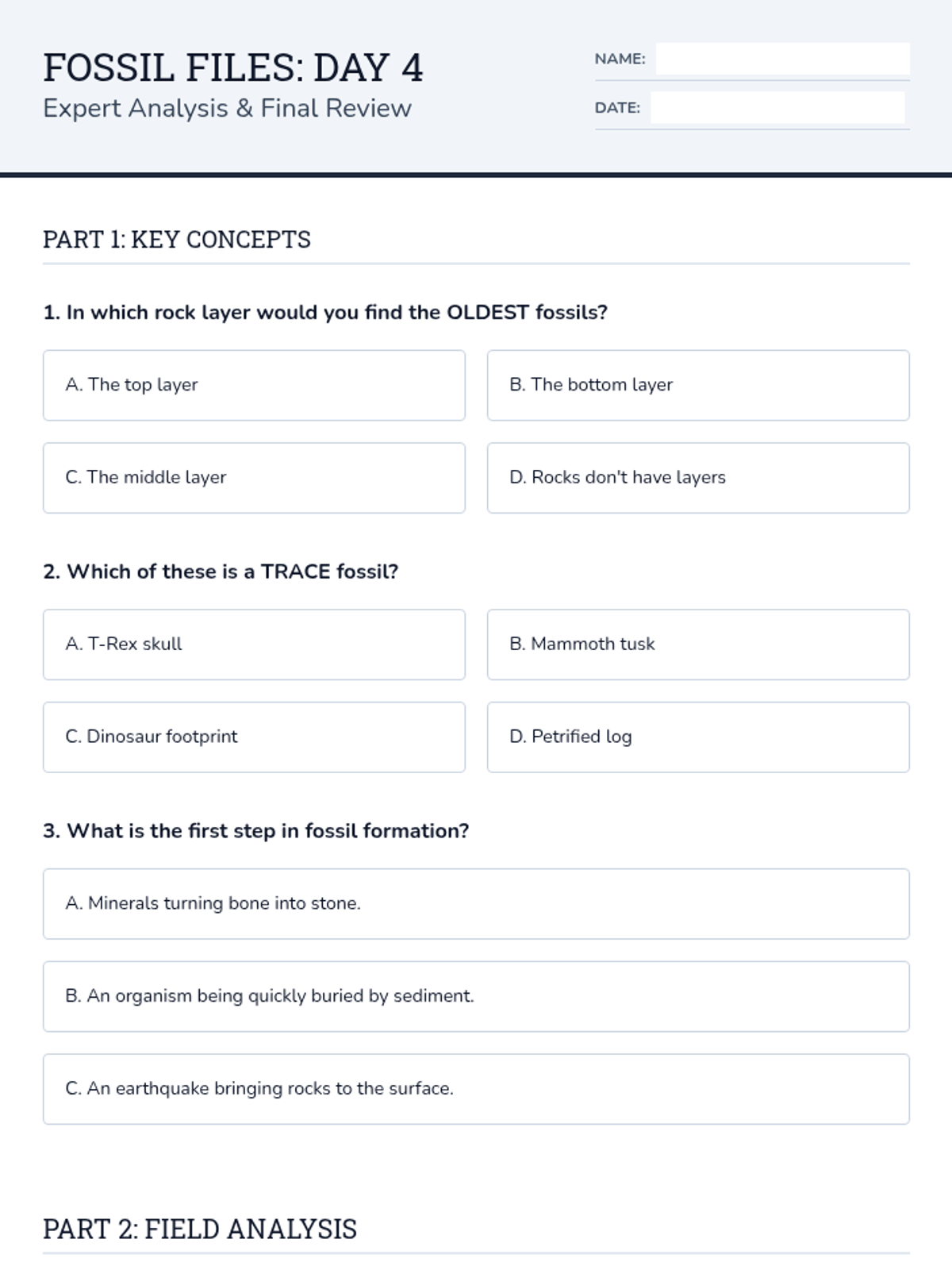
Synthesizing knowledge to analyze a fossil "dig site" and completing a final assessment.
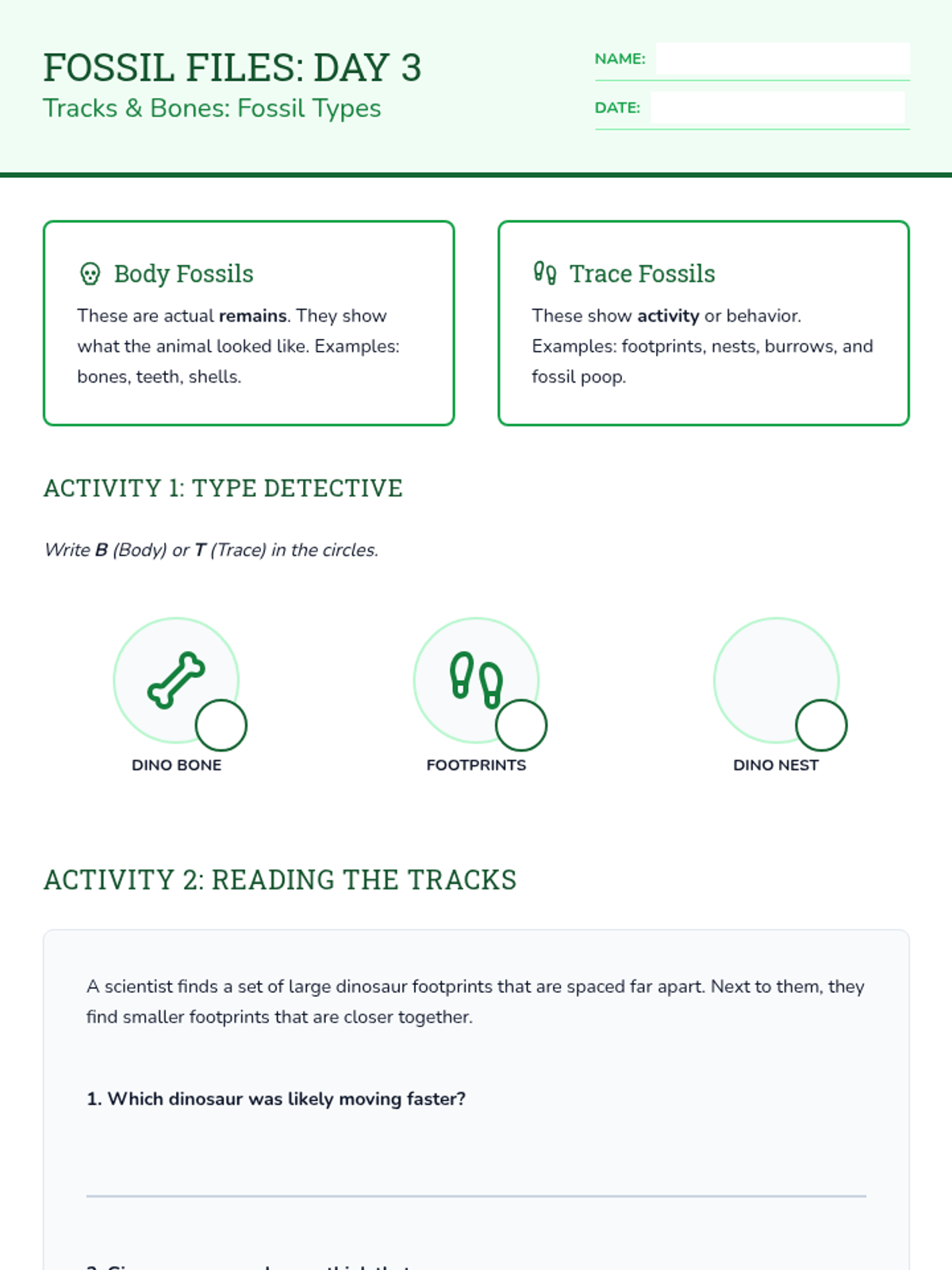
Exploring the differences between body fossils (bones, teeth) and trace fossils (footprints, burrows).
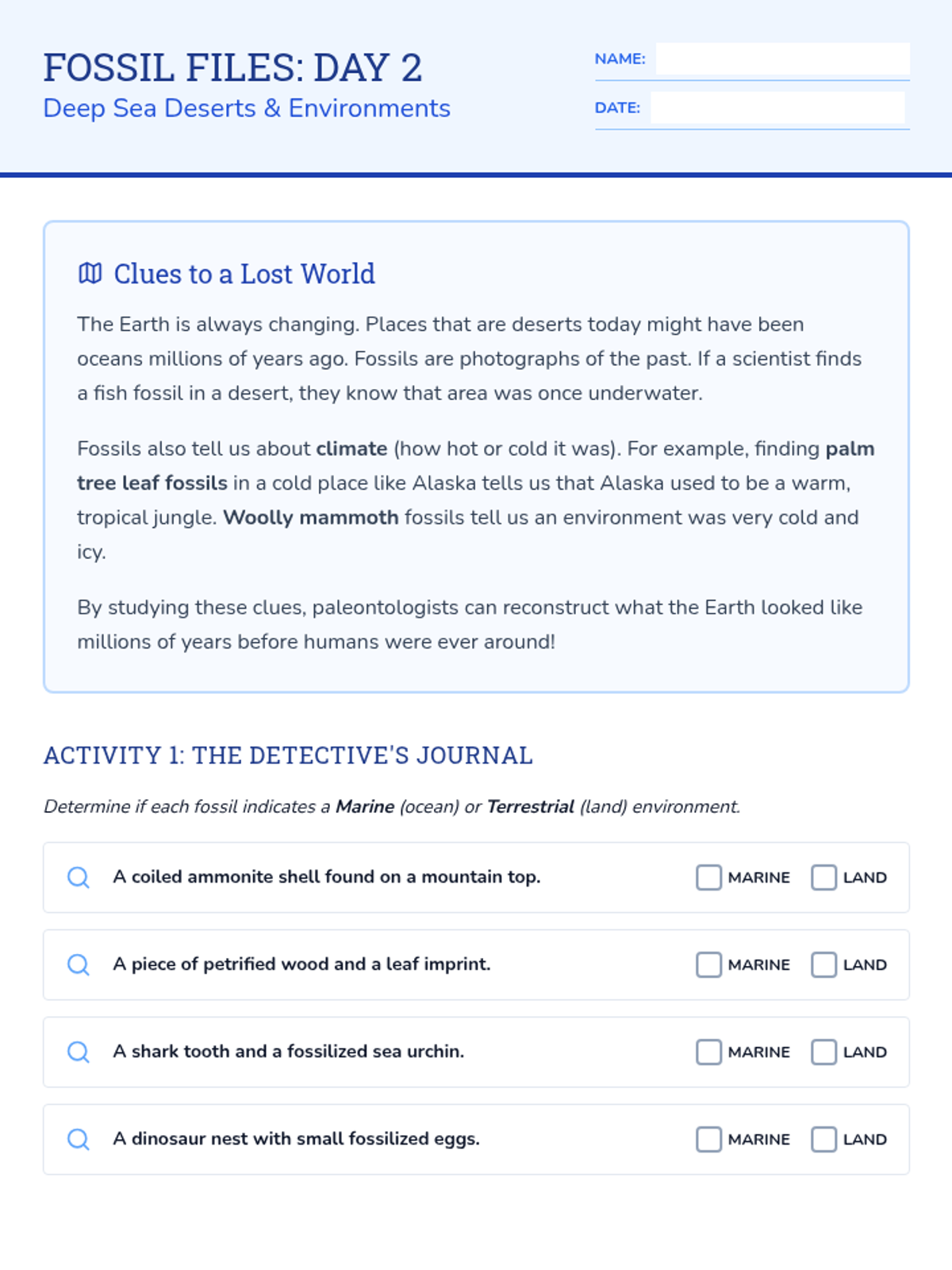
Using fossil evidence to determine whether an area was once a marine, desert, or forest environment.
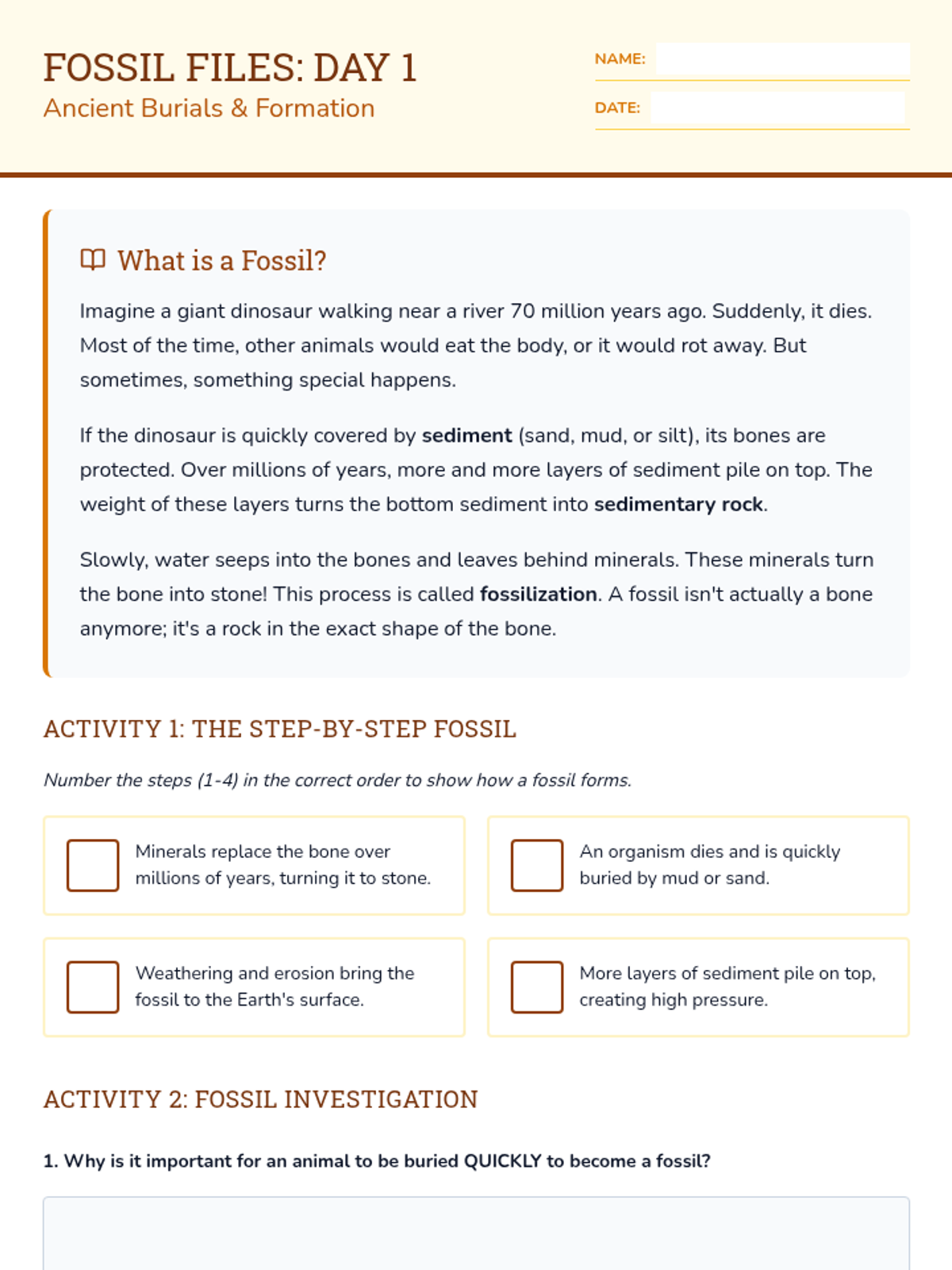
Introduction to how fossils form through the process of sedimentary rock layering and preservation.
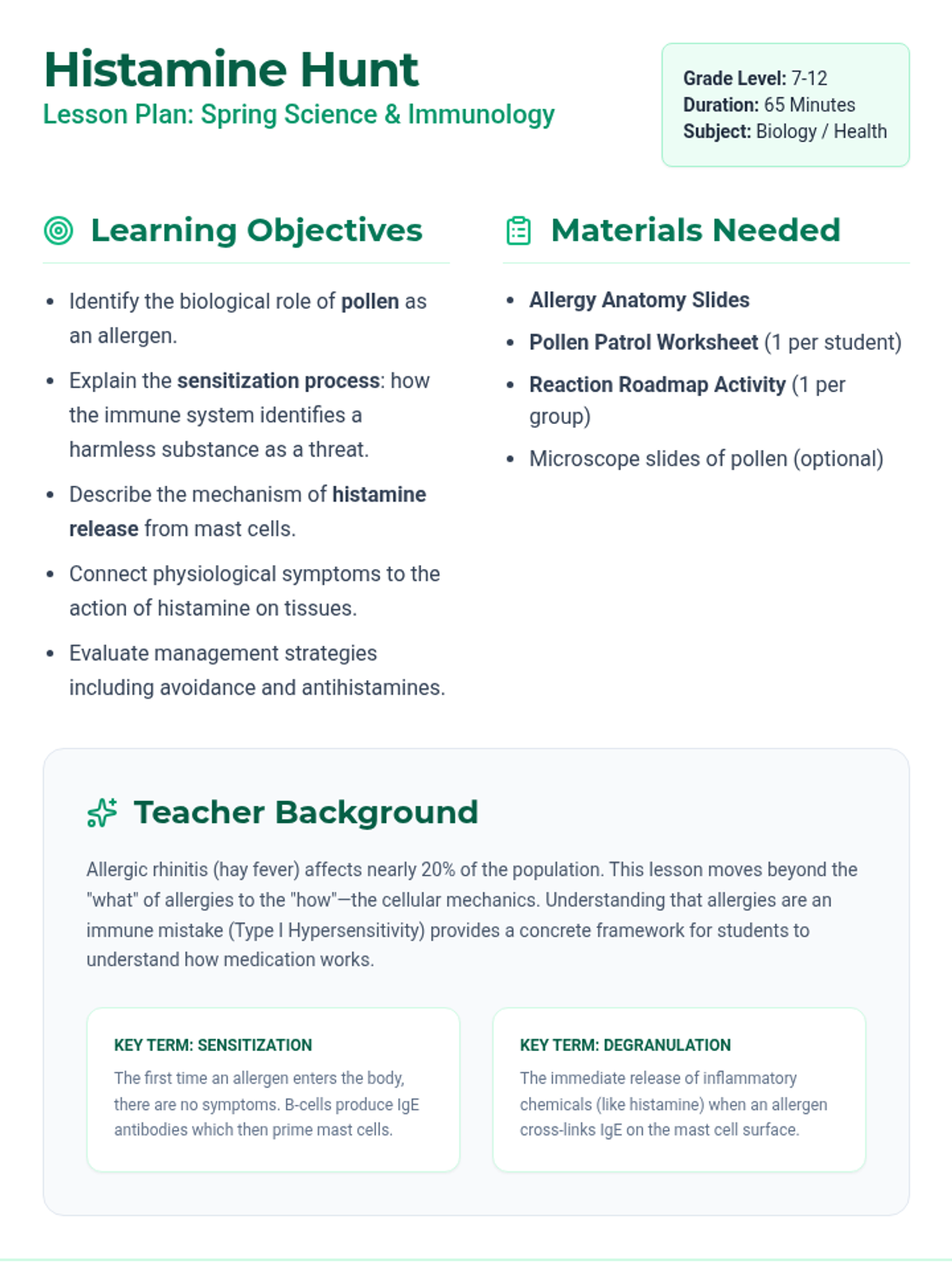
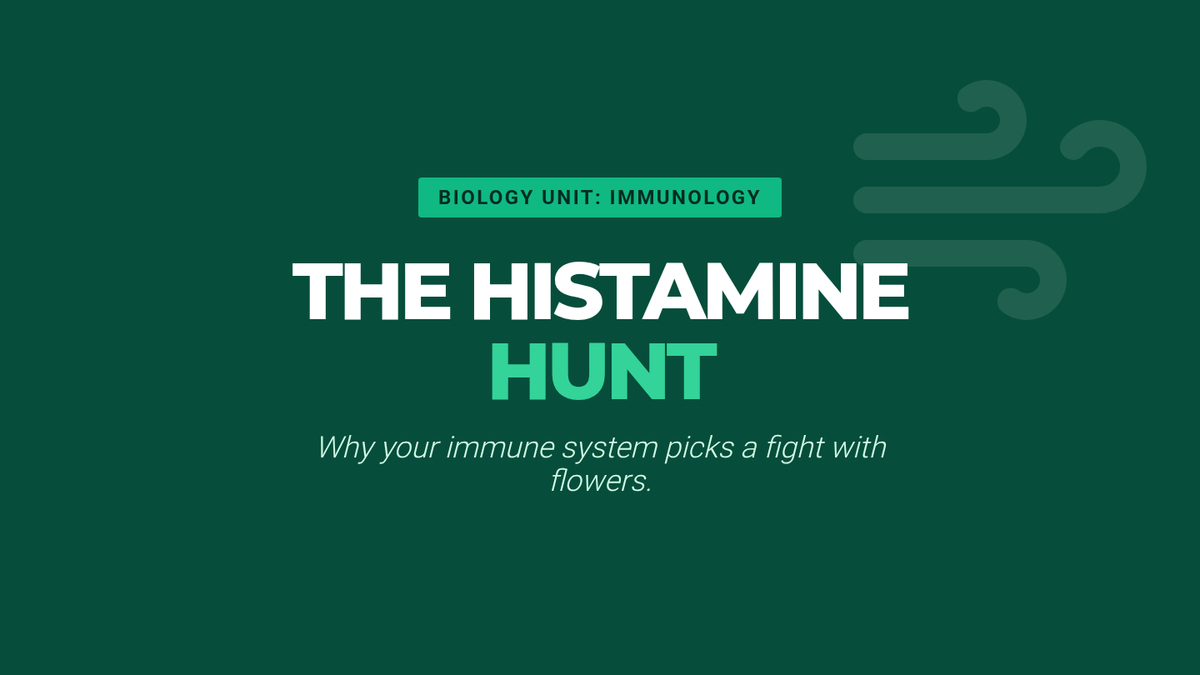
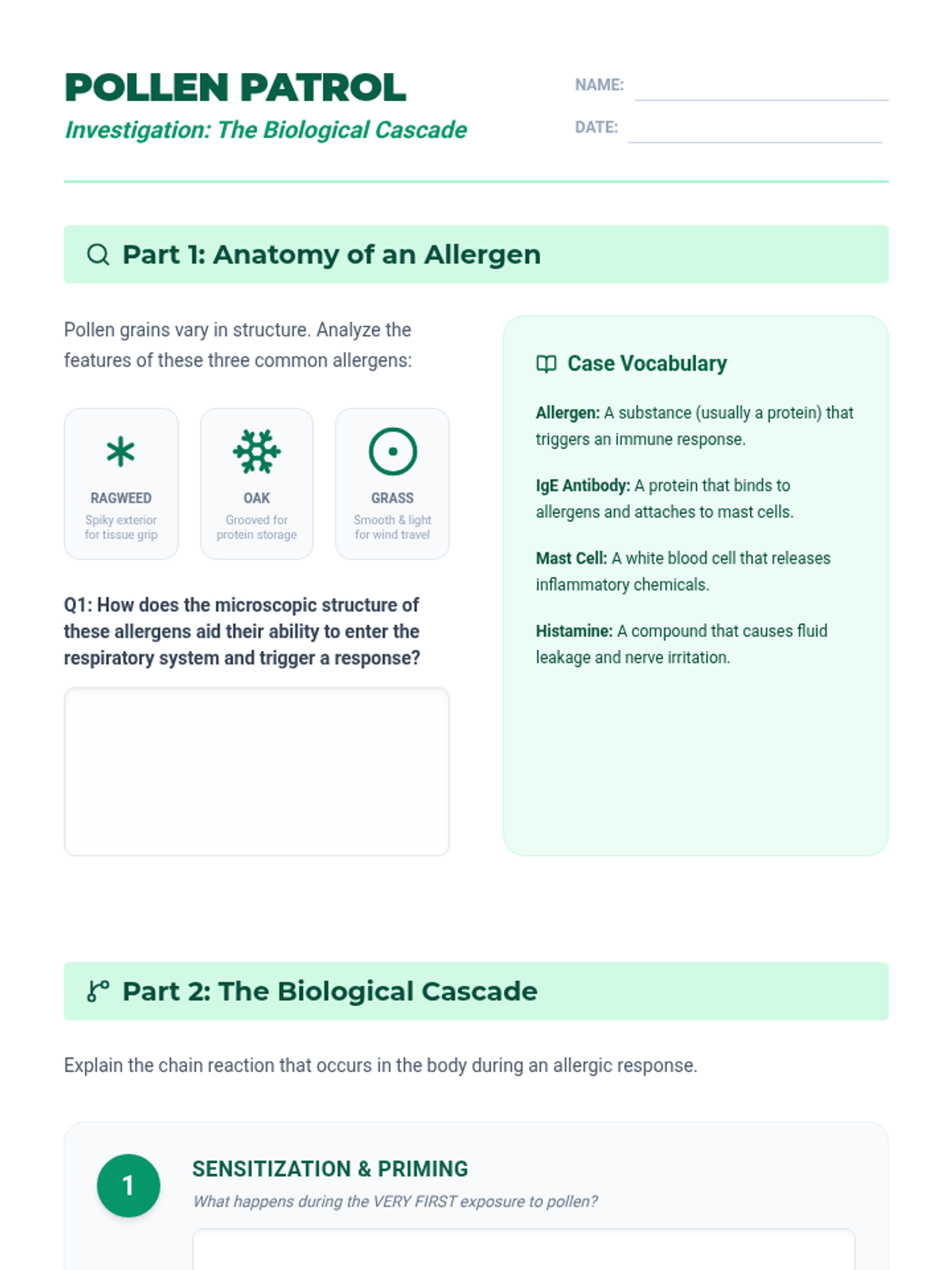
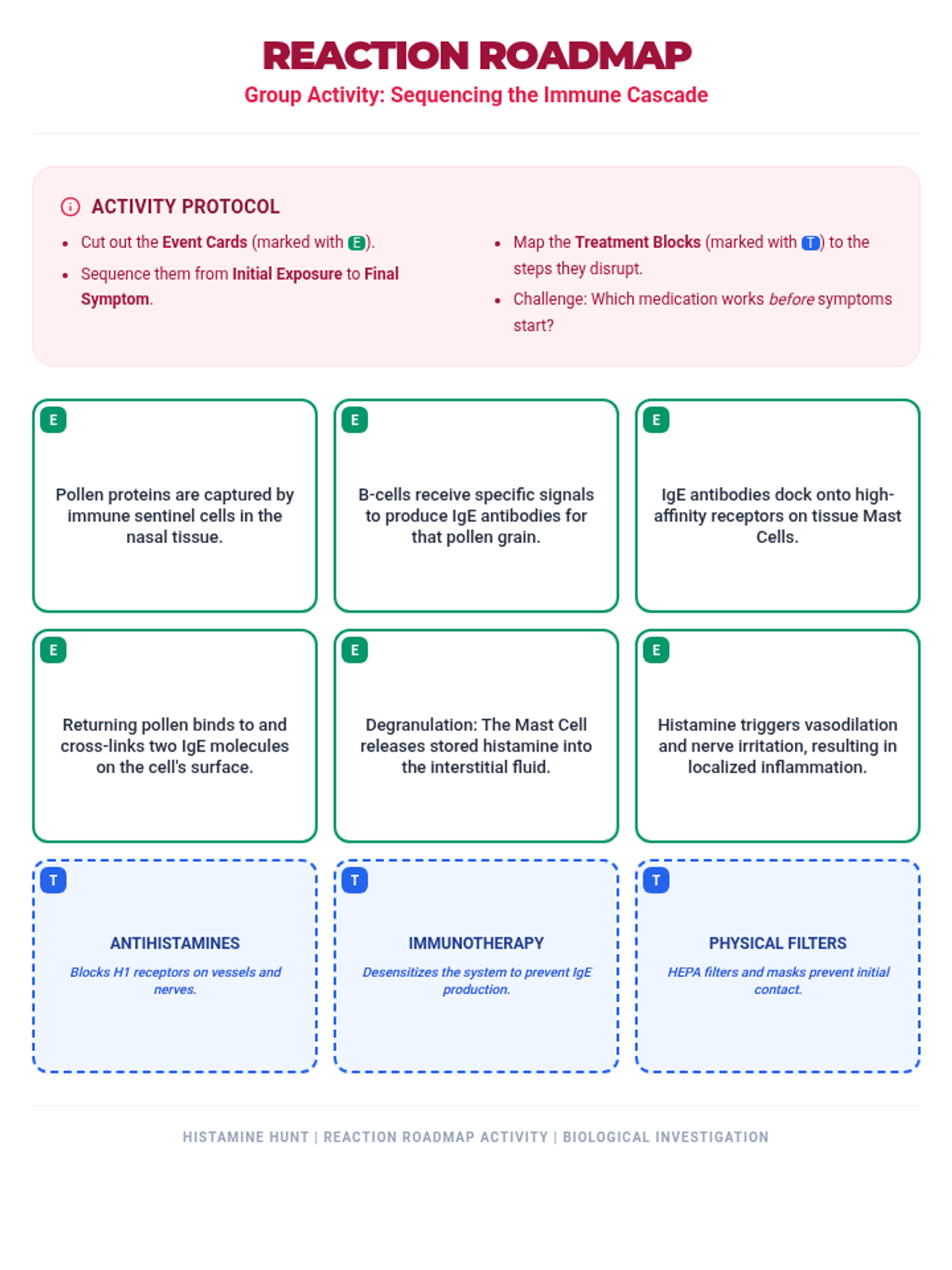
A comprehensive investigation into the biological mechanisms of seasonal allergies, focusing on the immune system's overreaction to pollen and the role of histamine. Students will explore hypersensitivity, physical symptoms, and evidence-based management strategies.
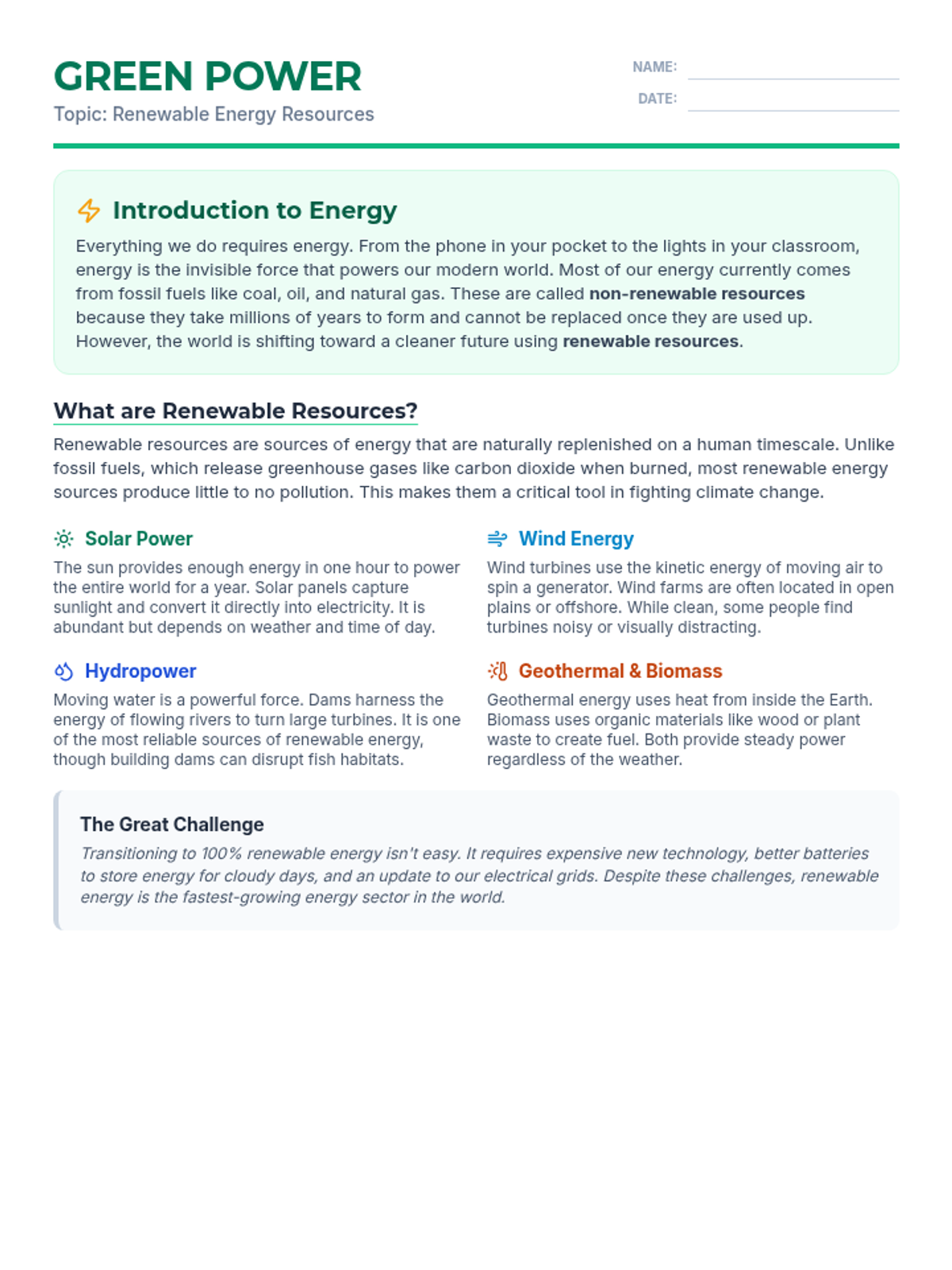
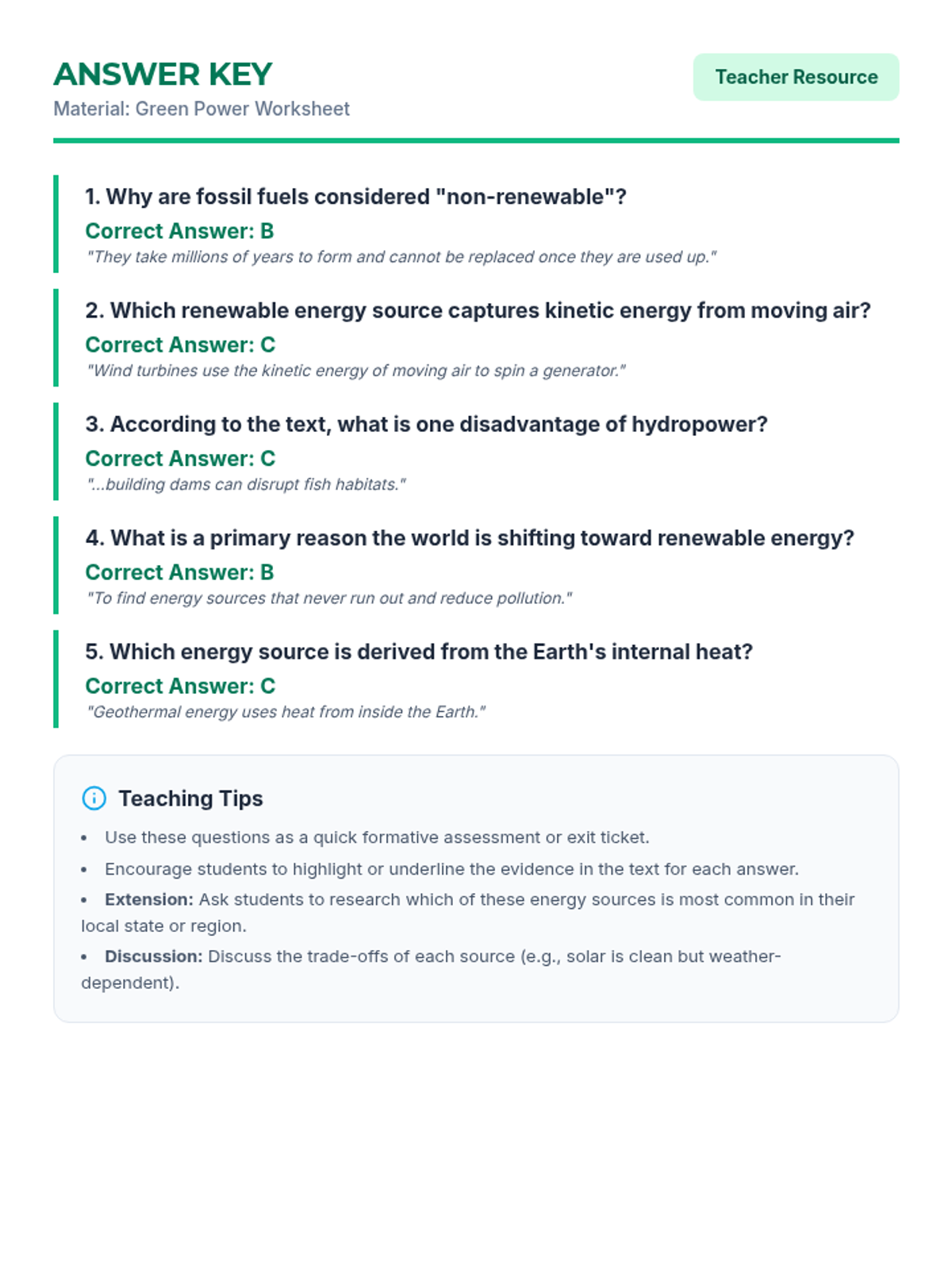
An introductory lesson on renewable and non-renewable energy resources, focusing on the science behind solar, wind, and hydroelectric power. Students will explore how these energy sources work and their impact on the environment.
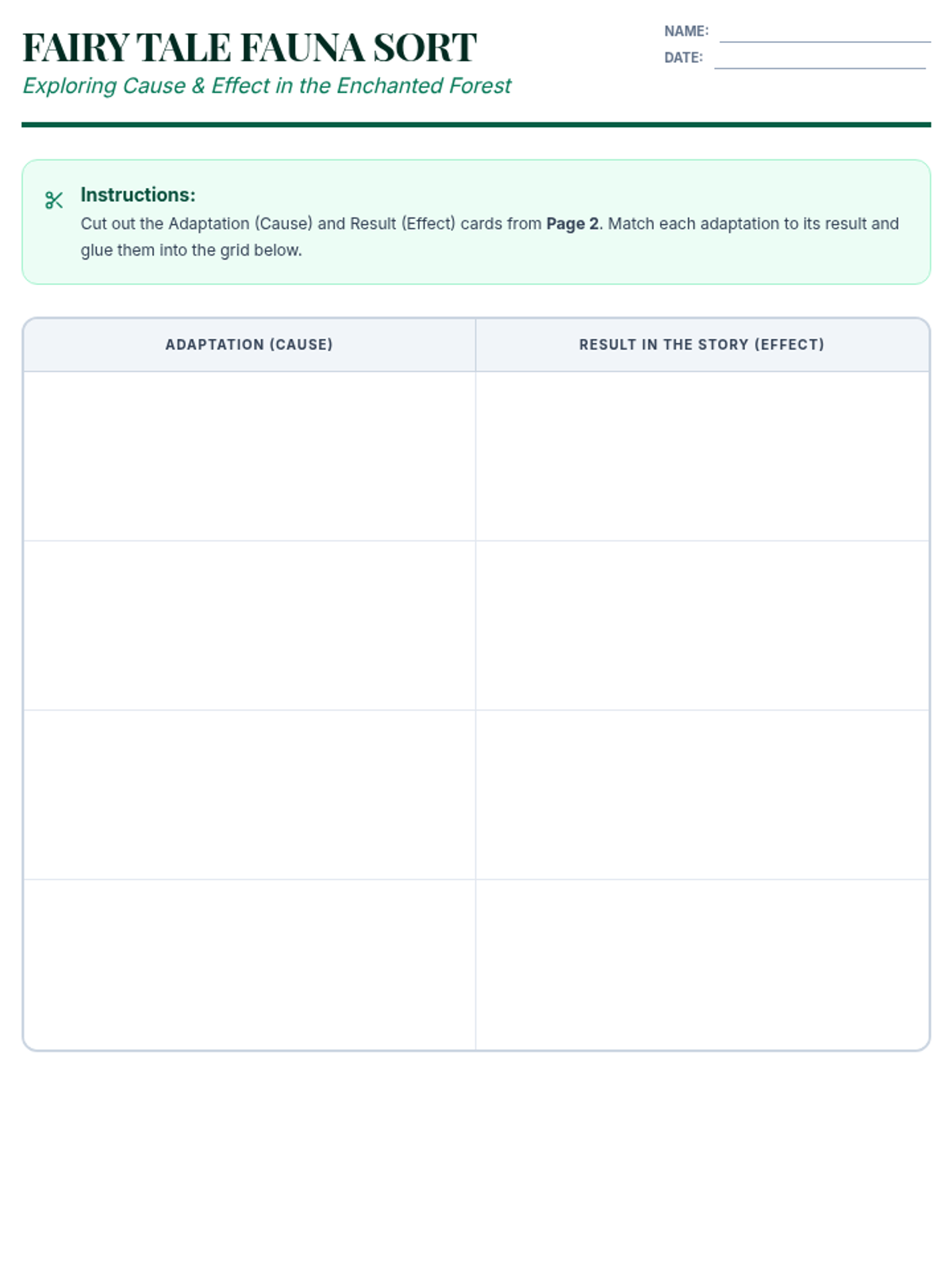
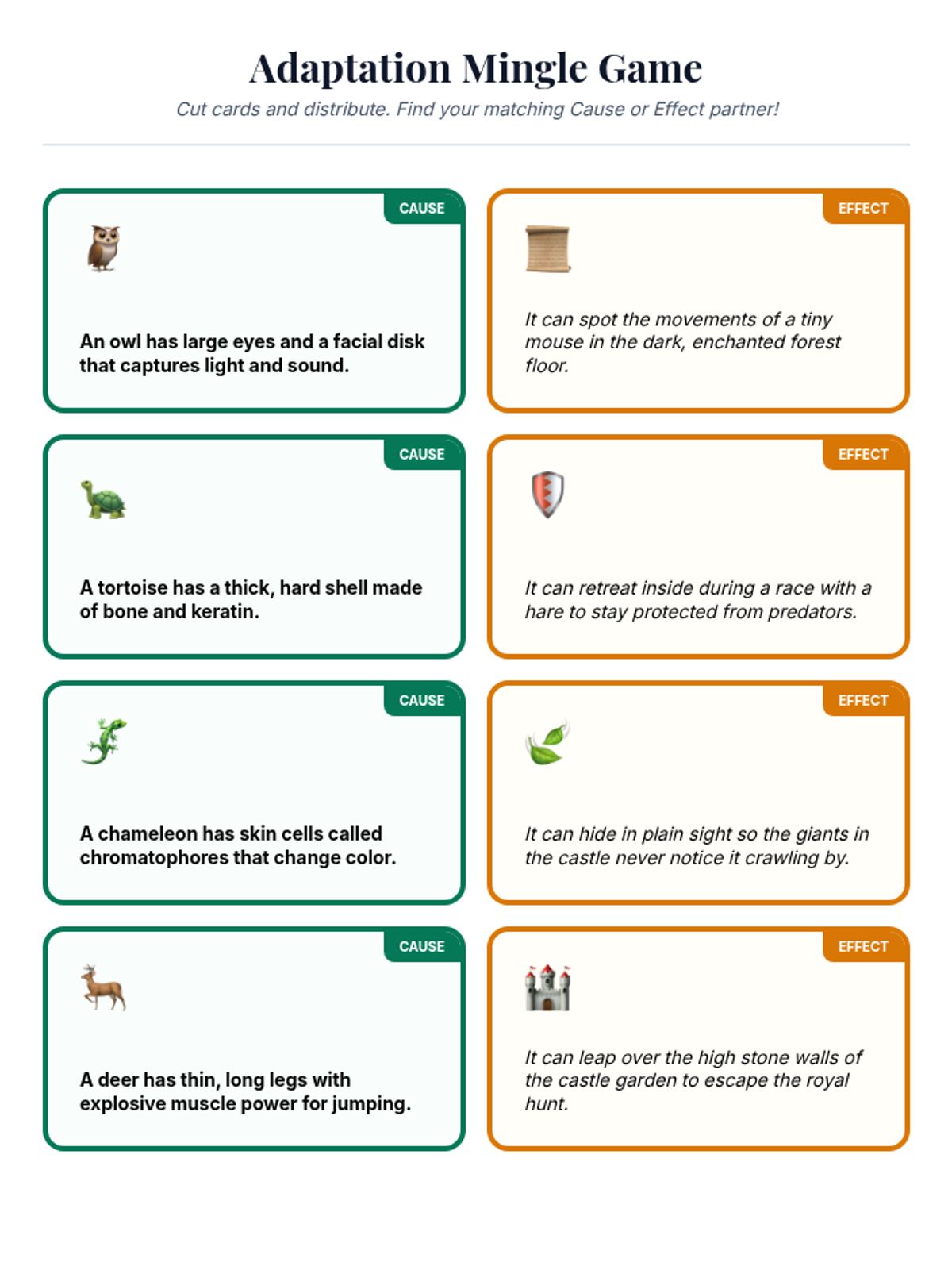
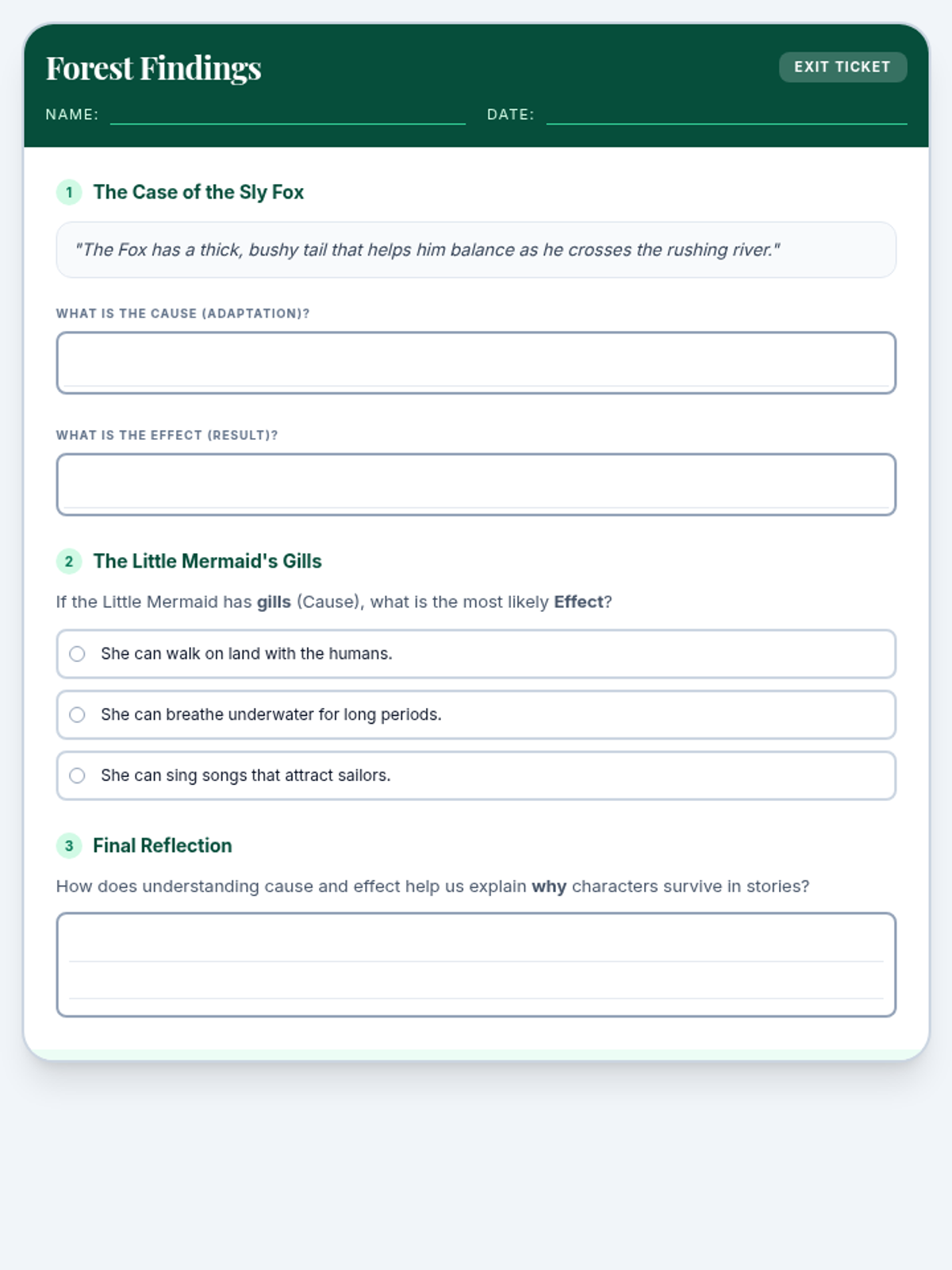
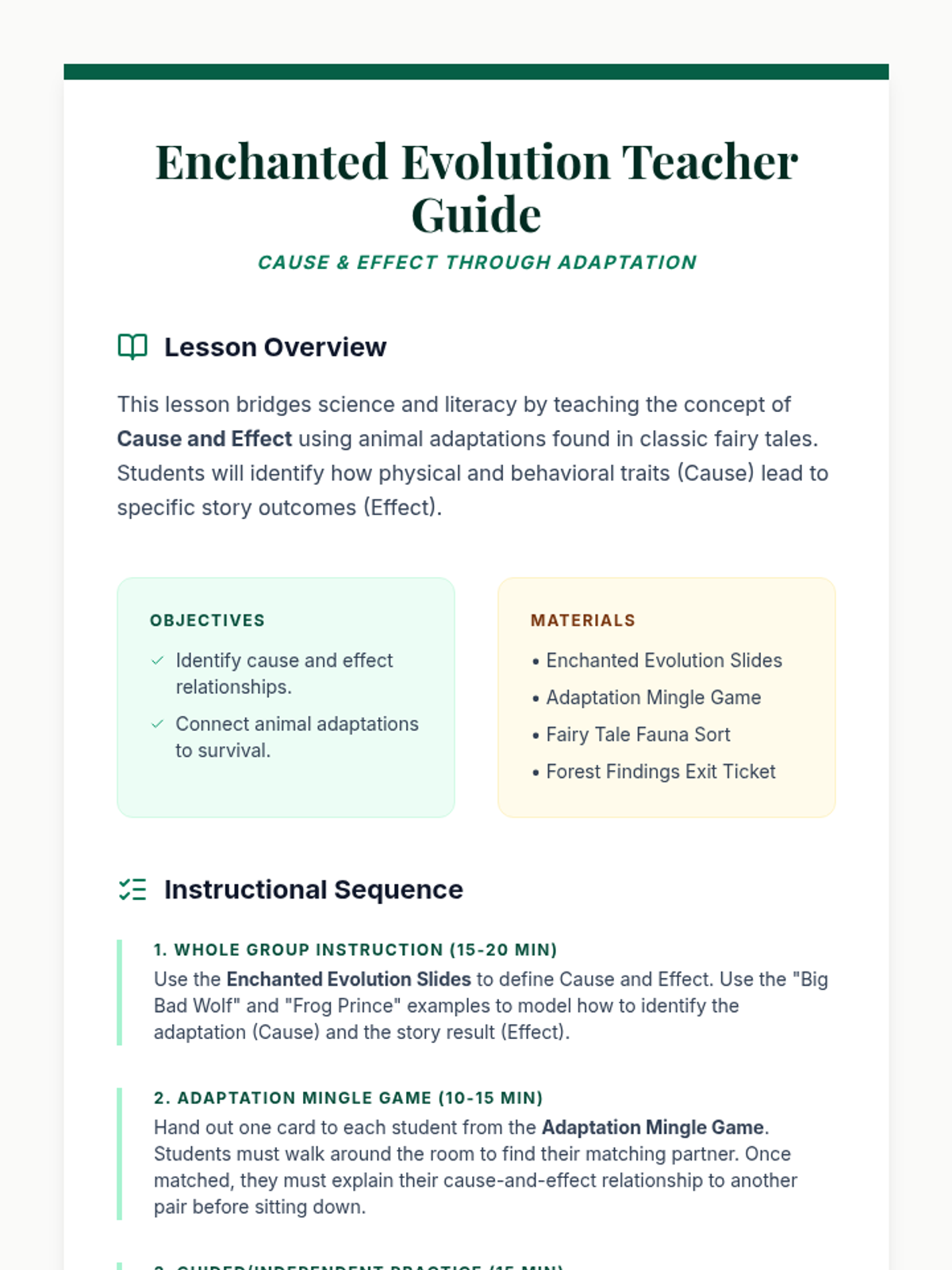
A whole-group lesson where students identify cause and effect relationships by analyzing how animal adaptations help fairy tale creatures survive their stories.