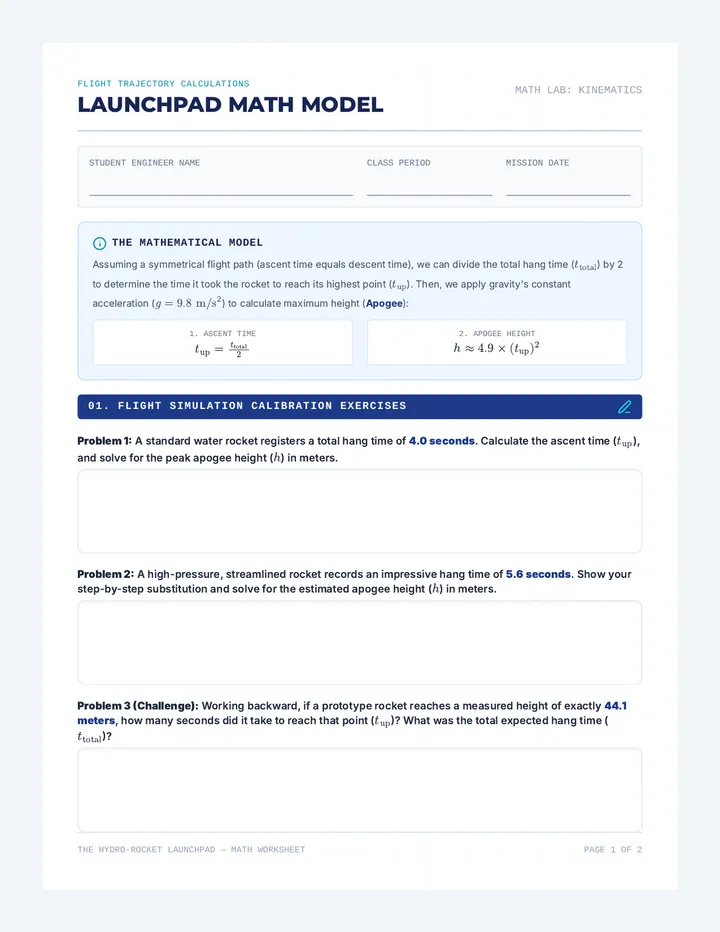
This lesson introduces the concept of integration geometrically by calculating the area under velocity-time graphs to determine displacement. Students verify calculations against measured movements.
A 45-minute ESL lesson for grade 4 students at the Developing (Level 3) proficiency level. Students will explore life cycles, practice gathering information from texts, and learn to take notes and categorize data using graphic organizers.
Uma aula completa sobre as principais teorias da origem da vida, abordando desde a abiogênese até os experimentos de Miller-Urey, alinhada à BNCC para o Ensino Fundamental II.
A rapid-fire intervention lesson designed to solidify the fundamentals of Newton's Laws through hands-on experimentation and visual mapping. Perfect for small group remediation or a quick refresher before transitioning to new physics concepts.

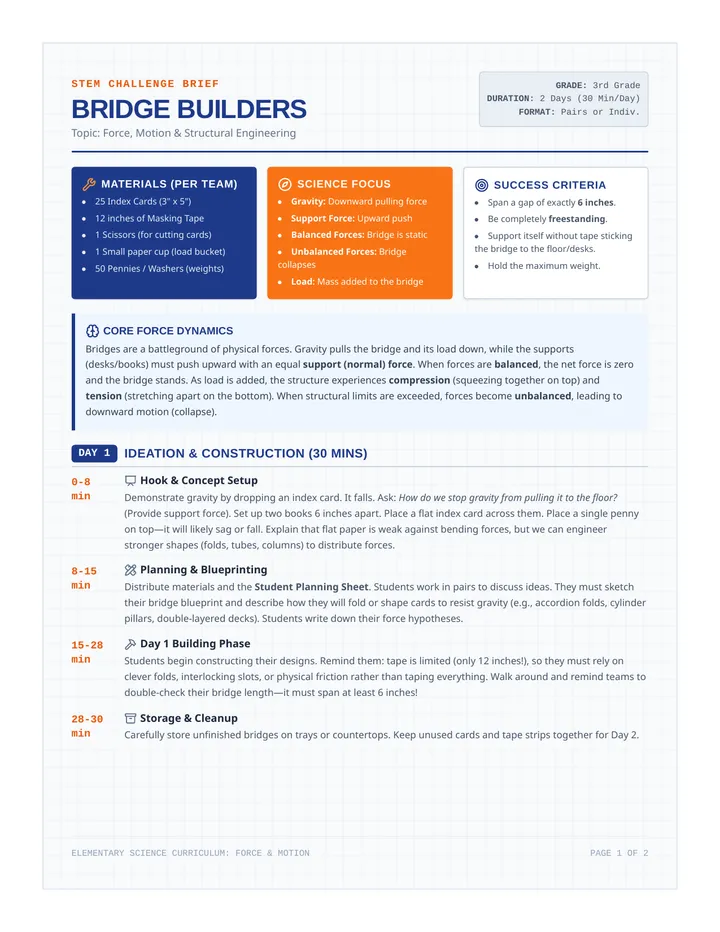
A foundational toolkit for setting up a physical engineering and maker space, covering physical layout, collaborative roles, and essential classroom routines.
A lesson exploring the differences between natural and invasive grasses as fire fuels, featuring case studies on the Tallgrass Prairie and Cheatgrass in the Great Basin. Students will analyze fire behavior and impact through comparative study and assessment.
A comprehensive daily lesson exploring wildland fuel types, their characteristics, and how they influence fire behavior across different regions. Students analyze grass, shrub, timber, and understory fuels through guided notes, diagrams, and real-world case studies.
An introductory lesson on sustainable development, exploring the three pillars of sustainability and how human actions impact the planet's future.
A comprehensive lesson on calculating the forces and torque acting on a rectangular current-carrying loop within a uniform magnetic field. Students will master the Right-Hand Rule and the torque equation through visual derivations and practice problems.
A quick, creative wrap-up lesson where students apply their knowledge of soil conservation practices to design a sustainable farm plot and craft a persuasive pitch.
A synthesis lesson where students compare and sort the needs of all living things to identify patterns.
Explores the survival requirements of animals and humans, highlighting food, water, air, and shelter.
Focuses on what plants need to grow and thrive, including sunlight, water, air, and soil.
A lesson focused on the core terminology and equipment used in MIG, TIG, and Stick welding, as well as common metals and joint configurations.
A collection of enrichment activities for high school students covering soil texture, horizons, and conservation. Includes a puzzle-based worksheet and a data-driven soil profile analysis activity.
A comprehensive lesson on invasive species featuring case studies of Lionfish, Spotted Lanternflies, Zebra Mussels, and Burmese Pythons. Students explore the scientific process and ecological impacts through simplified text and visual supports.
A comprehensive lesson for 5th graders covering the Artemis II mission, including crew details, mission goals, preparation, and its historical significance for future lunar exploration.
A comprehensive lesson on Public Relations in Psychology, focusing on translating complex research for public consumption, managing public perception of psychological science, and ethical communication.
Lección introductoria a los eventos del teclado en JavaScript, donde los estudiantes aprenden a capturar pulsaciones de teclas para controlar elementos en una página web.
A lesson focused on the fundamental vocabulary of genetics, covering genotypes, phenotypes, inheritance patterns, and cell division for reproductive cells.
Explore the fundamental concepts of nuclear energy—fission, fusion, half-life, and radioisotopes—through the narrative lens of a curious student named Newton.
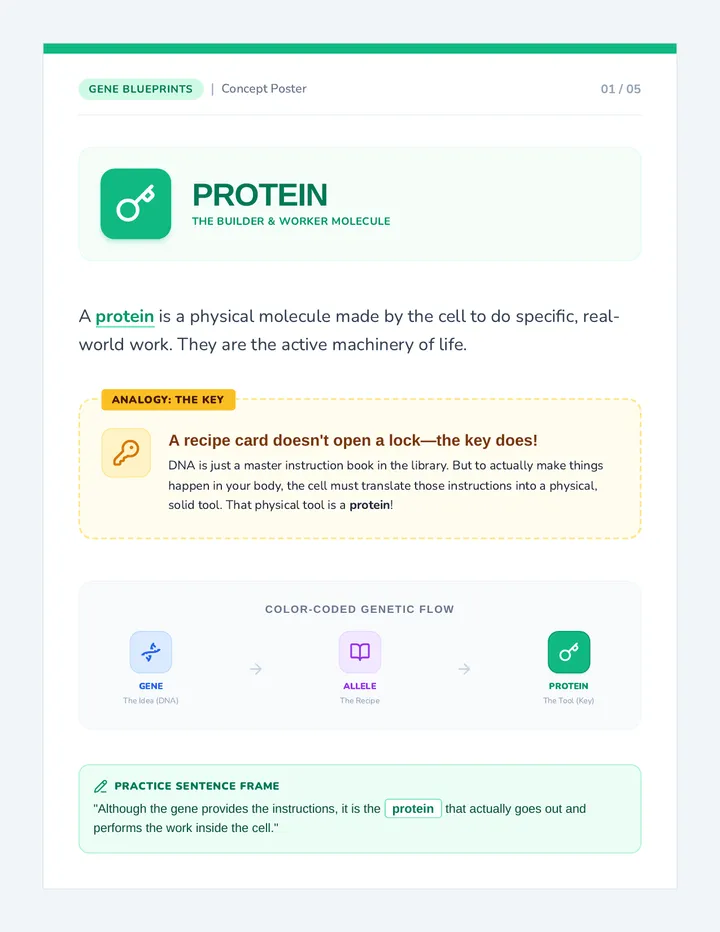
An introductory lesson on genetics centered around the story of Genise and Mendel's experiments, covering basic inheritance, genotype vs phenotype, and complex patterns like incomplete dominance and codominance.
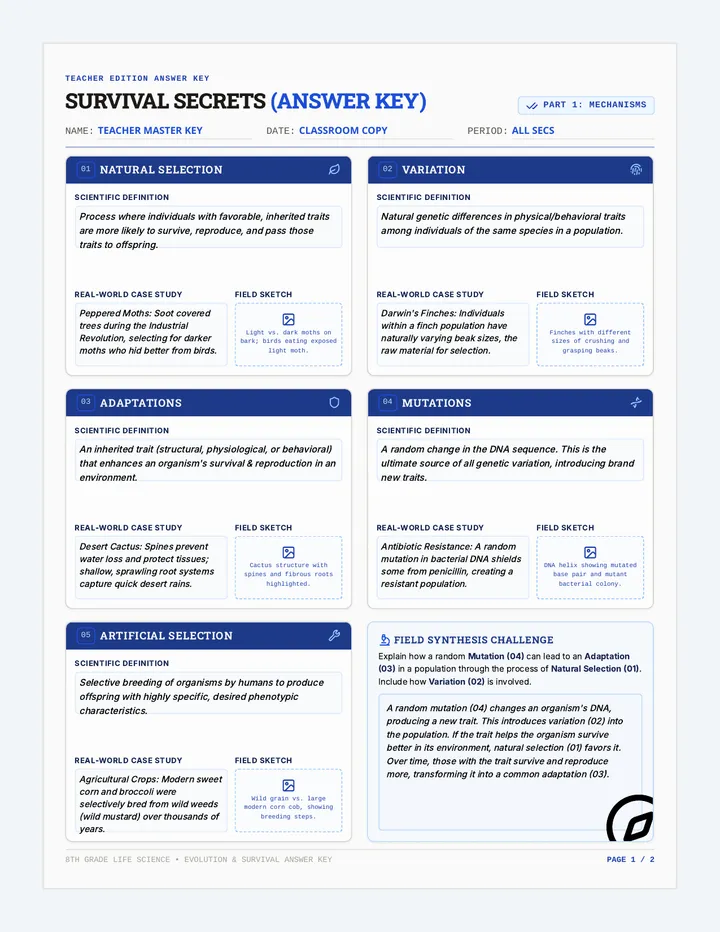
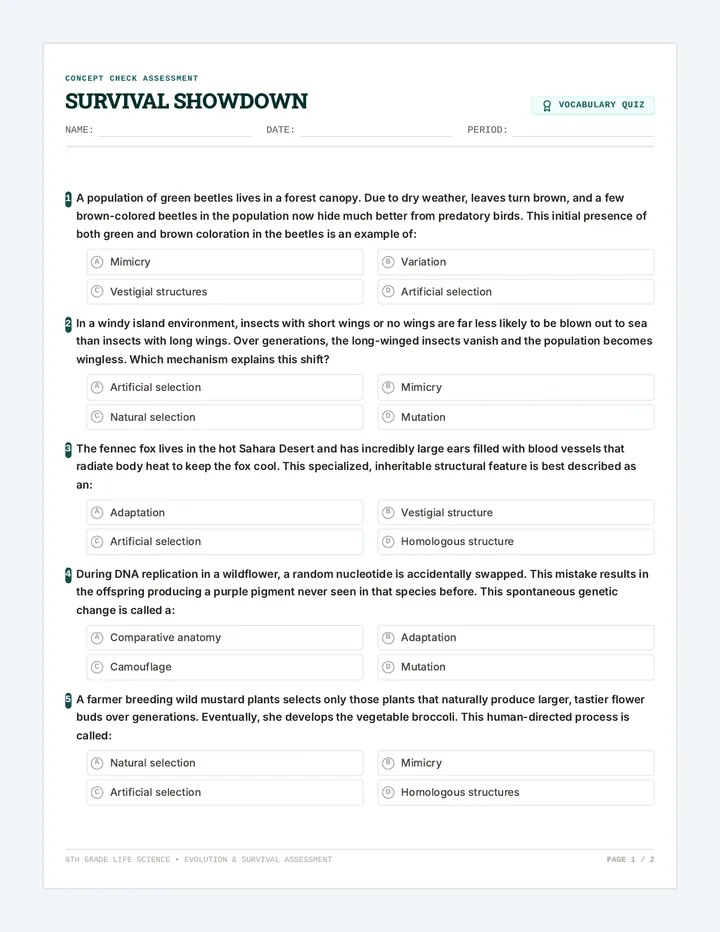
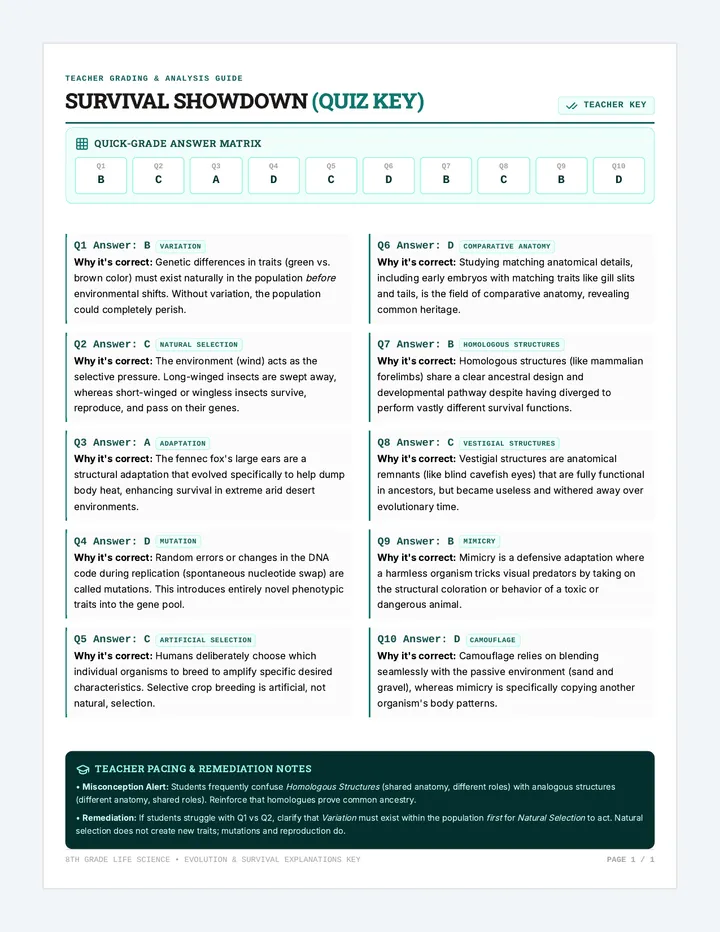
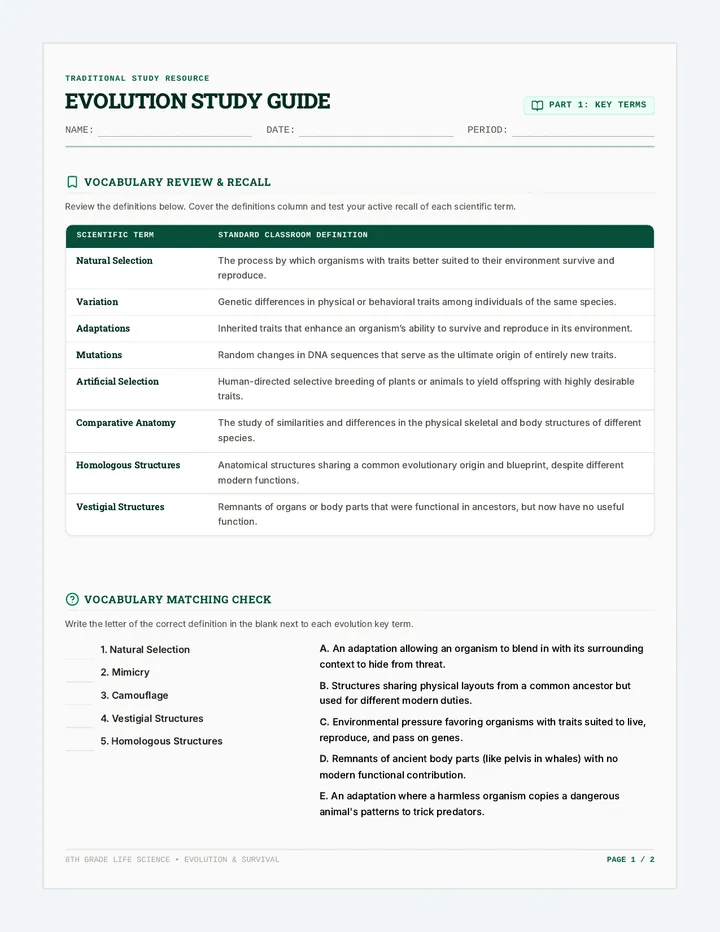
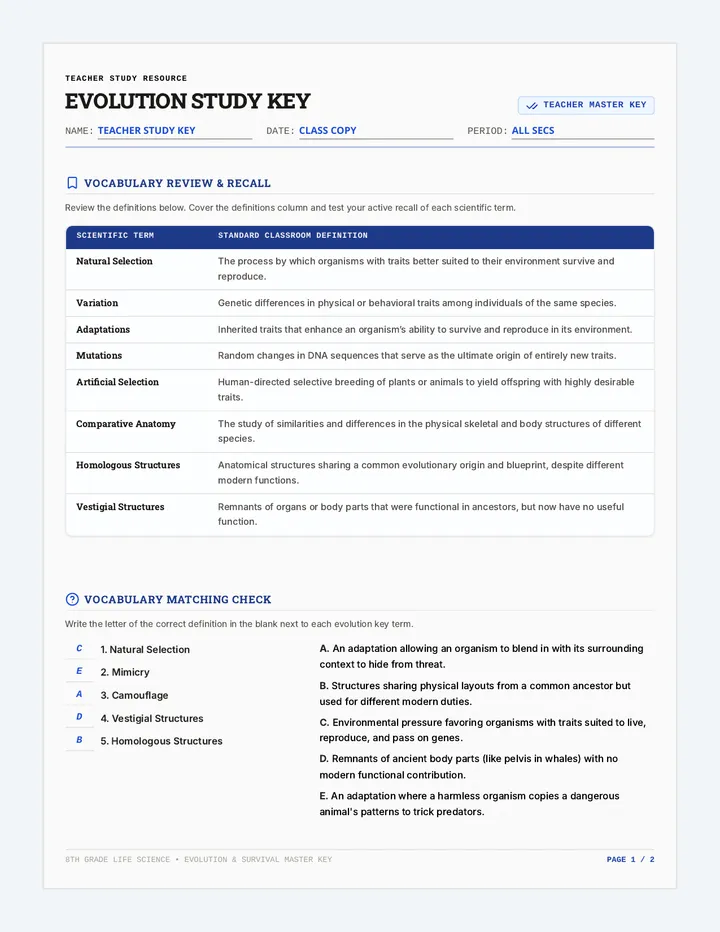
A comprehensive 5E lesson where students act as biological detectives to investigate the empirical evidence supporting common ancestry and evolution, including fossil records, anatomical homologies, embryology, and molecular biology.
A comprehensive collection of species profiles covering the major branches of the human family tree, from the earliest potential ancestors to our closest extinct relatives.
Final assessment of the Floss rule and heart words. Includes dictation and a creative word family exercise.
Fluency building and phonics games. Students practice rapid reading of bonus letter words and construct sentences.
Application through word sorting and decodable reading. Students identify word families and read words in context.
Focus on word building and dictation. Students use letter tiles to practice doubling final consonants and apply heart word knowledge in writing.
Introduction to the bonus letters f, l, s, and z. Students learn the rule that when a one-syllable word ends in f, l, s, or z after a short vowel, the letter is doubled. Includes the teacher guide for the full week.
A data-driven investigation where students use radiometric dating techniques to determine the absolute age of an Archaeopteryx fossil. Students analyze isotope ratios, calculate half-lives, and interpret decay curves to solve a geologic mystery.
Students learn the Aufbau principle, Hund's rule, and the Pauli exclusion principle to map out electron distributions across energy levels.
A foundational week-long unit on the human brain and nervous system, focusing on brain region anatomy, functional localization, and the impact of site-specific brain injuries.
A comprehensive 60-minute physics lesson exploring the atomic origins of magnetism and the mathematical modeling of magnetic forces on moving charges. Students will transition from microscopic domains to macroscopic force calculations using the Lorentz force law and right-hand rules.
A comprehensive final assessment for the unit, synthesizing the interactions between the nervous, endocrine, and excretory systems in maintaining homeostasis.
An assessment focusing on the structural anatomy of the brain, the spinal cord, and the functional hierarchy of the central and peripheral nervous systems.
An assessment covering the endocrine system's role in regulating growth and metabolic rate, specifically focusing on the thyroid, growth hormone, and blood glucose regulation.
An assessment covering the endocrine system's role in the stress response (adrenal glands) and the hormonal regulation of the human reproductive system.
An assessment covering the anatomy of the kidney, the functional unit of the nephron, and the hormonal control of water balance (ADH).
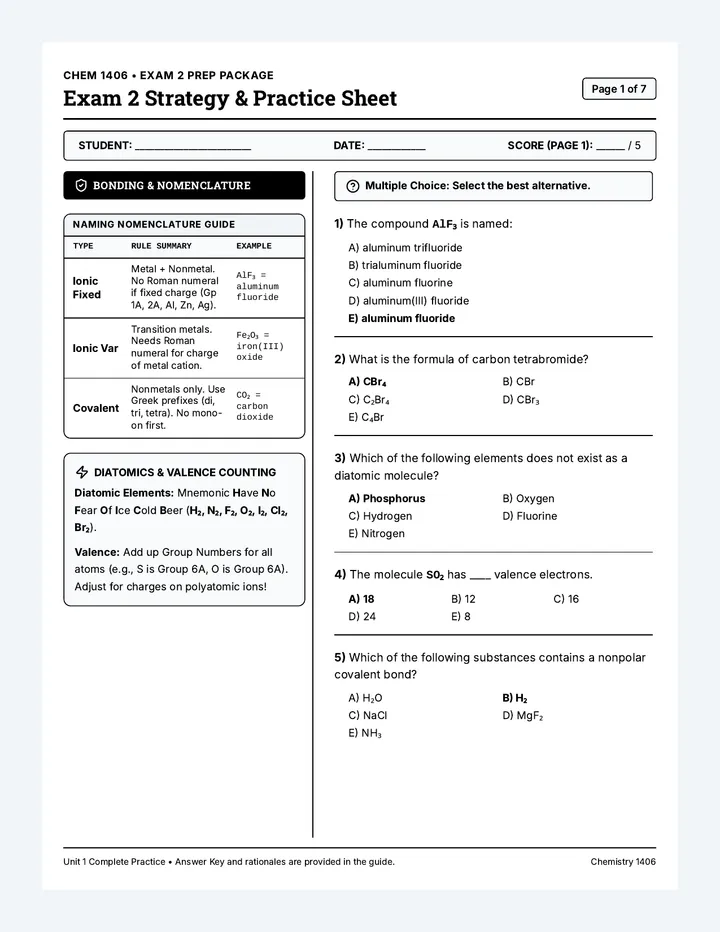
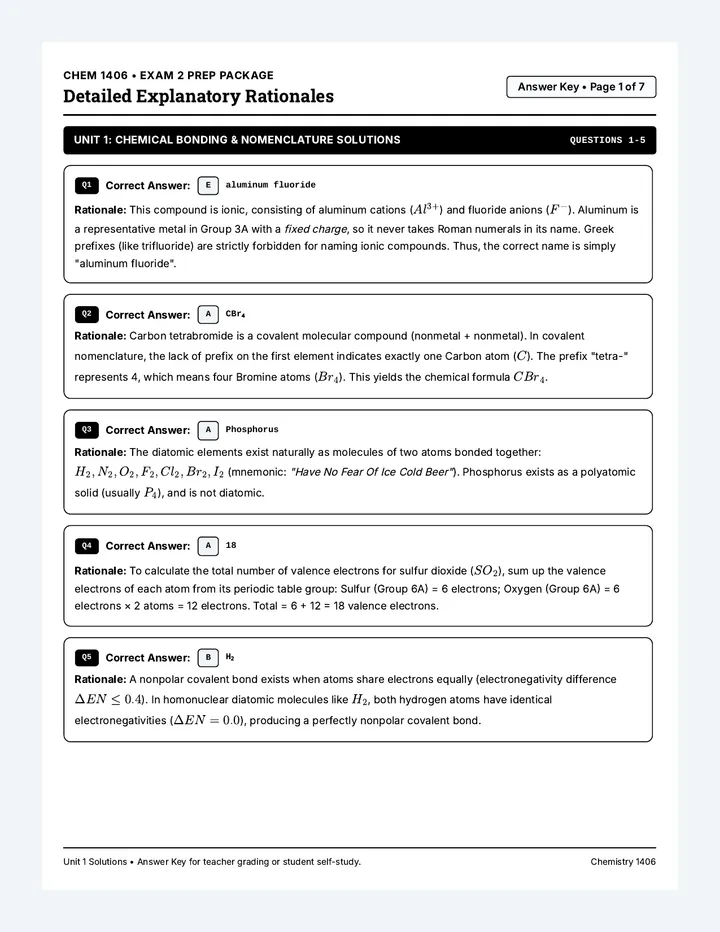
A comprehensive assessment covering the physiological mechanisms of homeostasis and the structural/functional components of the human nervous system for Grade 11 Biology.
This lesson focuses on phonemic awareness through the manipulation of sounds, specifically reversing phonemes in one-syllable words to build foundational reading and spelling skills.
A biology lesson focusing on how meiosis generates genetic diversity through crossing over and independent assortment. Students rotate through a lab station to analyze these processes and record their findings.
A comprehensive reading and analysis lesson exploring the specific impacts of global warming on Latin America, focusing on hurricanes, deforestation, and landslides.
This lesson explores the critical period of prenatal development, focusing on how substance misuse disrupts the science of addiction and neurological growth. Students will understand the biological connection between maternal choices and fetal brain health through a scientific lens.