Students explore the standard A:B::C:D format and learn to create a 'bridge sentence' that defines the relationship between A and B.
A 30-minute introductory lesson where students learn to decode complex words using a list of 24 common morphemes.
A lesson focused on helping students master the criteria for successful argumentative writing using a student-friendly checklist based on state-aligned rubrics.
An introduction to Shakespeare's whimsical comedy for young readers, focusing on plot, characters, and the magical setting of the enchanted forest.
A lesson focused on self-editing and peer-reviewing using a rubric-aligned checklist to improve sentence variety, grammar, and mechanics.
This lesson guides students through an analysis of Día de Muertos, focusing on the cultural significance, historical roots, and identity-affirming power of the tradition. Students will practice synthesizing information from multiple paragraphs to construct a meaningful written response about resilience and memory.
A focused practice session on identifying cause-and-effect relationships within a fictional text, modeled after EOC RLA assessment formats.
A high-stakes reading game where students compete as jockeys to master multi-syllabic vocabulary and fluency through a horse-racing themed challenge.
A 6th-grade ELA lesson focused on RL.6.1, RL.6.2, and RL.6.3, where students analyze and compare two short stories through binary-choice questions.
A character analysis and creative writing lesson centered on the Straw Hat Pirates from One Piece. Students will explore character motivations, roles, and traits while developing their own unique additions to the crew.
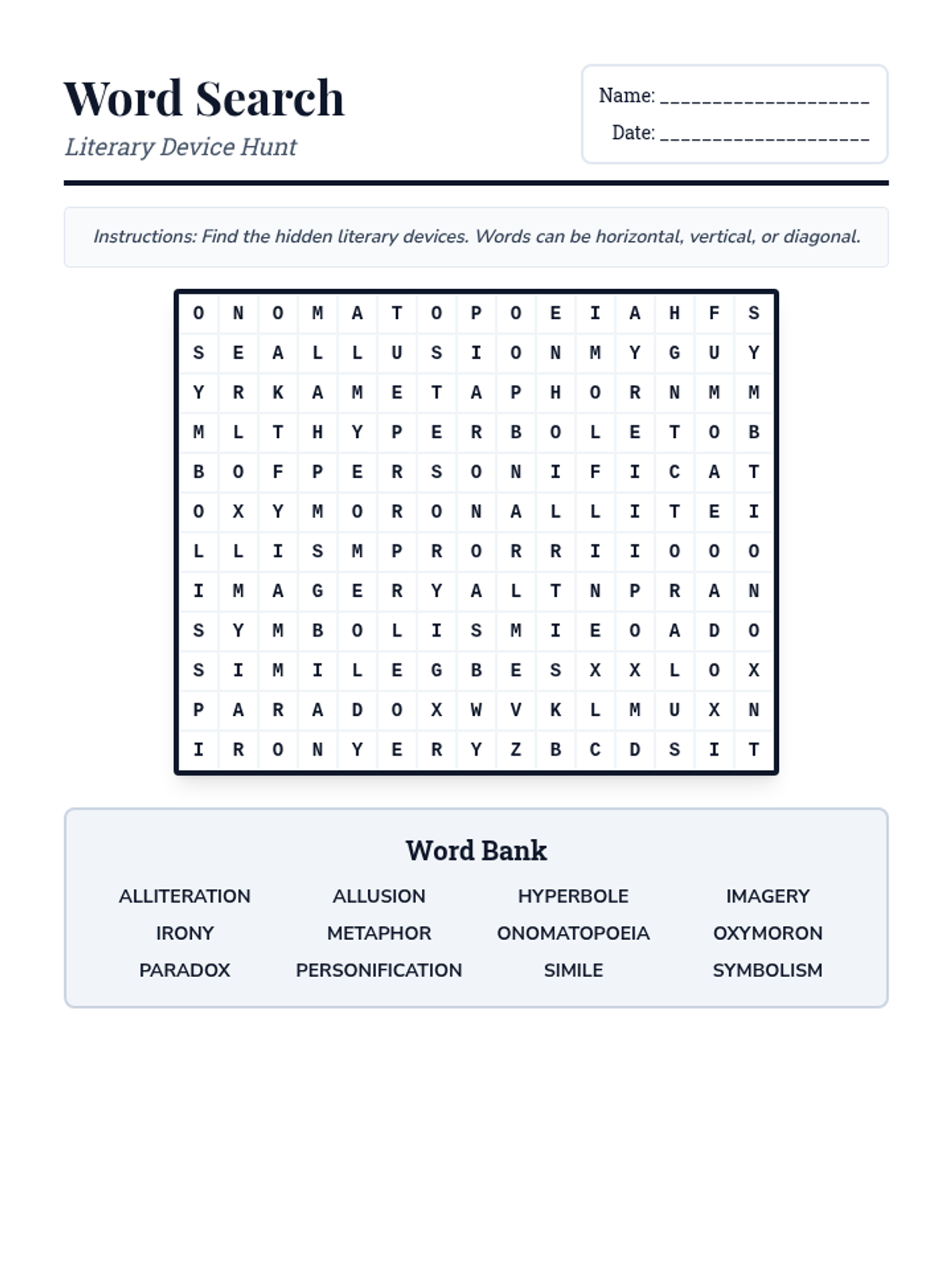
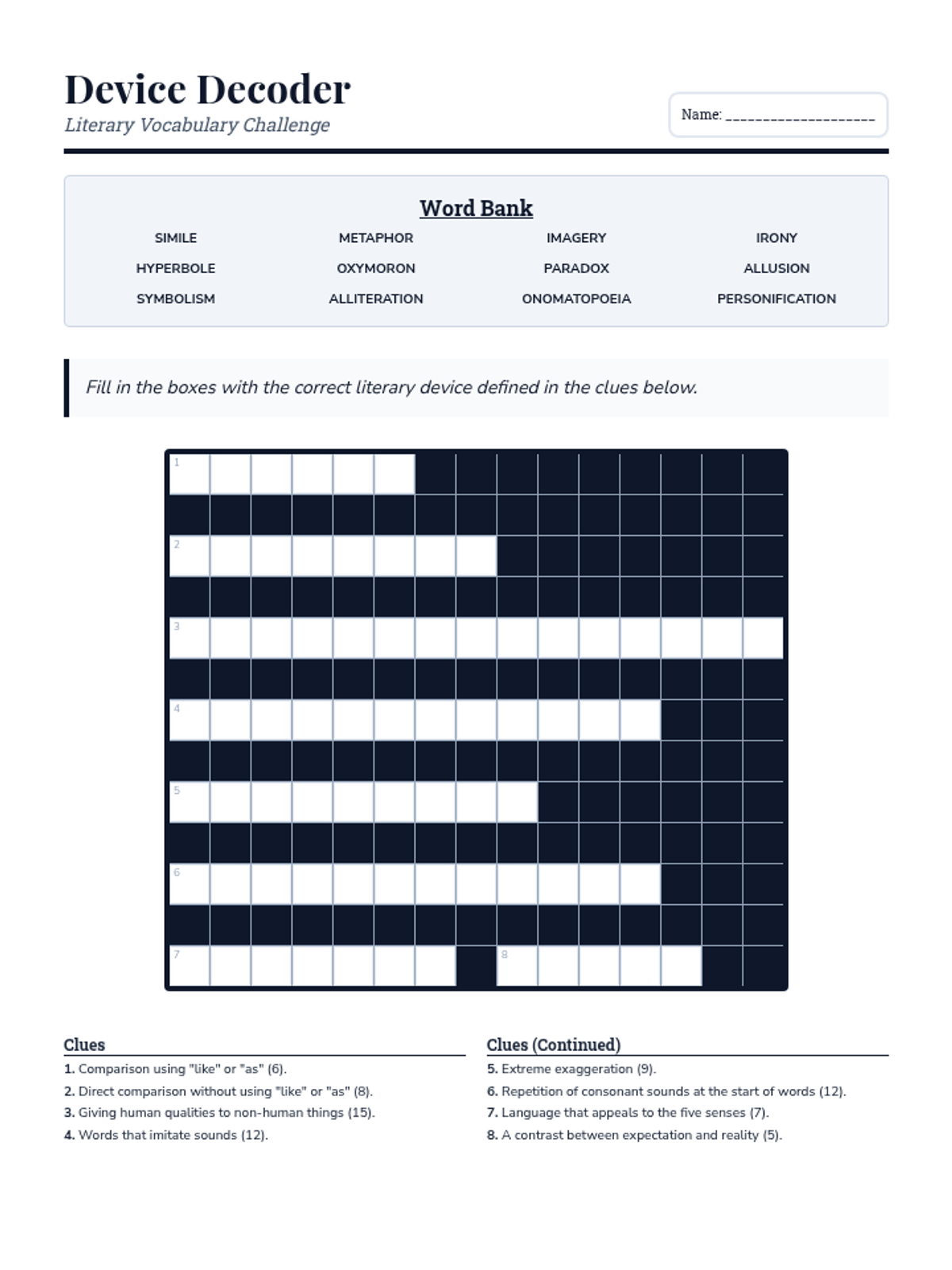
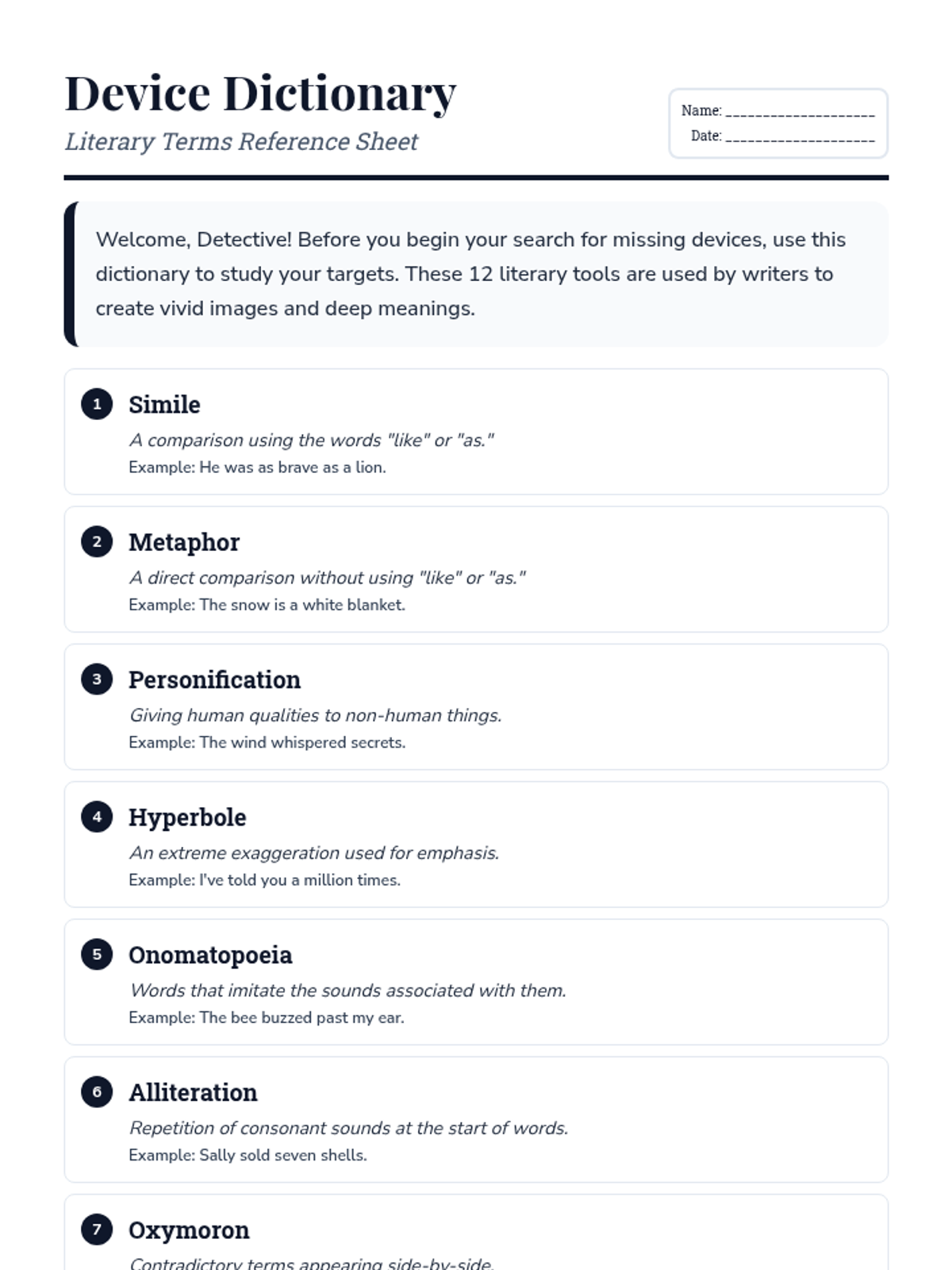
An engaging figurative language enrichment activity for students who finish assignments early, focusing on simile, metaphor, personification, alliteration, onomatopoeia, and idioms.
Students explore their unique personality traits and strengths to prepare for an 'All About Me' essay using a visual brainstorming web.
A comprehensive lesson on building strong argumentative essays, focusing on thesis construction, evidence integration, and addressing counter-arguments through the 'Debate Lab' theme.
A lesson focused on post-SSR reading comprehension through daily reflection and choice-based activities across four key skill areas.
This lesson guides students through the structural 'blueprints' of Extended Constructed Responses (ECR), covering both informational and argumentative modes with a focus on thesis development, evidence selection, and paragraph organization.
Students will learn to identify and craft effective counterclaims and rebuttals to strengthen their argumentative writing. The lesson uses a 'combat' metaphor to make the components of an argument memorable and engaging.
A focused lesson on identifying the topic, main idea, and supporting details in short informational texts, designed for 6th-grade students.
A comprehensive guide to teaching structured debate, focusing on argument construction, rebuttal strategies, and persuasive delivery for middle and high school students.