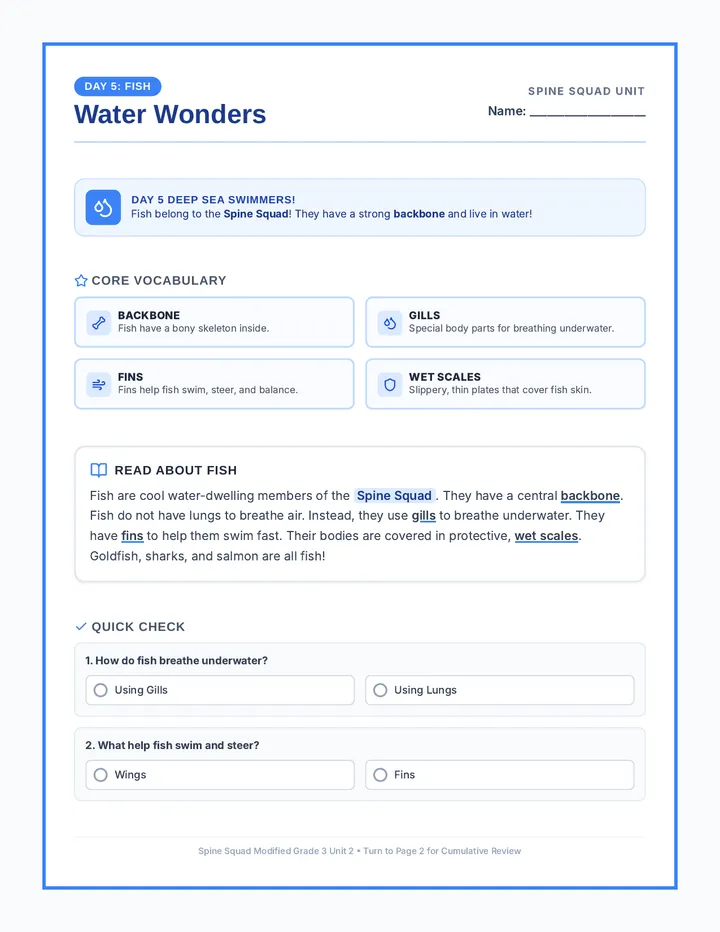
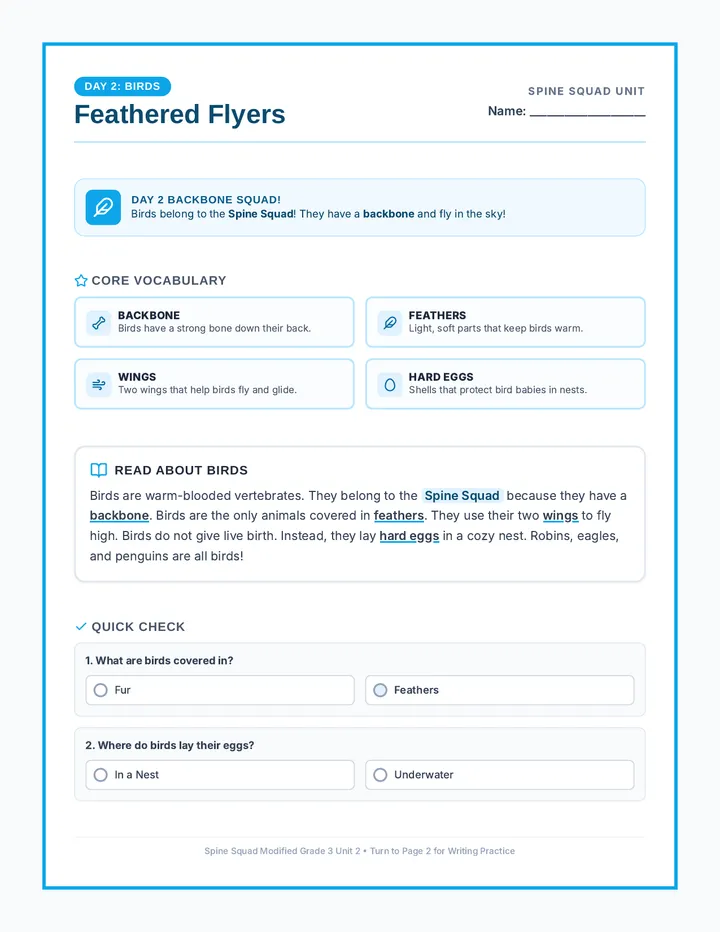
A collection of Grade 1 decodable passages focusing on bird adaptations, specifically beaks and feathers, featuring common North American and exotic birds.
A hands-on introduction to using Venn diagrams to compare and contrast two unique birds: Penguins and Pelicans. Students will identify shared traits and unique characteristics through visual modeling and a cut-and-paste activity.
A hands-on introduction to Venn diagrams where 1st graders compare and contrast two unique bird species: the Penguin and the Pelican. Students will identify shared traits like feathers and egg-laying while distinguishing between flying and swimming abilities.
A hands-on enrichment lesson for K-3 students to explore life on the International Space Station through a creative building project and interactive discussion. Students learn about how astronauts live and work in orbit while constructing their own space station models.
Students step into the shoes of meteorologists, using scripts and props to report on a wide variety of weather phenomena across a fictional map.
A hands-on chemistry session where students experiment with non-Newtonian fluids and acid-base reactions to create fizzing eruptions and gooey textures.
Students become engineers by designing a marble maze that incorporates simple machines like inclined planes and levers using cardboard and recyclables.
An introduction to aerodynamics and space travel where students design, build, and test various flight models using simple household items.
Students explore nature by building mini-ecosystems and learning about water purification using natural and recycled materials.
An in-depth study of the Monarch butterfly's life cycle, focusing on the four stages of complete metamorphosis and the critical ecological role of milkweed.
A lesson exploring the cause and effect relationships of hurricanes, earthquakes, and tornadoes for early readers.
A collaborative Earth Day lesson where students create a class book inspired by Louis Armstrong's 'What a Wonderful World'. Includes a detailed teacher guide and presentation slides with a video embed.
A sensory-rich lesson for K-3 students focusing on fine motor skills and plant life cycles through tactile seed sorting and indoor gardening. Students practice pincer grasps and follow visual directions to start their own sprout journey.
A comprehensive life science lesson for Pre-K to 2nd grade focused on seed dispersal, plant needs, and hands-on observation. Students act as junior botanists to explore how seeds move and what they need to grow into healthy plants.
An exploration of stars, constellations, and the technology humans use to study deep space.
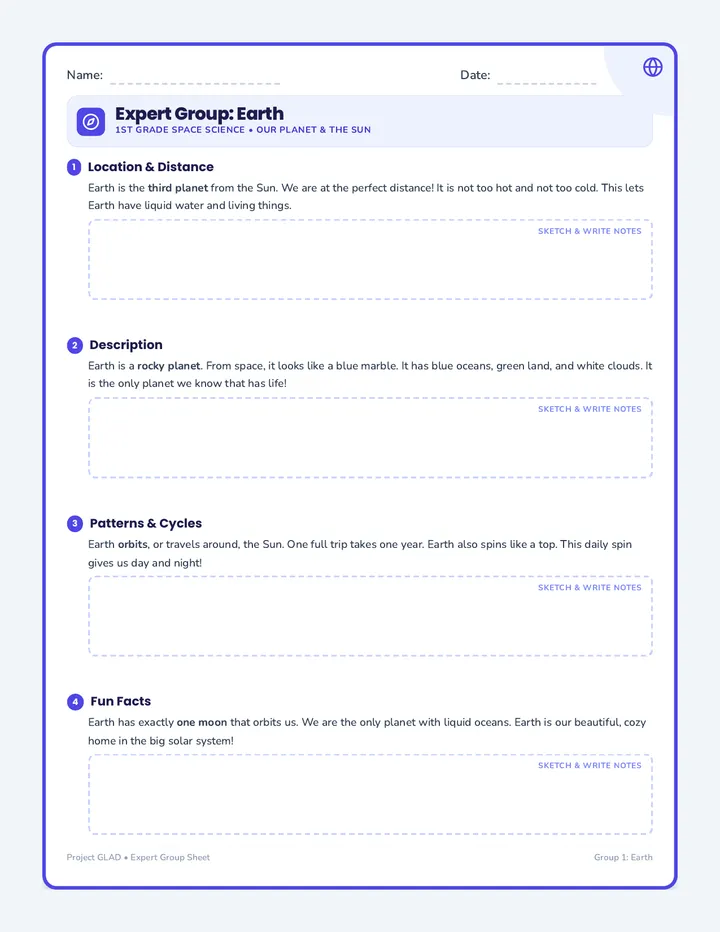
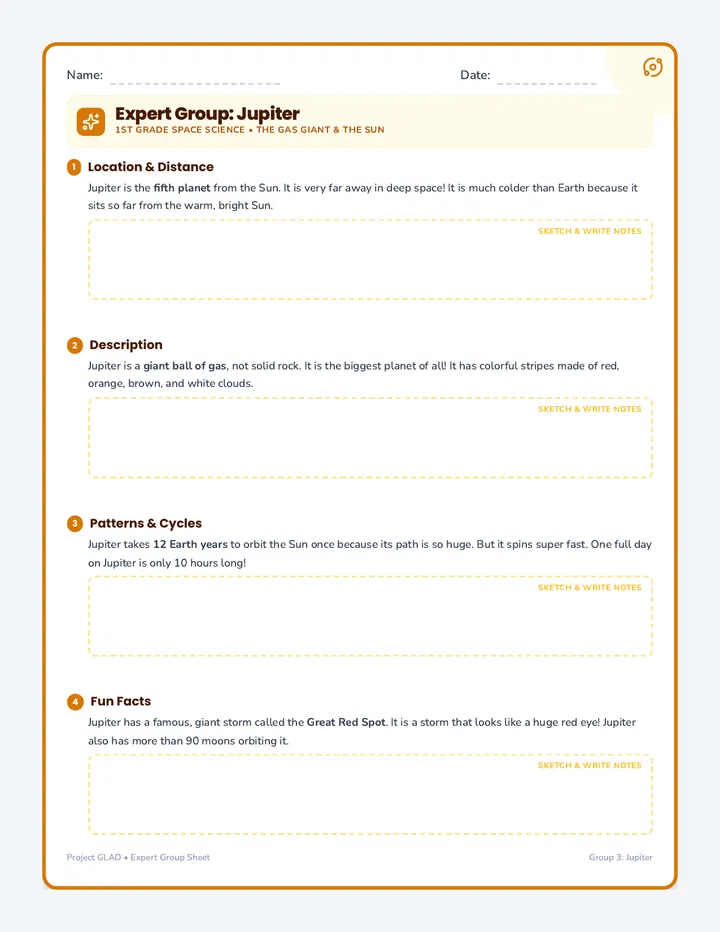
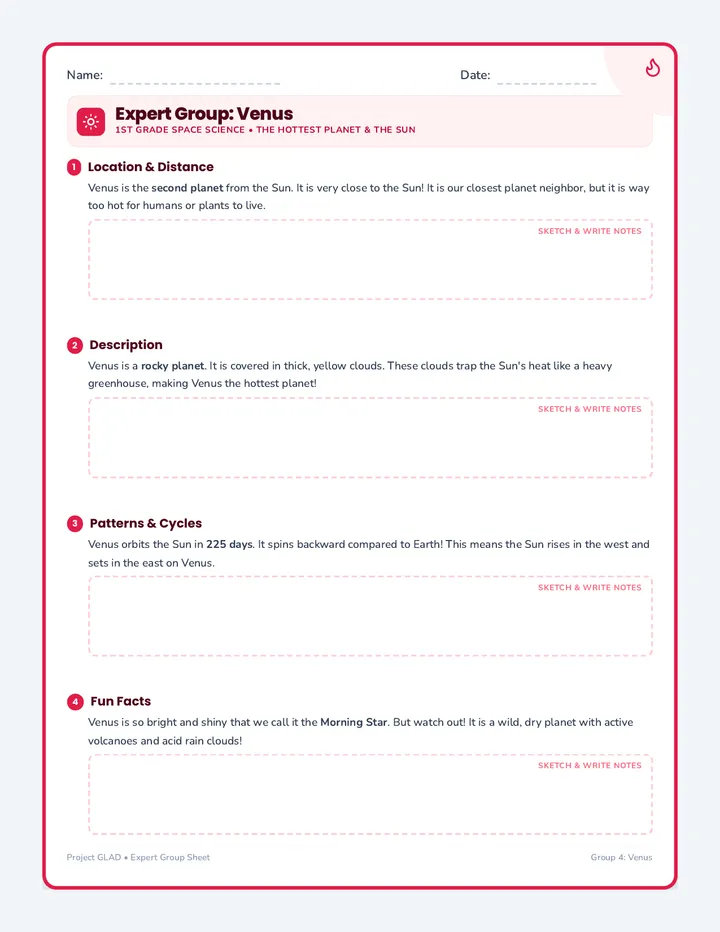
A simplified tour of the eight planets in our solar system, categorized into rocky inner planets and gas giant outer planets.
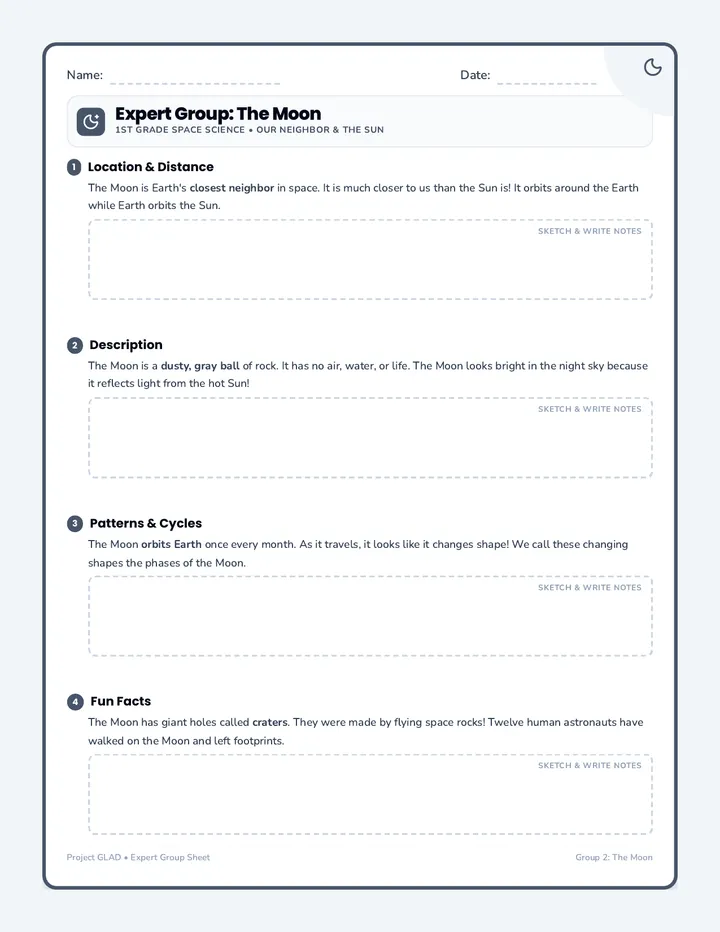
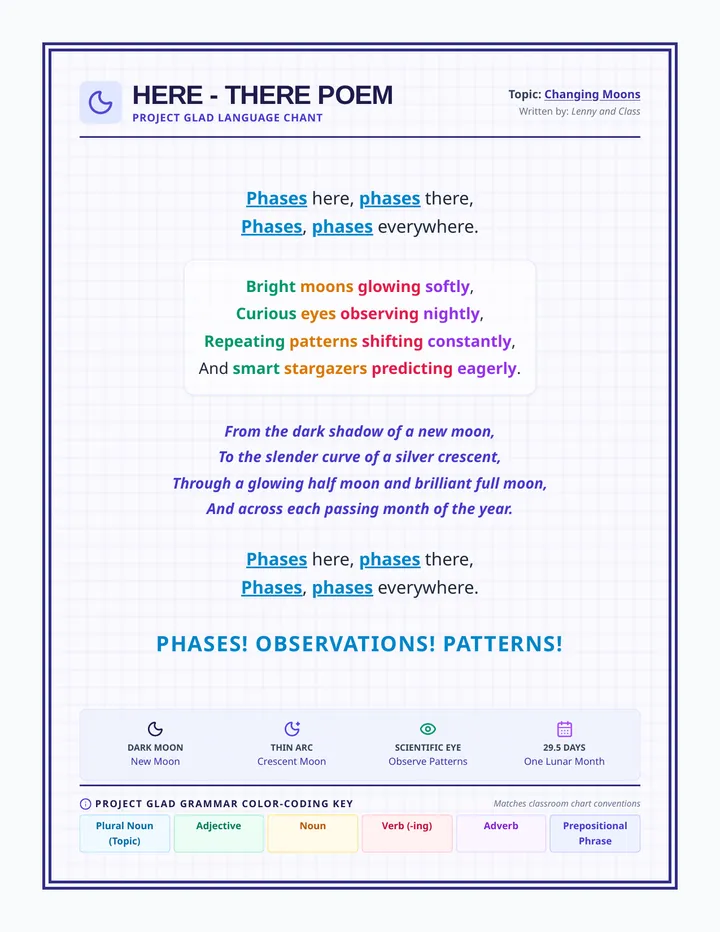
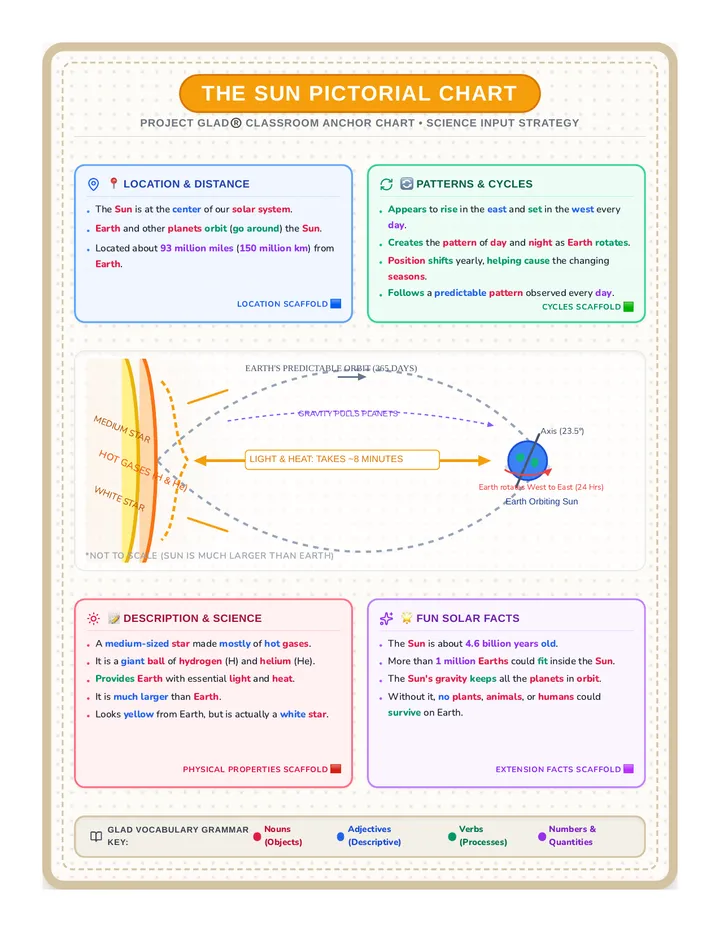
An introduction to our nearest neighbors in space: the Sun and the Moon, focusing on their basic characteristics and roles.
Students culminate their AI literacy journey by designing an AI solution for a real-world problem. They focus on responsible design, identifying potential biases, and ensuring societal benefit.
Students analyze the ethical implications of AI on privacy and identity. They explore deepfakes, facial recognition, and the balance between security and personal freedom.
Middle school students dive into the mechanics of Large Language Models (LLMs). They learn about tokenization, probability, and how AI "predicts" the next word in a sequence.
Students explore the "ingredients" of AI: datasets. They learn how biased or incomplete data can lead to unfair or inaccurate AI systems and practice creating a balanced dataset.
Students learn to critically evaluate AI outputs by identifying "hallucinations" and factual errors. They explore why AI sometimes makes mistakes and how to verify information.
Students explore Generative AI and the importance of prompt engineering. They learn how to communicate effectively with AI to create specific images and text.
Students discover how AI works as a "smart assistant" in daily life. They identify AI in common devices and reflect on how it helps people solve problems.
Students explore the foundation of AI learning: pattern recognition. They learn that computers need many examples (data) to understand rules and make predictions.
Introduces the concept of AI by distinguishing between a robot's physical body and its digital 'brain'. Students explore how AI 'thinks' differently than humans and machines.
A foundational toolkit for setting up a physical engineering and maker space, covering physical layout, collaborative roles, and essential classroom routines.
A set of materials for assessing and practicing 47 key graphemes, including high-visibility flashcards and a comprehensive teacher tracking sheet.
A synthesis lesson where students compare and sort the needs of all living things to identify patterns.