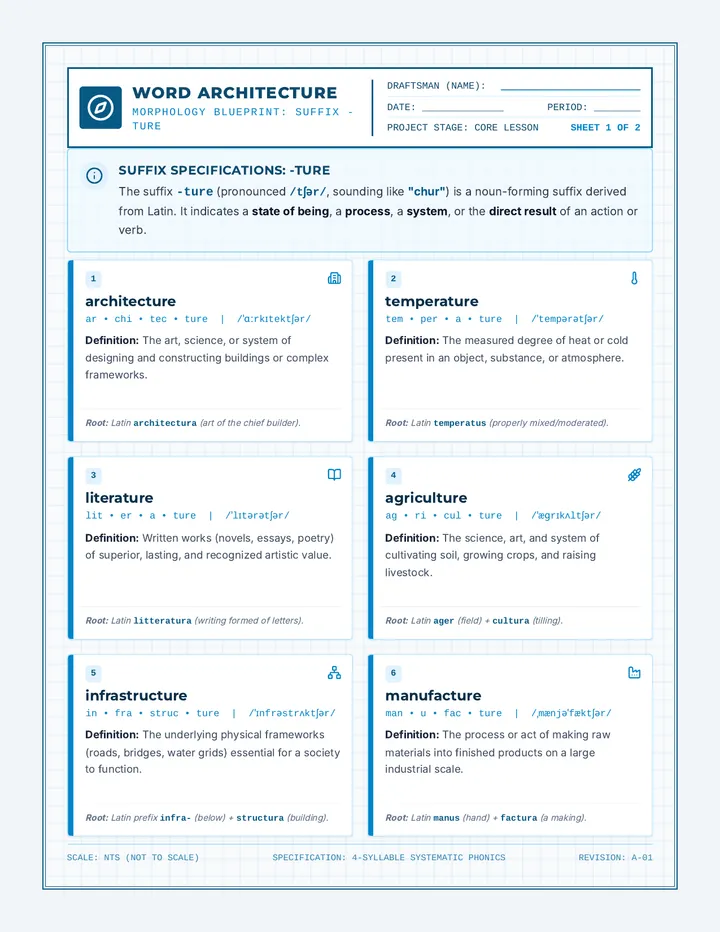
A sequence focused on the power of morphology, teaching students how to transform root words into various parts of speech using suffixes and prefixes.
A small-group literacy unit focused on mastering informational texts through text-based questioning, vocabulary development, and structured paragraph writing (Topic Sentence, Details, Concluding Sentence) centered on the theme of extreme weather.
A comprehensive book club unit for Kate DiCamillo's 'The Tiger Rising', exploring themes of emotional repression and friendship through three distinct chapter groups with a focus on synthesizing, vocabulary, and summarizing.
A comprehensive 25-lesson book club unit for 'The Tiger Rising' by Kate DiCamillo, focusing on summarizing, synthesizing, and vocabulary development through the lens of a Florida woods field journal.
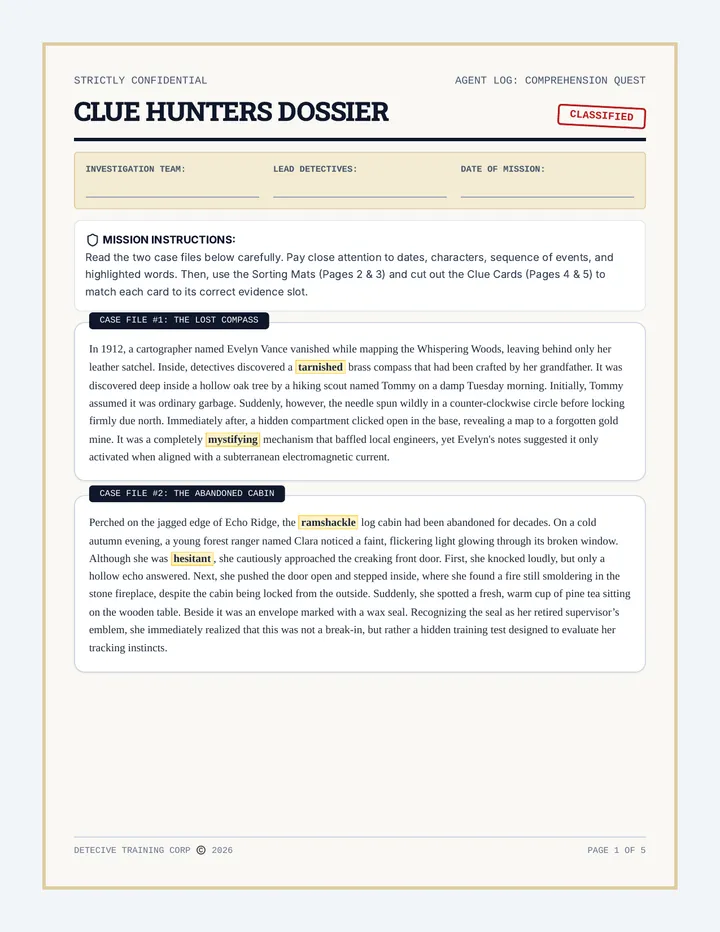
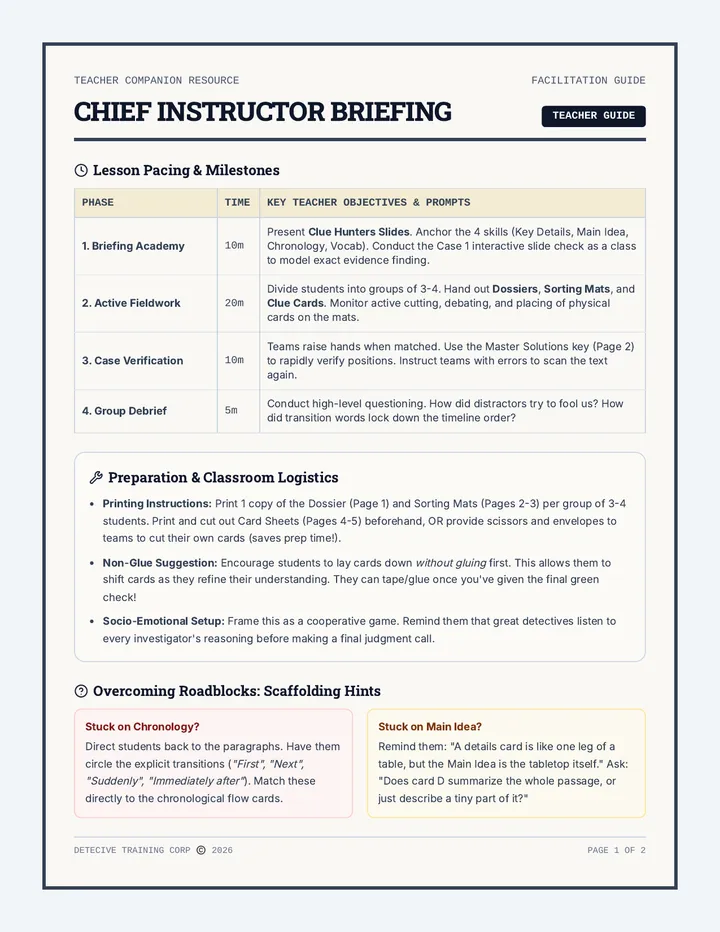
A comprehensive NYS ELA test preparation sequence for grades 6-8, focusing on main idea, text structure, and argumentative writing through a 'detective case file' theme.
A lesson sequence focused on the narrative craft of writing high-stakes introductions for interactive survival stories, specifically leading to biological defense mechanism choices.
A comprehensive NYS ELA test preparation sequence for middle school students (Grades 5-8), focusing on non-fiction reading comprehension, text-dependent analysis, and evidence-based writing. Each lesson targets grade-specific standards and uses NYS-style question stems to build testing stamina and skills.
Une formation immersive de 12 heures destinée aux professeurs-documentalistes pour maîtriser les codes de la littérature adolescente actuelle et concevoir des stratégies de médiation innovantes au CDI.
A middle school curriculum unit focused on critical thinking, information literacy, and strategic task management across digital and physical media.
A comprehensive unit on informational text structures, using an architectural theme to help students visualize how authors build their ideas. Students will master Cause and Effect, Description, Sequence, and Problem and Solution.
A comprehensive unit for Ellen Raskin's 'The Westing Game', focusing on character analysis, main idea, and key details through a mystery-themed lens. Includes slide decks for instruction, chapter-by-chapter exit tickets, and cumulative quizzes for each section of the novel.
A three-lesson unit focused on identifying central ideas in short stories by distinguishing them from supporting details. Students will use the 'Plot Pathfinders' adventure theme to navigate narratives and uncover the core messages of texts.
A 4-lesson unit exploring the organizational structures and graphic elements of non-fiction through the lens of the Dachshund breed, featuring a complex 1200 Lexile informational text.
A instructional unit focused on the core literacy skills of summarizing, paraphrasing, and synthesizing information for clarity and impact.
A sequence of lessons exploring different informational text structures, starting with chronological sequence through the lens of vacation planning.
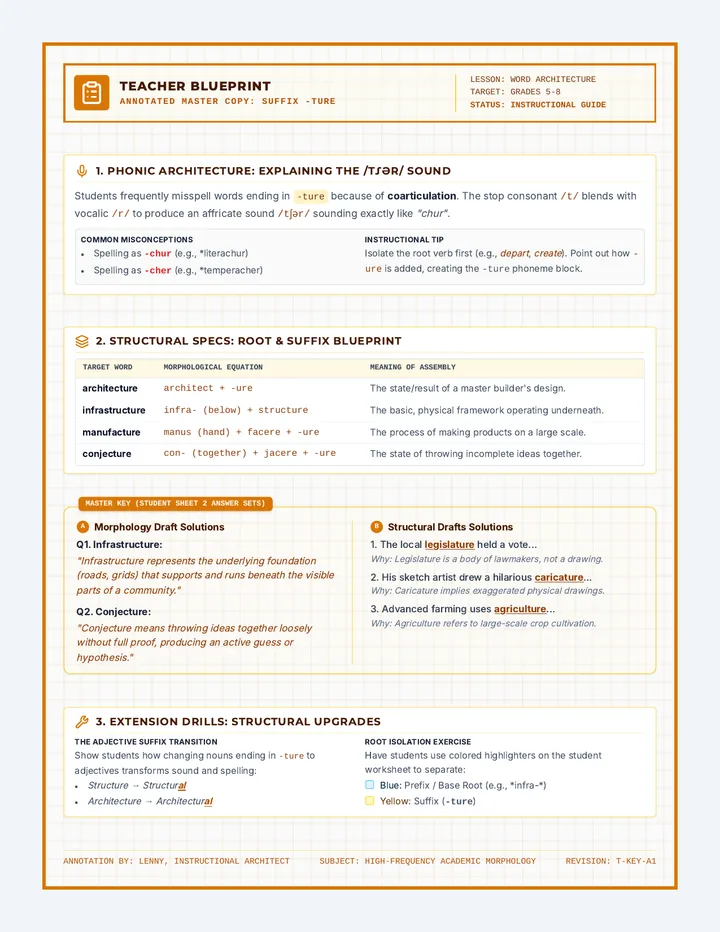
A curriculum development sequence focused on helping teachers bridge ELA and History through linguistics and etymology.
A creative writing unit for 6th grade focused on using figurative language to manipulate tone and mood. Students explore personification as a tool for setting the scene and shifting reader emotions.
A lesson sequence exploring the concept of Standard American English as a versatile tool for communication, emphasizing that language varies by context and that all dialects are valid. Students analyze the 'car analogy' from Khan Academy to distinguish between fundamental grammar rules and social conventions.
A comprehensive lesson sequence for middle school students to master the six elements of plot through video analysis, hands-on sorting, and text-based application. The unit follows a 'Plot Pathfinders' theme, mirroring the adventure-quest narrative of the instructional video.
A lesson sequence focused on mastering the three rhetorical appeals (Ethos, Logos, and Pathos) through video analysis and a simulated school debate.
A remedial/review sequence for 4th-6th grade students focusing on parts of speech through a desert-themed adventure quest. Students identify and apply nouns, verbs, adjectives, and adverbs while building a descriptive map.
A lesson sequence focused on mastering coordinating conjunctions to improve writing flow and sentence variety. Students transition from short, choppy sentences to fluent compound sentences using the FANBOYS mnemonic.
A professional development series focused on empowering educators with concrete frameworks for teaching complex writing and literacy skills.
A debate and communication sequence focused on teaching middle schoolers how to build persuasive arguments through creative performance and structured analysis.
A short unit focusing on the power of punctuation, specifically the Oxford comma, to prevent ambiguity and the role of appositives in sentence structure.
A series of lessons exploring different literary genres, starting with the high-stakes world of Adventure Fiction.
A lesson sequence exploring the intersection of civic duty, social contracts, and rhetorical analysis through the lens of the 'Shopping Cart Theory'. Students analyze a structured argument and participate in a Socratic Seminar.
A 5-lesson sequence for 6th-grade students on using text-to-speech technology as a proofreading and editing tool to improve writing clarity, mechanics, and flow.
A systematic, color-coded approach for 6th-grade students to master text highlighting and annotation. Students learn to distinguish between main ideas, supporting details, and unknown vocabulary using a 'traffic light' system to reduce cognitive load and improve reading comprehension.
This sequence focuses on the cognitive planning required before activating the microphone, bridging the gap between thought and oral expression. Students explore how to organize their ideas using graphic organizers and bullet points to prevent rambling during dictation.
A comprehensive sequence designed for 6th-grade students to master the art of editing and refining text produced by speech recognition software. Students act as 'Digital Detectives' to identify AI glitches, apply systematic editing workflows, and format raw transcripts into professional documents.
A sequence focused on the critical revision workflow for students using speech-to-text technology. Students learn to identify and fix common errors like homophone confusion, run-on sentences, and informal tone to turn raw dictation into polished academic writing.
A 5-lesson sequence for 6th-grade students on mastering dictation editing. Students move from identifying AI errors to mastering voice commands and a hybrid editing workflow that combines voice and manual corrections.
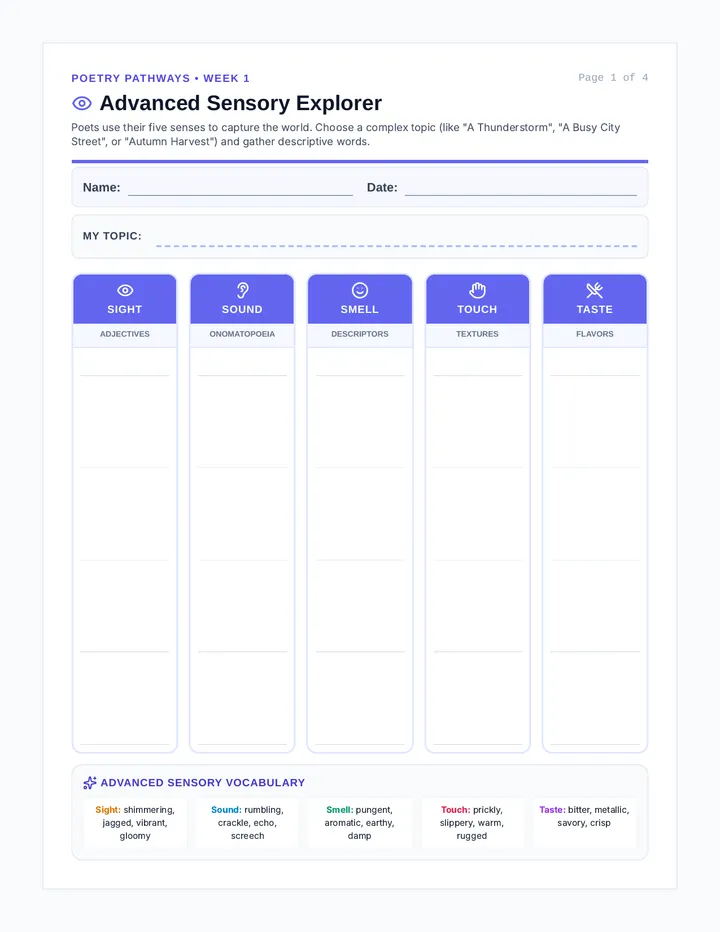
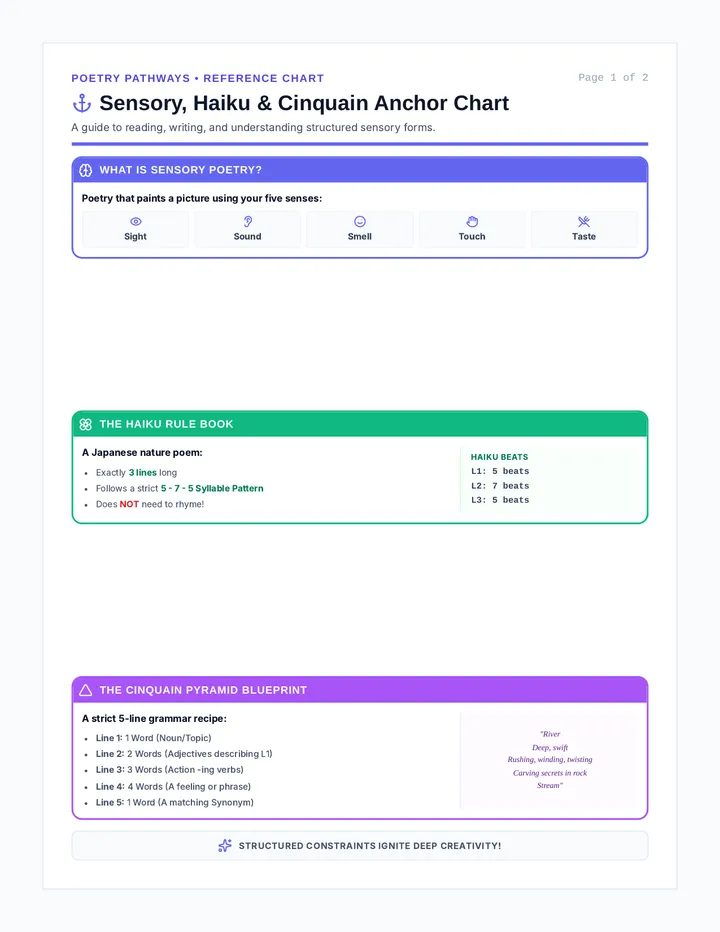
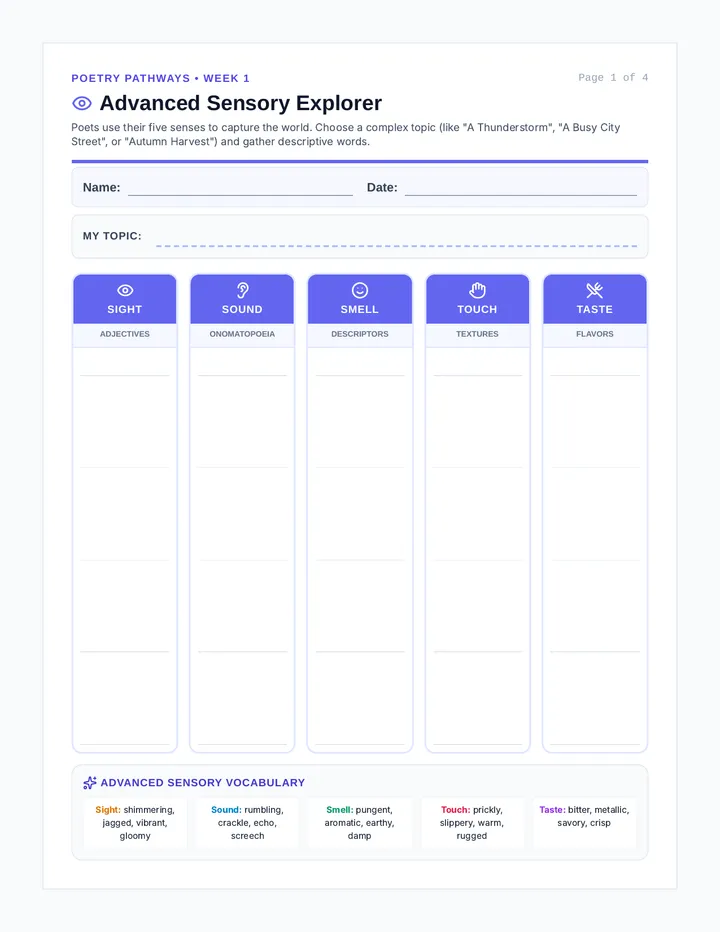
A 5-lesson sequence for 6th-grade students to master visualization skills. Students progress from identifying sensory language to synthesizing multiple sensory inputs to enhance reading comprehension.