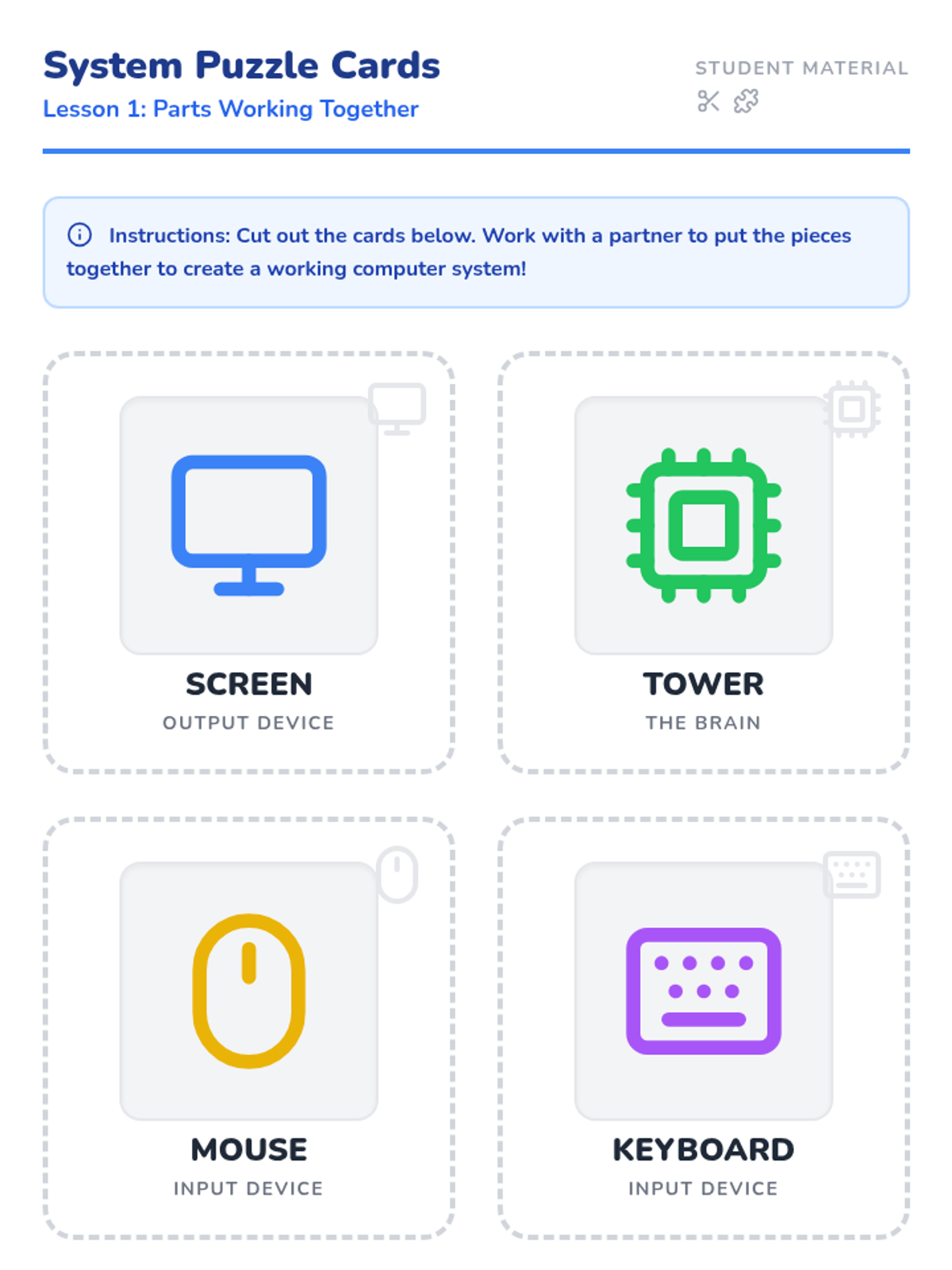
This sequence introduces Pre-K learners to computer hardware and device care. Students will learn to identify screens, mice, and keyboards while practicing safe and gentle handling techniques through hands-on play and exploration.
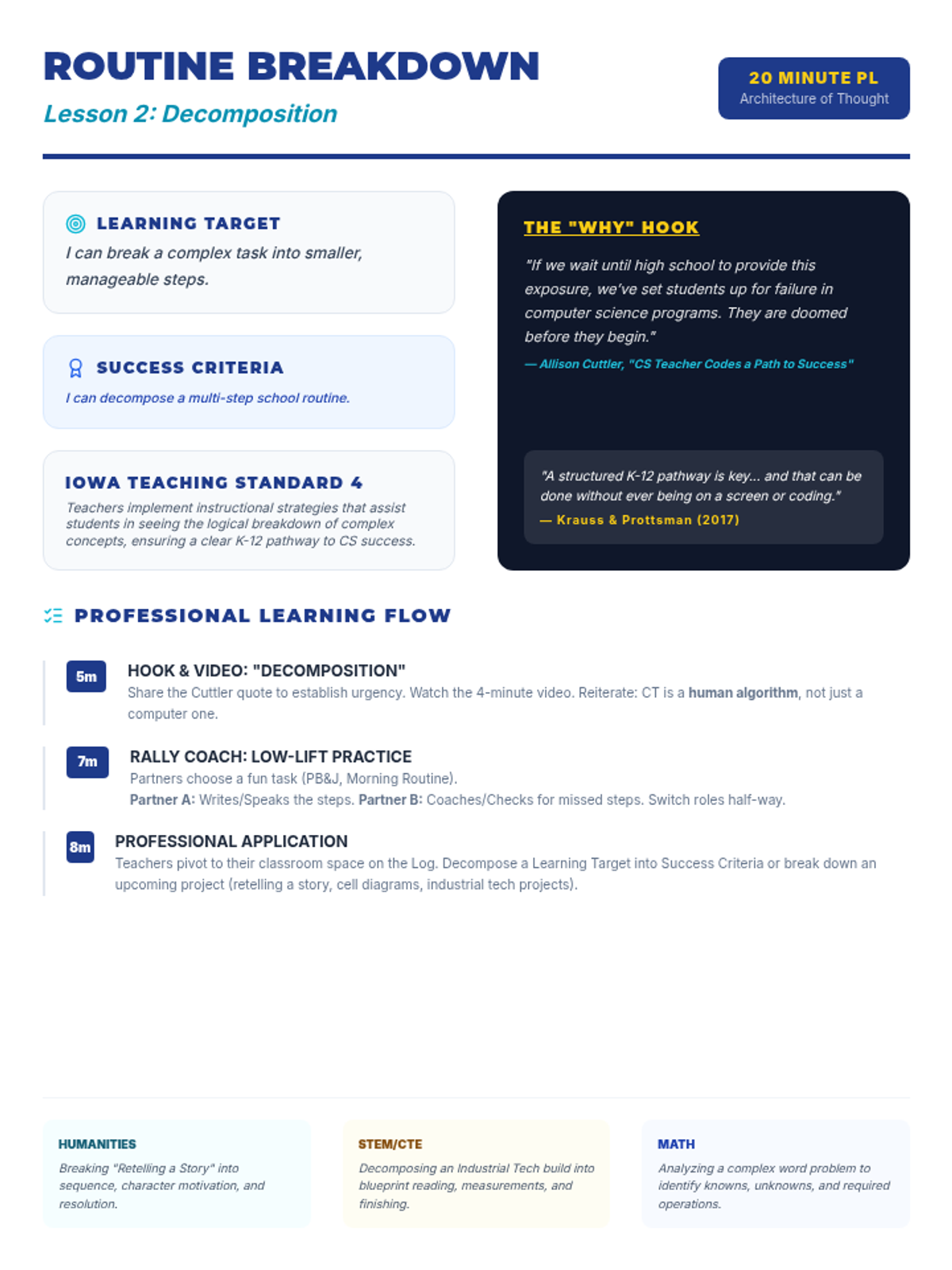
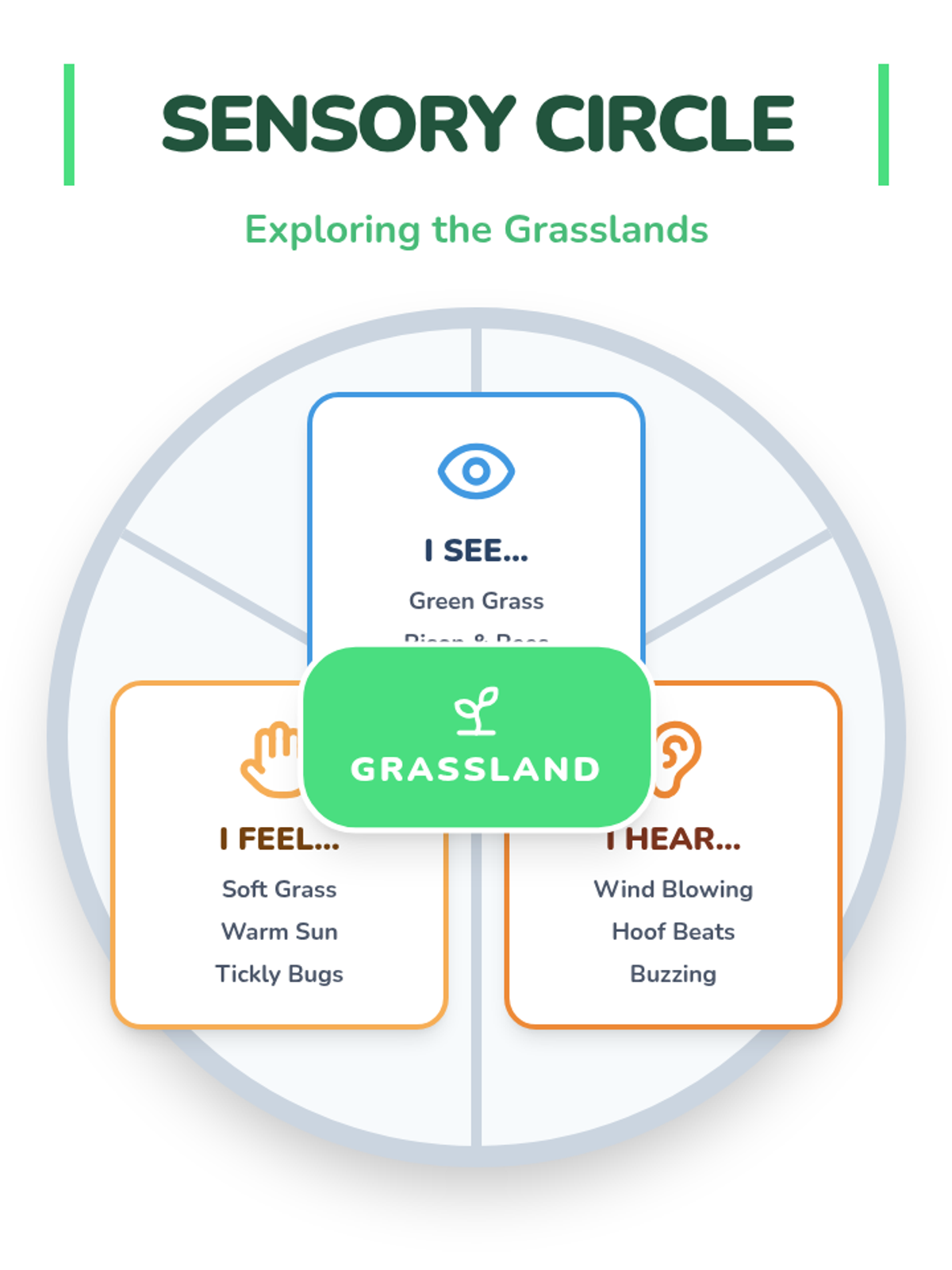
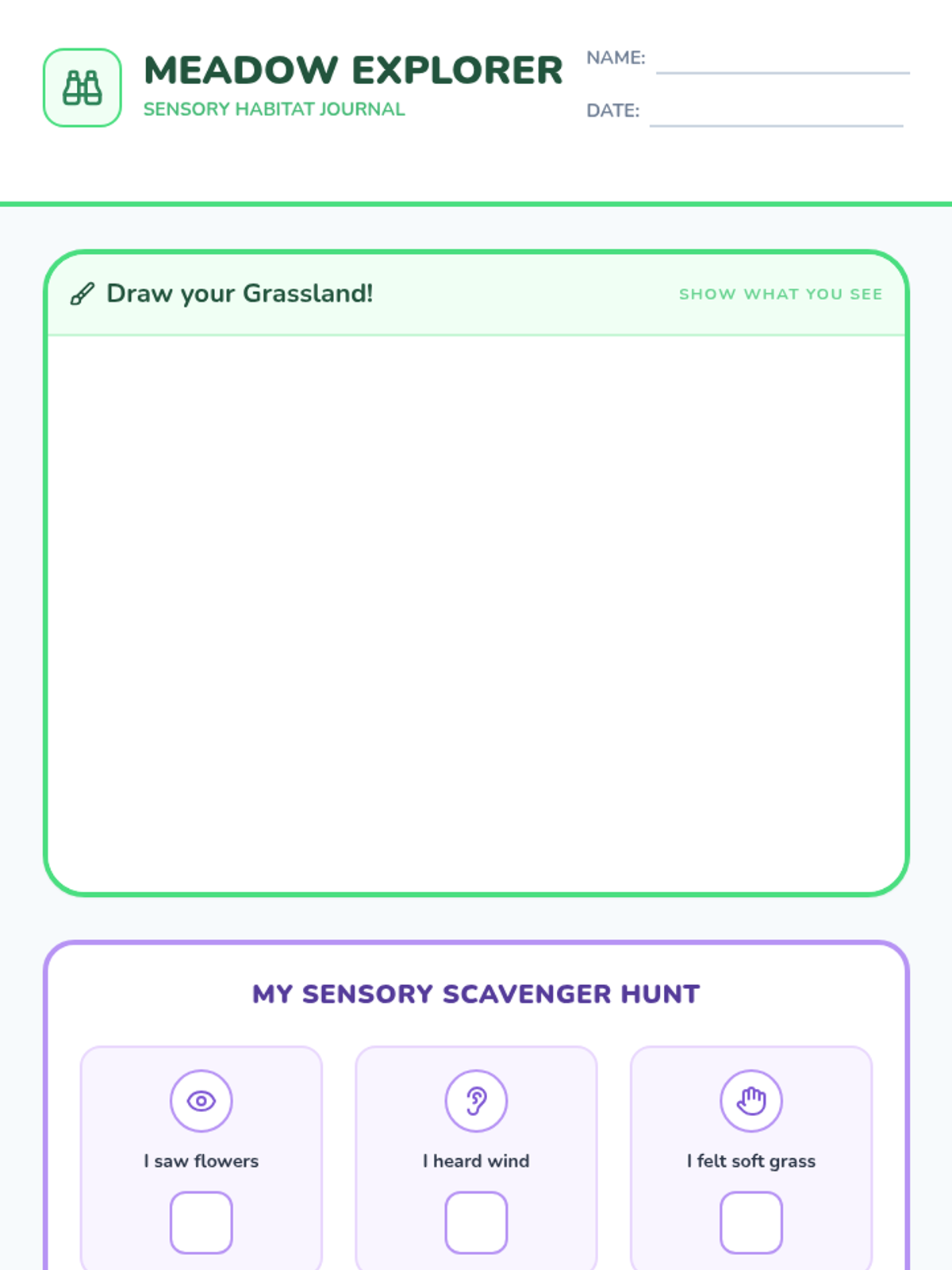
A unit exploring different habitats through sensory observation and descriptive language, starting with the wide-open grasslands.
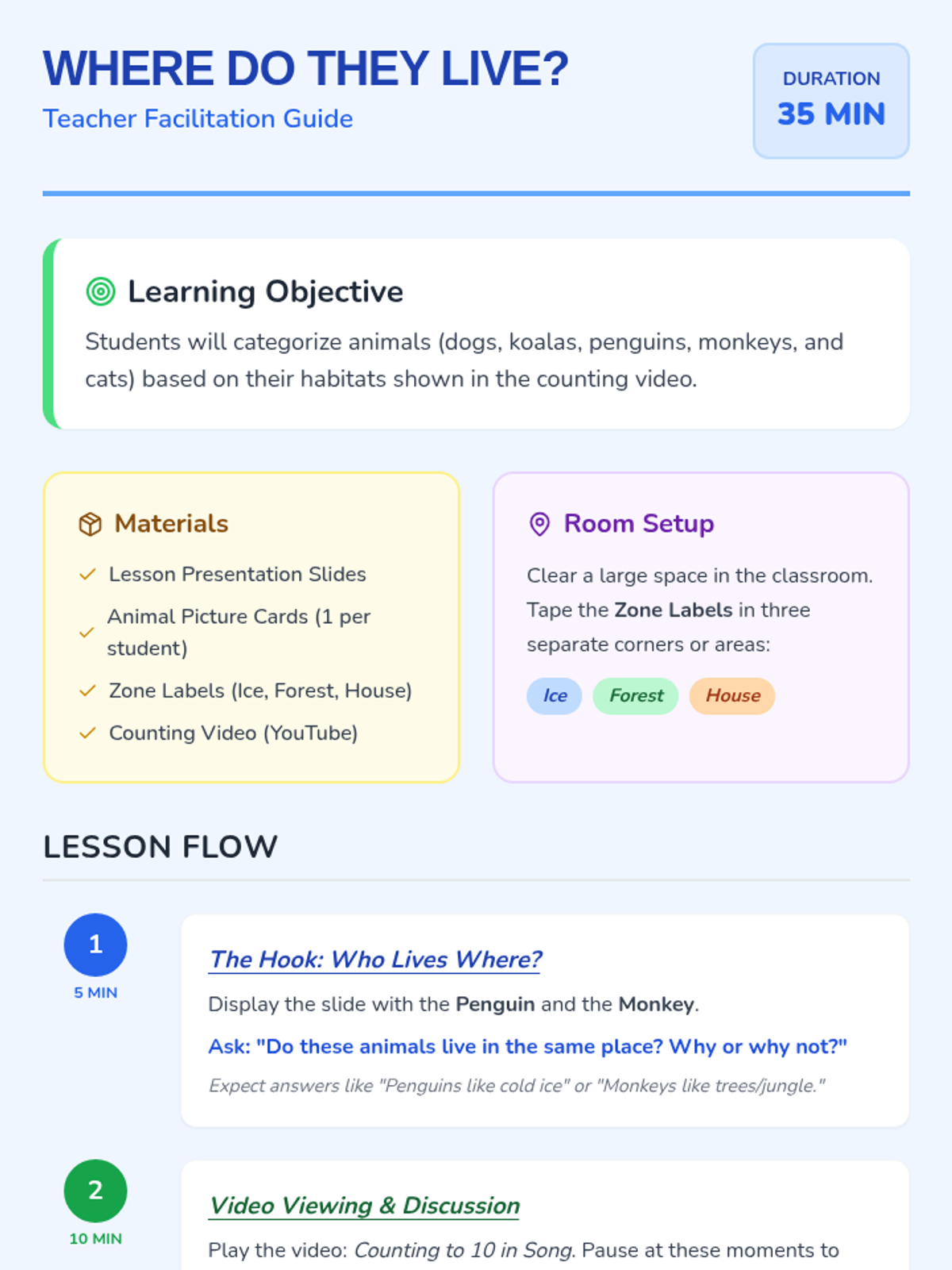
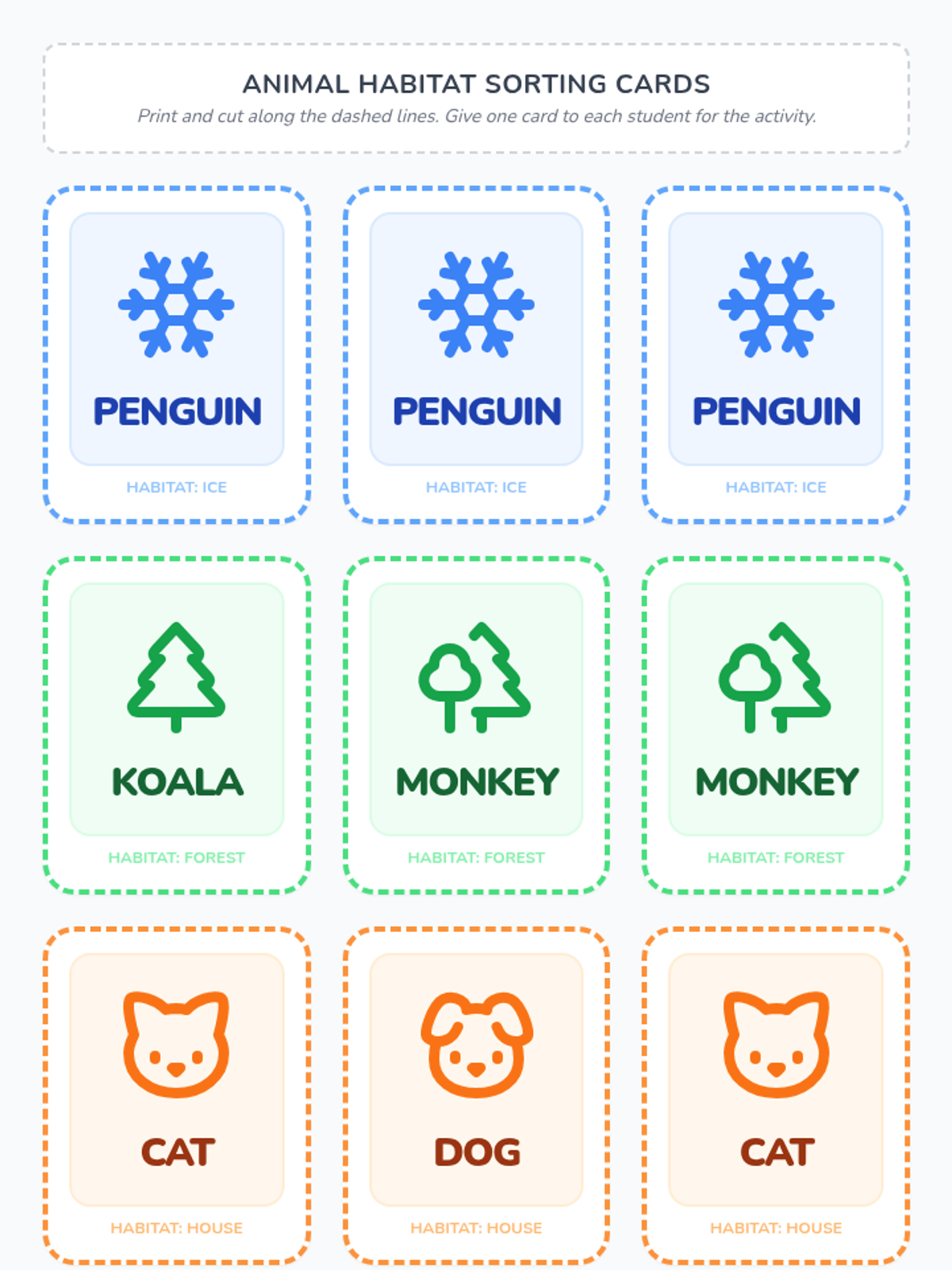
A fun, introductory science and math sequence for Pre-K and Kindergarten students focused on identifying animal habitats and practicing basic counting. Students explore different environments like the forest, ice, and homes through music and movement.
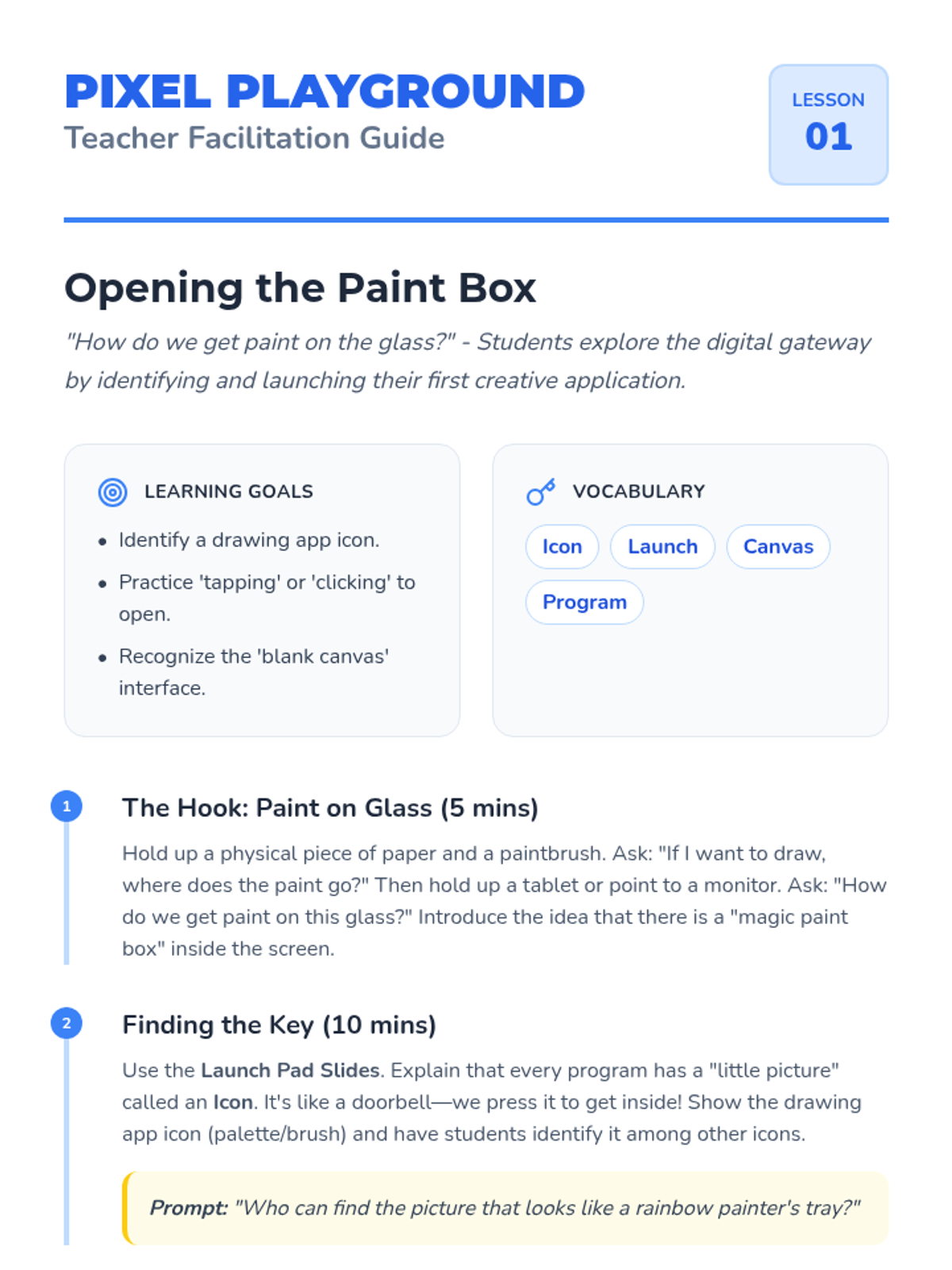
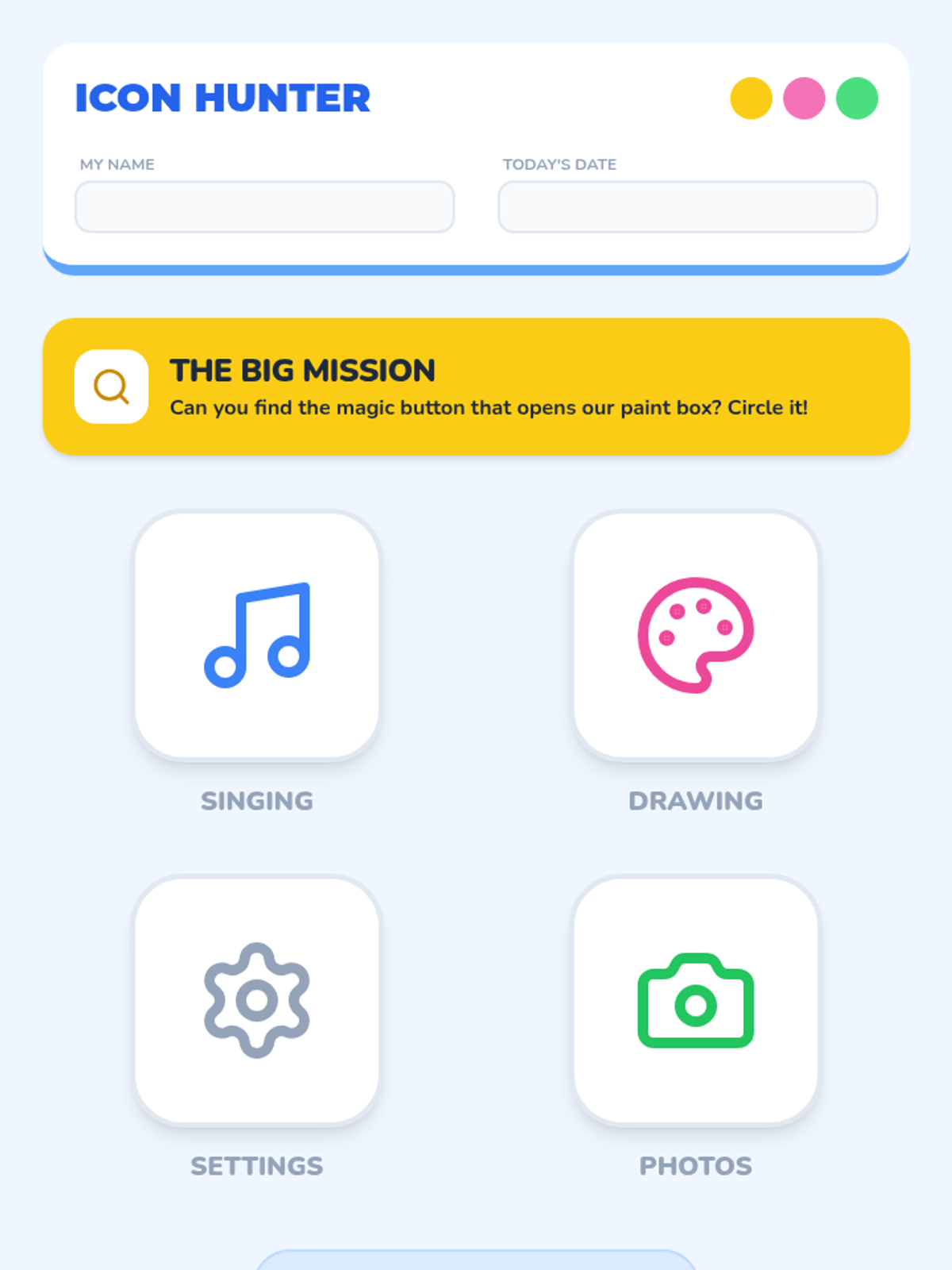
A project-based sequence for Pre-K students to learn basic digital creative tools, from launching apps to saving and showcasing digital art. Students develop mouse/touch skills and an understanding of file management through a 'Pixel Playground' theme.
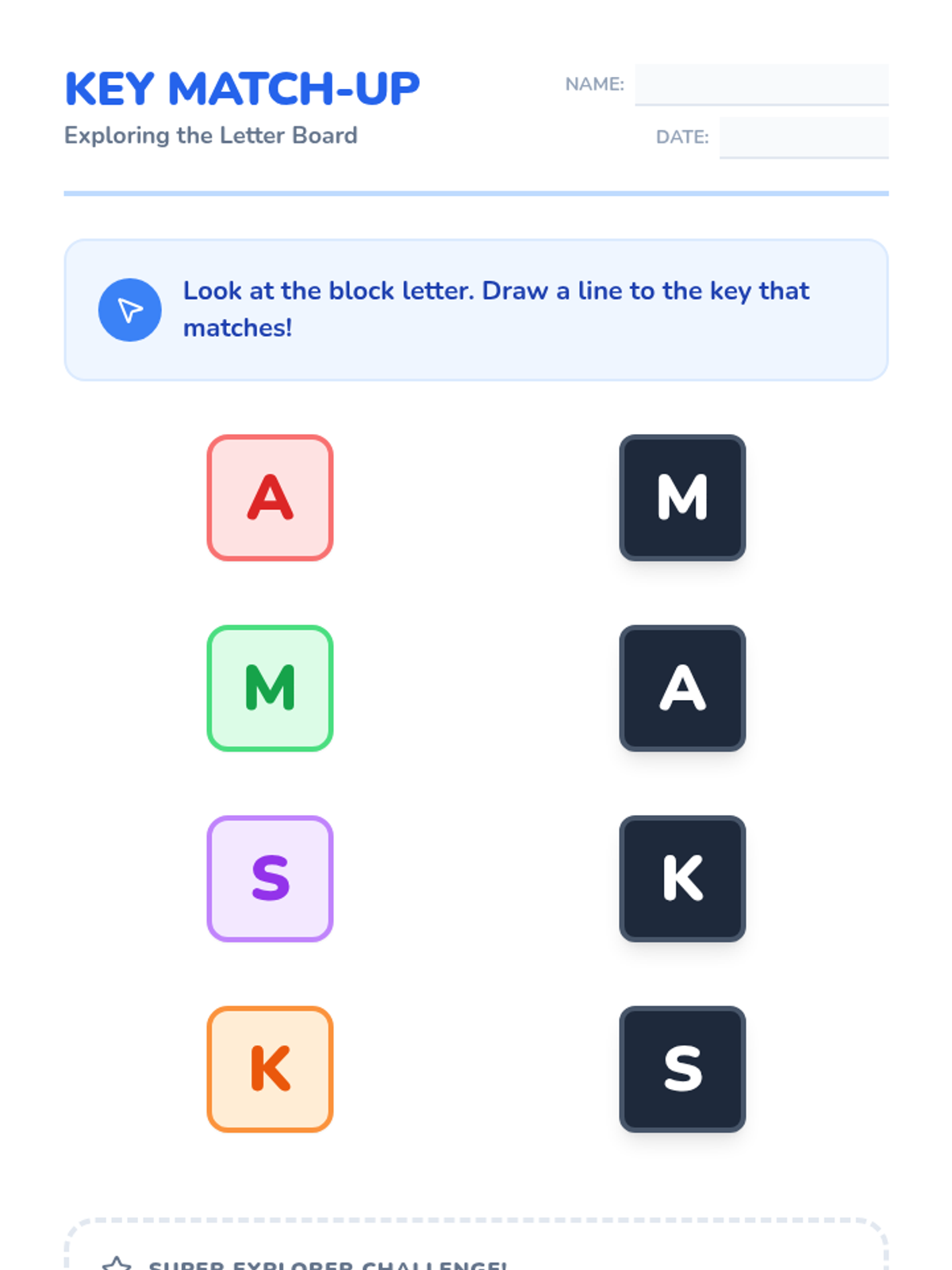
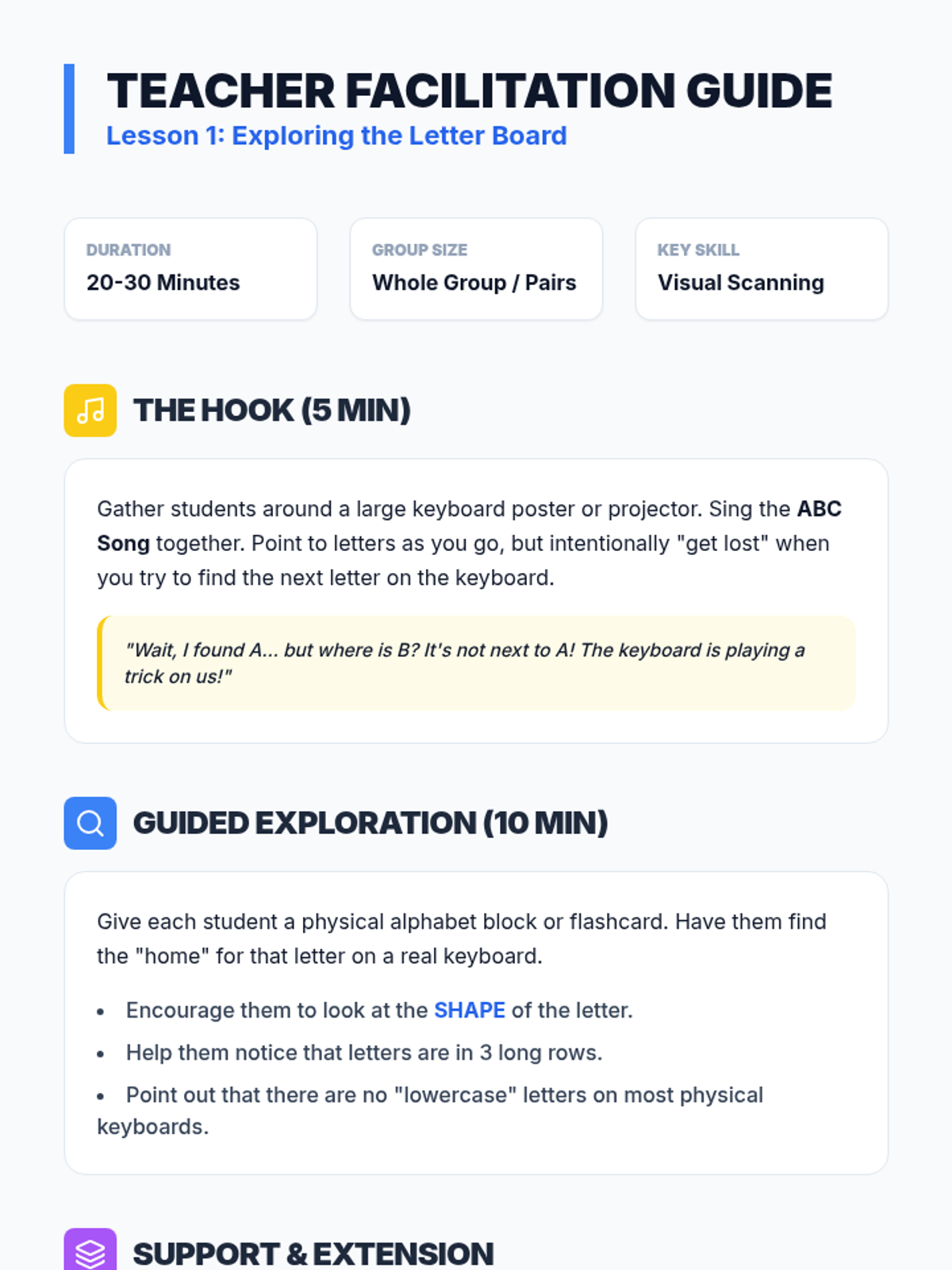
A Pre-K sequence introducing the keyboard as a tool for letters and numbers. Students learn the layout, locate their own initials, understand the space bar's function, identify numbers, and learn the 'action' of the Enter key through play and exploration.
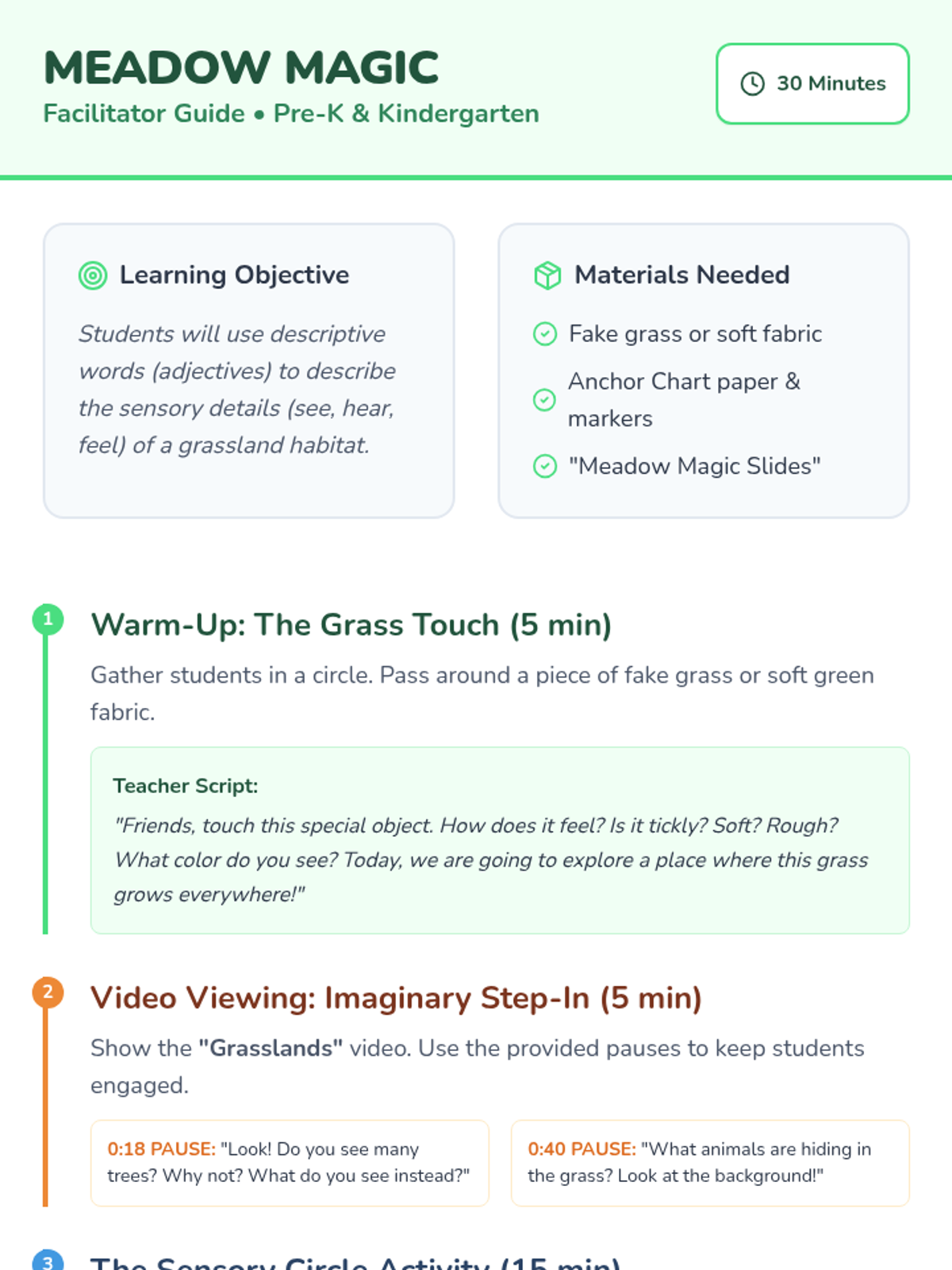
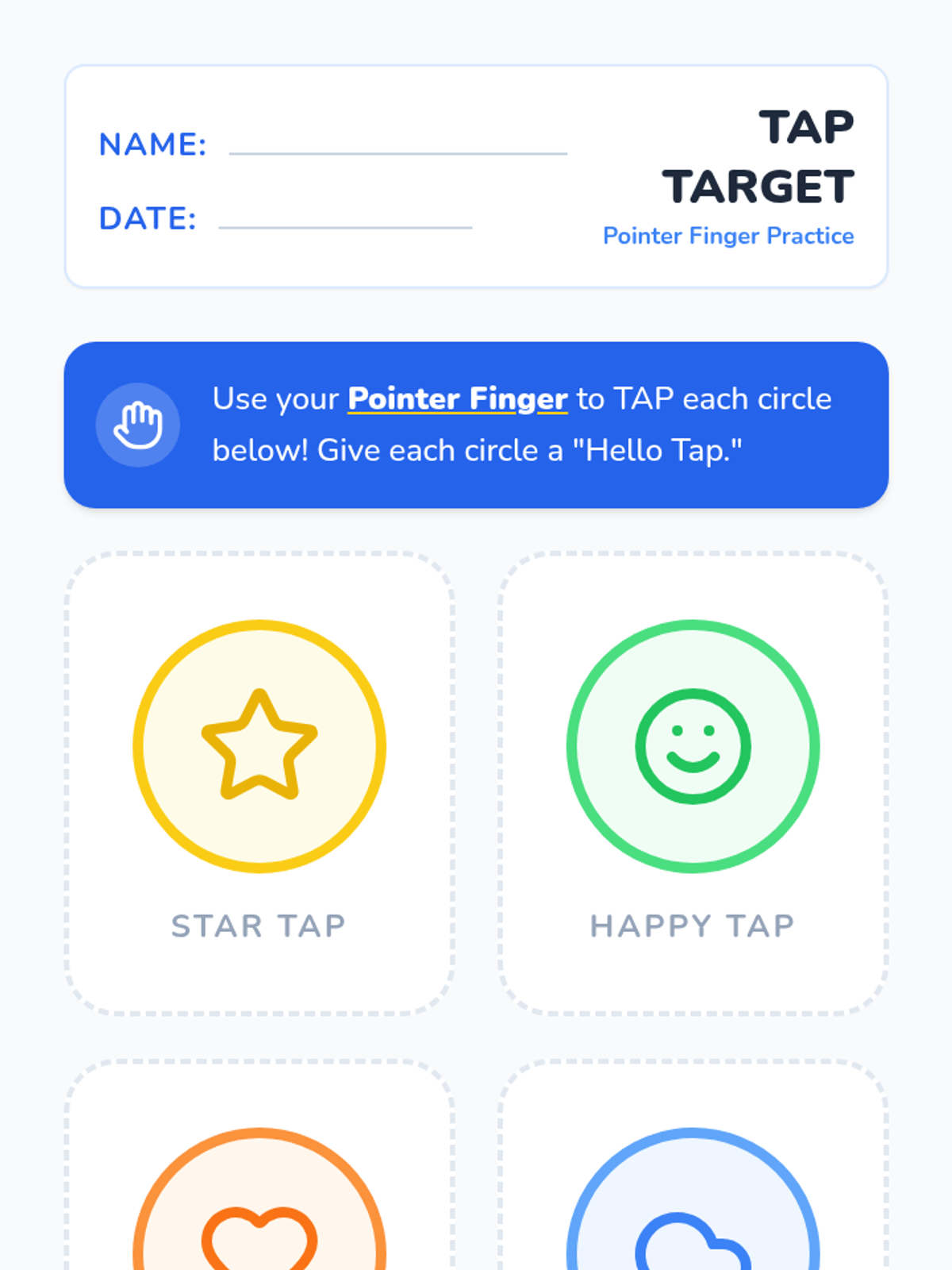
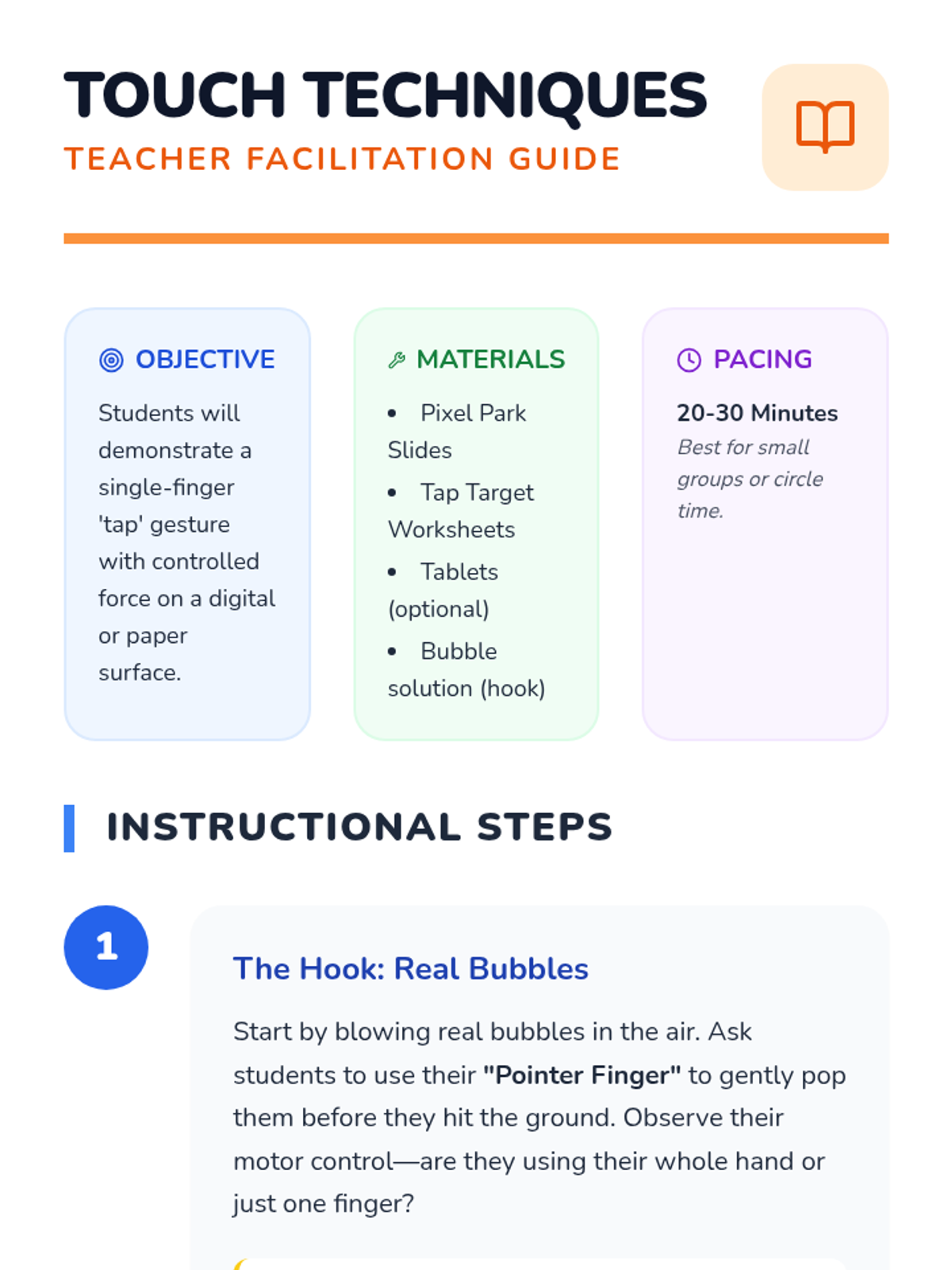
A foundational sequence for Pre-K students to learn the physical gestures and actions required to use tablets and computers, focusing on tapping, swiping, clicking, dragging, and navigating interfaces.
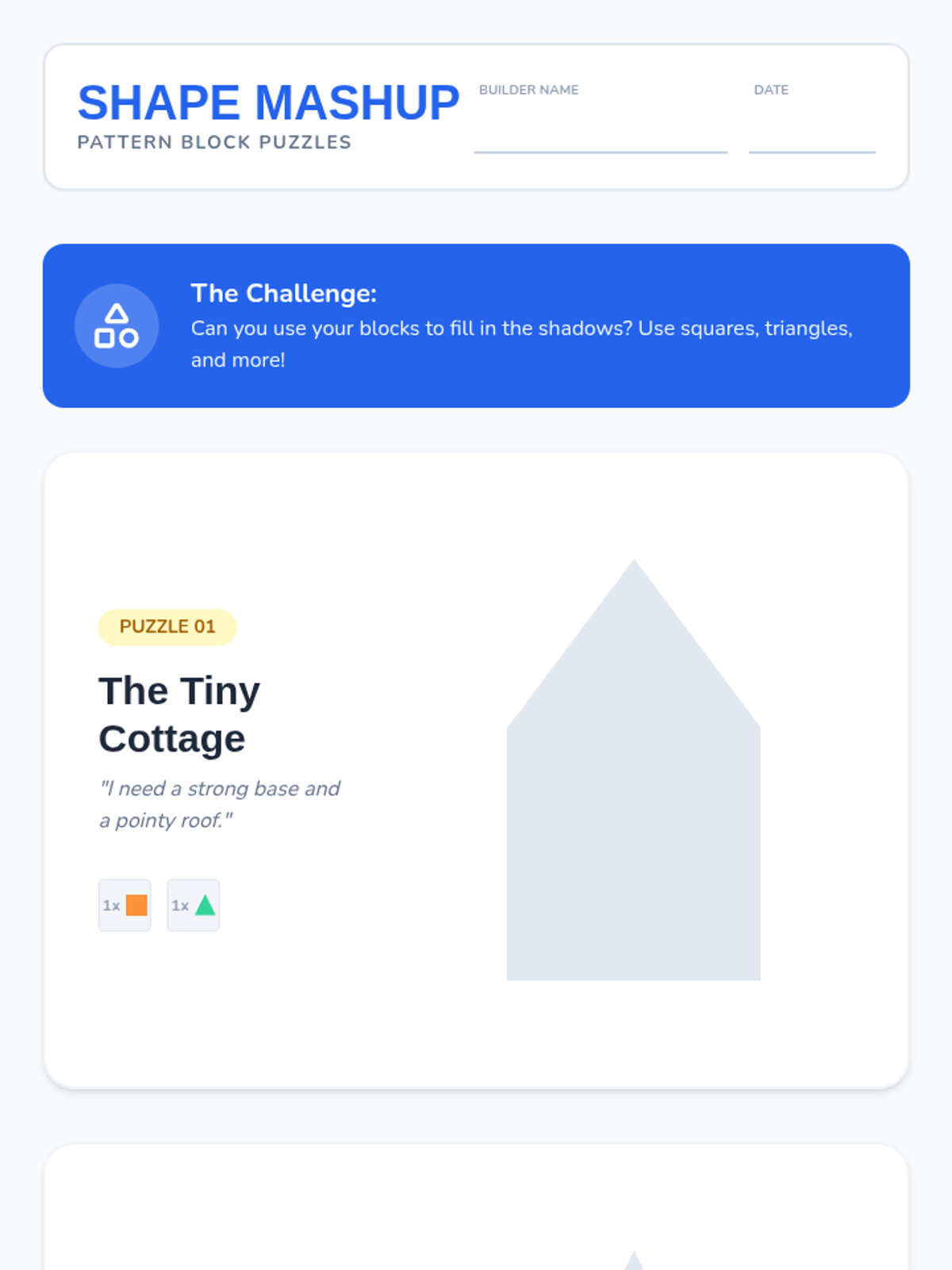
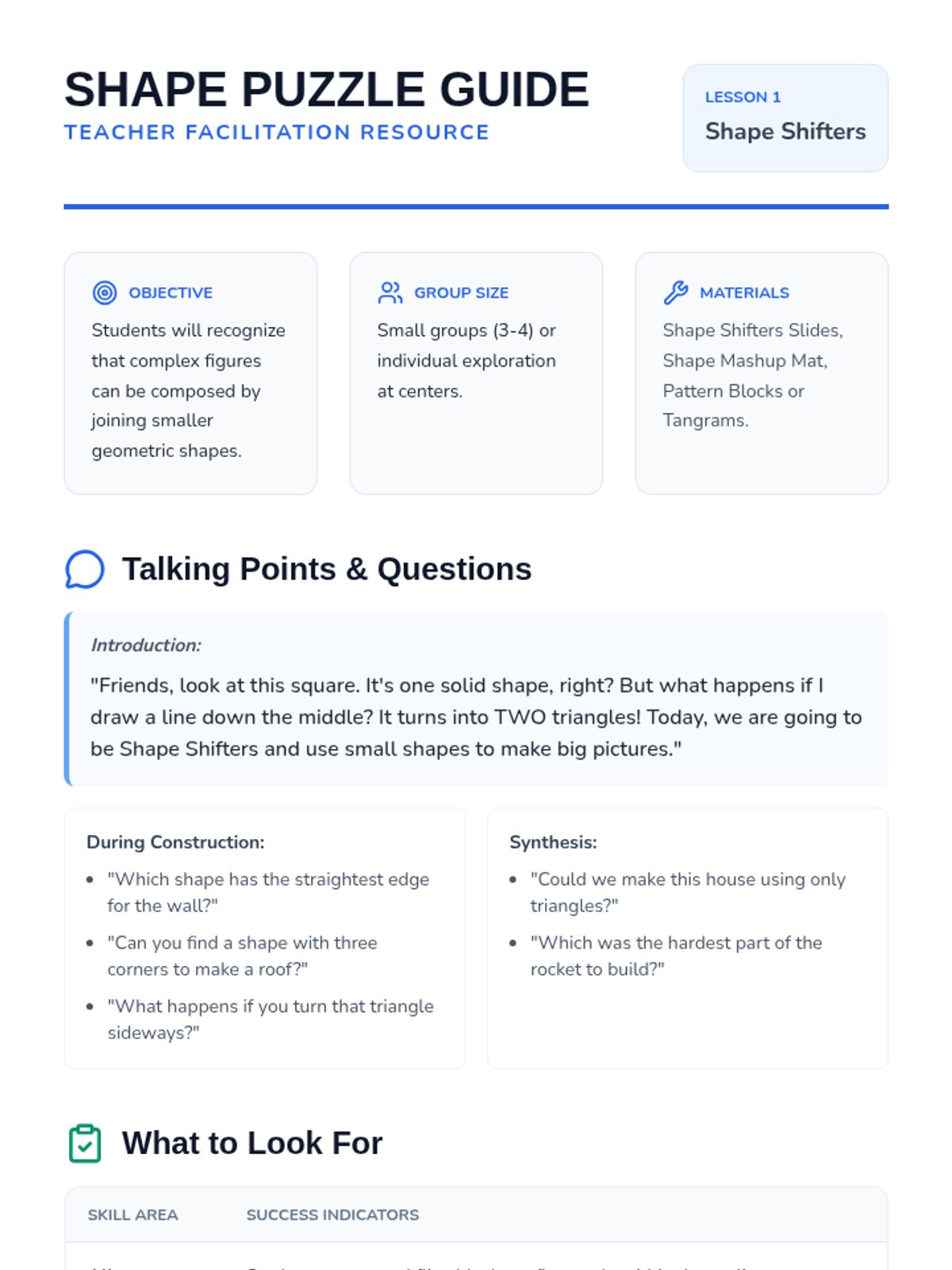
A Pre-K engineering sequence exploring shape composition, stability, and structural design through hands-on block play and spatial reasoning challenges.
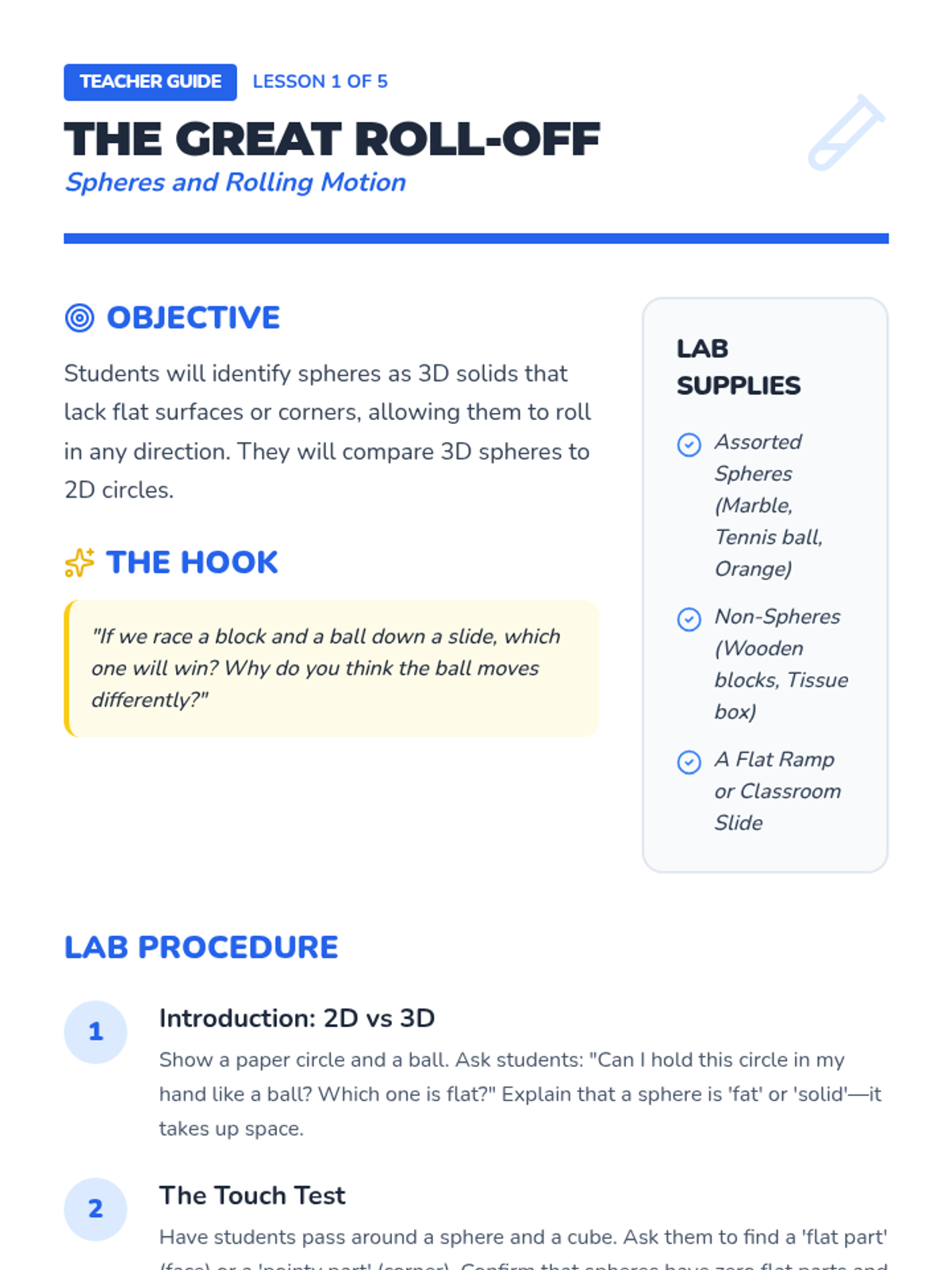
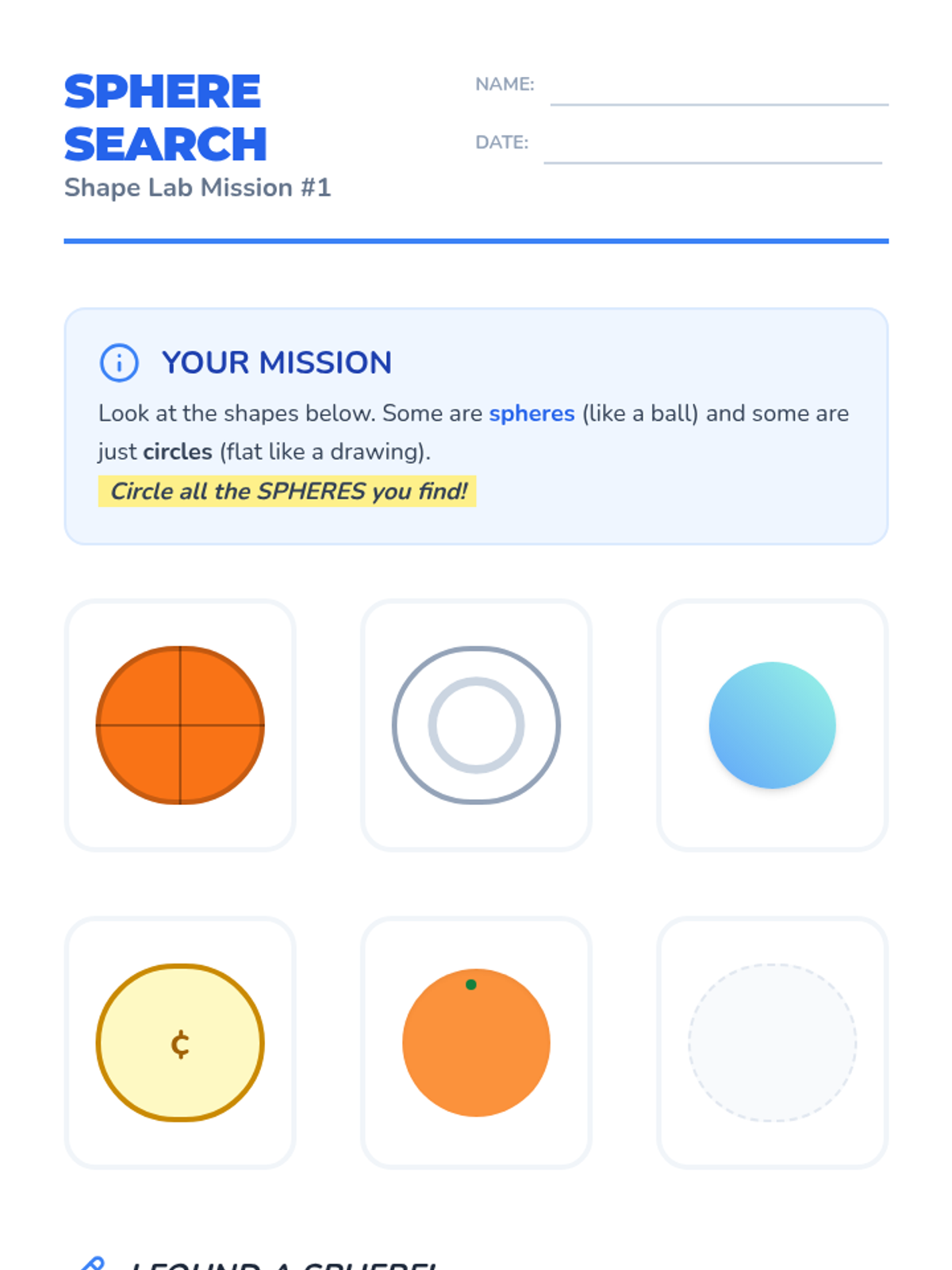
A Pre-K physics sequence exploring three-dimensional solids. Students investigate the properties of spheres, cubes, cylinders, and cones through hands-on experimentation with rolling, stacking, and sliding to understand how shape dictates movement and stability.
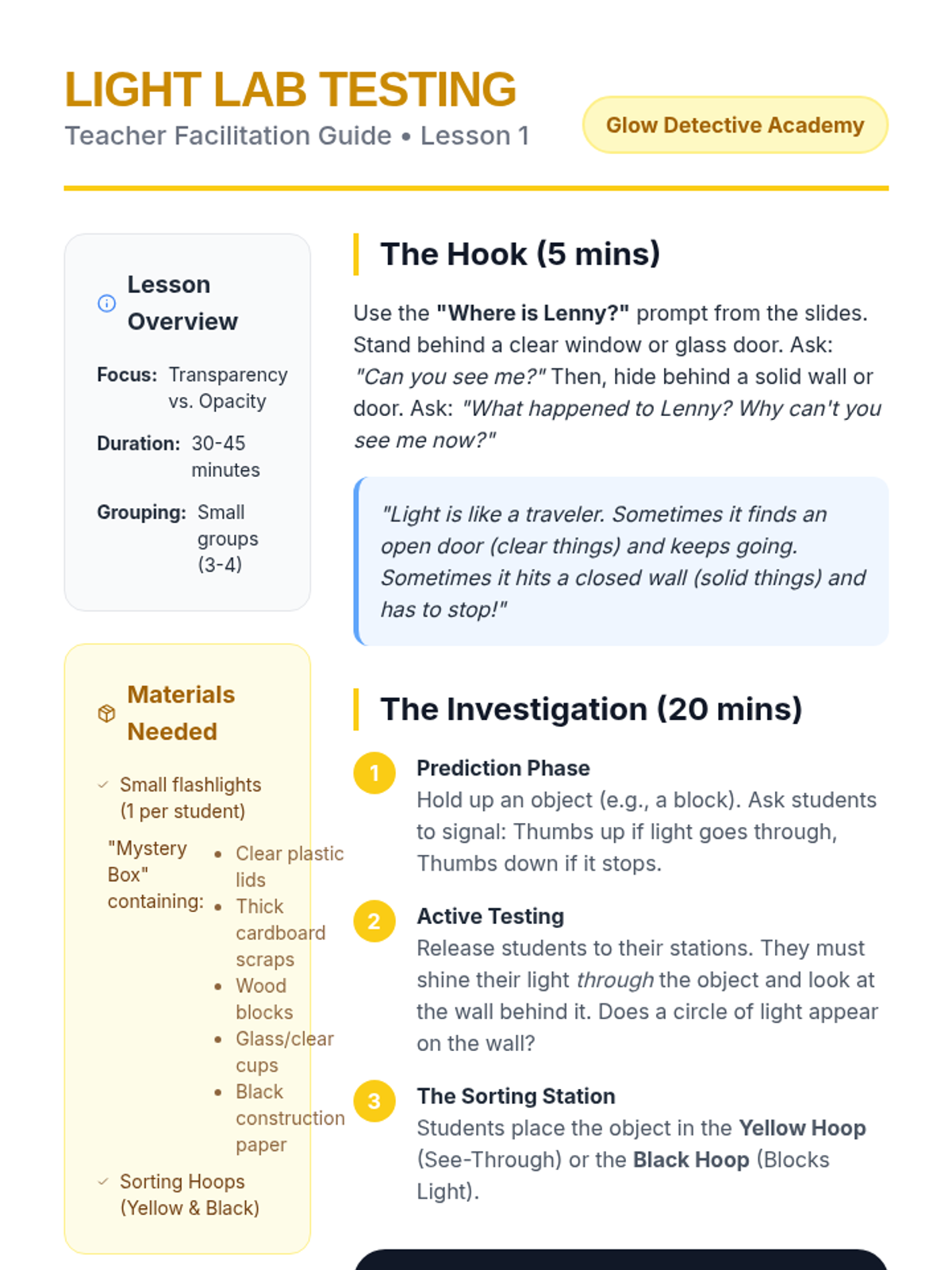
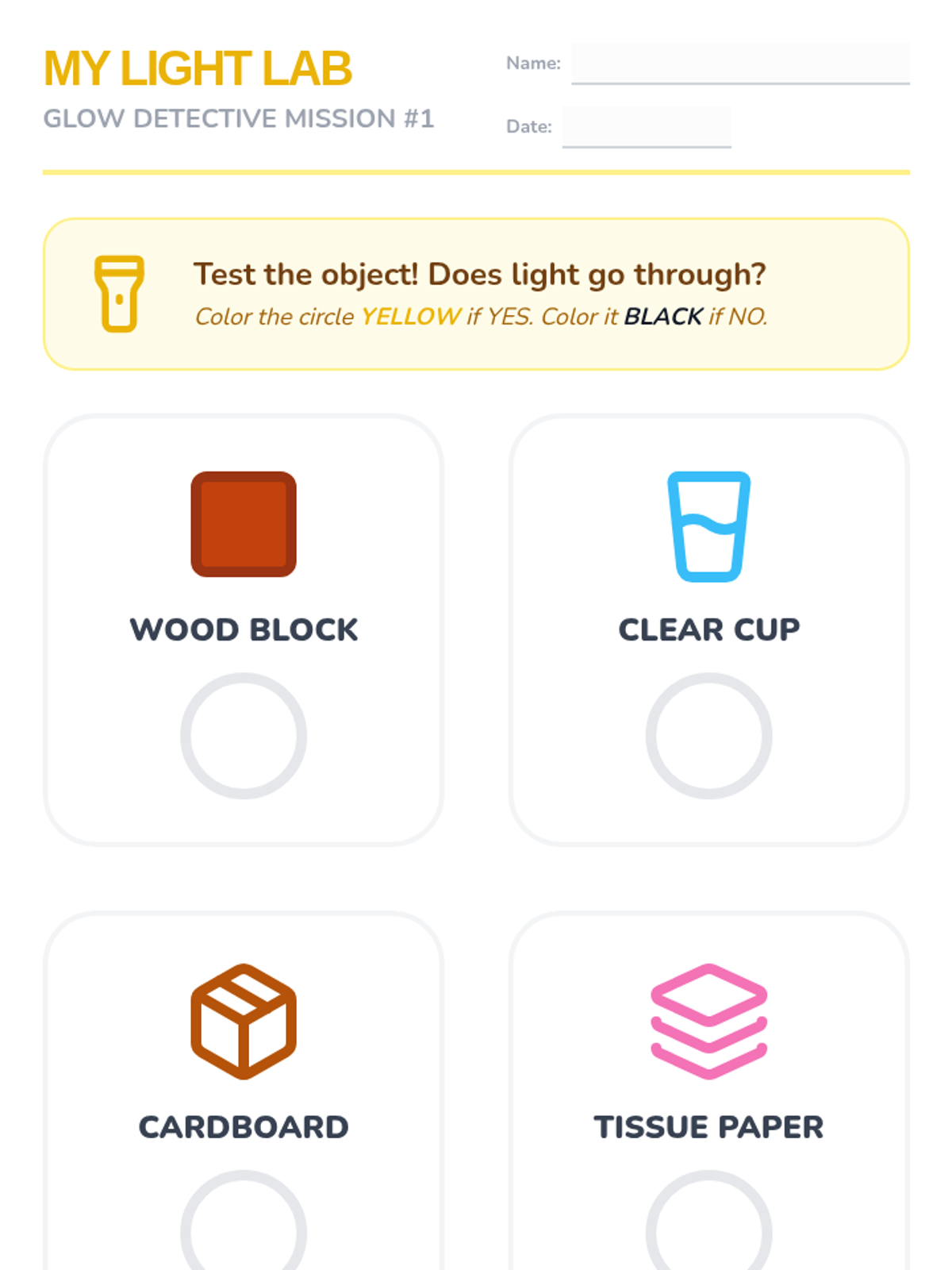
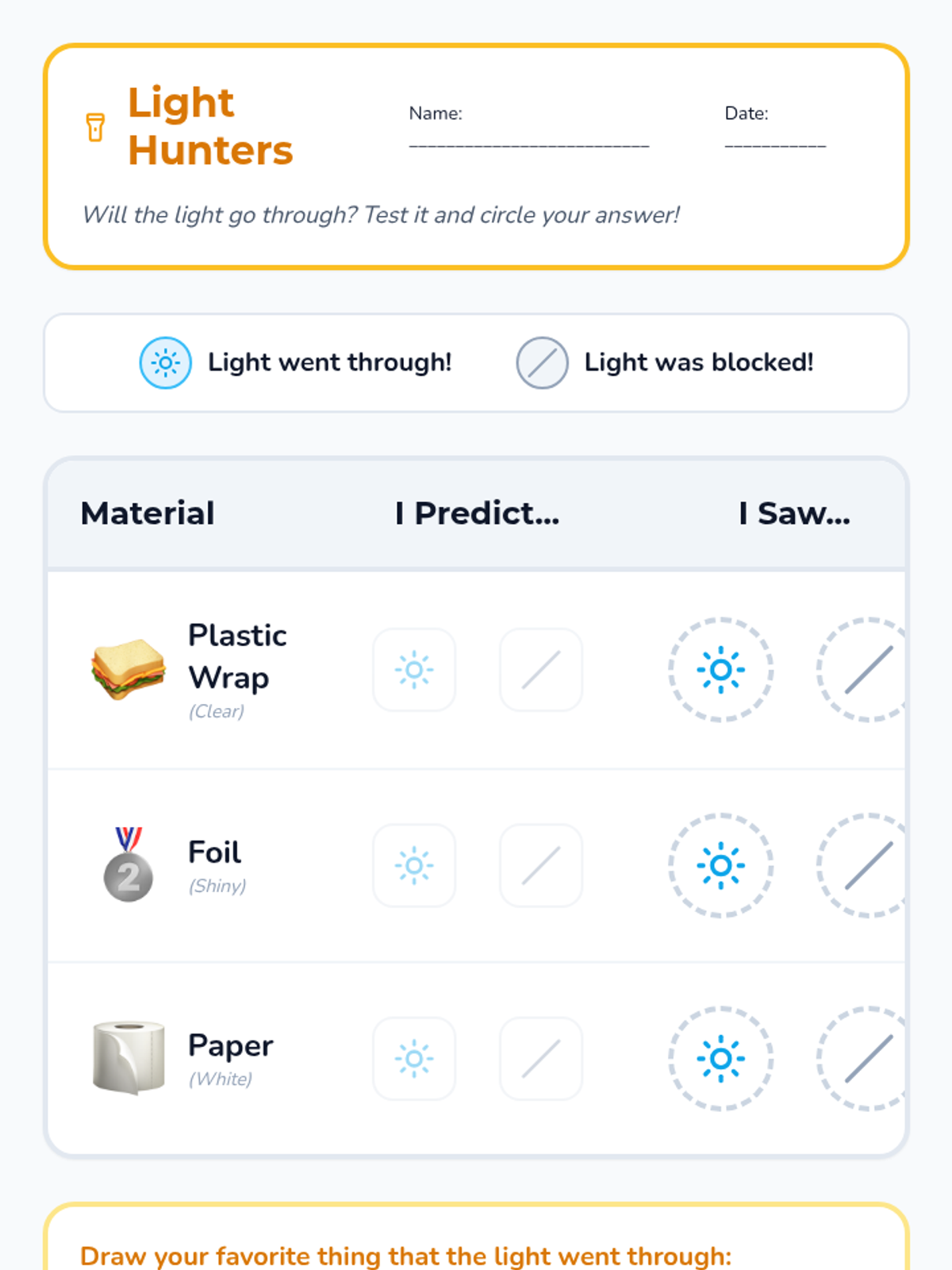
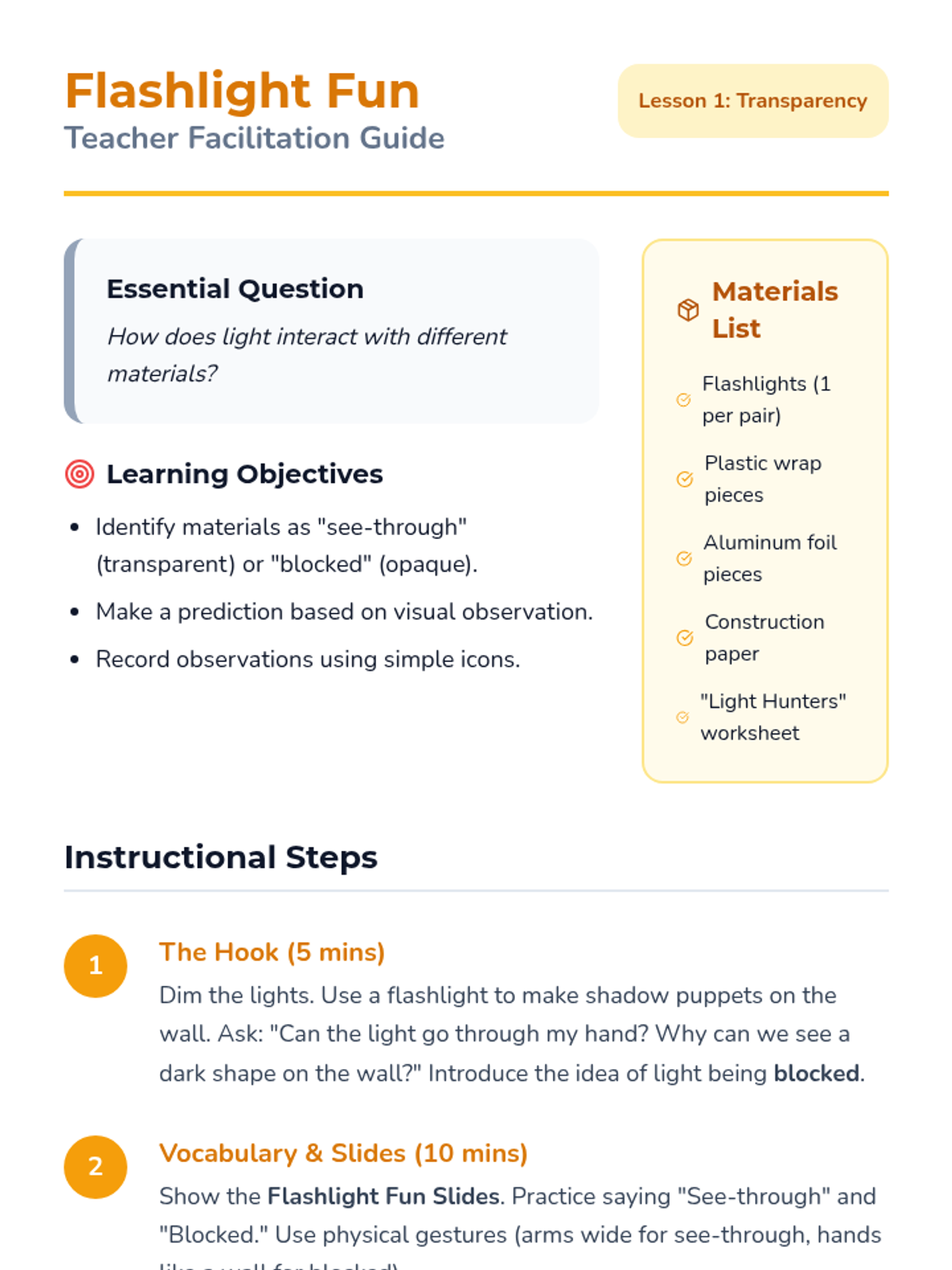
A Pre-K physics unit exploring transparency, translucency, and opacity through hands-on flashlight testing, color filters, water refraction, and art projects. Students develop observation and sorting skills as they investigate how light interacts with different materials.
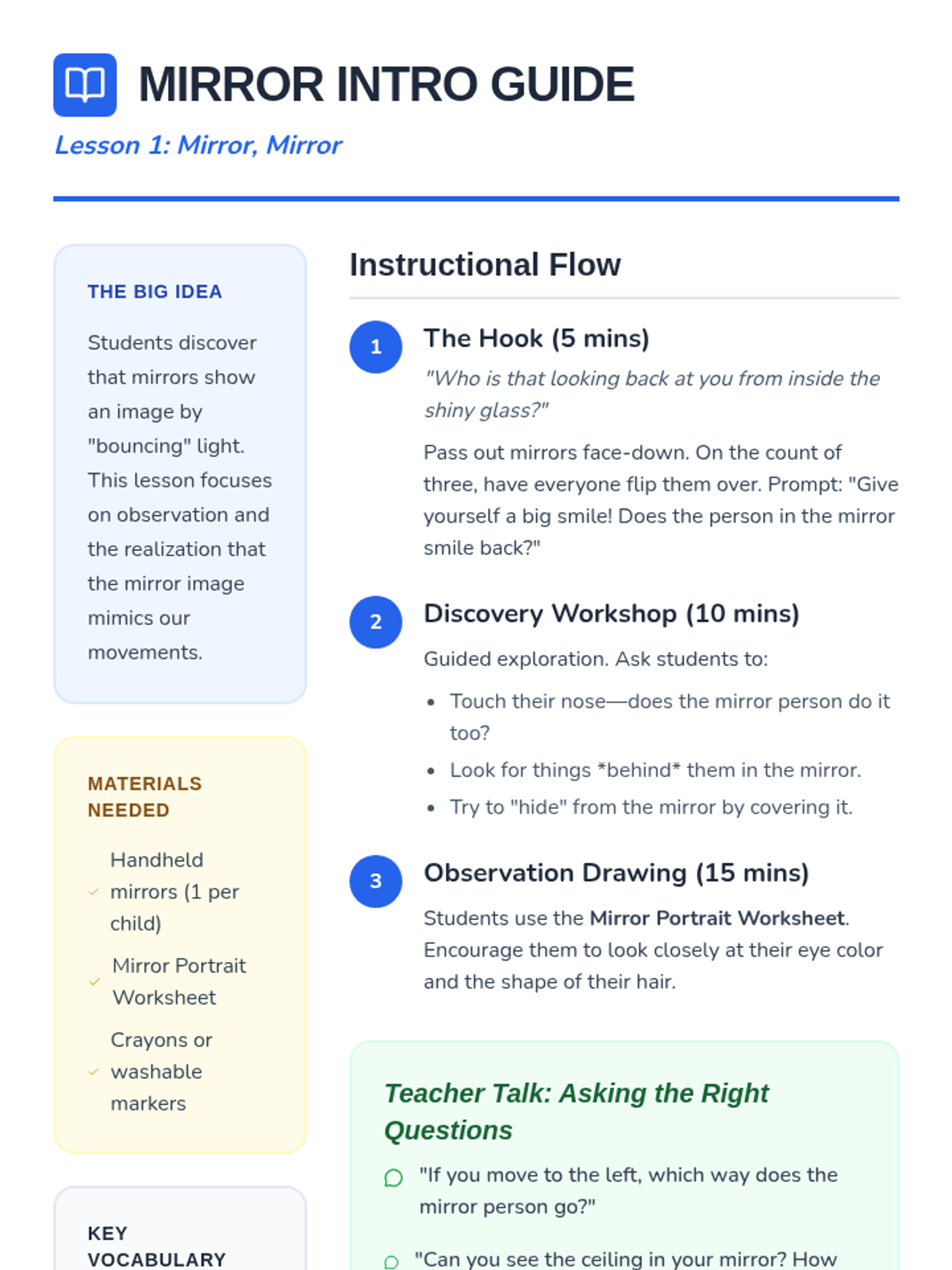
A hands-on physics sequence for Pre-K students to explore reflection, material properties, and light paths using mirrors and shiny objects. Students move from self-observation to problem-solving with periscopes and pattern creation.
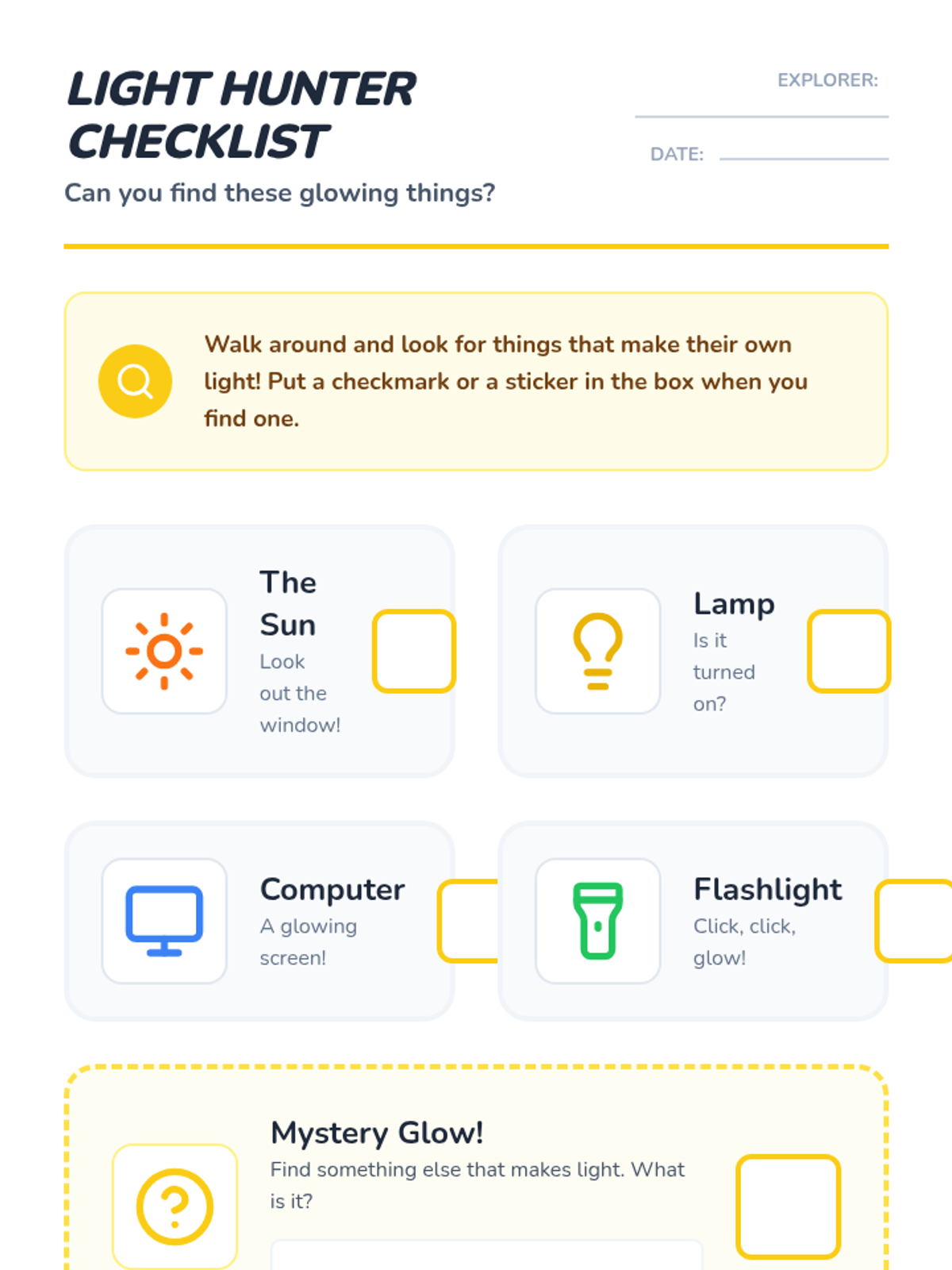
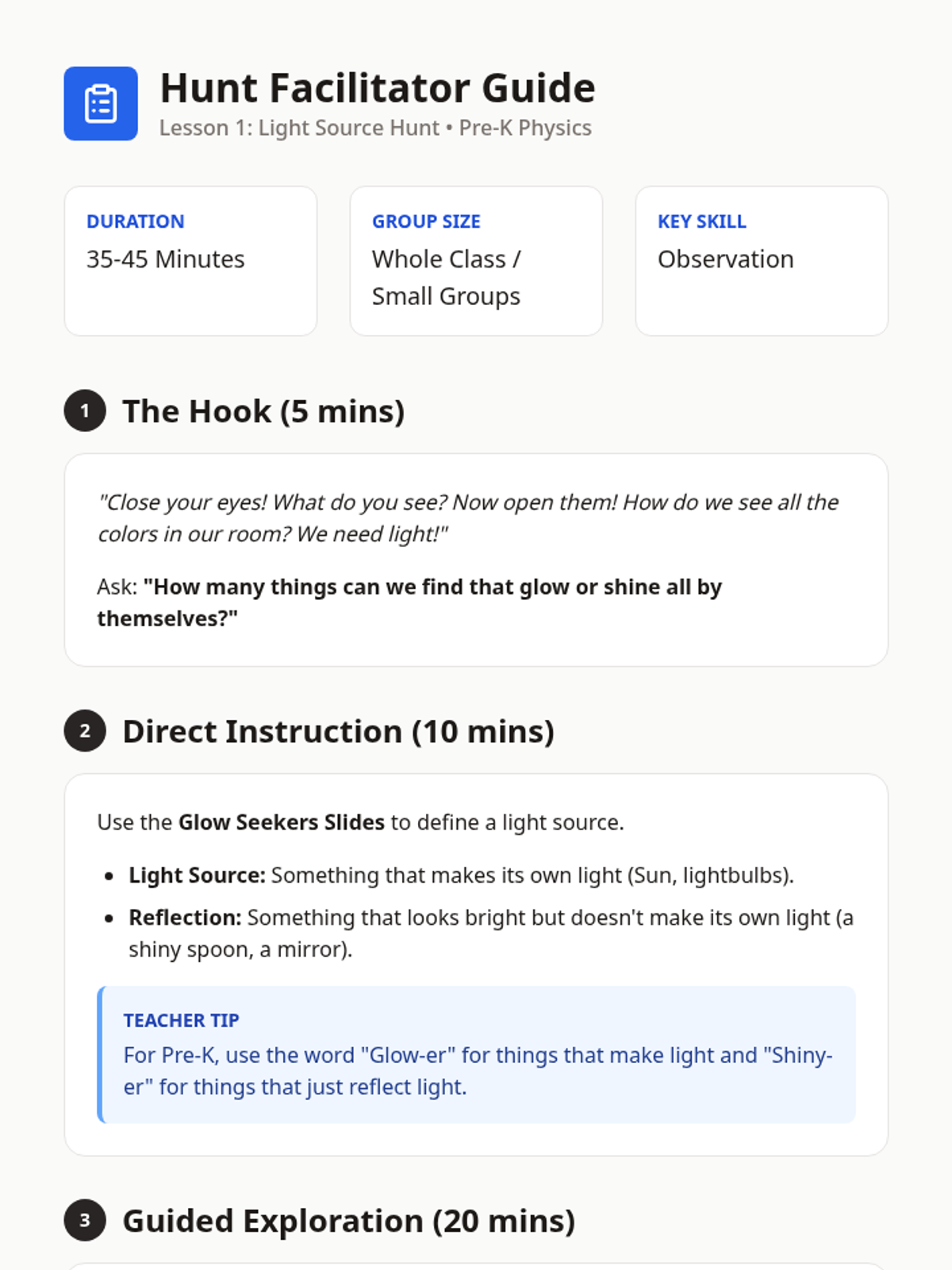
A Pre-K science sequence exploring light sources, natural vs. artificial light, rainbows, color mixing, and sensory light play. Students engage in inquiry-based hunts, sorting activities, and engineering with light tables.
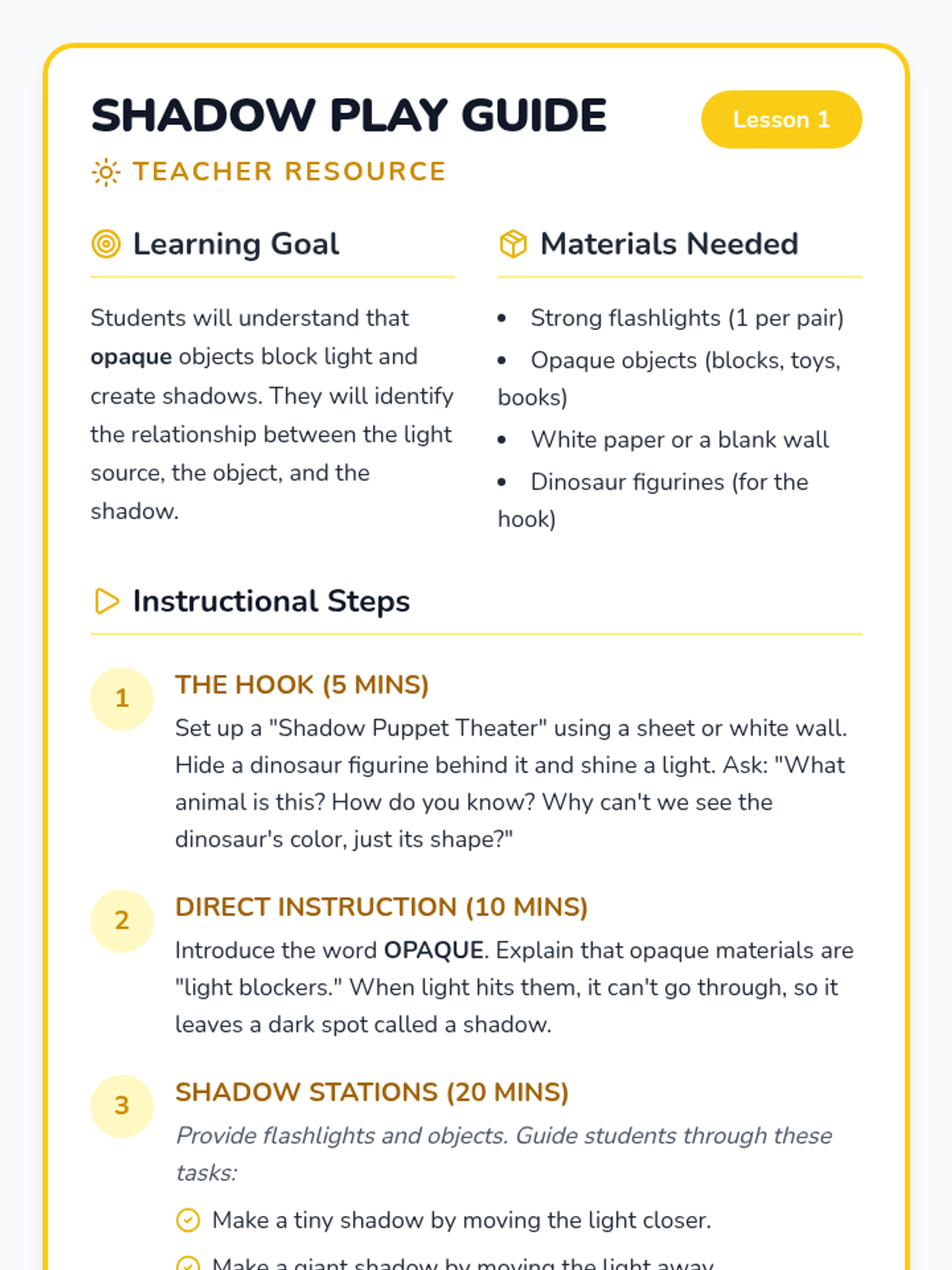
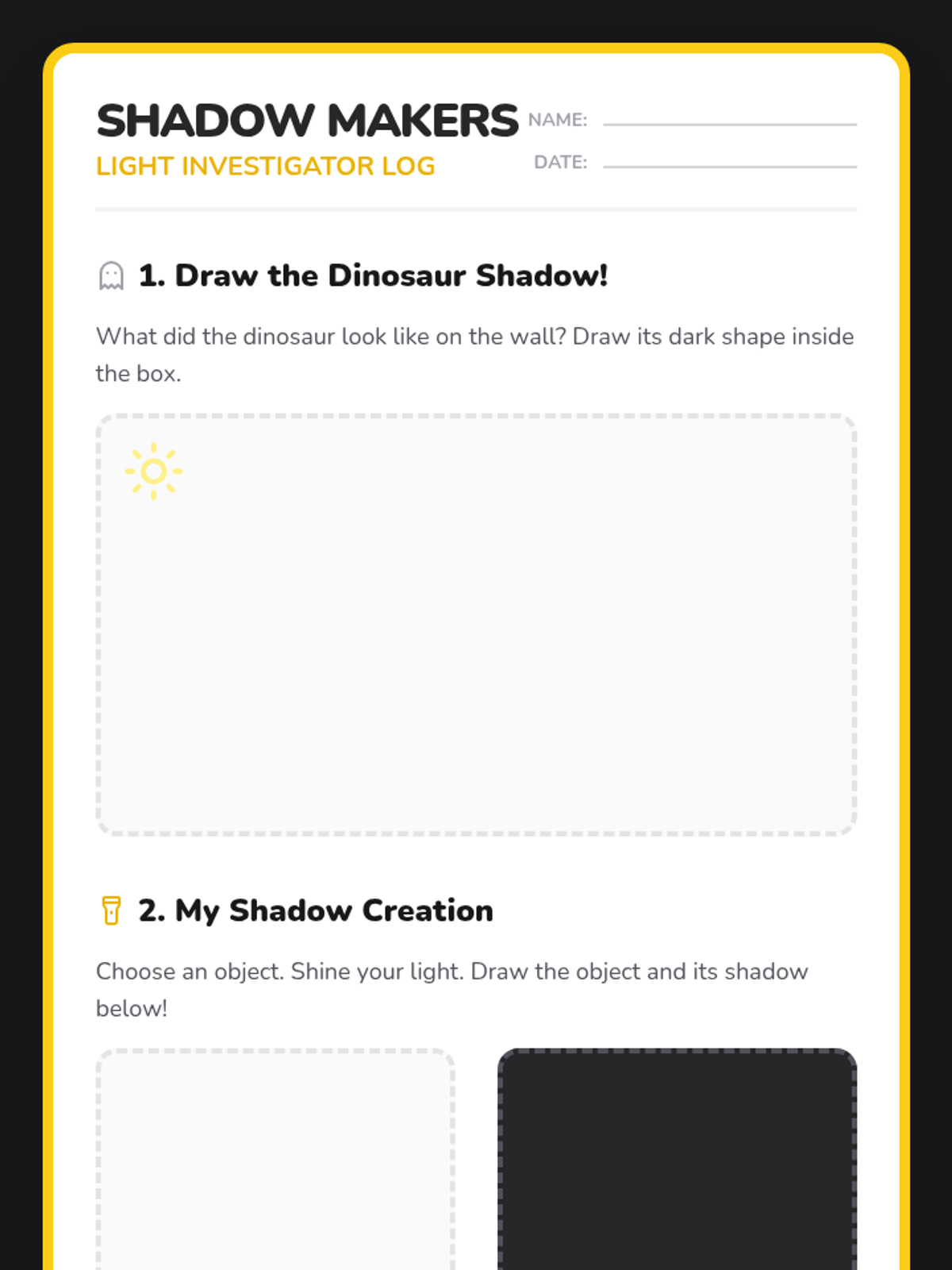
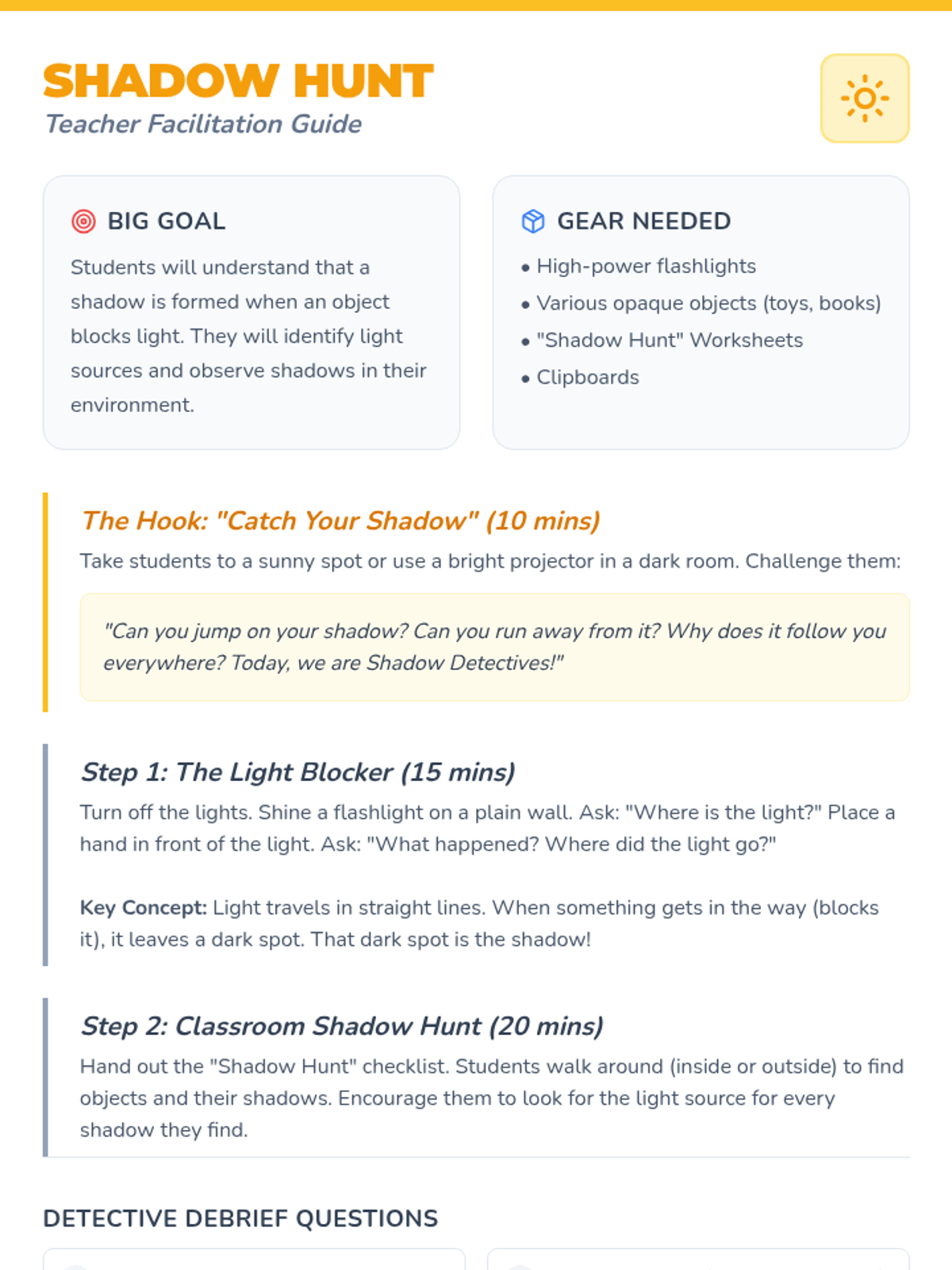
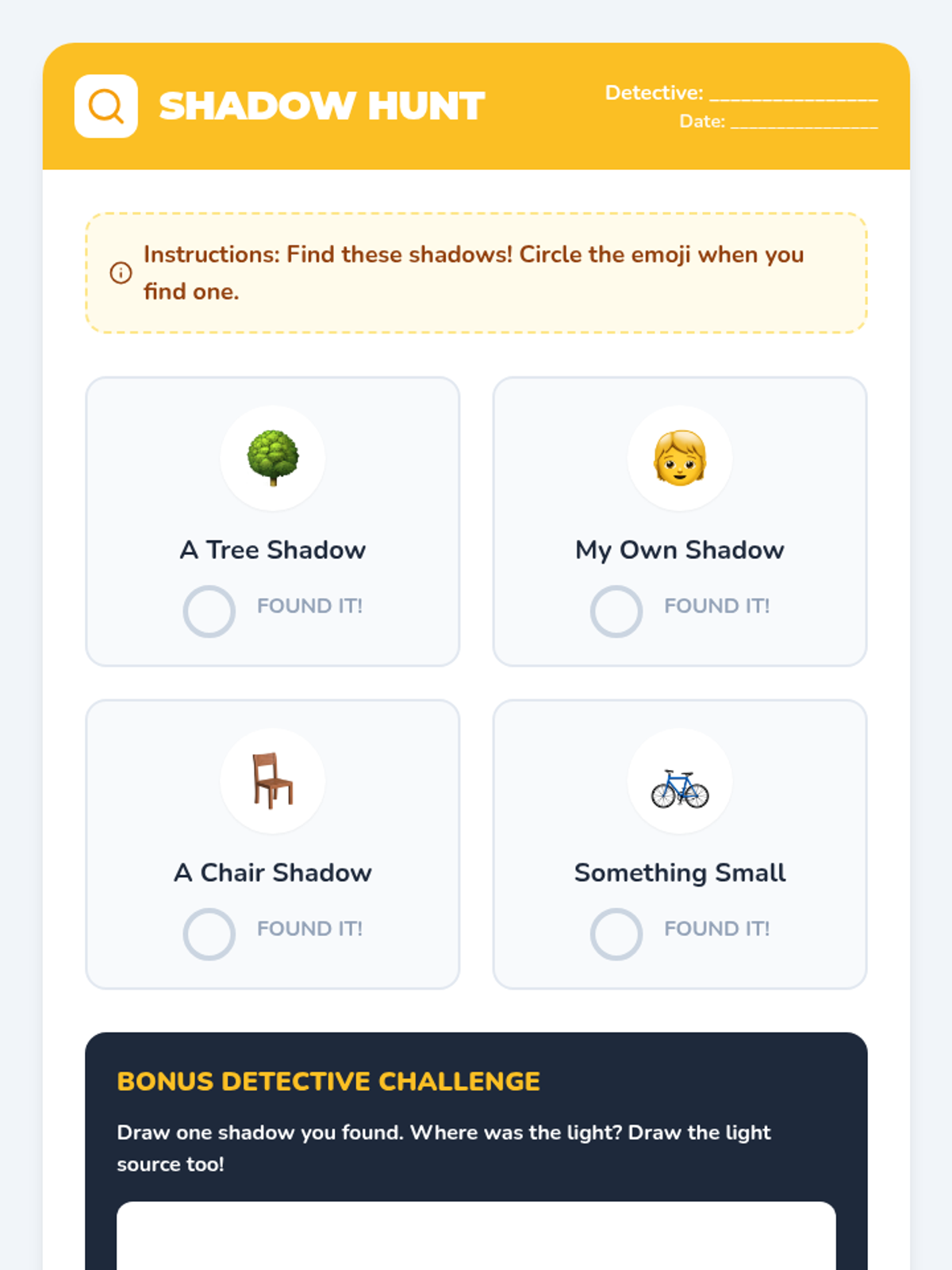
A hands-on, inquiry-based sequence for Pre-K students to explore light and shadows. Students discover shadows in their environment, manipulate shadow size, and use puppets to tell stories, understanding that shadows are formed when objects block light.
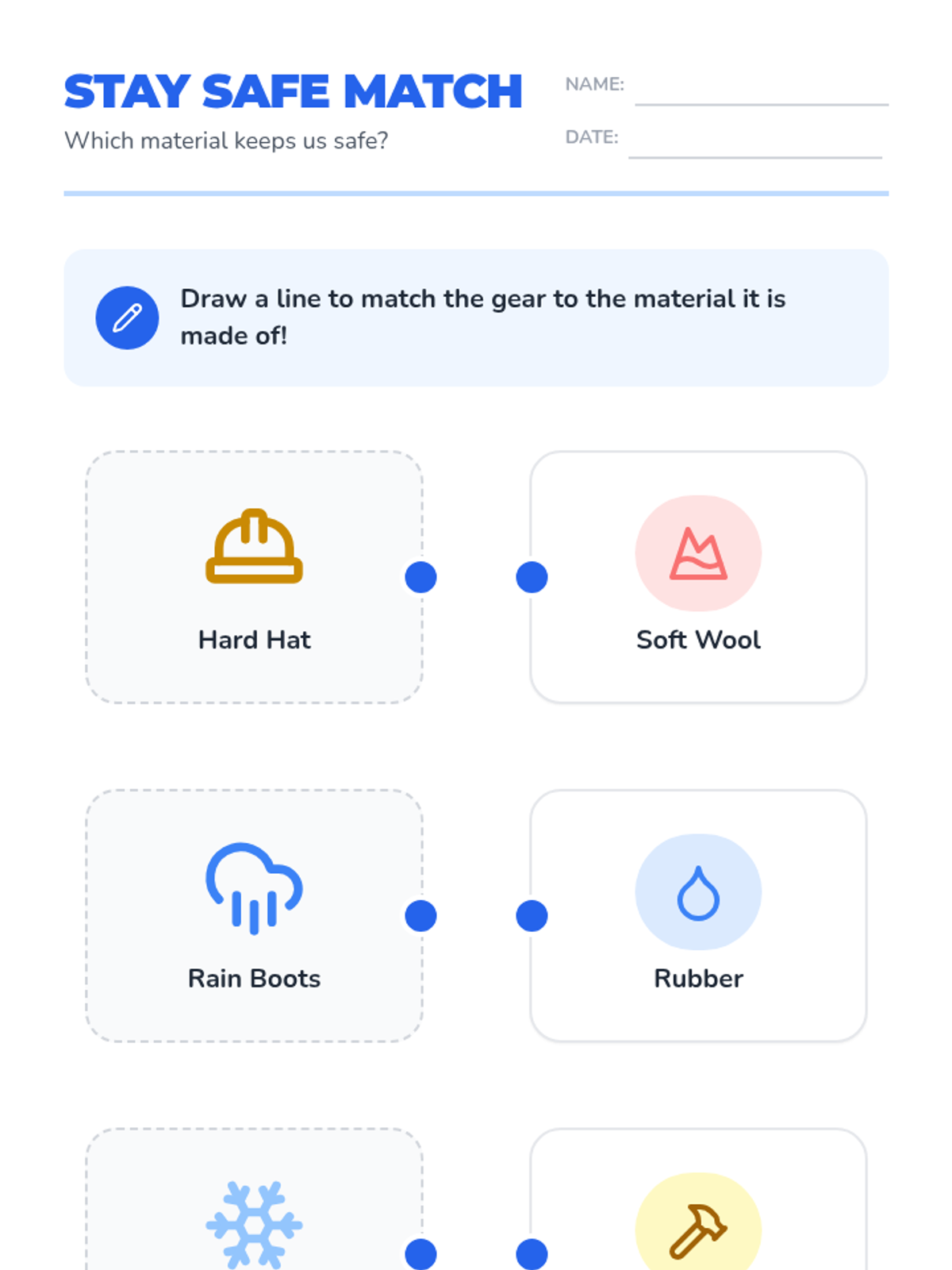
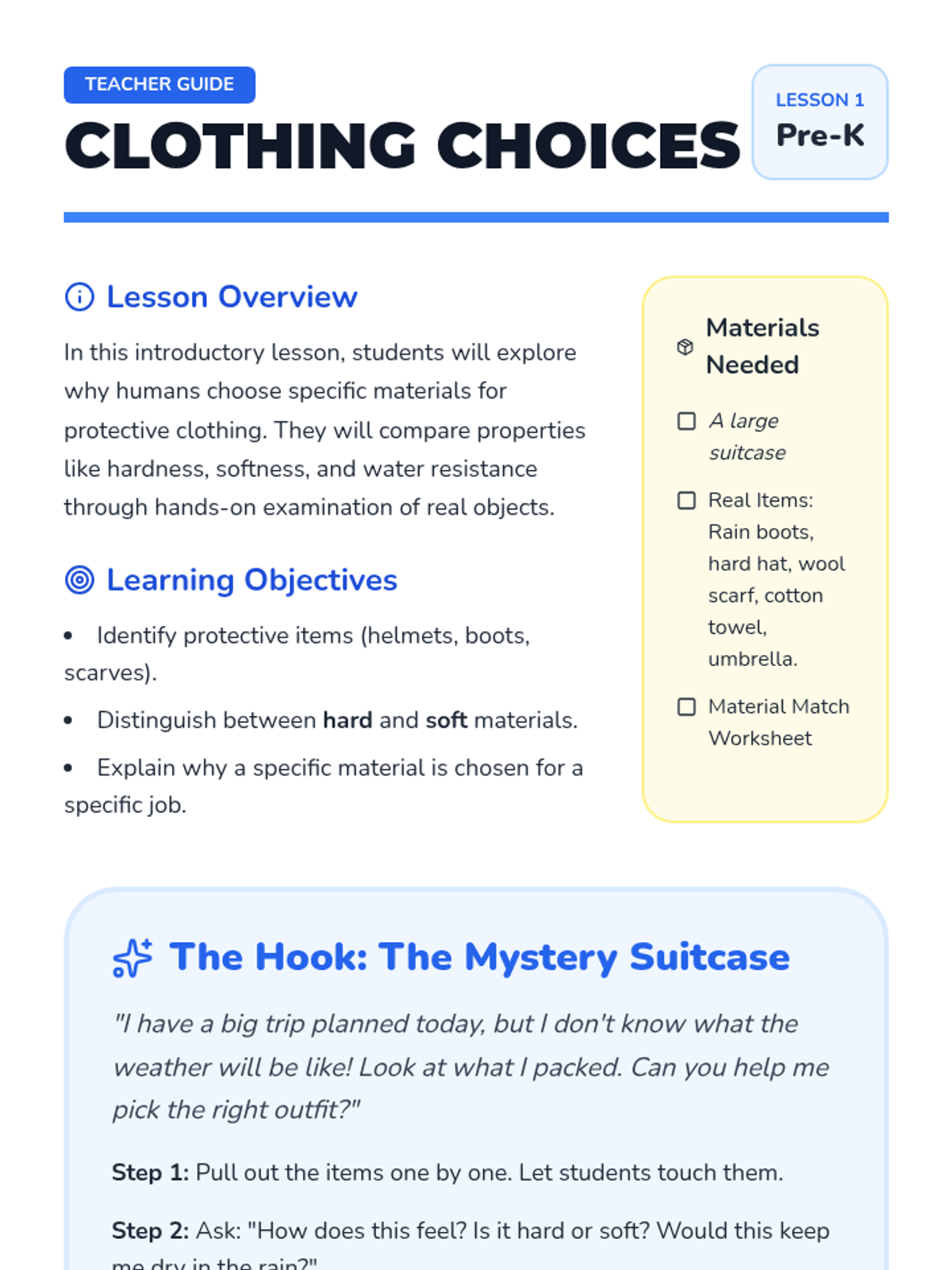
A problem-based physics sequence for Pre-K students exploring how materials protect objects from damage, water, and temperature. Students test properties like softness, water resistance, and insulation to solve real-world protection challenges.
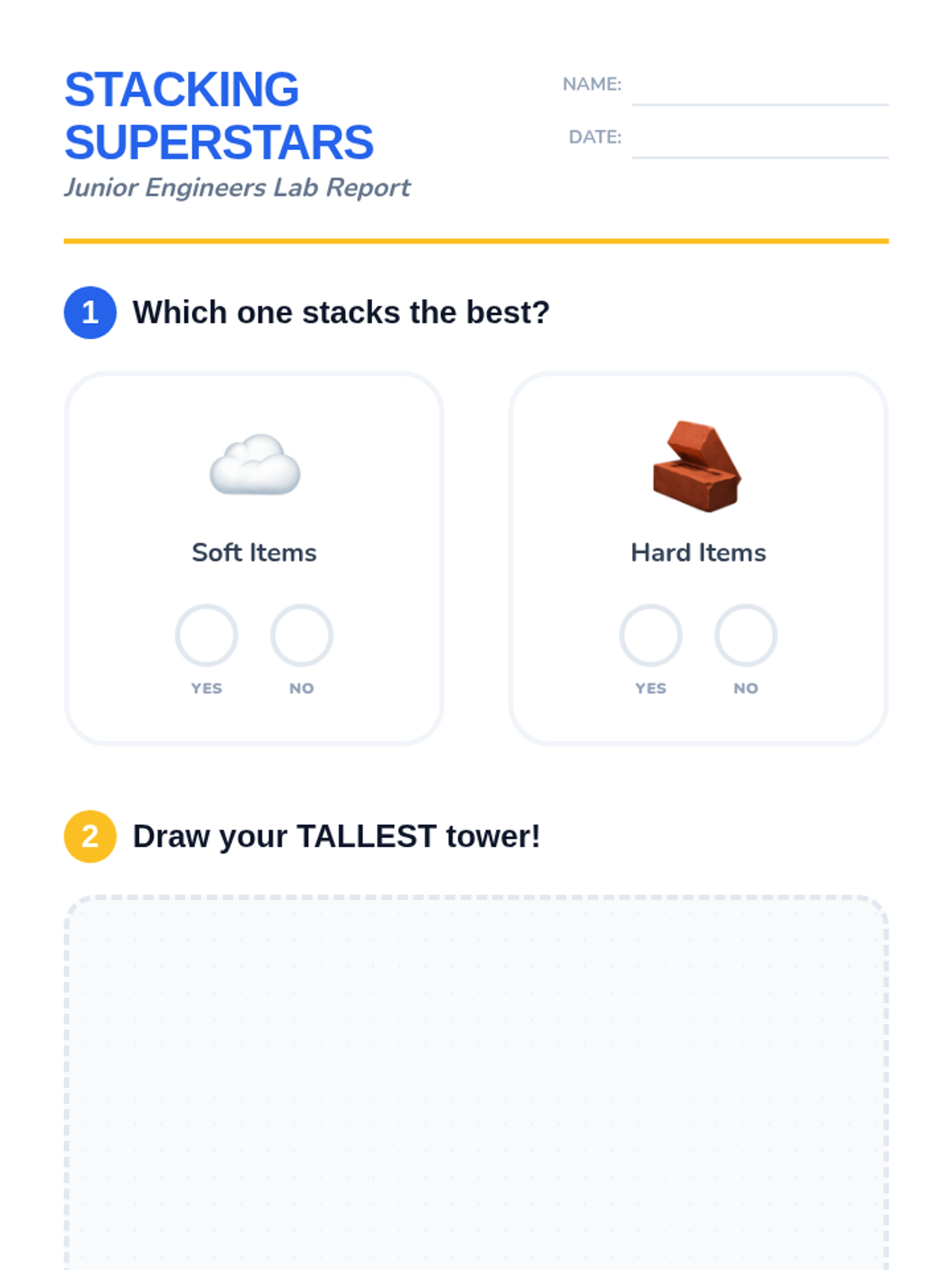
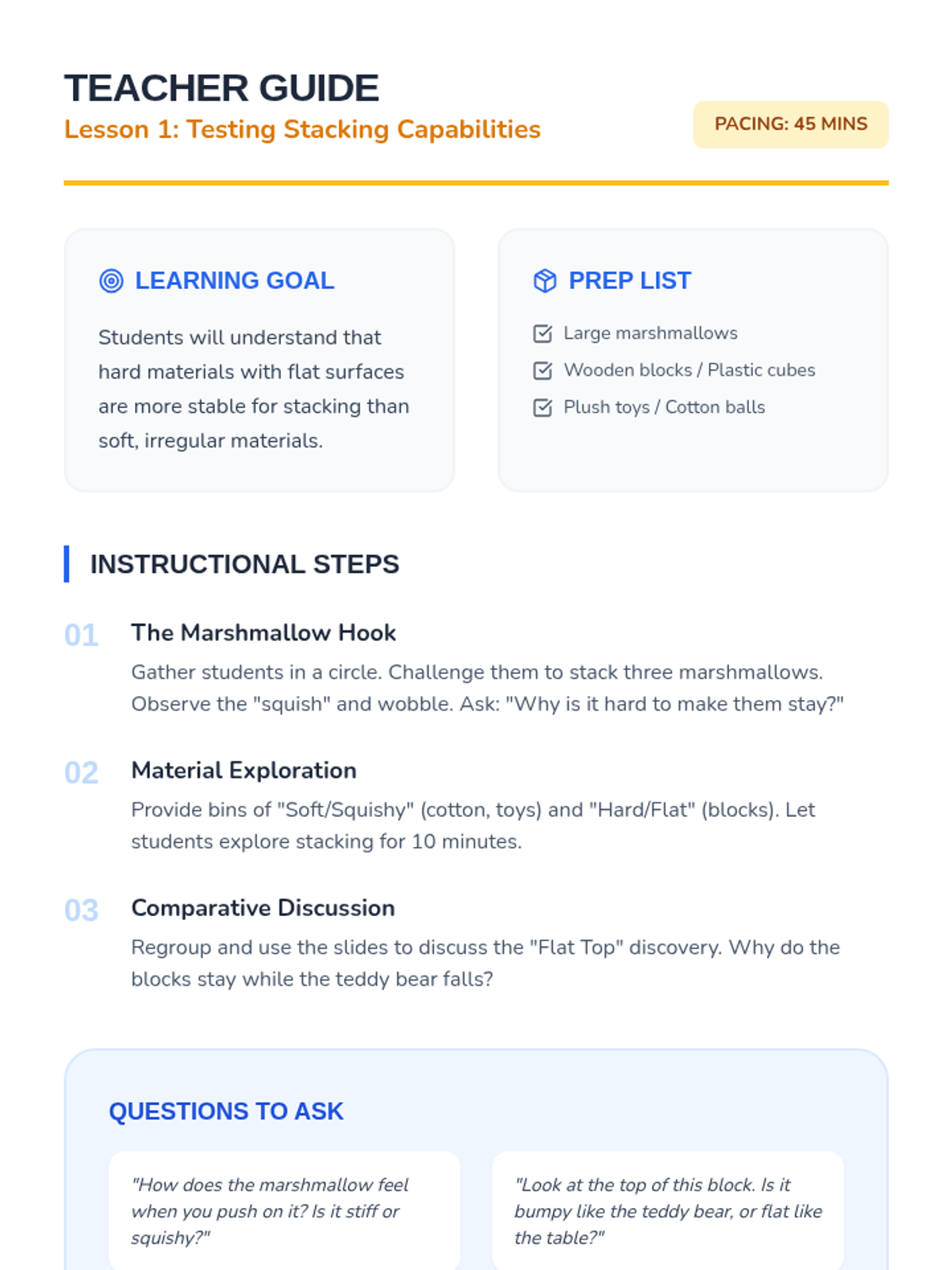
A project-based physics sequence for Pre-K students exploring material properties, hardness, and structural stability through hands-on stacking and building challenges. Students act as little engineers to discover why certain materials are better for construction than others.
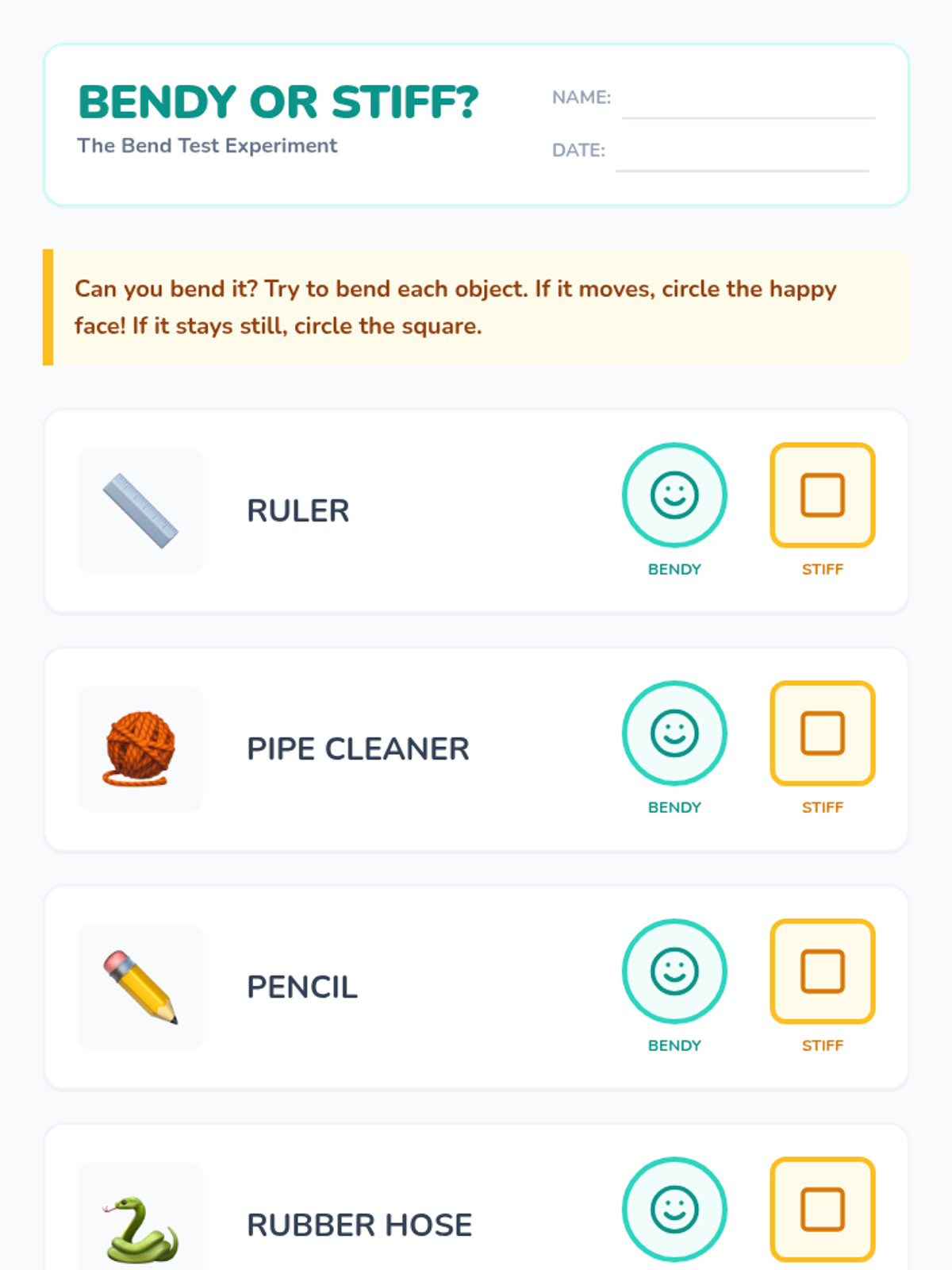
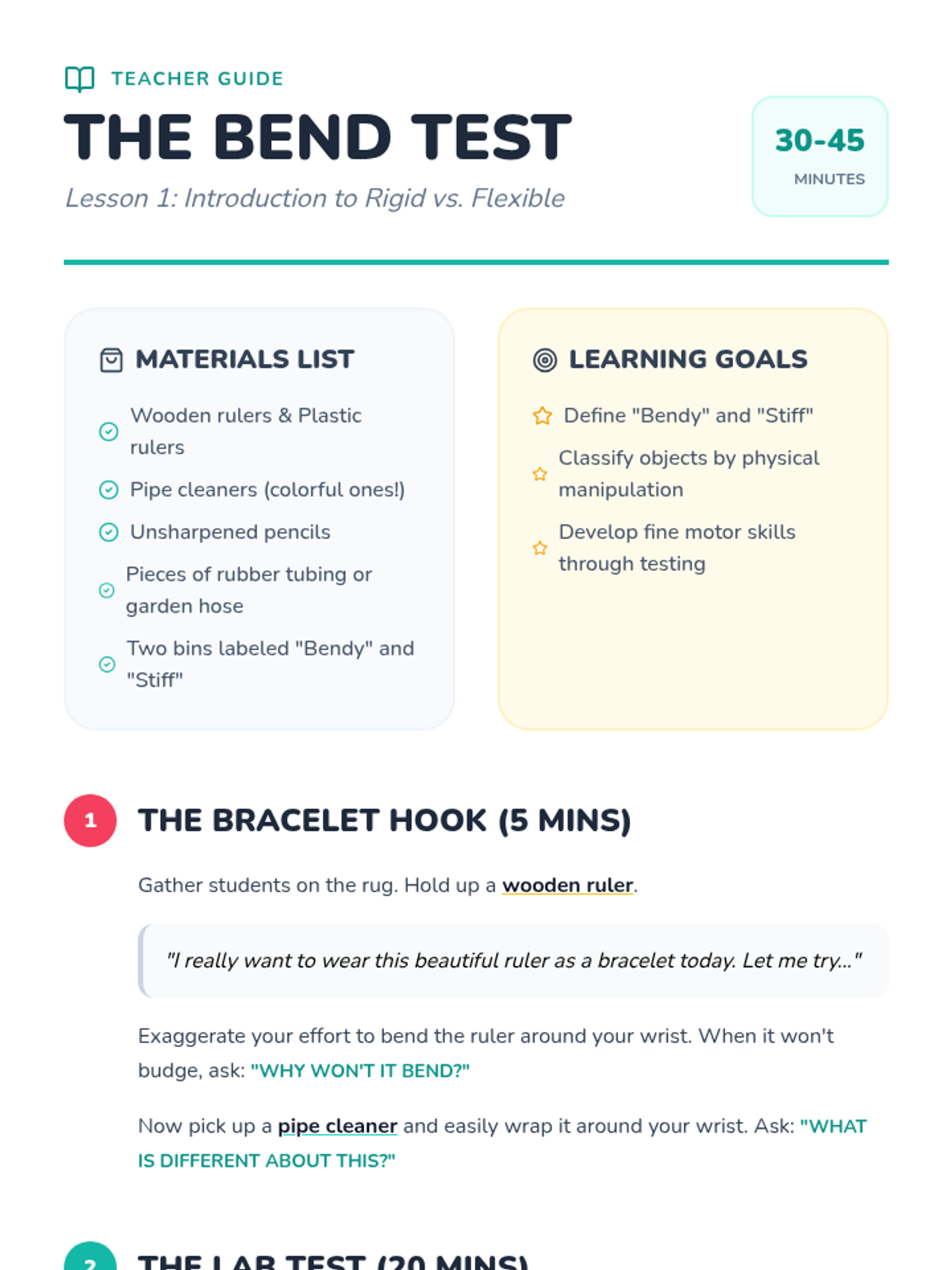
A hands-on exploration for Pre-K students to distinguish between rigid and flexible materials through physical manipulation, testing, and creative construction. Students learn to classify objects based on their ability to bend, stretch, and fold.
A hands-on investigation into how light and water interact with different materials. Pre-K students explore transparency, shadows, absorption, and buoyancy through inquiry-based play.
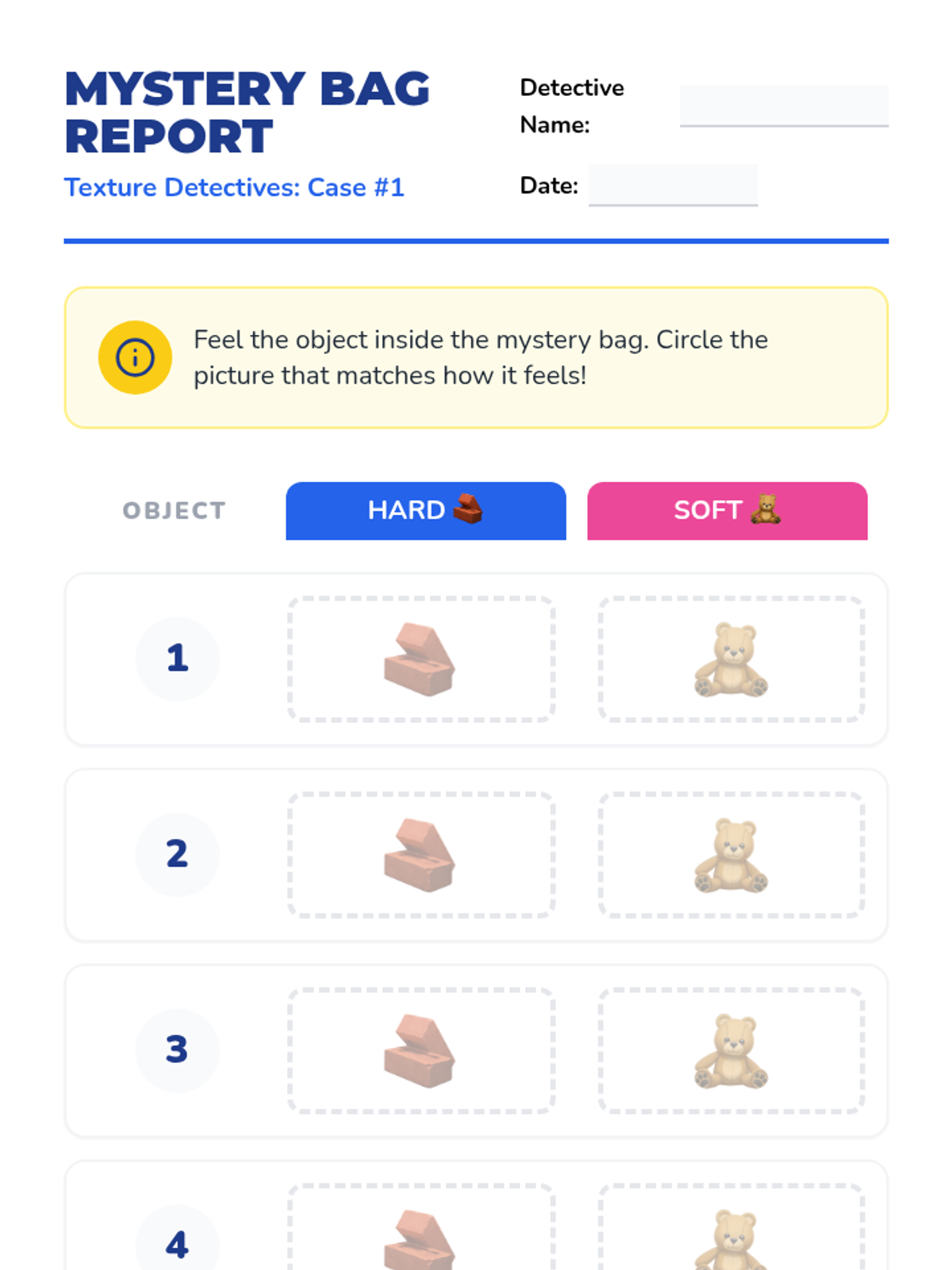
A tactile and exploratory science sequence where Pre-K students use their senses to observe, describe, and categorize materials based on properties like hardness and texture. Students progress from simple identification to complex sorting and peer communication.
Students explore how materials interact with light, moving from shadows and opacity to transparency and translucency, culminating in a sunshade design challenge.
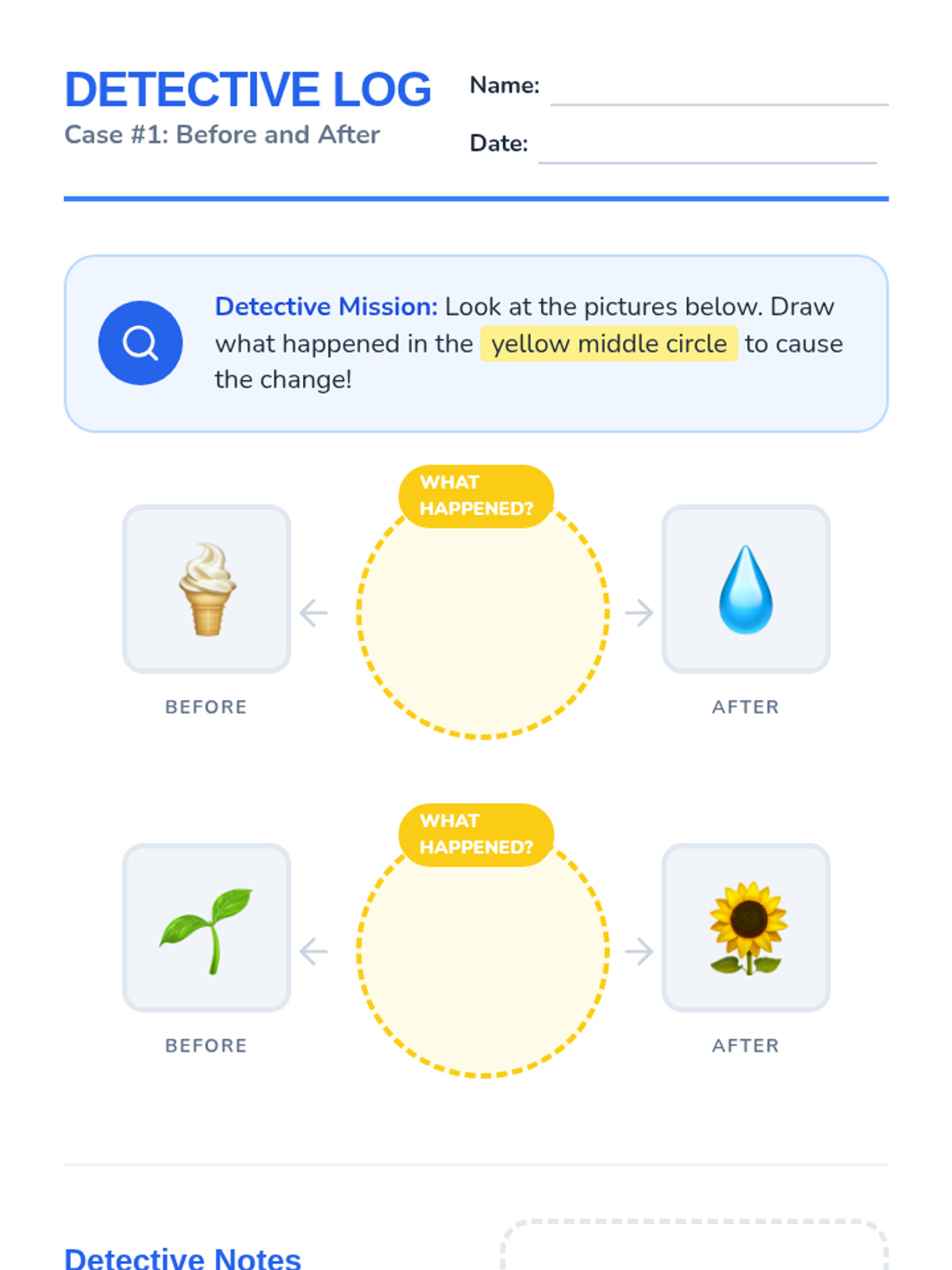
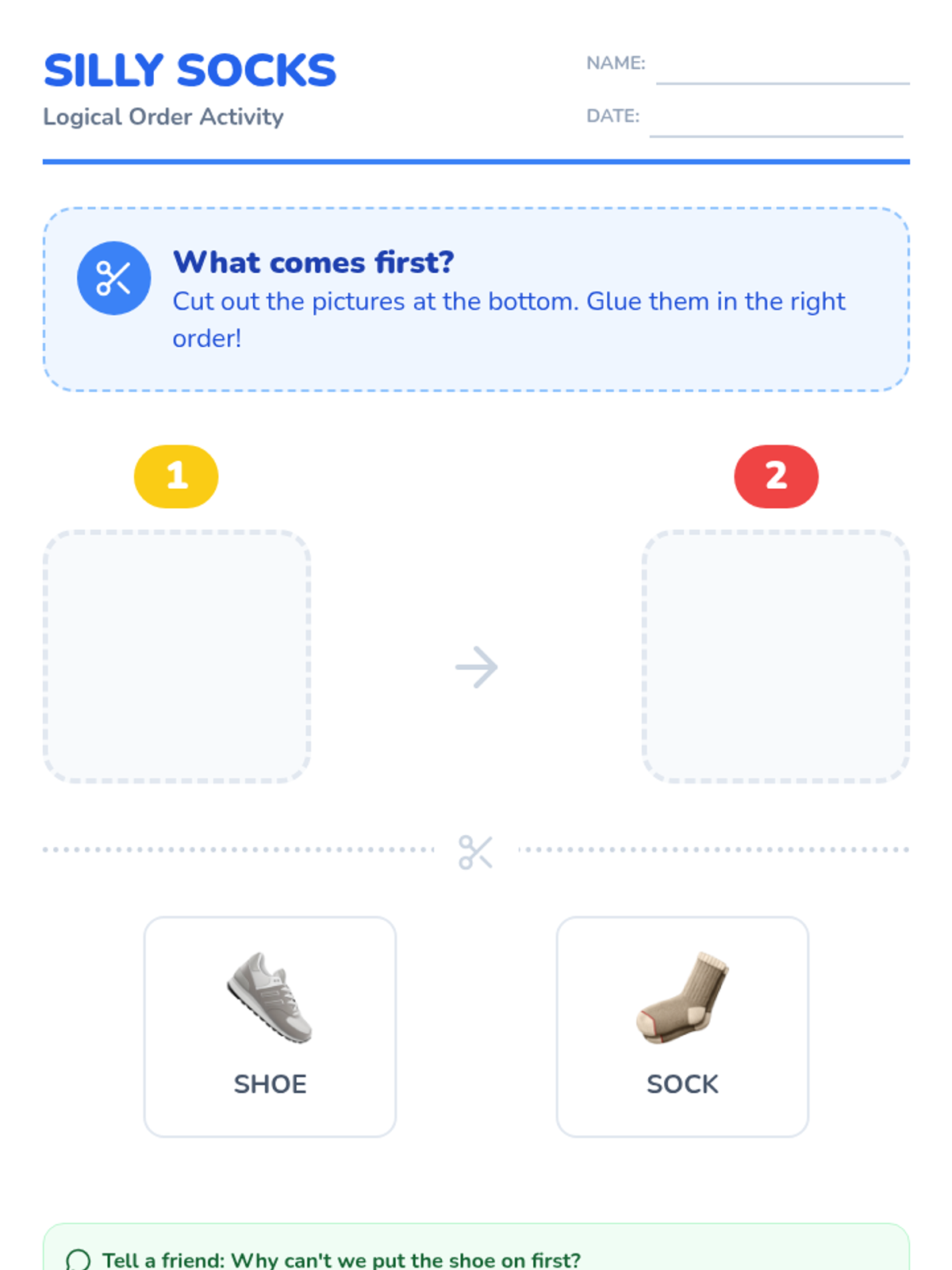
This inquiry-based sequence teaches Pre-K students to understand the logic behind event sequences. Students investigate cause and effect, predict outcomes, identify logical errors, and explore natural cycles to answer 'Why does the order of events matter?'
This Pre-K ELA sequence uses read-along informational texts to explore weather patterns and seasonal changes. Students develop observation skills and functional comprehension by connecting atmospheric conditions to daily life, clothing choices, and activities.
A Pre-K sequence introducing animal life cycles through read-along informational texts. Students explore transformation, vocabulary, and sequencing across five lessons covering babies, butterflies, frogs, and chickens.
A hands-on exploration of creative problem-solving for Pre-K students. Using a class mascot and whimsical scenarios, students learn that there is never just one right answer by brainstorming, building, and inventing multiple solutions to simple challenges.
A Kindergarten sequence exploring how hardware and software work together as a system. Students will learn about physical and wireless connections, compare different computing devices, and simulate the flow of information.
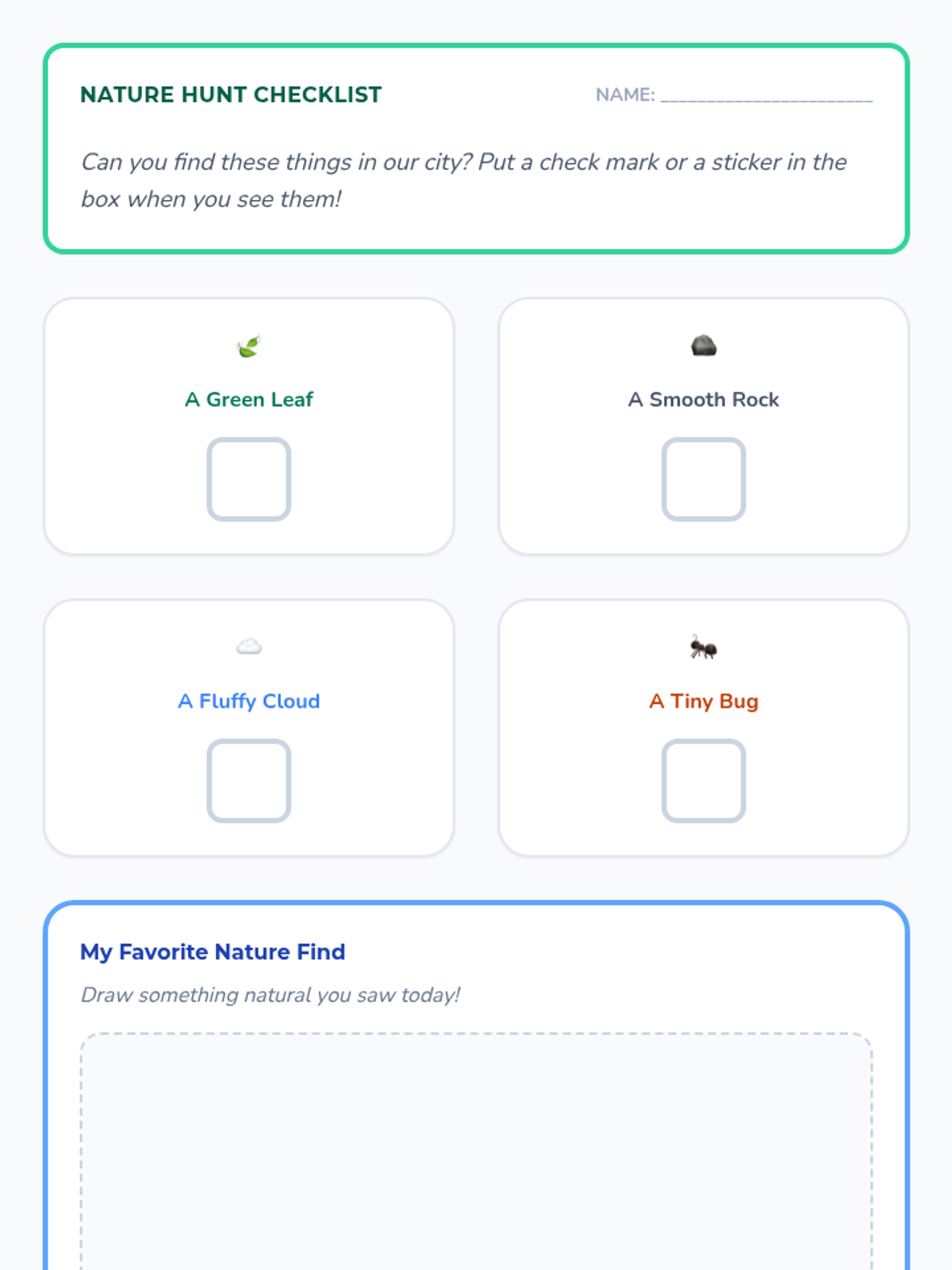
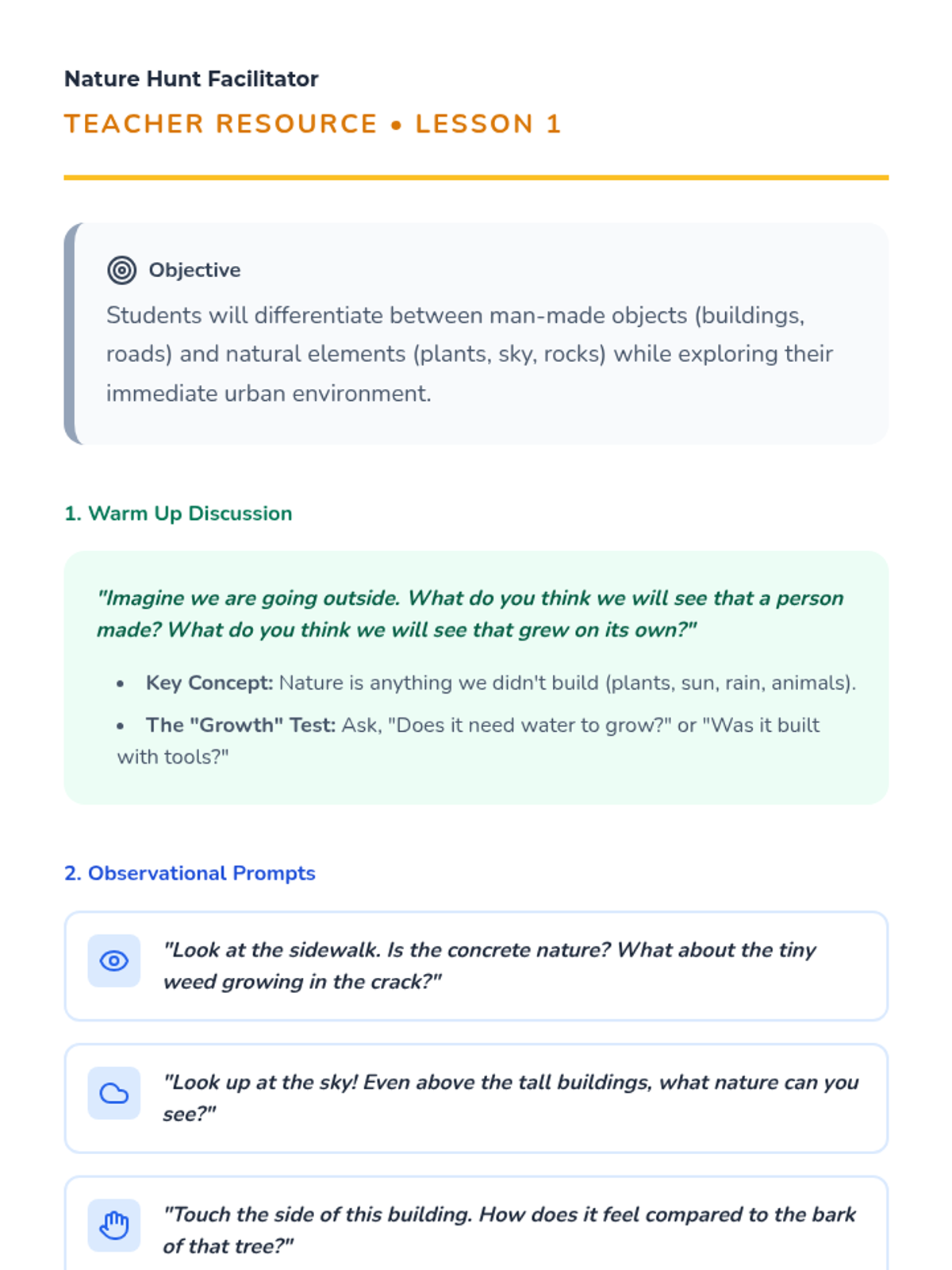
A Pre-K sequence focused on exploring nature within urban environments. Students learn to identify natural vs. man-made elements, explore city parks, observe urban wildlife, and practice environmental stewardship through caring for street trees and keeping public spaces clean.
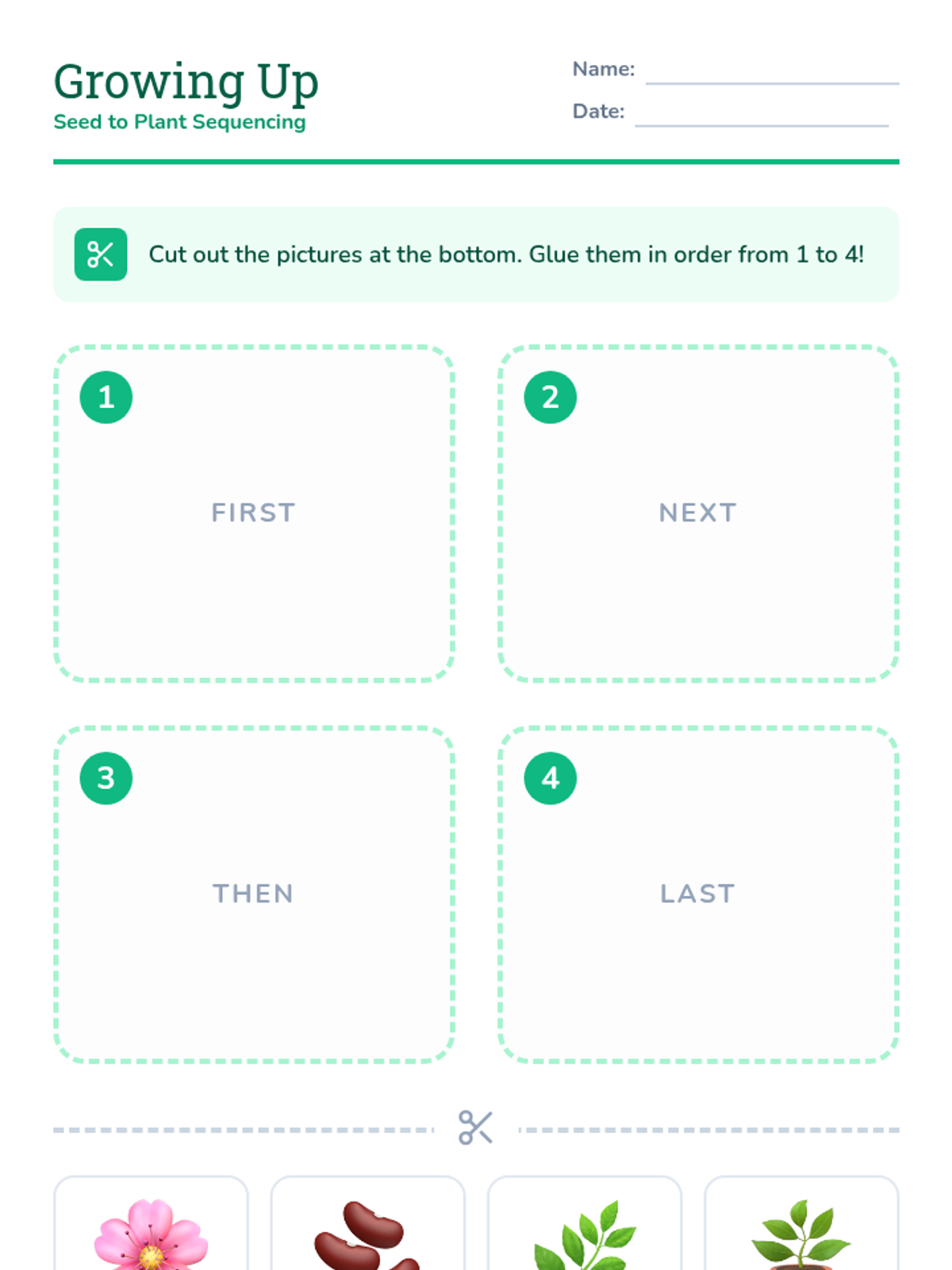
A Pre-K sequence focused on ordering events through the lens of nature, moving from linear growth to cyclical patterns in plants, animals, and seasons. Students develop foundational social studies and science skills through observation and hands-on sequencing activities.
A hands-on sequence for Pre-K students to explore logic and cause-and-effect by ordering multi-step procedures. Students learn that the order of steps is essential for success in daily tasks like dressing, cooking, and building.
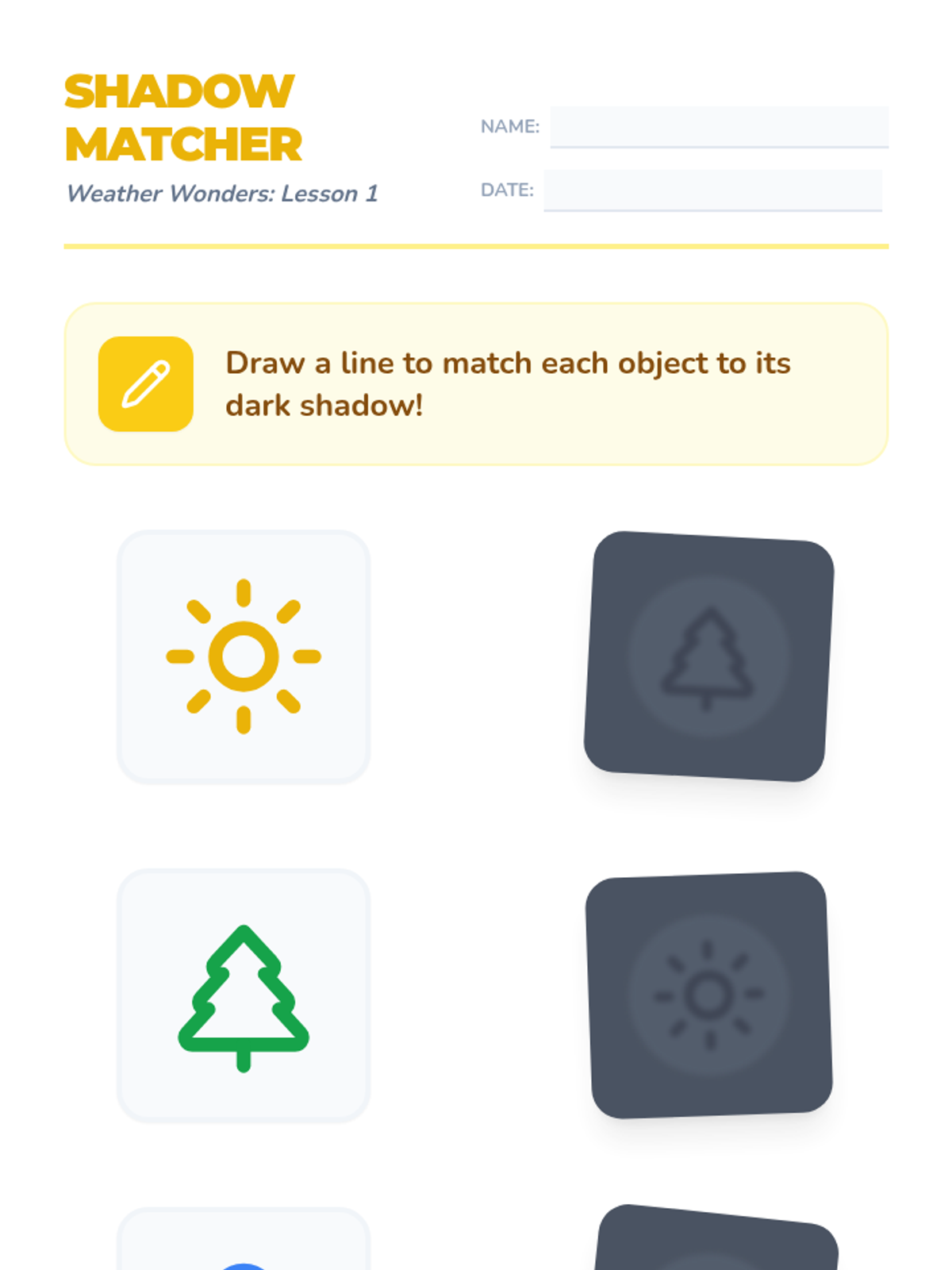
A hands-on exploration for Kindergarteners to discover how shadows are formed and how they change based on the Sun's position in the sky, concluding with the Sun's role as a heat source.
A Pre-K science sequence exploring the four seasons through storytelling, nature observation, and hands-on activities. Students learn about the cyclical nature of seasonal changes and identify the unique characteristics of Spring, Summer, Fall, and Winter.
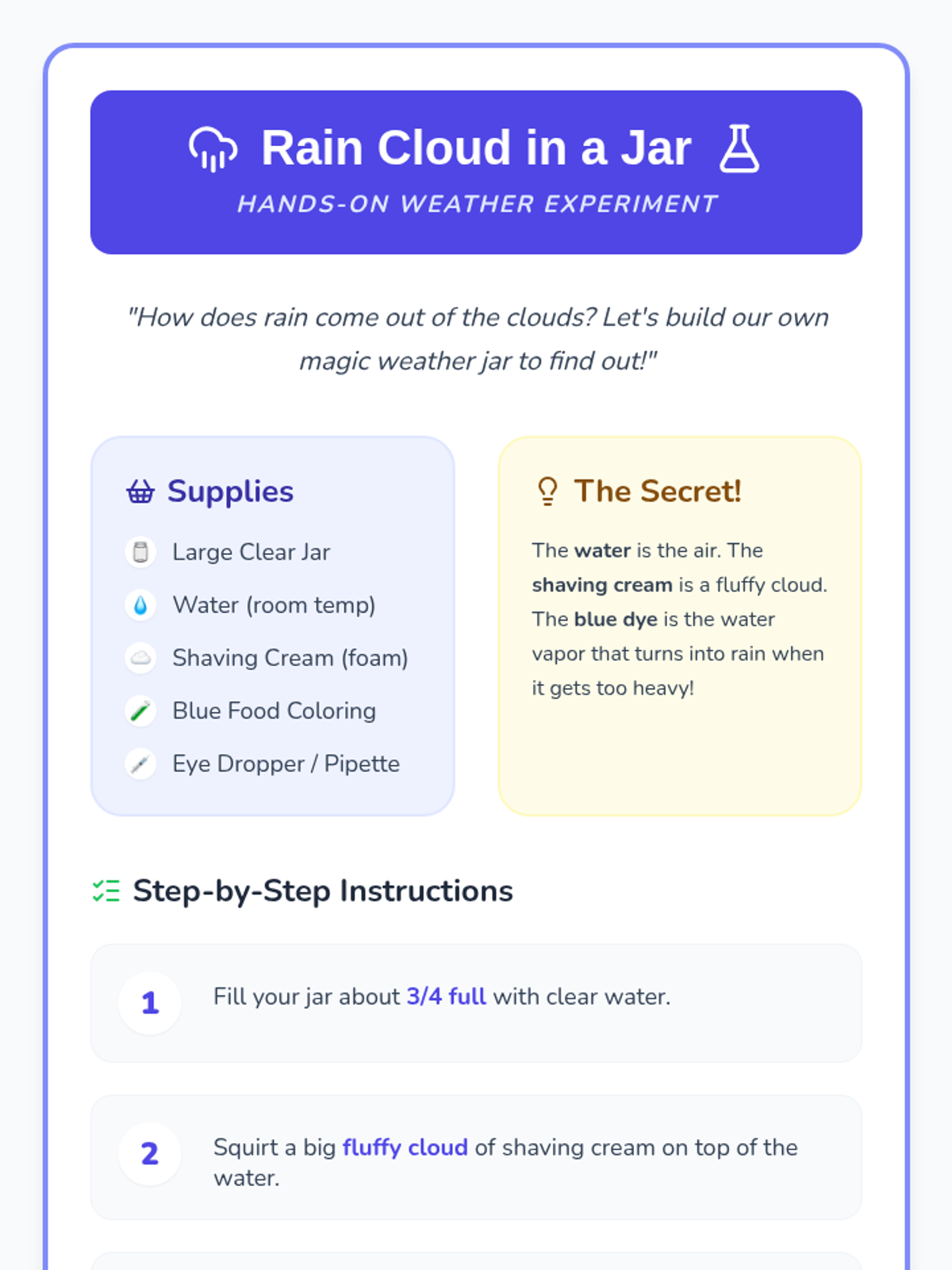
A sensory-rich sequence for Pre-K students exploring the basics of the water cycle through cloud shapes, rain simulations, puddle observations, and thunderstorm safety.
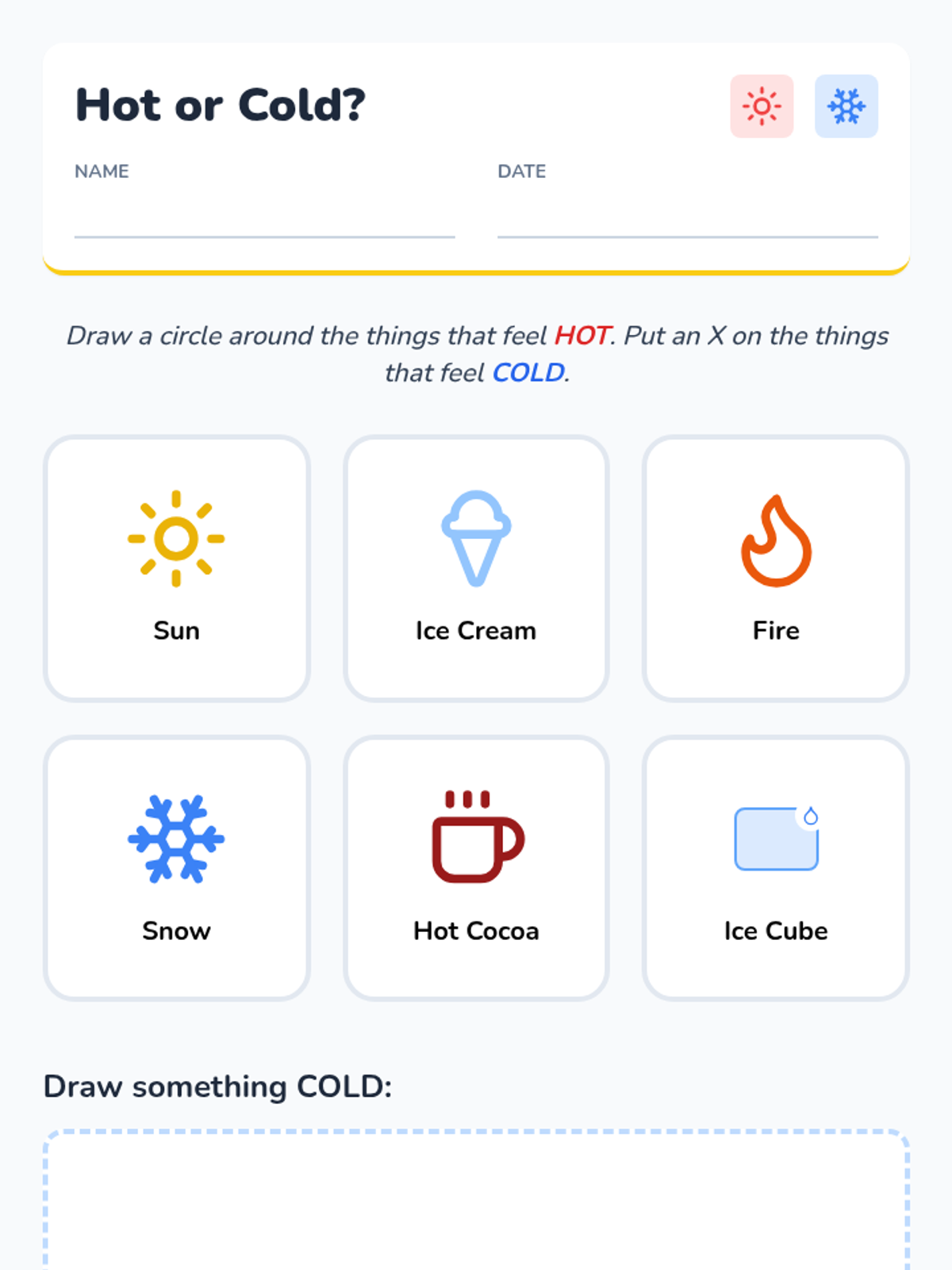
This sequence introduces Pre-K students to the concept of temperature by connecting physical sensations of hot and cold to appropriate clothing choices and outdoor activities using sensory play and simulations.
A project-based exploration of wind for Pre-K students, focusing on making the invisible force of air visible through hands-on play, outdoor observation, and the creation of simple scientific tools like windsocks and pinwheels.
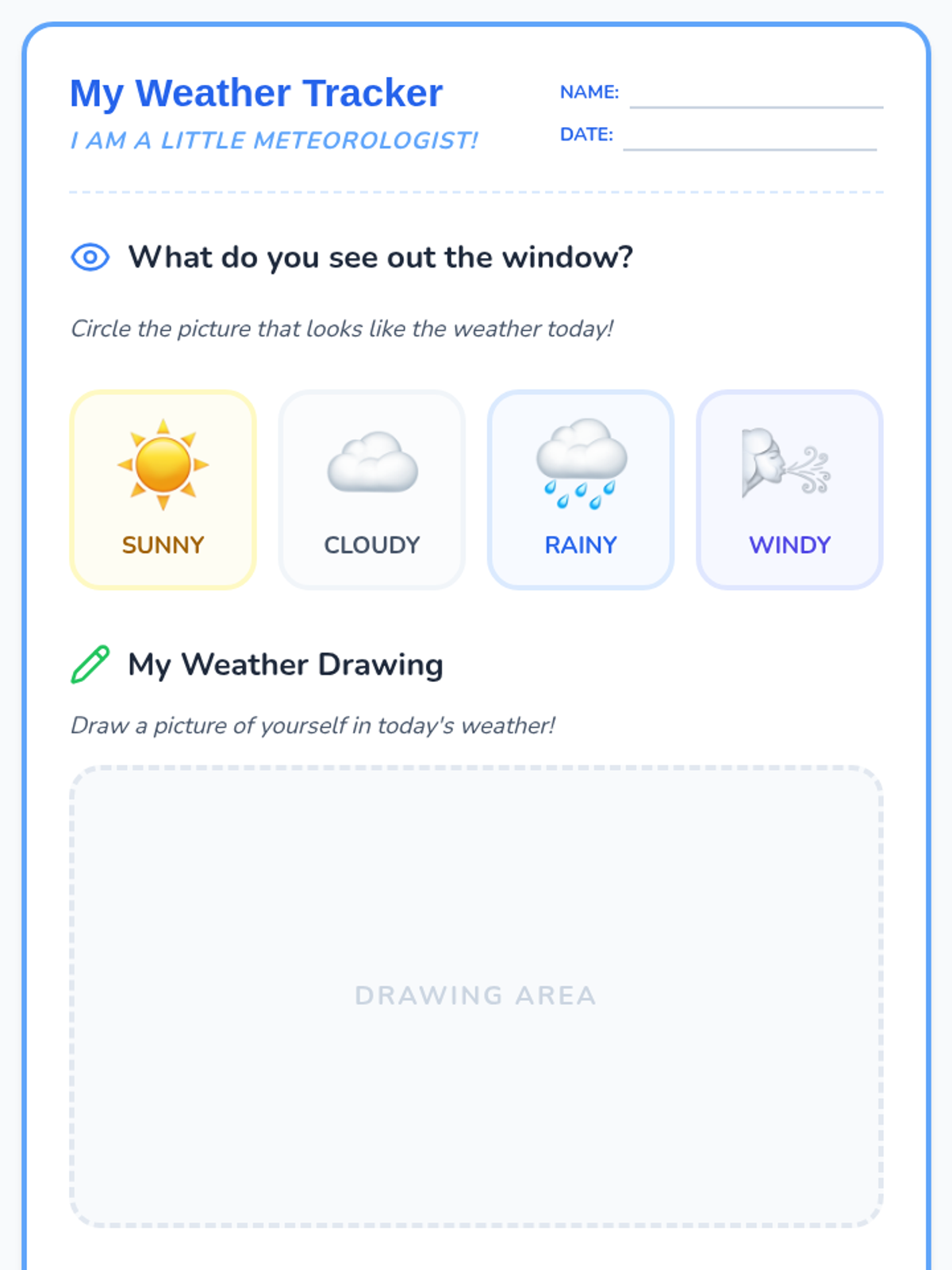
This sequence introduces Pre-K students to observing, describing, and recording daily weather conditions using simple symbols and collaborative charting. students move from basic identification of sunny/cloudy states to becoming 'class meteorologists' who can predict and record weather.
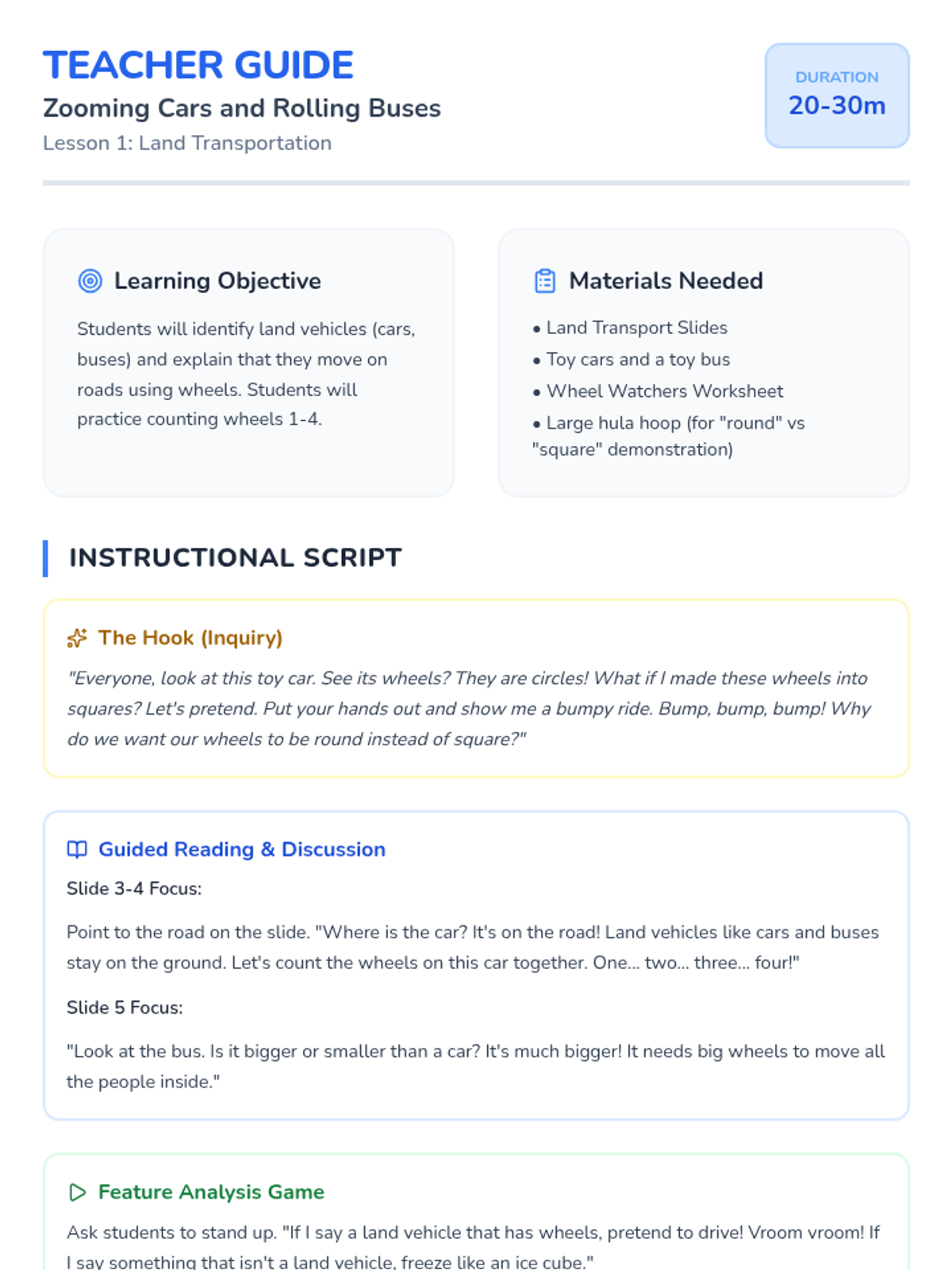
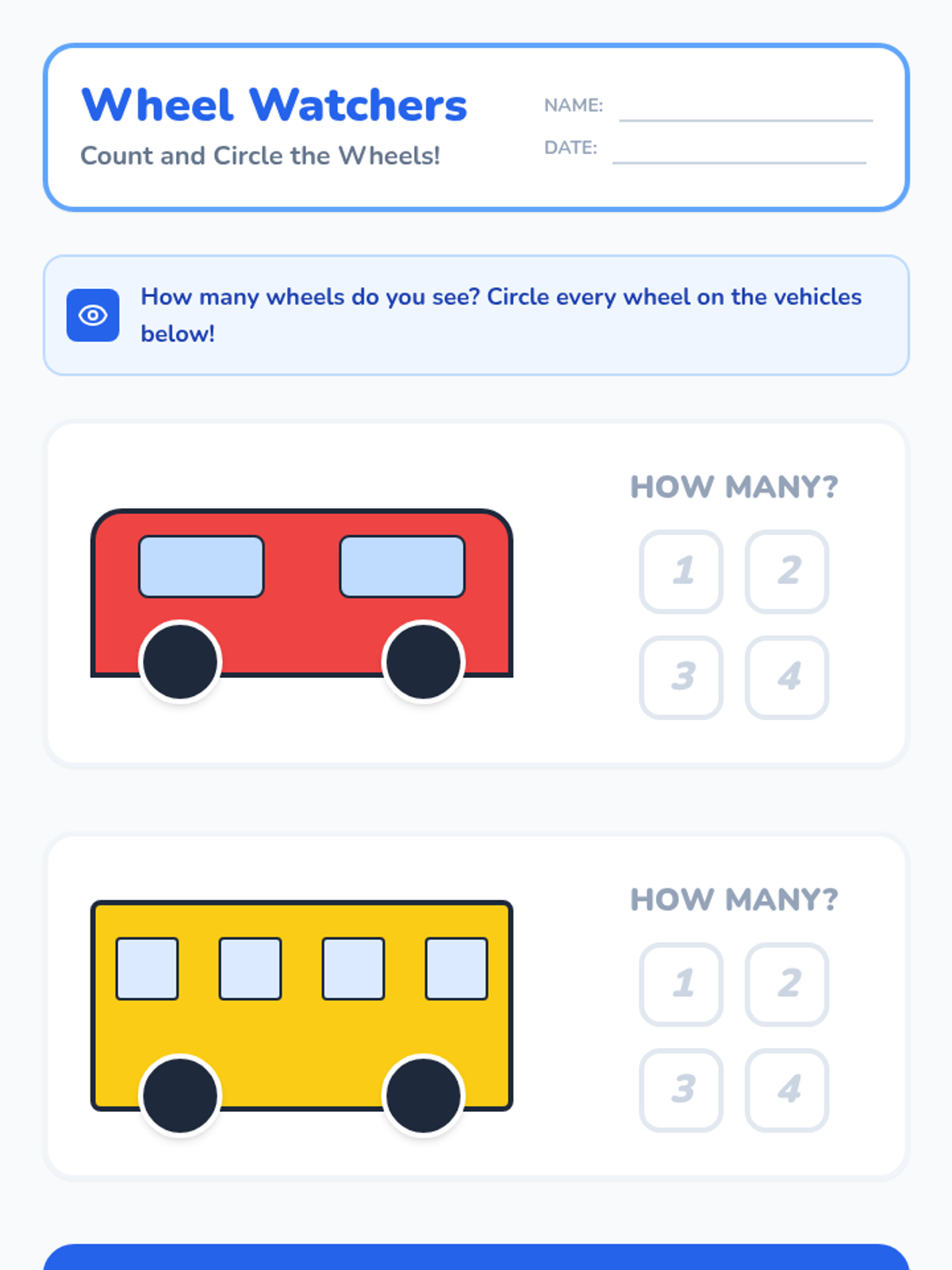
A Pre-K ELA sequence focused on categorizing modes of transportation through informational read-alouds. Students explore how vehicles move on land, water, and air, culminating in a sorting project.
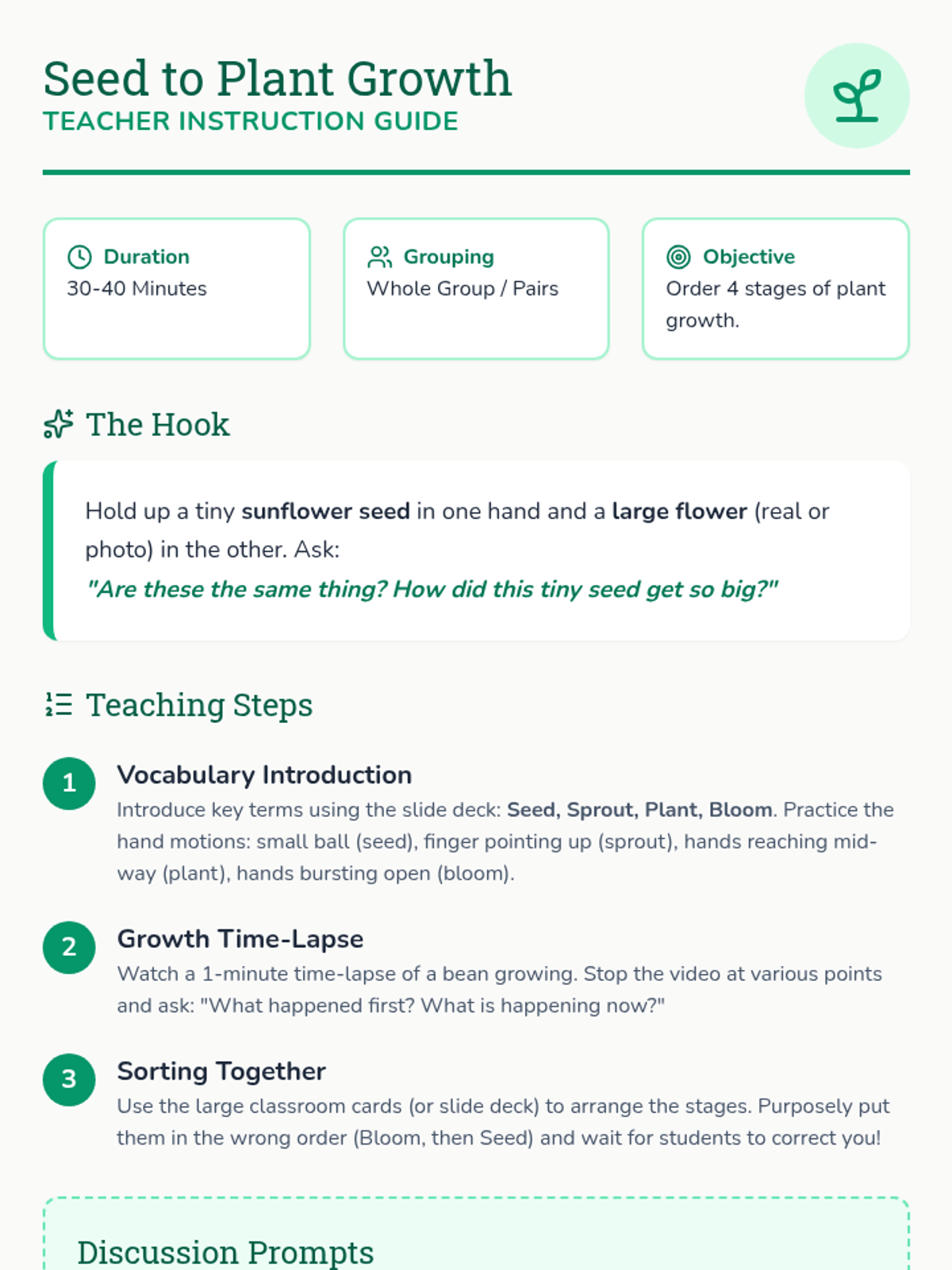
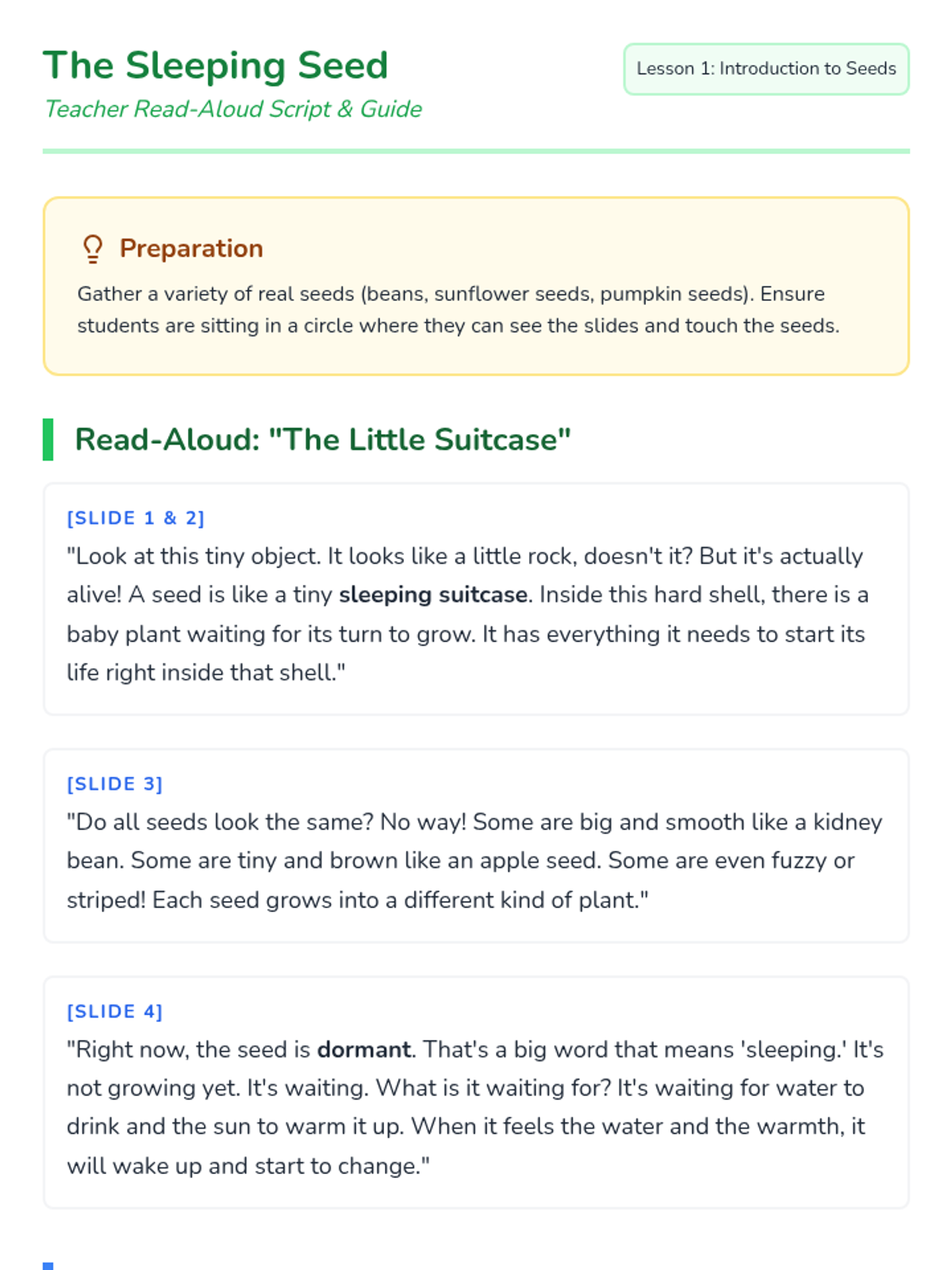
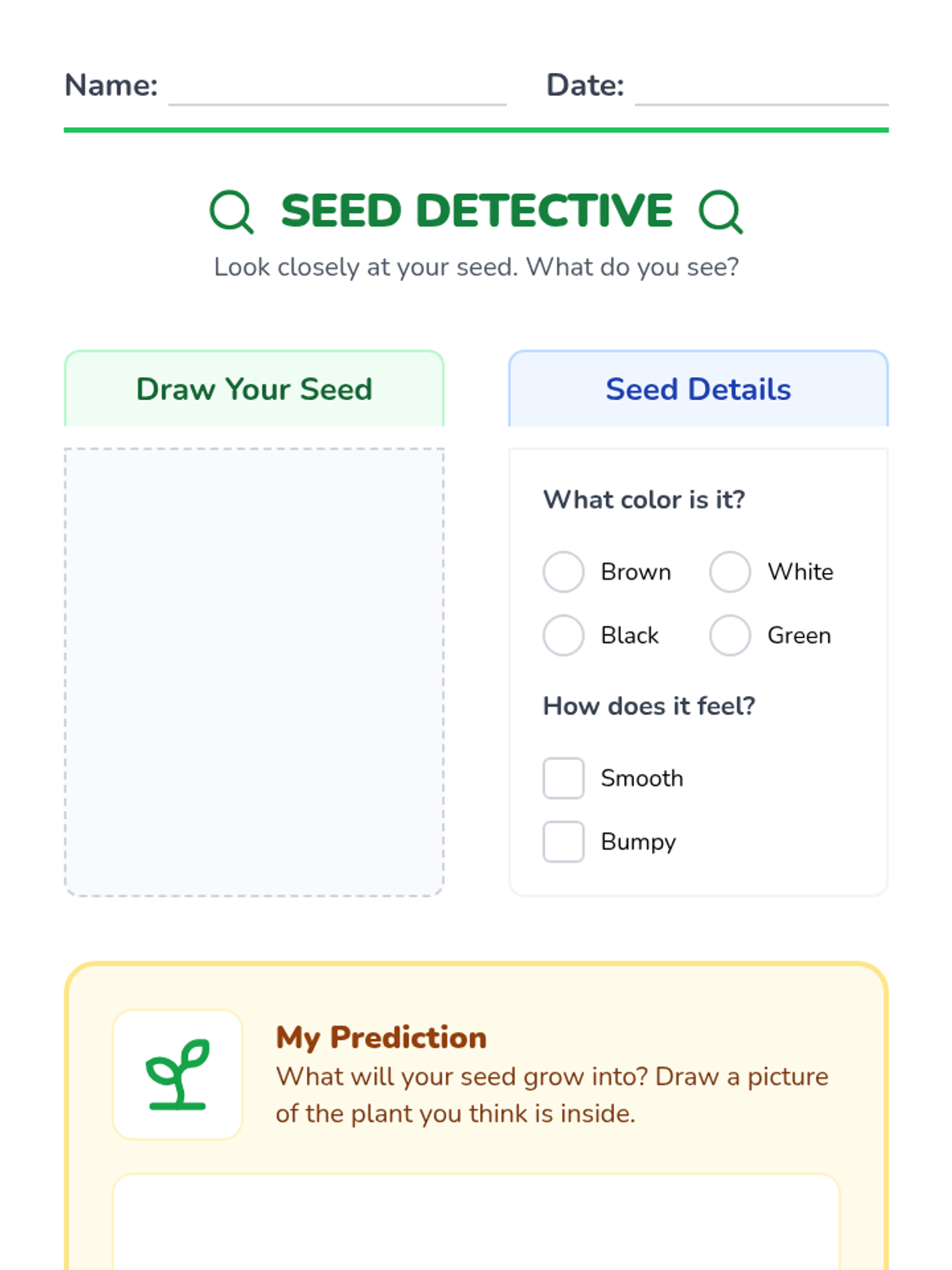
This sequence introduces Pre-K students to the concept of sequencing through the biological life cycle of plants. Using read-along informational texts, students learn about what seeds need, how they grow, and how the cycle starts over, building essential vocabulary and comprehension skills.
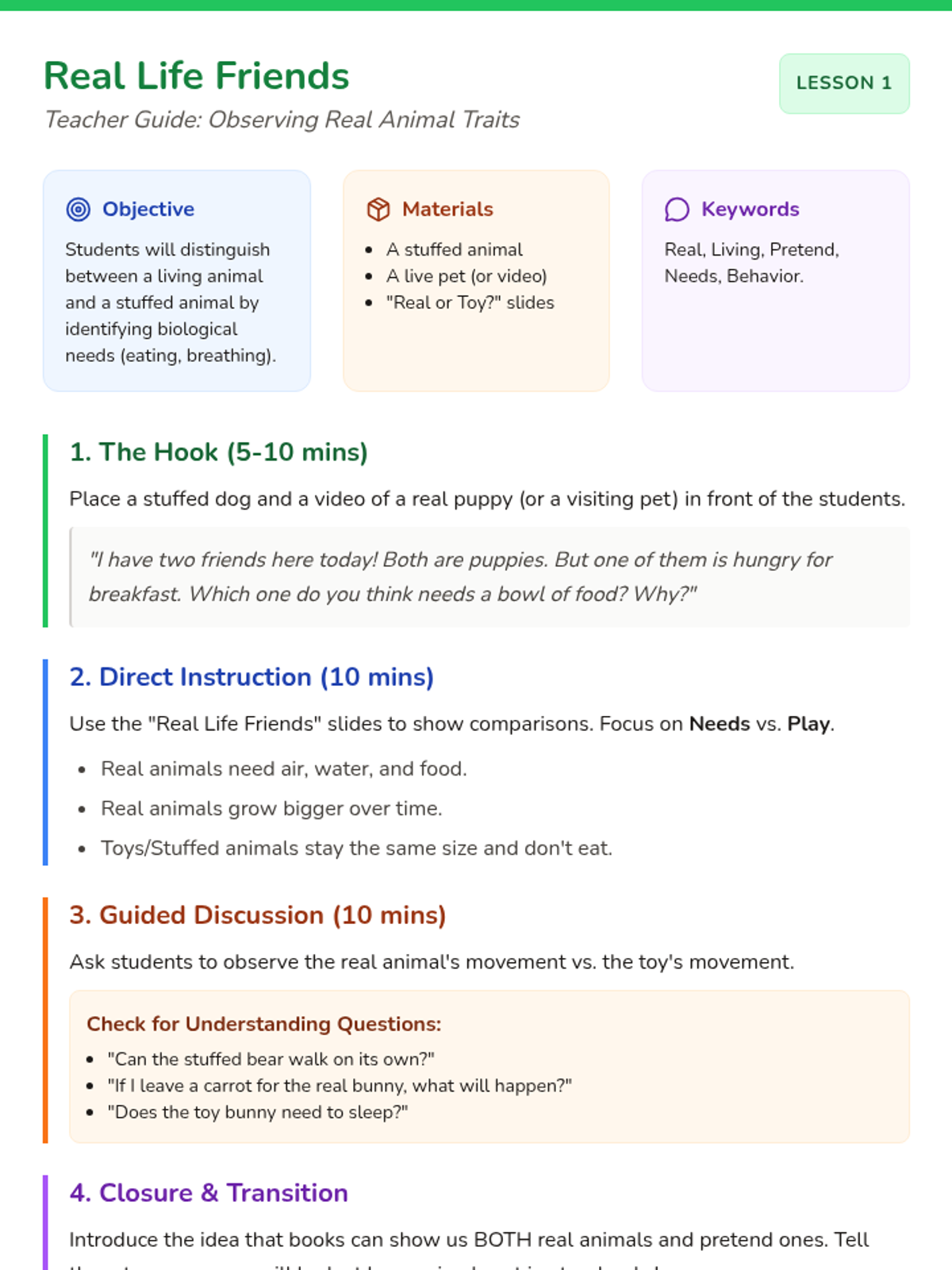
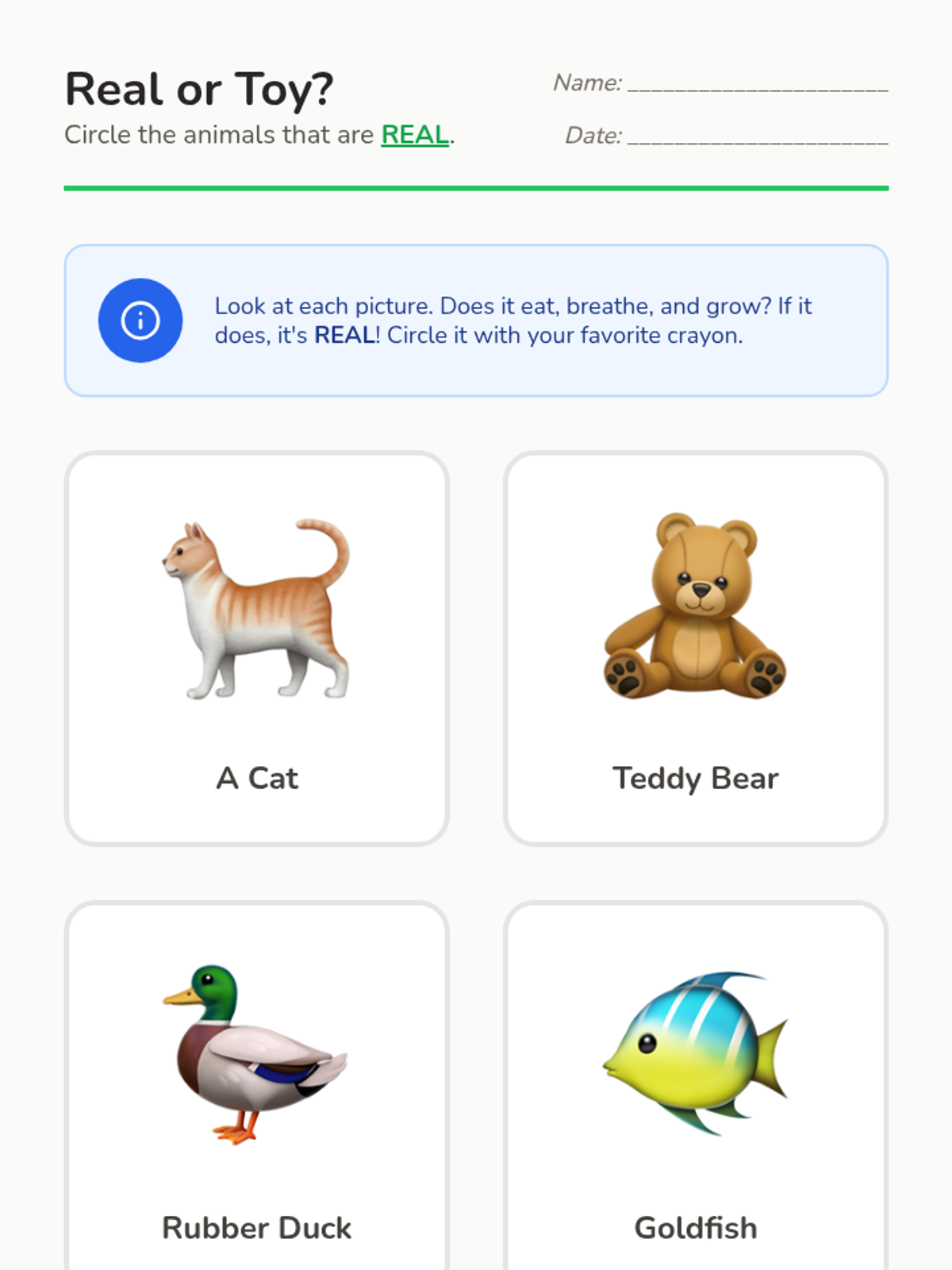
A Pre-K sequence introducing the concept of reality versus fantasy through animal behaviors. Students learn to distinguish between real animal traits and fictional character attributes using observation, comparison, and categorization.

A Pre-K science sequence exploring animal diets and feeding behaviors. Students learn to categorize herbivores and carnivores, understand physical adaptations like beaks and teeth, and explore the flow of energy through simple food chains using hands-on activities and dramatic play.
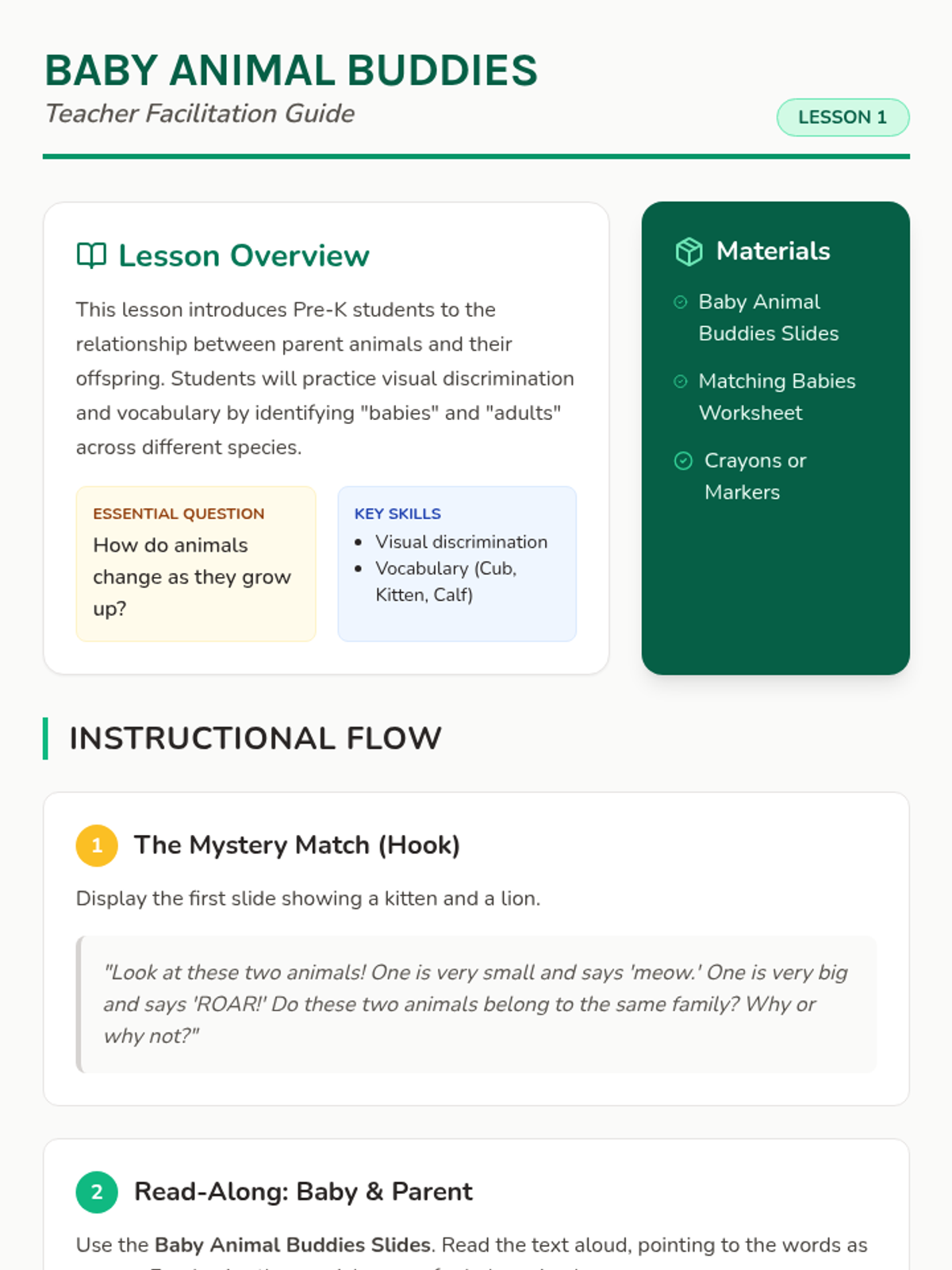
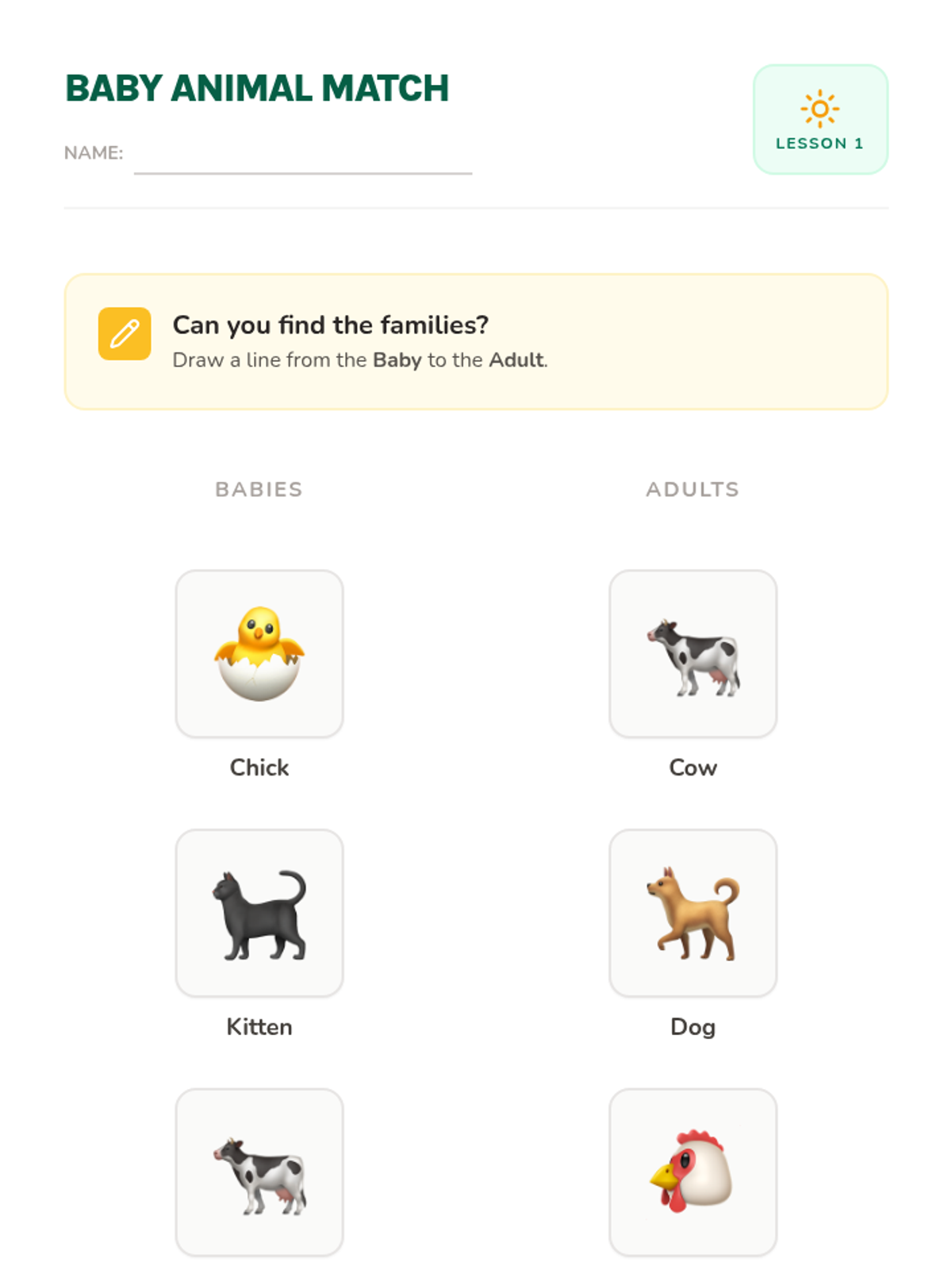
A Pre-K science sequence exploring animal growth, from matching babies and parents to understanding the complex life cycles of butterflies and frogs. Students develop observation skills and learn that all living things change over time.
A Pre-K science sequence exploring animal habitats through hands-on construction and sorting. Students learn about basic needs, water environments, forest shelters, and extreme climates to design their own animal homes.
A tactile and sensory-driven sequence where Pre-K students learn to classify animals by their physical traits, including coverings, limb count, and size. through hands-on sorting and observation.
This Pre-K sequence explores how living things grow and change, focusing on the relationship between parents and offspring. Students will learn about animal baby names, human growth stages, the difference between eggs and live birth, and the unique process of metamorphosis.
A Pre-K science sequence exploring animal habitats, contrasting land and water, forest homes, extreme climates, and engineering animal shelters through play and observation.
A Pre-K science sequence exploring animal physical traits, movements, coverings, and diets through sensory play, movement, and creative design. Students learn how body parts help animals survive in their environments.