This sequence explores the Chinese particle 'le' across five lessons, covering completed actions, change of state, sequencing, negation, and final narrative application for 10th-grade Mandarin students.

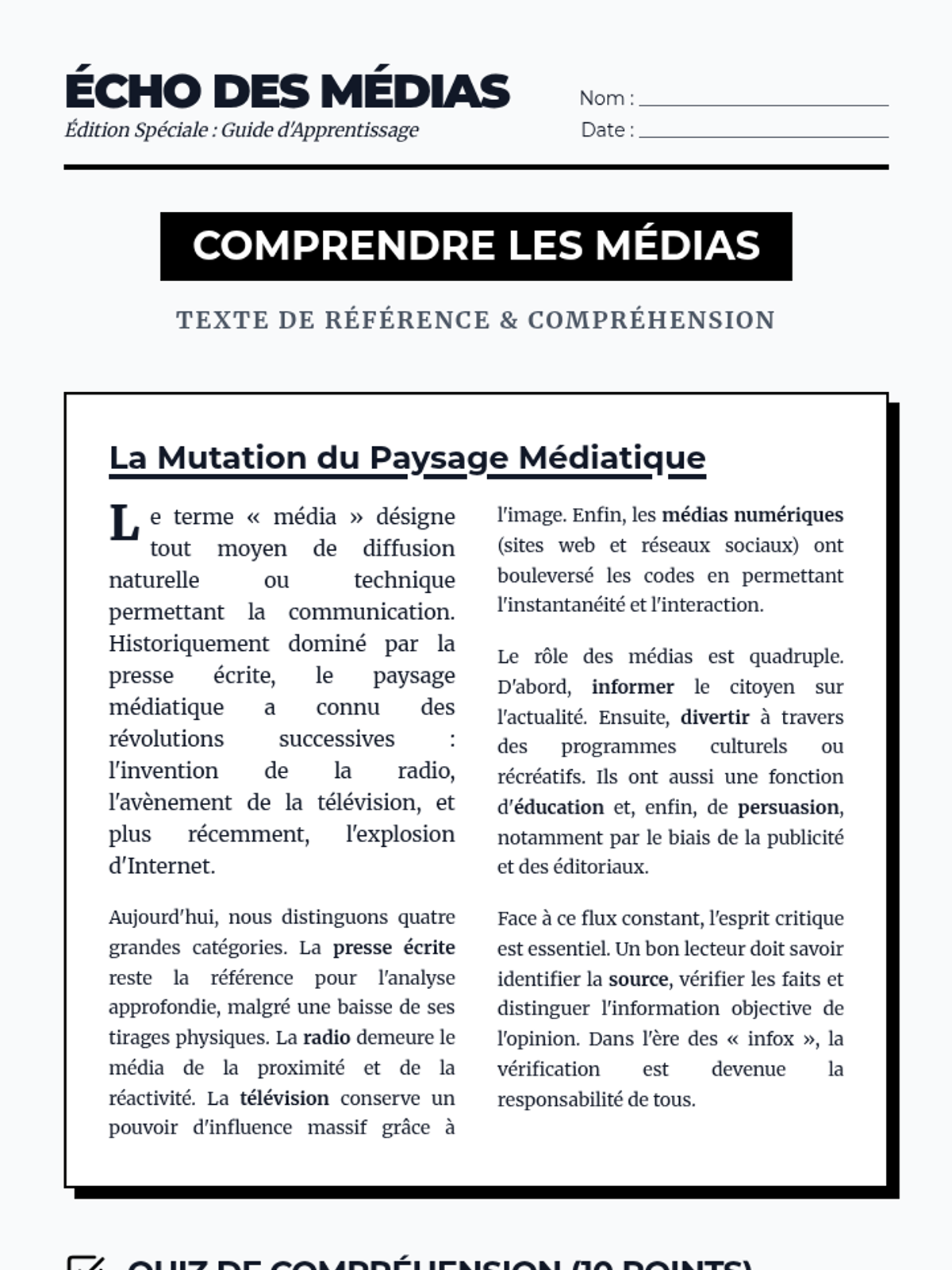
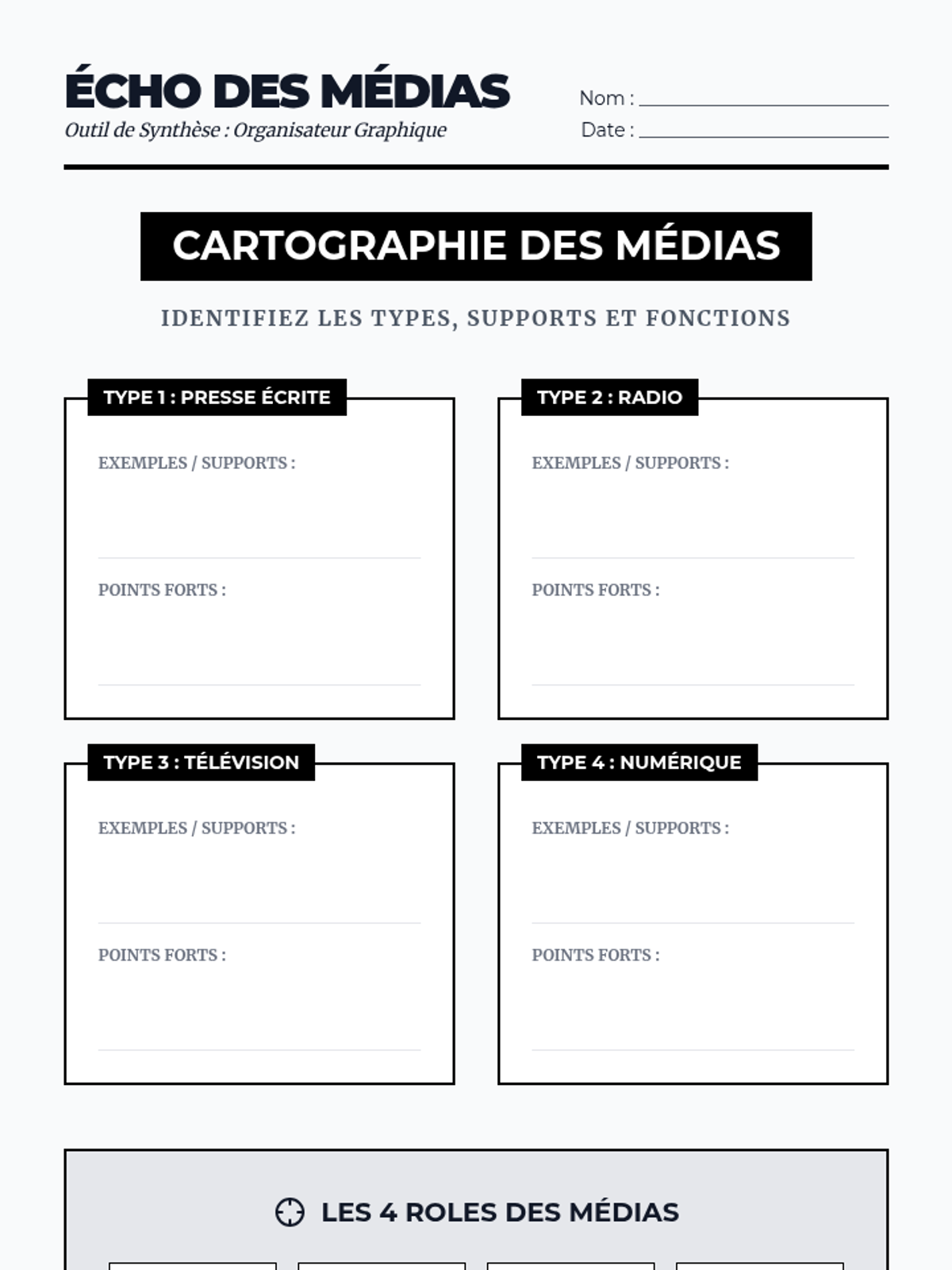
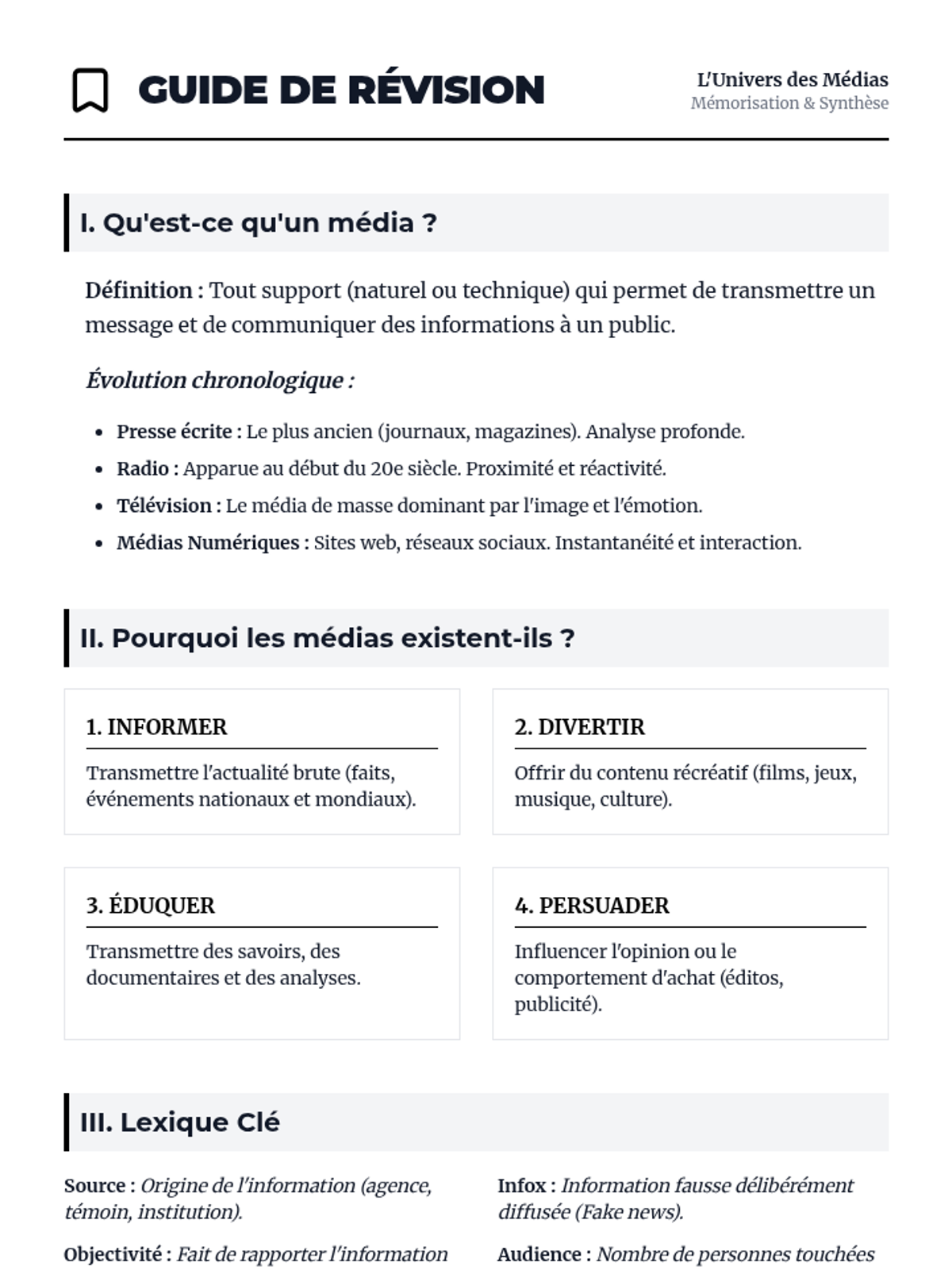
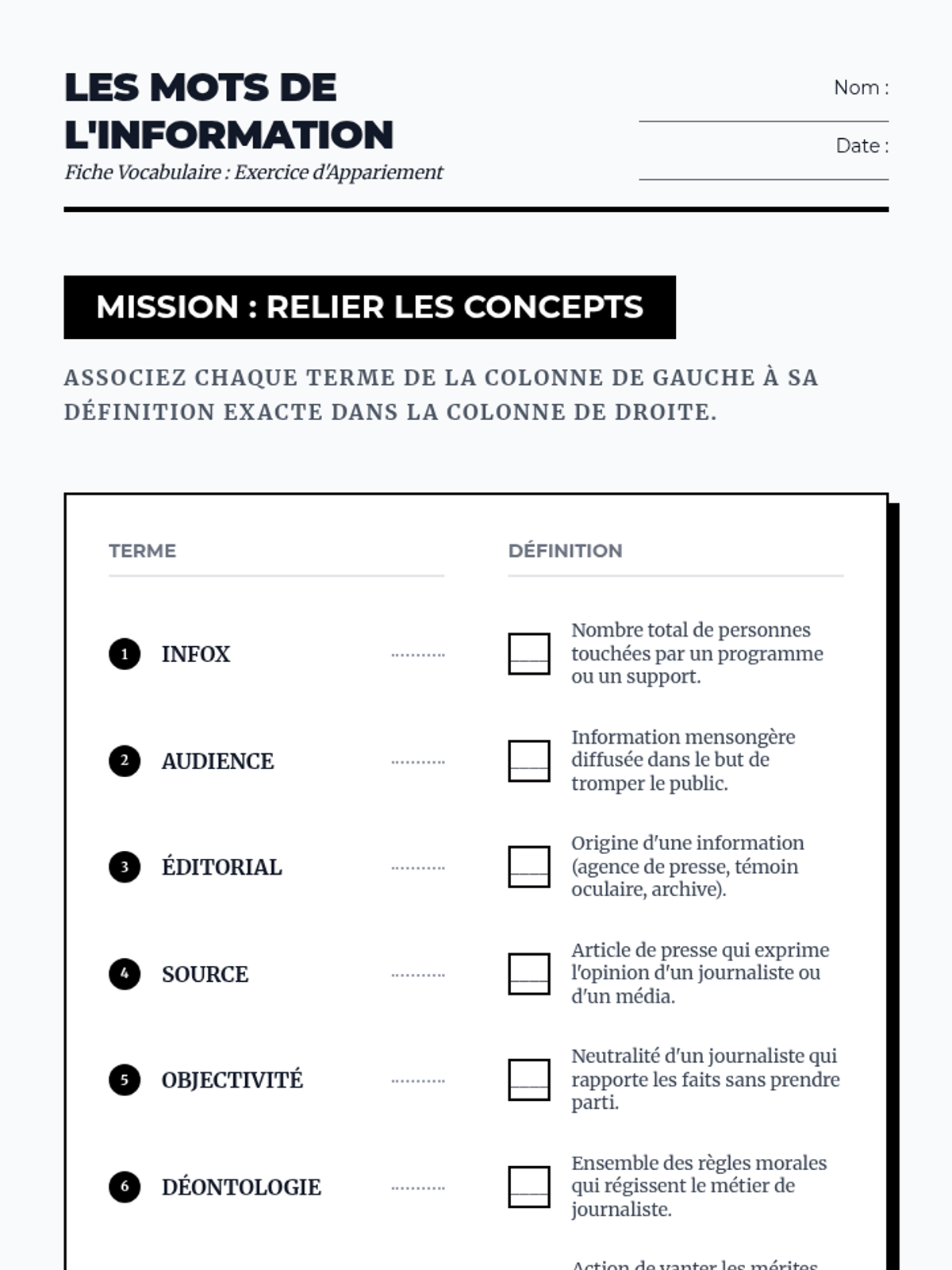
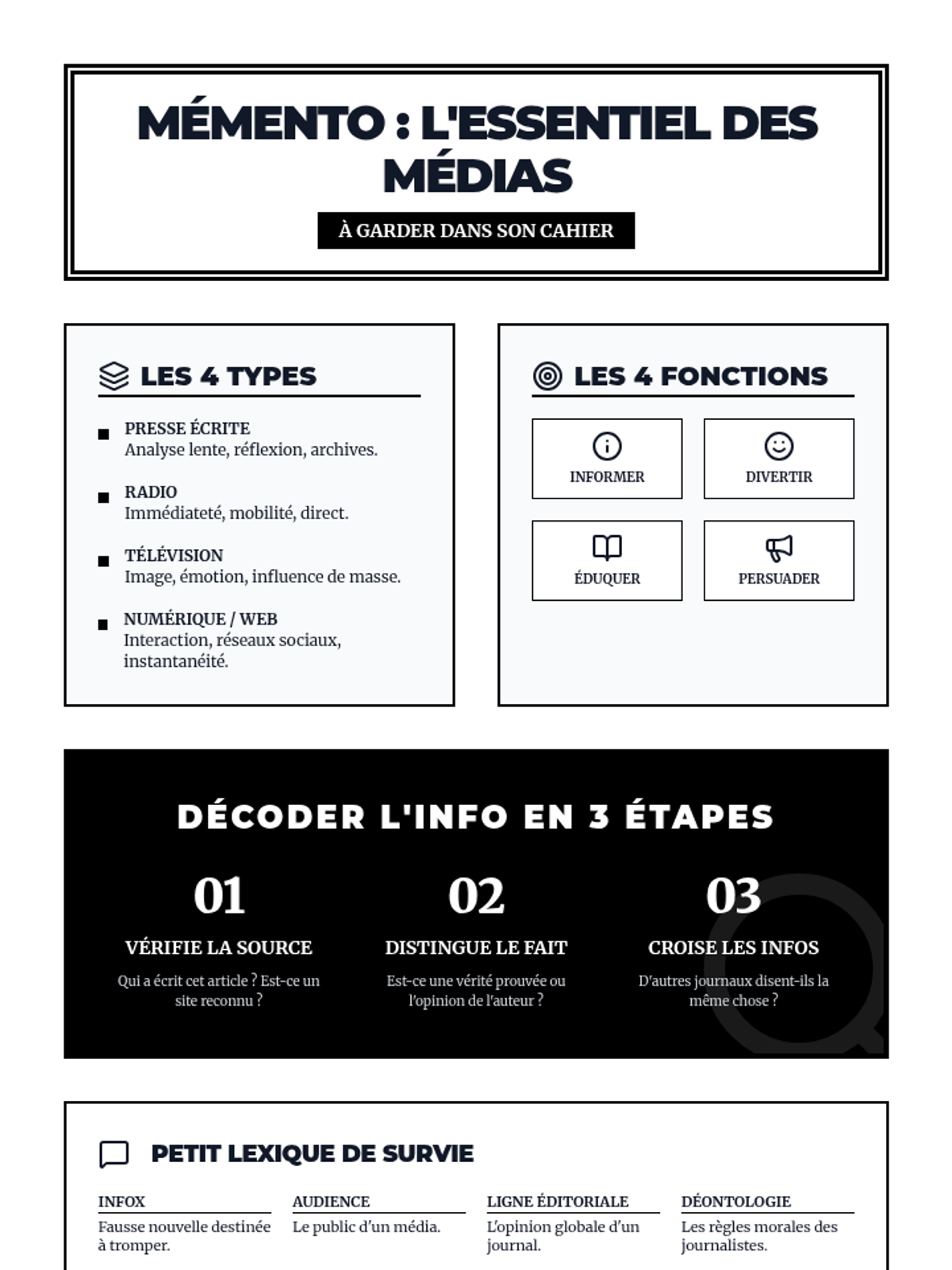
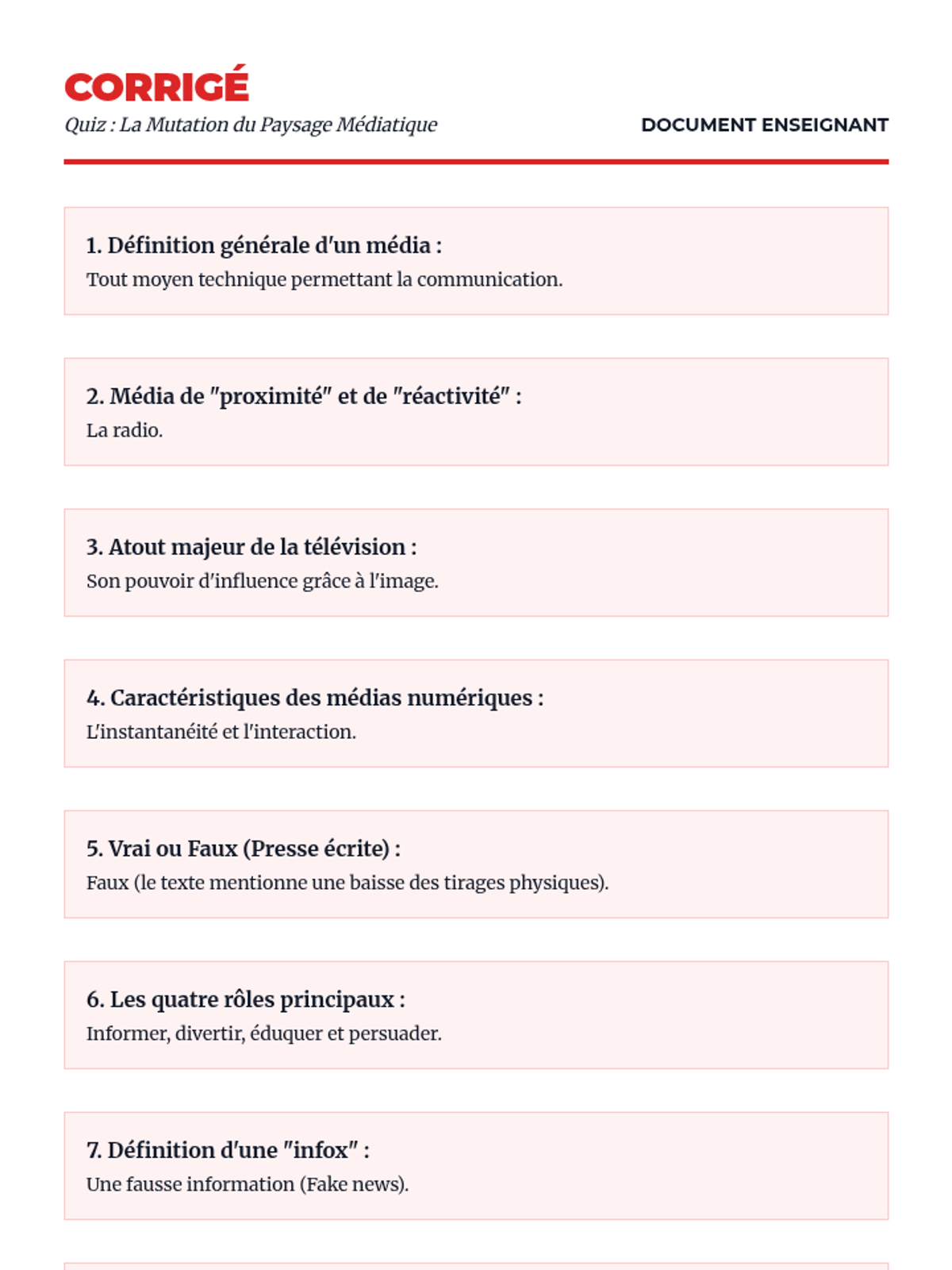
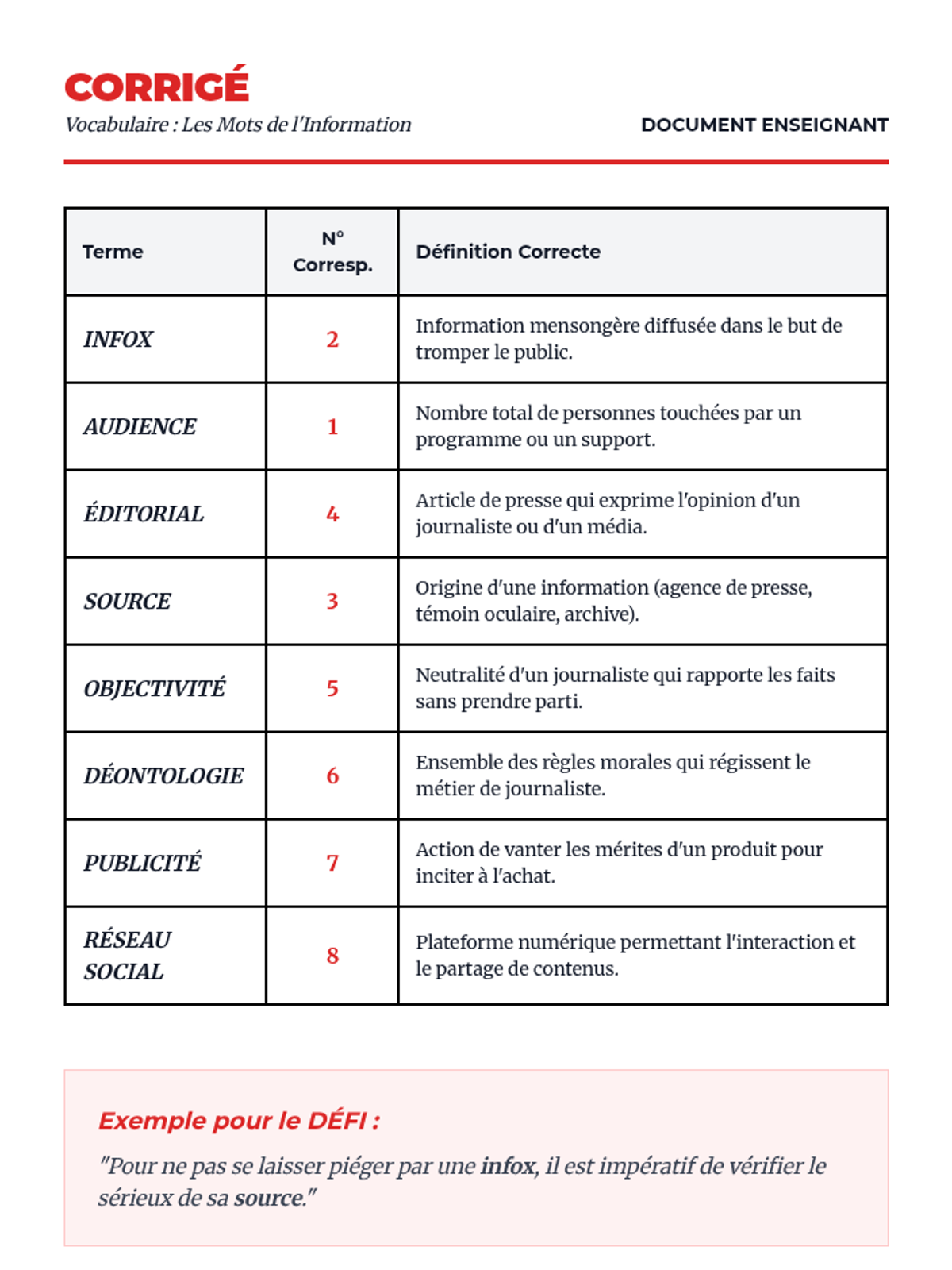
Une séquence pédagogique complète sur les différents types de médias, leurs fonctions et le vocabulaire journalistique. Elle comprend des supports visuels, des outils d'organisation et des évaluations.
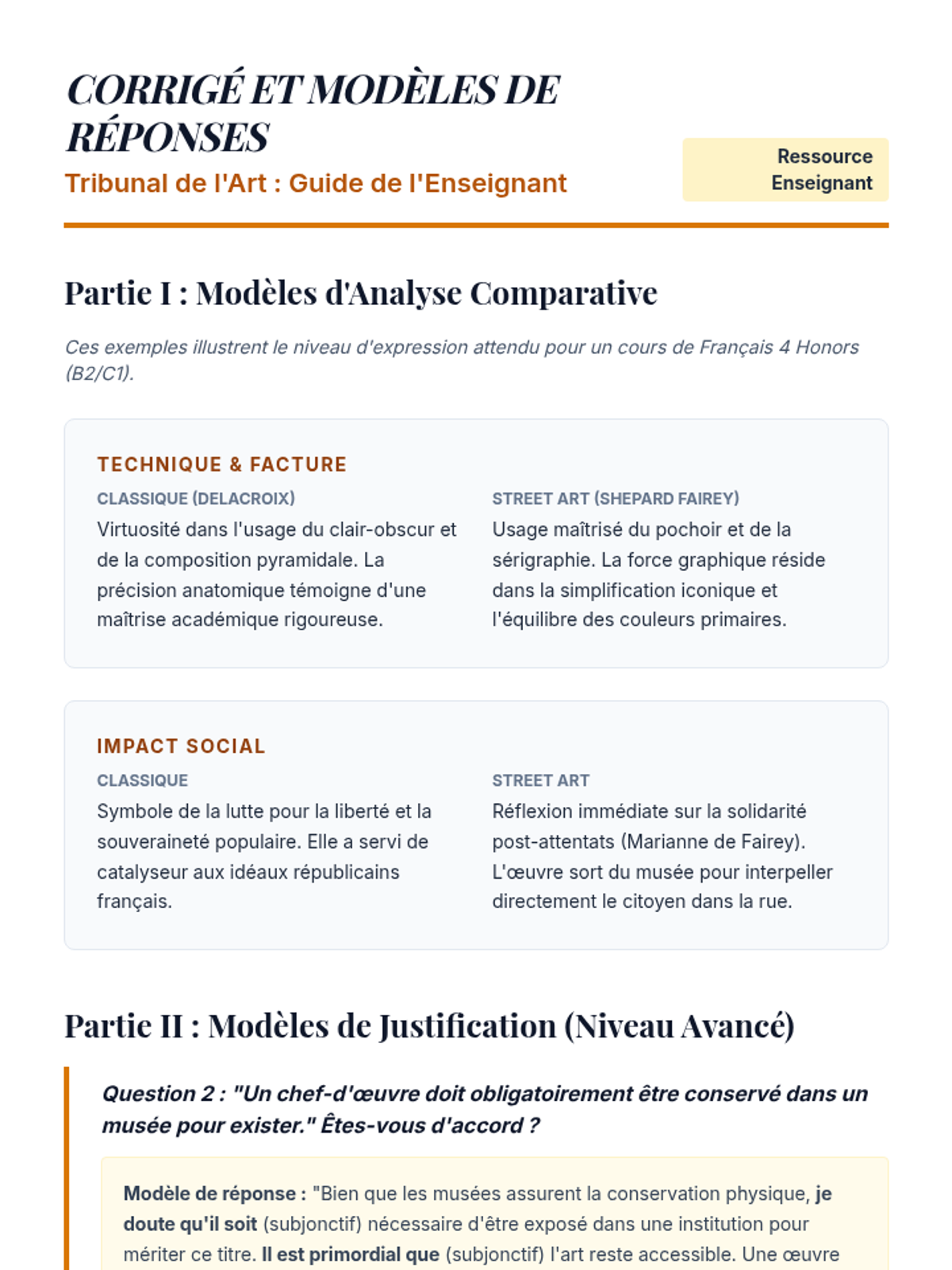
Une séquence pédagogique de 5 séances explorant l'ascension, le régime et la chute du fascisme en Italie, adaptée pour une classe de 1ère LV2. La séquence analyse les mécanismes de pouvoir, la propagande, les lois raciales et la résistance.
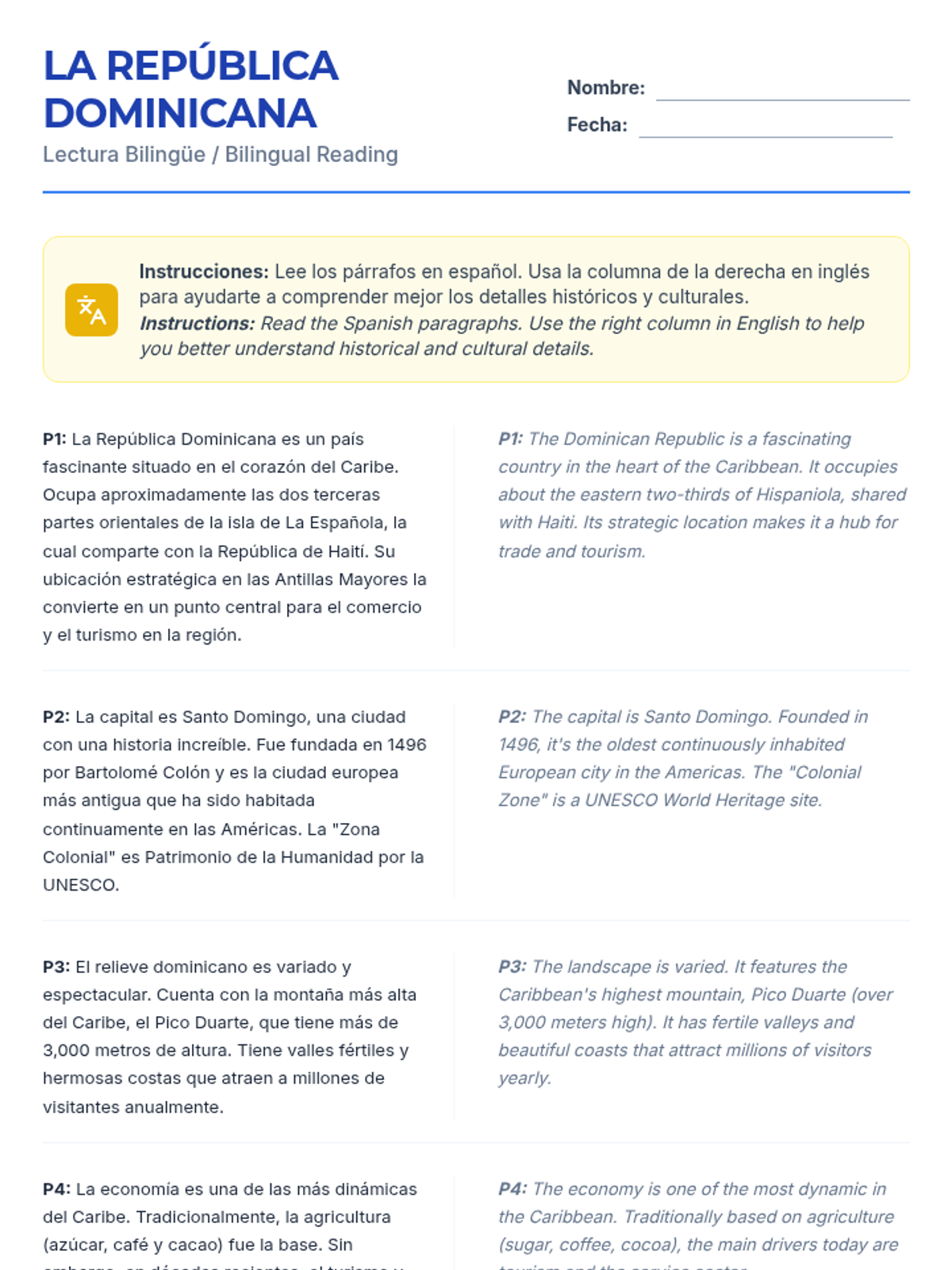
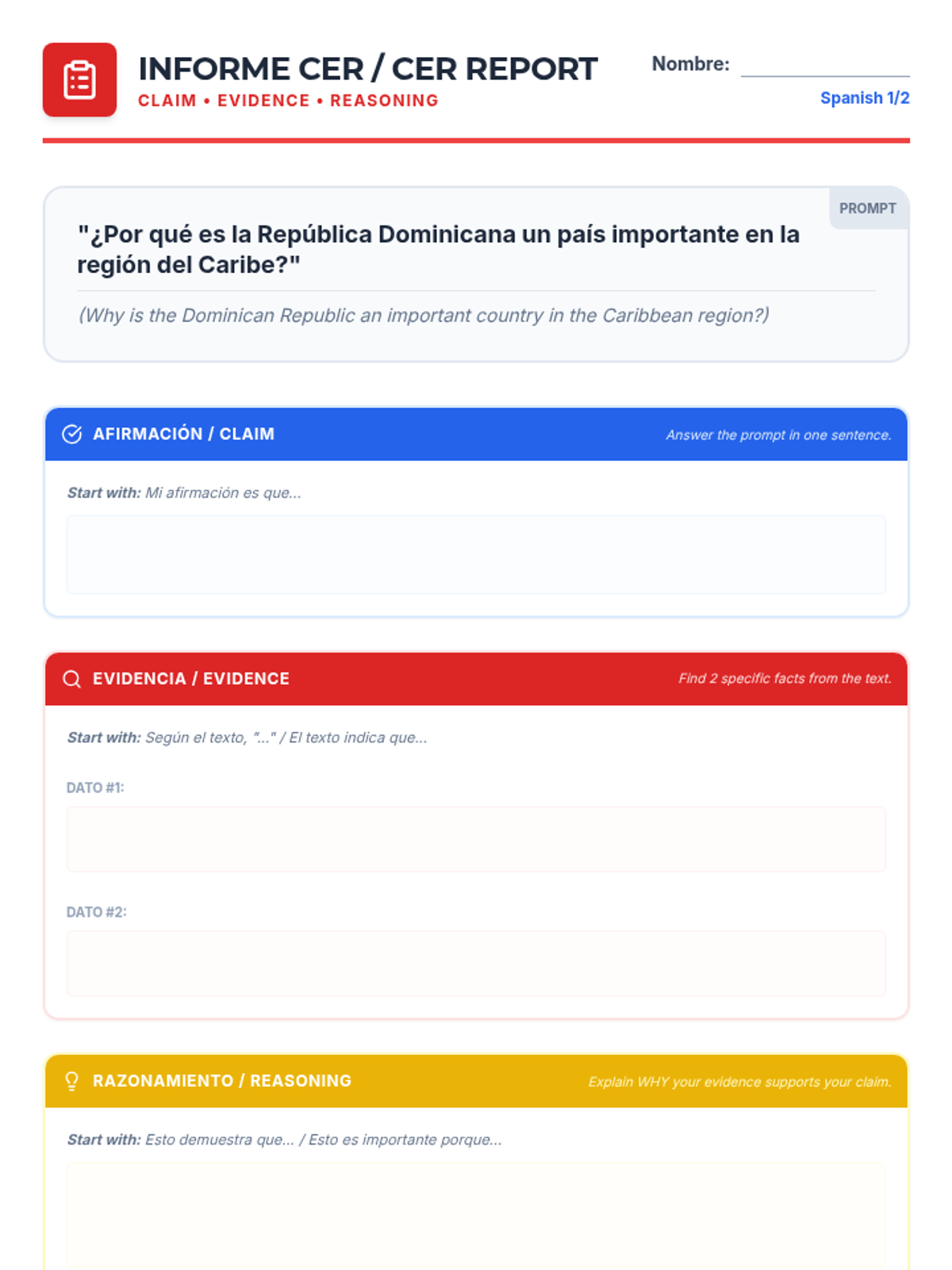
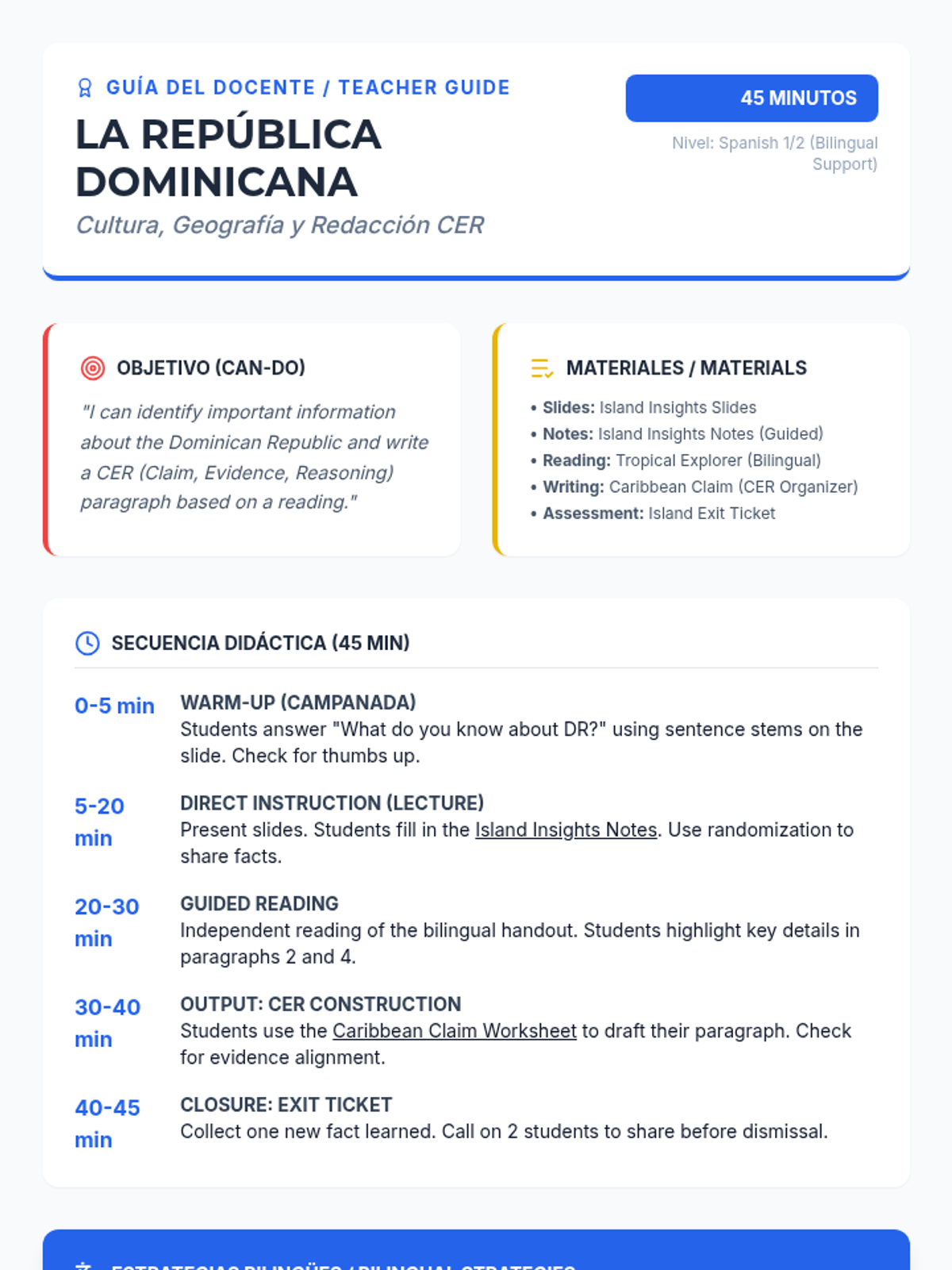
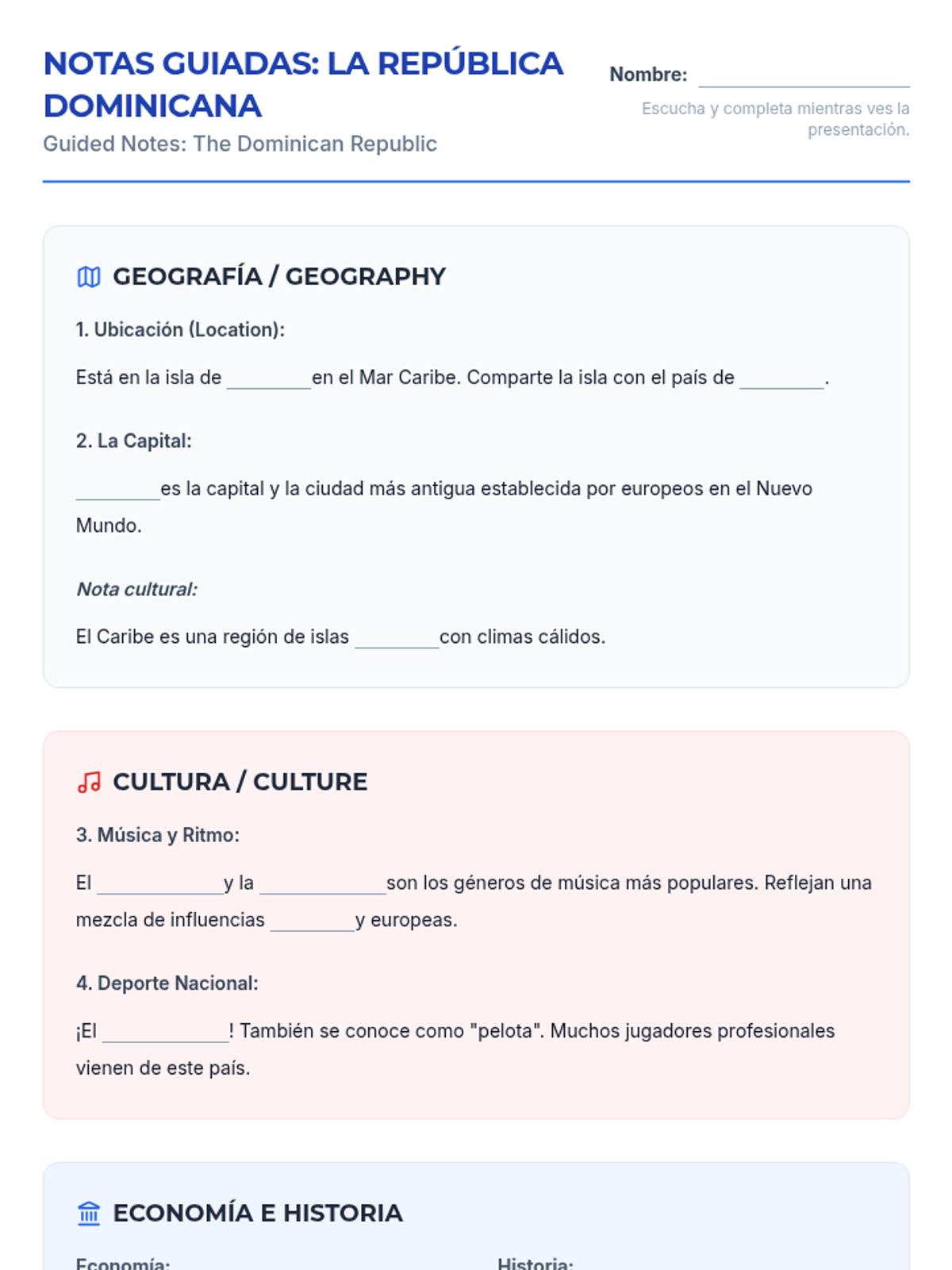
A cultural exploration of the Dominican Republic, focusing on geography, history, and traditions while developing CER writing skills in Spanish.
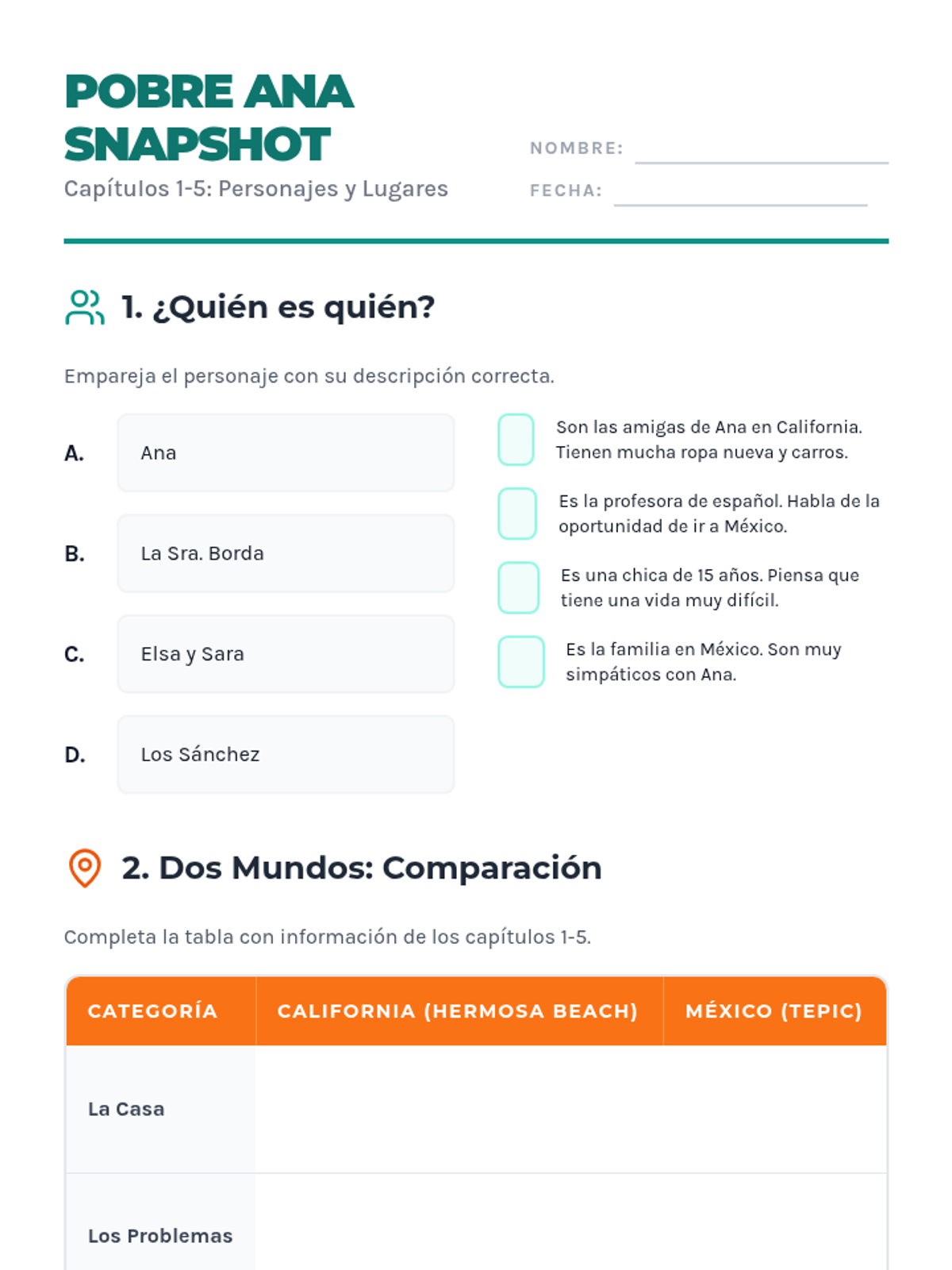
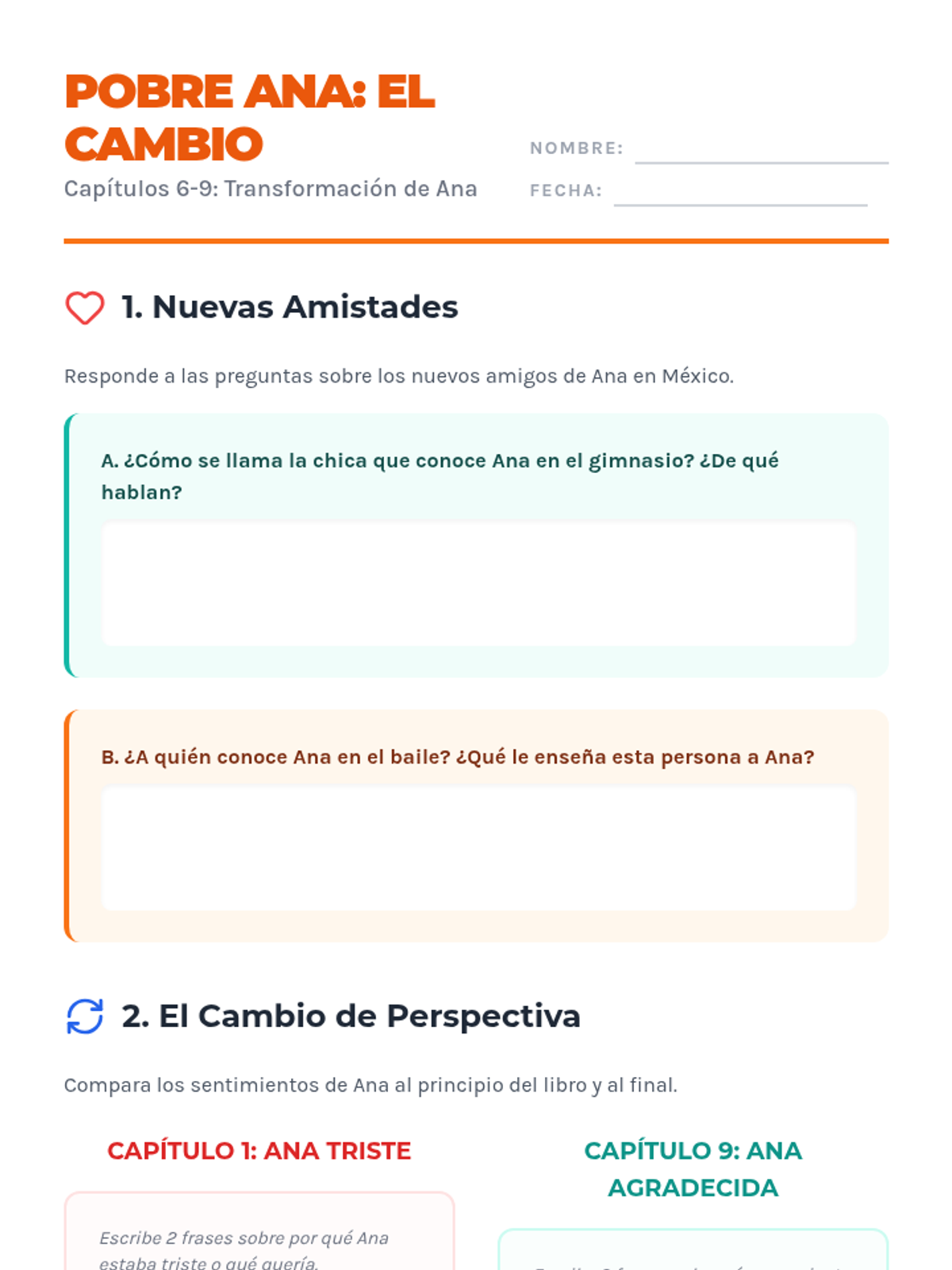
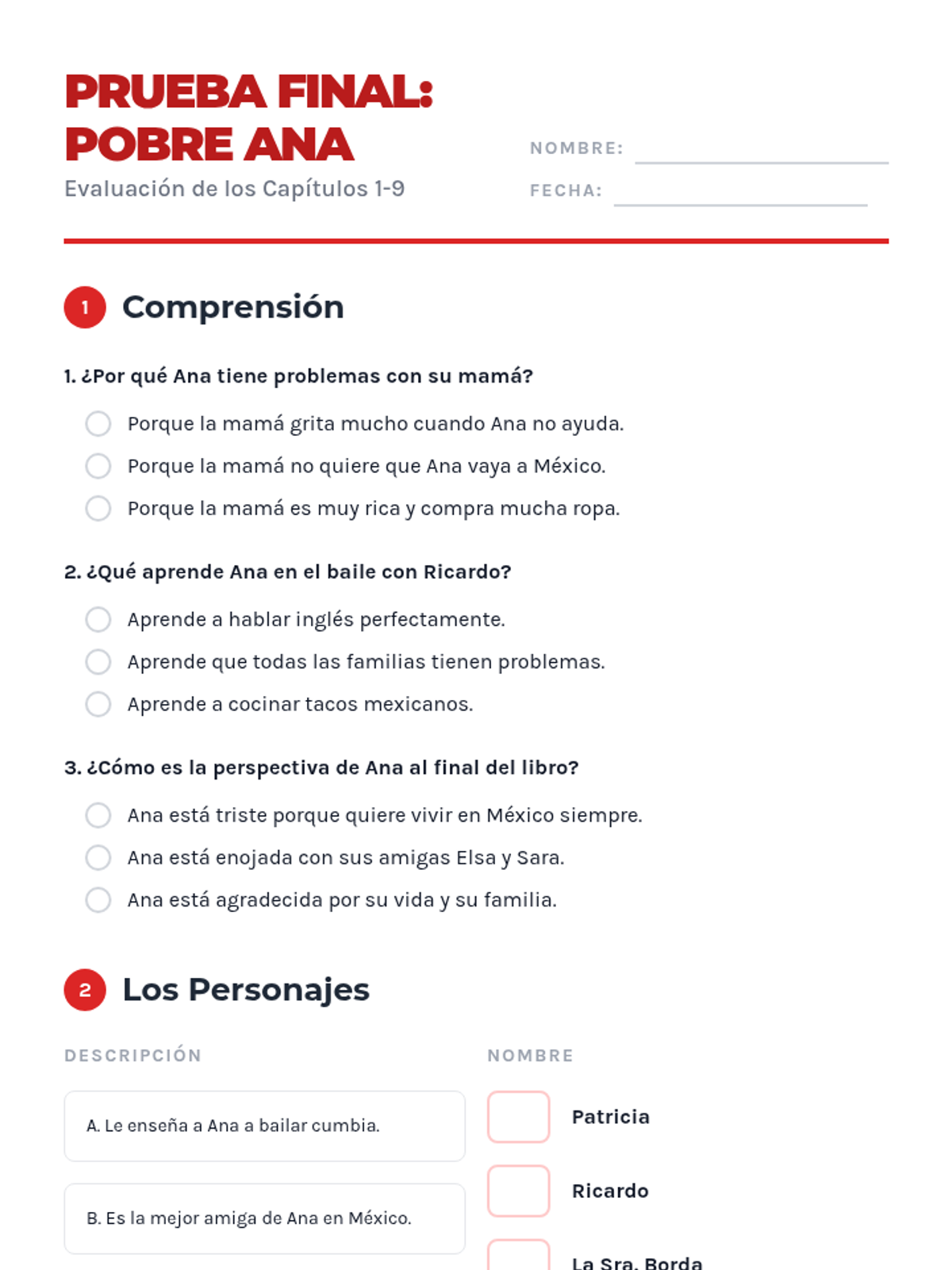
A comprehensive unit for the novel Pobre Ana, exploring character development, cultural comparisons, and narrative comprehension for Spanish 1 students.
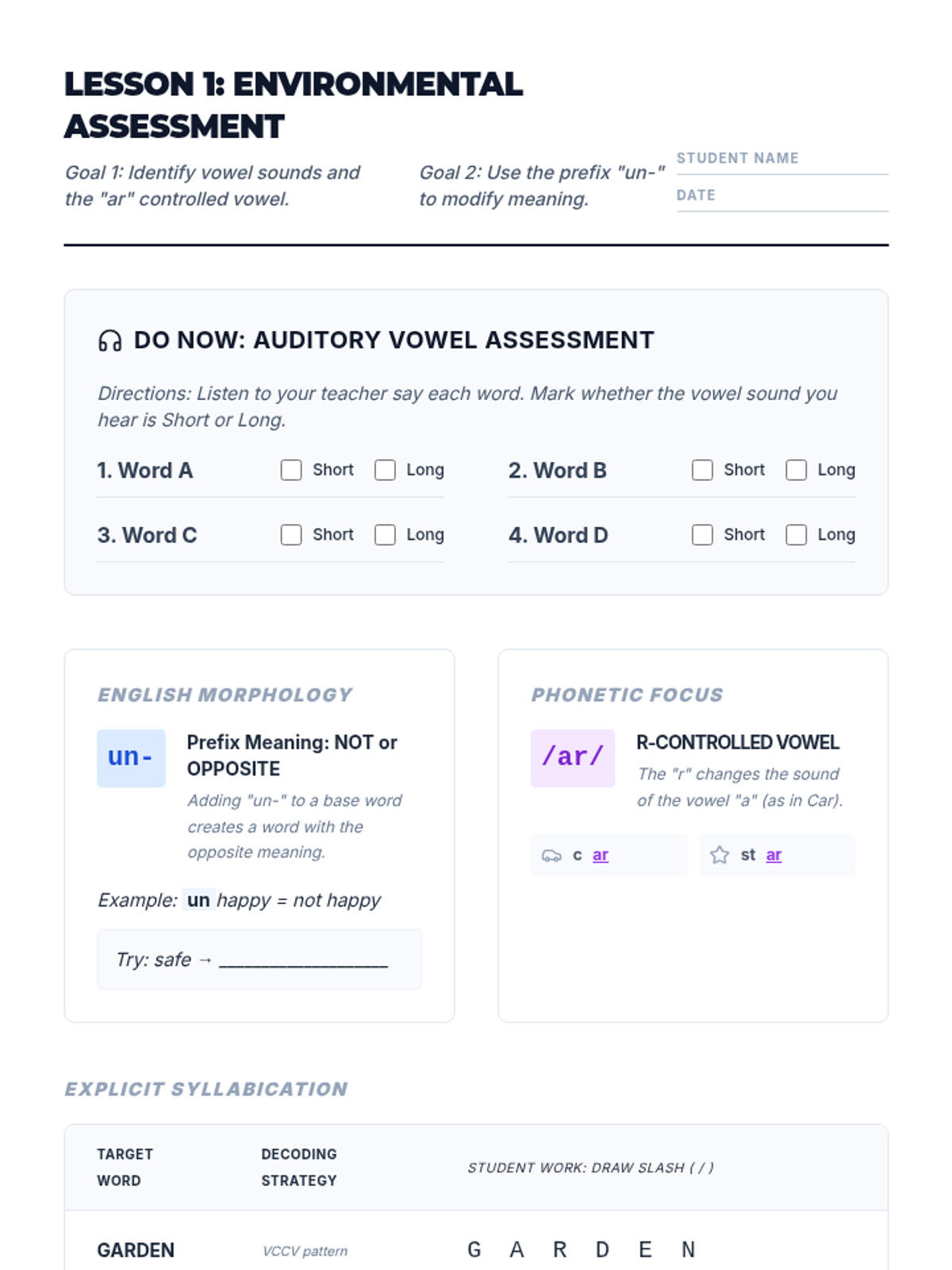
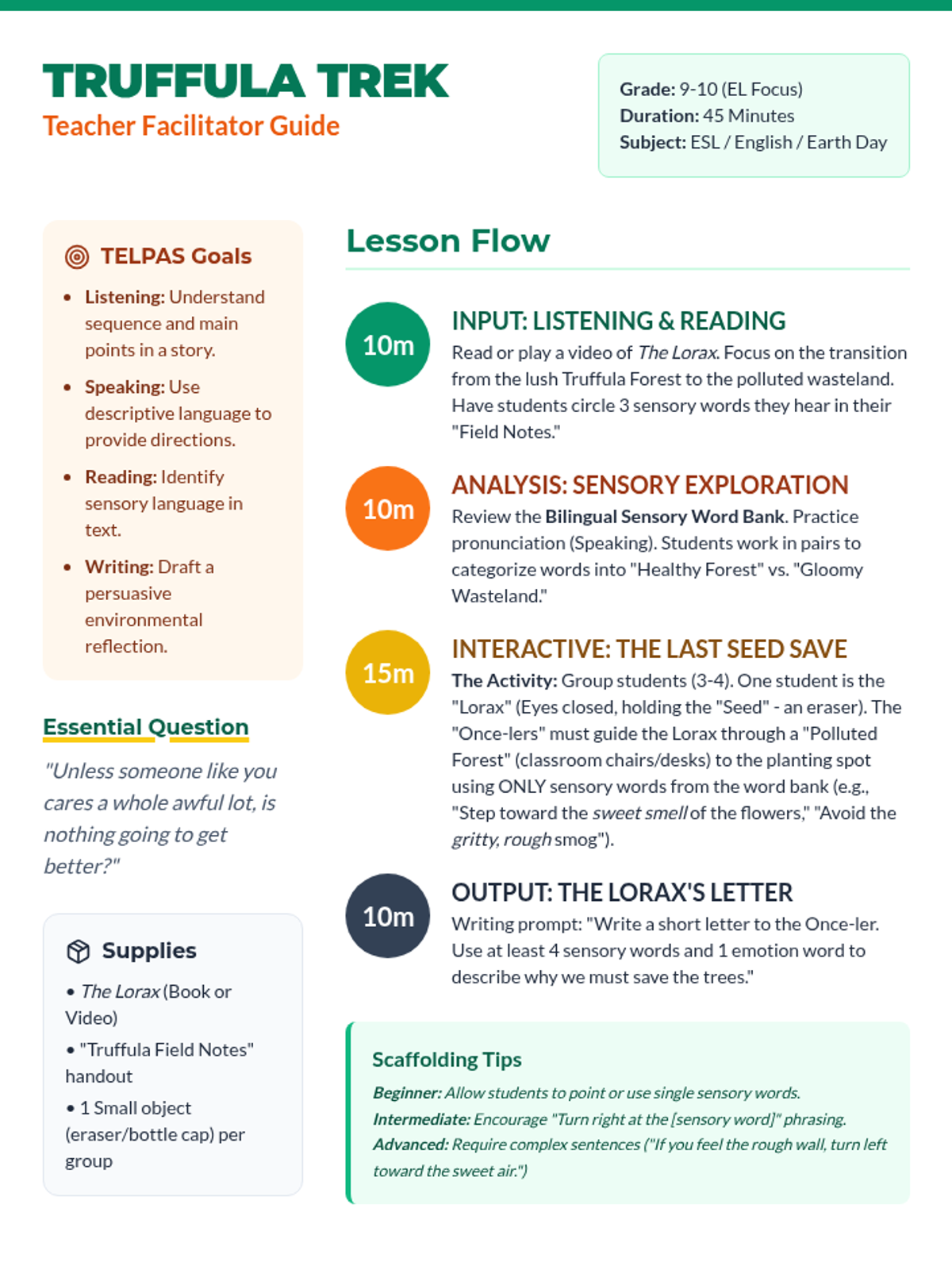
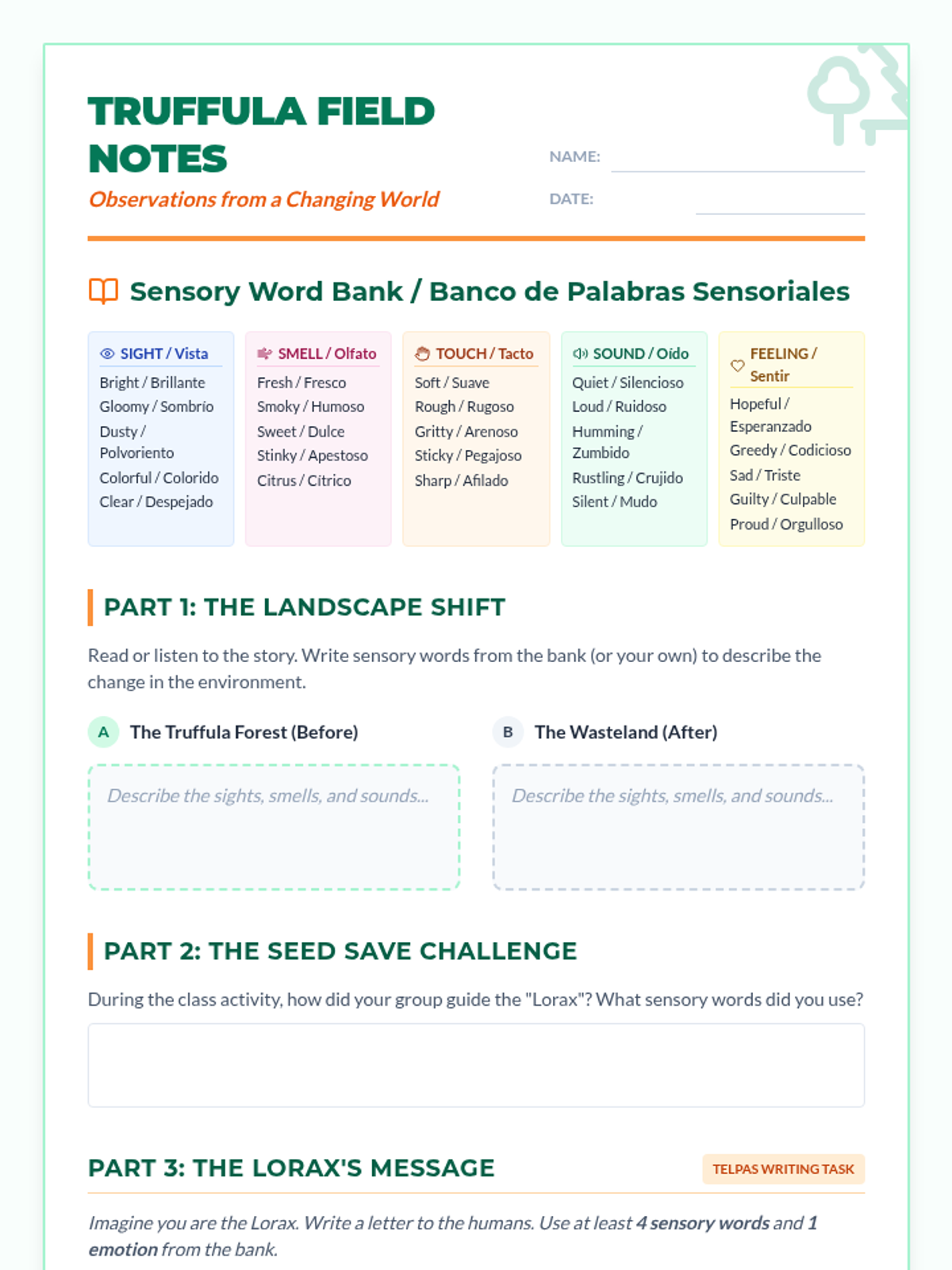
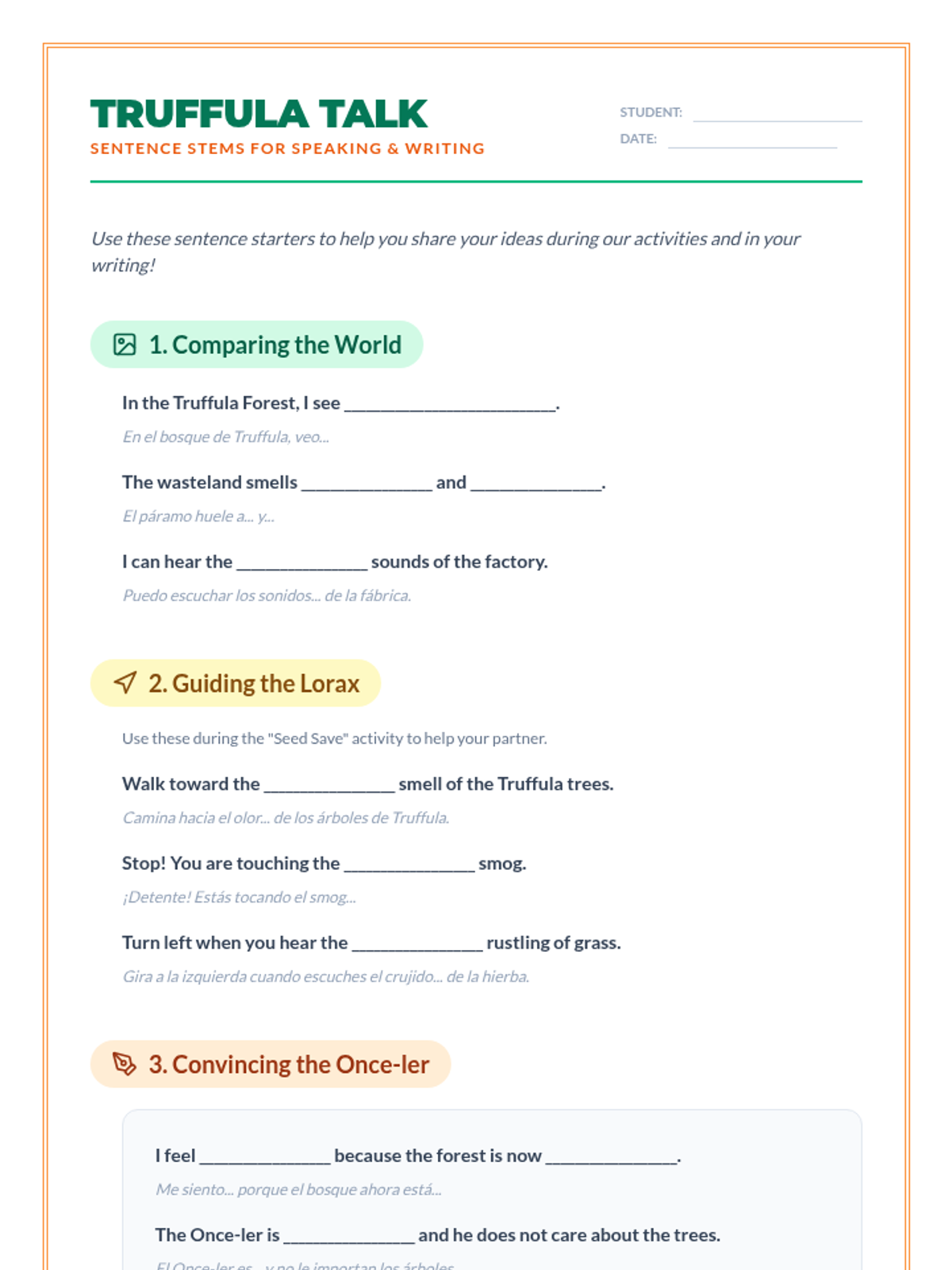
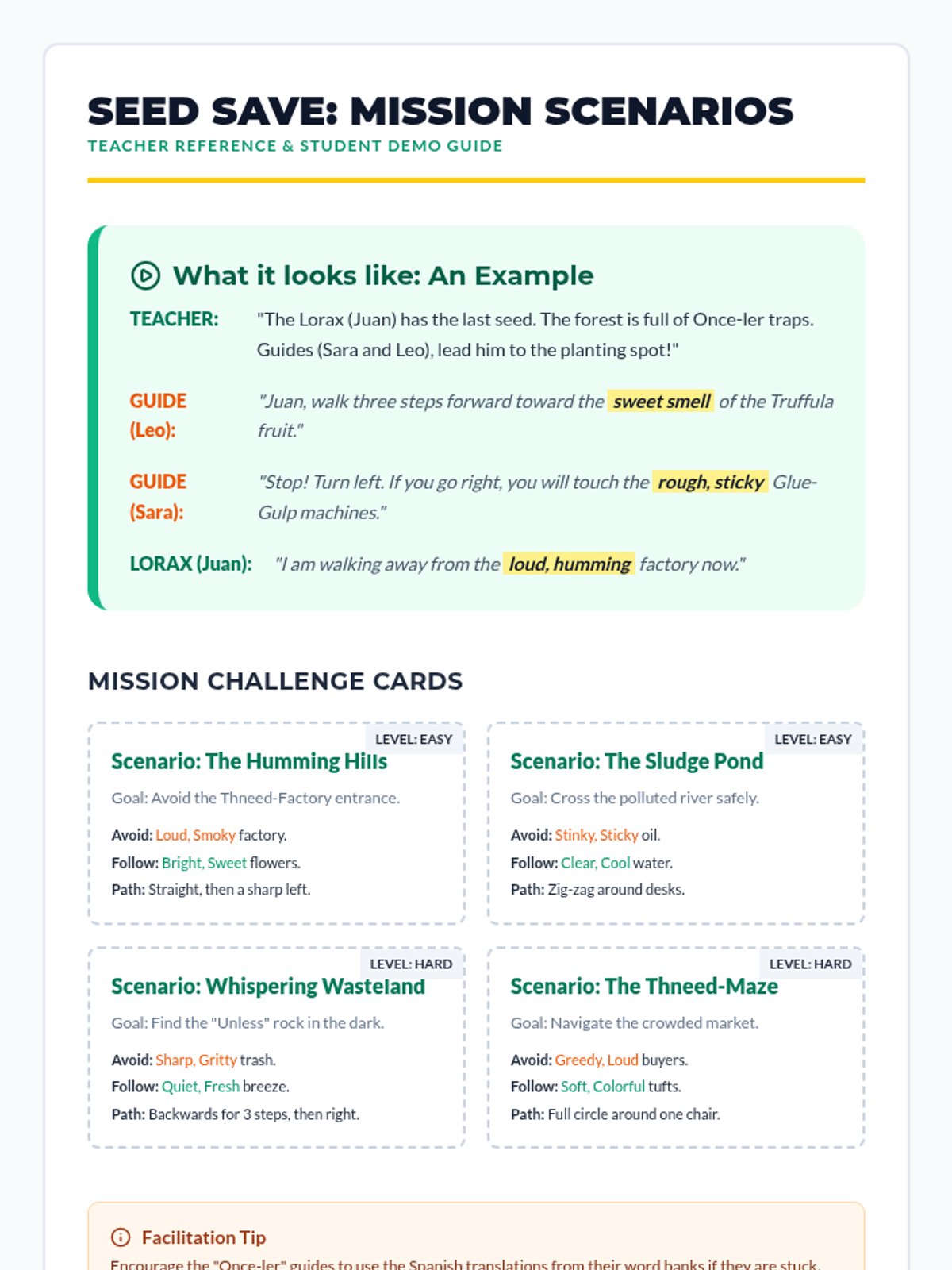
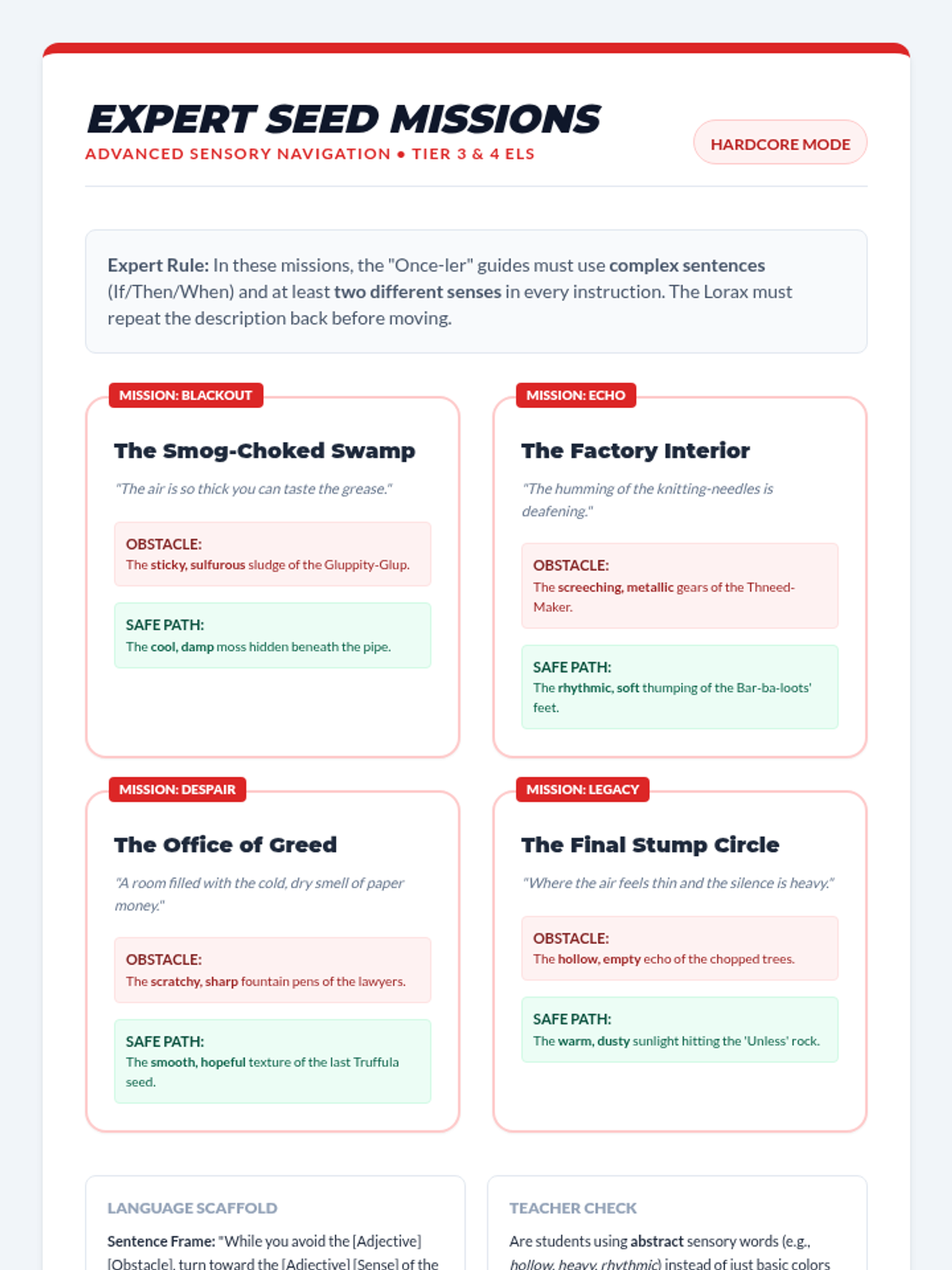
A comprehensive Earth Day lesson for 9th-10th grade ELs based on The Lorax, focusing on TELPAS domains: listening, speaking, reading, and writing through sensory language.
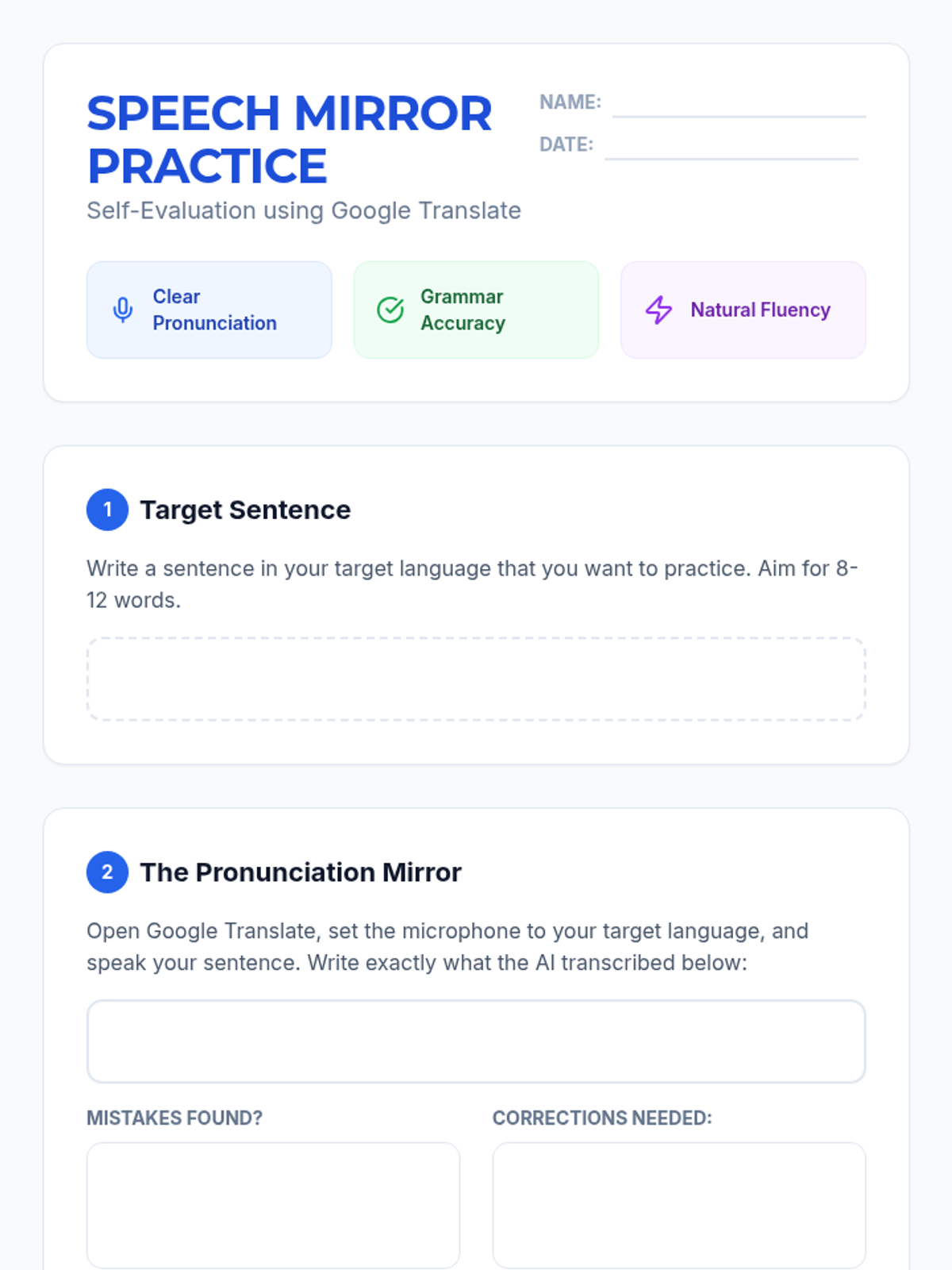
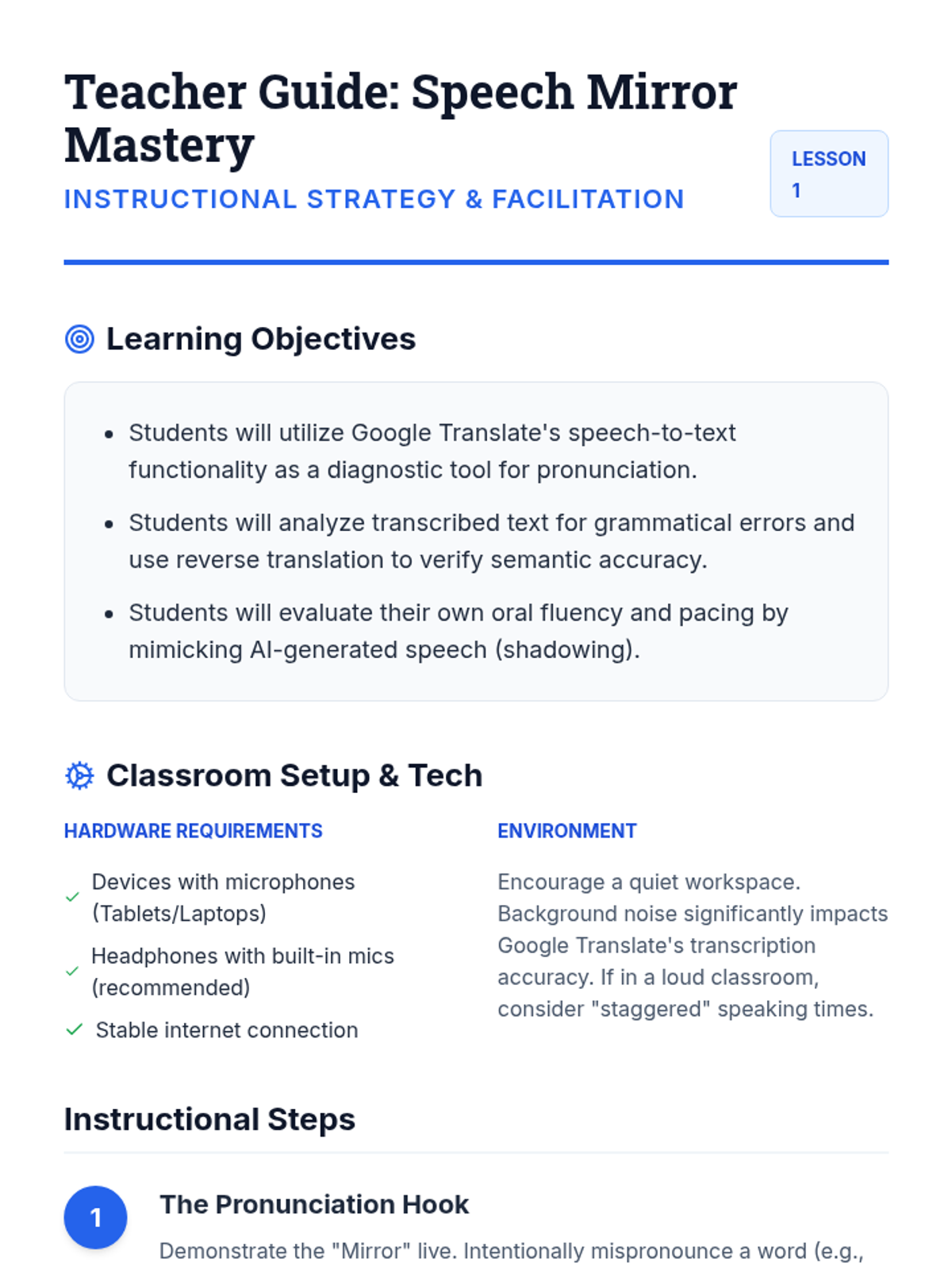
A sequence focused on leveraging digital translation tools for language self-assessment and speech improvement. Students learn to use Google Translate not just for translation, but as a 'mirror' for their own pronunciation, grammar, and fluency.
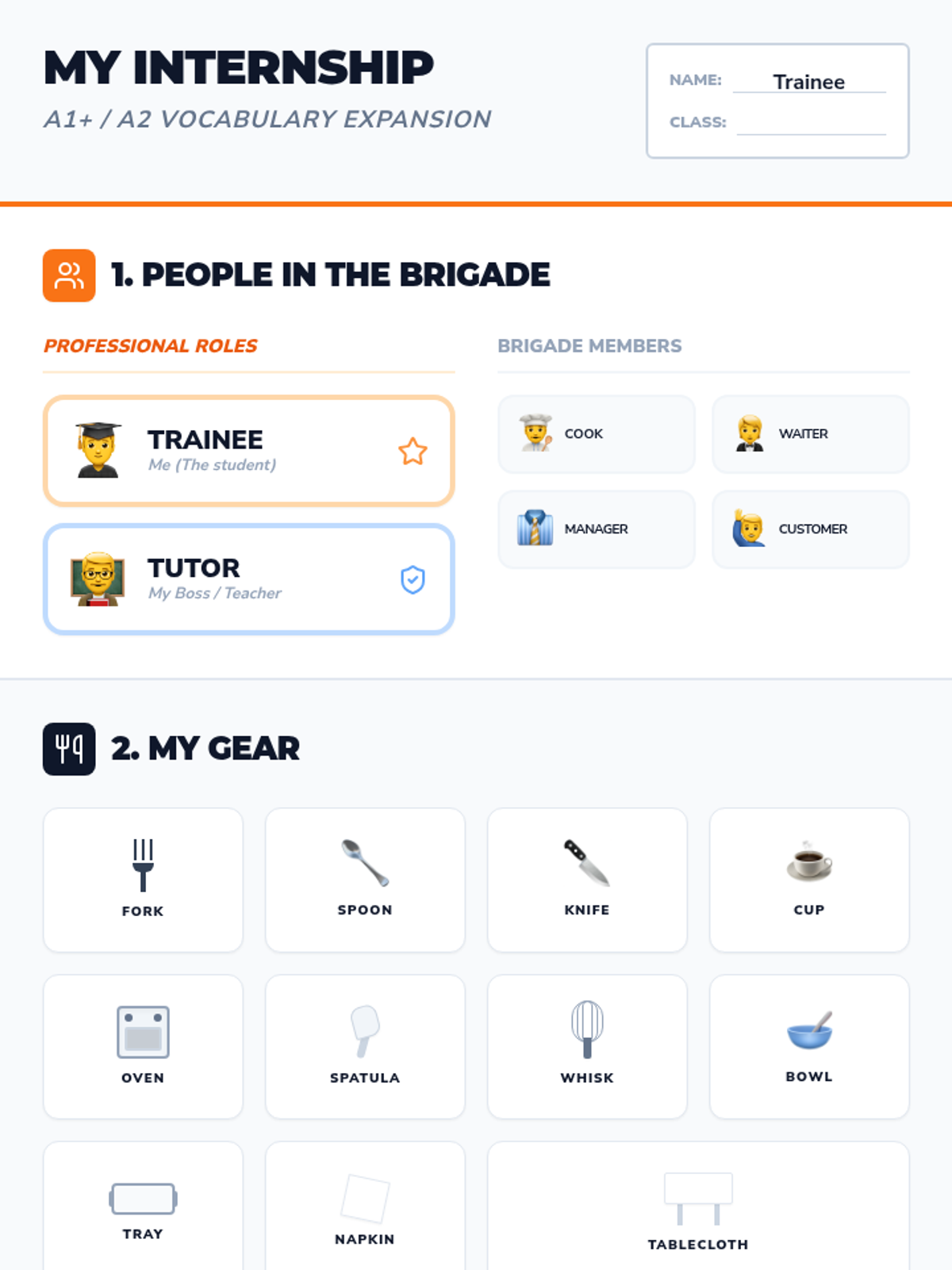
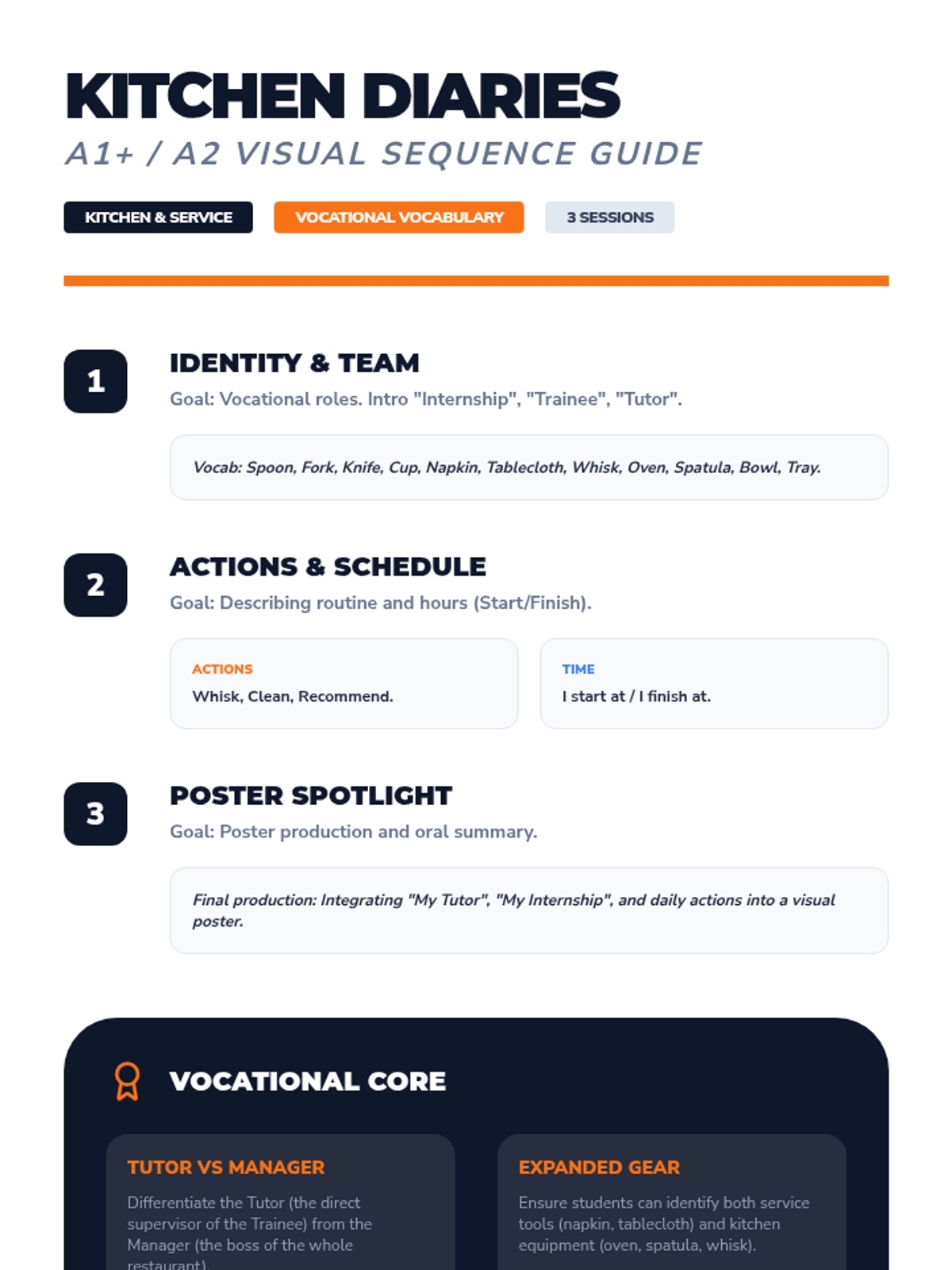
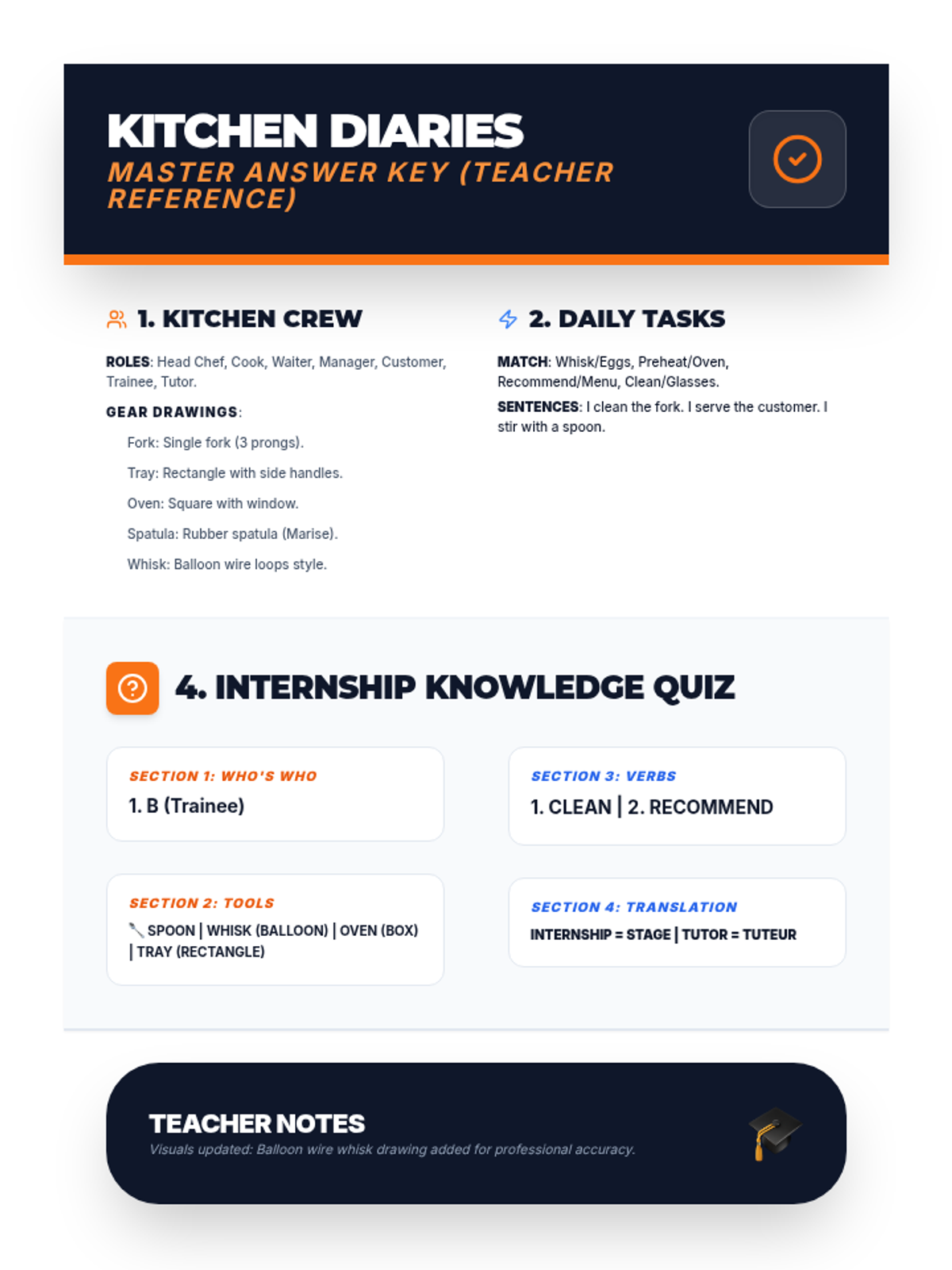
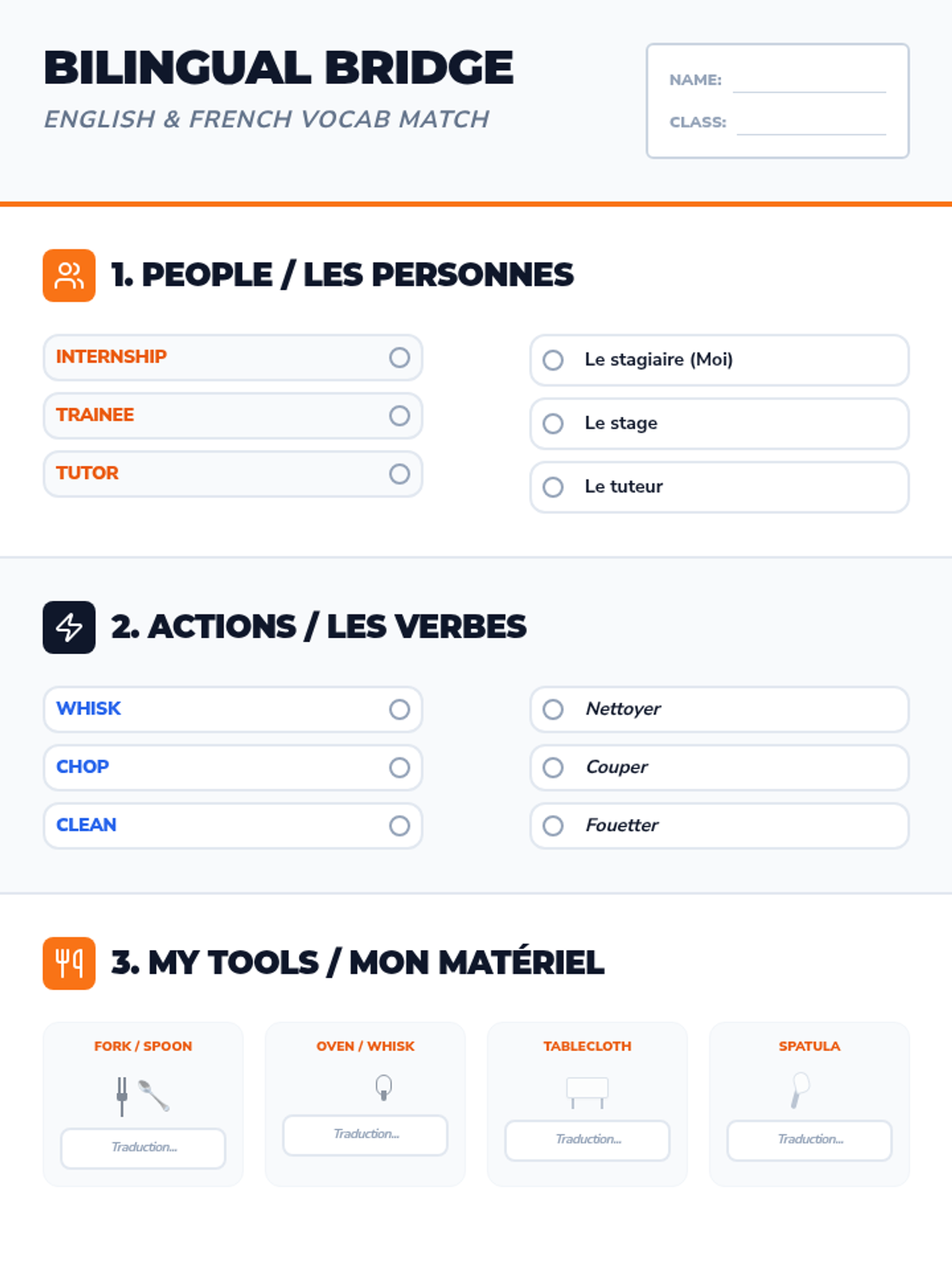
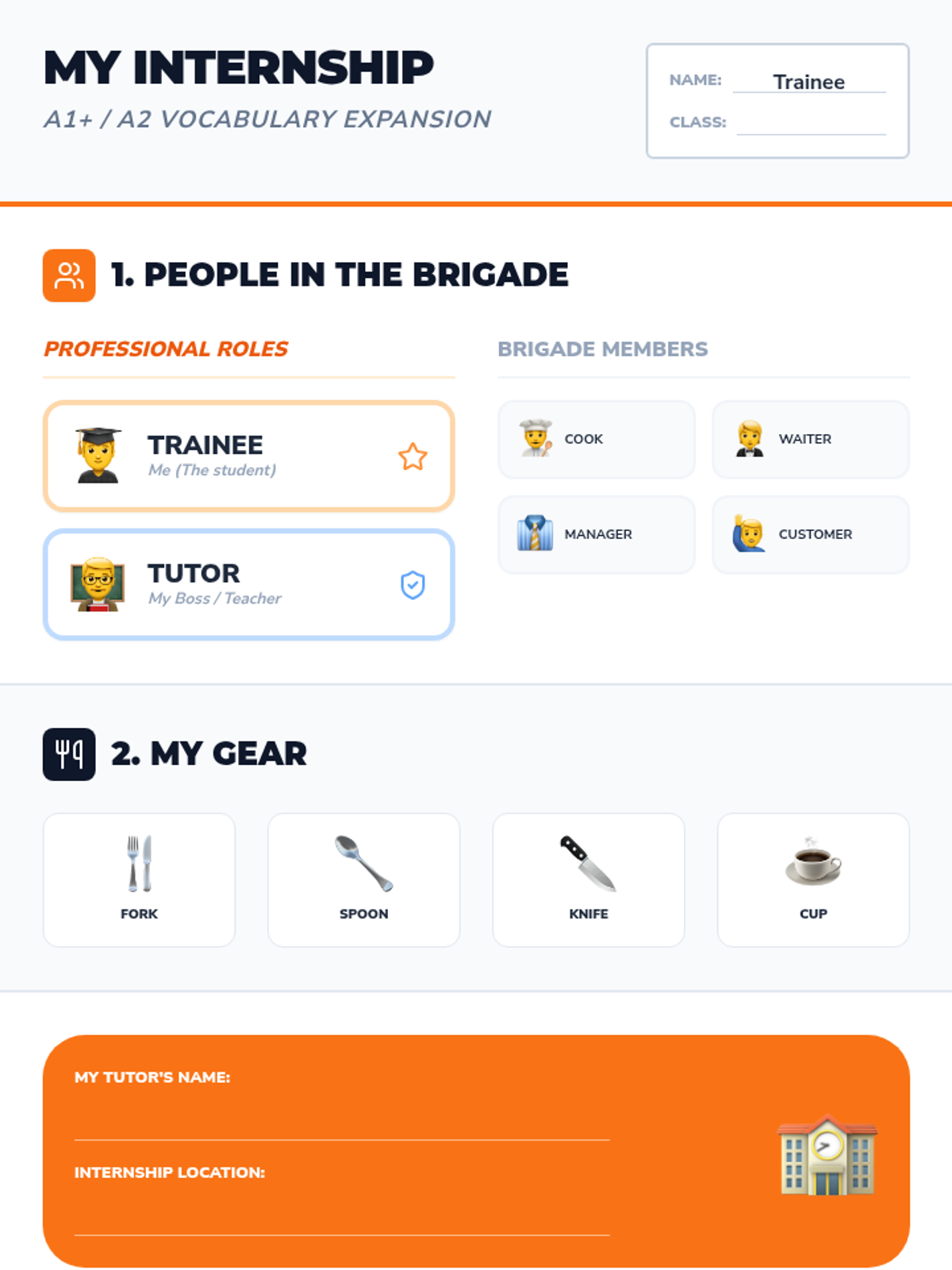
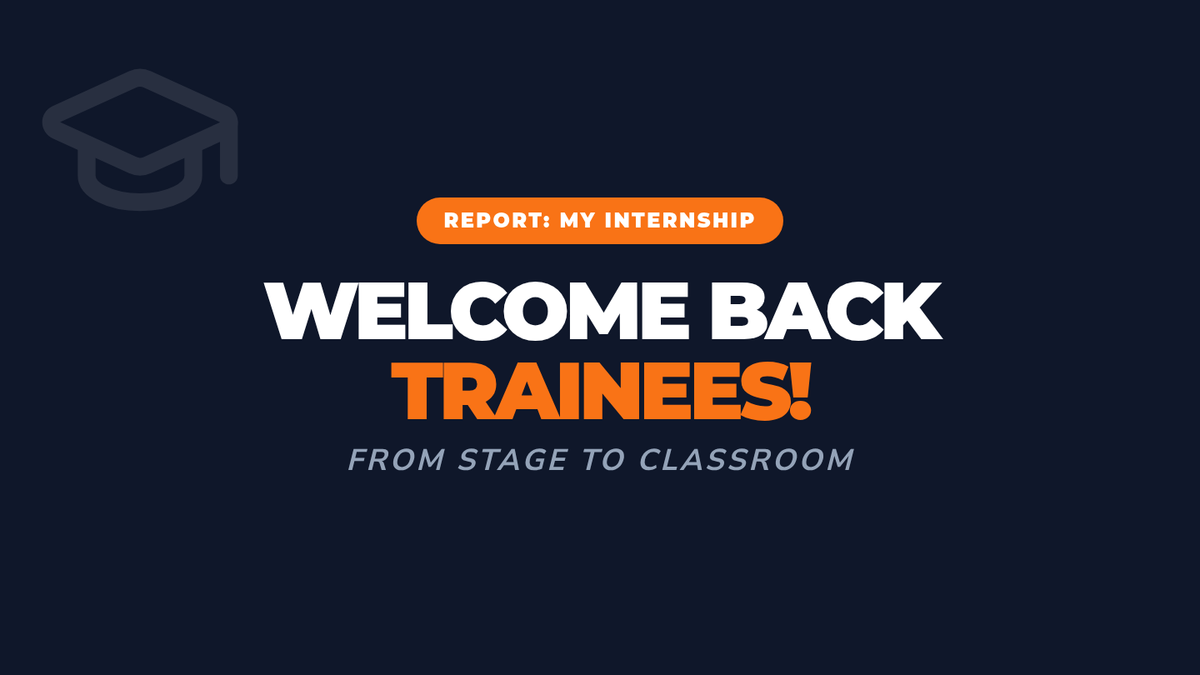
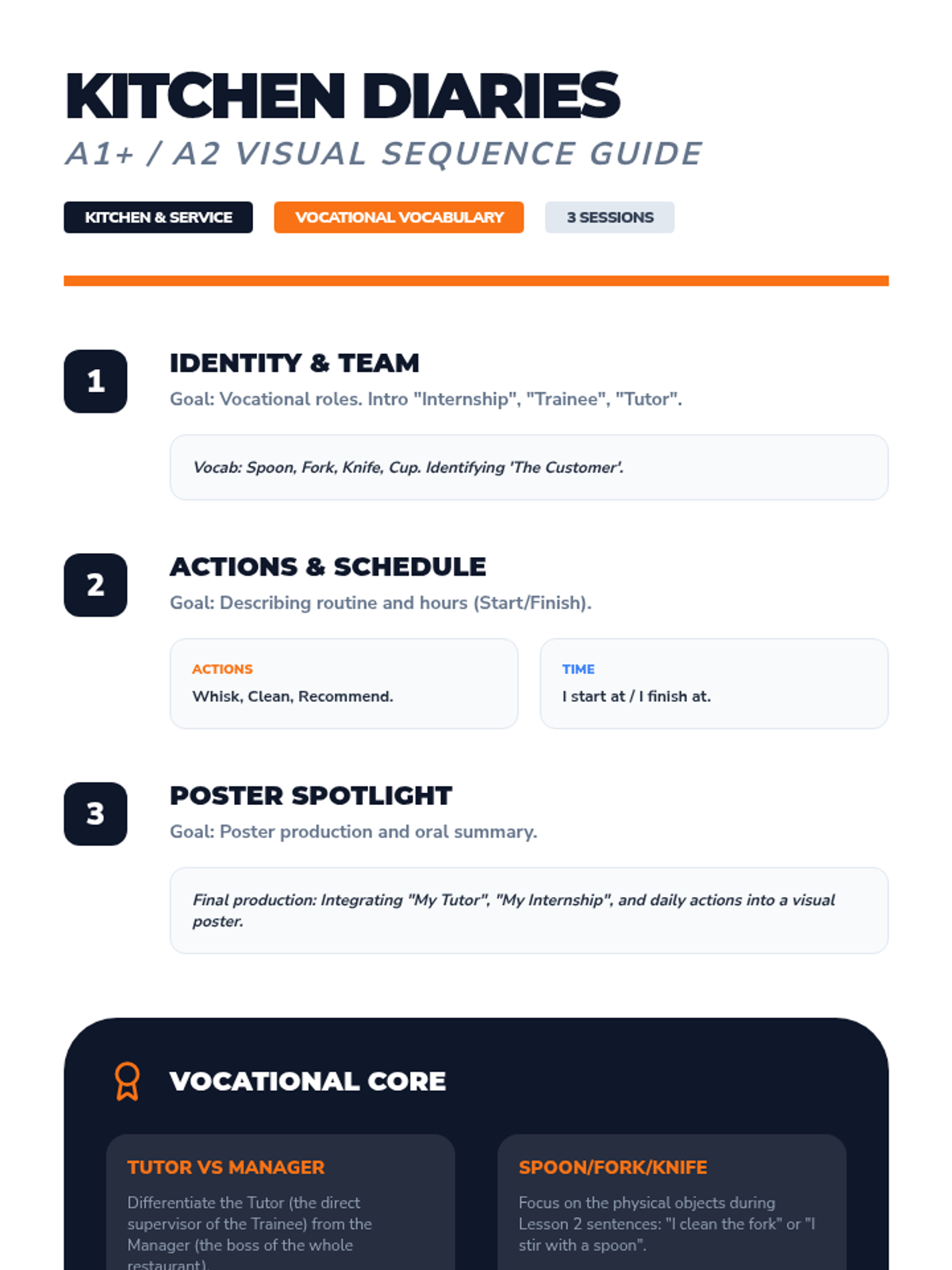
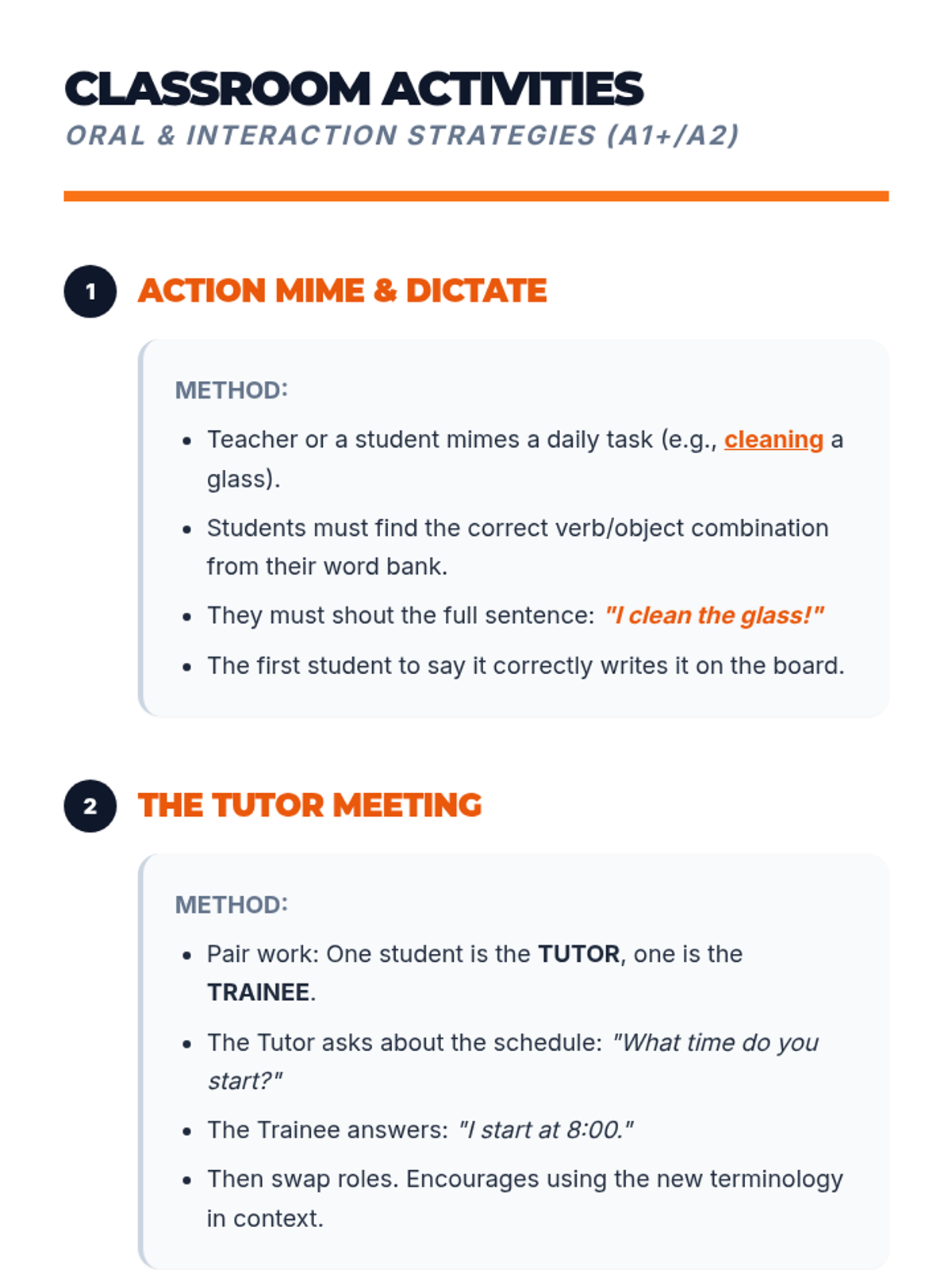
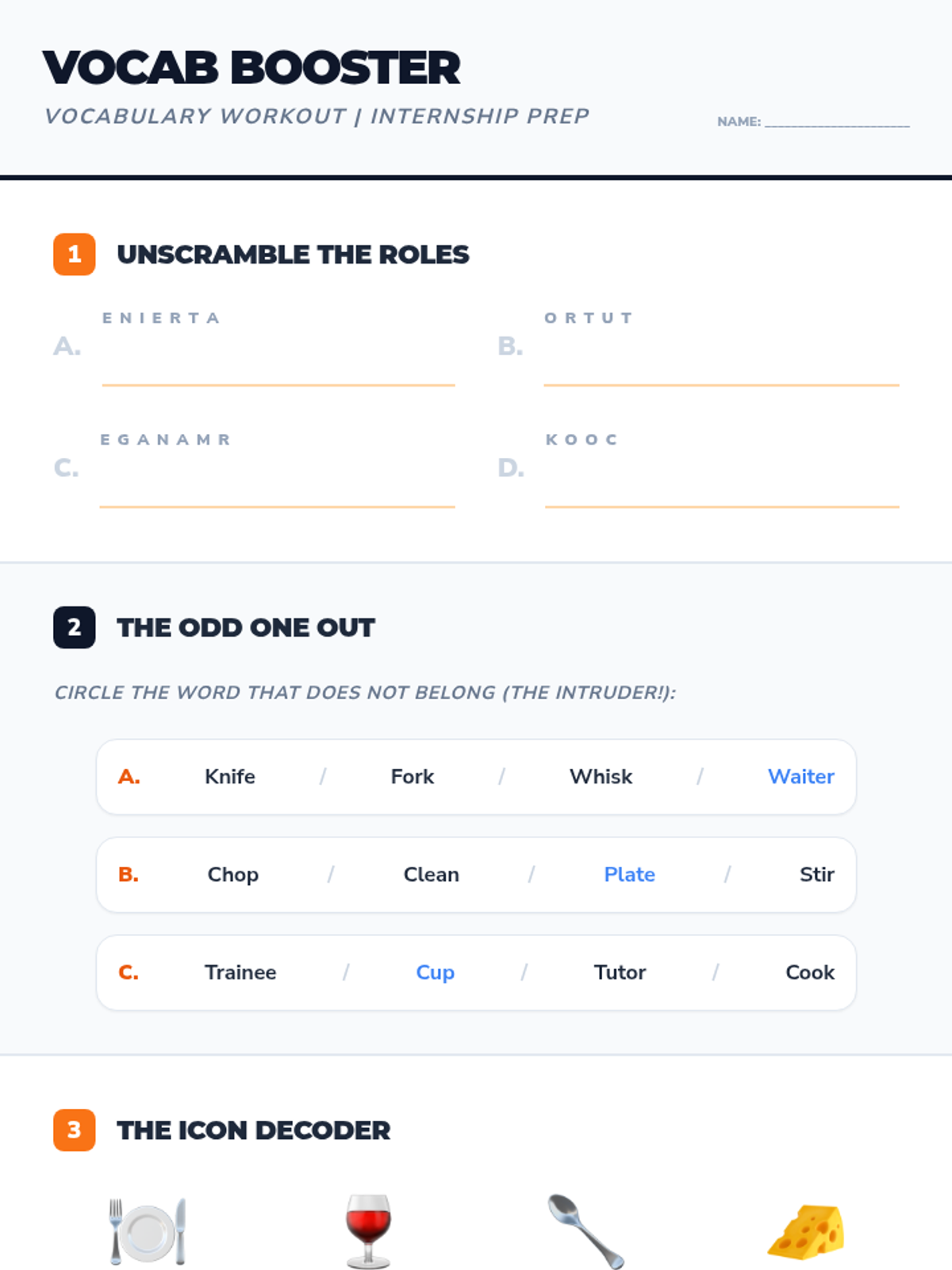
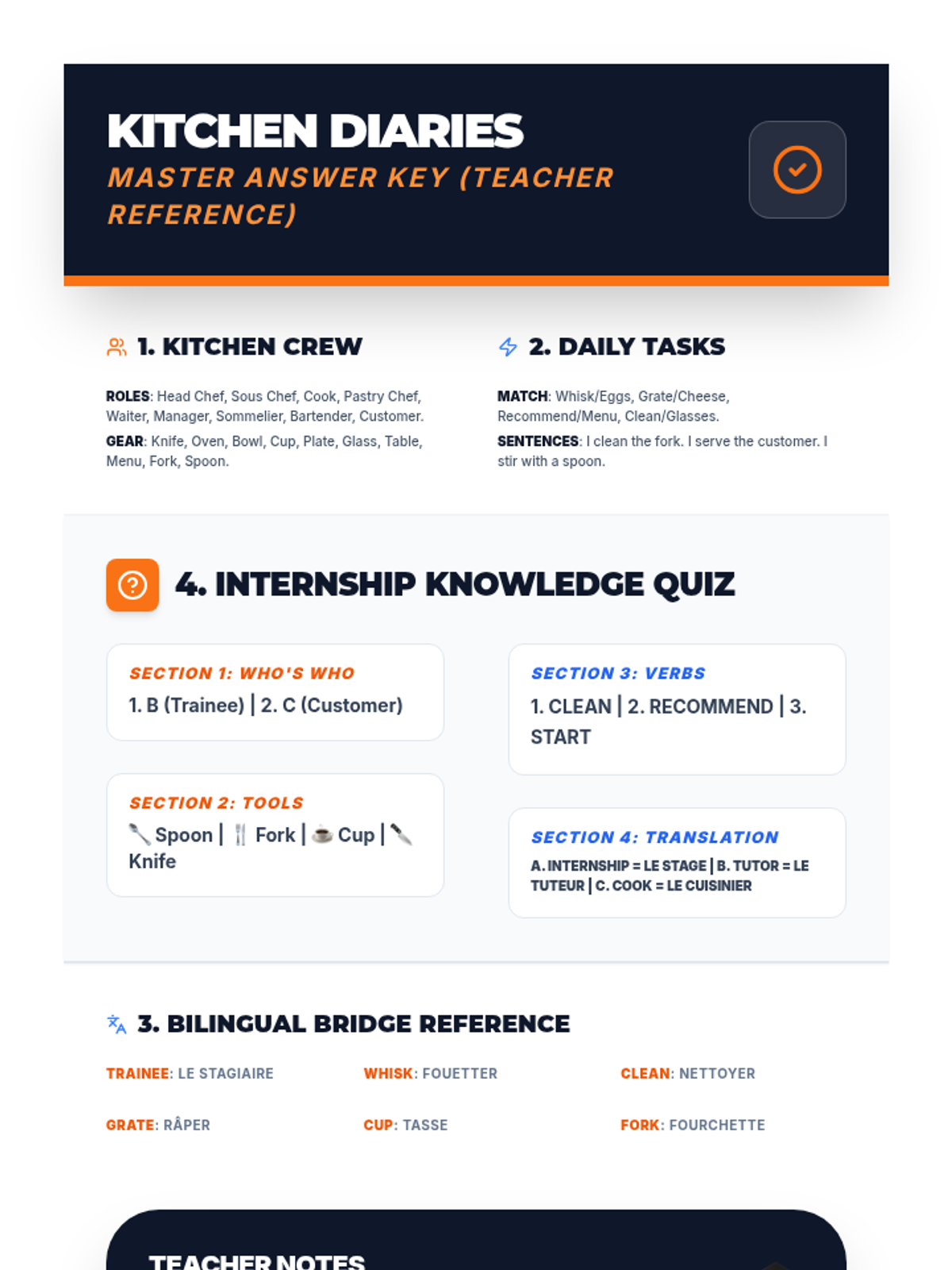
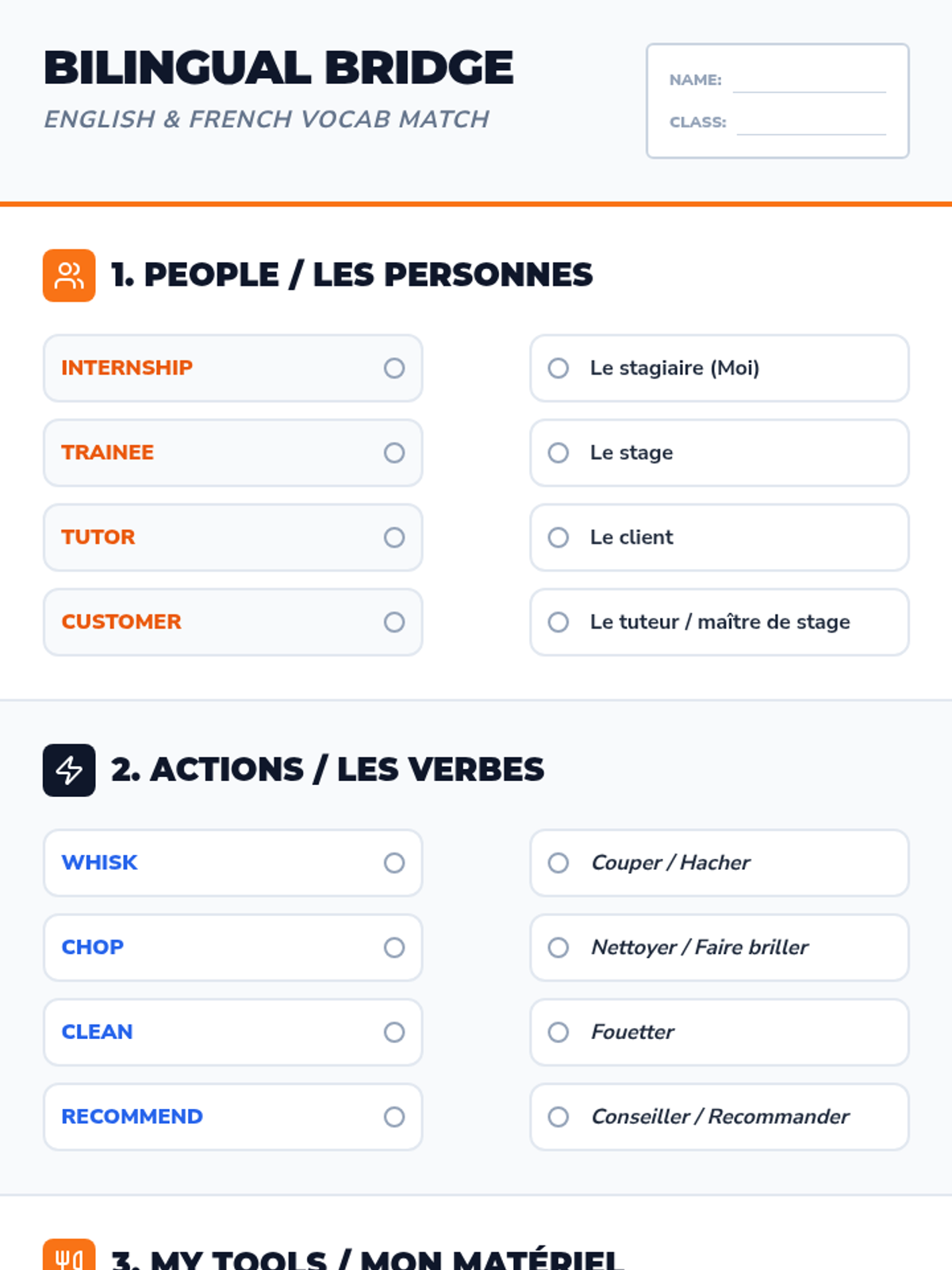
A 3-session English sequence for CAP Cuisine/Restaurant students returning from their internship, focusing on describing roles and daily tasks in a professional kitchen or dining room.
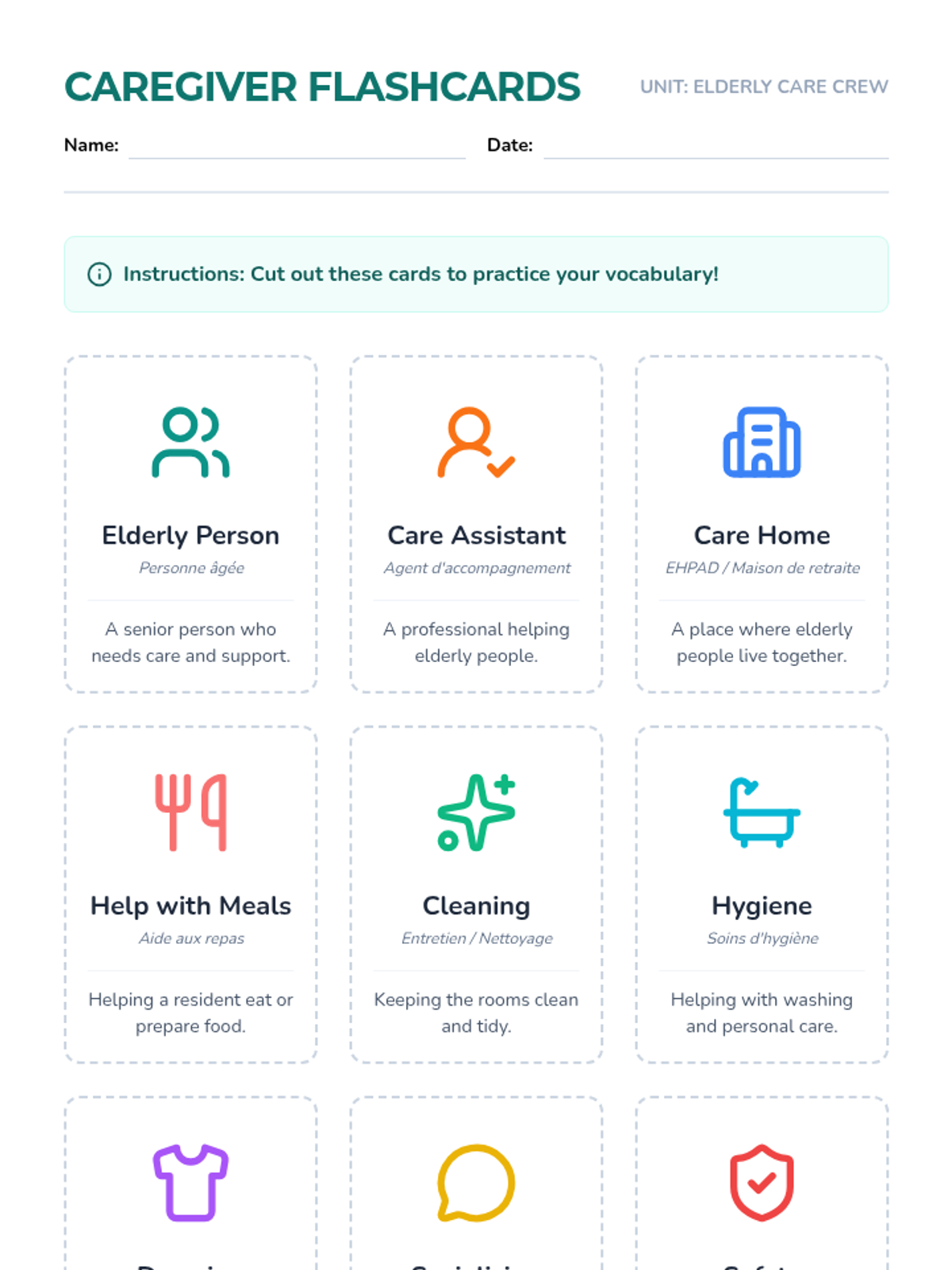
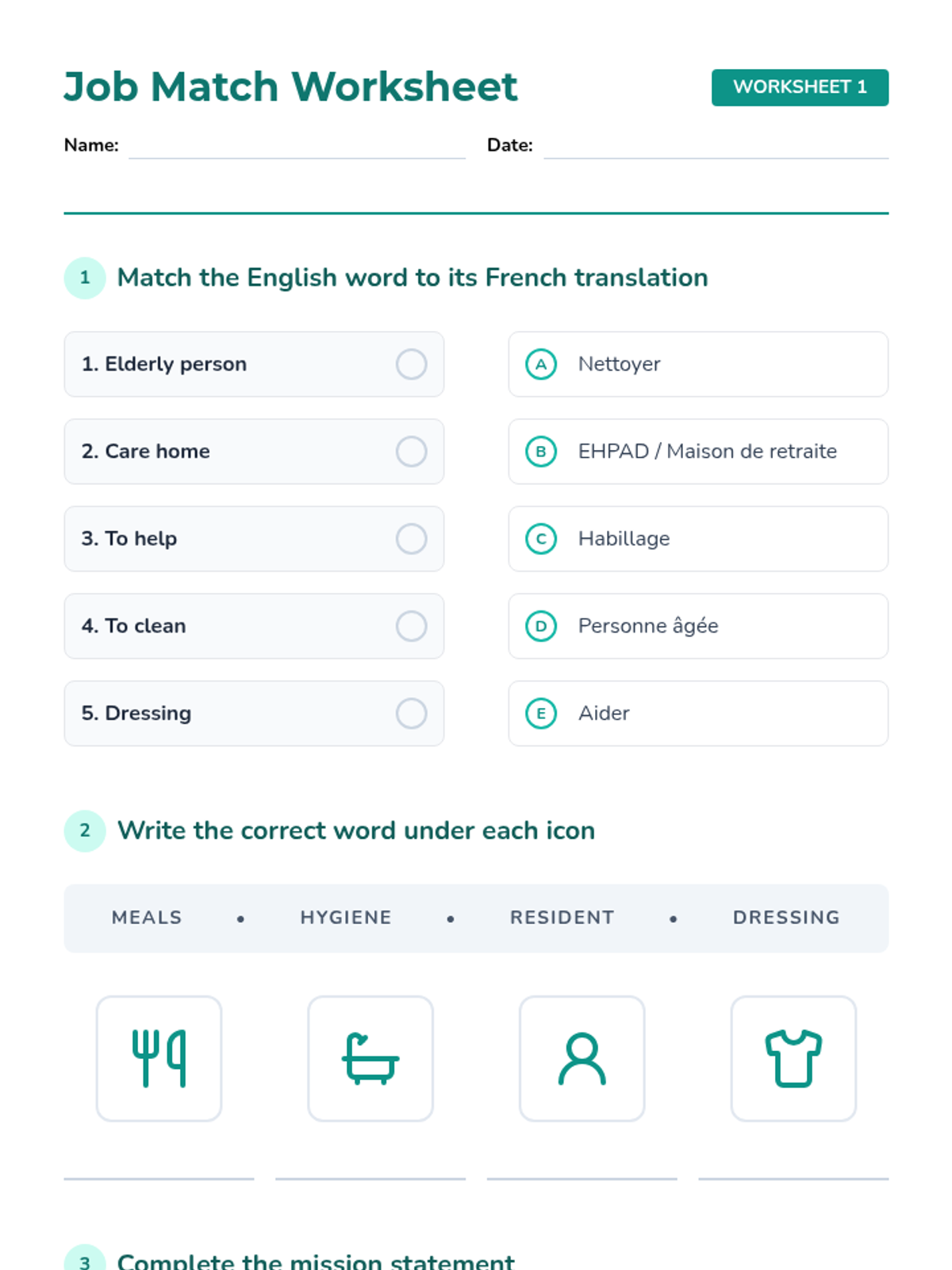
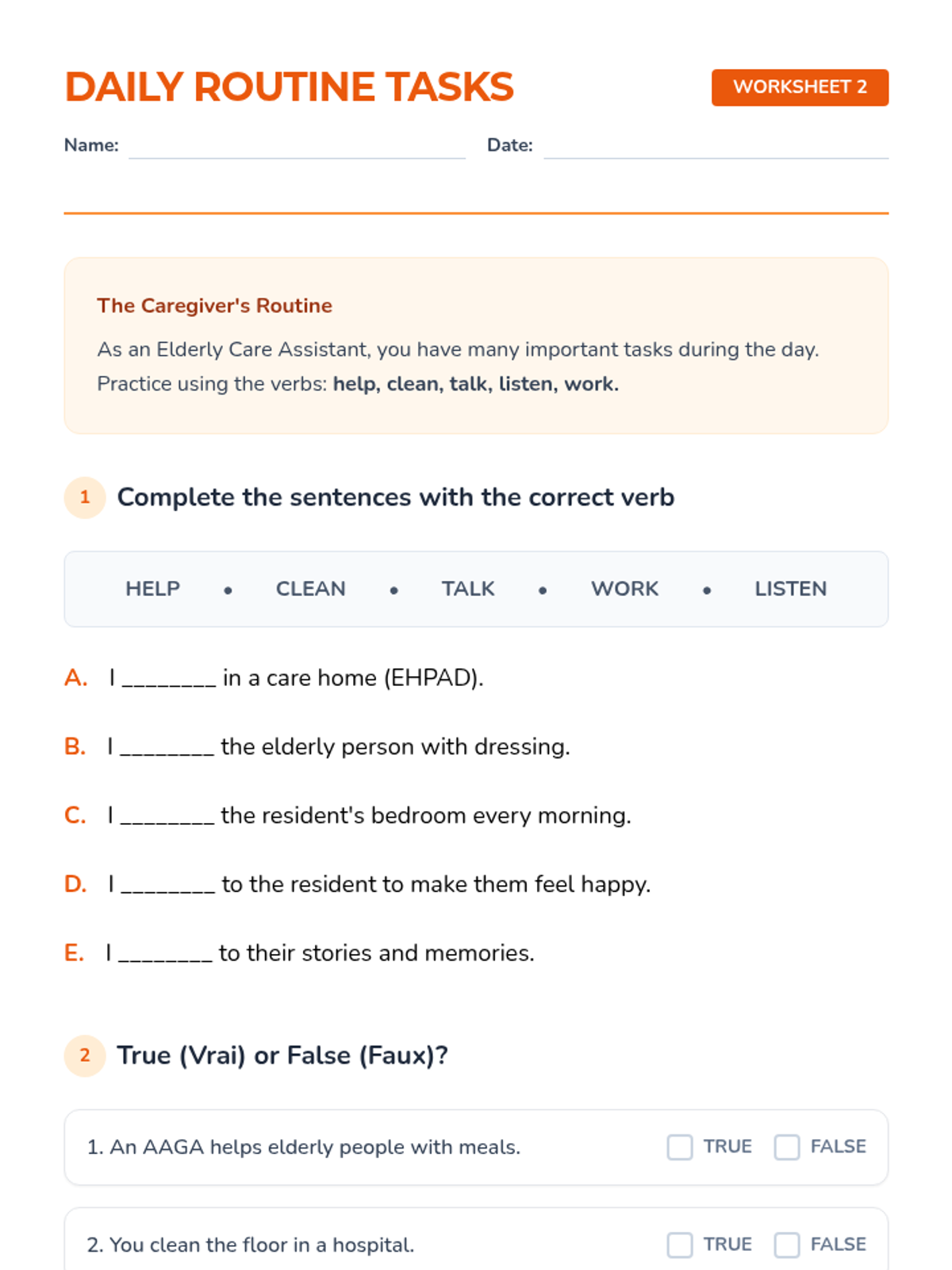
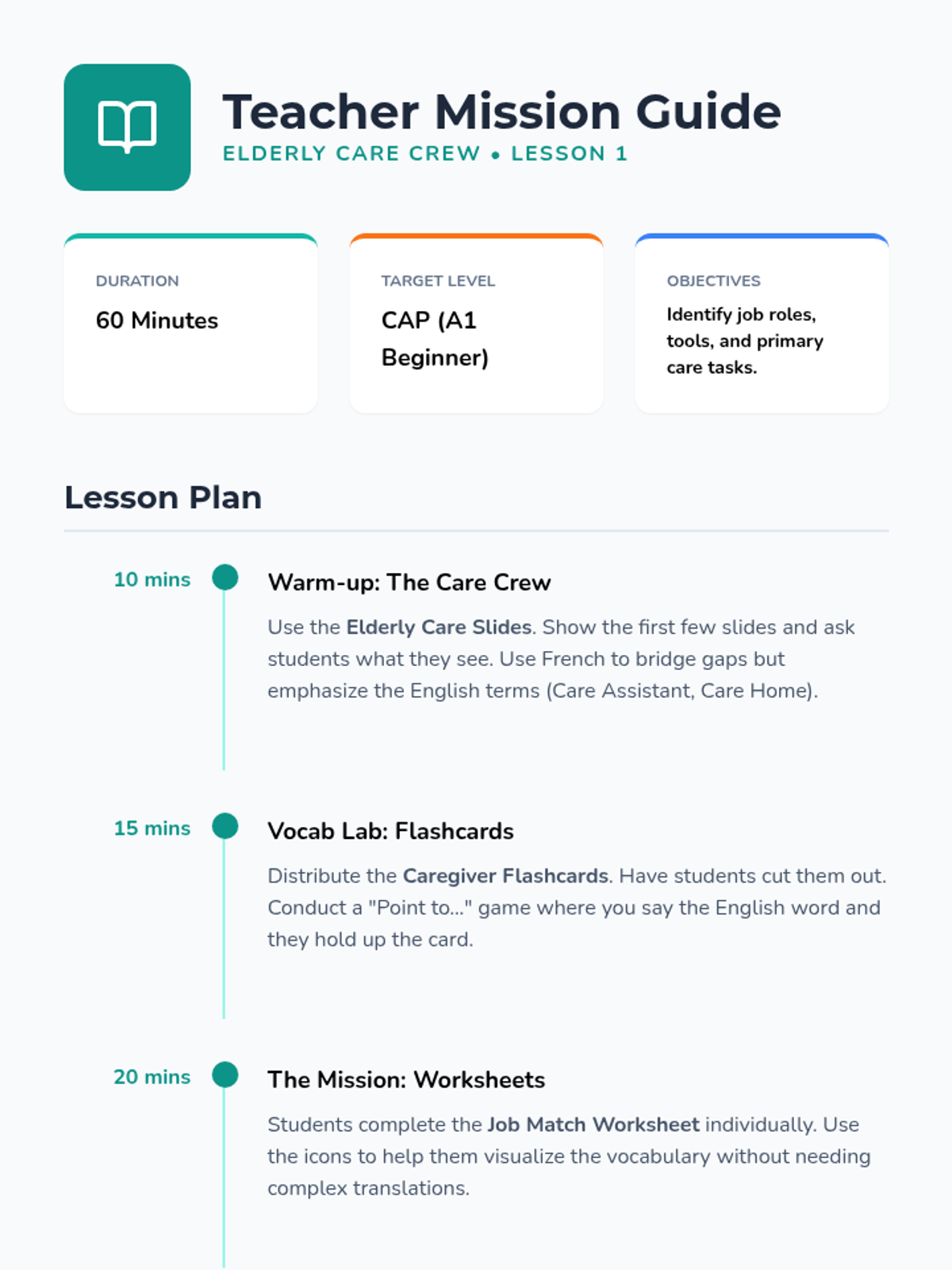
A specialized English sequence for CAP AAGA students focusing on vocabulary for elderly care professions and daily responsibilities. The sequence uses visual aids and simple structures tailored for lower-level learners.
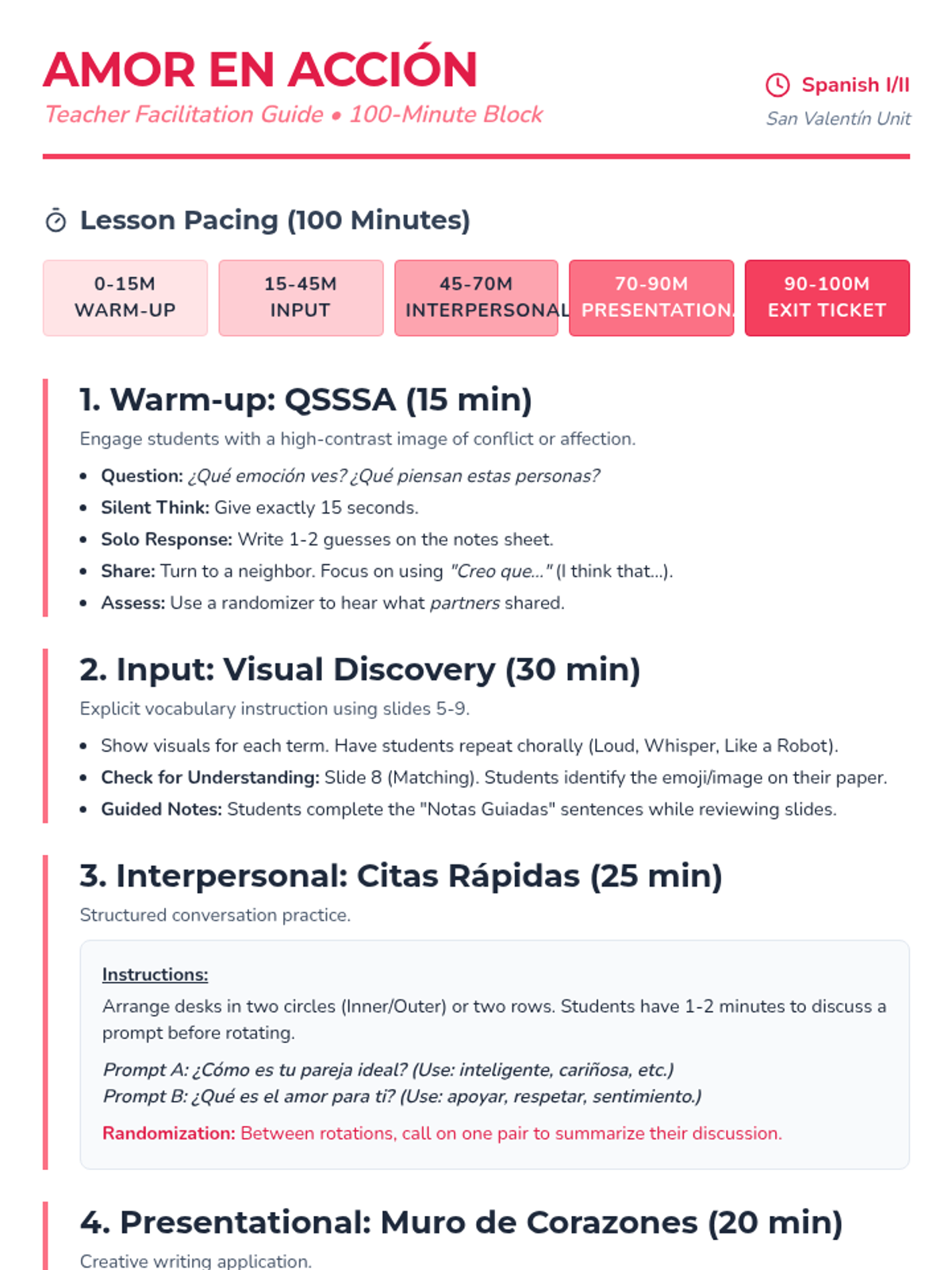
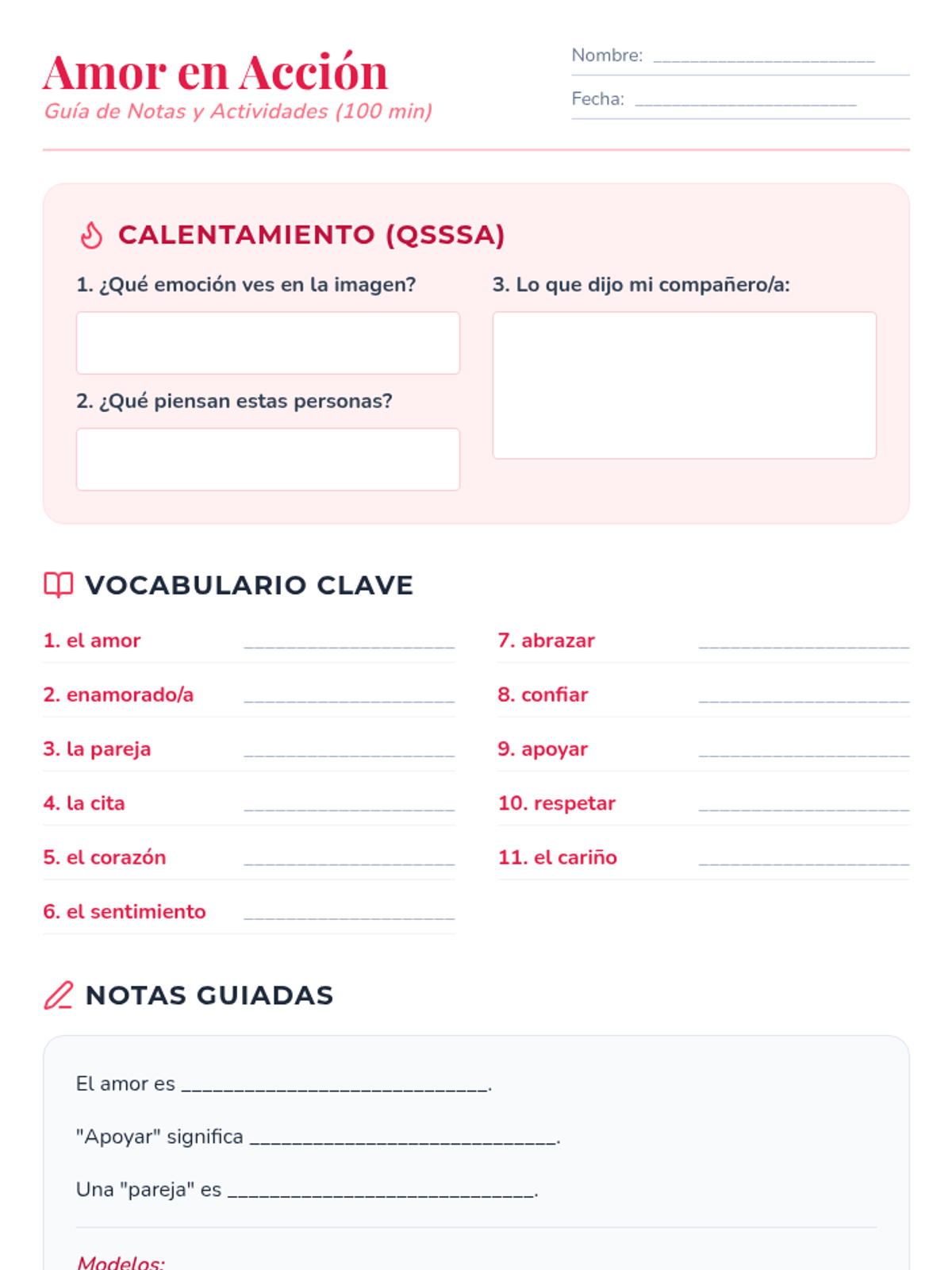
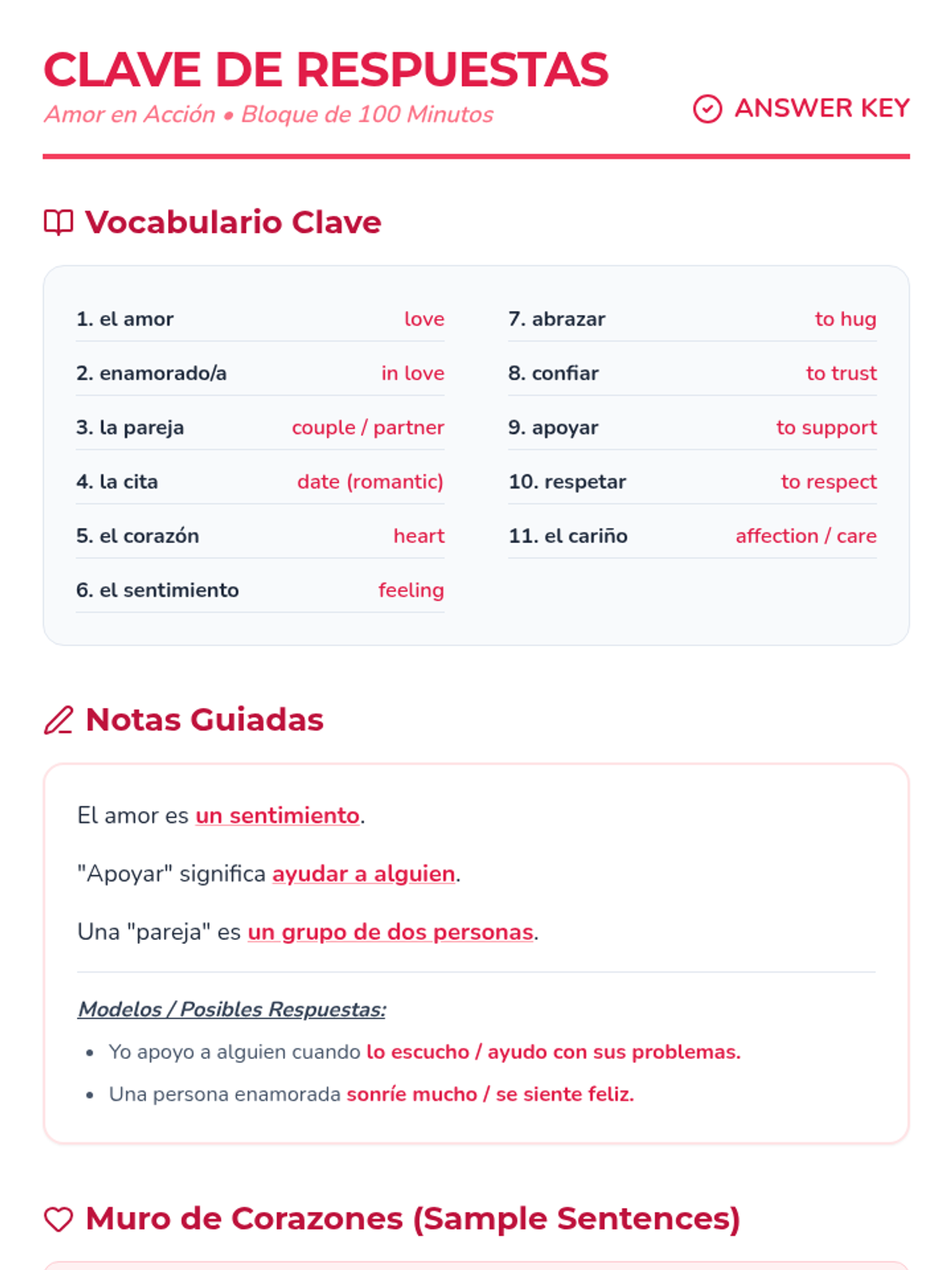
A Spanish I/II unit focused on Valentine's Day, covering vocabulary related to love, relationships, and emotions through interactive activities and communicative practice.
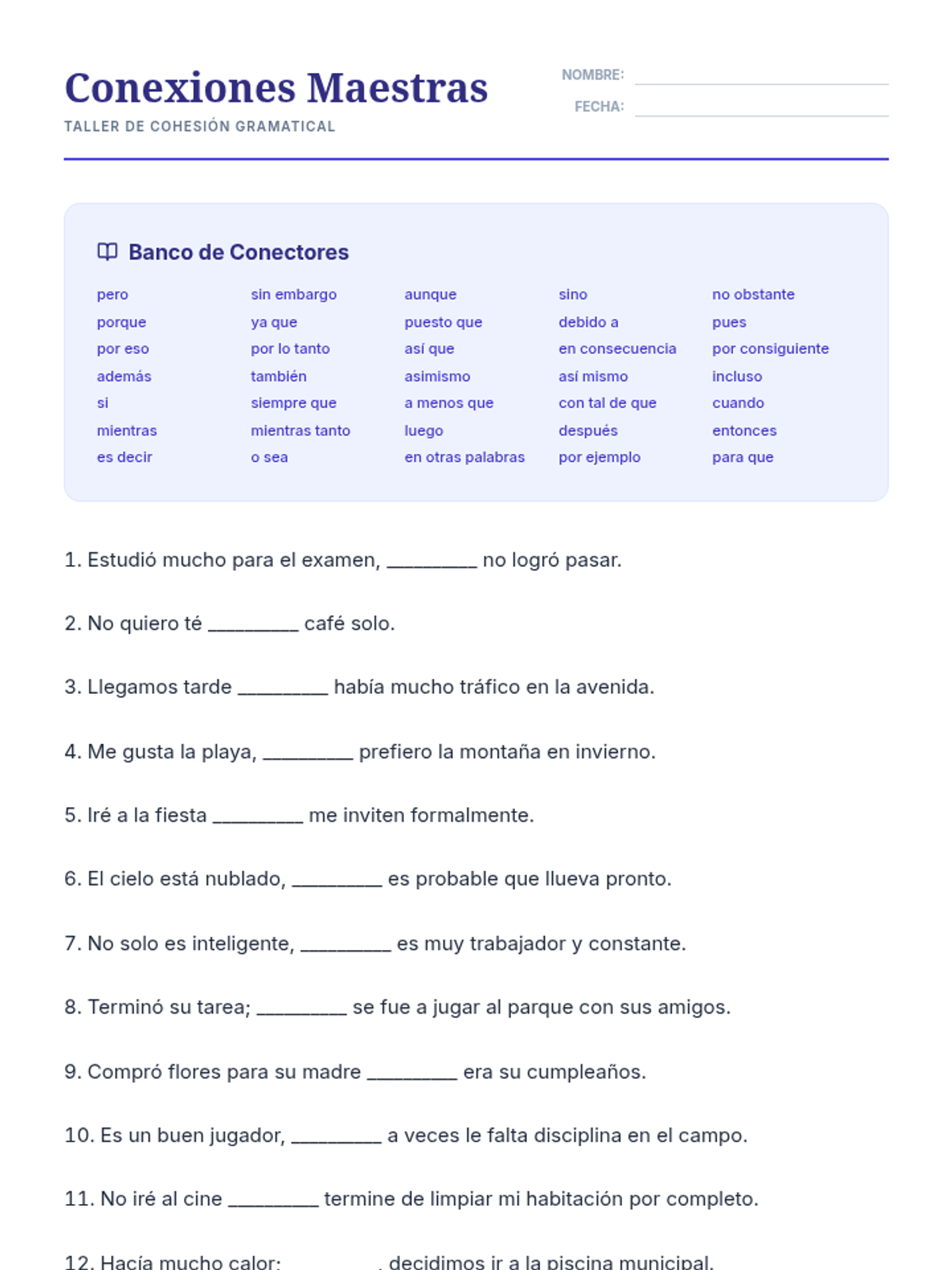
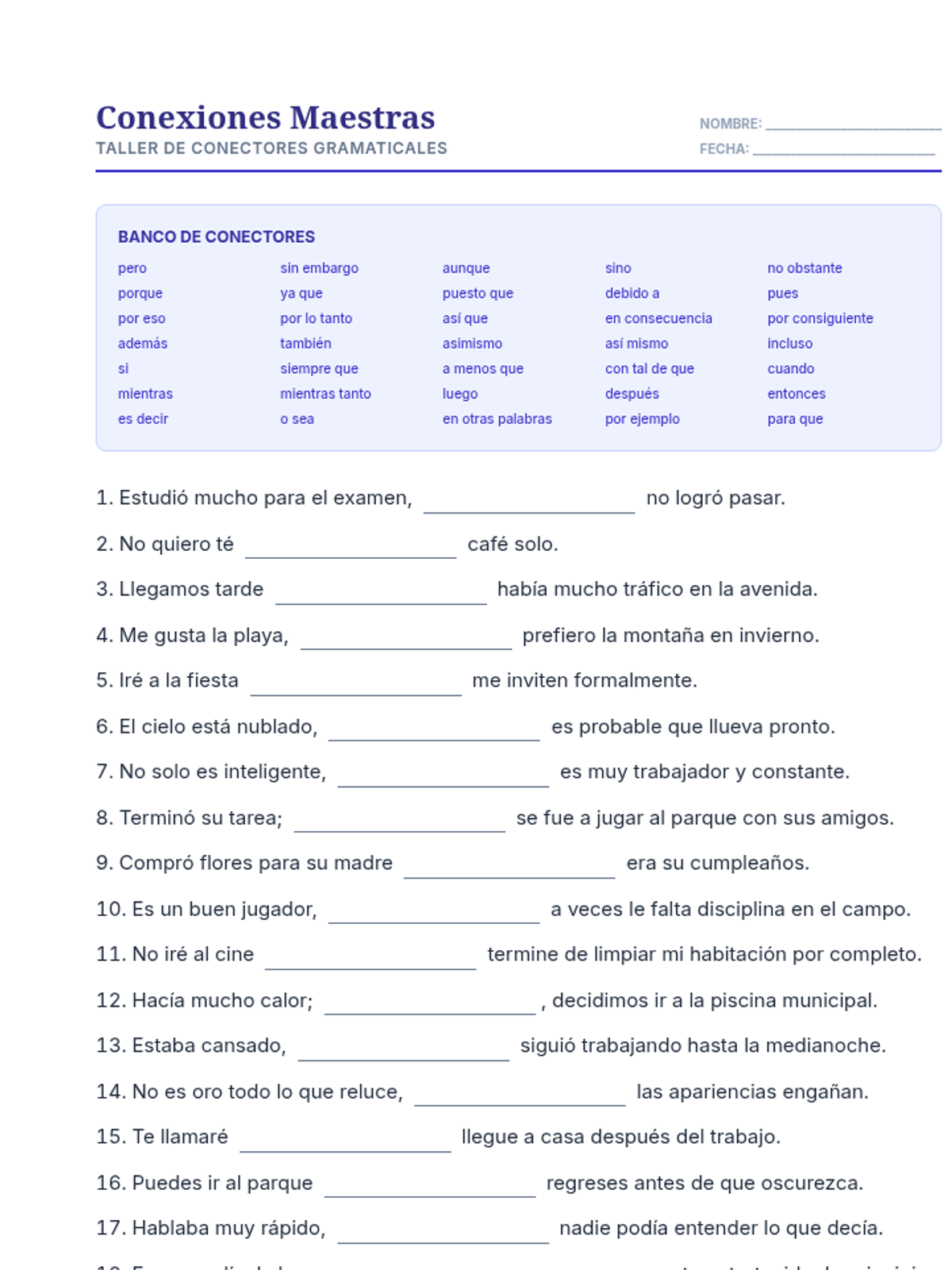
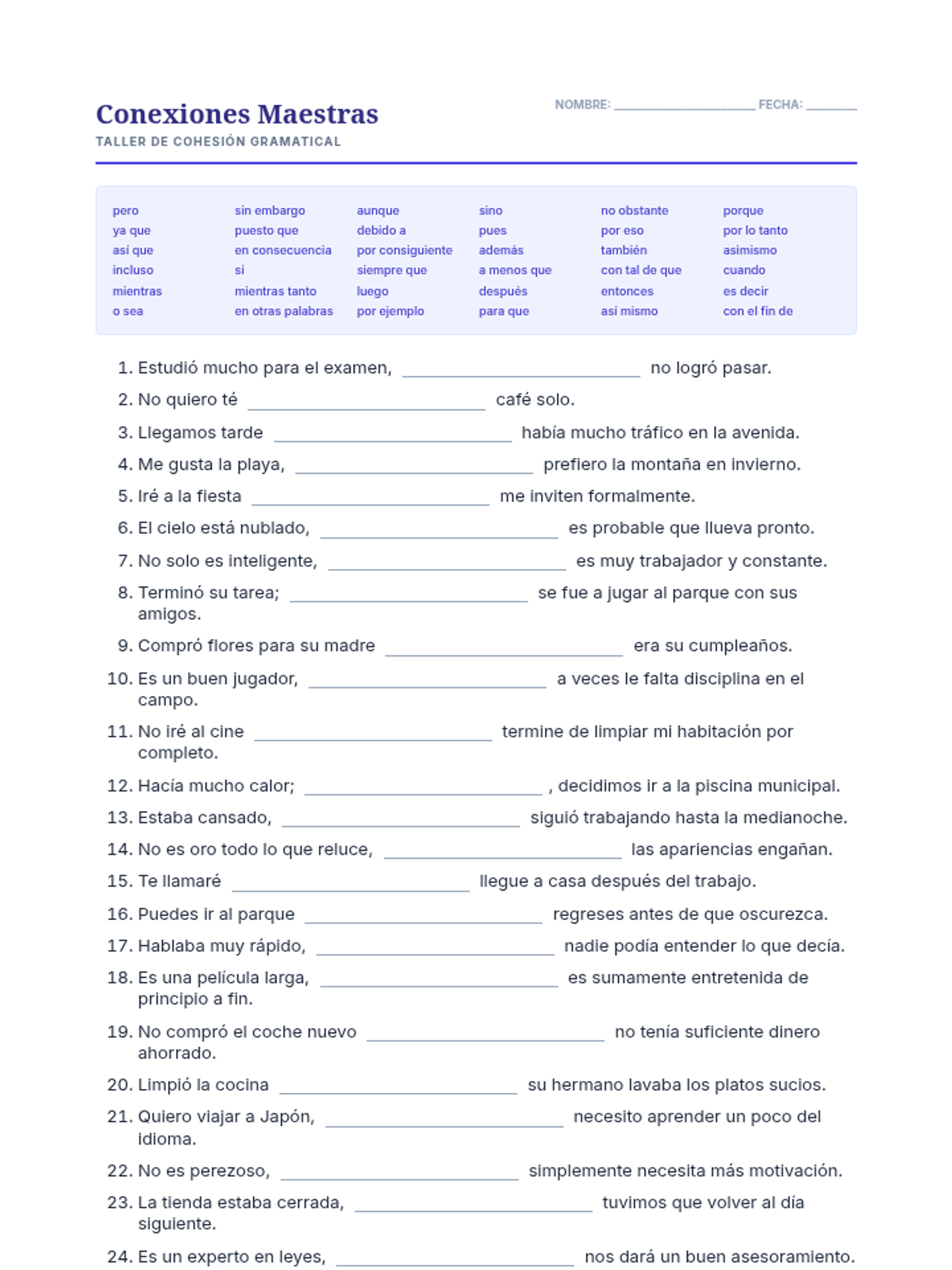
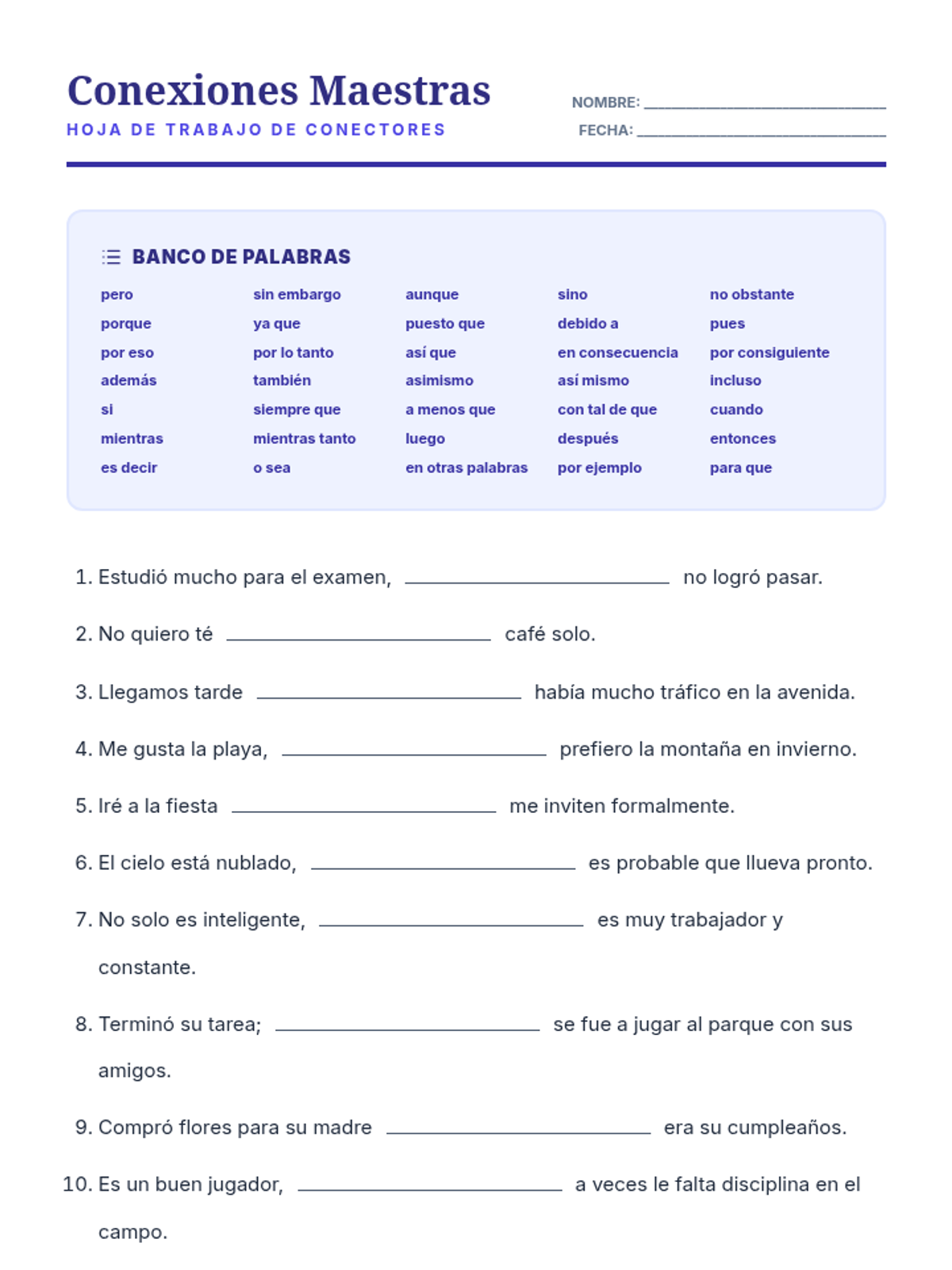
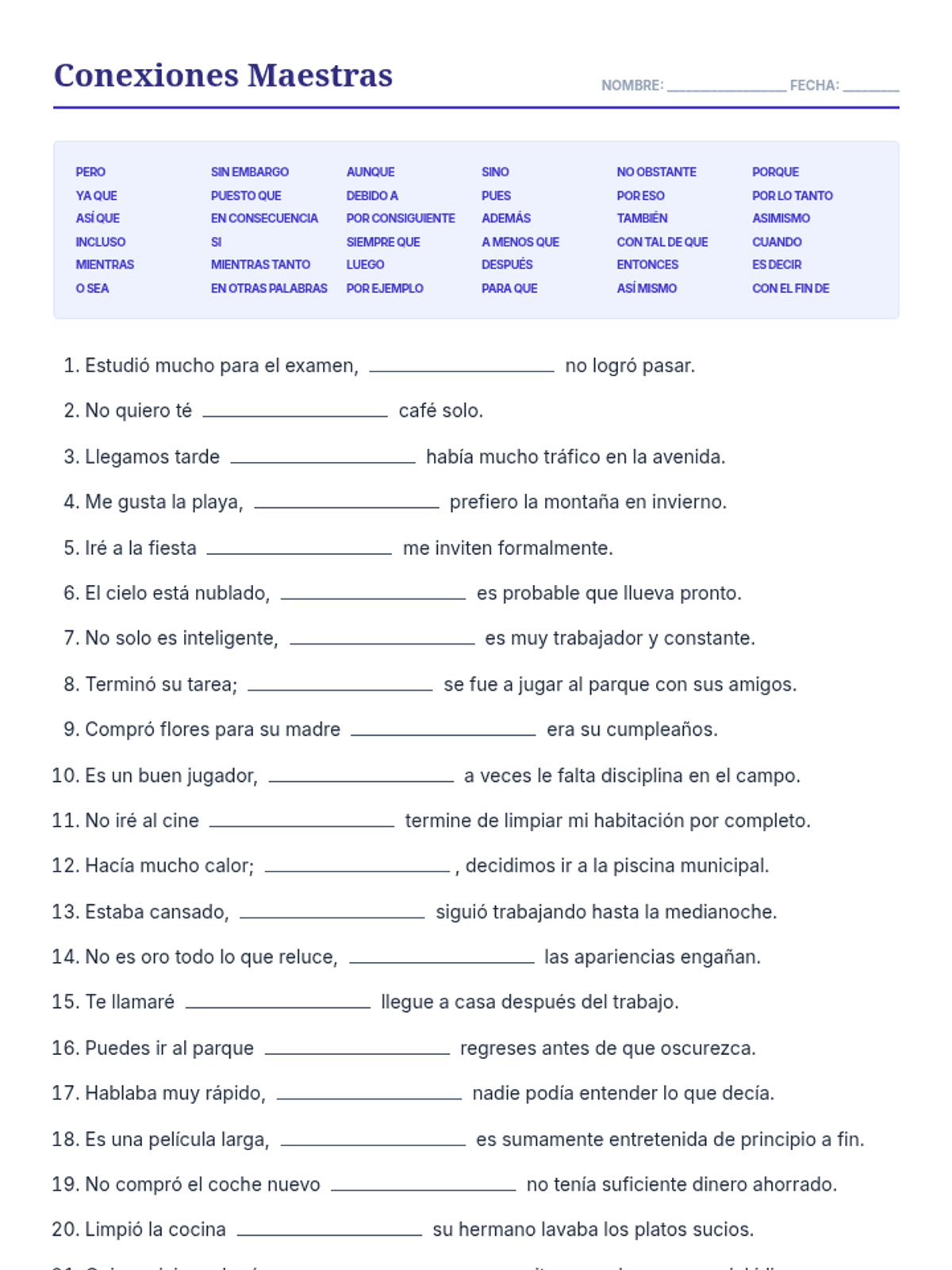
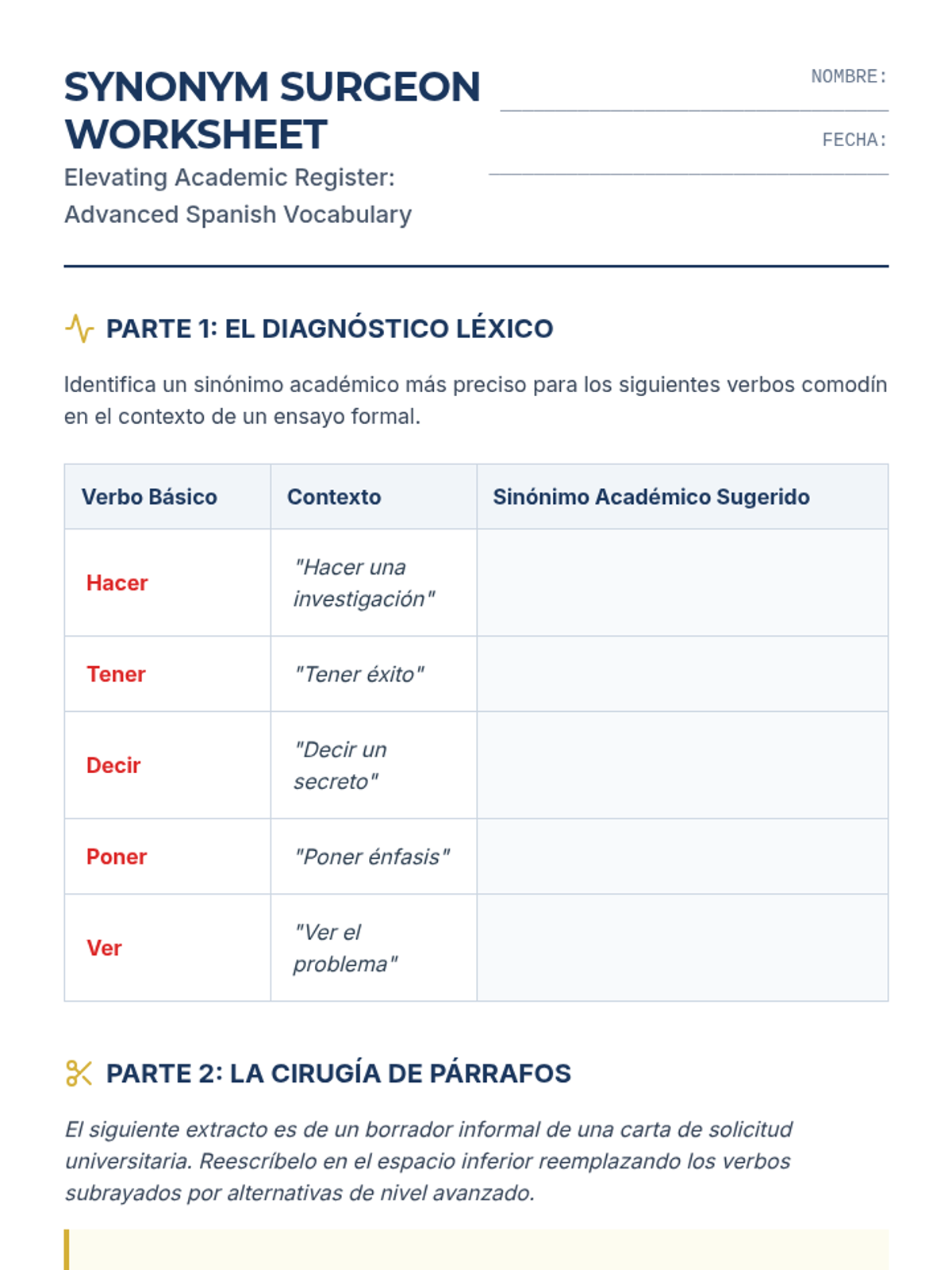
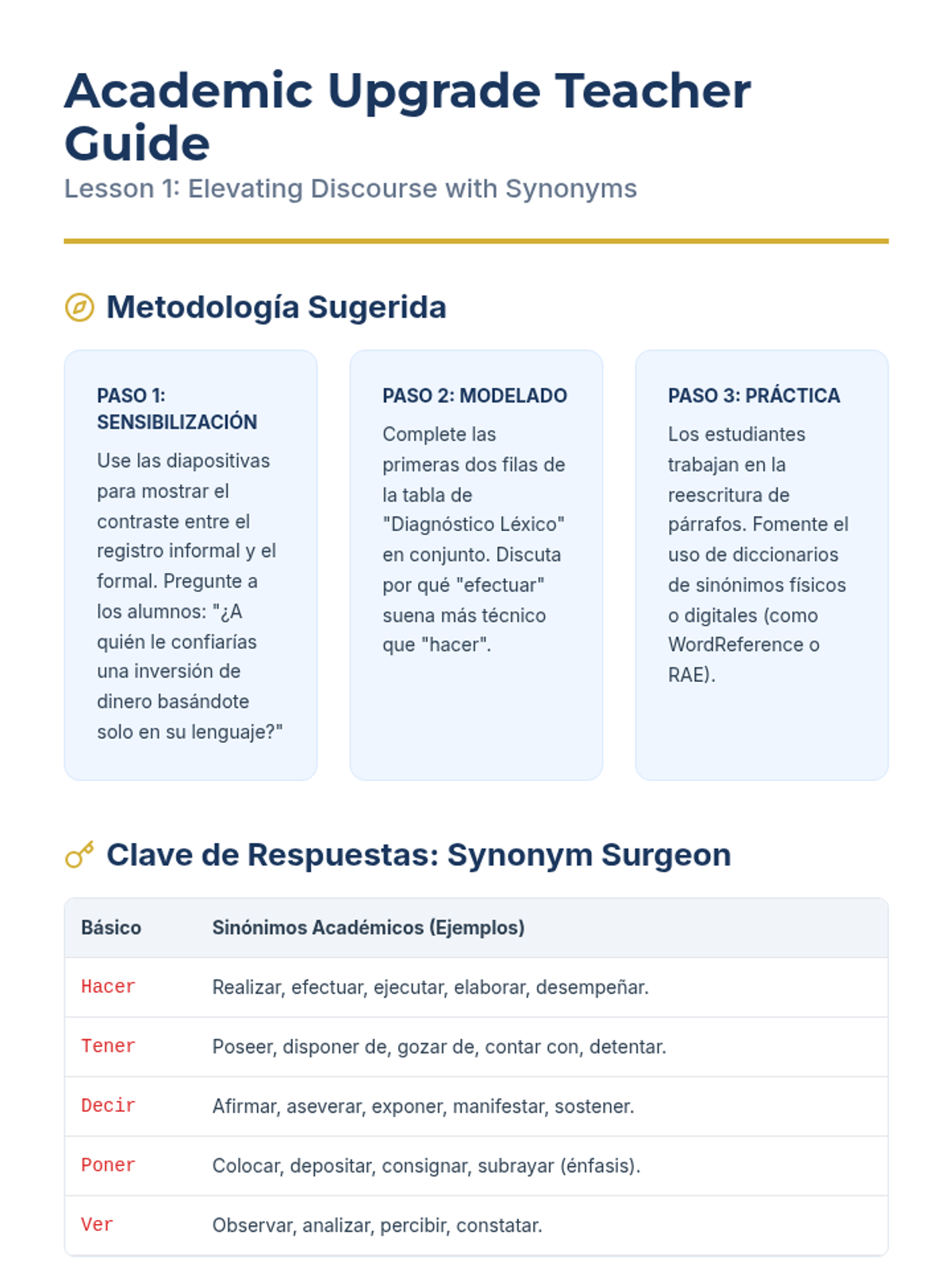
This advanced Spanish sequence transitions 9th-grade students from intermediate proficiency to professional linguistic precision. It focuses on academic register, workplace vocabulary, logical connectors, and sociolinguistic etiquette through authentic simulations and analysis.
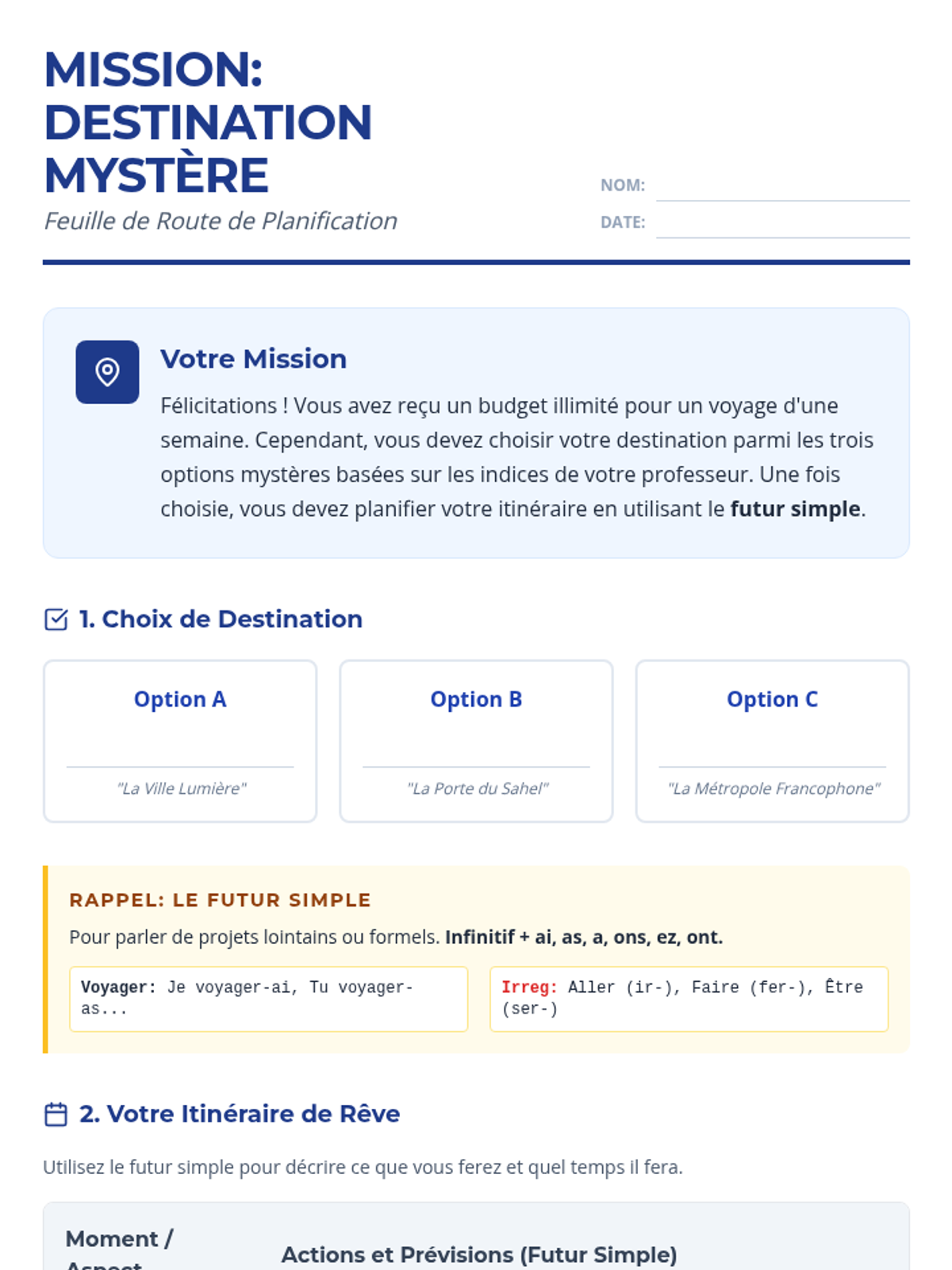
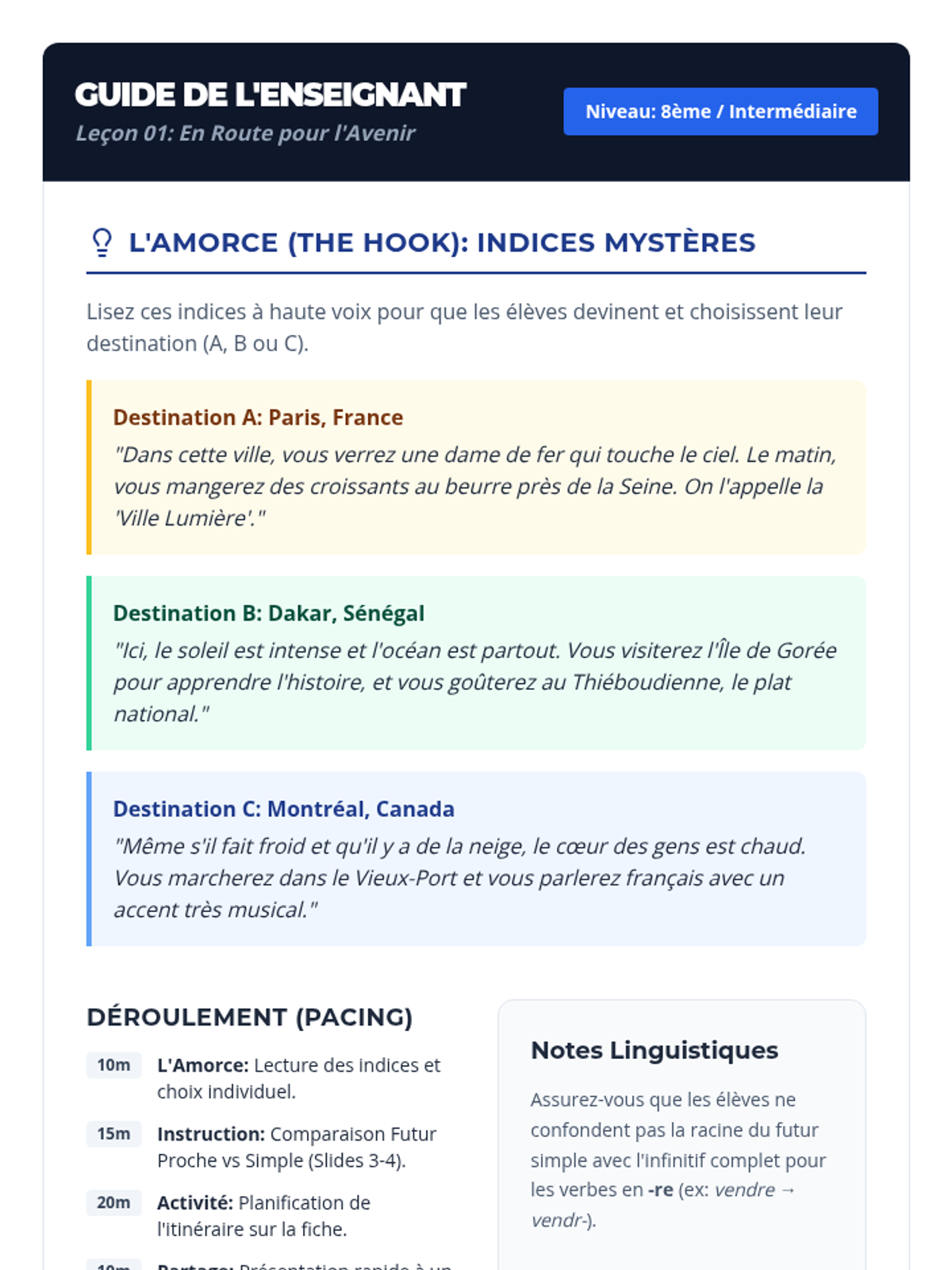
An immersive intermediate French sequence where students navigate travel scenarios in Paris, Dakar, and Montreal, mastering future, past, and conditional tenses through simulated real-world interactions.
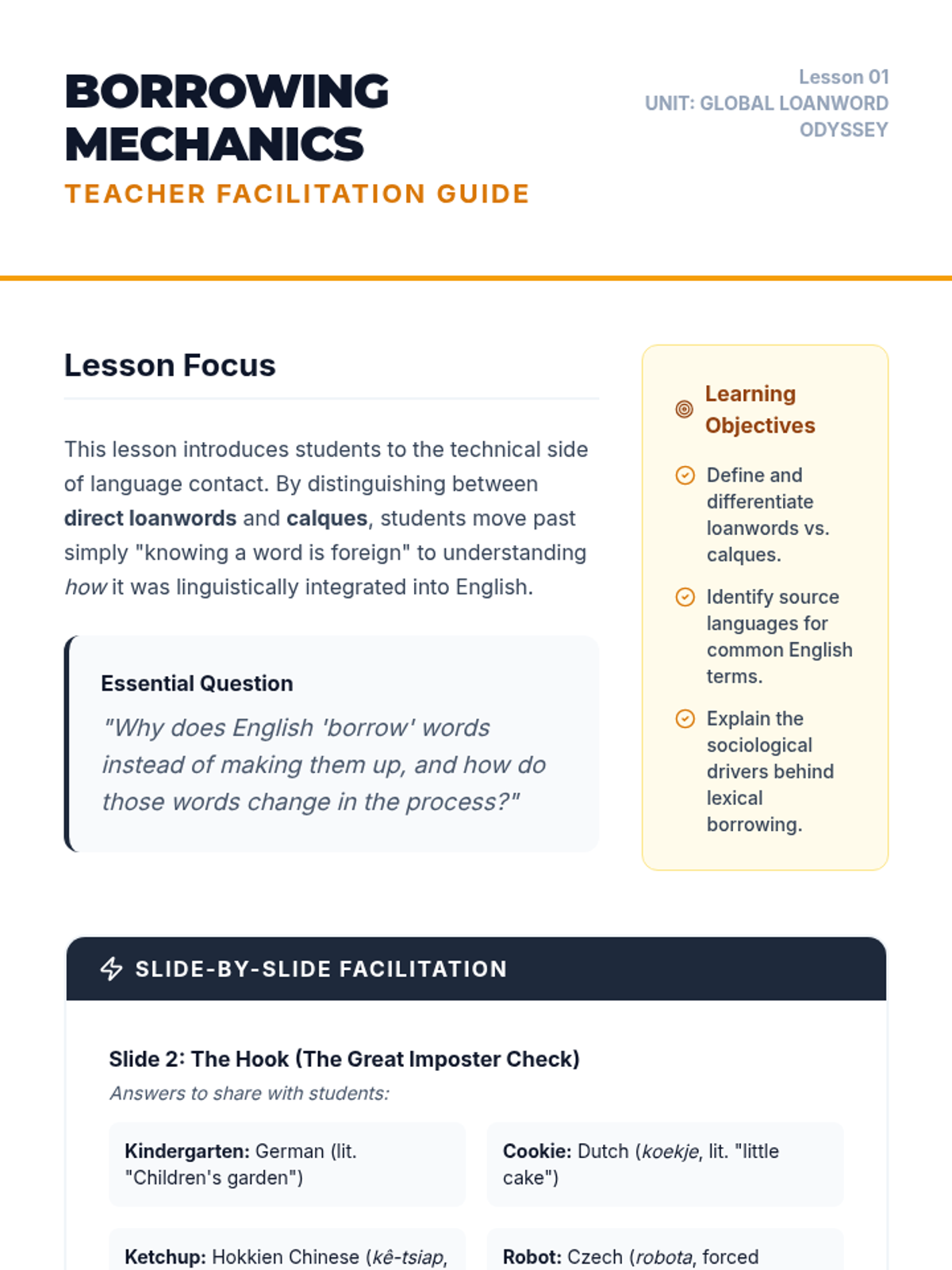
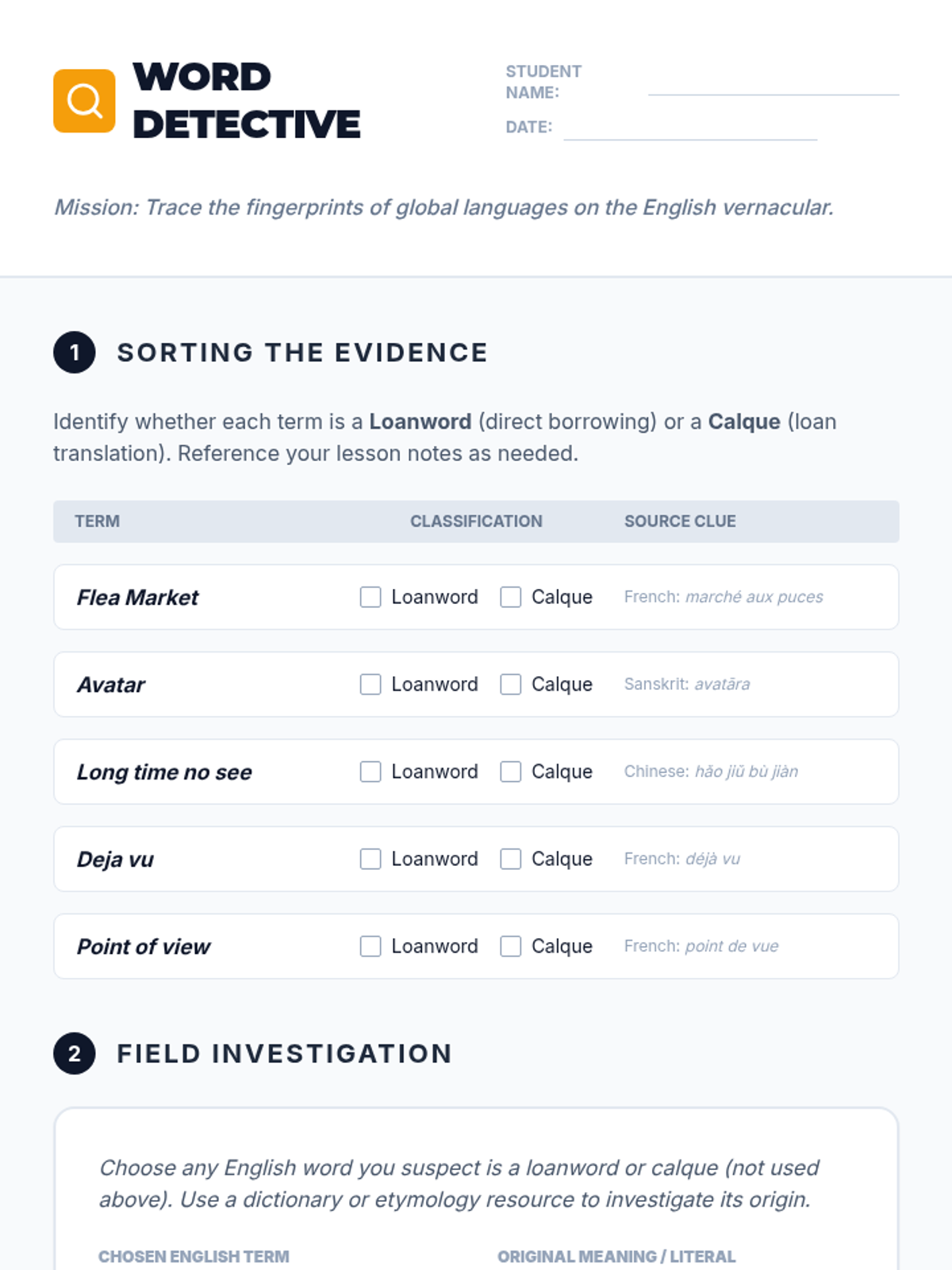
A linguistic and sociological exploration of how English absorbs and adapts words from diverse global sources, focusing on etymology, cultural exchange, and the evolution of language.
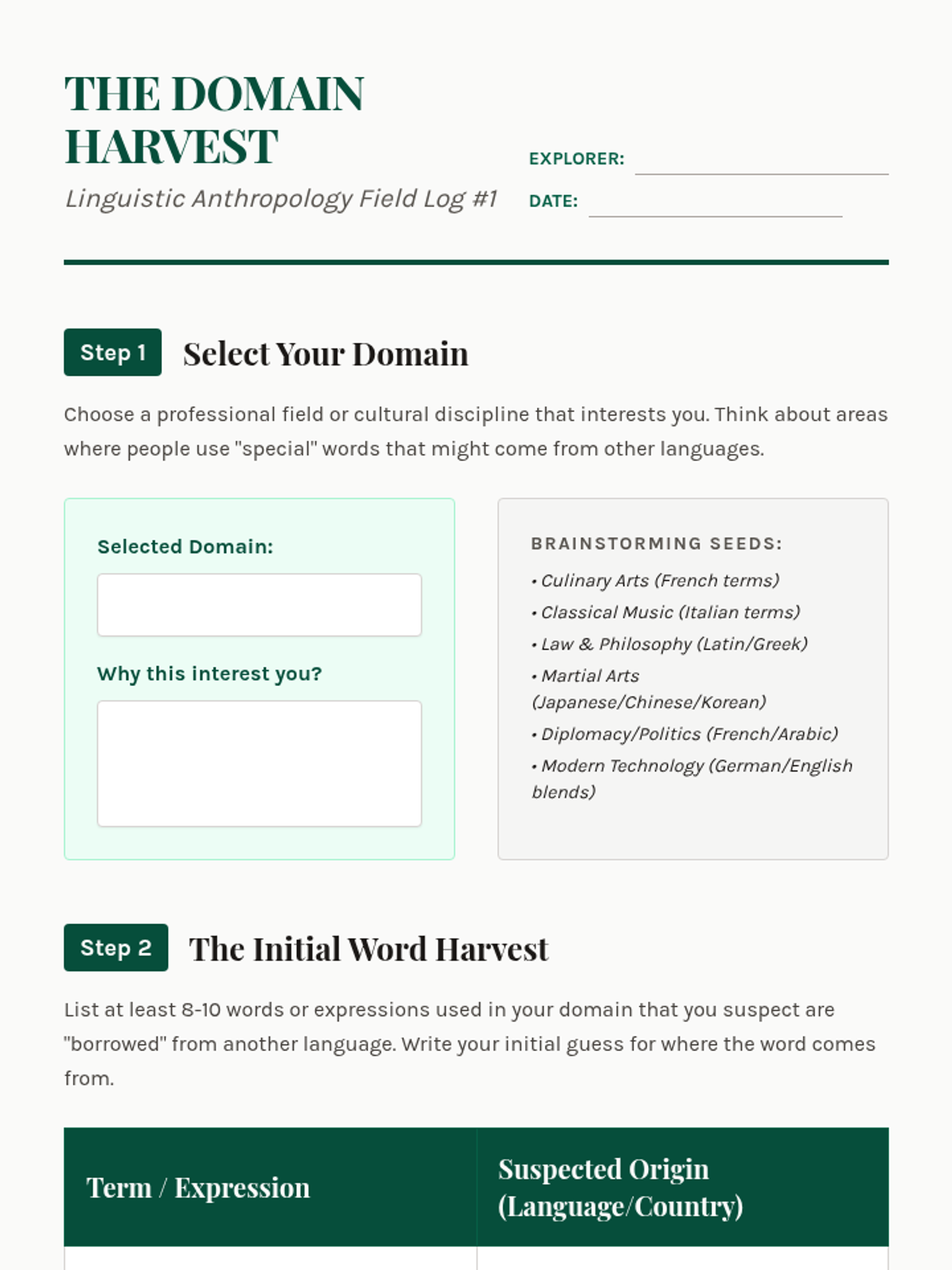
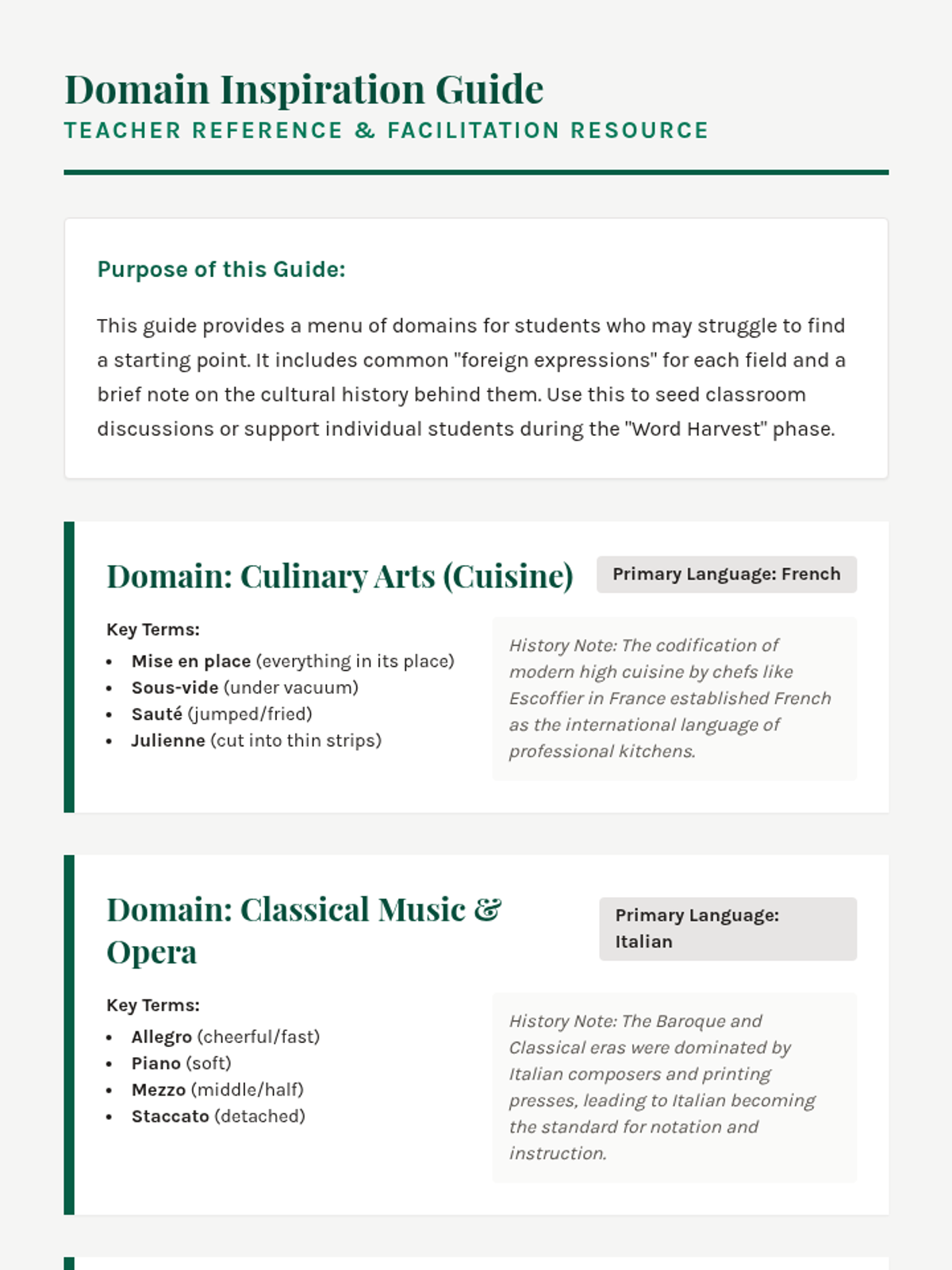
Students act as linguistic anthropologists creating a specialized 'Field Guide to Foreign Expressions' for a chosen professional or cultural domain. They investigate the etymology, usage, and visual representation of foreign terminology to explain their chosen field's linguistic history to a lay audience.
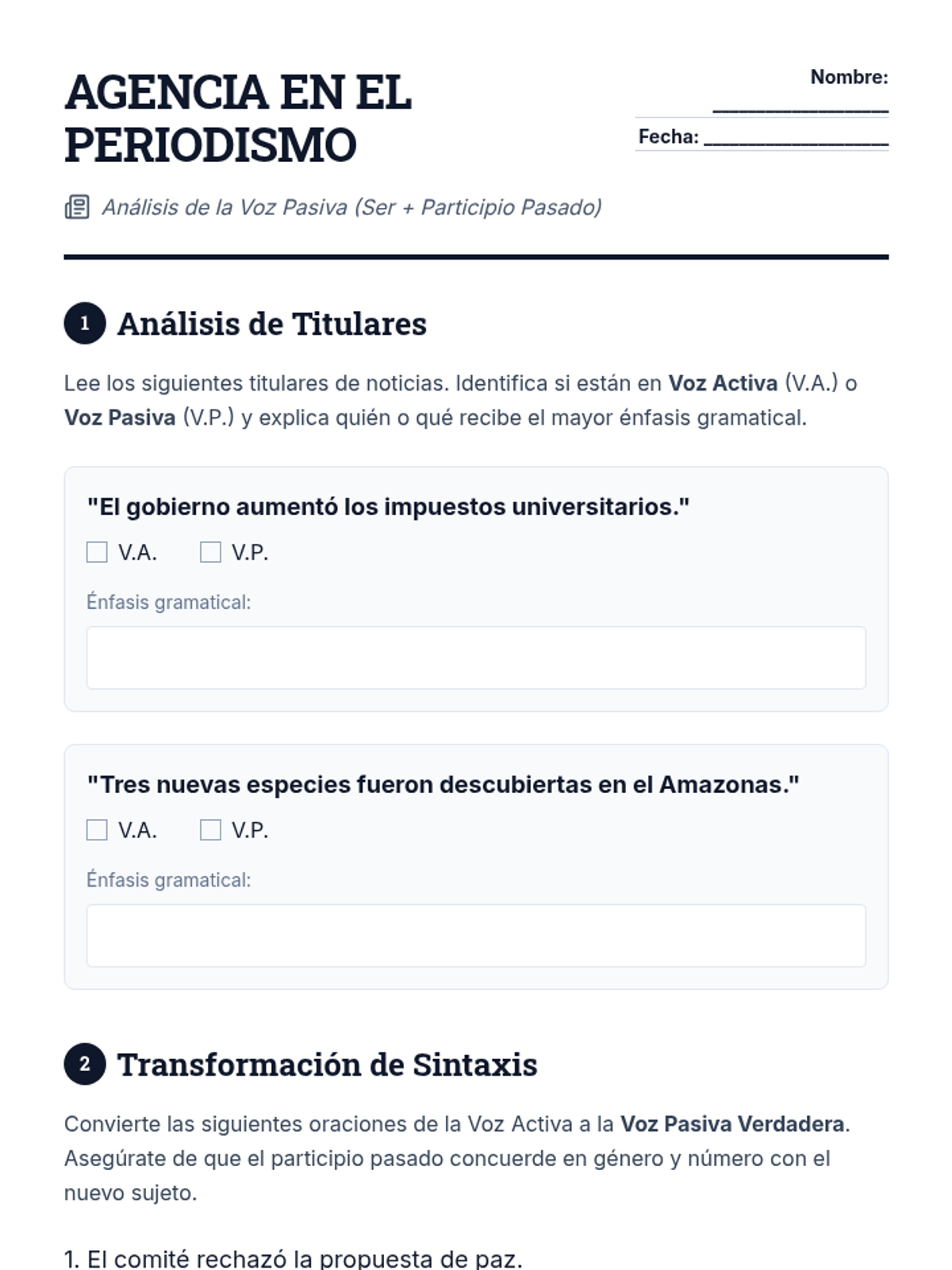
A 9th-grade advanced Spanish sequence focused on the nuances of agency and voice. Students explore the True Passive, Passive Se, and Accidental Se to understand how syntax influences tone and objectivity in formal writing and journalism.
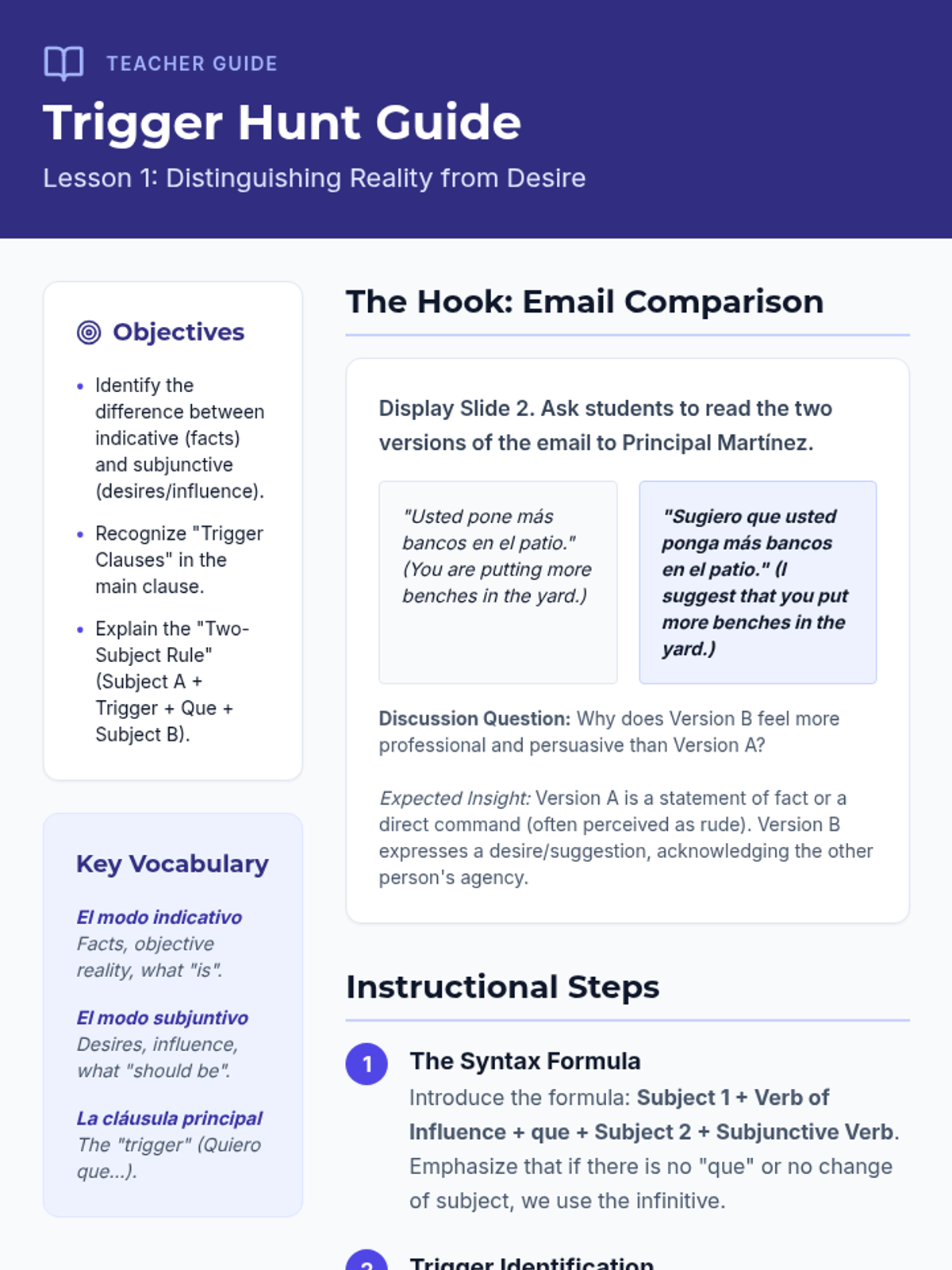
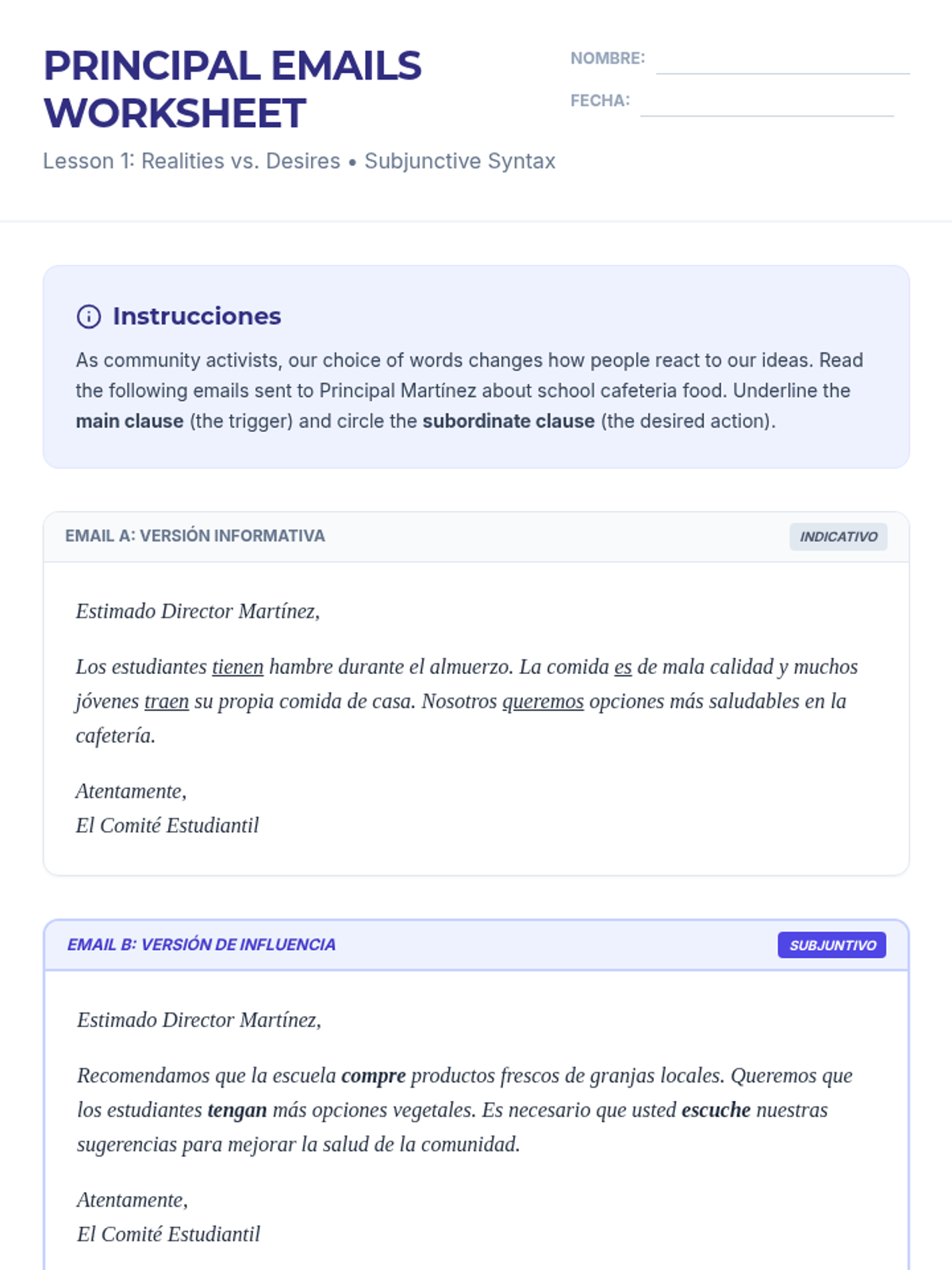
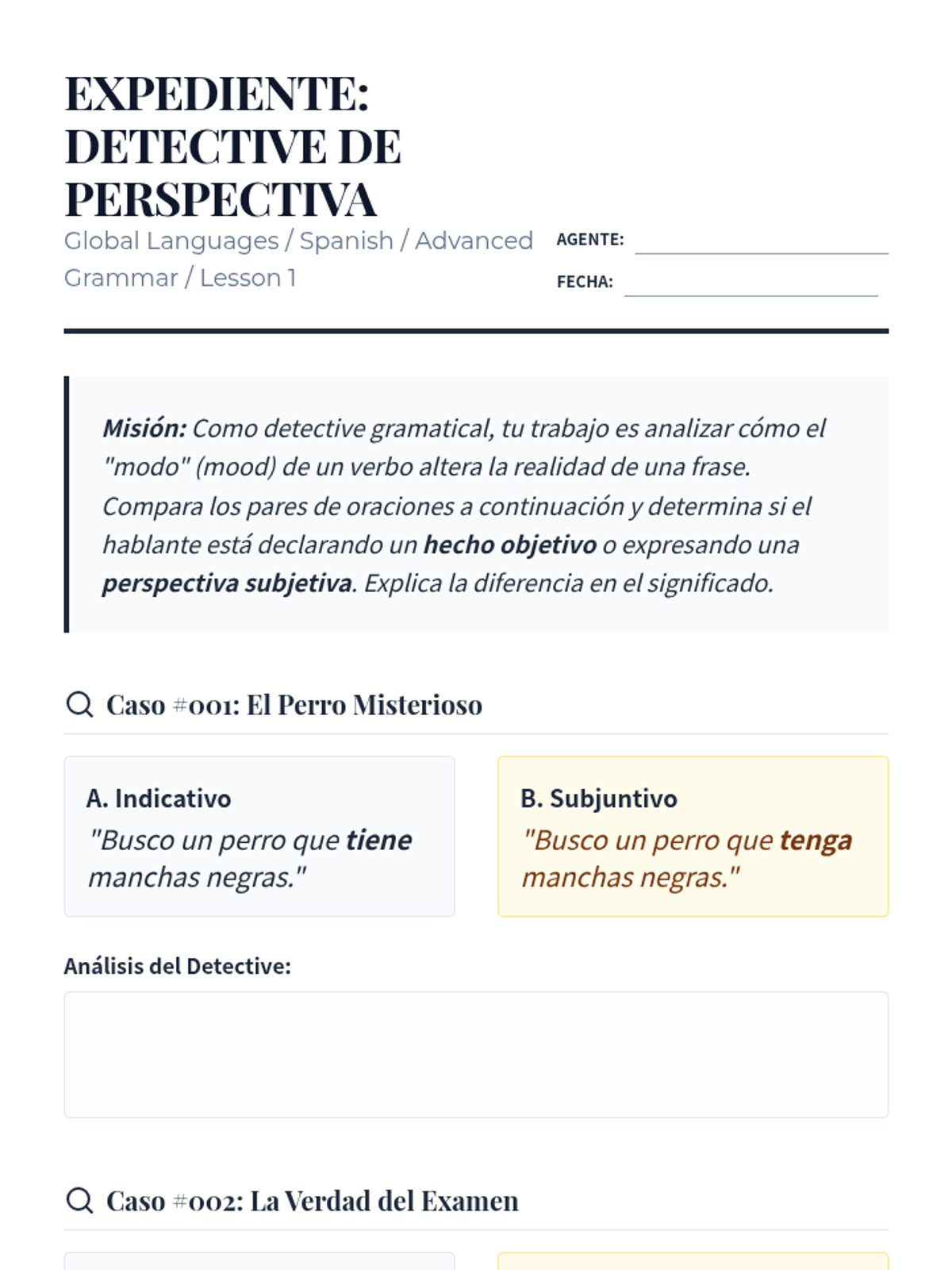
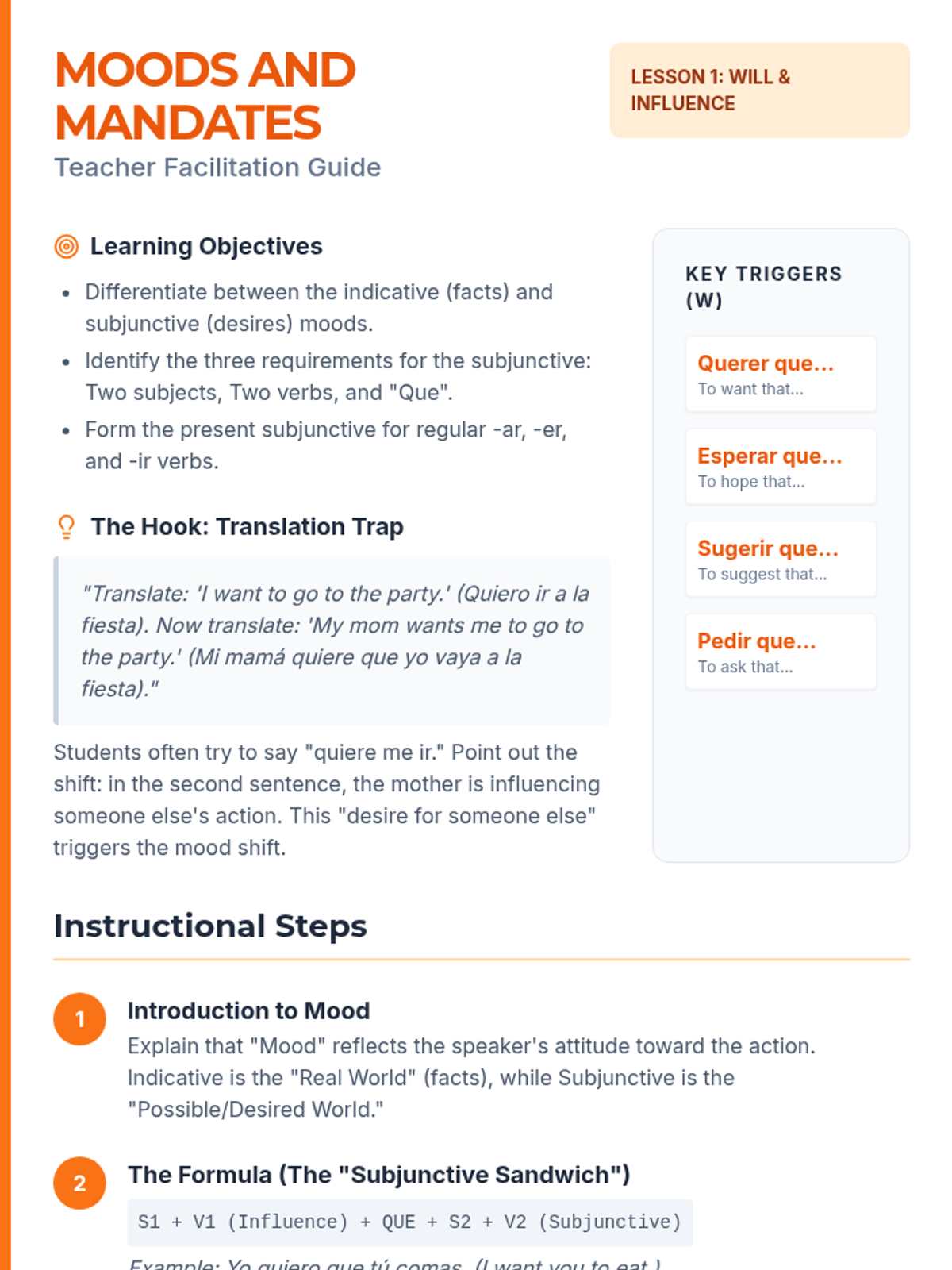
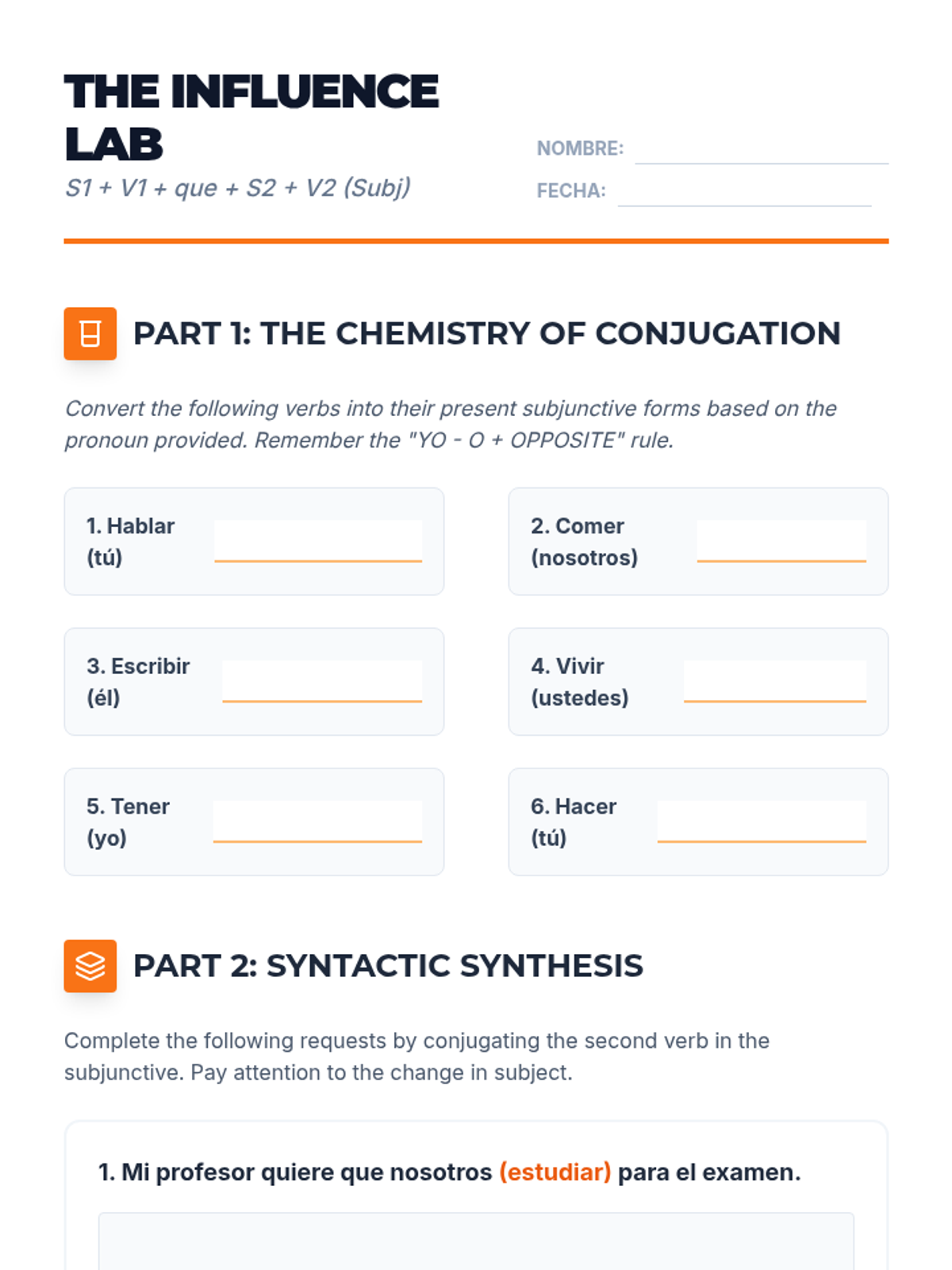
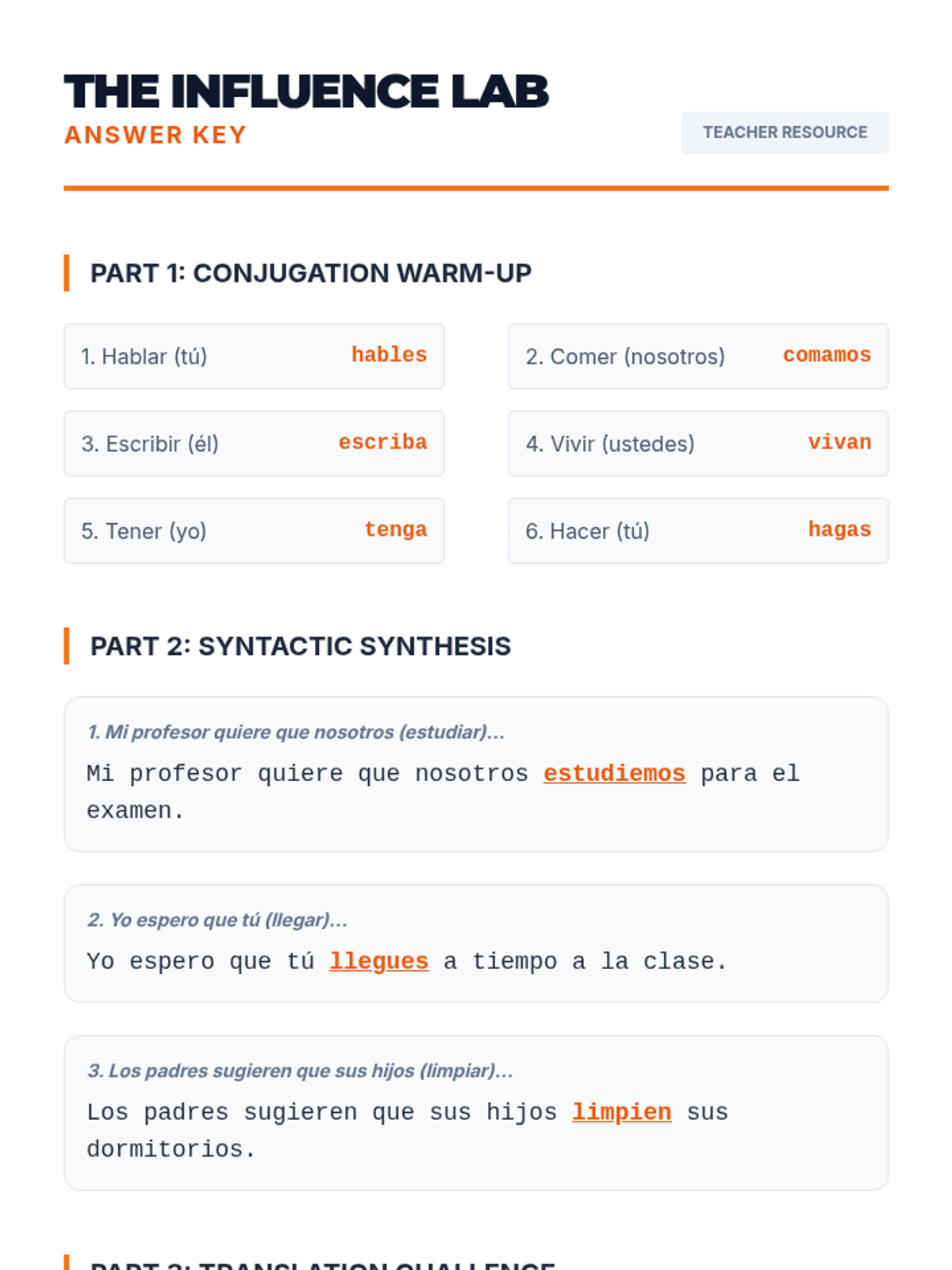
A simulation-based sequence where 9th-grade students act as community leaders to master the subjunctive mood in Spanish. Students move from identifying reality versus desire to persuading and debating in a mock town hall, focusing on influence, doubt, and emotion.
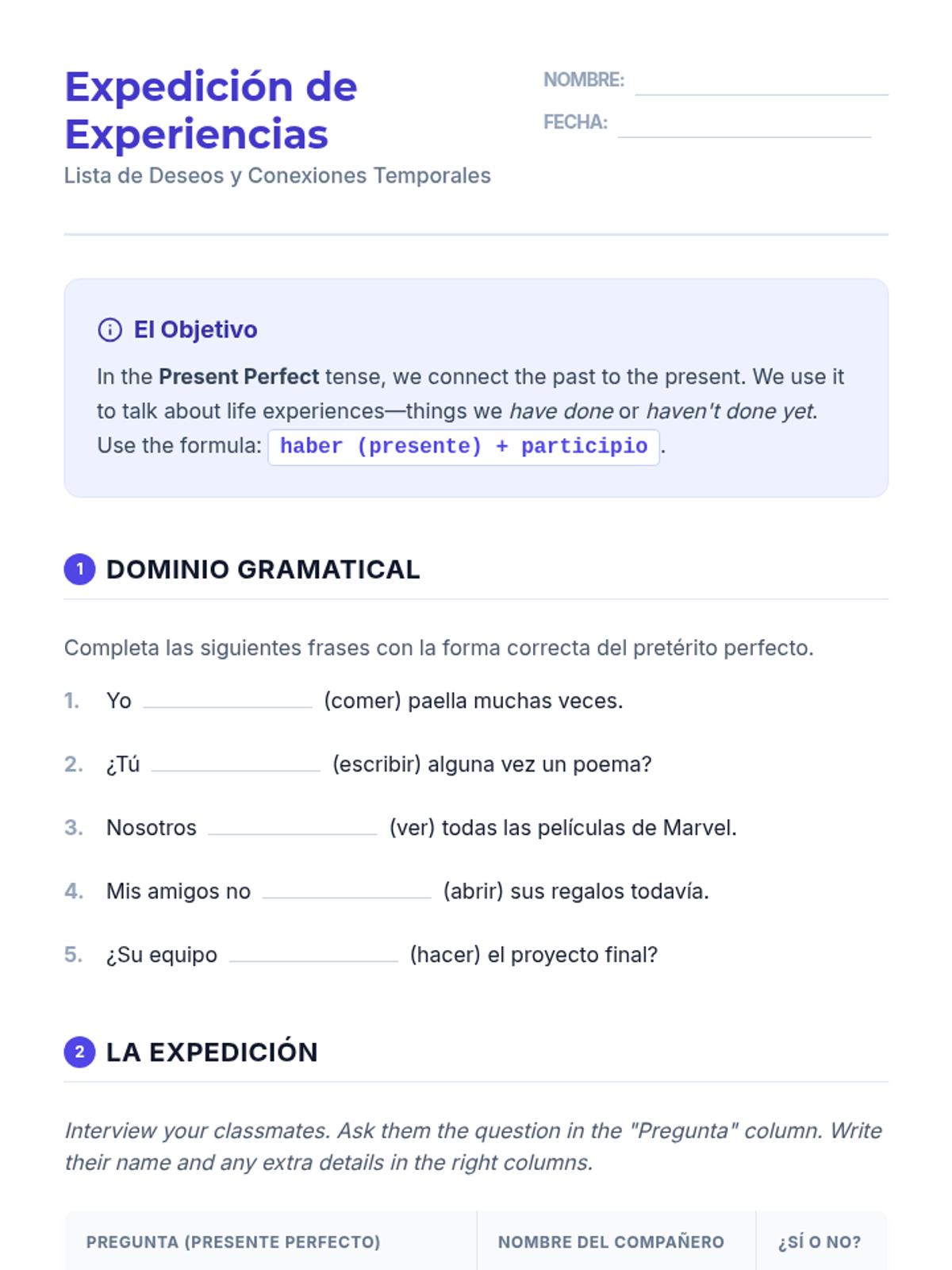
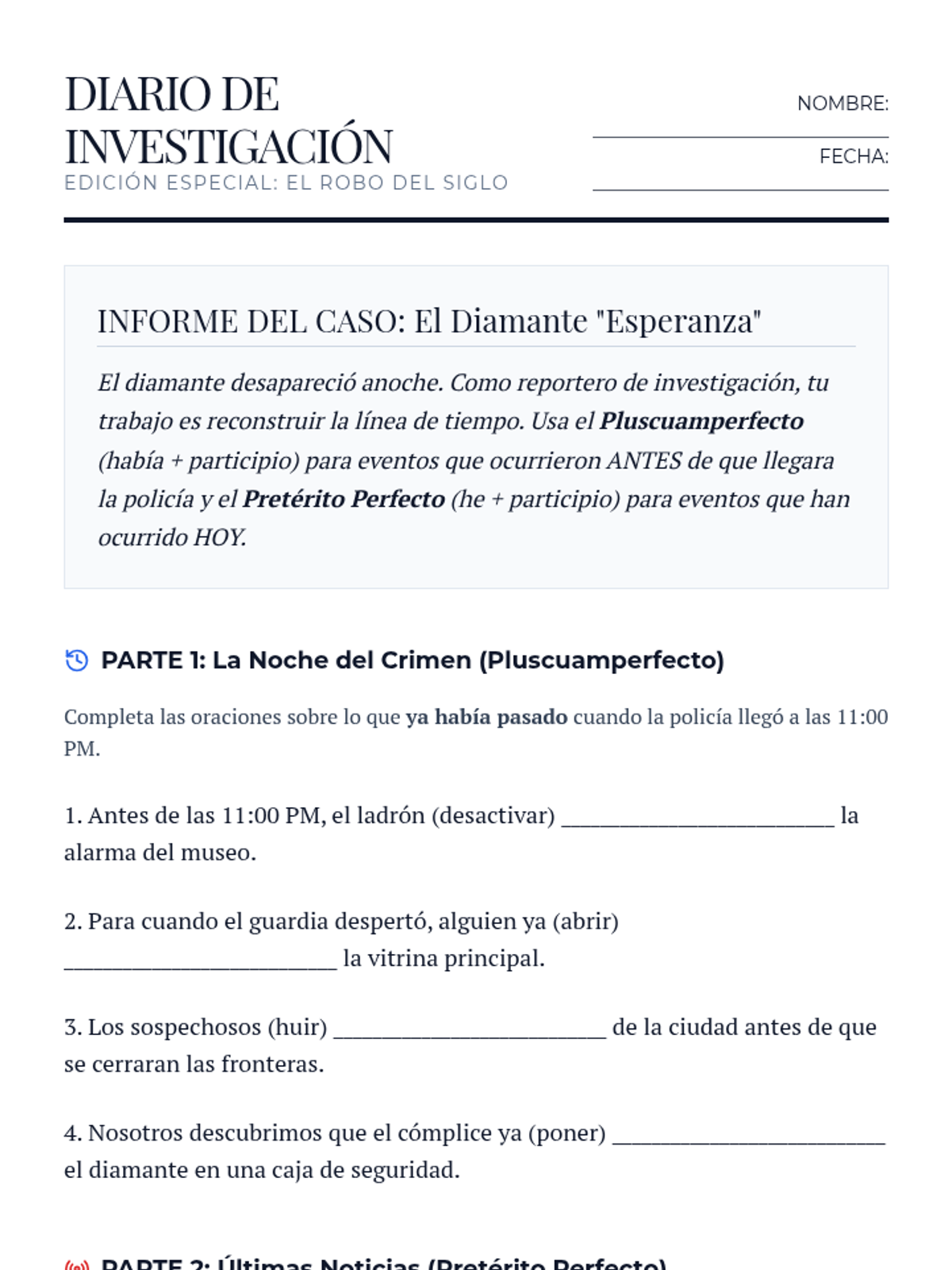
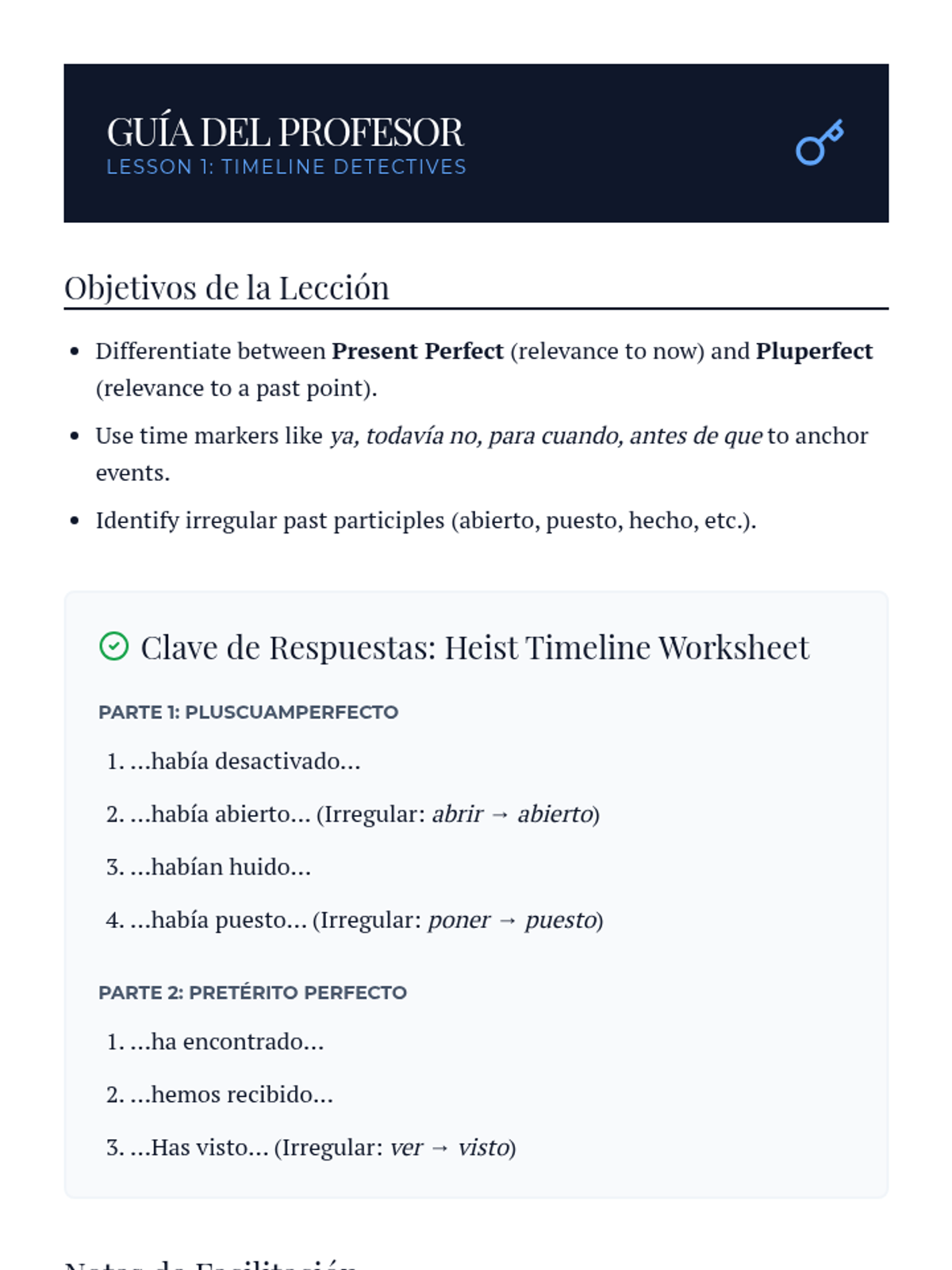
This project-based workshop guides advanced Spanish students through compound tenses by constructing a multi-layered narrative. Students master the present perfect, pluperfect, conditional perfect, and future perfect to articulate complex temporal relationships.
A comprehensive 10th-grade Spanish unit that moves students from basic subjunctive mechanics to advanced semantic nuances. Through simulation-based learning—including an advice column and a town hall debate—students explore how the subjunctive mood expresses influence, doubt, emotion, and uncertainty in high-stakes communication.
This advanced Spanish grammar unit empowers 10th-grade students to master compound tenses and the passive voice through a journalistic lens. Students assume the role of investigative reporters, learning to sequence complex events and shift narrative focus to achieve objectivity and precision in formal writing.
A comprehensive 8th-grade Spanish sequence introducing the subjunctive mood. Students progress from basic conjugation and verbs of influence to expressing emotions, doubt, and impersonal opinions, culminating in a persuasive 'Manifesto for Change'.
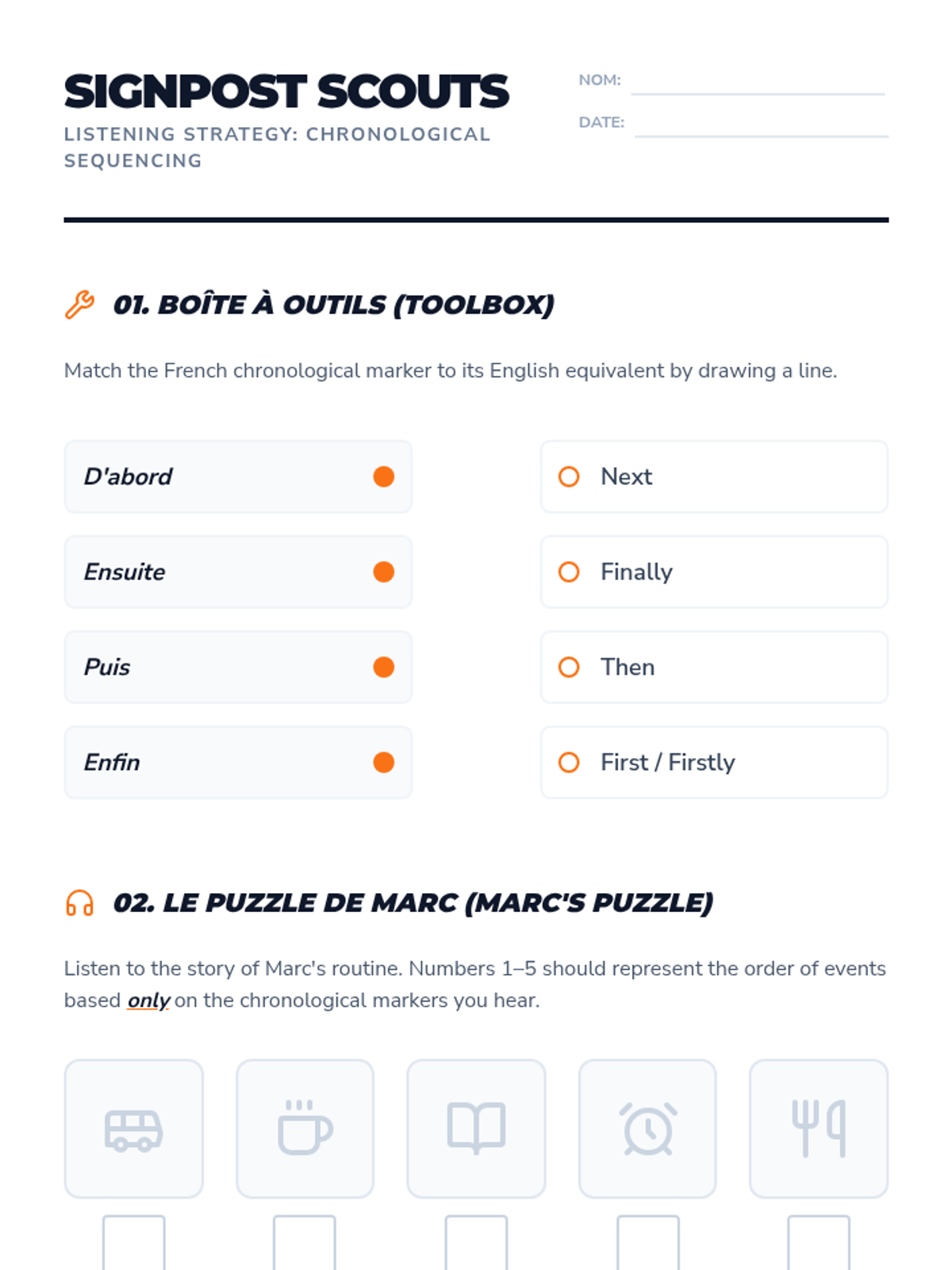
A project-based sequence for beginner French students focused on decoding media through narrative structures, logical connectors, and 'gist' listening strategies. Students move from identifying chronological signposts to analyzing news segments, street interviews, and cultural advertisements, culminating in a media analysis project.
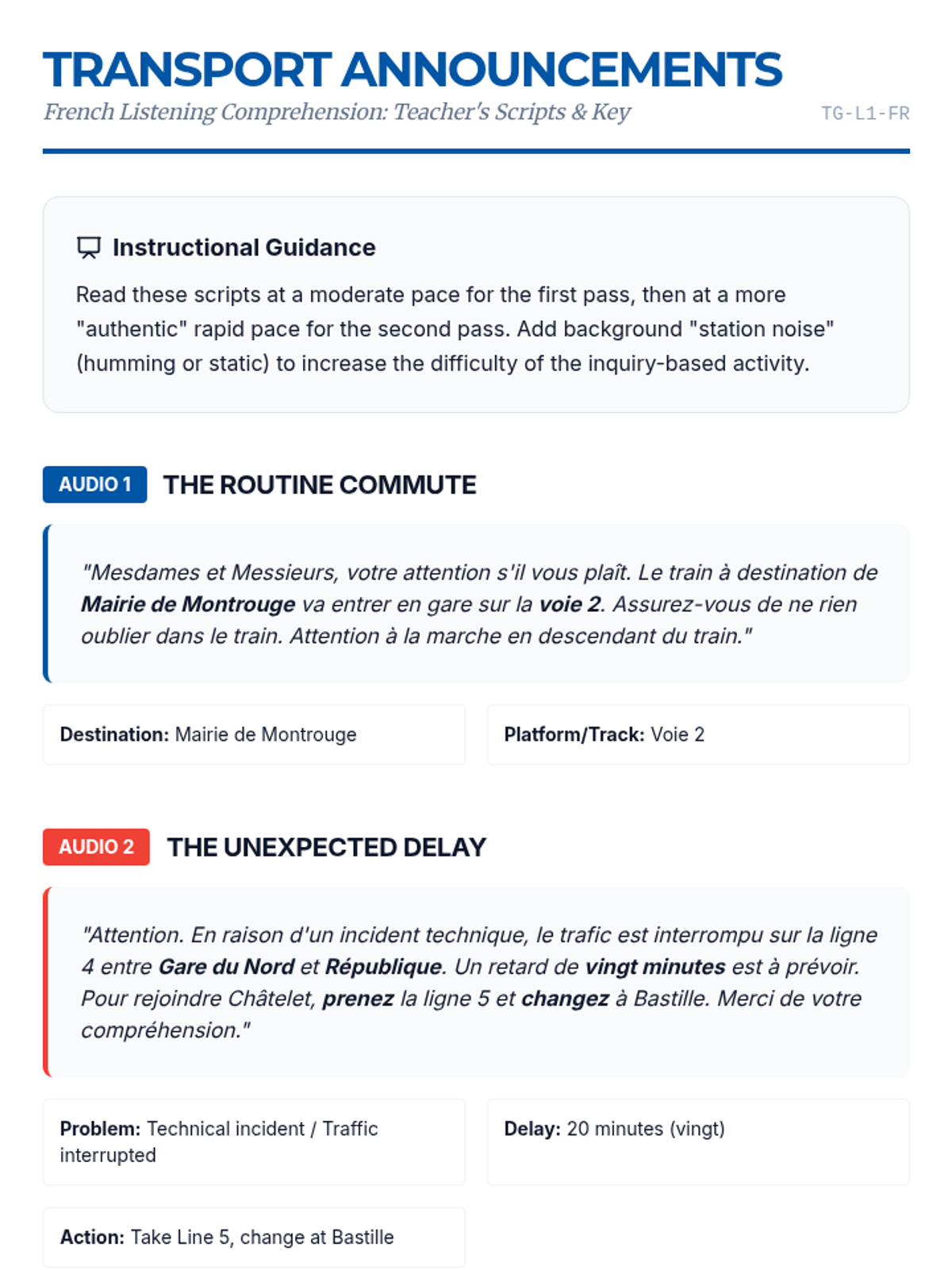
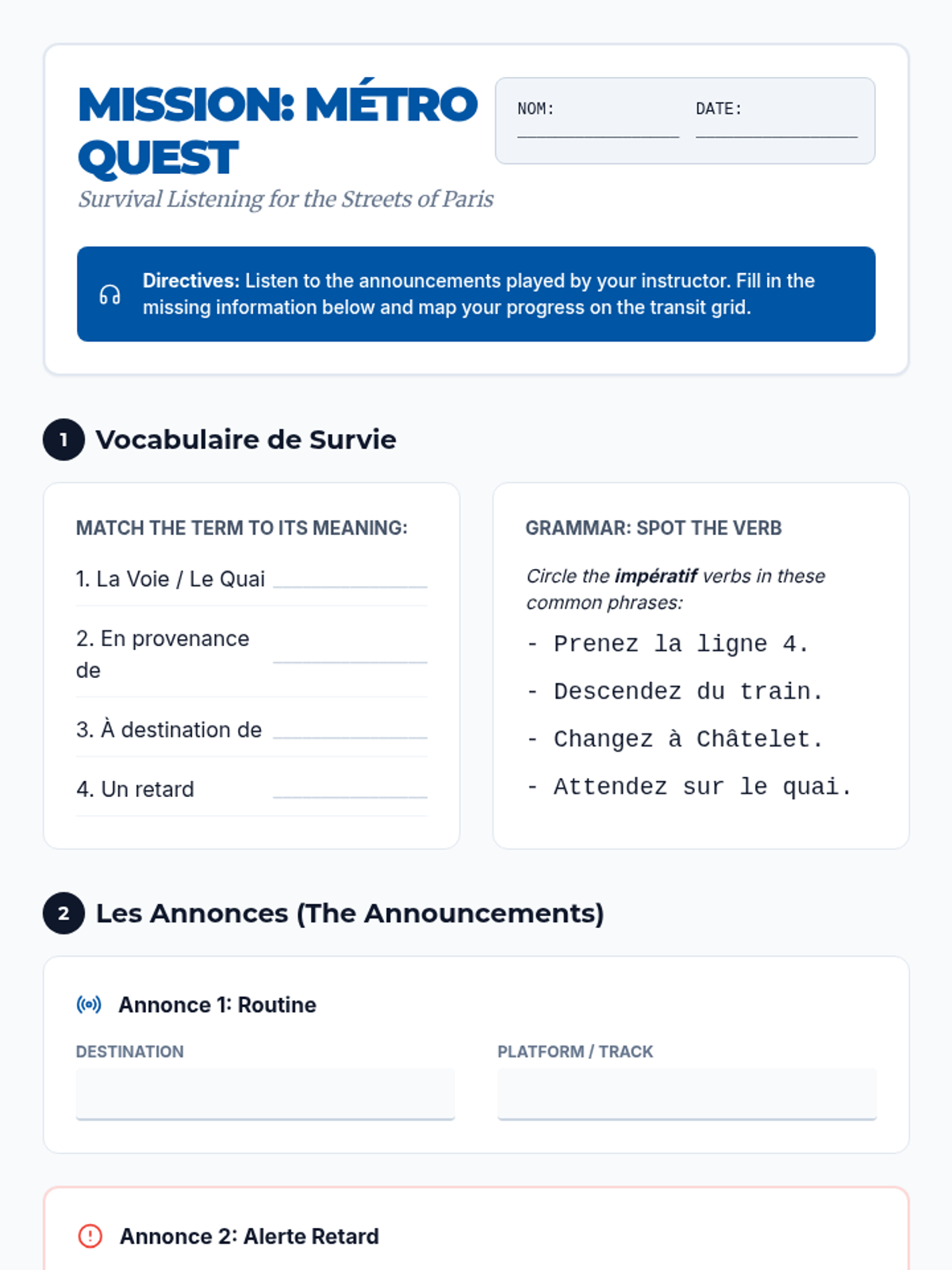
An inquiry-based French listening sequence for beginners focusing on functional navigation of public spaces in Francophone cities. Students learn to filter essential information from ambient noise in transport, weather, street directions, retail, and emergency contexts.
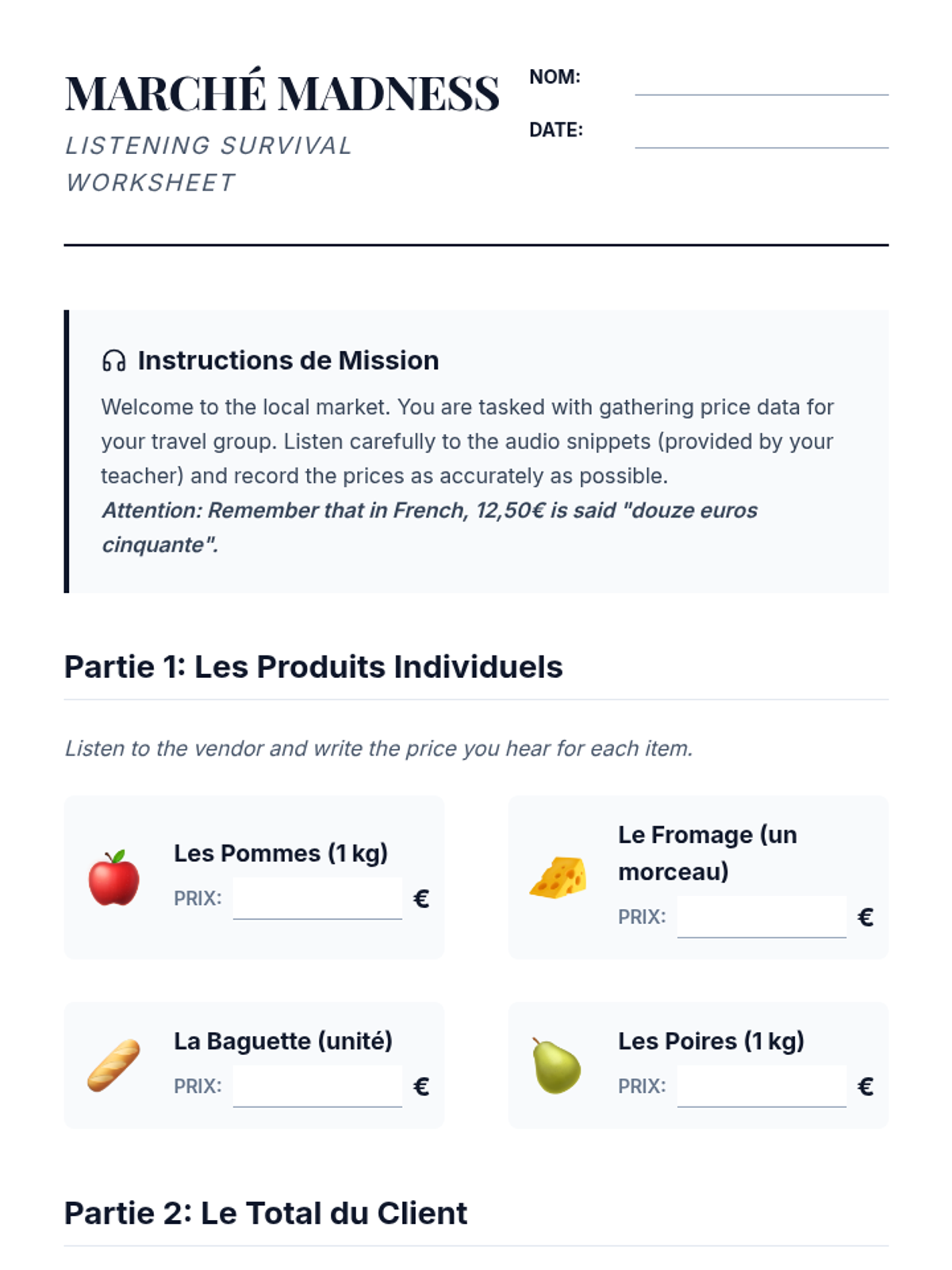
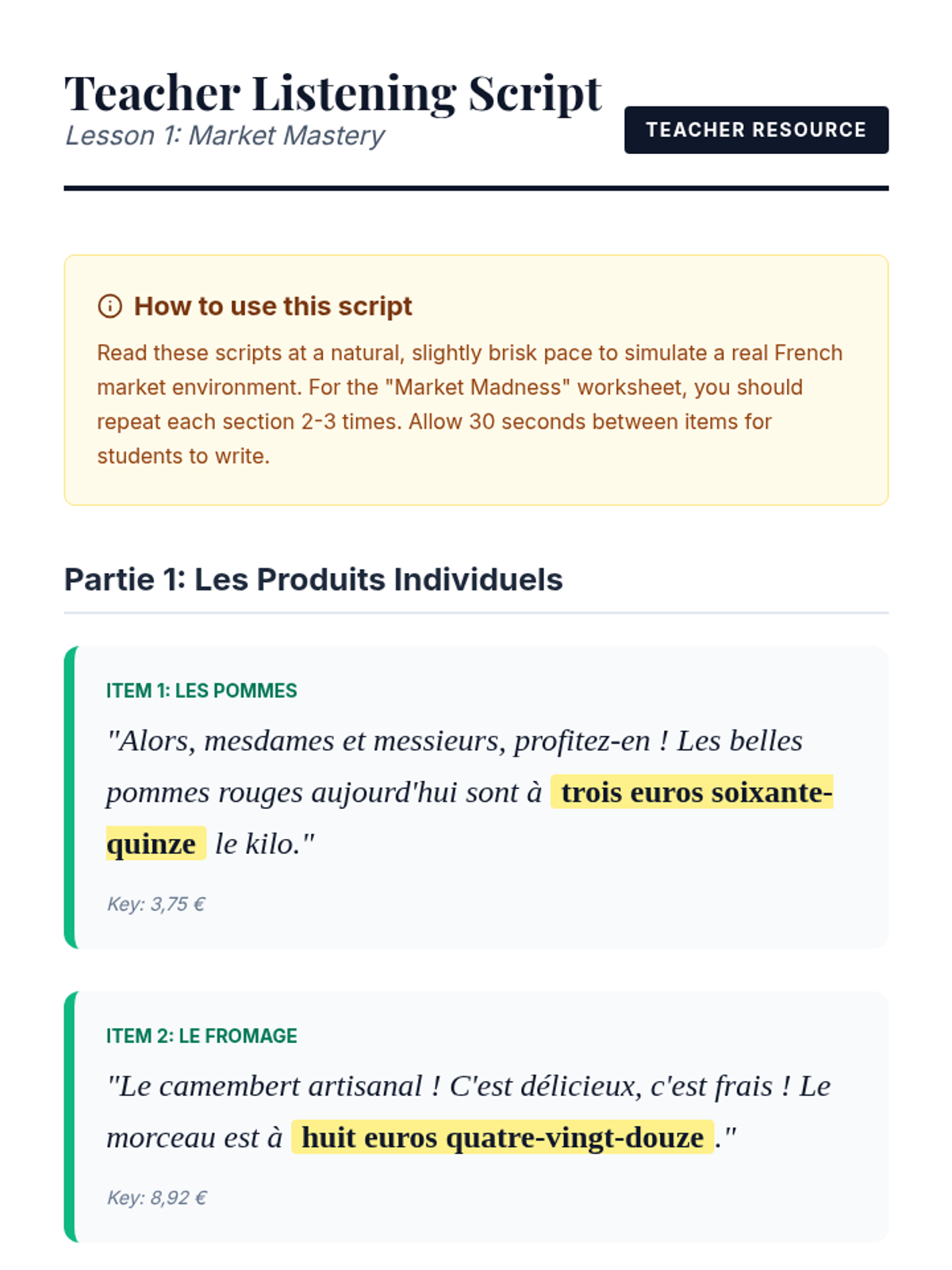
A high-stakes travel simulation building French listening proficiency in logistics: numbers, time, prices, and directions. Students navigate virtual 'survival' scenarios where accurate information processing is the key to a successful journey.
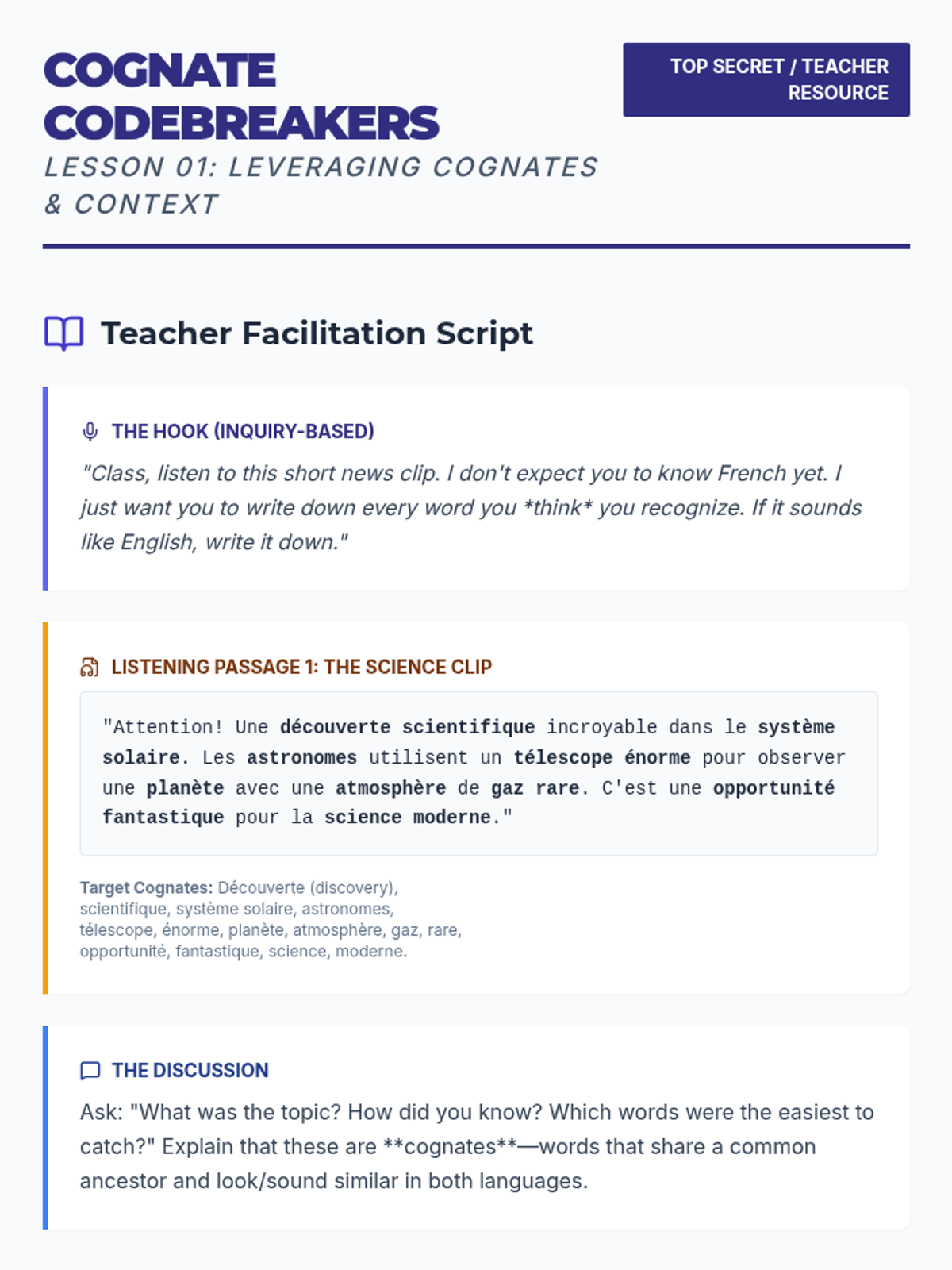
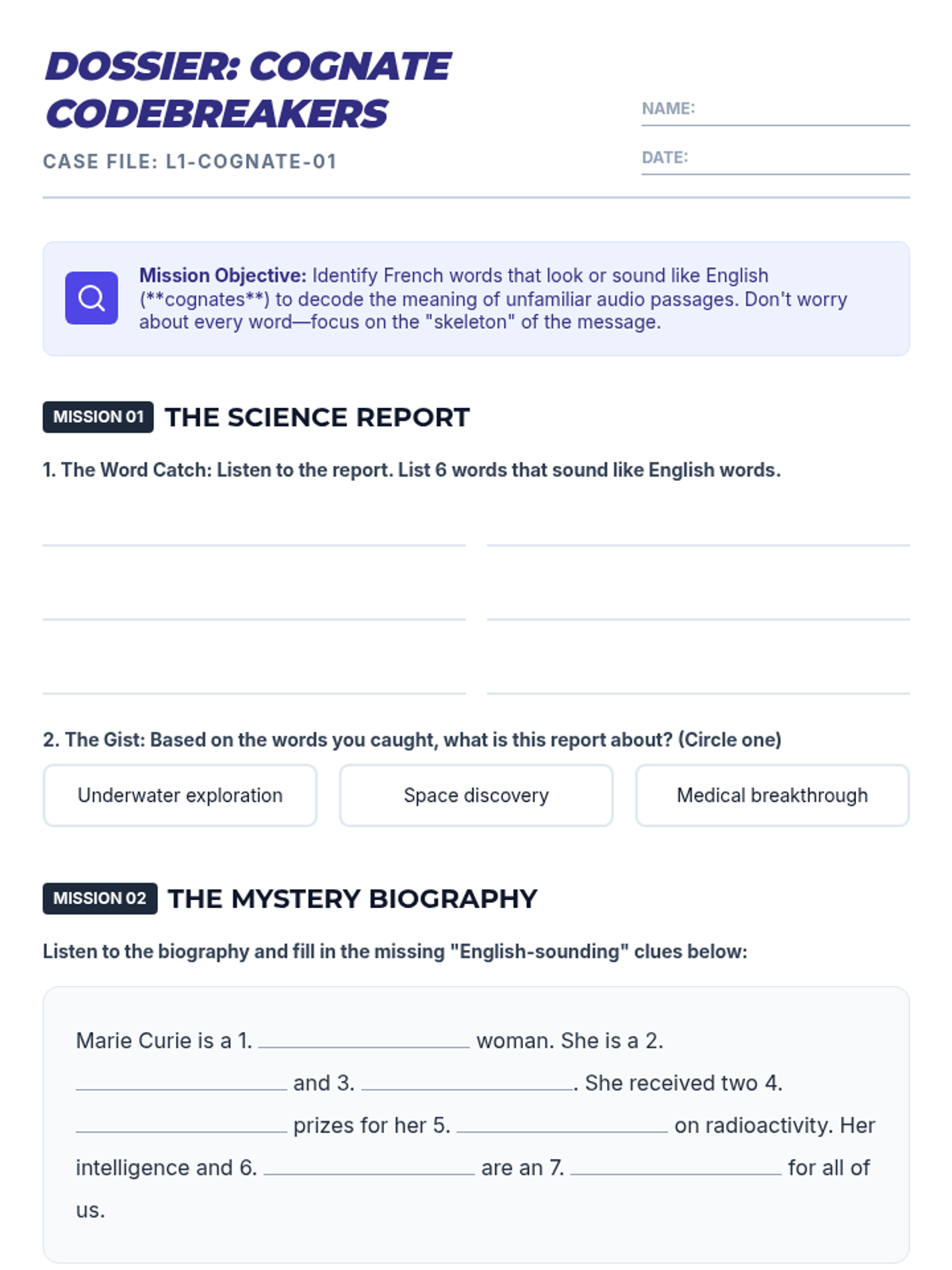
This sequence guides 9th-grade French beginners through the art of listening for meaning rather than just words. Students learn to use cognates, context, social registers, and emotional tone to interpret narratives and dialogues, culminating in the ability to summarize global meaning.
A foundational sequence for beginner French students focusing on phonetics, nasal sounds, liaisons, and intonation to improve listening comprehension and transcription skills.
A beginner French listening sequence for 10th graders focused on navigating real-world travel scenarios. Students develop auditory comprehension through simulated interactions in cafes, train stations, boutiques, and emergency situations.
A beginner French listening sequence where students act as social observers, analyzing registers, personal details, family structures, and preferences through auditory scripts.
This sequence builds foundational auditory skills for beginner French learners, focusing on phonetic discrimination, number recognition, and parsing sentence boundaries to develop comprehension.
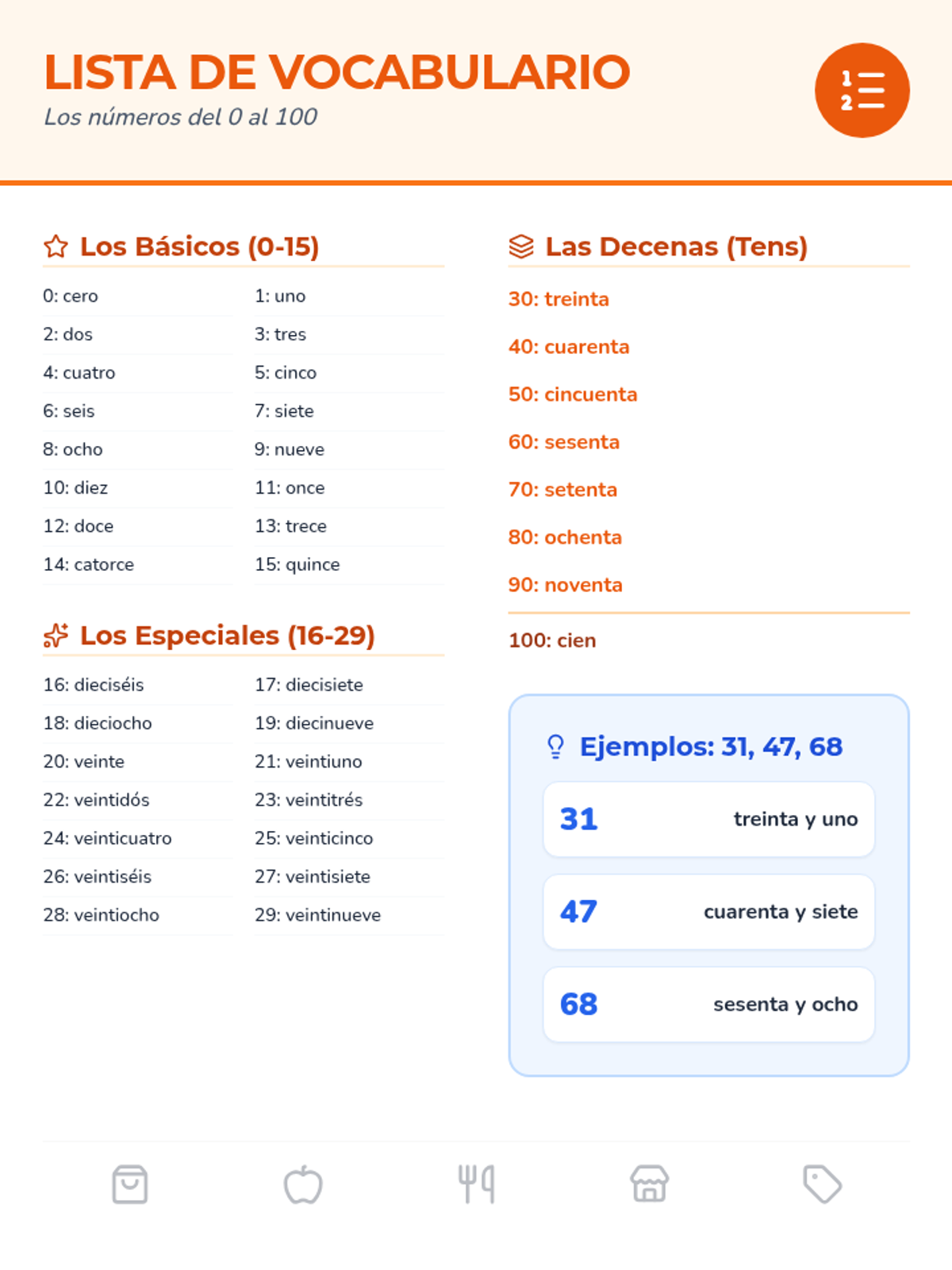
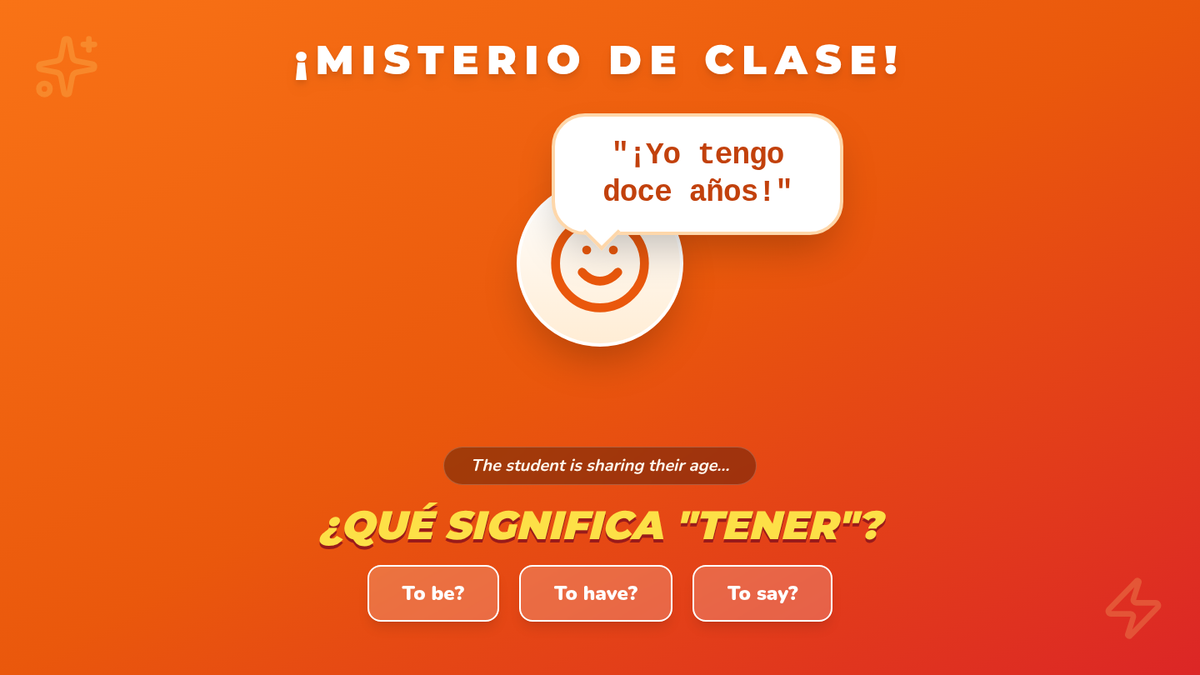
A comprehensive unit for beginner Spanish students to master the verb 'estar' and 'tener' idioms for expressing emotions, physical states, and needs. Through interactive games, role-plays, and data collection, students learn to articulate their internal feelings and conduct wellness checks on others.
This sequence establishes foundational auditory and oral skills for Spanish fluency, focusing on vowel sounds, difficult consonants like 'rr' and 'ñ', and rules of stress and accentuation. Students transition from sound production to reading syllables and full words with accuracy.
A 5-lesson sequence for 7th-grade students to master Spanish greetings, introductions, and the cultural nuances of formal vs. informal address (tú vs. usted). Students move from basic vocabulary to complex social simulations.
A professional development-style Spanish sequence for high schoolers, focusing on the nuances of formal vs. informal registers (tú vs. usted) and the cultural etiquette of business and academic introductions. Students move from basic sociolinguistic analysis to a high-stakes simulated international summit.
A functional Spanish speaking sequence for 10th graders focusing on numbers, survival phrases, preferences, and basic questioning to navigate a Spanish-only environment.
This sequence builds foundational Spanish pronunciation and social introduction skills. Students progress from mastering the five pure vowels and unique consonants to navigating the cultural nuances of formal and informal address, culminating in a fluent introductory dialogue.
A comprehensive Spanish sequence for 10th Grade beginners focused on the verb 'ser', adjective agreement, and personal descriptions. Students develop the skills to describe themselves and others, culminating in a multimedia identity profile project.
An inquiry-based exploration of French communities where students learn to identify landmarks, use spatial prepositions, and provide directions. Students develop practical communication skills while virtually navigating Francophone cities.
A 5-session high school Spanish project where students research, design, and present a multimedia project about daily life in a Spanish-speaking community, fostering cultural awareness and communication skills.
A comprehensive unit on French transactional communication, focusing on numbers, politeness, menu navigation, and preferences within dining and shopping contexts.
This sequence establishes the phonetic and sociolinguistic foundations for French communication. Students master pronunciation, navigate the formal/informal divide, and learn greeting protocols for professional and social settings.
A comprehensive sequence for beginner French students focusing on the nuances of written communication, from formal professional inquiries to informal social media slang. Students develop sociolinguistic competence by navigating register, formatting correspondence, and expressing opinions in real-world simulations.
A 5-lesson sequence for 8th Grade Intermediate Mandarin students focused on navigating simplified news, technology vocabulary, and informational text structures in modern Chinese media.
This intermediate Mandarin Chinese sequence focuses on identifying and analyzing complex sentence structures (sequential, concessive, causal, conditional, and simultaneous) to improve reading fluency and logical comprehension in 8th-grade students.
A comprehensive 5-lesson sequence for intermediate Mandarin students to compare the daily lives and educational systems of Chinese and American middle schoolers through authentic-style reading materials.