A Kindergarten science sequence where students explore plant diversity through the lens of agriculture and nutrition, identifying which parts of plants we eat (roots, stems, leaves, flowers, fruits, and seeds).
A differentiated unit on the solar system designed for newcomers and students with IEPs, focusing on the Sun, Moon, planets, and stars with heavy visual support and simplified language.
A computer science unplugged sequence for 2nd graders focused on the concept of decomposition through library organization. Students learn to break down the complex task of sorting a 'Messy Mountain' of books into manageable, sequential steps.
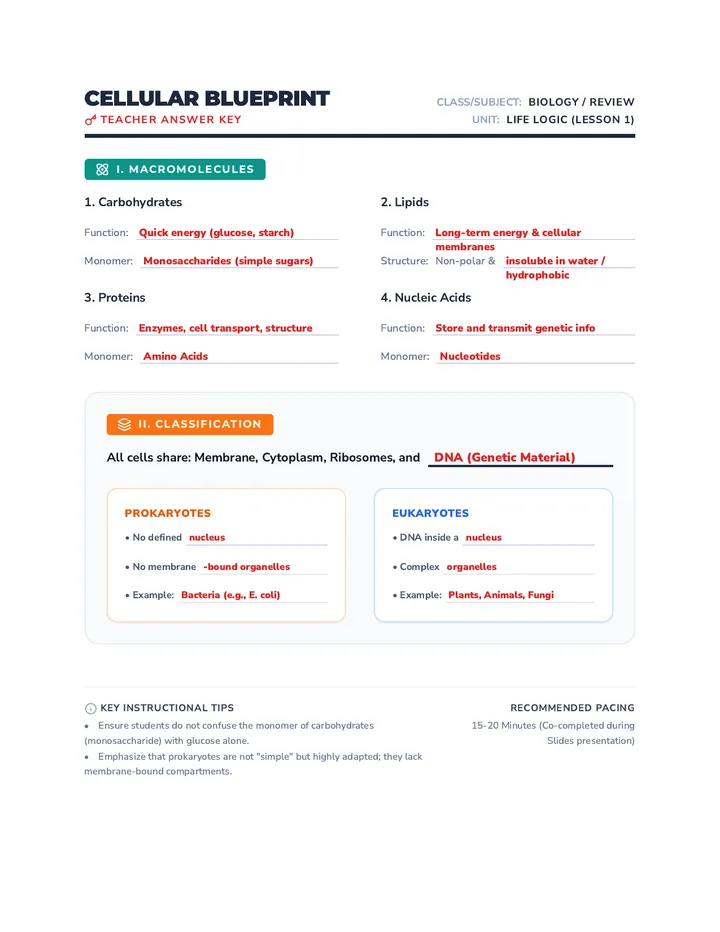
A collection of resources covering 8th-grade genetics concepts and professional leadership strategies for educational stakeholders.
A comprehensive K-8 curriculum designed to build foundational AI literacy through understanding, evaluation, application, and ethics. Each grade level tackles a specific theme, progressing from basic robot concepts to complex algorithmic bias and societal impact.
A 3-day introductory science sequence for early learners (PreK-1st) exploring the fundamental needs of plants, animals, and humans. Students will discover commonalities in survival requirements through visuals, guided practice, and hands-on sorting.
Una secuencia didáctica sobre el desarrollo web interactivo, enfocada en la captura de eventos del teclado mediante JavaScript para crear experiencias de usuario dinámicas y juegos sencillos.
A comprehensive 5-day phonics unit focused on the "bonus letters" (Floss Rule: f, l, s, z) including heart words 'your' and 'want'. Students explore the concept of doubling final consonants in one-syllable short vowel words through a factory-themed learning experience.
A 5-day intensive review of all short vowel sounds (a, e, i, o, u) using the 'Vowel Voyagers' theme. Includes daily phonemic awareness, word building, decodable reading, and heart word mastery.
A 4-day introduction to weather types and appropriate clothing choices for preschool and kindergarten students. Students explore hot, cold, rainy, and warm/sunny conditions through visual slides, hands-on sorting activities, and creative worksheets.
A multi-day exploration of the butterfly life cycle for 2nd graders, featuring interactive instruction, a directed drawing activity, and a summative assessment.
This sequence explores the evidence for biological evolution and the mechanisms of heredity, aligning with Grade 8 science standards for understanding Earth's history and life forms.
A two-week environmental science review sequence focusing on key takeaways: climate change, pollution, renewable energy, and biodiversity. Students compile a 'Field Dossier' review packet as a final course artifact.
A hands-on science and art unit where 2nd grade students investigate biodiversity in their school courtyard, comparing grassy and wooded habitats while repurposing natural materials into creative sculptures.
A comprehensive unit for 2nd graders exploring the wonders of our solar system, including the phases of the moon and the daily lives of space explorers.
A comprehensive unit for 2nd graders to explore diverse animal habitats around the world through hands-on activities, research, and a creative diorama project. Students will learn about the unique characteristics of different environments and how animals are adapted to survive in them.
An inquiry-based science and literacy curriculum for grades 1-3 that combines foundational scientific concepts with high-frequency sight word mastery and precision handwriting practice.
A comprehensive K-12 AI literacy sequence covering the fundamentals of how AI works, machine learning, ethics, social impact, and creative application through age-appropriate lessons.
A comprehensive 4-day sequence focusing on the application of thermal energy concepts, including conduction, convection, radiation, and insulation through hands-on labs and real-world analysis.
A series of ELD lessons exploring how human environments interact with nature, focusing on reading comprehension, academic language, and collaborative discourse.