A Tier 2 intervention sequence focused on dividing unit fractions by whole numbers and vice versa, using bakery-themed visual models and story-based learning. Students use fraction strips, number lines, and area models to master 5.NF.B.7.
A collection of Valentine's Day math packets at two different levels (Level 1 and Quest), covering budgeting, graphing, measurement, time, and word problems.
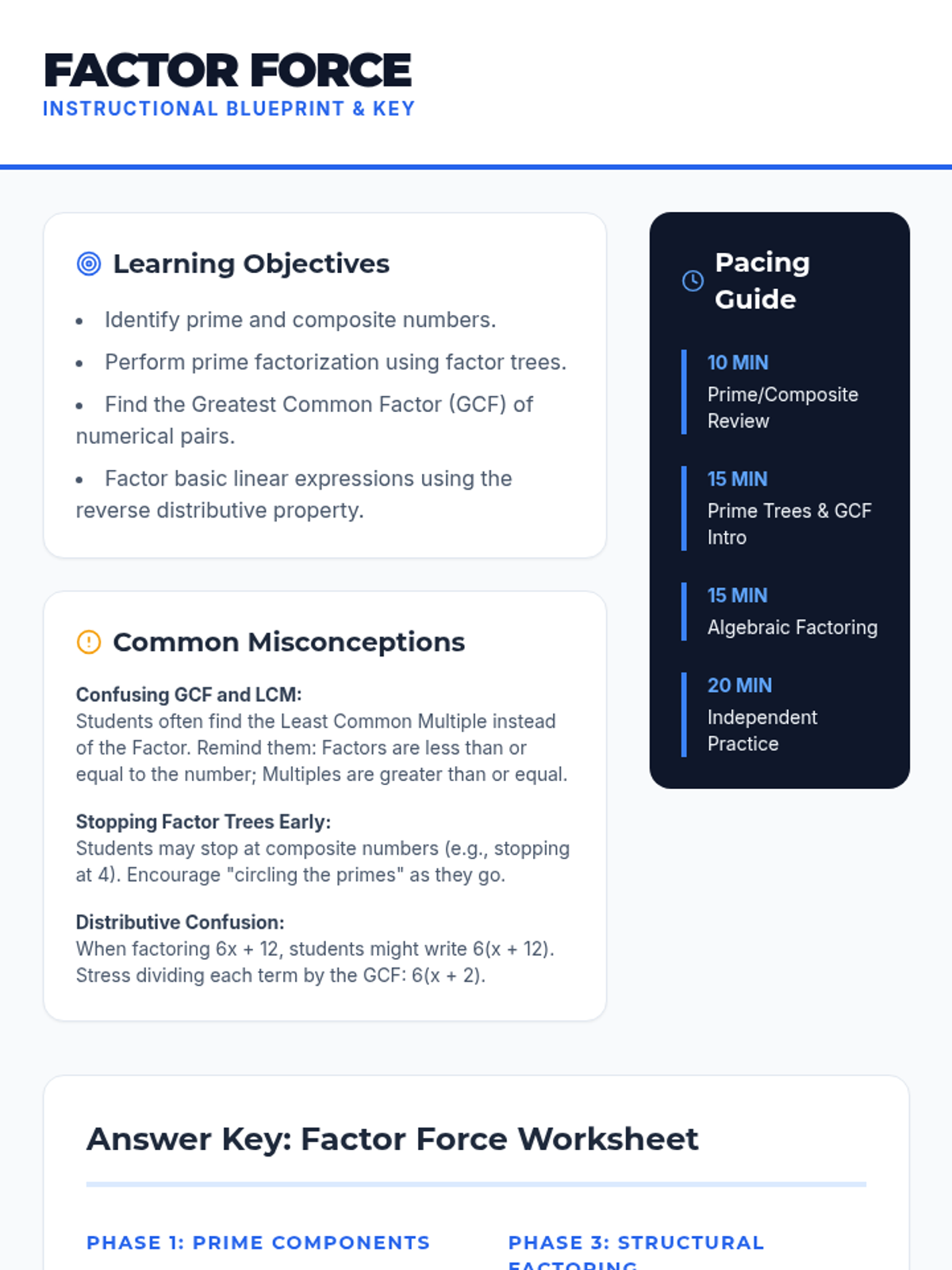
A comprehensive suite of strategies and visual supports designed to help K-5 students decode and solve addition, subtraction, multiplication, and division word problems using a detective-themed approach.
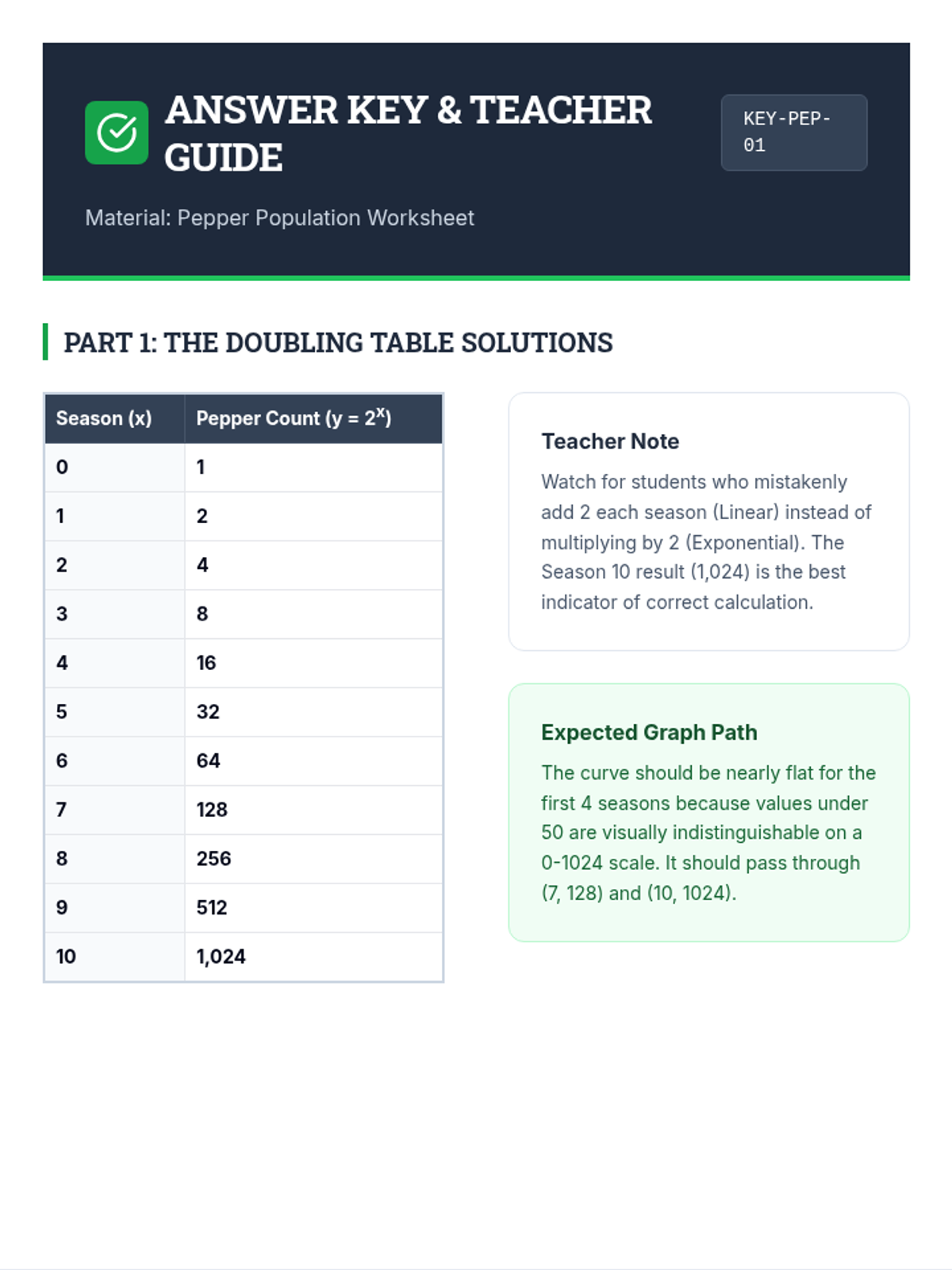
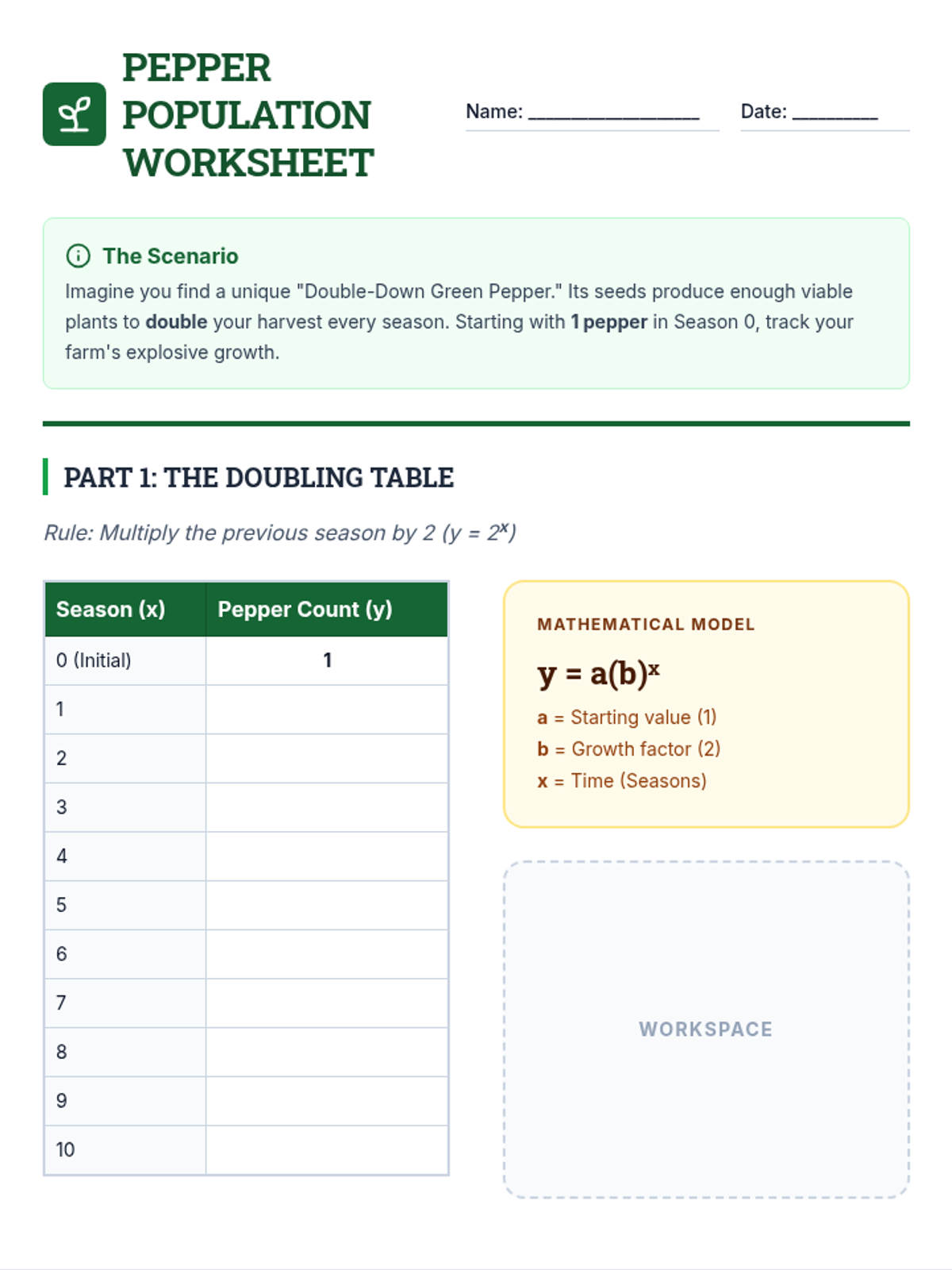
A specialized Tier 3 intervention sequence for 8th-grade students performing at a 5th-grade level, focusing on bridging foundational arithmetic to high school algebra concepts. This sequence uses concrete-representational-abstract (CRA) methods to explore area modeling, systems of equations, exponential patterns, and inequalities.
A 3-day small group math sequence for 5th grade focused on TEKS 5.3K. Students learn to fluently add and subtract positive rational numbers by converting between fractions and decimals and using the Read-Draw-Write strategy for STAAR-aligned word problems.
A comprehensive 3-day math sequence focused on TEKS 5.3K, where students learn to fluently add and subtract positive rational numbers involving both decimals and fractions in the same expressions through a construction-themed 'Rational Builders' unit.
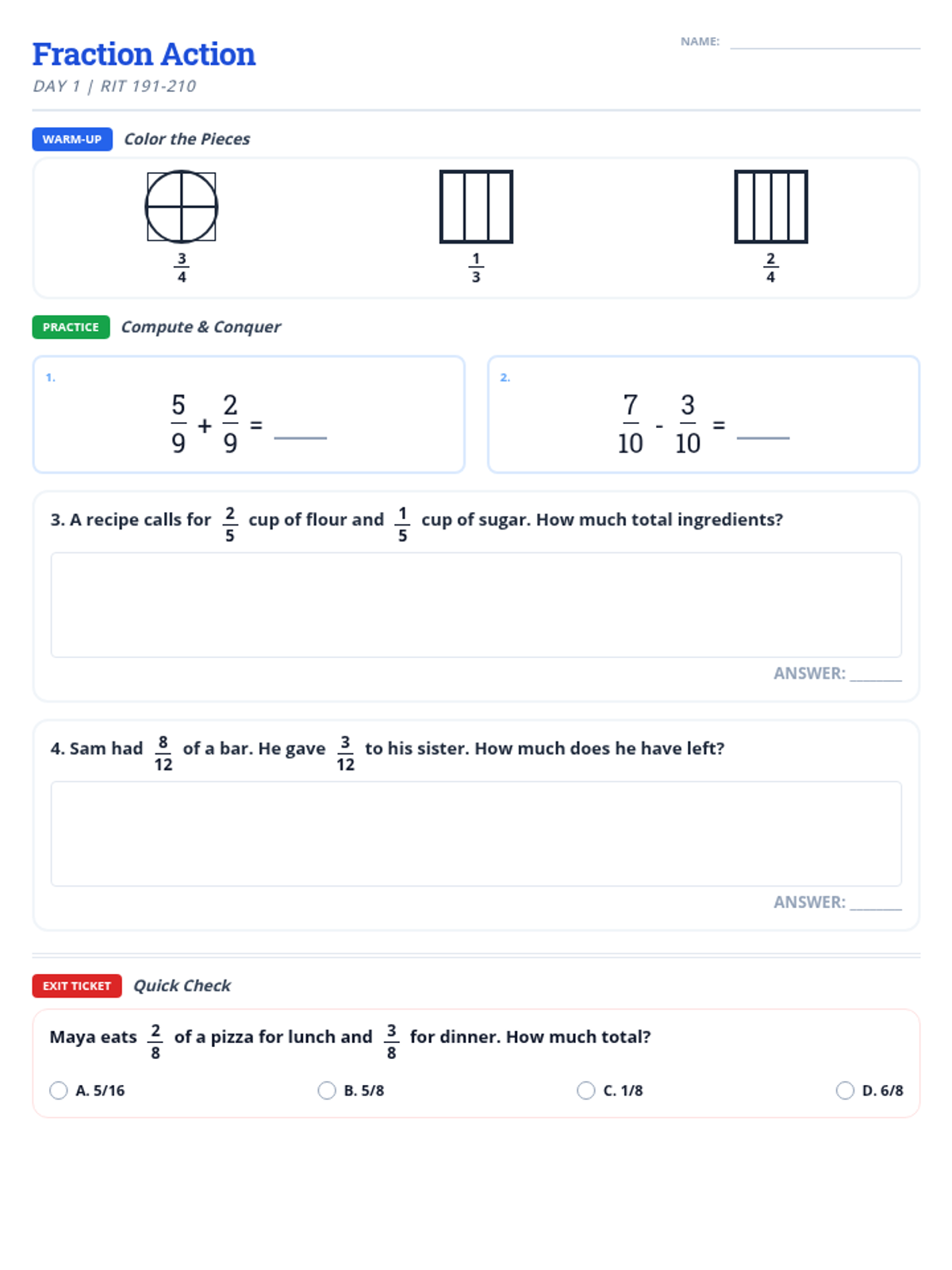
A comprehensive 7-lesson intervention sequence designed to build conceptual fraction understanding through visual models, number lines, and scaffolded practice. The sequence moves from basic area models to adding and subtracting with unlike denominators, prioritizing 'why' over 'how'.
A comprehensive math and SEL integration designed for Grades 5-6, focusing on multi-step fraction word problems through the lens of growth mindset and productive struggle. Students learn to reframe mistakes as data points and persistence as a measurable skill.
A series of targeted interventions focusing on foundational fraction concepts, specifically partitioning and representing fractions on number lines.
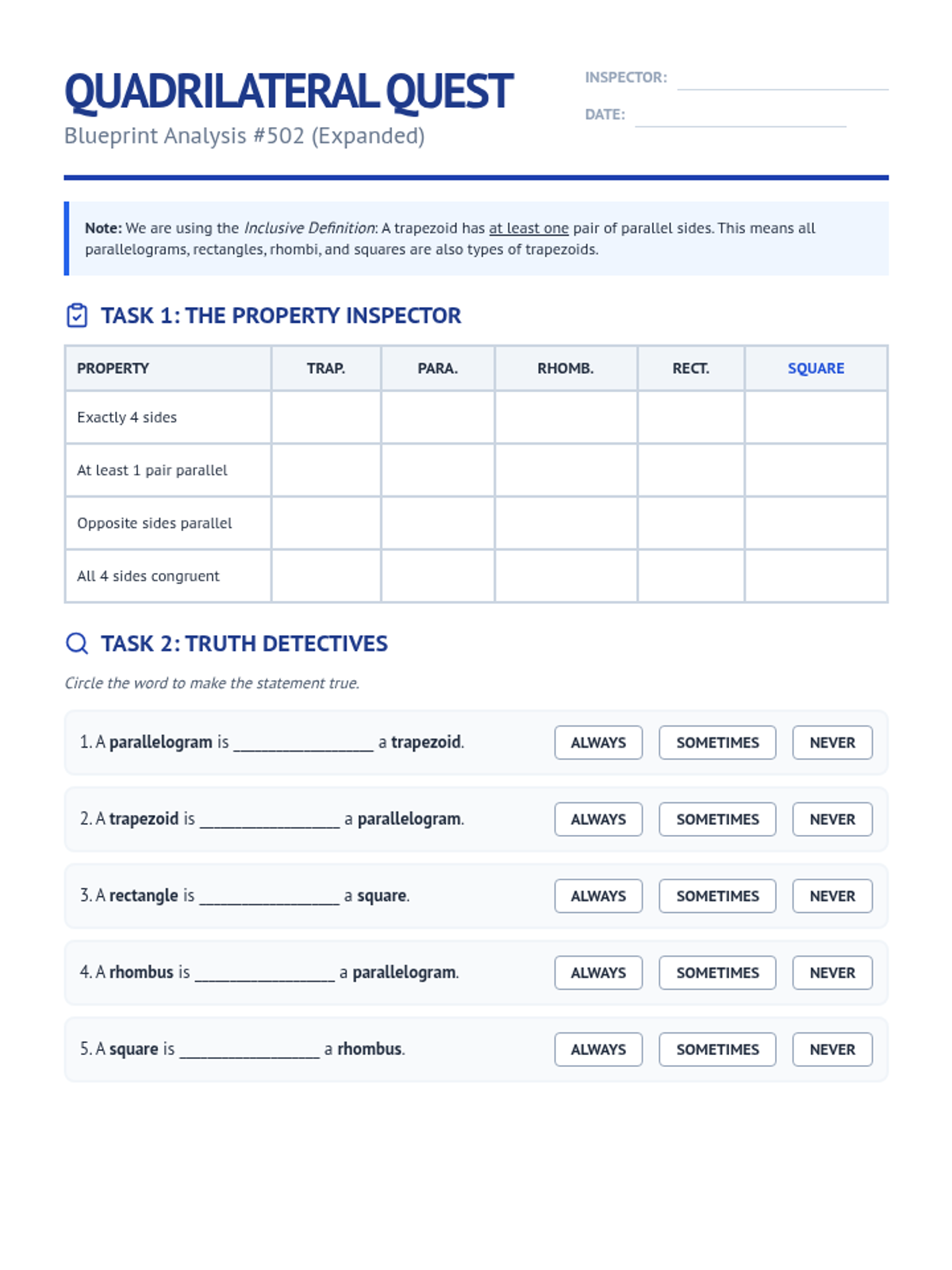
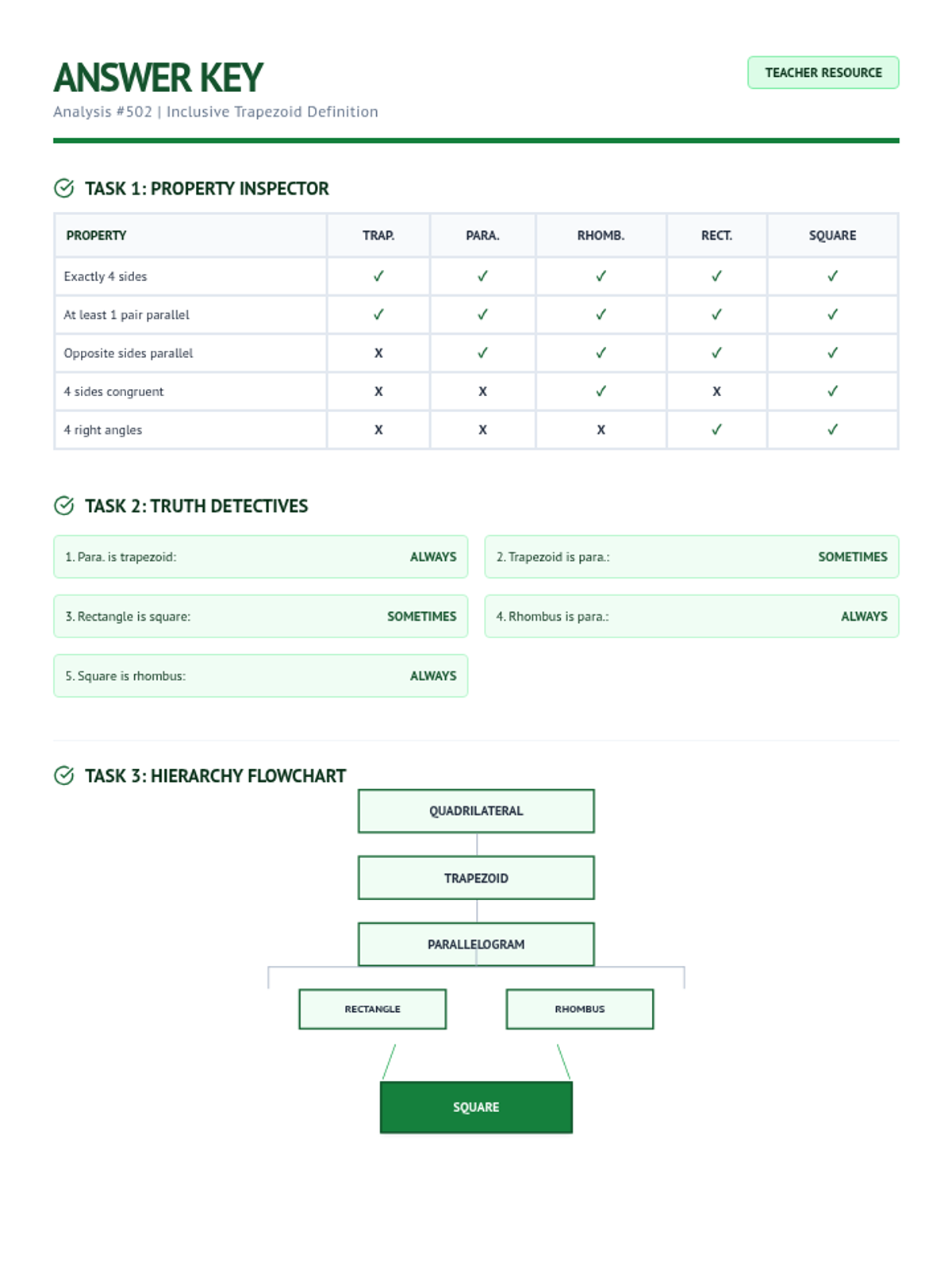
A Tier 2 intervention unit focused on the hierarchical classification of two-dimensional figures, helping students understand that subcategories inherit the attributes of their parent categories.
A Grade 5 intervention sequence focused on mastering the first quadrant of the coordinate plane through real-world contexts like hiking and plant growth. Students learn to plot points and interpret their meaning in specific mathematical and physical situations.
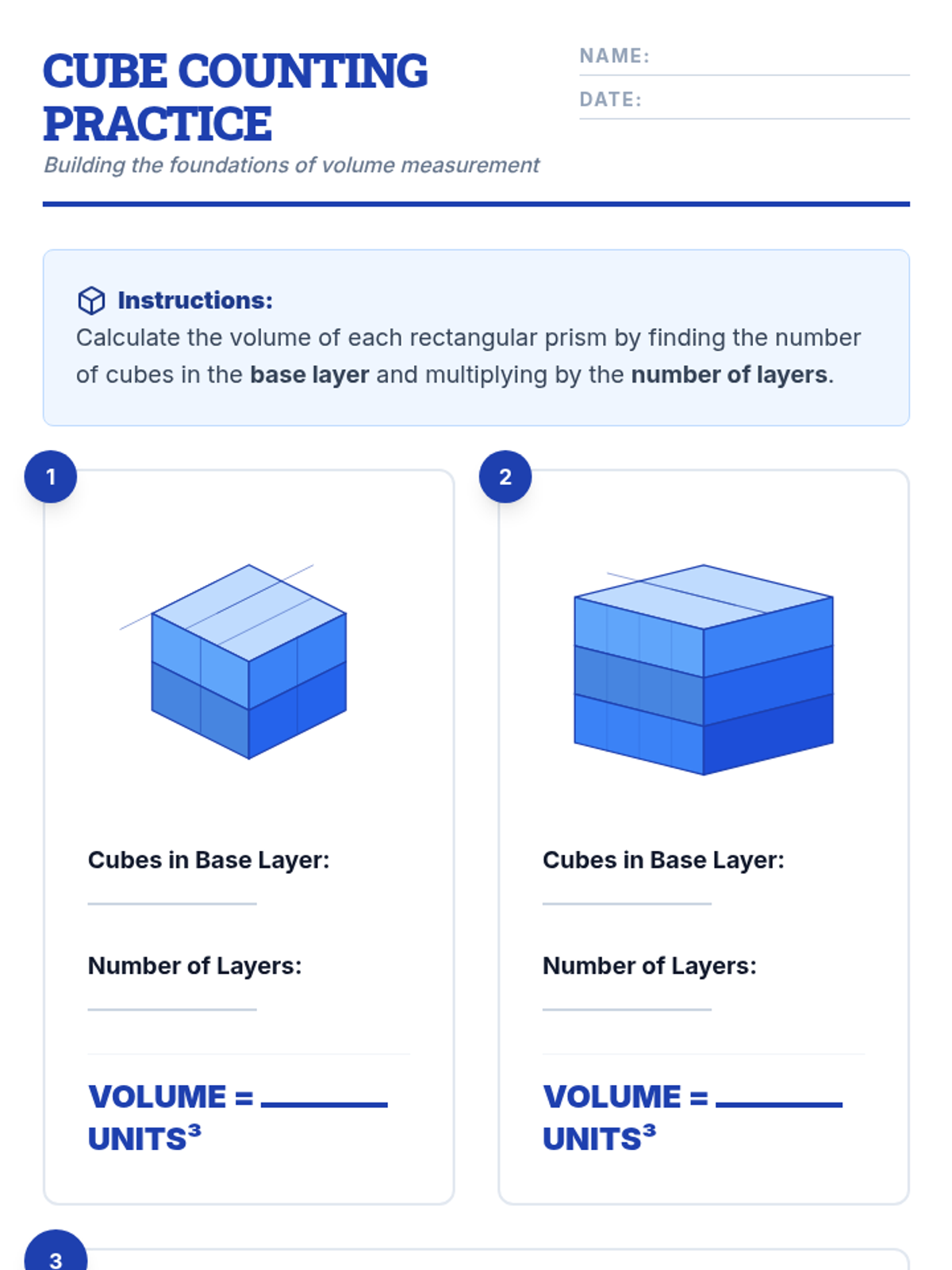
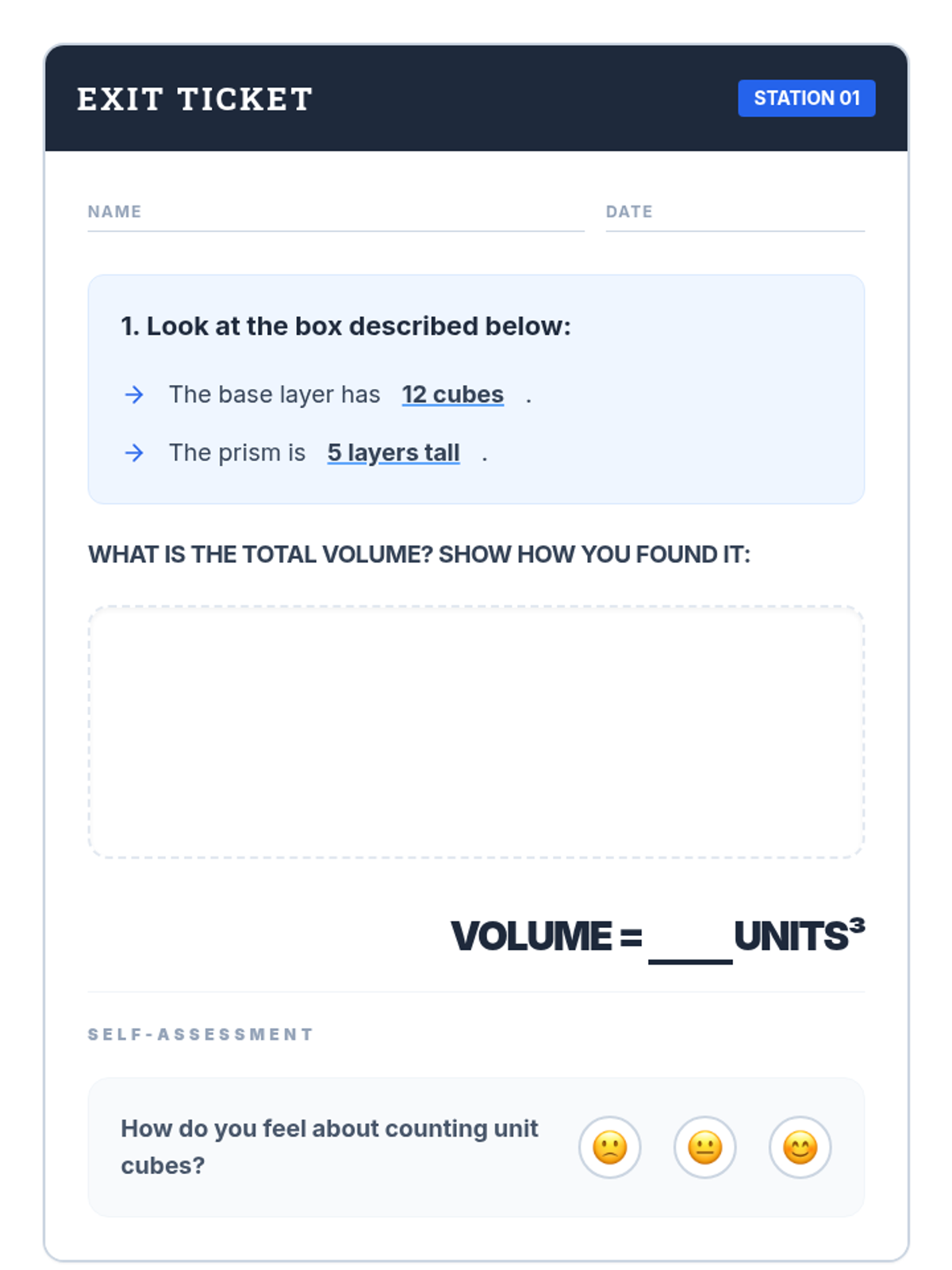
A Tier 2 intervention sequence for 5th-grade students focusing on solving complex volume problems. Students act as 'Volume Architects,' using blueprints and unit cubes to master multiplication formulas and the additive property of volume for composite figures.
A targeted Tier 2 intervention for 6th-grade students focused on writing simple inequalities and graphing their solutions on number lines. This sequence uses real-world constraints and hands-on manipulatives to build conceptual understanding of inequality symbols and their visual representations.
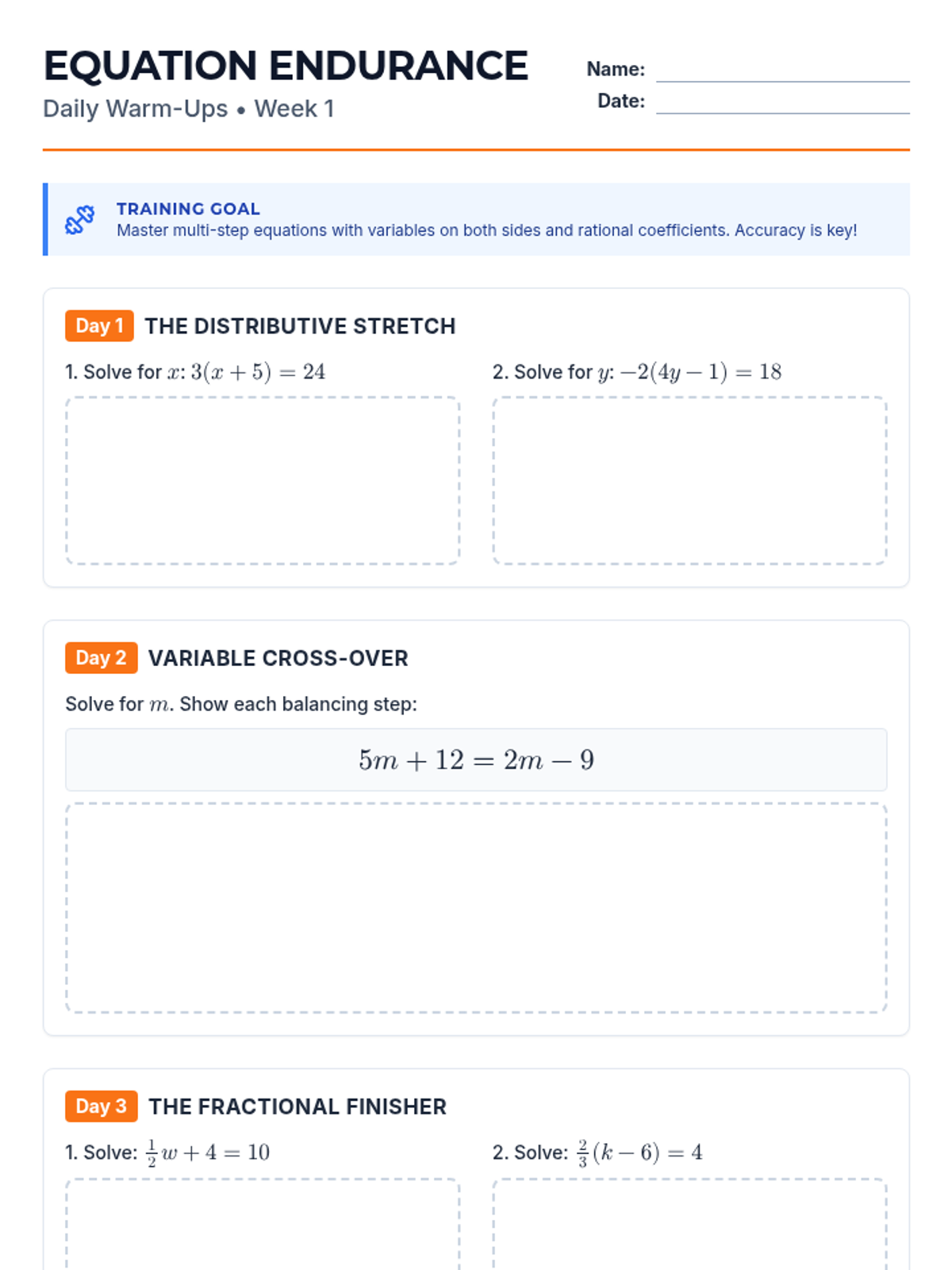
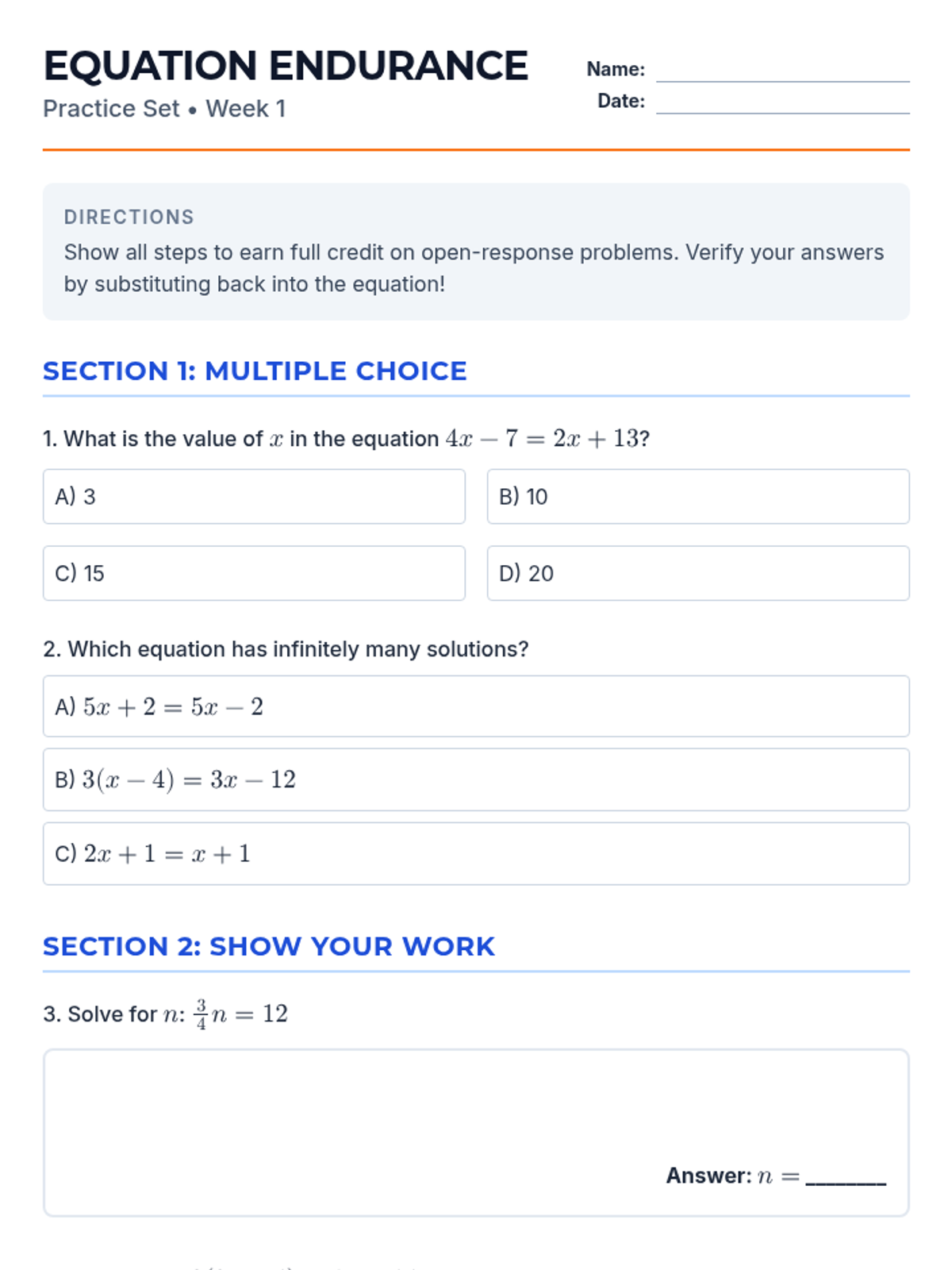
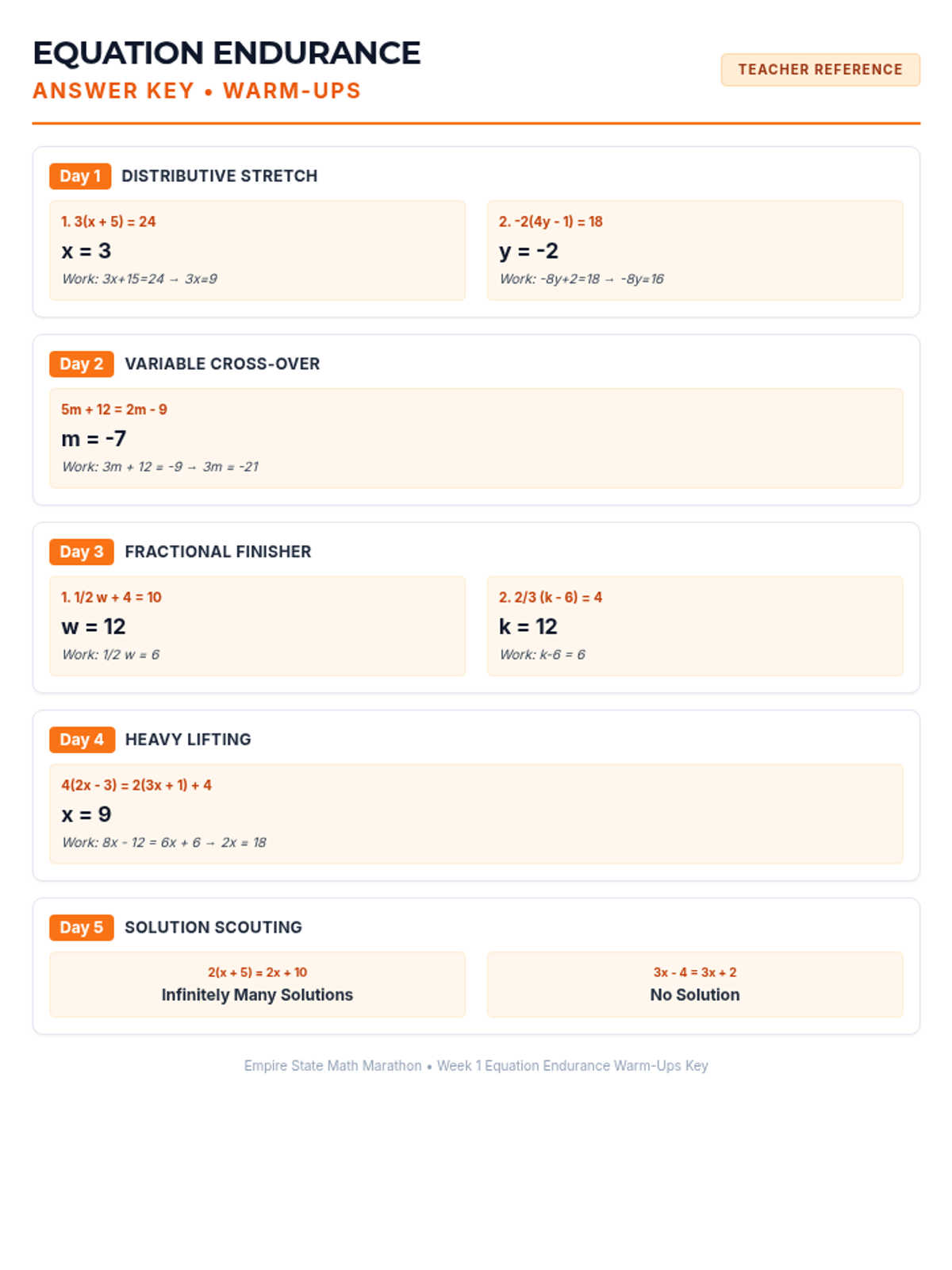
A Grade 6 intervention unit focused on using substitution to determine if values are solutions to equations and inequalities. This sequence targets Tier 2 support for standard 6.EE.5 through scaffolded reasoning and investigative activities.
A specialized intervention sequence focused on Grade 5 measurement and data, specifically creating and interpreting line plots with fractional measurements (\(1/2\), \(1/4\), \(1/8\)) and using fraction operations to solve problems.
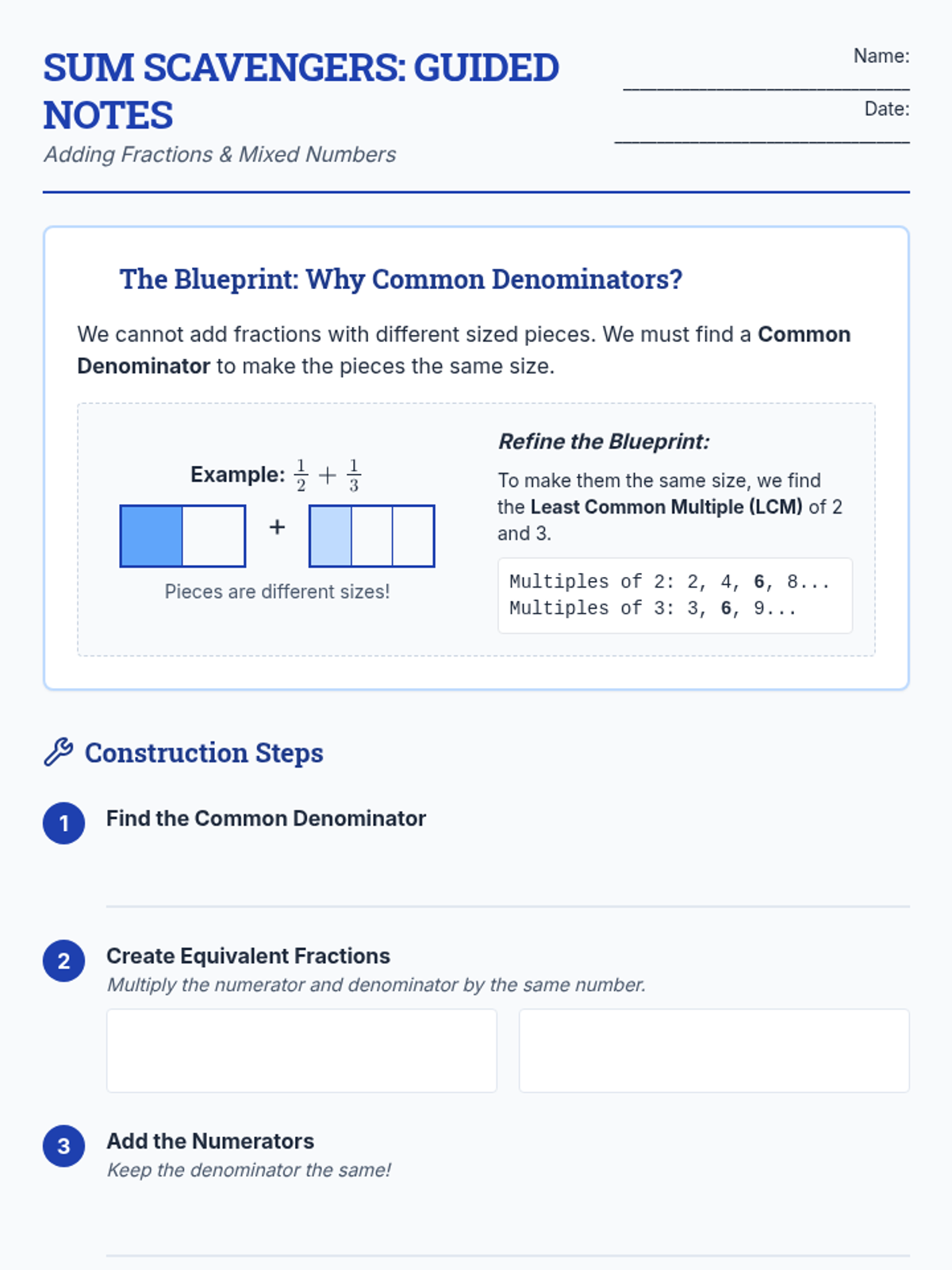
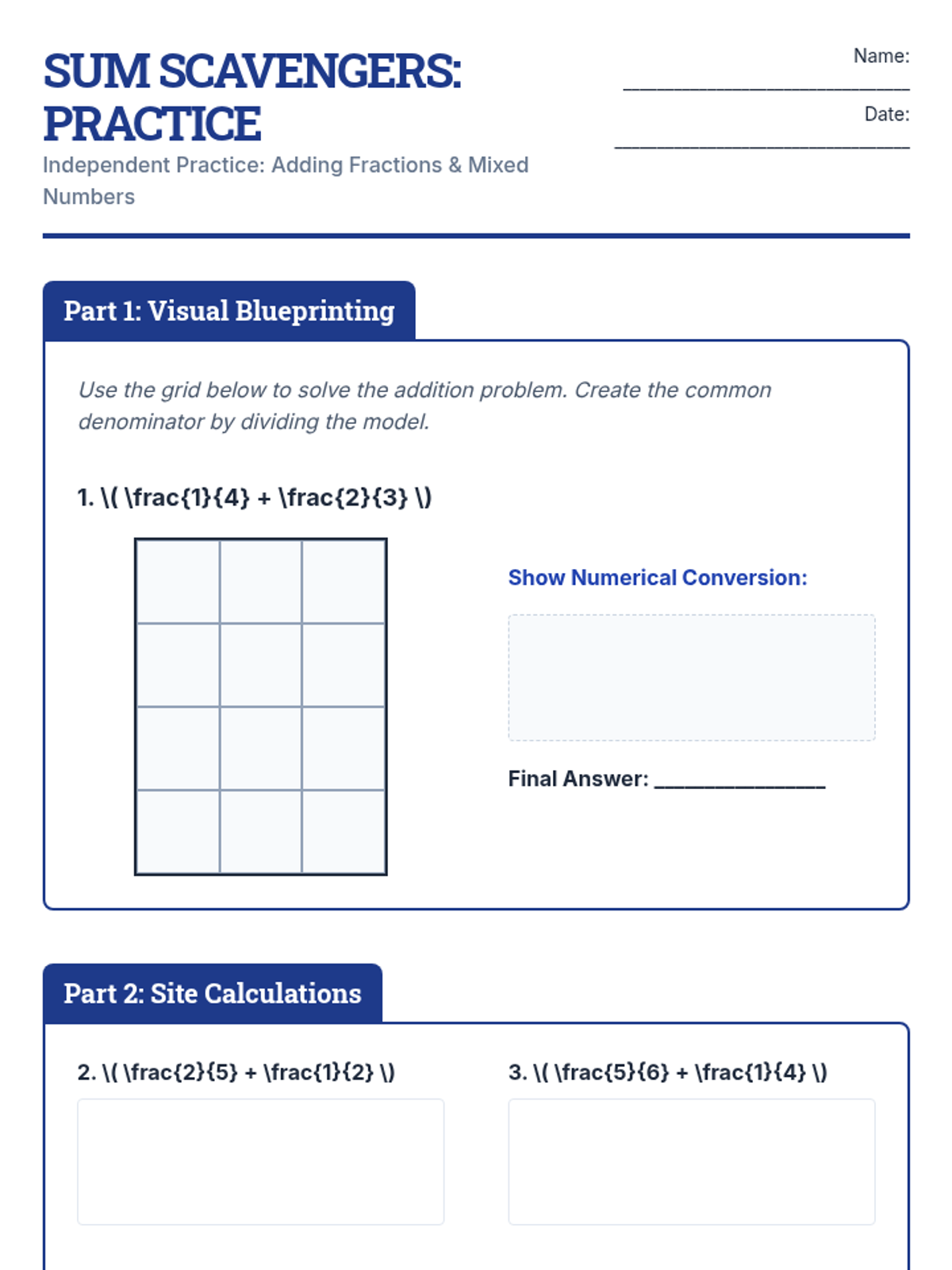
A Tier 2 intervention sequence focused on building conceptual understanding and procedural fluency for adding and subtracting fractions with unlike denominators. Students use visual models and Cuisenaire rods to discover common units and create equivalent fractions.
A Grade 5 Tier 2 intervention sequence focused on understanding multiplication as scaling (5.NF.B.5), helping students compare products to factors without calculation using visual models like number lines and Cuisenaire rods.
A Tier 2 intervention unit focused on understanding multiplication as scaling. Students explore how multipliers greater than, less than, or equal to one affect the size of the product compared to the original factor.