A lesson on rationalizing binomial denominators using complex conjugates for 11th Grade Pre-Calculus students. The sequence focuses on the algebraic logic behind conjugates and their relationship to the difference of squares.
A lesson sequence focusing on the algebraic and graphical properties of radical equations, bridging the gap between symbolic manipulation and visual intersection points.
A series of higher-level mathematics lessons exploring calculus foundations through engaging, thematic activities and visual demonstrations.
A specialized unit focused on identifying and correcting algebraic misconceptions in function transformations, specifically reflections. Students develop critical analysis skills by acting as "Error Doctors" to diagnose and treat common mathematical pitfalls.
A lesson sequence focusing on the transition from expanded ellipsis notation to formal Sigma notation within the context of arithmetic series proofs. Students analyze a standard proof and reformulate it using summation properties.
A high-level Honors Algebra lesson focused on complex recursive sequences where students analyze notation, explore the Fibonacci sequence, and engage in a 'Sequence Maker' activity to reverse-engineer formulas.
A specialized unit exploring the geometric properties of slope, connecting algebraic rates of change to trigonometric functions and the geometry of inclination.
An 11th-grade mathematics sequence focused on analyzing linear-quadratic systems through algebraic and geometric lenses, specifically utilizing the discriminant to predict intersection counts.
A high school geometry and algebra sequence focused on applying 3D geometry formulas to real-world optimization problems, specifically focusing on cones.
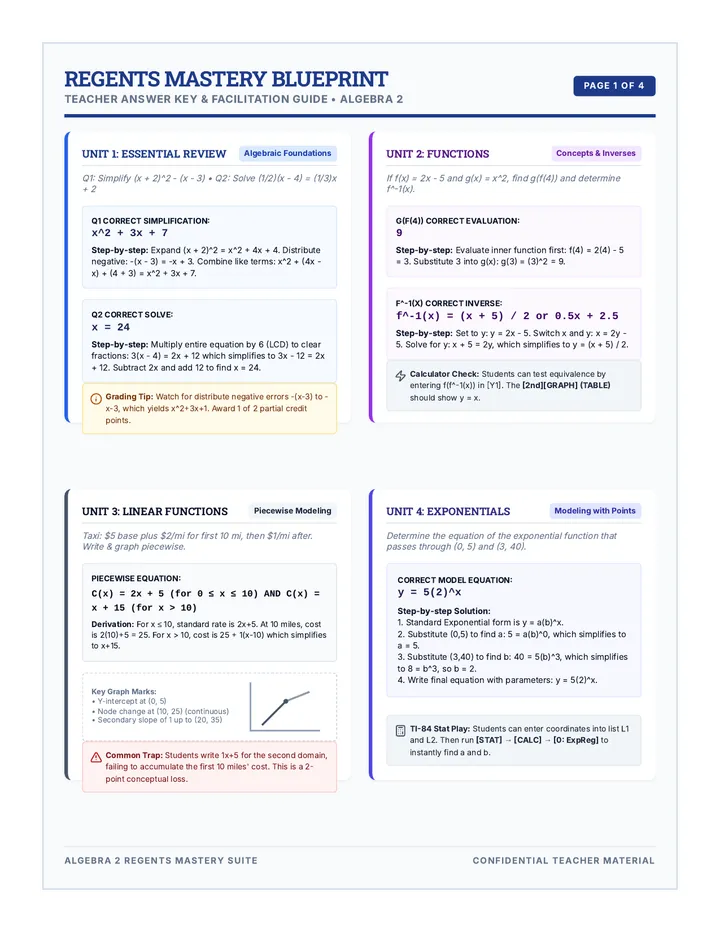
A comprehensive pre-calculus unit focused on the algebraic and geometric properties of inverse functions, including composition-based verification and domain restrictions.
A foundational sequence for 11th Grade Pre-Calculus focusing on the essential building blocks of functions, their graphs, and their behavior. Students develop the ability to recognize, sketch, and analyze parent functions which serves as the basis for all future transformation and modeling work.
A unit focused on mastering polynomial operations, from long division to advanced shortcuts like the Remainder and Factor Theorems. Students move from laborious calculation to strategic evaluation.
A lesson sequence focusing on analyzing and manipulating exponential functions to reveal true growth rates, using real-world financial contexts and exponent rules.
A mastery-based sequence using base-ten blocks and area models to build conceptual understanding of multi-digit multiplication and division for high school students. This sequence bridges the gap between concrete manipulatives and abstract algorithms through the visual scaffold of area.
A specialized math sequence for 11th-grade students focusing on practical fraction operations and ratios through the lens of construction and design. Students move from basic measurement precision to complex scaling tasks using physical manipulatives like tape measures and Cuisenaire rods.
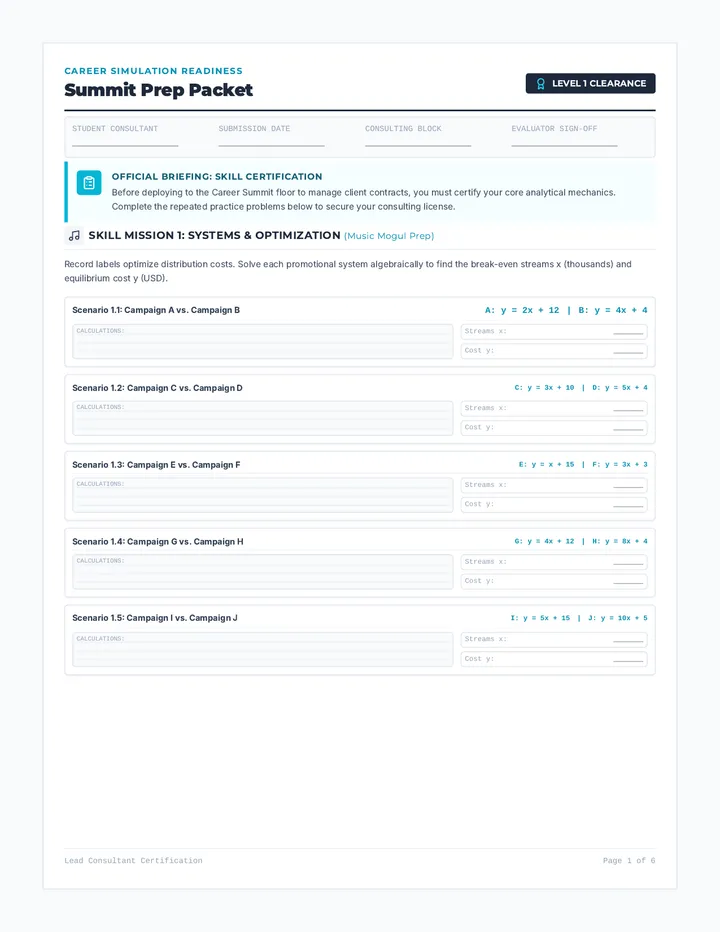
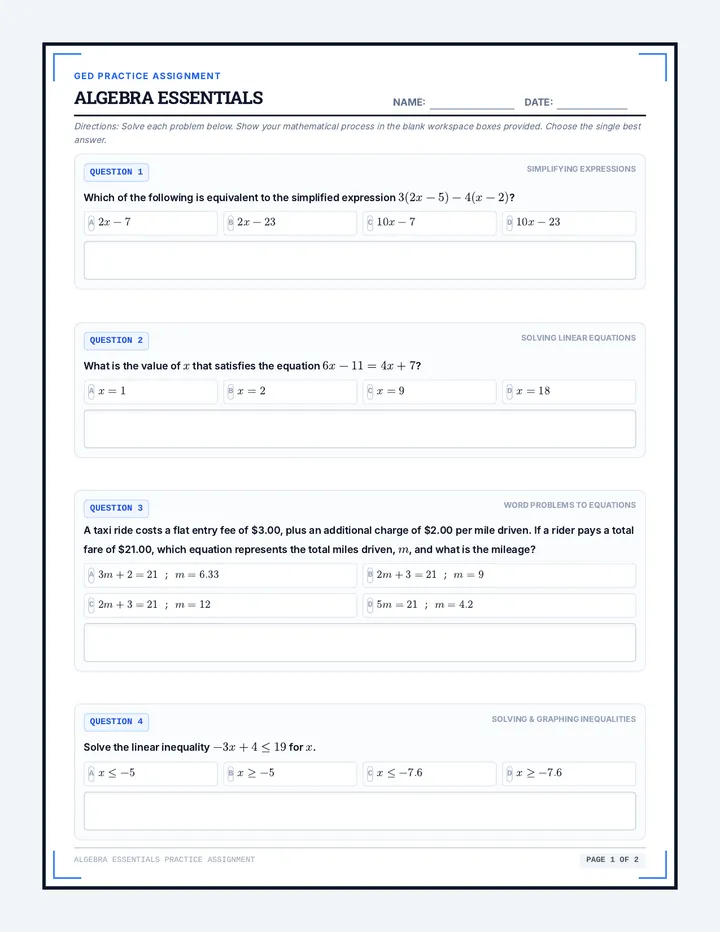
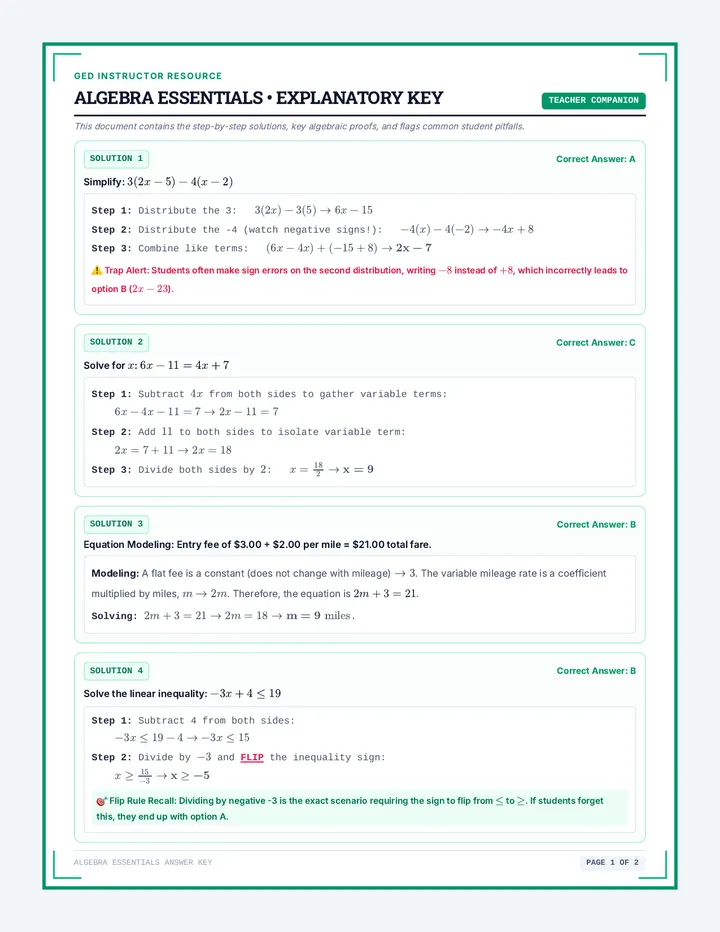
A sequence designed for 11th-grade academic support students to master integer operations and linear equations using two-color counters and algebra tiles. This tactile approach builds conceptual understanding through zero pairs and balance models, eventually transitioning students to abstract algebraic notation.
A specialized math sequence for 11th-grade students focusing on visual strategies like flowcharts and decision trees to support executive functioning and procedural memory. Students transition from following provided visual guides to designing their own logical maps for complex algebraic operations.
A math sequence for 11th Grade Special Education focusing on visual representations of functions. Students learn to interpret graphs as narratives, moving from qualitative sketches to precise quantitative analysis of slope, intersections, and non-linear trends.
A specialized geometry sequence for 11th-grade students focusing on visual representation strategies. Students learn to deconstruct composite shapes, create 2D nets from 3D objects, sketch trigonometric scenarios, and visualize cross-sections, culminating in a real-world blueprint design project.
A sequence for 11th-grade students that uses bar diagrams (tape diagrams) to scaffold high school algebra. Students transition from concrete visuals to abstract systems of equations, ratios, and complex word problems, providing a visual roadmap for algebraic reasoning.
This sequence explores spatial visualization through the study of cross-sections and solids of revolution. Students learn to translate between 2D and 3D representations, a critical skill for engineering, physics, and advanced mathematics.
This sequence explores the intersection of geometry and engineering, focusing on 3D visualization, technical drawing, and the optimization of physical forms. Students develop spatial reasoning skills through orthographic and isometric sketching and apply geometric modeling to solve real-world design constraints.
A high school geometry unit that integrates algebra and geometry by using coordinate systems to verify geometric properties. Students use distance, midpoint, and slope formulas to classify shapes and prove properties with algebraic rigor.
This sequence explores numerical analysis through the lens of sequences, focusing on iterative methods to approximate solutions to complex equations. Students investigate fixed-point iteration, Newton's method, convergence rates, and the transition into chaotic behavior.
This sequence introduces 11th-grade students to the behavior of sequences and series as they approach infinity. Students explore convergence, divergence, summation notation, and the paradoxes of infinite geometric series and fractals.
An 11th-grade mathematics sequence that bridges the gap between abstract sequences and real-world applications in finance and physics. Students explore arithmetic and geometric models through interest, depreciation, projectile rebounds, and loan amortization.
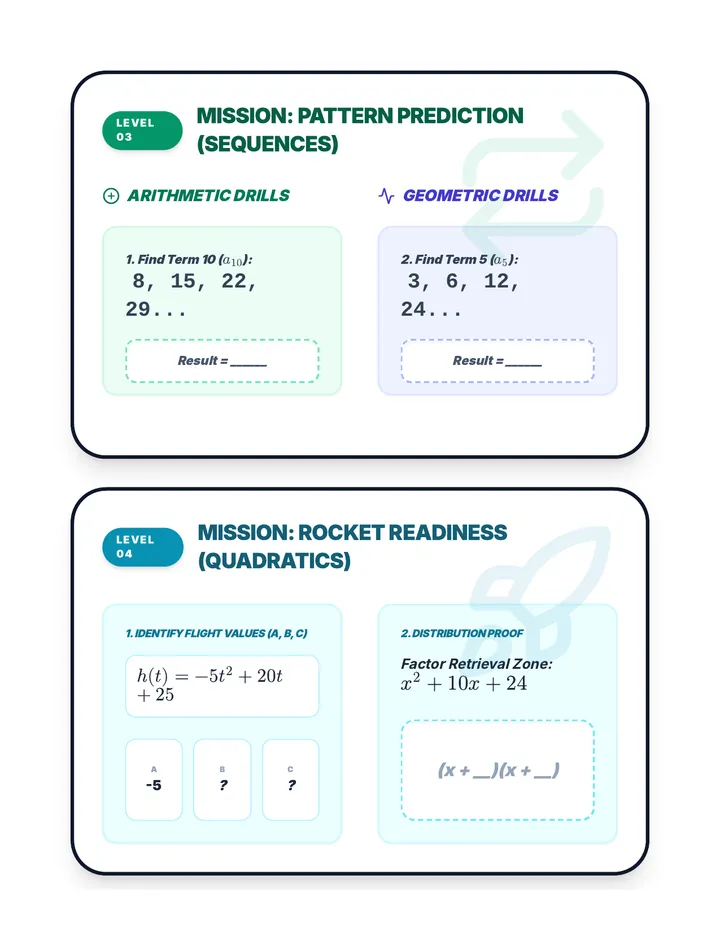
This sequence explores arithmetic and geometric sequences through inquiry, algebraic modeling, and real-world applications. Students transition from pattern recognition to formalizing recursive and explicit formulas to predict outcomes in linear and exponential systems.
A high school trigonometry sequence that uses the physics of sound waves to teach modeling with trigonometric functions. Students explore pitch as frequency, volume as amplitude, and the superposition of waves to create harmonies and digital tones.
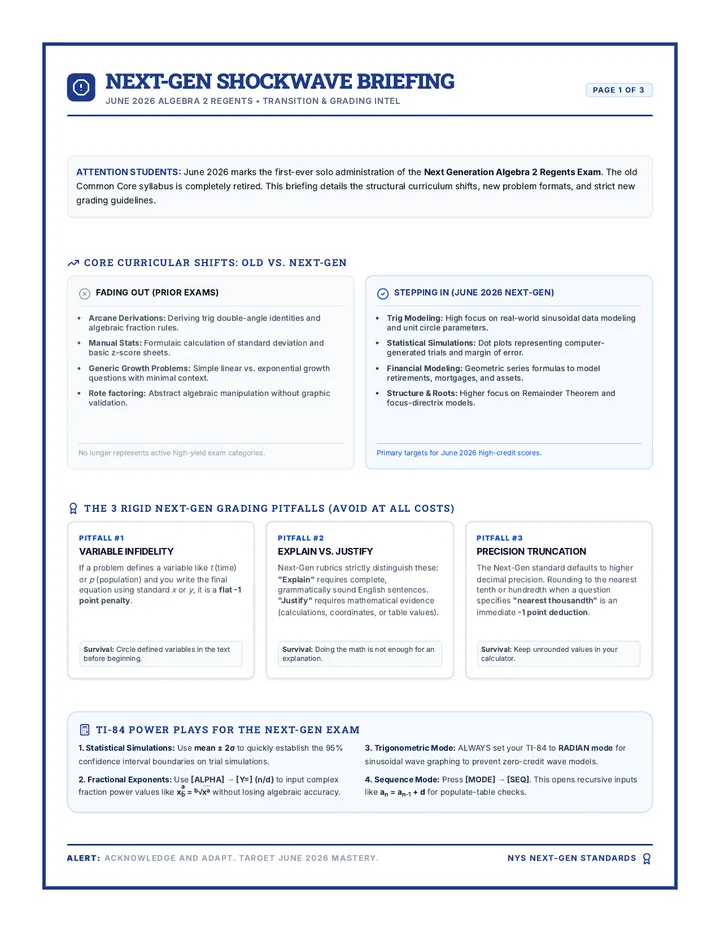
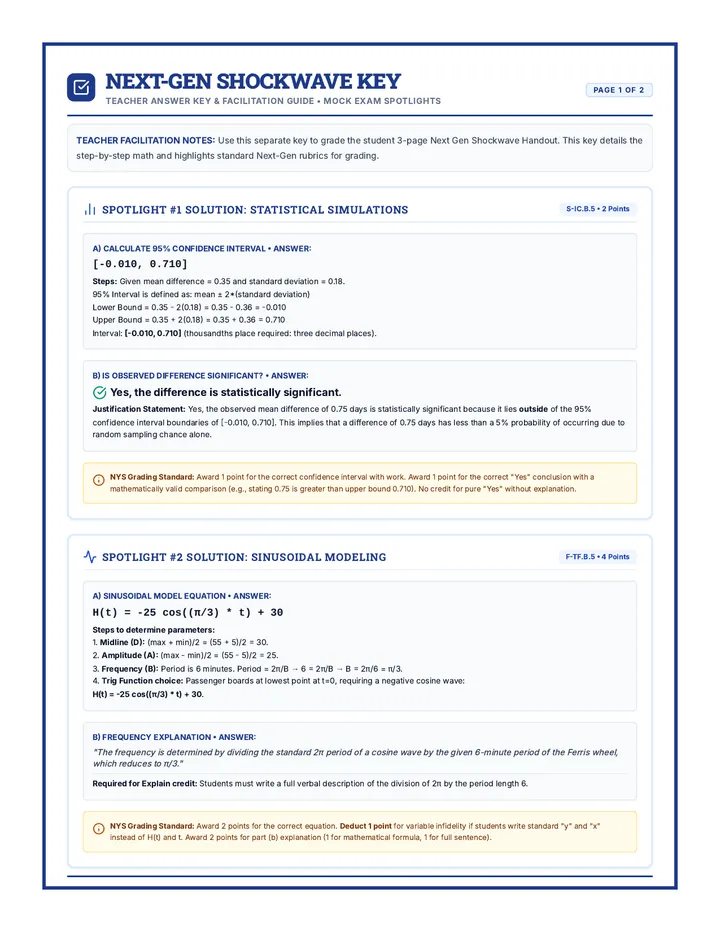
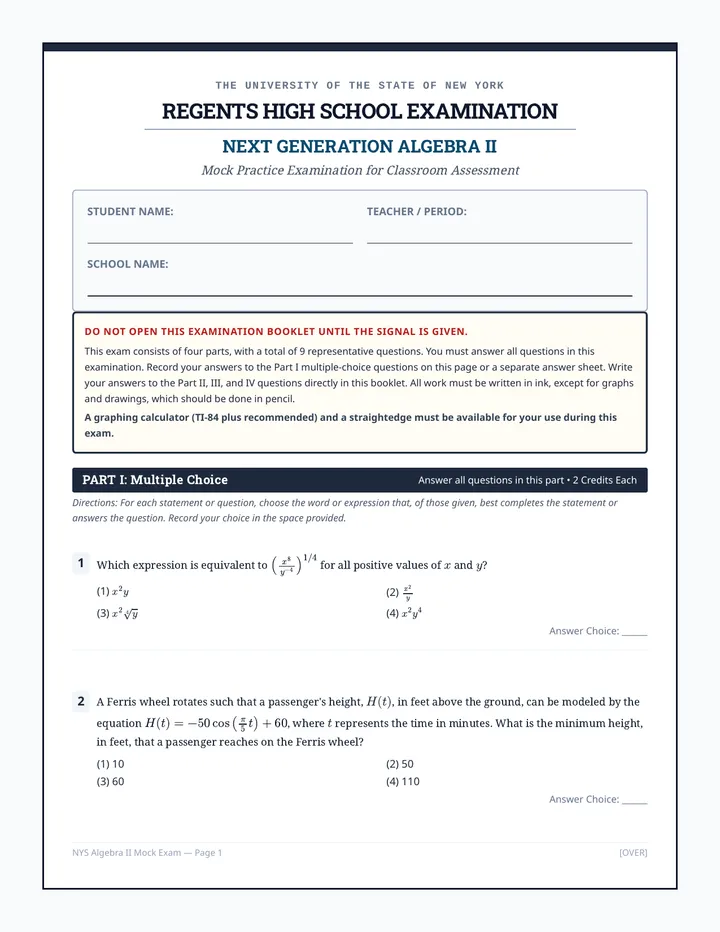
A comprehensive unit on modeling real-world periodic phenomena using trigonometric functions across physics, biology, and astronomy. Students master identifying amplitude, midline, and period from contextual data to build and solve predictive equations.
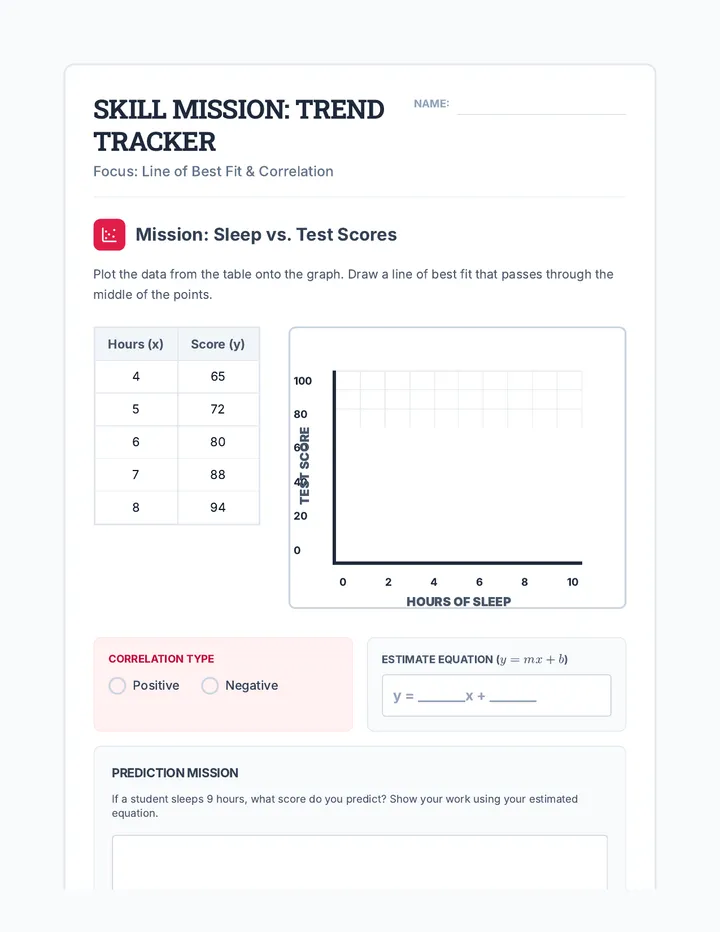
A comprehensive unit where students act as data scientists to model real-world environmental phenomena using trigonometric functions. They progress from visual estimation to precise algebraic modeling and technological regression to predict future environmental conditions.