Students explore the vibrant world of celebrations in Spanish-speaking cultures, from piñatas to the Day of the Dead. Through comparative analysis, they discover how traditions foster community and honor history across Spain and Latin America.
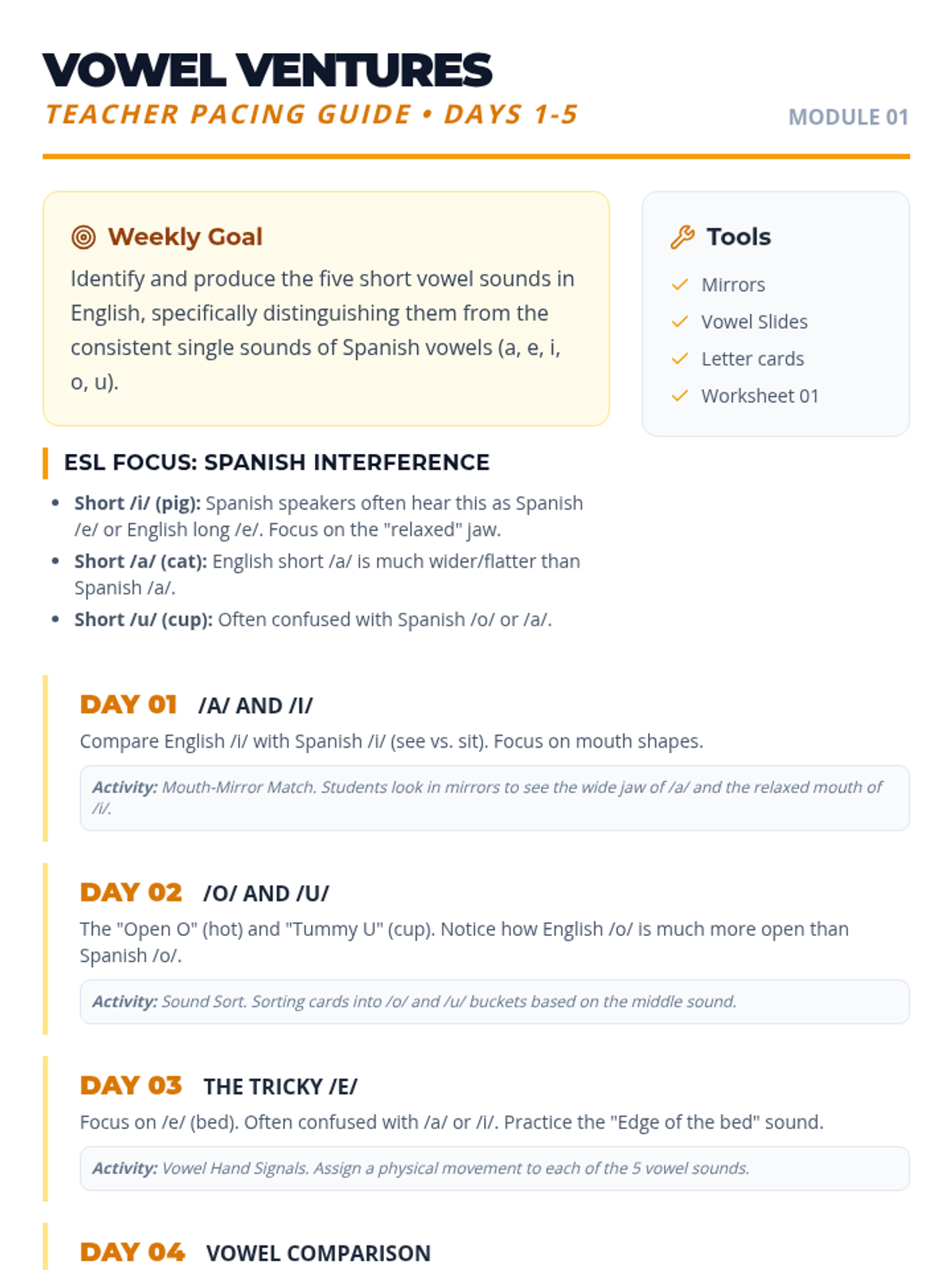
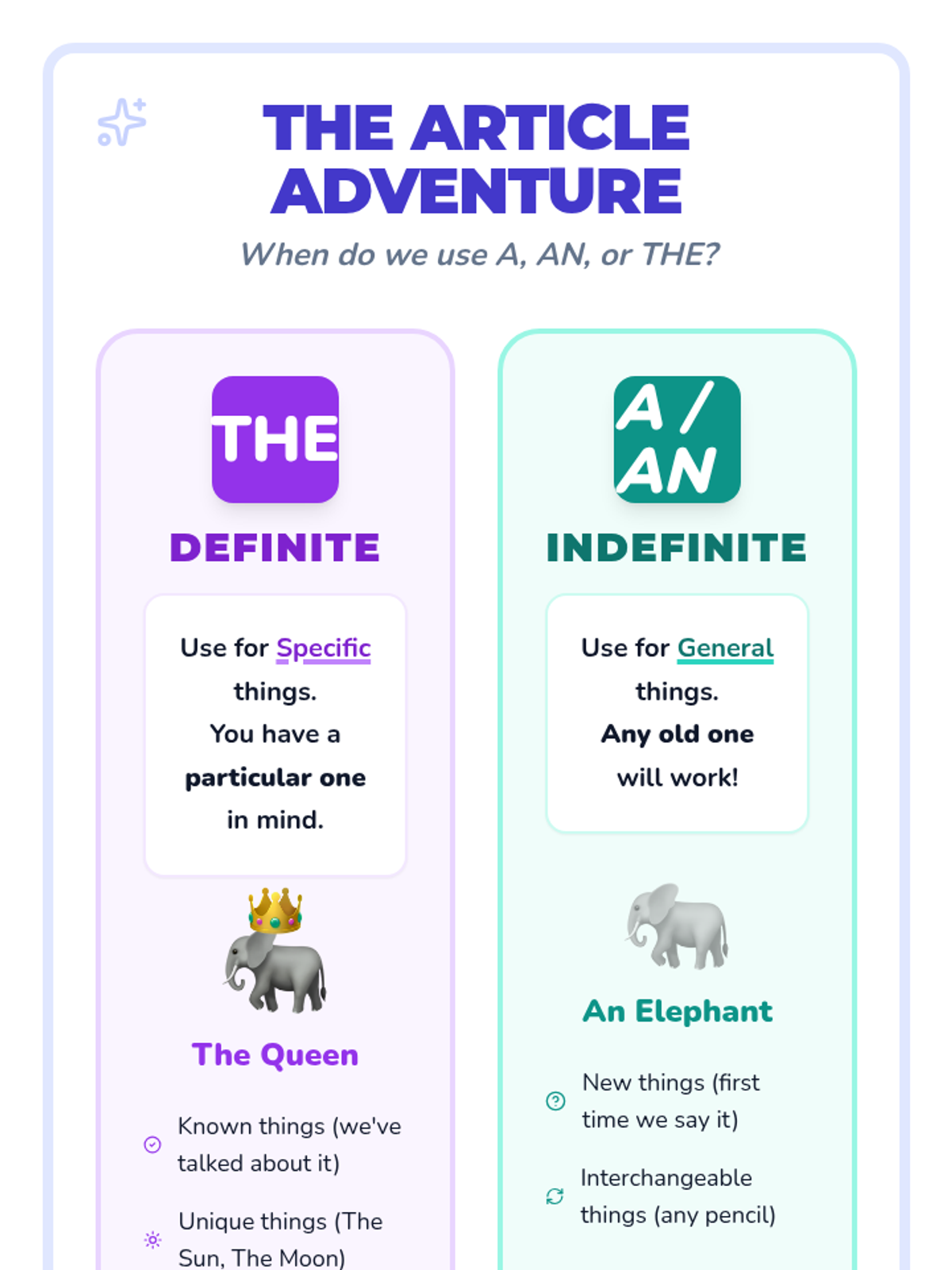
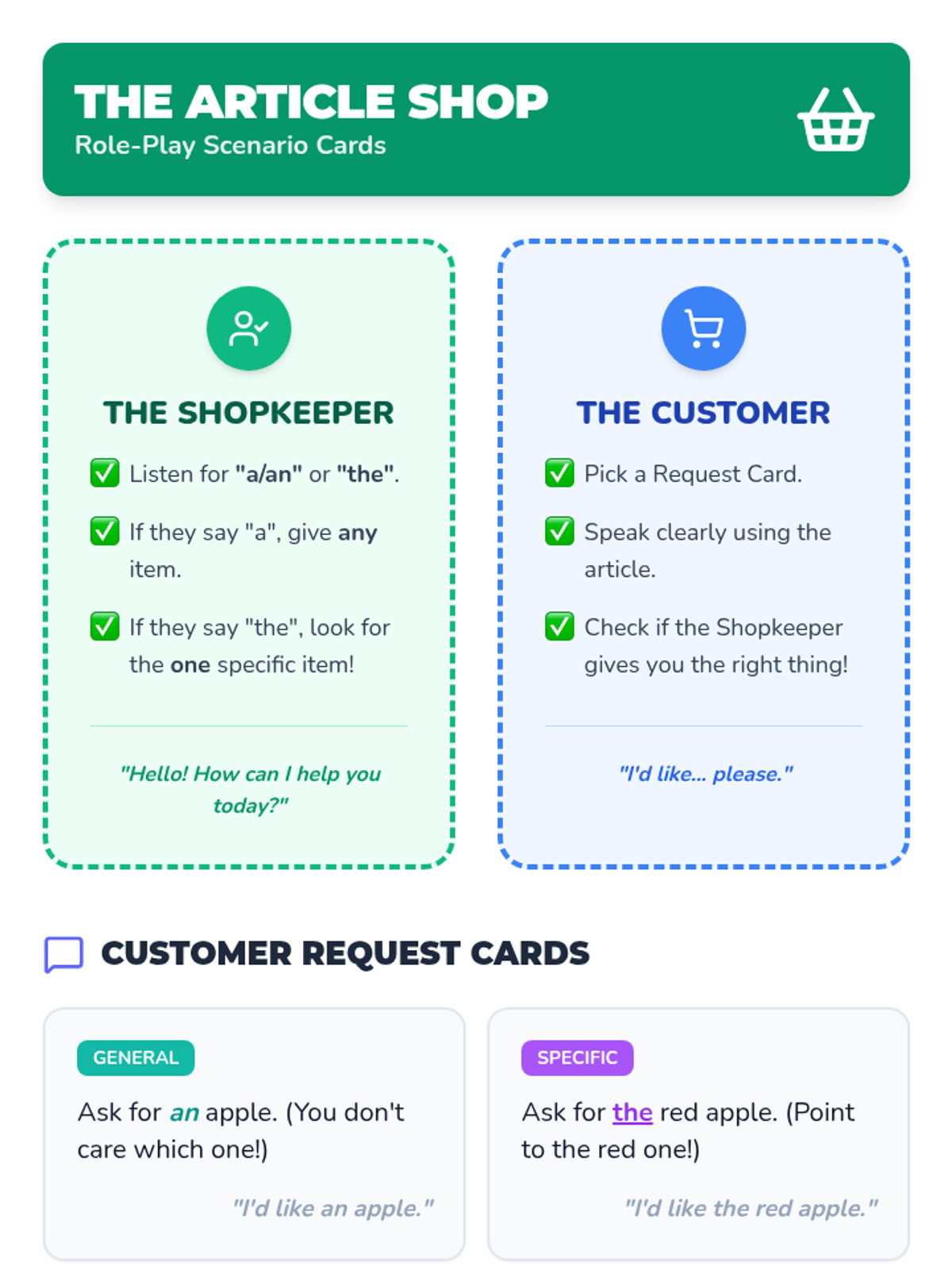
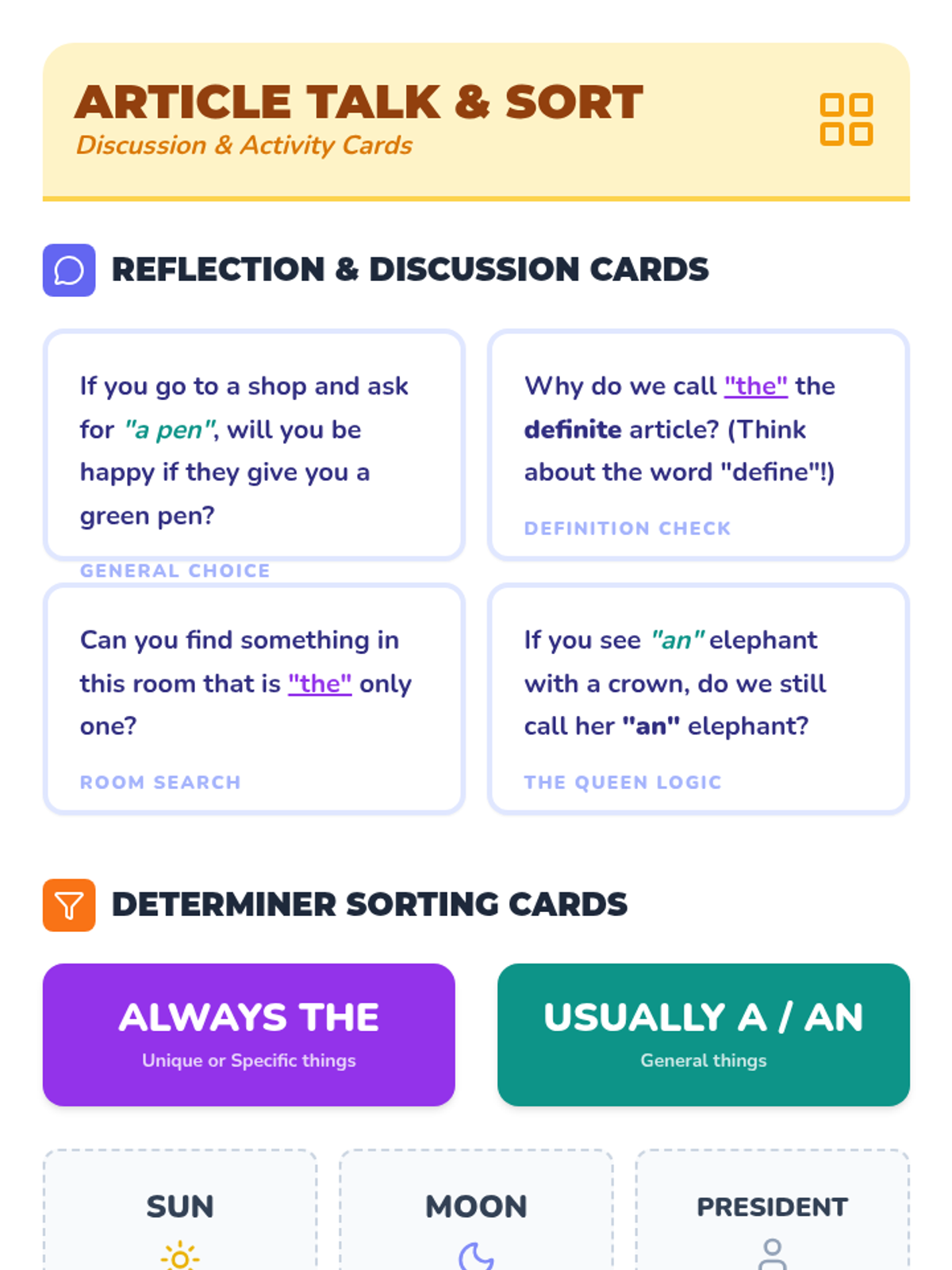
A foundational grammar sequence for English Language Learners focusing on the use of definite and indefinite articles through visual storytelling and interactive games.
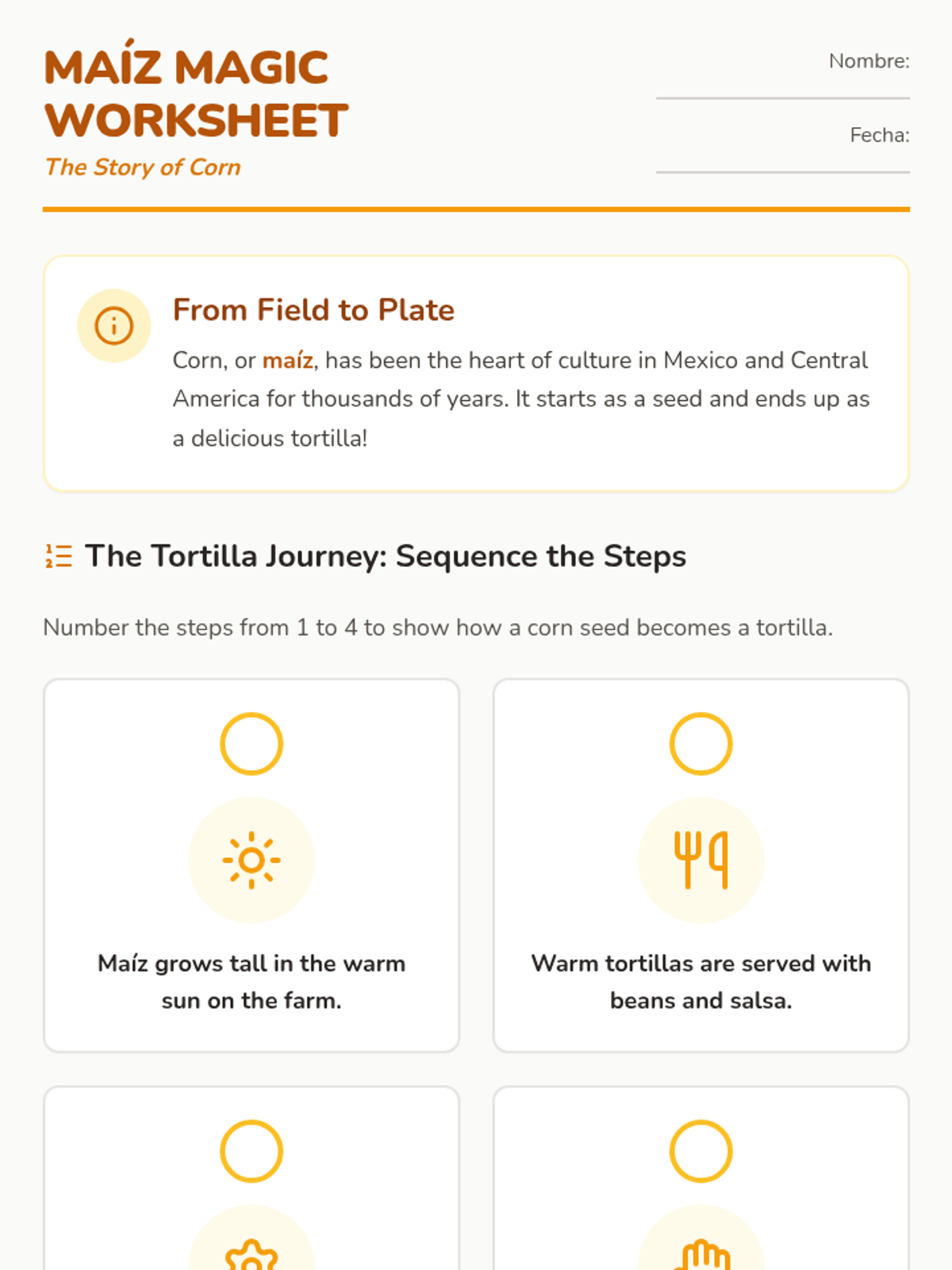
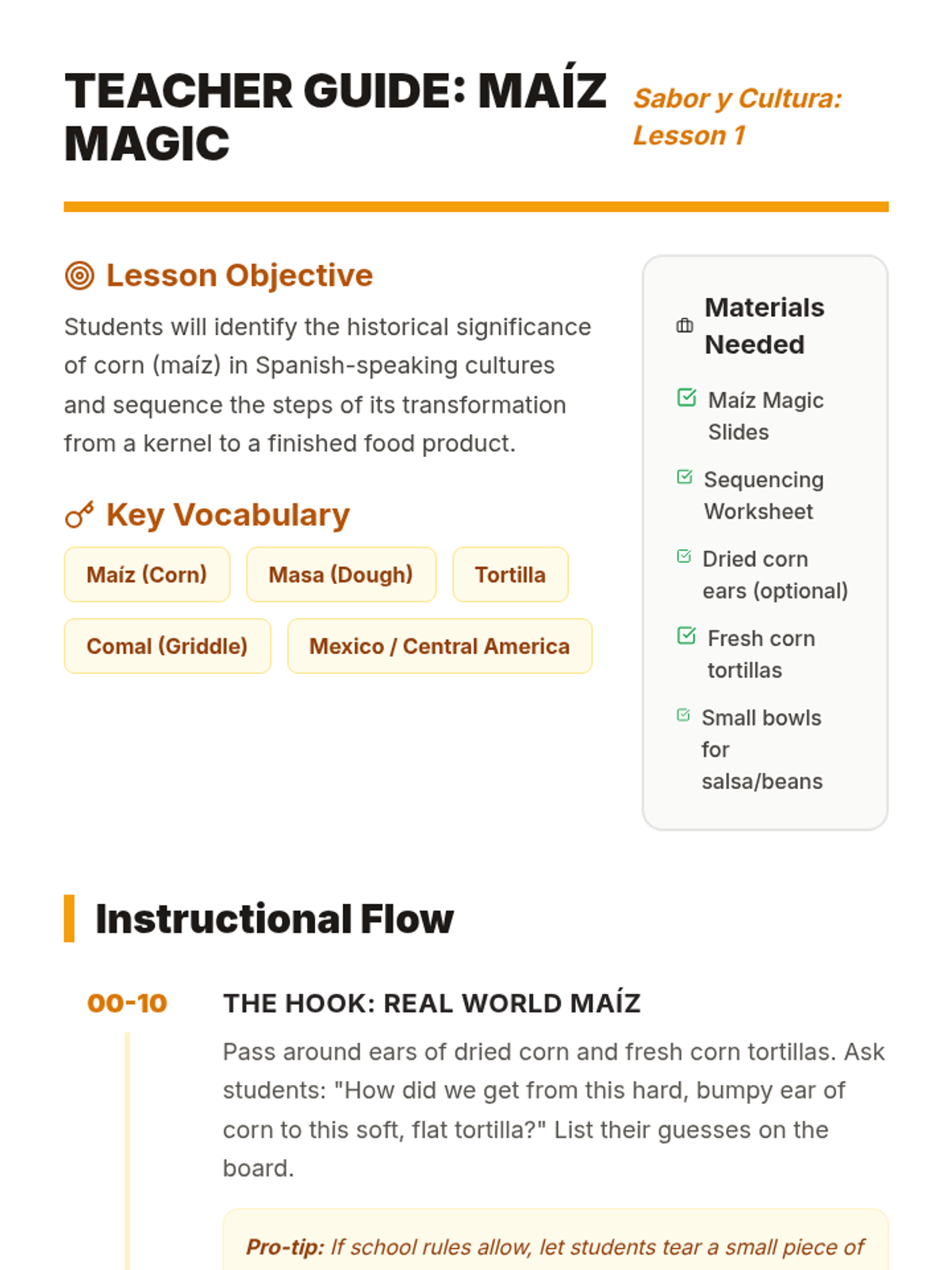
A 5-lesson sequence exploring the culinary heritage of the Spanish-speaking world, focusing on key ingredients like corn and cacao, mealtime customs, and tropical fruits. Students conclude by creating a class cookbook.
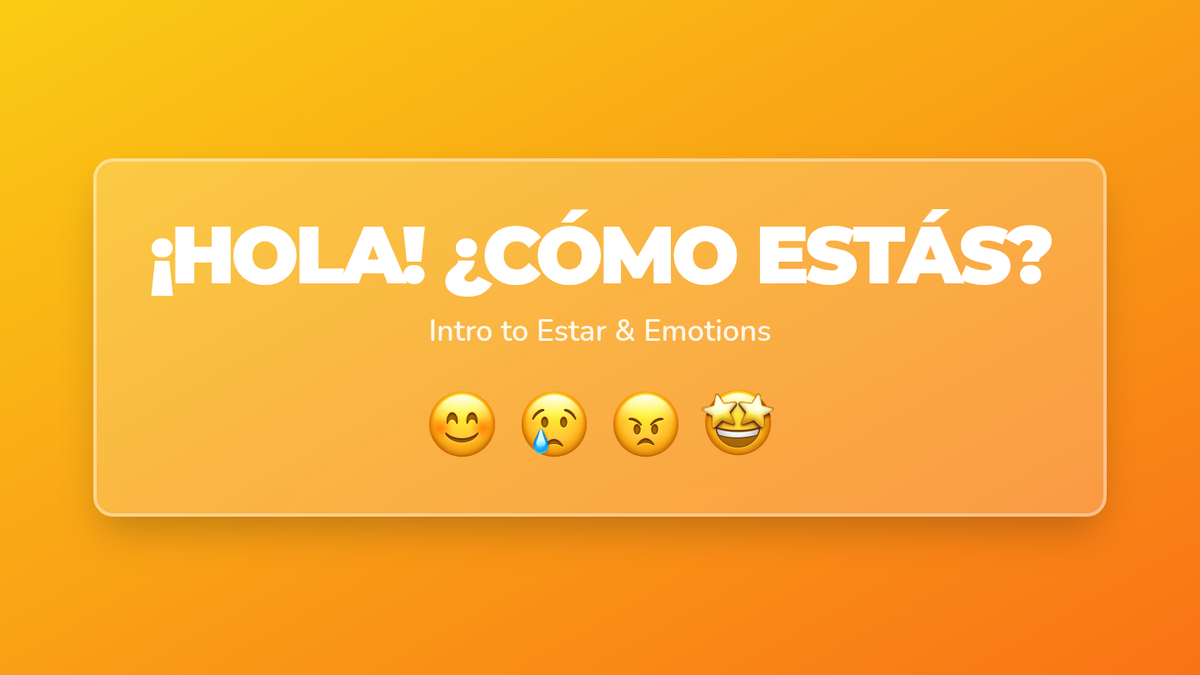
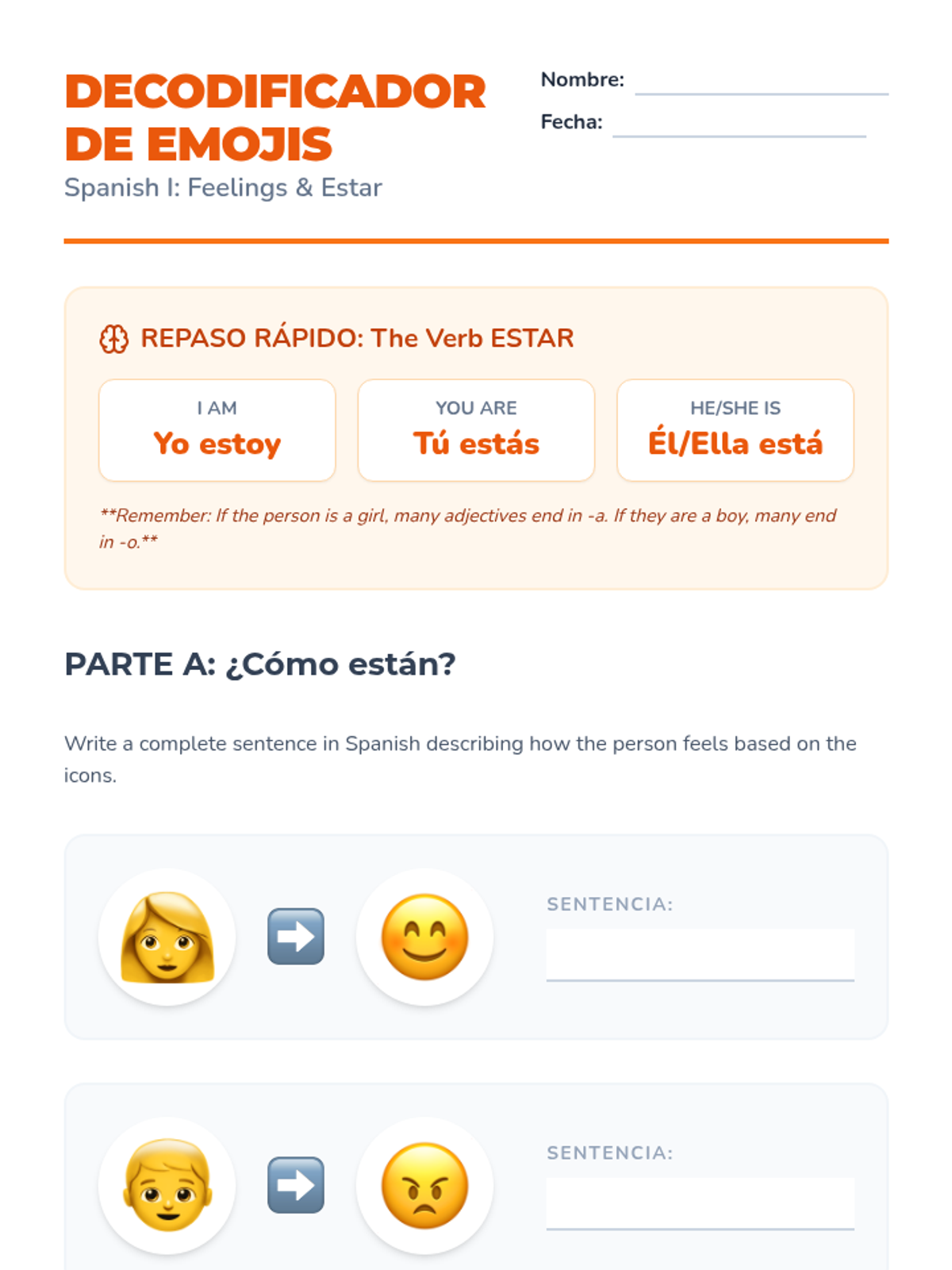
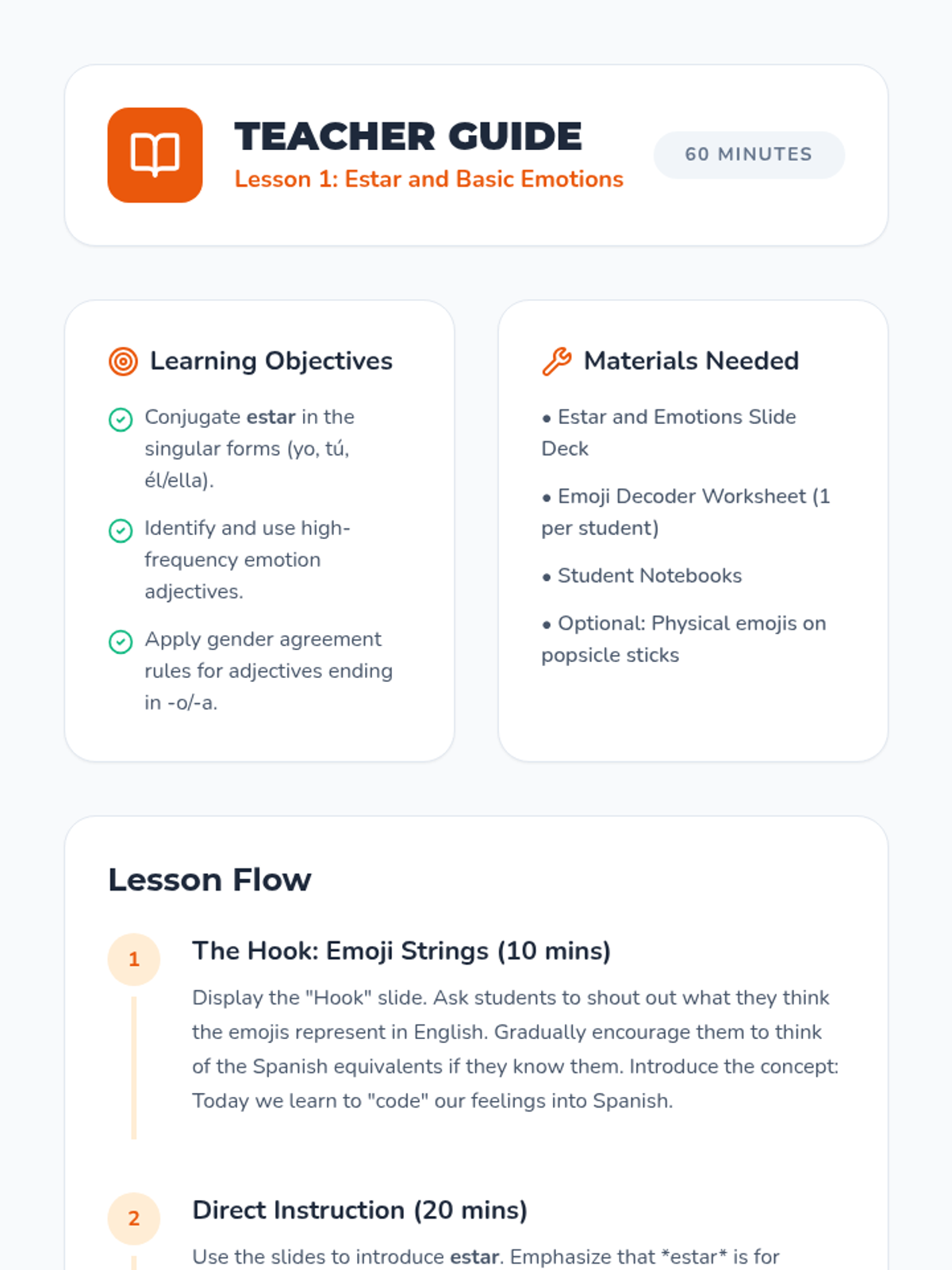
A comprehensive unit for beginner Spanish students to master the verb 'estar' and 'tener' idioms for expressing emotions, physical states, and needs. Through interactive games, role-plays, and data collection, students learn to articulate their internal feelings and conduct wellness checks on others.
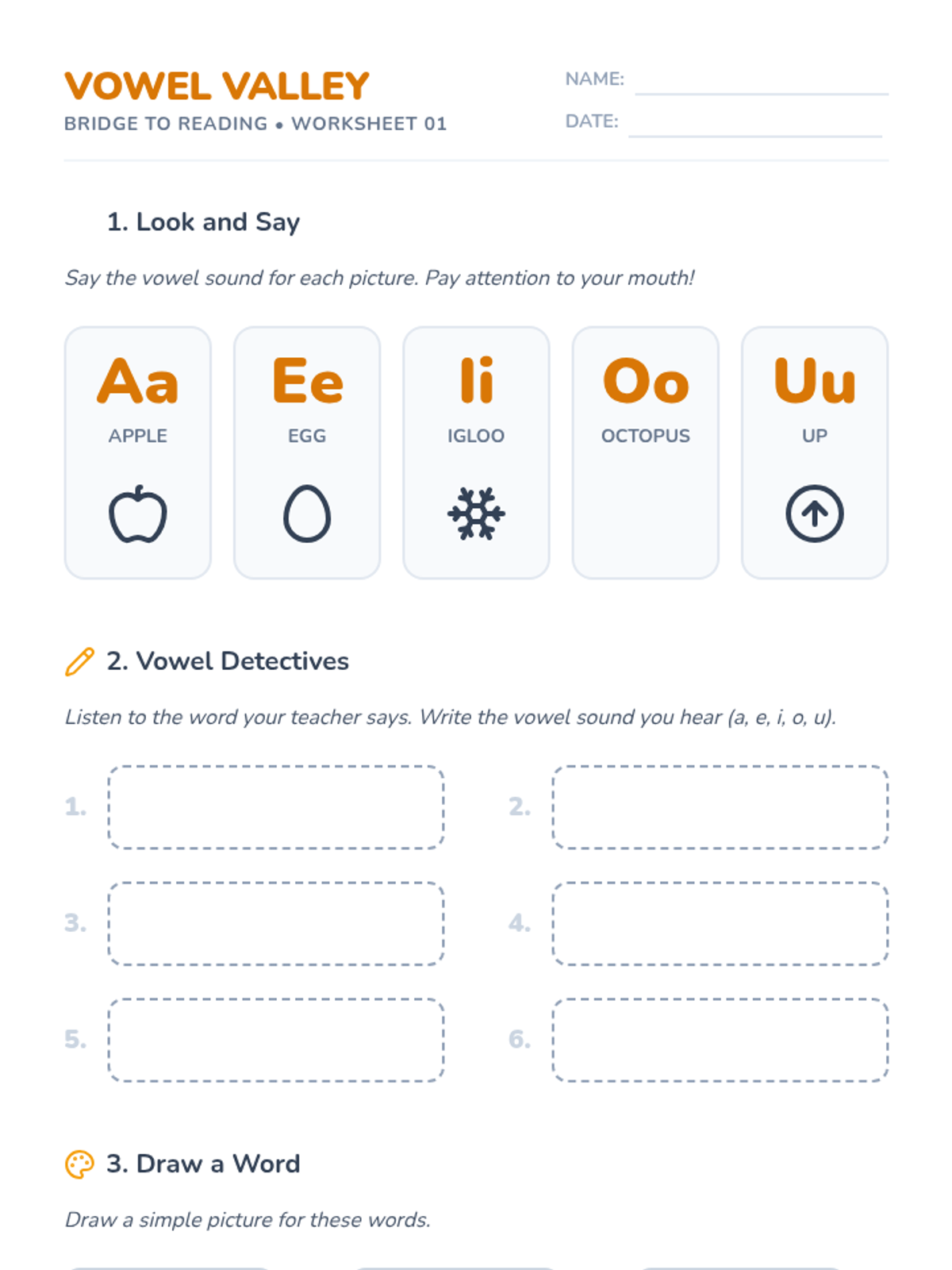
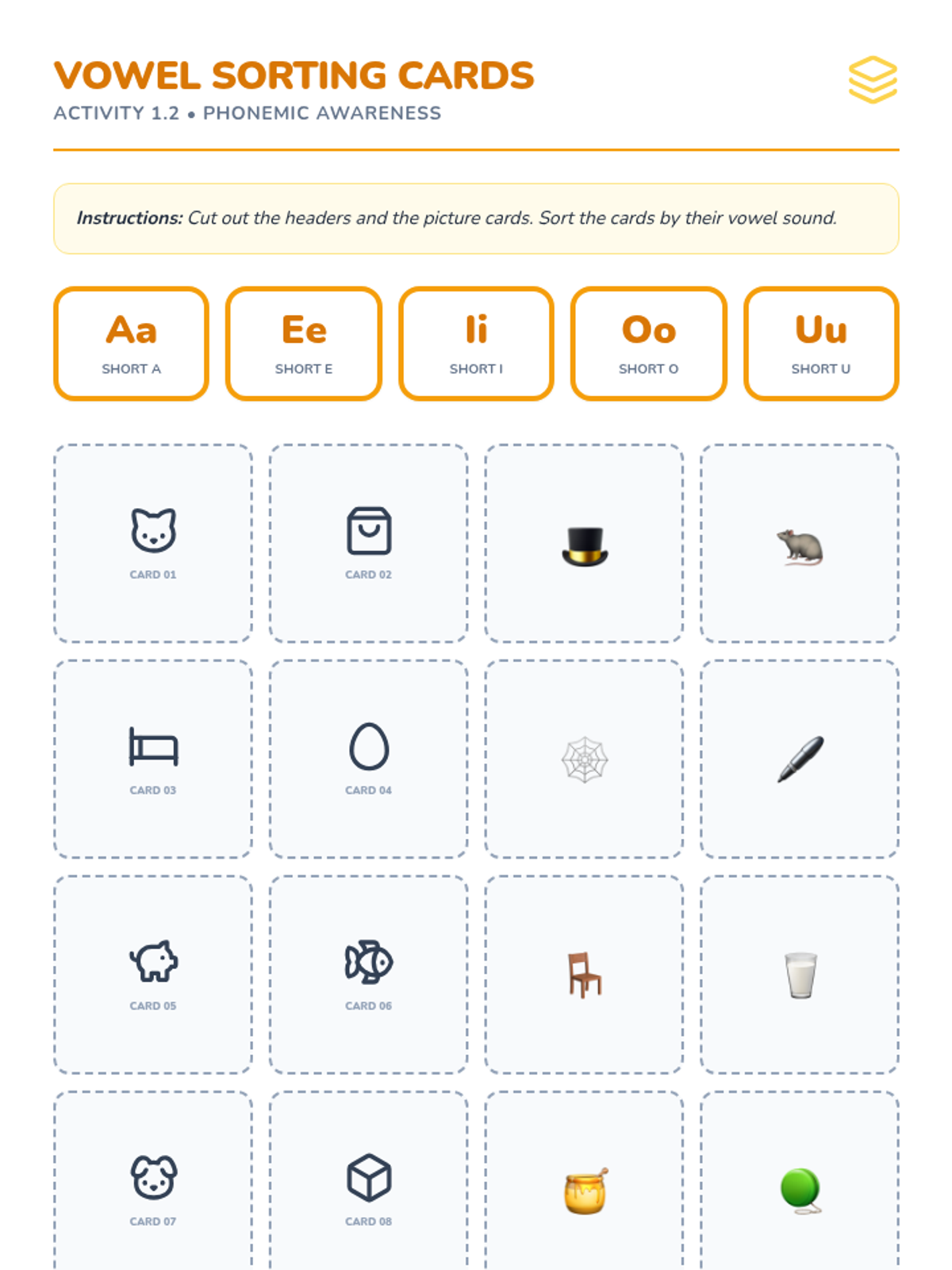
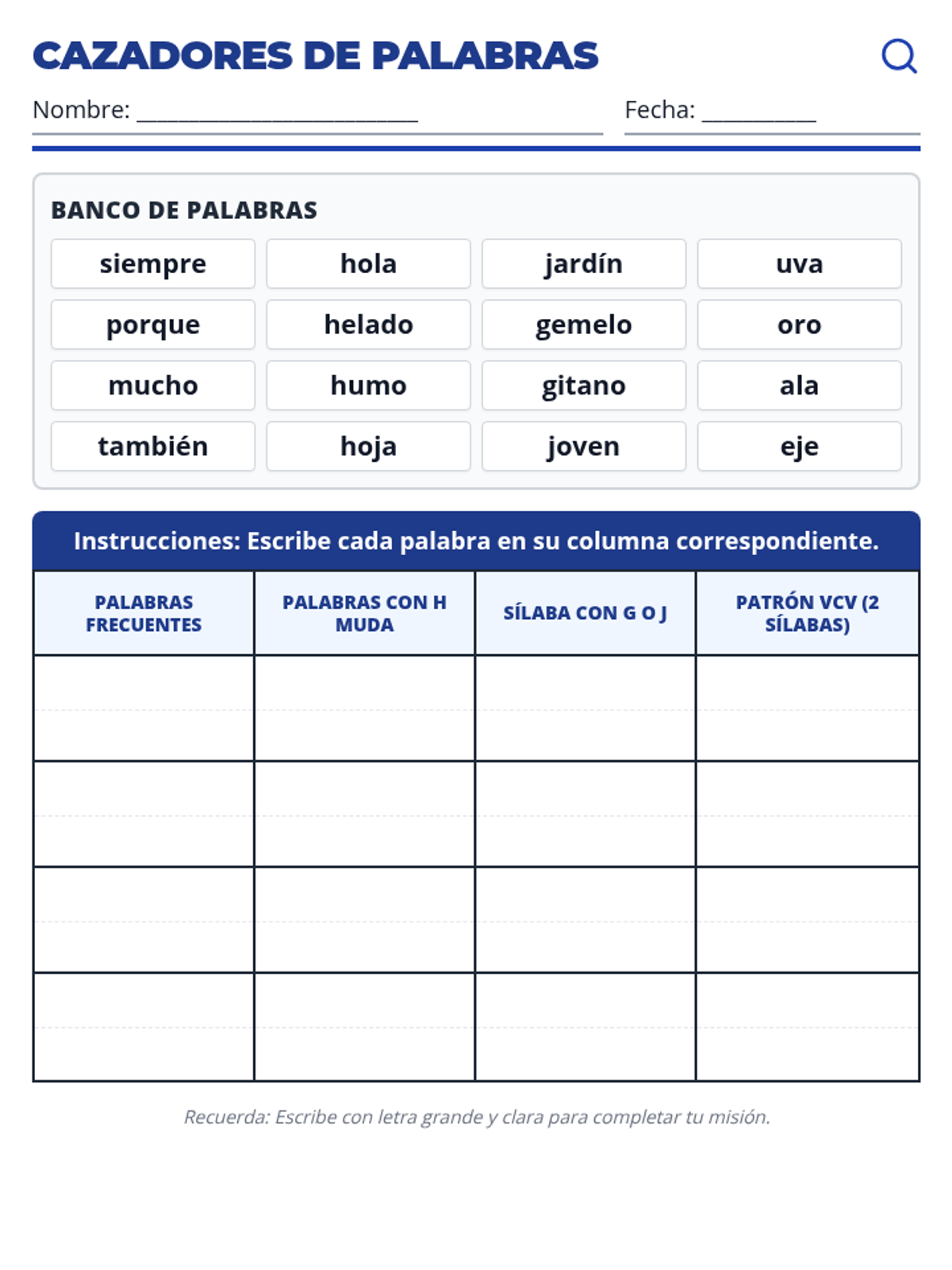
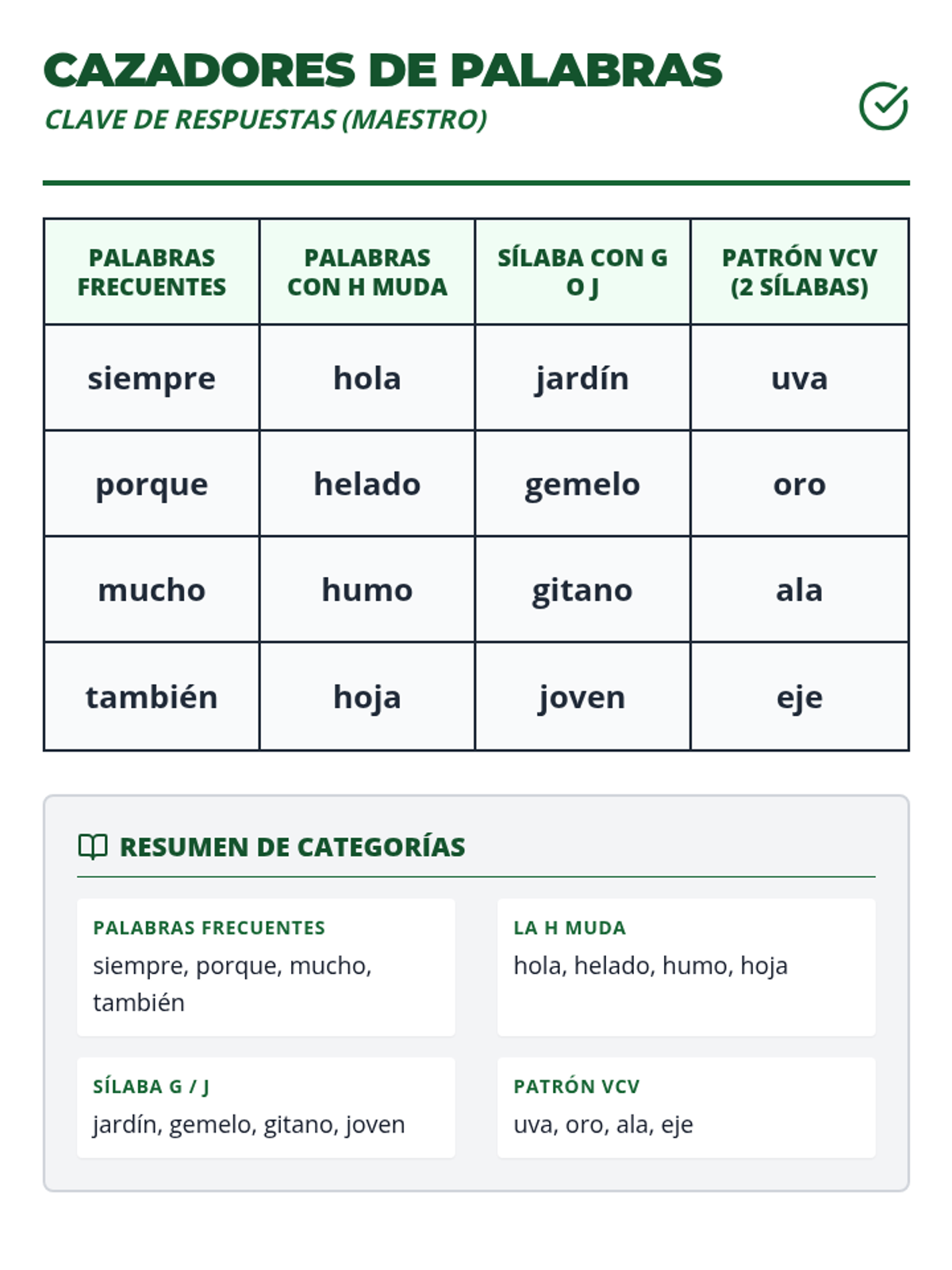
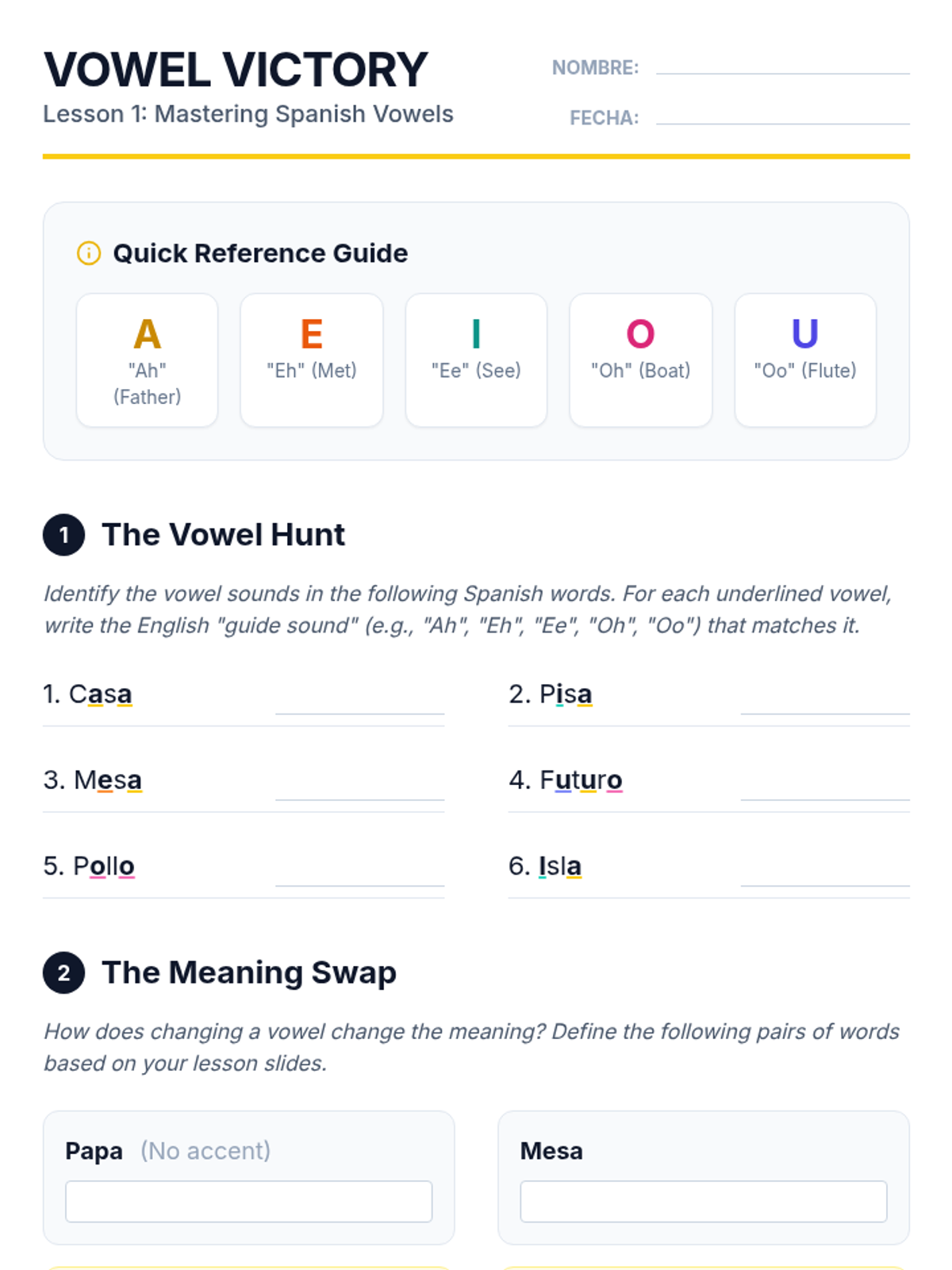
This sequence establishes foundational auditory and oral skills for Spanish fluency, focusing on vowel sounds, difficult consonants like 'rr' and 'ñ', and rules of stress and accentuation. Students transition from sound production to reading syllables and full words with accuracy.
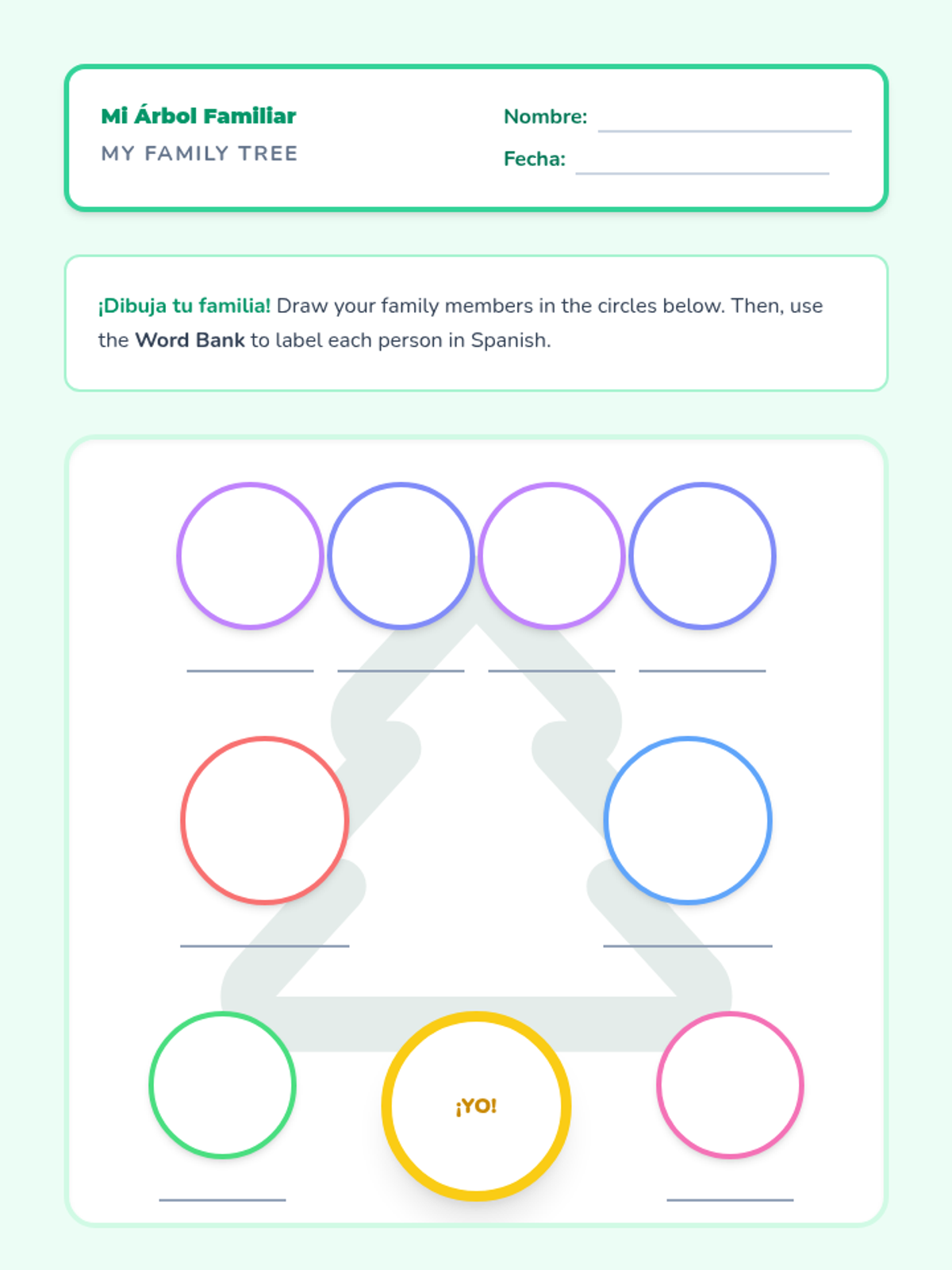
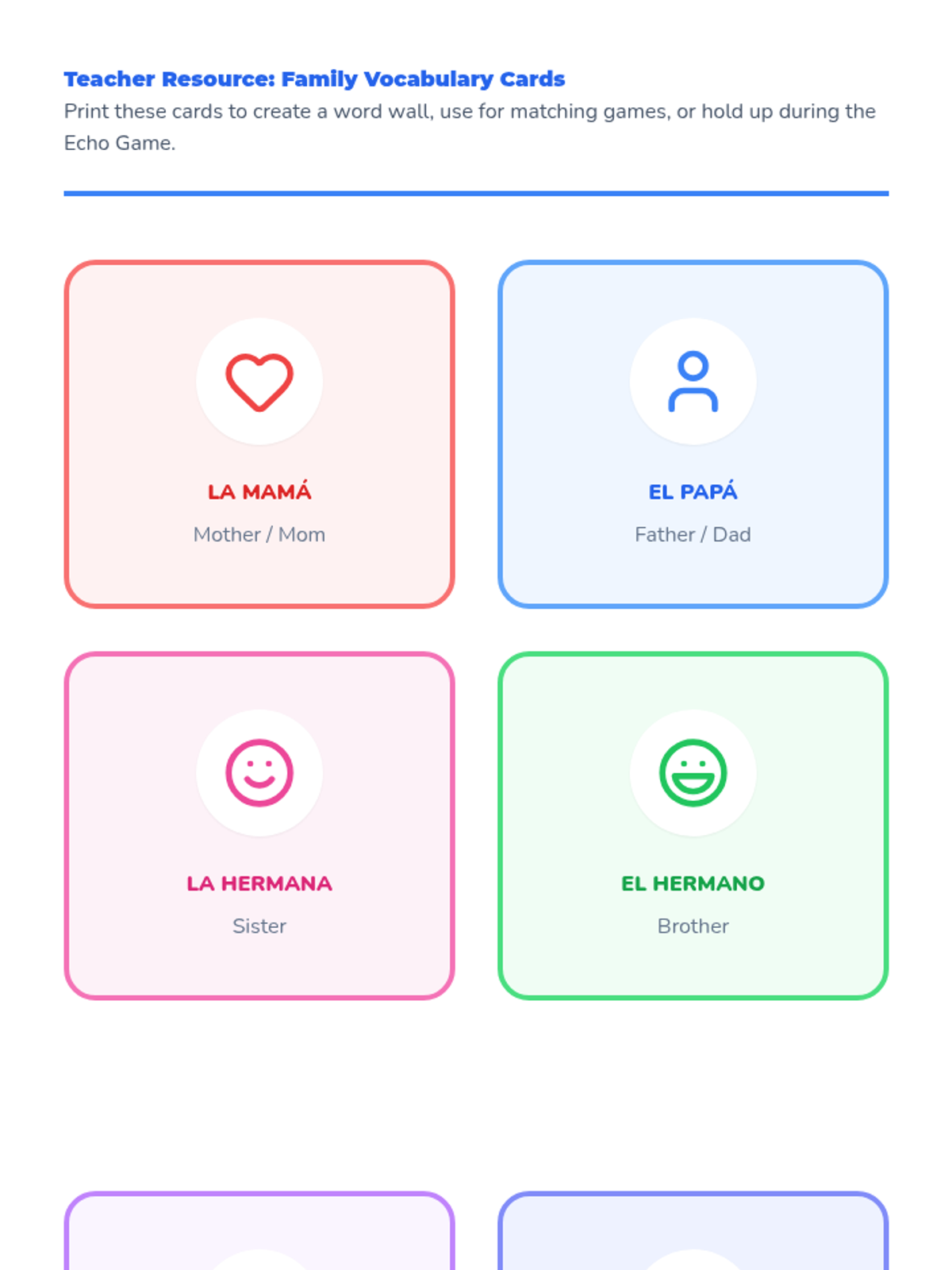
A project-based unit for 2nd graders to learn Spanish family vocabulary and express personal preferences. Students build communication skills by describing their world and families through drawings, games, and a final oral presentation.
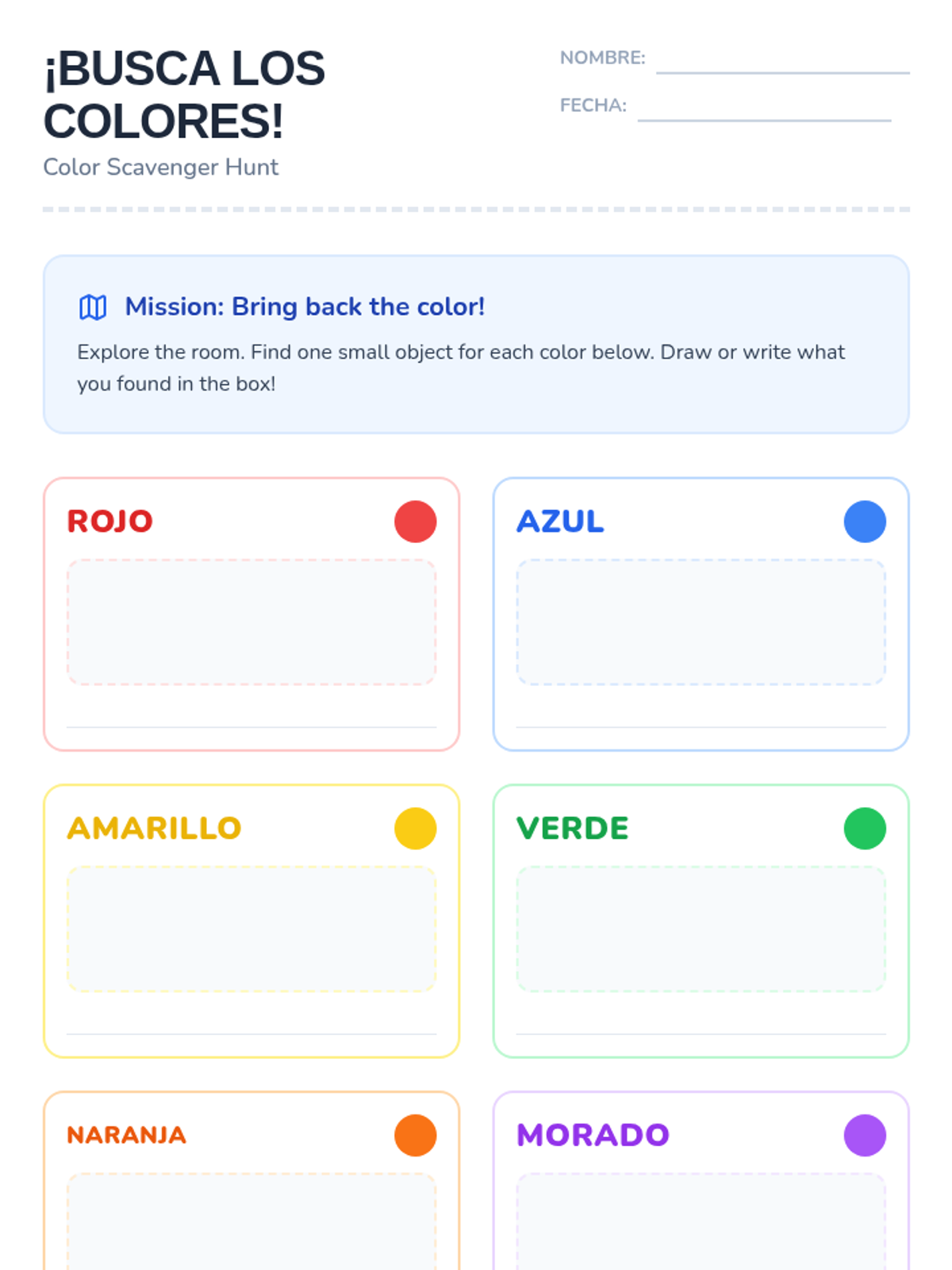
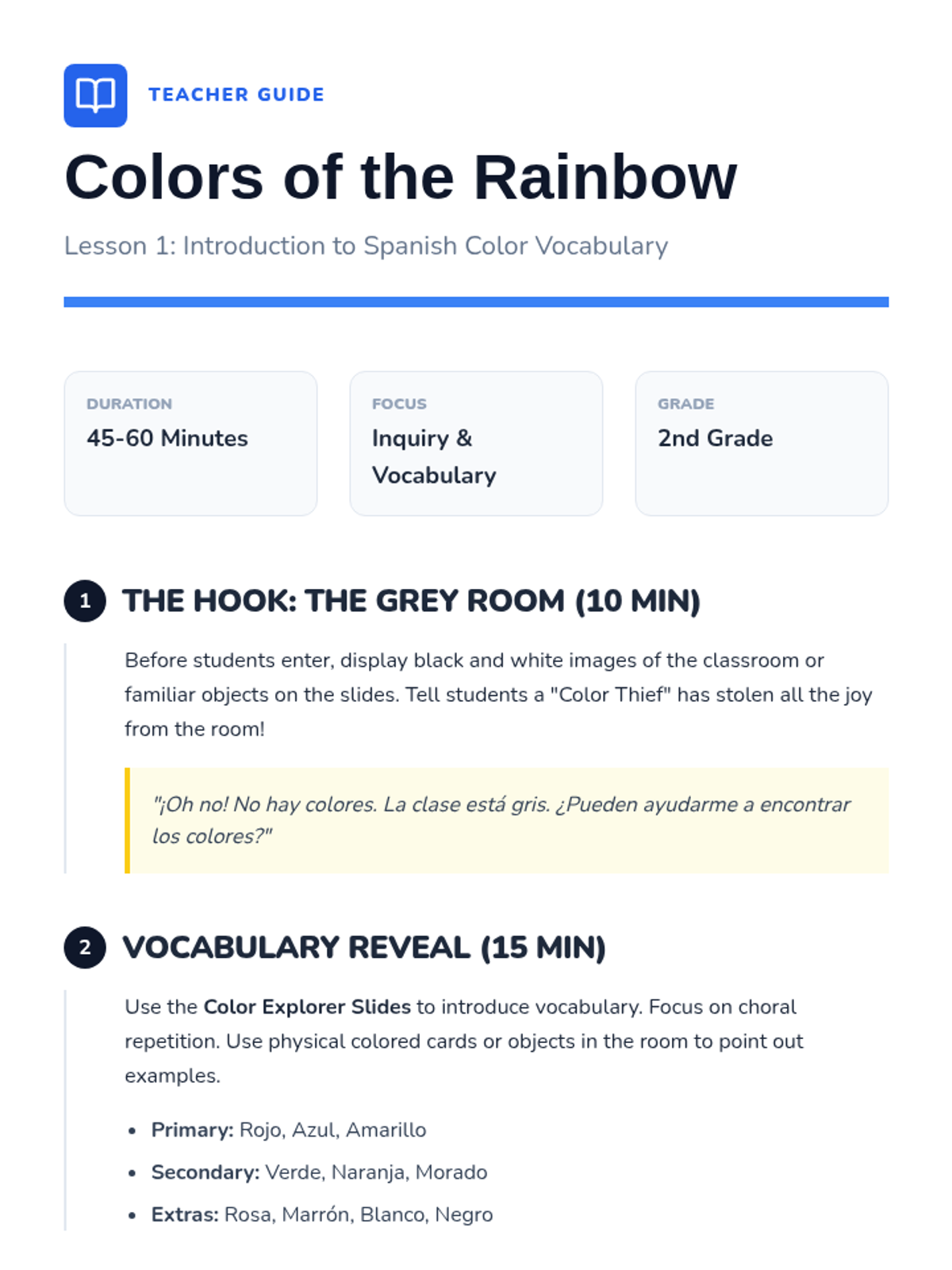
A 5-lesson introductory Spanish sequence for 2nd graders focusing on colors, numbers, classroom objects, and size adjectives. Students progress from simple identification to synthesizing descriptive phrases for a 'Mystery Box' challenge.
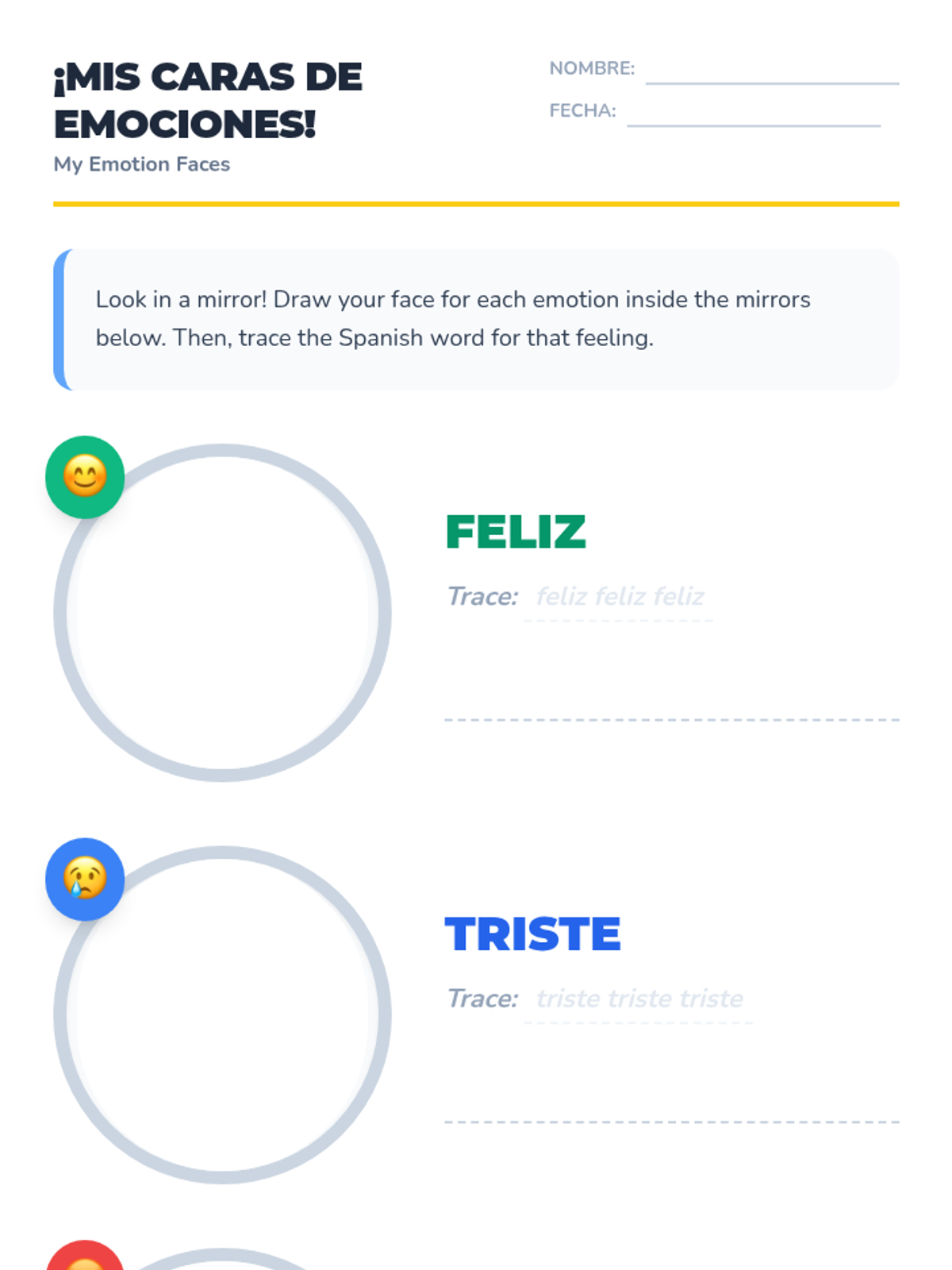
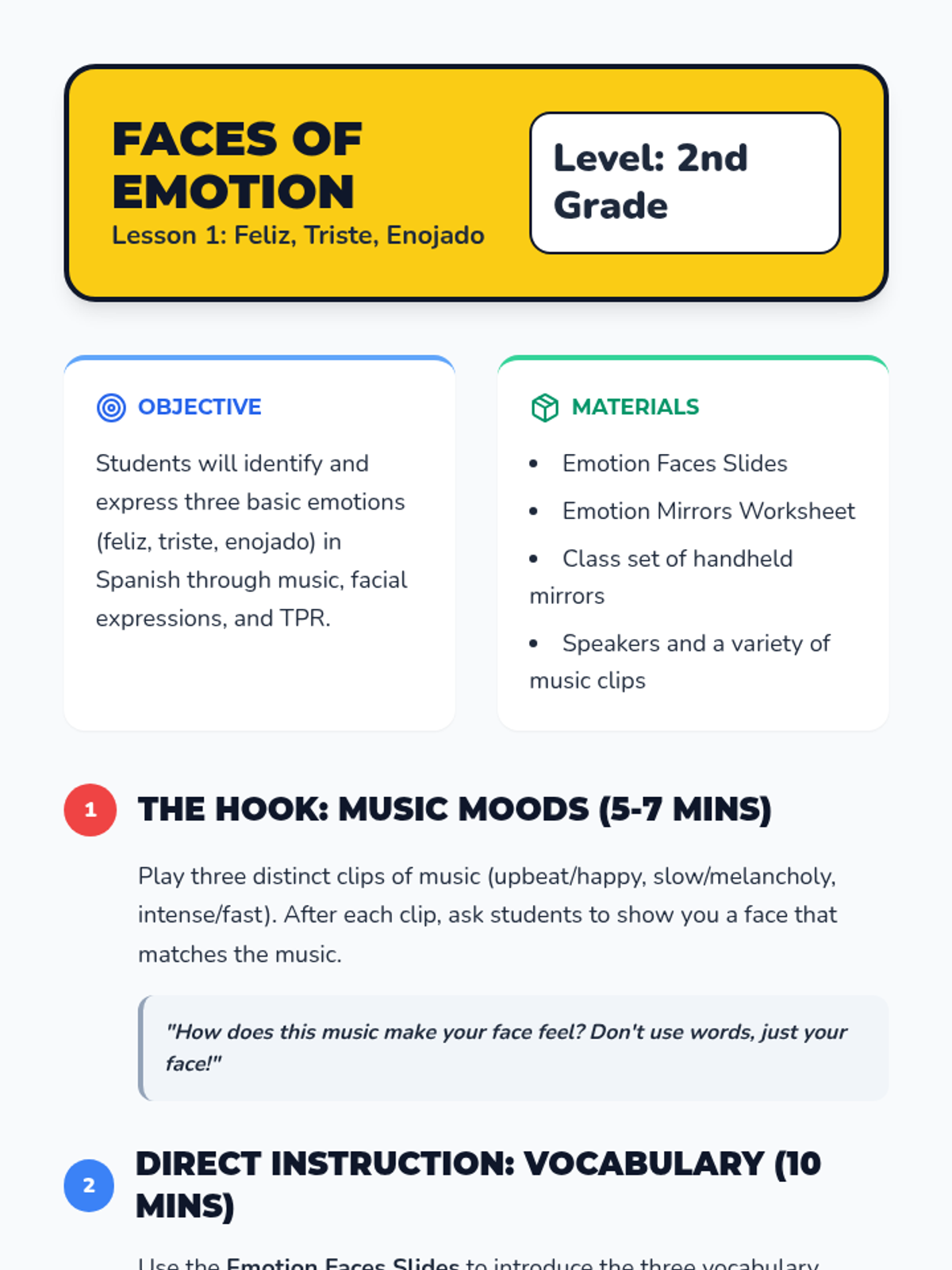
A game-based Spanish sequence for 2nd graders focused on expressing emotions (happy, sad, angry) and physical needs (hunger, thirst, bathroom) using TPR and interactive play.
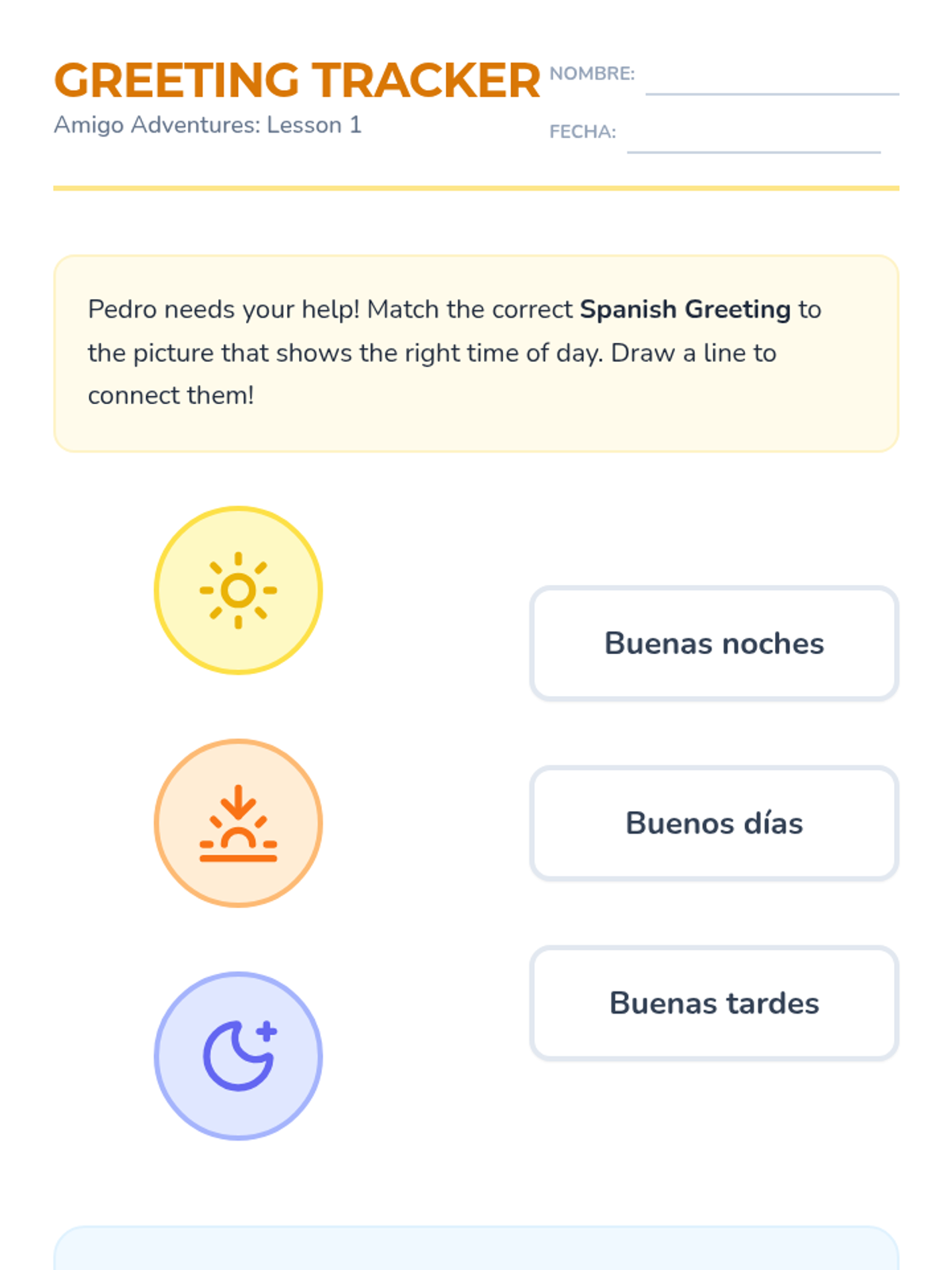
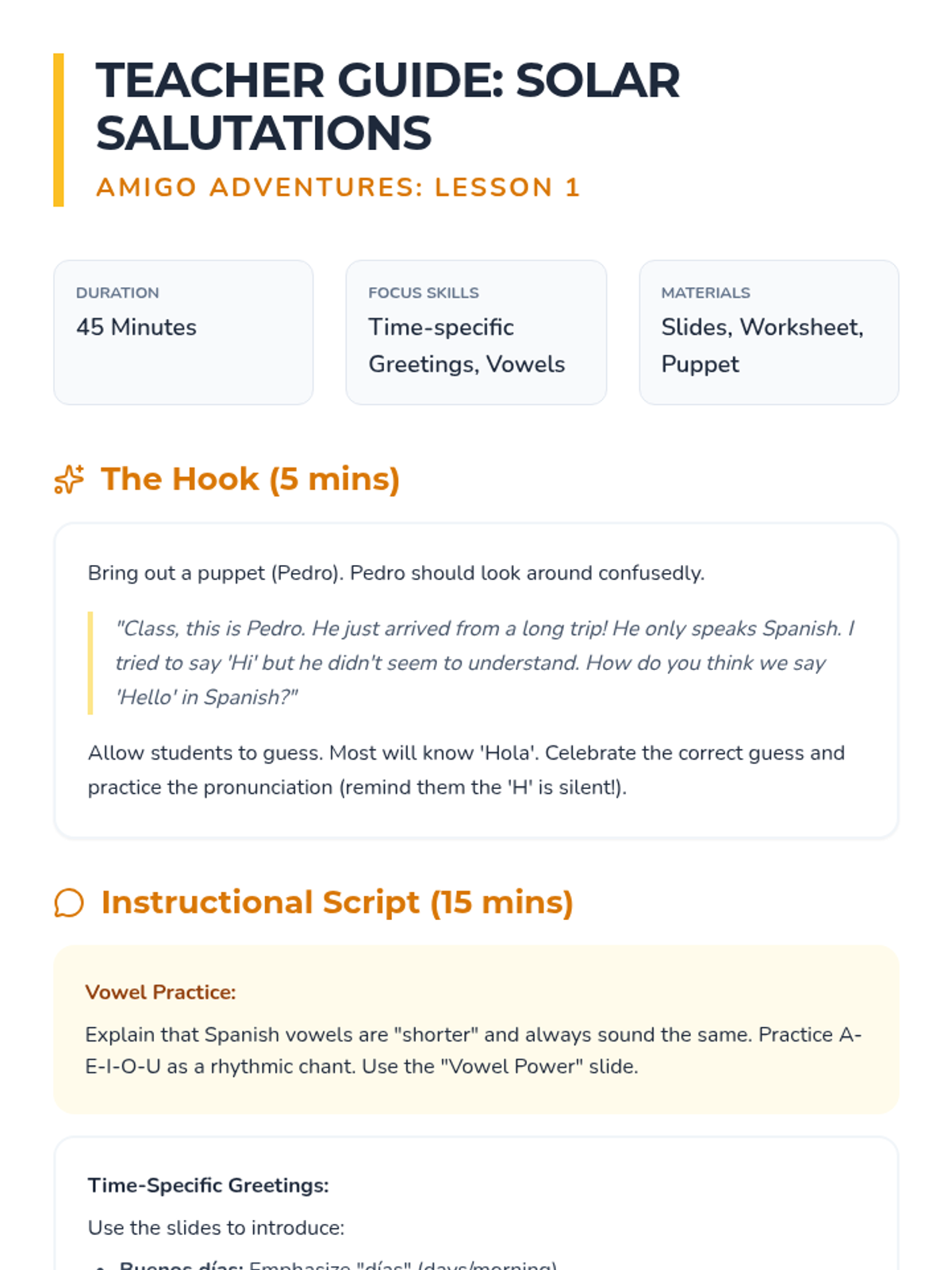
A foundational Spanish sequence for 2nd graders focusing on greetings, introductions, and polite social interactions through immersive play and role-playing.
Students move beyond simple introductions to expressing personal identity, preferences, and traits using the verbs 'être' and 'aimer'. The project-based learning arc culminates in the creation of a 'Star Student' poster where students present who they are in French.
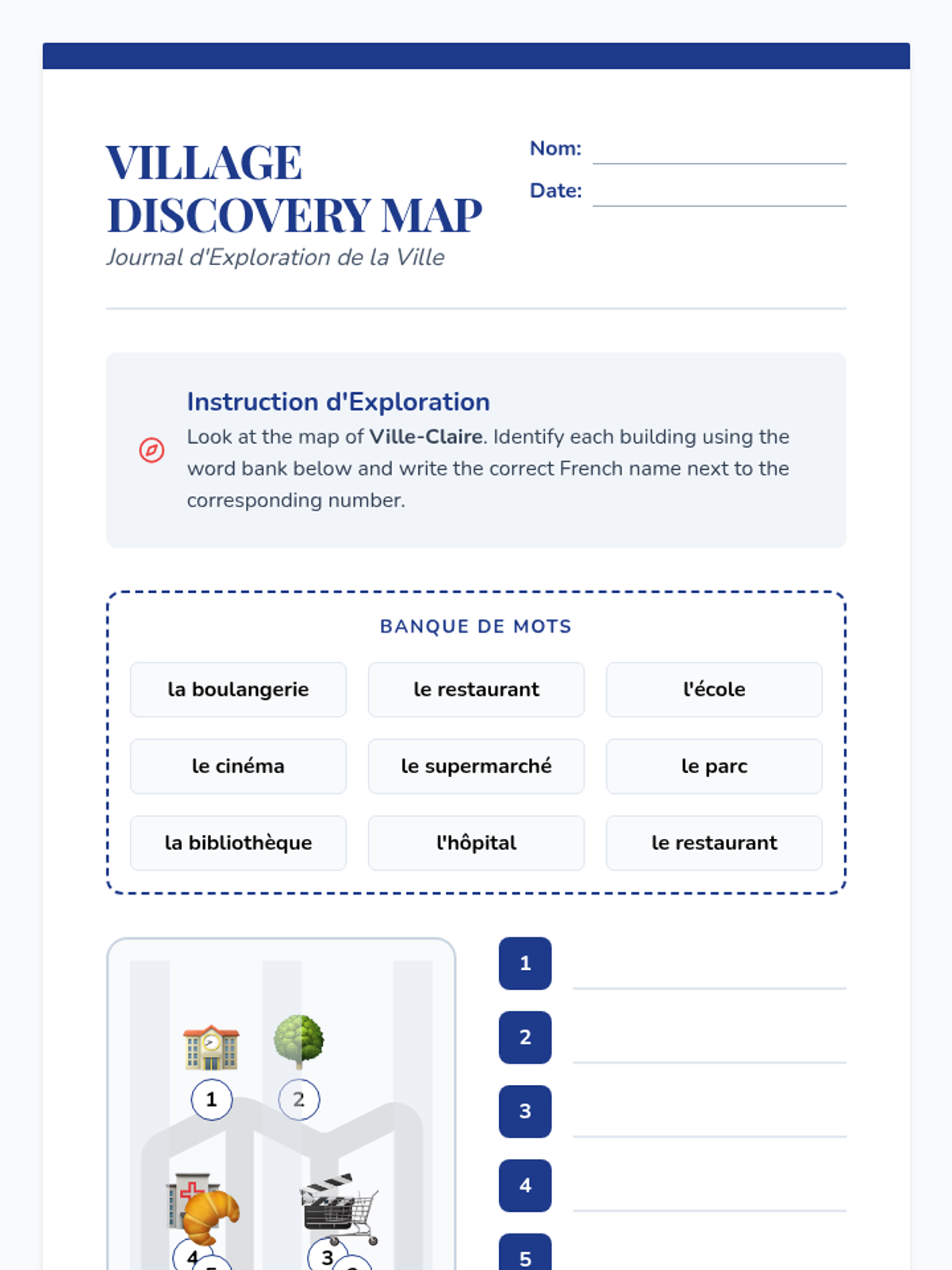
An inquiry-based exploration of French communities where students learn to identify landmarks, use spatial prepositions, and provide directions. Students develop practical communication skills while virtually navigating Francophone cities.
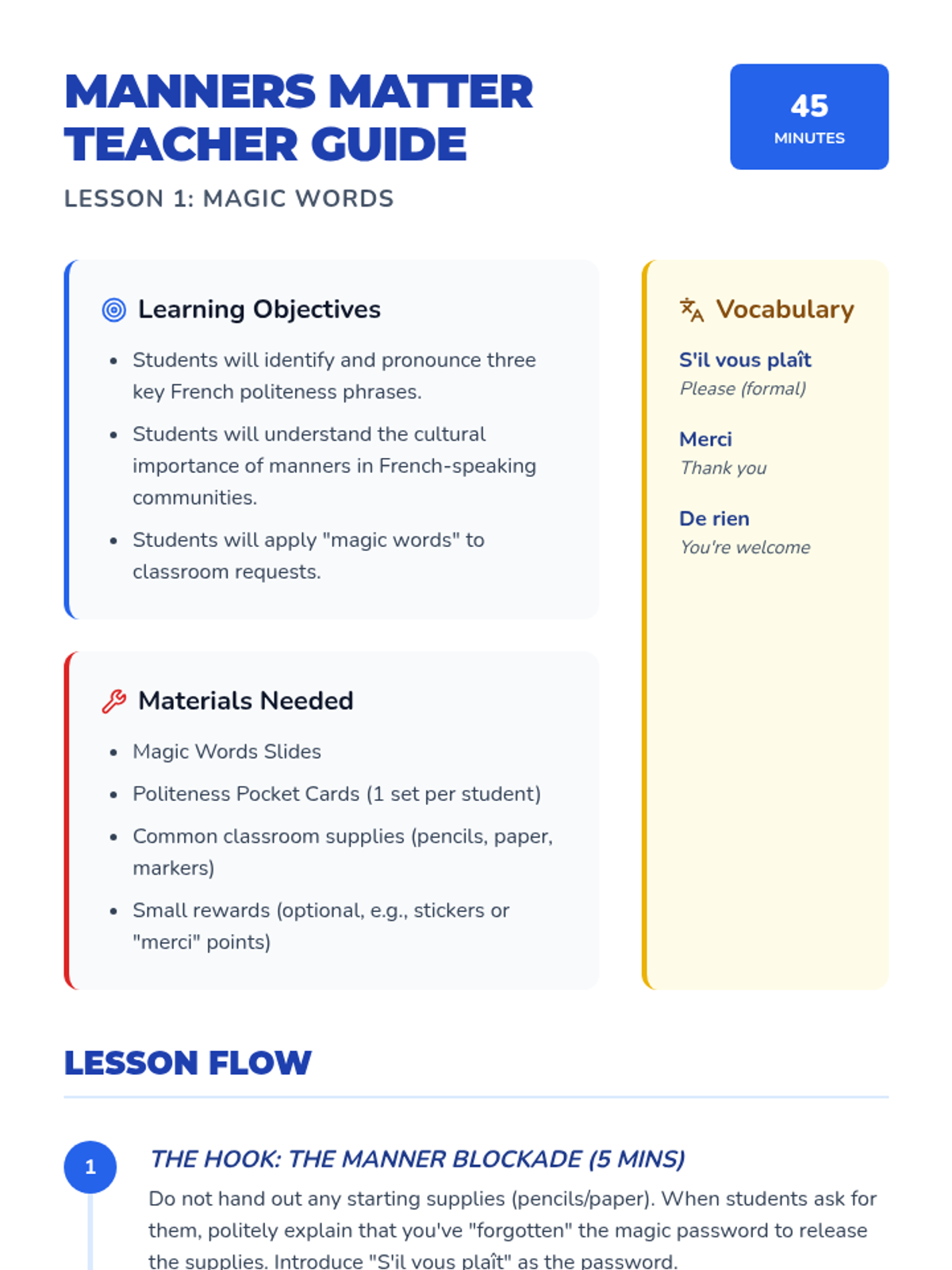
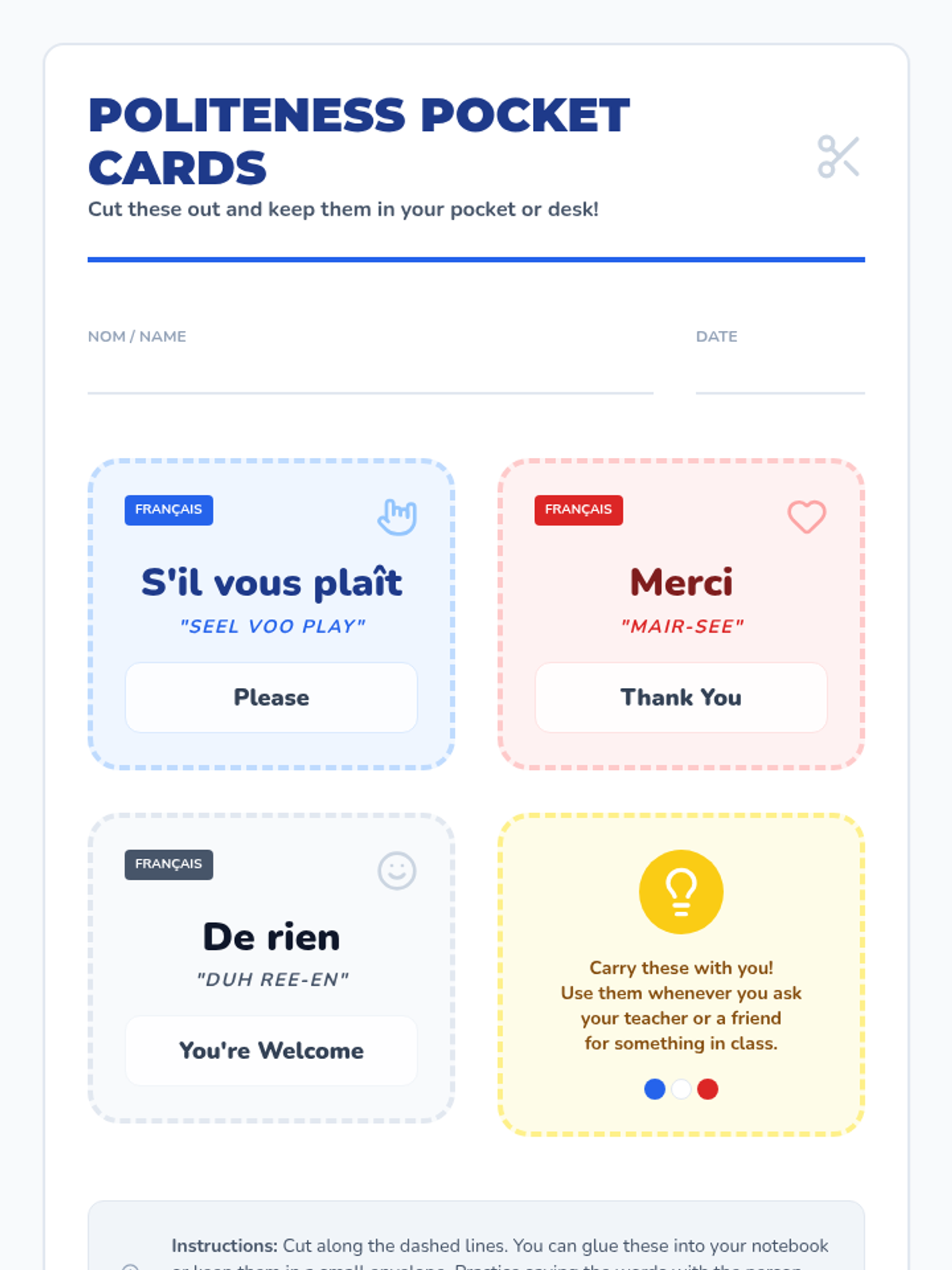
Students explore French culture through politeness and classroom navigation. They learn 'magic words', object names, and teacher commands through TPR and role-play to function effectively in a French-speaking environment.
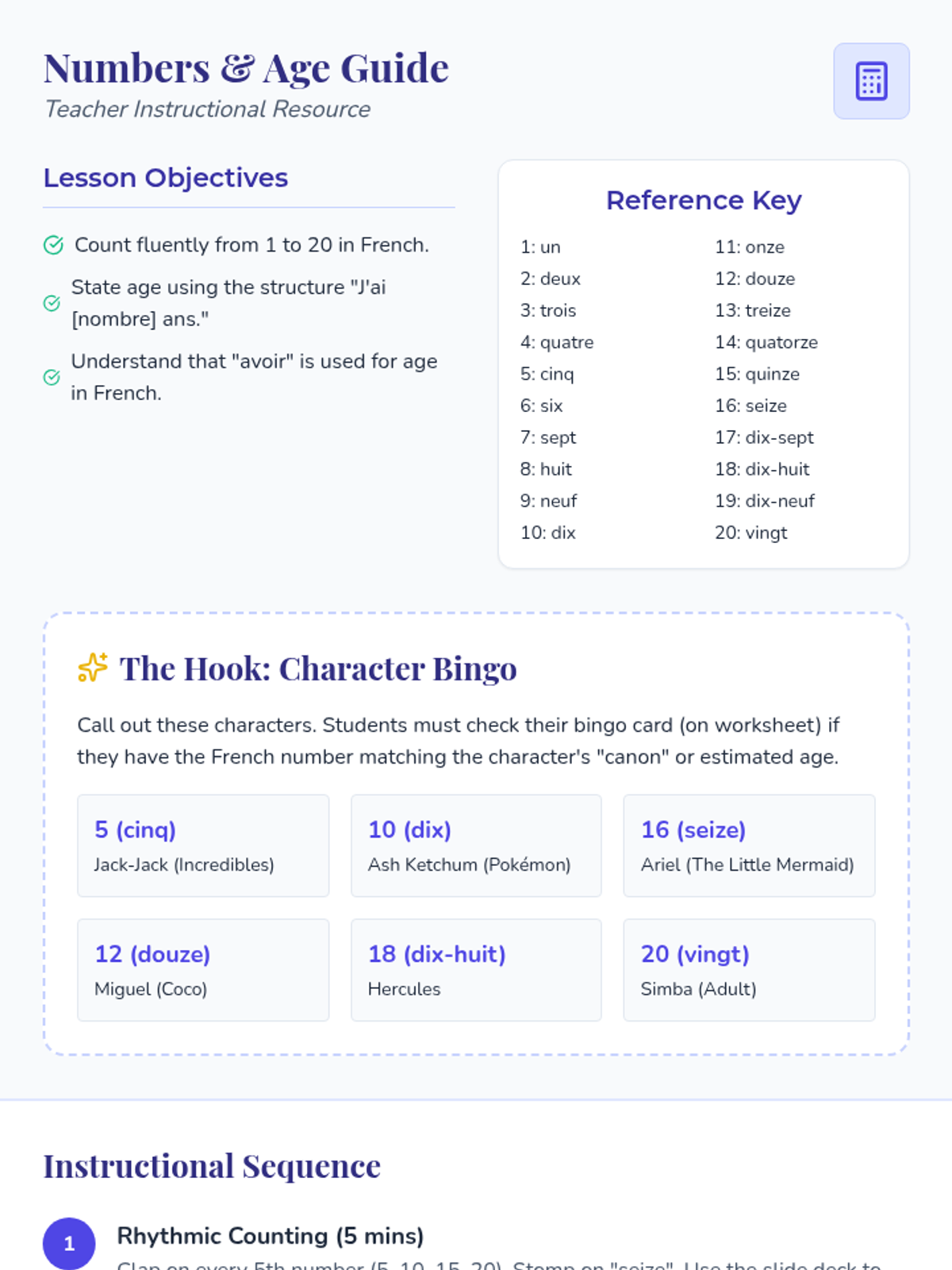
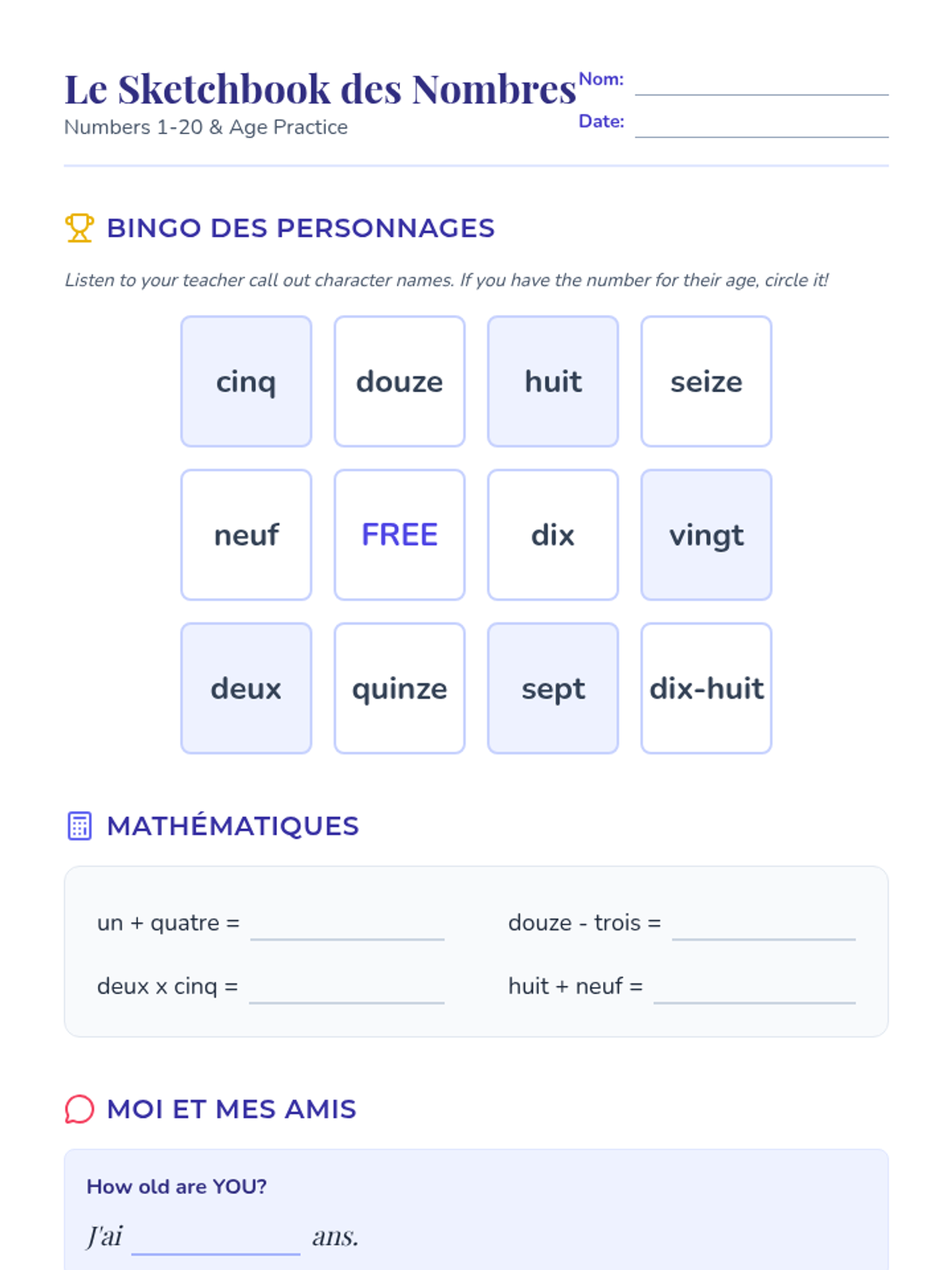
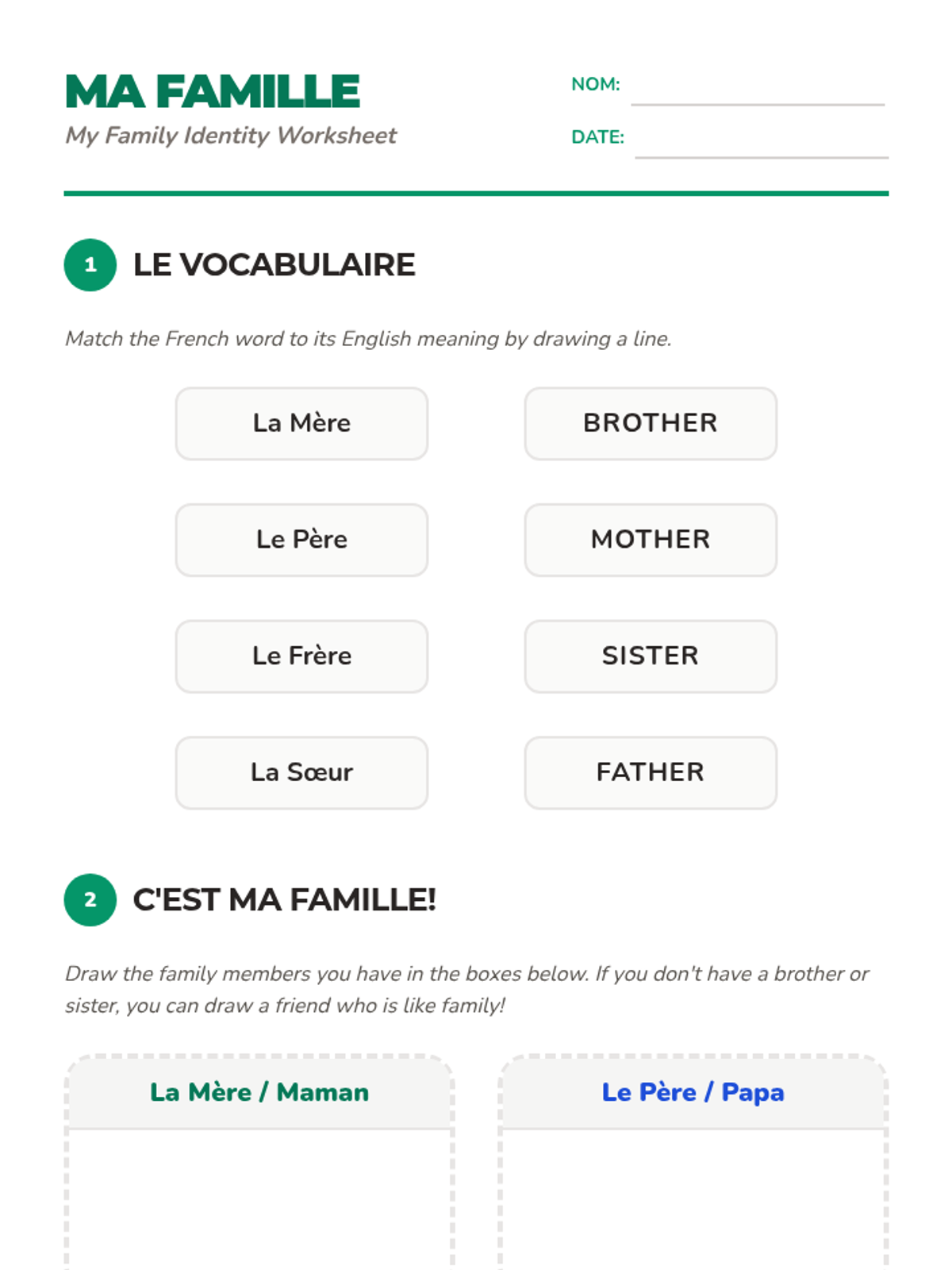
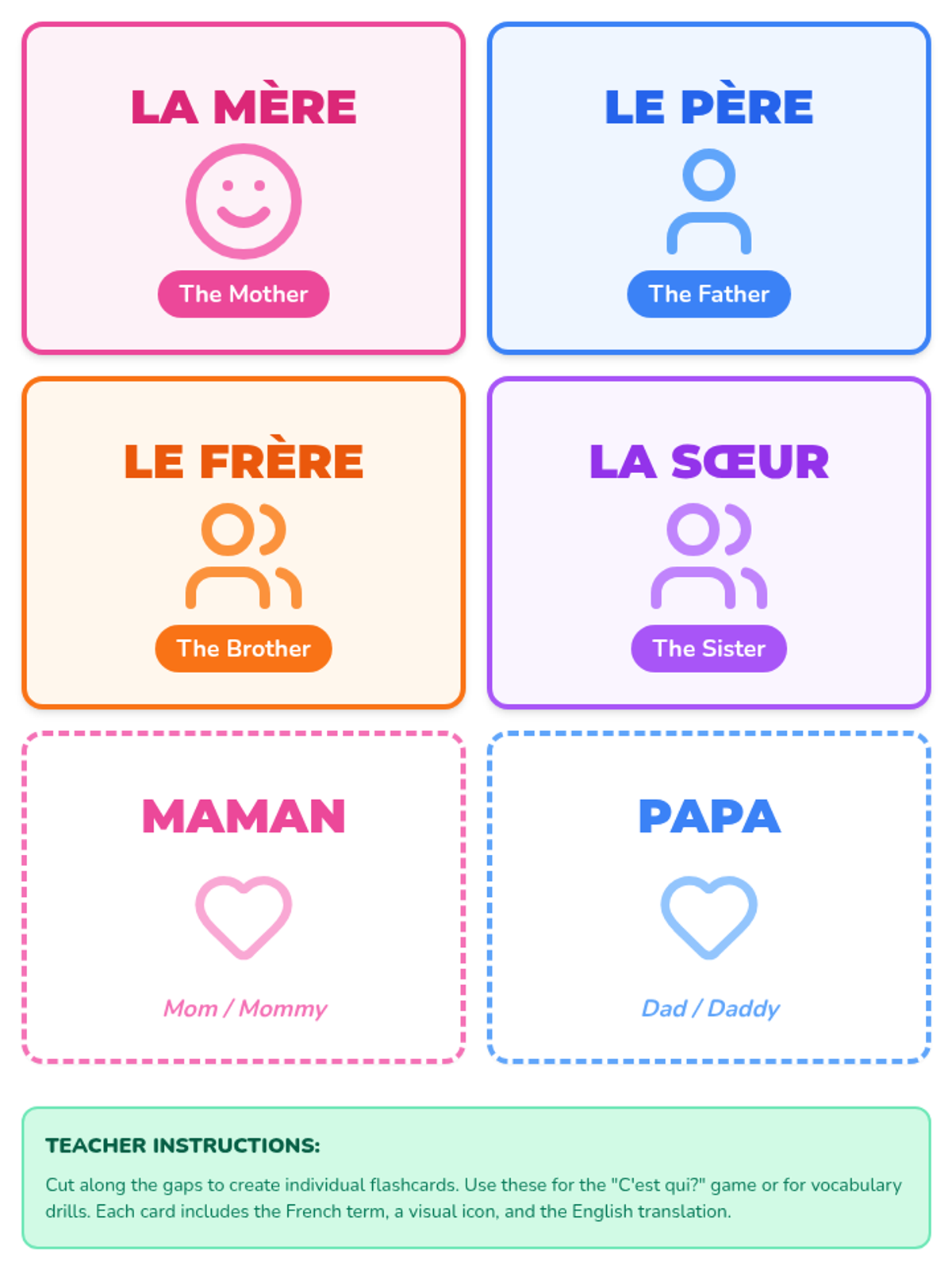
Students learn to describe their family and pets in French, mastering vocabulary for relatives and pets, sentence structures with 'J'ai', and numbers, culminating in a creative family poster presentation.
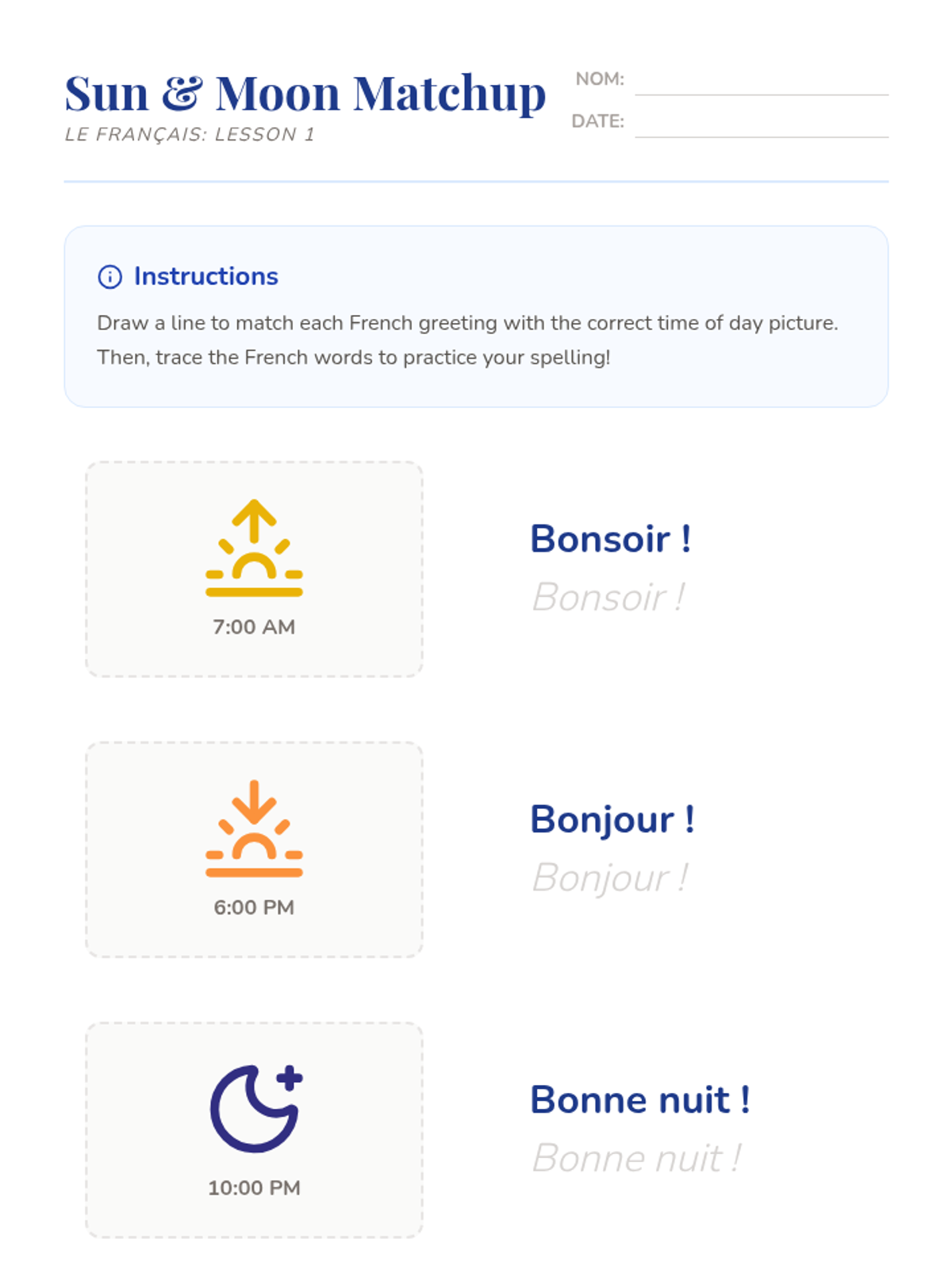
Students begin their French language journey by mastering the fundamental mechanics of greetings and introductions. Through interactive role-playing and choral repetition, learners practice distinct greetings for different times of day and social contexts. The sequence progresses from single-word utterances to complete sentences for stating one's name and asking others for theirs. By the end, students will confidently navigate a basic introduction dialogue with peers using appropriate pronunciation.
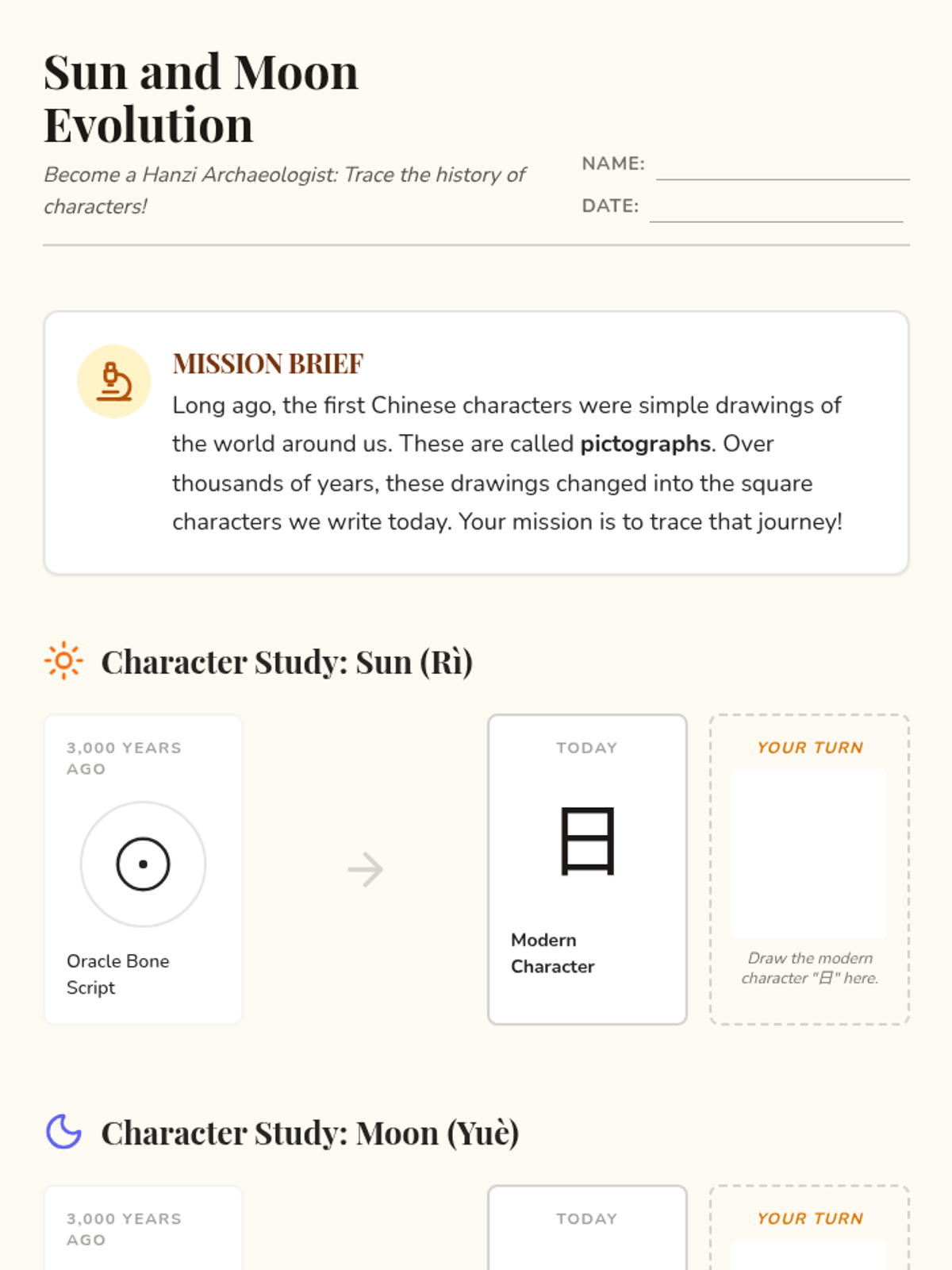
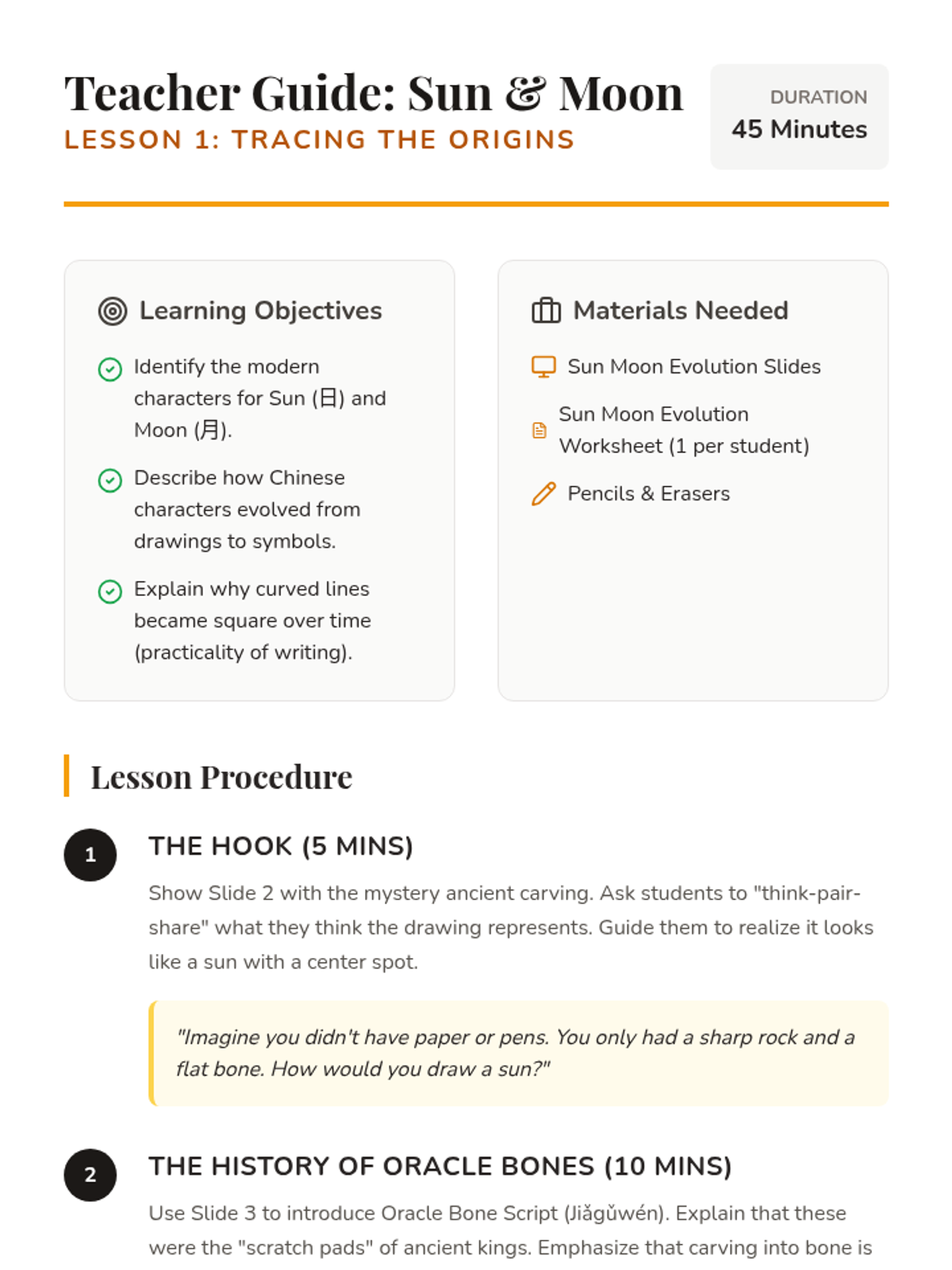
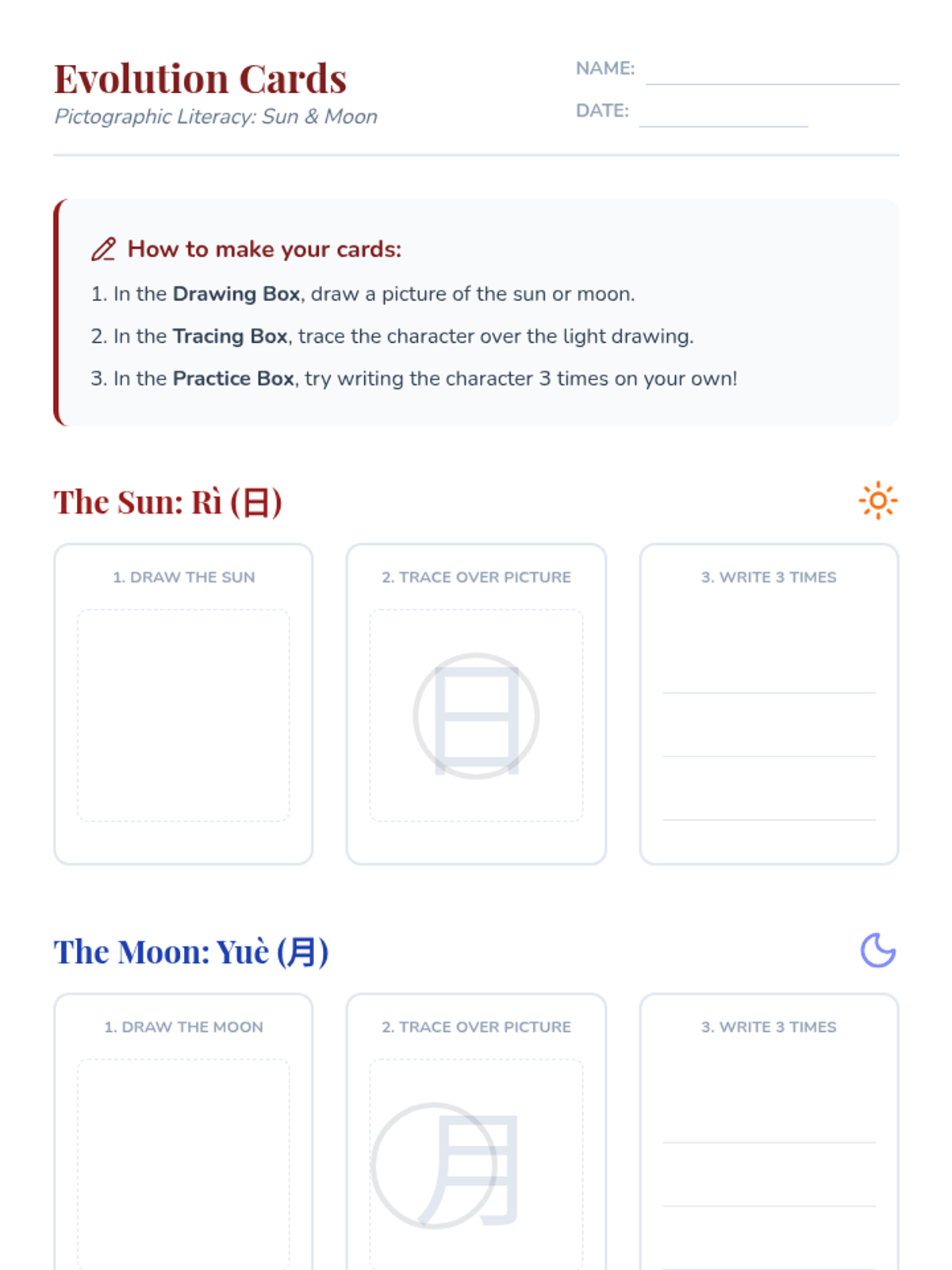
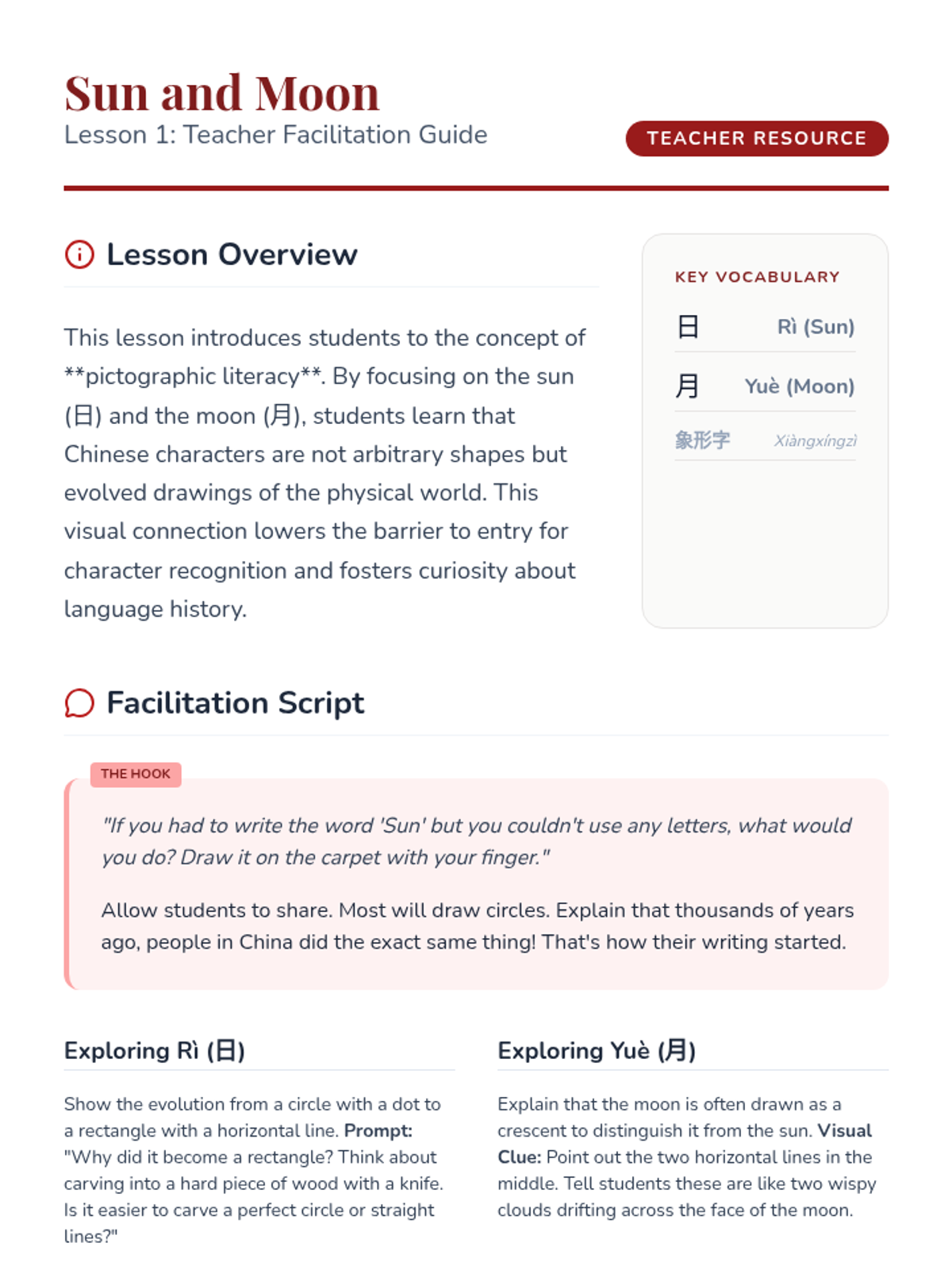
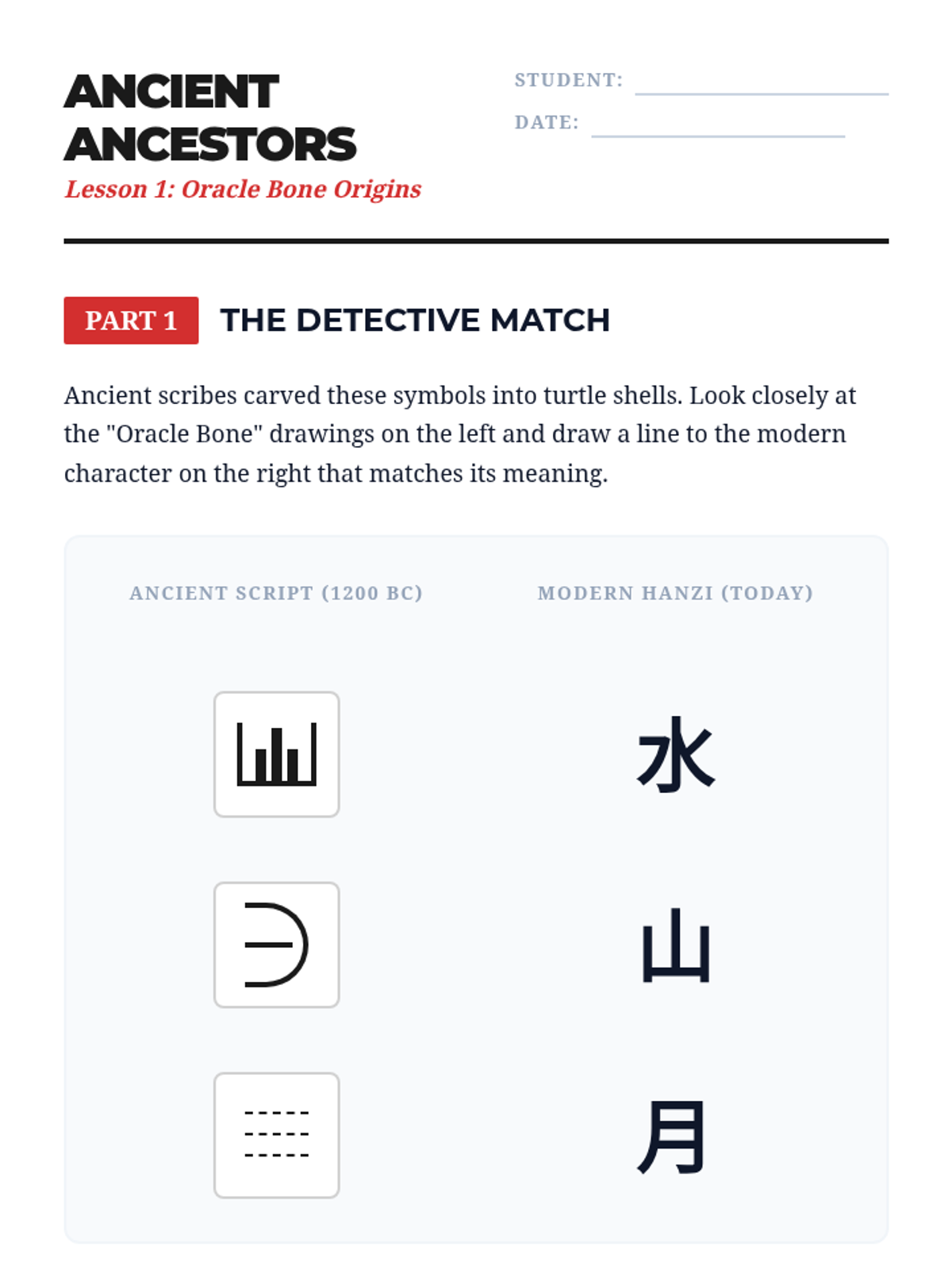
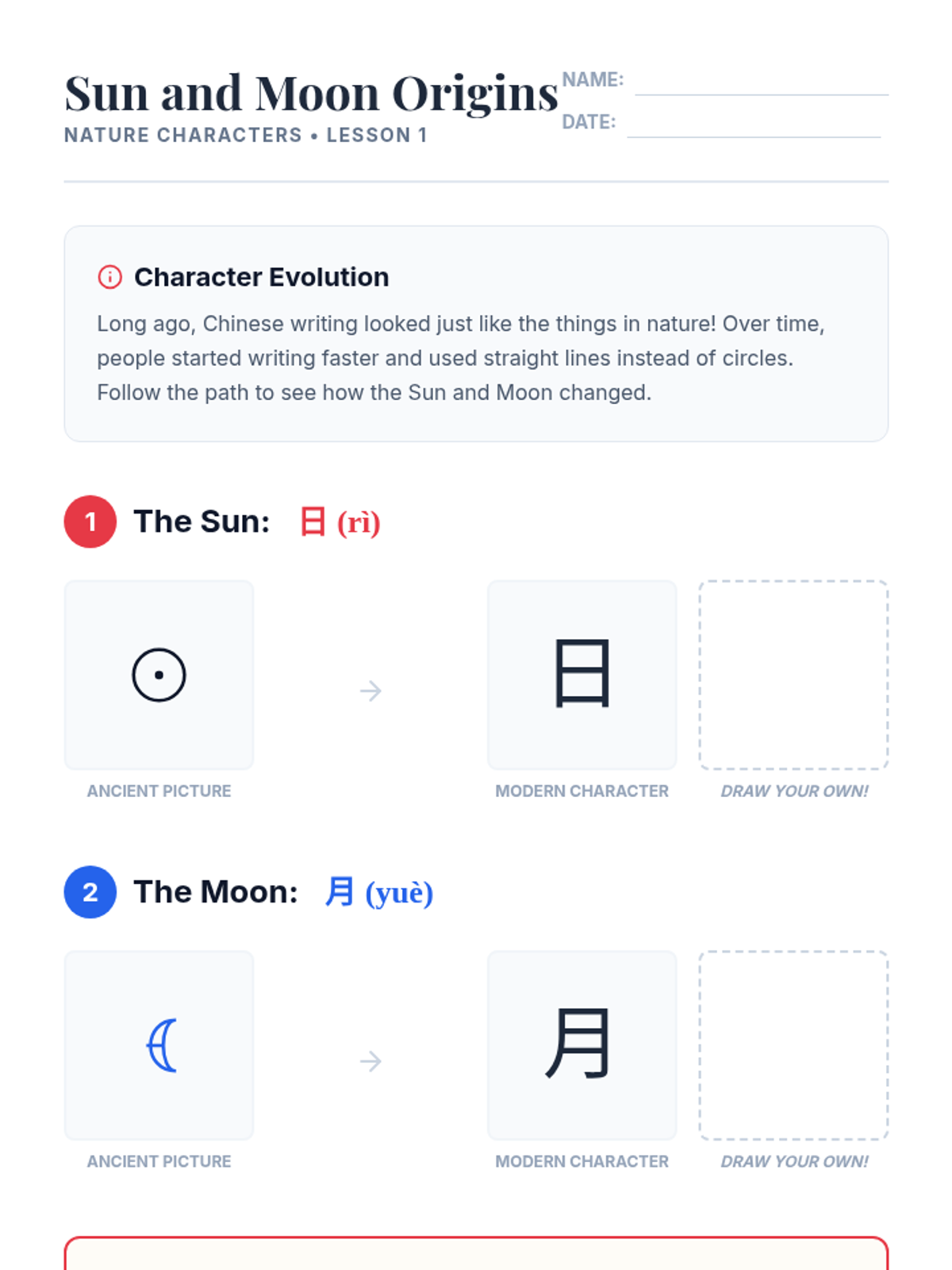
Students explore the historical evolution of Chinese characters from ancient pictures to modern forms. This inquiry-based sequence focuses on high-frequency nouns related to nature (sun, moon, water, mountain, fire) through the lens of visual archaeology.
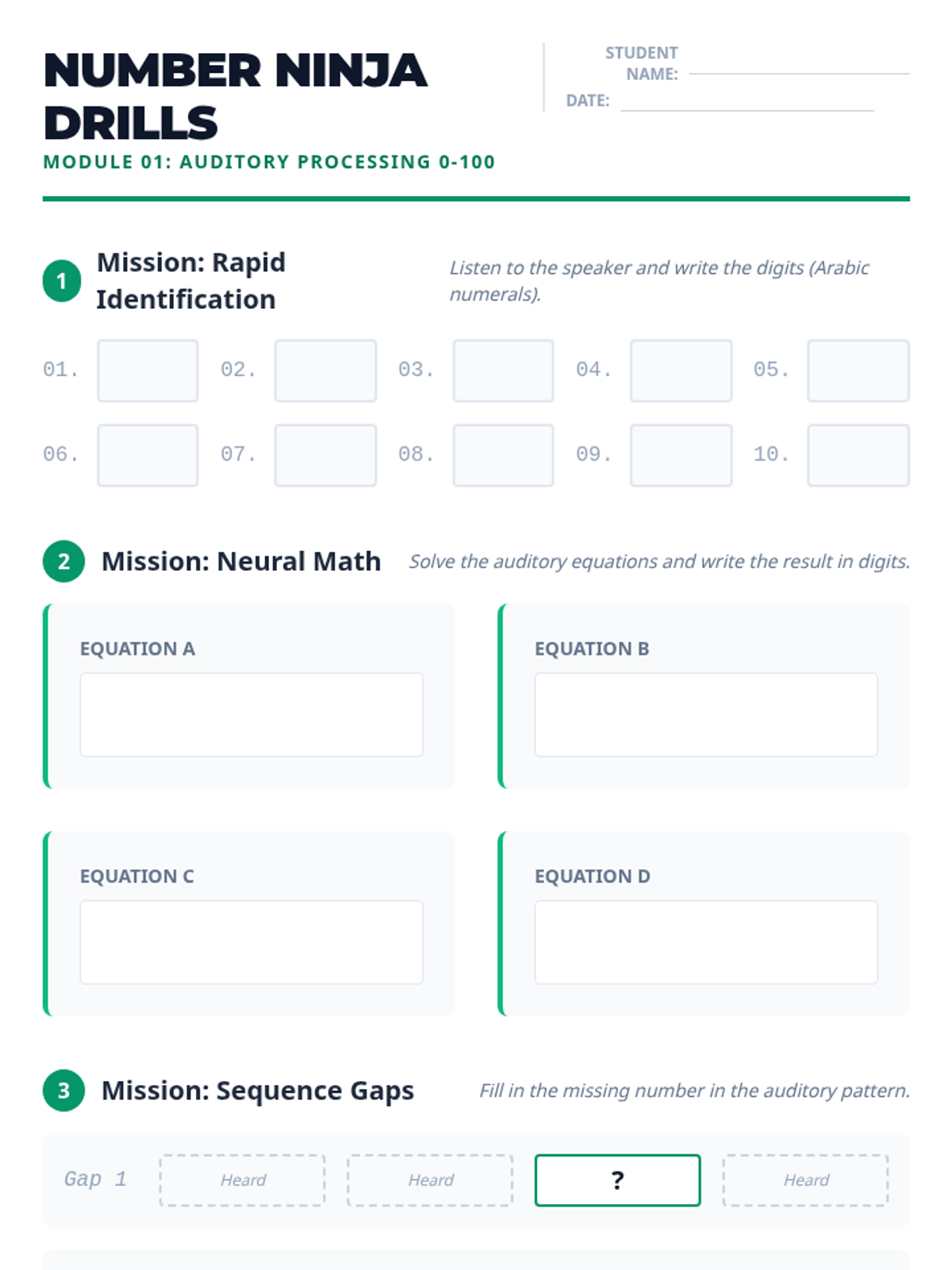
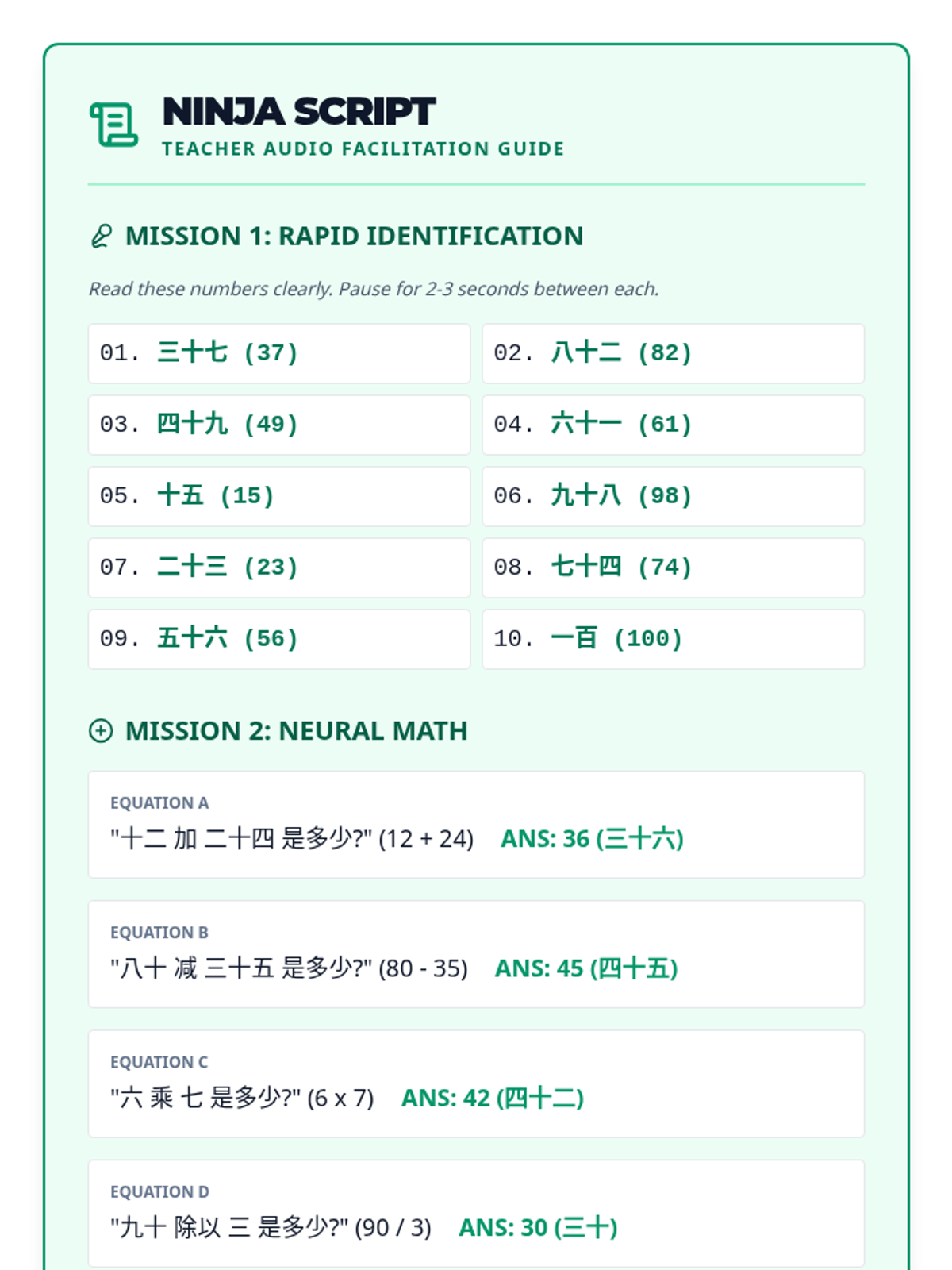
This sequence focuses on the cognitive processing of numerical data in Mandarin Chinese, moving from basic digits to complex phone numbers, calendar dates, clock times, and marketplace currency. Students will develop rapid auditory recognition through gamified scenarios like emergency dispatch, time travel, and transit scheduling.
Students explore the origins of Chinese characters by connecting them to illustrations of the natural world. This inquiry-based sequence helps students visualize the evolution from ancient pictographs to modern Hanzi, focusing on high-frequency nature words like sun, moon, water, fire, tree, and mountain.
Students explore the pictographic evolution of Mandarin Chinese characters, tracing modern symbols back to ancient Oracle Bone script. The sequence focuses on nature and animal characters, helping students build visual associations and mnemonics to master basic Hanzi.
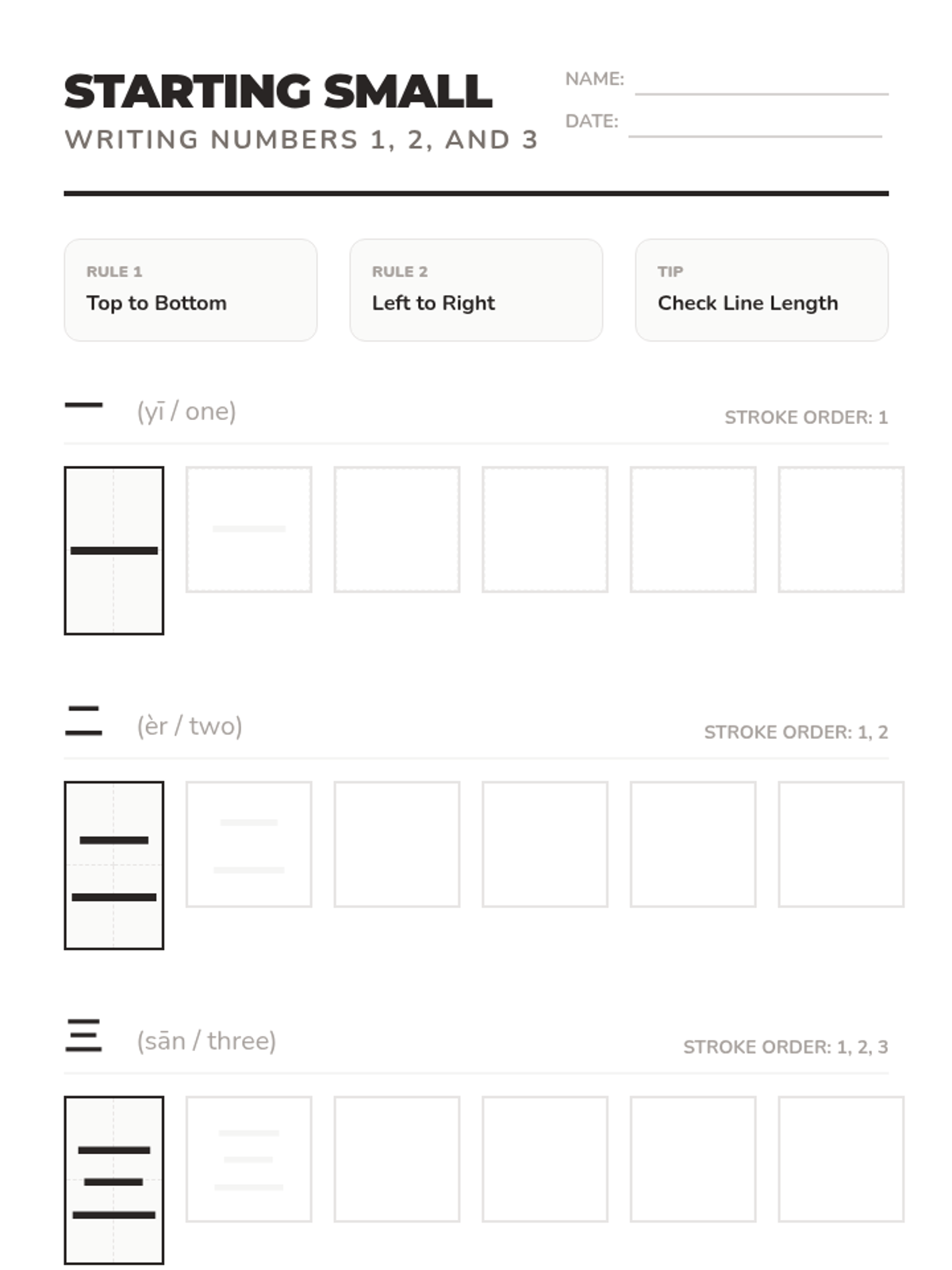
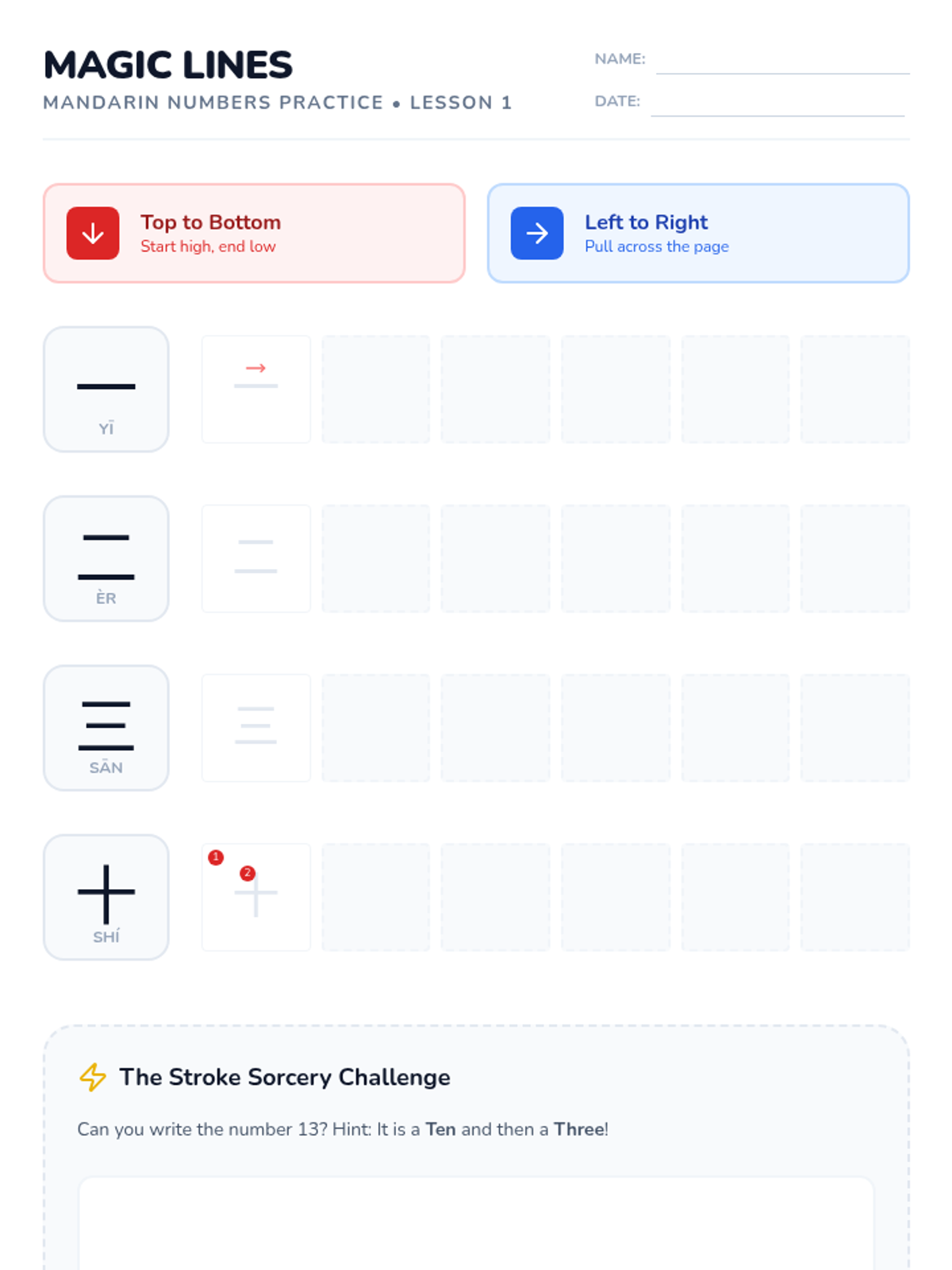
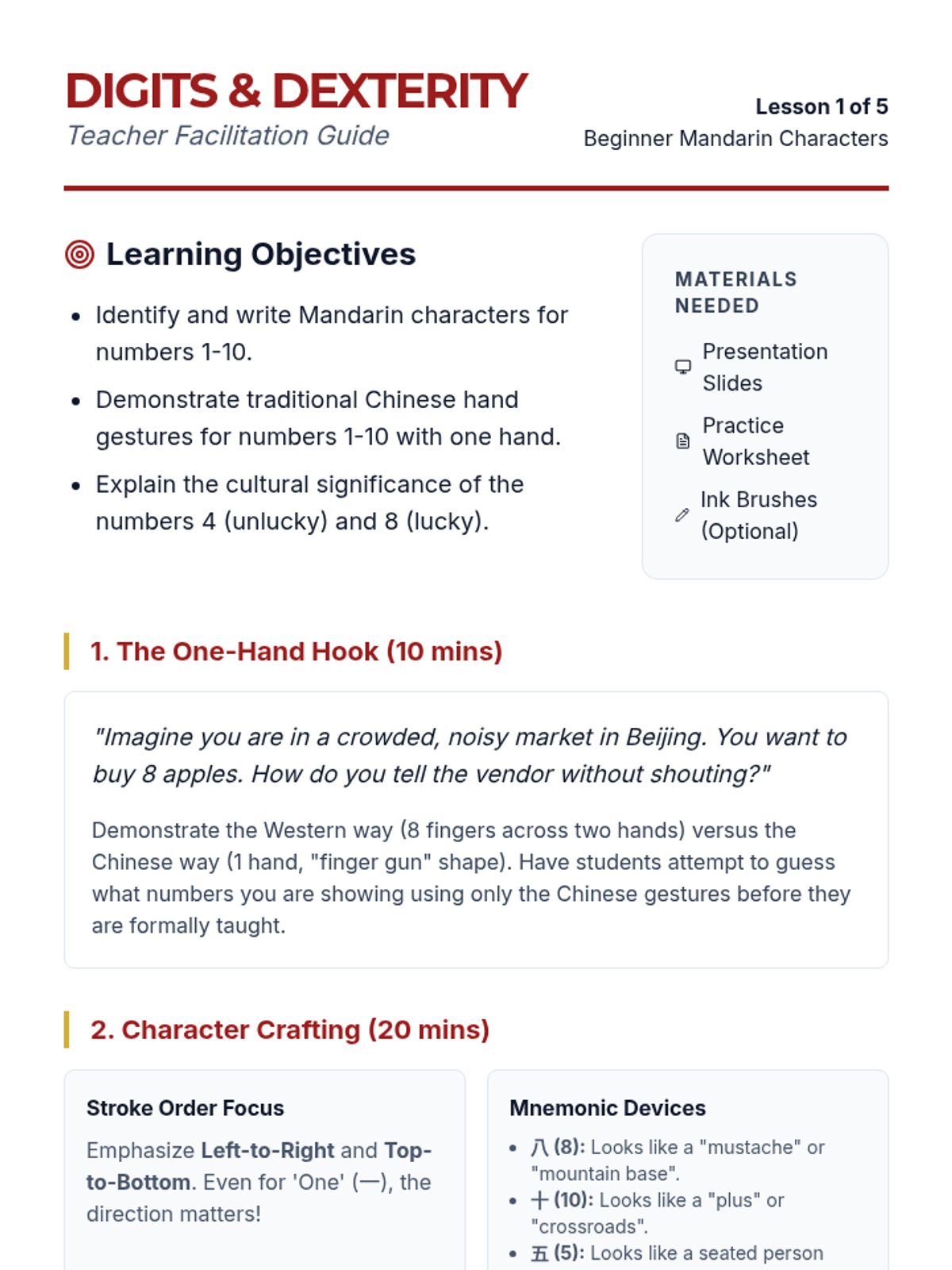
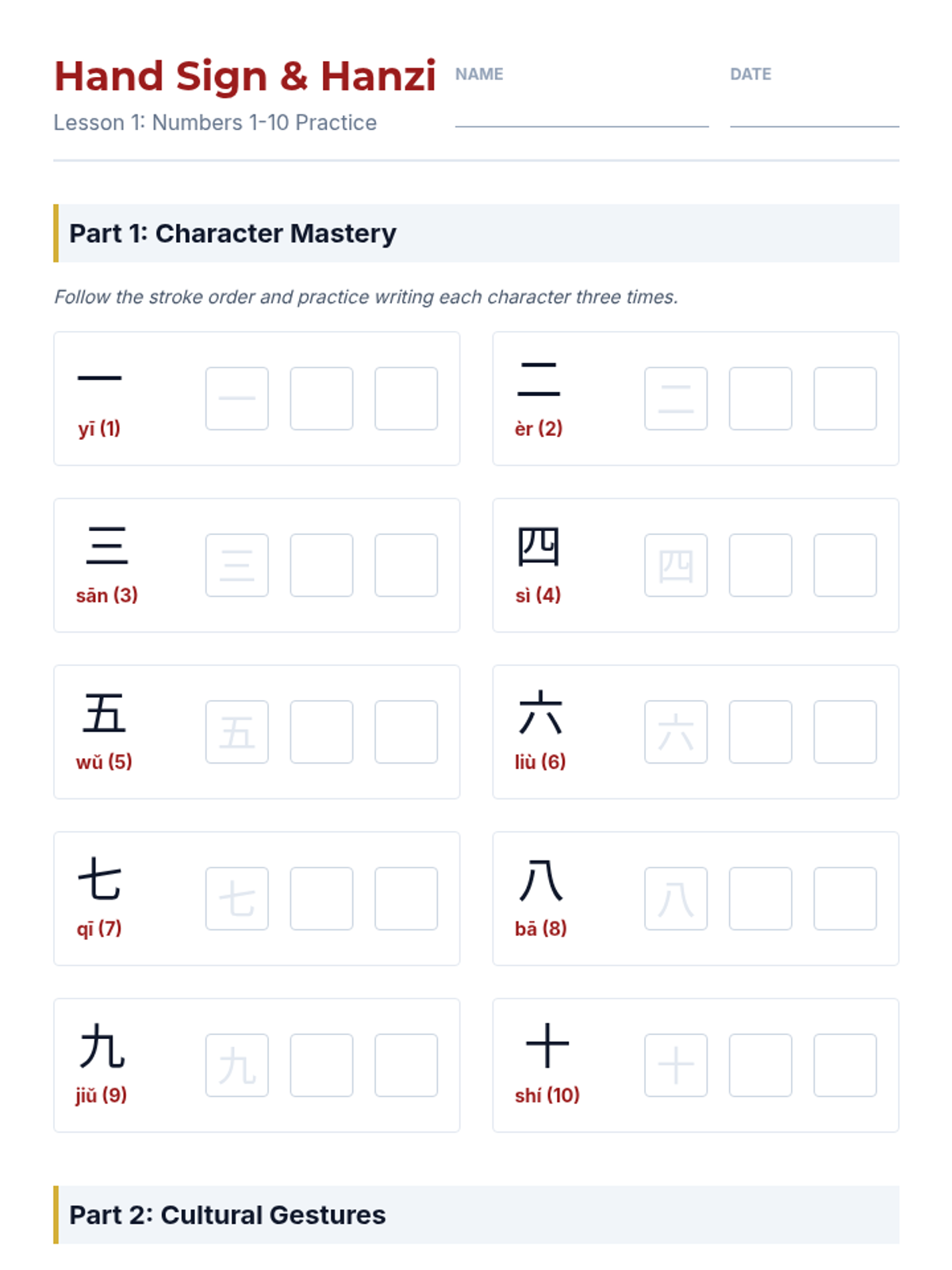
A comprehensive introduction to the foundational mechanics of Chinese calligraphy, focusing on the six basic strokes, the seven rules of stroke order, and numerical characters 1-10. Students develop fine motor skills and cultural appreciation through grid-based practice and traditional calligraphy techniques.
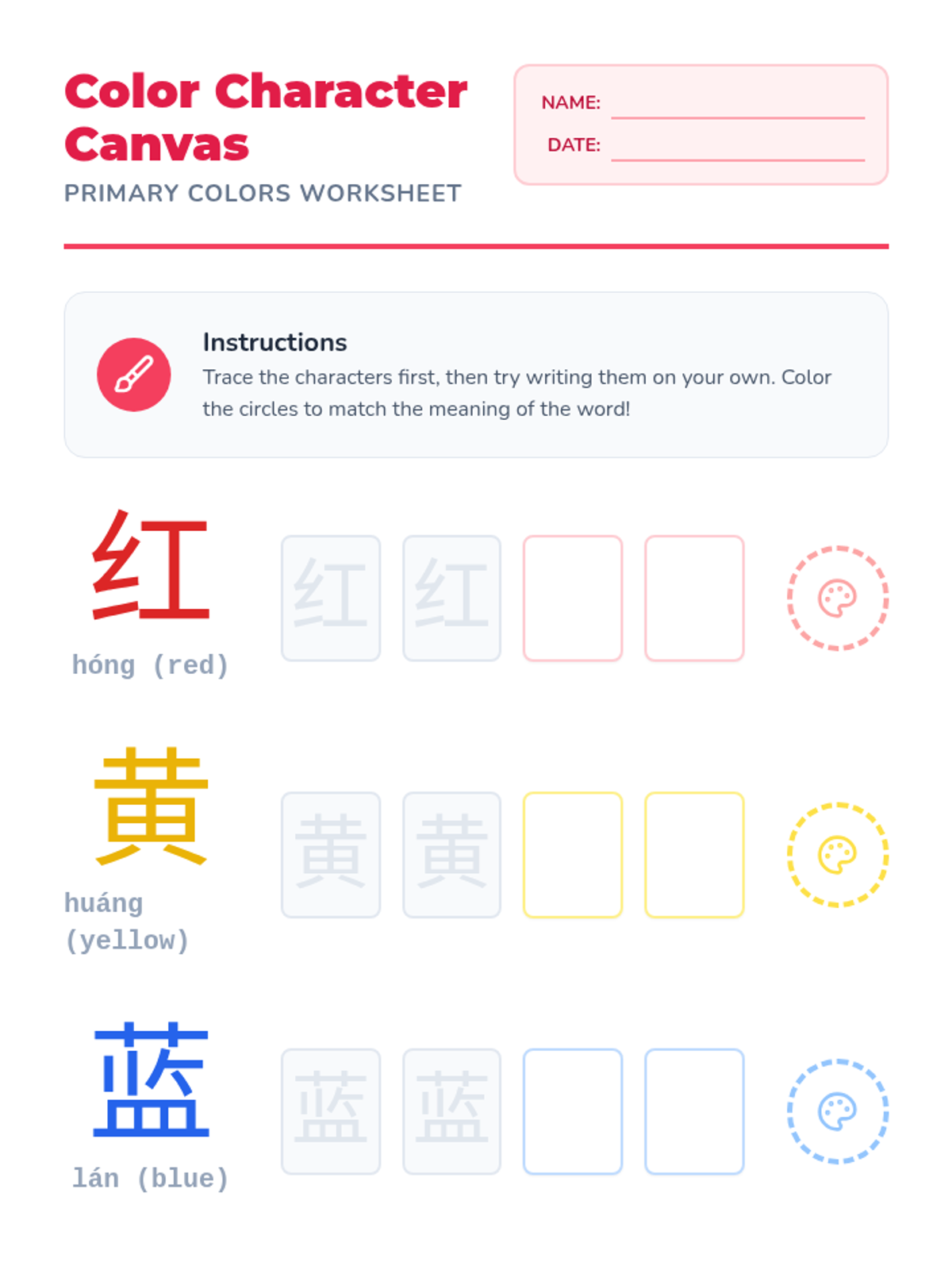
This sequence introduces 2nd-grade students to basic Mandarin Chinese characters for colors and fruits. Students progress from writing single characters to constructing full 'Subject + Verb + Object' sentences, culminating in a real-world market simulation.
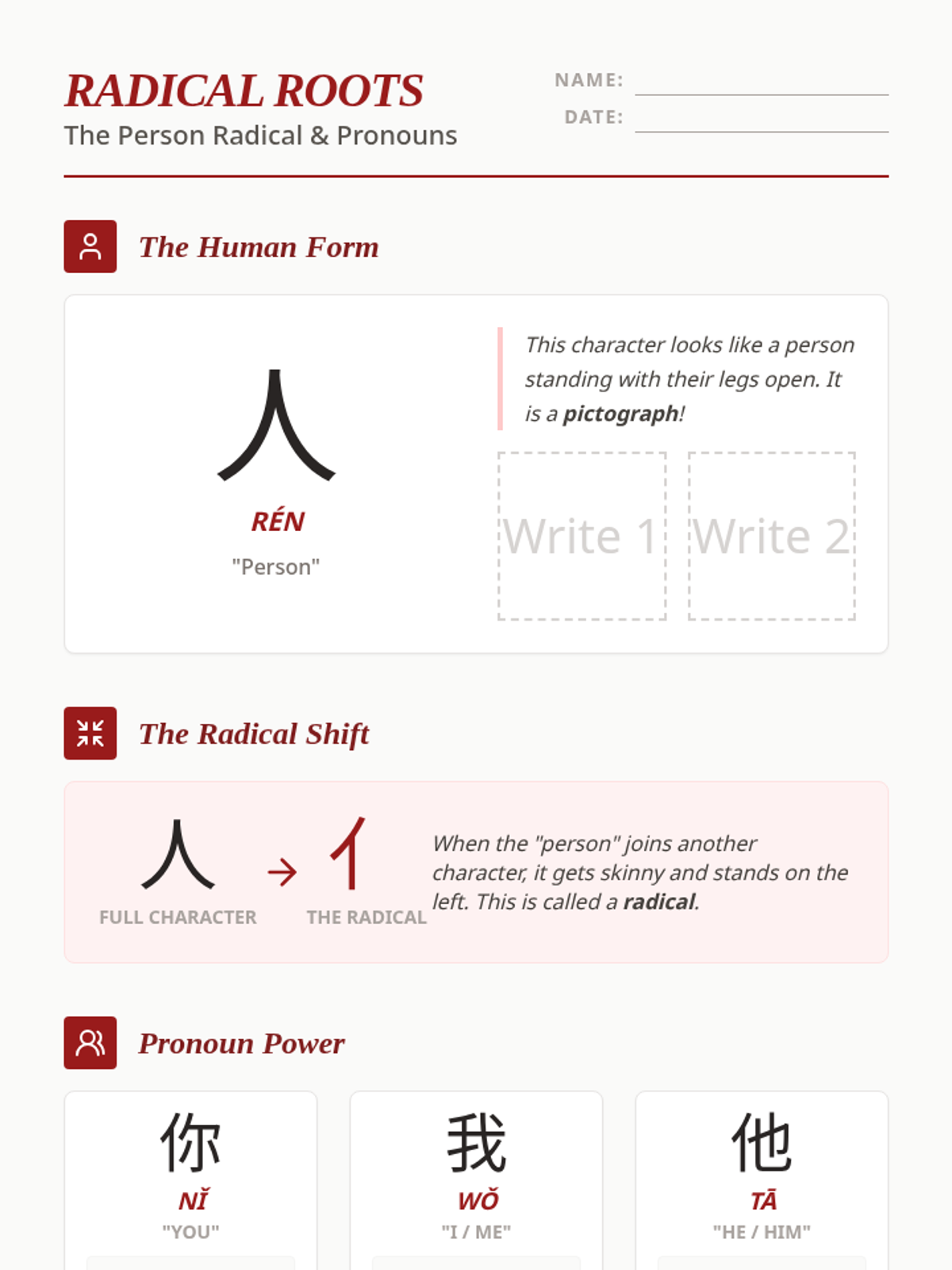
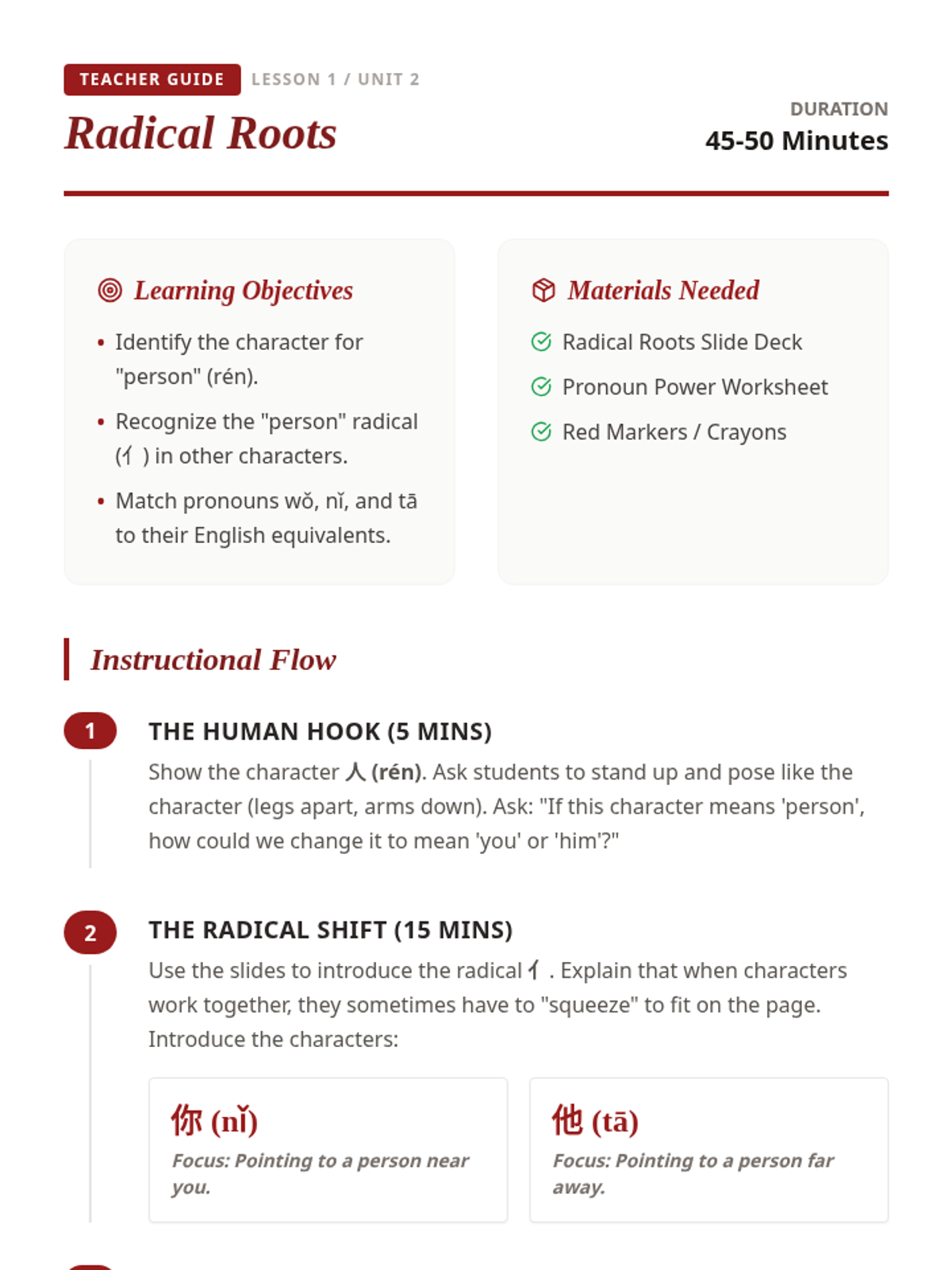
Students explore social structures and family relationships through Mandarin characters, focusing on the 'person' and 'female' radicals, pronouns, and familial hierarchy. The unit culminates in a project-based family tree where students apply their knowledge of character structure and labels.
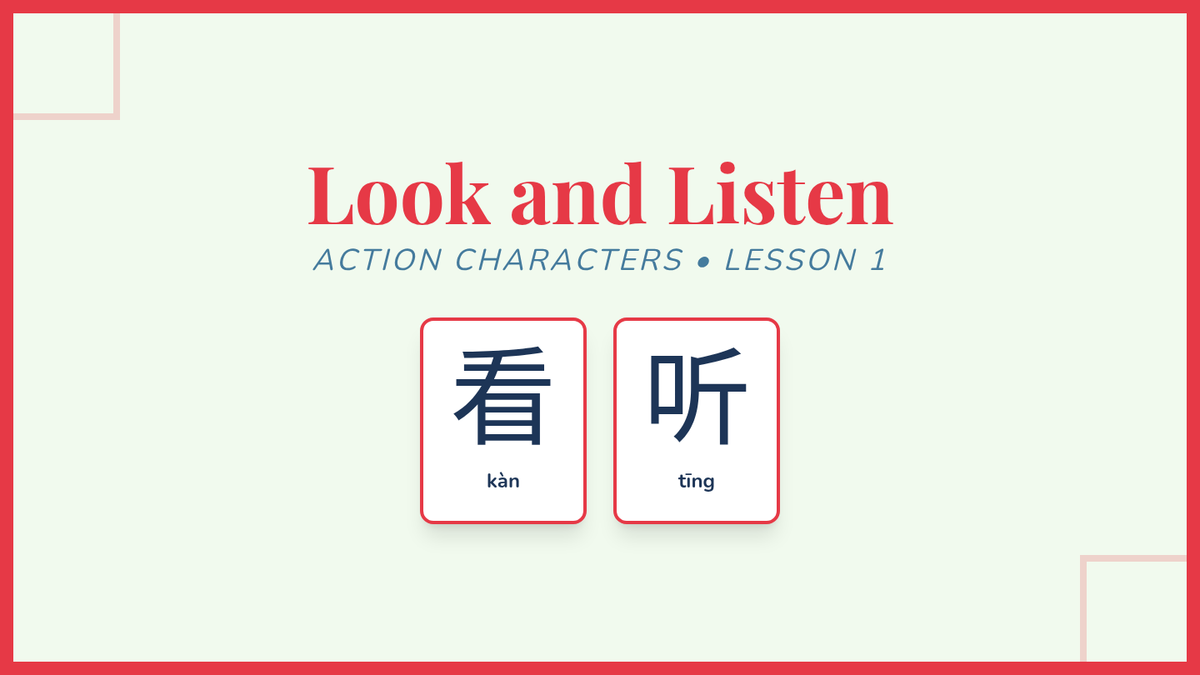
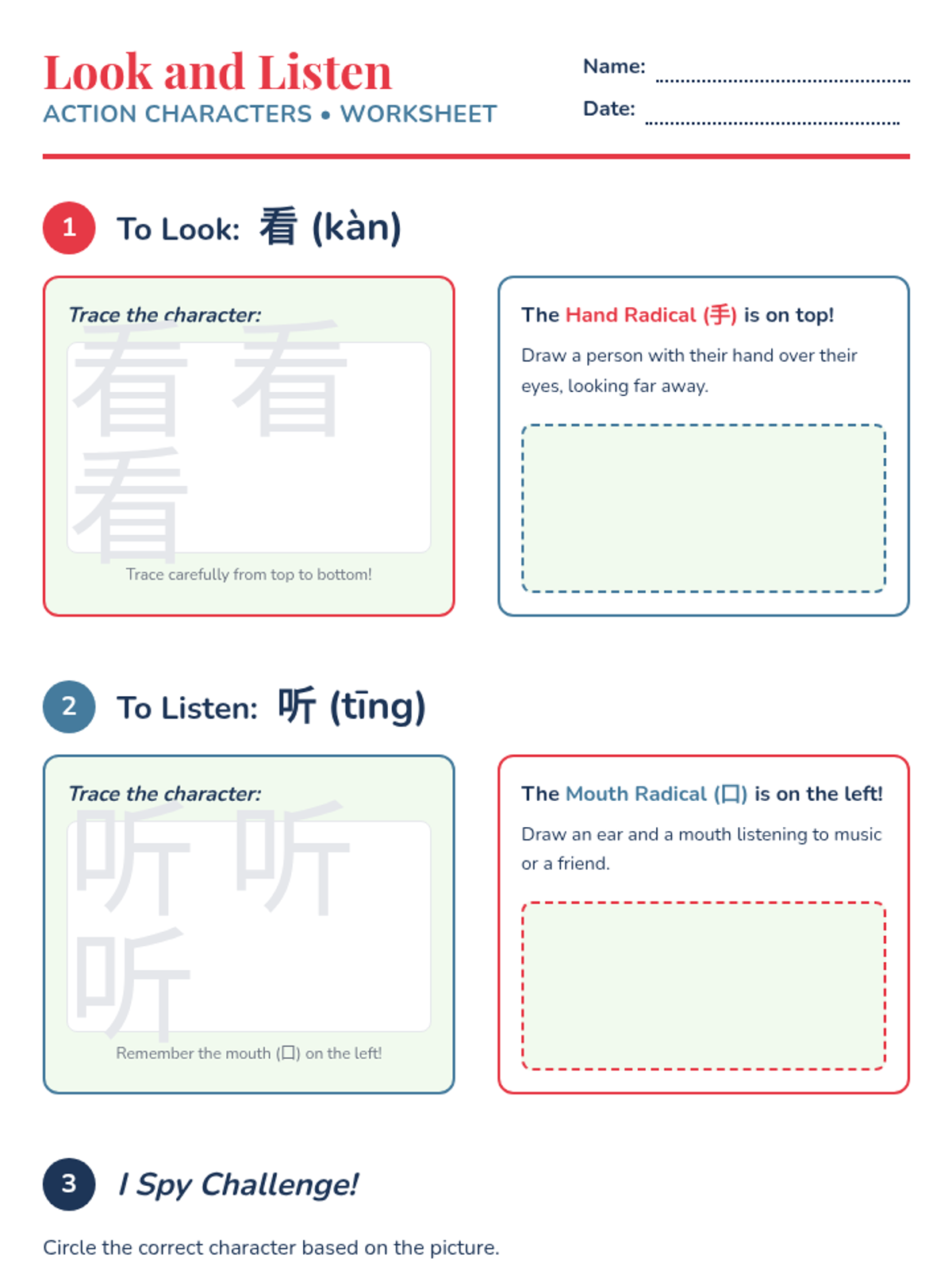
A 5-lesson sequence for 2nd Grade students to learn high-frequency Mandarin action verbs (look, listen, go, come, eat, drink, open, close) through Total Physical Response (TPR) and game-based learning. Students connect written characters directly to physical movements to build immediate comprehension.
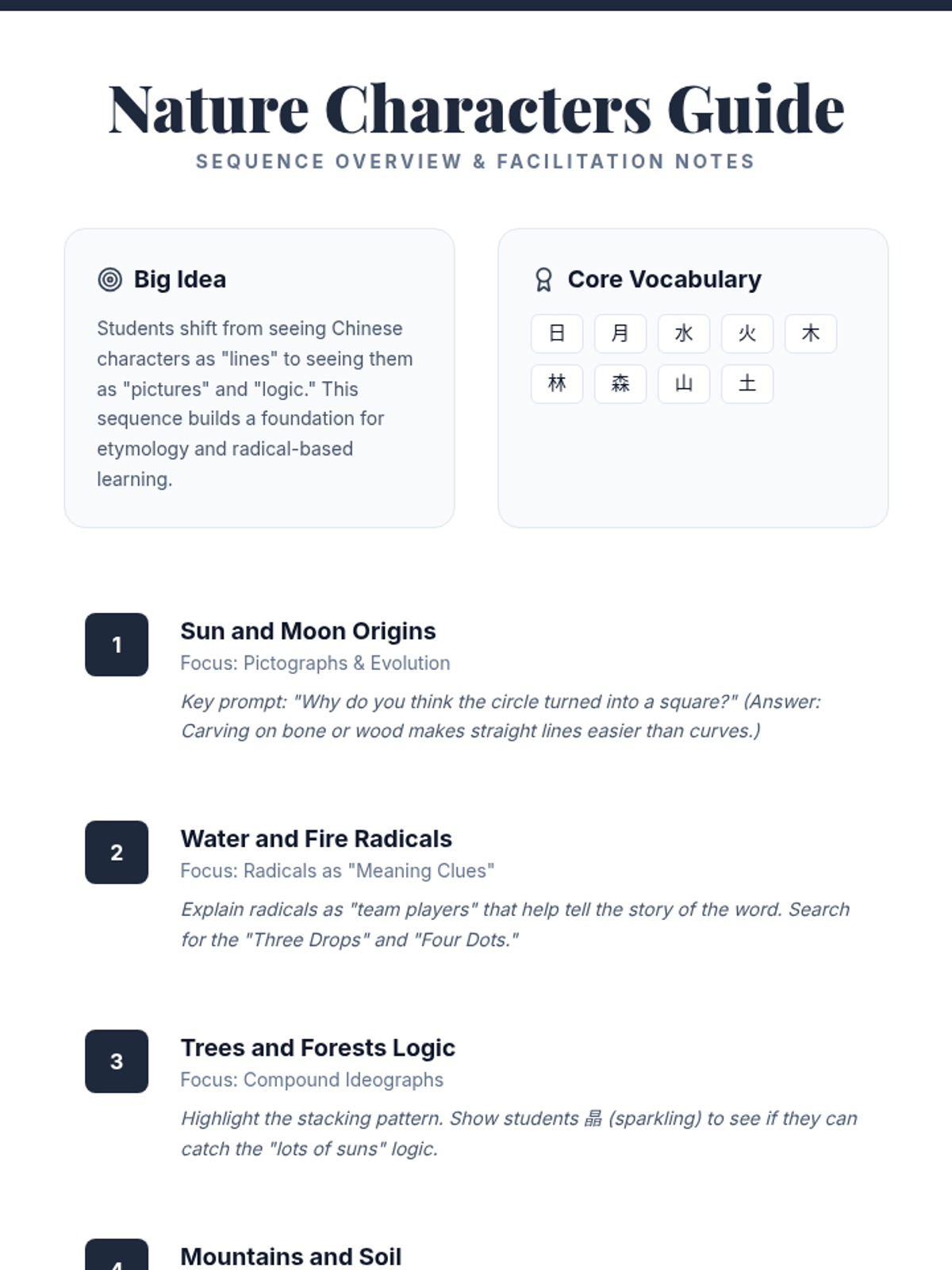
Students explore the etymology of Chinese characters by tracing their evolution from ancient pictographs to modern standard script, focusing on nature-based vocabulary like sun, moon, water, tree, fire, and mountains.
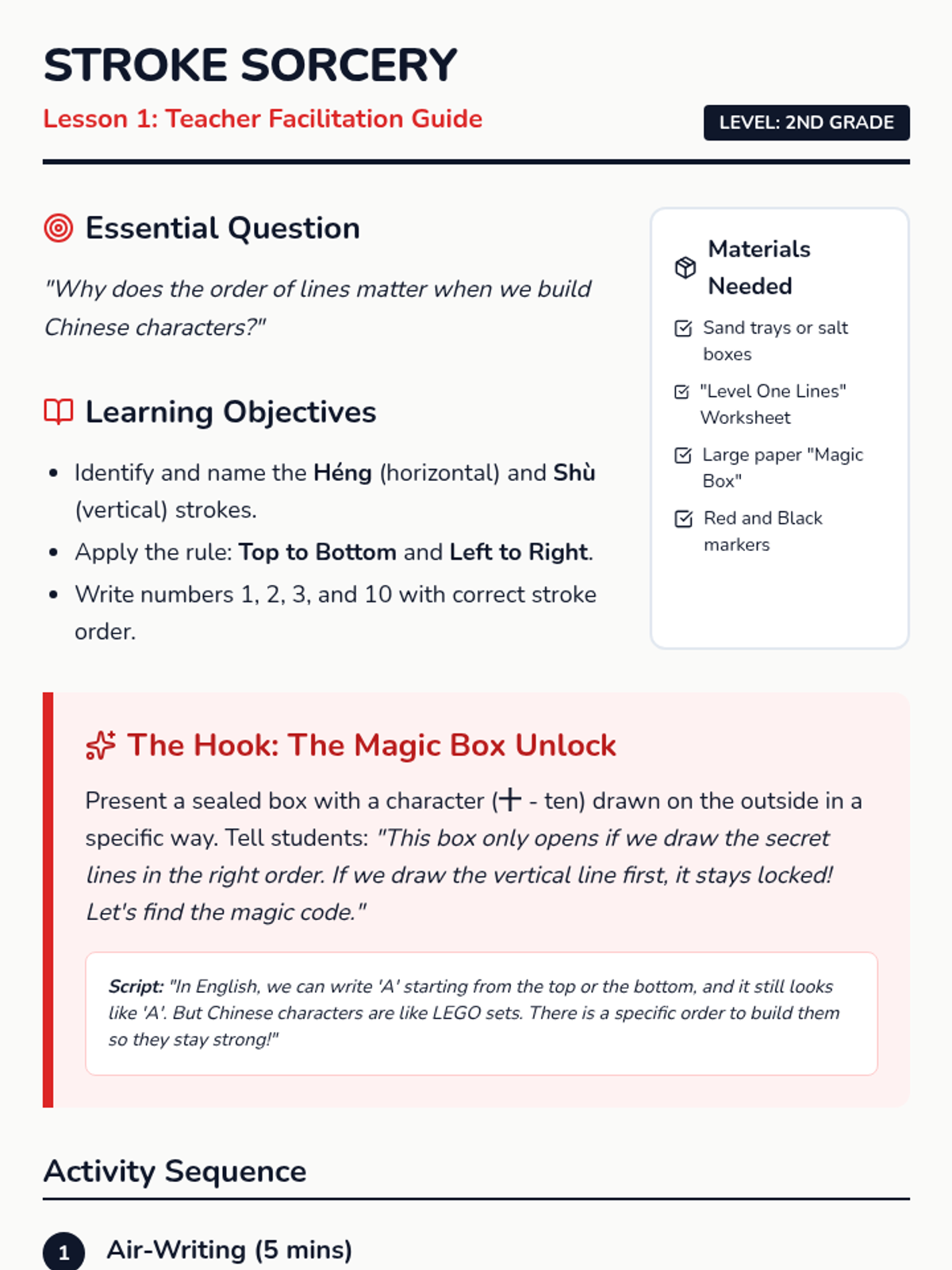
A 5-lesson sequence for 2nd graders focusing on the mechanics of writing Mandarin characters. Students learn fundamental stroke order rules through the context of numbers 1-10, progressing from simple horizontal lines to complex enclosures and hooks.
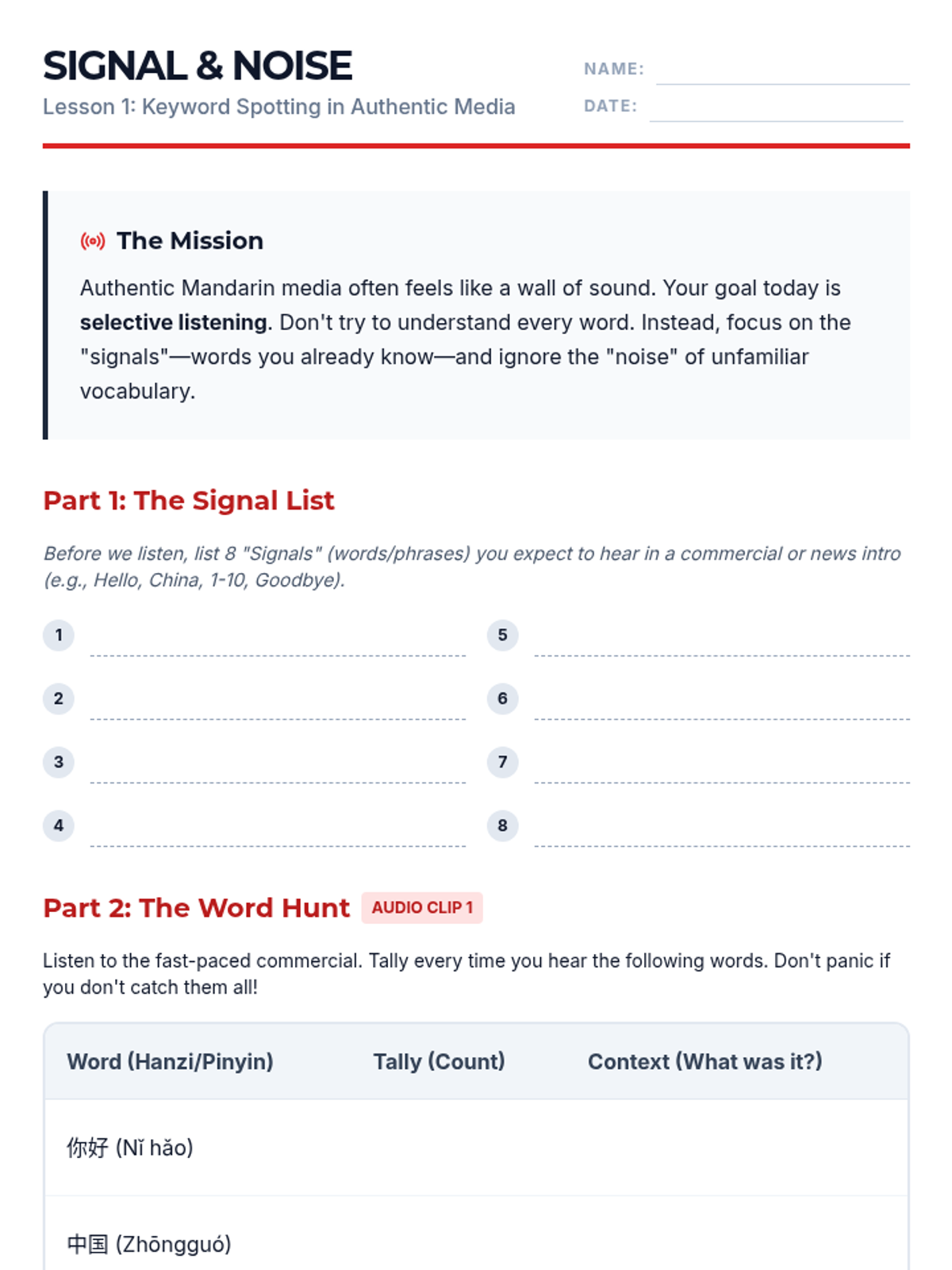
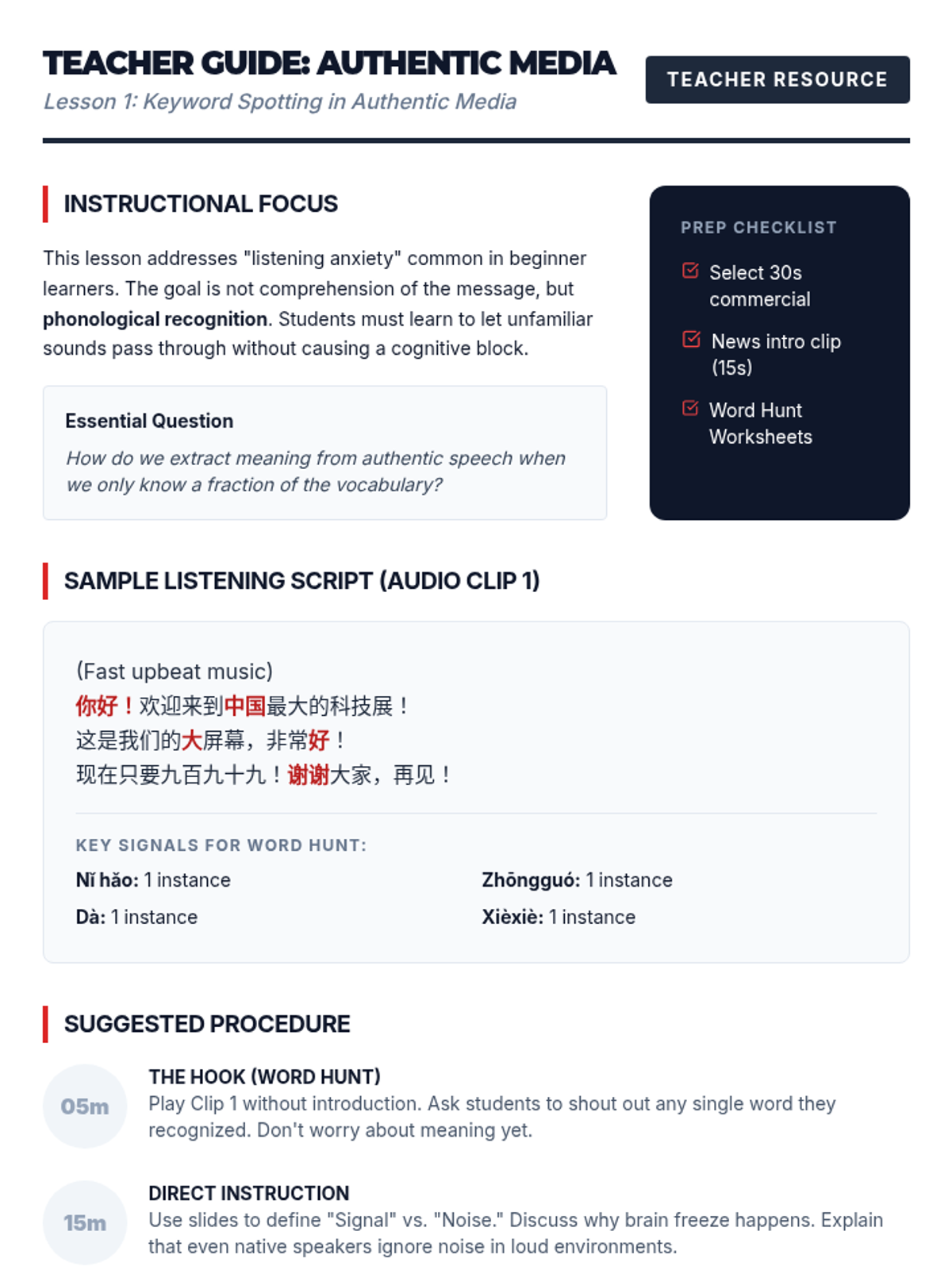
This sequence guides beginner Mandarin learners through 'bottom-up' listening strategies using authentic media. Students will learn to filter out 'noise' to identify keywords in weather reports, pop songs, and food vlogs, building their tolerance for ambiguity and real-world comprehension skills.
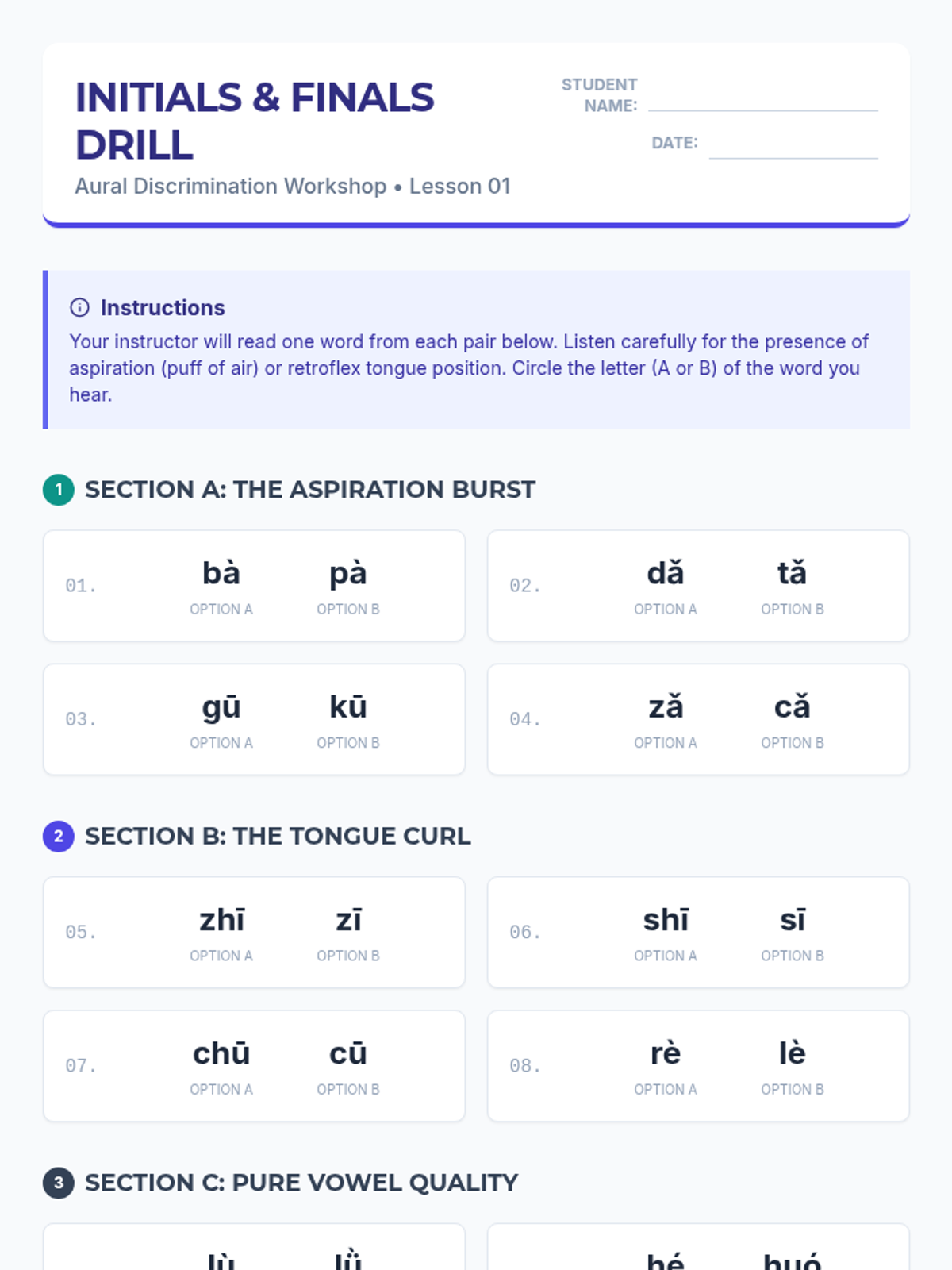
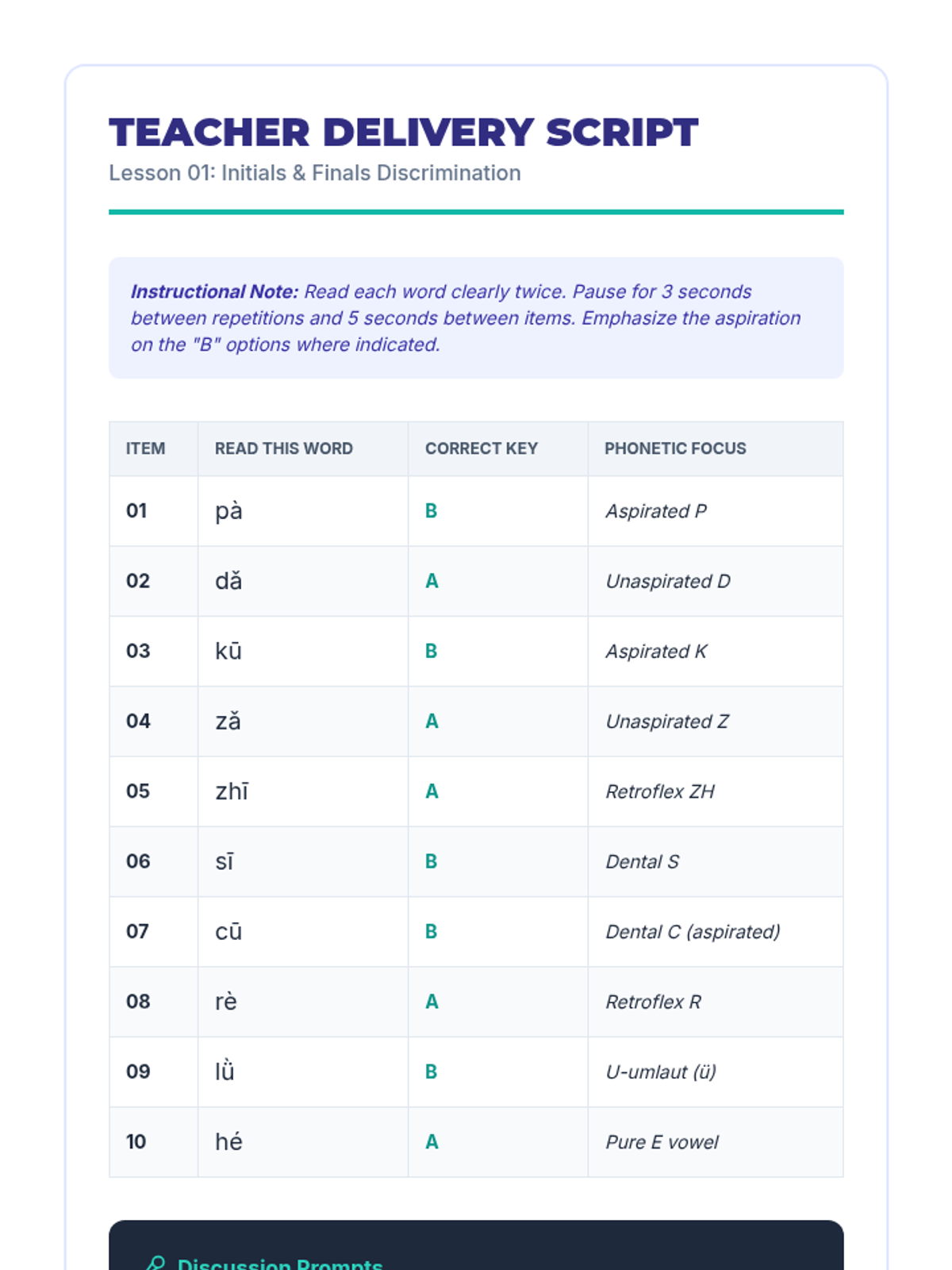
A foundational listening sequence for beginner Mandarin students, focusing on phonemic awareness, tone discrimination, and Pinyin transcription. Students progress from basic initials and finals to complex tone sandhi rules and full-word dictation.
A comprehensive sequence for 8th-grade beginners to master Mandarin Chinese numbers, dates, and time through logical character construction and cultural hand signs.
This sequence focuses on the auditory recognition of numerical patterns in Mandarin Chinese, essential for understanding prices, phone numbers, dates, and time. Students leverage the logical structure of Mandarin counting to progress from basic digits to complex date and time formatting.
A high-energy Mandarin listening sequence focused on rapid numerical processing, from basic digits to complex schedules and prices. Students take on the role of trainees at Signal Cipher Academy, mastering the 'codes' of daily life.
This sequence immerses students in common social scenarios to build comprehension of greetings, introductions, and basic etiquette in Mandarin Chinese. Through listening tasks and simulations, students learn to distinguish between formal and informal registers, identify names and titles, and recognize nationalities.
A beginner-level Mandarin sequence focused on functional listening skills for real-world scenarios. Students move from basic action verbs to navigating restaurants, directions, and markets through immersive simulations.
A game-based series where students master Mandarin numbers from 0-100 through auditory recognition, progressing from single digits to complex dates, phone numbers, and prices.
A 6th-grade Mandarin Chinese sequence focusing on listening comprehension for family members and physical descriptions. Students progress from basic kinship titles to complex comparative structures and narrative synthesis.
A beginner's journey into Mandarin Chinese listening, focusing on greetings, introductions, and polite social interactions. Students develop foundational listening skills and cultural awareness through interactive simulations and games.
This beginner Mandarin Chinese sequence focuses on auditory comprehension of social greetings, names, nationalities, and emotions. Through role-play simulations and interactive listening tasks, students learn to interpret social context and extract key information from spoken introductions.
A foundational Mandarin Chinese listening sequence for 2nd graders focusing on family vocabulary, sibling hierarchy, possessive pronouns, and descriptive adjectives through auditory-visual association and logic puzzles.
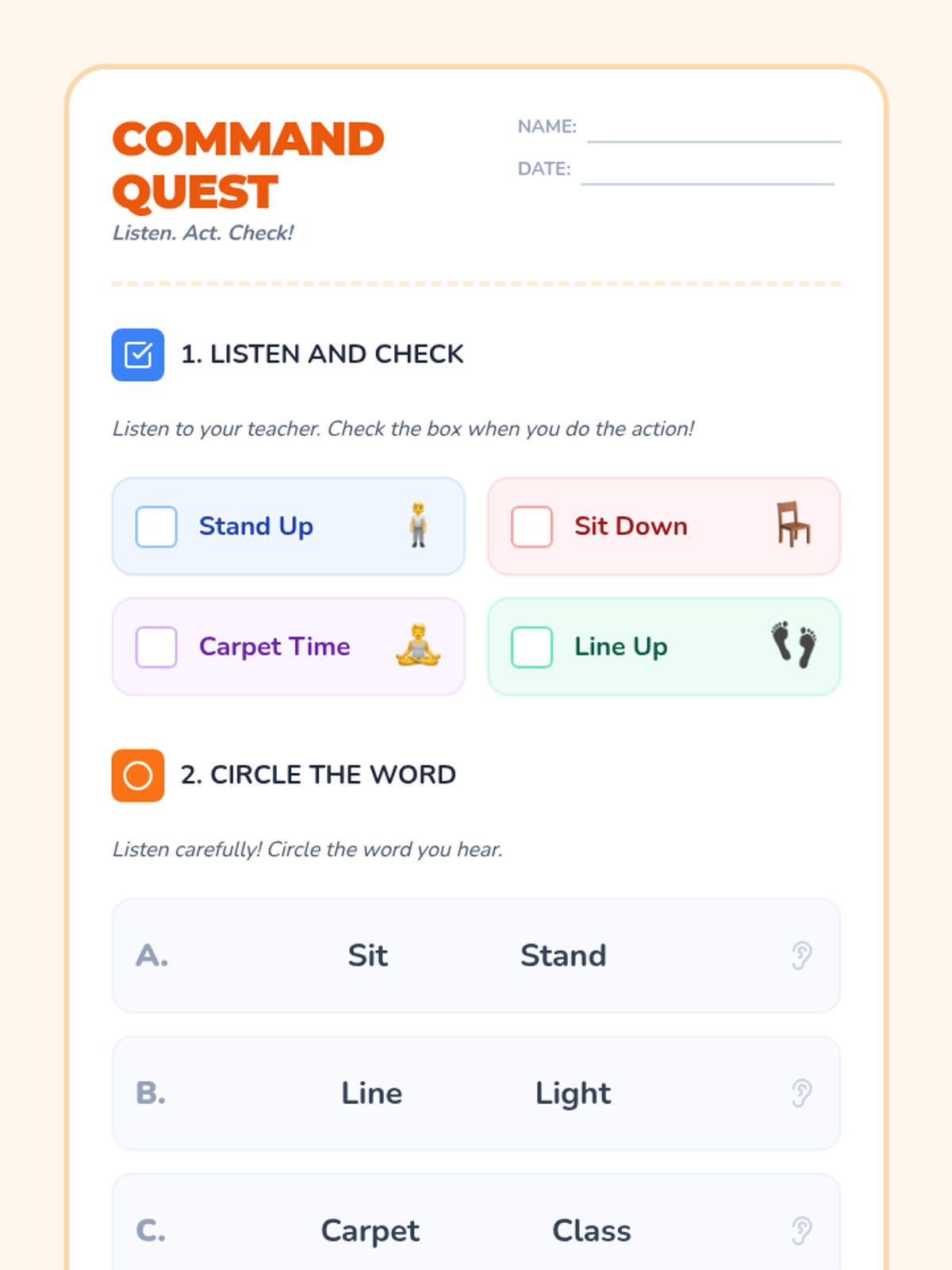
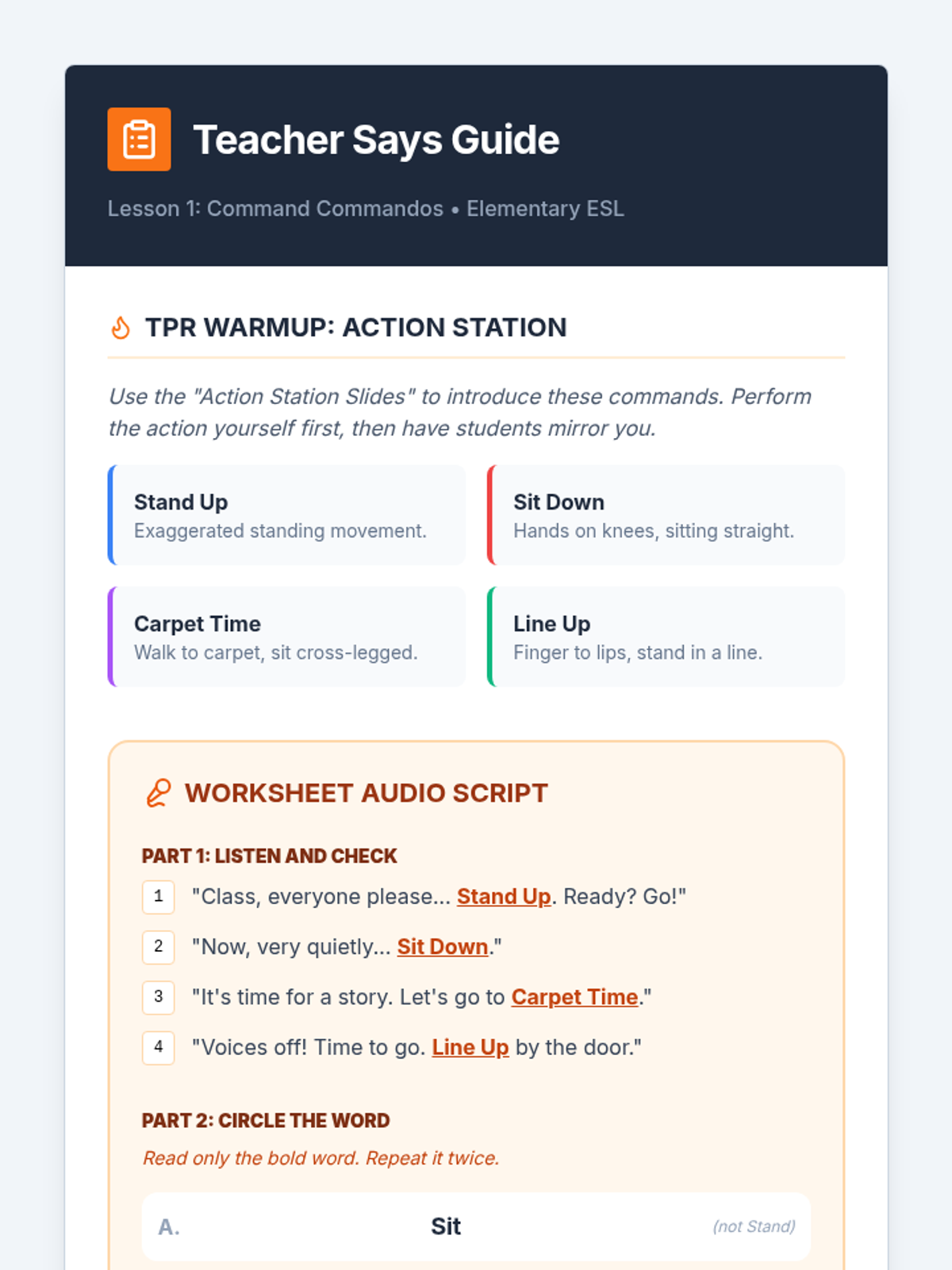
A TPR-based series of lessons for 2nd graders to learn Mandarin classroom commands and action verbs through physical movement and listening.
A foundational Mandarin Chinese sequence for 2nd graders focusing on greetings, introductions, and emotional expression through listening. Students develop auditory recognition of temporal greetings, names, and social cues within simple dialogues.
A foundational sequence for 2nd grade students to master listening for numbers 1-10 in Mandarin Chinese, progressing from individual digits to sequences and quantities in context.
This sequence introduces 2nd-grade students to Mandarin tones and Pinyin sounds through auditory discrimination and interactive games. Students learn to hear and identify the four tones and key initial consonants, building a foundation for tonal language comprehension.
This sequence explores the etymological evolution of Mandarin Chinese characters from ancient Oracle Bone Script to modern digital input. Students analyze pictographs, ideographs, and phono-semantic compounds to understand the logic of the written language and apply this knowledge to real-world environmental print.
A comprehensive 2nd-grade Mandarin Chinese unit exploring family terminology, the cultural importance of birth order, and basic sentence construction to describe relationships. Students move from immediate family to extended kinship terms, culminating in a creative family tree presentation project.
A 5-lesson sequence for 2nd graders to master basic self-introductions in Mandarin Chinese. Students progress from basic names to nationalities and preferences, culminating in a comprehensive 'All About Me' presentation.