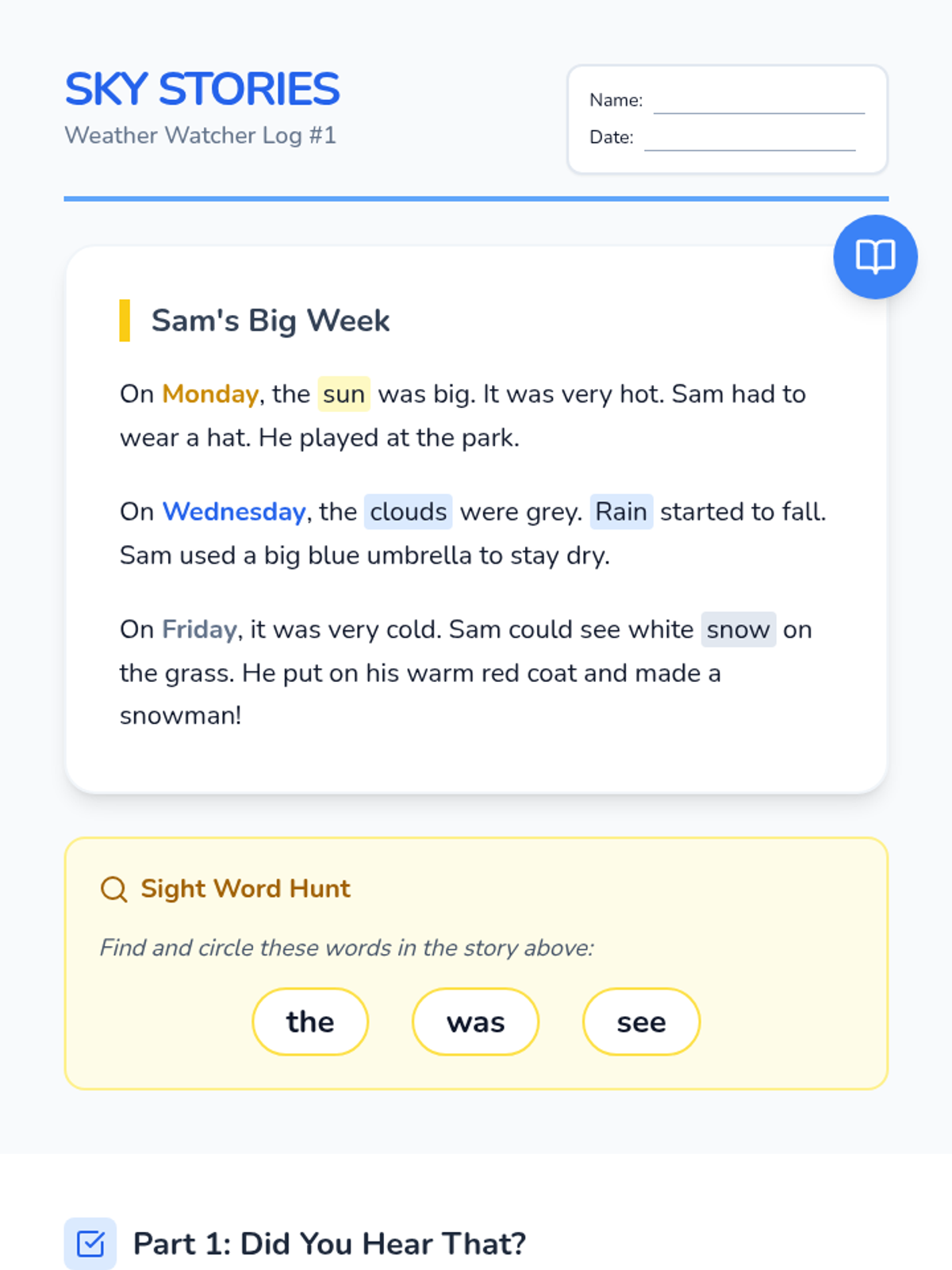
A Kindergarten sequence focused on understanding the cyclical nature of months and their connection to seasonal weather patterns and personal experiences.
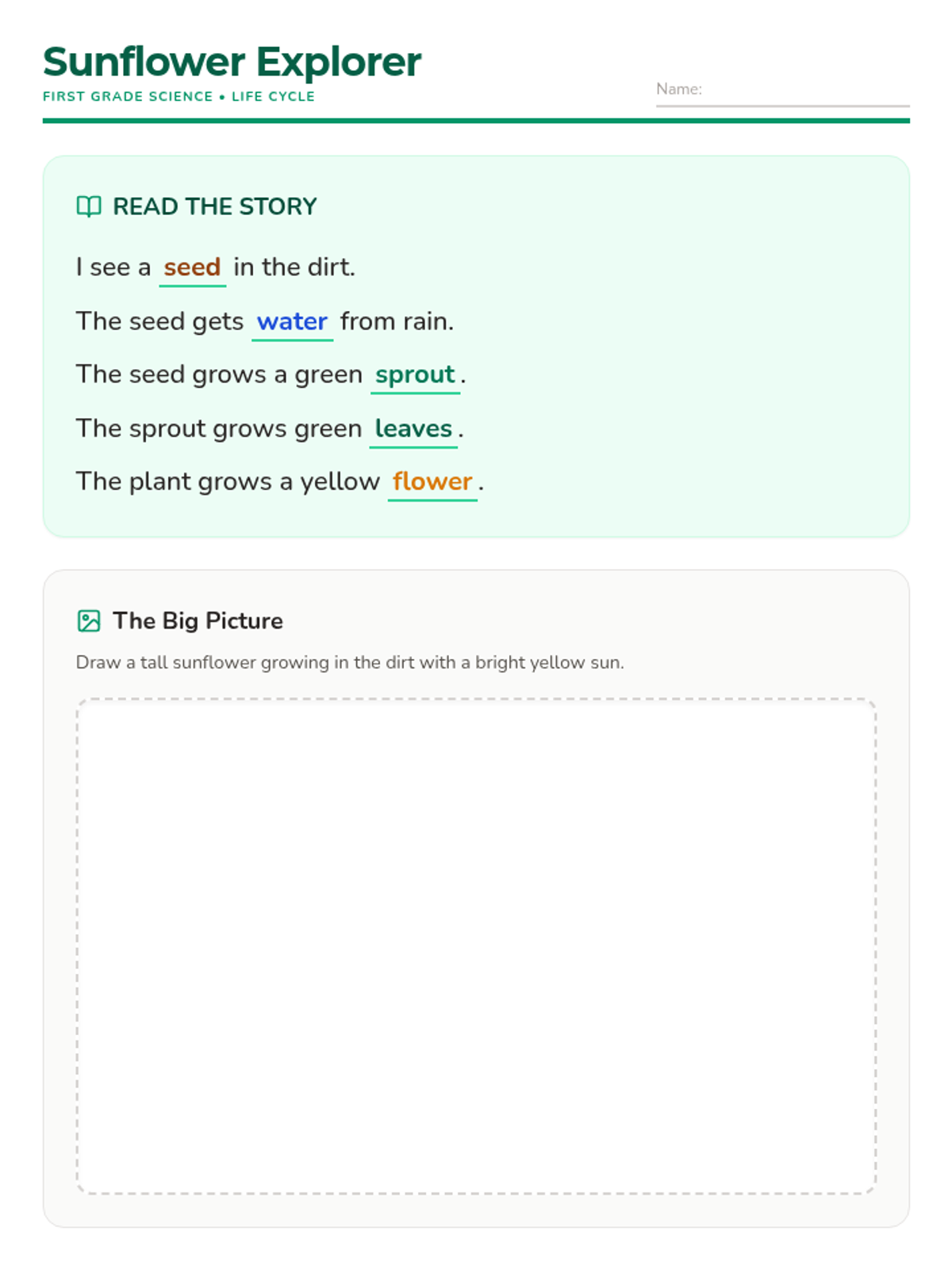
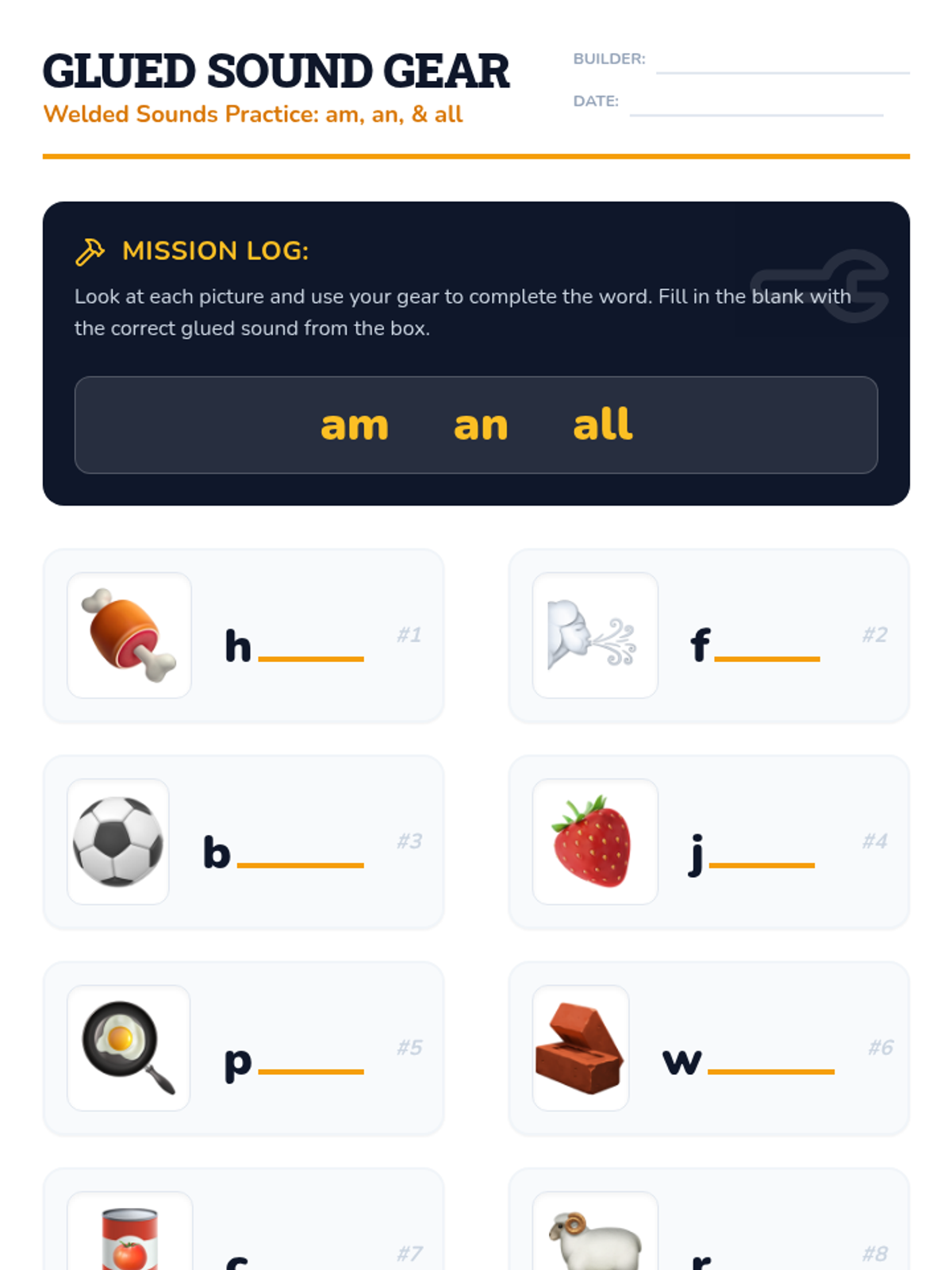
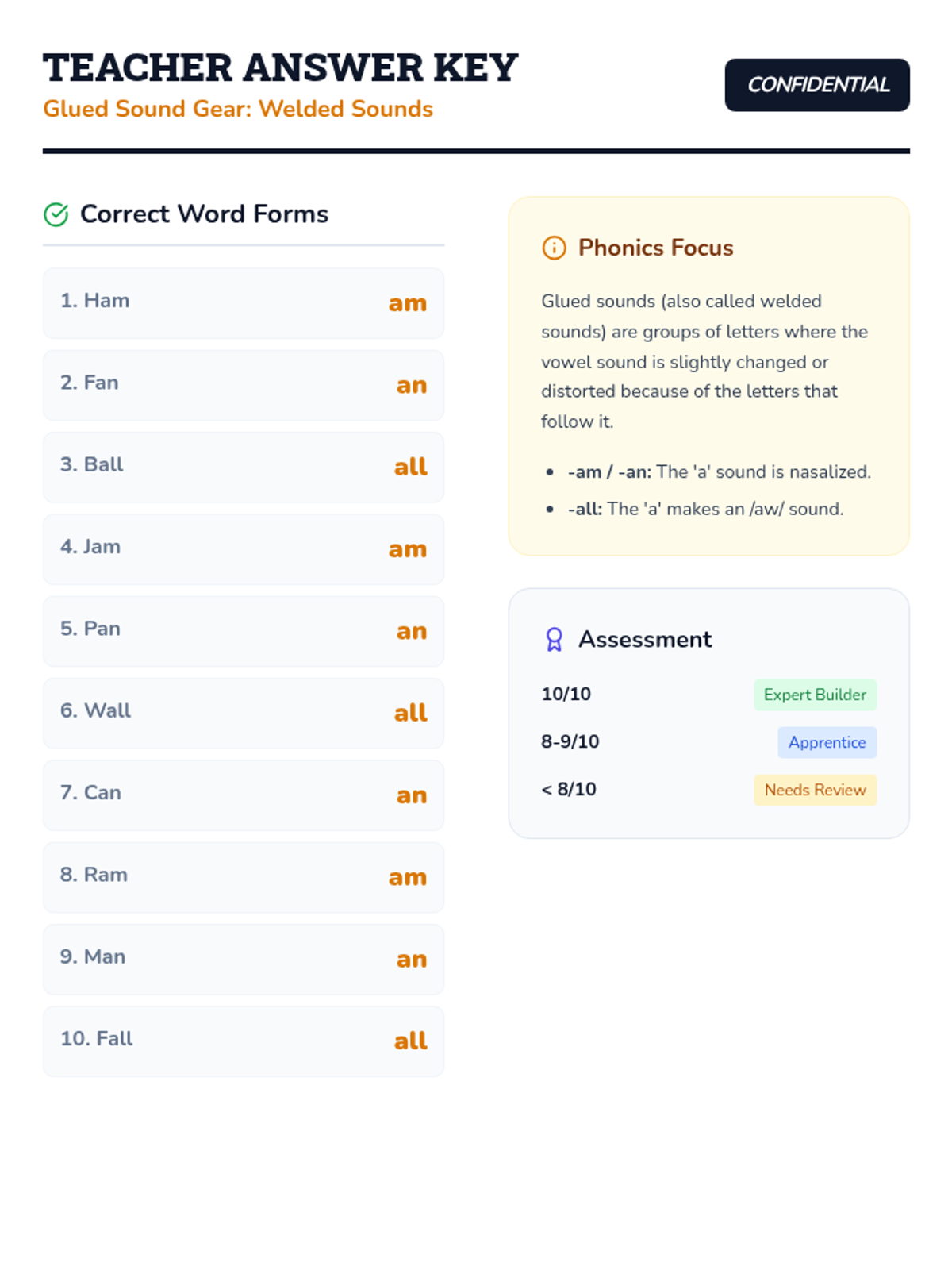
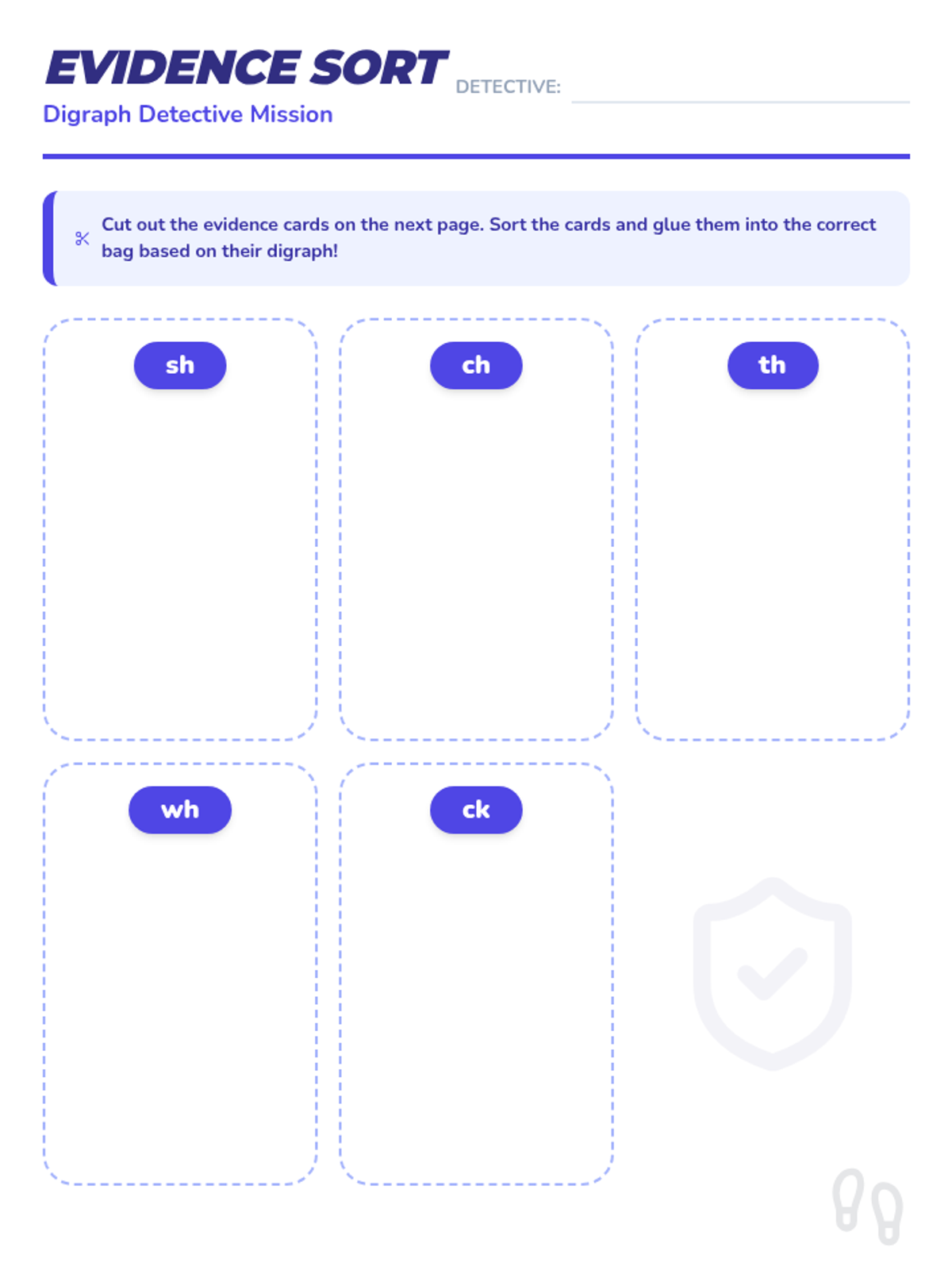
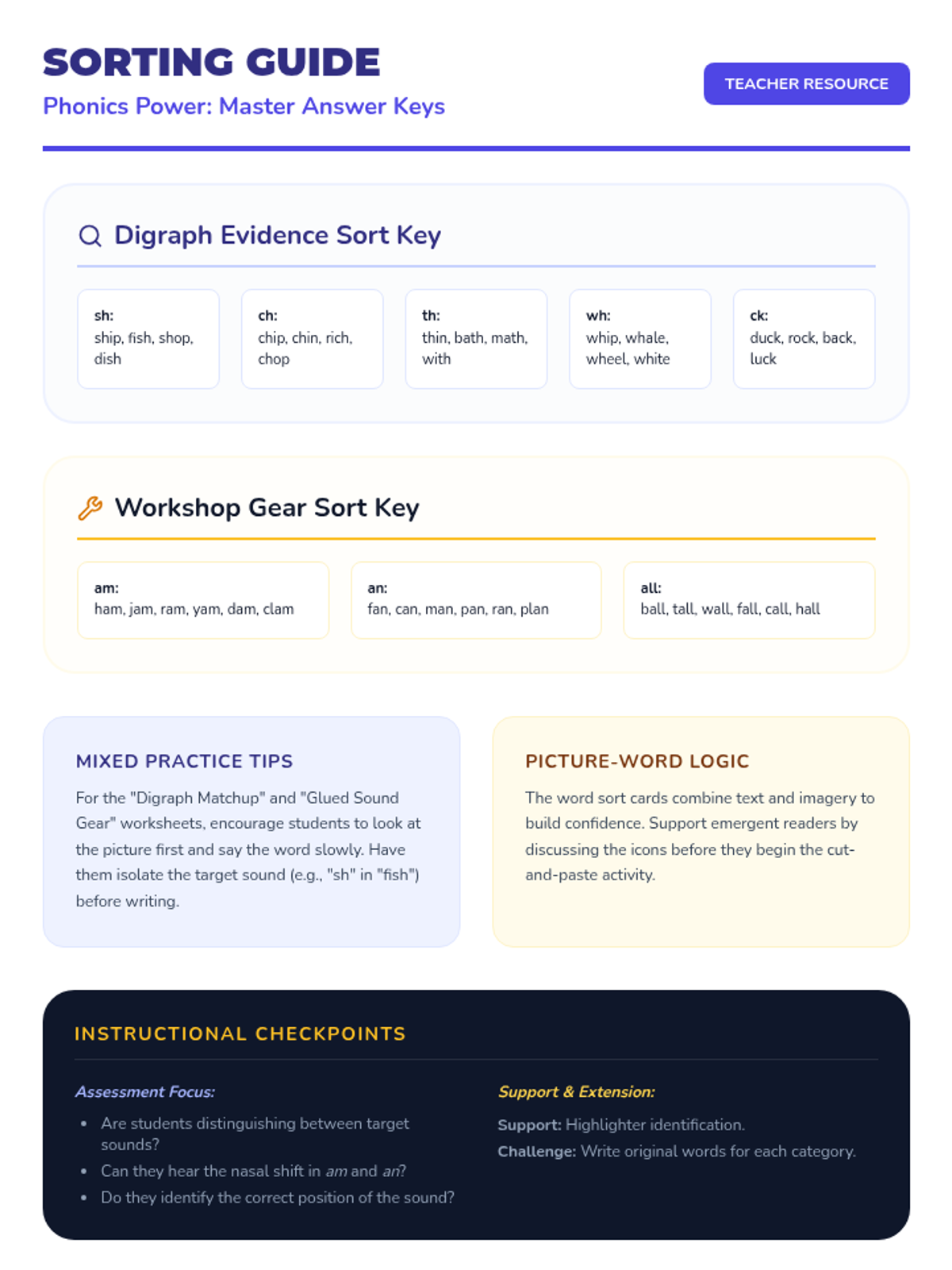
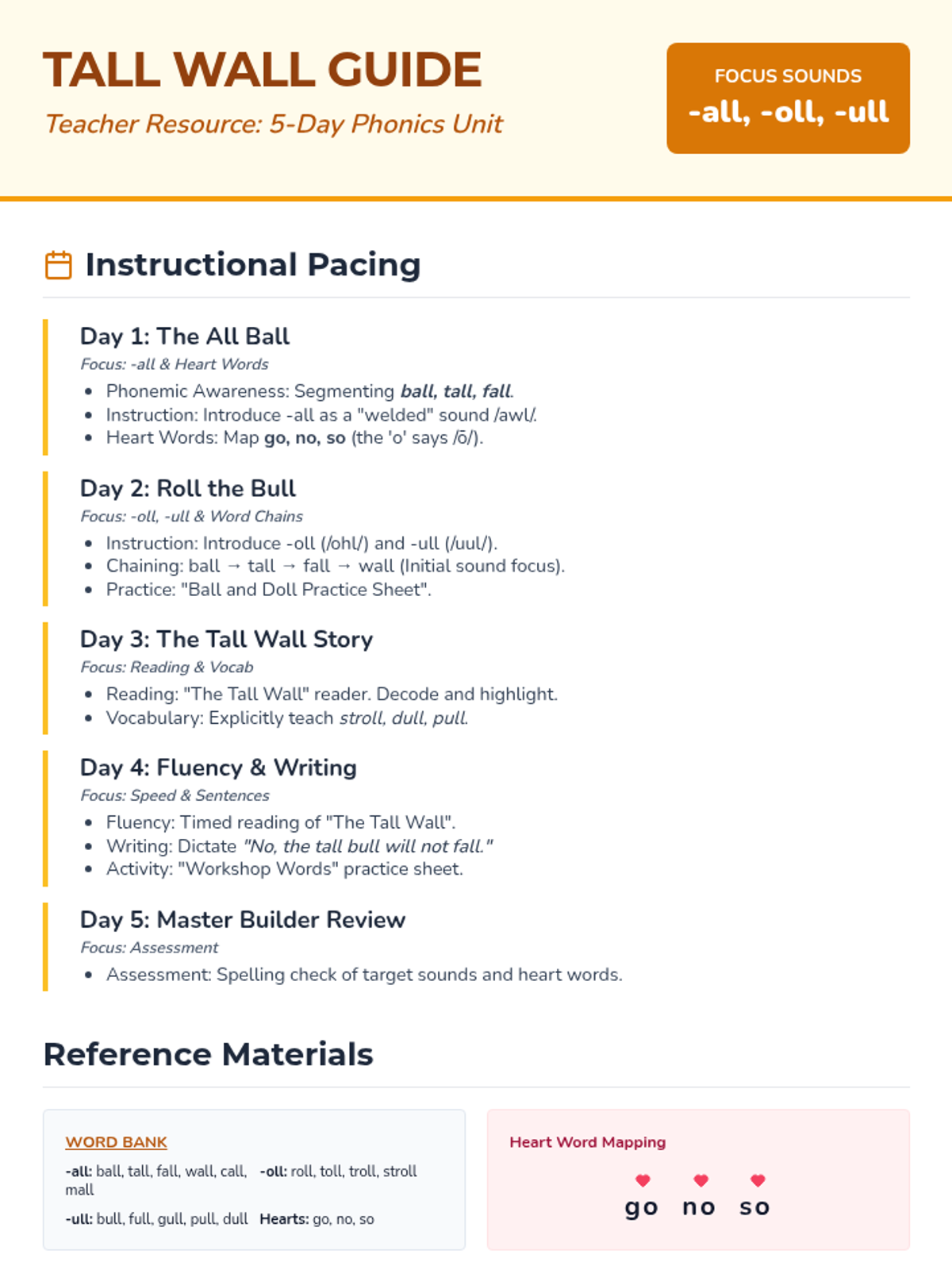
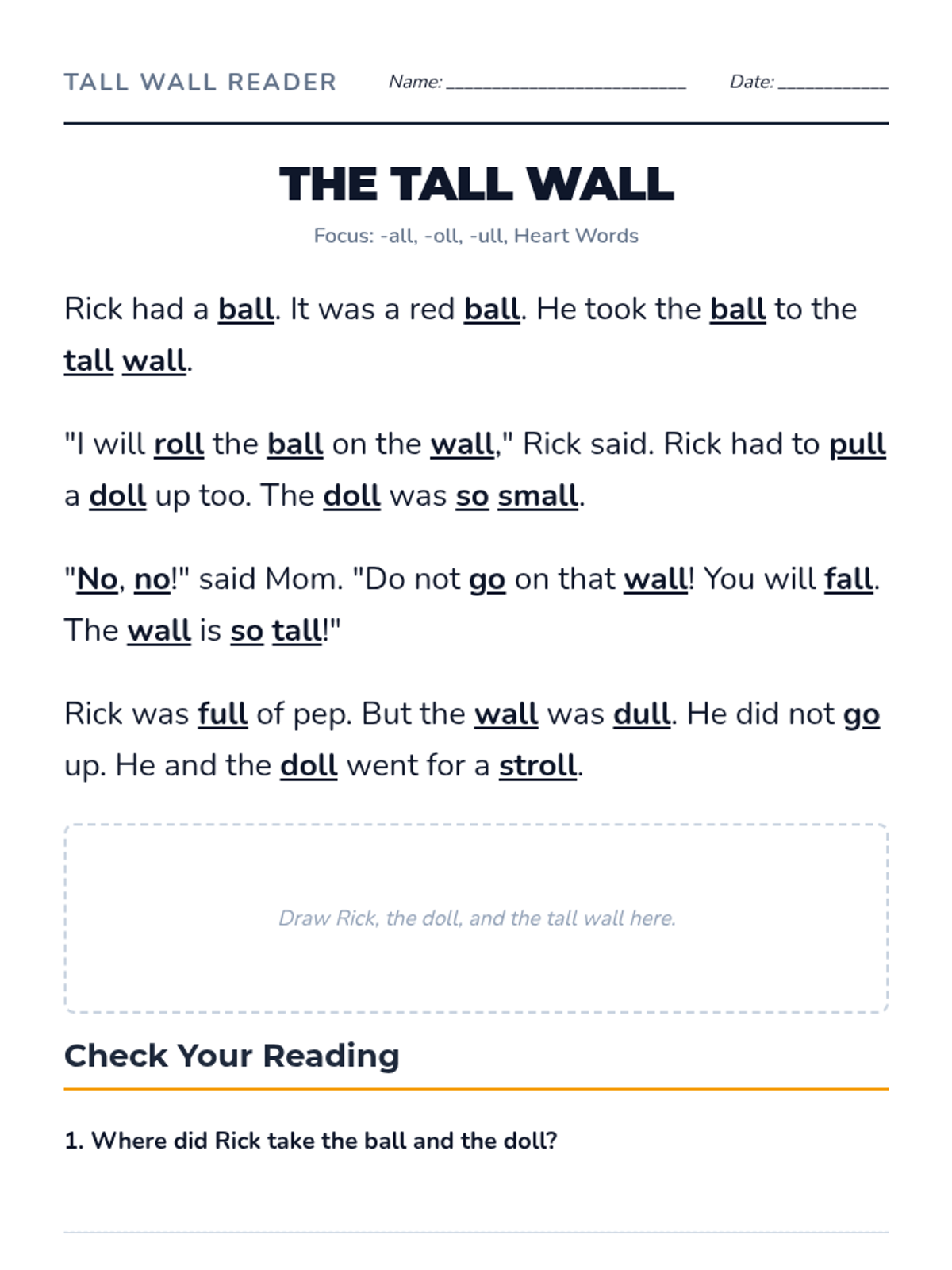
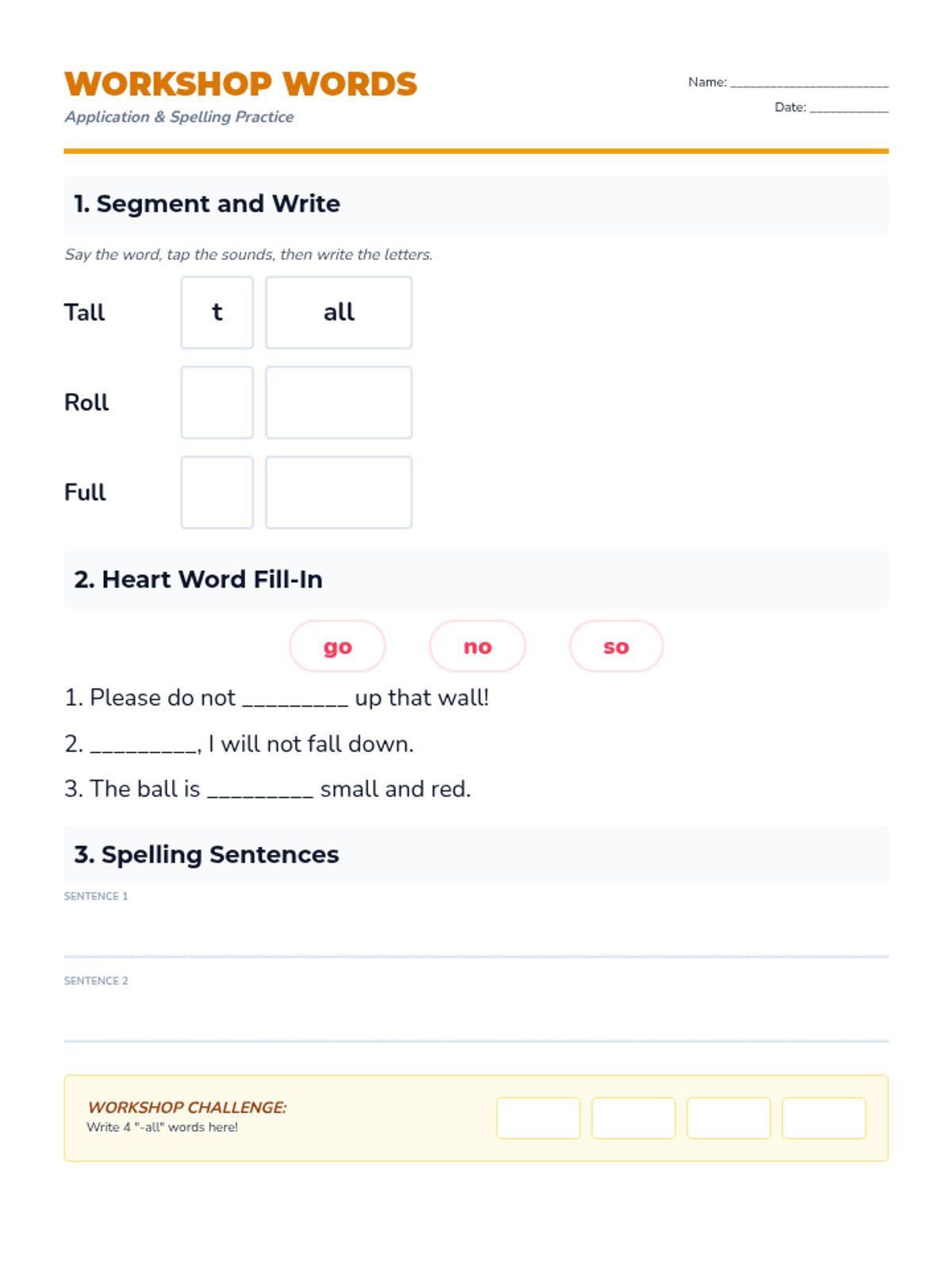
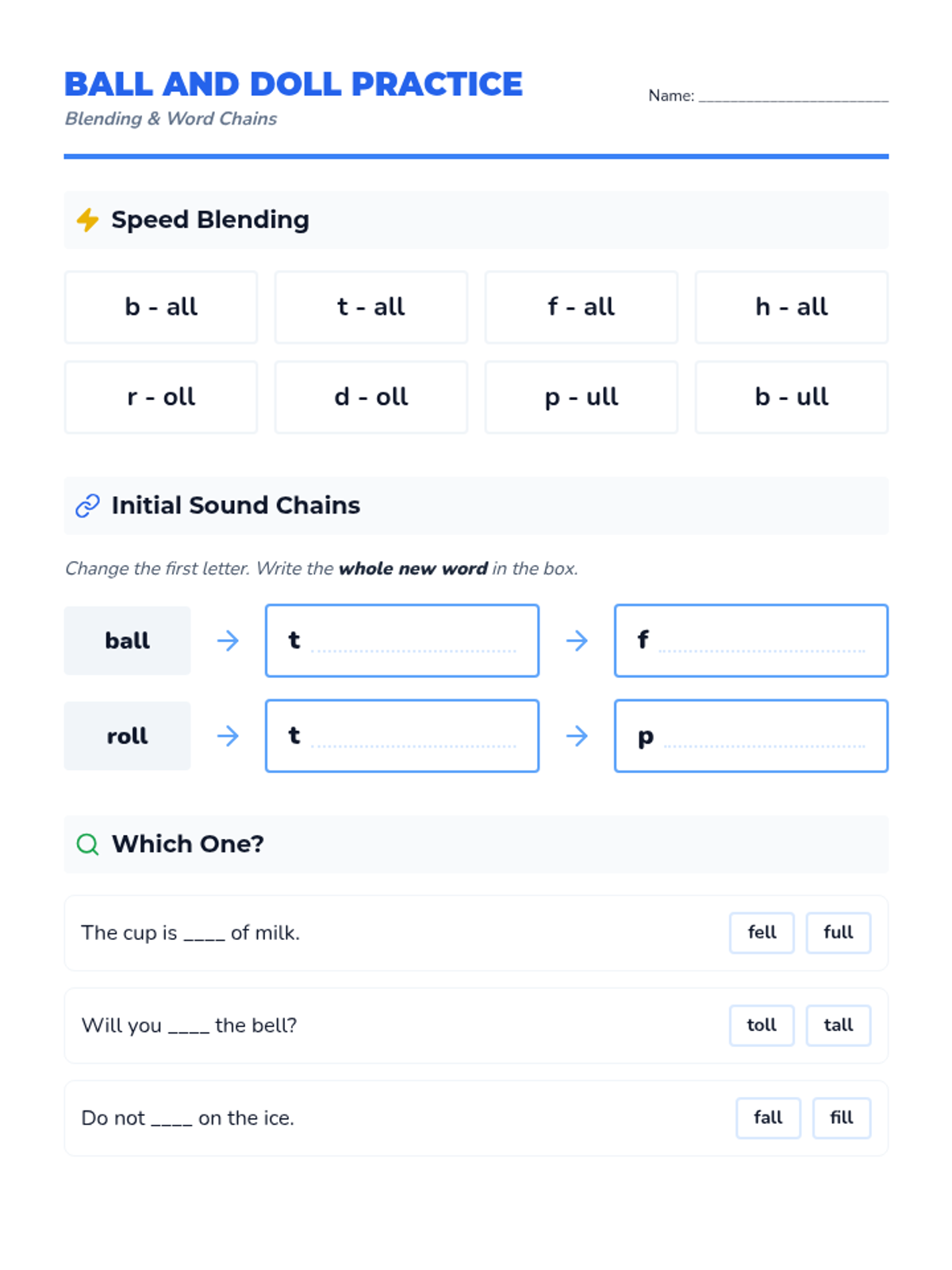
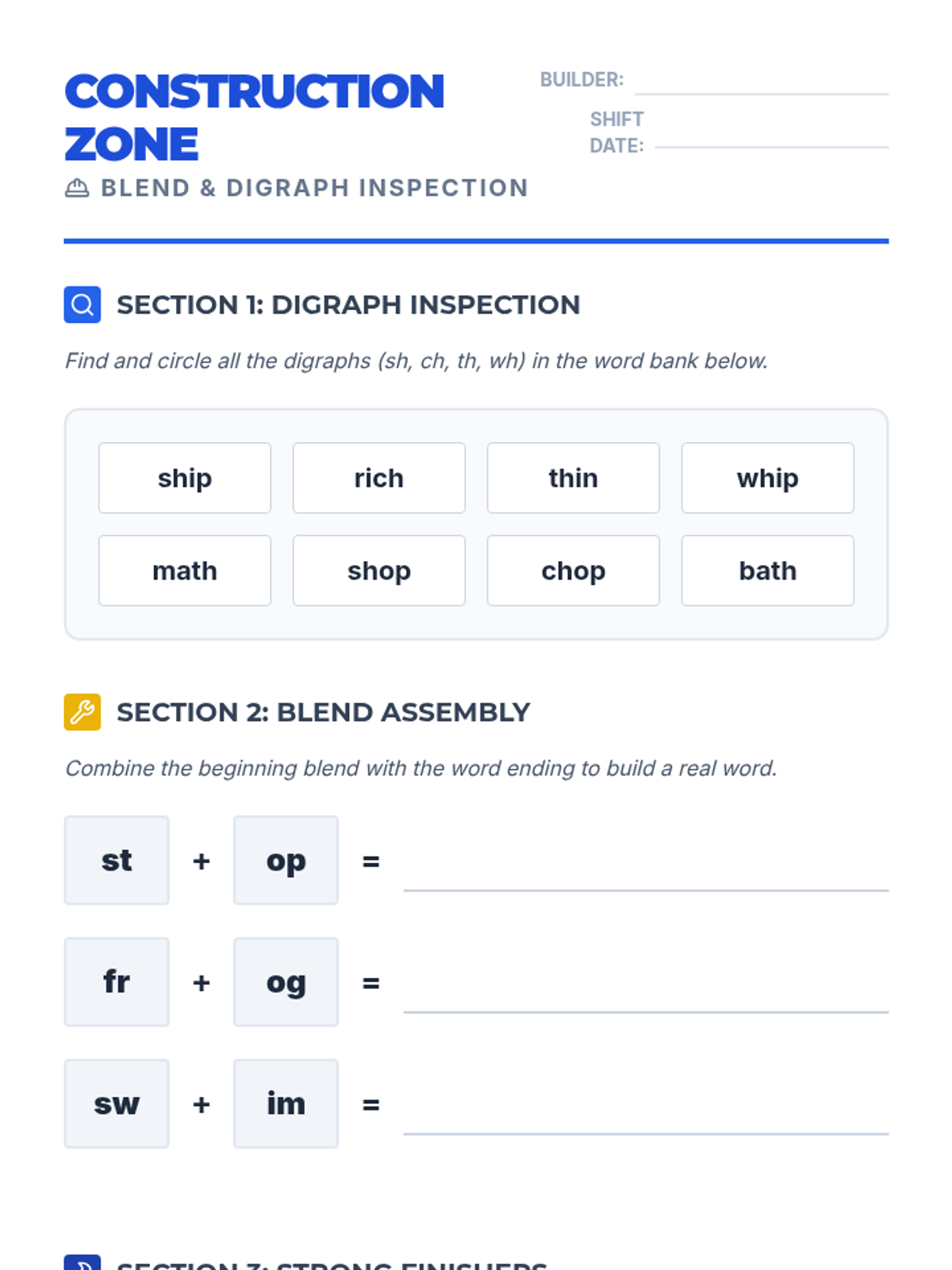
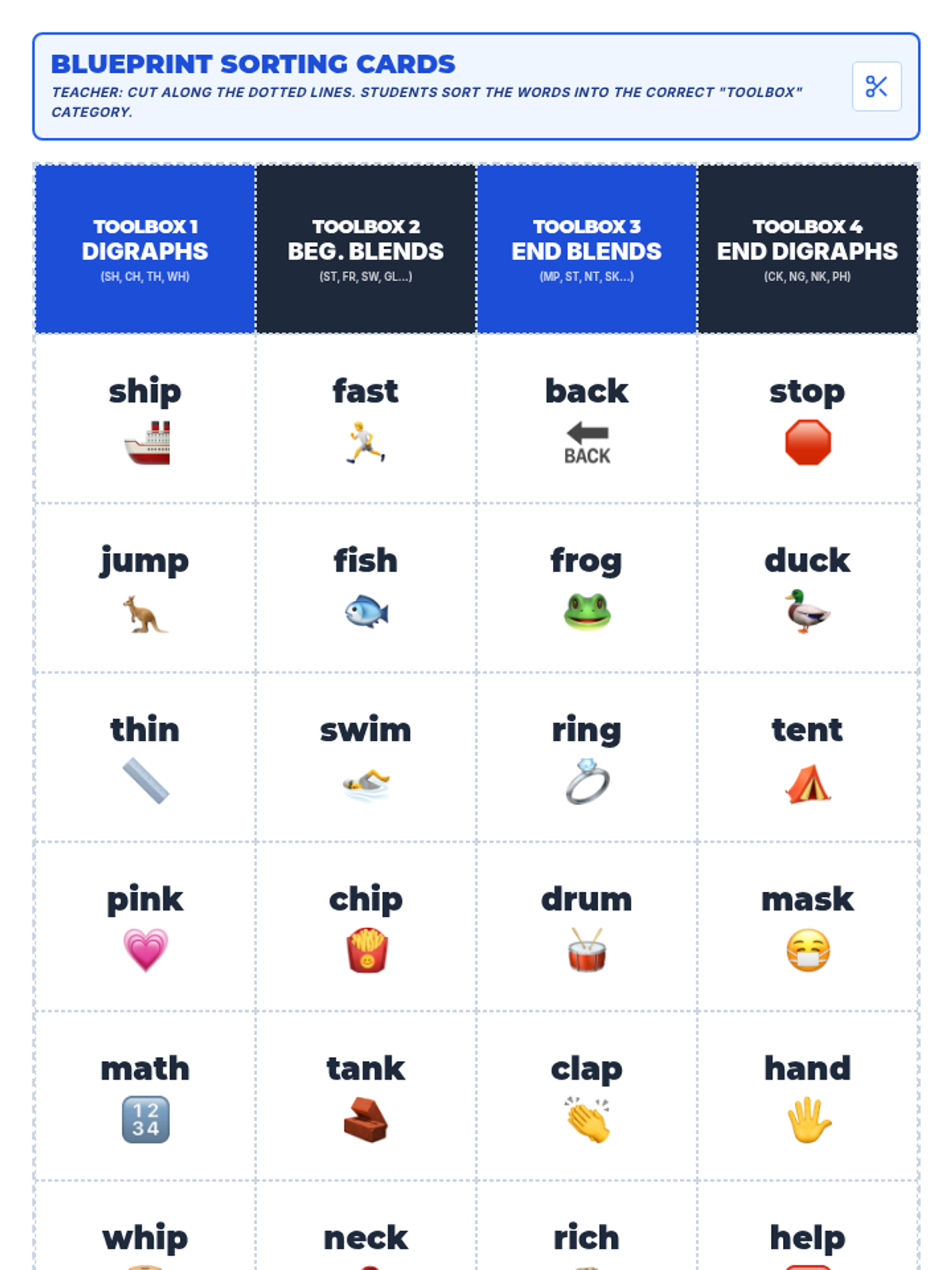
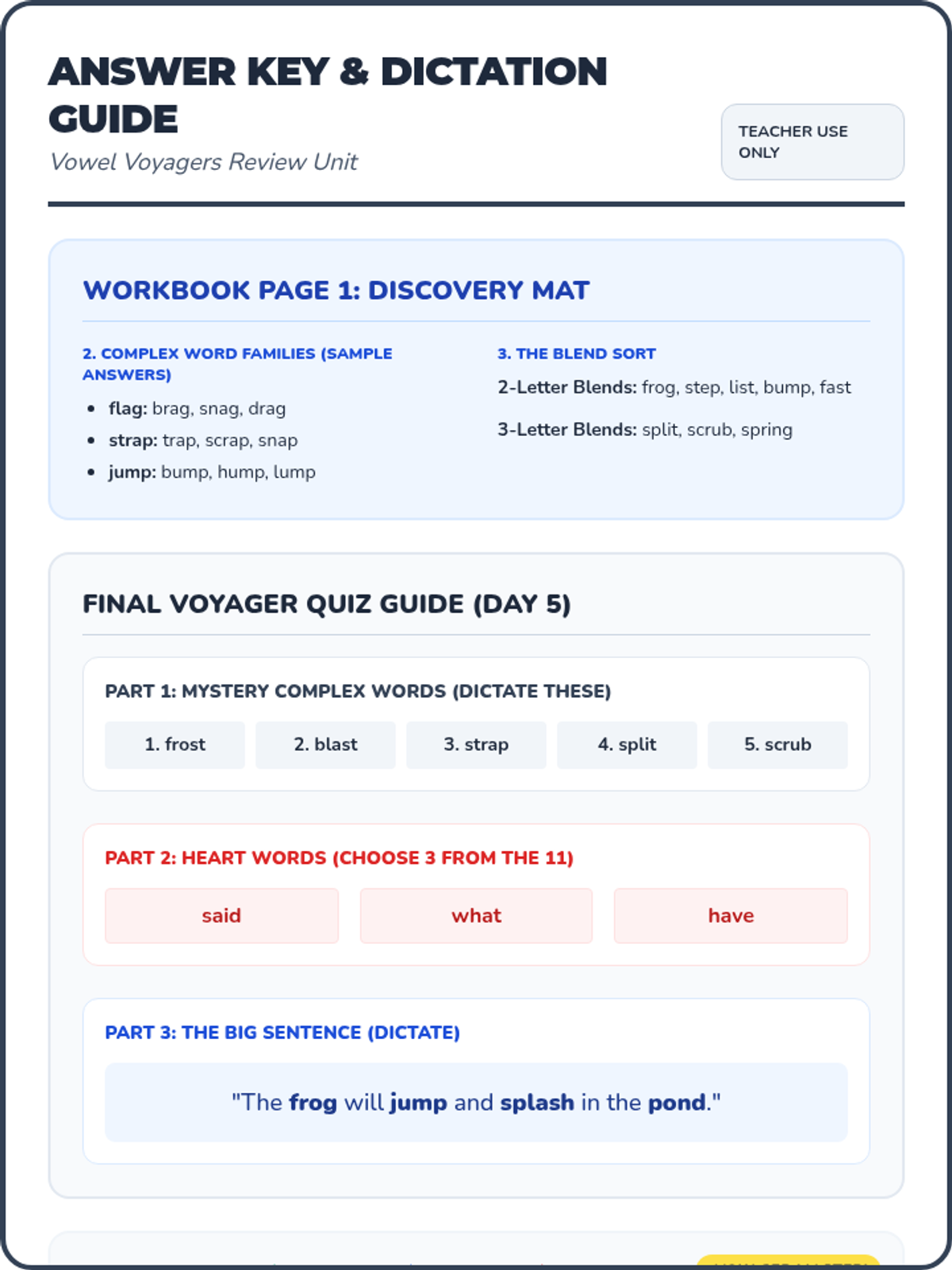
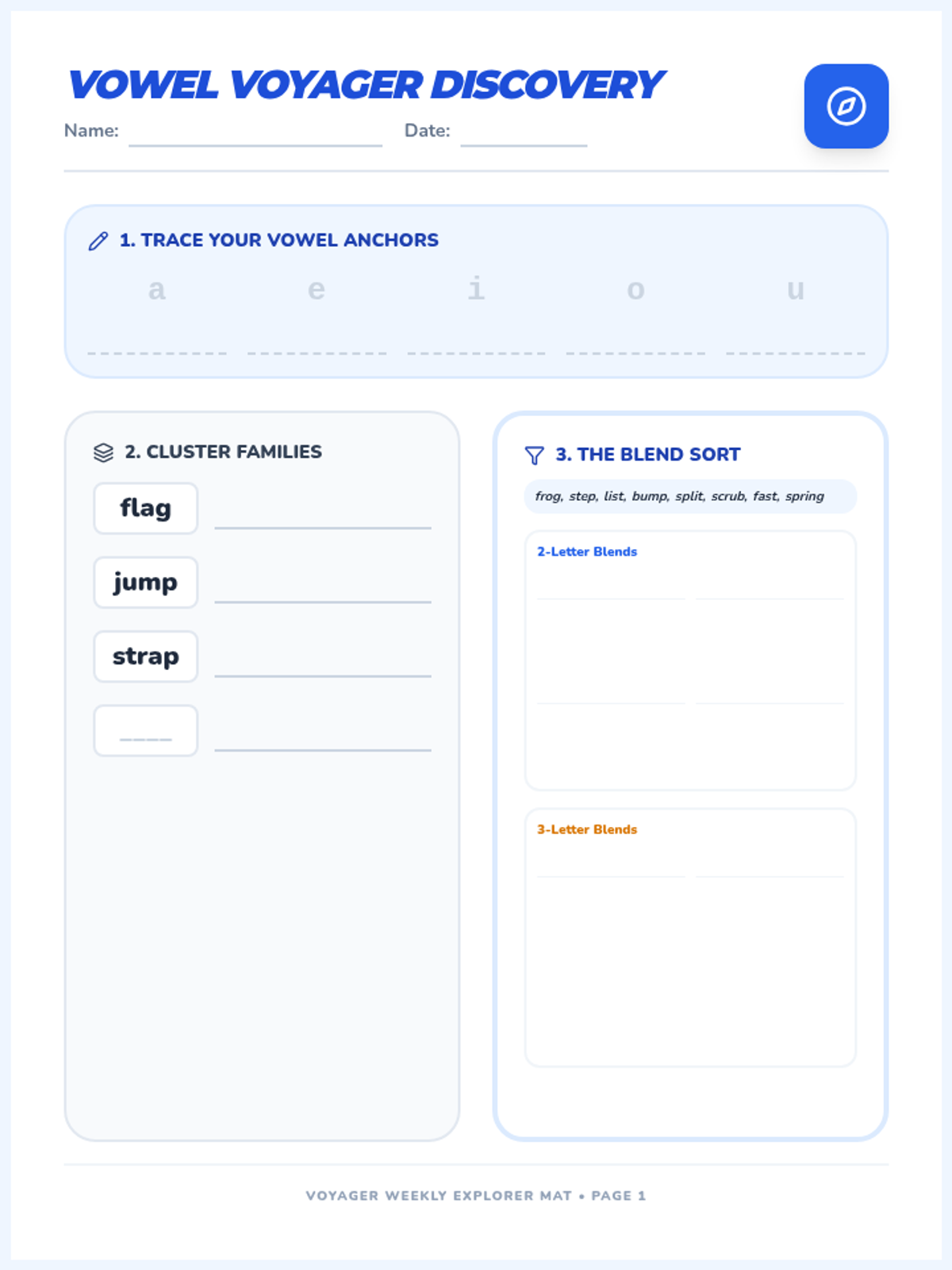
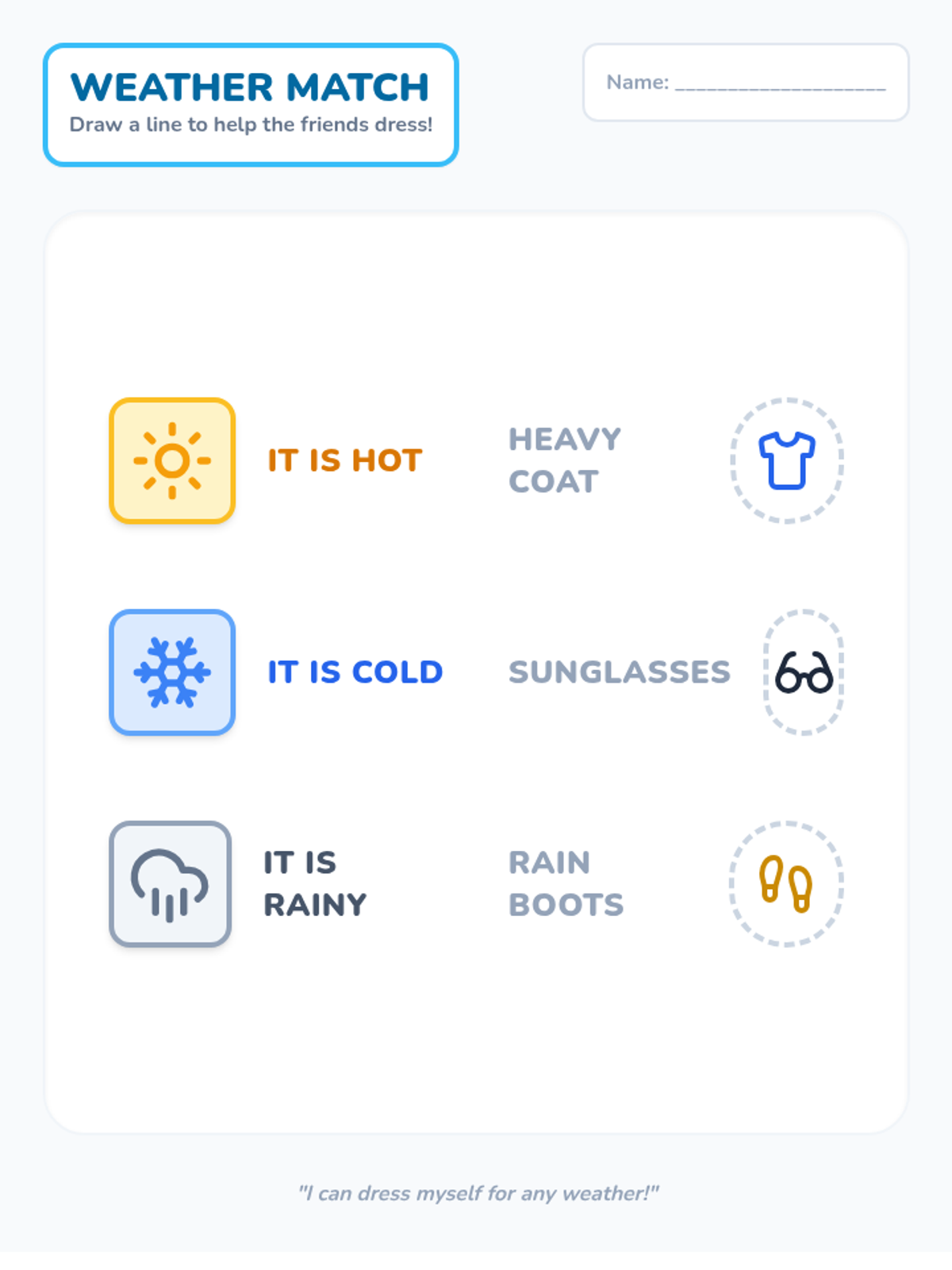
A collection of science and phonics resources designed for hands-on classroom activities.
A lesson sequence for K-2 students focusing on scientific inquiry, making predictions, and using tools to measure and compare mass. Students learn to distinguish between mass (how heavy) and volume (how big) through hands-on experiments.
A Kindergarten and 1st Grade science unit exploring our neighbor planet, Mars. Students compare Earth and Mars using visual aids, a hands-on sorting activity, and creative drawing to understand planetary similarities and differences.
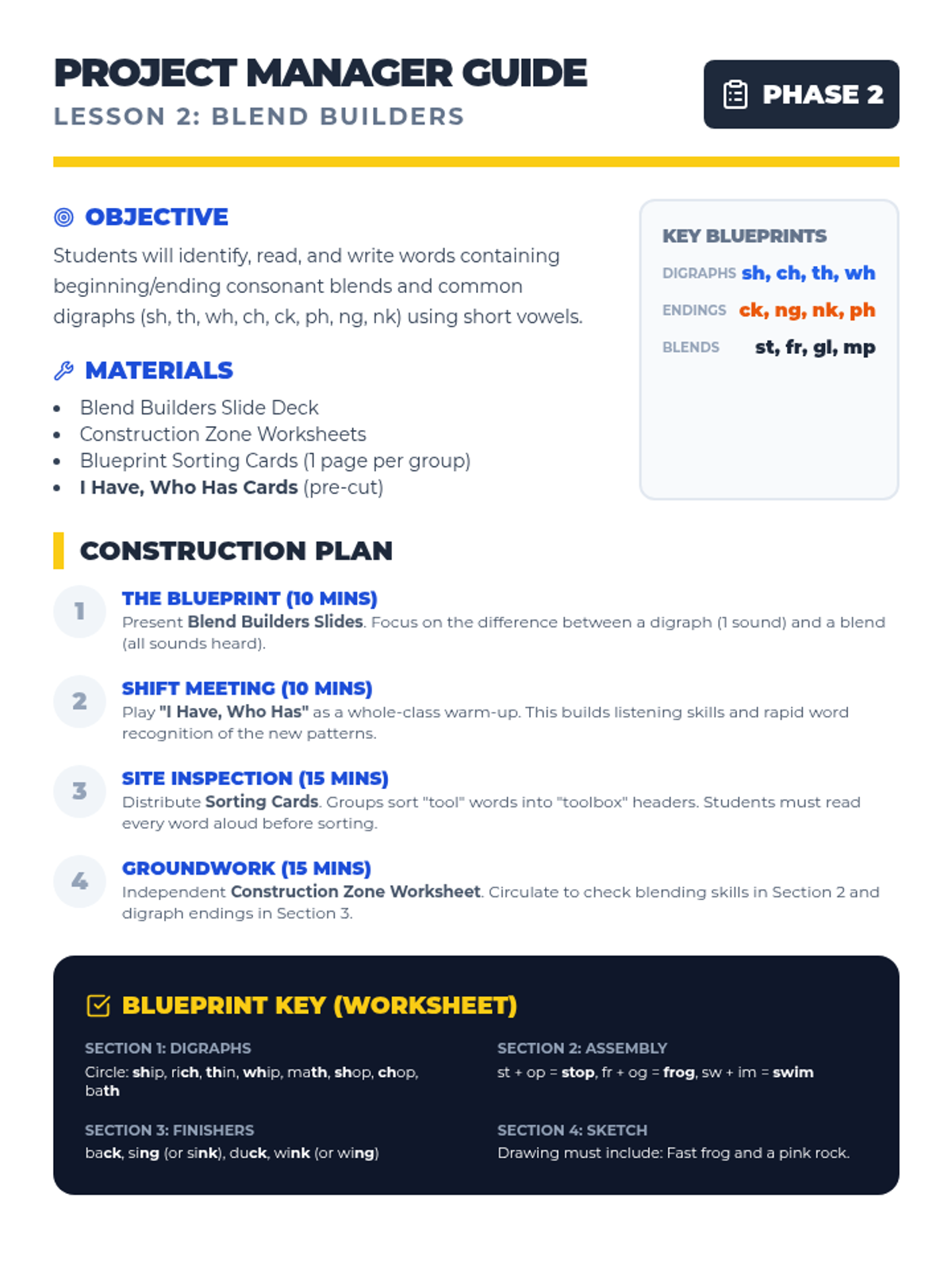
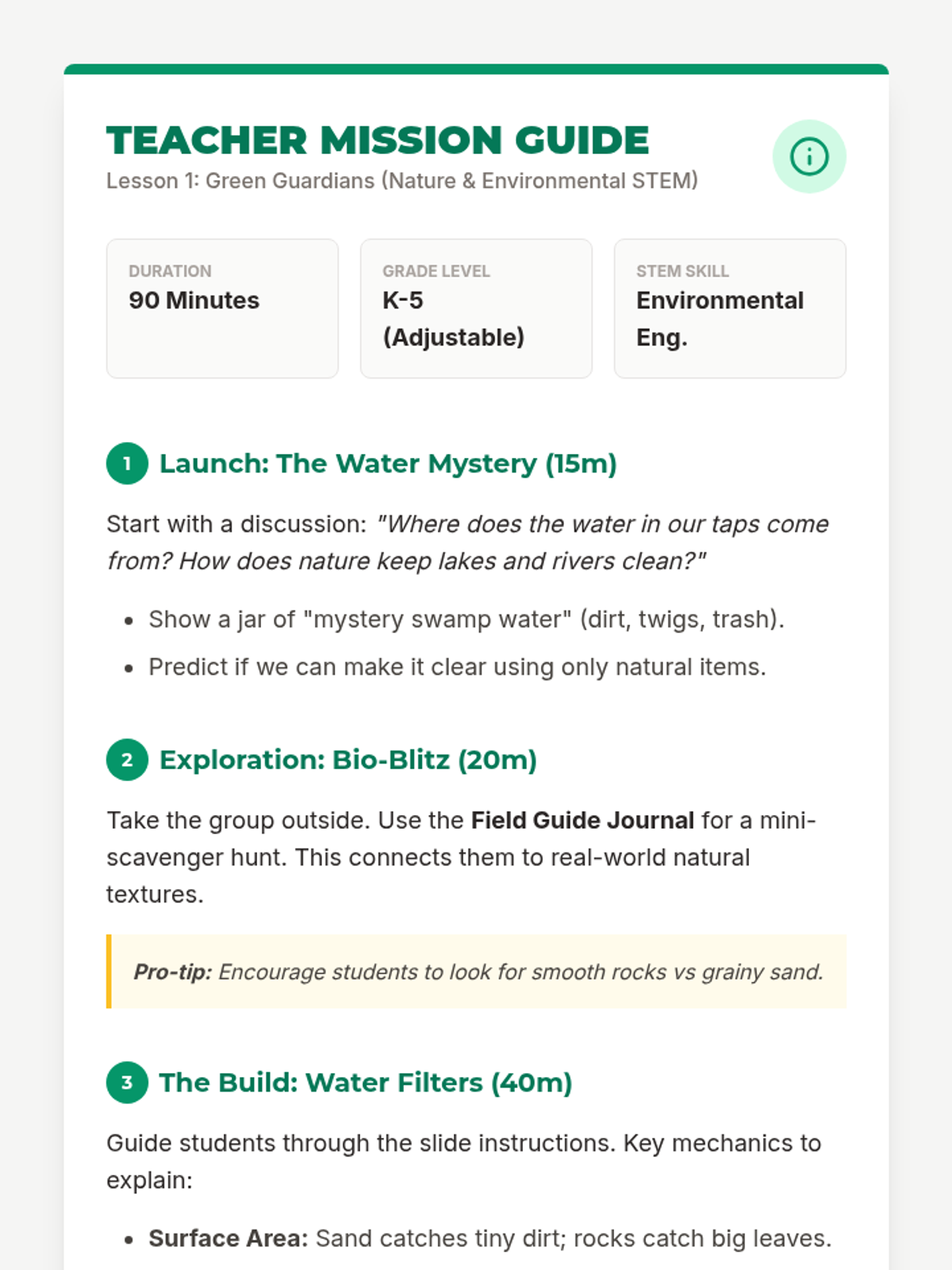
A short sequence exploring the natural world, starting with the water cycle for young learners.
A fun, science-based lesson for K-3 students and their parents to explore pet hygiene, the mystery of 'wet dog smell,' and responsible animal care through a SciShow Kids video and a creative brochure activity.
A hands-on introductory sequence for early elementary students to explore the mechanics of levers and fulcrums using everyday classroom objects.
A Kindergarten through 2nd-grade art-integrated science unit exploring the properties of magnets through creative character design and hands-on testing.
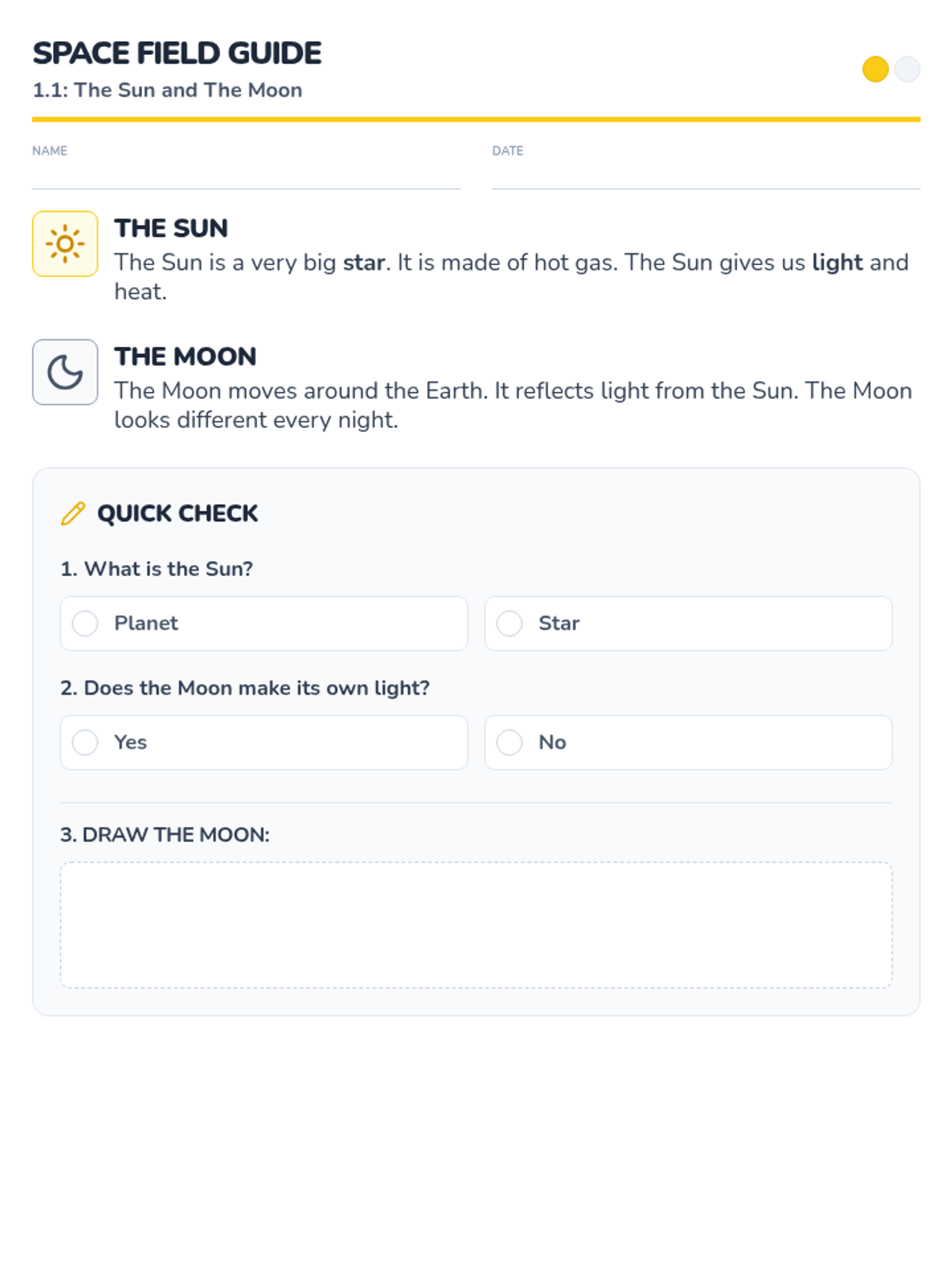
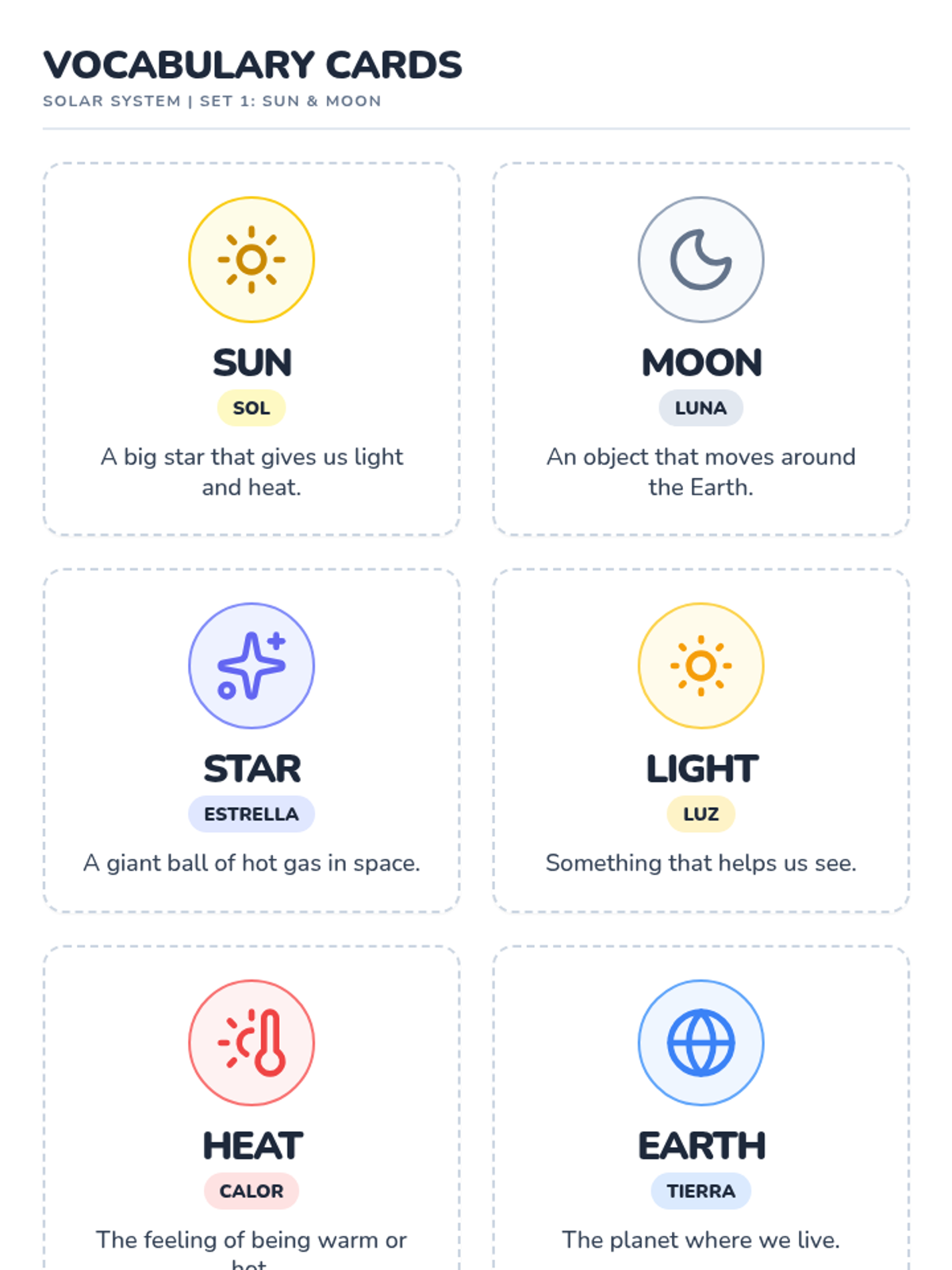
A beginner-level science sequence exploring celestial events and the relationship between the Sun, Moon, and Earth through visual analogies and hands-on art.
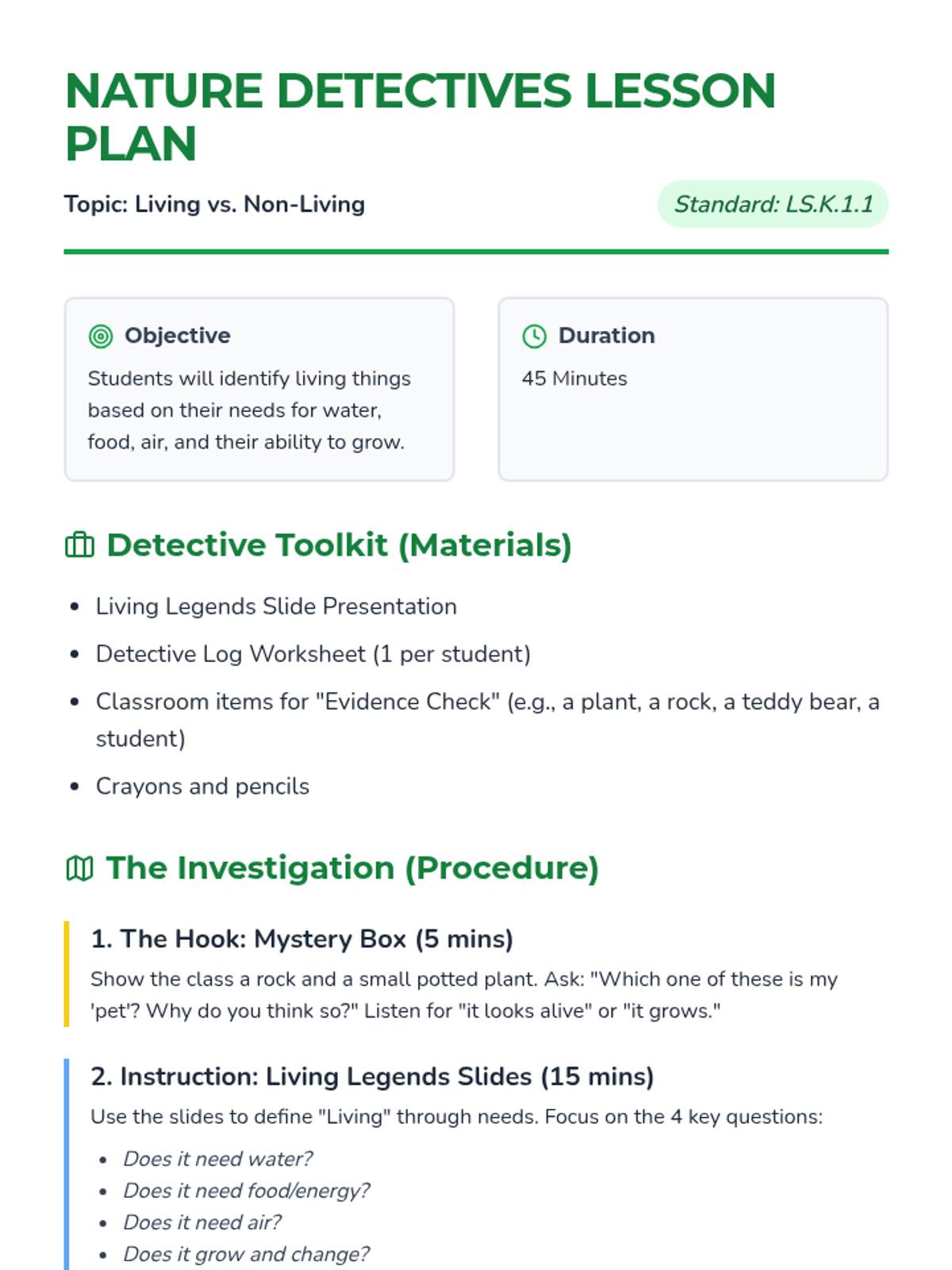
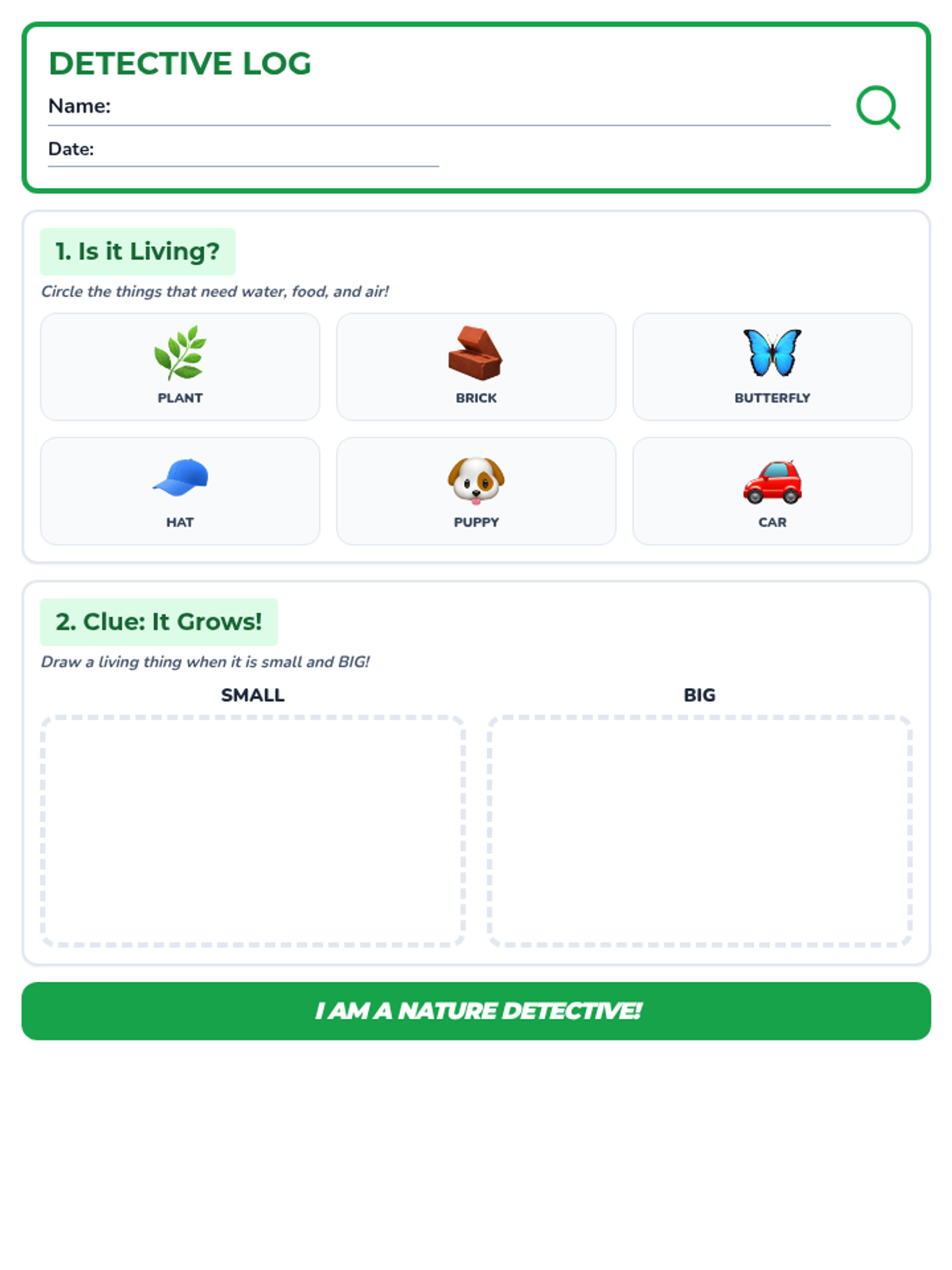
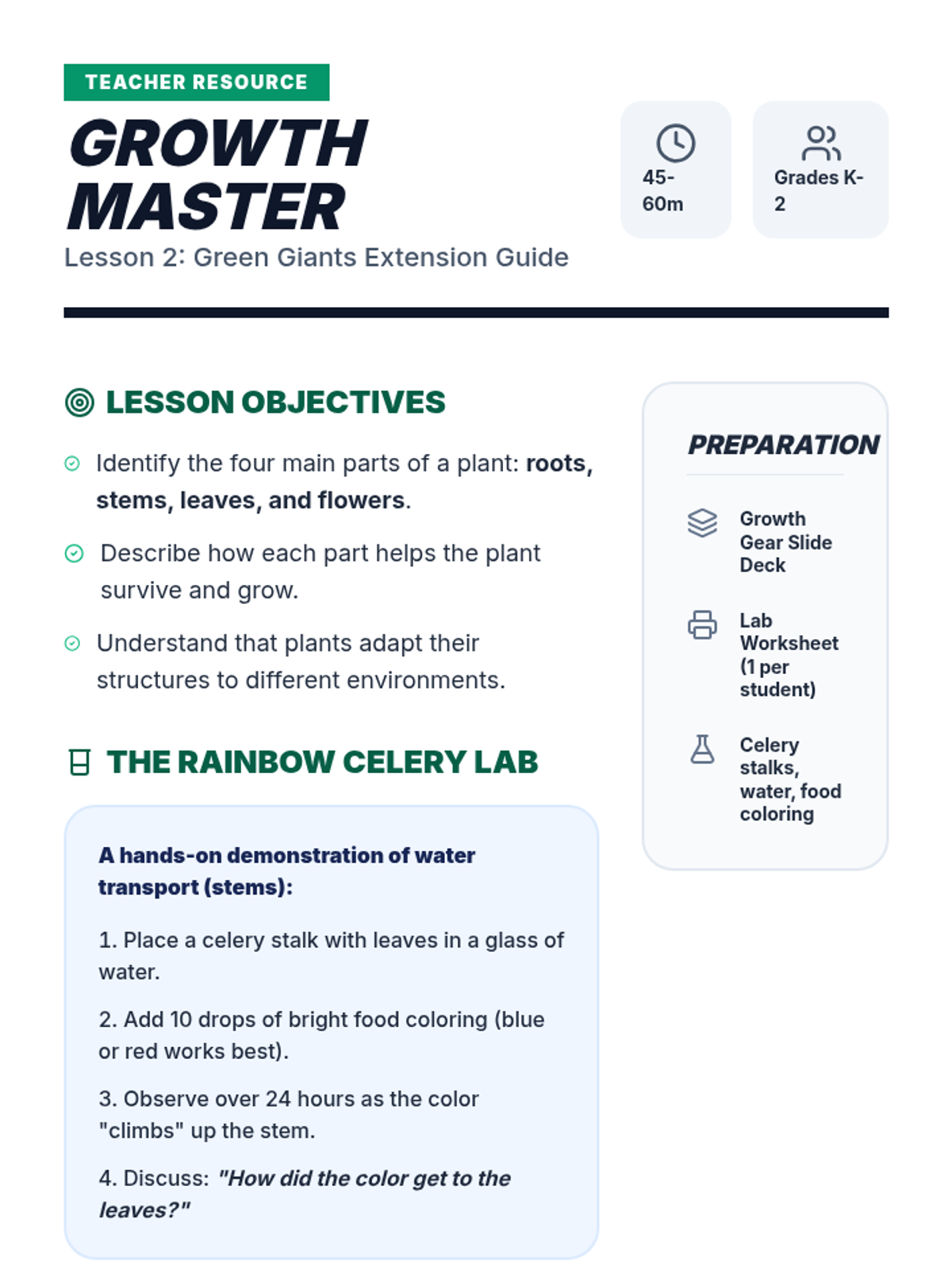
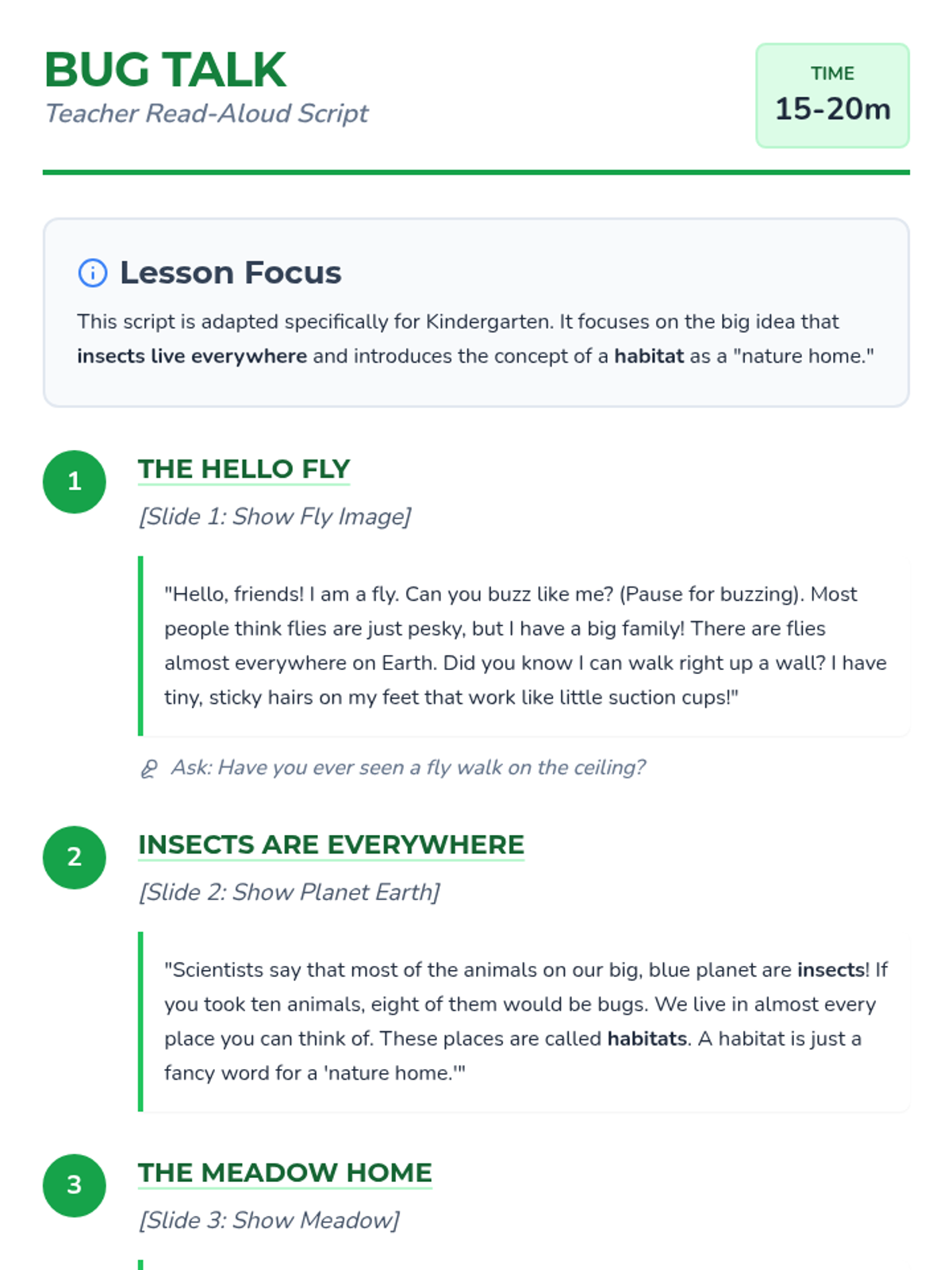
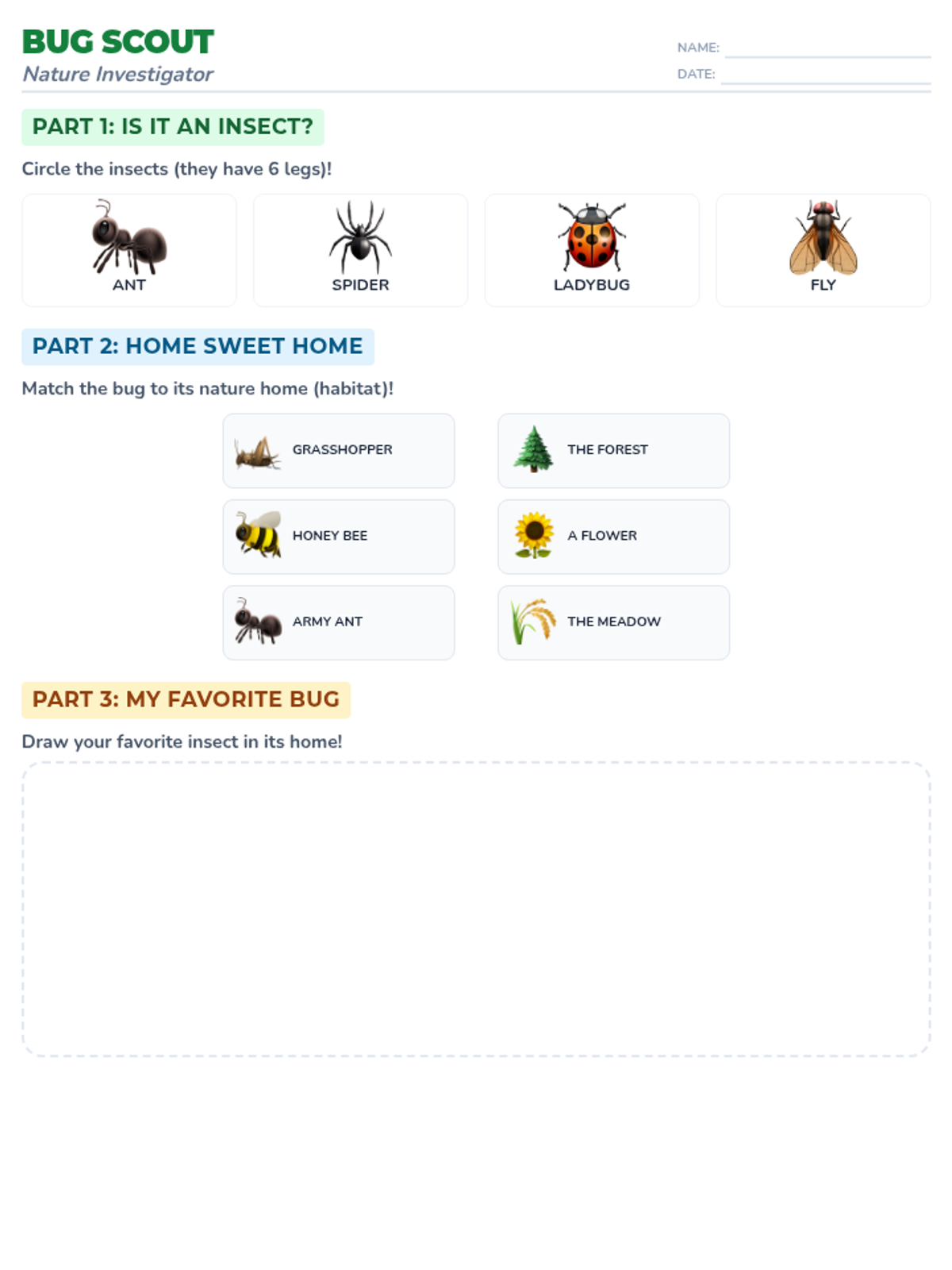
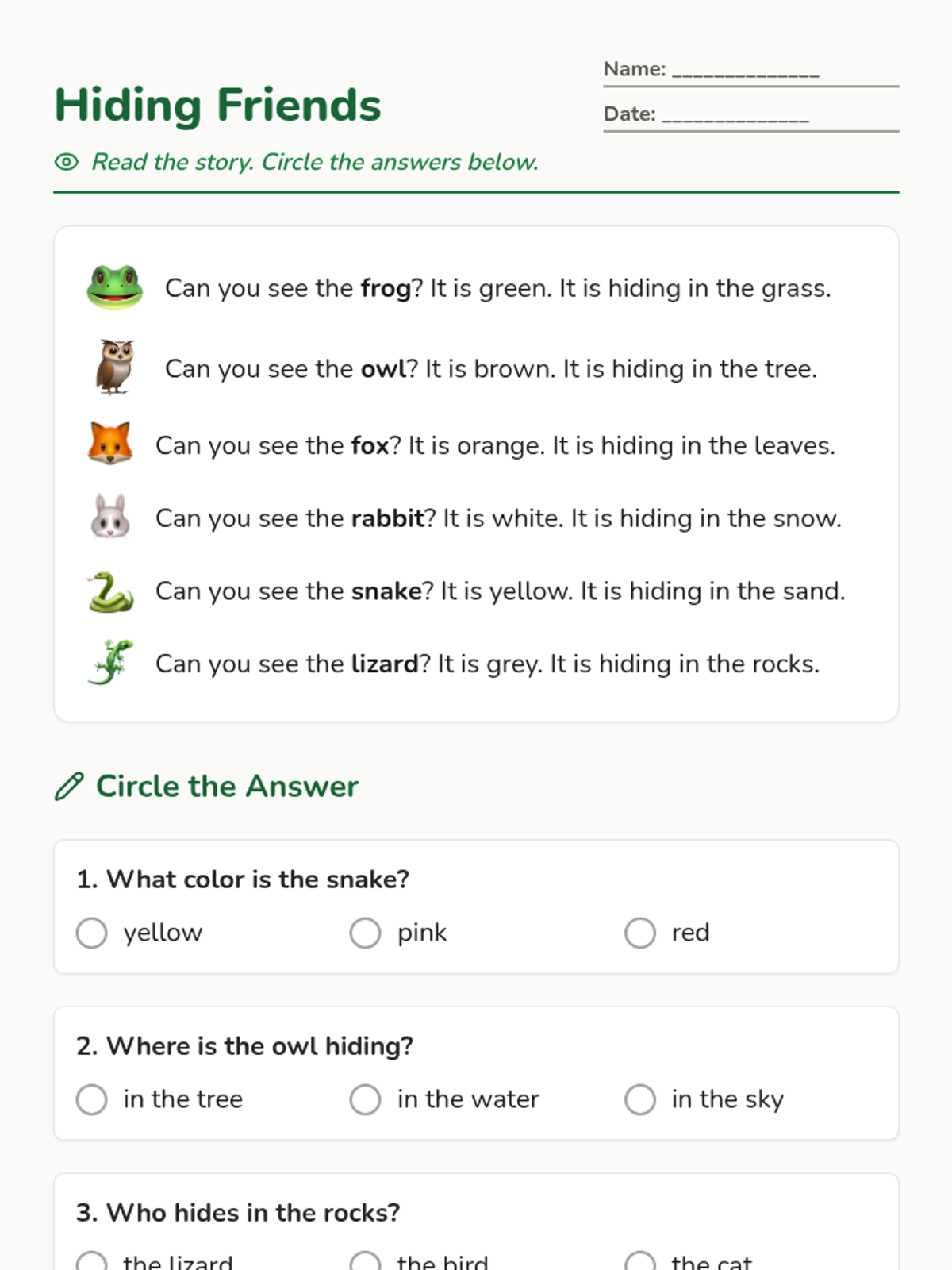
A series of introductory life science and observation lessons designed for early elementary students to explore the natural world through hands-on discovery and video-assisted learning.
A lesson sequence exploring how animals navigate the world using landmarks, stars, and internal compasses, designed for Kindergarten and 1st Grade students.
A unit exploring different habitats through sensory observation and descriptive language, starting with the wide-open grasslands.
A fun, introductory science and math sequence for Pre-K and Kindergarten students focused on identifying animal habitats and practicing basic counting. Students explore different environments like the forest, ice, and homes through music and movement.
A Pre-K sequence introducing the keyboard as a tool for letters and numbers. Students learn the layout, locate their own initials, understand the space bar's function, identify numbers, and learn the 'action' of the Enter key through play and exploration.
A foundational sequence for Pre-K students to learn the physical gestures and actions required to use tablets and computers, focusing on tapping, swiping, clicking, dragging, and navigating interfaces.
A Kindergarten sequence introducing software navigation, icon recognition, and the fundamental concept of saving and retrieving digital work using a 'Make, Save, and Find' framework.
This sequence introduces Kindergarten students to the physical components of computers and tablets through tactile exploration and observation. Students learn to identify hardware parts and practice responsible equipment handling through the 'Tech Detectives' theme.
Students become 'Ink Investigators' to explore the science of mixtures through chromatography. They discover that black ink is often a combination of many colors and learn about solubility by testing different markers.
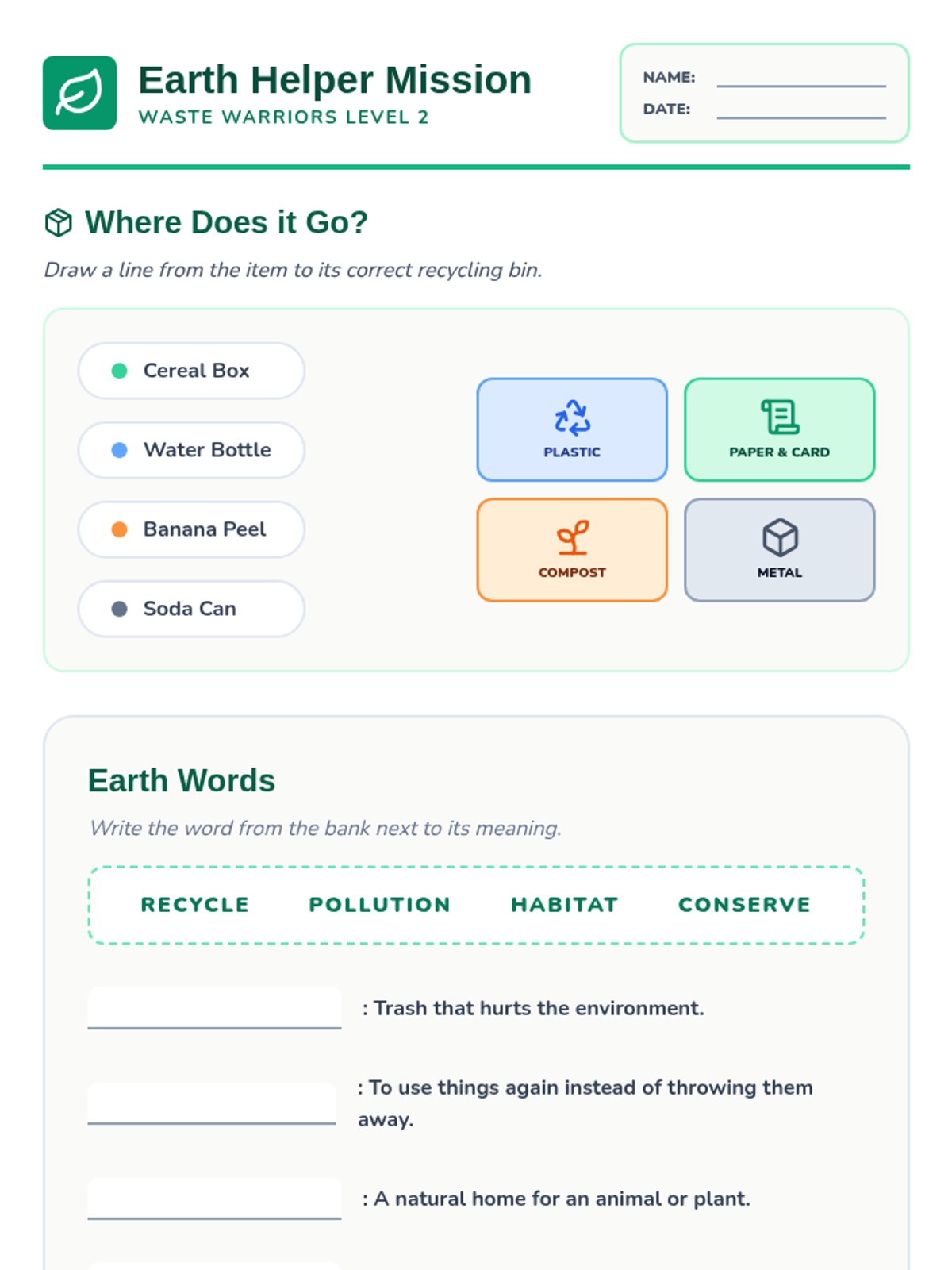
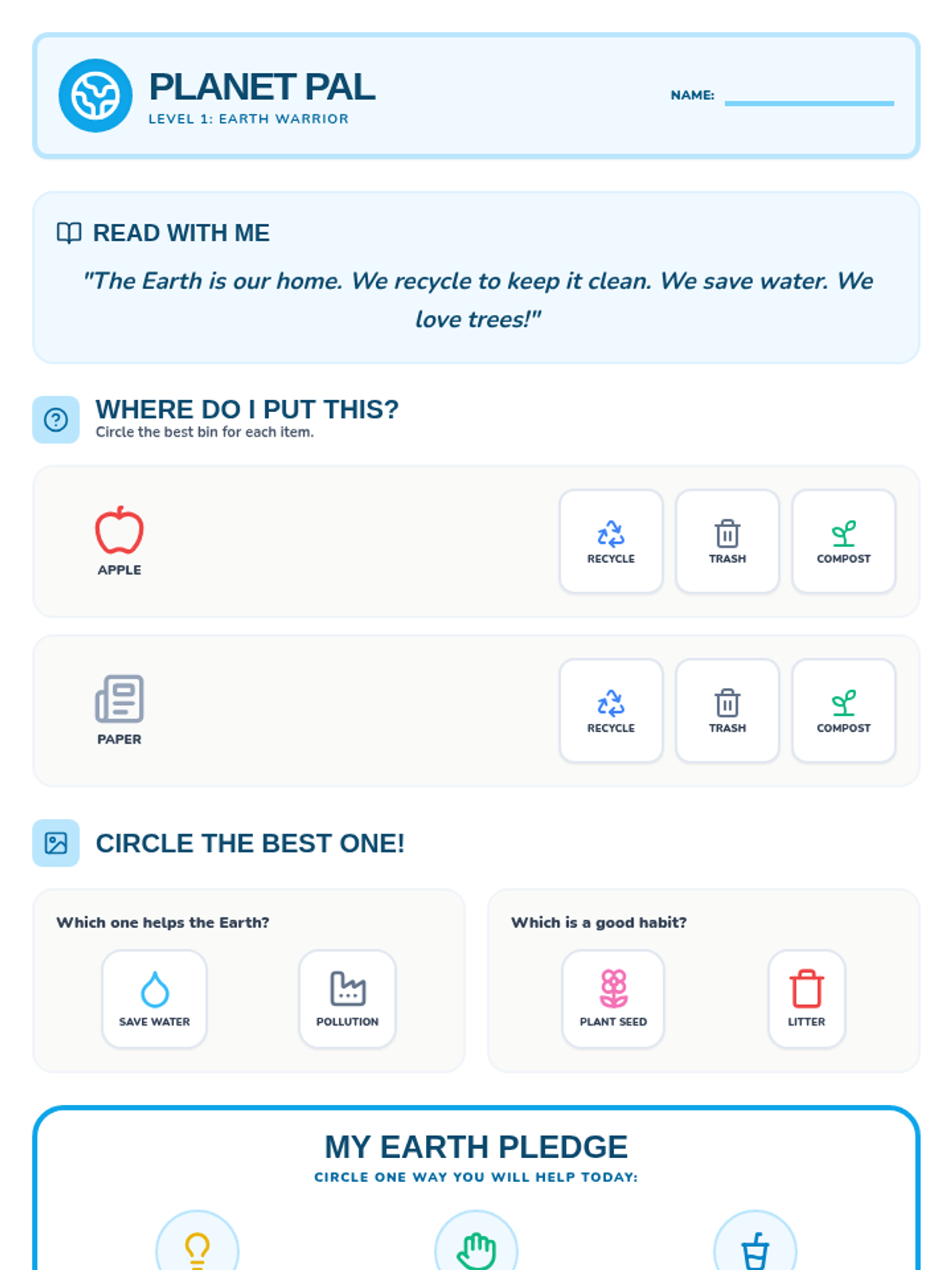
A Kindergarten sequence focused on human impacts, waste management, and environmental protection. Students learn to distinguish natural from human-made objects, understand the effects of litter, practice sorting, explore reuse, and commit to sustainable habits.
A Kindergarten science sequence exploring water and energy as vital earth resources. Students learn about basic needs, the impact of pollution, and practical conservation strategies through hands-on simulations and creative projects.
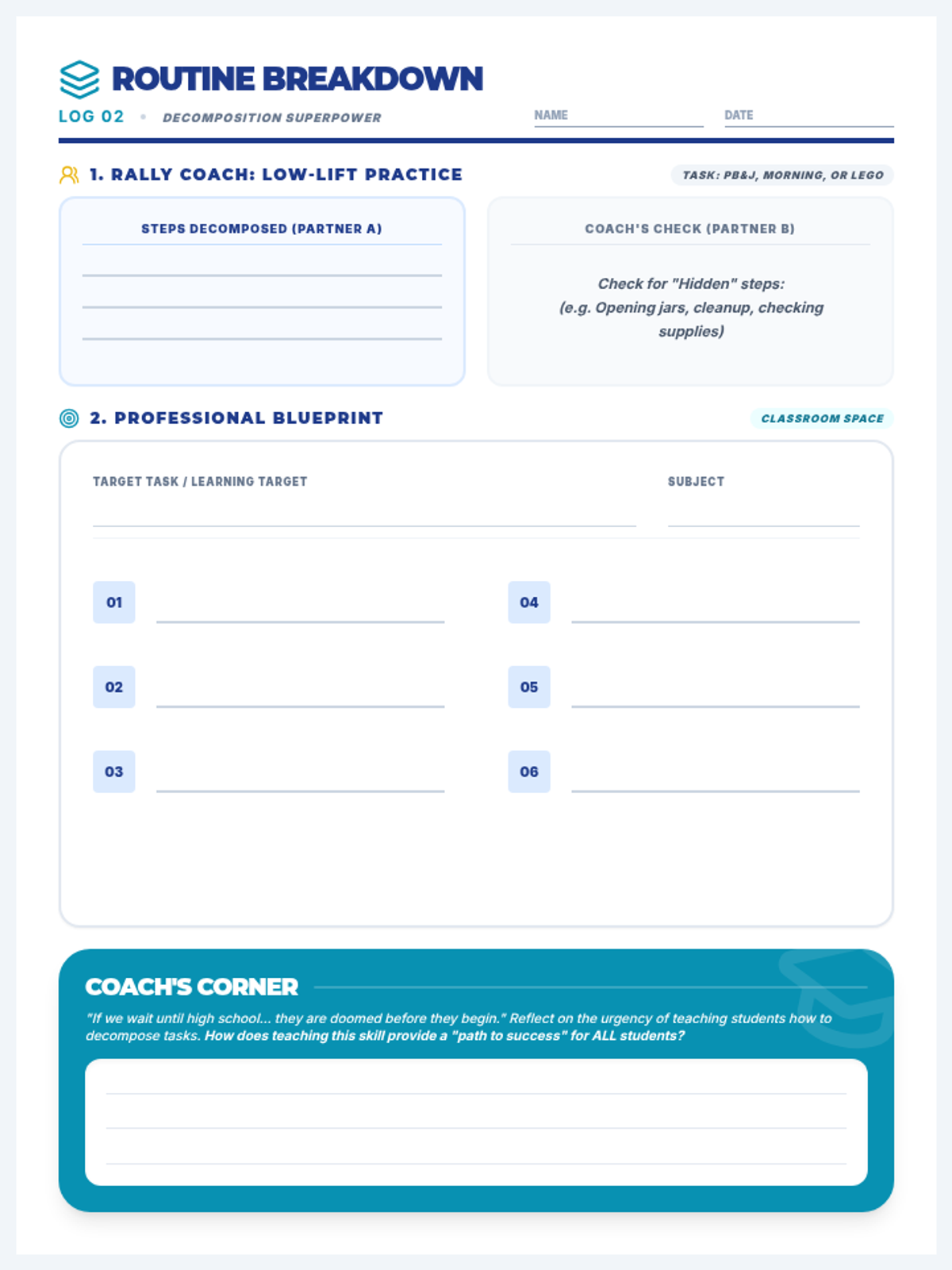
A Kindergarten sequence exploring where everyday items come from and how to protect the Earth through the 'Three Rs' (Reduce, Reuse, Recycle). Students learn to distinguish natural resources from human-made objects and develop sustainable habits.
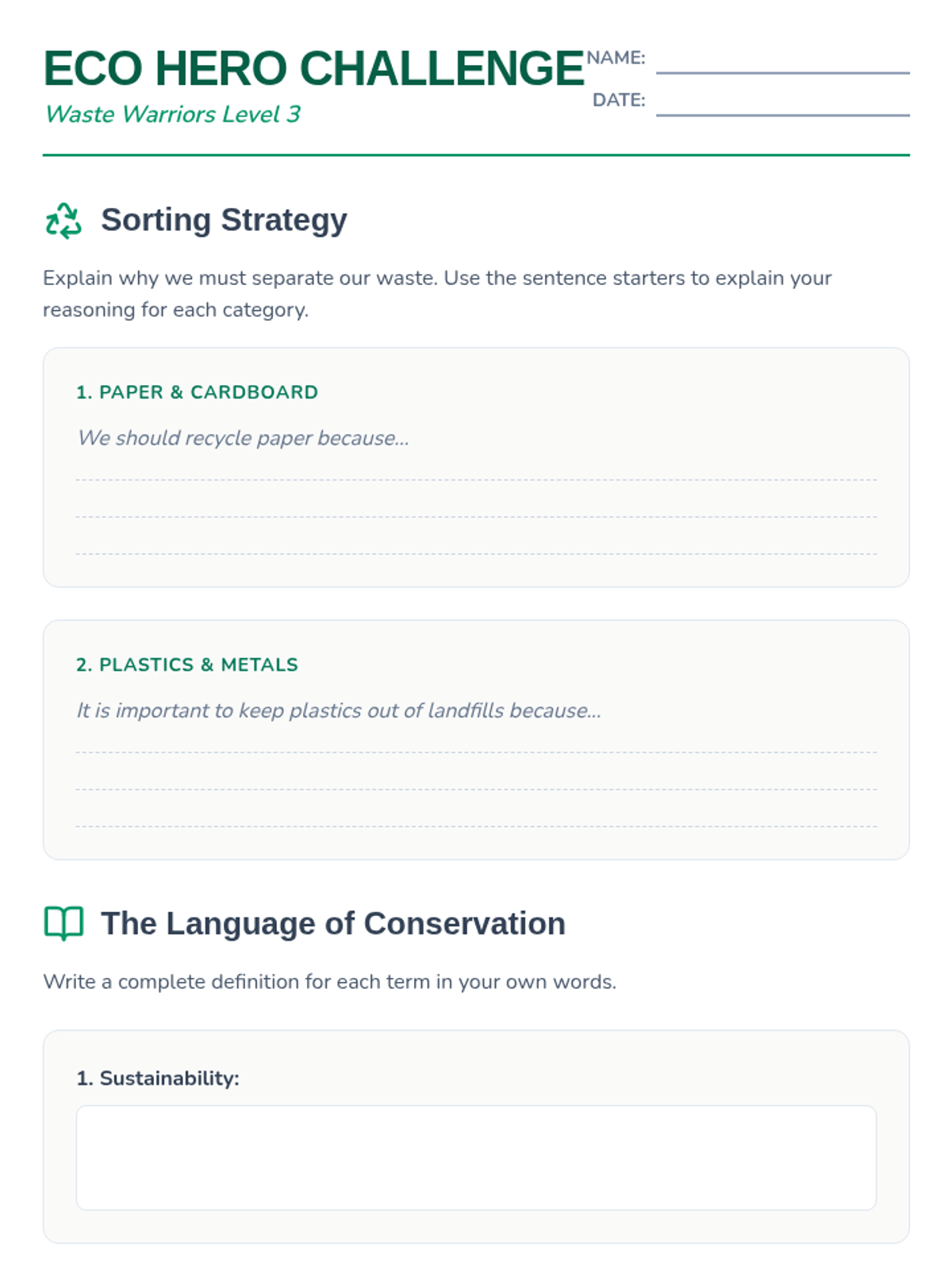
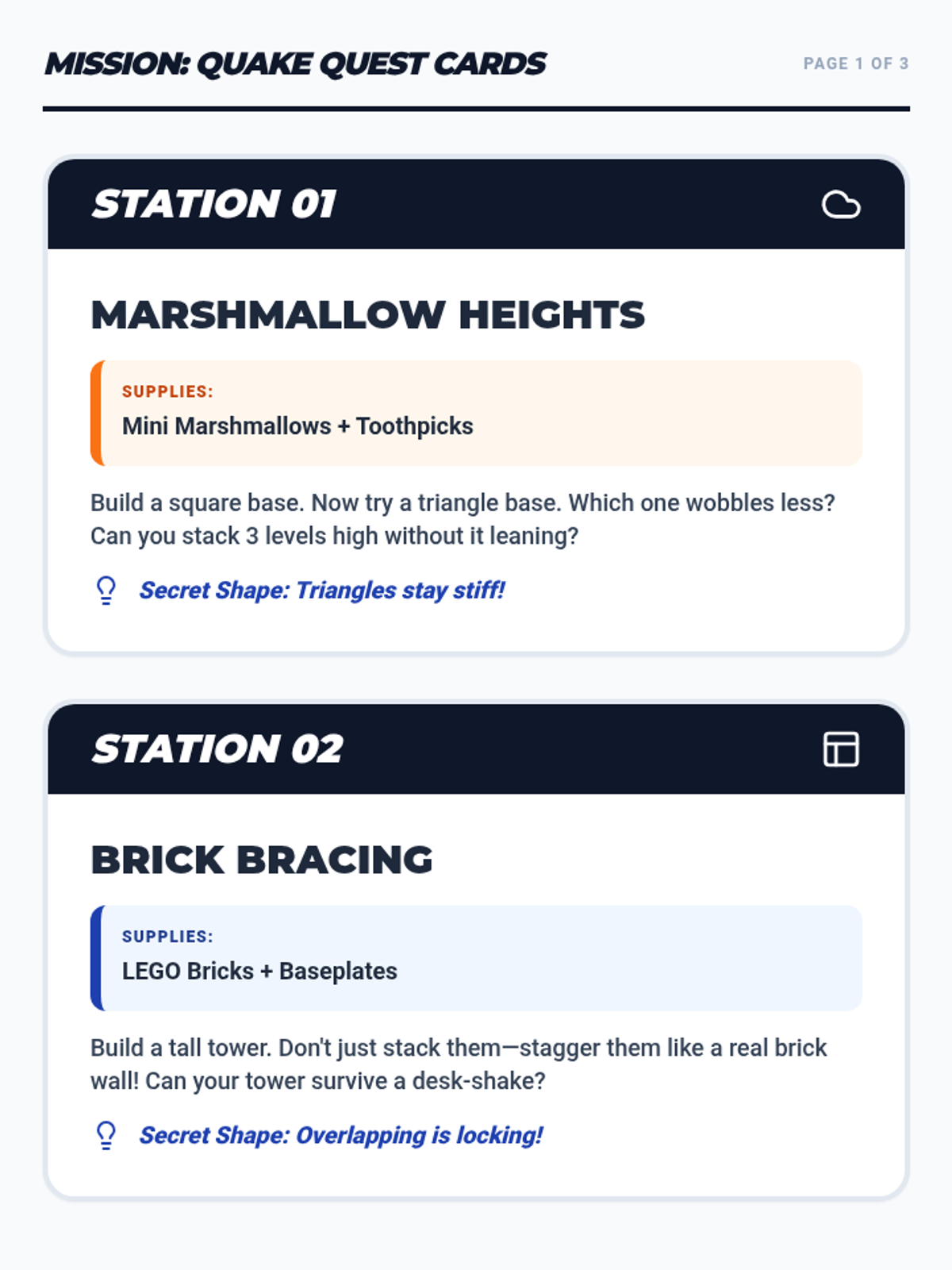
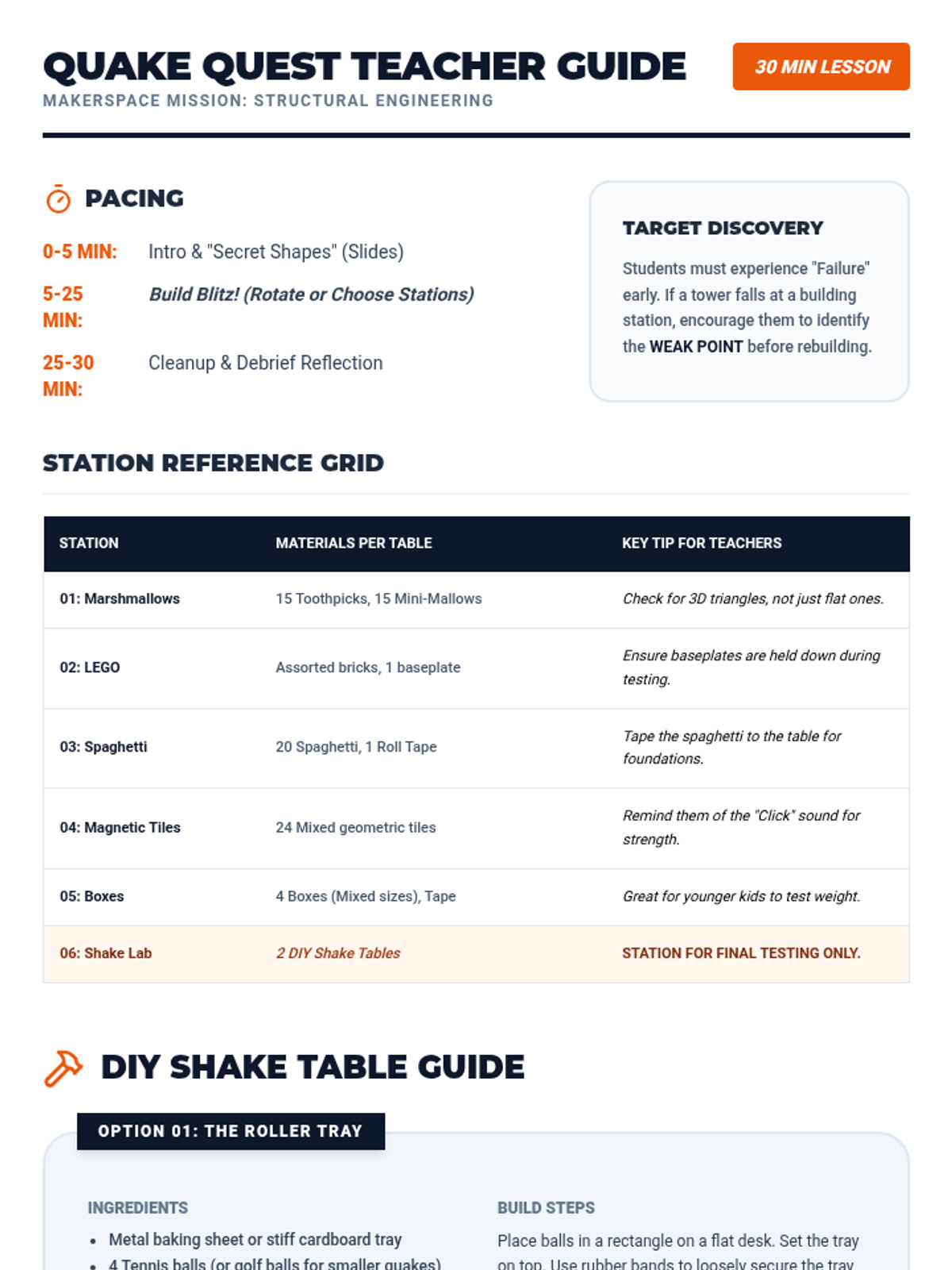
A Pre-K engineering sequence exploring shape composition, stability, and structural design through hands-on block play and spatial reasoning challenges.
A Pre-K physics sequence exploring three-dimensional solids. Students investigate the properties of spheres, cubes, cylinders, and cones through hands-on experimentation with rolling, stacking, and sliding to understand how shape dictates movement and stability.
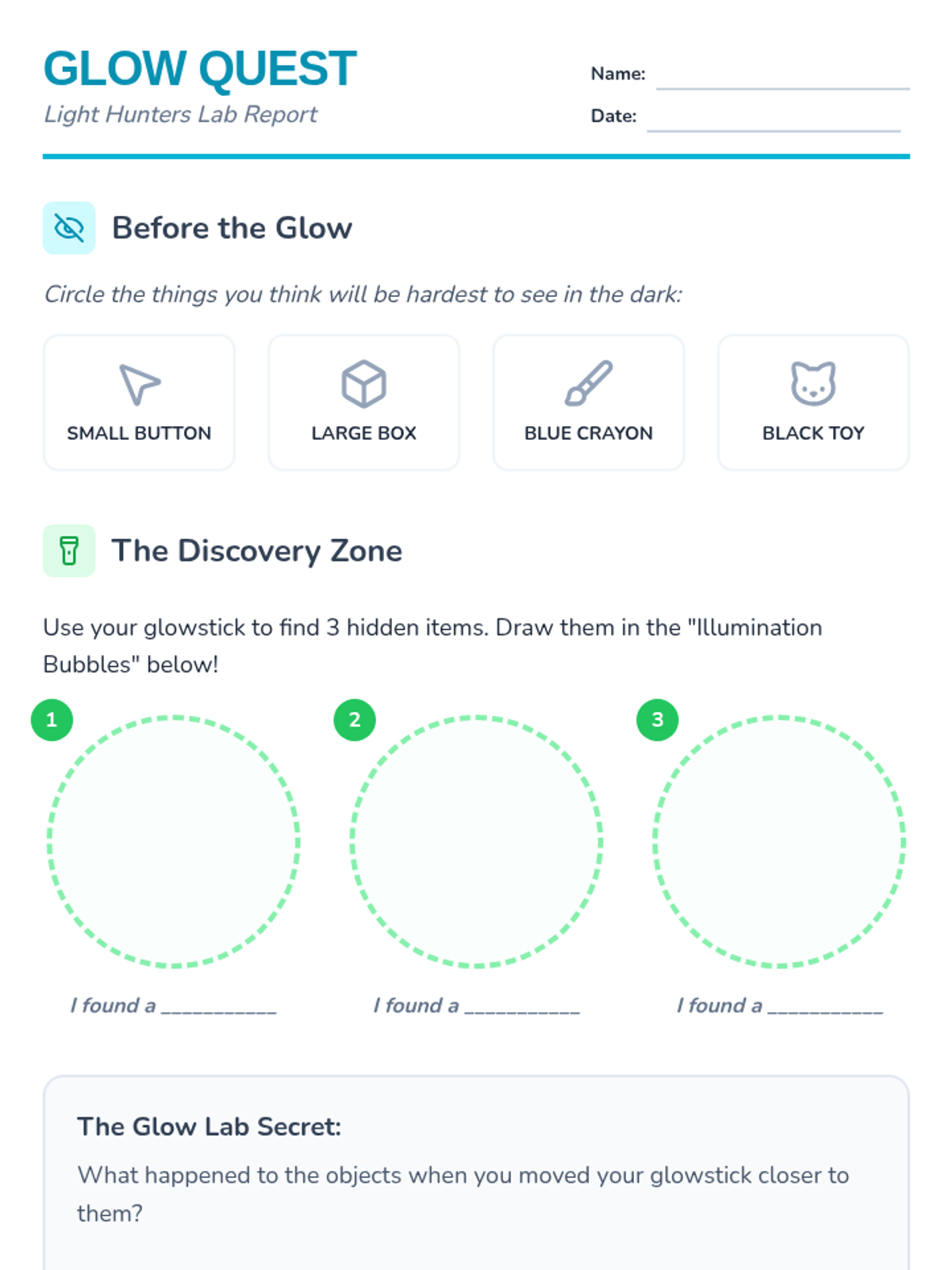
A Pre-K physics unit exploring transparency, translucency, and opacity through hands-on flashlight testing, color filters, water refraction, and art projects. Students develop observation and sorting skills as they investigate how light interacts with different materials.
A Kindergarten sequence introducing measurement concepts through attribute sorting, temperature exploration, tool selection, time perception, and hands-on station rotations. Students learn to use rulers, scales, thermometers, and timers to quantify the world around them.
This Kindergarten sequence explores liquid volume and capacity through hands-on water play, estimation games, and direct comparison. Students develop vocabulary for capacity and move from free exploration to structured measuring using non-standard units (scoops).
A Kindergarten science sequence where students explore weight and mass through sensory hefting, the use of mechanical balance scales, and quantifying weight using non-standard units like counting bears. Students develop prediction skills, learn that size doesn't always equal weight, and practice ordering objects from lightest to heaviest.
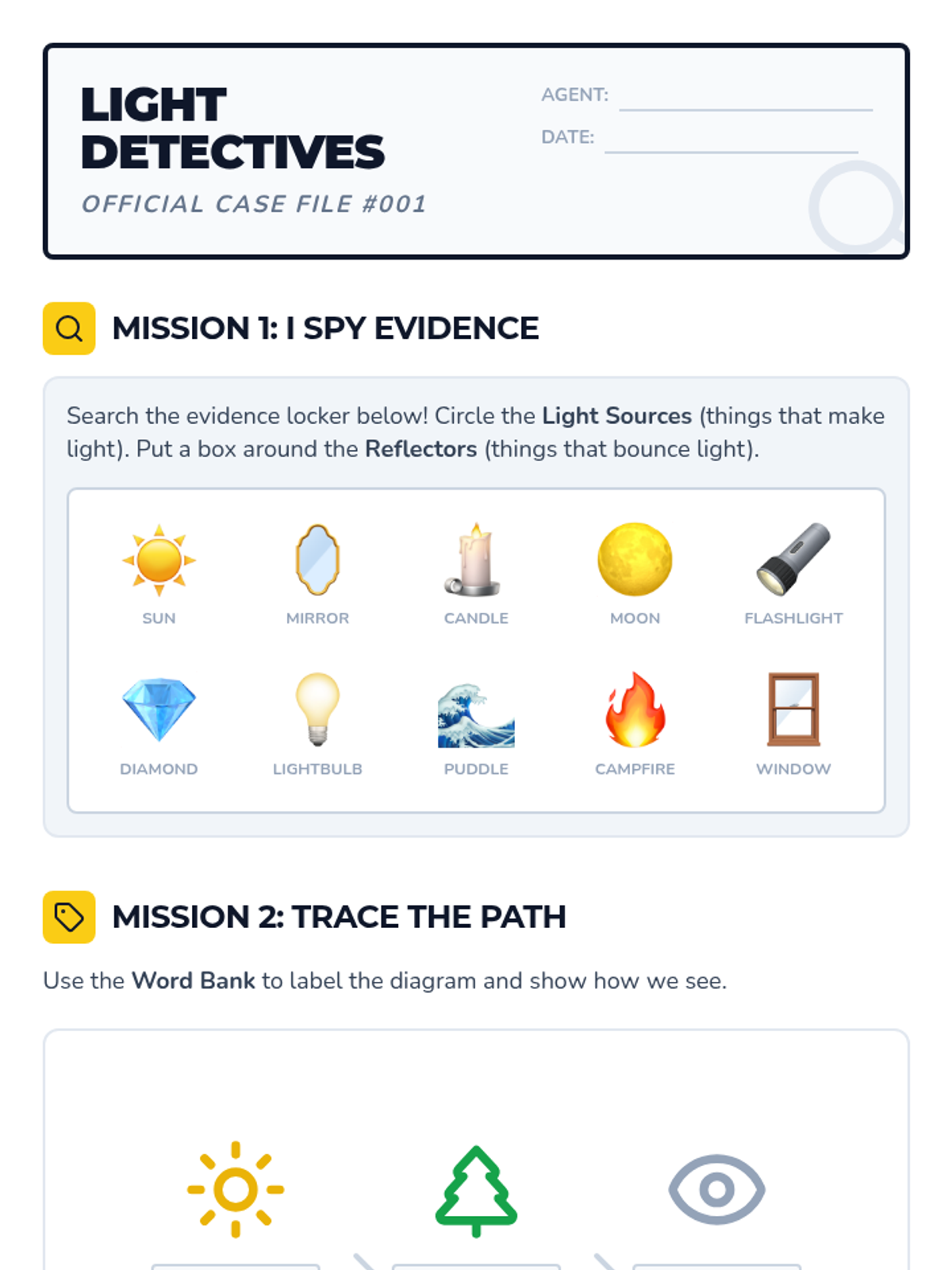
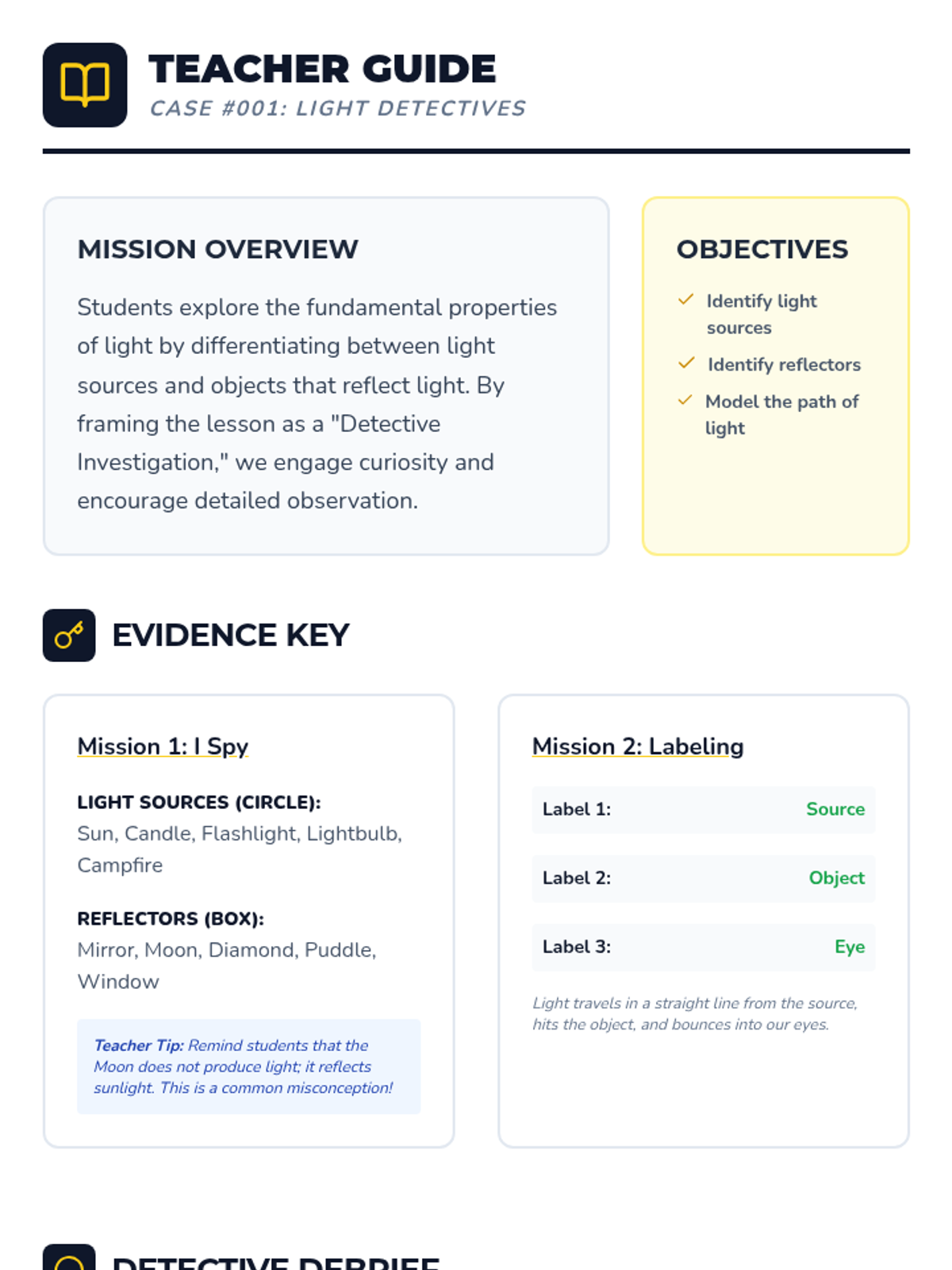
A Kindergarten science sequence exploring the physics of light through reflection. Students engage in hands-on activities with mirrors and flashlights to understand how light bounces, travels in straight lines, and creates symmetry.
A kindergarten physics sequence where students explore how light interacts with different materials, moving from basic transparency testing to designing and building their own suncatchers.
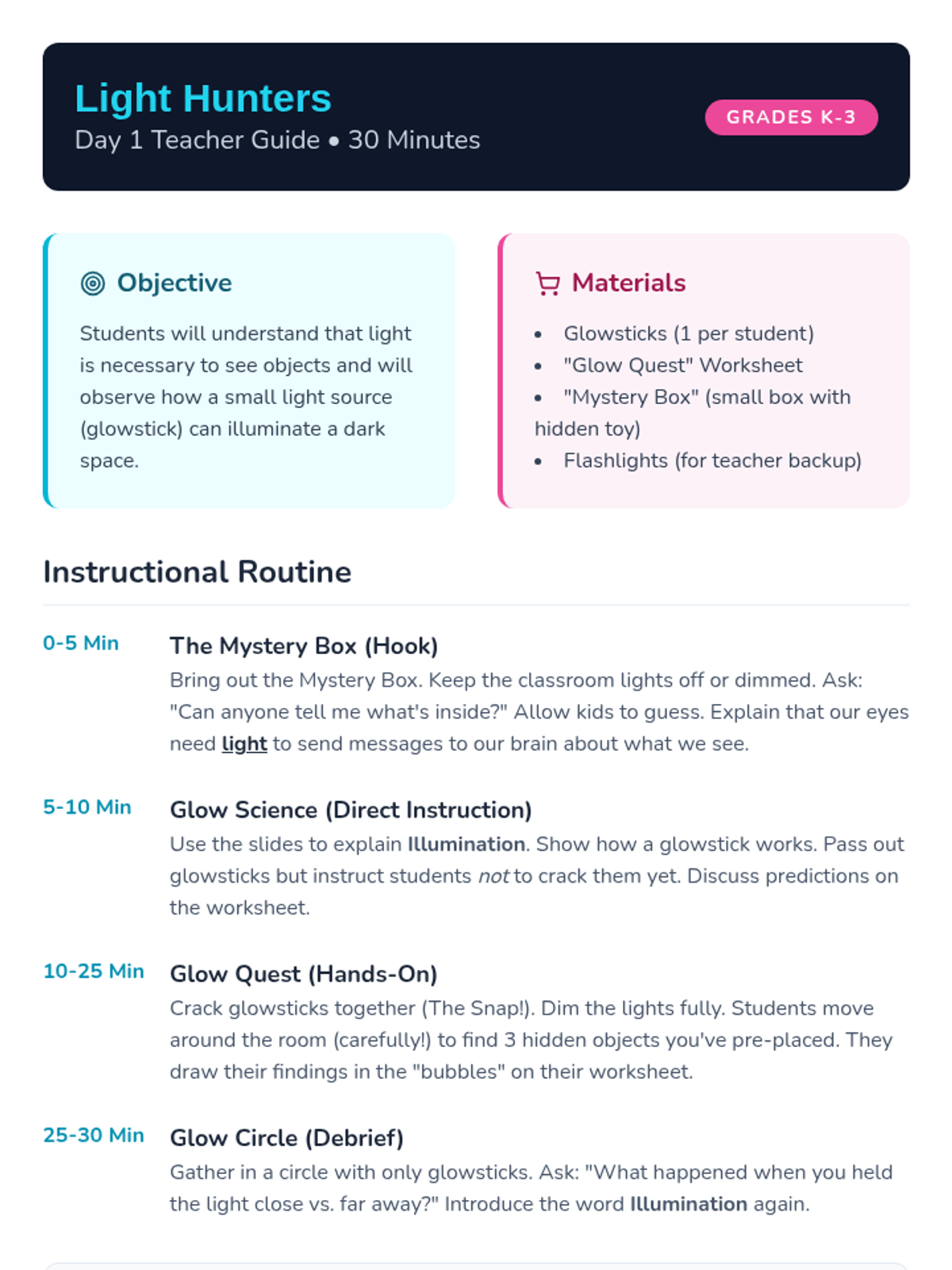
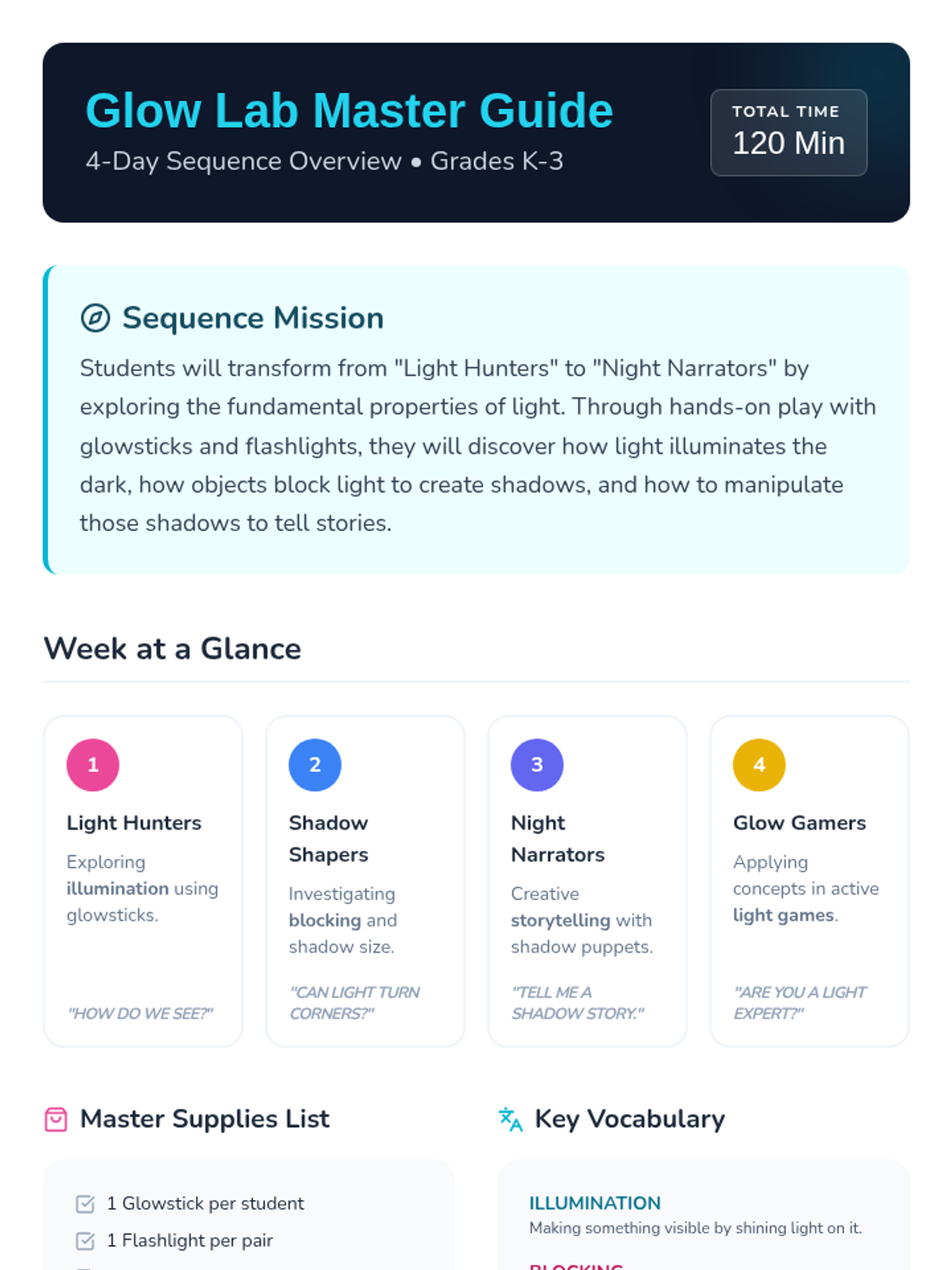
An inquiry-based exploration for Kindergarteners to understand light sources, the formation of shadows, and how moving objects can change shadow size and shape. Students move from classroom investigations to outdoor observations and creative shadow puppet storytelling.
A Kindergarten science sequence exploring Earth's materials (soil, rocks, sand) and the dynamic processes of erosion, weathering, and rapid changes like volcanoes. Students act as geologists to observe, sort, and engineer solutions to protect the land.
A Kindergarten science sequence exploring the practical uses of magnets in daily life, from kitchen gadgets to high-speed trains and navigation. Students learn through hands-on inquiry, case studies, and safety workshops to understand that magnetism is a foundational part of modern technology.
A high-energy, game-based sequence for Kindergarten students to explore the invisible forces of magnetism, including repulsion, attraction, and field strength. students engage in hands-on simulations and interactive challenges to understand how magnets interact with the world.
A project-based kindergarten physics unit where students explore how magnets work through barriers to design mazes, fishing tools, and retrieval devices.
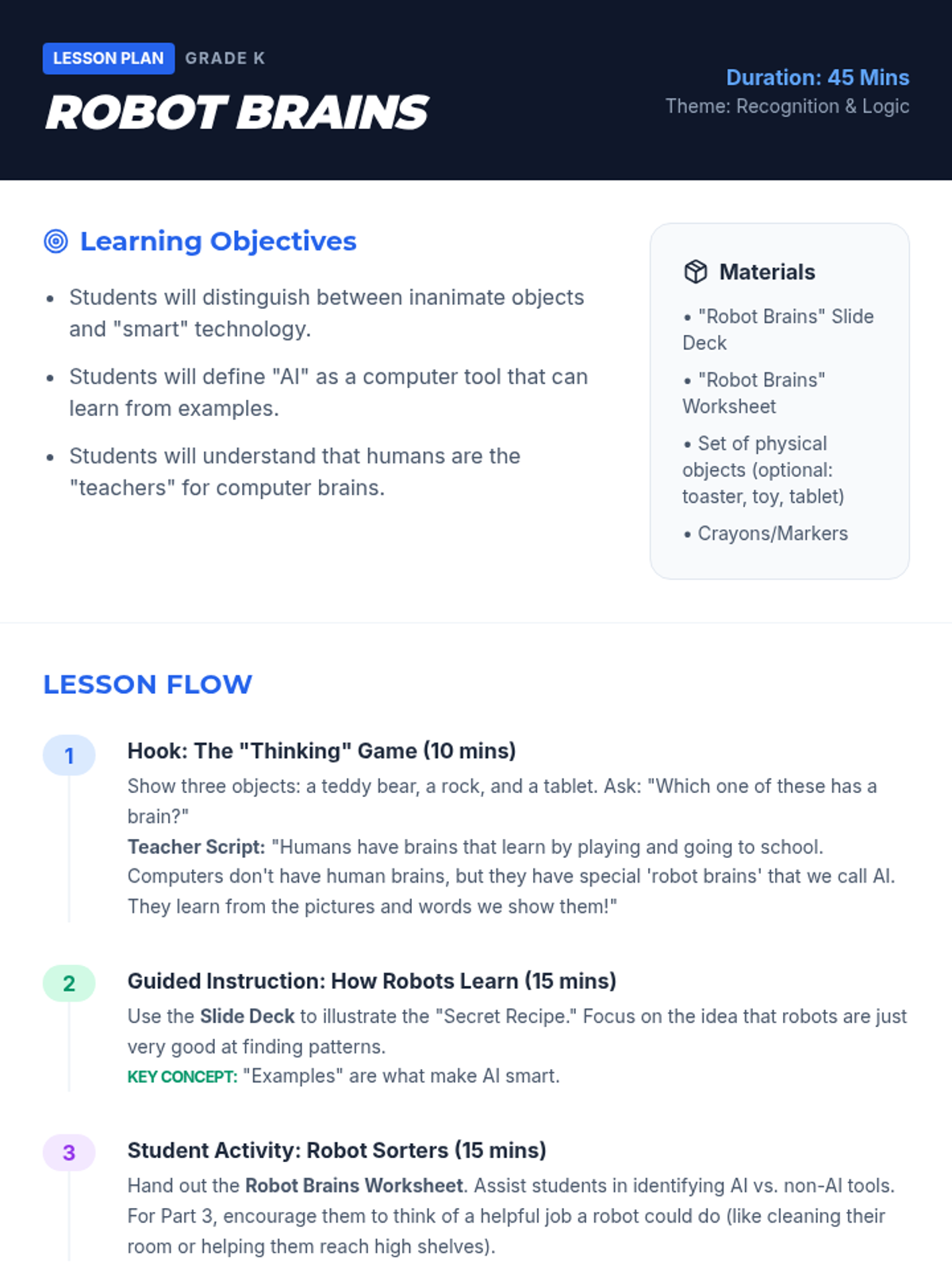
A systematic Kindergarten sequence exploring the properties of magnetic materials through prediction, testing, and data recording, culminating in a nuanced understanding that not all metals are magnetic.
A Kindergarten science sequence exploring the properties of magnets through hands-on exploration, sorting, and field observation. Students learn to identify magnetic materials and understand the concepts of attraction and repulsion.
A project-based life science sequence where Kindergarten students create life-sized 'Body Maps'. Students trace their outlines and layer in skeletal, organ, and circulatory systems to understand spatial relationships and biological functions.

A Kindergarten life science sequence exploring the nervous system, where students discover the brain as the body's control center and learn how senses send signals to trigger reactions and ensure safety.
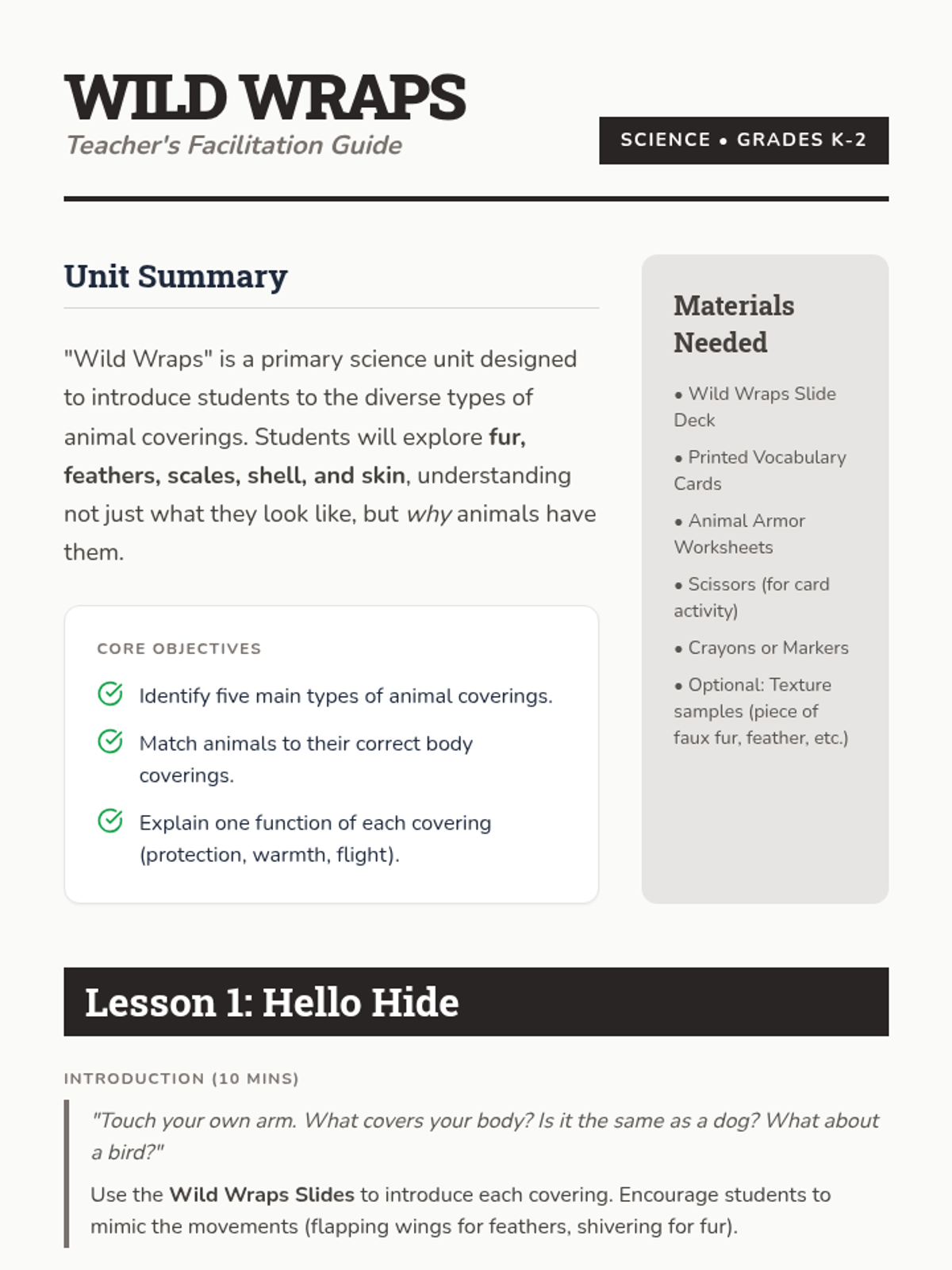
A Kindergarten sequence focused on the muscular system, teaching students how muscles pull bones to create movement through hands-on simulations, modeling, and physical activity.
A Kindergarten sequence exploring the skeletal system through tactile inquiry, identifying major bones like the skull, ribs, and spine, and understanding how joints enable movement. Students act as 'Body Detectives' to solve the mystery of why their bodies are hard on the inside.