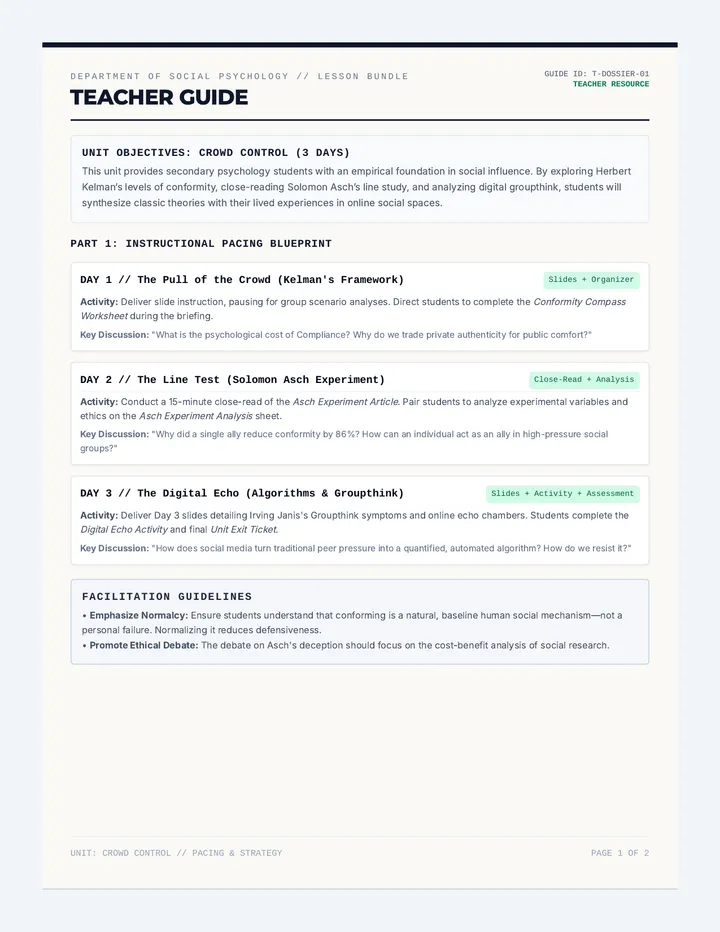
A comprehensive 7-day remediation sequence for 9th-grade psychology students focusing on neurobiology and psychological perspectives through independent study.
A comprehensive high school curriculum plan for American History, covering 13 units from the American Revolution to the modern era, aligned with North Carolina Social Studies standards.
A comprehensive unit covering the economic boom of the 1920s, the Great Depression, and the New Deal. Includes lessons on the Prosperity Paradox, the Stock Market Collapse, the Dust Bowl, and government responses.
A comprehensive study of Judaism focusing on ethical teachings and significant practices like marriage. Students investigate the connections between core beliefs, sacred texts, and the lived experience of adherents in preparation for an extended response.
A comprehensive study sequence covering the Executive and Judicial branches of the U.S. government, designed for high school students to master the powers, structures, and functions of these two pillars of federal power.
An intensive investigative unit on Franz Kafka's *The Metamorphosis* following the North Star/Uncommon Schools instructional model. The unit focuses on the thematic intersection of labor, identity, and dehumanization. Students analyze Gregor's alienation from his family and society through a structured rigorous framework including vocabulary acquisition, character identification, and thematic synthesis.
A 10-week comprehensive unit exploring the history of disasters from antiquity to the modern era, focusing on the shift from natural events to man-made catastrophes and changing human perspectives.
A comprehensive six-week unit exploring the Gilded Age, focusing on the tension between rapid industrial growth and the social/political challenges of the era. Students analyze primary sources including political cartoons and immigrant journals to understand the complexities of American life between 1870 and 1900.
A focused AP World History practice series consisting exclusively of stimulus-based multiple choice questions and detailed answer keys covering Units 1-9.
A comprehensive 5-day mini-unit exploring the Declaration of Independence through the lens of its 250th anniversary, focusing on grievances, the signers, global impact, and the ongoing struggle for civil rights.
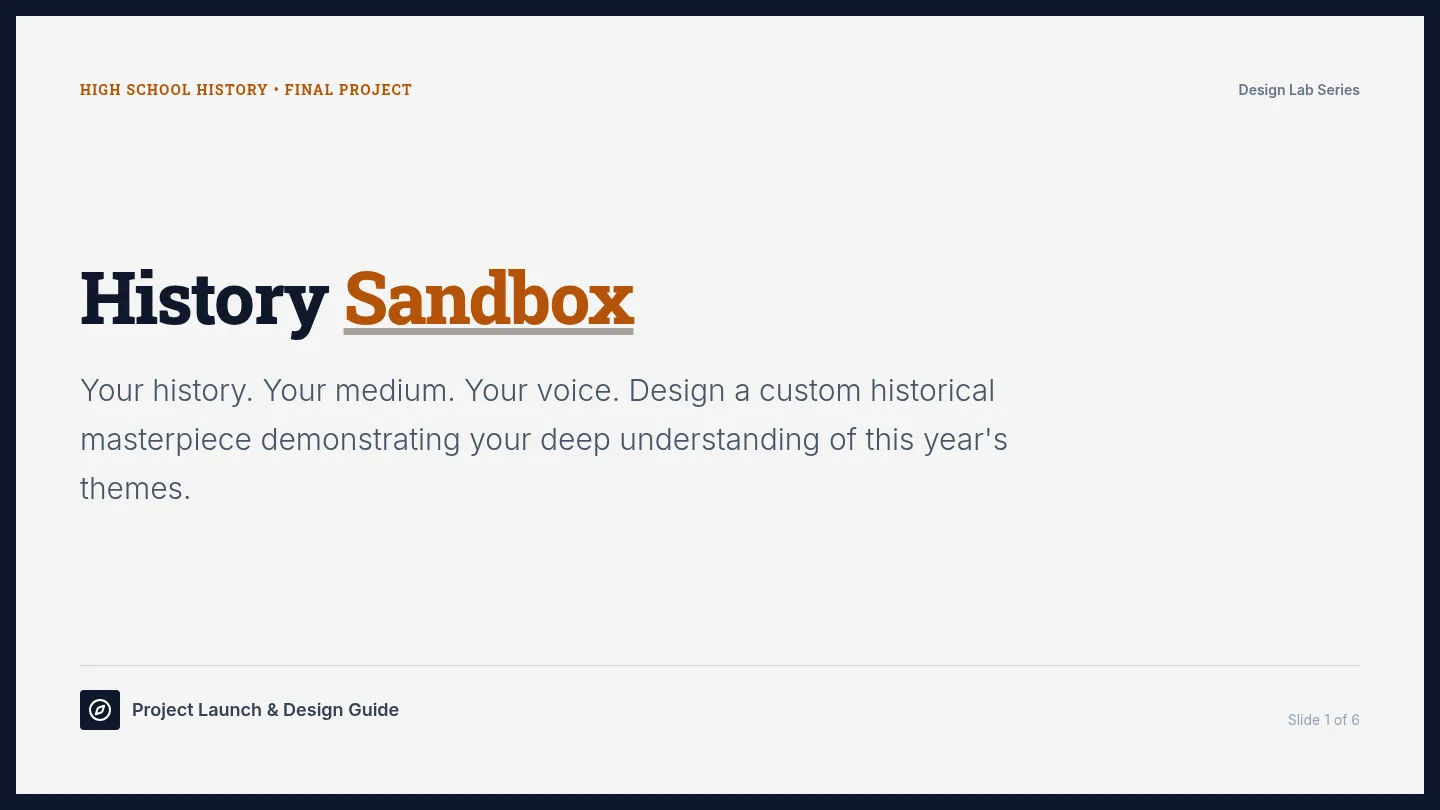
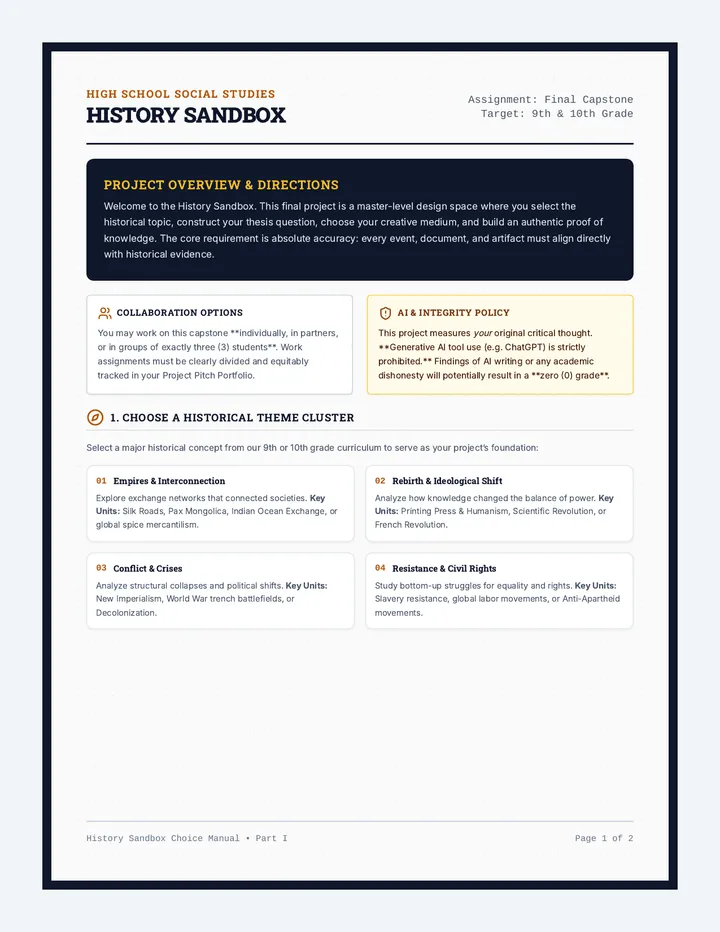
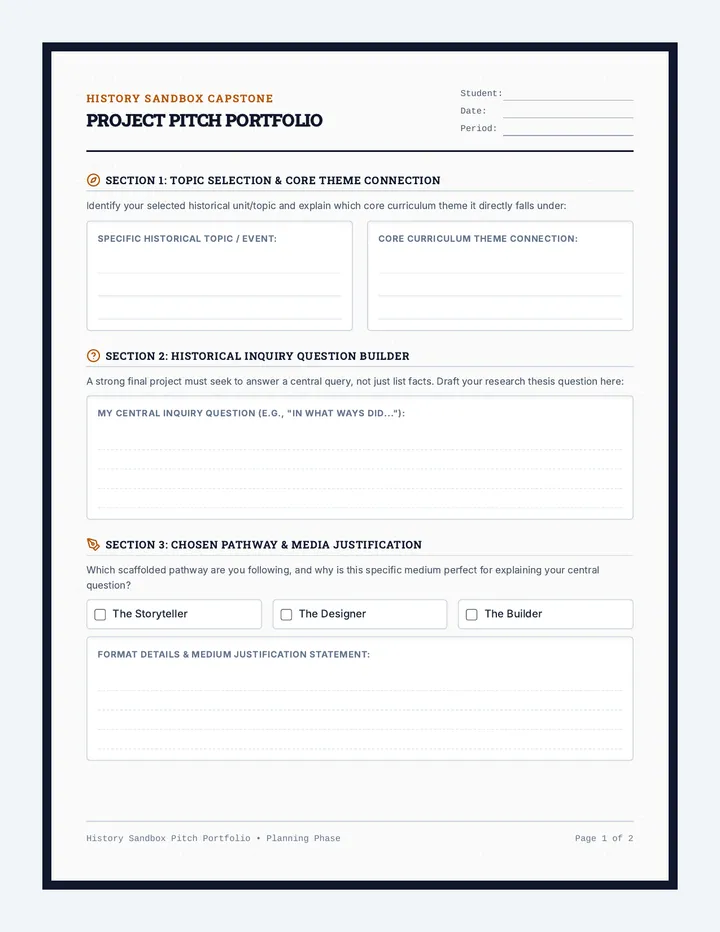
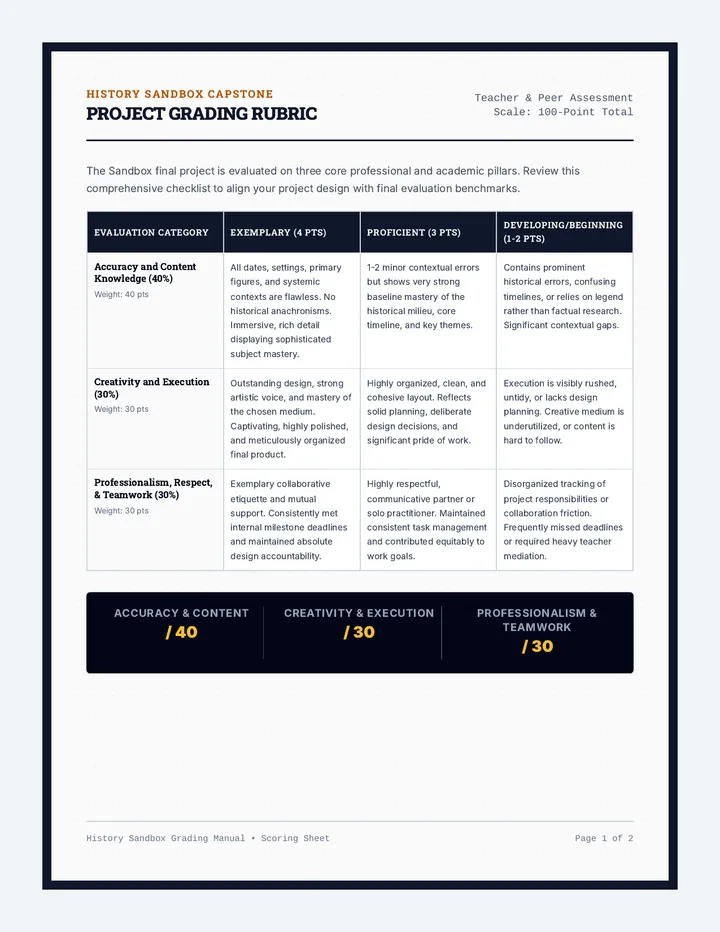
A multi-day project sequence where students design their own nation, exploring concepts of geography, governance, economics, and civil rights.
A 12-lesson intensive course on reasoning and critical thinking, aligned with the 'Reasoning Skills Success' framework. This sequence covers everything from the distinction between reason and emotion to complex logical fallacies, statistical analysis, and deductive/inductive logic.
A comprehensive exploration of the Theseus and Minotaur myth, covering historical origins, narrative structure, and character archetypes.
A comprehensive dive into the pivotal moments and global impact of World War II, framed through the lens of military intelligence and historical analysis.
A unit exploring the transformative decade of the 1950s, covering the Civil Rights movement, postwar economic booms, the rise of suburbia, and the cultural shifts of the Atomic Age.
A deep dive into the diplomatic and military escalations of the 1930s that led to the Second World War, focusing on the failure of collective security and the rise of expansionist regimes.
A comprehensive final project where high school students design their own sovereign nation while demonstrating mastery of executive branch powers and government structures.
An analytical deep-dive into the collapse of the Western Roman Empire, treating history as a forensic investigation into why great powers fail.
An in-depth exploration of the Reconstruction era, focusing on the promises made to formerly enslaved people and how those promises were ultimately broken. students will analyze primary sources and complete a research project on land ownership and the quest for economic independence.
A multi-day exploration of Philadelphia's cultural history through the lens of the film Rocky, covering the late 1970s, the Bicentennial, and the real-life inspirations behind the character.
A fundamental sequence designed to orient students to the major geographic regions used in global historical and social studies, focusing on clear spatial identification and standardized nomenclature.
A multi-day mini-unit exploring the contrasting philosophies of Booker T. Washington and W.E.B. Du Bois regarding African American progress, education, and civil rights at the turn of the 20th century.
A comprehensive civics unit exploring the structure and functions of the American government, focusing on the Constitution, the three branches of power, and the balance of federalism.
A comprehensive 5-day unit exploring the Great Depression's impact on the United States and Minnesota, focusing on economic collapse, rural hardship, urban survival, and New Deal recovery through primary source analysis.
A three-lesson unit designed for ESL newcomers with minimal English proficiency, focusing on Dudley Randall's poem 'Booker T. and W.E.B.' and preparing them for a standardized assessment on author's purpose and language.
A comprehensive curriculum sequence covering late 19th and early 20th-century American history, focusing on economic transformation, Western expansion, global imperialism, and the impact of the Great War.
A multi-day investigation into the Dred Scott case, focusing on the shifting definitions of citizenship and the legal battle for freedom in pre-Civil War America.
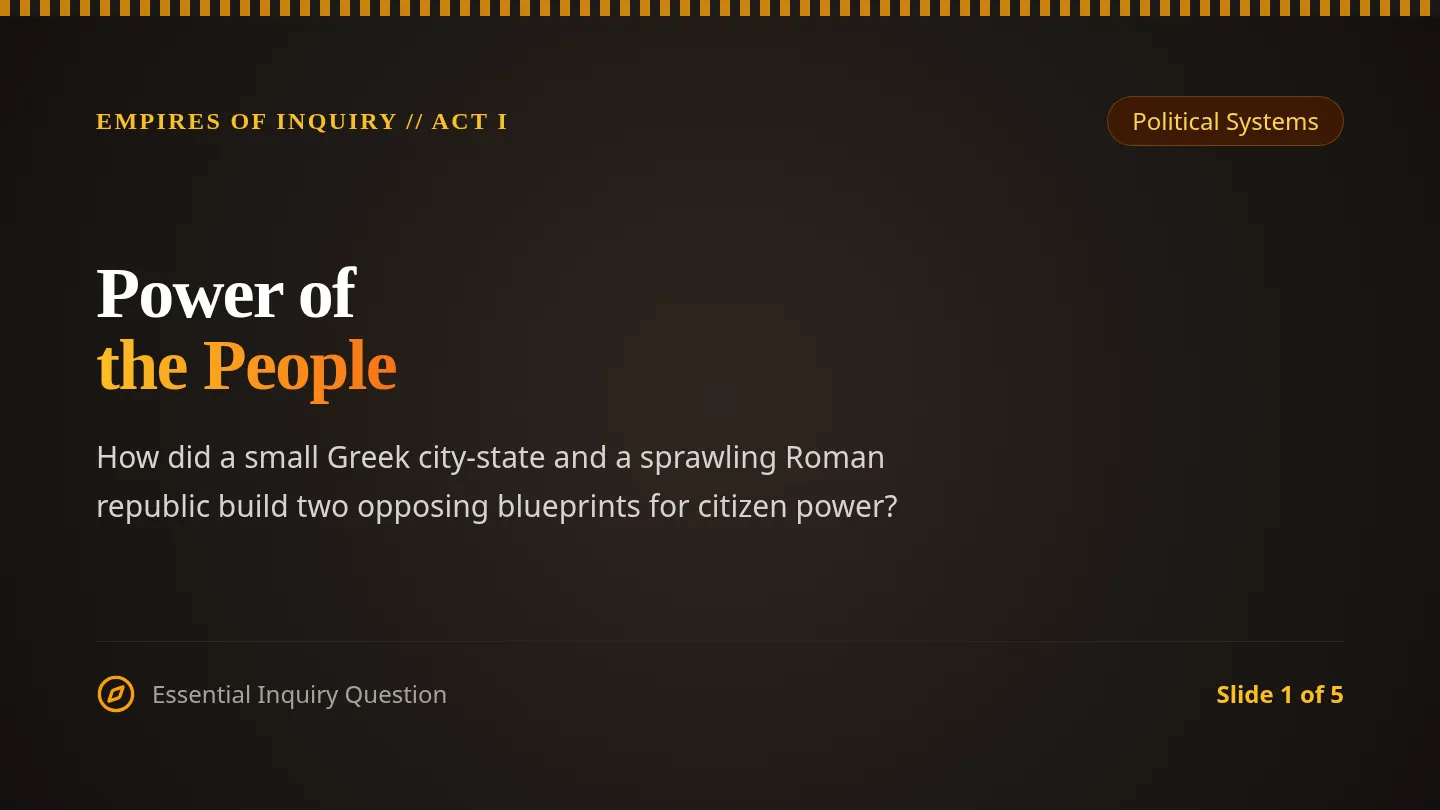
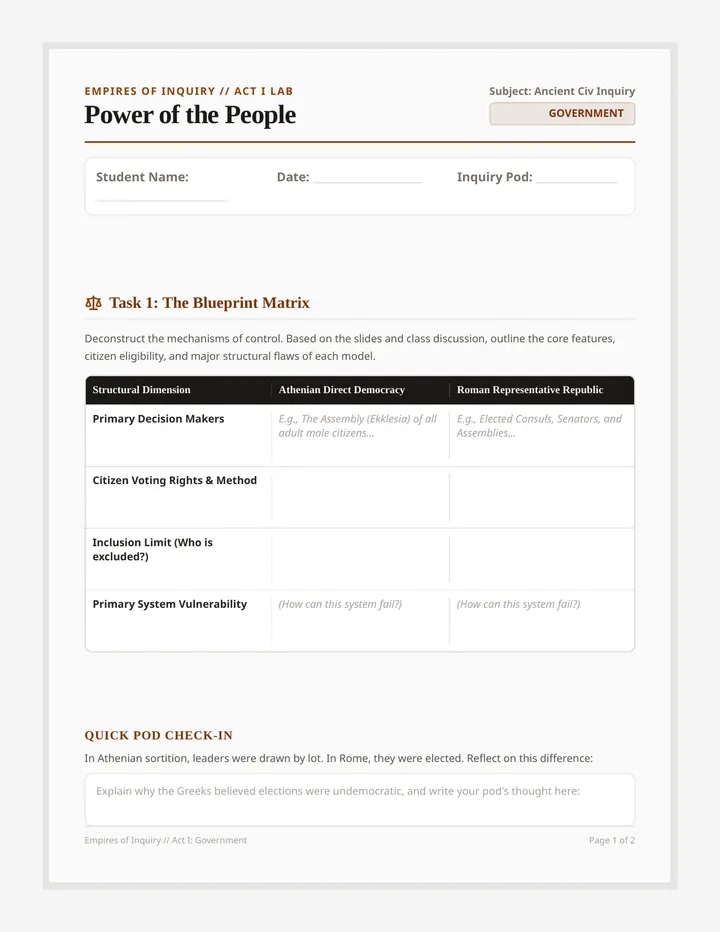
A comprehensive study of the rise and fall of the Athenian Empire, focusing on the Delian League, the Peloponnesian War, and the impact of democratic leadership. Students explore key historical texts through structured discussion and evidence-based writing.
A complete series of lessons for the NSW Studies of Religion 1 Judaism Depth Study, covering Origins, Principal Beliefs, Sacred Texts, Ethics, and Observance.
A comprehensive historical background unit designed to contextualize the events of 'A Thousand Splendid Suns', focusing on the political shifts in Afghanistan and their impact on women's lives and character motivations.
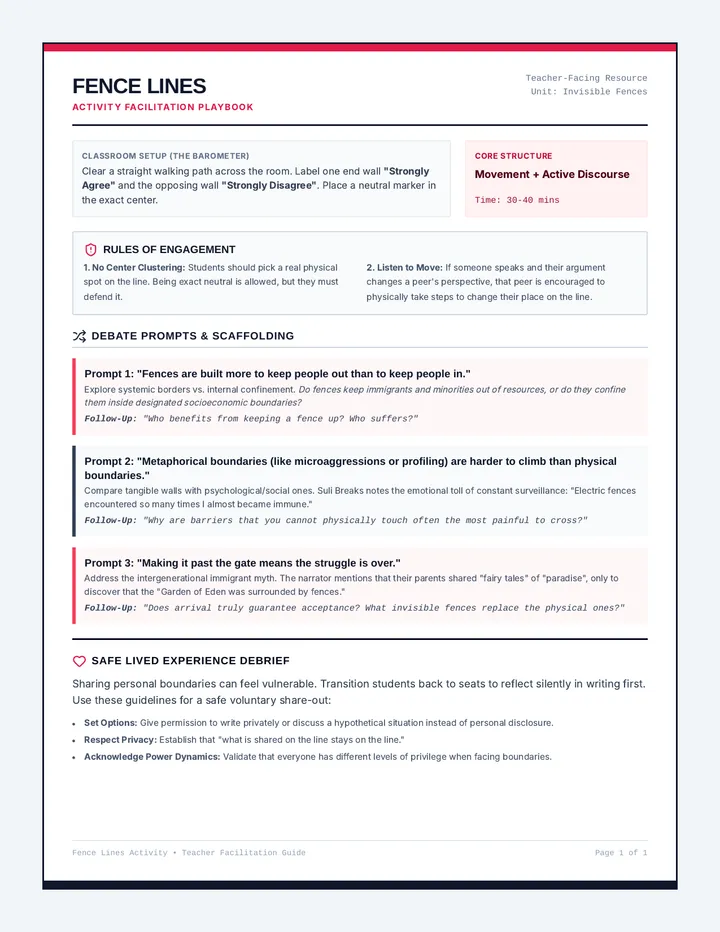
A unit exploring how overlapping cultural identities shape history, art, and activism through the lens of intersectionality.
A comprehensive unit exploring the foundational structures of American government through the lens of the US Constitution.
A comprehensive exploration of Article I of the U.S. Constitution, covering the structure, powers, and limitations of the Legislative Branch through deep text analysis and structured discussion.
A comprehensive project-based unit exploring the construction of the Berlin Wall in 1961, its devastating impact on German civilians, and its role as a powerful symbol of Cold War ideological conflict.
A 5-day unit exploring the social, religious, and political structures of Medieval Europe, from the feudal system to the devastating impact of the Black Death.
A comprehensive review sequence focusing on the Gilded Age and Progressive Era through the analysis of historical imagery and political cartoons, specifically designed for Texas STAAR preparation.
A deep dive into the foundations of American government, covering the evolution of constitutional amendments and the structure and power of the judicial system.
A comprehensive US History EOC review sequence designed for AVID classrooms, utilizing WICOR strategies to master key eras from the Gilded Age through modern turning points.
A comprehensive unit exploring the intersection of industrial innovation and architectural design through the iconic lens of the Empire State Building. Students analyze the socio-economic impacts of the Great Depression on construction and the geometric principles of Art Deco style.
A series of four interactive stations designed for high school emerging bilingual students to explore the history and significance of Cinco de Mayo through reading, writing, listening, and speaking. The materials focus on 9th-grade TEKS (Inference and Text Structure) while maintaining a 4th-5th grade reading level for accessibility.
A comprehensive sequence focused on developing data literacy through the analysis of United States crime statistics. Students progress from national trend analysis to specific state and local investigations using primary data sources.
A comprehensive curriculum covering financial literacy, economic principles, and civic systems through historical case studies, ethical dilemmas, and real-world simulations.
This sequence explores the aftermath of the Compromise of 1877, detailing the systematic dismantling of Reconstruction-era progress and the establishment of the Jim Crow South. Students analyze the political, social, and legal mechanisms used to disenfranchise African Americans.
An exploration of 19th-century Imperialism through the lens of a high-stakes geopolitical simulation. Students take on the roles of industrial nations to understand the economic, social, and political motivations behind the Scramble for Africa.