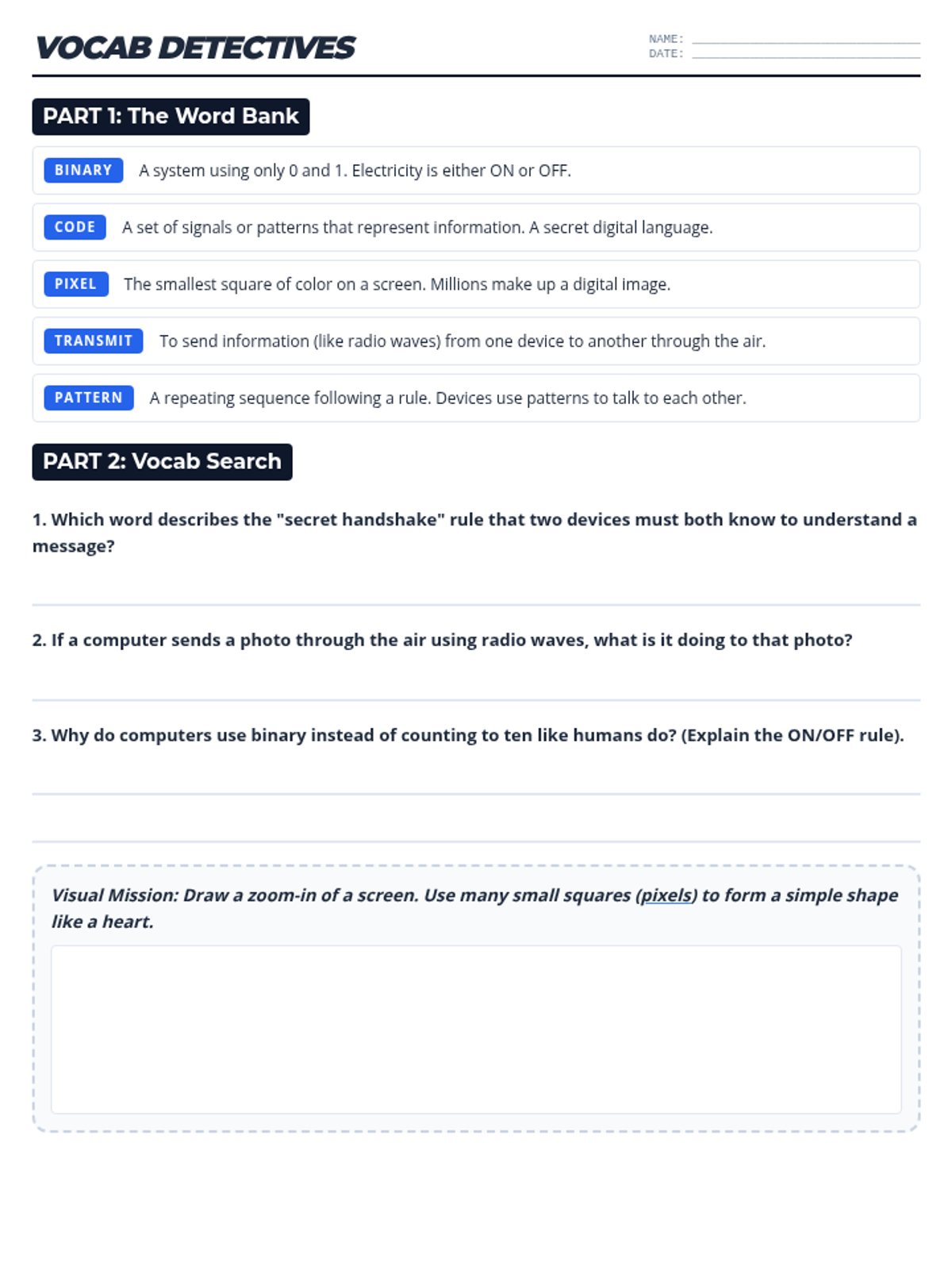
An advanced introduction to autonomy and AI logic for 4th graders. Students explore how robots make complex decisions using If/Else structures, sensor loops, and feedback systems to navigate dynamic environments.
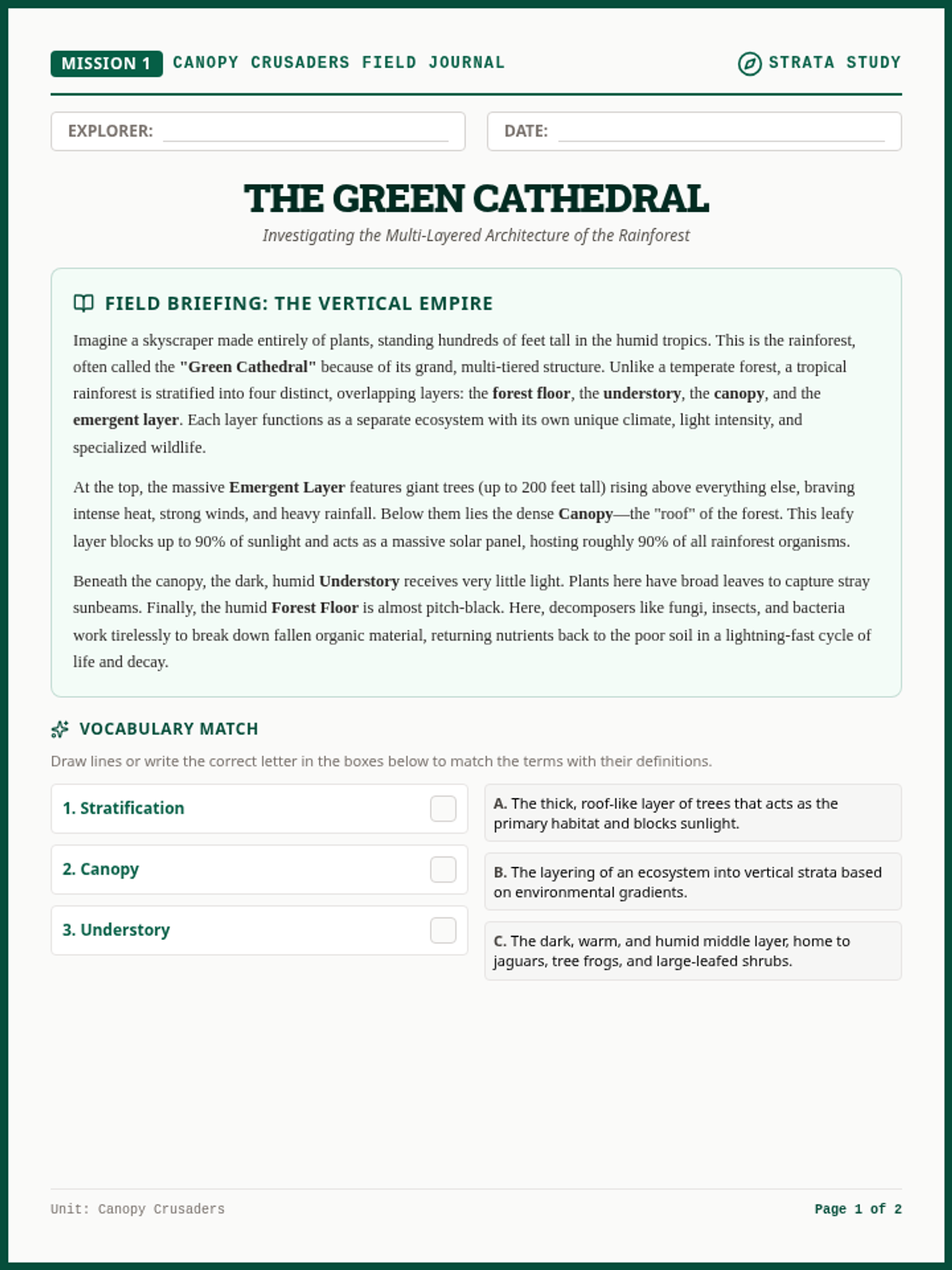
A collection of lessons focused on building foundational skills in both scientific modeling and literary analysis for 4th-grade students.
A 3-day introductory science sequence for early learners (PreK-1st) exploring the fundamental needs of plants, animals, and humans. Students will discover commonalities in survival requirements through visuals, guided practice, and hands-on sorting.
Una secuencia didáctica sobre el desarrollo web interactivo, enfocada en la captura de eventos del teclado mediante JavaScript para crear experiencias de usuario dinámicas y juegos sencillos.
A comprehensive 5-day phonics unit focused on the "bonus letters" (Floss Rule: f, l, s, z) including heart words 'your' and 'want'. Students explore the concept of doubling final consonants in one-syllable short vowel words through a factory-themed learning experience.
A multi-day exploration of the butterfly life cycle for 2nd graders, featuring interactive instruction, a directed drawing activity, and a summative assessment.
This sequence explores the evidence for biological evolution and the mechanisms of heredity, aligning with Grade 8 science standards for understanding Earth's history and life forms.
A two-week environmental science review sequence focusing on key takeaways: climate change, pollution, renewable energy, and biodiversity. Students compile a 'Field Dossier' review packet as a final course artifact.
A hands-on science and art unit where 2nd grade students investigate biodiversity in their school courtyard, comparing grassy and wooded habitats while repurposing natural materials into creative sculptures.
A comprehensive unit for 2nd graders exploring the wonders of our solar system, including the phases of the moon and the daily lives of space explorers.
A comprehensive unit for 2nd graders to explore diverse animal habitats around the world through hands-on activities, research, and a creative diorama project. Students will learn about the unique characteristics of different environments and how animals are adapted to survive in them.
An inquiry-based science and literacy curriculum for grades 1-3 that combines foundational scientific concepts with high-frequency sight word mastery and precision handwriting practice.
A comprehensive K-12 AI literacy sequence covering the fundamentals of how AI works, machine learning, ethics, social impact, and creative application through age-appropriate lessons.
A comprehensive 4-day sequence focusing on the application of thermal energy concepts, including conduction, convection, radiation, and insulation through hands-on labs and real-world analysis.
A series of ELD lessons exploring how human environments interact with nature, focusing on reading comprehension, academic language, and collaborative discourse.
A cross-curricular unit blending astronomy and Greek mythology, exploring how ancient cultures interpreted the night sky and the scientific reality of stars.
Une séquence pédagogique de 2 heures pour les élèves de 1ère Bac Pro sur le concept de couple de forces, illustrée par des applications concrètes sur un tracteur agricole (moteur, serrage de roues, relevage).
Un parcours complet pour maîtriser les Smart Money Concepts (SMC) basés sur la méthodologie Inner Circle Trader (ICT). Ce programme couvre les 7 concepts clés nécessaires pour identifier les mouvements institutionnels sur les marchés financiers.
A primary science unit exploring how different animals are covered and why these coverings help them survive in their environments. Students identify, categorize, and write about feathers, fur, scales, shells, and skin.
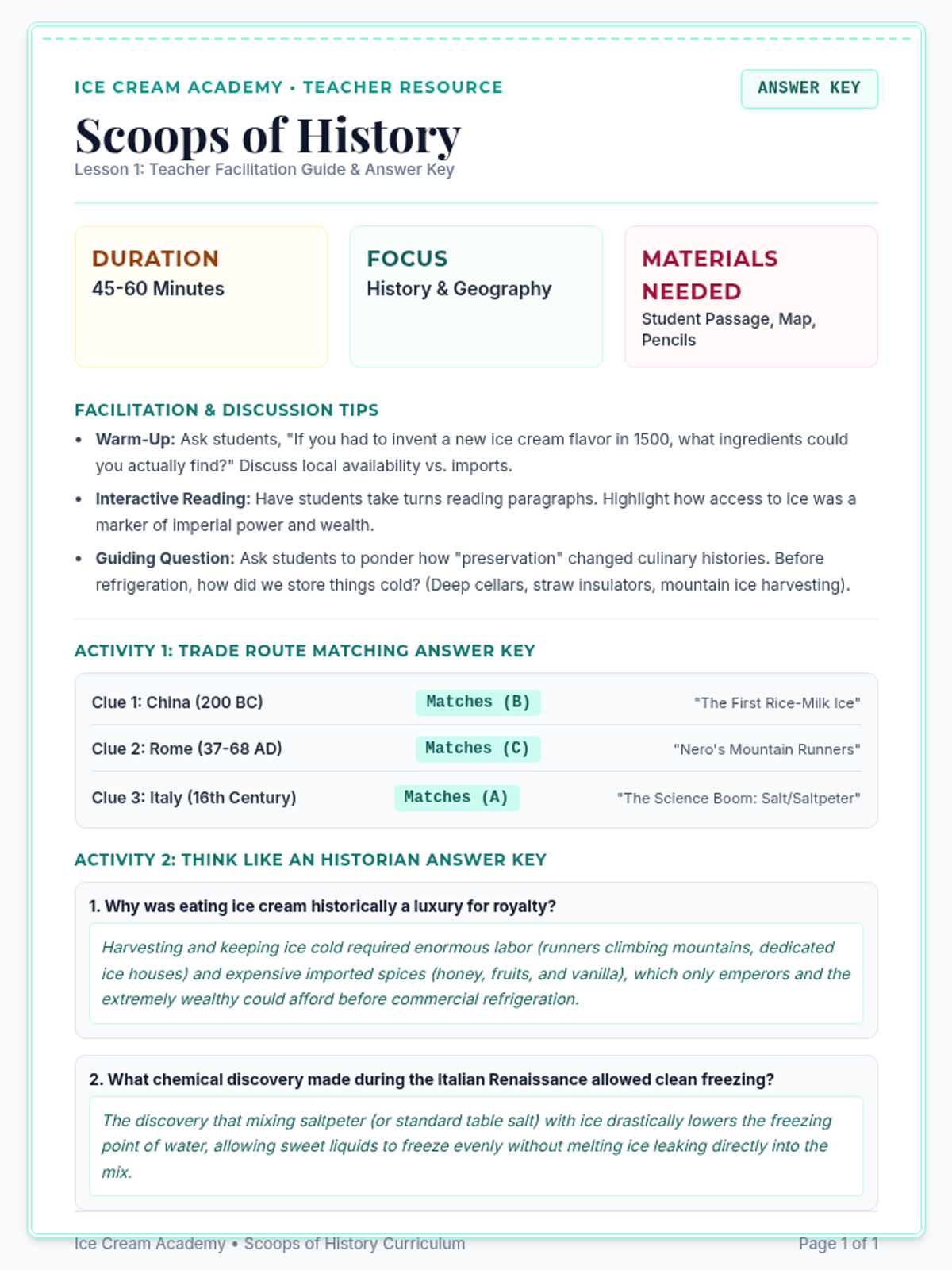
Une séquence de formation pour les enseignants de l'enseignement agricole visant à développer un esprit critique face à l'IA, s'appuyant sur les rapports de l'inspection (2025) et les notes de service (2026). Elle explore les enjeux cognitifs, le cadre juridique et les mutations de l'évaluation par capacités.
A collection of lessons focused on nature and science, designed with differentiated reading materials for diverse learners including early readers and special education students.
A high-energy introduction to coding concepts using the vibrant world of dance games to teach algorithms, sequencing, variables, and loops.
A rigorous 4-week MCAS prep sequence focusing on standard 8.MS-ESS2-6, exploring how solar energy, the atmosphere, and the oceans interact to create global circulation patterns and regional climates. Students will master the Claim-Evidence-Reasoning (CER) framework to tackle complex open-response questions.
A high-interest lesson exploring the neurological effects of short-form 'brain rot' content, designed for Grade 8 ELL students in Brazil. The sequence covers vocabulary acquisition, scientific concepts like dopamine and attention spans, and culminates in a structured whole-class debate.
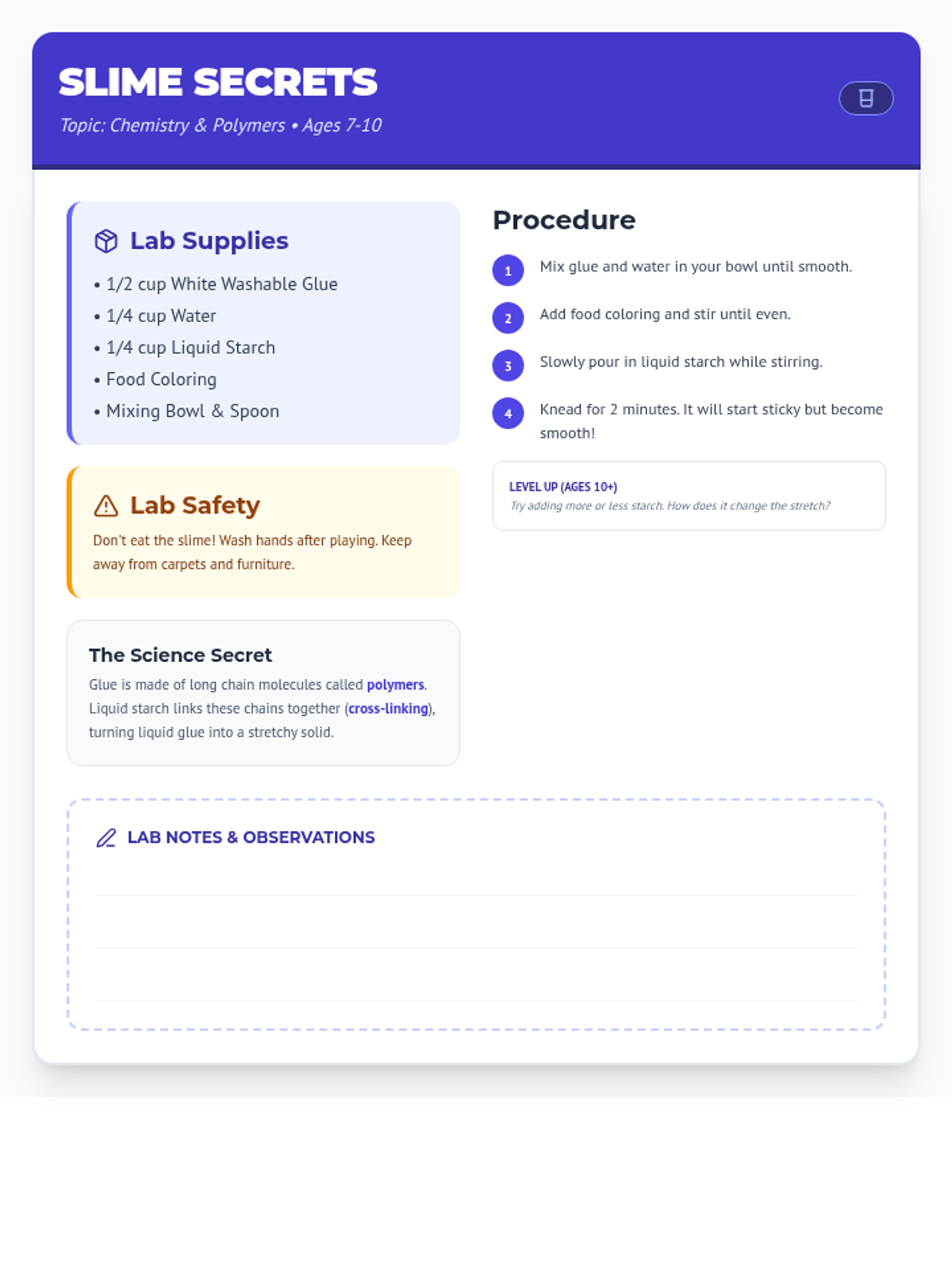
A series of lessons focused on the physical properties of matter, specifically mixtures and solutions, designed for 4th-grade science standards.
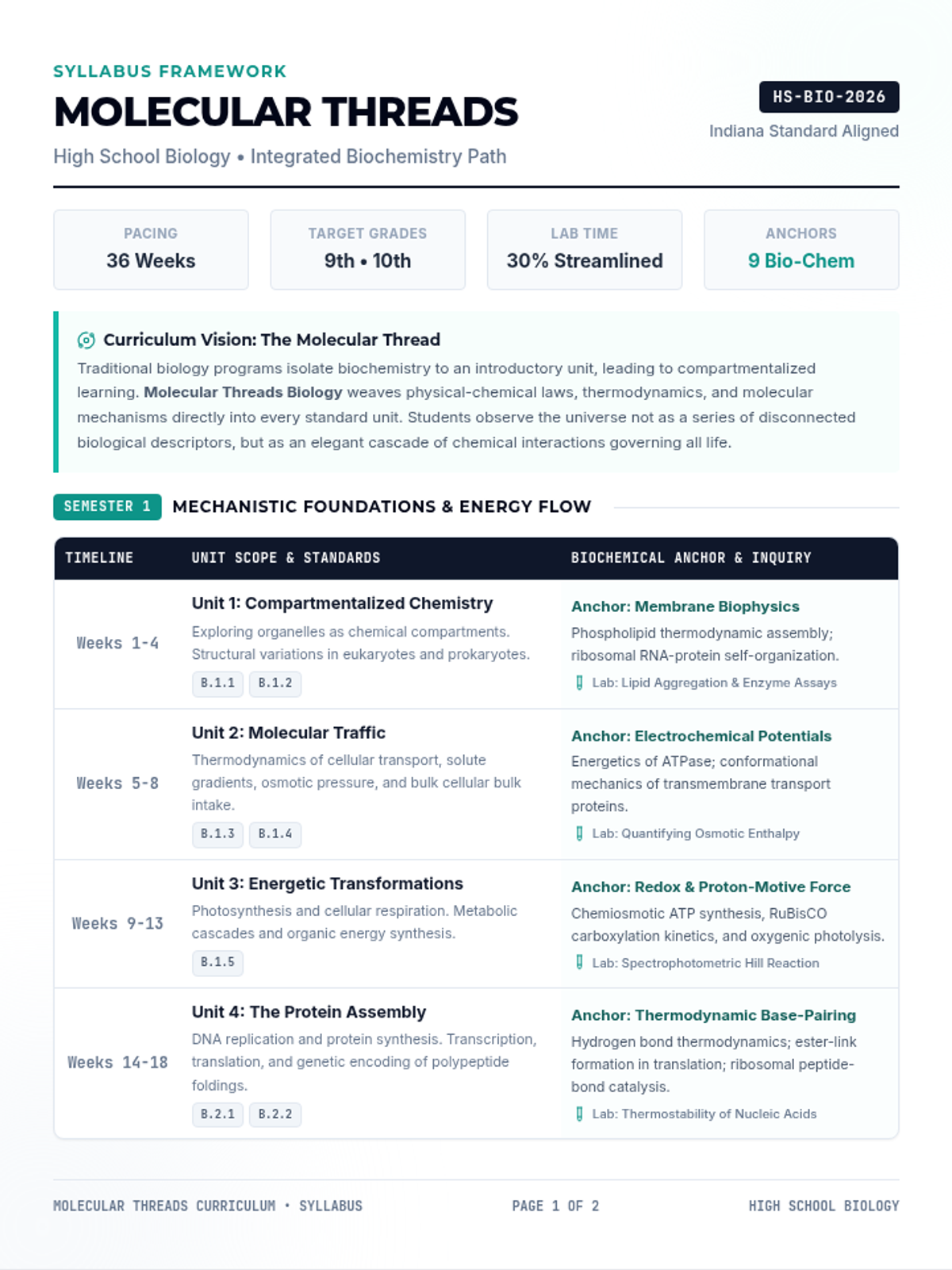
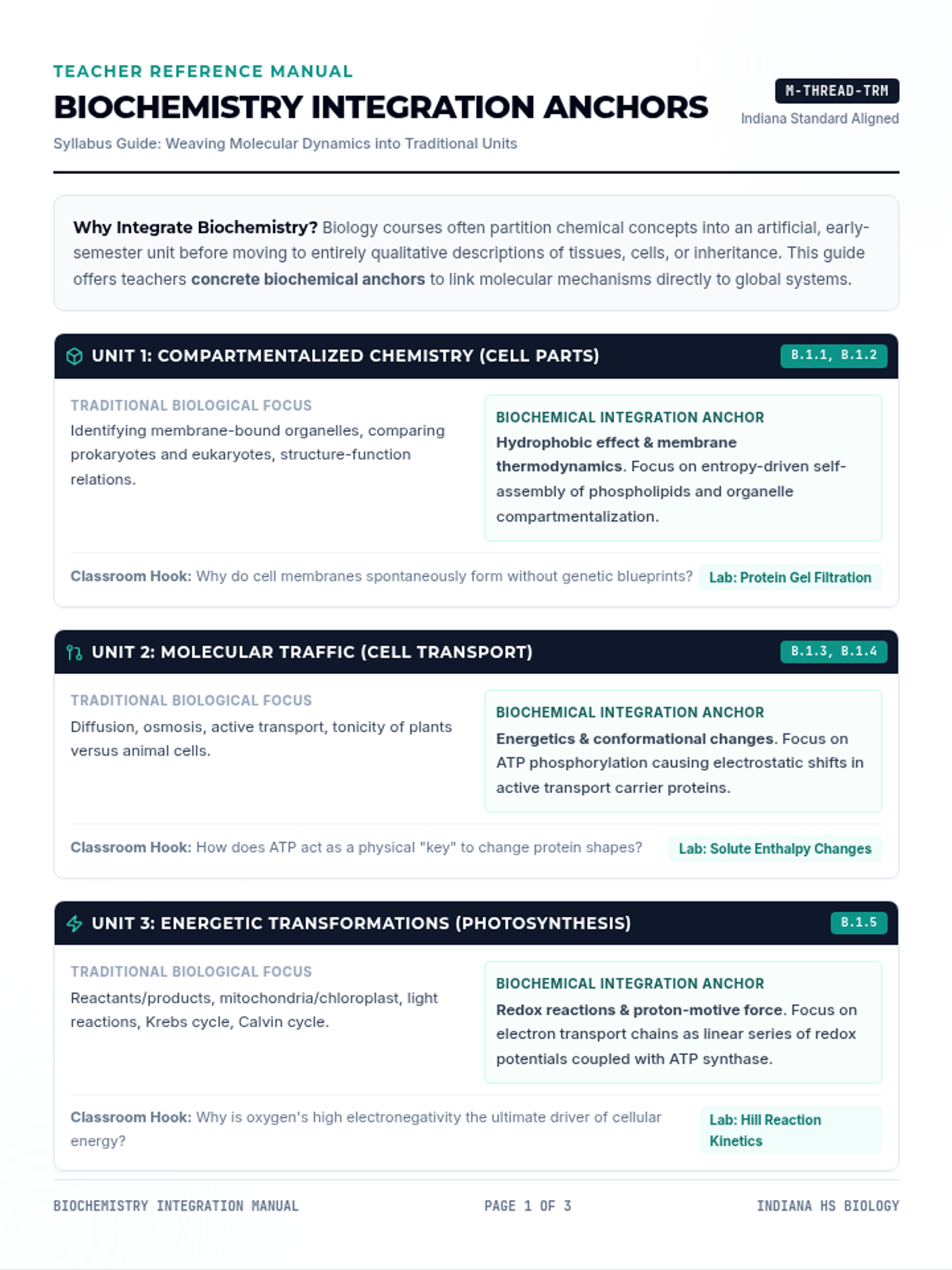
Advanced topics in modern genetics, exploring cutting-edge molecular tools and their applications in research and medicine.
A deep dive into the extraordinary sensory world of sharks, specifically focusing on their unique ability to detect electrical fields. students will transform into marine biologists to investigate the 'sixth sense' that makes these apex predators such efficient hunters.
A kindergarten science and literacy unit exploring weather patterns and seasonal changes through stories and hands-on activities.
A series of lessons exploring Earth's major systems, starting with the hydrosphere and its impact on the planet's processes.
A comprehensive review of foundational chemistry concepts including atomic structure, periodic trends, chemical bonding, and stoichiometry to prepare students for midterm assessments.
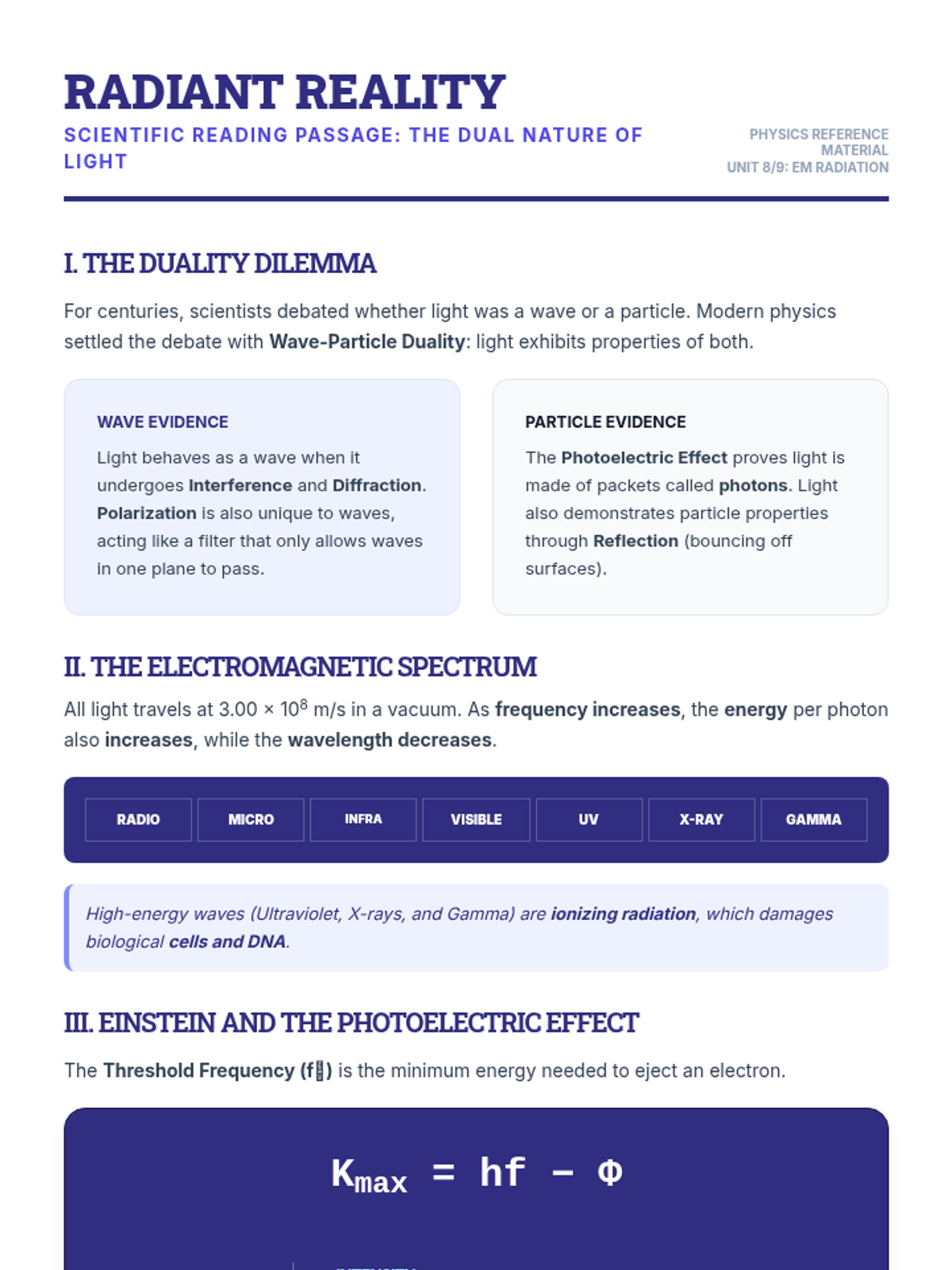
A comprehensive unit on chemical quantitative analysis, focusing on the mathematical foundations of chemistry through dimensional analysis, the mole concept, and stoichiometry.
A primary science and ELA sequence where students become 'Light Detectives' to investigate how light works, identifying sources, reflections, and shadows in their environment.
A series of building-themed lessons focused on mastering phonics patterns, starting with common digraphs and moving towards complex blends using a block-building aesthetic.