A comprehensive teacher facilitation guide updated for High School TEKS, designed for students reading at a 6th-grade level. Includes ELAR and Biology integration with modified station objectives.
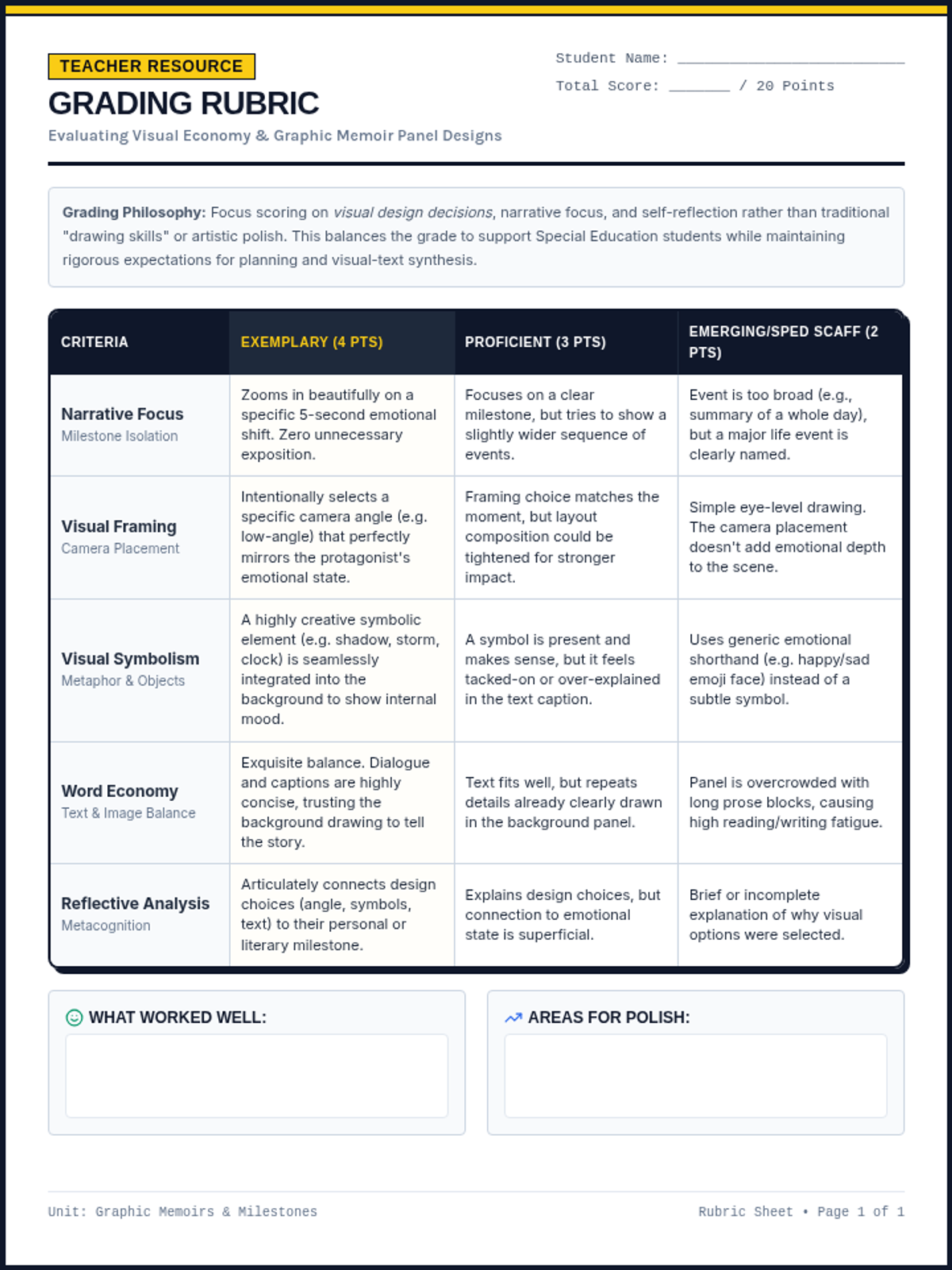
A print-ready, single-page grading rubric for the Panel by Panel graphic memoir. Categorized by narrative focus, visual framing, visual symbolism, word economy, and reflection. Includes clear criteria for both SpEd and advanced levels.
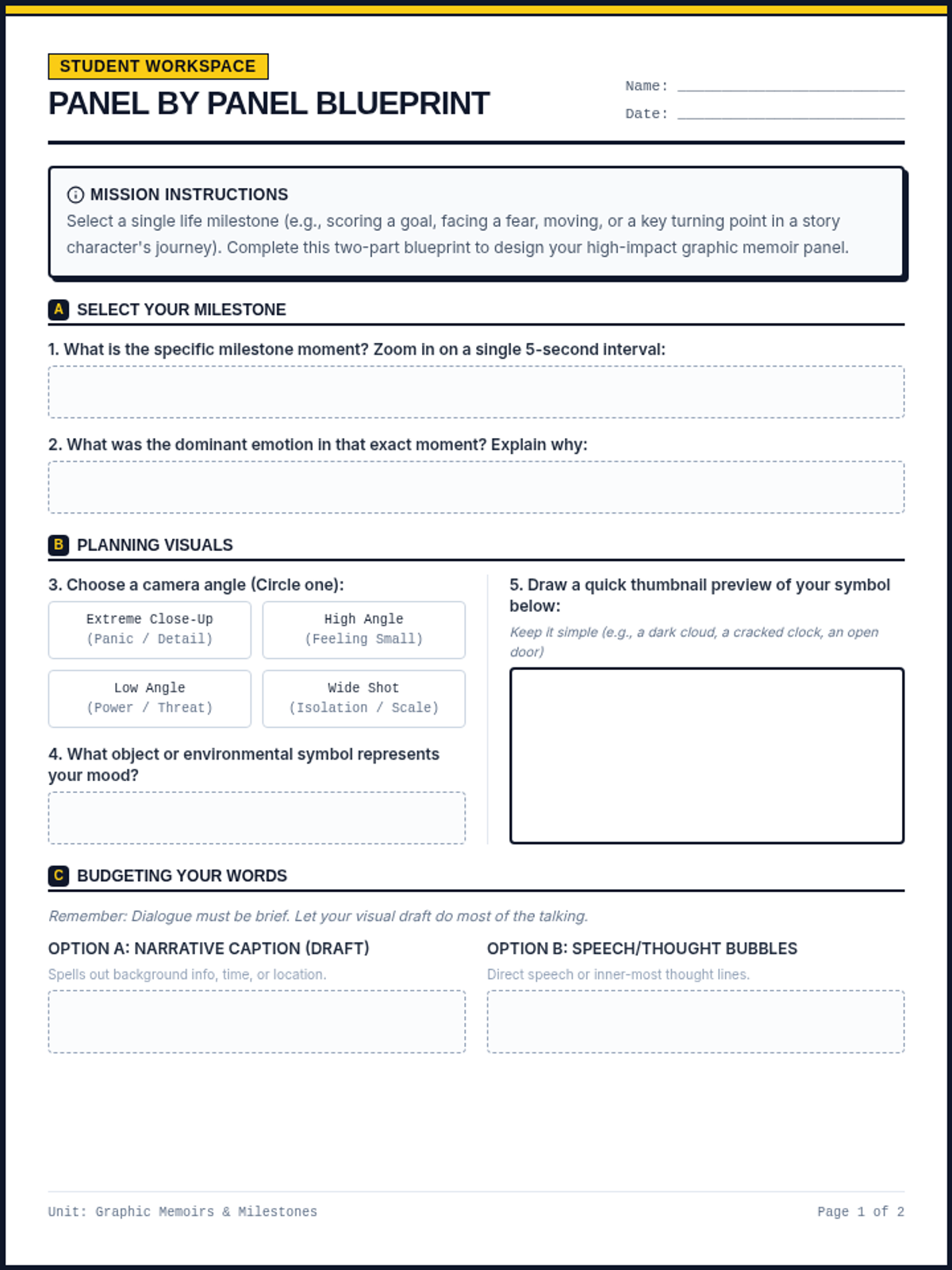
A print-ready, 2-page graphic memoir blueprint worksheet. Page 1 guides students through selecting milestones, planning camera angles, and sketching symbols. Page 2 provides blank, bordered layout grids for drawing the comic panels.
Instructional slides for introducing graphic memoirs, panel elements, visual economy, and prompt instructions. Features large fonts (24px+), stark graphic comic styling, and layout diagrams.
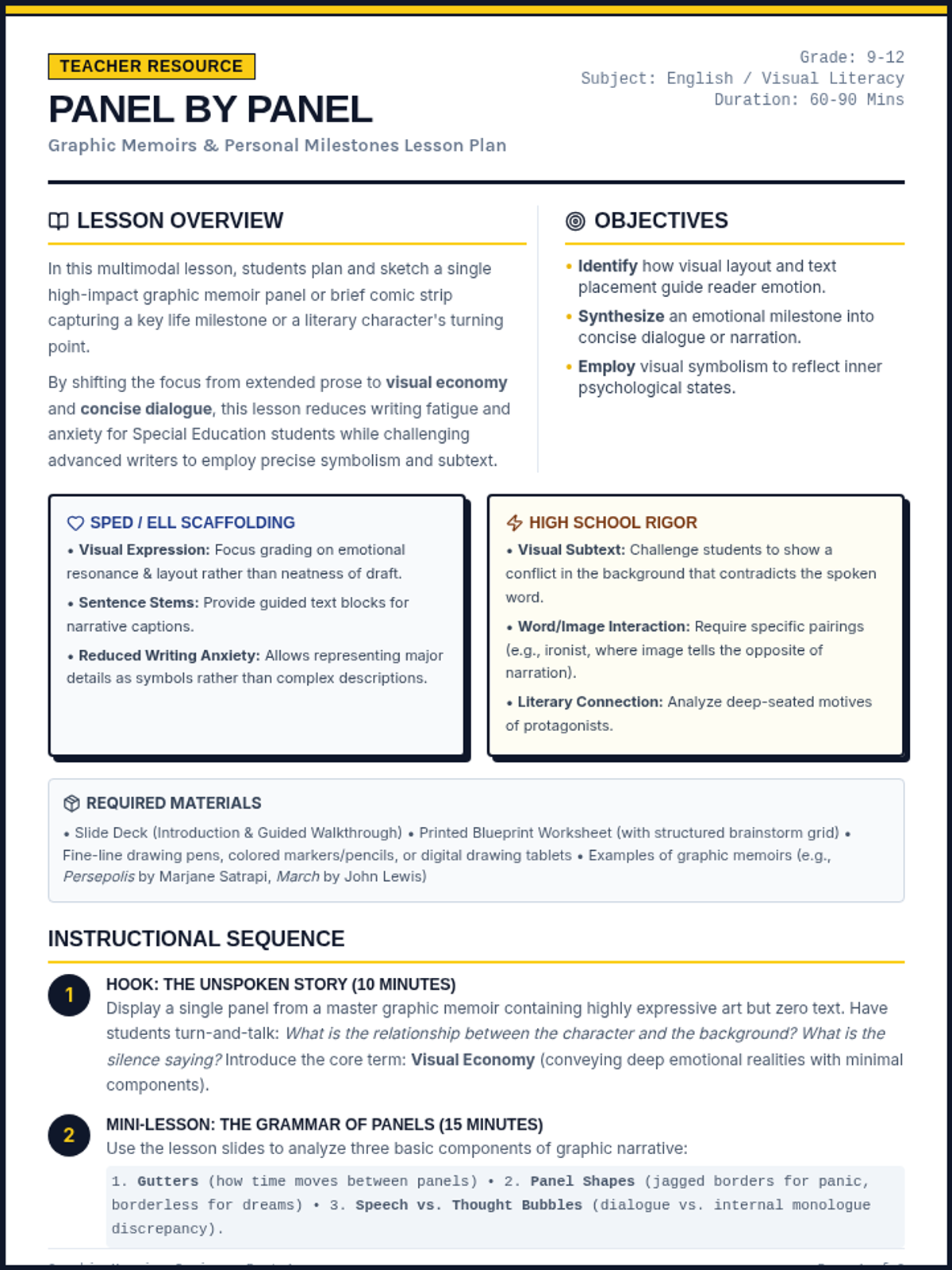
A complete, print-ready, 2-page teacher guide and lesson plan for the Panel by Panel graphic memoir unit. Features scaffolding strategies for Special Education and rigorous writing extension prompts for high schoolers.
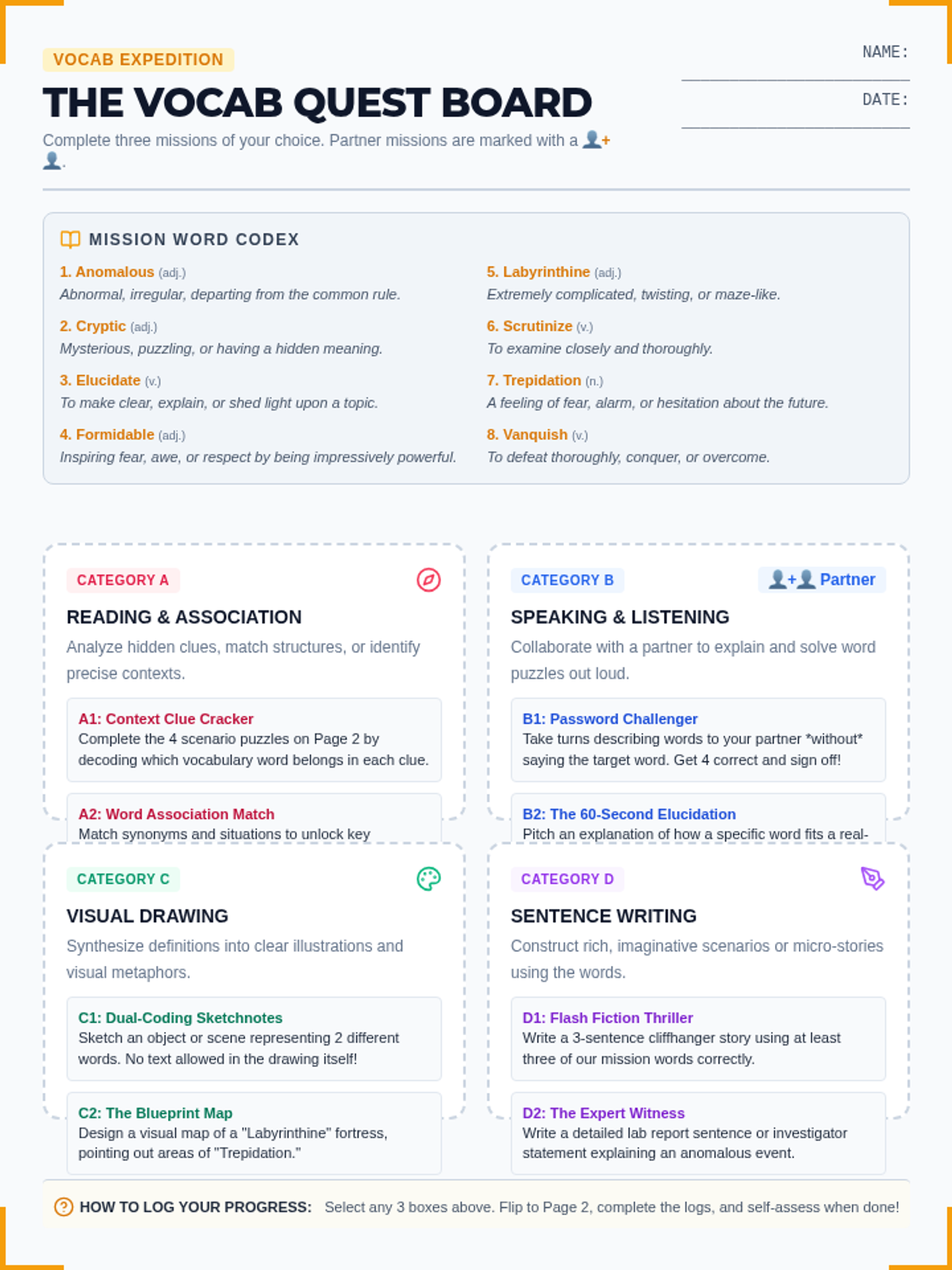
A thematic, adventure-inspired vocabulary choice board and double-sided activity worksheet focusing on high-frequency academic vocabulary. Includes a clean layout, a clear word guide, and beautifully structured student response areas for reading, drawing, speaking, and writing.
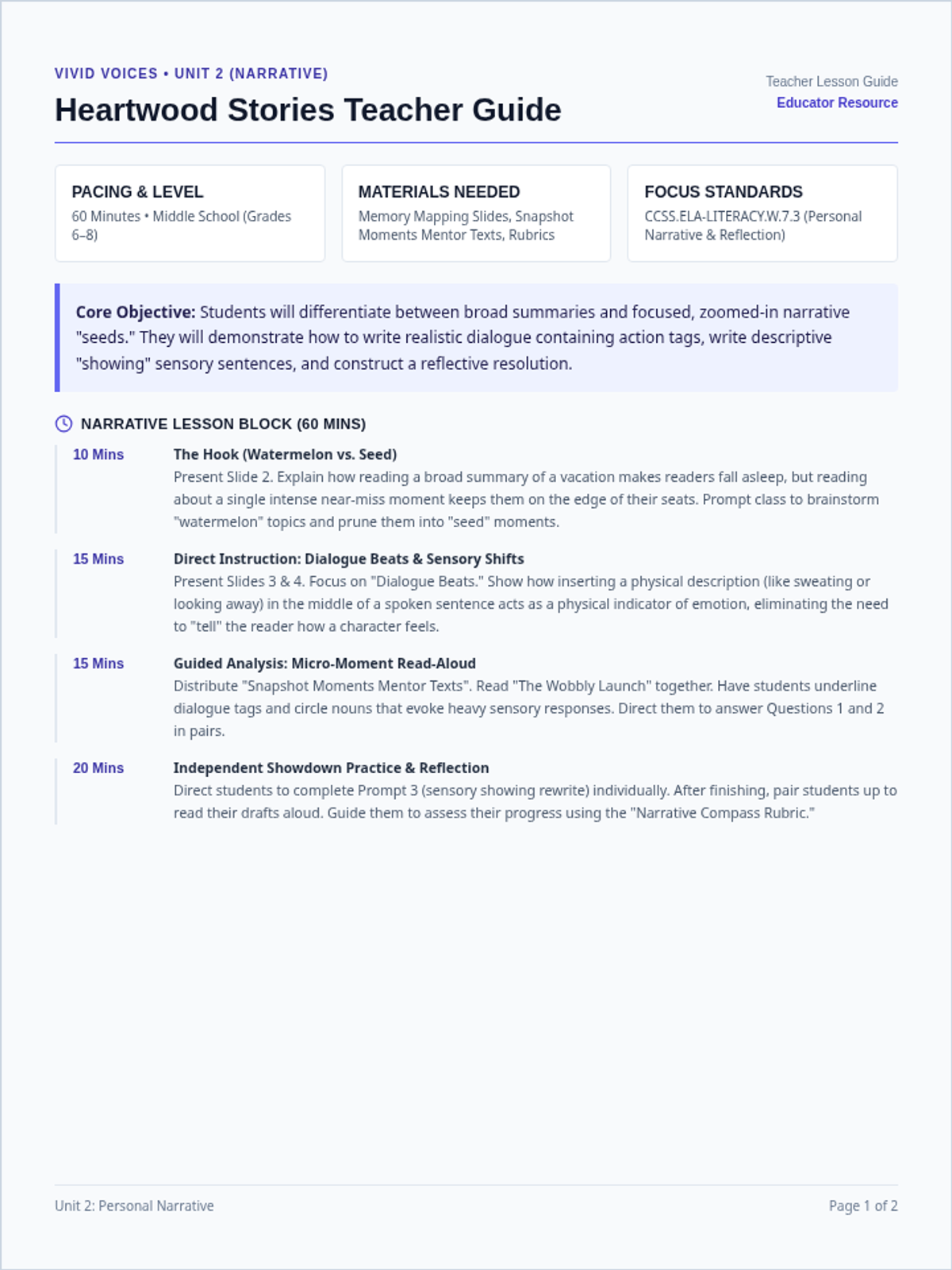
A comprehensive teacher's lesson guide containing lesson plans, facilitation questions, scaffolding tips, and sample answers for the Snapshot Moments narrative worksheet.
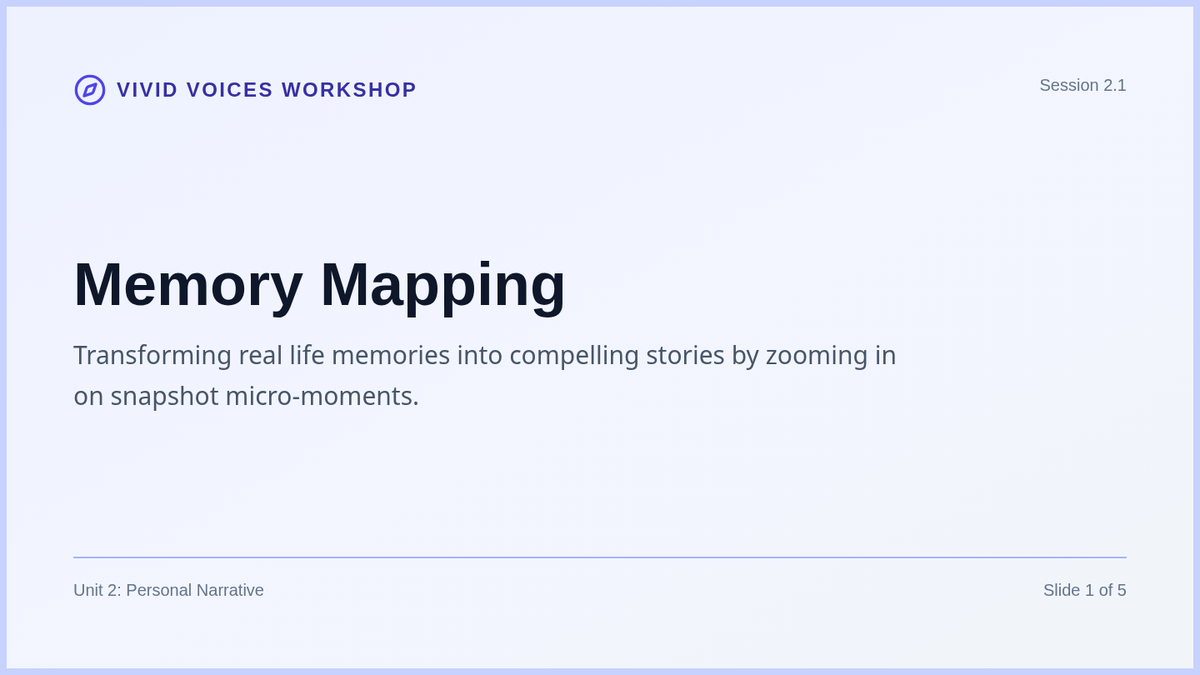
An immersive and beautifully typeset slide deck to teach students how to zoom in on snapshot memories, draft realistic dialogue, and write reflective resolutions.
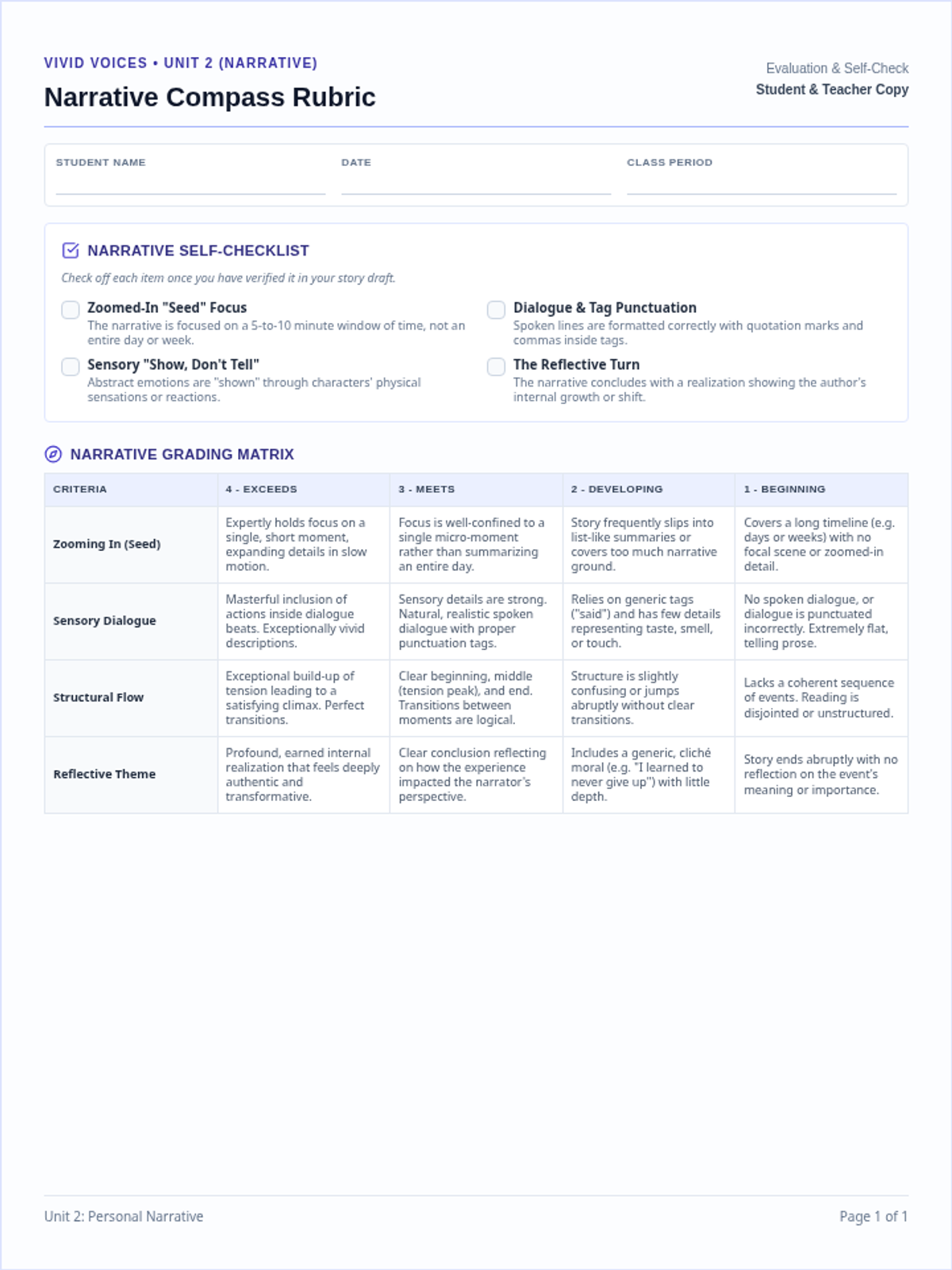
A student-facing self-assessment checklist and a detailed, four-category scoring rubric for evaluating student personal narrative essays and stories.
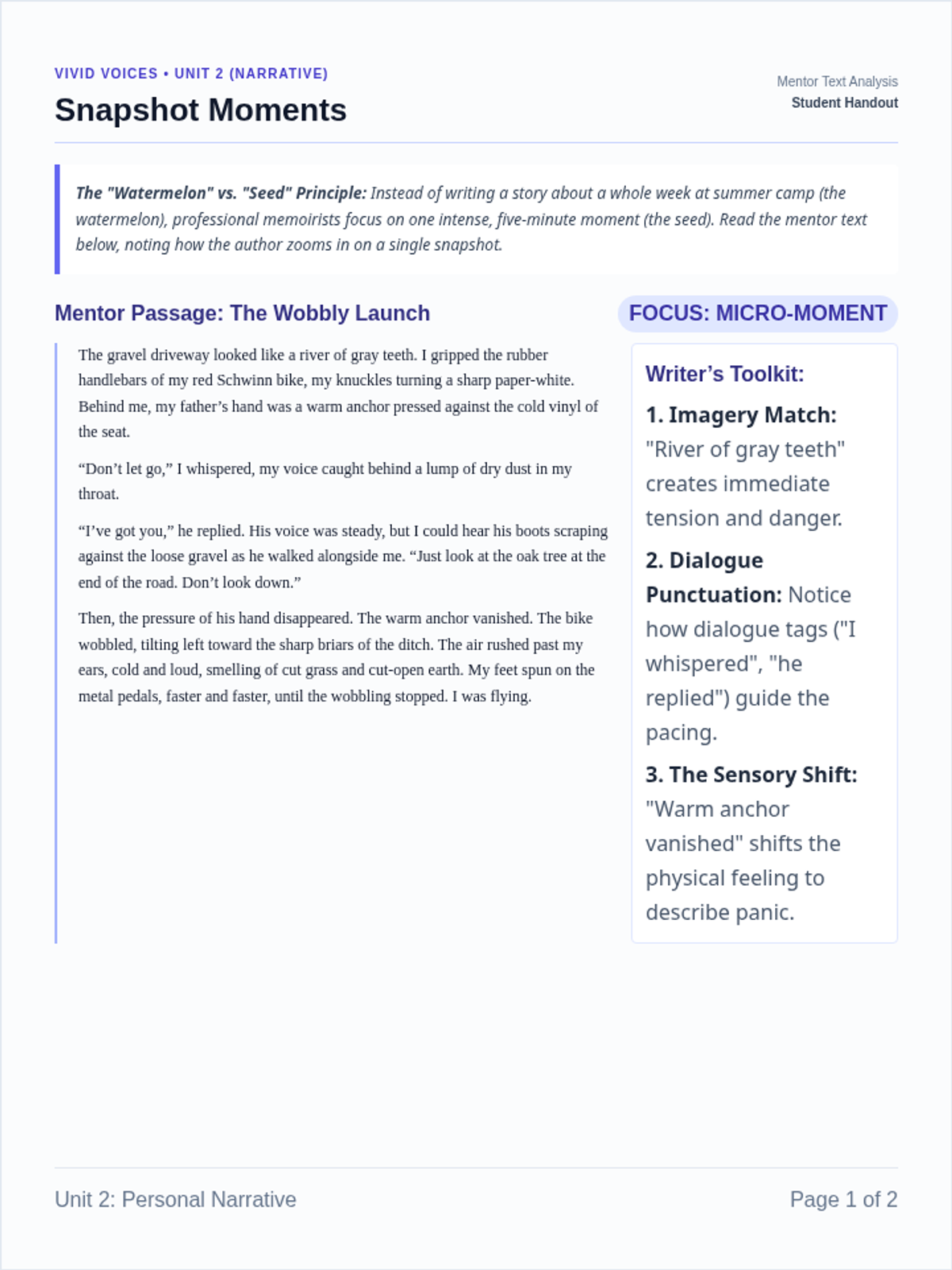
A mentor text booklet showing how to zoom in on a single snapshot memory with sensory details and realistic dialogue. Includes a narrative dissection worksheet with high-contrast handwriting spaces.
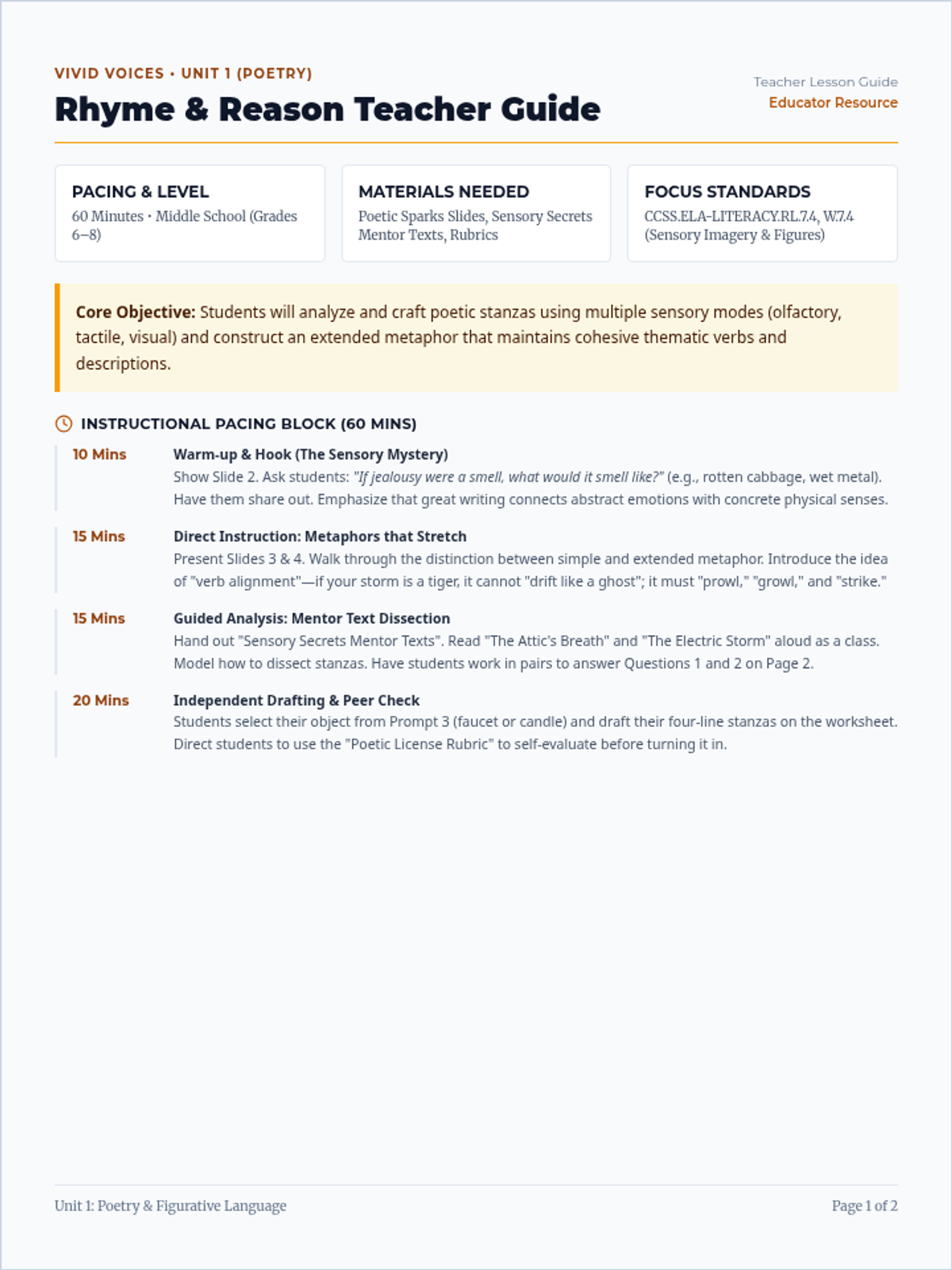
A comprehensive teacher's lesson guide containing block schedules, guided facilitation questions, scaffolding tips, and sample answers for the Poetic Dissection worksheet.
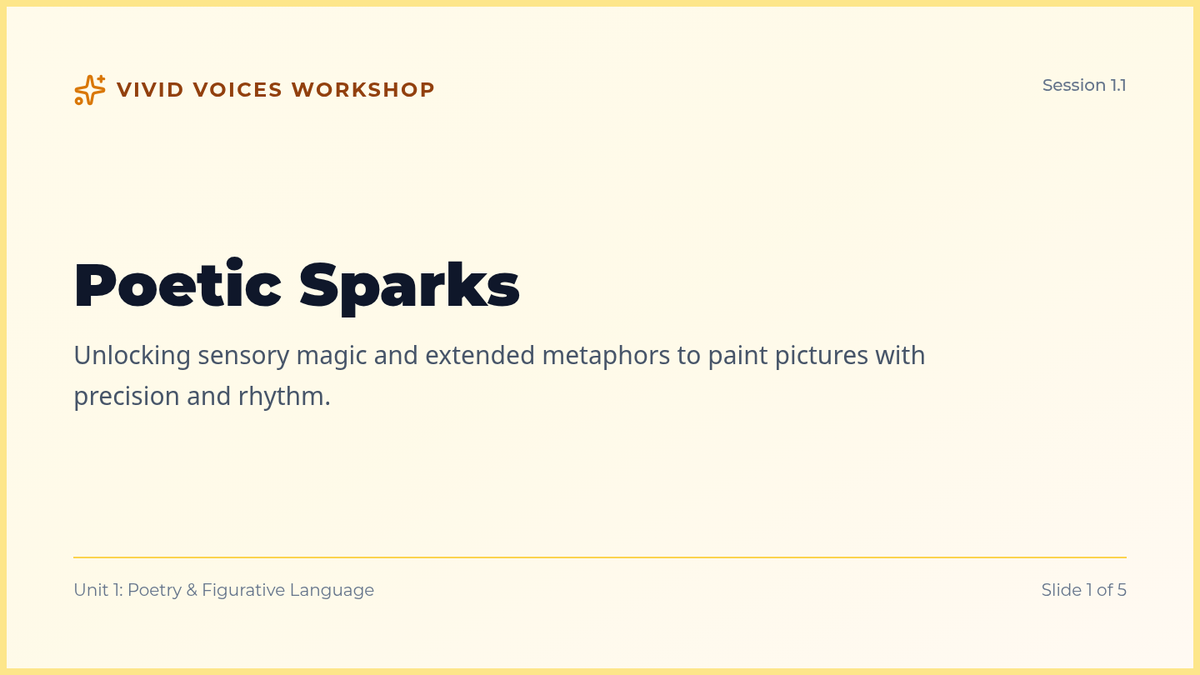
An elegant and engaging slide deck designed to guide instruction on sensory language, extended metaphors, and creative poetry drafting. Fully responsive 16:9 slides with large, readable text and clear discussion prompts.
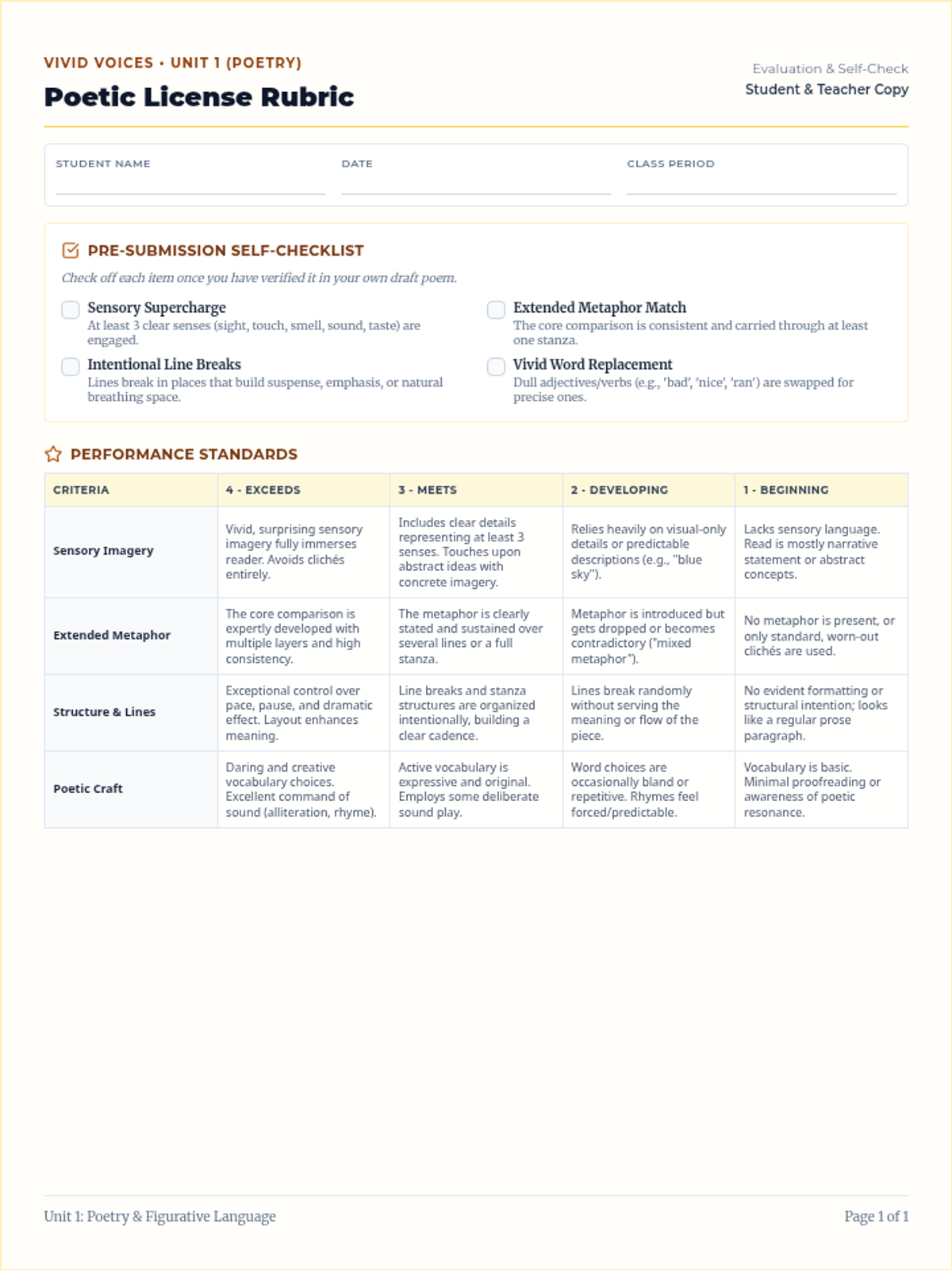
A student-facing self-assessment checklist and a detailed, four-category scoring rubric for evaluating student poetry and creative figurative language writing.
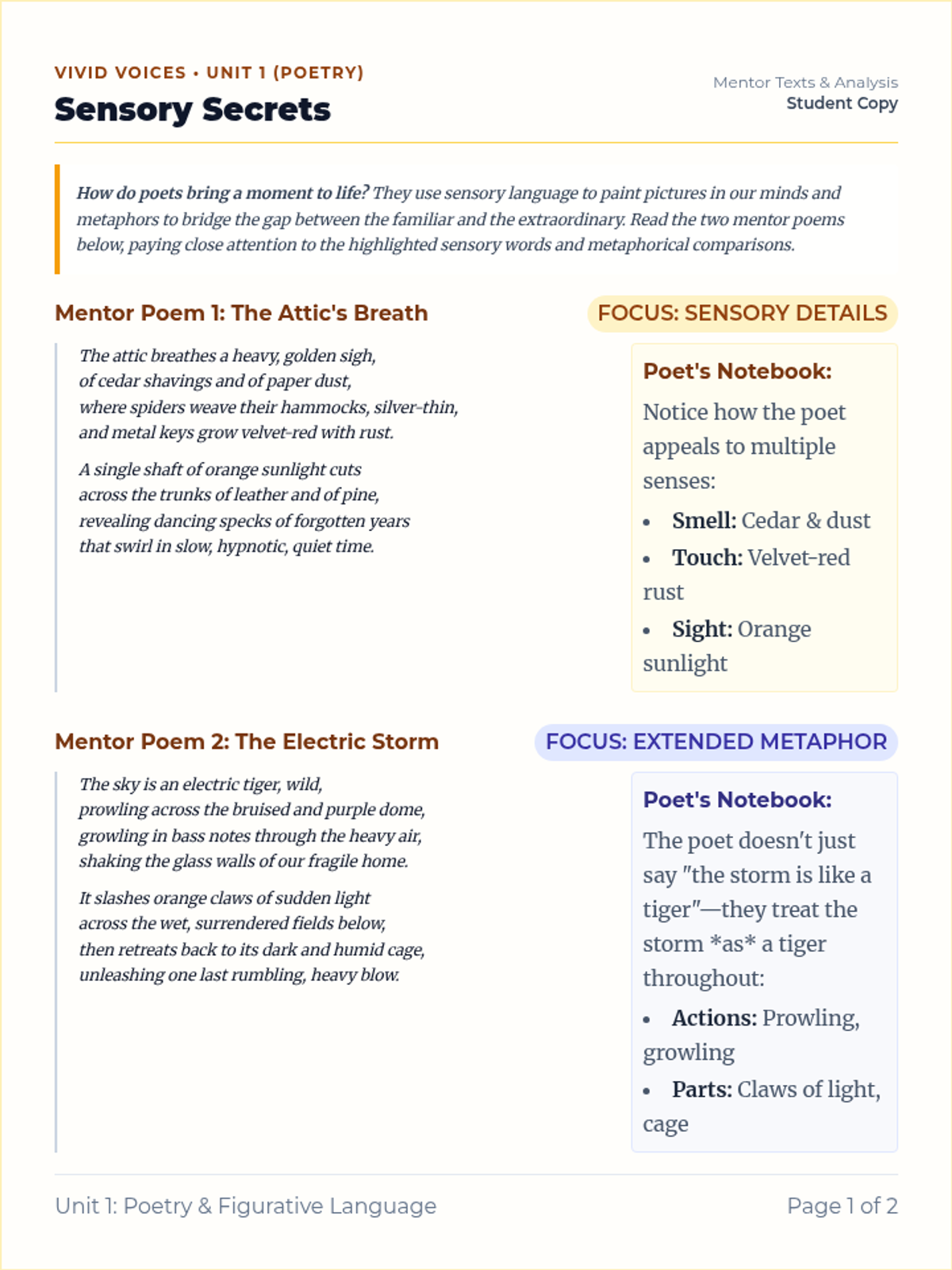
A beautifully typeset collection of original mentor poems designed to highlight sensory language and extended metaphor. Includes guided annotation margins and a structured poetry dissection workspace for student analysis.
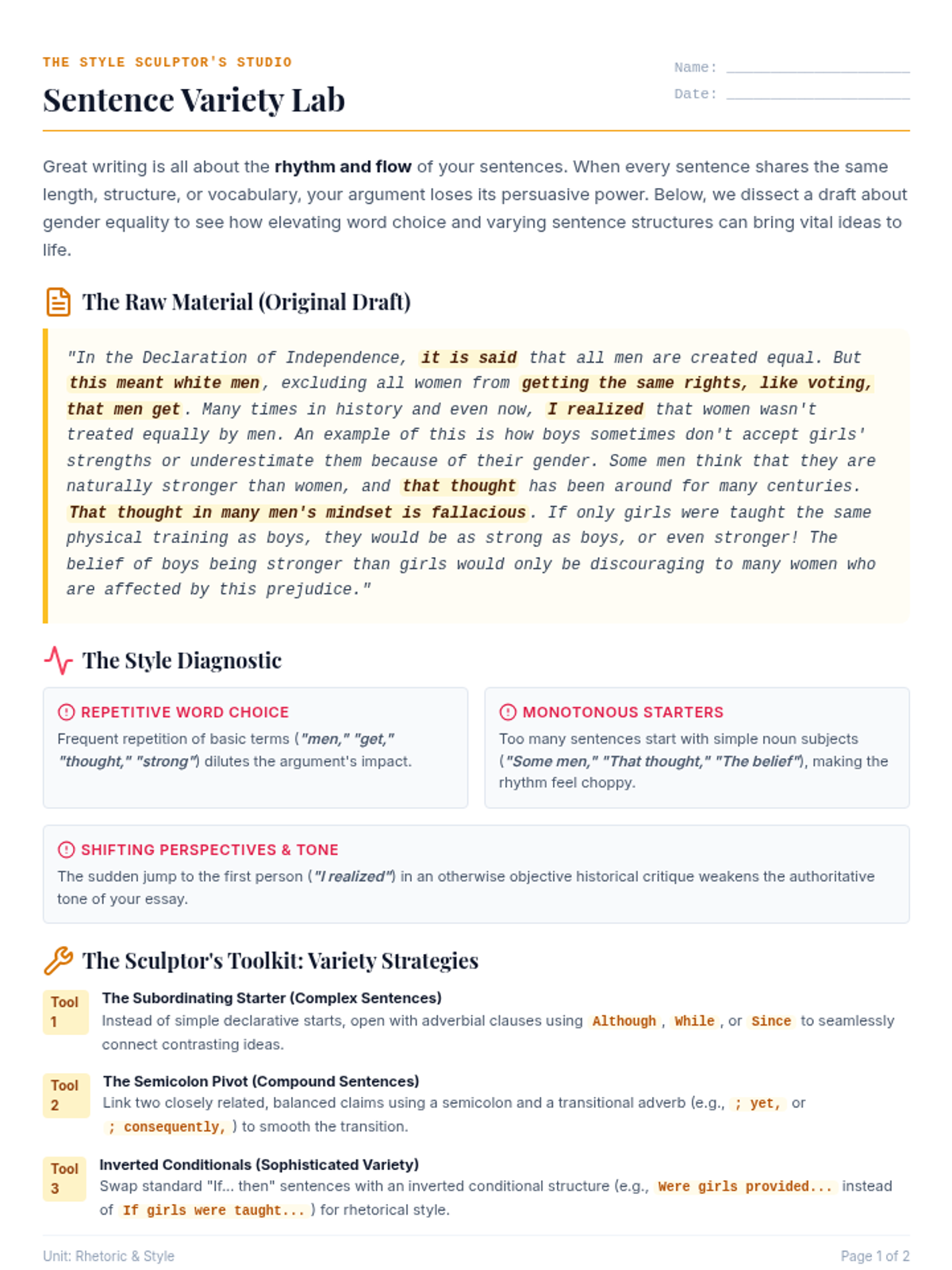
A beautifully formatted, printable 2-page student worksheet designed to teach sentence variety and vocabulary elevation. It breaks down the user's draft as a diagnostic case study, provides stylistic tools (such as inverted conditionals and subordinating openers), shows a fully polished version of the user's paragraph, and concludes with a clean practice workspace.
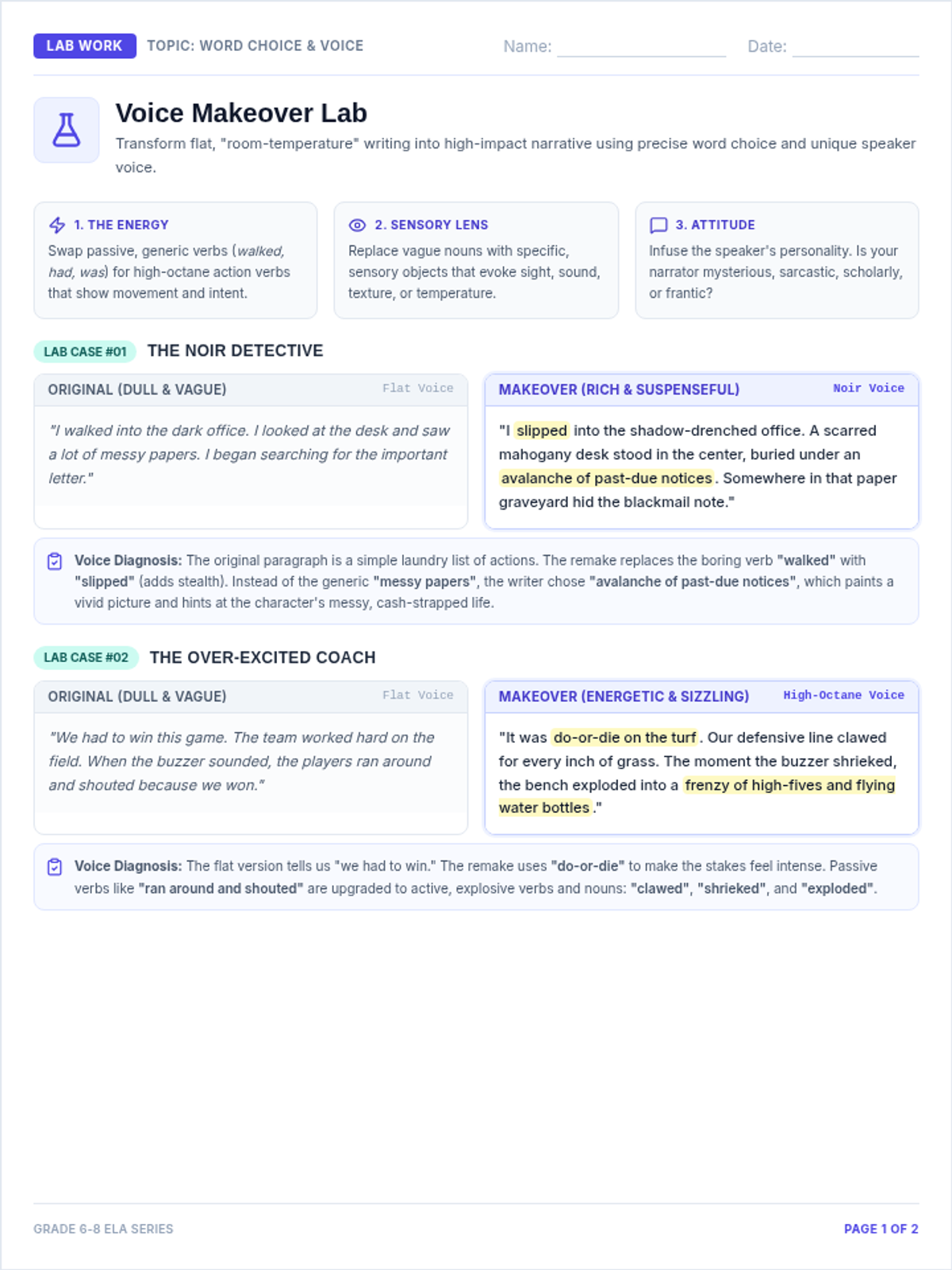
A high-impact printable worksheet and guide that teaches students how to transform flat writing into voiced narrative through side-by-side edits. Includes illustrative examples, annotated breakdowns, and guided writing spaces for student practice.
A 2-page complete teacher facilitation guide and answer key for the Microbot Mission viewing unit. It provides lesson timelines, pre- and during-viewing classroom discussion prompts, and fully explained numerical solutions for all math and geometry challenges.
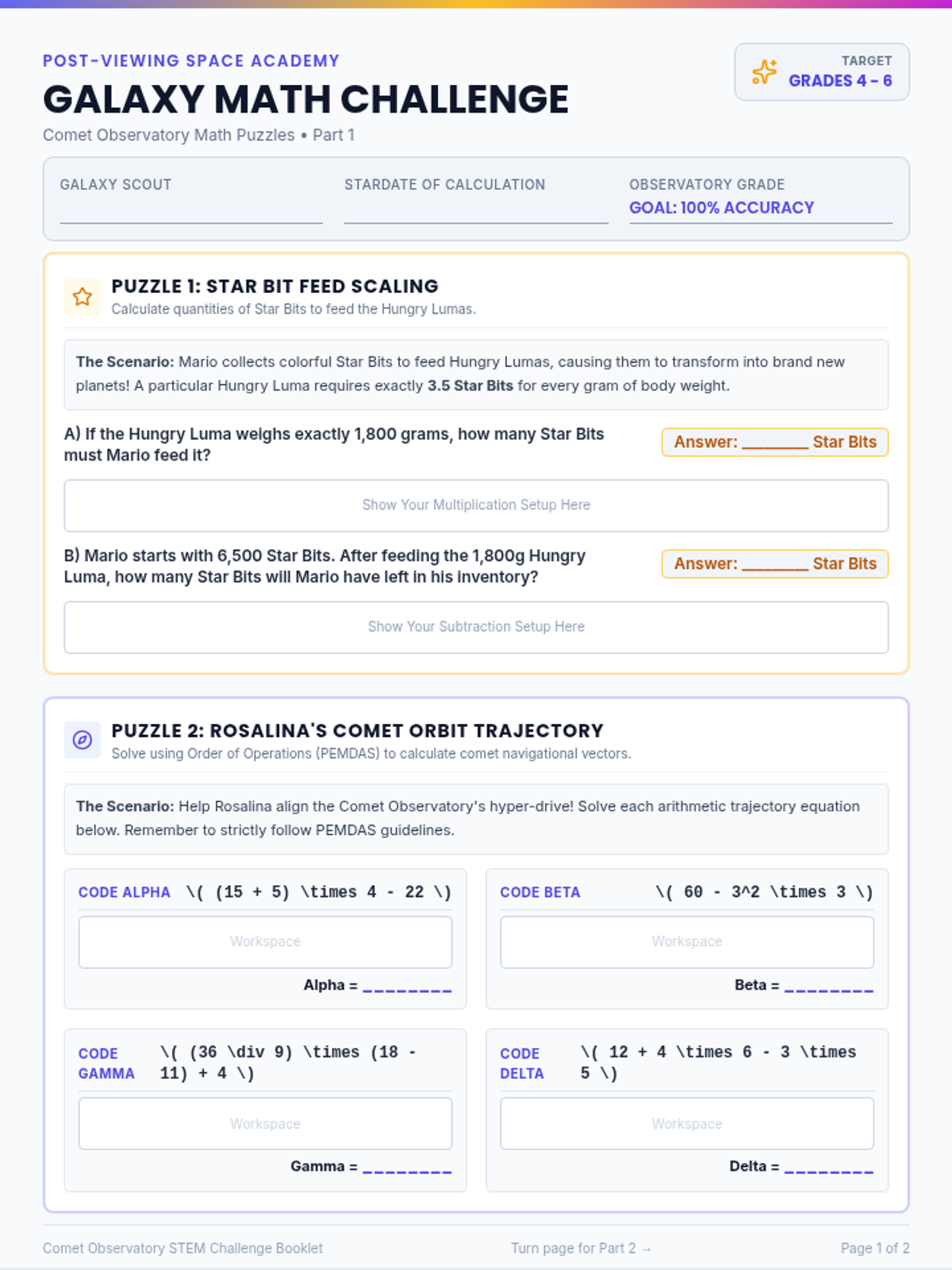
A high-energy 2-page math challenge booklet based on the physics, orbits, and story of Super Mario Galaxy. It presents Grade 4-6 aligned puzzles covering Star Bit scaling, PEMDAS navigational vectors, distance word problems, and orbital geometry.
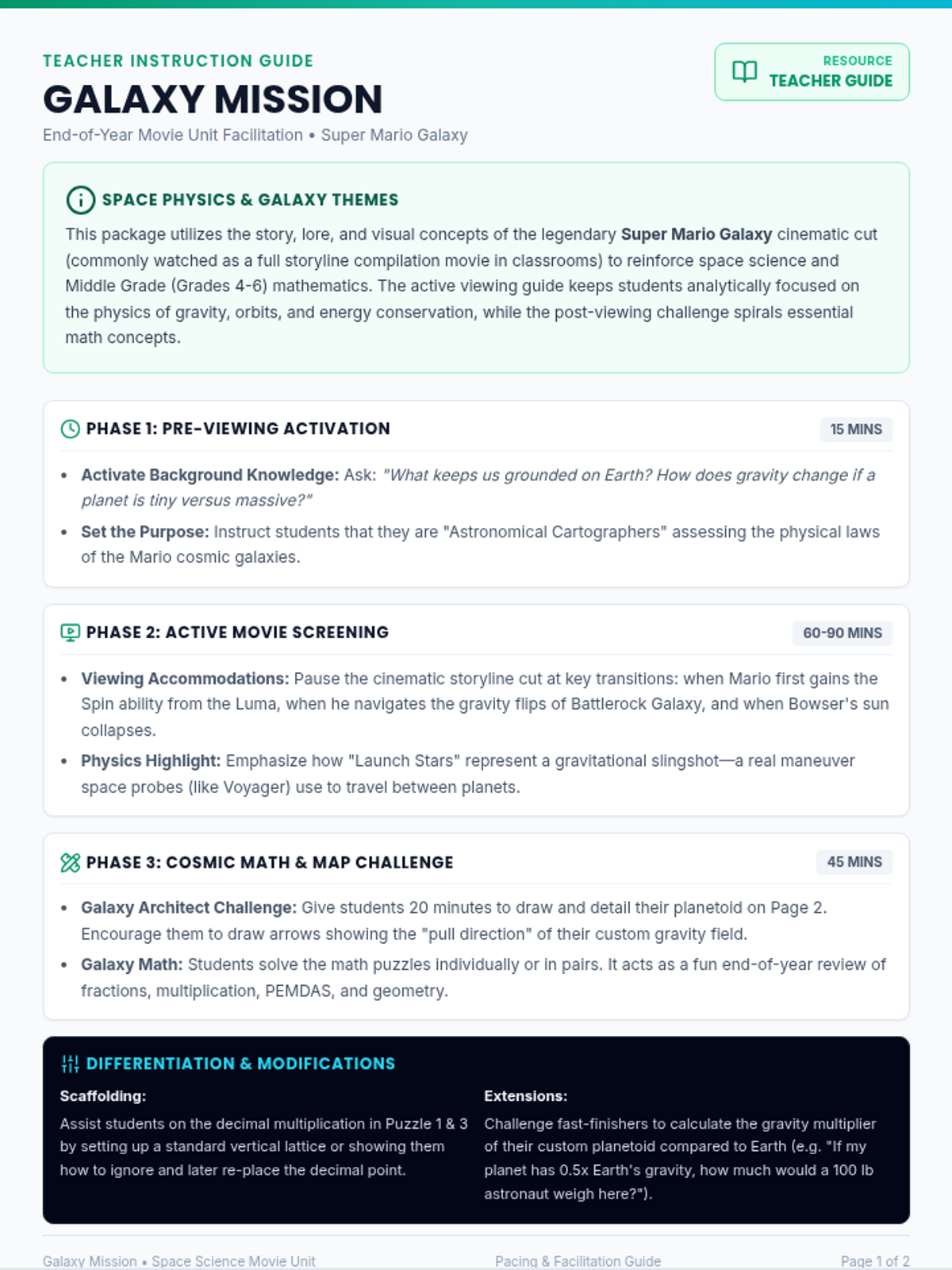
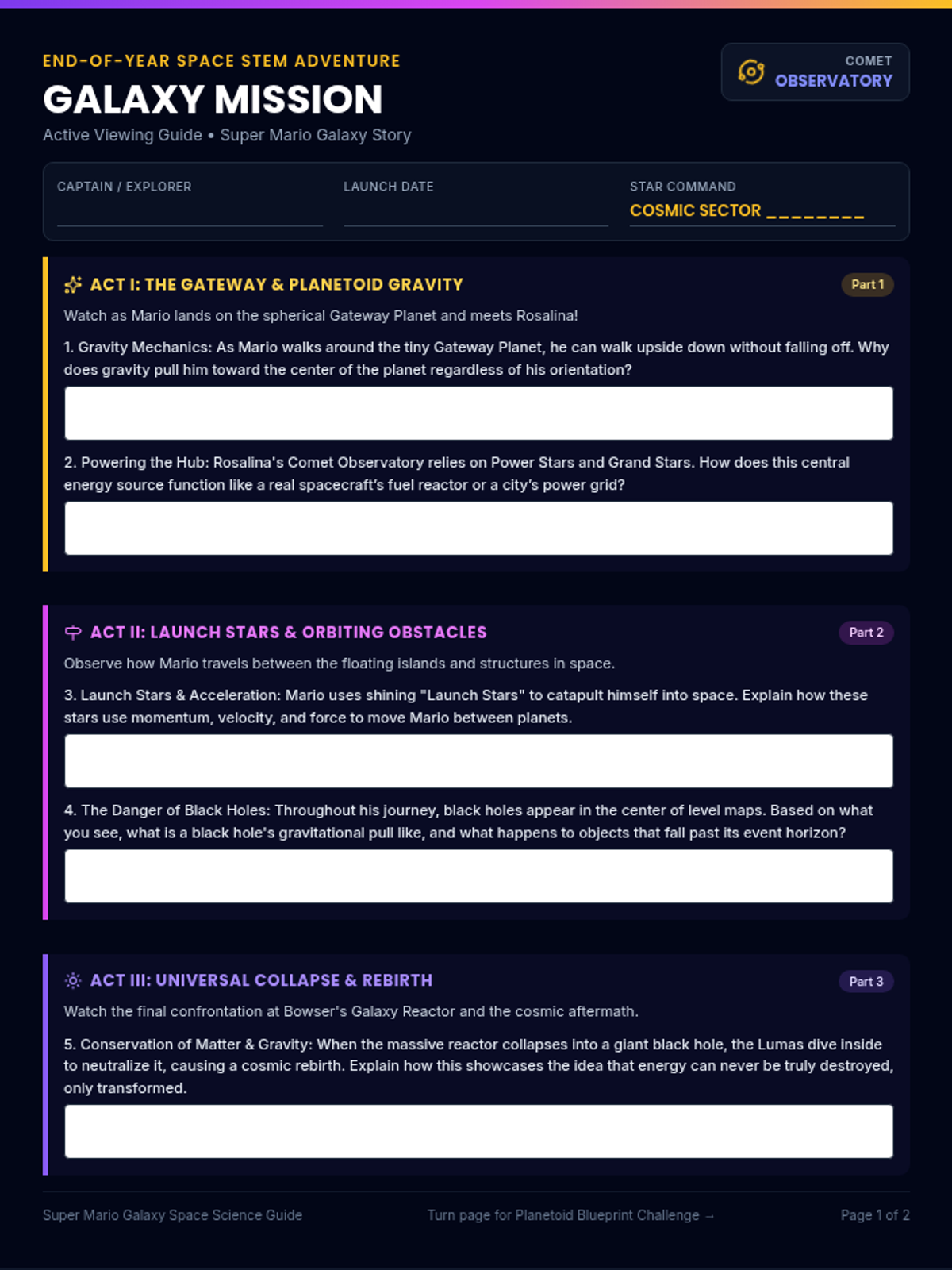
A 2-page active viewing and creative space-science guide based on the story of Super Mario Galaxy. Students explore gravity, orbits, energy transfer, and black holes, followed by designing and mapping their own gravitational planetoid.
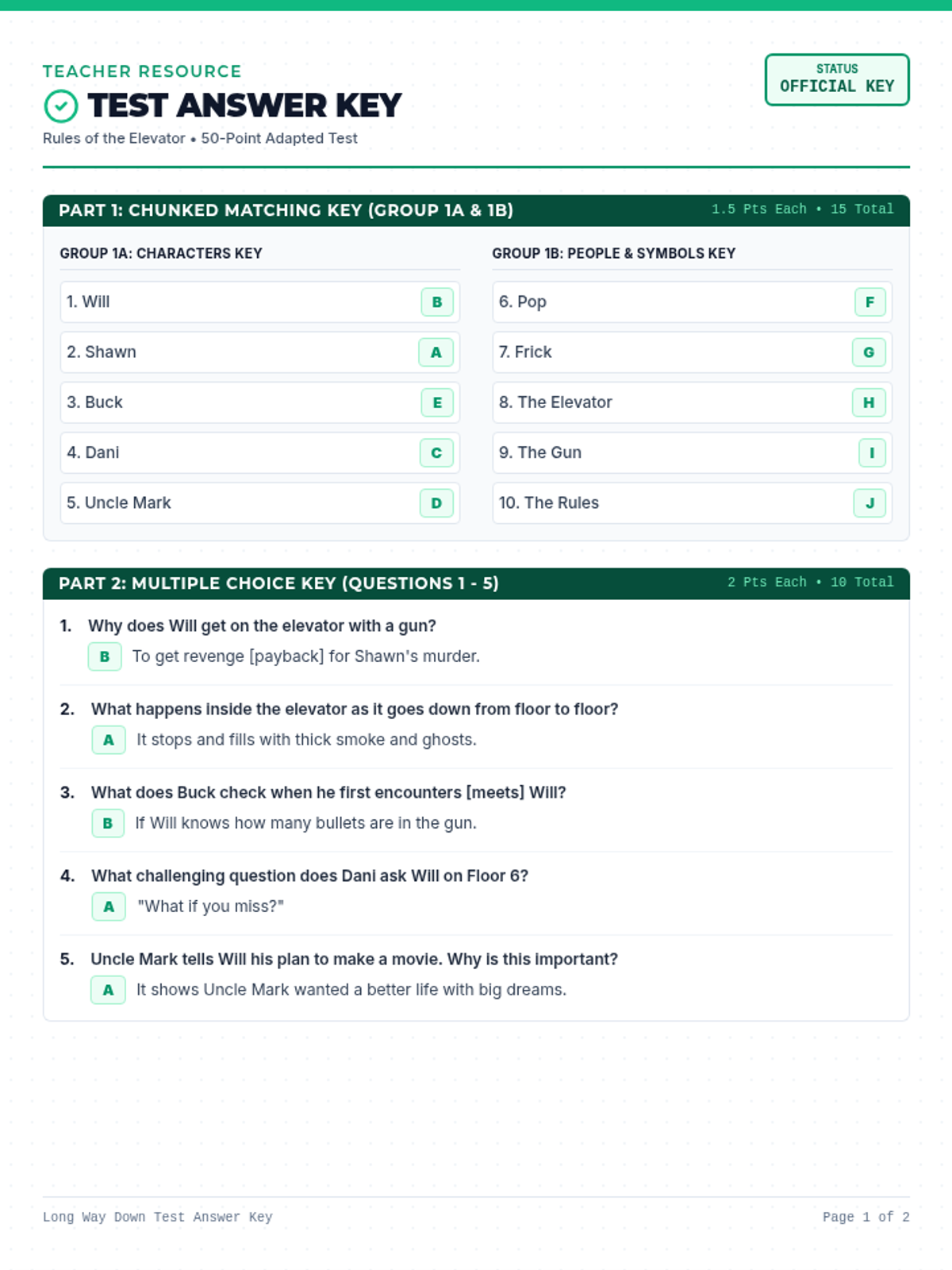
An answer key for the 50-point adapted unit test on Jason Reynolds' Long Way Down, featuring correct answers for matching, multiple choice, and sample high-scoring responses for short-answer questions.