A multi-page student passport used to track progress through the four language lounge stations. It includes a reading passage, writing area with sentence stems, a speaking checklist, and a STEM design/reflection space.
A differentiated, 2-page transition-drafting worksheet. Page 1 (Foundation Layer) scaffolds the connection between hooks and thesis statements with structured prompts, while Page 2 (Structural Master) challenges advanced writers to use nuanced bridge-building strategies like concession and scale shifts.
A structured, 2-page graphic organizer designed as an architectural blueprint. Helps students systematically draft magnetic hooks, bridges, thesis statements, and cohesive conclusions with high-contrast, clean writing zones.
A 6-slide visual presentation modeling essay introductions and conclusions using a blueprint structural metaphor. Features formulas for magnetic hooks, seamless bridge transitions, and memorable capstone conclusions.
A professional, highly legible grading rubric evaluating students across key persuasive elements including Thesis & Claim, Evidence, Counterargument Crusher, and overall Structure & Style.
A structured, 2-page print-ready planning graphic organizer for students to outline and organize their persuasive tech essay. Includes dedicated spaces for a hook, thesis statement, evidence gathering, and counterargument construction.
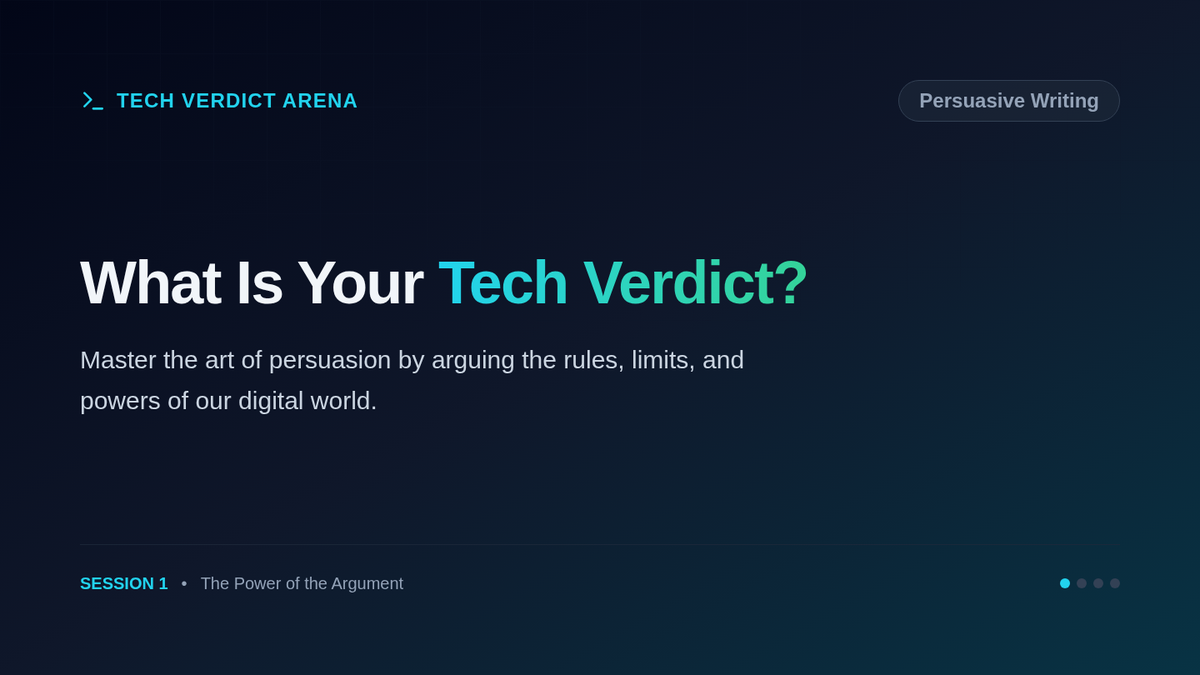
A modern, high-impact presentation slide deck introducing students to persuasive writing structures through real-world technology debates like social media limits and video game cognitive benefits.
A single-page formative assessment exit ticket where students analyze vague steps for logical loopholes, practice writing highly precise instructions, and explain why exact detail is crucial for programming.
A highly-structured 2-page student worksheet that helps kids brainstorm, sketch, and systematically draft chronological, step-by-step algorithms for building a marshmallow fluff and jelly sandwich.
A comprehensive, step-by-step facilitation guide for teachers on how to execute the literal-interpretation marshmallow fluff and jelly demo, complete with loophole guides, common student instruction errors, and reflection prompts.
A vibrant, projection-ready slide presentation that guides students through the 'Exact Instructions Challenge'. It establishes the rules of the robot-teacher demo, showcases ingredients, sets up the writing activity, and leads the class debrief on the importance of clarity.
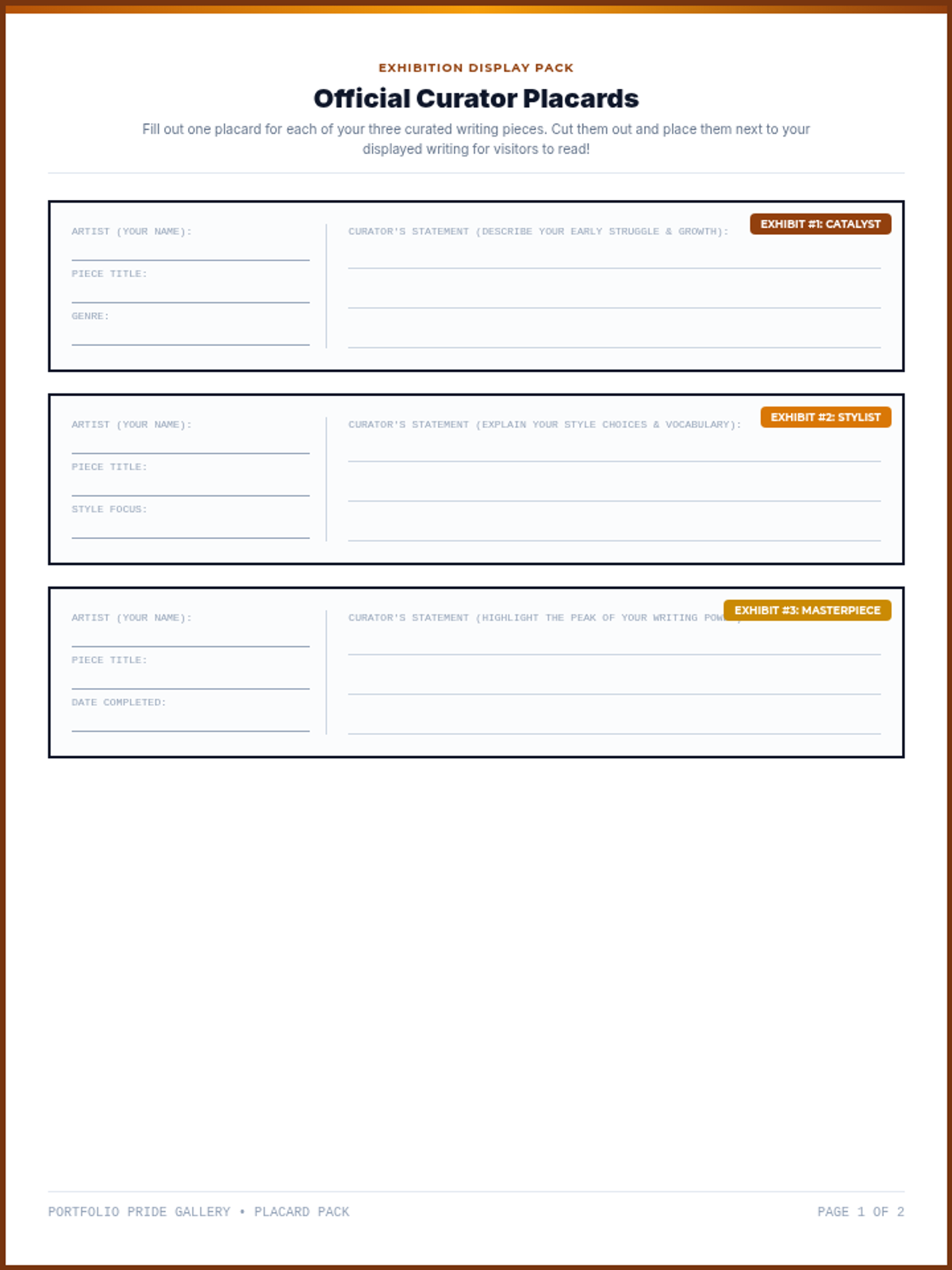
Printable museum placards/exhibit labels for students to write their curator statements, plus a customizable gallery invitation and curator rubric.
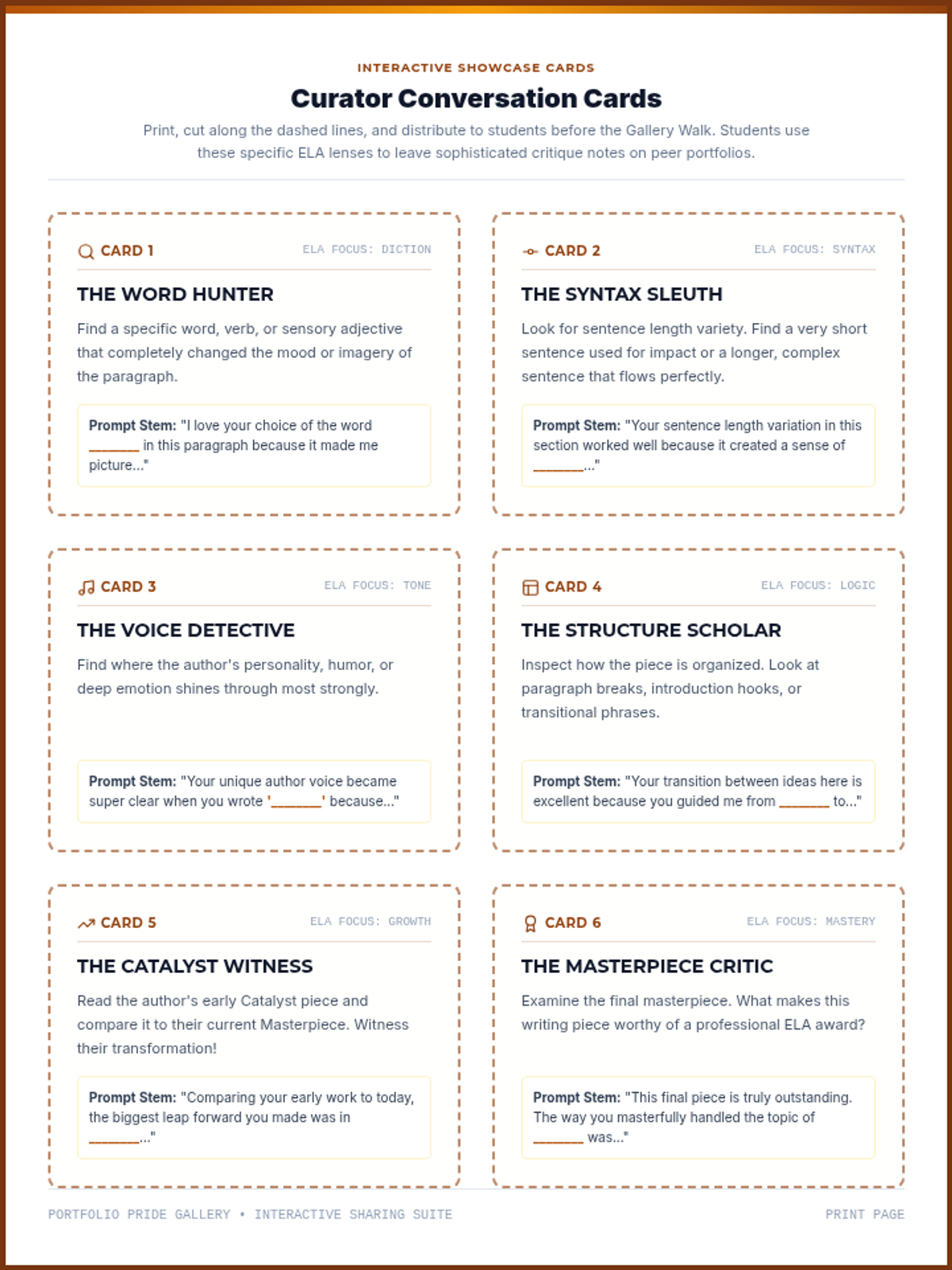
A printable set of discussion prompt cards for peer-to-peer critique and positive feedback during the showcase gallery walk.
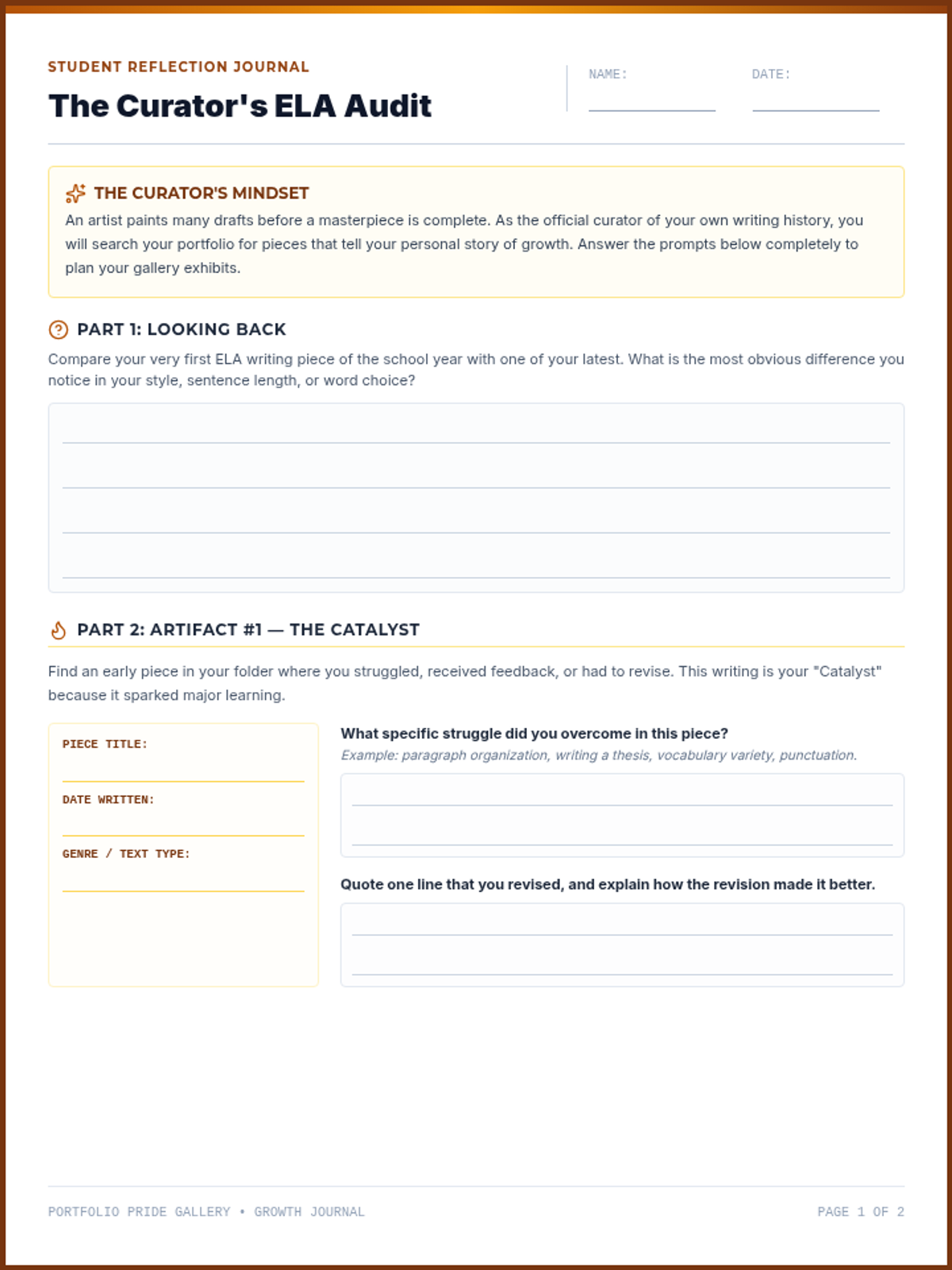
A structured student self-reflection journal with guided prompts to help students audit their ELA writing, identify milestones, and draft curator statements.
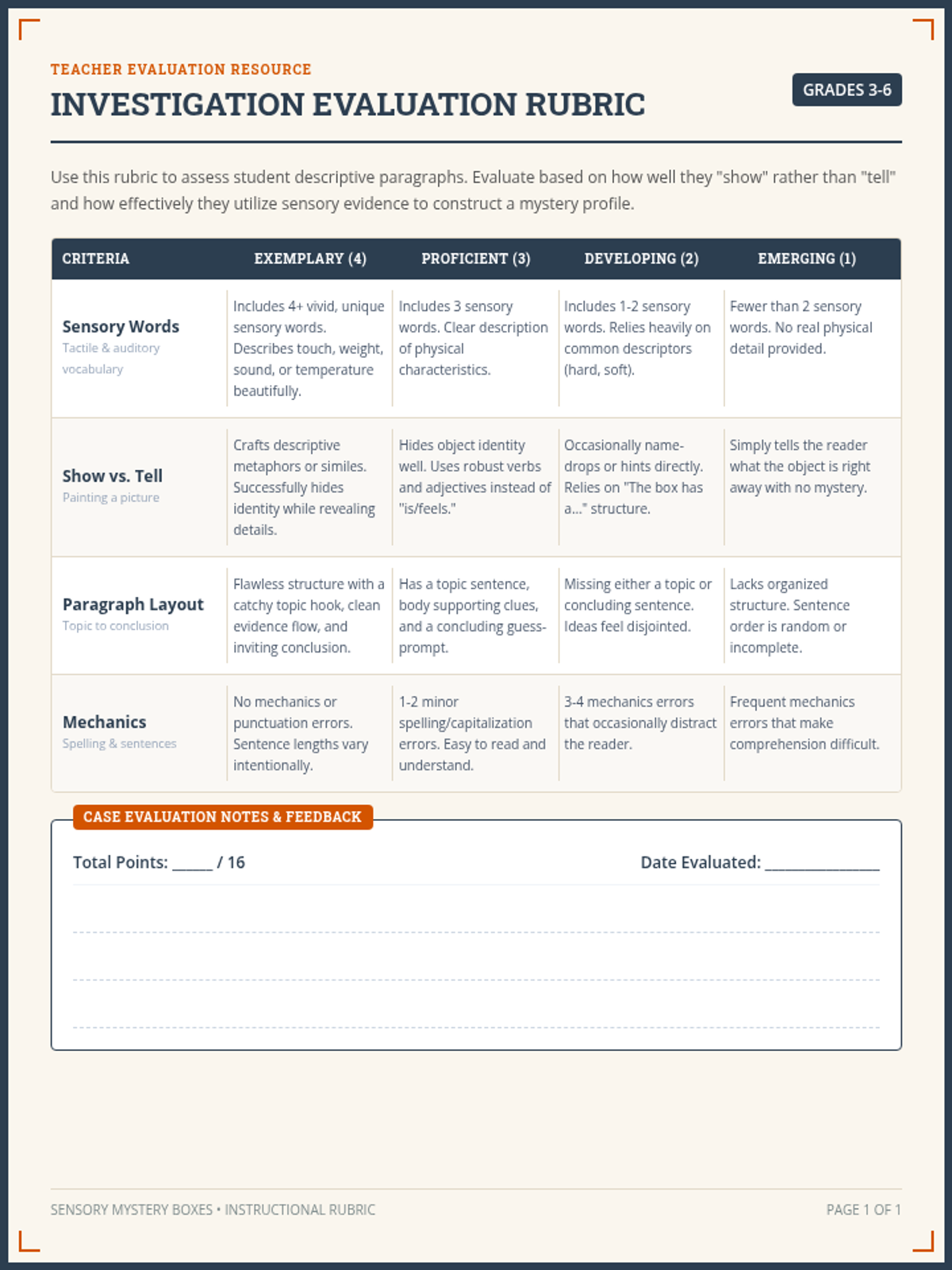
A standardized classroom grading rubric styled as an 'Investigation Evaluation Report', detailing assessment criteria for sensory vocabulary, writing structure, mechanics, and descriptive depth.
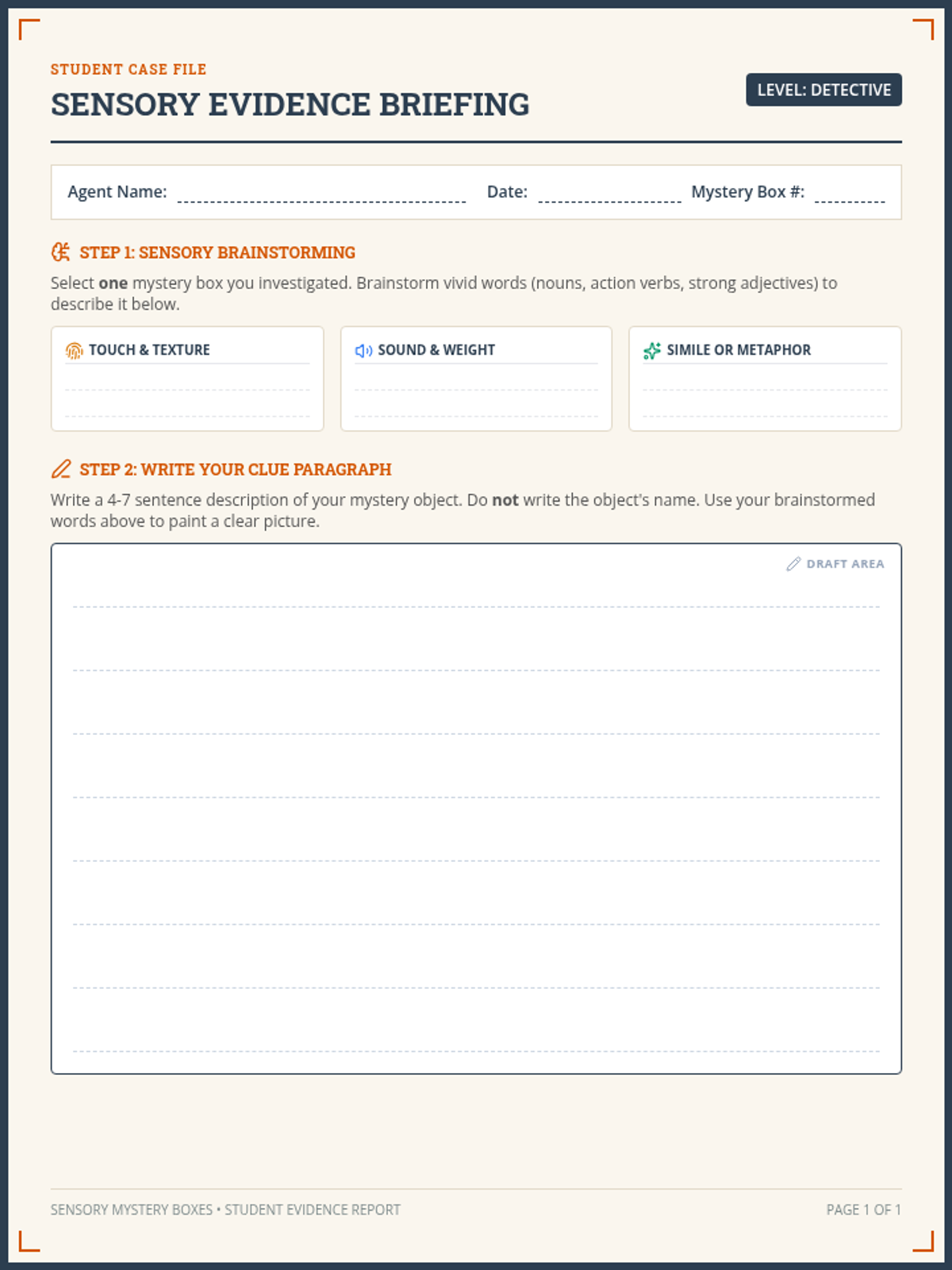
A structured student-facing worksheet for planning and writing their mystery box descriptive paragraph, featuring sensory brainstorming boxes, paragraph layout guidelines, and lined writing space.
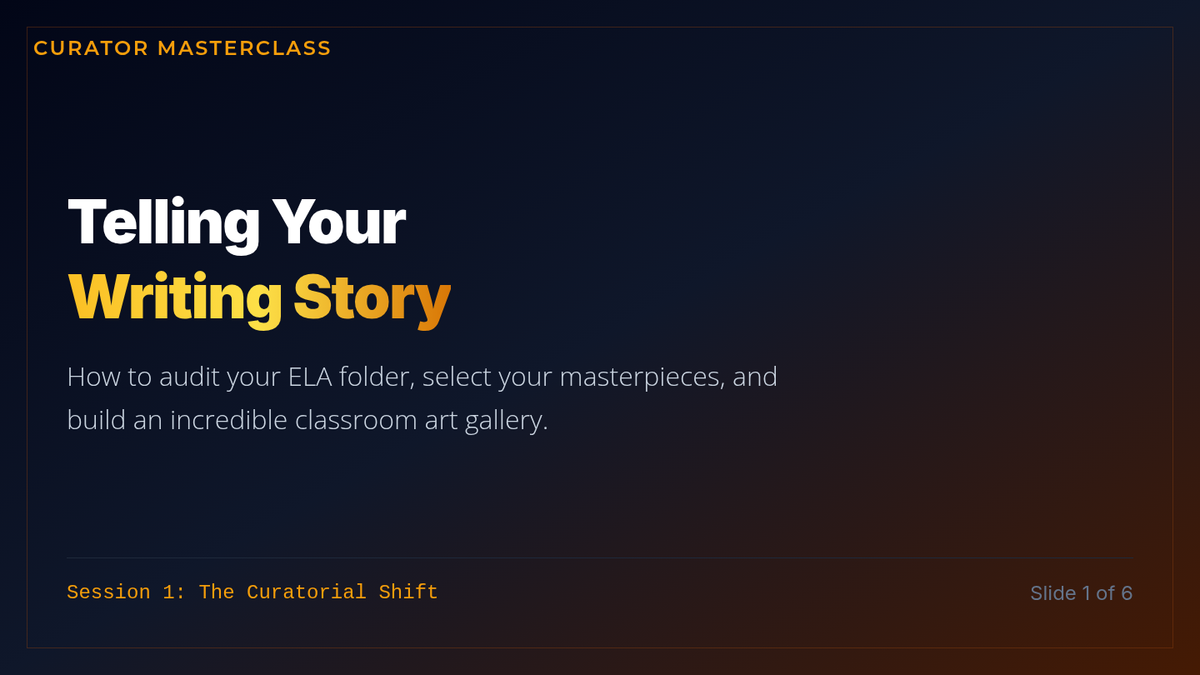
An interactive presentation for guiding students through the mindset of an art curator, modeling portfolio auditing, and setting gallery rules.
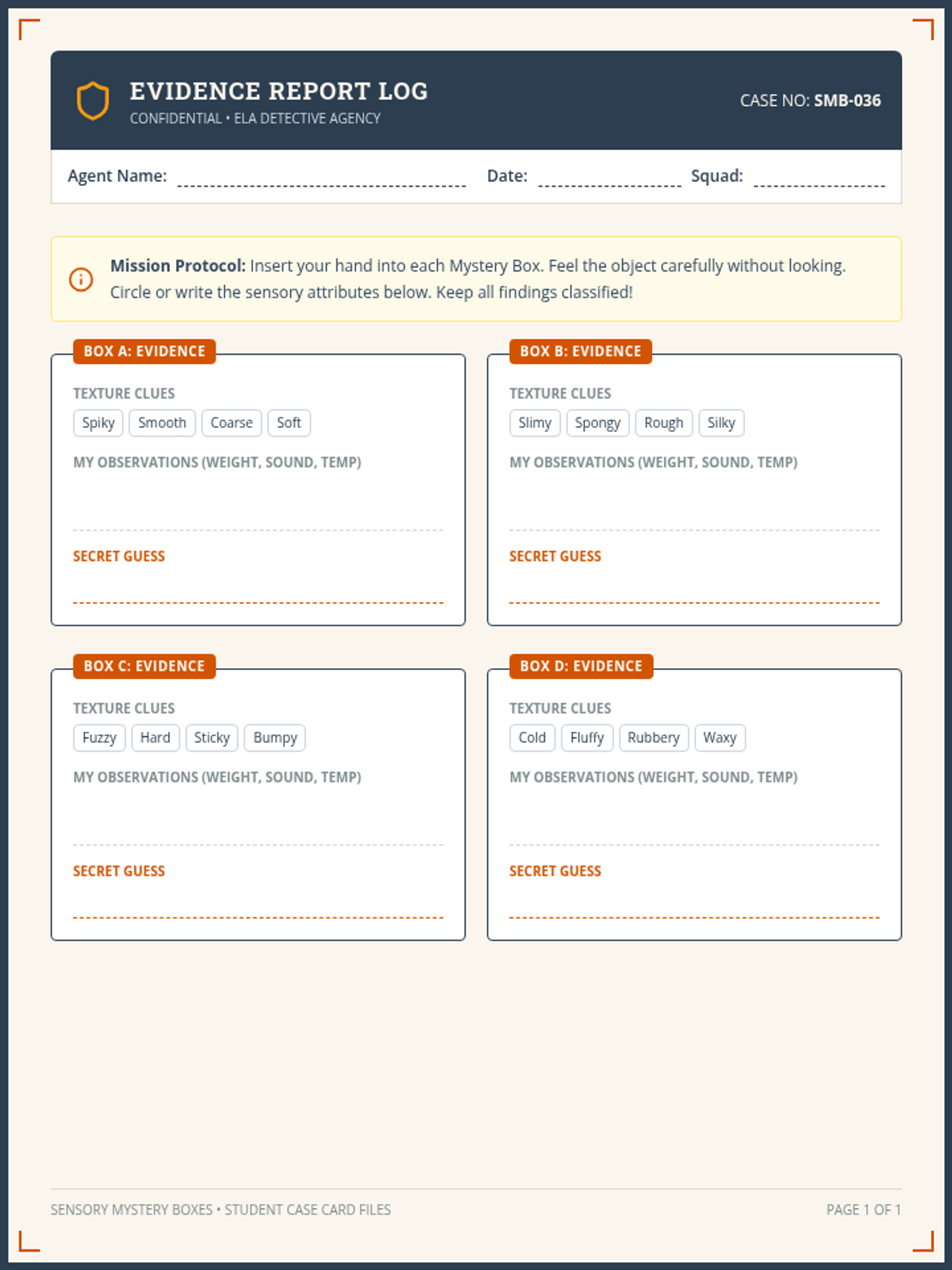
Hands-on evidence recording sheets and station signs designed for the physical mystery box investigation, providing clear spaces to record touch, sound, weight, temperature, and final guesses.
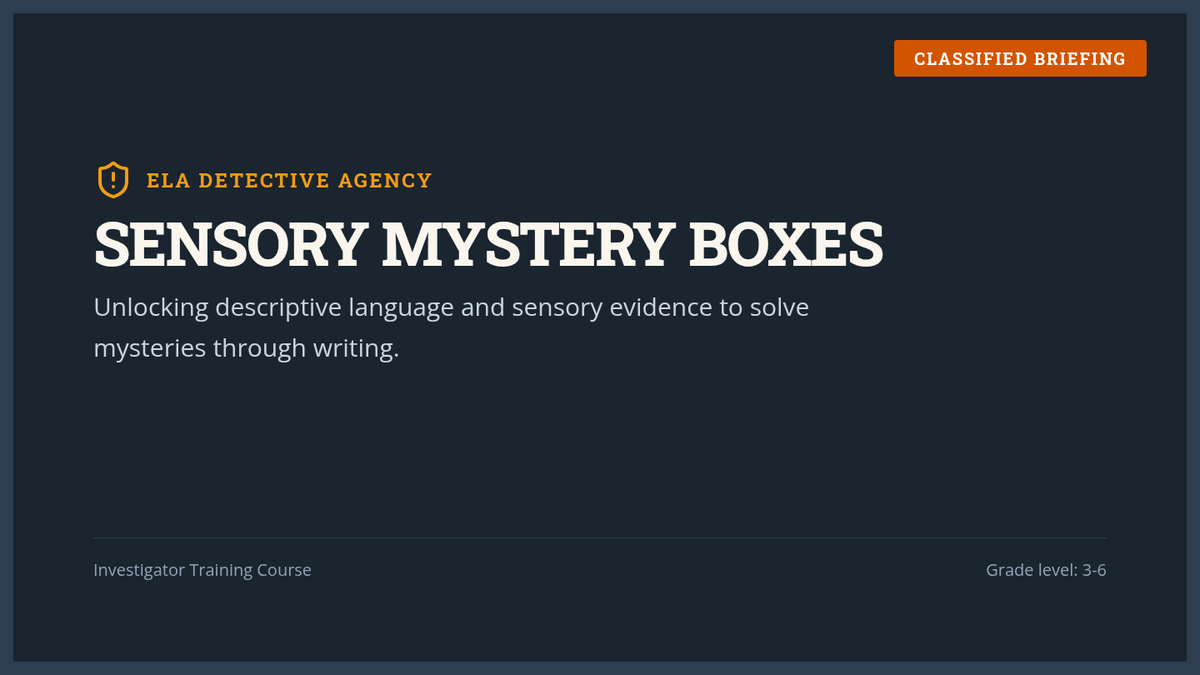
An interactive, visual slide presentation designed for teacher delivery, leading students through the rules of investigation, sensory adjective vocabulary, 'Show, Don't Tell' examples, and descriptive writing instructions.
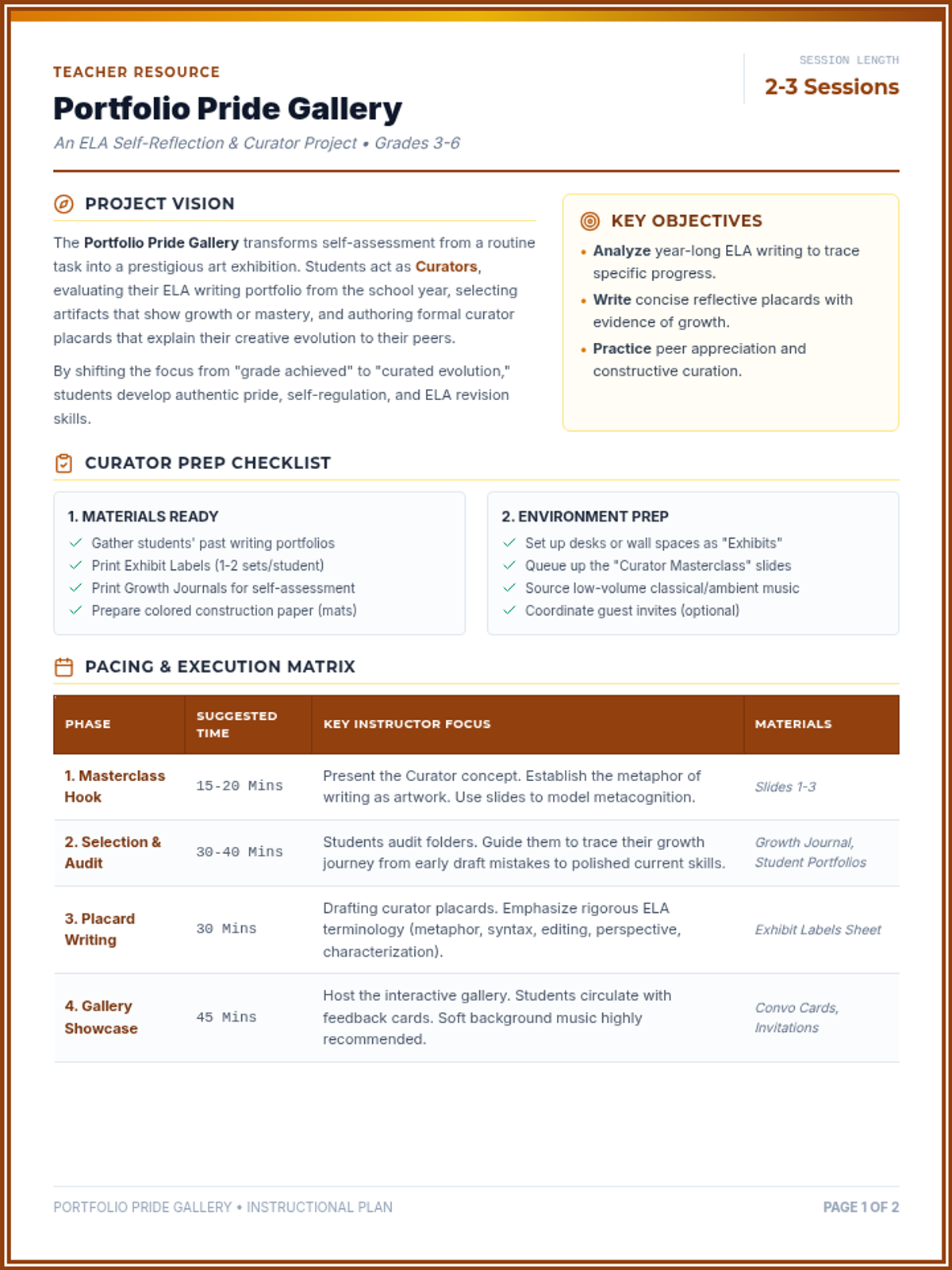
A comprehensive teacher facilitation guide containing detailed session pacing, discussion questions, preparation checklists, and differentiation strategies for the ELA gallery project.
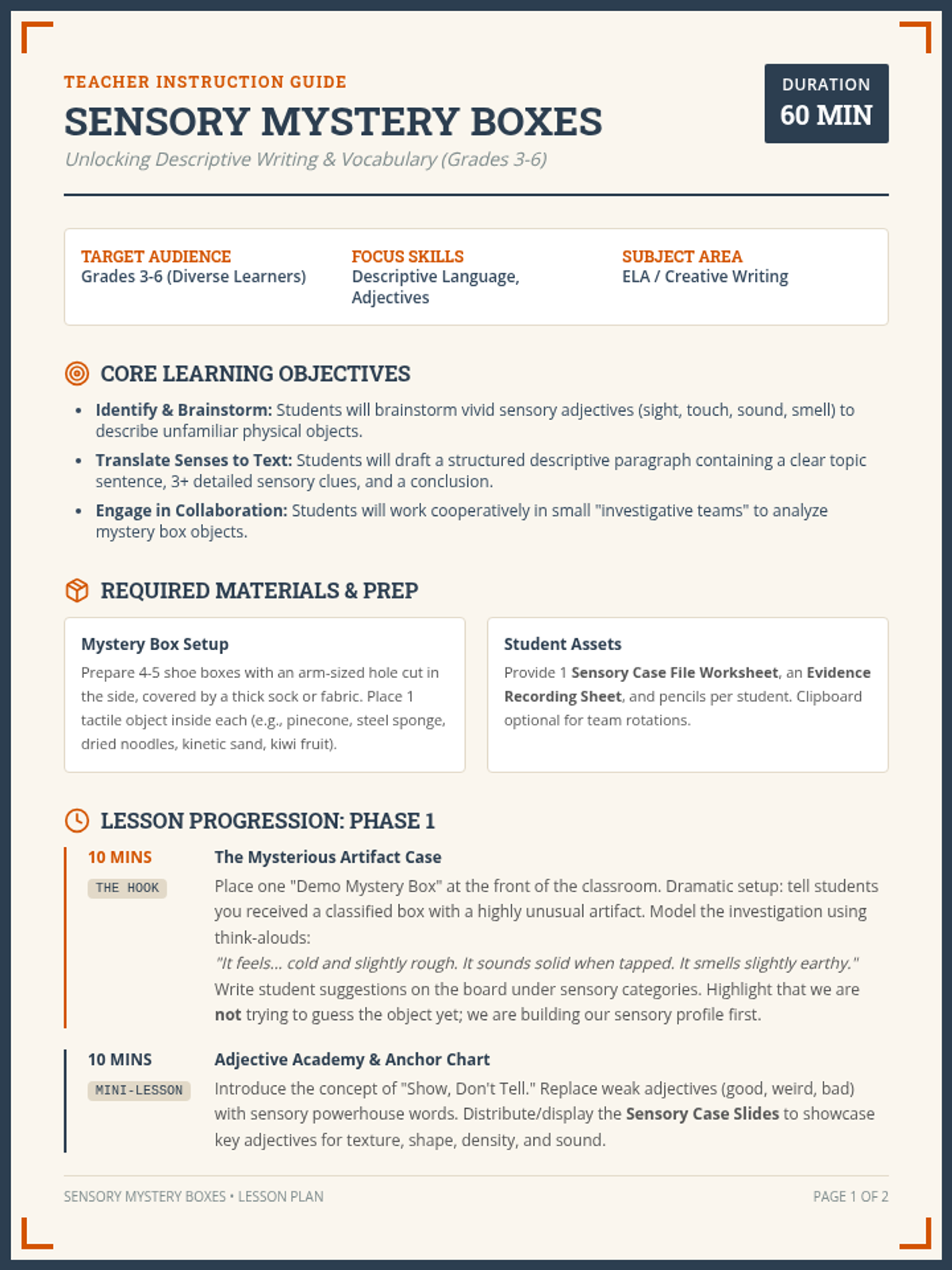
A comprehensive, step-by-step lesson plan styled as an 'Investigation Briefing' for teachers, detailing objectives, materials, setup, pacing, differentiation strategies, and group coordination.