A 6-question multiple-choice quiz focusing on identifying synonyms and antonyms in sentence contexts, designed for 2nd and 3rd-grade students with a word detective theme. Fixes a syntax error and adjusts styling for legibility.
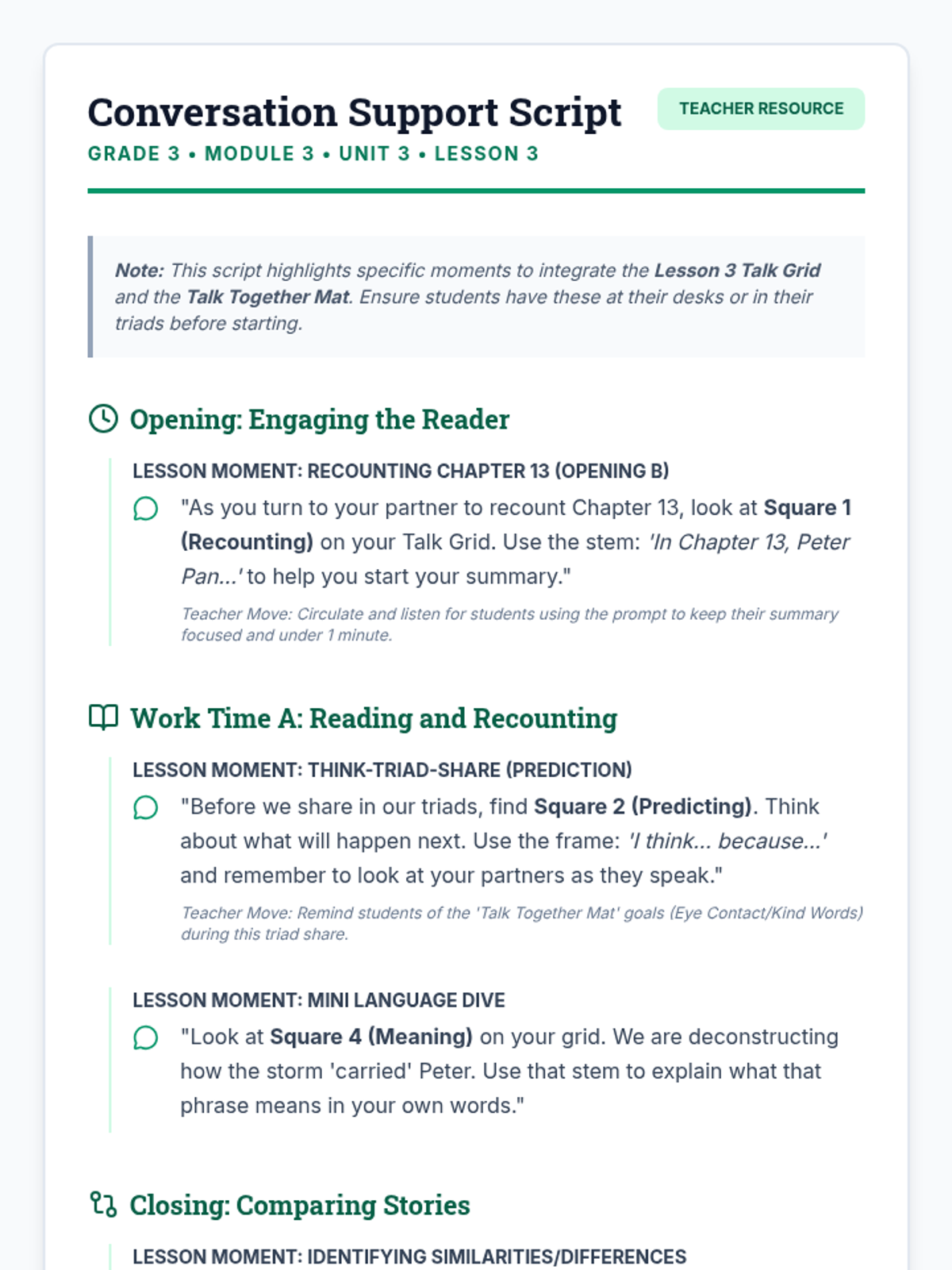
A teacher facilitation script for Grade 3 EL Education Module 3, Lesson 3. It provides specific verbal prompts and instructional moves to integrate the Talk Grid and Conversation Mat during key lesson segments like recounting, predicting, and comparing stories.
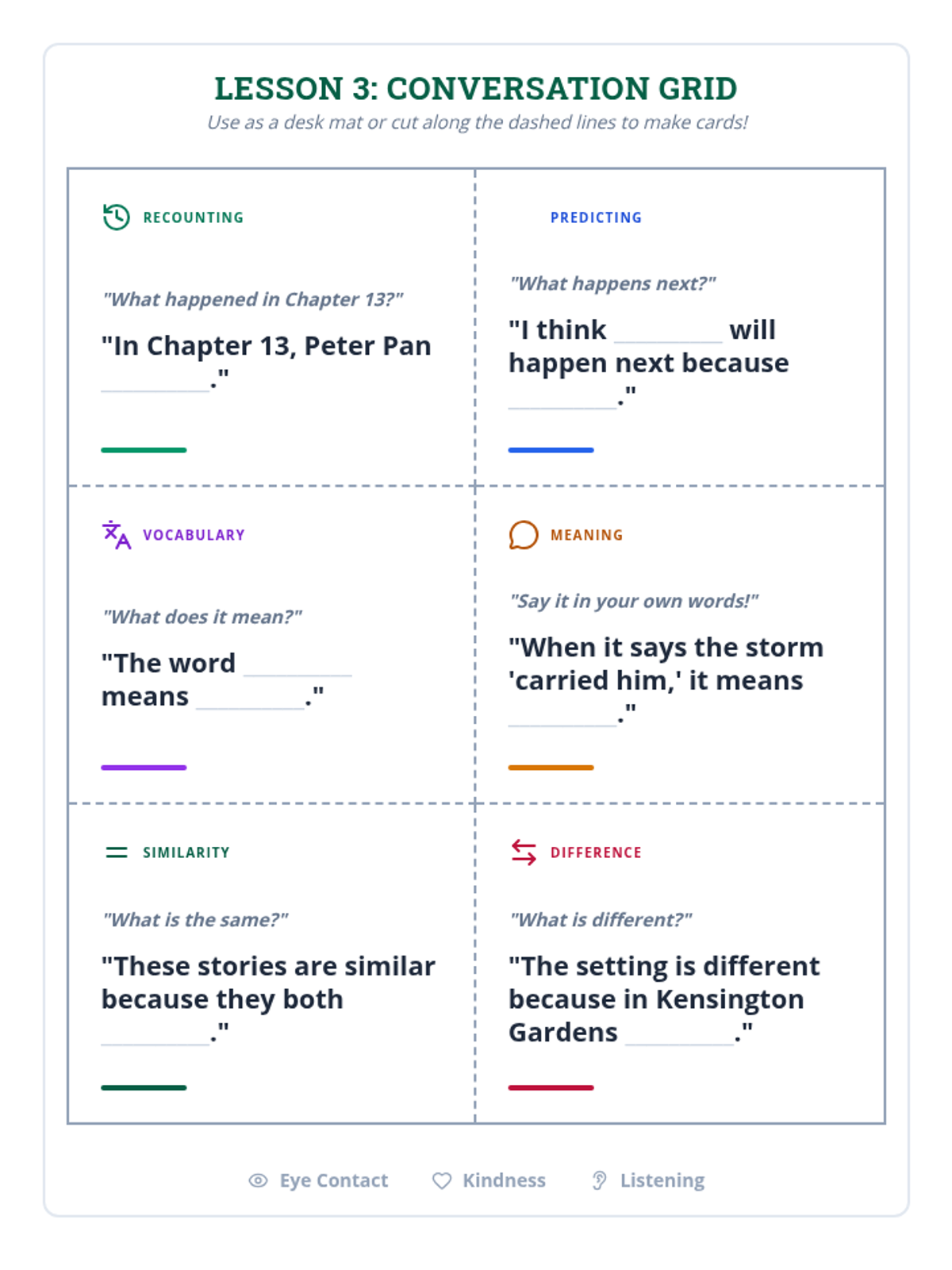
A simple, grid-based conversation tool for Lesson 3. It features 6 squares with sentence stems specifically for recounting, predicting, vocabulary, language dives, and story comparisons. Designed to be used as a desk mat or cut into cards.
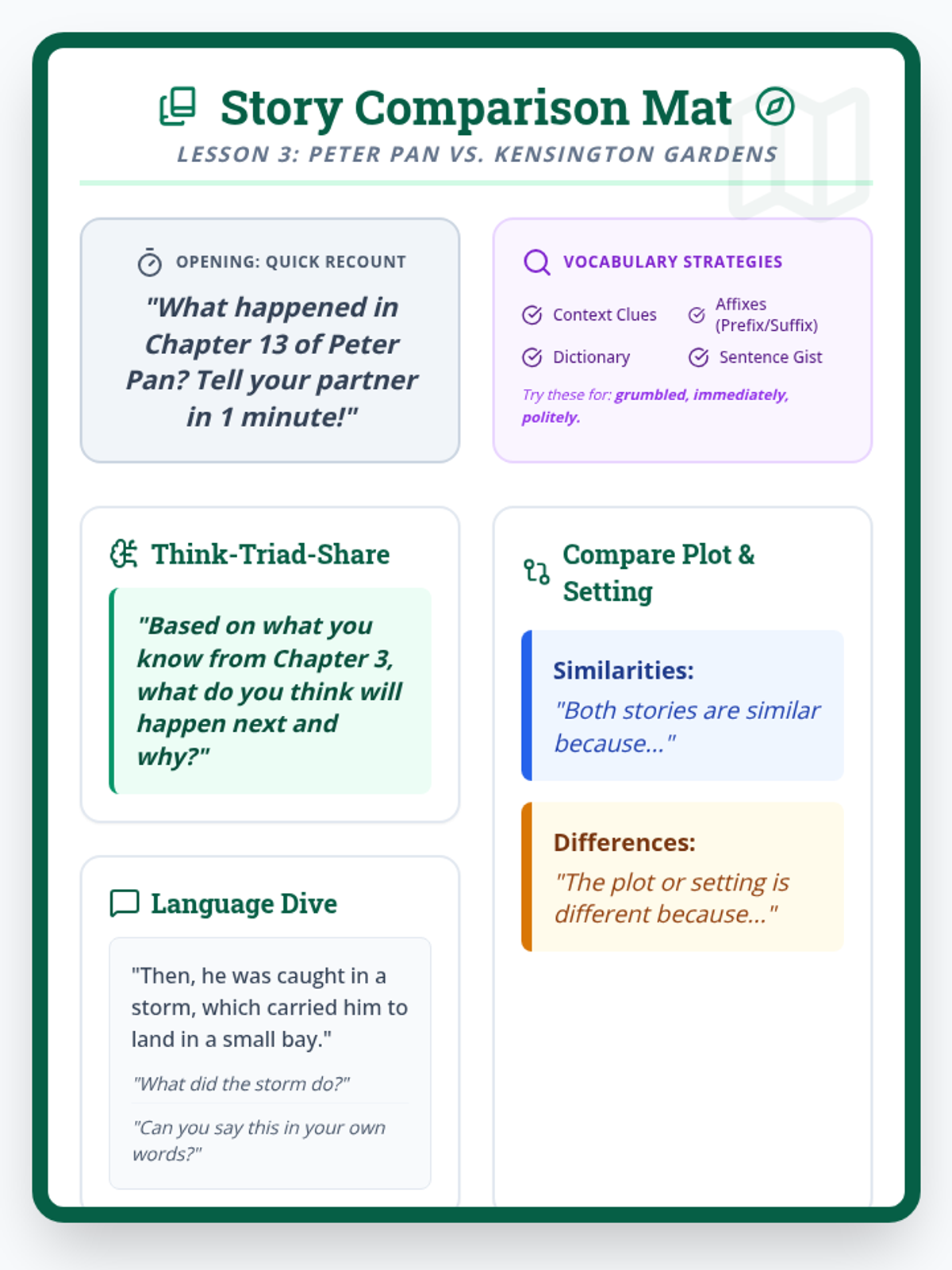
A specialized conversation mat for Grade 3 EL Education Module 3, Lesson 3. It includes specific prompts for comparing 'Peter Pan' with 'Peter Pan in Kensington Gardens', vocabulary strategy cues, and questions directly from the lesson script.
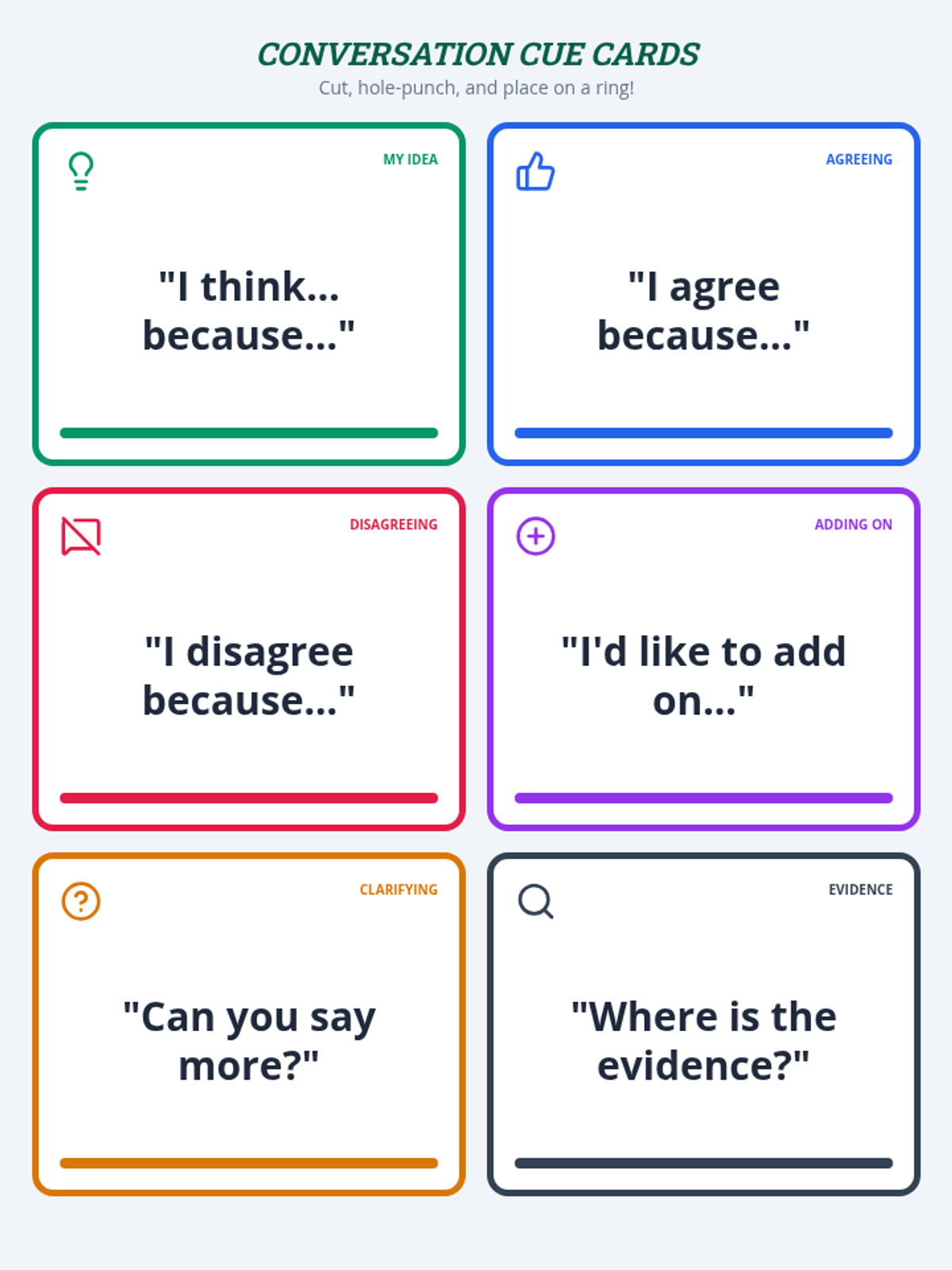
A set of printable conversation cue cards for individual student use. Each card features a sentence stem (agree, disagree, add on, etc.) with large text and a visual icon, designed to be cut out and placed on a binder ring.
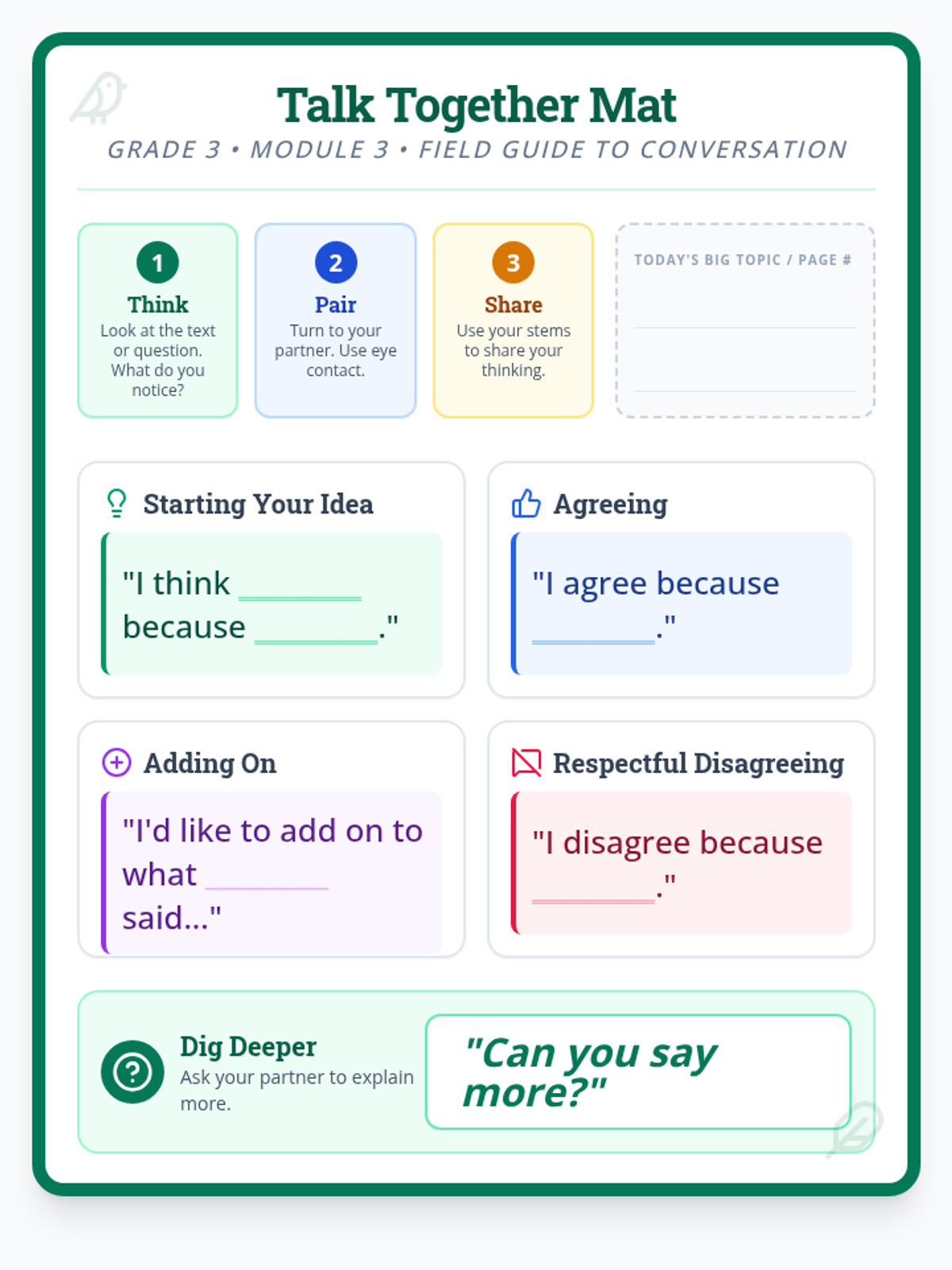
A desktop conversation mat designed for Grade 3 EL Education Module 3, featuring clear sentence stems for agreeing, disagreeing, adding on, and clarifying. It includes a visual guide for the Think-Pair-Share protocol to support student peer interactions.
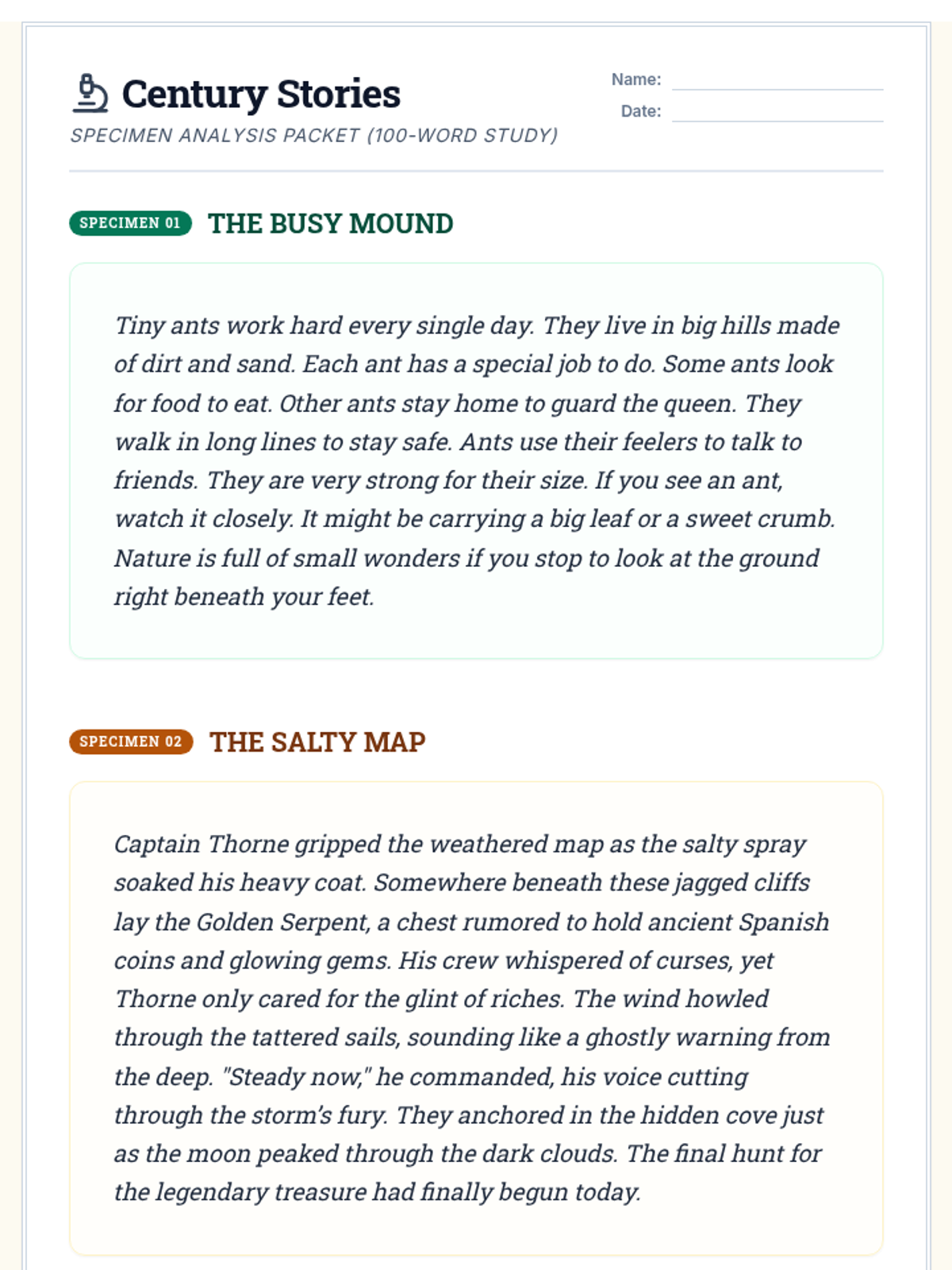
A condensed, printer-friendly worksheet featuring ten distinct 100-word passages (two per page) across simple, moderate, and advanced levels, followed by a blank workspace page, a final page for linguistic data logs, and a terminal separator page. Optimized with fixed heights and page breaks for reliable printing.
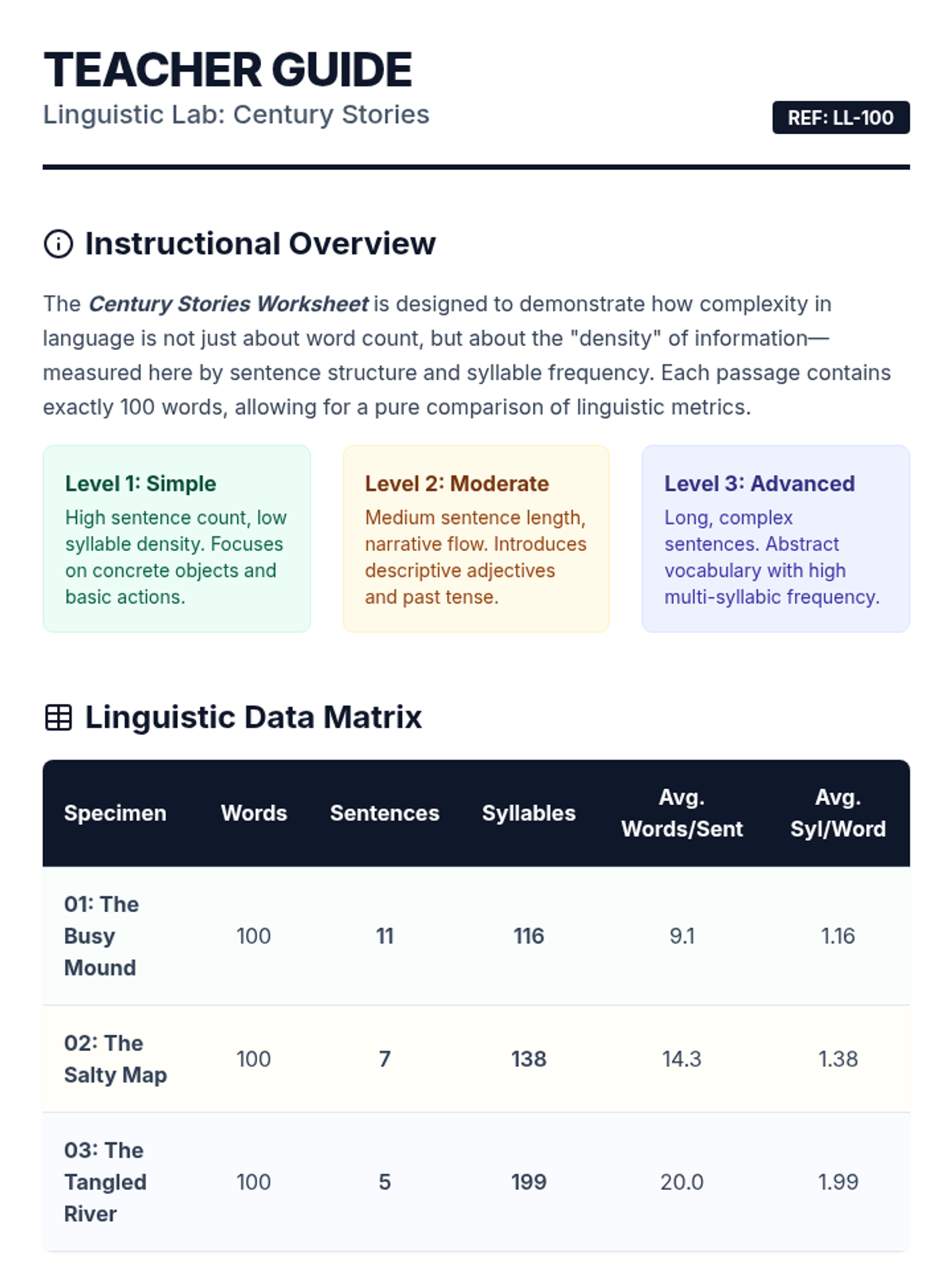
A condensed, one-page teacher guide for the Linguistic Lab, featuring the instructional overview, a full 10-specimen data matrix, and key pedagogical insights in a printer-friendly layout. Optimized to ensure footer does not split across pages.
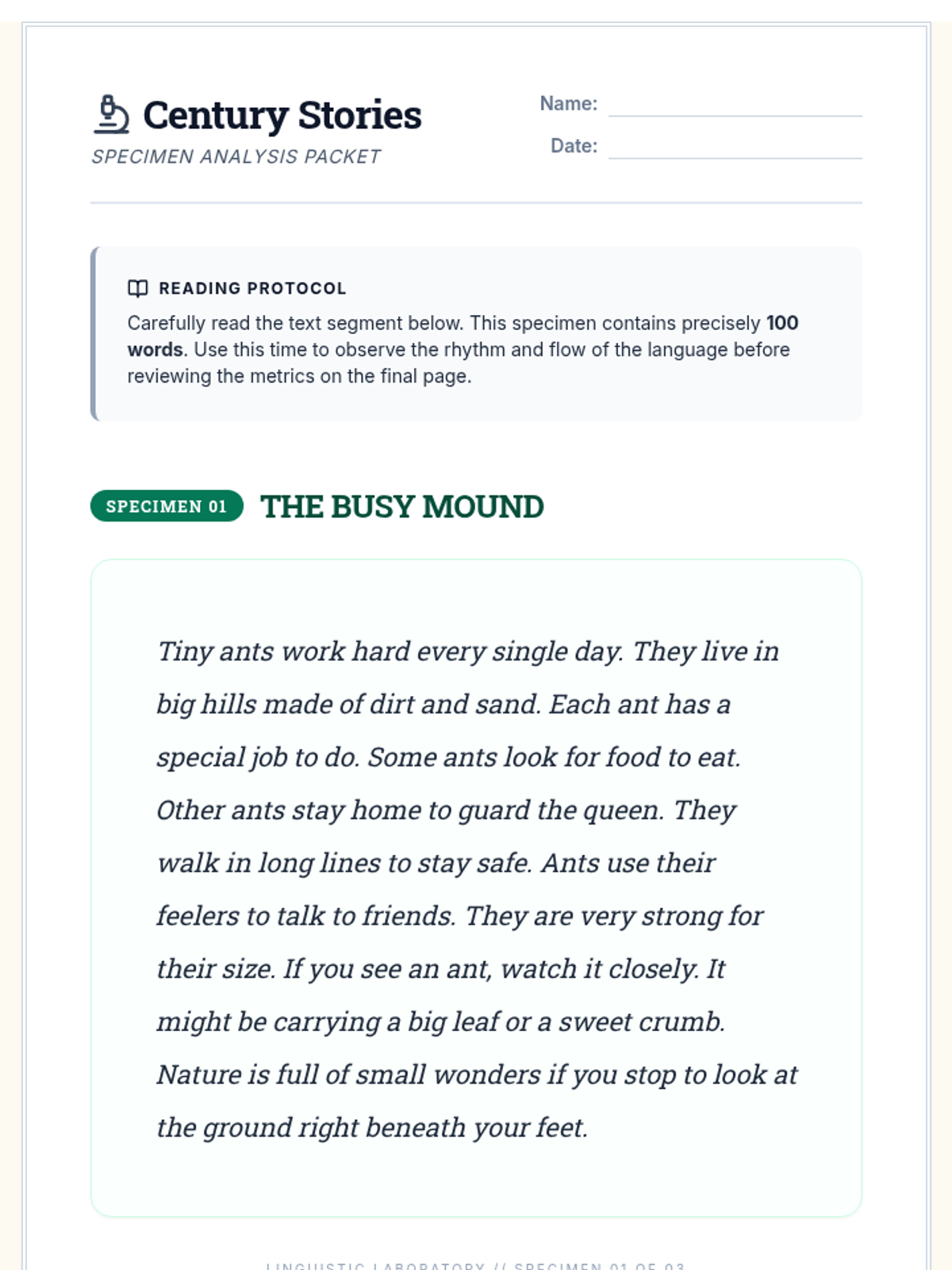
A comprehensive 11-page worksheet featuring ten distinct 100-word passages across simple, moderate, and advanced levels, each on its own page, followed by a final page consolidating technical data logs for all specimens. Optimized with fixed heights and page breaks for reliable printing.
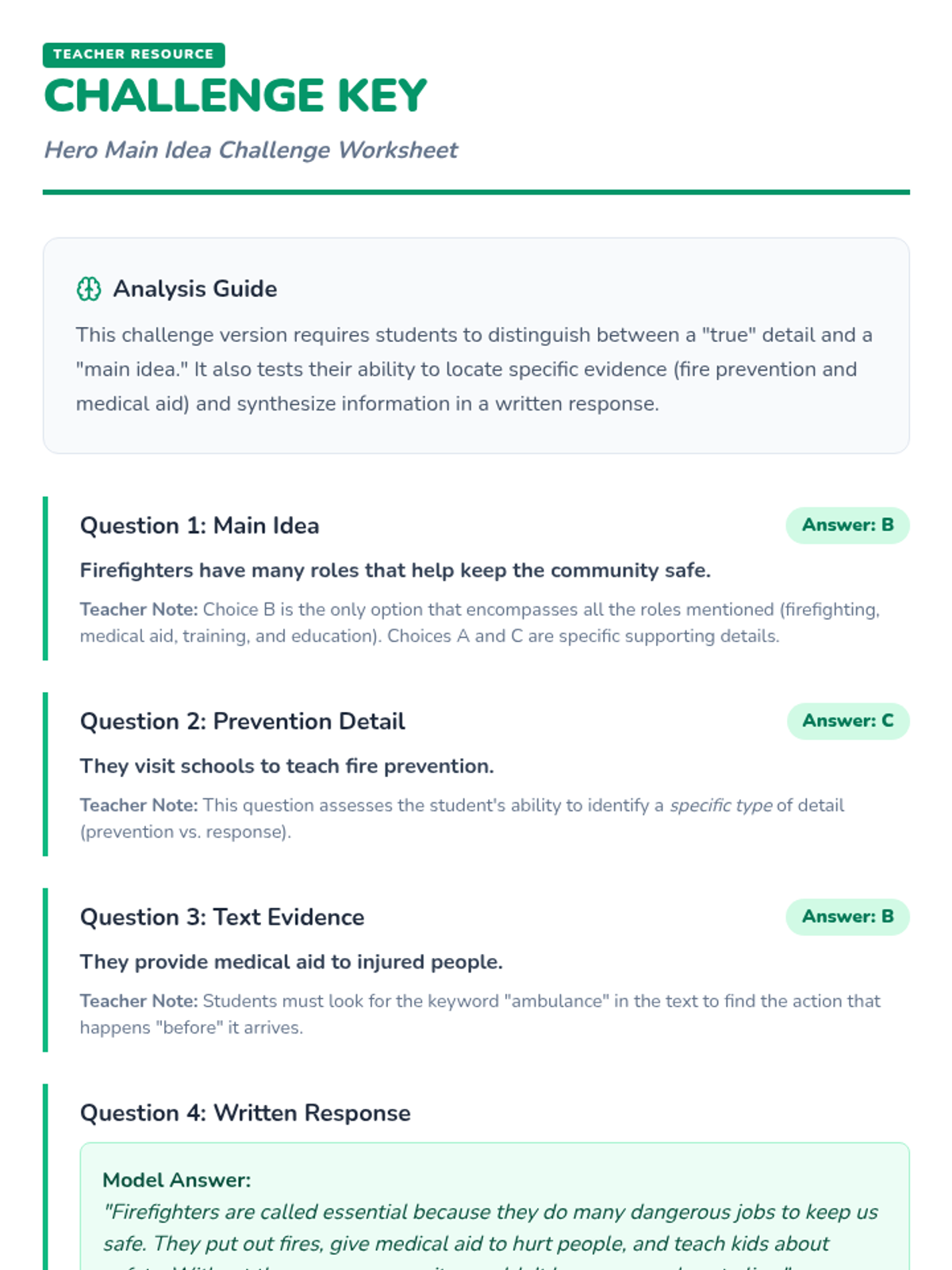
A comprehensive answer key for the Hero Main Idea Challenge Worksheet. It includes correct answers for multiple-choice questions, a model short-answer response, and teacher tips for scaffolding the written portion.
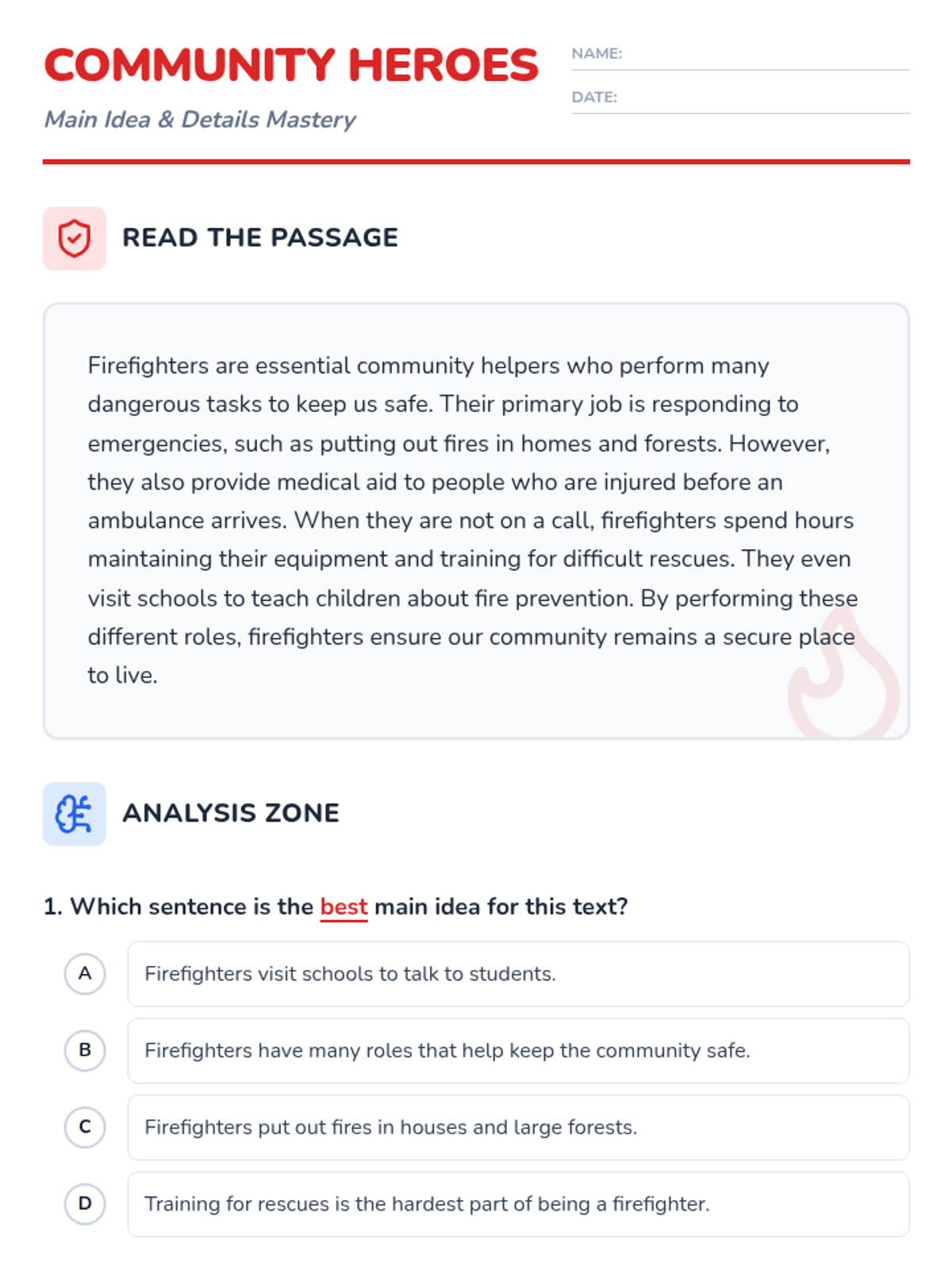
A more challenging 2nd-grade social studies worksheet on the main idea. It features a complex paragraph about firefighters' diverse roles, nuanced multiple-choice questions (including distractor options), and a short-answer evidence-based prompt.
An instructional presentation for 2nd graders to introduce the concepts of main idea and supporting details using community helper examples. Features visual metaphors and a guided practice example.
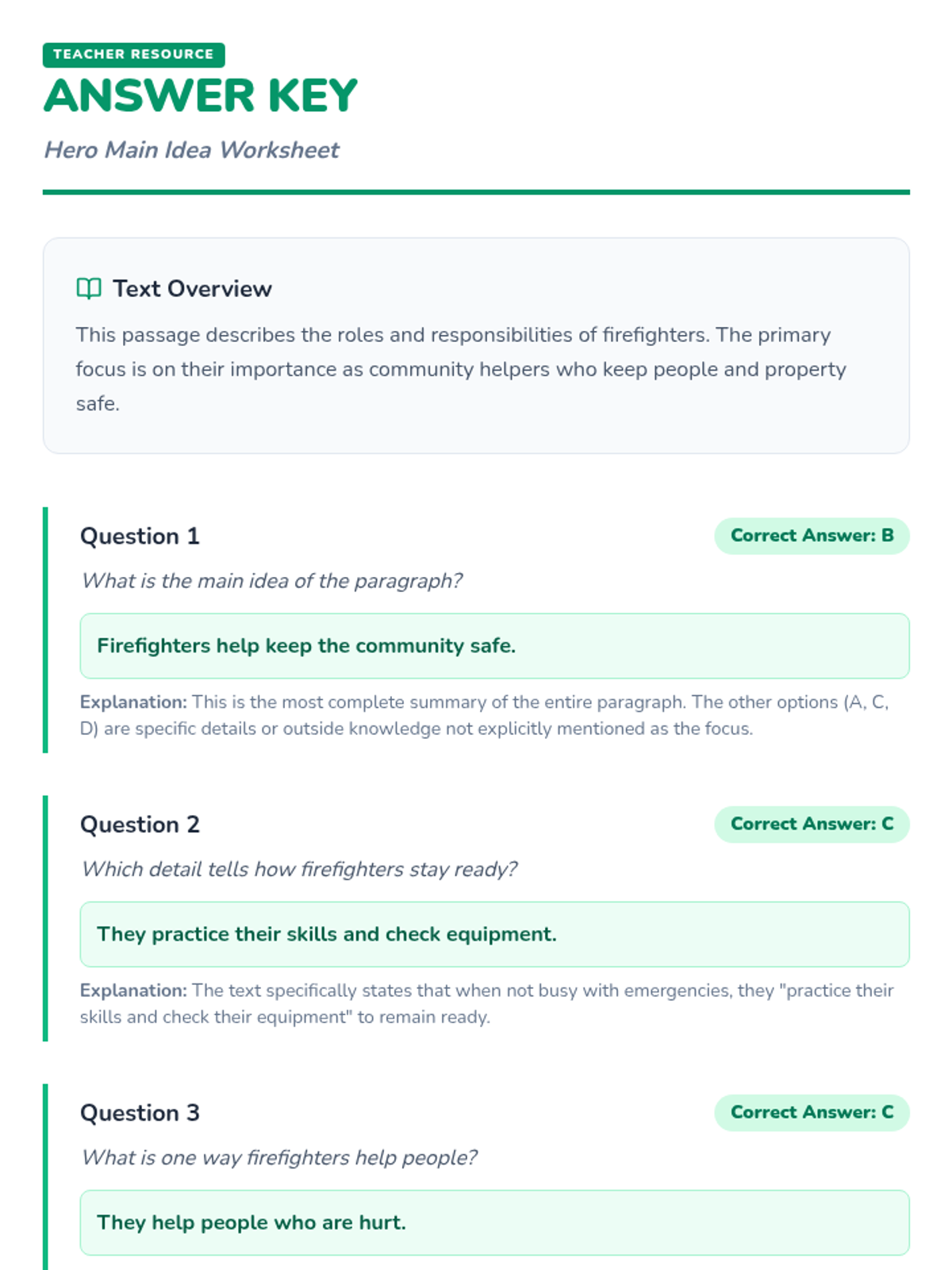
An educator's answer key for the Hero Main Idea Worksheet, including correct answers, explanations for each choice, and teaching tips for addressing common misconceptions.
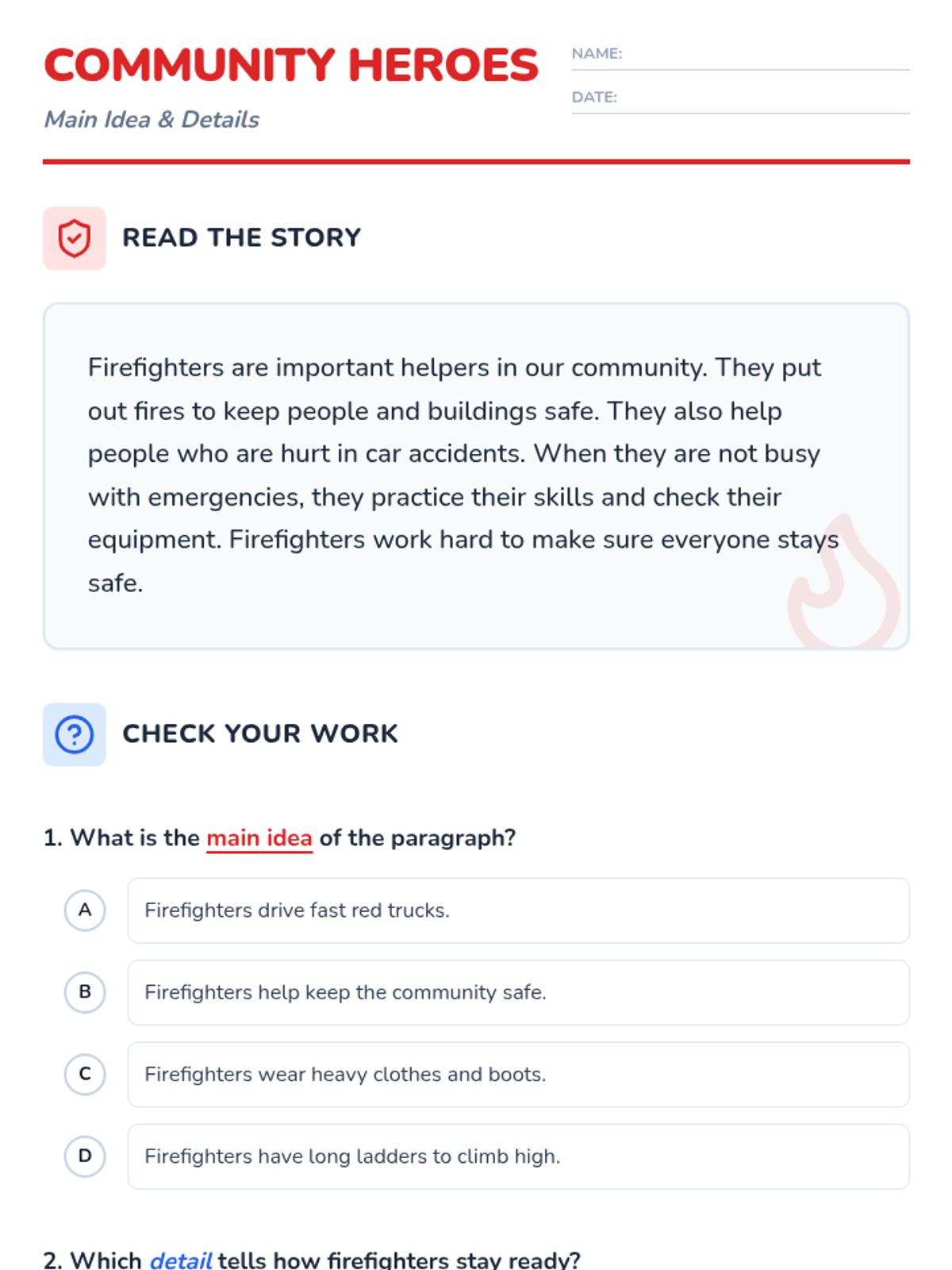
A 2nd-grade social studies worksheet focused on identifying the main idea and supporting details. It features a paragraph about firefighters and three multiple-choice questions with clear, uniform styling.
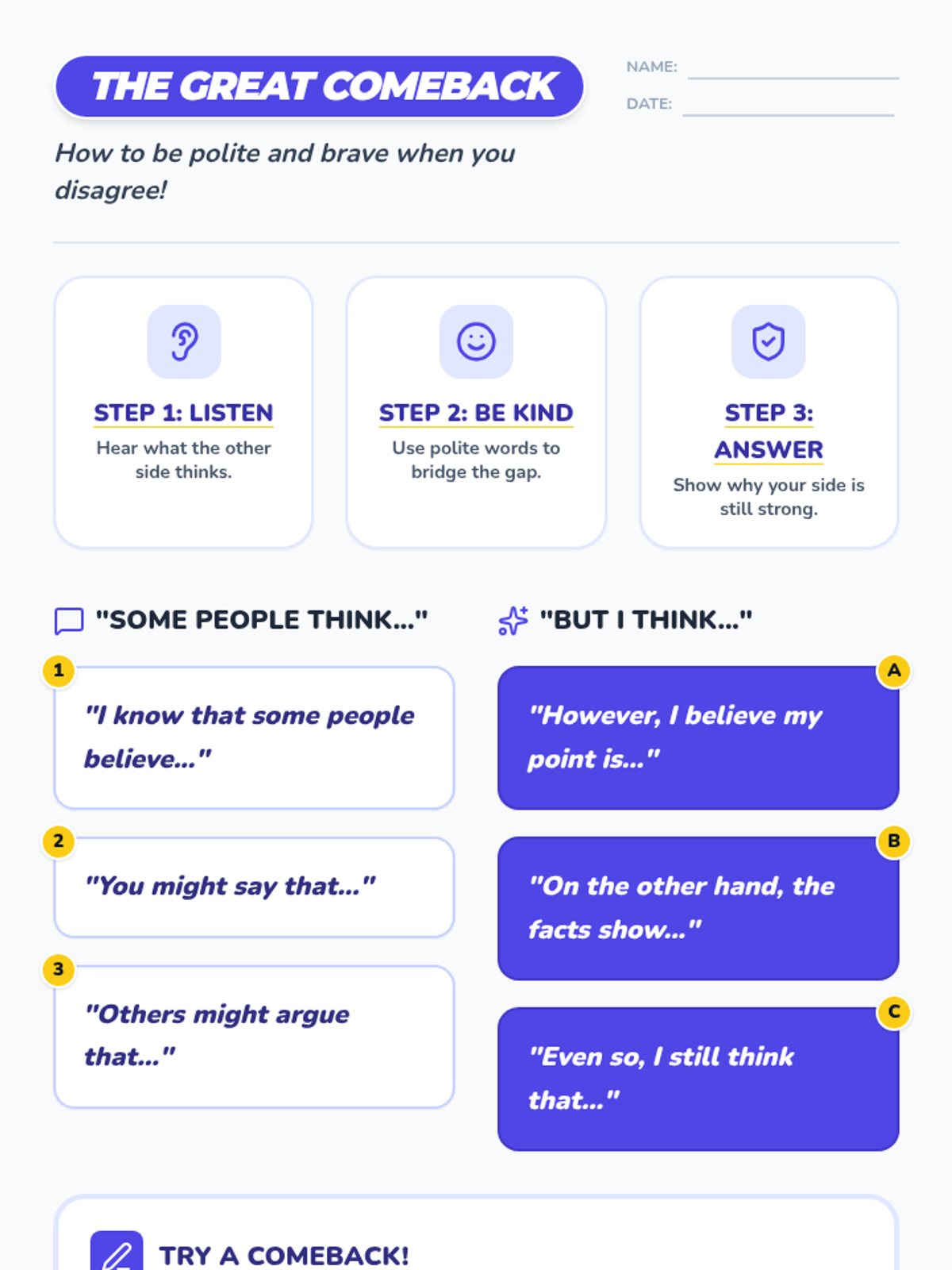
A visual handout providing sentence starters for counter-arguments using a comic-inspired "Comeback" theme. Includes simple explanations of the steps to address an opposing view and a small practice area for students.
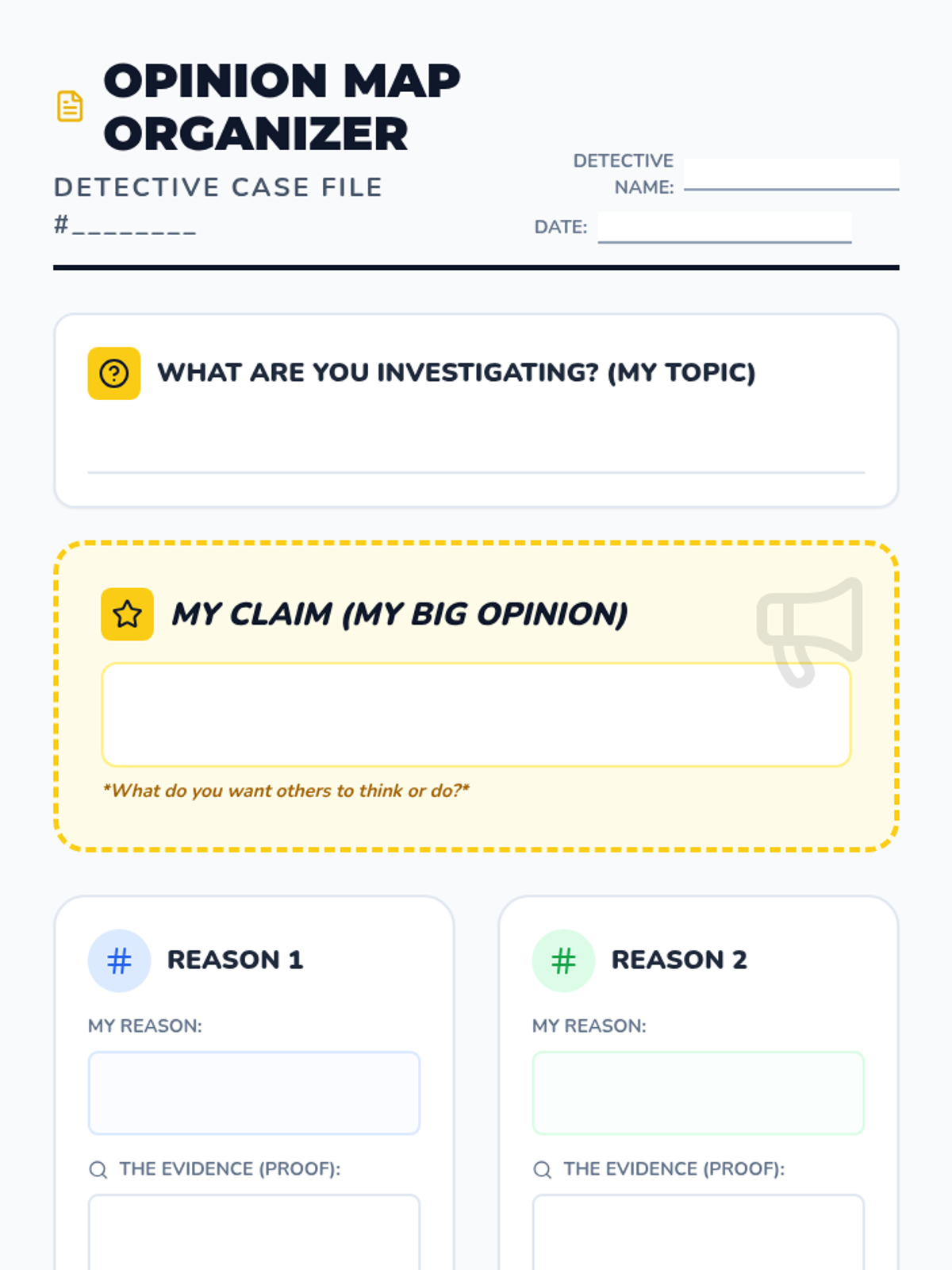
A simplified graphic organizer using a detective theme to help students organize their claim, reasons, and supporting evidence. Includes clear work areas with light backgrounds and high visual support.
An introductory slide deck explaining what evidence is in argumentative writing, why it is important, and the different types of evidence students can use. Uses a detective theme with high visual support and 2nd-3rd grade reading level.
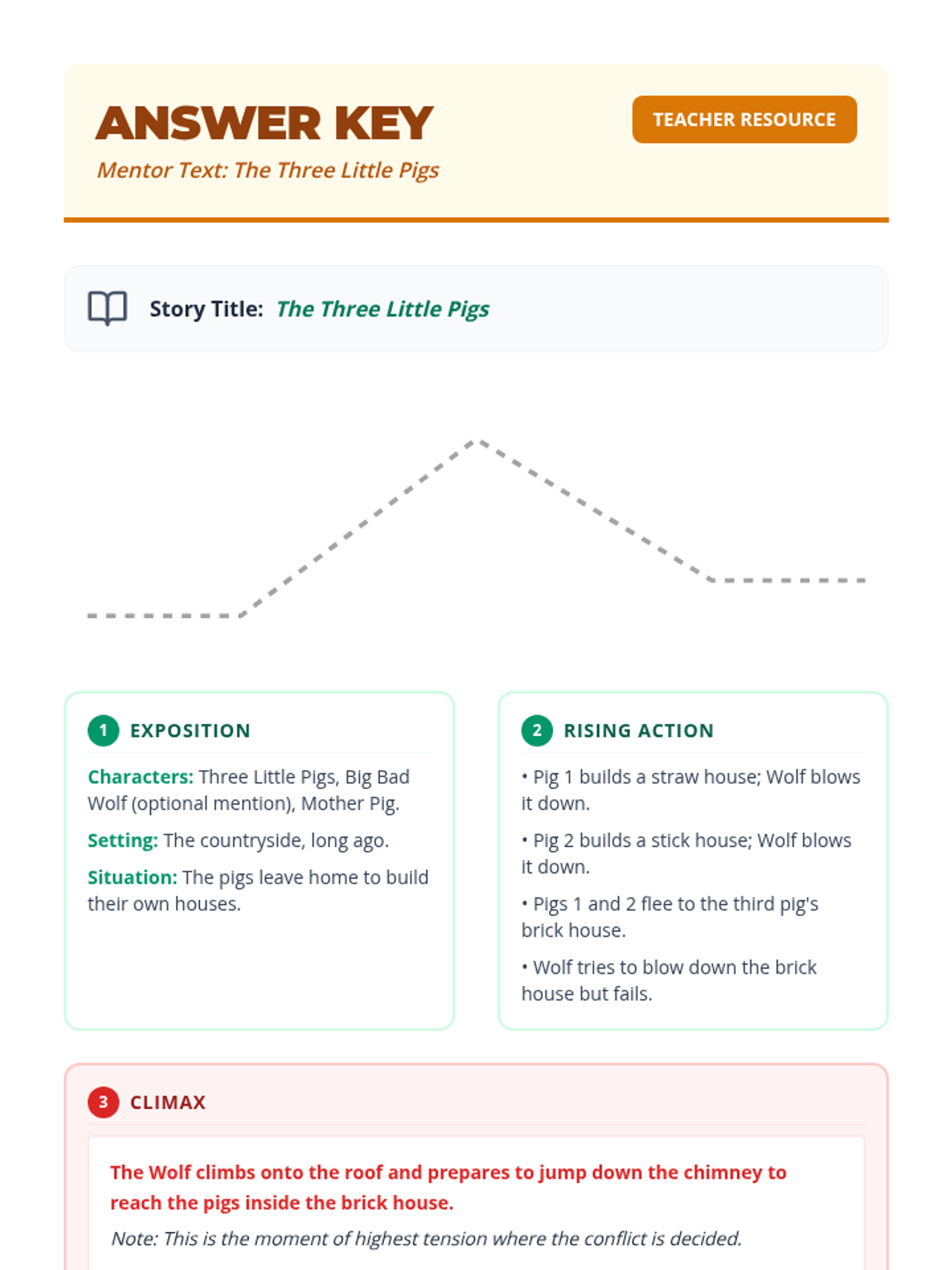
A teacher's answer key for the Plot Mountain Worksheet using 'The Three Little Pigs' as an example. Includes specific plot points for each of the five parts of the diagram and grading tips.
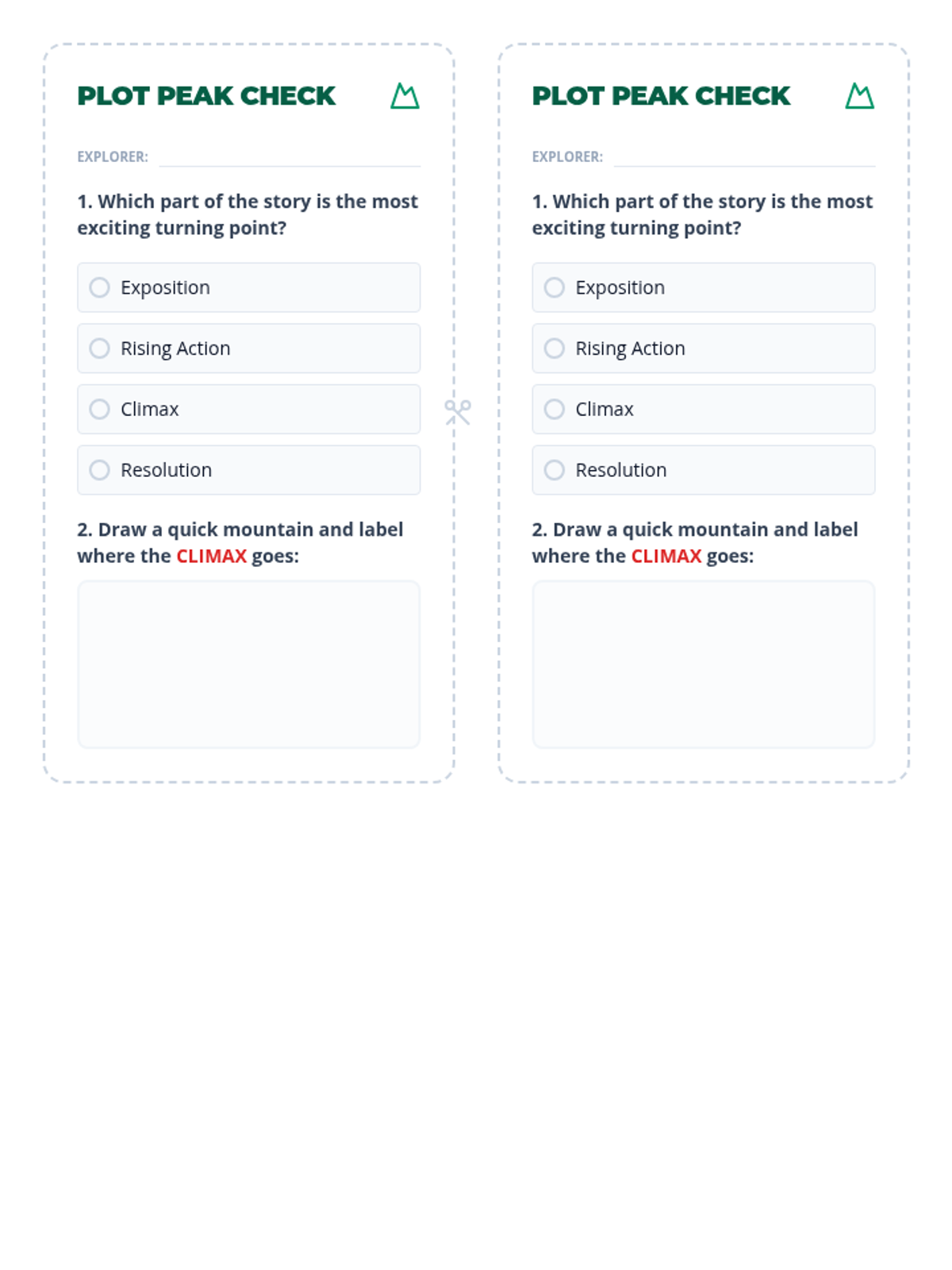
A quick formative assessment tool for the end of the lesson. Includes a multiple-choice question identifying the climax and a space for students to sketch and label a plot mountain diagram. Designed for two-per-page printing.
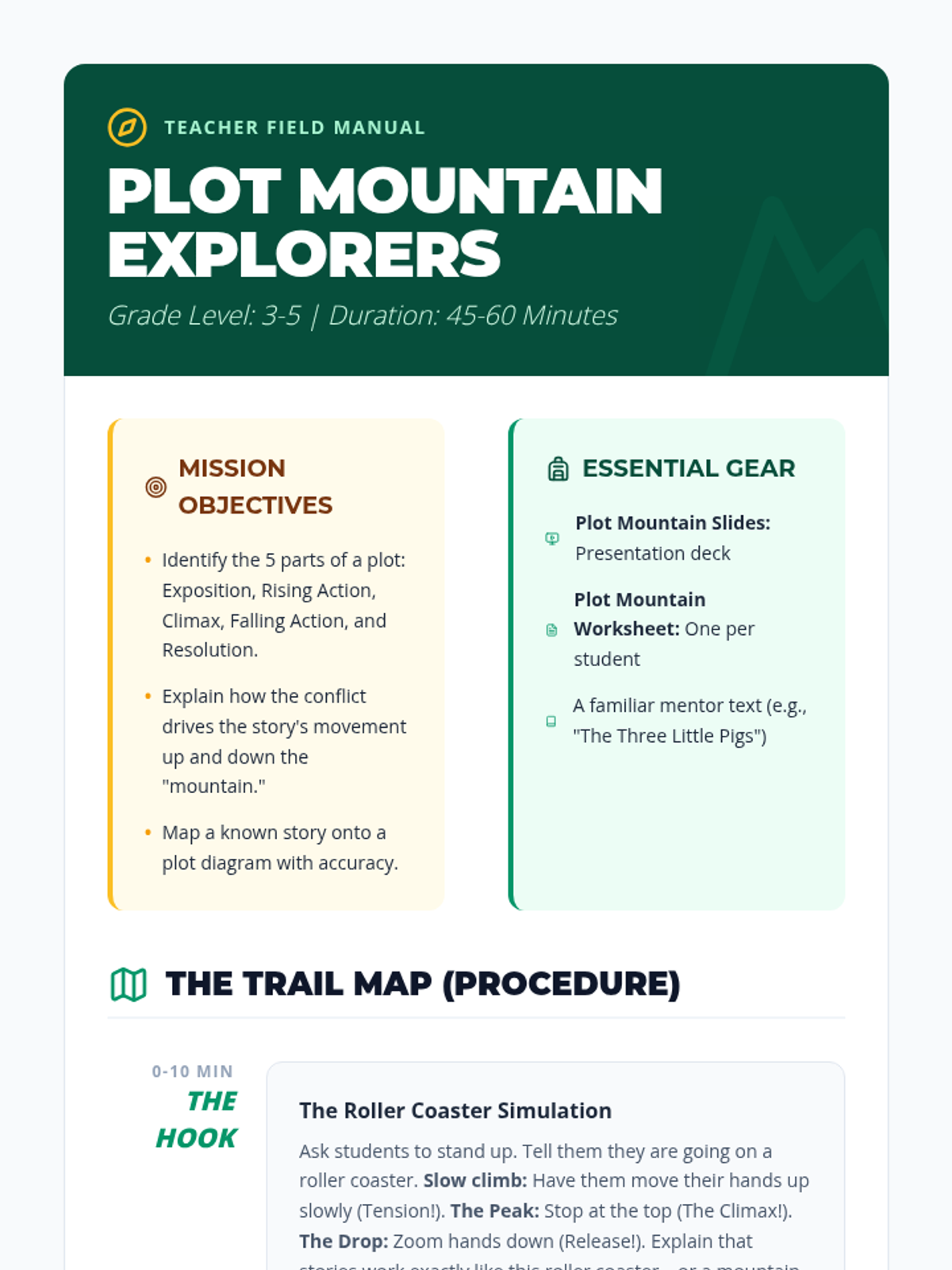
A teacher-facing lesson plan designed as a 'Field Manual'. It includes learning objectives, a 'roller coaster' hook, a detailed instructional sequence using the slides and worksheet, and differentiation strategies.
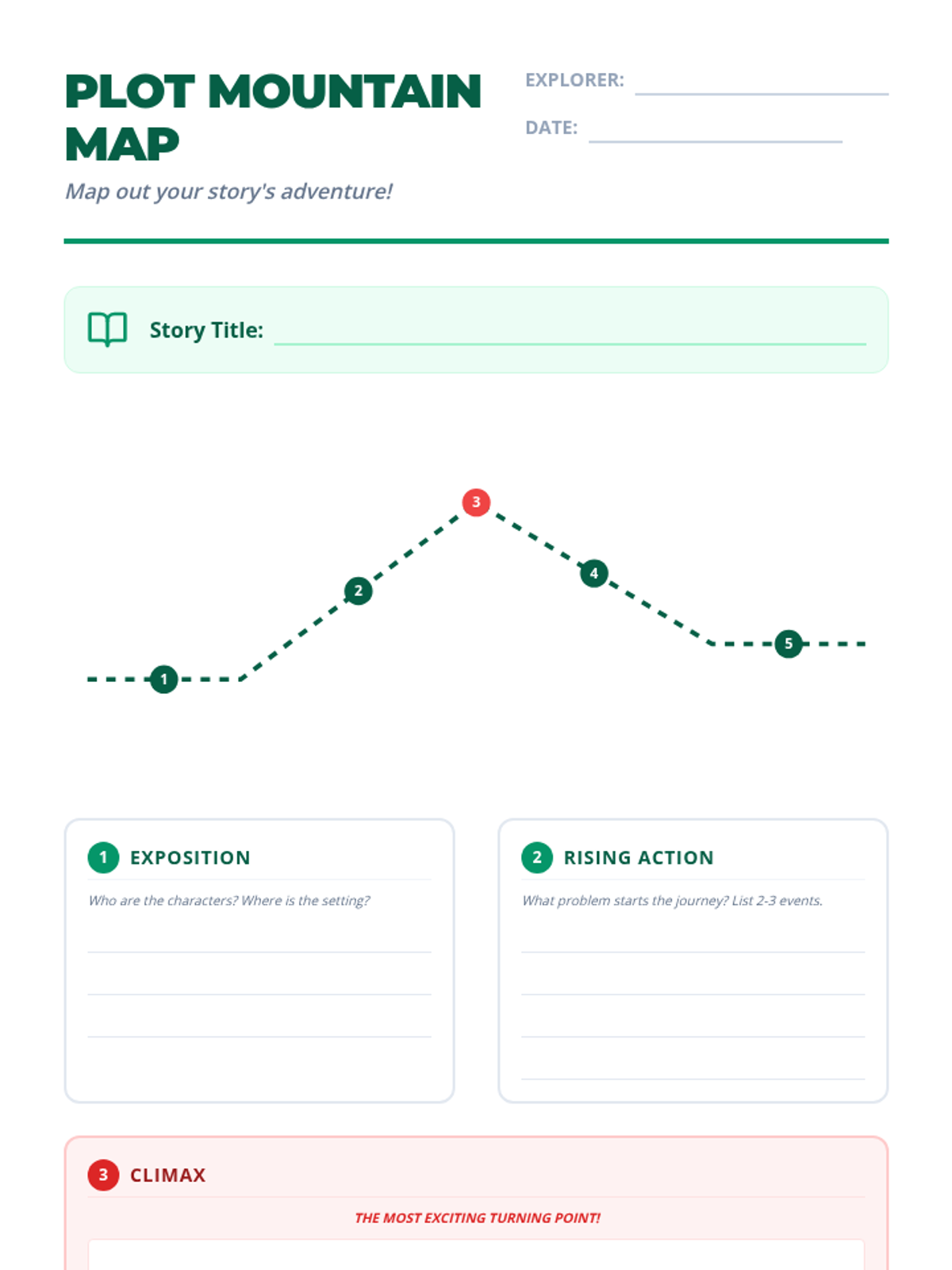
A student-facing worksheet for mapping out the five parts of a story's plot. Features a clear visual mountain diagram and dedicated writing spaces for exposition, rising action, climax, falling action, and resolution.
A visual presentation exploring the five parts of a plot diagram using a mountain hiking theme. Includes definitions and a step-by-step example using 'The Three Little Pigs'.
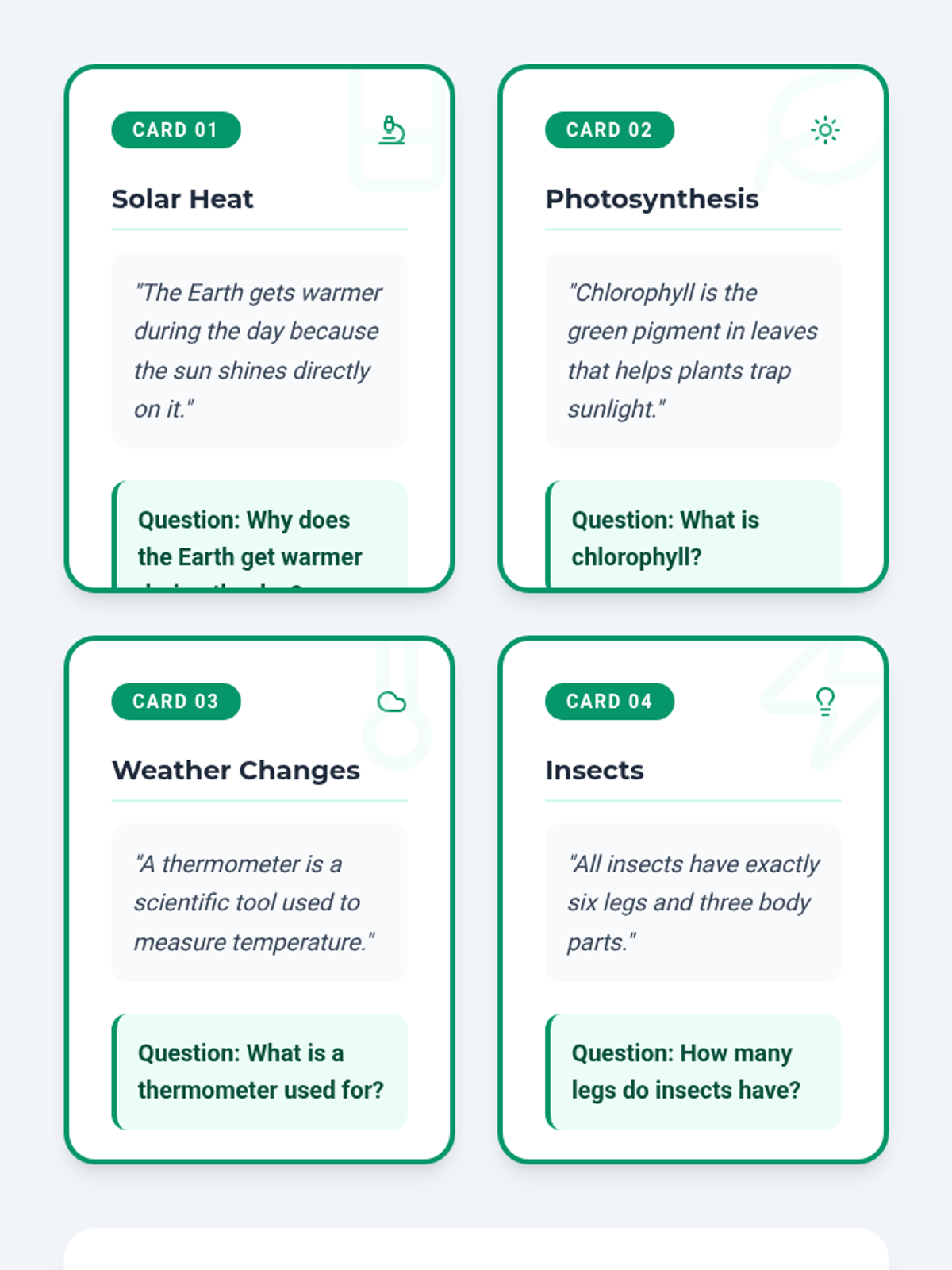
A set of science-themed task cards and a recording sheet. Each card provides a short science fact and a literal question for students to answer using the PQA strategy independently.
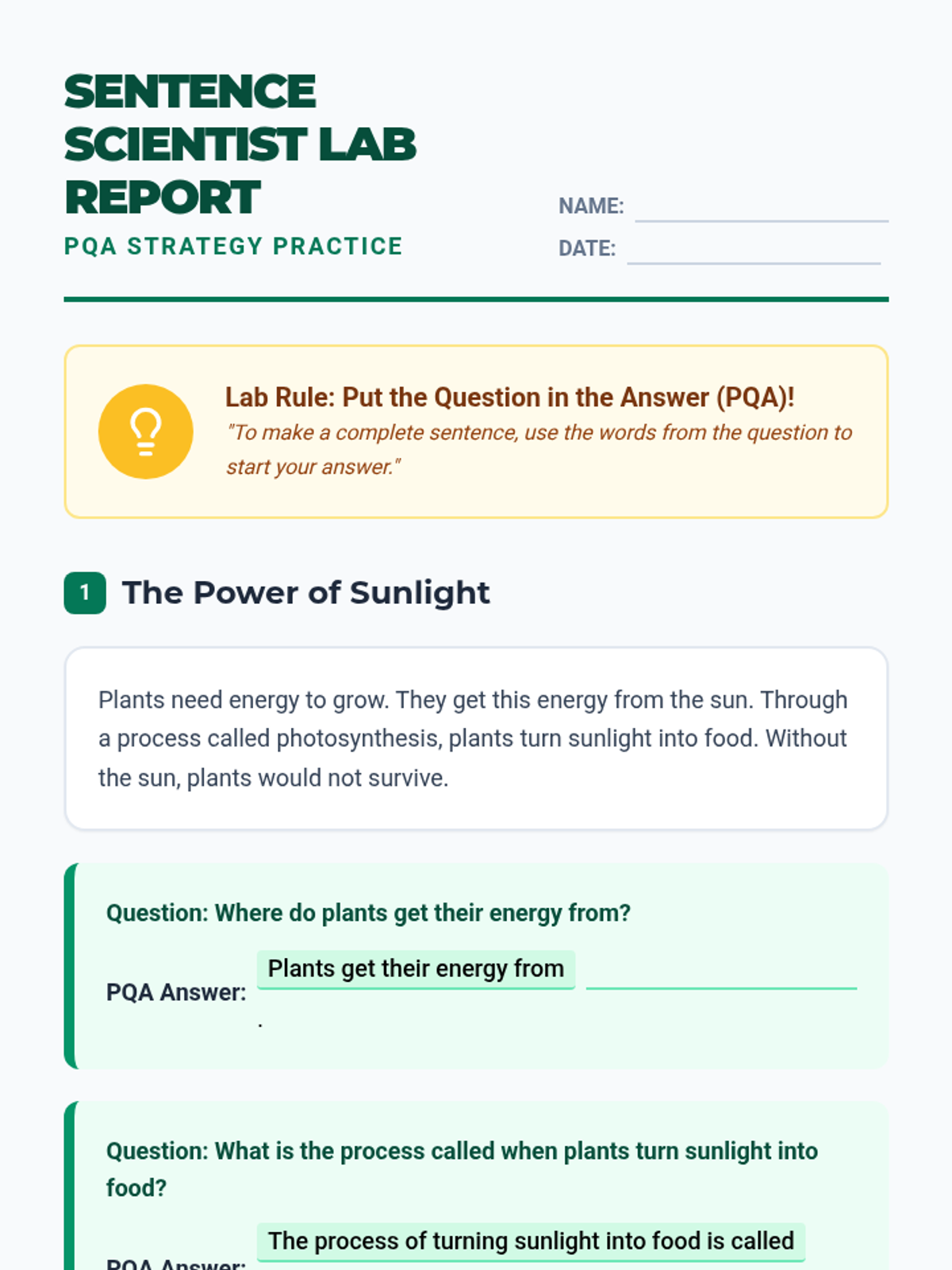
A science-themed worksheet for 3rd-grade students to practice the PQA strategy. Features three sections with increasing independence, including science passages, literal questions, and scaffolded answer lines with question stems.
Interactive guided practice slides introducing the PQA (Put the Question in the Answer) strategy for 3rd-grade science non-fiction comprehension. Includes visual breakdown of the strategy and modeled examples.
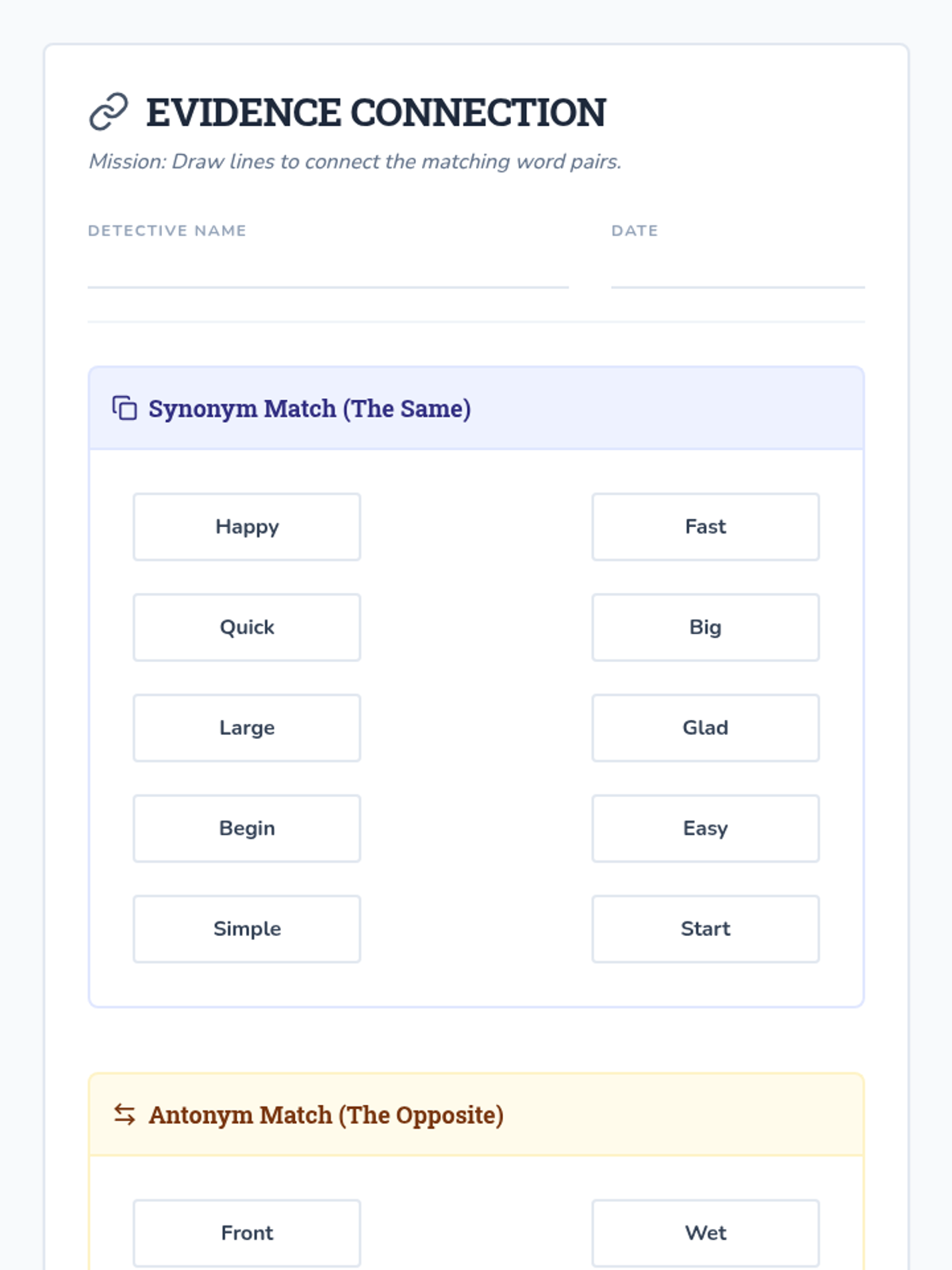
A word-matching worksheet where students connect synonyms and antonyms using high-frequency words and adjectives. Designed with a clean, detective-themed layout for 2nd and 3rd grade.
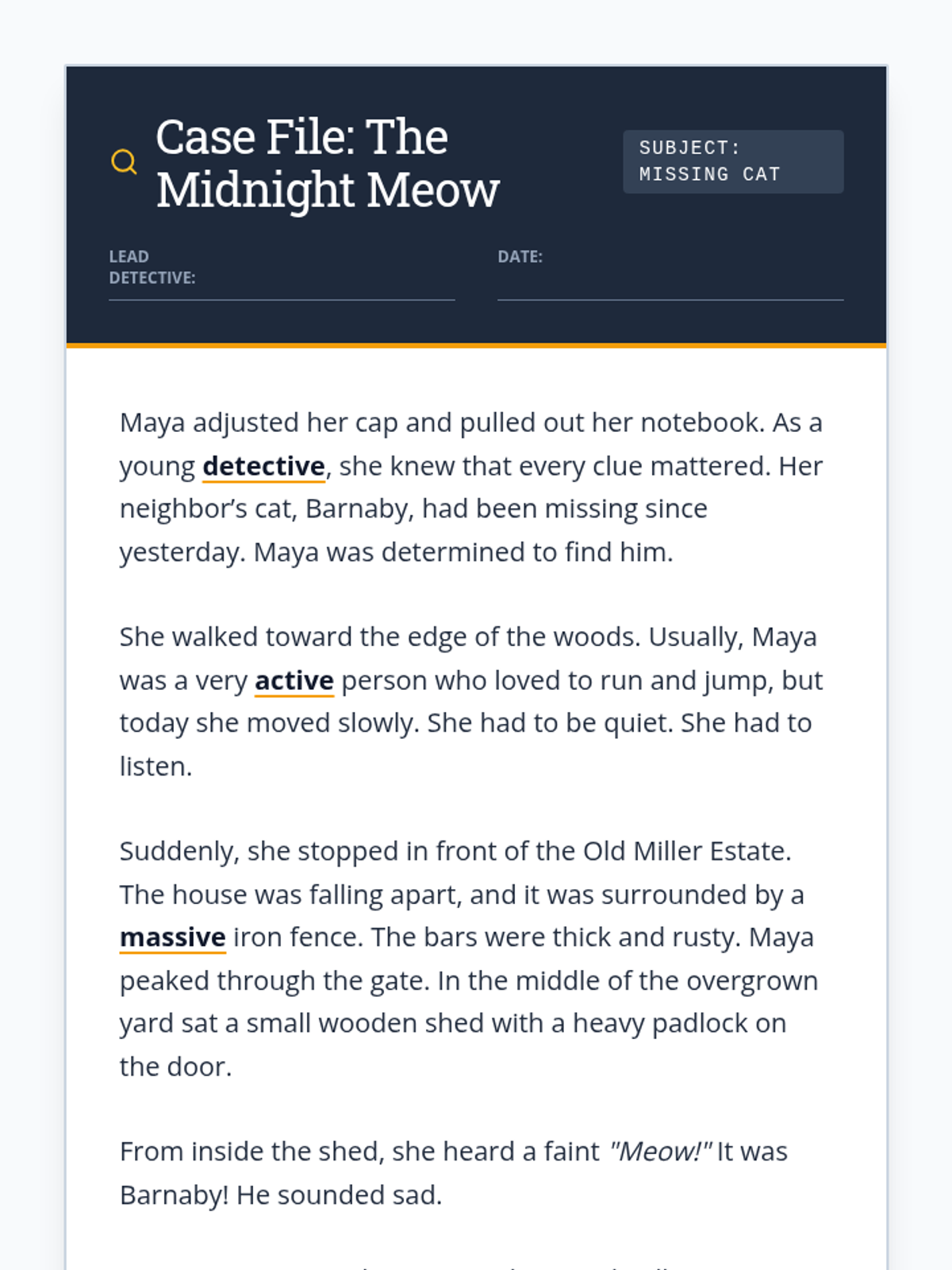
A grade 3 mystery story titled 'The Midnight Meow Mystery' that incorporates target '-ive' vocabulary words (detective, active, massive, captive) and ends with a cliffhanger to serve as a narrative writing prompt.
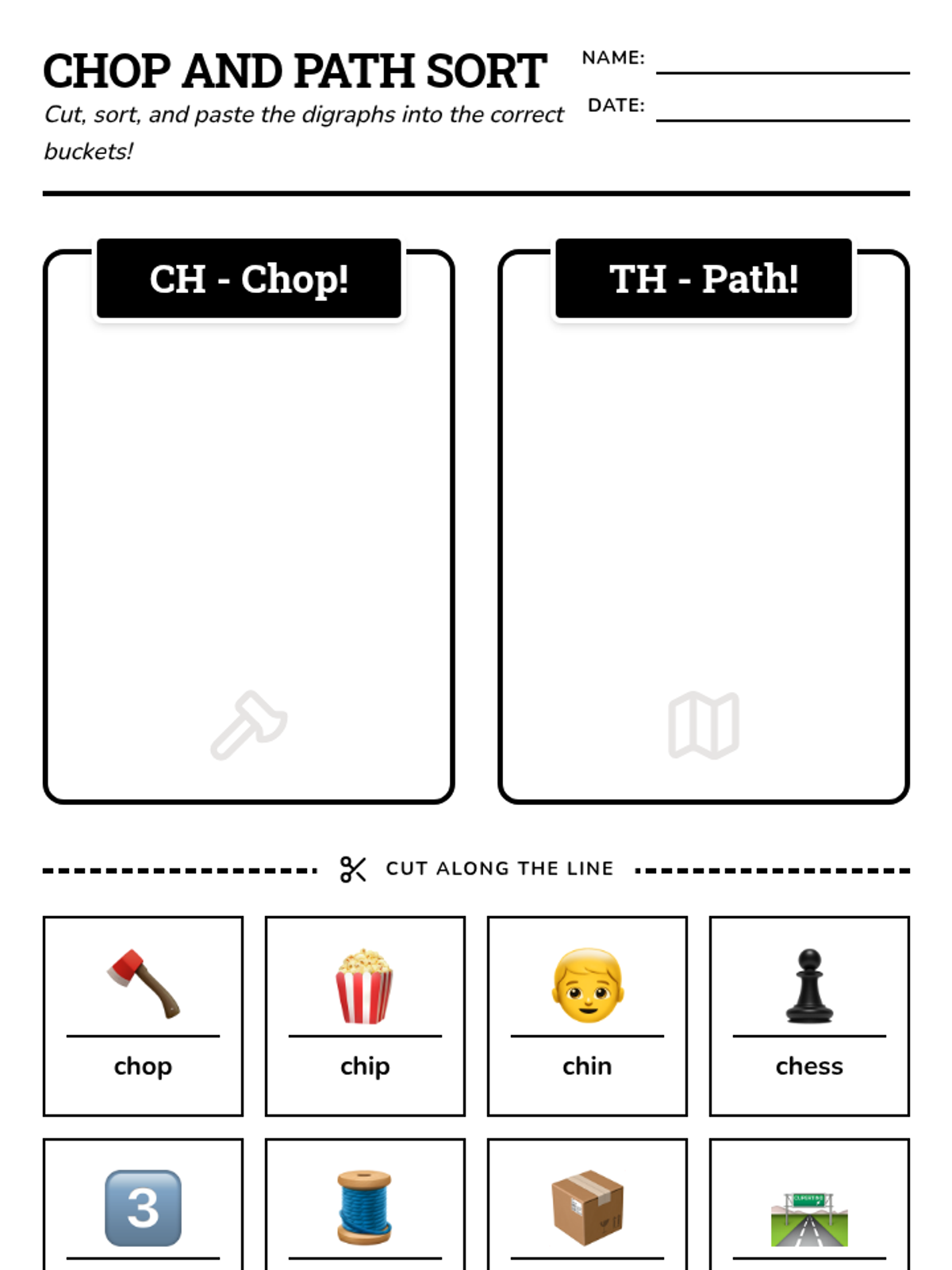
A printer-friendly version of the Chop and Path Sort Worksheet, optimized to fit on a single page while ensuring that cutting boxes (cards) remain intact and are not split across page breaks.
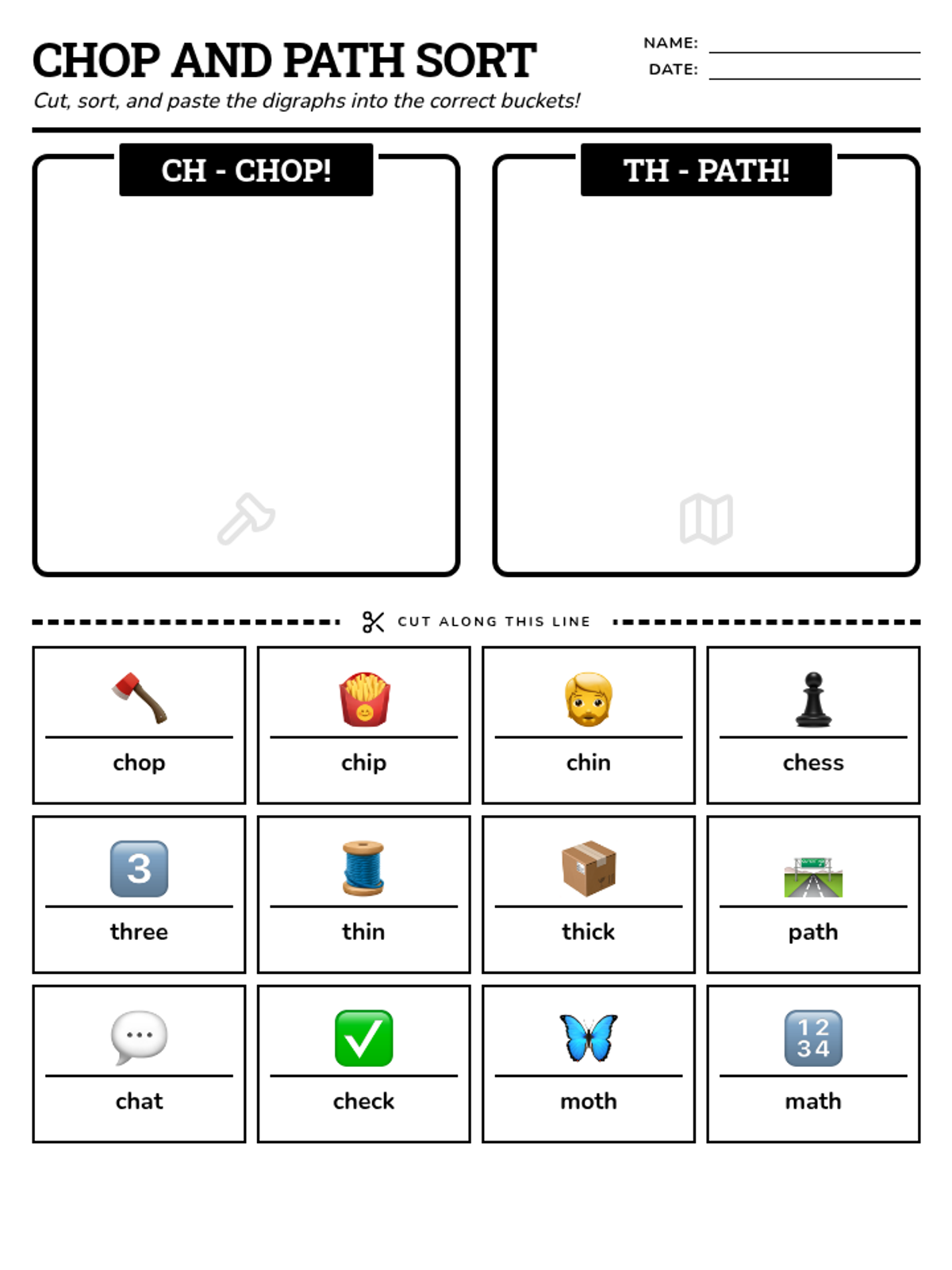
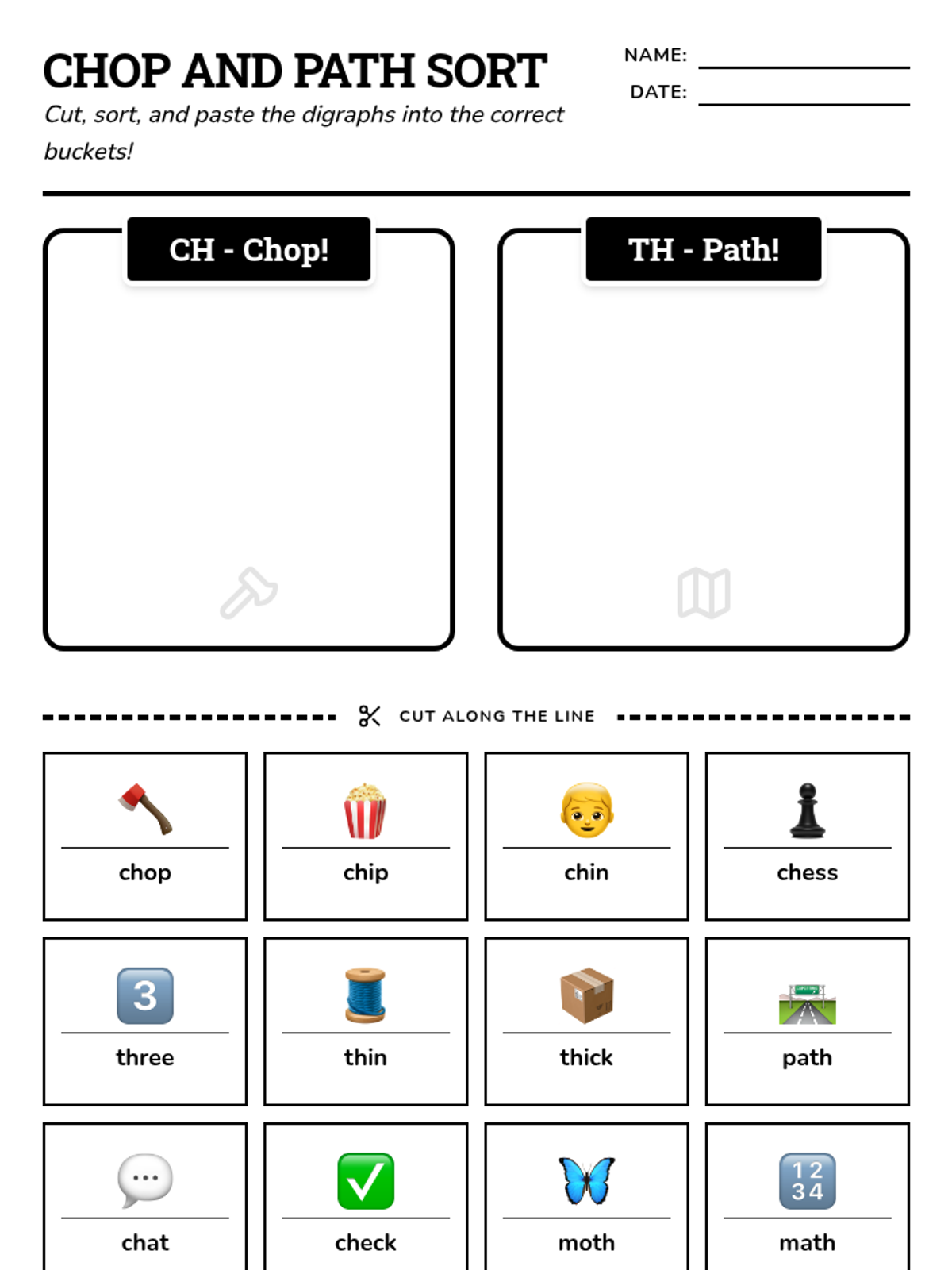
A high-contrast black and white cut-and-paste sorting activity where students categorize words and pictures into 'ch' (chop) and 'th' (path) buckets. Features simplified visuals for clear printing. updated with requested icons.
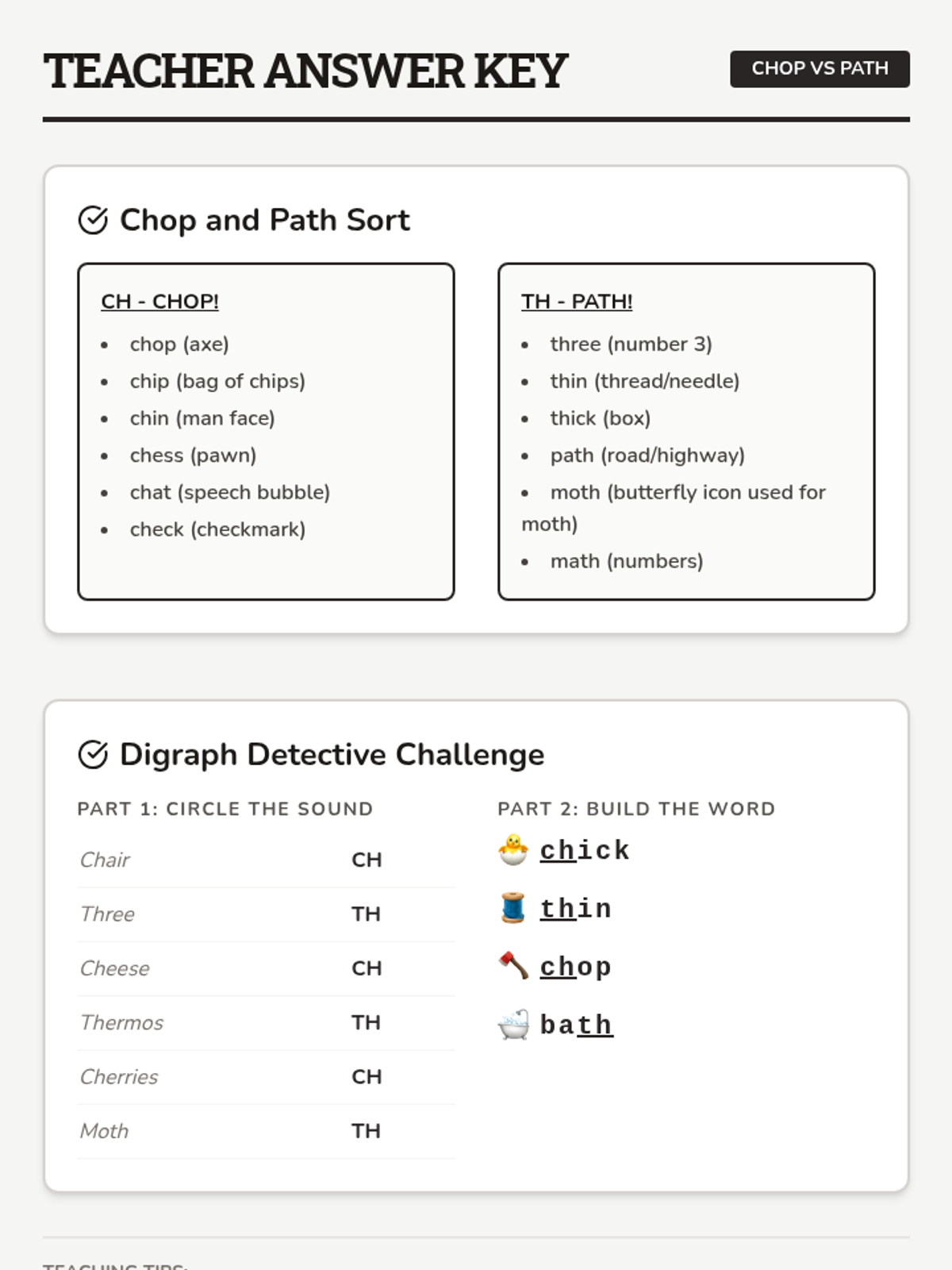
A comprehensive answer key for the 'Chop and Path' lesson, featuring updated solutions for the high-contrast sorting worksheet and detective challenge. updated with moth and three.
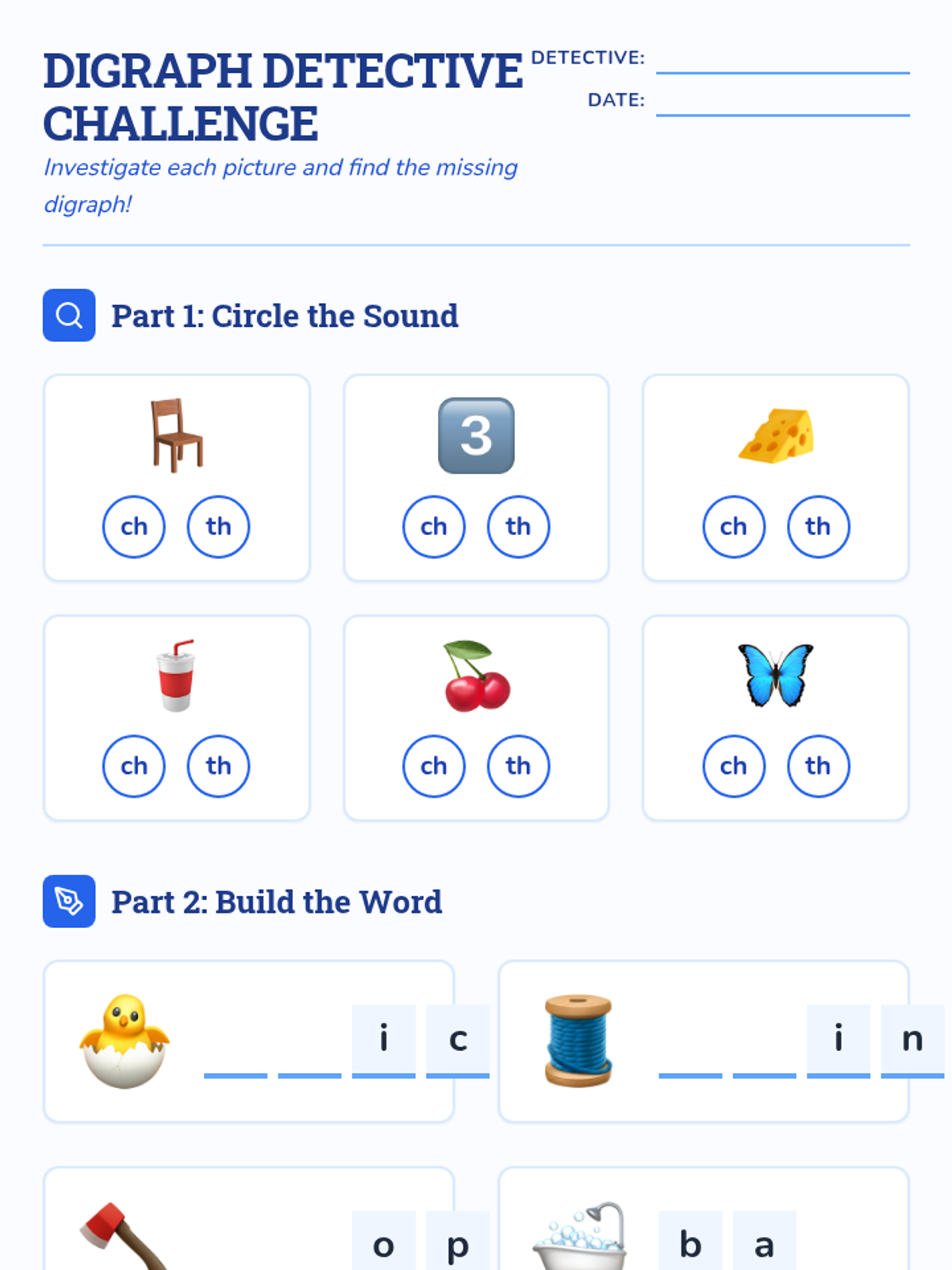
A two-part worksheet focusing on 'ch' and 'th' discrimination. Students circle the correct digraph based on pictures and complete word-building puzzles by filling in the missing digraph letters. updated with new vocabulary.