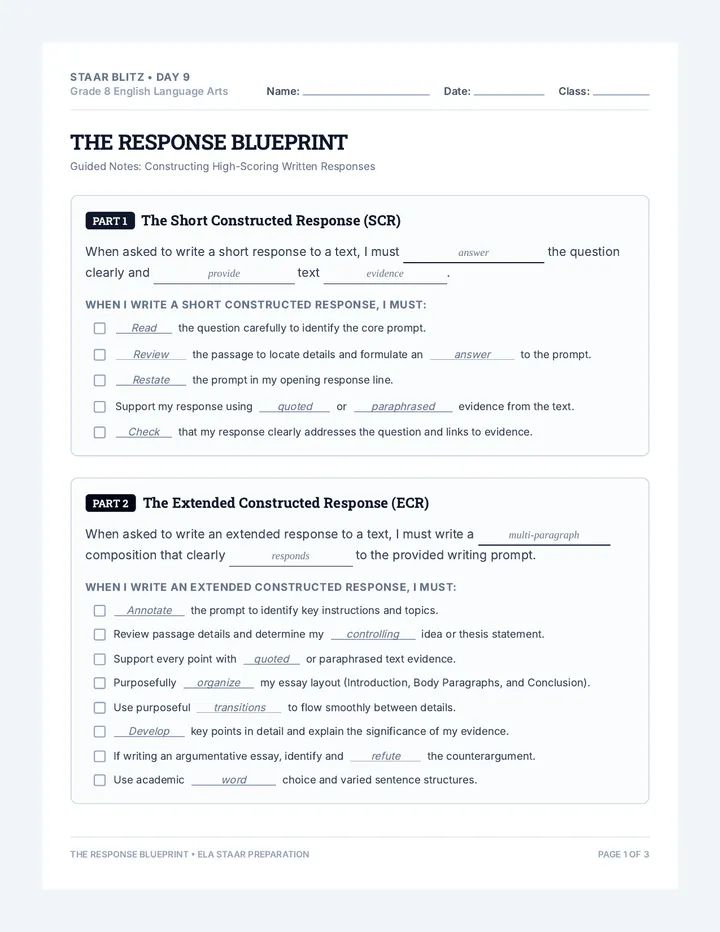
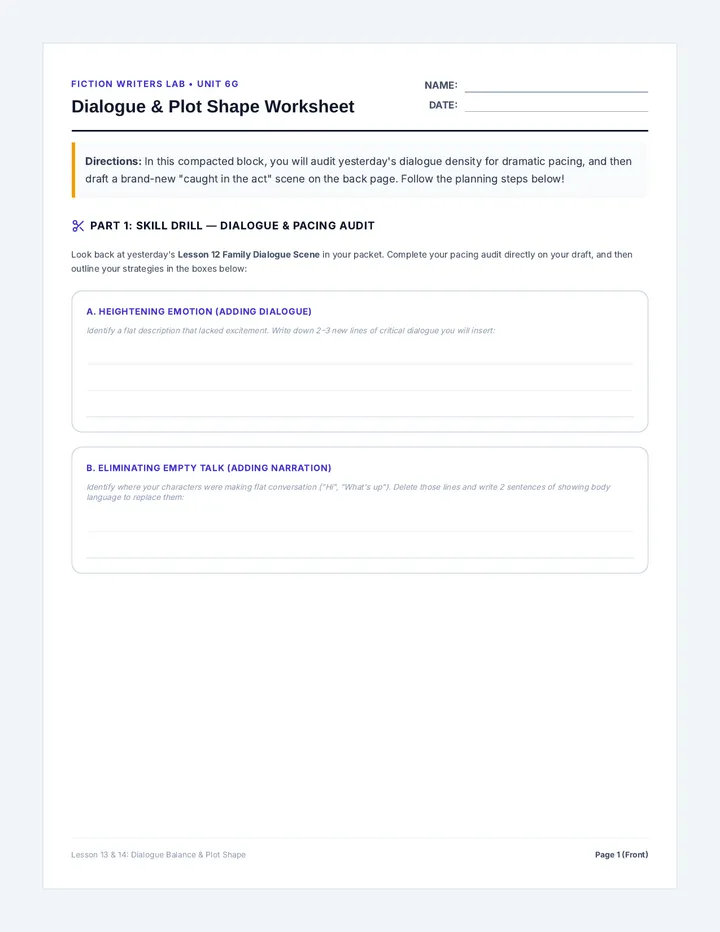
A vocabulary matching and categorization worksheet that tests students on the Norse and French influences in English. Includes sections on matching Viking words to their meanings and distinguishing between Saxon and French synonyms.
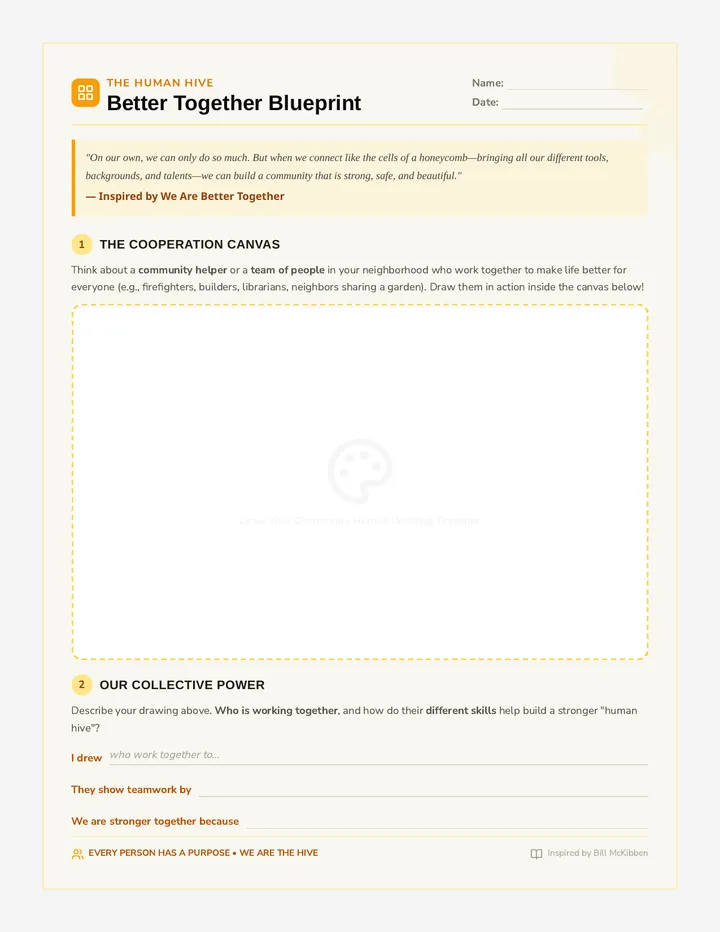
A student-facing step-by-step instruction sheet for creating a 5-slide Greek Mythology project using Google Slides, including technical tips and standard alignments.
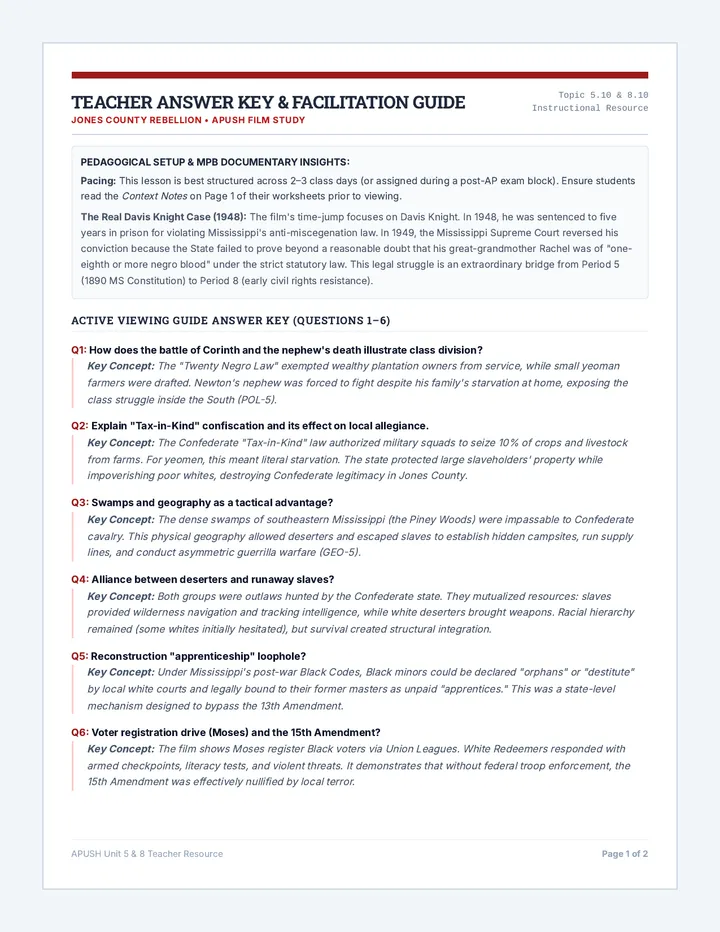
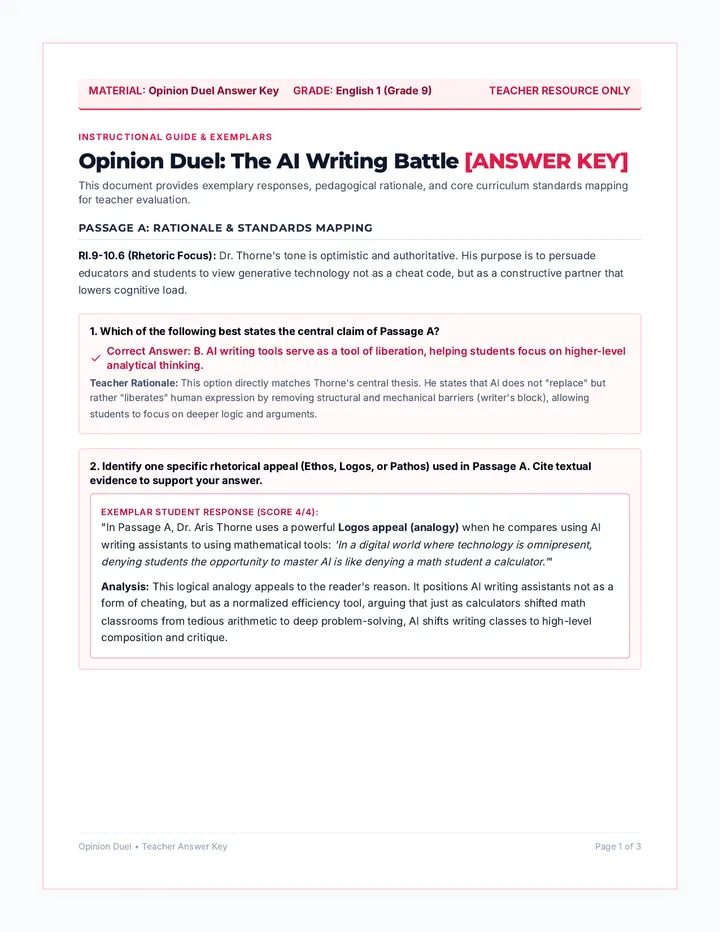
An answer key for the 'Elephant Case Report Worksheet', highlighting correct choices and providing sample open-ended responses.
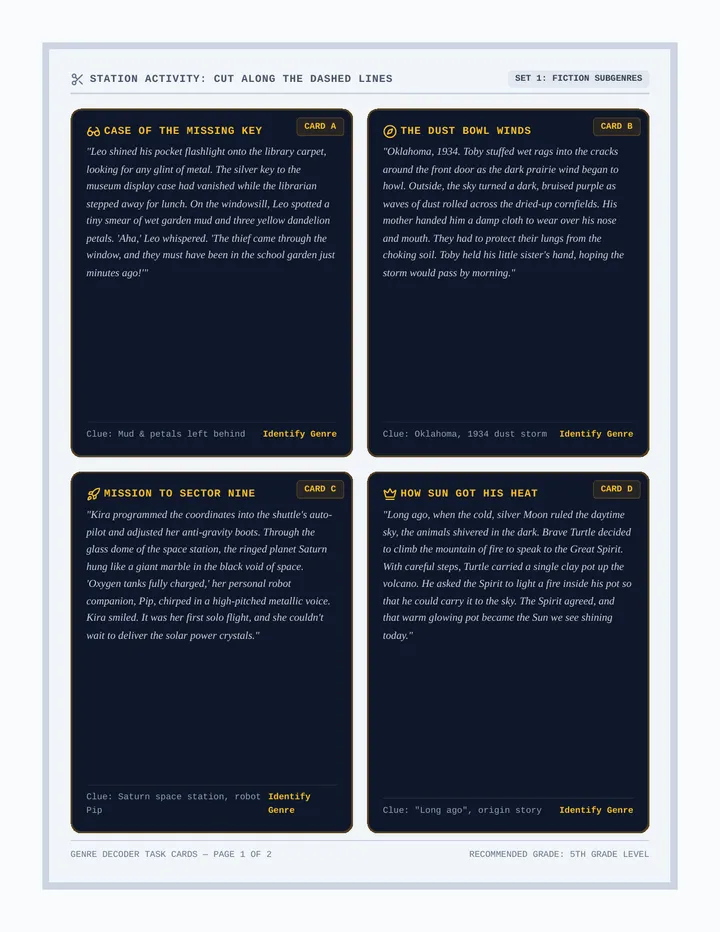
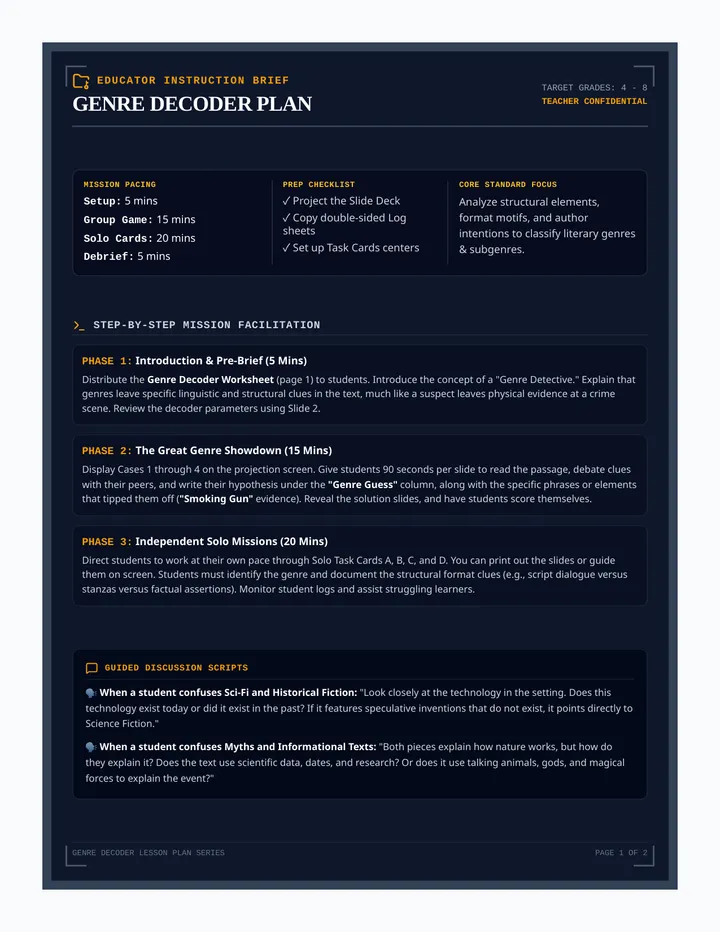
A comprehensive teacher guide for reading intervention, providing instructional scripts, the 'Stop & Gist' strategy, and differentiation tips for supporting hyperlexic students.
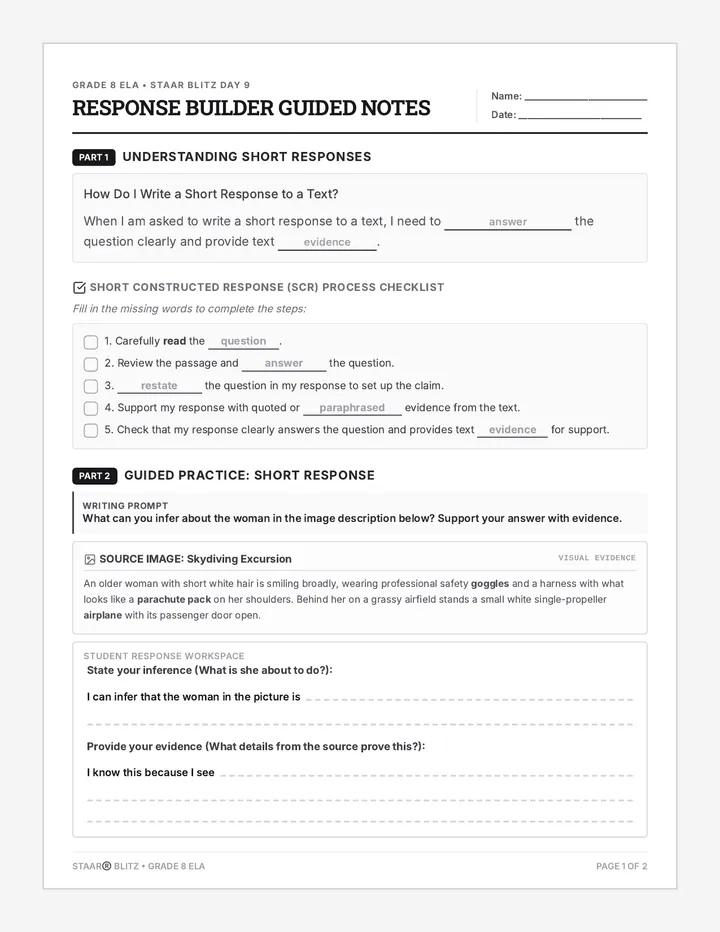
A zoo-themed reading passage worksheet featuring 'Ellie the Elephant'. Includes multiple-choice questions for main idea and open-ended sections for supporting details about how elephants use their trunks.
A visual anchor chart titled 'Idea Detectives' that uses a hierarchical layout to explain the relationship between a main idea and its supporting details. Perfect for visual learners in primary reading intervention.
A 10-slide presentation deck introducing figurative language concepts (Simile, Metaphor, Personification, etc.) with scrambled review questions on each slide to reinforce learning.
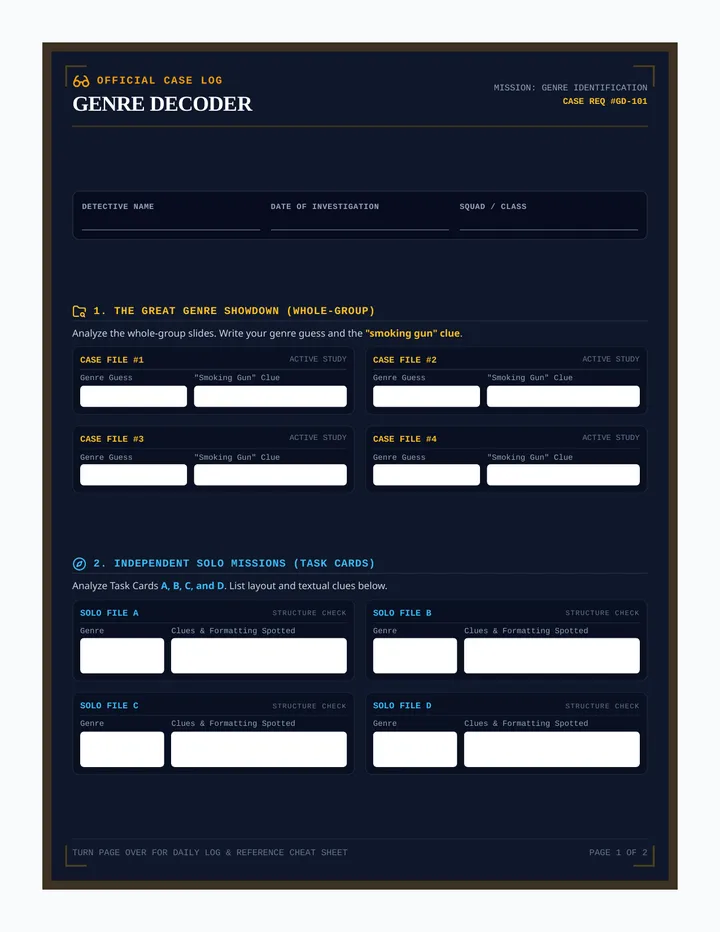
A 2-page student worksheet designed to accompany the Language Lab slides. It features dedicated sections for each figurative language device, providing space for students to record their original examples and respond to flashback review questions.
A 12-slide presentation deck covering 9 types of figurative language. Each slide includes a definition, a 'Lab Example', a student 'Research Task' to create their own example, and a 'Yesterday's Review' question to reinforce cumulative learning.
A comprehensive summative assessment for the Medieval Europe unit, including multiple-choice questions, key term identification, and a short essay on the impact of the Black Death.
Final set of instructional slides for Lesson 5, focusing on King John and the Magna Carta, the rise of the middle class and town life, and the eventual decline of the Middle Ages.
A creative writing and perspective-taking activity for Lesson 4 where students write a fictional journal entry from the viewpoint of a plague survivor to analyze the social and economic shifts of the era.
Educational slides for Lesson 4 covering the arrival of the Bubonic Plague, its physical symptoms, the devastating population loss, and its role in ending the feudal economic system.
An activity for Lesson 3 where students identify Gothic architectural features and analyze how the design of cathedrals reinforced the power and teachings of the Church.
Presentation slides for Lesson 3 exploring the spiritual and political power of the Catholic Church, the conflict between kings and popes, and the architectural significance of Gothic cathedrals.
A mapping and analysis worksheet for Lesson 2 focusing on the geography of the Crusades, the diverse motivations of crusaders, and the long-term cultural impacts.
Instructional slides for Lesson 2, detailing the path to knighthood, the code of chivalry, and the historical causes and consequences of the Crusades.
A student worksheet for Lesson 1 requiring students to define social roles, label the feudal pyramid, and analyze the benefits and drawbacks of serfdom.
A visual presentation for Lesson 1 covering the origins of feudalism, the social hierarchy, and the manorial system. It features high-contrast slides with medieval motifs and clear, readable text.