A comprehensive teacher guide for a sequencing lesson, featuring a step-by-step instructional plan, learning objectives, and teaching tips tailored for adult learners.
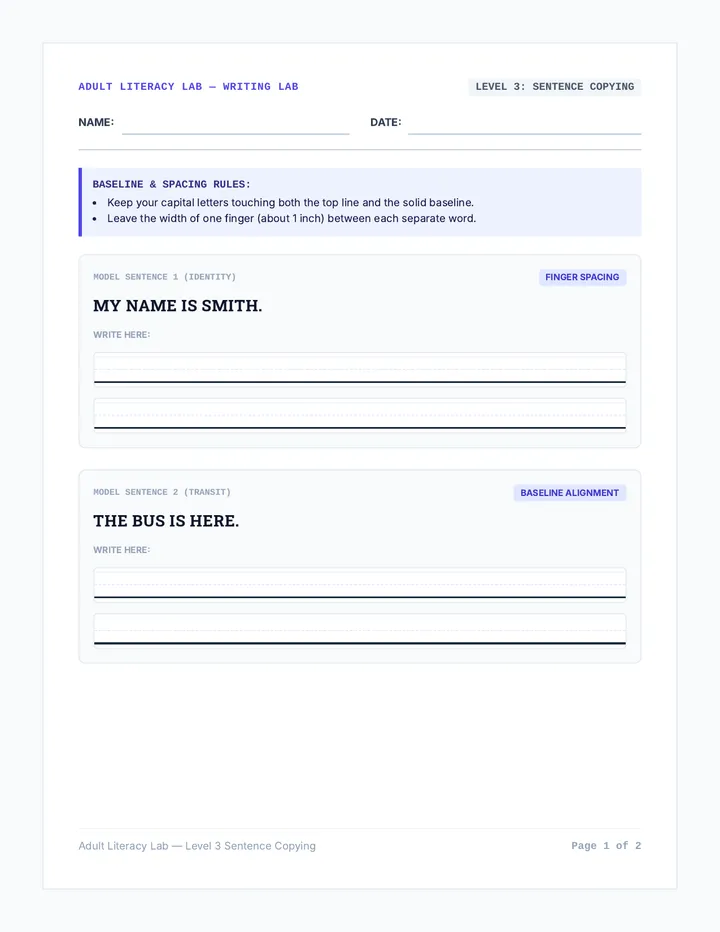
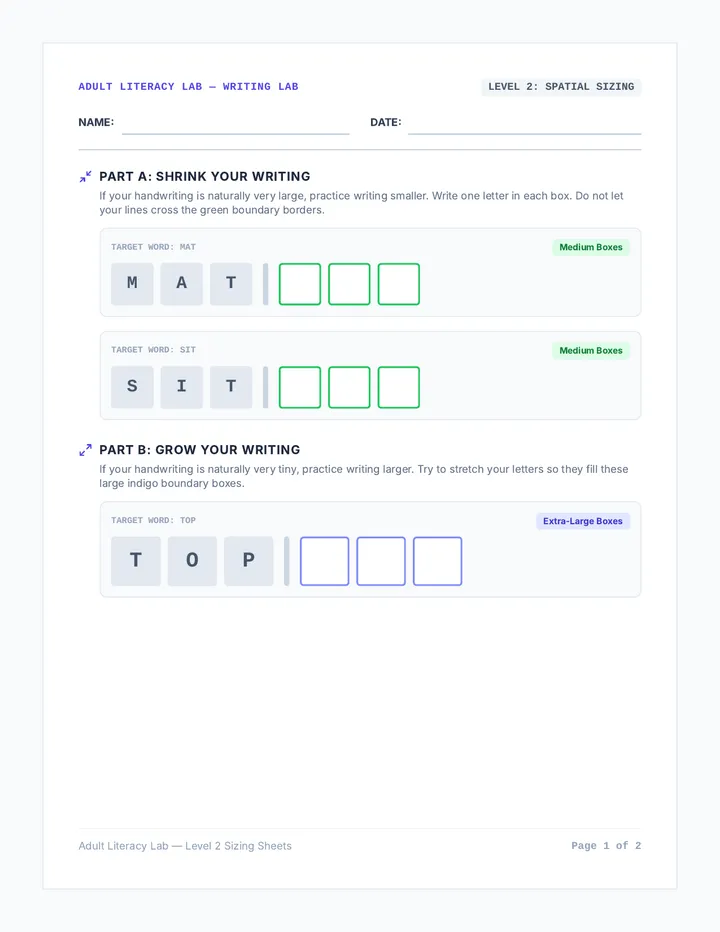
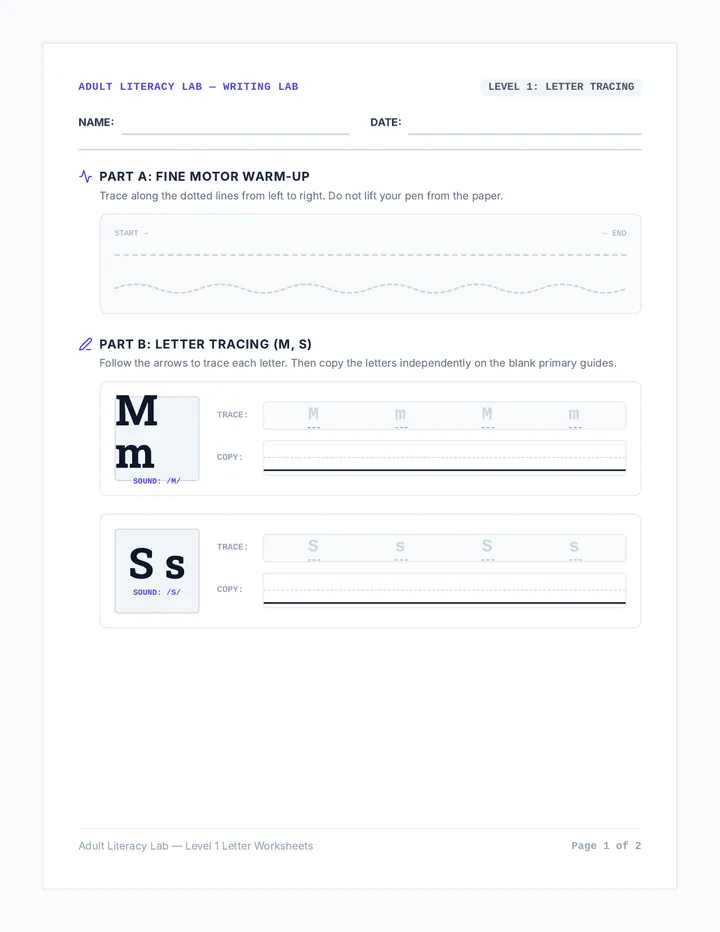
A modified Level 1 basics worksheet for adult learners, focusing on letter recognition and signature marking. This 2-page version excludes the general tracing page to allow for personalized name practice. Features high-visibility text, clear icons, and a clinical vocational aesthetic. Updated with full alphabet grid and improved work area sizing.
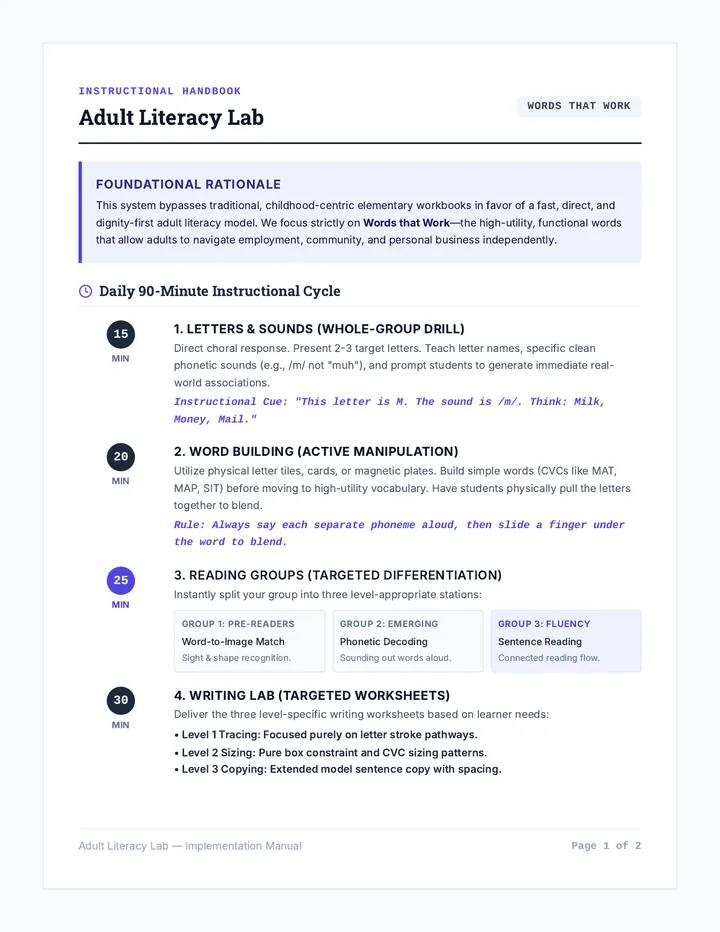
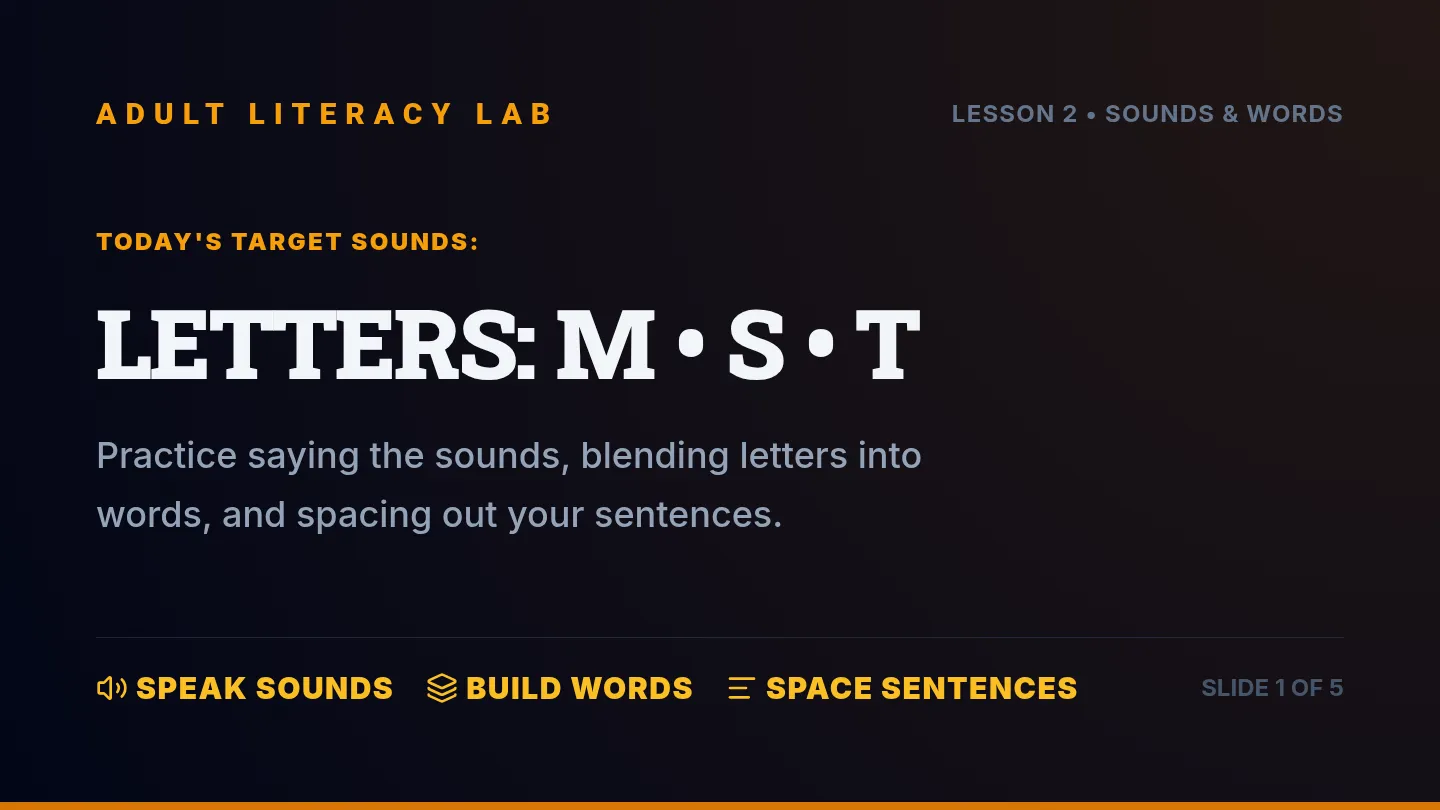
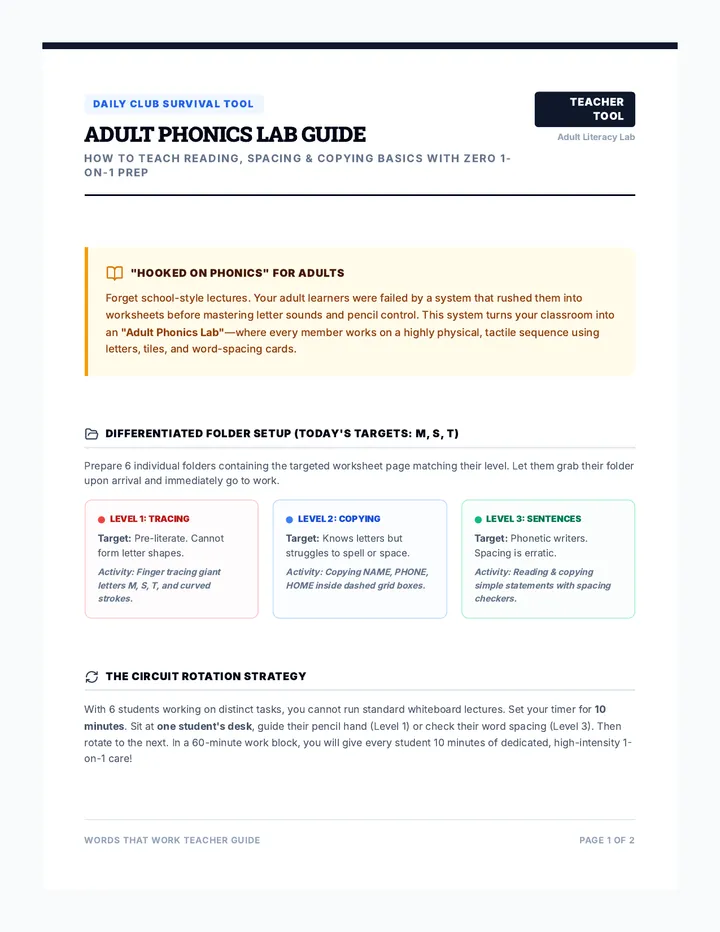
A simplified 90-minute facilitator guide for the Identity Management Lab, specifically designed for Level 1 literacy learners. Features a modified 5-part instructional cycle focusing on vocal priming, visual recognition, and mechanical tracing protocols.
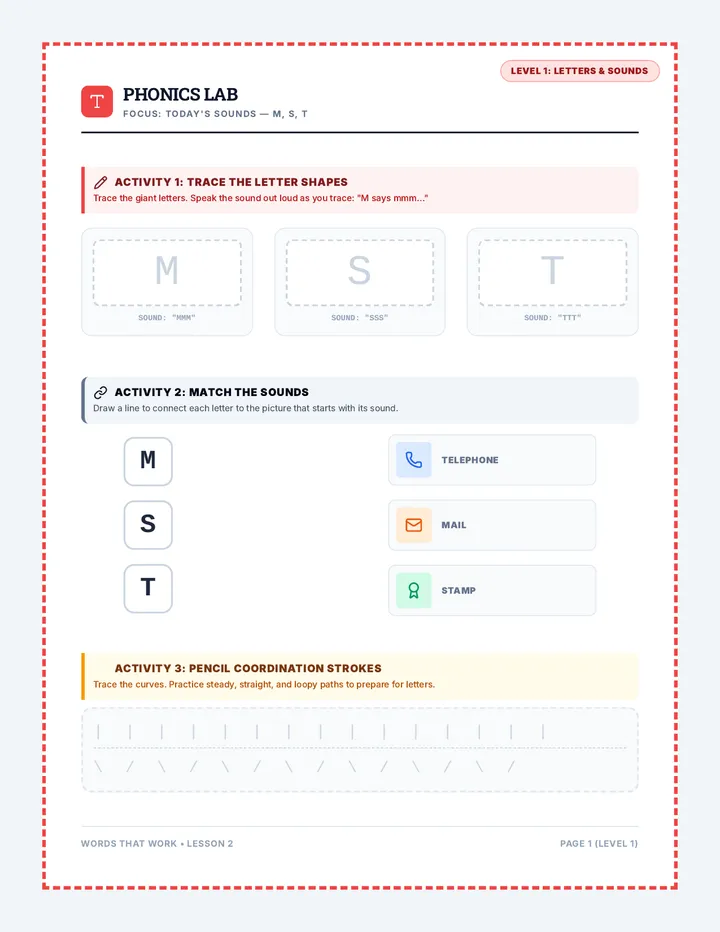
A heavily simplified identity practice pack for Level 1 adult learners. Features high-visibility tasks for name recognition, tracing, first-letter identification, and basic distinction between names and numbers using large text and clear icons. Updated with improved page flow and handwriting guidance.
A printable storytelling evaluation worksheet designed for small groups of three, including a role rotation guide, a 14-point skill checklist, and a reflection section for students to assess their read-aloud techniques.
A teacher-facing answer key and instructional guide. It provides sample responses for the analytical questions, a breakdown of textual evidence, and teaching tips for facilitating the argument-building process.
A structural graphic organizer designed to help students outline a persuasive argument. It guides them through crafting a thesis, selecting textual evidence, addressing counter-arguments, and drafting a compelling conclusion.
A guided worksheet that summarizes the key arguments for and against social media screening in the workplace. It includes evidence-tracking boxes and analytical questions to help students process the text and develop their own stance.
A teacher reference guide that includes an answer key for the Digital Dossier worksheet, a scoring rubric for the argument section, and instructional tips for facilitating the lesson.
A visual presentation designed to lead a discussion on the ethics of social media vetting in hiring. It breaks down the scenario, explores legal caveats from the experts, and provides a framework for students to build their own arguments.
A detailed argument-forming worksheet that uses a professional HR dossier theme. It guides students through summarizing the text, identifying evidence for both sides, and constructing a formal argument with a claim, evidence, and rebuttal.