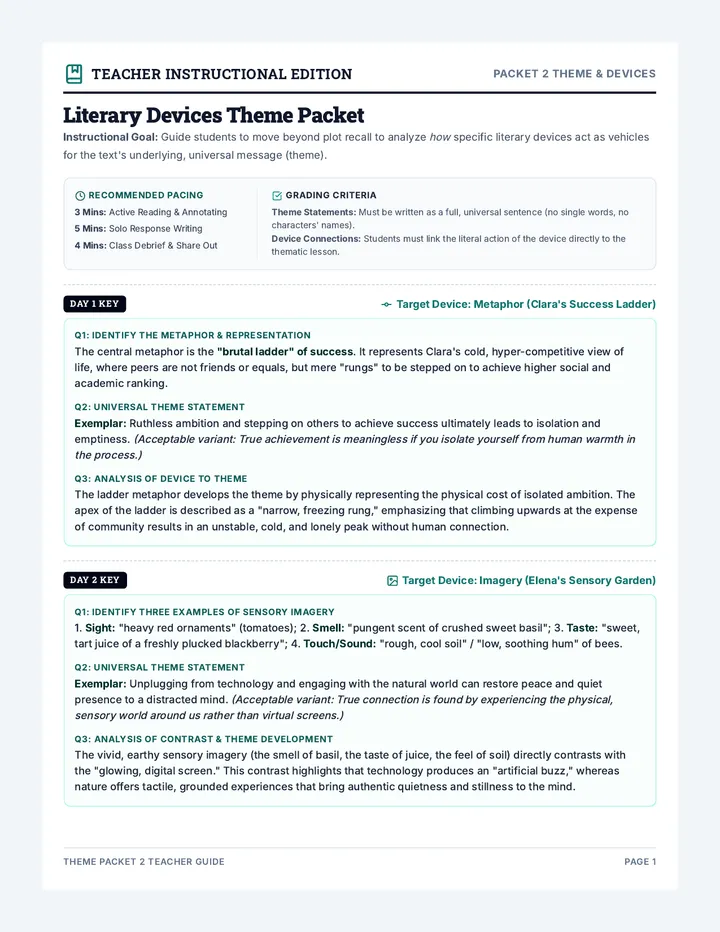
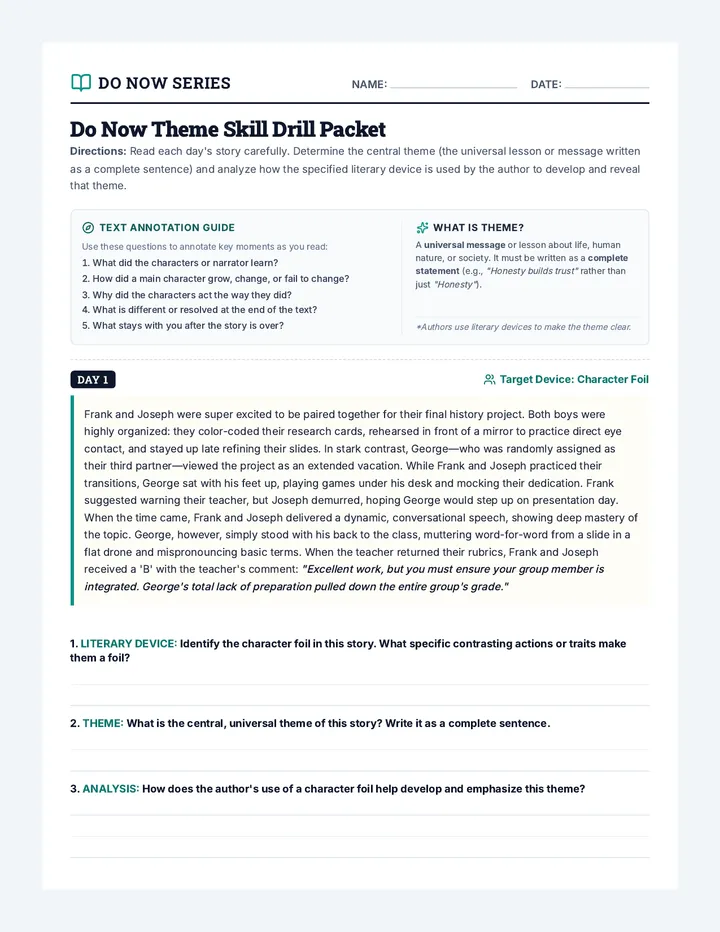
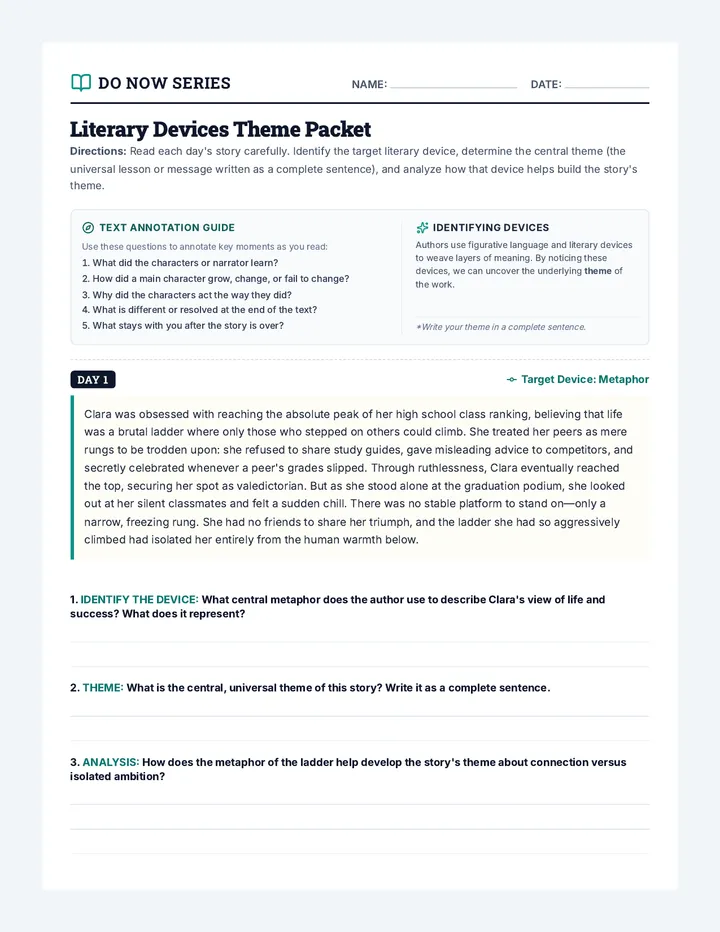
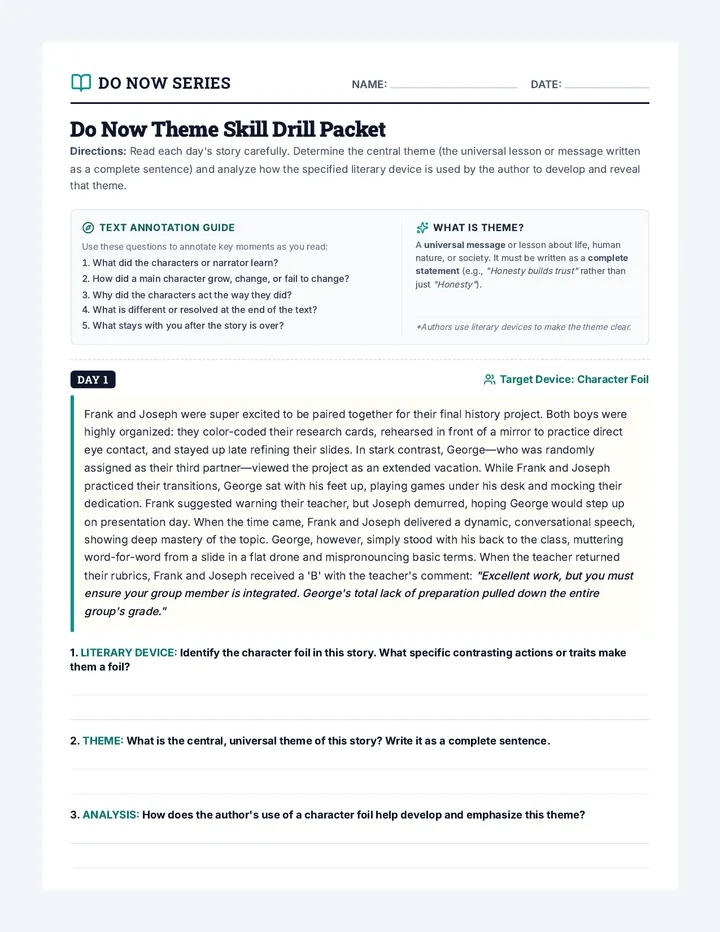
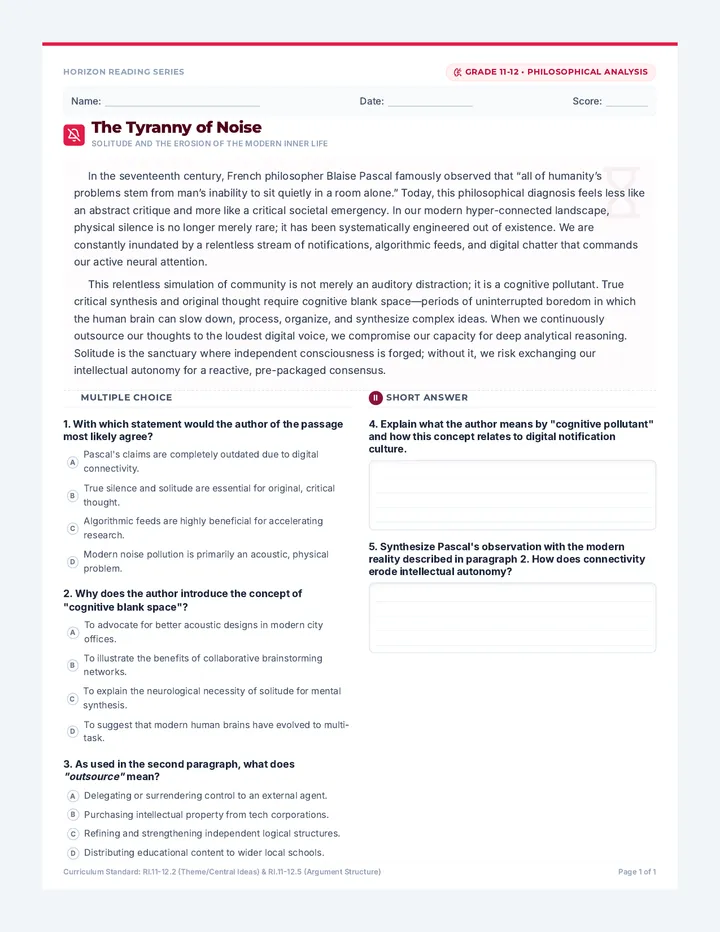
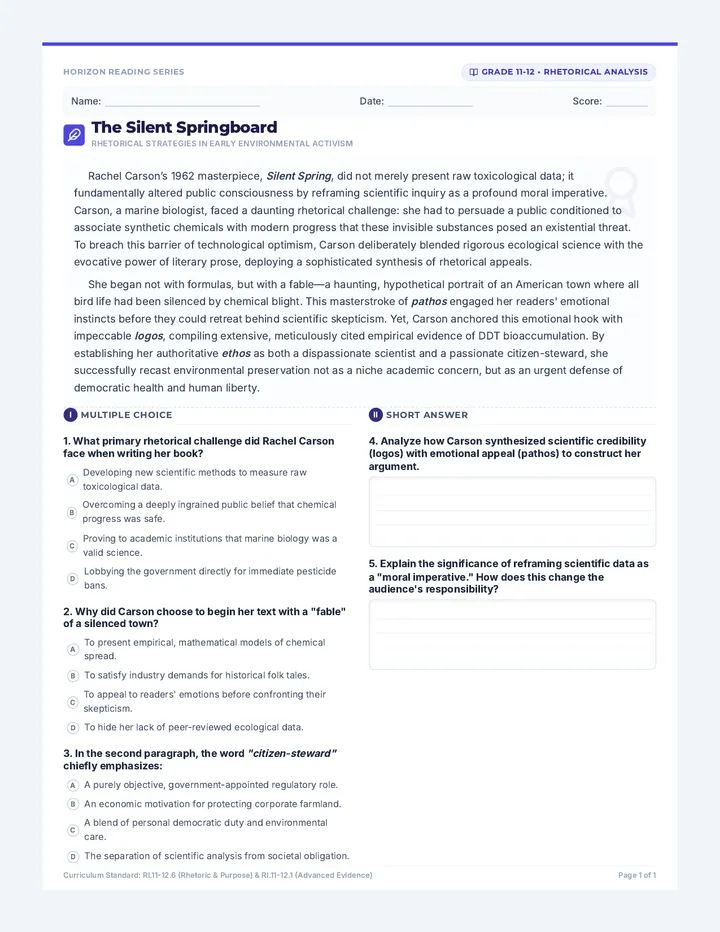
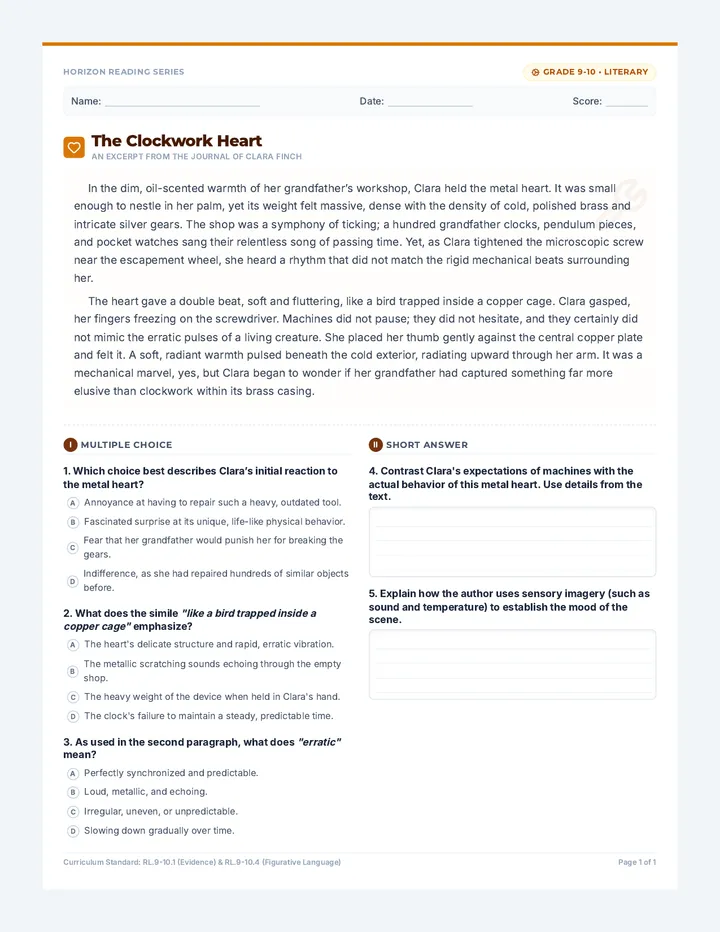
A print-friendly scaffolded Version 2 of the Lesson 4 theme analysis. Page 1 contains a large-format quick check, while page 2 provides a structured, guided analytical response for students.
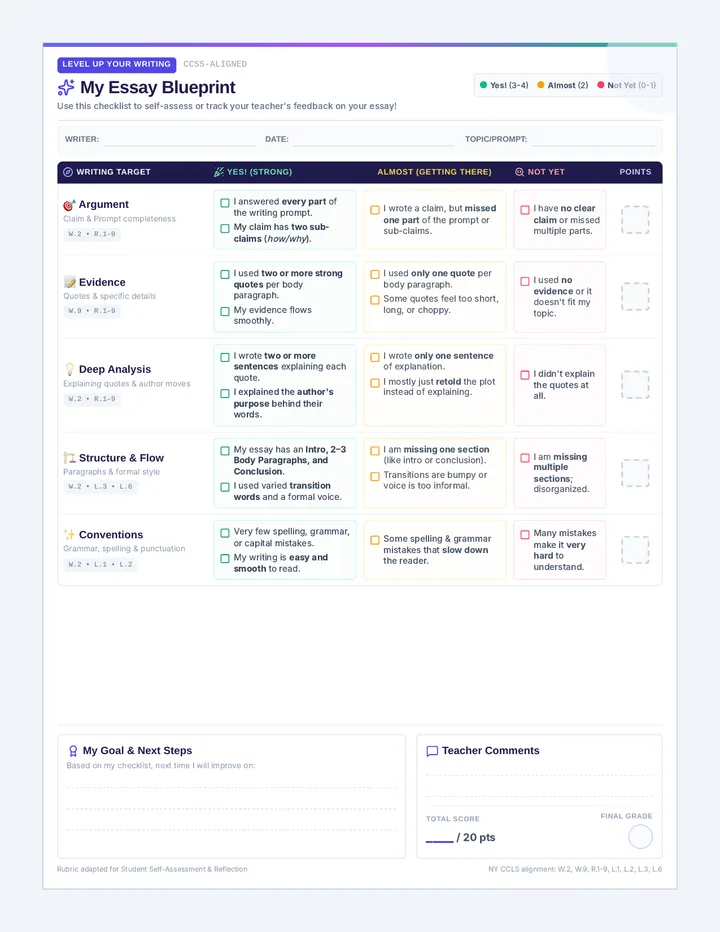
A reading intervention unit targeting the critical spelling changes that occur at suffix boundaries, designed for older struggling readers. The sequence covers final consonant doubling and silent-e dropping logic.
A 9th-grade design-thinking lesson where students identify everyday annoyances, prototype creative solutions, and pitch their inventions using persuasive techniques. Fosters resilience, collaboration, and public speaking.
A sleek, highly visual 5-slide presentation to guide students through the design process, from identifying annoyances to presenting a 60-second pitch. All text conforms to strict visibility requirements.
A structured high school reading intervention sequence focusing on silent consonants, orthographic markers, pluralization rules, and academic spelling structures.
A lesson that teaches students how to write high-quality short constructed responses using the Claim-Evidence-Reasoning (CER) framework, styled as an engaging forensic investigation.
A comprehensive 1-page rubric for assessing student prototypes and pitches. Evaluates problem empathy, prototype ingenuity, rhetorical pitch elements, and collaborative resilience.
A phonics intervention unit for high school readers focusing on short oo patterns, sound contrasts, and spelling application.
Create a lesson for the clueless word fill-in crossword puzzle.
A student-facing graphic organizer to help groups structure and draft their 60-second persuasive pitch using four core rhetorical elements: Hook, Problem, Solution, and Call to Action.
A high-impact 25-minute literacy lab lesson for high schoolers, focusing on high-utility prefixes, roots, and suffixes to decode academic, scientific, and technical vocabulary. Includes instructional slides, a collaborative graphic organizer worksheet, and a tight 25-minute teacher pacing guide.
A student-facing design-thinking worksheet to guide students in brainstorming everyday annoyances, selecting one problem, detailing its impact, and sketching their conceptual invention.