An answer key for the Static Sparks Quiz, clearly identifying the correct matches for each term and visual definition. Now includes visual symbols matching the student quiz and improved layout to prevent content splitting.
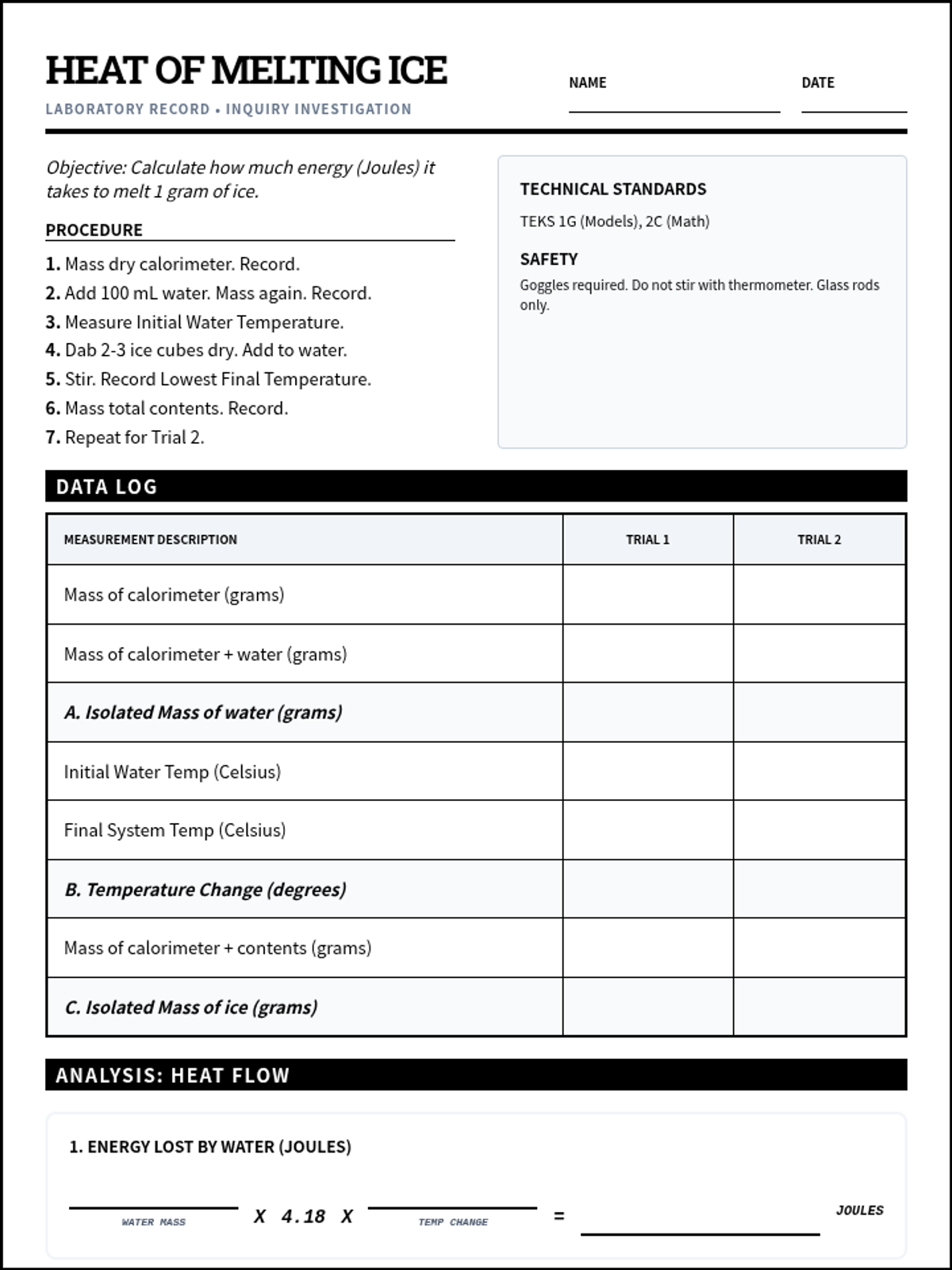
A streamlined 2-page lab report for determining the Heat of Fusion of ice. All mathematical notation and complex coding symbols have been removed and replaced with standard plain text to ensure zero rendering issues. Features a tightened layout with clear work areas, improved contrast for helper text, and a high-impact final calculation strategy. Optimized for black-and-white printing.
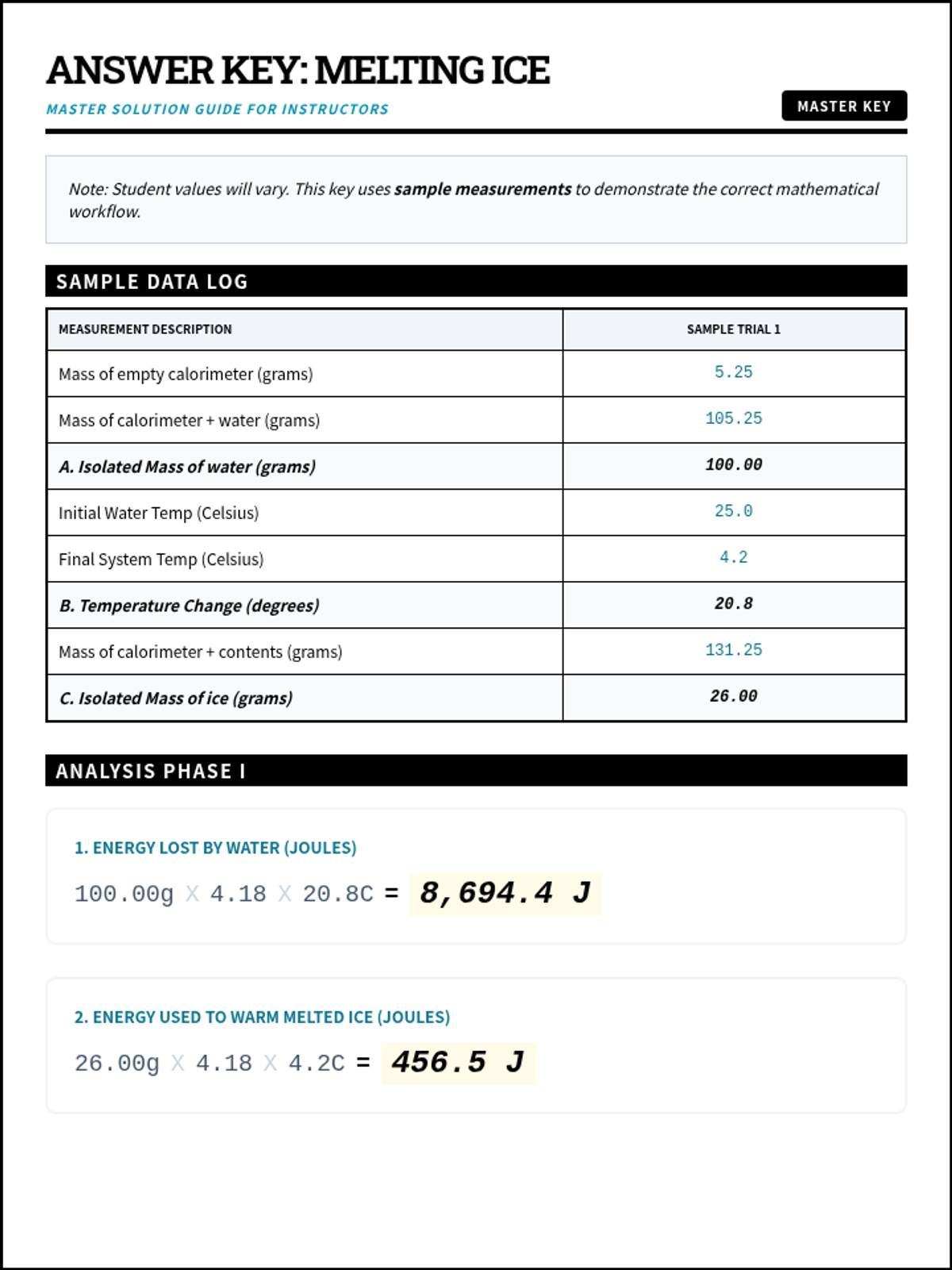
A streamlined 2-page teacher answer key for the Melting Ice investigation. Provides sample experimental data, step-by-step solutions for energy calculations without using complex math symbols, and a fully worked out final mission challenge solution. Optimized for clarity and instructor ease-of-use.
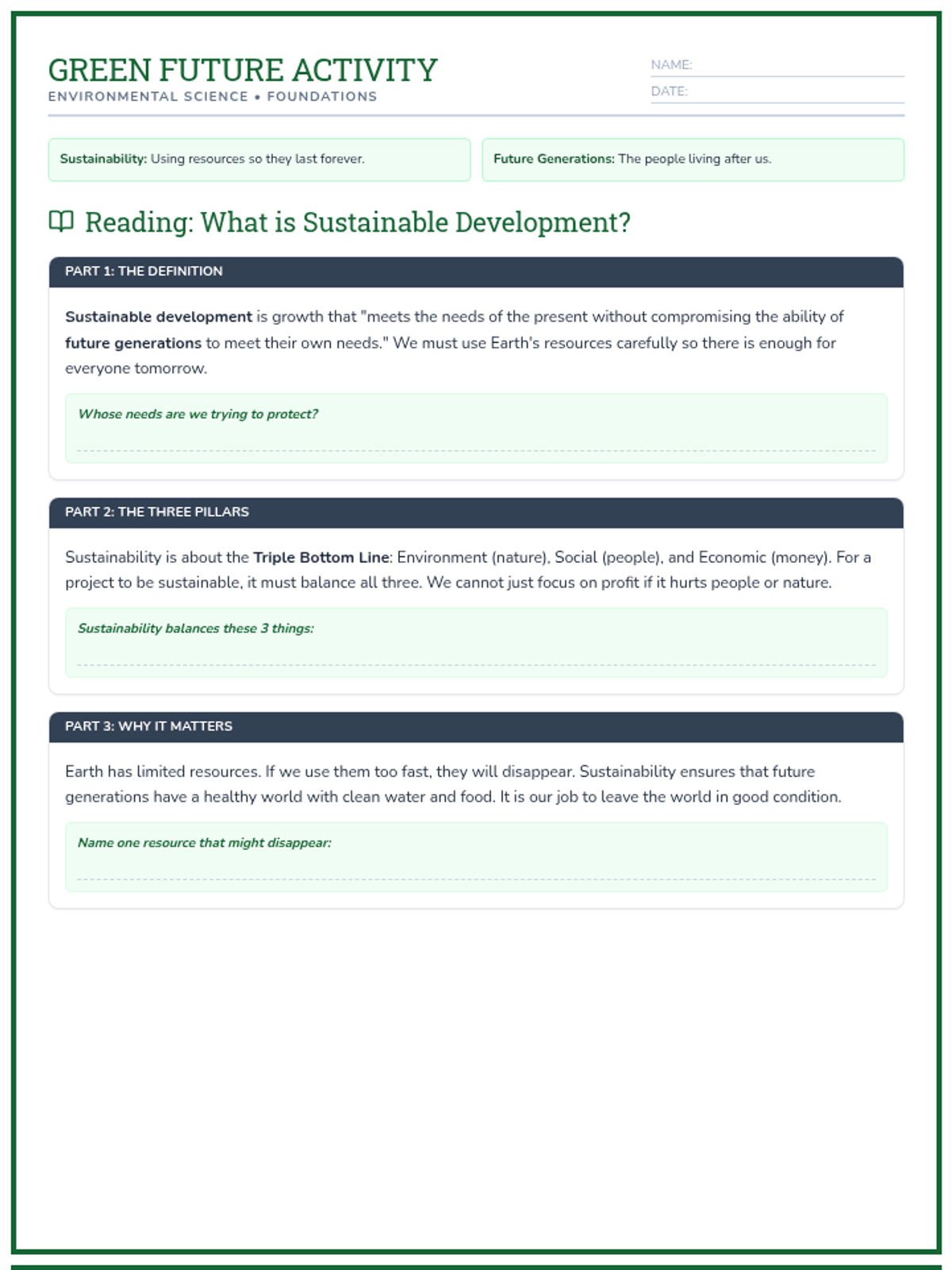
A scaffolded student worksheet for the Green Future lesson. It features chunked reading passages with immediate comprehension checks, vocabulary support, a sustainable vs. unsustainable sorting activity, and guided writing frames to support all learners. Now consolidated for better page flow.
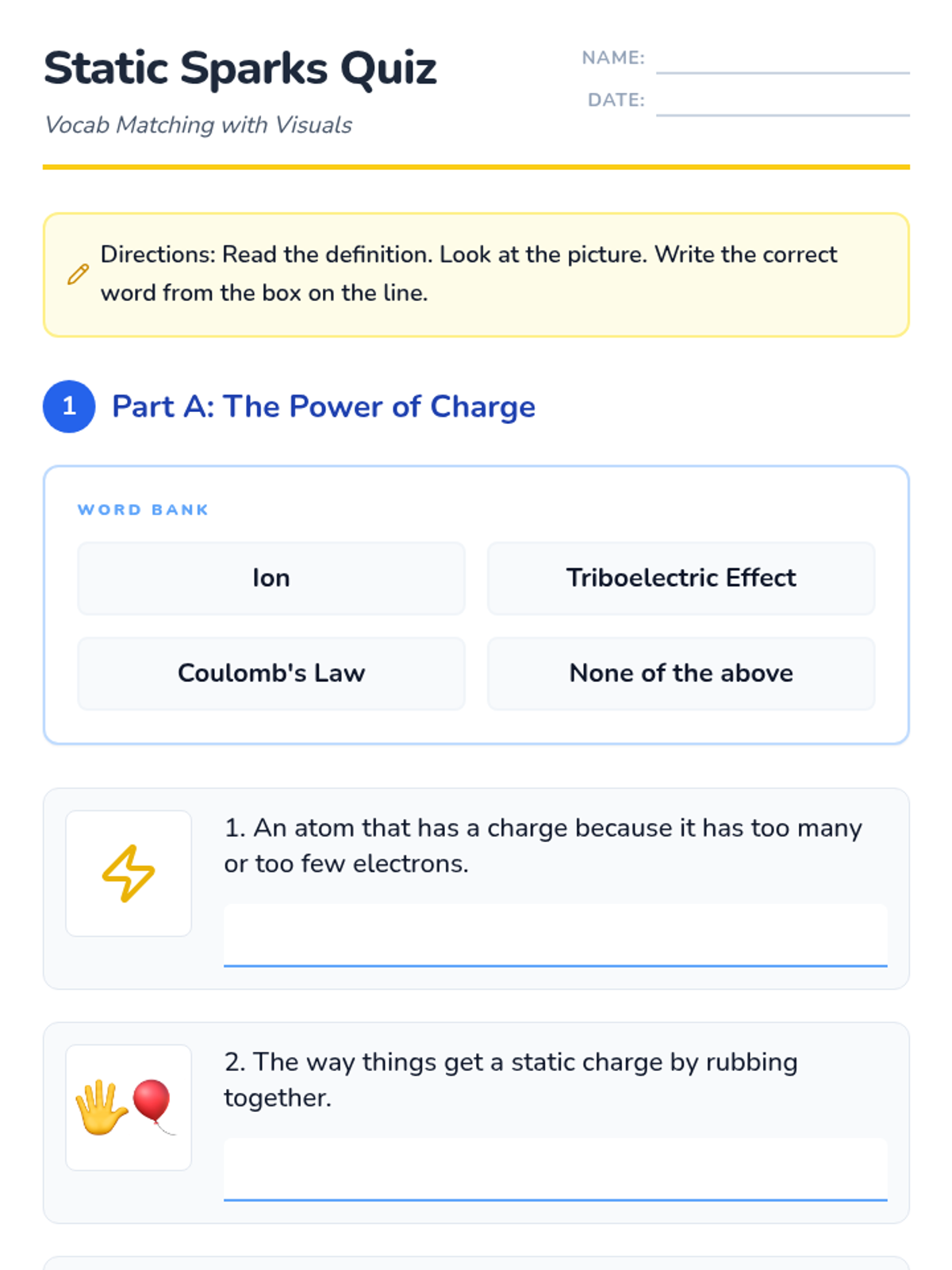
A symbol-supported vocabulary matching quiz for SPED students covering key electrostatics terms. Includes two mini-quizzes with word banks, simplified definitions, and 'none of the above' options. Revised for optimal 2-page layout, larger header text, and student-friendly answer areas.
A visual presentation for the Green Future lesson, introducing sustainable development through the "empty basket" analogy, vocabulary, and the Triple Bottom Line framework. Includes checks for understanding and chunked reading.
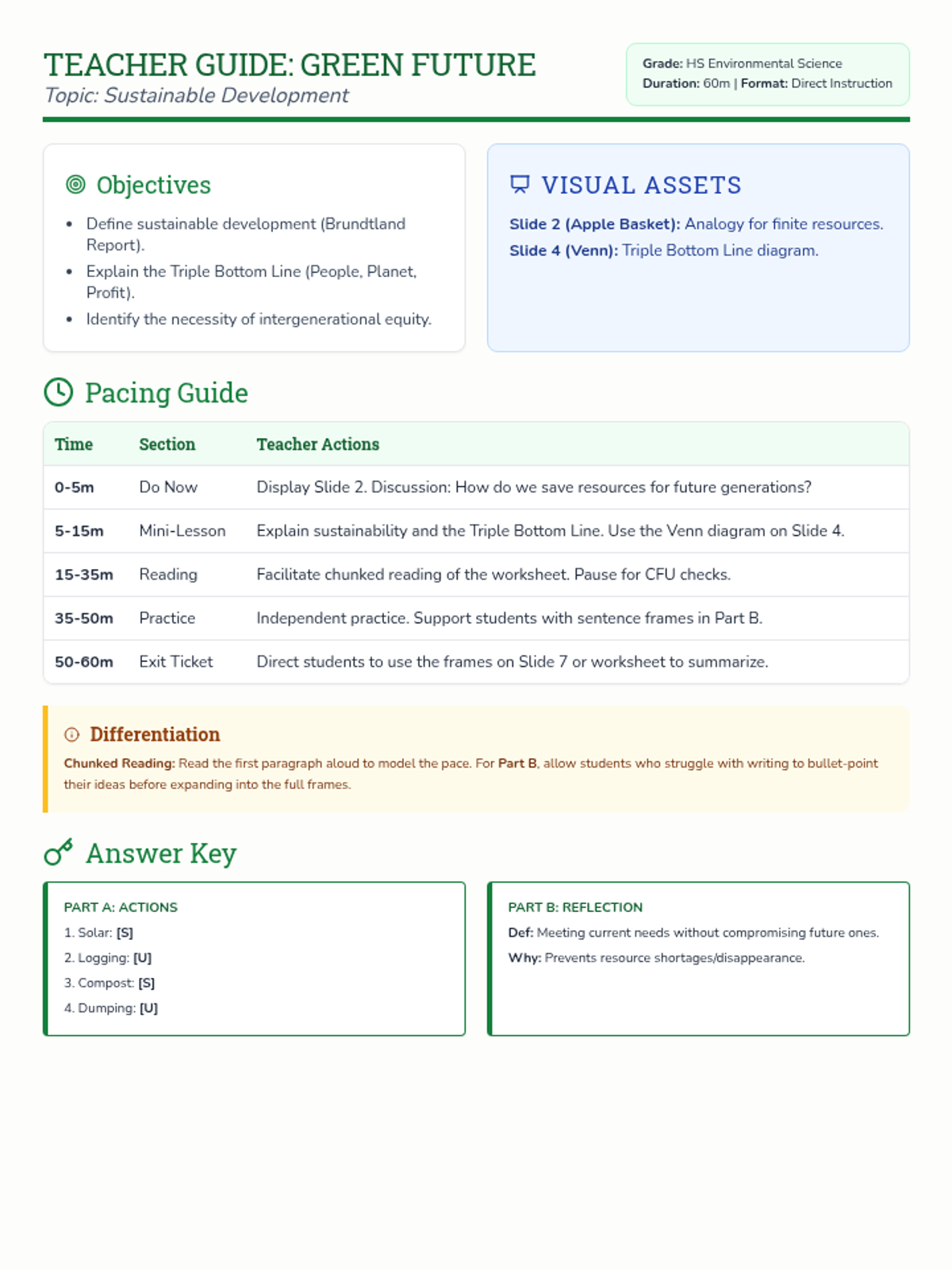
A teacher's guide for the Green Future lesson, providing a pacing guide, answer keys, and specific pedagogical strategies for supporting students with chunked reading and sentence frames.
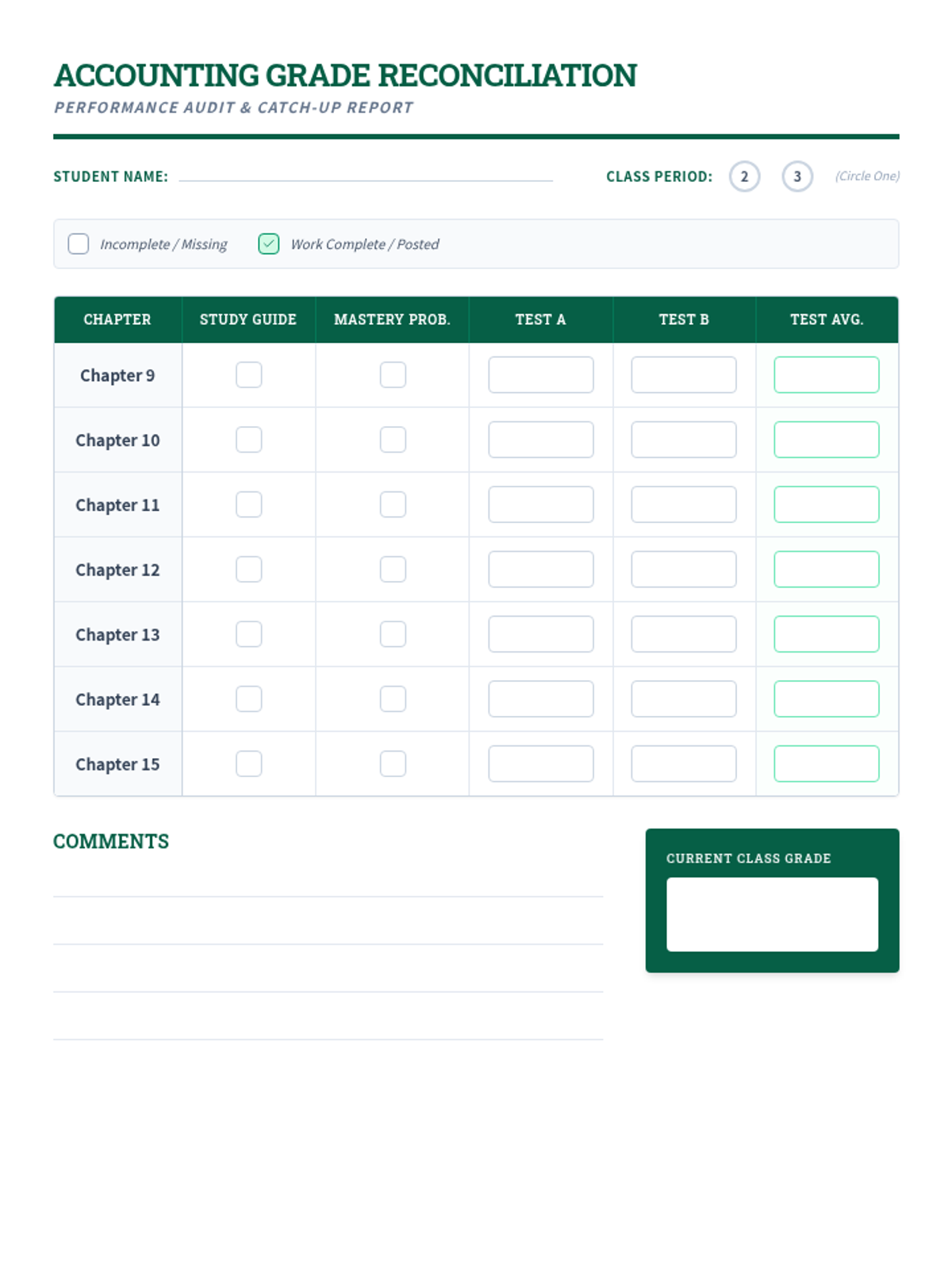
An updated accounting grade reconciliation sheet for chapters 9-15, featuring class period selection, test averaging columns, and a dedicated current grade audit section.
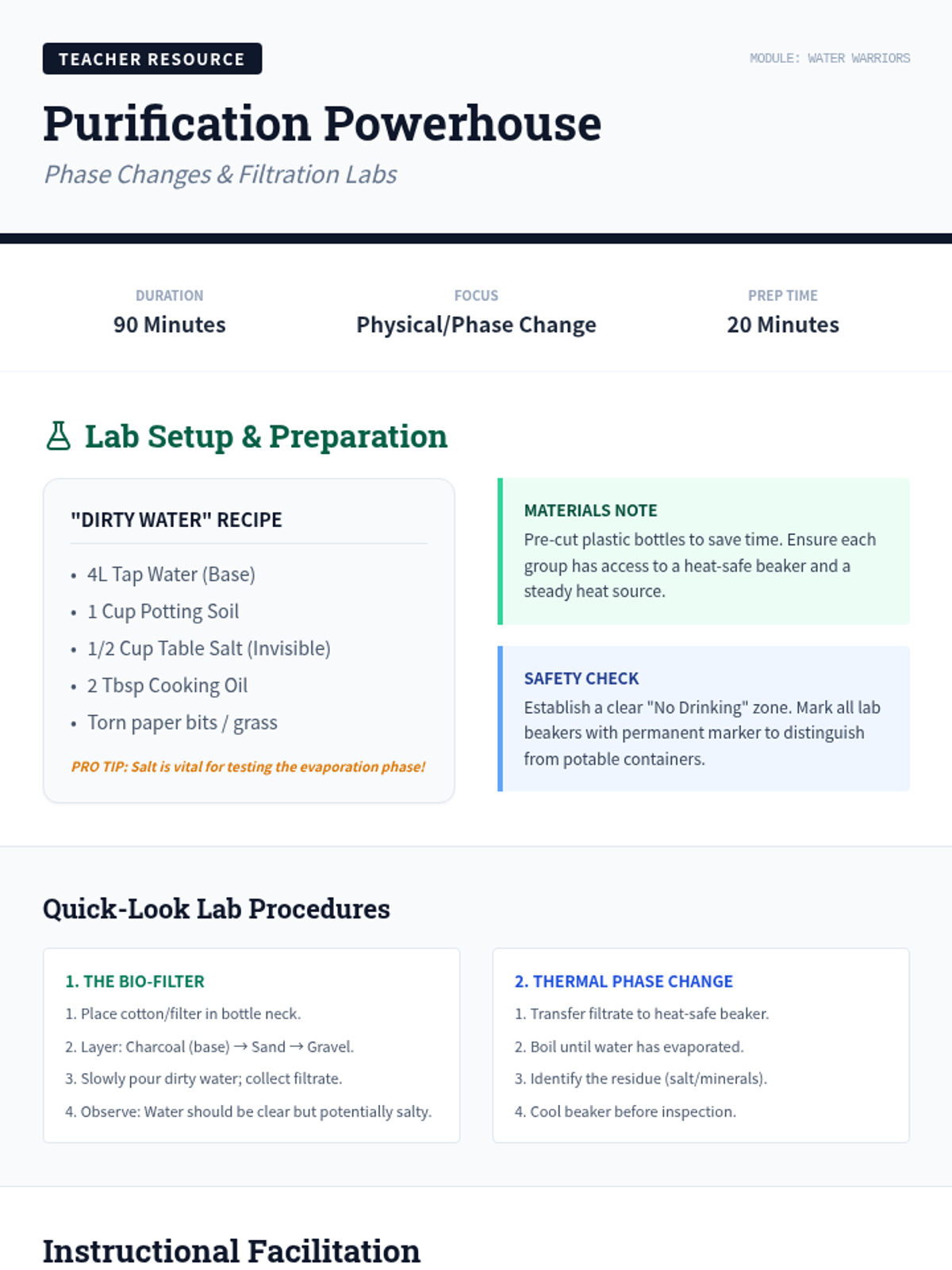
A comprehensive instructional guide for teachers to facilitate the water purification experiment. Includes lab prep recipes, facilitating prompts, answer keys, and troubleshooting tips.
A visual presentation guide for teaching the concepts of physical filtration and phase-change purification. Includes clear visual aids and a lab safety overview.
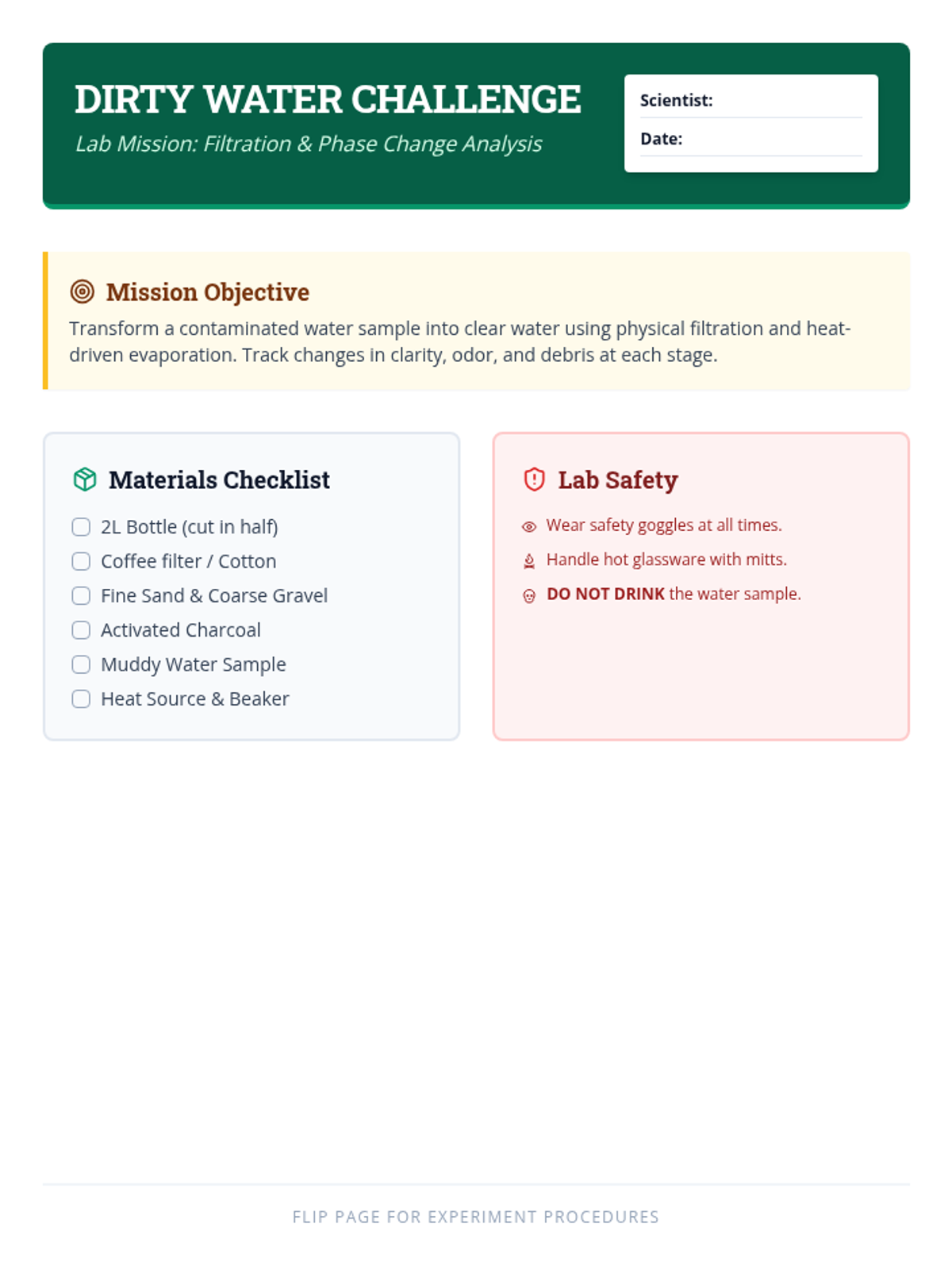
A comprehensive guide for students to conduct a two-part water purification experiment using filtration and evaporation. Includes safety tips, material lists, and observation sections.
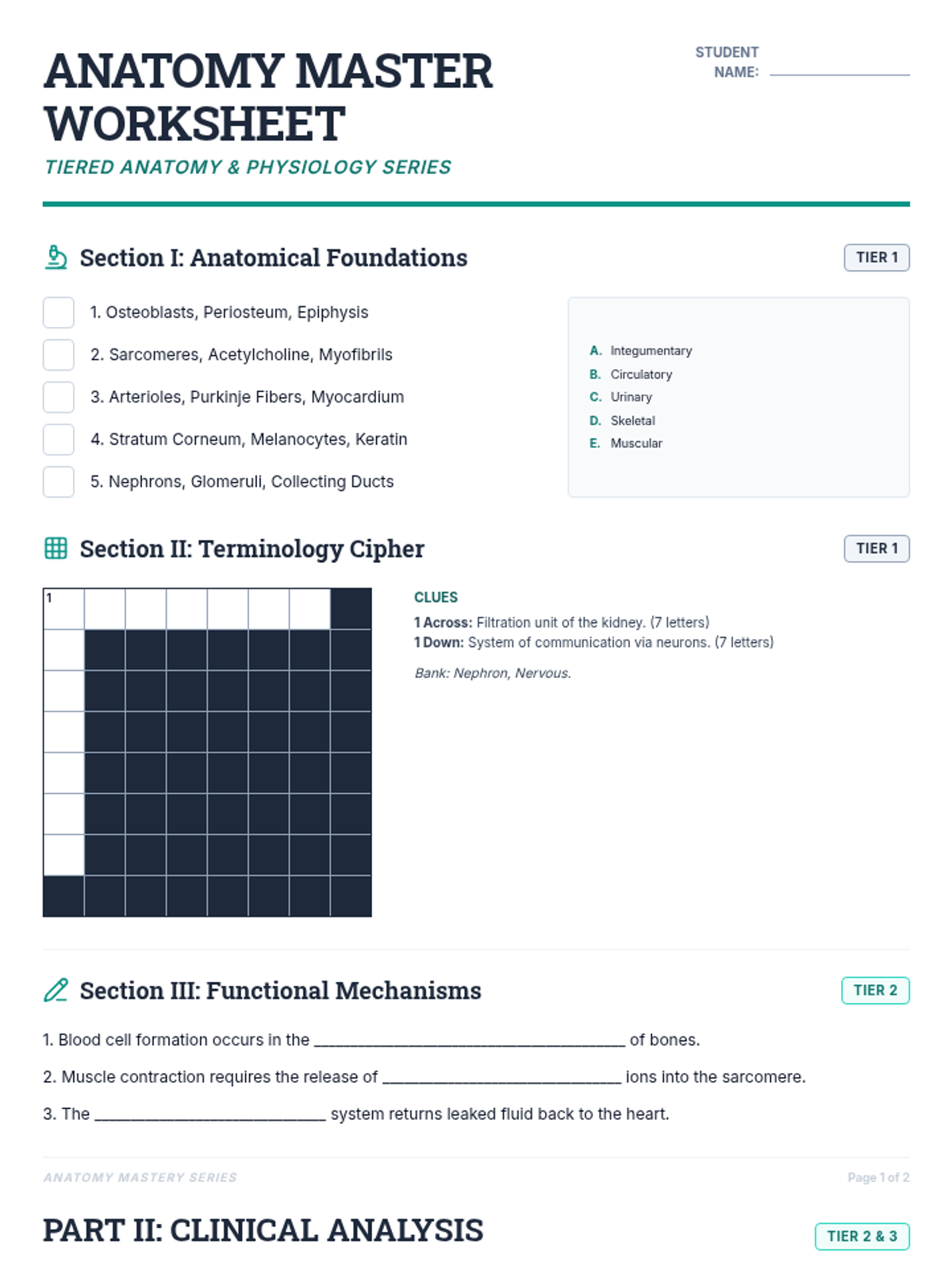
A comprehensive 2-page tiered anatomy worksheet featuring Matching (Tier 1), Mini-Crossword (Tier 1/2), Fill-in-the-Blank (Tier 2), Multiple Choice (Tier 2), and Pathophysiological Scenario Analysis (Tier 3).
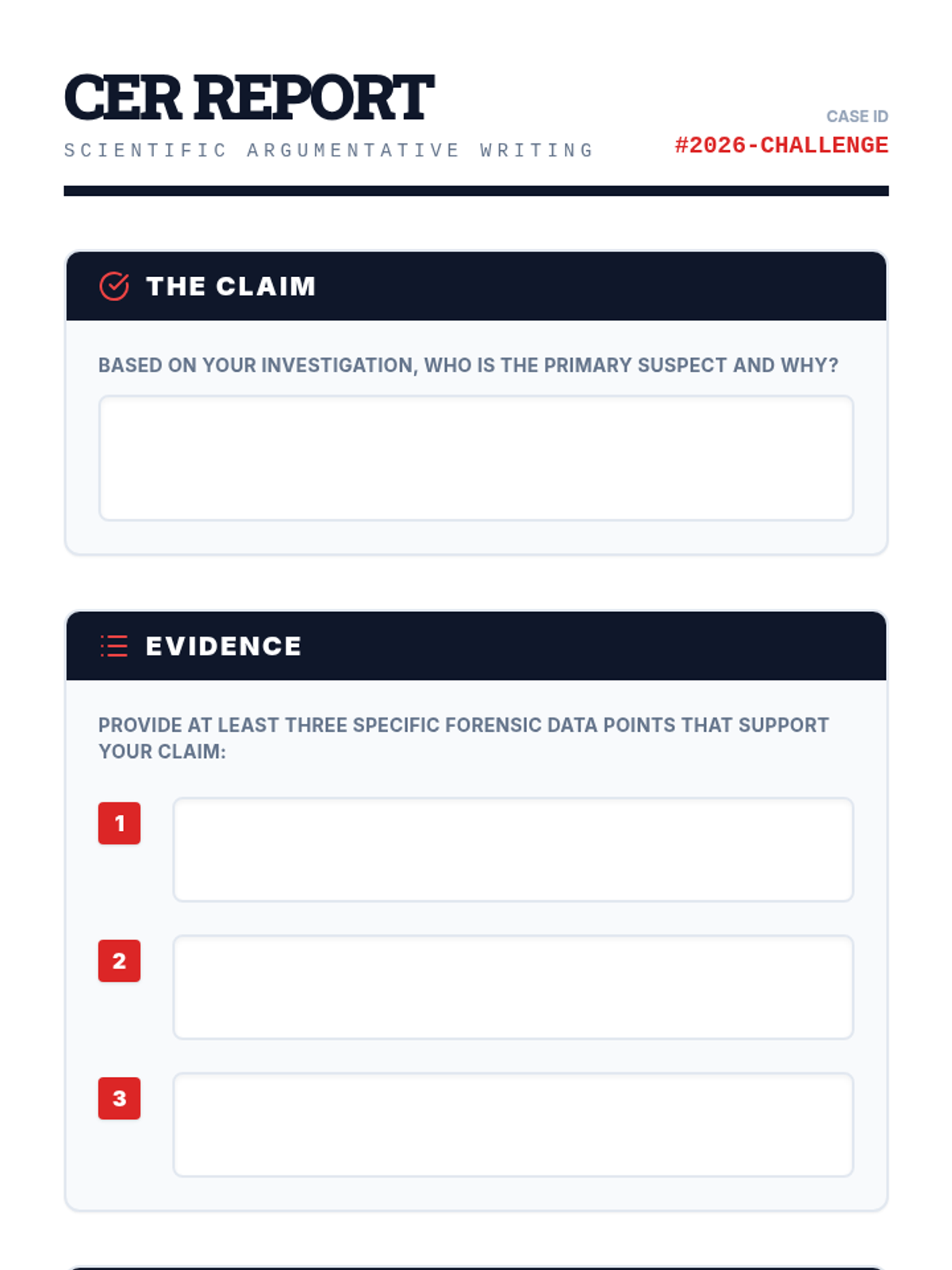
Claim, Evidence, and Reasoning (CER) document for the Moove Mystery lab. Provides a structured format for students to argue their suspect identification. Updated to provide a signature line and cleaner reasoning area.
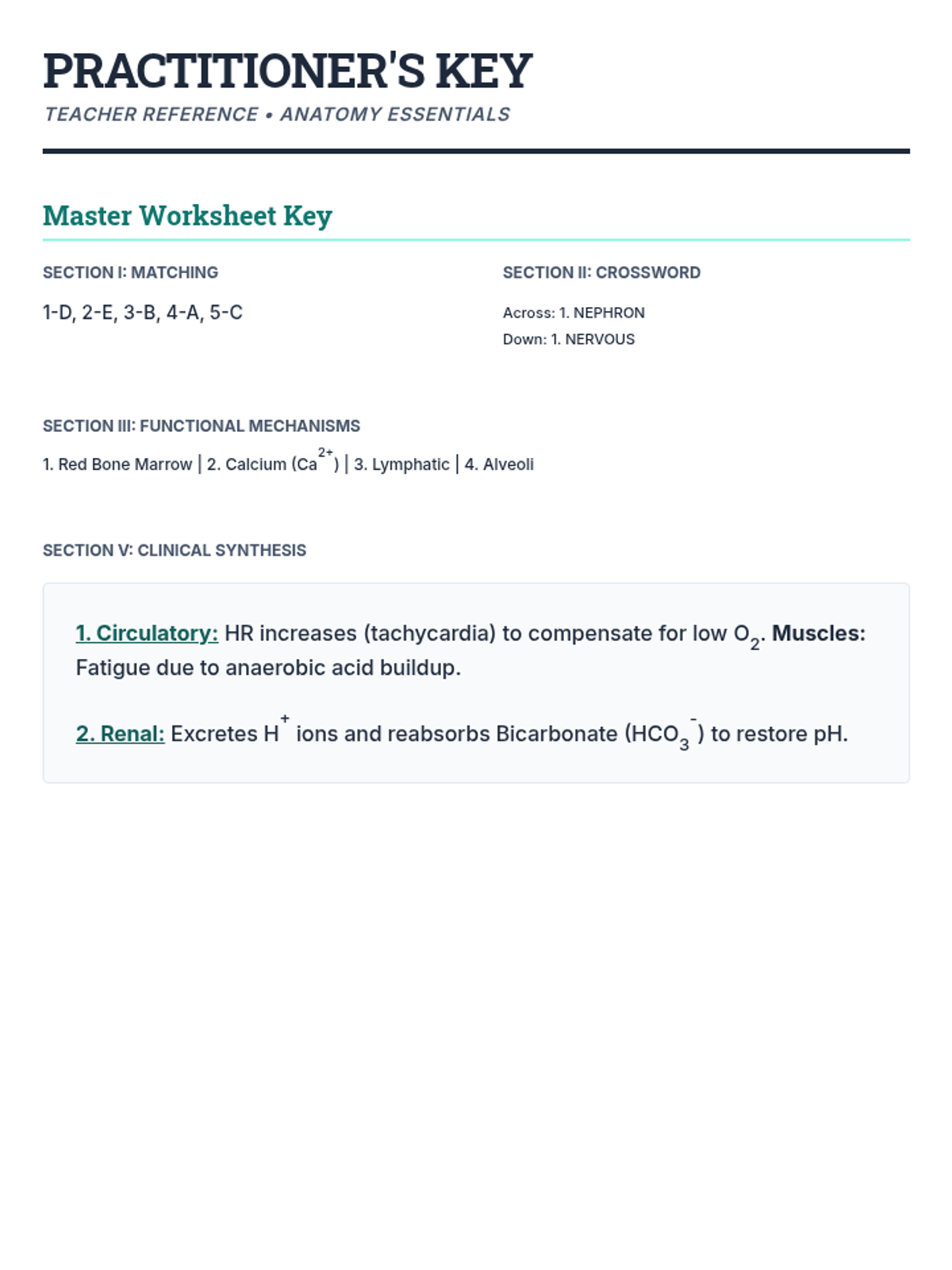
A comprehensive answer key and teacher reference guide for the tiered anatomy assessment series, featuring detailed Tier 3 synthesis responses.
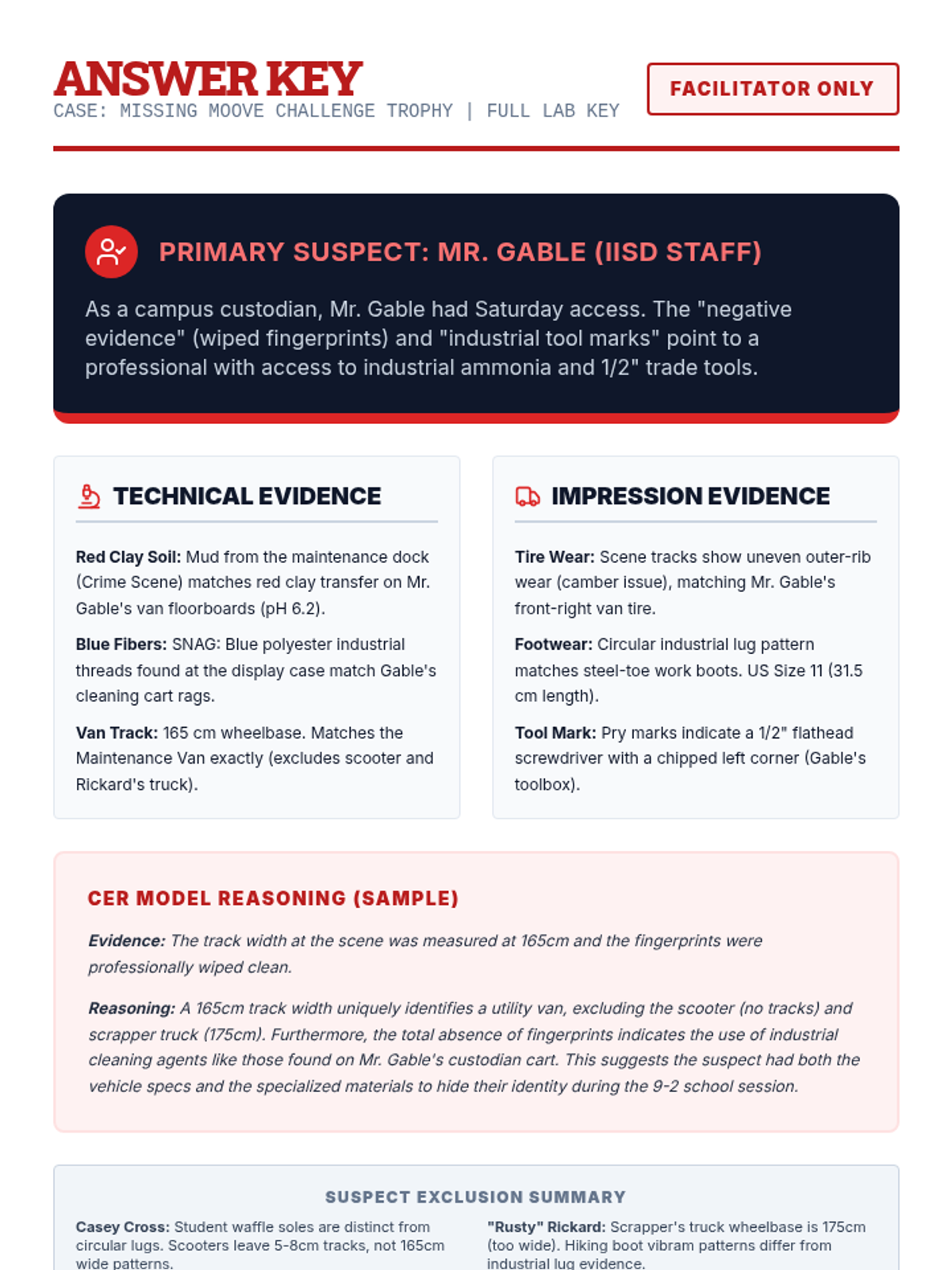
Teacher answer key for the Moove Mystery lab, detailing the evidence links to Mr. Gable (IISD Staff). Structured for a 90-minute complete investigation, including sample CER reasoning and trace evidence matches. Now with fixed page breaks.
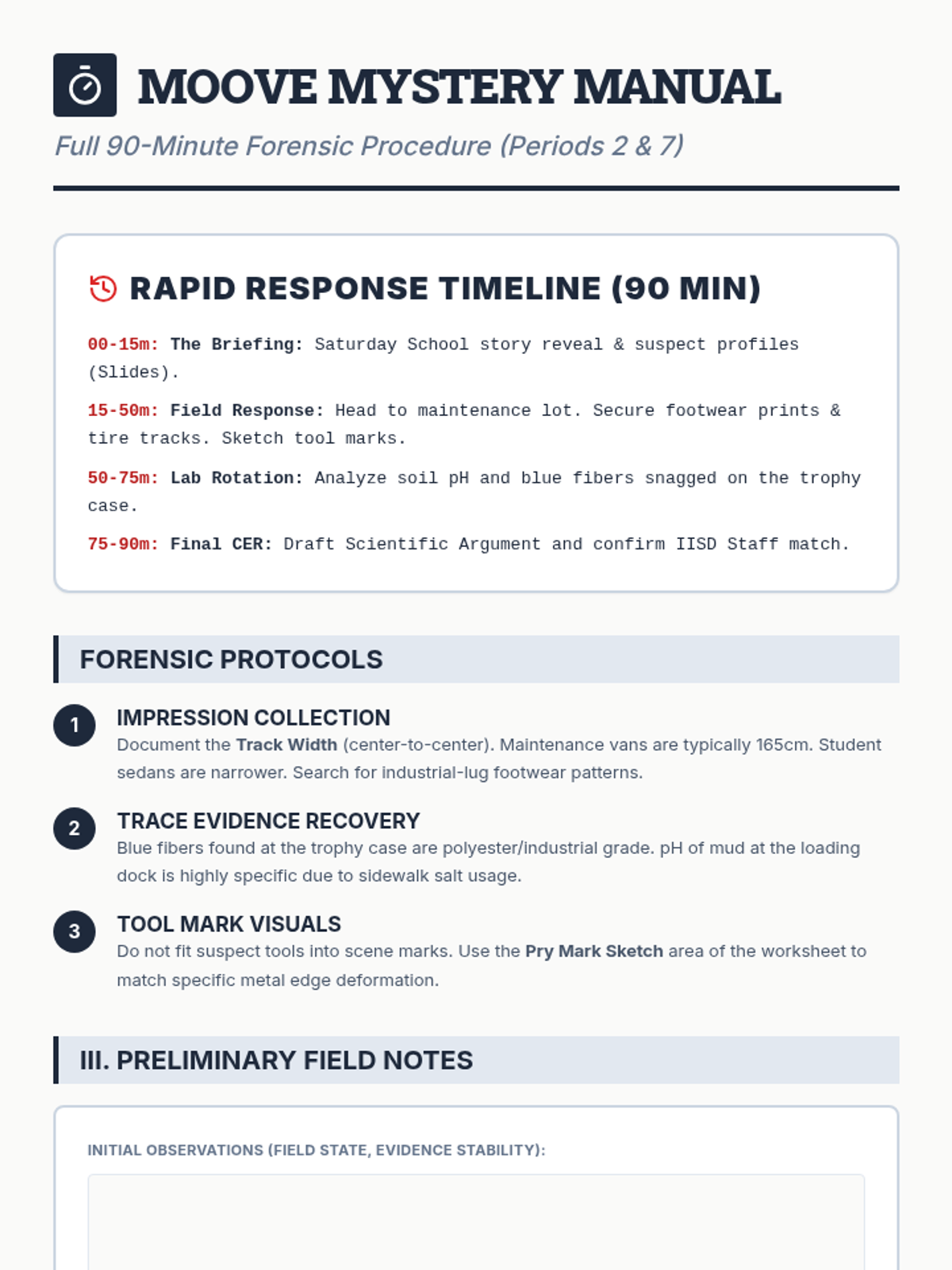
Instructional manual for the Moove Mystery lab, focused on outdoor impression collection and tool mark analysis. Structured as a single 90-minute complete procedure to be repeated by multiple class periods. Includes Saturday School context and teacher guidance for an IISD-employee suspect.
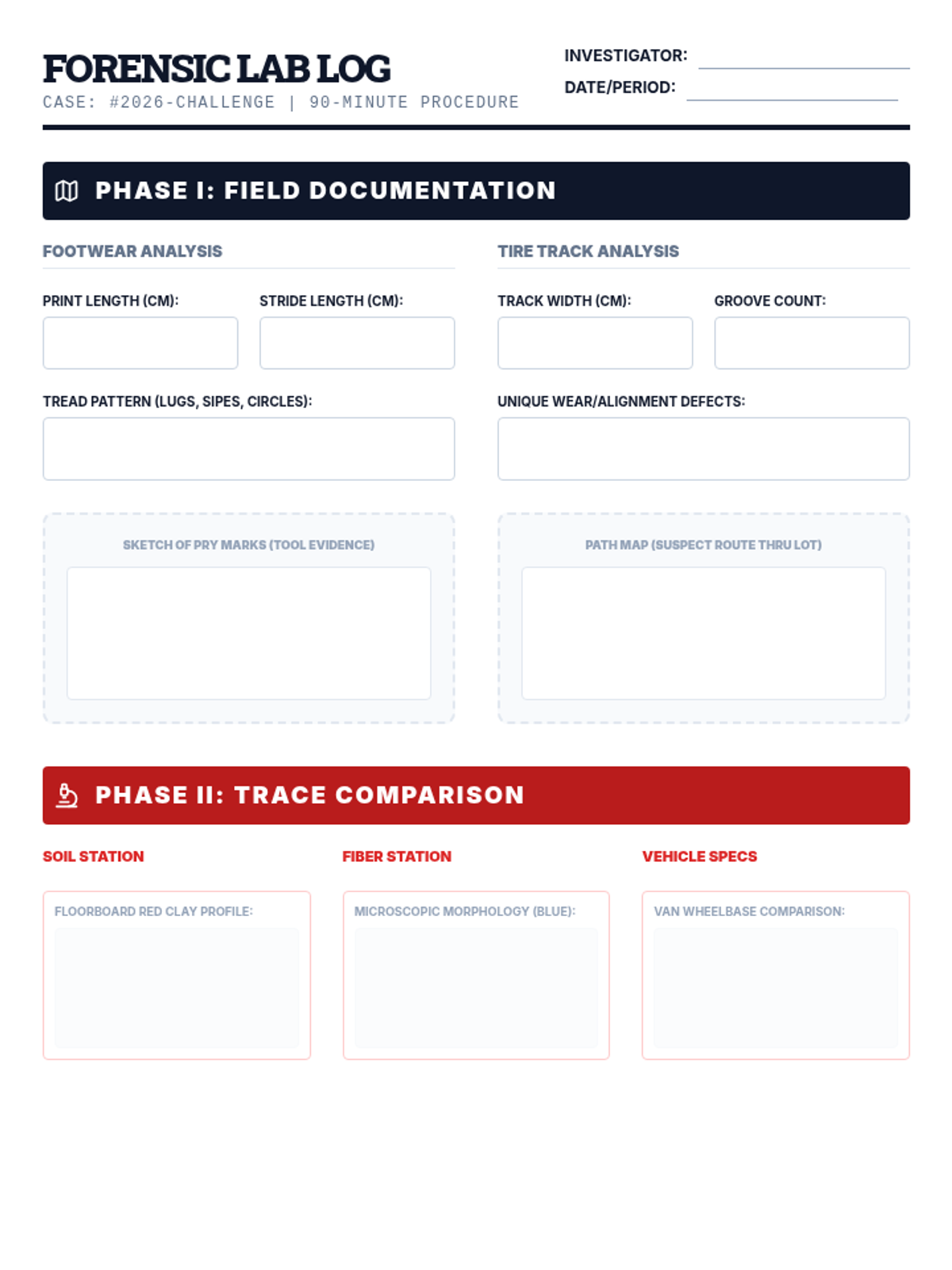
Consolidated forensic lab log for a 90-minute investigation session. Features updated station box heights and a combined date/period header for classroom flexibility.
Introductory presentation for the Moove Mystery lab, featuring the crime scene narrative, tool mark overview, and the significance of negative fingerprint evidence. Optimized for a 90-minute session.
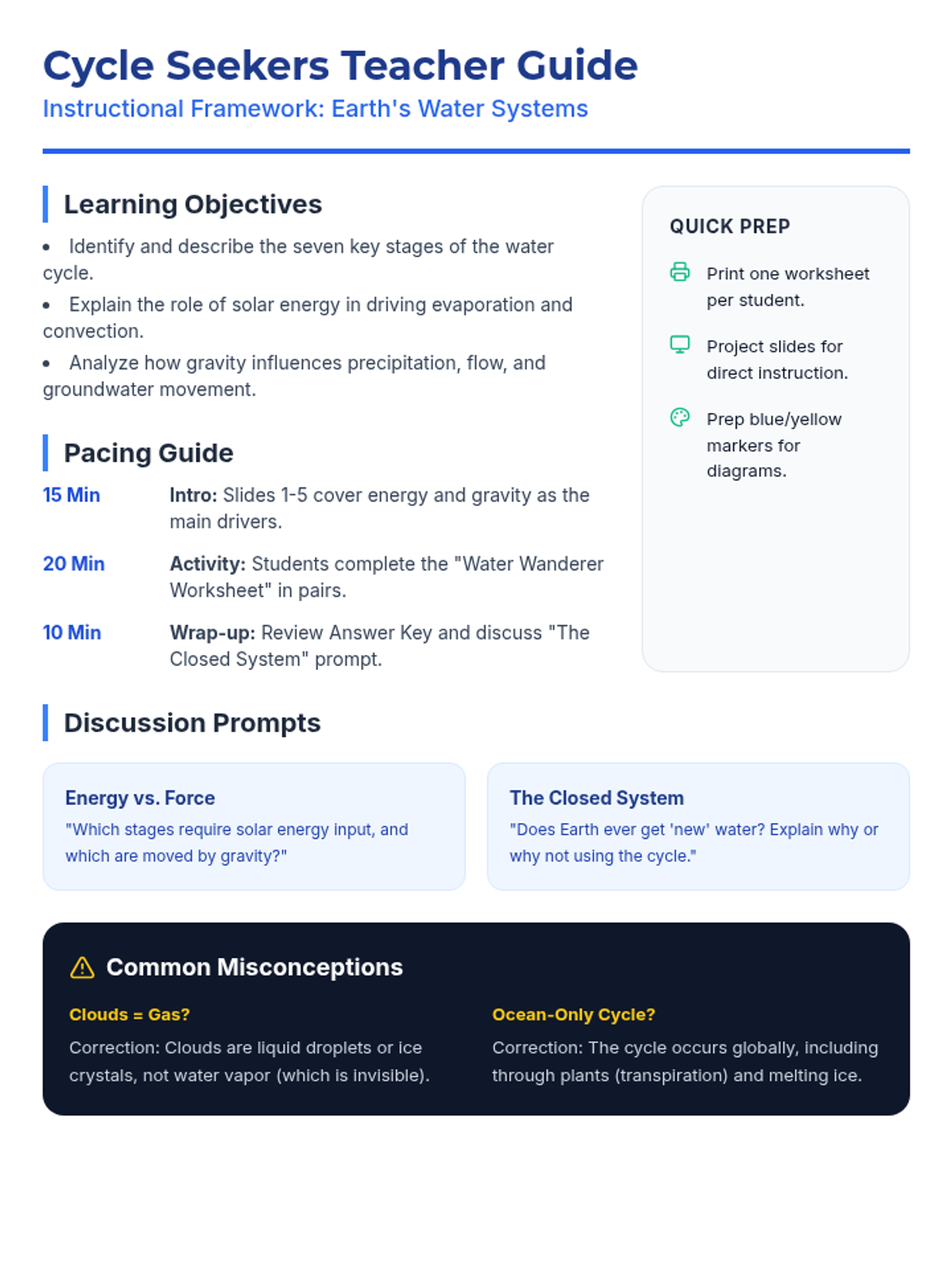
A comprehensive teacher's guide for the Cycle Seekers lesson, including learning objectives, pacing, discussion prompts, and notes on common misconceptions. Optimized for single-page use.
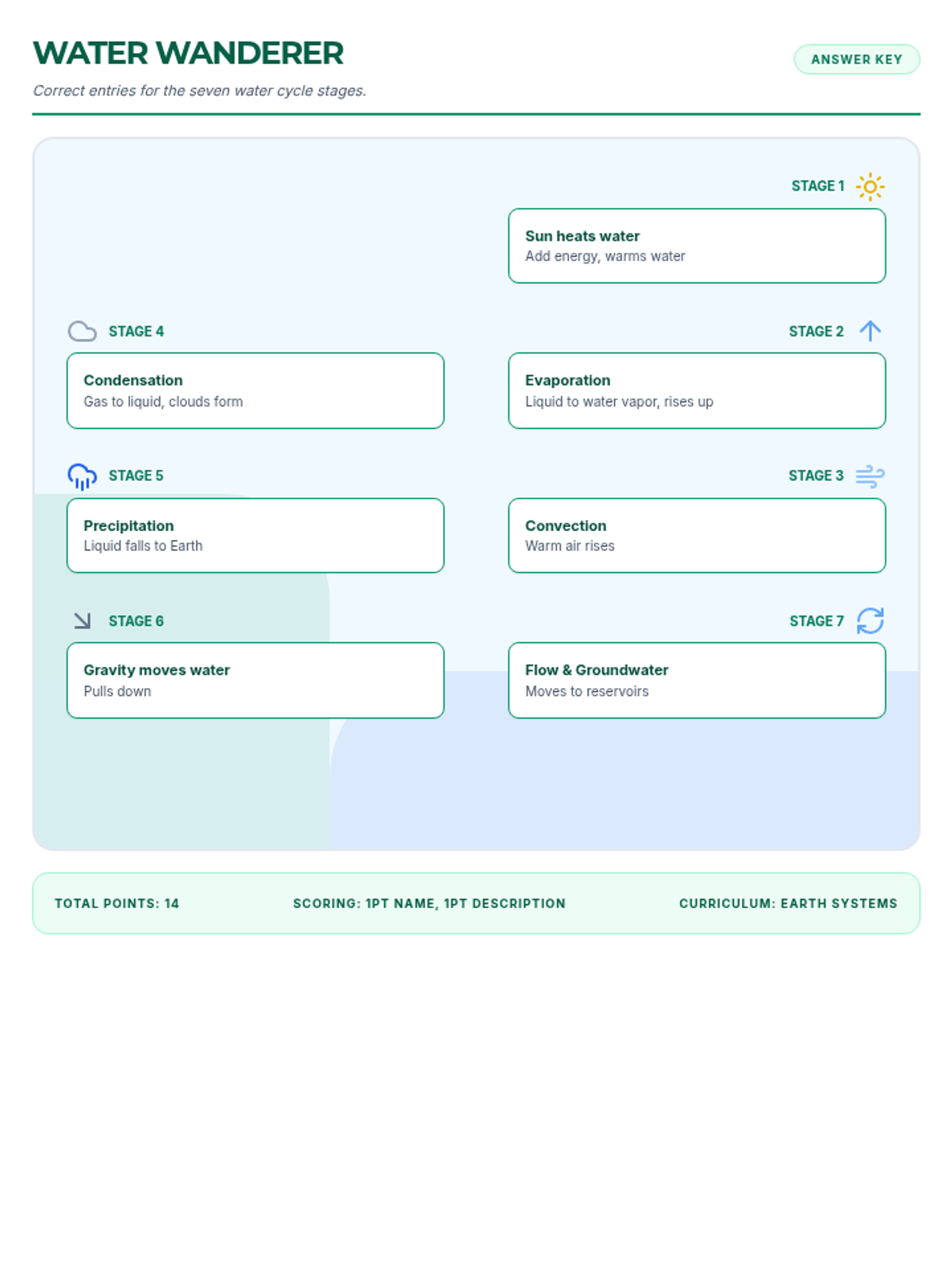
An answer key for the Water Wanderer worksheet, providing the correct stage names and concise descriptions for all seven parts of the water cycle. Repositioned to ensure no overlaps and improve visual clarity.
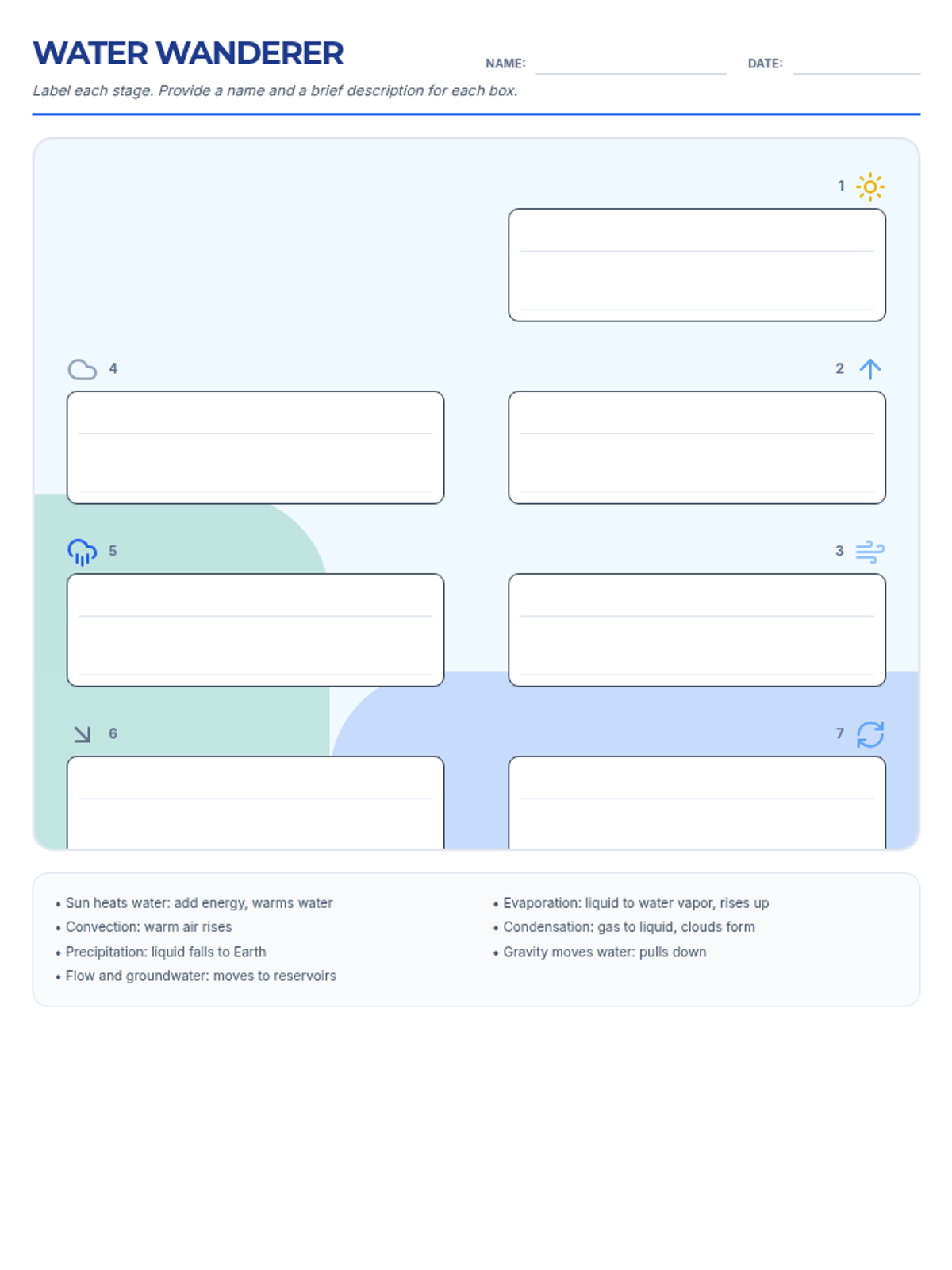
A student worksheet featuring a water cycle diagram with blank labeling areas for seven key stages, requiring students to provide both names and descriptions. Optimized for one-page printing with enhanced handwriting space and high-contrast visuals.
An introductory slide deck explaining the seven key stages of the water cycle, highlighting the roles of solar energy and gravity. Includes a final slide to transition to the labeling activity.
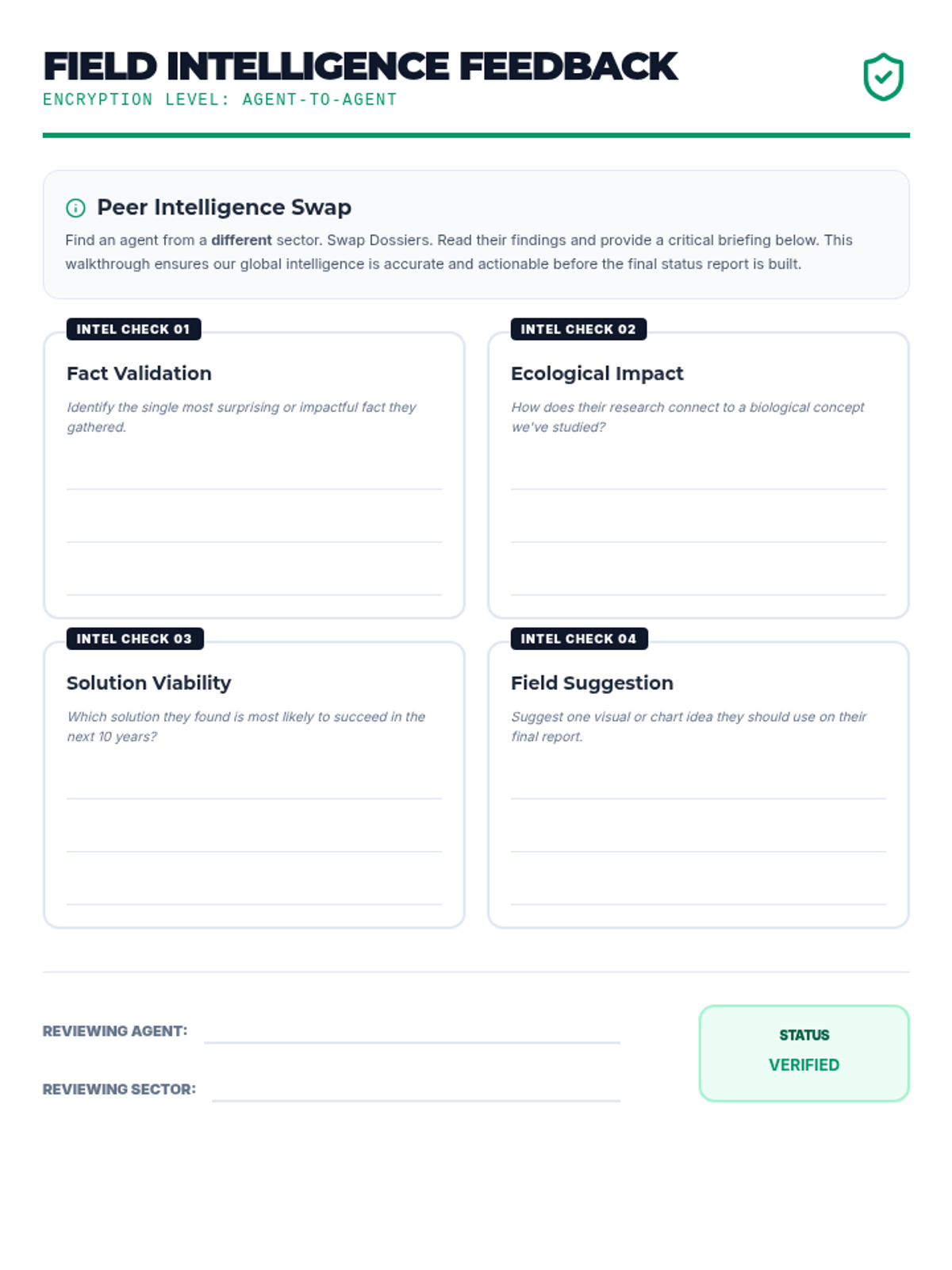
A peer-review worksheet for the 'Intelligence Swap' phase of Operation Earth. It facilitates a structured walkthrough where students validate each other's research findings. Revised for better page flow and student work space.
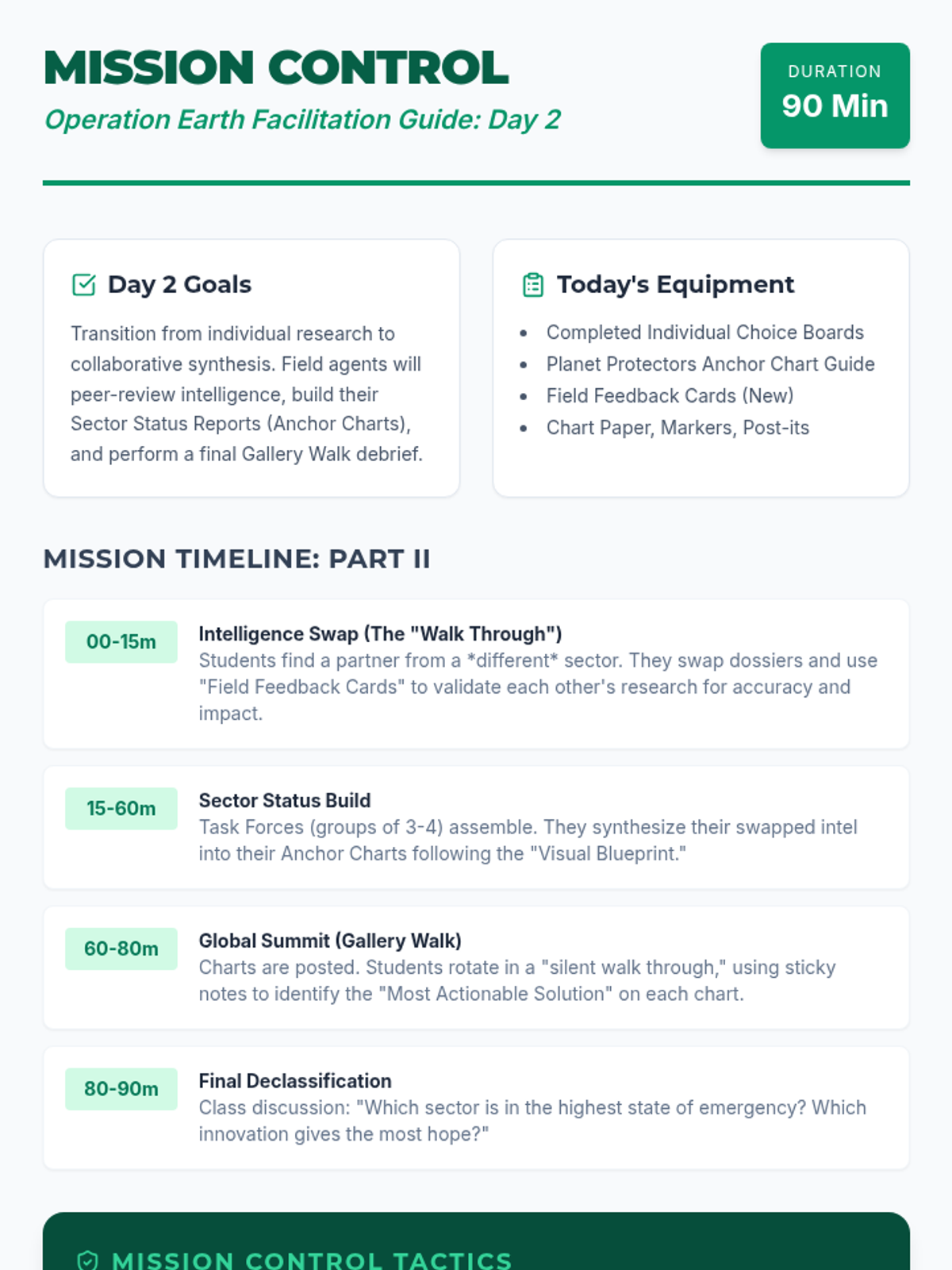
A revised teacher guide specifically for Day 2 of the Operation Earth project, focusing on transitioning from individual research to collaborative synthesis and the final gallery walk.
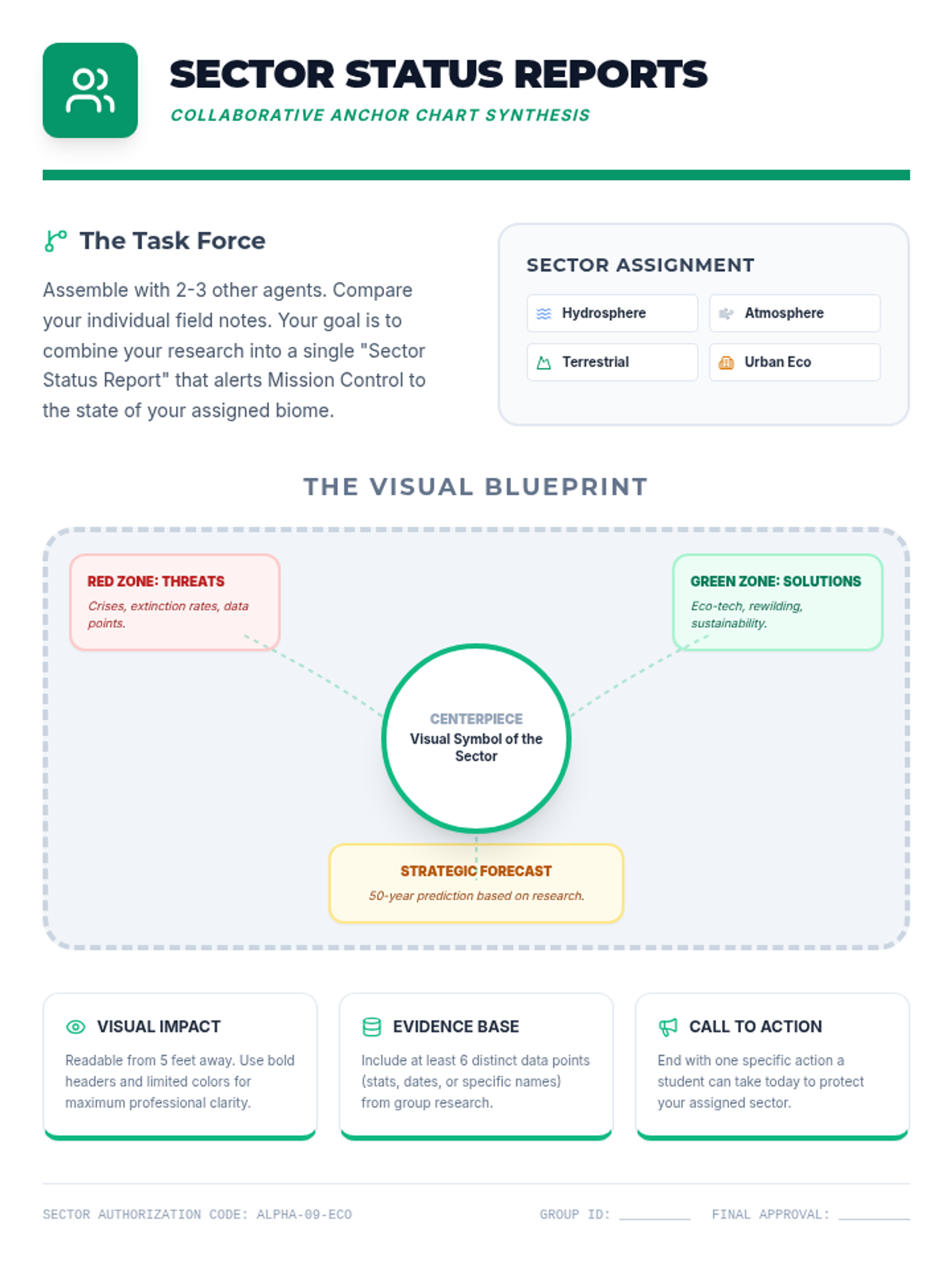
A guide for the collaborative anchor chart phase of the project, including a visual blueprint for the 'Sector Status Report'. Revised to fit on a single page with improved visual alignment.
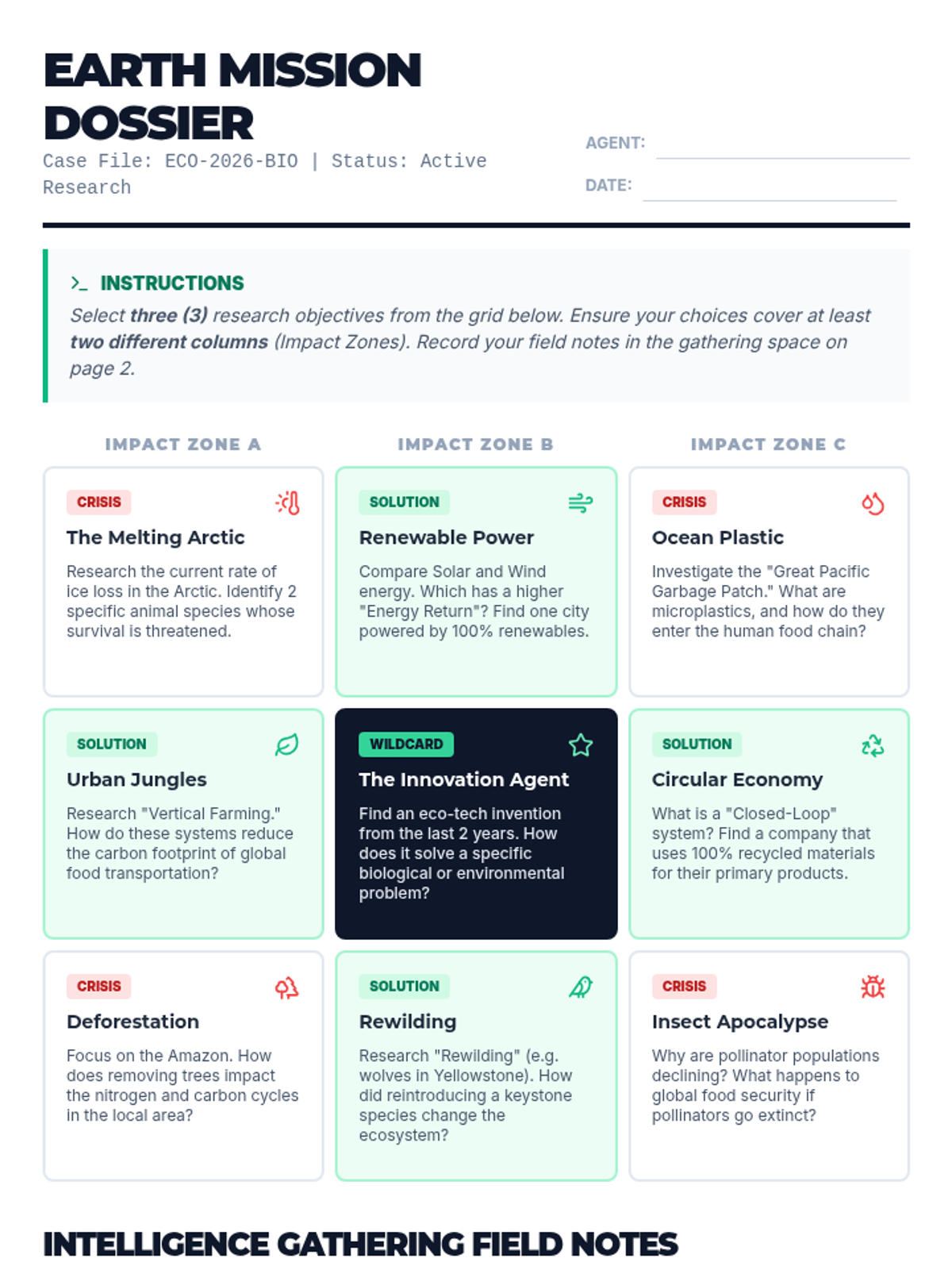
A structured Choice Board for the Operation Earth project, allowing students to select from 9 research objectives. Revised with Impact Zone labels and expanded synthesis space.
An engaging presentation to launch Operation Earth, framing environmental science research as a top-secret mission for field agents. Revised with improved padding and a choice board preview slide.
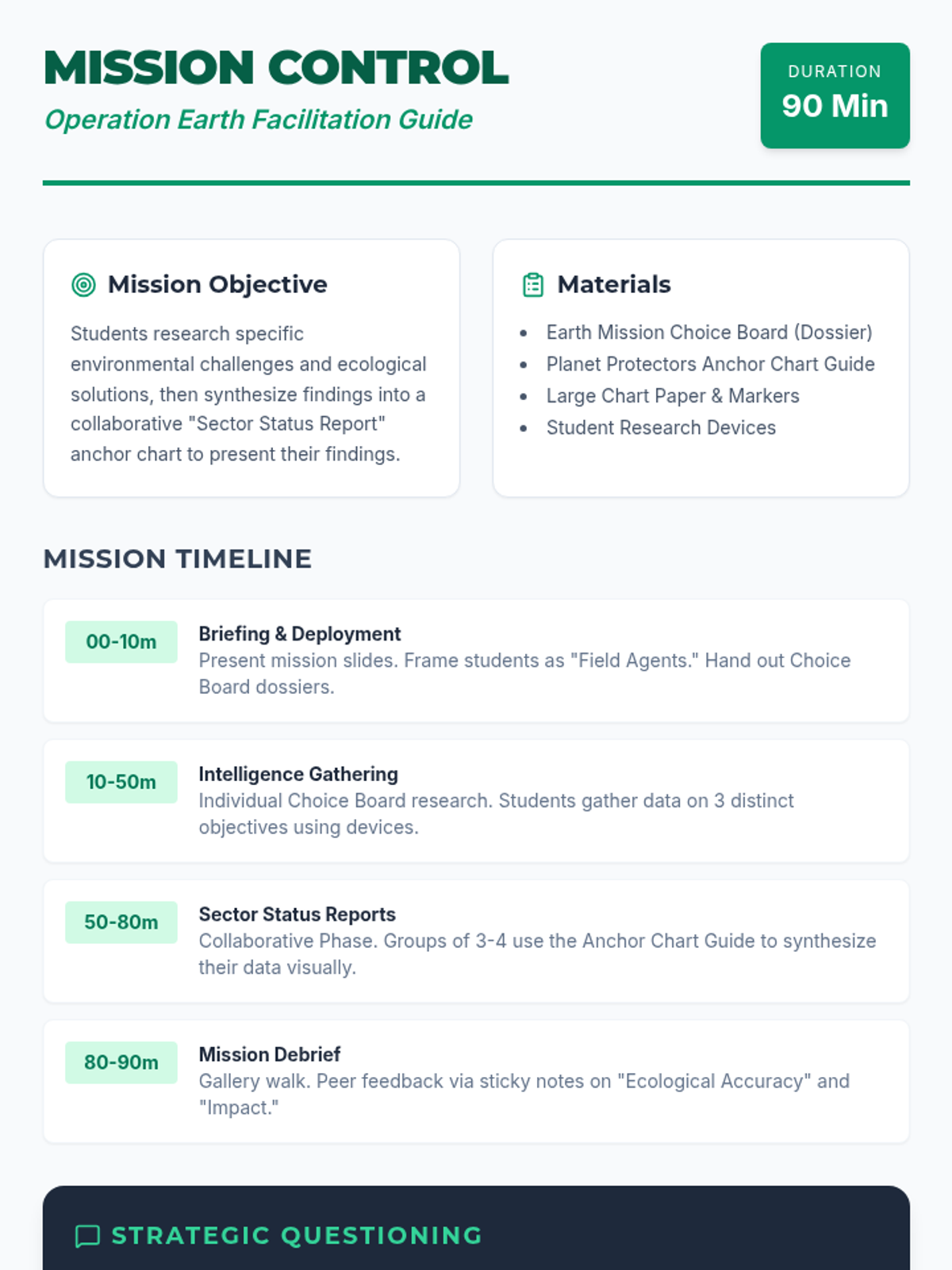
A comprehensive teacher guide for facilitating the Operation Earth project, including a 90-minute pacing guide, strategic discussion prompts, and a grading rubric. Revised for improved layout and page flow.
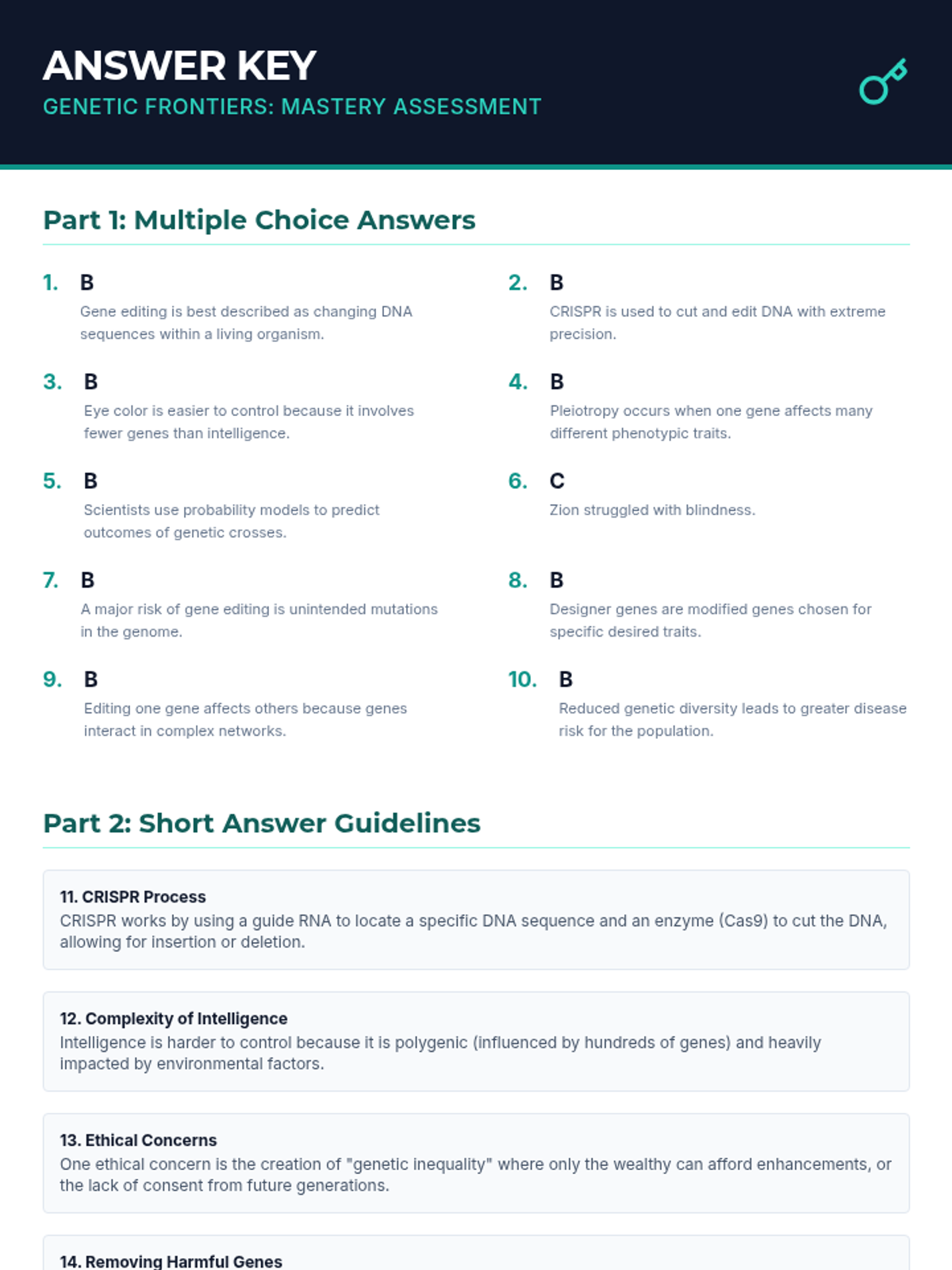
The answer key for the Gene Editing Mastery Worksheet, providing correct answers for the multiple choice section, grading guidelines for short answers, and a rubric for extended responses.
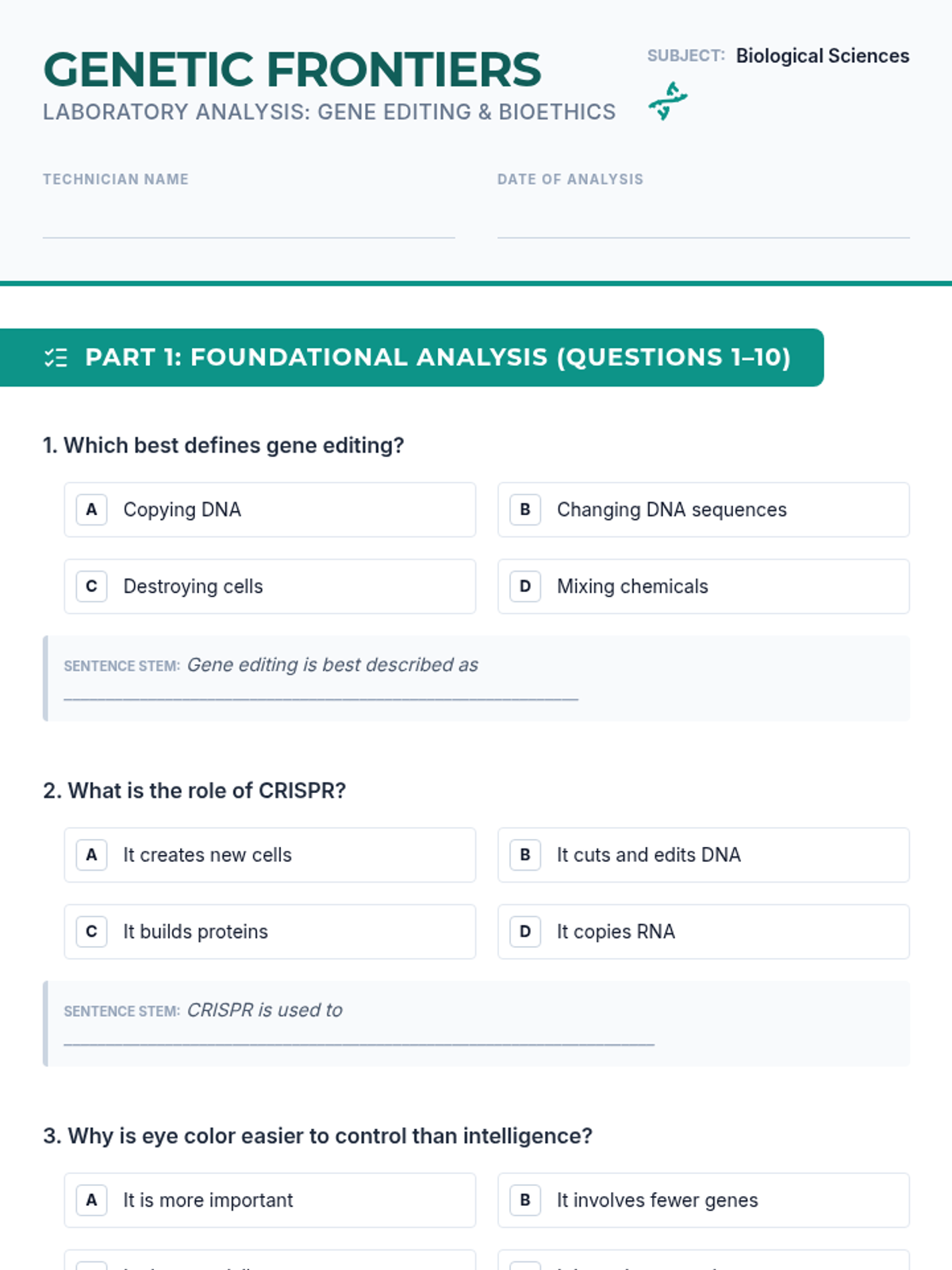
A multi-part worksheet on gene editing, CRISPR, and genetic ethics, featuring multiple choice with sentence stems, short answers, and extended response questions. Designed with a clean laboratory aesthetic for middle or high school science.
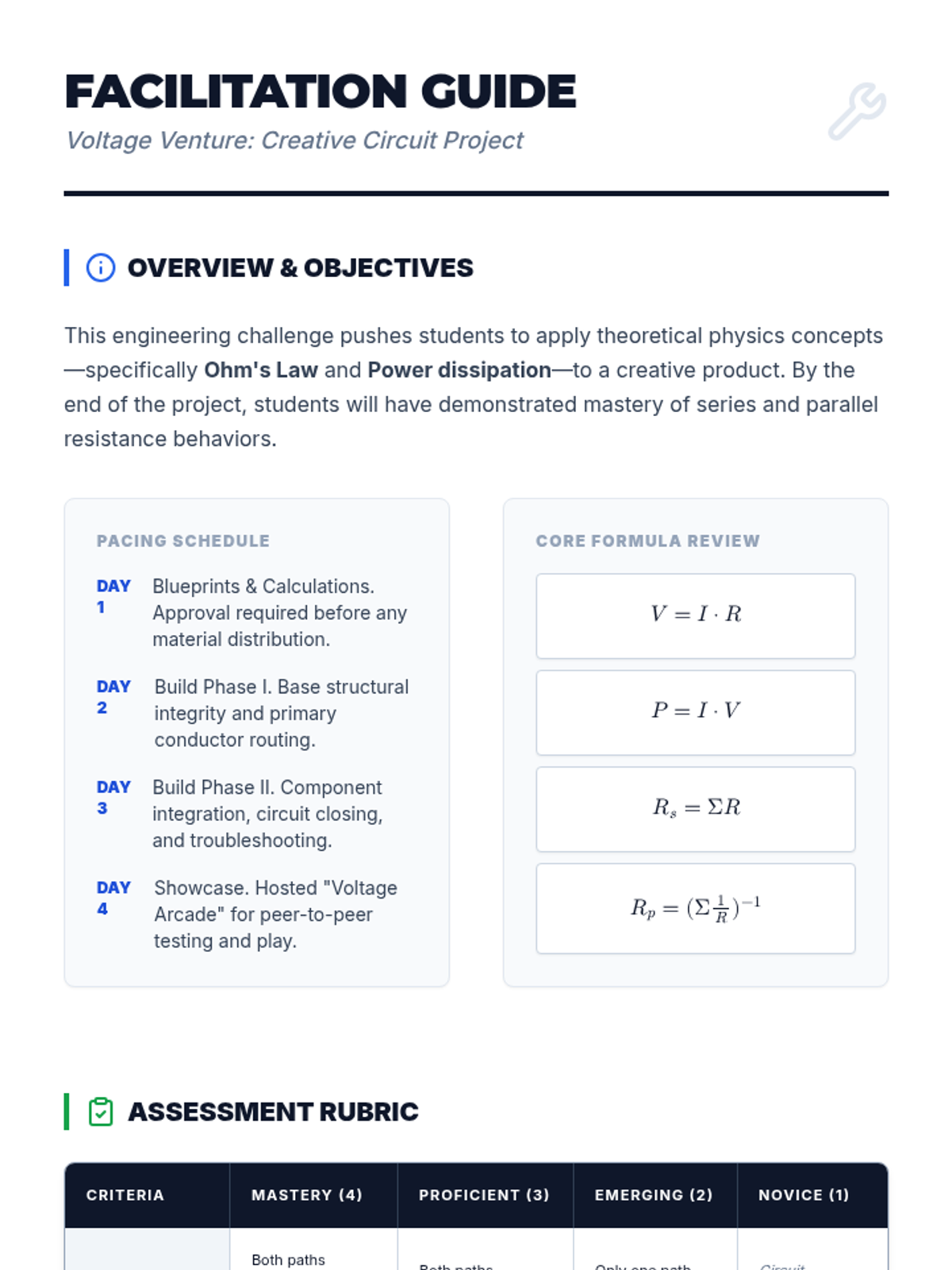
A comprehensive teacher guide for the Voltage Venture project, including pacing, troubleshooting tips, and a grading rubric.
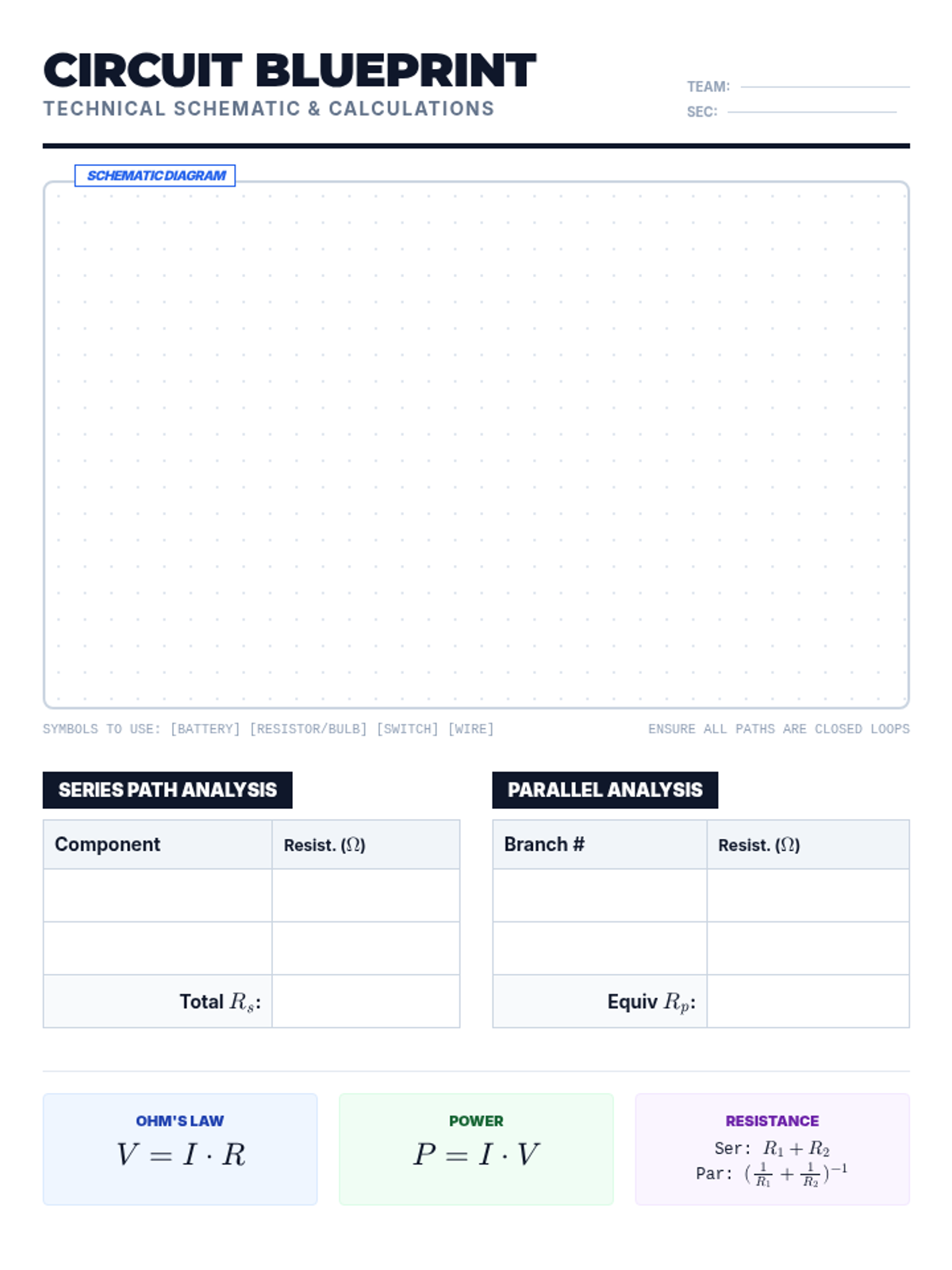
A technical blueprint sheet for students to draw their circuit schematics and perform calculations for series and parallel paths.
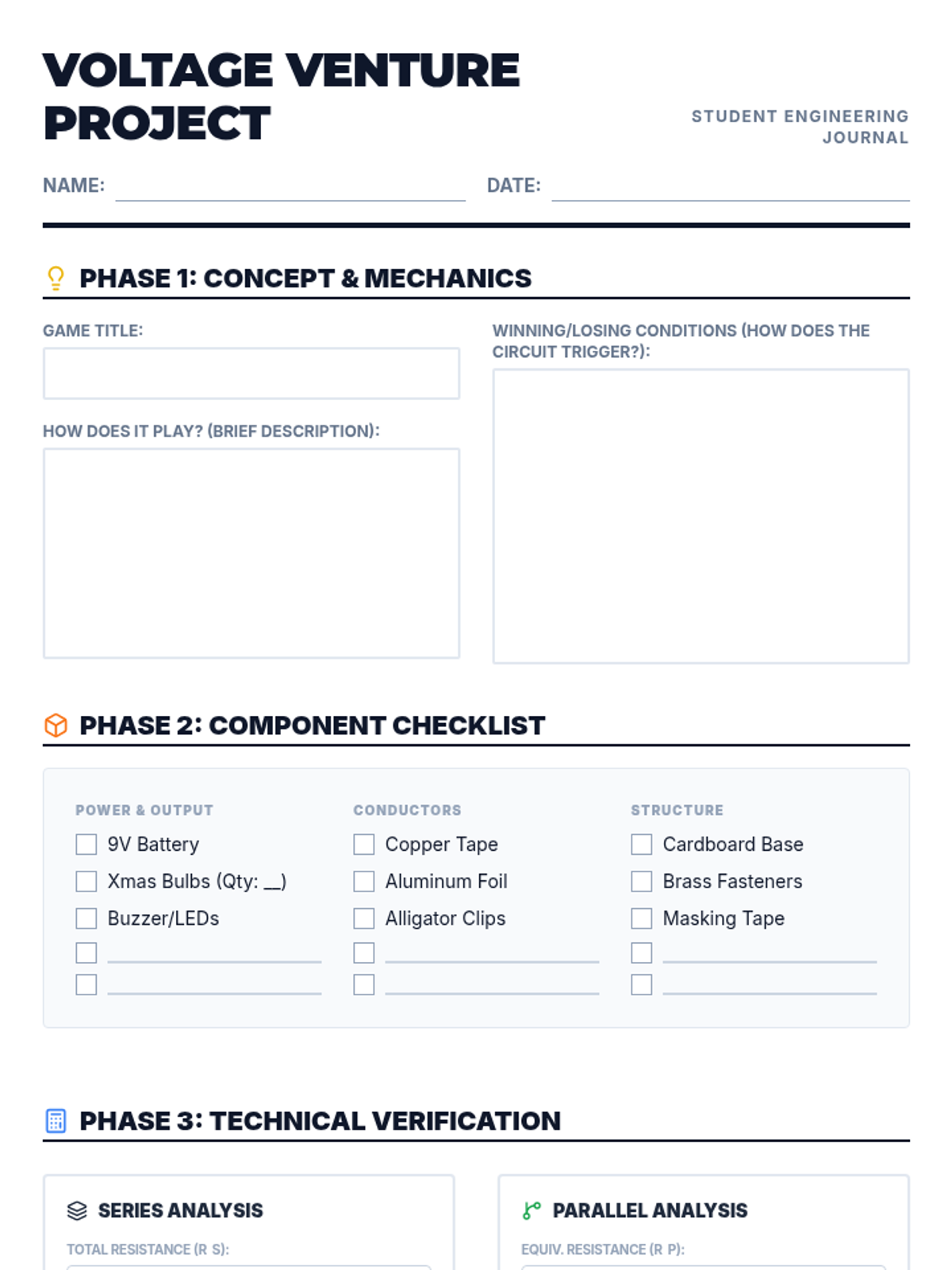
An updated student project guide including additional blank spaces in the component checklist for custom materials, improved math symbol spacing, and larger work areas.
An introductory slide deck for the Voltage Venture project, covering game ideas, circuit requirements, and safety guidelines.
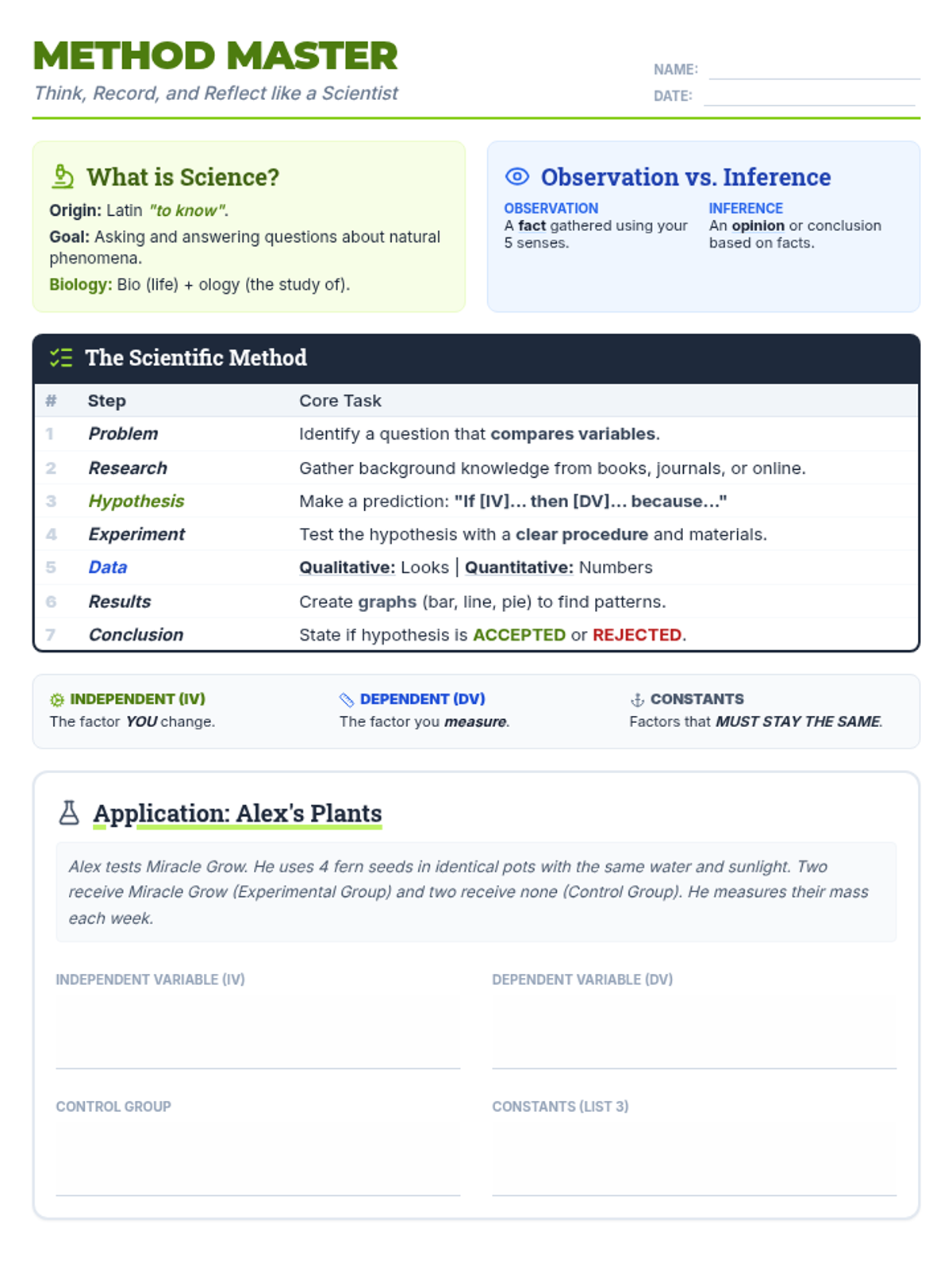
A concise one-page note sheet for students summarizing the definition of science, the 7 steps of the scientific method, observation vs. inference, and types of variables, including a short case study application.
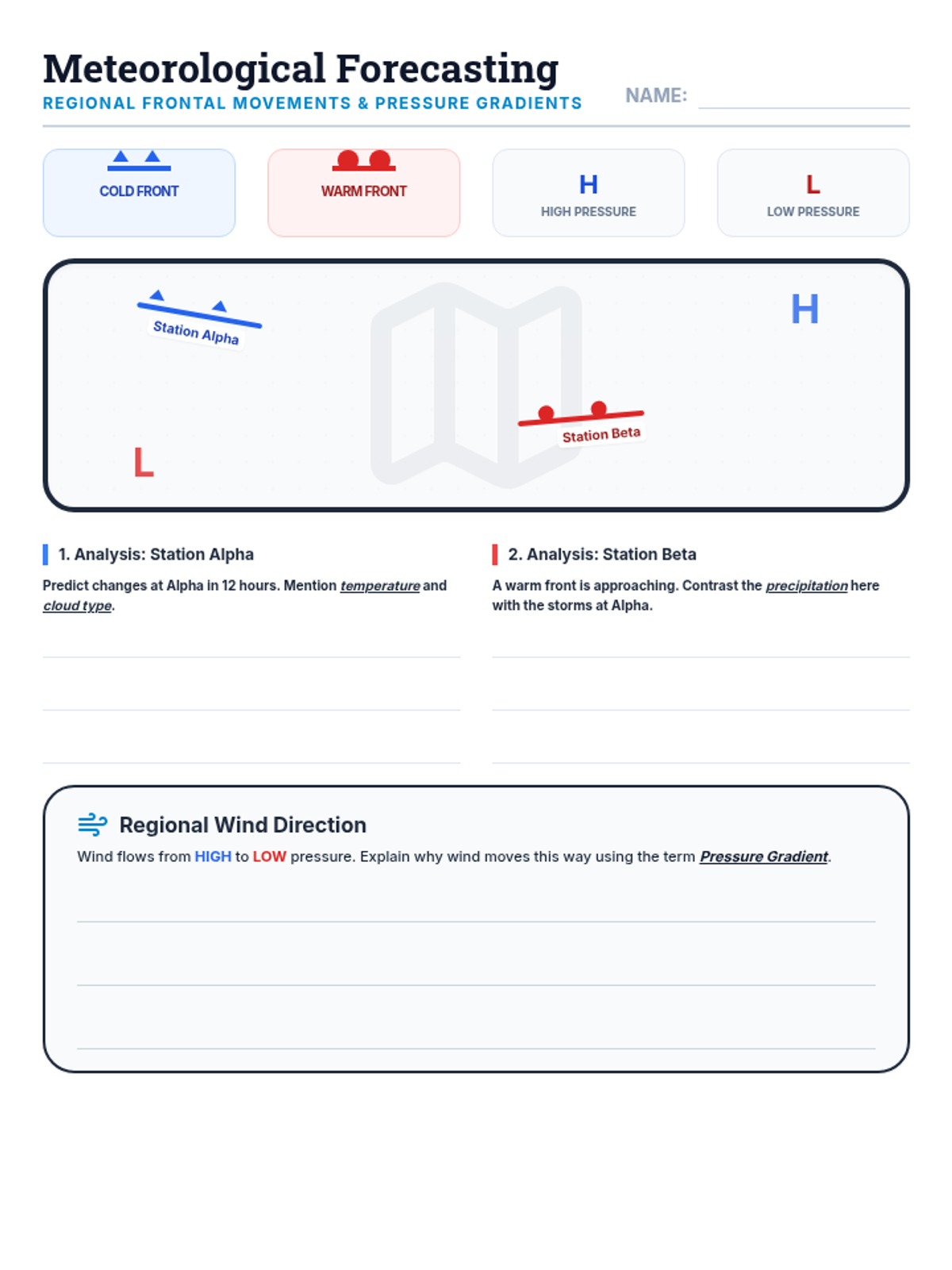
A middle-school level weather forecasting worksheet, requiring students to analyze frontal movements, predict weather conditions, and explain pressure gradients. Updated for one-page layout and improved work areas.
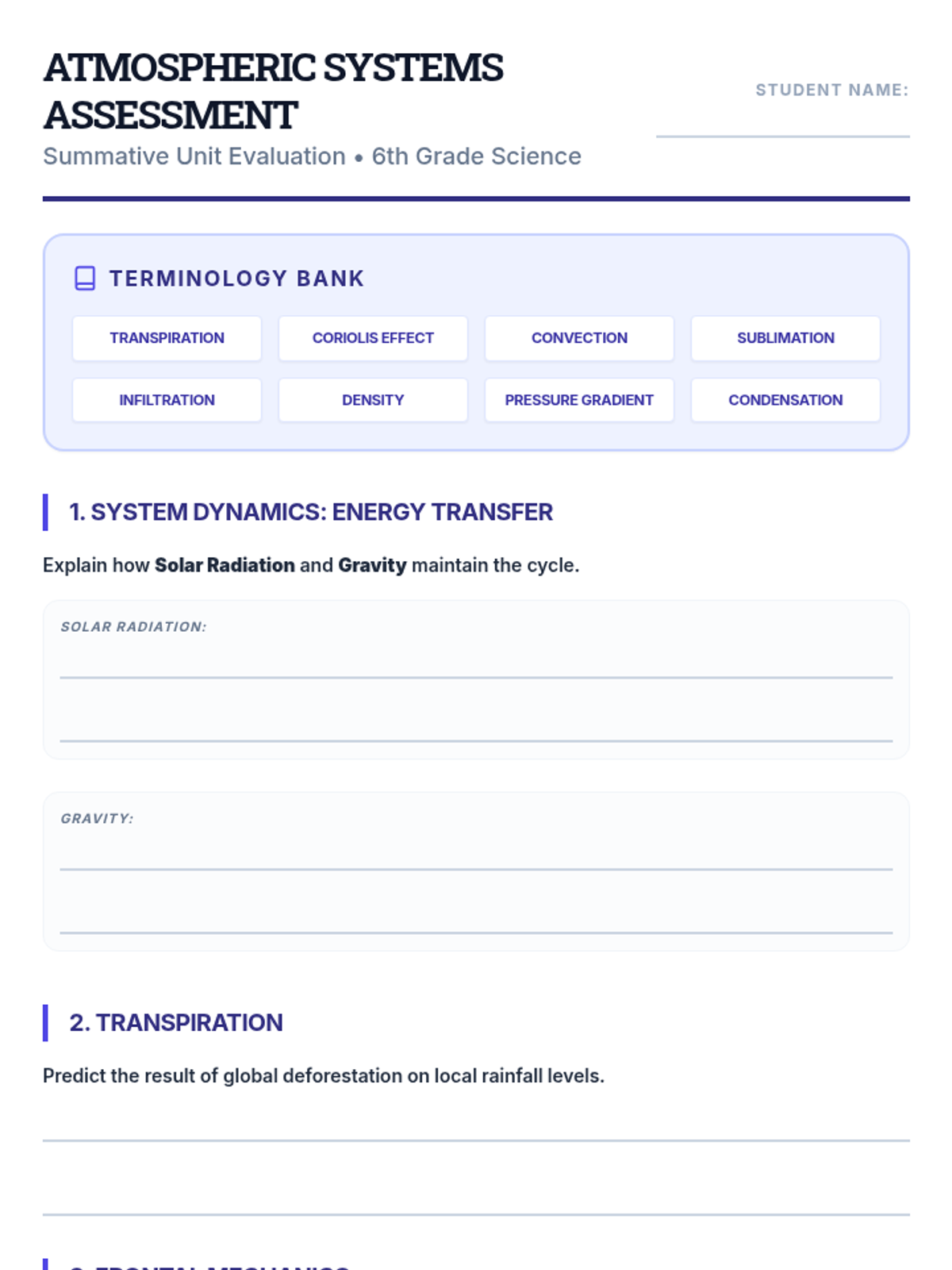
A summative middle-school assessment for the Atmospheric Systems unit, featuring a term bank, explanatory prompts, and rigorous multiple-choice questions. Updated for layout efficiency and work area clarity.