An engaging presentation to launch Operation Earth, framing environmental science research as a top-secret mission for field agents. Revised with improved padding and a choice board preview slide.
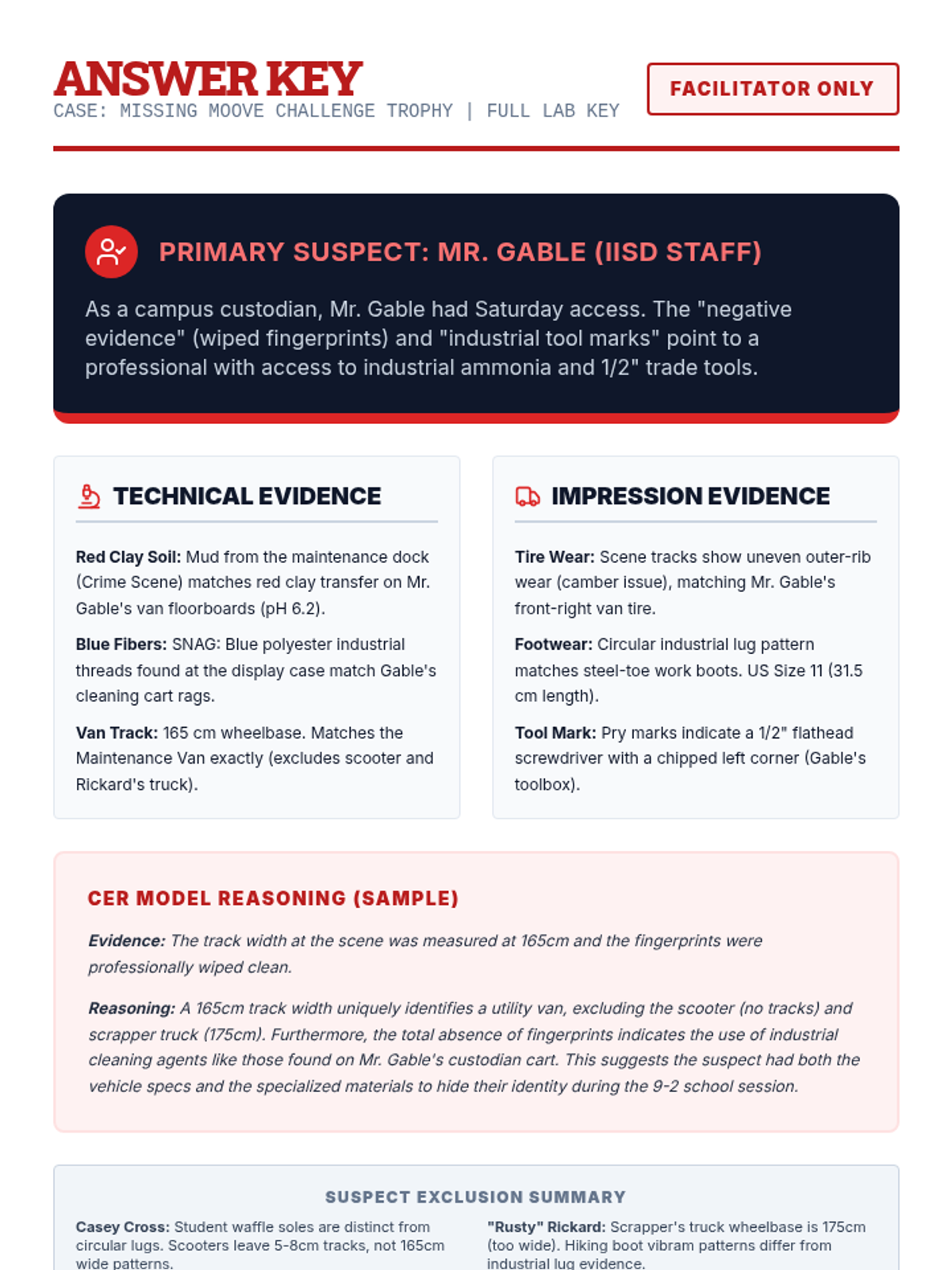
Teacher answer key for the Moove Mystery lab, detailing the evidence links to Mr. Gable (IISD Staff) and the logic for excluding others. Structured for the two-day investigation (Monday/Tuesday).
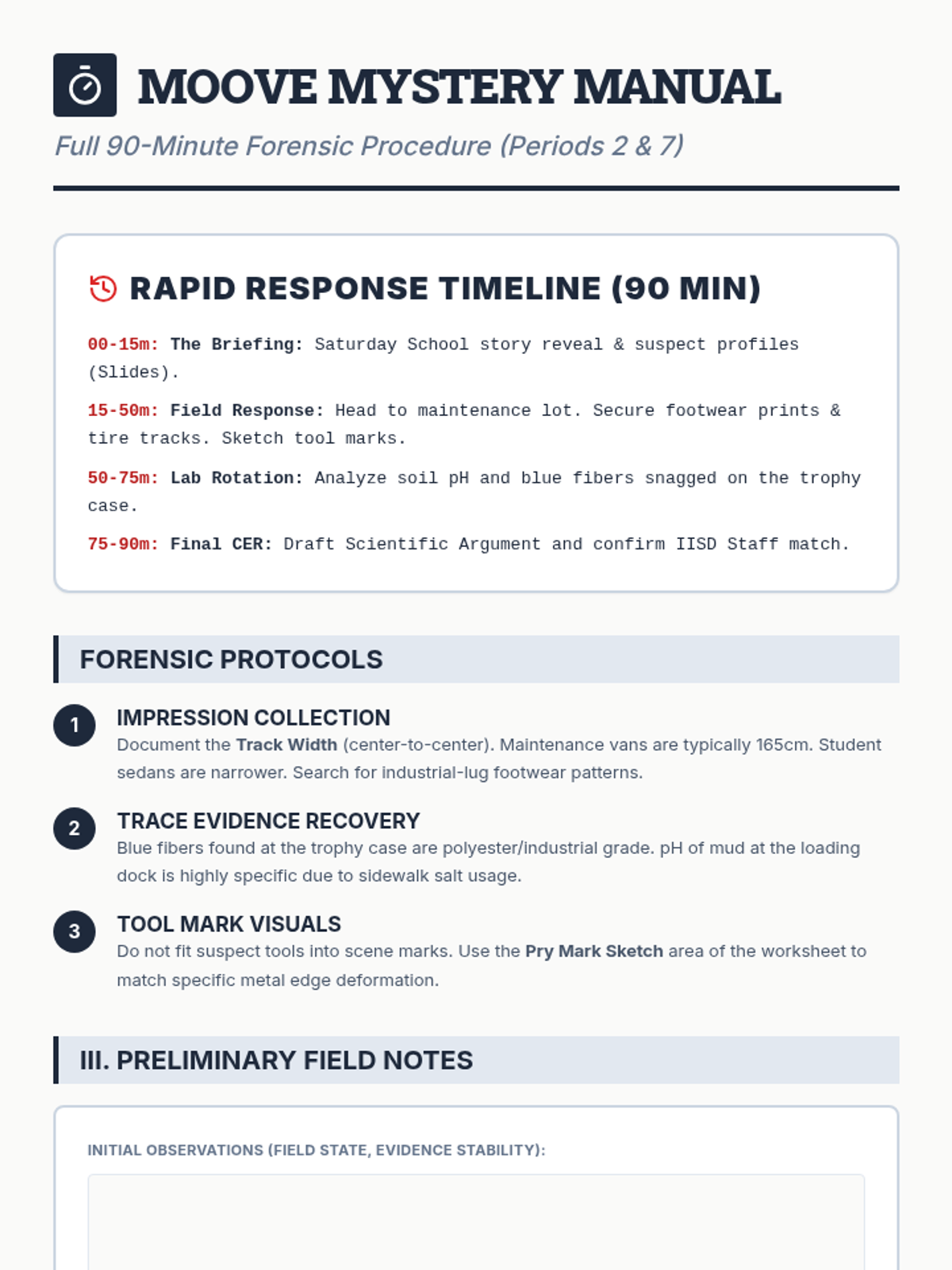
Instructional manual for the Moove Mystery lab, focused on outdoor impression collection and tool mark analysis. Now structured for a two-day period (Monday field work and Tuesday lab analysis). Includes updated Saturday School context and teacher guidance.
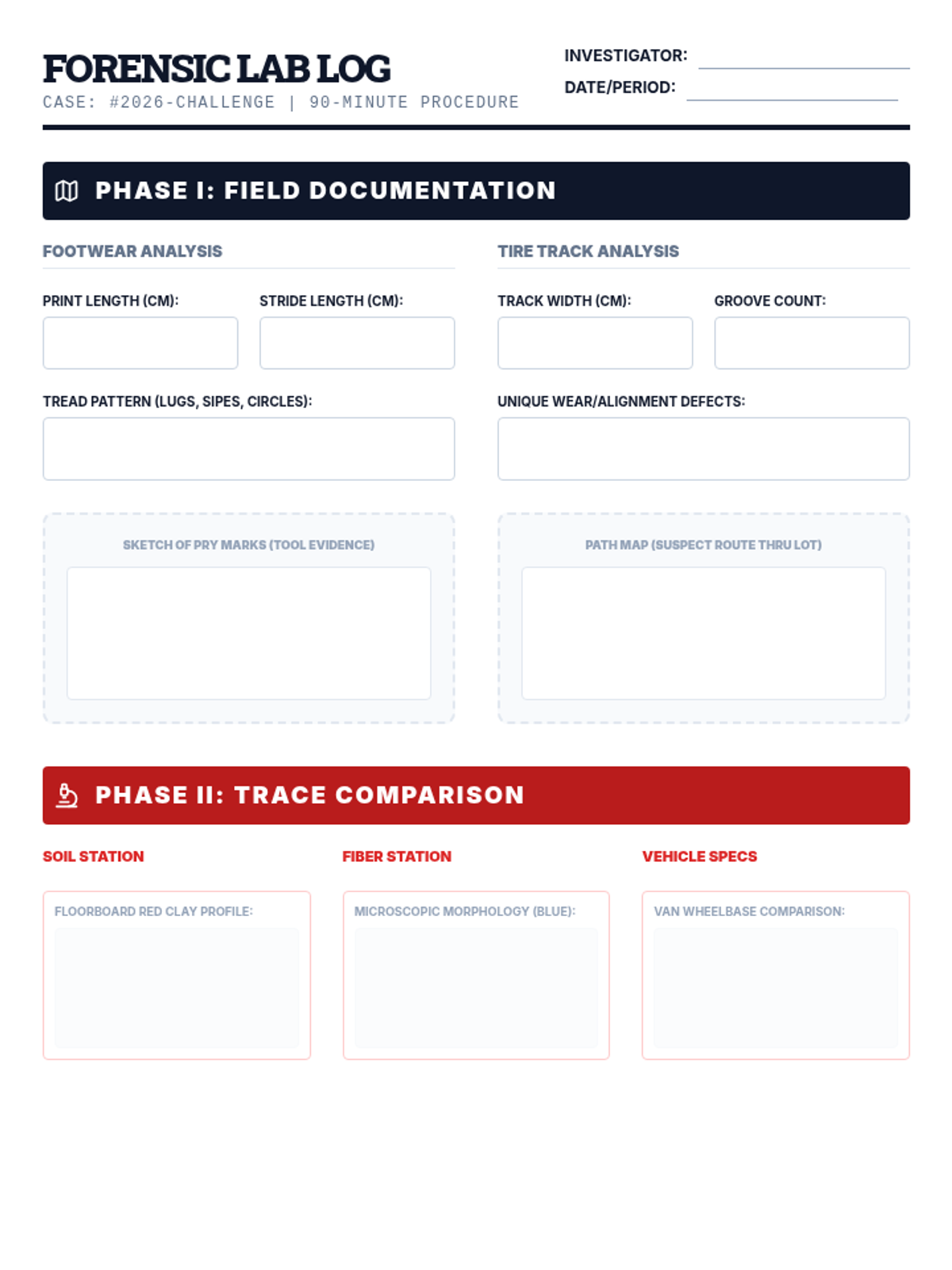
Evidence analysis worksheet for the Moove Mystery lab, now structured for a two-day investigation (Monday Field Work and Tuesday Lab Analysis). Features sections for footwear, tire tracks, tool marks, and trace evidence comparison.
Introductory presentation for the Moove Mystery lab, featuring the crime scene narrative, tool mark overview, and the significance of negative fingerprint evidence. Now includes Saturday school context and Monday/Tuesday two-day investigation structure.
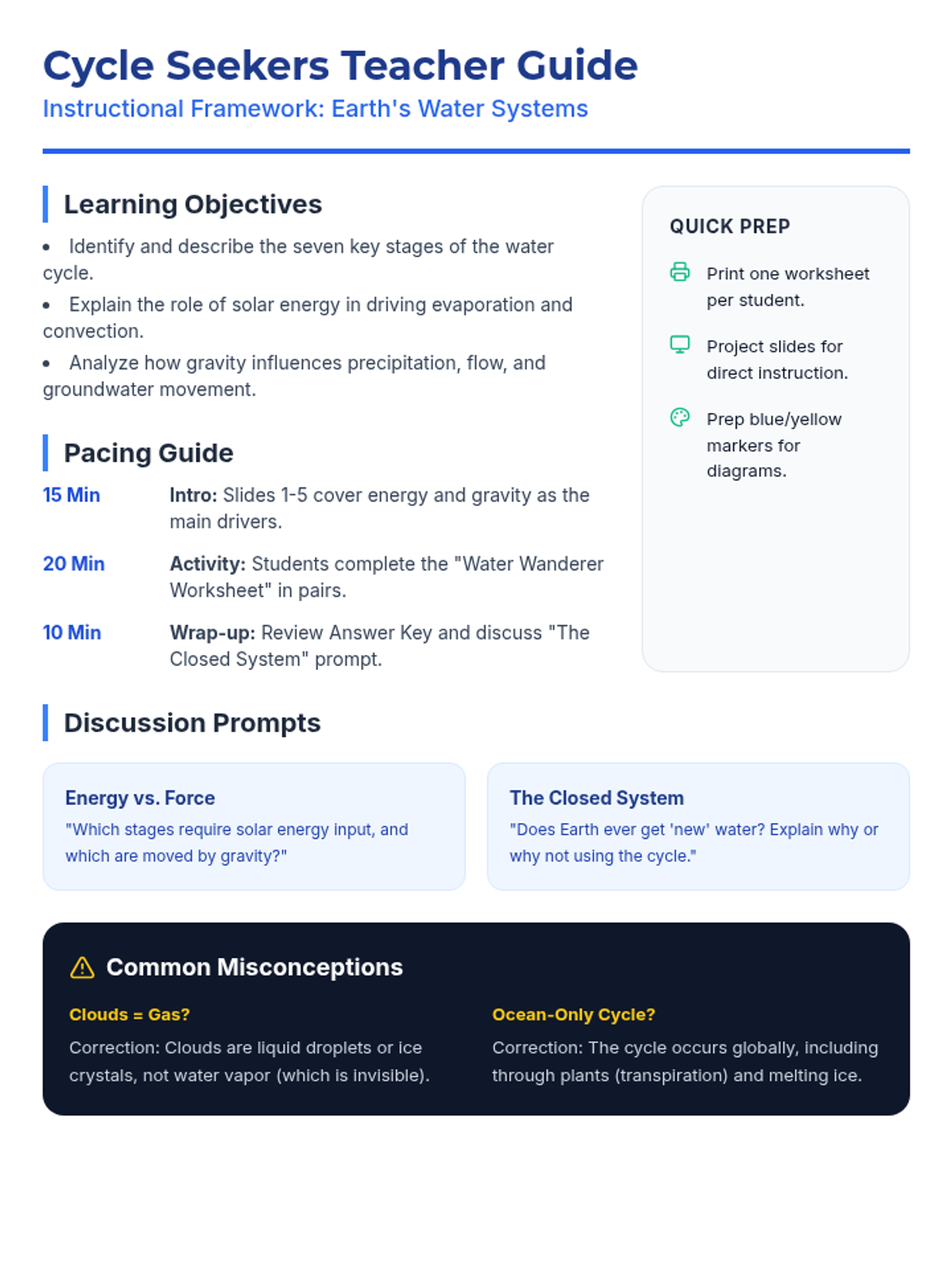
A comprehensive teacher's guide for the Cycle Seekers lesson, including learning objectives, pacing, discussion prompts, and notes on common misconceptions. Optimized for single-page use.
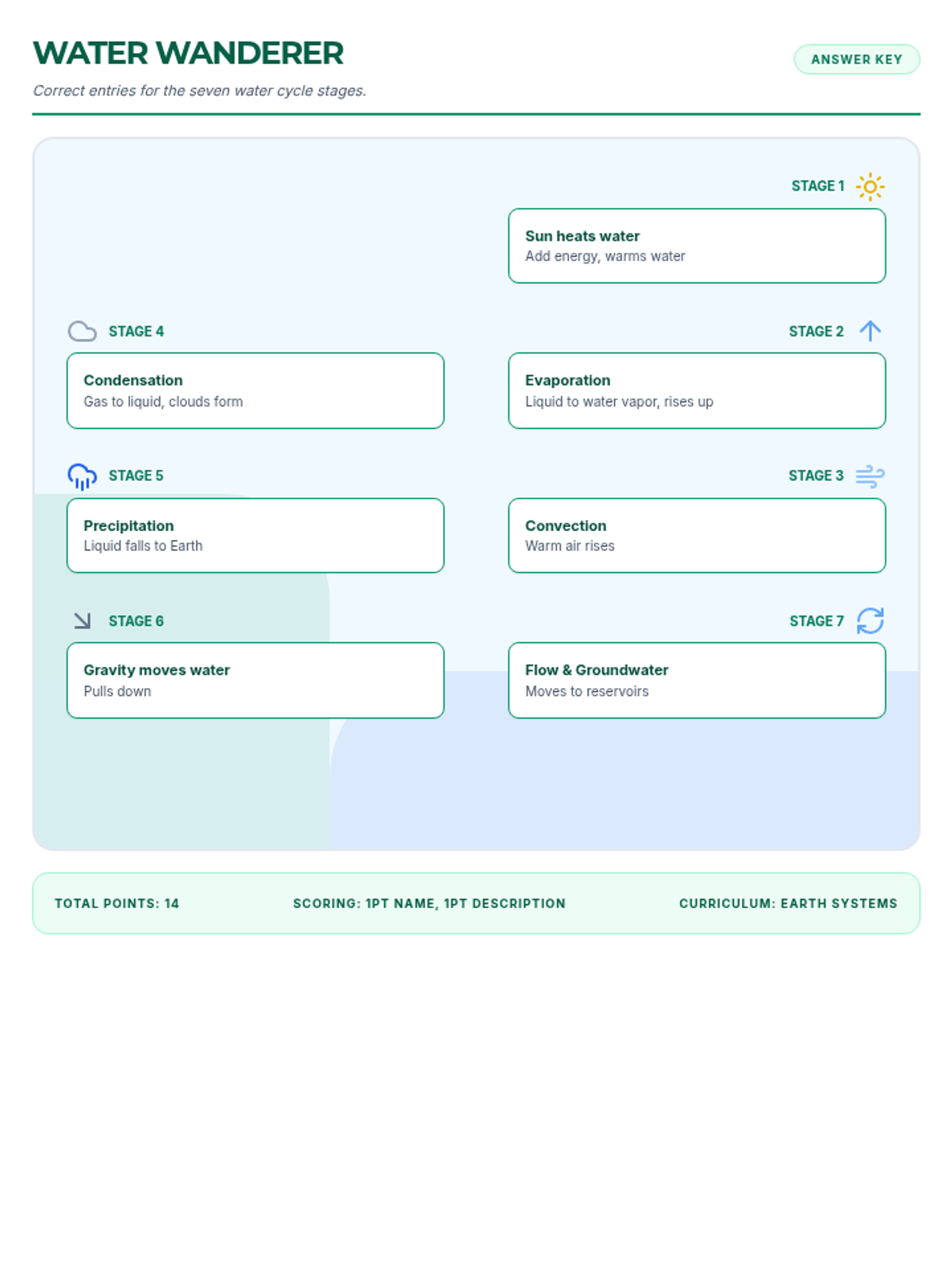
An answer key for the Water Wanderer worksheet, providing the correct stage names and concise descriptions for all seven parts of the water cycle. Repositioned to ensure no overlaps and improve visual clarity.
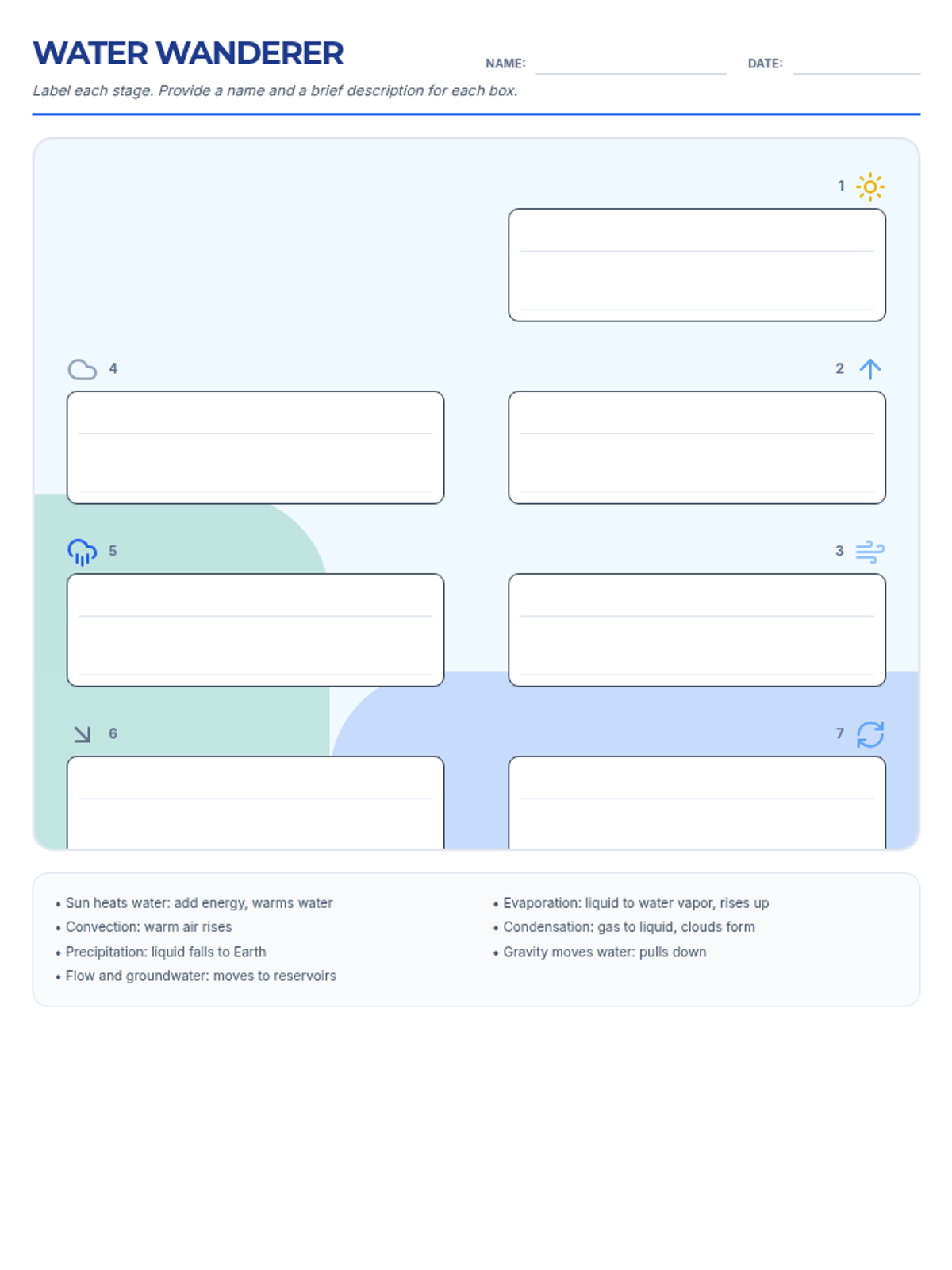
A student worksheet featuring a water cycle diagram with blank labeling areas for seven key stages, requiring students to provide both names and descriptions. Optimized for one-page printing with enhanced handwriting space and high-contrast visuals.
An introductory slide deck explaining the seven key stages of the water cycle, highlighting the roles of solar energy and gravity. Includes a final slide to transition to the labeling activity.
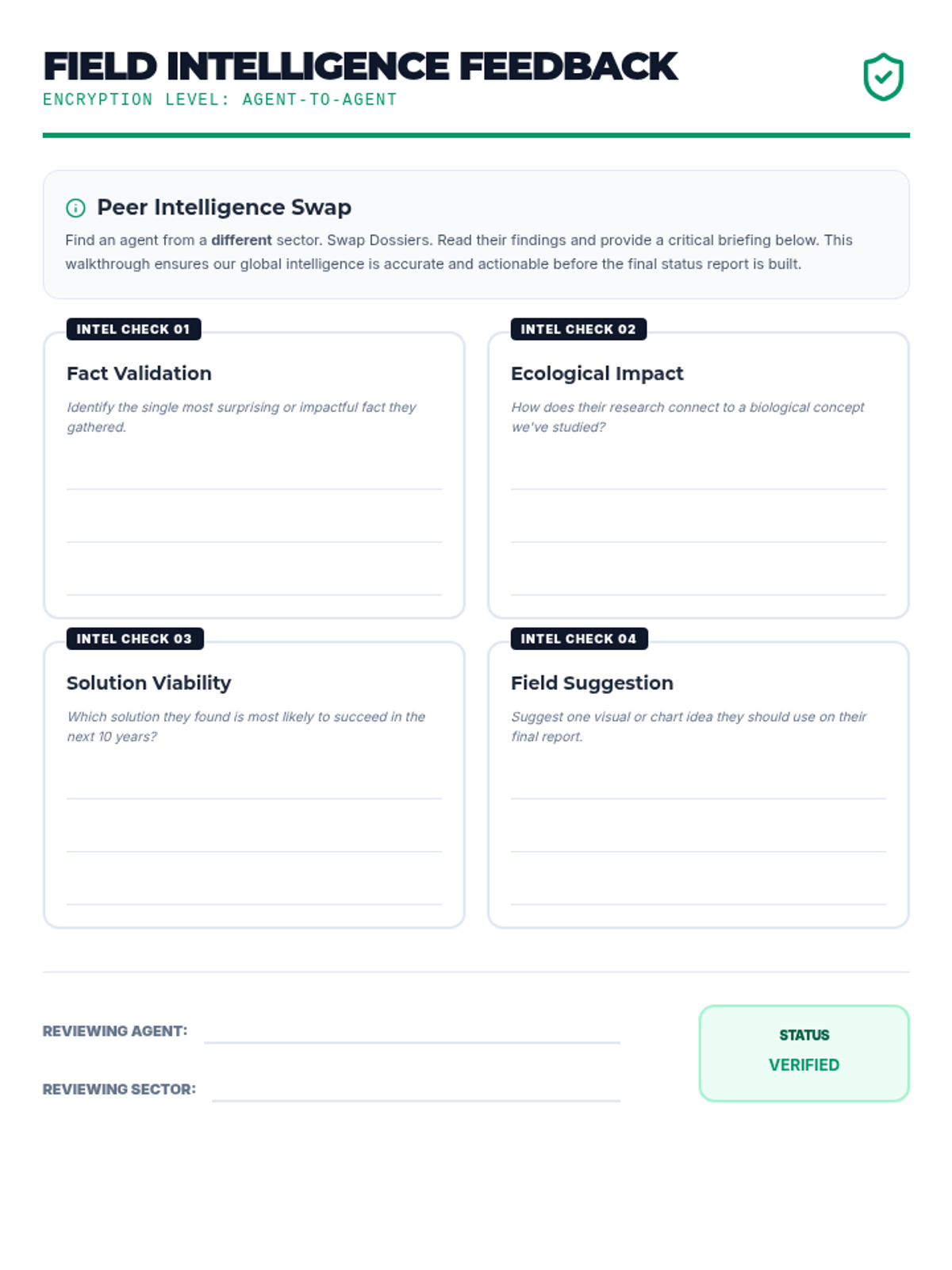
A peer-review worksheet for the 'Intelligence Swap' phase of Operation Earth. It facilitates a structured walkthrough where students validate each other's research findings. Revised for better page flow and student work space.
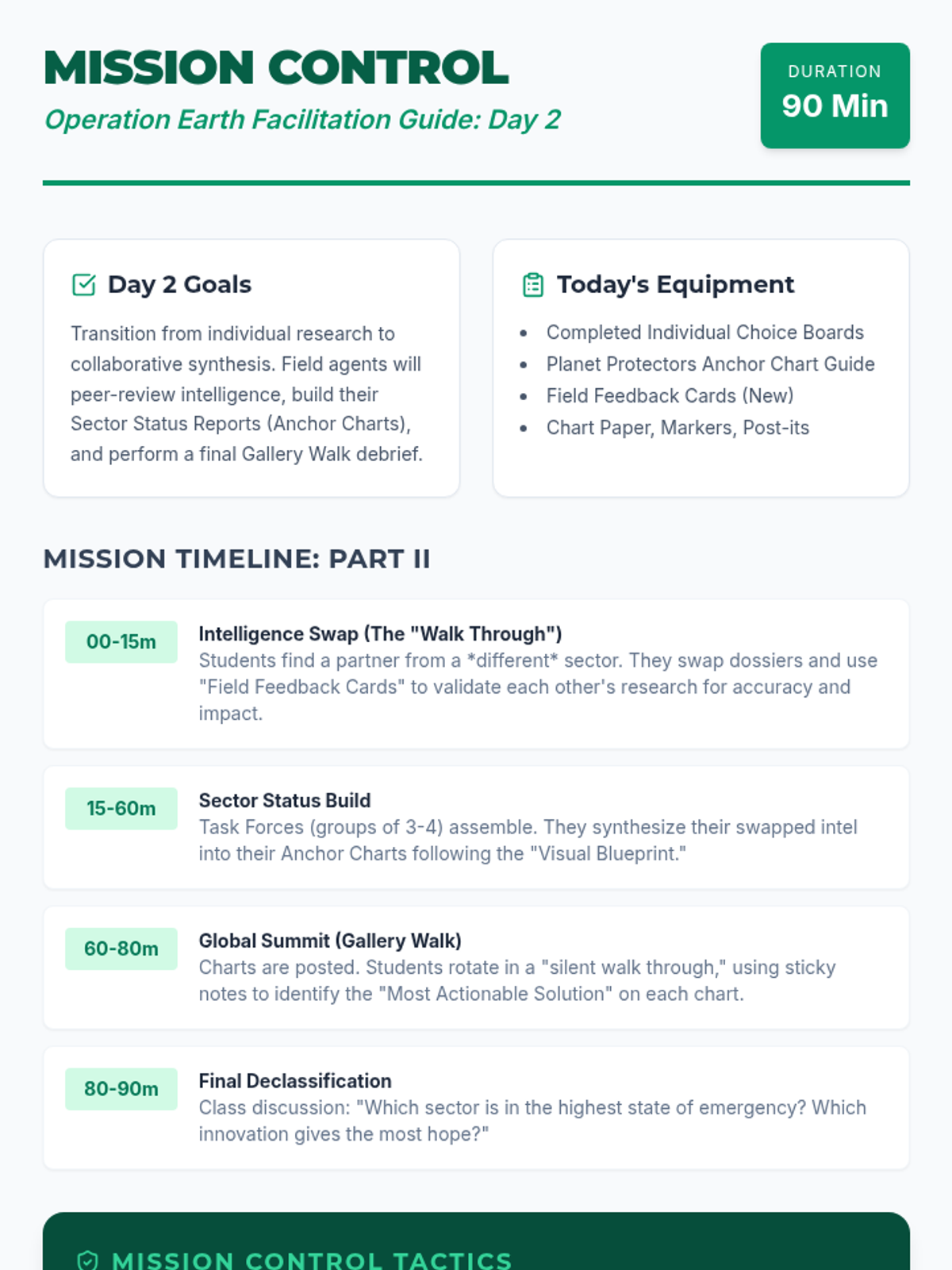
A revised teacher guide specifically for Day 2 of the Operation Earth project, focusing on transitioning from individual research to collaborative synthesis and the final gallery walk.
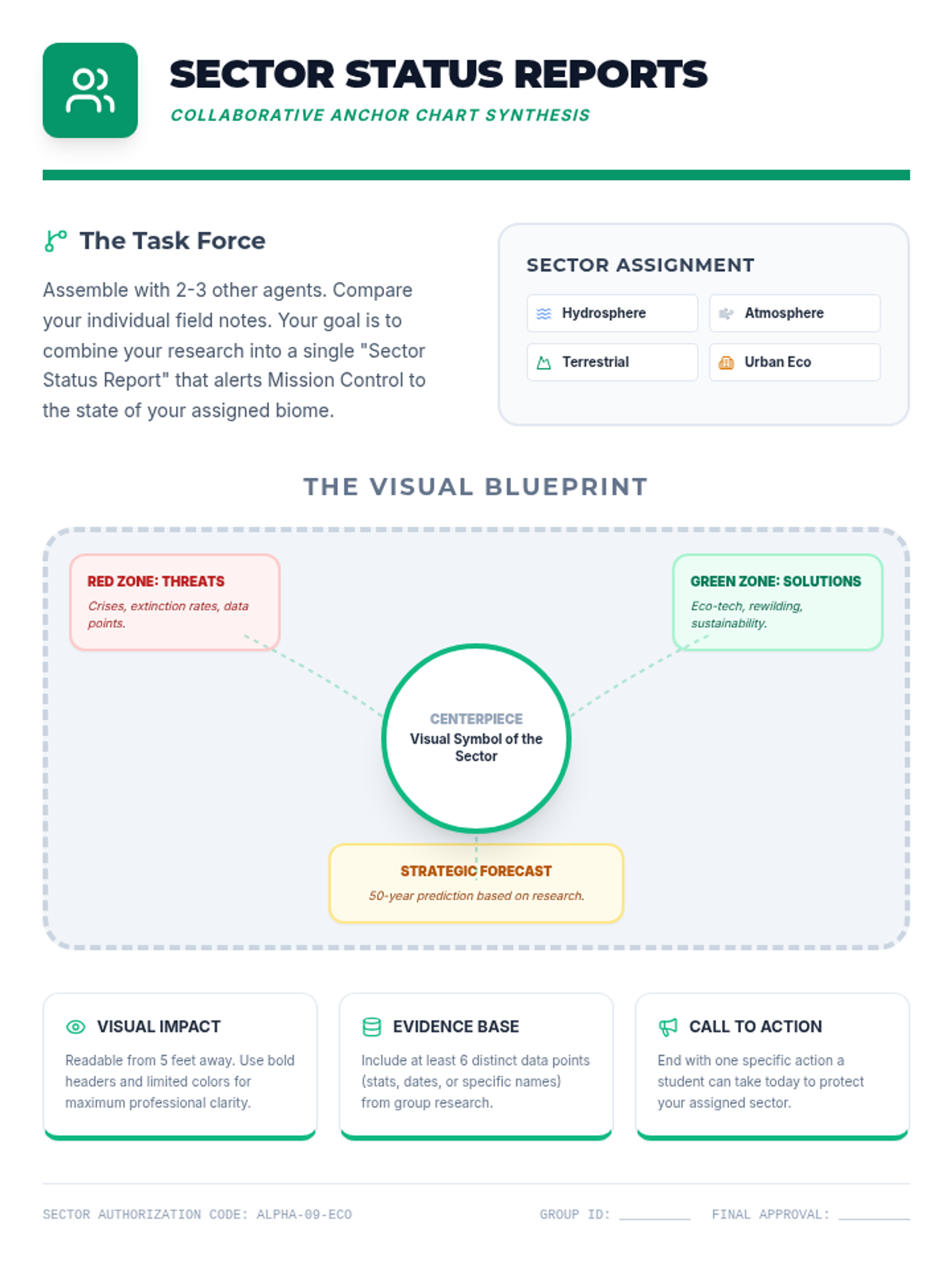
A guide for the collaborative anchor chart phase of the project, including a visual blueprint for the 'Sector Status Report'. Revised to fit on a single page with improved visual alignment.