A student worksheet featuring a water cycle diagram with blank labeling areas for seven key stages, requiring students to provide both names and descriptions. Optimized for one-page printing with enhanced handwriting space and high-contrast visuals.
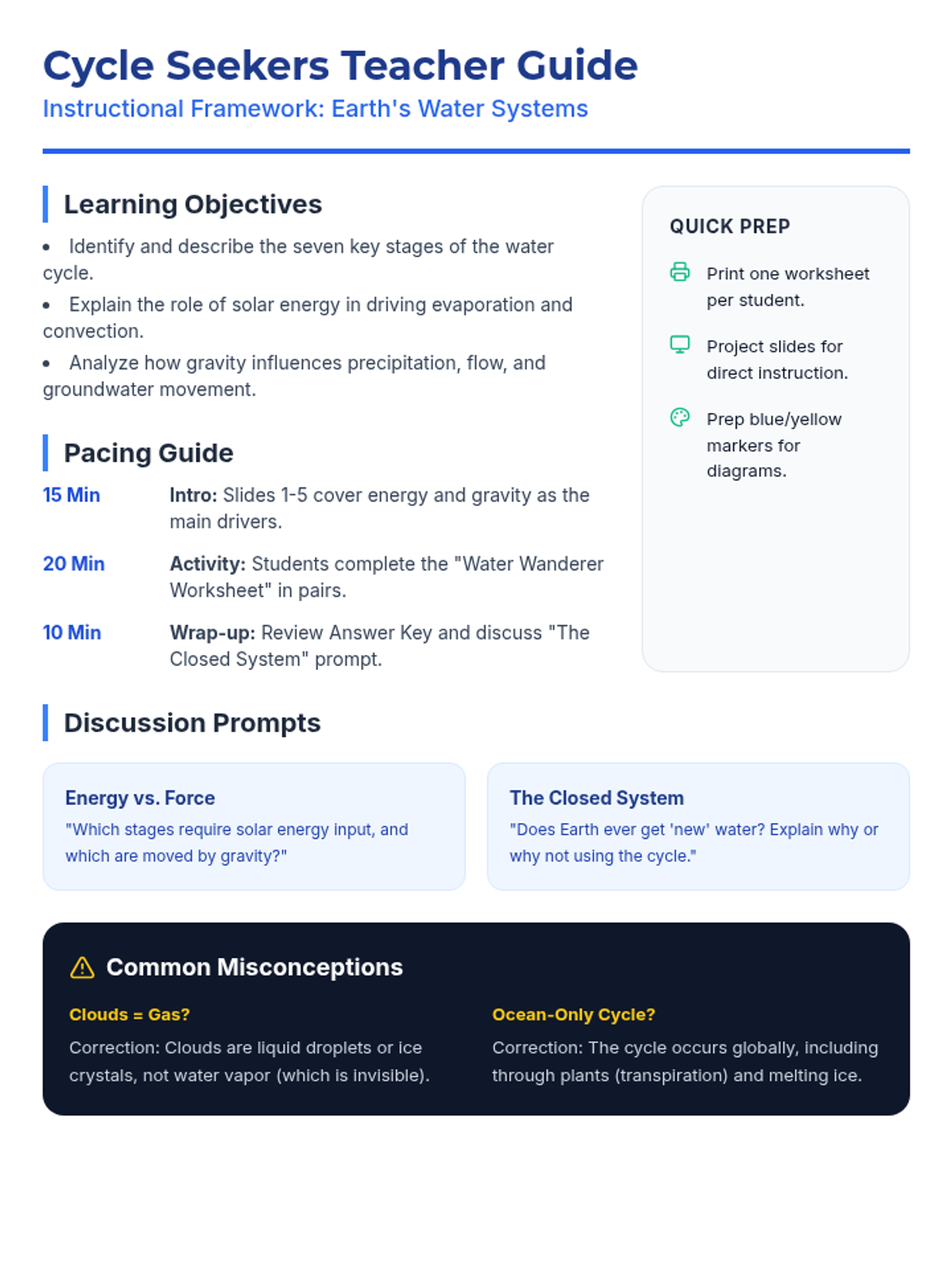
A comprehensive teacher's guide for the Cycle Seekers lesson, including learning objectives, pacing, discussion prompts, and notes on common misconceptions. Optimized for single-page use.
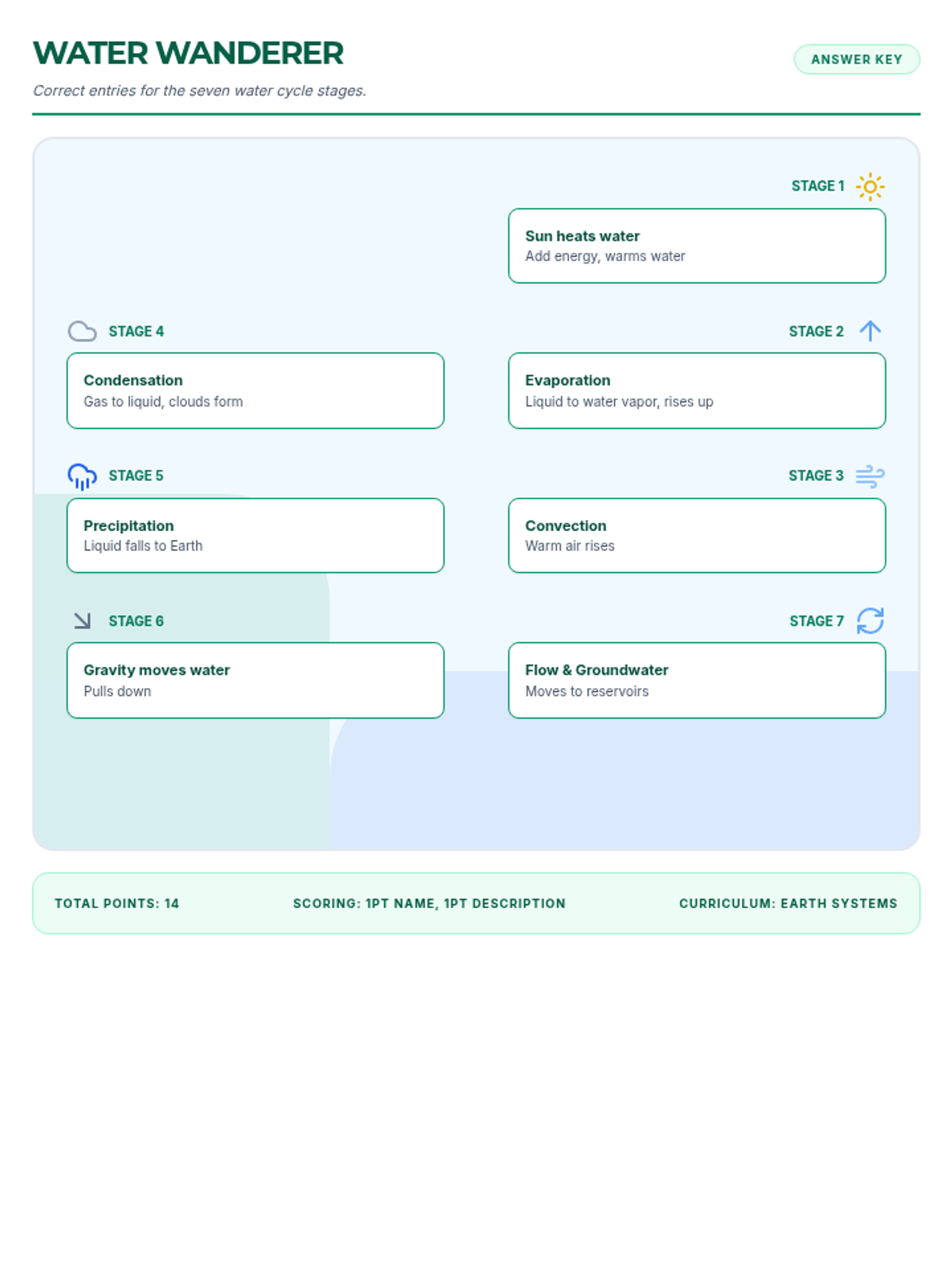
An answer key for the Water Wanderer worksheet, providing the correct stage names and concise descriptions for all seven parts of the water cycle. Repositioned to ensure no overlaps and improve visual clarity.
An introductory slide deck explaining the seven key stages of the water cycle, highlighting the roles of solar energy and gravity. Includes a final slide to transition to the labeling activity.
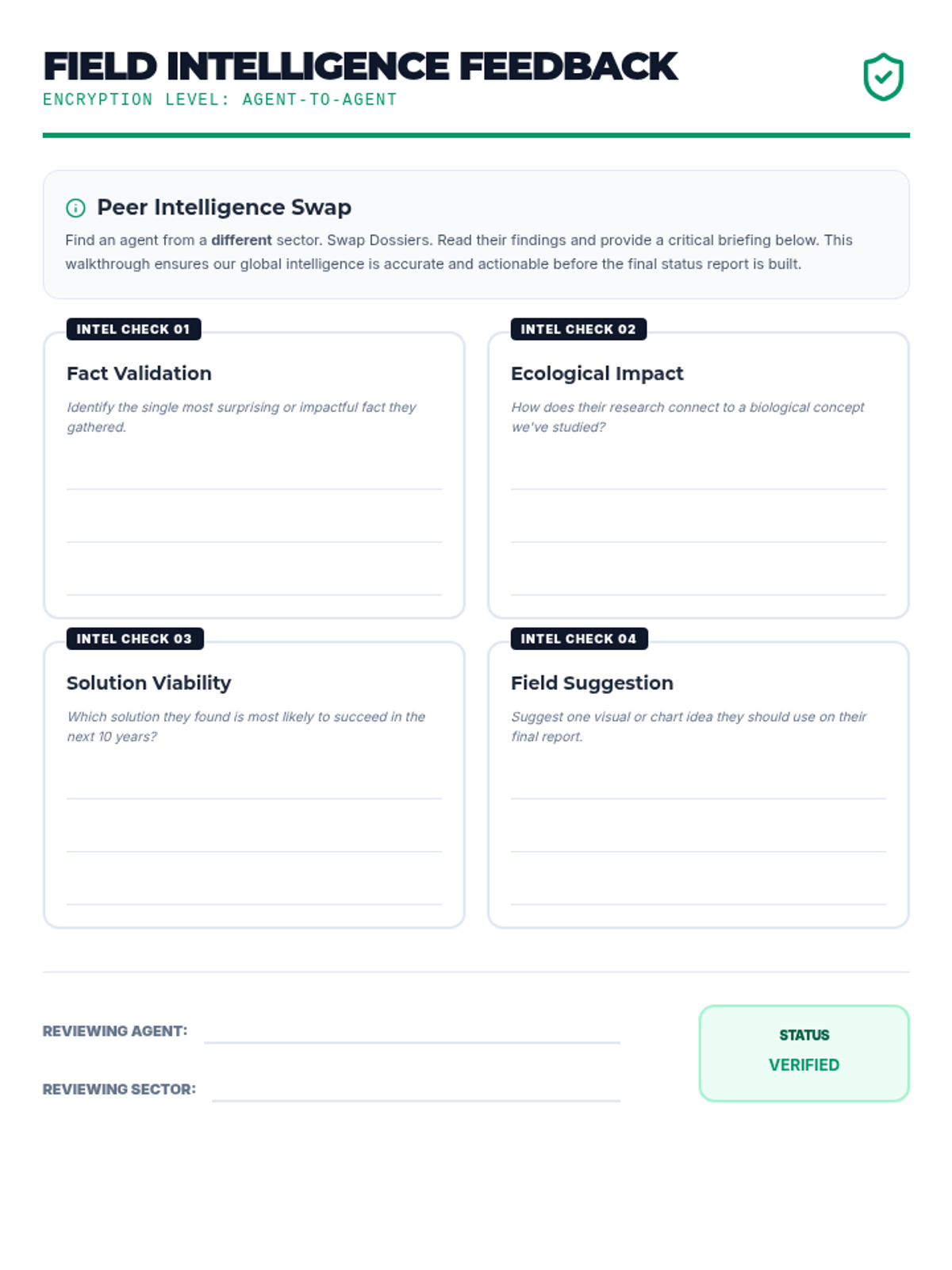
A peer-review worksheet for the 'Intelligence Swap' phase of Operation Earth. It facilitates a structured walkthrough where students validate each other's research findings. Revised for better page flow and student work space.
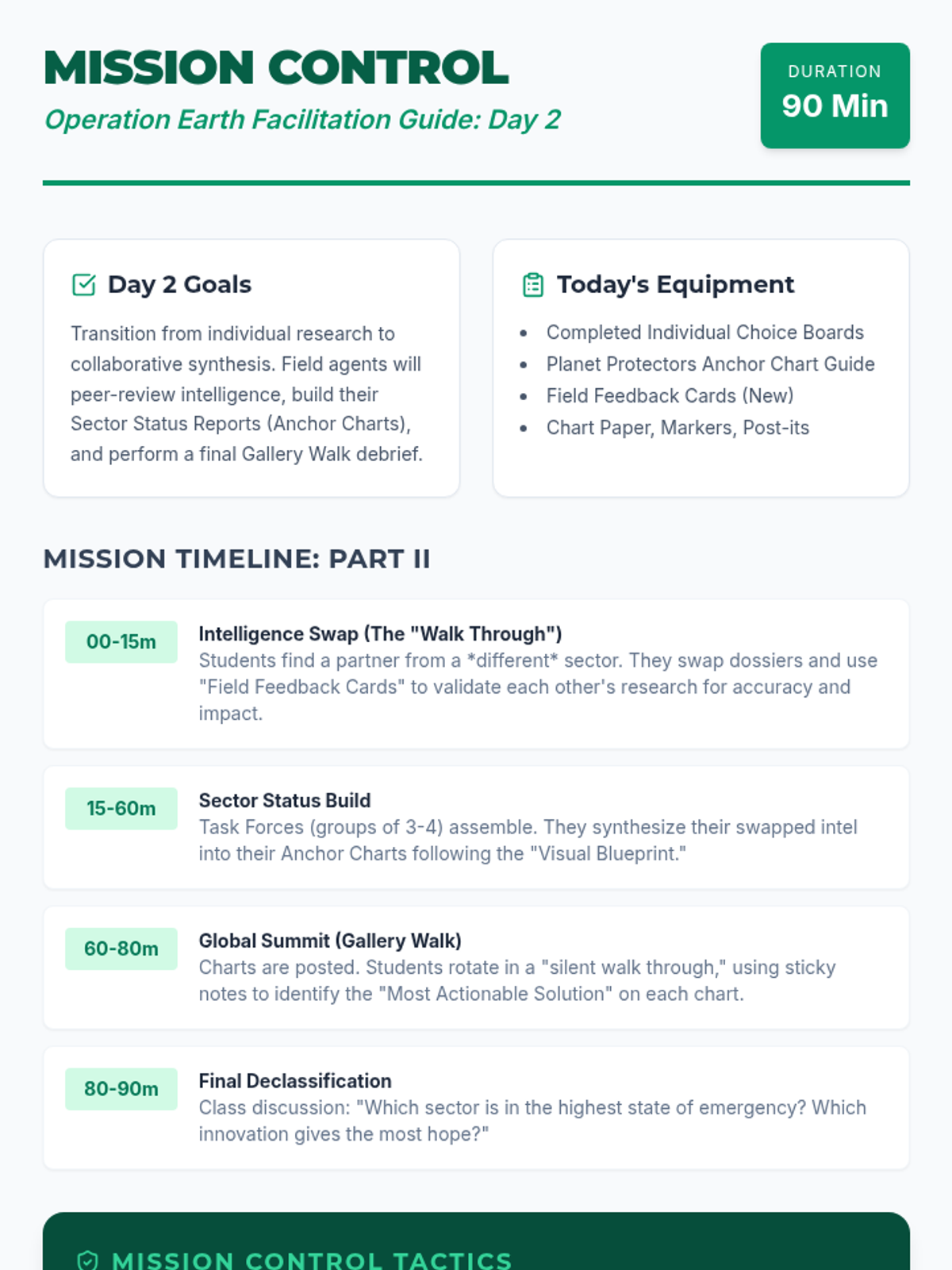
A revised teacher guide specifically for Day 2 of the Operation Earth project, focusing on transitioning from individual research to collaborative synthesis and the final gallery walk.
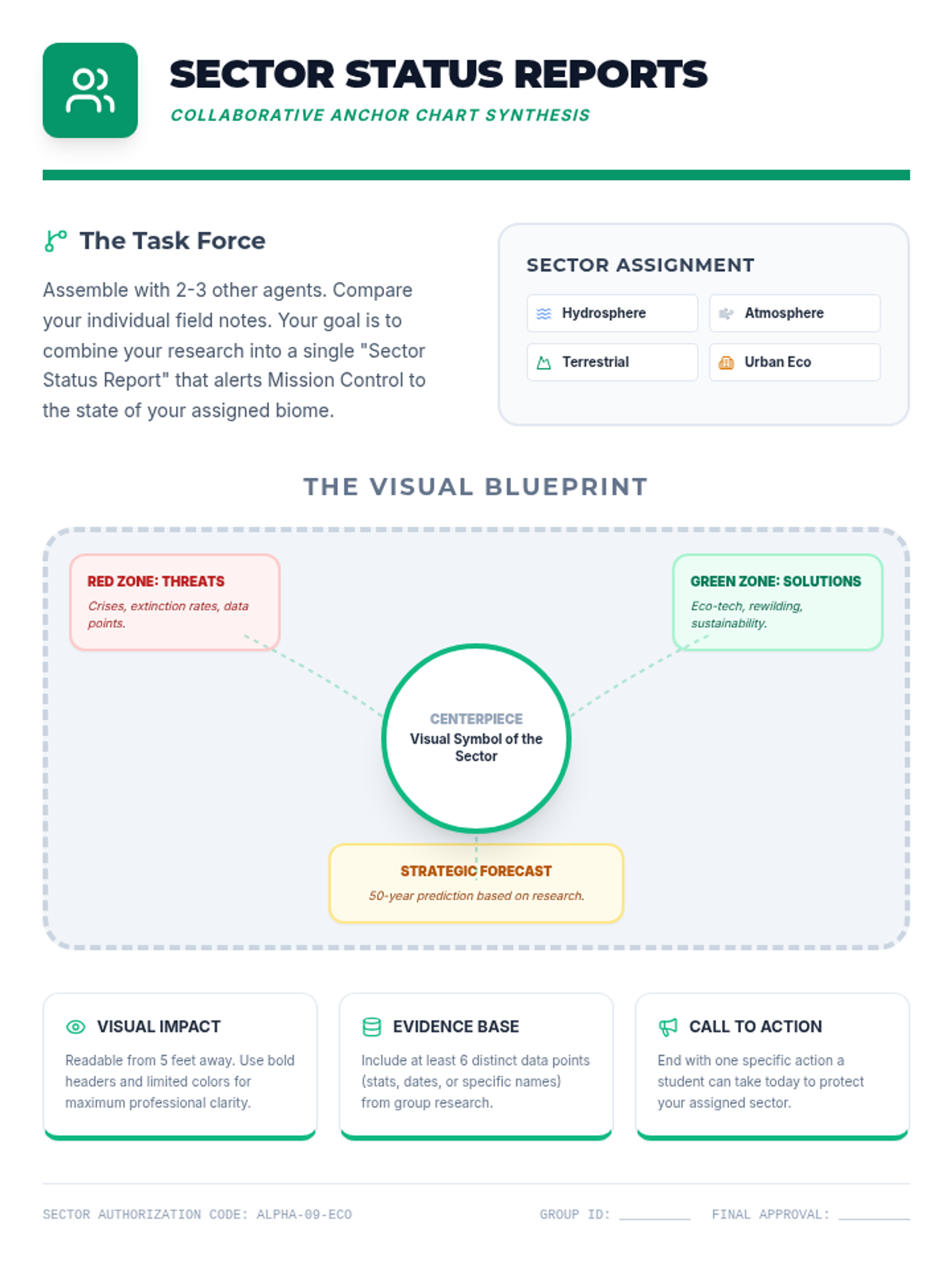
A guide for the collaborative anchor chart phase of the project, including a visual blueprint for the 'Sector Status Report'. Revised to fit on a single page with improved visual alignment.
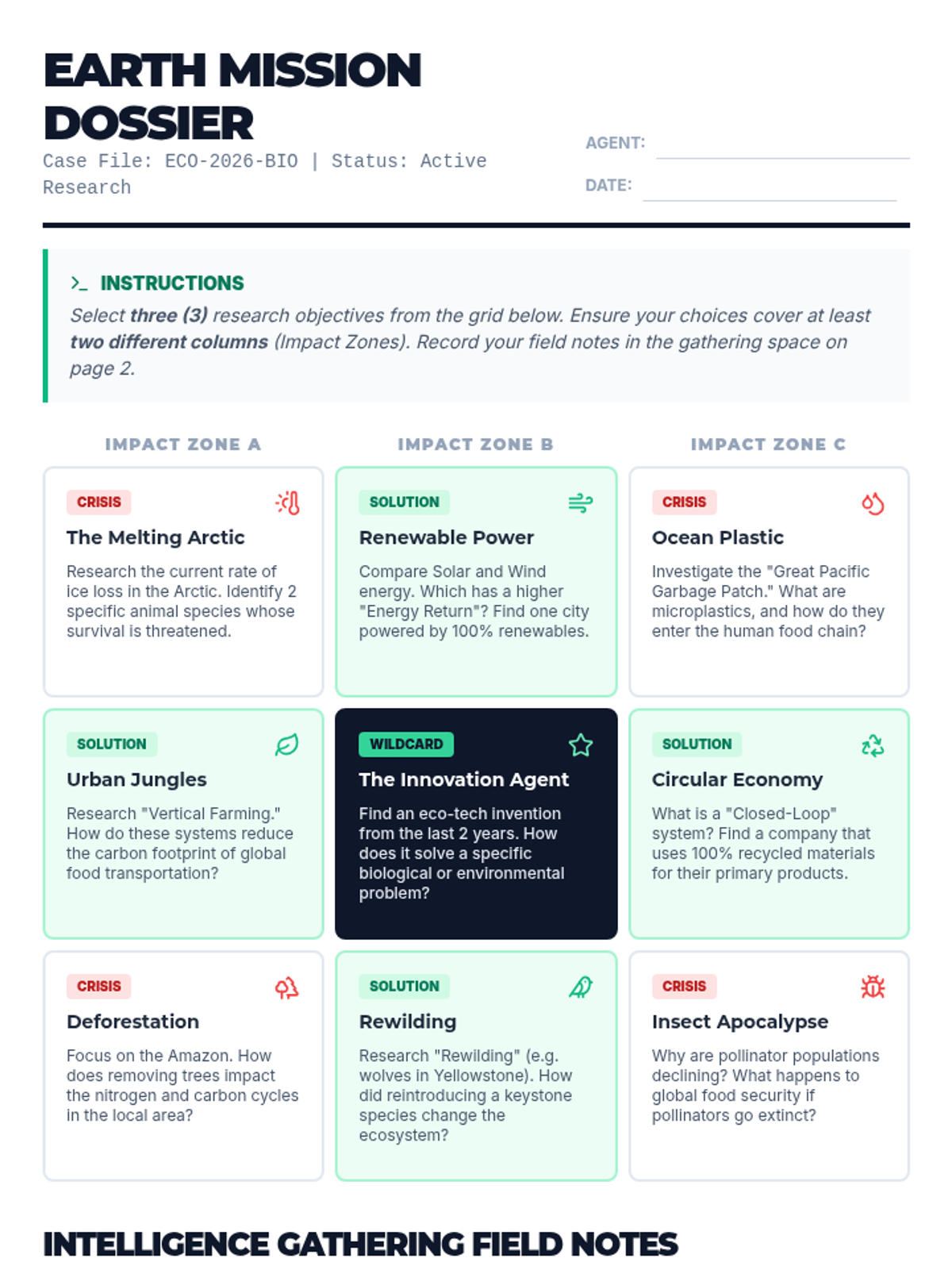
A structured Choice Board for the Operation Earth project, allowing students to select from 9 research objectives. Revised with Impact Zone labels and expanded synthesis space.
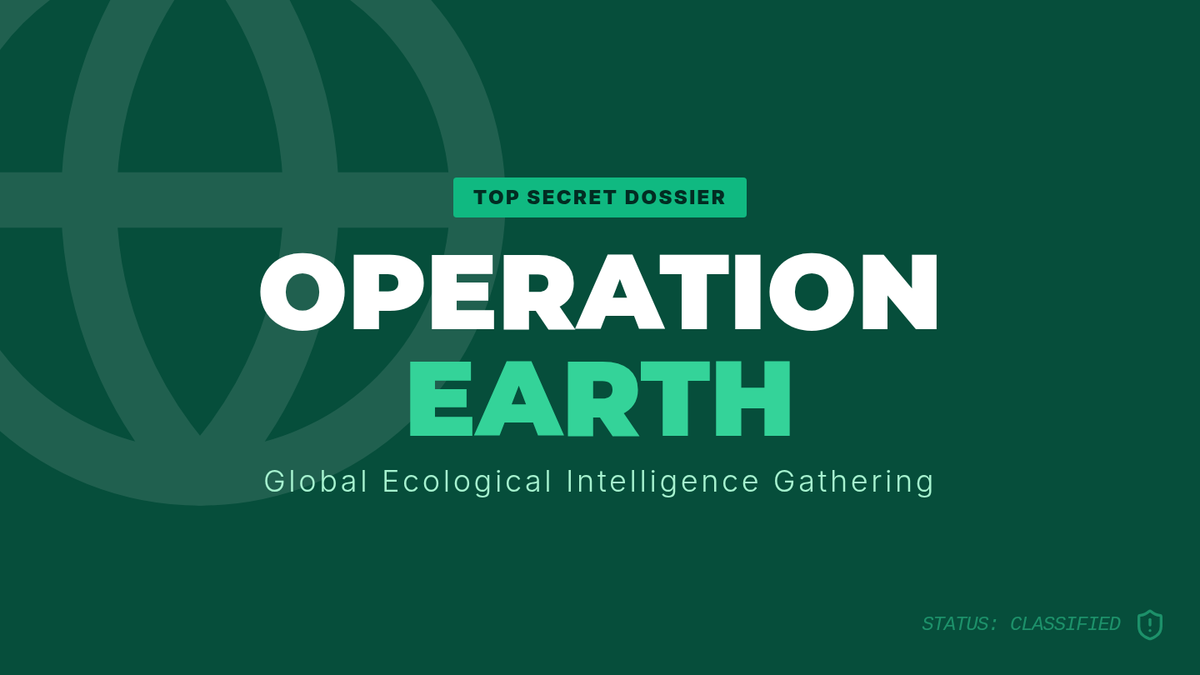
An engaging presentation to launch Operation Earth, framing environmental science research as a top-secret mission for field agents. Revised with improved padding and a choice board preview slide.
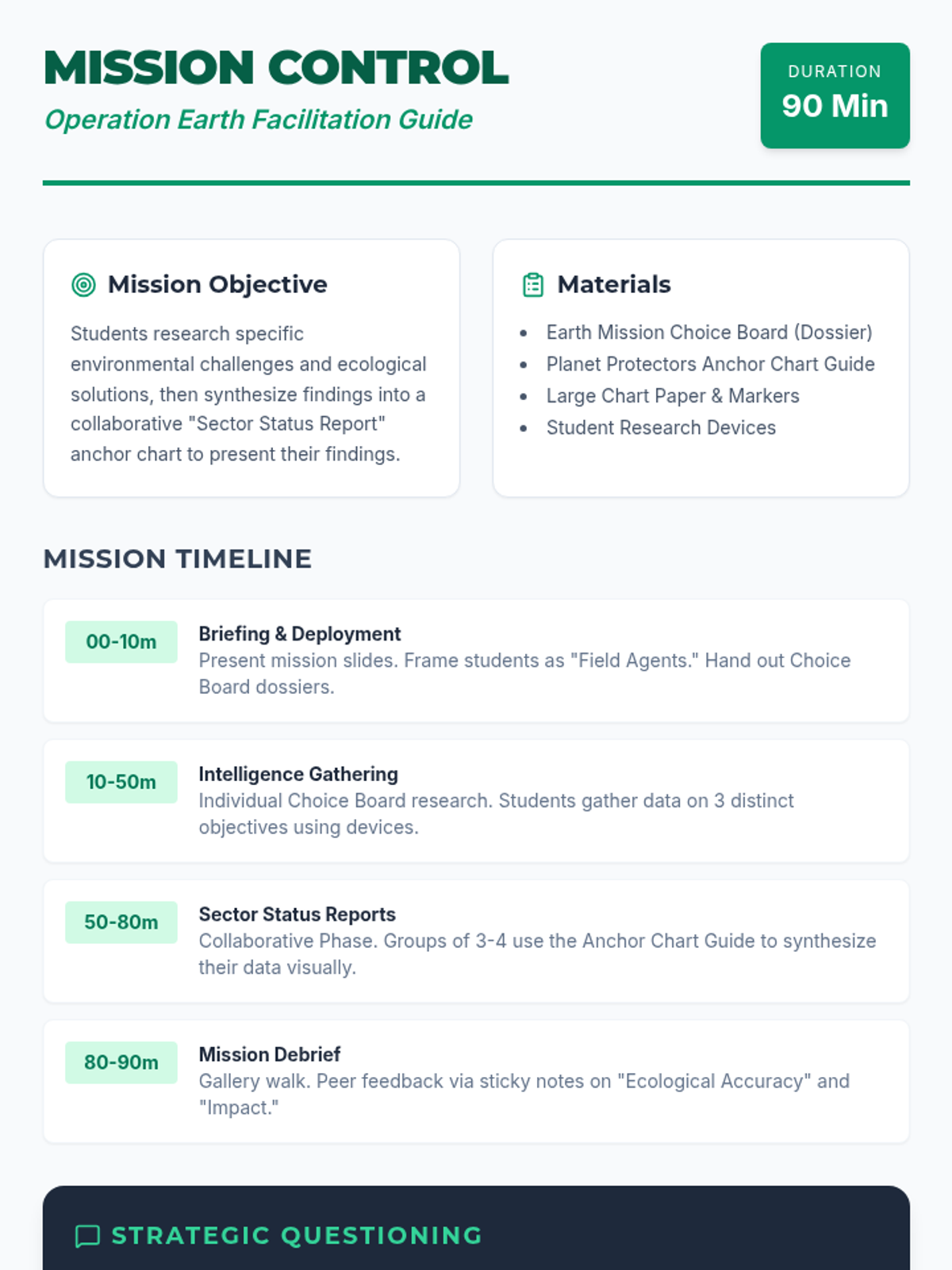
A comprehensive teacher guide for facilitating the Operation Earth project, including a 90-minute pacing guide, strategic discussion prompts, and a grading rubric. Revised for improved layout and page flow.
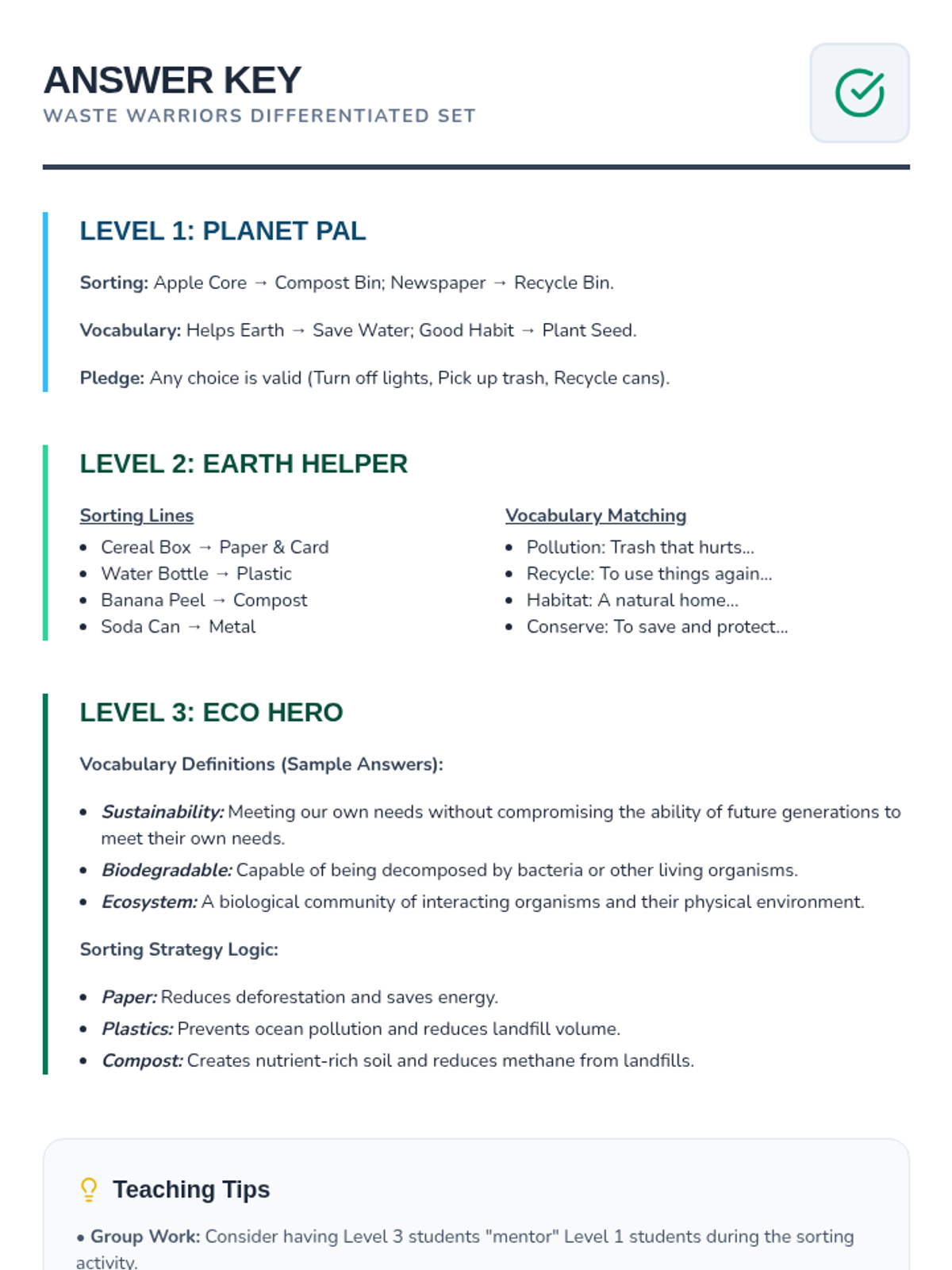
A comprehensive answer key and teacher guide for the Waste Warriors differentiated worksheet set.
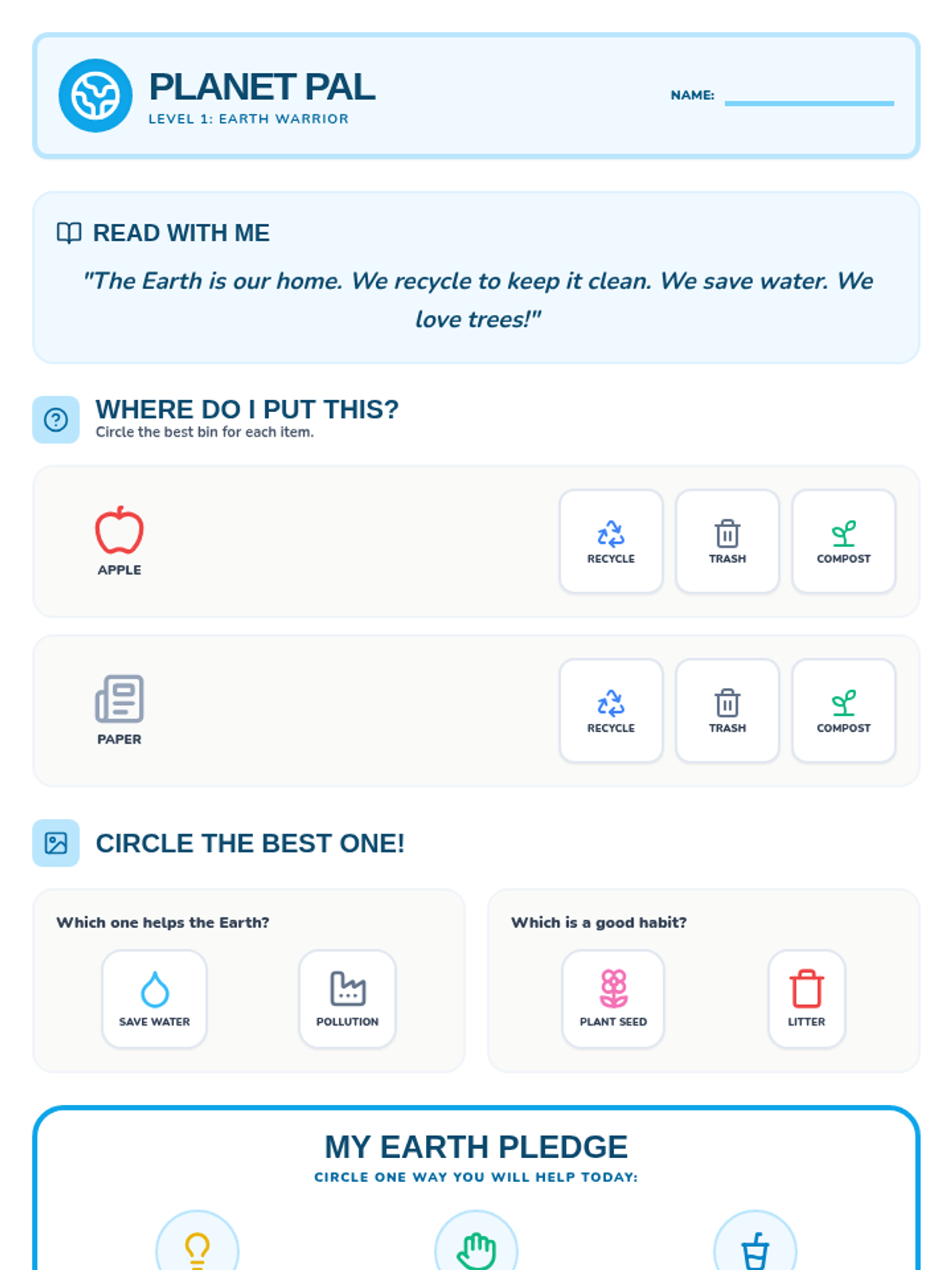
A beginner-level Earth Day worksheet using pictures and icons for multiple-choice sorting and vocabulary recognition.
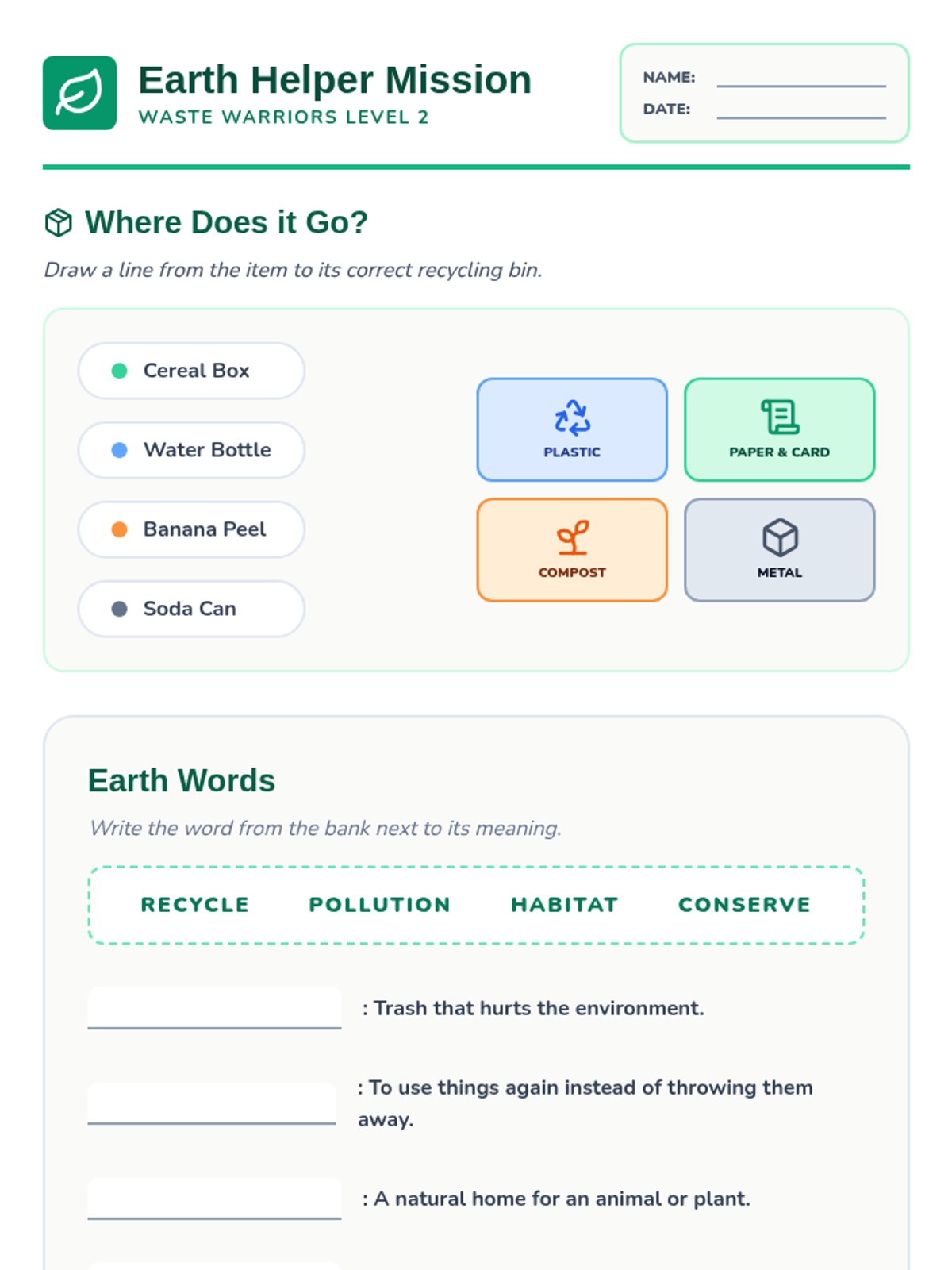
A mid-level Earth Day worksheet featuring a matching activity with a word bank, simple sorting lines, and cloze sentences for structured student responses.
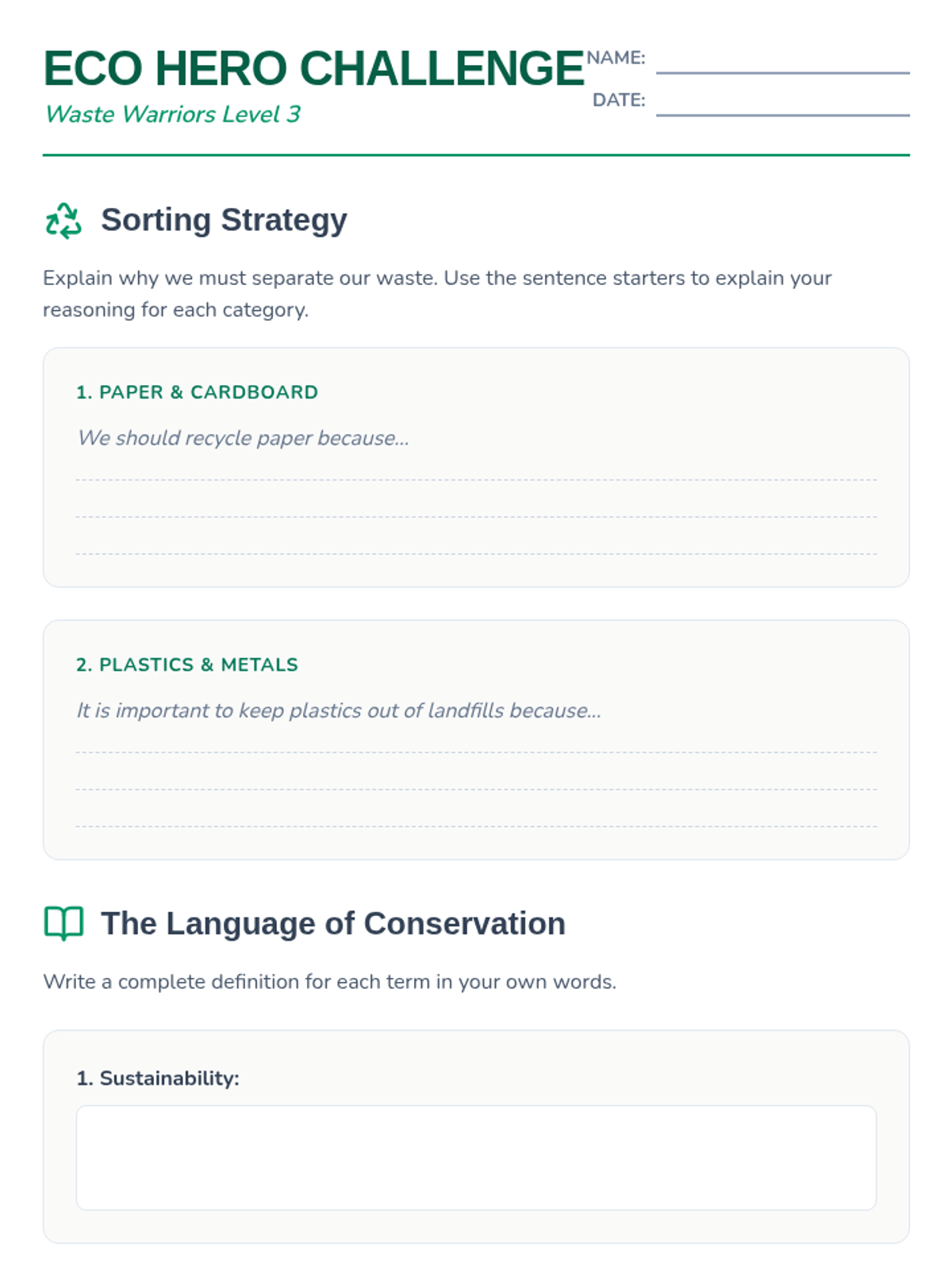
An advanced-level Earth Day worksheet featuring sentence starters and open-ended vocabulary definitions for students to demonstrate deep understanding of waste management.
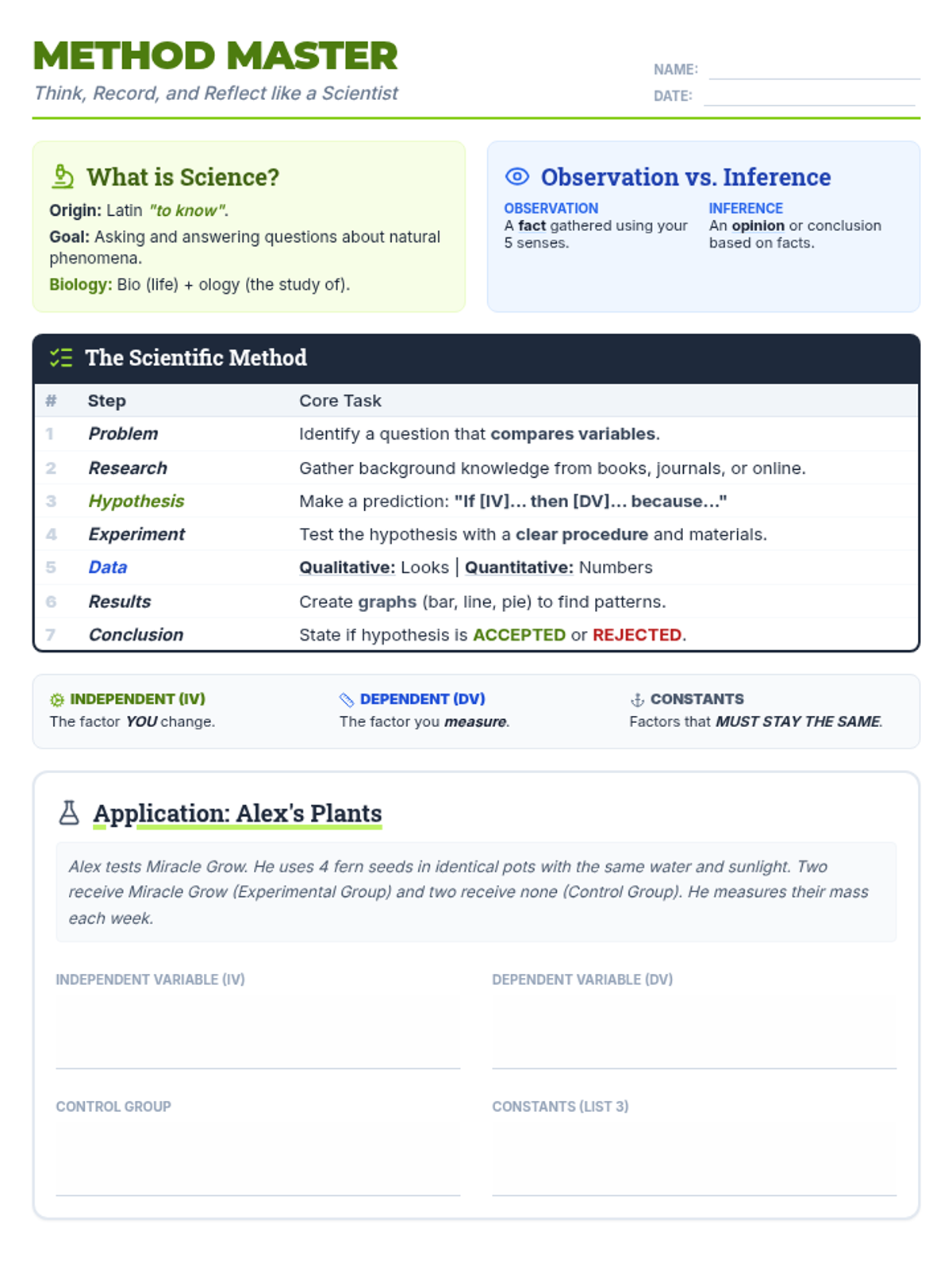
A concise one-page note sheet for students summarizing the definition of science, the 7 steps of the scientific method, observation vs. inference, and types of variables, including a short case study application.
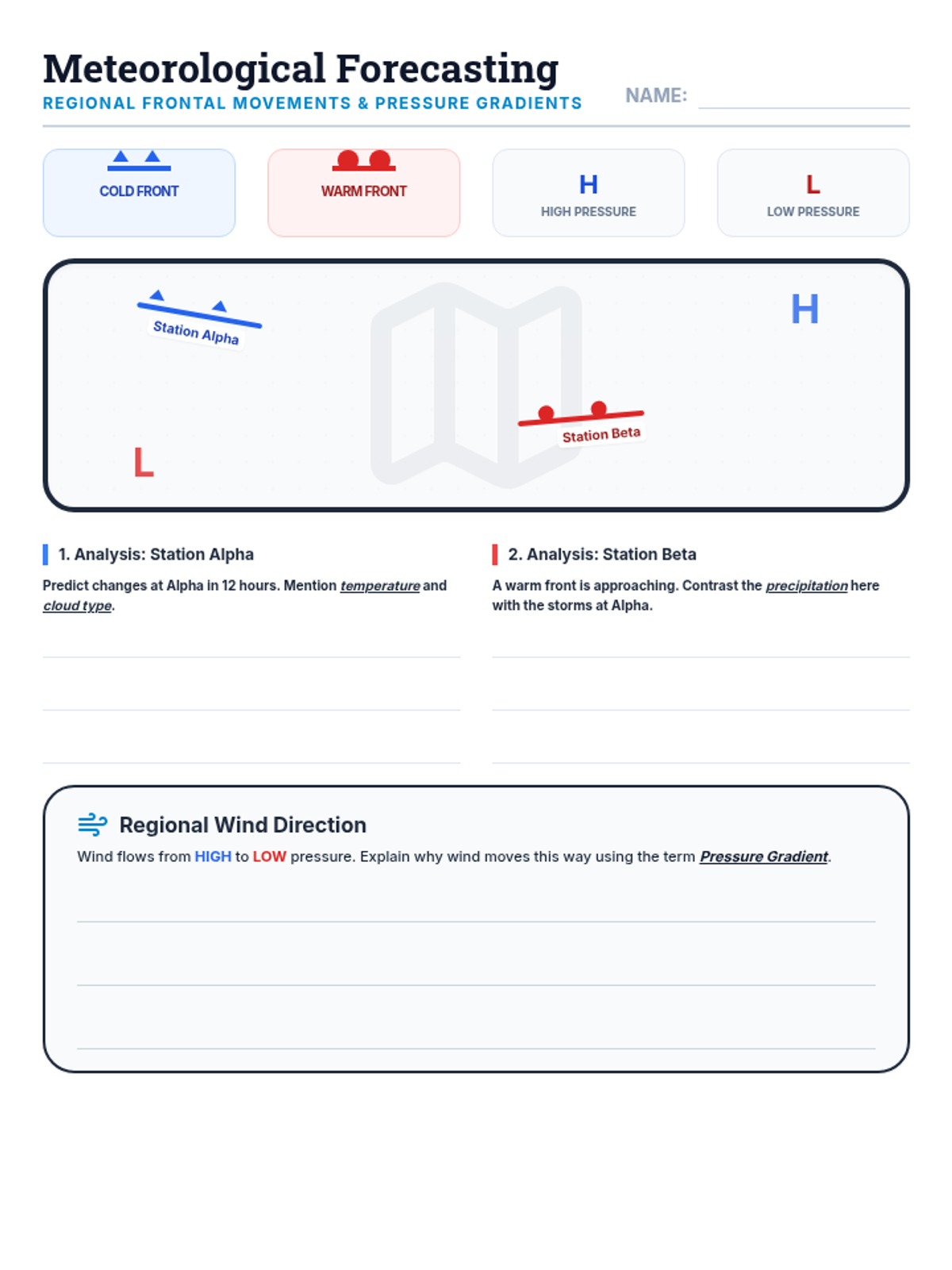
A middle-school level weather forecasting worksheet, requiring students to analyze frontal movements, predict weather conditions, and explain pressure gradients. Updated for one-page layout and improved work areas.
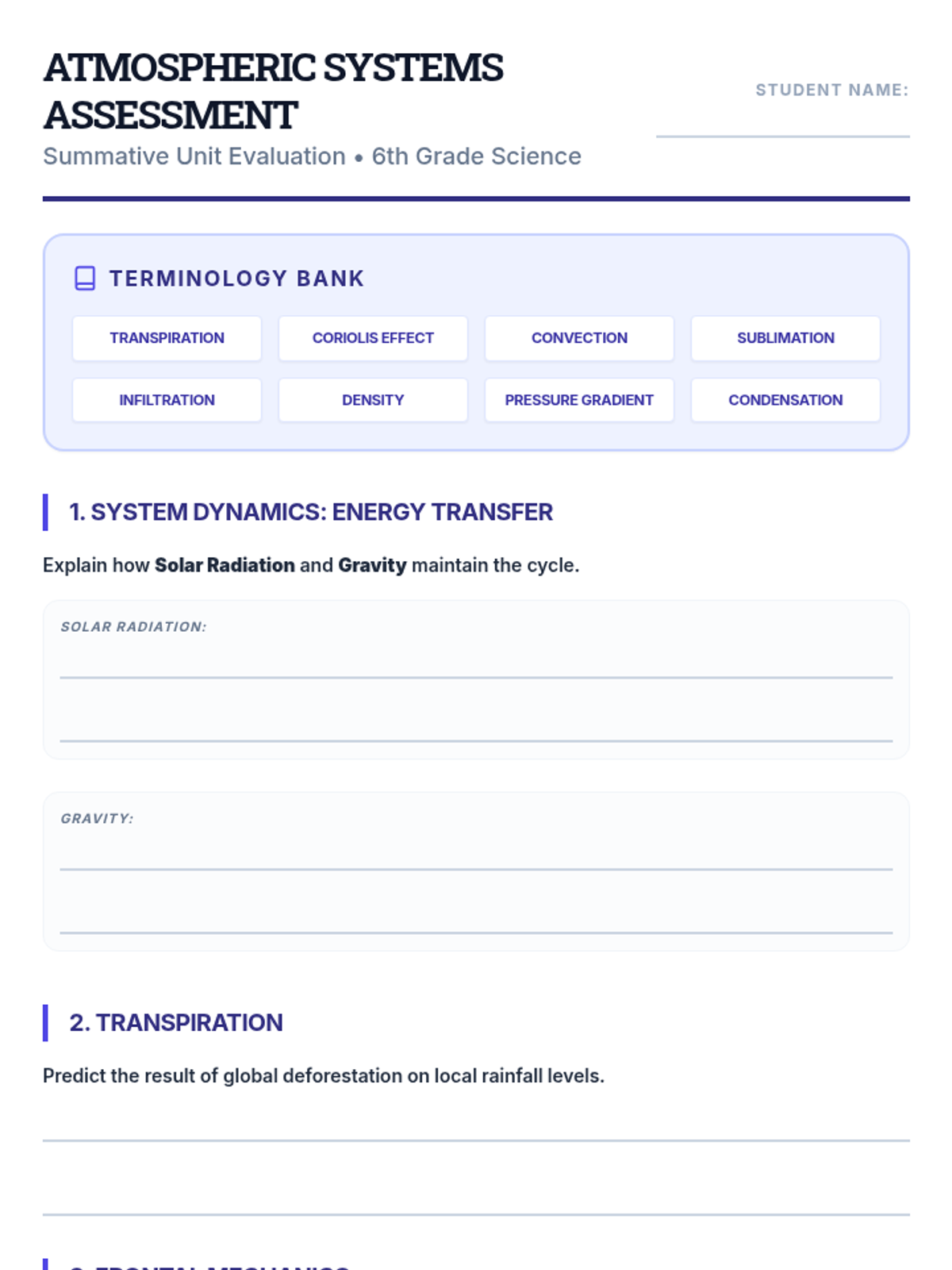
A summative middle-school assessment for the Atmospheric Systems unit, featuring a term bank, explanatory prompts, and rigorous multiple-choice questions. Updated for layout efficiency and work area clarity.
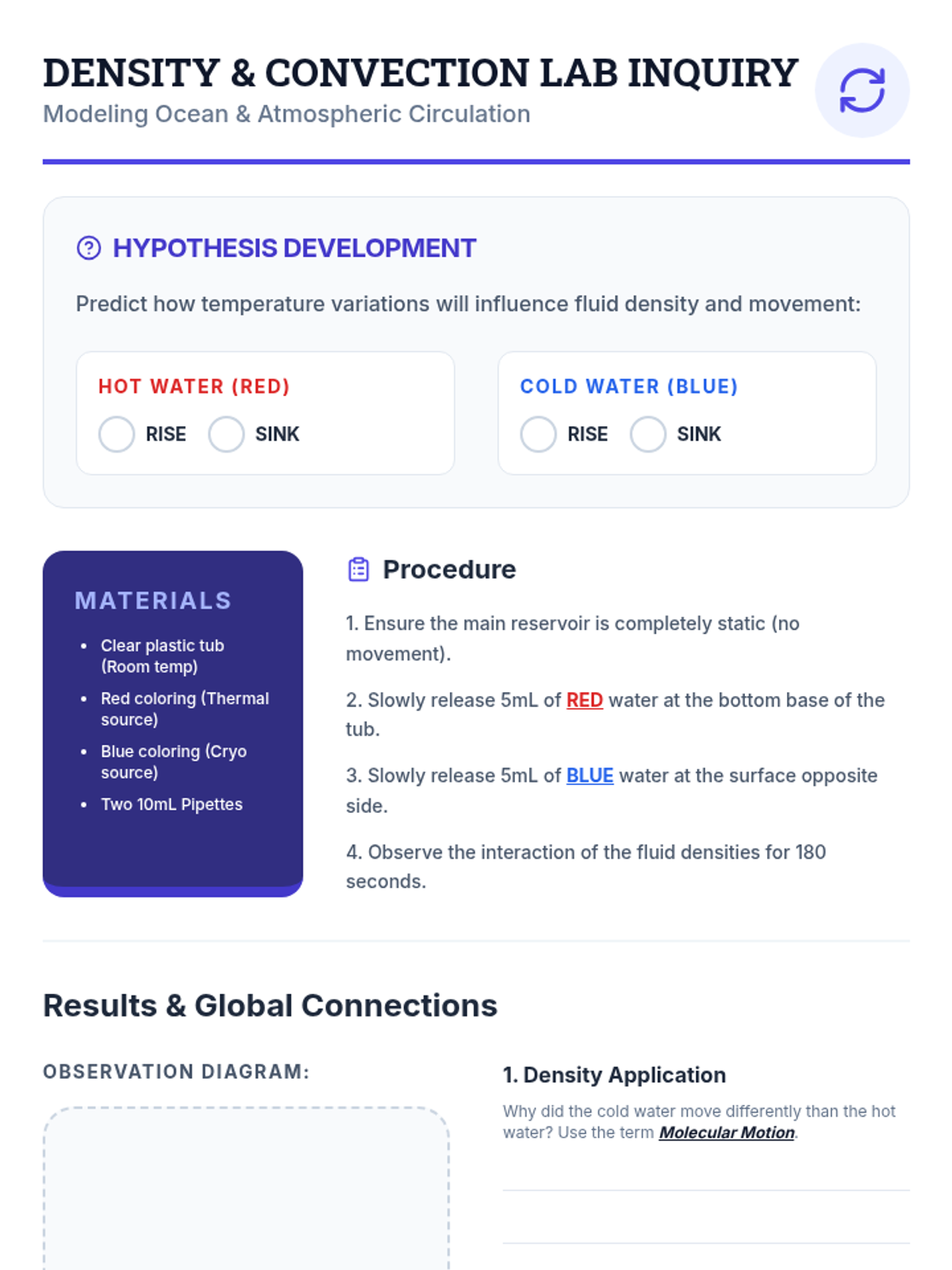
Middle school level lab activity guide for investigating convection currents, focusing on density differences, molecular motion, and global circulation. Updated for layout and comprehensive predictions.
Middle school level slides for Lesson 3, exploring global circulation through unequal heating, density-driven convection currents, and the Coriolis Effect. Updated for accuracy and diagram clarity.
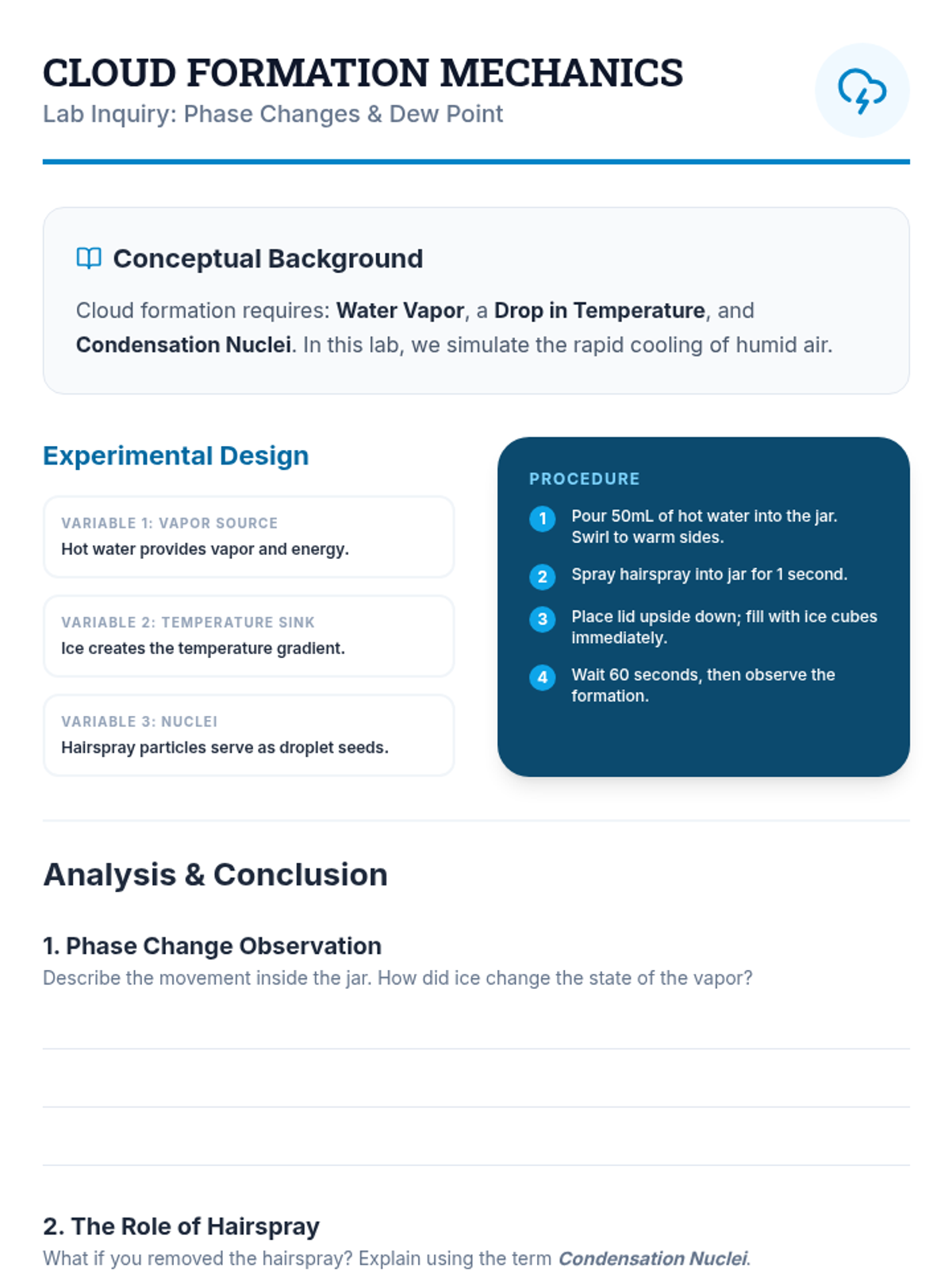
A middle-school level lab activity guide for the "Cloud in a Jar" experiment, focusing on dew point, condensation nuclei, and phase changes through scientific inquiry and variable analysis. Updated for layout and work areas.