Comprehensive answer key for the Spelling Lab Packet and the Word Sort Masterclass. Includes specific rule justifications and corrected text for the proofreading synthesis task. Revised to match the proofreading task updates.
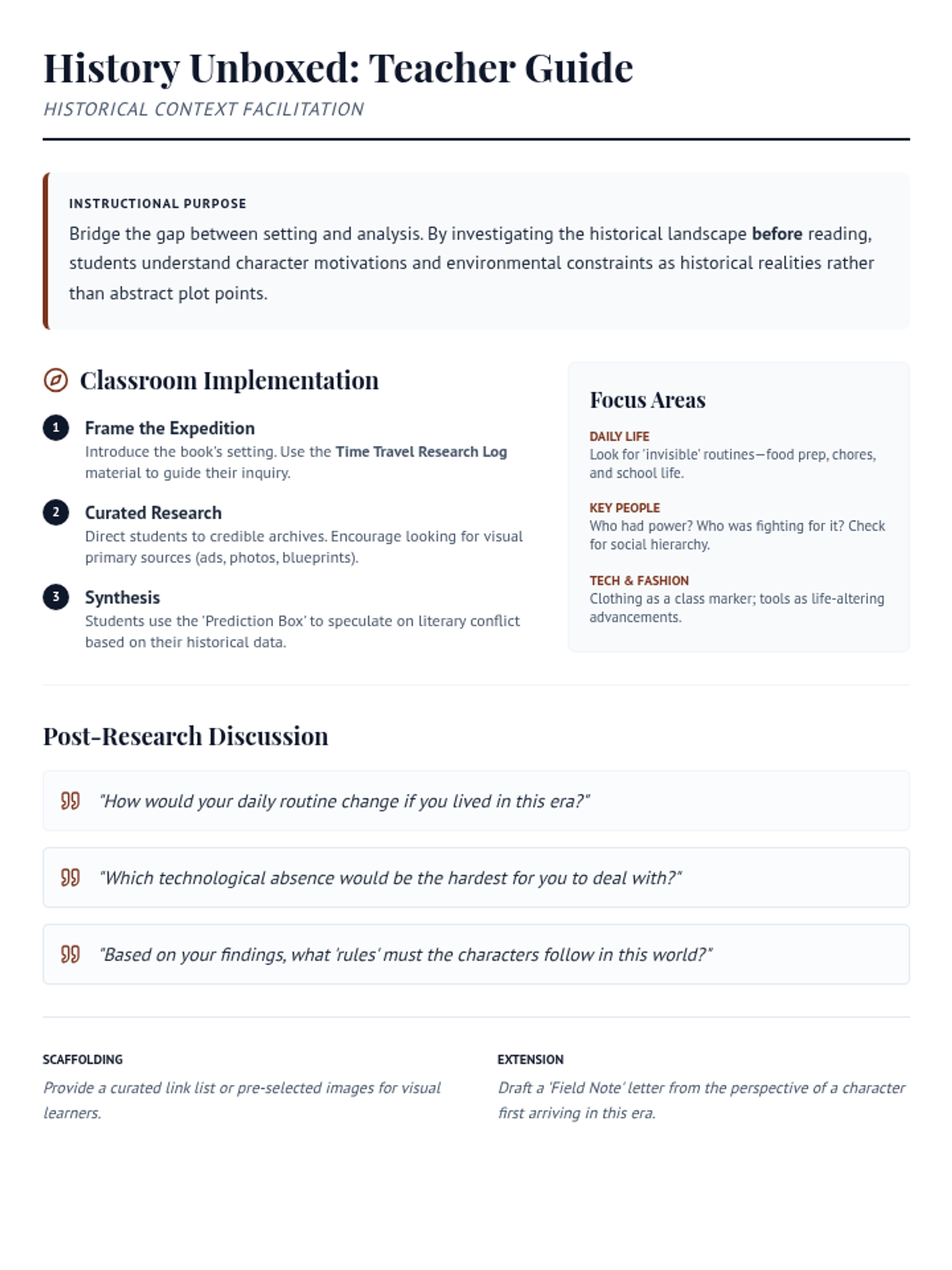
A comprehensive guide for teachers to facilitate historical context research, including implementation steps, focus area details, and discussion prompts.
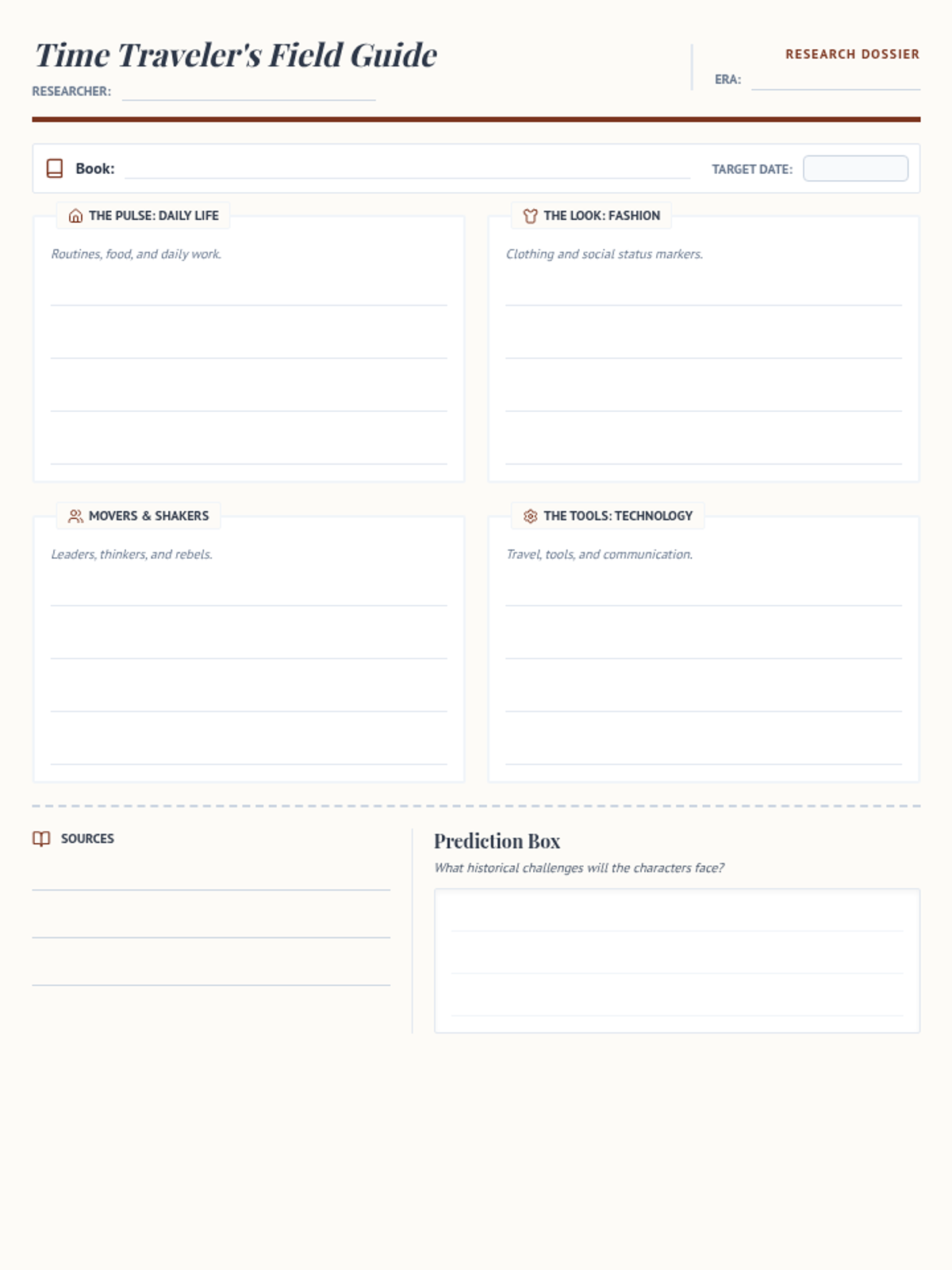
A structured graphic organizer for students to research a historical era's daily life, key figures, technology, and fashion, designed to provide context before reading a book.
A compact version of the reading passage and quiz about circus acrobatics. Features smaller margins and optimized spacing to fit all content and student work areas onto fewer pages for reduced printing.
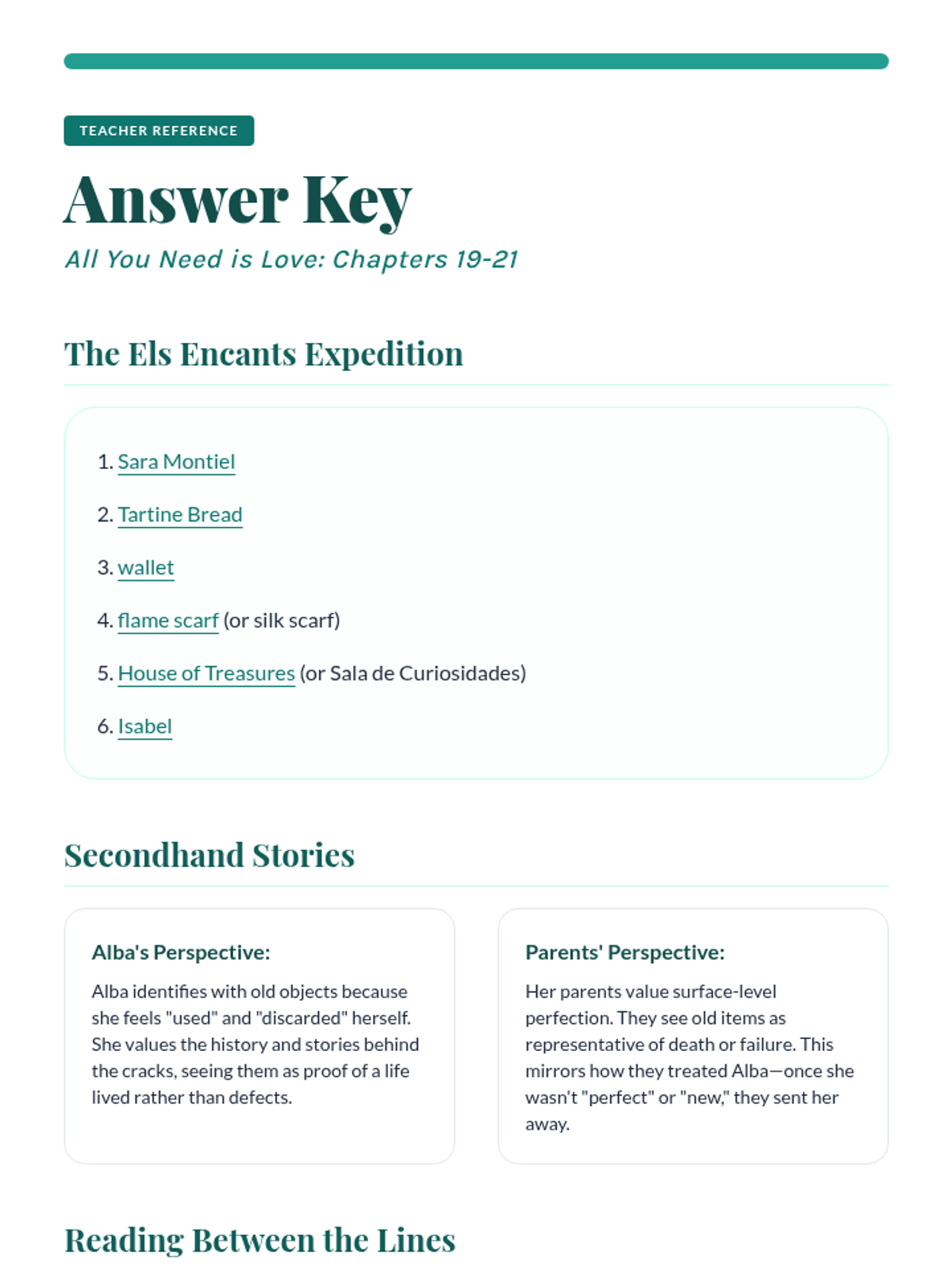
An answer key for the All You Need is Love chapters 19-21 worksheet, providing suggested responses for fill-in-the-blank, character analysis, inferences, and the correct bread-making sequence. Consistent styling across all responses.
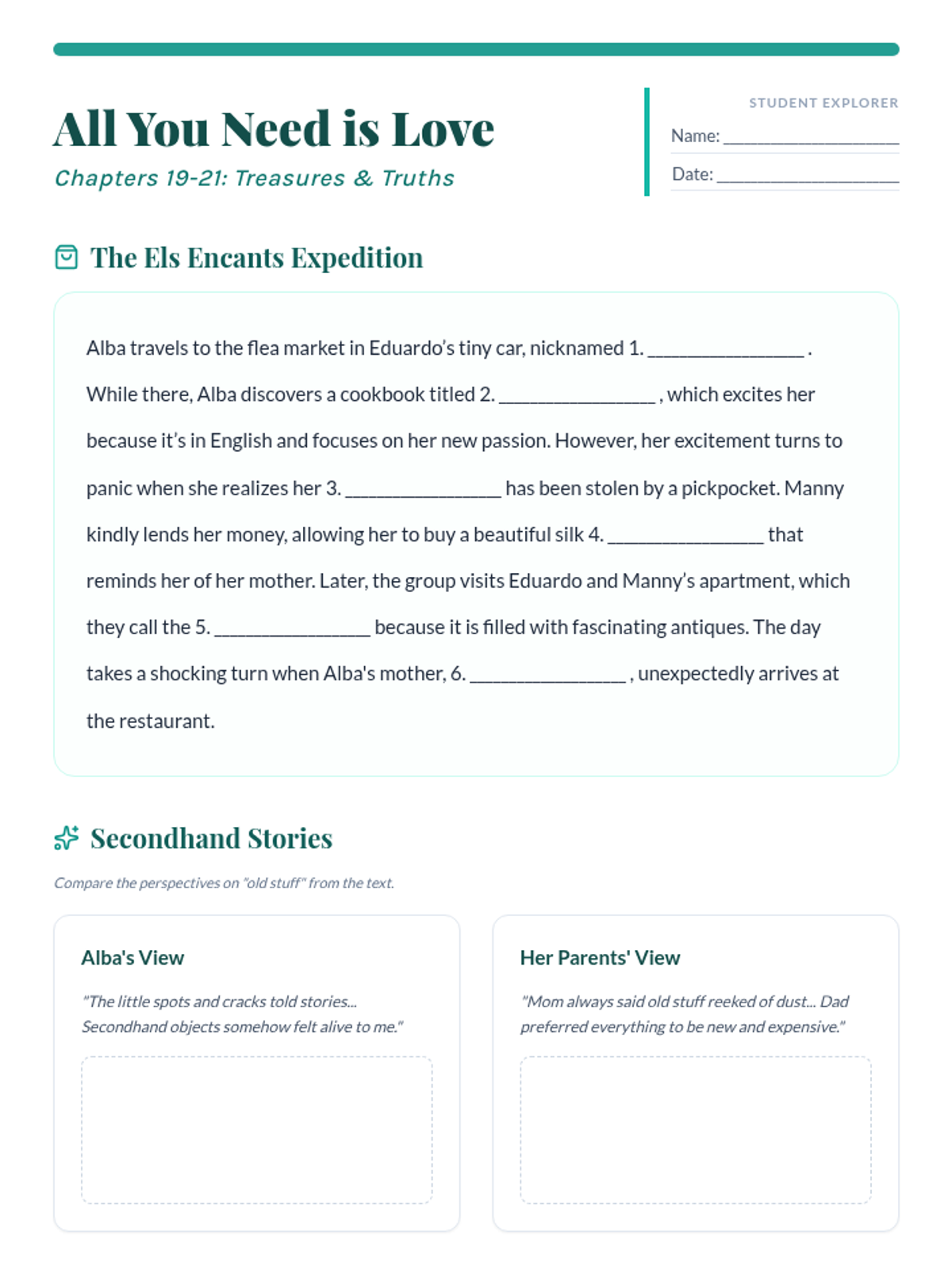
A reading comprehension worksheet for chapters 19-21 of All You Need is Love, featuring fill-in-the-blank notes, character trait analysis, deep inferential questions, and a bread-making sequencing activity. Consolidation and spacing improvements for student completion.
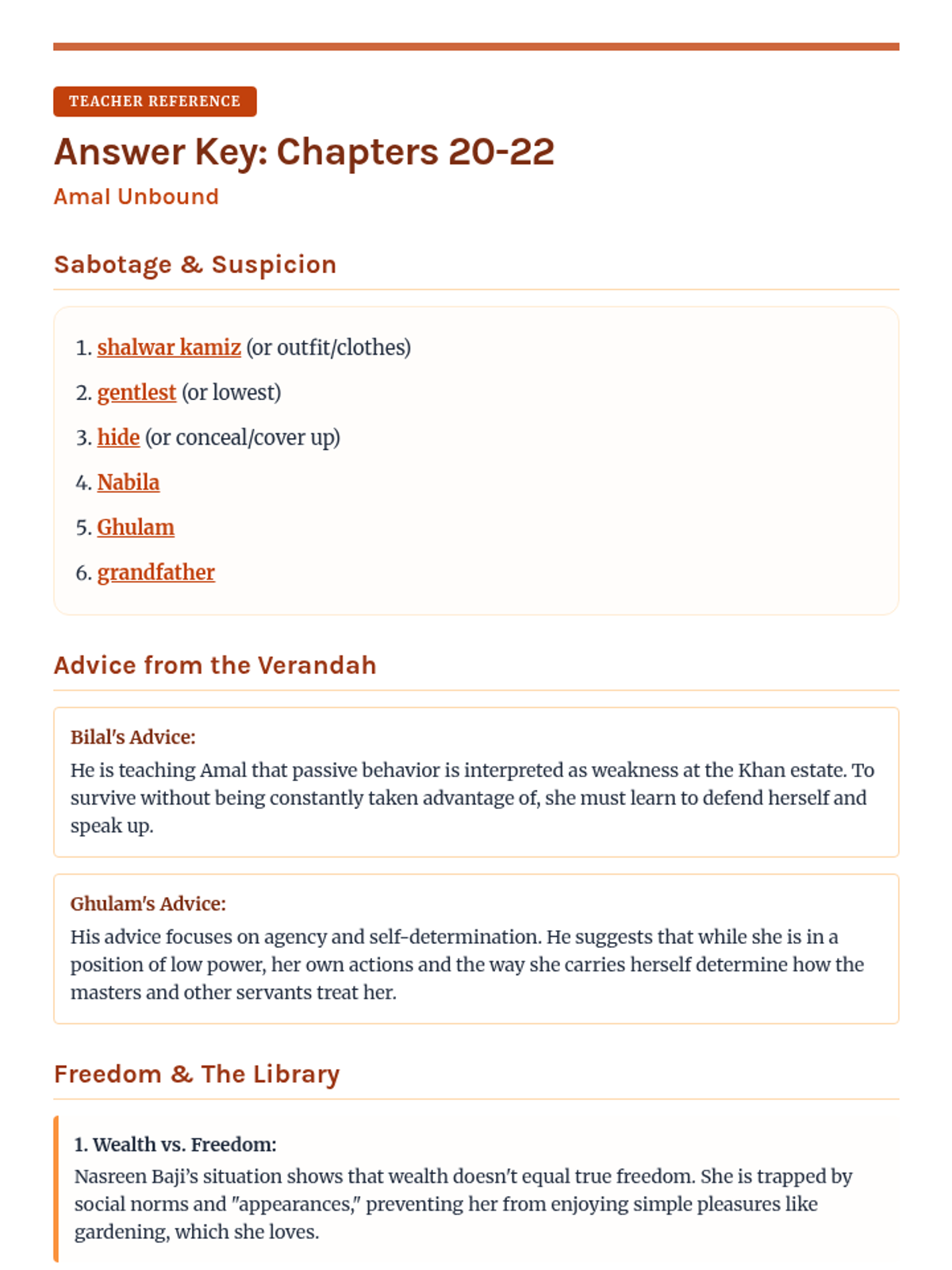
An answer key for the Chapters 20-22 worksheet, providing full-text responses for fill-in-the-blank notes, character analysis, inferences, and sequencing. Corrected page breaks and full text for sequencing.
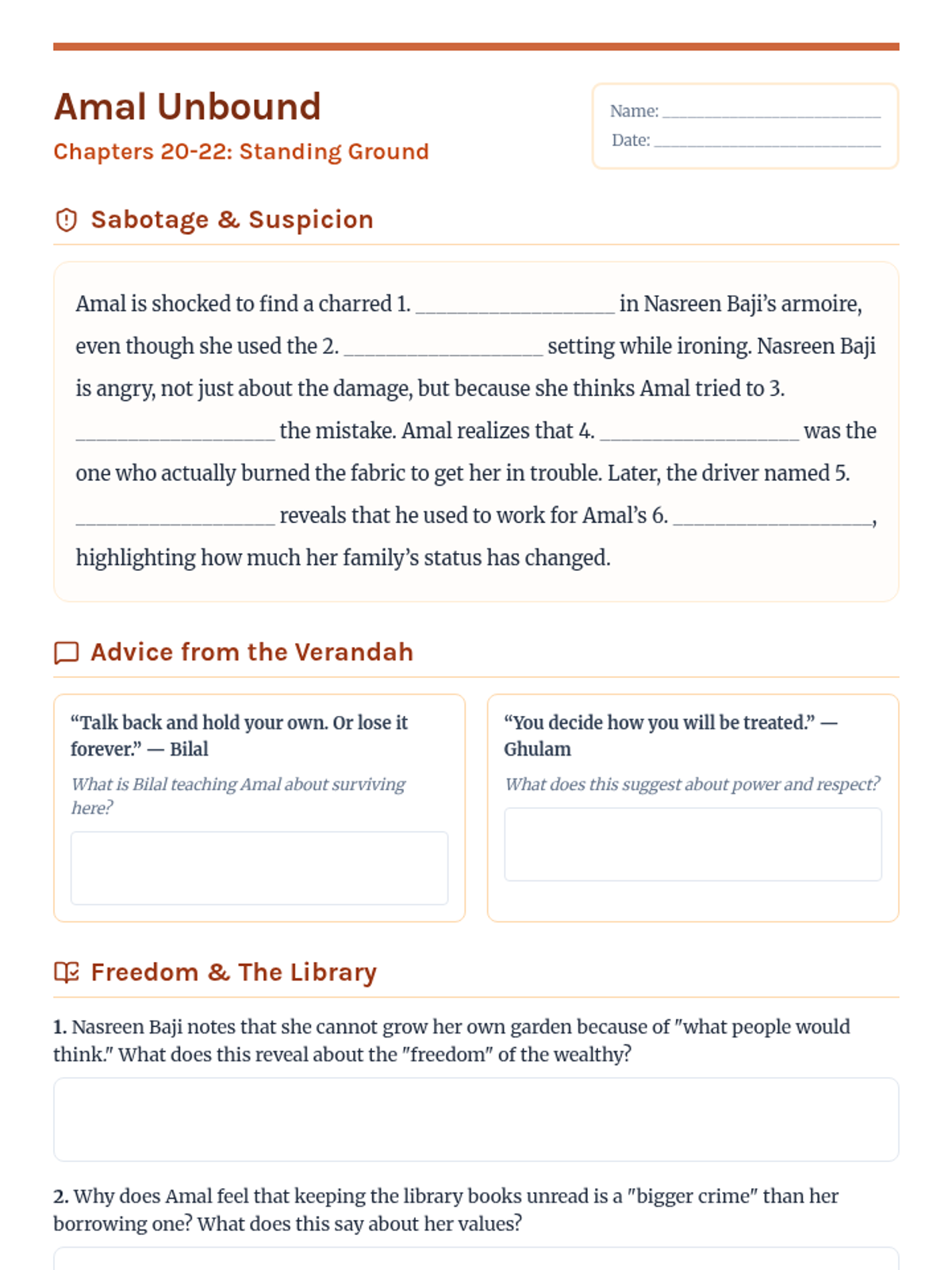
A reading comprehension worksheet for chapters 20-22 of Amal Unbound, focusing on themes of sabotage, resilience, and the discovery of the hidden library. Consolidation to 2 pages.
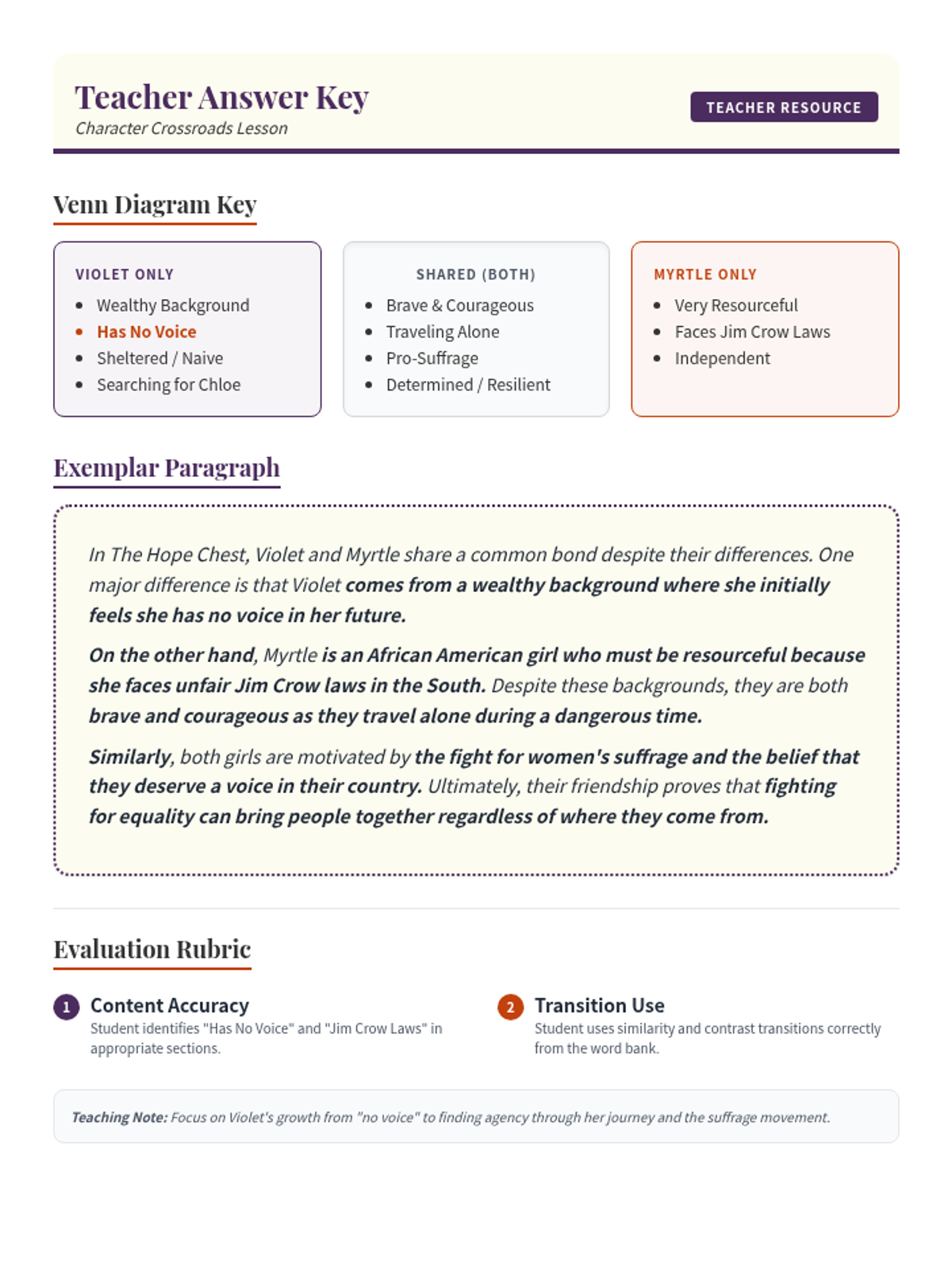
An answer key providing categorized character traits for the Venn diagram and a complete exemplar paragraph to guide teacher evaluation.
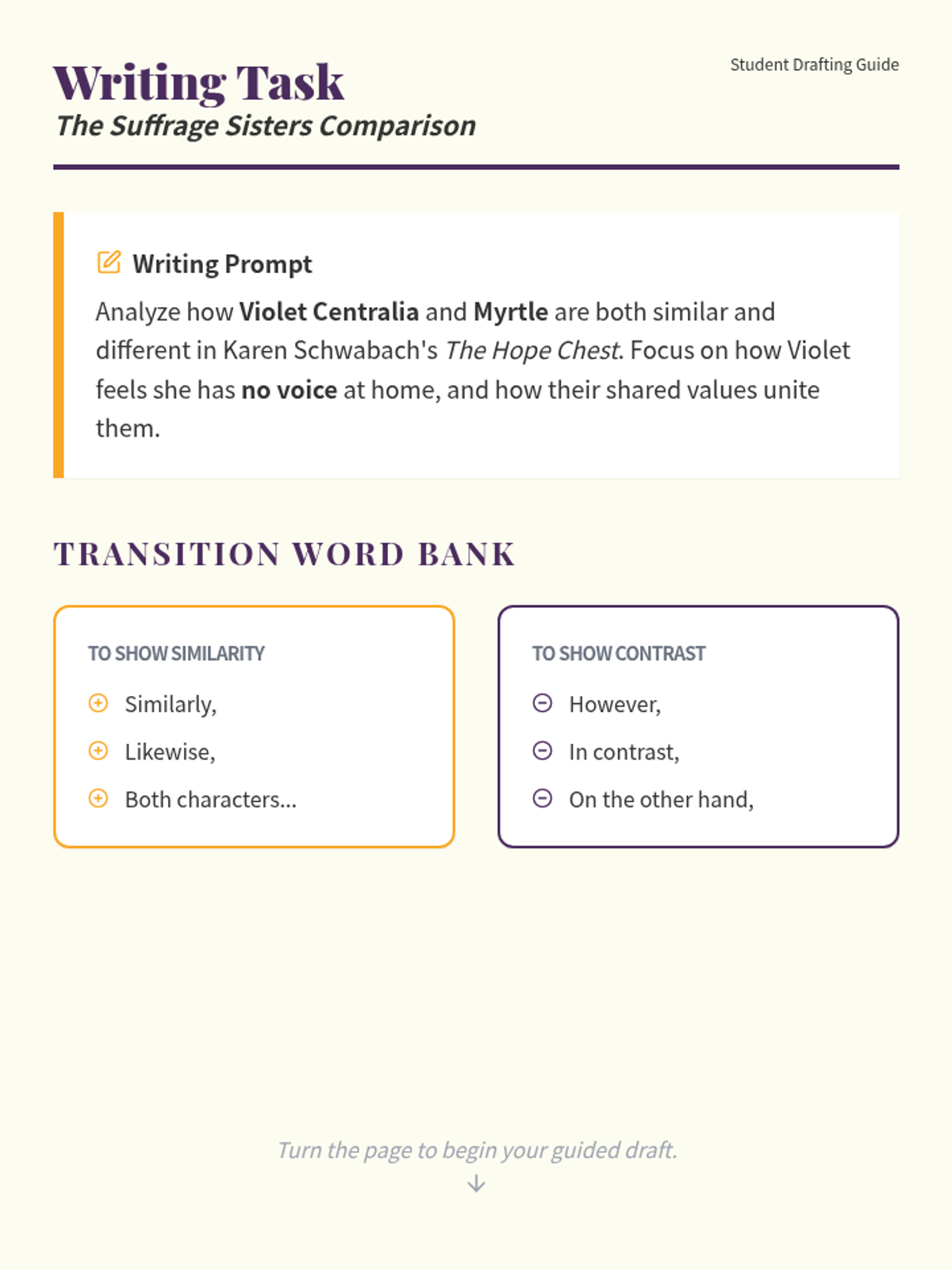
A double-scaffolded writing worksheet that provides transition word banks and structured sentence frames to help students write a character comparison paragraph.
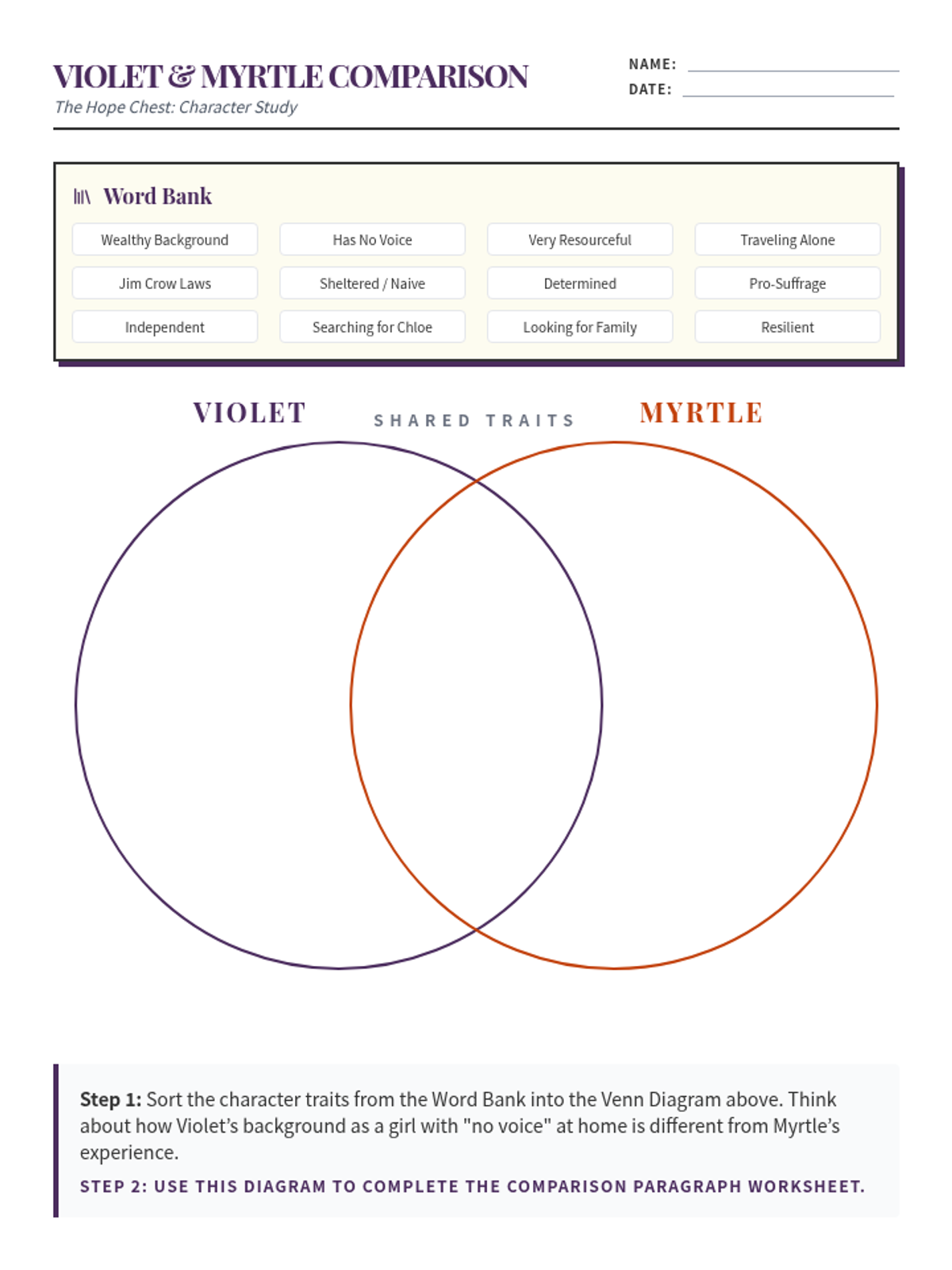
A graphic organizer worksheet featuring a Venn diagram and a character trait word bank for students to compare and contrast Violet and Myrtle.
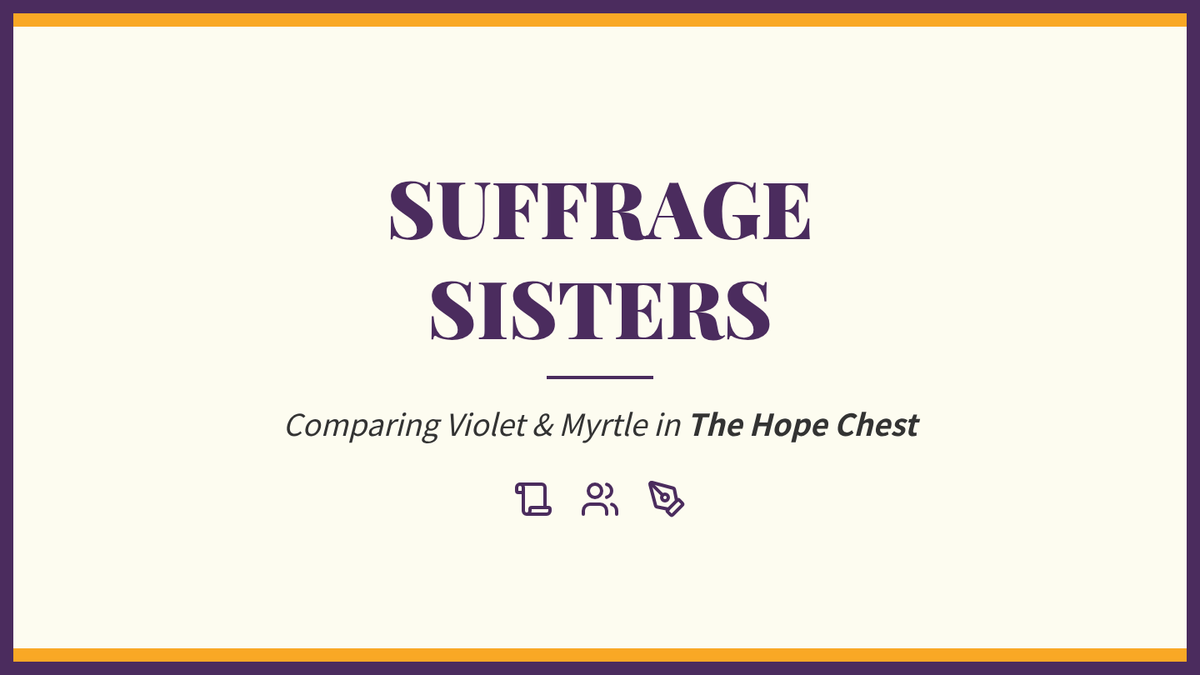
A 5-slide instructional presentation that introduces the characters Violet and Myrtle, their background, shared values, and the lesson objectives for comparing and contrasting them.
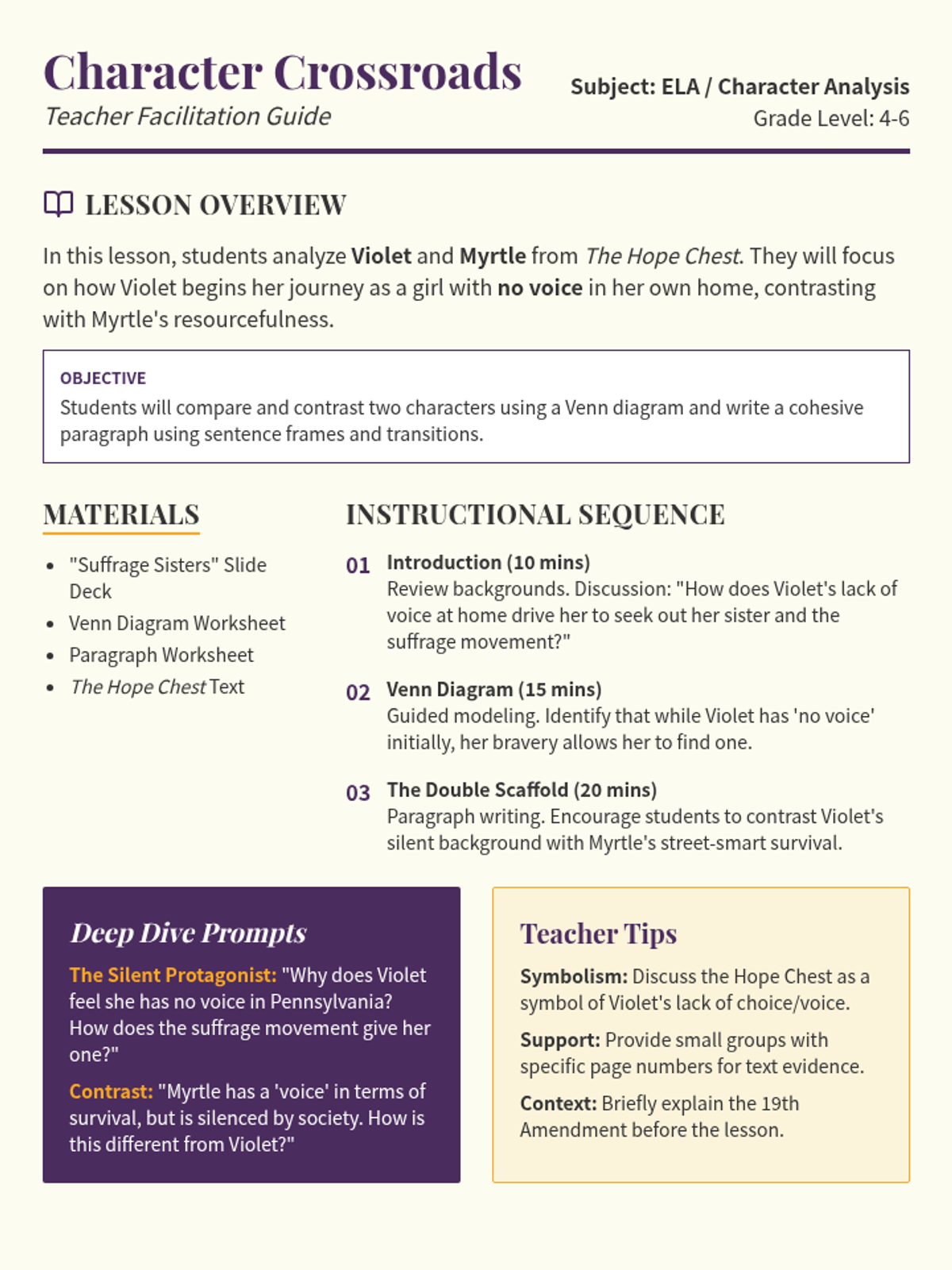
Teacher facilitation guide for the Character Crossroads lesson, featuring lesson objectives, a step-by-step instructional sequence, and deep-dive discussion prompts for analyzing Violet and Myrtle.
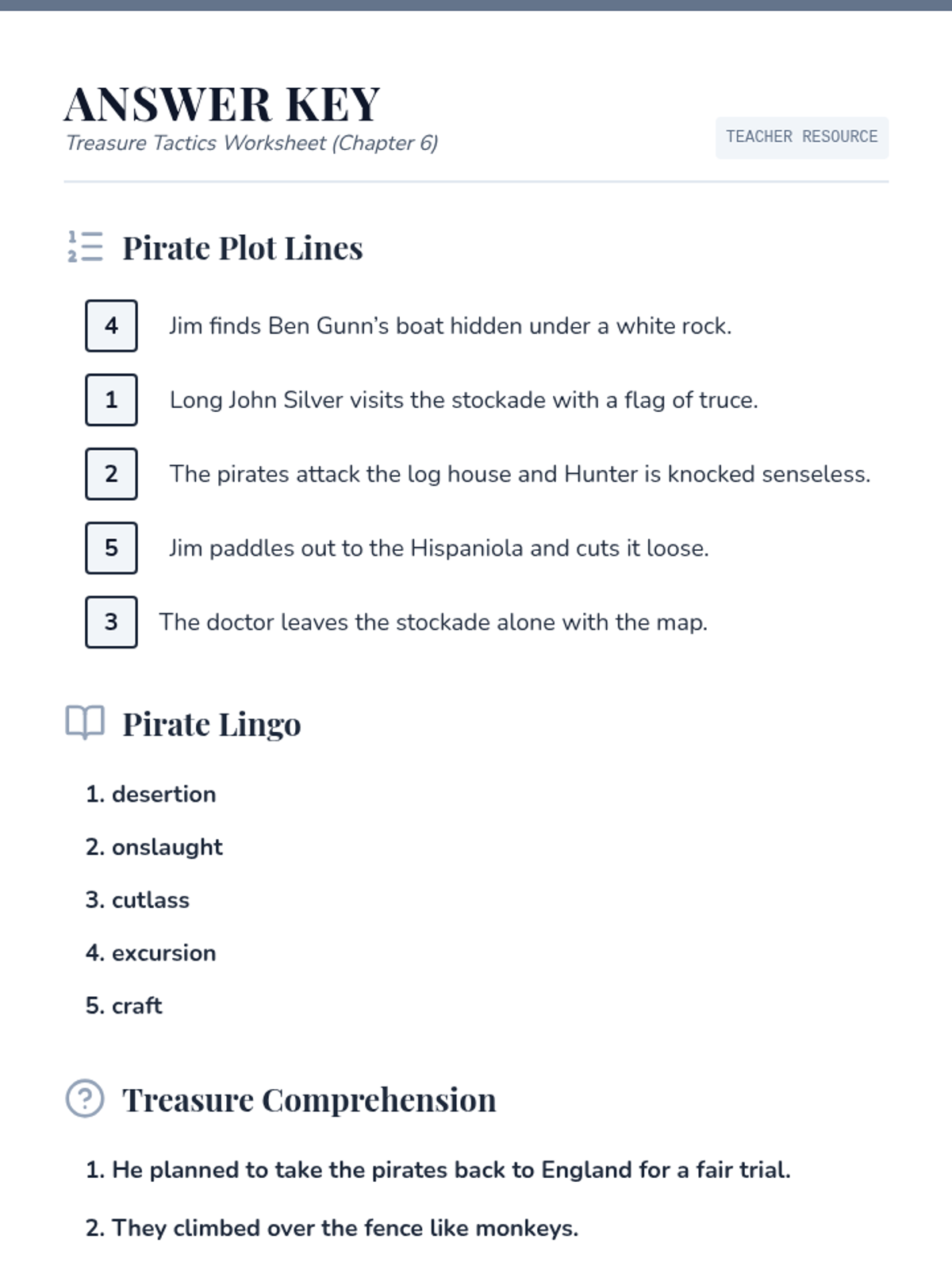
Final 2-page Answer Key for the Treasure Tactics Worksheet. Includes correct answers for sequencing, vocabulary, and multiple choice questions with full context and a spacious, easy-to-read layout.
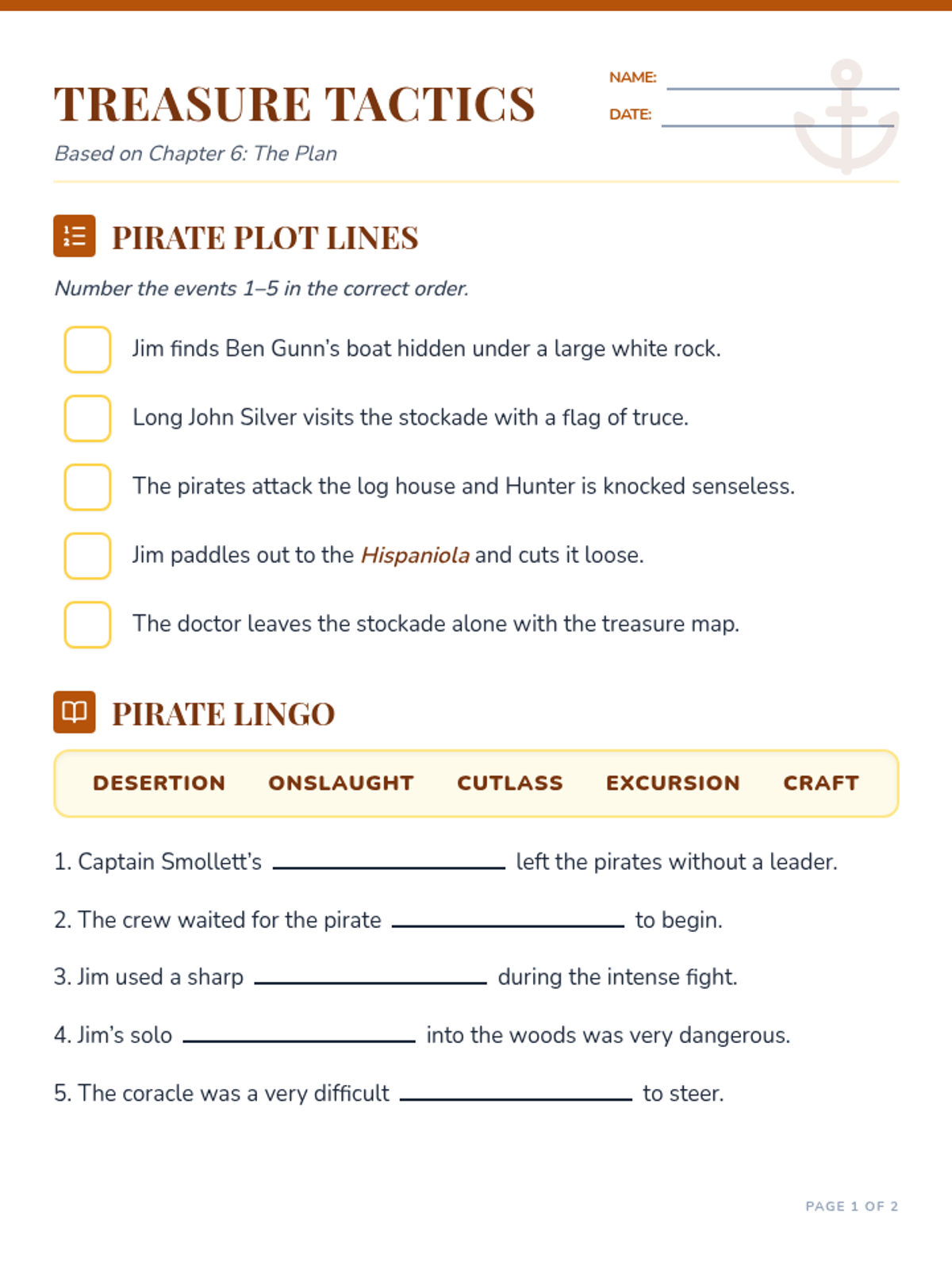
A revised 2-page Treasure Island worksheet with enlarged font sizes and optimized layout for Page 2 to ensure Question 5 and all answer choices are fully visible. Sequencing and vocabulary are on Page 1, while comprehension multiple-choice questions are on Page 2. Blank lines for student names and dates have been improved.
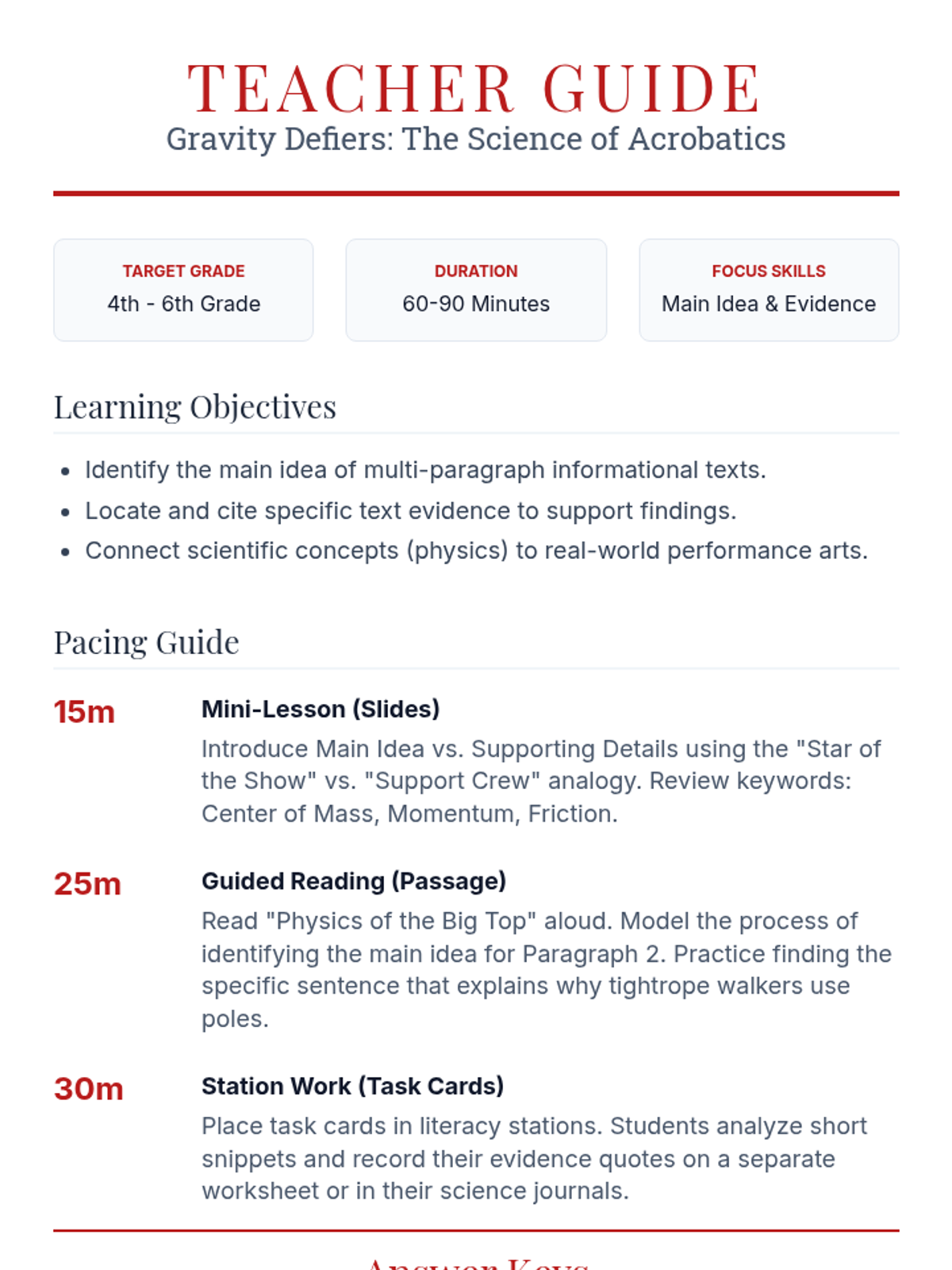
A comprehensive teacher's guide for the "Gravity Defiers" lesson. Includes lesson objectives, a pacing guide, answer keys for the passage quiz and task cards, and differentiation strategies. Revised to ensure professional document flow and proper page breaks.
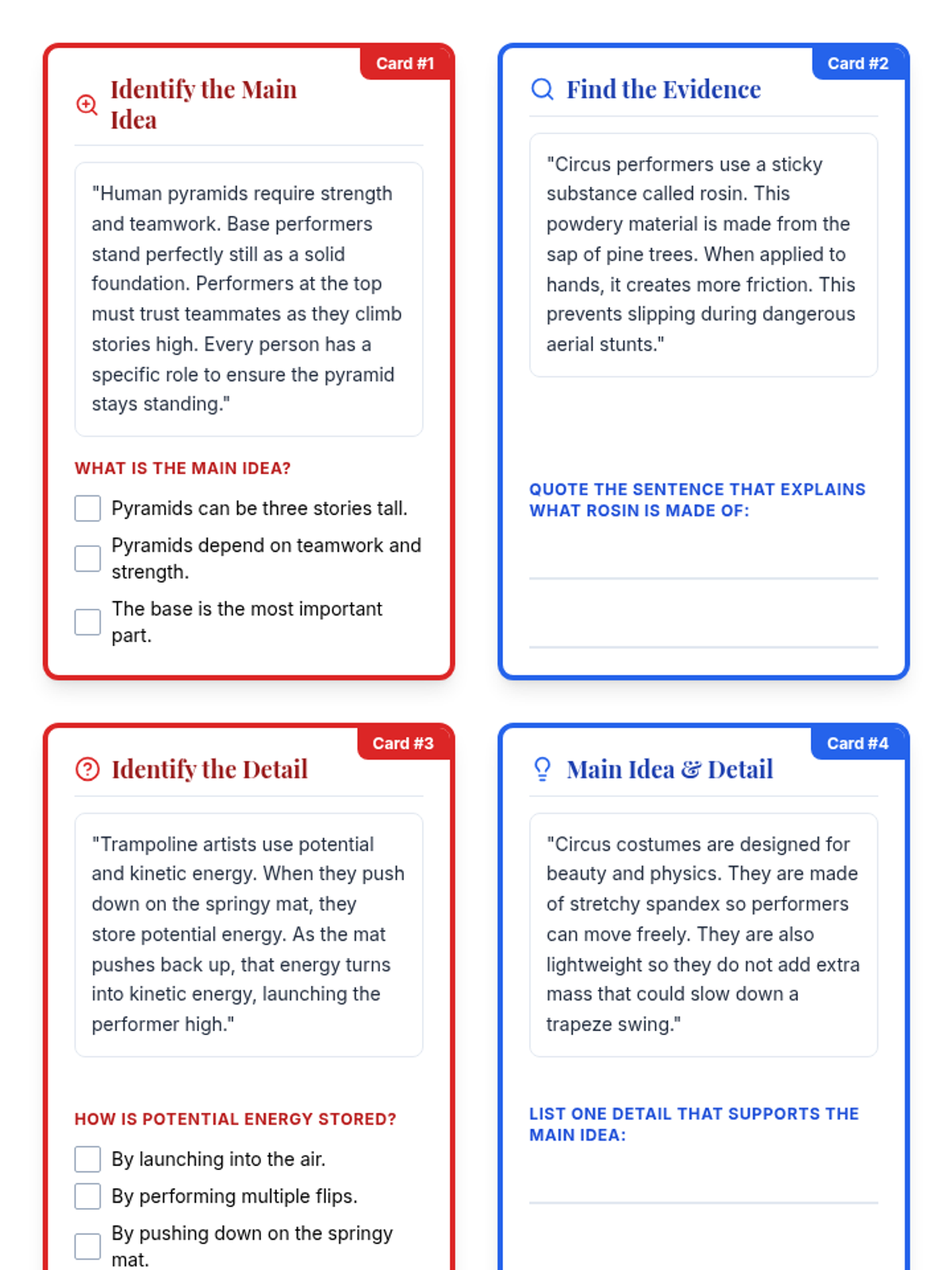
Set of 8 task cards for literacy stations. Each card features a short snippet about circus physics (pyramids, costumes, safety nets, etc.) with questions focused on identifying the main idea, details, and text evidence. Revised for better readability and increased student response area.
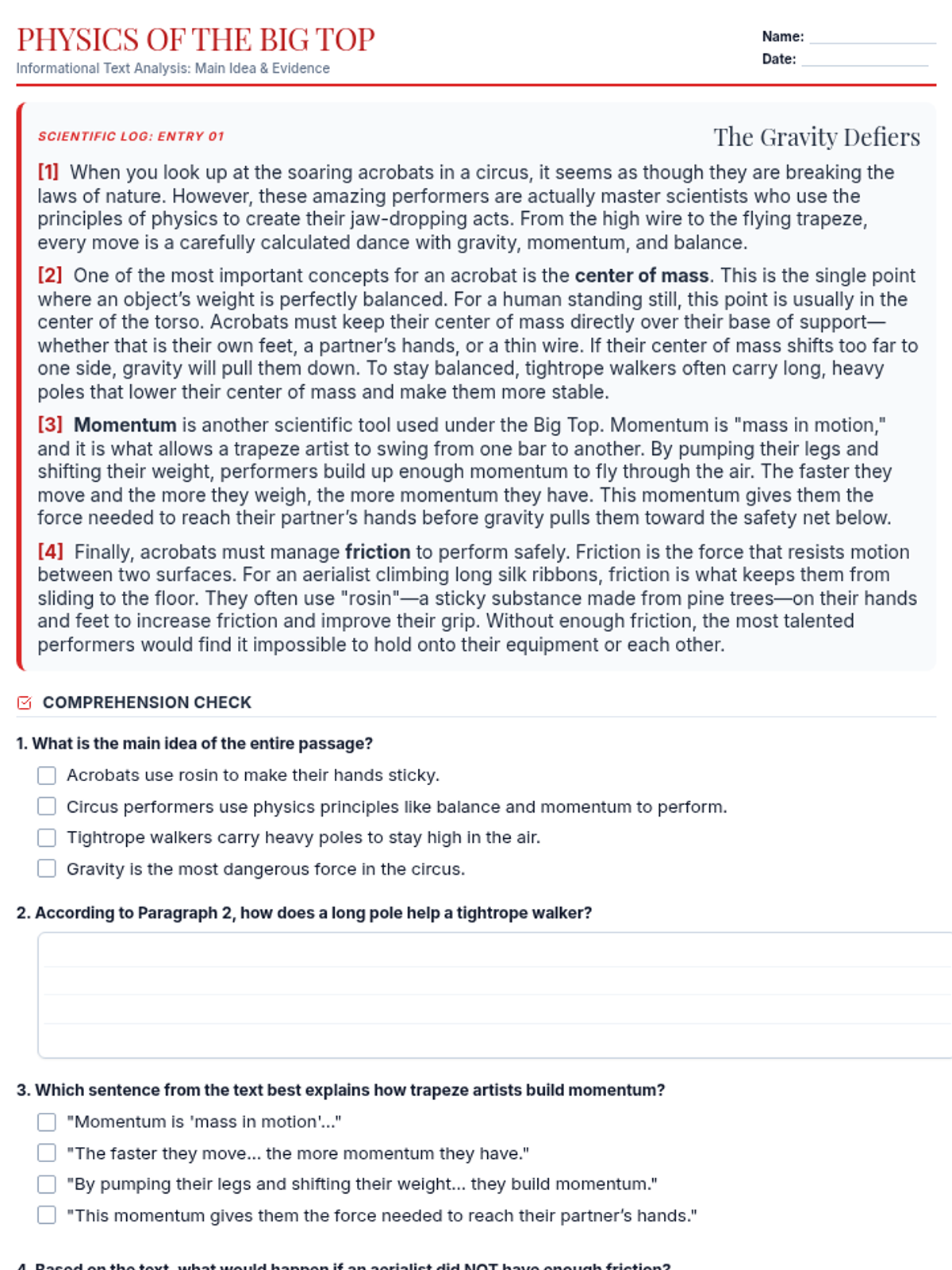
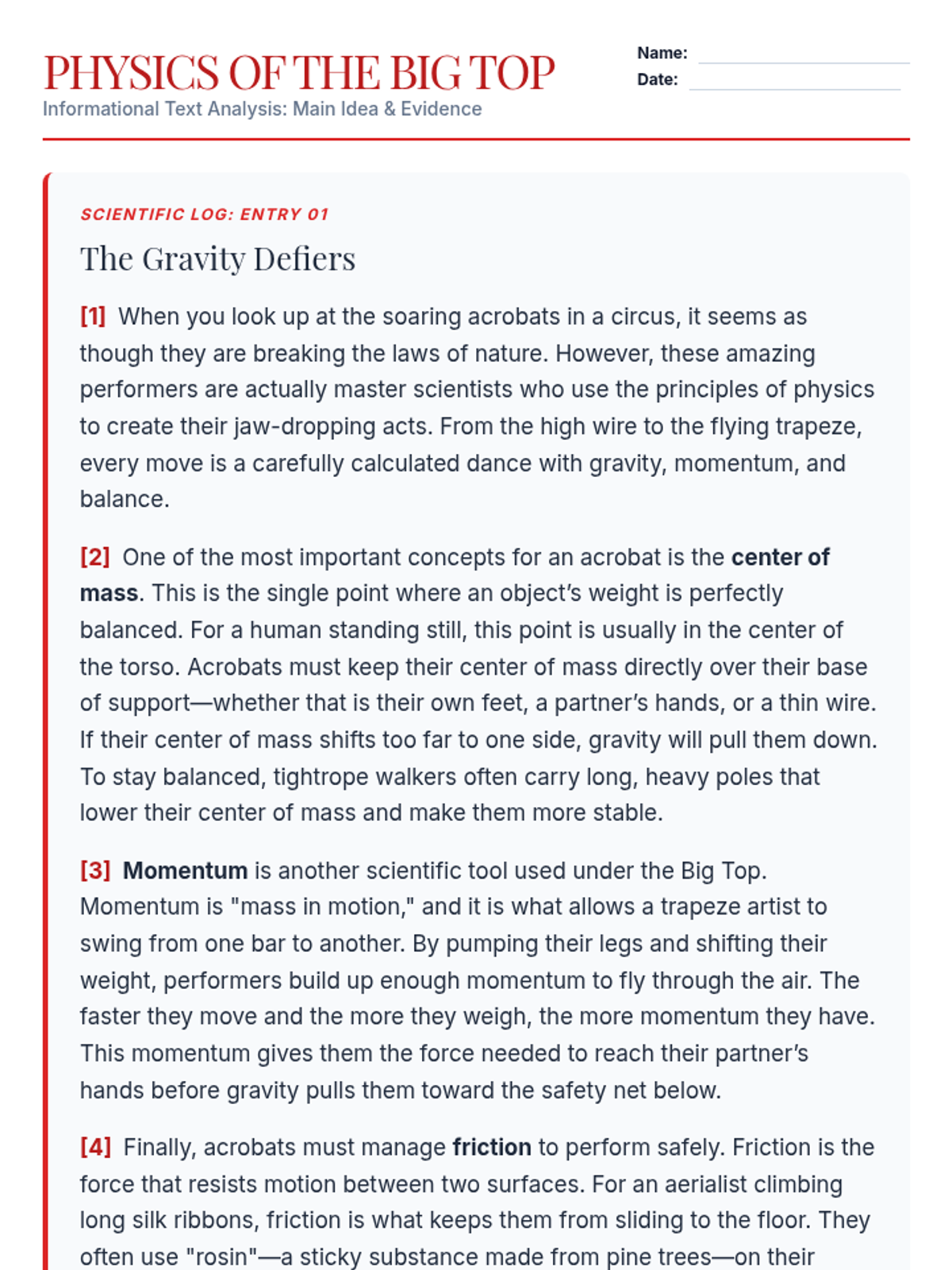
A reading passage about the physics of circus acrobatics, covering center of mass, momentum, and friction. Includes a comprehension quiz focusing on main idea, supporting details, and text evidence. Revised for improved page breaks and larger student work areas.
Visual slides for a mini-lesson on main idea and supporting details, themed around the physics of circus acrobatics. Features clear definitions, visual examples of center of mass and momentum, and modeling slides.
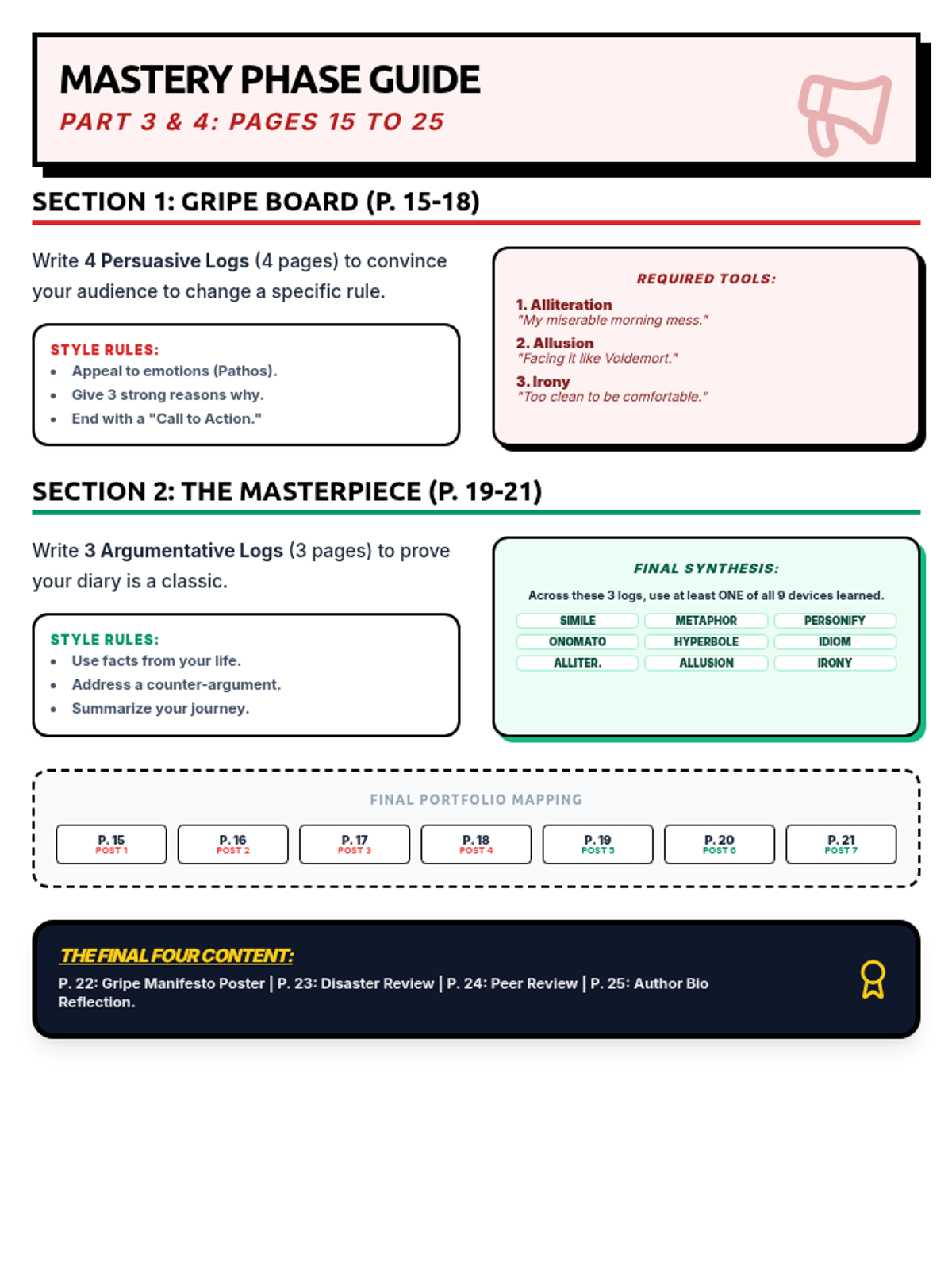
A single-page combined instruction sheet for Weeks 3 and 4, explicitly detailing the 7 total mastery logs (4 persuasive, 3 argumentative) and the mandatory use of all figurative language devices. Reverted to a classic hand-drawn aesthetic. Updated with fixed spacing and improved font clarity.
Combined instructional slides for Weeks 3 and 4, focusing on Persuasive and Argumentative writing and the final assembly of the 25-page diary. Reverted to a sketchbook aesthetic. Updated with explicit mapping and balanced layouts.
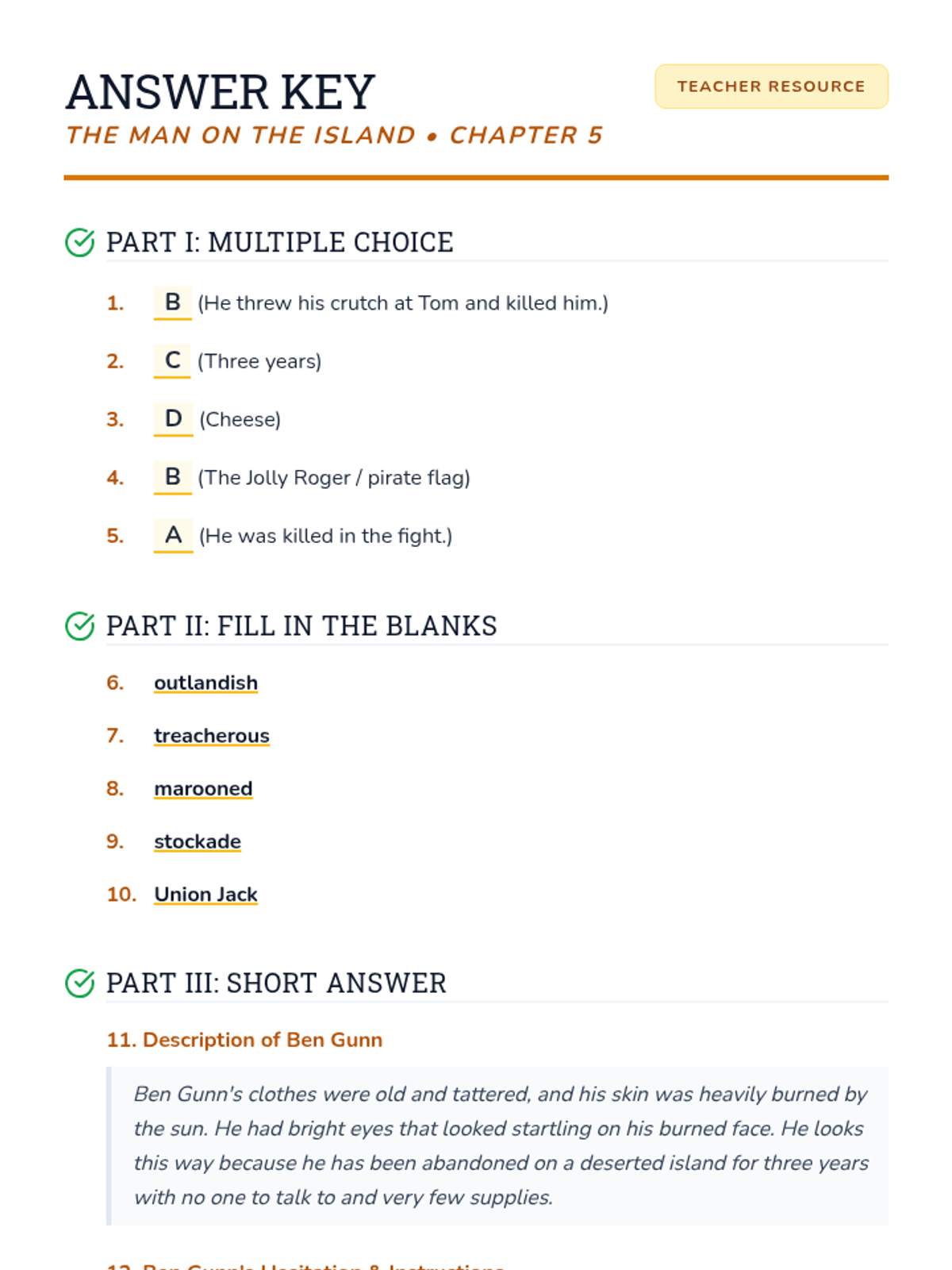
The expanded answer key for the Chapter 5 comprehension worksheet, now including sample responses and a grading rubric for the writing prompt section.
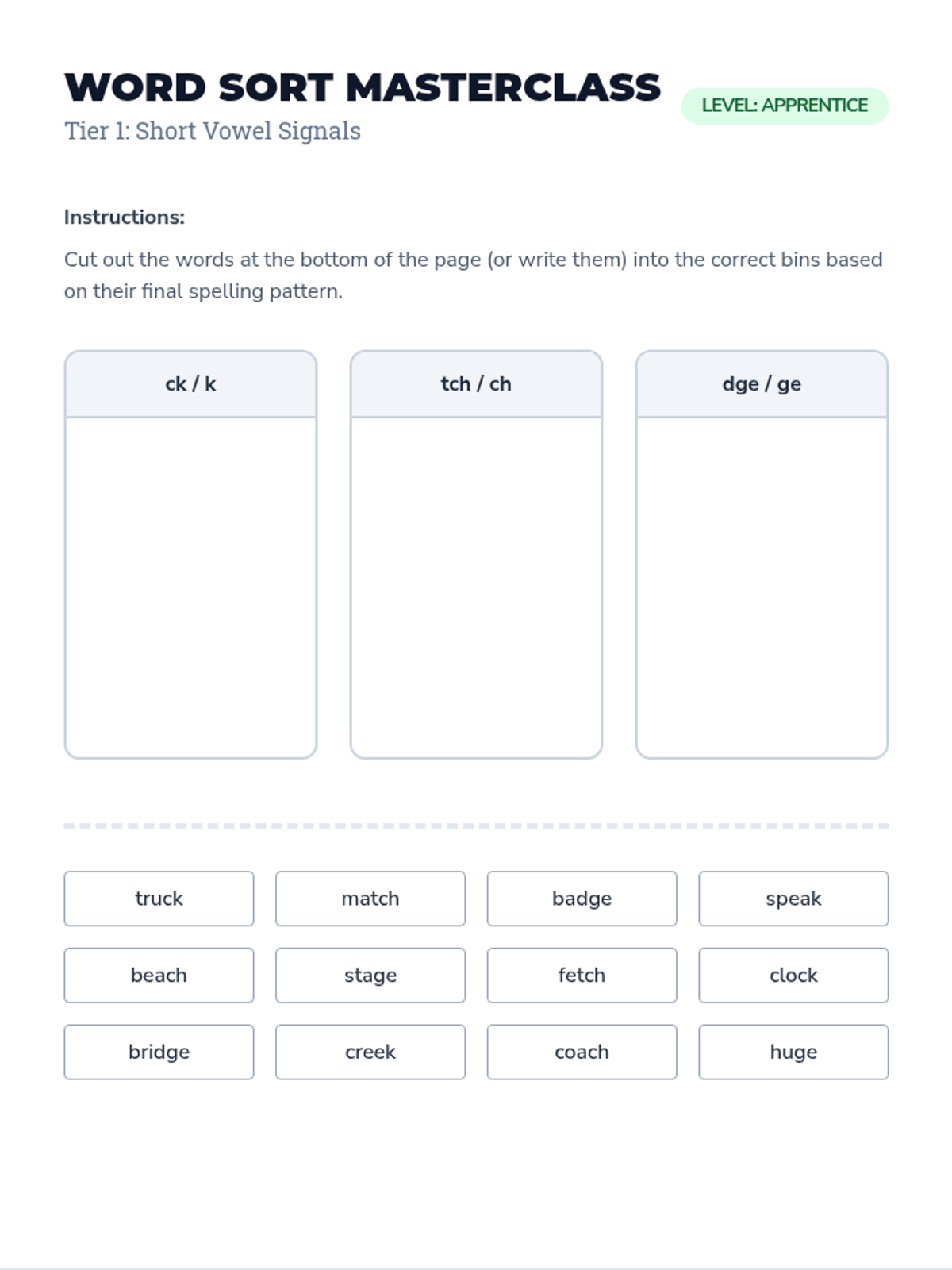
A differentiated word sorting activity with two levels: Apprentice (focusing on terminal sound patterns like -ck/k and -tch/ch) and Expert (focusing on the 1-1-1 doubling rule and abstract suffixes -tion and -ture). Revised to include base-word prompts and enhanced visual hierarchy.
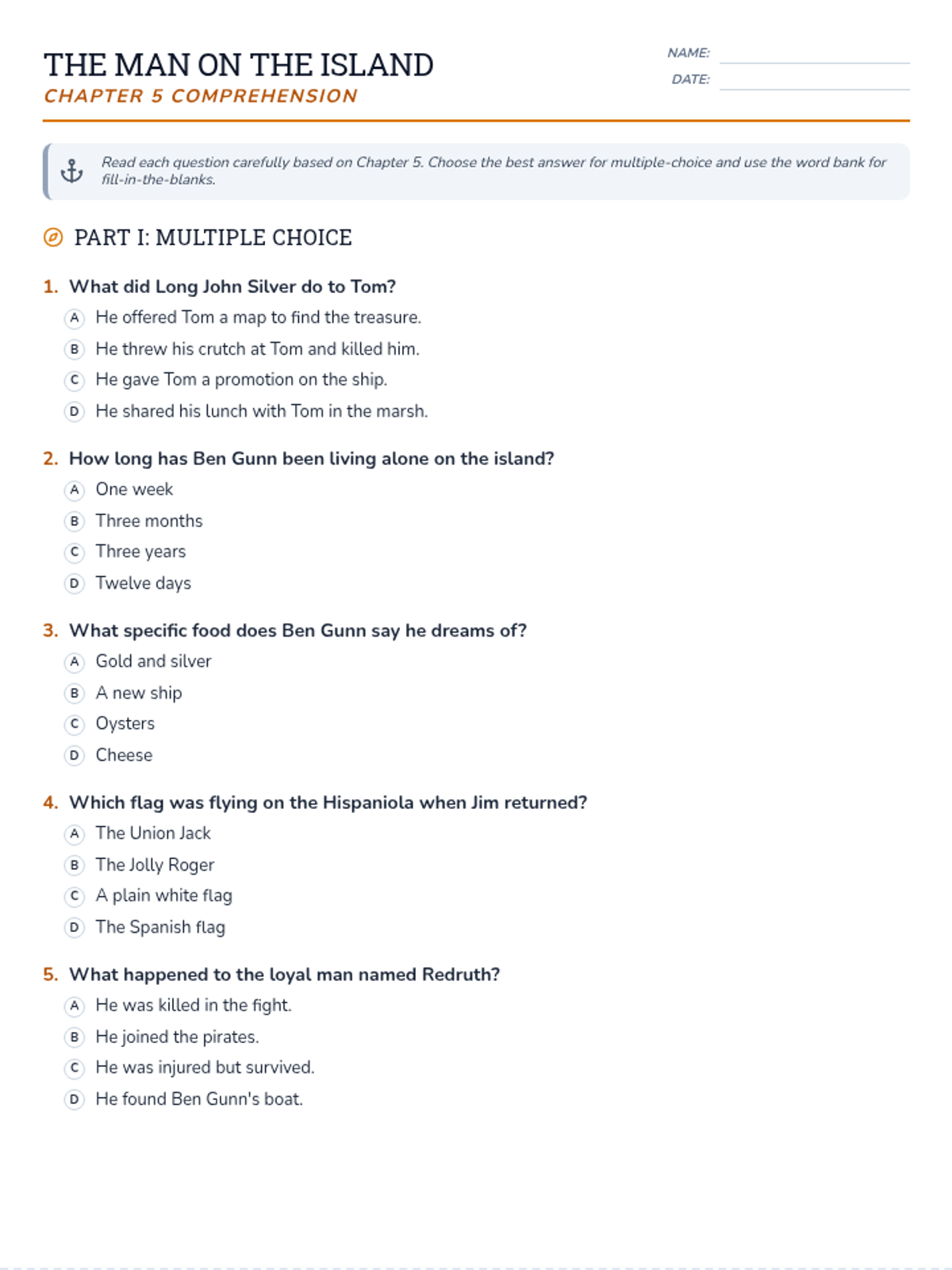
A three-page comprehension worksheet for Chapter 5 of Treasure Island, featuring multiple-choice, fill-in-the-blank, short-answer questions, and an extended writing prompt for 4th graders.
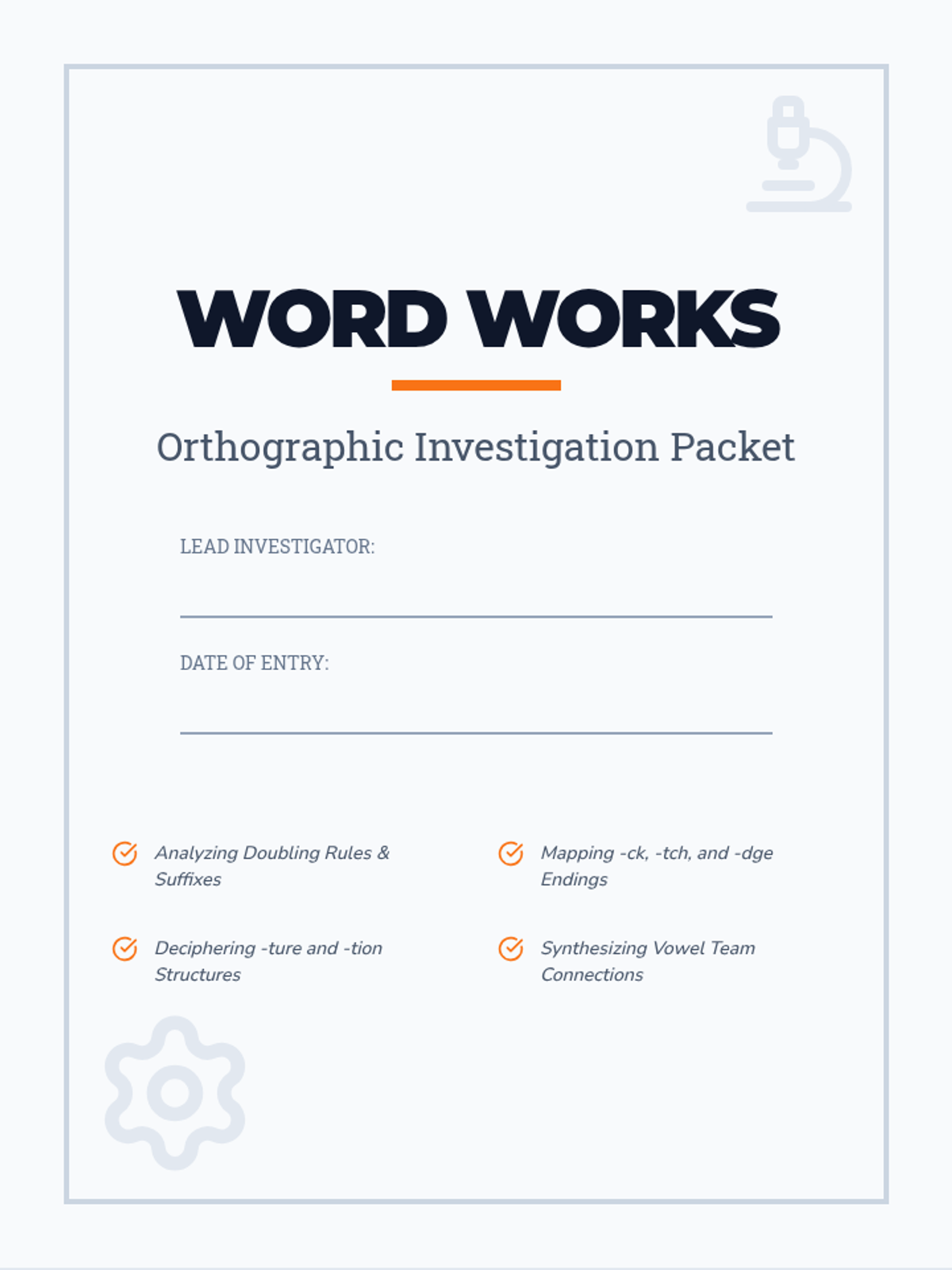
A 4-page orthography packet exploring the 1-1-1 doubling rule, terminal spelling patterns (-ck/k, -tch/ch, -dge/ge), and complex suffixes (-ture, -tion). Includes rule explanations, rule-application tables, word completion exercises, and a synthetic proofreading task. Revised to optimize layout and rule precision.
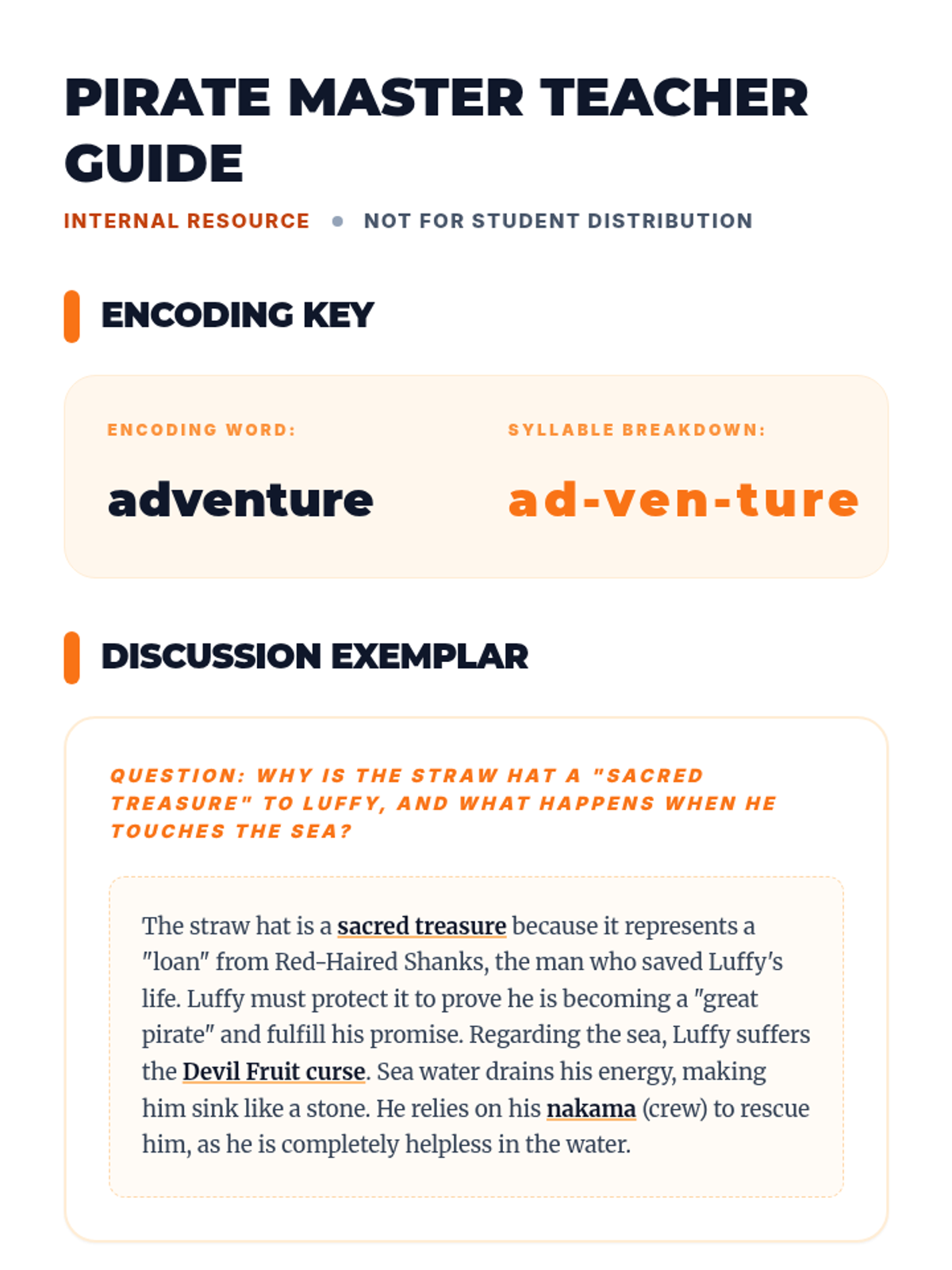
An updated teacher's answer key and instructional guide for the revised 'Luffy Legend' lesson. Reflects the new narrative focus, including the straw hat promise and water weakness mechanics.
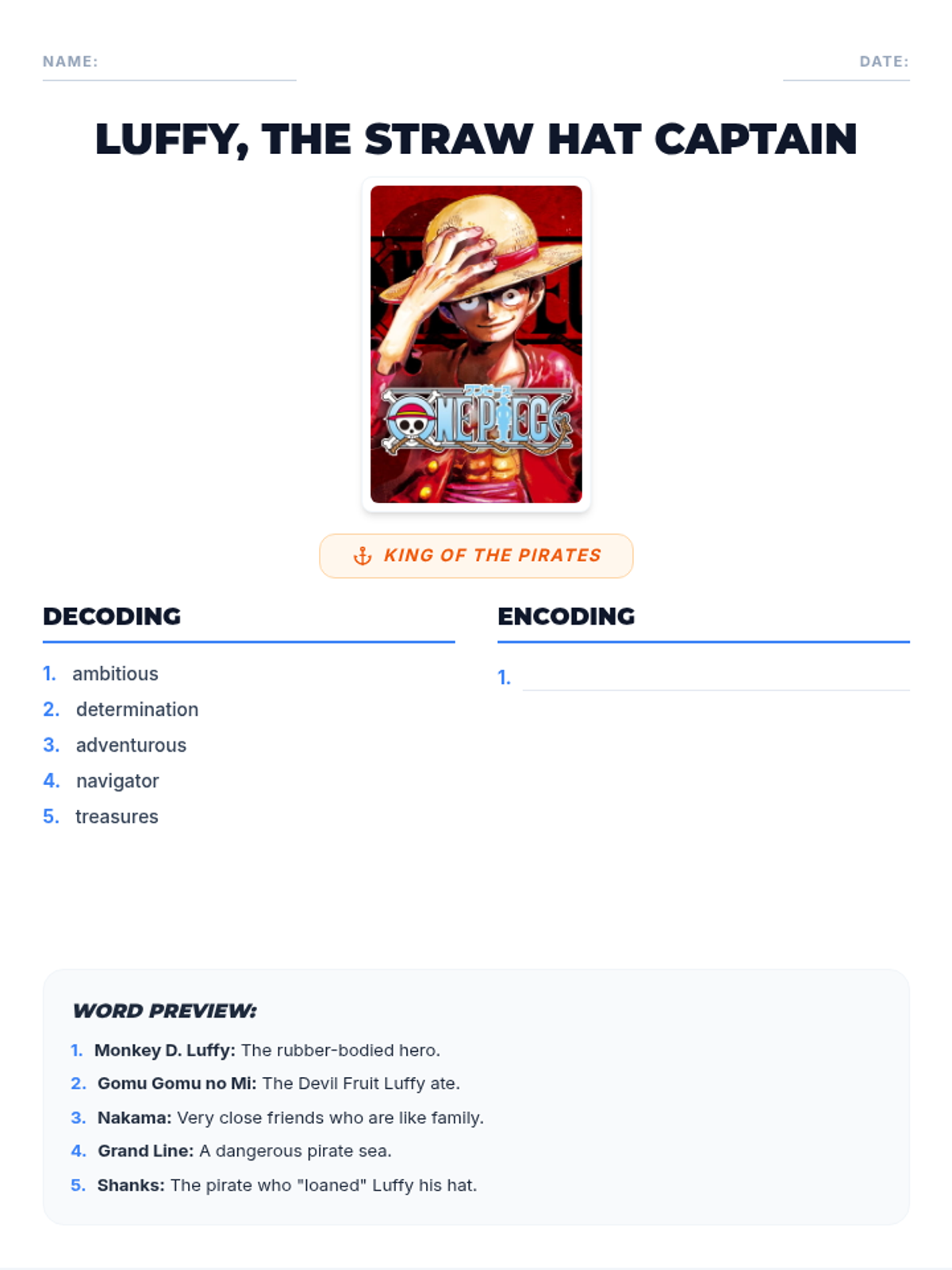
An action-packed 'One Piece' student document with doubled reading passage lengths (~400 words per section), featuring exciting battle narratives with Alvida and Zoro, a 200-word fluency section, and a clear explanation of Luffy's straw hat promise and water weakness. Designed for high student engagement across 7 pages.
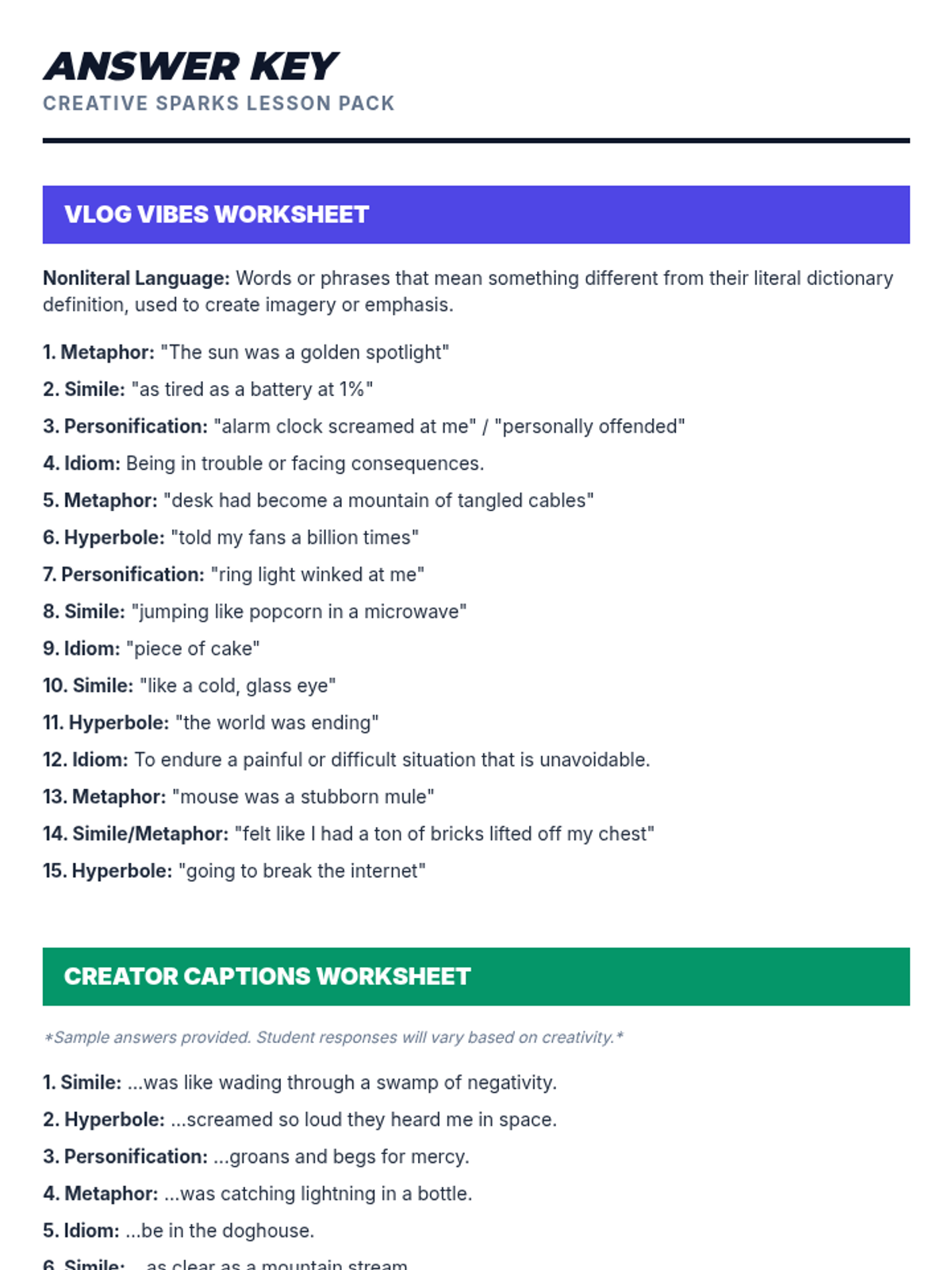
Answer key for both the Vlog Vibes and Creator Captions worksheets, providing identification for the first and sample completions for the second.
A vibrant, digital-themed slide deck that defines nonliteral language and explains simile, metaphor, personification, hyperbole, and idioms with creator-focused examples. updated for contrast and clarity.
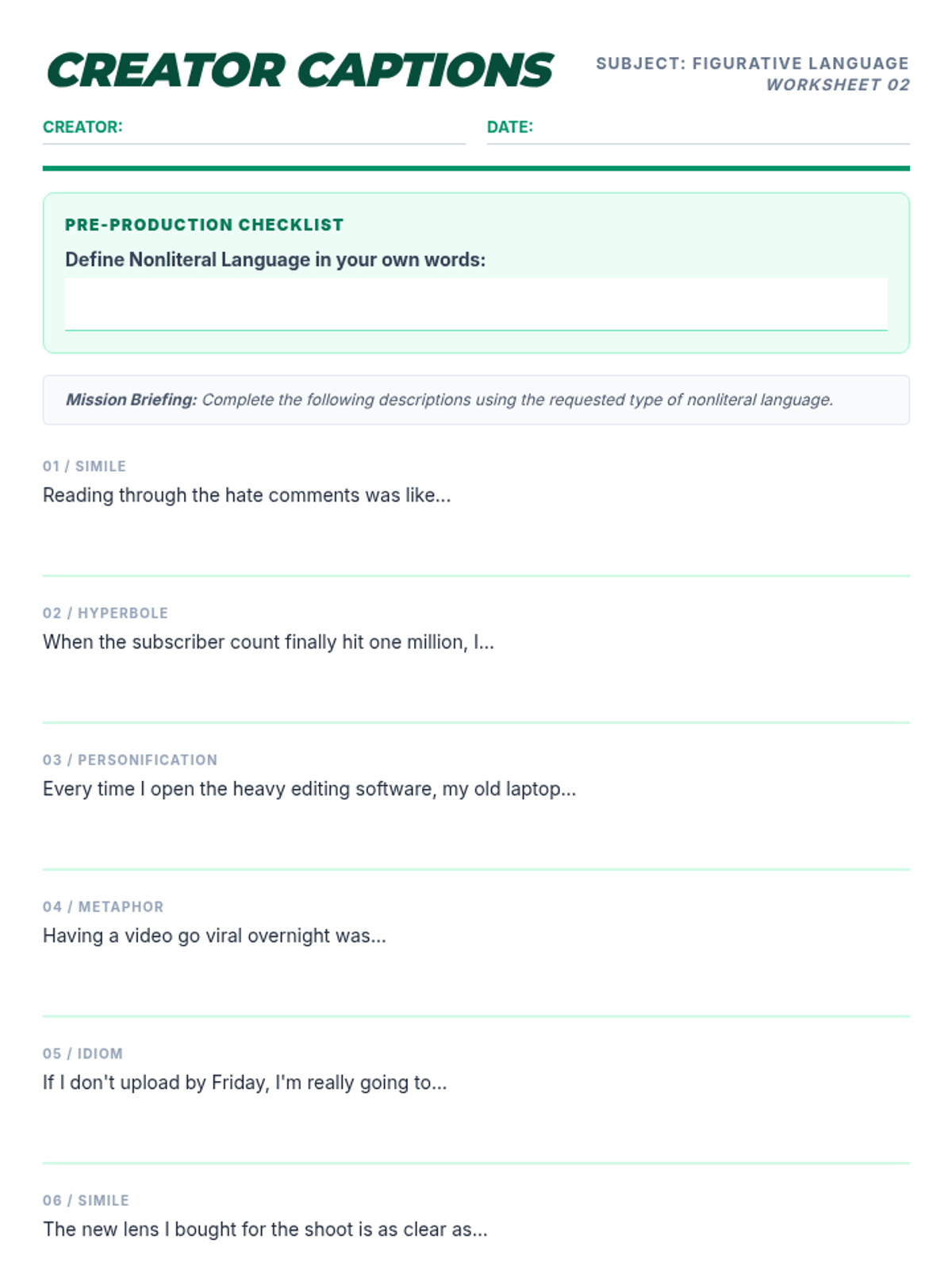
A worksheet where students complete 15 sentences about a YouTube creator's experiences using specific types of figurative language. updated with better spacing and layout.
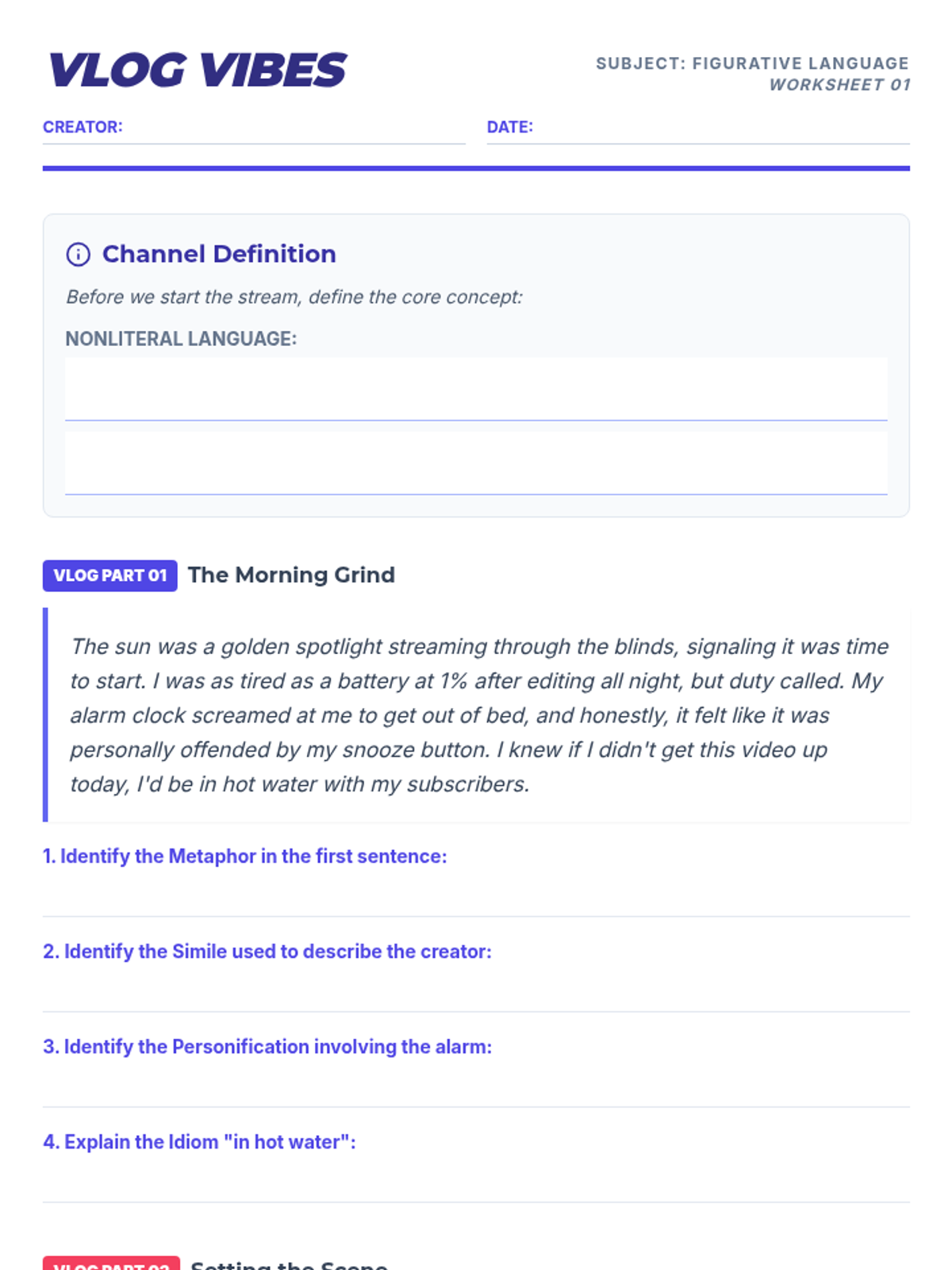
A worksheet featuring a narrative about a YouTube content creator's day, containing 15 examples of nonliteral language for students to identify. updated with literal sentences interspersed between the figurative ones to help students distinguish between the two. updated for page-break and contrast.