A set of 12 vibrant, comic-book styled task cards for onomatopoeia words. Each card features a bold sound word and a thematic icon with a stylized burst background, optimized for visual impact and sorting activities.
An answer key for the Vocabulary Map Worksheet, providing suggested synonyms and antonyms for 'tired' and 'hungry'. Features a clean, professional design.
A blank vocabulary map for students to choose their own words and identify synonyms and antonyms. Features a clean, professional layout suitable for any vocabulary lesson.
A basic vocabulary graphic organizer for second graders to identify synonyms and antonyms for 'tired' and 'hungry'. Features a clean layout with simple instructions.
A printable sorting game where students match 'fancy' synonyms to the simple words 'tired', 'hungry', 'excited', 'pretty', 'thirsty', and 'tasty' on themed burrow mats. Includes 18 word cards split across two pages and 6 sorting mats. Designed to be printed on multiple pages to avoid cutoff.
A comprehensive teacher resource containing vocabulary definitions, synonym/antonym banks, and discussion prompts for 'The Wombats Go Wild for Words'. It reflects the story's setting in the Evergreen Forest and the encounter with the duckling. Focuses on Tired and Hungry for the main lesson.
A visually engaging presentation focusing on synonyms and antonyms for 'Tired' and 'Hungry'. It reflects the story's setting in the Evergreen Forest and the encounter with the duckling. Now includes 'Fancy Game Words' and interactive reveal slides.
A comprehensive guide for teachers including the correct narrative sequence, learning objectives, and discussion prompts to deepen student understanding.
A worksheet for students to transcribe their ordered sentences into a cohesive narrative. Includes a reflection question to identify the moral of the story.
A printable set of sentence strips from the story for students to cut out and manually arrange. Encourages tactile engagement and logical sequencing of the narrative events.
A vibrant slide deck to introduce the story of 'The Shepherd Boy' and guide students through the sequencing activity. Features clear, large text and visual cues to support narrative comprehension.
A teacher-facing annotation guide for the 'Maya's Big Splash' story. It highlights and categorizes the setting, characters, problem, attempts to resolve, and the final solution within the text using kid-friendly language for the summary analysis.
A teacher-facing scoring guide for the writing prompts. Includes the prompt text, a 2-point rubric for character change, and a 4-point rubric for identifying the story's central message. Aligned with NYS ELA standards.
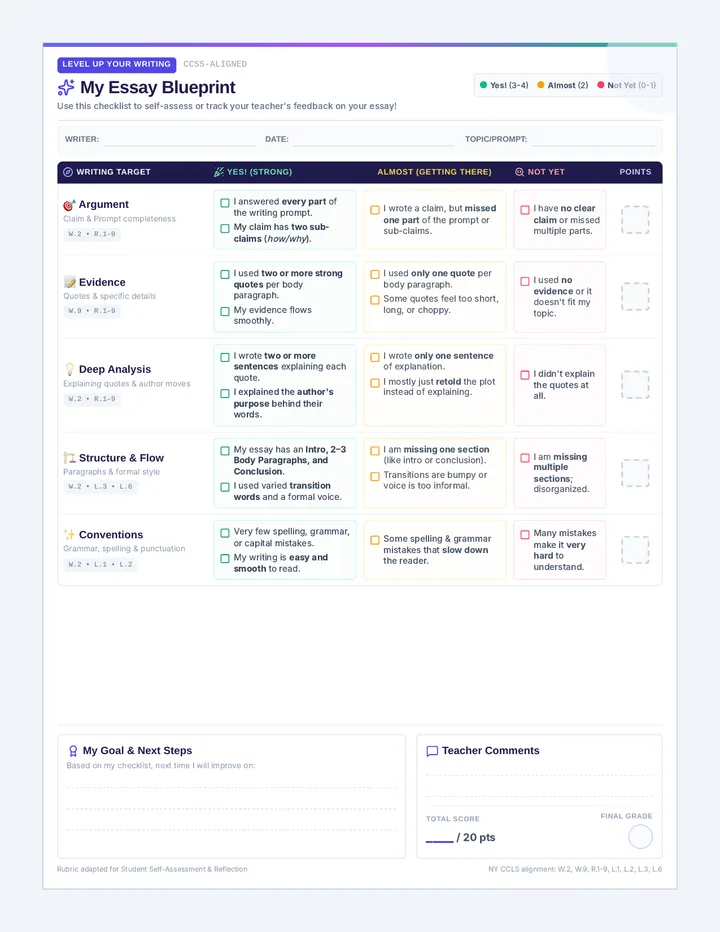
A student-facing writing prompt document with two tasks: a short response about character change and an extended response about the story's central message. Includes structured writing lines and a student self-assessment checklist. Revised to focus on theme analysis and fix formatting.