Student-facing guided notes designed to accompany the Skyline Sightlines slides, featuring fill-in-the-blank definitions and dedicated workspace for classroom examples.

Interactive slide presentation of the 12 percent of change task cards, featuring one task per slide with large, high-visibility text and bold graphics for classroom-wide instruction. Updated for improved contrast and visual clarity.
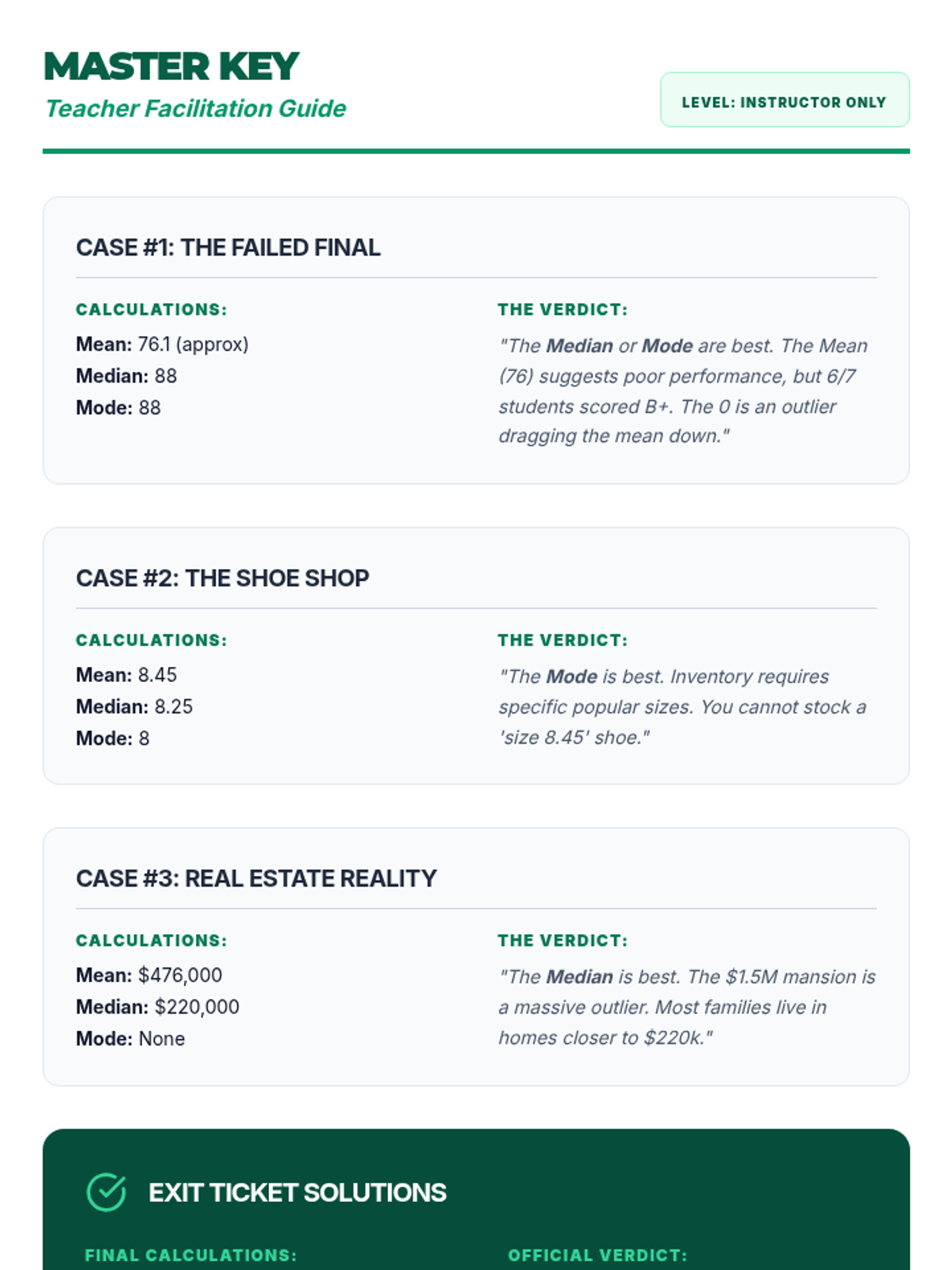
A teacher's answer key and facilitation guide for all calculations and scenarios presented in the lesson, including the exit ticket.
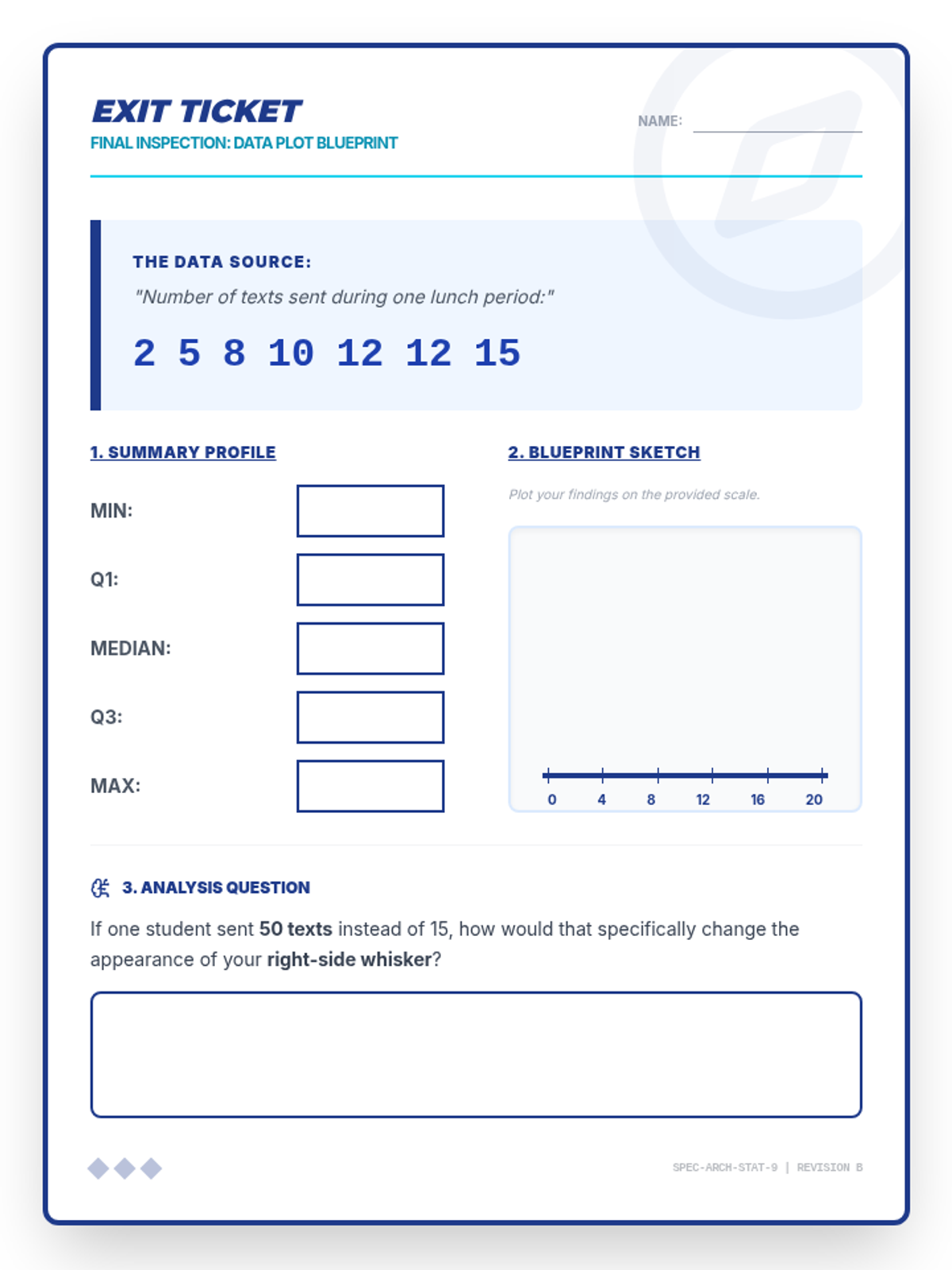
A concise exit ticket assessment requiring students to calculate a five-number summary and sketch a box plot from a small dataset.
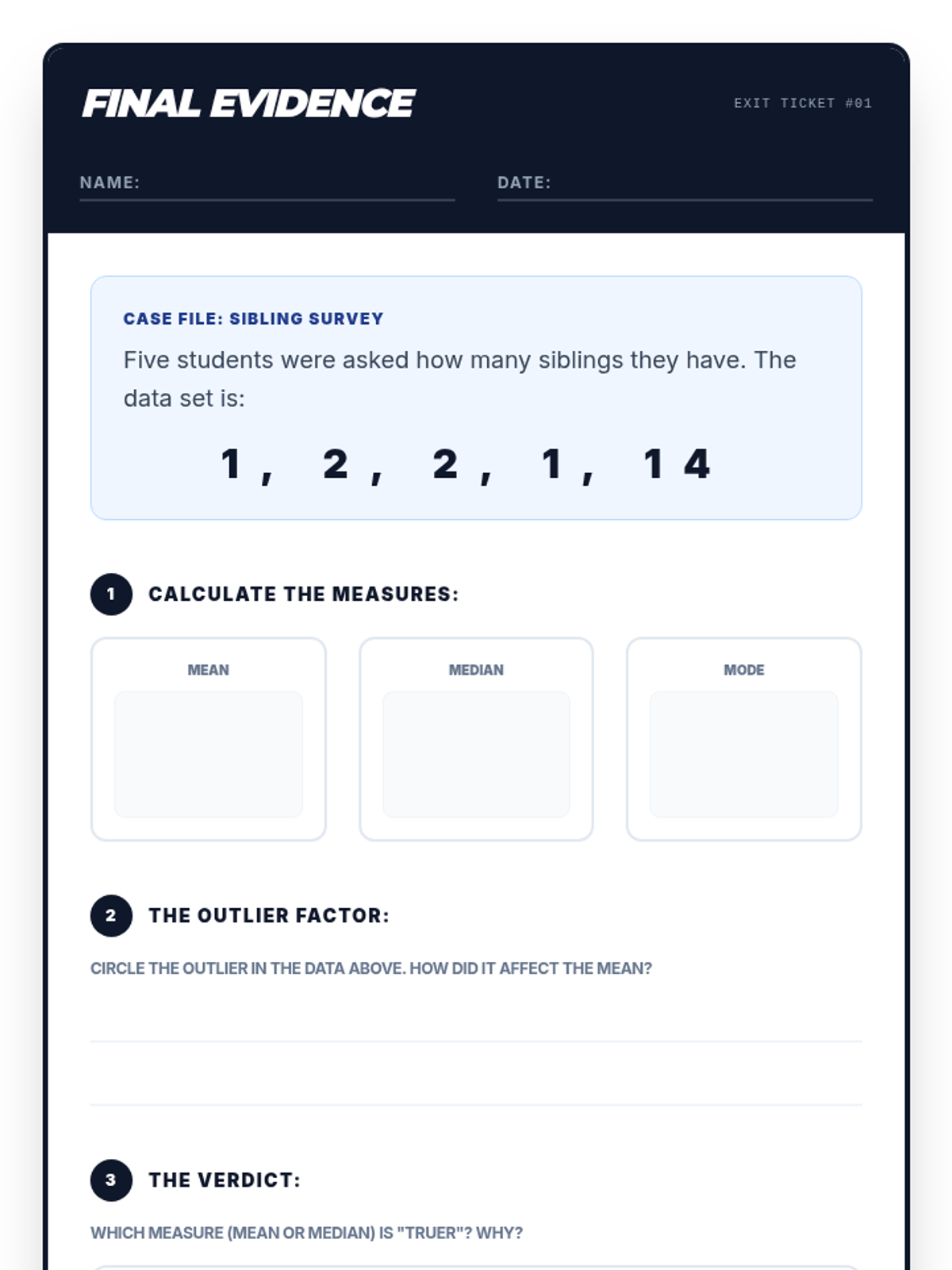
A concise assessment for students to complete at the end of the lesson, requiring them to calculate central tendency and justify their choice for a specific data set with an outlier.
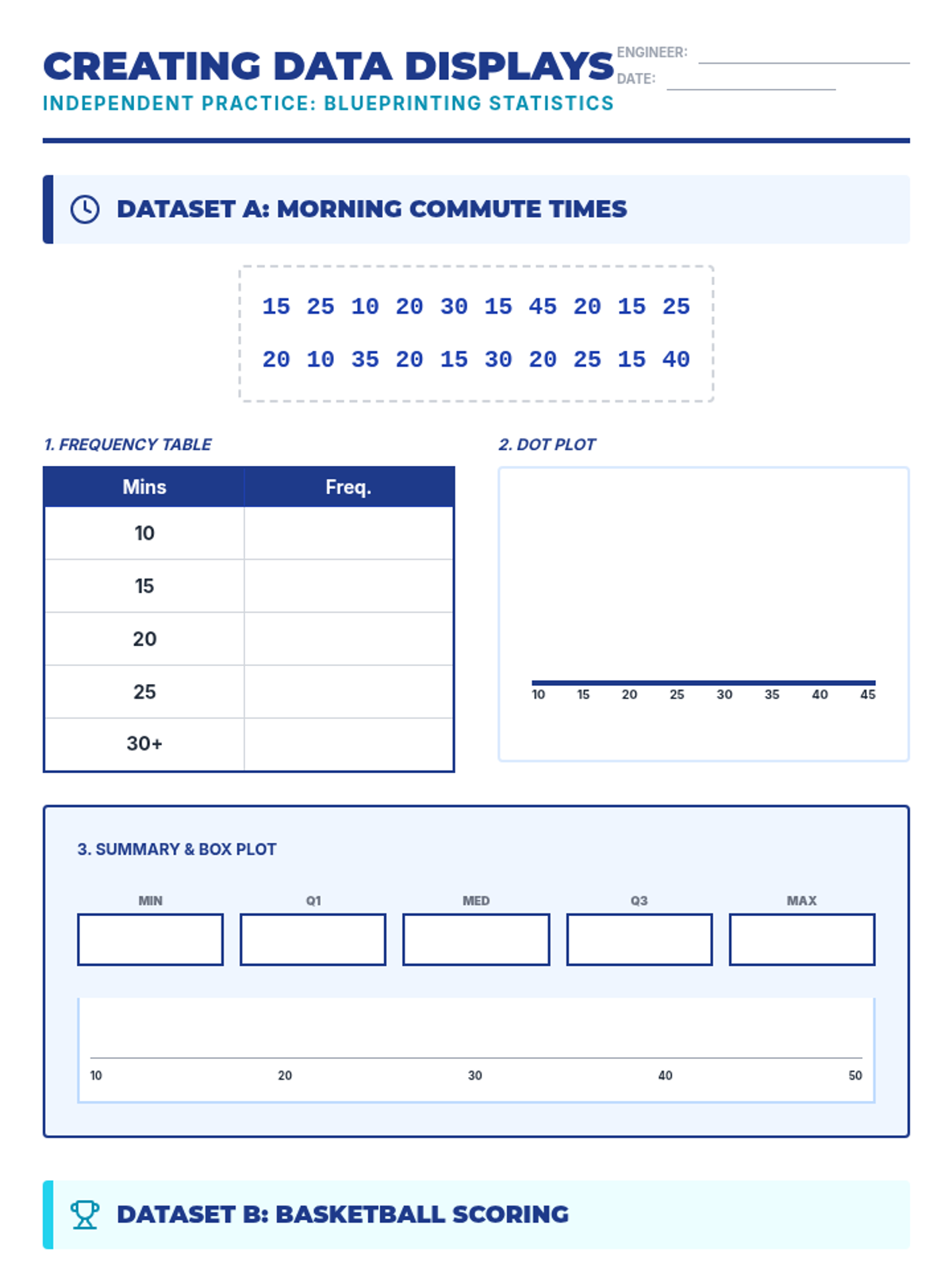
An independent practice worksheet where students analyze commute times and basketball scores to create frequency tables, dot plots, and box plots.
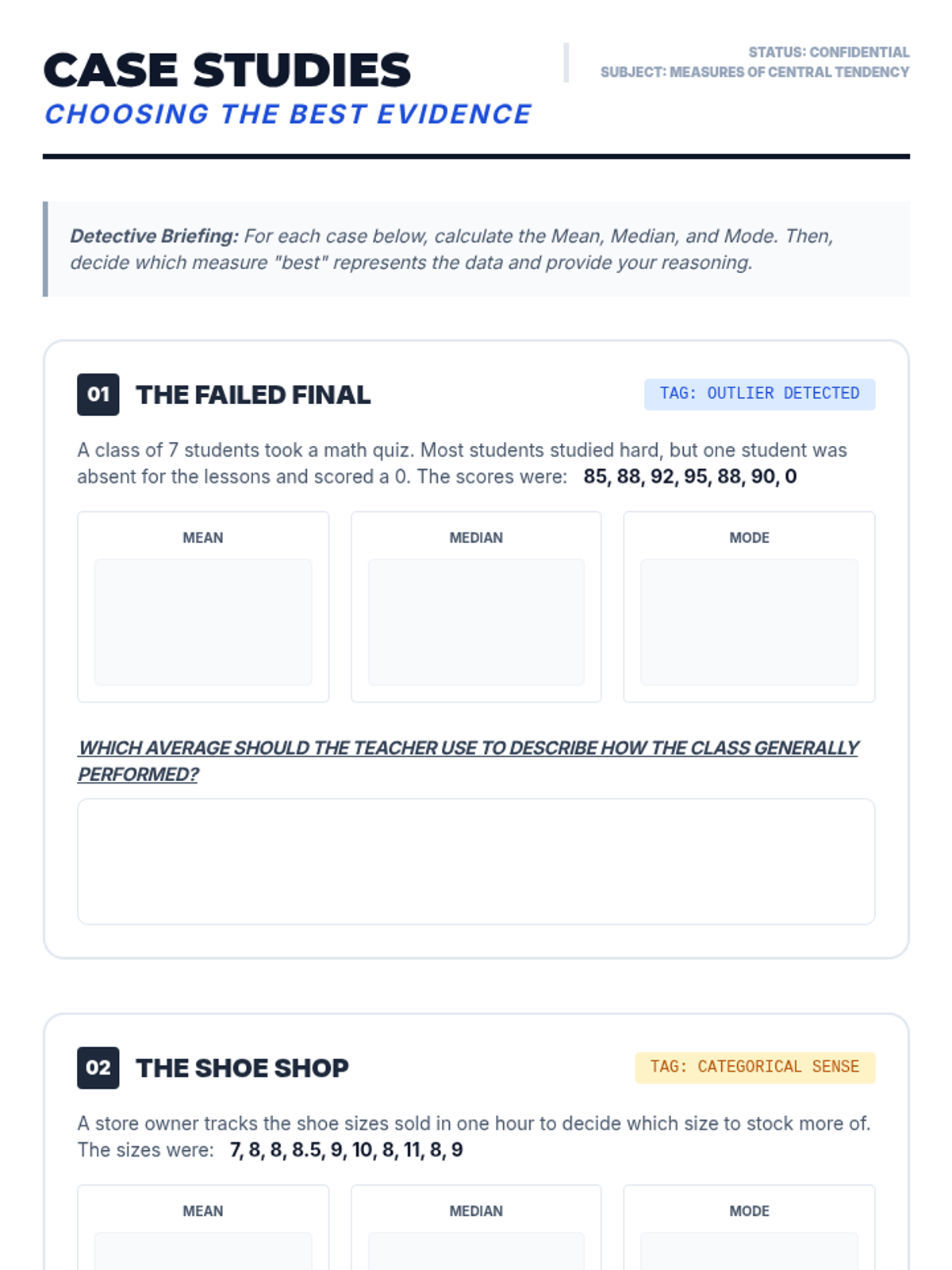
A practice worksheet featuring three real-world scenarios that challenge students to calculate mean, median, and mode and justify the best choice in the presence of outliers.
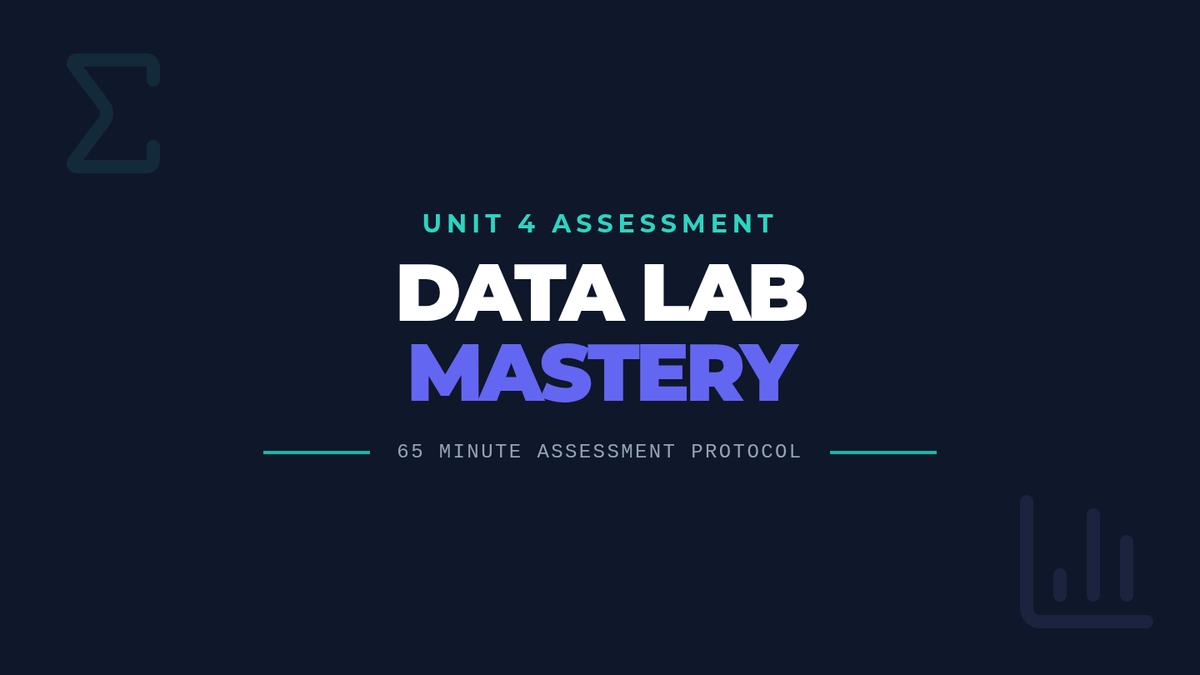
A visual presentation for the Unit 4 Assessment lesson. Includes a breakdown of the 65-minute instructional arc, a quick recall review phase, testing expectations, and reflective discussion prompts to conclude the lesson.
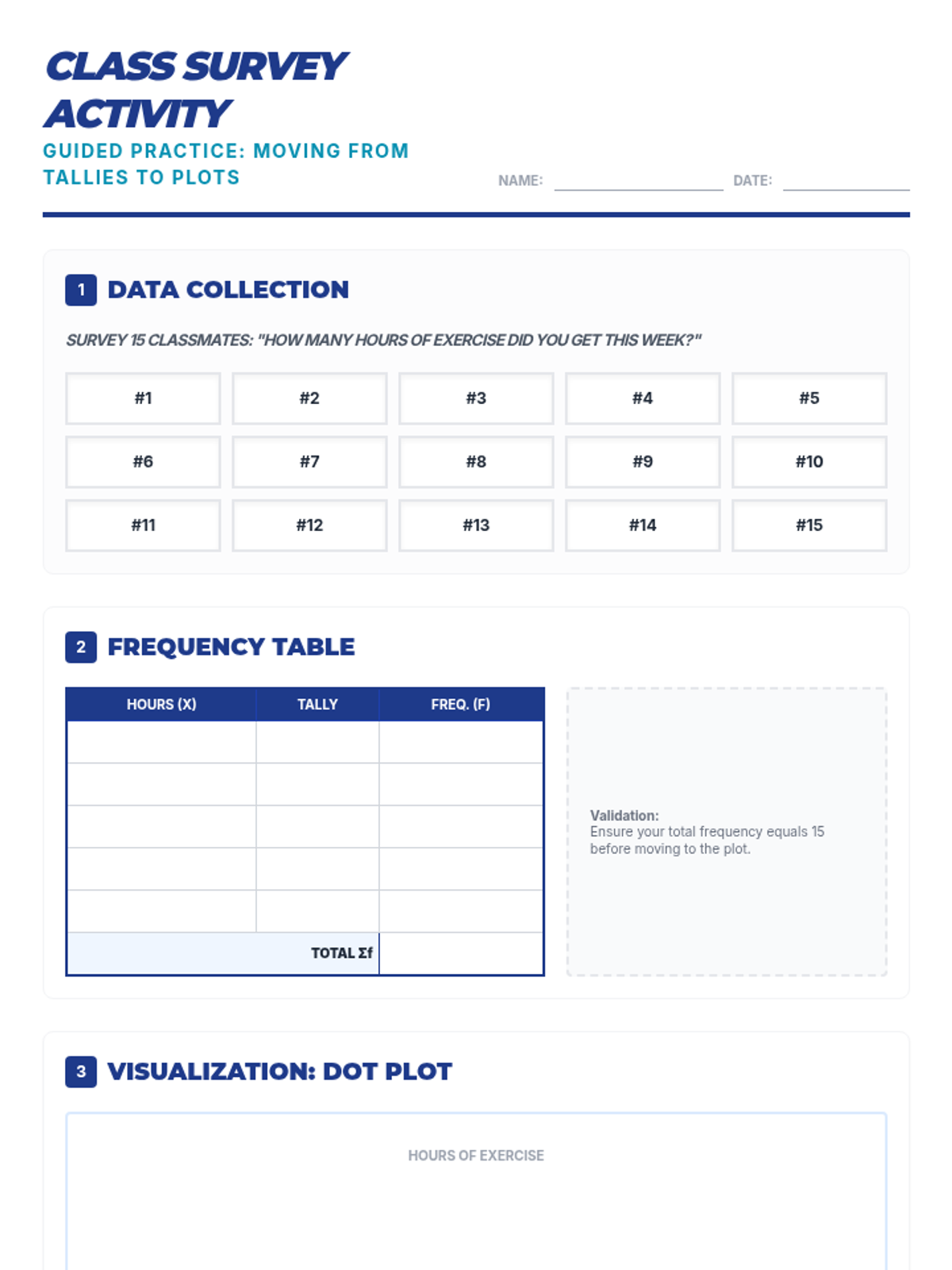
A student activity sheet for conducting a class survey, organizing data into tables, and creating dot and box-and-whisker plots.
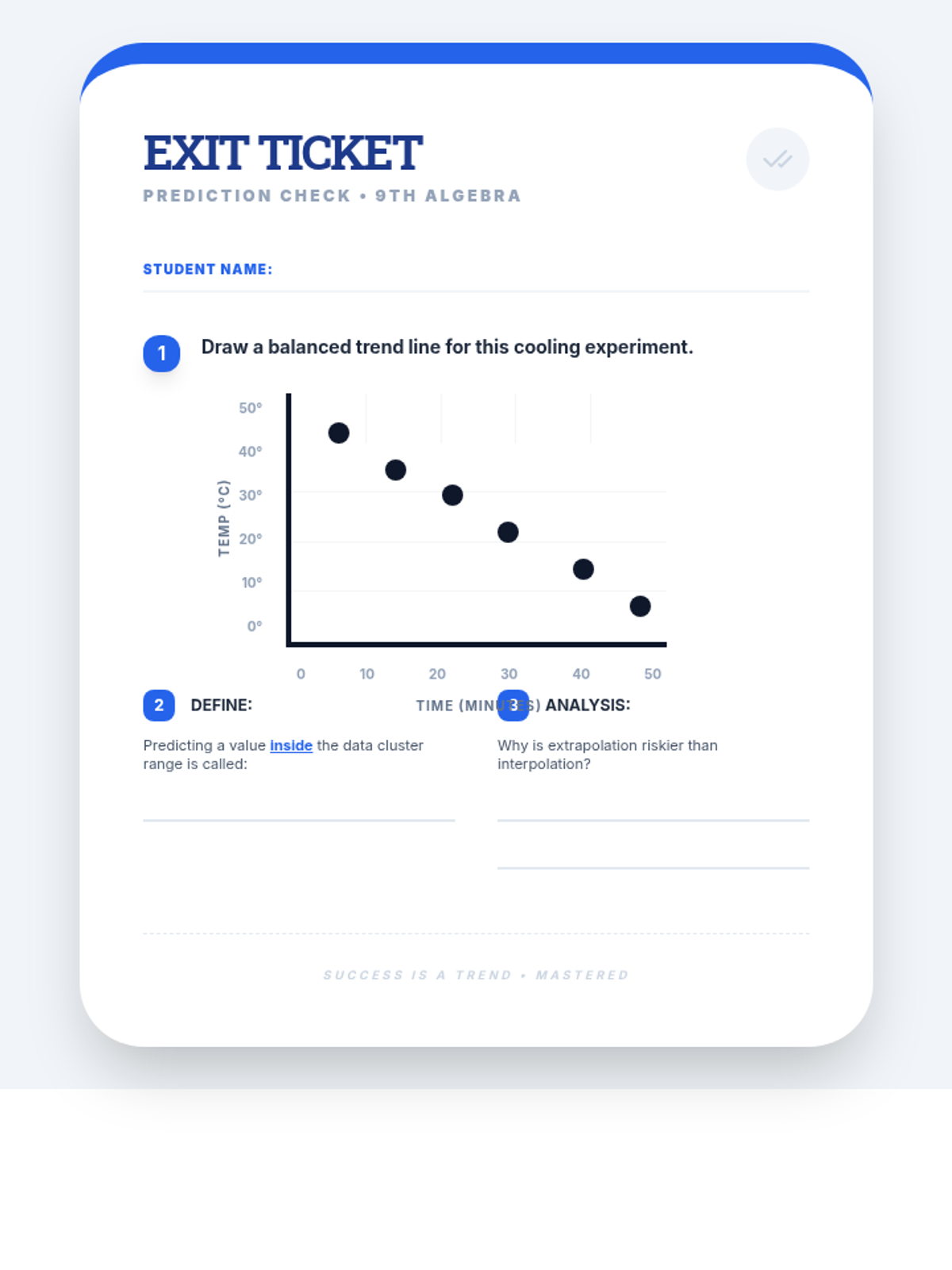
A quick formative assessment exit ticket to verify students can draw a trend line and distinguish between interpolation and extrapolation.
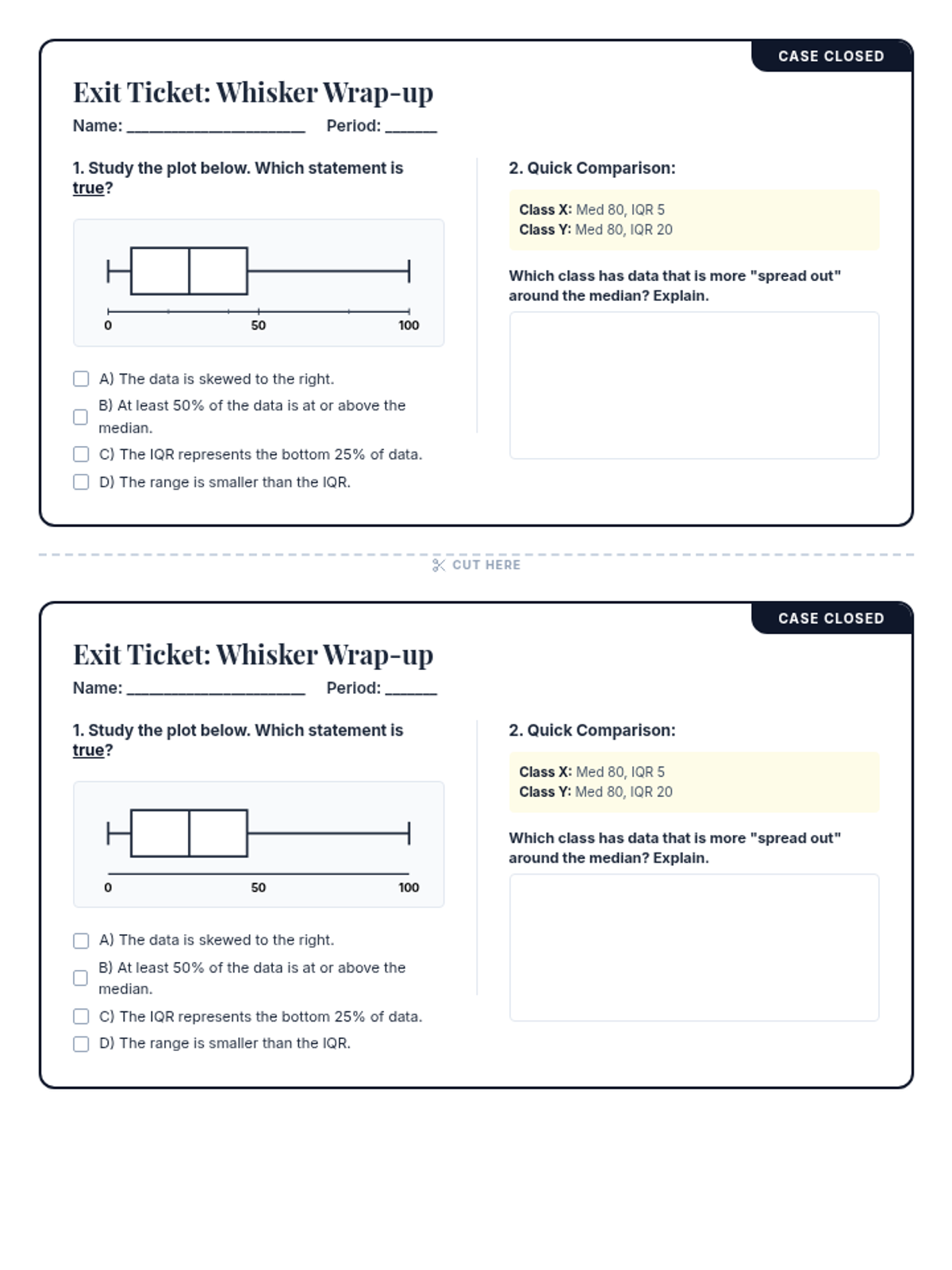
A quick assessment tool for the end of the lesson. Now with a scaled axis for data interpretation and functional duplicates for 2-per-page printing. Now with improved statistical accuracy and axis detail.
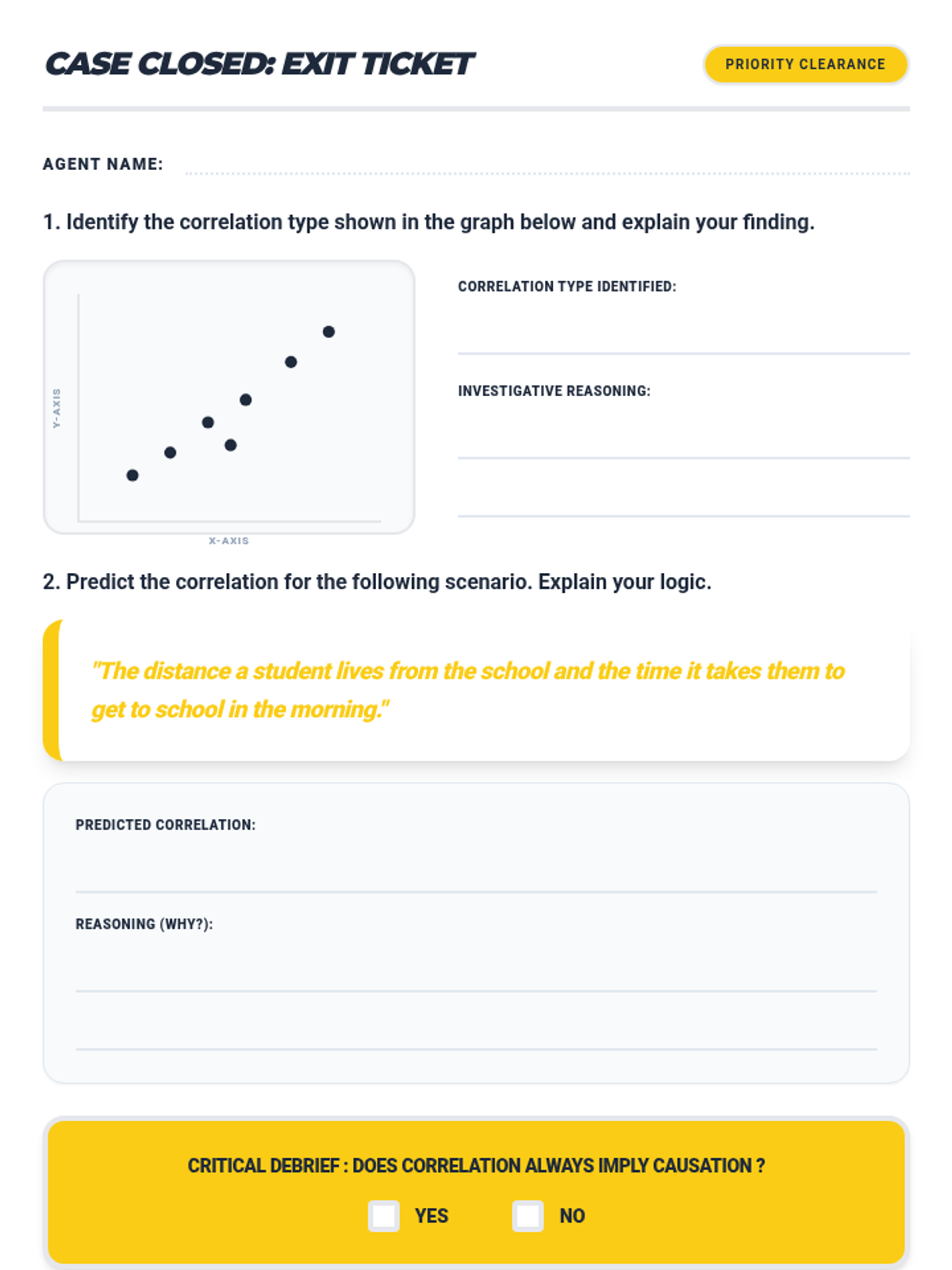
A formative assessment tool designed to check student understanding of correlation types and the distinction between correlation and causation at the end of the lesson.
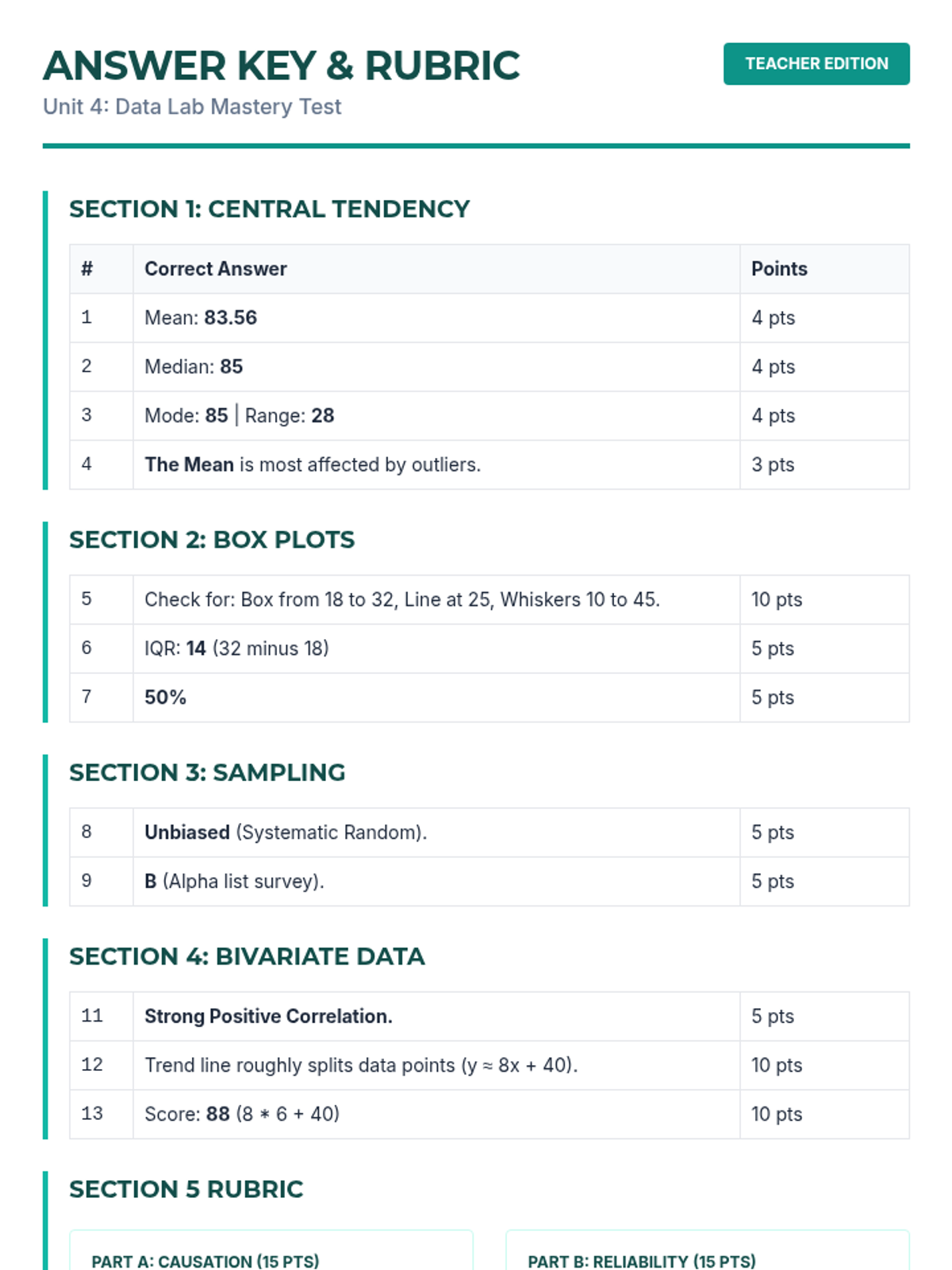
A detailed answer key and grading rubric for the Unit 4 Mastery Test. Includes step-by-step solutions for calculations, visual descriptions for graphs, and a clear point-based rubric for the open-response section.
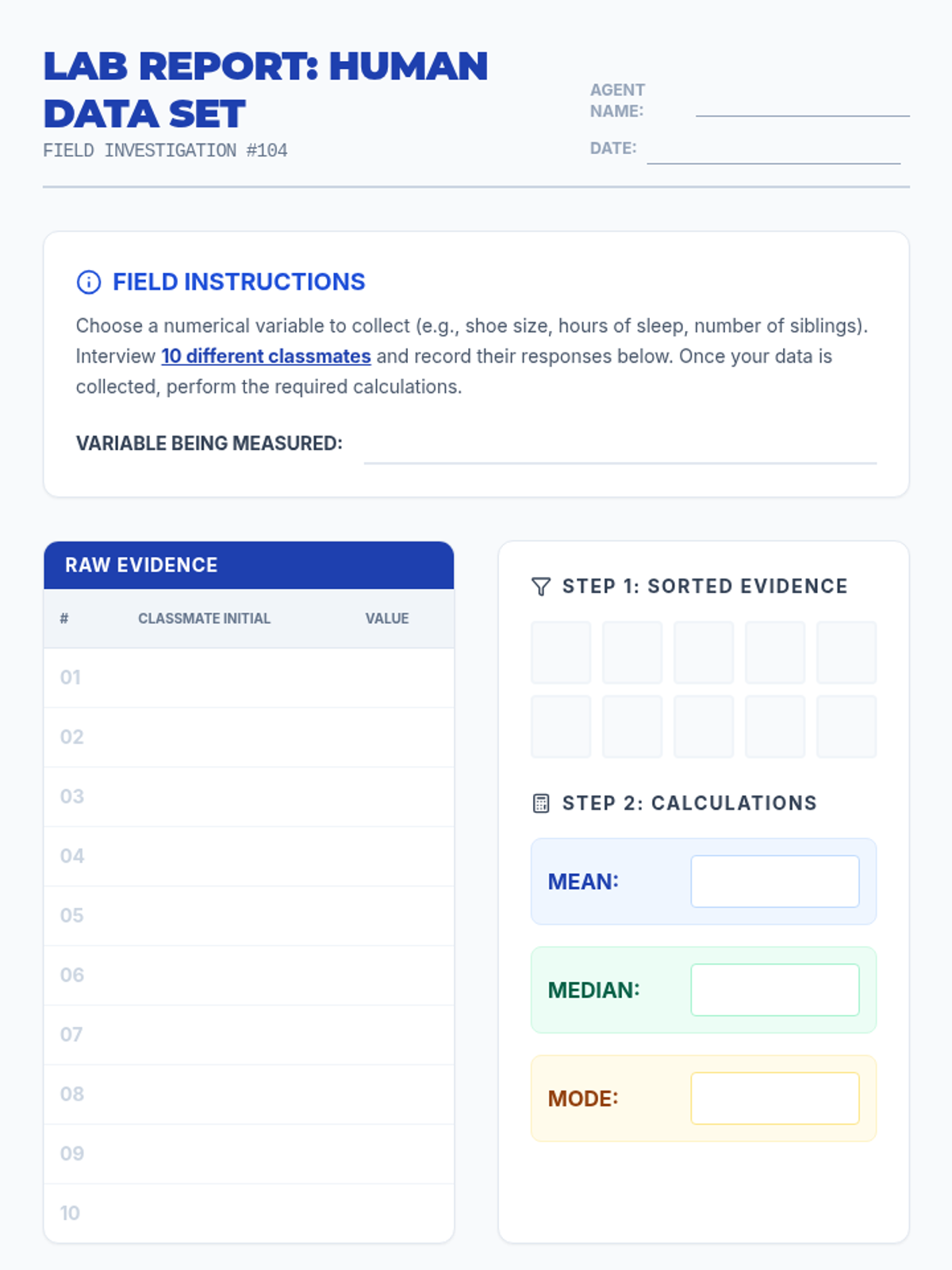
A data collection and analysis worksheet where students gather information from classmates to practice calculating mean, median, and mode in a 'Data Lab' format.
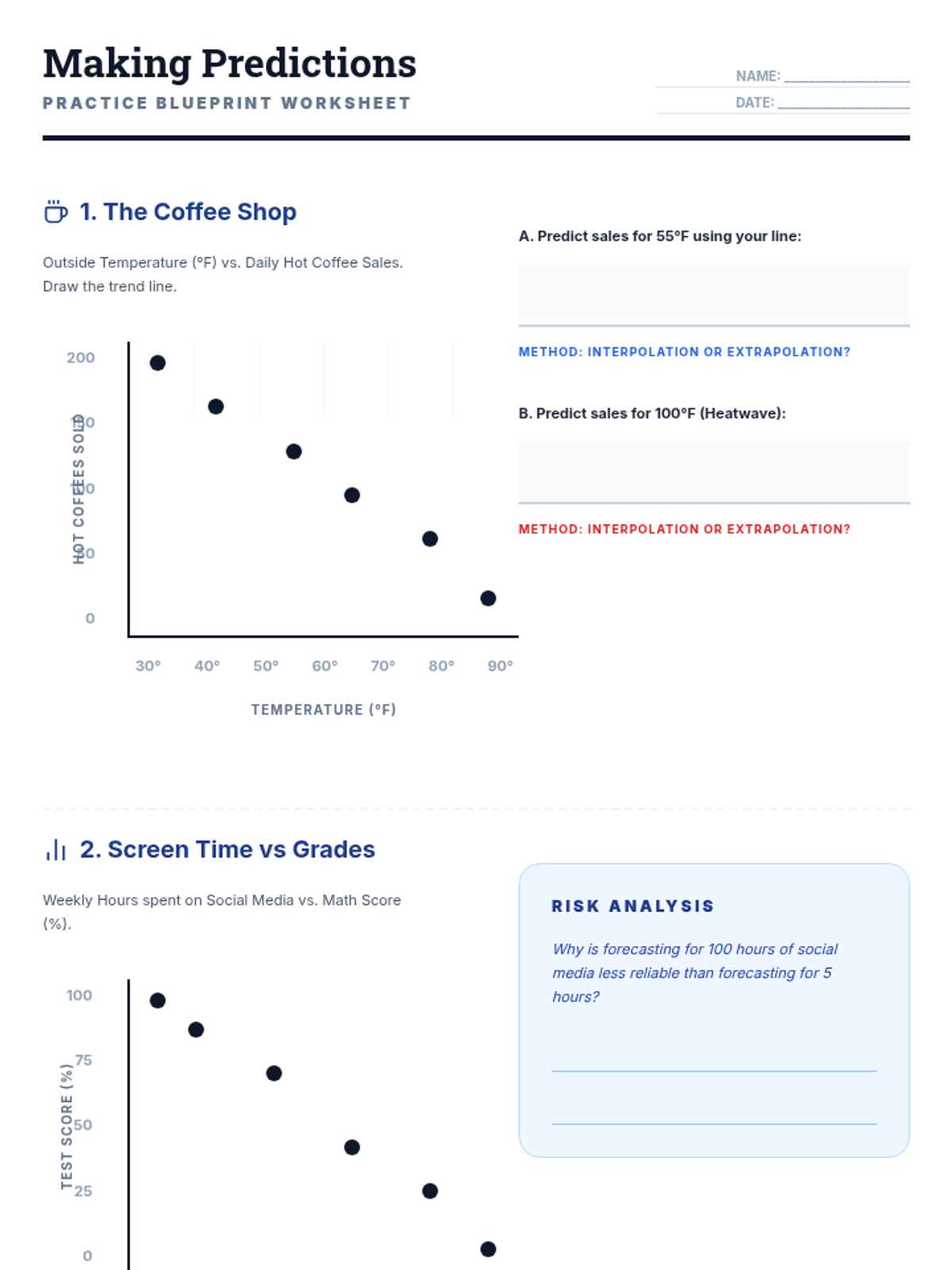
An independent practice worksheet where students draw trend lines on real-world scatter plots and use them to make mathematical predictions.
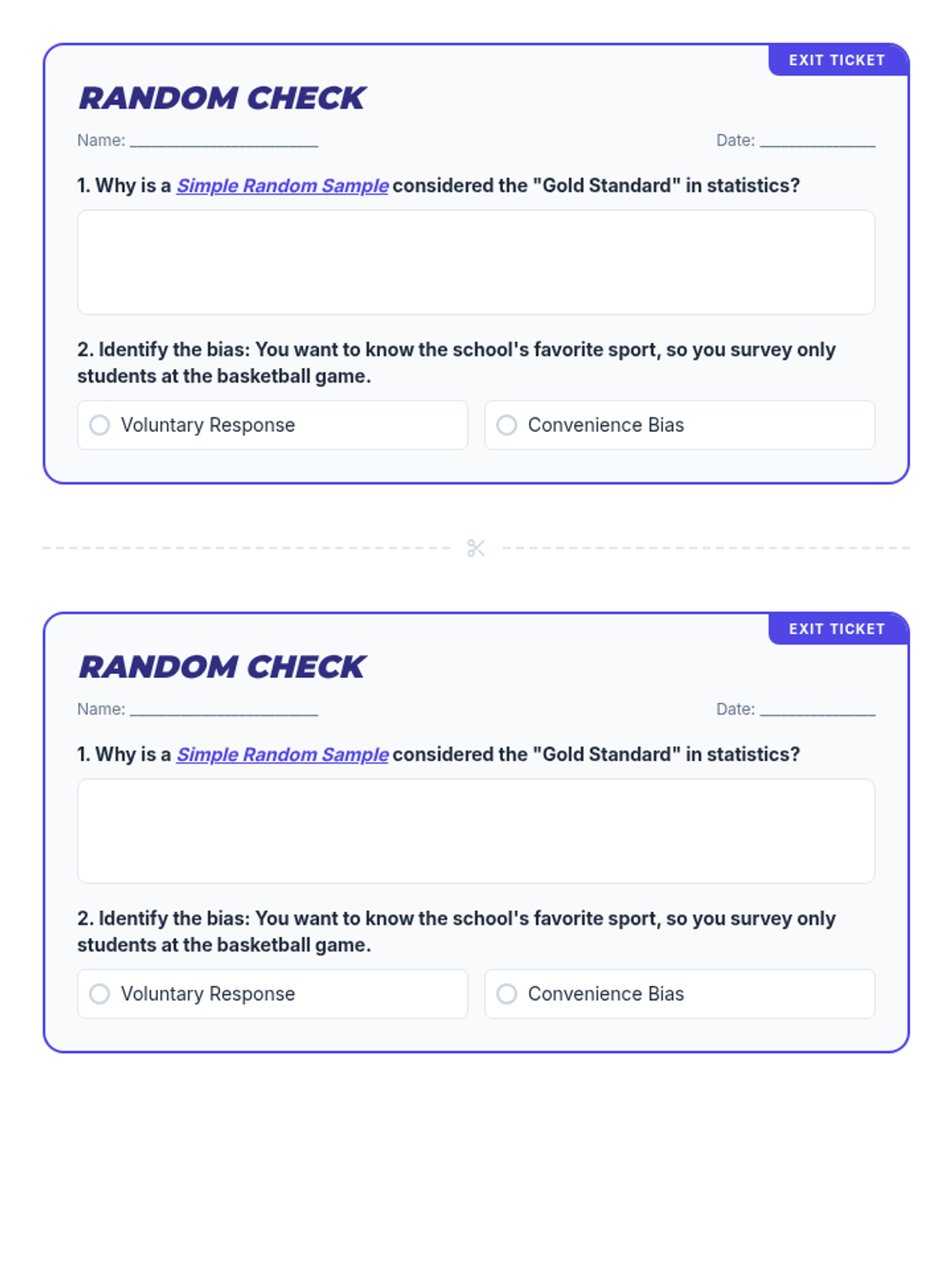
A quick assessment tool for the end of the lesson. Features a short-response question on random sampling and a multiple-choice question on identifying bias. Optimized for single-page 2-per-page printing.
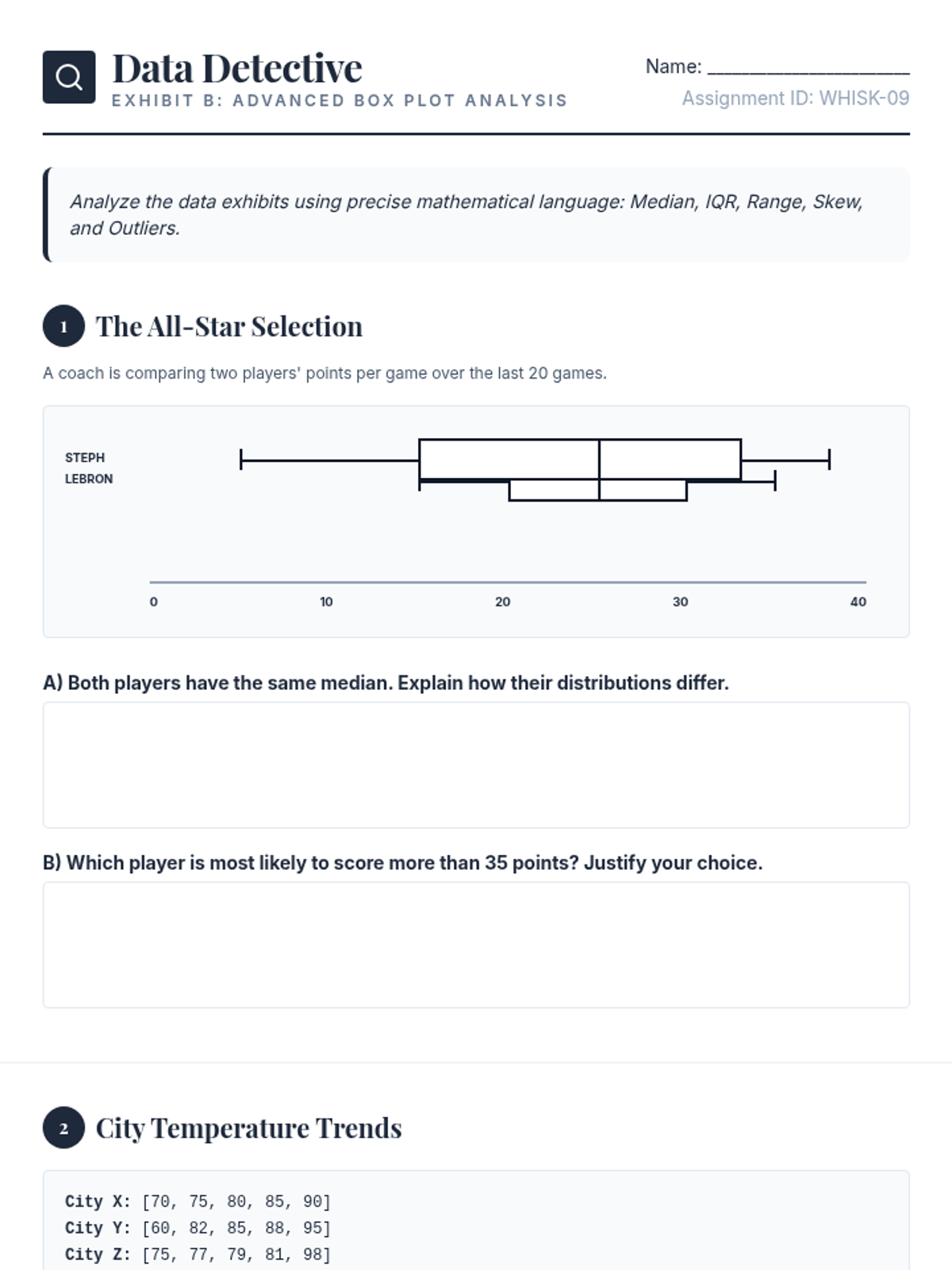
An independent practice worksheet with real-world scenarios including sports analytics and climate data. Now with improved box plot rendering, expanded response areas, and fixed page flow.
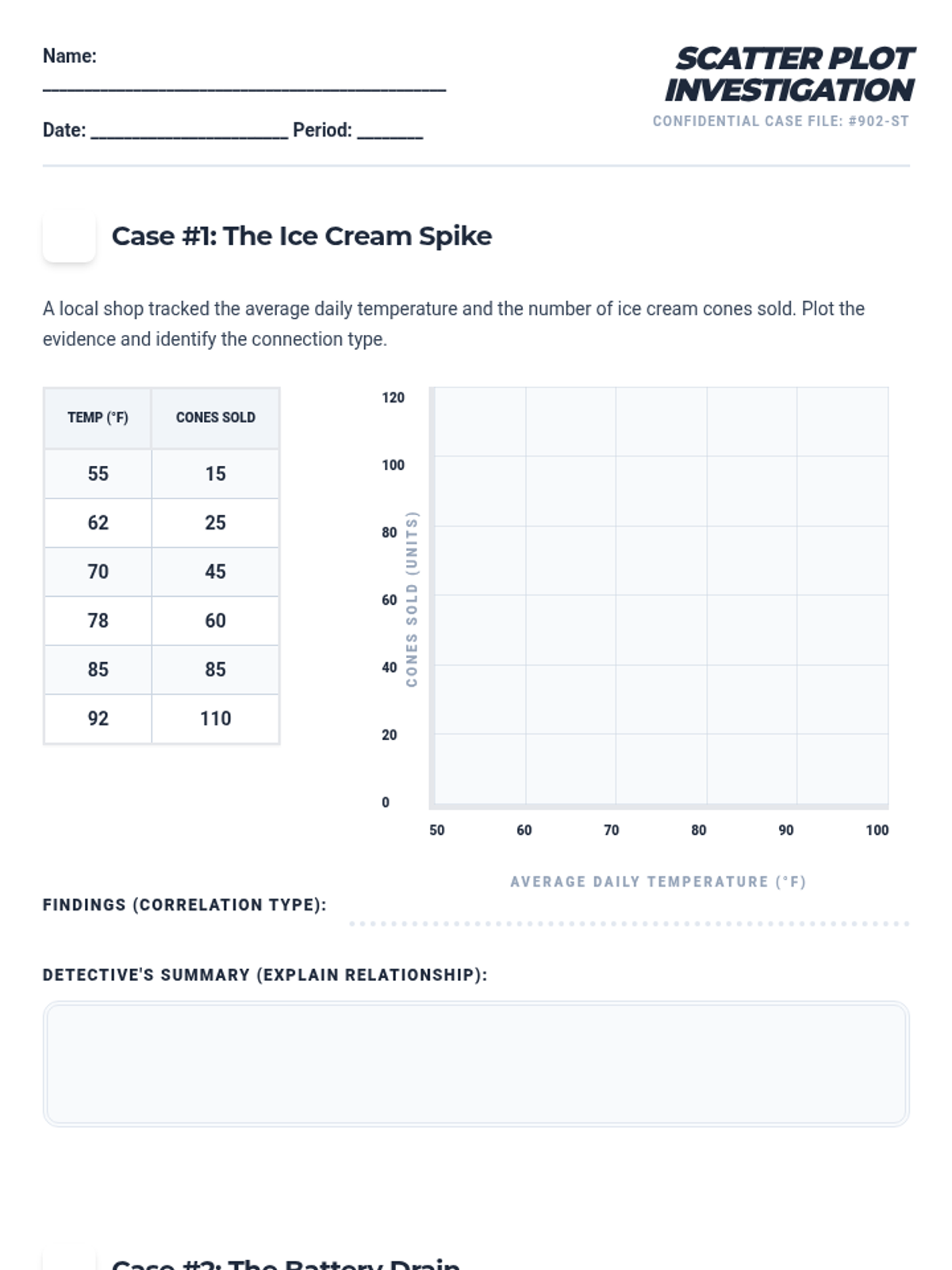
A worksheet for students to practice creating scatter plots from real-world data sets and identifying the resulting correlation types with a 'Data Detective' narrative.
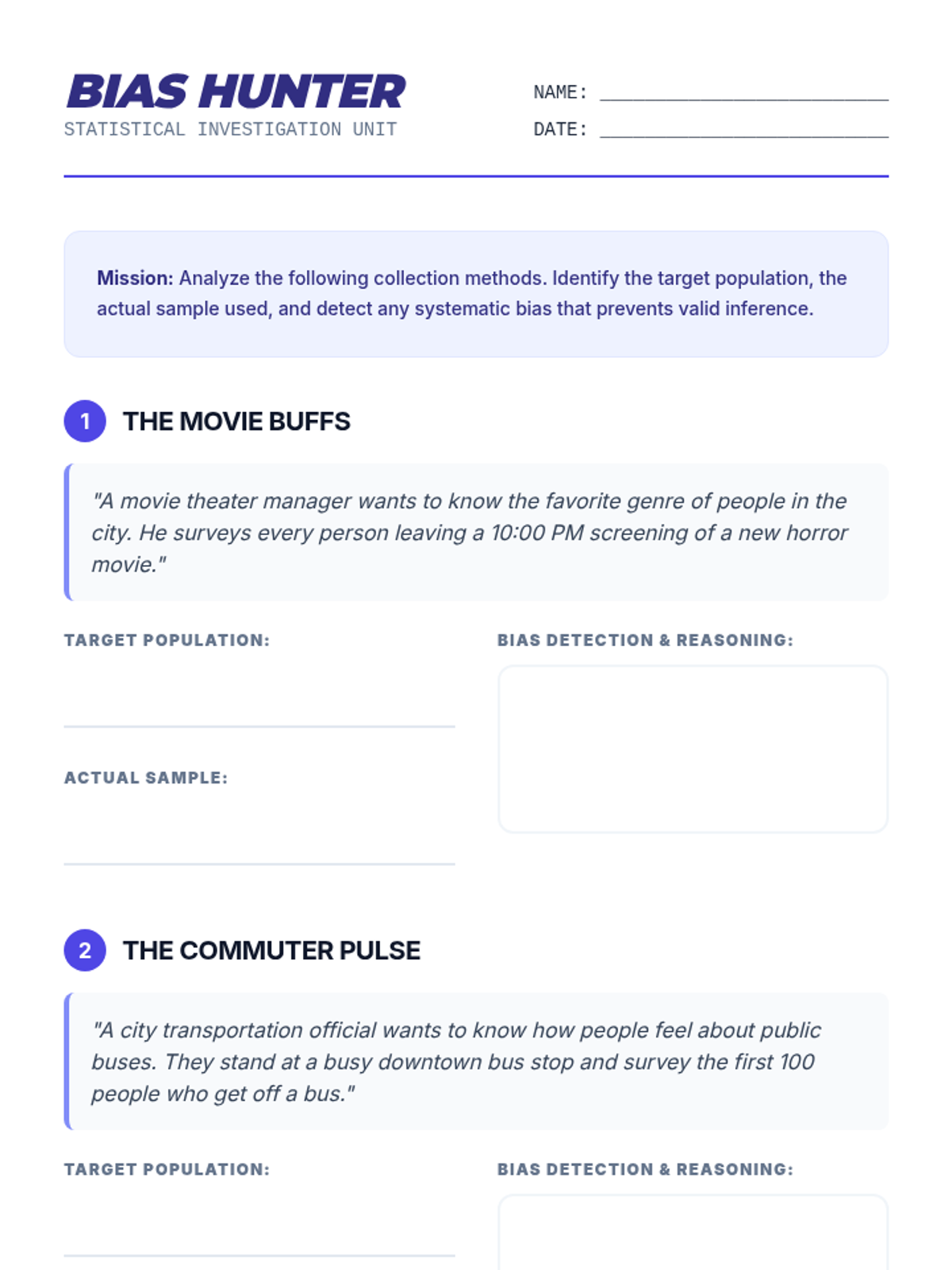
An independent practice worksheet where students analyze real-world scenarios to identify populations, samples, and potential bias. Improved spacing and layout to prevent content splitting across pages.
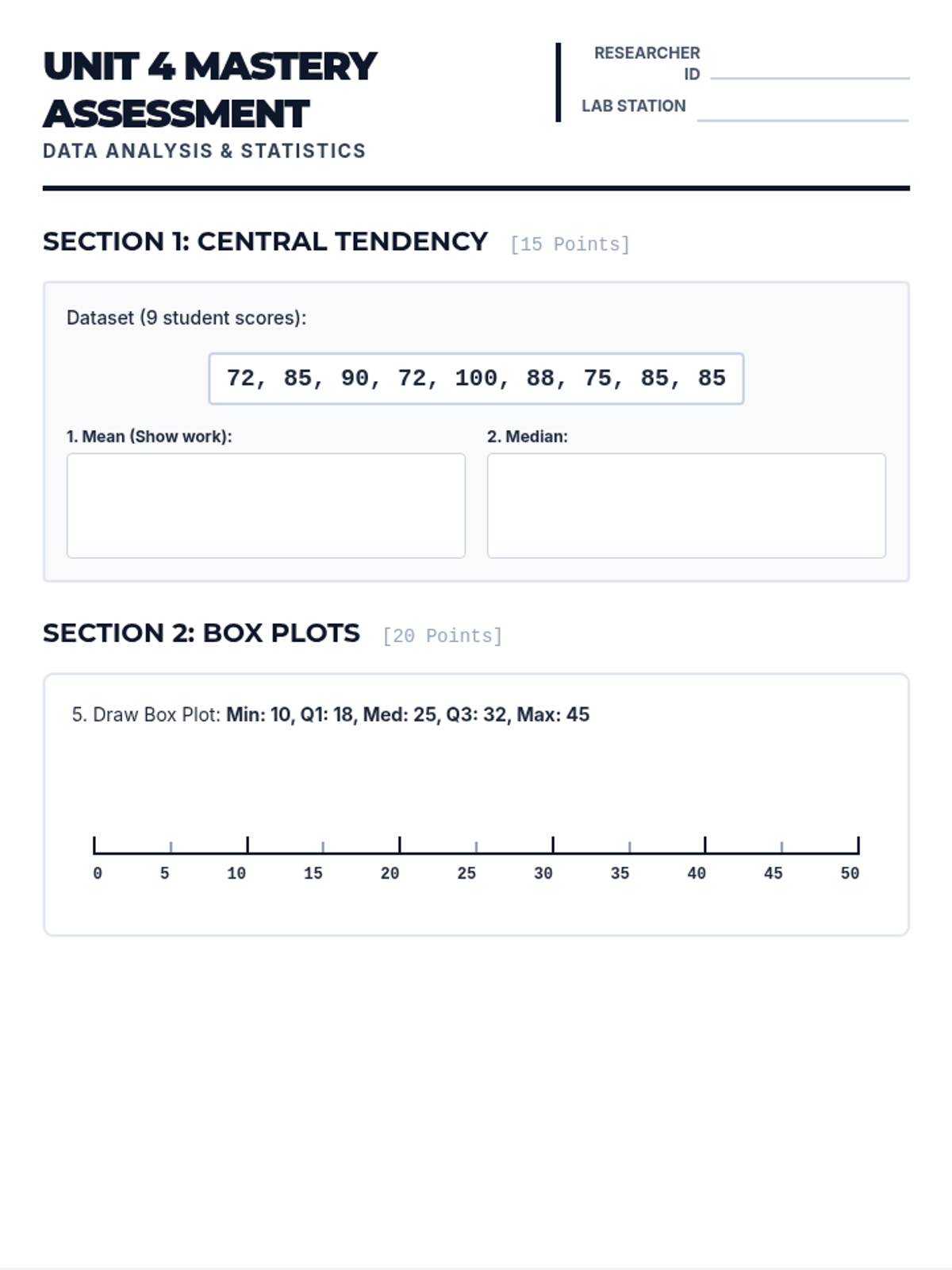
A comprehensive three-page unit test for 9th-grade statistics. The assessment covers central tendency, box-and-whisker plot construction, random sampling validity, bivariate data analysis with scatter plots, and a critical thinking section on correlation vs. causation.
A visually engaging slide deck covering frequency tables, dot plots, and the construction of box-and-whisker plots using a "blueprint" aesthetic.
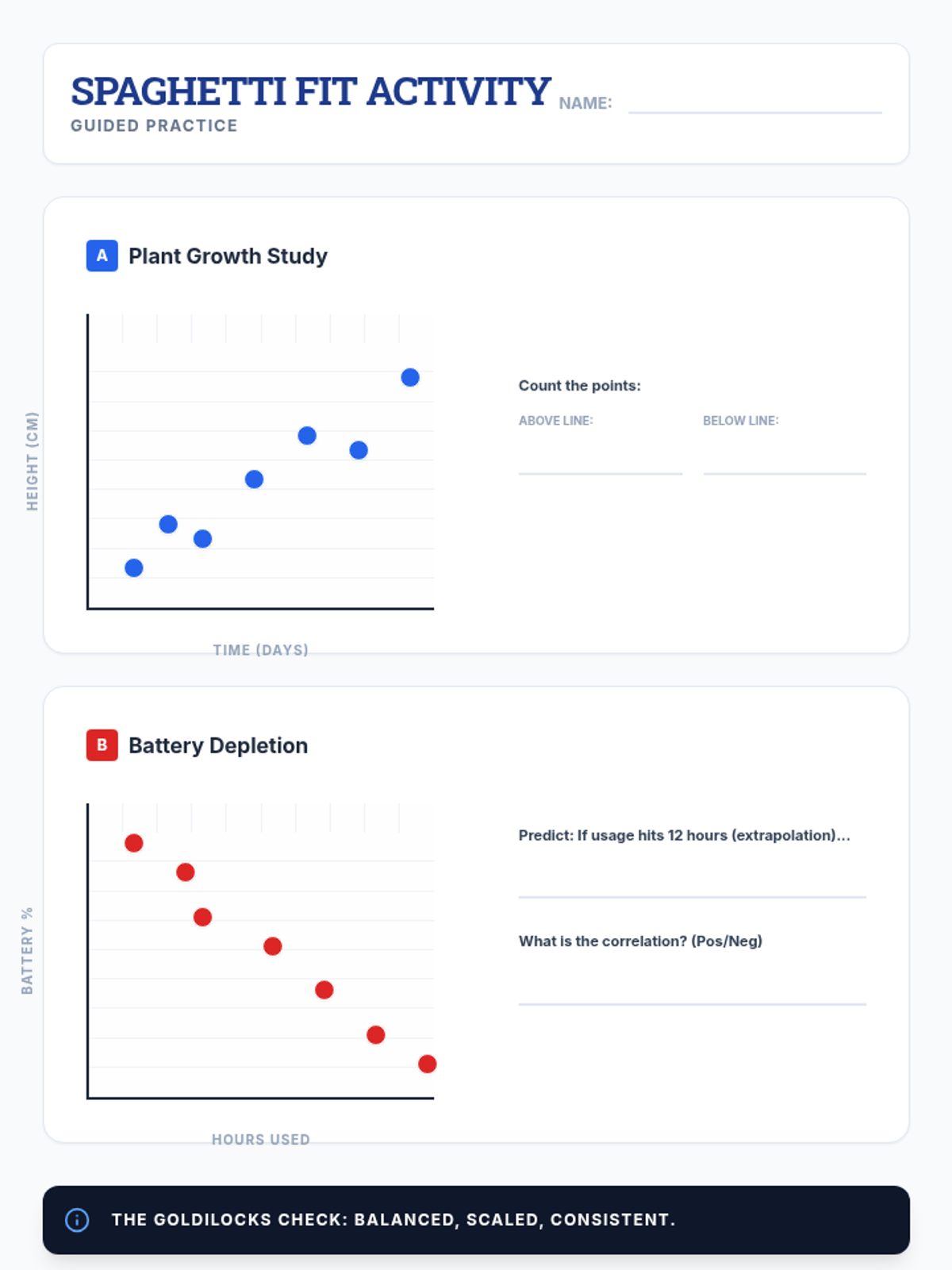
A hands-on activity sheet where students use physical spaghetti noodles to find the line of best fit on various scatter plots.
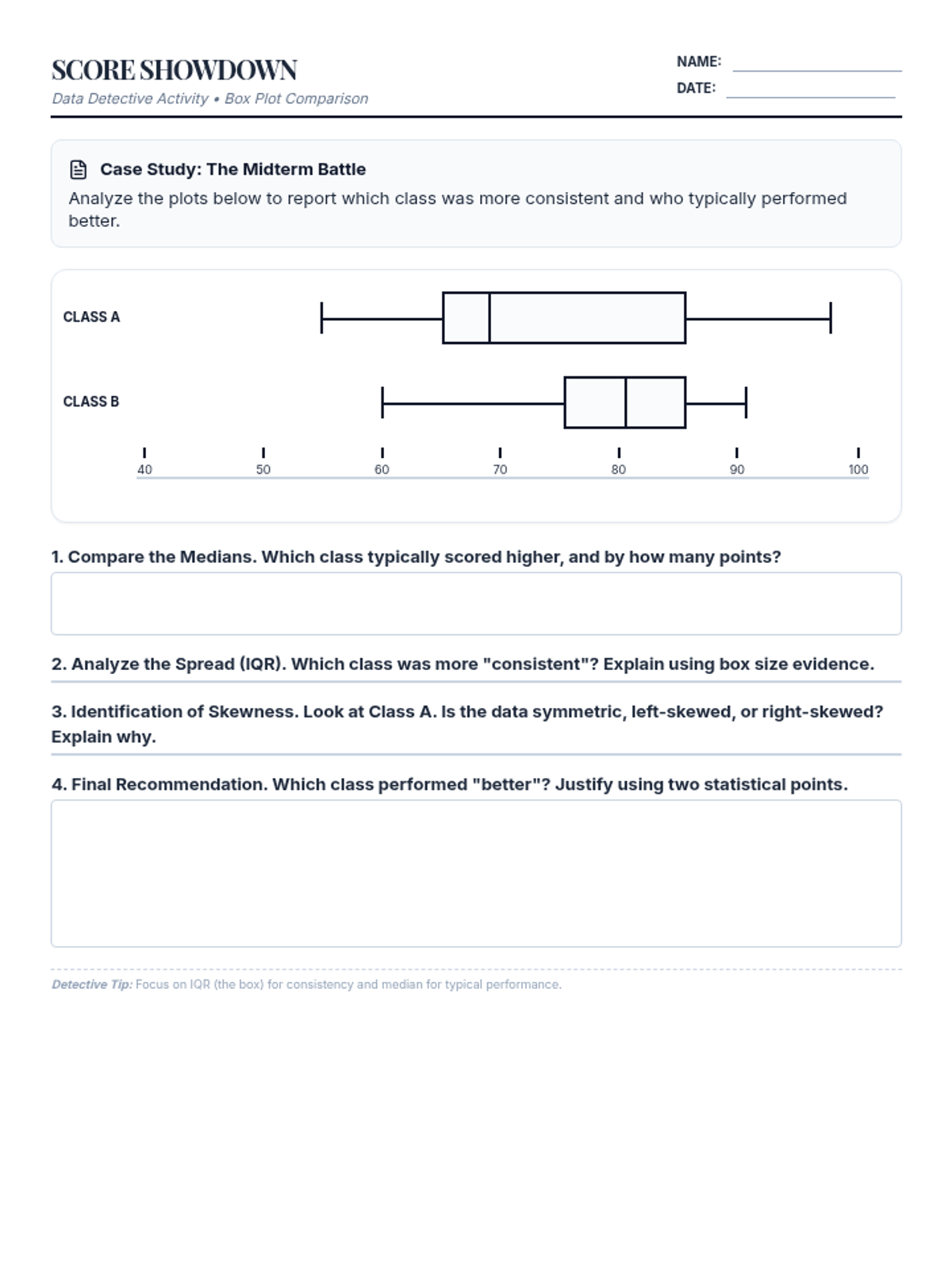
A guided practice activity where students compare two box plots representing midterm test scores. Now optimized for single-page printing with corrected visuals for skewness analysis.
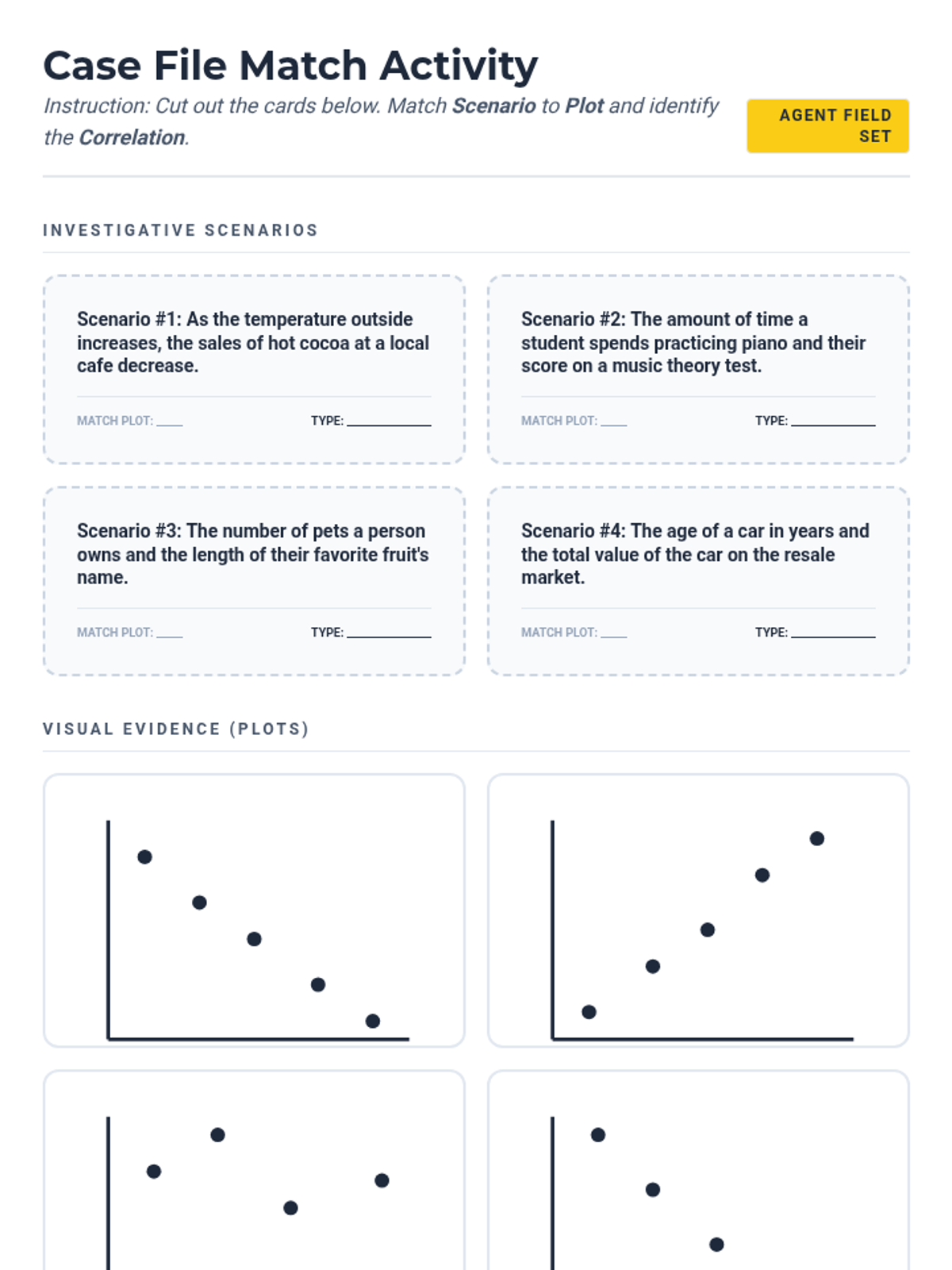
A hands-on matching activity where students pair real-world scenarios with their corresponding scatter plot graphs and identify the correlation type.
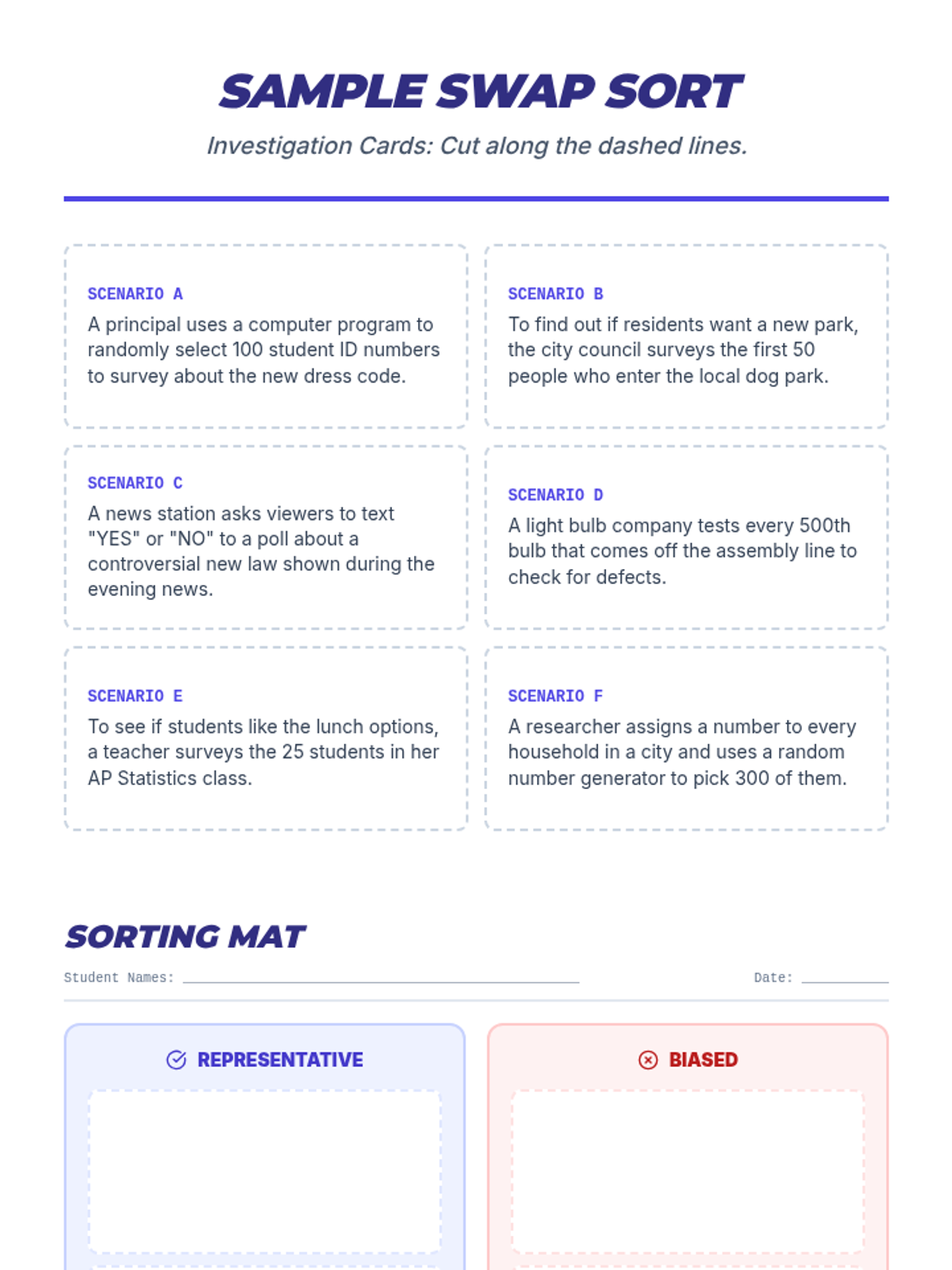
A hands-on card sort activity where students classify scenarios as representative or biased. Includes a cut-out sheet and a full-page sorting mat with improved layout and space for responses.
A visually engaging 9-slide presentation designed for direct instruction on mean, median, mode, and outliers, following a 'Data Detective' theme.
Visual presentation slides for teaching trend lines, including definitions, prediction types (interpolation/extrapolation), and activity instructions.
A visually engaging slide deck for Grade 9 students introducing box plot interpretation. Now with corrected labels, improved font sizes for visibility, and enhanced diagrams.
Visually engaging instructional slides for teaching correlation types, featuring a 'Data Detective' theme and clear graph visualizations.
A visual slide deck introducing population, sampling, and bias. Features clear definitions, visual analogies, and common pitfalls in data collection with a minimum font size of 24px.
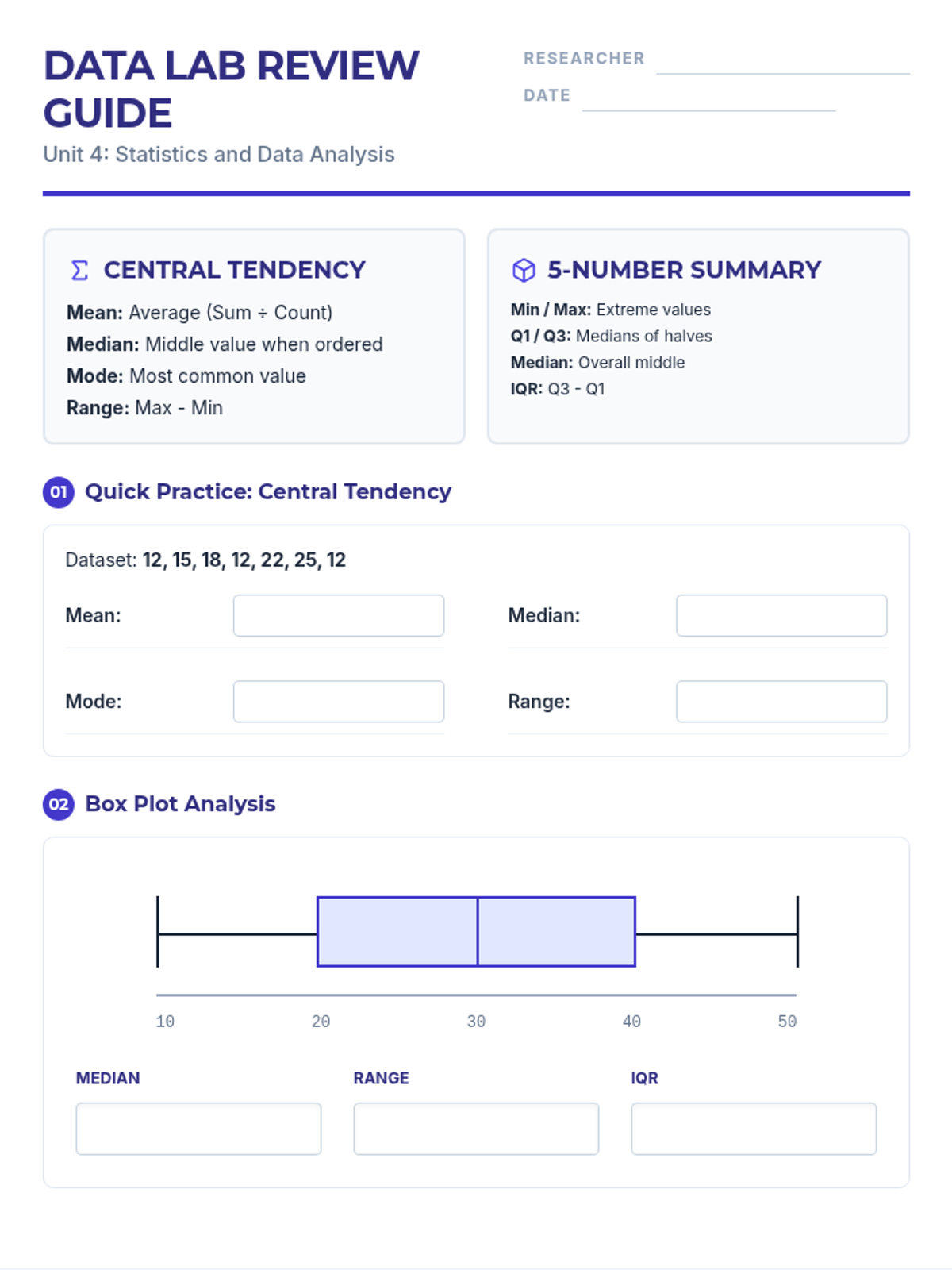
A two-page comprehensive review guide for 9th-grade students covering measures of central tendency, box-and-whisker plots, random sampling, and bivariate data. Includes key definitions, visual aids, and practice problems to prepare for the unit assessment.
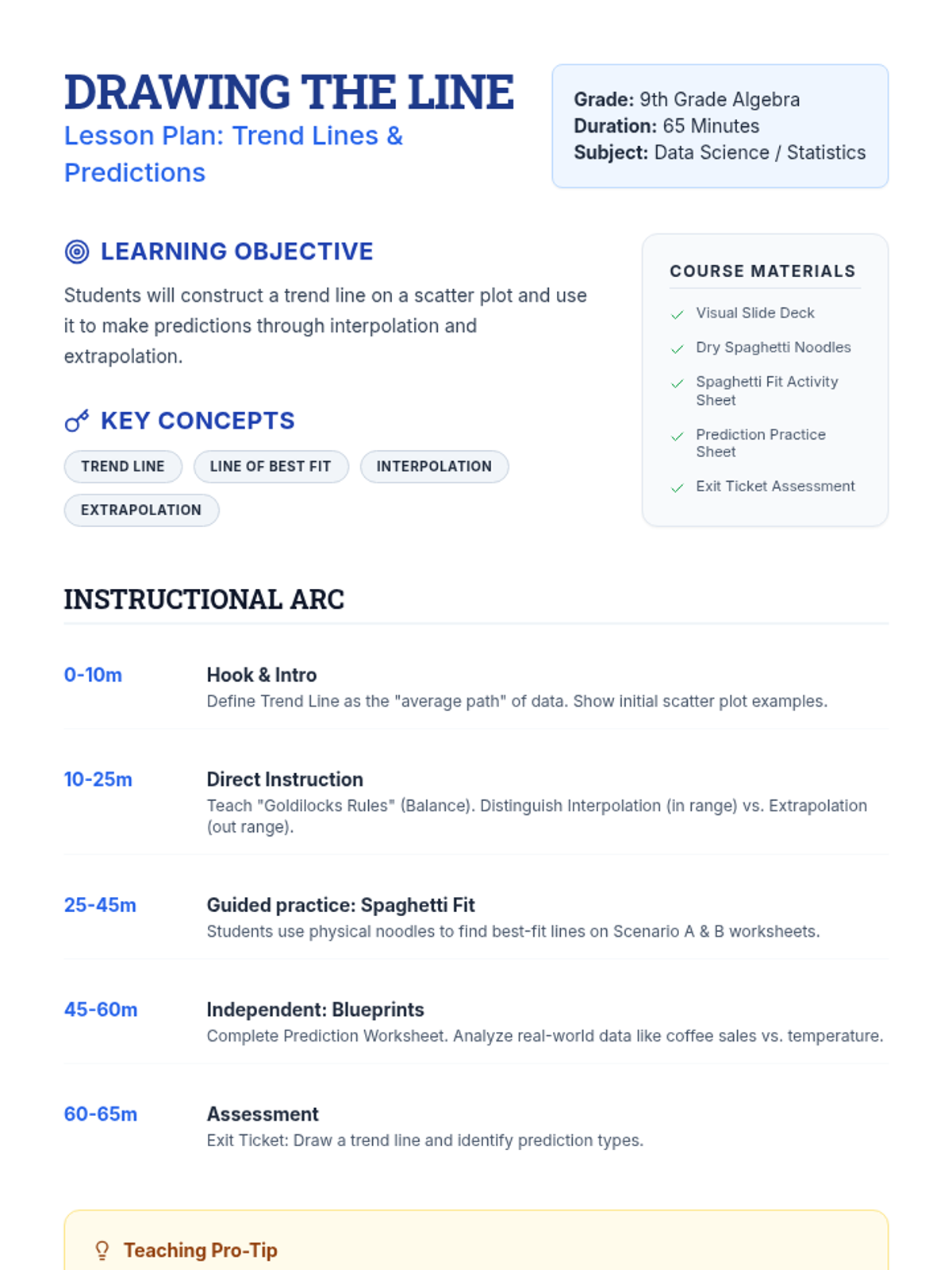
A concise lesson plan for a 65-minute 9th-grade algebra lesson on trend lines and data predictions.
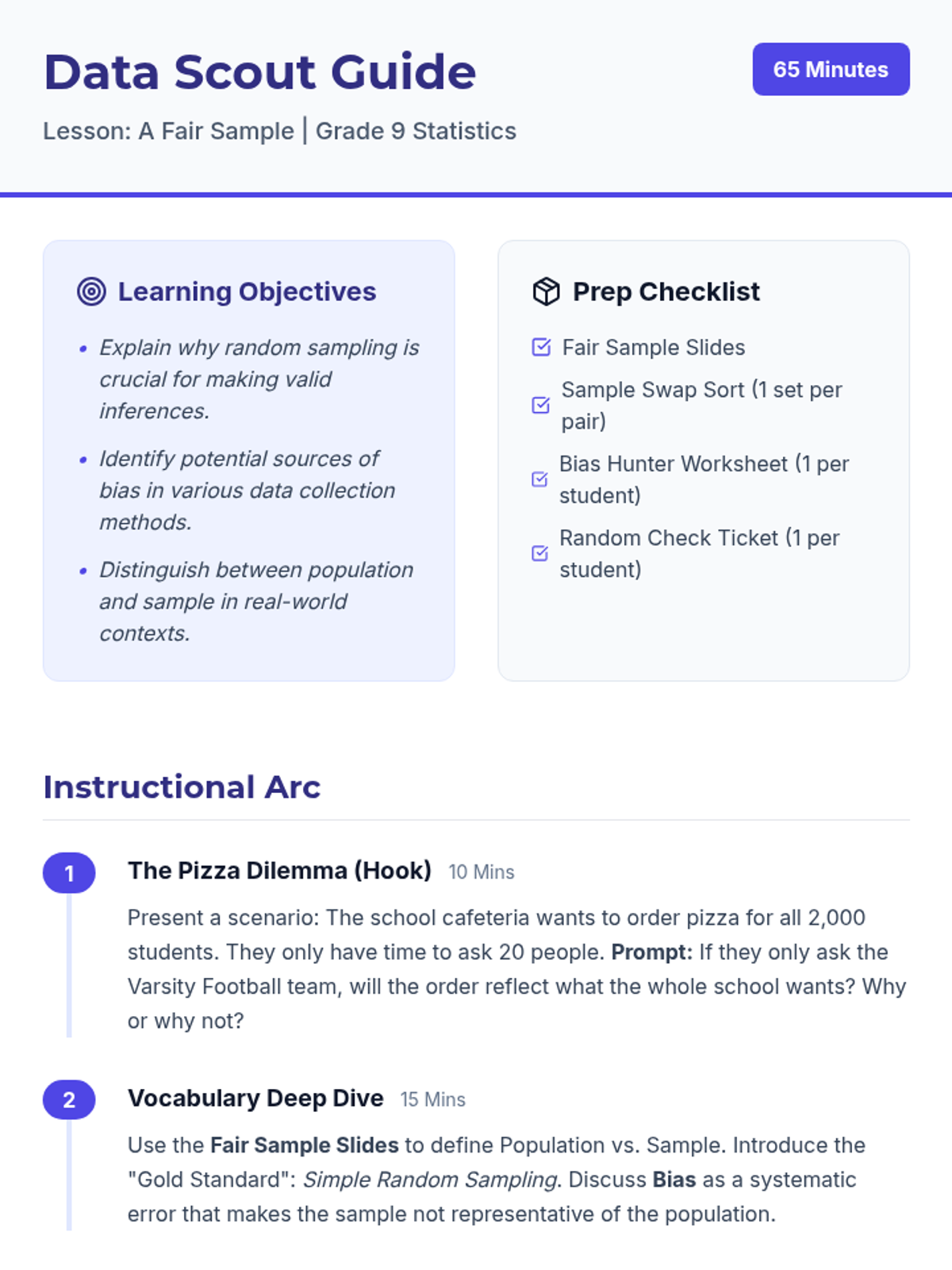
A comprehensive lesson plan for a 9th-grade statistics lesson on random sampling and bias. Includes a timed instructional arc, learning objectives, and differentiation strategies.
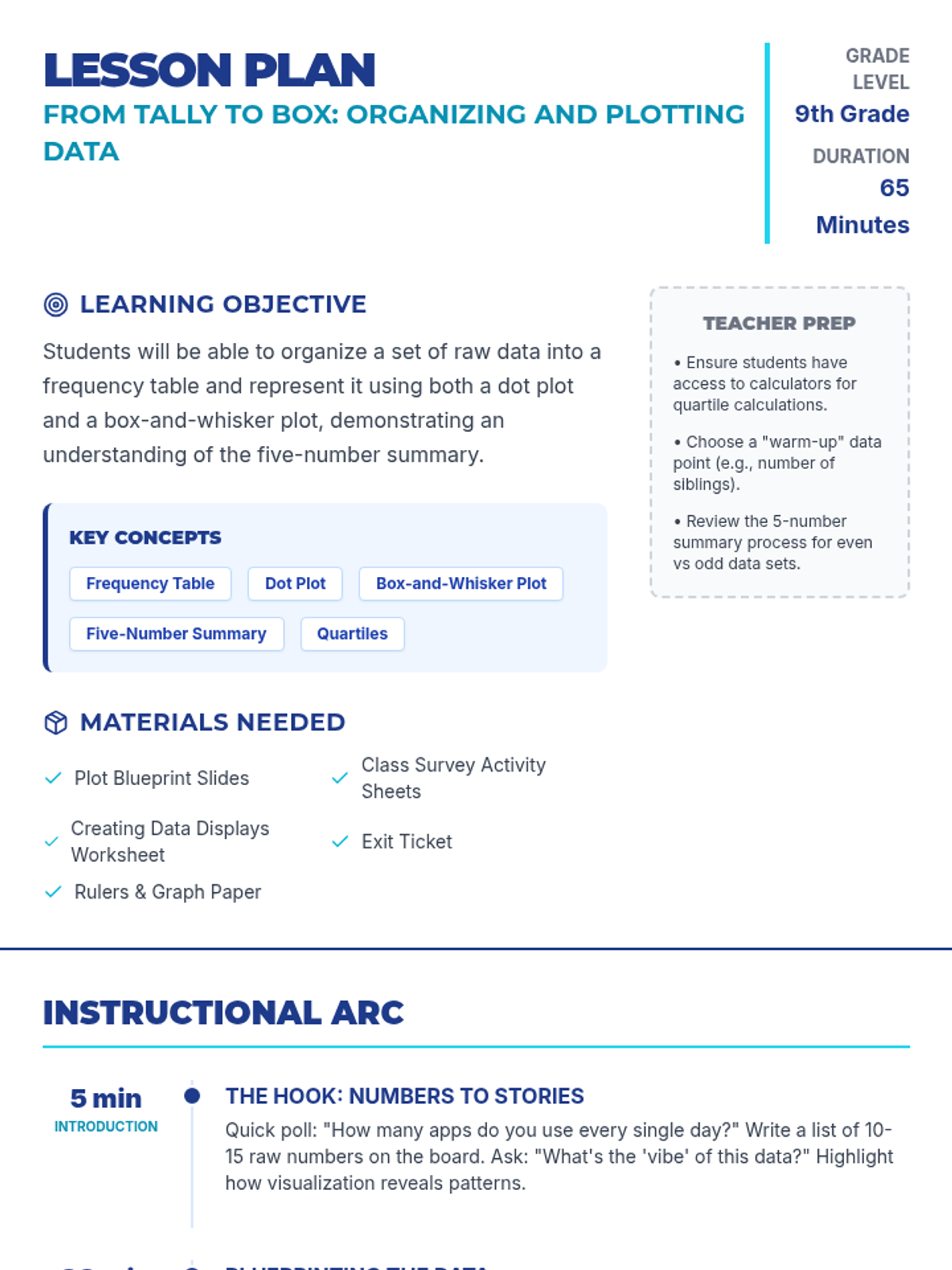
A detailed lesson plan for teaching data organization and plotting, featuring a clear instructional arc from frequency tables to box-and-whisker plots.
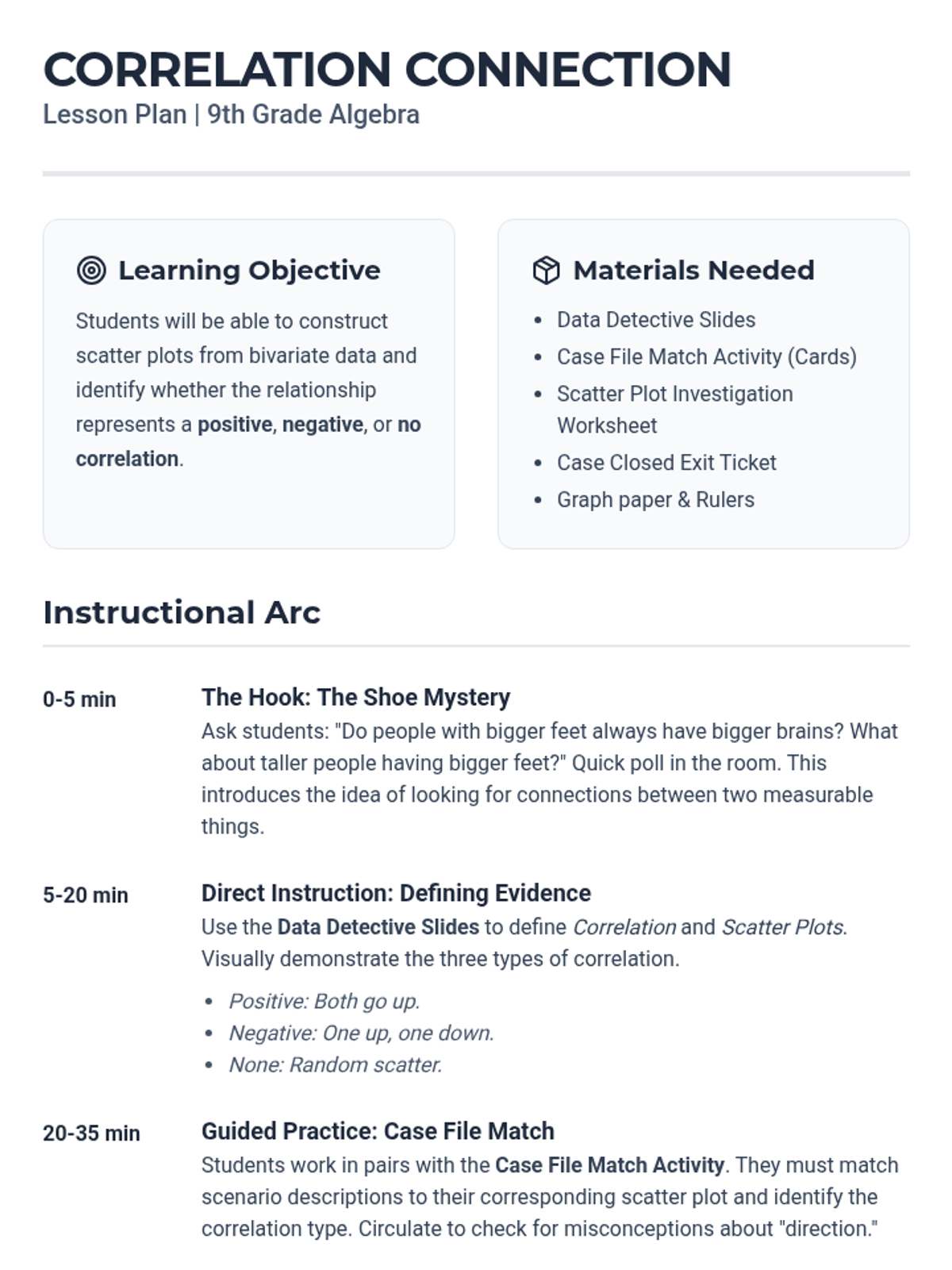
A comprehensive teacher's lesson plan for a 65-minute 9th-grade algebra class on correlation and scatter plots, featuring a 'Data Detective' theme.
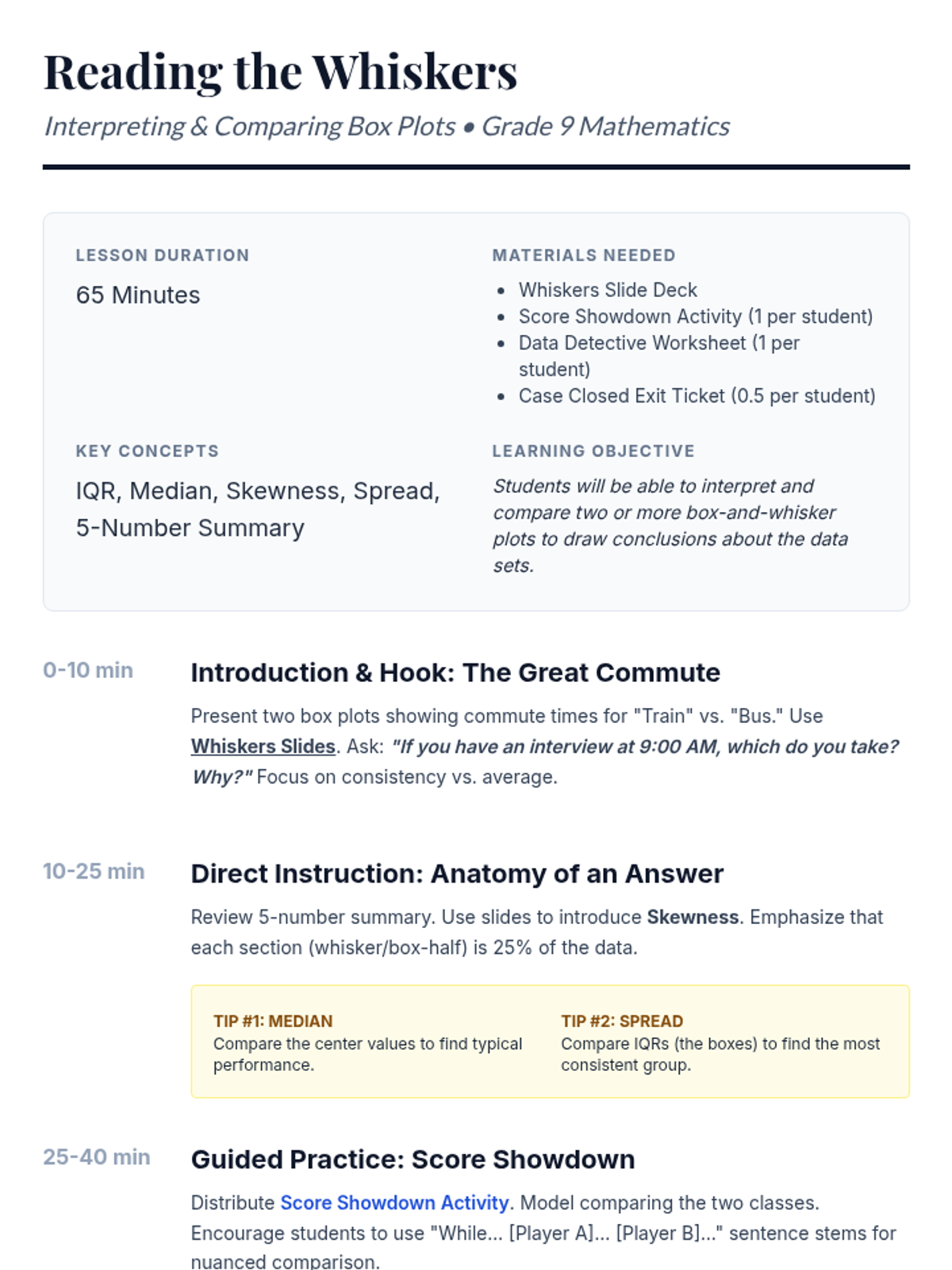
A comprehensive lesson plan for Grade 9 mathematics focused on interpreting and comparing box plots. Includes a 65-minute instructional timeline, teacher tips, and key focus questions for statistical analysis. Now with improved layout for print readability.
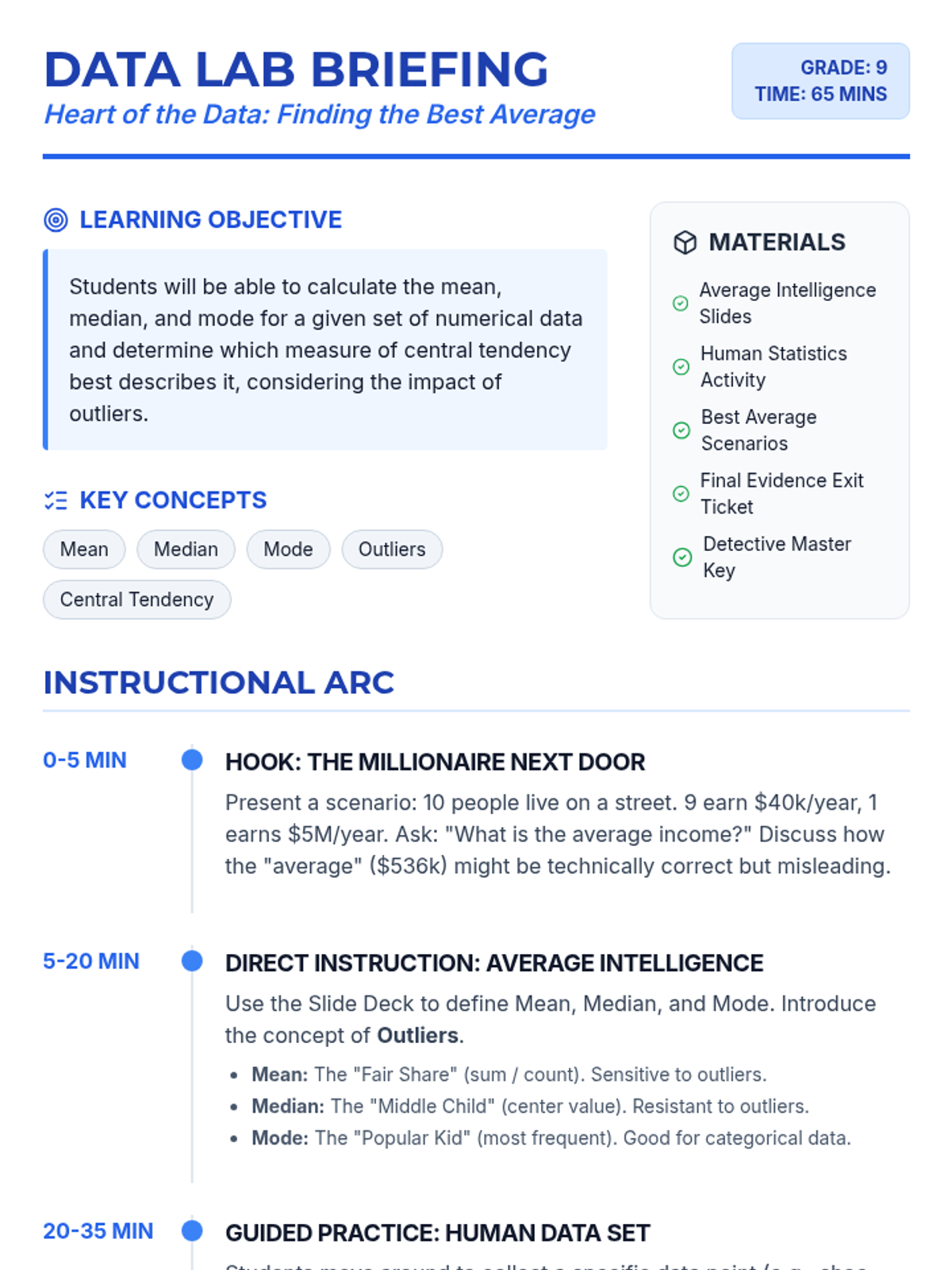
A comprehensive 65-minute lesson plan for teaching mean, median, and mode to 9th graders, featuring a 'Data Detective' theme and a structured instructional arc.
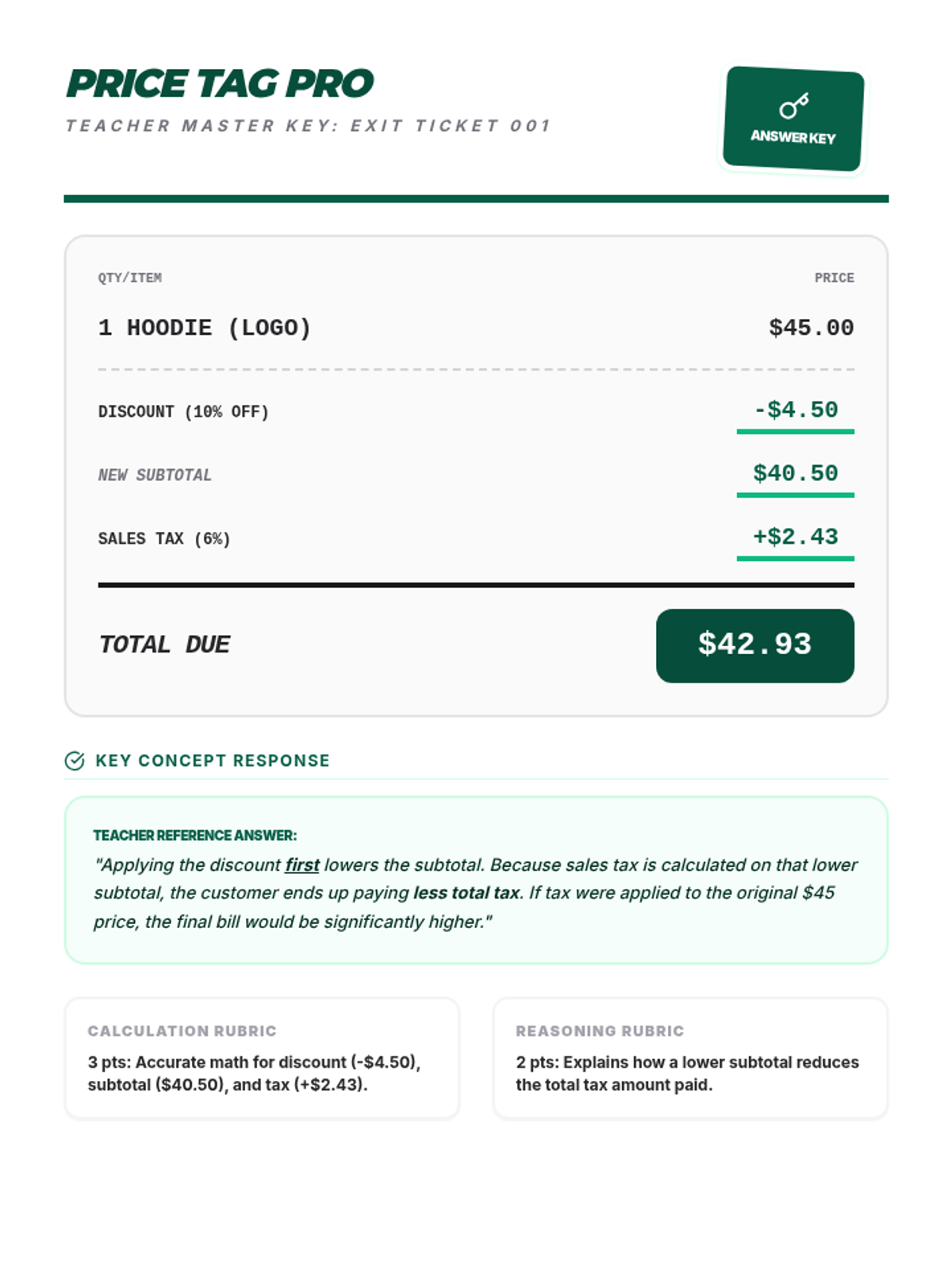
A concise answer key for the Price Tag Pro Exit Ticket, including completed calculations and a sample conceptual response. Fixes layout, contrast, and page breaks.
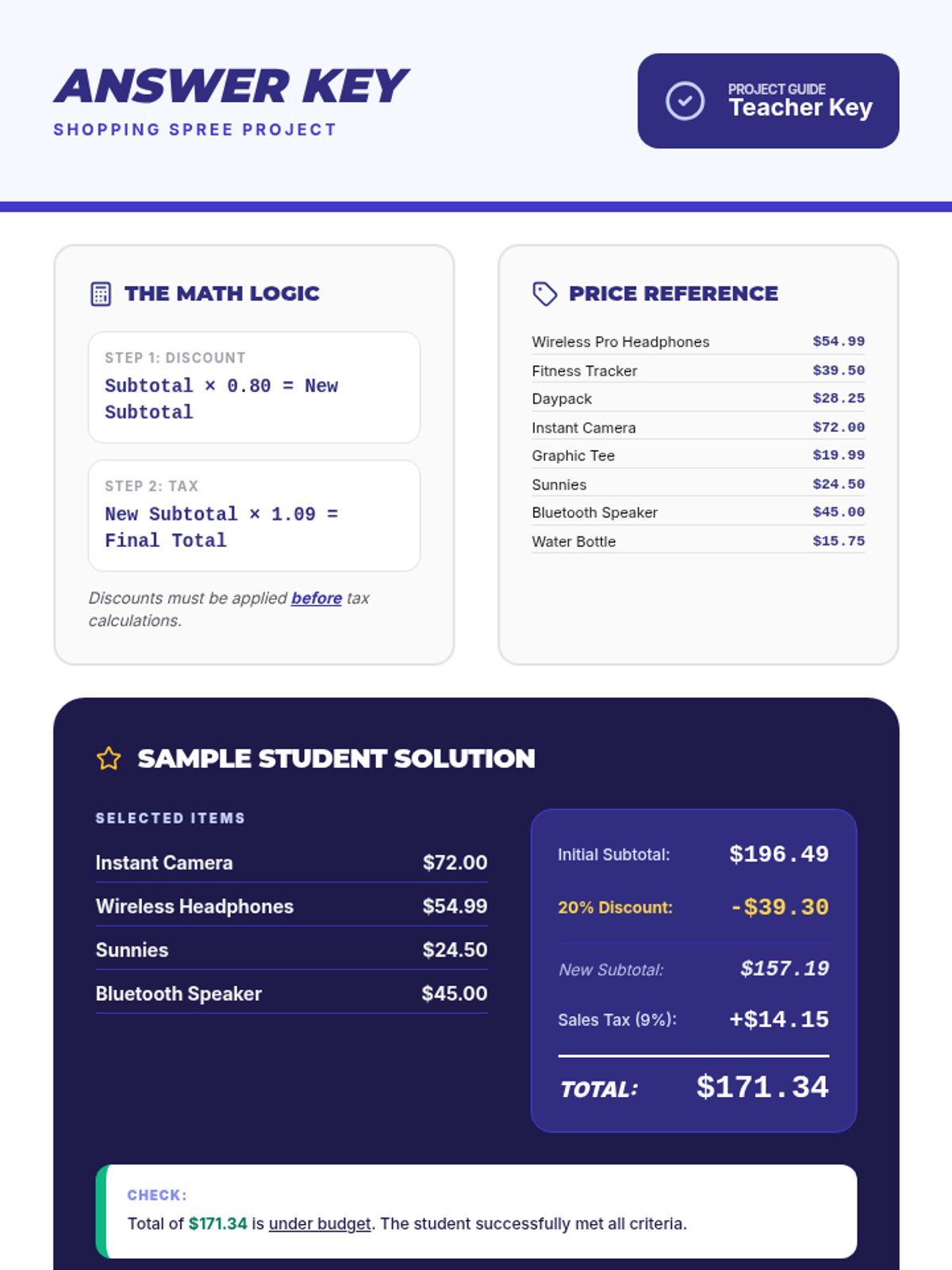
An answer key and teacher reference for the Shopping Spree Project, including math formulas, an item price list, and a complete sample solution. Fixes PDF rendering issues and text contrast. Final one-page layout.
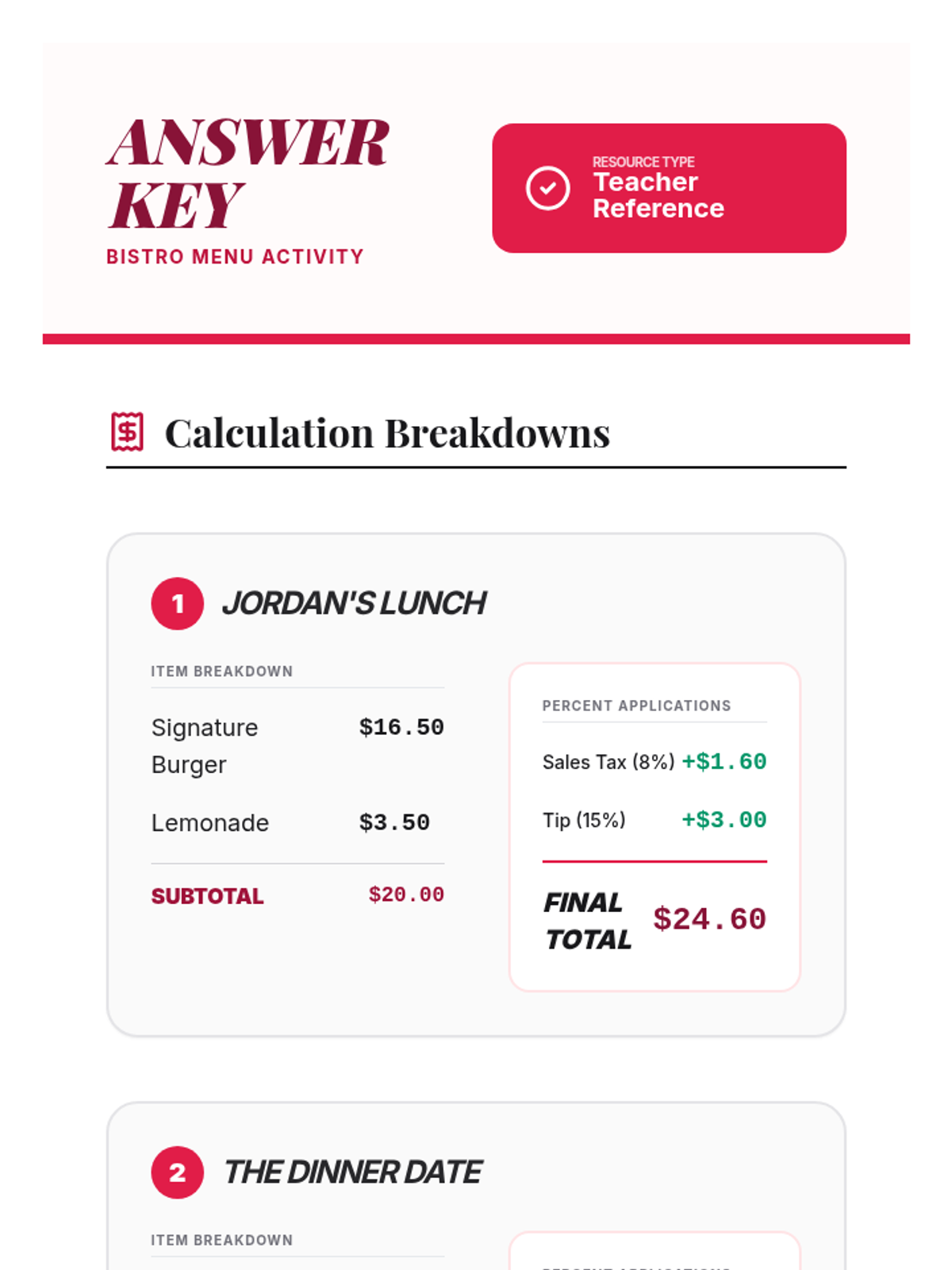
A detailed answer key for the Bistro Menu Activity, providing itemized breakdowns, tax and tip calculations, and final totals for both scenarios. Fixes page breaks and alignment.
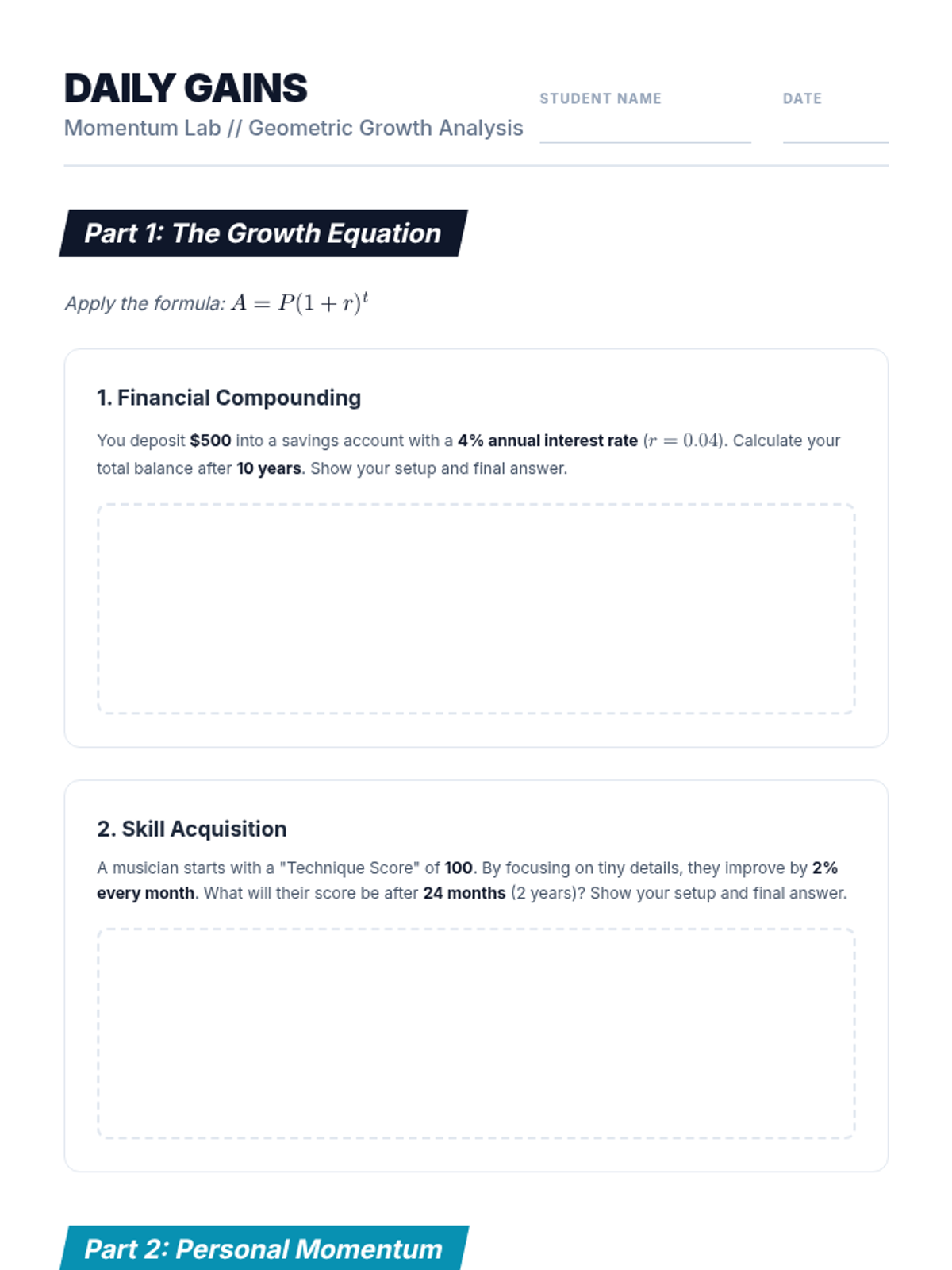
A student worksheet for 'Momentum Lab' where learners solve exponential growth problems and apply the '1% Rule' to their own personal habits and skill development.